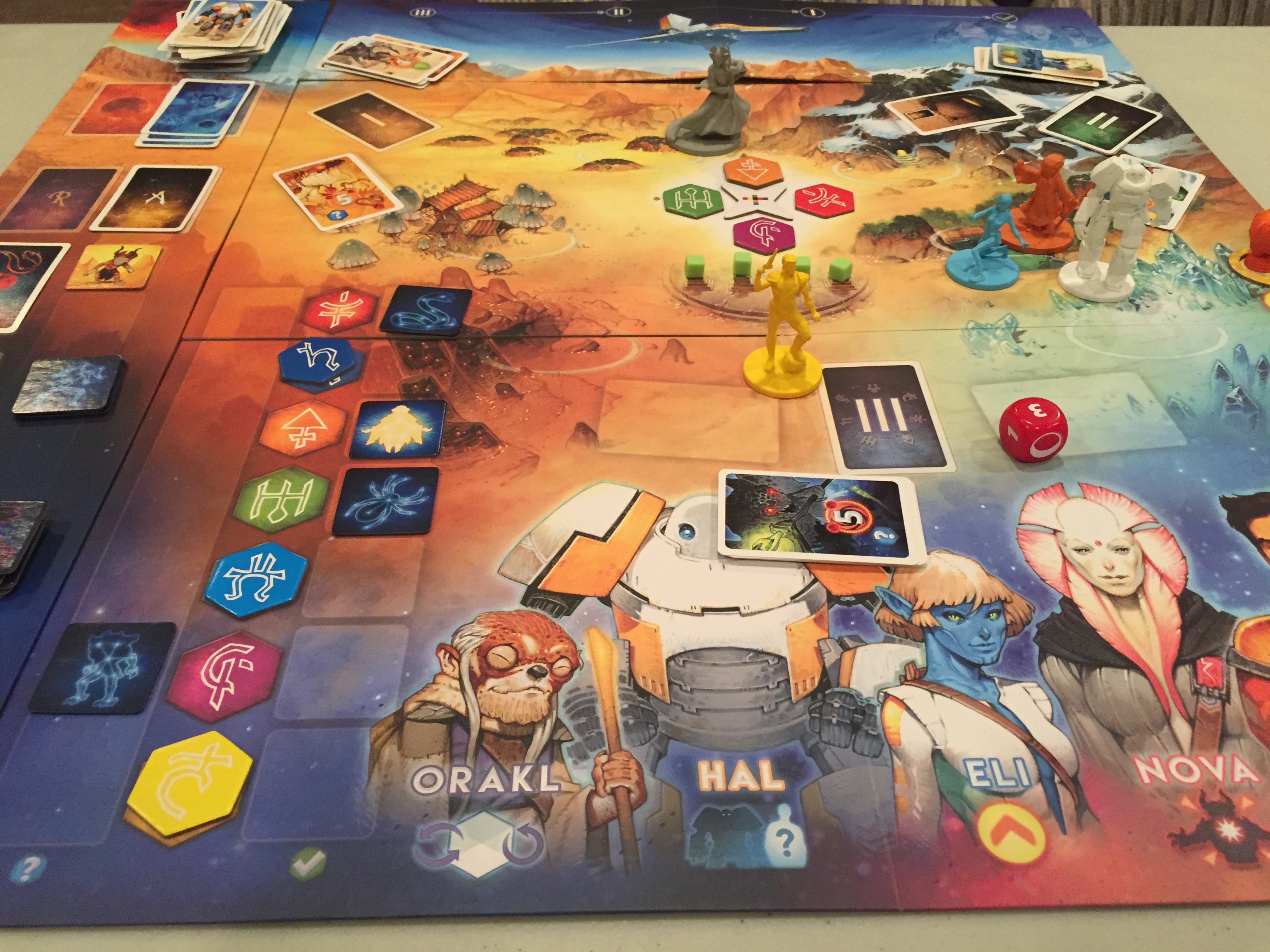
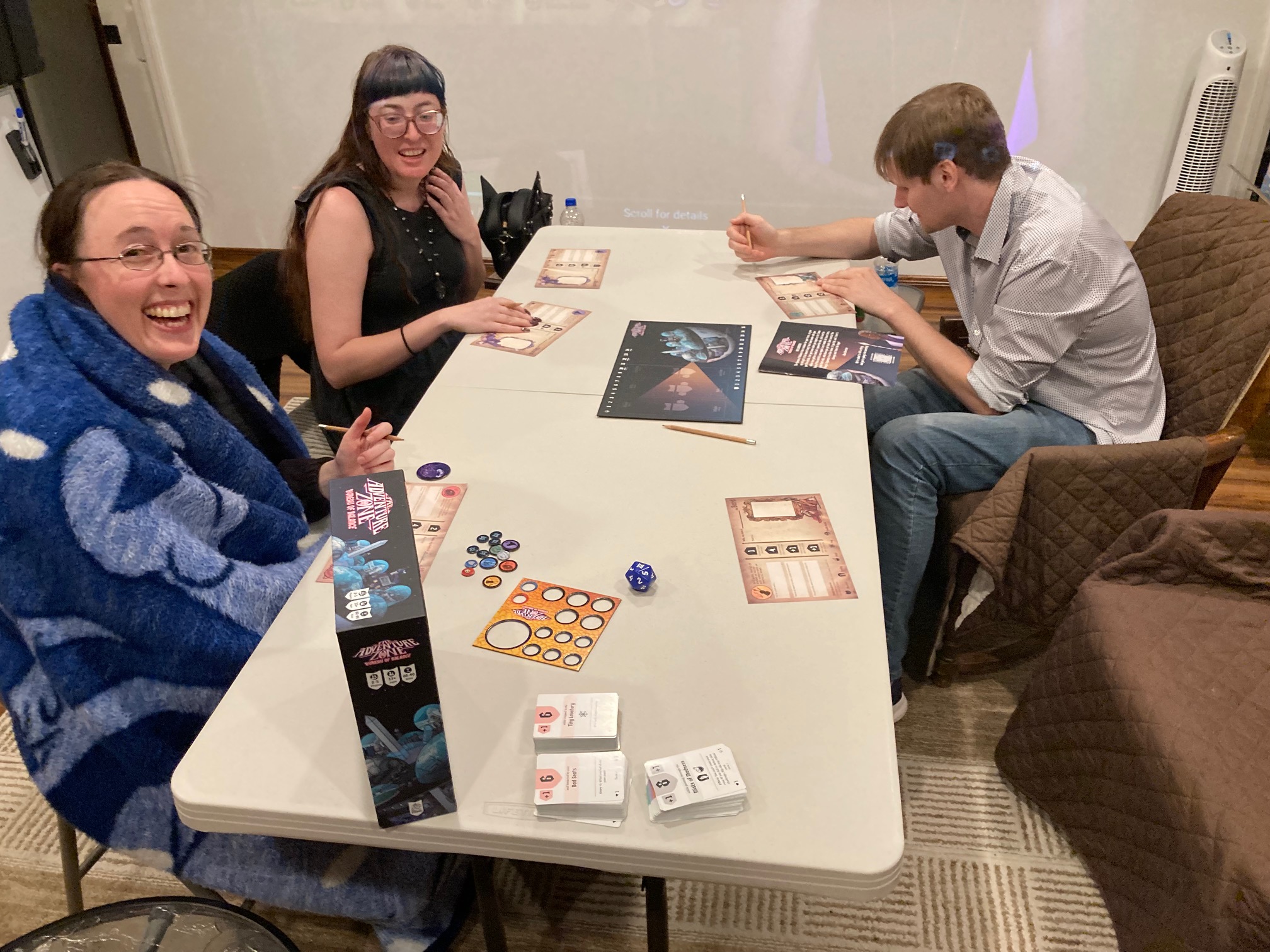
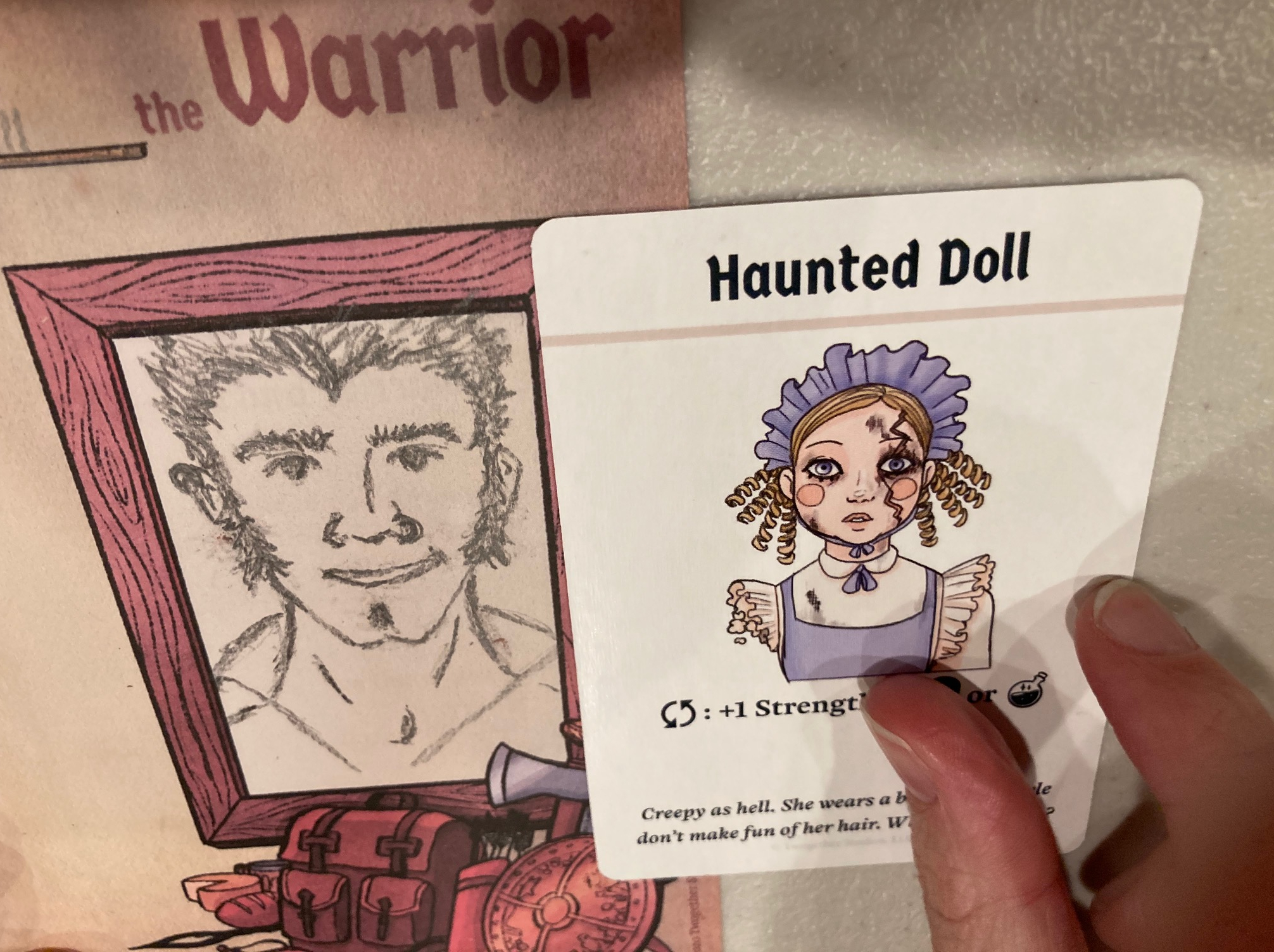
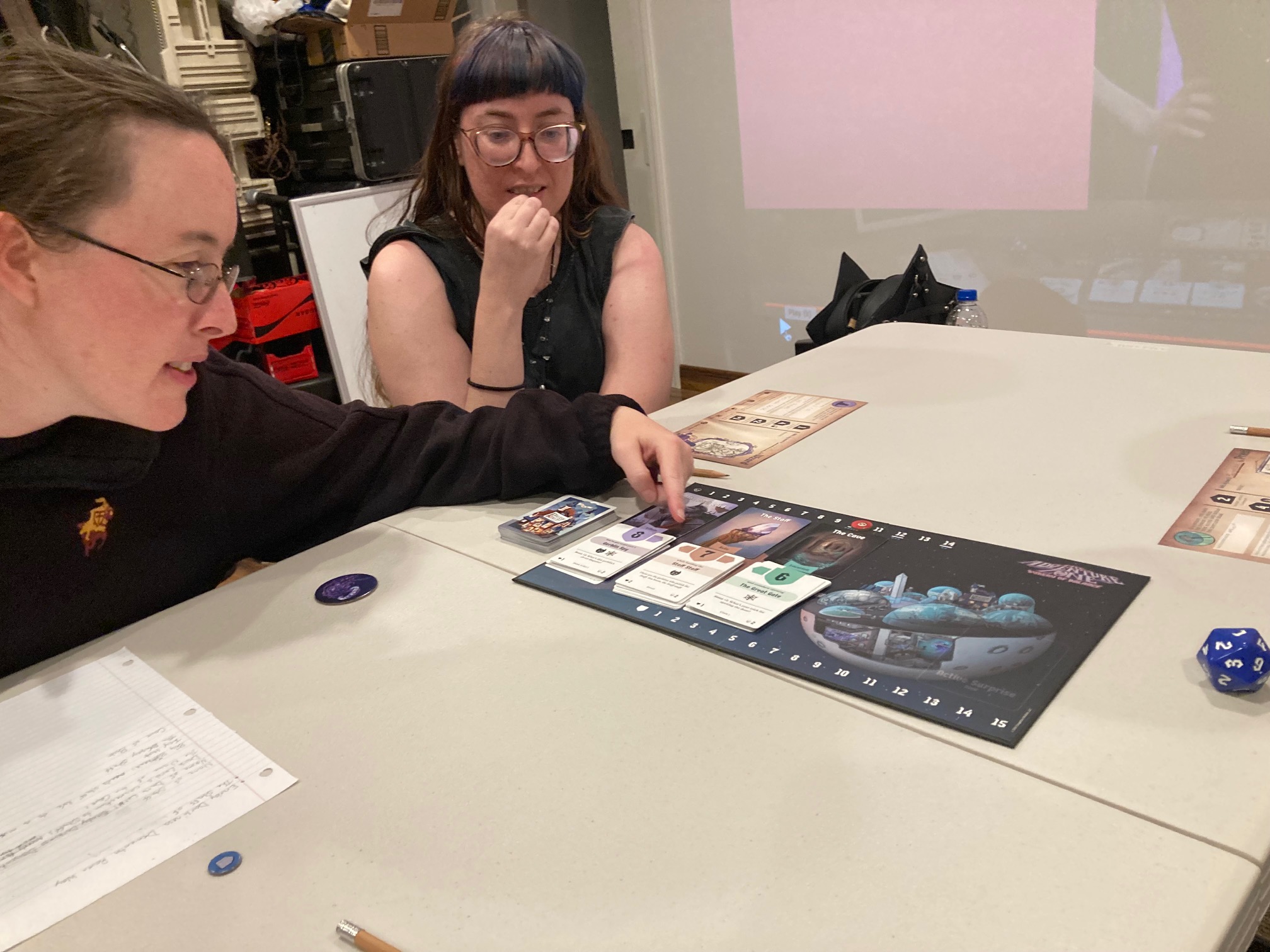
Didn’t we just go to Target last week to get Horizons of Spirit Island? Yes, we did: see here! While we were at Target picking up Horizons of Spirit Island, we asked about Star Wars: The Clone Wars. They said they had it in back, but it was under some palettes so I needed to come back. That was fine with me: I was too busy playing Horizons of Spirit Island! … see last week.
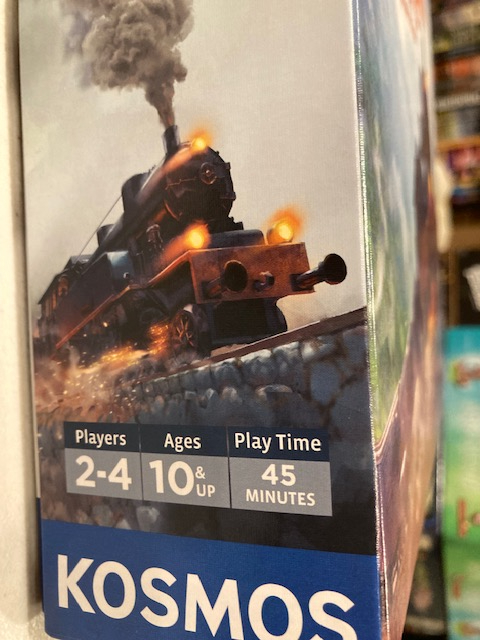
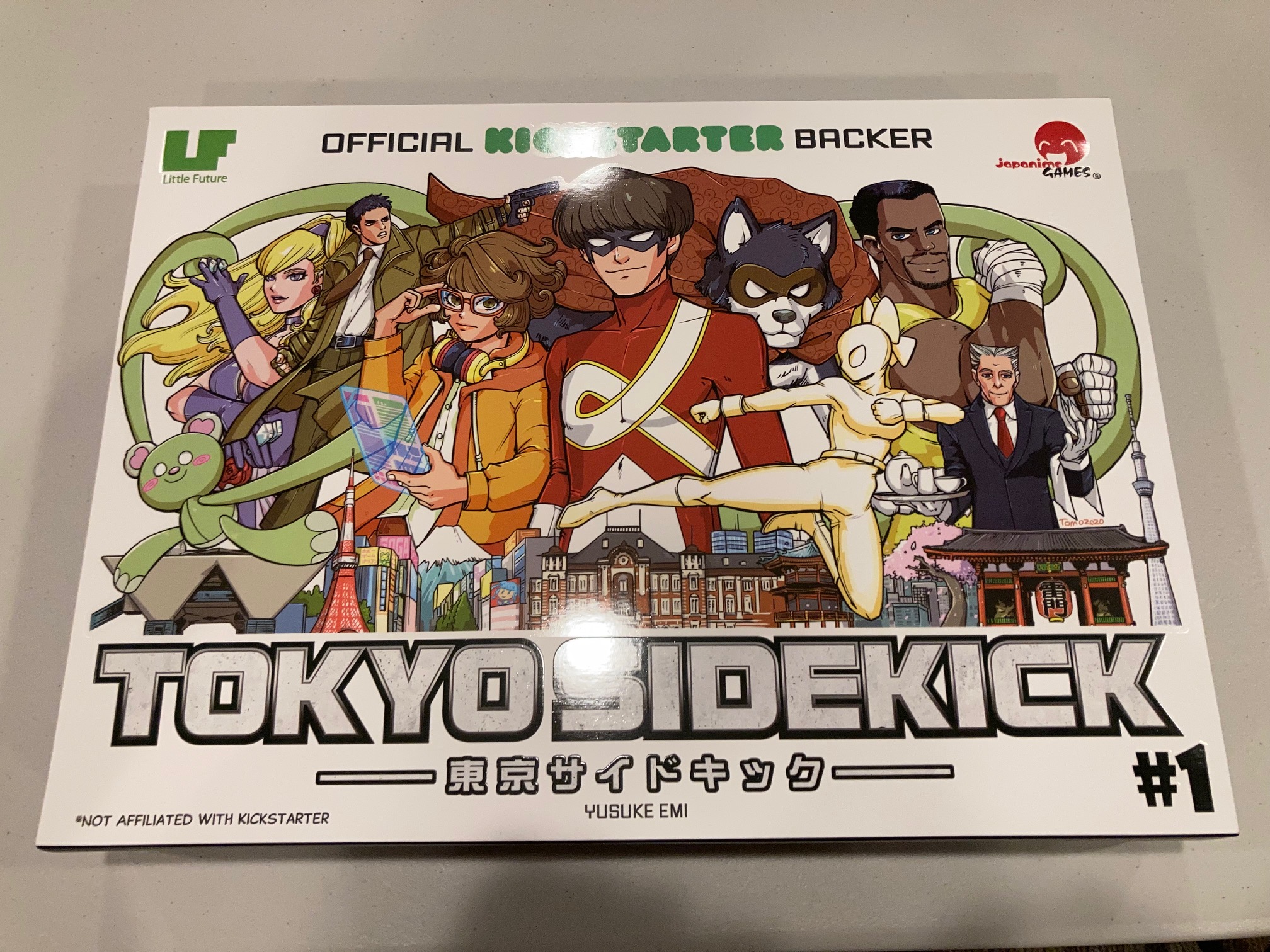
Well, a week went by and they still hadn’t put out the Star Wars: The Clone Wars game, so I had to hunt around Tucson and I found it at another Target across town: see above!
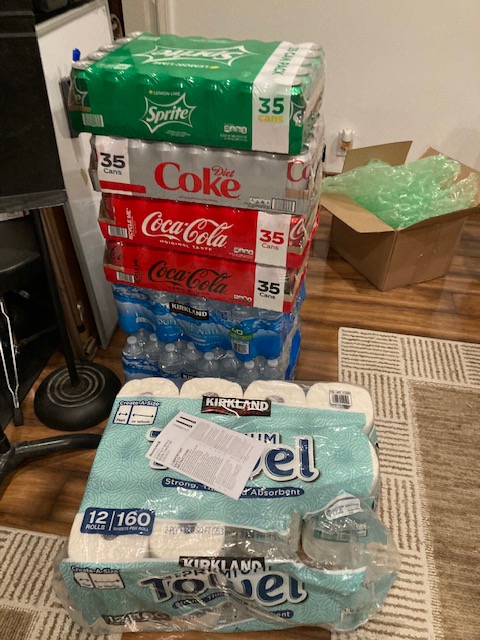
Horizons of Spirit Island was a cheap game from Target ($29.99), whereas Star Wars: The Clone Wars was significantly more expensive at $59.99! Target “usually” has some kind of sale for board games: in this case, I got it for $10 off (any Toy purchase over $50 was $10 cheaper). And then the Target card gets you another 5% off, so it ended up being about $47.99 of so: that price is significant, because GameNerdz and other discount online game shops have the game listed for $47.99 as well!
So, if you do a little bit of work (waiting for sale or looking online), you can probably pick this up for about $48. Interestingly, Star Wars: The Clone Wars is obviously NOT a Target exclusive, because I can order it now from online shops. GameNerdz has it on pre-order as coming out on October 7th, so you can either order it there or go to your local Target (as opposed to Horizons of Spirit Island, which is absolutely a Target exclusive).
What is Star Wars: The Clone Wars?
Star Wars: The Clone Wars is a cooperative game for 1-5 players in the Pandemic System (see the little Pandemic logo in the lower left corner?). This means that Star Wars: The Clone Wars shares a lot of DNA with the original Pandemic. In this case, though, I think a better comparison would be to compare this to World of Warcraft: Wrath of the Lich King, another game in the Pandemic System: see our full review here.
I originally thought that the Star Wars: The Clone WarsPandemic game would just be a “slight re-skin” on the World of Warcraft Pandemic game. Although these two are probably the “closest” relatives of all the games in Pandemic world, there are still enough changes to differentiate the two.
Unboxing and Components
The box is an odd shape: it feels thick and thin at the same time.
But in general, the components look really nice, especially since this is a mass market game! The miniatures are especially nice!
Each Villain has its own special deck!
Gameplay
To play, each player takes the role of the one of the main Heroes from Star Wars: see below.
Note that each player has a special power that’s unique to their Star Wars hero!
To win, the Heroes have to take down of one four Villains:
Players choose a Villain at the start of the game, and each Villain comes with their own Villain deck!
Each Villain has its own special deck!
That means each Villain has a unique play style!! The game recommends starting with Asajj Ventress:
Like Pandemic, “bad things” come out on the board as the game progresses. In this case, it’s Droids! Droids are invading the system!
Like Pandemic, they slowly accrete on the planets, as a few Droids get added to the board at the end of each player’s turn:
Droids are like Pandemic disease cubes. In this case, there are actually multiple different models!! Very cool!
If a fourth Droid would hit a planet, you get a Blockade there: There’s no spill out to adjacent planets. (The Blockades are more like the Abominations in Wrath of the Lich King than disease cubes from base Pandemic).
A Blockade on a Location means you must fight the Blockages before you fight anything else on the space!
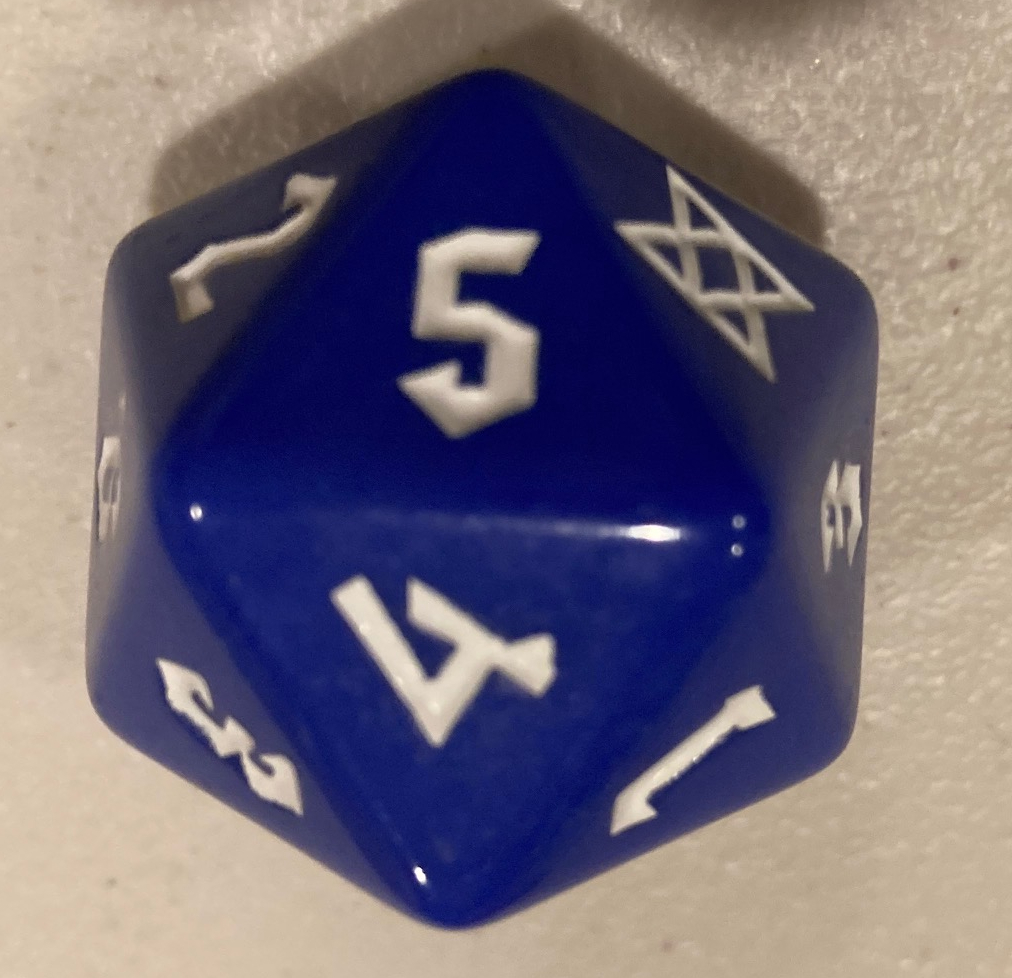
To get rid of enemies on a planet (Droids, Villain, or Blockades), you have to roll the big 12-sided die! Every circle/star is a success and does 1 damage to the enemies. Blockades need two damage to take them out, Droids need one damage to take them out, and Villains vary. The explosions are how many hits the Hero takes!
About a week ago, we reviewed and discussed The Return To Monkey Island, a point-and-click adventure video game for Steam and the Switch. During our discussions, we lamented the lack of point-and-click adventure type games in board/card game form! There are, however, some out there … like The Grand Hotel Abaddon, which we review this week.
The Grand Hotel Abaddon is the fourth in the Adventure Games series from Kosmos Games: Yes, that’s right! There are at least 3 more adventure point-and-click card adventures!!! This particular adventure is for 1-4 players and plays over 3 sessions of 90 minutes each. To be clear, this is a “one-and-done” game: once you’ve played it, you’ve seen all the puzzles and solved them. You can still easily pass this box on to some friends to play (you can still reuse the game, as you don’t destroy any components). You can also come back to it in a year or two when you’ve forgotten all the puzzles. I frequently replay my old point-and-click adventure video games (The Monkey Island games, Thimbleweek Park, to name a few), so I am in the category of re-enjoying and re-playing games.
So, Is The Grand Hotel Abaddon good enough to replay in a few years?
Components and Gameplay
The game is mostly cards and an Adventure Book: see above. The Adventure Book (above right) has the story and and interactions all baked in … and lots and lots and lots of text!! The big cards (labelled A) are Locations you travel to in the game, the numbered cards are objects to interact with, and the tokens are for noting things. Below, you can see all the objects the character Yu Heng Zhu holds (a bunch of cards).
The Big Cards sit out and form the map you explore:
Each player takes the roll of one of four adventurers in the game.
I ended up playing the Dr. Susan Pendergast. Throughout the game, each character has a minor subplot that unfolds within the main plot. You actually get pretty invested in your character as you play! We ended up playing 3 different sessions over about 2 months. We always enjoyed coming back to the character we previously played.
The Adventure Book is the most important piece in the game. If you want to explore, put two objects together, try something in a Location, or generally “do anything”, the adventure book tells you “what happens”. Generally, the game works by combining two numbers: objects have a 2 digit number and Locations have a 3 digit number. You quine the numbers together (the smaller number first then the bigger) and lookup that number in the Adventure Book. If an entry with that number is there, you read it and “something happens!’ If there is no entry, that means that interaction doesn’t do anything.
Each place you can explore in a Location has a 3 digit number in it.
Players basically work together to explore the map and try to figure out what’s going on! The story is quite interesting! Play proceeds clockwise, as each character “tries something” (explore, combine, other) to see what happens.
Why a Mini-Review?
Why are we doing a mini-review and not a full review?
We didn’t get a chance to play this solo: the game gives you rules to play it solo by operating two characters (yay, thanks for following Saunders’ Law), but we didn’t play this way. We played the game with a full complement of 4 people. And we think this is the best way to play: each player then gets to play their own character and feel ownership/kinship with that character and the backstory. You also get to see all the arcs of the game that way.
It’s difficult to avoid spoilers. It’s hard to talk too much of the game without giving away too many spoilers. This particular game also has a lot of spoilers: it’s much more fun to see what happens as you play.
App vs. Text
So, you can play this game with an app or without an app. We played the original Adventure Game: The Dungeon without an app because it didn’t exist yet when we played! In that play, the Adventure Book was passed around a lot as each player would read out of the book on their turn. We had a lot of fun reading out loud and talking in silly voices when we played the first one!
You can also play The Grand Hotel Abaddon without an app as well. That’s very satisfying: if the company ever goes belly-up and stop supporting the app, you know you can still play this.
In the end, though, we ended up using the app to read the text. Partly because it was less work, and partly because it was less tiring: we could all concentrate on what was being said and just solve the puzzles.
We preferred using the app to read. But we would have had just about as much fun reading from the Adventure Book ourselves.
Discussion
We has a grand old time playing this (no pun intended). We played the three different sessions over three different nights: the game seemed to be just the right length each time: not too long, not too short. We were able to explore, tease further plot points, do interesting things, and generally have fun.
I think we also enjoyed the game that much more because we each played a different character with different goals and backstories: we bonded with our characters. I feel like we didn’t get this as much in the previous Adventure games.
Overall, the Dungeon is still our favorite, but The Grand Hotel Abaddon is a very close second. The other two are still good, but arguably not as good. Some people didn’t like The Volcanic Island very much (it does have some weird things happening), but we did.
Conclusion
The current 4 Adventure Games
If you want a point-and-click adventure board game like the video game Return To Monkey Island, then The Grand Hotel Abaddon is a great choice: it gives you that exploration and puzzle-solving experience like The Monkey Island games, but in board game form.
And yes, this game is good enough to replay: I suspect we will replay this again in a few years.
Horizons of Spirit Island is a cooperative board game from Greater Than Games for 1-3 Players. It just came out today (October 1st, 2022).
I had to ask my Target associate to find the game in back because it wasn’t on the shelves yet.
Horizons of Spirit Island is one of those Target exclusive games: I believe it is “exclusive” to Target for a time (1-6 months?) and then can be found elsewhere.
Horizons of Spirit Island is a lighter stand-alone version of the original heavier game Spirit Island (see below). Spirit Island is a very complicated game of spirits cooperating to keeping explorers off your island: many people call this game a “cooperative euro” game because of its complexity. Despite the heaviness of this game, it has become very popular due to its unique gameplay and highly asymmetric powers. See the original version below.
Original version of Spirit Island from the Kickstarter: signed by R.E. Reuss!
Horizons of Spirit Island is an attempt to make a more “friendly” version of Spirit Island to widen its audience. It is only $29.99 at Target, as opposed to $62.99 for the original from Amazon. It’s cheaper for a variety of reason: it’s smaller (see below), supports fewer players (1-3 instead of 1-4), has crummier components (punchouts instead of wood or plastic), and the board is a more traditional static board than the weird shaped island boards of the original. See below.
Even though this is a cheaper version, you can use the spirits in this game as an expansion for the original: it just requires you have the original game.
Let’s take a look at this cheaper version of Spirit Island and see what we are getting!
Comparison of Components
You can skip this section if you don’t care about the original Spirit Island game.
Let’s compare the new game to the old game: they are essentially the same game! The newer Horizons is cheaper and has lesser components (the newer box is smaller, see above).
But the newer game has a Quick Start guide that will help newer players get into sooner: the original does not have anything like that.
The rulebooks are fairly equivalent: the Horizons rulebook is a few pages shorter, but the original rulebook is longer because it has some extra rules for some in-game expansions.
The newer Horizons has only 5 spirits you can play, whereas the original has 8 spirits …
… and the newer Horizons uses much thinner cardboard (left), whereas the original has thick, sturdy spirit cards (right).
The maps are very interesting: the newer Horizons (left) has a two-sided map: one side is for 1-2 players, and the other side is for a 3-player game. The original game has one sturdy but weird-shaped map for each player. It’s easy to scale from 1-4 players in the original game because that’s how many map pieces you take: it’s more modular. However, the dual-sided board of horizons has the advantage that it gives hints to layout and card placement, etc.
The newer Horizons does NOT need an extra board for fear and blight because it’s on the main board . The original needs an extra side board for those same fear and blight tokens.
Interestingly, the Horizons game makes the tokens compatible with the tokens from the original game by having different colors. See above: Horizons has three sets of different colors (orange, cyan, dark purple than the original player colors (yellow, blue, red, light purple). One of the goals of Horizons of Spirit Island is that it is compatible with the original game: if you find you like the simpler Horizons of Spirit Island, you can pick up the original game and use the spirits from Horizons with the higher quality components of the original Spirit Island!
The blight tokens are just cardboard punchouts in Horizons (left) and weirdly thematic plastic goops in the original (right).
The Dahan and the Settlers are all cardboard punchouts in the newer Horizons (left). The original (right) has the Dahan being wood tokens to represent a “natural” token, whereas the settlers and plastic to represent a more “unnatural” or “foreign” token. Furthermore, there is a system with the plastic tokens for notating hit points that I thought worked pretty well.
I think the fear tokens are EXACTLY the same in both: see above and below.
There are fewer cards in Horizons (partly because there are fewer spirits), but they are essentially compatible with the original. You might notice the fear cards are a slightly different color of purple (just different enough to be noticeable), but the power cards seem very compatible.
If you look closely (above), the Horizon’s cards (left) are ever so slightly lighter and have an ever slightly lesser sheen. I don’t think that’s noticeable. They look like they will work together very well.
Can you tell the difference on the other side? Not really, and that’s a good thing! But you can always separate the Horizons cards from the original cards by noticing the little Horizon’s emblem on the lower right corner: see picture below for a closer look.
The card on the left is from the original game (no emblem), and the card on the right is from Horizons (note the little white emblem on bottom right).
The components of Horizons of Spirit Island are definitely of lesser quality and quantity than the original Spirit Island, but they are still pretty nice! And for the price point of $29.99 from Target, it makes it much easier to jump in and try the game out! I mean $62.99 from Amazon is more than twice as much!
Solo Play
So, Horizons of Spirit Island supports solo play (thank you for following Saunders’ Law)! Unfortunately, the Quick Start Guide only discusses quick start for a 3-Player game, NOT a solo game! See more discussion in theQuick Start Guide section below.
Playing solo is relatively easy: you use the 2-Player side of the board and use the Fear markers to cordon off one side of the island: see above and below.
Unused part
There’s some scaling for Fear and Blight tokens just for set-up (only 4 Fear and 6 blight), and some powers can’t be used in solo mode, but in general, the base rules for solo are exactly like the base game. This is great, because there are almost no exceptional things to keep track as you learn the game: all the rules you learn for the solo game apply to the multiplayer game.
I’ll be honest, the original Spirit Island is one of my favorite solo games. It is such a fun puzzle to solve solo! And each spirit in the game plays so differently! In my first solo game (above), I played the Eyes from the Trees, which are a creepy spirit!! Their main strategy is to scare the pants off the Settlers!! I almost felt like I was playing a horror movie as I played! I generated so much fear that I scared all the settlers back to the main city!
And then on my last turn, I played the Jungle Hungers (see above) and pretty much decimated the main city location. It was so cool and thematic as I scared the settlers back to the coast and then reached out from the Jungle to completely trounce them!
To be fair, it was a very close game: I almost ran out of blight. Had I not complete devastated the coastal town, the Settlers would have polluted my island and I would have lost! It was a close, fun, thematic game. And SO MUCH FUN!!!
Let me be very clear: it took me two hours to get through this game. This is a very thinky game and prone to Analysis Paralysis … even this newer “simpler” version .. because this game is still Spirit Island. I took my time and thought long and hard about my decisions. I like playing solo games like this, and I don’t mind doing this by myself. But if I were with a group, I would make sure I moved much faster.
In the end, this was everything I loved in the original solo game (and that still applies to the multiplayer game as well). Horizons of Spirit Island gameplay is still Spirit Island gameplay: it was fun but thinky.
Quick Start Guide
The Quick Start Guide is .. okay. We were expecting something more like the onboarding experience we saw in Gloomhaven:Jaws of the Lion: Gloomhaven (see our review here). Jaws of the Lion was another very similar product to Horizons of Spirit Island. The original Gloomhaven is a giant, complicated, expensive game and Jaws of the Lion was an attempt by Target to bring the Gloomhaven experience to the mass market. Similarly, Spirit Island is a giant, complicated, expensive game and Horizons of Sprit Island was an attempt to bring the Spirit Island experience to the mass market.
Although the Quick Start Guide does a great job guiding a 3-Player game through the first few turns, it’s not really an extensive onboarding guide: it just discusses set-up and play over a few turns. Jaws of the Lion was a lot of more extensive: it would start simple and slowly introduce more and more rules (over the first few games), to slowly onboard players into the game.
For example, my first play of Horizons of Spirit Island was a solo game (see previous section), not a 3-Player game. I know how to play Spirit Island, but it’s been a while since I played, so it was nice to go through the rules from the Quick Start Guide. The problem was that I had to scale everything for a solo game. In the end, the Quick Start Guide was an okay help, but not nearly as helpful as the equivalent Quick Start Guide in Jaws of the Lion.
I always recommend learning a game solo, especially a big complicated one like Horizons of Spirit Island, so you can you can teach your friends and facilitate their plays. I would have preferred a solo Quick Start Guide rather than a 3-Player guide (or at least one that covered both).
Discussion
Horizons of Spirit Island is still the same game as Spirit Island, but it has a cheaper entry price, cheaper components, and fewer components (fewer spirits, fewer cards). Horizons of Spirit Island also doesn’t have some of the in-game expansions that Spirit Island has: I assume they were elided to keep the price down. The Quick Start Guide in Horizons is useful to help new players, but it’s not as helpful as I was expecting or hoping; it works okay.
In the end, even though Horizons of Spirit Island is pretty much the same game as Spirit Island, it does feel easier to get to the table! The original Spirit Island has a pretty big box chock full of components and is rather daunting.
The smaller Horizons of Spirit Island just “feels” smaller (and strictly speaking, it is) and that seems to make it easier to get to the table.
Conclusion
If you ever wanted to try Spirit Island, but were afraid of the price or the daunting box or the complex rules, Horizons of Spirit Island is a good entry point. Horizons is pretty cheap at $29.99 at Target, but even with the lesser components, the game still looks really good: see above.
The Quick Start Guide (see above), although not great, is still pretty good and it will help you get into this fairly complicated game.
If you decide you like Horizons of Spirit Island, you can still purchase the original Spirit Island (with the exceptional components) and use the Horizons of Spirit Island game as an expansion! All of the spirits and cards from Horizons of Spirit Island can be used in the original game as extra content! More spirits!
Horizons of Spirit Island makes it easy to tryout Spirit Island. Horizons is pretty cheap, and you can decide if you like it before spending money on the bigger Spirit Island and it’s myriad of expansions.
I like it. I will keep Horizons of Spirit Island to introduce new players to the Spirit Island experience! And also for the extra spirits!
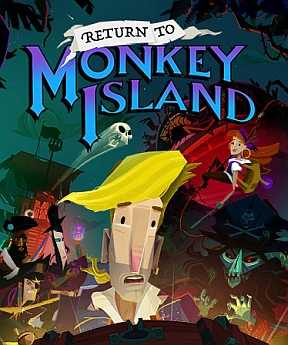
About a week ago, on September 19th 2022, the final game in the Monkey Island series (Return to Monkey Island) was published on Nintendo Switch and Steam. The Monkey Island series is a a bunch of point-and-click adventure video games starting with The Secret of Monkey Island. To my mind, the original game, The Secret of Monkey Island, is one of the greatest video games ever made, and the other five in the series are just as good (well, mostly). The games are funny, they have interesting puzzles, they are well-crafted, and they are well-written.
To be clear: these are not lot a lot of games like these in the current marketplace: there’s no “shoot-em-up”, there’s no “online multiplayer”, there’s no “do stuff in realtime” (mostly). These are adventures where you go explore your own pace solving puzzles in the islands of the carribbean. There’s a story.
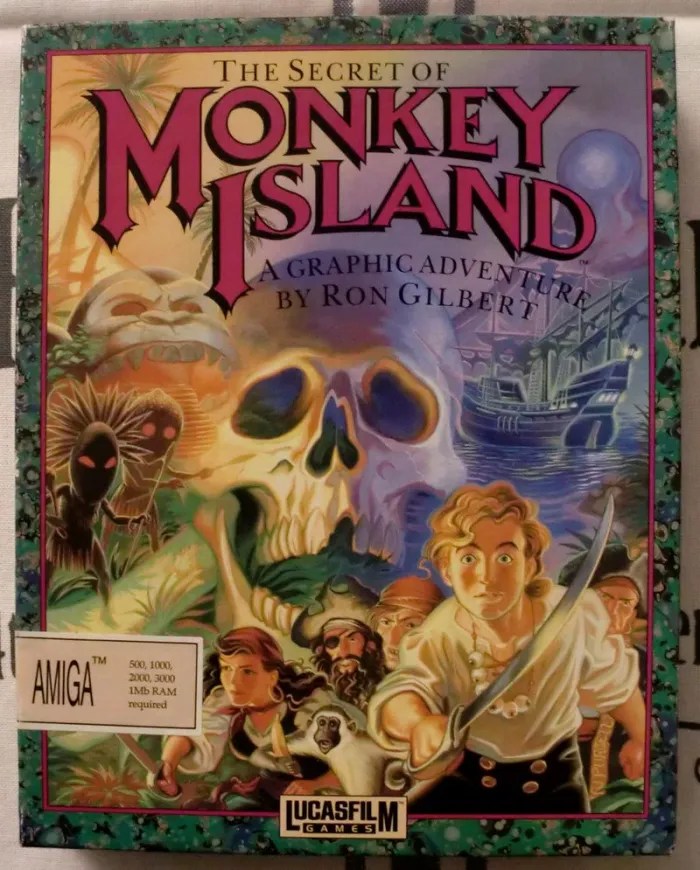
I make the bold claim that the original Secret of Monkey Island (see above) is so thoughtful and tightly crafted, I would say it approaches the status of literature, telling an amazing acompelling story regardless of what Steve Jobs thinks: See Ron Gilbert’s post on meeting Steve Jobs here.
We have frequently discussed Monkey Island here: it was exciting when Monkey Island I and II were ported to iOS (that’s good), but depressing when Disney let the app lapse on new releases of the operating system (that’s bad). We did find that GOG (Good Old Games) had made the first 4 games available. That’s good! Ron GIlbert had even famously texted Disney to sell him the rights to Monkey Island so he could make a new game. They didn’t “seem” to respond (that’s bad), but after his initial contact, we see that Ron Gilbert and Dave Grosssman have teamed up once again and “somehow” gotten the rights to make the final chapter of the Monkey Island saga. That’s good! That’s where we finally find … the secret of Monkey Island in Return To Monkey Island.
Quick Review
If you liked any of the Monkey Island games, you will like this one. It has all the qualities of the original games: funny, well-crafted puzzles, and a sense of exploration. I wish they had stayed with the art style from Monkey Island 3 (with the animated style), but I mostly like the new art style here: see below.
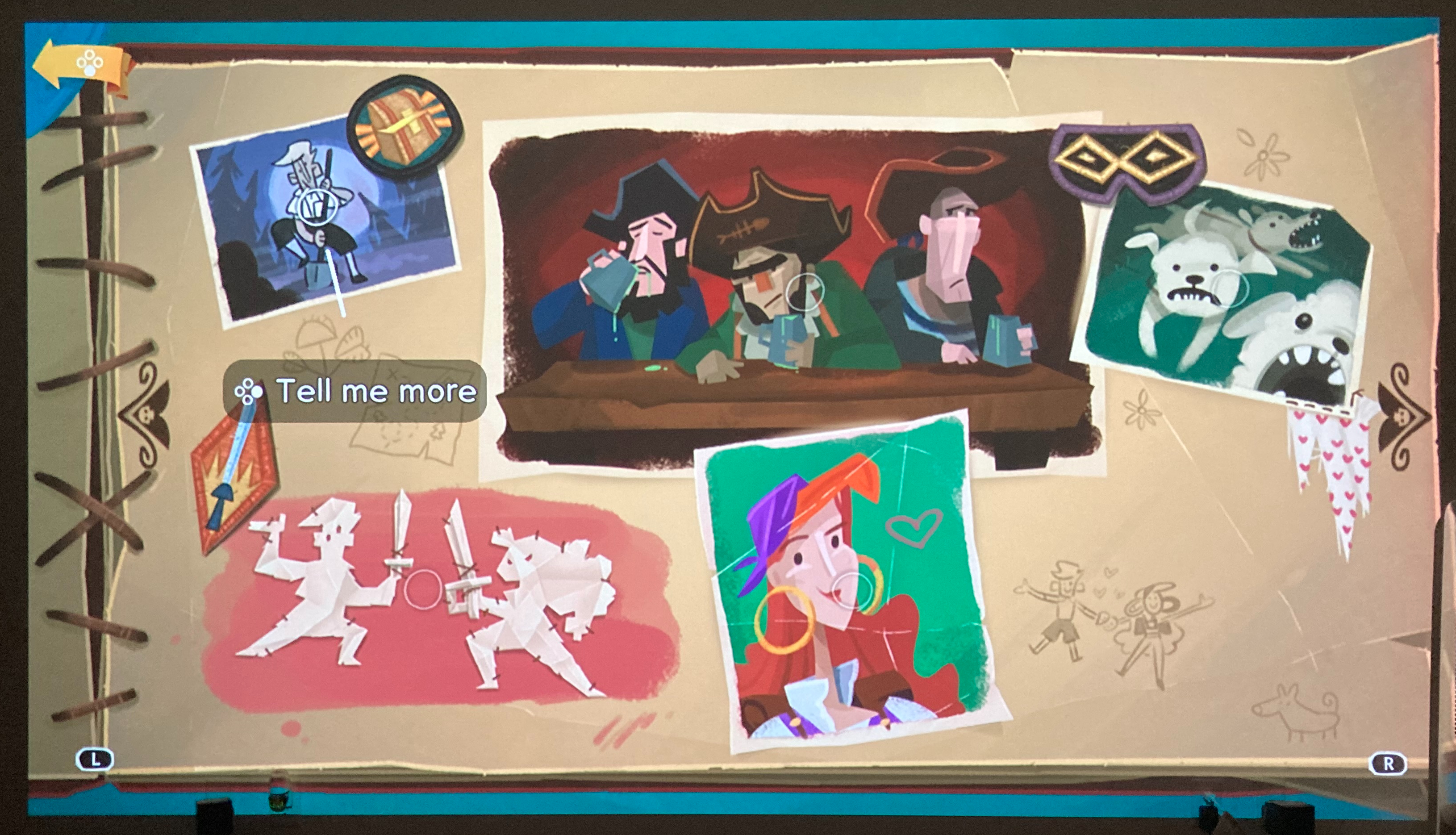
My only complaint was that the right stick (I played on Switch) was always supposed to move around to “hot spots” on the screen, but if you sat for even a second, it would just disappear. I had to move the left stick then the right stick just to jump around. It wasn’t a big deal, but it was annoying.
I don’t really want to share too much more, because this is a game about discovery (in so many ways). One major joke throughout the series (and indeed, Ron Gilbert’s other games) is that even though the original game in the series was called The Secret of Monkey Island, you never find out what the secret is in the game itself! In Deathspank (another Ron Gilbert game), one character even proclaims to know the secret, but declines to follow up on it.
In this game, we do find the secret.
There’s a moment of silence in the very last frame of the game where Guybrush Threepwood just sits there, reflecting. For a few moments. And you find yourself reflecting too, almost as if you were sitting there with Guybrush as well. It was one of the most poignant moments in a video game I have ever played.
This is a great game and a great representation of the series: by all means pick up The Return to Monkey Island if you like the series. To be clear: this is a go-at-your-own pace adventure, with lots of puzzles to solve as you explore: This is not a shoot-em-up or MMORPG. This is a solitaire adventure.
Solo Games
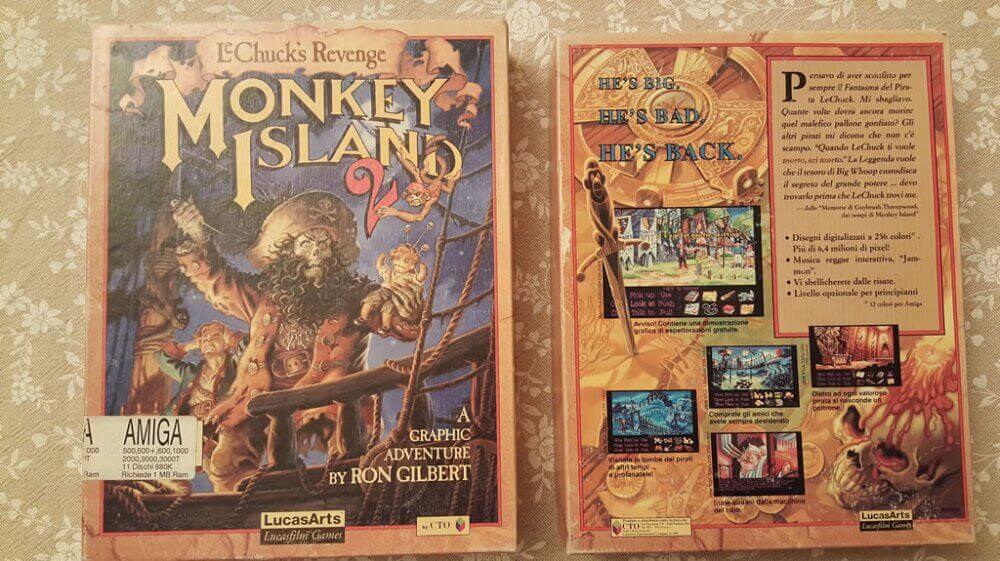
“Hey! Wait a minute! Isn’t this a cooperative board and card games blog? Why are you yammering so much about a video game?”
Yes, yes, you are right! Why are we talking so much about Monkey Island? In many ways, my expectations of a solo game come from my experiences with adventure games, text and graphical. The text-only adventure games of the late 1970s and the point-and-click adventure games of LucasArts (like Monkey Island) of the 1980s were my first solo gaming experiences. They set the bar pretty high for what I wanted in solo game:
Not too much maintenance. By having the video game engine keeping track of a lot of stuff, you just get to play the “fun parts”. You stay engaged. If you are doing too much maintenance per turn to keep a solo board game going, it takes you out of the world. I think the solo game of Deep Space D6: Armada suffered from too much maintenance per turn: see our review here. A better example would be Legends of Sleepy Hollow: it’s great as a cooperative game, but it has way too much context switching and maintenance to be a fun solo game. See our review here.
A sense of humor. It’s hard to expect a sense of humor in a lot of solo/cooperative board and card games, because typically you are trying to save the world! “Save the world or we all die!! AhHHH!” The Monkey Island series showed that you can still have fun and laugh even when trying complicated puzzles. It’s rare that solo games have sense of humor. Maybe that’s why I liked the Cantaloop series so much! See reviews here and here. The Cantaloop solo board game adventures have a sense of humor, but still present a real interesting game. See out Top 10 Cooperative Games with a Sense of Humor.
Well-crafted text and puzzles. I find myself drawn to “one-and-done” games (like Exit, Unlock, Detective: City of Angels) because they have well-crafted puzzles and mysteries. Solo games where some puzzle is just “randomly combined to make a puzzle” are less fun to me. I like the narrative to keep me involved, and I like to feel like the puzzles make sense in a context. See our Top 10 Cooperative Detective Gamesand Top 10 Cooperative Spooky Games.
Exploration/ Engaging Environment. Even if a game fails the first three criteria, as long as a game embraces a theme and won’t let go, I can still love it as a solo game. The Robinson Crusoe solo game breaks all three of the previous criteria, but I still like it because it really does feel like I am stuck on an Island trying to get off: I think the exploration aspect keeps me engaged.
Play At My Own Pace. I am generally not a fan of real-time games. In the Monkey Island series, there are very few true realtime puzzles: most of the time, you can solve a puzzle at your own pace. I find that I prefer solo games where I DO NOT have a realtime clock or timer.
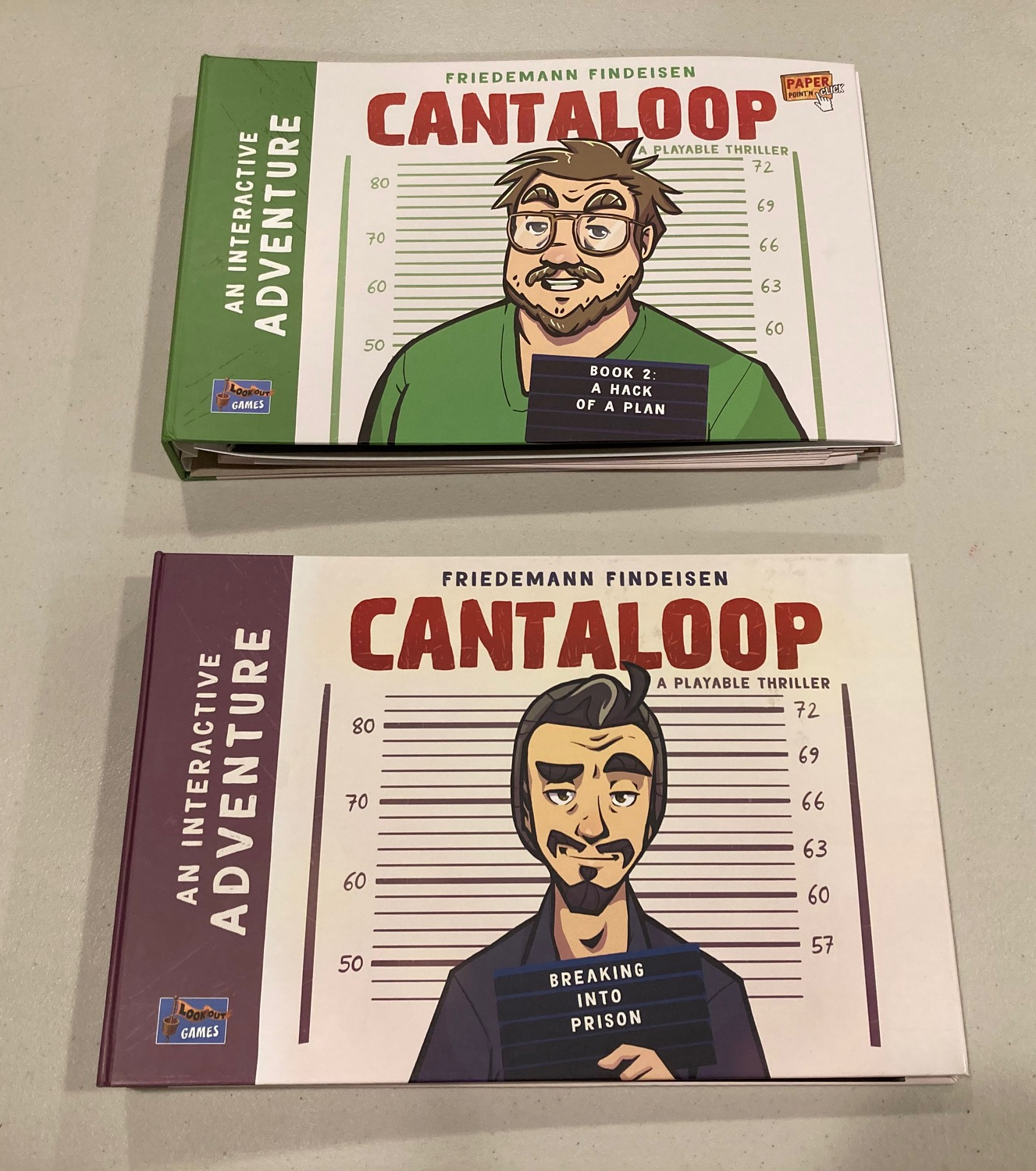
I hate to say this, but solo games have a hard time competing against video games sometimes. I think there are a lot of great solo board and card games out there (see Cantaloop above), but it seems to be harder for me to find solo games I really like because of the bar that the Monkey Island games set.
Conclusion
If you like ponderous exploration games with a sense-of-humor, and you’ve never tried any of the Monkey Island games, check out the very first one to see if you might like this series! Basically, if you like the Unlock games and Exit games or Cantaloop, (or frankly any Escape Room board games), you might really enjoy the Monkey Island series. I play the original The Secret of Monkey Islandon my PS3 (I bought the actual physical disk), but you can still get The Secret of Monkey Island from Good Old Games (http://www.gog.com). I promise this isn’t an ad … I just don’t know where to get it otherwise. I have the Amiga 3000 version, but I don’t think the disks even work anymore. EDIT: You can also get the Monkey Island games on Steam.
If you find that you love the first Monkey Island game, you need to play Money Island II and Monkey Island III!! Only play the final installment, The Return to Monkey Island (on Steam and Switch) after you’ve absorbed (at least) the first three. Monkey Island IV and V are still good games, but not as essential as the first three.
You want a new solo game series to keep you busy and laughing for a while? Try the Monkey Island series. They are my favorite solo games of all time.
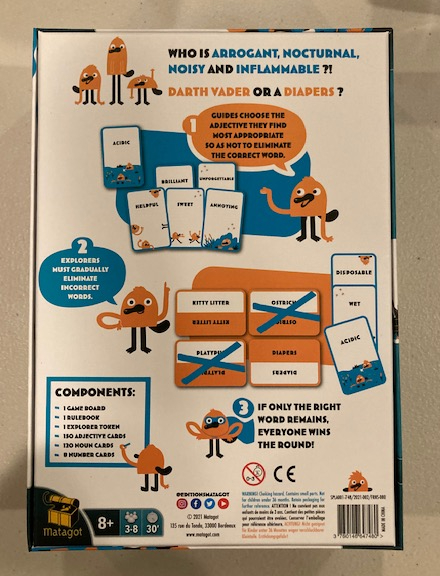
Platypus is a cooperative word game meant for larger groups of 3-8 people: it’s a party game!
I picked this up from GameNerdz during one of my online orders. It came out probably about mid 2022.
Unboxing
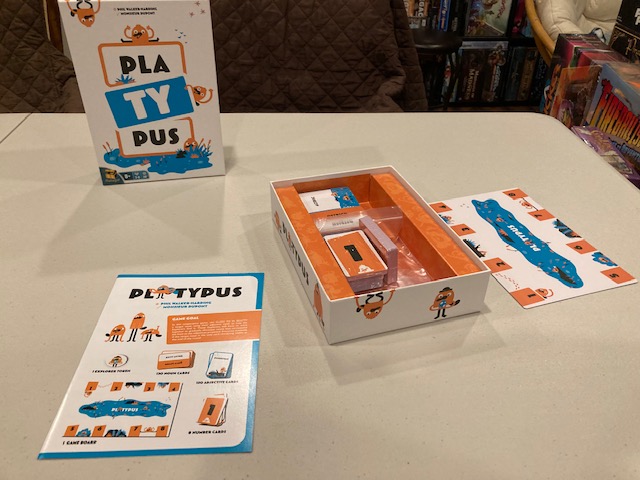
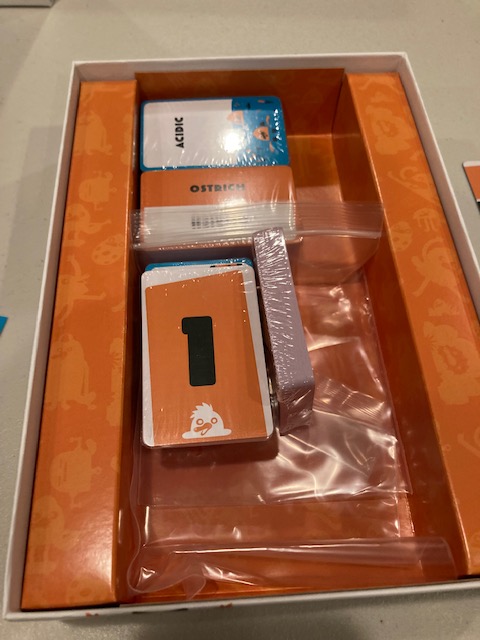
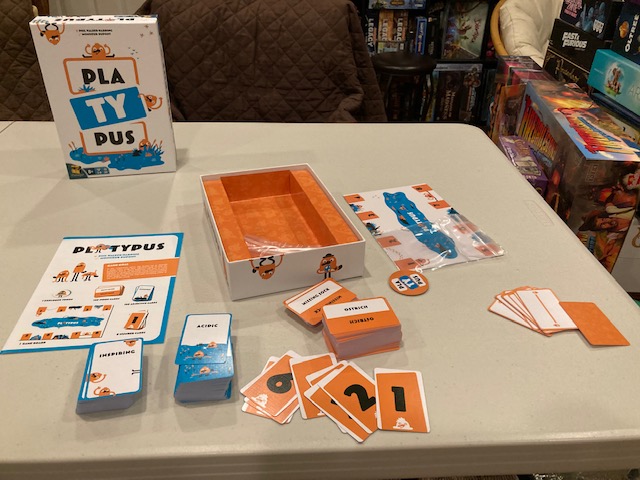
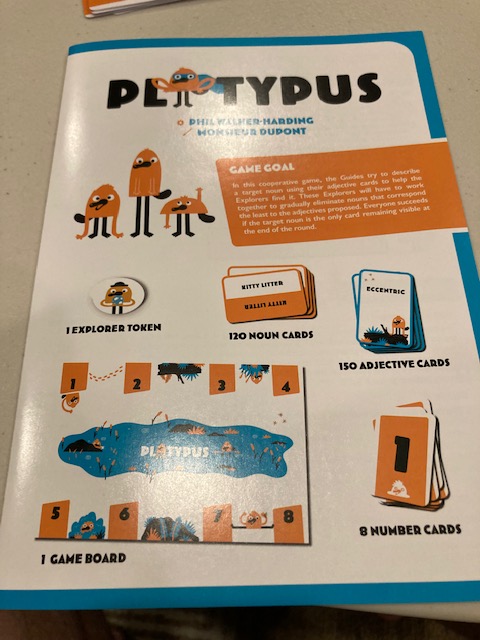
Um, this is a party word game. There’s not much to unbox here: there is a little board to put word cards on, and a bunch of word cards.
There are some numbered cards which describe the 8 positions on the board.
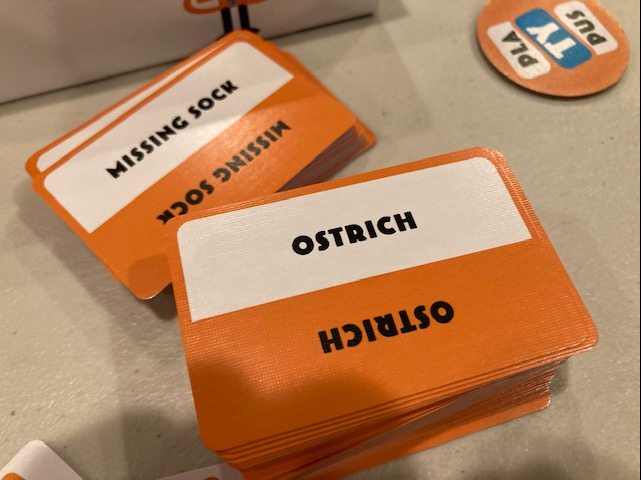
Mostly, there are word cards. There are two types of word cards: adjective cards (see above) and noun cards (see below).
If you are starting to get a Apples to Apples vibe from the game, don’t ignore that vibe! I really think this is striving to be the cooperative Apples to Apples in many ways.
Overall, the game has a cute cartoony platypus vibe. The cards are easy to read and the orange blue color palette is very distinctive without being too annoying.
Solo Play
“Solo play?What are you talking about? This is a party game!”
Oh yes, Platypus definitely needs at least 3 people to play! But, I always try to play every game solo at first, so I can teach my friends how to play. This game does not follow Saunders’ Law: it doesn’t have any solo mode, and it really can’t have such a mode. Even with something like the Changing Perspectives idea, you can’t really play this solo! Too much of the hidden information can only be gleaned from contextual implications: you can’t really just look at the board to make pure logical deductions.
Without a lot of work, you really can’t play this solo. But that doesn’t mean you can’t set it up to teach it to yourself! That’s what I did!
Gameplay
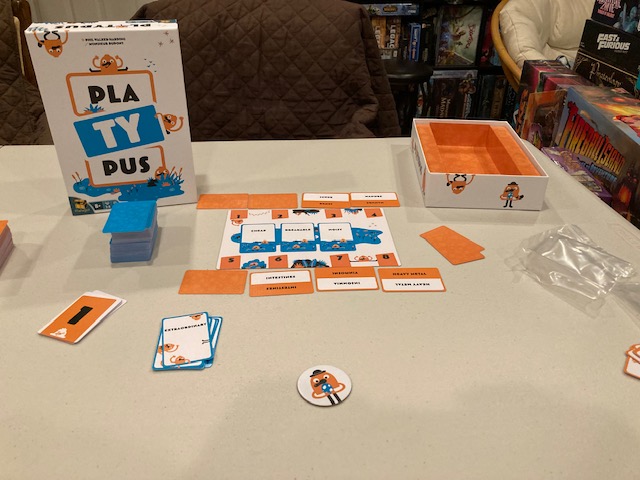
The players divide into two groups: Guides and Explorers: basically, the Explorers (1 or 2 people, depending on the number of players) are trying to guess which of the eight noun cards is “the Platypus” (the hidden word) and the Guides (which are everybody else) are trying to help the Explorers find “the Platypus” using only the adjective cards they have.
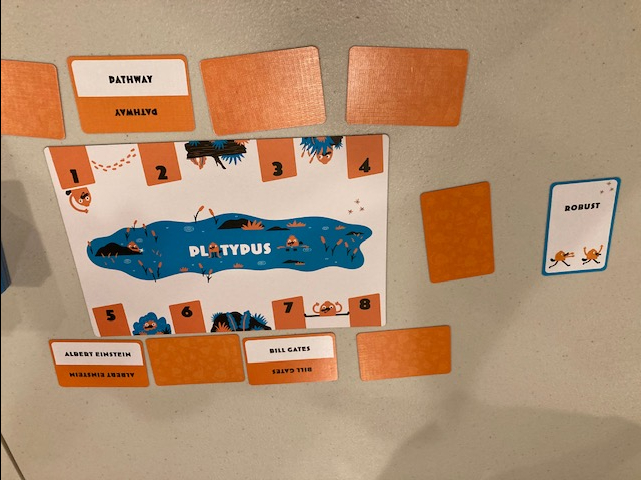
For example, one Guide might have the 7 adjective cards above as clues. After the Guide shows an adjective, the Explorers will need to eliminate one or two Nouns on the board: you can see the board below where the Explorers have been able to whittle down the board to only 3 Nouns!! Which is the final answer? What noun is “the Platypus”?
There is a little strategy in being a Guide because you are always discarding cards, and you only draw back up when you get below 4 cards. So, you may want to reserve some better adjectives to when the noun is almost chosen.
Again, it feels a little like cooperative Apples to Apples:Guides play adjective cards to help Explorers guess noun cards.
Discussion
Apples to Apples is a very apt comparison to Platypus. In Apples to Apples, a single Judge (like the Explorer) tries to choose the best match for the noun from the adjectives he gets (from many Guides): it’s a very subjective silly assessment! But, in Apples to Apples, if you have crappy words, you can just say “these suck” and just throw out a crappy card to the judge: sometimes complaining about how bad your cards are was the funnest part of the game! Or you can go for the funniest implications with the crappy cards you have! In Apples to Apples, you can still have fun with crappy cards!
And that’s the problem with Platypus: you can’t have fun with crappy cards! You are too constrained! Platypus is fun as long as The Guides have relevant adjectives to use. I remember being shocked that Guides started with eight adjective cards (“Wow, that’s a lot!”), but then I saw why: frequently, Guides get adjectives that are not really apropos! And Guides don’t get to draw back up to eight adjectives: they have to shrink down to three adjectives before they can draw more! Basically, if you get crappy cards, you are stuck with crappy cards! And then Platypus is NOT fun! It’s frustrating!
Compare this to Codenames or So Clover or Just One where the players gets to choose words as clues! Any word they want!! Even when players get to choose any word in the English language, sometimes those games are still hard! But at least you feel like you have agency and choice. Now imagine you only have 4-8 words and they all suck! No fun. In a word, it was … Frustrating.
House Rules
I think some House Rules could help fix this game up a little.
A very simple rule to help: allow the Guides to always draw back up to 8 adjectives after they play an adjective card!! That way, the Guides always have 8 adjective cards! I feel like the game was the least fun when I had fewer adjective cards.
An addition of a some resettokens would be useful: a Guide could discard one of the reset tokens to draw a brand new hand of adjectives!! You could make an “egg” be the one-time reset token, and turning it over would be a cracked egg! It would fit with the theme of the game! I guess each player would have one “egg” token which would allow them a one-time “redraw all my adjectives”. Heck, even Mysterium allows up to 3 clue redraws for the ghost … why can’t Platypus?
Conclusion
Platypus is an okay cooperative party game: it’s not bad, but it’s not good. I’d recommend any of the Top 10 Cooperative Party Games on this list before Platypus. It just doesn’t feel like players have enough choice or agency for this to be fun.
I can’t recommend Platypus as it stands, because there’s so many other great cooperative party games which are better! BUT, having said that, I think with just a few tweaks (using some House Rules like we described previously), Platypus can be a lot more fun! Give the game a try with our House Rules: you may love Platypus with those changes applied!
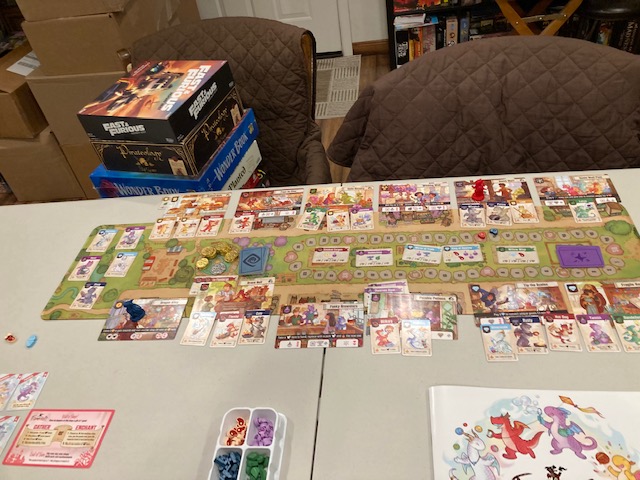
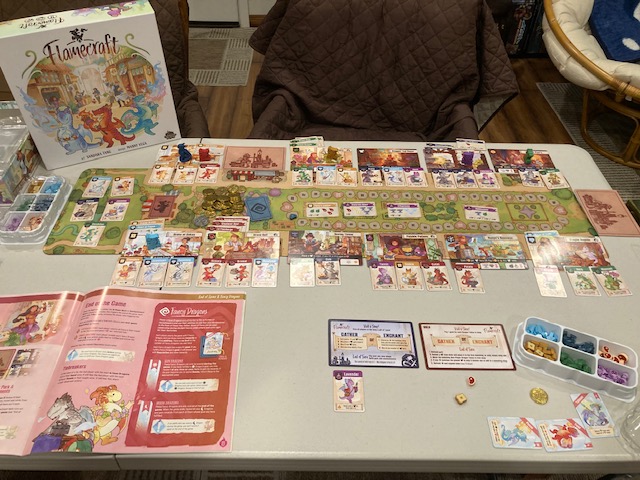
Flamecraft is a competitive, worker placement game where players compete to get the most victory points. Players each play as a dragon helping out a local village.
You might be wondering “Why are you reviewing a competitive game on your cooperative games blog?” For two reasons:
Solo Mode: Flamecraft does have a solo mode, and we take a look at a lot of solo games here at Co-op Gestalt: we have looked at Batman: The Dark Knight Returns here and Nemo’s Warhere, just to name a few.
Implied Cooperative Mode: If a game does have a solo mode, we can frequently derive a cooperative mode for it. We did this for Canvas (the Converse of Saunders’ Law, see here) and something similar happened for Elia and Something Shiny (see here). We’ll talk about this more in the Cooperative Mode section below.
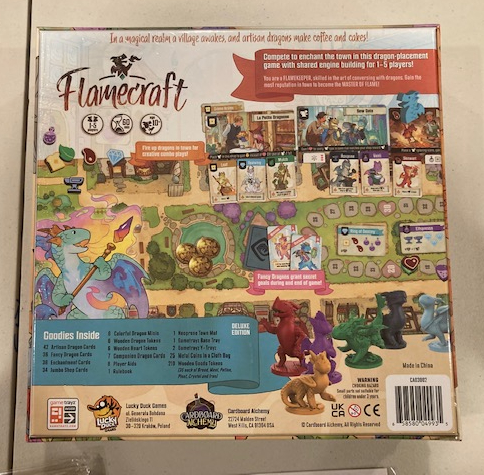
Flamecraft is an incredibly cute game: the version (above) is the deluxe Kickstarter version, with a pin, bookmarks, and extra cards.
Unboxing and Components
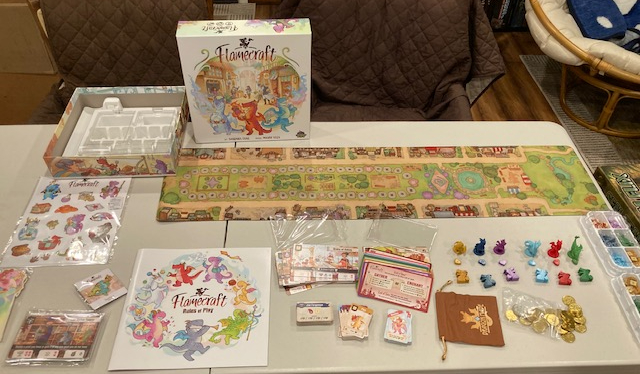
The deluxe version of Flamecraft is chock-full of gorgeous components.
The cards are linen finished, and the art is top notch. If you only get the regular version of Flamecraft, you will still get the same super cute art, if not all the deluxe wooden bits and mats.
Rulebook
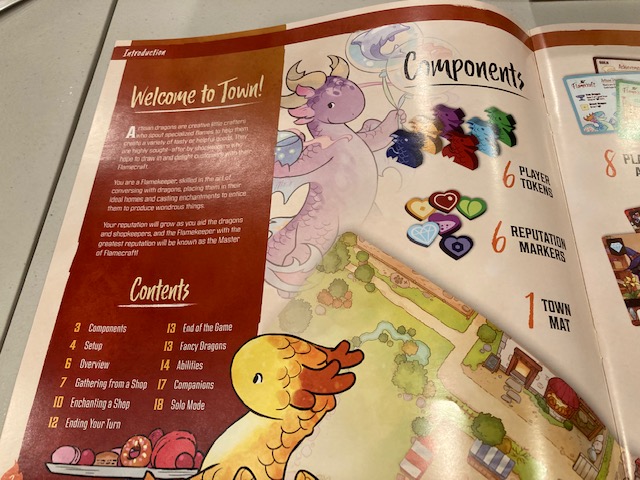
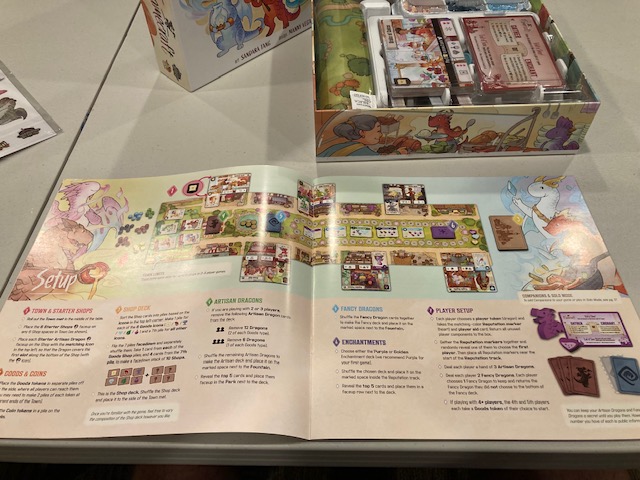
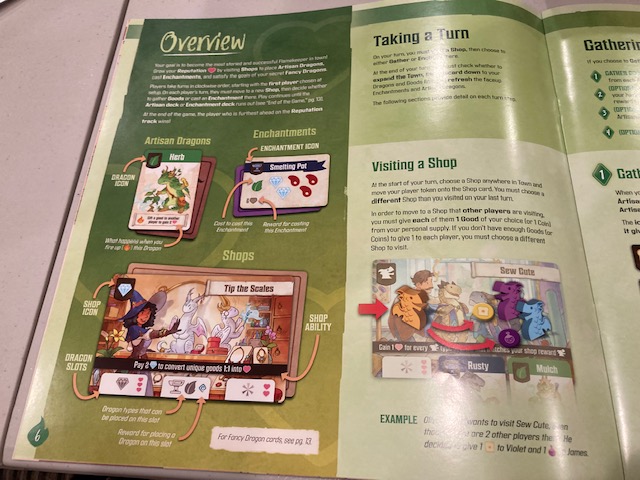
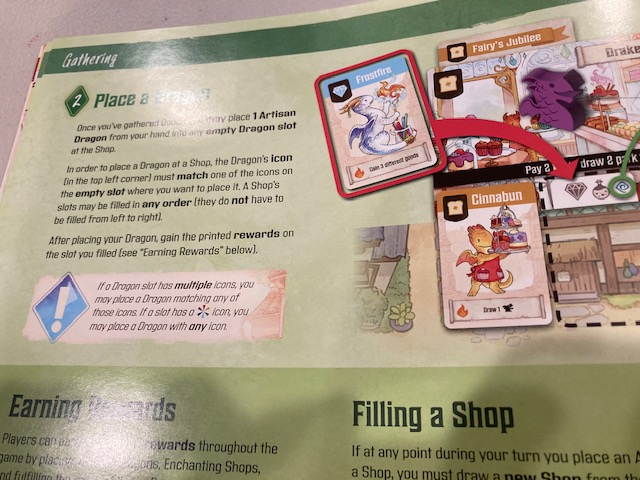
This was one of the better rulebooks I have read in a while. The rules were well-written, easy to understand, and had a lot of pictures annotating the examples.
The game is just so cute. The components pages might have been overkill!
There’s not THAT many components, and they take up two pages! But it’s nice to see everything well annotated.
The set-up pages were fantastic: see above.
You can see from the example above, there were lots of pictures, lots of annotations, and large, easy-to-read text.
One of my favorite parts of the rulebook is that they use the special “!!” section to note a rule that is an “expert clarifications” (see above). This is a rule you won’t read or understand the first time through the rulebook, but after you understand the game better and are looking for exceptions/clarifications, it’s easy to find them. (We saw something like this in Tokyo Sidekick, except they used red text to show these “expert clarifications”: see our review of Tokyo Sidekick here).
You will have no trouble getting through this rulebook. It was fantastic.
Gameplay
This is a pretty simple worker placement game: the box tells us we can play 1-5 Players at ages 10+.
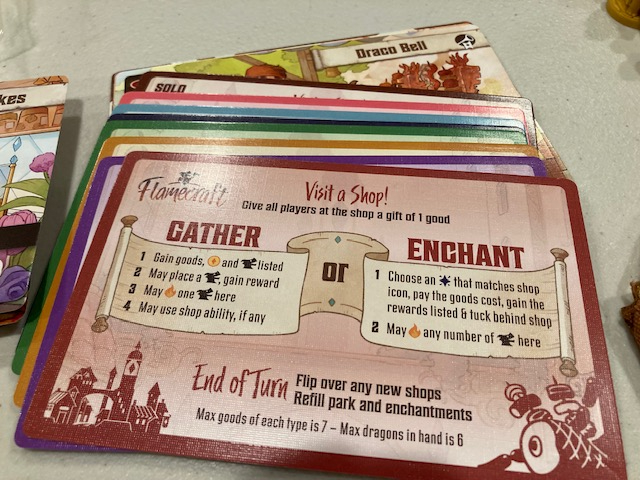
Each player gets their own summary code: see above. The game is actually quite simple! On your turn, you move your dragon to a new shop in the village:
If there are other dragons there, you have to give them each one resource: this is the penalty for going to a popular shop!
Once on a village space, you choose one of two paths: Gather or Enchant.
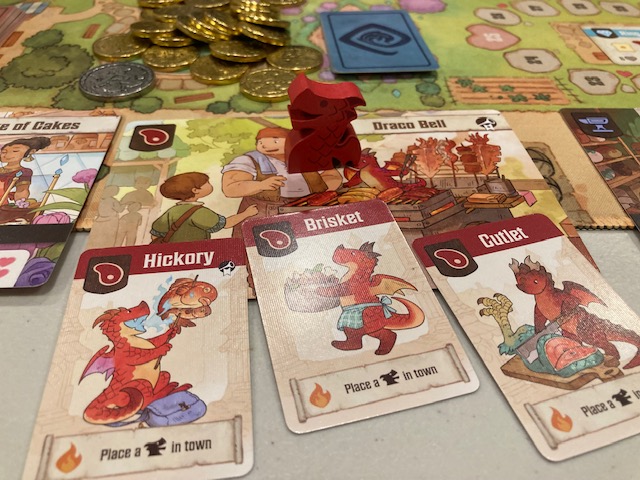
In Gather mode, you collect as many resources are in the location! For example, for the Draco Bell above you would get 6 meats (3 for enchantments, 1 for base location, 2 for artisan dragons already there), and 1 diamond (from the diamond artisan dragon). If you have some artisan dragons and the shop has space (Draco Bell doesn’t have any openings), you can place it and get a reward. Finally, then you can activate one artisan dragon:
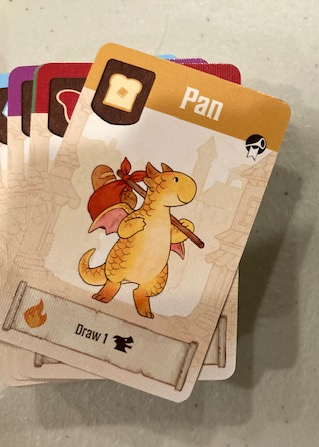
Pan (above) allows you to draw one more artisan dragon into your hand.
If you choose the Enchant mode, you will be enchanting the location, which adds resources to a location and (typically and more importantly) gives you victory points! See three different enchantments below.
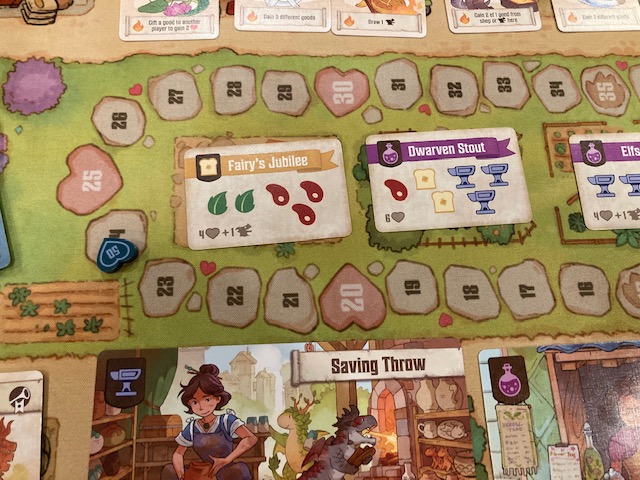
For example, if you pay 2 leaves and 3 meat for the Fairy’s Jubilee Enchantment, you get 4 victory points and new artisanal dragon! (And you place the enchantment on a Bread shop to make it more productive!) One of the best parts of casting an enchantment is that you then activate ALL artisanal dragons on that location!!!
And that’s pretty much the main idea of the game! Move, Gather or Enchant, repeat!!! There are also other rules about new locations, Fancy Dragons, and a few other mechanisms (coins are special), but that’s the main idea!
Players play until they run out of Artisanal Dragons OR Enchantments! Whoever has the most victory points wins!
Solo Mode
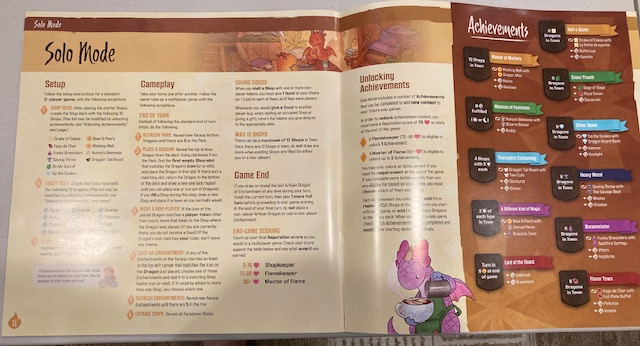
The solo mode is covered in two pages at the very back of the rulebook. I admit, the rules for solo look daunting at first, but it really doesn’t change the game that much. The solo player will play a single dragon trying to get 75 victory points using the normal mechanisms in the game. To simulate other players on the board, there will be a very simple AI moving the other dragons around the board: so you may still have to pay resource to go to a space you really want! The AI also casts enchantments as well, so it’s as if another bunch of players are playing.
The goal of the solo game is to get as many victory points as you can: it’s not considered a win unless you get at least 75 victory points! See the victory point track above, early in the game I am at 24 victory points.
Flamecraft works fine, if not great, as a solo mode. It is a really good way to learn the game. The AI operating the other dragons is simple enough, so you aren’t overwhelmed by lots of upkeep. The game also moves quickly and is fun. The only reason I say this is “fine, if not great” is that the game is a little light: however, I think that’s the point of this game (see our Conclusion). This is meant to be a lighter worker placement game.
There is a fair amount of set-up and tear-down to the game, but once you get into the solo game, it moves quickly and is fun. It is also great way to learn the game so you can teach your friends.
Competitive Mode
In the base game, the game is competitive: each player plays a dragon, moves around the village collecting resources to help generate victory points. Whomever has the most points at game end wins.
The competitive mode works very well. It’s simple to explain, play moves quickly, and there’s not a lot of take-that: the only take that is really that you have to give all other players resources if you go to their village location (and that’s pretty mild).
Cooperative Mode
Elia and Something Shiny is a multiplayer game we reviewed a little while ago (see here). It’s a cooperative game where the players are all working together to play “one creature” (Elia). The players all have to come to consensus as to what Elia will do on her turn. As a group, they operate one character.
For Flamecraft, we can do the same kind of thing to get a cooperative mode! Players collectively operate one dragon in solo mode, much like all players operating Elia in Elia and Something Shiny. A cooperative group will simply play one dragon in solo mode, trying to amass the needed 75 victory points for a win!
You might remember that we also suggested a similar cooperative mode for Canvas: in that review, we called this inferred cooperative mode Saunders’ Law Converse:
The converse of Saunders’ Law would say “If a game has a solo mode, designers should really put in a viable cooperative mode“.
In the case of Canvas, Elia and Something Shiny, and Flamecraft, this inferred cooperative mode is dirt simple to try out: just play the solo mode with multiple people.
One of the reasons I think this implied cooperative mode works is that these are ALL LIGHTWEIGHT FAMILY GAMES: I can very easily see playing all of these games with a younger child operating the main character (dragon, Elia, etc), with Mom and Dad “helping” like a cooperative game. If you wanted to get Flamecraft, but were wary you couldn’t play it cooperatively, worry no more! You can!! I will say that this implied cooperative mode probably isn’t the best way to play: Flamecraft was meant to be a game with multiple players and it works best as a competitive game … but honestly, there’s not that much “take-that” in the game if you were worried about a super competitive game.
Sense of Humor
So this game has a little bit of a sense of humor. The Enchantments all have silly names (I think Hobbichino, above, is my favorite).
The names of the locations in the village are silly. Draco Bell? Like Taco Bell?
Honestly, this sense of humor didn’t detract from the game for us: it lightened the mood and made the game that much more fun.
Conclusion
Flamecraft is a beautiful game with gorgeous art. The gameplay is really straight-forward, it’s easy to teach, and players will always feel like they are doing something on their turn. There’s not really a lot of getting in each other’s way other way, so if you don’t like super-competitive games, Flamecraft will be up your alley.
The art style is a very much an indicator of what the game is like: if you don’t like the art, you may not like the game. This is a simpler worker placement game: it may not be the first game you want to teach a new gamer, but Flamecraft would be very good as a next-step game. It’s a little more complicated than some intro games (like Forbidden Island, Splendor,Century Spice), but not too much more complicated.
The solo mode is great for learning the game, and pretty good for ongoing play. The implied cooperative mode also gives players another play option if they want to play Flamecraft cooperatively: this cooperative mode might be best for a family playing together … but it’s probably not the best way to play! Honestly, the competitive mode with multiple players is probably the best way to play, but the extra modes give the game more variety.
Flamecraft is a great “lighter “worker placement game: it’s super cute aesthetics, gorgeous components, and sense of humor will attract a lot of players. And it’s pretty fun. One of my friends wanted to order this immediately after playing it.
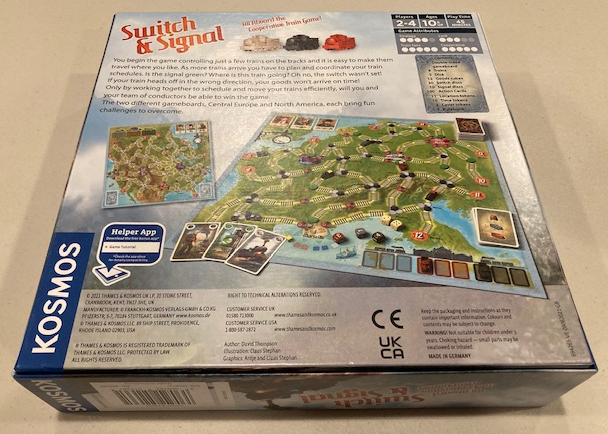
I have many friends who love trains: talking trains, taking trains, training trains … Don and Patrick in particular. When I go to lunch with Don and Patrick, I’ll say: “I’m going get to a drink refill, you guys talk about trains while I’m gone”. It’s not that I don’t like trains, I just don’t have the same passion that they do. So, I was excited when I discovered Switch and Signal: a cooperative train game from Kosmos! This ticks the boxes for all of us: trains, cooperative, game!
Unboxing and Gameplay
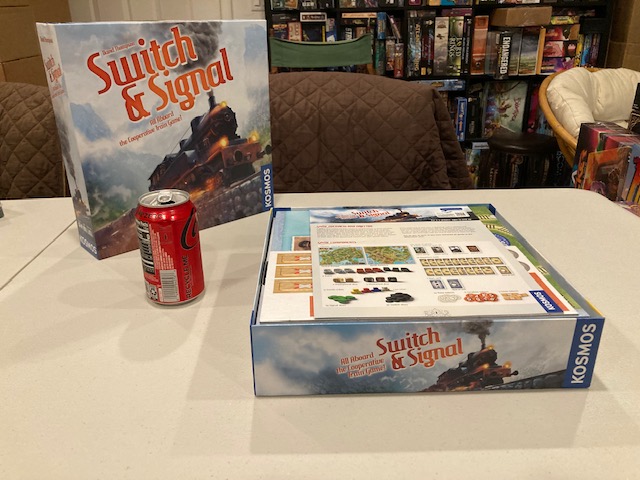
Switch and Signal comes in a standard sized box. It’s about the same size as what we call the Ticket To Ride sized box: I suspect this is not a coincidence.
The rulebook is colorful and easy to read.
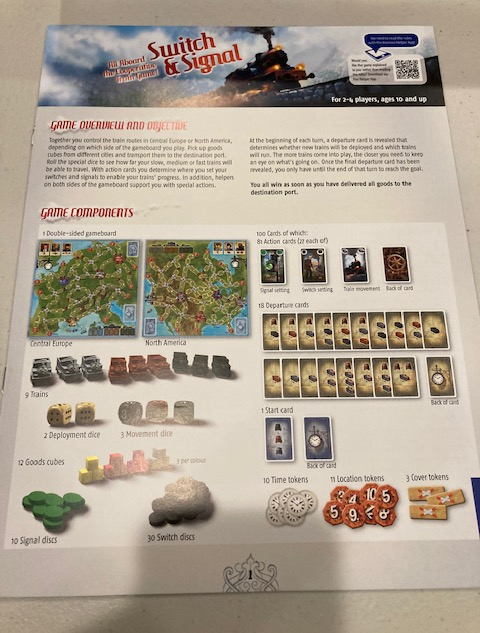
Locations 2-12
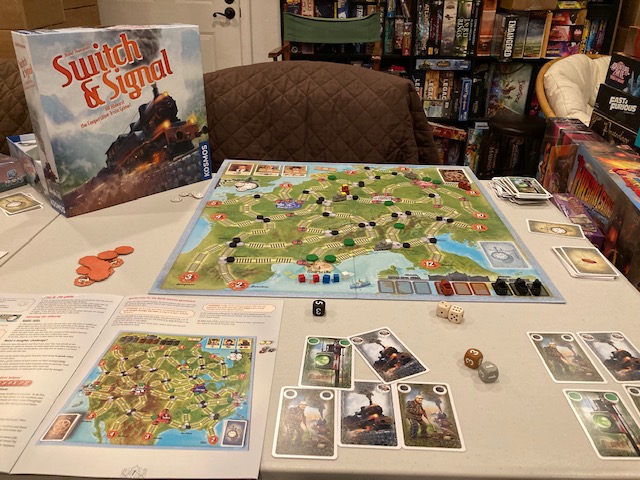
This is a train game, so it has to come with a map! In fact, the game board is a two-sided map! The Europe side (above left) is the introductory map. The North America side (the flip side, above right) is the more advanced map.
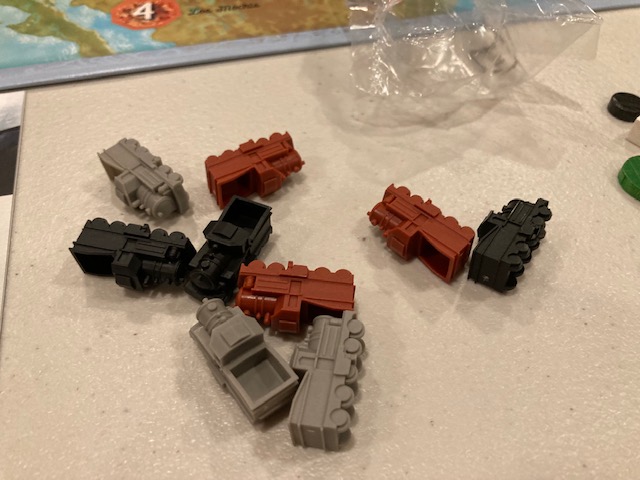
This is a train game, so there have to awesome little plastic trains! Note that each train has space for a goods cube!
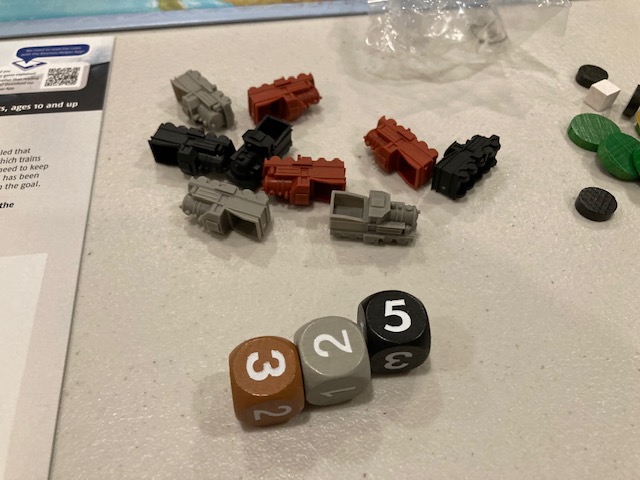
In fact, there is a die for each type of train! Players will roll those dice to move trains of that color.
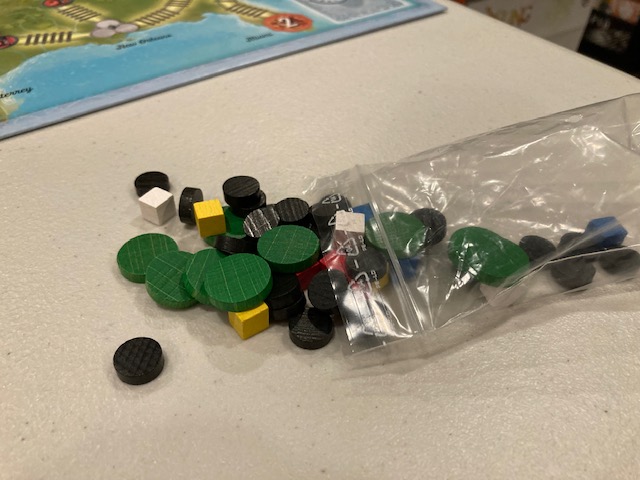
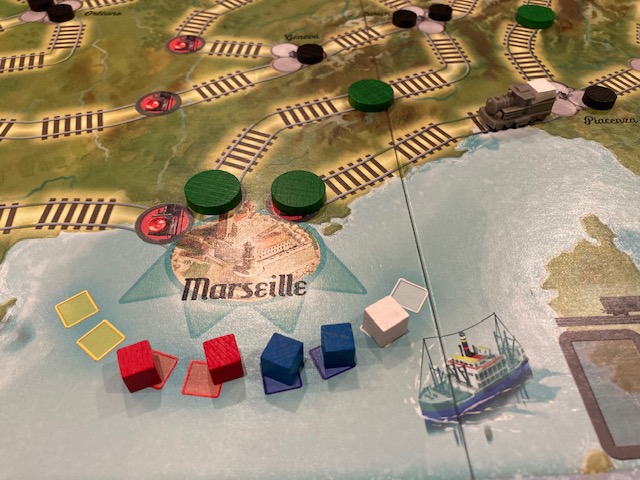
Also, because this is a train game, there have to be goods cubes to deliver!! See the colored cubes (yellow, red, white, blue) above. This game is all about delivering goods cubes to the harbor before time runs out!! And because this game is called Switch and Signal, there are switches (the little black circles above) and signals (the green discs). The signals open train lines, and the switches redirect trains along different lines.
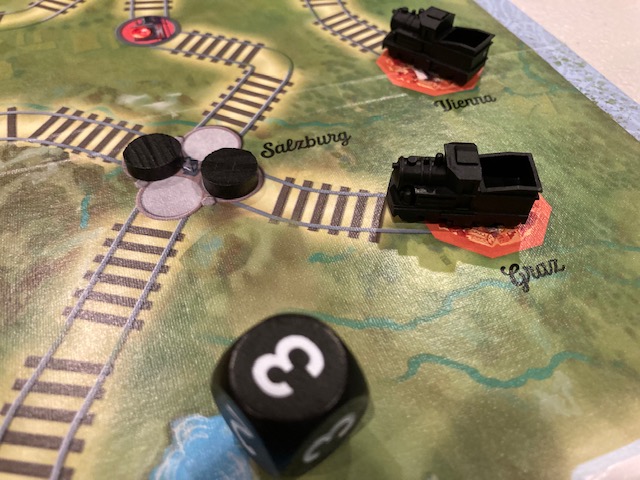
For example: the black train above can’t move across the Salzburg switch because the switching is the blocking the way.
The grey train (above) can move into Marseille (with the white goods cube) because the (green) signal on his track is open. Notice the (red) signal on the leftmost (east) entry into Marseille is NOT open!
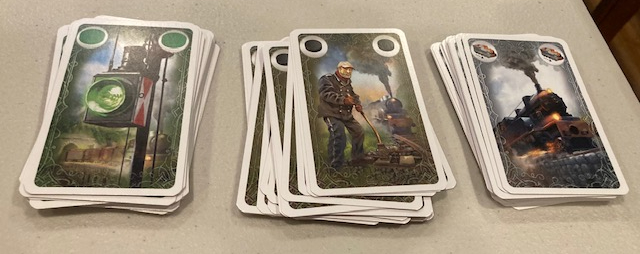
How do players operate the switches and signals? Through card play! Each turn, each player plays his 5 (or more) cards to cause stuff to happen on the train tracks. The cards are dirt simple: you can move a signal (left green card), update a switch (middle black card) or move a train (rightmost train card). And that’s it! Note that we say “move a signal” because you can only move a signal from some other part of the board to an empty signal slot … you can’t introduce more signals! Similarly, on a switch space you can only reconfigure a switch (no moving them off the switch). And finally, you can move a train via dice. Remember those dice you saw earlier?
When you play a train card, you can move a single train, using and rolling the appropriate die. Notice that the trains all move different speeds! The grey trains tend to moves slowly, brown trains tend move normally, and the black trains tend to move very fast!
How do trains get on the map? The departure cards (see above) specify what color trains come out (and also move them). Usually, one comes out every turn. If you run out of departure cards, you have run out of time and players lose the game!
The time tokens (above) help count down time as well. Every time one of your train gets “stuck” (can’t move because it’s behind another train, or at a closed switch, or at a closed signal), players lose some time tokens. If players lose too many time tokens, they discard an extra departure card! The normal flow of time causes the departure cards to count down slowly, but blocked trains lose extra time. It’s important in the game to keep all your trains moving!
You’ll notice the two brown numbered dice above: the sum of those two dice tell you where a train will come out! There are 10 locations, labelled 2-12. This mechanism adds a a bit of randomness in the game, but the locations 6,7,8 tend to be the busiest locations. See below and below.
Locations 2-12
Putting all together, players need to try (cooperatively) to deliver all the good to the harbor before time runs out!
If you deliver all the cubes, you win! If you run out of time (no more delivery cards), you lose!
Overall, this game looks good. All the cards and locations are easy to read and see.
Rulebook
This is a very good rulebook. It’s short and succinct: only 8 pages. The pictures are very helpful and useful, especially the set-up which spans two pages! It is so easy to set-up!! The base rules are explained well. More importantly: all the edge cases seem to be discussed one way or the other. This rulebook is easy to read, easy to peruse, and easy to search.
Solo Play
Somewhat surprisingly, this game doesn’t adhere to Saunders’ Law: Switch and Signal doesn’t have a solo mode! In the modern gaming landscape, many cooperative games add a solo mode just to appeal to more gamers. Nope! Not Switch and Signal!
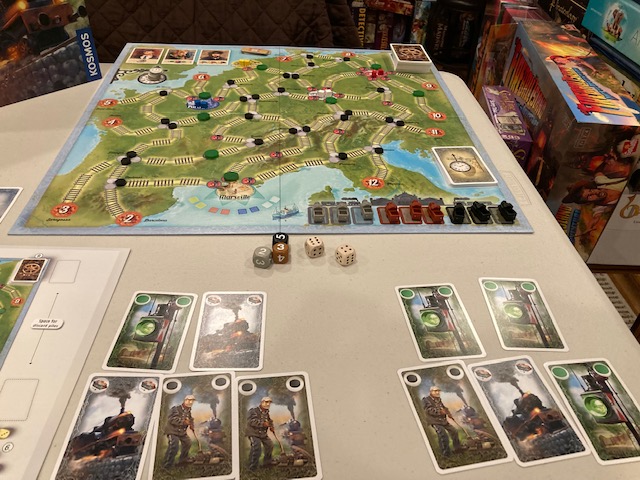
Weirdly, I don’t think it would be that hard to add a solo play. I went ahead and played two-handed as if I were two players and it worked fine (see above): in fact, it was a great way to learn the game. After getting through the game, I could see how easy it would be to play this one-handed for a solo game!
This is nominally a hidden information game, as players are allowed to talk about the cards in their hands, but they can’t show the other players. (It’s not 100% clear: the rules explicitly say you can “talk about the cards in your hand” but the rules only imply you can’t show your cards to other players). So, a two-handed solo game has everything laid bare like the picture above: there’s no hidden information! So, is the game too easy with all information laid bare? Perhaps that’s why there’s no solo mode?
Honestly, I had a great time playing a two-handed solo game! Even though I lost my first solo game (see above), I could easily see playing this as a solo game again. It was fun! So, my recommendation? Play it two-handed solo to learn the game: that was a great way to learn it. If you like that mode, there’s nothing to stop you from playing solo that way! I don’t think the board game police will come and get you for playing this solo. I think.
Cooperative Play
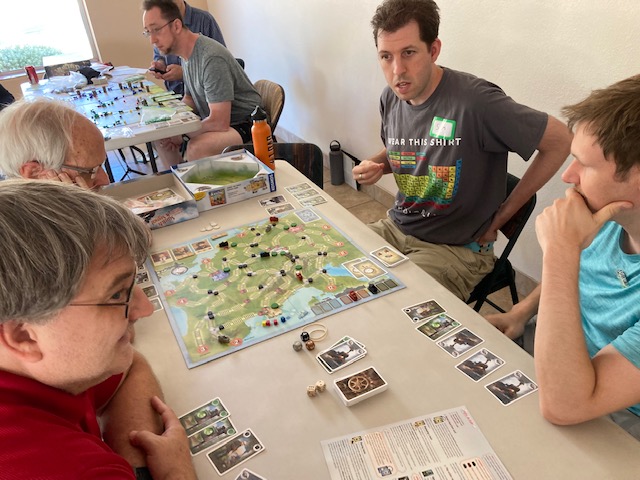
I was able to get this played with 2, 3, and 4 players and we all had a blast! It was quite a hit at RichieCon 2022! As we look at the board, we decide as a group which things we need to deal with: we set direction for the current player and a little bit of direction for the next player. We have fun just having these discussions! I mean, the train people love just having the discussions about trains!
I could see there might be an element of Alpha Player Syndrome in Switch and Signal, as you really do need to discuss things and come to consensus as you play: Alpha Players aren’t as good at coming to consensus. This is especially true (when sometimes your hand isn’t very good) when all you can do is set-up the next player! So, I am pretty sure that’s why you can only discuss what’s in your hand and not show it. I think if an Alpha Player shows up in your game, you have to lean hard into “I can’t show you what I have” rule and simply engage discussion at a higher level. If your group luckily avoids the Alpha Player, I don’t think there would be a problem showing your cards.
Conclusion
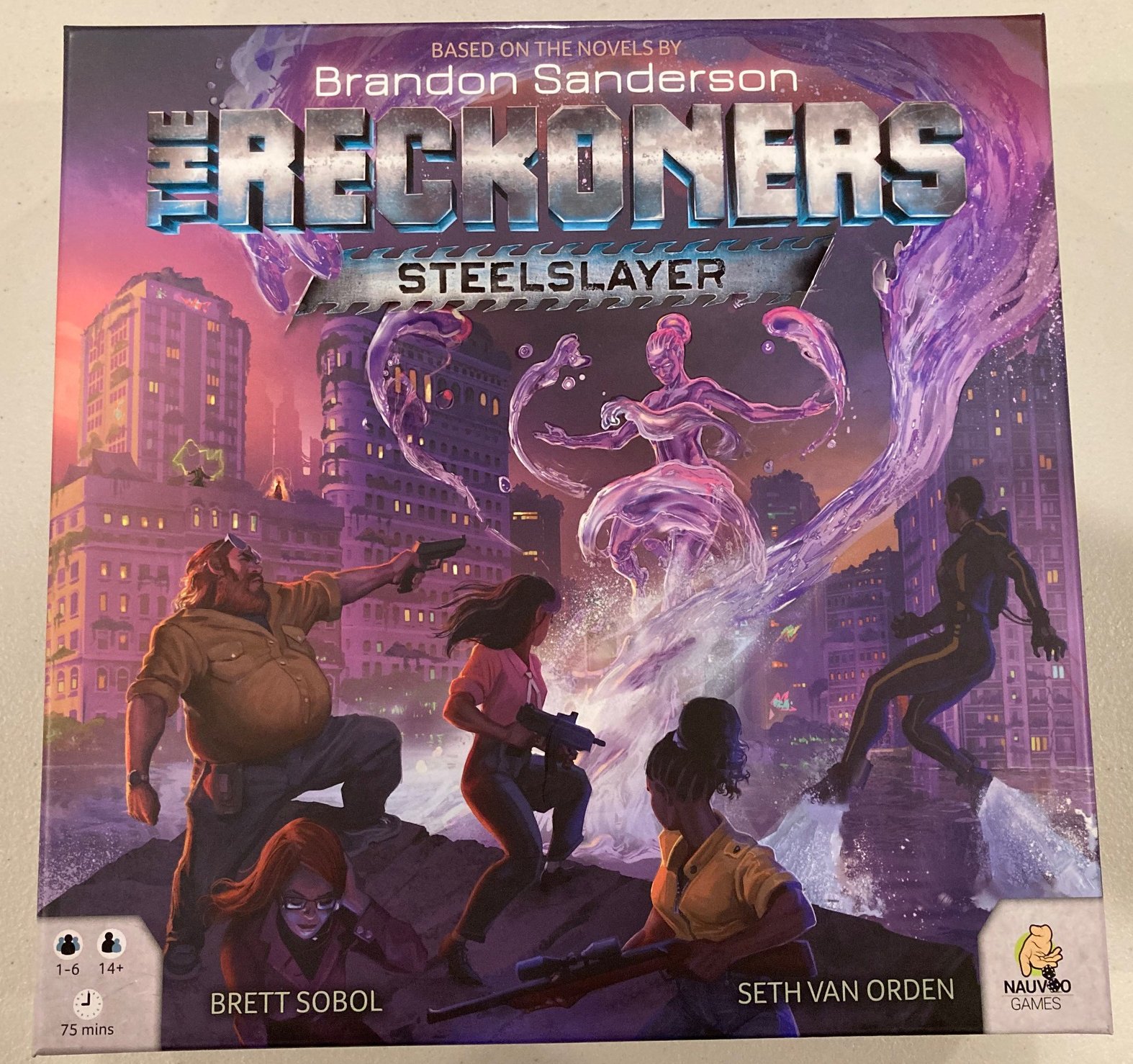
If Switch and Signal were trying to be the cooperative replacement for Ticket To Ride, I’d say they succeeded! Switch and Signal is a light game that plays quickly (in 45 minutes), it’s easy to teach, it’s easy to play, but it has lots of interesting decisions! There’s not quite as much cooperation in Switch and Signal as other cooperative games (like, say The Reckoners, which we’ve reviewed here, where every dice face and order matters), but that’s probably a good thing: my train friends tend to be fiercely independent creatures! There’s just enough cooperation to make us feel like we are working together, but there are enough independent decisions to keep each player focused on their hand.
Switch and Signal is a rare thing: a cooperative, simple, light, but deep game that plays quickly. I suspect me and my train friends will be playing this quite a bit in the future. If you aren’t a train person, I suspect this game will still appeal to you.
Recall that we did the Top 10 Cooperative Detective Board and Card Games here: we could have also called that list Top 10 Cooperative Heavy Deduction Games because many games on that list are heavier deduction games. This list here concentrates more on the lighter cooperative deduction games that are easy to bring out in a group. When you want something quick and simple, try one of these!
10. Crack The Code
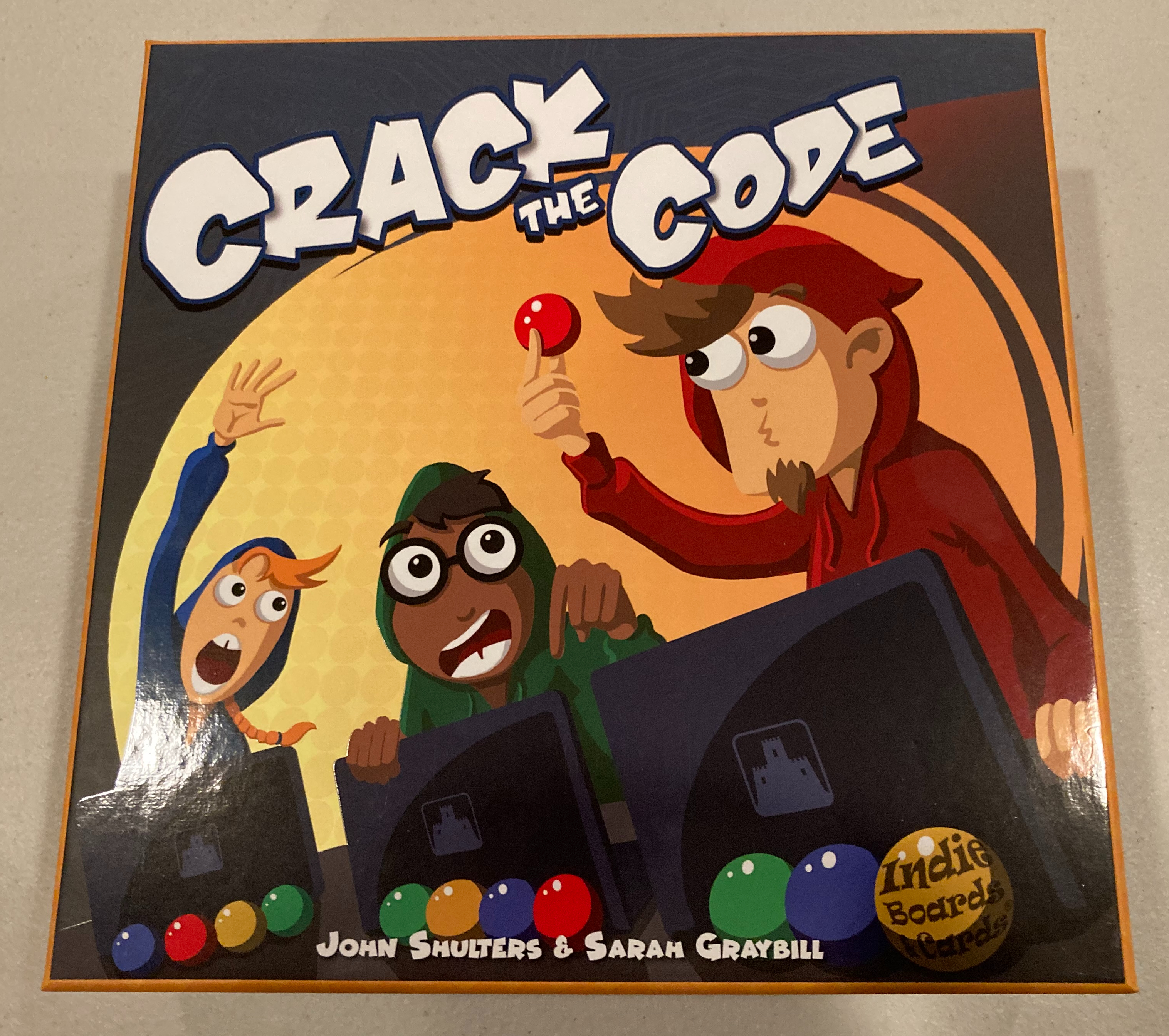
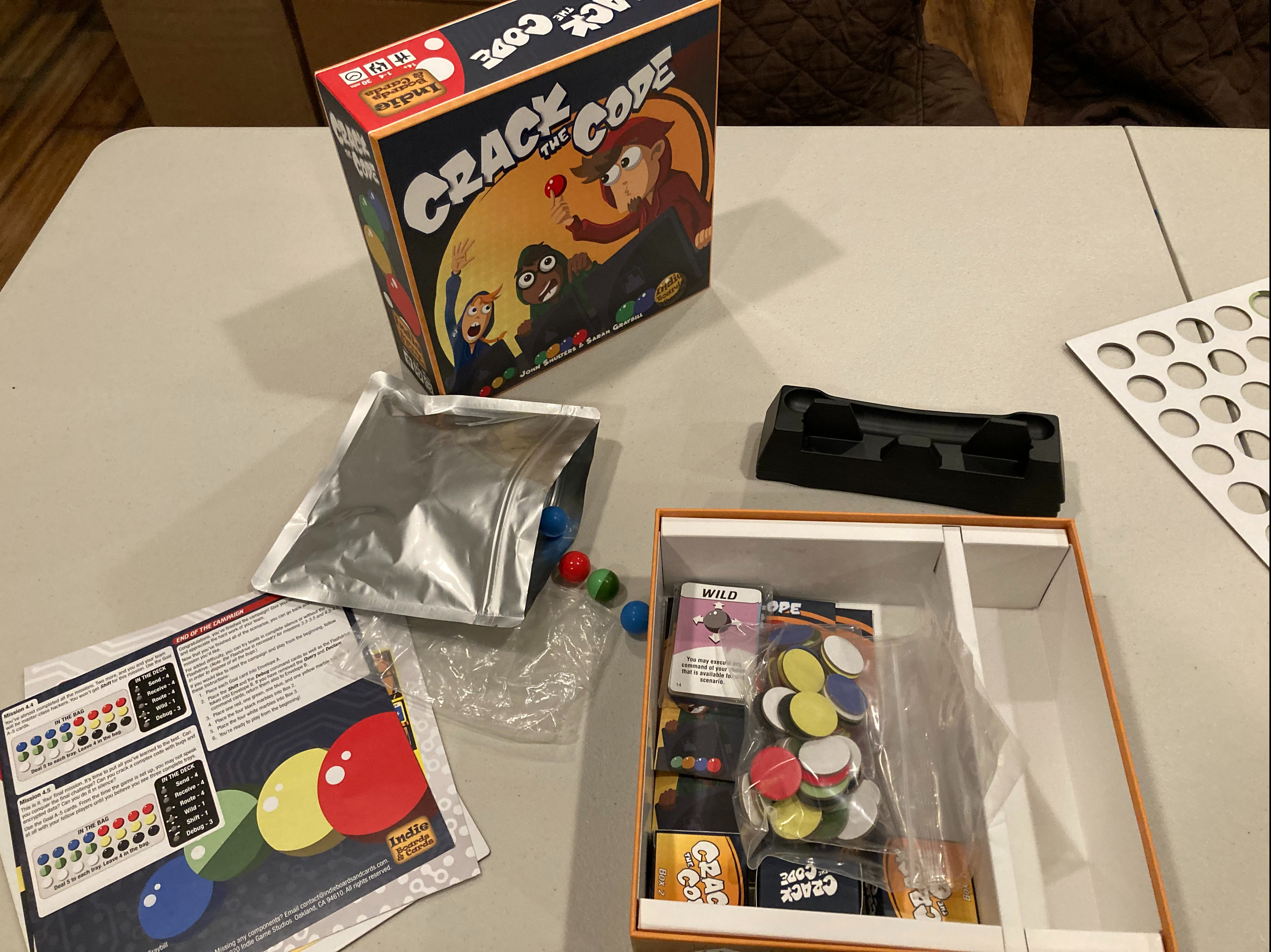
Crack The Code has interesting ideas with hidden elements moving around the board. Player have to get the proper colored balls to each player. The components are little rubber balls that go from player to player and can generally only move left and right. There are a few component issues (sometimes the little balls get stuck), which is why this is number 10, but there are enough interesting ideas in this light deduction game to make it worth a look.
9. Mysterium
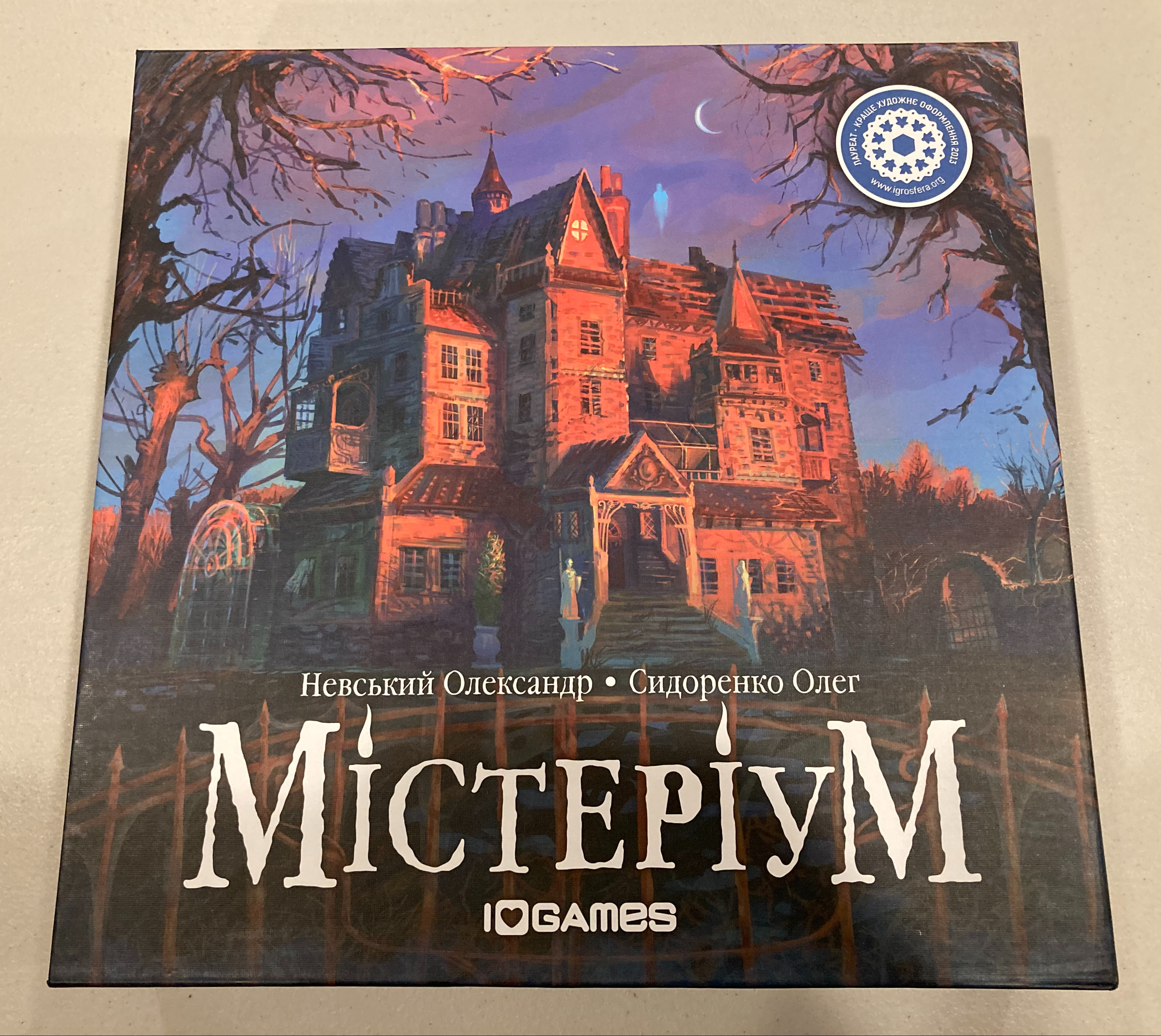
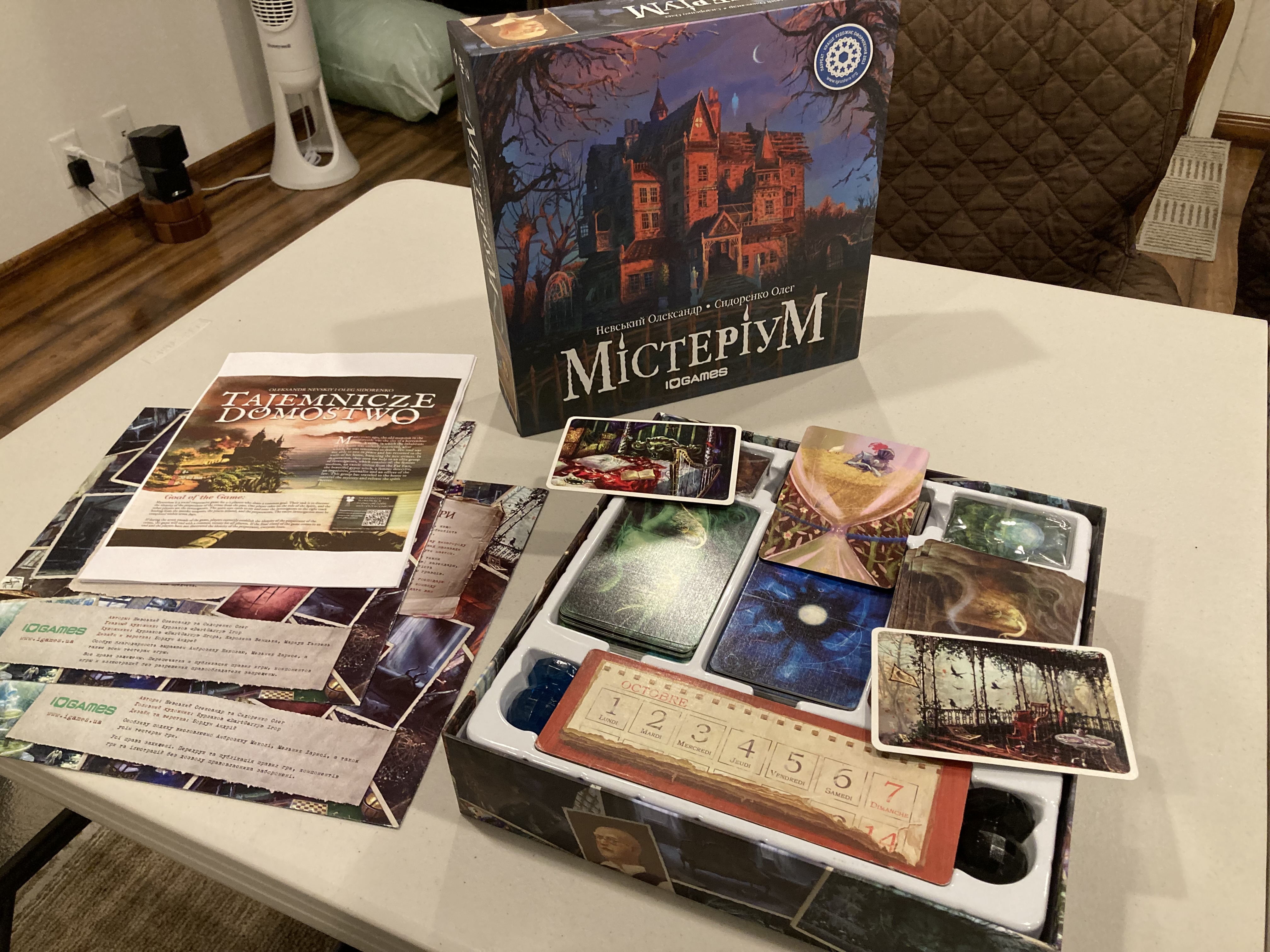
NOT the USA release of Mysterium!
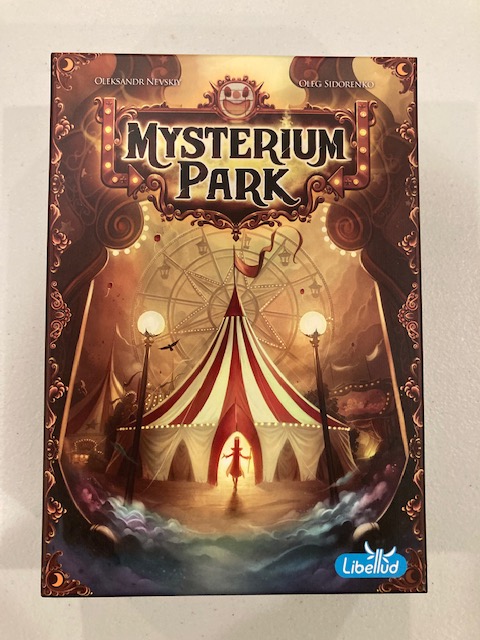
The only reason that Mysterium is number 9 on our list is because the deduction is more inference and guessing than other games on this list. But Mysterium is so fun, it has to be on this list! One player plays the ghost, giving clues to all the other players. These clues (clue cards) are meant to help the players guess aspects of the ghost’s murder! Using these clue cards, which are crazy and wild pictures, (see some below) players try to “deduce” what the ghost is trying to communicate! It’s so hard to be the ghost, but ultimately very rewarding. Some players may like Mysterium Park better: it’s essentially the same game but a little more streamlined.
8. Mysterium Park
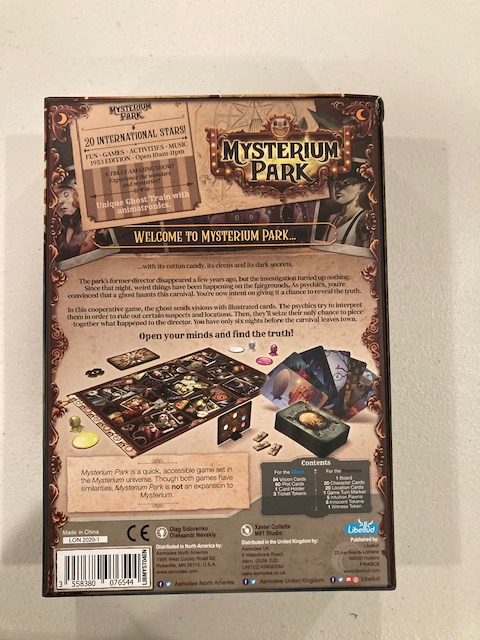
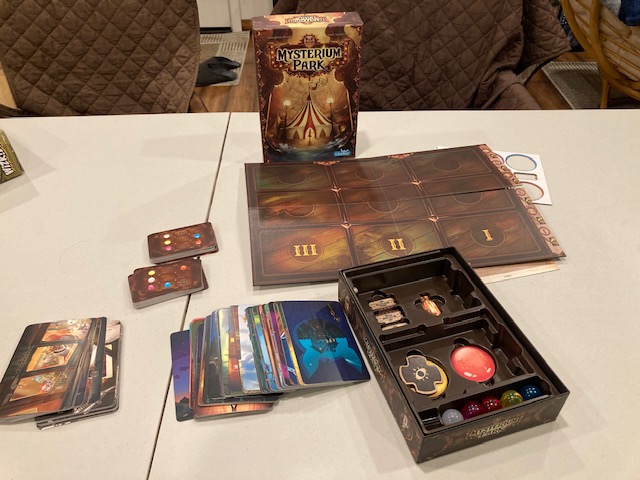
Speaking of Mysterium Park: This game offers a very similar experience to Mysterium, but in a streamlined fashion. The game center on a carnival setting, with creepy/spooky cards in that world.
A game of Mysterium Park only plays in 28 minutes, but has the same creepy and weird cards that Mysterium does. It’s also a much smaller box!
7. Outfoxed
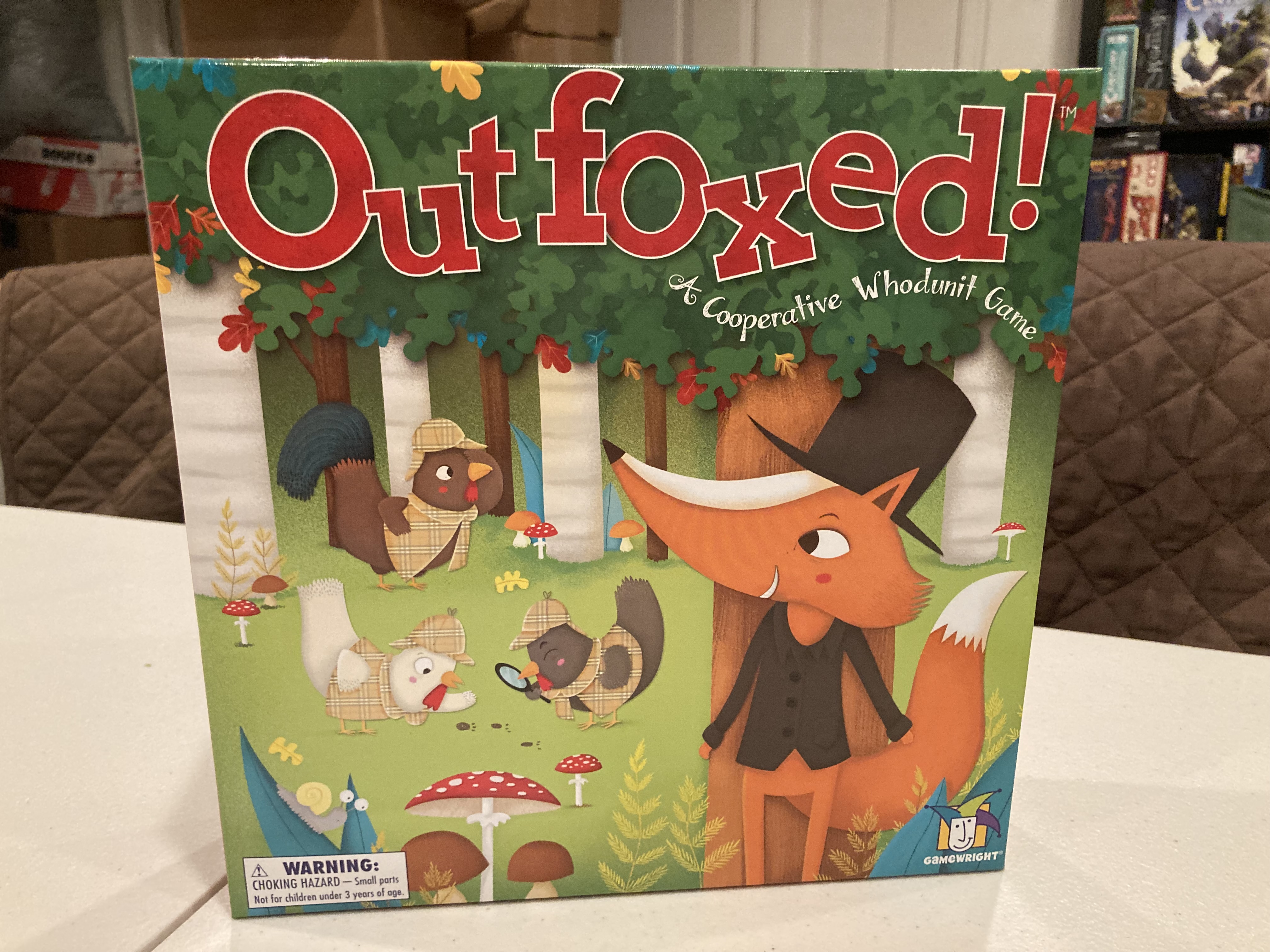
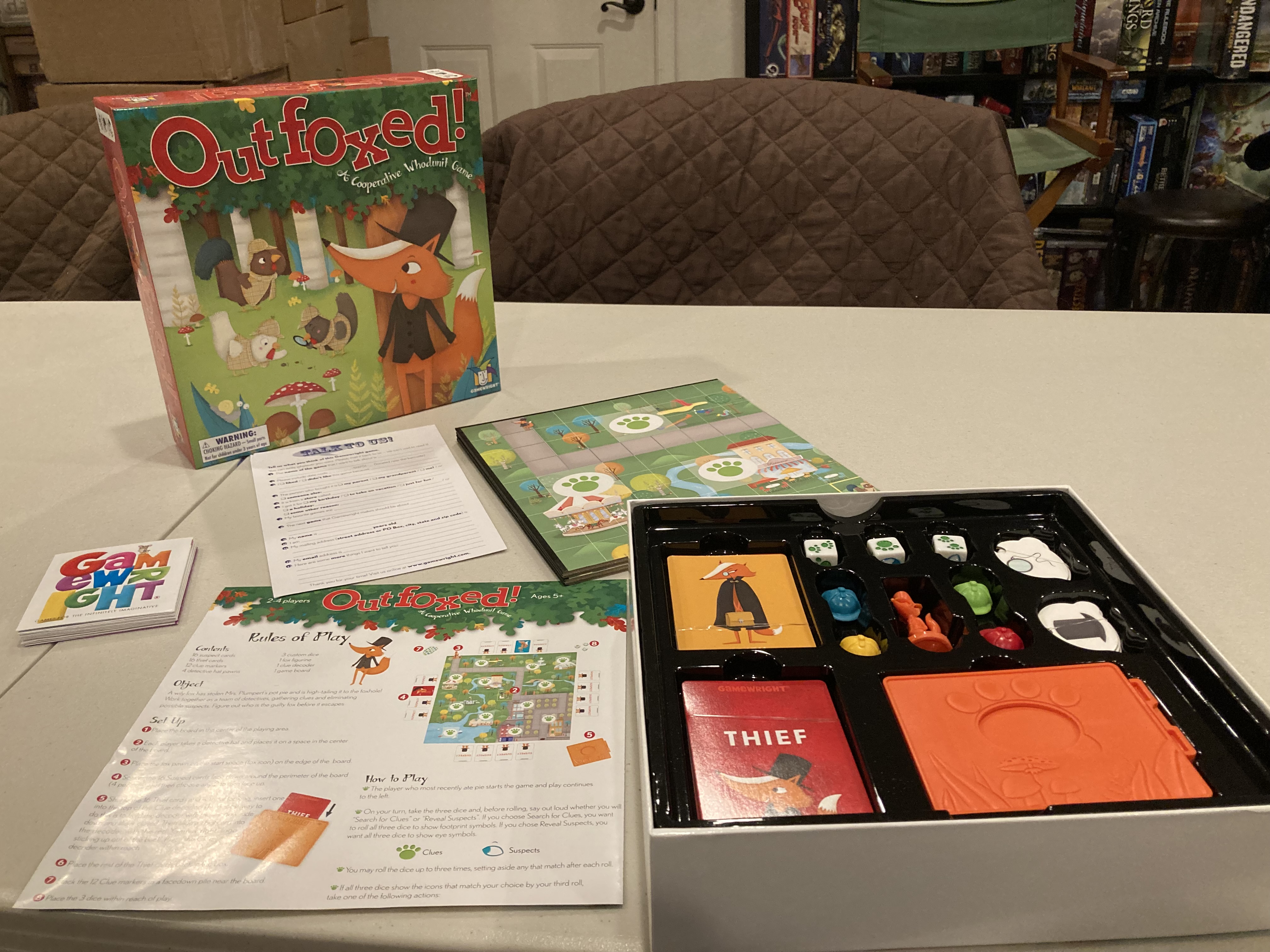
Outfoxed is a very lightweight games, mostly for kids but still a fun deduction romp you want something very simple. The ages of the game are labelled 5+: I could easily playing with my young nieces. But, I could also see this being an end-of-the-night game when you want something light and fun.
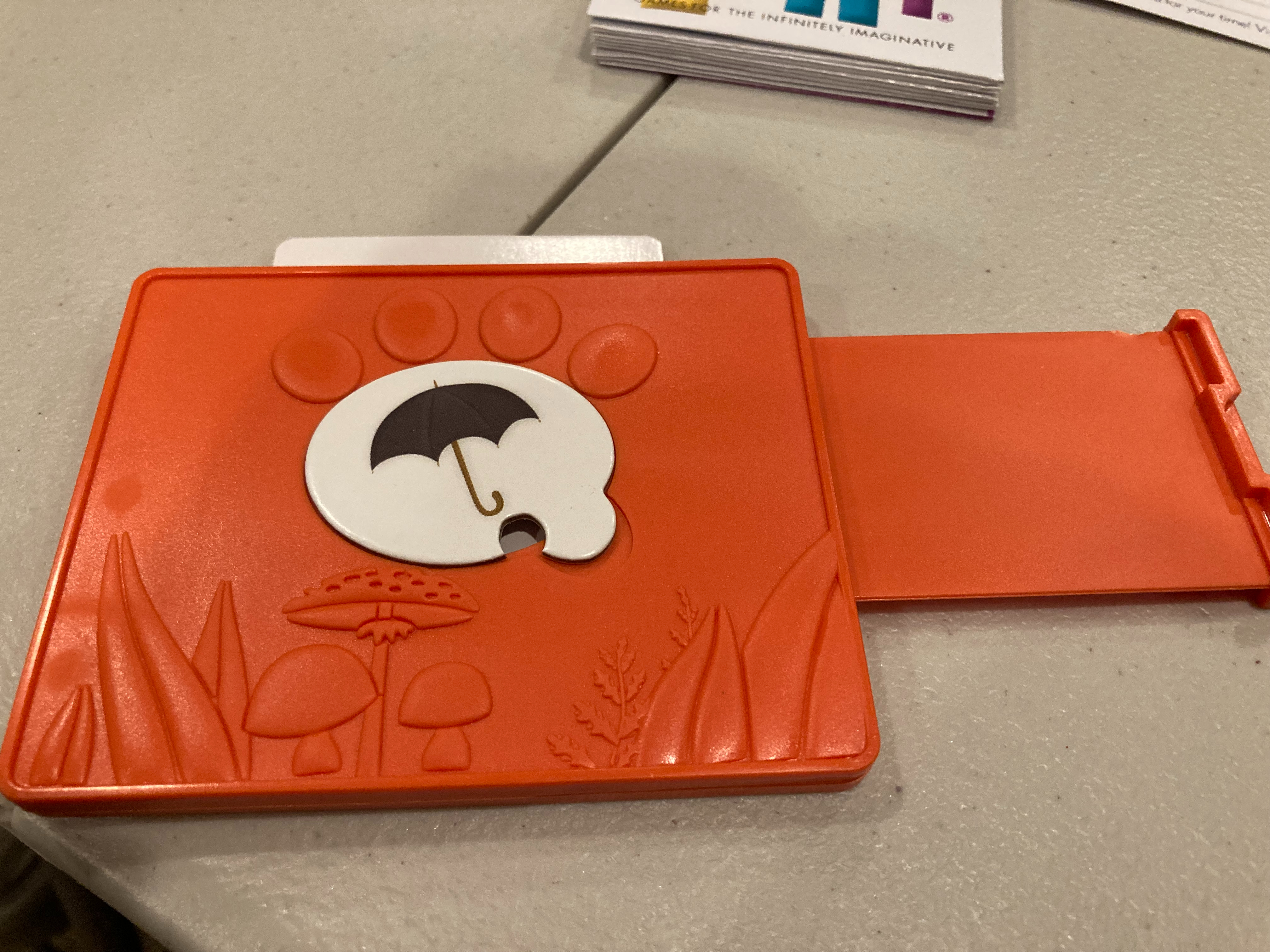
The components are nice, and it even has a little toy factor with the orange clue looker-upper!
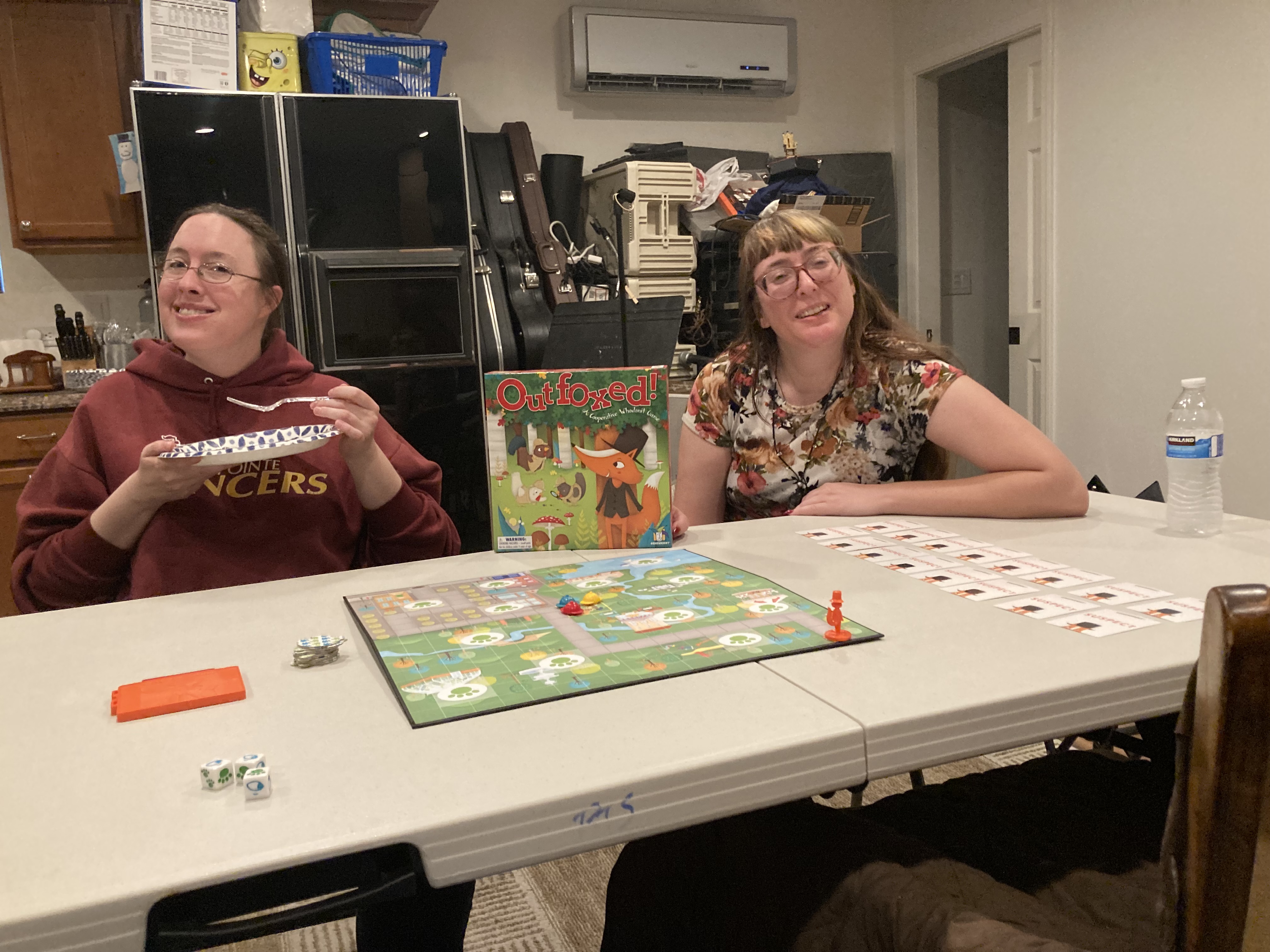
Overall, we had a nice time playing Outfoxed, even if it is a little lighter.
6. 5-Minute Mystery
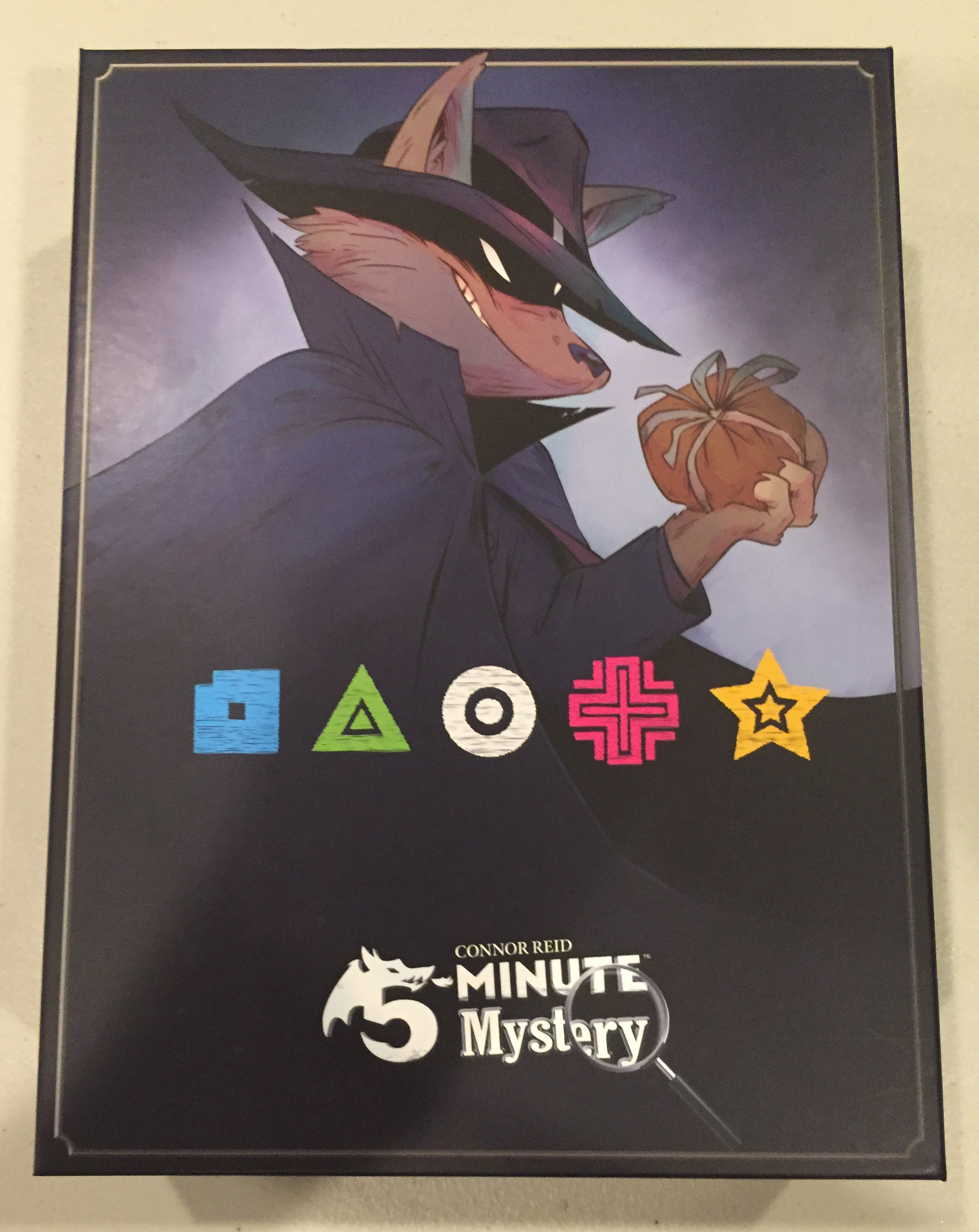
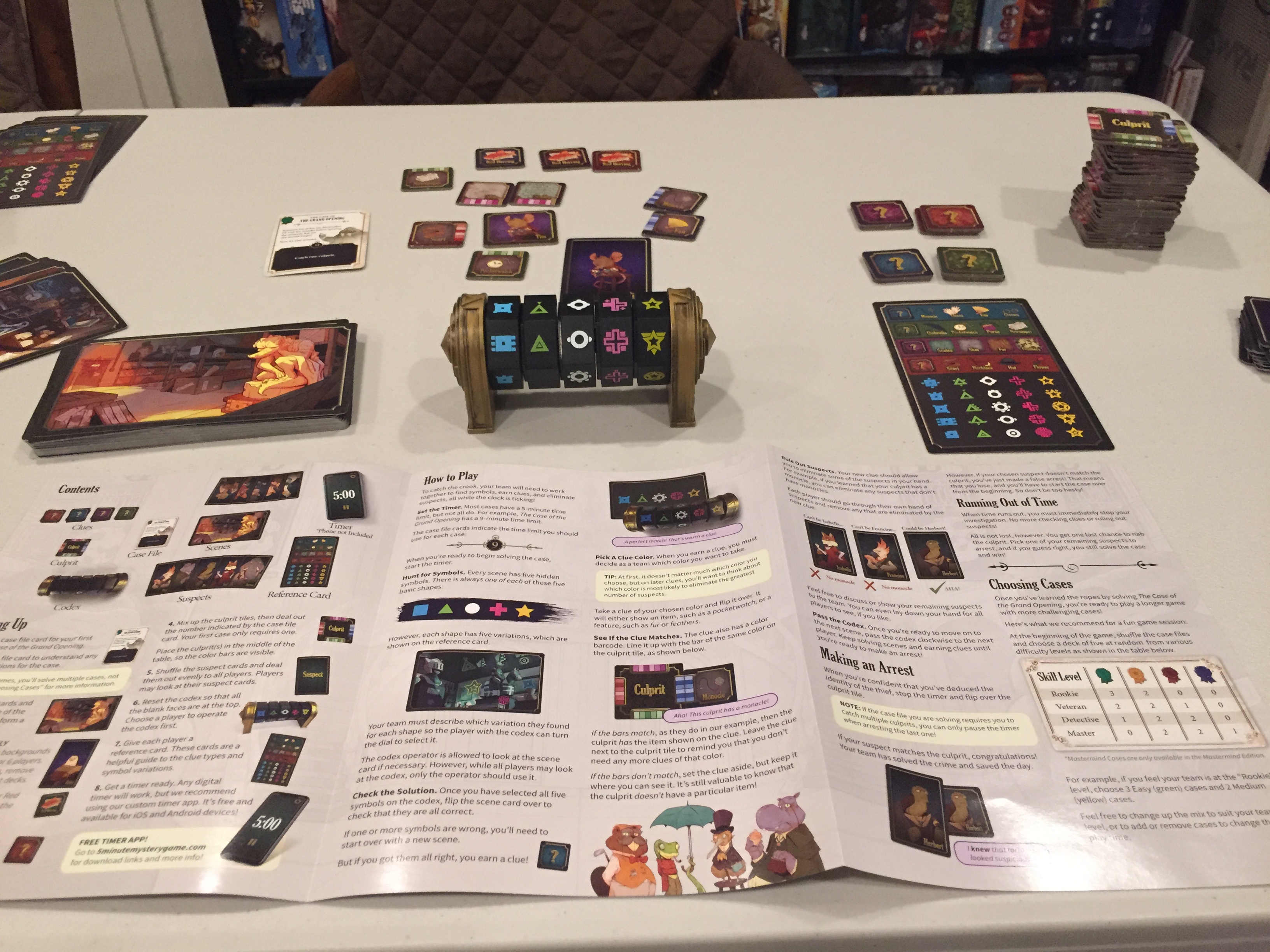
We reviewed 5-Minute Mystery here some time ago: this game is only 5 to 8 minutes per session, but has a major toy factor with the codex the players use. This game is a combination of “find the hidden symbols” and “deduction”. I didn’t think I’d like the hidden symbols portion, but it was fun and worked great in a cooperative group setting. This is a fun, light deduction game with a cool plastic codex!
5. Stop Thief!
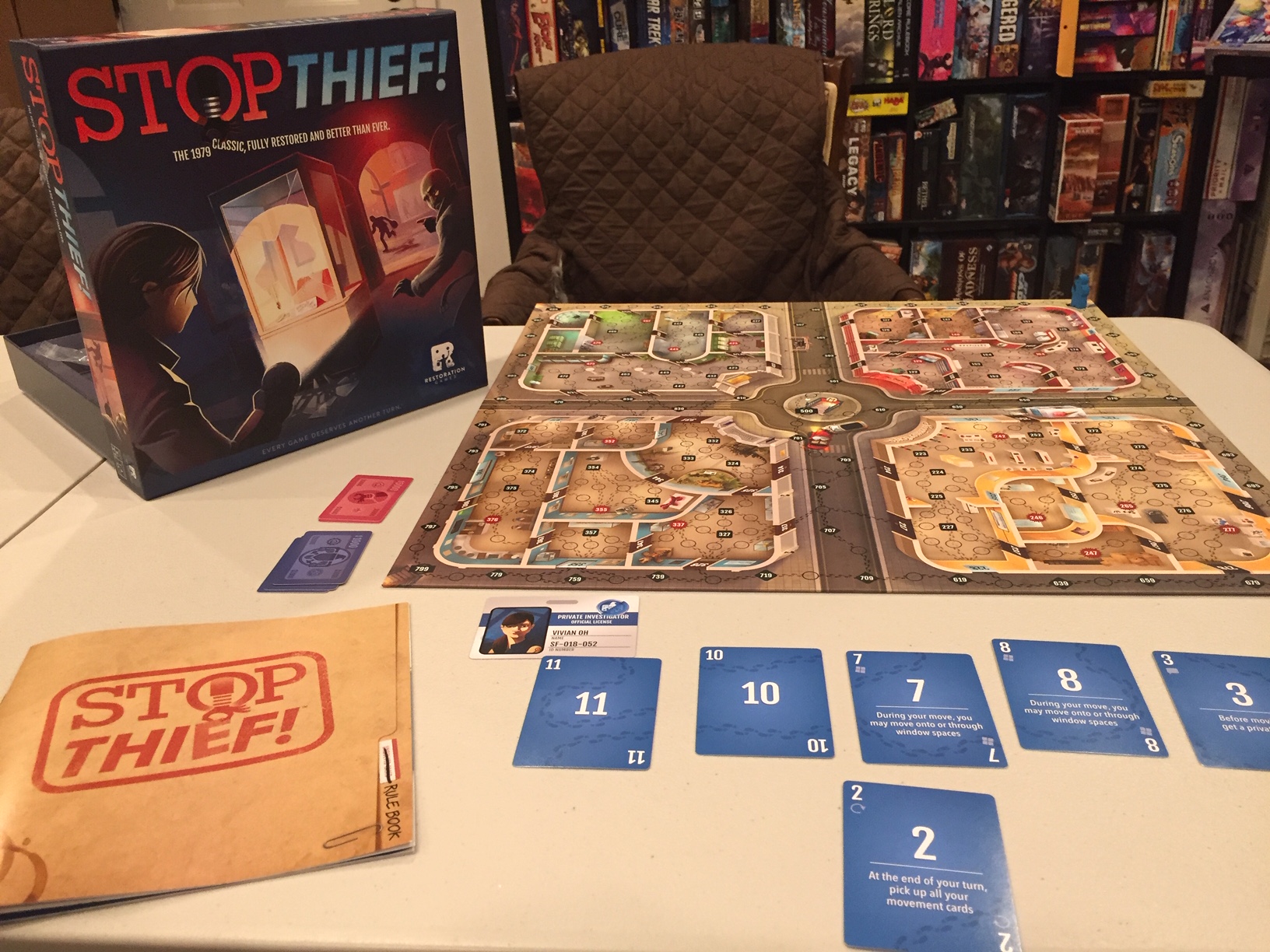
Stop Thief! is a cooperative deduction game by Restoration Games. The original 1986 game was one-vs-all, as one player played “the thief” moving around the board, and others had to try to catch him. When Restoration Games “restored” this game, they added an app which can play as “the thief”, thus allowing the game to be played fully cooperatively. Players work together to deduce where the thief has been so they can try and catch him. This is a fun little puzzle with the thief controlled by the app! Stop Thief! also made our Top 10 Cooperative Board and Card Games with an App!
4. Rising 5: Runes of Asteros
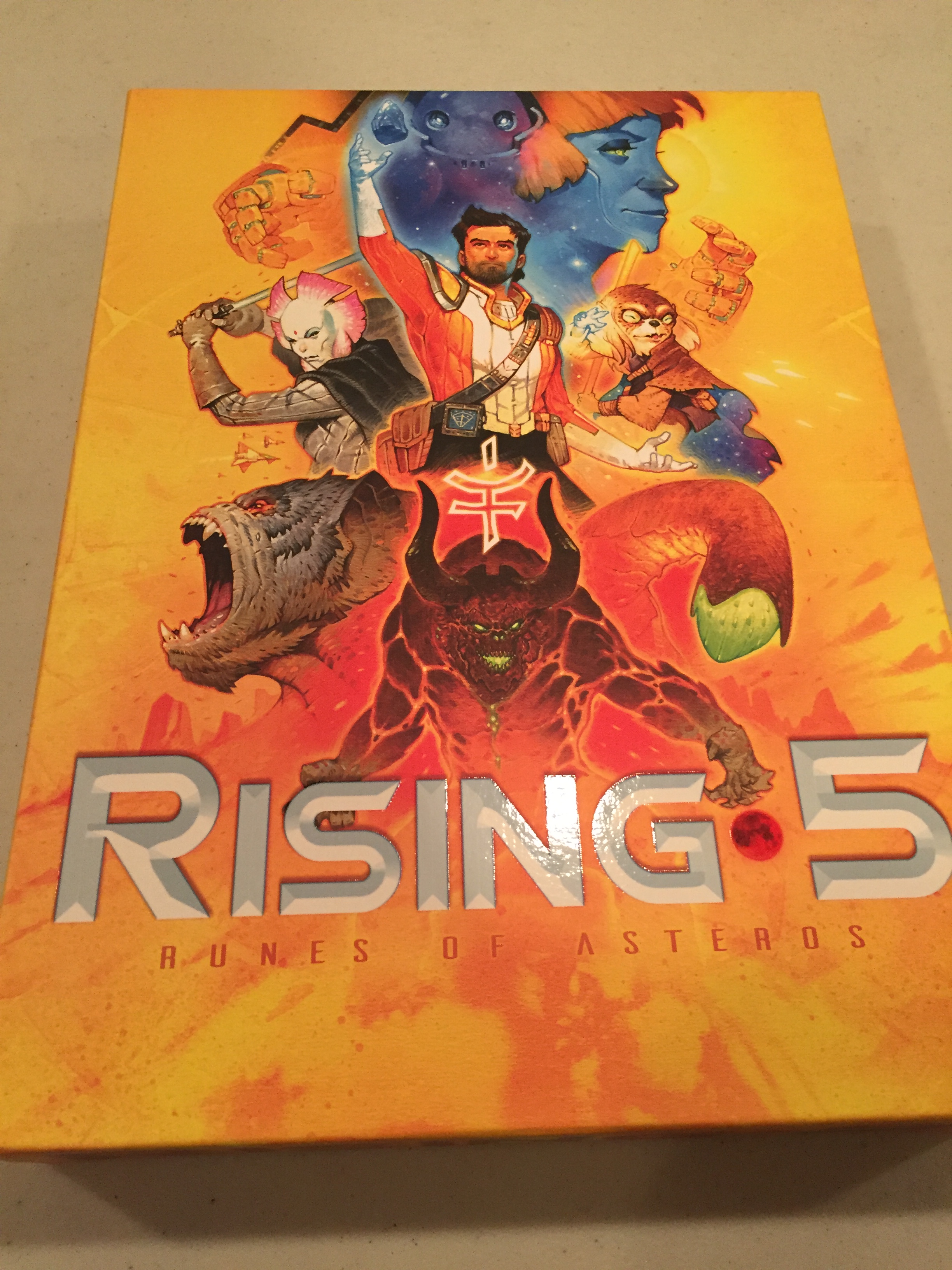
Rising 5: Runes of Asteros is an older game which we reviewed here. It’s essentially a cooperative version of Mastermind, where players have to work together to deduce some symbols. This game is set in a fantastical space setting with Vincent Dutraite art and it simply looks fantastic. The game is run by an App giving out clues to the players as they try to guess the symbols. A player can sit out and you can play without the app if you like, but the App is great! You can can scan your board with your camera and it will give you the hints you need to deduce! This is a light game that can be played in about 20 minutes. It also made our Top 10 Cooperative Board and Card Games with an App!
3. Paint The Roses
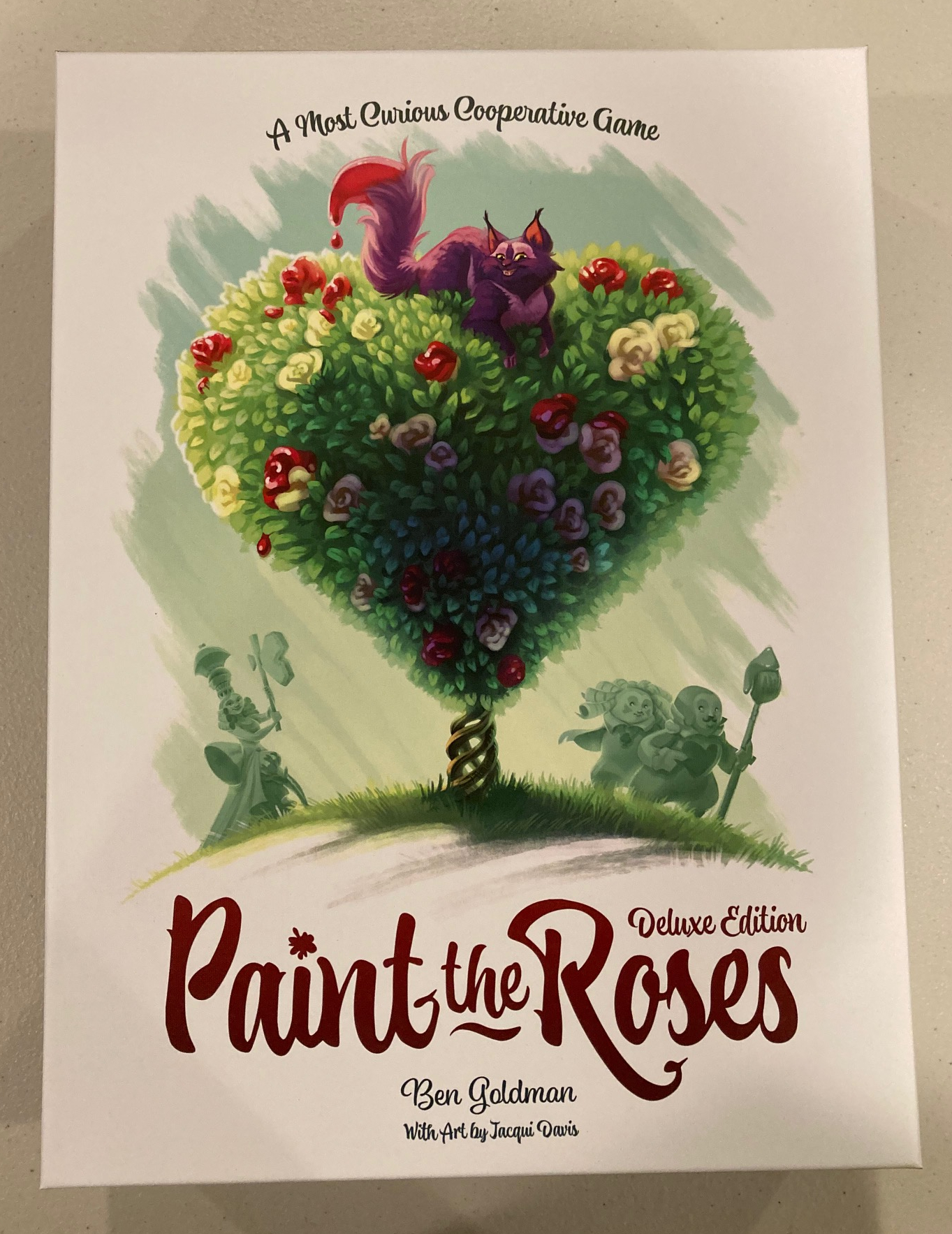
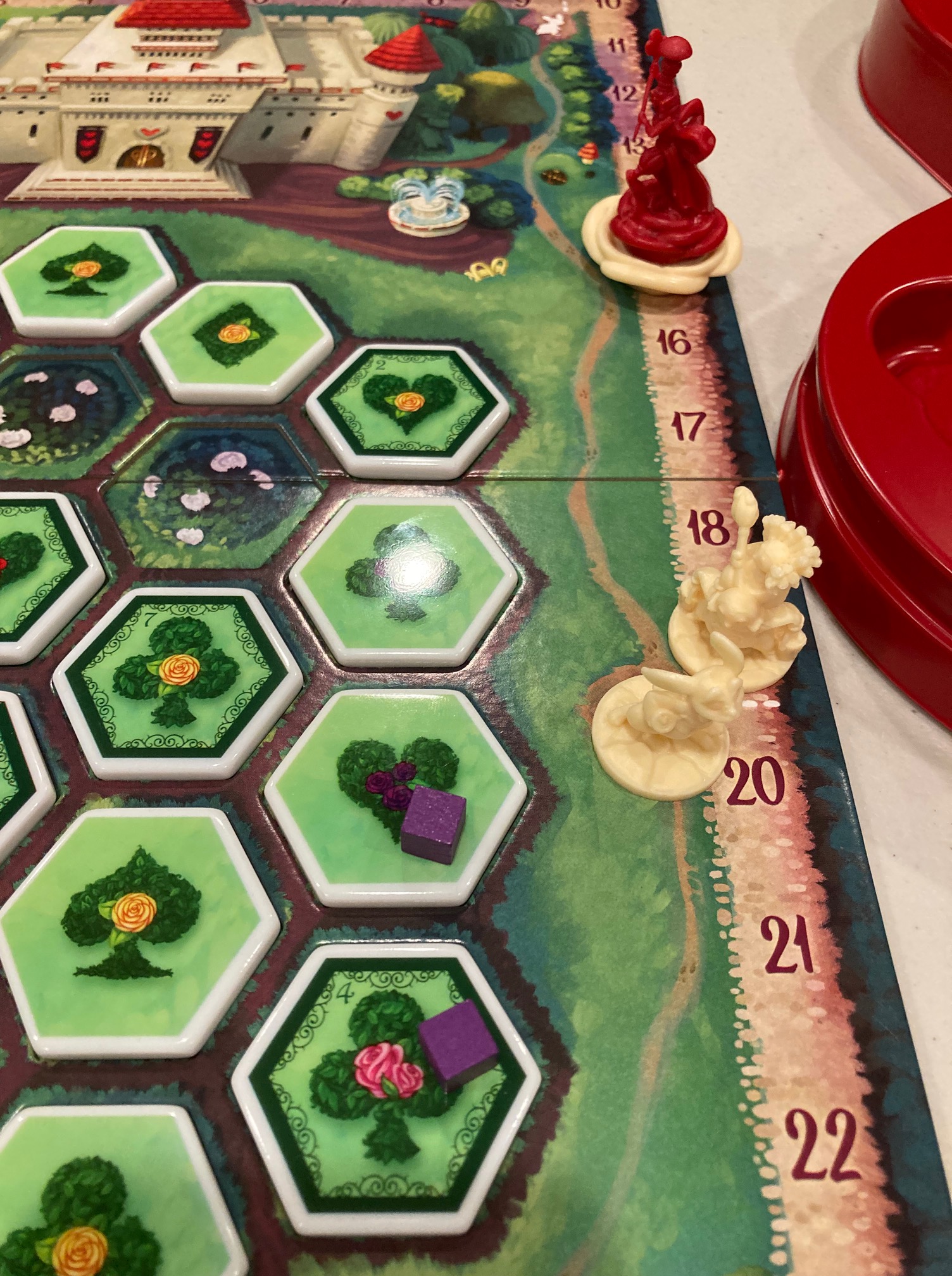
Paint The Roses is a deduction game by Ben Goldman where players have to guess the symbols on each others cards. If you don’t do it quickly enough, the Queen of Hearts comes around and chops of your head! We originally reviewed Paint the Roses here!
This is a silly deduction game for 2-4 players with beautiful art by Jacqui Davis. The deluxe version has beautiful plastic components. This game is interesting because you can go as shallow or deep as you want in your deduction: do you use just positive information or negative information as well? See our review here for more discussion!
2. Shipwreck Arcana
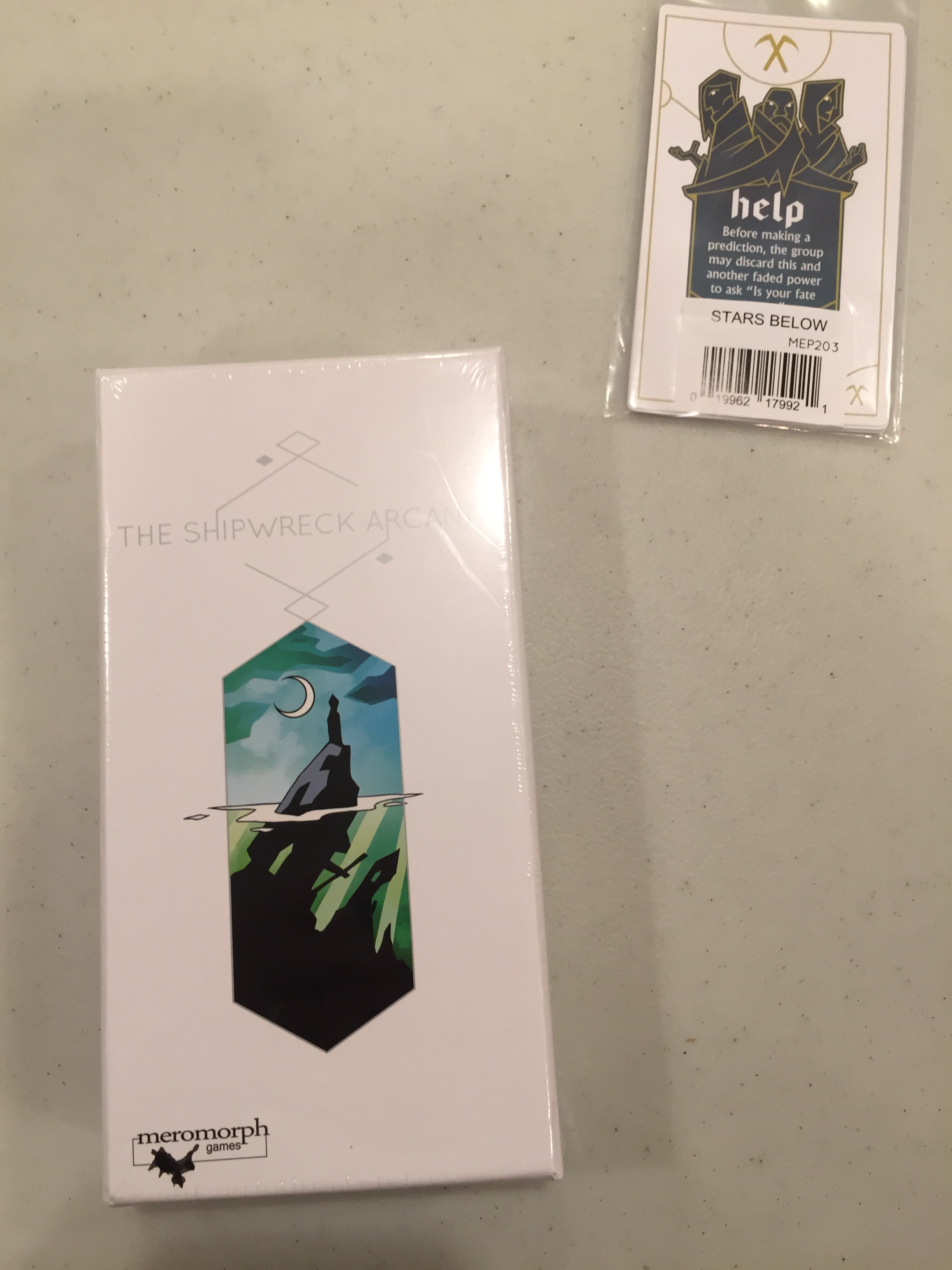
We reviewed Shipwreck Arcanahere some time ago, but it has become a favorite game here at Co-op Gestalt!Shipwreck Arcana inspired us to develop the Changing Perspectives idea and also made the top spot on our Top 10 “Small” Cooperative Games! Shipwreck Arcana is a very pure deduction game where players can only use the information on the board to guess what number is hidden for each player. It’s a fun and light deduction game, but it can be very thinky. Some might have trouble with calling this a “light” game, but at the end of the day, there’s not too much too it! Just some cards and a few things you can do on your turn: it’s just that this is probably the thinkiest game on this list!
Basic Set-up (for a solo game): After a few turns where the DOOM token has moved up to 3, and the Guesses token is only at 0! I haven’t guessed anything right yet!
1. Hanabi
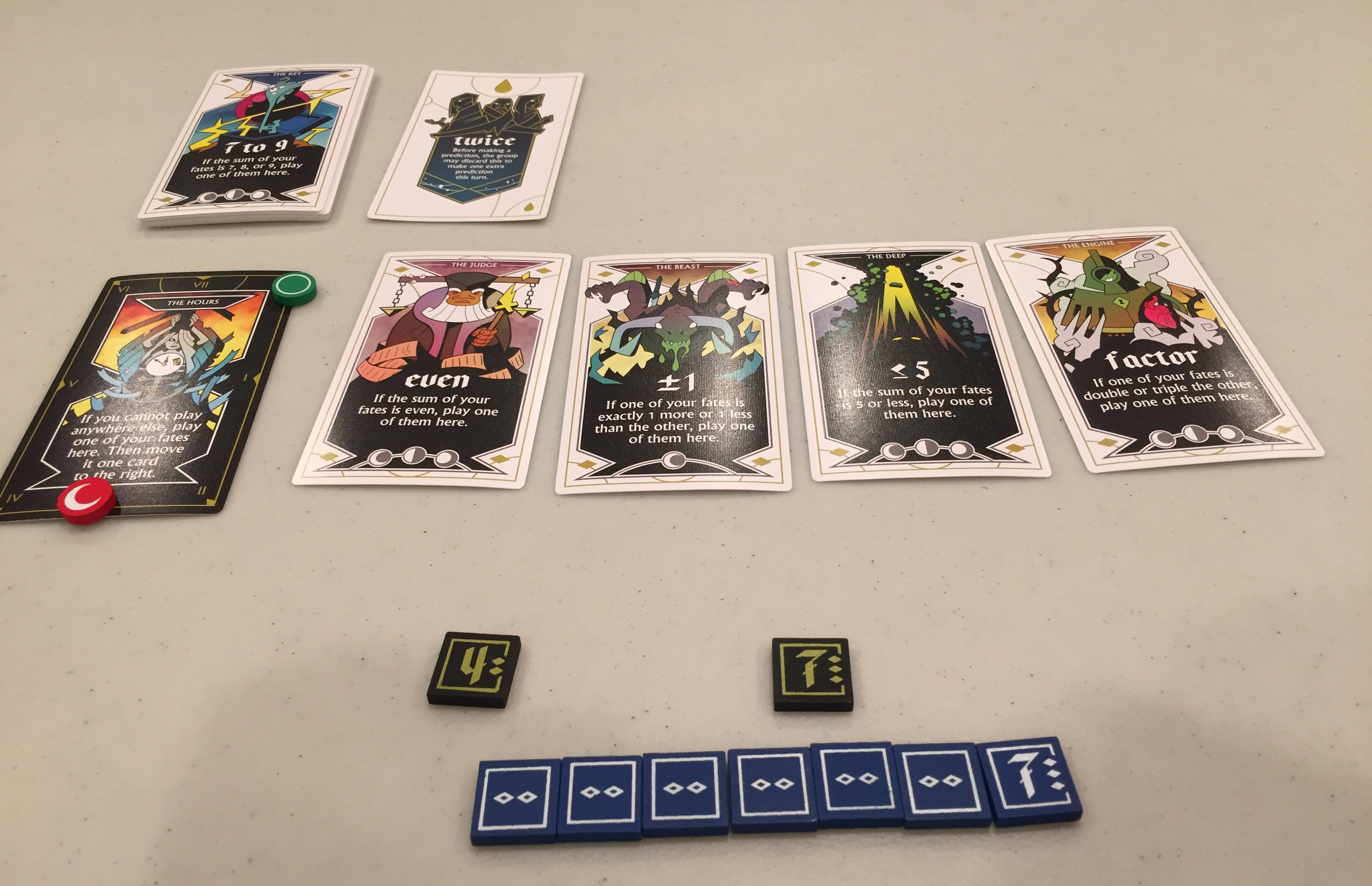
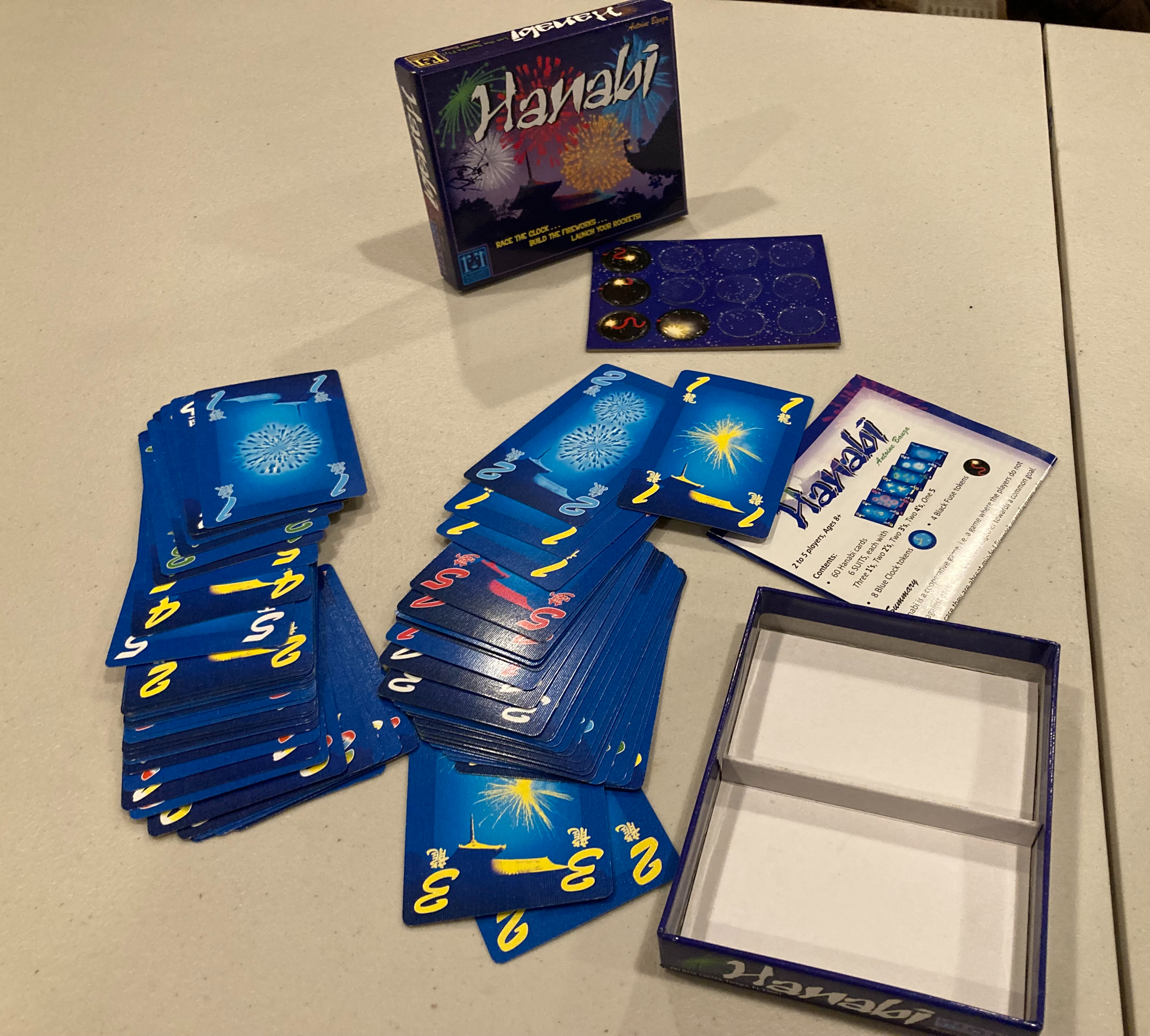
Hanabi is an older cooperative card game, but it is such a tight and clever deduction game! It’s probably the lightest physical game on this list, as it is just a small deck of cards (see below), but it may be the heaviest in pure deduction. Hanabi is the definition of a hidden information game, as each player can see all hands of cards except their own! Players can only communicate in very strict terms: “You have a/some [color or number]” and that’s it! It’s pure deduction and won the Spiel Des Jahres game of the year in 2013. This game took my game groups by storm in 2013 but it still gets played to this day.
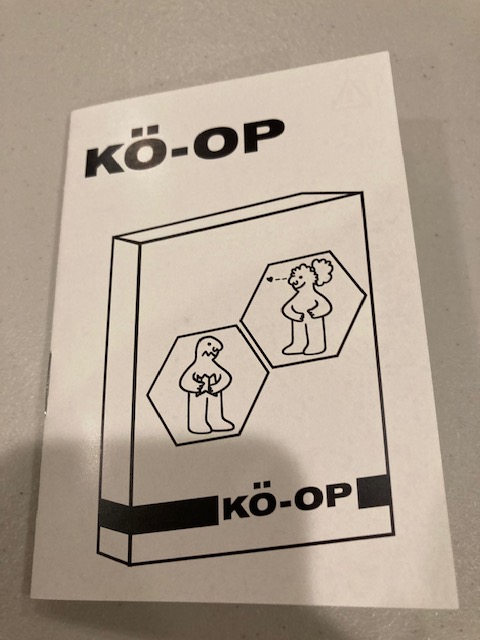
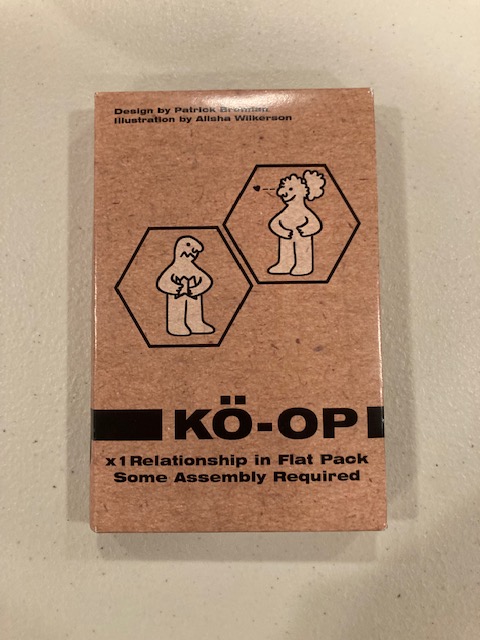
KÖ-OP is a cooperative card game for only two players. It was originally on Kickstarter back in December 2021. It promised delivery in September 2022 and it delivered to me just last week (August 15th, 2022 or so). You read that right: this Kickstarter actually delivered early to its backers! Kudos to the developers for this!
KÖ-OP is a 2-player only game: it’s the journey of cooperatively assembling furniture from “someplace like Ikea” (but legally distinct so they don’t get sued). The elevator pitch of this game is that it’s Hanabi meets Fog of Love: it’s got hidden information that needs to be communicated, but within the bounds of the relationship. Basically, players play two emotionally stunted people in a relationship who can barely communicate! And they need to try to build furniture at the same time they are trying to repair their relationship.
Let’s take a look.
Unböxing
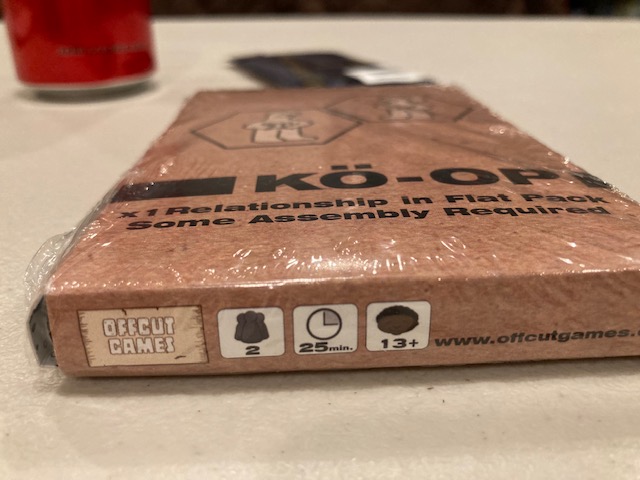
This is a pretty small game game with some cards: you can see the scale of it (and its expansion: This Way Up) next to a Coke can above.
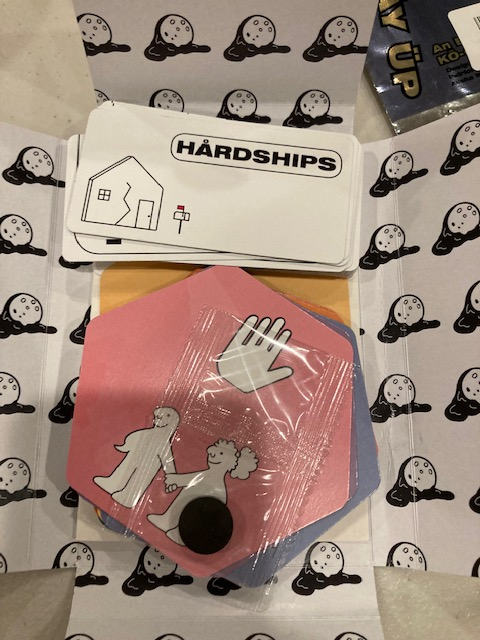
The game unfolds like a strange Ikea package with hex cards and little teeny cards. See above and below.
In case you are wondering what those little “bowling balsl” are on the inside packaging: those are Swedish meatballs. Oh yes, victory points in this game are meatballs: this is a very serious game.
There’s not much to this. It’s a small game in a small box with some hex cards and tiny cards.
Ruleböök
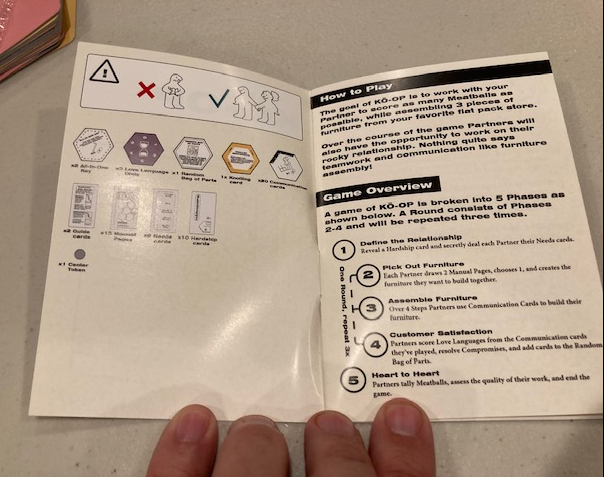
I struggled with this rulebook. It’s not bad, it just seems to skimp on examples and elaborations. And it’s missing a few rules. There were also some things I had questions about that weren’t addressed (see fixes section below). This needs a FAQ, and a discussion of a few more things (“What do the dotted lines mean on manual cards?” “When do I reuse cards from the discard?”, etc). I was able to learn the game from the rulebook, the font was decent and big enough to read, so I guess that’s a win. It was … okay.
Sense of Humör
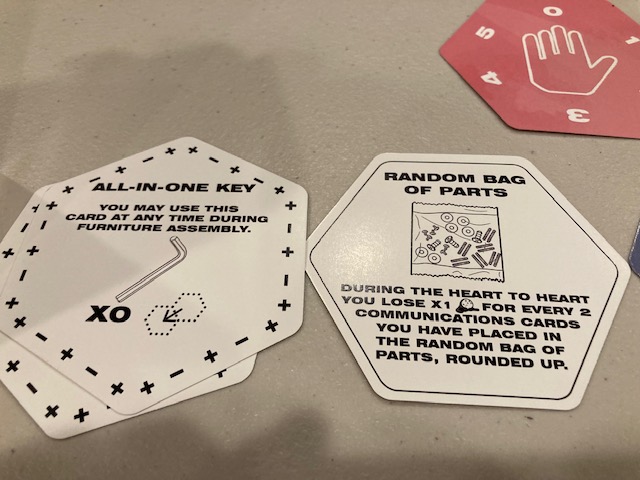
I like that this game has a sense of humor: it makes fun of a lot of the Ikea stereotypes: weird tools and random bags of parts (see above), Swedish meatballs for victory points, and silly names of furniture like the Vulnerlib (see below). In fact, every piece of furniture has a fun name made by squishing two cards together.
This game does a really good job of embracing that sense of humor and the silly Ikea stereotypes (such as barren black/white design of most cards, the meatballs, the Ikea icons, etc).
Solo Play
I tried a two-handed solo game to get a feel of the mechanics: it doesn’t really make sense to play this solo. (EDIT: or maybe it does make sense to play solo as a learning tool? Maybe this can be a tool for a person who has trouble with relationships: if the solo player plays both sides, maybe it can give the solo player perspective into why they have trouble with relationships! It can also give insight on why lack of communication sucks so much!)
I got kind of frustrated with the rulebook, but I was able to get through a round or two. The game didn’t really work that great: I was hopeful that a real 2-Player game would make this sing!
2-Player Game
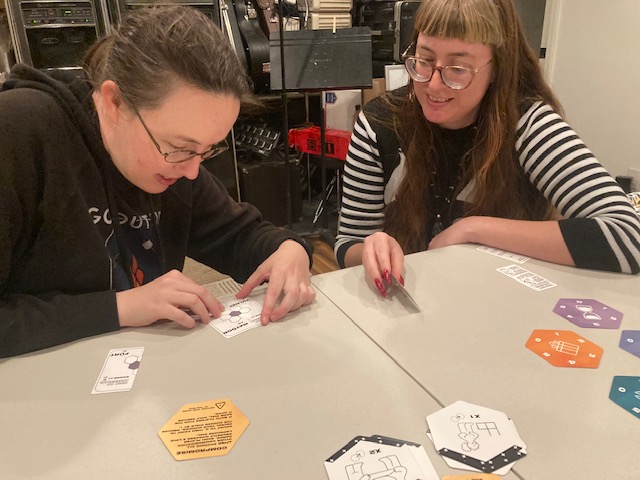
I watched a 2-Player game and was the shepherd for the game. It think it was more fun to watch the game being played than actually play it!
It didn’t go over well. One quote was “The Swedish Meatballs were the only thing I liked.”
Discussiön
I think this game is too random. I had perfect information playing solo 2-handed, and I still couldn’t build some of the furniture because the cards were against me: there’s no way I couldn’t gotten anything built if that were a 2-Player with imperfect information. I got the wrong emotional cards, I got the wrong connectors, I got just everything wrong at the wrong time. There are some ways to fix that, but in general, it was just frustrating.
I felt like a lot of times I had choices, but not information to make a real good choice. Which needs card do I pick? Which furniture do I build? (EDIT: I guess you can see the top Communication card, so that gives you some information).
Mostly, the emotional needs never mattered as you built furniture: It seemed like the best way to score meatballs was to just build the furniture, and ignore the emotional needs. It was too hard to get the pieces you need with the right connections, so most of the time (all the time? I don’t think it mattered once) the limited communication trying to communicate needs never mattered.
Build the furniture: that’s all that mattered. And just hope you randomly get the furniture connections you need for the furniture you chose somewhat randomly.
“Oh, Not THAT Couple!!!”
Have you ever been around that couple that can’t communicate and can’t work together? They yell at each other and don’t help each other because they don’t know how to communicate. I hate being around couples like that: it’s not fun, it’s uncomfortable, and I just want to leave. We’ve all been around couples like that. So, what does this game do? It puts you in the place of the couple!! Players play two emotionally student individuals who can barely communicate!! I can’t think of anything less fun than roleplaying a bickering couple. And that’s what this game is.
Players can barely communicate: they can really only communicate a tiny amount of info on their turn.
“But this game has a sense of humor! There are meatballs for victory points! Silly names for furniture!” And you are right: that helps alleviate a little of that tension. But once you realize that the game is too random, it sort of puts a dreary spin on the game: “Oh, we’re playing a doomed couple”. The couple might get lucky, they might not. More than likely, this couple’s relationship will probably not survive (even if their furniture does). It’s sort of depressing to think: “This couple will not survive even though they are trying to make it work: they won’t be able to fulfill each other’s needs because they are so emotionally stunted!”
There might be some ways to fix this.
Pössible Fixes
One problem with the game is that there are some edge conditions or natural questions that the rulebook doesn’t answer. Perhaps a slightly more comprehensive rulebook would help. Here’s some thoughts that came up:
Can I move or take apart already built furniture? Thematically, it makes sense! If you’ve ever built furniture, you know you make mistakes and may have to redo something you’ve already done. It’s just part of life. There is NO DISCUSSION of this in the rulebook. This one rule might actually the savior of the game, because it can allow you to fix up some stuff after it’s been placed. The rules are completely silent on this, implying that once something is placed/built, it can’t be changed.
Can I destroy 2 communication cards for one from some discard? Sometimes you don’t get the connections you need, but there might be some you need in the discard. It would be nice to have a mechanism where you could take two cards you have and trade them. It’s also thematic: how many times do you have random crap laying around when building: “Oh, that’s what that’s for!”
Can I have a few more options of communication? Right now, you can only do one of three very limited things to communicate with your partner. It would be nice if there were more you could communicate: I. “None of these Communication cards is in my love languages” would be nice: it happened to me many times. But I wasn’t allowed to communicate that. II. “Our relationship is more important than this furniture: these are my needs!” Rather than build on your turn, just communicate your needs (or 2 of them or some subset of them) in place of building this turn. It’s thematic and represents more emotional depth, sacrificing the dumb furniture to learn about your partner. iii. “I’m happy in this aspect, are you happy?” There is no overlap of symbols: if you both need (say) 2 “time” love language to be happy, you actually need 2+2=4 total to satisfy that! There’s no way to discover this until the end of the game. Again, it would be nice if this couple talked more.
Needs don’t seem to matter. It was clear that the most important part of the game was the building of furniture. It seems like there should have been some points scored if you built “parts” of furniture (points for working together) and got the love language points. There was no way to switch gears: “Lets work on our relationship more than the furniture”. Nope: this game was all about the building. Maybe the Needs cards should be worth more? The needs are ONLY worth two meatballs!! Should they be 5 meatballs? 10? “I mean, aren’t my needs worth anything?”
Don’t argue “Well, Hanabi only has minimal communication and it works!” with me: Hanabi is maximally streamlined and there’s only one source of randomness in the game, so they can get away with very minimal communication. The KO-OP game has multiple sources of randomness (connectors, love languages, choice of furniture without any information), and there’s just too much randomness to overcome with such minimal communication.
CÖnclusiön
I really don’t want to play a part in an emotionally stunted couple, especially in a game with lots of randomness: it was just too depressing and frustrating for me and my group. Maybe that’s just us: you may not have that problem! You may think: “Lighten up! This is a game with good sense of humor and it’s only 25 minutes, so who cares if it’s too random”. And you wouldn’t be wrong.
Decide for yourself. If you think there might a fun time here for a short game: give it a shot! I also think with some extra rules/elaborations, this game might be a lot more fun: see our Possible Fixes section. Caveat Emptor.
Sync or Swim is a lightweight, cooperative, realtime, card game from Bezier Games. I ordered this on Kickstarter back in February 2022 and it just arrived at my door this last week (July 23rd, 2022 or so): that’s a pretty quick turn around for a Kickstarter!
You might be wondering why I have two copies of this game! The theme: Synchronized Swimming. Yes, that’s what I said … Synchronized Swimming!! It turns out Synchronized Swimming is a very popular high school sport in Minnesota (seriously, I am not making this up). Surprisingly popular! Both of my nieces have both done quite well in the sport. To celebrate them, I picked up one copy for myself and one copy for the girls!
Unboxing
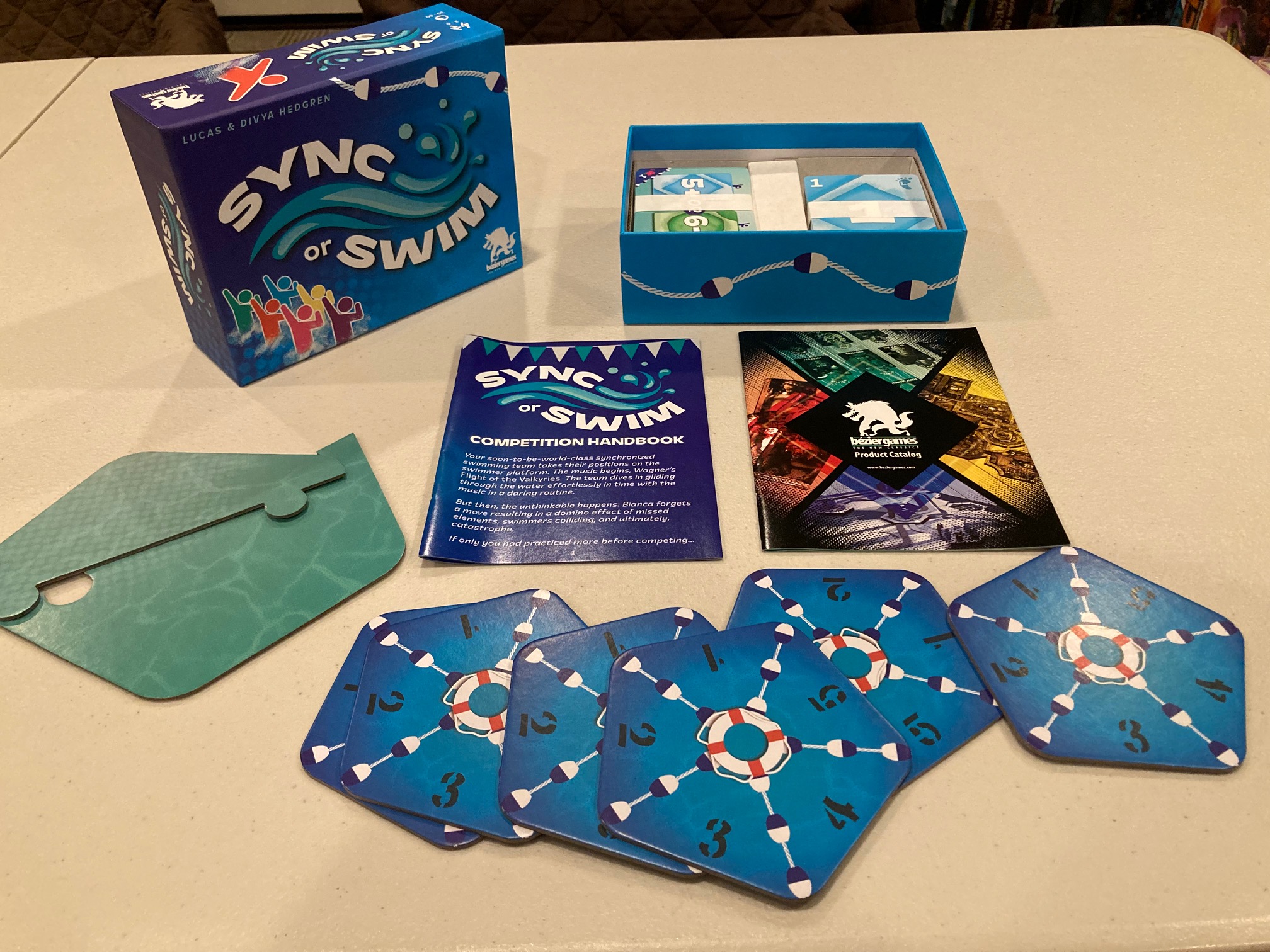
This is a fairly small box, larger than (say) UNO but smaller than (say) Codenames. I used those games on purpose as comparison … we’ll see why later …
Each player (3-6 players) will get a cardboard platform (see above) to “swim” on: see above. The theme here is that each player is a swimmer on the Synchronized Swimming team.
At its core, this is a card game. There are quite a number of cards in the box.
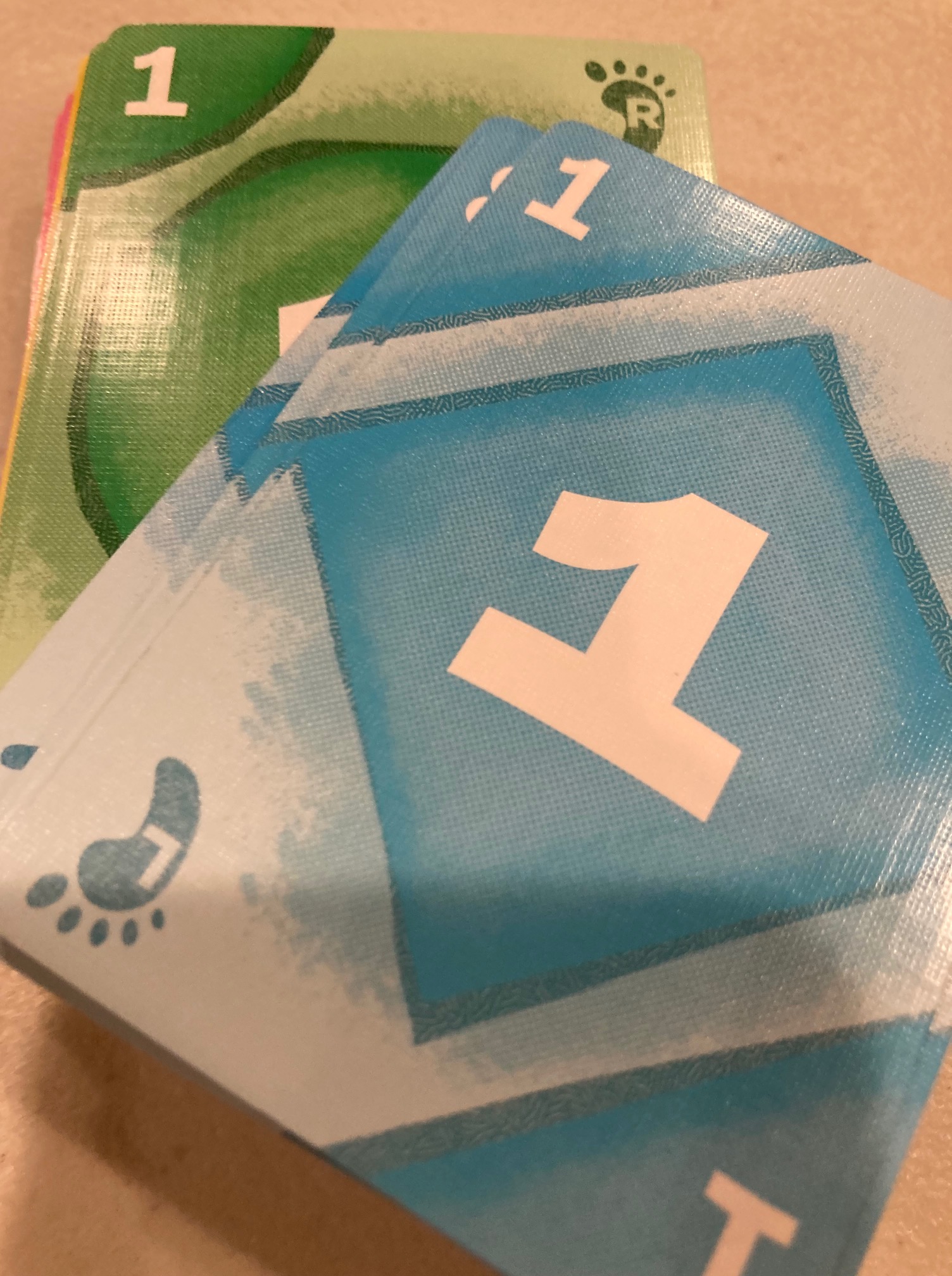
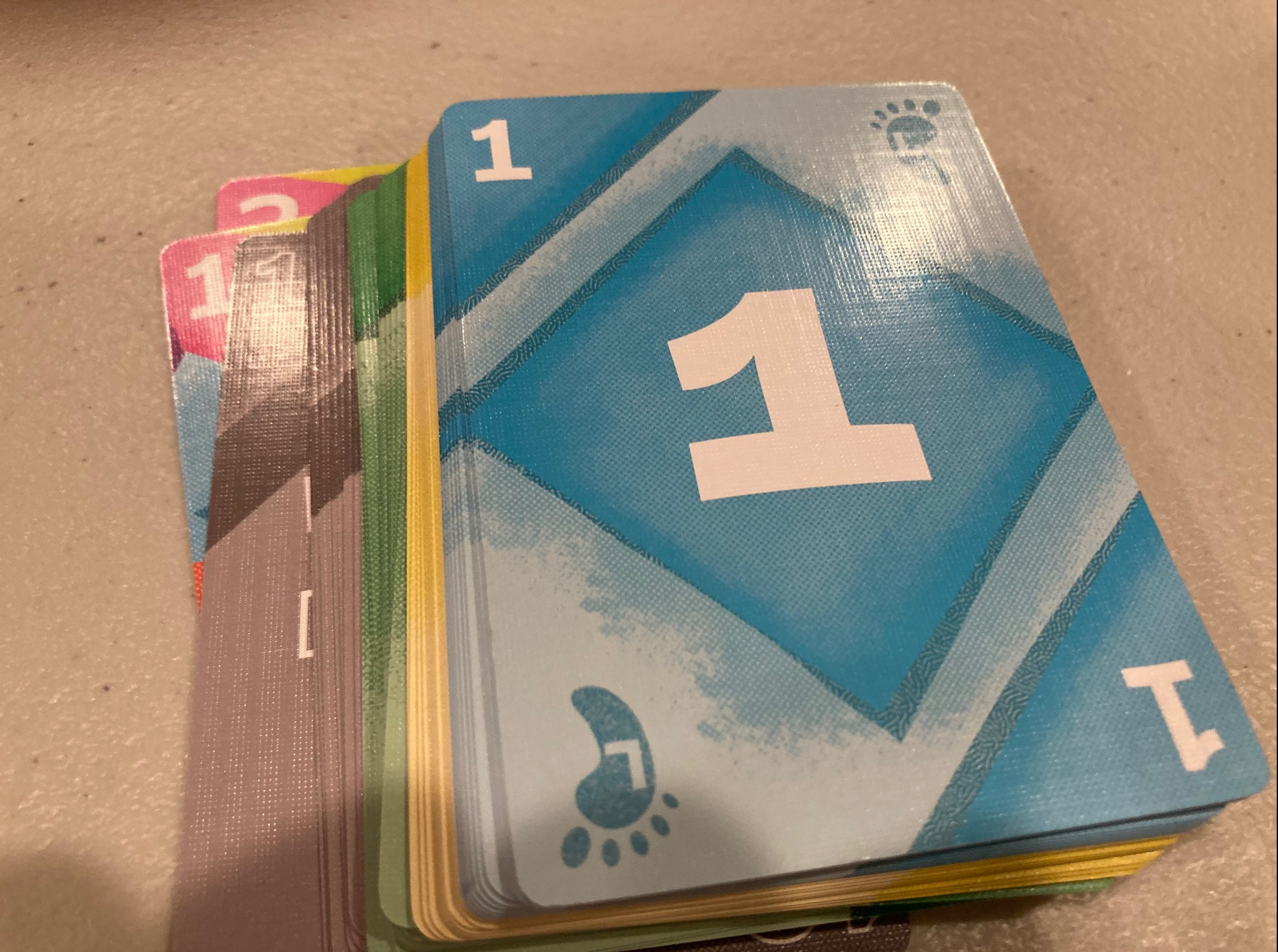
The analogy to UNO is even more apt, as there are a bunch of colored cards numbered from 1-10. You’ll also notice that the cards have hands and feet on them .. these will come into play later … (see above and below). These cards are called SYNC cards: players play them from their hand to their platform.
Finally, there are some ELEMENT cards: these set the challenging moves the swimmers will be performing:
That’s kind of it!
The game is professional produced and looks good enough. It’s not especially thematic or pretty, but it’s very usable.
Rulebook
The rulebook has big text and is fairly easy to read and inviting.
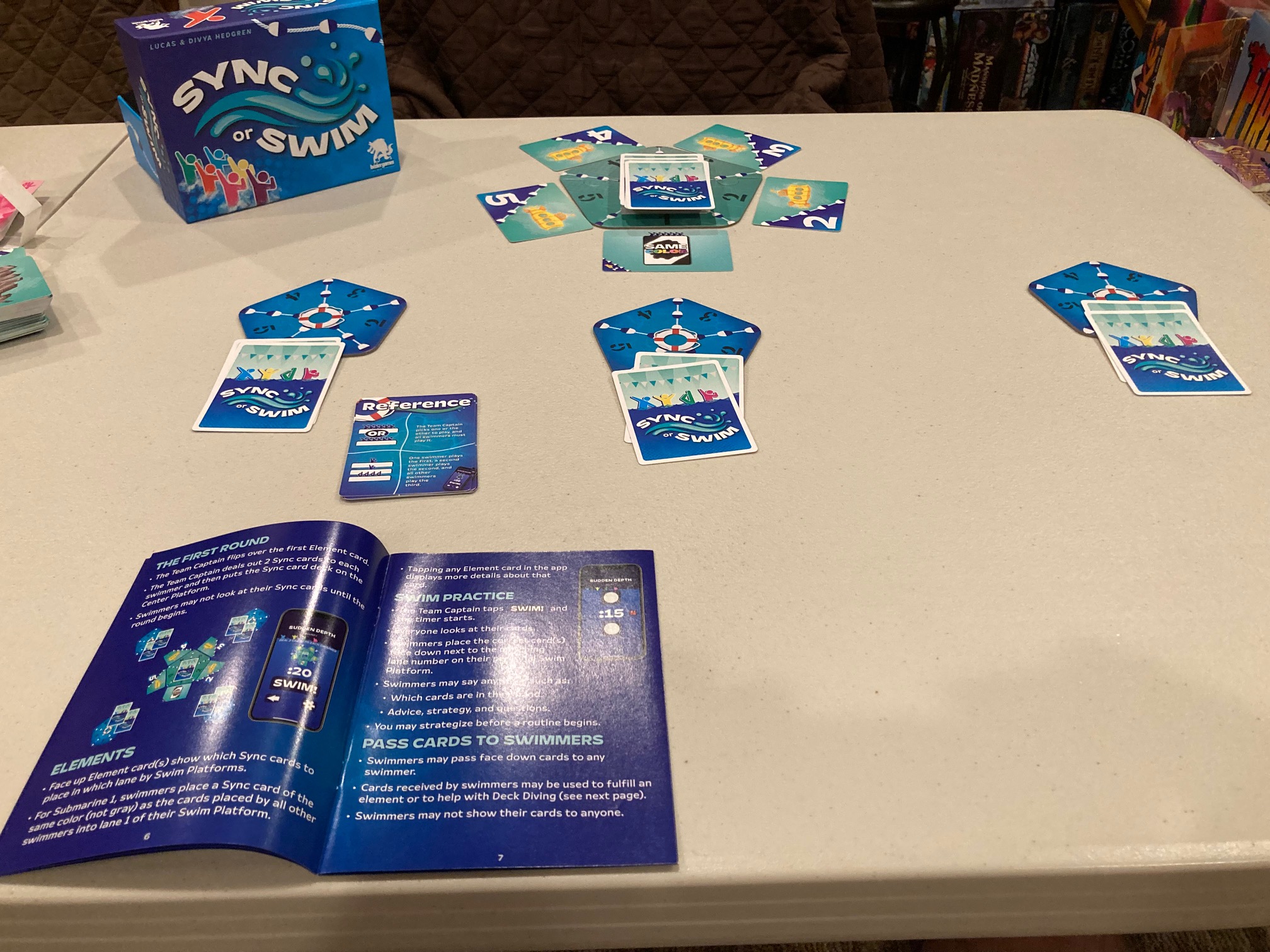
… but the first few pages say it all: GET THE FREE APP. This is a game controlled by the APP, so you absolutely have to have the APP to play.
The APP does a really good job of shepherding you through the rules and scenarios.
Solo Game
In no way does this game support a solo mode! This is a big group game like Codenames! It’s for a Synchronized Swimming team trying to perform together!! I don’t really blame Sync or Swim for not having a solo mode. It doesn’t make sense thematically or from a gameplay perspective.
Nevertheless, I tried to play the game solo to learn the rules: See above and below.
I played as if it were a 3-Player game: see above. Each player gets a platform and 2 SYNC cards to start (more cards come out as the routines get harder). Swimmers can only look at their cards at the start of the timer. That’s right: this is a timed game!
During the timed phase, players can look at their cards, talk openly about what they have, and pass cards back-and-forth face down. The game is also a hidden info game: you aren’t allowed to show your cards, but you can talk openly about everything you have. This might seem a silly distinction, but in the heat of the moment of a real-time game, this is a big deal! You may not have time to tell everyone everything you have!
Each “level” will have a Swim Objective. The example above requires all swimmers to put the same number of their platform, but different colors. And this is the flavor of most trials in the game: all players must place cards face-up on their platform matching some performance criteria. (Matching colors, matching hands, feet, numbers, mismatching, etc).
You can see my solo game above with the first two platforms filled!
The game gets harder and harder as you have to fill the first platform, then 2, then 3, then 4, then finally all 5! It’s chaotic as player pass cards back and forth trying to meet all the criteria!
Ya. This doesn’t work at all as a solo game. But that’s okay. I learned it that way!
Cooperative Play
But of course, the real way to play this is cooperative. My niece (above) won state last year at Synchronized Swimming, so the game has to pass muster with her!
This is a silly, chaotic, cooperative game. When players “finish” their goals, they put their hands over their heads like they are diving. Very serious game…
The cooperative game gets harder and harder until you perform 5 of the ELEMENTS: see use with a winning game above!
Cooperatively, this was pretty fun. And silly. We passed cards, yelled, and had a good time.
Was it like Synchronized Swimming? Surprisingly yes! According to the expert in our group, the coach talks about the routines before they even get in the water, the routines are learned piecemeal (a little bit at a time), and when we messed up playing (because you will), it’s just like practice in real life! “Oh, I didn’t get that the first time. Okay, let’s do it again!”
You end up doing the synchronized swimming routines at least a few times until you get it. It was a light silly game, about 20-25 minutes long. We had fun.
The APP
So, this game requires an APP. That may be a turn off for some of you, but I found that it did a very good job of walking us through the game. You could easily click on things in the APP for further elaboration. And it was colorful! And it applauded for us after our routines! It really did enhance the game!
I asked my niece: “Could you teach this game your friends?” And she said yes: I think partly because the APP made is pretty easy.
Conclusion
Sync or Swim is a lightweight cooperative party card game. It’s somewhere around UNO and Escape: Curse of the Hidden Temple in complexity, but it’s still fairly straightforward. The lightweight card play reminds me of UNO (especially with the colored, numbered cards), but the sharing and chaos reminds me a little of Escape: Curse of the Hidden Temple (from our Top 10 Cooperative Dice Games).
The game requires an APP on your phone, which may be a turn-off for some people, but the APP does a great job shepherding players through the game. It’s also a realtime game, which may also turn some people off. Sync or Swim doesn’t evoke that much theme at first: it’s a colored card game, but it does get some points for embracing the theme (mostly because of the APP) as much as it can for a colored/numbered cards game.
It doesn’t sound like I love this game, and I don’t. But I like it: I’d much rather play the cooperative game of Sync or Swim than UNO. The next time someone pulls out UNO, maybe Ill pull this out in instead and see if it works better. It was silly fun for me and my groups.