
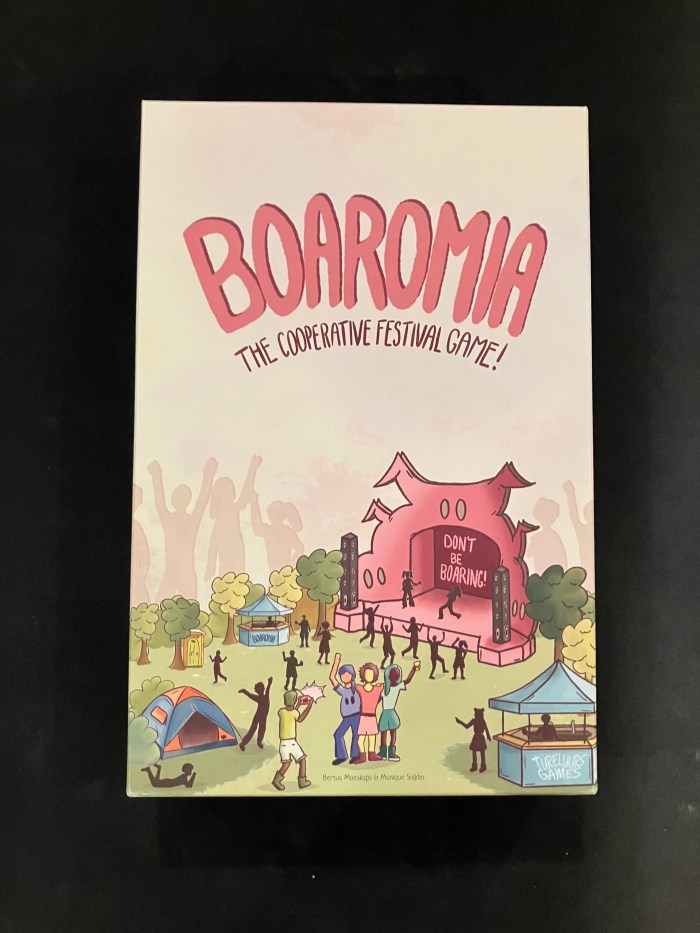
Boaromia: The Cooperative Festival Game! was a very small crowdfunding game that was on Gamefound in Dec. 2025/Jan 2026! It has only 97 backers for €7293!!

This is a game for 3-8 players (!) and it is pretty quick; 60-90 minutes feels right, but it can be quicker with fewer people.

Let’s take a look at this goofy game! Is it fun?
Unboxing and Gameplay
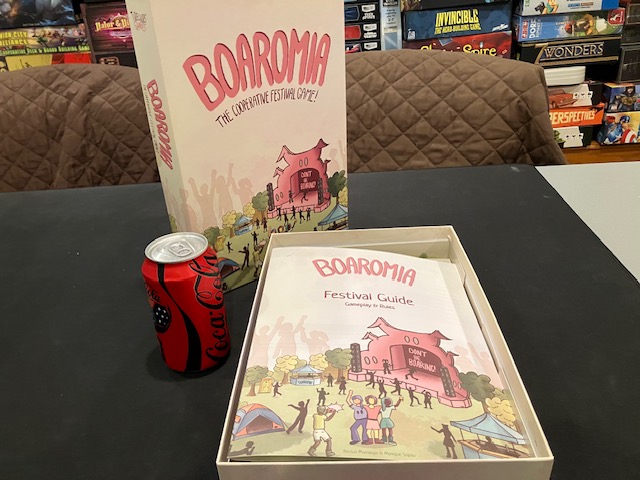
This is a pretty weird sized box; it’s not standard sized. See Coke can above for perspective.
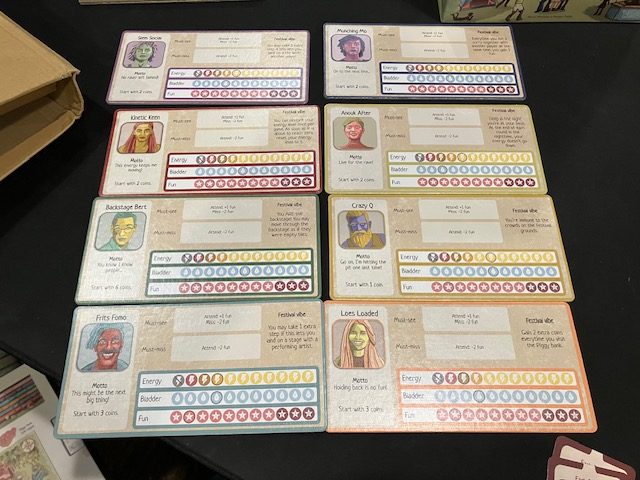
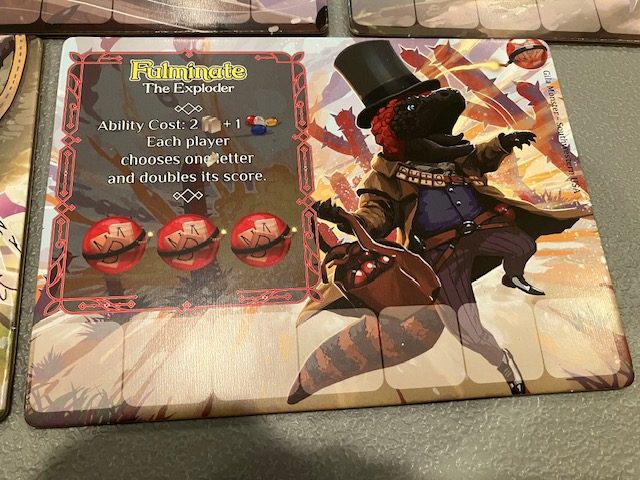
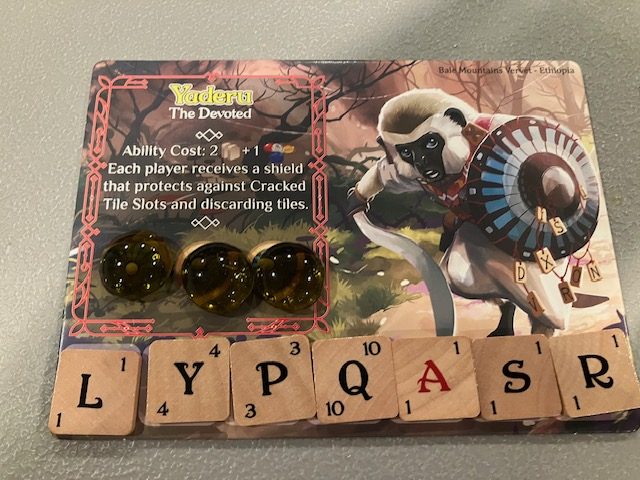
Boaromia is a game for 3-8 players! Each player takes the roll of a friend going to a music festival! Each different friend has a special “gift” that helps them navigate the music festival! See above!
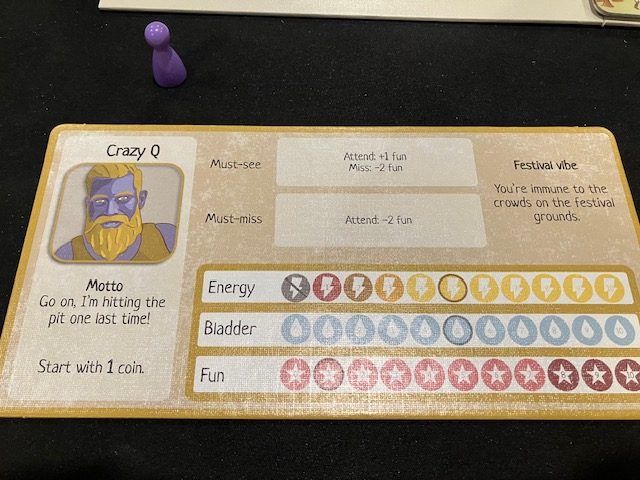
For example, Crazy Q (above) has the “Festival Vibe” and can push through crowds without being hindered by them!

There’s a board (2-sided) which is the festival grounds! (One side is easier than the other)

Players move around the board, going to venues to see concerts! Seeing concerts with your friends is the best way to have fun in the game!
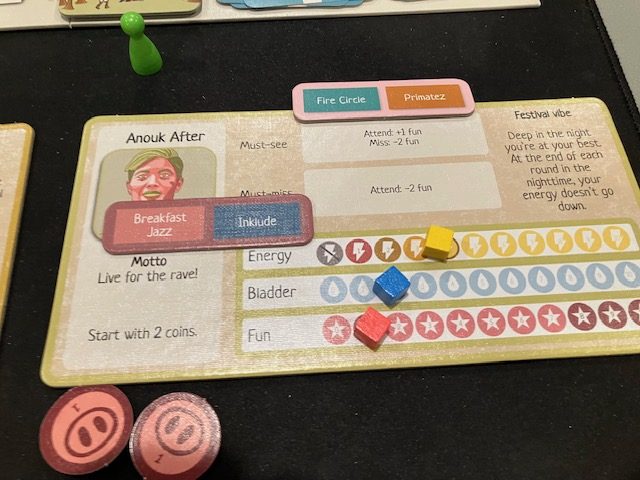
The object of the game, and this sounds ridiculous, is to have fun! Although you have metaphysical “fun” while you play, each player has a “fun” marker (see pink cube above) which you need to get to 8! If each player has 8 fun and can end together at the same location for a final picture, you win! That’s right, to win, you all have to have fun together!!
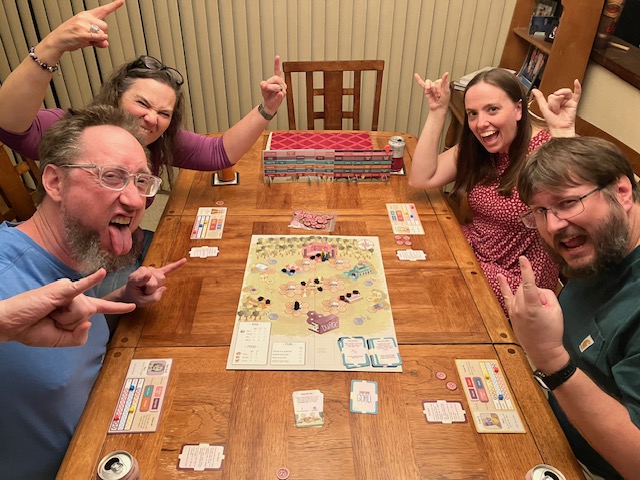
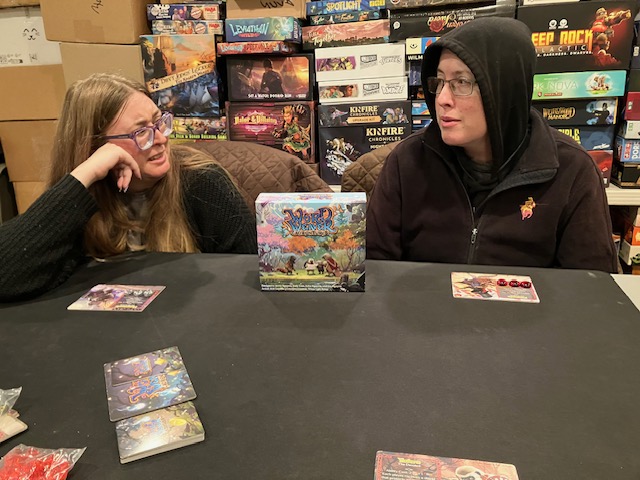
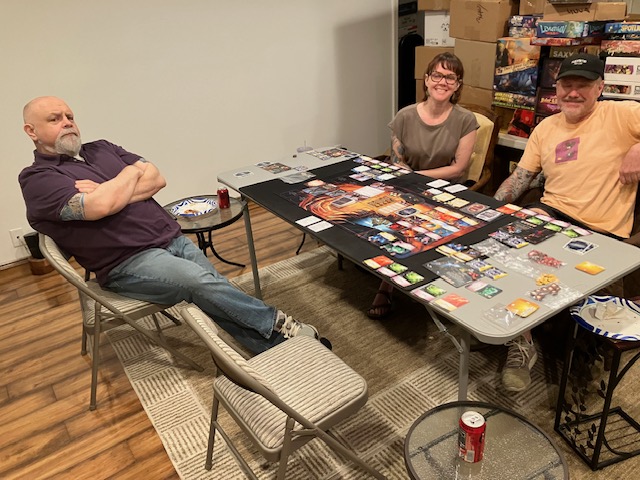
So, when we won, we all took a photo together!! See above!
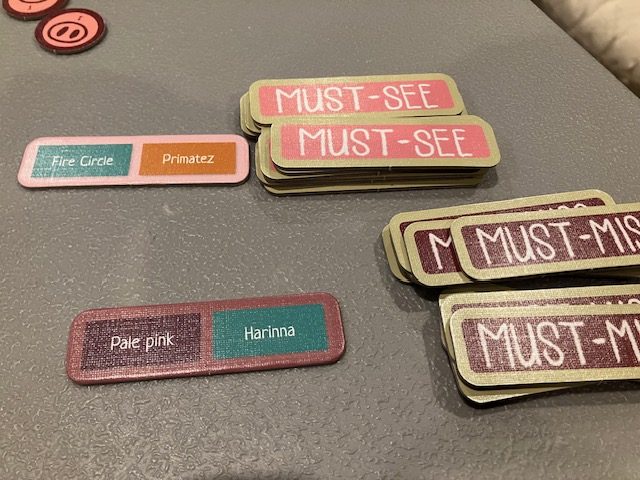
Although alternative ways to have fun come up as you play, the best way to have fun is to attend the MUST SEE bands with your friends, and avoid the MUSS MISS bands! For example, Fire Circle and Primatez are MUST SEEs and Pale Pink and Harinna are the MUST MISS bands! Now, you get +1 fun per MUST SEE bands, but if a friend is with you, you get another +1 (as does the friend!)
To see a band, you (and hopefully your friends) must all end a turn at the Concert Venue with that band! See above as all three friends get +1 “fun” for seeing a show … another +1 if it’s a MUST SEE!
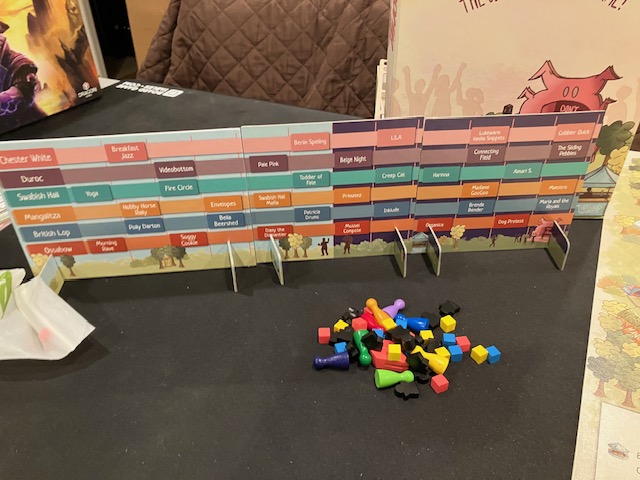
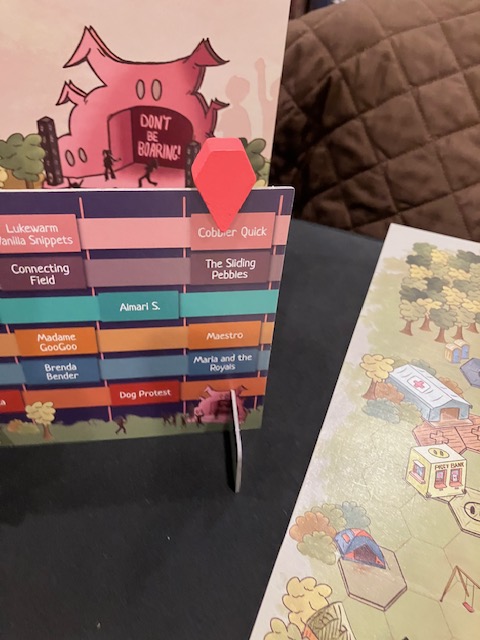
There is a concert schedule showing when and where the bands all play! See above! The colors are used very well to demarcate each venue and when bands are playing!

This game is all about coordinating with your friends to try to see bands together! Sometimes you see a band just to have fun together (even if it isn’t a MUST SEE), and sometimes you have to see a MUST SE band by yourself because everyone else has their own MUST SEE bands, and sometimes you may see a MUST MISS show just to cheer up a friend who isn’t having as much fun!
This game is all about seeing shows with friends and having fun together.
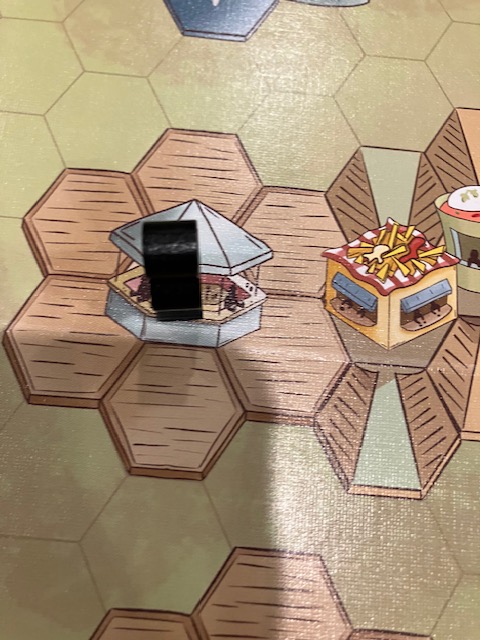
You have to keep your energy up, by visiting bars and the food court! A festival can be draining, so every round, you lose energy! You gotta get beer and coffee and curry to keep moving! See the BAR above (left), where you can get beer, coffee, mix drinks, and water … and see the fry stand above (right) where you can get food!
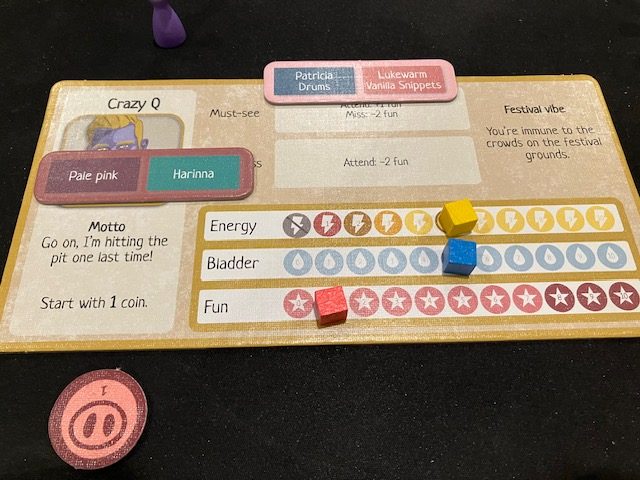
You start the game with some money to buy drinks and food. Notice that you have a BLADDER track (see above)! All this drinking blows up your bladder … if you are ever have a full bladder, you can do nothing else on your turn but find the restrooms! Just like a real festival, this game is all about seeing shows, keeping your energy up, but also keeping your bladder under control!
You can get money by going to the ATM, but you can also share money if you are on the same space with your friends! “Dude, low on energy? Let me buy you a curry!!” This is a cooperative game, so of course you are going to keep your friends spirits up!
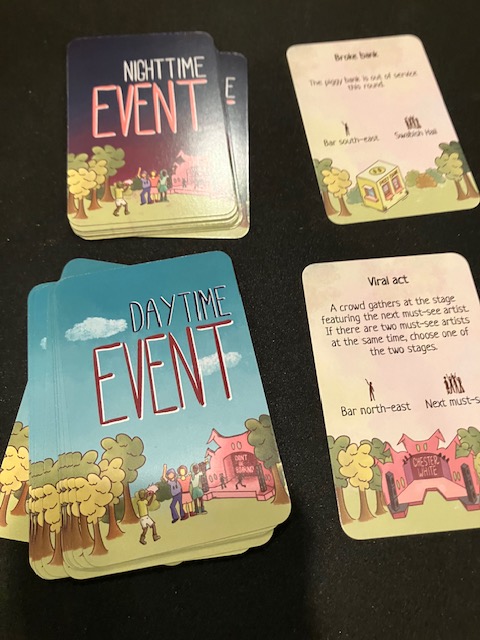
Like any cooperative game, this is bad news of some sort. In this game, the EVENTS unveal every round (the first part of the festitval is in the day, the second part at night). The EVENTS move the “talky” guy and the crowds around! The crowds and the “talky” guy are the things working against you!!
The “talky” guy hangs out at the bars across the festival and moves around in the game. If you ever enter a bar where the “talky” guy is, you have to immediately end your turn! “Hey Rich! Come here! I gotta tell you something!” The “talky” guy is nice, but he can mess up your movement plans if you don’t stay away from him!
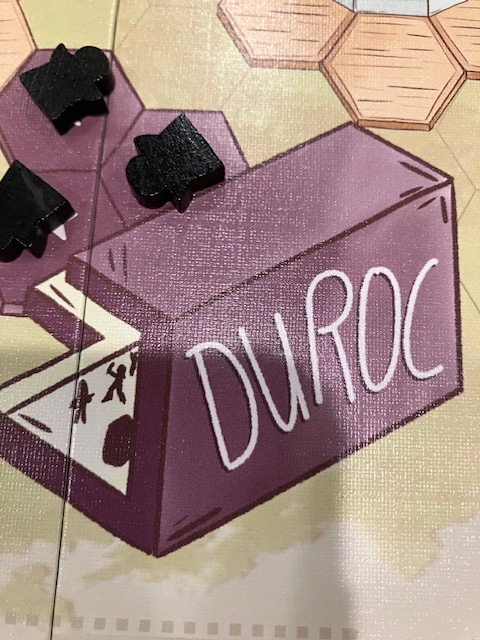
The other part of the bad news EVENT cards are the crowds: see above as the DUROC venue is full of people! Crowds don’t STOP your movement, but they impede it; it takes 2 movement points to get through a crowded space! (Everyone has 6 movement points per turn, modulo special abilities like Crazy Q who isn’t affected by crowds!)
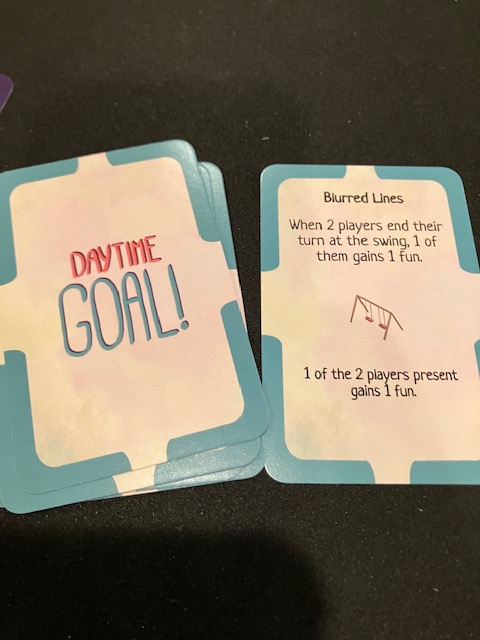
There are some side goals that come up as you play which can help you. For example, if two of you end up near the swings, you can immediately satisfy the “Blurred Lines” Goal and one of you gets a fun! Presumably, one player pushes the other player on the swing … these goals are “secondary” ways to get fun!
At the end of the festival, if everyone has 8 fun and you all end up on the same square for a group picture … you win! If not, well, it was fun to see those bands anyways!
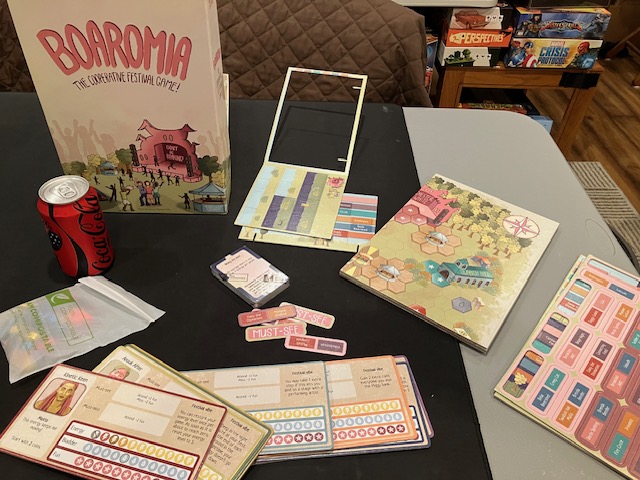
The components aren’t great, but they work and are readable. There is one major issue we will discuss below!
Overall, the components work.
Rulebook

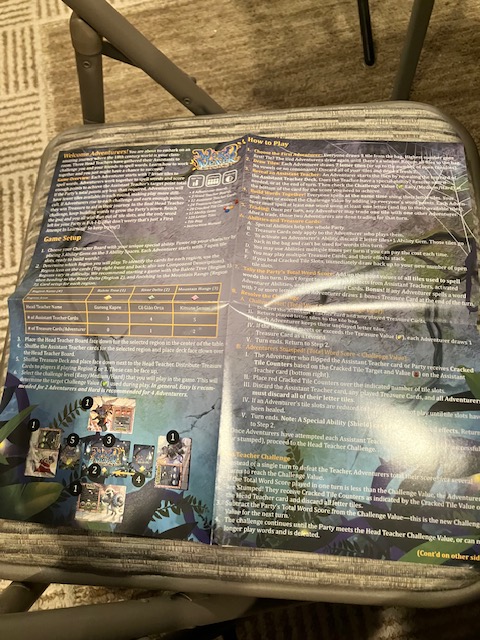
I liked this rulebook. First of all, it wasn’t on shiny paper! It was on ordinary paper! See above! I think I’ve come to prefer rulebooks on non-shiny paper! It makes it SO MUCH easier to read in the light! There’s no reflection! Those of you paying attention might remembers The Plum Island Horror from a while ago (see review here); it also had the non-shiny paper! I find myself wishing more companies would use non-shiny paper!
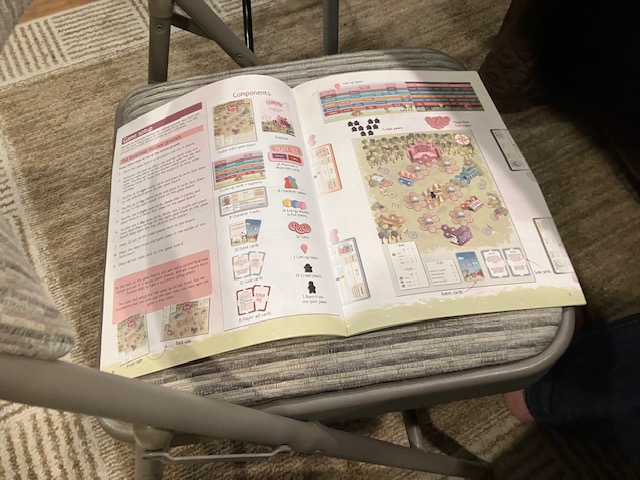
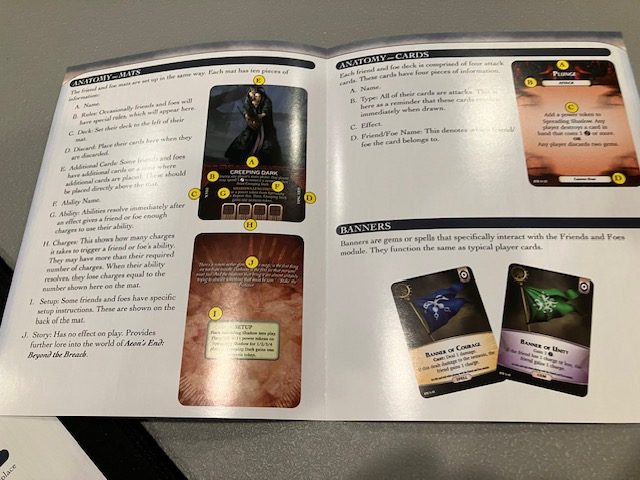
This game is an A on the Chair Test! It fits very well on the chair next to me, it has a very readable font, I can see and consult the rulebook on the chair next to me, and the rulebook is filled with lots of good pictures!

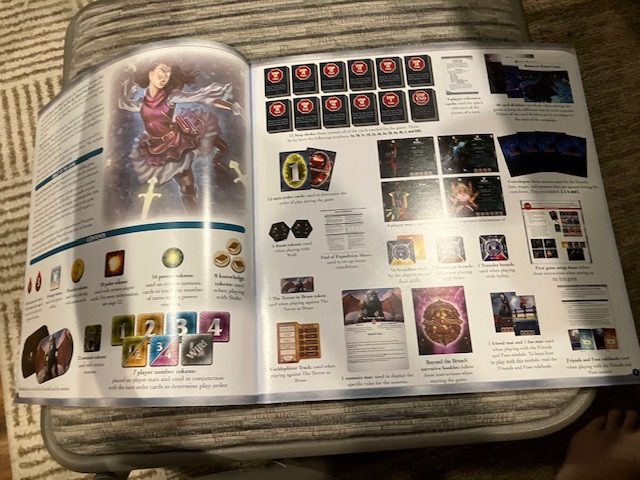
The Components page and set-up were fine! They showed the map and where to put things!
I think there were a few minor rule questions as we played, but overall this was a good rulebook! Lots of examples, well-laid out rulebook, lots of pictures; they did a good job. Did it need an Index? I don’t think so? It’s a pretty simple game.
Solo Game?
So, there is no solo mode! See above as the player count is 3-8 ! Boo for not following Saunders’ Law! … until I tried it solo!!
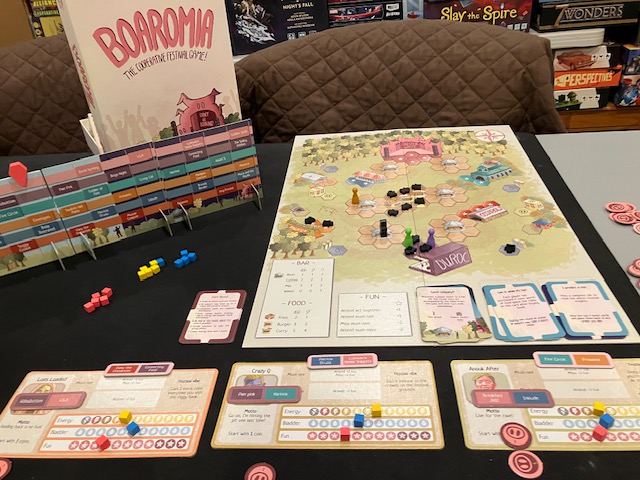
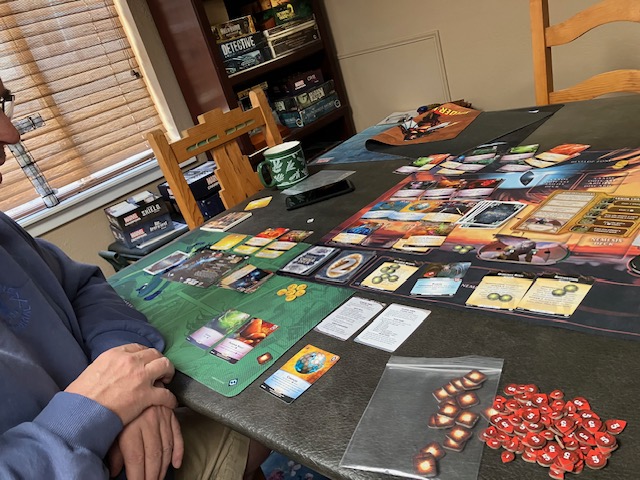
So, I said, “I’ll just try a 3-handed solo game!” See above for set-up! This should work, right?

Nope! I got slaughtered! This game is all about planning how each character separately moves about the map! Each character MUST SEE some shows, and tries to hook up with their friends for other shows! Sometimes there are Goals which are useful, but this game is all about the coordination and trying to get to events! Every game I have played has characters barely making events at the last minute! And that’s the fun! Trying to hook up with your friends.
As a solo gamer, it’s too much work trying to run 3 characters at the same time. “Wait, he has to be here, she has to be here, wait, he needs energy, he needs to pee… ARGHGH!” I totally understand why there’s no solo mode. Having said that, I think I would recommend trying a solo game three-handed just to see how the game works! For the purposes of having “fun”, a three-handed solo game isn’t fun, but it’s very instructive.
Play solo (three characters) once to learn the game, then never play solo again.
Cooperative Play
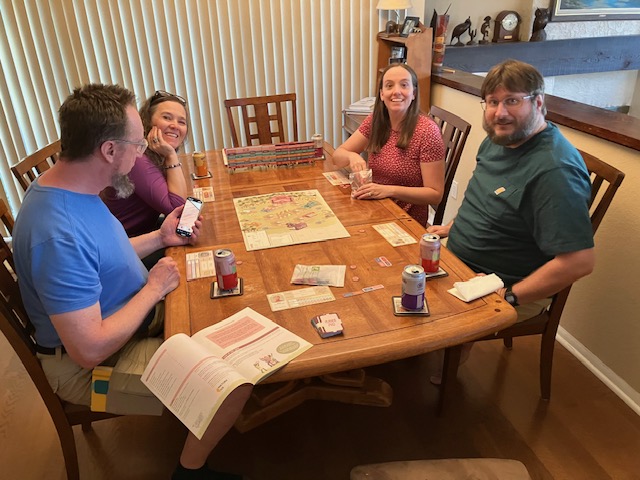
This game is totally made for cooperative play! There is so much to keep track of for just one character, so you pretty much have to play just one character! You have to make sure your character achieves their goals … but in order to get fun (and win), you absolutely have to work with everyone!! Part of the fun of this game is calling out to the game board:
“HEY! I MUST SEE the Primatez!! Who wants to come with me?” And you’ll hear,
“I’d love to, but I have to pee first! I’ll see you at the stage!”
“Not me! I HATE the Primatez!!! I’ll get some curry and meet you later!”
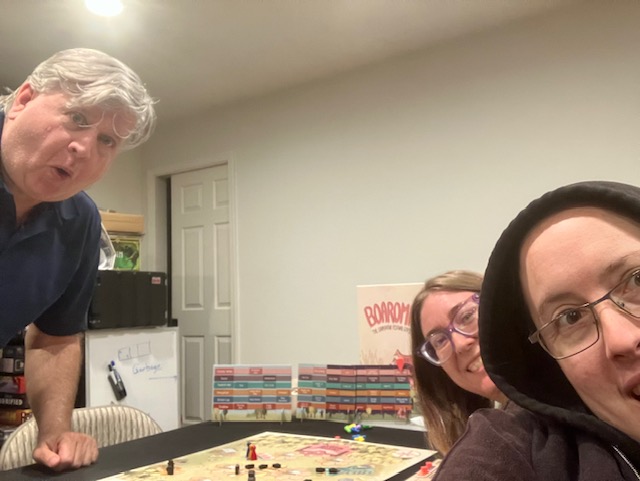
The game is goofy! You are all trying to coordinate your actions to see as many shows as you can! You have to manage your money, your bladder, and your fun as you run around the board.
This game is so cooperative! You have to work with your friends to see shows, because the best way to get fun in the game is to see shows together, with your friends!!!! It’s actually a lot of work to have fun at the show!
The theme of the game is so goofy, that if you lean into it, you can have so much fun! We would high-five as we saw a MUST SEE show together! We’d share money so our buddy could get a curry and keep his strength up! We’ve go swing on the swings together between shows!
I have played a 3-player and 5-player game of this, and both worked so well! Everyone was laughing and having a good time!
What I Liked
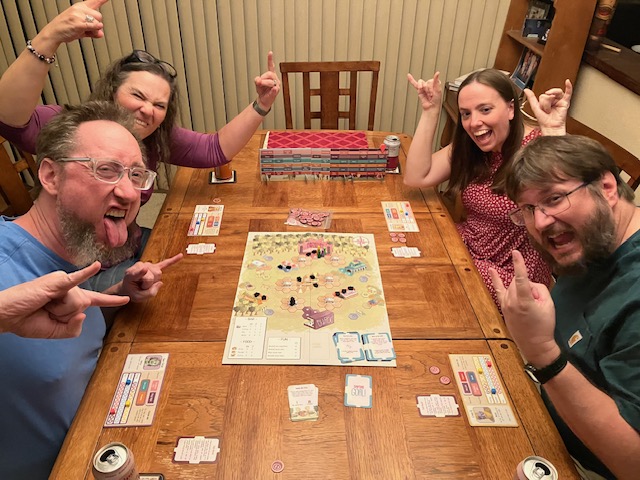
So Interactive! As we played, there was so much interaction! Sometimes you’d hang with one set of friends, sometimes you’d hang with a different set of friends … and see shows together! The game was all about seeing shows with your friends, even as little groups come and go as you see your MUST SEE bands!
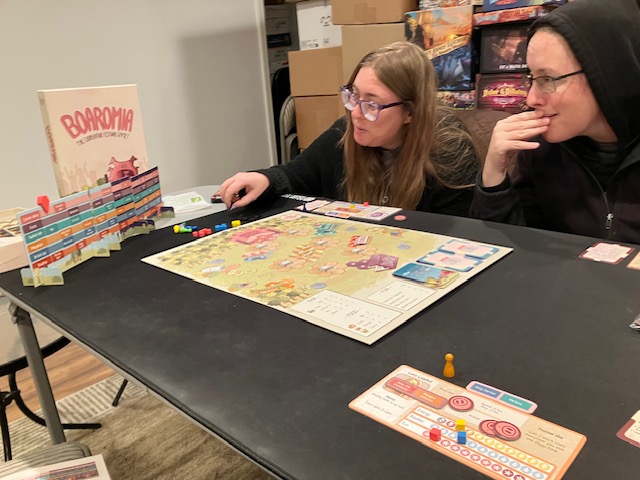
Goofy! I loved how goofy this game was! The band names are goofy, the character names are goofy! It makes it easy to lean into this theme and just have goofy fun! I don’t mean goofy to be bad in any way! I loved the goofy nature of this game!
Band Names: In case you haven’t figured it out, all the band names in this game as “peterbations” of real names! Some of the fun was trying to figure out who the “real” band was! Lukewarm Vanilla Snippets? We are pretty sure they are the Red-Hot Chile Peppers!!
What I Didn’t Like
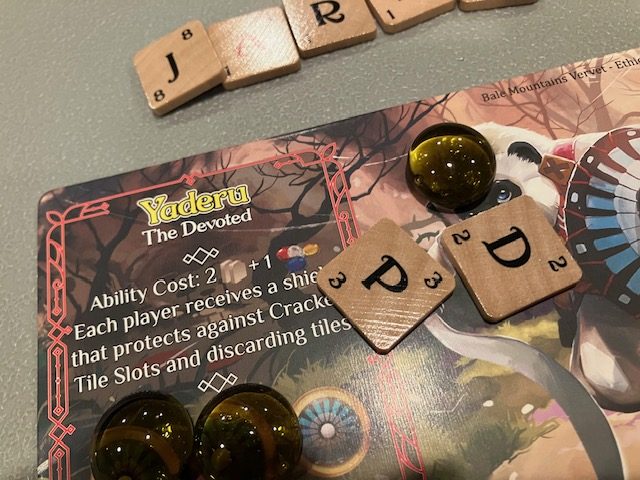
Pawns and Character Colors: The worst part of this game was the mapping of the character colors to the pawn colors! Look above at all the characters! The washed-out colors all kind of blend into each other, and some character colors are almost indistinguishable! The pawns to character mappings are also very unclear, to the point where it sometimes interfered with gameplay! “Wait, why are you moving my pawn?” “Oh sorry, I thought that was my color!”
Considering how WELL they used colors to distinguish the venues, the colors for the characters pawns and character mats seemed surprisingly poorly chosen. I think they were trying to use primary colors for the venues and “off” colors for the characters to distinguish them? I applaud the effort, but it just didn’t work.
A Worry About Replayability: The game uses the same schedule and the same band names for every game. I’ve played the game at least 3 times now, and the game is still a hoot! I worry it will become “samey” after a few more games; I wish there had been another schedule with different band names.
I think this game needs a Heavy Metal expansion, with names like “Poorly Whiteless’ Prismatic Spray” (for “Richie Blackmore’s Rainbow”) and a different schedule! I kind of wish that more schedules with different theres: a “Pop” and a “Heavy Metal” and a “Alternative” festival should have all been included. But I get it; I think this is literally the smallest Kickstarter I have ever funded. It only had 97 people, so they could only do so much with limited funds.
Conclusion
Boaromia: The Cooperative Festival Game is definitely a hidden gem of a game! If you have a group of friends who can lean into the music festival theme and enjoy the dynamic little groups that form from show to show, I think this will be a great hit! If you are looking for a deeply serious and strategic game with cooperative elements, Boaromia: The Cooperative Festival Game probably isn’t for you. This game is best enjoyed by being goofy with your friends!
From this description, I think you will know if you and your friends will like Boaromia! I am surprised how much me and my groups of friends liked this! I was going to give this a 7/10, but I can still see the smiles on ALL of my friends faces as we played this … it has to be at least an 8/10!!
There are few issues to consider; the game might be come a bit “samey” as the bands and schedule don’t change, and the color choices for the pawns and characters mats actually detract from the game. I would love to see a bigger better edition with better colors, multiple themes/bands, with multiple schedules to give the game some variety! But as it stands, I really enjoyed this game!
I think this game would would work fabulously in a convention environment! The raucous energy of this game matches the raucous energy you get at a board game convention! I expect this to be on my Top 10 Cooperative Games To Play at a Convention next week! (Spoilers!)
 coopgestalt