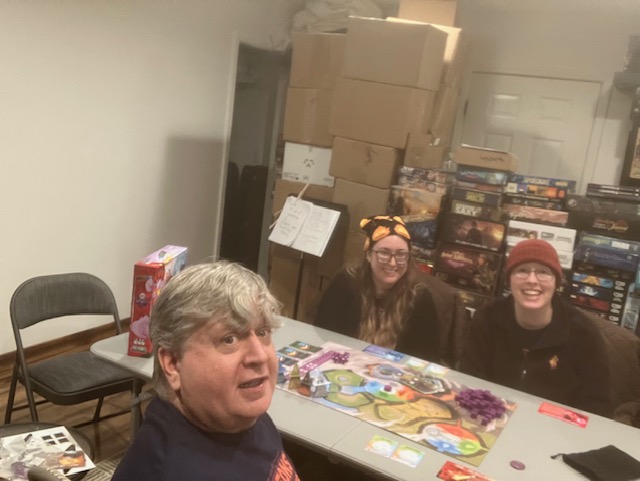
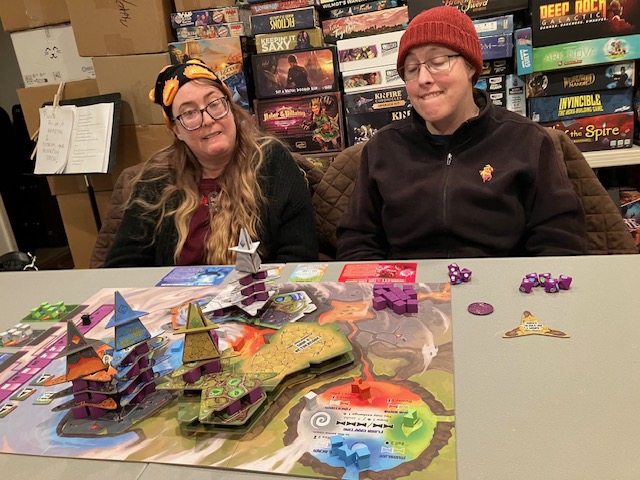
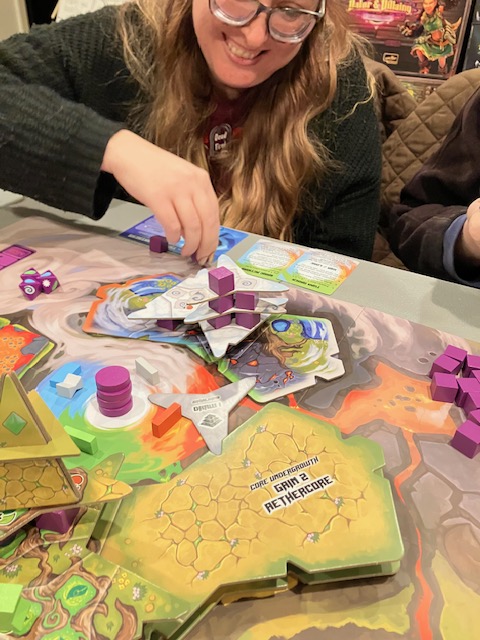
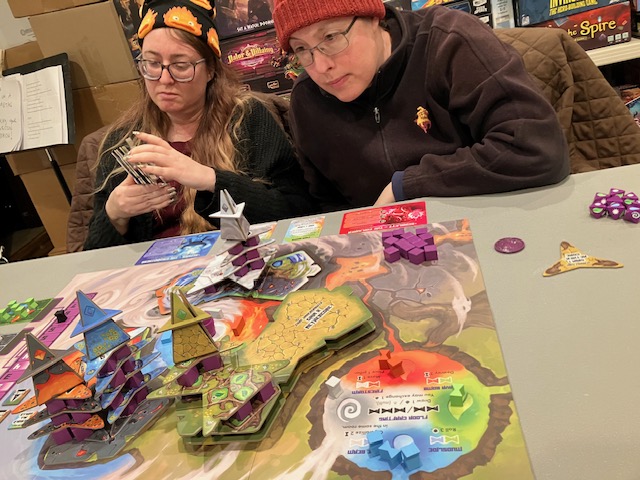
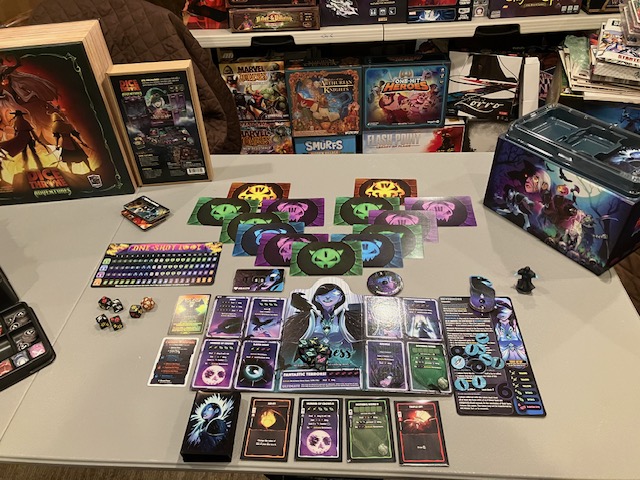
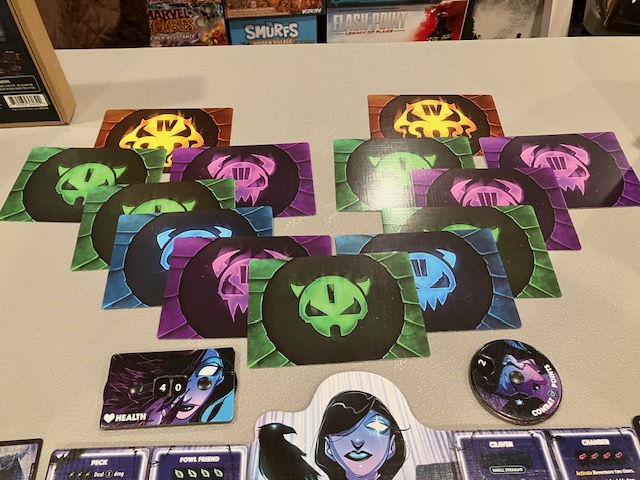
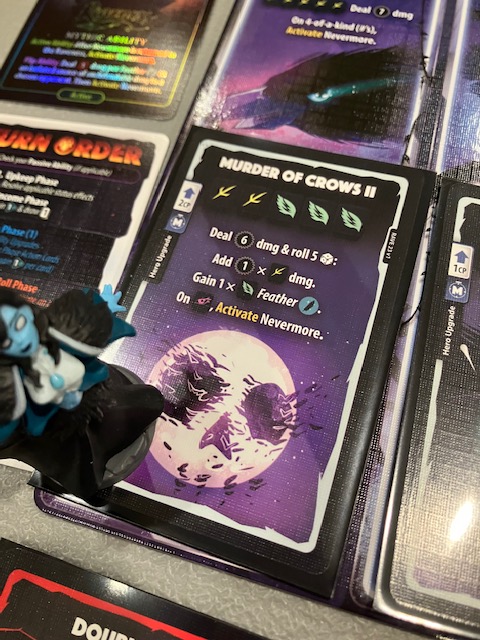
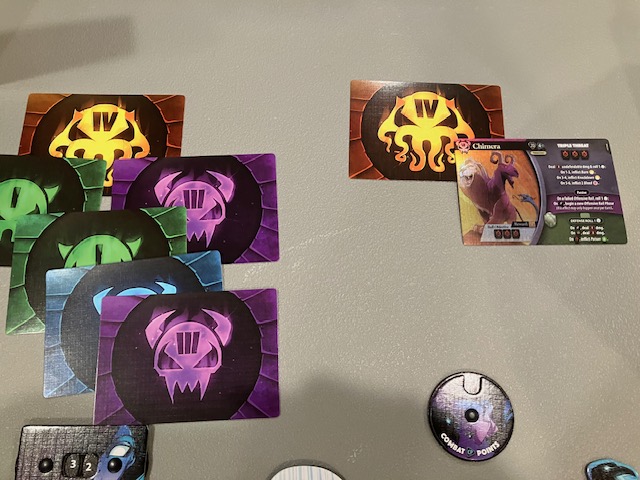
Cooperative Cthulhu! A Review of Cthulhu Rift (Solo and Cooperative Modes), A Roll-And-Write Game!

Welcome back to Cooperative Cthulhu Month! We’ve been looking at cooperative Cthulhu Mythos games, starting last week with Horror on the Orient Express! For the next few weeks, we will be continue delving into the cooperative games in the Cthulhu Mythos! This week, we’ll with a cooperative roll-and-write game (kinda) called Cthulhu Rift!

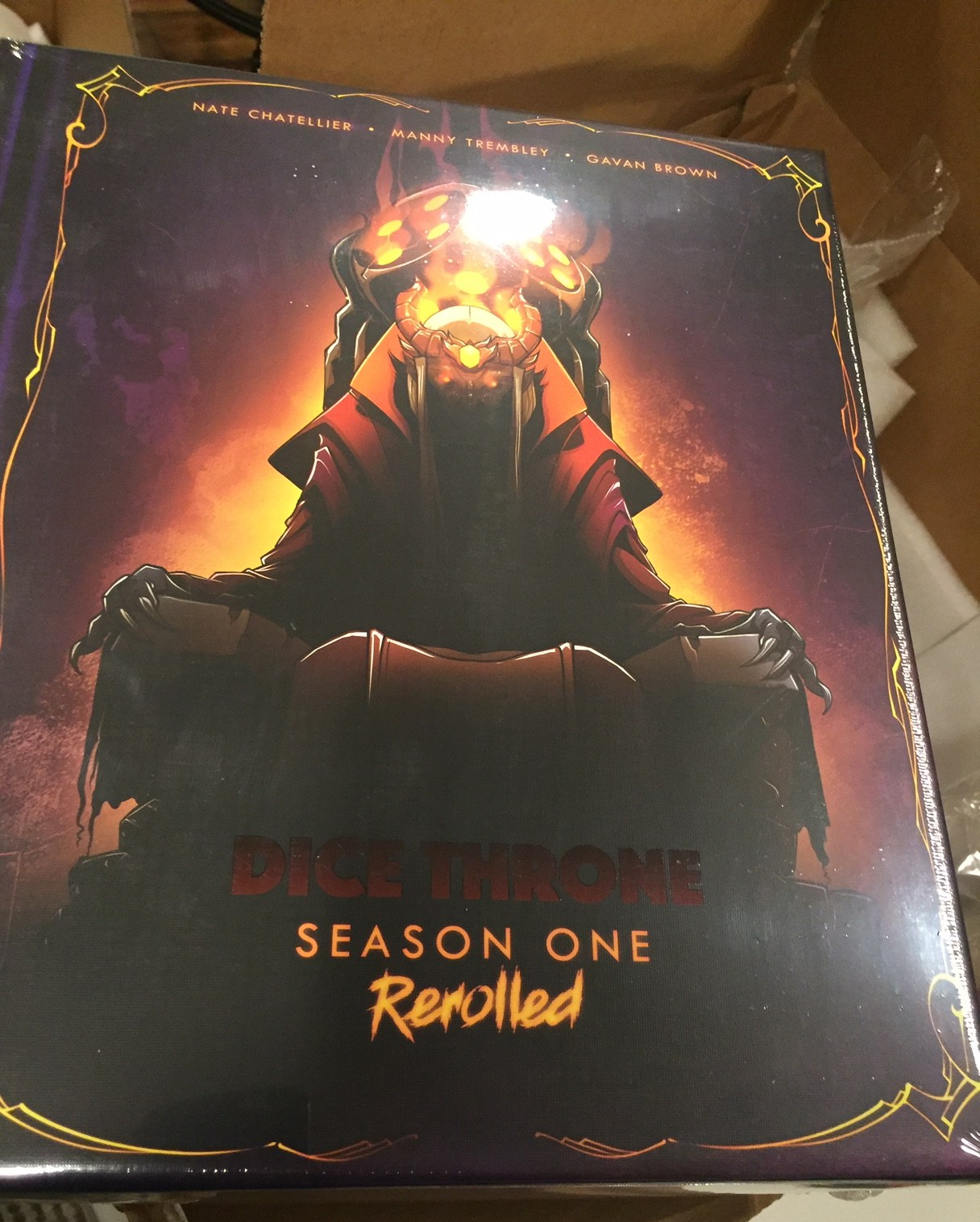
Cthulhu Rift was one of of a group of three Cthulhu-based games from the Lovecraft Games Collection on Kickstarter back in June/August 2025. They promised delivery Feb 2026 and were about 6 months late: my backed collection of games arrived mid August 2026. (Technically, one of them arrived much earlier, but that’s not this game).

I backed this collection because of the game Cthulhu Rift! Cthulhu Rift is a cooperative roll-and-write board game (sort of) for 1 to 4 players! Like Yahtzee, but cooperative and Cthulhu? Sort of?

Would Cthulhu Rift make our Top 10 Cooperative Roll and Write/Flip And Write Games? Let’s take a look!

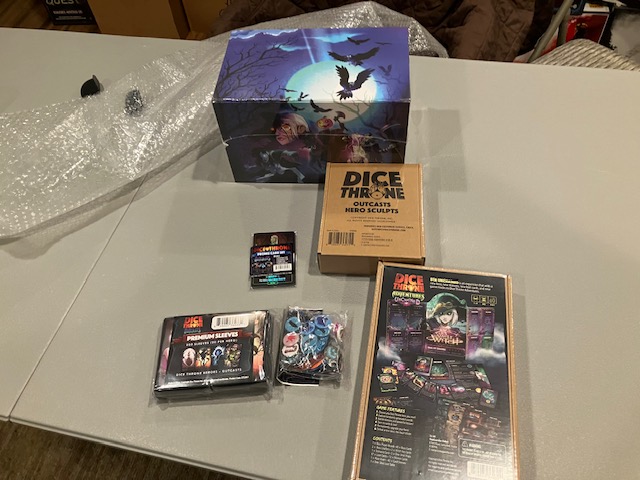
Unboxing and Gameplay

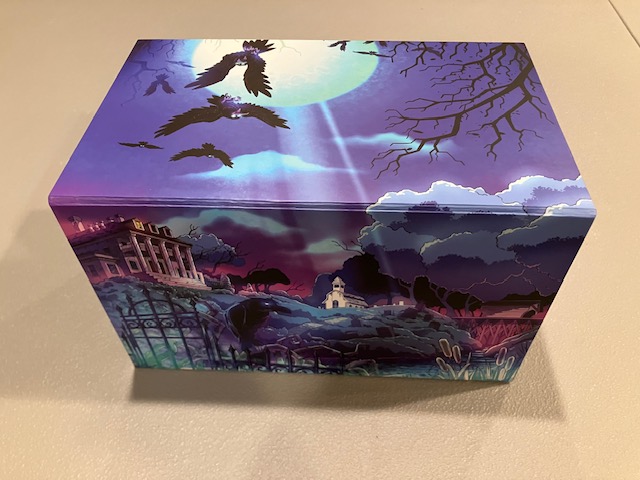
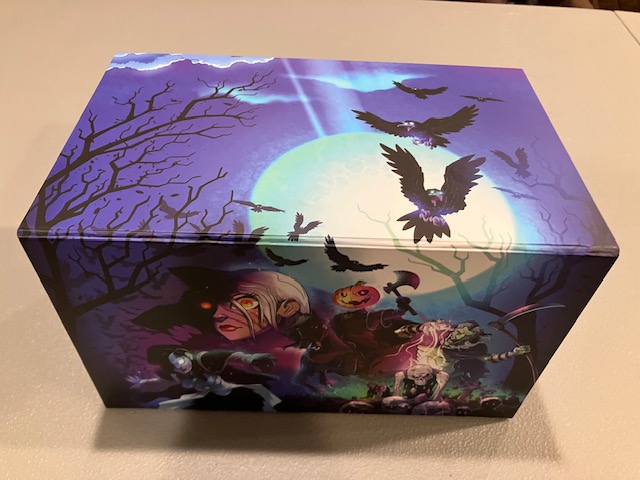
See game above with Can of Coke for scale.

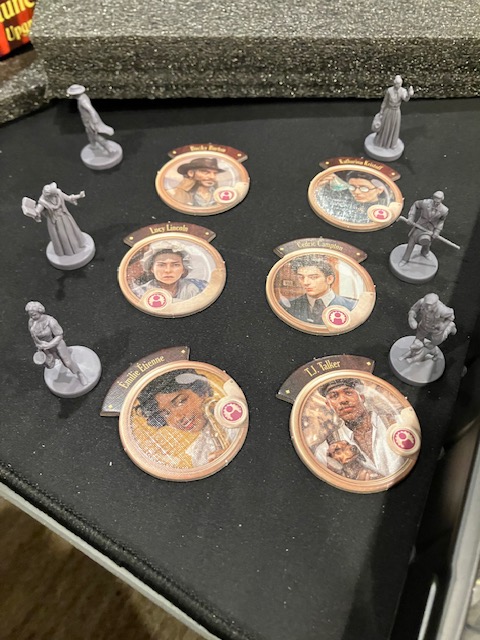
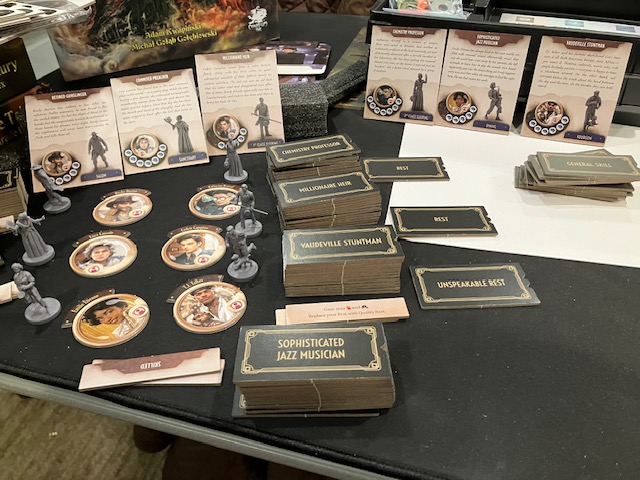
Players each take the role of one of the investigators in the game! See above!

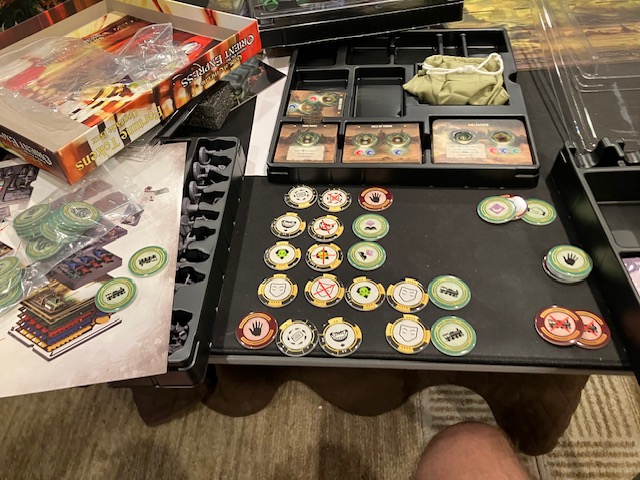
Each investigator has their own roll-and-write board! They also each have a once-per-game special powers (lower left) and some skills you can unlock as the game unfurls (bottom right).

This is a dice game (after all, it is fundamentally a roll-and-write game): see the different colored dice above. On a turn, the “driver” (first player) rolls the dice and each player must take a die … and that’s the symbol they get for that turn! (Some players may get more than one symbol).

Symbols aren’t immediately used! After you record a symbol on your sheet, you “may” cross out and activate a symbol if it’s adjacent to another symbol! This is a game about “collecting” symbols so you can use them later!

You can literally get stuck in a corner! The orange magnifying glass (above) can’t be used because there are no other adjacent (non-crossed) magnifying glasses!

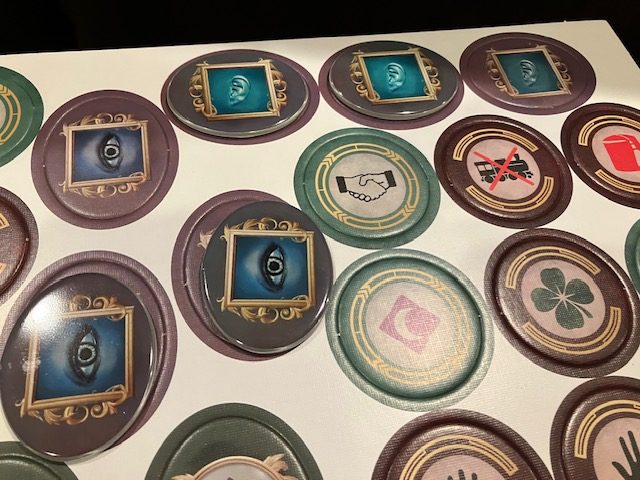
There’s all sorts of symbols you use: magnifying glasses to find runes, books to decipher runes, and portals to seal rifts! And guns to kill cultists! Gulp!

The overall objective (at least in Case 1) is to find and decipher the runes to seal the gates! For the 2-Player “easy” game (see above), we have to seal 4 gates! The runes on each row indicate what you need to find in order to close and seal it!

The reason I said this is “kind of” a roll-and-write is that you also traverse a map! On the active player’s turn, you move around the map, trying to find what you need as well as “disposing of” Cultists along the way!

If you don’t deal with the Cultists quickly enough, they WILL summon Cthulhu! Or at least some of his tentacles. That’s what Cultists do!

See a winning board above, where 4 portals have been sealed! The Cultists (blue stars) had taken over almost half the map, and they even summoned one Cthulhu tentacle, but we did win!

You might have noticed that the dice and the symbols in the game all have colors! Generally, you can “only” apply one your symbols to an activity if you have the matching color! The colors of the location and the colors of the dice “generally” matter! You can only record symbols on the appropriately colored spaces! So, the colors do matter of the Location for activating and recording symbols!

To repeat: the colors matter! White is wild, but generally the symbols can only be applied to a Location with a matching color!

Seal all the gates before you run out of space, Cultists, or Tentacles!

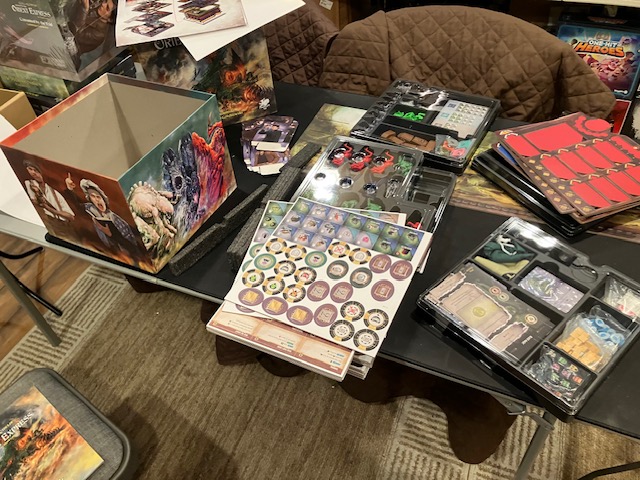
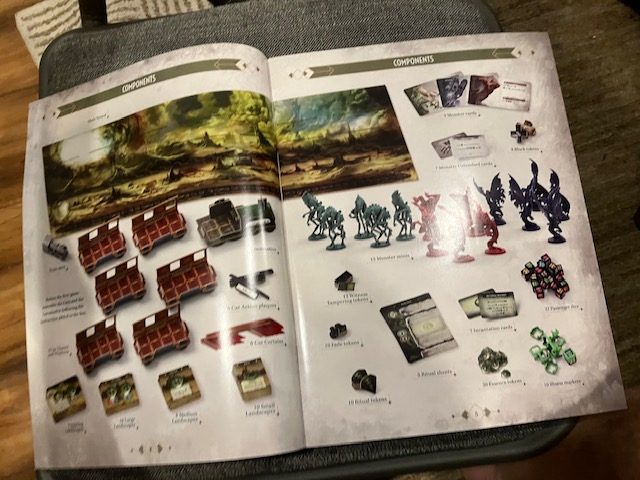
The game generally has pretty good components: see above. The art might be slightly divisive, but I think it’s very thematic art as it has an “edge” to it that implies a supernaturally weird element.

Rulebook

So, this game has 4 different rulebooks in 4 different languages! See above! That’s why there’s not a lot of text anywhere; it was meant to be language independent!

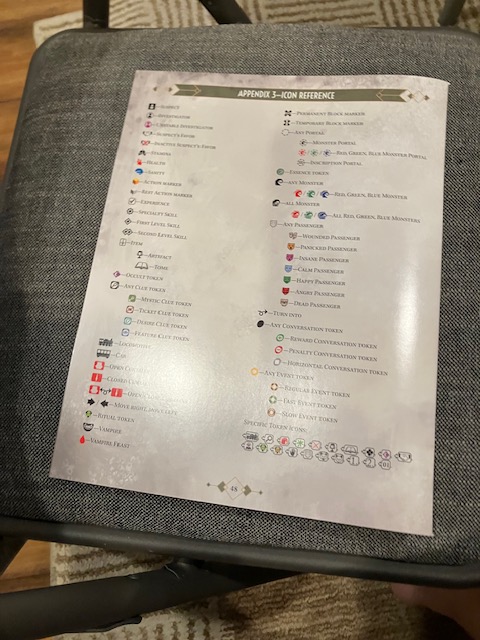
Sigh. The rulebook form factor is ok. It gets like a C+/B- on the Chair Test: it can sit on the chair next to me, but it droops more than it should (see below).

The rulebook is fine. I didn’t love it, but I didn’t hate it. For some reason, I had trouble reading this! I don’t know if it’s because it’s a translation or the organization? Or something else? You will have to read it a few times to get the game. It’s not a hard game, but it felt like this should have been easier to get. I think that a Player Summary Card might have helped quite a bit? (There is no Play Summary cards; probably because of the language independence of the game).

It was fine. It taught the game.

Solo Mode

So Huzzah to Cthulhu Rift for having a solo mode! Congratulations for following Saunders’ Law!

The included solo mode is even a true solo mode! The solo player plays the one character, Dr. Elias Grimsby. Now, even though this is the official solo mode, that is NOT how I played my first solo game.

For my first solo mode, I played two-handed solo, alternative between two characters as-if it were a 2-Player game. Why?

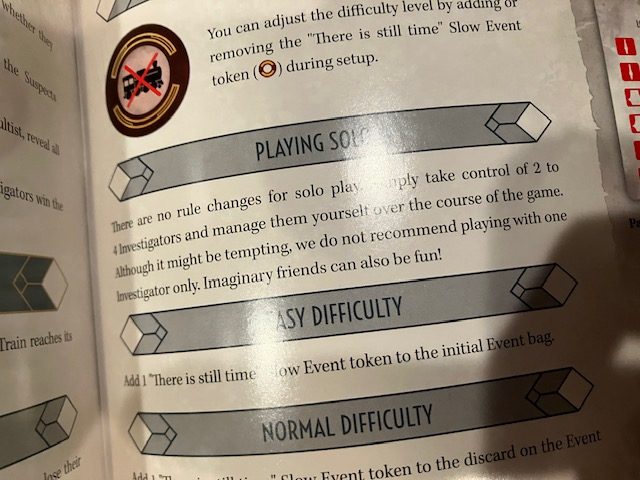
If you look at the solo rules (see above), there’s about a page of exceptions to the rules. This game is kind of a bear to learn and teach, so after reading through the rules, I thought it would better to play “the simplest way” possible, which is to play the game without all the rules exceptions of the solo mode.

Another reason to play two-handed solo is that my plan is always to teach and play with my friends! So , it’s easier to teach the cooperative mode if I have played the cooperative mode (albeit solo)!

I think playing two-handed solo was the right way to play the first game. This game has rules that are hard to grok the first time through, so it makes sense to avoid the extra complications of the solo game and play it straight vanilla the first time through.

I lost in my first game, pretty badly. I think that’s because some rules that take at least one full game to grok (if you are playing from the rulebook). In fact, I was very worried about how poorly I had done because my dice rolls were so bad!! Is this going to be a game that’s too random?? I held off making a pronouncement until I had a few more plays under my belt.

I think it’s important to play this at least a few times before you decide if you do or don’t like it: there’s enough rules interactions you might not get the game the first few times through.

BUT it was important to see the base rules unadorned by solo exceptions to get the sense of the game. I recommend playing your first solo game two-handed solo.

Once I got the base rules down, then I tried the solo game. I liked it! There were enough rules changes/additions that I think it makes sense to have played that two-handed game first, but I think the official solo game is the better way to play solo once you know the game.

You’ll notice the solo player has a lot more spaces than a plain character! But, that makes sense as spaces are a fundamental resource in this game! You need enough spaces to make progress. (You have to unlock some of those spaces when you roll Chthulhus too).

Once you get the sense of the extra rules, this is the better way to play solo. You only have to deal with one page, and I generally prefer true solo modes when possible because you feel like you are inhabiting the character! You are becoming Dr. Elias Grimsby!

After losing my two-handed solo game and winning my true solo game, I am a little less concerned about the randomness of the dice. That first game was a pretty rough loss, but after the second game, everything started the make sense.

The true solo game is fun, it’s engaging, and the way I will play solo moving forward. Yet, I still recommend playing your first solo game as a two-handed solo mode so you can learn the vanilla cooperative rules! With the vanilla cooperative roles under your belt, you can then apply the (fairly numerous) changes to the solo mode without getting lost.

Cooperative Mode

The cooperative mode works up to 4 players! This is a cooperative roll-and-write!

It’s a bit hard to teach this game. Even after explaining a bunch of things, it’s still kind of hard to wrap your head around everything. Here’s the thing: once you get it, you get it! It’s pretty easy once you put everything together. But I absolutely recommend playing the game solo (maybe even twice: both two-handed and true solo) so one player can shepherd the game. Luckily, the game does start hitting for people quickly. I think the idea that you “save symbols” to mark-off later is different than most roll-and-write games; it takes a while for this and all the little rules to sink in.

There’s a good level of cooperation in the game; mostly high-level discussions. Where do we drive? What can we do? How many Cultists can we “take care of”?

Because each player has their own sheet, there is a good element of “multi-player solitaire” to the game: you have your own sheet and other people don’t really interfere on it. Each player having their own sheet is a good Alpha Player deterrent too. Most of the cooperation is pretty high-level: which dice do you want? You discuss what to do and what you can do, but you don’t really tell people how to do things!

I noticed that we did tend to specialize: Beatrice Langford became the “Cultist Assassin” and her main task was to take out Cultists! So many guns on her sheet!

Overall the game was pretty fun and pretty cooperative … once you got the rules. There was enough high-level cooperation to make the game feel cooperative, but enough low-level activity (recording symbols on your sheet) that each player still felt like they had their own agency.

Play the game solo before you teach your friends. I feel like the game is weird enough that a cooperative learn might go poorly?

A Few Recommendations

Make Copies. The number of roll-and-write sheets in the game is a limited resource. There’s a lot, but you can run out. I went ahead and made copies of the sheets and used those instead. I supposed you could also laminate them too.

Don’t Mark Up Some of the Sheets! In my first solo plays, I did what the rulebook said and marked out some of the spaces on the Big Bad (Cthulhu): see above.

Don’t do that! Just use some coins to “mark-out” the places you aren’t supposed to use! See above as we use the Stonemaier coins to mark off the spaces we don’t use! There is NO REASON to completely waste a sheet for that!

Play Solo Two-Handed Before Teaching. This is an easy game, once you grok it, but it’s kinda weird and kinda hard to grok. Play solo (two-handed) to get a sense of the game and then teach it: I think the play will go a lot better that way.

What I Liked

Choose Where You Drive: There’s a certain play element we didn’t emphasize, but I think it might be critical to the game: when you drive somewhere, “someone” on your team gets the symbol of the place you are driving too! This means, if you are rolling badly, you can ALWAYS guarantee you can get at least one of the symbols you need (if you can drive there). This rule really helps mitigate the randomness of the dice, as you can always get at least one symbol you need. Don’t overlook this rule; it can be easy to miss.

Once You Get It, It’s Easy: This game is hard to teach, but once you get it, it’s pretty straight-forward to play.

What I Didn’t Like

Randomness: At the end of the day, this is still a dice game. Even with some of mitigation techniques in the game, you can still roll badly and lose badly. I was very very concerned about the random nature of the game on my first solo playthough, but once I understood the game better, it’s not that bad.

Having said that, randomness in a game with limited resources (the sheets you write on) is a little more concerning than most games. I would be so very frustrated if I rolled badly and used up 5 sheets in one game! What a waste!

And you can still roll badly, especially on the bad news phase (which summons cultists and then tentacles) and just lose.

A few very minor house rules helped us a little:
1) You can re-roll just the dice you want. When you unlock this ability, the driver can re-roll the dice. But only all of them? This seems to lean into the “too much randomness”.

2) Once you unlock all your abilities, you can choose to not take a die (and someone else has to take it). It seems unnatural that you can’t choose to do NOTHING on your turn. Of course, there are consequences to doing “nothing”, and one of your compatriots must take the die and write the symbol down. But this feels like it should be a choice.

These very minor house rules are in the name of making the game feel a little less random and giving you some agency.

Conclusion

I liked Cthulhu Rift game and so did my friends. It wasn’t the greatest game ever, but we had fun. It’s a 7/10 for the cooperative game.

The solo game is true solo, and it’s a good game (7/10), but I’d recommend playing your very first time as a two-handed solo game with the vanilla rules to learn the game. The true solo game is the better game, but there are too many rules exceptions in the solo game to make it a good first game.

I recommend making copies of the sheets or laminating them so you don’t waste the limited sheets in the game. I also recommend using coins instead of actual marks on some of the sheets so you don’t HAVE to waste them. Because this is a game with more randomness than some others, we do recommend a few minor house rules: nothing is more annoying than wasting a limited resource because you rolled poorly.
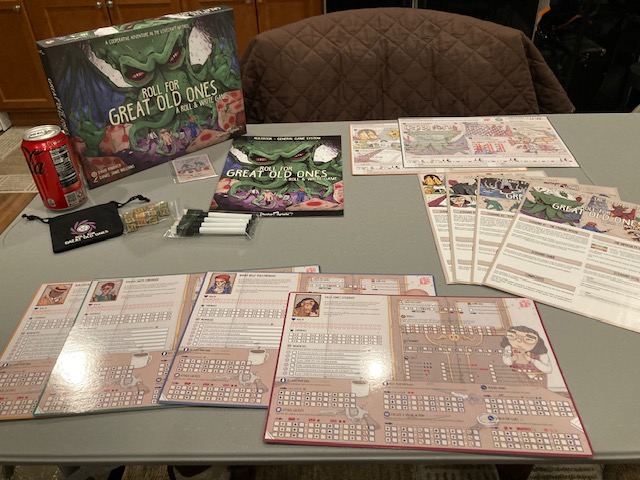
If you like the idea of a cooperative roll-and-write game with a Cthulhu theme, I also recommend you check out Roll For Great Old Ones (see review here). It’s a little better game, but it’s also a little more complicated. Cthulhu Rift is an easier game to sit-back and just play … once you’ve grok it.

And yes, Cthulhu Rift would make our Top 10 Cooperative Roll-And-Write Games!
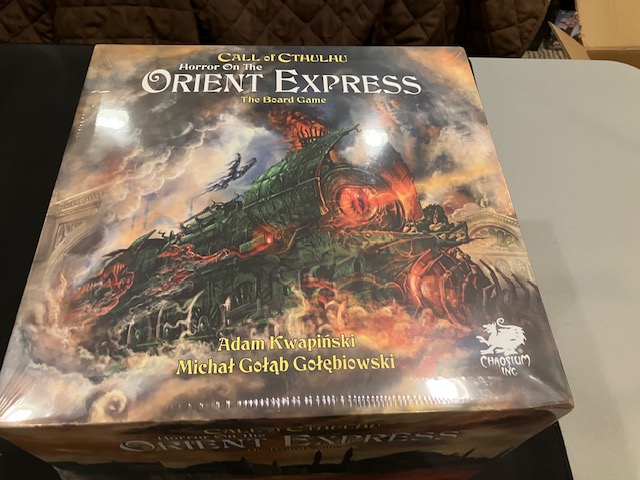
Horror on the Orient Express! An Initial Review After My First 15 Hours of Solo and Cooperative Horror! Cooperative Clue with Cultists, Cthulhoids, Clues, and Choo-Choos!

Welcome to Cooperative Cthulhu Month! This month, we take a look at a bunch of cooperative Cthulhu board and card games! We start the month with a very brand new game called Horror on the Orient Express which just delivered to Kickstarter backers!!

Horror of the Orient Express answers the age-old question: What would it be like if Agatha Christie’s Poirot had to solve a mystery on the Orient Express with Chtulu-like creatures chasing him? Philosophers have pondered this question for years, and now Horror on the Orient Express gives the definitive answer!

The game arrive at my house Saturday August 22nd. I was very excited by this; it is was on my Top 10 Anticipated Cooperative Games of 2025!

Over the next week, I would spend so much of my precious time with this game system. I have spent 15+ hours going though this so far! How does that time break down? Let’s take a look!

Day 0. Unboxing and Reboxing (and some discussion of gameplay): 4 Hours

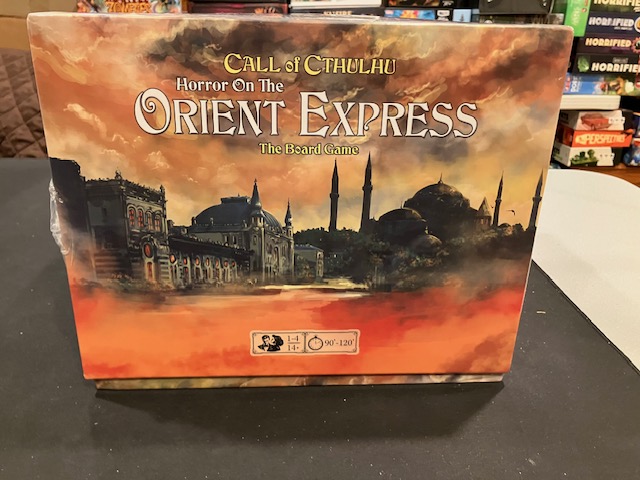
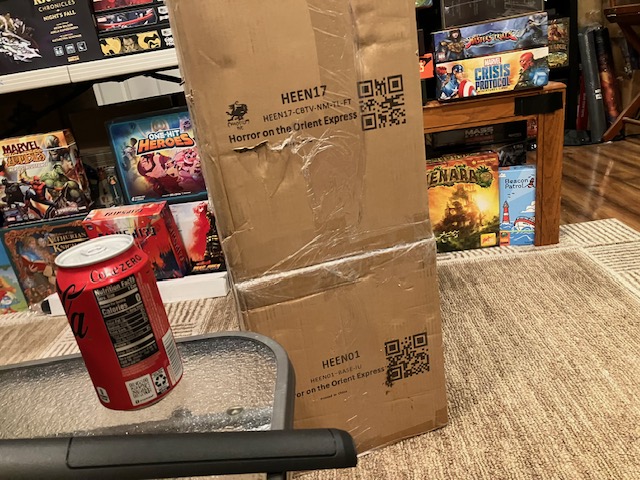
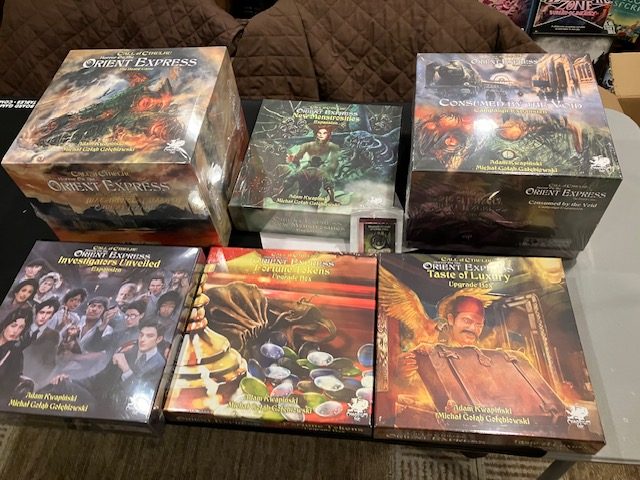
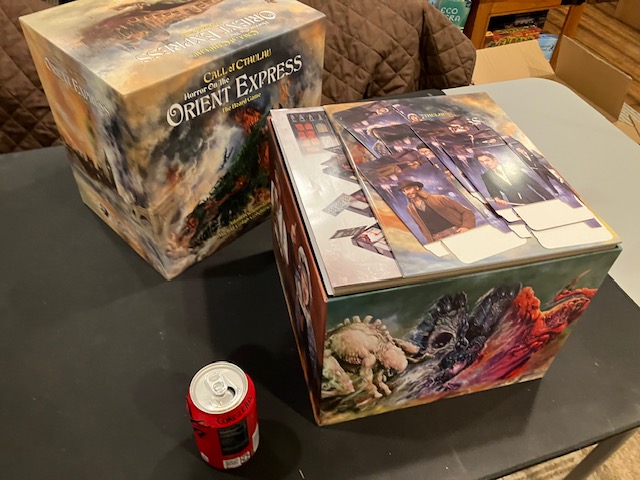
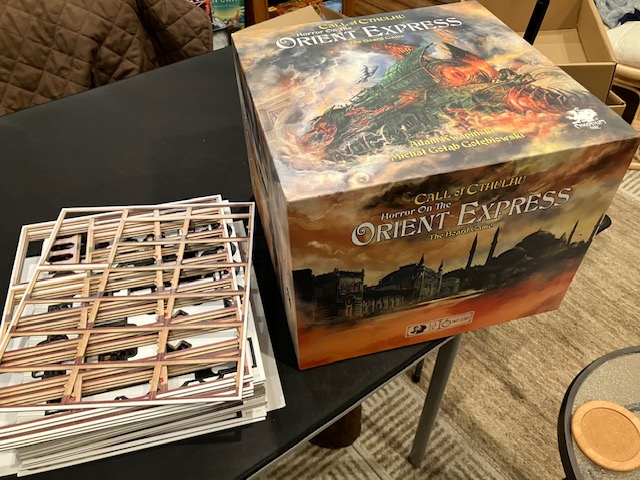
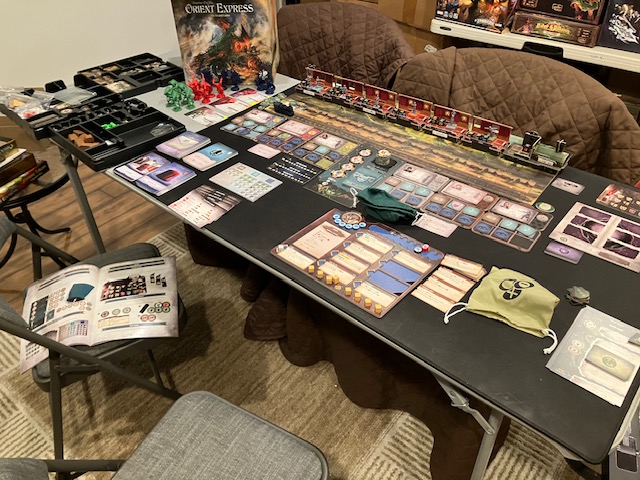
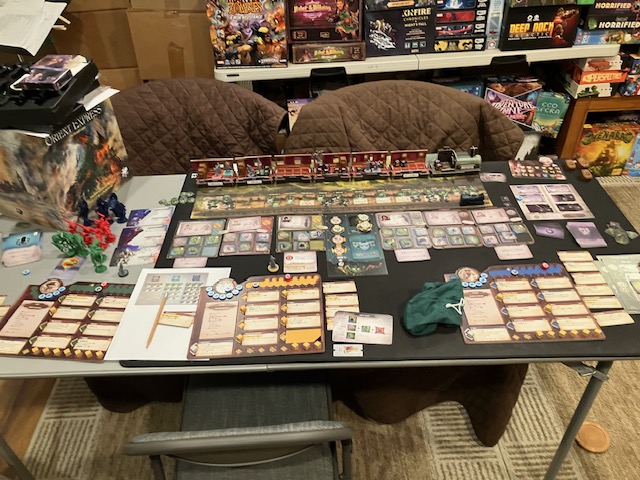
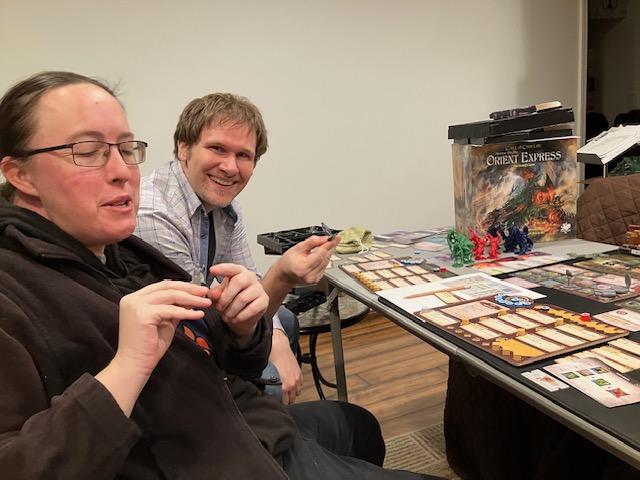
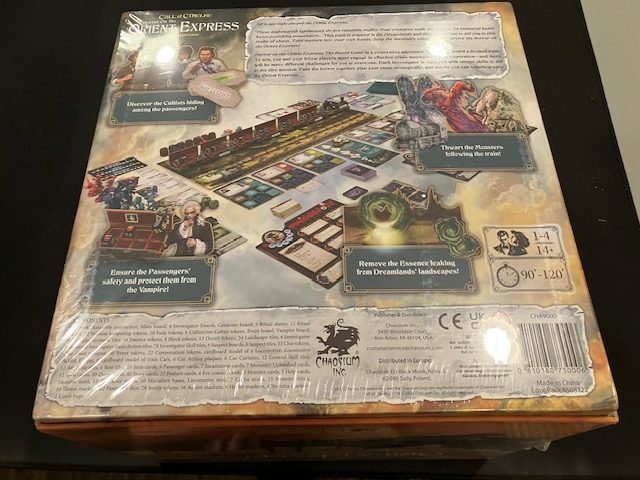
You heard me right; this took 4 hours to unbox. And that was just the base game and some deluxe components! Part of the story here is just how much content arrived! There were two boxes that were actually tapes together when delivered to my house! See above!

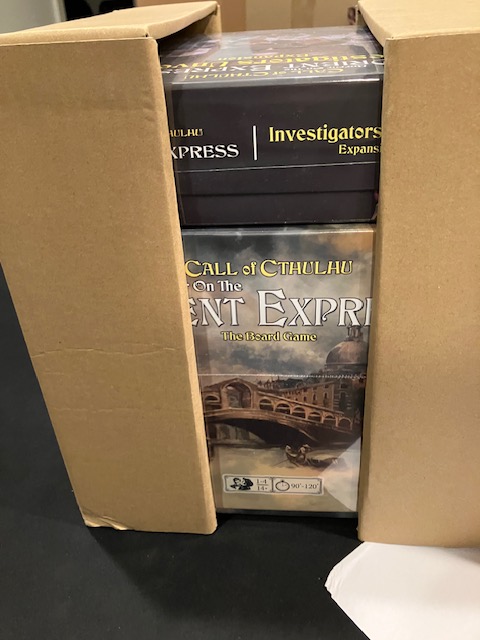
The smaller of the two boxes came with the base game and an investigators expansion (giving more investigators and suspects).

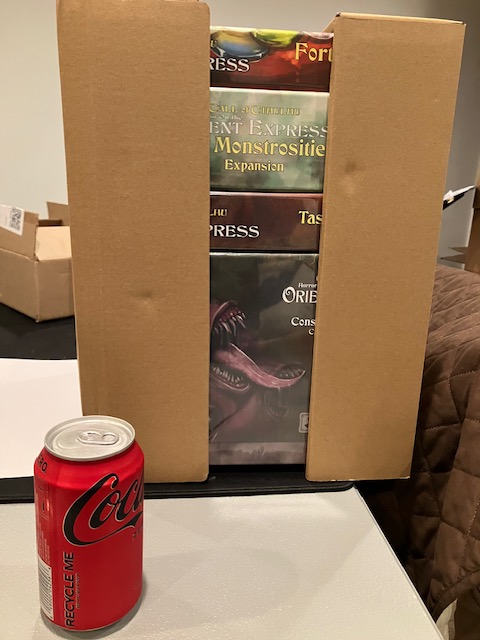
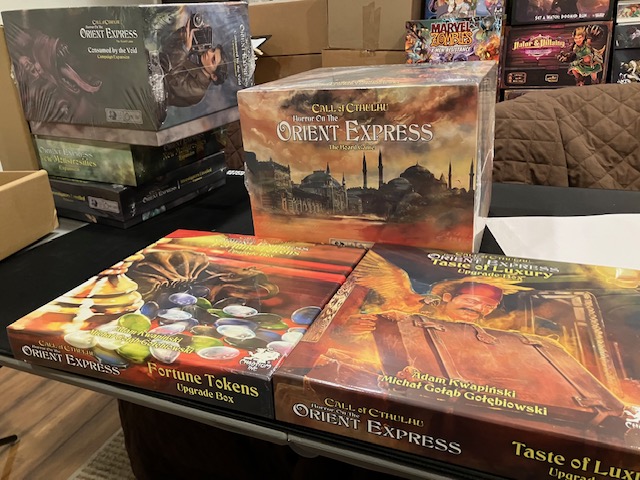
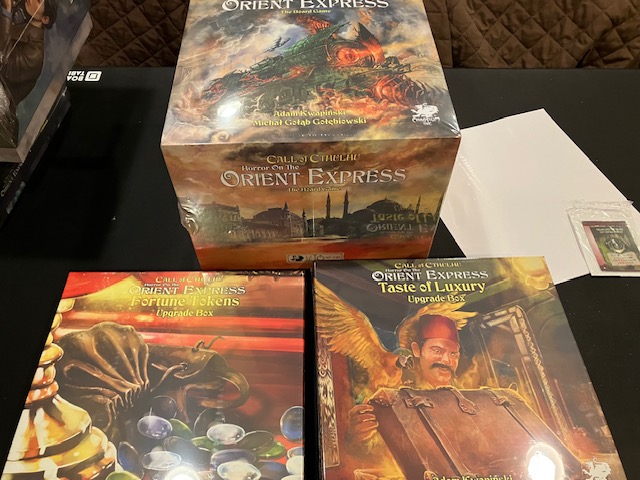
The bigger box came with the campaign expansion (bottom box), more monsters (green middlebox) and some deluxe components (the other two). See Coke can above for some perspective on this!

This is probably the biggest Kickstarter I have ordered in some time! And remember, here at CO-OP Gestalt, we pay for everything with our own money! See all the boxes (and a correction card) above!

In the end, I chose to only unbox the base game and deluxe components (see boxes above). I’ll come back to the others later! That seems like a sane decision, right? Just limit myself to unpunching and assembling the base box with a few extra acrylic tokens? It still took 4 hours!!!

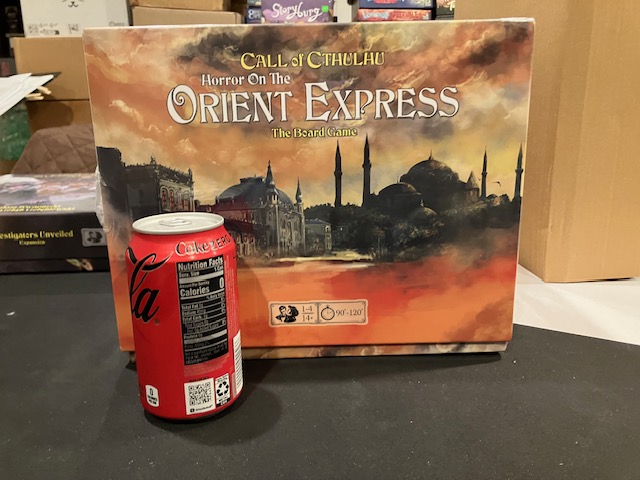
This is a monster of a game! See coke can above for scale!

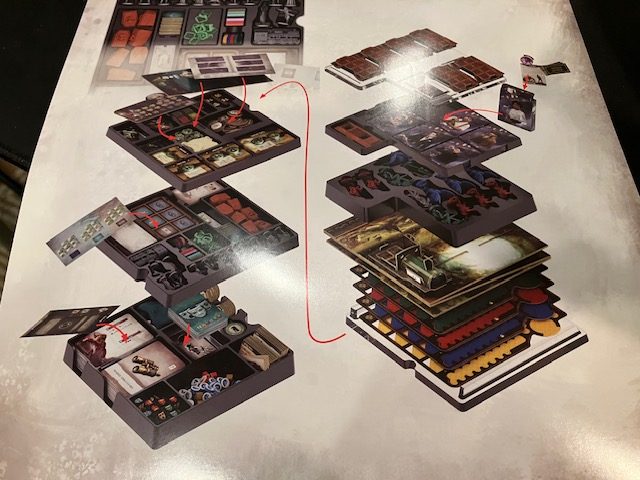
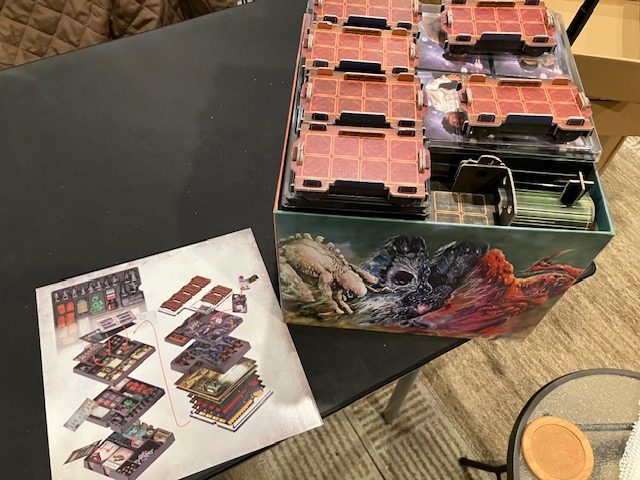
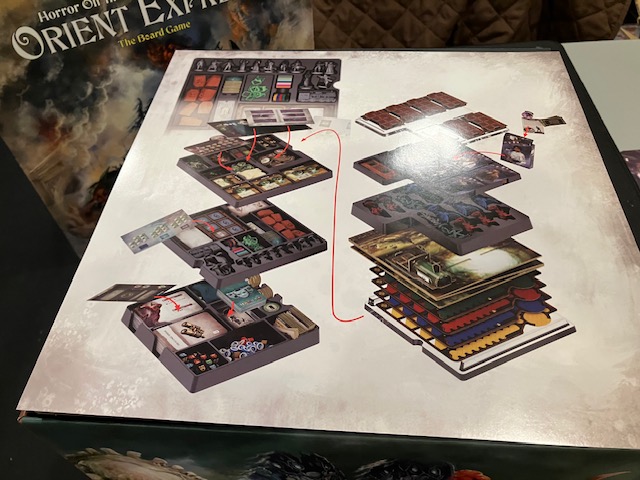
To get a sense of how much stuff is in here, the game includes a really nice boxing/unboxing guide. See above.

So much stuff!!

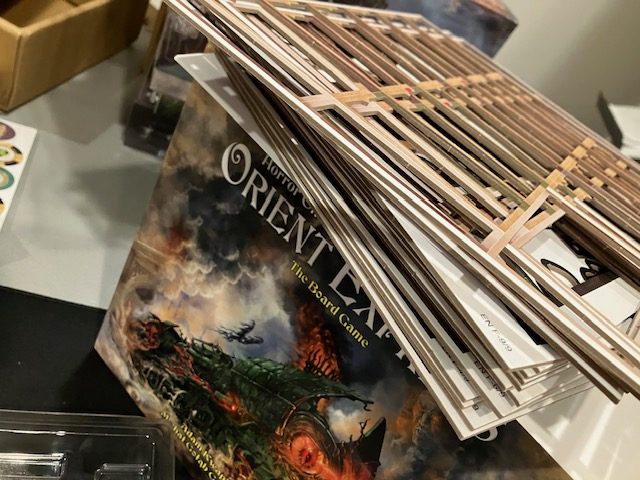
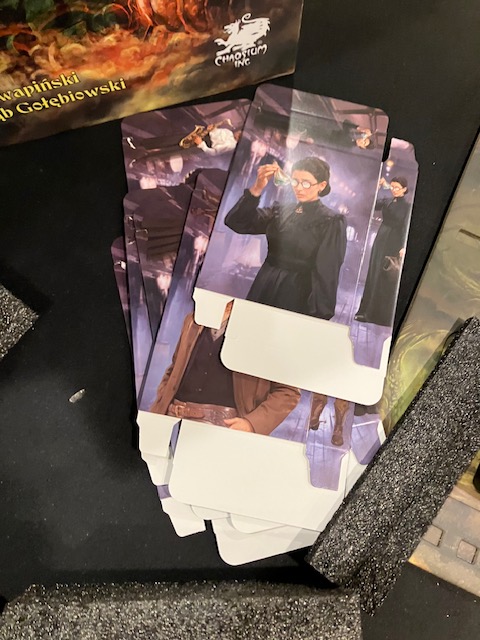
There were SO MANY things to punch out! See all the cardboard skeletons above!! SO MANY PUNCHOUTS! And no, I don’t think I can keep these punchout Skeletons … even if I wanted to.

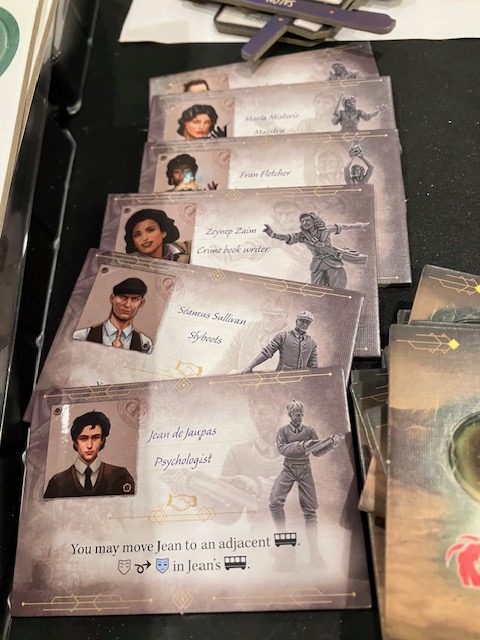
Players each the role of an investigator! See the choices above.

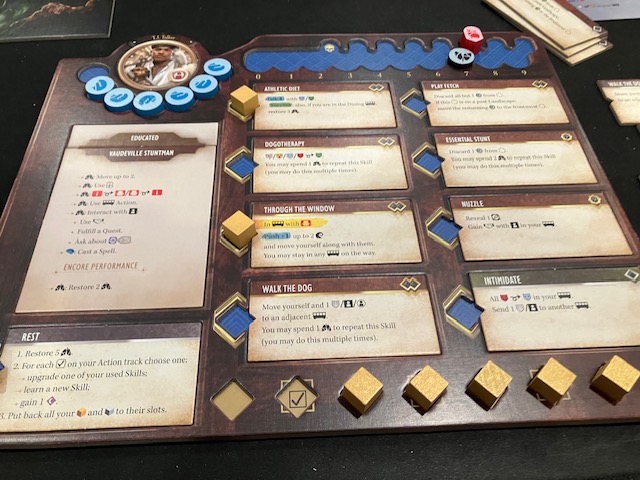
Each investigator has their own set of “main action” cardboard punchouts. See above and below.

Each investigator is actually fairly unique: their main action cards define the flavor of the character! There’s no special power per se, but each investigator has a different pool of actions that are quite thematic!

All these cards go back into little tuck boxes (it actually makes it a lot easier to start the game).

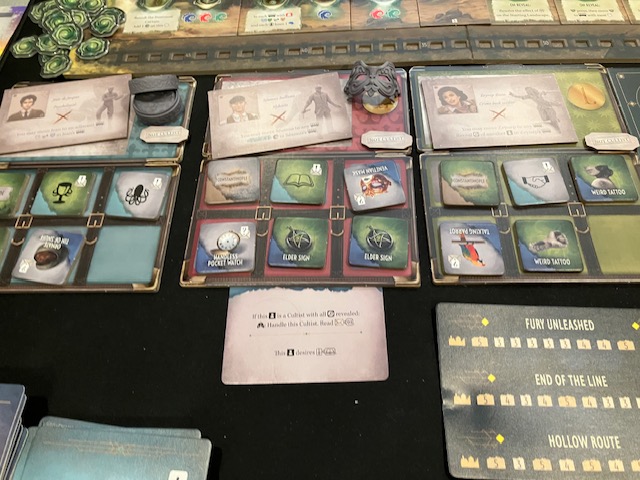
So what are you investigating? As a group, the players cooperatively are trying to figure out which of the suspects (see the 6 suspects above) is a Cultist and which is NOT a cultist! This is cooperative Clue with Cultists and Cthulhu!

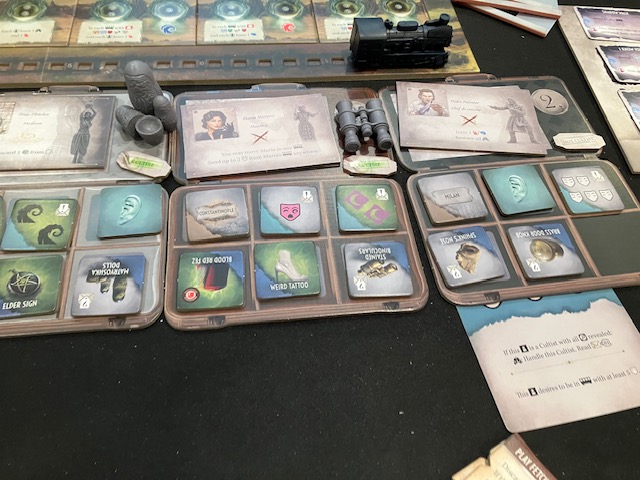
Each suspect has some “luggage” with Clues on them. The nature of the stuff in their luggage tells you whether or not they are cultsists! Do they have a blood red Fez??? They must be a cultist! Are they going to Constantinople? Their stuff is an indicator that they are cultists or not! There is actually a precise definition (based on their stuff) of what makes someone a cultist!

At the start of the game, all suspects have their clues turned face down, and throughout the course of the game, there are many ways to uncover the items and see exactly which suspects ARE Cultists and which ones are NOT! You have to get them all identities correct or you lose the game! This is the primary goal of the game: discover the loyalties of all suspects!

To be clear, all the PLAYERS are in the clear automatically; there is no hidden traitor or anything like that! Players work together to find out who are the cultists!

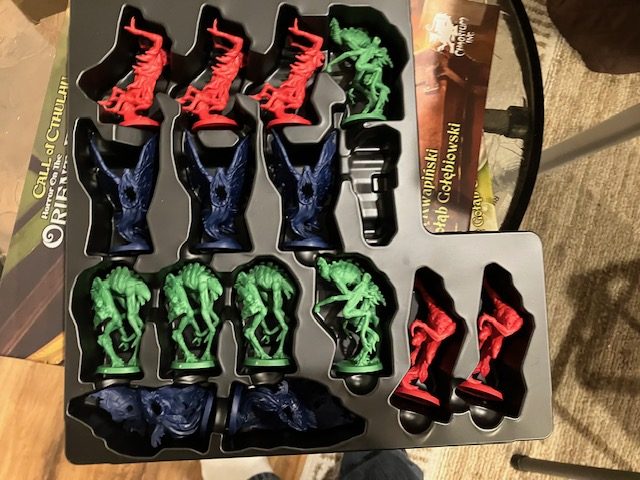
But of course, everyone got stuck on a train that’s driving in the Dreamlands, and we have to survive the Cthulhoid creatures that are chasing the train! See the creatures above and below! They are much less fearsome inside their box!

The Cthulhoid creatures race alongside the train and reach in to do damage to passengers and suspects!

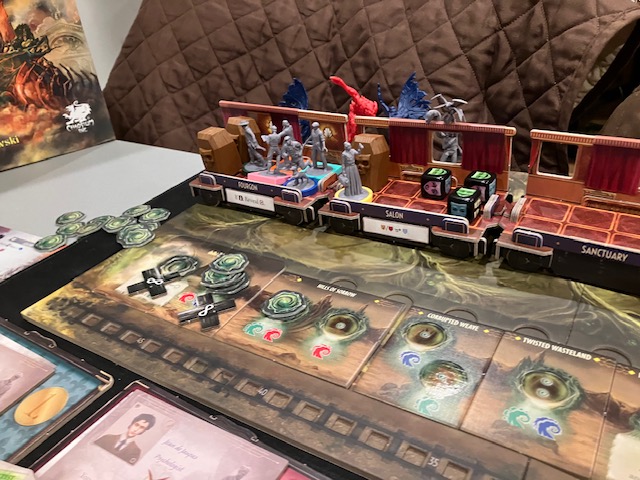
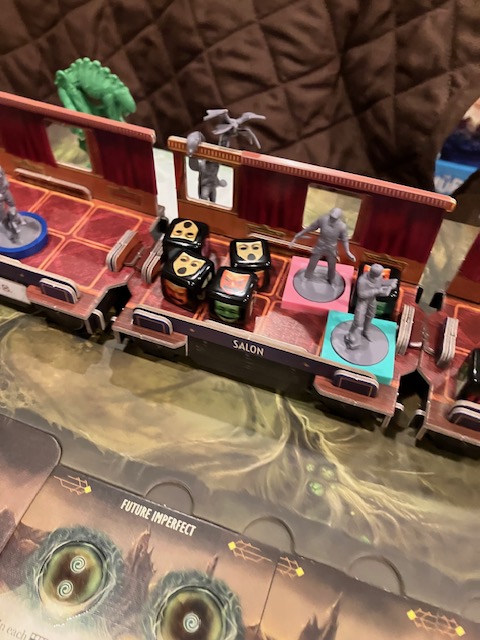
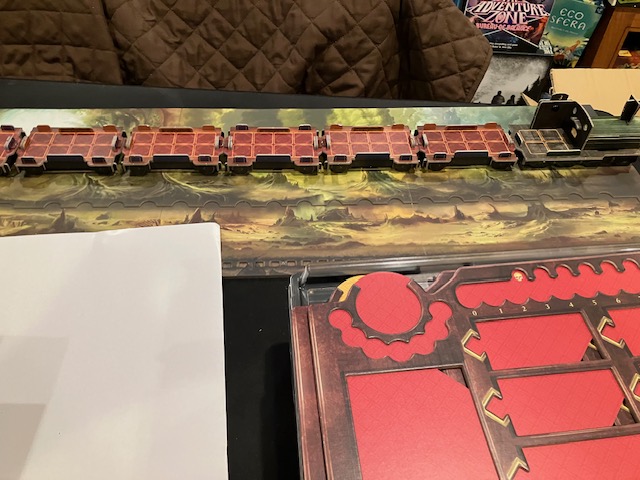
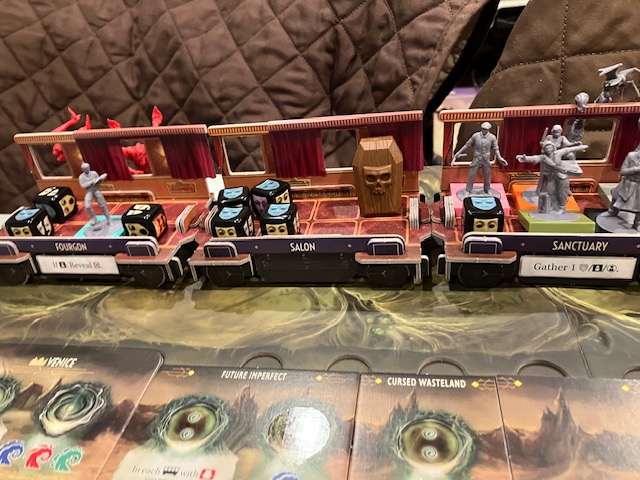
The train is where everything takes place! The investigators, the suspects, the monsters, the passengers, and even a vampire!

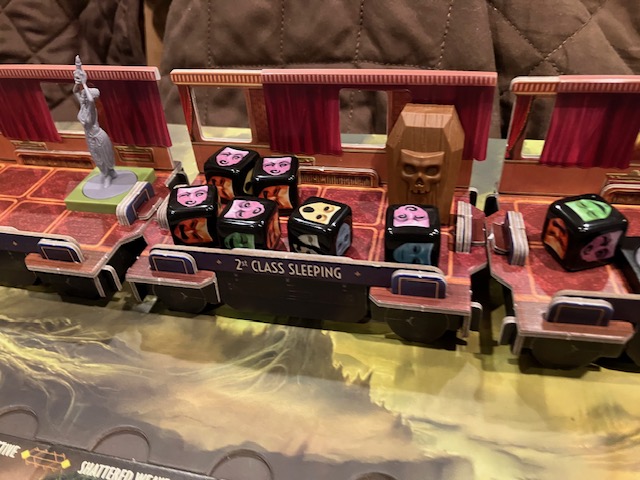
The “other passengers” (not suspects) are represented by die which show a face showing that they are happy, worried, neutral, crazy, mad, or injured! See above! You have to be careful to protect as many passengers as you can! It’s hard to talk to passengers that are mad or crazy! And you need to talk to passengers to find out about the suspects! Remember, you are an investigator!

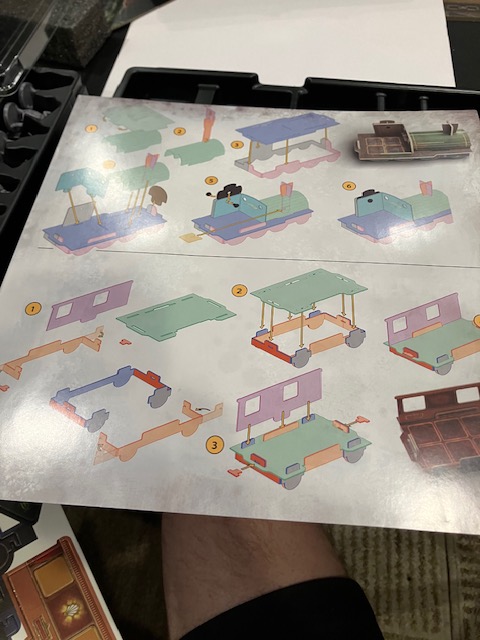
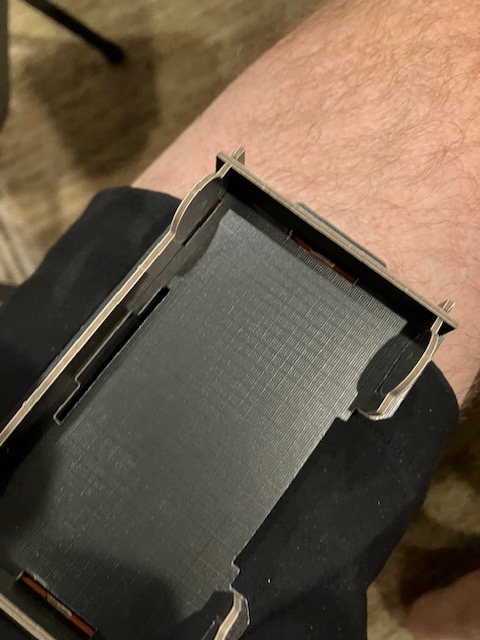
Putting this train together (which is really cool) was actually a surprising amount of time from the 4 hour unboxing time! The instructions are “ok”, but let me give you a little hint now: BUILD FROM THE BOTTOM! See below!! The instructions (see above) show building the train cars from the top, and that just doesn’t work very well.

Build from the bottom like I did: See above.

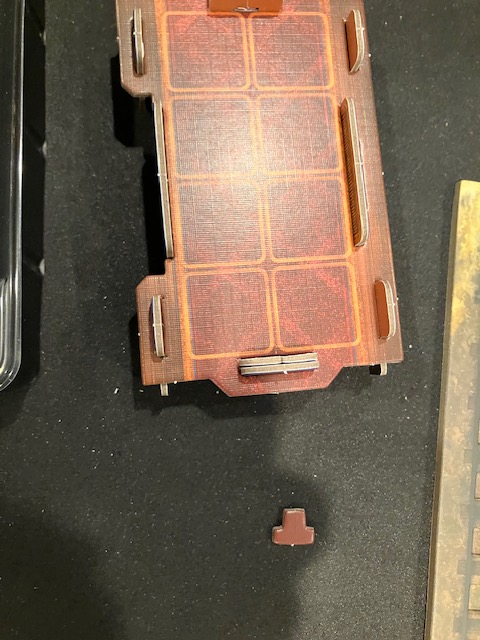
Also, I recommend gluing the final crossbar piece (see above). They kept coming out on me!

By the time you are done building six train cars and the locomotive, you get a little exhausted. I ended up taking some time to do other stuff before I finally came back to finish my unboxing and reboxing everything back in! (And no, I don’t count that time off in the 4 hours … this really took 4 hours!!)

Oh yes, I need to comment on some of the deluxe components. The acrylic conversation tokens and event tokens from the upgrade box are really cool!!! See above!

… but they are not well-labelled! In fact, the expansion box has acrylic tokens for EVERYTHING (including other expansions), so you don’t really need ALL the acrylic tokens for the base game! And in fact, they don’t all fit if you try to use all of them!!! I ended using the unpunched cardboard tokens (see above) as a guide to which tokens to keep! This was extremely frustrating that I DID NOT know which tokens to use for the base game and which tokens to use for the campaign and other pieces! They reallllllly needed to have some better labeling.

As you put things back in the box, you will both love and hate the sheet above! Why? Because it shows everything (I love that) but it’s so hard to see detail! (I hated that!)

See above as I had to use my phone to zoom in so I could see the detail!!!

Putting everything back into the box in its proper place (after punching everything out) was a chore. But it did work.

Yep. It took me 4 hours to unbox everything, punch out so many things (see cardboard skeletons above), dig through deluxe tokens (and realize there’s no way I can put them all in the base box), assemble the train, then finally rebox!!

Whew!

Day 1. Set-Up: 2 Hours

You might ask “why did you put everything back in the box if you knew you just needed to get it all out again?” I asked myself that same question! Seriously though, there is some value in handling all the components again; there’s a kinesthetic boon to seeing/touching all the components in the game again.

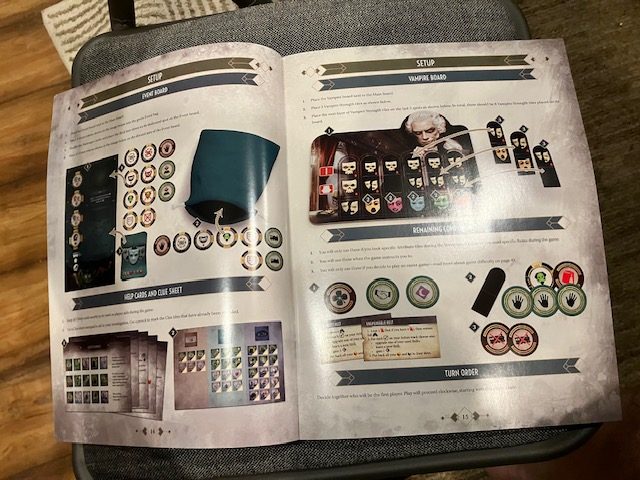
If you think that 2 hours is ridiculous to set-up the game, I point you at the rulebook: setup takes about 10 pages! That’s right, about 10 pages of the 48 page rulebook is just to set-up the game.

Uh-oh. This is gonna be hard.

Day 2a. Reading Of The Rules. 2 Hours.

If you think this is a big complicated game with lots of rules … you would be correct. The rulebook is 48 pages long.

The rulebook is good, but there are a LOT of rules … a lot of rules that you will have to lookup again and again.

The rulebook does fit well on the chair next to me: it stays open and is easy to read, but there is just a little bit of drooping of the pages. I’ll give this rulebook a B+ or A- on The Chair Test; It has a good form factor.

The components pages are nice, but they span multiple pages. The actual Set-Up also spans multiple pages!

In the end, you just have to get through this rulebook. I sat with the game set-up in front of me, and read the rulebook while constantly referencing the set-up game. This rulebook kind of feels like a legal document because there are so many rules and descriptions. It’s not too bad, but it took me 2 hours to get all the way through the rulebook so that I had an idea of what was going on.

I didn’t really feel like I could jump into the game until I read just all the rules. There’s too much going on to say “let’s just try it!” Nope, that’s a recipe for disaster! You absolutely need someone to read the rules ahead of time, or you will end up reading 2 hours of rules with your friends and annoying them.

I was very pleased that the rulebook included an Index. It wasn’t perfect, but it was good enough to help when I needed to look up something.

This was a good, if long and legalese rulebook. You will refer to it a LOT as you play.

Day 2b. Solo Game: 3 Hours

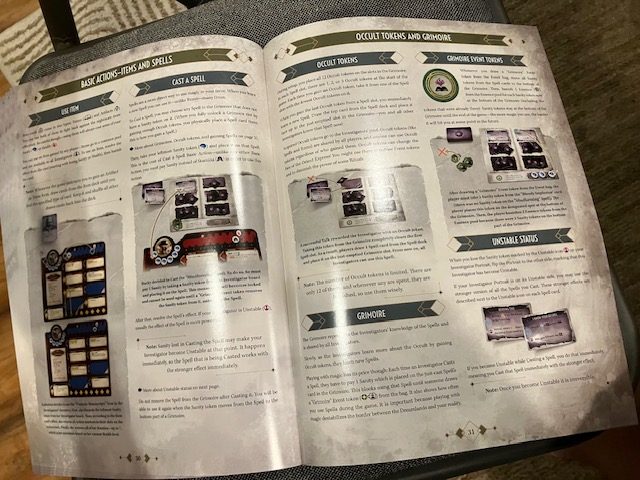
There is a solo mode (huzzah on following Saunders’ Law!)! See rulebook above. Basically, you are supposed to play 2-Handed solo, alternating between two characters.

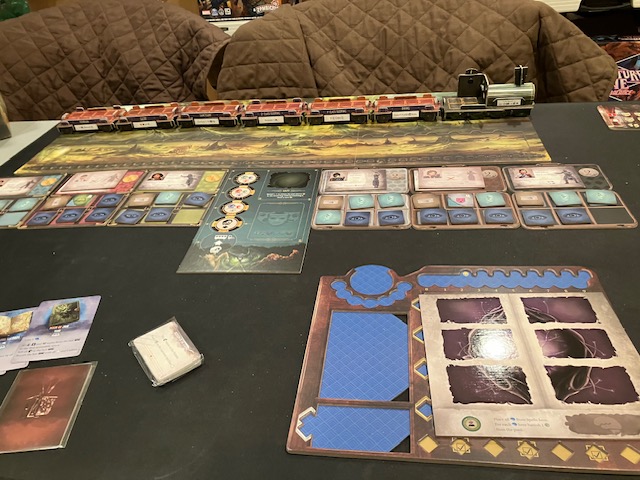
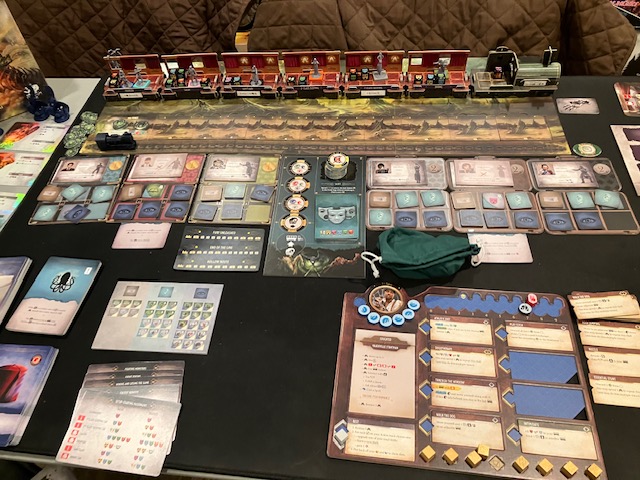
Now, I think I misread this the first time I set-up, as I just went ahead and played true solo: I operated a single character. See set-up above. After playing with a single character, I am glad I made that mistake! There are SO MANY rules in this game, that alternating between two characters just seemed like too much work.

See above as my character advanced pretty quickly.

After accidentally playing true solo, boy, I am really glad I did! I think I would have hated alternating between two characters as I I was learning the game. There are a LOT of rules in this game, and each character has a LOT of options and main powers … I think I would have been completely overwhelmed on first game had I played 2-handed solo.

I think what I am saying is … this was a happy mistake! Maybe your first game should be a true solo game so you can get a sense of everything in the game. I know I cheated a few times in my solo game, on accident and maybe once on purpose (just to get to the later game), but I think … this might be the best way to learn?

I can’t comment too much on the balance of a solo game (because I was just playing true solo to learn the game), but I think I would prefer if the game had a true solo mode? This is hard for me to say because I frequently prefer 2-handed solo mode because they typically don’t have rules exceptions! I think this is case where a minor rules change (or two) for true solo might be worth it; it might be as simple as you start the game with a couple of items already in your inventory (one of them a healing item).

In the end, the true solo player was able to keep the Cthulhoid monsters under control and accurately guess the identity of all the cultists! And it only took 3 hours!

This was a learning game, so I expected it to be longer than normal games. But it was 3 hours to play EVEN after setting everything up ahead of time! And I didn’t even tear-down, because I left it “mostly” set-up for cooperative play!

Day 3a. Cooperative Game: 3.5 Hours.

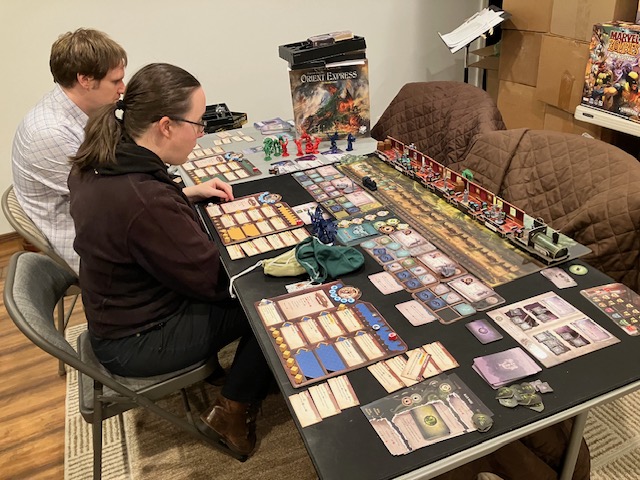
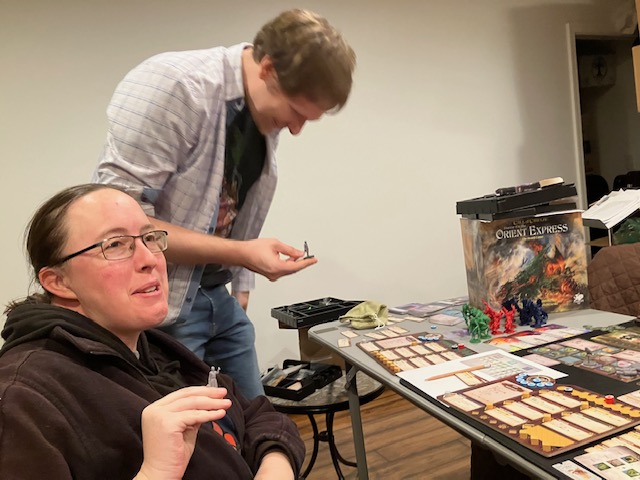
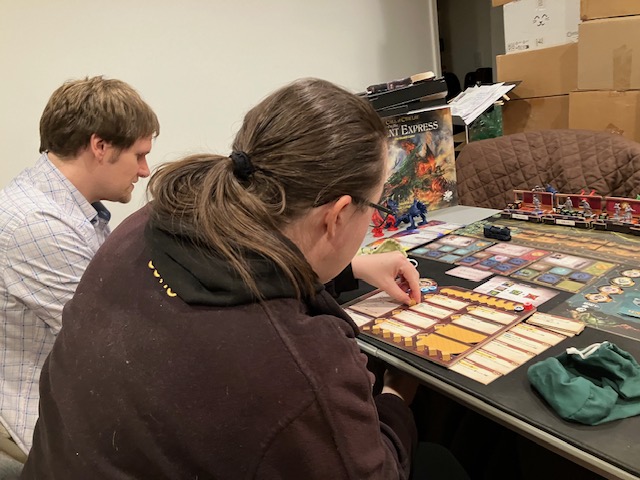
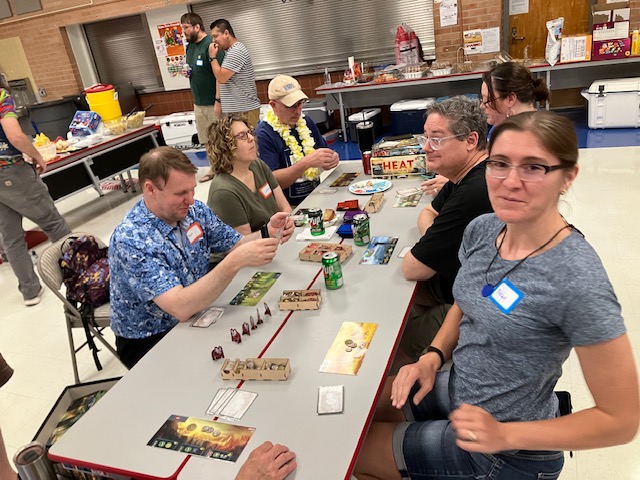
Interestingly, the game suggests that a cooperative game all sits on one side of the board. This would work fine for a 1,2 or 3 player game, but I worry that a 4 player game just wouldn’t fit? We only played a 3-Player game (above), and we just barely fit. Maybe you just need a bigger table if you play 4 players?

I am SO HAPPY that I set-up, read the rulebook, and played a preliminary game before my friends came over. We ended up playing 3.5 hours of just pure playing time! Let’s be clear: my friends and tried-and-true gamers who have played many complex games: we did not get “stuck” on anything!! The game moved along as it should with some rule lookups, but it still took 3.5 hours to play!

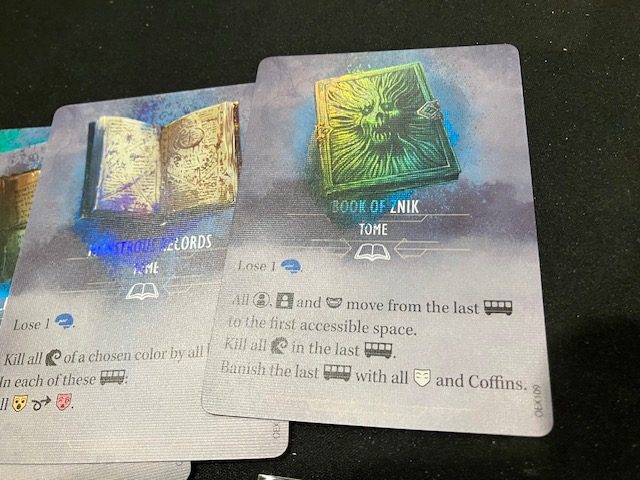
The game has some interesting ways to promote cooperation: for one, all spells and items are shared! That means there’s no need to worry about explicit “share” actions or anything like that! On your turn, if you want to cast a spell or use an item, you just use the shared pool and do it! There’s no “I have to move to you to give you the Book of Znik so you can use it!” You could argue it’s not thematic (how do you share items if you aren’t even in the same train car??), but it does get around all the problems of sharing and wasting actions to get stuff to each other. The fully shared paradigm does help the cooperation.

At the start of the game, most turns tend to be fairly multiplayer solitaire. Don’t get me wrong, there are mechanisms that affect other players (For example: TJ could walk his dog and have another player move with him), but players did their own thing. What I saw happen was the people kind of took their own turn and did what they wanted at the start of the game. I think this was good; it helped players become familiar with their powers, the rules, and the interactions.

What I saw happen was that as things became more dire, we started setting each other up and helping each other directly more and more.

“We really need to find out if he’s a cultist before the train reaches the end!!”
“Ya, but I have 3 cthulhoids coming up behind me! I need to deal with those!”

So, in the end game, we started working together more and more. To be fair, we pretty much had to cooperate or we would have lost the game!

From this point of view, I think the game is a good cooperative game! Players have agency to learn their characters at the start of the game, but learn to cooperate as the situation gets more dire!

To be fair, it still took 3.5 hours to play a single game. Even though it was a learning game, I did everything right to make the game introduction as simple as possible (set-up, read rulebook, played solo) and it still took 3.5 hours to play!

Day 3b. Tear-down: .5 hours

After winning our 3.5 hour game, my friends helped me tear this down.

This unboxing sheet (see above) made all the difference in the world! Tearing down the game was a cooperative experience worth its own game! I saw massive parallelism as my friends and I would each take “some pieces” from the game and consolidate them into the box! Seriously, I felt like the tear-down was its own cooperative game.

Hm, I kind of wonder if how well you tear-down a game together is a measure of how well your group cooperates together? I can say with pride that my core game group works well together! Someone was always doing something and working on putting this back together!

It still took a while to put this back together.

What I Liked

Table Presence: The game looks sooo cool on the table! The train cars, the cthulhoid creatures chasing the train, the vampire hanging on the windows, the amazing landscape, the characters, … everything! This just looks so epic!

Component Quality: In general, the component quality was good.

The Arc: The arc of the cooperative game was interesting and a very good development to encourage cooperation. The game starts fairly multiplayer solitaire, then converges to being much more cooperative as the game unfolds.

What I Didn’t Like

Deluxe Component Issues: I love the deluxe components, but there’s two major problems. One, there’s no discussions (especially in the fortune tokens) about which tokens you need for which box! Second, there’s no way the deluxe components can all fit in the core box. If you were hoping to have all the deluxe components fit into the base box, think again! If you wanted to throw away your deluxe component boxes … well, you may have to hold onto them longer than you expected.

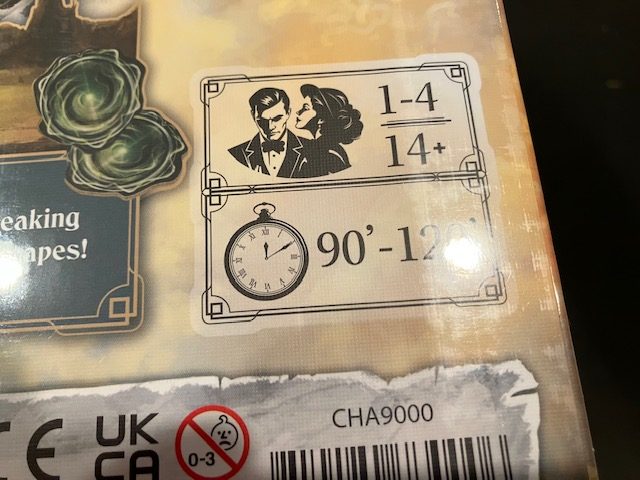
The Length: I find it very very hard to believe that this game plays in 90-120 minutes. Even if you cut-off the set-up and tear-down times, the game length still feels waaaaaaay off. There are so many rules.


Colors are a little wonky: The suspects each had a colored base that helped you identify them, but they really didn’t match the suitcase colors very well. At all. The brown suitcase we think uses the orange colored base?

Cthulhu Game?

Is this a hu game? Well, if your definition is “Cthulhu must appear”, then no, this is not a Cthulhu game. Maybe the better question to ask “Is this game set in Cthulhu Mythos?” Strictly speaking, the answer might still be no! The only real allusion is that the “train is driving through the Dreamlands”. But the vibe, the feel, the plot, everything feels like this is a Cthulhu game! Then I think the answer is yes! The train has sailed into the Dreamlands, Cultists are summoning and conspiring, portals are opening …

I mean, Chaosium does Cthulhu games. I am calling this a Cthulhu Mythos game.

*I was going to search the rulebook for the word Cthulhu and Cultists, but the PDF rulebook in the BGG files section IS NOT SEARCHABLE. They need to fix that.

Reactions

Andrew thought it was fun, but was worried that the time-investment vs. fun wasn’t good enough. His point was that there are a lot of rules and the game is really long. We had fun playing for 3.5 hours, but there’s many games we could play that are half that time but arguably more fun.

Teresa liked it and would play again. This would make one of her top Cthulhu games.

Conclusion

Horror on the Orient Express is a monster of a game … in every conceivable notion! It’s a monster of a box, with big monsters, a monster 48-page rulebook, a monster set-up and tear-down time, and a monster playtime of at least 3 hours. You have to decide if the monster aspects might be too much for you!

I would call this Cooperative Cthulhu Clue, as it’s a deduction game where you flip clues, but that would lure you into thinking this is a simple replacement for Clue! Absolutely not! Horror on the Orient Express is a deduction game where you worry about investigating while also fighting monsters and fighting vampires and saving passengers and basically keeping spinning plates going! There’s a lot going on! If you have always wanted something more complex than Clue set in a cooperative environment and fighting monsters, then maybe this is right for you! But don’t be lulled into a simple “Oh this is just Cooperative Cthulhu Clue!” No! It’s so much more! And that’s good or bad, depending on whether you you like this world.

If you like living in a Cthulhu-esque world of monsters and cultsists, then Horror on the Orient Express nails the theme! If you live that theme, you will love this world. If you just like the theme, you need to decide if the overwhelming nature of the rulebook, the game, the box, the length may be too much for you.

I look forward to playing this with some friends in Las Cruces, as they love Cooperative Cthulhu Mythos games! I know a few will blanche at the length and complexity, while others will embrace this monster of a game! Hopefully this review will help you decide if this is for you or not.

Viking Route: Solo and Cooperative Review After Full Playthrough

Viking Route is a solo and cooperative game from Kickstarter back in December 2024. I backed at the Jarl level and my copy arrived early August 2026. It had promised delivery October 2025, so it’s almost a year late! That’s Kickstarter for you!

This game made our Top 10 Anticipated Cooperative Games of 2026! Why were we so excited for it??? Magnets and Vikings!!! You heard me, Magnets!!! And Vikings!!!

How on earth does this board game use magnets??? Let’s tale a closer look!

Unboxing and Gameplay

See game above with Can of Coke for perspective!

There’s a big bad boss loose in the world, and it’s your job to deal with it! See the 5 bosses above! Each boss plays very differently too!

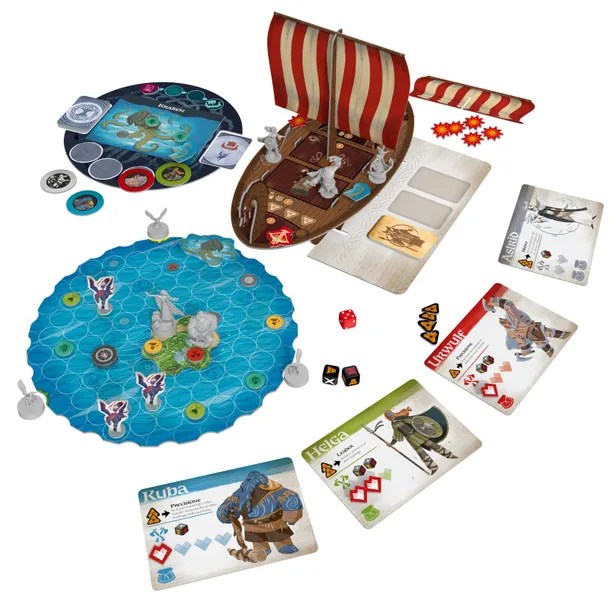
Players play 4 Vikings sailing the seas! Each Viking has a special power activated by discarding Clan Spirit tokens! See characters above! No matter the number of players, there must always be 4 Vikings in play. A solo player will operate all 4 vikings, 4 players will each get their own viking, 2 players would each get 2 vikings … (and 3 player has a weird rule).

Players are sailing the seas trying to defeat the enemy! This game is “kinda” a boss-battler, but the game is more about sailing your ship to get to the enemy and avoiding land and other things! The ship itself is sort of a worker-placement area! Each zone of the ship does something different: the Deck has the most options and is adjacent to everything, the Sail is for adjusting the sail (full-up, half-up, or all-down), the Hold is for grabbing some useful tokens, the Lookout is for adjusting the wind (sorta), and the Ballista is for shooting things!

Your ship is represented by a compass on the board! See above! When the sails are unfurled, the ship will move in the direction of the red arrow on the compass! How does the compass point? Magnets!

When you do you sail? At the end of every turn, players draw a bad news card which “usually” also moves ship in the direction of the wind! Plus some bad stuff …

There are 4 heavy magnets that affect the compass (your ship): the three ravens (scattered on the edges of the board) and “the wind”, right in the middle of the board.

See above as the ship (The Drakkar) is near the green raven, so that magnet has the most influence over the ship on that part of the board!

If you move your Viking to the Lookout, you can activate a Raven and move it around the board a little bit! See the video above as the moving Raven affects your heading on the compass!

But it’s not just the Ravens: “the wind” in the center affects you too! The direction she points has a big effect on your heading! She is actually a pretty power magnet herself! This game is all about managing the “overlapping magnetic fields” from the Ravens on the edges and “the wind” in the middle! (You can only adjust the wind in the middle if you are within two spaces).

Along the way, you have to deal with Valkyries as they slowly (and sometimes quickly) approach your ship!

Sometimes the Valkyries makes it ON the ship and damage it! See above as the sails area get damaged! You have to fight the push them off the ship! Of course, the Valkyries are immortal, so all you can do is push them away!

Combat is decided by dice! See all 6 faces of the dice above! Basically, 2 sides are misses 3 sides are plain hits, and 1 side is a critical hit! Usually a hit is good enough, but critical hits can be great, depending on the bad guy you are fighting!

Each viking sheet tells how many dice they can roll for Combat! So you “usually” want Urwulf or Helga doing combat since they roll 2 dice during an attack (Astrid and Kuba only roll 1 dice).

To win, you have to “do something” to take down the big bad boss! Usually, you have to collect all 3 Magic Stones from around the world, then hit the boss with some critical hits! There are 5 different bosses in the game, and they all operate a little differently!

That’s kinda the basics of the game! Although the tokens are fine, it’s really the whole “toy factor” with the magnets that makes this so cool!

Rulebook

The rulebook is pretty good.

The rulebook knocks it out the park on The Chair Test! This rulebook fits perfectly next to me on the chair, it opens up easily, and is easy to read! A on Chair Test!

The components are described well and set-up of the Drakkar work well.

The Set-Up was good: see above.

In general, this rulebook was pretty good. It’s main flaw was the it seems to miss edge cases more often than it should: It’s usually edge cases in the specific monsters you are fighting that were the problem. We’d occasionally get ourselves into a situation where the rulebook didn’t answer something, so we’d just a make a ruling; it happened more often than it should have. None of the underspecificity was ever particularly egregious, but it just happened a few too many times.

Solo Play

So, there is a solo mode! Thank you for following Saunders’ Law!

Since all modes must always play Vikings, the solo player operates all 4 vikings! Normally I worry about how much context switching it takes to operate 4 completely different vikings … but the Vikings aren’t really THAT distinct! The real difference is their special power, how many dice they roll, how much they can carry, and how many hits. That’s it! It’s all very apparent on their sheets!

Each Viking has a token they place on the board to show they’ve gone (yes, I know that’s backwards; see below). Viking Route uses coarse-grained Player Selected Turn Order (PSTO)! (See description here) I love that! PSTO usually really elevates a game for me, as I feel I have more choices to get stuff done!

The context switching between characters really isn’t a big deal! I had no issue jumping right in and playing all 4 Vikings! It sounds more daunting than it is; once you’ve played once, you’ll see that it’s easy to play all 4 vikings as a solo player!

The solo game works really well. I had no problem jumping in. In fact, I ended up playing the entire campaign over 5 days as a solo player! I had the ability to leave it set-up between days, so that helped.

From a maintenance perspective, there’s a little bit of work to set-up and tear-down, but it’s not too bad. As usual, the cooperative game makes set-up and tear-down a little easier as you share the load.

Is this a good solo game? Absolutely! The choices you make about when to furl/unfurl the sails, fight or sail, directions to sail, when to move the wind or the ravens, are delicious choices! You are basically balancing keeping the ship sailing in the proper direction with all the stuff that happens along the way: Battling Valkyries! Tracking the Big Bad Boss! Grabbing Resources! Avoiding Land! The fact that there are 4 magnets with overlapping influence works really well!

Great solo game. I played the entire campaign because it was so fun.

Cooperative Game

The cooperative game was mostly just an extension of the solo game! What do I mean by that? Well, instead of making all the sailing and fighting decisions as a single player, we tended to decide things as a group! With the Player Selected Turn Order, we’d decide on which viking goes next! What do we concentrate on? Should we fight or sail? Should we unfurl? Should we reroll? Should we request Help From the Gods?

As a group, we’d play with this magnetic system! And it was fun!

The trade-off here is that multiple people playing might see something you miss, but the counterpoint is that you have to make most decisions as a group.

Everyone loved the magnets.

There is something to be a little worried about; this game is susceptible to Alpha Player Syndrome (see link here for description). If you are playing too strictly, you aren’t supposed to play with the magnets too much, and an Alpha Player might either stop you from playing with the magnets (“that’s cheating! You can’t do that!”) or maybe just say “I know how the magnets work, let me do it”.

The right thing to do: just let people play with the magnets and have fun.

The cooperative game worked; we saved our game and plan to play more games in the campaign.

The Campaign

There is a 5 game campaign with 5 different bosses. Each one plays differently, but not THAT differently.

The game proceeds in two phases: In phase 1, you have to sail around the board and get the 3 Magic Stones! That seems to be the same for every game in the campaign! Then in phase 2, you “do something” with the stones! See above as I crit hit the Kraken three times to win!

Each world has a different board with different rules! Board 2 has lots of Fog which stops you from looking at the compass! Eek!

Board 3 is in the river and Fenrir buzzes around trying to Ram you! The River makes you drift every turn!

The 4th board has a giant land mass which is a real pain to move around, and some “remnants” of the Bifrost bridge which do weird things?

The final board is Loki! He pretends to be all the monsters you already fought! I have to admit, I thought the final battle was the weakest. It seemed sort of too long and very samey. It was my least favorite of the campaign games.

Despite all that, the campaign IS fun. Each game is different enough and keeps you engaged in the world. It’s also fun between games to get upgrades for your team! That’s right! This is a campaign where you can upgrade as you go! See the Port Upgrades pages above!

Magnets

Let’s address the elephant is the room: do the magnets work? Does the game work? Yes! 100% yes and yes! After playing the solo campaign all the way through and some cooperative games, yes, I can verify that the system of magnets works! And the game works too!

It’s even quite thematic: the winds are a “mysterious, unseeing force that affects you”, and the magnets really capture that feeling!

The game also doesn’t seem too hard or too easy either. The magnets work in the game and give a nice challenge.

What I Liked

Art Style: I like the art style: it seems a good choice for a viking game.

Magnets: I love the magnets. They work! And it’s fun to play with them!

Player Selected Turn Order: Player Selected Turn Order works really well here: it helps make the game feel like your choices matter more. They even have the tokens to help notate when a turn has been taken!

Table Presence: This has a really cool table presence!

What I Didn’t Like

Underspecificity: There’s a number of places in the rulebook where the game seems underspecified. What happens when “something” happens? The rules don’t seem to handle a lot of edge cases! The rules also seem to use some variation of the phrase “if there’s a choice, players decide” quite a bit! That deferment of rules works in a cooperative game, but it always feels like a cop out to me (see Resolving Ambiguity in Cooperative Games for more discussion). I think with just a little bit of work, it could have been a bit more precise with a bit more thought. It wasn’t game-ending by any means, but a small nuisance.

Randomness: At the end of the day, this is still a dice game where rolling poorly will cause you to lose the game. There are a few mitigation techniques (Crit tokens, flipping the Ballista, re-rolling Urwulf attacks with Clan Spirit), so it’s not the end of the world if you roll poorly, but just be aware that it can be frustrating occasionally.

Conclusion

Viking Route was a big hit among me and my friends! The toy factor of the magnets was overwhelmingly fun! They designers have crafted a very good game around the magnetic pieces, and that works really well!

As a solo game, this is a 8.5/10 or 9.0/10. It might be a 9.5, but the randomness and underspecificity of the rules brought the game down just a little bit for me. But the game was so much fun, I played through the entire campaign and enjoyed it (the finale was a bit underwhelming; that also contributed to the 8.5/10 or 9/10). The game was fun and I had a blast playing it solo! And don’t worry about operating four Vikings in the solo game, as it really wasn’t an issue.

Cooperatively, this is an 8.0 or 8.5/10. The game may be a little more likely to be susceptible to Alpha Player Syndrome because of the nature of the cooperative interactions, but my friends all enjoyed how unique this game was. The randomness and underspecificity of the solo game are a little more pronounced in the cooperative game (as the solo player can just move through those issues a little easier without needing consensus), so it’s just a 8 or 8.5/10.

This game may just tickle your fancy that you don’t care about some of these issues! You may just give it a 9/10 or 10/10: it’s just so unique and interesting! I mean, there’s a reason this made our Top 10 Anticipated Cooperative Games of 2026!

The Gnomenclature of the Dice! Companion Quest: A Solo and Co-op Review

This week we take a look at a game from our Top 10 Anticipated Cooperative Games For 2026! We want to give it some attention because RichieCon 2026 is in a few weeks, and *spoiler* I think some people will really like this game!

Companion Quest is a cooperative dice game that on Kickstarter back in March 2025. It promised delivery in December 2025, but just delivered to my house here in June 2026 … so, it’s about 6 months late.

This is also a game that was on our Top 10 Anticipated Cooperative Games For 2026!

Was it worth waiting for?

Unboxing and Gameplay

Although we got the Kickstarter edition with a few expansions, there are better versions with mats and other upgrades! We’l just be taking a look at the base game.

The size of this box might surprise you a little; it’s a smaller game! See Coke can above for scale.

This is front-and-center a dice-rolling/dice-placement game. But what are the right words to use? Is this a dice-placement game? Is this a dice-rolling game? What’s the right gnomenclature? According to BGG: it’s dice-rolling (but it feels a little like dice-placement).

Although the name and cover might imply a little more questy game (and there is some questing), the dice-rolling/dice-placement portion of this game is the majority of gameplay. If you were looking for a game with lots of story and fighting, you probably need to look elsewhere!

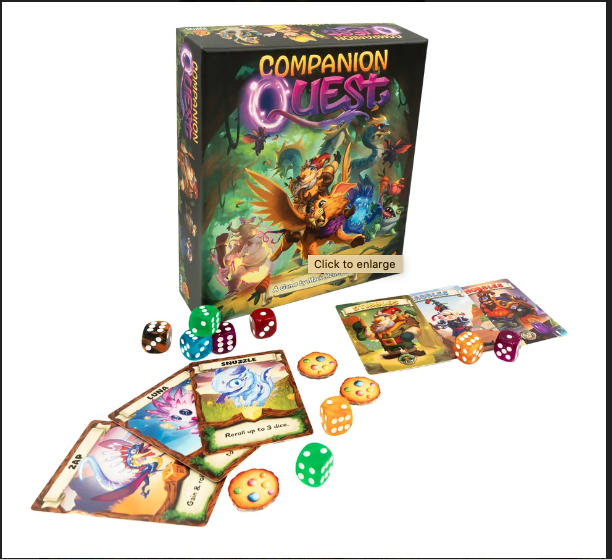
Each player takes the role of a Gnome!

Each Gnome has his own power and a companion that accompanies him!

See all the companions above!

Each Gnome has his own special power, and an attached “companion”! The companions are bonded to the specific Gnomes, so you can’t choose willy-nilly. See above as Bubbles the Gnome has Arlo the companion!

The special powers of the Gnome or companion are activated by “tapping” (turning the card sideways) to show the ability has been used. How do you recharge the power(s)?

You recharge with Cookies of course! Cookies are phenomenally useful in this game! They can recharge any Gnome or companion …

… or the Cookies can be used to recruit new companions to your menagerie! There is always four companions available for recruiting on your turn!

How do you win? There’s “gnominally” (nominally? With Gnomes? Get it? Ok, it’s not that funny) a bad guy named Gu’Gu who is popping around dimensions and causing chaos! To win, you must catch him!

If you can move your Gnome marker (collective Gnome marker) to the Gu’Gu, players win! How do you move?

Every time players complete a “Quest” (see Quest above), the players advance forward one space! The quests are solved by placing dice on the quest spaces!

See above as the Gnome’s Nook is completed by placing dice correctly on the last few spots! Usually, you have to match the color and/or odd/evenness of a space on the quest!

Once you complete a quest, flip the Quest card over to see your rewards; move closer to Gu’Gu AND get some cookies AND increase your carrying capacity! See above!

The carrying capacity defines how many dice you can get on your turn! At the start of your turn, you grab some dice and use the dice to solve either Portal Problems or the Quest! Early in the game you can only grab 3 worth of dice: red, green, and blue cost 1! And orange, purple, and orange cost 2!

Portal Problems are “issues” the players must solve (at the bottom of the board)! Players place dice on them to solve them! There’s two types: Challenge and Danger cards. The Danger cards (with the yellow warning) must be solved before you can Quest again!

To “solve” a Portal Problem, you place dice! For example, to “Unlock The Chest”, you have to play three dice total (possibly over multiple player turns) so that their difference is on an orange die!

For example, 5-3 = 2 works fine, as long as the final dice is orange! See above!

If, on your turn, you DO NOT solve a Portal Problem, Gu’Gu moves forward one space towards the portal! See above as Gu’Gu is almost at the portal!

The game is all about trying to decide how to place the dice you roll on your turn, and when to use the special powers on the Gnomes and companions! Do you solve a Quest to move forward? Or do you solve a Portal Problem to keep Gu’Gu from moving forward? Do you use a precious cookie to augment your companion menagerie? Or do you use your cookie to refresh someone?

This is a game all about balance; you need to Quest to win, but you have to solve smaller Portal Problems along the way to keep the chaos at bay!

This game is absolutely gorgeous! The cover was one of the reasons this game originally piqued our interest! The components are really nice, especially the rulebook.

Rulebook

For such a small box (and arguably smallish game), this rulebook is really good!

The game gets an A on the Chair Test! This rulebook sits very well on the Chair next to me … and it is so very readable! There is no droopiness, the fonts are big and readable, there’s tons of pictures and annotated text, and the colors just pop!

The Components page is great! See above!

Everything about this rulebook is quality. I don’t think it needs an Index because the game is pretty straight-forward! There aren’t a lot of keywords, so I won’t ding it for not having an Index.

There are two things that needed a little more discussion, but we’ll go over those below.

Otherwise, just a great rulebook!

Solo Play

So, congratulations to Companion Quest for following Saunders’ Law! We have a solo mode! The solo mode is a true solo mode, where the solo player takes the role of a single Gnome! The rules are well-defined on page 16 of the rulebook.

Normally I don’t “love” solo rules that change up the game, but the solo rules are pretty simple. There are two changes:

  1. The solo Gnome can activate his own Gnome’s power to help himself (in the cooperative game, your Gnome power can ONLY help others). This is pretty typical of true solo modes: any ability that normally helps other players can be used to help yourself instead!
  2. When you “refresh” your Gnome, you actually need to get a new Gnome instead! This forces you to cycle through the Gnomes and their special powers.

You can also keep a die from a previous round, but this is pretty much the same as the cooperative game; it’s just “the next player” isn’t someone else, it’s you!

The solo game is an easy way to learn this game. All the rules are there, and it’s pretty easy to jump straight in. I had a fine time learning the game this way. I played about three solo games; I had a good time while getting the gist of the game. It’s pretty fun to roll the dice, think about which dice to use for which thing (Quest? Portal Problem? Companion?), and try to catch Gu-gu. There is some brain power needed to do well; it’s not as simple and cute as the rulebook and look belies.

The balancing for the solo game seems to be achieved by cookie distribution. If you have just one Gnome, you start with two cookies, and get another two cookies at the end of a quest stage (see above). Since cookies are pretty powerful (usually in getting companions), it’s clear these need to be rationed. A 2-Player games starts with two cookies distributed amongst the two players (one each) . Interestingly, a 3 and 4-player game start with no cookies. We’ll revisit that decision some more below.

The solo game is cute and adorable, and it’s a great way to learn the systems of the game. I might come back to it again as a solo player, but I think cooperatively is the funner way to play. You might say, cooperatively is “gnominally” the best way to play! Sorry, that joke should get gnominated as worst joke in this review!

Cooperative Mode

I’ve been able to get Companion Quest played at 2 and 3 players. I’ve played a couple of times with my friend Teresa (below) and one with my niece Megan (see above).

So, the rule about “you can only use someone else’s Gnome powers” makes the game a little more cooperative. Players then need to talk a little more about what you can do “Hey Rich, I need a +1, can you help me get that with your Gnome?” So, that simple mechanism does help bring players interact more.

There is a little bit of downtime between turns, as you really do need to think a bit about the best way to use your dice. Depending on the group, this will either bring out conversation (making the game more interactive) or it MIGHT invite the dreaded Alpha Player in (making it less fun)! You get so excited when you see someone else roll the amount they need that sometimes you start accidentally Alpha Playering! I KNOW I did to Teresa a few times and I feel terrible! For Megan, she was asking for help more, so it worked out there more (my Alpha Player was more of a teacher). But I think you need to be a little careful about making sure you don’t Alpha Player!!!

With that little warning, I do think cooperatively is more fun that solo! Most people love the little Gnomes and their little companions. The game is pretty quick (besides some of the thinkiness that might occur on your turn), and the 30 minutes playtime as indicated on the box is about right. Most turns are pretty multiplayer solitaire (if you don’t have an Alpha Player … Rich …) so it’s still fun to make your own choices!

The game is bright and gorgeous and draws people in with its art. The cooperation is pretty good; even if you can’t use a die on your turn (sometimes, you just can’t get a die out), it’s pretty cool you can pass a die to the next player for their turn. It makes you feel like you are helping them! That rule (and the “you have to use someone else’s gnome powers”) make the game pretty cooperative and interactive despite the multiplayer solitaire nature of each turn.

Things I Liked

Using Dice for Wake-up! We didn’t mention this in the overview, but there is an another way to wake-up companions! We mentioned that you can use a Cookie to “wake up” a resting (tapped) companion … but there is another way to “wake up” a companion! Using a colored die wakes-up a companion! You might notice that every Companion has a color associated with it! Kusa (above) is red and Peppy and Snaps are both yellow. If you ever place a die, you can wake up one companion of that color! So, placing the yellow die above, we can wake up Peppy!

This really expands the choices you can make in the game! When you get some dice at the start of your turn, do you get dice to help with the Quest? Do you get dice to help with the Portal Problems? Or do you get dice to wake up your companions? This just really makes the choices so interesting! I really think this one mechanism elevates the game!

Art: I adore the art in this game! That cover may be one of my favorite covers of the year! I also really like how this game uses color! I love the colors in this game!

Things I Didn’t Like

Dice: At the end of the day, it’s still a dice game and you may get stuck with bad rolls. This is balanced out by it being a pretty short game; I don’t might a dose of randomness for a 30 minute game. Also, you generally can mitigate bad dice rolls with all the special powers you have.

Cookie Balancing at 3 and 4-Player: One of the funnest parts of the game is deciding when to use the cookies for their myriad of effects! (Recruit? Awaken? Reinvigorate?) Yet, the 3 and 4-player games start with NO COOKIES. It’s clear that when you finish a quest that everyone generally gets a cookie, but our first few 3-Player games seemed “less fun” and “less balanced” as we struggled more with no cookies to start the game. It “feels like” that there should be at least 2 cookies always at the start of the game? The balance felt a little off in the 3-Player game without cookies. In the end, after failing multiple times at 3-Players, we sorta started with a couple of cookies and that seemed to make the game a little more palatable. This probably sets the balance off a little at later levels, but it made us want to play more because cookies make it more fun!

Some Clarity: It seems like, when you play, that “completing a quest” should stop Gu-gu from moving forward. After searching the rules several times, it seems clear that Gu-gu will ALWAYS move if you don’t finish a “portal problem!” The interaction between those two (finishing Quest and finishing Portal Problems) should have been more specified! If you “cheat” and don’t move Gu-gu after a quest, then the game may seem too easy? But it also is MUCH harder if you do move Gu-gu! I wish this had been clearer in the rules. (Arguably it’s the flow of the game, so it doesn’t need to be specified, but the intuition seems to be counter-intuitive on this point … requiring more specification). Look, maybe you won’t have this problem, maybe I saved you from looking something up, but just be aware that completing a quest isn’t considered solving a portal problem (for Gu-gu movement purposes).

Modular Arithmetic: So, this game embraces that “adding 1” to a 6 flips it to a 1. And subtracting 1 from a 1 turns it into a 6. That’s modular math!!! Additions roll over, and subtractions underflow. That’s great! Because of this one feature, we are now using modular math (Modulo 6, Offset 1). This usually makes sense in the game, but they need some discussion. And what about negative numbers? What is 3-4 in this system? There is NO discussion of this! By opening the door to modular math, they need to define what that means! So, 1+6 = 7 = 1. Easy. 2+6 = 8 = 2. Easy. 3-1 = 2. 3-2 = 1. 3-3 = 0 = ??? By the rules we have, this should be 6!!! So, 3-4 = -1 = 5. An easy way to think of this; just do the normal math and add 6 or subtract 6 from the number until you get a number that’s between 1 and 6!

Some of cards, like “Unlock The Chest” (above) can be a lot easier if you can do modular math. And the game has opened the door for this! But they need to embrace the modular math and show examples! 6 is the additive identity here! I don’t think you can open the door and not specify this.

Conclusion

Companion Quest is a fun little cooperative dice-rolling/dice-placement game, but be aware! Compansion Quest is a lot more thinky than it looks! I don’t think this a gateway game; I think this is a game that needs a little sophistication and brain-power. Don’t get caught in the trap of thinking “Aw, it’s so cute, it must be simple!” This isn’t something super deep and heavy (remember, games really only last about 30 minutes), but it does have a lot of thinky decisions.

With an appropriate shepherd, I think most people can play this, but it might be a little too much out of the box for newbies.

But, overall, all my friends and nieces liked Companion Quest; it was a fun, cute, fast, simple game with deceptively more thinkiness than you might imagine. I might play it again solo? It’s a good game solo, but for me, the better game is the cooperative game with the dice-sharing and gnome-power sharing! I’d give this a [6.5-7/10] for solo and [7.0-7.5/10] for cooperative. It’s good! But, at the end of the day, it’s still a dice game and that randomness can be too much! That’s why we have a ranged rating; when the dice are poorly behaved, the game is less fun (for the lower ratings), and the game is more fun when the dice don’t conspire against you (for the upper rating).

Top 10 Anticipated Cooperative And Solo Games of 2026!

It’s always fun to look ahead and see what might be coming! We’ve backed a bunch of Kickstarters this year, but which ones are we most excited to see?

As we look forward, we also look back to see which games we anticipated, which delivered, which we liked, and which we didn’t! We’ll start with some games from 2021, 2022, 2023, 2024, and 2025 … which believe it or not, some games from 2021 still haven’t delivered!

2021 

  • The only game left from 2021 that hasn’t delivered is Onimaru.  We have received no updates in the last year and few months; it’s pretty clear they took our money and ran away.  This is a sobering reality check! We love Kickstarters and all the great games we can get, but there are charlatans out there who want our money. 
  • This is the only thing from 2021 that hasn’t delivered.  And I don’t think it ever will.

2022

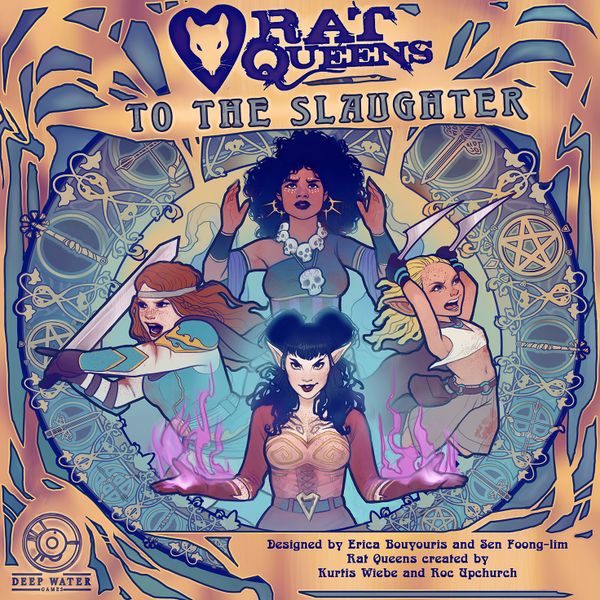
  • Rat Queens to the Slaughter has had some major ups and downs, as the original creator “took back” the project after it was flailing.  We are seeing updates pretty frequently with lots of new art and cards, so I think we will one day see this deliver. One day, maybe even 2026. 
  • This is the only thing from 2022 that hasn’t delivered.

2023

2024

2025

  • Floe + Monsters Unleased: It’s taking a while for this.  I have to admit, I have been a little frustrated that they did more development than I expected for a game that was “supposed to be basically done”.  It still hasn’t delivered, even after promising a June 2025 delivery.
  • Fable Fury:  This delivered sometime in November.  It was a beautiful production, but me and my friends didn’t like the game.  I didn’t do a review because I couldn’t even finish a game with my friends. Beautiful game, great art, wonderful production, but too random.
  • Horror On The Orient Express:  We see lots of activity and updates, but it clearly missed its August 2025 delivery!  I am confident we will see it deliver, maybe 2026.
  • Aetherspire:  This one kind of makes me mad;  I haven’t gotten my copy at the time of this writing (early December 2025), but in late November I saw two copies at my FLGS!  I may see it in December 2025, I may not!  If I had just WAITED, I could have picked this up from FLGS.  The developer apologized online, and I get it, but it is still frustrating since I paid real money to back his Kickstarter, and others see the game first. UPDATE: it arrived Dec 18th.  I don’t know if i can get a review out before the end of the year.  UPDATE UPDATE:  See our review of Aetherspire here!
  • One-Hit Heroes:  One-Hit Heroes delivered to me in early 2025, and it was a hit with everyone I played it with!  See our review here!  It also made our Top 10 Cooperative Games of 2025!
  • Invincible: The Card Game:   This re-theming of Astro Knights into the Invincible universe delivered to use in September 2025!  We liked it; it made our Top 10 Cooperative Games of 2025!  In some ways, it’s the best version of the Astro Knights system (esp. with the Assist keyword)!  Check out our review to see if this might be for you!   Get the main mat, but probably stay away from the player mats.
  • Unstoppable:  This cooperative deck-builder game for 1 to 2 players delivered in early 2025!  Nominally, it’s for 2 people, but it’s really a solo game. This made our Top 10 Solo Games of 2025 and was a real unique treat!  See our review of Unstoppable here!
  • DCeased: A Zombie Game!  This kinda delivered, but not really.  The main delivery, which is full of games, it still in production.  But an early version of DCeased: Gotham City Outbreak went on sale on Amazon!  
  • LA-1: It’s close to being done.   The updates have closed for shipping addresses, and the updates seem to indicate shipping is happening.  I suspect we’ll see this in early 2026.
  • DC Super Heroes United:  This is in the same boat as DCeased.  The main, huge order of games hasn’t delivered, but they did put up one of the games on Amazon: DC Super Heroes Batman Hush.   DC Batman Hush was our favorite game of the year!  See our Top 10 Cooperative Games of 2025

On to our anticipated cooperative games of 2026!


10.  Journeys Afar: The Ketsueki

Platform: Kickstarter Journeys Afar: The Ketsueki
Promised Delivery:  December 2026
Summary:  Welcome to Journeys Afar, where infinite worlds filled with boundless possibilities are connected by a single road: the Ketsueki. Along this path, brave heroes venture forth, each journeying to distant, mysterious lands. On their travels, they explore sites of great importance, acquire powerful items, make offerings to benevolent spirits, sharpen their skills, battle fearsome ronin, and form lasting bonds. But in the end, only one will be remembered as a legend.

Journeys Afar: The Ketsueki is a sandbox game of epic adventure, where the journey matters more than the destination. Each player is a unique hero from a distinct world. Your world defines everything in the game: encounters, quests, threats, upgrades, and special rules that reshape every session into a new experience. As heroes travel across The Ketsueki, they impact the worlds they visit and discover who they truly are.

This is a competitive game, not co-op, but I’ll probably be playing it all solo (there is a solo mode).  Everything I have read about this game makes me feel like it SHOULD be a cooperative game, so maaaaaaaybe I’ll try to get some cooperative house rules going.  This game, as an open world, just looks AMAZING!  I am super excited to get it solo, and you MAY just see some cooperative rules on our site for this game after we give it a solo go!

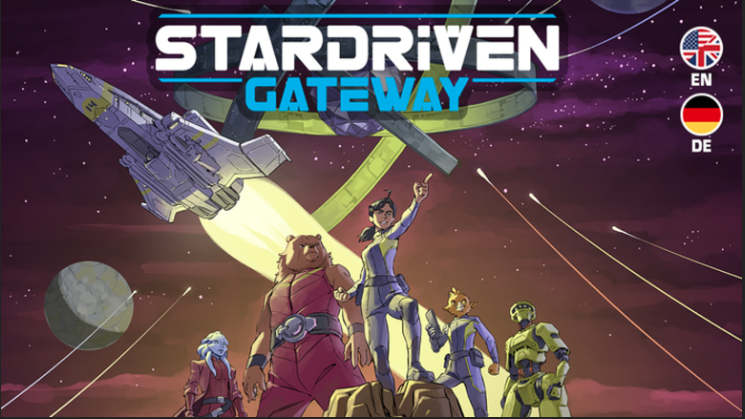
9. StarDriven: Gateway + Invasion

Platform: Kickstarter StarDriven: Gateway
Promised Delivery:  Jan 2026
Summary:  In StarDriven: Gateway, 1-4 players each control their own starship and crew while determining the fate of distant colonies near an ancient alien gateway. The game can be played competitively, co-operatively, or in solo mode depending on which episode you select at game set-up.

Your objective is to be the most renowned and respected Crew by gaining the most points. You gain points by increasing your reputation with the Council Worlds, promoting your Crew, researching Anomalies, recruiting Freelancers, and completing Missions. All of these brave endeavors will score you points and lead to your victory. Running your starship entails assigning crew to different stations on your ship board, which allows you to assign dice to those stations to activate ship actions. Move and explore space, encounter raiders, face anomalies, and use your crew abilities and skills to fulfill mission requirements and activate their bonuses. Manage your ship’s power, weapons, and shields, and recruit and promote crew members to enhance your ship and achieve objectives to ensure your side prevails

This is #9 on the list because it is only cooperative with the Invasion expansion that comes with the Kickstarter!  Usually a game that has an expansion to make it cooperative isn’t great cooperatively, but we had fantastic luck with Kinfire Council with the Winds of Change expansion making it cooperative!  Honestly, we backed this because we had such a good time with games my Mike Gnade: his Set A Watch series just knocked it out of the park for us (see here, here, here, here, and here)  … so if he is doing this game, I’m in!  The Set A Watch games made so many of our Top 10 lists!  The ultimate was when Doomed Run made our #1 spot on Top 10 Solo Games of 2024!   A co-op game in space by Mike Gnade? I’m in!

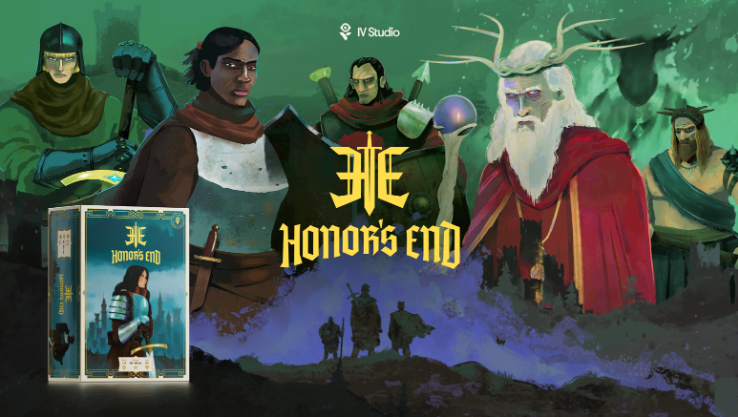
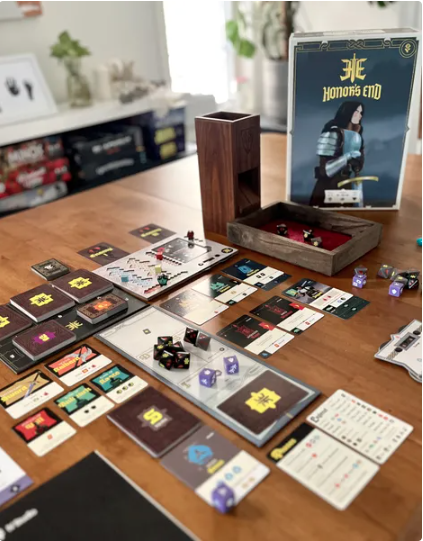
8. Honor’s End

Platform: Kickstarter Honor’s End
Promised Delivery:  Sep 2026
Summary:  Honor’s End is a 1–4 player cooperative deckbuilding adventure set in a medieval world overshadowed by a mysterious truth. You can play it as a standalone session or as part of an episodic campaign that gradually unlocks new content and challenges.

Players must band together to overcome escalating threats. By wielding hero, action, and equipment cards, they’ll strike at their foes while fending off dishonor—brought on by danger dice rolled each round by their enemies.

Each knight chooses a path of Valor, Fortitude, or Wisdom, building a deck that shapes their abilities and tactics. Enemies, forged from the traits of Wrath, Deceit, and Despair, create unpredictable and unique battles every time you play.

Victory demands more than raw power. Success lies in balancing honor, clever deckbuilding, and shrewd use of the Temple and Monarch reward tracks. Defeat all three enemy champions to claim victory—or watch your honor slip away.

This is a game where the gameplay sounded interesting despite the art.  I don’t love the art I have seen, but it’s all thematic.  This cooperative campaign deck-builder looks like it will be a lot of fun with some possibly unique gameplay.

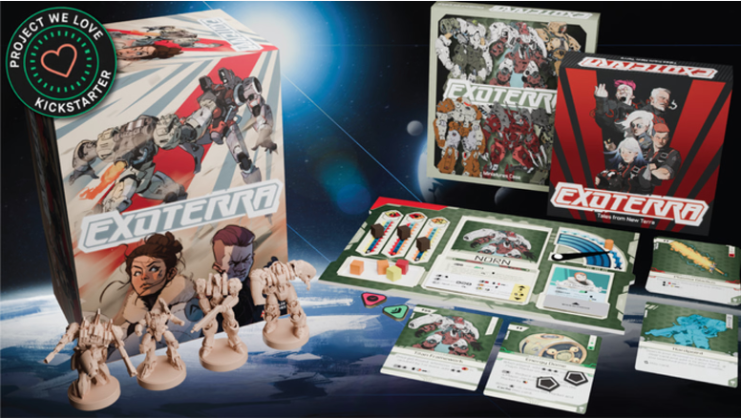
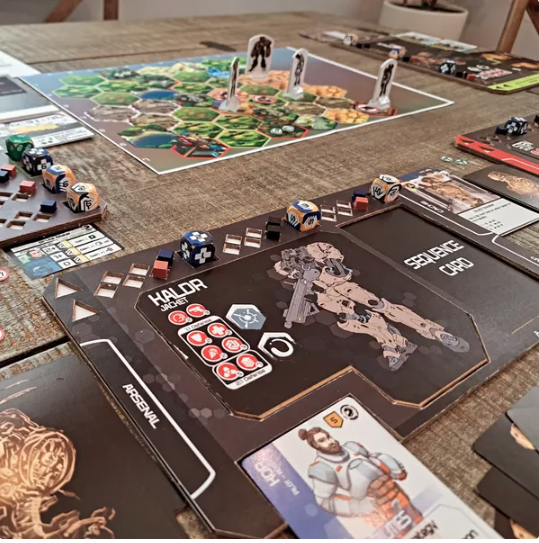
7. Exoterra: The Giant Mech

Platform: Kickstarter Exoterra
Promised Delivery:  Aug 2026
Summary: Welcome to the universe of ExoTerra, a sandbox strategy game with tactical planning, deep customization, and enemies who are complex and highly challenging.

ExoTerra is played cooperatively over the course of many sorties in a campaign. Each Player takes on the role of a Pilot in charge of requisitioning equipment, personnel, supplies, and, most importantly, Jackets – massive humanoid weapon systems, to be customized and fielded in battle.

Leveraging a new system of enemy generation, battles should always feel different, even if facing the same enemies. This is accomplished through several factors of enemy customization that force players to assess each situation individually. You can rely on your experience from past battles, but must be able to change your strategy on the fly based on the variables of the mission.

This looks like an amazing Mechs game!    I was on the fence on this one, but it just looks really neat.  And I think the idea of customizing your Mech is what finally sold me.  That and cooperative play!

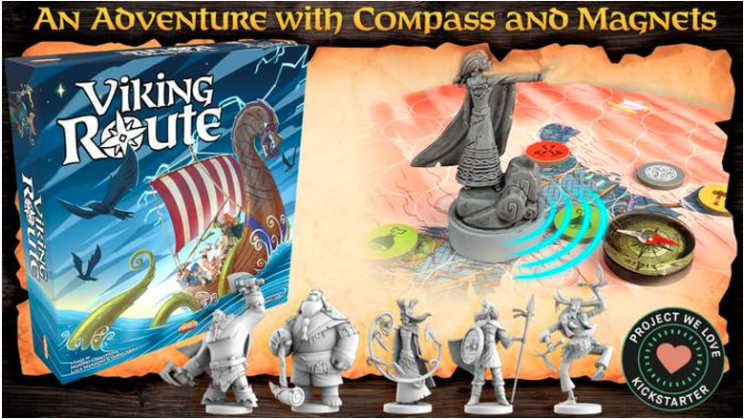
6. Viking Route

Platform: Kickstarter Viking Route
Promised Delivery:  Oct 2025 (ya, they didn’t make this.  It will be 2026)
Summary: In the co-operative game Viking Route, your heroes sail a magical Drakkar to the World’s Edge and beyond. Influenced by magical ravens sent by Odin to steer your course, and by the winds of Fate, you will face powerful and monstrous creatures out of the Norse mythos to fulfill your quests and prepare you for the final challenge to defeat the greatest enemy of the Gods and prevent Ragnarok!

Viking Route uses a compass-and-magnets movement mechanism first introduced the game The Faceless. The main game piece — the Drakkar — is represented by a compass, and multiple magnets (representing ravens and wind) are manipulated by players to steer the course of their ship.

Magnets and compasses?  In a cooperative game?  Yes please! This game looks really interesting and definitely has a high toy factor!  Let’s hope the game underneath is good as well!

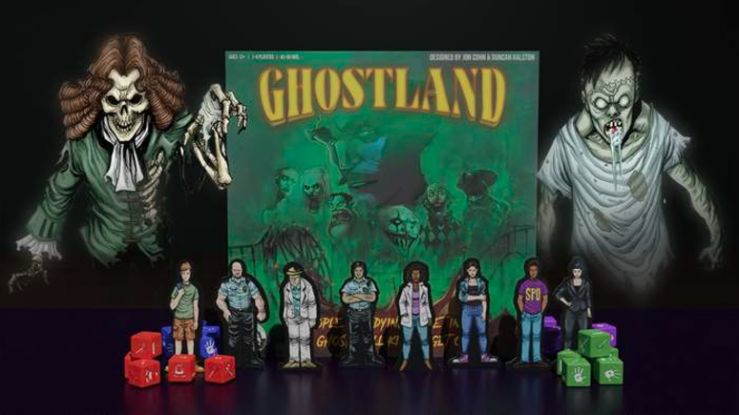
5. Ghostland: The Game

Platform: Kickstarter Ghostland
Promised Delivery:  March 2026
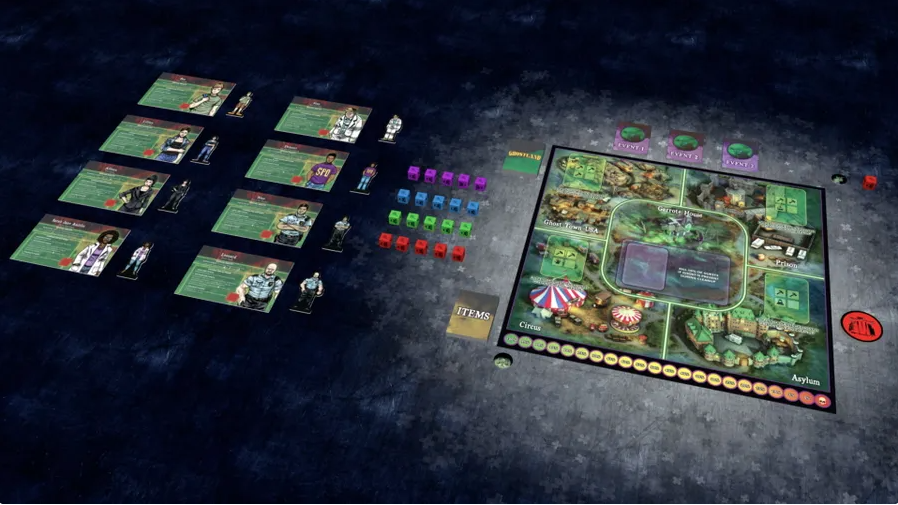
Summary:  Jurassic Park meets Ghosts in this Co-operative boardgame about a theme park gone mad! It’s opening day at Ghostland, a theme park that contains actual ghosts! However, havok has immediately broken loose, and the ghosts are attacking guests left and right. It’s up to you and your friends to stop the ghosts, build Field Generators to contain them, and finally face off against the most sinister ghost in the park, the infamous Rex Garrote!

Each players picks a character that is unique and contains their own stats and abilities to help you not only survive the theme park, but hopefully save the day as well! The game is played in rounds where players move arounds the park, fight ghosts, buy items, or try to build a Recurrence Field Generator.

Once players have successfully built three Recurrence Field Generators they will summon the big bad himself, Rex Garrote, for them to defeat! But if the park’s human population reaches zero, it’s Game Over!

Ghosts in an amusement park?  And a co-op to boot?  Who needs a Scooby-Doo game, because this sounds like it might scratch that it!  This may or may not be a Birthday present for my friend CC!  He loved amusement parks and horror-themed games!  I just hope I don’t like it better than him or I may keep it!

4. Sail: Legacy

Platform: Kickstarter Sail Legacy
Promised Delivery:  August 2026
Summary: Assemble your crew, captain your ship, and take on the high seas in this legacy co-op trick-taker!

In Sail Legacy, you and your best matey will go on an adventure across thirty unique missions. Upgrade your ship, outfit your characters, and tune the deck itself to avoid a watery grave!

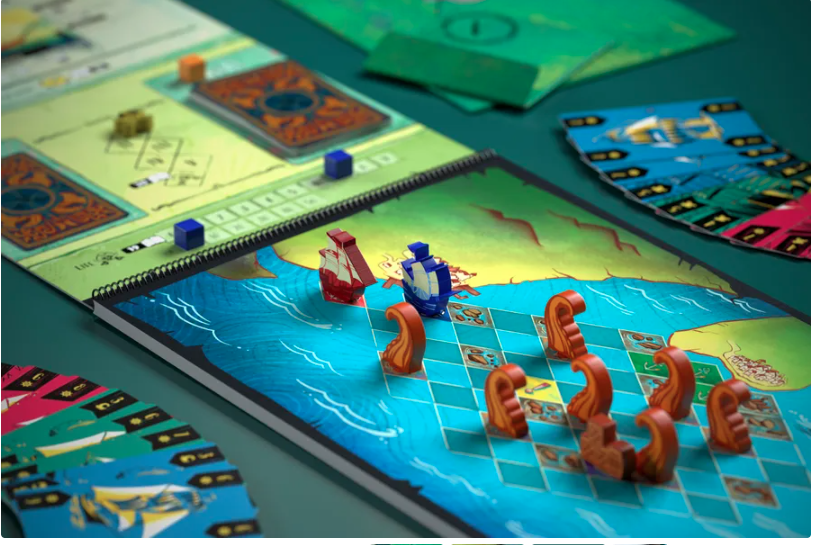
Sail Legacy evolves from the core Sail game mechanisms as you cooperatively use “must-follow” trick-taking to take on the unforgiving ocean — and the mythical beasts that call it home. Based on the combination of symbols in the trick, you’ll steer the ship, charge ahead, or fire the cannons. Throughout the game, you’ll tweak your pirate’s asymmetric player powers. Will you have a well-balanced team or specialize in one area?

We really liked the original 2-Player Trick-Taking game Sail; it made it pretty high on our Top 10 Solo and Cooperative Trick-Taking Games!  This one takes that formula and transforms into an Legacy games where maps changes and components may change forever!  It’ such an interesting idea; I am really looking forward to this!
3. Companion Quest

Platform: Kickstarter Companion Quest
Promised Delivery:  Dec 2025 (ya, it’s not making that; we’ll see it in 2026!)
Summary: Companion Quest is a cooperative game for 1-4 players, who take on the role of gnomes, tasked with preventing Gu’Gu from causing chaos. Players will collect magical Energy Cubes (dice), tasty Snacks (resources), and fantastical Companions (abilities) along the way. Each Companion has unique abilities that allow players to manipulate their dice to overcome the challenges they will face.

Complete quests before the Mischief Meter reaches the end of the track and things spiral out of control!

This looks like an epically cute dungeon crawler in a small but beautifully cute package.  The BGG pages lists this as 30 minutes and 10+ ages, so I suspect it will easy to jump into! Sometime you just want a fun and fast and cute dungeon crawler!

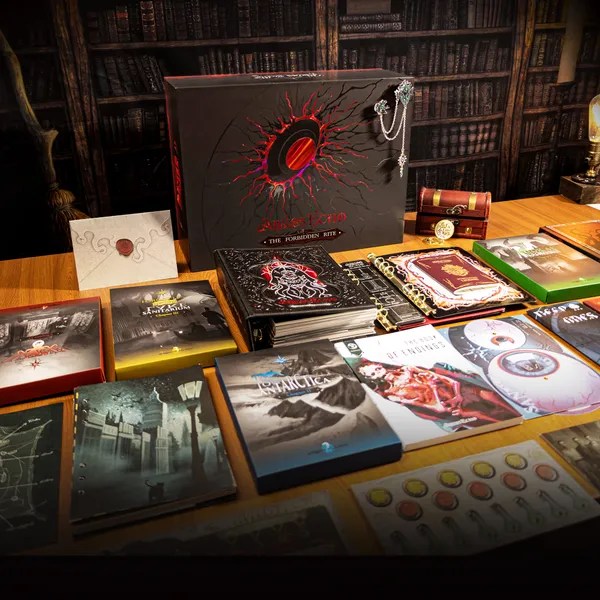
2. Abyss Echo: The Forbidden Rite

Platform: Kickstarter Abyss Echo: The Forbidden Rite
Promised Delivery:  April 2026
Summary: Step into the shadowed halls of Miskatonic University, where fate and madness echo behind every closed door.

Abyss Echo: The Forbidden Rite is a deeply immersive narrative game that weaves branching storylines, dice-driven uncertainty, and evocative physical artifacts — blurring the boundary between reader and protagonist. Here, you are both yourself and the 1920s student investigator, their fate and sanity intimately entwined with your own. Guided by cryptic letters, you’ll piece together elusive clues, test the limits of science and reason, and confront choices that might reshape reality itself.

This looks to be Cthulu meets escape room a little bit!  I am usually not huge into Cthulu, but the components look stunning … and I love mystery stories!  Cthulu, mystery, escape: count me in!

1. Doom Guard

Platform: Kickstarter Doom Guard
Promised Delivery:  May 2026
Summary: Doom Guard is a cooperative board game for one to five players, who don the mantle of Earth’s mightiest heroes and villains as they are forced to work together in order to protect Earth from total annihilation!

Defeat the minions of Cthulhu, fight the spread of corruption, and beat back the forces of evil through 45-60 minute scenarios that can be played individually or as part of a complete campaign.

This looks like a really neat super heroes vs Cthulu game!  I like the art and the vibe and I am really excited for this!  I have always wanted super heroes in my Cthulu mythos, and now I have them!  This is a smaller endeavour (“only” $103, 000), so let’s hope it delivers! UPDATE: They delivered the PDFs to backers (Dec 16th?) already! A good sign!

Aetherspire: A Solo and Cooperative Review

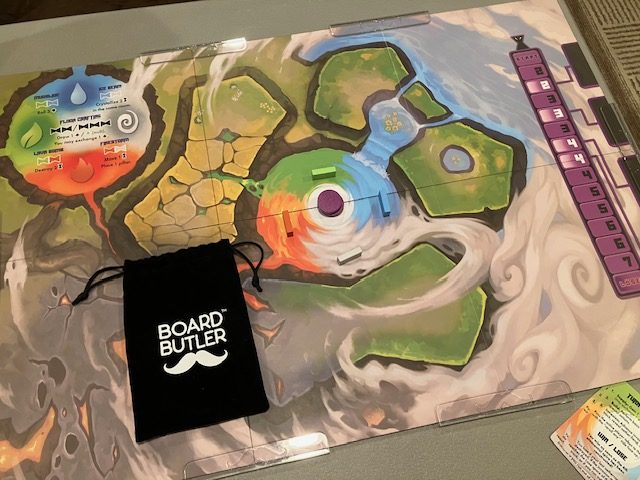
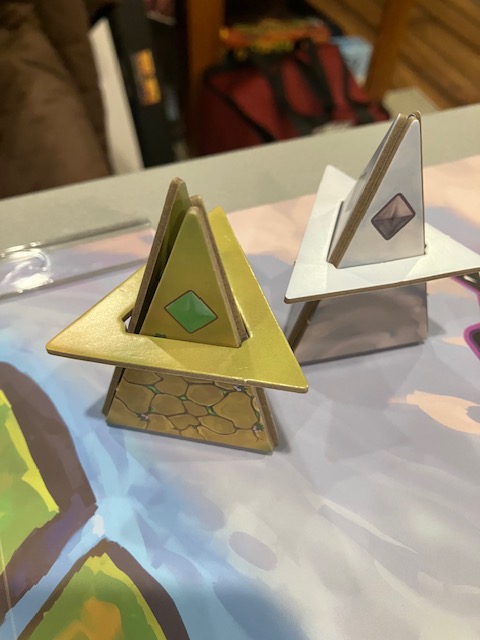
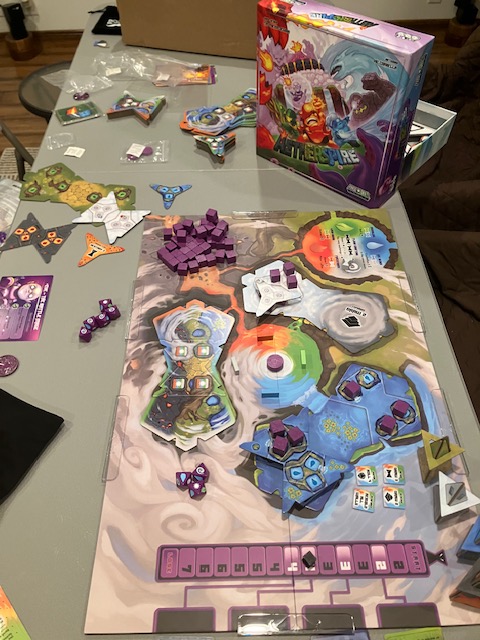
Welcome to 2026! This month, we are looking at games that were on the 2025/2026 cusp. This one we received December 18th, but we couldn’t get it played fully until January 2026, so we are counting it for our lists as a 2026 release! Take a look below!

Aetherspire is a cooperative tower-defense, 3-D building game that was on Kickstarter back in October 2024; it promised delivery in October 2025.  There were some miscommunications, and some retail stores had copies (in late  November 2025) before Kickstarter backers (my copy arrived December 18th, 2025).  I admit seeing this in retail before I got my copy made me a little grumpy (since I kickstarted and paid real money to back this), but I guess I am just glad to see this game get out there.

This is a really interesting looking game (“3-D building?? What is that??? That sounds cool!”) that piqued my curiosity in last year’s Top 10 Anticipated Cooperative Games of 2025!   But because of the late arrival, we couldn’t get it played fully (solo and cooperatively) until 2026, so we are counting it (for our internal purposes) as 2026 release.

Let’s take a look!

Unboxing

See Coke Can above for scale.  

There are quite a number of really nice components in this box.

There is QUITE a bit of cardboard to punch out!

Most of the cardboard is for pieces to build 3-D structures on the board!  See above!

There’s also a really nice board where you build!

Overall, these components are pretty great!  (In the previous Kickstarter that failed, the components were even nicer, but they were a little too expensive, which is why this regrouped and relaunched.  To be honest, I am very happy with the quality of the current version).

Gameplay

Each player takes control of one of 15 (!) characters; each character has special powers.

Each character’s power are notated on the sheet (see above). Generally, these special powers allow the character to manipulate tiles, manipulate dice, and/or manipulate spires.  

This is a bag-pulling game; it’s not really bag-building, as bag-building implies players put stuff in there for purposely to change the odds.  Having said that, there are decisions players make during the game that do change the distribution of the pieces … so you could argue this is a bag-building game?  Maybe?

The pieces you put into the bag are dual purpose: they are both the invaders (that clog spaces on your board) and spell-pieces that allow you to use special powers!

At the start of each player’s turn, he/she get 3 pieces that go into the spell area above.  Discarding combinations of the pieces allow the players to cast spells to help them!  See above!!!  The spell is the important thing here (Lava Bomb destroys invaders!), but again the pieces do go back into the bag, so what pieces you use for spells has at least some bag-building implications.

During the end of every turn, using the same bag, the invaders are pulled and placed on the pieces in the middle!  The invaders clog spaces so you can’t build!  

As the game unfurls, you are trying to build spires of height 4 (for each element).  You use puple pillars to build bases for the next levels: see above.

The purple dice are “generally” how you build purple pillars!  Note above as the player can build three pillars on water spaces, and one pillar on an ice space!  There are other powers and spells to build pillars, but generally the purple dice build the purple pillars.  

At the start of every player’s turn, they get to roll 5 dice, and they help determine what the player can build/do that turn!

A completed structure of height 4 (where all levels are the same element) allows the player to build a spire!  See above!  Once all four spires have been built, players win!

If there are no empty spaces for the invaders to occupy, then they tear down the walls and attack the gooey center!  If all the purple (circular) pieces in the middle are removed, players lose!

A winning game looks like the above!  3-D towers built with 4 spires!  Pretty cool!

Along the way, during the bad news phase, the spirits of the elements are awoken.

Each one of these has special powers which makes it harder to build the spires.  But building a full spire will KILL the appropriate spirit, so some of the game may be deciding which one to go after!

There are other ways to lose, but usually you will lose when too many invaders come out and there’s no place for them to go!  (If you wait too many turns, you run out of time and just lose: see above).

Even if you don’t win, a “nearly-completed” gane looks pretty cool!  See above!

Rulebook

The rulebook is good.  

The font is pretty big and readable, the rulebook stays open next to me on the chair, but there is a little bit of droopage over the edges, so this gets about a B+ on the Chair test.

The Components are well-documented with pictures and annotating text.

The set-up is perfect: it spans two adjacent pages, stays open, and marks where everything goes.

There’s no index, but there is a glossary (see above), and we found that to be good enough.

The rules end with a nice Icon reference.  See above.

Generally, this was a good rulebook.  There were a few questions on some edge-cases on rules (see our BGG post here), but the designer seems pretty engaged and answered our questions over there pretty quickly.

Overall, nice job.

Building vs. Dexterity

The rulebook makes it VERY clear this is not a dexterity game.   See above.  In all my plays of the game, I never really had any problem knocking stuff over.  (EDIT: update, yes, in our cooperative game we had an “oops” moment, but it was easy to rebuild).  But I like this acknowledgement!  This game is about building cool towers!

Solo Mode

Yes!  This rulebook does a GREAT JOB of acknowledging how the solo mode works! See above!  Thank you for following Saunders’ Law!  The game is true solo, were the solo player operates one character and pretty much plays the game just like normal (no real changes).   I applaud this solo mode!

Over the course of a week, I played about 3 solo games with different characters. The purple guy!  See above!

The blue guy!

…and the red guy!

Strictly speaking, I didn’t win any of my games!  I cheated in my middle game just to see what the endgame looked like (and it was a minor cheat, but it was still a cheat).
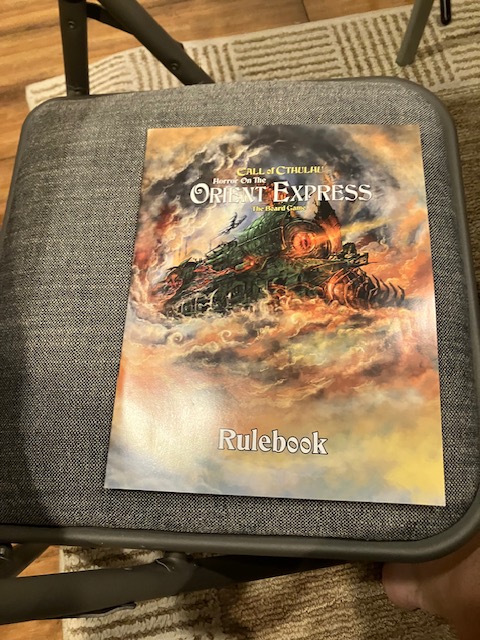
This game is hard.  You have to balance the randomness of the dice with the number of invaders points and the scarcity of spell components.  Every decision you make has some repercussion: if you kill some invaders with a spell, then the spell components go back into the bag … which kills the invaders, but changes the distribution in the bag!  If you build too much too soon, you may build so that the invaders have no place to land and they end up breaking down the walls!

I have, over the course of my plays, developed some strategies.  There is some strategy, but also a lot of tactics, as you have to play the dice as they are given.

The randomness can be a little frustrating sometimes, but usually there are just enough mechanisms to deal that randomness (you always get a free re-roll every turn, your special powers can do stuff to  “useless” dice, and the spells can help.  Having said that, the game can sometimes feel just a touch too random.  At the end of day, if you roll poorly, you will lose.

But I liked the way all the systems of the game worked together; they all interacted in interesting ways.  I had fun playing.

As a solo gamer, it’s easy to get this out and start playing.  The amount of maintenance per turn isn’t too bad, and the game moves along as quickly as the solo player likes.   The only “bad part” is how much work it is to clean up the game at the end; there are a lot of components that need to be separated!

Cooperative Play

Cooperative play went over very well!

Using a minor house rule (see below), we were able to win a game!  It was very satisfying.  

In the cooperative game, there’s no real mechanisms to encourage cooperation.  Each player’s turn is very multi-player solitaire!  A player rolls the dice and decides how to use the dice and the spells and deal with the invaders.    A lot of people I know really like this style of cooperative game, as it’s much harder to have an Alpha Player ruin the game … since I can only use my own powers and my own dice.  (Typically, none of the special powers of your character can be used outside of your turn).   So, it might seem this game isn’t particularly cooperative.

Even though the game has no mechanisms to encourage cooperation, a lot of “high-level” cooperation occurs!  Which invaders do we deal with?  Which spells do we use?  How do I use rerolls?  What Spires do we complete?   It’s all high-level discussions.

My friends and I, who cooperate very well, had a great time playing this.  We talked a lot about high-level strategy and interacted/discussed/cooperated quite a bit.

I also think this would be an excellent game to play at a convention!  Since you may not know other players very well at conventions, a multi-player solitaire game is a good choice.  It’s harder for Alpha Players to show their ugly head, and each player can execute their own turn, but still conversing with other players!

House Rule: Re-rolls Must Roll Something Different!

There is a very frustrating thing with using re-rolls as a mitigation mechanic: if you re-roll and roll EXACTLY THE SAME THING.  As a house rule, we suggest that, if you roll the same thing on a re-roll, you can re-roll until you get something different.

Some Component Issues

My board had trouble laying flat; I had to use a Board Butler (see above) to make sure the board stayed flat.  I feel like this is a bigger deal in this game because you are building a 3-D structure and the board NEEDS to be flat and stable.  After my third game, it was a little better and I didn’t need the board butler. 

The spires didn’t seem very “stable”.  See as the green spire just kinda opens up, but the white spire stays very compact.  I suspect a little glue might fix this issue.  It’s not a big deal, but it was annoying to try to move the spires around when they sometimes kind of open up or fall apart.  Again, I think a little bit of glue will fix this, so it’s not a big deal.

Randomness

There’s a lot of ways to mitigate randomness in this game, and there are a lot great decision points;  I really like all the places where you can make choices.  For example, at the start of every turn, you get one building piece (you choose the pile), but you can still swap away if you get something you don’t want!  I also like that you essentially have a re-roll every turn! (But see our House Rule above).  I also like that the spell pieces are also the invaders!  It’s cool that you have to think about how the invaders and spell pieces distribute into the bag! All your choices seem important.

At the very end of the day, though, this is still a dice game.  If you roll poorly and there are no mitigations left, you will lose.  It’s not a big deal because generally there’s enough mitigation so that you don’t have this feeling too often.  Be aware: occasionally, you will be grumpy when you roll badly.   You have to decide if that’s too much for you.  The good news is that the game is pretty quick.  I think 45 minutes estimate might be too little shy; my games were more like 60 to 90 minutes.

Conclusion

Aetherspire is a really neat tower-defense and 3-D building game.  I liked it and my friends like it.

The structures you build are very cool and look great!  It’s fun to be part of that process! See above!  It’s a very kinesthetic and interactive experience!

The game can be just a little random, but there are enough mitigation methods (plus our House Rule) that it’s not usually a problem.  At the end of the day, this is still a dice game that can still stab you in the eye.

My friends and I had a great time playing this! It looks good, it’s fun to build, and there’s enough choices that you always feel like you can do something!

Me and my friends all agree in this one: 8/10 for cooperative mode! It was so much fun!  8/10 for both solo and cooperative mode … although the cooperative might have been a little higher if there just a few more mechanisms for cooperation: the cooperative mode is pretty much multiplayer solitaire with a few high-level discussions of strategy … but that may be what you want at a convention … or to avoid the dreaded Alpha Player.

Side Note: This probably would have made my Top 10 Cooperative Games of 2025 if I had gotten it a little bit earlier … be on the lookout for this on my Top 10 Cooperative Games of 2026!

A Review of Unmatched Adventures: Teenage Mutant Ninja Turtles.

Welcome to 2026! Some of the games that came out in December 2025 feel like they are on the cusp of 2026! Do we count them as 2025 or 2026? We’ll start this month with a game we received in early December … it was early enough that we got in enough plays in to count it as a 2025 release!

So, I never got into the Teenage Mutant Ninja Turtles. When I was in college, my friend CC was really into the black-and-white Eastman/Laird turtles, but they all had the same color headband … because they were in black-and-white. See below.

The reason I picked up this set because I really like what the original Unmatched Adventures did for the Unmatched universe:  It makes the game cooperative!  See original review here!  So, is it worth picking up the TMNT set even if you don’t like the turtles?  

Let’s take a look!

Unboxing

See TNMT box above with Can of Coke for perspective.  This is a pretty normal sized box, but it is taller.

It’s taller because it breaks into two sections.  The top section holds the four turtles: their minis, their cards, their sidekicks, and their initiative cards.   The top of the box is JUST the plain Unmatched turtles.  If you wanted to play turtle vs turtle in a standard Unmatched head-to-head game, you’d only need the top.  To be clear: you can use any of these turtles in the standard Unmatched game with any other set (Rafael vs Bullseye?  Donatello vs. Sherlock Holmes? Michelangelo vs. Bruce Lee? Leonardo vs. Tyrannosaurus Rex?) to play out any head-to-head fight you want.

If, however, you want to play the cooperative Unmatched Adventures part of this box, everything you need (except the initiative cards) is in the bottom part.

There’s minis for Shredder and Krang (the two big bad bosses you fight in the two scenarios), and a bunch of tokens for the minions, the cards and some dice!

There is a LOT of cardboard to punch out. See above. 

Most of the cardboard is for the spinners: these are hit point markers for the turtles (4), the minions (6), and the sidekicks (4).  I think I spent more than an hour punching out the spinners and putting them together; this might have the worst part of the game (although I have friends who love to punch stuff out for fun).

These inserts are exceptional, as everything fit back into the insert very well.  Everything in its place—see above as the spinners fit in really well into the grooves.

The pieces are all nice (and I only got the standard retail version: there’s a version/auxilary with a lot more minis).

The two-sided board is easy to read/see.  Each big bad boss has his own side of the board: Shredder or Krang. See above for Krang’s side.

The production on this game is fantastic: see above.

Rulebook

There are three rulebooks that come with this: core rules, set rules, and adventure rules.

The core rules are the basic head-to-head Unmatched rules which describe how to play head-to-head: the way Unmatched was originally meant to play.  This ruleset has evolved over many sets, so it’s great and describes the game well.   The Unmatched Adventures requires players to know the basics of the core game: the three things you can do (scheme, attack, or maneuver), the combat rules, set-up, and such.  This is a good rulebook that has evolved very well over time.

The set rules (above) simply describe and give more detail on the specifics of the turtles and their special powers. See above.

The Unmatched Adventures rulebook describes how to play cooperatively against one of two game-run big bad bosses: Shredder or Krang!

The Adventures rulebook does pretty well on the Chair Test: it droops ever so slightly over the edges, but the font is readable, the pictures and useful, it stays flat on the chair next to me, and it’s easy to read. B+/A-.  See above.

The Contents page is great: annotated pictures of everything.

The set-up is perfect: it spans two pages (without crossing a page-turn boundary), and it is well notated.  See above.

In general, this is a good rulebook.

We wish there had been just a little more description in a few places:  for the Minions (For example: can we ever get rid of the Mousers?  The lack of text implies not, but I wish they would have stated it explicitly), and I just wanted a little bit more.  There was also some discrepancy between turns and rounds (especially on Raphael) that tripped us up, and some of the text of Krang was unclear of the relationship between the machines and the zones. 

Generally, good rulebook though.

Gameplay

This is a variable turn order game, with the initiative deck dictating when the good guys (the players) go and when the bad guys (the big boss and his minions) go.  The gameplay is very similar to what we saw in Unmatched Adventures: see that review here.  

I still have some problems in general with variable turn order games: see a very full discussion here: A Discussion of Variable Turn Order and How To Mitigate Its Randomness.  

Some of my favorite games have variable turn order, but that still doesn’t mean I love the mechanism; it seems to be a necessary evil for some games.  As we dive into different player counts, we’ll see how this affects the game.

Solo Play

To be clear, Unmatched Adventures supports solo play! (Thanks for following Saunders’ Law).  See 1-4 Players on box!

In fact, Unmatched Adventures support pure solo, as one player controls one character! See above as Leonardo takes on Shredder all by himself!

There are two main mechanisms for game balance at different player counts:
1. The big bad boss Hit Points (Shredder above) scale for the number of players.  It’s 7 * (number of players + 1), so 7 * 2 = 14 hit points for the solo game.

2. The number of minions is the same as the number of players.  My solo game (above) has one minion: Rat King!

The solo player still has to manage his deck as well as the Big Bad Boss and Minion deck.  There is some maintenance as you play solo, but it’s not too bad.

I think the worst part of the solo game is how small the initiative deck is: only 4 cards!  One for the player/sidekick, one for the minion, and two for Shredder!   I still liked the solo game, but I was often frustrated when the bad guys got so many turns in a row!  In the worst case, the bad guys can get 6 unanswered turns in a row!  

I still liked the solo game.  I like how it’s true solo play (you only have to play one character), I just noted the variable turn order felt overwhelming sometimes … to be fair, that does sometimes describe how a true head-to-head game feels: sometimes the other guy will just mess you up!  (This just re-emphasizes some of these same feelings of the solo mode in our previous review).

As usual, we recommend playing solo first so you can learn the game to teach your friends cooperatively.  And the true solo mode works, if a touch random.

Cooperative Play (4-Players) With No Fans

It goes without saying that we had to eat Pizza first before we played a full-up all four turtles game!  I am not a TMNT fan, but even I know they eat pizza!  

The four player cooperative game went over pretty well.   Like we noted in previous Unmatched Adventures, the variable turn order problems are much less pronounced with more players.  There are enough initiative cards that players don’t get stuck with the bad guys getting too many turns in a row.

A problem we had with 4 players is that it was sometimes too hard to get around Shredder to do damage!  Each of the turtles gets a sidekick, so there are 8 good guys (4 turtles and 4 sidekicks (April, Casey Jones, etc) and sometimes it was a little frustrating as they couldn’t get some of the good guy to do anything useful!   This does feel a little like a first-world problem (“Oh no, we can’t all do damage to Shredder!”), but it did cause some frustration in my group as sometimes you couldn’t get anything done on your turn because there was no place to move to!

We generally had fun and took down Shredder as all 4 turtles!

Interestingly, no one in my group was a TMNT fan!  They all knew of the turtles, all were okay with the turtles, but no one was “a fan”.  Despite not being fans, we all had fun playing the turtles. 

Generally, I think the game is more fun cooperatively than solo.

Cooperative Play (3-Player) With A Big Fan

My friends Jon is a huge TMNT fan; so I had to make sure to get is opinion when he played.

In general, he liked it.  I do think a 3-player game was a little better than 4-player game you get back to your turn quicker,  and vying for space around the board wasn’t quite as bad.  4-Player still worked, but I do think 3-Player is better. 

Solo Play (2-Player)

For comparison purposes, I did want to see how (a) how other heroes played in this world (b) how the Krang scenario played (c) how 2-Player/2-handed solo played.   So, I played a two-handed solo game of Daredevil and Bullseye against Krang!  See above!  It’s an unlikely alliance, but Daredevil and Bullseye have teamed up to protect their city!

The first game went horribly as Krang took out Daredevil early. Bullseye just looked at the board, said “no way”, and walked away (he is, after all, a villain).  Krang won!

After resetting, Daredevil and Bulleye used their abilities better together and Daredevil took Krang our with a Feint on the very last round (see below) … he only had to do one damage, but the Feint cancels all bad-guy effects!  So, Daredevil‘s Feint won the game! It was great!

This was a very thematic session of two games: Daredevil and Bullseye failed in the their first team-up (Daredevil  Comics #992), but then after learning from their failure, they were able to go in and take out Krang! (Daredevil Comics #993).  It just felt like two comics back-to-back!

I think I enjoyed two-handed solo more than pure solo.  Like I have said many times, the presence of more heroes in the initiative deck helps “smooth out” the randomness of the variable turn order system.  And, in this case especially, it felt very comic-booky over two issues.

Dice Throne Adventures/Missions vs. Unmatched Adventures

What Dice Thone Adventures does for Dice Throne, Unmatched Adventures does for Unmatched: it takes a head-to-head game and turns it into a cooperative adventure!  If you weren’t sure which one to get, let’s do a quick comparison. 

  1. Both have Marvel Characters
    1. Dice Throne has 8 Marvel generic and 9 X-Men=17 characters
    2. Unmatched has 16 generic Marvel characters (only 1 X-Man).
  2. Both have a ton of other/non-IP characters.
    1. Dice Throne has 16 from Season 1 and 2, plus Santa and Krampus, 4 for Outcasts, another 4 from Vanguard = 26?
    2. Unmatched has sooo many characters, I can’t even count. See here!

The fun of these systems is that there are SO MANY characters to choose from both.  Dice Throne has a slight advantage in Marvel characters, but Unmatched probably has more characters overall.

The one thing I will say is that I think it’s easier to jump into a Unmatched Adventures game than a Dice Throne Adventures game.   We found out the hard way that you HAVE to play your Dice Throne character(s) beforehand, otherwise the rules overhead will be too much.  Usually, this means playing a quick head-to-head Dice Throne game to see how the characters work.  As we’ve seen in this review (and the Unmatched Adventures review), we’ve been able to drop new players into the  Unmatched Adventures game and they immediately understand!   

Dice Throne Adventures is a little more tactical (but see randomness issues below), but the powers of the Dice Throne Adventures are pretty neat too.  I’d recommend playing them both to see which one you like better; they both scratch a similar itch.

Scenarios

Of the two scenarios, I liked the Shredder experience more: it was  less random.  

The Krang scenario had a little too much luck for me.

This deck in particular (see above) was very random and kind of made me mad a few times.  And you have to roll every round to maybe/maybe not activate machines.  I didn’t love the randomness of the Krang scenario.

Overall, I will probably play the Shredder experience a lot more than Krang, but Krang is a unique experience for which I will “tolerate” the randomness now and then.  Of all the scenarios from both Unmatched: Adventures: Mothman, Aliens, Shredder, and Krang Krang was by far my least favorite.   

Unfortunately, the randomness of the Krang scenario does bring my rating down a little for this set.  It makes it a little harder to recommend this for a non-turtles person.

Sharing the Load

Because there is one minion per player (for scaling to the number of players), we shared the load by having each player operate one of the minions.   I liked this because it makes everyone feel a little more invested! If I were running everything myself, then people would feel less involved (and I would be grumpy because I was doing everything).  Since everyone has to run at least one of the minions, that makes the game feels more interactive.

I liked that we could share the load; it made the game feel more cooperative.

Conclusion

Everyone liked  Unmatched Adventures: Teenage Mutant Ninja Turtles; it was fun at all player counts, with pure solo possibly being the weakest.  Even if you don’t know/don’t like the TMNT, this is still a good get because it expands the Unmatched Adventures world and gives you two more scenarios!   (Be aware that one of the scenarios is more random than the others,  so that might have an influence on your decision).   And the turtles were fun to play, even though we didn’t know/love them.

Overall, Unmatched Adventures: Teenage Mutant Ninja Turtles is probably about a 7.5/10 or 8/10.  If you love TNMT, that probably adds another 1 or even 2 points to that score.  If you are turtles fan, be aware there is a mini-upgrade kit (see above) which turns a lot of tokens into cool minis … you might want that.

To be clear, this is a standalone set. If you love TNMT and don’t really care about any of the other Unmatched warriors, this is perfect for you: you don’t need anything else. If you just liked Unmatched Adventures system, this does add more scenarios for you! Just be aware that Krang is a little more random.

We liked this enough to be on our Top 10 Cooperative Expansions of 2025!

Dice Throne Outcasts + Dice Throne Adventures Unchained. Part II of II.

Join us for the second part of our review as we look closer at the Dice Throne Adventures Unchained Expansion. Part I showed us the terrifyingly thematic Halloween characters of Dice Throne Outcasts, and now we look at the new solo and cooperative modes of Unchained!

If Dice Throne Outcasts provides the core characters for head-to-head play, then Dice Throne Adventures Unchained gives us more ways to play solo and cooperatively!

We have to 100% clear here; Dice Throne Adventures Unchained is an expansion for Dice Throne Adventures! See above! We really liked the Dice Throne Adventures Expansion (see review here), so when we saw there would be more content, we were excited!  So, in order to use this new Unchained expansion, unfortunately, you do need the Dice Throne Adventures box.  That’s right, Unchained is an expansion for an expansion! 

And to further muddy the waters, you need at least one of several boxes of characters to play.  We’ve been playing with Outcasts and have been loving it, but there’s also Marvel Dice Throne (see review here), X-Men Dice Throne (see review here), and Seasons I and II of Dice Throne (see review here).

In other words, to play Unchained, you also need a core box as well as the Dice Throne Adventures box!

So, if that hasn’t scared you to running away screaming  (“Really? Three boxes total?”), we can look objectively to see if it is worth getting the Unchained Expansion!  I will tempt you by saying that we have two new solo modes AND a new cooperative mode!

Unboxing

The Unchained box is small, but it has quite a bit of stuff.  See Can of Coke above for scale.

The coolest thing is the new Loot cards which can be mixed in with the original Dice Throne Adventures. Loot is just upgrades as you play! See above.  The Legendary cards are even foil! Oooooohh!!

The most fun new rule of the game is that Loot is added instantly to your hand when you get it!  So, there’s a new Loot table for instantly adding stuff! 

There’s also a whole bunch of new Minions (levels 1-4, sorry I-IV).

There’s a new Boss!  The Vault Witch!  

As a boss, she has her own deck (and sleeves)! See above!

In the base Dice Throne Adventures, you can choose to fight the Vault Witch instead of a normal boss, by collecting the Witch Keys: see above.  This allows you to vary the bosses a little in the original Dice Throne Adventures game.

There’s also 3 new sheets (double-sided) for 6 new one-shot scenarios!  

Overall, this looks great and totally fits the feel of Dice Throne, especially the Outcasts set!

Rulebook

The rulebook is a tiny thing.

This rulebook probably gets a B- on the Chair Test. It does stay open and stays flat, and the font is big and readable, and it has lots of good pictures and annotations … but it’s still just a little small.

The components page works well: see above.  

Like all Dice Throne rulebooks, they do a good job labeling pictures and having a good sized font.

Generally, this rulebook was fine.  It even finishes with some useful stuff on the back cover.

Solo Mode: Minion Rush

The game comes with a new solo mode called Minion Rush!  See rules above! 

As you might guess, you just go and fight a bunch of minions (no bosses allowed!).  These new rules span 2.5 pages in the rulebook: see above.

At the end of the Minion Rush (after you die, … and you will die), you get Points for every Minion you killed!  (Harder Minions are obviously worth more). See above as I get 27 points for killing all-but-one minion!

I tried to set-up a Minion Rush using only the new Minions  (see above)… but you don’t quite have enough Minions in the Unchained expansion to do this … you gotta get some from the main box.

I was actually incredibly disappointed you couldn’t JUST play Minion Rush with the Unchained expansion: you need 13 Minions, and the Unchained expansion only comes with 12 Minions!  D’oh!  It sounds stupid, but I thought it would have been nice to need almost nothing from Dice Throne Adventures.  To be clear; for Minion Rush, you STILL NEED Dice Throne Adventures

In the end, I played Minion Rush with mostly Unchained Minions!  See above!

It was reasonably fast and fun to play, like 1.5 hours?  You just beat-up Minions!

You have to choose a path to follow … once you start following a path to the left or right, you have to keep going on that path!

As you go, you get upgrades!  And these upgrades persist! See above!  Yay! But so does damage and poison!  Boo!  Basically, it feels like a Dungeon delve!

Minion Rush is a fun way to play solo without too much set-up.  This is another great way to learn the characters!  If you don’t want to me play the Me vs Me solo mode (like we saw in Part I of our review), then Minion Rush is a fun solo mode without too much commitment.  

I used to the solo mode Minion Rush to learn the Raveness character!  See above!

“But Rich!” … I hear you asking. “Why do I need special rules for the Minion Rush??  It feels like I could just play the Dice Throne Adventures and use these rules? Do I really need Unchained to do this?”  

You are ALMOST right.  You need two major things from Dice Throne Adventures: the status tokens (and the back of the Dice Throne Adventures rulebook), but arguably more important thing you need is … the new Loot Chart.

New Loot Zoot Suit

Arguably, the best new rule in Unchained is that you get IMMEDIATELY get Loot into your hand when kill a Minion!  See above for the One-Shot Loot chart!  One of the complaints of the original Dice Throne Adventures was that your deck upgrades went very slowly … you might only get a few Loot as you play per session.  And you might not see it very much!

The new One-Shot Loot chart (if you roll well) immediately puts Loot into your hand.  So, as you kill a bunch of Minions in Minion Rush, your hand is getting better, and better immediately!

So, the new One-Shot Loot chart is paramount to making this Minion Rush work! 

“But Rich”, I hear you say, “Can’t you just make a copy of the One-Shot Loot Chart and play Minion Rush without Unchained?”  No, because you still need the status tokens and rulebook from Dice Throne Adventures.  Why don’t you just support Roxley and quit trying to cheap-out?  They’ve made a great game for you to play … besides, Unchained comes also with new Minions, new Boss, new Loot, and … a new co-op mode!

New Cooperative Mode!

That’s right, people!  There’s a new cooperative mode in Unchained!  Whaaaat?

The One-Shot Adventure is a new cooperative Adventure!  See rules above. 

One-Shot Adventure: Solo Mode!

Technically, the One-Shot Adventure is also a new solo mode, as you can play that One-Shot Adventure by yourself!

This new One-Shot Adventure addresses the problem many people had with the original Dice Throne Adventures … it was too long!  Dice Throne Adventures required an investment in a long, on-going adventure, and there kinda wasn’t a way to just play a one-off!  Now you can!

There are three One-Shot maps (dual-sided), (see one above) and they basically represent a “condensed” Adventure where you fight some Minions on the way to fighting a BOSS!  The map above represents you “going through a dungeon”!  Along the way, you fight Minions, find treasure, find healing, and try to get to the BOSS  at the bottom!!

I played a One-Shot Adventure (see above) solo to see how it worked!    When you play the One-Shot Adventure, you have to embrace needing Dice Throne Adventures, some characters (from Outcasts, but really any), and the Unchained expansion! 

To help myself keep things separate, I actually physically separated the Dice Throne Adventure components on the left side of the table (see above) …

.. and the Unchained and Outcasts components to the right side of the table! 

This helped me keep track of what goes where!

I really enjoyed this solo; it felt like it took all the complexity of Dice Throne Adventures and compressed it into a bite-sized adventure I could play in about 1.5 to 2 hours!

With the One-Shot, you get to fight BOTH a lot of Minions AND a Boss in a smaller time frame.

I really enjoyed this “new” solo mode.  Of course, like we said in the Minion Rush, part of the reason the One-Shot Adventure works so well is that we have the One-Shot Loot chart and immediately get Loot so we immediately feel more powerful as we play!  See above as I already have some great Ghost Equipment out and upgrade cards to fight the new big bad!

The new boss is cool; I have to say I defeated her pretty readily in my One-Shot Adventure, but she was still fun to play.

Again, The One-Shot Loot chart makes this new cooperative work so well.

One-Shot Adventure: Cooperative Mode … Prequel

One big mistake I think we made in playing Dice Throne Missions was NOT playing a quick head-to-head game to learn the characters.  (You might remember my friends were frustrated when playing Missions: see review here).   When confronted with all the new rules of the cooperative modes, I think it’s too easy to get lost.  So, before we jumped into a cooperative game of Unchained (the One-Shot Adventure), I asked my friends to play a quick Head-to-head game.

I recommend this to you and your groups as well.  Don’t just jump into Unchained.  There’s a lot of rules.  Let your players get comfortable with the basic rules and characters they want to play BEFORE you jump in.

Playing a quick head-to-head game first was absolutely the right thing to do;  I know it from both the positive side (my friends above said they were very glad we did a quick pre-game) and the negative side (when my other friends felt frustrated in Missions).

One-Shot Adventures: Cooperative Mode!

So, I shepherded my players into a One-Shot  Adventure!  They generally had fun, although we saw a few problems: 
1) Four players may be too many.  Even though the game moved fast, some times you felt like it took too long to get to your turn.
2) Because it takes some turns to get some of the characters flowing, sometimes having the next player fight the minion slows down your progression.  Both Raveness and the Headless Horsemen suffered from that a little; both of them require a “commitment” to an opponent to see a result.  If the opponent is killed by another fellow player, you feel a little frustrated as you couldn’t “get your character going”.

Both of these problem are solved, I think, by simply limiting the number of players. My friends had fun playing cooperatively, but I think Robert (Headless Horseman) and Becca (Raveness) were a little frustrated getting their characters going.

The other thing to be aware of, (and note that I am not calling this a problem), is that the game isn’t particularly cooperative. It’s pretty much multi-player solitaire as you all just take your turn and try to kill Minions/Bosses. Occasionally, you might help each other with cards that give re-rolls, (“I really need a re-roll! Can someone get me a re-roll?” ), or you might get rid of a status (“Please get rid of this poison!”) If you like cooperative games that are mostly multi-player solitaire with a sprinkling of cooperation, this is a perfect game for you. If you are looking for a more cooperative experience, Dice Throne Mission might be a better choice? (I say this because characters like Cyclops are made for cooperation).

Conclusion

It’s hard to recommend  an expansion for an expansion (remember, Unchained is an expansion for Dice Throne Adventures), but I think Unchained crosses that threshold!  I actually think this is an essential expansion; Unchained fixes two major complaints about Dice Throne Adventures!   

The first complaint about Dice Throne Adventures was that the upgrade path was too slow; it took forever to see new Loot cards in your hand!  The major fix in Unchained is the new One-Shot Loot chart and rules that make you upgrade SO MUCH faster!   You feel powerful quickly, and that’s a great feeling!

The second major complaint about Dice Throne Adventures was that there was too much commitment needed to play it; it took too long  to play the long adventure! Now, with the One-Shot Adventures, you can play cooperatively in one session, fighting both Minions and a Boss!  No need for the long game!

There’s even a new solo mode with the Minion Rush, which makes it a little easier to learn characters!

There are few things to be cognizant of: you probably shouldn’t play the new cooperative mode with the full four players if you can help it.  My friends still enjoyed it, but I think it would have been more fun at a smaller player count.  Two, maybe three players is probably best.

You should also be aware that the new cooperative modes aren’t super-cooperative.  There are occasions for cooperation, but generally the game is multi-player solitaire. It’s not a bad thing, you just need to be aware of what this is.

I also STRONGLY suggest you make sure your players are familiar with the characters before they play; play a head-to-head 20 minute game before ramping up into the One-Shot Adventure, or your players might get mired in rules and frustration.

Finally, would I recommend Dice Throne Missions over Dice Throne Adventures + Unchained for the solo/cooperative game?  It depends on what you want!  Dice Throne Missions has short adventures (two sessions), and simultaneous dice-rolling which moves the game quicker.  Missions is much more super-heroey, and Unchained is more dungeon-delvey!  If you want the One-Shot Adventures so you can just jump in-and-out, then I think Dice Throne Adventures + Unchained is the better choice.  If you just want short-little adventures, the super-hero theme of Missions may call to you! Honestly, they are both good choices! 

I think Unchained is an essential expansion and makes Dice Throne Adventures that much better.  It adds new Minions, new Loot, new Boss, new solo modes, new cooperative modes, but most importantly, fixes some major problems of Dice Throne Adventures.  9/10.

Dice Throne Outcasts + Dice Throne Adventures Unchained. Part I of II.

Welcome to our two-part review of Dice Throne Outcasts and Dice Throne Adventures.  In Part I of this review, we’ll look closely at Dice Throne Outcasts and see what it has to offer.  In Part II of our review, we’ll take Dice Throne Outcasts and use it to play the solo and cooperative Dice Throne Adventures Unchained Expansion!  

The full Dice Throne Outcasts + Dice Throne Adventures Unchained set arrived at my house in mid November 2025!  See above! This was on Kickstarter back in Oct 2024 (about a year) ago.  It promised delivery in October 2025; I think they were trying VERY HARD to make Halloween, but they just missed by about two weeks.  Two weeks late in Kickstarter terms is still very good!

What Is This?

Dice Throne, by itself, is a head-to-head Yahtzee battle dice game.  Each player takes the role of some character, and goes into battle with another character/player!  The two characters battle it out with dice (using a Yahtzee-style mechanism to activate powers)!  It’s best played as a head-to-head game of character vs. character.   There’s a TON of characters in different sets!  We’ve seen the Marvel Dice Throne Set (which we discussed here), the X-Men Marvel Dice Thone Set (which we discussed here), and Dice Throne Seasons I and II (which we discussed here).

This set of Dice Throne is essentially the Halloween themed set: Dice Throne Outcasts!  It has four characters inside!  To be clear, you can JUST buy this and play the head-to-head game by itself; strictly speaking, you don’t need anything else to play Dice Throne if you just want this box!  (If you want to play solo or cooperatively, however, you will need some more stuff: that’s what Part II of our review will discuss).

This box is gorgeous with the art of Manny Trembley. See above and below.

The side lists the four characters in the box.

And the bottom talks about what this is.

I gotta be honest, this cover is a contender for best cover of the year, especially the raven side.

Unboxing

The box top is actually a magnetic wrap-around board! Inside, you get a little cartoon intro to the characters! See above!

The box itself contains four trays, each with different cards and fold outs.

There are also some cardboard tokens which are perfectly fine (see right).  You can also choose to get the acrylic tokens as an add-on; I really like how cool the Acrylic tokens are, but if you are on the fence on getting this game, the cardboard tokens in the box are JUST fine.

There is also a perfectly fine rulebook that comes with it.  The rulebook also has pointers to videos to teach the game.  I even referred to the rulebook a few times to remind myself how to play.  After years and years and years, they have the rulebook down.

There are four characters in the game; they are easy to take out with their game trayz.

And that’s really all that’s in the box.  The game is really contained in the characters, so let’s take a look at those.

The Characters

Over about a week, I was very excited to try this game, so I got a chance to play all the characters in various modes: head-to-head, solo, me vs. me, and cooperatively.

These characters are fantastically thematic.   Each one of these is unique and dripping with flavor!

The Necromancer

The Necromancer uses corpses to summon undead fight for him!

The funnest to play overall was definitely the Necromancer!  His components are just top notch, and the Undead that come out look so cool!  The best part is that he has an ability called (I am not making this up) Corpse Explosion!  When playing a big group, every time that ability was invoked, people either laughed or went “Ew!!” It was very funny.

The Raveness

The Raveness has a Raven which flies around and sucks energy from characters in slight attacks!

The Raveness feels more “subtle” than the other characters is some ways, as she has to get her Raven to the opponents! But the Raven simply “steals” life force and brings it back to her master!  This is interesting because the Raven’s life steal is not an attack that can be defended.  If played well, she can subtly funnel energy back to herself without provoking a Defense Roll!  It was also very thematic to summon the Raven with feathers … I had a picture in my mind of a Raven forming up from the feathers and summoning it …

I like the subtlety of the Raveness.

Headless Horseman

The Headless Horseman throws his big pumkin head on baddies and has tokens to terrorize!

The Headless Horseman was fun to play, as you throw your giant Pumpkin Head on your opponents!  It is a little harder to get the Headless Horseman going, but once he gets going, his pumpkin head is a sight to be seen!

His Terrorize tokens are really interesting, as they can be discarded to Terrorize your opponent with the pumpkin head!

I do think that the Headless Horseman may have my favorite art in this set.

Pale Lady

And finally the Pale Lady slips back-and-forth to lady and werewolf form!

My least favorite was the Pale Lady/Werewolf; not because she’s bad or anything.  She’s weird because she HAS NO UPGRADES. (Normally, most Dice Throne characters can upgrade their board).  I think the back-and-forth between the two sides (Pale Lady/Werewolf) was supposed to emulate some of the upgrades.  She’s definitely a butt-kicker, especially with the bleed tokens she just spews out, but she seemed the least subtle.  I guess that’s very thematic, since she is a werewolf!! GROWL!

The Characters Have Character

It might be trite to say, but the characters in Dice Throne Outcasts have character!  Thematic character!

I still liked every character!  The Necromancer might be the best one to give to newer players, not because he’s simplest, but because he’s so much fun!  The Necromancer might really bring new players into the game … they just might need a little help to operate him.

Solo Mode: Me vs. Me

The base Dice Throne games have no solo mode … BUT you can play in Me vs Me mode, which is just the solo player playing both characters!  I have done this Me vs Me mode for every single Dice Throne set I have gotten!  It’s a great way to learn the characters at your own pace!

The solo player just jumps from one side of the table to the other, alternating play of each character!  I recommend physically changing sides because it helps you “become” that character since it’s just in front of you!  Yes, it’s slightly annoying to get up and go to the other side of the table every turn, but it really does help immerse you into the characters!

If you are curious who won with the Necromancer vs. The Headless Horseman … it was close, but the Headless Horseman won!

If you don’t have anyone to play against, and you don’t have any of the solo/co-op expansions, the Me vs. Me solo mode is a fine way to learn the characters.   In fact, for this set, I played all the characters at least once so I could teach them.  The characters in this set are a little complex, so it’s nice to have seen how the characters work for when your friends have questions.

Conclusion to Part I.

Many of you are aware that I generally really like mostly solo and cooperative games.  Even though Dice Throne Outcasts is a base competitive game, I really liked it!  The art was fantastic, and the characters were dripping with theme!  In fact, I am a superhero guy, I and I think  Dice Throne Outcasts is better than X-Men or Marvel Dice Throne!  The characters are just so well-thought out and thematic!

If you just want a thematic horror-based battle game, Dice Throne Outcasts is fantastic: 9/10.

But if you want to play Dice Throne with a “real” solo mode or a cooperative mode, follow us in Part II as we explore Dice Throne Adventures Unchained

Appendix: Silly House Rule

I also picked up the Dice Throne Outcasts Hero Sculpts (see above).  These are for the cooperative game only.

They are just some neat little minis you can use on the board when you play Dice Throne Adventures.  They are completely useless in the base game.

Or are they?  We instituted a silly House Rule: the minis can be used as “worker placement” tokens to mark which ability you invoked with your dice!!  Sometimes, your dice can match multiple abilities on your mat, and thisis just a way to denote which one you chose!! See above as the Raveness mini marks us use the “small straight” option instead of a different match.

Or above as the Raveness marks that we used Murder of Crows II.

This is an absolutely silly way to use the minis. But, it helps you feel like you got more for your money if you DID get them.  Which I did.

Top 10 Cooperative Things to Pick Up Before Greater Than Games Goes Away Forever

I have been buying a LOT of stuff from Greater Than Games over the past few weeks to get ready for GMing my first game of Sentinels Comics: The Roleplaying Game! I have played the game many times (with my friend CC GMing), but I have never GMed myself! So, I have been catching up on supplies. Unfortunately, because of the unpredictable tariffs, Greater Than Games has “shuttered” themselves to a large degree, laying off almost everyone, and is just liquidating stock. See news announcement here! (This was a while ago, but I am just buying stuff now)

https://www.greaterthangames.com/blogs/news/greater-than-games-team-reduced-in-response-to-tariff-crisis

I really do hope they come back from this, but I have been trying to get everything I can in case they disappear forever! Here’s my Top 10 Cooperative Things (games, expansions, other) from Greater Than Games to get before they go away forever!

10. Spirit Island

Of all the games in the GTG lineup, I feel like  Spirit Island is the least likely to go away.  Even if Greater Than Games dies completely, I am very confident someone else will pick this up! At the time of this writing, Spirit Island is #11 OVERALL on BoardGameGeek!  I see Spirit Island in Top Solo Games lists all the time (and it made our Top 10 Cooperative Games of 2017 as well!).  I love this game, and if you’ve never tried it, it’s a great game! It’s almost a euro-cooperative game! I put this at #10 not because it’s my lowest rated game,  it’s just that I suspect this game will never go away; it’s too popular.   Someone will pick it up, even if Greater Than Games falters forever.

(And yes, there are a TON of expansions for Spirit Island, they are all fun, but I almost never play them.  I view all the expansions as Honorable Mentions for this list).

9. Legends of Sleepy Hollow

My group really liked this cooperative game, The Legends of Sleepy Hollow, but it has some wonkiness to it.  See our review here.  But they fixed some of that wonkiness with the Errata (see Errata review here).  If the idea of a cooperative game in the Sleepy Hollow universe sounds fun to you, check this out … and pick it up before it disappears forever!  Just make sure you get the Errata!

Sentinels of the Multiverse: Definitive Edition

The next three entries all all related to the Sentinels of the Multiverse: Definitive Edition

8. Disparation*

The Definitive edition of the Sentinels of the Multiverse is “essentially” the third edition of the game.  See our review here for more details.  The Disparation expansion for it … may or may happen.  When GTG first announced they were shuttering, it sounded like they shut down production of it, even though printing had already started!  Over the past 6 months, we had news that maybe it will print, maybe it won’t.  As of this writing, production has started back up again!  So, Disparation may still reach its Kickstarter (sorry, BackerKit) backers.  It’s unclear if this will ever see retail; if you see it, pick it up.  You may never see it again.

7. Rook City Renegades 

The first expansion to the Definitive Edition, Rook City Renegades, definitely did make it to retail, so you might still see it around.  See our review of it here.  If you end up getting and loving Sentinels of the Multiverse: Definitive Edition, you probably want to pick this expansion up before it disappears forever!

6. Sentinels of the Multiverse: Definitive Edition

This is the third edition of one of our favorite cooperative games of all time!  I feel like I am Superhero in a superhero’s world, battling villains and working together with my friends!  Take a look at our review and see if you might like this!  This is a rare 10/10 game for us, and you may be kicking yourself if you don’t pick this up before it goes out of print forever!

Sentinels of the Multiverse: Second Edition

The next few entries are related to the second edition of Sentinels of the Multiverse!

5. Any expansion, but especially Rook City!

There are a TON of expansions for the Second Edition of Sentinels of the Multiverse!  They are all good!

But, if I ever do a list of essential expansions for a game, Rook City (for the Second Edition) will be #1 on it!  This is one of my favorite expansions of all time!  The Villains and Environments in here are just so amazing!  This expansion really took the original (second edition) of Sentinels of the Multiverse to the next level!  (I think this is currently only offered as a bundle with Infernal Relics: I have the original).

4. Sentinels of the Multiverse: Second Edition

This is also called the “Enhanced Edition”.  You might wonder why the second edition is higher on the list than the definitive edition!  Well, to be frank, I like it better!  I think the coloring and art make it easier to see cards from across the room!  And even though the gameplay is “less smooth”, I am used to it.  Still, most of my friends liked the Definitive Edition better: See our review here!

It’s possible you might find some great deals on the Second Edition in the used market, so be on the lookout!  Just be careful not to mix editions!  Luckily, the only things for Definitive Edition are the three we list (that and foil cards)!  Just about everything else should work with the second Edition!

Sentinels Comics: The Roleplaying Game

Our last three entries are exclusively for the Sentinels RPG!  And yes, we consider this RPG a cooperative game!  What can be more cooperative than heroes coming together to save humanity?

3. Game Moderator Kit

2. Starter Kit

1. Core Rulebook 

You might wonder why Sentinels Comics: The Roleplaying Game stuff makes the top 3 spots on our list, despite the original card game(s) Sentinels of the Multiverse being some of our favorite games of all times! I think you’ll be able to find Sentinels of the Multiverse card games for some time, but I am not sure the Sentinels Comics stuff will be around! I think that the Sentinels Comics RPG didn’t get a lot of love, but it’s a pretty neat RPG system. My friend CC said it’s his favorite RPG to run! See our review here!
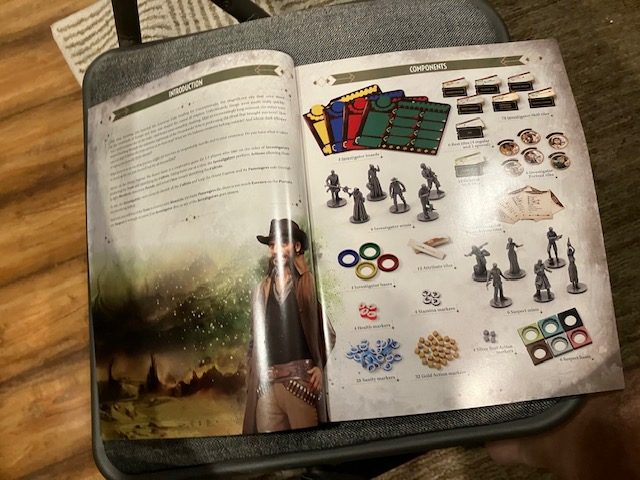
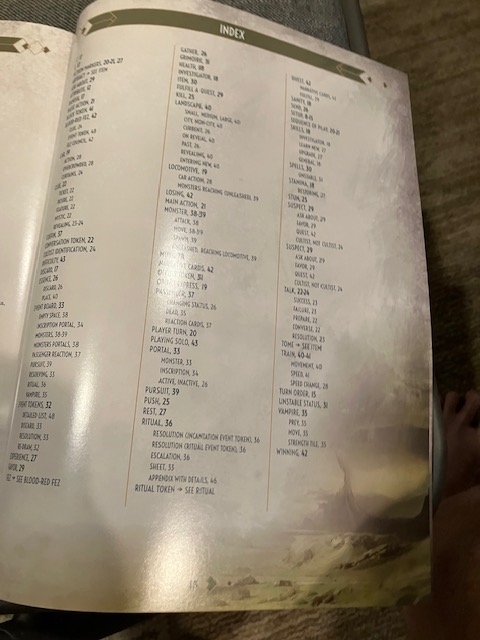
You can dip your toe in the water with The Starter Kit (#2) to see if you even like the game! The Starter Kit comes with pre-generated characters and pre-generated adventures so it’s easy to jump in!!

But of course, the funnest part of Superhero games is making up your own heroes, which the Core Rulebook allows you to do! The Game Moderator Kit is just icing on the cake if you decide you like this system!

Check out Greater Than Games Website (see here) to see if you can still pick up some of these things!