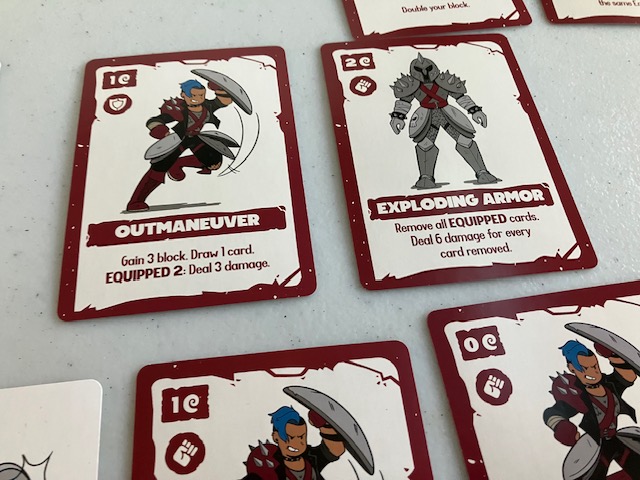
Breaking News! DC Super Heroes United Released! Review of the Newest!

Breaking News! We interrupt Cooperative Adventure month with some important news! The DC Super Heroes United base set is now available in retail!
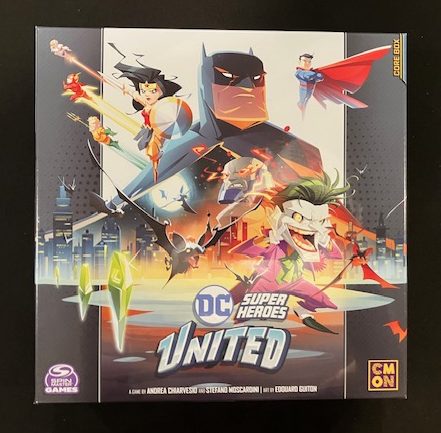
This game was announced very recently (within the last month), so I went ahead ordered my retail copy online from Many Realms and GameNerdz, and the Many Realms copy arrived Saturday November 14th, 2026 around noonish! Huzzah! (Why two copies? I didn’t know which one would get here first, and I am saving the extra copy as a Christmas Present!)
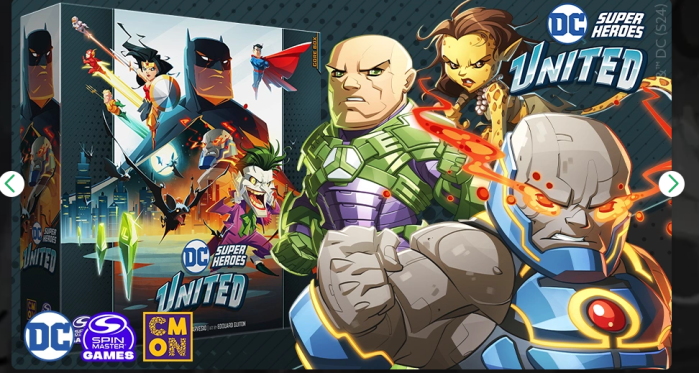
“Wait a minute, Rich! I thought you already ordered this from Gamefound/Kickstarter like years ago? Why are re-ordering this?” I did actually order this from Gamefound waaaaay back in July 2024! It made the #1 position in our Top 10 Anticipated Cooperative Games of 2025! In the meantime … umm, CMON had lots of financial problems. We were “probably” promised this back in 2025, but it never materialized as CMON has lots of problems with cash-flow. So, even though I kickstarted this (and the whole collection), CMON have decided to release DC Super Heroes United to retail before delivering to Kickstarter backers like myself. So, as of November 13, 2026, apparently is available in retail, despite not delivering to backers yet.
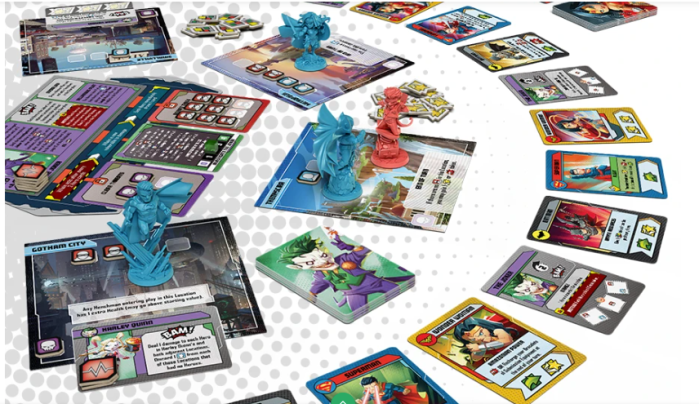
I feel like I should be more grumpy about this, but given that CMON is doing what they can to try to stay in business and solve some cash-flow issues, I guess I can’t be too mad. I’d rather CMON stays in business so they deliver my full kickstarter!
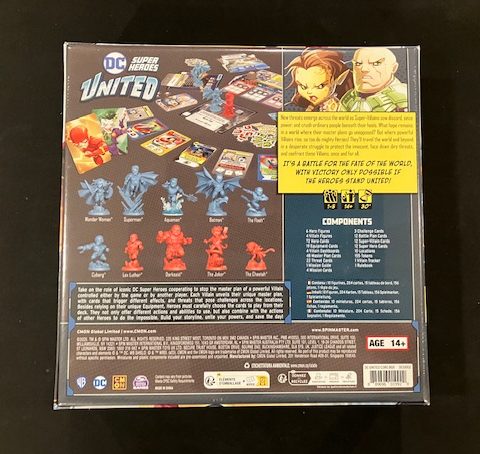
So, let’s take a the newest DC Super Heroes United … you know what … I am just calling it DC United from here on out. You can glork it from context that this is NOT the DC United soccer team (and that disambiguation is the reason its full name is DC Super Heroes United instead of the shorter DC United).

Unboxing
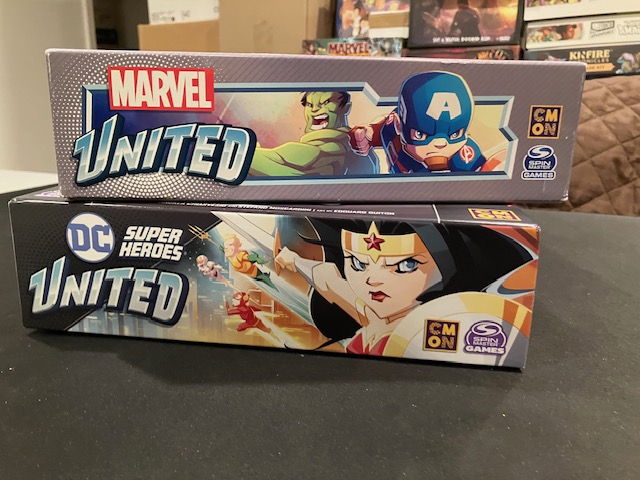
DC United is the same size as any of the United base boxes: see Marvel United above for comparison.
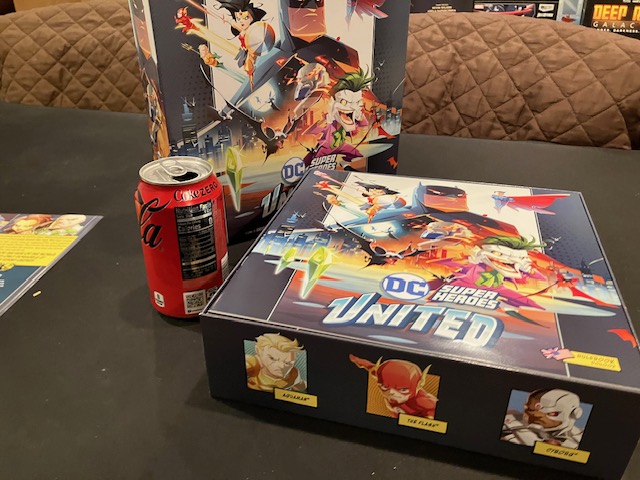
See Coke can above for scale.
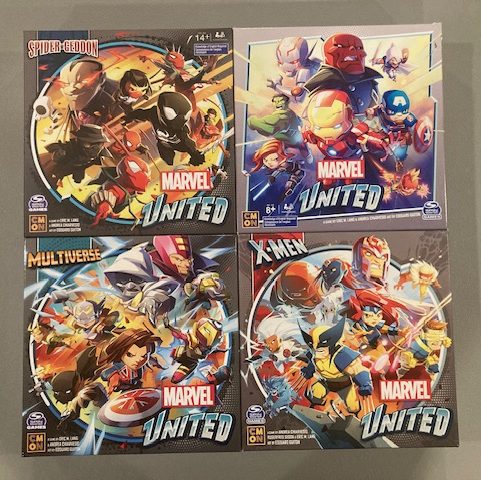
So, DC United is the 6th base game box! DC United is completely standalone and a place you can start looking at Marvel United from. But, there were 5 base boxes before it! See above! Basically, if you prefer Marvel, you’d want one of the 4 above …
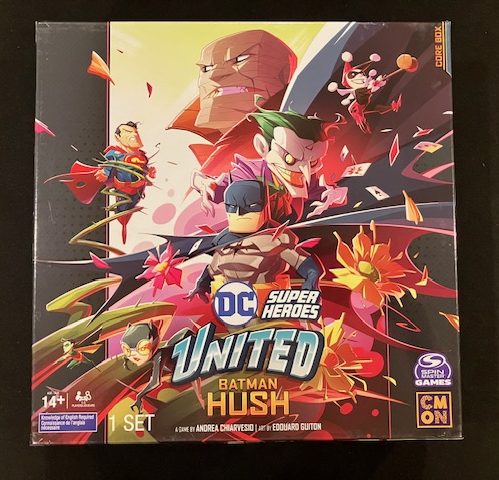
And if you like DC, you now have two choices for a base box! DC United: Batman Hush came out last year (see our review here) and is very Batman centric. I will say that DC United: Batman Hush should probably not be your first foray in DC/Marvel United … it’s a pretty complicated set.
DC United is probably a pretty good place to start (although, the easiest set is the original Marvel United if you are looking for the simplest entry point: see reviews here and here). It has well-known heroes and villains!
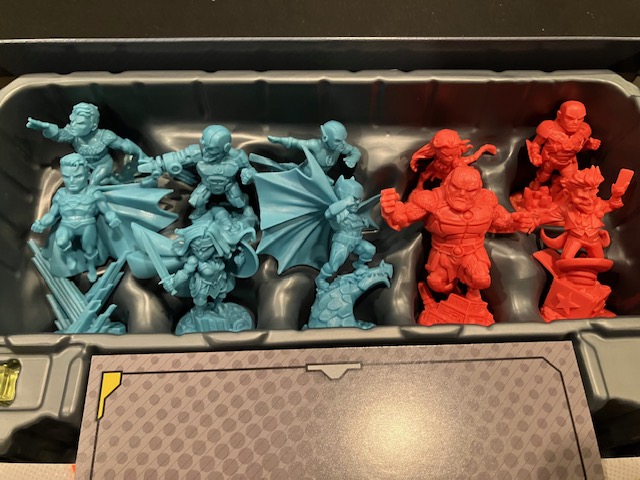
I remember not liking this “chibi” style when I first saw Marvel United, but this style has really really grown on me! The minis look really great! And even have a great insert (see above!) for storing the minis! (I am looking at YOU Marvel Crisis Protocol: Alliances with no good solution to store minis…)
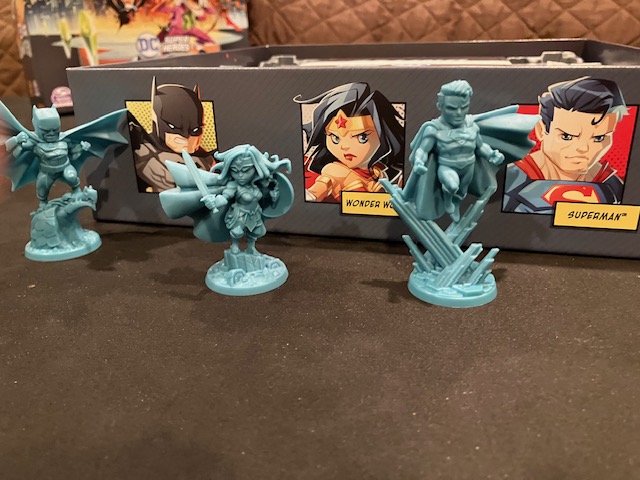
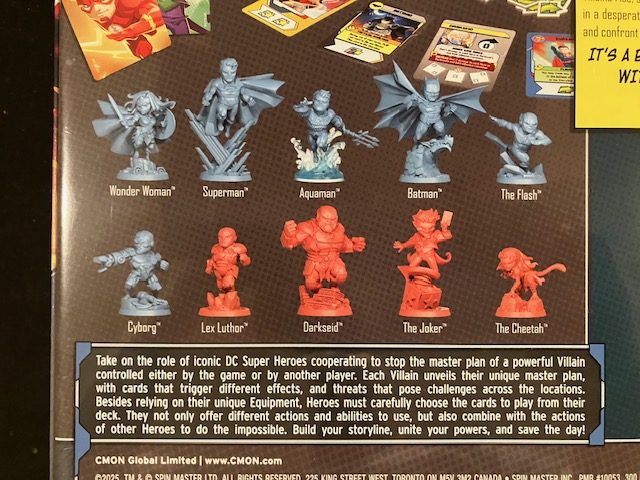
The heroes are the well-known Superman, Batman, and Wonder Woman!
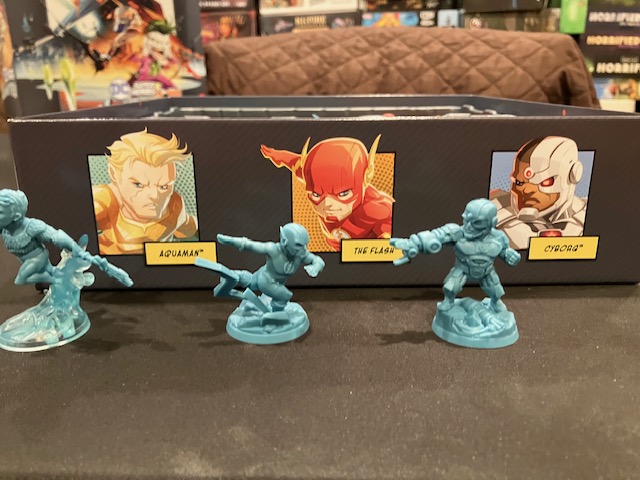
And the slightly lesser known heroes: Aquaman, Flash, and Cyborg!
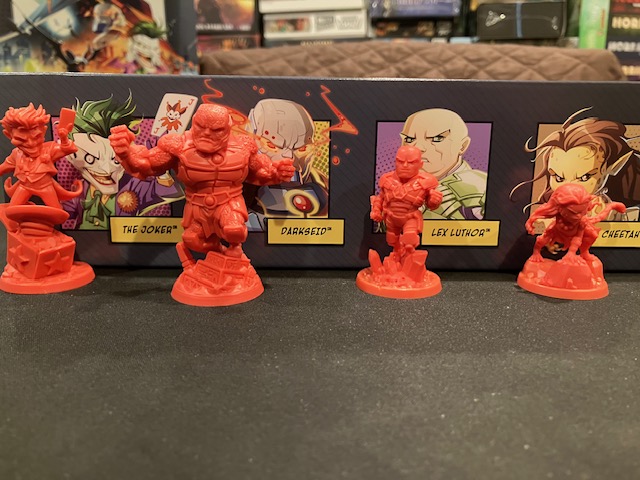
The villains are Joker, Darkseid, Lex Luthor, and The Cheetah! See above!

Interestingly, there are no “purple” figures in this set. Blue minis are heroes, red minis are villains, and purple minis can be either hero OR villain (depending on the context).
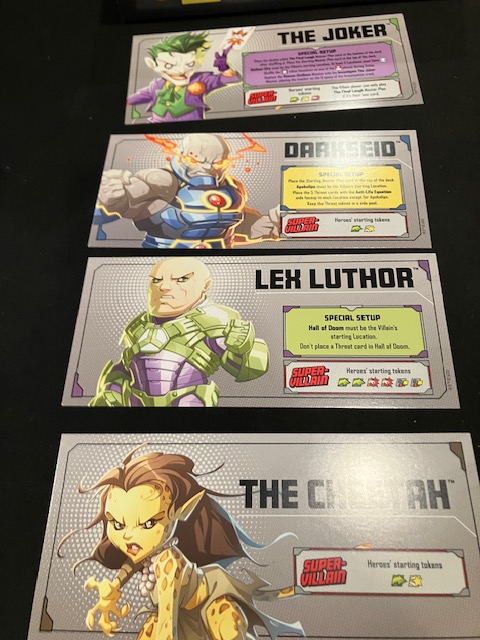
Each Villain has their own Dashboard (see above) which describes special set-up (OR if you play in special 1-vs.-many mode).
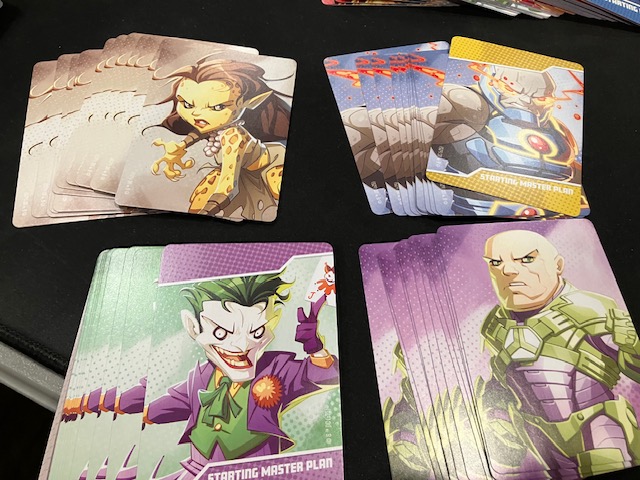
Each villain also has their own Master Plan deck! Note how great the art looks!
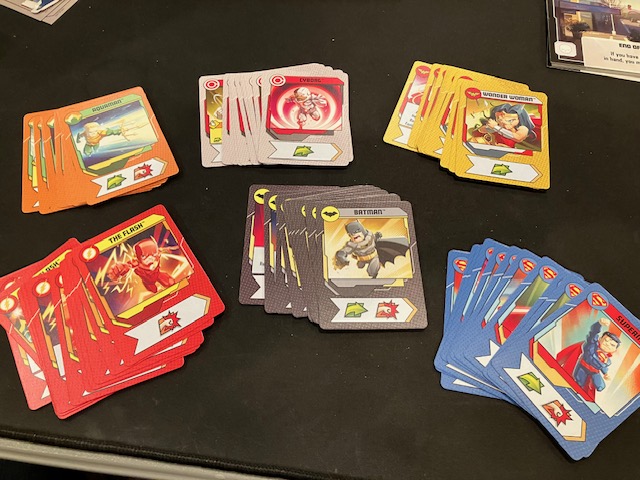
Each hero also has their own deck! See above! These look great!
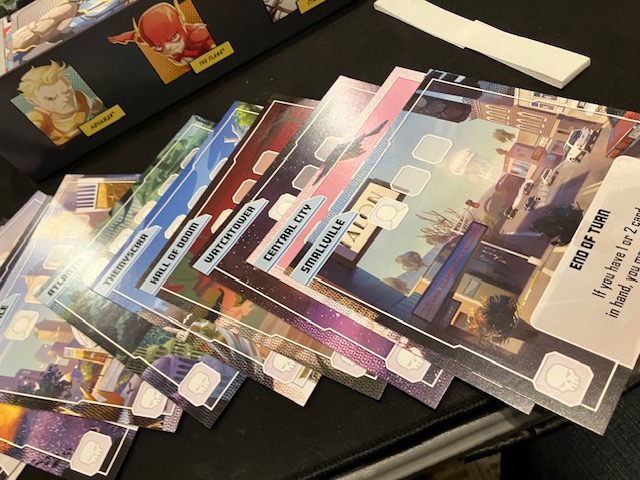
There’s also a ton of new locations that are very specific to DC! Hall of Doom! Smallville!
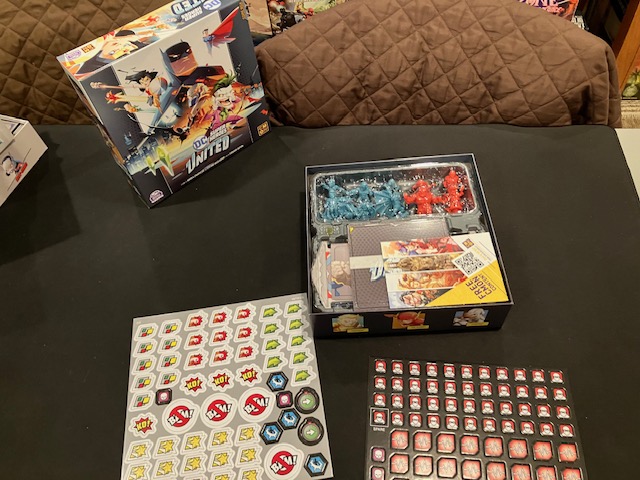
There’s a bunch of token which you get in any base box—it’s usually the addition of the tokens that makes this a base box rather than just an expansion.
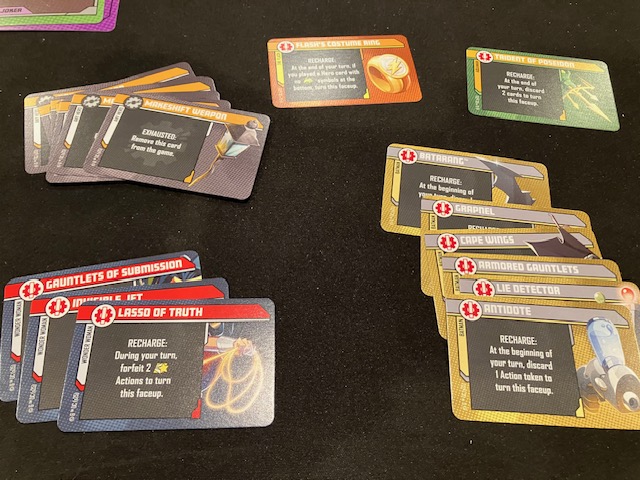
There’s also equipment cards! These are items that give the heroes more options on their turns! Interestingly, Cyborg doesn’t have equipment (this was an odd choice, as Cyborg is all equipment!) and neither does Superman. Everyone else does: see it above. The equipment idea really originated in the Spidegeddon base set, but we really saw how great it was in the Marvel Multiverse set (see review here). Spoiler Alert: the equipment really is great and does help the game feel a little more thematic! Wonder Woman’s and Batman’s equipment are especially thematic!
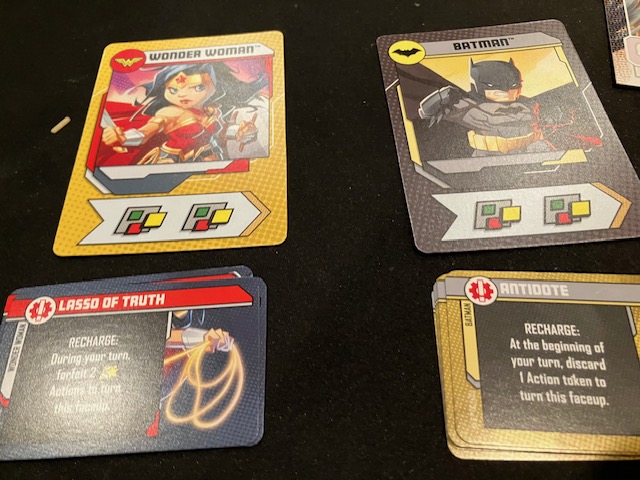
Recall that the hero must choose between equipment OR the double-double wild card! See above!
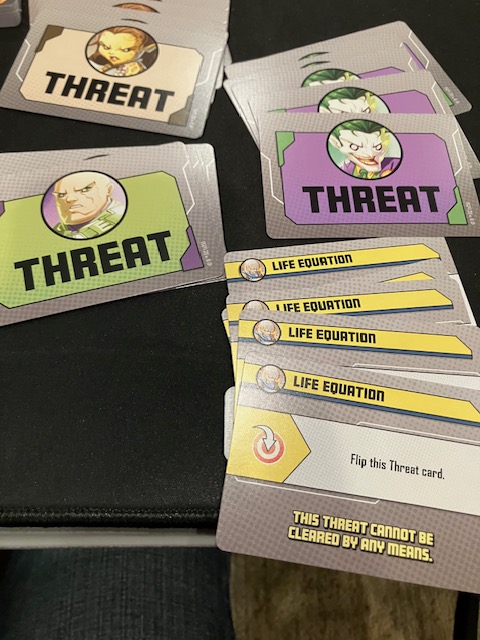
Each villain has a Threat Deck (see above).
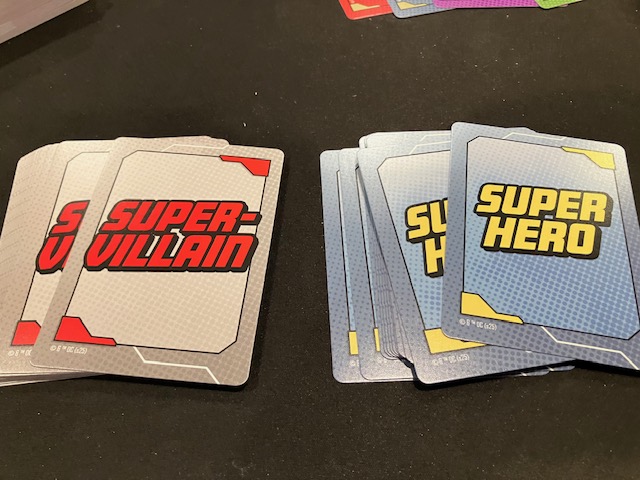
If you play 1-vs.-many, you will need the cards above (we don’t play that way, so won’t be seeing these again this review).
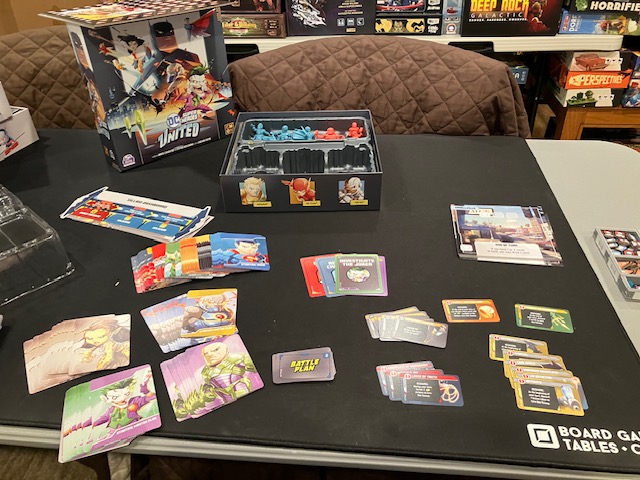
Overall, this new set looks fantastic! It stays, in look and feel, consistent with all the other DC/Marvel United sets!

The Rulebook
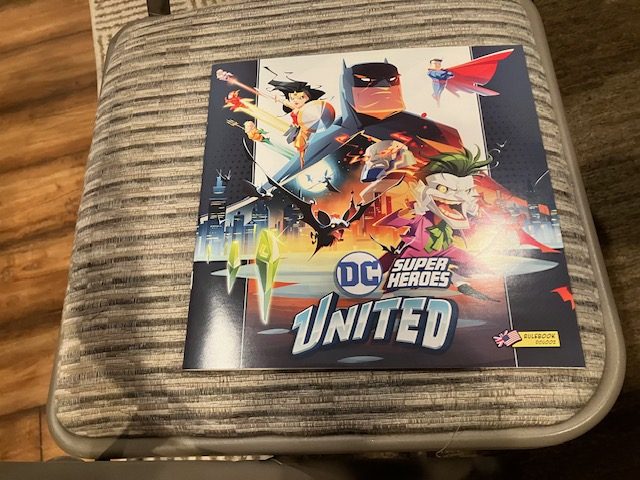
After playing DC/Marvel United for years, I didn’t need to look too closely at the rulebook, but I still pick it for any questions: it’s pretty good. The game has been around enough that any weird edge cases have probably already been addressed somewhere else on the web: so if you have any problems with rule interpretations, try a quick search online!
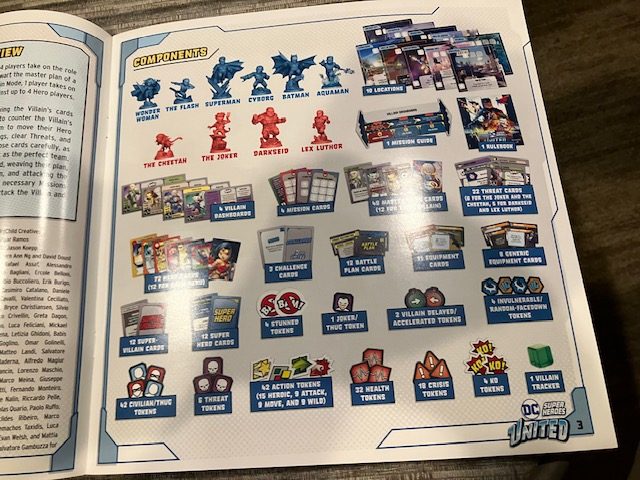
If you are a newbie, I suspect the rulebook is good enough to learn from, especially after so many iterations in the other 5 base games!
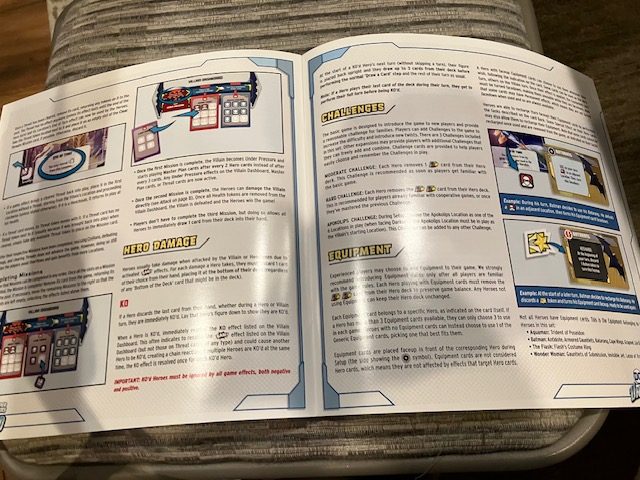
I still hate the form factor for this rulebook: it spills over the edges on the chair next to me! I wish it were less wide! This rulebook gets a C on the Chair Test because of the droopage factor over the edges: see above.

Solo
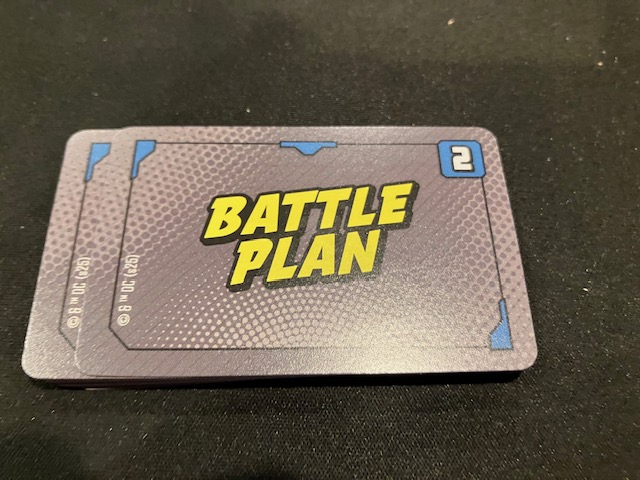
So. there is a solo mode that comes with the game called Commander Mode and requires the Battle Plan deck above. Thanks for following Saunders’ Law!
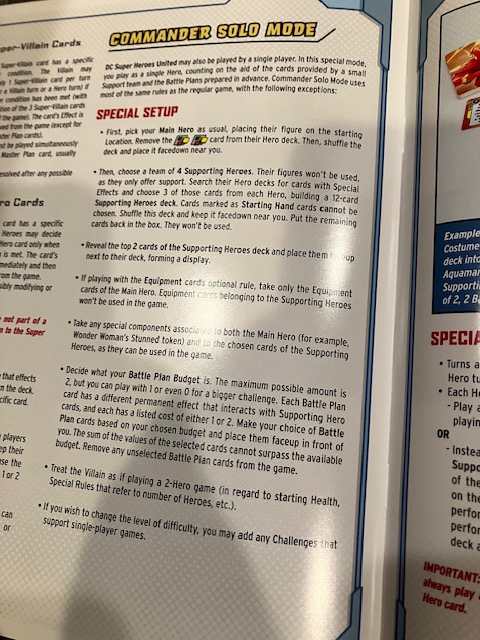
The problem I have with Commander mode in DC United (and pretty much any of the newer DC/Marvel Uniteds) are just the extra set of rules. See above for just SOME of the “extra rules” that you must learn … and they still spill onto the next page! If you are a newbie who just wants to learn the game, this may be too much to add the to game! If you are learning the game to teach your friends, it’s completely different than the way you are supposed to play with multiple players!
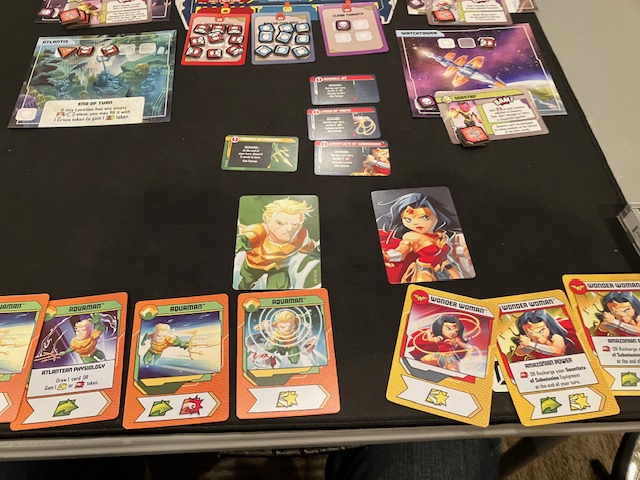
We’d addressed this issue many times over the years: see our review of DC United: Hush for more discussion. In the end, we prefer to play DC United two-handed solo: pick two heroes, and alternate between them as if playing a 2-Player game.

And that’s what we did for our first 7 or 8 games: two-handed solo.

Game 1: Wonder Woman and Batman vs. The Cheetah

The rulebook suggests Cheetah be your first villain.
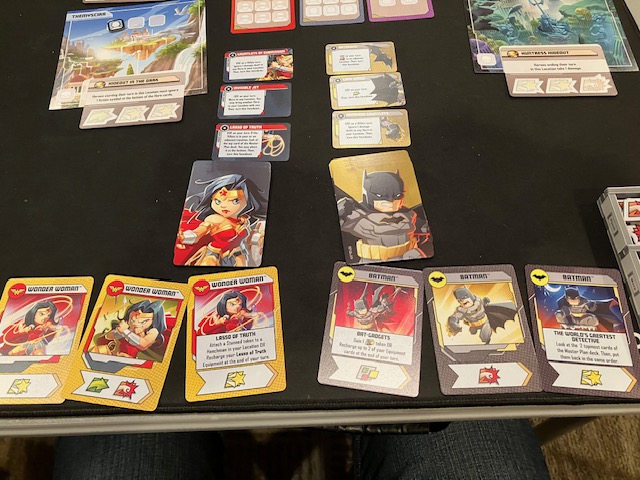
Both Wonder Woman and Batman have a lot of equipment! Three pieces each! Wonder Woman always the same three (and the Invisible Plane is arguably the best equipment ever), but Batman picks 3 of the 6 in the game (which gives him some choice). Batman’s equipment was VERY reminiscent of the Batman equipment from DC United: Hush.
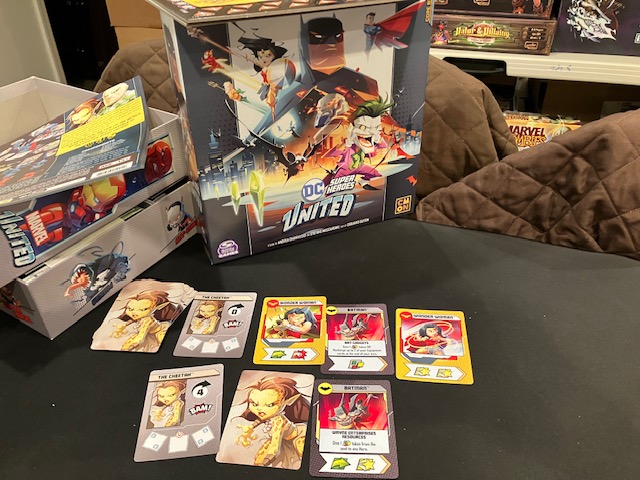
Even though the Cheetah is the first villain, she’s a little tricky because she basically “moves” out the way if a single hero moves to her! Some of the fun of Cheetah during the endgame is trying to move to her with multiple heroes OR forcing her to move to your compatriot! (I suppose her moving quickly out of the way is very thematic for a cheetah).
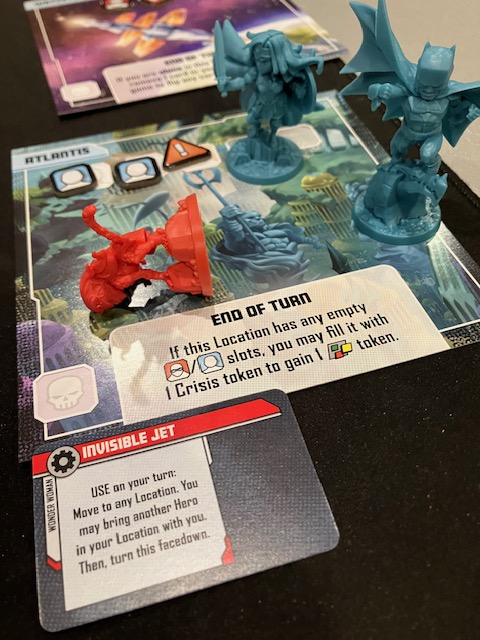
Like I said, Wonder Woman’s Invisible Jet is AWESOME because she can carry another hero with her … and that’s how we moved in and dealt the killing blow to Cheetah!! See above!
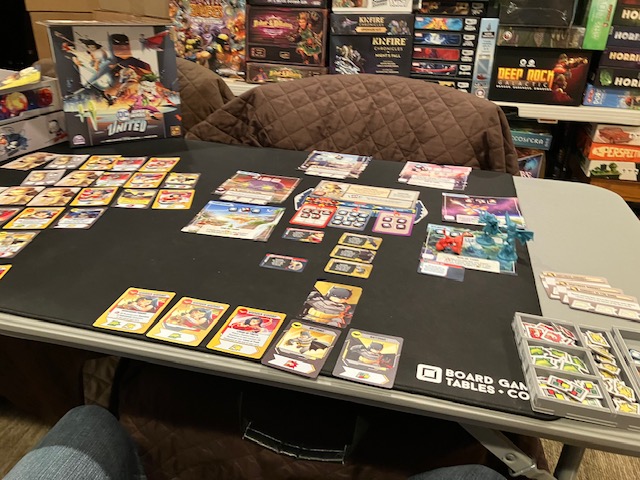
The Cheetah was fun! She wasn’t too hard, but she was still enough of a challenge/puzzle that we just had a few cards left at the end! She’s “probably” the easiest Villain, but she was still interesting and different.

Games 2 & 3: Flash and Aquaman vs Lex Luthor
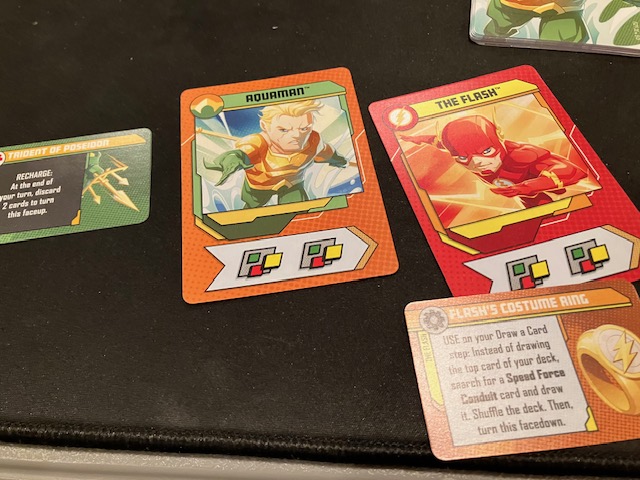
Both Flash and Aquaman have just one piece of equipment. And remember, you have to get rid of your double-double wild card to get your equipment!
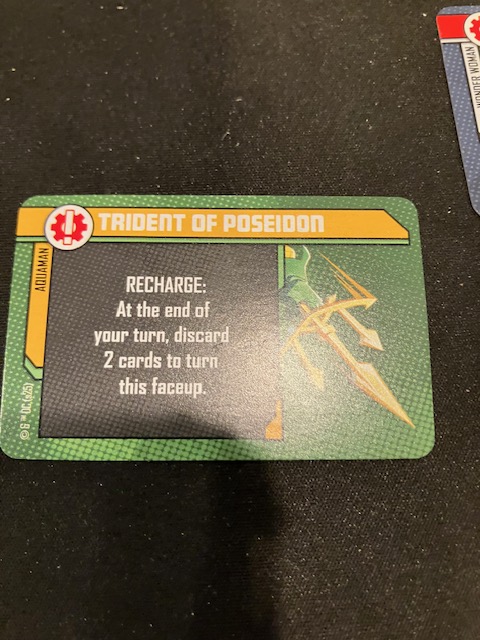
I think Aquaman’s equipment is pretty awesome, but it is expensive to recharge. See cost above!
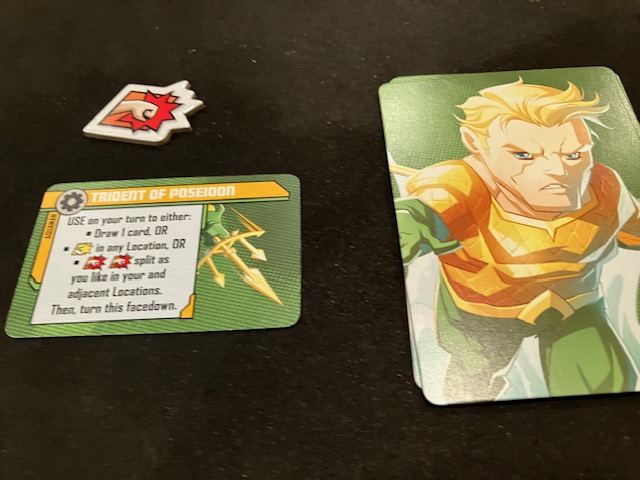
In some ways, you almost WANT Aquaman to take KO’s when he plays! Why? So he can start a new hand with all his cards so he can recharge the Trident of Poseidon! Just look at how AWESOME the trident is!
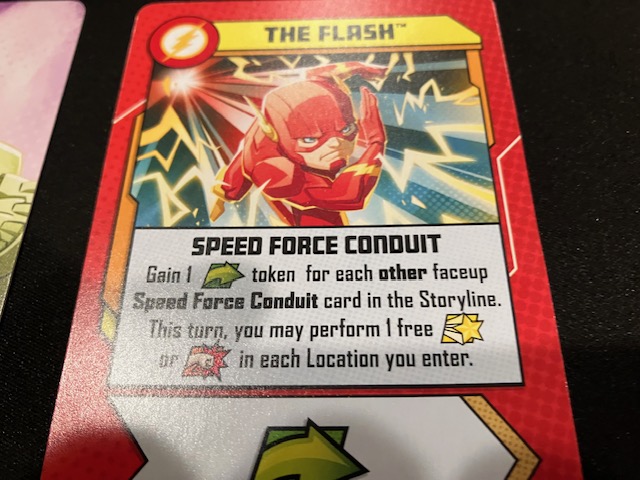
Flash’s equipment is ok … but it’s tricky to use just right: you want to use it when you have Two Speed Force Conduits in play and you really need the third one right now! It’s a little bit of a smart bomb: it’s great when you get it, but it has to be used just right.
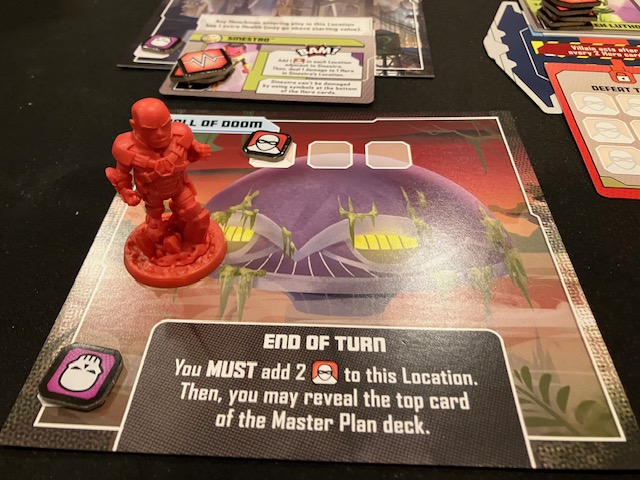
Lex Luthor is a very different villain! First of all, he brings the Legion of Doom with him! All the threats are bad guys you must smash-smash!
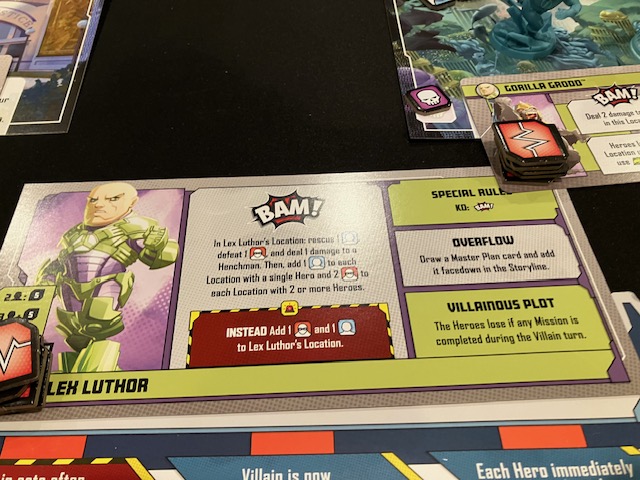
But Lex Luthor “pretends” to be a Hero! He goes around pretending to be a hero, by rescuing civilians, defeating thugs, and punching henchmen! That’s right! He punches his own henchmen!!! Why? Because if Lex EVER finishes a mission before you do (punching last thug, saving last civilaian, clearing 4th threat), Lex wins! That’s right! Lex wins because it “looks like” he was the good guy and shames you!
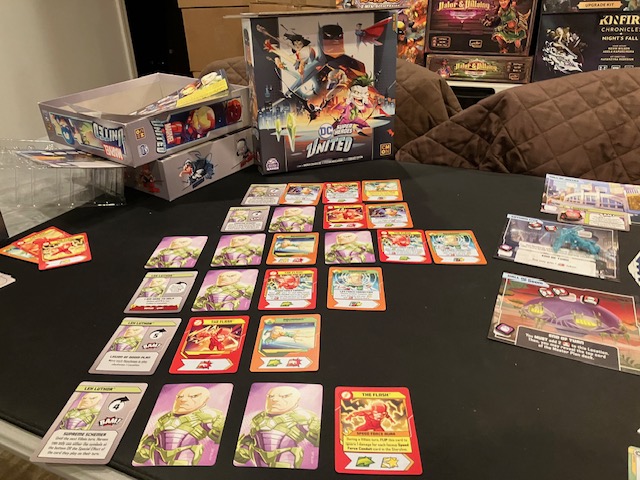
This was so interesting and different way to play! What a fun and different game! I lost my first game to Lex because Lex saved some the last civilians under my nose! D’oh!
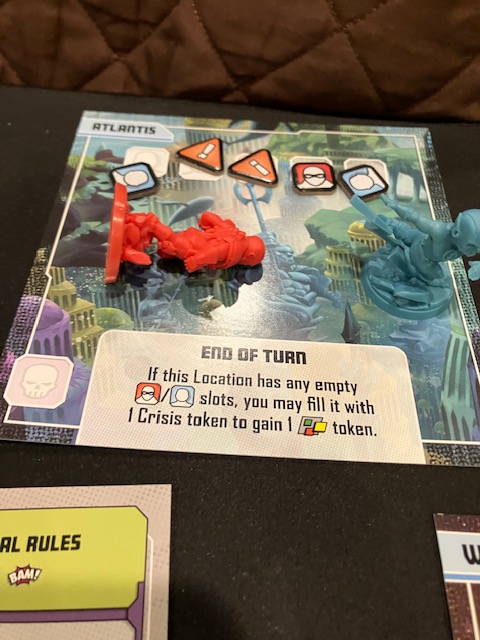
We did take out Lex the 2nd time. Flash! Ah ah!

The most interesting thing about this game (besides Lex’s weird “I want to be a hero” schtick) is that Aquaman didn’t “mind” getting KO’d as much because he could go back to full strength and power his Trident!

Game 4: Superman and Batman vs The Joker
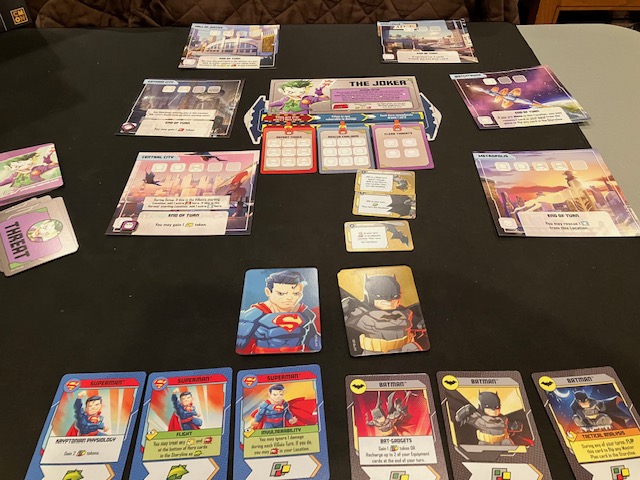
Seems easy, right? But no … The Joker is one of the harder villains in the box.
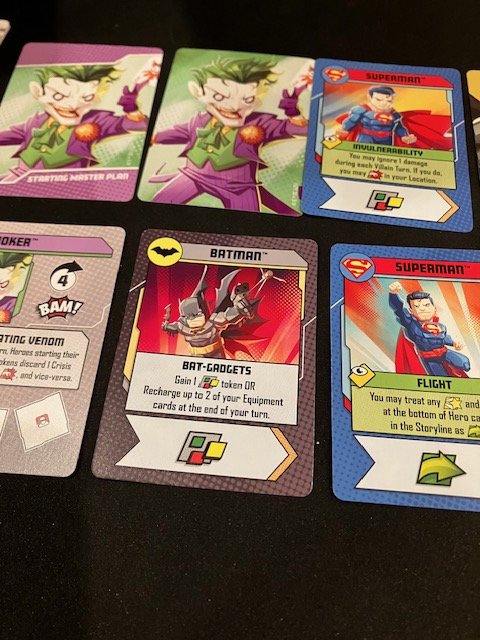
The problem with Joker is that he tends to “flip” over early cards in the timeline! But for heroes like Superman, that’s devastating! Usually, you want to set out Superman’s Invulnerability and Flight EARLY because they give Superman more options! (Take 1 less damage, use hits and stars as move if needed). Those cards are really great for giving Superman lots of options, especially if those cards come out early in the Storyline!
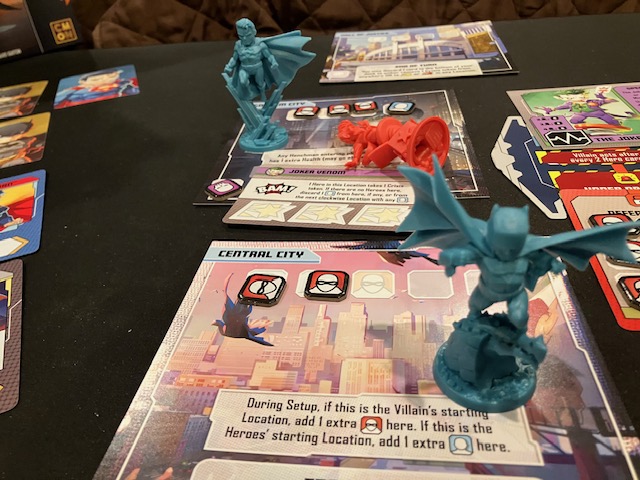
Joker don’t care. He’ll flip earliest Storyline cards down! And Superman loses his amazing cards. So, Superman has to play more defensively to keep from being too close to Joker … which is crazy for Superman, right?
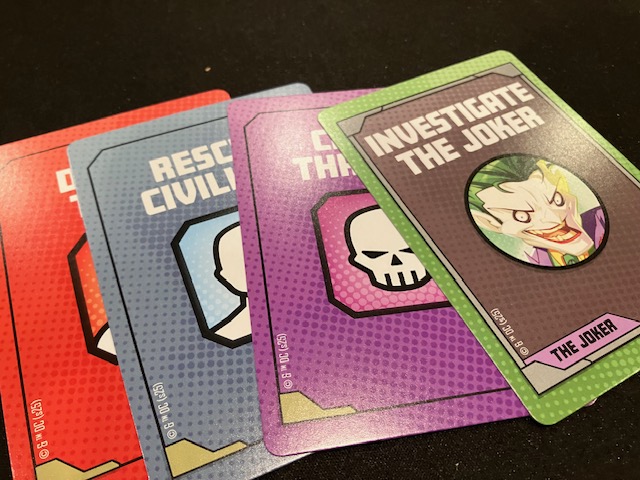
In the end, Batman and Superman took down the Joker … but it was close. Oh yes, you also replace the Rescue Civilians mission with a special Joker mission. Very different, very interesting.

The lesson with the Joker is probably don’t take hero in that needs his early cards placed faceup.

Games 5 & 6: Superman and Cyborg vs Darkseid
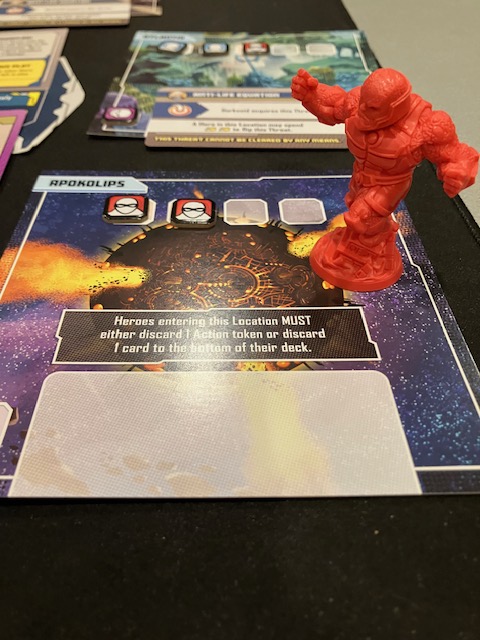
Darkseid is VERY different than other villains. His Threat deck is the “anti-life” equation; if he collects all the Threats, he wins. He moves around collecting the Threats FOR you! But you still can’t do damage to him until two missions are completed! And he heals!
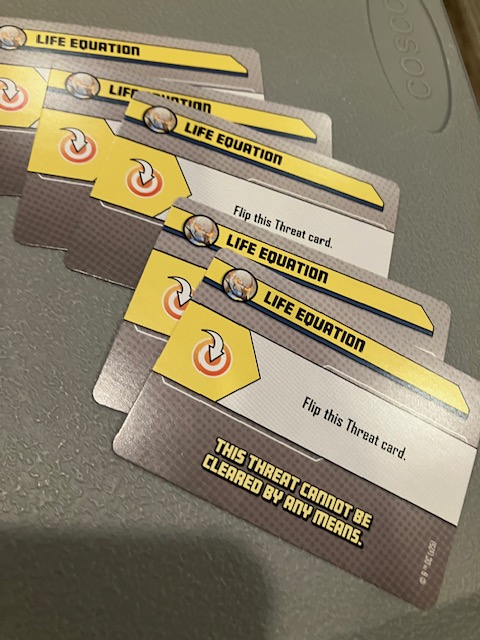
This game becomes a race to keep the Life/Anti-Life equations flipped! I lost my first game because Darkseid just gobbled up the Anti-life equation Threat cards!
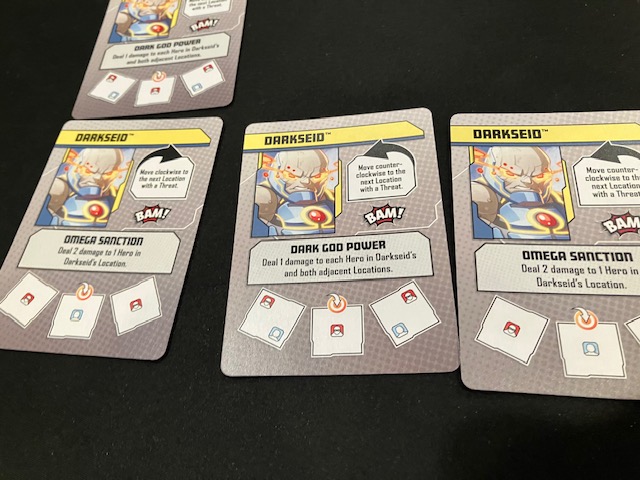
This is more like a Chess game than other scenarios: Darkseid will almost always move to the next Threat. You know what he will do, you know the effects around him, so you know what you can and can’t do. This might be my favorite Villain in the game because it’s so different? So chess-like?

I gave the Marvel United: Days of Future Past expansion a 10/10 (see here) because it had such a chess-like nature. I think I feel very similarly about Darkseid’s scenario; it’s really thinky. It took me two games to get a good victory in.
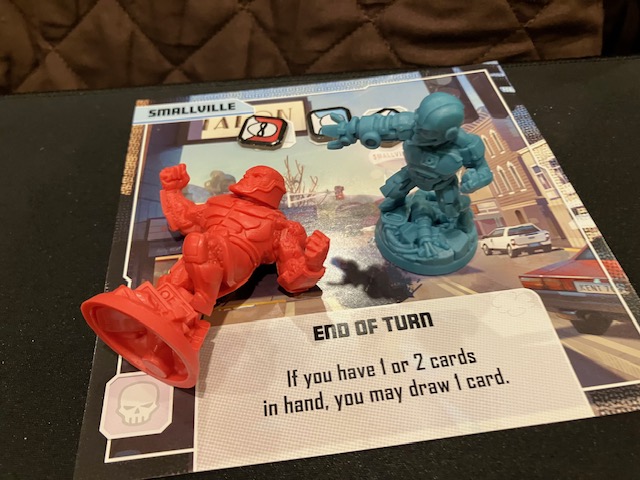
It’s still weird to me that Cyborg doesn’t have equipment? But he made a good compatriot to Superman! Cyborg ended up doing the killing blow!

Game 7: Aquaman and Wonder Woman vs. Lex Luthor

I wasn’t 100% sure I played Lex Luthor right the first time, so I did want to revisit him.
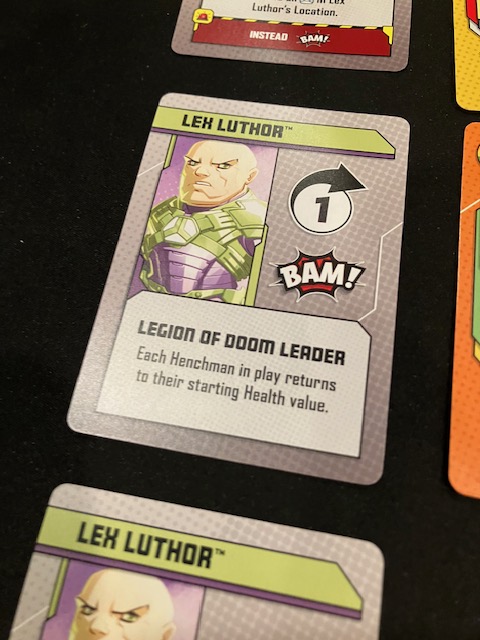
The Legion of Doom Leader almost destroyed me! I had done a bunch of damage to two separate Henchmen … without killing the, … and then the above card came out and healed them! I did NOT think I could still win!
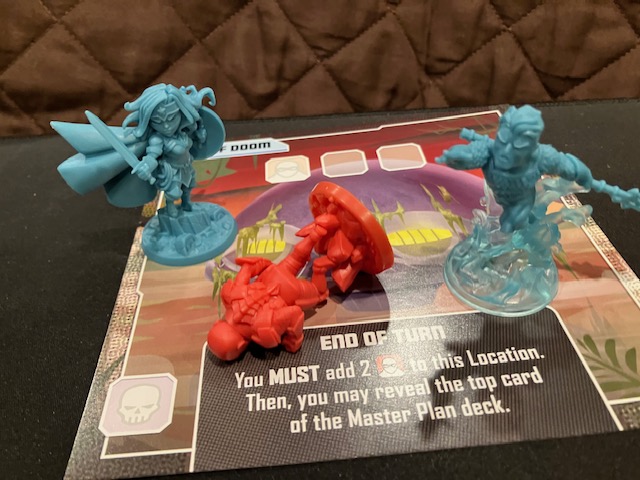
In the end, Aquaman and Wonder Woman were up to the task! They won! You have to be real careful with Lex Luthor because overflows move the game very quickly towards endgame. Depending on how you process the overflow, I either won with 1 Lex card left or no cards left!!! Either way I won, but it seems like there are multiple time when overflow can be processed! Be careful that overflow doesn’t kill you with Lex!

What I Liked
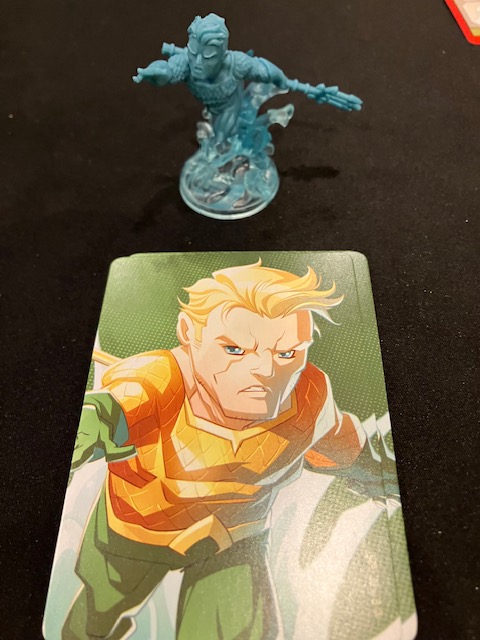
Aquaman! Aquaman is a bit of a “joke” sometimes, but I really liked his mini, his powers, and especially his equipment! I think he may have been my favorite character in the game!
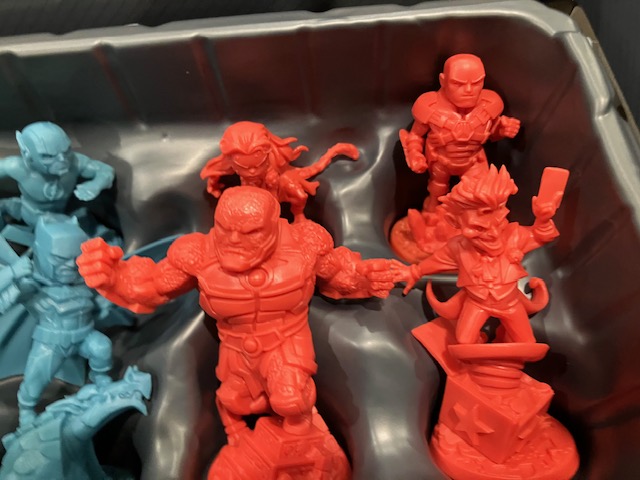
The Villains were all so different! This sets includes 4 villains (the original Marvel United only had 3) and they are all so very different to defeat! I loved that! Darkseid and The Joker were the hardest, but so was Lex … you just have to bend your brain in different ways to defeat them.

The Minis! Overall, all the minis are great!
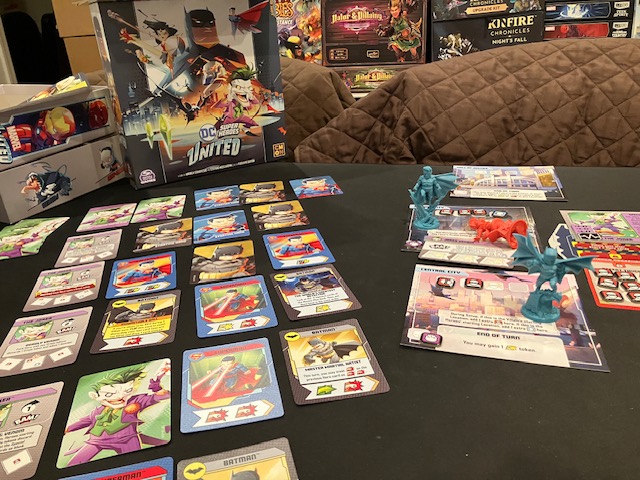
United! This still feels like Marvel United, but it still SOMEHOW manages to be different! After so many sets, this still feels fresh!

What I Didn’t Like
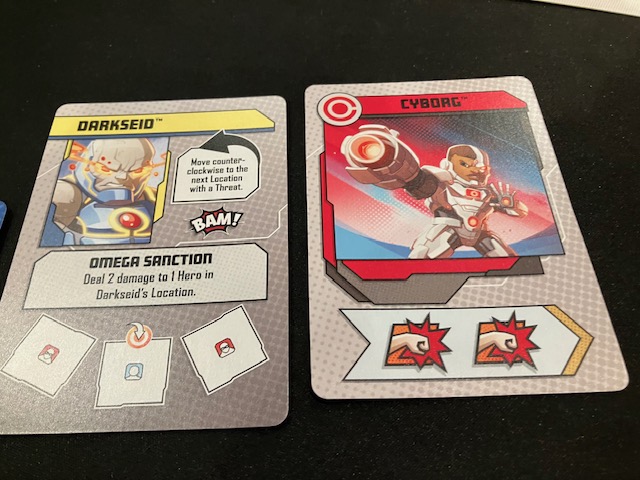
Cyborg: I like Cyborg! But he seemed like he got the shaft! Of all the characters in the game, shouldn’t the cyborg have a ton of gear? He played well, but it just felt he should have had more “special” with him or at least some equipment!

Conclusion
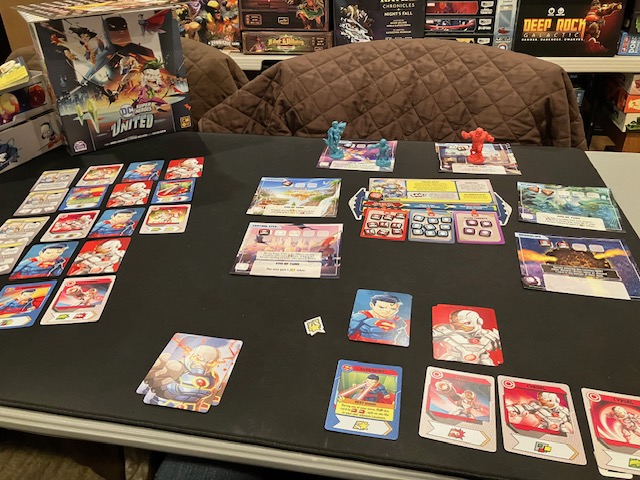
I love me some DC United! I am still really looking forward to the upcoming other DC United expansions (Teen Titans, Green Lantern, so many others). While I wait (the latest estimates gave it shipping in Q1 2027?) for my Kickstarter to deliver, I can enjoy this; I have been loving it!

As a base DC set, this DC United is more approachable that DC United: Batman Hush (that one, see above, is pretty complicated). If you are just starting out in DC United, the plain DC United core base set is a better place to start than Hush. The Marvel United sets are also good, but honestly, it just depends on which characters you want! Avengers? Marvel United! X-Men? X-Men United! What If? and Loki? Marvel Multiverse United!

I am happy I bought a copy early even as I wait for my Kickstarter version to deliver in 2027. Oh wait, what just came? It’s November 16th and my copy of DC United from GameNerdz arrived. So now I have two copies? I guess that extra one will be a Christmas present …

10/10. I loved DC United.

We now return you to your regularly scheduled programming of Cooperative Adventure Month!
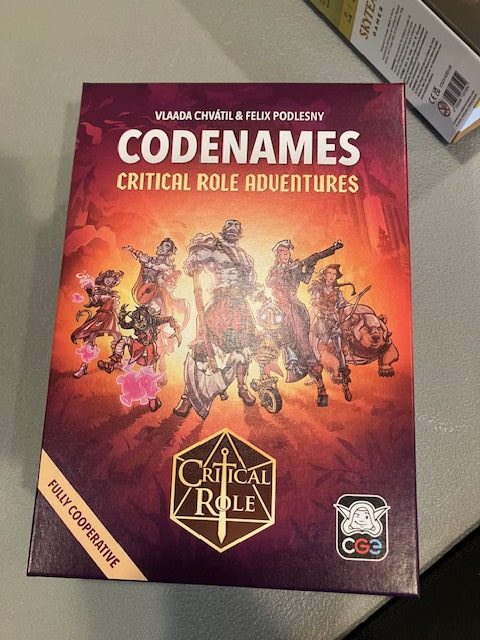
Codenames: Critical Role Adventures. A Review From Someone Who Knows Nothing About Critical Role.

Welcome back to cooperative Adventure month! This week, we venture into a fantasy adventure! With words??

We haven’t talked much about Codenames here at CO-OP Gestalt because most incarnations of Codenames are big, competitive team-based party games: Codenames, Codenames: Pictures, Codenames Disney, Codenames Simpsons, etc. (To be fair, the 2-Player Codenames Duet and Harry Potter ones are co-op). We were reminiscing just recently how BIG Codenames was a few years ago! It was all the rage at the original RichieCon!

Well, now there’s a fully cooperative version! Codenames: Critical Role Adventures! This can play a pretty big group! You need at least 2 people (a clue-giver and a clue-guesser), but we had an amazing time with a 5-Player game!

What do we think of the new Codenames: Critical Role Adventures?

Rules

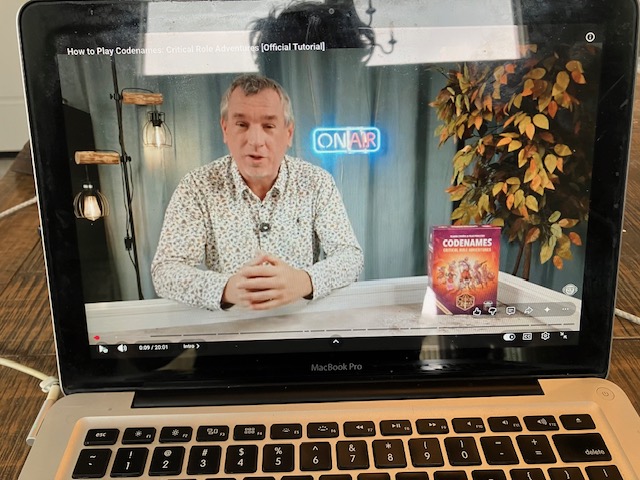
So, this is one time I broke down and just watched a video. The CGE video on how to play works great. It’s an easy watch: I recommend it.

There are also several playthroughs online, but this video was more than sufficient. To be fair, I watched it a few times because I didn’t want to miss any nuances: my friends tend to be rules sticklers, and I didn’t want to miss anything.

There are a more rules in here than in the base Codenames … just enough to be just a touch daunting: so be aware! The new rules add scenarios, leveling-up, deduction, and special powers! So, yes, there are more rules! This isn’t “just” Codenames with a new coat of paint! It’s a lot more!

Critical Role

I know next to nothing about Critical Role. My understanding is that a bunch of people play Dungeons and Dragons online and people watch their adventures? I’ve heard great things.

You don’t need to know anything about Critical Role to enjoy this game! There might be characters or special allusions which might help you immerse yourself in the game if you know Critical Role? Not knowing about Critical Role did not detract from the game at all! (for me and my friends: none of us really knew it either) . If you know anything about Dungeons and Dragons at all, that’s probably all you need. In fact, a lot of the words in the game seemed like they came from more standard Dungeons and Dragons lexicons!

I hyped this game to my friends as Codenames with Dungeons and Dragons …and they were so in!

Components and Gameplay

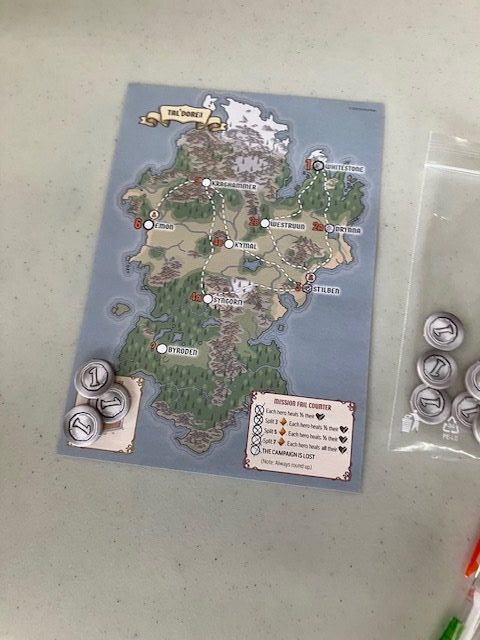
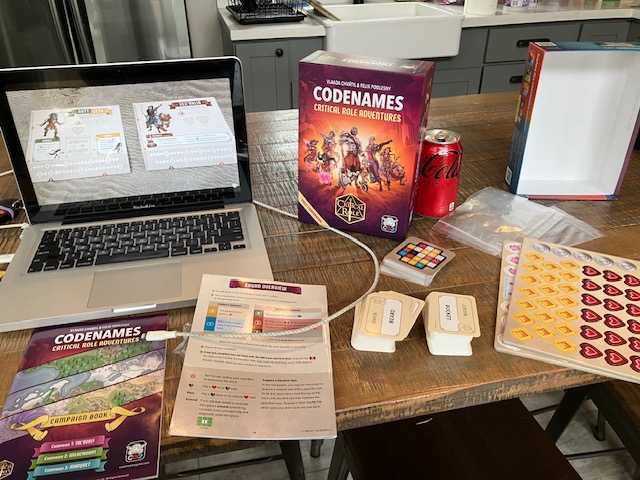
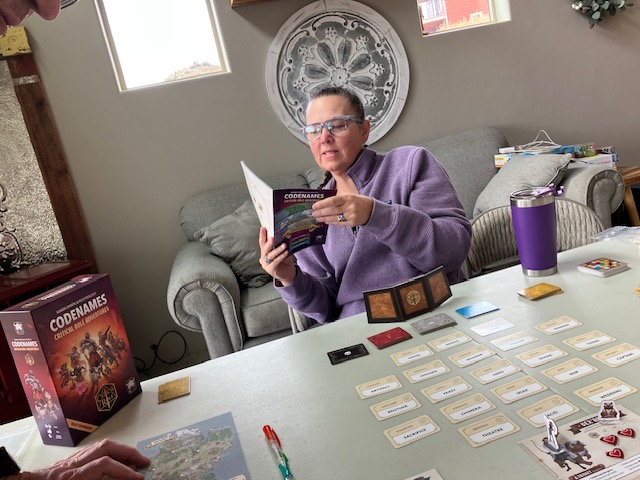
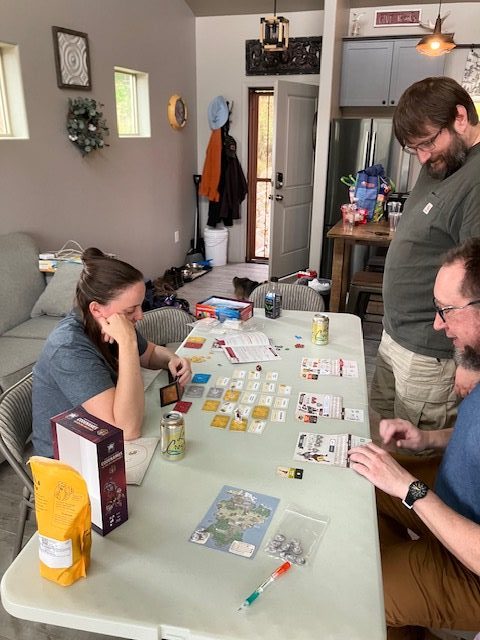
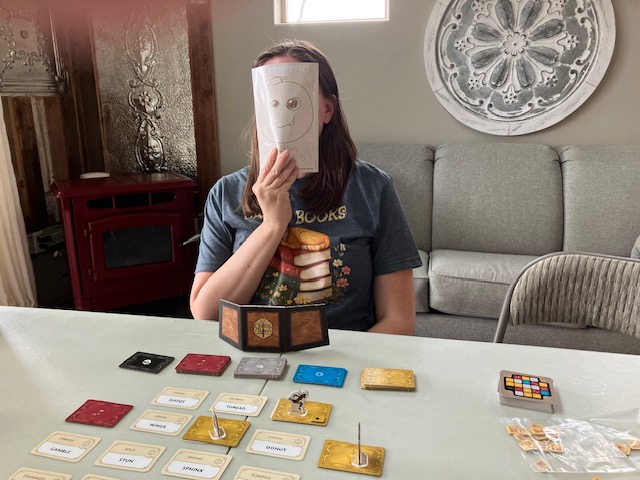
In Codenames: Critical Role Adventures, you and your friends are going on an adventure! There are three Adventures in the base game, with a map for each one! See the first one above! This map helps you note where you are (so you can save the game and come back: you can save games because each full adventure can be pretty long).

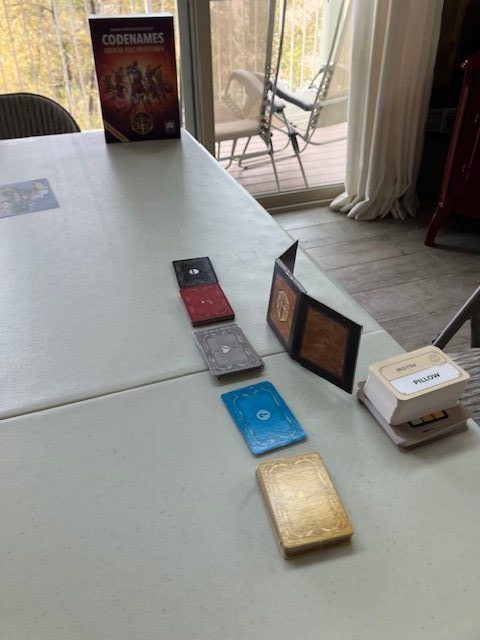
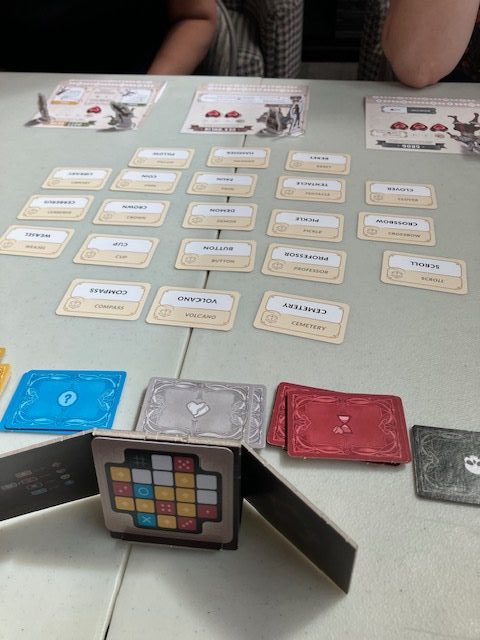
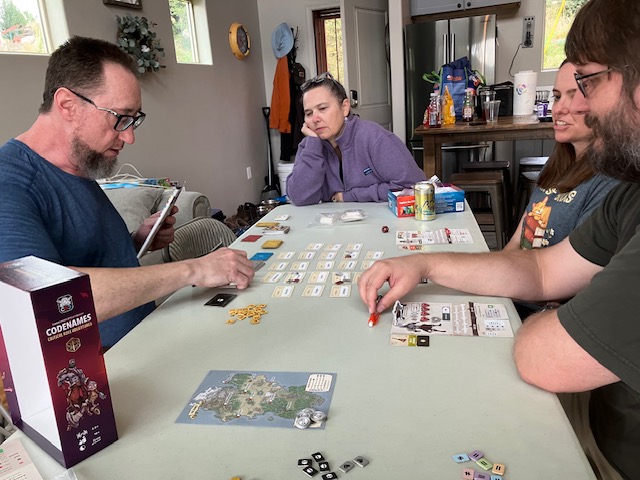
At its core, Codenames: Critical Role Adventures is still Codenames with its main “associate words” mechanism! See above! So, it comes with a little grid and word cards and the clue-giver (now called the Dungeon Master) gives clues to the clue-guessers (now called the party of adventurers!) See above! It looks like Codenames because it still is!

BUT, they’ve actually added quite a bit more stuff above and beyond the base Codenames!

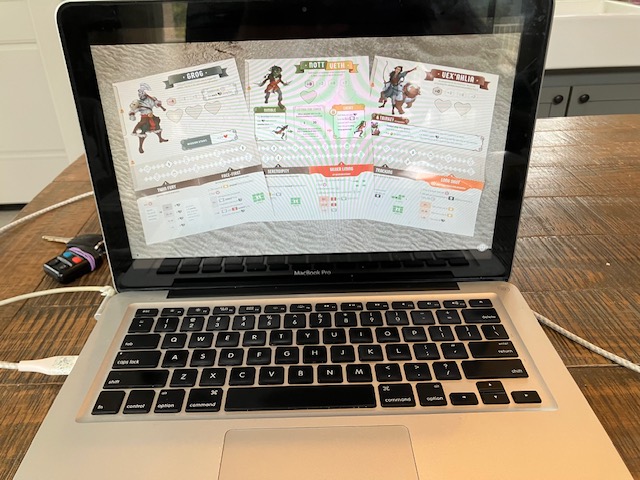
The group plays a party of three adventurers! No matter the number of players, the party is always three characters! The clue-guessers (no matter how many players) operate the three characters as a unit!

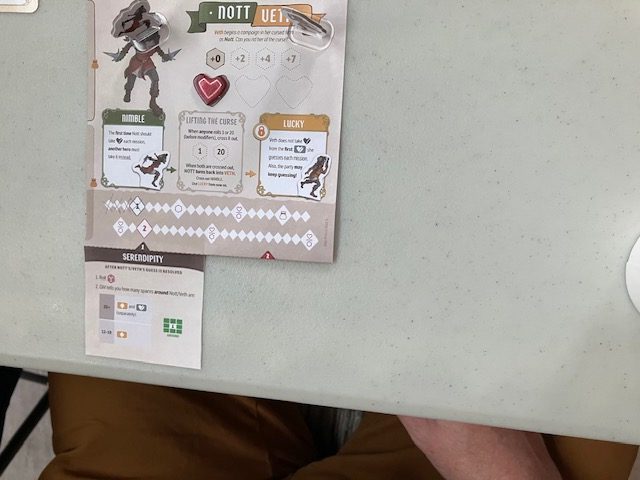
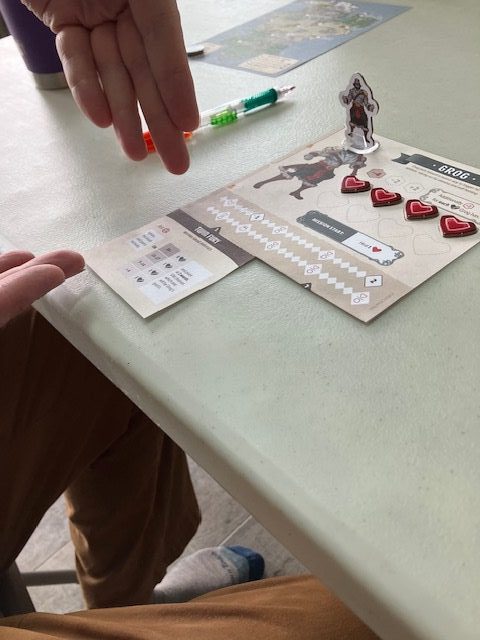
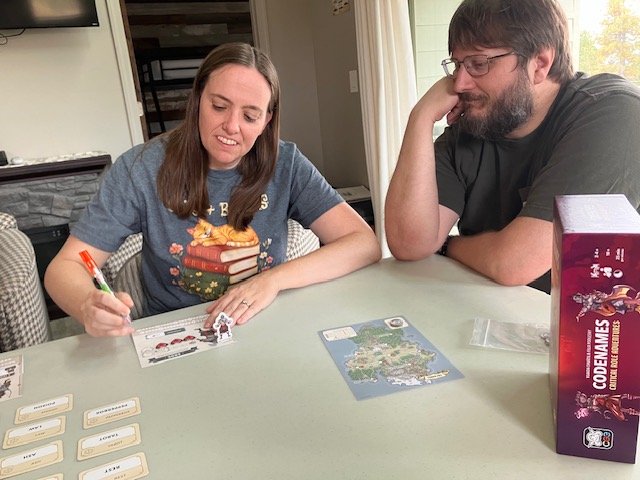
These characters have health! Every time that character guesses “wrong” on Codenames board, that character loses a hit point! See the hearts above on Nott/Veth! If any character ever goes to zero hit points, that mission is lost! (And you can replay it … up to a point).

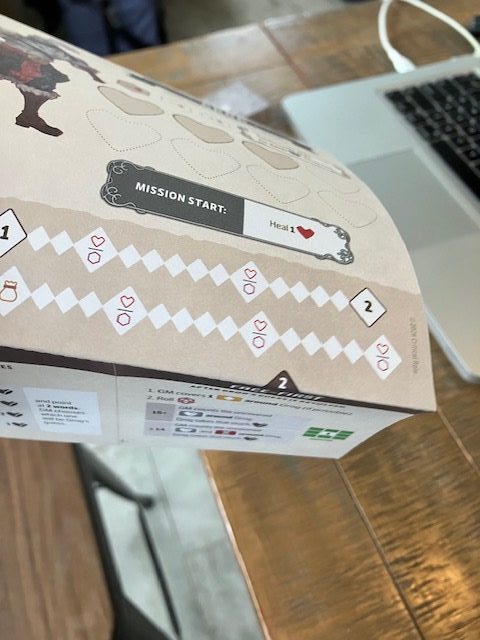
The characters also have experience points! See above! When a character guesses “correctly”, or completes a mission, or many other ways, the characters get experience points! The experience allow them to unlock special powers, upgrade their modifiers, or increase their hit points!

Perhaps the coolest thing in the game is the special powers that get unlocked from experience! The unlocked powers stay under your sheet until unlocked, then you fold them over to activate them!!! See above! That’s kinda cool!

The special powers do some REALLY interesting things! They can help you find cards, count “good” cards around you, avoid death, and all sorts of neat things that base Codenames never did!

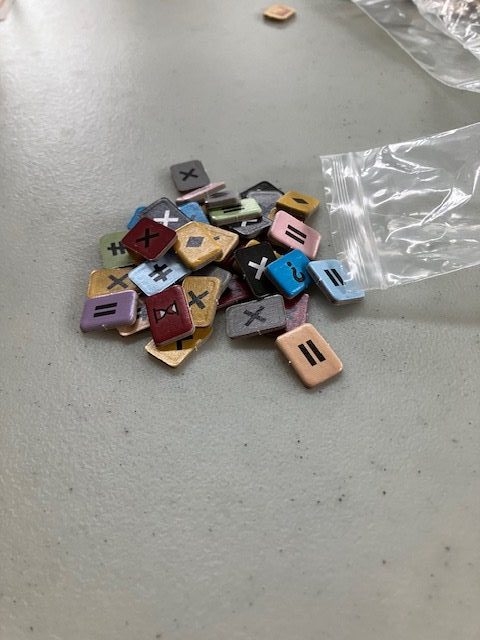
There’s a bunch of new tokens that allow the players to “help note” things on the board! Basically, Codenames: Critical Role Adventurers is now a cooperative deduction game as well! A cooperative word game AND a cooperative deduction game!

Each single game of Codenames is a mission where the party of adventurers guesses words! And each mission is very different! If you get through all the missions (each a session of Codenames), then you win!

This really is still Codenames at its core, but with all sorts of new elements like special powers, deduction, hit points, experience, stuff to buy, ongoing story, and cooperative wordplay! All the new things “sound” a little daunting, and it will take you a play or two to get it, but it’s pretty straight forward.

If you play Codenames with your grandma on weekends (like my friend Sara), this might be a little too much.

Cooperative Play

The core Codenames play is still the same. Everybody is on the same team guessing words: there’s always been that flavor of team cooperation in Codenames. But now, there is extra cooperation! Players have to work together to figure out “who do we send to guess”, “who should buy what upgrades”, “how do we spend experience points”, “should we use our powers”, and many other things! There’s a lot more fundamental cooperation as the players all manage the party together!

To be clear, the role of clue-giver (Dungeon Master) still rotates! Or at least, you probably should so everyone gets a chance to DM! It’s still cooperative, as the DM still wants everyone to guess the words correctly!

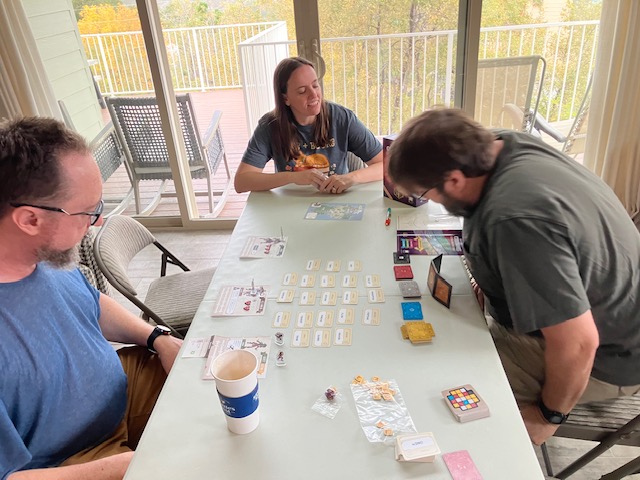
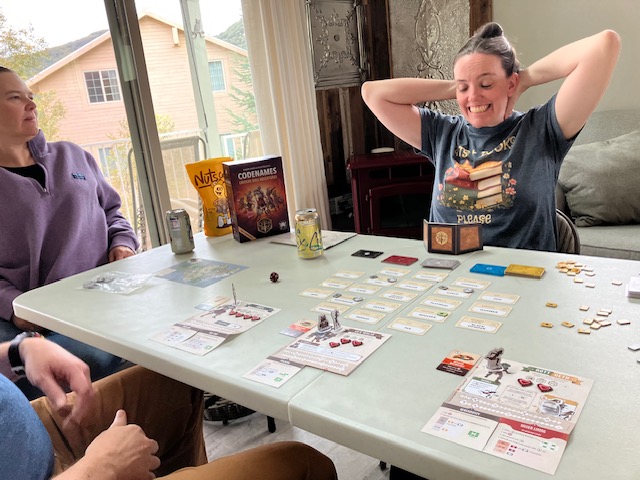
What we did seemed to work really well: we physically rotated around the table one space per mission! This let everyone rotate through every space on the board! The further seats had a little glare, so in all fairness to everyone, everyone got sit in every seat at least a few times!

And this fully cooperative nature keeps EVERYONE involved all the time! One of the problems with base Codenames is that one team is always “not playing” and that always seemed less fun (although some of my friends liked to guess poorly to “help” the other teams). With cooperative Codenames: Critical Role Adventures, everyone is always playing and looking at the board!

Number of Players

So, you can’t play this solo. Sorry. Someone has to give clues, some people have to guess.

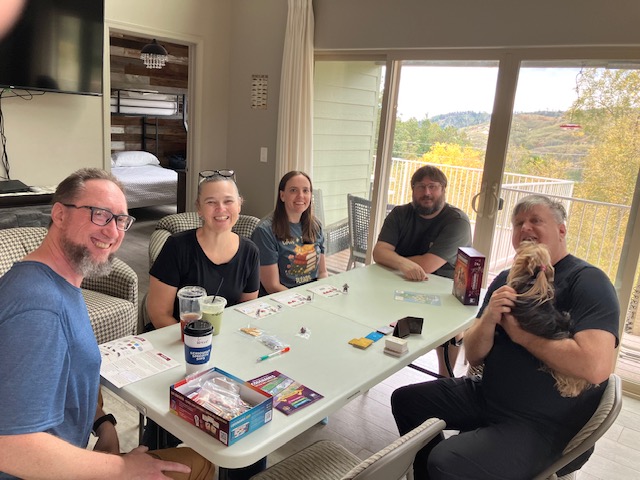
We played with a group of five, and that worked extremely well! I think four or five might be the best count? I think it really depends on the dynamics of your group! I do worry that six or more people “might” be stretching it too much as “too many cooks spoil the pot”? Again, it depends on your group.

Fun

To be clear, we spent 4 hours on a Saturday playing through a full adventure! We lost the entire game after we failed one mission 4 times in a row, but we were so despondent that we “mulliganed” our last game and powered through to the end of the adventure! Sure, there’s an asterisk next to our “win” but we didn’t care! We had SO MUCH FUN! Why else would you play for four hours if you weren’t having fun?

Conclusion

Codenames: Critical Role Adventures was a giant hit with me and my friends! Yes, it adds more rules and more mechanisms into the game, but the cooperative nature, player advancement, cooperative deduction, ongoing adventure, adding powers, just all worked so well together! If you need a reason to play a bunch of Codenames sessions, the adventure gives you that reason!

This Codenames is complicated enough that it’s “probably” not for Sunday night with Grandma (but hey, you know your Grandma better than I do). Be aware of the extra complexity.

Let’s be clear: at its core this is still Codenames! I have a couple of friends who really don’t like Codenames and I don’t think this new version will change their mind at all !! Despite all the cool new features, this is still Codenames, the word-guessing game. EDIT: Actually, one of my friends who doesn’t love Codenames says this is probably his favorite way to play if we are going to play; so that’s a win?

This is, simply put, my favorite version of Codenames! Codenames: Critical Role Adventures is a 9.5/10 for me and my group! Why else would we have played it for 4 hours straight???

If I were to say what tipped it over the edge to being so great, I would say it was the cooperative deduction aspect as enabled by the special powers!

Small-Time Heroes: Sword & Shadow. Solo and Cooperative Review

Welcome to Cooperative Adventurers Month! This month, we take a look at a bunch of cooperative games in the fantasy sphere, where adventuring is a major element in the game! We’ll take a look at some dice games, card games, party games, and some interesting entries! We start the month with a game called Small-Time Heroes!
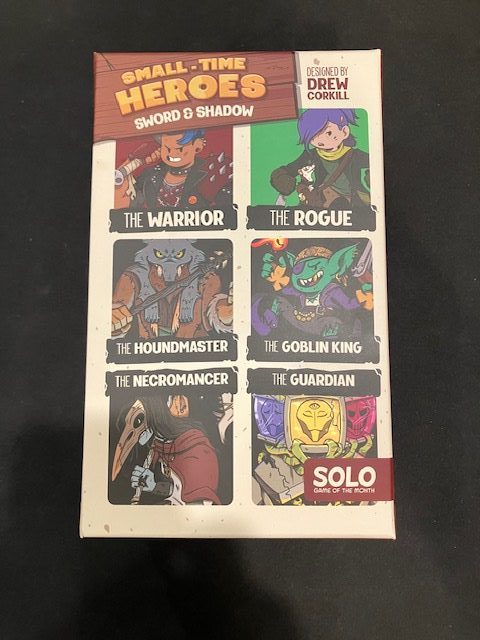
Small-Time Heroes: Sword and Shadow is a cooperative rogue-like deck builder for 1-2 players! It takes a lot of inspiration from Slay The Spire, the video game! This was on Gamefound back in January 2026. As you can see on the cover of the game, it was part of the Solo Game of the Month club!

This particular box is a reprint of the original version. I actually ordered and paid for the reprint AND the new one.

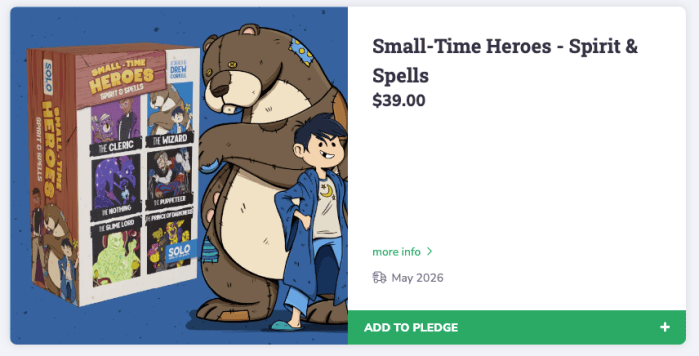
The other one “due any time” now is called Small-Time Heroes: Spirit and Spells. Right now, we can only look at the one we got: Small-Time Heroes: Sword and Shadow (which is a reprint). If we’re lucky, we may get the newer version before the end of the year!

Let’s take a look at just the reprint.

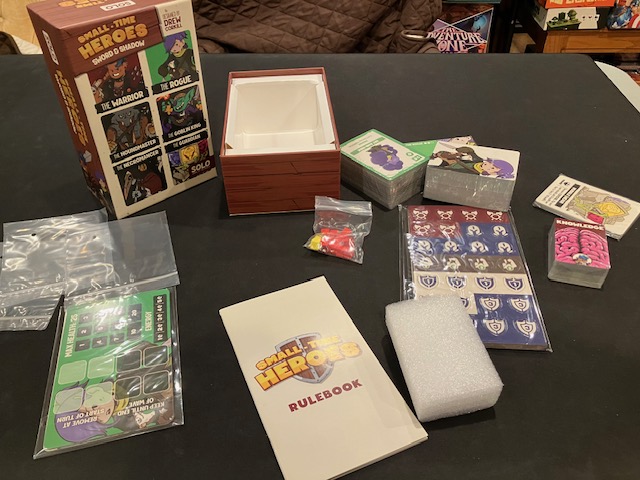
Unboxing and Gameplay

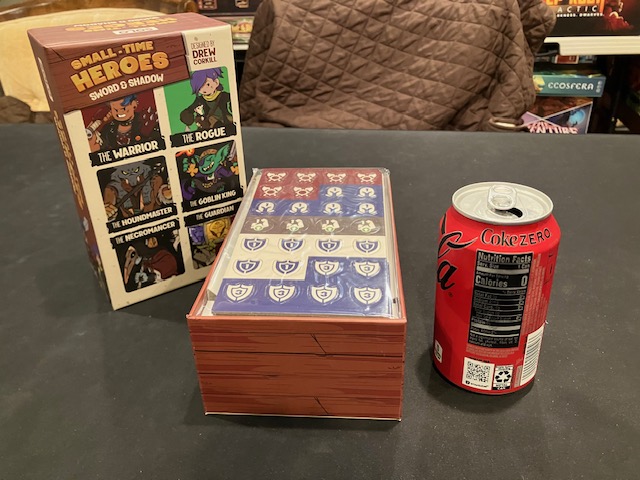
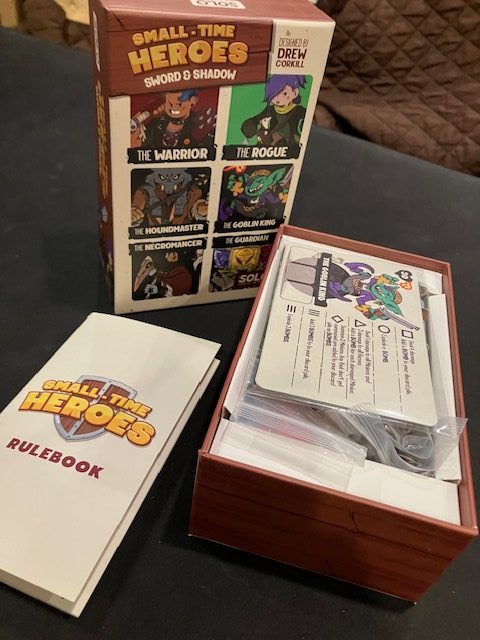
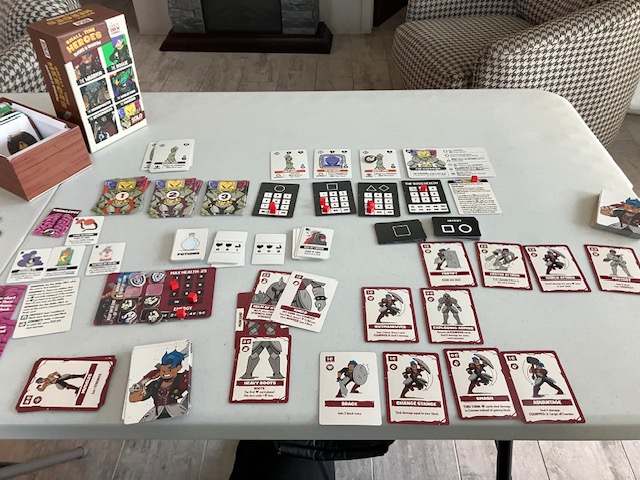
The box has a smaller, peculiar size. See Coke can above for scale.

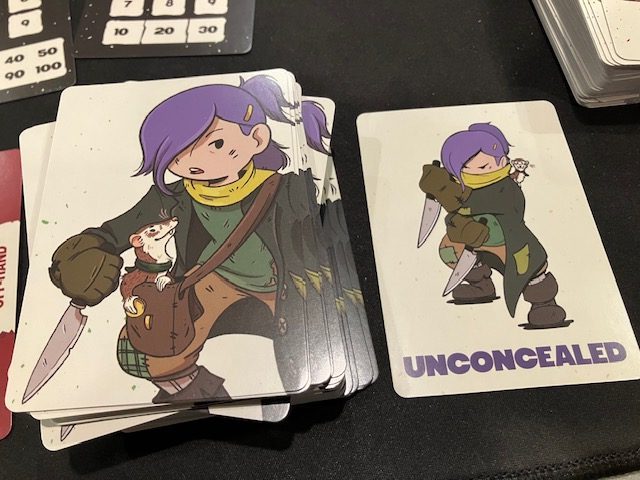
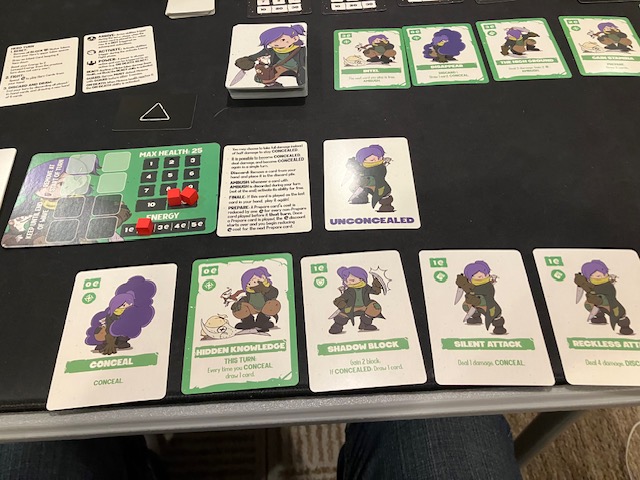
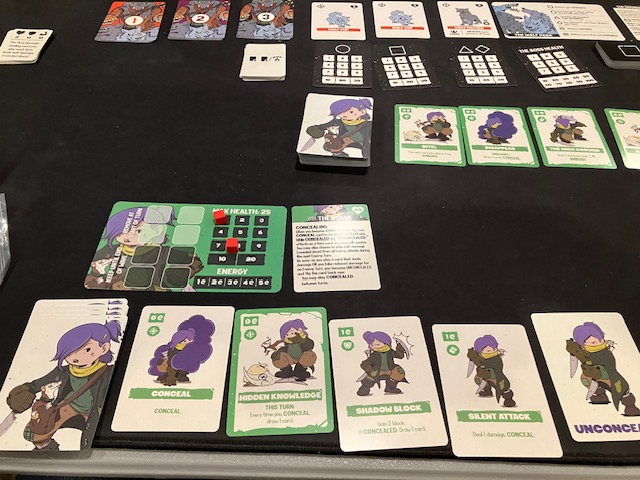
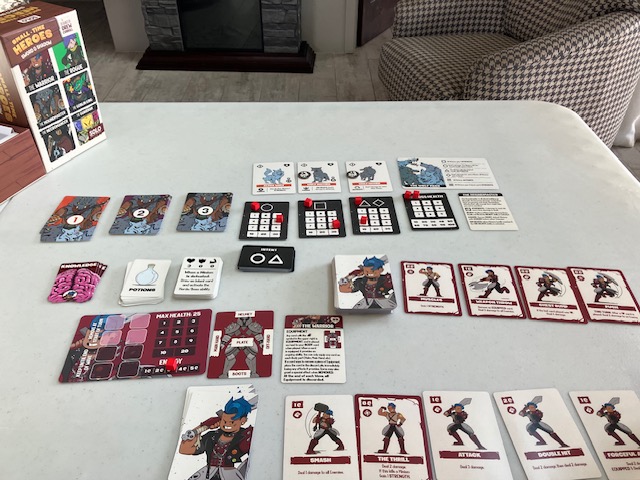
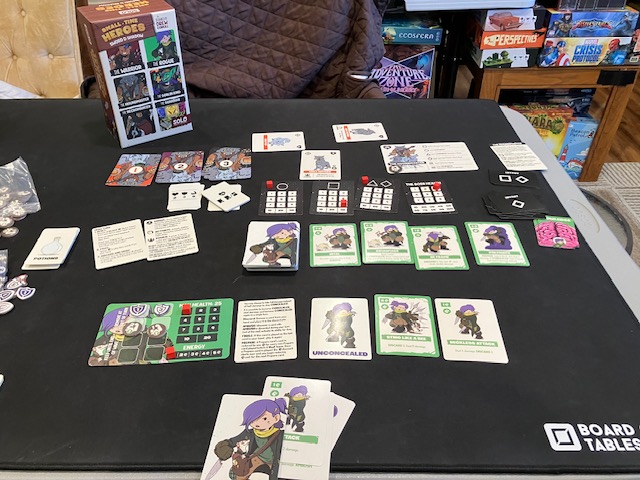
Players choose one of two characters from this box: Lira the Rogue (see above) …

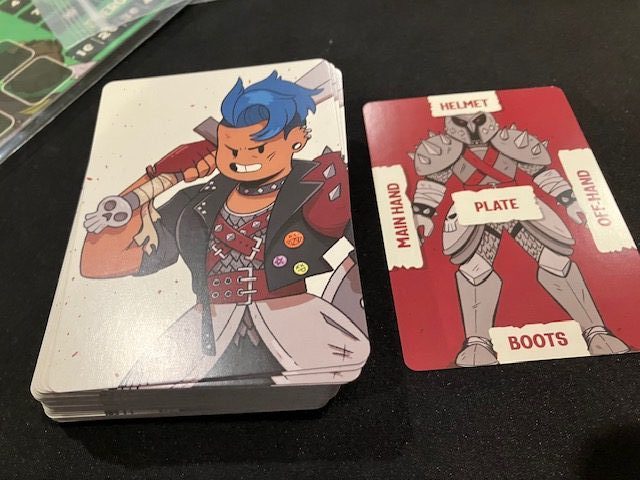
…or Joan The Warrior.

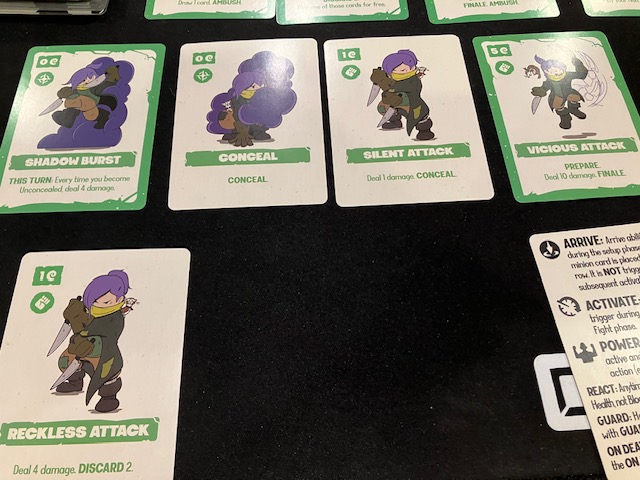
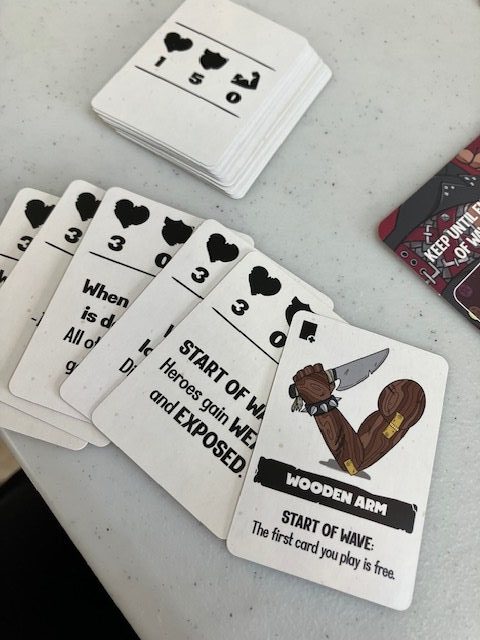
Each character has their own unique deck of unique cards that combo together.

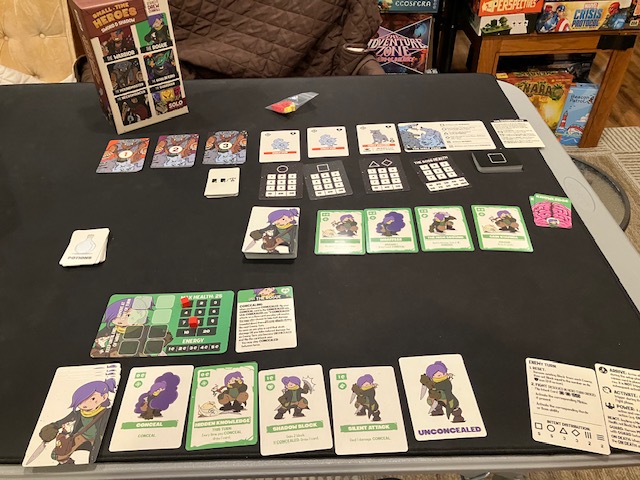
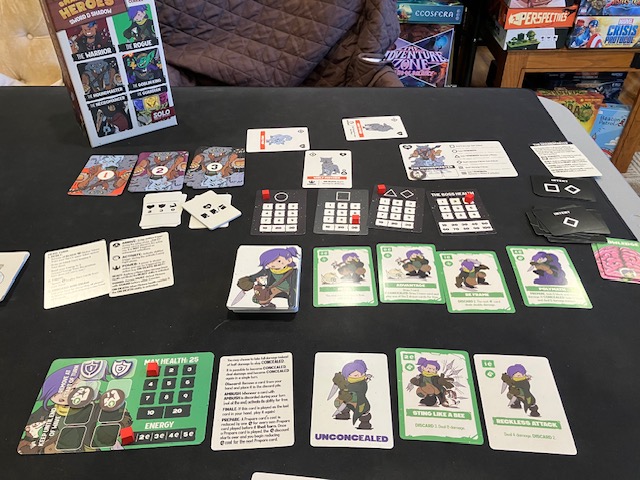
This is a deck-builder*! Each turn, the hero(es) draw 5 cards and refresh to 3 energy. Each card has an energy cost (upper left corner) to play!

After defeating a “wave” of minions, you “usually” get to add some more cards to your deck. There’s a display of 4 cards that will be available! This is more deck-advancement than deck-building, as your deck upgrades between games not during games. We made this differentiation way back when we reviewed Adventure Tactics: that is a deck-advancement game for sure! What determines your upgrade path is the Wave Reward deck (you may draw, cull, or get potions). Strictly speaking, it’s a little more subtle than that, as you do upgrade your deck BETWEEN waves, but not DURING waves, but since the waves are part of the game, you could argue this is still deck-building. But not really: this is a deck-advancement game.

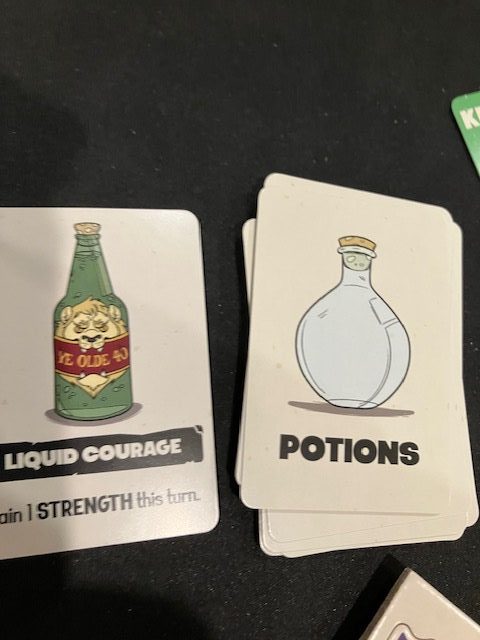
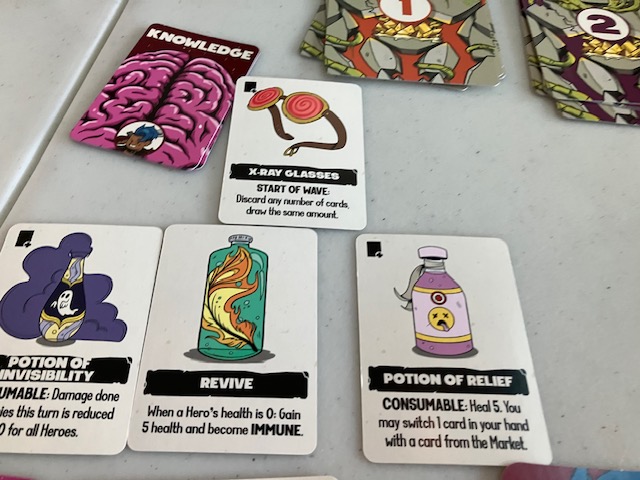
Another type of reward you can get (usually from beating up a minion) is a Potion! Potions are one-time things (usually per wave) that give you upgrades. See above.

During a normal short game (not the campaign), you fight three waves of harder and harder minions, each with their own deck.

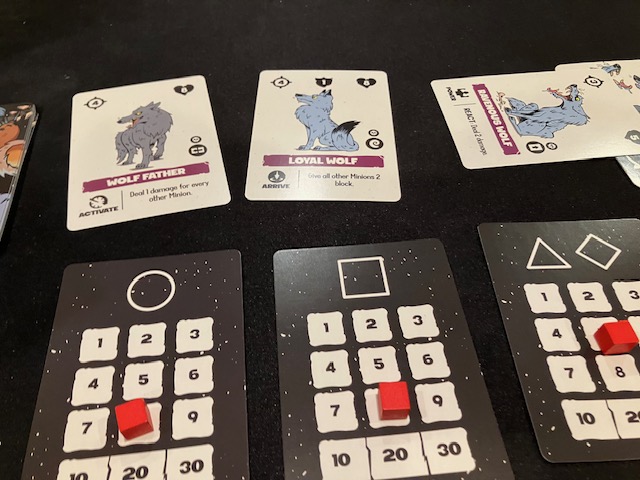
There’s usually 3 minions per wave to fight: they each have a little hit point card underneath!
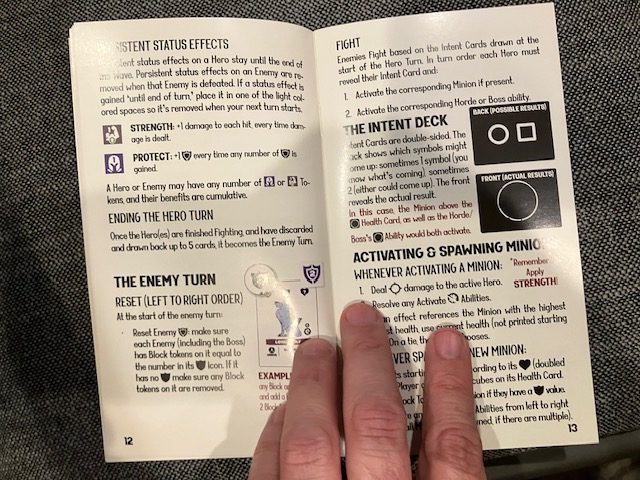
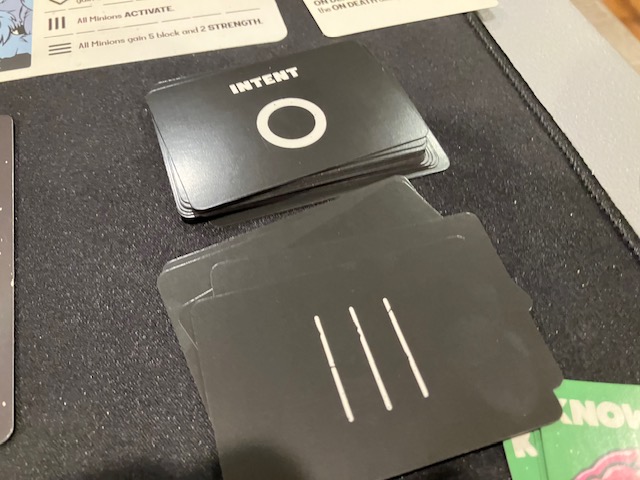
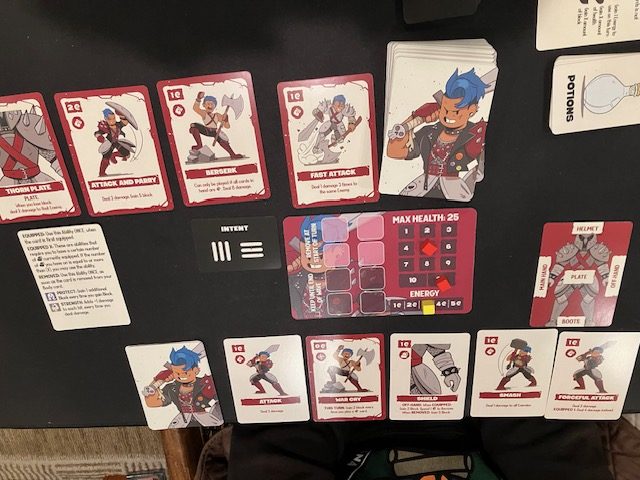
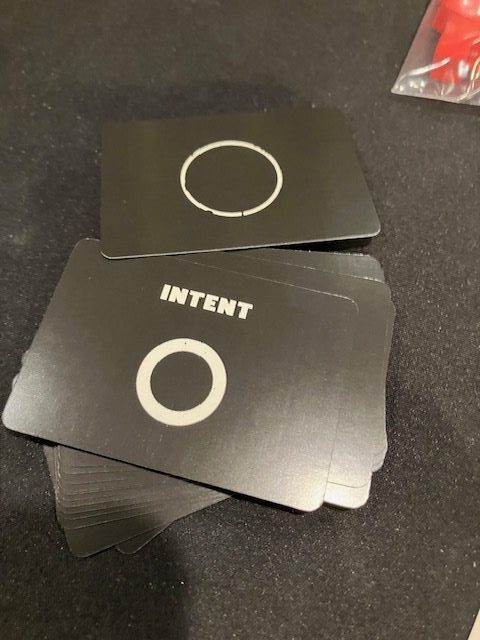
How do you know which minion attacks? There is an intent deck which “sorta” broadcasts who will be attacking this next time! It may the given symbol or maybe that and something else! The intent gives a “hint” of who will attack! The hint is never wrong, it just might be incomplete!
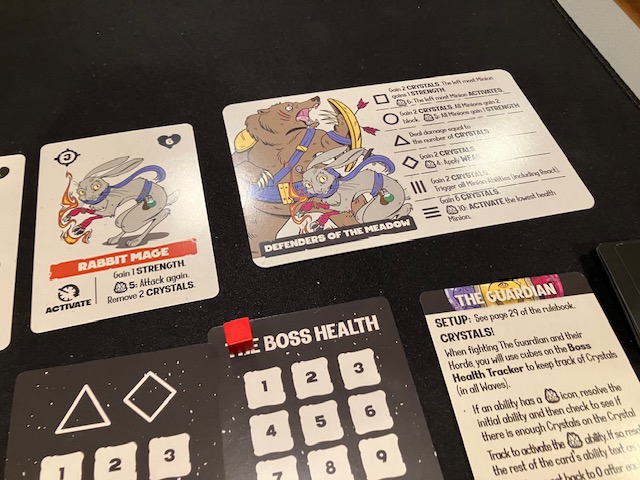
There’s also a card which shows “other” effects based on the intent card! Even if you can defeat the minion that WOULD have attacked, you still have to take the bad news of the card above! (Defenders of the Meadow for this boss). I mean, there always has to be bad news in a solo/co-op game, right?

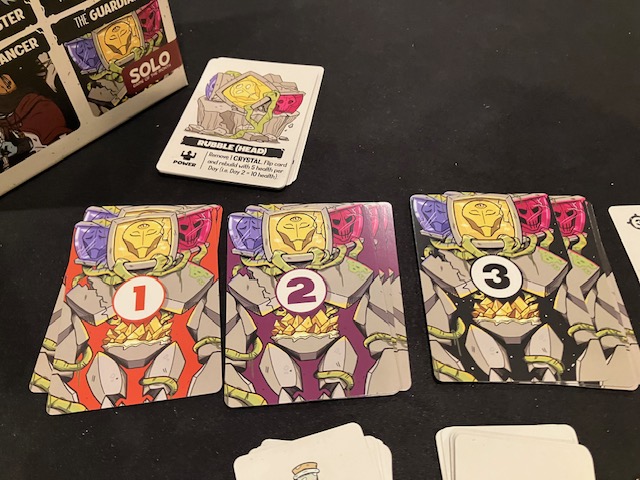
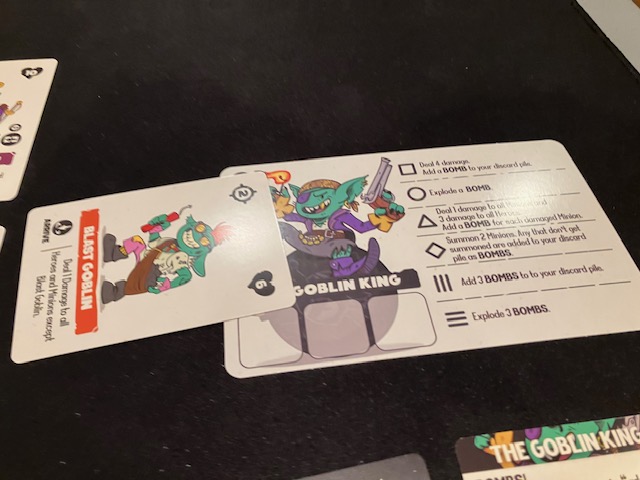
After defeating three waves of minions, you must fight the big bad boss for that wave! See the Goblin King above!!! If you can defeat the big bad boss and stay alive, you win!

There’s more to it, but that’s the crux of the game! The components are cute and charming, if not extravagant.

Rulebook

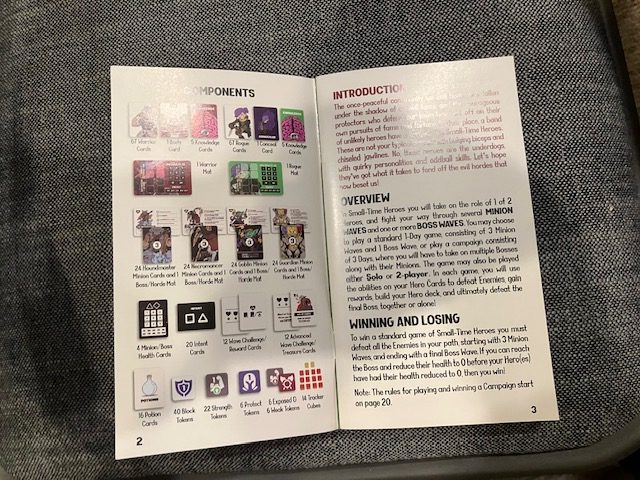
The rulebook is .. fine. It’s get a C+ or B- on the Chair Test. Why the lesser grade? It does fit on the chair next to me (see above).

The problem is that it doesn’t really stay open! See above as I have to hold it open! The workaround in this situation is to bend back the rulebook and kinda “overly bend it”, which I don’t love. The font is nice and readable.

The Components page is nice; they are well notated, but the scale of the components is off, so it makes it a little harder to correlate pictures with components.

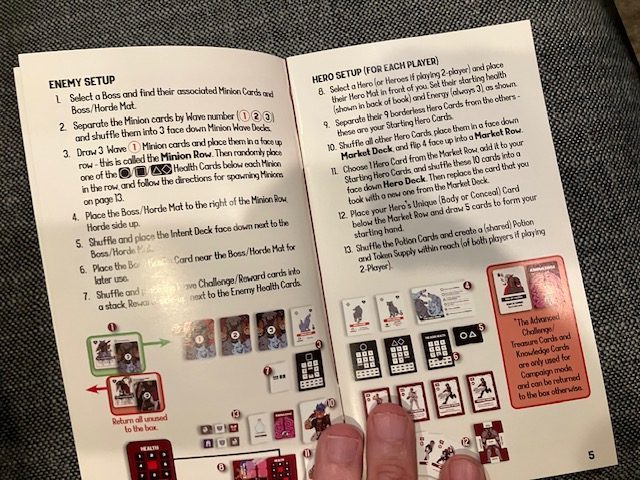
The Set-up is good too (modulo having to hold the rulebook open). See above.

I didn’t “love” this rulebook. There’s a lot of keywords and flavors, and you have to go hunting for things to find them. They seem to mostly be in there. I would love an Index for this game, but the rulebook just barely fits in the box right now.

The rulebook is fine.

Solo: Single Game

More than anything, this is a solo game! This is the rare case when the solo game is “obviously” the main way to play, and the cooperative mode is the add-on!! So, thanks to Small-Time Heroes for following Saunders’ Law, but it feels like an inversion of that!

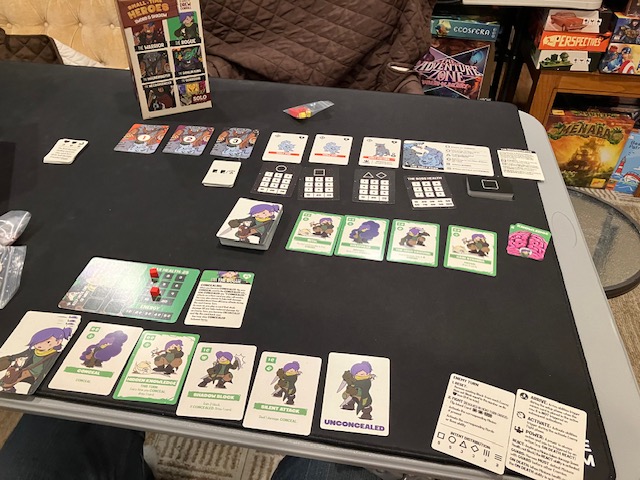
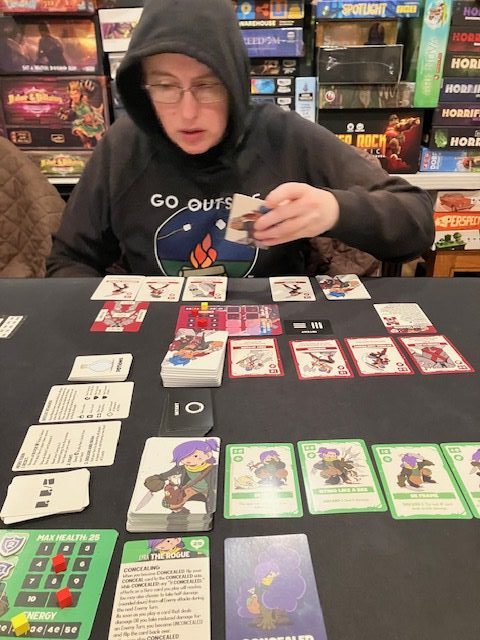
I found myself drawn to Lira, the Rogue. See has this cool power to go to UNCONCEALED, which either enables some cool combos, or allows her to take half damage! The cards are easy to read and (for the most part) understand.

I have taken Lira through all 4 bosses, and they all played quite differently. Each boss has some unique aspects. But, the funnest part of the game was finding combos for Lira as I/we played!

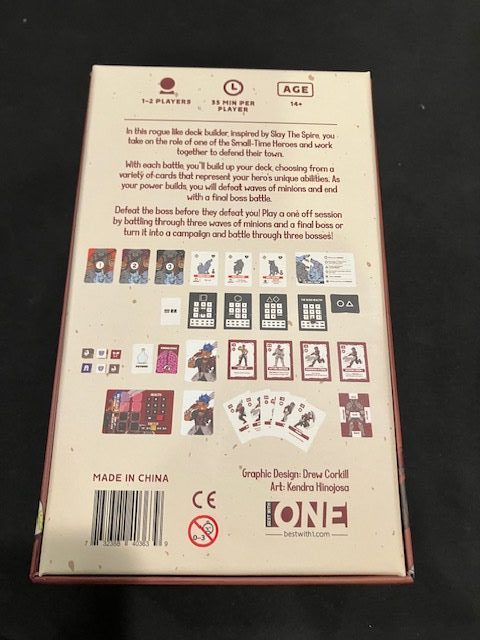
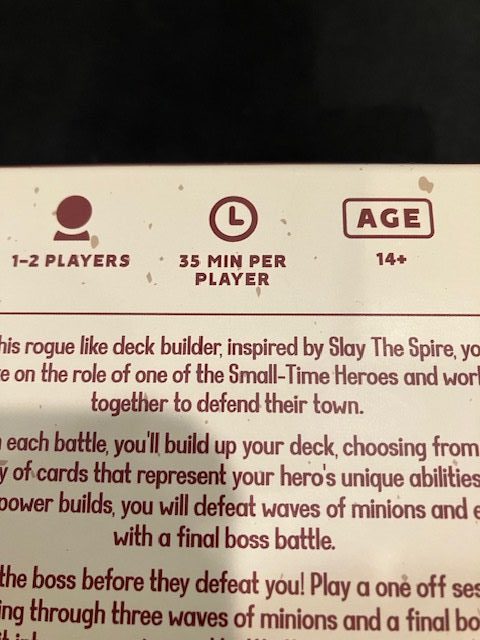
The time guesstimate on the back of the box is about right for the single game: that 35 minutes feels about right.

At first, I wasn’t sure what to think of this little game, but I found myself getting into it! I really liked forming the combos for Lira: How can I CONCEAL so I can invoke a special? Should I be careful of the enemy coming? Can I take out the minion before he attacks me? What order should I take out the bad guys? What cards should I discard to power other cards?

I had fun playing! It was easy to get going (after that first game), and I had fun playing when I played. It’s easy to jump into a new game because the set-up is pretty quick, so if I want to play, I can!

What it boiled down to for me: this feels like a more thematic, more fun, less random game of Solitaire. It’s not too long, it doesn’t overstay its welcome! I just want a 30 minute little game, and this packs that for me! I found myself playing it solo a number of time because “hey, this is fun”.

The game against one boss is fun and easy. I played all 4 bosses (each separately) with Lira and had a ball.

Intent

I think one of the best parts of the game is the Intent deck (see above). The card with the Intent side shows you what “could” be on the other side. Then, when the minions/boss attacks, you flip it and THAT’s what determines the attack! This is HINT of what the upcoming attack is! And this gives you some ability to plan for it!

We saw something like this in Paleo, a cooperative adventuring game that won the Kinnerspiel Des Jahres: (see review here). The backs of the environment cards give “hints” as to what’s coming, so you can plan your next turn!

We’ve also seen this “hint” idea in Race To The Raft (see review here) and Weirdwood Manor (see review here). Honestly, I wish we’d see this hint mechanism more! It really helps cut down on the randomness, as it informs you to make better choices!

I’ll be honest, I think the Intent idea is one of the reasons I like Small-Time Heroes so much; it makes the game feel less random and more predictable so I can make smart choices.

Cooperative Mode

Cooperative mode is only two players. Each player operates one of the two characters in the box. (I assume that when my next box comes, I’ll be able to intermix those characters with these characters). I operated Lira, Teresa operated Joan.

I was a little worried about the cooperative mode, because of the extra rules on top of the solo game. (Remember, this game is solo first, cooperative second). Basically, the cooperative mode multiplies everything times two: all bad guys get their hit points multiplied by two (so they are twice as hard), and bad guys will activate TWICE as both characters get an INTENT card on their turn.

From a game length perspective, the game feels a little more than twice as long as the solo game, probably because there is a little more communication and resolution. But, frankly, each player turn is VERY much solitaire. This is a solitaire game for two players, with just a little bit of talk between players to “help take out” bad guys who might attack next.

Basically, each character takes their complete turn, one after the other. Then the INTENT cards are resolved, and the bad guys are activated by whomever resolved the INTENT card. So, basically, two activations.

Everything is very much in order: player 1 completely activates and finishes, player 2 complete activates and finishes, player 1 activates bad guys against her, player 2 activates bad guys against her, repeat. It worked fine; we played through a cooperative game and had a fine time.

I liked the cooperative game, but it was SO multiplayer solitaire. And that may be exactly what you want! No Alpha Player getting in way, and only I operate Lira and only Teresa operates Joan. That’s it! A little talk here and there; it’s mostly solitaire with two people.

I feel like something is missing from the cooperative game, at least for me. The game is so solitaire, I might as well just play alone! In fact, there’s no parallelism in the game, as we must wait for each player to completely finish their turn! So, I am sitting here waiting for my friend while they take their turn! That seems suboptimal to me.

I think this game would benefit from some simultaneous play! Why can’t we both take our turns at the same time? We saw how well this simultaneous play worked in Slay The Spire (see review here) and Invincible: The Hero-Building Game (see Season 1 review here, Season 2 review here). The way that simultaneous play worked in those games would work here! It would shorten the game (as players don’t have to wait for each other’s turns) and bring out more cooperation! Or at least it would force more interaction, as players HAVE to talk as each other as they are spackoing the enemies! Now, there are issues with simultaneous play (mostly coordination and possible race conditions), but I think we’ve seen that these issues aren’t problematic in Slay The Spire and Invincible. So why not here?

I liked the cooperative game, I would recommend the cooperative game, especially for people (like my friend Kurt) who like multiplayer solitaire cooperative games. I think the cooperative game could be much better with the simultaneous play: it would shorten the game, and make it more interactive (but perhaps at the risk of some weird race conditions/interactions).

Campaign Mode

There is a campaign mode included. Basically, you choose 3 different bosses to fight in a row (for the campaign); the campaign is 3 days. (A normal one-shot game is considered “one day”).

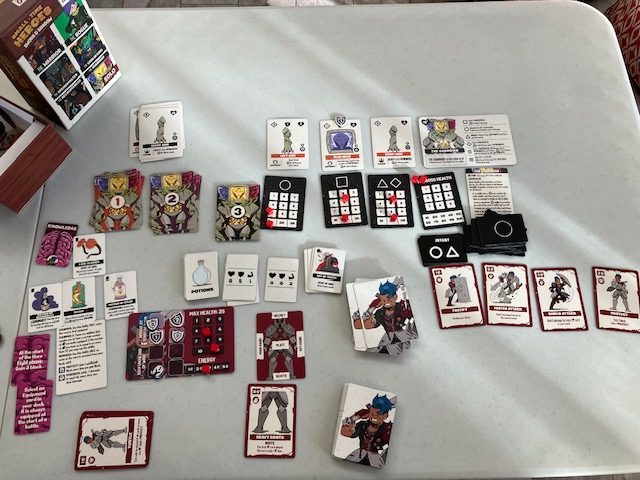
Day 1 is essentially a normal fight (3 wave of minions, then boss) with 3 normal waves. As you start Day 2, you add CHALLENGES which makes all the minions stronger and more buff: see above as you may add hit points, shield, or strength. Day 3, you get TWO CHALLENGE cards!

The bosses themselves become stronger as well as they get +10 hit points on Day 2 and +20 hit points on Day 3.

As you get the next Days, you get treasure and KNOWLEDGE cards. The KNOWLEDGE cards give you some nice buffs, and the treasures are usually one-shots that may help you a little bit.

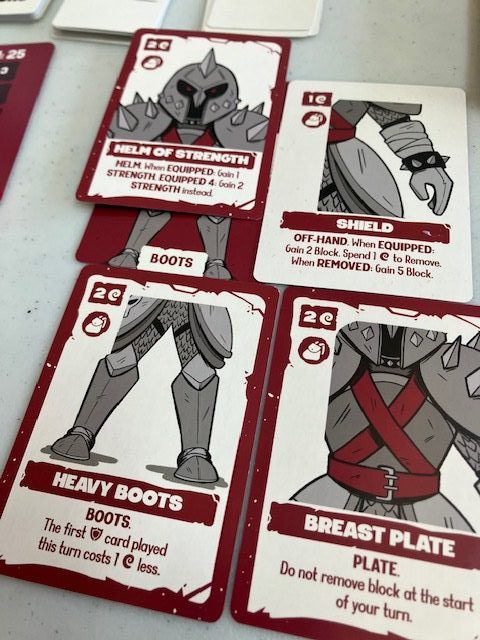
The best part is just getting more and more cards as you go through the campaign! Your deck can be full of great stuff! See above as Joan has a TON of equipment that makes her so buff!

Honestly, the campaign is just an excuse to play a few games in a row. The deck you build gets pretty cool (and pretty big), which starts to really explore the deck-advancement in this game!

I freely admit that I wasn’t “really” into trying the campaign, but after playing it all the way through, it was pretty cool to see the KNOWLEDGE cards come out, the player deck get really big and interesting, and some neat Treasure! Now, whereas the one-shot game is really over in about 30-35 minutes, the campaign doesn’t scale linearly! Day 1 is is 30-35 minutes, because it’s a “normal” game, but as the Hero(es) get KNOWLEDGE and the minions get buffed and the Big Bad Boss gets more hit points, Day 2 takes at least another 15 minutes, and Day 3 takes another 20-30 minutes? By the time you are done, a full campaign is about 2.5 hours?

I didn’t think I’d like the campaign, but I did. The campaign especially let Joan shine: her getting new Equipment makes her pretty awesome! The main complaint of Joan is that it can be hard to get Equipment in a one-shot game: In a campaign, she shines! I still like Lira for the one-shot better, but Joan is better for the campaign!

One note: I suggest you play the Big Bad Bosses each in one-shot mode at least once before you attempt to fight them in a campaign. Each boss is different enough and has enough rules that’s it better to know what you are getting into because there will be a lot of new rules per boss. Caveat Emptor.

Conclusion

I really did not think I’d like Small-Time Heroes: Sword and Shadow as much as I did! Every game I played made me like the game just a little more!

I think this is strongest as a solo one-shot game: If I want to play a quick game like “Solitaire”, this game is easy to set-up, fun and quick to play, and easy to tear-down. It started as a 6.5, then went to a 7, then 7.5, and now I think I am at an 8/10! Every time I played, I realized how fun I was having! 30 minutes for a fun solo game? Yes please!

The INTENT cards are one of the things that really make this game stand out! Rather than being “stuck” with random attack from the bad guys, you have a hint as to what’s coming! I really liked how this made the game feel much less random!

The best part of the game are the combos you can create! As your deck gets better and better, there’s some pretty neat things you can set up! I have played a little more Lira than Joan, but I have seen some neat and different combos in both decks!

The 2-Player cooperative mode is probably the weakest part of the game. It works, but it feels like it really needs to embrace some simultaneous play to make it more dynamic and interactive. Still, if you want to avoid Alpha Player Syndrome and play multiplayer solitaire, the 2-Player cooperative mode does embrace that multiplayer solitaire ethic. Maybe 6.5/10 or 7/10, depending on where you fall on the need for simultaneous play.

I am also surprised I liked the Campaign mode! At first I was annoyed at it, but then I saw Joan shine as her deck really improved. Those of you who like Slay The Spire will probably really like the campaign.

This is a reprint, but it’s new for me. And I liked it! I suspect this will make my Top 10 Solo Games of 2026! (It might have be Honorable Mention since it came out earlier … even though this is a reprint and I just got it)