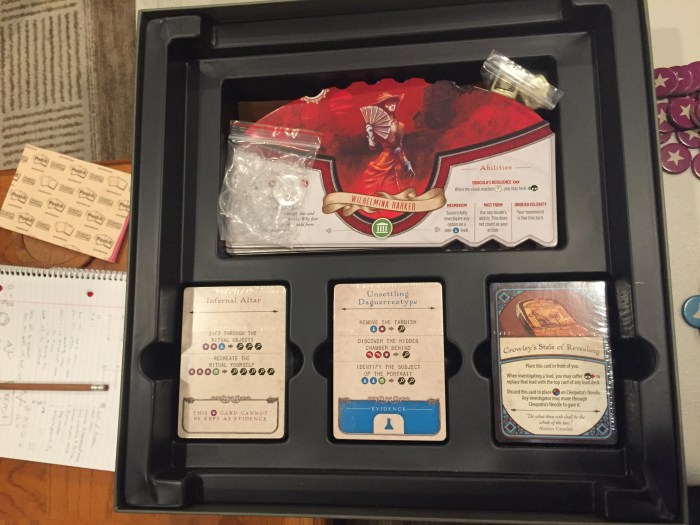
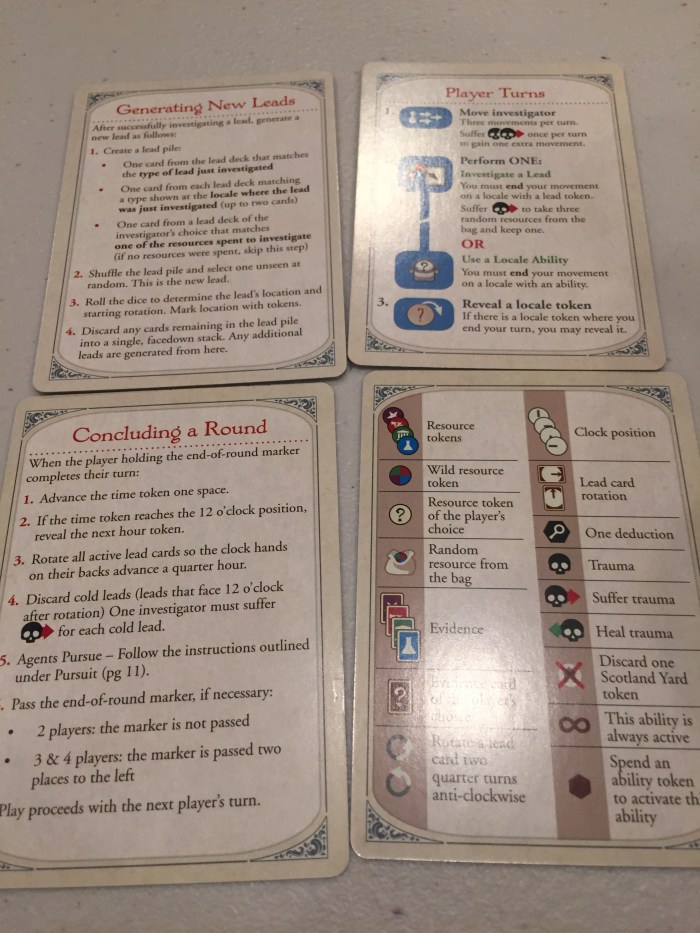
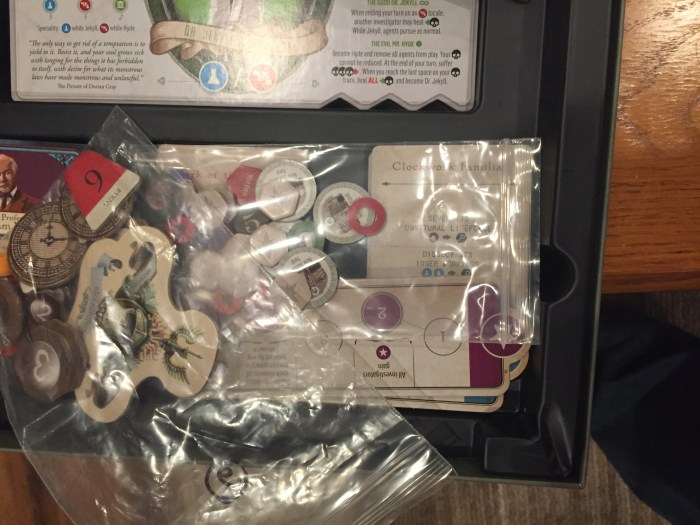
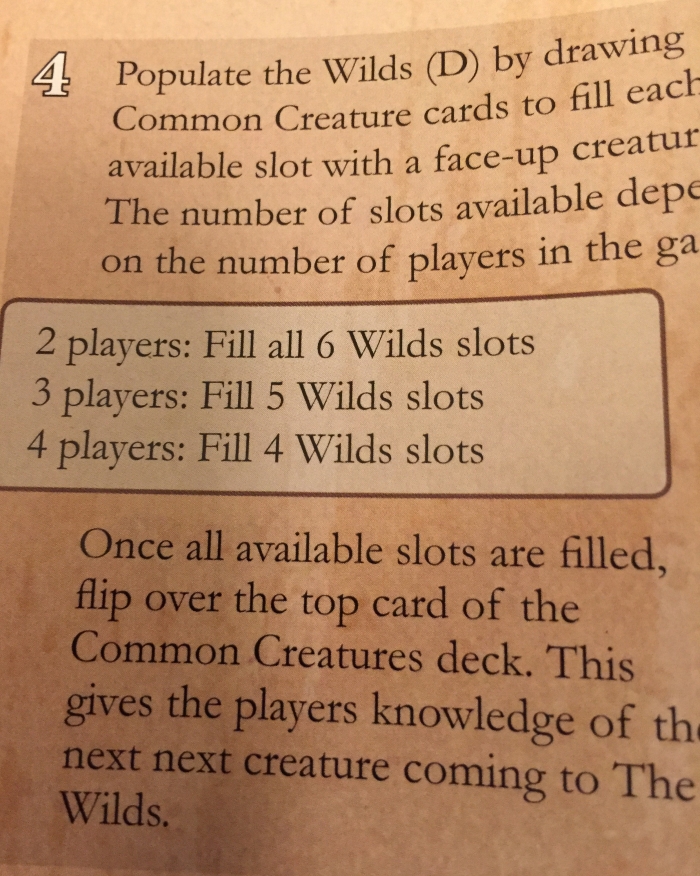
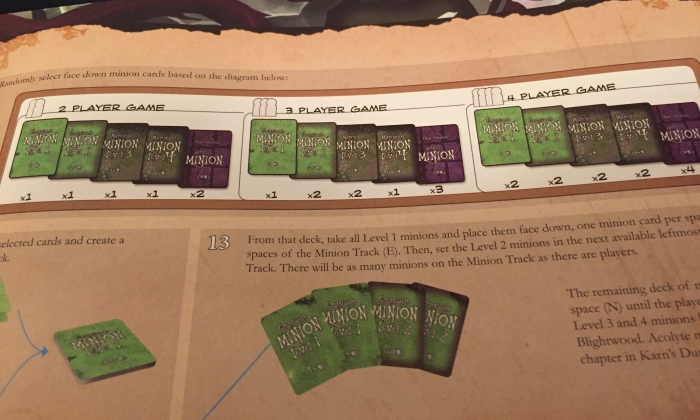
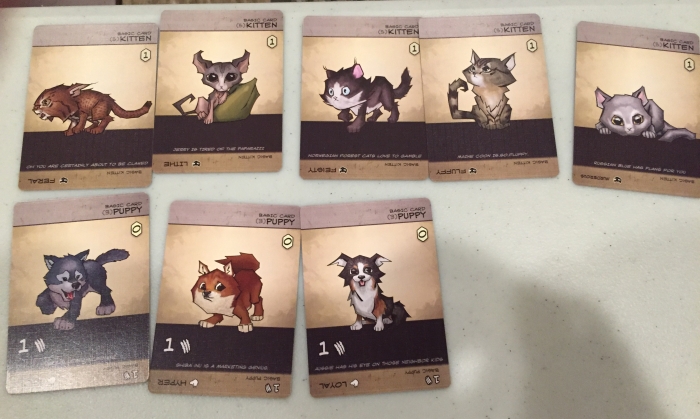
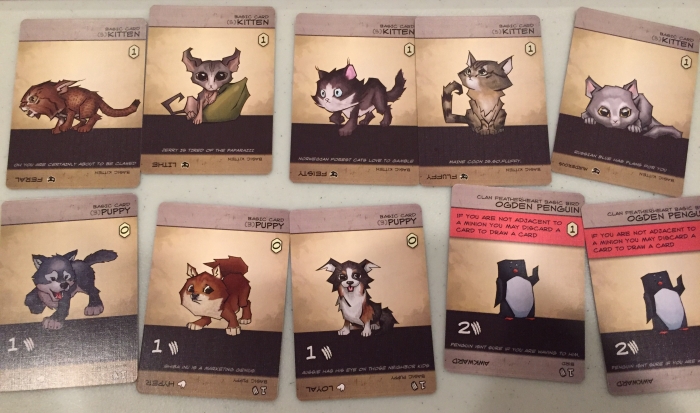
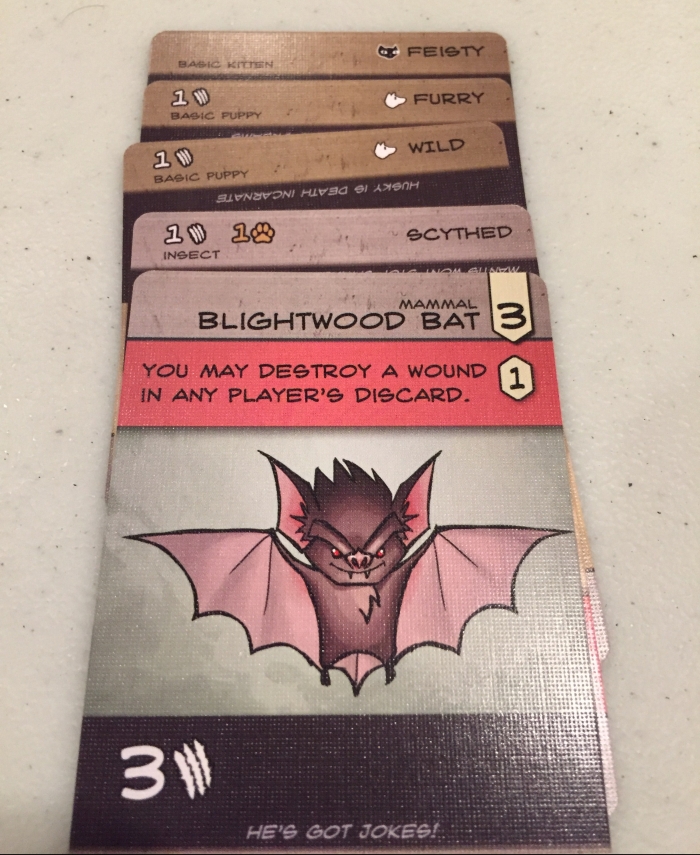
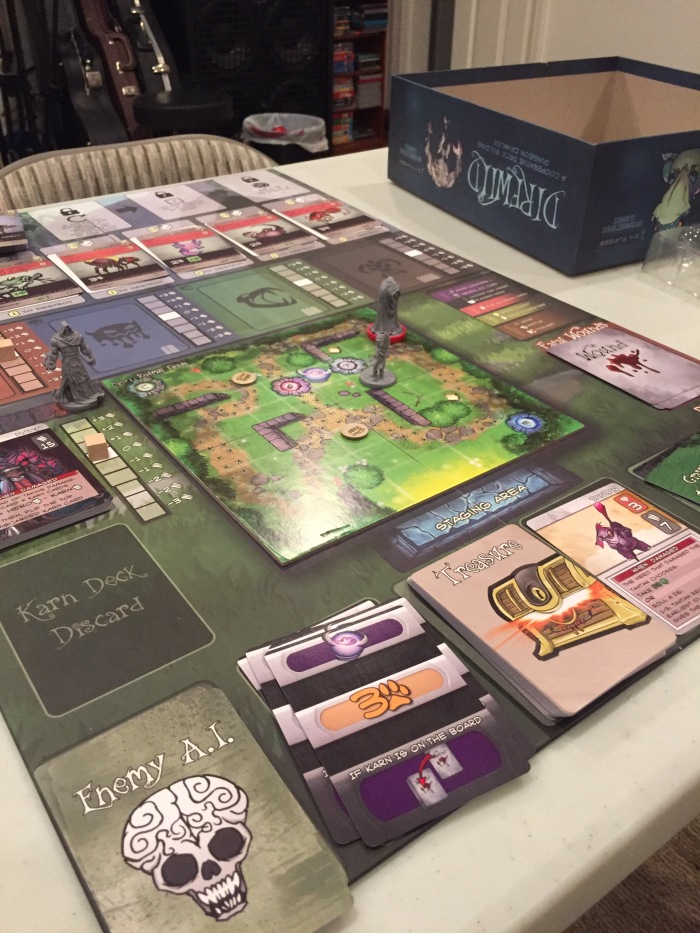
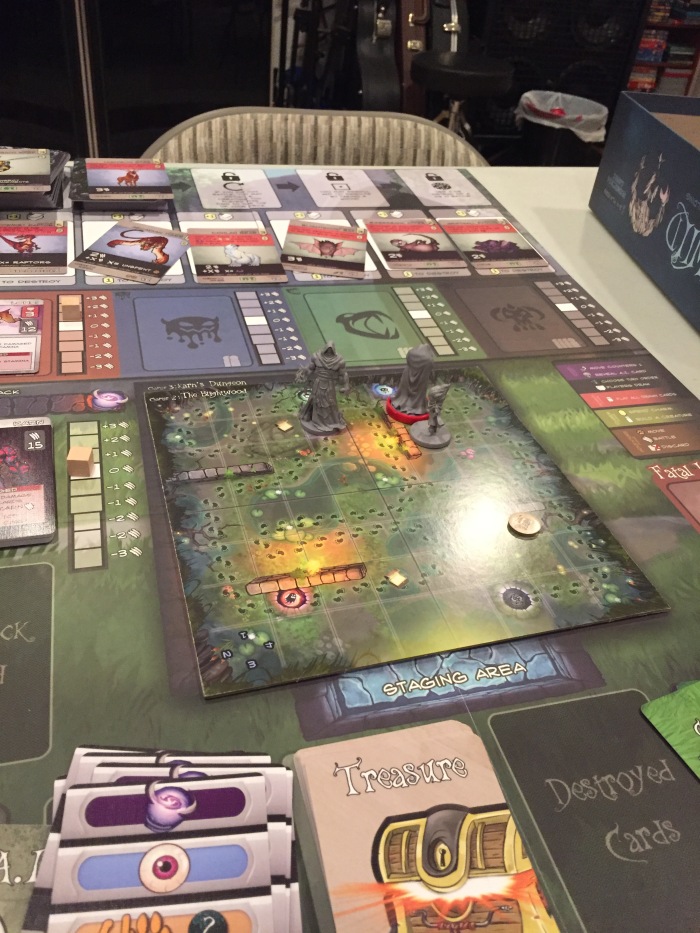
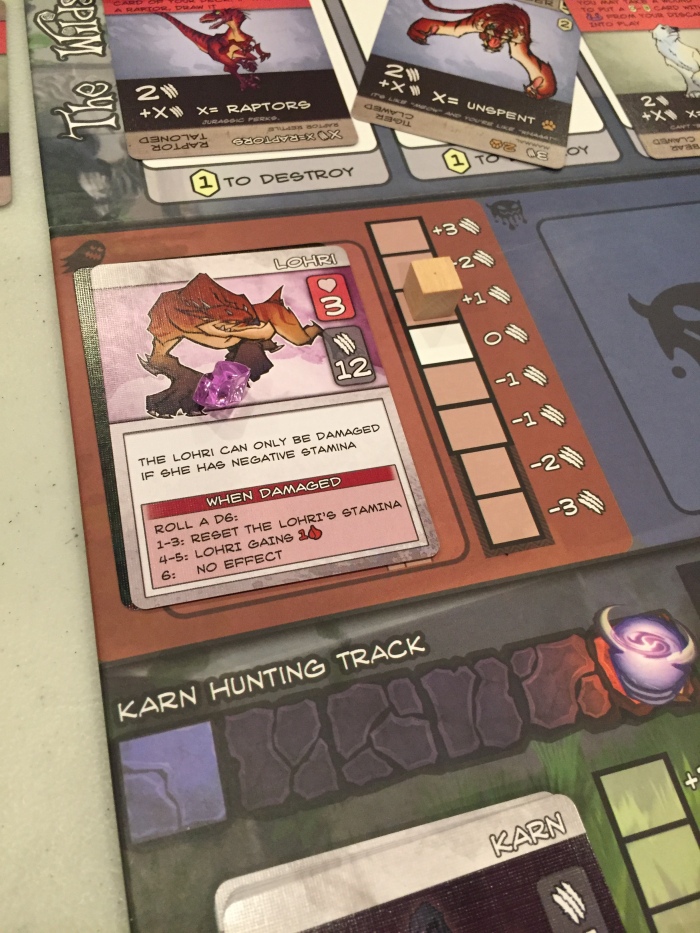
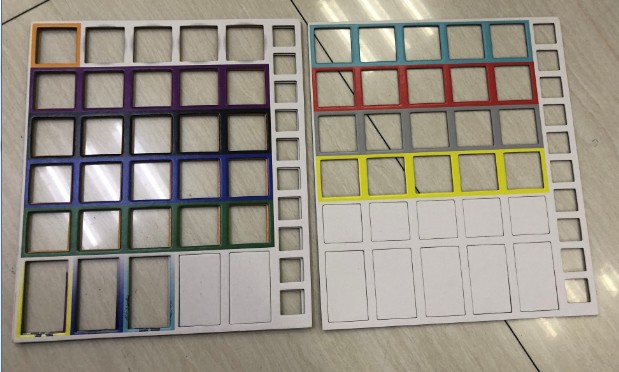
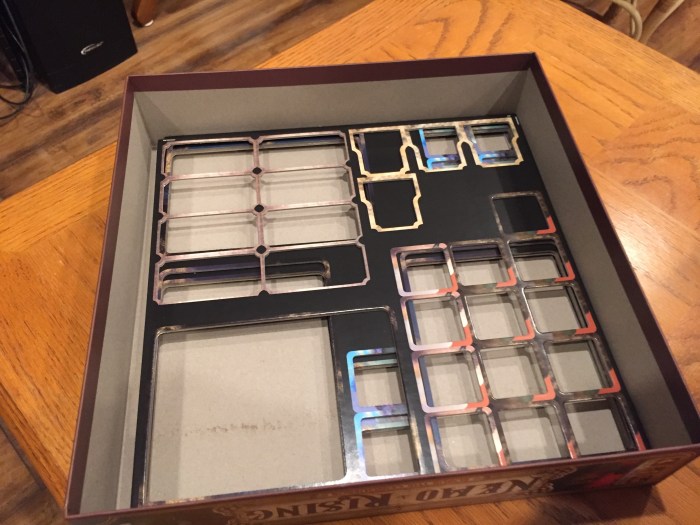
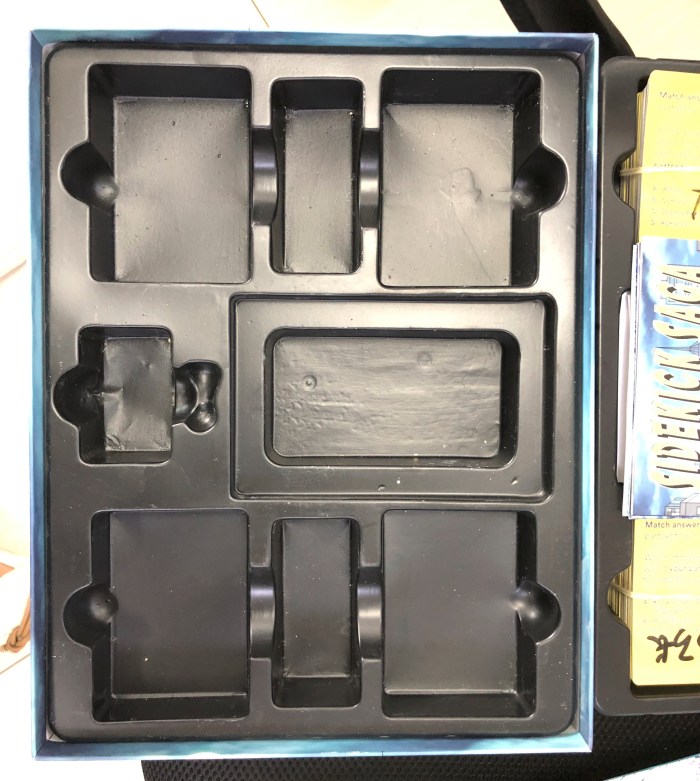
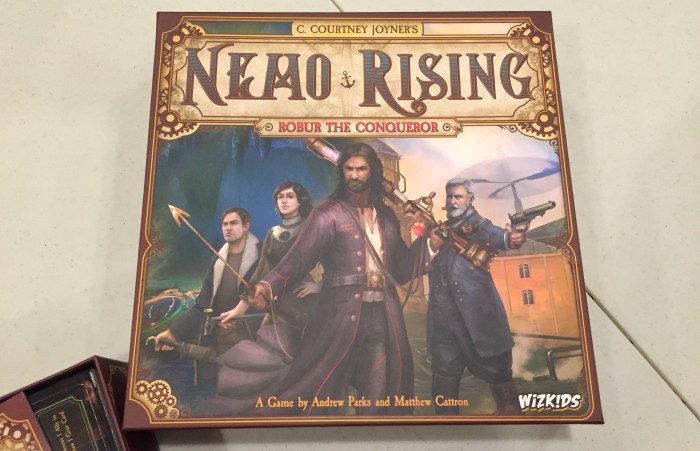
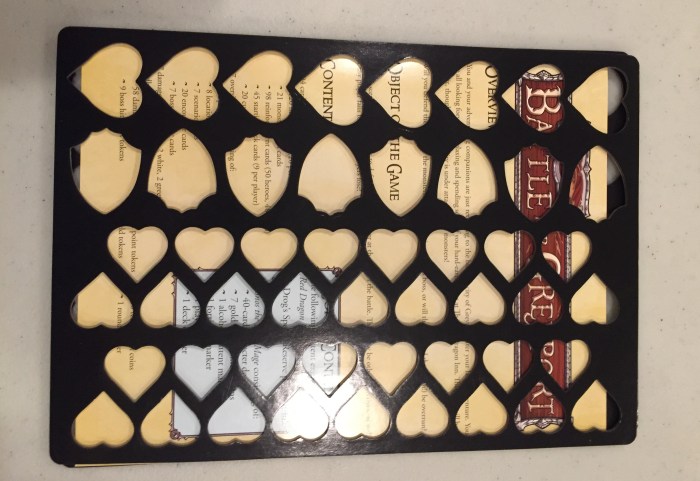
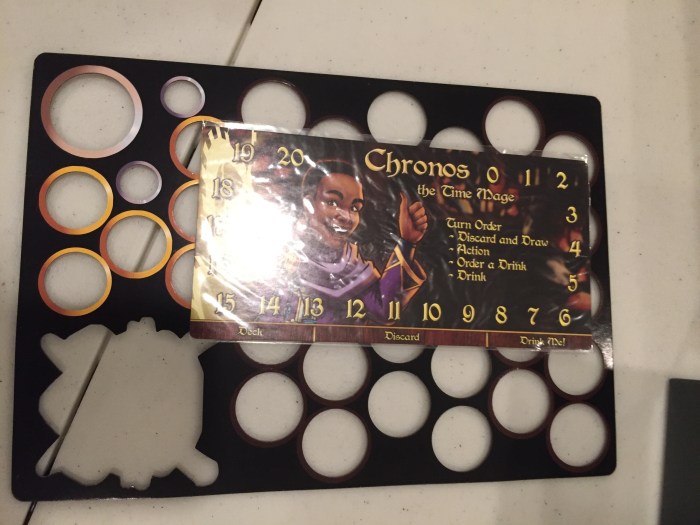
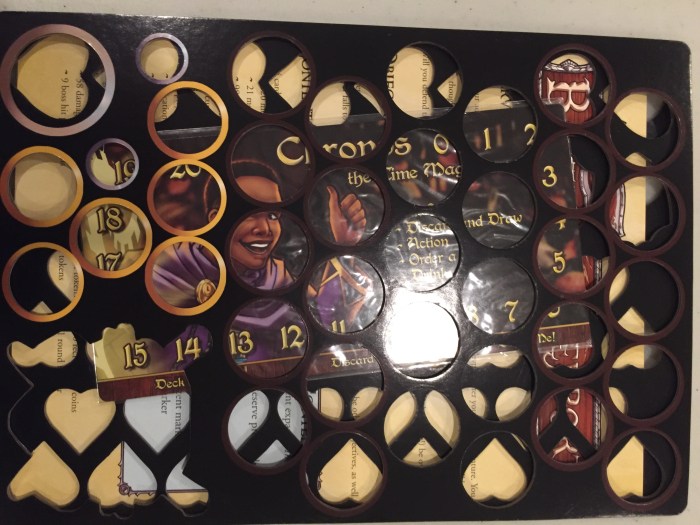
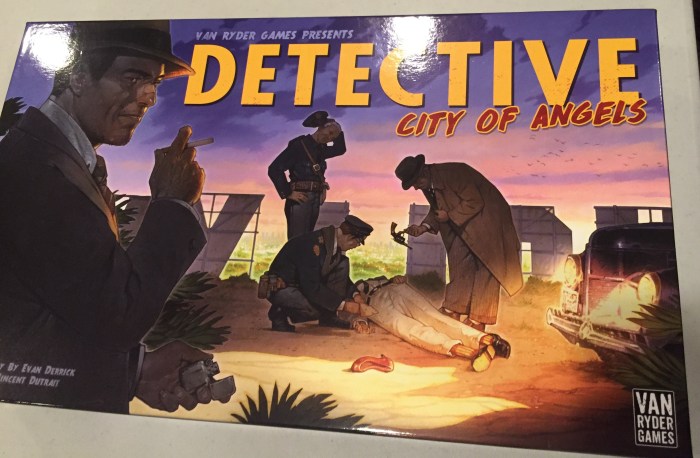
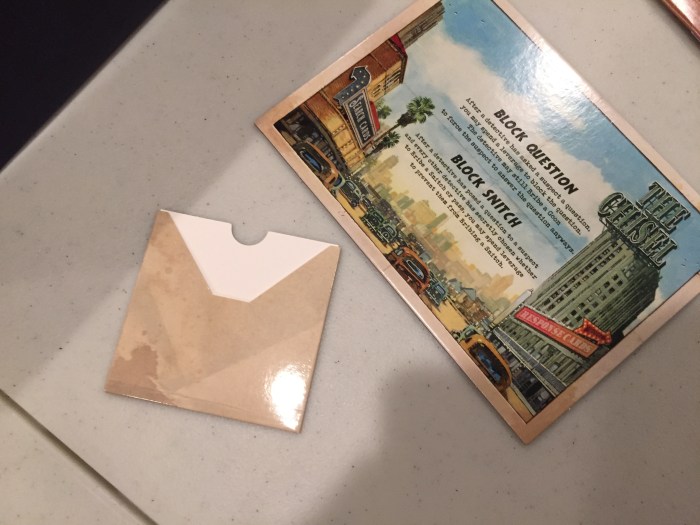
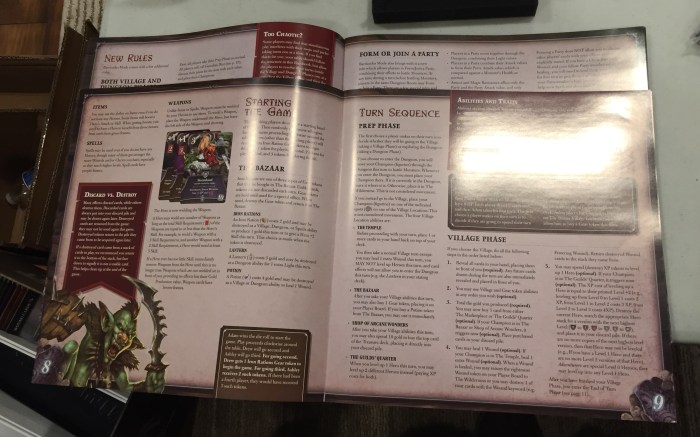
What do you do with the punchout skeletons from your board games? A punchout skeleton is the leftover cardboard outline (see above) not used in the game.
“I throw them away. Why are we still talking about this?”
Most people throw them away. I don’t.
You Keep The Punchout Skeletons?
This particular post is motivated by a few things. The first motive is a story by my friend’s father.
Punchout skeletons for Nemo Rising
According to my friends Alison and Charlie: every time their Dad opens a new game, he punches it out. He then looks at the punchout skeletons, laughs to himself and says “Oh Richie”. Then he just throws the punchout skeletons away!!!
I am Richie: Yes, to be clear, Alison and Charlie’s Dad is laughing at me. Because I keep the Skeleton Punchouts.
So I offer a four pronged defense of why I keep the skeletons.
Reason 1: You might need something you didn’t punch out!
Plastic Insert for Sidekick Saga
This reason was motivated by a conversation I recently had with my manufacturer. My manufacturer was trying to fit all the pieces ofSidekick Saga into a plastic insert/tray. (see above) They asked:
“Do you need the blank tokens to fit in the tray as well?”
YES! Absolutely! Sidekick Saga has a “Build-Your-Own-SuperHero” mechanic where you need some SOI tokens (blank square tokens on right) and Character Standees (bottom-most blank tokens). Players can draw, print, glue or whatever works on these blank tokens.
THE MANUFACTURER THOUGHT SIDEKICK SAGA DID NOT NEED THE BLANK TOKENS!! YOU ABSOLUTELY DO!
I have been chatting with the manufacturer for months, and they know the game really well. But it didn’t register until they asked about them.
If you threw away the skeletons, you might have also thrown away the blank tokens …
Keeping the skeletons keeps you in the mindset of keeping all components (and not accidentally throwing anything away).
Reason 2: Double-Check for Components
Nemo Rising: A newish cooperative game
I was recently unboxing and setting up a relatively new cooperative game called Nemo Rising. (This is a cooperative games blog after all). During set-up, a question came up about the components.
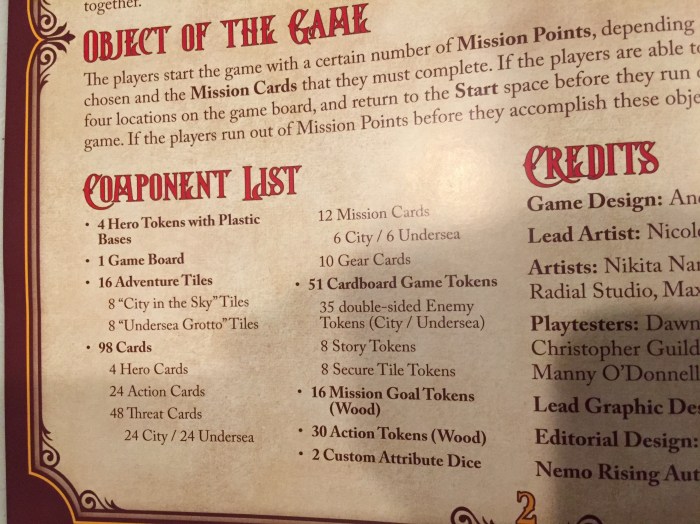
Components List from Nemo
I felt like I was missing something!! (This Rulebook could have used a picture of components …)
Punchout skeletons for Nemo Rising
So, I went back and double-checked what I punched-out versus what was in the Components List. It turns out a few tokens were “hidden” somewhere on the table, but matching the punchouts skeletons to the components allowed me to “double-check” the component list with the actual components.
A side-effect of the “Double-Check” rationale is you can ALWAYS see if you have all the components of your game!! Have you lost any components? Did you buy a used game and want to verify the components? If the punchout skeletons are included with the game, you can double-check the components!
Reason 3: Keep Rulebooks Flat
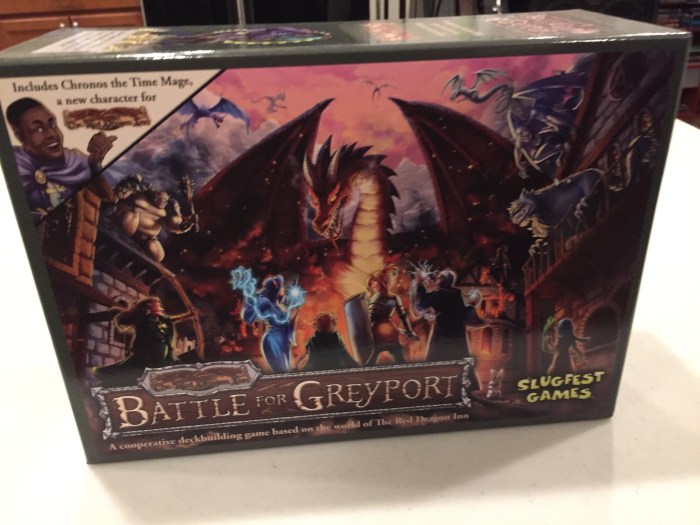
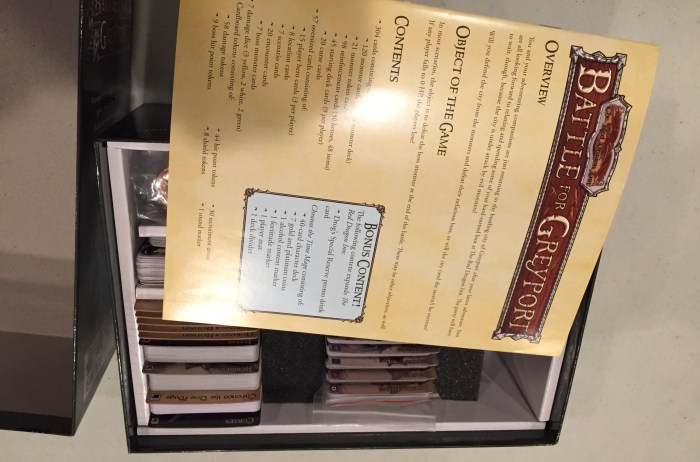
Box for Battle for Greyport
I reviewed Battle for Greyport some time ago. It’s a smallish box with a lot of components. But the Rulebook lays awkwardly in the box.
Rulebook hangs weirdly in the box!
If you look closely, you’ll see the rulebook is “kinda” supported by a few deck dividers. And there’s a lot of empty space on the bottom left of the box, so the rulebook “droops” in that part of the box. If only there was a way to keep the Rulebook flat!!!!!
Punchout skeletons to the rescue!
The punchout skeletons can support the Rulebook (like a rulebook bra?) so that the Rulebook stays flat (in the box) and doesn’t bend weirdly.
This, to me, is the best reason to keep punchout skeletons: I like to keep my games in good shape, and keeping the Rulebook flat keeps it in good shape!! (One of my pet peeves are Rulebooks that don’t lay flat!! It’s hard to learn a game if you can’t put the Rulebook down FLAT on the table!! )
A related benefit (if you have multiple punchout skeletons) is that you can separate content. For example, the Kickstarter version of Battle for Greyport came with content for The Red Dragon Inn (see above). I can keep that content sandwiched between the skeletons to keep it separate from the main game.
Reason 4: Completionist
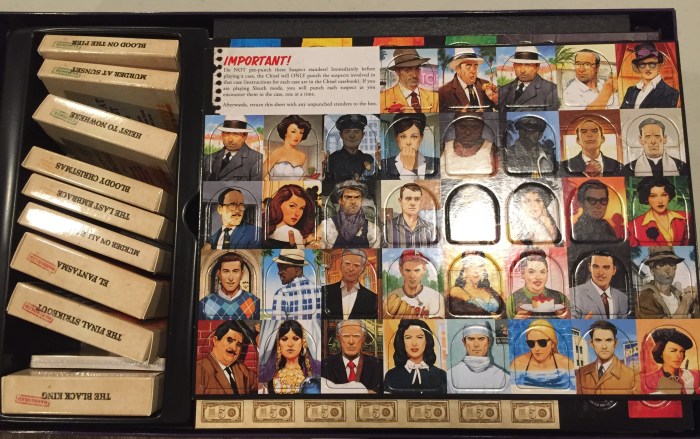
Punchout Board for Detective: City of Angels
At the end of the day, I like to have everything that came with the board game. I am a completionist.
If I need to ever sell a game, I can honestly say I am giving a buyer everything that came with the game! I can show a buyer that I have all the pieces (because I can double-check components). I can show a buyer that I care enough about my games to keep everything in good shape! This gives a buyer confidence that my games are in good shape.
In Detective: City of Angels, it makes sense to keep the punchout skeleton because the game actually encourages you to put the people tokens BACK IN THE PUNCHOUT!! It shows that you have a complete set of people!!! Detective: City of Angels is a game that I could easily see selling because it has a limited number of cases: you can only play it so many times. Keeping the punchout skeletons keeps the game together and complete so I could sell it more easily.
Reason 5: Pack the Game for Transport!
EDIT: This section is new as of April 4th, 2020. In my organizing Sidekick Saga (from Reason 1), I noticed that keeping the Punchout Skeletons help keep the game together when it gets moved around. The game was made to “fit” in the box when everything is new, so the game is pretty packed when you first open it: the game is “made” to be packed tightly. If you get rid of the Punchout Skeletons, then the cards tend to be more free form: if you turn the box at weird angles (shipping, putting in your car, taking the game out of a box, etc), the cards can tend to “flow around” and leave their spaces.
Note the air … if we don’t pack the box, the cards will tend to wander!
Not so if you include all the Punchout Skeletons!! With the Punchout Skeletons, everything fits “snug” in the box, and the cards won’t wander! The Punchout Skeletons HOLD THE CARDS DOWN!
Packed tight! Components won’t wander …. The Punchout Skeleton HOLD THE CARDS DOWN!
Of course, this depends on the game itself and how it uses space, but it’s been my experience that if you keep the Punchout Skeletons, you can keep it “packed tight” and avoid wandering cards.
Conclusion
Using punchout skeletons to separate content
At the end of the day, I realize it does seem a little crazy to keep the punchboard skeletons. I think Alison and Charlie’s Dad thinks I am especially crazy. I hope I have convinced you that there are good reasons to keep your punchout skeletons. No?
Well, If you don’t want your punchout skeletons, can I have them?
This game sat on my shelf for almost a month after I got it. Every time I went to play it, I noticed “Oh, it’s a one vs. many or one vs. competitive. Why did I get this?” Until one day I opened the rules and reminded myself why I got it:
The Three ways to play Detective: City of Angels.
Oh ya! There is a cooperative mode. Most others reviews will focus on the Classic Mode or Head-to-Head Mode. Nope. We will only focus on this as a cooperative game. (This is a cooperative games blog after all).
Unboxing
Wow! What great art when you open the box!
When I first opened the box, I was blown away by the art on all the little character standees! So colorful! And the case boxes on the side were really cool!
More Tokens
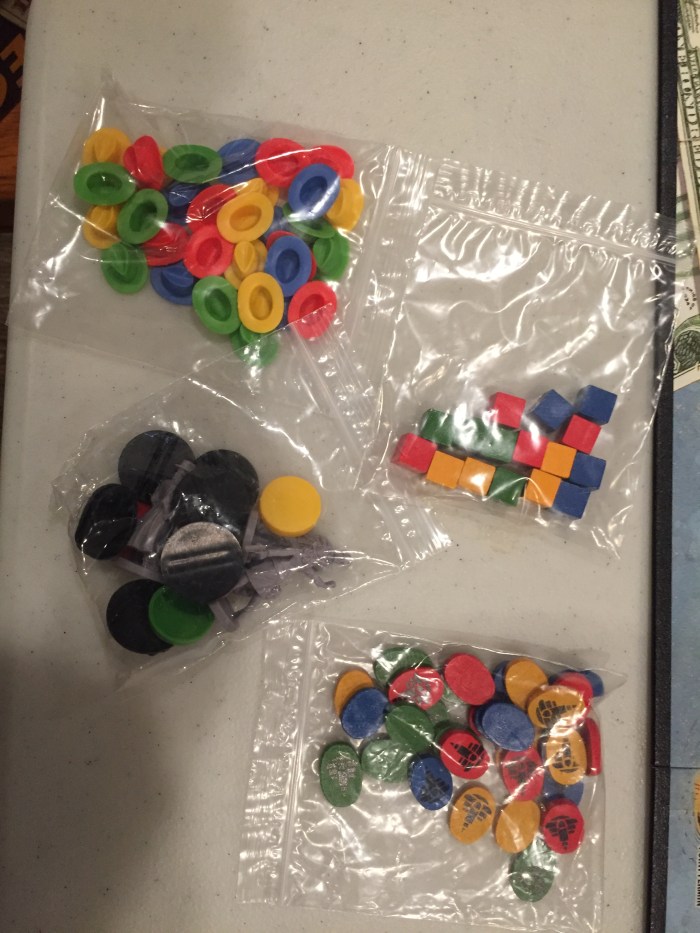
There are a lot of tokens: it turns out, you don’t use nearly as many for the cooperative game (you don’t use Snitch or money or A-L). The Stress markers (upper right) and Final Guess are ONLY used in the cooperative game.
Case Sheets (notes for solving)
This is definitely a deduction game with mystery aspects! Players will be filing out a case sheet … well, only one shared case sheet for the entire cooperative team (although we still each took our own notes separately when we played). The Case Sheet is how you keep track of information you have uncovered.
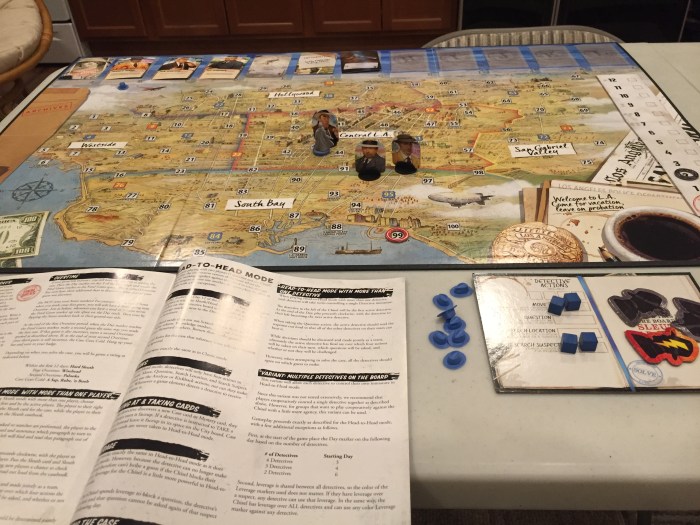
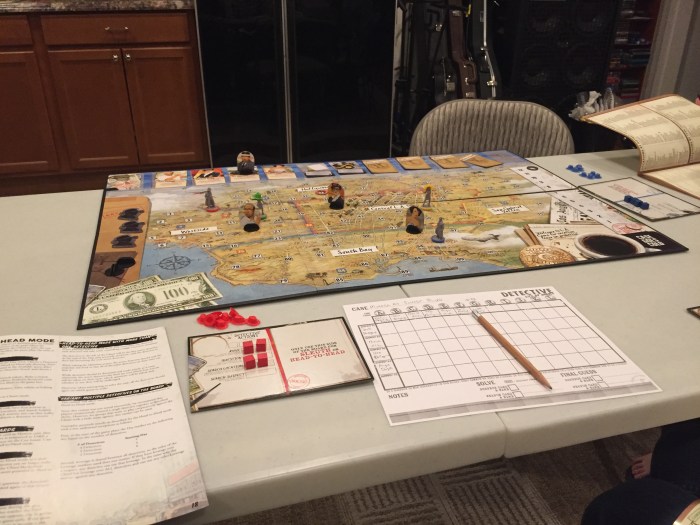
What a BIG Board!
The Board is HUGE and barely fits on my table. In fact, when we played, all 4 players came to the front side or the edges of the table, while the board draped over the edge! This board is huge! And really cool …
Case book: briefing
Each player gets a briefing book …although technically, you could all probably share one in the cooperative game. It makes it nice to follow along.
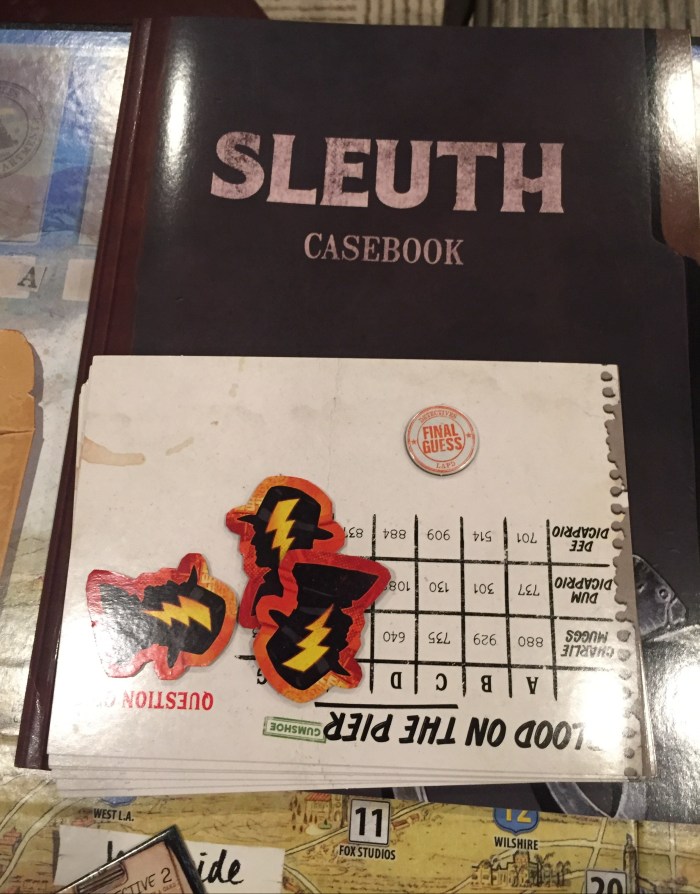
This is the most important book in the cooperative game: players read sections of very thematic text out of this to gather information.
Sections of the sleuth book to read!
The cards (and these are ONLY USED IN THE COOPERATIVE GAME) give the number of the section to read from the casebook when you are ready to investigate “something”.
The Chisel and Classic Mode Components
There are a LOT of components (see below) related to the Chisel and the competitive mode. You don’t need those components for cooperative play (although you WILL use the chisel book above to look at the final answer). In competitive mode, the Chisel is sort of like a Dungeon Master (DM), running the adventure and reading thematic text and passages. In the cooperative game, the reading is shared among the players, and rotates every turn … there is no DM: the players are playing against the game.
There are a lot of tokens not used in competitive mode:
Cooperative mode uses the hats, cubes, and miniatures, but not the other tokens.
The Rulebook
The rulebook is very colorful and very good. The only problem is that the rulebook is geared towards Classic Mode (competitive mode) and the cooperative mode is discussed only after all the Classic Mode are discussed (and a lot of those rules aren’t even relevant).
So, I struggled A LITTLE with the rules. But, the Sleuth Mode did have its own section (and a pretty big section) for the cooperative play. It even showed a set-up picture for JUST the cooperative play!
I wish the game had been geared towards cooperative play (Sleuth Mode) rather than competitive play (Classic Mode), but I was able to get to the cooperative mode fairly quickly.
Gameplay
Cooperative Mode ComponentsA Solo Player game
The game plays by each character having 4 actions (represented by the 4 cubes). Each player gets a chance to perform his 4 actions and play rotates around the board. After you perform your actions (move, search suspect or location, question), the day counter (on far right of board) moves down. If it makes it to Day 1 (or the Final guess token, which moves up when you get too much stress), then you need to solve the WHO DUNNIT, HOW DO IT, and WHY DO IT (suspect, weapon, motive). If you fail, then you can go into overtime and take a few more turns. And you solve the case or you don’t!
The active player performs his actions, while the player to his left consults the Sleuth Cards (for what happens when he searches, or questions), and the player to his right reads from the Sleuth book, describing “What happened.”
The game plays a LOT like Agents of SMERSH or Tales of the Arabian Nights: The game is story driven with a lot of reading. However, there is also a lot of thematic air as well! You don’t just read: players get to make a choice! After the text is is read, you may challenge it! You may think the suspect is lying and shake them up! Sometimes, you get new info (“I knew they were lying!”) … and sometimes you cause STRESS (“I told you I wasn’t lying!!! I’m calling the cops!”) If you cause TOO MUCH STRESS, then you shorten the game (make the final guess marker move up).
I thought it was very thematic to be able to “rough up” your suspects.
Solo Play
Solo Game set up with the first Scenario
So this games works great as a solo mode. The solo mode is essentially the cooperative mode, but with only 1 detective. So congratulations to Detective: City of Angels on following Saunders’ Law: All cooperative games need a viable solo mode.
I played solo, I learned the game, I had fun … even though I did lose. I worried about story-telling part: usually reading lots of text for a solo player doesn’t work well for me (like in Robit Riddle or Crusoe Crew), but because I had a choice to “challenge” the response after reading, I felt like I had more choice! It kept me engaged.
This game worked well as a solo game.
Multiple Players
The game worked very well with multiple players! Even though there’s only one active player, someone is always doing something! One player is active taking their turn, one player is consulting the Sleuth card (to figure where to read in the Sleuth book), and one player is reading the Sleuth book! Even in a 4 player game, the 4th player can be taking notes on the case cards!
Everyone is active! And then the mystery itself was interesting!
The Cases
To be clear, this is a game of deduction and solving a mystery (I’ve only seen murder so far). This isn’t Clue or Awkward Guests where you eliminate things with precision (“Oh here’s a card: cross off the jealousy icon”). You have to listen to the WAY certain suspects answer the questions, you have to look at the evidence carefully, and you have to understand something of human nature. If you want a mystery that solved precisely and methodically like Clue, this may not be for you. You really have to put the pieces together by understanding human nature as well as the evidence!
There are certainly elements of deduction that are very important, but I felt like really finding the final solution required looking below the surface.
Conclusion
At the end of the day, this is a fantastic game. I liked it as a solo game and my friends and I all enjoyed this as a cooperative mystery. (It came up several times: we like this MUCH MORE than the Portal Games Detective! My group did not like the Portal game, as it felt too much like work). We all had FUN!
Detective: City of Angels plays a lot like Agents of SMERSH and Tales of Arabian Nights. There’s a lot of story, and players read from the storybook. But there’s a mystery to unlock! That’s both boon and bane! That same mystery that makes Detective: City of Angels so much more thematic and engaging than Agents of SMERSH and Tales of Arabian Nights also limits Detective: City of Angels’ replayability. There’s only 9 Cases that come in the core box! And once you have played them, you are really done with them (unless you come back years later). Luckily, there is one expansion already done and another expansion on Kickstarter as we speak!
At the end of the day, I would probably give this an 8 on the BoardGameGeek scale. Fun game.
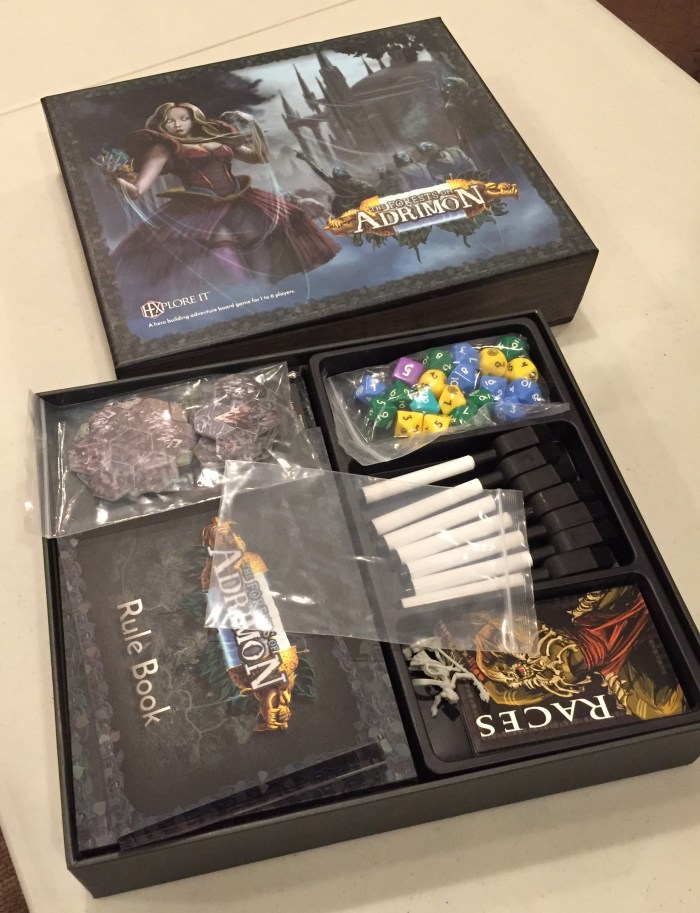
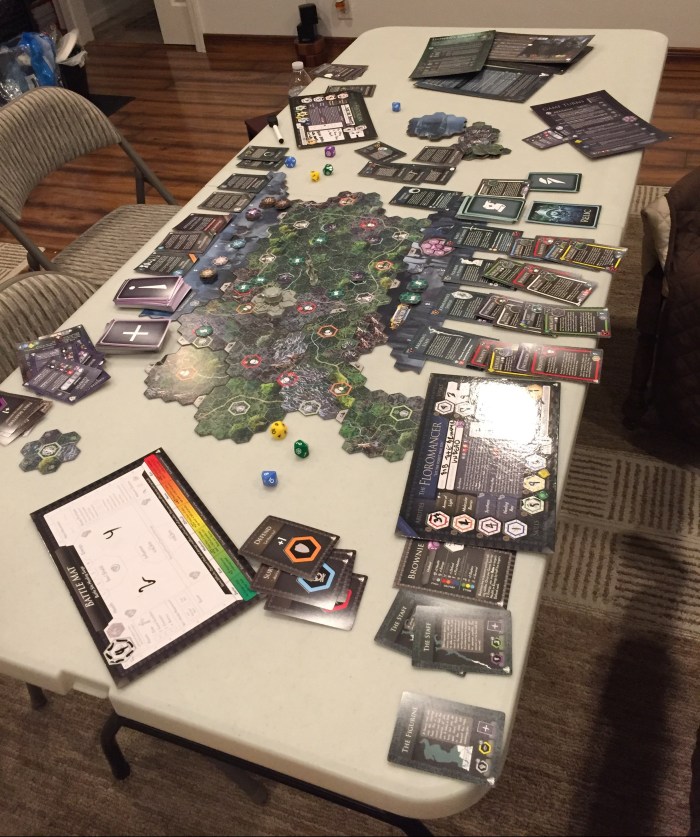
The Forests of Adrimon is the second in a series of three HexPlore It games. The third just recently funded on Kickstarter, and I think the second one (The Forests) just came into retail distribution. I knew it was a Kickstarter, but I picked it up from a retail store.
Fantasy Cooperative Game
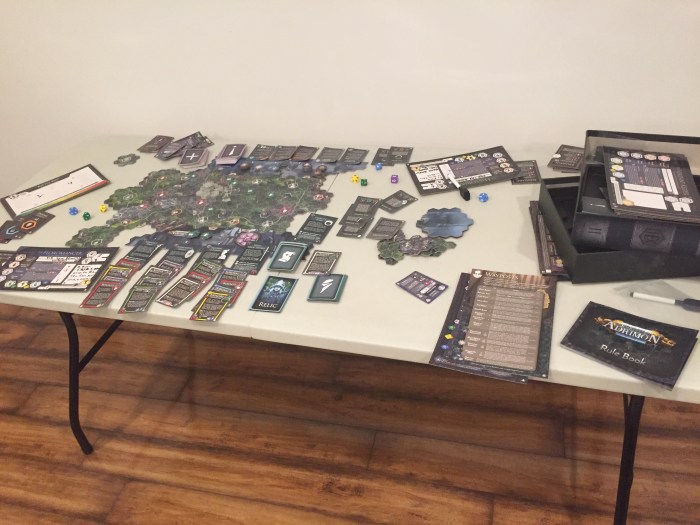
Basic Set-Up
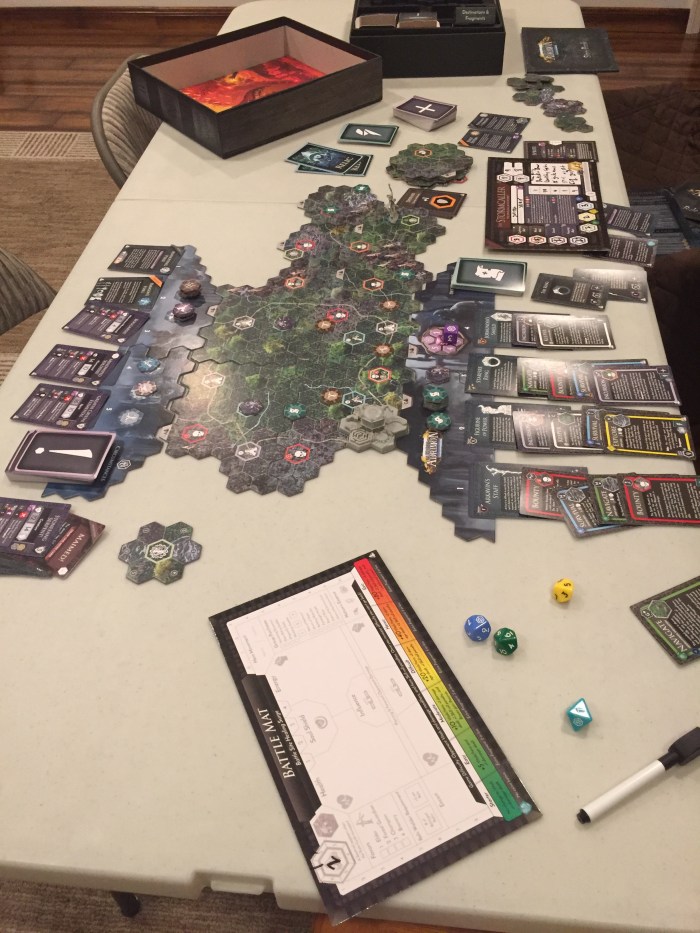
So, TFOA (The Forests of Adrimon) is a cooperative game for 1-6 players. It’s an exploration game (within a forest) in a fantasy universe. It’s probably called HexPlore It because the world is made of … wait for it … hexes.
The Floromancer Character Role
Each player in the game takes on the role a single hero in the game: you choose both a Race (see below) and a Role Mat/Profession (see above).
Races
The Heroes all work and move together around the hex map, trying to level up to beat … the big Bad Boss … Adrimon!
First Play: Solo Experience
So, my first play was a solo adventure. They adhere to Saunders’ Law and have a very viable solo experience. Set-up took a while: there are A LOT of components.
Here’s the thing: I HATED my first play. I lost within a few rounds, even after I “cheated” a few times to stay in the game. I HAD to be doing something wrong! I felt like I had no chance to level up, and the Dice just work against me!
And I was doing something wrong: so here’s a public service message if you play the game:
You can use gold to update your Abilities and Skills and Health and Hit Points.
Skills! The first update costs 3, then 4, then 5 … around the rim of the skills!
I missed this rule in the first playthrough (which is clearly on page 13 of the rulebook), and didn’t think I had a chance. Once you know you can spend gold to update these, you realize how precious and important gold is!!
10-Sided Dice Rolls
10-sided dice for Navigate, Explore, Survive
At the beginning of every turn, each player rolls 3 10-sided dice for Navigate (green), Explore (yellow), Survival (blue). If you fail (roll over your skill value), there are consequences (get lost, no gold, lose food). In the beginning of the game, your stats are very low and you are just barely surviving!!! So, you find yourself barely getting by.
Public Service Announcement: spend your gold to up you Explore ASAP: this makes it more likely to get 2 gold per turn, which you can use to up your other stats!
Second Playthrough: 2-Player Game
Our second game went MUCH BETTER once we realized that we could use our gold to up our stats.
The game, in broad terms, seemed to play out like this:
In the first half of the game, we explored and found Relics (special items needed to beat the big Bad at the end). We tended to avoid combat, and in fact our first combat was halfway through the game!
In the second half of the game, we embraced combat and fought a few more things. We also ended up spending a lot of time in the cities trying to up more of our stats, getting ready for the final combat (and trying to get more Relics).
The final combat was pretty intense: almost a half hour and we should have died, but we won!
We had fun, but there are a lot of things that were … suboptimal.
Dry-Erase Markers and Mats
A Character
Each player in the game uses a mat which works with a dry-erase marker.
Dry-erase markers
So, because 8 (?) role mats were dry-erase, almost ALL mats in the game were dry-erase, even though they didn’t need to be! There were 10 mats for a lot of BIG BAD villains, and they were dry-erase, there were Location mats, Game Turn Mats, Sentinel Mats, .. 18 total! And frankly, the only ones that “really needed” dry-erase were the character mats (as you constantly updated stats, and erased and drew).
“Why is this a big deal? The dry-erase of the other mats didn’t get in the way did it?”
No, but here’s the thing, the dry-erase didn’t quite work in the game. Here’s why:
The dry-erase markers in the game were TOO FAT! They SHOULD HAVE BEEN ultra-fine dry-erase markers!
The area (for the backpack) for writing equipment was too tiny and didn’t work for keeping track of your stuff!
Take a look at your mat:
A Character
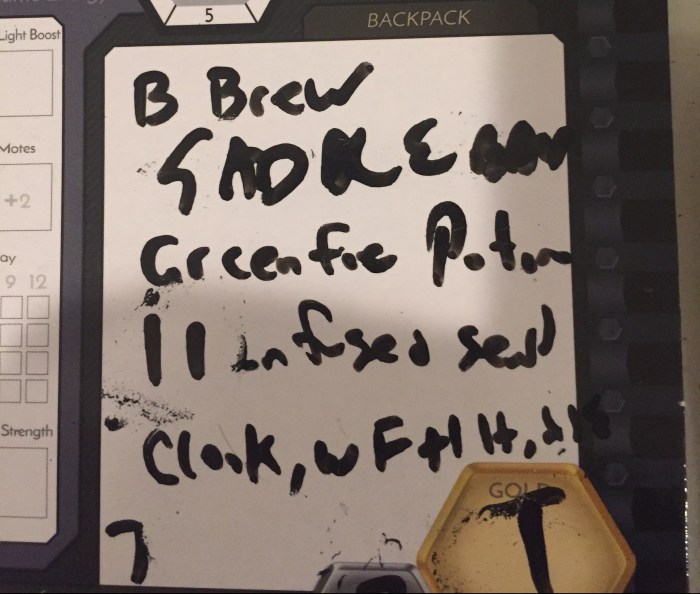
Now, take a look at the “backpack” area: it’s a small 2 inch by 2 inch area where you have to write TONS of stuff, with a fat marker!
Backpack
Can you read that? I can’t and I wrote it!
Suggestions for the Mats
There are 3 suggestions to fix this:
Get rid of the dry-erase mechanism altogether and use pencil and paper
Use ultra-fine markers and make the backpack area a little bigger
Use the back of the unused characters as your backpack instead of trying to fit your backpack in a smaller area.
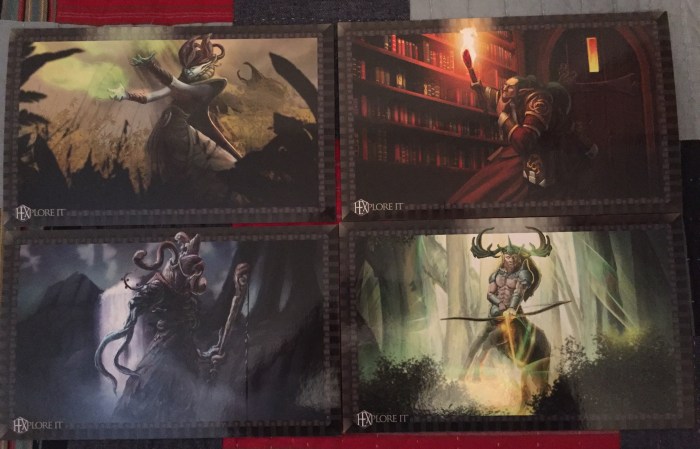
The back of the character mats is pretty cool: they have pictures:
The backs of the character mats
These pictures are REALLY COOL! But I don’t think I EVER looked at the picture in the entire game!! BUT, if you just had a “blank” tableau on the back, then the characters could use two mats to play: one for the character, and one for the backpack! You might even be able to keep the fat markers!
Use two mats! One for the normal character stats (left), and the back of an unused character (right) for a backpack! Here, the back of an unused character is a cool but never seen picture!
It’s weird that SO MANY MATS are in the game, and only the character mats (and Battle mat) need to be dry-erase; it seems a waste that the other 11 are dry-erase. All we could figure out was that they did that for manufacturing: it was cheaper to make ALL 18 mats dry-erase.
The dry-erase works “ok” for the stats, but it doesn’t really work for the equipment.
Time To Play
The back of the box says that the gametime 60-180+. Um, it took us EIGHT HOURS! After the first FOUR HOURS, we set the game aside (see above) so we could come back to it later. The second play took ANOTHER FOUR HOURS!!
Granted, it was only the second game, but I feel like I had most of the rules by that point, so maybe an hour of that would be “learning stuff”.
Be aware, if you play the game and get to the end, it may take you 6-8 hours. We joked that it was only 60-180 minutes if you died early.
The Rulebook
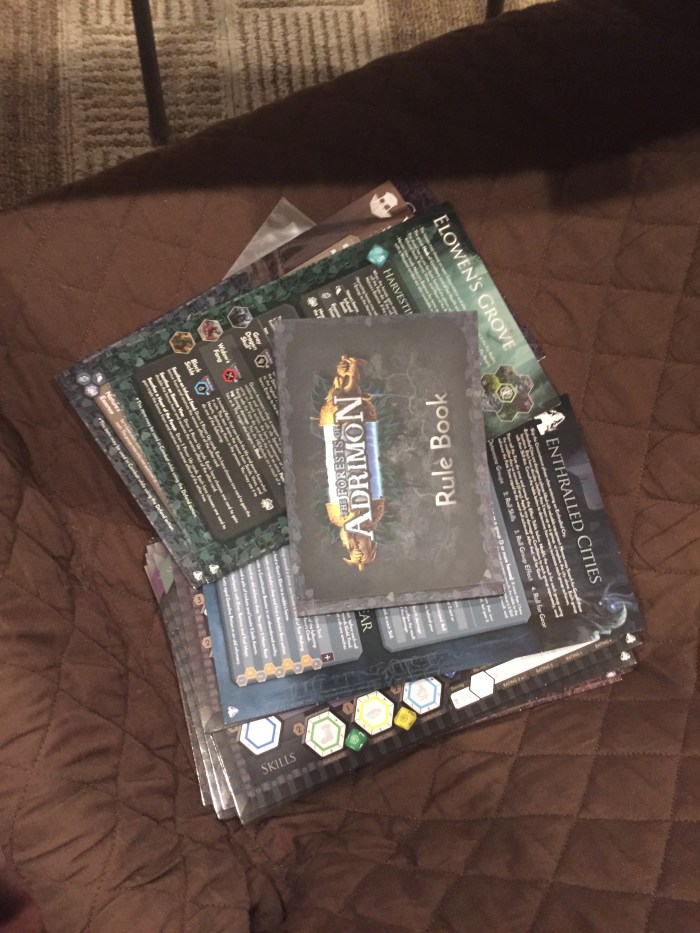
The rulebook
There were a lot of problems with the rulebook.
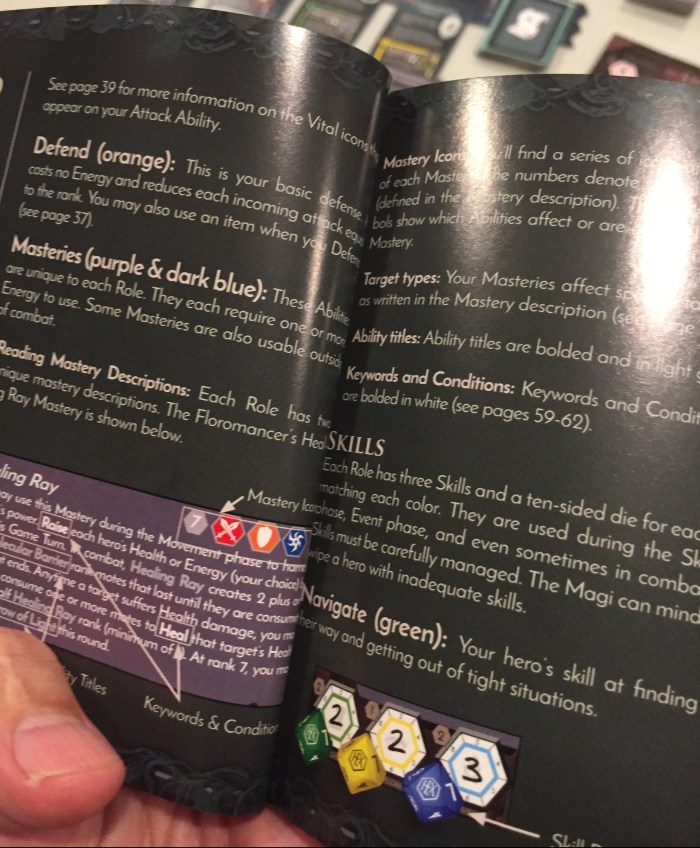
Black background, white text!
Black background, white text. This is a personal pet peeve of mine: it’s almost always harder to read!! But, people like to do it because it looks more “thematic” (Oh, this is a dark game).
It’s too small. This is a big game and the rulebook seems “too small”. A lot of rules which would belong together on a page span multiple pages and make it harder to read. For example, combat takes almost 28 pages to describe! It was very frustrating to read about combat as you paged through the book!
The rulebook won’t stay open. If I wanted to keep the rulebook open, I had to “hold it” open! I am used to board game rulebooks that just stay open when you put them on the table. The binding of the rulebook forced you to hold it open to see things!
The text was too close to the binding. In other words, I had to “force” the book open to see all the text that was close to the binding.
Black background, white text! Have to hold rulebook open! Text too close to binding!
The rulebook itself did describe most of the rules. But, a lot of rules were also on dry-erase boards.
For example, a lot of stuff for the Waypost is on this dry-erase board (above). Similarly, rules for Sentinels, the Battle Sites, the Enthralled Cities, and Elowen’s Grove were on other dry-erase boards. We got used to it when we played, but it was non-intuitive that the rules were so spread out.
After we played, I was used to having the rules spread over multiple boards and in fact, I think I liked it: we weren’t “so tied” to the rulebook. But, I think I wanted more in the rulebook.
Summary Overall
In the end, my friend and I had a good time playing the game, in spite of the everything. It felt fairly balanced. We did “game the game” a little by spending way too much time in the Enthralled Cities. We were surprised that Combat wasn’t more upfront (that could have just been the way we played).
We felt like there were too many rules for what it was. The rulebook (grumble) was constantly held open as we had to look up stuff.
We played it, we won, but we don’t think we have a desire to play it again! It almost felt like a story/legacy game: once you’ve played it all the way through, you are done because you know what to expect!
Conclusion and Score
A Winning game!
I’d probably give the components a 5-7/10 (it would be 8 or better but the dry-erase system didn’t work that well). The pictures were awesome and thematic, and I felt like I was in a forest with the hexes.
The rulebook was a 6/10: it should be less, but because it actually taught the game, I have to give it at least a 6.
The gameplay was fun ONCE WE GOT INTO IT: 7/10 for gameplay.
The game was too long and doesn’t have a lot of replayability. BUT I plan to give the game to some friends and have them play. If you look at this game as a legacy game with a 6-8 hour playtime AND YOU KNOW THAT’S WHAT YOU ARE GETTING, then this game would be a lot more fun.
I am really conflicted on what to give this game as an “overall”: When we played it, we had fun, but that was despite the issues. If you know what you are getting into, I think this could be a good game.
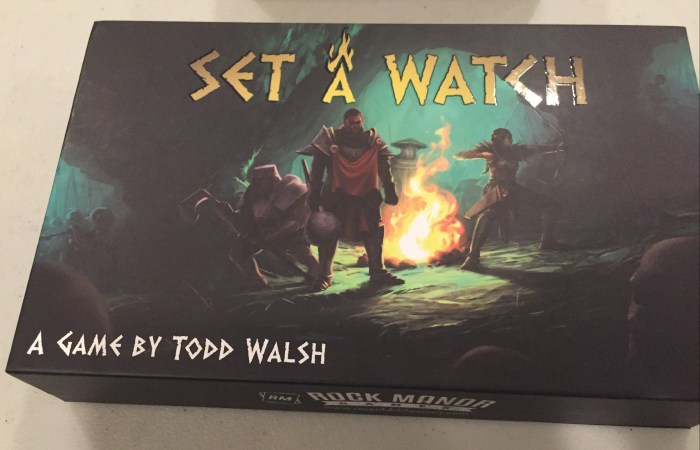
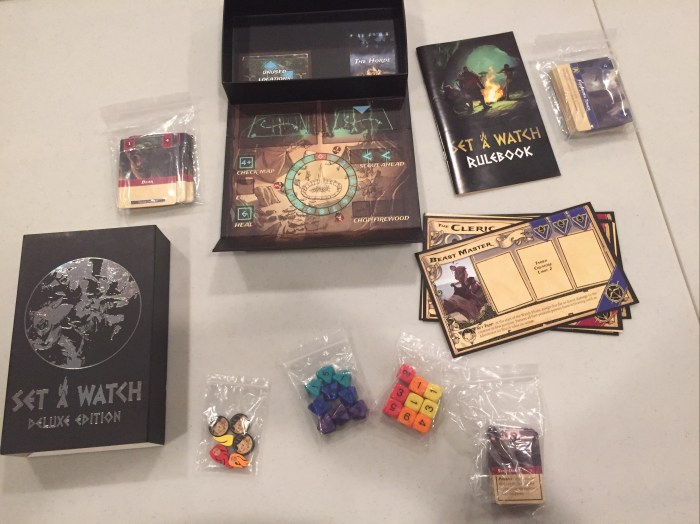
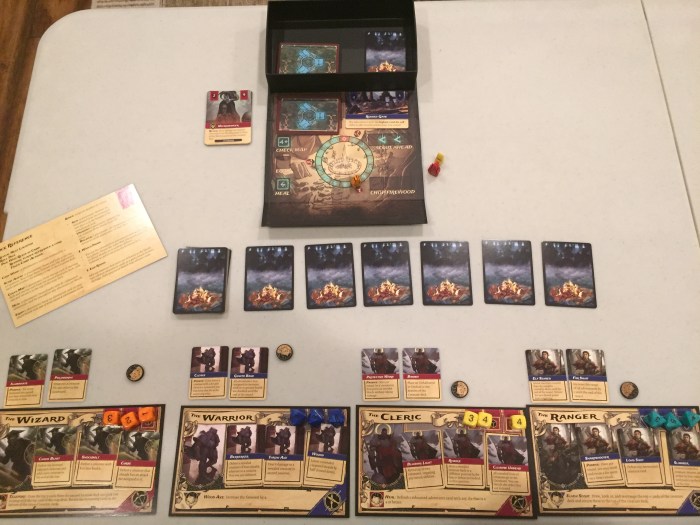
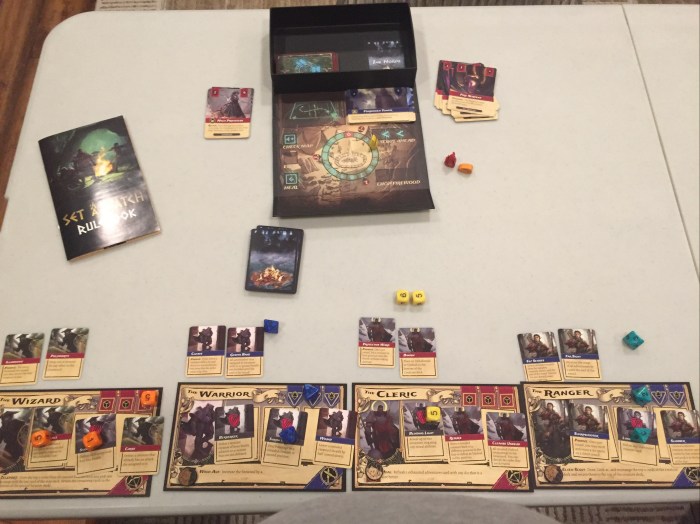
Set A Watch is a Kickstarter game that was active in late September 2018 and delivered here to the USA in late June/early July. It’s a cooperative game about keeping watch at a campfire and defeating monsters who would attack your campfire.
Set A Watch: a cooperative fighting game: protect the campfire!
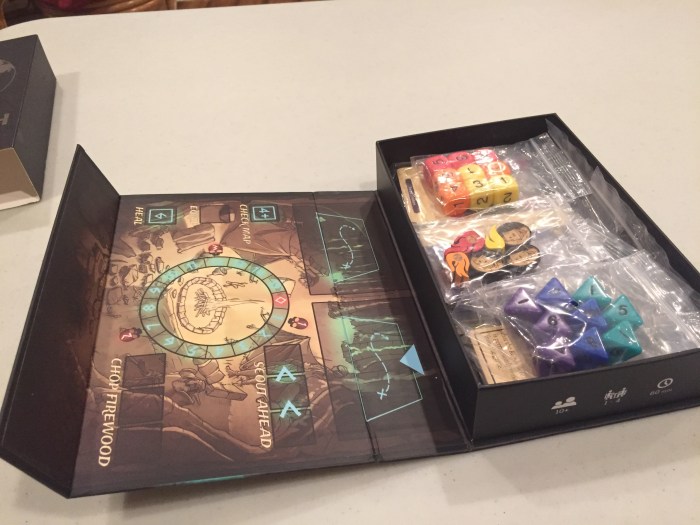
Set A Watch is light to medium weight game for 1-4 players (although, see below). Each player takes a very different role (Cleric, Knight, Beastmaster, etc): there are 8 roles in the game (6 or 7 in the retail version I think), with each player taking a different role. It’s a smallish game in a smallish box (barely fitting in the box, but it does fit).
Barely fits in box!
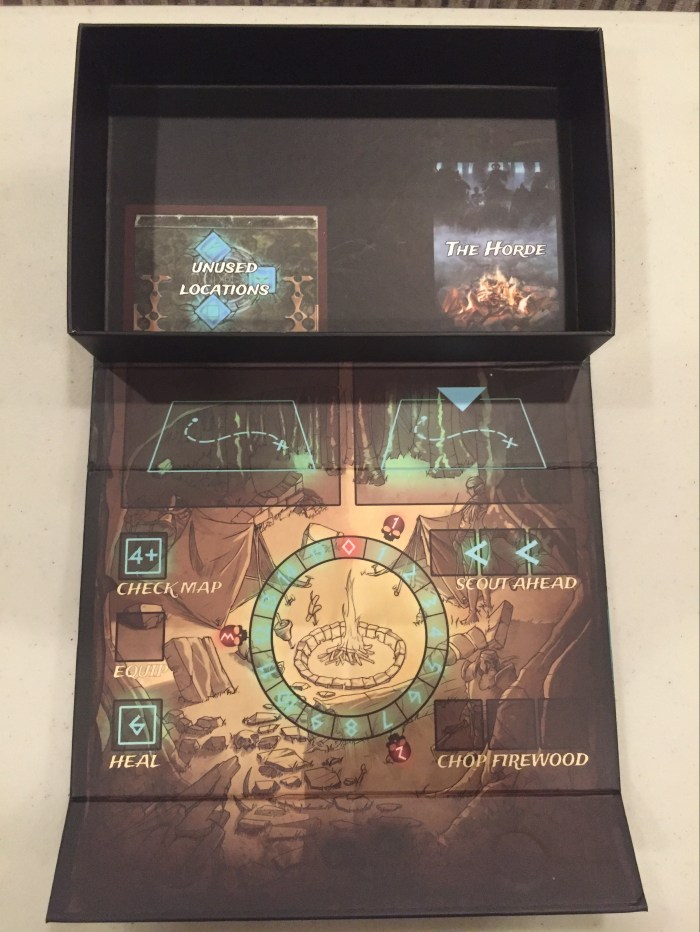
Note that the “board” is in the top of the box! It’s pretty cool, but I had some trouble keeping the edge (leftmost edge in picture) down during play.
Characters
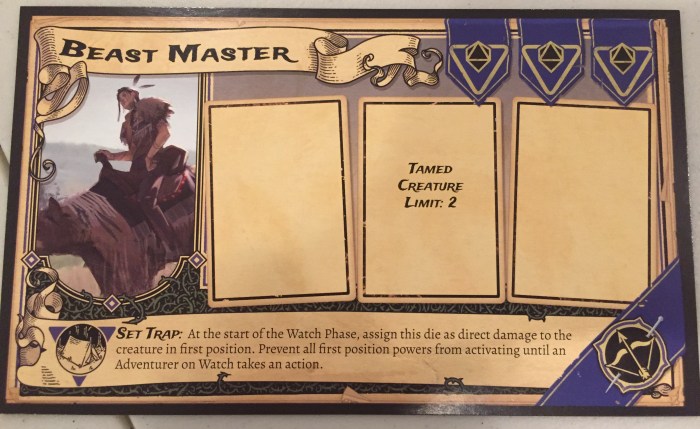
Beast Master uses 8-sided dice!
Each player chooses a character, with 5 special abilities (only 3 at a time can be used in the empty positions on the card). Each player also has a special ability back at camp (Set Trap above).
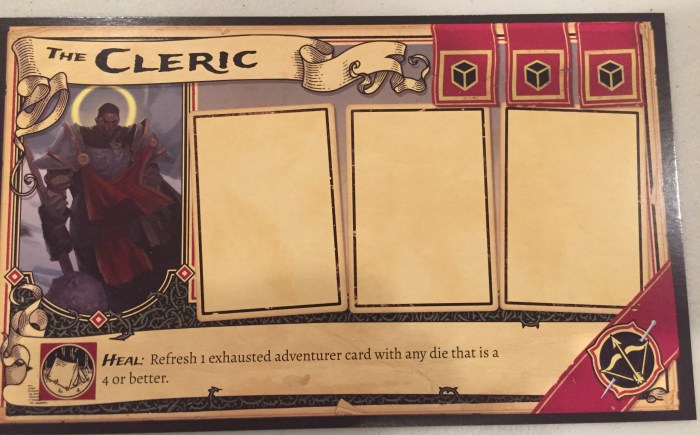
Cleric uses 6-sided dice!
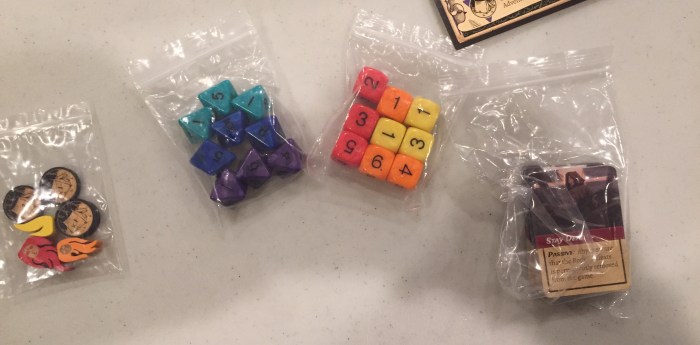
Each character gets 3 dice which you role at the start of your turn. Some characters get 6-sided dice and some get 8-sided dice. It’s pretty obvious: the 6-sideds are red/orange/yellow, and the 8-sideds are green/blue/purple.
I wish the 8-sided dice used white for the colors so they were easier to see
The dice are the key element to the game! Whenever you do anything, you assign dice to either abilities or just use the straight-up value to fight monsters with the direct value! Although it seems like the 8-sided heroes have an advantage, as they will tend to roll more potential damage, the 6-sided heroes have abilites that don’t depend as strongly on the value. We’ll see more below …
Components
The components are really nice. The box has a magnetic clasp (ooooh!), the rulebook is pretty good, the cards have nice art, the dice are decent (although the 8-sided are harder to read), and in general the game looks really nice.
You even get some nice wooden bits: there are 3 different fire tokens to represent “how high the fire is”! The higher the fire, the more of the creatures you can see! Usually, a higher fire is a good thing! The other wooden bits are a token to show “how many times you watched the fire”. Everybody has to watch the fire twice before the big battle at the end ….
Solo Play??
You must ALWAYS have 4 characters out, no matter the player count!
So, in Set A Watch, you must ALWAYS have 4 characters in play, regardless of the the player count. This means that in a solo game, the solo character MUST PLAY 4 characters at a time! Oi!! Although this game, strictly speaking, follows Saunders’ Law (every cooperative game must have a viable solo mode), it’s a bit much for the first play!! Playing 4 characters for a game you DON’T KNOW is really intimidating!! I really wish this game had a balancing act for fewer players (like changing the number of monsters that come out depending on the number of players), but it is what it is.
Set-Up
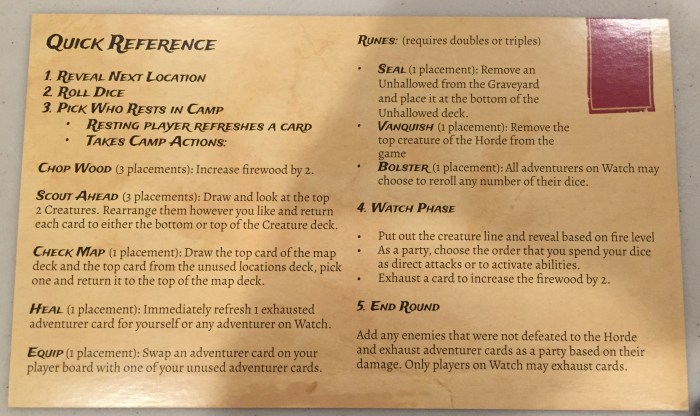
Each player takes a Character and the corresponding dice. HINT!!! The back of the character cards is a player summary card!!! Since there are 8 characters and only 4 ever playing, make sure you give everyone a “unplayed character” to use as a reference card!!! And this makes me very happy: in all the games I played, the player summary card was worth its weight in gold!! People who hadn’t played got almost everything they needed from either the player summary part of the front part of their card.
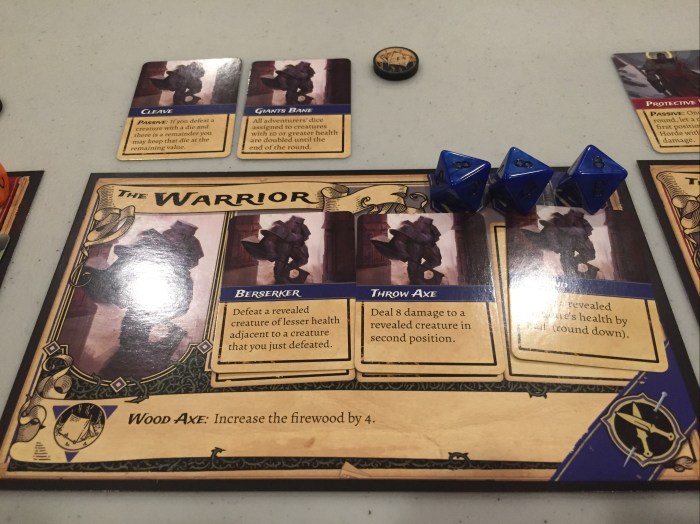
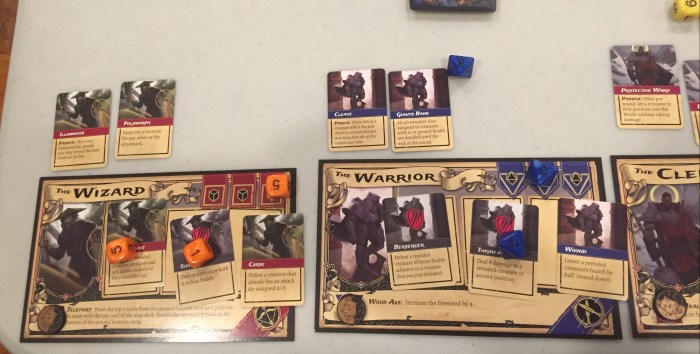
The Warrior!
Once you choose your character, you choose 3 of your 5 powers to populate your character. The other two remain dormant (although you can swap them in during the campfire phase later). These 3 power cards represent your “hit points”: if all three of them are ever disabled, you cannot participate in combat. You can heal from the Cleric, or back at the campfire.
Set-up!
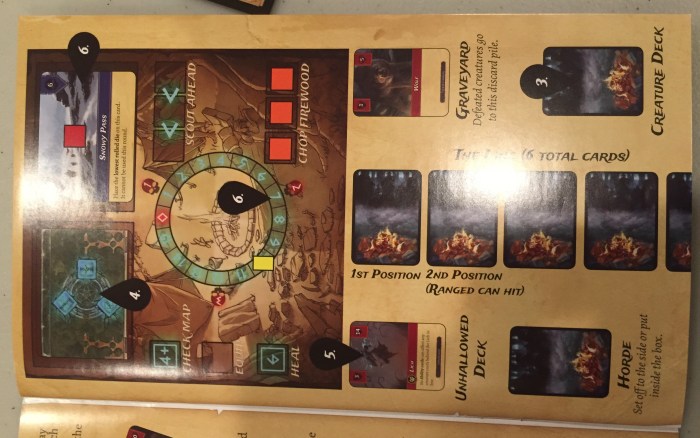
The Rulebook has a nice picture of set-up, although the “Line” (where all creatures come out) is impractical. This is what I ended up doing, putting the line below the board …
Initial Set-Up
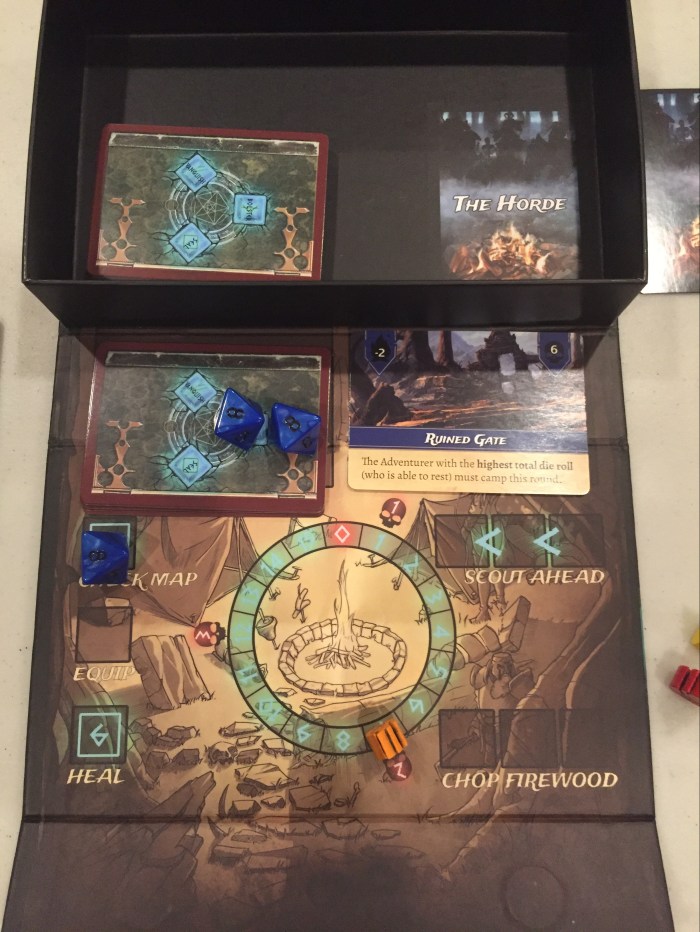
Once you get the game set-up, it flows pretty quickly. It’s a little fiddly to set-up. There’s spaces for the Horde and Unused Locations in the box …
Unused Locations and The Hoarde in the box!
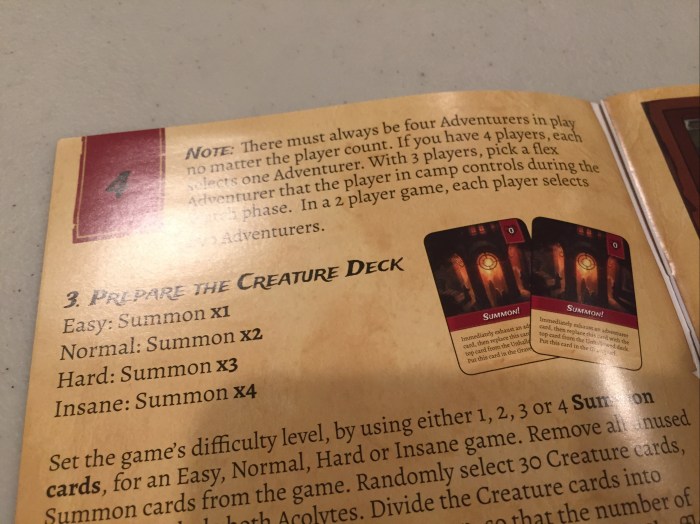
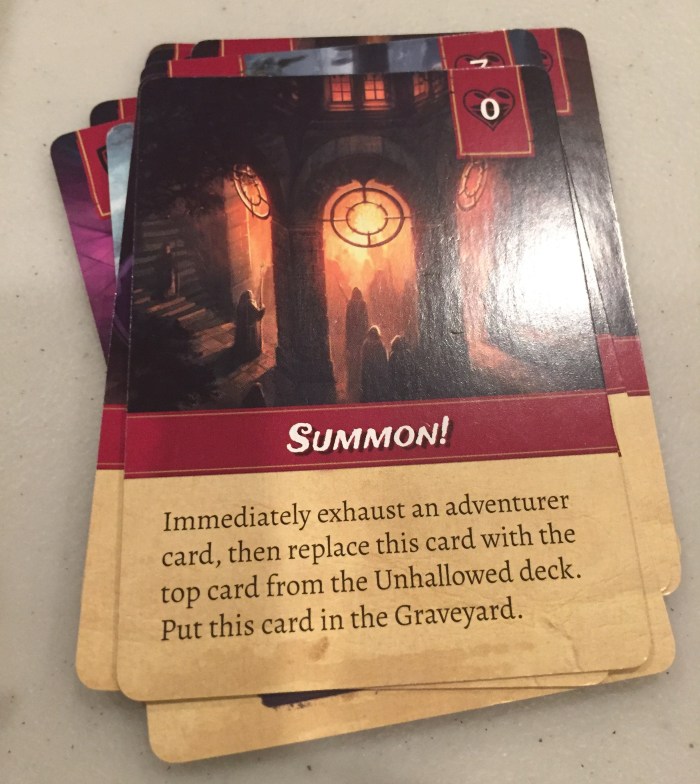
But everything else is the sides (the Graveyard and the Unhallowed). The difficulty of the game is controlled by how many Summon cards in the creature deck. The more there are, the harder the game is! The Summon cards bring in the Unhallowed, which are nastier monsters!
Gameplay
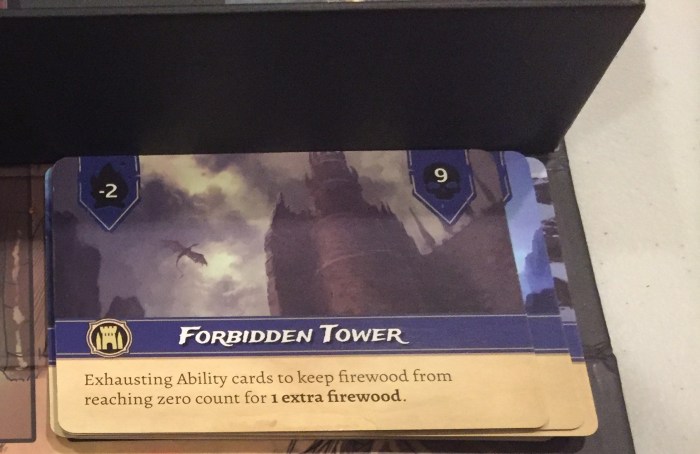
To Win, the players have to travel all the way back home (The Fobidden Tower). There are 8 locations to move from, and when they get home, they have to do a final stand to defend their home (from the Hoard as well!).
Home!
The gameplay is simple: at the start of the turn, everyone rolls their dice, and a decision is made! One character watches the campfire for the night and the other 3 go and fight the monsters that would attack the campfire! If any monsters make it through (aren’t defeated) , the adventurers gets wounded, and the remnants go the Horde.
Everyone must stay back (at the campfire) twice, but in the final combat at the Forbidden Tower, EVERYONE FIGHTS!
Campfire Phase
The character decides to check the map and use his double to get rid of monster in the Horde!
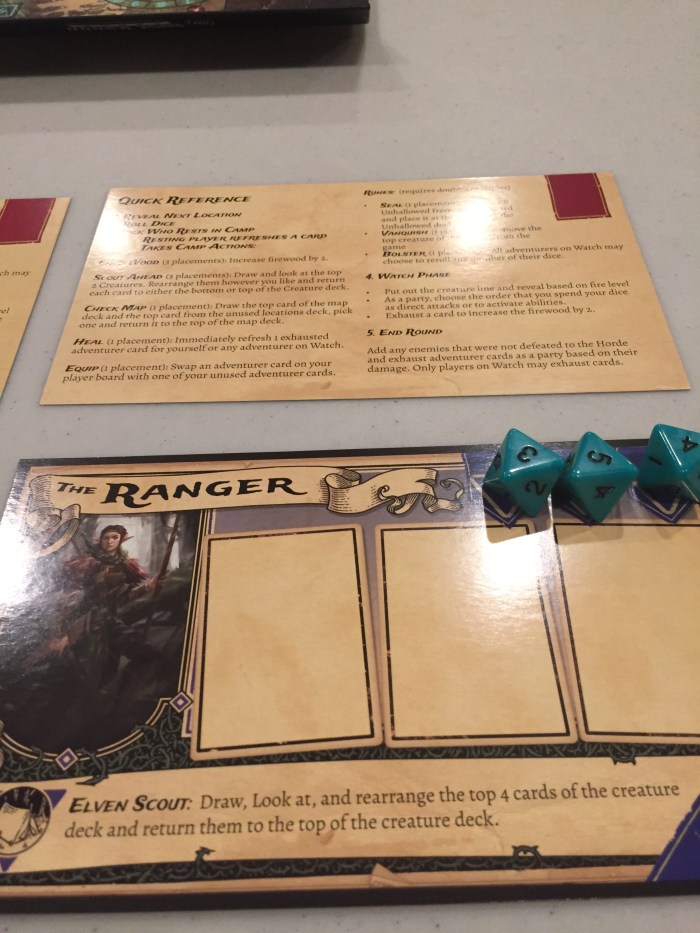
Everyone looks at their dice to decide who stay back at the Campfire this turn. Everyone must stay back exactly twice. Whoever stays back decides what to do with their dice: they can heal, chop firewood, check the map, scout ahead. If they roll doubles they can “activate Runes!” (do very special stuff )! If you roll doubles, this might be a reason to have your character stay back this turn! Again, the character summary sheet lets you know everything you can do!
In our case, the player uses his doubles to VANQUISH and get rid of one monster from the Horde! Important safety tip, you MUST FIGHT all monsters in the Horde when you make it back home! So, it’s important to keep the Horde under control …
So, the guy back at camp just hangs out while his compatriots go fight!
Watch Phase
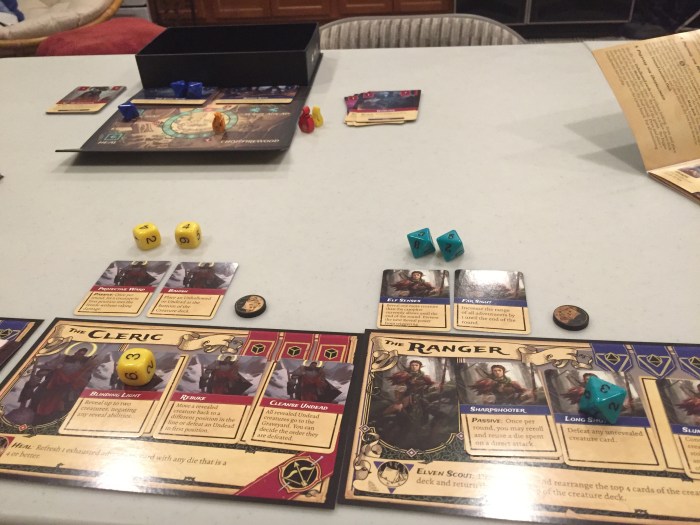
Each character, in Player Selected Turn Order (PSTO) (i.e., any order they want) can play any amount of dice they want. I can play 2, you can play 1, then I can play 1 more, etc.
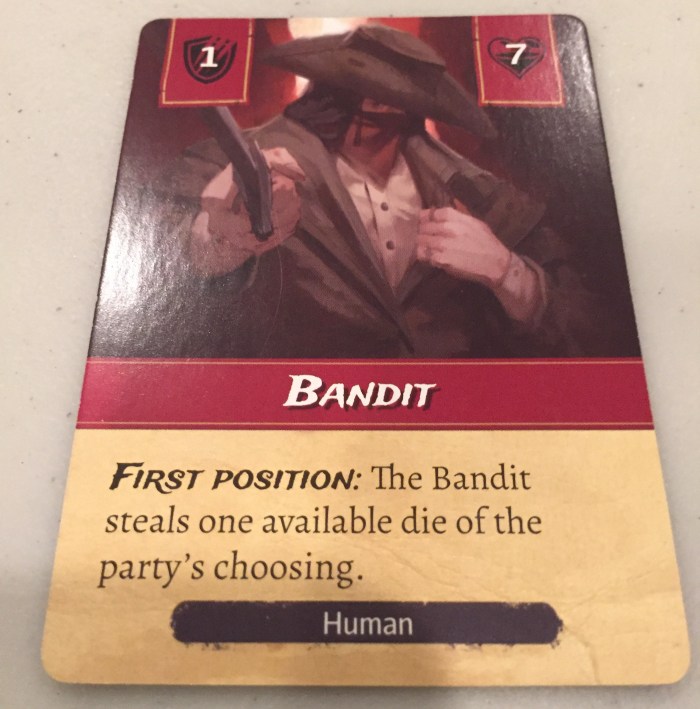
You can use Dice directly as their value for damage against a monster. The monster’s health is in the upper right corner.
For example: if I have a 7 or 8, I can kill the Bandit with 1 die! Since this is a cooperative game, I can play a 3 and you can play a 4 (or more) and together we can take it out! Once a die is used, that’s it for that die this turn.
The second thing you can do it to use your die to activate one of your special abilities!
Use dice to activate special powers!
For example: the Wizard has used two of his abilities this turn (each ability can only be activated once). This is notated by putting one of the dice on the ability.
Finally, you can “exhaust” one of your abilities to use it again (without needing a die). Unfortunately, unless you heal yourself, that ability is gone for the rest of the game. (You can heal yourself back at camp or the Cleric can heal you).
Once all the monsters in the line are taken care of, you go to the next round! There’s a notion of keeping your firewood high enough to see more monsters, and there’s some other rules, but that’s the basic game.
Thoughts
A winning game!
So, this game has gone over like gangbusters in all my game groups. I have played it solo, we have played it in my serious groups, a couple of lighter groups, and my Las Cruces group (which is notorious for very different opinions on games than my other groups). And everyone has liked it!
The game plays quickly (an hour), everyone feels engaged most of the time, and bad dice rolls can be mitigated by the special powers! I was worried that when a player “stayed back at camp”, that would cause that player to get annoyed for that turn (they are doing stuff, but not quite as much as the other players). In the end, everyone “got it”! Someone has to stay back and take it for the team this round! And it seemed a very cooperative decision … since everyone has to stay back exactly twice, I don’t think anyone felt slighted.
The solo play works once you know the game, but always playing 4 characters is annoying. I wish there were a better solo mode, this one is good enough to have fun with.
In the end, this game has been a hit in all my game groups. It’s smallish, fast, fun, easy to learn, and there’s a ton of variety between the different characters. This gets an 8 on the BoardGameGeek scale! Good game!
This is part II of the Thunderstone Quest: the Barricades Expansion review: See Part I here. Part I focuses much more on components and overall initial experience.
Dungeon Crawling and Cooperative Deck-Building
The other night, we played two dungeon-crawling cooperative deckbuilder games back-to-back: Heroes of Tenefyr ….
… and Thunderstone Quest: The Barricades Expansion.
The Expansion we will refer to as Barricades mode, just like the rulebook shows you …
Never have two games that were so similar been polar opposites!
Set-Up
Heroes of Tenefyr (HOT) took a few minutes to set-up. Thunderstone Quest: The Barricades expansion (TQBE) took almost a half an hour. And this is pretty typical. I’ve played TQBE a number of times now and it takes a while to set it up. You could argue that I am not familiar enough with the game to move it quicker, and you’d be right.
But, for a game that’s almost as big as Gloomhaven, it just takes a while to set-up. You just have to accept it!
Rules
I was able to explain the rules to HOT pretty quickly and we got underway.
TQBE took a while to ease into the rules: I had to have the cooperative rulebook AND the main rulebook (remember: this is an EXPANSION so it has its own set of rules) out at the same time to push through the game.
Need to have BOTH rulebooks open to play! The original rulebook from base Thunderstone Quest (on top) and the new rulebook for the Barricades on the bottom!
It’s been like this for every playthrough TQBE! Really, a player summary card would have gone a loooooong way towards making this easier ….
Gameplay
HOT doesn’t have too many rules. You just start playing right away.
In TQBE, you keep forgetting rules and have to look stuff up:
“Oh ya, bread can be used for skill too?”
“Why do we want to use the Marketplace? Draw a card from the marketplace or deck?” (We never did figure it from the rules, but it seemed too powerful to just take a card from the marketplace, so we assume it meant draw an extra card on your turn)
“Wait, when do we get the frozen wounds? What’s a festering wound?”
We had to look up many rules for TQBE expansion, and we realized (even after a number of plays) that we are still learning things!
Comparison
Here’s the thing: Heroes of Tenefyr wasn’t for us. I played HOT solo to learn the game, and I never felt like I had any real choices. Sure, I could cull a card from time to time, but you always cull your zeroes! Not really a choice. It felt like you just turned over cards and saw what happened. I was hoping the group play would be better (and it was) but my gaming group hated this game. They said the same thing I did, “It felt like I had no choices, I just turned cards over.” I liked it better than that with more people, but it felt almost like cooperative war (the card game) … which could be fun with the right group. Fun and brainless, nice art, but not really a lot of choices. I liked it okay in the end, but my gaming group rated it very low: 5ish–one person gave it a 2!
I wanted to talk about Heroes of Tenefyr first so I could talk about Thunderstone Quest: The Barricades Expansion. They really are polar opposites.
HOT is easy to set-up and explain, but has few choices when playing. But it’s short, maybe under an hour.
TQBE is hard to set-up and explain, but you have SO MANY choices when playing! And it’s long: maybe 2 hours?
Conclusion
In the end, my group loved TQBE because it has a lot of choices! It’s just the nature of my game group: your mileage may vary. We ended up giving TQBE probably a 7 or 8 overall, but we realized we had to “suffer” for our choices. Set-up and tear-down were long, the rulebooks were a bit daunting (they were well written, but the cooperative mode was separate so it made it messy to go back and forth). At times, the game felt like “work” trying to juggle everything going on. But it was fun!
In the end, the solo mode was good but 2-3 players was probably the sweet spot. 4 players works. 5 players may be a bit too much for this game… I mean it works, but there is so much going on, it becomes a little overwhelming.
Be aware: it’ll probably take 3 hours from start to finish to get through as game (because set-up and tear-down adds another hour over the 2 hour gameplay), but it was a fun game with a lot of choices.
Maybe Heroes of Tenefyr is for you and your game group or maybe Thunderstone Quest: The Barricades Expansion is for you and your game group. Based on my experience, you are going to like one and dislike the the other.
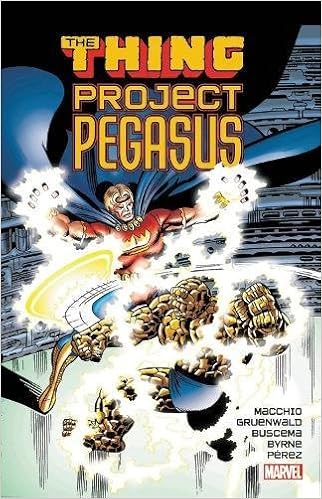
I’ve been reading Comic Books since I was very young (7? 10? years old?) and SuperHero comics were always my favorite. I wanted to be Batman (with cool gadgets) or Superman (with his flying and heat vision) or Spiderman (flinging webs) or Quasar (who? Read The Pegasus Project) or pretty much ANY SuperHero. When I first discovered cooperative board games (like Arkham Horror, 2nd Edition) in the early 2000s, I was excited but disappointed! Why weren’t there any cooperative SuperHero games? There just weren’t any …
Fast-forward to 2019! The Avengers: Endgame movie just came out and is one of the biggest movies of the year! If not the decade! SuperHeroes are definitely in vogue, and there are a bunch of SuperHero games now! And a good number of them are cooperative games. Let’s take a look at the Top 10 Cooperative SuperHero games!
Preamble
Before we get into the list, let’s talk about a few that didn’t quite make it for one reason or another.
Justice League Hero Dice (Flash or Batman or Superman or Green Lantern set): This game is really hard to get a hold of. I “happened” to just find the Flash version at my local game store! But, this game is out of print and so very hard to find in the US for any reasonable price. I did get a German version of the Batman version though (for too much money). The dice are pretty awesome, and there are some great ideas in here, but it’s too hard to get, and the gameplay is perhaps a little too simple. I think if this game had been better supported, it might have inspired some expansions which would have made the game better. The components were just dice and cards, but they were pretty awesome quality. I just wish the game were better.
Heroes Wanted: (with Champions and Masterminds I or II): The base game of Heroes Wanted is NOT a cooperative game. It’s a quirky and silly game of building silly SuperHeroes with different parts (almost like paper dolls) and getting victory points. They came out with two cooperative expansions (Champions and Masterminds) … and they were just okay. They replaced all the funny, quirky SuperHeroes with just 4 Heroes that you HAD to play with. Part of the fun was just the silliness, and it felt like the game was stripped of a lot of its core mechanisms to make it cooperative. I really wanted to like the cooperative versions a lot more, but it’s just okay. The competitive version is better.
Okay! Let’s get to the Top 10! As usual, we will quickly discuss whether the game plays solo (Does it follow Saunders’ Law?)
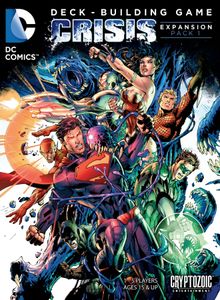
10. DC Deckbuilding game with the Crisis expansion(s)!
Plays Solo? If you play two decks.
By default, the original DC Deckbuilding game is a competitive deck-building game. As of now, there are 4 Crisis packs (see picture above) that turn the game into a cooperative game. It’s still, at its core, a deck-building game. It adds cooperative mechanics as each player takes the role of a SuperHero from the DC Universe (with fairly simple powers) and players try, as a group, to work their way through a set number of crises. If the players make it through the last one before the deck runs out, they win! The mechanics are a little clumsy and the “crises” feel a little pasted on into the deck-building game, but in the end, it was pretty fun.
As of this writing, they are “rebooting” the game. The deck-building engine of the DC Deckbuilding game is called the Cerberus engine, and apparently has evolved through quite a number of products, including Attack on Titan. The new Rebirth is supposed to add some legacy elements, add movement around the city, and is the “best” version of the Cerberus engine! Time will tell if it’s significantly better! You KNOW we’ll review it here on CO-OP Gestalt!
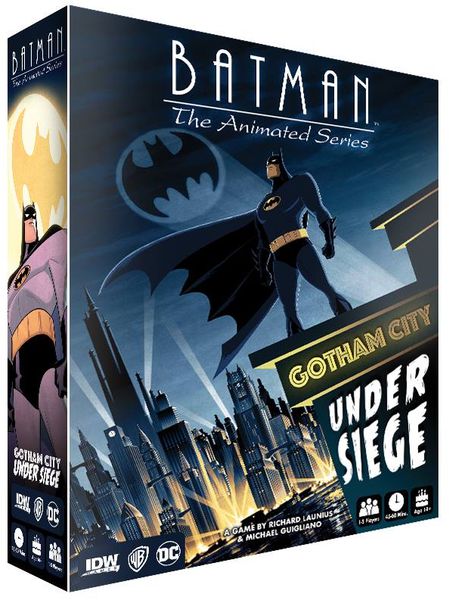
9: Batman: The Animated Series – Gotham City Under Siege
Plays Solo? If you play multiple characters.
This is a real fun dice-chucker by Richard Lanius (designer of Arkham Horror 2nd Edition!) and Michael Guigliano. Each player takes the role of a Hero from the Batman (the Animated Series) universe: Batman, Robin, Commissioner Gordon, etc. You are trying to stop the Villains from blowing up the buildings! Working together, you role dice, mitigate dice rolls, and move/position your Hero around the city to stop exploding buildings!
The game has a real high “toy factor” with the little minis and the buildings you can move to. It’s a fun, it a little lucky (with so much dice-chucking)!
8: Thanos Rising: Avengers Infinity War
Plays Solo? No, unless you play multiple leaders (but then it’s clumsy).
So, this is another dice-chucker (like the Batman game at number 8). Each player takes he role of a hero who is a team leader (become Captain America for the Avengers team or Gamora for the Guardians of the Galaxy team or …). The players role dice to try to recruit characters for your team, with the ultimate goal of collaborating and defeating Thanos (using the same dice you are using to recruit)!
Like Batman, this one also had a nice “toy factor”, with a Thanos figure who rotates and “attacks” 1 of 3 sectors per turn. As the game proceeds, Thanos progresses and finds more and more Infinity Stones (gaining more powers for each gem he acquires), until he finds them all and wins! You have to stop him!
This game is a dice-chucker and arguably more lucky than the Batman game, but I still had fun! Even when I was rolling bad, I was rooting for my friends who were rolling MUCH better than me! Fun cooperative game.
7. 5-Minute Marvel
Plays Solo? No. This game is really about the interaction with multiple players. You could probably technically play two different characters.
This game is by far the lightest game on this list, but it was so easy to play and so easy to get into! Each player takes the role of some Hero (each with a different, simple power to manipulate cards).
You all work together to draw cards and try to get all the cards you need to defeat the all the bad guys. It’s all real-time! You play cards, take out villains until you finally get to the big bad! But you only have 5 minutes! If you run out of time, you lose!
The game is slightly misnamed, as you have 5 minutes PER VILLAIN! You start off with a simple villain, try to beat him in 5 minutes! Then repeat, with harder and harder Villains until you get to Thanos! If you take out Thanos, you win!
This is a very light game, but really fun! And the cooperation REALLY comes through in this one, as you have to share cards in real-time.
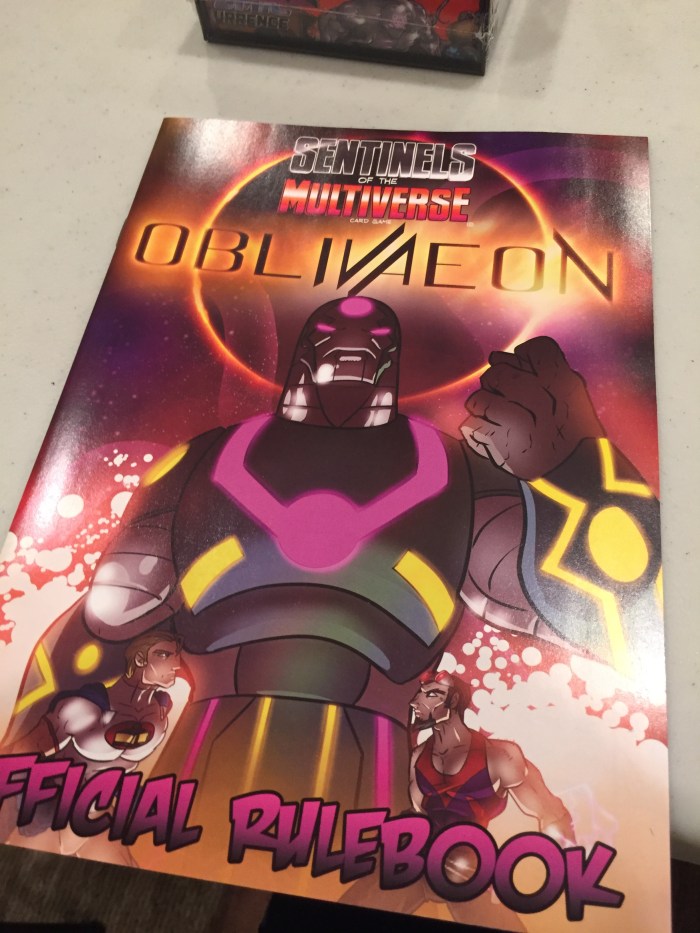
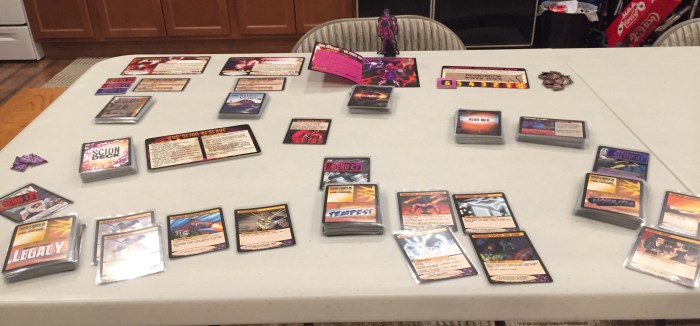
Soooo … this is by far the heaviest game on this list. This is the “final” expansion for Sentinels of the Multiverse (a cooperative SuperHero game), but it is a very different game in many ways! It adds so many new mechanics, it is no longer the simple, straight-forward card game but a deep, deep game!
Oblivaeon: starting set-up! It’s huge!
The players work together together to take down Oblivaeon (who looks NOTHING LIKE THANOS) as he and his forces shift between realities, and heroes die (!) forcing the players to on the role of new players (who will also die). Players have to go in knowing that your hero will die, because it might be too much to handle in the heat of the game!
This is real fun, but do not attempt it unless you are ready for a 3-4 hour game which is not unlike Avengers: Endgame!
5. Kick-Ass: The Board Game
Solo Play? Yes. Really good solo!
This one really surprised me. I don’t like this comic series. But the game is really great. It’s probably the second heaviest game on this list.
Each player takes on the role of a character from the Comic Book. Their powers are set by some starting cards, which are VERY DIFFERENT for each character. Players move around the city, keeping crime under control. They are trying to find the “Big Bad” Villain to fight at the end of the game. The players have to keep the events (upper part of the board) in check, otherwise the city just gets overridden with crime.
The game has a 18+ rating, as there is some language and imagery that is mature. That’s consistent with the comic and movie.
But this game is really good! You feel like you “level up” as you play the game, so you feel like your character is getting better and better as you play! You become better at Social Media (seriously), hit the gym, buy better equipment, cheer yourself up. There’s even a smidge of deck-building (your main action cards, but you can only ever have 5 cards)! But you still work with your compatriots to fight crime, keep the city under control, keep the events under control, all while leveling-up so you can fight the Big Bad at the end of the game.
Legendary is a Marvel-themed cooperative deck-builder. In this game, you don’t play a particular hero, but you play more like a “manager” as you recruit Heroes to your deck, all while trying to stop villains from moving across the city and escaping!
The game has TONS of expansions and tons of different scenarios in this simple deck-building system. It feels good to build up your deck and get better and better heroes and take out the Villains as they escape from the Villain Deck.
Strictly speaking, this is NOT a cooperative game, as you are supposed to add up the victory points (of all bad guys you defeated) and the winner is the one with the most victory points. We NEVER play like this: we always play purely cooperative, and everybody I know plays it cooperative. I wish they would just make it official!
3. The Reckoners
Solo play? Yes!
The Rulebook for The Reckoners
By all measures, this game shouldn’t be this high on the list! At the end of the day, the core mechanic is “really” just a Yahtzee “reroll dice up to 3 times”!
The dice: this is really just a Yahtzee game, but the dice are SO nice!
The game has amazing components, and these components really bring out the theme of the game! The city locations are these amazing dice trays!
The game feels complicated the very first time you play, but once you get into it, it flows quickly. Players MUST work together to decide how to help each other. Do we take out a villain at a location? Do we do some damage to Steelheart (the big bad you have to defeat to win)? Do we have to clean up the streets? Do we go shopping for better gear?
The game is real fun and the component quality is just amazing.
2. Sidekick Saga
Plays Solo? Yes. The solo player plays two characters.
Sidekick Saga is Seven Wonders meets Sentinels of the Multiverse meets Pandemic Legacy! Like Pandemic Legacy, Sidekick Saga has an ongoing story that unfolds over many plays. Like Seven Wonders, Sidekick Saga has Simultaneous Action Selection, so everyone can play at once (keeping the game moving quickly). Like Sentinels, each player plays a SuperHero character with very different powers (and these powers can upgrade and change as the game evolves!)
At the end of the day, Sidekick Saga has an ongoing story, city exploration, fast-moving play, great art, and probably my favorite feature: you can make your own Super Heroes!
This is not really a surprise to anyone who knows me. I bought the game sight unseen off the Greater Than Game website in 2011 (I have the original version with the original art above!) I knew nothing about the game. After I played it, I never looked back … I loved it!
Each player takes the role of a Superhero with their own deck! Each SuperHero is VERY different and plays VERY differently! Of all the games on this list, this is the one where you really feel like you are playing that hero and nothing else is like you!
The gameplay is simple: play a card, use a power, draw a card. That’s it! (Well, you have to draw a card for the environment and the Bad Guy too ..) What makes the game interesting is what the cards do!
There are SO MANY expansions to the game and so much content, you could play this game for years! It also has the best App of any game I have played (if only because you can rewind a turn or two!)
Some people think this game is too fiddly (in which case, the app is definitely for you), but it seems to bring out the SuperHero genre better than any game I have played! Even when you lose, it reminds me of old Spiderman comics (“I lost to the the magic guy! Maybe I’ll go recruit Doctor Strange to help me!”) where you rethink how you go after a Villain NEXT TIME!
Sentinels make me feel like I am playing a SuperHero.
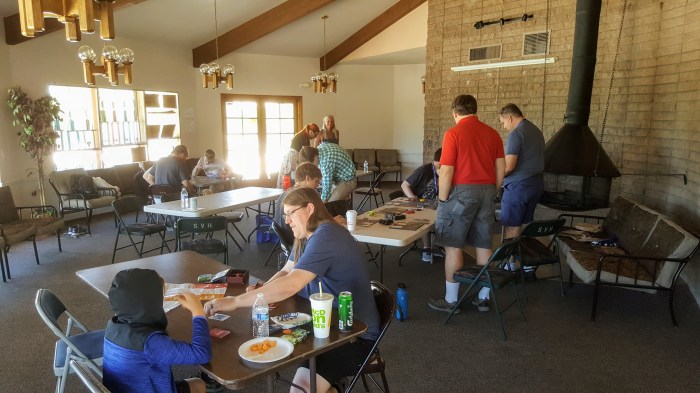
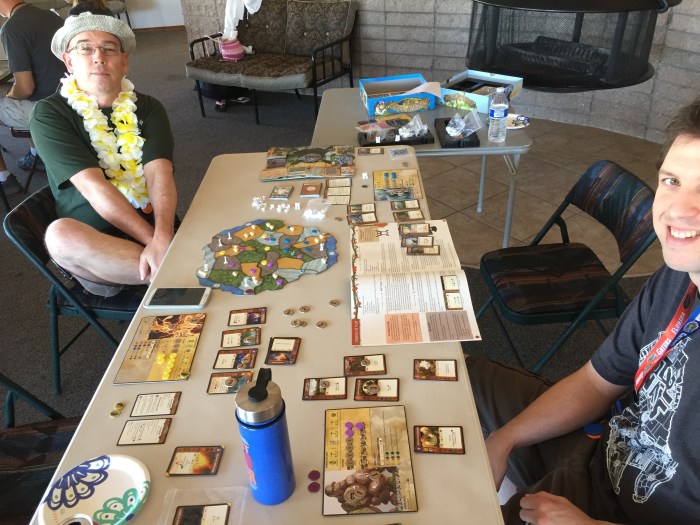
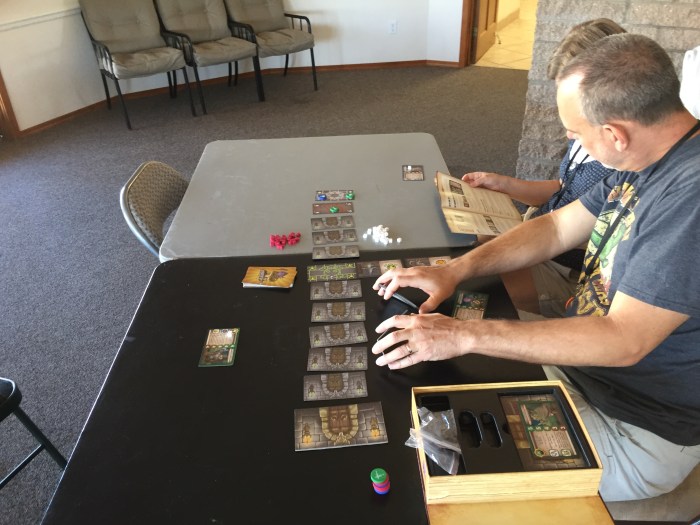
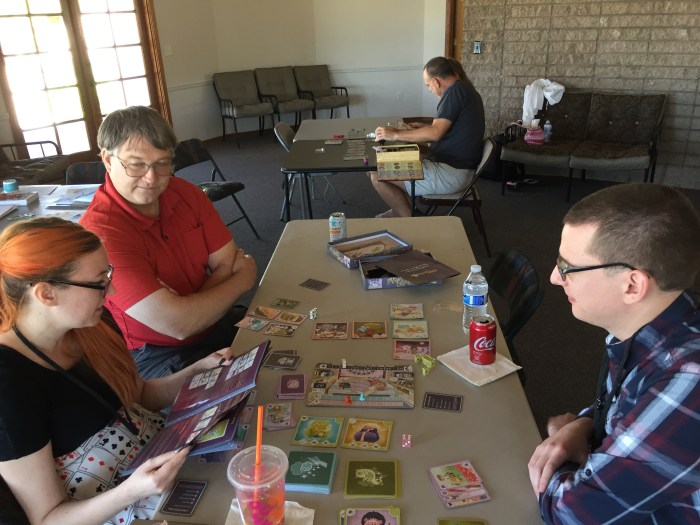
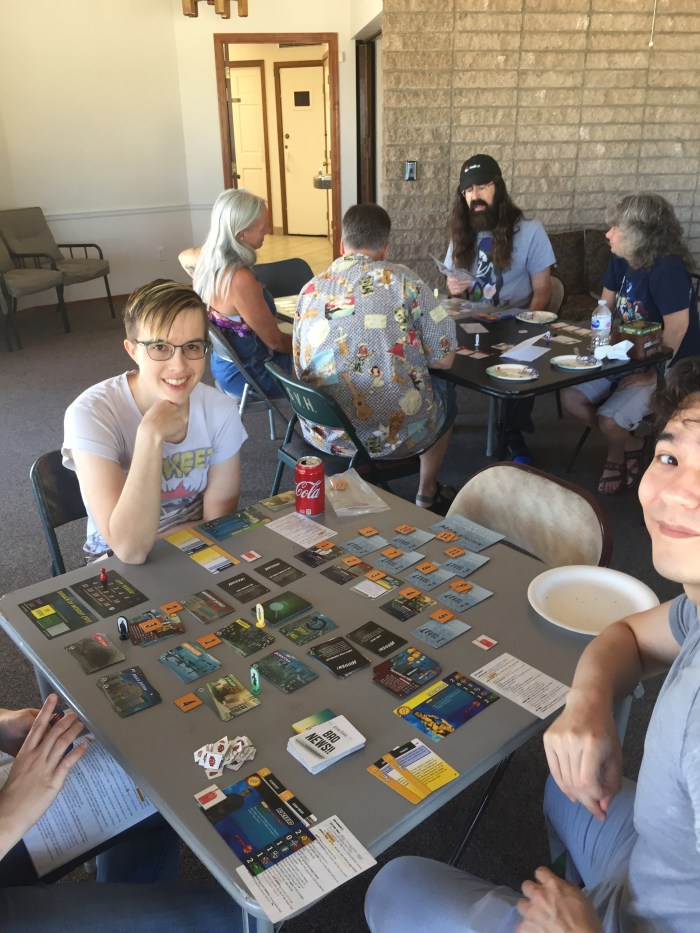
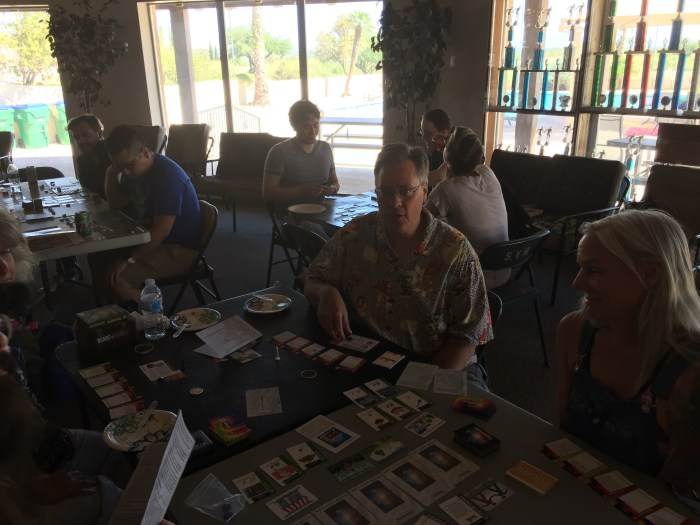
So, RichieCon 2019 came and went last weekend. We played games for 3 days in a row up at the Rec Center in my area!
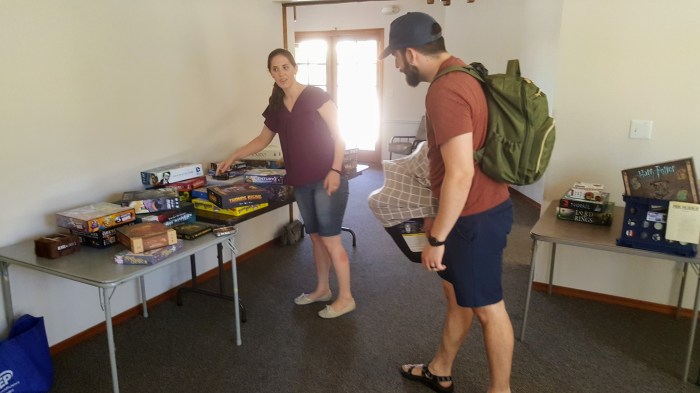
There were plenty of games brought my many friends! Most, however, were Richie’s games (thus the name …. RichieCon).
Richie’s games on the left …
Food!
Thanks again to Jeremy for making AMAZING BBQ Butts and Brisket for everyone on Saturday! Will came in a close second with his chocolate chip cookies …
Great Games All Around!
Everything I played, I liked this year, so there were no losers for me!
Thunderstone Quest: Barricades mode (cooperative)
Kick-Ass
Dinosaur Island
Ygdsrasil
Flotsam Fight
Shipwreck Arcana
Spirit Island
Sidekick Saga
Crosstalk
Spirit Island! Always a hit!
The clear winner, though, of RichieCon 2019 (even though I didn’t get to play) was “Spirit of 77“! Junkerman ran this game, and everyone who played it had a blast. I think Junkerman ran 3 sessions with different sets of people. Far and Away this biggest hit of the convention!
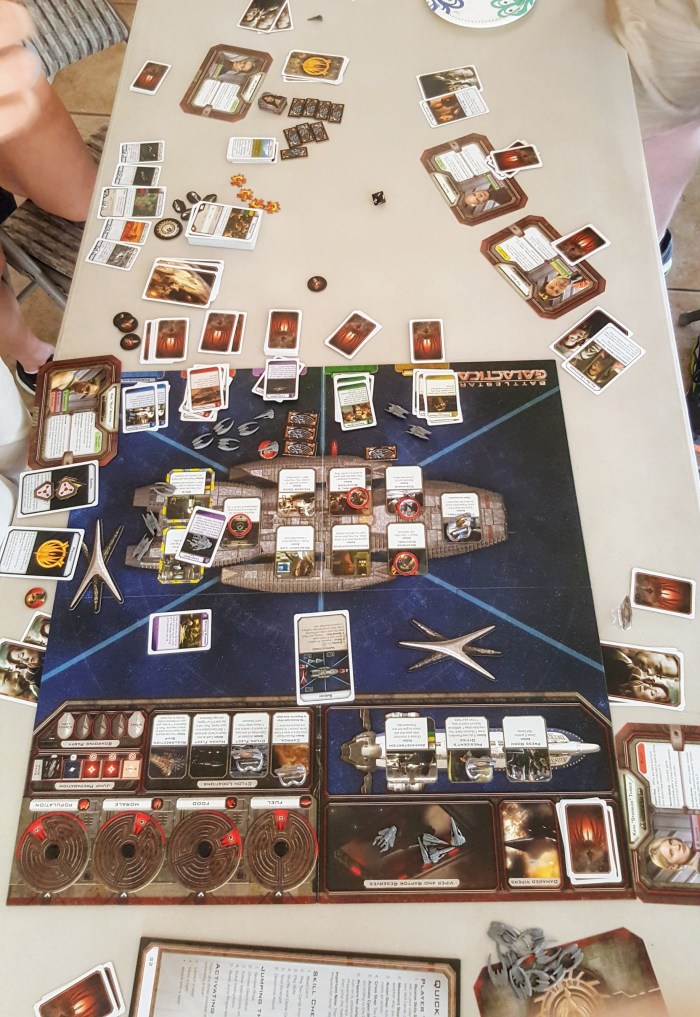
One game of Battlestar Galactica ran 6 hours!!!
A lot of people also played Exploding Kittens and they all seemed to enjoy it. I saw Kingmaker being played (very old), Awaken Lair, and some Deckscape games. No Unlock games, which surprised me, because I brought all 12 (?) of them up!
Awaken Lair
Underwhelming Games
I didn’t hear about too many games that didn’t go well this year, but I did hear about two:
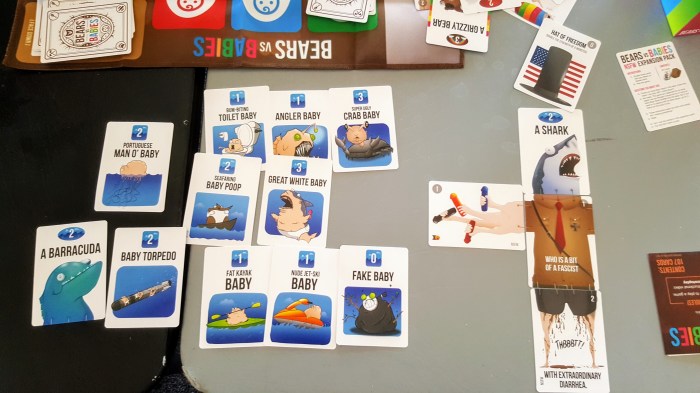
Bears vs. Babies: Apparently, this was terrible, at least according to my friend and his 7 year old son!
Bears vs. Babies!
DreamCatchers! I bought the game because of this review, but had not one, but TWO sets of friends tell me it was just too random and too generic.
DreamCatchers!
I still want to try DreamCatchers myself because I pronounce it …
Favorite Moments
My two favorite moments:
When Mike, me, and Joe spontaneously started singing the song Albuquerque (by Weird Al) in unison! (Sorry, no picture)
Seeing two of my games (CO-OP: the co-op game and Sidekick Saga) being played next to each other at two different tables! The games came out organically (I never suggested anything), and just so happened to be played right next to each other!
Sidekick Saga on this table (Will wanted to play the Tinkerer because he voted for her!) …… and CO-OP: the co-op game being played right next to it!
Conclusion
RichieCon 2019 was a success! We will be doing it again next year! We’ll probably start planning in April, so we can reserve the clubhouse in June again.
Thanks to Josh for designing this year’s token, and Max for printing it!
P.S. As I write this article, Bob sent me an email saying he just purchased Shipwreck Arcana because he liked it so much!
Opening it up, we find, The Shipwreck Arcana (with the Stars Below Expansion)! This is a cooperative deduction game for 2-5 players.
This is a very small box, which is VERY DIFFERENT from the Thunderstone Quest box. It’s so tiny, the rules are just on a fold-out sheet of paper.
The front side of the rules, just a single foldout
What’s In the Box?
The box is actually pretty jammed packed! It has the rules, some larger cards, a bunch of colored tokens, and bag.
Cards, cards, cards!Bags and Tokens (and the cards)
The cards and tokens are quite nice. The art reminds me a little of Tarot Card art.
No Solo Rules?
Only 2-5 players? No solo rules?
So, this is a cooperative game for 2-5 players. They do not follow Saunders’ law. So, I developed my own unofficial solo rules: see below.
Overview
Basic Set-up (for a solo game): After a few turns where the DOOM token has moved up to 3, and the Guesses token is only at 0! I haven’t guessed anything right yet!
You set-up a line of 4 Arcana cards next to the HOURS card. The hours card tracks (a) how many guesses you’ve gotten right and (b) the DOOM. You win when you guess 7 Fate tokens correctly and you lose if the DOOM token makes it to 7! (You can see I am not doing well here: the DOOM is already up to 3, and I have 0 guesses right!)
Every player has a Number Line in front of them. (Notice the blue tokens in front of the player). They are just the numbers 1 to 7. They are ONLY used to note deductions after clues are given. If a clue allows you to eliminate some possibilities, you notate that by turning them. In the example above, I have been able to eliminate 1-6, so I will be guessing “7” at the end of the turn!
Clues
Arcana Cards
Every player has a hidden Fate token. On the start of a player’s turn, that player draws another Fate token. He now has 2 Fate tokens and MUST play one of them below one of the Arcana cards: this is how clues are given.
An easy clue: If a play a “3” on the “<=5” Arcana card, that immediately tells you my hidden clue is either a 1 or 2 (anything else is too big). At that point, we’d flip all the Numbers in the number line EXCEPT 1 and 2.
You can make a guess now (“Is it 1 or 2?”), but you have a 50-50 shot. If you get it right, you get a guess right! If you get it wrong, the DOOM token advances one space.
Fading
Two more Arcana cards
The game keeps going like this, but after too many Fate tokens are places on a card, it “fades” and is replaced. Fading is BAD! If a card fades on your turn, the DOOM token advances twice! (Unless you happen to guess a hidden Fate that turn, then no DOOM!)
How does a card fade? Notice the moons on the bottom of the card: there is 1 on each above. That means when the 1st Fate token is placed on the card, that is the turn thaty card is fading. (The cards above have 3 Moons, which means the 3rd Fate token will cause the card to fade).
Watching when fading happens is essential! You almost HAVE to guess on a turn when a card fades! If you don’t you lose 2 DOOM!
Conclusion
Neat cards!
I spent all day (the previous day) playing Thunderstone Quest: the Barricades Expansion because there’s so much to the game, and I only played only one game. I ended up all playing The Shipwreck Arcana all morning in (my) solo mode game because I played so many times! It’s a quick game! I played probably 8 times this morning and had a blast!
Even though I haven’t played the official way yet (co-op mode with 2-5 players), I suspect this will be a big hit. It’s easy to teach, quick to play, and pretty fun and thinky. I’ll get this out at RichieCon 2019 and see how it goes! Stay Tuned for more!
In the meantime, check out my solo rules below.
Solo Rules: The Unofficial Variant
These are unofficial solo rules for The Shipwreck Arcana.
Needed:
One 8-sided die (doesn’t come with the game)
Premise:
You will be playing one player in one position (you DO NOT simulate playing multiple characters). The solo player plays Fate tokens as normally, trying to do the best he can to whittle down the possibilities. Instead of “guessing” when needed, the player will roll the 8-sided die to do the guessing for him. Of course, the player may decide to ONLY guess when he knows exactly which Fate token is hidden, but it’s unlikely you can do that for all guesses.
Set-up:
Set-up the game normally, but just for one player (i.e., only one player has 1-7 Number Line tokens). Turn them all to the 1-7 side.
Play:
Play normally. The solo player alternates between two modes: clue-giver and guesser.
When you are in step 1 (DRAW) and step 2 (PLAY) of the game, you are in clue-giver mode and you know what the hidden Fate token is. As normal, do the best you can to play the Fate token to help future you.
In step 3 (PREDICT), you are in guesser mode. You pretend you DO NOT know what the hidden Fate token is! All you can do is turn over your Number Line tokens based on the information played by you as a clue-giver. In other words, you are ONLY using the information based on the Fate tokens/cards played to eliminate possibilities.
Resolve steps 4 (RESOLVE) and step 5 (FADE) normally.
Win/Lose:
You win if you get 7 guesses correct. You lose if the Doom track goes to 7. Just like the normal game.
What’s the 8-sided die for?
At some point, you may want to make a guess, but you may have it down to a few choices. Let’s say you have been able to deduce that the hidden FATE token is either a 6 or 7. You could try to get more info later, but you may not have time to waste. More importantly, if a card is fading this turn, you WANT to guess (or your DOOM goes up 2!!!). If you get it right, you DO NOT lose 2 DOOM, so it probably makes sense to guess.
Roll the die until you roll one of the possibilities. That’s your guess! Follow the rules normally for your guess!
Thoughts:
You can’t cheat. (Well, you can). The idea is that you know what the hidden Fate Token in in clue-giver mode, but all you can do is deduce the Fate token SOLELY on info given by clue-giver you to guesser you.
Think of this as a puzzle where you know the outcome, but you are practicing how you would get someone else to the proper outcome.
Barricades Expansion to Thunderstone Quest! I think … it’s not labelled very well on the box that it’s a different Thunderstone Quest …
Oh, that’s right! No, this unboxing is for The Barricades Expansion. This expansion adds a bunch of cards and a cooperative mode. As you might recall from the last unboxing, I didn’t want to finish a full review until we got the co-op expansion in (after all, this is a cooperative board and card games site). I was even a little grumpy because the original Kickstarter implied there would be a cooperative mode built in, but there wasn’t. This is the second Kickstarter for Thunderstone Quest … adding the cooperative mode.
Expansion or Stand-Alone?
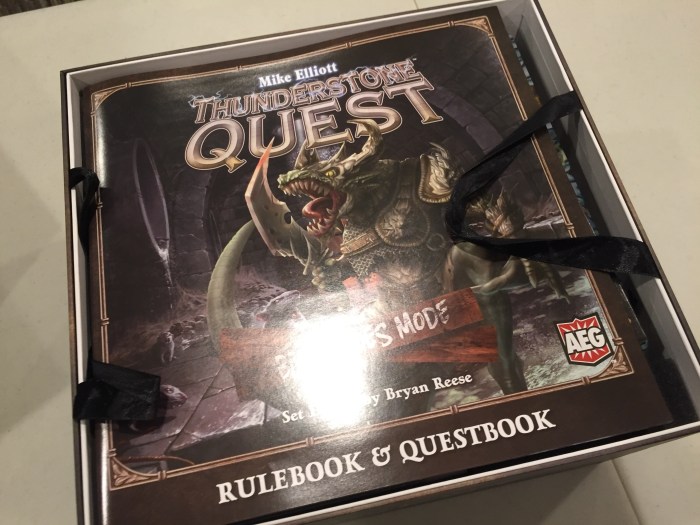
The original competitive Thunderstone Quest (left) and the cooperative Thunderstone Quest (right). It’s very unclear, but the RIGHT box is an expansion for the LEFT box!
If you look at the box, it’s HUGGE! Well, at least the Kickstarter version is! It’s as big as the original game!
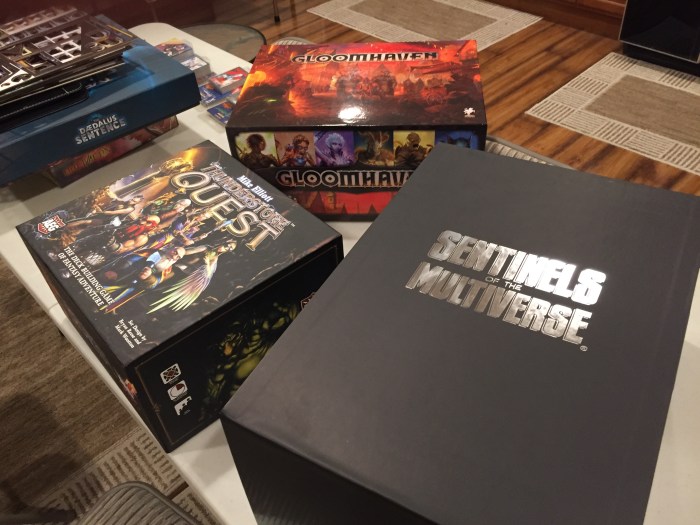
And the original game is HUGGE! Almost as big as the Sentinels box and Gloomhaven! This is NOT a small expansion! For purposes of this review, we’re going to call the expansion “Barricades”.
The Expansion we will refer to as Barricades mode, just like the rulebook shows you …
If you just look at the outside box, NOWHERE does it say that it’s an EXPANSION! Really! You might think you can buy this and play it standalone. Nope! You need a some things from the original box (honestly, not that much: the gear tokens, the board, and some treasure). If you ordered the Kickstarter version, you get a few overall “Thunderstone Quest” expansions: “What Lies Beneath” and “Frozen in Time”.
With those, you get lots of new monsters, items, spells, weapons, heroes, ALMOST enough to play standalone. Without those expansions, you do need a lot from the original box.
It’s a bit surprising how big the Barricades box is! It holds the base Barricades mode and the two expansions that came with the Kickstarter, and there’s still plenty of room to spare!
Adds 5th and 6th Player
The Barricades expansion also adds two more boards and starting decks so you can play 5th and 6th player. Honestly, we’ve wanted a 5th player the last few times we played, so this is definitely a good thing.
5th and 6th player boards! Plus, the game comes with starting decks for the 5th and 6th player!
Rulebook
The rulebook is pretty good. The graphic design is quite good, and it reads well. It also describes all the changes needed for the co-op mode. But here’s the thing: I had both rulebooks open the entire time, and these are BIG rulebooks! So, sometimes I’d be thumbing through the main rulebook, and sometimes I’d be thumbing through the Barricades rulebook.
Need to have BOTH rulebooks open to play! The original rulebook from base Thunderstone Quest (on top) and the new rulebook for the Barricades on the bottom!
Since the barricades mode is quite different, or at least different enough, I wanted something that “integrated” the two rulebooks. The back of the Barricades rulebook had a summary of this, which helped, but I really wanted a summary card!
Given all the amazing production in this game, a game summary card for (a) competitive mode and (b) cooperative mode would have gone a LOOONG way.
Components
Ya. The components are awesome.
These are the Barricades!! (Can’t you tell from the labels?? Oh wait, they aren’t labelled!)
Prestige Class Boards
I had to add stickers to the Gameboard to update it: apparently, the second edition fixed this, but the original Kickstarter had problems. So I had to a “legacy” change and add two stickers to the Marketplace and the Guilds.
No pressure! I added the two new Stickers …
Stickers added to update the 1st edition board to 2nd edition board!
Gameplay
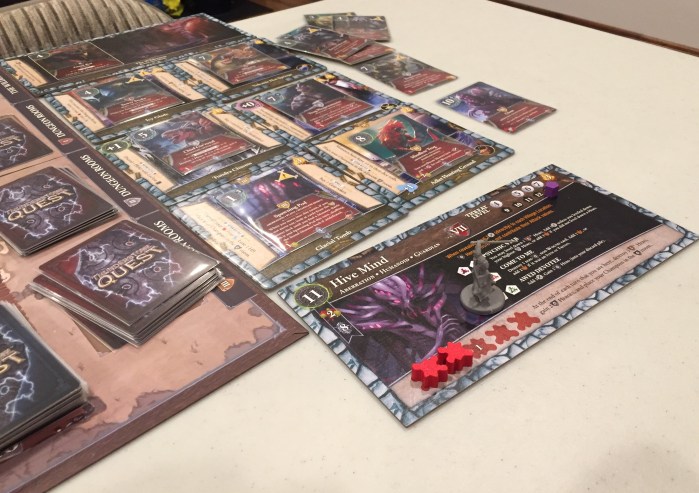
Thunderstone Quest (the competitive version) is a deck-builder: as soon as I tell you that, you know a lot about the game. Then it adds some village visiting and dungeon delving to round out the experience and make it feel much more like a Dungeon Crawl adventure.
Original TQ (competitive) deck-building game
The cooperative version adds a bunch of rules to this. It’s a lot more complicated than I expected: this is both boon and bane. It’s complex enough to have rich gameplay, but it’s complicated enough to be confounding and confusing sometimes. There are a lot of new rules.
New Rules: Guardian Dice
The Guardian Dice: roll at the start of each turn!
For a new added element of randomness, some dice (Guardian Dice) are rolled at the beginning of a turn. The further into the game you get, the more dice you rule. There are bunch of things these do, but usually, they set “how many monsters attack the town” (there’s much more to it, but that’s basically the idea).
Your job: Beat the big bad and protect the town! If too many monsters attack the town, they destroy it and you lose! Basically you lose if the town is destroyed.
New Rules: Barricades and Destruction Chits
These are the Barricades!! (Can’t you tell from the labels?? Oh wait, they aren’t labelled!)
The reason the name of the expansion is called “Barricades”: there are 5 barricades, one at each Village Location on the board. If you want, players can spend 10 Gold to erect a barricade on a Location. This is a way of “preventing” monster attacks. The green side means the barricade is active (and can withstand one monster attack). The red side means the barricade is down (inactive). Here’s the set-up, showing the default barricades in inactive mode:
This basic idea (protect the Village) reminds me a lot of Battle for Greyport, another really good cooperative game. Which do I like better? Check back later … I don’t know yet …
Oh, when a Location is hit by a Monster, you put a destruction chit on the board. Here’s my first solo game, near the end of the game: only two Locations of the village are active! the Bazaar (1 space!) and The Temple (1 space). The rest of village has been destroyed by Monsters!
A solo game with most of the Village destroyed!
How do you prevent Monsters from destroying the village? Basically, you head to the dungeon and hunt some monsters before they can get to town!
Village: “The scouts tell us that three Monsters are coming to the village to ruin us this day!”
Adventurers: “Well, we’ll go the dungeon and head them off … if we let some through, we’re sorry …”
New Rule: Guardians and their Lairs!
To win, you need to defeat the Big Bad, er .. the Guardian … a number of times. Thematically, he keeps coming back even after you defeat him. In the game above, a solo game, you need to defeat the Guardian 3 times to actually win. How many times really depends on the number of players and the Guardian.
The Guardian’s Lair is new: it’s at the bottom of the dungeon, and the Guardian has a whole bunch of rules. Remember those Guardian Dice we rolled earlier? They trigger some special abilities on the Guardian, which basically beat you up. The number of dice you roll is notated the upper right corner of the board (7 after turn 12+).
Although it looks like I am about to win … I lose on the next turn, because the Monsters destroy the Village!
New Rule: Prestige Class Boards
Prestige Class Boards
This is probably my favorite new set-of-rules in the cooperative version. Each player chooses a prestige class board and puts it to the right side of their player board. As you “level up” in the game, you gain new abilities. And there are a lot of new abilities! It’s fun to try to level-up your character! The XP, which were essentially victory points in the original competitive version, are now used to power your level-ups. The main choice you make in the coop mode: do you use XP to level-up you class board or to upgrade a hero?
The class boards are still available in the competitive version, but it’s a much harder decision! Your hard-earned XP are victory points needed to win! But, do you want to use them for your class? Or upgrading a Hero? What to do?
In only one game, I found these boards added a LOT of flavor, and since there’s 12 (!) of them, there’s a lot of variety.
A really big box! With a tray!
Conclusion
After one solo play (and congratulations for adhering to Saunders’ Law), I liked it! The major downpoint: It was a lot of work to get through one play! I basically spent all day sleeving, getting through the rules, and playing my first solo game. And I lost. But I liked the game. A lot!
My first solo game: I’m just about to lose!
I am looking forward to getting it to the table (hopefully at RichieCon 2019, coming next weekend!) and trying it as a full co-op game! Stay Tuned!
Here’s a couple of cooperative games that have struck my fancy for May 2019.
1.VENOM Assault Reprint, plus expansion: Villains & Valor
Up again for a second try, this expansion for Venom Assault (a cooperative deck builder with a GI Joe theme) adds more cards and gives you the opportunity to get the base game as well as the expansion. It didn’t quite fund the first time, so I am hopeful it funds this time: this game made my honorable mention of Top 10 Cooperative Games of 2017! Give this one a try, I think you’ll really like it!
2. Raid Boss: A Dangerous Cooperative Battle for 1-4 Heroes
The art in this game really captured my attention, and you all know I am a sucker for a co-op, especially with variable player powers!
Raid Boss: Incarnate is a 4-player cooperative boss battle designed to feel like an MMORPG dungeon encounter with all of the teamwork, strategy, and collaboration, but none of the endless grinding!
It looks like it has a comic-booky vibe and looks to be fun.