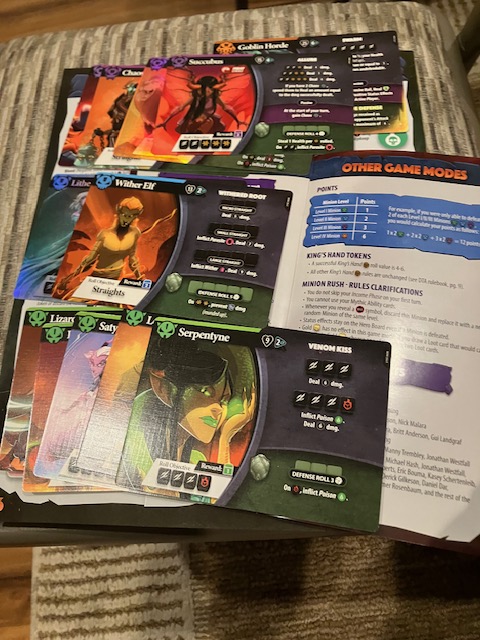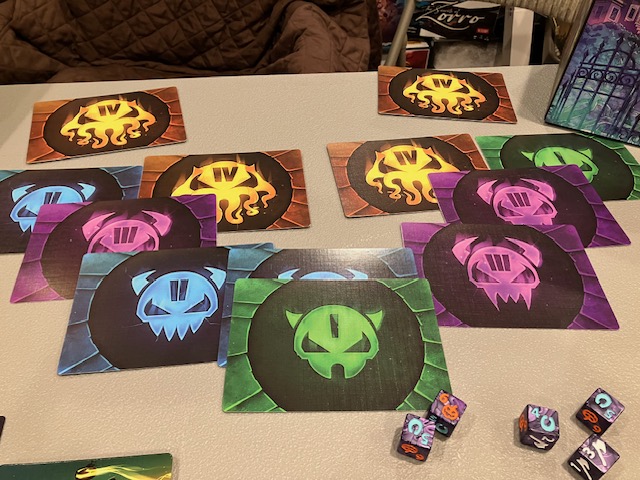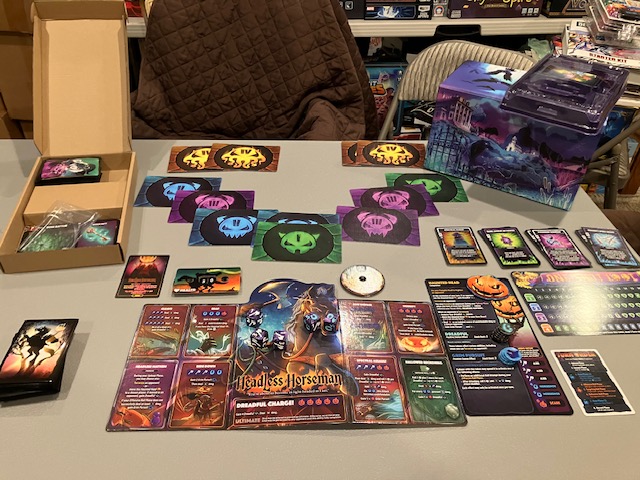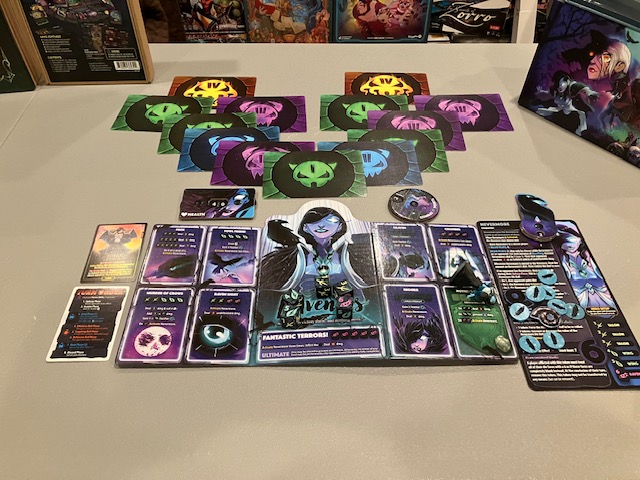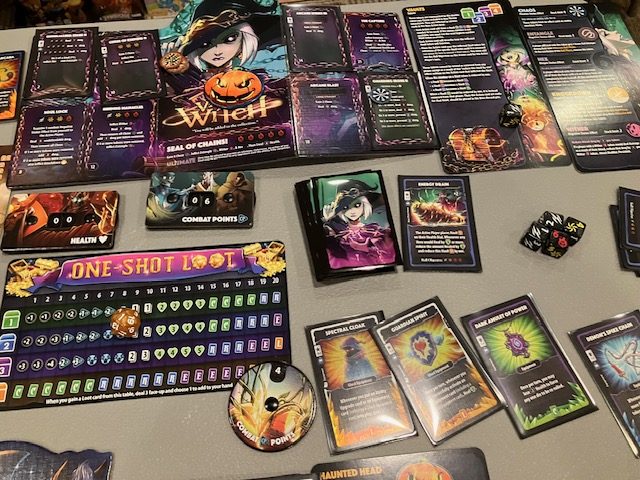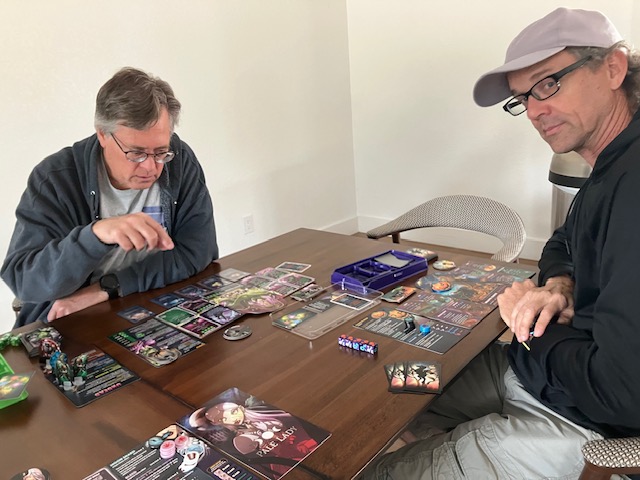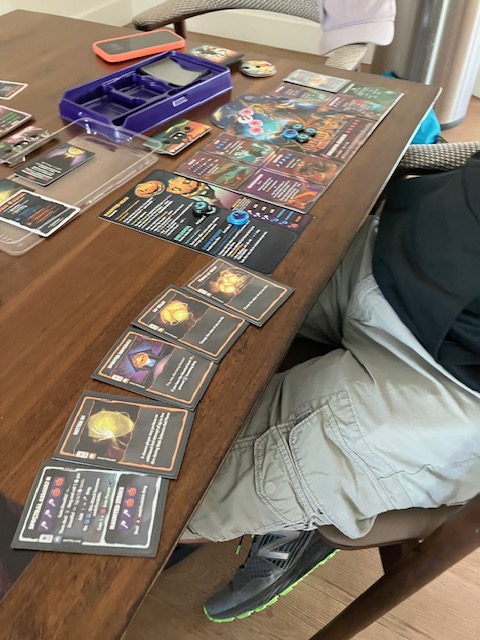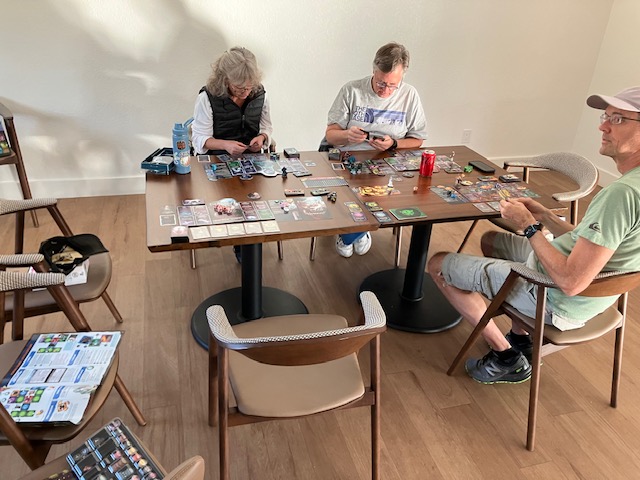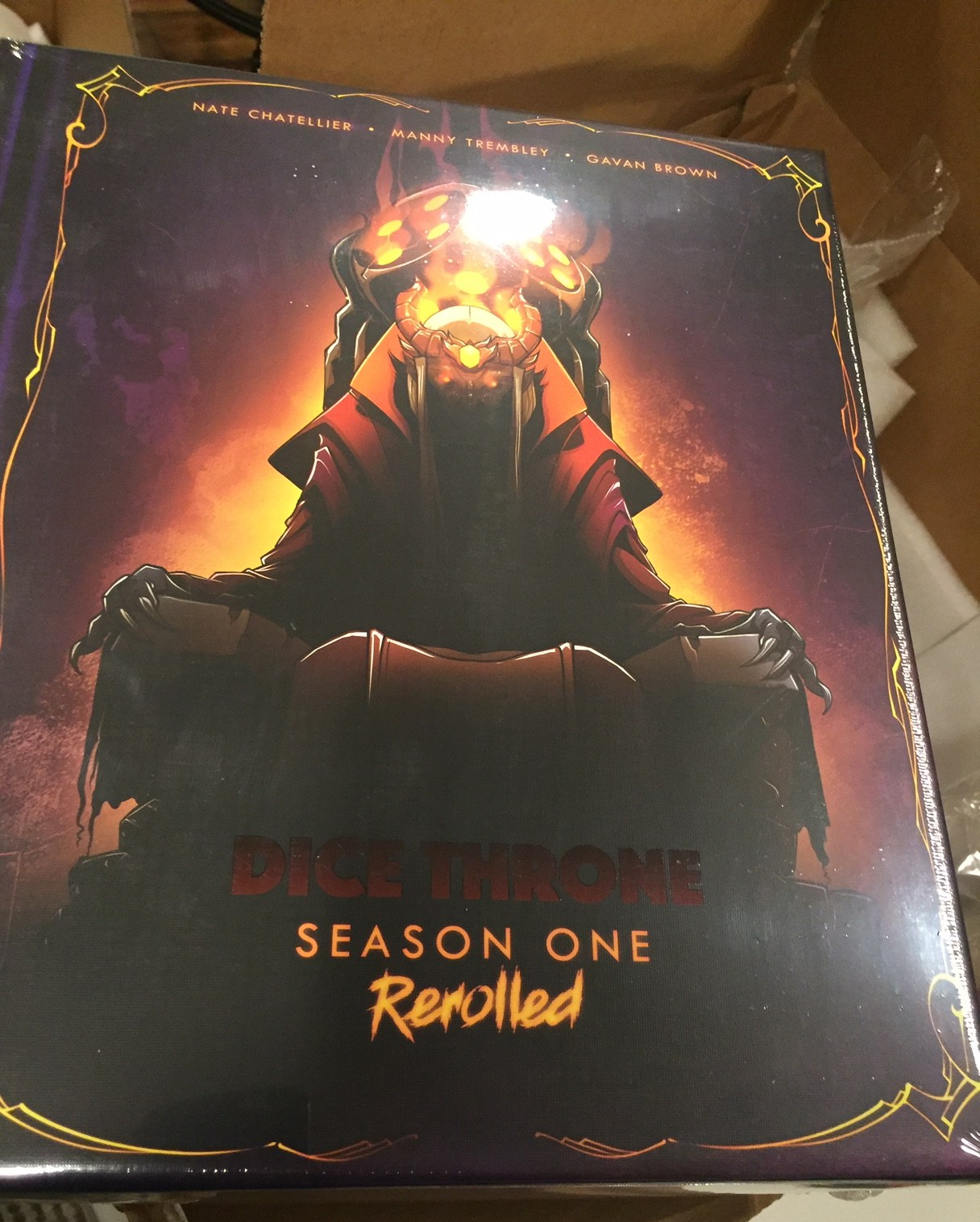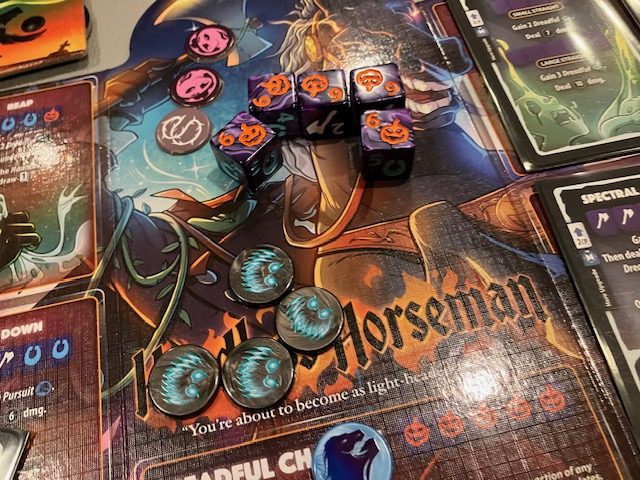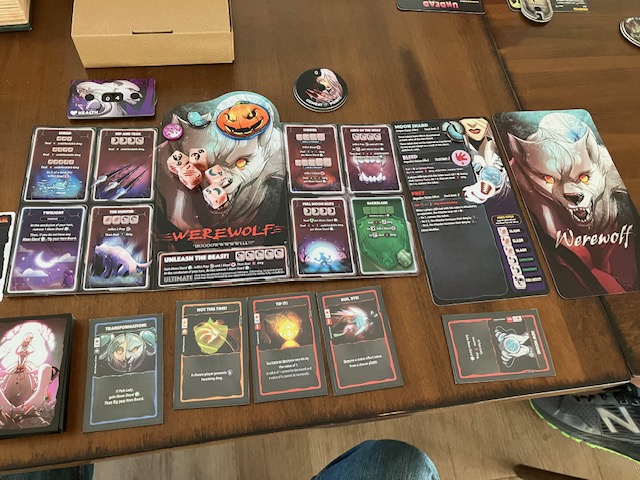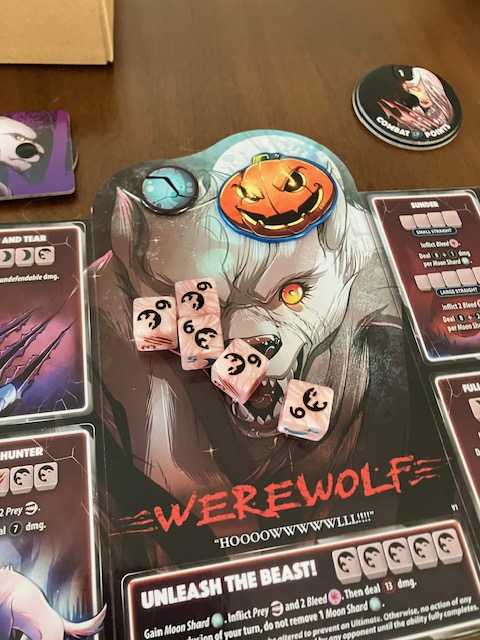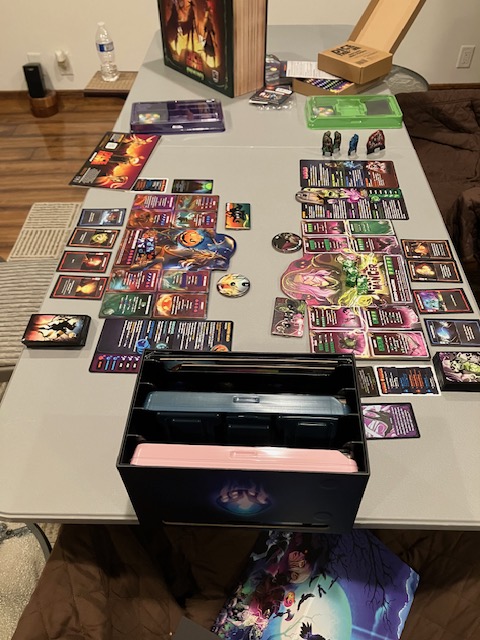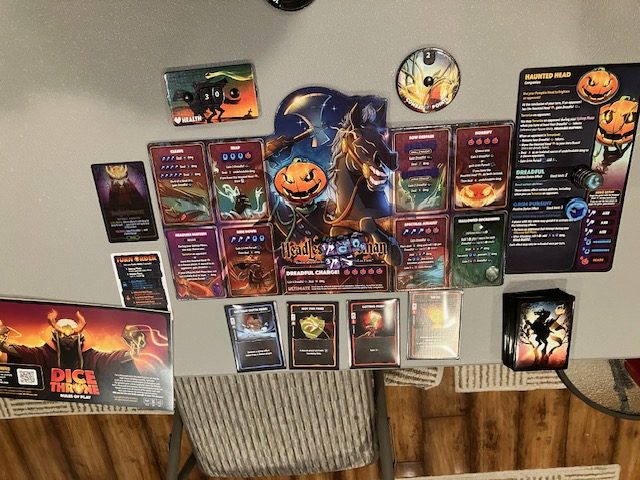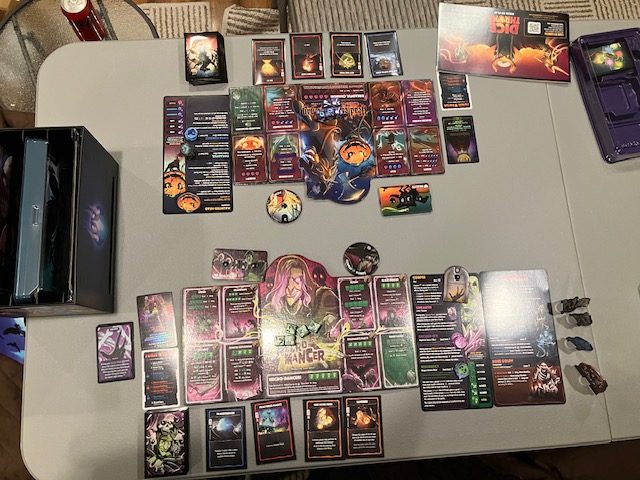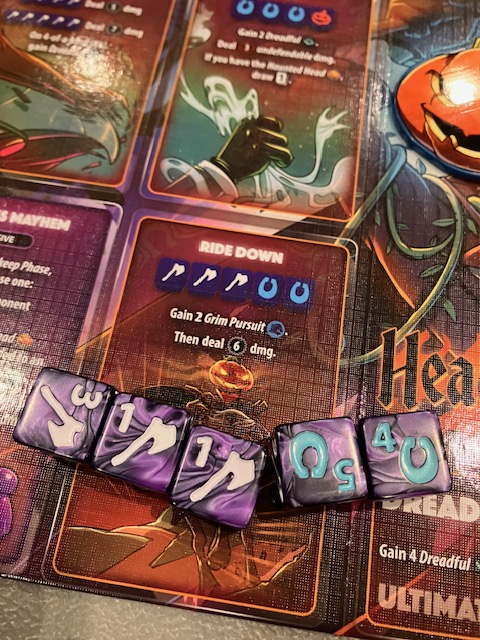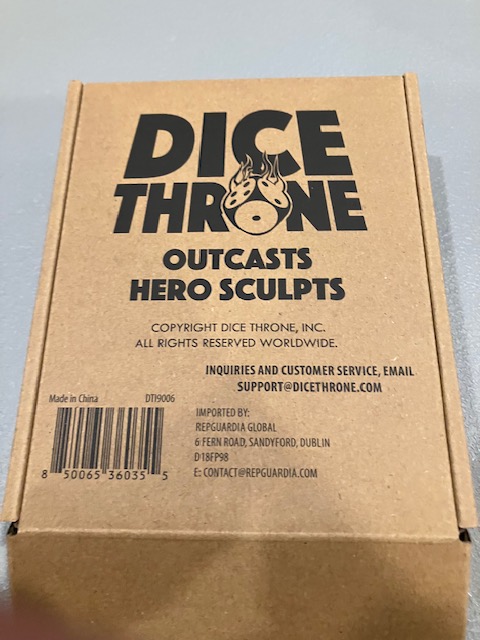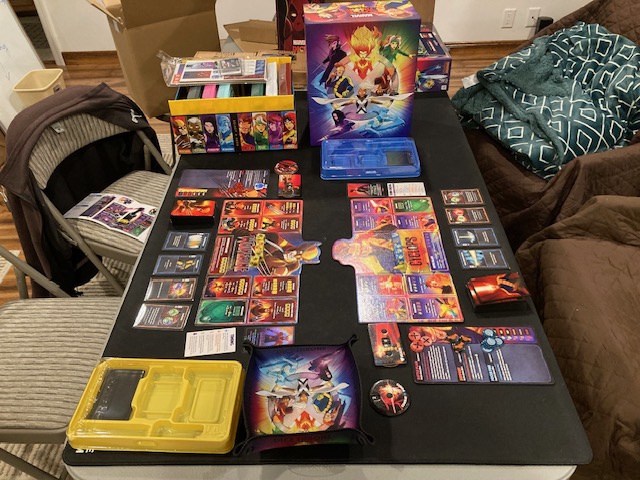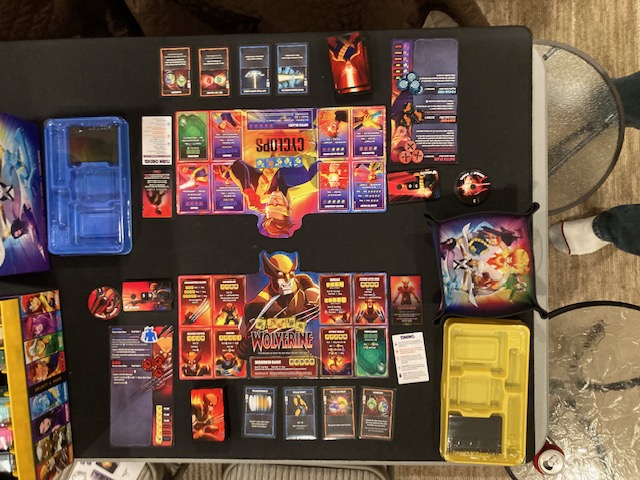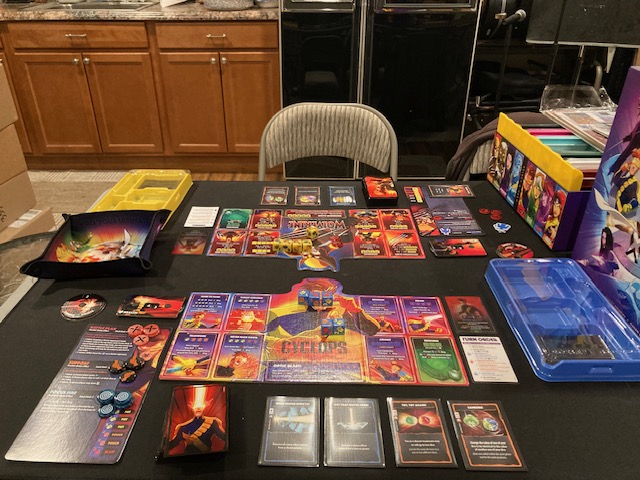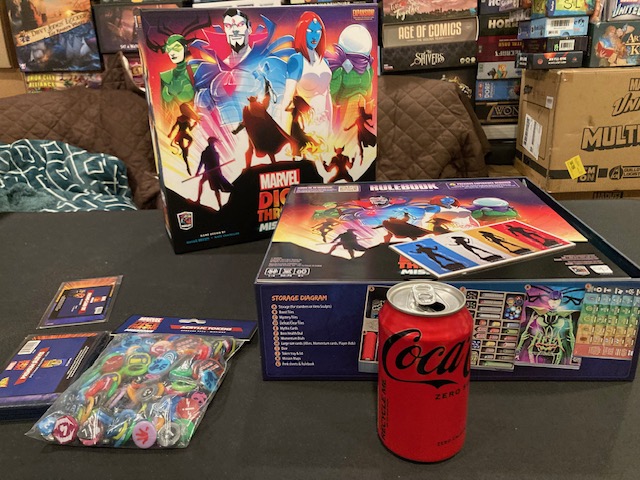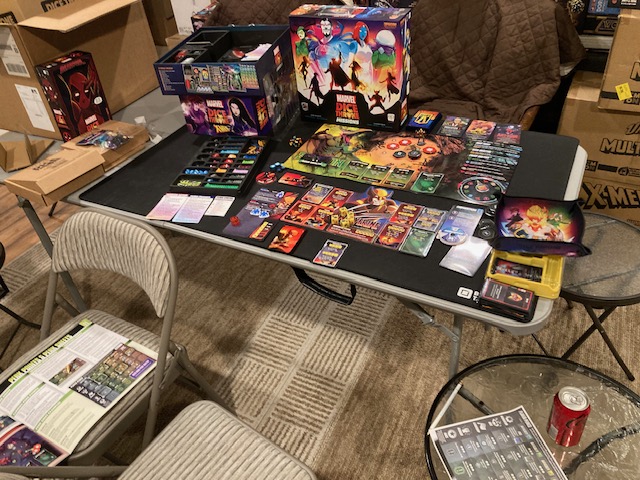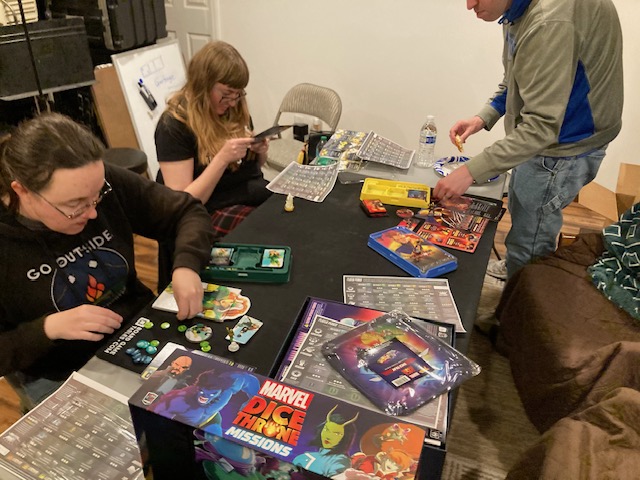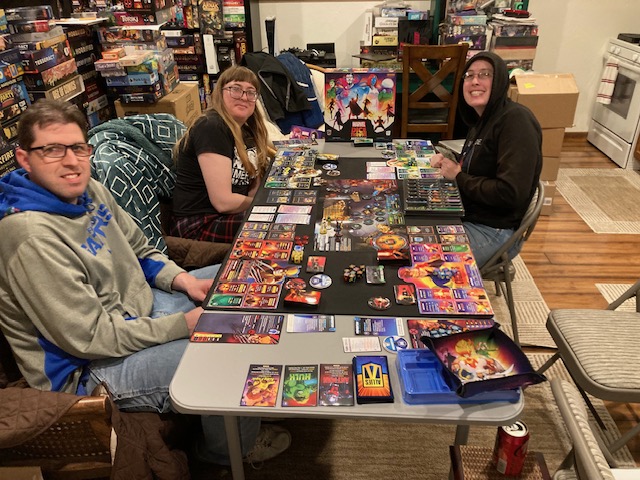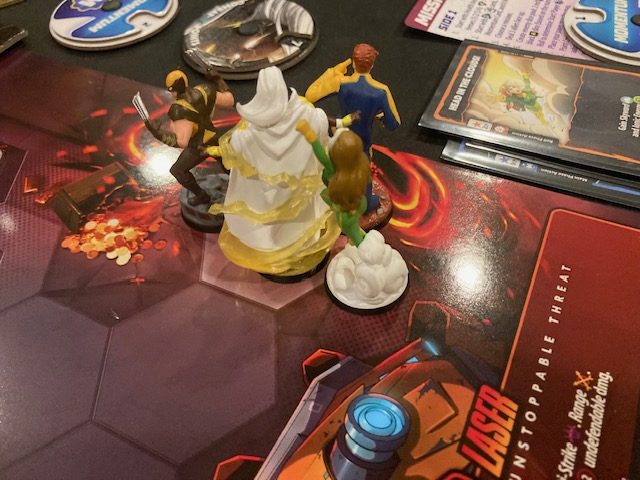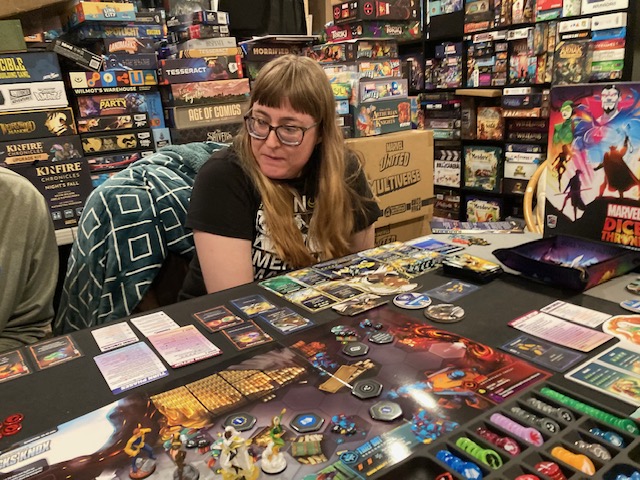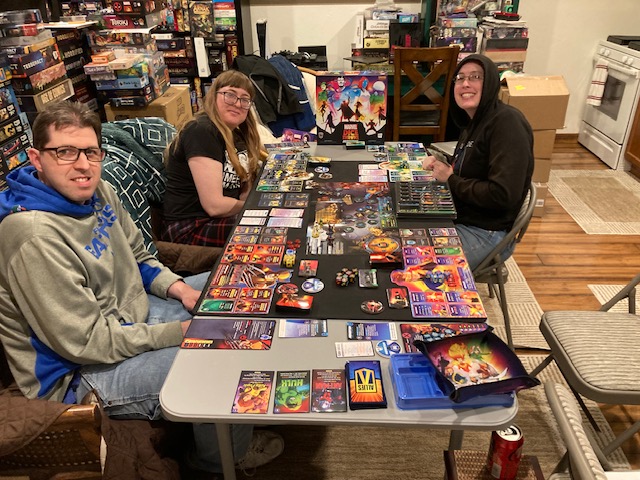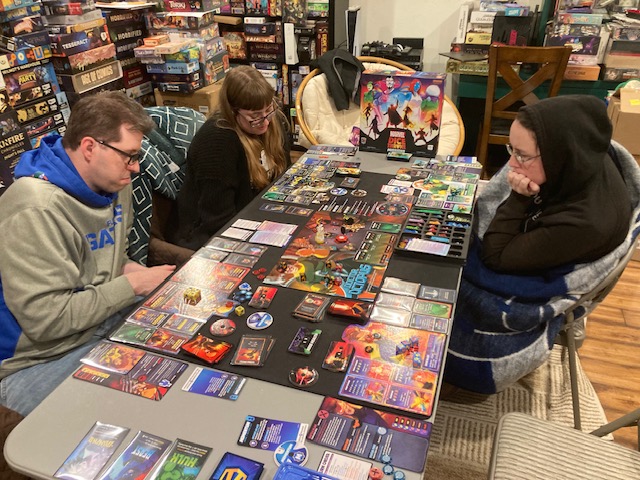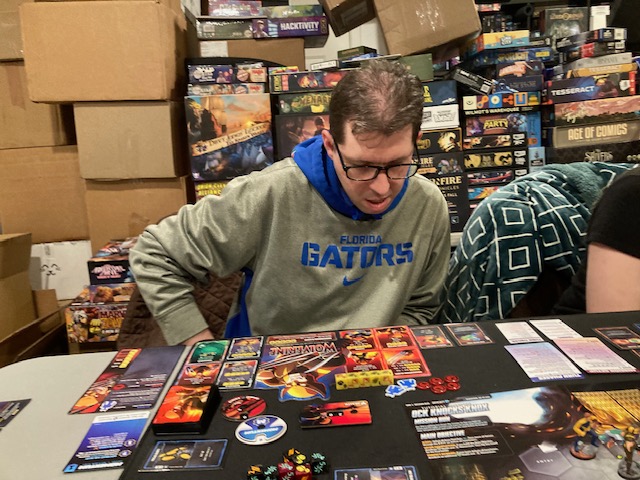
A Review of 20 Strong Nemesis: Is This a Cooperative Game or a Semi-Cooperative Game? Isn’t the Answer Obvious???

I had been hearing great things about this system (called 20 Strong) for years, but I had never played any of the games in the 20 Strong line; the Nemesis: 20 Strong Kickstarter felt like the place to start.
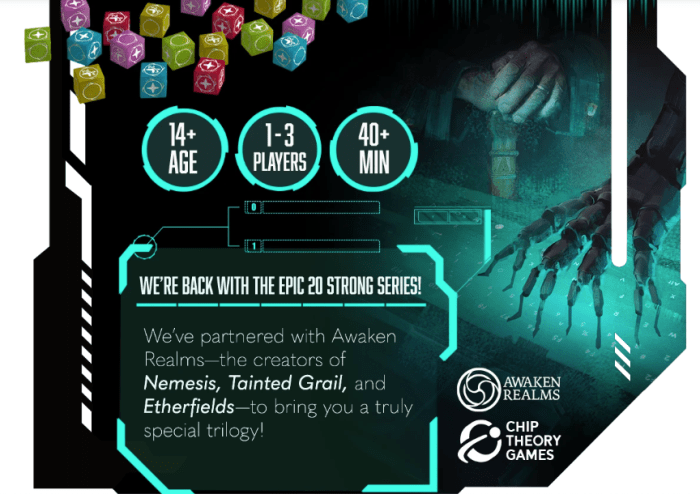
Why here?  Because it’s both solo and cooperative! See above from the Gamefound page!
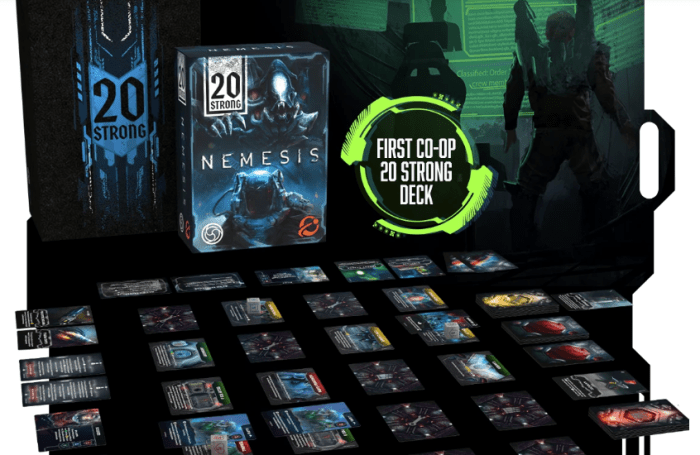
Oh wait, is it cooperative?
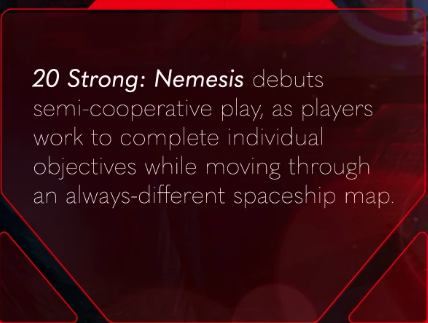
Or is it semi-coop? Hmm … looking on the Gamefound web page, there are literally only two mentions of it being cooperative and/or semi-cooperative! And those two terms are contradictory! The two above! Surely, the rulebook will clarify all! (And YES, a fully cooperative game is VERY different than a semi-cooperative game!)
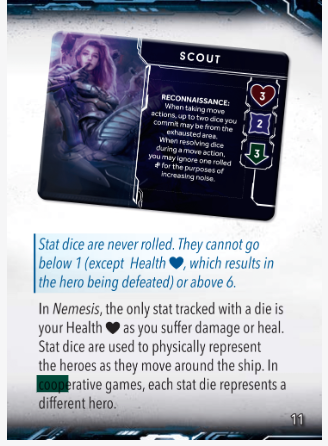
Oh wait, now it’s cooperative again?
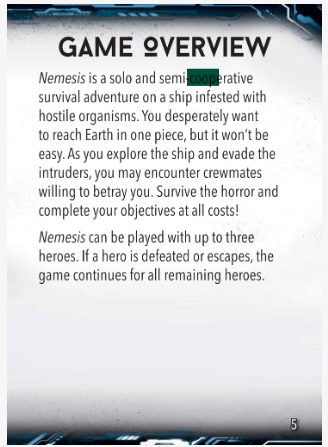
Or is it semi? So, the Gamefound site has two conflicting entries and the rulebook has two conflicting entries. Which is it?

Of course, anyone who knows Nemesis (the original game this is based on) knows it’s absolutely a semi-cooperative game (see Shut-Up and Sit Down video above: one of my favorite): it’s obviously a semi-co-op!

…but recent releases do make it cooperative. See video above!

What’s going on here? Which is it? Semi-co-op or co-op??? There were just enough suggestions that 20 Strong Nemesis works cooperatively (and I wanted to see what all the 20 Strong fuss was about), that I went ahead and picked it up and used it as my on-ramp into the 20 Strong system.
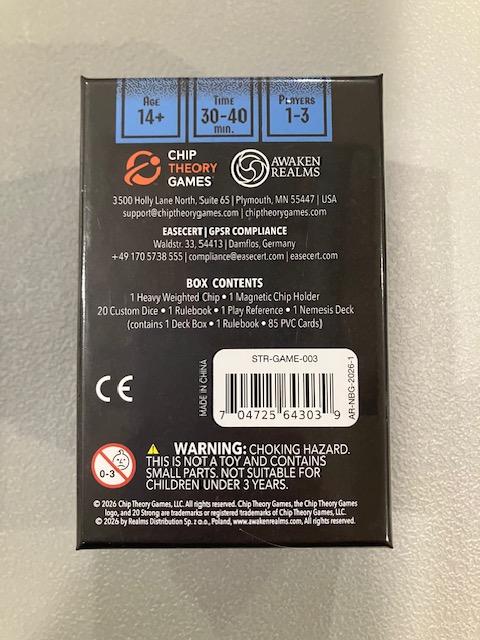
How was it?

Unboxing 20 Strong
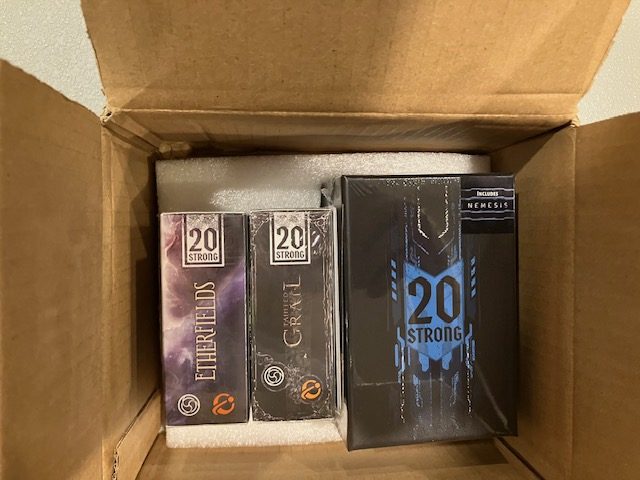
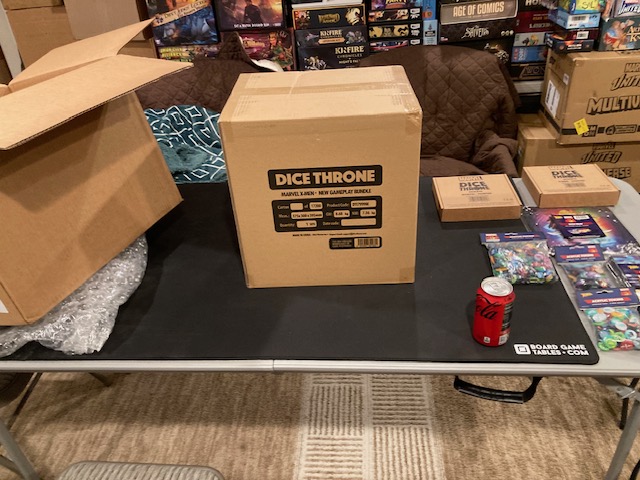
What I backed (with my own hard-earned money) included the 20 Strong Nemesis box, as well as the two solo boxes for Etherfield and Tainted Grail. See above. We will discuss the Etherfields and Tainted Grail boxes a little more later, but we are focusing on the 20 Strong Nemesis box for this review.
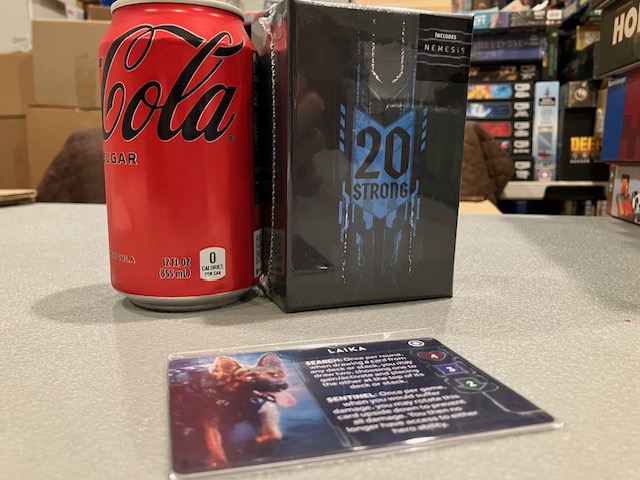
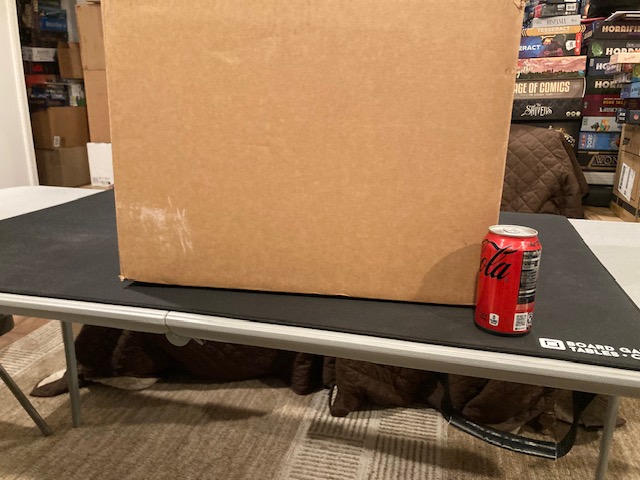
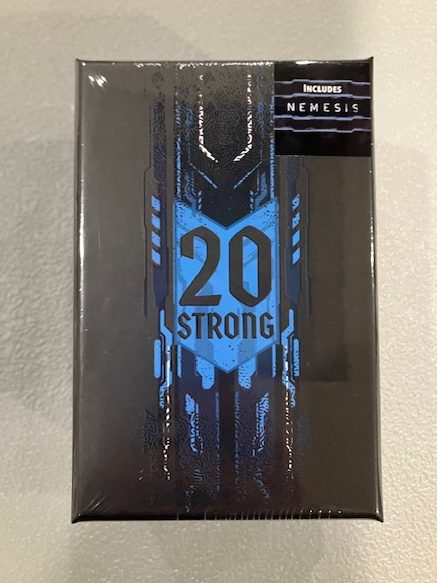
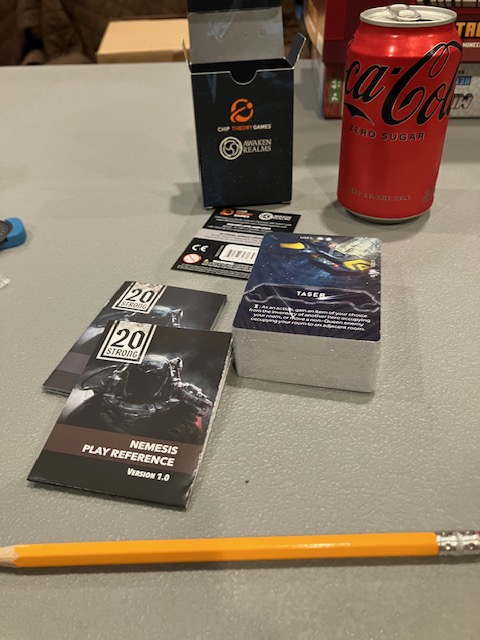
This is a surprisingly small box! See Coke can above for scale. What’s in this thing?
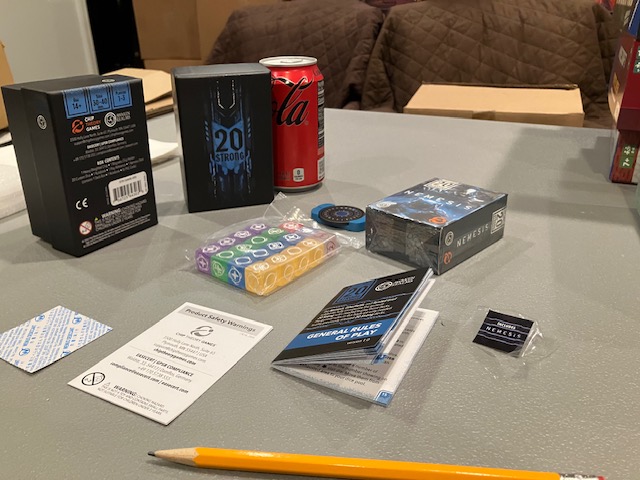
Some dice, a rulebook, a tracker, and the Nemesis box.
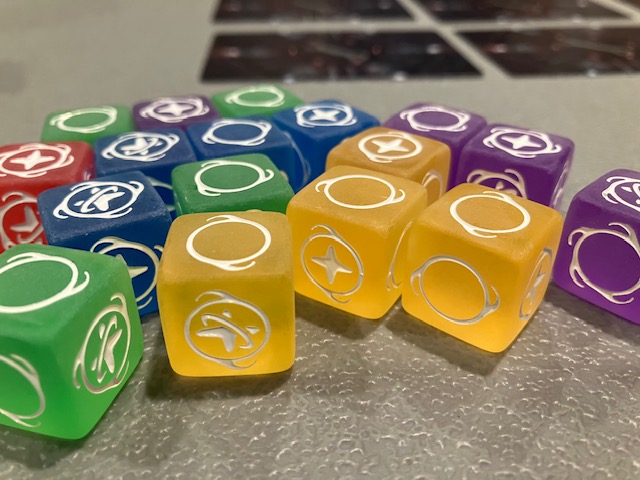
First of all, you have to understand a little about 20 Strong. 20 Strong is the fundamental backbone system of a lot of games; it’ s not really a game by itself.  It has 20 really nice dice (see above), thus the name 20 Strong !
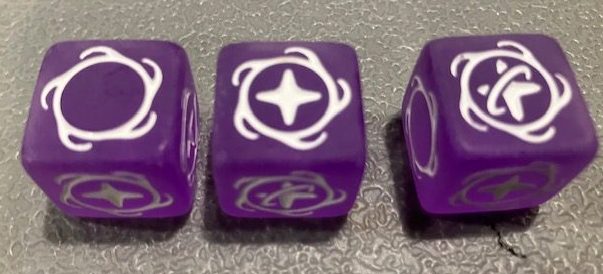
There are a bunch of generic rules about dice: misses (empty circle, left) and hits (+, middle) and critical hits (+ and more, right). The number of tendrils on the outer circle tell you how many of the 6 sides have hits or critical hits: for the purple dice, 5 of the 6 sides have hits!
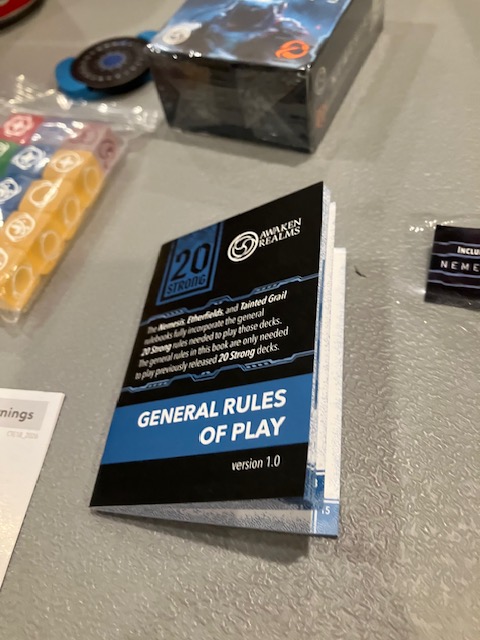
Each game in the 20 Strong system takes these General Rules of Play (see above) and adds/modifies/subtracts rules to make a new game based on this fundamental dice game.
Nemesis is the deck that sits on top of the 20 Strong system!

Unboxing 20 Strong:Nemesis and Gameplay
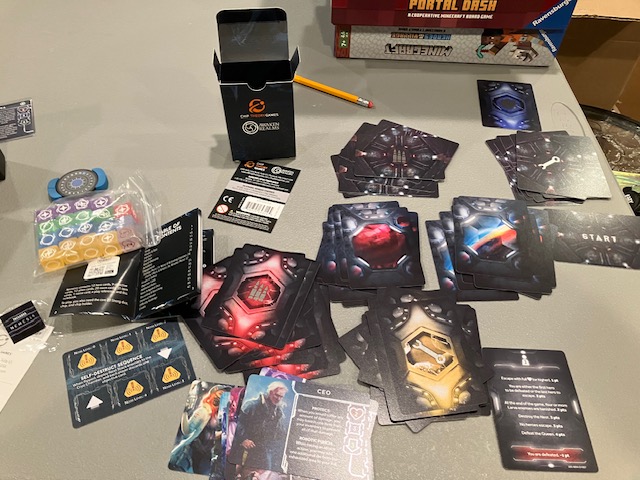
Nemesis 20 Strong card box itself has a bunch of cards; about 85 total. See above.
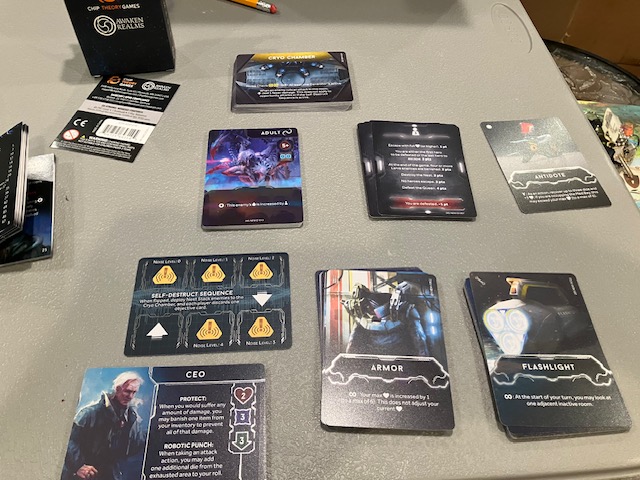
These cards are AMAZING! They are PVC, not cardboard, so you don’t need to sleeve them! They also all have some foil embellishments that make these POP on the table. These are amazing cards! They look great! And the art is great too!
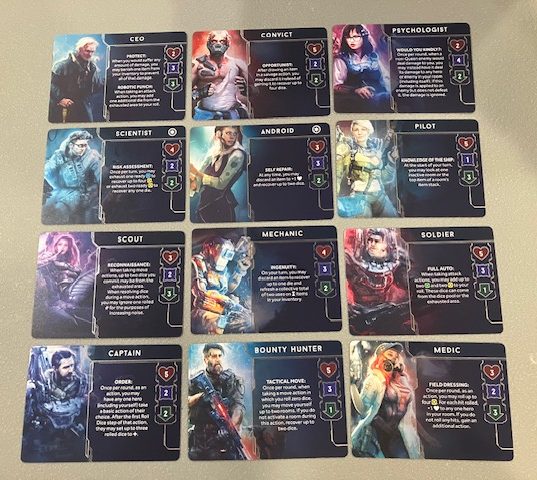
Each player chooses 1 of 12 characters to play. See above.
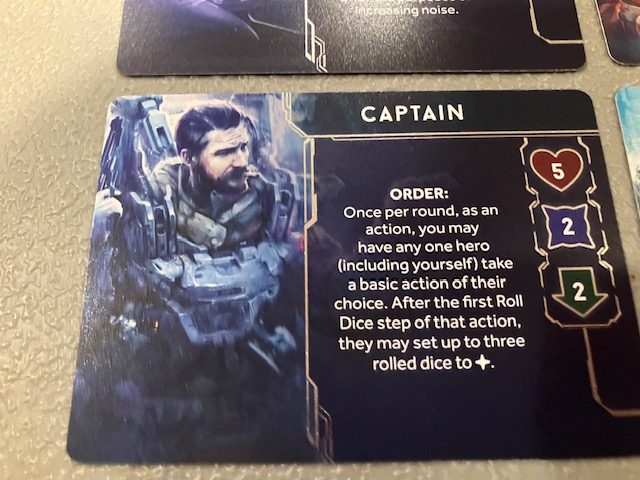
Each character has a special ability (see above) as well as some stats. The Red Heart is how many hit points, the purple thing is strategy (that controls some rerolls/retries and how many cards you can have), and finally the green arrow is how many dice you recover at the start of your turn.
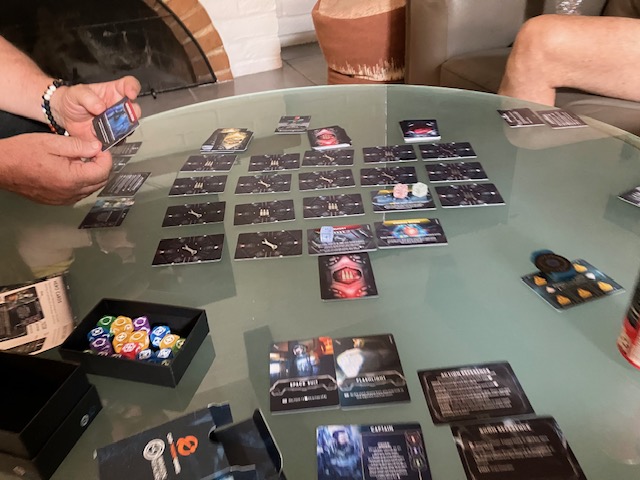
Players explore a 4×5 grid (4 rows, 5 columns) of Locations. At the start of the game, all Locations are face-down, so you don’t know what’s what.
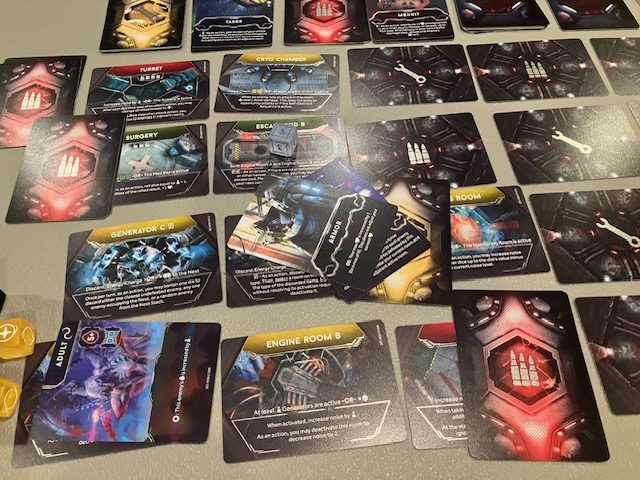
As the game evolves, more and more Locations are revealed! To win the game, players must find the Escape Pods, but they can’t activate the Escape Pods until they activate the Engines, which they can’t activate until they find the Generators! It’s all about exploration!

As you explore, you generate noise! There are actually a lot of ways to generate noise! If you ever roll a critical hit (far right) and apply it, it counts as noise! Many Locations also generate noise when you activate them (like turning on the Ship’s engines .. that’s pretty noisy, right?).
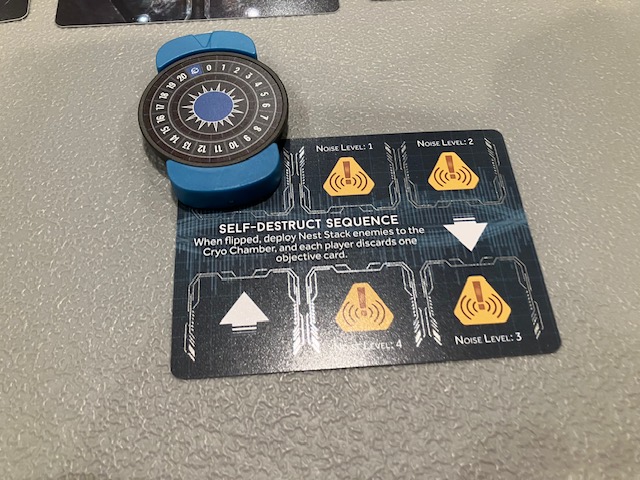
See the noise tracker above! Noise is bad!! Why? When the noise tracker comes all the way around, you accidentally summon an alien!
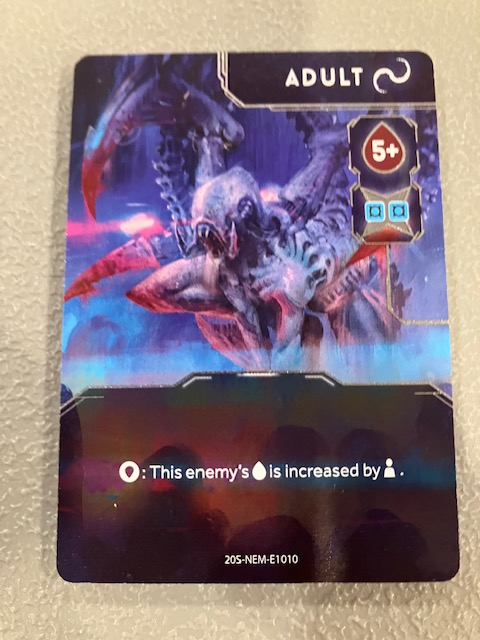
These are the aliens (which look nothing like Aliens from the movies) that hunt you and fight you!
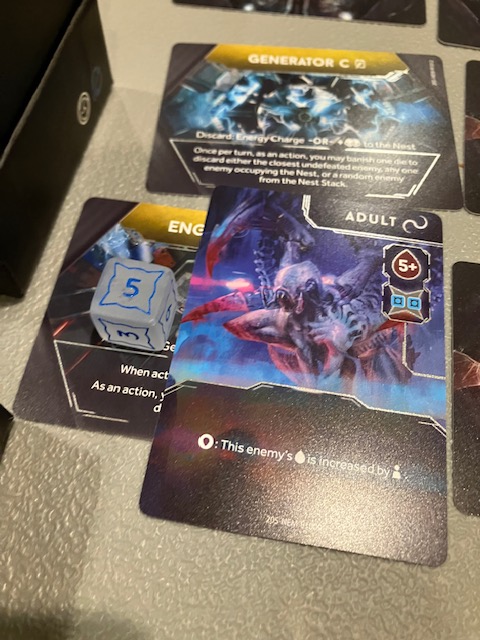
The noise coming back around immediately summons an alien to your Location! Gulp! You better hope you still have some actions to fight it!
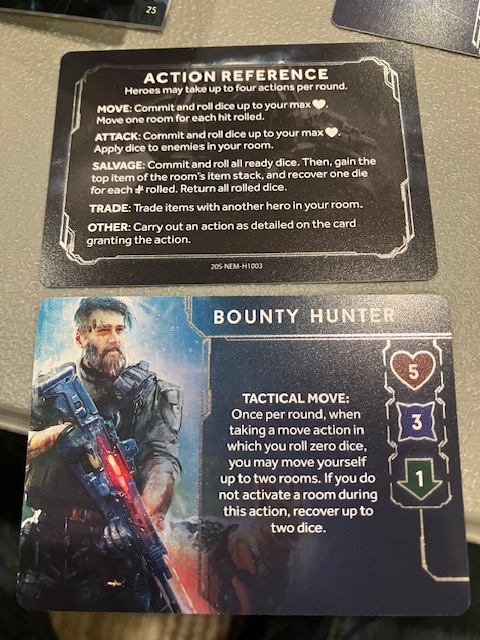
On your turn, you have 4 actions to move, attack, salvage, trade, and other. See the Action Reference (on the back of other character cards) above!
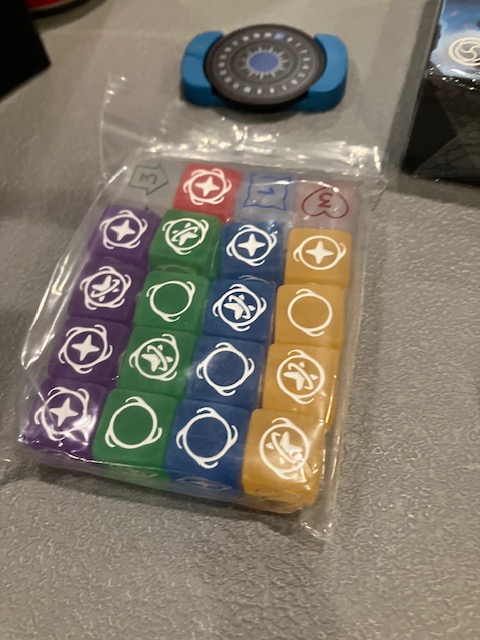
To be clear, the dice are key to everything you do here; every move, attack, salvage involves some of the dice.
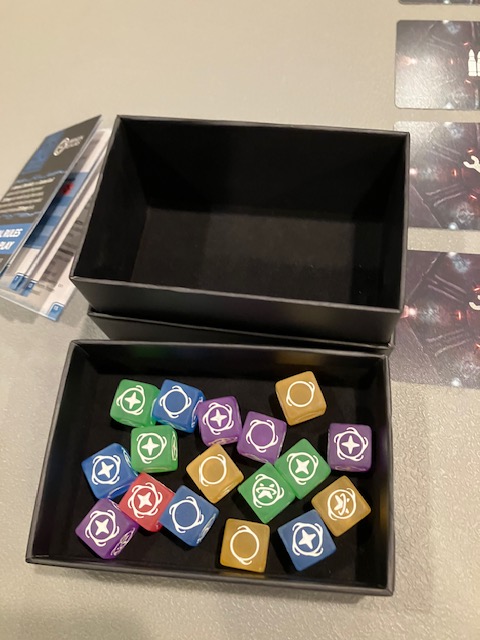
As you play, dice move from the active to inactive pool! You have to decide how many dice to allocate on your turn! And which dice! Every color die has its own number of successes! The yellow dice are the weakest, and the red die is the strongest! (And you don’t always want to strongest dice on your turn; at the end of your turn you may generate even more noise using the strongest die used!). Let’s be 100% clear: this is a dice game.
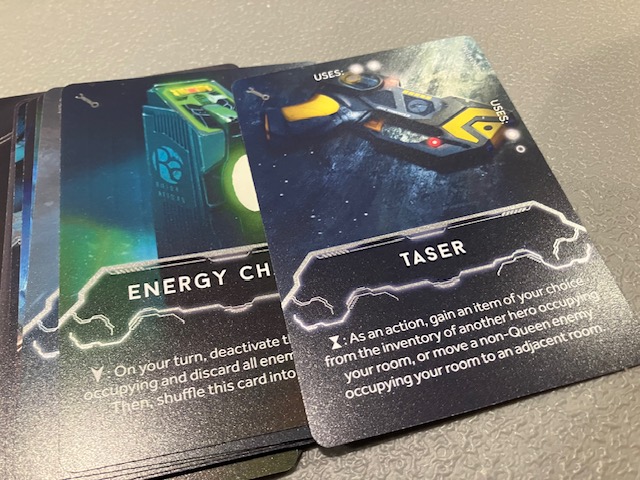
Along the way, you can also pick up items when you salvage; see above as I have a Taser and Energy Charge.
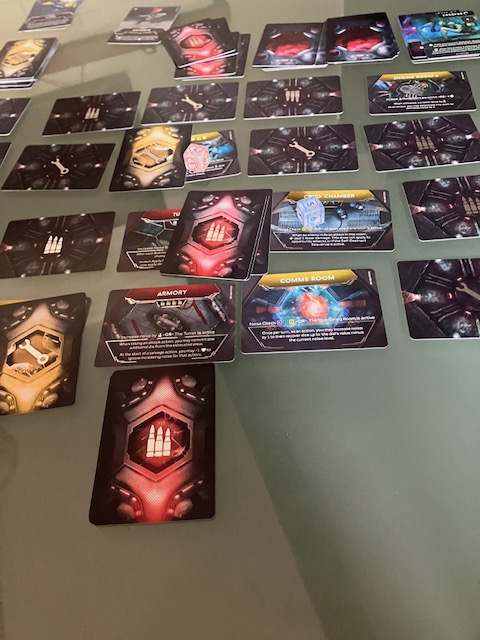
If you can escape the ship in an Escape Pod, you “win!” But, winning is very different if you are playing cooperatively or semi-co-op!!

Cooperative vs. Semi-Cooperative

All right, let’s address the alien in the room: is this a cooperative or semi-cooperative game? The answer is VERY much not answered by the rulebook! Nor the Gamefound site! Like I said, both allude to both co-op and semi-co-op natures, but neither really answer the question.

The answer seems to be very much answered by the official How To Play 20 Strong: Nemesis video from Chip Theory games (the publisher). See above.

Semi-Co-op for the Win!

The answer? This is very much a semi-co-op. I guess that’s a “Well, Duh” to most people. But, after “trying” to play it cooperatively, this game can be played cooperatively, but it’s just not as strong. It’s really how you deal with the objective cards in the game more than anything.
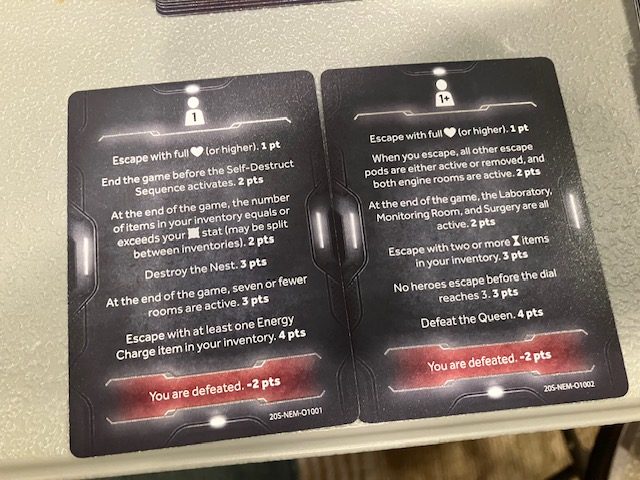
At the start of the the game, each player gets two objective cards. At a certain point in the game (when the round dial counts down to specific placed based on the difficulty and player count), you must discard one or the other: this defines how you get points for the rest of the game! This defines your play-style: do you screw your compatriots for points or play nice? The objectives majorly inform your style!

In the semi-co-op game, you are trying to get the most objective points to win! That’s it!! If you die (pardon me, are “defeated”), you can still win if you can get more points than the other players! So, in the semi-co-op game, everything you do is in the name of getting points: you may lie about what Locations you discover, you may lie about what your objectives are, you may lie about what you are trying to do. You do not HAVE to show the Locations you find, you do not HAVE to show your objectives. You may work a little with the other players to discover the ship, but in general, you are trying to get the most points.

In many ways, 20 Strong: Nemesis is Nemesis: the dice game. Cooperate a little, but lie lie lie.

You Can Still Play Cooperatively
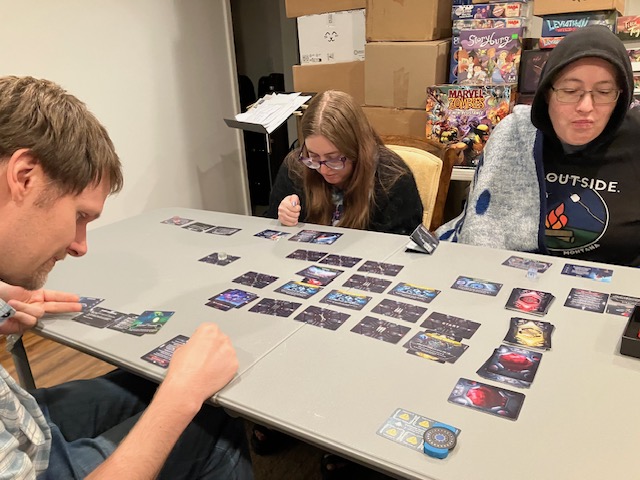
But, you can still play Strong 20: Nemesis fully cooperatively; no lying. Unfortunately, the rulebook kinda sucks, and all the things you have to do to “really” play cooperatively aren’t “really” spelled out. Here’s what we discovered to play cooperatively:

  1. You have to share and discuss your objectives pretty heavily out-loud! There are plenty of objectives that are truly mutually exclusive, and you need to talk so everyone can “do the right thing” to make it so everyone can fulfill their objectives!
  2. You need to specify the “fully cooperative” win condition! After playing many cooperative games, the fully cooperative objective seems to be “all players must escape and have enough objective points!” I think all players need to survive and have enough points to call this a win. I “guess” if a player dies, but still somehow has enough points, they are considered part of a winning team?
  3. You need to communicate well. No lying.
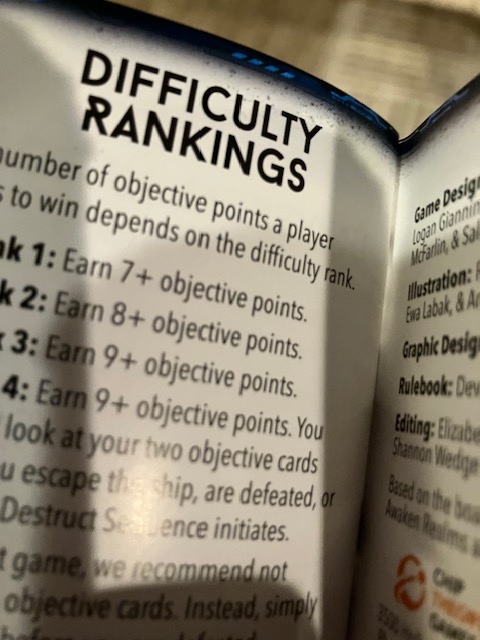
The worst part is that it’s not 100% clear what the win condition should be cooperatively! I think everyone should escape AND have enough objective points? But I can also imagine a scenario where one player dies by making the ultimate sacrifice to help the others. but can still is in the winner’s circle because his objective points were achieved.
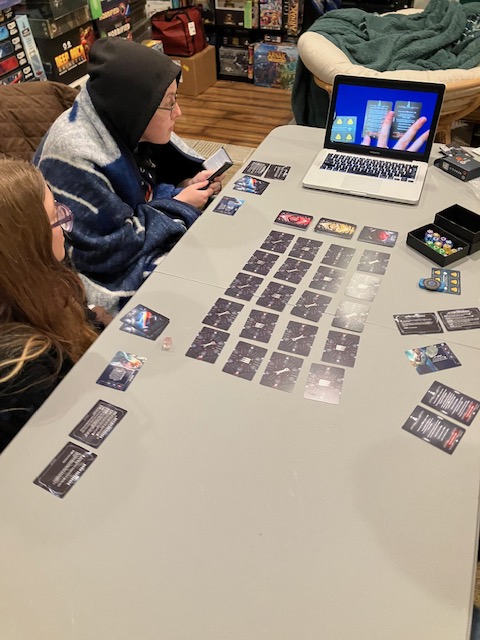
I taught/watched a 3-Player cooperative game, and my friends did a great job cooperating! They had to figure out a way so that everyone escaped the ship with at least 7 objective points! They talked about their objectives, they talked about how to meet them, they talked about how to help each other meet their objectives!

It was surprising just how cooperative this game can be, if you just know what cooperative rules should be. The rulebook could have easily had a few pages distinguishing semi-cooperative play from cooperative play. And a co-op mode does seem to work.

But as-is, 20 Strong: Nemesis is a semi-co-op.

Rulebooks and Rules
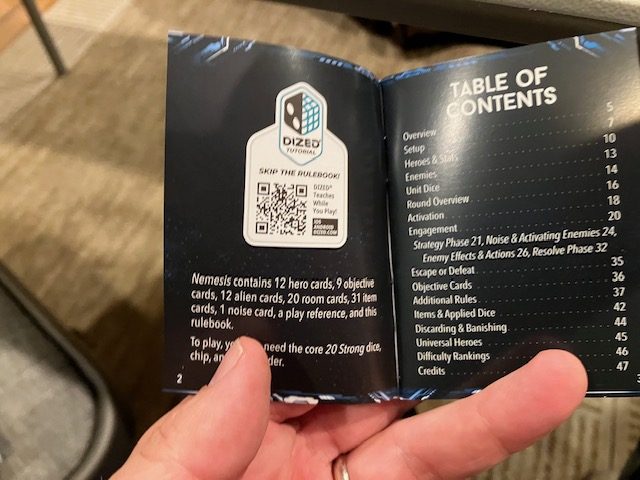
I did not like this rulebook. First of all, it said to try out the Dized tutorial! Not available yet! (at the time of the play).

This game probably gets a D on the Chair Test! As much as I hate the form factor (as it was tiny and small), they did a good job with the font: I could read it.

There were a lot of things that weren’t really well specified. I had to re-read the rules several times (what does the turn timer start at? What does a crit hit do when I attack? The aliens attack? For a noise check? The crit means different things depending on the context! ) I ended up going to the official How To Play video from Chip Theory games, and I still didn’t get everything answered! (The Strategy component is not really explained in the video at all).
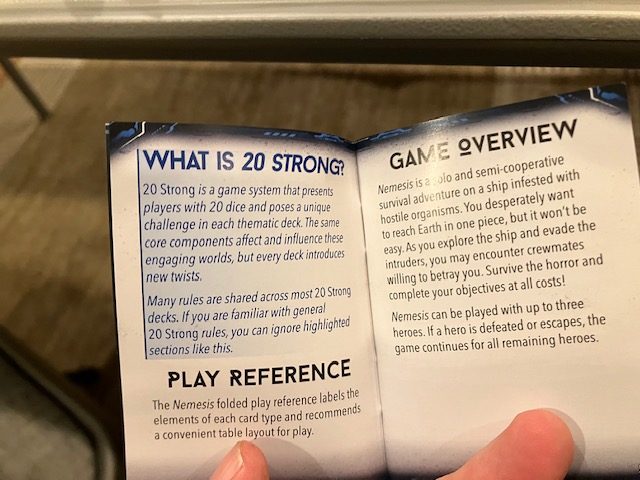
It really took about 5 plays to get the rules down. For a “simple” dice game, I was very frustrated. Part of it was also the fact that the base 20 Strong rules are interspersed with Nemesis rules, and it’s confusing: see above.

I recommend watching the How To Play Video from Chip Theory games, and hopefully the Dized tutorial will be online by the time you read this. But you are still gonna have to read this little rulebook a little. I didn’t love it. I hated the form factor.

Solo
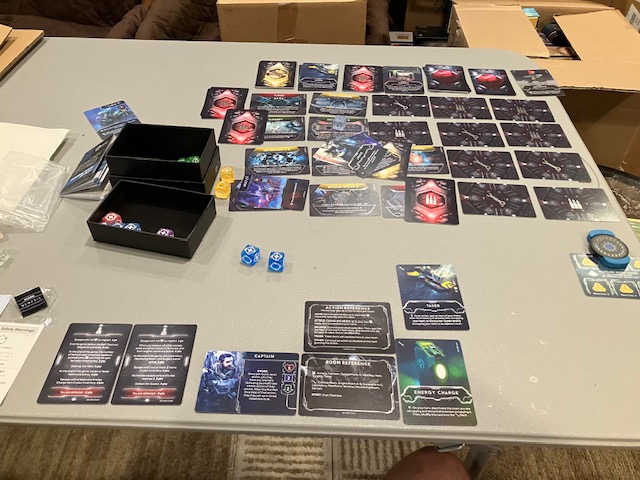
You can play solo. I played a few games solo to get the feel of it. You can even play true solo and only play one character!

I won. It was ok. It was .. fine.

Reactions
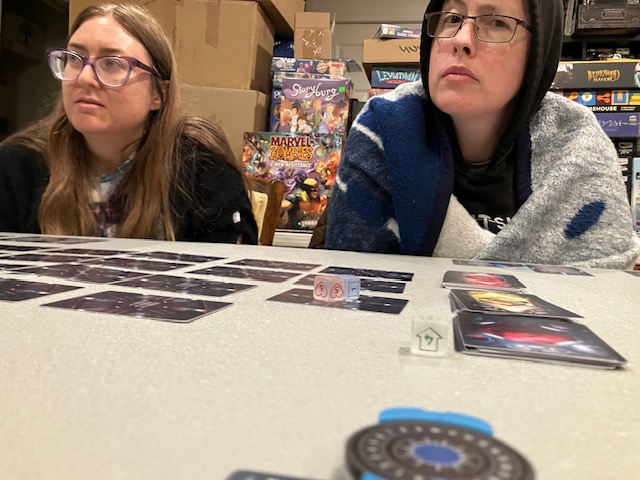
The reactions … weren’t great.
Ralph: It was ok.
Sara: 5/10. I’d play again if someone wanted to, but only fully cooperative. I’d never play semi-co-op.
Andrew: 5/10. Same
Teresa. It was ok 6/10. I’d never play semi-co-op
Rich: It was ok solo. 6/10. I think the co-op was better: 6.5/10. I also would never play semi-co-op.

Conclusion

I really wanted to like 20 Strong: Nemesis, but me and my groups were pretty disappointed by it. Some of that disappointment was that the co-op wasn’t great, but 20 Strong: Nemesis is really probably best as a semi-co-op. This is management of expectations: you can’t really like a cooperative game if it’s really a semi-cooperative game.

I think if you take 20 Strong: Nemesis as what it is, as a semi-co-op, then it’s pretty good. I think objectively that it’s probably a 7.5/10: it’s a shorter, faster, stream-lined version of the original game of Nemesis. You may love it!

If you take it as a cooperative game, the rating drops to a 5 or 6 for my friends; I was highest at 6.5/10. (Solo was just “ok” at 6/10).

The weird thing is that watching my friends play it fully cooperatively (which is really not an official version), it was pretty darn cooperative! They were talking and working together so well! I have to be honest, I’m not sure what it would take to move this up just a bit more: there is a good cooperative game in here, I just think it needs something else. I saw the cooperation happening! I saw the discussion of mutually exclusive objectives! There is something here! I just don’t “quite” know what’s missing for this to be a good fully cooperative game?

If you are looking for a good fully cooperative spaceship exploration game that’s short and moves around a grid, I would recommend Solar Storm instead of this (see review here); Solar Storm made our Top 10 Cooperative Games of 2020!

The Gnomenclature of the Dice! Companion Quest: A Solo and Co-op Review

This week we take a look at a game from our Top 10 Anticipated Cooperative Games For 2026! We want to give it some attention because RichieCon 2026 is in a few weeks, and *spoiler* I think some people will really like this game!
Companion Quest is a cooperative dice game that on Kickstarter back in March 2025. It promised delivery in December 2025, but just delivered to my house here in June 2026 … so, it’s about 6 months late.

This is also a game that was on our Top 10 Anticipated Cooperative Games For 2026!

Was it worth waiting for?

Unboxing and Gameplay

Although we got the Kickstarter edition with a few expansions, there are better versions with mats and other upgrades! We’l just be taking a look at the base game.

The size of this box might surprise you a little; it’s a smaller game! See Coke can above for scale.

This is front-and-center a dice-rolling/dice-placement game. But what are the right words to use? Is this a dice-placement game? Is this a dice-rolling game? What’s the right gnomenclature? According to BGG: it’s dice-rolling (but it feels a little like dice-placement).

Although the name and cover might imply a little more questy game (and there is some questing), the dice-rolling/dice-placement portion of this game is the majority of gameplay. If you were looking for a game with lots of story and fighting, you probably need to look elsewhere!

Each player takes the role of a Gnome!

Each Gnome has his own power and a companion that accompanies him!

See all the companions above!

Each Gnome has his own special power, and an attached “companion”! The companions are bonded to the specific Gnomes, so you can’t choose willy-nilly. See above as Bubbles the Gnome has Arlo the companion!

The special powers of the Gnome or companion are activated by “tapping” (turning the card sideways) to show the ability has been used. How do you recharge the power(s)?

You recharge with Cookies of course! Cookies are phenomenally useful in this game! They can recharge any Gnome or companion …

… or the Cookies can be used to recruit new companions to your menagerie! There is always four companions available for recruiting on your turn!

How do you win? There’s “gnominally” (nominally? With Gnomes? Get it? Ok, it’s not that funny) a bad guy named Gu’Gu who is popping around dimensions and causing chaos! To win, you must catch him!

If you can move your Gnome marker (collective Gnome marker) to the Gu’Gu, players win! How do you move?

Every time players complete a “Quest” (see Quest above), the players advance forward one space! The quests are solved by placing dice on the quest spaces!

See above as the Gnome’s Nook is completed by placing dice correctly on the last few spots! Usually, you have to match the color and/or odd/evenness of a space on the quest!

Once you complete a quest, flip the Quest card over to see your rewards; move closer to Gu’Gu AND get some cookies AND increase your carrying capacity! See above!

The carrying capacity defines how many dice you can get on your turn! At the start of your turn, you grab some dice and use the dice to solve either Portal Problems or the Quest! Early in the game you can only grab 3 worth of dice: red, green, and blue cost 1! And orange, purple, and orange cost 2!

Portal Problems are “issues” the players must solve (at the bottom of the board)! Players place dice on them to solve them! There’s two types: Challenge and Danger cards. The Danger cards (with the yellow warning) must be solved before you can Quest again!

To “solve” a Portal Problem, you place dice! For example, to “Unlock The Chest”, you have to play three dice total (possibly over multiple player turns) so that their difference is on an orange die!

For example, 5-3 = 2 works fine, as long as the final dice is orange! See above!

If, on your turn, you DO NOT solve a Portal Problem, Gu’Gu moves forward one space towards the portal! See above as Gu’Gu is almost at the portal!

The game is all about trying to decide how to place the dice you roll on your turn, and when to use the special powers on the Gnomes and companions! Do you solve a Quest to move forward? Or do you solve a Portal Problem to keep Gu’Gu from moving forward? Do you use a precious cookie to augment your companion menagerie? Or do you use your cookie to refresh someone?

This is a game all about balance; you need to Quest to win, but you have to solve smaller Portal Problems along the way to keep the chaos at bay!

This game is absolutely gorgeous! The cover was one of the reasons this game originally piqued our interest! The components are really nice, especially the rulebook.

Rulebook

For such a small box (and arguably smallish game), this rulebook is really good!

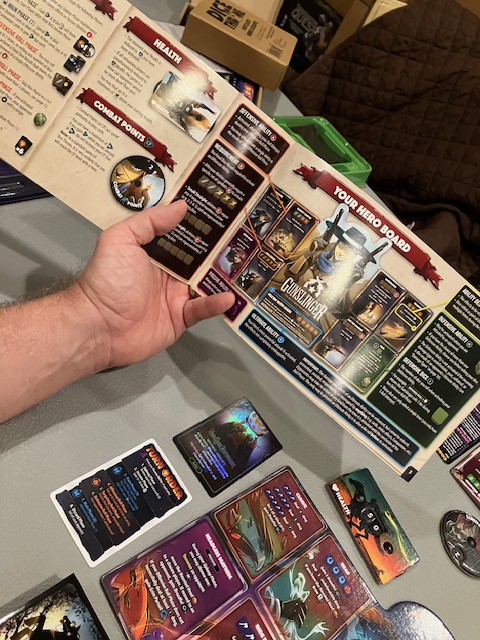
The game gets an A on the Chair Test! This rulebook sits very well on the Chair next to me … and it is so very readable! There is no droopiness, the fonts are big and readable, there’s tons of pictures and annotated text, and the colors just pop!

The Components page is great! See above!

Everything about this rulebook is quality. I don’t think it needs an Index because the game is pretty straight-forward! There aren’t a lot of keywords, so I won’t ding it for not having an Index.

There are two things that needed a little more discussion, but we’ll go over those below.

Otherwise, just a great rulebook!

Solo Play

So, congratulations to Companion Quest for following Saunders’ Law! We have a solo mode! The solo mode is a true solo mode, where the solo player takes the role of a single Gnome! The rules are well-defined on page 16 of the rulebook.

Normally I don’t “love” solo rules that change up the game, but the solo rules are pretty simple. There are two changes:

  1. The solo Gnome can activate his own Gnome’s power to help himself (in the cooperative game, your Gnome power can ONLY help others). This is pretty typical of true solo modes: any ability that normally helps other players can be used to help yourself instead!
  2. When you “refresh” your Gnome, you actually need to get a new Gnome instead! This forces you to cycle through the Gnomes and their special powers.

You can also keep a die from a previous round, but this is pretty much the same as the cooperative game; it’s just “the next player” isn’t someone else, it’s you!

The solo game is an easy way to learn this game. All the rules are there, and it’s pretty easy to jump straight in. I had a fine time learning the game this way. I played about three solo games; I had a good time while getting the gist of the game. It’s pretty fun to roll the dice, think about which dice to use for which thing (Quest? Portal Problem? Companion?), and try to catch Gu-gu. There is some brain power needed to do well; it’s not as simple and cute as the rulebook and look belies.

The balancing for the solo game seems to be achieved by cookie distribution. If you have just one Gnome, you start with two cookies, and get another two cookies at the end of a quest stage (see above). Since cookies are pretty powerful (usually in getting companions), it’s clear these need to be rationed. A 2-Player games starts with two cookies distributed amongst the two players (one each) . Interestingly, a 3 and 4-player game start with no cookies. We’ll revisit that decision some more below.

The solo game is cute and adorable, and it’s a great way to learn the systems of the game. I might come back to it again as a solo player, but I think cooperatively is the funner way to play. You might say, cooperatively is “gnominally” the best way to play! Sorry, that joke should get gnominated as worst joke in this review!

Cooperative Mode

I’ve been able to get Companion Quest played at 2 and 3 players. I’ve played a couple of times with my friend Teresa (below) and one with my niece Megan (see above).

So, the rule about “you can only use someone else’s Gnome powers” makes the game a little more cooperative. Players then need to talk a little more about what you can do “Hey Rich, I need a +1, can you help me get that with your Gnome?” So, that simple mechanism does help bring players interact more.

There is a little bit of downtime between turns, as you really do need to think a bit about the best way to use your dice. Depending on the group, this will either bring out conversation (making the game more interactive) or it MIGHT invite the dreaded Alpha Player in (making it less fun)! You get so excited when you see someone else roll the amount they need that sometimes you start accidentally Alpha Playering! I KNOW I did to Teresa a few times and I feel terrible! For Megan, she was asking for help more, so it worked out there more (my Alpha Player was more of a teacher). But I think you need to be a little careful about making sure you don’t Alpha Player!!!

With that little warning, I do think cooperatively is more fun that solo! Most people love the little Gnomes and their little companions. The game is pretty quick (besides some of the thinkiness that might occur on your turn), and the 30 minutes playtime as indicated on the box is about right. Most turns are pretty multiplayer solitaire (if you don’t have an Alpha Player … Rich …) so it’s still fun to make your own choices!

The game is bright and gorgeous and draws people in with its art. The cooperation is pretty good; even if you can’t use a die on your turn (sometimes, you just can’t get a die out), it’s pretty cool you can pass a die to the next player for their turn. It makes you feel like you are helping them! That rule (and the “you have to use someone else’s gnome powers”) make the game pretty cooperative and interactive despite the multiplayer solitaire nature of each turn.

Things I Liked

Using Dice for Wake-up! We didn’t mention this in the overview, but there is an another way to wake-up companions! We mentioned that you can use a Cookie to “wake up” a resting (tapped) companion … but there is another way to “wake up” a companion! Using a colored die wakes-up a companion! You might notice that every Companion has a color associated with it! Kusa (above) is red and Peppy and Snaps are both yellow. If you ever place a die, you can wake up one companion of that color! So, placing the yellow die above, we can wake up Peppy!

This really expands the choices you can make in the game! When you get some dice at the start of your turn, do you get dice to help with the Quest? Do you get dice to help with the Portal Problems? Or do you get dice to wake up your companions? This just really makes the choices so interesting! I really think this one mechanism elevates the game!

Art: I adore the art in this game! That cover may be one of my favorite covers of the year! I also really like how this game uses color! I love the colors in this game!

Things I Didn’t Like

Dice: At the end of the day, it’s still a dice game and you may get stuck with bad rolls. This is balanced out by it being a pretty short game; I don’t might a dose of randomness for a 30 minute game. Also, you generally can mitigate bad dice rolls with all the special powers you have.

Cookie Balancing at 3 and 4-Player: One of the funnest parts of the game is deciding when to use the cookies for their myriad of effects! (Recruit? Awaken? Reinvigorate?) Yet, the 3 and 4-player games start with NO COOKIES. It’s clear that when you finish a quest that everyone generally gets a cookie, but our first few 3-Player games seemed “less fun” and “less balanced” as we struggled more with no cookies to start the game. It “feels like” that there should be at least 2 cookies always at the start of the game? The balance felt a little off in the 3-Player game without cookies. In the end, after failing multiple times at 3-Players, we sorta started with a couple of cookies and that seemed to make the game a little more palatable. This probably sets the balance off a little at later levels, but it made us want to play more because cookies make it more fun!

Some Clarity: It seems like, when you play, that “completing a quest” should stop Gu-gu from moving forward. After searching the rules several times, it seems clear that Gu-gu will ALWAYS move if you don’t finish a “portal problem!” The interaction between those two (finishing Quest and finishing Portal Problems) should have been more specified! If you “cheat” and don’t move Gu-gu after a quest, then the game may seem too easy? But it also is MUCH harder if you do move Gu-gu! I wish this had been clearer in the rules. (Arguably it’s the flow of the game, so it doesn’t need to be specified, but the intuition seems to be counter-intuitive on this point … requiring more specification). Look, maybe you won’t have this problem, maybe I saved you from looking something up, but just be aware that completing a quest isn’t considered solving a portal problem (for Gu-gu movement purposes).

Modular Arithmetic: So, this game embraces that “adding 1” to a 6 flips it to a 1. And subtracting 1 from a 1 turns it into a 6. That’s modular math!!! Additions roll over, and subtractions underflow. That’s great! Because of this one feature, we are now using modular math (Modulo 6, Offset 1). This usually makes sense in the game, but they need some discussion. And what about negative numbers? What is 3-4 in this system? There is NO discussion of this! By opening the door to modular math, they need to define what that means! So, 1+6 = 7 = 1. Easy. 2+6 = 8 = 2. Easy. 3-1 = 2. 3-2 = 1. 3-3 = 0 = ??? By the rules we have, this should be 6!!! So, 3-4 = -1 = 5. An easy way to think of this; just do the normal math and add 6 or subtract 6 from the number until you get a number that’s between 1 and 6!

Some of cards, like “Unlock The Chest” (above) can be a lot easier if you can do modular math. And the game has opened the door for this! But they need to embrace the modular math and show examples! 6 is the additive identity here! I don’t think you can open the door and not specify this.

Conclusion

Companion Quest is a fun little cooperative dice-rolling/dice-placement game, but be aware! Compansion Quest is a lot more thinky than it looks! I don’t think this a gateway game; I think this is a game that needs a little sophistication and brain-power. Don’t get caught in the trap of thinking “Aw, it’s so cute, it must be simple!” This isn’t something super deep and heavy (remember, games really only last about 30 minutes), but it does have a lot of thinky decisions.

With an appropriate shepherd, I think most people can play this, but it might be a little too much out of the box for newbies.

But, overall, all my friends and nieces liked Companion Quest; it was a fun, cute, fast, simple game with deceptively more thinkiness than you might imagine. I might play it again solo? It’s a good game solo, but for me, the better game is the cooperative game with the dice-sharing and gnome-power sharing! I’d give this a [6.5-7/10] for solo and [7.0-7.5/10] for cooperative. It’s good! But, at the end of the day, it’s still a dice game and that randomness can be too much! That’s why we have a ranged rating; when the dice are poorly behaved, the game is less fun (for the lower ratings), and the game is more fun when the dice don’t conspire against you (for the upper rating).

Dice Throne Outcasts + Dice Throne Adventures Unchained. Part II of II.

Join us for the second part of our review as we look closer at the Dice Throne Adventures Unchained Expansion. Part I showed us the terrifyingly thematic Halloween characters of Dice Throne Outcasts, and now we look at the new solo and cooperative modes of Unchained!

If Dice Throne Outcasts provides the core characters for head-to-head play, then Dice Throne Adventures Unchained gives us more ways to play solo and cooperatively!

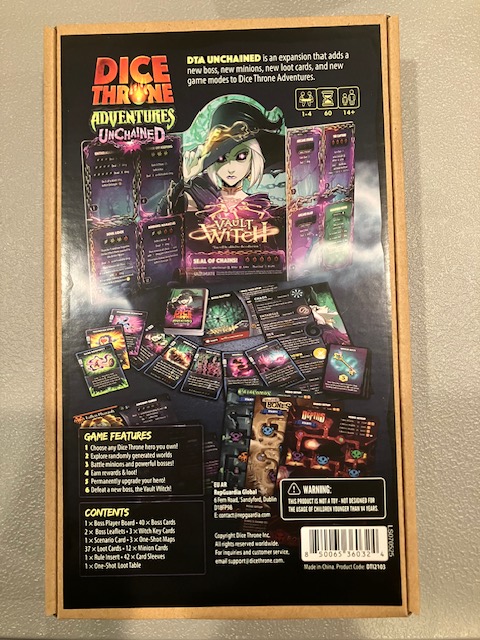
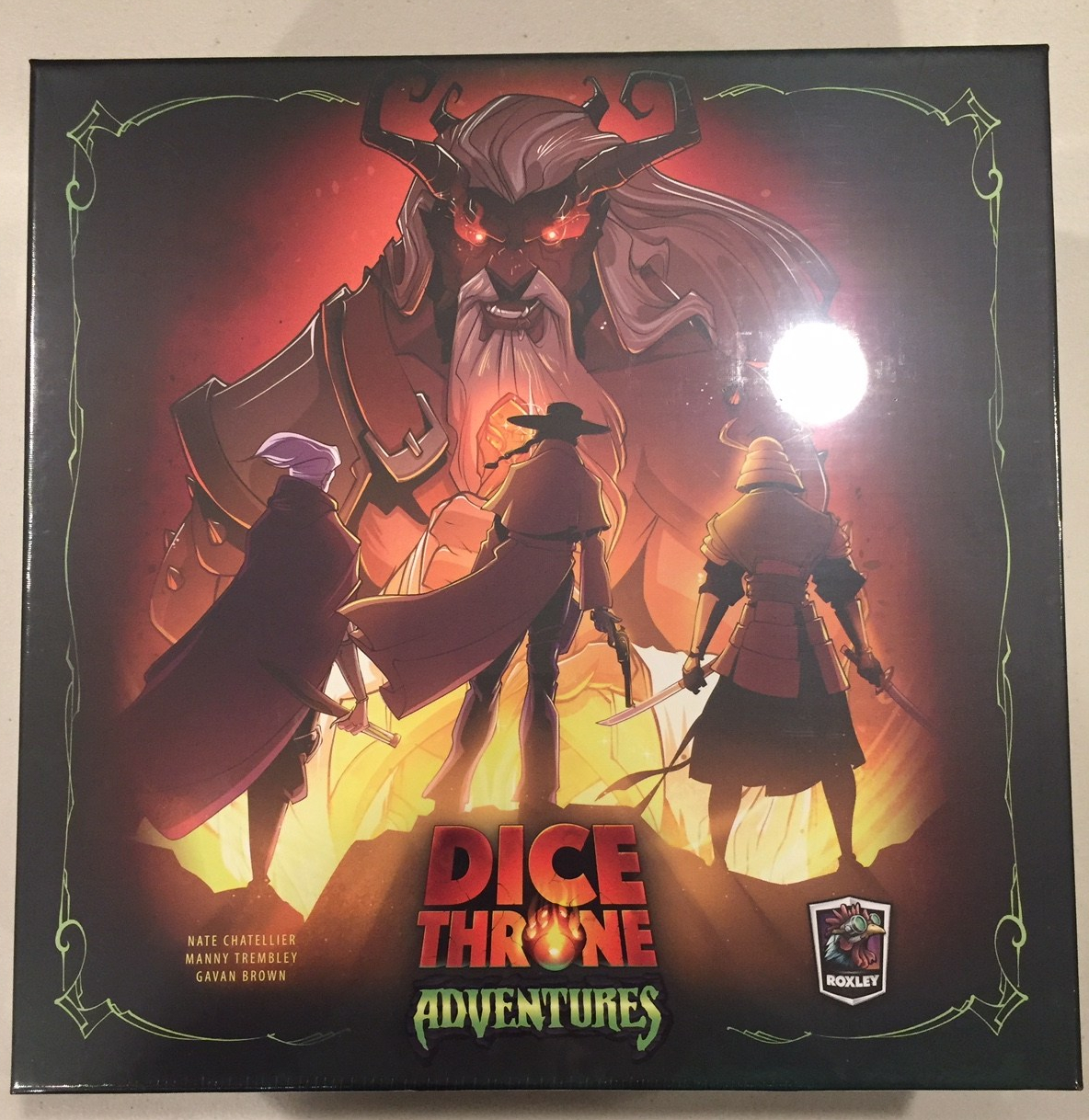
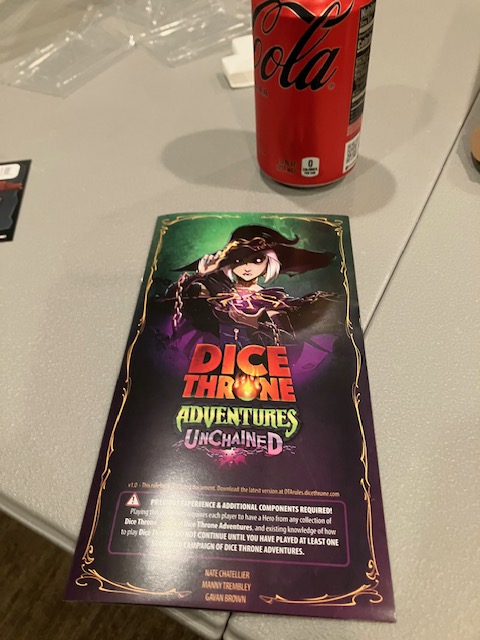
We have to 100% clear here; Dice Throne Adventures Unchained is an expansion for Dice Throne Adventures! See above! We really liked the Dice Throne Adventures Expansion (see review here), so when we saw there would be more content, we were excited!  So, in order to use this new Unchained expansion, unfortunately, you do need the Dice Throne Adventures box.  That’s right, Unchained is an expansion for an expansion! 

And to further muddy the waters, you need at least one of several boxes of characters to play.  We’ve been playing with Outcasts and have been loving it, but there’s also Marvel Dice Throne (see review here), X-Men Dice Throne (see review here), and Seasons I and II of Dice Throne (see review here).

In other words, to play Unchained, you also need a core box as well as the Dice Throne Adventures box!

So, if that hasn’t scared you to running away screaming  (“Really? Three boxes total?”), we can look objectively to see if it is worth getting the Unchained Expansion!  I will tempt you by saying that we have two new solo modes AND a new cooperative mode!

Unboxing

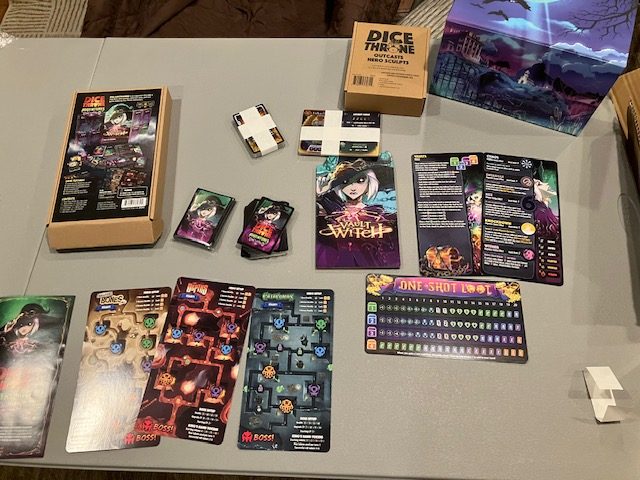
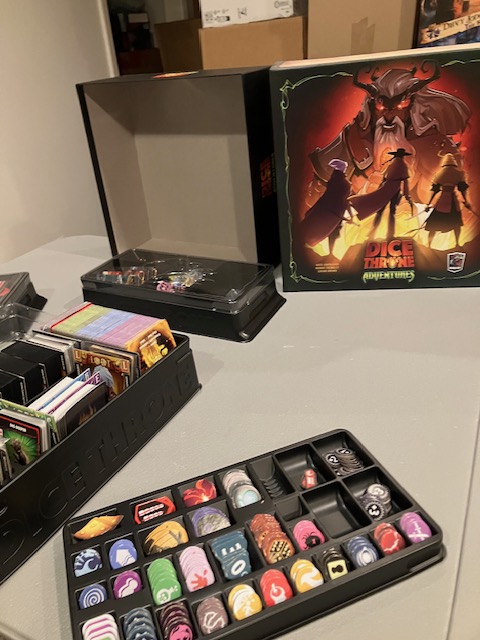
The Unchained box is small, but it has quite a bit of stuff.  See Can of Coke above for scale.

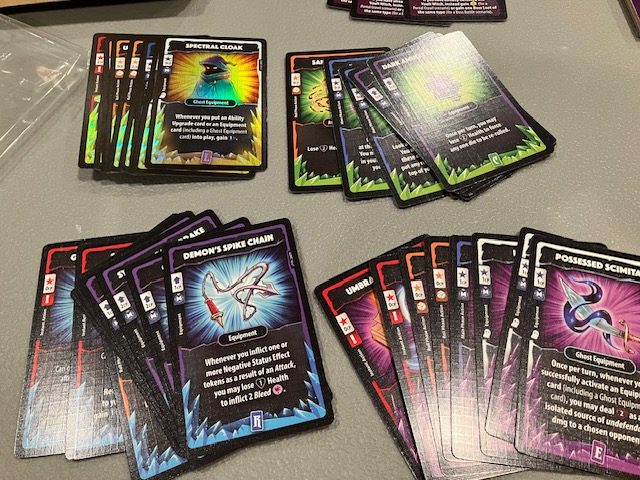
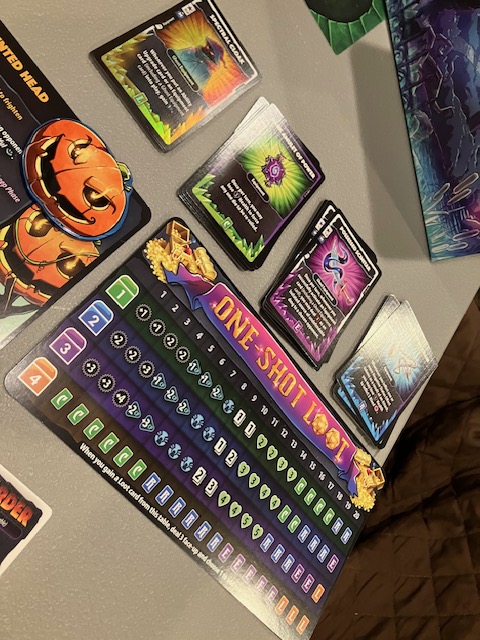
The coolest thing is the new Loot cards which can be mixed in with the original Dice Throne Adventures. Loot is just upgrades as you play! See above.  The Legendary cards are even foil! Oooooohh!!

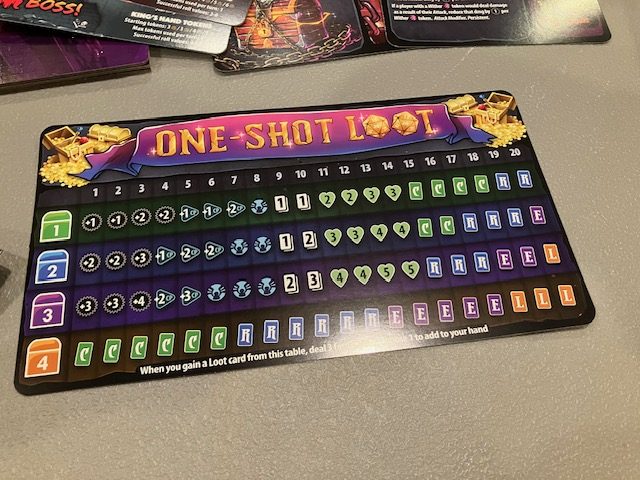
The most fun new rule of the game is that Loot is added instantly to your hand when you get it!  So, there’s a new Loot table for instantly adding stuff! 

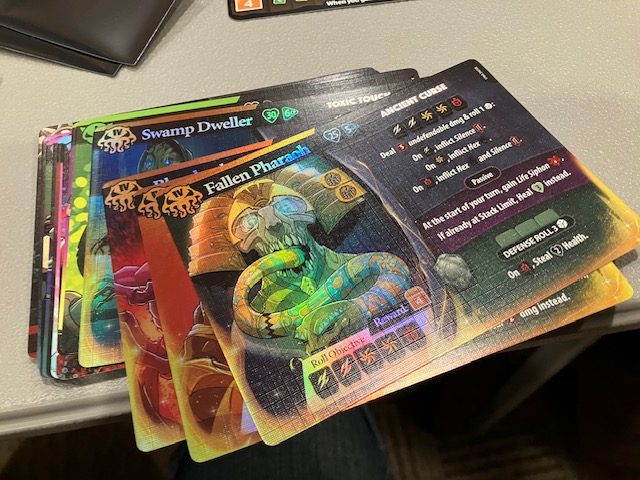
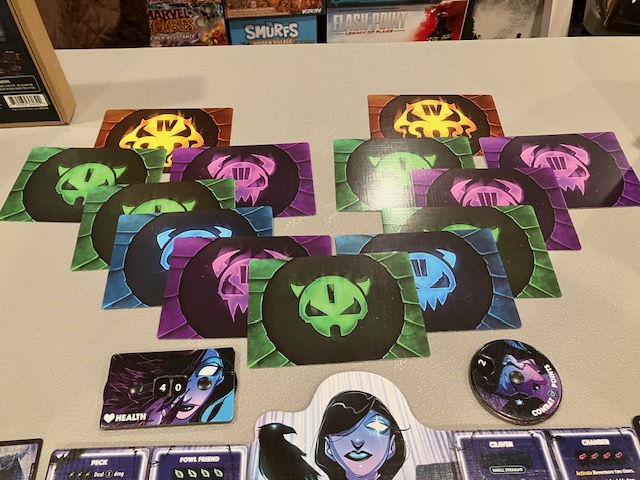
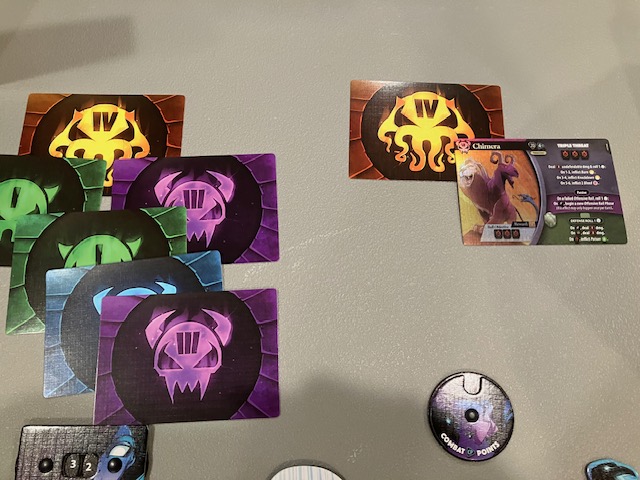
There’s also a whole bunch of new Minions (levels 1-4, sorry I-IV).

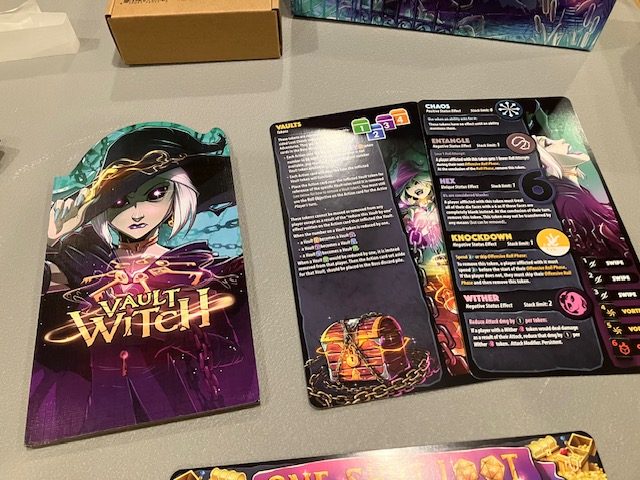
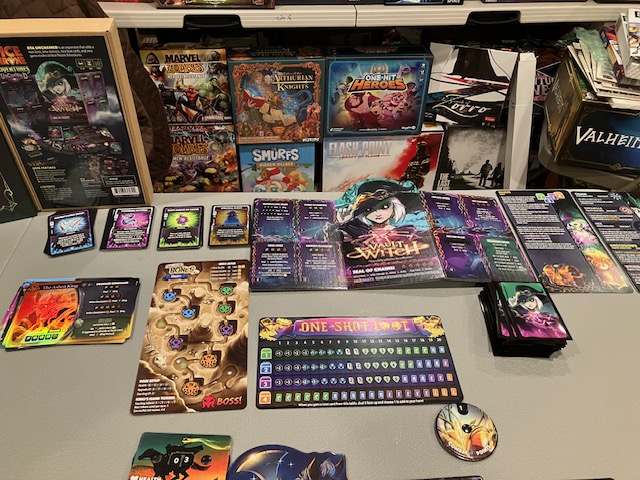
There’s a new Boss!  The Vault Witch!  

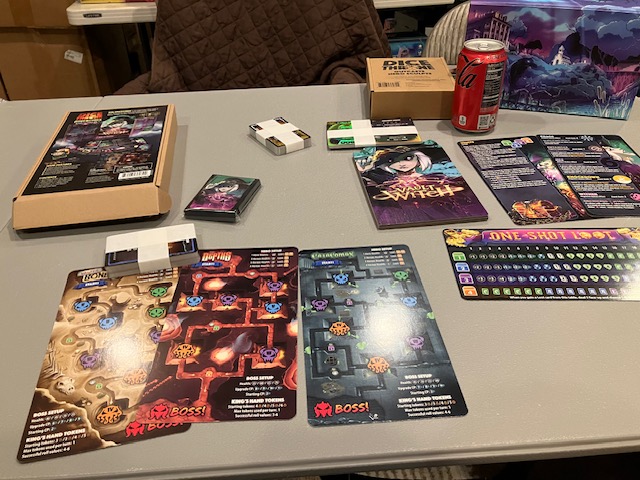
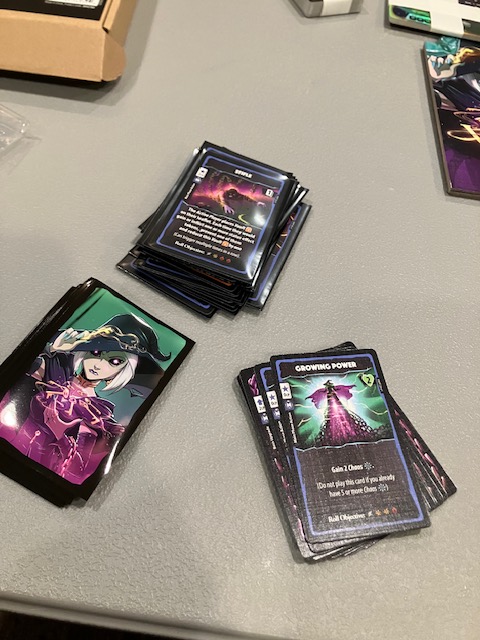
As a boss, she has her own deck (and sleeves)! See above!

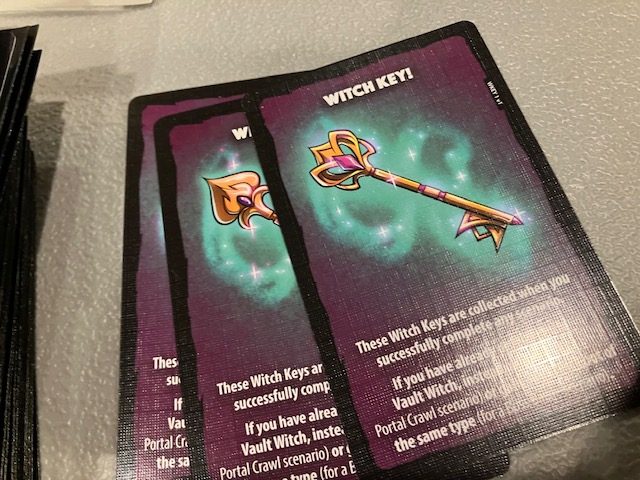
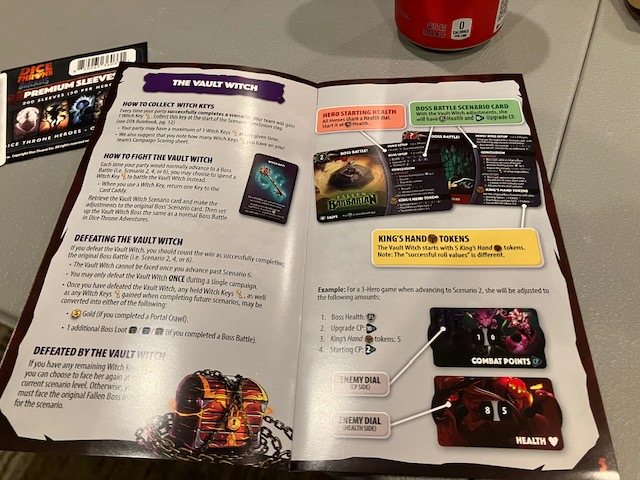
In the base Dice Throne Adventures, you can choose to fight the Vault Witch instead of a normal boss, by collecting the Witch Keys: see above.  This allows you to vary the bosses a little in the original Dice Throne Adventures game.

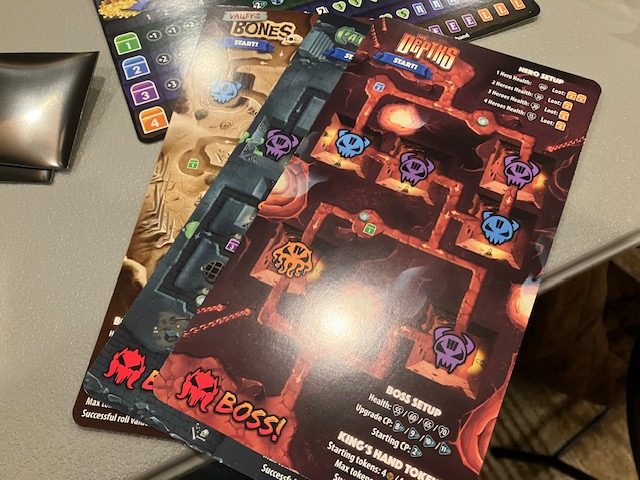
There’s also 3 new sheets (double-sided) for 6 new one-shot scenarios!  

Overall, this looks great and totally fits the feel of Dice Throne, especially the Outcasts set!

Rulebook

The rulebook is a tiny thing.

This rulebook probably gets a B- on the Chair Test. It does stay open and stays flat, and the font is big and readable, and it has lots of good pictures and annotations … but it’s still just a little small.

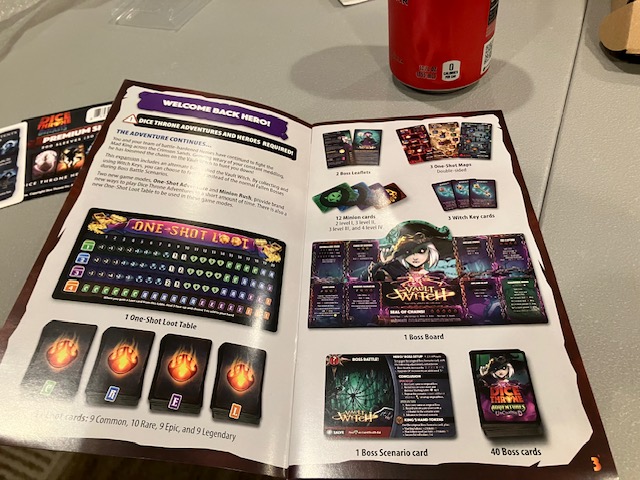
The components page works well: see above.  

Like all Dice Throne rulebooks, they do a good job labeling pictures and having a good sized font.

Generally, this rulebook was fine.  It even finishes with some useful stuff on the back cover.

Solo Mode: Minion Rush

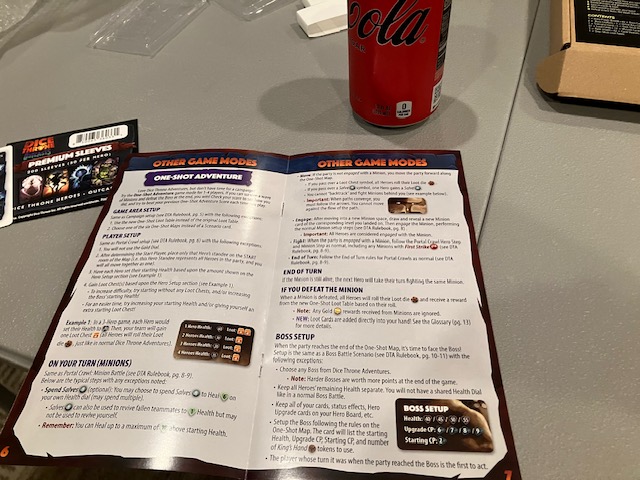
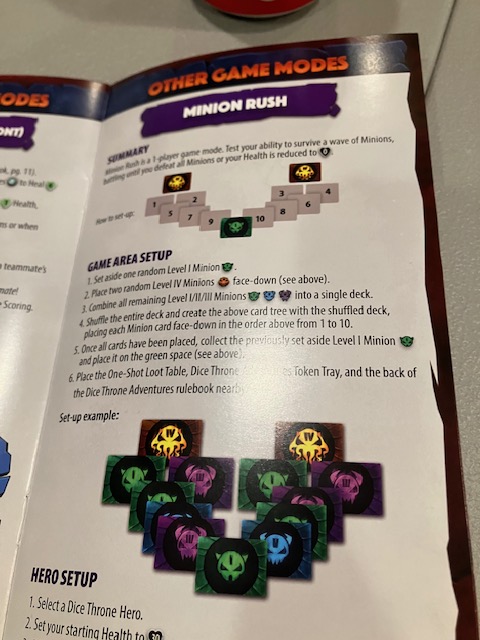
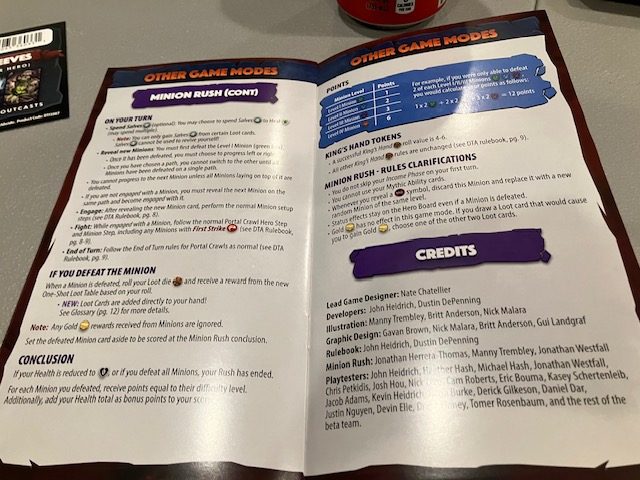
The game comes with a new solo mode called Minion Rush!  See rules above! 

As you might guess, you just go and fight a bunch of minions (no bosses allowed!).  These new rules span 2.5 pages in the rulebook: see above.

At the end of the Minion Rush (after you die, … and you will die), you get Points for every Minion you killed!  (Harder Minions are obviously worth more). See above as I get 27 points for killing all-but-one minion!

I tried to set-up a Minion Rush using only the new Minions  (see above)… but you don’t quite have enough Minions in the Unchained expansion to do this … you gotta get some from the main box.

I was actually incredibly disappointed you couldn’t JUST play Minion Rush with the Unchained expansion: you need 13 Minions, and the Unchained expansion only comes with 12 Minions!  D’oh!  It sounds stupid, but I thought it would have been nice to need almost nothing from Dice Throne Adventures.  To be clear; for Minion Rush, you STILL NEED Dice Throne Adventures

In the end, I played Minion Rush with mostly Unchained Minions!  See above!

It was reasonably fast and fun to play, like 1.5 hours?  You just beat-up Minions!

You have to choose a path to follow … once you start following a path to the left or right, you have to keep going on that path!

As you go, you get upgrades!  And these upgrades persist! See above!  Yay! But so does damage and poison!  Boo!  Basically, it feels like a Dungeon delve!

Minion Rush is a fun way to play solo without too much set-up.  This is another great way to learn the characters!  If you don’t want to me play the Me vs Me solo mode (like we saw in Part I of our review), then Minion Rush is a fun solo mode without too much commitment.  

I used to the solo mode Minion Rush to learn the Raveness character!  See above!

“But Rich!” … I hear you asking. “Why do I need special rules for the Minion Rush??  It feels like I could just play the Dice Throne Adventures and use these rules? Do I really need Unchained to do this?”  

You are ALMOST right.  You need two major things from Dice Throne Adventures: the status tokens (and the back of the Dice Throne Adventures rulebook), but arguably more important thing you need is … the new Loot Chart.

New Loot Zoot Suit

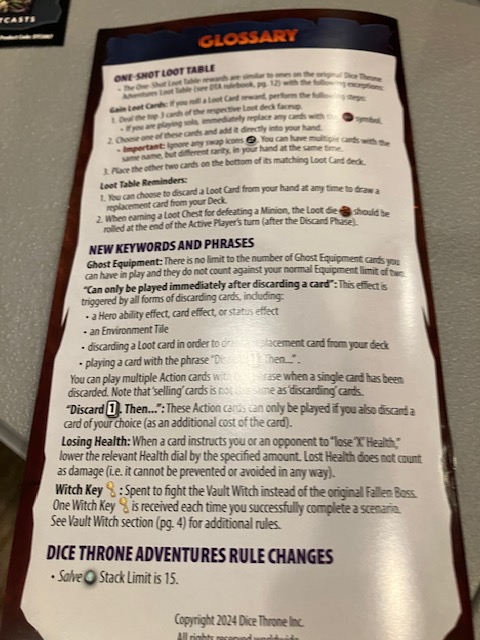
Arguably, the best new rule in Unchained is that you get IMMEDIATELY get Loot into your hand when kill a Minion!  See above for the One-Shot Loot chart!  One of the complaints of the original Dice Throne Adventures was that your deck upgrades went very slowly … you might only get a few Loot as you play per session.  And you might not see it very much!

The new One-Shot Loot chart (if you roll well) immediately puts Loot into your hand.  So, as you kill a bunch of Minions in Minion Rush, your hand is getting better, and better immediately!

So, the new One-Shot Loot chart is paramount to making this Minion Rush work! 

“But Rich”, I hear you say, “Can’t you just make a copy of the One-Shot Loot Chart and play Minion Rush without Unchained?”  No, because you still need the status tokens and rulebook from Dice Throne Adventures.  Why don’t you just support Roxley and quit trying to cheap-out?  They’ve made a great game for you to play … besides, Unchained comes also with new Minions, new Boss, new Loot, and … a new co-op mode!

New Cooperative Mode!

That’s right, people!  There’s a new cooperative mode in Unchained!  Whaaaat?

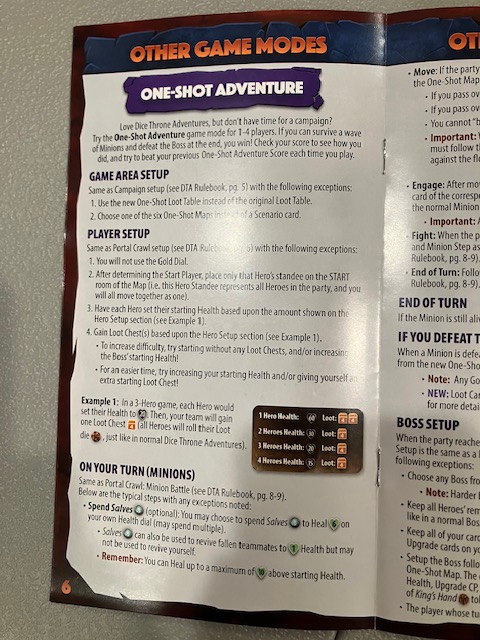
The One-Shot Adventure is a new cooperative Adventure!  See rules above. 

One-Shot Adventure: Solo Mode!

Technically, the One-Shot Adventure is also a new solo mode, as you can play that One-Shot Adventure by yourself!

This new One-Shot Adventure addresses the problem many people had with the original Dice Throne Adventures … it was too long!  Dice Throne Adventures required an investment in a long, on-going adventure, and there kinda wasn’t a way to just play a one-off!  Now you can!

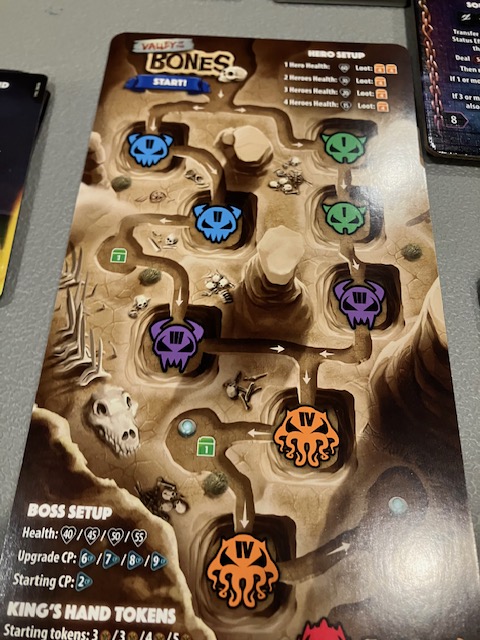
There are three One-Shot maps (dual-sided), (see one above) and they basically represent a “condensed” Adventure where you fight some Minions on the way to fighting a BOSS!  The map above represents you “going through a dungeon”!  Along the way, you fight Minions, find treasure, find healing, and try to get to the BOSS  at the bottom!!

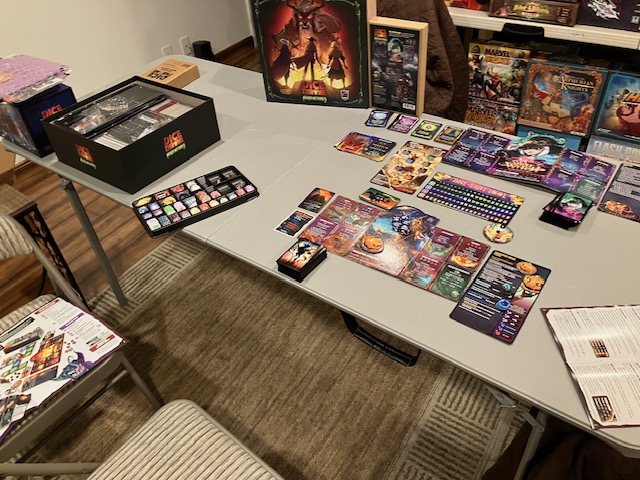
I played a One-Shot Adventure (see above) solo to see how it worked!    When you play the One-Shot Adventure, you have to embrace needing Dice Throne Adventures, some characters (from Outcasts, but really any), and the Unchained expansion! 

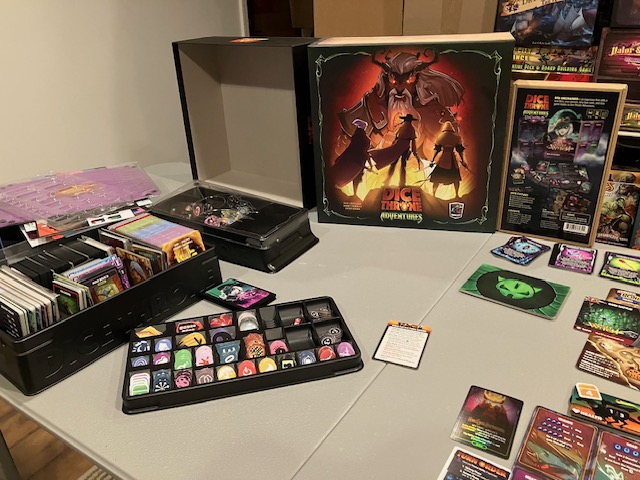
To help myself keep things separate, I actually physically separated the Dice Throne Adventure components on the left side of the table (see above) …

.. and the Unchained and Outcasts components to the right side of the table! 

This helped me keep track of what goes where!

I really enjoyed this solo; it felt like it took all the complexity of Dice Throne Adventures and compressed it into a bite-sized adventure I could play in about 1.5 to 2 hours!

With the One-Shot, you get to fight BOTH a lot of Minions AND a Boss in a smaller time frame.

I really enjoyed this “new” solo mode.  Of course, like we said in the Minion Rush, part of the reason the One-Shot Adventure works so well is that we have the One-Shot Loot chart and immediately get Loot so we immediately feel more powerful as we play!  See above as I already have some great Ghost Equipment out and upgrade cards to fight the new big bad!

The new boss is cool; I have to say I defeated her pretty readily in my One-Shot Adventure, but she was still fun to play.

Again, The One-Shot Loot chart makes this new cooperative work so well.

One-Shot Adventure: Cooperative Mode … Prequel

One big mistake I think we made in playing Dice Throne Missions was NOT playing a quick head-to-head game to learn the characters.  (You might remember my friends were frustrated when playing Missions: see review here).   When confronted with all the new rules of the cooperative modes, I think it’s too easy to get lost.  So, before we jumped into a cooperative game of Unchained (the One-Shot Adventure), I asked my friends to play a quick Head-to-head game.

I recommend this to you and your groups as well.  Don’t just jump into Unchained.  There’s a lot of rules.  Let your players get comfortable with the basic rules and characters they want to play BEFORE you jump in.

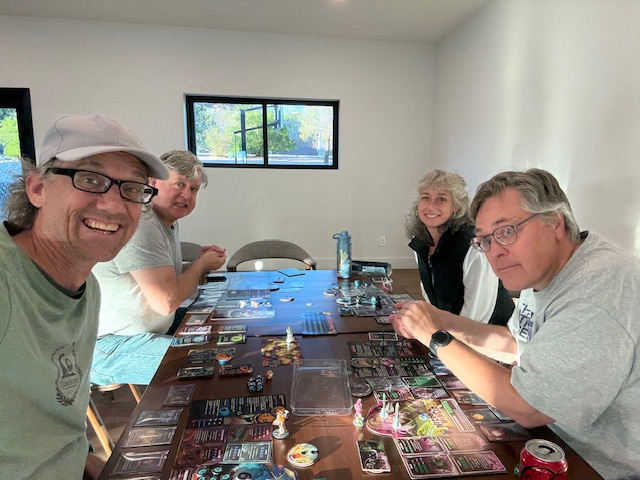
Playing a quick head-to-head game first was absolutely the right thing to do;  I know it from both the positive side (my friends above said they were very glad we did a quick pre-game) and the negative side (when my other friends felt frustrated in Missions).

One-Shot Adventures: Cooperative Mode!

So, I shepherded my players into a One-Shot  Adventure!  They generally had fun, although we saw a few problems: 
1) Four players may be too many.  Even though the game moved fast, some times you felt like it took too long to get to your turn.
2) Because it takes some turns to get some of the characters flowing, sometimes having the next player fight the minion slows down your progression.  Both Raveness and the Headless Horsemen suffered from that a little; both of them require a “commitment” to an opponent to see a result.  If the opponent is killed by another fellow player, you feel a little frustrated as you couldn’t “get your character going”.

Both of these problem are solved, I think, by simply limiting the number of players. My friends had fun playing cooperatively, but I think Robert (Headless Horseman) and Becca (Raveness) were a little frustrated getting their characters going.

The other thing to be aware of, (and note that I am not calling this a problem), is that the game isn’t particularly cooperative. It’s pretty much multi-player solitaire as you all just take your turn and try to kill Minions/Bosses. Occasionally, you might help each other with cards that give re-rolls, (“I really need a re-roll! Can someone get me a re-roll?” ), or you might get rid of a status (“Please get rid of this poison!”) If you like cooperative games that are mostly multi-player solitaire with a sprinkling of cooperation, this is a perfect game for you. If you are looking for a more cooperative experience, Dice Throne Mission might be a better choice? (I say this because characters like Cyclops are made for cooperation).

Conclusion

It’s hard to recommend  an expansion for an expansion (remember, Unchained is an expansion for Dice Throne Adventures), but I think Unchained crosses that threshold!  I actually think this is an essential expansion; Unchained fixes two major complaints about Dice Throne Adventures!   

The first complaint about Dice Throne Adventures was that the upgrade path was too slow; it took forever to see new Loot cards in your hand!  The major fix in Unchained is the new One-Shot Loot chart and rules that make you upgrade SO MUCH faster!   You feel powerful quickly, and that’s a great feeling!

The second major complaint about Dice Throne Adventures was that there was too much commitment needed to play it; it took too long  to play the long adventure! Now, with the One-Shot Adventures, you can play cooperatively in one session, fighting both Minions and a Boss!  No need for the long game!

There’s even a new solo mode with the Minion Rush, which makes it a little easier to learn characters!

There are few things to be cognizant of: you probably shouldn’t play the new cooperative mode with the full four players if you can help it.  My friends still enjoyed it, but I think it would have been more fun at a smaller player count.  Two, maybe three players is probably best.

You should also be aware that the new cooperative modes aren’t super-cooperative.  There are occasions for cooperation, but generally the game is multi-player solitaire. It’s not a bad thing, you just need to be aware of what this is.

I also STRONGLY suggest you make sure your players are familiar with the characters before they play; play a head-to-head 20 minute game before ramping up into the One-Shot Adventure, or your players might get mired in rules and frustration.

Finally, would I recommend Dice Throne Missions over Dice Throne Adventures + Unchained for the solo/cooperative game?  It depends on what you want!  Dice Throne Missions has short adventures (two sessions), and simultaneous dice-rolling which moves the game quicker.  Missions is much more super-heroey, and Unchained is more dungeon-delvey!  If you want the One-Shot Adventures so you can just jump in-and-out, then I think Dice Throne Adventures + Unchained is the better choice.  If you just want short-little adventures, the super-hero theme of Missions may call to you! Honestly, they are both good choices! 

I think Unchained is an essential expansion and makes Dice Throne Adventures that much better.  It adds new Minions, new Loot, new Boss, new solo modes, new cooperative modes, but most importantly, fixes some major problems of Dice Throne Adventures.  9/10.

Dice Throne Outcasts + Dice Throne Adventures Unchained. Part I of II.

Welcome to our two-part review of Dice Throne Outcasts and Dice Throne Adventures.  In Part I of this review, we’ll look closely at Dice Throne Outcasts and see what it has to offer.  In Part II of our review, we’ll take Dice Throne Outcasts and use it to play the solo and cooperative Dice Throne Adventures Unchained Expansion!  

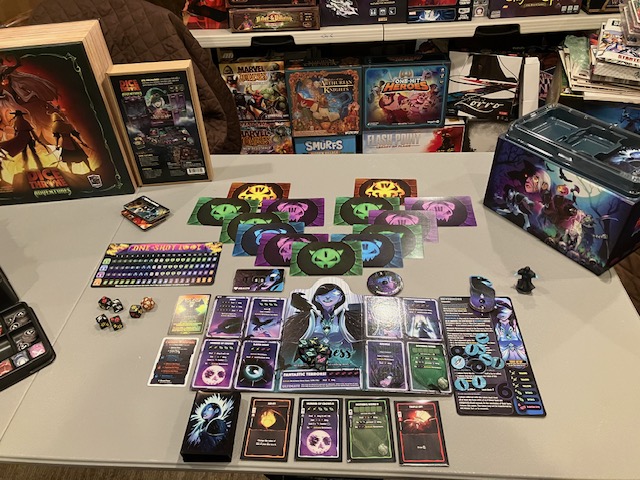
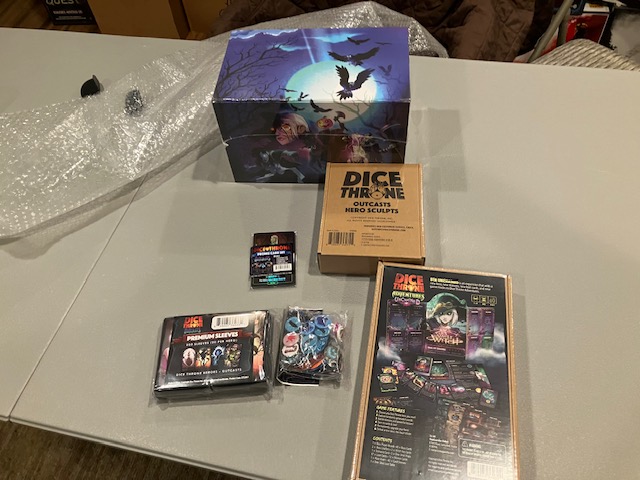
The full Dice Throne Outcasts + Dice Throne Adventures Unchained set arrived at my house in mid November 2025!  See above! This was on Kickstarter back in Oct 2024 (about a year) ago.  It promised delivery in October 2025; I think they were trying VERY HARD to make Halloween, but they just missed by about two weeks.  Two weeks late in Kickstarter terms is still very good!

What Is This?

Dice Throne, by itself, is a head-to-head Yahtzee battle dice game.  Each player takes the role of some character, and goes into battle with another character/player!  The two characters battle it out with dice (using a Yahtzee-style mechanism to activate powers)!  It’s best played as a head-to-head game of character vs. character.   There’s a TON of characters in different sets!  We’ve seen the Marvel Dice Throne Set (which we discussed here), the X-Men Marvel Dice Thone Set (which we discussed here), and Dice Throne Seasons I and II (which we discussed here).

This set of Dice Throne is essentially the Halloween themed set: Dice Throne Outcasts!  It has four characters inside!  To be clear, you can JUST buy this and play the head-to-head game by itself; strictly speaking, you don’t need anything else to play Dice Throne if you just want this box!  (If you want to play solo or cooperatively, however, you will need some more stuff: that’s what Part II of our review will discuss).

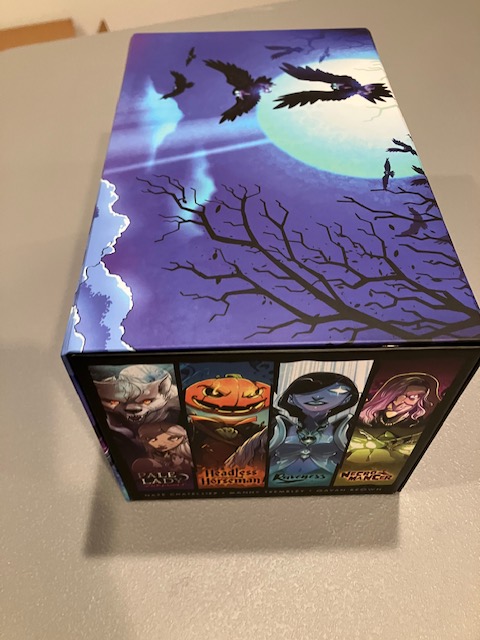
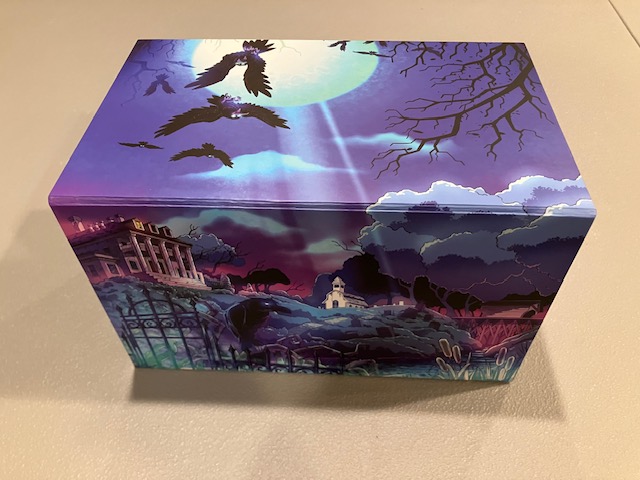
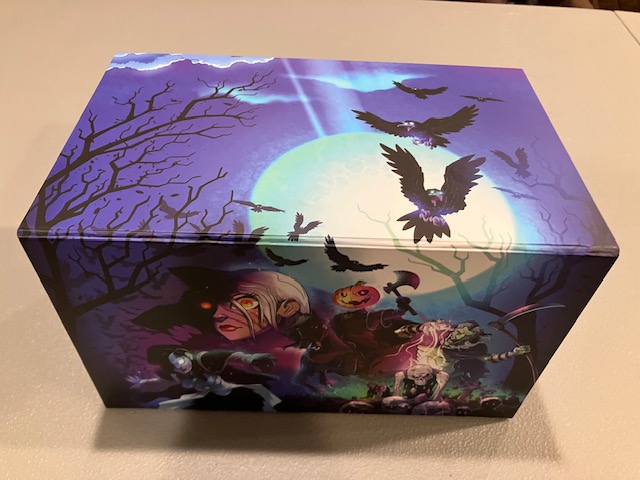
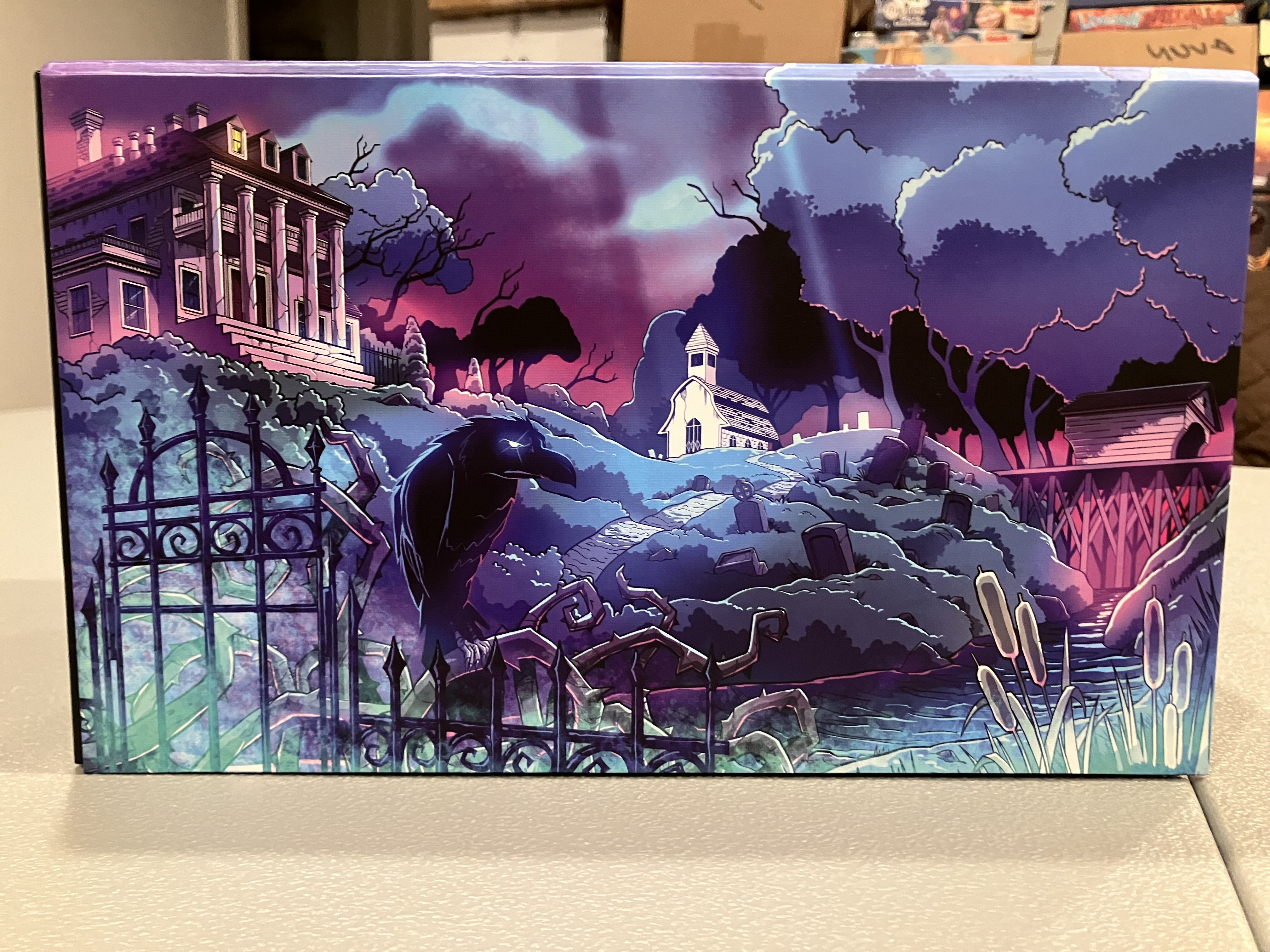
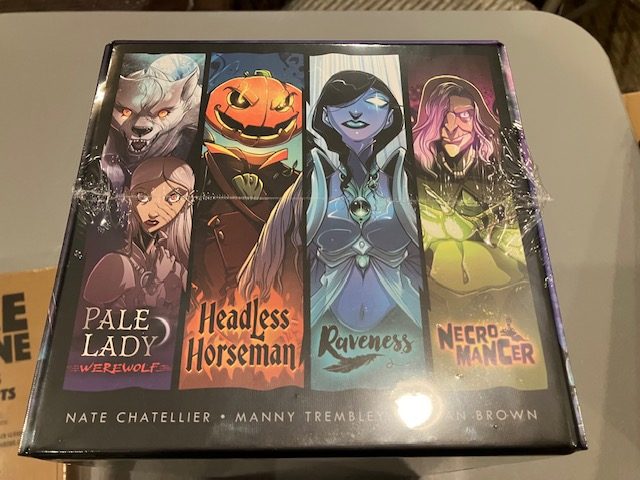
This box is gorgeous with the art of Manny Trembley. See above and below.

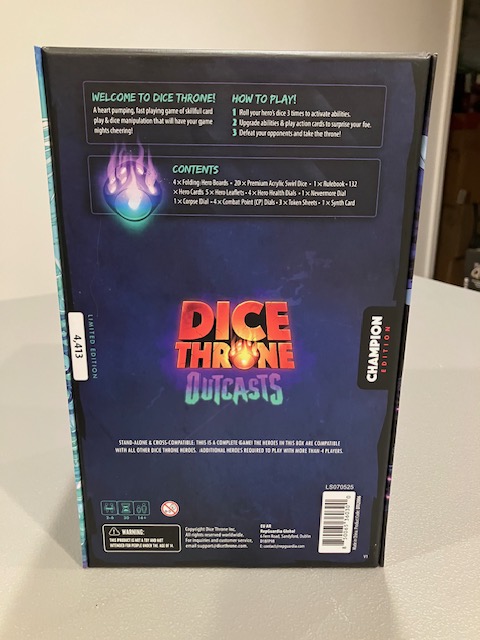
The side lists the four characters in the box.

And the bottom talks about what this is.

I gotta be honest, this cover is a contender for best cover of the year, especially the raven side.

Unboxing

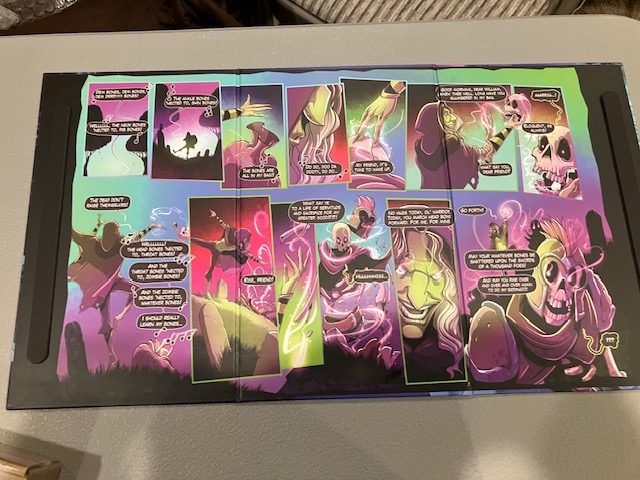
The box top is actually a magnetic wrap-around board! Inside, you get a little cartoon intro to the characters! See above!

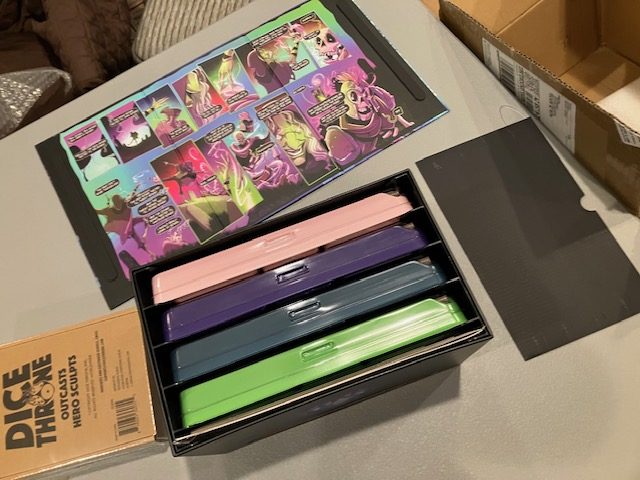
The box itself contains four trays, each with different cards and fold outs.

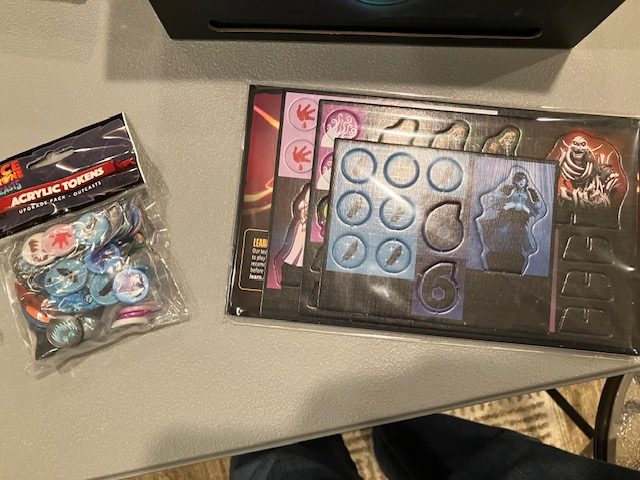
There are also some cardboard tokens which are perfectly fine (see right).  You can also choose to get the acrylic tokens as an add-on; I really like how cool the Acrylic tokens are, but if you are on the fence on getting this game, the cardboard tokens in the box are JUST fine.

There is also a perfectly fine rulebook that comes with it.  The rulebook also has pointers to videos to teach the game.  I even referred to the rulebook a few times to remind myself how to play.  After years and years and years, they have the rulebook down.

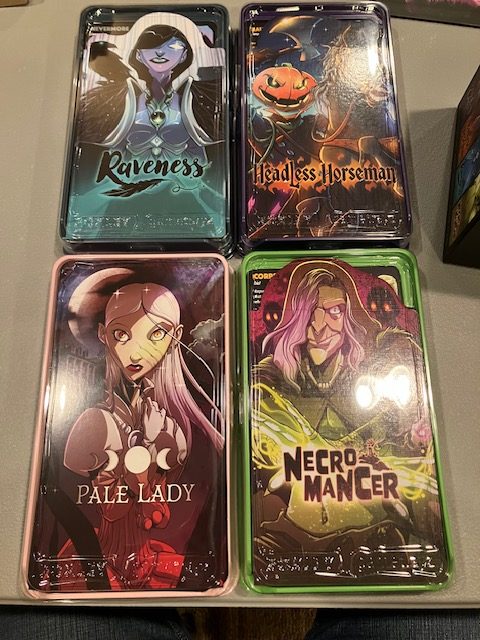
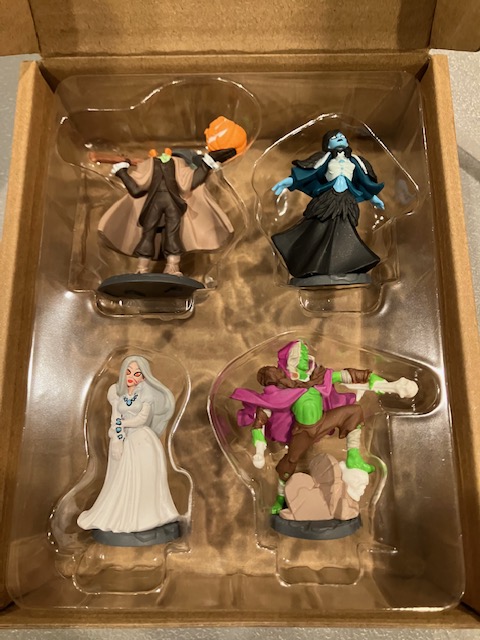
There are four characters in the game; they are easy to take out with their game trayz.

And that’s really all that’s in the box.  The game is really contained in the characters, so let’s take a look at those.

The Characters

Over about a week, I was very excited to try this game, so I got a chance to play all the characters in various modes: head-to-head, solo, me vs. me, and cooperatively.

These characters are fantastically thematic.   Each one of these is unique and dripping with flavor!

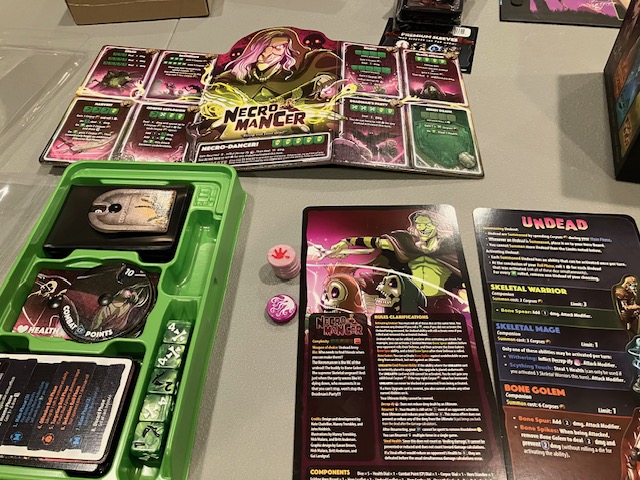
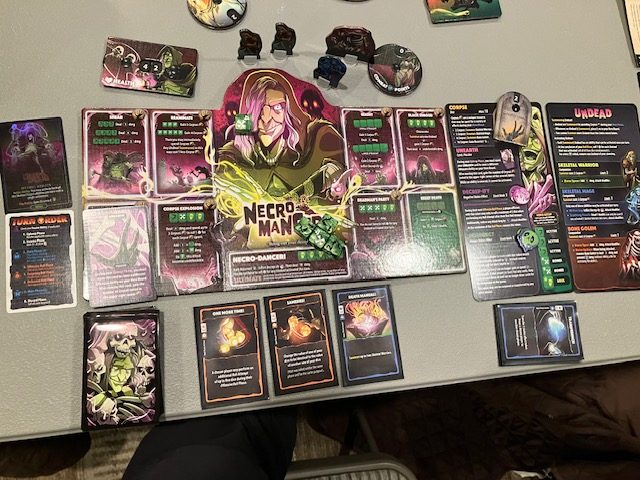
The Necromancer

The Necromancer uses corpses to summon undead fight for him!

The funnest to play overall was definitely the Necromancer!  His components are just top notch, and the Undead that come out look so cool!  The best part is that he has an ability called (I am not making this up) Corpse Explosion!  When playing a big group, every time that ability was invoked, people either laughed or went “Ew!!” It was very funny.

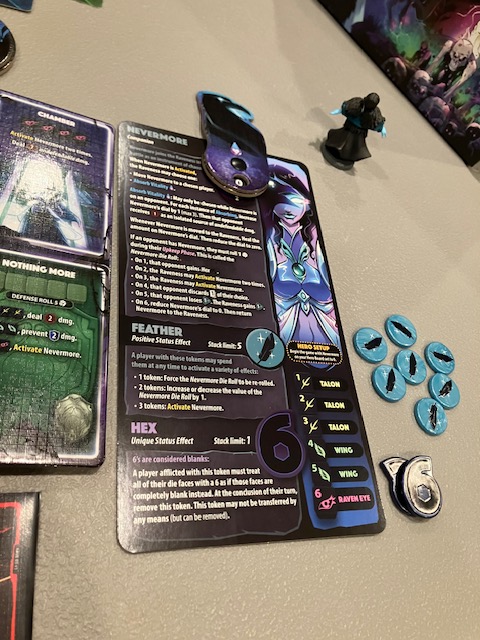
The Raveness

The Raveness has a Raven which flies around and sucks energy from characters in slight attacks!

The Raveness feels more “subtle” than the other characters is some ways, as she has to get her Raven to the opponents! But the Raven simply “steals” life force and brings it back to her master!  This is interesting because the Raven’s life steal is not an attack that can be defended.  If played well, she can subtly funnel energy back to herself without provoking a Defense Roll!  It was also very thematic to summon the Raven with feathers … I had a picture in my mind of a Raven forming up from the feathers and summoning it …

I like the subtlety of the Raveness.

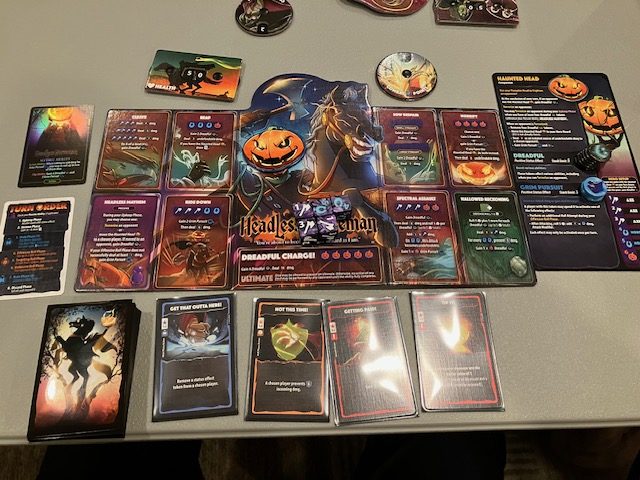
Headless Horseman

The Headless Horseman throws his big pumkin head on baddies and has tokens to terrorize!

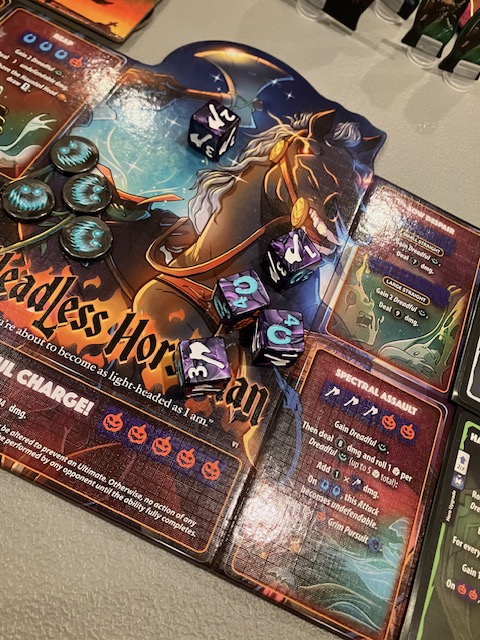
The Headless Horseman was fun to play, as you throw your giant Pumpkin Head on your opponents!  It is a little harder to get the Headless Horseman going, but once he gets going, his pumpkin head is a sight to be seen!

His Terrorize tokens are really interesting, as they can be discarded to Terrorize your opponent with the pumpkin head!

I do think that the Headless Horseman may have my favorite art in this set.

Pale Lady

And finally the Pale Lady slips back-and-forth to lady and werewolf form!

My least favorite was the Pale Lady/Werewolf; not because she’s bad or anything.  She’s weird because she HAS NO UPGRADES. (Normally, most Dice Throne characters can upgrade their board).  I think the back-and-forth between the two sides (Pale Lady/Werewolf) was supposed to emulate some of the upgrades.  She’s definitely a butt-kicker, especially with the bleed tokens she just spews out, but she seemed the least subtle.  I guess that’s very thematic, since she is a werewolf!! GROWL!

The Characters Have Character

It might be trite to say, but the characters in Dice Throne Outcasts have character!  Thematic character!

I still liked every character!  The Necromancer might be the best one to give to newer players, not because he’s simplest, but because he’s so much fun!  The Necromancer might really bring new players into the game … they just might need a little help to operate him.

Solo Mode: Me vs. Me

The base Dice Throne games have no solo mode … BUT you can play in Me vs Me mode, which is just the solo player playing both characters!  I have done this Me vs Me mode for every single Dice Throne set I have gotten!  It’s a great way to learn the characters at your own pace!

The solo player just jumps from one side of the table to the other, alternating play of each character!  I recommend physically changing sides because it helps you “become” that character since it’s just in front of you!  Yes, it’s slightly annoying to get up and go to the other side of the table every turn, but it really does help immerse you into the characters!

If you are curious who won with the Necromancer vs. The Headless Horseman … it was close, but the Headless Horseman won!

If you don’t have anyone to play against, and you don’t have any of the solo/co-op expansions, the Me vs. Me solo mode is a fine way to learn the characters.   In fact, for this set, I played all the characters at least once so I could teach them.  The characters in this set are a little complex, so it’s nice to have seen how the characters work for when your friends have questions.

Conclusion to Part I.

Many of you are aware that I generally really like mostly solo and cooperative games.  Even though Dice Throne Outcasts is a base competitive game, I really liked it!  The art was fantastic, and the characters were dripping with theme!  In fact, I am a superhero guy, I and I think  Dice Throne Outcasts is better than X-Men or Marvel Dice Throne!  The characters are just so well-thought out and thematic!

If you just want a thematic horror-based battle game, Dice Throne Outcasts is fantastic: 9/10.

But if you want to play Dice Throne with a “real” solo mode or a cooperative mode, follow us in Part II as we explore Dice Throne Adventures Unchained

Appendix: Silly House Rule

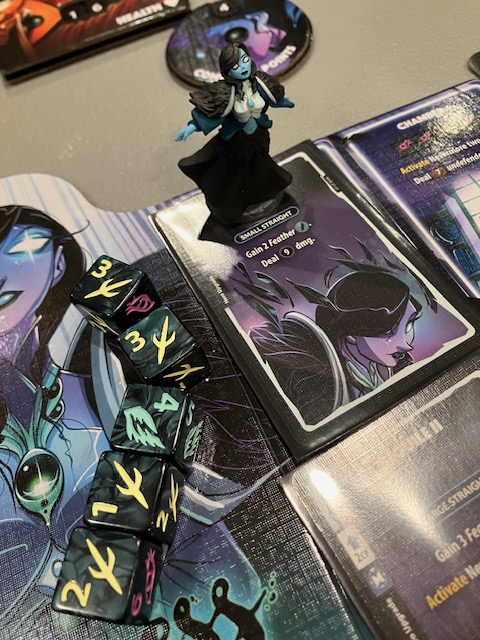
I also picked up the Dice Throne Outcasts Hero Sculpts (see above).  These are for the cooperative game only.

They are just some neat little minis you can use on the board when you play Dice Throne Adventures.  They are completely useless in the base game.

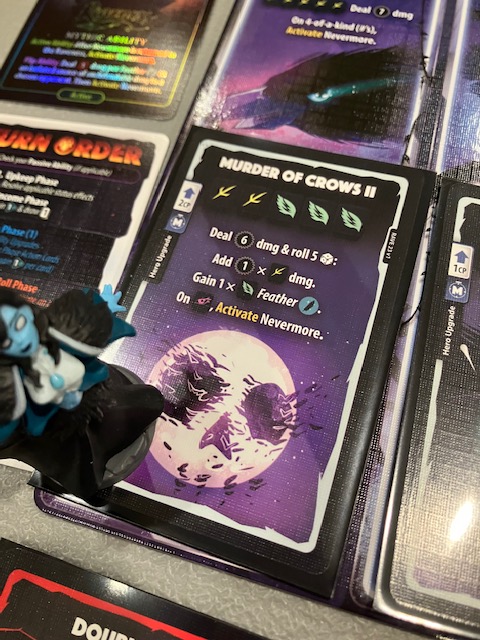
Or are they?  We instituted a silly House Rule: the minis can be used as “worker placement” tokens to mark which ability you invoked with your dice!!  Sometimes, your dice can match multiple abilities on your mat, and thisis just a way to denote which one you chose!! See above as the Raveness mini marks us use the “small straight” option instead of a different match.

Or above as the Raveness marks that we used Murder of Crows II.

This is an absolutely silly way to use the minis. But, it helps you feel like you got more for your money if you DID get them.  Which I did.

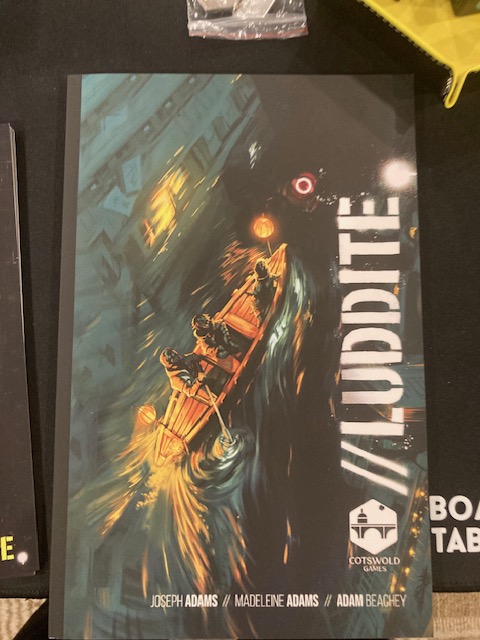
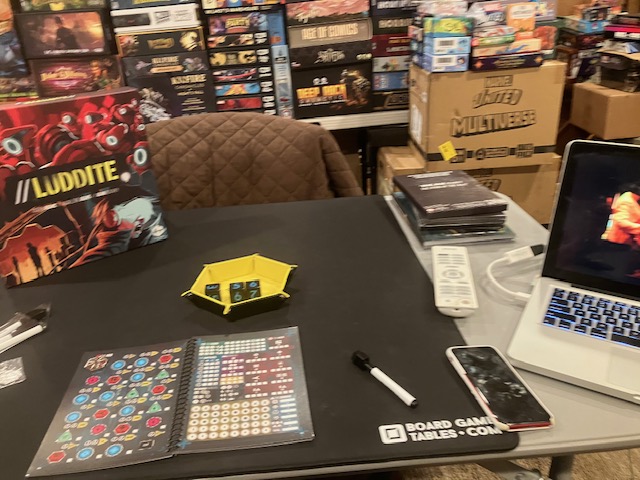
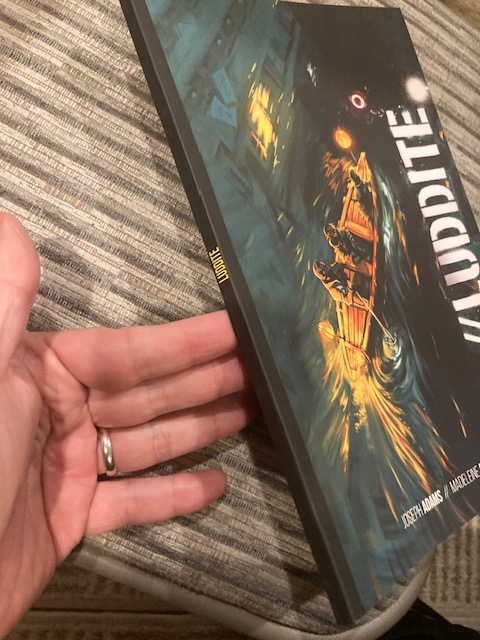
Luddite Can Be An Experience, If You Let It. A Review

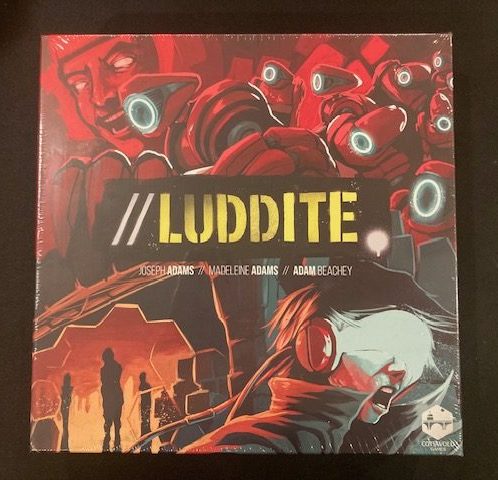
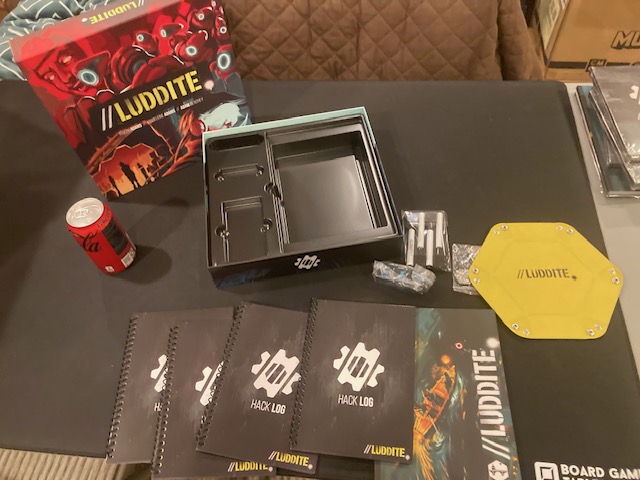
Luddite arrived at my house about a month or more ago, but I have been afraid to open it.  Why?  I mean Luddite was the #5 entry on my Top 10 Anticipated Cooperative Games of 2024!  I paid money and Kickstarted it!! Why was I worried?

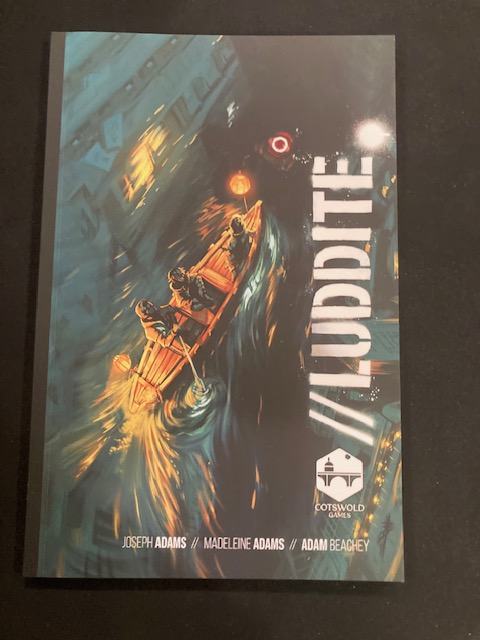
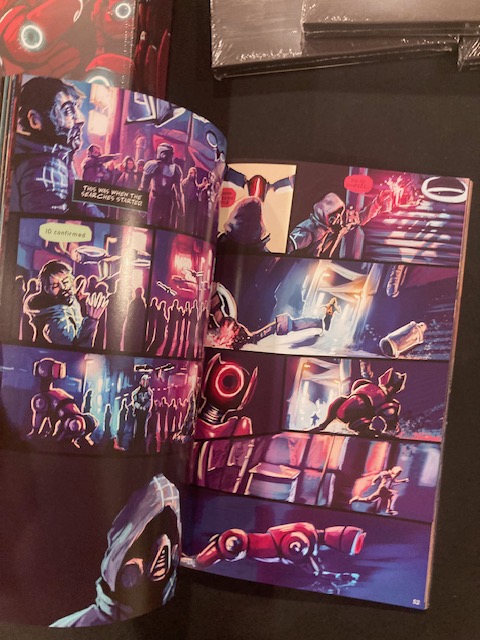
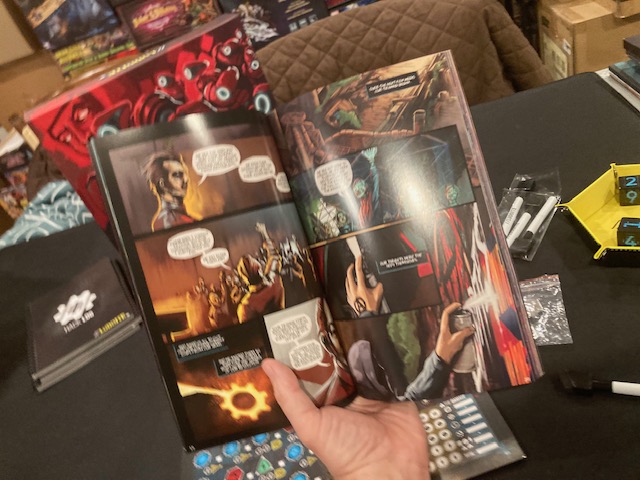
Luddite “looks” big because it has a graphic novel associated with it; there’s a lot of story here.  I was afraid I’d mentally have to prepare myself to embrace it.

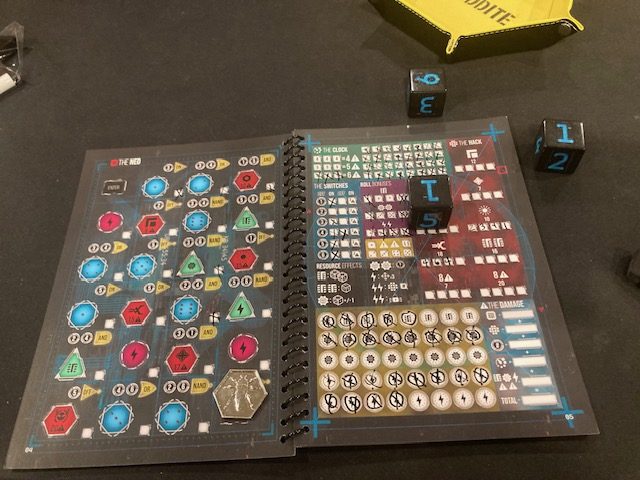
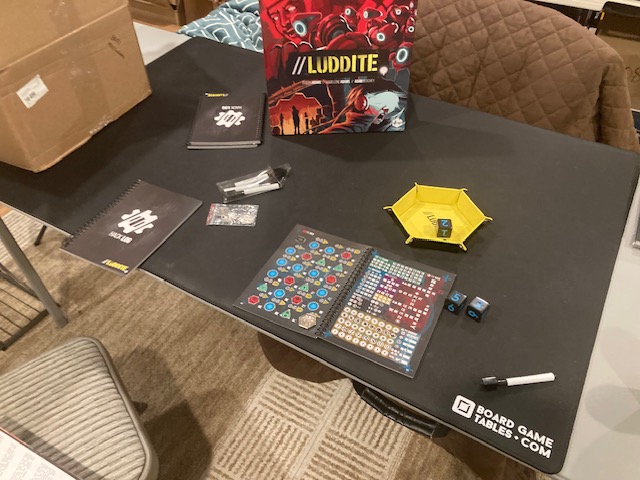
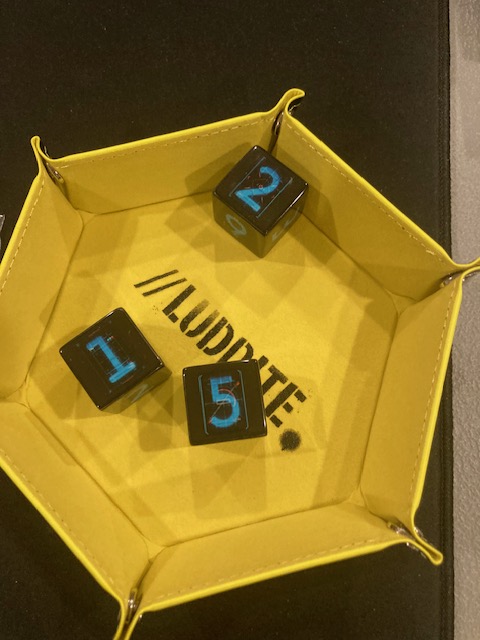
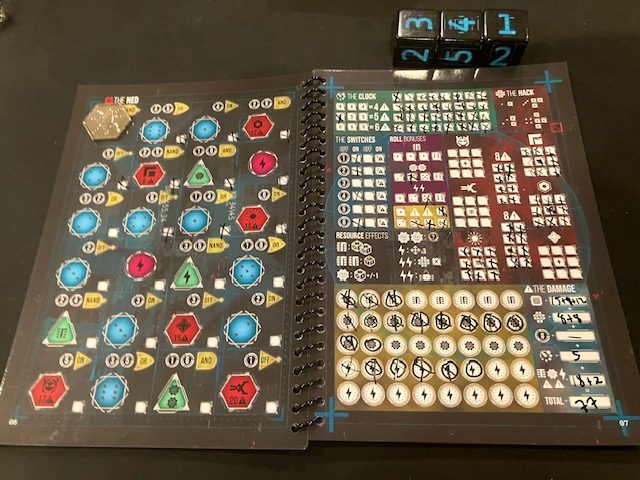
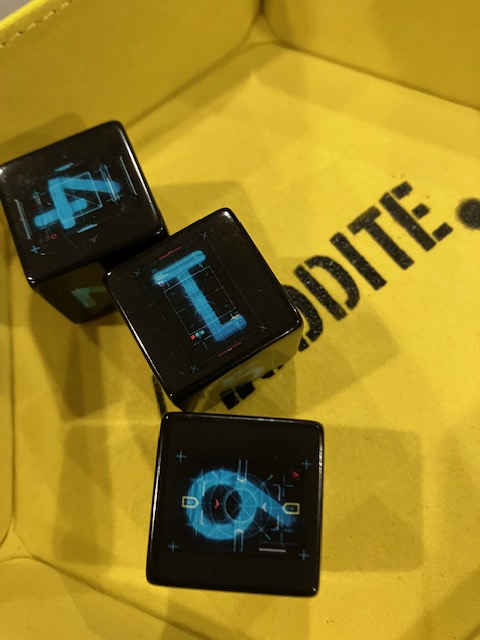
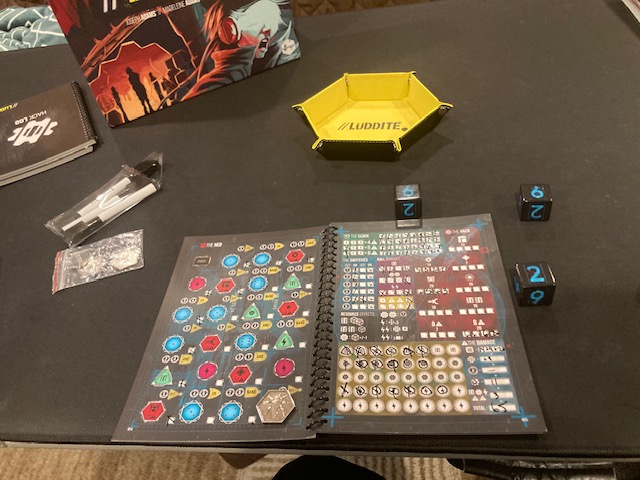
I don’t know why I worried!  At the end of the day, this is “just” a roll-and-write game!   You roll 3 dice, mark off spaces on your sheet above (See above) and try to score points (aka damage)! The base game is pretty straight-forward!

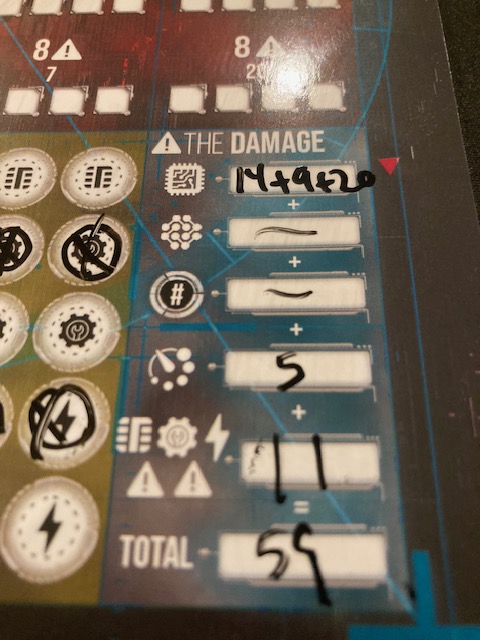
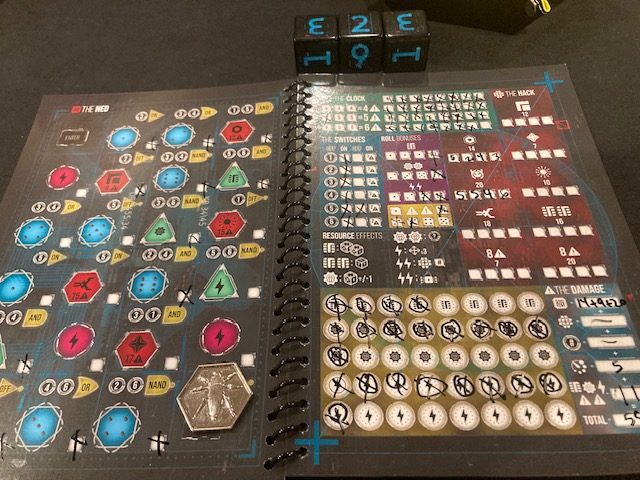
The object is to do enough damage to move to the next level! You need 60 at easy difficulty; see above as I miss by 1!  Heart-breaking!

In order to inflict the damage, you have to “move” the metal token (left side above; from the START to the END): if you don’t move that token, you can’t do any damage at all!  So, while trying to get “points” (aka, damage), you also have to make sure the token above moves!

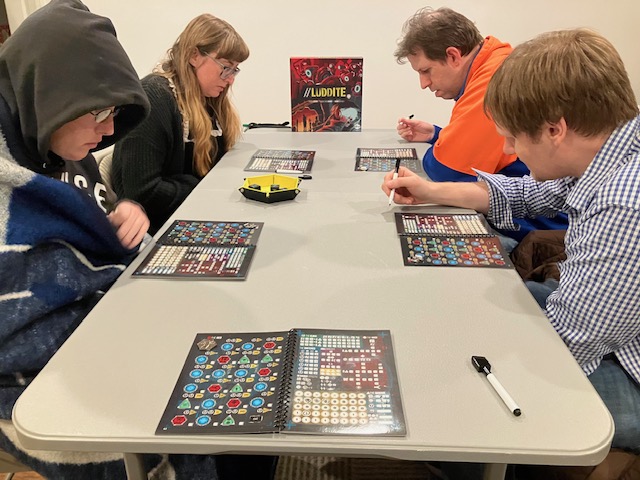
The game plays solo, cooperatively, and competitively.  The solo game is all about doing enough damage,  and the competitive game is “who can do the most damage to win”.   The cooperative game is really just multiplayer solitaire: take the scores of all players and average them to get a score; if that score is high enough, players collectively win!

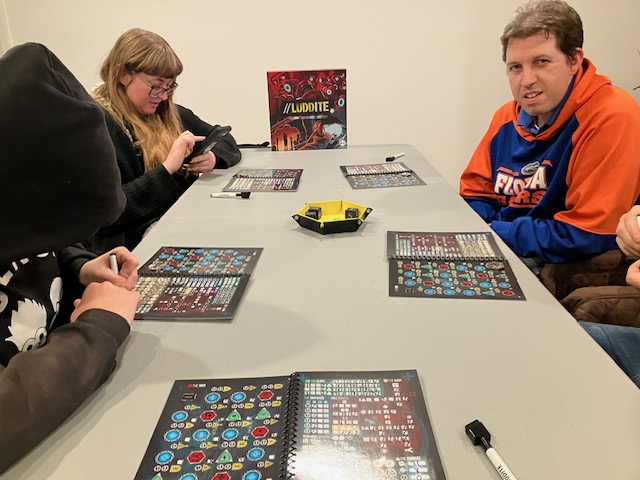
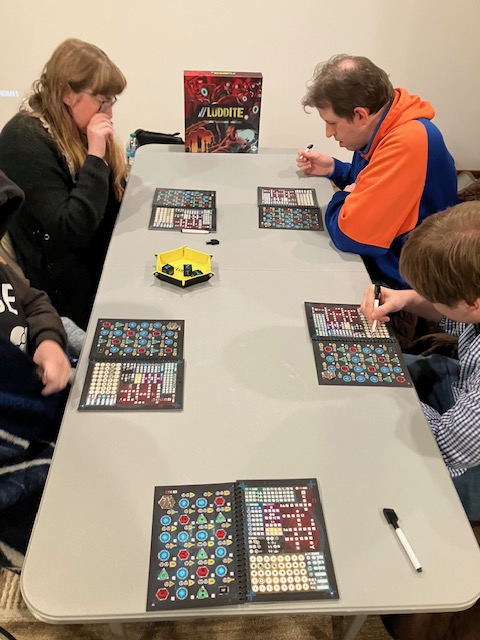
To be clear, there is NO cooperation in the cooperative game; each player just takes their own book and plays completely independently.  Players can’t help each other, they can’t share anything, they can’t use a dice on another players board … nothing.  This is as multiplayer solitaire as you can get.   If you want an experience where you are working with your friends, chatting, strategizing, working together, … this isn’t the game for you.  BUT if you have friends who are “suspicious” of cooperative games, or people who don’t like the cooperative games, this can still work for you! 

No one will tell you what to do, as everyone’s head is down and looking at their own board! See above!  And no one gets in anyone else’s board in any way!

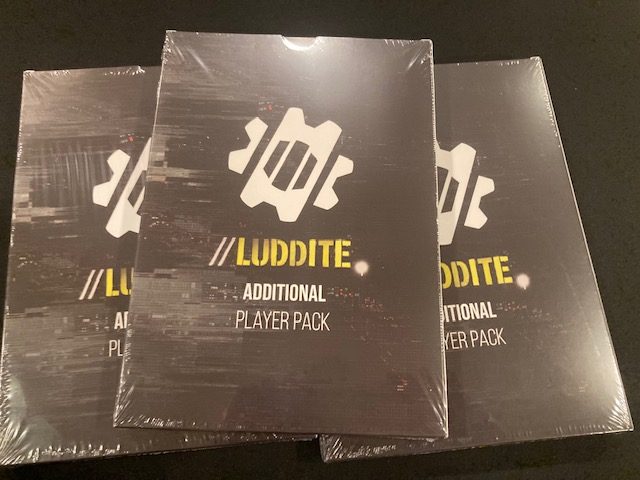
I made the mistake of getting 3 more “Additional Player Packs” (see above), but what this means is that 3 more people can play!    Basically, Luddite can scale to as many people as you want because there is no interaction between players!!  I am thinking of trying a 7-Player game of Luddite at RichieCon this year! (I have 4 packs in the base game and 3 packs from additional buys = 7 player boards!)

So, you can view this complete lack of player interaction as a good thing or bad thing, depending on the group you are playing with.

Solo Experience

If this was all there was to Luddite, there’s not much making it stand out, is there?  It’s a pretty good roll-and-write game for the solo player, and it’s a pretty good cooperative roll-and-write that scales to any number of players … even if there is no player interaction.

However, if you let it … this game can be an experience!  The Graphic Novel that comes with the game tells the story of some people who have been “made redundant” by AI and how they are fighting back!

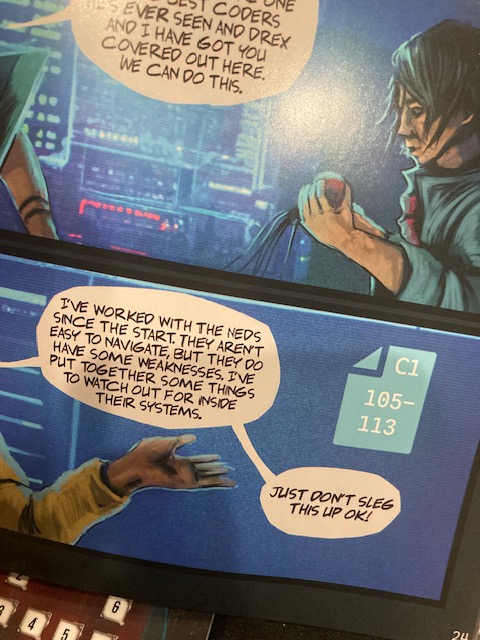
The Graphic Novel gives you a back-story, then at certain places, tells you what chapter/pages to turn to! See above!

This was more immersive than I expected.  If you let it, this game can feel very immersive.  For my solo experience, I read the graphic novel that came with the game …

… and each new game is a progression of the story, even if the boards look very similar. See above as I win (solo) chapter 3!

Somehow, it seems for a game named Luddite (Luddite: someone who eschews technology) … that you HAVE to read the physical graphic novel, right?

Cooperative Experience

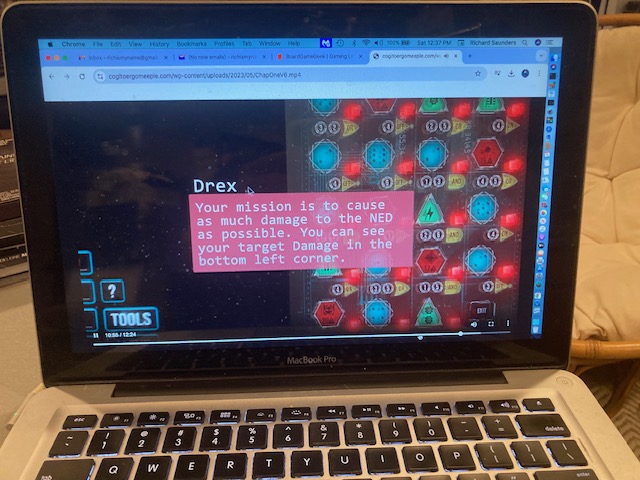
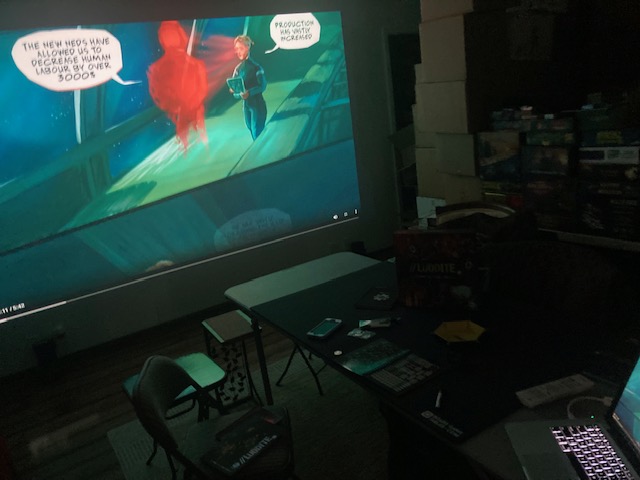
It turns out, the comic book is also online … in a video!  It has voice-acting, and shows the comic progressing!  See above!

For the cooperative game, it’s “harder” to enjoy the graphic novel in its physical form … you have to pass it around, or wait for others to read it, or read over people’s shoulders.  But, if you go to the Cotswold Group website, they have the entire graphic novel online! (And even a little tutorial)

So, even though it’s seem against the spirit of a gamed named Luddite, the cooperative experience is made so much better by watching the comics-turned-to-videos!  Arguably, that experience engulfs you and all your friends into the game!  It’s a shared story you are all experiencing!

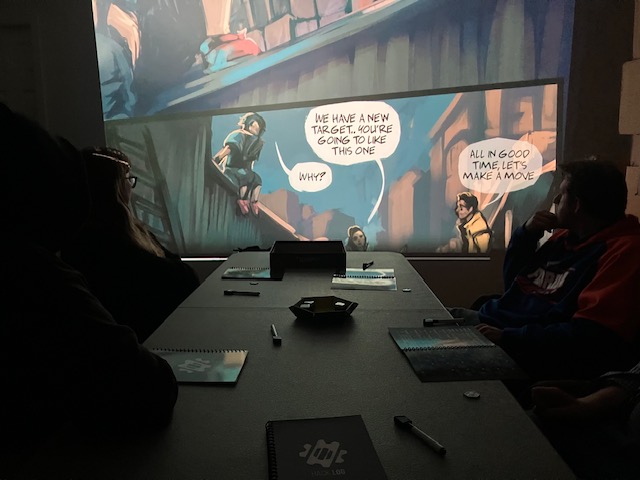
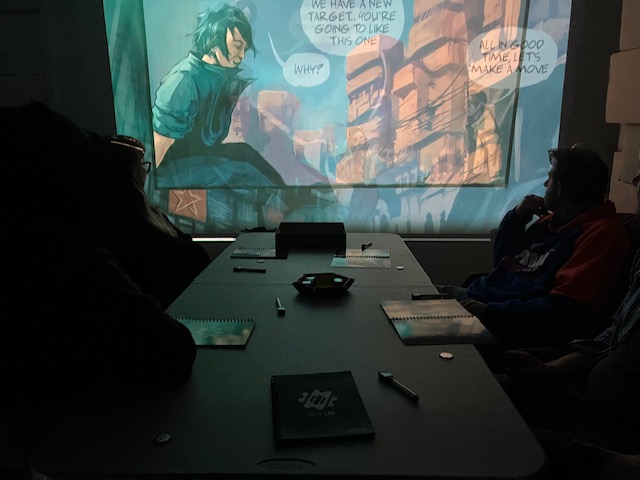
To be fair, it helps the experience if you can show the video on a big screen or TV: see above. It feels more immersive that way.

House Rule/Hack (Get it? Hack? In a game about Hacking?)

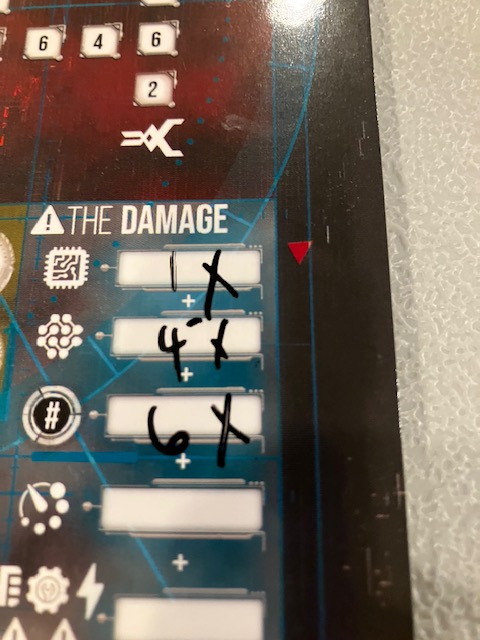
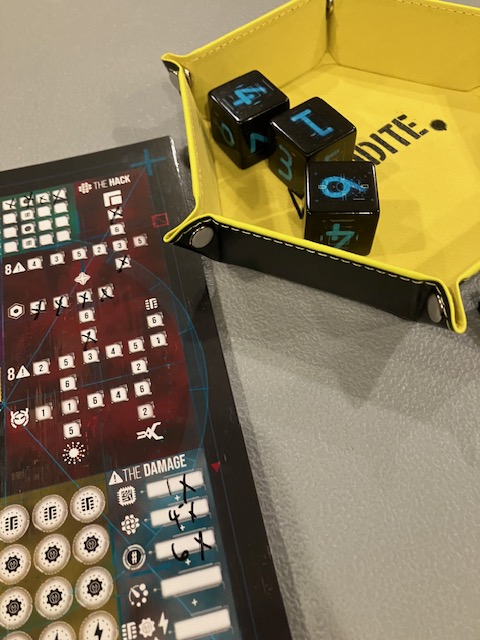
The dice are a shared resource everyone shares in the cooperative game: they are rolled and placed in the middle for everyone to see!  But sometimes, in the heat of playing, you may forget which dice you used for which activity.  Surprisingly, there’s no place on the sheet to “notate” which dice we used !!

Since you don’t compute your damage until the very end of the game,  you can use the Damage section!  

This little house rule/hack made it easier to play the game cooperatively, as you could all independently note the dice rolled and how/when/where you used them.  

Conclusion

If you let Luddite be an experience that carries you along in its story (either as a graphic novel or comic-turned-video), I think this can be a really fun and immersive experience.

A reductionist might say “Luddite just a roll-and-write” …  but at least it’s a good one. I really enjoyed all my plays of this.   The base game is pretty straightforward and quick, and it has lots of meaningful decisions.

The cooperative game has literally no interaction between players, which can be a curse or a blessing, depending on the group you are playing with.   But, because of that lack of interaction, this game can scale to pretty much any number … as long as you have the boards!

This is a good solo roll-and-write (7/10), and a pretty good cooperative roll-and-write (6.5/10 or 7/10, depending on what you want), but it’s the story and experience that elevates this just enough that I would recommend you try this: 7.5/10.

I still think it’s hilarious that a game called Luddite has such a great online presence.  I mean, a game called Luddite should ONLY have the physical version, right?

Appendix: Binding

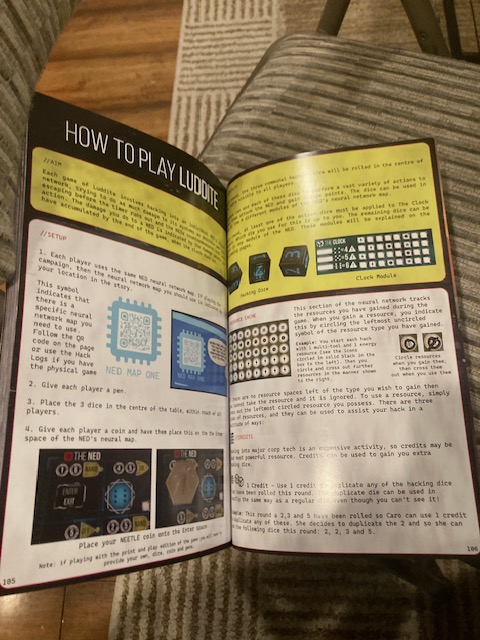
I normally despise this kind of binding, especially on something you need to hold open! See my review of War Story, Freedom Five, and Forests of Admiron if you don’t believe me!  For a graphic novel, it’s “okay” since you are just reading it and holding it open. See below.

Where this binding fails is when you have to read the directions in the back of the book!  See below as I try to wedge the book into the edge so it’ll stay open!  I hate this kind of binding for rulebooks!

See above as I attempt to hold it open!!!   Honestly, the rules should have been in a second standalone book that could be lain flat and open.  As a graphic novel, this kind of binding is “fine”.  But the rules portion of the graphic novel (in the same book, this really made me grumpy.  


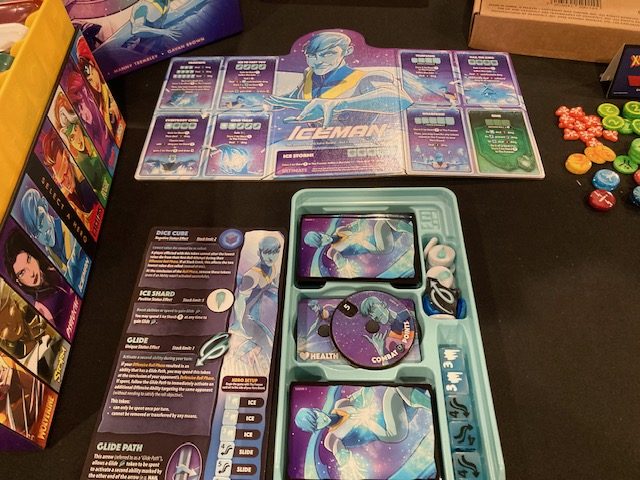
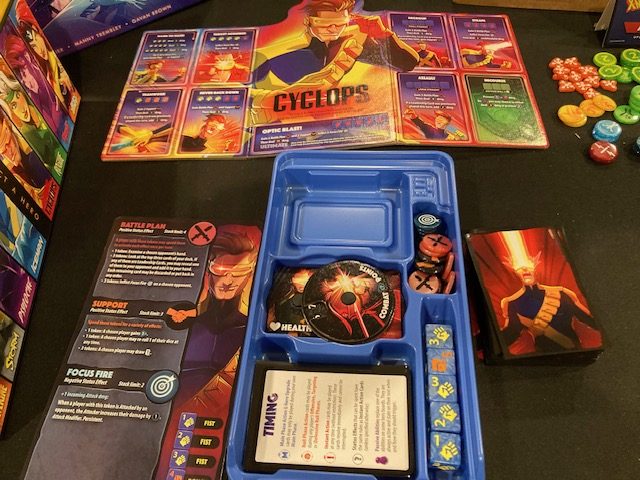
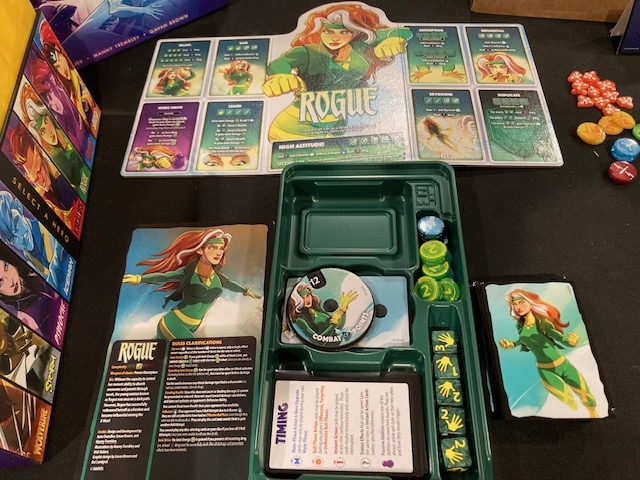
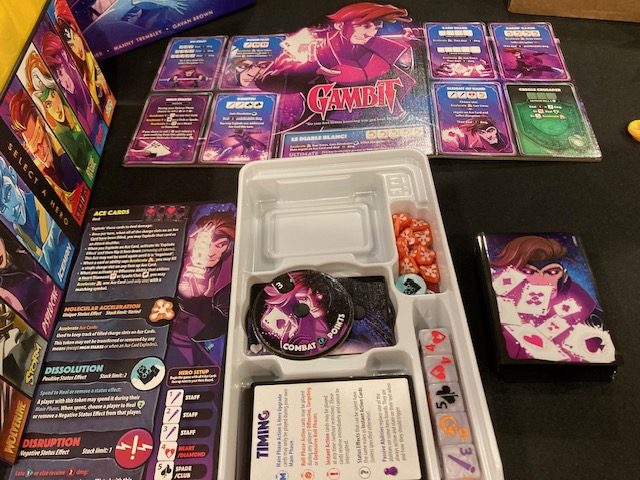
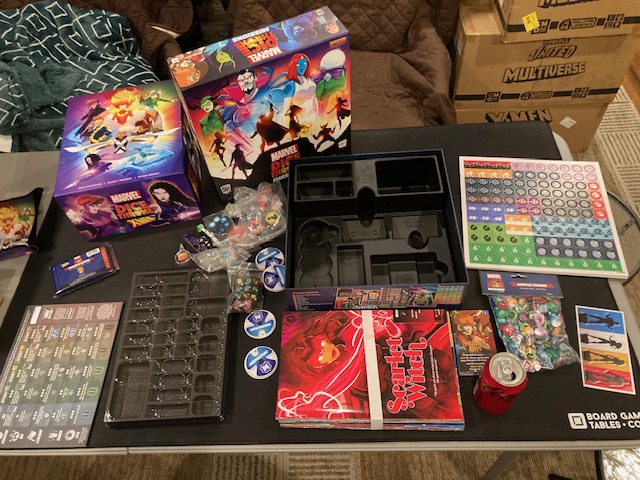
Dice Throne Missions and Dice Throne X-Men! A Solo and Cooperative Review!

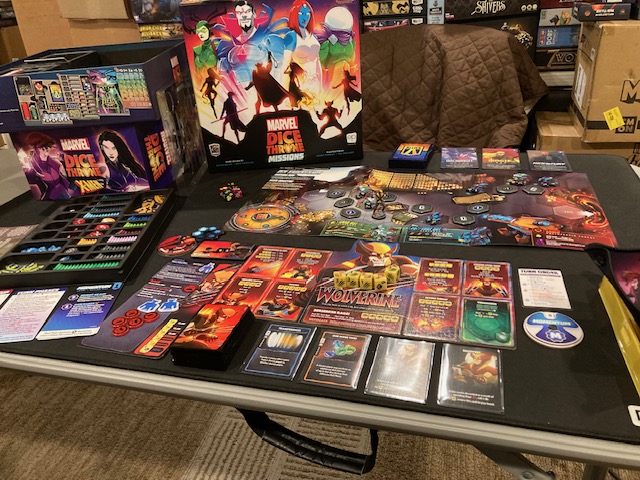
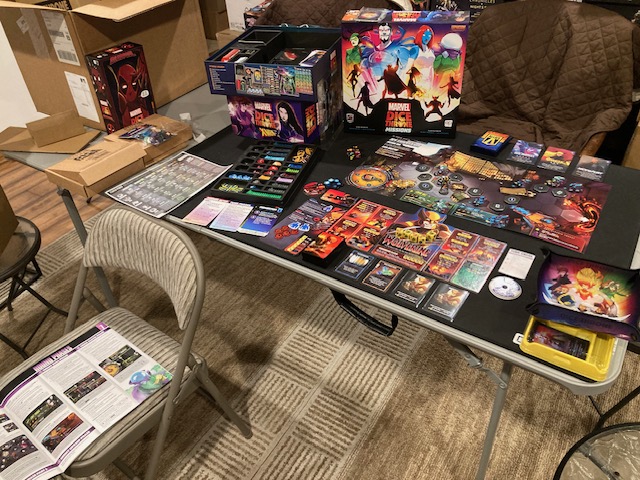
Follow me, dear reader, as I invest three days of my life into unboxing, sleevening, tokening, and playing the new X-Men Dice Throne and Missions! Watch as I play solo (me vs. me solo and true solo) and cooperatively (with a group of 4), but encounter some unexpected things along the way! Hopefully my journey will inform you if this is something that would be for you!

 Dice Throne: X-Men and Marvel Dice Throne: Missions (and a whole bunch of stuff) arrived at my house at 12:30 pm on Monday, February 20th, 2025.  I was very excited to get this Kickstarter, so I happened to note the time when it arrived!  This was #2 on my Top 10 Anticipated Cooperative Games of 2024!  And it was “only” 7 months late! (promising arrival in August 2024)!  But what is this giant thingee?

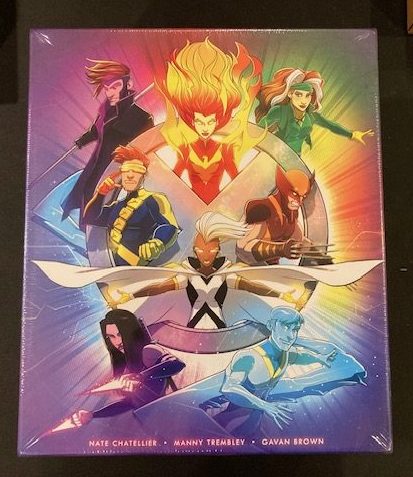
The first big box in here is the Dice Throne: X-Men box; you each play a member of the X-Men!  This is a dice-chucking game with a Yahtzee-type re-roll mechanic: you roll dice, trying to roll a straight or full house or 5-of-a-kind (stuff like that) to activate your super powers!  These powers, when activated, nominally do damage or other crazy things to your opponents.   This is a fully competitive game where the heroes beat each other up: think of the X-Men Danger Room!   You are training in the Danger Room!  (That’s why heroes fight heroes, ya, that’s it: don’t ask too many questions about why heroes are fighting heroes….just enjoy the game)

But why are we talking about a competitive game on this solo and cooperative blog?  Because the second big thing that came with this was Marvel Dice Throne Missions! Marvel Dice Throne Missions (we’ll call it Missions from now on) is an expansion that takes the competitive Dice Throne system and makes the game both solo and cooperative!

The next three days of my life were consumed by the Dice Throne stuff above.  The Dice Throne: X-Men box and Missions box are very closely tied together, as you need a set of heroes to play the Missions! Although you can use any of the Dice Throne heroes (including the original Season 1, Season 2 (see review here) , and Marvel heroes (see review here)), we are going to look at Dice Throne: X-Men and Missions together!!! … because that’s how we played it …

Let’s go back in time and see how three days unfolded ….

Day 1: Unboxings and First Plays

Day 1 was a long day: I got the box at 12:30pm and pretty much unboxed, sleevended, tokened (yes, that’s a word … now), and played non-stop until 8 at night!  There was so more unboxing  and sleevening and tokening than I expected …

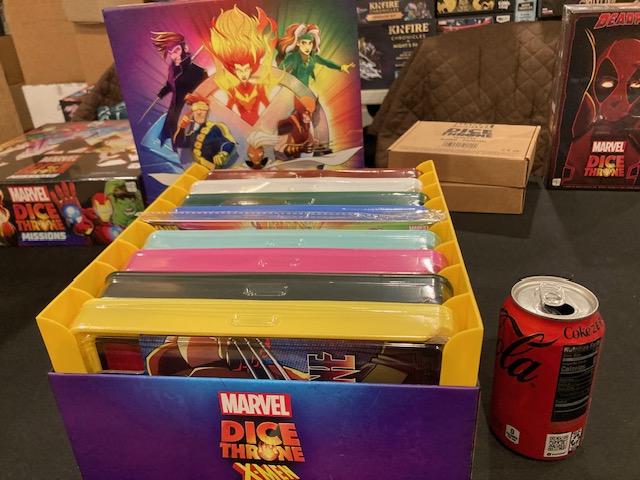
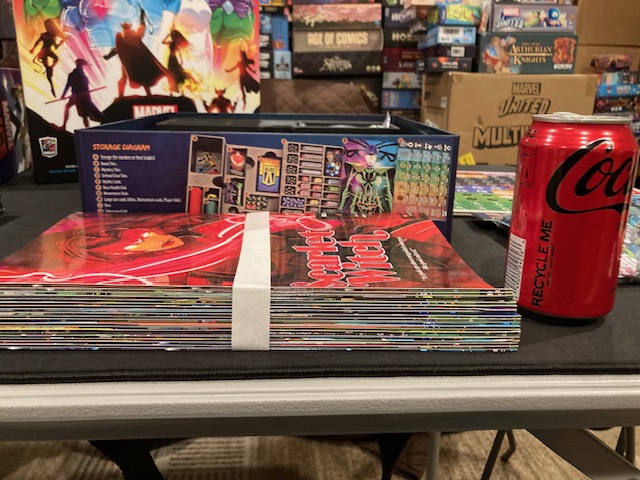
What arrived at my house was a giant box! See Coke Can above for perspective.

The crazy thing was that this was a box in a box in a box in a box situation! See above!

On top of the Dice Throne: X-Men box (above) were all the acrylic tokens and some of the figures (right).

Day 1: The Figurines Unboxing

You don’t need the figurines for plain Dice Throne.

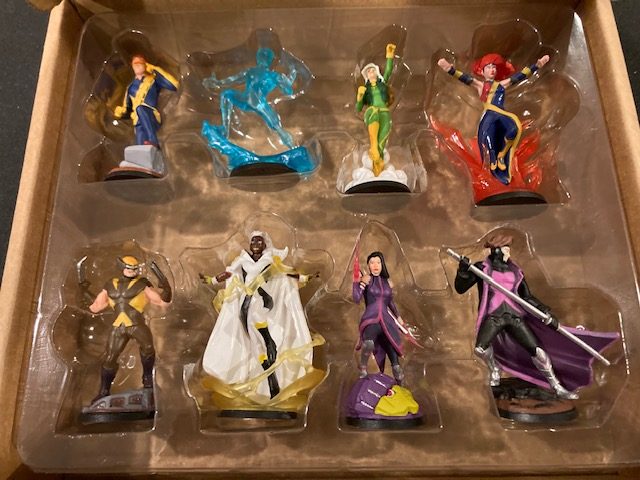
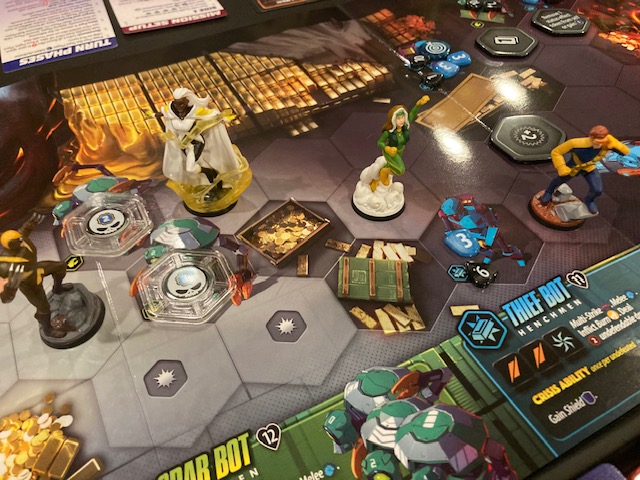
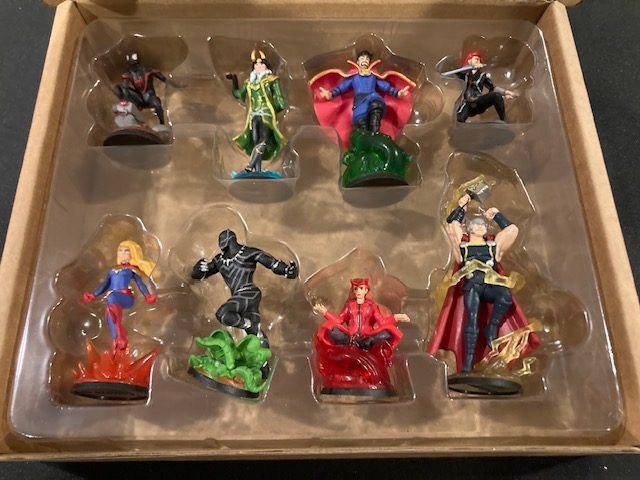
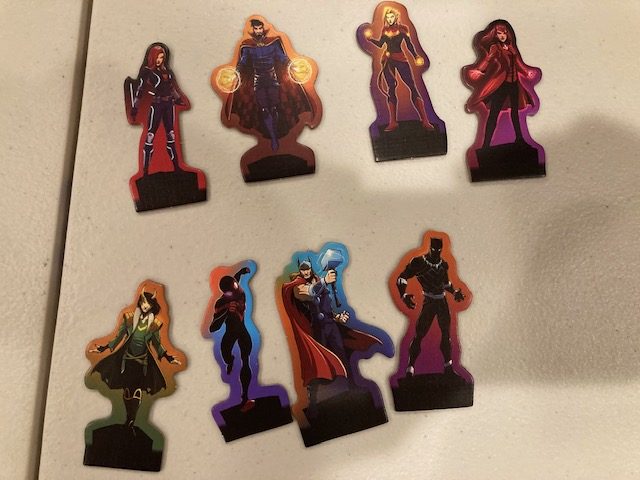
The figures are only for the cooperative expansions Dice Throne Adventures or Missions, as figures for the board … you don’t need these figures at all to play competitive plain Dice Throne!  See all eight figures above in the package … and below on a Missions board.

Because the original Marvel Dice Throne did NOT have an option for figures, they included that option here in this Kickstarter! See above for the Marvel Dice Throne figures and below for their standee equivalents!

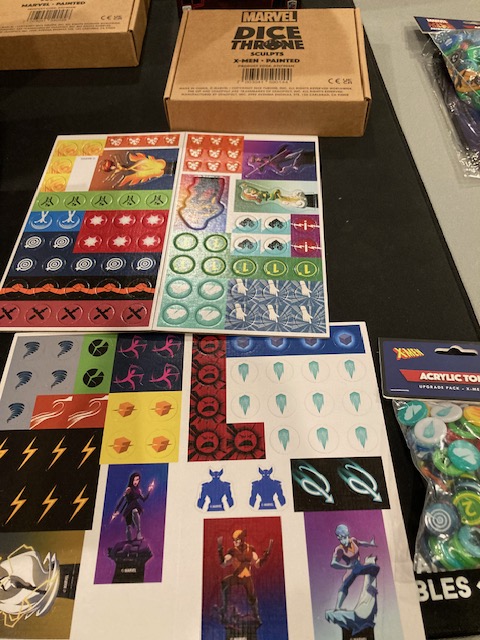
To be clear; the X-Men Dice Throne (and Marvel Dice Throne) come with cardboard standees so you don’t need to buy the figures (see below for X-Men Dice Throne punchouts, including the standees).

If you are on the fence for buying the figures, remember: they aren’t strictly needed!  You can just use the standees and “probably” buy the figures at a later date if you are so inclined.

Day 1: Acrylics and Sleevening

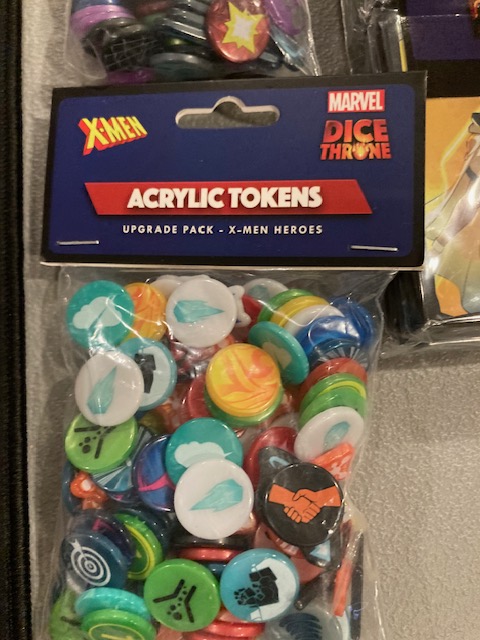
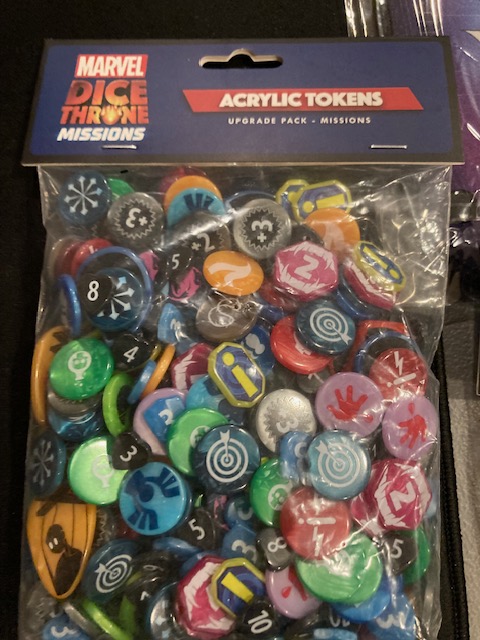
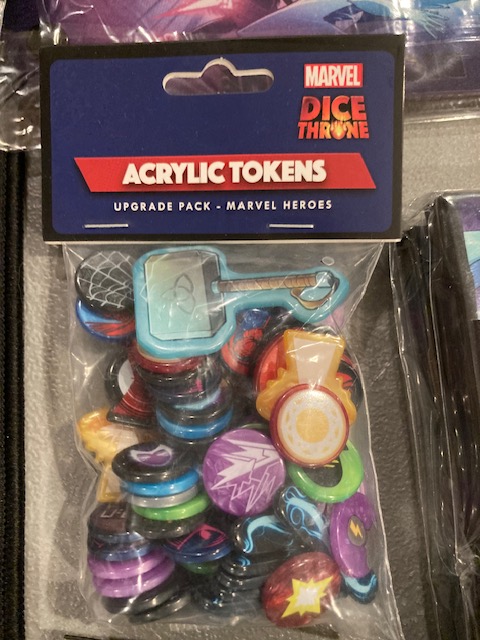
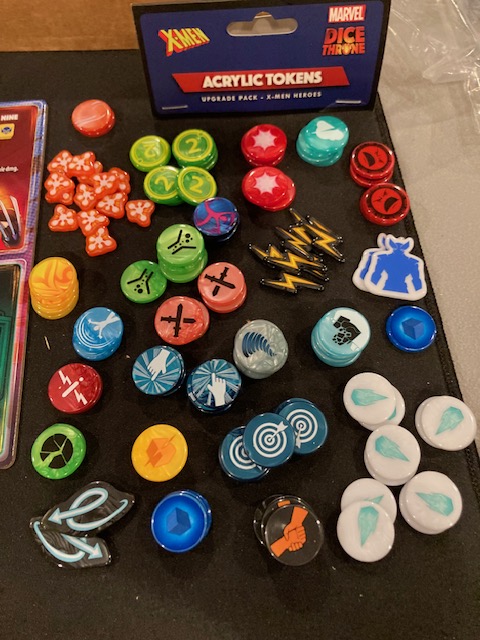
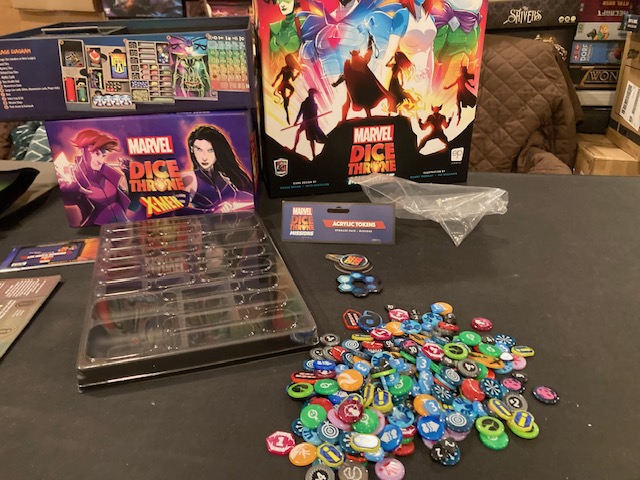
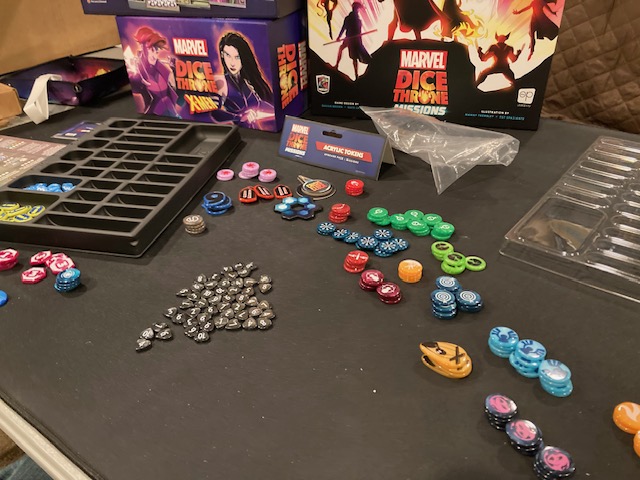
Another upgrade I got were the Acrylic tokens; again these aren’t necessary.

The acrylic token upgrades packs are for Marvel Dice Throne, X-Men Marvel Dice Throne, and Missions—These just replace the cardboard tokens.

Again, the games include all the tokens you need, so these acrylic tokens aren’t necessary.  I really thought they made the game pop a little more, so I liked them.

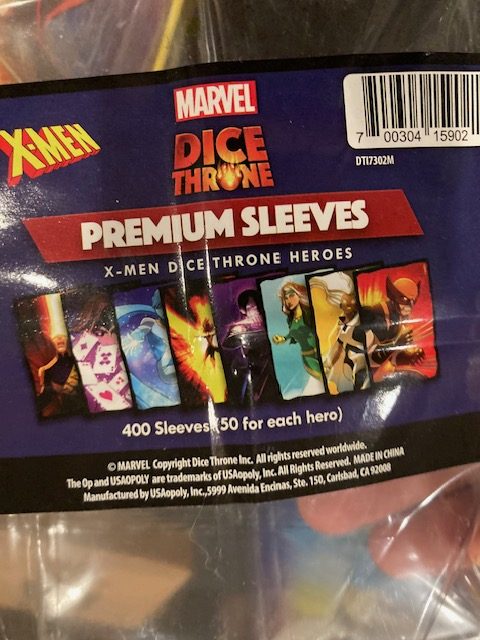
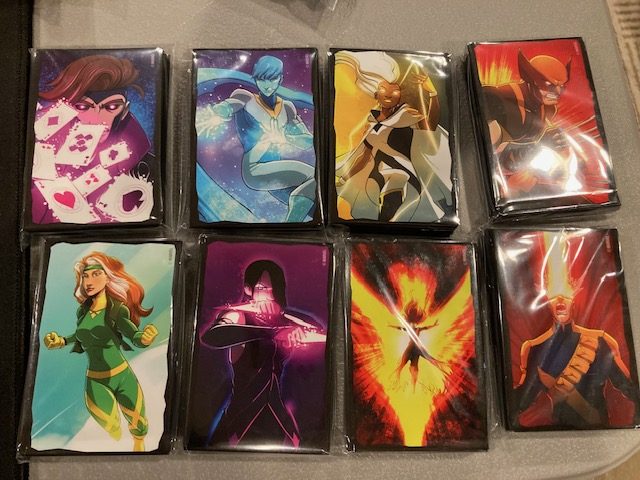
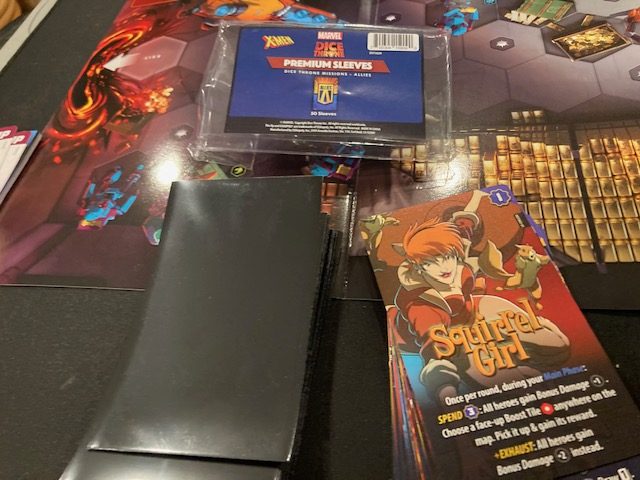
I also picked up the premium sleeves: see below.

Again, strictly not necessary. But very nice!

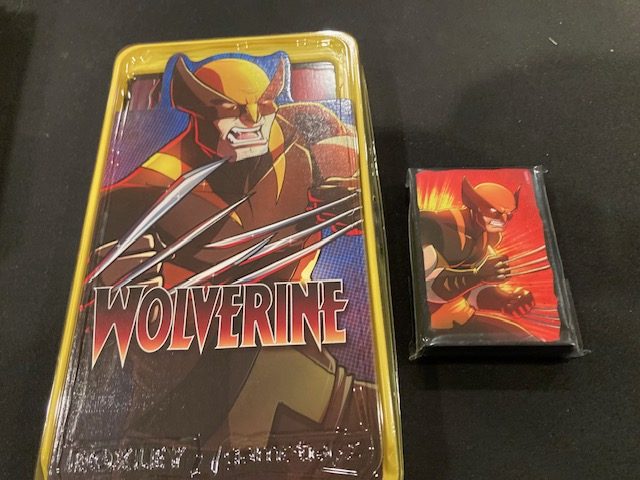
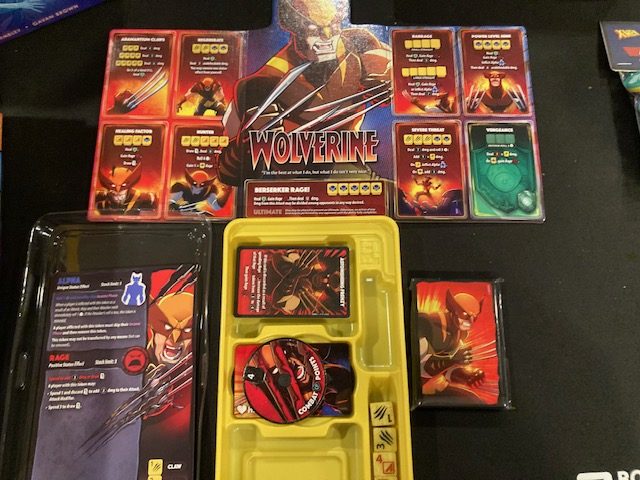
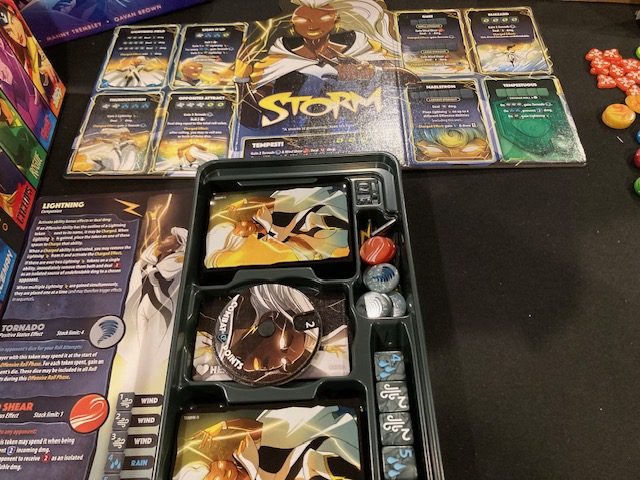
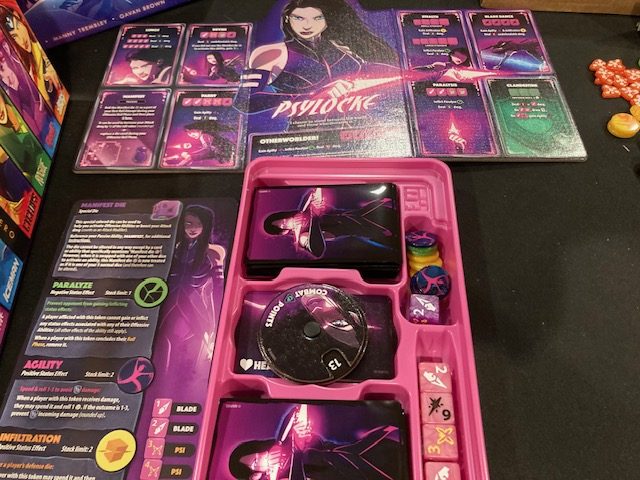
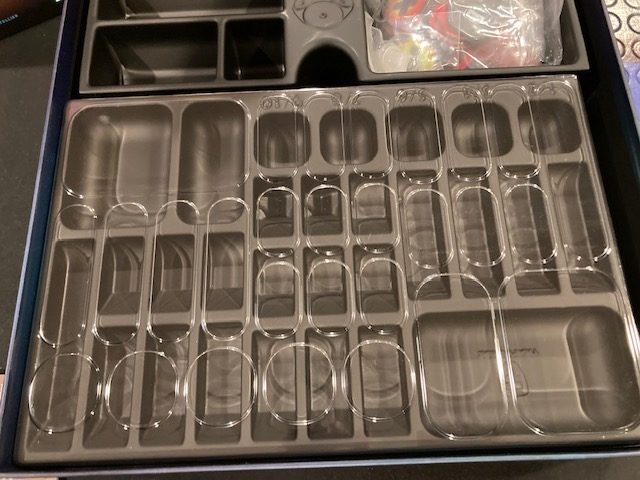
After ooggling the figures, basically, I spent the next 2 or so hours putting the acrylic tokens and sleeves into the X-Men Dice Throne character boxes! 

Whew! Look at all those tokens above!! See below for all 6 characters sleeved and … tokened? (yes, it is a word now: I’ve used it twice).

Yes, this was a long and tedious 2 hours.  But the characters looks great!

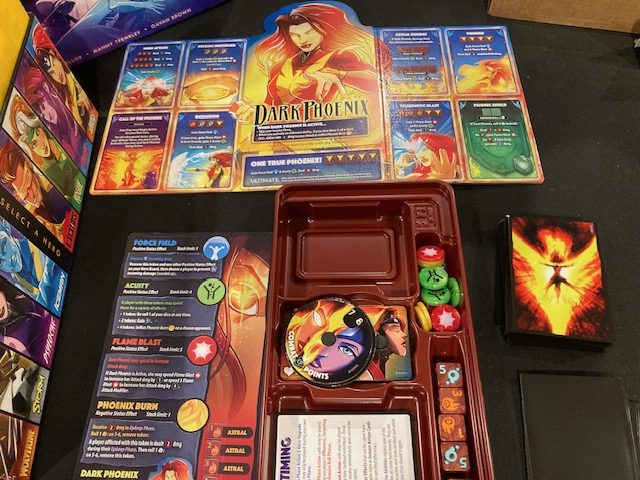
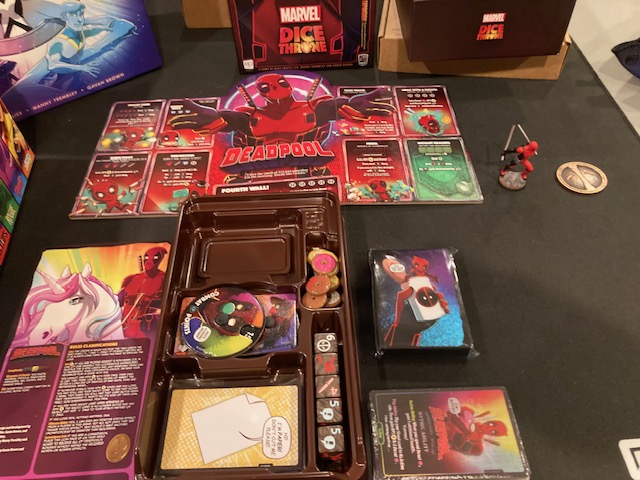
Oh yes, and Deadpool wants you to know he is an expansion!  He is a character you can play (he also came with this Kickstarter, but he is a separate expansion you have to pay extra for). I went ahead and unboxed, sleeved, and tokened him too.  See above.

Day 1: First Play

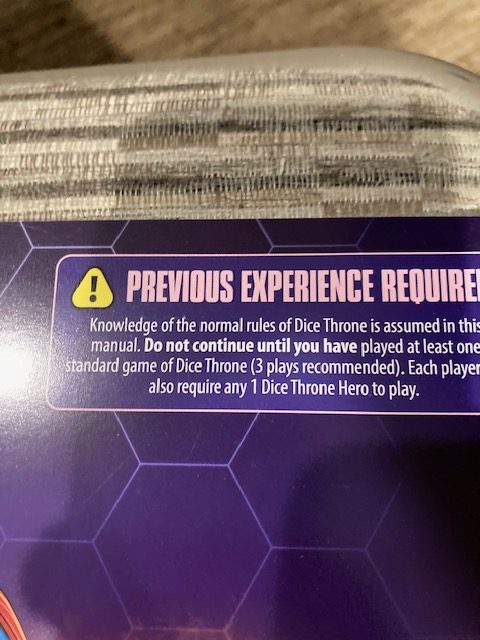
As a reminder, you “probably” don’t want to jump into Missions (cooperative) if you haven’t played the base Dice Throne (competitive)!  See the warning above from the Missions rulebook.

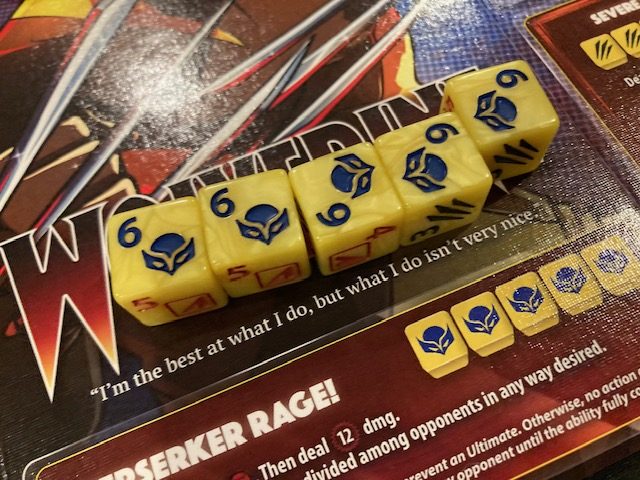
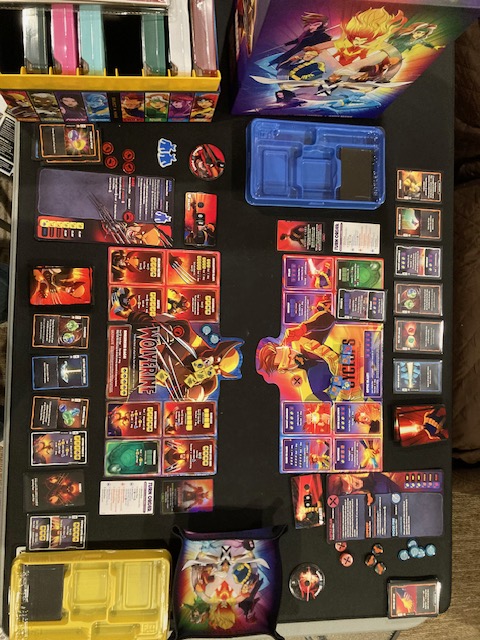
I love Dice Throne, but it has been a while since I played. So I decided to do a Me vs. Me solo game, and play against myself!  This was mostly to remind myself of the rules and see the new characters! Those of you out there are thinking that I will “pander” and play Wolverine vs. Deadpool.  Nope!

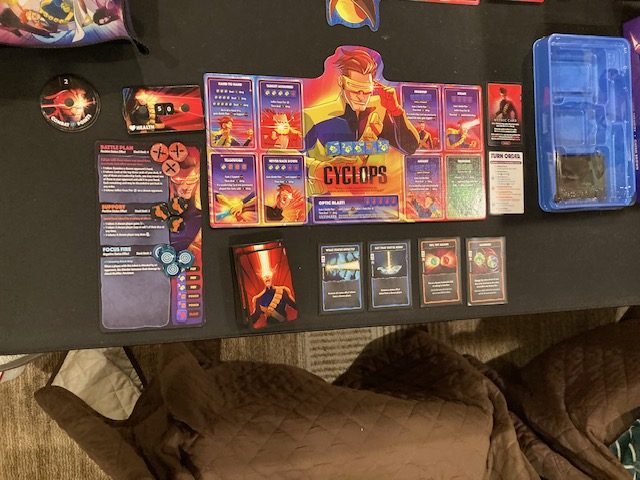
I ended up playing Wolverine vs Cyclops. Me vs Me!

Basically, I’d literally switch seats when I had to play the other character: I always like this swapping because it really feels like you are playing both sides well!  

It was an interesting match: Wolverine won, but just barely.  Cyclops looks like he will do best in a cooperative game, as his abilities have some emphasis on helping other players!  He has leadership cards and support tokens/abilities that help others!  Wolverine just heals and does damage … as you’d expect.

This game was reasonably quick, maybe a hour? It went by pretty quickly and I got to learn about Wolverine and Cyclops.

Day 1: Missions Unboxing

Yes, we are still in Day 1.  I told you this was a long day!  But a good day! I finally got to unpack Missions!

The most AMAZING thing is all the little mission books that come with the game!! Holy cow!!  See how many there are?  I put a Coke can next to them for perspective!

My only real complaint with the missions is that they are hard to keep open! We’ll see that more later.

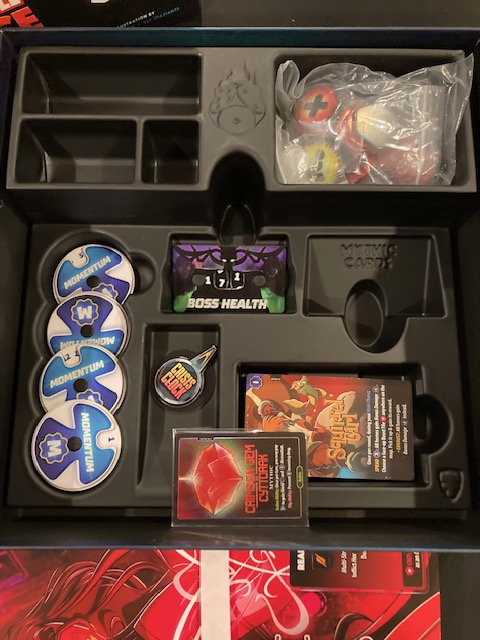
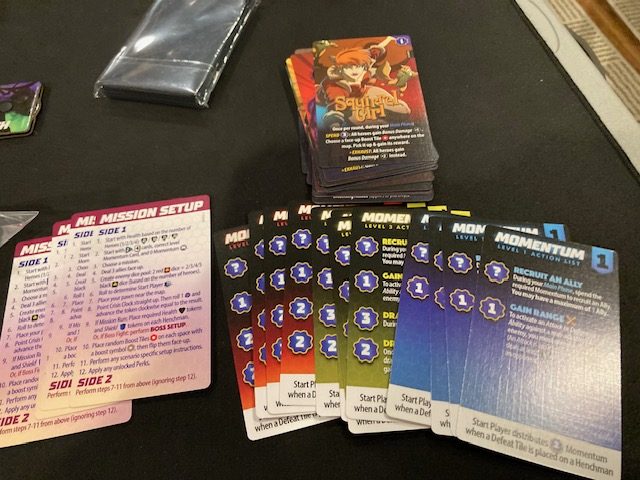
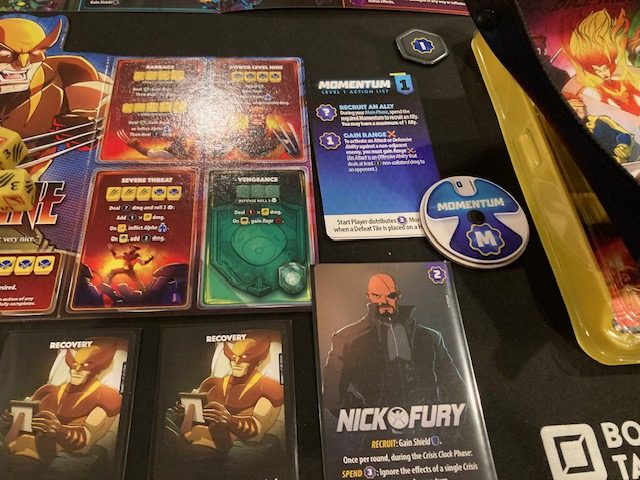
There’s some Momentum dials (this is a new mechanism in the game: each character gets a dial), Allies (another new mechanism: these must be bought with Momentum), and some other tokens.

The Momentum is a major new mechanism in the game; you can actually level-up your Momentum card (as you play more games)!

I mean, this looks great!  See above!

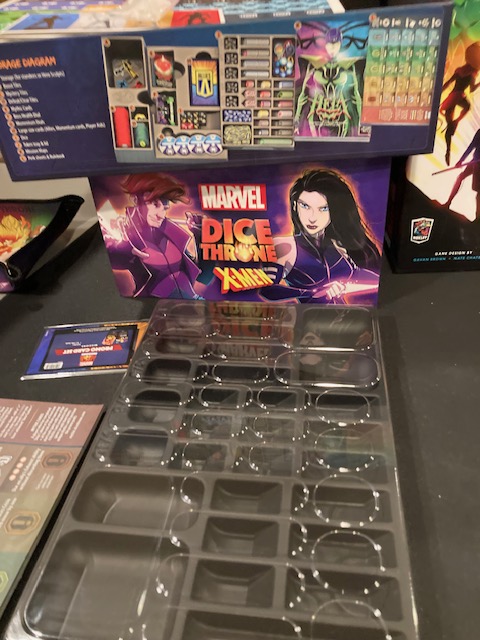
At the top is a tray for tokens: see above.

There are a lot cardboard tokens in Missions … but I ended up replacing them with the acrylic tokens.  This took about the next hour of my life.

At first, putting tokens in the token tray looks VERY DAUNTING.  And it is. Until you notice the side of the box!!! See above!!  The side of the box shows you how to put the token into the tray!

Sounds like an easy job?  Oof.  This was the most tedious thing I did on Day 1.


I basically had to separate out the tokens into piles and start putting them into the box, all while trying to match the picture on the side of the box!!

I mean, it does look cool when you are done … see above.

Finally, I sleeved the Alllies:  these sleeves were extra (I had to pay for them).

But they look pretty cool.

Day 1: The rulebook

There are a few things I have to say about the rulebook.

It completely fails the Chair Test: it droops over the edge of the chair and almost falls off!  

I ended up using the workaround I discovered in my review of  Batman: Gotham City Chronicles!  You need two chairs to hold the rulebook, with the spine in the middle!

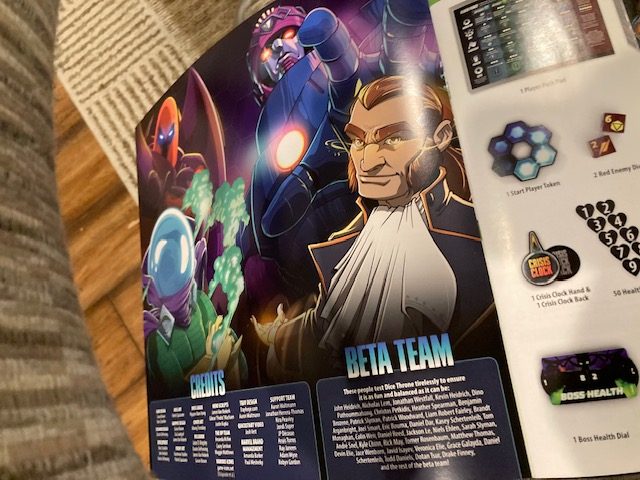
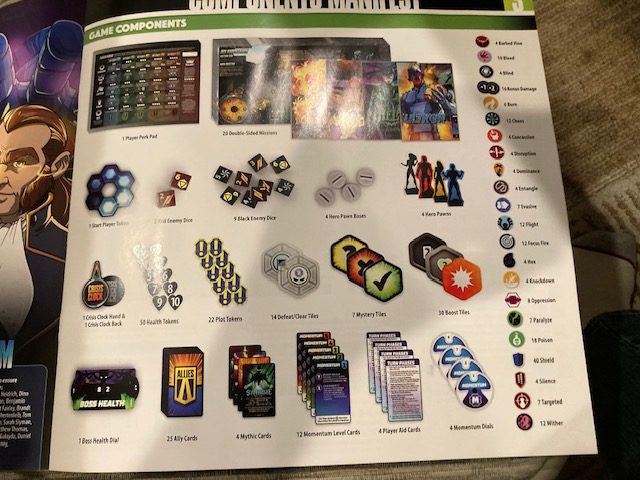
The rulebook was generally good otherwise: it had a good components page (see above).

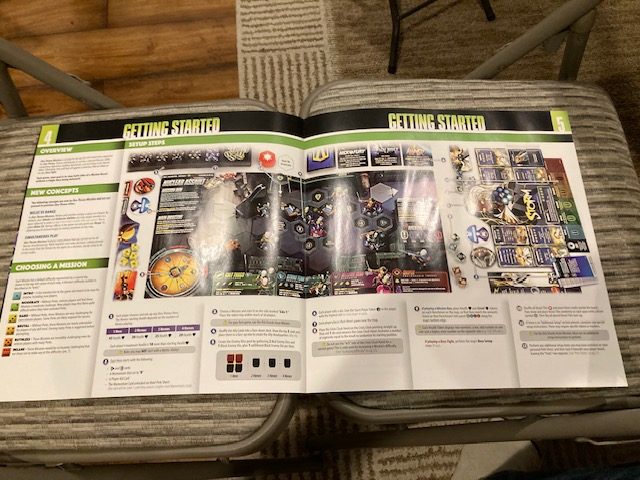
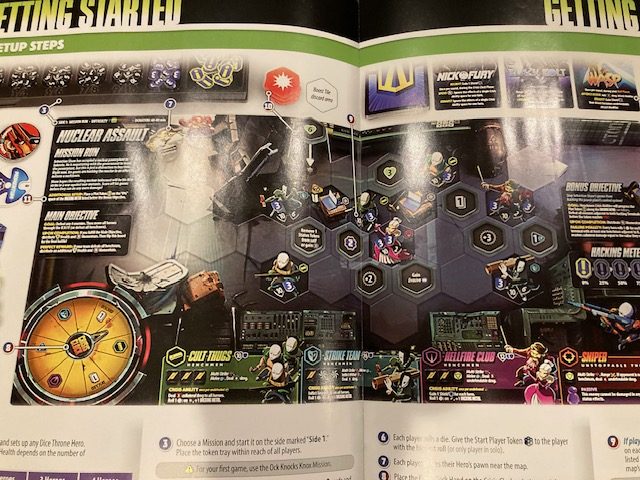
It had a good two-page spread for set-up: I got going right away.

The rulebook had a big, readable font, useful pictures, and even little parenthetical text to emphasize issues.  

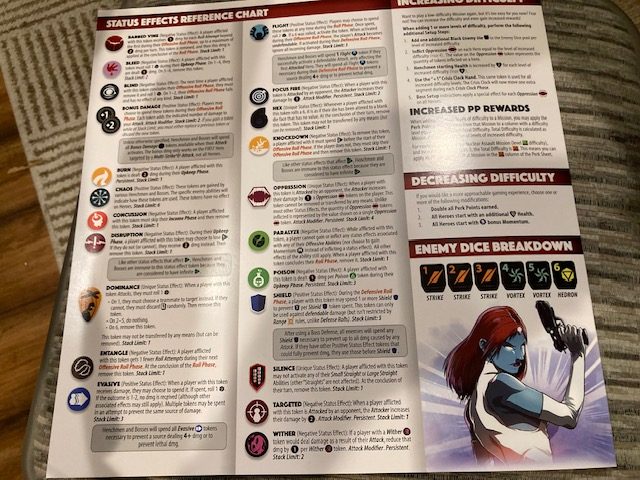
The best part was that the back cover had a list of all the statuses on the back.  This was generally a good list of statuses and their effects, but we did have some questions as we played… some of the status descriptions needed more clarification.

This was generally a good rulebook, but I hated the form factor.  It seems like the worst form factor I have seen in a while.  I actually had to change chairs in my cooperative game so I could sit somewhere where I could set-up the the two chairs to see the rulebook! The rulebook is huge and there is no almost no way it’ll fit on the table.

Day 1: Set-up for Solo play

I know, it’s hard to believe we are still in Day 1.  I had just finished dinner, and I am still setting up my first Mission!  

Missions have two sides; the front side is generally fighting some henchmen … (see above)  …

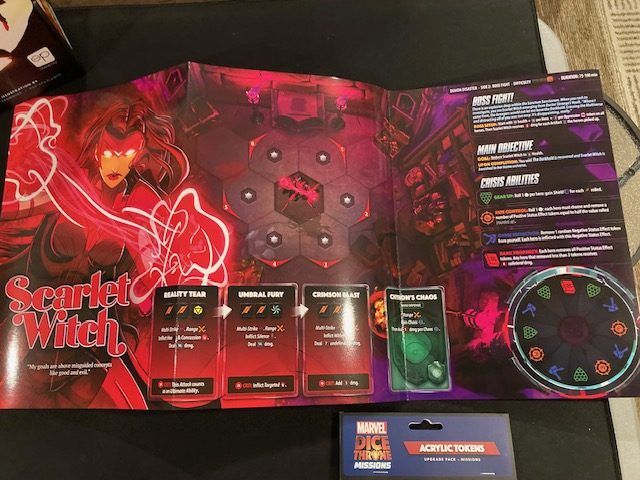
… and the back side is Boss Fight (Scarlet Witch in this case.. see above)!

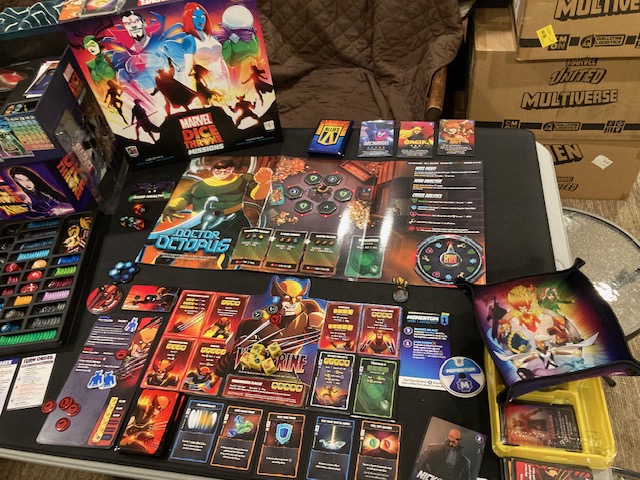
To win the mission, you need to complete both sides!  See above as I start setting up side one of the mission … and get grumpy that it won’t stay flat …

I chose Wolverine to go on the solo mission: see above!  Note that the rulebook suggests the mission above to start on … so that’s the one I am playing!!  This is true solo play; I will be playing one character as I take on the Henchmen … on side 1 of the mission.

Day 1: Side One of the Mission

I was approaching the end of my Dice Throne Day (yes, I am still in Day 1!!!), as I got a chance to try out solo play with Missions on side 1 of my first mission.

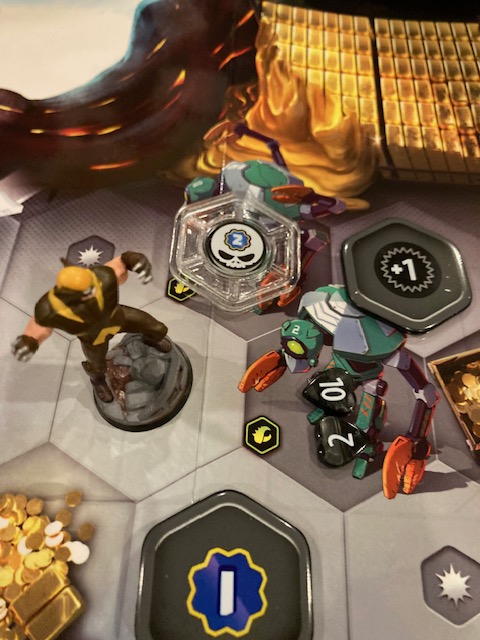
Momentum is a huge new mechanism in the game: you are rewarded with Momentum when you take out a henchman or something in the game!  It’s kind of like experience points, but it’s a little more dynamic in that you can spend it anytime!  You can spend Momentum to give you range (typically, you can only attack things next to you) or to buy Allies.

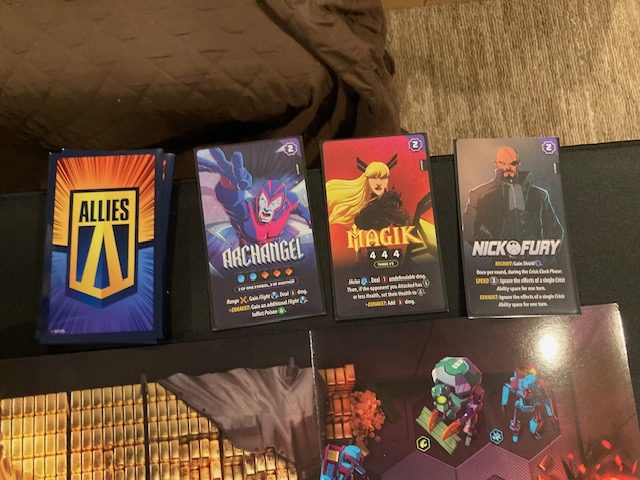
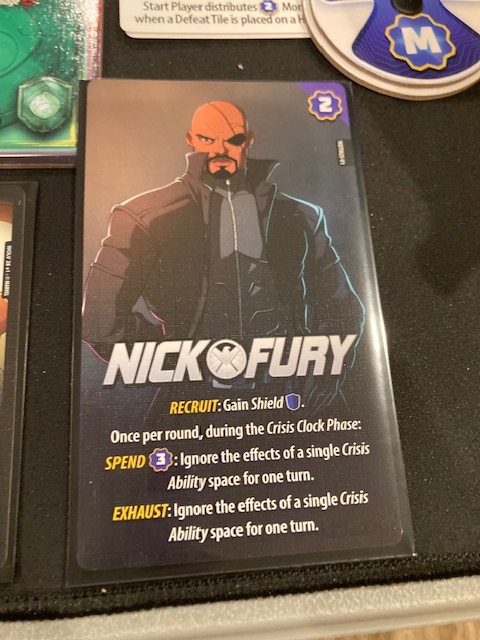
The Allies give you extra abilities/powers that make the game more interesting. They typically can be used for a “minor” ability without discarding, or for a “major” ability if you discard it (see Nick Fury above). 

What I liked was that when you “cleared” a bad guy, you put down a clear token (see above) to note that he was dispatched!  And the token reminds you of the 2 Momentum you get for killing … I mean clearing him!

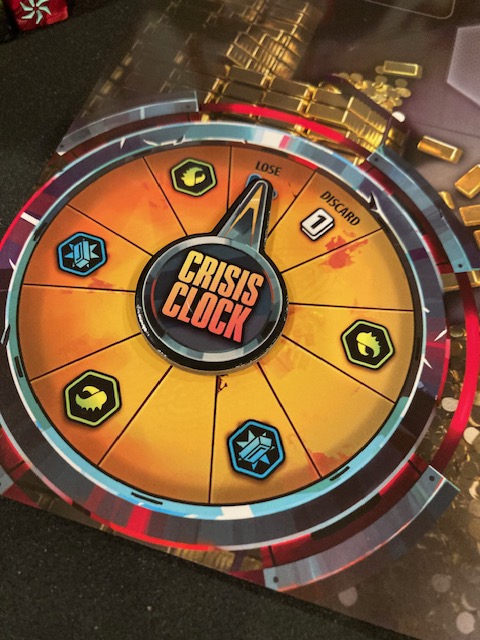
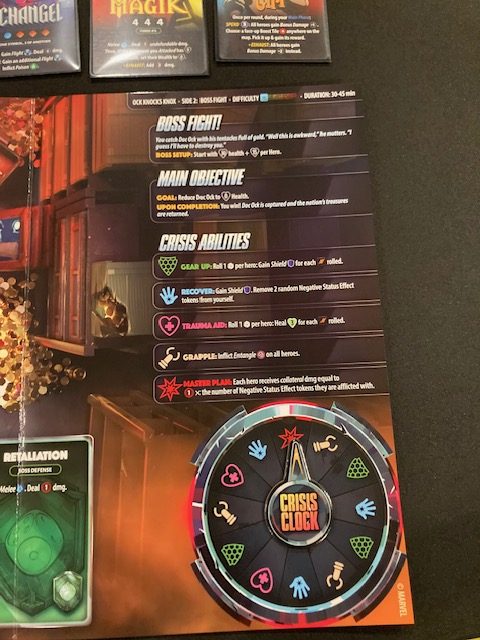
Another major mechanism is the Crisis Clock: at the end of each round, the hands of the clock move 1 per player and may invoke some harsh penalties (depending on the mission).

There’s other things going on, but that’s generally most of it!  See above as I cleared the board and made my way towards fighting Doc Ock!  …. but that would have to wait for tomorrow … it’s been a long day!

Day 2: More Missions

I had to work most of Tuesday, but after I got home, I was consumed with playing more Missions!
Note!  When you flip the mission to the other side, you keep you character’s Hit Points, Momentum, and everything the way it was!  While you reset BETWEEN missions, you DO NOT reset when you FLIP the mission!

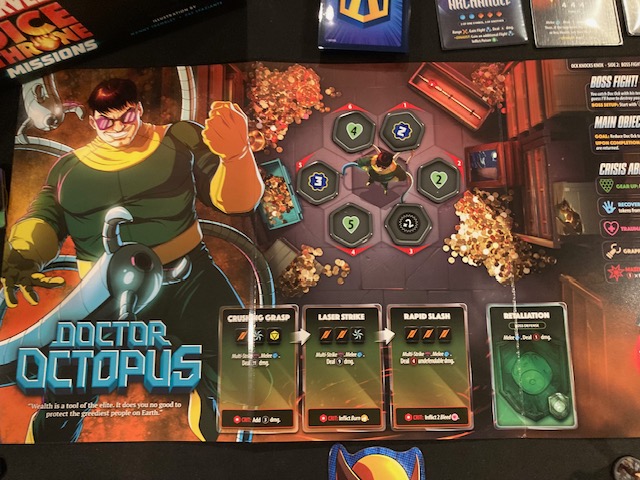
The Boss Fight side of the Mission 1 basically just has you straight up fight the big boss! And the Crisis Clock is much more damaging!

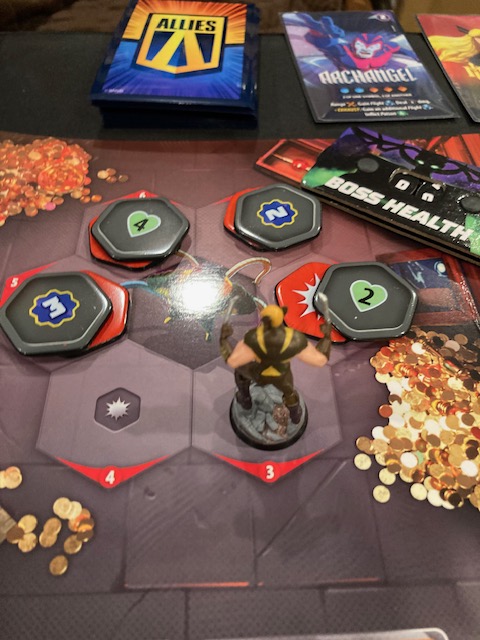
You are in harms way as you actively are right next to the Boss! See above!  No moving away!

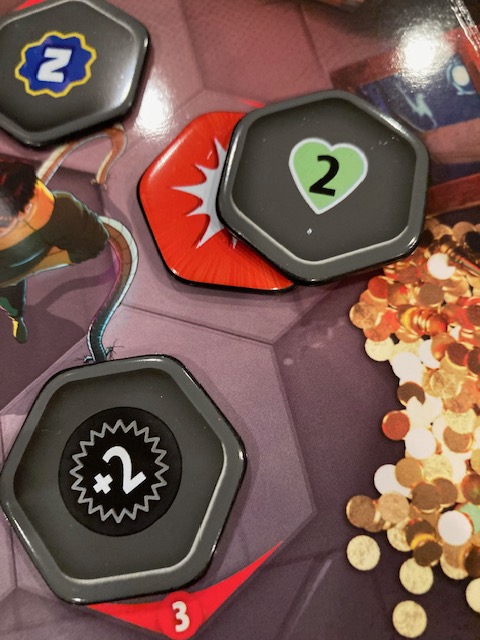
One interesting note; there are tokens that, if you end your turn there, you get a bonus.  So, you can get the +2 token if you go to space 3 above. But if the space has the red tokens underneath, you always get those … but only AFTER The bad guys attacks you!  And there is a cost for moving to a space with red tokens … the boss typically does more damage (crit) to you!

In the end, I defeated Doc Ock pretty handily; I think my Ally made this much easier.  

I went into the Boss Fight with 15 Momentum and basically kept the crisis track completely under control using Nick Fury.

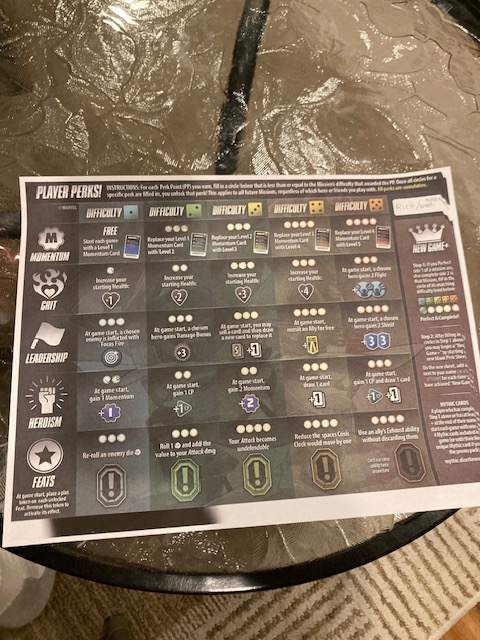
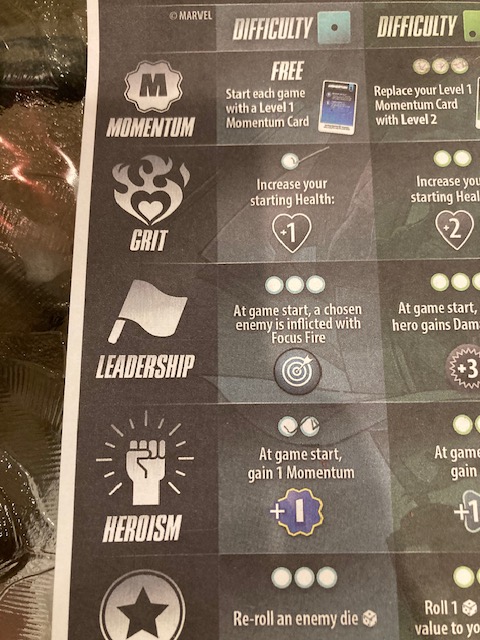
After you defeat a Mission, the player gets “Perk Points”!  These are another thing that are kind of like experience points!  You use them to make your character better.  You may spend some Perk Points to start the next mission with a little more momentum, or have a focus fire, or other things!

There are 6 levels of difficulty in the game; they are marked on top of the mission sheet you choose. See below.

You reallllly don’t want to try harder missions until you have some Perk Points from previous missions!   So, while this isn’t a campaign “per se”, the game encourages you to keep playing and get Perk Points so you can handle more difficult missions!

You could always cheat and just give yourself a bunch of Perk Points to level up yourself ….

I moved on to a harder mission: level 2!

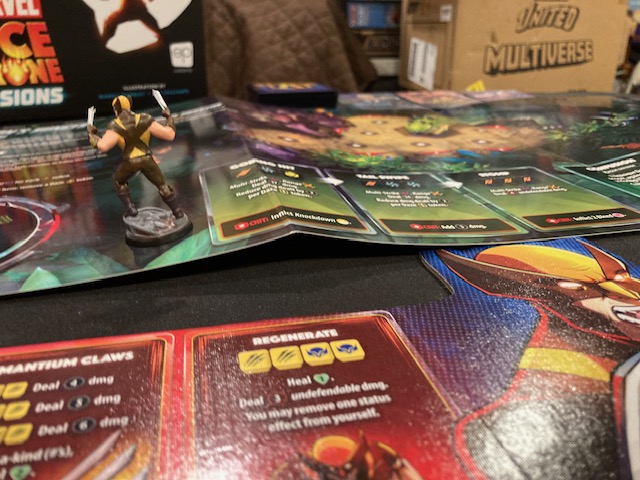
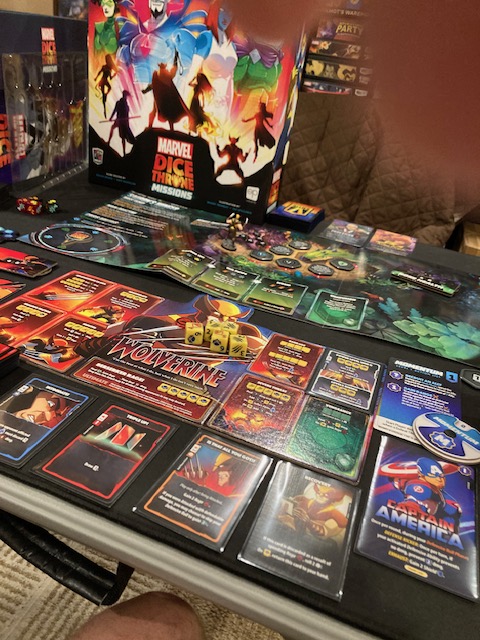
You can really see the Mission board problem above …

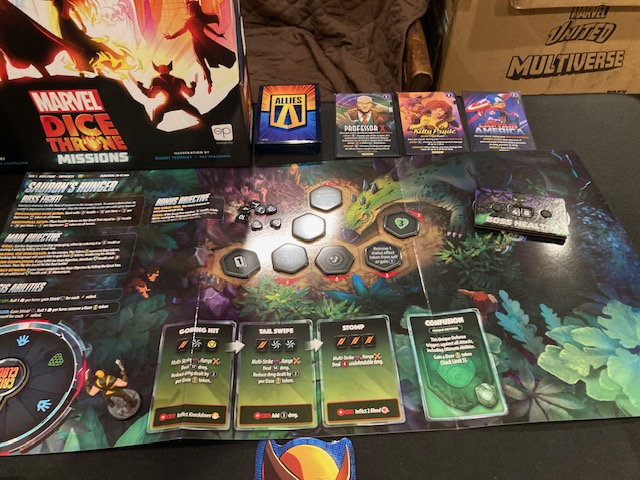
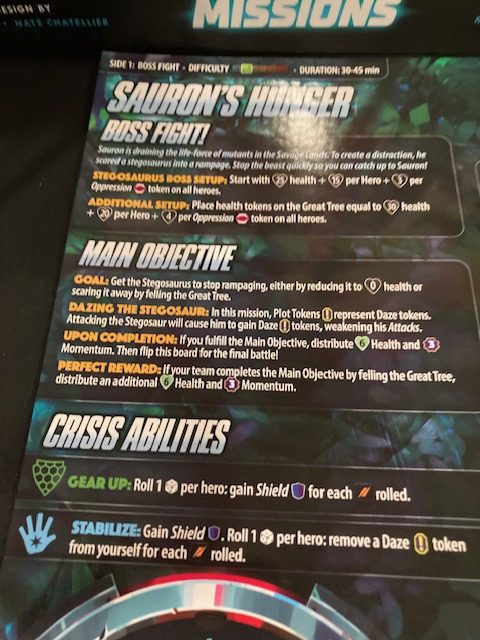
Sauron’s Hunger was my second mission … and I had a blast!

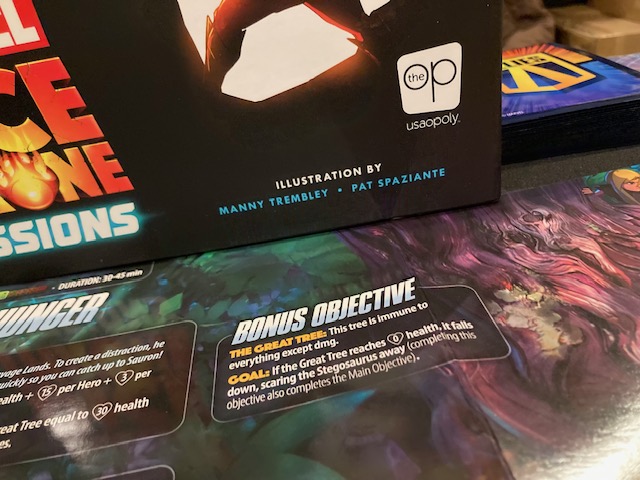
Wolverine went after the tree so he could get the Perfect Reward (see above) and more Perk Points at the end of the game!

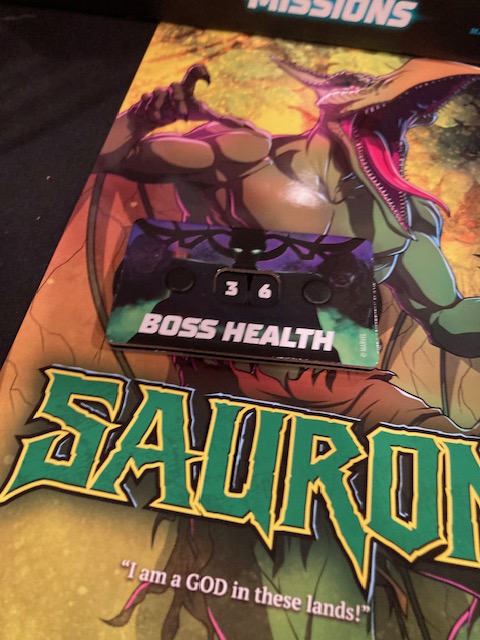
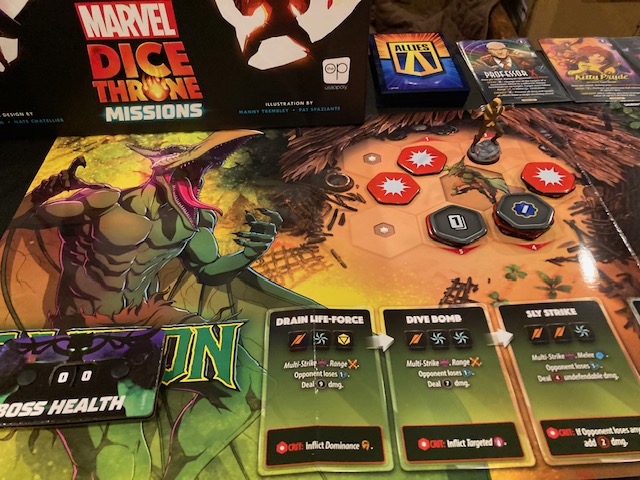
The second side of the Mission was another Boss Fight: see above!

This one was a little harder, but I expected it to be for a level 2!

In the end, I was able to win and finish another Mission!  It was definitely a little harder. I had two missions under my belt, and I looked forward to another!

Day 3: Cooperative Play

With two days of solo play and set-up experience, I felt ready to teach my friends! We ended with a 2-hour Mission fighting Doc Ock again!

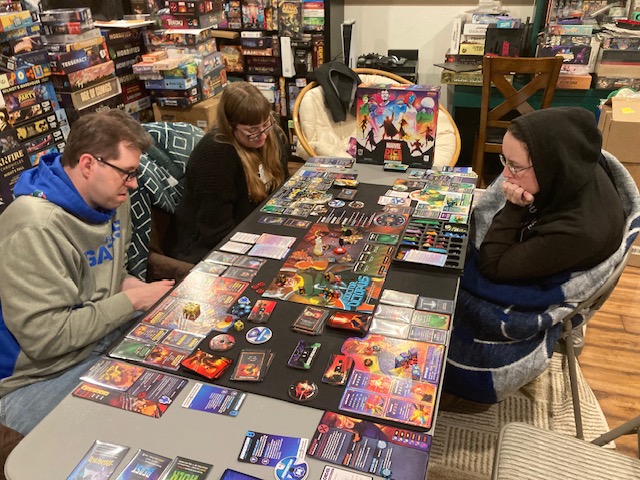
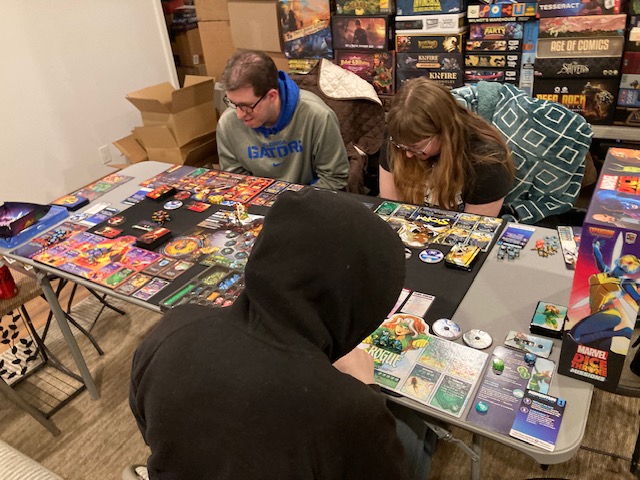
This was a 4-Player cooperative game.

I took Cyclops because I wanted to test his Leadership abilities.  Sara and Teresa took their favorite characters: Ororo and Rogue (respectively).  Sam doesn’t know the X-Men as well, but he knows Wolverine.

Although we beat the first side of the mission, we lost to Doc Ock as he killed two of my players.

Solo Play

The solo play was a hoot to me!  I kept wanting to do more Missions and get more Perk Points!! What are some of the other missions that lay ahead??  Wolverine is probably a better character to play solo; he is good at damage and he can heal himself.  I worry that Cyclops or other heroes might struggle with hit points a little.

I had fun, I was engaged, and I felt like all my rolls mattered!  

I was able to push my luck (and I usually hate dice games), but usually there is a good roll or card that can help you get “something good” on your turn.  With Wolverine especially, even if you didn’t have a good roll, the lesser abilities typically healed him, so something good always happened.

Over the course of two days, I had fun.  I was engaged, and I saw how important Allies are (especially their Exhaust ability) and how Momentum worked.   These are both new things to the Missions mode and they really made me feel like I always had more options.

I would give the Missions solo mode an 8.5/10.  It was great.  It may be that you have to choose a hero that works well with solo; I am not sure Cyclops would have done as well.

Even the me vs me solo mode was fun! Not quite an 8.5/10, maybe 7.5/10, but that was a fun way to play solo too!

Cooperative Mode

This was a surprise for me: my friends didn’t enjoy cooperative Missions very much.  And they (mostly) love the X-Men!!!

Although there is simultaneous play keeping everyone involved (you only serialize your turns when you do damage; all other times, every one is rolling and re-rolling and playing cards simulaneously), no one felt like there was a lot of cooperation.  As Sara said, “it feels like Dice Throne is not a cooperative mode and this feels a little forced.”

I even played Cyclops to try to elicit more cooperation: I’d always say “Hey! I’ve got some support tokens!  Use me! I can help you reroll or get CP if you need it!”  … and I think my players used me once.  And I tried really hard to get them to use me!!

You might think that “Well, your players don’t like co-ops, or they just don’t like to co-operate” and that is patently untrue!  I play co-ops all the time with this group!!  And they cooperate very well together!  For some reason, this just didn’t work.  And Sara even said, “Eh, you can cooperate, but there are many other co-ops I’d rather play.”

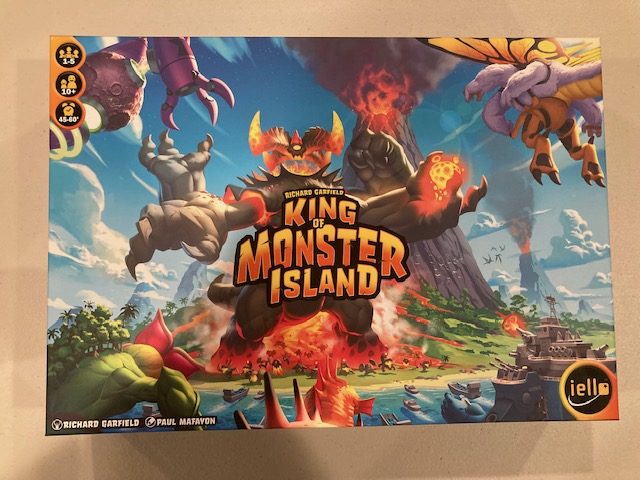
I actually have a theory about this!  When we played King of Monster Island a while ago (see review here), we liked the King of Monster Island game, but it also seemed to not promote cooperation as much!! Why? It also has the familiar Yahtzee re-roll mechanism (roll 3 times, keep the ones you want) just like Dice Throne Missions!! And while that mechanism is very engaging, people seem to become TOO engaged in that to the point they don’t cooperate!  It’s a weird thing to say, but too much engagement on your own stuff lessens the cooperation!  And I think that’s what happened here: we all got so caught up in our own characters, we forgot to cooperate!

Maybe this problem would go away after repeated plays, but you have to want to continue playing! And I am sad to say my group mostly doesn’t really want to play this again.

Having said that, maybe if you have a group that really likes cooperative multiplayer solitaire games (no Alpha Player), maybe this is something your group might enjoy!  There doesn’t seem to be a lot of cooperation, just a bunch of heroes beating up stuff and rolling dice!  Maybe that would appeal to your group!

Reactions

Rich: I liked the game solo a lot! 8.5/10: I was engaged and I liked my decisions. Cooperative was probably a 7/10? I still liked it but there wasn’t much cooperation.

Teresa: I got to play Rogue! And I had fun! 7/10

Sara: I don’t know, I just didn’t think it was great.  There wasn’t much cooperation, and even though I love Storm, it wasn’t that interesting to play her.  There are a lot of other cooperative games I’d rather play.  The cooperative mode just feels tacked on. It was okay.  6/10

Sam:  It was okay. 6/10.
Sam actually had a very full write-up on his cooperative experience, which he emailed to me!  I will reproduce that at the end of this review, after the Conclusion.  Read that for another perspective!

Conclusion

I expected X-Men Dice Throne and Missions to go over like gang-busters!  And while it did for me (for the solo mode especially), my group wasn’t that impressed with it.  

The game has gorgeous components, even if you choose not to upgrade everything.  My only real complaint was the Mission mats frequently has trouble staying flat.  This looks like a comic book world on the table, with its colorful villains, colorful heroes, and gorgeous dice and cards.

I think the cooperative mode didn’t go as well because people tended to be too focused on their own mat and their own rerolls … and this self-focus seemed to actually discourage cooperation!  I thought that my group, who love the X-Men, would adore this!  And they did not.

As a solo game, I am very comfortable giving this an 8.5/10.  I will play again, and I look forward to getting more Perk Points to try harder and harder missions!

As a cooperative game, it feels like the game lands at a 6.5/10.  Although Teresa and I would play it again as a co-op, I don’t think Sam and really Sara would.  For more details, see Sam’s Perspective below.

So, that’s my journey: Three Days of Dice Throne!  I loved it! My friends … not so much.  Your group may still love the cooperative Missions especially if they love co-ops that are more multiplayer solitaire.

Sam’s Perspective

Overall score: 6 – would play again if everybody else wanted to but X-Men as Wolverine combined with the Missions mode isn’t something I’d necessarily request or suggest (I could see it being 7-7.5 with avengers)

 
TLDR version:
I feel like this is turning into a scathing review and that’s not my intended tone. This particular combination of theming (X-Men aren’t really my thing) and components (flat printed enemies against hero minis didn’t really feel like we were fighting bad guys) just didn’t land for me.
 
The essay:
Because I’m an uncultured swine :), I’m not familiar with X-Men or their lore or anything other than the Deadpool movies (1 and 2) and being able to pick wolverine out of a lineup. Therefore, the characters didn’t really speak to me and I was unable to appreciate the references/accents/etc. Because of the movies, Doc Oc is also linked as a spiderman villain in my mind. 
 
I feel like I could have used a “sparring match” or two of the competitive version to get used to my character before taking him against the villains cooperatively. 
 
The components felt a bit jarring – minis for us vs enemies printed on the map just felt like I was standing around and taking swings at air. I feel like I would have felt more immersed if the bad guys were also minis (even though they didn’t move) or if we were flat tokens in the same plane as our opponents. 
 
I can’t quite put my finger on it but the movement and momentum mechanics also felt a little bit off to me.
 
I remember enjoying the original dice throne (though I missed out on the adventures and the original marvel set) probably because it was a set of generic archetypes I could get into – the rogue, paladin, gunslinger, monk, pirate, etc. 
 
I think I would also have enjoyed this more with the “original”marvel characters (avengers) even without having as much time to get into how my character works. Wolverine might also have been too simple – basically 9 variations on “get angry, hit hard, heal” depending on what you rolled. It didn’t really feel like I had much to set up and pull off, just wander around and try to roll good combinations so I could swing really hard at the air where an enemy was.