Legendary DC or DC Legendary? A Solo and Fully Cooperative Review.

Legendary DC released July 29th, 2026. My online order arrived pretty much then; I ordered and bought a copy directly from Upper Deck.
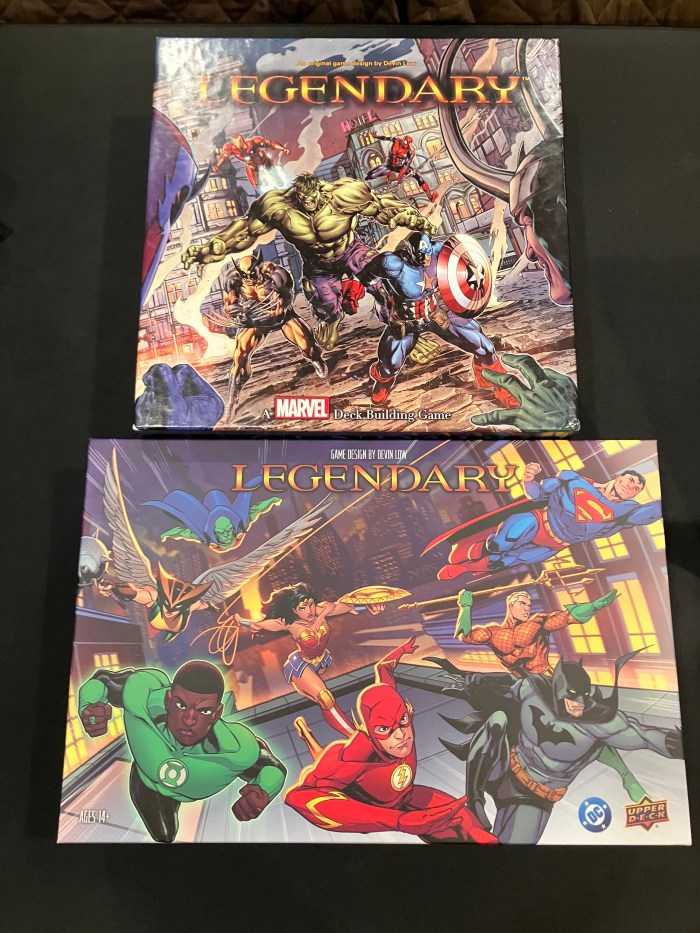
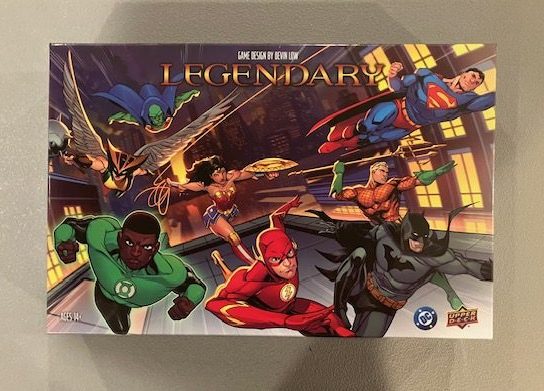
Legendary DC is the a re-theming of the Legendary Marvel game, but in the the DC universe!
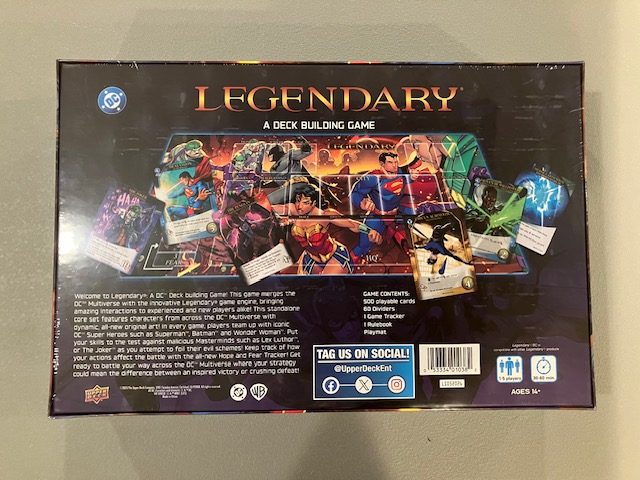
Legendary DC is a deck-building game with superheroes from the DC Universe! It’s a fully cooperative (at a certain way to play) and solo game about hiring a team of heroes to fight the bad guys! We love the theme and the original Legendary Marvel made our Top 10 Cooperative Superhero Games!

Will Legendary DC make that Top 10?

Unboxing and Gameplay
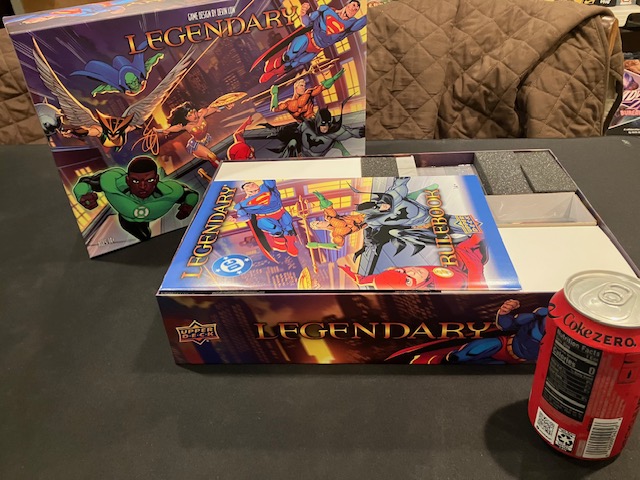
The box is a slightly odder shape than the original game: see box and Coke Can (above) for perspective.
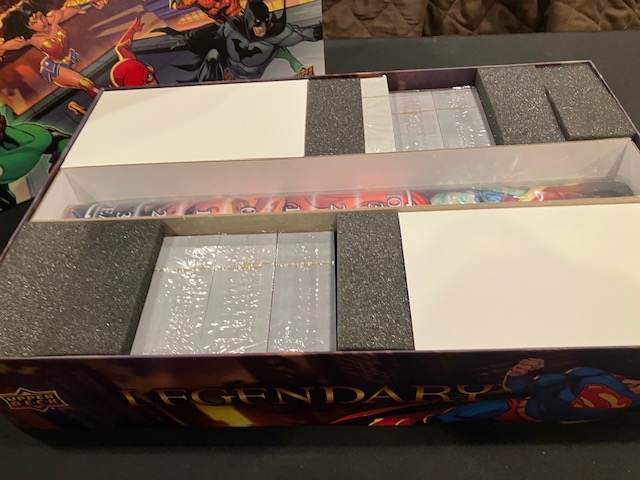
It’s a slightly different shape because it comes with a rolled-up neoprene map! See above and below!
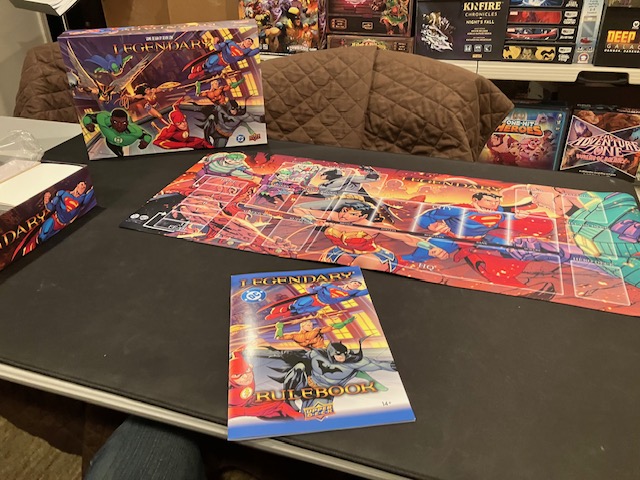
The original Legendary Marvel did NOT have the neoprene mat included! Later games in the Legendary line (especially the Legendary Adventures, like Aliens) came with mats! And everyone loved them! So, I think that’s why the newer sets now all have them.
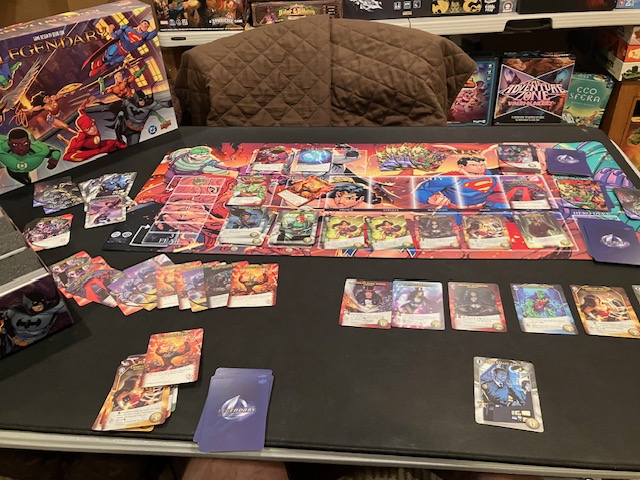
They really do help organize the game. See above.
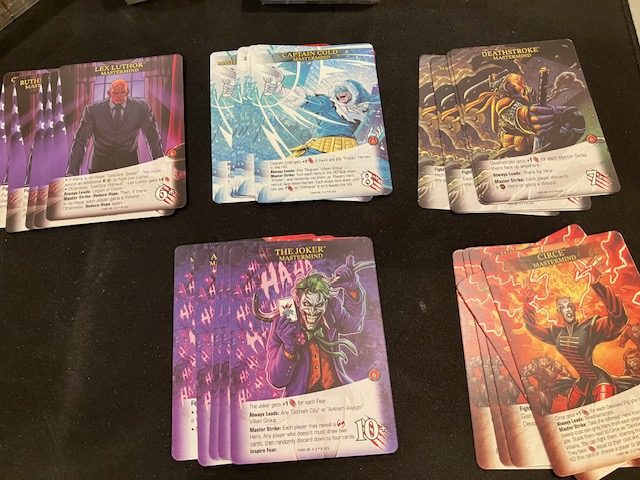
To play a game, players must first choose a Mastermind to fight: See the base five Masterminds that come with this set. To win, you almost always have to fight and defeat the Mastermind in four battles for an ultimate victory!
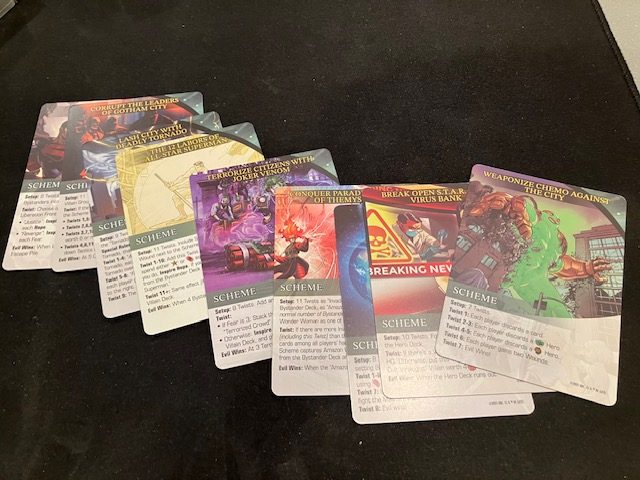
The Mastermind has a Scheme they are trying to achieve; the Scheme defines the losing conditions.
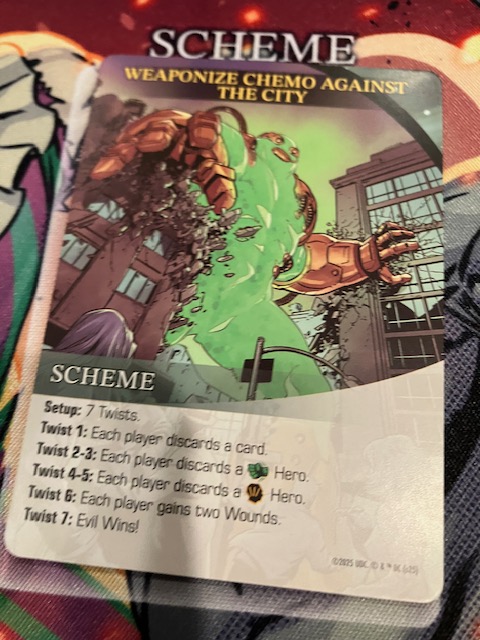
For example, Weaponizing Chemo (see above) is a scheme with 7 Twists! If all 7 Twists come out, the players lose!
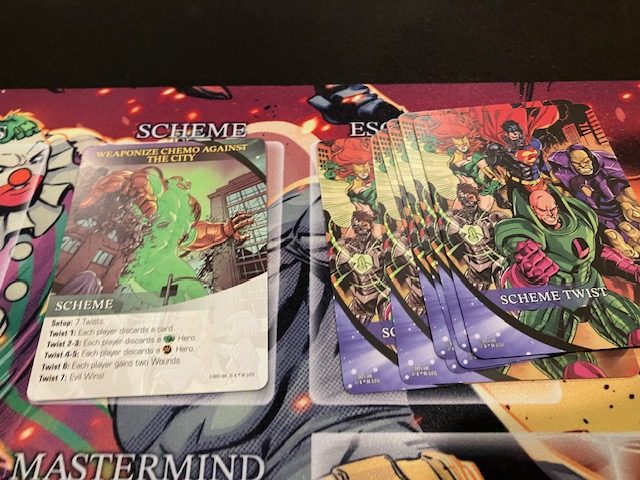
The Scheme Twists (see above, right) are shuffled into the Villain’s Deck! The Villain’s deck is a mish-mash of all sorts of bad news cards!
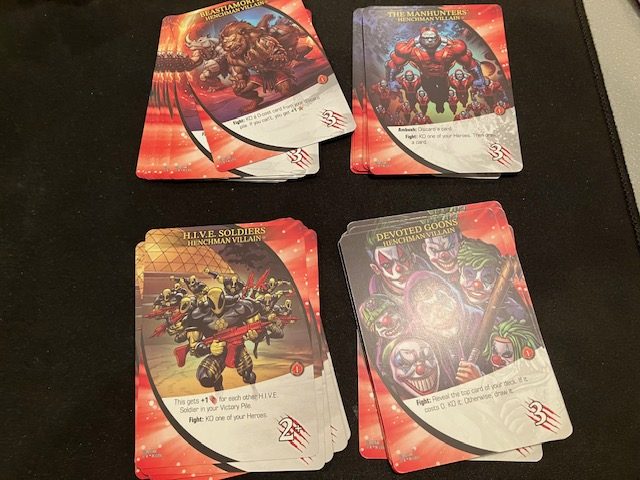
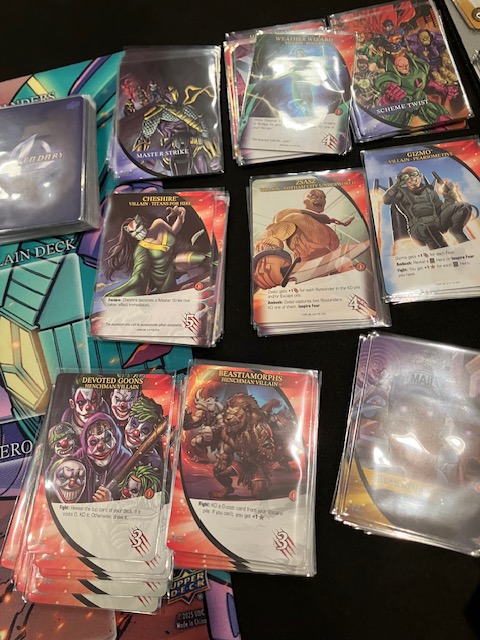
Each Villain deck typically includes some Henchmen (see 4 sets above) …
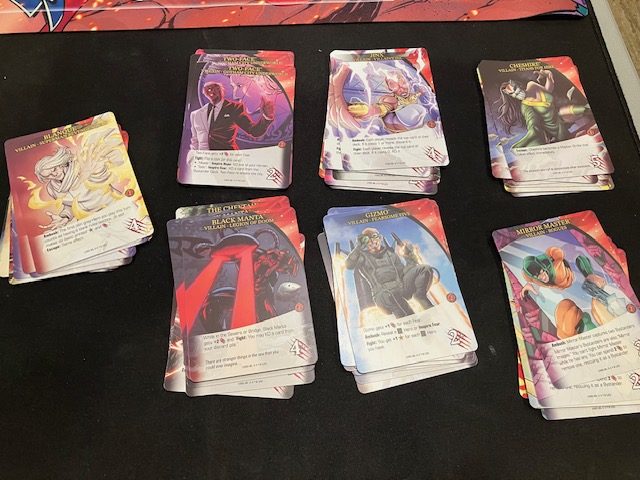
They also include some Villain Groups! See the seven base Villain Groups above!
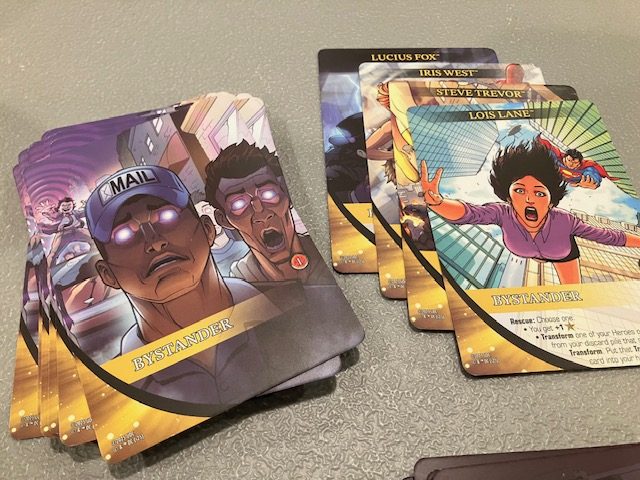
There’s also some innocent bystanders (some named you will recognize, and some nameless ones) that get shuffled into the Villain Deck …
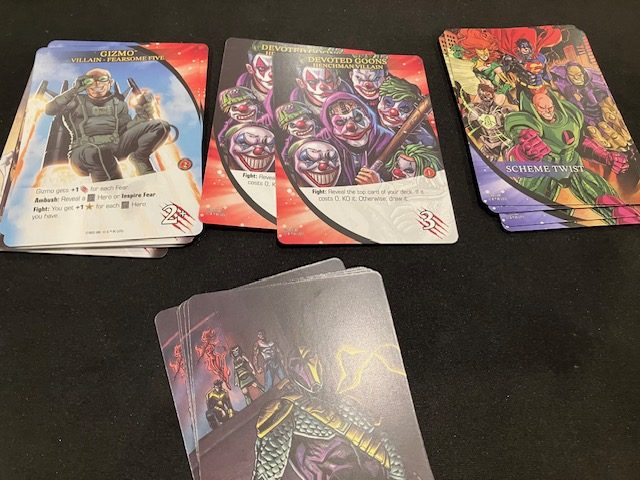
These cards, also coupled with the Masterstrike cards (which lets the Mastermind get involved) form the Villain Deck! Every turn players must draw a card from the Villain Deck and “something bad” happens!
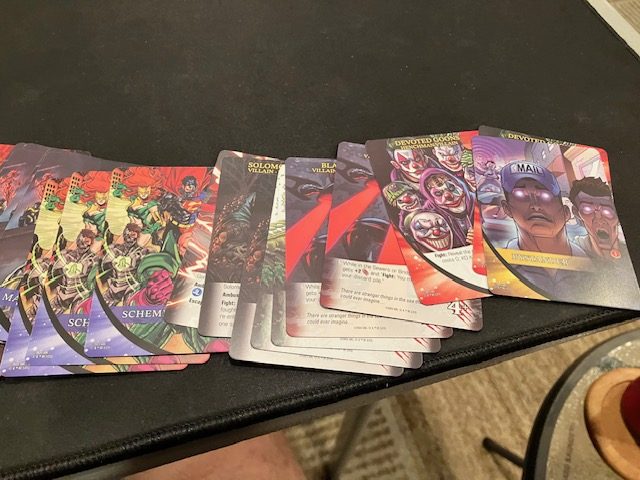
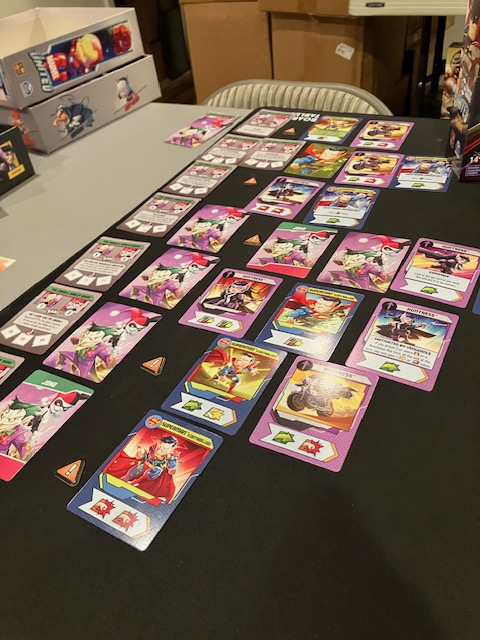
This deck (see it splayed above) is the Bad News deck. To be clear, it changes in every game, depending on the Villain Groups and Henchmen and Scheme you choose!
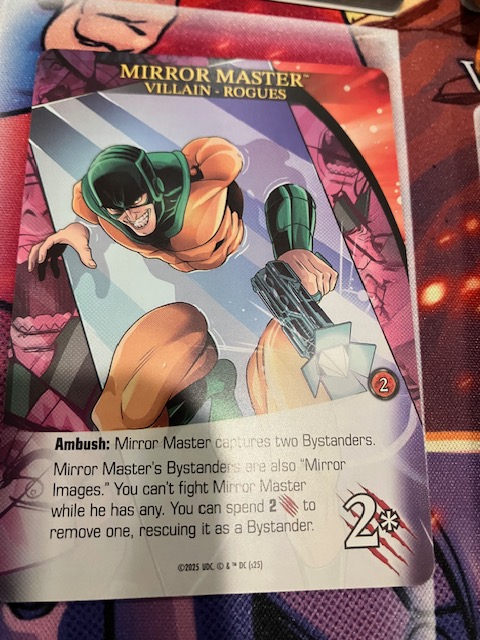
Usually, you fight a Villain from the Villain Deck; a Villain will enter the City that you have to fight!
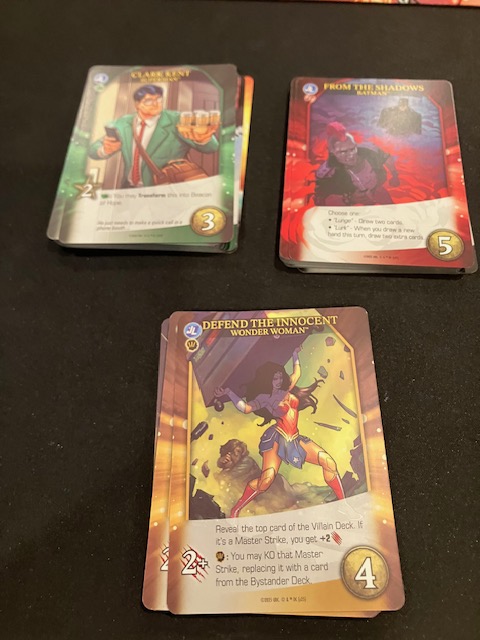
Legendary DC is a little different than most Superhero games! You do NOT play a single hero! Instead, you are collecting heroes in a “team” (your deck) to fight the bad guys!
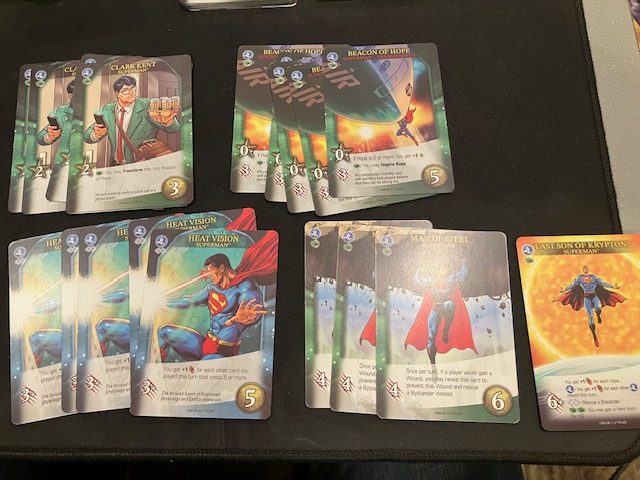
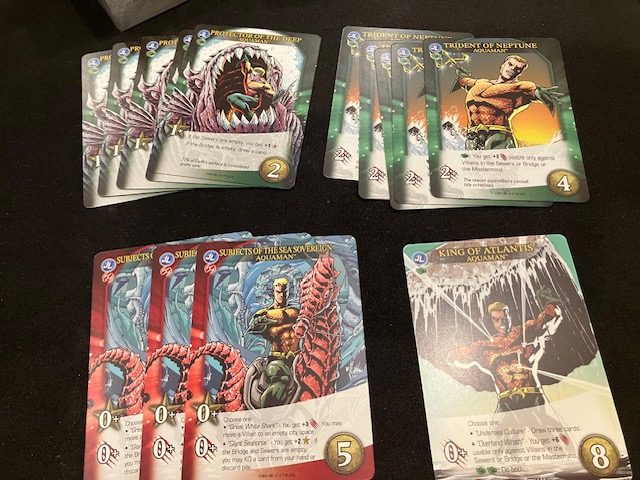
For example, you have a bunch of Superman cards available! At the start of the game, you can only afford the cheaper Superman cards (cost in lower right), but as the game goes on, you can afford to get the better and better Superman cards!
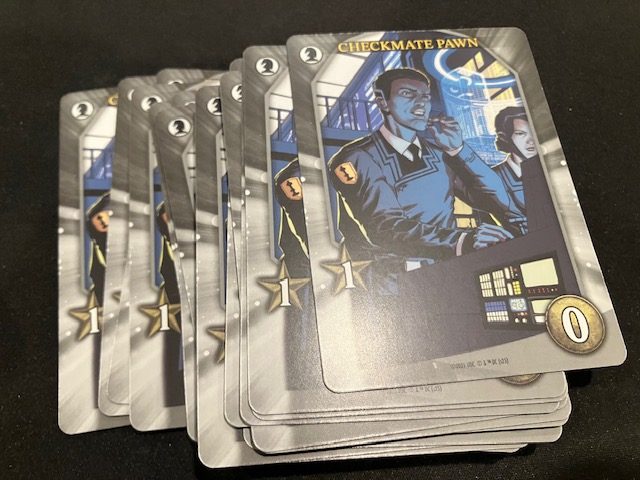
Every player starts with a simple crew from Checkmate (which is quite a bit like Shield from Marvel)! It’s a low-level group of good guys! The Pawns (you start with 8) can only help you recruit Heroes (the Star is how much “recruitment” they can afford)!
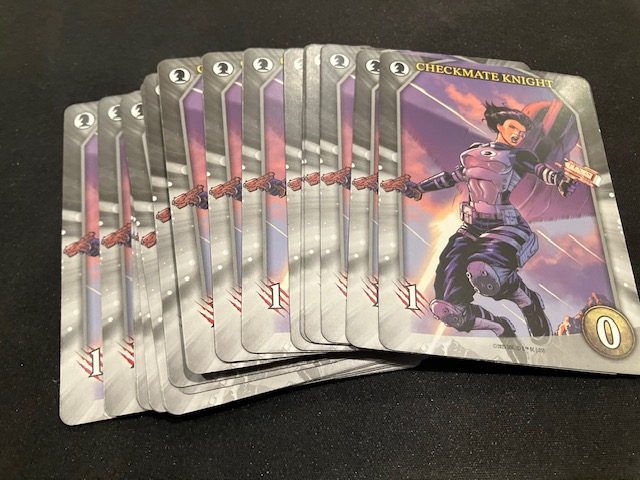
The Checkmate Knights can do a little bit of damage to bad guys! (Players start with 4 of these Knights).
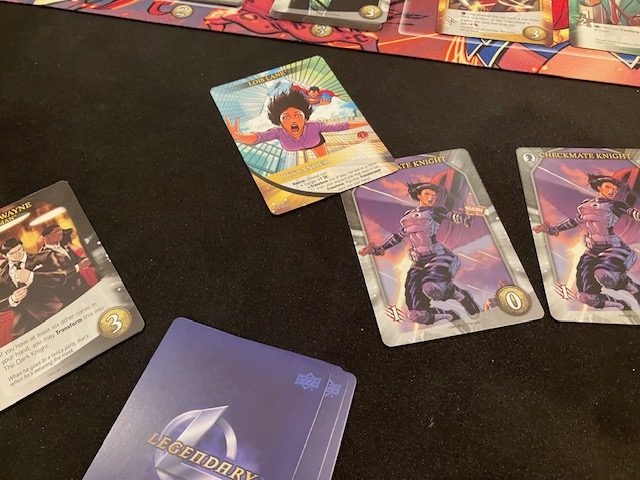
As the game goes on, you recruit better Heroes, save Bystanders, fight Villains and hopefully confront the Mastermind 4 times before his Scheme completes! If the Hero deck or Villain deck depletes, you ran out of time and lost! Usually, though, you will lose because the final Scheme comes out and you lose!
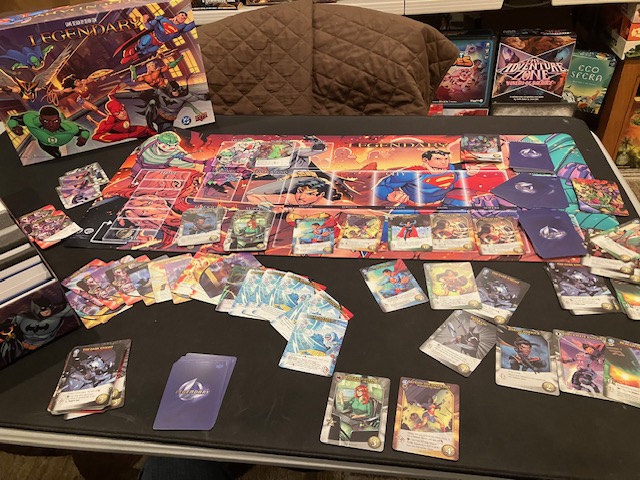
There are a few more rules (which we will discuss below), but that’s the basics of the game! The cards and art are all pretty great!

Rulebook
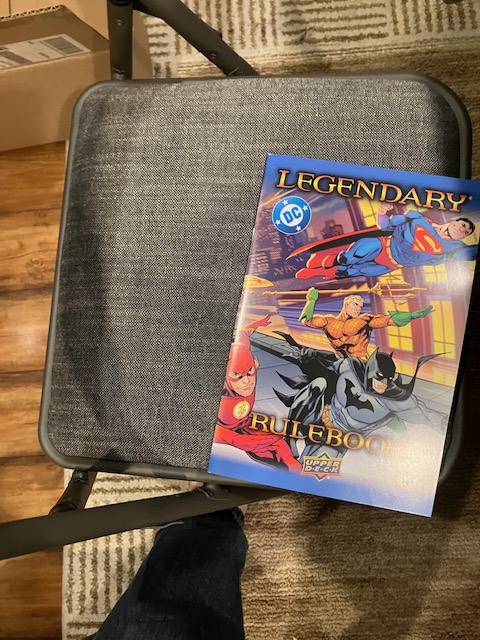
The rulebook is actually quite good!
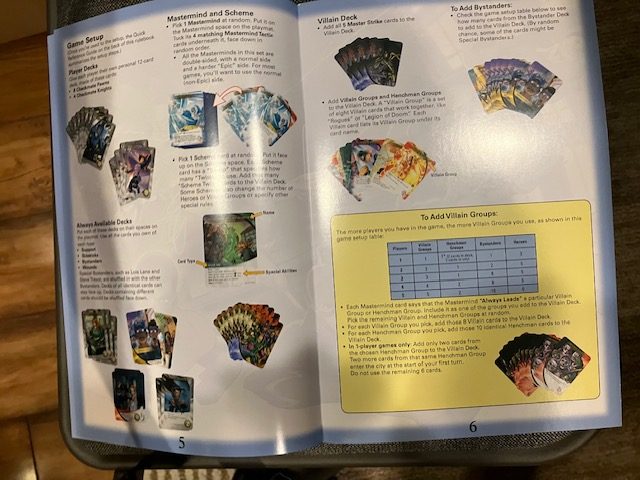
The rulebook does really well on the Chair Test! See above as it opens up to two pages just fine without any drooping! It’s probably a B+ or A- on the Chair Test. The font is a little small, and the later rulebook pages have a lot more text than pictures. Still, the rulebook is very usable on the chair next to me.
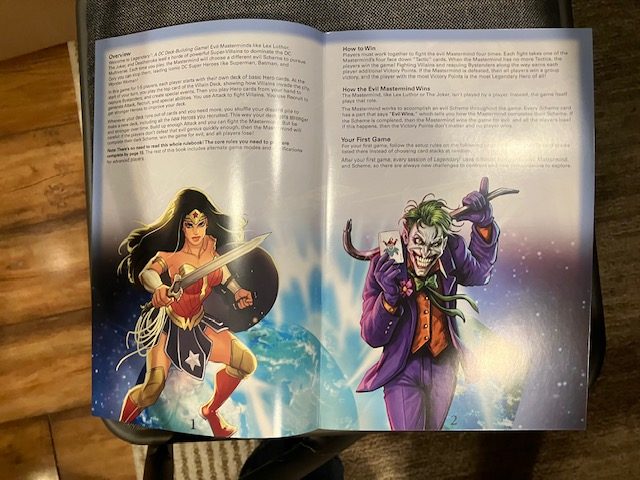
I think the rulebook actually fails the Components test. The Components are NOT defined until the very last page? They are not on the first few pages? I know how to play Legendary, but I worry a little about newer players; this doesn’t really talk about how to “Uncard” the game.
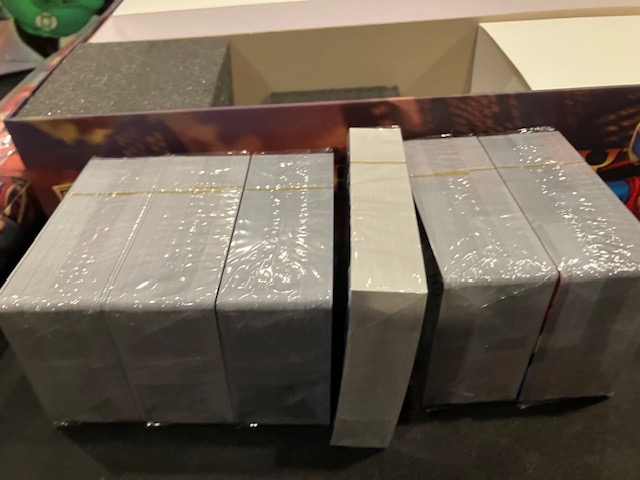
What do I do with all these cards? I still think the rulebook should have an Uncardening section at the very beginning (somehow coupled with the Components list). See more discussion of Uncardening in our discussion of Union City Alliance (another Superhero deck-building game).

I think the next few pages hold the players hands enough to get them through all the cards. Rather than list all the components up front, this rulebook takes you through them a little at a time. Maybe this works; I still think the rulebook needs to acknowledge how many cards are in the game and maybe even a sentence or two (or picture) talking about how to do an Uncardening.
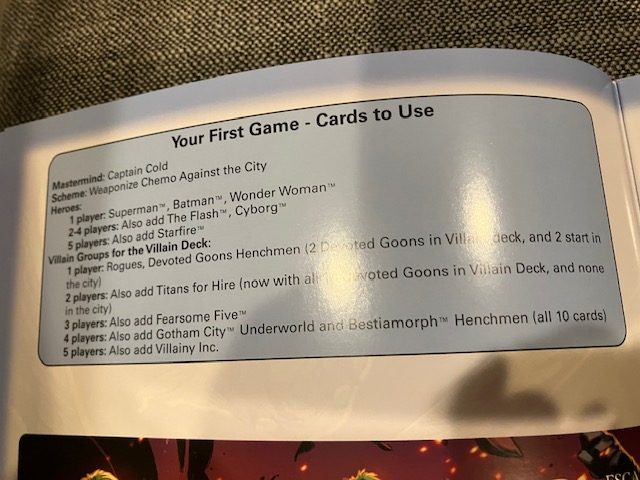
Still, this rulebook worked pretty well. It even has a list of cards to use for your first game!
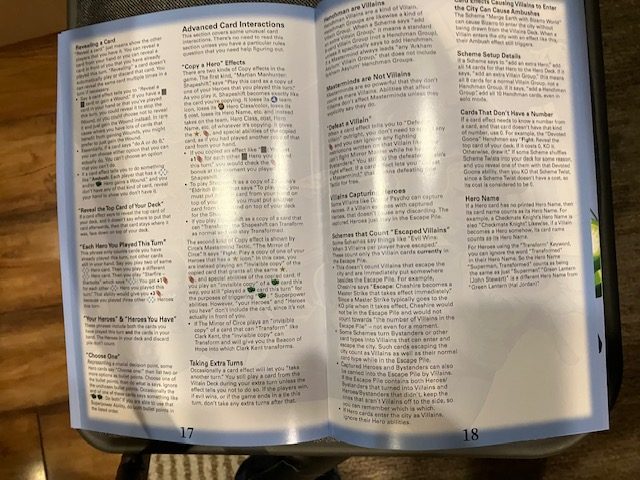
As we get later in the rulebook, there are fewer pictures and much more text. I think this rulebook could have used an Index. (I found “Always Leads” finally after looking, but it’s buried in a floating box and hard to find). Maybe you just get the online version and search the PDF and have that be the Index?

Generally this is a good rulebook; I feel like this is a much better rulebook than the original Legendary Marvel rulebook: I hated that rulebook!

Solo Play
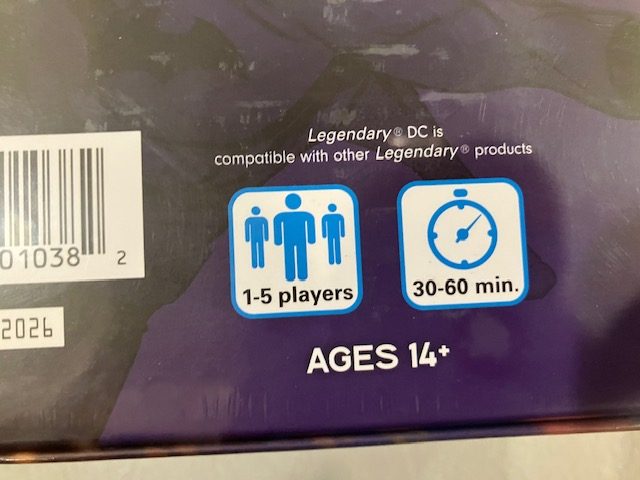
So Legendary DC embraces the solo player! Yay! Thanks for following Saunders’ Law!
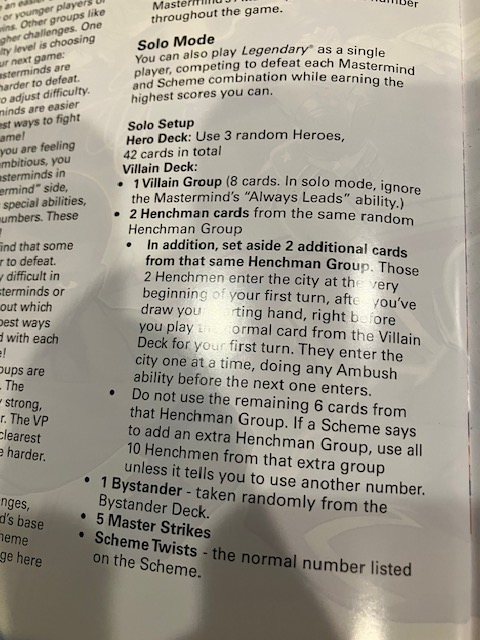
And you can either true solo or multi-handed solo! To play true solo, it’s one player and one deck (one set of heroes): see rules above.
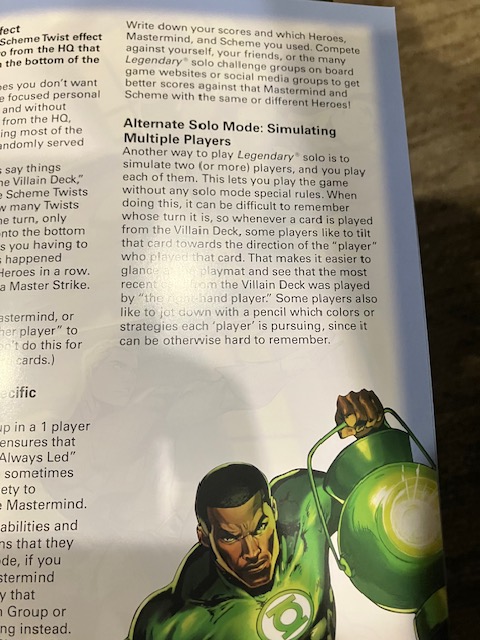
You can also play 2-handed solo (with two sets of decks) or more! I love that this game embraces both solo modes! I generally prefer the 2-handed solo mode because there are generally NO EXCEPTIONS to rules, which makes it easier to learn! Surprisingly, I think I prefer the true solo for Legendary DC, despite there being some changes. Why? Well, to be frank, there’s SO MANY cards between the heroes, the villains, the bystanders, etc etc etc, it’s easier to JUST manage one deck.
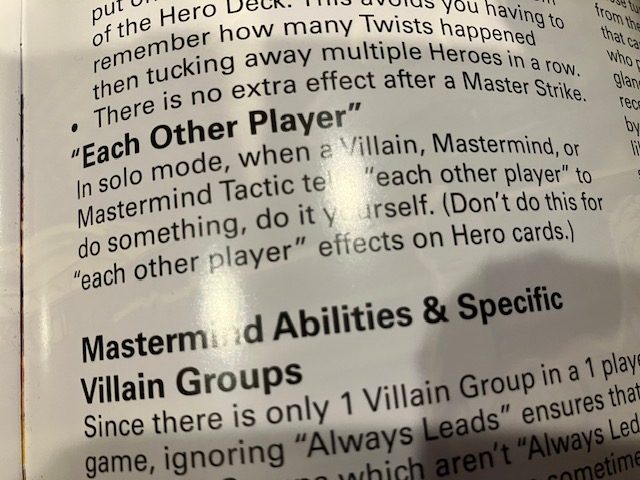
There are some extra rules for the true solo mode: they redefine “Each Other Player” to be yourself (see above; this is a pretty common thing in a true solo mode). They also add an extra Scheme Twist effect and change the set-up so there are fewer Henchmen (and two always start already in the city). The true solo rules are a little clumsier than I thought at first, but I still prefer only managing one deck of Heroes at a time! I think the fewer decks/more rules of true solo outweighs the costs of the more decks/fewer rules for 2-handed solo!

Honestly, the rulebook does a real good job helping you set-up the solo game just fine: see above.
You only get 3 three Heroes, and fewer Villain Groups and Henchmen groups in true solo.
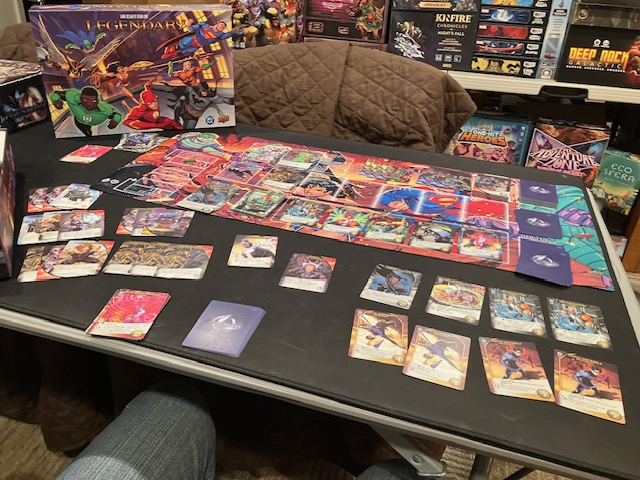
Did I like playing Legendary DC true solo? Yes!!! Over the course of a week, I played at least 7 times solo! There’s so much variety in this game, I loved seeing what would happen! There’s 14 Heroes, 7 Villain Groups, 4 Henchmen, 5 Masterminds, and 9 different Schemes! There’s a ton of variety in this box!
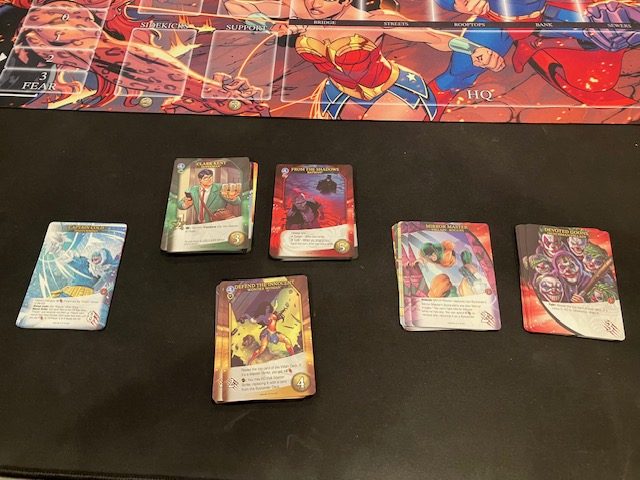
I started with the typical first game of Captain Cold/Rogues vs Superman/Batman/Wonder Woman! Fun! I won the first game!
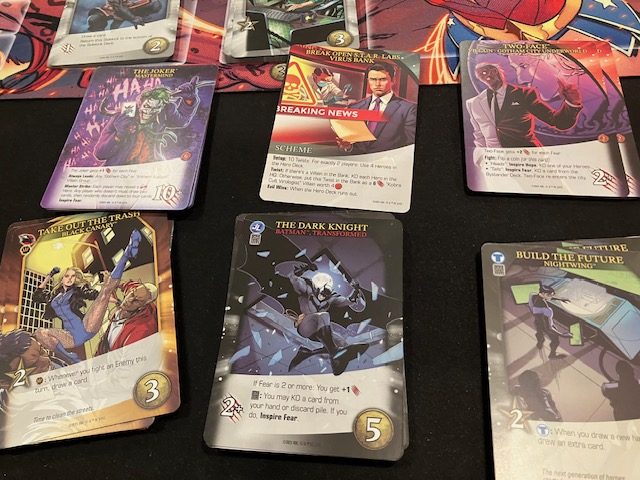
I then moved to a game themed for Gotham City! Joker/Gotham City Underworld vs. Black Canary/Batman/Nightwing! I actually lost this game, but played again and was able to do a lot better once I knew more about the villains and heroes!
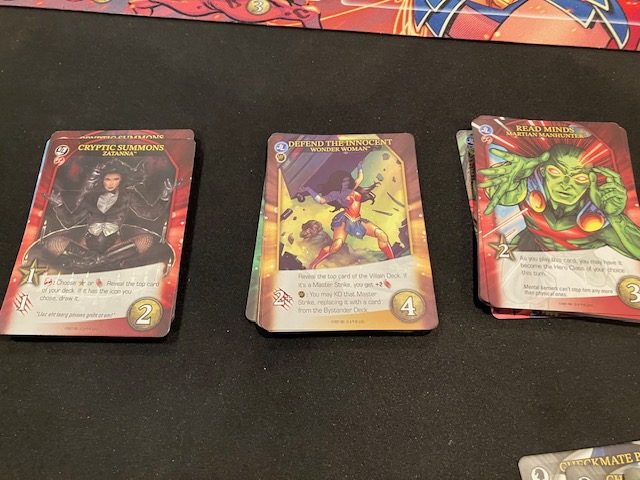
I also did a “weird” group of Heroes with Zatana/Wonder Woman/Martian Manhunter! They are all kinda funky heroes! See above!

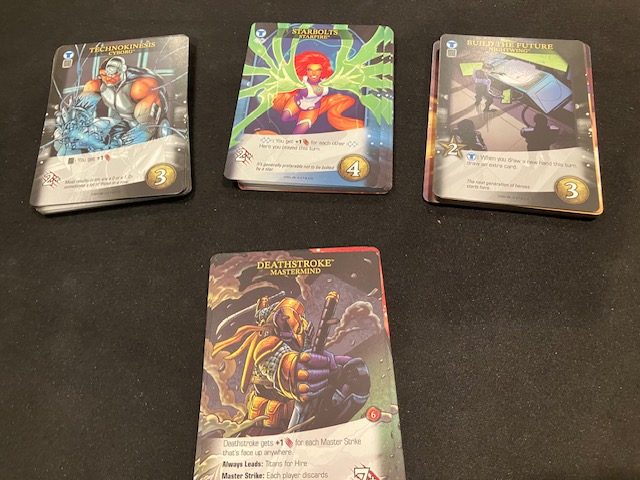
And of course, I had to do a Teen Titan’s based game with Cyborg/Starbolt/Nightwing vs. Deathstroke!
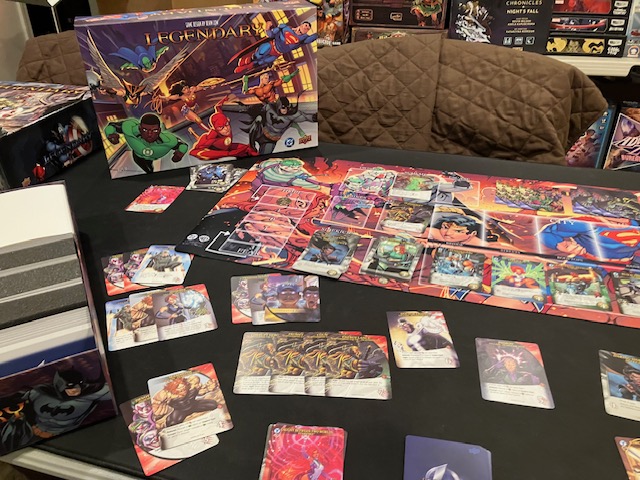
Over the course of a week, I played a lot of games and had a lot of fun. There’s a lot of set-up and shuffling for the solo player, as you have to shuffle together all the hero decks and the villain deck. But, once you are set-up, the game flows quickly!

I was generally very pleased with the true solo mode offered by Legendary DC. The worst part of the solo game is the set-up and tear-down, as the solo player has a LOT of decks to shuffle (set-up) then separate (tear-down). But, if you have played Legendary in any form, you already knew this.

Cooperative Mode
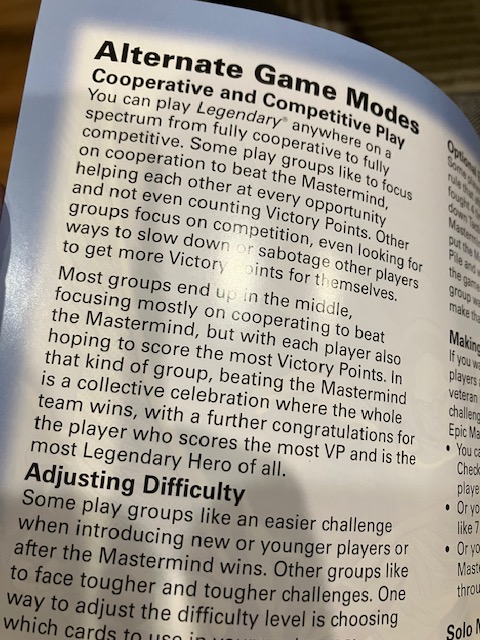
It’s a strange thing; this game can be played cooperatively or semi-co-op (getting the most victory points). See rulebook above: If you don’t defeat the Mastermind together, everyone loses! Yet, I don’t personally know anyone who plays semi-co-op for victory points? It seems out of character to play a super hero game … in any way competitively? But you can?
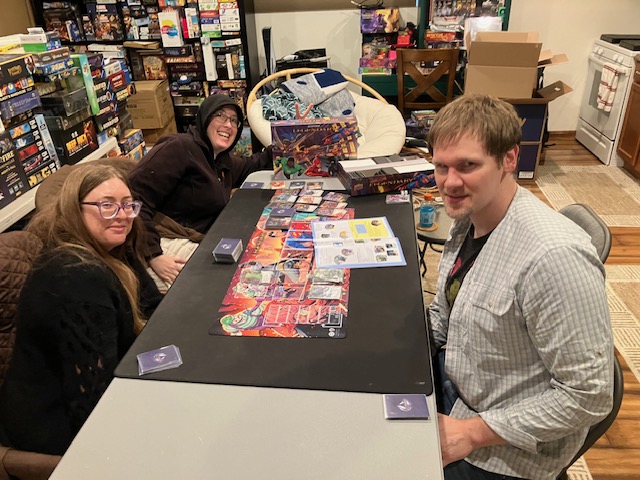
So, cooperatively is all about making sure we defeat the Mastermind in combat 4 times!
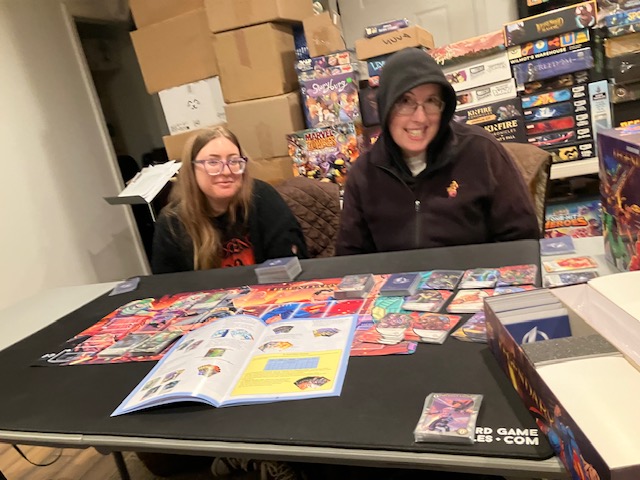
One of the best things about playing Legendary DC (or any Legendary) cooperatively is sharing the load for set-up and tear-down! There are a LOT of cards in this game; the more players that play, the more cards! That means set-up is all about shuffling together a ton of cards for the Hero decks and the Villain deck! And then the tear-down is arguably worse, as you have to separate ALL THOSE CARDS back into their original decks. Luckily, if you have a good group, you can share the load and have everyone help. That group help really makes the game feel a little less like work and more like fun.
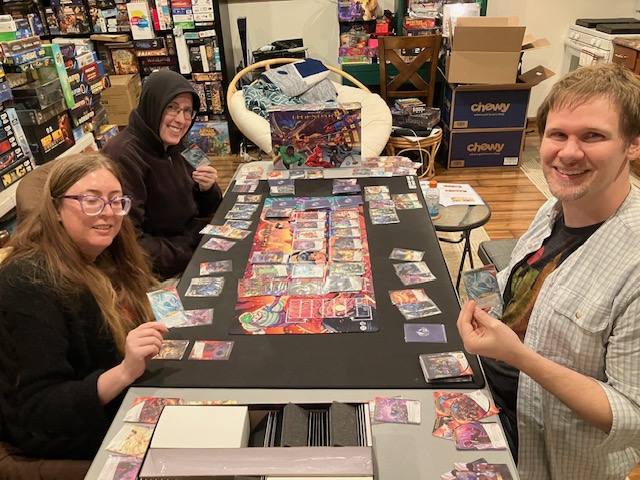
Although we almost always (always?) play Legendary cooperatively, it’s not particularly cooperative! Don’t get me wrong; we are all working together to defeat the Mastermind, and we point out issues and talk about how to resolve them, but there’s not really a lot of cooperative mechanisms in the game. Each player’s turn is mostly taken in solitaire; this is mostly multi-player solitaire! There’s no real mechanisms for sharing cards, or directly helping someone with your cards! Mostly, it’s about talking about how the solitaire turns will interact with each other and the current board!

Some people might think the “lack of cooperative mechanisms” makes this a bad cooperative game; not at all! This multi-player solitaire nature helps keep the Alpha Player Syndrome in check, so that’s one reason a lot of people might like this! And some people really like the idea of a cooperative game without too much player interaction.

Just be aware of the kind of cooperation Legendary DC provides; it is fully cooperative and players will discuss how to win together, but the turns are mostly multi-player solitaire.

Sleevening
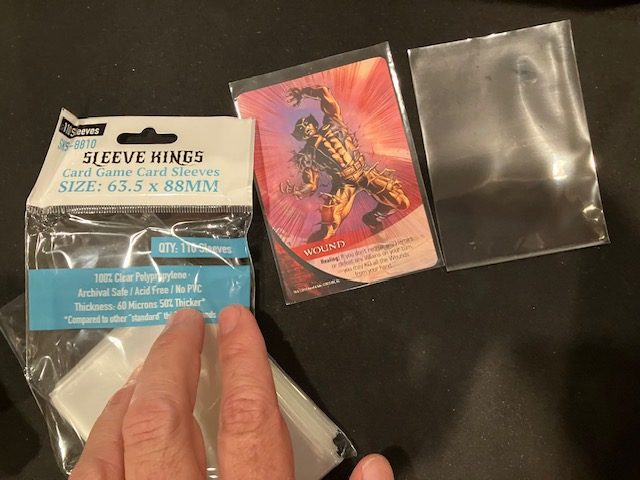
You should probably sleeve your game if you plan to play it a lot. I played my first 7 games without sleeves, and I noticed some of the starter cards (Checkmate cards) getting smudged and a little messy.
I was a late sleever, but I think it’s worth it for this game. Heck, usually most deck-builders are worth sleeving! I used the Sleeve Kings 63.5 x 88 mm sleeves! See above.

House Rule for Schemes To Reduce Randomness

A lot of Scheme cards shuffle a bunch of Scheme Twists into the deck: see above!! But if you just happen to get all of the Scheme Twists at the start of the game, you quickly lose! Sure, it’s unlikely. But after all that set-up, how annoying is it if your game ends quickly because the Scheme Twists end up in the upper part of the Villain Deck?
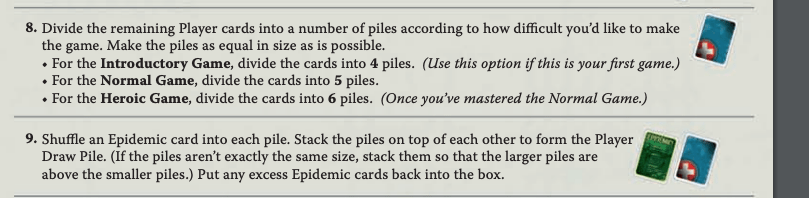
Games like Pandemic break apart the deck into piles (see rules above), then shuffle one of the Infection cards (like Scheme Twists) into each pile. Then the piles go back on top of each other! See above for rules of Pandemic! This keeps the bad news cards from being all clumped in the top (game too hard) or the bottom (game too easy)!

Why don’t we do this with the Scheme Twists? With the Pandemic method, the Scheme Twists are distributed equally throughout the Villain Deck! This seems like a simple house rule to keep some of the randomness under control.

What I Liked
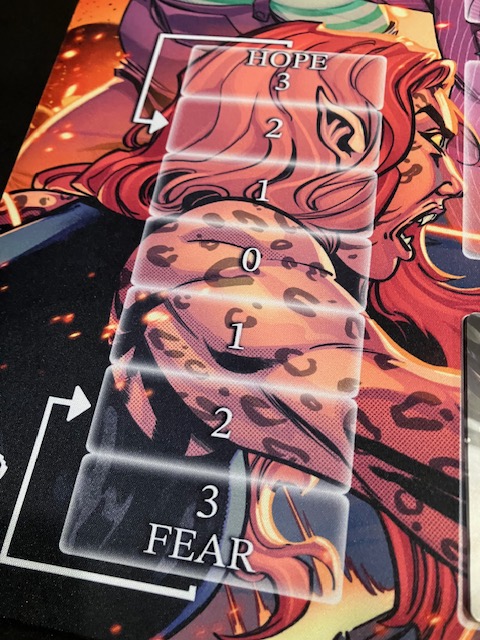
Hope and Fear: Legendary DC has a notion of Fear and Hope (two sides of the coin). See mat above! Some Villains and/or Heroes do less or more damage depending on where the Fear track is! Superman does better when Hope is higher, and Batman does better when Fear is bad! I like this mechanism a lot; it gives a nice flavor of atmosphere to the game! There’s also a more mechanical reason to like this: if you get a “bad hand” and can “only” generate 3 fight on your turn, you can still do something useful and fight crime (generate hope or fear, as you want)!!! That’s right, if you have really hard Villains out, you can still do something useful! This new feature (at least for me) really helps elevate the game by giving the players more to do on a turn, even when faced with a bad hand!
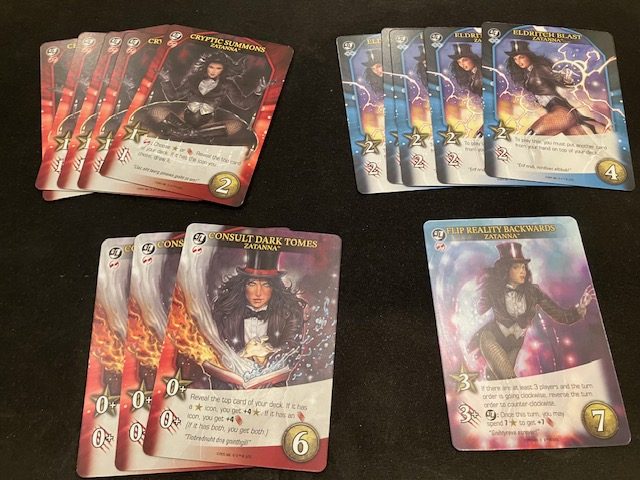
Art On Cards: The art on the cards is generally fantastic! The heroes, the villains, the masterminds are all pillars of good comic book art!

Rulebook: Despite a few grumbles with the rulebook, I generally really liked this rulebook. Even though I already knew how Legendary worked, I feel like the quality has significantly increased since the first one! It still needs an Uncardening section.
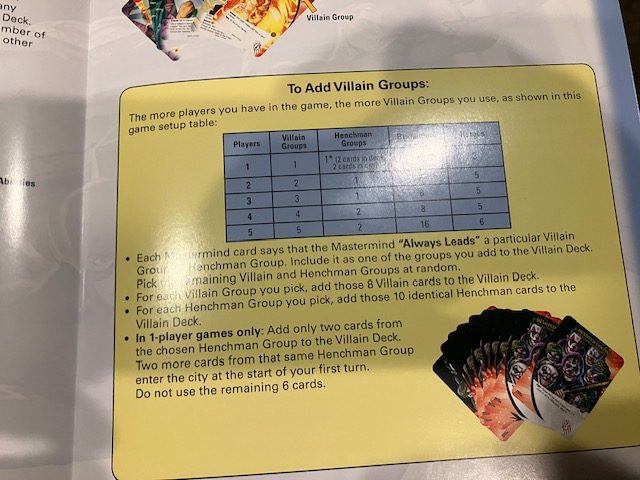
Player Counts All Work: The rulebook goes out of its way to make little mods to make sure sure the game works at all player counts! The solo rules have special set-up and rules, the 4 and 5 player games get an extra “free” turn makes me feel like this game will work at all the player count! My experience is only solo and 4-player, but these tweaks seemed to work!
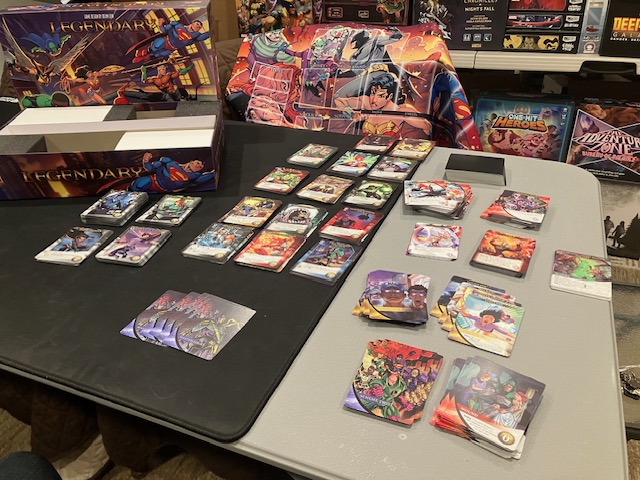
Variety: There is SO much variety in this game, you could be happy with just this base set for quite a while!
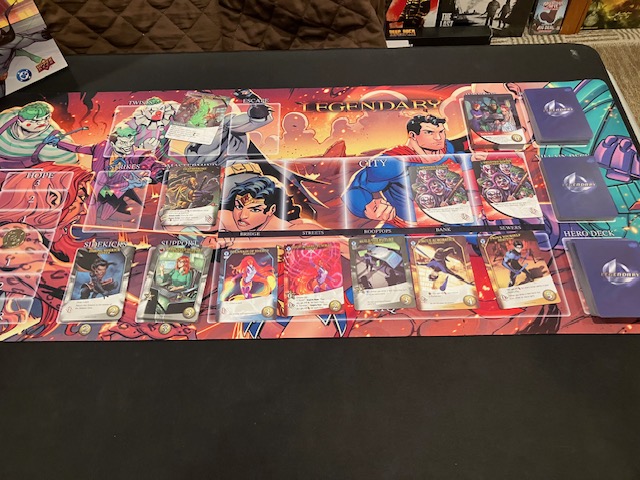
The Player Mat: The fact that this version of the game comes with a player mat is great! It really helps keep the game more organized and easy to set-up!

What I Didn’t Like
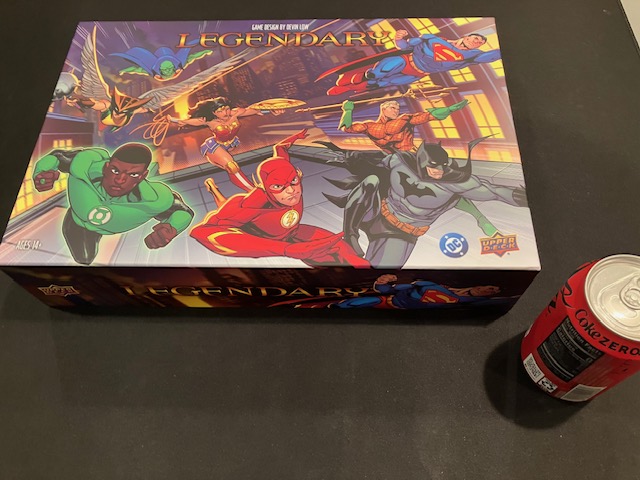
The Cover Art: The cover art seems … out-of-place with the rest of the art? The cover art looks like a “Super Friends” kind of art (lesser quality) and the innards are more like “Justice League of America” art (higher-quality)? I don’t know, if I saw this game at a game store and didn’t know anything about it, I might think it’s for young kids only? I think the cover belies what’s inside.

Play Mat: As much as I love the playmat, I think it’s busy and distracting. The Heroes and villains on the mat are “distracting”. They are also of the lesser art like the cover. I would rather have the heroes and villain be removed from the playmat and have the the background only! However, given a choice between no playmat and a busy playmat, I’d MUCH rather have the playmat!
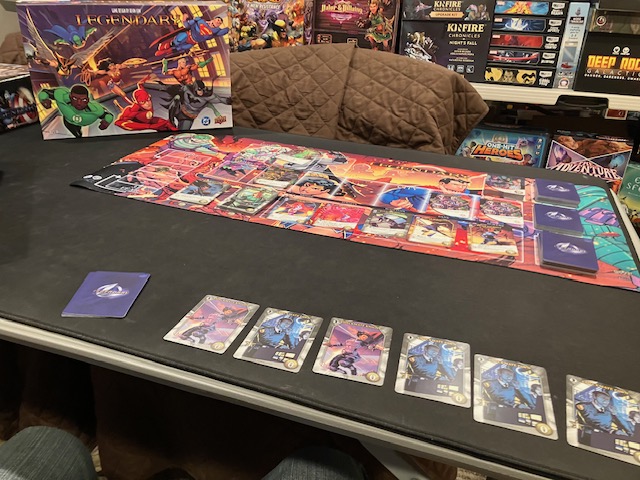
Randomness: The Hero decks and Villain Decks are random: you can get completely screwed by bad draws. It’s not big deal, because it usually balances out (especially if you build a good hero deck). BUT in a game where it’s so much work to set-up and tear-down, it can very frustrating to have a game end because of bad draws; this is probably the worst part of Legendary DC, and every Legendary game ever.

Conclusion

I think Legendary DC is my current favorite version of Legendary! All it’s little tweaks (Fear and Hope, player count adjustments, multiple solo modes, etc) show all the advancements that have been done in this system! This is the newest evolution to this game and it works well. There is also so much variety in the game that you can play this set for quite a while without needing any expansions! Trust me though, more expansions are coming. The art is fantastic and the DC Superhero theme works well with this.

The set-up and tear-down can be daunting, especially for the solo player, but the cooperative game is a lot easier to set-up/tear-down because players can share the load to make it easier for everyone. Be aware: there is a fair amount of randomness in the game, so bad draws that ruin a game are a little more painful when the set-up and tear-down is so pronounced! Having said that, the randomness of the game isn’t “usually” too bad, especially with one minor house rule we suggest.

The solo game is a blast and I couldn’t stop playing it! There’s even rules for true solo and 2-handed solo! I prefer the true solo despite the few extra rules and really enjoyed the puzzle and gameplay. 8.5/10 maybe 9/10?

The cooperative game isn’t that cooperative; it’s more multiplayer solitaire. It’s still a lot of fun, but don’t expect lots of sharing or turns where you help someone else; most of the communication in the game is “general strategy”, but that’s still fun. It’s a great game: players work together a little … but the cooperation isn’t particularly pronounced. There just aren’t a lot mechanisms in the game that promote cooperation. 8.5/10.

I don’t think I know anyone who plays this semi-co-op; it seems out of character for a super-hero game to NOT be fully cooperative.

And yes, this would make our Top 10 Cooperative Superhero Games!! I think it’s better than Legendary Marvel!

Hero Appendix

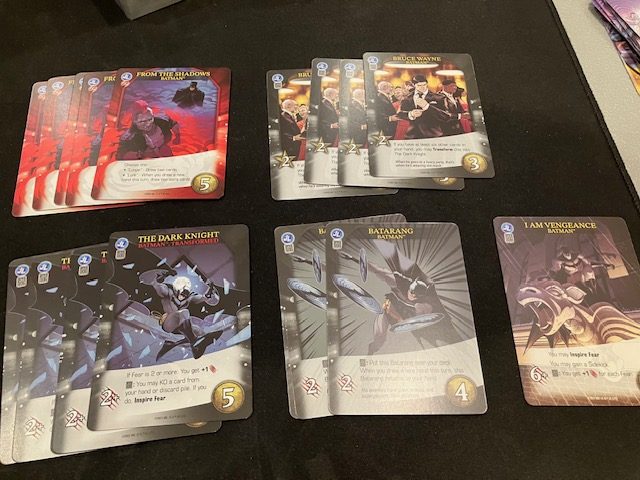
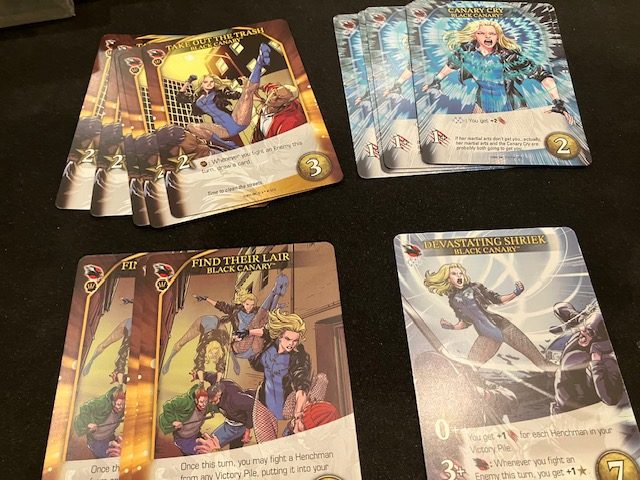
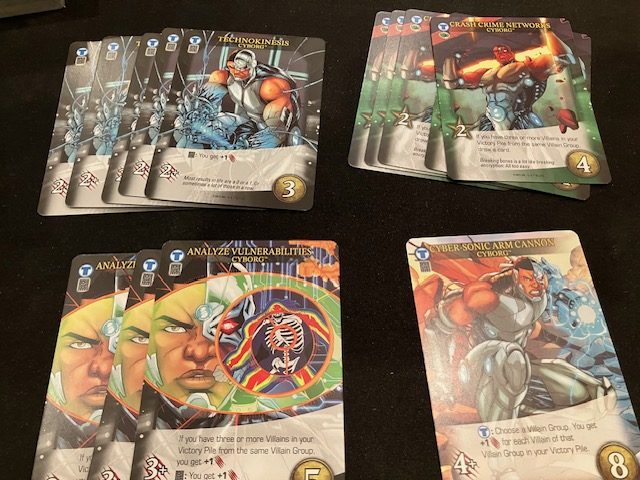
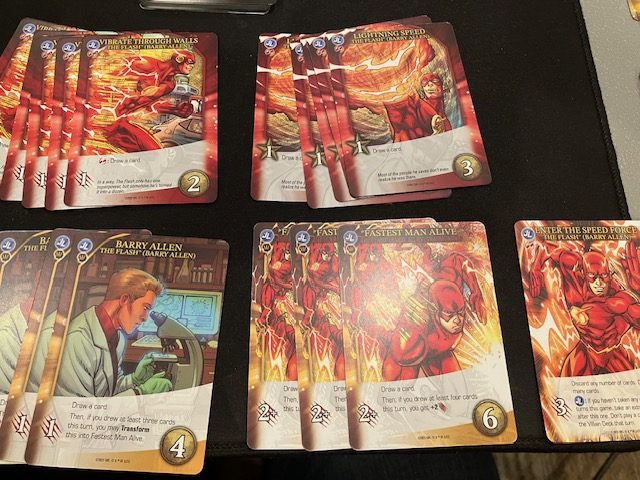
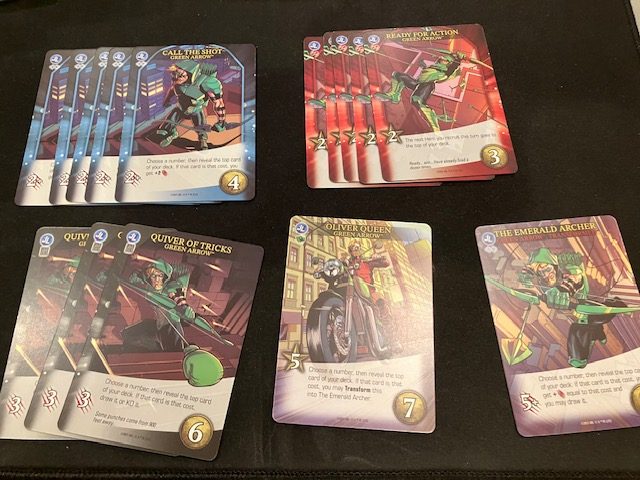
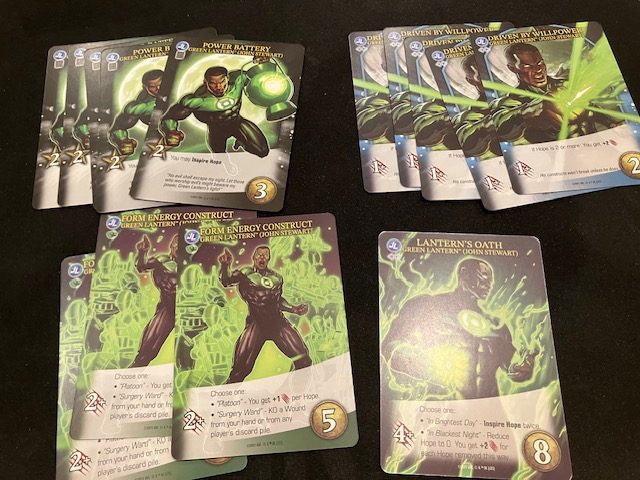
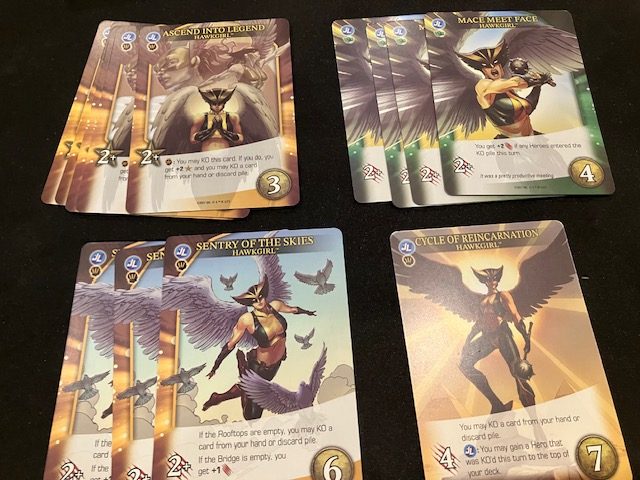
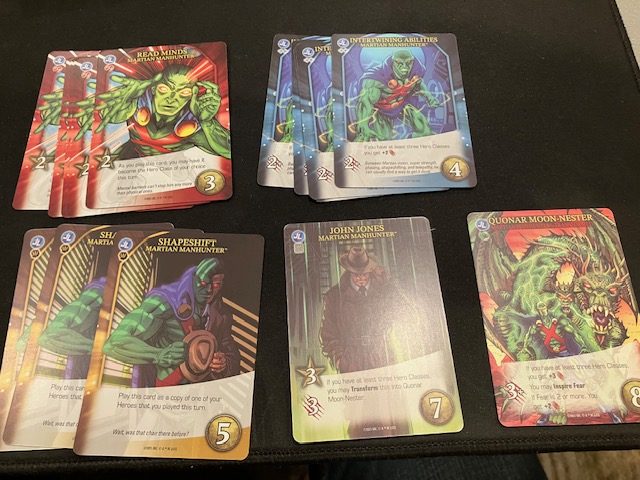
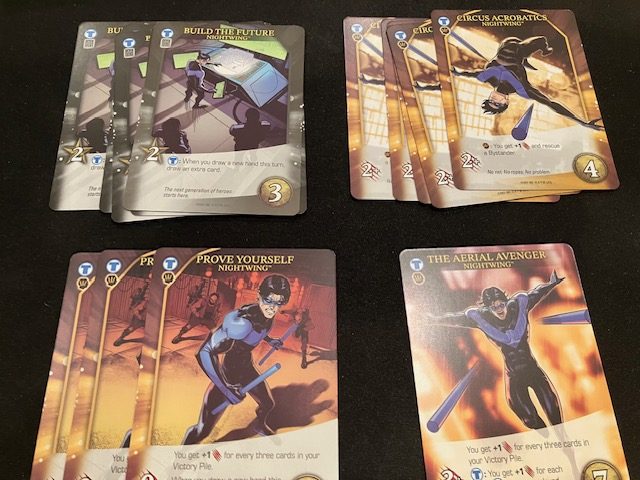
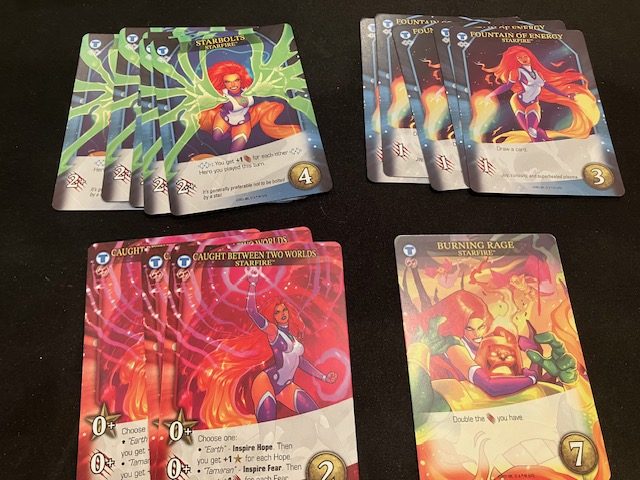
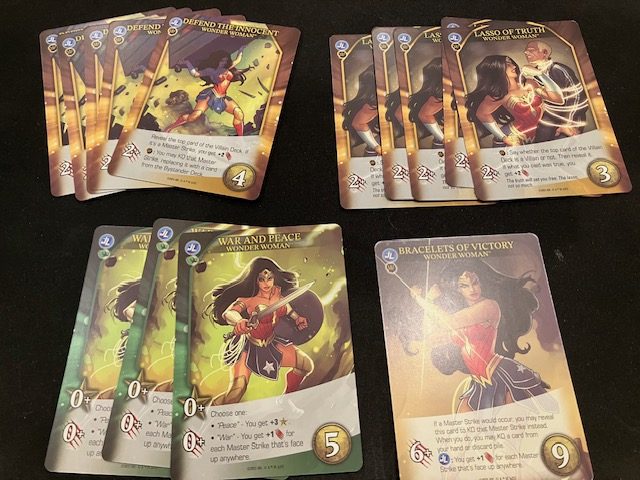
Here’s all the Superheroes and their cards.
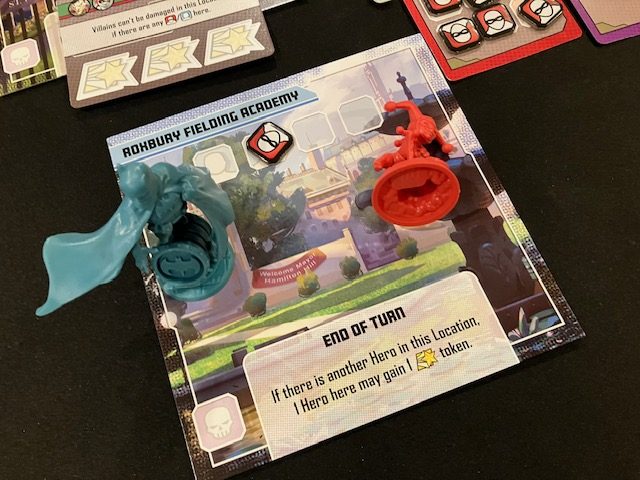
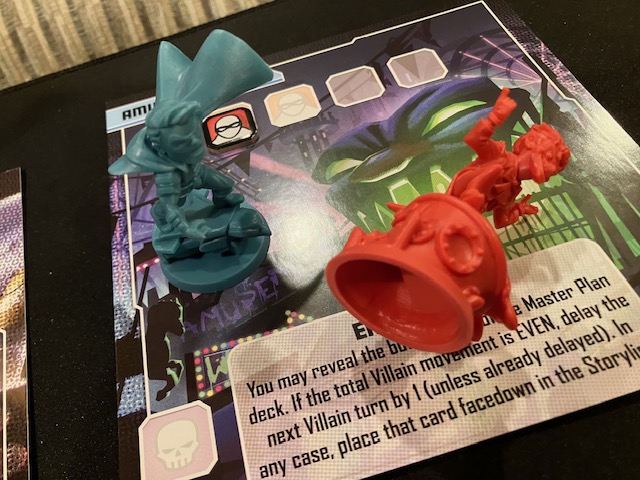
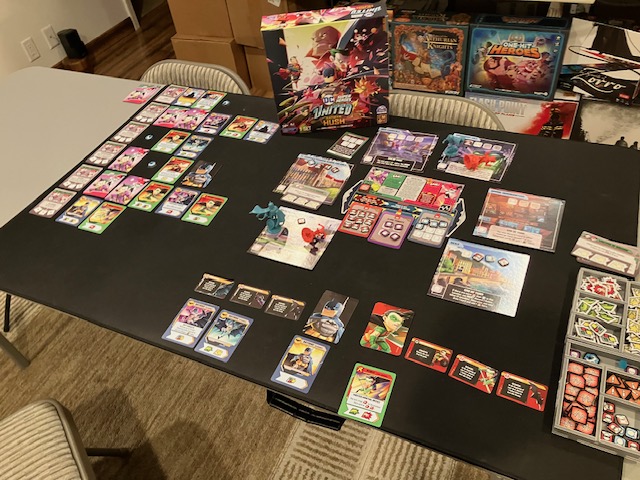
Probably My Favorite Game of 2025! DC Super Heroes United: Batman Hush

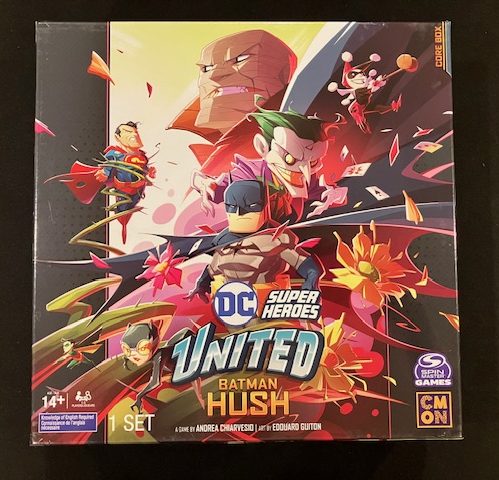
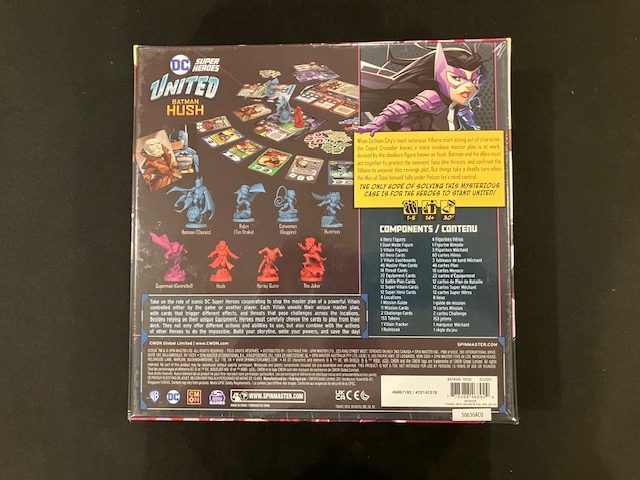
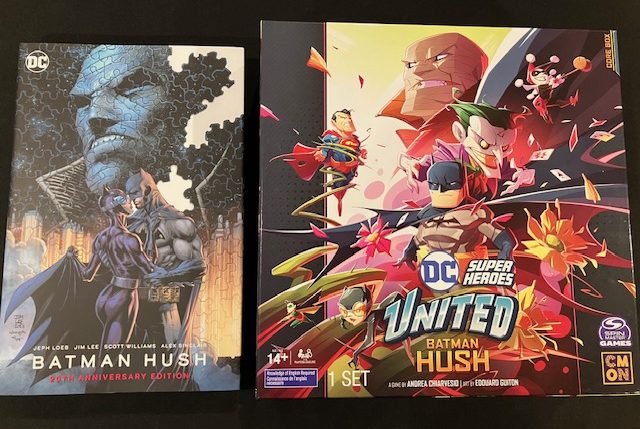
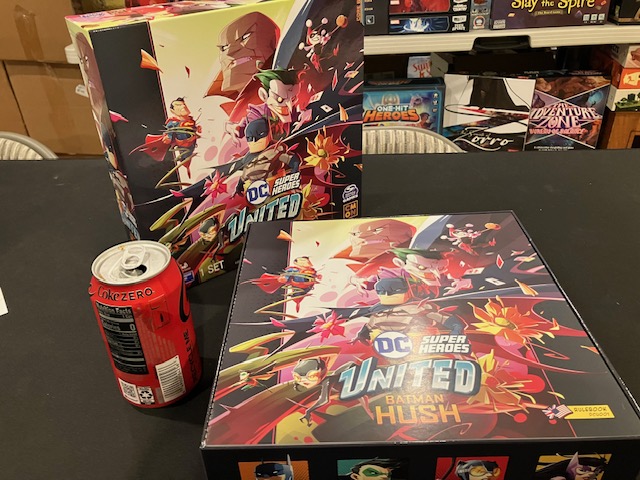
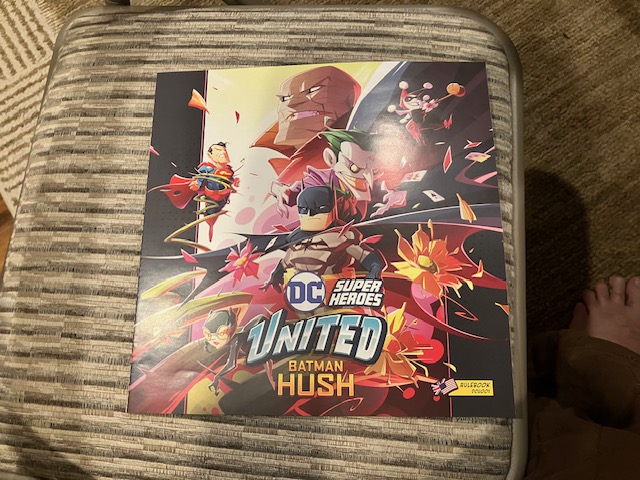
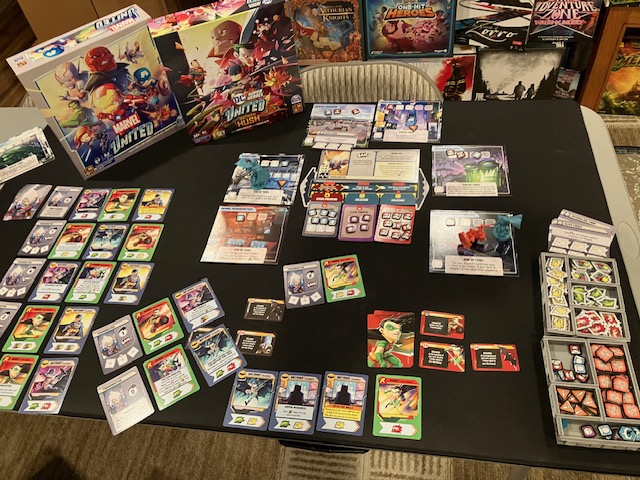
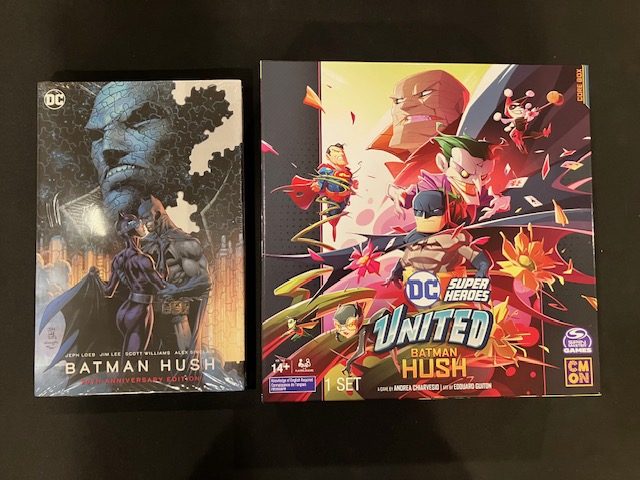
While we wait for the full delivery of DC Super Heroes United (which has run into multiple issues; CMON money issues, tariff issues, and staffing issues), CMON did manage to release DC Super Heroes United: Batman Hush (which we’ll just call Hush from now on, thank you). See above!

This was a “surprise” release that was available from Amazon sometime in August 2025; I ordered it instantly as soon as a I found out about it.  No one really expected this?  EDIT: Well, I missed a some memos … I didn’t expect it.  I mean, we expected DC United (it was #1 on our Top 10 Anticipated Cooperative Games of 2025 list), but Hush was not part of the original Kickstarter!

This game arrived at my house September 10th, 2025.

What is this?

Hush

This game Hush is a standalone game in the Marvel/DC United series of games.  Yes, it is standalone; you don’t need any other sets to play this.  This is a cooperative superhero game where players take the role of your favorite DC Superheroes (Batman, Robin, Superman*, etc) and work together to defeat the villain!

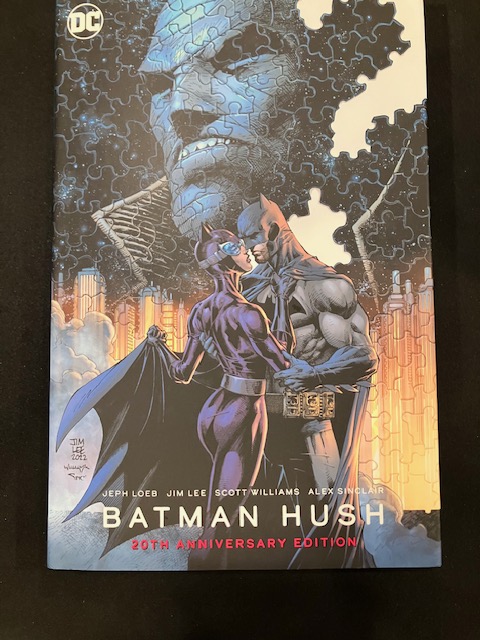
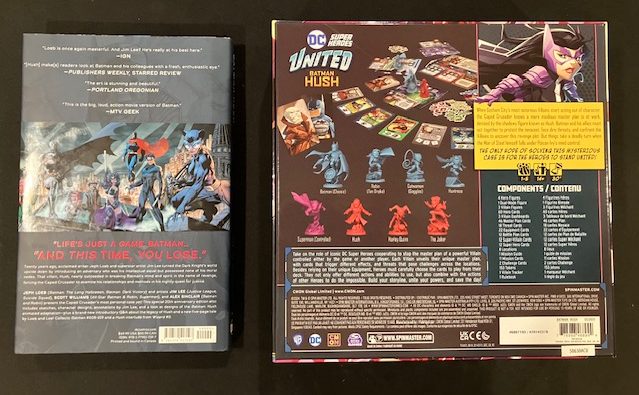
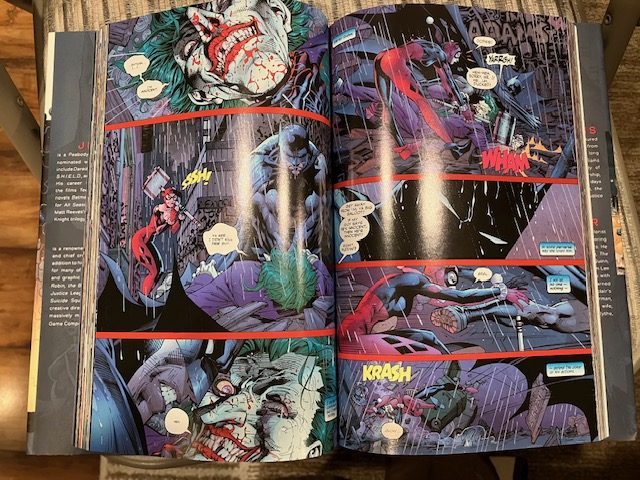
Hush is loosely based on the Jeph Loeb/Jim Lee/Scott Williams/Alex Sinclar Batman series called Hush: see the 20th Anniversary Edition hardback above.

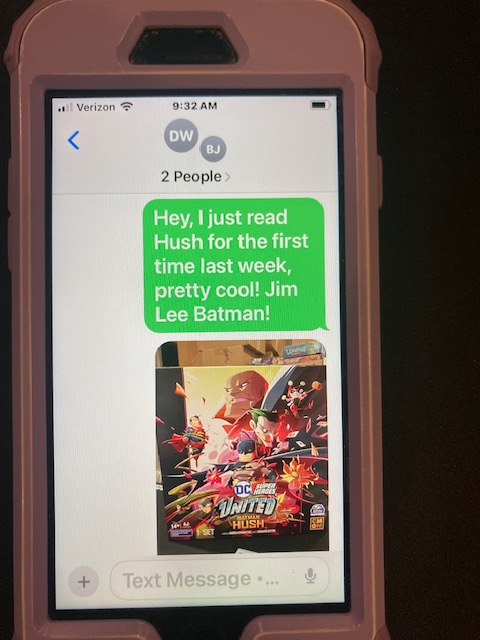
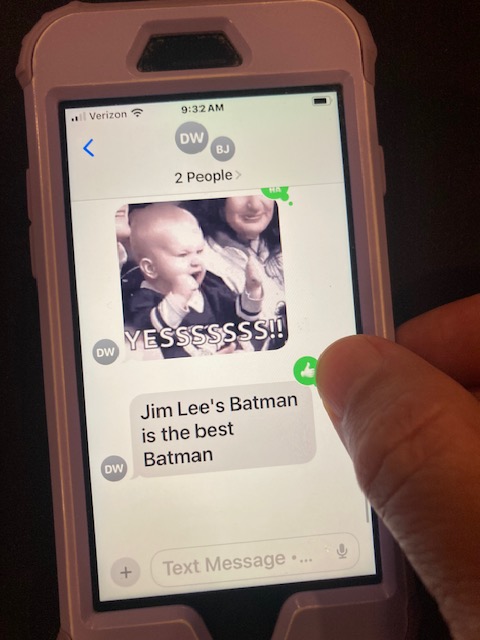
Surprisingly, I had never read Hush, which is weird because I love Batman and I love Jim Lee.  How have I never read this???  I texted my friends Bryan and Diana, who are huge Batman and Jim Lee fans about this!

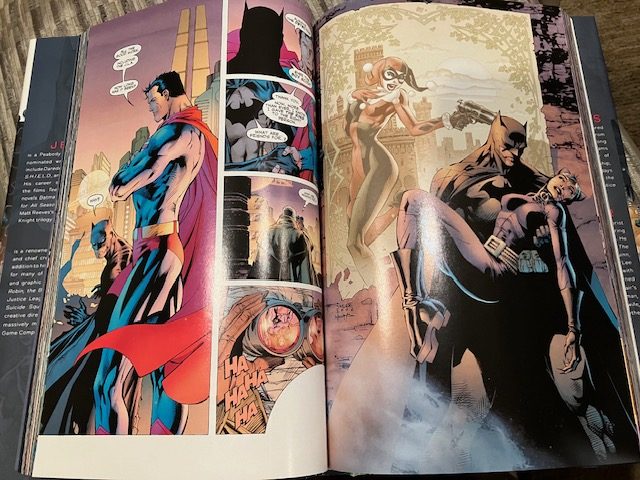
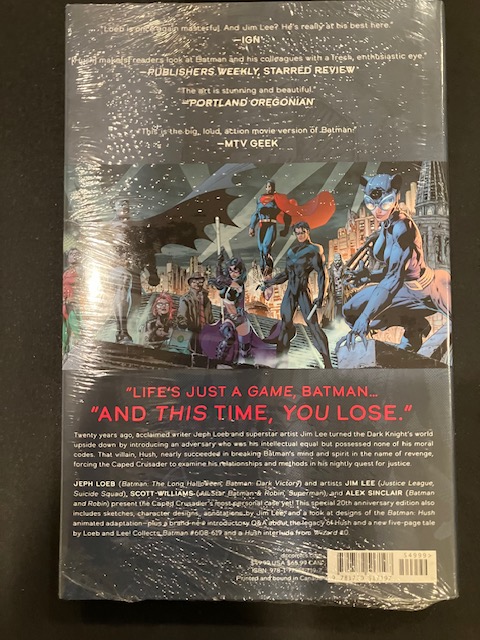
They think Jim Lee’s Batman is the best Batman (see above).  I went ahead and devoured the story over about 3 hours (below).

Hush is a great story; I’d recommend reading it if you’ve never read it.  It gives much more depth to the Hush villain(s) in the box.

Strictly speaking, you do NOT to read the Hush graphic novel/series to play the game; it just helps flesh out the game.  So, if you are intimidated by the giant Hush graphic novel, don’t despair!  The game works fine without knowing the series, but be aware that there can be spoilers.  (Still, Hush was pretty cool; you should read it!)

Unboxing/Gameplay

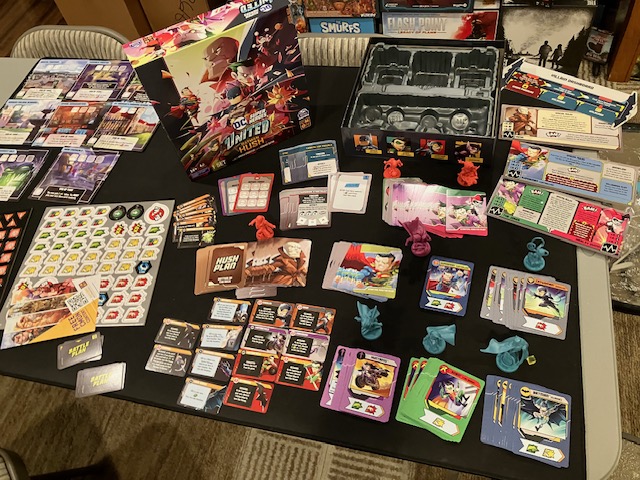
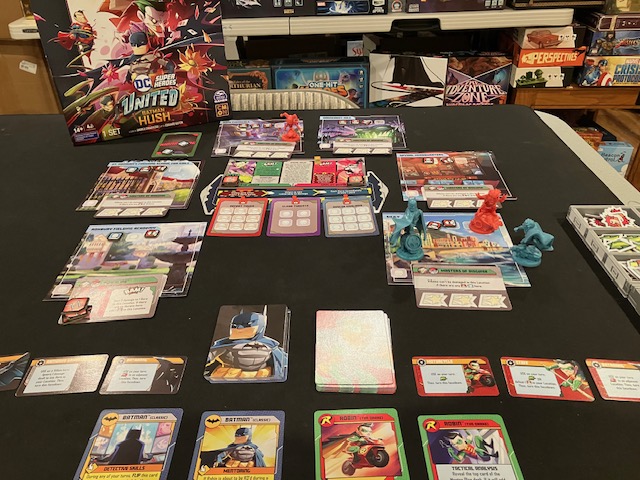
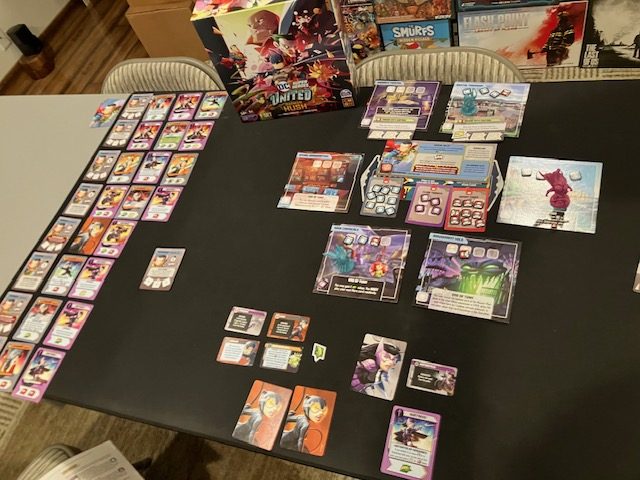
See box above with can of Coke for scale.

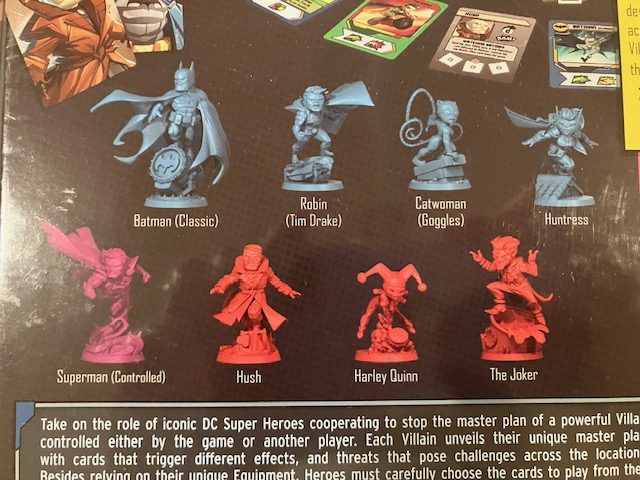
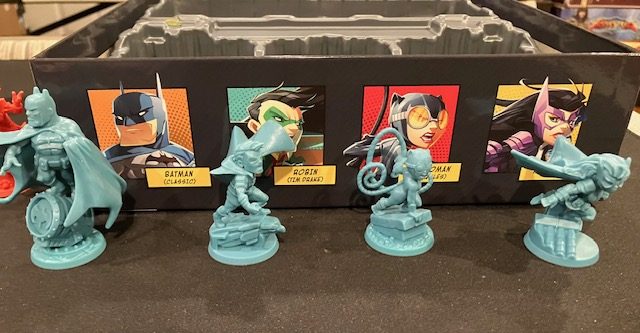
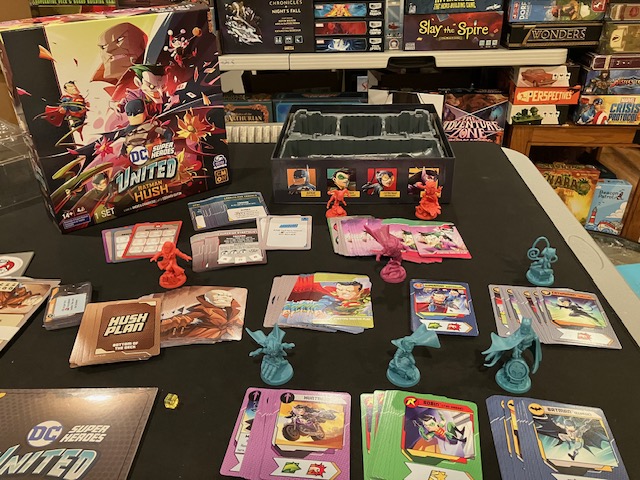
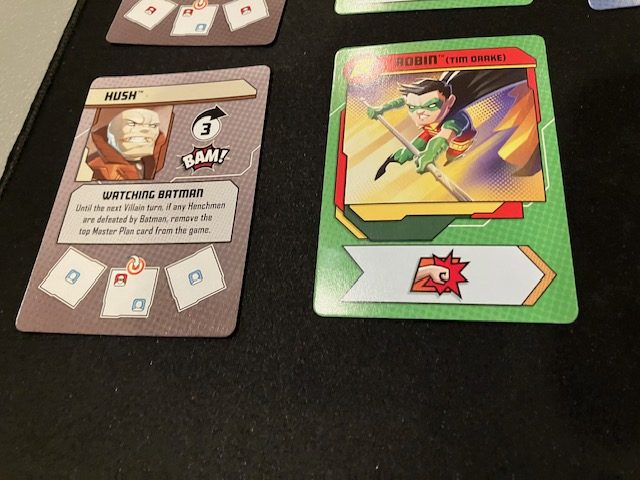
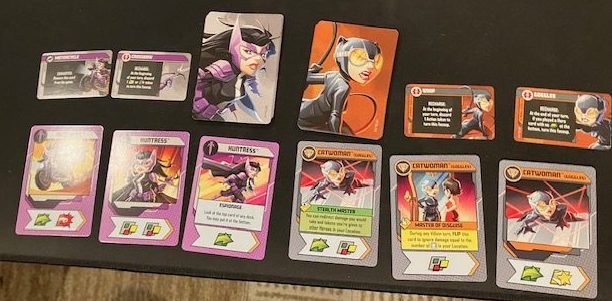
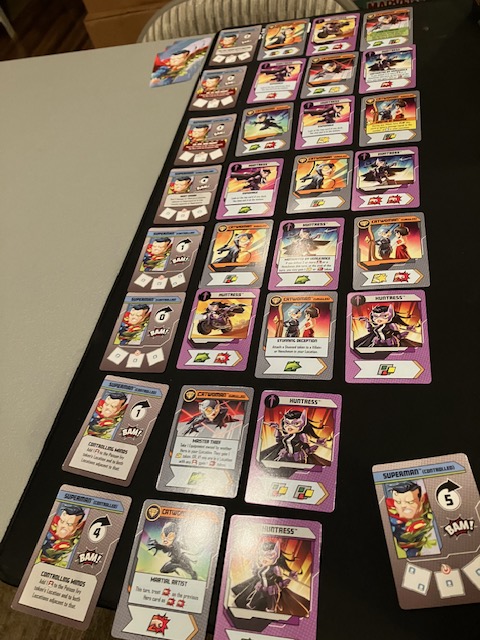
Each player chooses a hero to operate: Batman (classic), Robin (Tim Drake), Catwoman, or Huntress.

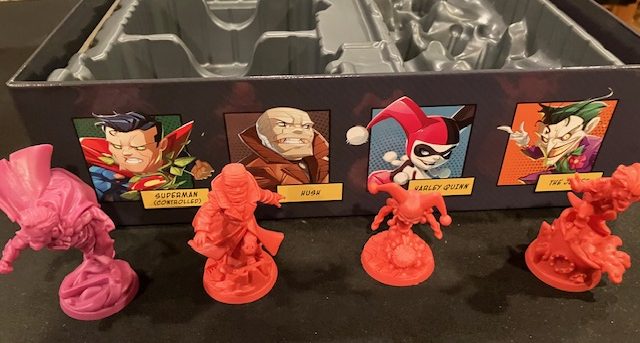
There must be a villain to fight: Hush, Harley Quinn, The Joker, or Superman (controlled).  Superman (controlled) can also be played as a Hero.

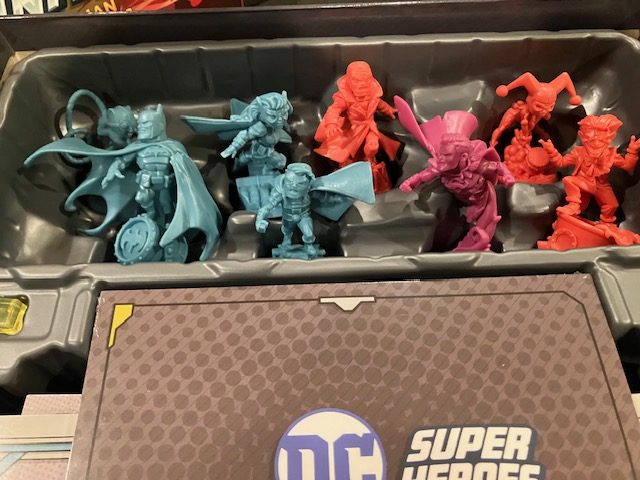
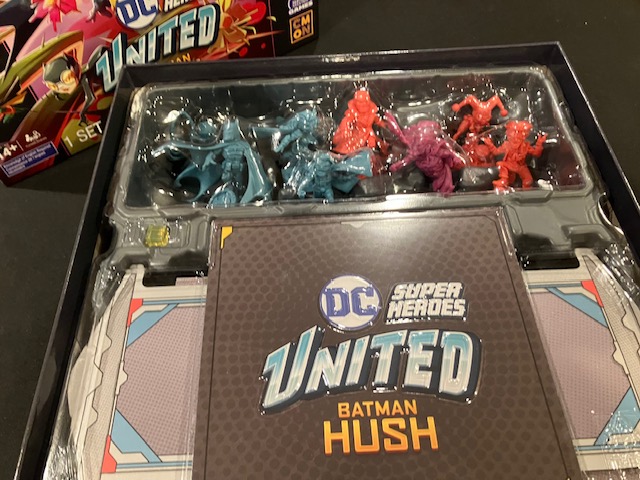
I recommend taking a picture of how the minis fit into the insert (or use mine above).  If they all get out out-of-whack, you can’t put the plastic cover over the minis (see below).

Each Hero gets their own deck, and each Villain gets their own (Master Plan) deck and Threats deck.

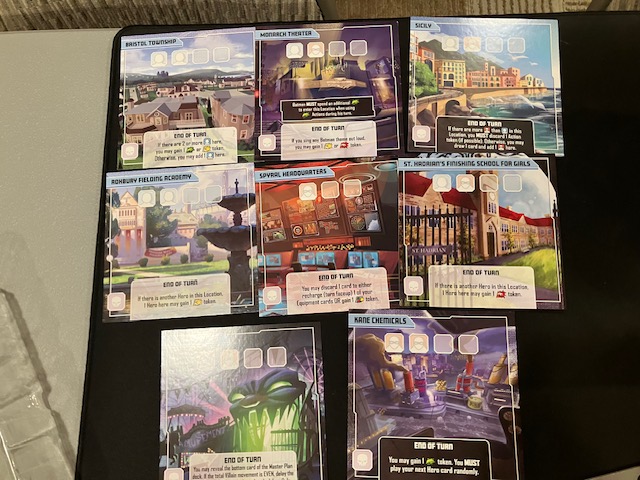
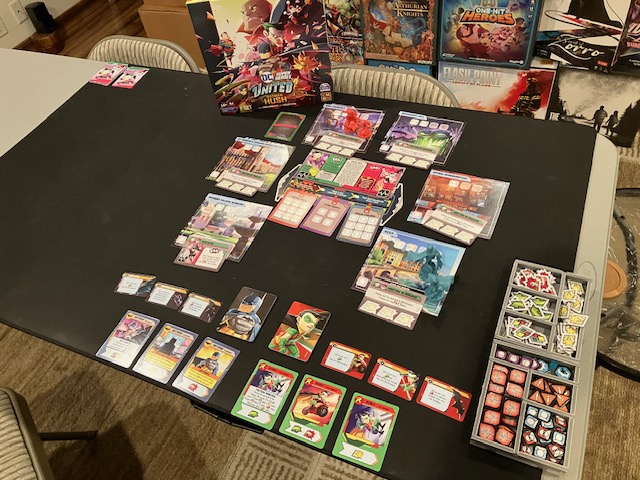
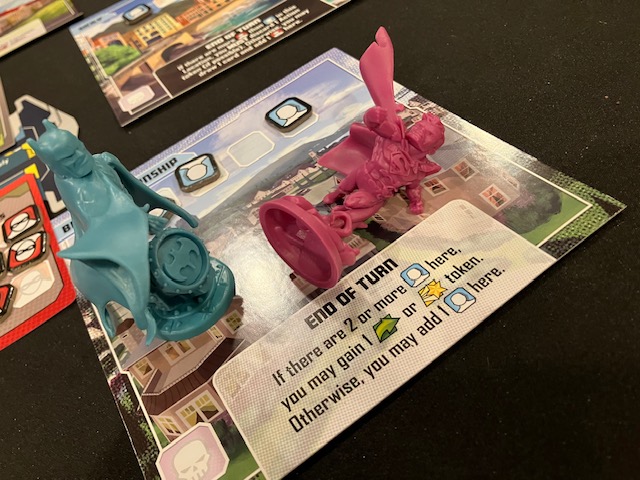
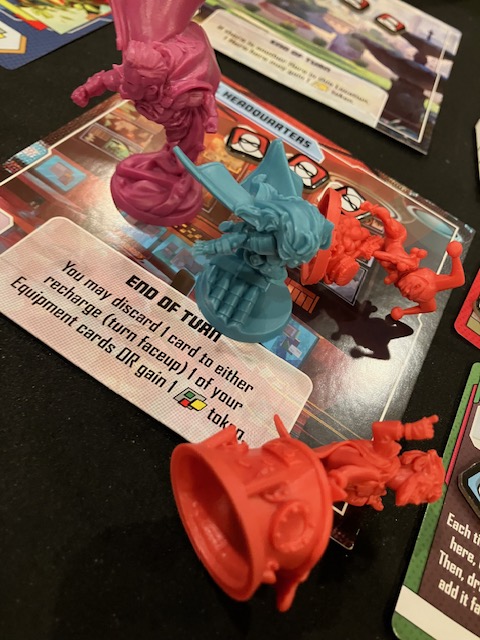
There are 8 locations that come with the box; you will set 6 of them out in a circle representing the city.

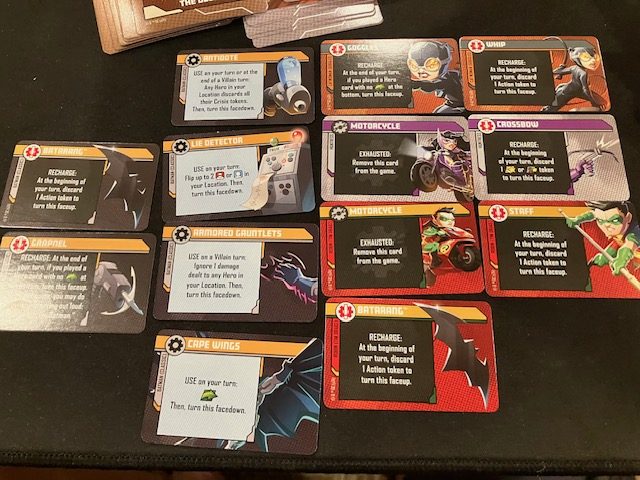
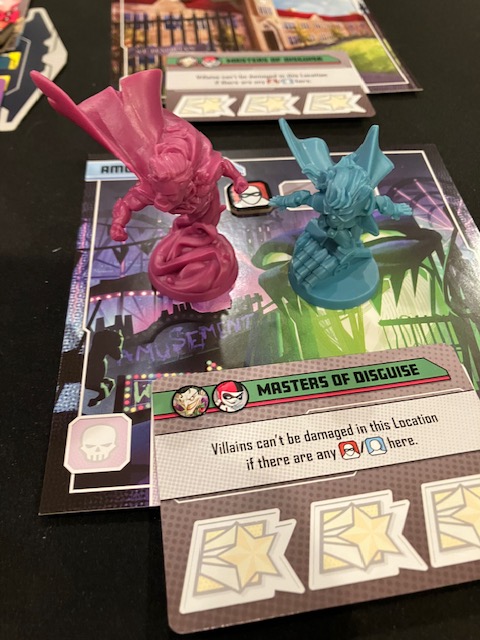
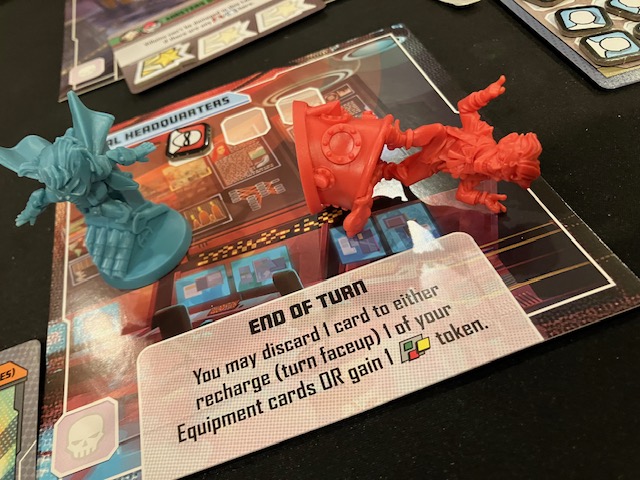
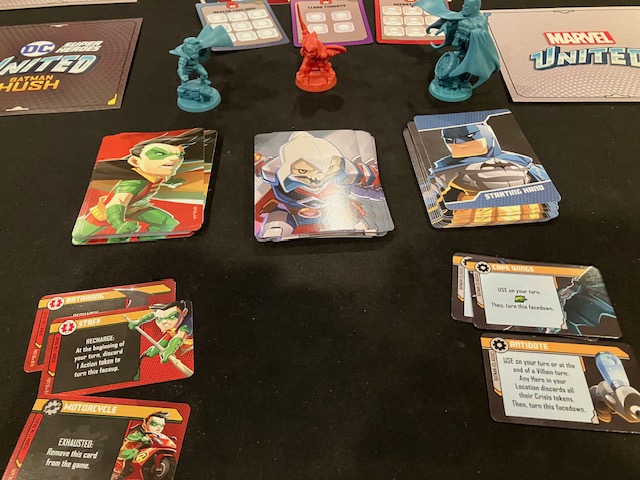
Most of the characters have equipment; the equipment cards are “newish” to Marvel United: they were introduced in Spidergeddon, but we were found we loved them in Marvel United: Multiverse (see review here).   The equipment cards augment the heroes, and basically give them more choices on their turn; however, they will either be discarded or need a recharge to reuse them.  See above.

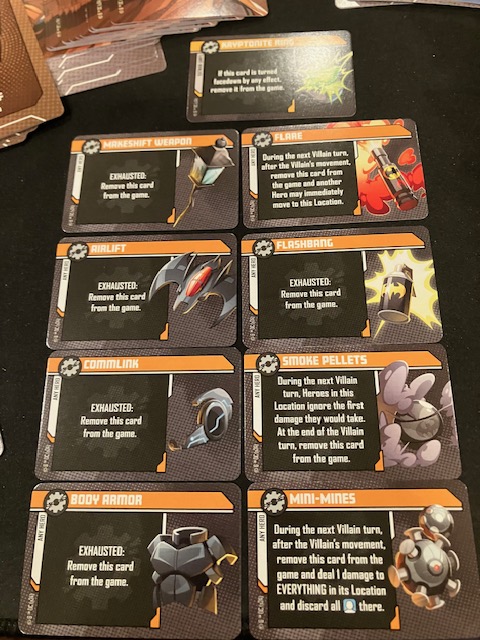
For heroes who don’t have equipment, there are also “generic” equipment cards any hero can use (see above).

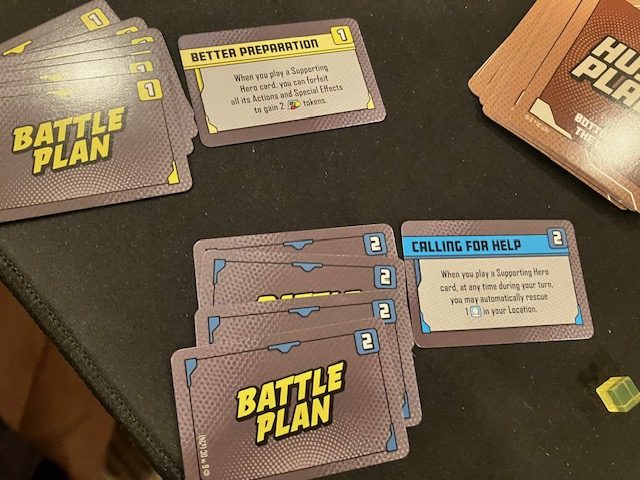
The game also comes with Battle Plan cards; they are for the built-in solo mode called Commander Mode.

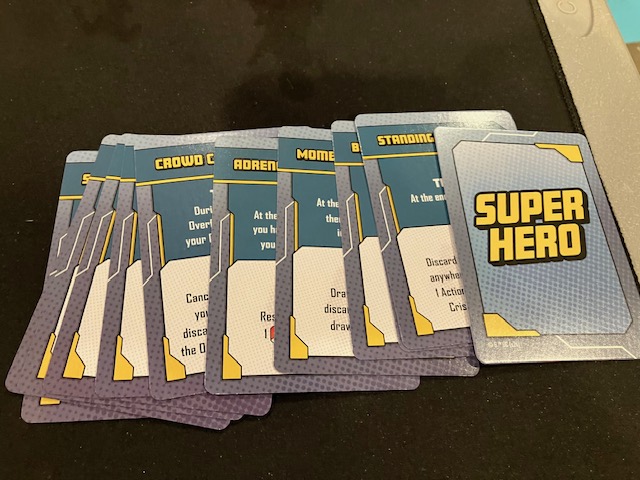
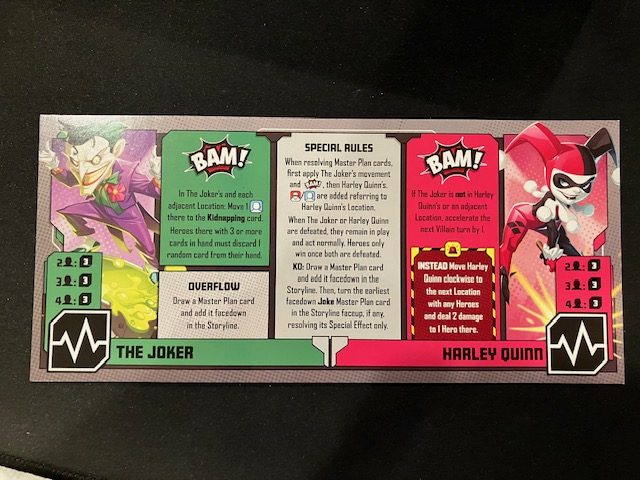
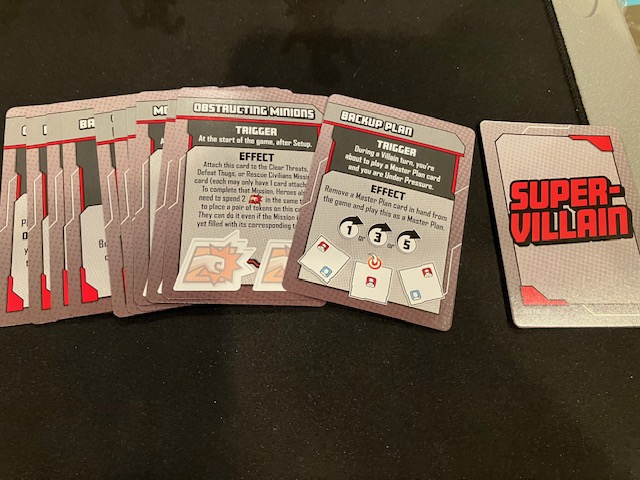
There is another way to play where one player can take control of the Villain and plays against all the heroes: this is a 1 vs. many mode using the Super-Hero and Super-Villain cards above.  We won’t be discussing this mode any more in this review; this is strictly a solo and cooperative mode review.

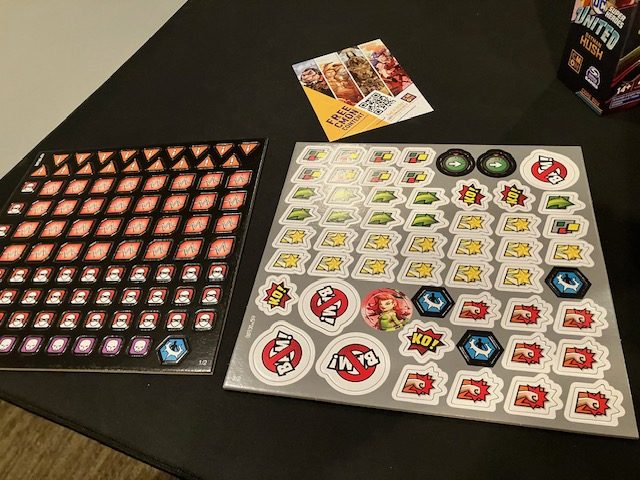
There are a tons of tokens for health, KOs, etc. See above.

Overall, this game looks consistent and great.  The artwork and minis in the game are consistent with the look-and-feel of all the previous Marvel United games (except this is DC instead of Marvel).  For previous looks at Marvel United games, see here, here, here, here, here, and here.

Rulebook

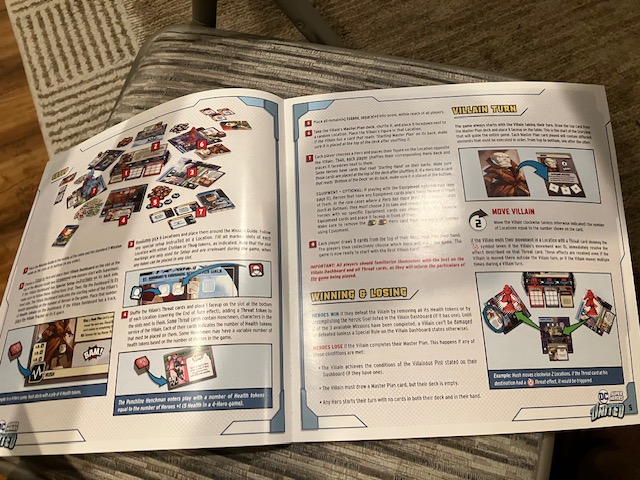
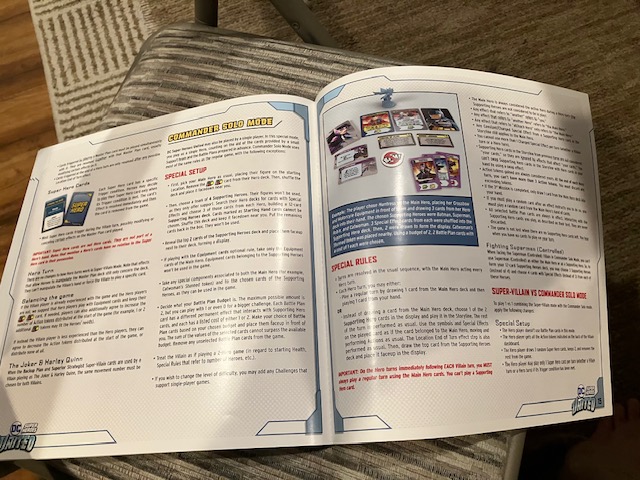
The rulebook is good (it had better be after so many iterations), except for the form factor.

This gets a C+ or B- on the Chair Test; it does stay open on the chair next to me, it has a good-sized and readable font, it has lots of pictures, and it’s easy to read.  Unfortunately, it hangs down just enough to be annoying.  It does work with only one chair, if you sorta fudge it diagonally.

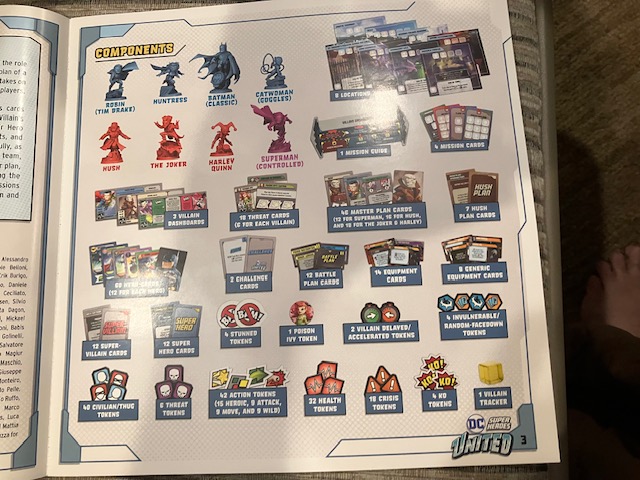
The Components page is great: see above.

The Set-Up is across two pages, but they are in the same span, and the picture and labels work well.

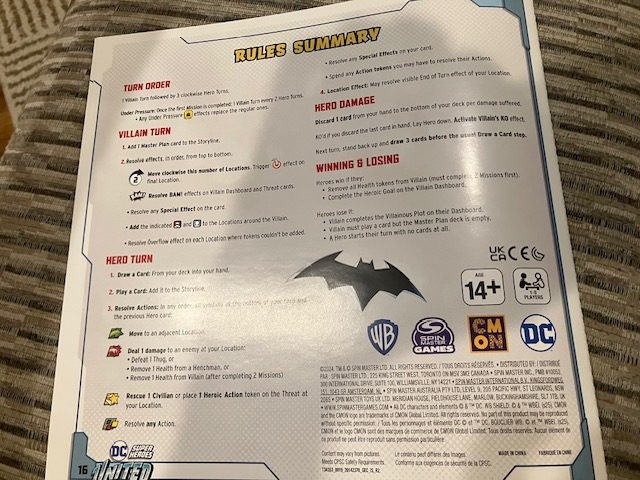
Some, not all, icons are on the back.

In general, this is a good rulebook: good components, good set-up, good font, good pictures, good back. The only complaint is the form factor.

What’s New?

Most everything in Hush  we’ve seen in one of the previous Marvel Uniteds.  I have played a lot of Marvel United, but it’s hard to say you’ve played EVERYTHING across the massive amount of content in Seasons 1,2, and 3!  Here’s what was new to me:

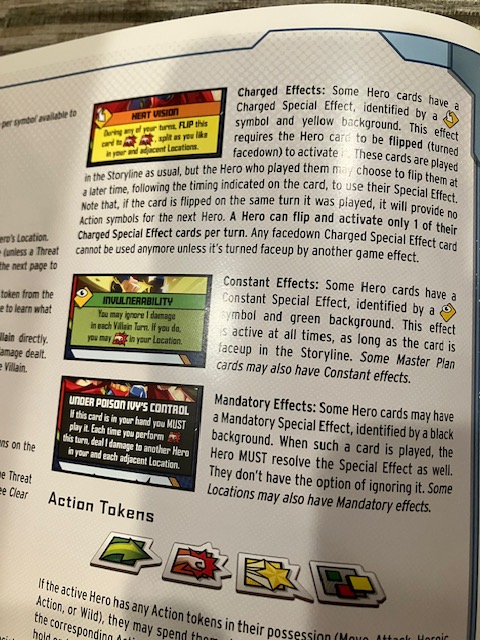
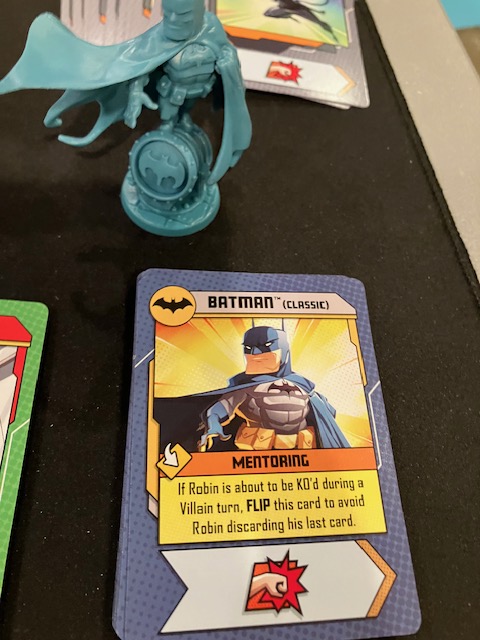
Charged Effects: The little yellow area/flip card allows to flip a card in the Storyline once it’s up.  In the example above, you can flip Batman’s card (only if it’s in the Storyline) above to stop Robin from being KO’d!  This is kinda neat; it’s like a one-time only effect that can only be activated AFTER the card has been put into play.

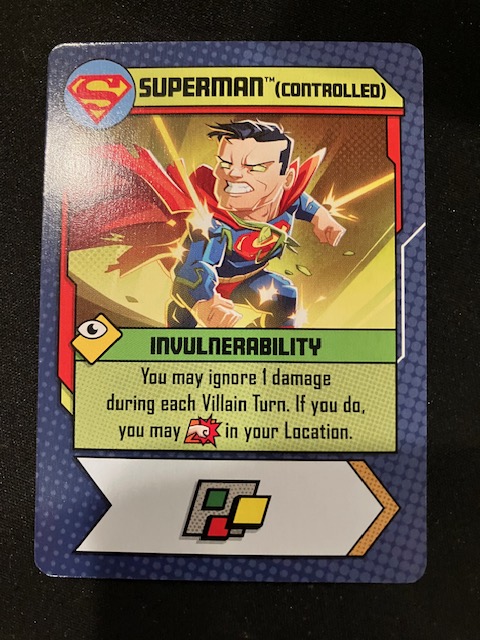
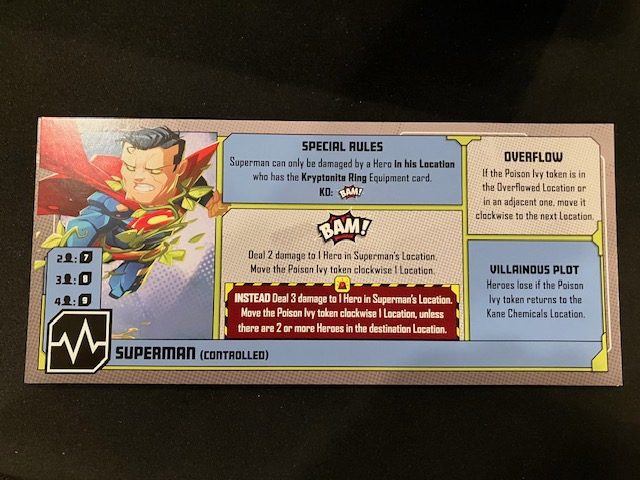
Constant Effects: These cards keep an ability active always once they are in play in the storyline! See above as Superman’s Invulnerability keeps damage off him!

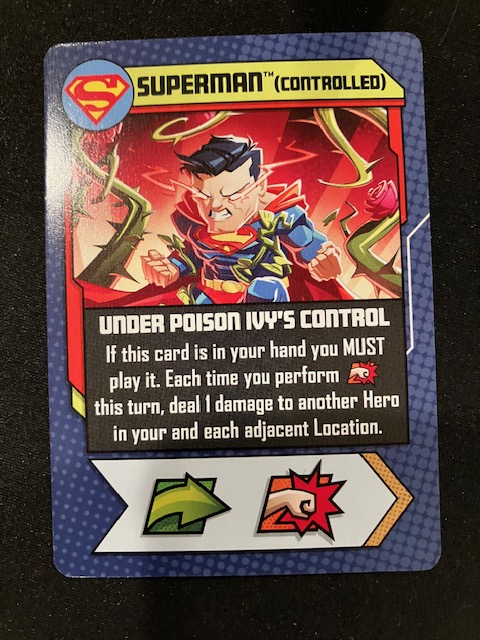
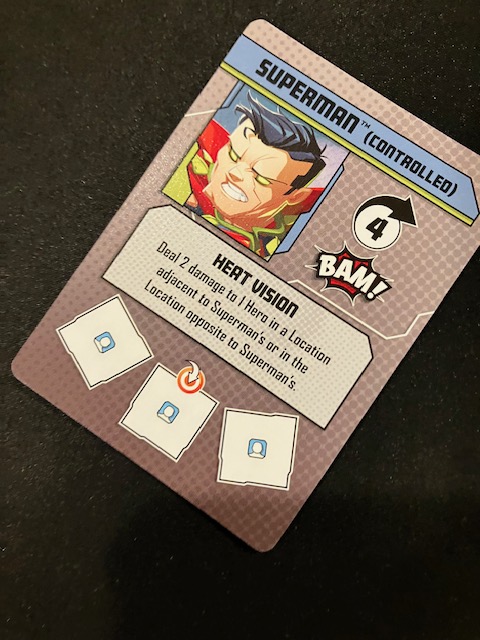
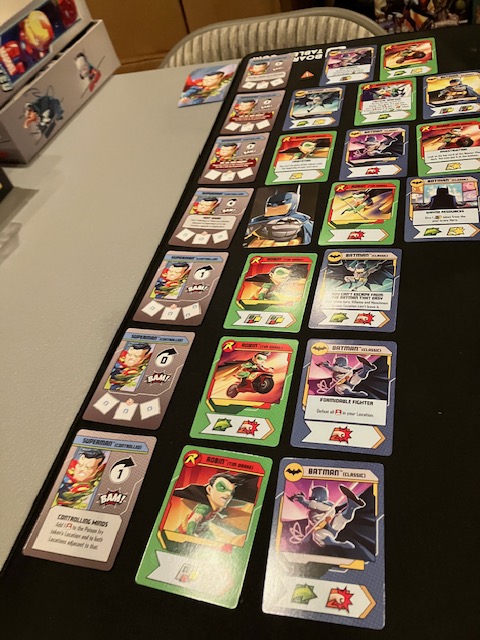
Mandatory Effects: These are mandatory things you MUST do on the card.  This Superman is controlled, and occasionally reverts to his controlled self … doing damage to Heroes around him.  See above.

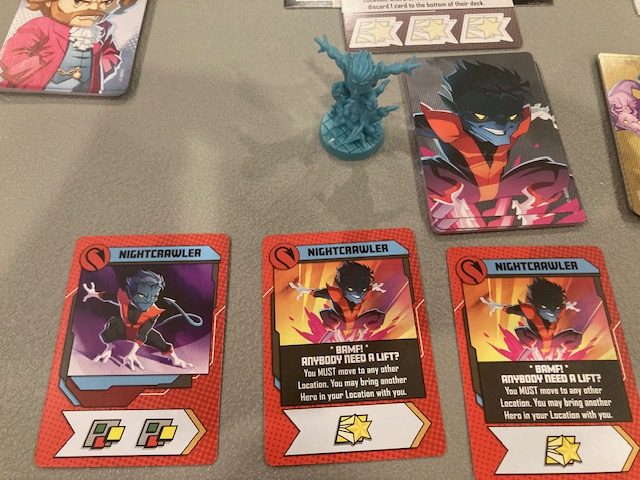
To be fair, we did see Mandatory Effects on the Nightcrawler’s cards back when we did the Dark Phoenix Saga: see here.

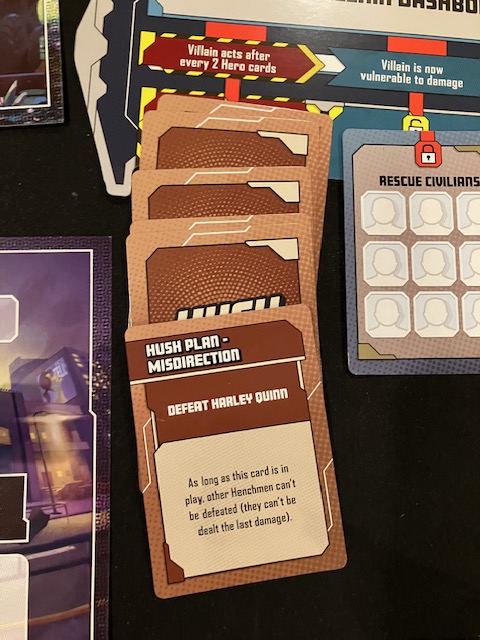
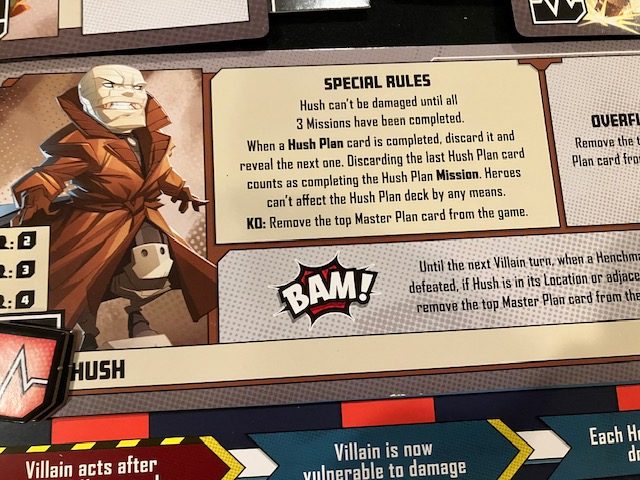
Hush Deck: if you are playing Hush, the Hush Plan deck replaces the Clear Threats on the dashboard.

Generally, the DC Superheroes United: Hush Batman or Hush feels very much like  the newer Marvel Uniteds with equipment, Charged Effects, Constant Effects, and Mandatory Effects being the newer things.  Otherwise, it feels like Marvel United, but DC instead!

Solo Mode Discussion

There is a solo mode called Commander Solo Mode (thanks for following Saunders’ Law and giving us a solo mode) that spans two pages.  And it’s pretty complicated.  But it is a true solo mode; you only operate one hero.

I think we saw the Commander Solo Mode first back in Spidergeddon, and we kinda liked it better than the solo mode in the original Marvel United … but frankly it still just feels too complicated.  It’s almost two pages of exceptions, new rules, changes, and special rules!  Look closely at those two pages above!  There’s SO MANY RULES FOR COMMAND SOLO MODE!

Frankly, it’s so easy to just pull out two heroes and alternate between them and just play solo (operating two heroes); it’s the way the game was meant to be played.  This is the way we play solo, partly because it’s significantly easier, partly because it’s easier to jump in (so we concentrate on the new rules of the Villain), partly because it’s the way Marvel United was meant to be played: 2-4 Players, and partly because we have to teach the cooperative game to our friends (so it’s better to play without all the solo rules exceptions for a better learning to teaching game).

You can disagree with me if you like, but I feel very strongly about this! Every time someone tries to put a solo mode in, I find it’s usually better and easier to just play two-handed solo instead (Leviathan Wilds, Leviathan Wilds: Deepvale Expansion, Lord of the Rings Pandemic to name just a few).  Frankly, the built-in solo mode for Lord of the Rings Pandemic almost caused me to hate the game … it wasn’t until I played 2-Handed solo that I found joy in Lord of the Rings Pandemic.

Play solo operating two heroes.  You’ll thank me.

Game 1: Batman and Robin vs. The Joker and Harley Quinn

Solo game: two-handed solo (one player operating Batman and Robin independently)

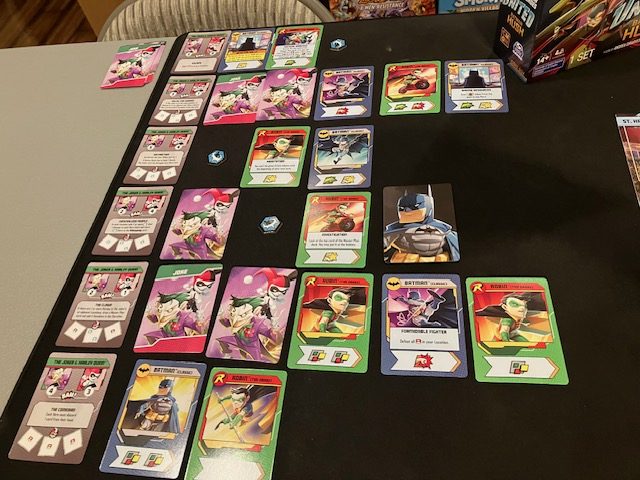
Our first game was Batman and Robin vs. The Joker and Harley Quinn.  Note that Harley Quinn and The Joker are a “team” you are playing against!  You can’t win until they are BOTH down!

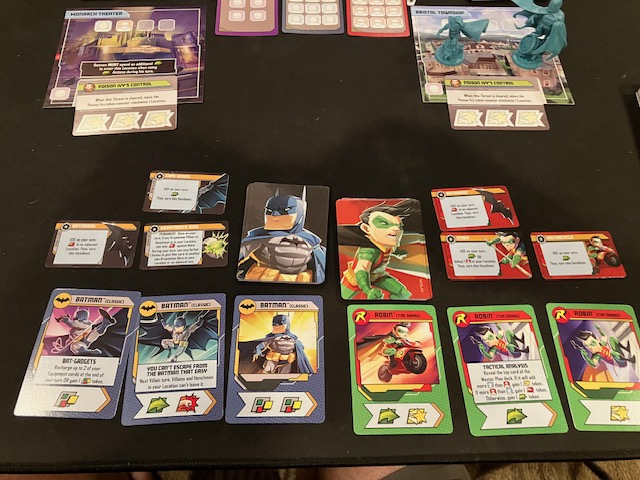
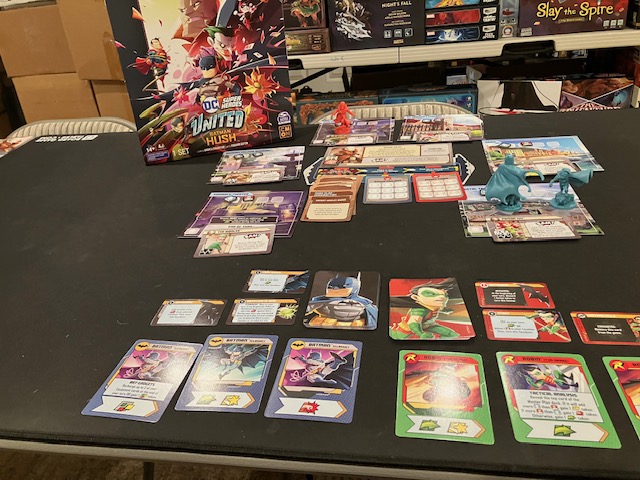
See Batman and Robin get ready to go!

The storyline for Joker/Harley Quinn got convoluted as many times we’d have to put Master Plans into the storyline … they can come up at a later time, or when a character gets KO’d!

In the end, Batman  and Robin prevailed.  Batman took out Harley Quinn …

… and Robin (Tim Drake) took out the Joker.

There are some neat ideas here, as the Joker kidnaps civilians (something he would SO DO in the comics),  Harley causes the Master Deck to dwindle, and “Jokes” appear in the Storyline!  This is a game about keeping the Master Plan deck under control by indirection!  Sometimes you do stuff to STOP the Master Deck from getting too small! If the Master Deck ever becomes empty … you lose!

The Joker and Harley Quinn scenario felt incredibly thematic: Joker kidnapping, Harley causing chaos, and Joker’s “jokes” in the storyline occasionally springing on the Heroes! (It also had roots back in the Hush series: see snapshot above).

Batman and Robin’s decks were also on point: they both had the ability to “be a detective” and look at the next Master Plan card coming!  This was both incredibly useful and very thematic.

Games 2, 3, and 4: Catwoman and Huntress vs. Superman (controlled)

Solo game: two-handed solo (one player operating Catwoman and Huntress independently)

So, Superman (controlled) is hard.  I guess he should be; he’s Superman!

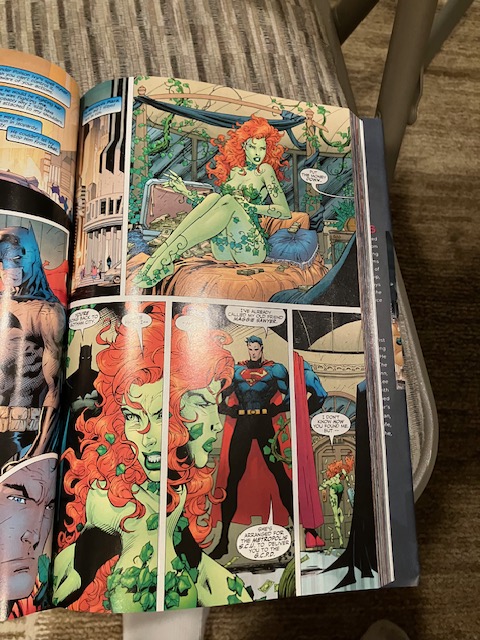
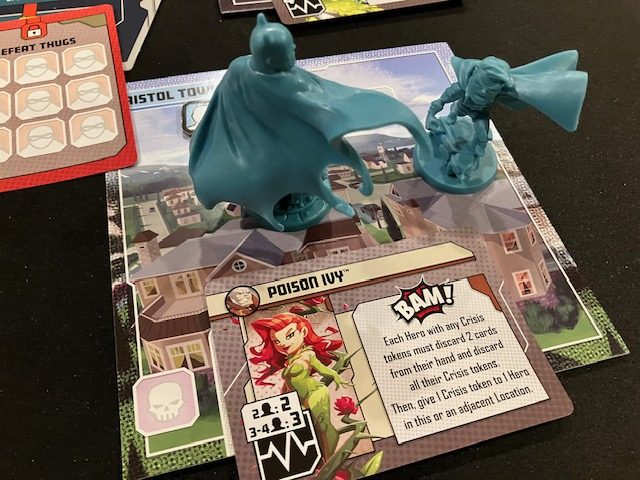
Superman is bad guy here because Poison Ivy is controlling him! See a still from the comic above!

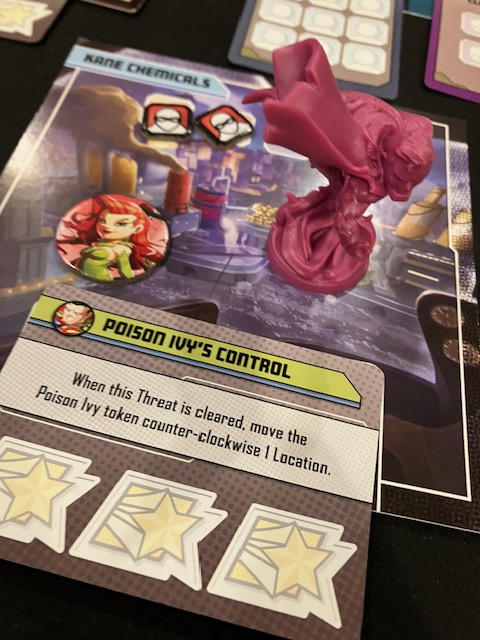
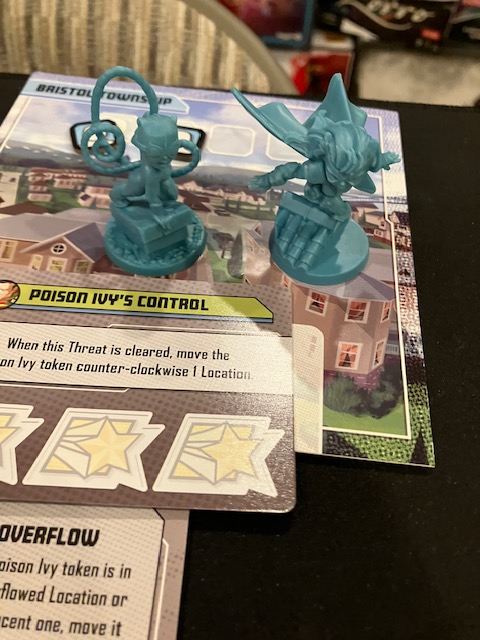
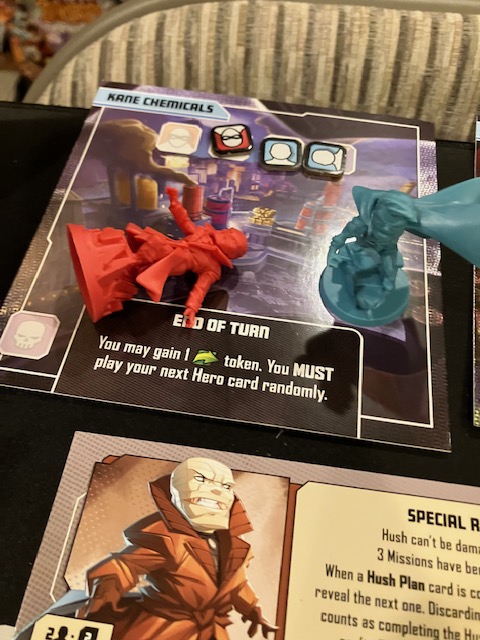
Superman is controlled by Poison Ivy (see above).   If Poison Ivy makes it around the board back to Kane Chemicals, the bad guys win!

Over 3 games, Huntress and Catwoman struggled! They lost three games in a row!  In this particular scenario, heroism is very important!  Unfortunately, Huntress and Catwoman seem to have more punch than heroism!

Huntress felt very thematic, as she could look at the top of the Master Plan deck (with espionage) and was very mobile and punchy.  Similarly with Catwoman, she had some disguise cards and was very punchy and mobile.  Unfortunately, they were a bad team against Superman (controlled). Honestly, this makes sense thematically: neither Catwoman or Huntress are known for their Heroism in the comic books … they tend to be more “self-interested” heroes!

Still, I thought the Superman (controlled) villain was pretty cool! It felt thematic … and you even had to have a Kryptonite ring to hurt him!

I have played SO MANY games of Sentinels of the Multiverse where you lose because you just have the wrong heroes.  And that feels very much like the comic book universes!  (Sometimes, Spidey has to go visit Doctor Strange to handle a mystic bad guy!)  In this case, Huntress and Catwoman are the wrong Heroes for Superman … or at least, it’s a LOT harder to play them.

Game 5: Batman and Robin vs Superman (controlled)

Batman and Robin did much better against Superman (controlled): they defeated him in one game.

Batman and Robin control the Master Control deck much better and have a lot more Heroism to deal with Threats and civilians.

This win felt very thematic: Batman and Robin use their detective skills and heroism to keep the bad guy (a Superman controlled by Poison Ivy) at bay.

Game 6: Batman and Robin vs Hush

Solo game: two-handed solo (one player operating Batman and Robin independently)

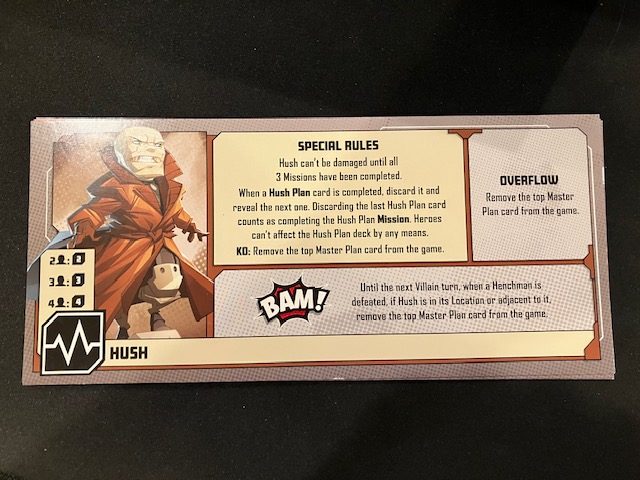
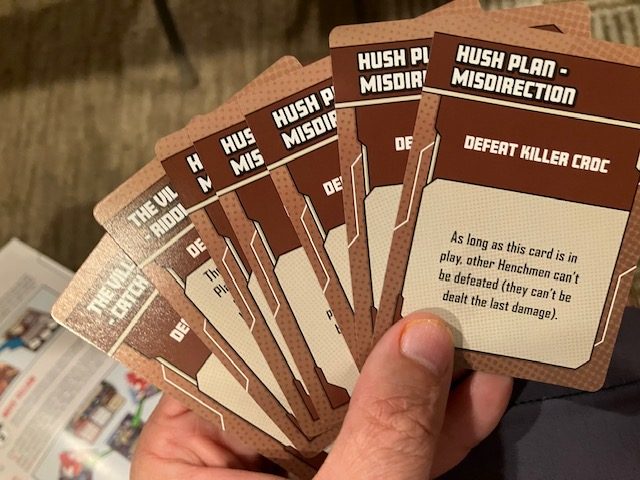
The Hush Villain is probably the most complicated to play.  You must complete all three Missions, but instead of Clear Threats, you have to clear six “Hush” threats (see below).

Like the comic book (very minor spoiler), the Hush Plan cards makes you “focus” on a particular Henchman on the board: you can only defeat them in a certain order.  This constrains how you have to defeat them!

The Hush villain is much more about taking down Henchmen a little at a time, while “defeating” them in a particular order.  Batman and Robin have to “balance” how they spend their resources.

Of course, lots of things (like KO’s, see above) get rid of Master Plan cards.  Do you defeat a Henchman this turn at the cost of losing a Master Plan card?  Or do you wait a turn?  Defeating Hush is all about balance for the Heroes.  Hush himself is sewing Chaos into the world and dwindling the Master Plan deck!
In the end, Robin had a good run and was able to move to Hush and take him down.

Even though it wasn’t a full saga like the comic, Hush felt like the story that unraveled in the comic.  Batman and Robin get “distracted” by Henchmen along the way as they try to uncover who Hush is … and that’s the last card of the Hush Plan deck!

Although you can play the Hush Villain without reading the story, I strongly recommend you do read it before playing!  There is a major spoiler at the end of the Hush Deck that will spoil the entire Hush comic book.  The other two Villains (Superman and Joker/Harley Quinn) you can play without reading, but I suggest you probably read Hush before playing he Hush villain.

Game 7: Superman (controlled) and Huntress vs. Joker and Harley Quinn

Don’t forget; you can play Superman (controlled) as a hero as well!

Supes deck is pretty strong.  And Huntress is great at punchy and movement.

Superman’s deck has a minor flaw that he might have to punch other Heroes (since he still has some residual control): see above.   That card kind of “balances” a very strong deck by giving him a “forced” card. Don’t you hate it when Poison Ivy asserts her control at exactly the wrong time?  That feels so comic booky!  I kind of enjoyed this!  Supes is great … except for the one time he isn’t!

And Huntress redeemed herself by helping out Superman.

Game 8: Catwoman and Huntress vs. Joker and Harley Quinn

Just to make sure Catwoman and Huntress are good decks, I took them for a run against Joker and Harley Quinn.

After losing to Superman three times, they acquitted themselves and beat Joker and Harley Quinn.

Cooperative Game

There weren’t any real surprises from the cooperative play; we’ve played this before as a team!

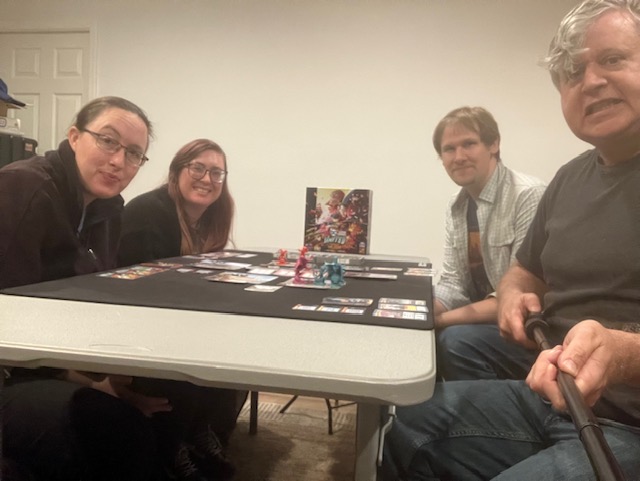
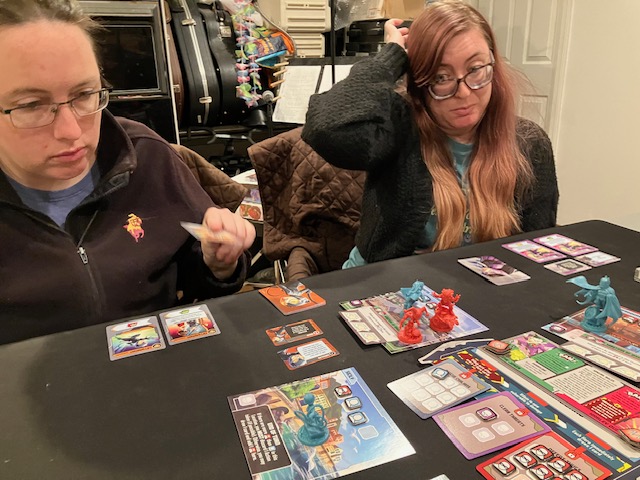
People discussed!  At one point, Andrew HAD to play a Controlled Superman card and he said “I suggest you all NOT be adjacent to me! I will punch you!”  So, Sara and Teresa made sure there was movement on previous cards.  Most of the discussion is “Oh! If you give me this … Oh!  What do you need?” and stuff like that.
My group had a fun time playing this cooperatively.  The new abilities and equipment made them enjoy it that much more.

Judging by my group’s responses, I think this is the best version of the Marvel/DC United system so far.

Core Game?

I am somewhat surprised that Hush is a core box!  That means this is a completely standalone game!  I loved what I saw, but this doesn’t feel like it should be a “core set”?  The heroes in this set are great for new players, but the villains are really complicated!  Superman (controlled) is probably the easiest Villain to operate, but maybe the hardest to defeat?!  And both Hush and Joker/Harley Quinn are very different than most base Marvel United villains! They are much more complicated than (say) Red Skull from Marvel United, or even Ghost Rider from the Multiverse set!

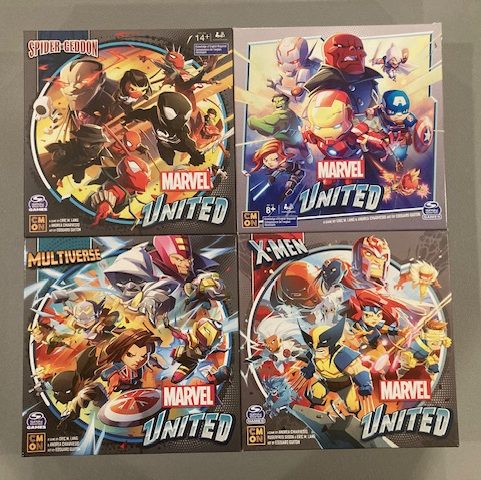
If I were to recommend someone start with a core set, I’d recommend the base Marvel United, Marvel United: X-Men, or Marvel United: Multiverse over DC SuperHeroes: Batman Hush… I think Hush is too much for a starting player.  Which is too bad, if you LOVE DC, this is the only set you can currently get! I am afraid Hush might accidentally turn off some intro players because of its extra complexity.

Plays Well With Marvel United?

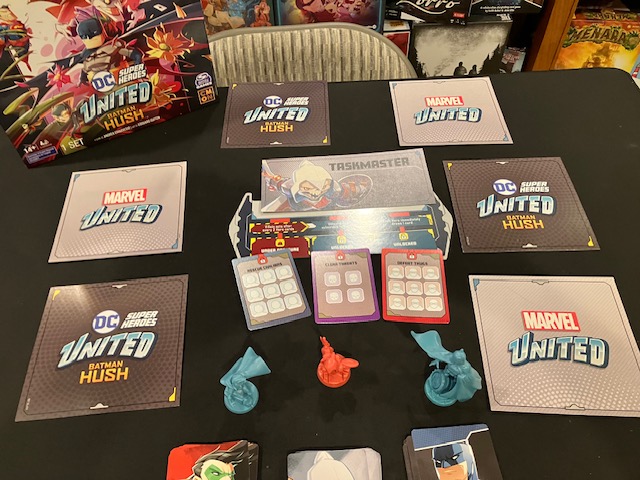
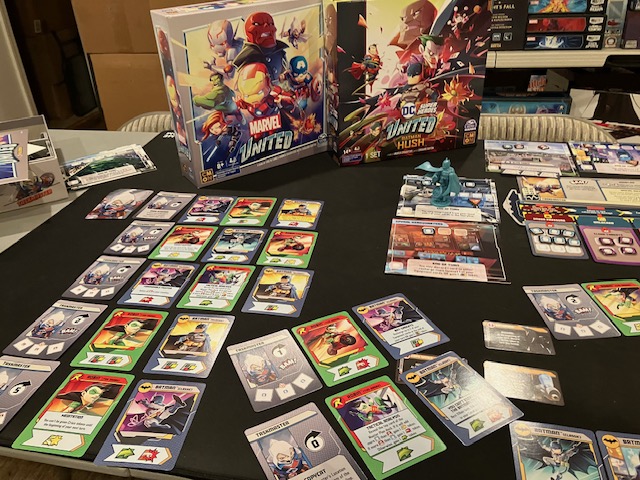
Of course, I had to make sure this played well with Marvel United, so I had Batman and Robin take on Taskmaster (from the base Marvel United set)!

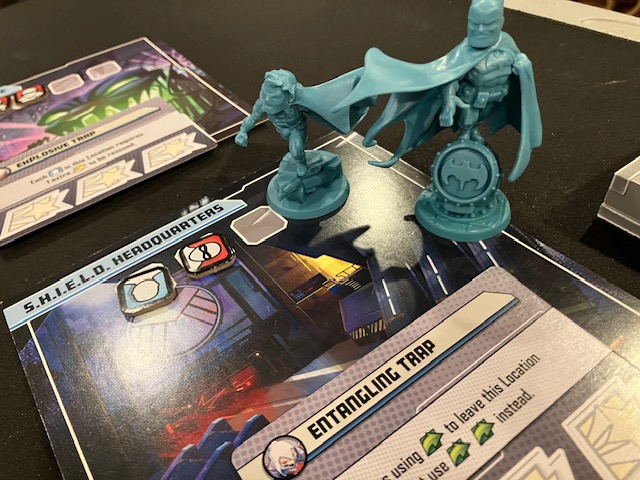
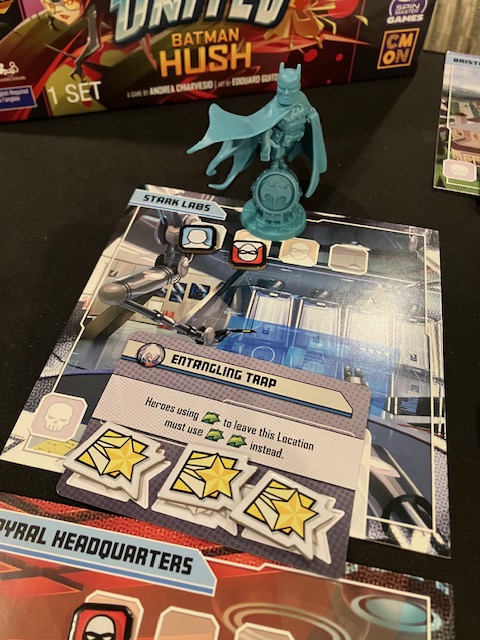
For funzies, I also used half of the Locations from Marvel United and half of the Locations from Hush!  See above.

I got SUCH a kick out of mixing universes! I started giggling to myself when I had Batman and Robin start the game on SHIELD Headquarters!

Then later in the game, Batman solved the Threat at Stark Labs!  I giggled even more thinking of Batman disassembling a Trap in Tony Stark’s lab!

For the record, Taskmaster posed little threat to Batman and Robin.  More like “Lamemaster”.

I will say that I think later Heroes and Villains are stronger than earlier Heroes and Villains in the Marvel United games.  This game demonstrated that a little … but I still had a grand time!
Conclusion

Currently, Hush is my game of the year for 2025!  I have played about 10 games of Hush and want to keep trying more and more!  I want to try Batman and Robin vs the Sentinels!  Will Superman do a great job against Galactus?  Can Batman and Spiderman team up?  How would Superman and Gladiator pair up as compatriots?  What about Superman vs. Gladiator?  There are SOOOO many cross universe games I want to try!
Even with all the fun things I can try combining Marvel United and DC Superheroes United, I still loved the Hush box by itself.  Each Villain presented a different puzzle to solve!  Each Hero has their own flavor and personality: Catwoman is more punchy than Robin, but Robin is more heroic!  And these differences are very flavorful!

This box also introduced me to the wonderful world of Jim Lee Batman (who is the best Batman according to Diana)! I am grateful that I got to experience Jim Lee’s Hush for the first time!

My only complaint is that the Villains in this box are all pretty complicated; I wish there had been a “simple” Villain (for newer players).  If you are an experienced Marvel United player, then this box is a no-brainer.  If you are a more introductory Marvel United player, I might recommend a different core box.

After all is said and done, Hush is a full up 10/10 for me.  I played so many games over a 2 week period and each one was a blast!  Even when I lost, it was fun to try to figure out “why I lost” and come back and revisit the game!

Even though Hush is an unexpected DC Superheroes United (this wasn’t part of the original announcements for DC United), there’s a reason DC Superheroes United  was #1 on my list of Top 10 Anticipated Cooperative Games For 2025!

Designer’s Diary for Sidekick Saga

As we pass the 6th Anniversary of Sidekick Saga being on Kickstarter, let’s look back to the original design and development process! This was a labor of love for me; I have collected comics since I was 10 years old, and I think I still have every comic I every bought! I love comic books and Super Heroes! I wanted a cooperative Super Hero game with a story, as none really existed at the time!! Let’s look back and see how this design came about! For the record, all pictures in this diary are from my own personal comic collection! See below as I go hunting for comics!

Inspirations

But let’s jump in … what inspired Sidekick Saga?

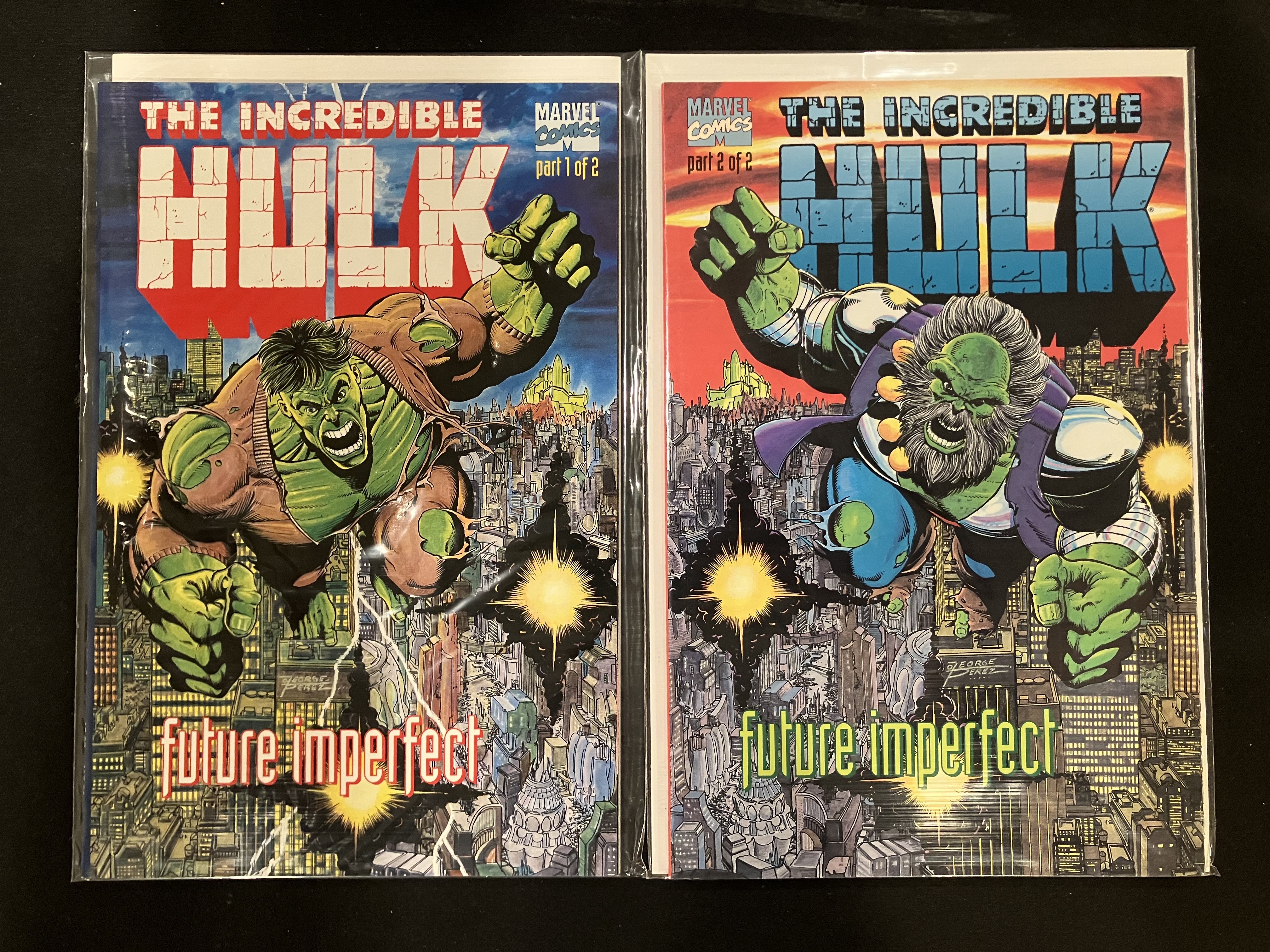
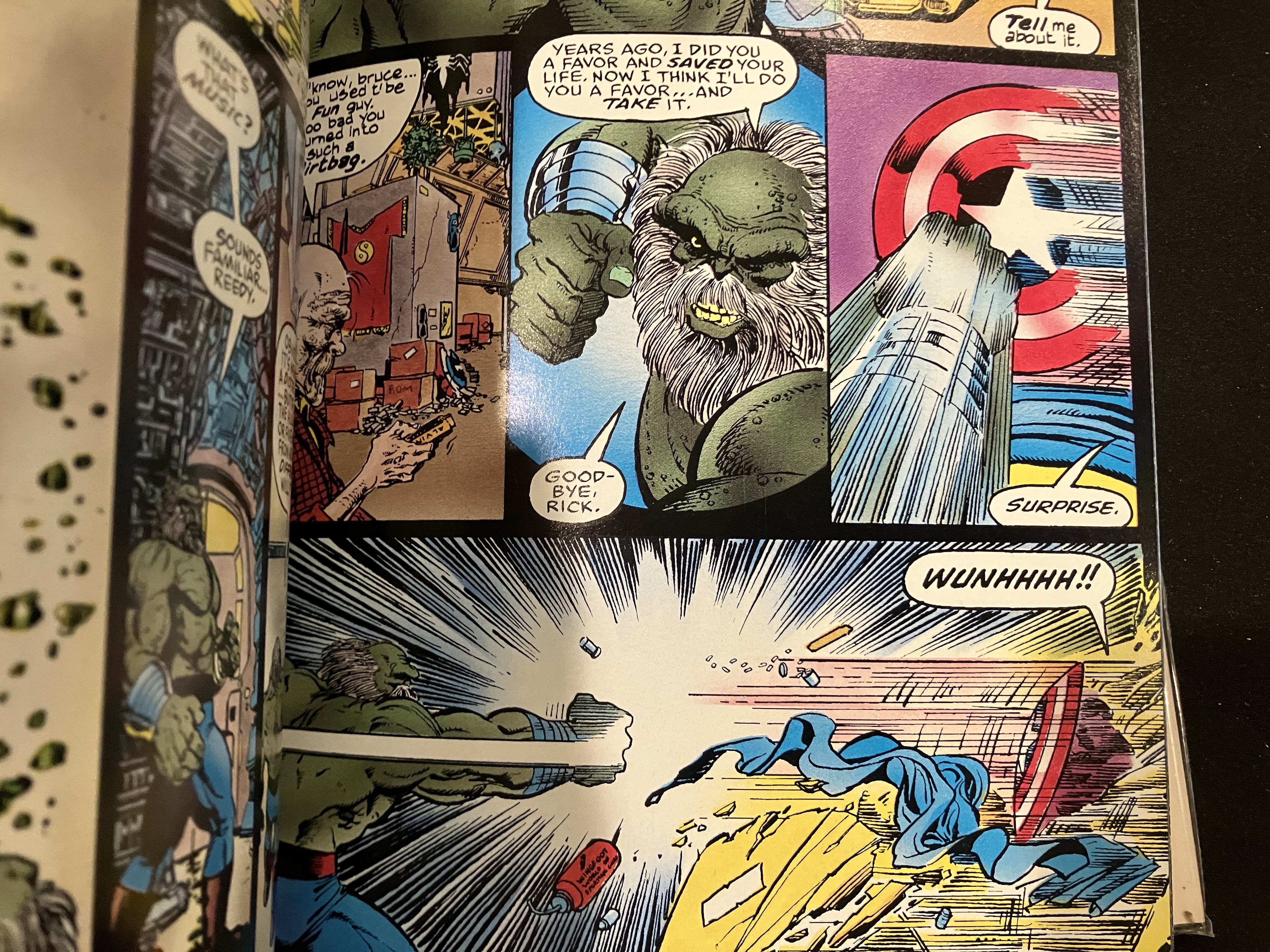
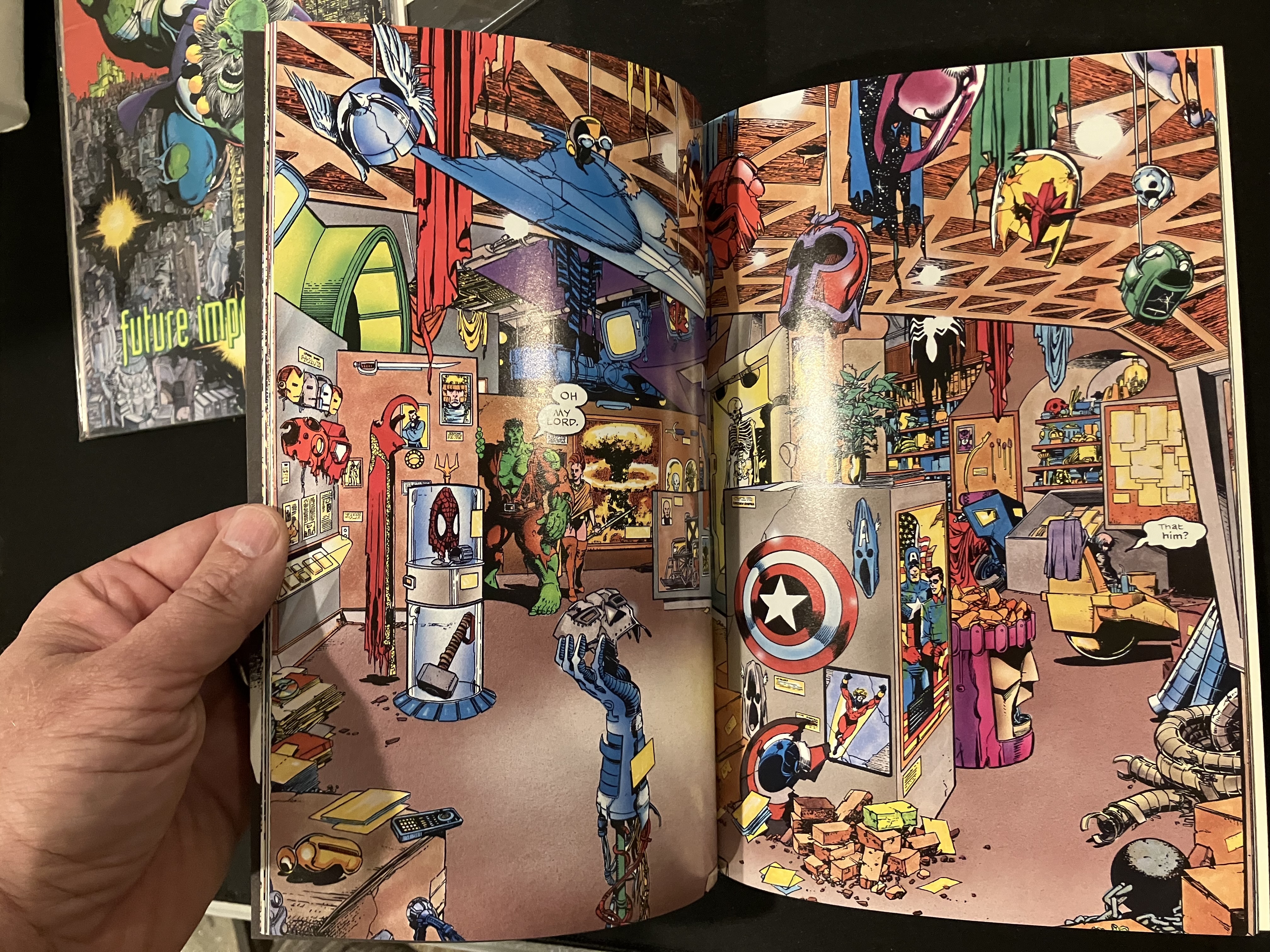
Sidekick Saga started life from an inspiration in (surprise) a comic book: Future Imperfect by Peter David and George Perez.  There’s one very notable scene in Future Imperfect when Rick Jones, (the sidekick of the piece, and sidekick of many heroes like Captain America and Hulk), keeps the Maestro at bay using a collection of “artifacts”: Iron Man’s gauntlets, Captain America’s shield, Thor’s Hammer!

The sidekick, by being smart, was able to hold his own (with a little help) with the Maestro, an incredibly powerful villain!

The scene above, with its collection of items, stirred something within me … 

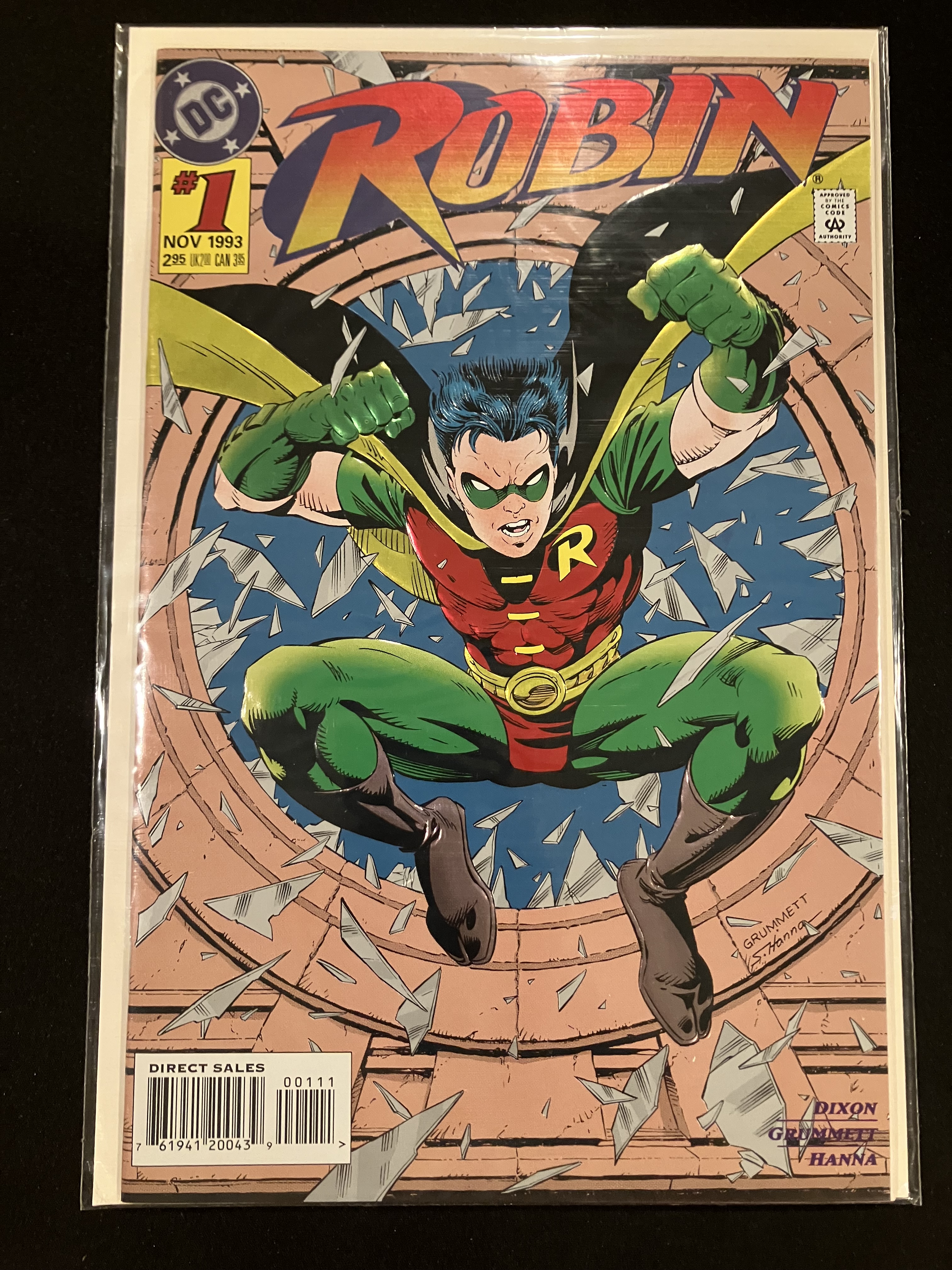
Another comic that inspired Sidekick Saga was the 1990’s Robin (by Chuck Dixon, Tom Grummett, and Scott Hanna). In this era, Tim Drake became the third Robin, and frankly, was the smartest of all the Robins! He figured out Batman’s identity! In this series, the Tim Drake’s Robin patrols Gotham without Batman, but has help from The Huntress, Oracle, and even Commissioner Gordon!  Tim Drake is mostly just a normal human doing the best he can to ward off evil, using his smarts and his fellow heroes to fight crime!  The cooperation of the Arkham Sidekicks was pivotal to their success!

Another unlikely source of inspiration was Buffy The Vampire Slayer Season 5 finale.  Some SPOILERS: in the Season Finale, Buffy used pretty much EVERY WEAPON at her disposal, from other episodes in Season 5, to fight the big bad at the end! There was something familiar about this approach; it’s what Rick Jones did in Future Imperfect!  In this case, it inspired more of the idea that some important items persist from game to game.  It also kept alive the idea that “collecting stuff” was an important part to battling the big bad!

A final unlikely source of inspiration was a game called Seven Wonders.  You heard me. It was interesting that, at the time, my friends were very bi-modal on two games: they either loved Seven Wonders and hated Sentinels of the Multiverse or hated Seven Wonders and loved Sentinels of the MultiverseWhat if I could unite these groups and have the notion of cooperative drafting? What if, rather than working against each other in a drafting game, you could pass each other what we needed? This created the whole idea of Supply Lines: cooperative drafting, much like Seven Wonders (it even had a directionality of the Ages): see above.
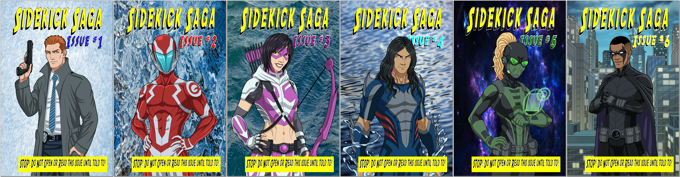
Putting all these elements together served as the basis of Sidekick Saga: I wanted a cooperative drafting game (where players would pass each other cards they needed) where players explored the city looking for technology to help them fight the big bads! And every card should matter!  You might not think something matters (like stuff in Season 5 of Buffy), but then all of a sudden, it becomes important!

Leads and Legacy

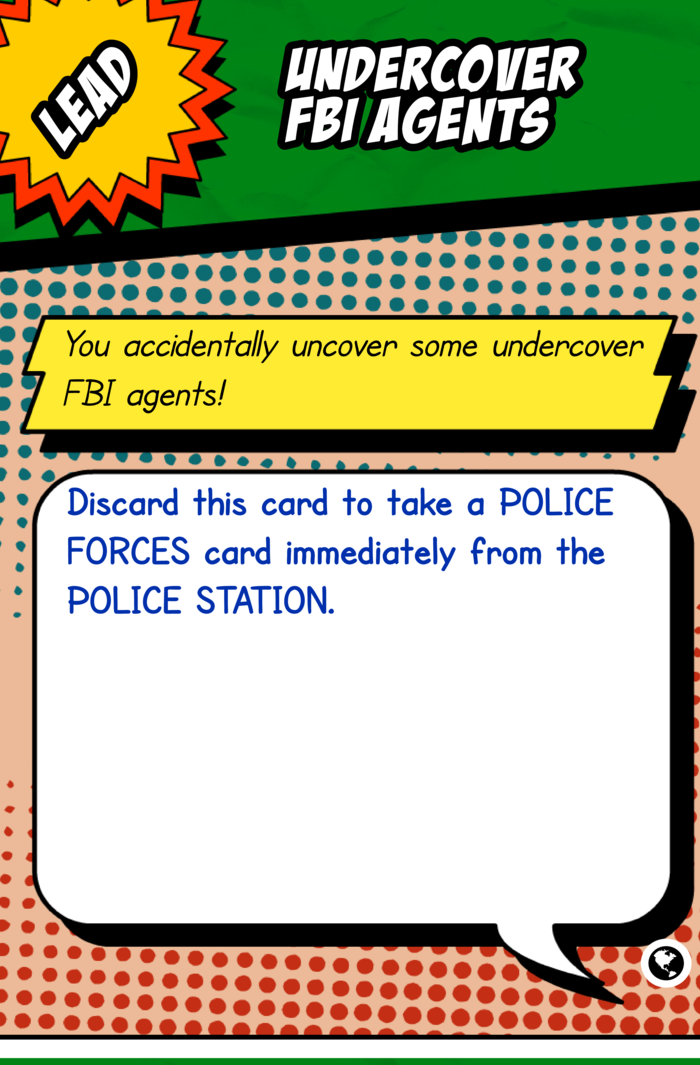
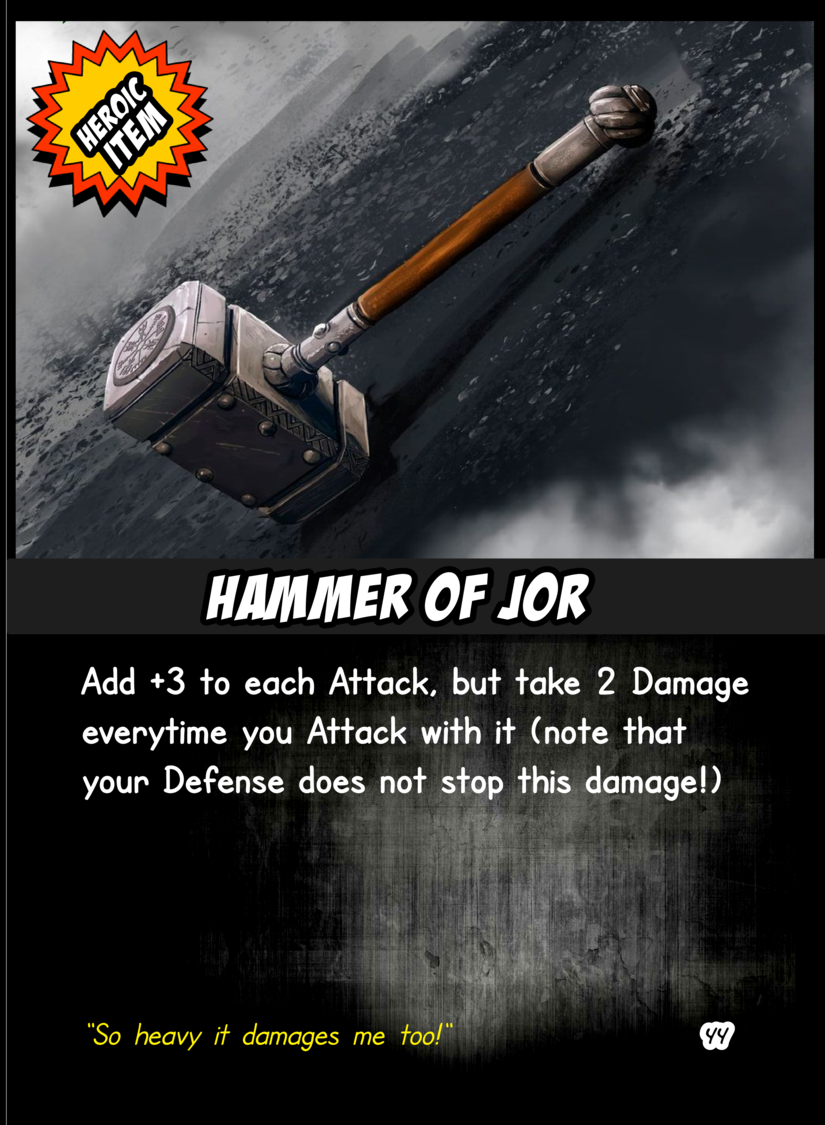
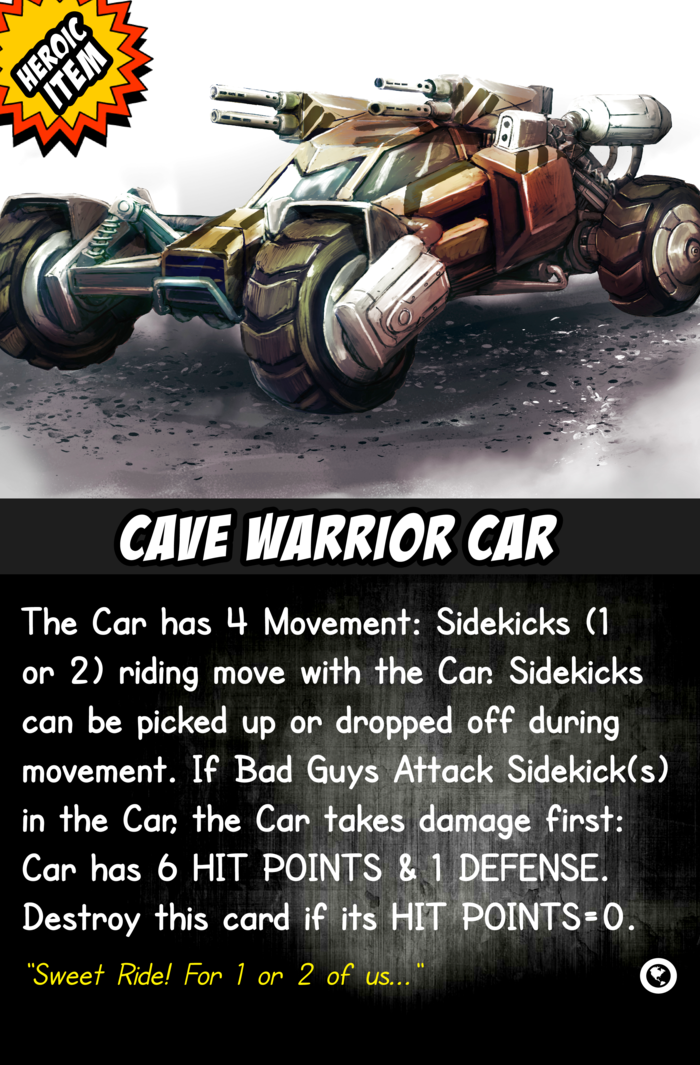
As the development of the game progressed, I need to refine the exploration-type mechanic to the game.  For the Sidekicks to succeed, they had to find stuff (like Buffy or Rick Jones)!  Some stuff was incredibly useful, so it seemed like you had to “pay” for it somehow! This introduced the idea of Leads (originally they were called clues, but I was worried this might invoke too much of a Clue game comparison): if you hunt down enough Leads, you can find where Jor’s Hammer (I didn’t want to get sued), the Star Shield, or the Cave Warrior’s car (which looks nothing like the Batmobile) would be stored!    I originally considered the idea of having to have “different kinds of Leads“, but dismissed it quickly as it would too frustrating if you got the wrong types of LeadsLeads were generic: if you got 6 Leads, you could get the Cave Warrior Car which would help you move around the city faster AND protect yourself!

We dubbed these very special Items as Heroic Items: these were very special items that were hard to find!  They might take three to six turns to get one of them during the game, so you didn’t want to lose them between issues!  So, Sidekick Saga became a “legacy” game when any Heroic Items you obtained persisted from game to game! 

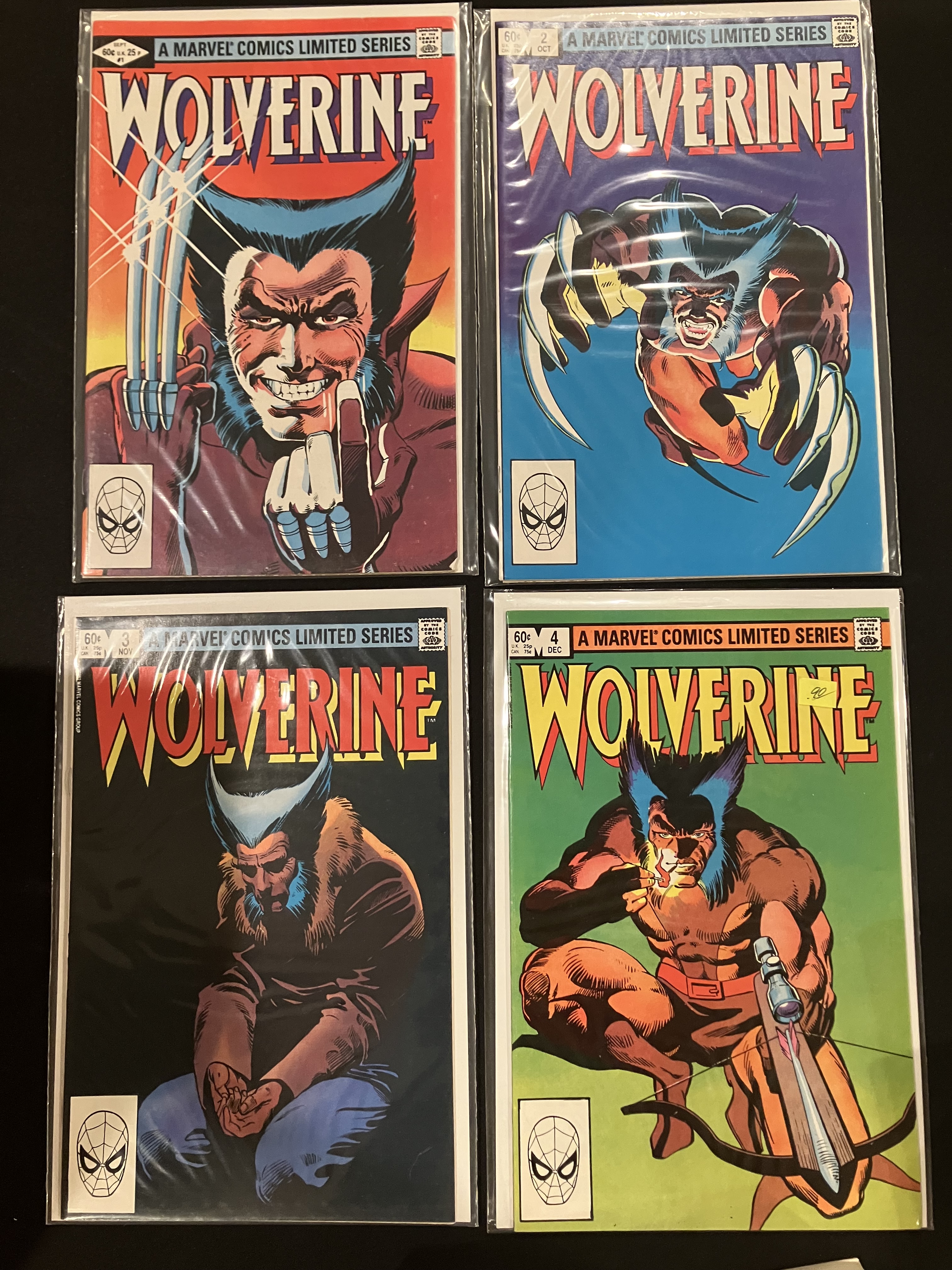
Honestly, I really liked the idea of a story spanning multiple issues! It’s very typical of comic books of my era: a massive story would unfold over 4 to 6 issues of the comic!  Think of the amazing story that unfurled from Issues 1 – 4 of the original Wolverine mini-series!  Things would change massively from issue to issue, and what the heroes did really mattered! So, the idea of a legacy comic story was something I really really wanted to embrace.

(And the time Sidekick Saga was in development, there were NO Super Hero board games with an ongoing /legacy story)

In this case, each “game” would be an issue of a comic book series. What was the story? All the Super Heroes had disappeared!  What had happened to them?  All that was left were the under-powered Sidekicks!  Could these lowly Sidekick keep the bad guys at bay while they tried to solve the mystery of what happened to all the Super Heroes?  That was the story I wanted; that was the story that would make the Sidekicks take center stage!

So, Heroic Items, would persist from issue to issue. It introduced a tension; do heroes pursue Leads to get a Heroic Items, at the cost of making it harder to defeat the current bad guys?

To help alleviate some of this tension, The Leads became multi-use cards; you could either save them up to get a Heroic Item, or you could use them directly (Leads would also do something useful for you). This gave players more agency, more choice: they could pursue Leads, but could also just use them as needed (for immediate help or later help)!

Exploration

The exploration idea came from playing cooperative deck-building games like Aeon’s End; nine different things you could get! I liked cooperative deck-building games, but to me it always seemed an inversion of what I wanted: In deck-building games, you know what you buy, but you typically have no control over when it comes out!  What if you inverted that idea and made it so you don’t know exactly what you get, but once you get the cards, you can  play them whenever you want!?

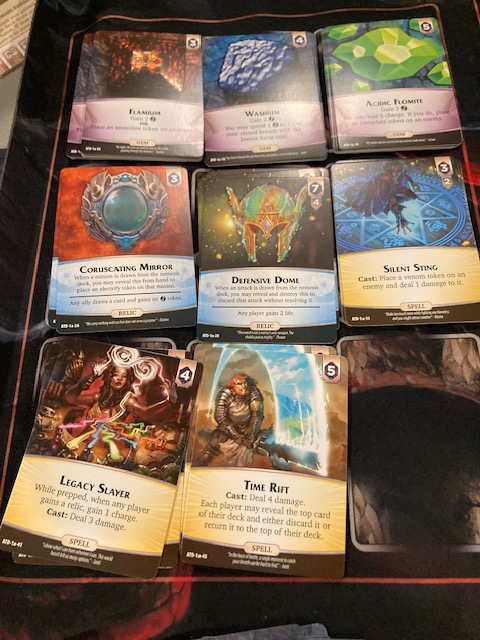
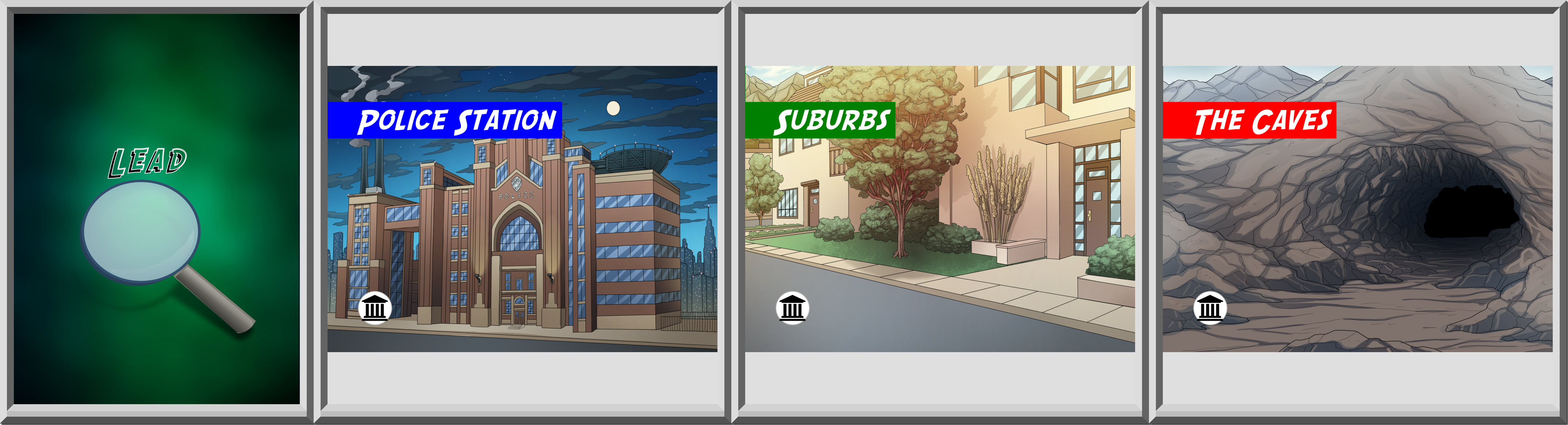
That’s the idea of the city; each Location in the city has 8 cards, and those cards are “related” by a theme: The Police Station has Police cards, Rincon Labs has Scientists and Technology, The Suburbs have a lot of Research/Lead cards, etc. You have an idea what you will get, but maybe not exactly. Then, once you get stuff from a Location, you can play it whenever you want!

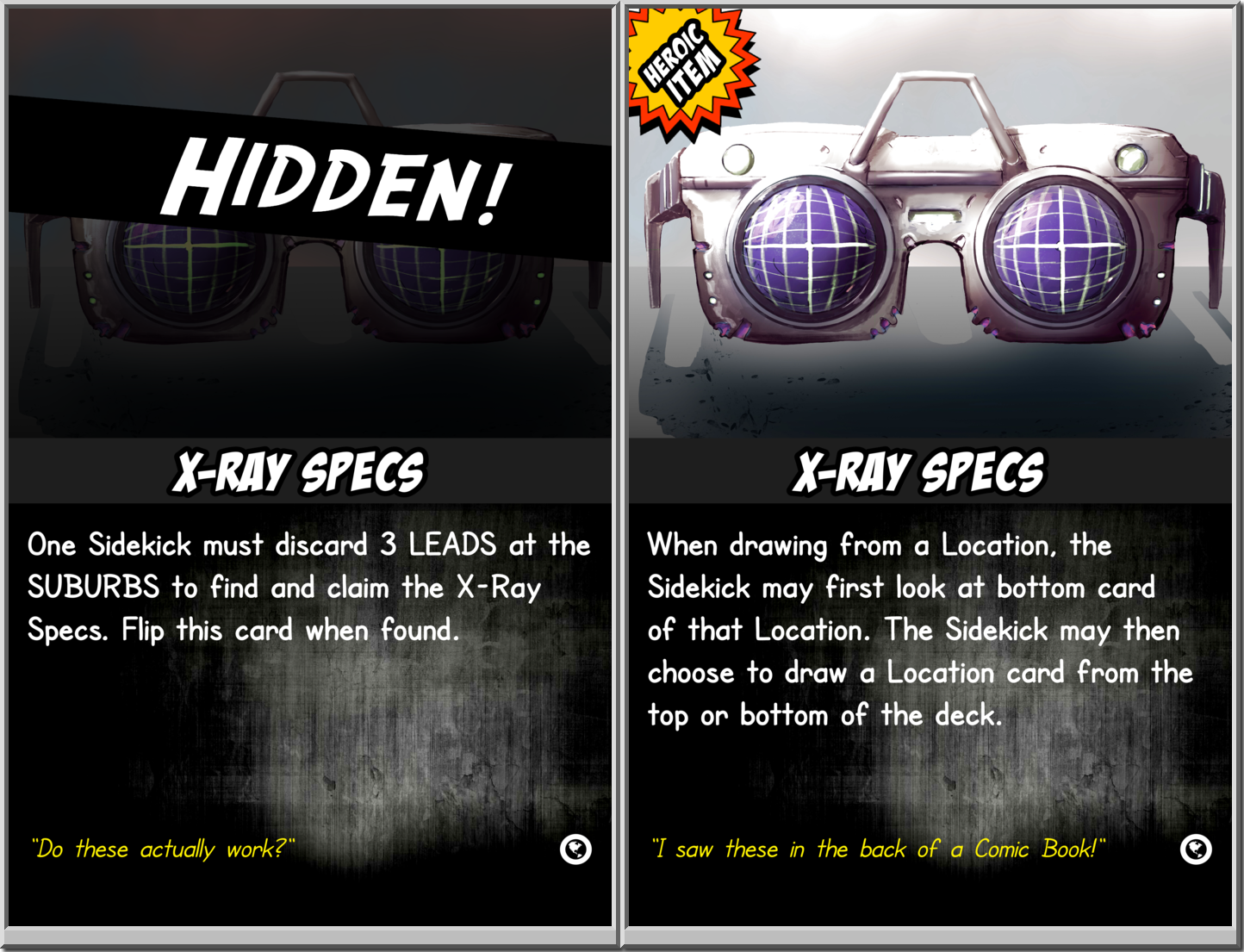
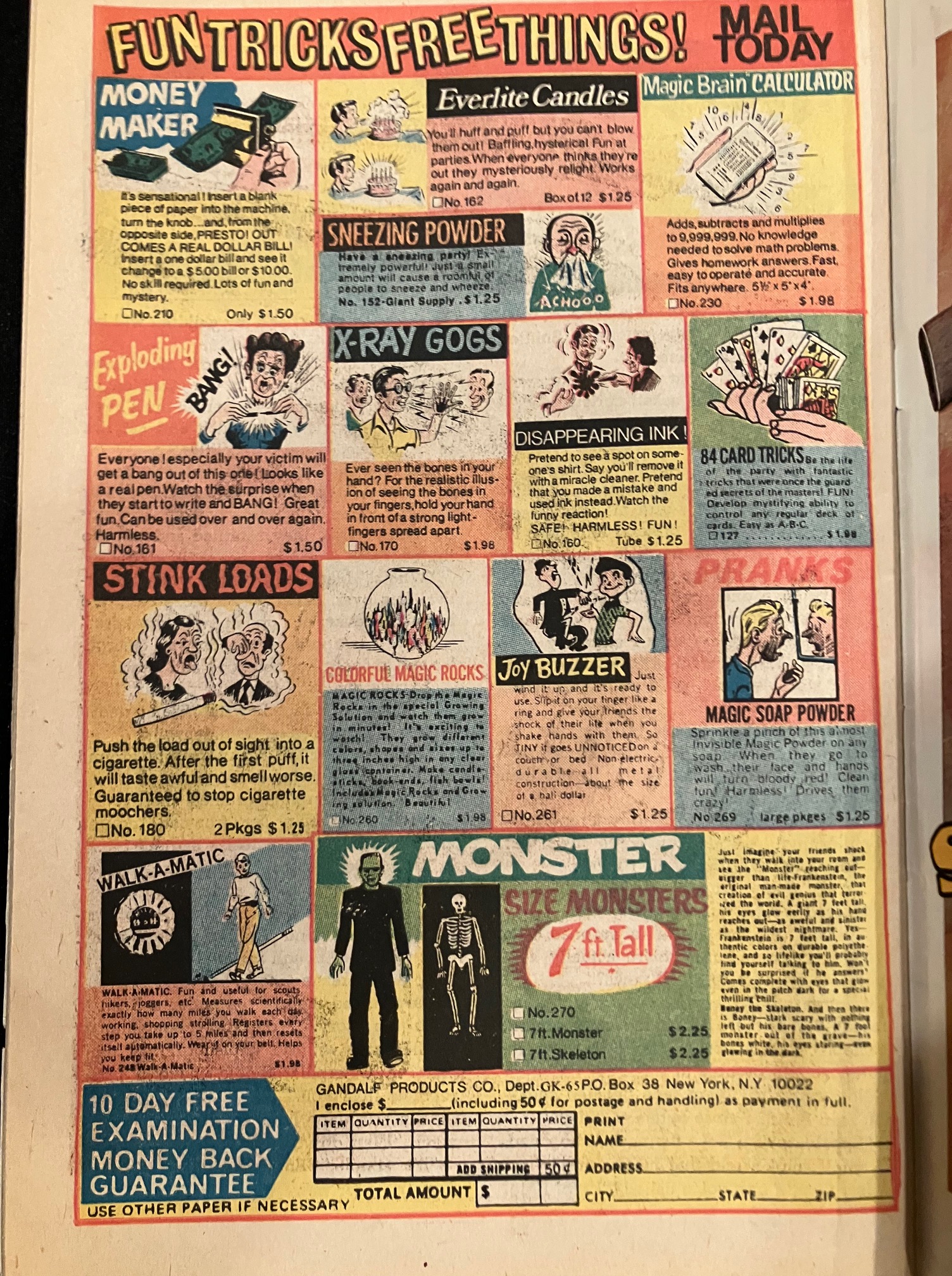
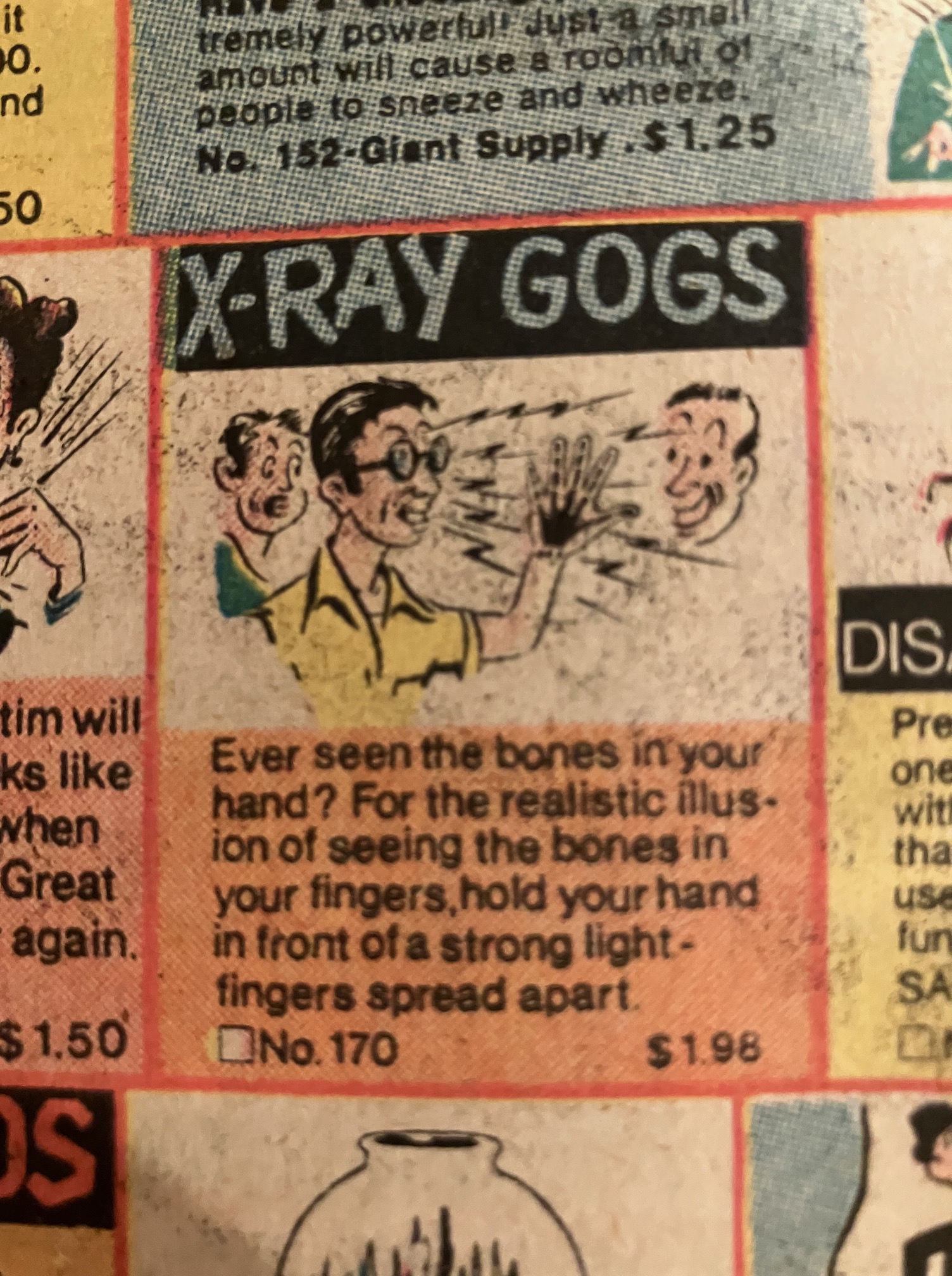
But through Heroic Items like the X-Ray glasses, you might have a little more control. And X-Ray glasses are an inside joke for anyone who grew up with comics; there were always ads for these things in the comics!

So, players move around the city and explore locations looking for technology and Leads to help them in their quest to take down the big bad!

Secret Identity and Hero Modes

Another thing I wanted was the tension of Secret Identity vs Hero form. The Secret Identity is absolutely am essential tool to keep the Sidekicks out of trouble!  (At the time I was exploring this idea, Marvel Champions had not come out yet, and to my knowledge, it was an original idea to have players go from Secret Identity to Hero and back. I documented my playtest here on my Unpub play of Sidekick Saga, which was 6 months before Marvel Champions was released; so, don’t go saying I copied Marvel Champions on this!)

But, I also wanted the Secret Identity mode to be useful; when you go into Secret Identity, you escape combat, but that’s also a main way to get Leads in the game!  The Secret Identity is all about doing research away from combat!! When you are in Secret Identity mode, you get BOTH a Lead AND a card on your Location!  But, of course, while you are doing this research, the Bad Guys are getting more and more powerful since you aren’t fighting crime!  It’s that tension you see in comics all the time! When do I go into Secret Identity mode to research (and stay out of the Bad Guy’s way) and when do I go into Hero mode to fight crime? That’s a big part of being a Sidekick!  It’s also a big part of the game!

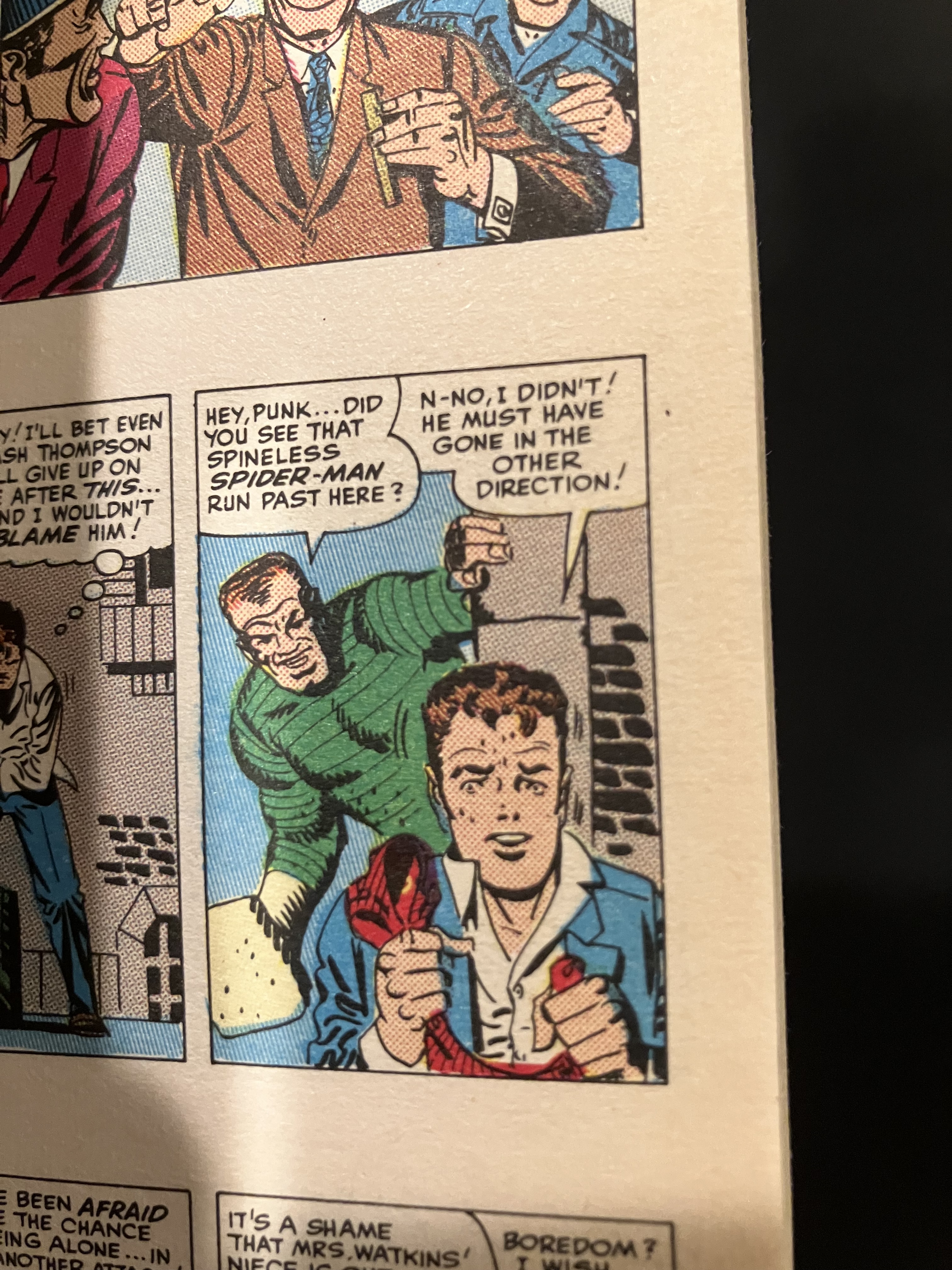
I still remember a particular scene in The Amazing Spider-man #18 where Spider-man changes back to Peter Parker to escape the Sandman.  See above!

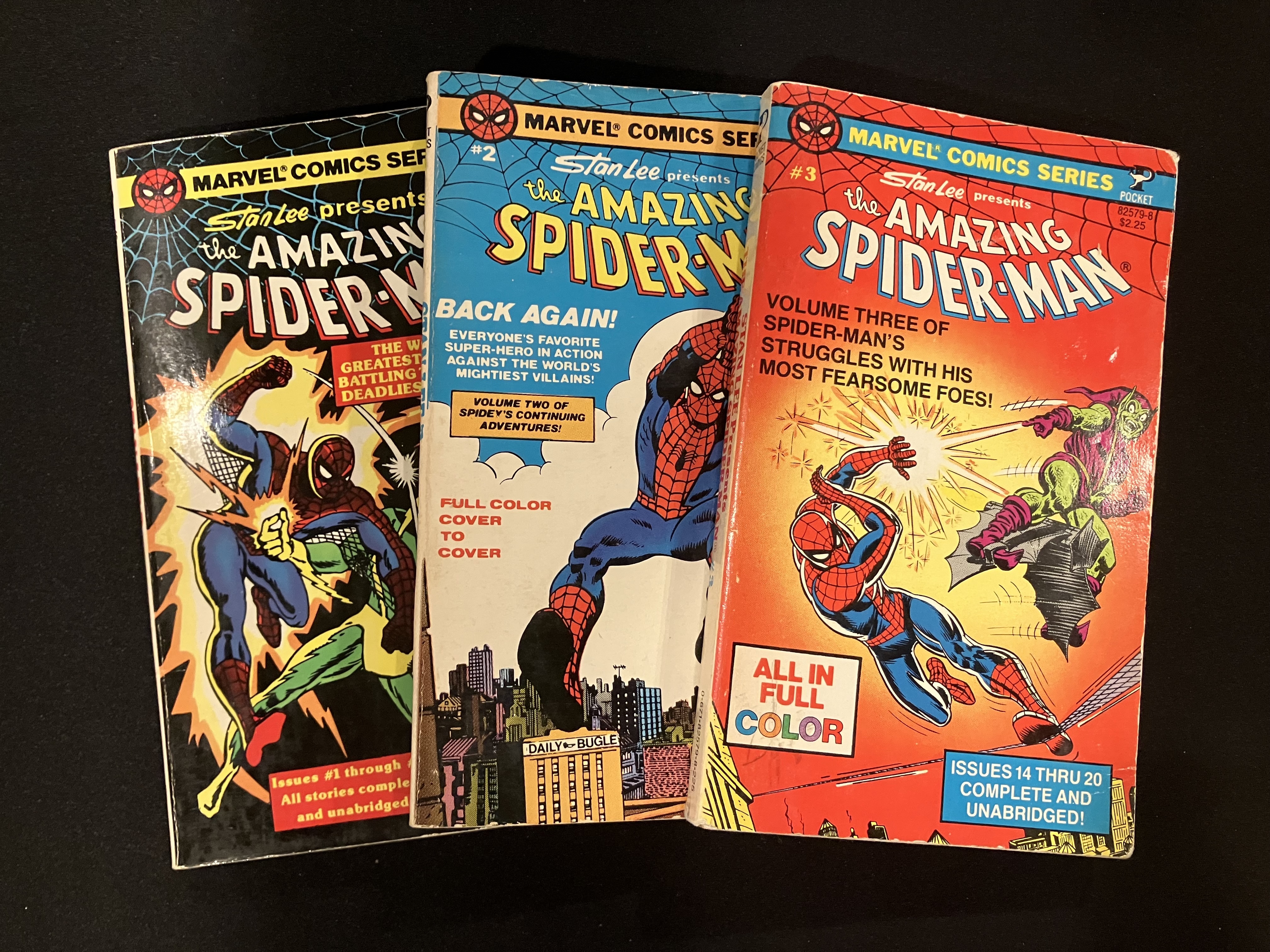
Those original Stan Lee/Steve Ditko Spider-man comics (which I read when I was a young kid), had quite the influence on me! I still remember those scenes! (I didn’t have the original Spider-man comics that are worth tons … I was just a kid! I just had the little collection of books : see above). But Peter Parker used his Secret Identity as a tool so many times in those early Spider-mans … I really wanted a mechanic like this this in the game to capture that!

Advancement

One of the funnest part of Dungeons and Dragons is leveling-up: I wanted to make sure there usually some notion of leveling-up between issues: new powers, new Heroic Items, new heroes, … something to give fun choices between issues! I also wanted to make sure losing wasn’t so devastating!

If the players lose an issue, then new items, new Heroic Items, new things are introduced into the game .. and they get to try again! I wanted this to be a self-balancing game; if it was too hard, then new stuff would come out to help the Sidekicks!

Protection Hierarchy

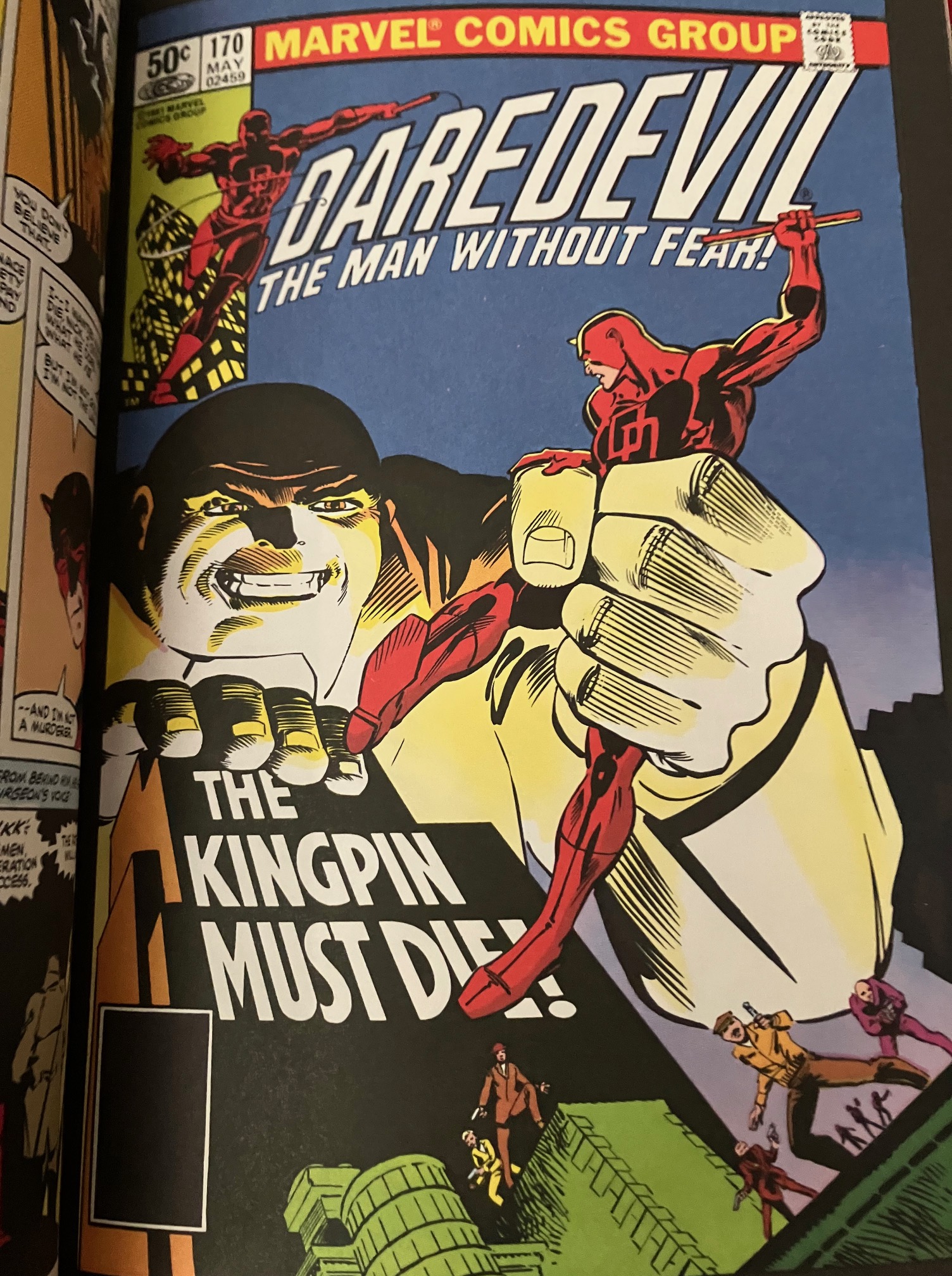
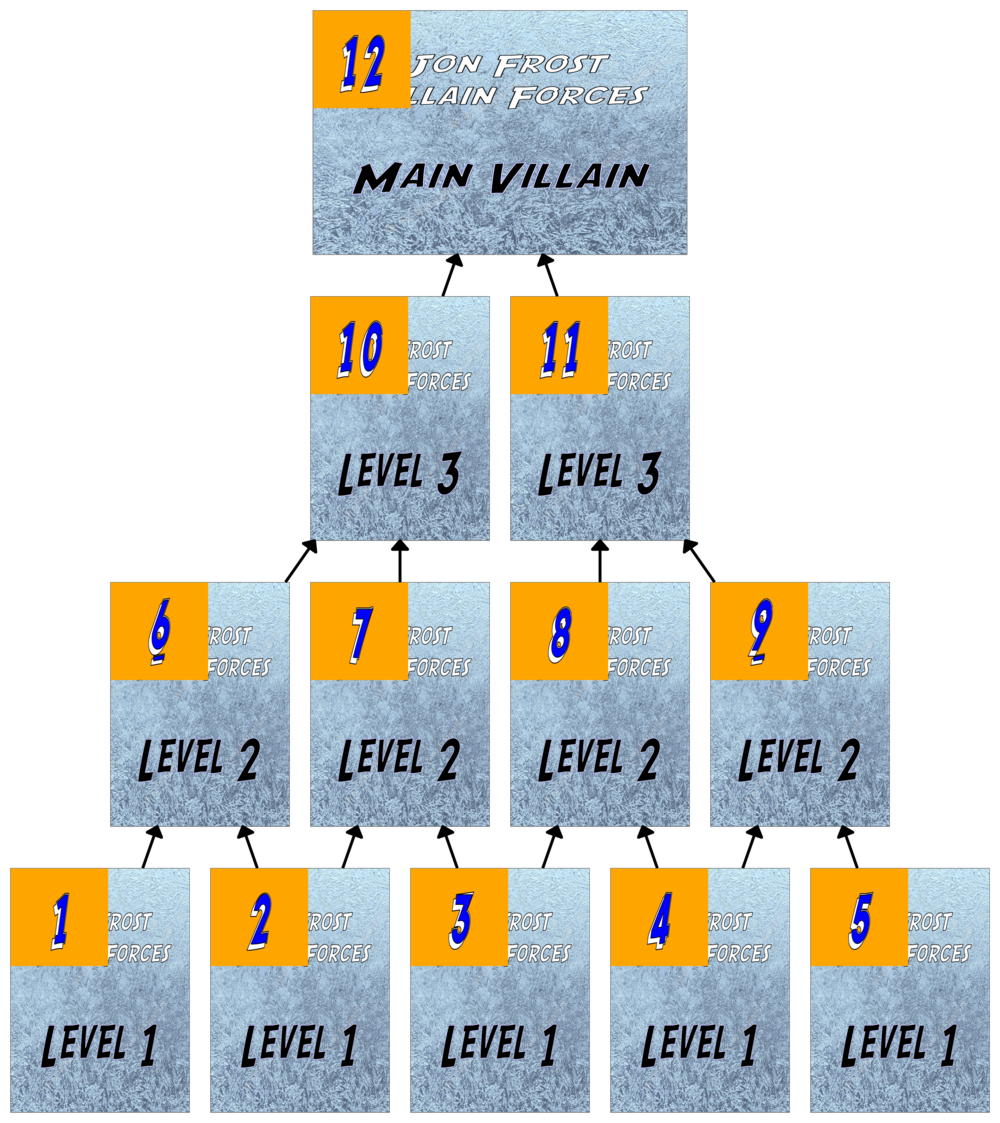
One of the final pieces of the puzzle was the Protection Hierarchy; I remember reading many Daredevil or Batman comics where the hero has to work from the bottom-up to uncover the network of the Kingpin/crime lord who is running the city! And typically, the phrase “Stop protecting your higher ups; they don’t care about you!!!” comes up when the good guys question the underlings … what if that were actually a mechanism?  What if you couldn’t actually even take out the bad guys higher up in the criminal network until you’ve “dealt with” with all of their subordinates?  What if the subordinates actually “protected” the higher-ups? 

And that’s exactly what the Protection Hierarchy is in Sidekick Saga: you can’t attack any upper level bad guys until you deal with the subordinates first!  The lower level bad guys protect the higher one! (But, of course, the upper level bad guys can do stuff to YOU … because it’s hard to be a Hero!)

Hacking

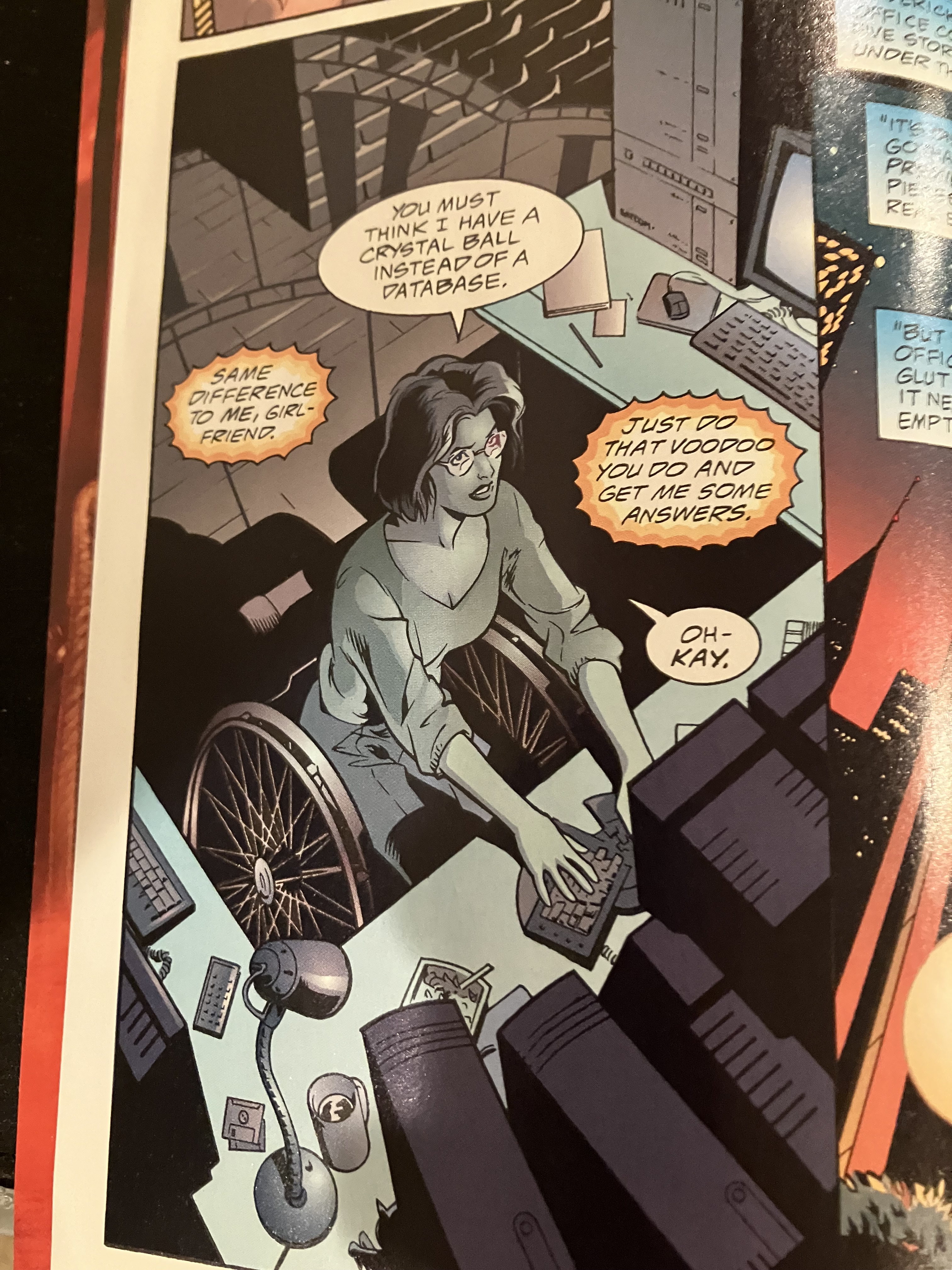
If there’s any one mechanism that is really inspired by the Robin or Birds of Prey comics, it’s Oracle and her hacking abilities.  

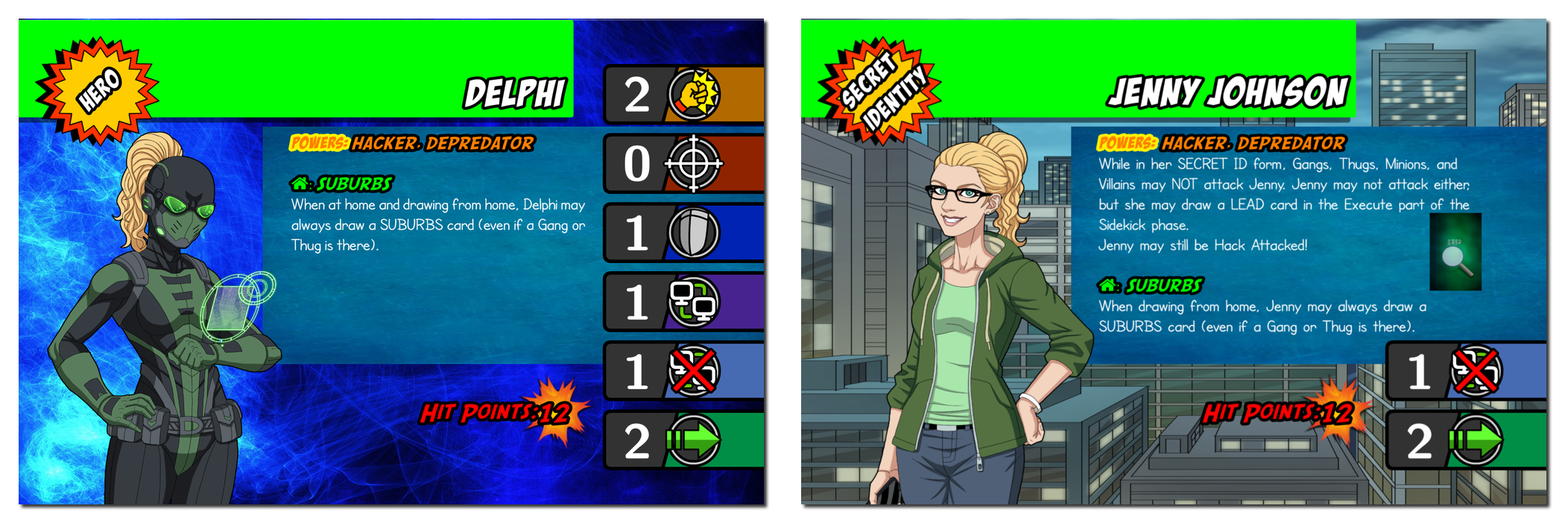
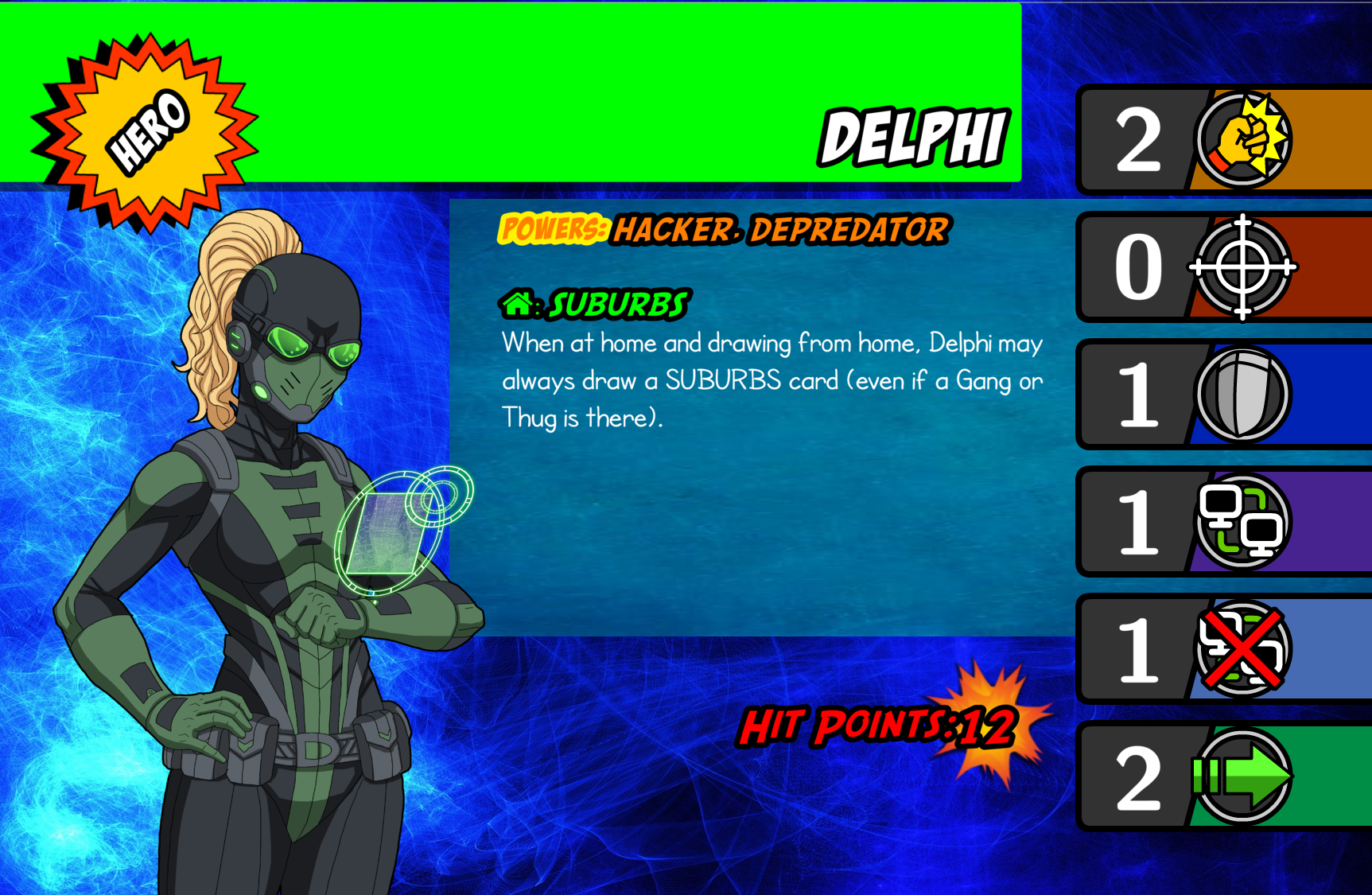
Oracle is a hacker who helps Robin (well, she helps the Dick Grayson Robin more, but that’s beside the point) by finding out information and “distracting” the bad guys with her hacking. How could we represent this idea in the game?  Delphi (inspired by Oracle) can hack the bad guys and put them into disarray!

 The idea of disarray is that the bad guy is so busy “dealing” with the results of Delphi’s hacks, they couldn’t do anything else. I loved the idea that even if you can’t take out a bad guy, maybe you can keep it out the way for some time. Thematically, the idea of “causing an alarm to go off”, “turning off the power in the building”, etc. are things that a hacker would do.  And what does it do?  It distracts the bad guy (puts them in disarray) for a few turns.

The idea of hacking was further improved by allowing hacking to bypass the Protection Hierarchy! Delphi can hack the upper level bad guys and keep them from wrecking the Sidekicks!

Art

I don’t love the art in most Super Hero board games: it always feels like they get artists who are great artists, but don’t “get” Super Heroes!!   It felt like they didn’t love Super Heroes like I did!  I just remember that I never loved a lot of the art of the first few Super Hero games I played, and I wanted something different for Sidekick Saga:  I wanted an artist who got Super Heroes.  I wanted someone who’s art really embraced that ethic!

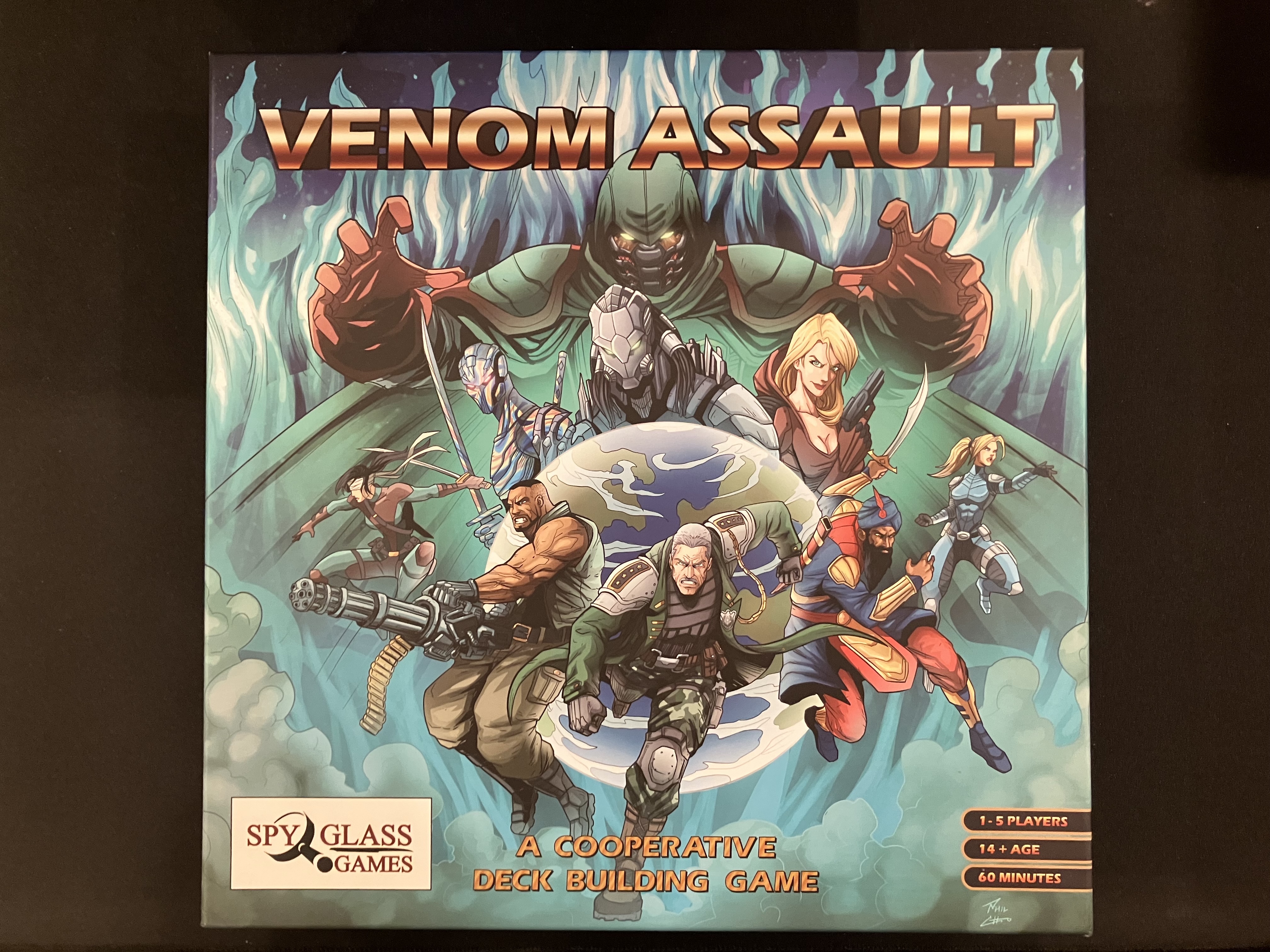
One of my favorite parts of working on Sidekick Saga was working with the artists, especially Phil Cho!  I adored his art from Venom Assault (see BGG entry here) and his Deviant Art page showed that he really understood Super Heroes!   I contacted Phil, and he was very willing to  help out. 

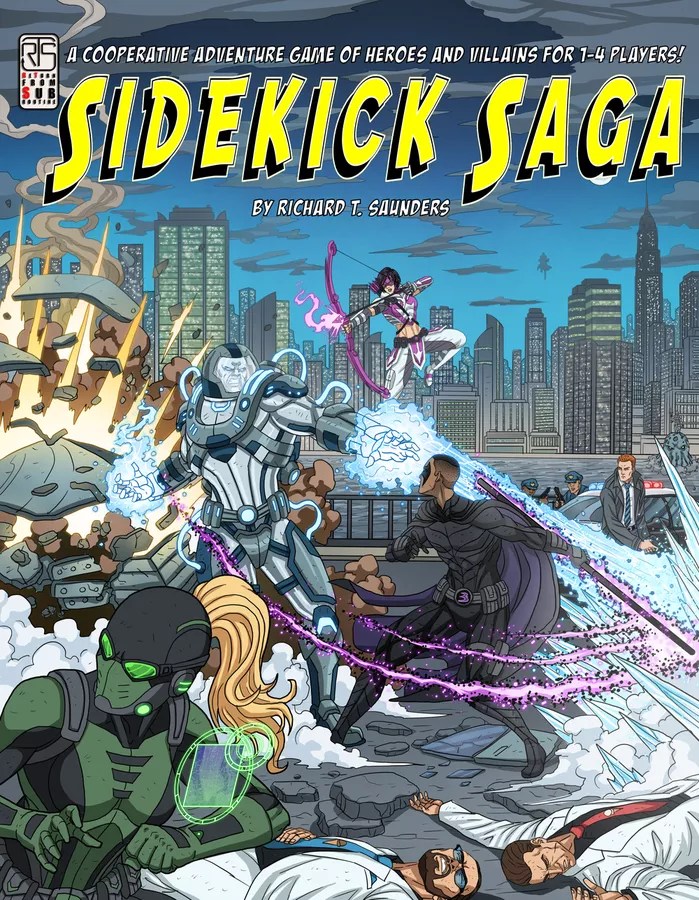
To this day, the cover for Sidekick Saga is one of  my favorite pieces of art of all time, maybe because it has such personal meaning to me. Given more time, I would have had Phil Cho do all the art in the game, but I had promised my Kickstarter backers delivery quickly, so I did work with a few other artists to help out.

Christina Murphy did a fantastic job stepping up and “matching” Phil’s art! One of my favorite of her pieces is the army of snowmen! So creepy and so what I wanted!

I also had William Liberto help out, mostly with the Heroic Items: I wanted all the Heroic Items to have a similar and consistent vibe, and he did a  great job!

Final Thoughts

I am very proud of Sidekick Saga! It’s the game I wanted!  It’s a Super Hero game with an overarching story! It has exploration, it has cooperative drafting, it has every card being useful in one way or another (by being multi-use or directly useful), and it has ways for the Sidekicks to be clever in their combinations!  I play the entire Sidekick Saga at least one a year, and I am always happy that the game unfolds differently every time!  How could I use all the cards and powers I  had to defeat the bad guys?  It’s different every time!

I know Sidekick Saga didn’t have a great critical reception, but I am grateful to all my backers who supported the original Kickstarter and all the people who reached out to me over the years in support; thank you to all of you.