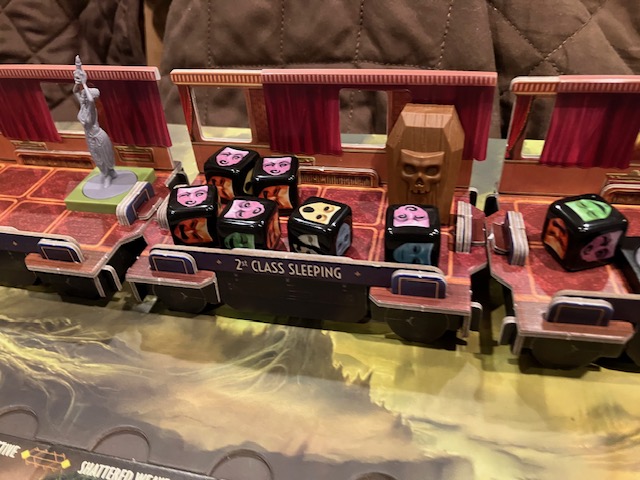
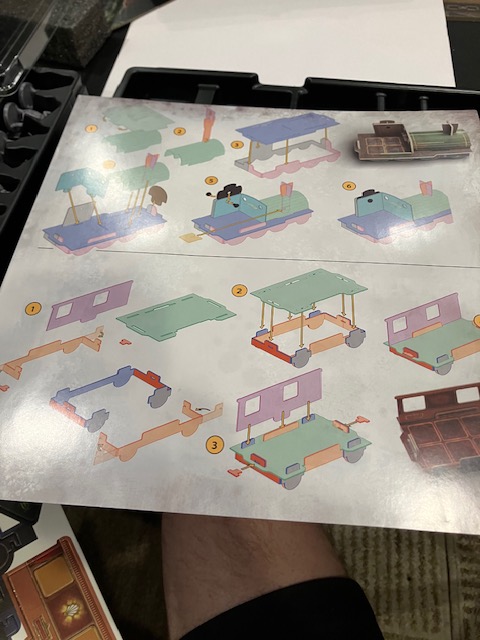
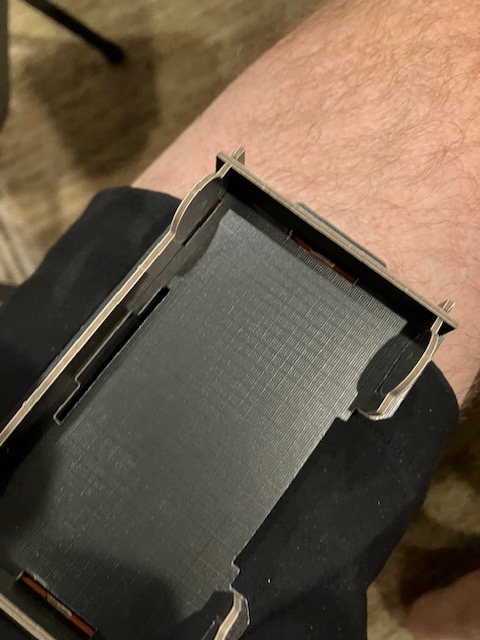
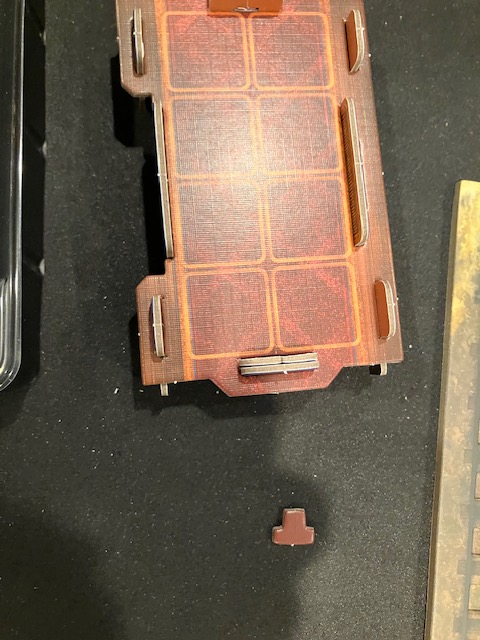
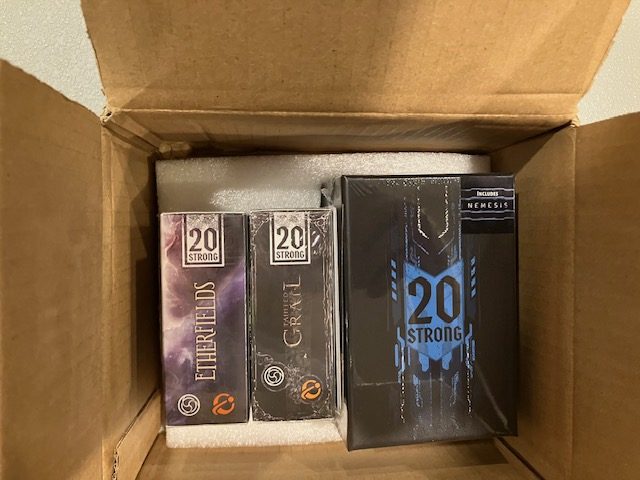
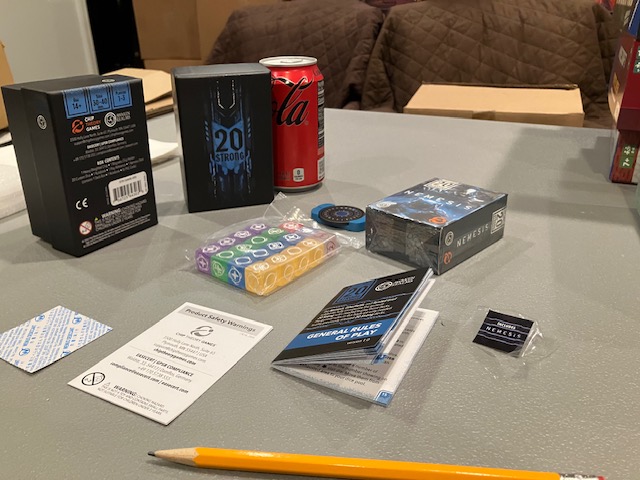
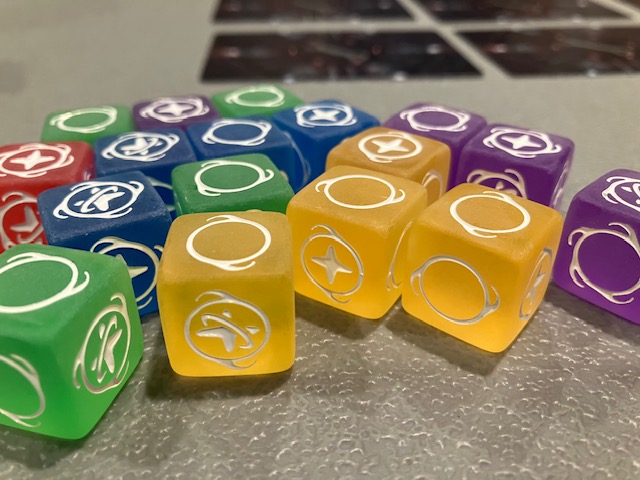
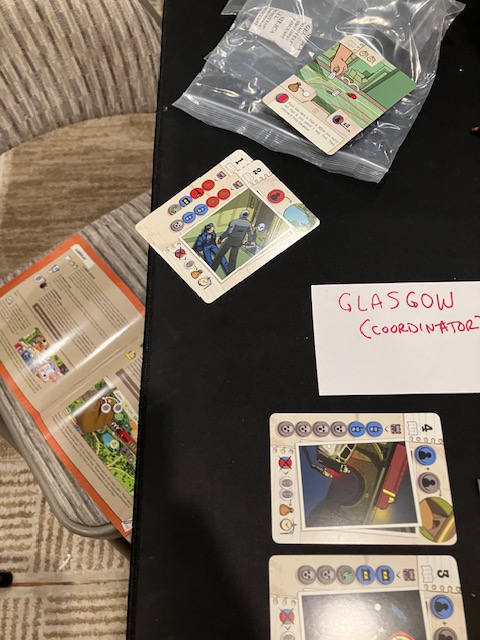
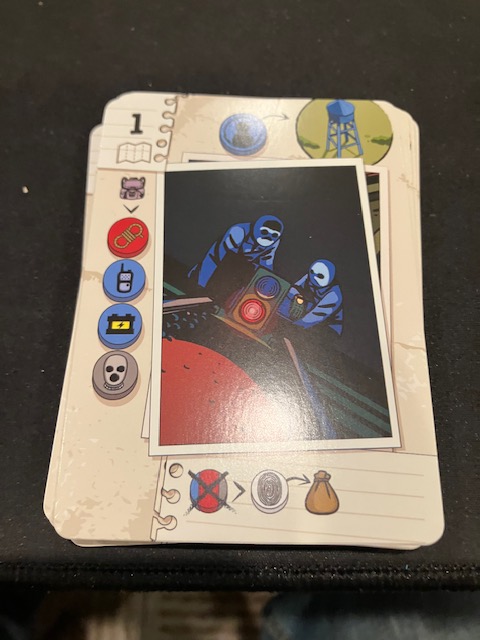
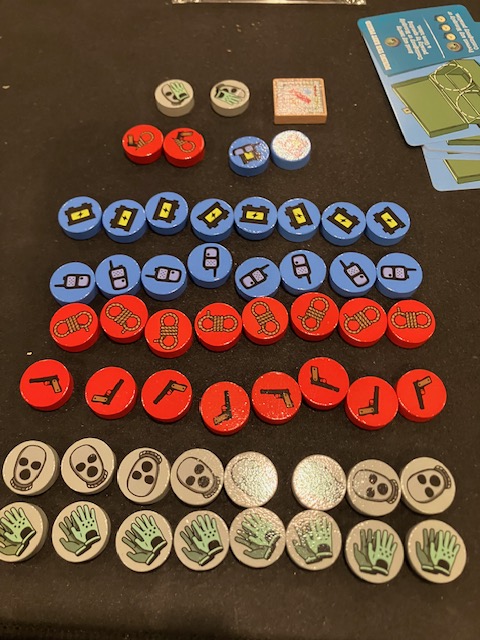
The Gnomenclature of the Dice! Companion Quest: A Solo and Co-op Review

This week we take a look at a game from our Top 10 Anticipated Cooperative Games For 2026! We want to give it some attention because RichieCon 2026 is in a few weeks, and *spoiler* I think some people will really like this game!

Companion Quest is a cooperative dice game that on Kickstarter back in March 2025. It promised delivery in December 2025, but just delivered to my house here in June 2026 … so, it’s about 6 months late.

This is also a game that was on our Top 10 Anticipated Cooperative Games For 2026!

Was it worth waiting for?

Unboxing and Gameplay

Although we got the Kickstarter edition with a few expansions, there are better versions with mats and other upgrades! We’l just be taking a look at the base game.

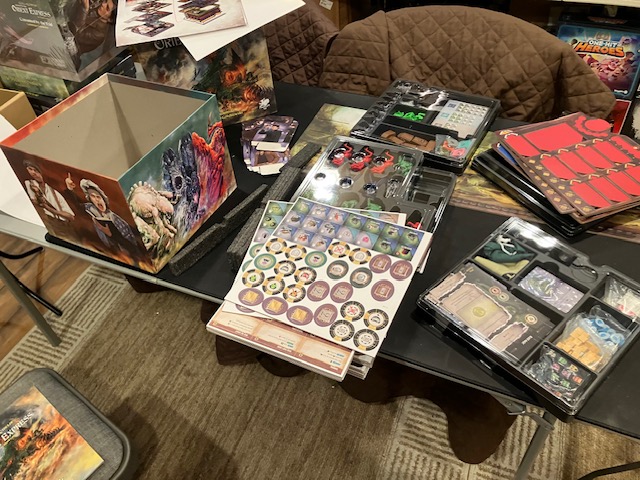
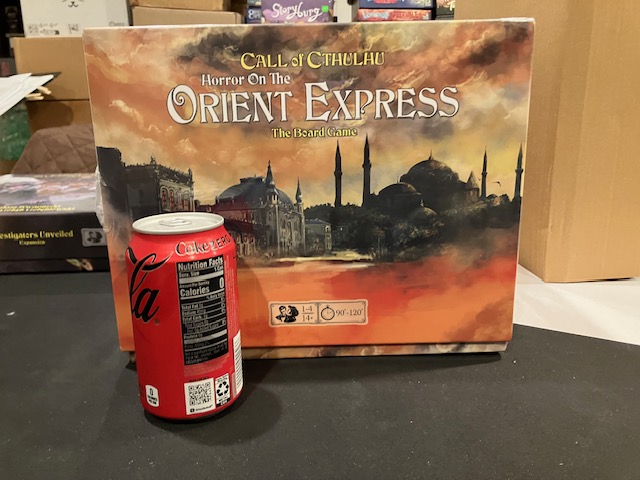
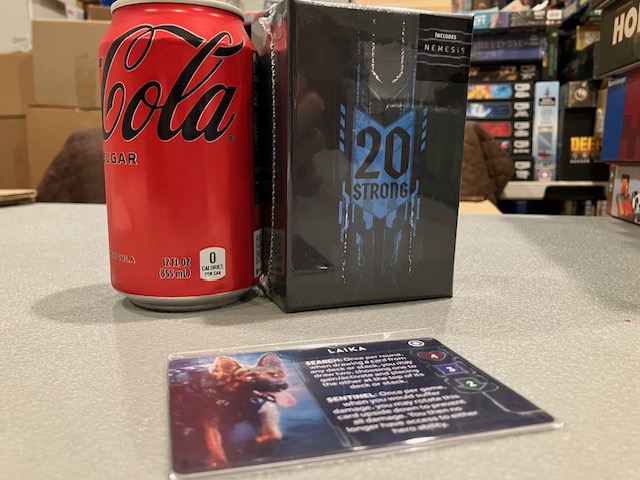
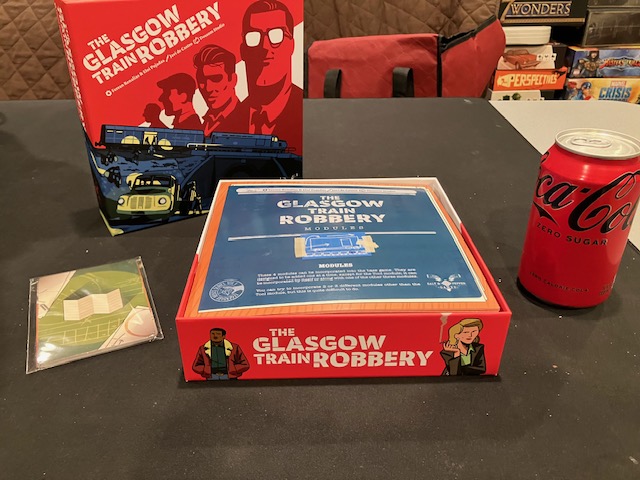
The size of this box might surprise you a little; it’s a smaller game! See Coke can above for scale.

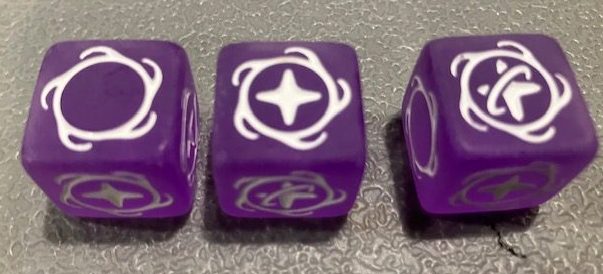
This is front-and-center a dice-rolling/dice-placement game. But what are the right words to use? Is this a dice-placement game? Is this a dice-rolling game? What’s the right gnomenclature? According to BGG: it’s dice-rolling (but it feels a little like dice-placement).

Although the name and cover might imply a little more questy game (and there is some questing), the dice-rolling/dice-placement portion of this game is the majority of gameplay. If you were looking for a game with lots of story and fighting, you probably need to look elsewhere!

Each player takes the role of a Gnome!

Each Gnome has his own power and a companion that accompanies him!

See all the companions above!

Each Gnome has his own special power, and an attached “companion”! The companions are bonded to the specific Gnomes, so you can’t choose willy-nilly. See above as Bubbles the Gnome has Arlo the companion!

The special powers of the Gnome or companion are activated by “tapping” (turning the card sideways) to show the ability has been used. How do you recharge the power(s)?

You recharge with Cookies of course! Cookies are phenomenally useful in this game! They can recharge any Gnome or companion …

… or the Cookies can be used to recruit new companions to your menagerie! There is always four companions available for recruiting on your turn!

How do you win? There’s “gnominally” (nominally? With Gnomes? Get it? Ok, it’s not that funny) a bad guy named Gu’Gu who is popping around dimensions and causing chaos! To win, you must catch him!

If you can move your Gnome marker (collective Gnome marker) to the Gu’Gu, players win! How do you move?

Every time players complete a “Quest” (see Quest above), the players advance forward one space! The quests are solved by placing dice on the quest spaces!

See above as the Gnome’s Nook is completed by placing dice correctly on the last few spots! Usually, you have to match the color and/or odd/evenness of a space on the quest!

Once you complete a quest, flip the Quest card over to see your rewards; move closer to Gu’Gu AND get some cookies AND increase your carrying capacity! See above!

The carrying capacity defines how many dice you can get on your turn! At the start of your turn, you grab some dice and use the dice to solve either Portal Problems or the Quest! Early in the game you can only grab 3 worth of dice: red, green, and blue cost 1! And orange, purple, and orange cost 2!

Portal Problems are “issues” the players must solve (at the bottom of the board)! Players place dice on them to solve them! There’s two types: Challenge and Danger cards. The Danger cards (with the yellow warning) must be solved before you can Quest again!

To “solve” a Portal Problem, you place dice! For example, to “Unlock The Chest”, you have to play three dice total (possibly over multiple player turns) so that their difference is on an orange die!

For example, 5-3 = 2 works fine, as long as the final dice is orange! See above!

If, on your turn, you DO NOT solve a Portal Problem, Gu’Gu moves forward one space towards the portal! See above as Gu’Gu is almost at the portal!

The game is all about trying to decide how to place the dice you roll on your turn, and when to use the special powers on the Gnomes and companions! Do you solve a Quest to move forward? Or do you solve a Portal Problem to keep Gu’Gu from moving forward? Do you use a precious cookie to augment your companion menagerie? Or do you use your cookie to refresh someone?

This is a game all about balance; you need to Quest to win, but you have to solve smaller Portal Problems along the way to keep the chaos at bay!

This game is absolutely gorgeous! The cover was one of the reasons this game originally piqued our interest! The components are really nice, especially the rulebook.

Rulebook

For such a small box (and arguably smallish game), this rulebook is really good!

The game gets an A on the Chair Test! This rulebook sits very well on the Chair next to me … and it is so very readable! There is no droopiness, the fonts are big and readable, there’s tons of pictures and annotated text, and the colors just pop!

The Components page is great! See above!

Everything about this rulebook is quality. I don’t think it needs an Index because the game is pretty straight-forward! There aren’t a lot of keywords, so I won’t ding it for not having an Index.

There are two things that needed a little more discussion, but we’ll go over those below.

Otherwise, just a great rulebook!

Solo Play

So, congratulations to Companion Quest for following Saunders’ Law! We have a solo mode! The solo mode is a true solo mode, where the solo player takes the role of a single Gnome! The rules are well-defined on page 16 of the rulebook.

Normally I don’t “love” solo rules that change up the game, but the solo rules are pretty simple. There are two changes:

  1. The solo Gnome can activate his own Gnome’s power to help himself (in the cooperative game, your Gnome power can ONLY help others). This is pretty typical of true solo modes: any ability that normally helps other players can be used to help yourself instead!
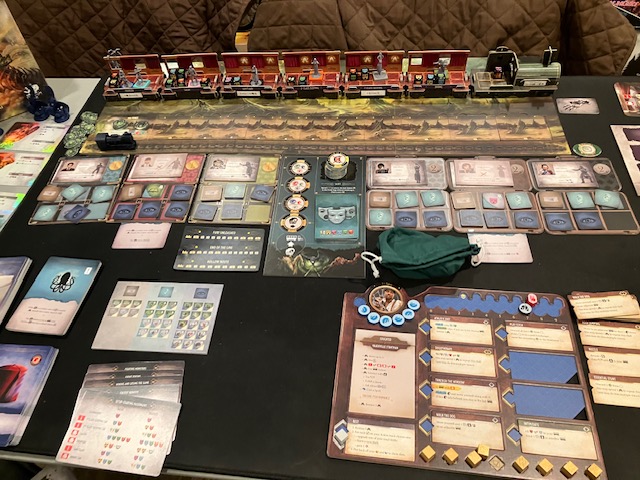
  2. When you “refresh” your Gnome, you actually need to get a new Gnome instead! This forces you to cycle through the Gnomes and their special powers.
You can also keep a die from a previous round, but this is pretty much the same as the cooperative game; it’s just “the next player” isn’t someone else, it’s you!

The solo game is an easy way to learn this game. All the rules are there, and it’s pretty easy to jump straight in. I had a fine time learning the game this way. I played about three solo games; I had a good time while getting the gist of the game. It’s pretty fun to roll the dice, think about which dice to use for which thing (Quest? Portal Problem? Companion?), and try to catch Gu-gu. There is some brain power needed to do well; it’s not as simple and cute as the rulebook and look belies.

The balancing for the solo game seems to be achieved by cookie distribution. If you have just one Gnome, you start with two cookies, and get another two cookies at the end of a quest stage (see above). Since cookies are pretty powerful (usually in getting companions), it’s clear these need to be rationed. A 2-Player games starts with two cookies distributed amongst the two players (one each) . Interestingly, a 3 and 4-player game start with no cookies. We’ll revisit that decision some more below.

The solo game is cute and adorable, and it’s a great way to learn the systems of the game. I might come back to it again as a solo player, but I think cooperatively is the funner way to play. You might say, cooperatively is “gnominally” the best way to play! Sorry, that joke should get gnominated as worst joke in this review!

Cooperative Mode

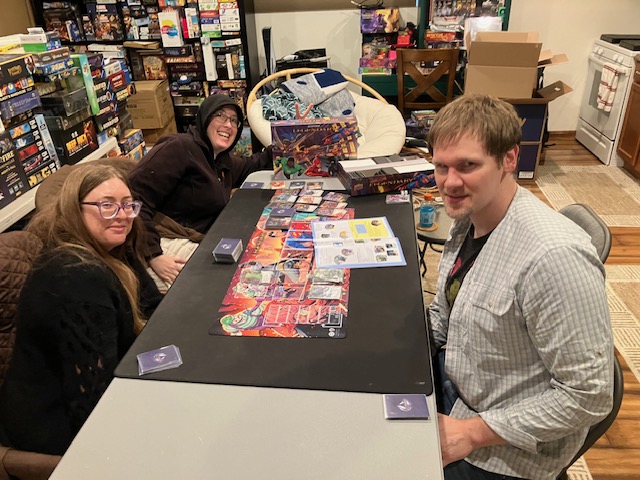
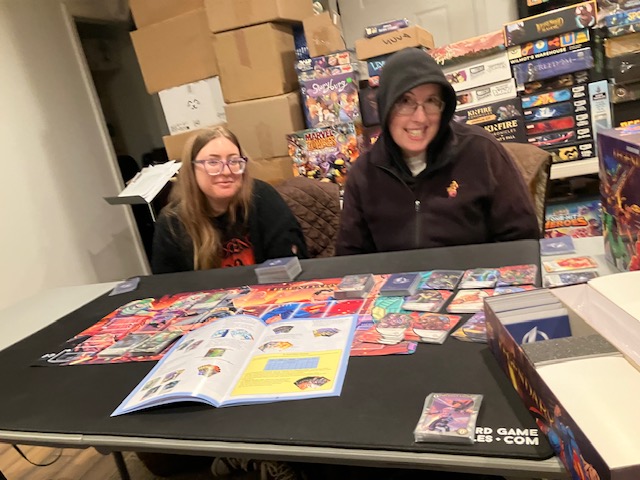
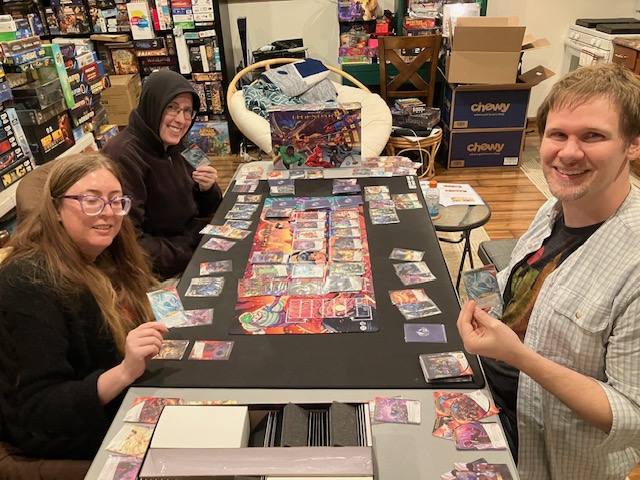
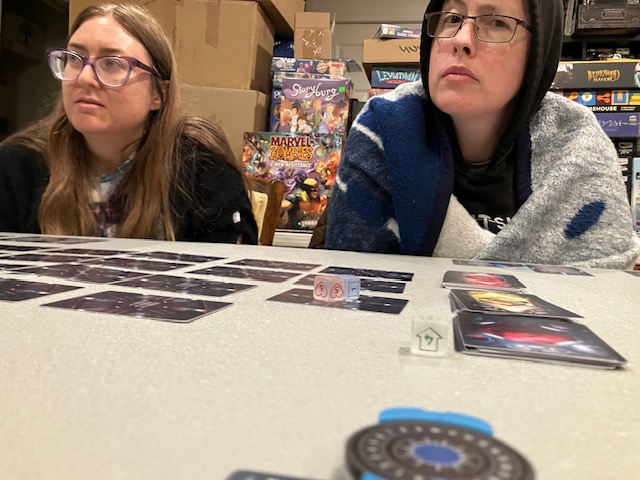
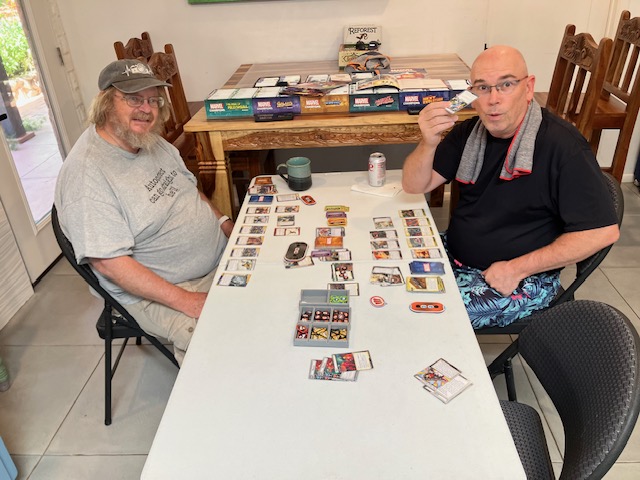
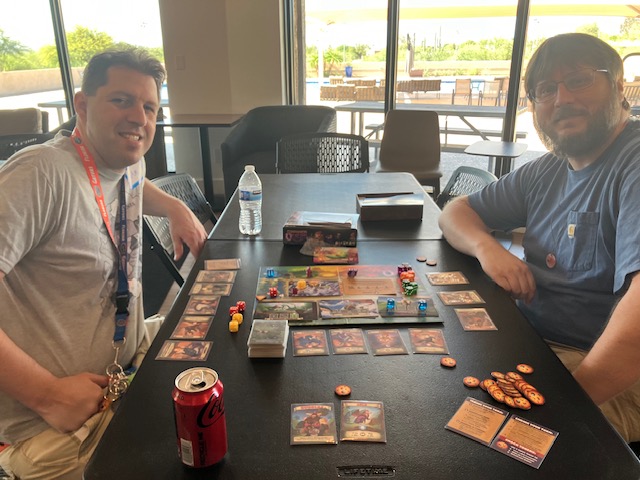
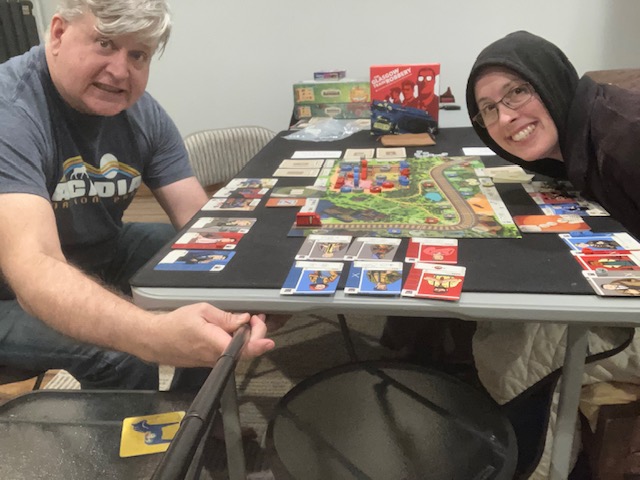
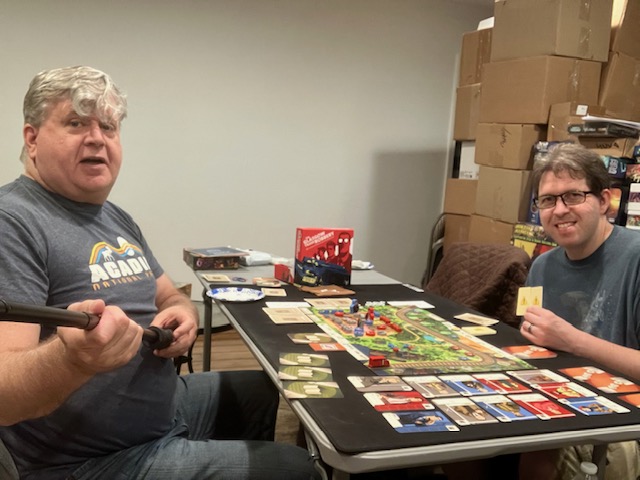
I’ve been able to get Companion Quest played at 2 and 3 players. I’ve played a couple of times with my friend Teresa (below) and one with my niece Megan (see above).

So, the rule about “you can only use someone else’s Gnome powers” makes the game a little more cooperative. Players then need to talk a little more about what you can do “Hey Rich, I need a +1, can you help me get that with your Gnome?” So, that simple mechanism does help bring players interact more.

There is a little bit of downtime between turns, as you really do need to think a bit about the best way to use your dice. Depending on the group, this will either bring out conversation (making the game more interactive) or it MIGHT invite the dreaded Alpha Player in (making it less fun)! You get so excited when you see someone else roll the amount they need that sometimes you start accidentally Alpha Playering! I KNOW I did to Teresa a few times and I feel terrible! For Megan, she was asking for help more, so it worked out there more (my Alpha Player was more of a teacher). But I think you need to be a little careful about making sure you don’t Alpha Player!!!

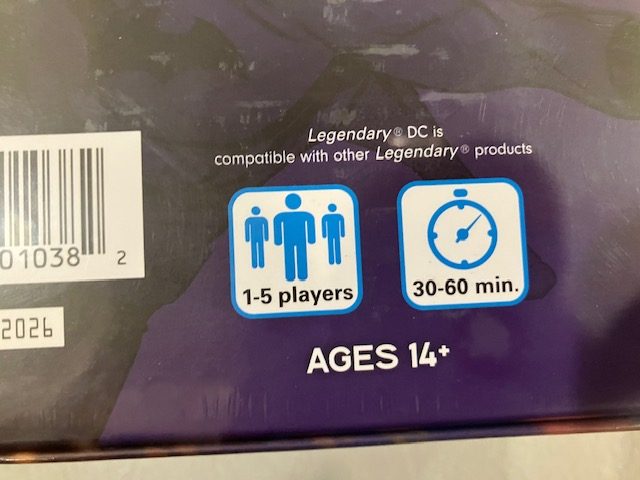
With that little warning, I do think cooperatively is more fun that solo! Most people love the little Gnomes and their little companions. The game is pretty quick (besides some of the thinkiness that might occur on your turn), and the 30 minutes playtime as indicated on the box is about right. Most turns are pretty multiplayer solitaire (if you don’t have an Alpha Player … Rich …) so it’s still fun to make your own choices!

The game is bright and gorgeous and draws people in with its art. The cooperation is pretty good; even if you can’t use a die on your turn (sometimes, you just can’t get a die out), it’s pretty cool you can pass a die to the next player for their turn. It makes you feel like you are helping them! That rule (and the “you have to use someone else’s gnome powers”) make the game pretty cooperative and interactive despite the multiplayer solitaire nature of each turn.

Things I Liked

Using Dice for Wake-up! We didn’t mention this in the overview, but there is an another way to wake-up companions! We mentioned that you can use a Cookie to “wake up” a resting (tapped) companion … but there is another way to “wake up” a companion! Using a colored die wakes-up a companion! You might notice that every Companion has a color associated with it! Kusa (above) is red and Peppy and Snaps are both yellow. If you ever place a die, you can wake up one companion of that color! So, placing the yellow die above, we can wake up Peppy!

This really expands the choices you can make in the game! When you get some dice at the start of your turn, do you get dice to help with the Quest? Do you get dice to help with the Portal Problems? Or do you get dice to wake up your companions? This just really makes the choices so interesting! I really think this one mechanism elevates the game!

Art: I adore the art in this game! That cover may be one of my favorite covers of the year! I also really like how this game uses color! I love the colors in this game!

Things I Didn’t Like

Dice: At the end of the day, it’s still a dice game and you may get stuck with bad rolls. This is balanced out by it being a pretty short game; I don’t might a dose of randomness for a 30 minute game. Also, you generally can mitigate bad dice rolls with all the special powers you have.

Cookie Balancing at 3 and 4-Player: One of the funnest parts of the game is deciding when to use the cookies for their myriad of effects! (Recruit? Awaken? Reinvigorate?) Yet, the 3 and 4-player games start with NO COOKIES. It’s clear that when you finish a quest that everyone generally gets a cookie, but our first few 3-Player games seemed “less fun” and “less balanced” as we struggled more with no cookies to start the game. It “feels like” that there should be at least 2 cookies always at the start of the game? The balance felt a little off in the 3-Player game without cookies. In the end, after failing multiple times at 3-Players, we sorta started with a couple of cookies and that seemed to make the game a little more palatable. This probably sets the balance off a little at later levels, but it made us want to play more because cookies make it more fun!

Some Clarity: It seems like, when you play, that “completing a quest” should stop Gu-gu from moving forward. After searching the rules several times, it seems clear that Gu-gu will ALWAYS move if you don’t finish a “portal problem!” The interaction between those two (finishing Quest and finishing Portal Problems) should have been more specified! If you “cheat” and don’t move Gu-gu after a quest, then the game may seem too easy? But it also is MUCH harder if you do move Gu-gu! I wish this had been clearer in the rules. (Arguably it’s the flow of the game, so it doesn’t need to be specified, but the intuition seems to be counter-intuitive on this point … requiring more specification). Look, maybe you won’t have this problem, maybe I saved you from looking something up, but just be aware that completing a quest isn’t considered solving a portal problem (for Gu-gu movement purposes).

Modular Arithmetic: So, this game embraces that “adding 1” to a 6 flips it to a 1. And subtracting 1 from a 1 turns it into a 6. That’s modular math!!! Additions roll over, and subtractions underflow. That’s great! Because of this one feature, we are now using modular math (Modulo 6, Offset 1). This usually makes sense in the game, but they need some discussion. And what about negative numbers? What is 3-4 in this system? There is NO discussion of this! By opening the door to modular math, they need to define what that means! So, 1+6 = 7 = 1. Easy. 2+6 = 8 = 2. Easy. 3-1 = 2. 3-2 = 1. 3-3 = 0 = ??? By the rules we have, this should be 6!!! So, 3-4 = -1 = 5. An easy way to think of this; just do the normal math and add 6 or subtract 6 from the number until you get a number that’s between 1 and 6!

Some of cards, like “Unlock The Chest” (above) can be a lot easier if you can do modular math. And the game has opened the door for this! But they need to embrace the modular math and show examples! 6 is the additive identity here! I don’t think you can open the door and not specify this.

Conclusion

Companion Quest is a fun little cooperative dice-rolling/dice-placement game, but be aware! Compansion Quest is a lot more thinky than it looks! I don’t think this a gateway game; I think this is a game that needs a little sophistication and brain-power. Don’t get caught in the trap of thinking “Aw, it’s so cute, it must be simple!” This isn’t something super deep and heavy (remember, games really only last about 30 minutes), but it does have a lot of thinky decisions.

With an appropriate shepherd, I think most people can play this, but it might be a little too much out of the box for newbies.

But, overall, all my friends and nieces liked Companion Quest; it was a fun, cute, fast, simple game with deceptively more thinkiness than you might imagine. I might play it again solo? It’s a good game solo, but for me, the better game is the cooperative game with the dice-sharing and gnome-power sharing! I’d give this a [6.5-7/10] for solo and [7.0-7.5/10] for cooperative. It’s good! But, at the end of the day, it’s still a dice game and that randomness can be too much! That’s why we have a ranged rating; when the dice are poorly behaved, the game is less fun (for the lower ratings), and the game is more fun when the dice don’t conspire against you (for the upper rating).

Top 10 Cooperative Games To Play At A Gaming Convention!

As RichieCon 2026 approaches, we are reminded that not all cooperative games are created equal! A convention hall (or equivalent thereof) usually has a very different atmosphere than a home or a store. A convention tends to be a noisier, you may play with people you don’t know, and maybe you’ve been up too long so you are tired! In this convention environment, some cooperative games work better than others! For each game we list below, we indicate WHY we think this is a good cooperative convention game!

Unfortunately, a convention is a place where the Alpha Player Syndrome can manifest more easily (as you tend to play with strangers who you don’t know or trust), so we choose games where the Alpha Player is kept at bay by something! Each game we choose will also somehow address mitigating the Alpha Player!

The order for this list matters less than other top 10 lists; these games are mostly just good cooperative games to play at conventions! Here’s my current Top 10 Cooperative Convention Games! Every single one of these I would be happy to play with you and/or teach you at RichieCon 2026!

All of these games will be at RichieCon 2026!

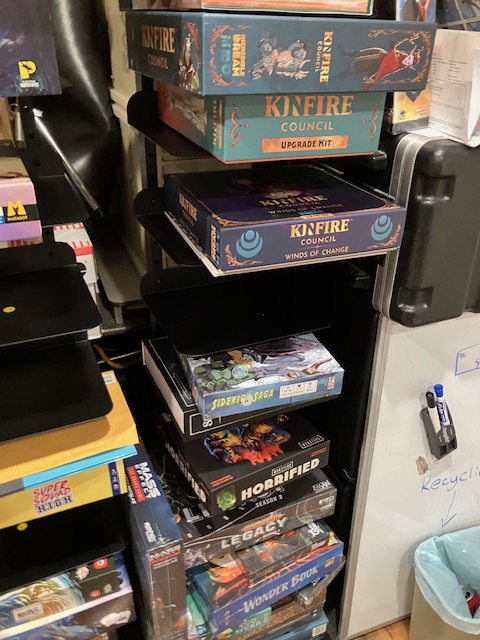
#10 Kinfire Council + Winds Of Change Cooperative Expansion

Ok, this is a weird one, but follow me here! So, this is a long game! It’s kind of complex! The base game is nominally a really good worker placement game, but it’s just too chaotic and fragile as a competitive game. There are a lot of rules, so if you are playing competitively, it makes it a lot harder to ask questions and address issues! The cooperative expansion (Winds of Change) makes the game more interactive and a lot more fun! The complexity is not nearly as overwhelming because players are all working together to play! The game is a lot for a convention, but if you can get someone to teach it to you, the game is more tractable (which is why it’s only #10 on this list and not higher).

The Alpha Player is kept away because the game is very multiplayer solitaire! Each players has their own set of workers and upgrades that, frankly, are too much for others to follow! This game has a lot of choices, and players tend to negotiate to help each other and not get in each others’ way too much. We also strongly suggest that you play with the house rule that you may also share a resource as an errand. See our review of Kinfire Council + Winds of Changes for more discussion of this and some house rules!

I have taught this at Dice Tower West, and to at least 4 different game groups, and it was always a joy! It also made the top position of our Top 10 Cooperations Expansions of 2025!

#9. Marvel United or Marvel United: X-Men or Marvel United:Multiverse or …

Marvel United is a great convention game for many reasons; it’s easy to teach, easy to play, but still quite cooperative! The game is usually under an hour!

The idea that each player uses the symbols of the previous player’s card is genius! Most people love this simple idea that they haven’t seen elsewhere!

Another reason this is a great convention game is because anyone can play the hero that they want! Who’s your favorite Marvel Hero? You can probably play them! The three Seasons of Marvel United have almost every hero from Marvel that you might want to play! Play the quirky Ant-Man! Or the powerful Venom!! Or play the baroque and mysterious Dr. Strange! Or play Wolverine!

The only reason this is just #9 on the list is that Marvel United is slightly susceptible to the Alpha Player since everyone can see each other’s hands; this makes it slightly easier for the Alpha Player to slide in and tell everyone what to do. I personally haven’t had any issues like that, despite having probably played 50 or more games! Each player is generally playing multiplayer solitaire, so that tends to keep the Alpha Player away!

Marvel United had made so many top 10 lists here at CO-OP Gestalt: here’s just a few! Top 10 Cooperative Games of 2024! Top 10 Solo Games of 2025!

#8. Good Dog, Bad Zombie (2nd Edition)

Good Dog, Bad Zombie is a light game that’s easy to jump into at a convention! It’s easy to play, easy to explain, and people can jump in and out very easily as the game is playing!!

Players play as dogs keeping the dumb humans away from the zombies! The dogs are adorable and will probably immediately bring you into the game!

This is a pretty light game with a touch of randomness, but when you are tired and just want a light game (where you can easily add people or take them out), this is a great choice! It’s quite cute too! See our review of Good Dog, Bad Zombie here to see if this is something you want to play at a convention!

#7. Tembo: Survival of the Savanna

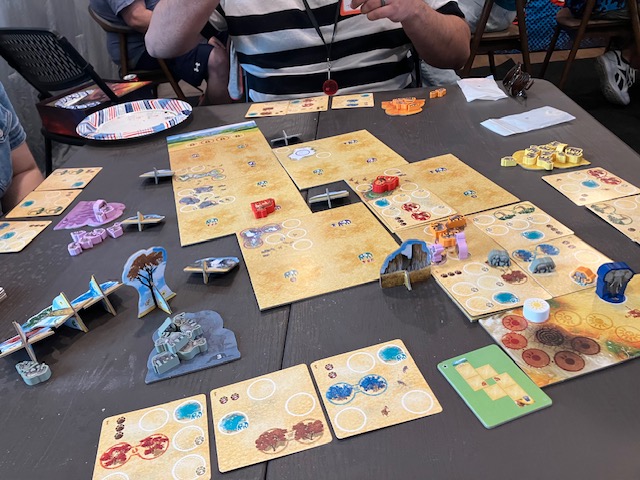
Tembo is a very cute game about moving elephants along in the Savanna! The players work together to move the elephants to different watering holes, eating trees along the way, and keeping the herd away from the Lion and Lioness!

This game has amazing art from Vincent Dutraite, and the elephant meeples (elepheeples?) just pop on the table! My friends all adored the cute vibe this game exuded!

But this is still a fun little game for 1-4 players. I am actually expecting to teach Max and Cassidy this game at RichieCon 2026! They will really enjoy this I think! As will you; it’s a quick, cute game that’s easy to teach and you can be done in under an hour.

The Alpha Player is kept in check because there’s a notion that each player’s perspective informs how the tiles must be played on the board, and the Alpha Player can’t necessarily see all that! Each player must play tiles along their perspective! This is a unique way to keep the Alpha Player away!

See our review here to see if Tembo is the right convention game for you!

#6. Aetherspire

Aetherspire is really great at a convention because it is looks so interesting on the board!

The structures you build look so cool! Each player’s turn is fairly multiplayer solitaire, so the Alpha Player can’t sneak in. The game is easy to describe, but it moves well and has some interesting and unique ideas. In the end, it’s the 3-D structures you build that make this game pop in a convention!

Take a look at our review here to see if Aetherspire might be a game you like to play at a convention!

#5. Boaromia: The Cooperative Festival Game!

I can almost guarantee you’ve never heard of this game! It had a very small Kickstarter, and it’s a little rare! But the boisterous energy of this game matches the boisterous energy of a convention!

Players move around a music festival, trying to make sure they see their favorite bands, but making sure to eat enough, pee enough, and drink enough! Along the way, players will stop and see other bands with their friend and just have a good time!

This is a game about having fun together as you traverse a music festival. It’s goofy, the names of the bands are goofy, the characters are goofy, and the game is just goofy. But this is a great game that works for 3 to 8 players! It’s rare to get a game that works for so many players!

I know the Alpha Player can’t really invade this game; I tried playing it solo and there’s just too much going on for the Alpha Player to tell you what to do! Everyone has to see their own favorite bands, and that scheduling can really only handled per player! See our review here to see if this might be a game you are interested!

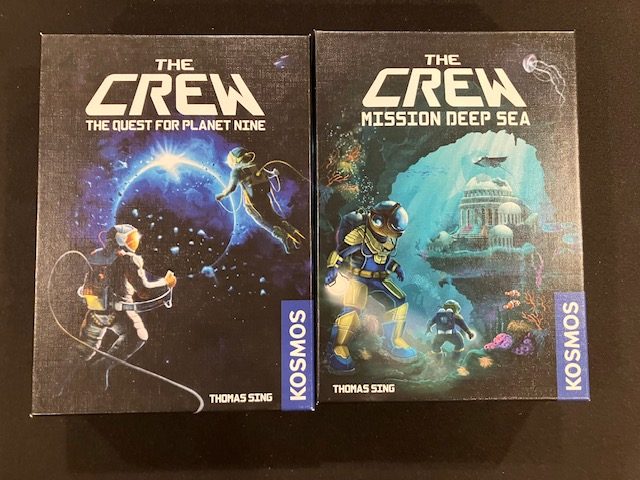
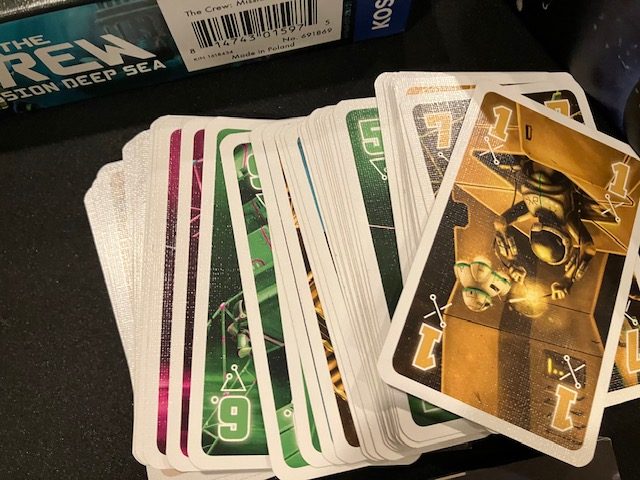
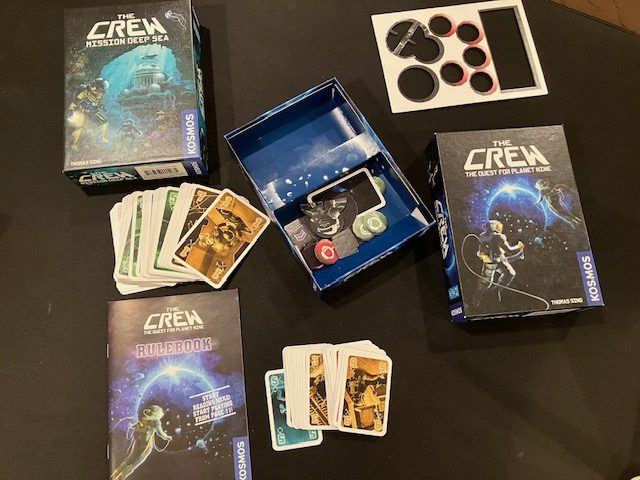
#4. The Crew: The Quest for Planet Nine or Mission Deep Sea

I have played The Crew (either one) in so many environments, and it has always worked! Missions are short, and it’s really easy for people to hop in or out of this game! You may start with 3 people, add 2 more, then drop to 4! This is just the nature of conventions; people come and go, and The Crew can easily accommodate that! And the game is fun the entire game, even with people coming and going! And you can play as long as you want!! The Crew is also a cooperative game that works well at 5 people, and sometimes it’s just harder to find good cooperative games that work at 5! What a great game; it’s never failed me! The Crew has also made our Top 10 Cooperative Space Games, and the Top 10 Cooperative Trick-Taking games!

The Alpha Player is kept at bay because this is a game of hidden information; the Alpha Player can’t tell you what to do because he can’t see everything! While I personally like The Crew better than most trick-taking games, I can’t deny there was a more popular trick-taking game that works so well at a convention … see #2 below!

#3. Fate: Defenders of Grimheim

There are multiple reasons Fate: Defenders of Grimheim works so well in a convention! For one, the rules are simple to teach and easy to internalize: it’s a tower defense game! Defend the homeland in the middle!

For another, the board is so well-labelled! Everything you need is well-labelled on the board with big enough fonts to read!

For another, the game feels very multiplayer solitaire, but in a good way. Every player is upgrading their own character with their own rules and their own cards, so everyone feels like they are getting powerful! The Alpha Player is kept at bay because each player is too busy concentrating on their own deck; the Alpha Player can’t see what everyone is doing with their own very different deck!

A game of Fate: Defenders of Grimheim starts off very multiplayer solitaire, as each player defends a different direction, but as the game progresses and more shared area is threatened, the game becomes much more cooperative! This is a great dynamic for a bunch of strangers because they can slowly get to know each and slowly become more cooperative as the tension increases!

See our review here to see if Fate: Defenders of Grimheim might be right for you! Oh yes! I have also taught this at Dice Tower West and it went swimmingly!

#2. Lord of the Rings: Fellowship of the Ring, Trick-Taking Game. Also, The Two Towers!

This is a cooperative trick-taking game set in the first book of the Lord of The Rings. There are 18 very thematic chapters that people play through!

I know this is a good convention game because I saw it being played non-stop at RichieCon 2025 and Dice Tower West 2025! People just seem to love this game!

Everyone seems to love the simplicity of this game! Like other games on this list, the game does scale so you can jump in and out (a little, the game is best at 3 or 4), but it’s been my experience that people just want to keep playing! See our review of Lord of the Rings: Fellowship of the Ring, Trick-Taking Game here!

The Alpha Player is kept at bay because this is a limited communication and limited information game; the Alpha Player can’t tell you what to do because he can’t see everything!

And don’t worry RichieCon 2026 people; the next game in the (The Two Towers) will also be available to play at RichieCon 2026!

#1. Just One

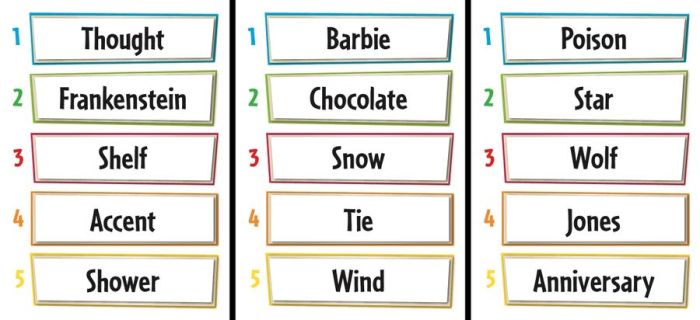
I have never had a session of Just One fail me! I have played with gamers, non-gamers, and casual gamers … and it has always worked! This simple party cooperative game is easily to explain, easy to play, and addicting to keep playing! People can drop in and out without any consequences, and it can play small numbers (like 3 players) all the way up to 9 players (with a little cheating) and still work flawlessly! This word game has a simple premise: everyone choose one word to make the guesser guess the secret word. That’s it! If any words are the same, they are eliminated, so players must think outside the box sometimes to get thing working! Each round is quick, and people can easily join or drop!

The Alpha Player is kept at bay because players simply aren’t allowed to communicate during the word choice phase! There’s no way the Alpha Player can sneak in because he simply can’t talk! (And if he is talking, he is cheating!)

Just One has made our Top 10 Cooperative Games You Can Play Online and also our Top 10 Cooperative Party Games!


Boaromia: The Goofiest Cooperative Game You’ve Never Heard Of!

Boaromia: The Cooperative Festival Game! was a very small crowdfunding game that was on Gamefound in Dec. 2025/Jan 2026! It has only 97 backers for €7293!!

This is a game for 3-8 players (!) and it is pretty quick; 60-90 minutes feels right, but it can be quicker with fewer people.

Let’s take a look at this goofy game! Is it fun?

Unboxing and Gameplay

This is a pretty weird sized box; it’s not standard sized. See Coke can above for perspective.

Boaromia is a game for 3-8 players! Each player takes the roll of a friend going to a music festival! Each different friend has a special “gift” that helps them navigate the music festival! See above!

For example, Crazy Q (above) has the “Festival Vibe” and can push through crowds without being hindered by them!

There’s a board (2-sided) which is the festival grounds! (One side is easier than the other)

Players move around the board, going to venues to see concerts! Seeing concerts with your friends is the best way to have fun in the game!

The object of the game, and this sounds ridiculous, is to have fun! Although you have metaphysical “fun” while you play, each player has a “fun” marker (see pink cube above) which you need to get to 8! If each player has 8 fun and can end together at the same location for a final picture, you win! That’s right, to win, you all have to have fun together!!

So, when we won, we all took a photo together!! See above!

Although alternative ways to have fun come up as you play, the best way to have fun is to attend the MUST SEE bands with your friends, and avoid the MUSS MISS bands! For example, Fire Circle and Primatez are MUST SEEs and Pale Pink and Harinna are the MUST MISS bands! Now, you get +1 fun per MUST SEE bands, but if a friend is with you, you get another +1 (as does the friend!)

To see a band, you (and hopefully your friends) must all end a turn at the Concert Venue with that band! See above as all three friends get +1 “fun” for seeing a show … another +1 if it’s a MUST SEE!

There is a concert schedule showing when and where the bands all play! See above! The colors are used very well to demarcate each venue and when bands are playing!

This game is all about coordinating with your friends to try to see bands together! Sometimes you see a band just to have fun together (even if it isn’t a MUST SEE), and sometimes you have to see a MUST SE band by yourself because everyone else has their own MUST SEE bands, and sometimes you may see a MUST MISS show just to cheer up a friend who isn’t having as much fun!

This game is all about seeing shows with friends and having fun together.

You have to keep your energy up, by visiting bars and the food court! A festival can be draining, so every round, you lose energy! You gotta get beer and coffee and curry to keep moving! See the BAR above (left), where you can get beer, coffee, mix drinks, and water … and see the fry stand above (right) where you can get food!

You start the game with some money to buy drinks and food. Notice that you have a BLADDER track (see above)! All this drinking blows up your bladder … if you are ever have a full bladder, you can do nothing else on your turn but find the restrooms! Just like a real festival, this game is all about seeing shows, keeping your energy up, but also keeping your bladder under control!

You can get money by going to the ATM, but you can also share money if you are on the same space with your friends! “Dude, low on energy? Let me buy you a curry!!” This is a cooperative game, so of course you are going to keep your friends spirits up!

Like any cooperative game, this is bad news of some sort. In this game, the EVENTS unveal every round (the first part of the festitval is in the day, the second part at night). The EVENTS move the “talky” guy and the crowds around! The crowds and the “talky” guy are the things working against you!!

The “talky” guy hangs out at the bars across the festival and moves around in the game. If you ever enter a bar where the “talky” guy is, you have to immediately end your turn! “Hey Rich! Come here! I gotta tell you something!” The “talky” guy is nice, but he can mess up your movement plans if you don’t stay away from him!

The other part of the bad news EVENT cards are the crowds: see above as the DUROC venue is full of people! Crowds don’t STOP your movement, but they impede it; it takes 2 movement points to get through a crowded space! (Everyone has 6 movement points per turn, modulo special abilities like Crazy Q who isn’t affected by crowds!)

There are some side goals that come up as you play which can help you. For example, if two of you end up near the swings, you can immediately satisfy the “Blurred Lines” Goal and one of you gets a fun! Presumably, one player pushes the other player on the swing … these goals are “secondary” ways to get fun!

At the end of the festival, if everyone has 8 fun and you all end up on the same square for a group picture … you win! If not, well, it was fun to see those bands anyways!

The components aren’t great, but they work and are readable. There is one major issue we will discuss below!

Overall, the components work.

Rulebook

I liked this rulebook. First of all, it wasn’t on shiny paper! It was on ordinary paper! See above! I think I’ve come to prefer rulebooks on non-shiny paper! It makes it SO MUCH easier to read in the light! There’s no reflection! Those of you paying attention might remembers The Plum Island Horror from a while ago (see review here); it also had the non-shiny paper! I find myself wishing more companies would use non-shiny paper!

This game is an A on the Chair Test! It fits very well on the chair next to me, it has a very readable font, I can see and consult the rulebook on the chair next to me, and the rulebook is filled with lots of good pictures!

The Components page and set-up were fine! They showed the map and where to put things!

I think there were a few minor rule questions as we played, but overall this was a good rulebook! Lots of examples, well-laid out rulebook, lots of pictures; they did a good job. Did it need an Index? I don’t think so? It’s a pretty simple game.

Solo Game?

So, there is no solo mode! See above as the player count is 3-8 ! Boo for not following Saunders’ Law! … until I tried it solo!!

So, I said, “I’ll just try a 3-handed solo game!” See above for set-up! This should work, right?

Nope! I got slaughtered! This game is all about planning how each character separately moves about the map! Each character MUST SEE some shows, and tries to hook up with their friends for other shows! Sometimes there are Goals which are useful, but this game is all about the coordination and trying to get to events! Every game I have played has characters barely making events at the last minute! And that’s the fun! Trying to hook up with your friends.

As a solo gamer, it’s too much work trying to run 3 characters at the same time. “Wait, he has to be here, she has to be here, wait, he needs energy, he needs to pee… ARGHGH!” I totally understand why there’s no solo mode. Having said that, I think I would recommend trying a solo game three-handed just to see how the game works! For the purposes of having “fun”, a three-handed solo game isn’t fun, but it’s very instructive.

Play solo (three characters) once to learn the game, then never play solo again.

Cooperative Play

This game is totally made for cooperative play! There is so much to keep track of for just one character, so you pretty much have to play just one character! You have to make sure your character achieves their goals … but in order to get fun (and win), you absolutely have to work with everyone!! Part of the fun of this game is calling out to the game board:
“HEY! I MUST SEE the Primatez!! Who wants to come with me?” And you’ll hear,
“I’d love to, but I have to pee first! I’ll see you at the stage!”
“Not me! I HATE the Primatez!!! I’ll get some curry and meet you later!”

The game is goofy! You are all trying to coordinate your actions to see as many shows as you can! You have to manage your money, your bladder, and your fun as you run around the board.

This game is so cooperative! You have to work with your friends to see shows, because the best way to get fun in the game is to see shows together, with your friends!!!! It’s actually a lot of work to have fun at the show!

The theme of the game is so goofy, that if you lean into it, you can have so much fun! We would high-five as we saw a MUST SEE show together! We’d share money so our buddy could get a curry and keep his strength up! We’ve go swing on the swings together between shows!

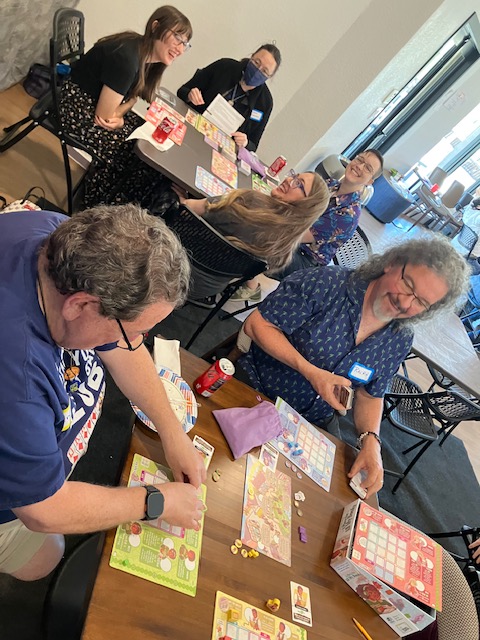
I have played a 3-player and 5-player game of this, and both worked so well! Everyone was laughing and having a good time!

What I Liked

So Interactive! As we played, there was so much interaction! Sometimes you’d hang with one set of friends, sometimes you’d hang with a different set of friends … and see shows together! The game was all about seeing shows with your friends, even as little groups come and go as you see your MUST SEE bands!

Goofy! I loved how goofy this game was! The band names are goofy, the character names are goofy! It makes it easy to lean into this theme and just have goofy fun! I don’t mean goofy to be bad in any way! I loved the goofy nature of this game!

Band Names: In case you haven’t figured it out, all the band names in this game as “peterbations” of real names! Some of the fun was trying to figure out who the “real” band was! Lukewarm Vanilla Snippets? We are pretty sure they are the Red-Hot Chile Peppers!!

What I Didn’t Like

Pawns and Character Colors: The worst part of this game was the mapping of the character colors to the pawn colors! Look above at all the characters! The washed-out colors all kind of blend into each other, and some character colors are almost indistinguishable! The pawns to character mappings are also very unclear, to the point where it sometimes interfered with gameplay! “Wait, why are you moving my pawn?” “Oh sorry, I thought that was my color!”

Considering how WELL they used colors to distinguish the venues, the colors for the characters pawns and character mats seemed surprisingly poorly chosen. I think they were trying to use primary colors for the venues and “off” colors for the characters to distinguish them? I applaud the effort, but it just didn’t work.

A Worry About Replayability: The game uses the same schedule and the same band names for every game. I’ve played the game at least 3 times now, and the game is still a hoot! I worry it will become “samey” after a few more games; I wish there had been another schedule with different band names.

I think this game needs a Heavy Metal expansion, with names like “Poorly Whiteless’ Prismatic Spray” (for “Richie Blackmore’s Rainbow”) and a different schedule! I kind of wish that more schedules with different theres: a “Pop” and a “Heavy Metal” and a “Alternative” festival should have all been included. But I get it; I think this is literally the smallest Kickstarter I have ever funded. It only had 97 people, so they could only do so much with limited funds.

Conclusion

Boaromia: The Cooperative Festival Game is definitely a hidden gem of a game! If you have a group of friends who can lean into the music festival theme and enjoy the dynamic little groups that form from show to show, I think this will be a great hit! If you are looking for a deeply serious and strategic game with cooperative elements, Boaromia: The Cooperative Festival Game probably isn’t for you. This game is best enjoyed by being goofy with your friends!

From this description, I think you will know if you and your friends will like Boaromia! I am surprised how much me and my groups of friends liked this! I was going to give this a 7/10, but I can still see the smiles on ALL of my friends faces as we played this … it has to be at least an 8/10!!

There are few issues to consider; the game might be come a bit “samey” as the bands and schedule don’t change, and the color choices for the pawns and characters mats actually detract from the game. I would love to see a bigger better edition with better colors, multiple themes/bands, with multiple schedules to give the game some variety! But as it stands, I really enjoyed this game!

I think this game would would work fabulously in a convention environment! The raucous energy of this game matches the raucous energy you get at a board game convention! I expect this to be on my Top 10 Cooperative Games To Play at a Convention next week! (Spoilers!)

Aeon’s End Ennui? A Solo and Cooperative Review of Aeons End: Beyond the Breach after Full Playthrough

Aeon’s End Ennui is the condition of being sick of so much Aeon’s End! It’s the ennui of yet another Aeon’s End game!

Aeon’s End: Beyond the Breach is the 1000th standalone expansion (okay, I am exaggerating a little; it’s maybe the 16th expansion) for Aeon’s End. This is a standalone game, so it can be be played by itself. You can also use the mages and friends and foes and nemeses from this to add gameplay to other Aeon’s End you may have (and vice-verse). Today, we are concentrating solely on the standalone experience of Beyond The Breach!

Cure For Aeon’s End Ennui

The cure for Aeon’s End Ennui is simply reminding yourself HOW EASY it is to jump into an Aeon’ End game! Each standalone Aeon’s End game comes with the first game sheet above!

That first game sheet clearly defines (at least for the first game) what you need to do to get the game moving! And in fact, the Nemesis deck is fully constructed for you! One of the most annoying things in Aeon’s End is constructing the Nemesis deck, but that first play is all set-up for you! Just grab the the first few decks and set-up!

I am not being glib here; the ease at which you can set-up your first game and get going might be a major reason I still keep buying the Aeon’s End games. It’s so easy to jump in for your first play. Other manufacturers take note: if you can easily jump into a game, it’ll make it easier to play and easier to like.

Unboxing and Gameplay

See box above with Coke Can for scale.

Each player chooses a mage to play. Aeon’s End are all cooperative games where mages work together to take out a big bad.

The base game only starts with the 4 mages above (the extras are from Kickstarter backer extras and expansions that came in the box itself).

The mages battle one of the nemeses (the bad guys) above! To win, they cast spells to try to reduce the nemesis to zero hit points!

There are Friends and Foes that help/hinder you along the way. No player actually plays them, they are just operated by the game and have a mildly good or mildly bad effect when they activate.

This is a cooperative deck-building game: see some base cards above. Gems (like the crystal) generate Aether (the little notes) and that is used to buy bigger and better things; better gems, better spells, better everything. Aether is the currency of the game and is used to buy upgrades for your deck. Aeon’s End: Beyond the Breach is a cooperative deck-building game! For more examples and discussion of cooperative deck-building games, see our Top 10 Cooperative Deck-Building Games!

There’s a whole wide selection of Gems, Relics, and spells to buy! See above. More come out as the game unfolds.

Casting spells are how you do damage to the Nemesis and other bad guys that come along. In order to cast a spell, you have to prepare it into an opened breach: see above as Nook has 4 breaches: 3 of them are opened and have spelled prepped into them! The fourth breach is closed and can’t be used for casting a spell*, but it can be opened (at the cost of some Aether) later on. Interestingly, cast spells on your turn actually go off at the start of your NEXT turn!

The quality of Aeon’s End: Beyond the Breach is great! See components above. The art is a little inconsistent with other Aeon’s End games, but only if you look too closely. Internally, this game is very consistent.

Oh yes, I forgot to mention one of the more interesting things about the Aeon’s End systems, no shuffling! You just plop your discard over and turn it into your deck! Those of you “annoyed” by Dominion‘s constant reshuffling, you (mostly) don’t do that in Aeon’s End! I say “mostly” as foreshadowing … Beyond the Breach actually adds shuffling in at some point … spoiler …

Friends and Foes

In Aeon’s End: The Descent, they introduced one of my favorite new mechanisms into the Game: Friends and Foes! See our review of the original Aeon’s End: The Descent here!

In Descent, the Aeon’s End team introduced us to the Friends and Foes family!

Two new characters are inserted (optionally; it is a module you can choose to play with or not) into the game that help of hinder you … slightly. No one actually plays a friend of foe: the game just operates them for you (with a little help from you).

Aeon’s End: Beyond the Breach continues with this trend and adds more Friends and Foes! See more above!

I still love the Friends and Foes! Even though it makes the game more complicated (because it’s yet another mechanism to operate as you play), it gives the players more choices! When a friend or foe activates, you usually have a choice of two options; so you can choose how you be slightly helped or slightly hindered! It makes the game feel like you have more agency!

The other thing the Friends and Foes does is tamp down the problems with Variable Turn Order. See discussion below.

I am very very glad to see more Friends and Foes being available! This is a modular expansion you can add to any Aeon’s End game!

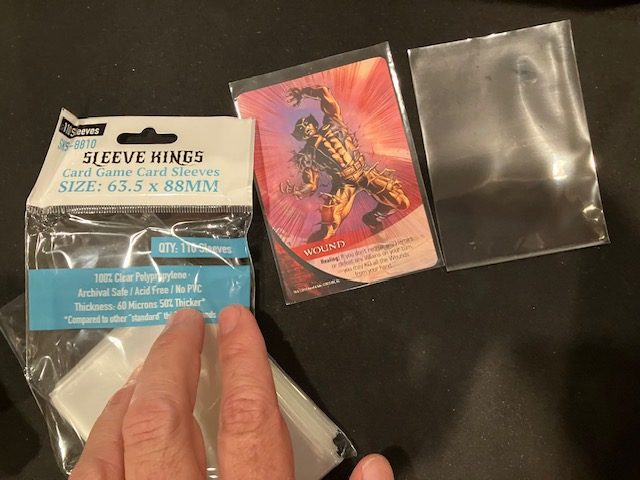
Sleeve Your Cards!

Aeon’s End games are all Variable Turn Order games: a deck of cards control when entities have a turn. The numbers indicate a player number, and the Nemesis cards indicate when the bad guy has a turn.

Basically, for balance, the players (as a group) always have 4 turns (no matter the number of players), and the Nemesis gets two turns always. See rulebook above as it confirms that!

A deck of cards (the Turn Order deck) controls this.

If you sleeve NOTHING else, you should sleeve the Turn Order deck (see above: like I did above). You handle the Turn Order deck all the time in this game. Learn from my mistake: my original Aeon’s End turn order deck is kinda grody because I didn’t sleeve it!

This is deck-building game too … you usually should sleeve a deck-building game because players handle the cards so much. I plan to sleeve Aeon’s End: Beyond The Breach before RichieCon 2026, but I haven’t had a chance to yet. I did play about 10 games without sleeving it, and it’s still fine, but I will still sleeve it before I let it loose on the convention floor.

Variable Turn Order

We have written many articles about the dangers of Variable Turn Order: see the most recent one here: Variable Turn Order and How to Mitigate It’s Randomness. Basically, Variable Turn Order can be too random sometimes and ruin a game. There are some simple mitigation techniques (usually: don’t allow the Nemesis to ever have more than 2 turns in a row), but it can be an issue.

Luckily, Aeon’s End: Beyond The Breach has a few things that help mitigate the problems of Variable Turn Order. The problem is still there, but it’s much less pronounced.

First, Friends and Foes! By adding two new cards into the Turn Order Deck (see Friend and Foe cards above), this evens out how often the Nemesis comes out! Adding these two cards makes it much less likely to get multiple turns of the Nemesis in a row!

Second, there are new mechanisms in the game that address the problem by allowing the players to alter the Turn Order deck! For example, the friend Lash: The Dreamer has the ability to re-insert a player turn order card into the deck (effectively giving the players one extra turn)! See above!

The Relic card Chronoid allow users to move the next Turn Order card to the bottom of the Turn Order deck. There are a few other places in the game where the players can alter the Turn Order deck.

I like that they have added some new in-game mechanisms to fix turn order problems. I don’t think I ever needed my “The Nemesis never gets more than two turns in a row house rule in all the games I have played of Beyond The Breach. Between Friends and Foes and these few extra mechanisms, we may be at the point where it’s not as big a deal? Shrug?

Rulebook

For a rulebook that’s had SO MANY iterations, I still have some complaints. Bigger than I expected.

Seriously, this rulebook gets a grade of C on the Chair Test! Sure it’s got good pictures and good set-up, but it droops over the edges making it much harder to read this on the Chair next to me! This form factor is really not great.

This is a standalone game, right? Sure, it expands the Aeon’s End universe, but you can play this all by itself! So why are some concepts in the game NOT DOCUMENTED AT ALL IN THIS RULEBOOK? The “Recall” keyword (see Chronoid and Atomized Ash above) are not documented in the rulebook! I had to go online and found this BGG link which answered the question: https://boardgamegeek.com/thread/3708173/recall-new-keyword-not-a-question-just-a-lack-in-t

There’s at least a few more; I encountered the Conjure keyword and had no idea what it meant: I had to go Googling. This is unacceptable that the keywords in the game are NOT documented in this standalone rulebook.

I like the IDEA of highlighting new rules in a different color (see rules above), and it mostly works. But this rulebook also makes the error of putting new rules in sidebar boxes outside the flow of the main rules. It’s too easy to miss a rule; usually sidebar floating boxes of text are “examples” or “clarifications”! By putting sidebars outside the flow of the normal rules, I think there are too easy too miss. This is definitely a personal thing for me, so maybe it’s not a problem for you. I encountered this problem in the game Unicornus Knights (see review here and here) and they FIXED the rulebook to eliminate rules from sidebars and put that text into the main flow! It made the rulebook that much better!

Don’t get me wrong: this is a pretty good rulebook. It’s just frustrating that this rulebook (given the number of iterations of it) still has problems.

You will be able to learn the game pretty well from the rulebook.

New Concepts

There are a surprising number of new additions to the game system.

Trinkets: A lot of spells and bad effects cause you to draw Trinket cards (see above). Trinkets are basically one-shot items that clog your deck for one pass but then go away (back to the bottom of the Trinket deck)! The Trinkets are always good currently, but I can see them adding “evil Trinkets” in the future. I liked their use of the word Trinket; it implies it’s a crappy little piece of junk you can only use once. And that’s exactly what it is! I found the addition fun and useful. They were all over the game!

Pulse Tokens: Yet another token. Certain cards give you Pulse Tokens (see the little explosion token on Dezmodia above) which other cards or abilities or powers allow you to spend. I think there might be a mage or few new items that embrace the Pulse Tokens more, but in my 10 games of Aeon’s End: Beyond The Breach, there were a VERY minor addition. Eh. I barely used them.

Treasures: Although Treasures aren’t new, Level 4 treasures are! In battle 5 of the campaign, you get a card that only you can buy! Sounds familiar? You might remember something similar from Astro Knights: Eternity! (see review here). Astro Knight: Eternity called them Inventions, Aeon’s End: Beyond the Breach calls them Level 4 Treasure. I guess it’s not a big surprise since the same company makes both games! It’s hard to tell how useful Level 4 Treasures are since you only use them for one battle (at the very end). The Level 1-3 treasures were much more useful.

Aether Tokens: You can earn Aether tokens (which is basically just Aether). Unfortunately, you must spend all Aether tokens by the end of your turn, or you lose it all! One of the games I played, I accidentally kept them around as long as I wanted! Nope! Learn from my mistake!

Solo Play

So, Aeon’s End: Beyond The Breach supports solo play. Huzzah! (Thank you for following Saunders’ Law).

I still want to complain about the rulebook, but some props: they give solo rules, and they are good! It’s unfortunately an “afterthought” on the very last page of the rulebook, but even after complaining about this in Aeon’s End: The Descent, they STILL haven’t fixed a glaring problem! When setting up the Turn Order Deck WHY do they not address the true solo? They address 2-Player, 3-Player, and 4-Player. You have to “figure out” from context that the solo player has 4 player turn order cards (and those of you who have played the Aeon’s End App might think you only get 3 Turn Order cards!!). Ugh. This is another thing that should have been fixed in this rulebook.

BUT, this is true solo play, where the solo player plays a single mage! Since the single mage has fewer hit points, it’s easier to be “taken out”, so if and when your solo mage is reduced to 0 hit points (called exhausted), you still keep playing! The problem is that Gravehold takes the damage you would be dealt instead! At twice the rate! So, you want to keep your mage healthy, or Gravehold dies quicker! Remember, you lose if Gravehold is ever reduced to 0 hit points!

You can also play multi-handed solo (playing multiple positions). I usually prefer two-handed solo (see my review of Pandemic: Fate of the Fellowship), but the true solo rules are so simple, it’s easy to play one mage and the game flow doesn’t change much! The only “other” rule for true solo (besides Gravehold taking your damage if you are exhausted) is that you are your own ally.

Actually, the rule that you are your own ally is kind of neat; you can strategize different things to do things for yourself! A lot of cards in here help your ally, and if you choose the right spells/relics/gems, you can buff yourself pretty quickly. I chose a lot of upgrades and cards based solely on how well the ally rule helps myself! That Phosphor Nugget (see above) becomes a LOT better when you get your OWN token!

Because you only play one mage in true solo, the maintenance and upkeep as you play is NOT overwhelming. This particular box of Aeon’s End is more complicated than most, so I worry that playing multiple mages would be too much mental and physical overhead (plus the context switching). But since you can true solo, no problem! I never felt overwhelmed by the maintenance playing solo… well… I did when switching between chapters of the campaign, but that problem will be there in the cooperative game too!

I played the entire campaign solo, pure solo the entire way. Spoiler alert: I had a great time! I must have if I kept playing!

Campaign

There is a campaign game here! A Narrative Booklet (see above) describes a story and helps you set-up and get rewards from each chapter. There are 5 chapters to the campaign, each of which is played once or twice.

For Battle One (see example above), there’s flavor text telling the story of the battle (in black and white). The “game text” is in yellow and orange as it describes how you set-up the first battle. At the end of the battle, you will have some more flavor text describing the resolution, and then some “treasure” (both literally and figuratively). At the end of every combat, you will unlock new things that will go into your next battle!

Each chapter of the campaign has its own deck(s) of cards (see above).

.. as well as an envelope with “new stuff” (new mages, new bad guys, etc).

The campaign is completely resettable. After I finished my campaign, I put everything back so that the game was in pristine shape! There’s something “fun” about opening the decks and discovering the new cards as you go! If I come back to this in the future (and I suspect I will), I will want to “rediscover” the joy of the entire campaign. The cards were all labelled from what deck they came from (and they are numbered), so it’s easy to reset the cards. The envelopes are little trickier; I had to take a picture of the contents so I could remember what was in each.

So, is this a good campaign? Yes and No. From the perspective of a “the campaign is a way to play all the contents of this box”, it was a phenomenal success! I played the entire campaign solo and really enjoyed the campaign! I got some great battles with great bad guys! I had some really interesting mages to operate! I tried about 5 different mages over the battle! There were all interesting (but see discussion below.

From another perspective, the campaign was a failure. The story DID no draw me in. I struggled to read the first wall of text (see above).

I even tried the trick I did in Aeon’s End: Descent, where I put the Mage’s pictures next to the text! See above! That trick worked really well in Descent, as it helped ease me into the story when I could see all the mages.

Unfortunately, this trick did NOT work for Aeon’s End: Beyond The Breach. I found the story impenetrable; there was some time travel and meta things going on that just put me off the story. I just stopped reading the story after Battle 2. Remember, I really liked the flavor text from both Astro Knights: Eternity and Aeon’s End: The Descent (see those reviews here and here), so I am not against story … but I just couldn’t get into it here. I feel the campaign story here did not work.

Despite not liking the flavor text, I loved the way the game evolved during the campaign.

I got new treasures all the time!

I saw new Mages! In fact, me and Dezmoda(she came out in the campaign) bonded! I used her for two of my battles I liked her so much!

As a vehicle for pushing new content forward, the campaign worked great. As a story to follow, I feel the campaign didn’t work; I just didn’t like the story and stopped reading the flavor text. For the record, you can play the campaign perfectly well even if you don’t read the flavor text.

Despite the story failing for me, the game was a blast! I had so much fun playing all 5 chapters of the campaign! I played all of them solo and a few of them with other people!

Cooperative Play

I was able to get this played with 4-Players, 3-Players, and 2-Players.

I think that this set of Aeon’s End (Beyond The Breach) worked best at 2-Player when playing cooperatively. I have alluded to this point earlier, but this is one of the most complicated Aeon’s End campaigns! There are a lot of new rules, the cards have many “complex” interactions, and some of the Mages are hard to operate! With all that newness and complexity, it seems easier to cooperate in a 2-Player game.*

Joe and I had a marvelous time playing 2-Player! We were able to combo and use ally-helping abilities very well and just slaughtered the first Nemesis!

On the other hand, the 3-Player game, we got slaughtered! Part of that was because we played Battle 3 (they were helping me wth my campaign), which is harder.

And the 4-Player game was also a loss (see above). After playing 4-Players, I noted that we had to “travel” around the board a lot to see all the cards in the display, and what the villains are doing.

So, when we played 3-Player, we all stayed on one side of the board so we could all see the cards! This mostly worked, although were were bit a cramped. I think I would recommend playing 3-Player all on one side.

A couple of notes: we have played many games of the “simpler” Aeon’s End games at 3 and 4 players and not had any problems. In fact, I have seen the original Aeon’s End game work tremendously well with 4-Players! So, I am a bit concerned that it doesn’t work “quite” as well at 3 and 4 players.

There is one common element to the 3 and 4-Player failings: the mage Stake. See above. All the games we lost had Stake as one of the mages. Andrew, who has played some Aeon’s End in his time, said he didn’t like playing Stake. And notice the complexity rating on Stake: 8!!

It’s weird to me that Stake is one of the original 4 mages you are SUPPOSED to play with! My friends didn’t really like playing him. In a 3 and 4-Player game, it felt like it was it was just too hard to get him going.

Because there are so many Aeon’s End games. this set has to try some new things to try to do something differently. The other mages played were interesting and different, and I had fun playing them. Stake seems like too much,

2-Player cooperatively is probably best, and 3 and 4 player will work, but I don’t think I’d recommend playing with Stake. At RichieCon 2026, I will recommend a 3-Player game WITHOUT Stake.

Conclusion

You might think I didn’t like Aeon’s End: Beyond the Breach from this review. That’s not true! As someone who has played a ton of Aeon’s End and Astro Knights and Invincible, I might see the holes a little too much. Maybe I have concentrated too much on those.

The rulebook is good enough to learn from, but I am sorely disappointed that neither conjure or recall is in there: you will have to go on the Internet to find those. There are some other minor points (Chair Test, sidebars with rules, some missing solo rules) that are triggers for me, but don’t let my personal peeves influence you too much. You should have no trouble with the rulebook.

Beyond The Breach is probably the most complex set of Aeon’s End games; the designers really had to stray from the simple starting premises in order to add variety to this system, but they have succeeded! The price of this variety is extra complexity that can be overwhelming. It’s not too bad, but it is there.

As a solo player, I adored this. I loved playing the campaign! This game will easily make my Top 10 Solo Games of 2026. It might have been even a bit too easy? Luckily, the difficulty can be adjusted: It’s good to know every bad guy can be made worse (wait, that’s a good thing?) With Friends and Foes and all the interesting Mages and battles, this is a 8.999/10 solo for me. (Why not 9? see below)

As a cooperative player, I would say, be careful. We had a good time playing, but there is a lot more complexity in this version. Be aware of what this is; you probably don’t want to bring newer inexperienced players into Aeon’s End: Beyond the Breach! I would argue towards the simpler original Aeon’s End for newer players (or even Astro Knights?), and only bring this out to players who are ready for this more complex experience. Also, be very careful with the mage Stake; unless someone really wants to play him, I would stay away from Stake in the cooperative game. 8.49/10

Why 8.49? Because I didn’t like the story. I stopped reading it. The campaign is a great vehicle to play through all the content, but in the end, the story didn’t work for me.

I think I would give Aeon’s End: The Descent the ever-so-slight nod over Beyond The Breach. In Descent, I liked the story, I liked the mages, and of course The Descent introduced Friends and Foes! But the two are very very very close …Beyond The Breach is great, and if you want more Aeon’s End, Beyond The Breach works well, but just be aware how complicated this set is.

The cure for Aeon’s End Ennui? More cowbell!

Appendix: Playmat

The playmat was an option in this Kickstarter. I really liked it; it helped organize the cards and keep everything on track. If you like the Friends and Foes modules, this especially helps keeping all that straight.

I’d recommend getting this playmat if you do get Aeon’s End: Beyond The Breach: it’s very thematic and useful.

The Last Spell: The Board Game. A Solo and Cooperative Review

The Last Spell is a solo and cooperative board game (see above) based on a TRPG Tower Defense video game of the same name. The board game has the same idea; it’s a tower defense game where you cooperatively protect your town from the hordes of that monsters descend upon it!

This was a pretty big Kickstarter with lots of expansions and other stuff (sleeves especially: see above). The Last Spell (the board game) was on Kickstarter back in May 2023, and it promised delivery in May 2024. It arrived at my house in early 2026, so it’s about two years late (which is not great).

Let’s take a look! We will ONLY be taking a look at the base game.

Unboxing and Gameplay

The Last Spell is a pretty standard sized box (see Coke can above for scale) except that it’s a little bit taller.

It’s taller because it comes with a bunch of miniatures!

Most of the miniatures are the bad guys (part of the swarm) that invades your town!

Each player takes the role of a single hero! See choices above!

Each player gets the card and corresponding mini (see above). BTW, the colored bases ARE NOT for the players, they are for a particular set of bad guy, but I found they helped me distinguish the good guys from the bad guys. They probably should have included bases for the good guys! Each player has a bunch of action tokens (the yellow tokens) and 4 green movement tokens. You can spend the yellow action tokens to “do stuff” (do different attacks usually) and the movement tokens to move around the board.

Each hero also gets some starting equipment and starting cards: see above.

As the game progresses, you can upgrade your equipment and get better stuff!

Interestingly, a lot of upgrades come from building certain building!s So, the players make choices for building: do we want more gold? Do we want more materials? Do we want better weapons? Do we want better magic? The buildings the players choose to build define their upgrade path!

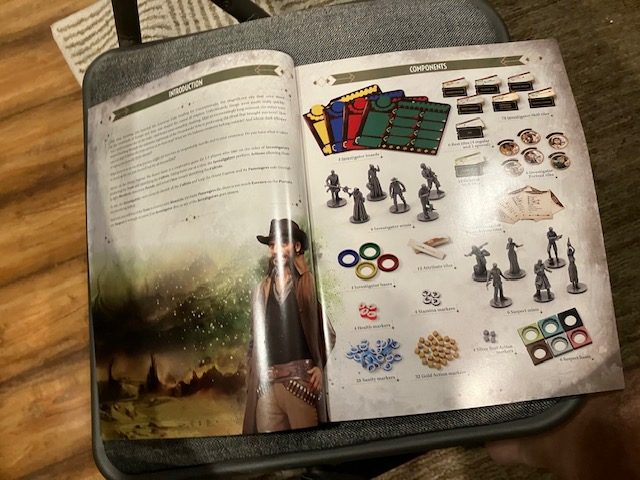
So the game has a weird arc: it takes place over 3 days: each day has a “Day Phase” (see rulebook above) and a “Night Phase” (see rulebook below).

That’s right! Each phase is pretty complicated, and you do it three times! 3 days and 3 nights!

The Day phase is all about spending resources (Gold, Materials), building buildings, fixing buildings from the night before, and generally getting ready for the Night phase. The Day phase is “getting ready” for combat.

The Night Phase is all about combat! The heroes are fighting the hordes as they advance!

In the Night phase, cards full of hordes (see above) sit on the edge of the board and get ready to invade!

Each different type of monster has different Hit points and damage: see some above.

If the players can keep their spellcasters casting and keep all the monsters away from them, they win! If the monsters somehow kill all the spellcasters in the middle of the board, they win!

Of course, you can’t have a video game adaptation without a big boss! The big boss comes in the third night and will mess you up! See above as we were (luckily) able to kill them in that game!

In case it’s not clear, this game embraces 8-bit art (like the video game) for just about all the art, but it uses detailed minis for the monsters on the board!

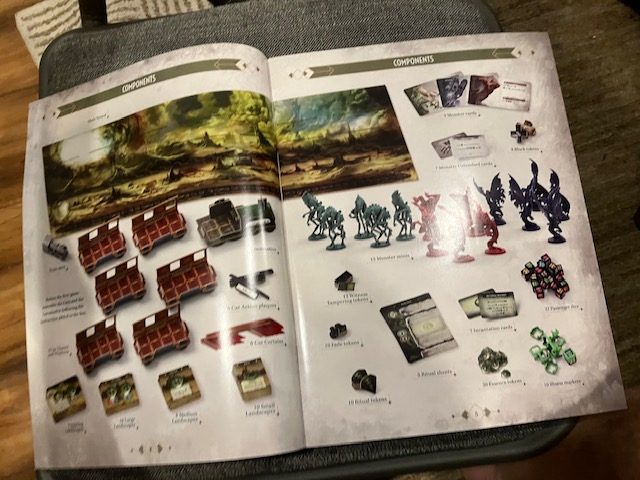
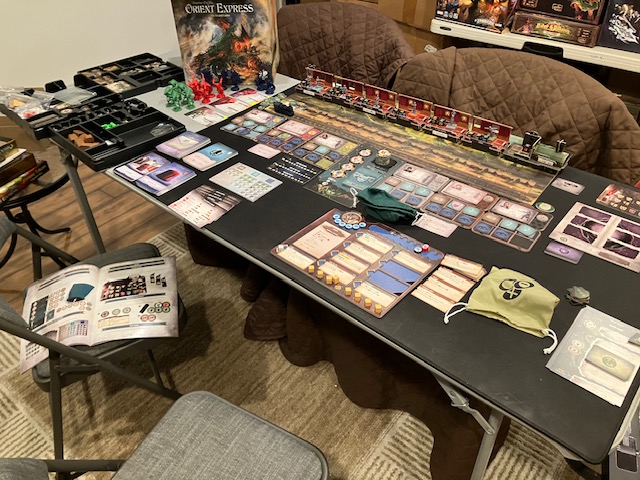
This is a big mama-jama on the table and takes up quite a bit of space! See above! The components are pretty darn good.

Rulebooks

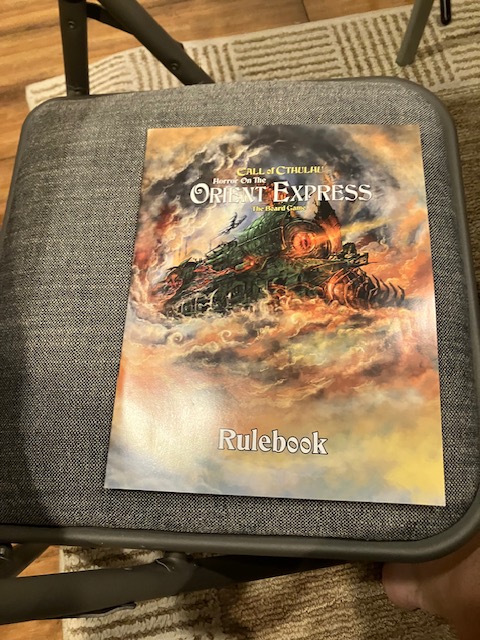
There are multiple rulebooks: one for The Day and one for The Night. At first, I was kind of upset by this … how big is this game that you need TWO separate rulebooks? But after some introspection, I think I prefer two rulebooks. Why? The alternative is a giant rulebook with a TERRIBLE binding like we saw in Valheim (see review here)! So, having two rulebook which lay flat? I am okay with that!

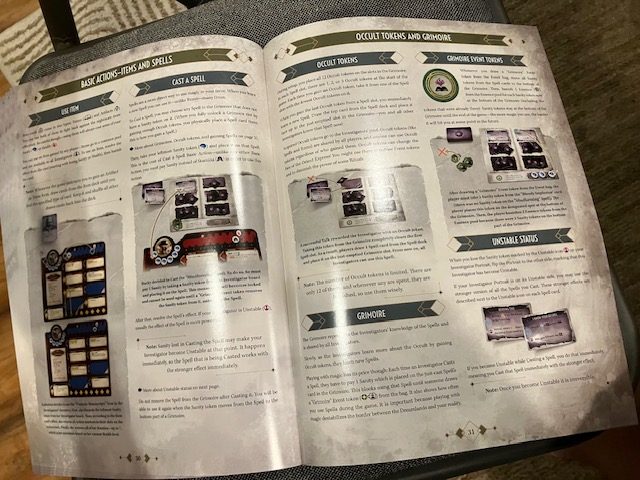
The rulebooks open nicely onto the chair next to me; the staple-binding keeps both pages open and easy to read. The font is fine and readable (see above) There are enough pictures to be useful has well. On The Chair Test, the rulebooks get an A-; they droop ever so slightly over the edges but generally look good on the chair next to me!

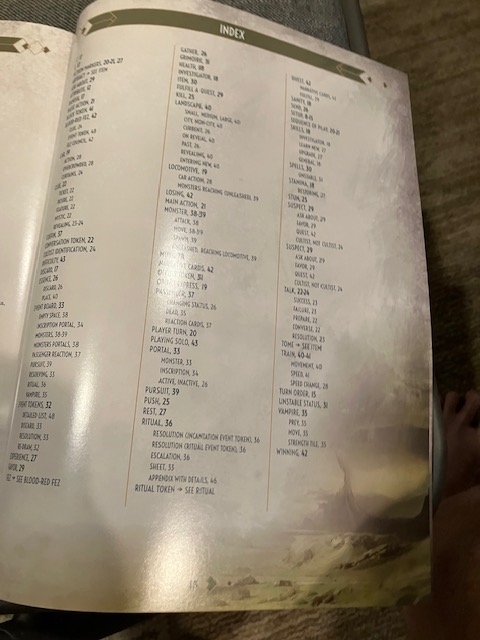
Having said that, I was very triggered by their use of the “Index”: they completely misused the word!!! See above! An Index is a list of keywords with references (page numbers or links of some kind), but an Index is sorted alphabetically so that people can easily search for relevant keywords using binary search! Unfortunately, what they label as an Index is a Table of Contents: phrases and concepts sorted by the page number! See above!!! A table of contents is used to show how the document is organized!! WHAT THEY HAVE IS NOT AN INDEX! That is a Table of Contents!!

I have to admit, this gave me a very worried feel about the rest of the game. If they can’t get this right, what else will they get wrong?

In general the rulebook was sorta “ok”. I didn’t love it, and I had some real trouble finding some rules (especially some edge cases, since they don’t have a real Index), but I guess it was “fine”. I guess. I am still upset about their misuse of the word Index. In both rulebooks.

Solo Play

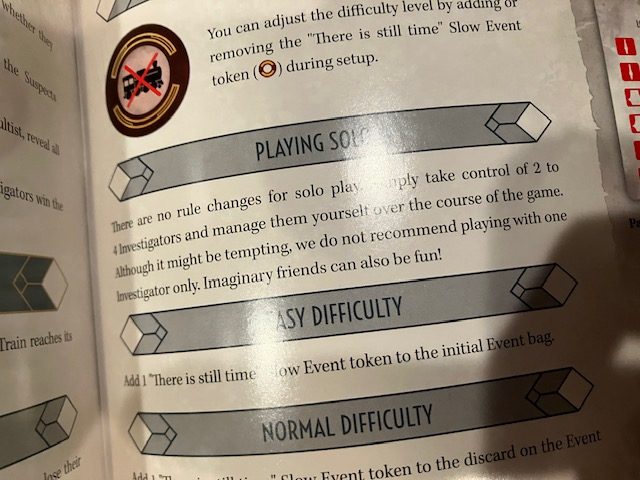
There is a solo mode! Thank you for following Saunders’ Law! Hurray! It’s not that much more complicated; you start as true solo (with one character), but you can recruit extra heroes. (See the rulebook above with the Solo mode documented in the back of the Day Phase rulebook).

Here’s the thing; for my first play, I wanted the game to run as smoothly as possible without any extra exceptions. I have to teach the cooperative game to my game group, and I want as few changes as possible. In the end, I ended up playing two-handed solo: alternate between two characters and play as-if it were a 2-Player game. I think this is the best way to play your first solo game; get all the base rules under your belt in a two-handed solo mode, and then if you like it, you can try the more complex solo mode given.

So, let’s be very clear: the majority of this game is in the Night Phase fighting monsters! The Day Phase, while important (as you figure out how to spend your resources to protect your town), is over quickly! Most of the time you are fighting monsters!

And you spend a LOT of time fighting monsters. My first day (Day 1/Night 1) probably took me 2 hours to get through. Holy cow! I had to leave the game set-up on the table overnight! I got better at running the game, but I also realized I got a LOT of rules wrong (if only they had a true Index to fix this…)

My second day (Day 2/Night 2) also took about 2 hours to play. I had to leave the game set-up on the table. A lot of this was correcting my incorrect notions from the previous Day and keeping my head in the rulebooks a lot.

My third day (Day 3/Night 3) was also about 2 hours to play. This day would probably have been shorter, as I was getting to know the rules, but then the Big Bad Boss came out! And the Big Bad Boss has her own very special rules that you have to study!

I ended up winning, but the game basically took me 3 REAL days to play … I basically played one “game day” per day, and left the game set-up on my table!

This is a long game. I think the game will probably cut by a third or even a half now that I have the flow of it, but it takes a long time to get the sense of the game.

For the solo player, there is QUITE a bit of maintenance. SO MANY monsters come out and converge on the town! See above! The solo player basically has to spend quite a bit of time moving EVERY single monster towards the city; this is a lot of work. This is partly why the game takes so long to play … all the minis have to move! And the rules are “not great” when there are conflicts; they could have been better (how do I move the monsters?).

I am glad that I played The Last Spell solo to learn the game. I am also glad I played it two-handed solo; there’s just too many rules to keep track of that I don’t want to be wasting any time doing “solo stuff” that’s outside the normal path of execution. Now, tt’s one thing for ME to keep the game set-up on my table for 3 days while I wade through the game, but I cannot imagine trying to learn this with my friends at the same time! There’s just too much going on. Play this solo to learn it; play it two-handed.

Will I ever come back to this as a solo gamer? I don’t think so? There is SO MUCH maintenance for the solo gamer (moving all those minis), I can’t bear going back to this and doing all that work as a solo gamer. It’s not bad solo, but it’s just so much work! Maybe you like living in this world or really like the video game … maybe spending that time moving stuff around might be fun for you? It wasn’t for me.

Cooperative Play (4-Player)

In session 1, we got 4 of us (me not pictured) to play the cooperative game! I was a little worried the game wouldn’t fit on the table, but we made it work … see above.

The major difference between the solo and cooperative game is that NOW the maintenance is shared! Sure, more enemies come out, but the game is a little more managable (and less work per player) as each player moves “their” monsters (on their side of the baord). This might be the best reason to play this cooperatively over solo play; the load is shared.

How does the game balance for more or fewer players? It boils down to how many action tokens you get! See the rulebook above! In my two-handed solo game, both characters got 7 action tokens! In the 4-player game, we each only got 3 action tokens! Now, this is balancing because with 4-players because the players can keep the monsters under control; each player monitors a section of the board! Based on plays, it seems like the balancing “generally” works. In fact, the third day was a 3-Player game (as one player was sick), so we got to see the balancing at all player counts; it seems to work.

Even after playing solo, I was still the “rules guy”, looking up rules as we played. We were able to play 2 days of the game: 1 day, 1 night, 1 day, and 1 night. It took us about 3.5 hours to play 2/3 of the game. It was a little shorter than the solo game because we all shared the load of set-up.

What I am surprised about; how the game unfurled. We accidentally played with Player Selected Turn Order (PSTO) (because it was more fun and more strategic) and because my group knows how to deal with PSTO well. But I am surprised that we DID NOT play with simultaneous play … it seemed like most of our turns were fairly independent (“you deal that that part of board, I’ll deal with that part of the board”) as there were no interactions that we had to carefully sequence. Once the bad guys got closer, we had to be more careful, but I am surprised we didn’t play our turns simultaneously. It seems like we could? And even should have (because it would reduce play time)? I think we didn’t because we wanted to see how things went on each player’s turn? I think? Given how much work there is per turn, I really really thought we’d embrace simultaneous actions. But we didn’t.

So, 2/3 of the game done in 3.5 hours. We saved the game to resolve it later. The good news is that there is a save system … it’s a pad of paper you write on … but we just took pictures (like the picture above).

Game 3 (3-Player Cooperative)

So, we resolved to finish the game. Due to some illness, we had to wait a few waits until we were all available, and even then, we were down to 3-Players instead!

Because the game balances by simply changing the number of action tokens, we were able to jump back into the game with 3-Players, even though the game started with 4 players! It’s also a good sign that everyone wanted to play again!

Here’s the thing; it took us 3.5 hours to play the final day of the game! Some of that was just setting back up (this is a big game after all, and resetting back to the saved state was a lot of work), but some of it was just all the maintenance that has to happen.

We finished and just barely won; I think we cheated on a few things accidentally, so maybe we should have lost. Either way, it was close.

What I Liked

Components: The game was quality and looked good.

Minis: The minis were cool and added a lot of flavor.

Save Game: There was a good system to save the game between sessions. And (even though we didn’t mention it) between campaigns!

What I Not Sure About

Style clash? I know The Last Spell is a video game, so embracing the 8-bit art makes some sense. But the disparity between using nice fluid minis for the monsters (and characters), but 8-bit graphics for everything else seemed to … clash? It made it a little harder to put them together and was a little jarring. Maybe it’s not a big deal …

Sectors: The game uses sectors for ranged attacks (usually not adjacencies or spaces away). The rules are very clear how the sectors work, and yet, they were very unintuitive! I think if you know the video game, then the sector ideas make more sense. In fact, I think a video game will enforce the sector boundaries easily! In the board game, we found the sector idea to be a little clumsy and unintuitive. .. but maybe if we had played The Last Spell the video game more, we would applaud the sector idea is just like the video game? I don’t know.

Combat: Combat is decided by dice, and there are a good number of mitigation mechanisms (things you buy, abilities, etc). But if you roll poorly, you can still get screwed pretty hard. Teresa especially had a bad third and was frustrated. Yet, the combat is simple to describe and simple to play. This simplicity makes it really easy to explain, quick to play, and simple to manage. So, it’s good on those axes, but yet you can really get screwed by bad rolls. So, I don’t know how I feel about this combat. I’ve played the game enough to see “ya, things seem to average out overall”, but when you are the recipient of the bad rolls, it’s very frustrating.

Things I Don’t Like

Minis and art: Because the game uses 8-bit art and the minis are smooth entities, we actually struggled to distinguish the enemies on the board (some of them really look a lot alike). And we struggled to correlate the minis with the monster stats. In fact, in my first game, I put one monster on each stat position so I could tell them apart! (See above) The minis needed a little more differentiation, even if it were something simple like a triangular base for some, square base for others, or something with color. It was frustrating enough to mention.

Maintenance: There is a lot of maintenance to keep this game going. As a solo gamer, it’s probably too much. As a cooperative game, the maintenance is tolerable but only of you friends help. Still, there’s a lot of work to keep the minis moving.

Length: The game just feels too long. I think this is because there are few too many rules? It needed just a smidge fewer rules; we paused too many times to lookup rules …

Index. The Index is NOT an index. If it had been a true index, it would have been significantly more useful.

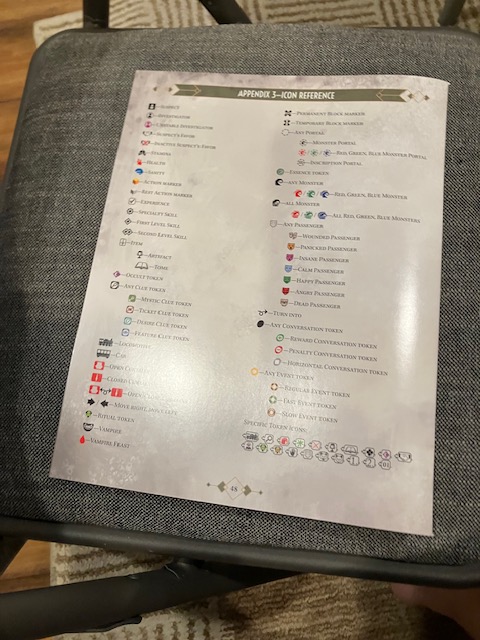
Icons: The Iconography is REALLY non-intuitive. We struggled with it and frequently had to look up the Icons (especially for ranged actions). It’s even more frustrating because the Icon are defined in exactly one place (the second rulebook). This really should have been on at least 1 more sheet that you could pass around.

Reactions

Sara liked this the best and would give it a 6.5 or 7/10. Teresa was right there with her.
Andrew and I were on the same page: about 5.5/10. Andrew would have called it a 6 earlier, but the Sector idea was so unintuitive, he felt that brought down the rating after the second session.

Conclusion

The Last Spell was divisive among the players in my group. We all liked the minis and the how well the game flowed once we got going, but it was still very long and had lots of maintenance in keeping the game going.

The clash of art styles between the minis and “the rest of the game” was actually a little jarring and some of the 8-bit art (mostly the buildings) was hard to distinguish. We all think the game would have been better if had been consistent between the art styles; the clash actually took us out the game a little. (This might be just because we had the minis Kickstarter version; the base game uses standees)

Interestingly, I liked another tower-defense game called Firesiege better than this (see review here from a few weeks ago), but my friend Sara liked The Last Spell better. I liked how quickly Firesiege played, but Sara seemed to like how The Last Spell played better. That’s two very different opinions!

As a solo game, the maintenance is probably too much for most people; between set-up, play, and tear-down, the solo player has way too much work to do to keep the game going. I’d probably give a 5/10 for solo. I’m not sure I’d play it again.

The Last Spell is better as a cooperative game, as the maintenance gets shared among all players. We even saw that the balancing mechanisms seem to work well at 2, 3, and 4 players! You can even switch the number of players between days! The reactions were mixed, from about 5.5 to 7/10. I think people who know The Last Spell the video game might like this a little more and give it another point.

Hopefully this review helps you decide if this is right for you. I suggest you play it and try it for yourself; there is a single day intro mode you can play to see how it works.

Ace of Spades Solo and Cooperative Review. Would You Call This A Cozy Game?

What kind of crazy person would call this a cozy game? This is set in a hard and unforgiving old west town, with gunfighters battling bad guys! The art is great but kind of harsh, the theme is hard, and the game … just doesn’t look cozy. But I argue that it kinda is! Check out why below …

Ace of Spaces is a solo or 2-Player cooperative game: players battle bad guys using Poker Hands to do damage; bigger and more powerful bad guys emerge as play continues!

Although Ace of Spades was originally released in 2025, the original publication was recalled because of some offensive cards. So, the publisher Devir re-released this game fairly recently in 2026, so we are calling this a 2026 release? I guess?

Let’s take a look!

Unboxing and Gameplay

Ace of Spades is a smaller box (see Coke can above for scale) mostly because it’s just cards (and one giant notater for hit points).

Players use poker hands to do damage to bad guys, so the game includes a “standard” deck of cards (see the fake “worn” veneer above) with a special “Foil” ace of spades card.

There are enemies you fight along the way to the big boss. The starting enemies are simple (like the 5 hit point Mule above) …

… and the final enemy is Lord Overkill (above with 50 hit points!) And that’s the easy boss!!

How do you do damage to enemies? You play poker hands, and each poker hand has a “damage” it does! See above as the Flush does 5 points of damage, the Full House does 6 and so on. You’ll also notice that face cards (JQK) do extra +1 damage, and Aces do +3!!

Each enemy you face has an “environment” (like the one above) which describes how many poker hands you can play, and how many redraws you get. The bullets (4) are the number of poker hands you can play, and the deck arrow (4) is the number of redraws you get.

There are 11 bad guys overall on the way to Lord Overkill!! See above! If you can take all 12, you win! You lose if you can’t take out an enemy with the given number of poker hands.

If you look at the bottom of the cards of the enemies, you’ll see that killing them gets you a “one-time” or “ongoing” power you can use in later combats. For example, if you take out the Sheriff above, you get the ongoing power that Kings to do extra extra damage!

If you can make it all the way to the end and kill Lord Overkill, you win!

It’s really just playing poker hands to do damage to bad guys.

Controversy

So, I didn’t know too much about the Ace of Spades controversy until I got my copy! I got a 1st edition used from a Board Game auction from my LFGS … and it turns out the 1st edition has the controversial cards! One of them is above (the slaver) and the others … I don’t to want to show. One of them is a slave card.

If you want to know more about the controversy, see this board game geek thread. You probably want to get the 2nd edition WITHOUT the slaver, slave, and other cards. It’s the 2nd edition that came out in 2026 and that’s probably the one you want.

When I played with my friend Teresa, we just kinda put the controversial cards off to the side and didn’t play with them.

Solo Play

So, this is either a solo game or a 2-Player cooperative game. See above. Thanks for following Saunders’ Law and having a solo mode!

The solo game unfolds as you expect: you get poker hands and try to damage to your current bad guy! In the solo game, you get a full hand of 8 cards and play 5 at a time (fewer if you are playing easy mode) to play a poker hand to do damage. There are also ways to scale to make it easier and harder.

As a solo game, it was fine. The problem is that you are very dependent on the cards you get! Sure, that’s how poker is, but I found this really hard to win: it was very random. Sure, you can play smart and use the one-shot and ongoing abilities, and sure you can play the odds and get better hands. But I have yet to win a game.

And here’s the weird thing: since I know it’s kind of random and I’ll just have to do the best I can, it’s not stressful. I know that my game is completely defined by the cards I draw, and if I do great, HUZZAH! If I do poorly, oh well. I can try to play smart and I can try to think my way out, but since I know it can be very random … I don’t care? Not in a bad way but in a “Eh, that’s the way it goes”. I am going to make a controversial statement: this is a cozy game. You do the best you can, but meh, whatever.

I have played quite a number of games and haven’t won. I don’t care that I haven’t won … in a good way? It’s kinda fun.

Cooperative Play

As a 2-Player game, the game basically plays the same, but you alternate between the two players. There are still 8 cards out, but 3 are shared between the players, while each player has his own hand of 5. Here’s the thing: you have limited communication between the 2 Players. You cannot communicate what you have, except vague stuff.

I generally don’t like limited communication games; the rules are generally pretty vague except for “you can’t shared exactly what you have”. So, we probably stepped over the line a little. I think I would have preferred some limited communication rules more like The Crew (where you get a single communication per round) or something like that.

There were also no rules for sharing. To be fair, the 3 cards in the middle are shared between the two players, but it would have been nice to have other limited sharing rules.

I actually think (but I am not sure) the game would have been more fun with either some sharing or more explicit communication rules. Having said that, my favorite way to play this is 2-Player. Why? As I said before: it’s a cozy game! I am pretty sure I stuck getting what cards I get, so if I lose, whatever.

Again, calling this cozy is not necessarily a bad thing. I can sit with my friend for hours just playing and hoping we can get a good run to win! But we know the odds are against us. If we win, great! In not, oh well. That’s my definition of a cozy game: I can keep playing and not be stressed. My friend and I can hang out. Since I know the luck of the cards governs the winning, I don’t be stressed because I know I can’t do too muich about it (mostly) and I just play and have fun.

Conclusion

Play poker solo (or cooperatively with your friend ) and beat-up bad guys! It’s a simple premise, and it’s probably easy to get anyone to play it because most people know how to play poker! (Just make sure you get the 2nd Edition so you don’t offend anyone). I really like the idea that I can pull this game out for non-gamers and show them how a cooperative game works using poker hands! That’s a really neat way to introduce people to cooperative games! Most people know how poker hands work!

I also love the art in this game; it’s very comic-booky (Jonah Hex?) and very striking.

I am calling this a cozy game because I know the game is too random to take it too seriously: I will be always be at the whim of my draws, so I can lean back, play the best I can, and say “oh well” when I lose … because I will lose quite a bit. I know! With art and theme like this, how can you call this a cozy game? A cozy game for me is just sitting back and playing and saying “ok” as we play.

In the end, I prefer Ace of Spades 2-Player. It’s a cozy game where I can hang our with my friend and play a friendly (a truly friendly) game of poker. We can play all night and probably lose, but we’re still playing together and hanging out and having fun.

6.5/10 for solo play (too random to want to play all the time), but 7.5/10 or 8/10 for the 2-player game.

Appendix: Coziness vs Agency

I wonder … if we added house rules for sharing and/or communicating if I would like the game more or less? I KNOW the game is too random so I don’t care too much, that’s why it’s cozy for me … I can’t do much about how the cards come out for me and my friend, so I just say “whatever”; that makes it cozy for me. But if I added some sharing rules (“we can give one card per turn”) or communication rules (“we share show one card per turn”), maybe I would start caring more? Then maybe I would be more stressed and it wouldn’t be a cozy game anymore? Or maybe I’d like it more because I had more agency? I don’t know!

Flash Point: Golden State Heroes. A Solo and Cooperative Review After Full Playthrough

Flash Point: Golden State Heroes is a cooperative game about being firefighters rescuing people from a fire! It’s the third or fourth (or even fifth?) version of the Flash Point series of games. This particular one was on Kickstarter back in June 2025, promising delivery in January 2026. It arrived at my house in April 2026, so it’s about 4 months late (which isn’t bad in Kickstarter land).

Let’s take a look!

Unboxing and Gameplay

This is a pretty thick oversized box!  See the Coke Can above for scale

The reason it’s so thick is because there are 4 double-sided boards!  (2 of them go together to make a third board, so there are really only 6 different “boards”).

Each player assumes the role of a firefighter, each with different abilities!  The firefighter markers are above …

But you want to pick one of the characters.  The base game comes with 9 different characters (and if you got the Back In Action expansion, a bunch more!)   Each character has a special power that really changes how they interact with the game!

You might notice “Hey! Those are envelopes! Rich, why are they envelopes? That’s weird!!” Yup, this is a campaign game, and you will get to keep your gear in those envelopes between games.

So, this is a campaign game, with a 6 episode arc!  Don’t get TOO excited, because there’s not really that much stuff that follows you between games.  Really, the only thing that follows you is your gear.  Now, each GAME is actually quite different, as described by the Call Guide book above. 

Each episode of the Campaign has some new rules/new concepts for just that game: see above for the rules for episode 4.  It’s not really much of a spoiler; there’s no real story unfolding between games that will be revealed.

The gear is pretty cool; you usually get 4 and choose 2 at the start of the game (in later games, you draw 2 and use the previous gear).  But you get to CHOOSE extra powers to augment your built-in power!  

See as Lisa Beckett (whose base power is to mitigate Fire cards) chose stuff related the Supression Blast actions, so they can augment each other!  That’s some of the fun of this game, is that you get to CHOOSE some of your gear to go along with your innate power!

To win, you have to save 7 people (dogs and cats are people too) before the building collapses, or before 4 people get burned up!  That’s right, if you fail to save someone (because the fire engulfs them), people (dogs and cats are people too) will die!  So, this is a race to save 7 people!

Players traverse a map, looking for POIs: “Points of Interest” (the blue ? markers above).  Usually, the POIs are people (remember, dogs and cats are people too), but sometimes the POI is empty! NO!  

To save a POI (after you flip to a people side), you have to carry them out.  Sometimes, they are healthy enough to walk out on their own, but you need to get them to a “safe place” (usually the ambulance) to count as a “saved person”!

Along the way, smoke and fires comes out!  Every turn, you will roll dice and place a smoke on the cross: see as we place a Threat on 6-8!  Now, normally that would be a smoke (which isn’t QUITE fire), but since it’s adjacent to fire already there … that smoke immediately becomes fire!

This is an action point game: each player has a certain number of action points to spend per turn: see chart above.  (These are nice player summary cards).   It’s only one action to extinguish smoke, but two actions to extinguish fire!  Usually, it’s just one action point to move, but saving people around is pretty intensive, it’s 2 AP to move a victim with you…. 

To be clear, this is NOT a real-time firefighter game!  Players decide how to spend their actions WITHOUT a timer.  If you wanted a more frantic real-time Firefighter game, check out Firefighters on Duty!  See our review of that here

There are lots of other little rules, but the most important is that if you have to place a threat on a place with fire, it explodes!  This might a little like  Pandemic, but instead of disease cubes exploding, fire explodes out in all 4 directions!  It’s so much harder to fight fires after the fire explodes and spreads!! Even worse … those fires it may weaken the structure of the building and it may collapse!  Fires are bad, mkay?

This game has a LOT of nice components.  Nothing is super awesome, but all the components are good quality and easy to read.   And there are QUITE a few components in here (see above), which is why you need the extra tall box for this!

Rulebook

The rulebook is pretty good; I have a few issues with it.  

The rulebook gets an A- on The Chair Test!  It fits perfectly on the chair next to me, it has plenty of pictures that are easy to see, and a font that’s easy to read!  It doesn’t waste too much space.  I think the only reason it isn’t an A is that I wish the font were just a little bit bigger.  But Solid A- on the Chair Test!  This rulebook is the perfect size and doesn’t droop AT ALL on the chair next to me!

The Components and intro are good enough, if a little cramped.  

The rules are generally well-spelled out, but as you get into the game, there are a lot of new rules that come out and some of these interactions are not well-specified. There’s going to cracks, helicopters, lift-basket, new gear, new spaces, new vehicles, new rubble, … all sorts of new stuff!  You’ll have questions about how things interact.  Sometimes it will be there, sometimes it won’t.  The nice thing is that this is a VERY thematic game, so can kinda make a call based on theme.

A simple example is my rock, Camila Ruiz (Camila followed me throughout all my 6 games of the campaign).  She can remove a threat marker for free.   I assumed that a threat marker was anything that was a threat!  Fire, smoke, hazmat, livewires … right?  Those are all threats?  I was beginning to think that was overpowered so I went searching.  I downloaded the PDF rulebook and searched for the word threat.  There were ONLY two places; one was a mention (without a definition) and the other was a picture of THREAT next to fire and smoke at the very front!!  So, yes, a “threat” token is sparsely defined to be ONLY a smoke or fire token.  Seriously, we could have used a sentence anywhere in the rulebook, even on Camila’s card (“A threat is a smoke or fire token”).  There’s not even an excuse for not enough space:  see how little writing is on Camila’s card and how much is on Lisa Beckett’s??? See above.

This was just an example of things could have been a little clearer.  It’s not a bad rulebook, and there was a lot of good stuff.

You know, this might be a textbook defintion of why we need an Index or Glossary:  If you had to put together an Index or Glossary, they would have realized “Oh! We don’t have a real good definition of Threat to refer to!”  There are SO MANY new rules that come out as you play, that an Index or Glossary with all the rules might have been helpful?

Anyway, I learned the game from the rulebook, but I made some mistakes.  You might too. 


The Campaign

As a campaign, this is probably the least campaigny campaign I have ever played.  Basically, every game was completely independent from the previous games (the final game just uses rules from previous games).

It’s cool that at the end of each game, you get more stuff; Gear and Boost usually.  See above after the end of call 1 (game 1).  I don’t feel any guilt about spoilers because it’s just a few things!

The campaign tries real hard to have an ongoing story: see above for some flavor text after game 3.  I gotta be honest, I never read the flavor text.  It really didn’t add much to the game for me.  My friends enjoy the flavor text a little more than me, so we read some of it in the cooperative game, but … it didn’t really add a lot.

What the campaign is, more than anything, is an excuse to play through 6 different games that come in the box.  There’s really just 6 different games with a little more gear and boosts available.  The grand finale (the 6th and final game) does a little bit more by bringing in rules from previous games, but even then there’s no “state” between games.

Don’t get me wrong, I liked the campaign.  It was a fun excuse to play all 6 boards in the box!  But there’s realllllly not a story or any state that moves from game to game (you can save gear, but that’s about it).   The flavor text that’s there is there if you want it.  I didn’t really read it.  Shrug?  Maybe you and your group will really like it?  It’s there?

Solo Game

So, Flash Point: Golden State Heroes is very clear on how to play solo!  (Thank you for following Saunders’ Law!) .  On page 4, the rulebook very clearly states you simply play with 2 (or more) and the solo player operates them! See above!

So, this is not true solo play, but neither do we have to worry about any wonky new rules to adjust solo play!  Just play the game as it was meant to be played!  Like I said, Camila Ruiz was my rock as a I played; she was in every game of the campaign. 

Interestingly, during set-up (each call has its own set-up in the call book) encourages you to use one of the characters explicitly! Call 1 (game 1) encourages using Steve Sullivan by giving him a little bonus at the start of the game! (See the text above in blue).    This was a nice way to make players cycle through all the the different characters in the game to really get a sense of everything in the board.  I applaud this; it gave you a “reason” to cycle through different characters!

I played the entire campaign with Camila as one of two characters.  Each game adds some very different rules (firefighting on a boat, in an amusement park, on the edge of a cliff!), so it was nice to know one of the characters really well so I could concentrate on the new rules being added every game.  Don’t get me wrong, the base game doesn’t change THAT much, but there was some very different and interesting firefights.

I played through the entire campaign solo.  Each game was its own thing; remember there’s not “really” any holdover state from the previous games, but each board was VERY different!

I liked playing through this solo, modulo one or two issues (see below for discussion).  I would play it again.  Playing two characters worked great!


Cooperative Game

I wanted to see where this would land with the cooperative game.   I was hoping I could convince my friends to play through the campaign with me, or at least a few games!

What happened: we didn’t do great in the first game.   Or rather, the dice didn’t go our way.  We cleaned out the board quickly when we started, but we got some explosions and empty POIS at the WRONG times.  We played for about two hours and lost.  We lost two ways, out of building cubes and 4 people died!  We weren’t sure what we would have done differently, and I think that really depressed my friends.  

Sara made the comment: “Ya, this is how the game went last time we played”.   We have played previous versions of Flash Point (Legacy of Flame), and had a similar result.

Last week, when we lost our first game of  Firesiege, my friends wanted to play again to redeem themselves! (See review here!)  This week, they were just done and didn’t want to play again.  The game wasn’t broken or anything, but it just felt like it might have been a little too random.  Losing the dog in the fire was the last straw.

Randomness

This is the hardest part of the game to come to terms with; there’s a lot of randomness.  EVERY turn, you roll two dice and place a smoke/fire (see above) … and sometimes you place more!  If you roll poorly, you can cause explosions all over the place!  The more explosions there are, the more fire there is, which makes it easier to have more explosions and fire!   A few bad rolls can really wreck your game.

I got lucky when I played the solo game, but maybe this game is a little easier with two firefighters. 

Flash Point is very similar to another cooperative game called Pandemic in many ways: players travel around a map trying to keep something under control (diseases or fire), players have action points, players have special powers, players need to keep things under control or they will explode (diseases or fire)!  For a while, when I was trying to introduce new people to cooperative games, I pointed to Flash Point!  Who doesn’t love working together as fire fighters to stop a fire?  Over time, I have deferred more to Pandemic as the better game and less random (as there’s fewer axes of randomness), so I would recommend Pandemic first … it’s just the theme of Pandemic is harder to get over sometimes.  We all lived it at some point.

Which Flash Point?

Flash Point has actually been around for some time!  I Kickstarted the original Flash Point back in July 2011!  And then the Extreme Danger Kickstarter too! See picture above!  But, as you can also see … I never got my Extreme Danger out of shrink wrap!  

Then I was SO EXCITED when Flash Point: Legacy of Flame went on Kickstarter in March 2024!  See above!  The game arrived in 2025, and I fully expected this to be as great as Pandemic Legacy!  But after two games of Legacy of Flame, it just fizzled out.  No one wanted to play again. And it all boils down (no pun intended) to the randomness of the game.  No one wanted to play a Legacy game where there was SOOO MUCH Randomness in the dice rolls!  If you start off with a few bad games, you’ll completely screw yourself!  My friends, I think saw this and didn’t want to pursue Legacy of Flame.

The nice thing about Flash Point: Golden State Heroes is that each game IS so independent, you don’t have to worry about being screwed by your previous game!  I think that of ALL of the Flash Points I have played, Flash Point Golden State Heroes is my favorite version.  Why? Because you get 6 VERY different firefighting scenarios that you can play at any time!  You don’t HAVE to play the campaign: you can just jump into any game you want!   The legacy issues of Legacy of Flame don’t become an issue.

House Rule

There’s one House Rule that I don’t think the game can live without.  Sure, the game can be random on dice rolls when the smoke/fire comes out, but the fire dice rolls “generally” distributes the fire pretty evenly over the board.  The game is random at you; that’s what games do.

The problem is the Fire Suppression action.  You spend your entire turn (4 actions) to roll dice and you MIGHT hit some fire.    Are you an incompetent fire fighter?  Can you not see where the fire is?  This is so ridiculous that you roll dice and pretty much have no control over this!

You might remember Lisa Beckett (see above) we mentioned earlier: I went ALL OUT trying to make her the Fire Suppressions expert!  I gave her two Gear related to that!  See above!  And she still sucked!  Because I rolled bad!  Now she’s not just rolling poorly, but she is actively contributing to losing because she has 4 actions THAT DO NOTHING!

The Fire Suppression, I think, is broken.  In fact, I remember playing the original Flash Point, and I tended to eschew the action!  “Oh, you have to roll to see if it’s successful?  And it takes all 4 actions?  And it may not do anything?  No thanks, I’d rather just do something that I know will make some progress”.

We added a house rule: you have more control.  The players, as a group, get 4 tokens. THAT YOU CAN ONLY SPEND ONCE!!  For a  Fire Suppression action,  roll the dice normally (with flips), then you can spend a token to up/down any/either dice any number of times (up to 4).  This makes it so you can maybe can’t cheat and just Fire Suppression the rest of the game, but the few times you do need it, you have SOME control, and not just random crap! This kind of limits the Fire Suppression to 1 or 2 shots … but that’s kinda what you want?

I won’t play without this House Rule.  If I do, I simply won’t do any Fire Suppression.  It is SO AGGRAVATING to spend 4 actions and do nothing.

Conclusion

We’ve sorta been all over the place in this review, and it may sounds we don’t like Flash Point.  We do like it!  It just … it can be frustrating.   As a solo gamer, I really enjoyed playing through all the campaign (even though it’s not REALLY a campaign, just 6 different boards).  I pretty much had to add the house rule about cleaning up the Fire Suppression action, or I might have hated it too.

The cooperative game didn’t go as well unfortunately.  I think my friends would play the game again but the randomness that can happen will prevent them from ever playing any campaign.  

I personally think Flash Point: Golden State Heroes IS the best of the Flash Point games.  If you like the idea of a cooperative fire-fighting game that has a Pandemic feel, I think this is the one to get.  It has so much variety (the 6 boards are all so very different) and you can play any game you want!  It’s not REALLY a campaign; it’s just an excuse to play all the boards!

I think Flash Point: Golden State Heroes has to get a ranged rating from [6-8] out of 10.  Whenever I give a ranged rating, it means the randomness can overwhelm the game and make it not fun, but when the game “behaves”, it can be fun!  The lower end of 6 is when the dice don’t behave; the game still works but it’s much less fun.  When the game is challenging but not too random, it’s fun and can be an 8!  

If you take away my house rule for Fire Suppression, this rating falls an entire point and would be [5-7]. 


Firesiege: Underdone But Still Tasty! A Solo and Cooperative Review

Firesiege is a cooperative Tower Defense games that was on Kickstarter back in May 2024.  It promised delivery in April 2025, and missed by about a year.  I got my copy in early 2026.

Let’s take a look!

Unboxing and Gameplay

This is a fairly standard sized boxed.  See Coke can above for scale.

Players each take the role of a warrior that can earn special powers!

Each warrior starts with NO special powers, and has one of two conditions to flip them to their more “powerful” side with more hits, some powers, and usually more hit points.  See above as Gestha can flip to the other side if she either (a) she spends 5 energy or (b) has any bar reaches its max.

Once the warrior flips, they are more powerful!  And actually have special powers!  One of the tensions in the game is trying to figure when to keep the invading hordes under control and when to work on powering-up your character!

What’s being invaded you might ask?  The citadel!  The citadel is the center of the tower above!  If a bad guy reaches the center, players immediately lose!  Note that there are three lanes in which in the invaders may invade: red, green, and yellow.  

At various points during the game, the “bad news” cards will come out (see above) and cause the bad guys to spawn and move.

There are actually all sorts of different bad guys in the game but the main ones are the Skrell hunters (smaller: with 1 hit point) and Skrell Mothers (large 3 hit points).  See above.  They look NOTHING like Aliens from the movie Alien or Aliens.  Or maybe they do.   We pretty much called them “aliens” when we played.

There are also some “super” bad guys that can come out during the game at various points.  See above.  These typically have a special power and a few more hit points.

Luckily, the good guys summon little white warriors (see above) to help them or even “someone distinct from Hela, but is pretty much Hela”.

How do you win?  You need to get 6 Victory Points, and you win!  There are 3 cards that control the 3 main ways to get those 6 victory points.  The first one (far left) shows victory points you get from killing spawn points in the game … you always have this.  Killing a green spawn point nets 1 Victory Point, killing a yellow Spawn Point 2, and red 3.  Summoning Hela can help you in different ways (and summoning her gets you 1 VP).   Basically, the game can vary quite a bit, depending on the cards you get! 

There is shared tracker which tracks (1) movement (2) summoning (3) extra swords and (4) energy.  As you play, you can choose (as a group) to move these tracks up and down!  The higher the movement, the more you can mover per turn!  The higher the summoning, the more white warriors per turn!  The higher the swords, the extra oomph you can add to a combat! The higher the energy, the more you can power the special powers of the characters!

Each character has a bag of tokens that they draw from to form their turn.  The tokens are unique to the character (and color).

The player draws 3 tokens for their turn and places it on their board.  Note that the tokens have a white side and a black side!  The light side is good things the player can do with that token: actions, healing, energy, moving the V track, adding/removing walls, and a few others things  See the white tokens above.  The black side is (usually) bad stuff!  Roll the black dice!  Advance the V track!  Summon/spawn Skrell!

An interesting thing about this system is that when you choose a tile, you must do BOTH sides!  Good news is on one side, and BAD news is on the other!  So, you must do both sides!  This is a real interesting idea as you are choosing BOTH the good news and the bad news at the same time!

Even weirder is that you can’t see both sides of the tile!  When you draw, you can only see one side, but the REST of your teammates CAN see the other side!  If you have ever heard of Indian Head Poker or Hanabi, this is exactly the same idea! 

Players basically just play until they win (get 6 Victory Points) or they lose (someone dies or the hoarde track reaches the middle).  

The way the game proceeds is quite interesting; the act of selecting a tile causes things to happen (good and bad).   The game is activated by every tile you choose.  It’s kinda different and interesting.

This is a tower defense game where we, as a group try to keep the Skrell and other bad guys from reaching the middle and killing us!


Rulebook

Sadly, this is not a great rulebook.

Firstly, it does poorly on the Chair Test.  I think this is a D-; it droops really badly on the edges, has a small font, as is very hard to consult on the chair next to me.  It doesn’t fail completely because I can sorta use it on the chair next to me.

The components page starts on a good note: the components are well-labelled with a little pictures.

The set-up is “fine”, but it’s where also start noticing rulebook issues.  Some things aren’t even labelled (step 7?) and so we have to guess at a few things.  

Over the course of the first night with my game, I had SO MANY questions and issues with the rulebook that I started writing them down! 

I ended up with 2 full pages of questions and notes!  This was not a good rulebook.

If I just had a few rules questions, I would typically head on over to BoardGameGeek and try to get them resolved.  The problem was that there were just too many questions.  I was generally able to “make an assumption” and move forward for most if not all of them.  But this will be a non-starter for some gamers.

This rulebook is missing a lot.  But it has some good things too.  I like that they have a campaign, I like that it has rules clarifications for all the special cards (victory cards, super bad guys, warriors, etc).  But the rulebook is missing too much to be able to call this a good rulebook: it underspecifies the game.

Solo

So, there is a solo mode (thank you for following Saunders’ Law)! 

This is a true solo mode, with one player taking the role of one warrior.   The only real differences are that TWO bad guys must enter the Citadel (instead of one) to lose … AND the solo player can elect to flip a token using one energy.  Other than that, the game plays the same!

There’s a lot of maintenance for the solo player (Skrell, super bad guys, the track, spawn deck), but it’s not that bad.  It slightly brings down the game (it’s better in cooperative mode when all those systems are shared).    I was able to get my first game going pretty well … I don’t think I made too many rules mistakes (despite the underspecificity of the rulebook).  I had fun.

My second game went a little better as I understood how the systems worked together.  I was looking forward to my second game.

Something about this world is very appealing: it’s easy to get into, the components are top-notch, and generally the game flows really well.  I liked the solo game and would play it again.

The only thing I would change; the game is a little neutered because you don’t have others “sharing” what tiles you might have … the solo game tries to compensate for that by forcing you to spend an energy if you want to flip a tile.  I feel that energy cost  to flip a token isn’t in the “spirit” of the game … I think a better way to handle that is simply: “If you ever have all white or all black tiles in you hand, you may flip one for free.”   That way, you can still make decisions but don’t get “stuck” with all white or black tokens.  It’s a very minor house rule.

Cooperative Play

So, my group played two cooperative games in a row: we lost the first one but wanted to redeem ourselves with the second game!  And we did!  Once we had a “flavor” of the game, we were able to plan and come up with some strategies to win the game!  This is always a good sign when your groups wants to play AGAIN!

We probably could have done better with the limited communication; we sometimes probably overshared.    I hate to say this, but limited communication games typically have this problem!  Unless you are Hanabi with explicit exact rules on what you can say, then most limited communication rules are wonky.  “How Much Can I share?”  To not bog the game down, we just moved forward if we weren’t quite sure.   

Another thing we did which helped the game was share the load: Teresa took care of the super bad guys, Sara handled the Skrell, Andrew handled the spawn cards, I took care of the shared tracks.  Doing this much maintenance for the solo game does bring down my solo score a little, but sharing the load made it so we could concentrate on playing the game rather than maintaining the game as we played.

We did end up using a House Rule: we used Player Selected Turn Order (fine-grained: see discussions here) .   This allowed us to be more strategic about choosing the good news/bad news token!  “That’s a real good good news … but can we take the bad news?”  I really did NOT think this Hanabi like mechanism (where everyone can see everyone else’s token, but not their own), but it really did promote discussion as we played.  And I am surprised that it worked.

I kind of think I would only recommend Firesiege when using Player Selected Turn Order (fine-grained).  Why?  Because without PSTO, then you are STUCK with the tokens you have and you have to play them (your only choice would be the order the 3 tokens you have are played) … that’s the game playing you!   But if all players can discuss playing their tokens, it becomes more interactive, more cooperative, more strategic, as it gives the players more choice!   I played a token, then Andrew played two, then Teresa played one … we got to choose which bad news to take and which good news in the order that was more strategic!  THOSE conversations in the cooperative game made the game for me!

Conclusion

Here’s the thing; objectively, this game has a lot of problems with the randomness, the underspecificity, and the vagueness of the limited communication.  Objectively, I’d probably have to give this game a 4.5/10 or 5/10.  There’s too many problems.

But here’s the thing; I kinda liked it.  I liked the pieces, I liked how much variety is in the game, I liked the ideas that we get to choose how we move forward (bad news/good news) and I liked the way the game unfolded.  Granted, I had to throw a few house rules at this game to like it (fine-grained Player Selected Turn Order especially for the cooperative game), and a few “I think this is how you play” rules.  But I enjoyed every game I played, despite all the issues.   Subjectively, I personally would give this a 7/10; I’d be happy to play it again and teach it again.  But this HAS to be using Player Selected Turn Order (fine-grained) to get the 7/10!

My friends were a little more underwhelmed and might give this a 6/10.  There’s a little bit of caveat with that score:  I gave my friends the best games possible (by limiting their exposure to all the wonky issues), but they did want to play it twice in a a row after we lost the first game, so that’s a good sign.  If they had to learn this from the rulebook, I am sure this would have been a 4/10 … my group would hate the underspecificity.

Obectively: 5/10, Subjectively 7/10. Overall probably 6/10.  

The game was underdone, but was still tasty!

Tembo: Survival on the Savanna. A Solo and Cooperative Review.

Those of you paying attention might say “Wait, didn’t you already publish this?” And you are right! We did! It turns out we got a critical rule wrong, so our review was a little unfair! So, we took down our original review and adjusted it after replaying. Here we go with an updated review!

Tembo: Survival on the Savanna is a solo and cooperative tile-laying/tile-placement game from The Op Games.

This is a game all about exploring the Savanna but keeping the elephants alive and away from the Lion and Lioness!

This is a lighter game for players ages 10 and up.  The time range seems about right at 30 to 45 minutes.  It can play solo.

Is this game good enough to make our Top 10 Cooperative Tile-Laying/Tile-Placement games?  Let’s take a look!

Rulebook

The rulebook is decent.

The game set-up and components are on opposite pages and this works great.  The components are annotated and the set-up is well-labelled.  This part of the rulebook is excellent.

The rulebook is generally okay.  It’s not great on some edge cases: For example: when you rotate a card, can you can also rotate it 45 degree to get diagonals?  There’s no discussion of that!  From a consistency point of view, it seems like you can (because diagonal is considered adjacent), but it’s not clear.  Why are some spaces purple and white on the final board?  Do you have to place final elephants in the white zone?  When the Matriarch is by herself on the board, what does playing the Matriarch card means? When an elephant line gets disconnected, are there any special rules?  If the Lioness eats an elephant, and goes to sleep, then the Lion moves to her space with the Matriarch … it seems like you SHOULD NOT lose (because the Lioness is sleepy), but the rules make it clear whenever the Lioness and Lion are together .with the Matriarch … you lose!  This seems inconsistent with the theme of the game (sleepy Lions).

Oh yes, after a few passes over the rulebook, it’s clear that each player MUST DRAW TO THREE CARDS no matter what, on their turn.  So, they keep drawing. They should have made that clearer, instead it’s kind of buried in the text.

The rulebook was decent, you can learn the game, but don’t expect there to be a ton on edge case clarifications.  You’ll have to make your determinations in a few places.

Unboxing and Gameplay

Tembo is a fairly standard sized box. See Coke can above for scale.

Each player will take the role of one of four herds of elephants.  See the gorgeous wood elephant meeples (elepheeples?) above.

The thing is, there is only ONE matriarch who guides ALL the elephants!  See is the bigger blue elepheeple above.  Her job is to try to keep her elephant herds away from the Lioness and Lion!  See above for the gorgeous wooden pieces! Elepheeple and Lioneeples!

See above as the matriarch is shepherding the pink and grey elephants above (in a 2-player game).  Every new elephant placed on the Savanna MUST be adjacent to another elephant!  It doesn’t matter what color because this is a cooperative game: you can place your new elephants next to any adjacent elephant.  It’s worth noting that elephants are considered adjacent in both orthogonal and diagonal directions!  This is important  to note for later.

Each player has three cards that do double-duty; they form the grid for the Savanna (this is a tile-laying game after all) AND they allow placing the elephants to the Savanna.   Each player always has three cards at the start of their turn: each turn starts with the active player playing a card to the grid THEN playing another card to determine how to place elephants onto the grid.  (Actually; this was the rule we messed up.  You play EITHER to place a grid space OR to place elephats.  This rule was clear in the rulebook, so I have no excuses other than I misread it.  I do think having a player summary would have helped me; anyway, don’t be me and make this mistake).

How you are sitting at the table actually determines HOW you can place your card and your elephants!  Note the arrow in the upper left corner of the card above: if you are facing the grid, you can only play this card to the grid IN THE DIRECTION OF THE ARROW.

If I am facing the grid, you’ll notice all my cards (above) in the grid pointing away.

Interestingly, when you place a card/tile onto the board, the spot you choose has a special power (usually how many elephants to energize).    See above: one spot energizes 2 elephants for ALL players, one spot gives just you 4 energized elephants! You start with only 3 energized elephants, but you can only place energized elephants on your turn!

The secondway you can play a card: the  card you play is discarded, but it allows you to place elephants on the grid ONLY IN THE PATTERN (or just a single elephant) specified on the upper left corner of the card.  If we discarded the card above to place elephants, we could ONLY place 2 energized elephants east-west (next to a previously played elephant somewhere on the board).

To win the game, players must have the elephants visit 6 Landmarks on the board AND make it to the final location.  To “visit” a Landmark, some elephants need to occupy the purple spots of the Landmark.  See above as 2 grey elephants and 1 pink elephant visit the waterfall Landmark and earn the waterfall standee!

If you want to “scoop up” all the elephants on the board, you can play the Matriarch card (elephant card above) which returns all elephants to the players!  You might do this at certain points to limit how many elephants get chased away by Lions (but see below).

The only problem is that it costs 2 (or 5) energy to engage the Matriarch to gather all the elephants!  See the energy track above.  If you ever go to zero energy, you lose!

You can place elephants on the trees to get more energy!  See the red trees above!  If I can place two elephants there, I can get more energy! Yum!

As you play, the Lion and Lioness move.  If they are ever in a Location with elephants, all the elephants are chased off!  (They are not eaten, no.  Even though they are taken out of the game forever).  If you ever get BOTH the Lion and Lioness on the same space as the Matriarch, you also lose!  If you ever run out of elephants, you lose! If you ever run out of energy, you lose! If you ever run out of cards, you lose!

You can only win if your elephants visit all 6 Landmarks AND you make to to the final spots at the top of the board!  See above for  a winning game!

This production is gorgeous and will enchant you.  The Vicente Dutraite art and the wooden meeples are just so beautiful.

Mixing Bad News and Good News

Many cooperative games have a separate deck of “Bad News” cards, that is, cards that keep the game flowing against the players.   Interestingly, the “Bad News” cards are all interspersed into the same draw deck as the player cards!   In this case, there are two “bad” cards.

The first is the Liones/Lion cards.  When the players draw these cards, they activate the Lioness and Lion (in that order): the Lioness/Lion moves, and then will eat (pardon me, “chase”) all elephants in its region.

If a Lioness/Lion eats (chases) some elephants, it has to rest (until it stands again).

Although the Matriarch cards are “Good” cards (you can play them to move the Matriarch and collect all elephants on the board), you are FORCED to play them if you ever get two of them!  This is a unique kind of bad news because (a) you don’t have a choice and (b) the energy cost is much more significant at 5 (rather than 2).   Getting a Double Matriarch (like above) is actually bad!!

Intermixing the Good cards and Bad cards into one deck reminds us a little of The Siege of Runegar (see review here) where the Troll cards were interspersed into the playter decks of this deck-building game.

The Game Can Kinda Play You

You have to be a little careful when you play; the game kinda plays you just a little.

First, there’s not much strategy with the Matriarch cards because you are pretty much forced to play them as soon as you get them.   If you don’t, you will almost certainly get a Double Matriarch where you are FORCED to play them and lose 5 energy.  Energy is a  very limited resource; you can maybe handle losing 5 energy once … maybe.  You are almost guaranteed to lose if you take 2 Double Matriarchs.  That’s 10 Energy, … and you start with 10 or less (depending on the number of players).

After playing a bunch of games, I found that you pretty much want to play the Matriarch card AS SOON AS YOU GET IT (which costs 2 energy) so that you aren’t forced into a double Matriarch (which costs 5 energy).   That’s not really a strategy; you can’t save it up until you need it.   Every time I tried to “be clever” or “push my luck” by saving Matriarch cards, I got screwed by the double Matriarch and immediately lost.   It seems like the best “strategy” is to immediately play a Matriarch card, even if it doesn’t make any sense. 

Now this isn’t quite as bad as I first thought (on my first wrong playthroughs), because the game moves forward more slowly (I originally though you were drawing two cards per turn; BUT you are only playing one and draing one).  But it still seems imperative to play a Matriarch as soon as you can.

The game is kinda playing you.

The other problem is that the “Bad News” cards cluster and cause major havoc.  You ALWAYS have to draw up to 3 cards, even if you don’t want to!  “I’ve got a Matriarch card, I’ll just defer drawing for now!”  NOPE! You can’t do that!  There’s no choice.

The game is kinda playing you.

Games like Pandemic try to mitigate this clustering a little by distributing the bad news cards more equally over the deck (by separating the deck into 4 pieces and distributing the bad cards in those 4 sections).  I wish Tembo did something like this to help mitigate this clustering.  Or give me a choice to NOT draw.  Nope.

The above has a list of the distribution of cards. 

At the end of the day, your game will probably be won or lost by how the bad news cards cluster, despite how well you play during your turn.  But it’s not as bad as I originally thought.

Solo Game

There is a solo mode built-in (thanks for following Saunders’ Law).  

The solo player gets about 24 elephants (collected from two colors: see above as a I mix pink and grey).   The game plays “about” the same, but the solo player doesn’t get the special powers when they play a card on the board: you always just get 4 elephants when the play a card to the board.   And you can, at one time during the game, discard a Matriarch to avoid a double Matriarch,  The solo player just plays turn after turn by themselves until they win or lose.

This true solo way is “okay” to learn the game, but I don’t think it’s the best way to play the game solo.  The problems are two-fold: First, you don’t get the special abilities on the board, which is one of the only ways you can be “smart” in the game …so the solo mode takes away one of the ways you can be clever and sort of dulls the games.  Second, the double Matriarch “fix” isn’t that great.   Sure, you can choose to get rid of a Matriarch ONCE, but as I pointed out earlier, the double Matriarch problem is pretty steeped into the game.  It’s just not fun to play when are you are MORE likely the get a double Matriarch (see below).

A better way to play solo is to play two-handed solo: the solo player plays two elephant tribes, alternating between them as-if it were a 2-Player game.  I think this is a better solo mode for many reasons: 1) You are playing the game the way it was meant to be played: no special rules for solo player.  2) The odds of getting a double Matriarch are actually reduced because you are distributing the Matriarch cards between two hands!   In the true solo mode, you are much more likely to draw double Matriarchs because you have exactly one hand!  At least with two hands, the double Matriarch is less likely.  Finally: 3) Being able to use the special powers on the board allows you to be more clever.

I’ve seen this in so many games recently: a two-handed solo game is always the better way to play solo.


Cooperative

I”ll be honest, the cooperative play turned me around a little. I “leaked” the strategy that you must play your Matriarch as soon you get it (to avoid the double Matriarch) and we had a pretty good time playing cooperatively.

As a cooperative game, it’s pretty quick, and the game flows quickly if someone can explain everything. Having played at least ten times, I was able to shepherd Teresa and I through a game … and I had fun.

We didn’t get too unlucky on our deck, and generally we were able to me smart (when to play certain cards, when to eat trees). We were still forced to play our Matriarchs ASAP, but Teresa said she liked knowing that because it made it “easier” to think about.

The cooperative game was fun, we had to strategize together, and the game looks gorgeous. I had much more fun playing cooperatively than solo.

What I Liked

The Production: The production on this game, with the wooden meeples, the linen-finished cards, the gorgeous Vincent Dutraite art, and the quality of the everything really shines.

Specials: There are special one-time tokens that allow you to be “do something” special on your turn. The basic game allows you to start with 5 of them. I think without these tokens, you won’t feel like you can ever be smart, as you can be “stuck” with what you get. I will never play without these tokens.

Special Activations: I really like the decision space around the cards you play on the board. This allows you to feel clever! Do I need more elephants? Then I’ll take the +4 elephants! Does everyone need elephants? Then I’ll activate the +2 for everyone space! But I still need to connect the landmark sites, so maybe I’ll place a tile on a location JUST so I can connect locations! This was one of the most important parts of the game to make you feel smart. Taking this away from the 1-player game seems to neuter the game a little bit.

Diagonal: I really appreciate that diagonals are adjacent! You get so tired of games where everything has to be orthogonally adjacent! I feel like this opened up the decision space a little more!

What I Didn’t Like

Games Plays You. I hated that there is almost no mitigation of the double Matriarch. Can I choose not to draw? Can we distribute the matriarchs and/or Lions over parts? Nope. I sometimes feels like the game just is playing me because you pretty much forced to play the Matriarch when you get it.

It has an edge of randomness. It’s can be frustrating to lose because of the way the deck is laid-out. Or sometimes you get the Lions and all clustered and the Lion and Lioness sneak up on the Matriarch and you lose! Your game can be determined by how well you shuffle! The bad news cards can cluster and completely screw you …

The Rulebook:  The rulebook was great on the form factor, and the rules that were presented were presented clearly.  But the lack of some edge cases might really throw some gamers for a loop.  I have no problem moving forward if a rule is unclear, but some of my friends get stuck and can’t move forward.  I worry that this lack of specificity might turn off some gamers.

Conclusion

I am struggling with the score to give Tembo. I did have a good time playing once I figured out you always play a Matriarch as soon as you get it. But I still struggled with how the order of the deck can completely determine whether you can win or lose: the game can play you. BUT after replaying the game correctly, it’s not quite as bad as I thought. I still had fun.

In the end, I am giving this a ranged score: [6.5/10 to 7.5/10]. I needed to capture that I like the game when the deck is fairly well behaved, but I wanted to give a warning that the game can a little too random and frustrating. If I brought this certain groups, they might get a little frustrated by the game playing you (“you always play a Matriarch as soon as you get it …is that really strategy?”). Other groups would just enjoy the setting and production and art … and the fact that it’s a little random is mitigated by the fact the the game is quick.

I think my friends Max and Cassidy would really like this game (with a little strategy hint); they would like the cute and quick game herein.

Oh, and the given solo game is fine for learning the game, but I think it neuters the gameplay a little. If you want to play solo, play two-handed solo instead to enjoy the cleverness and choice that is still in the game (modulo the deck shuffle issues).

Tembo might make my Top 10 Cooperative Tile-Laying/Tile-Placement Games now that I have played it correctly! If I had to redo that list, it would need to be redone anyways to make sure Mists Over Carcassone (see review here) were on it! Tembo too.