
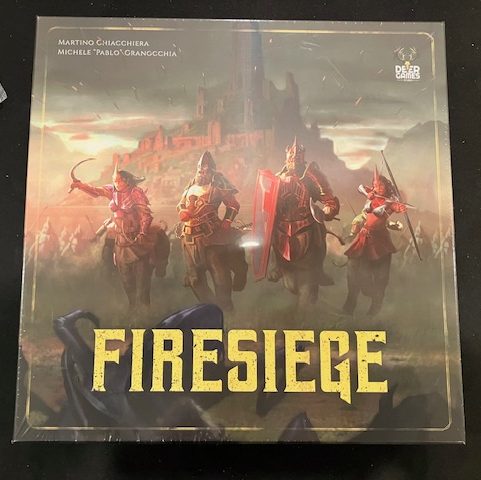
Firesiege is a cooperative Tower Defense games that was on Kickstarter back in May 2024. It promised delivery in April 2025, and missed by about a year. I got my copy in early 2026.
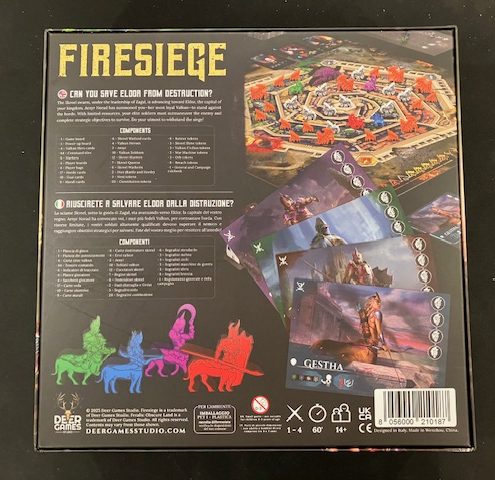
Let’s take a look!
Unboxing and Gameplay
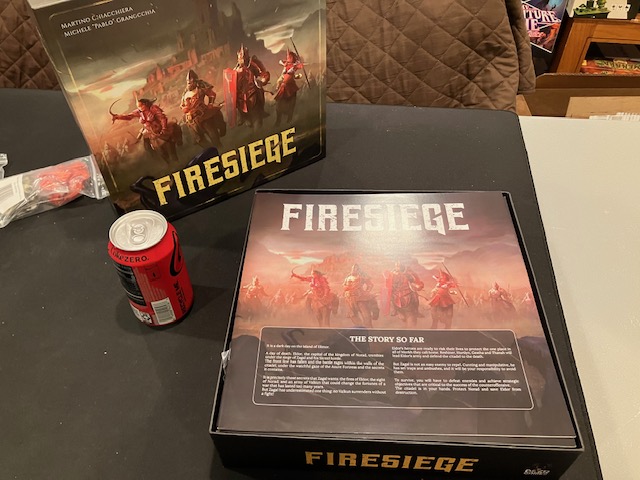
This is a fairly standard sized boxed. See Coke can above for scale.
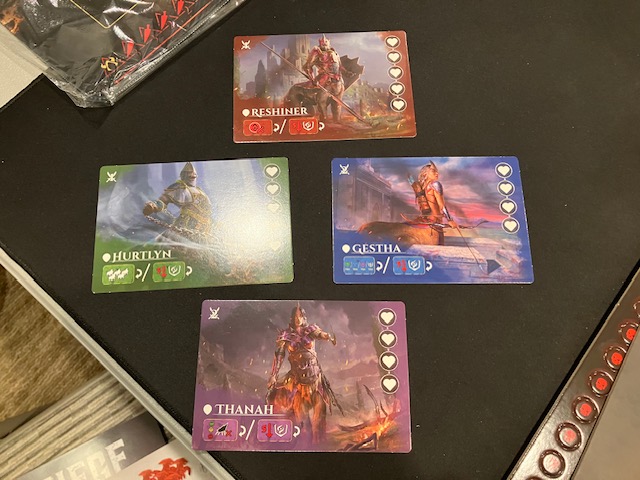
Players each take the role of a warrior that can earn special powers!
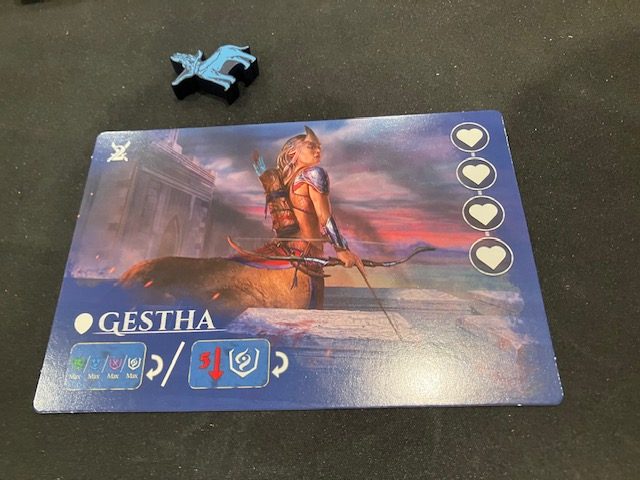
Each warrior starts with NO special powers, and has one of two conditions to flip them to their more “powerful” side with more hits, some powers, and usually more hit points. See above as Gestha can flip to the other side if she either (a) she spends 5 energy or (b) has any bar reaches its max.
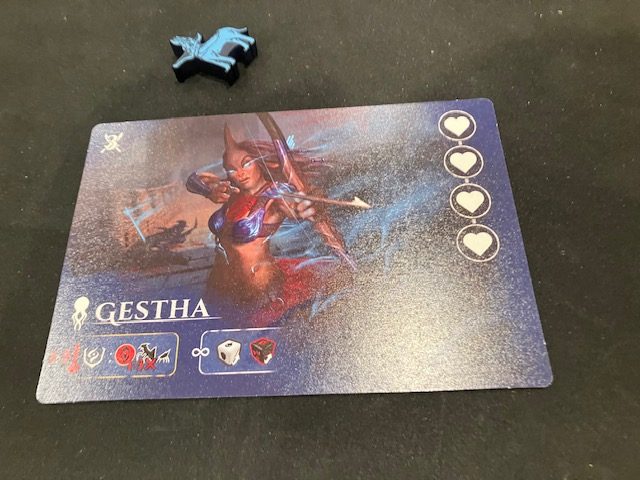
Once the warrior flips, they are more powerful! And actually have special powers! One of the tensions in the game is trying to figure when to keep the invading hordes under control and when to work on powering-up your character!
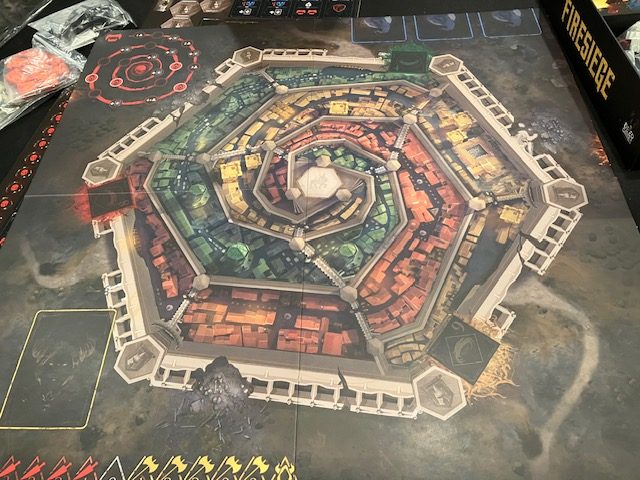
What’s being invaded you might ask? The citadel! The citadel is the center of the tower above! If a bad guy reaches the center, players immediately lose! Note that there are three lanes in which in the invaders may invade: red, green, and yellow.
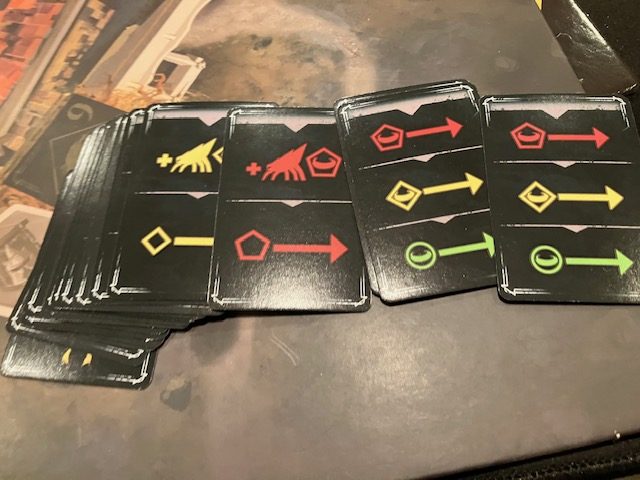
At various points during the game, the “bad news” cards will come out (see above) and cause the bad guys to spawn and move.
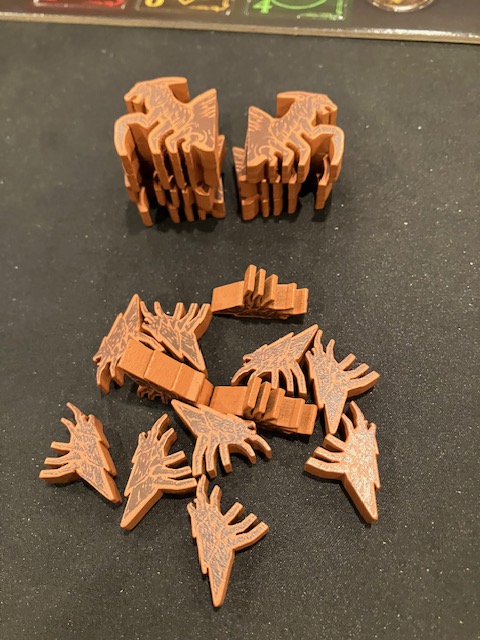
There are actually all sorts of different bad guys in the game but the main ones are the Skrell hunters (smaller: with 1 hit point) and Skrell Mothers (large 3 hit points). See above. They look NOTHING like Aliens from the movie Alien or Aliens. Or maybe they do. We pretty much called them “aliens” when we played.
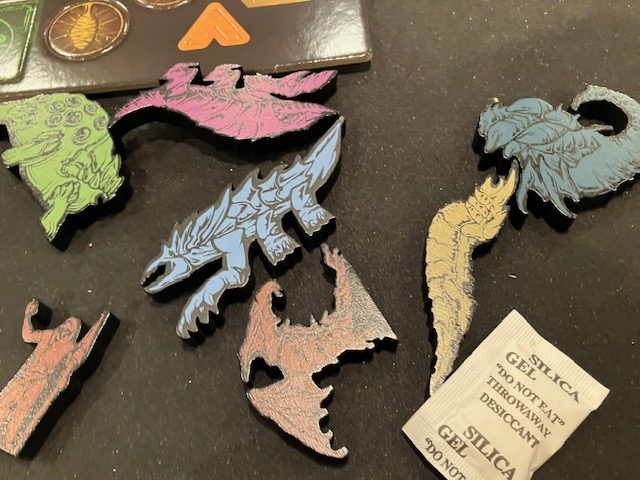
There are also some “super” bad guys that can come out during the game at various points. See above. These typically have a special power and a few more hit points.
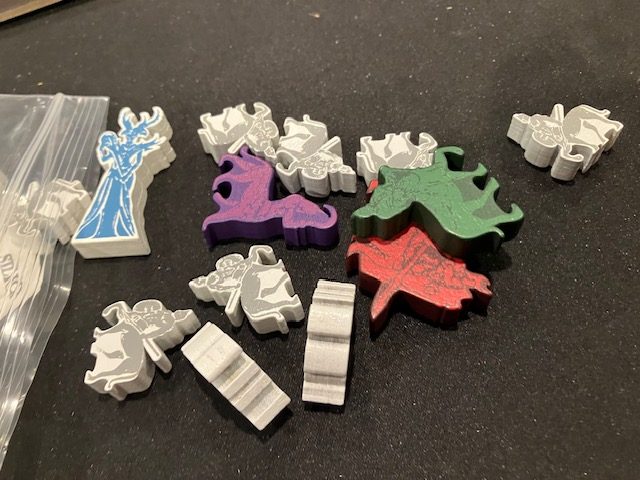
Luckily, the good guys summon little white warriors (see above) to help them or even “someone distinct from Hela, but is pretty much Hela”.
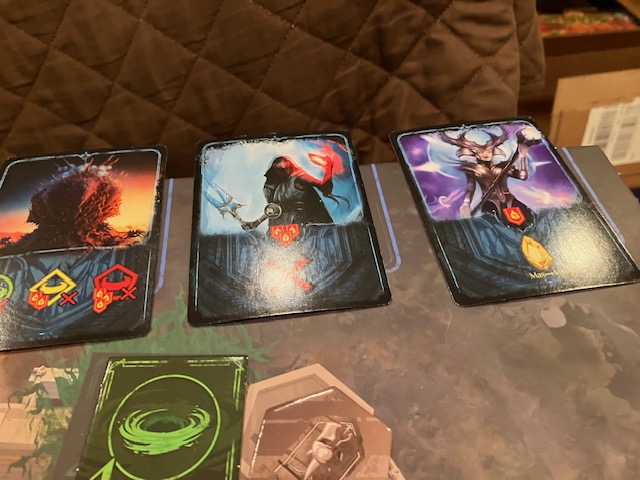
How do you win? You need to get 6 Victory Points, and you win! There are 3 cards that control the 3 main ways to get those 6 victory points. The first one (far left) shows victory points you get from killing spawn points in the game … you always have this. Killing a green spawn point nets 1 Victory Point, killing a yellow Spawn Point 2, and red 3. Summoning Hela can help you in different ways (and summoning her gets you 1 VP). Basically, the game can vary quite a bit, depending on the cards you get!
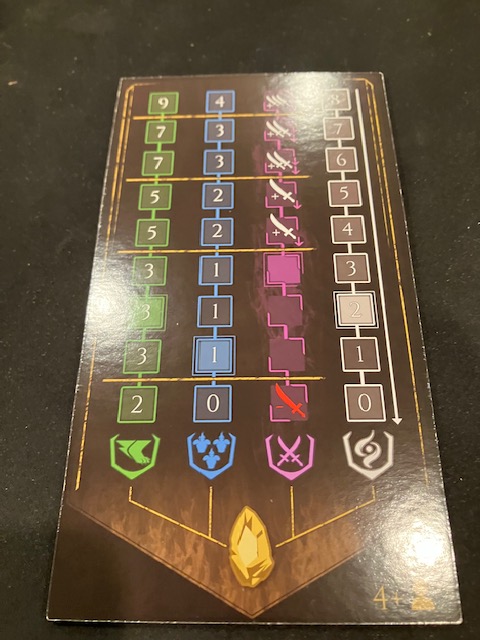
There is shared tracker which tracks (1) movement (2) summoning (3) extra swords and (4) energy. As you play, you can choose (as a group) to move these tracks up and down! The higher the movement, the more you can mover per turn! The higher the summoning, the more white warriors per turn! The higher the swords, the extra oomph you can add to a combat! The higher the energy, the more you can power the special powers of the characters!
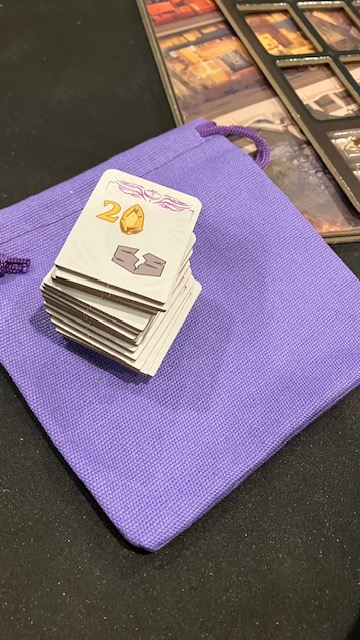
Each character has a bag of tokens that they draw from to form their turn. The tokens are unique to the character (and color).
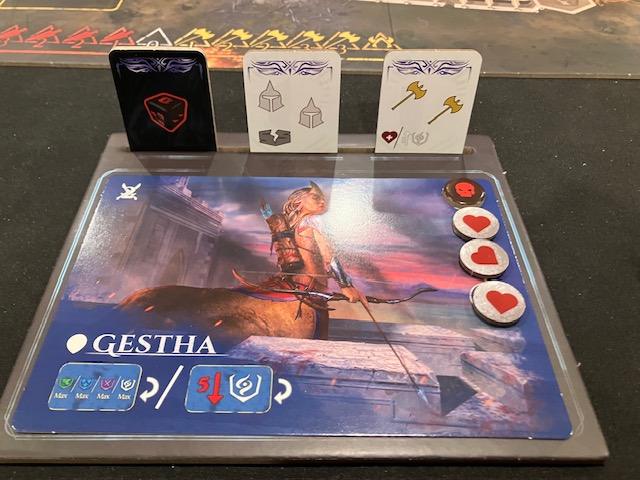
The player draws 3 tokens for their turn and places it on their board. Note that the tokens have a white side and a black side! The light side is good things the player can do with that token: actions, healing, energy, moving the V track, adding/removing walls, and a few others things See the white tokens above. The black side is (usually) bad stuff! Roll the black dice! Advance the V track! Summon/spawn Skrell!
An interesting thing about this system is that when you choose a tile, you must do BOTH sides! Good news is on one side, and BAD news is on the other! So, you must do both sides! This is a real interesting idea as you are choosing BOTH the good news and the bad news at the same time!
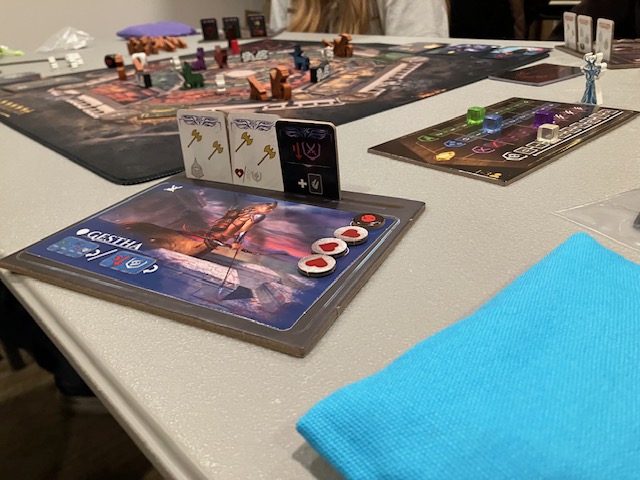
Even weirder is that you can’t see both sides of the tile! When you draw, you can only see one side, but the REST of your teammates CAN see the other side! If you have ever heard of Indian Head Poker or Hanabi, this is exactly the same idea!
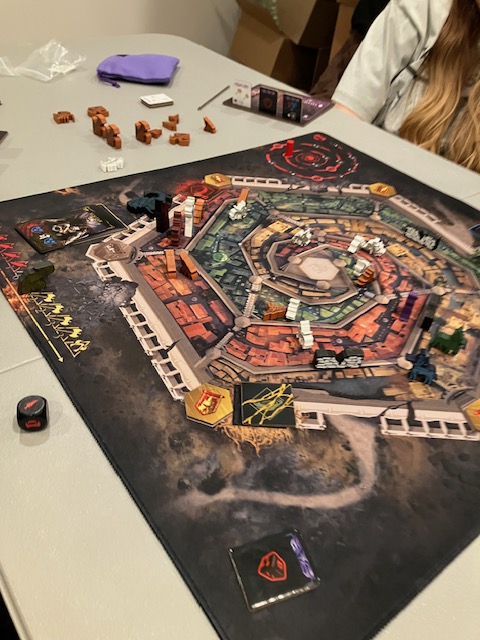
Players basically just play until they win (get 6 Victory Points) or they lose (someone dies or the hoarde track reaches the middle).
The way the game proceeds is quite interesting; the act of selecting a tile causes things to happen (good and bad). The game is activated by every tile you choose. It’s kinda different and interesting.
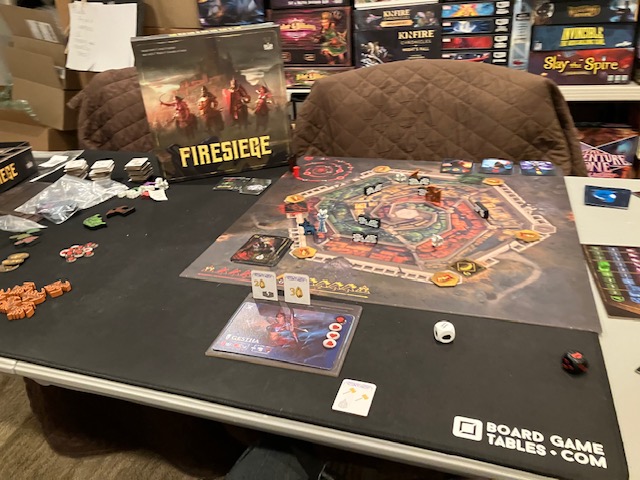
This is a tower defense game where we, as a group try to keep the Skrell and other bad guys from reaching the middle and killing us!
Rulebook
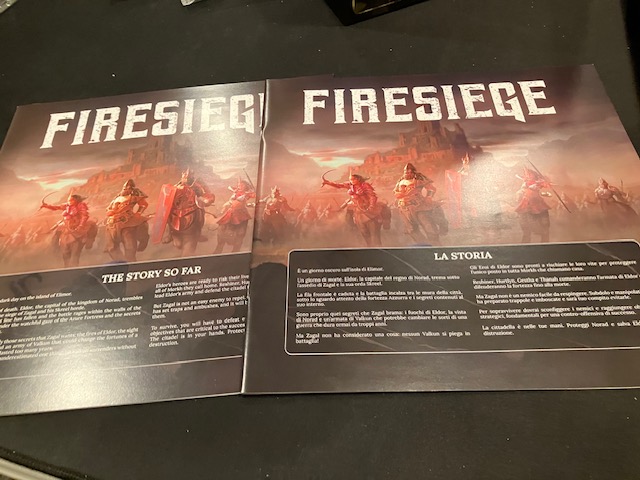
Sadly, this is not a great rulebook.
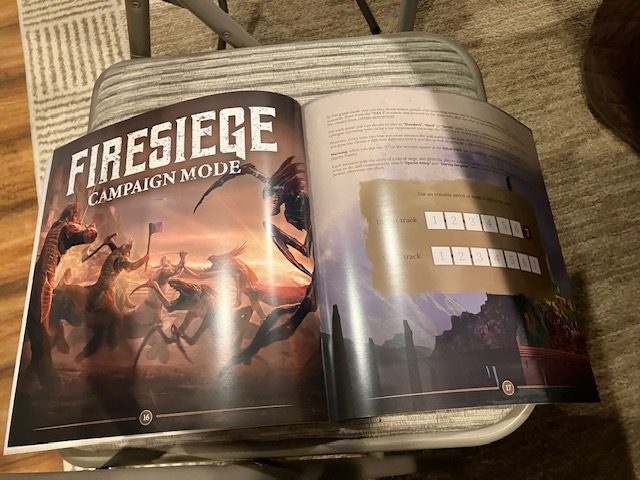
Firstly, it does poorly on the Chair Test. I think this is a D-; it droops really badly on the edges, has a small font, as is very hard to consult on the chair next to me. It doesn’t fail completely because I can sorta use it on the chair next to me.
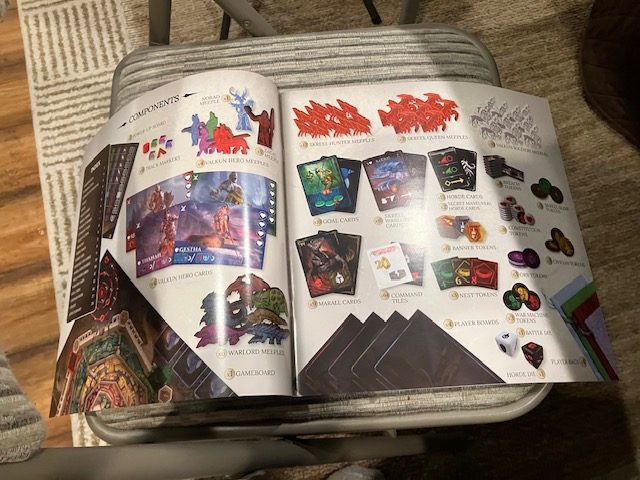
The components page starts on a good note: the components are well-labelled with a little pictures.
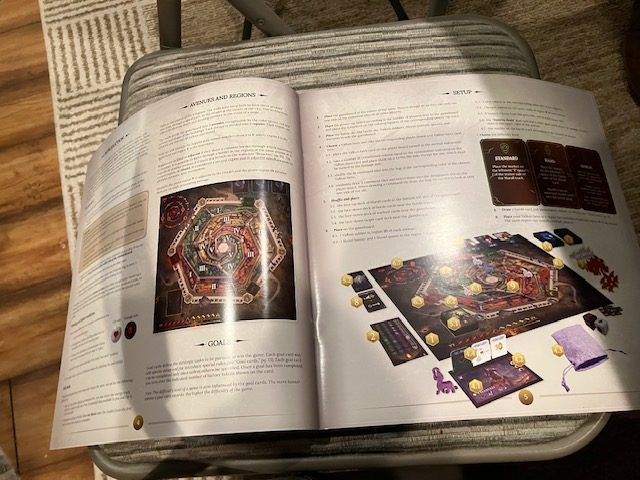
The set-up is “fine”, but it’s where also start noticing rulebook issues. Some things aren’t even labelled (step 7?) and so we have to guess at a few things.
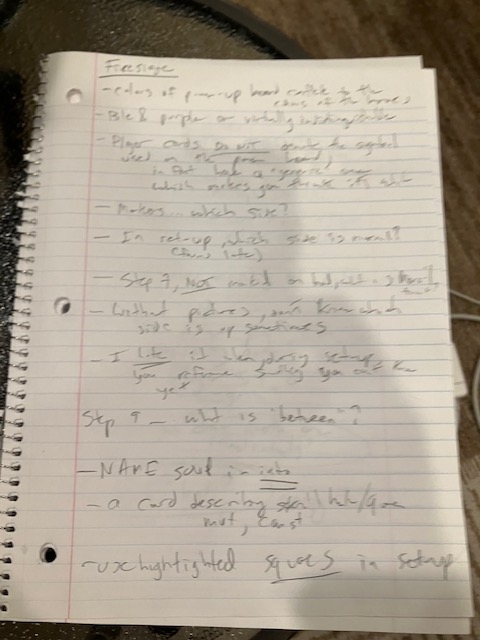
Over the course of the first night with my game, I had SO MANY questions and issues with the rulebook that I started writing them down!
I ended up with 2 full pages of questions and notes! This was not a good rulebook.
If I just had a few rules questions, I would typically head on over to BoardGameGeek and try to get them resolved. The problem was that there were just too many questions. I was generally able to “make an assumption” and move forward for most if not all of them. But this will be a non-starter for some gamers.
This rulebook is missing a lot. But it has some good things too. I like that they have a campaign, I like that it has rules clarifications for all the special cards (victory cards, super bad guys, warriors, etc). But the rulebook is missing too much to be able to call this a good rulebook: it underspecifies the game.
Solo
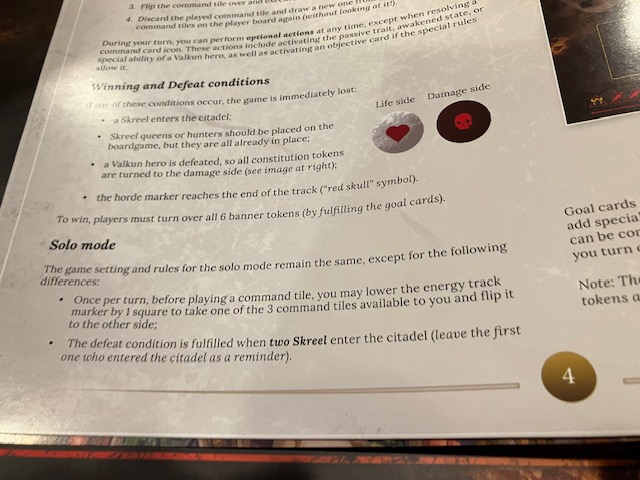
So, there is a solo mode (thank you for following Saunders’ Law)!
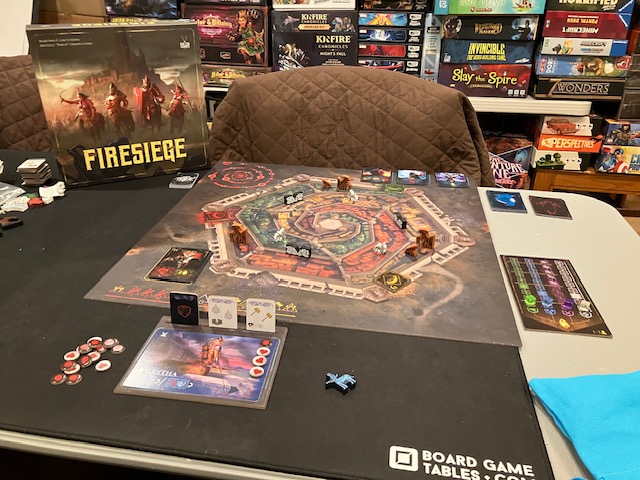
This is a true solo mode, with one player taking the role of one warrior. The only real differences are that TWO bad guys must enter the Citadel (instead of one) to lose … AND the solo player can elect to flip a token using one energy. Other than that, the game plays the same!
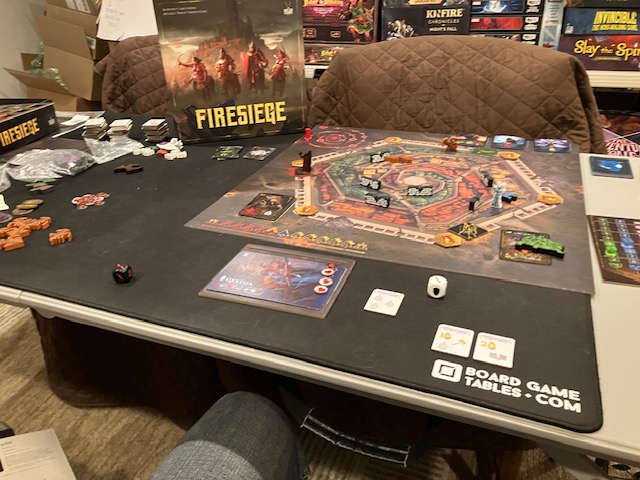
There’s a lot of maintenance for the solo player (Skrell, super bad guys, the track, spawn deck), but it’s not that bad. It slightly brings down the game (it’s better in cooperative mode when all those systems are shared). I was able to get my first game going pretty well … I don’t think I made too many rules mistakes (despite the underspecificity of the rulebook). I had fun.
My second game went a little better as I understood how the systems worked together. I was looking forward to my second game.
Something about this world is very appealing: it’s easy to get into, the components are top-notch, and generally the game flows really well. I liked the solo game and would play it again.
The only thing I would change; the game is a little neutered because you don’t have others “sharing” what tiles you might have … the solo game tries to compensate for that by forcing you to spend an energy if you want to flip a tile. I feel that energy cost to flip a token isn’t in the “spirit” of the game … I think a better way to handle that is simply: “If you ever have all white or all black tiles in you hand, you may flip one for free.” That way, you can still make decisions but don’t get “stuck” with all white or black tokens. It’s a very minor house rule.
Cooperative Play
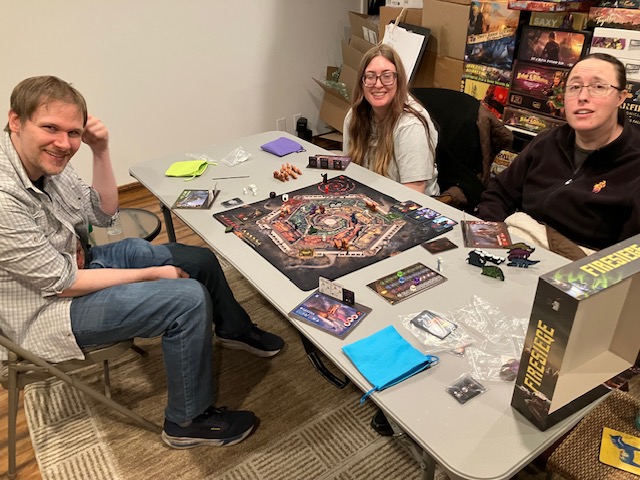
So, my group played two cooperative games in a row: we lost the first one but wanted to redeem ourselves with the second game! And we did! Once we had a “flavor” of the game, we were able to plan and come up with some strategies to win the game! This is always a good sign when your groups wants to play AGAIN!
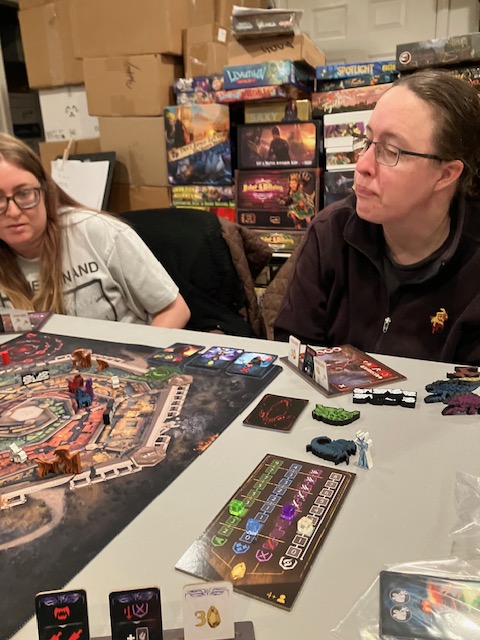
We probably could have done better with the limited communication; we sometimes probably overshared. I hate to say this, but limited communication games typically have this problem! Unless you are Hanabi with explicit exact rules on what you can say, then most limited communication rules are wonky. “How Much Can I share?” To not bog the game down, we just moved forward if we weren’t quite sure.
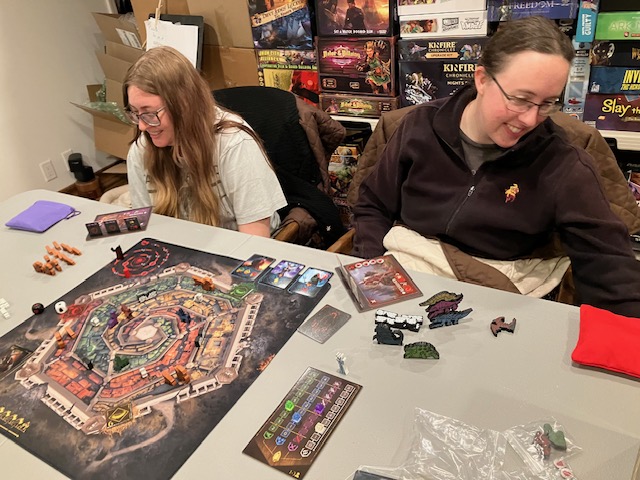
Another thing we did which helped the game was share the load: Teresa took care of the super bad guys, Sara handled the Skrell, Andrew handled the spawn cards, I took care of the shared tracks. Doing this much maintenance for the solo game does bring down my solo score a little, but sharing the load made it so we could concentrate on playing the game rather than maintaining the game as we played.
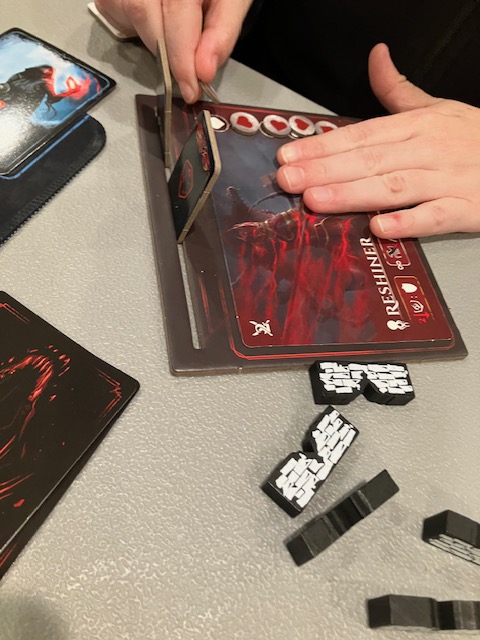
We did end up using a House Rule: we used Player Selected Turn Order (fine-grained: see discussions here) . This allowed us to be more strategic about choosing the good news/bad news token! “That’s a real good good news … but can we take the bad news?” I really did NOT think this Hanabi like mechanism (where everyone can see everyone else’s token, but not their own), but it really did promote discussion as we played. And I am surprised that it worked.
I kind of think I would only recommend Firesiege when using Player Selected Turn Order (fine-grained). Why? Because without PSTO, then you are STUCK with the tokens you have and you have to play them (your only choice would be the order the 3 tokens you have are played) … that’s the game playing you! But if all players can discuss playing their tokens, it becomes more interactive, more cooperative, more strategic, as it gives the players more choice! I played a token, then Andrew played two, then Teresa played one … we got to choose which bad news to take and which good news in the order that was more strategic! THOSE conversations in the cooperative game made the game for me!
Conclusion
Here’s the thing; objectively, this game has a lot of problems with the randomness, the underspecificity, and the vagueness of the limited communication. Objectively, I’d probably have to give this game a 4.5/10 or 5/10. There’s too many problems.
But here’s the thing; I kinda liked it. I liked the pieces, I liked how much variety is in the game, I liked the ideas that we get to choose how we move forward (bad news/good news) and I liked the way the game unfolded. Granted, I had to throw a few house rules at this game to like it (fine-grained Player Selected Turn Order especially for the cooperative game), and a few “I think this is how you play” rules. But I enjoyed every game I played, despite all the issues. Subjectively, I personally would give this a 7/10; I’d be happy to play it again and teach it again. But this HAS to be using Player Selected Turn Order (fine-grained) to get the 7/10!
My friends were a little more underwhelmed and might give this a 6/10. There’s a little bit of caveat with that score: I gave my friends the best games possible (by limiting their exposure to all the wonky issues), but they did want to play it twice in a a row after we lost the first game, so that’s a good sign. If they had to learn this from the rulebook, I am sure this would have been a 4/10 … my group would hate the underspecificity.
Obectively: 5/10, Subjectively 7/10. Overall probably 6/10.
The game was underdone, but was still tasty!


3 thoughts on “Firesiege: Underdone But Still Tasty! A Solo and Cooperative Review”