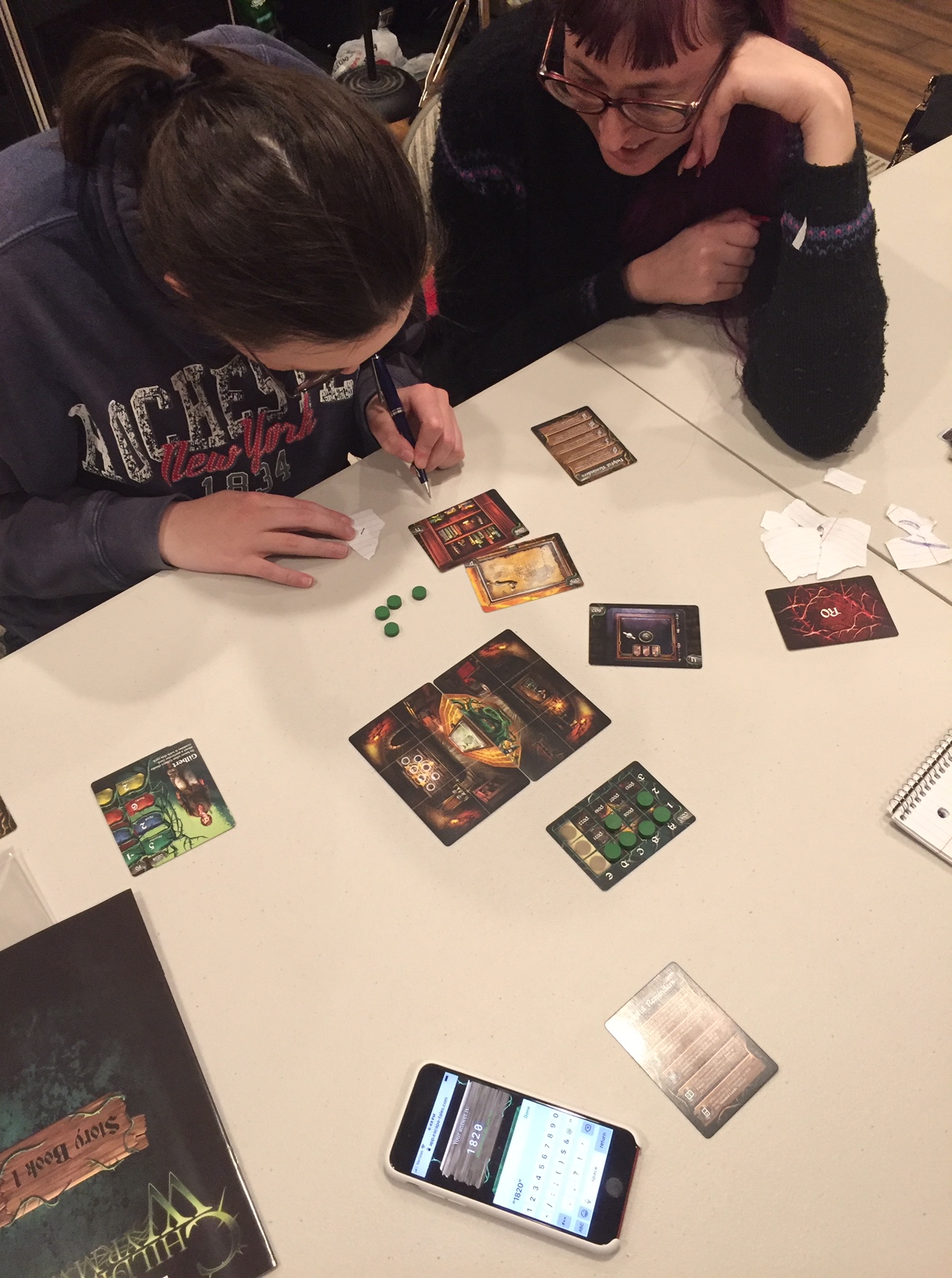
Review of the Detective: Smoke and Mirrors (Cooperative Mode Only)

IMG_6910

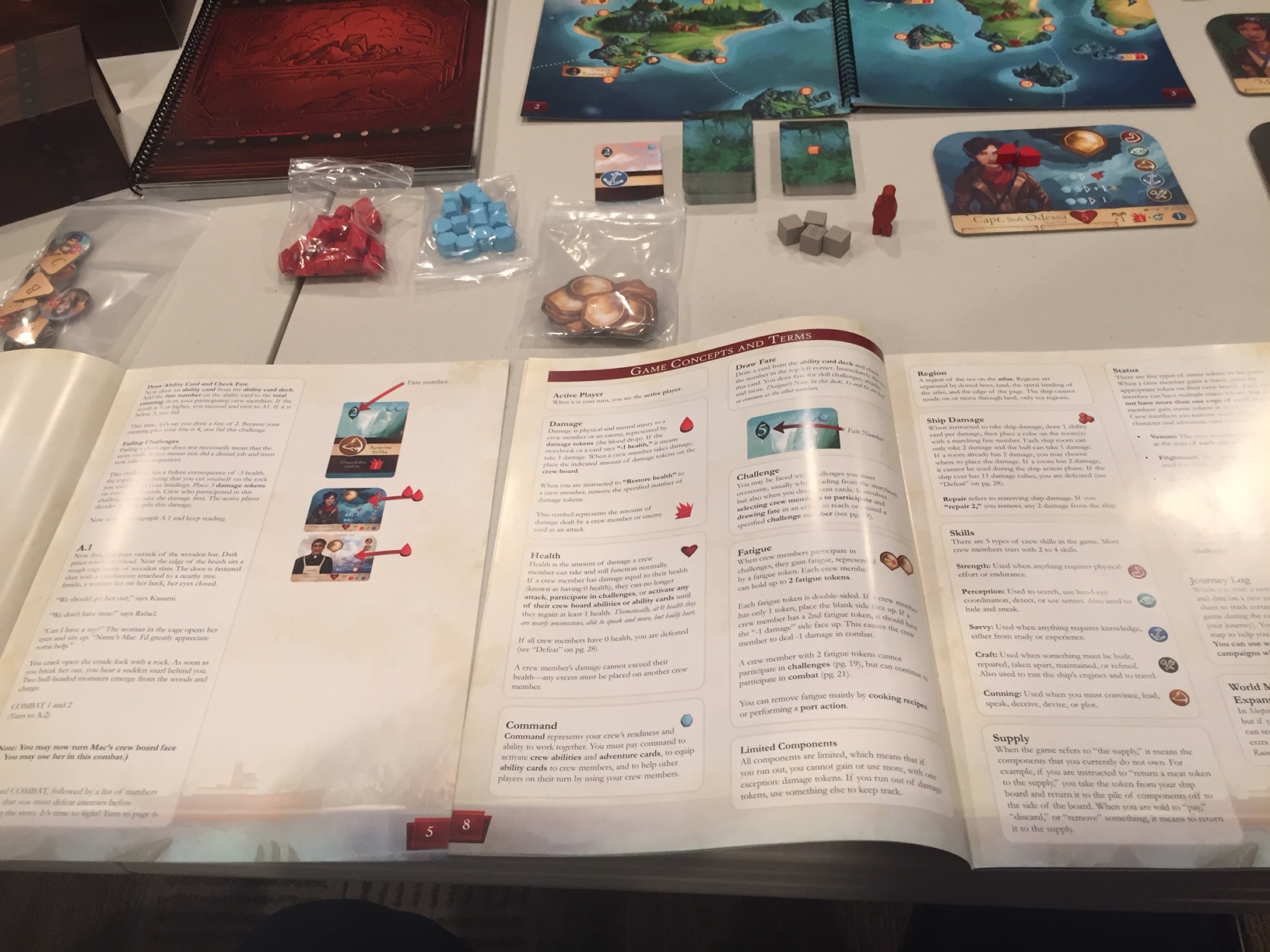
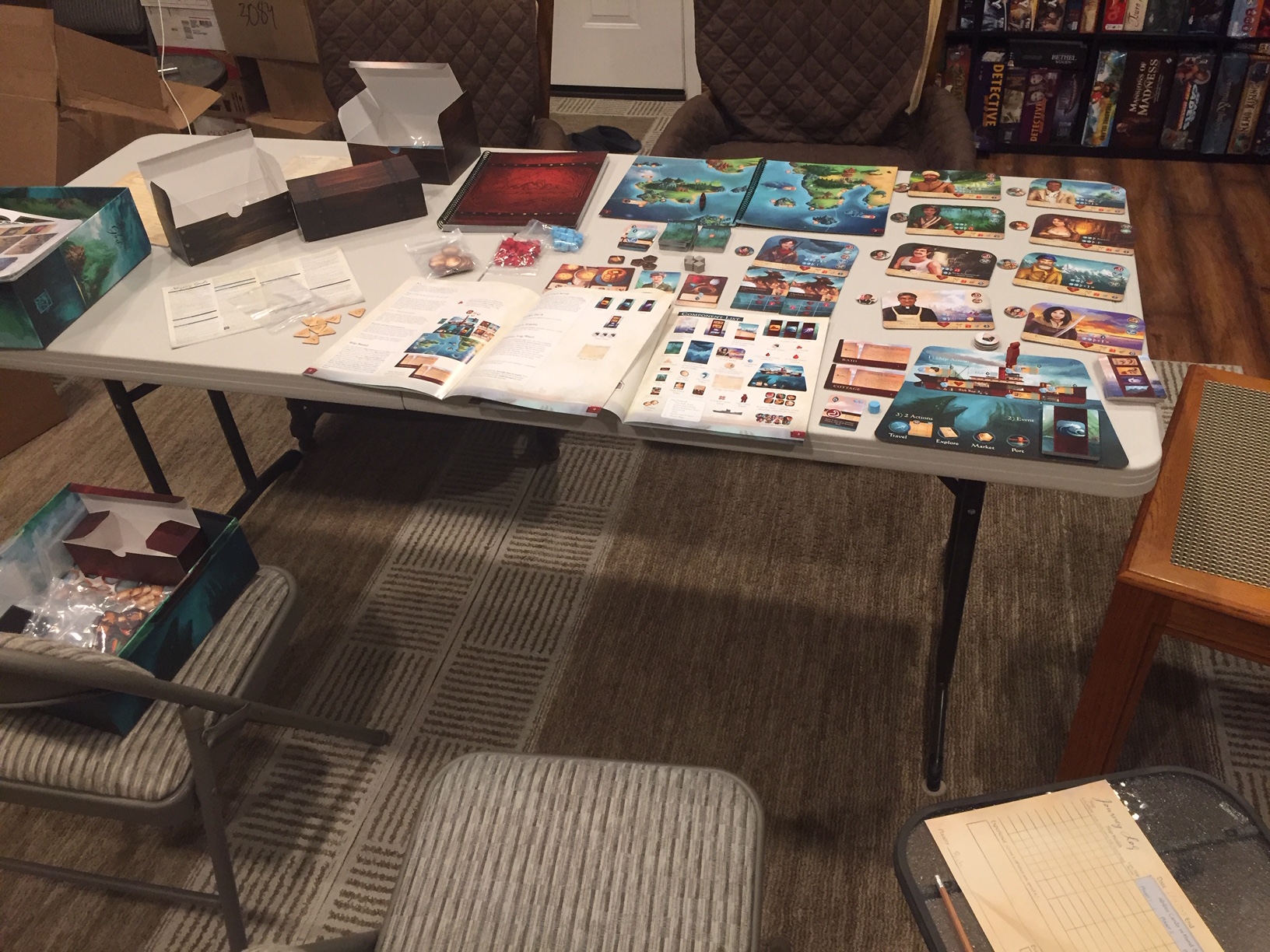
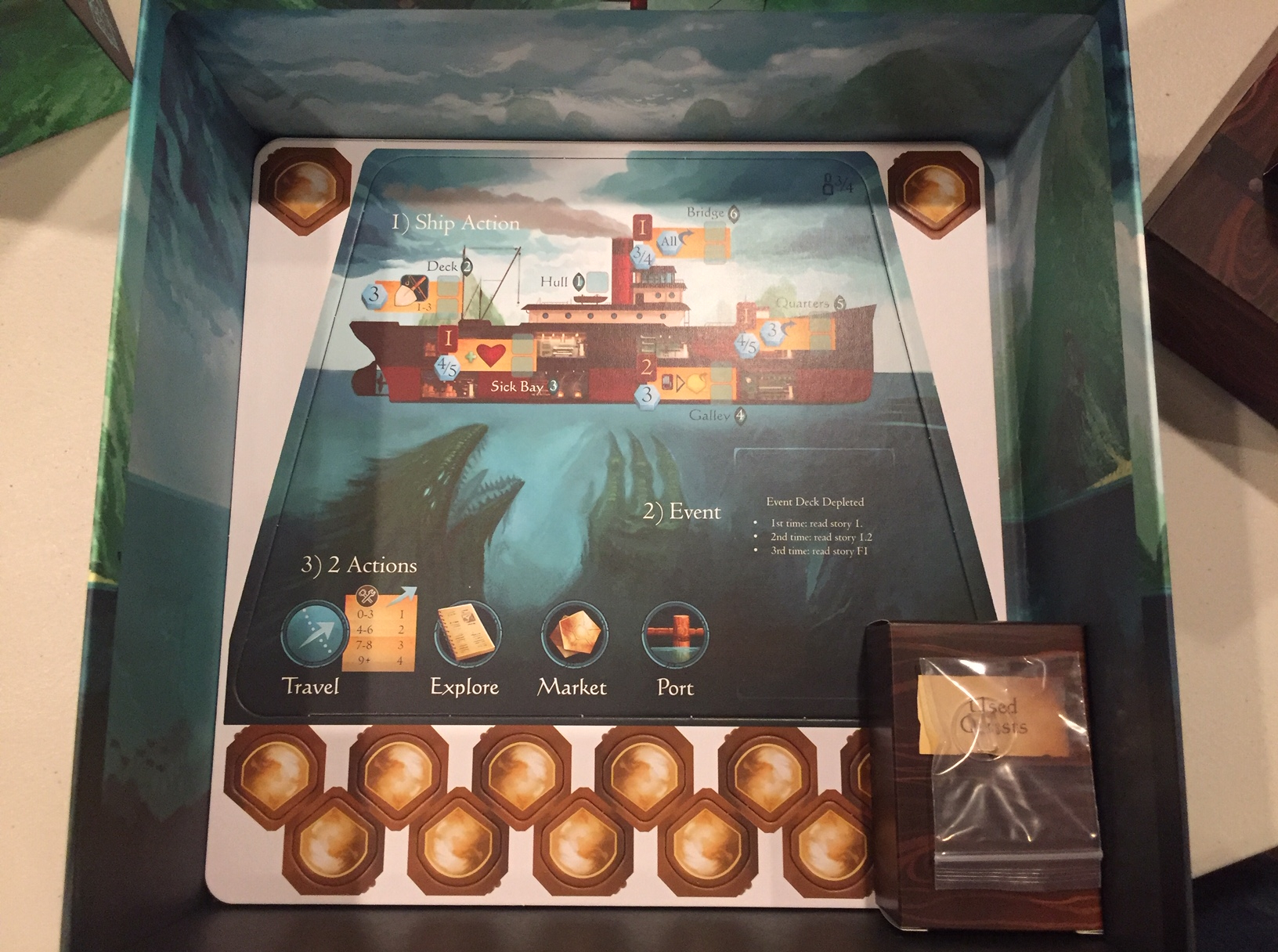
Detective: City of Angels is a cooperative crime-solving game in a Noir setting. We have previously reviewed it here and it made the top spot on both of our Top 10 Storybook/Storytelling Games and Top 10 Cooperative Games of 2019! It’s safe to say that me and my group have really enjoyed the Detective: City of Angels universe!

We need to be clear on the game we are discussing here: Detective: City of Angels is a very different game from Detective and Detective: Season One. Those games are from Portal games and involve extensive use of the internet. THESE ARE NOT THE GAMES WE ARE REFERRING TO. Detective: City of Angels, and its expansions Bullets over Hollywood and Smoke and Mirrors (which we are discussing here) are self-contained games from Van Ryder. (The other Detective series is from Portal).

My group played the Portal games Detective and thought it was interesting, but it felt too much like work (as we were constantly going to the internet). The Van Ryder Detective: City of Angels game, on the other hand, was fun and self-contained noir detective stories that we had a blast playing. So, how is this new expansion?

ExpansionIMG_6908

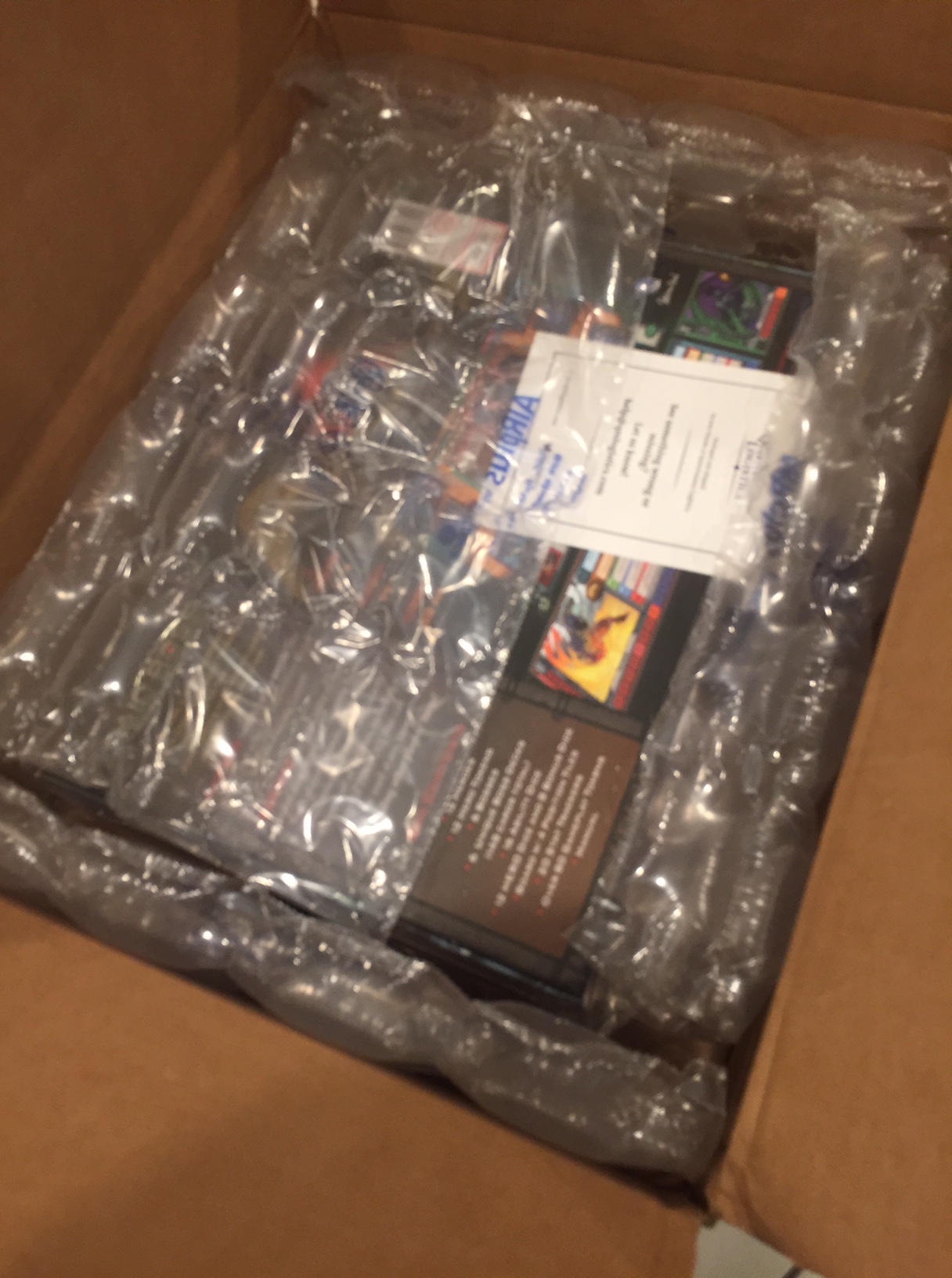
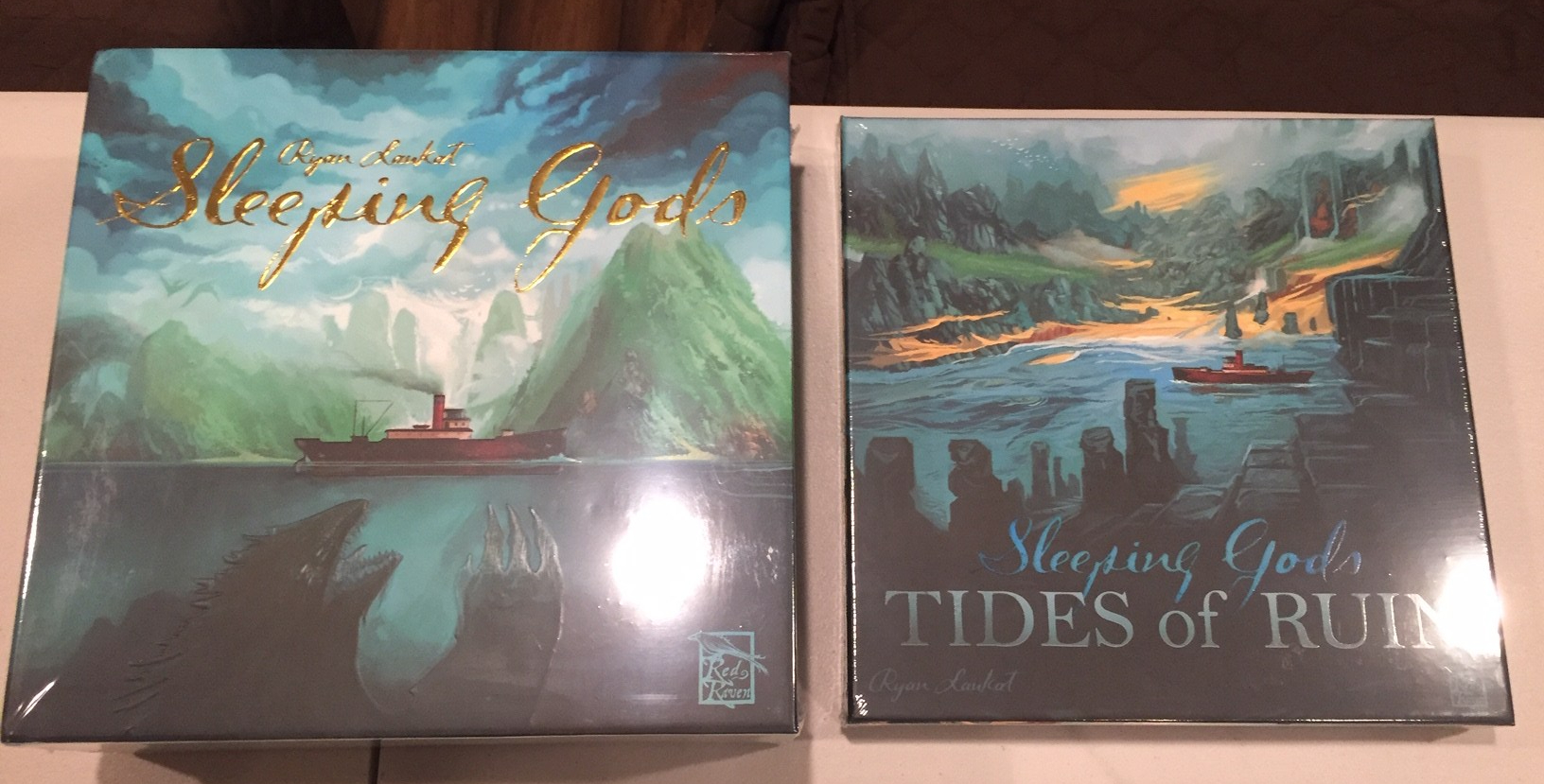
To be clear, in order to play the expansion Detective: Smoke and Mirrors, you need the base game (see picture above).  My copy arrived a few weeks ago (November 2020). I had Kickstarted the original game and loved it, so it was a no-brainer to Kickstart the expansion Detective: Smoke and Mirrors.  Note that I also get a new set of notepads with the expansion (they are dedicated notepads to writing down clues in the game).

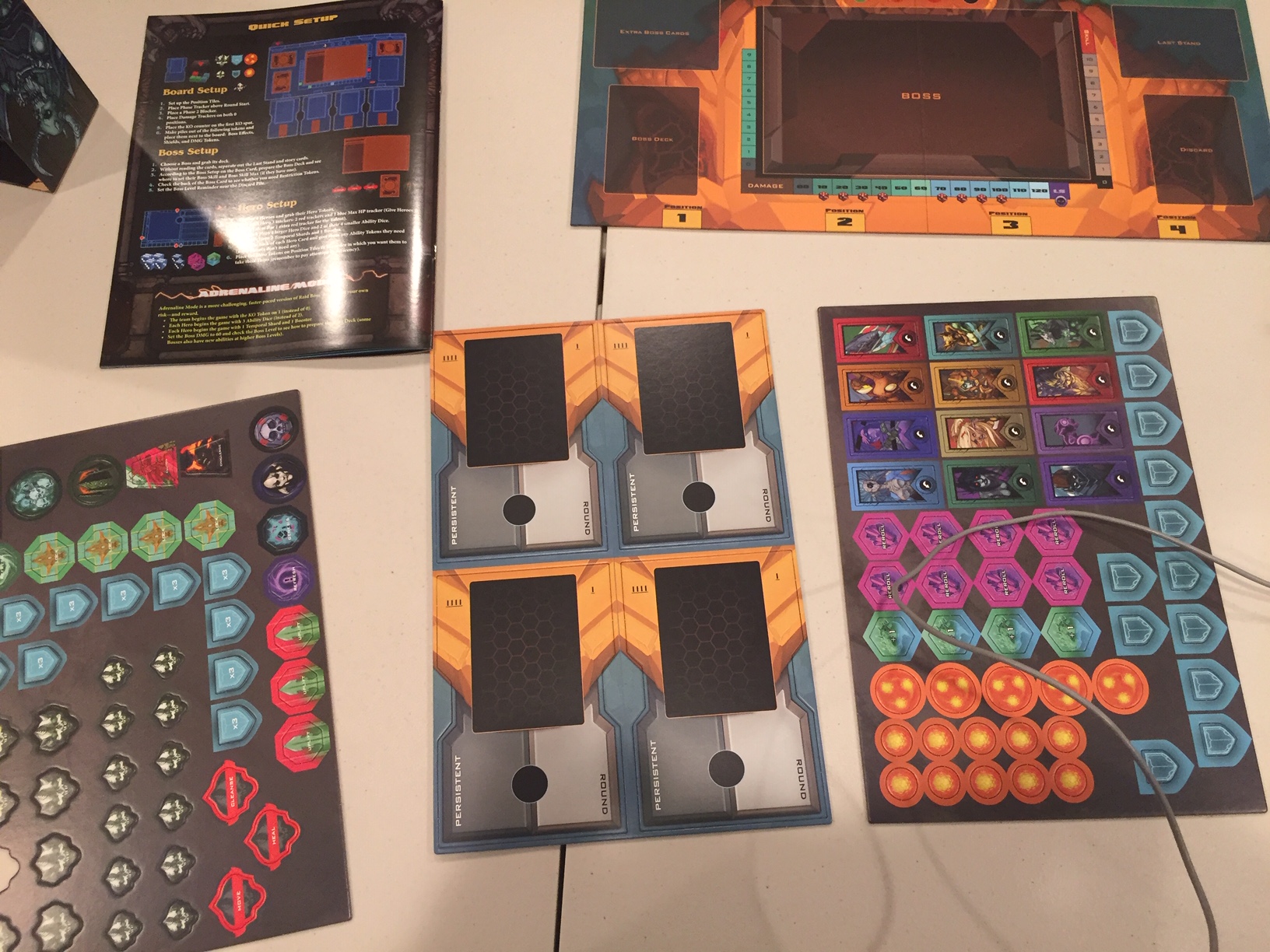
Unboxing and ComponentsIMG_6916

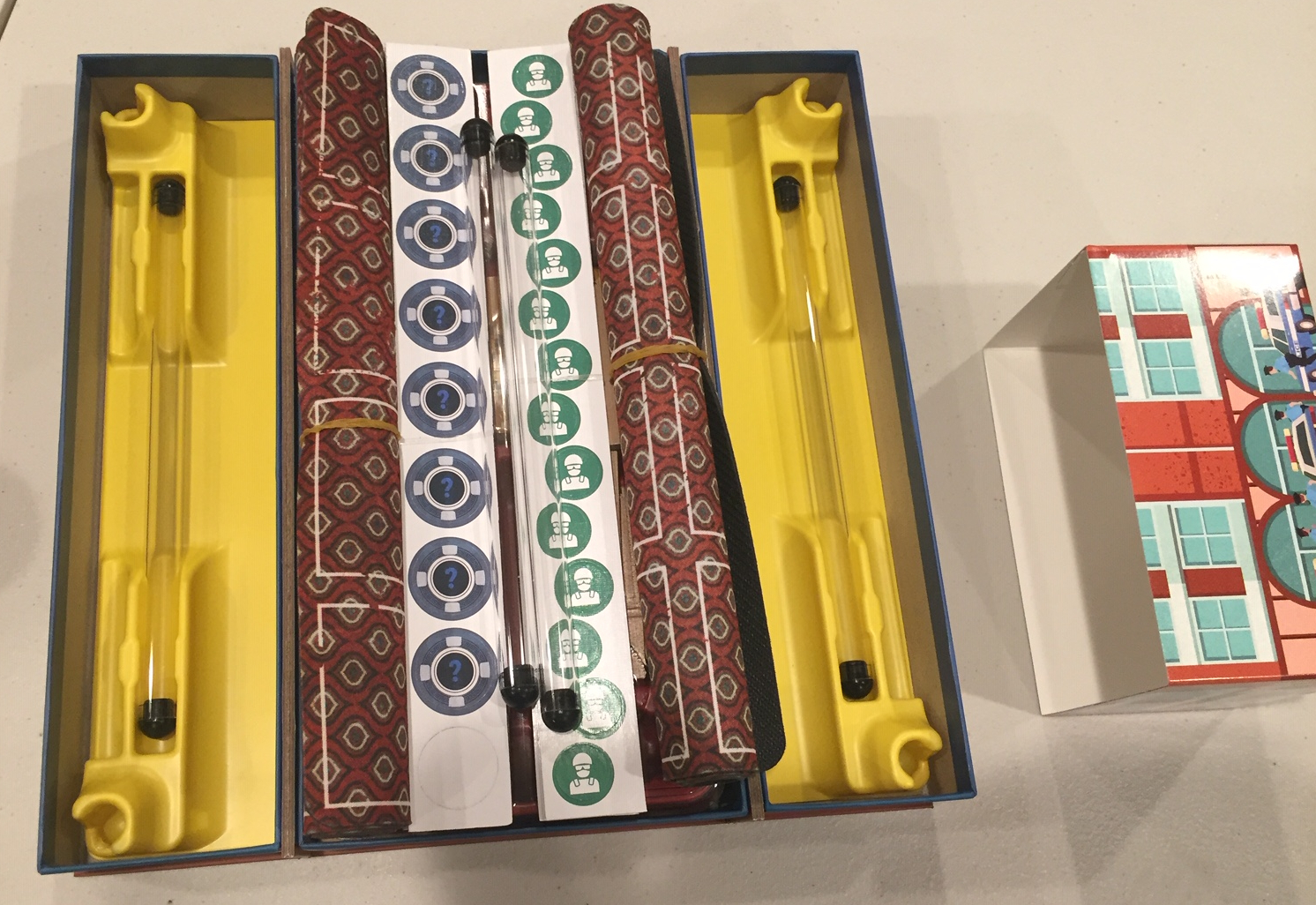
The expansion includes 4 new cases for you and your friends to solve. So, the expansion replaces the casebooks and Chisel book from the original game with new books!

The gamebox also contains the 4 boxes with the new cases.

IMG_6968

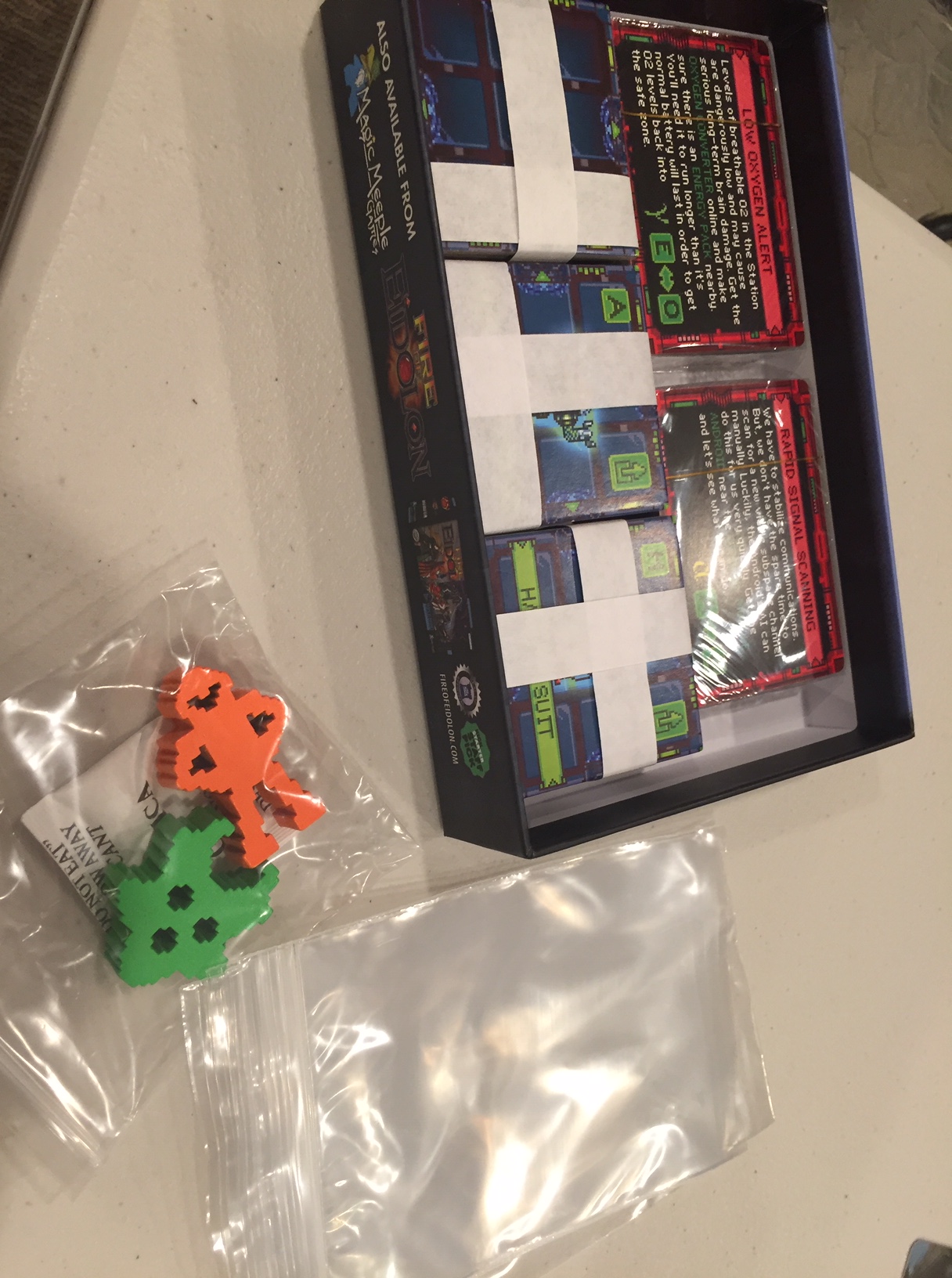
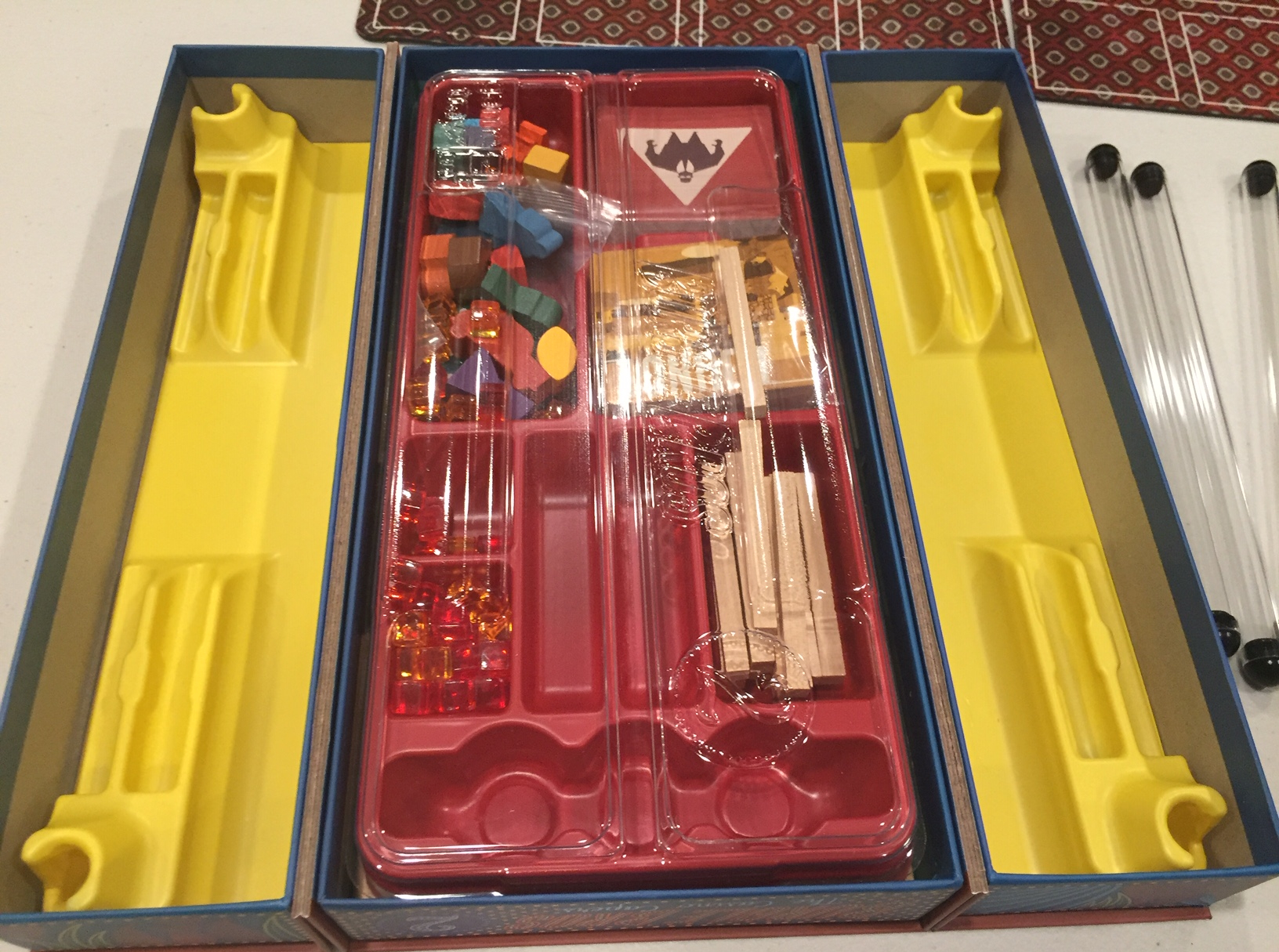
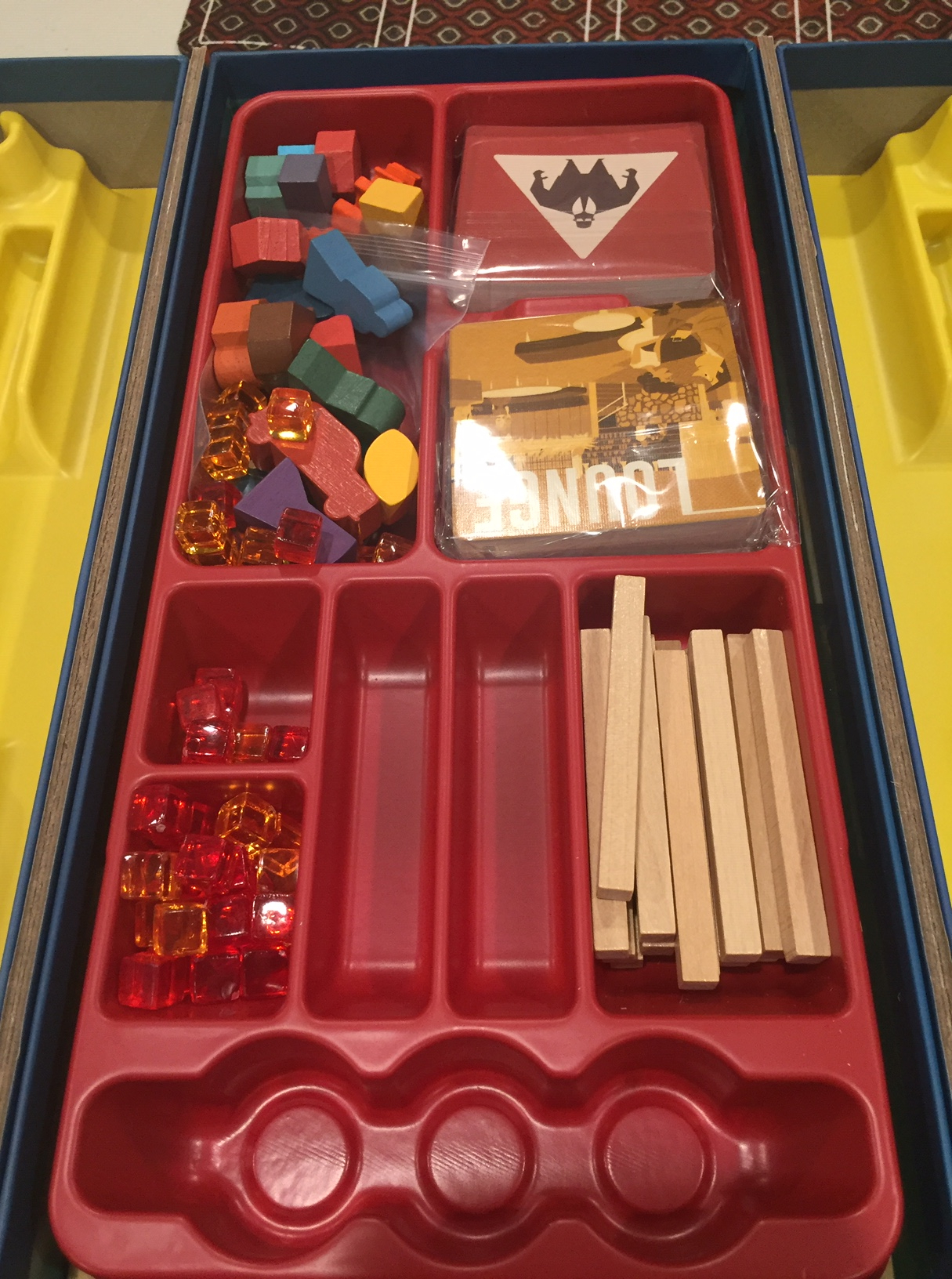
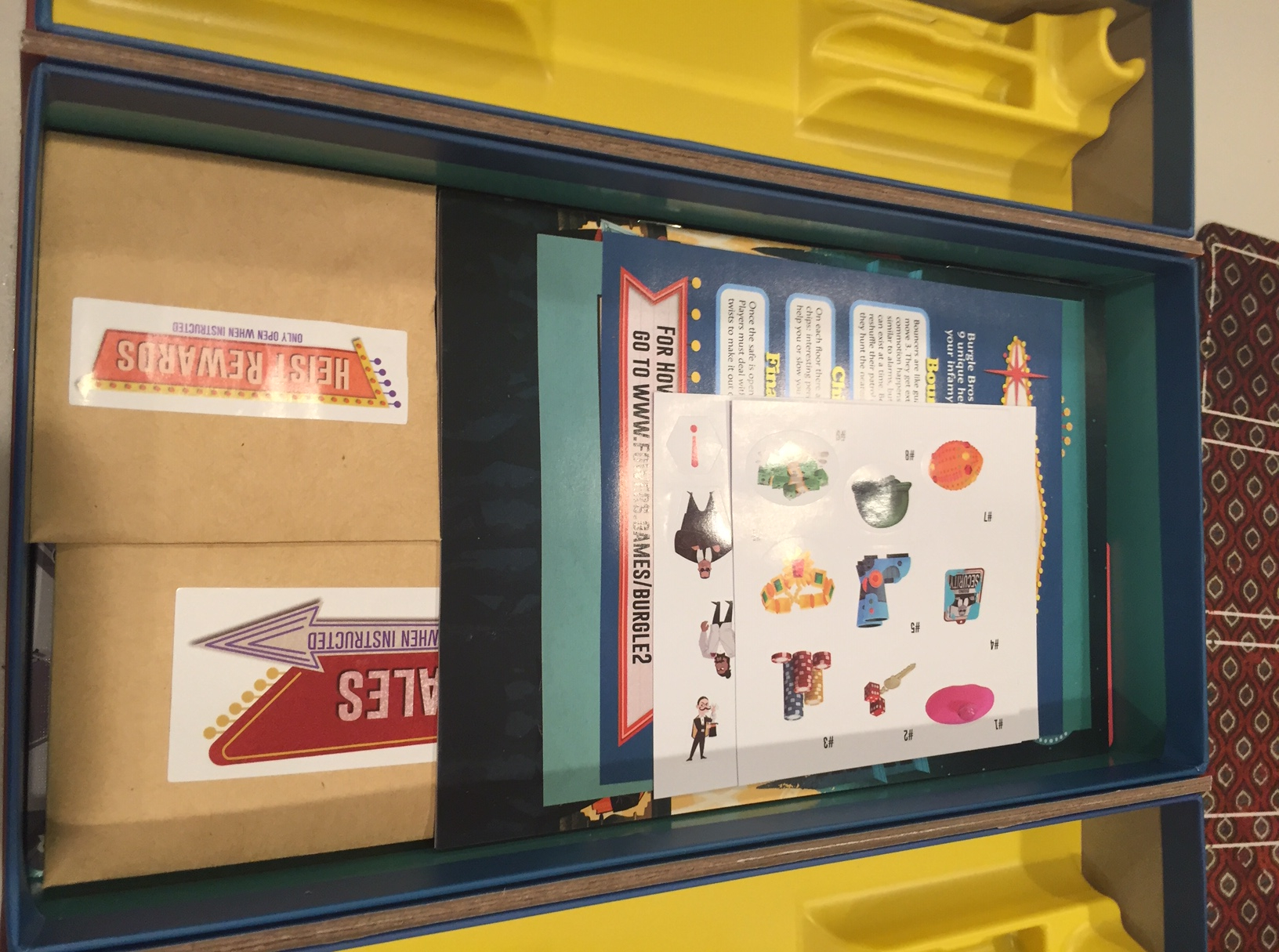
There’s a ton of space on the left hand side of the box to put other expansions that may come out in the future. The way the other cards were packaged in the box was a little weird. They didn’t quite fit (see picture above) as they protruded a little. I think the idea is that you will fold them into the base box, but considering how much space is wasted for the expansion, this seemed like this could have gone wrong and folded the cards. Luckily there were ok, but I wonder if other people will have problems with the way some of the cards are packed.

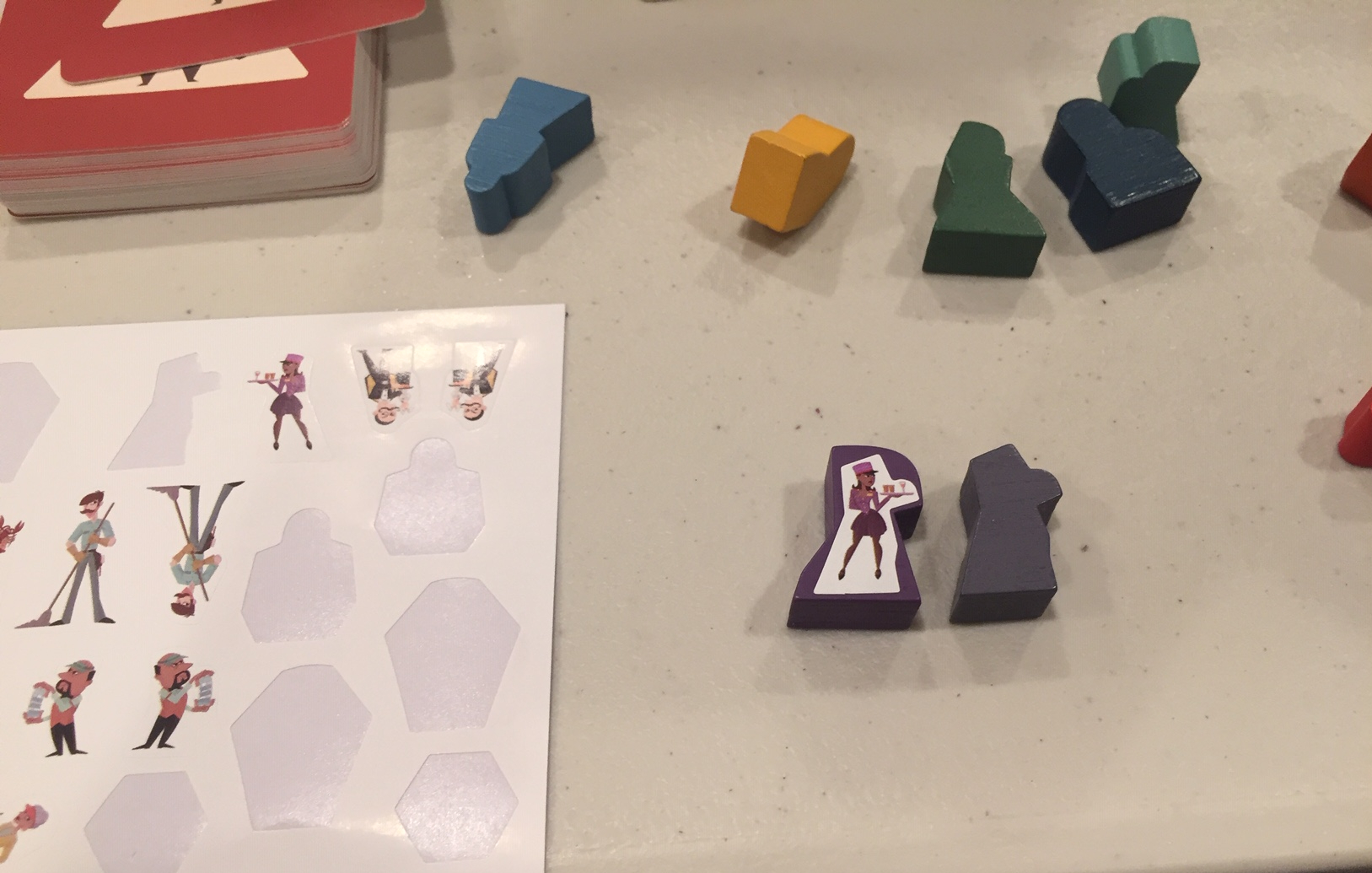
Another weird decision: they added a purple character. This is NOT a 5-player expansion, this is just in case you want a different color! Even then, the purple components didn’t quite match each other (see picture above) . It was a very unnecessary cosmetic piece to the expansion, BUT Sara really wanted the purple player so I guess it worked.

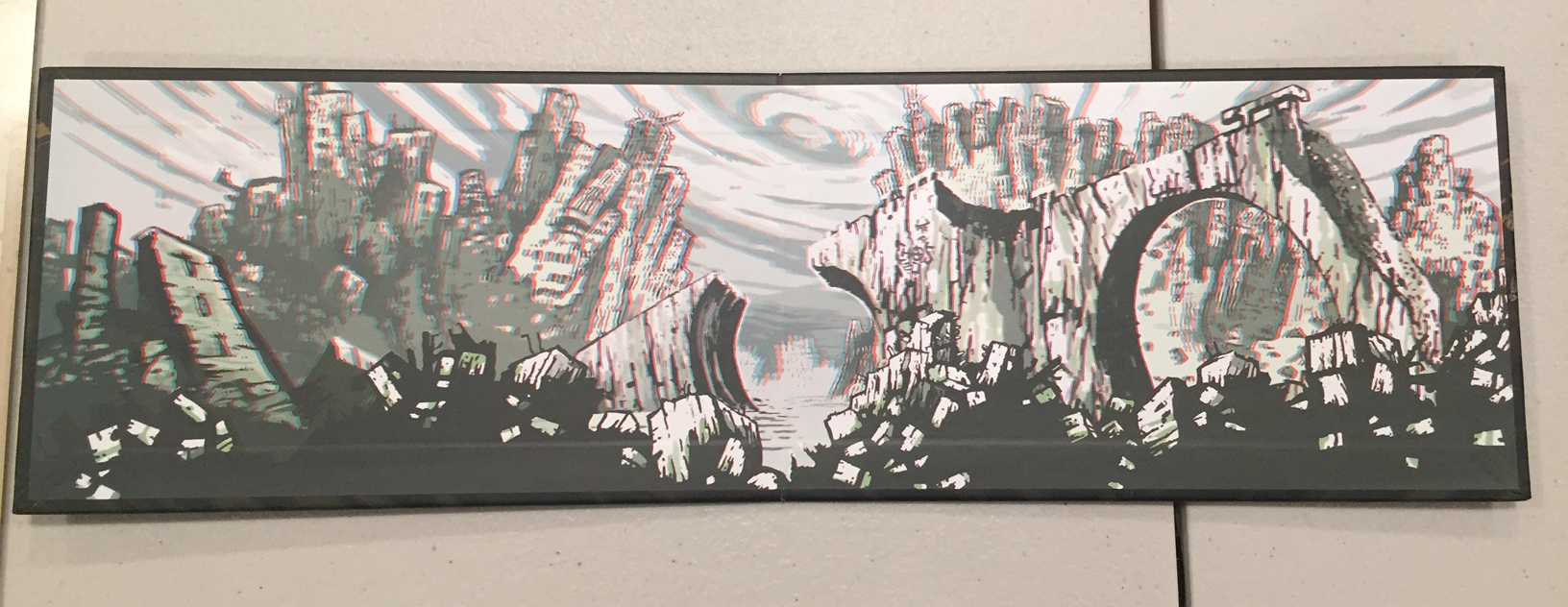
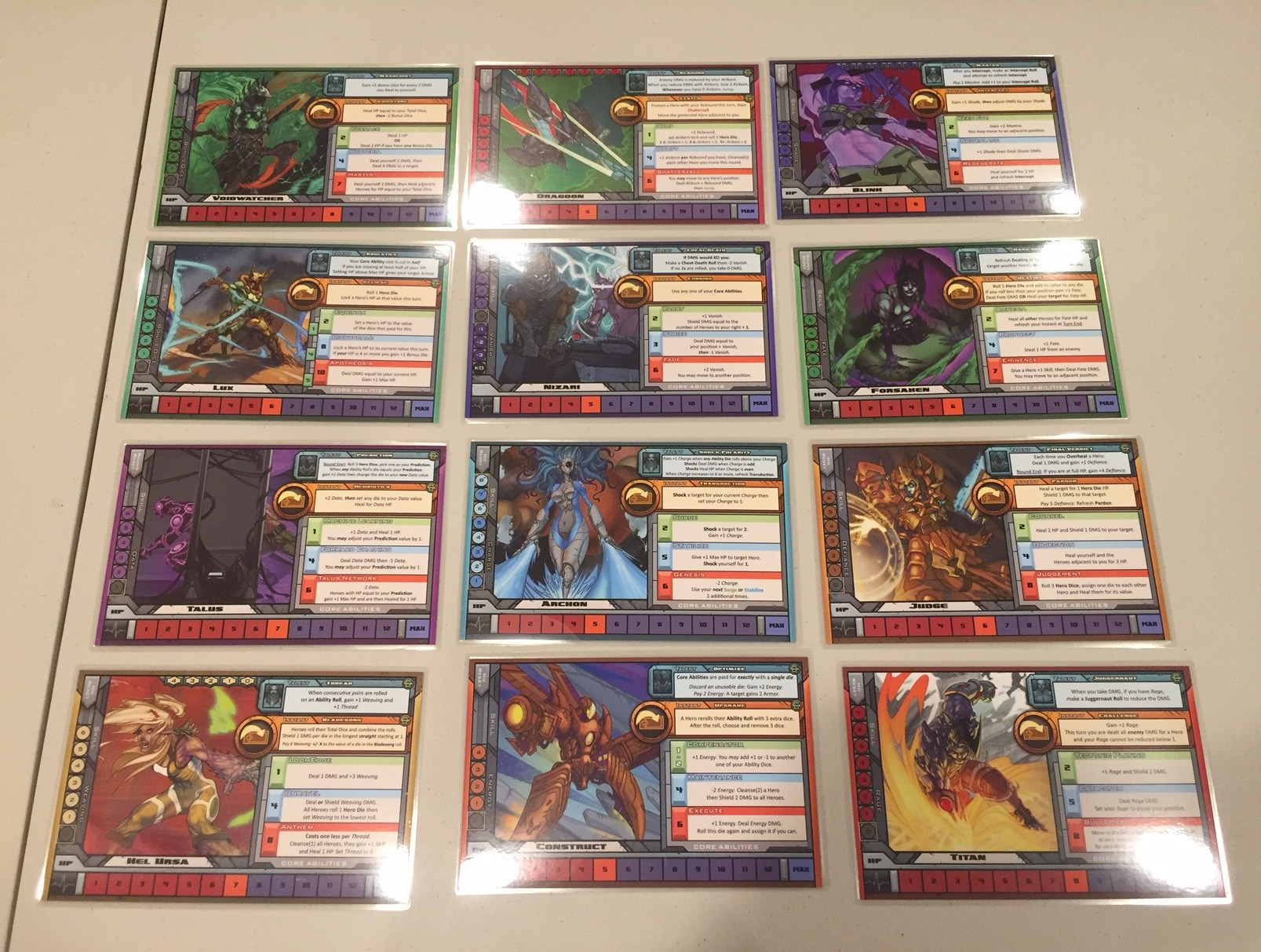
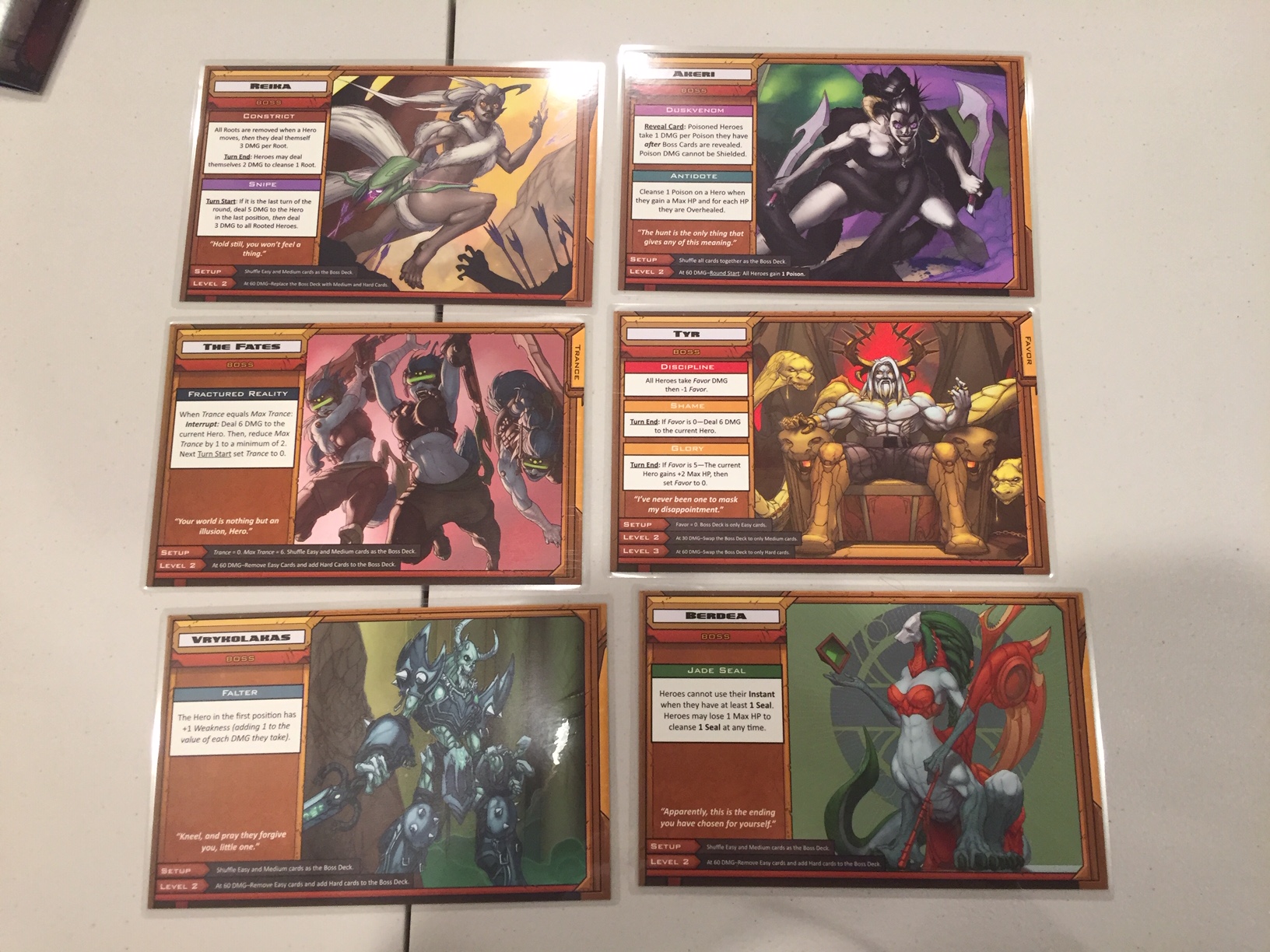
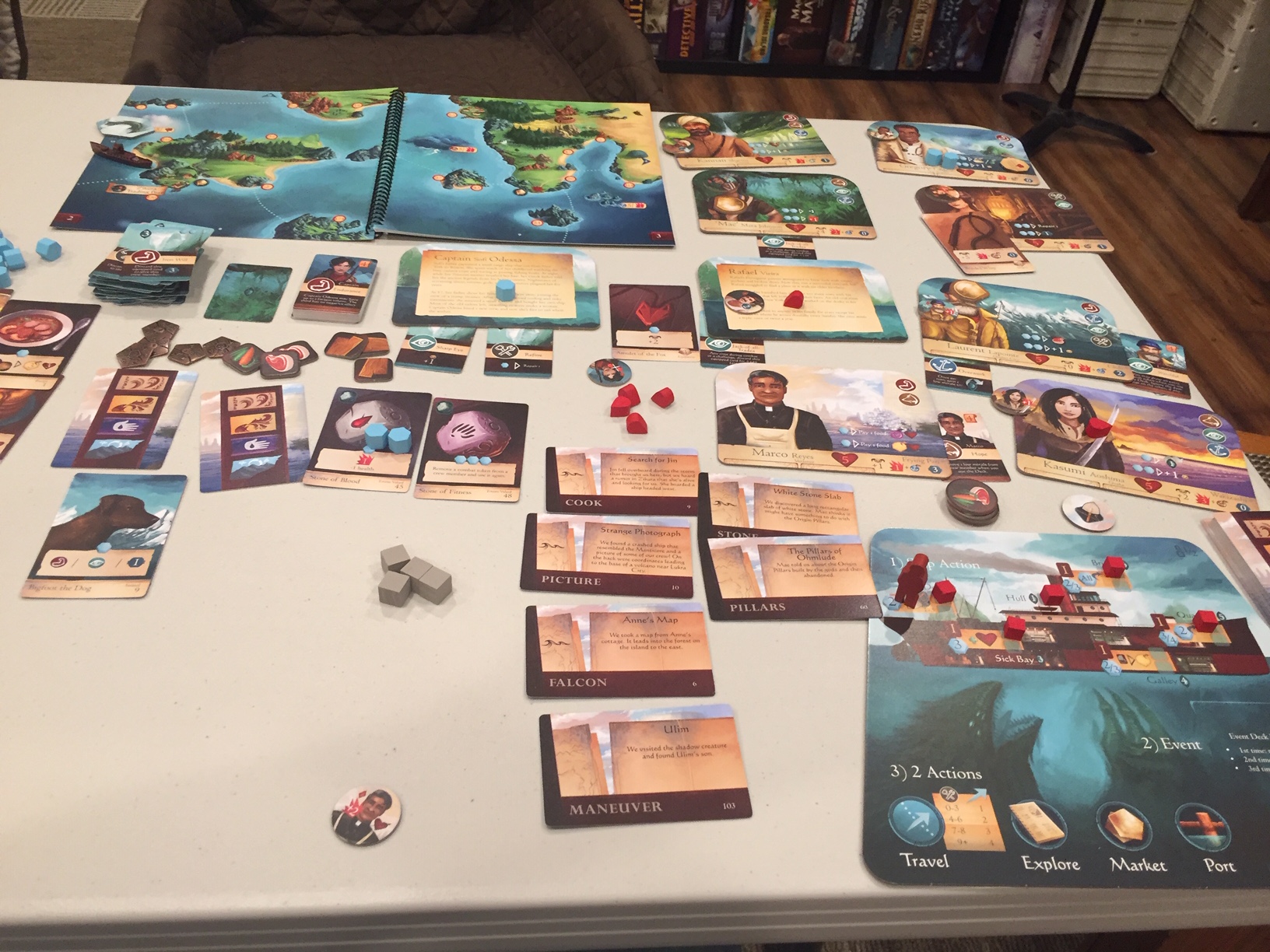
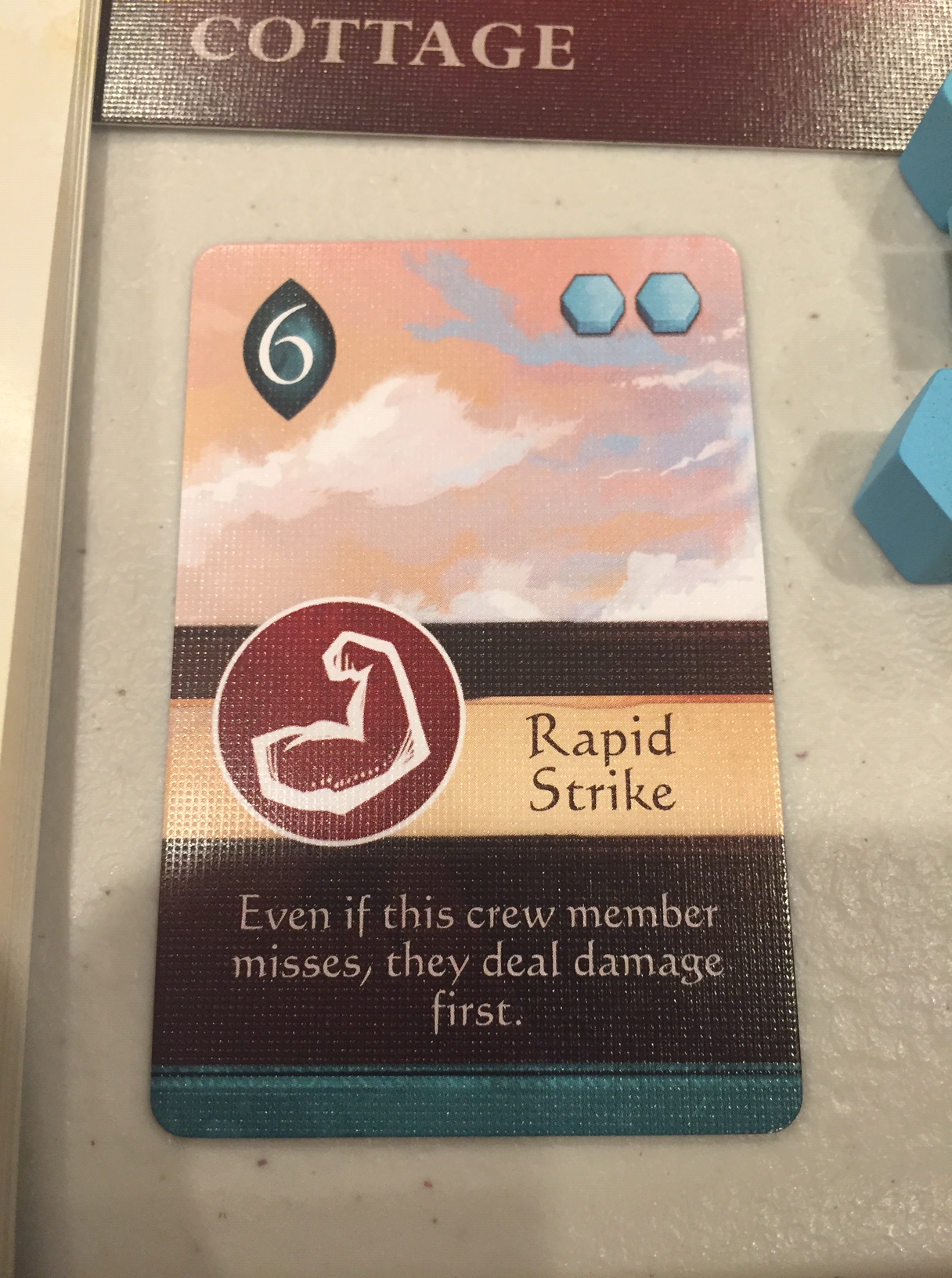
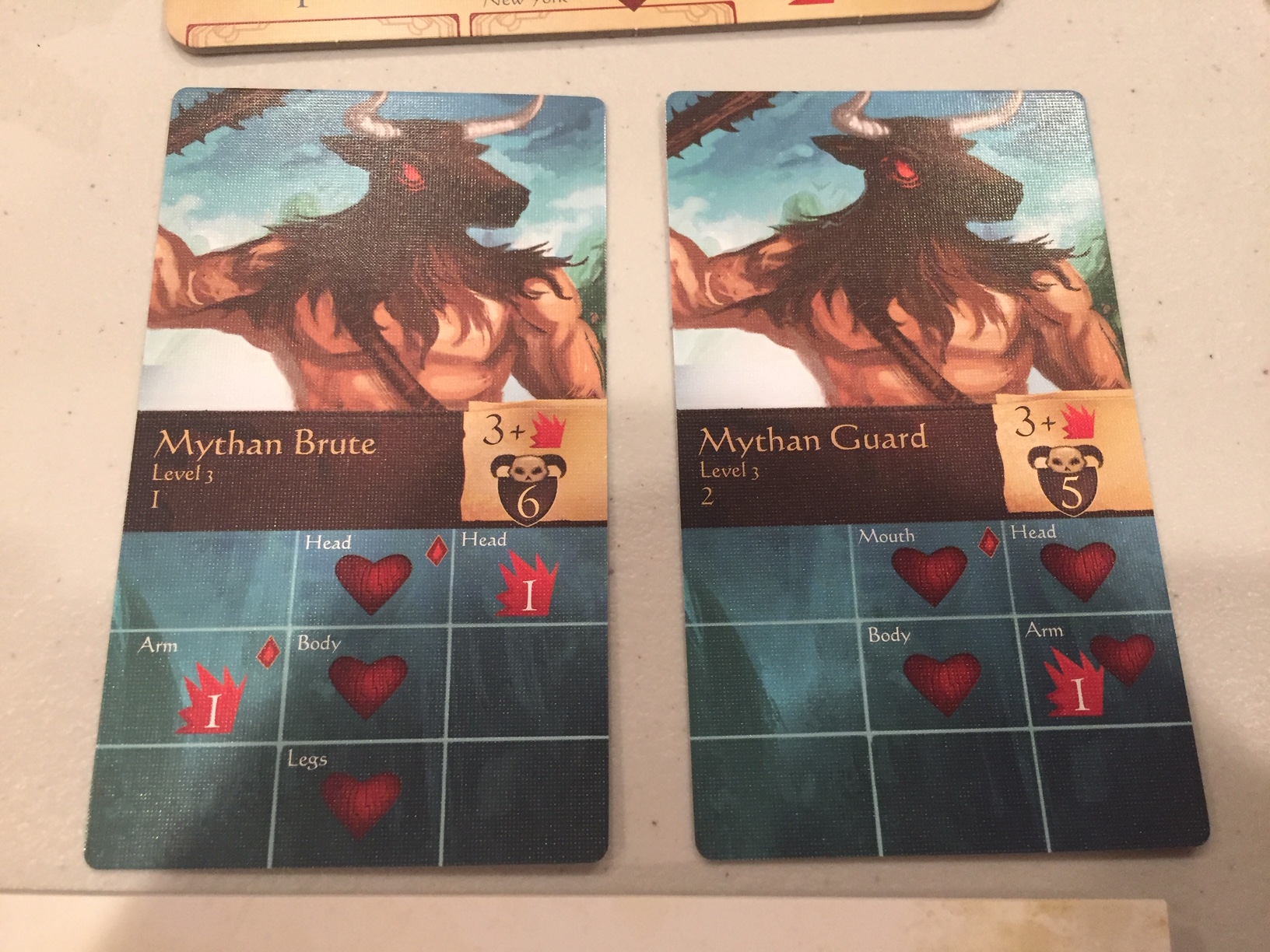
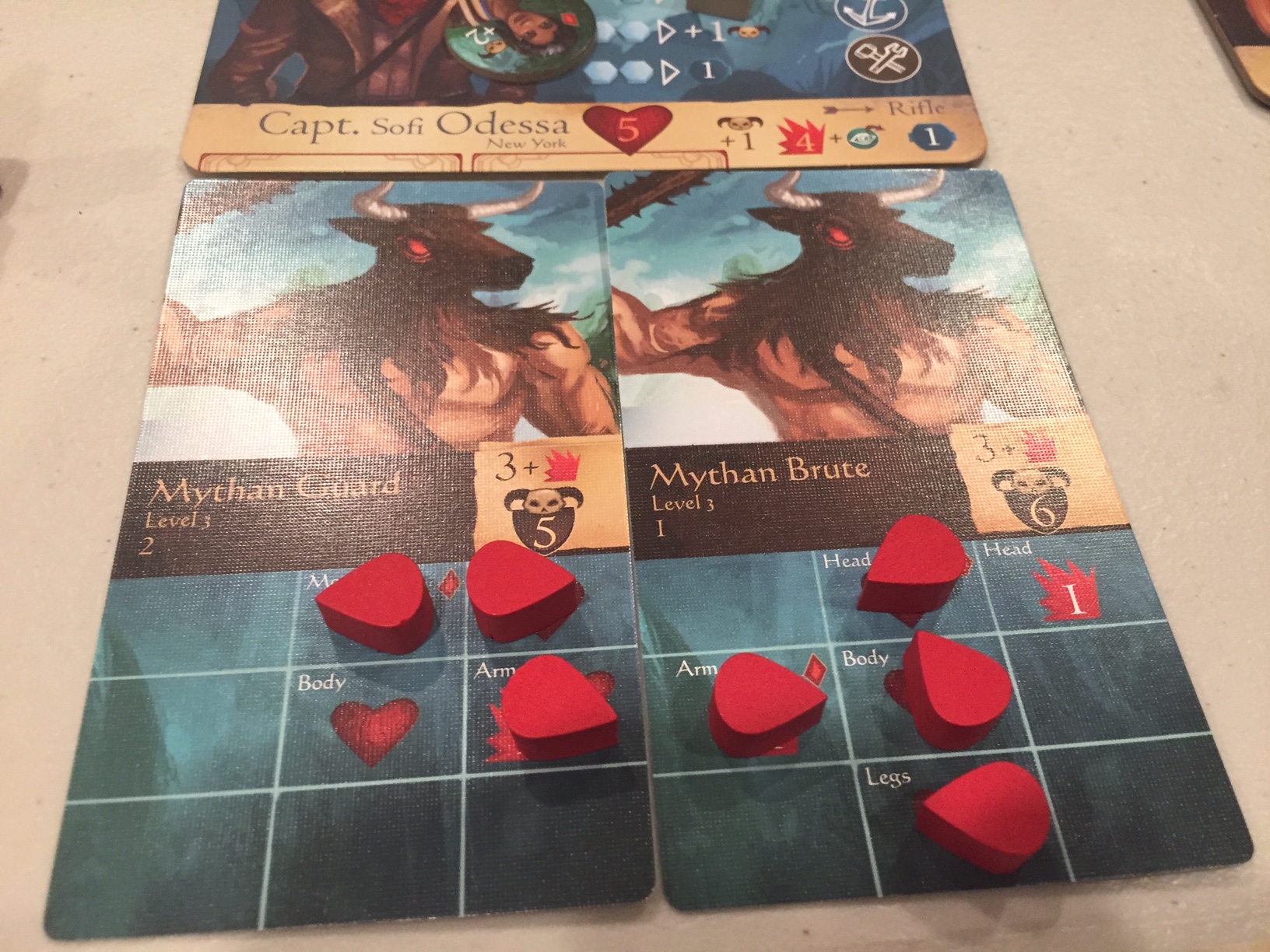
The Vincent Dutraite art is fantastic (see above) and consistent with the original game. Both the art and graphic design continues the tradition of the original game: It looks great.

Rulebook

There’s not really a new rulebook, just a pamphlet to expand on the ideas in the game. Really, the only change in the game is that some of the mysteries have different solve condition. In the original game, you always had to find weapon, motive, and suspect. In the new game, there are other twists (multiple murders, etc)!! Honestly, this is an expansion in the truest sense: Smoke and Mirrors really just adds NEW CONTENT: 4 New Cases to expand the original game.

Set-Up

IMG_6960

Set-up isn’t too bad.  You need just a few things from the original game: the board, the detectives, the notepads, and that’s about it.  Almost everything else comes from the expansion, so it’s pretty easy to set-up and play this expansion.  Although I loved the expansion Hero Realms: The Lost Village (the cooperative expansion for Hero Realms which I reviewed here), The Lost Village was very painful to set-up and get going.  Luckily, Detective: Smoke and Mirrors, did not have this problem.  Were were up and going pretty quickly, and it was easy to keep the base game and expansion content separate.

Cooperative Play

IMG_6967

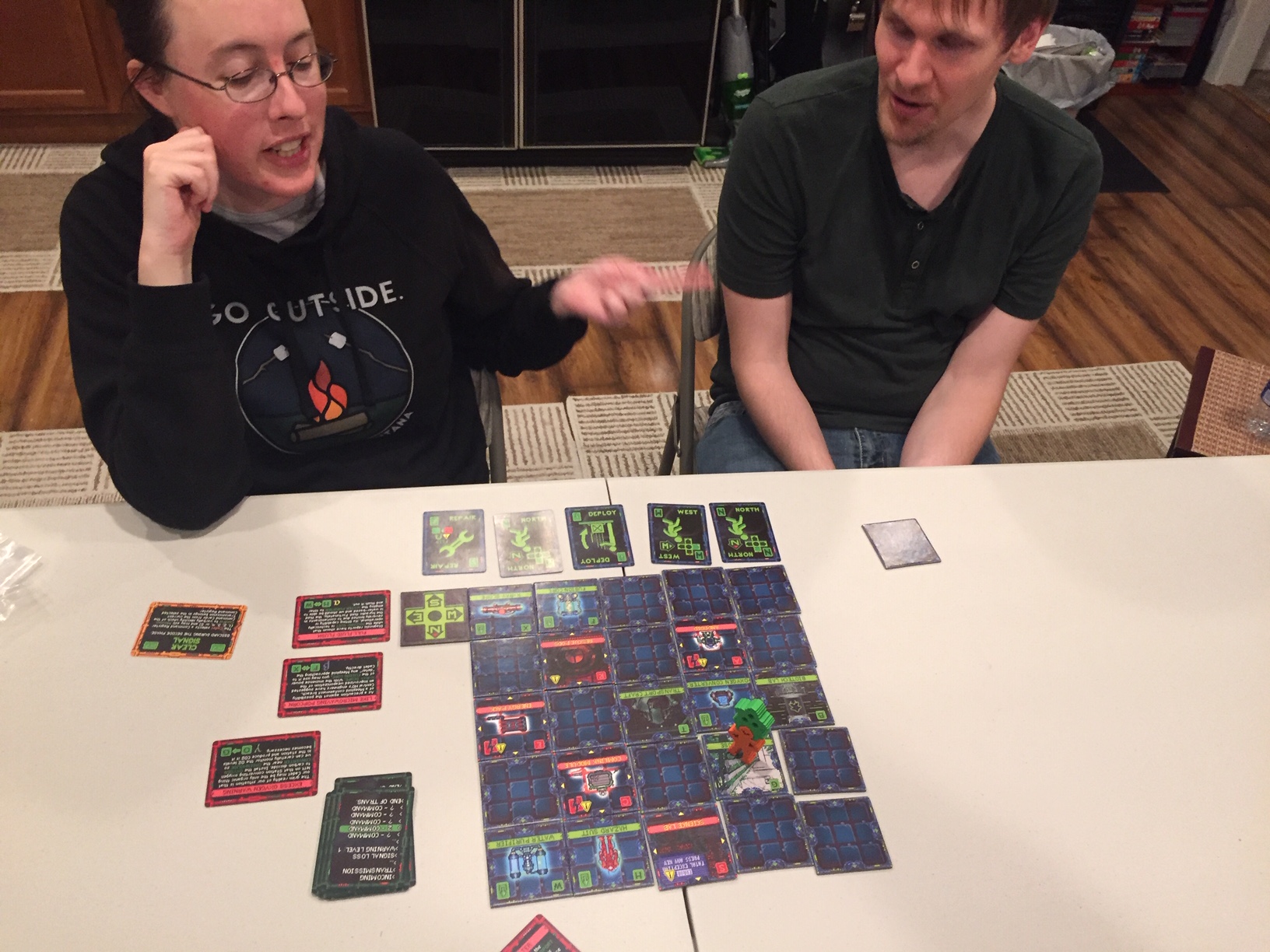
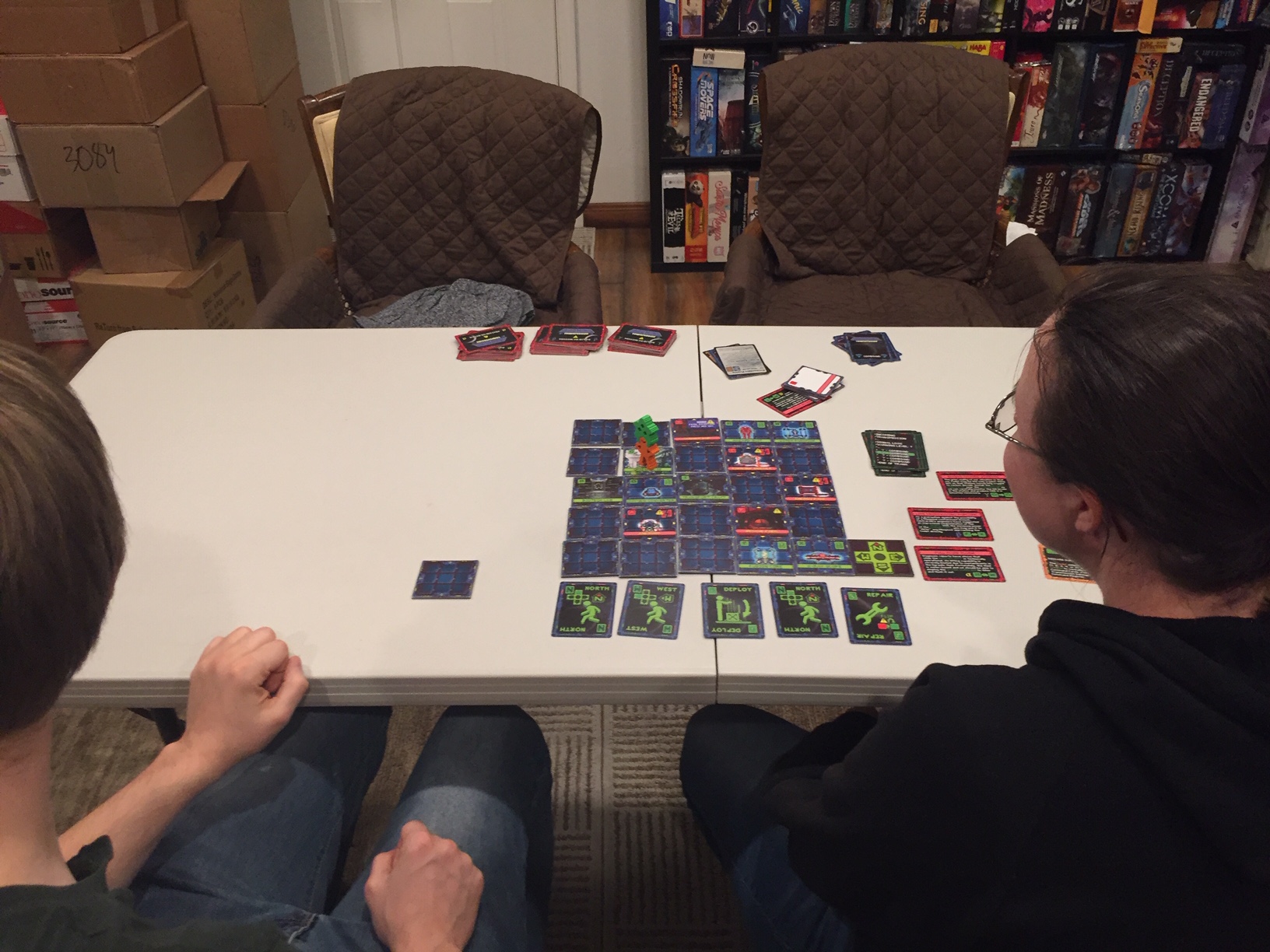
To be clear: we are ONLY reviewing the cooperative play mode of the expansion. Recall that the default way to play Detective: City of Angels is one vs. many, which my playgroup typically does NOT enjoy: Cooperative mode is simply another (included) way to play. We prefer the idea of working together to solve the mystery rather than having one of our friends be an adversary. BUT, if you enjoy that adversarial mode, this expansion still has the Chisel book for that play style.

IMG_6917

Recall that you still want to Chisel book at the end of the cooperative mystery, as it gives a nice narrative of how the crime happened.

PlayIMG_6962

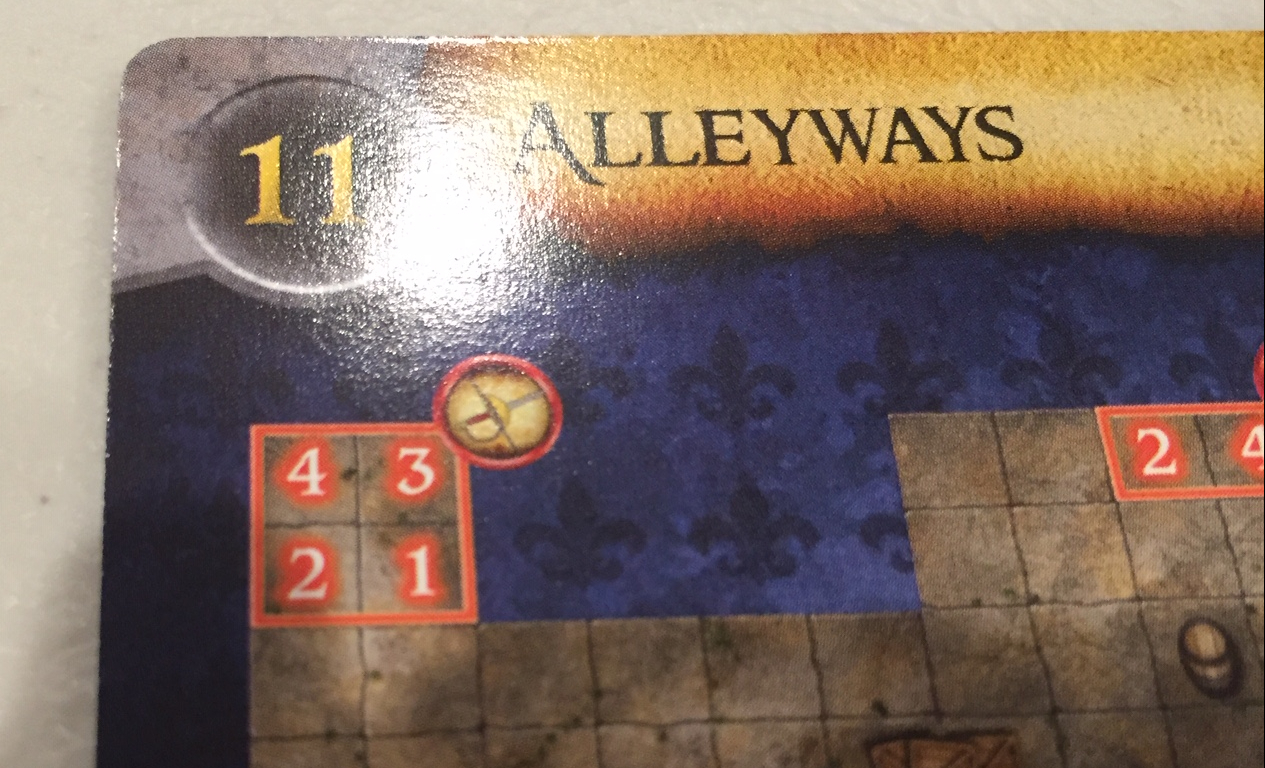
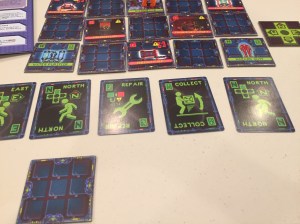
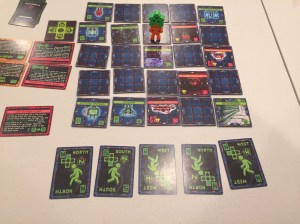
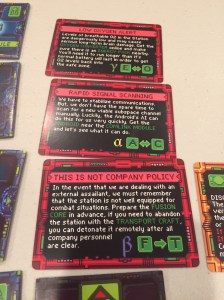
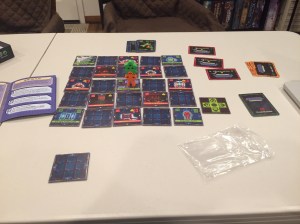
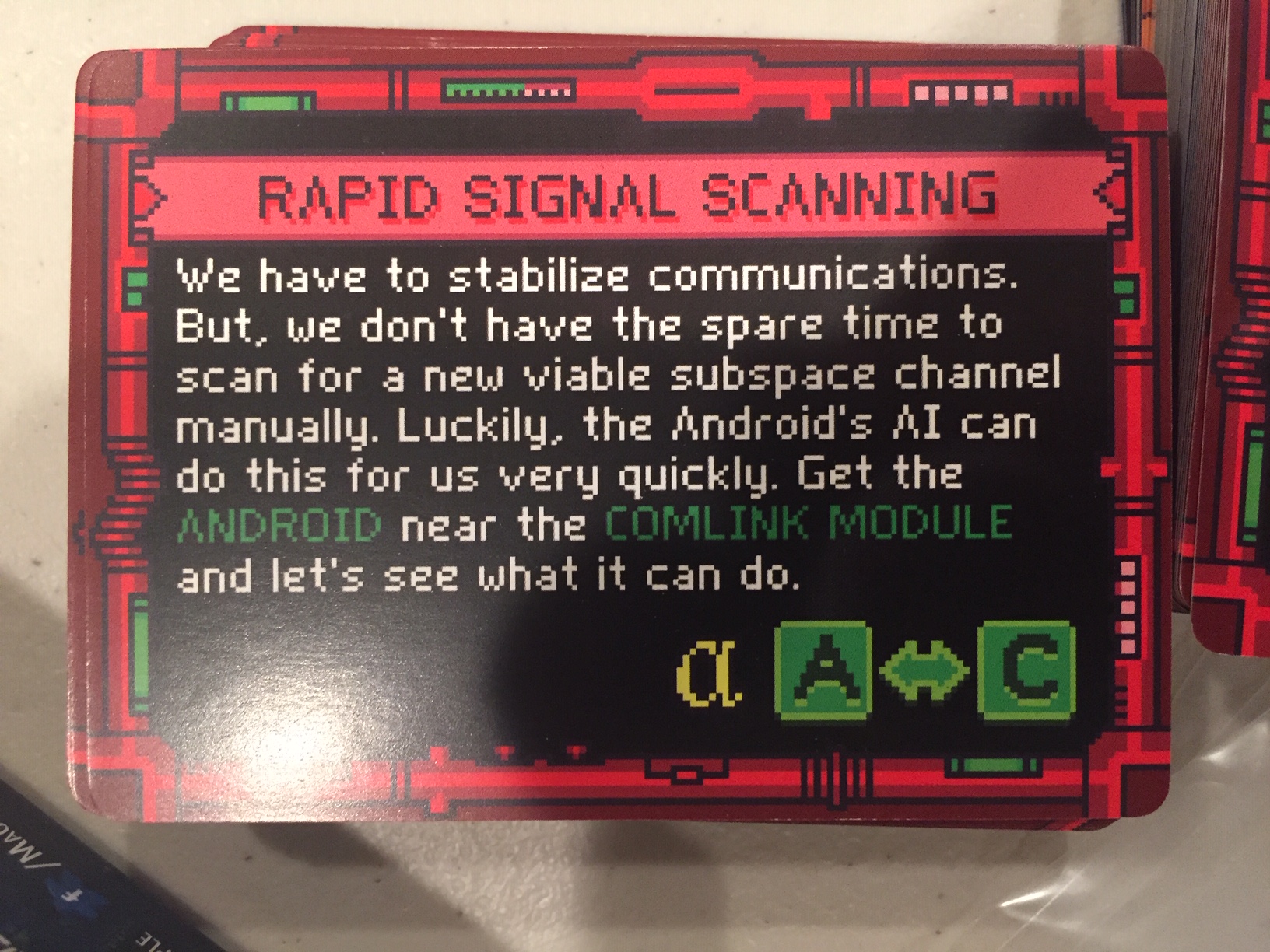
So, how does the game play? It’s really more of the same IN A GOOD WAY. It’s like a new season of your favorite detective show: just more cases. There are some new wrinkles to keep it fresh: we ended up have new expanded locations we could explore in a more interesting way: No spoilers, but one new location was a 2×2 grid you could move around and search. There was also new “crimes” and new things you had to figure out. take a look at the picture above! These are new crime note sheets that augment the original note sheets. Each mystery has a “different” set of things you have to figure out.

There were a few missteps that threw us: we added new cards across the top row THAT REPLACED OLD ONES, which meant you had to be aware when they changed so you could do a DIFFERENT lookup.

IMG_6913

See the lookup grid for Myst 8 and Myst 11 for Carnival of Souls? Those Myst. 8 and 11 cards REPLACE other cards in the A-L row, so if you aren’t paying attention you might accidentally go to the wrong space on the grid after those cards come out! The directions said NOTHING about this. If I hadn’t noticed it, I think we would have lost our first game and been very annoyed.

BUT that was the only thing that really got in the way.

Solo Play

IMG_6964

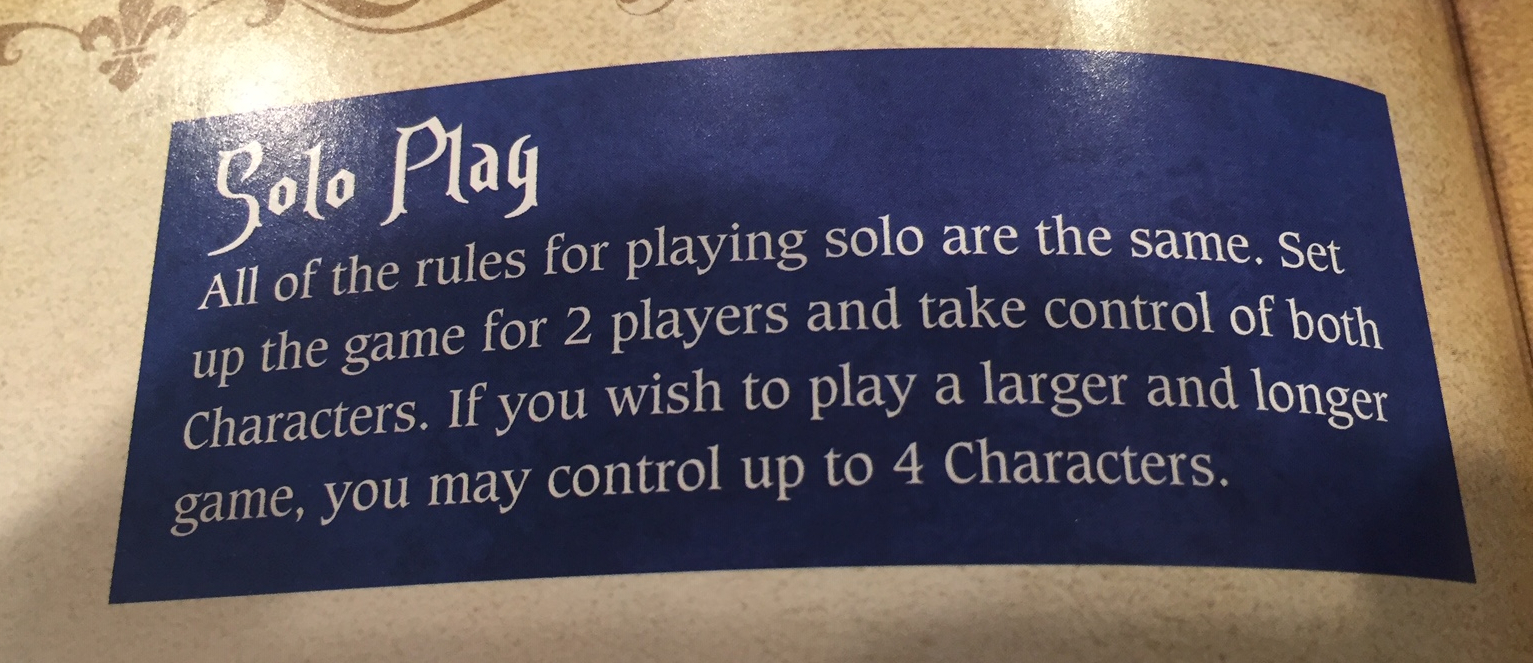
This game follow Saunders’ Law: there is a viable solo mode. To play solo,  you just have one detective on the board.  It works fine (and that’s the way I played some cases of the original game), but I do think it works better with multiple people: ideas get thrown around quicker, and yhhhou have a better chance of solving the case.   It’s also better to explore the board with multiple people, as it’s easier to have one detective concentrate on the city, and other detectives concentrate on some of the new expanded locations.   But, you shouldn’t have any problem playing solo: It still works fine just like the original game.

ConclusionIMG_6906

In general, we loved Detective: Smoke and Mirrors as much as the original game. It’s a true expansion: it just gives you more content (4 new cases) with some very minor tweaking. It was easy to set-up and play the new cases from the expansion: sometimes expansions require quite a bit of work, juggling to get content from the original game and the expansion to work together, but that was not the case here.

There were some minor weird things (some new cards were packed oddly, some new content was easy to misuse, and added a purple player for little reason), but in general this is a great expansion. If you love Detective: City of Angels and you want more cases, this is right up your alley.

A Review of Escape The Room: The Cursed Dollhouse

Last week (right at Halloween), we came out with our Top 10 Creepy/Spooky Cooperative Games! We put Escape The Room: The Cursed Dollhouse in there as an Honorable Mention because we haven’t gotten through it. Well, today, we’re going to take a full look at this Escape Room game. Escape The Room: The Cursed Dollhouse is a cooperative escape room type game for 1-4 players (more could play, but 4 seemed liked a good limit). It takes 2-3 hours to play all the way through (we took 3 hours). You can stop at about 3 or 4 points in the game (so as to resume later) but we played all the way through in one night.

CreepyIMG_6929

So, we should have waited a week before we came out with our Top 10 Creepy/Spooky Cooperative Games list! (I guess we didn’t have a choice: it was Halloween!) This game was AMAZING! I was worried (from some reviews I’ve read) that this game wasn’t going to be very good: Tom Vasel gave it a lukewarm review, and Eric Summerer gave it a slightly better review. Historically, I tend to agree with them, but they weren’t right on this. This game was fun, thematic, cool, interactive, and one of the best Escape Rooms board games I’ve ever played!!! This might have made the #1 spot on last week’s list!

The Dollhouse

IMG_6947

So, let’s start with the Dollhouse! This is one of the coolest components I’ve ever seen in a boardgame. It takes a little bit to get set-up (see above), but once it’s set-up, it just screams theme. Don’t look toooo long at the above dollhouse. Partly because it’ll give away some puzzles, and partly because it’s creepy!!

The set-up is fairly straight-forward (see instruction from above): I want to say it took us about 20 minutes to set-up.

IMG_6931

Opening the box, you can see all sorts of stuff.

The heart of the game is a code wheel, which we have seen in a lot of EXIT Escape room games.

Even more clever, they put a “lock” on the wheel, so you can’t accidentally see too much as you are rotating the dials.

The Rulebook

IMG_6932

The rulebook is good and we got going quickly (after building the dollhouse).

The rulebook also doubles as the storybook: as you are solving “rooms”, you get more of the story. This is NOT just flavor text!!! Well, some of it is, but there are also hints to puzzles buried in the story as well. You HAVE TO LISTEN TO THE STORY, or you might miss some important clues! I loved the story in Aeon’s End: The Outcasts (and was kind of reminded of that here, only in terms of presentation), but that story didn’t have anything Aeon’s End needed to really play the game. Not so here! You absolutely need to pay attention … and that’s why this game sings. In this case, it talks creepily as dolls …

The Story

IMG_6945

The story .. without giving away too much: you are stuck in a dollhouse and have to get out! The story is interesting and creepy. As you read from the storybook, you speak in creepy voices. Or at least we did. I suspect you will too! We went through the entire game in one night: it took 3 hours to play through the entire story! We never wanted to stop … this story was interesting and immersive!

Cooperation

IMG_6953

One of the reasons The Cursed Dollhouse worked so well: it encouraged cooperation on many levels (pun intended).  For one, every “room” of the dollhouse you are in has 3-4 puzzles people can work on concurrently.   People tend to gravitate towards some puzzles, and sometimes two or three people are working on one puzzle while another person worked (independently) on a different puzzle.  During the entire game, we probably formed all 4 combinations of people working together!  Sometimes, you’d run out of ideas and throw it to another group, sometimes you’d stubbornly sit on the puzzle until you solved it, sometimes you’d ask for help. 

My friend Junkerman tends to dislike Escape Room games because “the single puzzle” gets sized by one subgroup and the other subgroups have nothing to do.  That didn’t happen to us in The Cursed Dollhouse! 90% of the time, everyone was working on SOMETHING, either by themselves or with another person(s). Having 3-4 puzzles per room really helped foster the cooperation. 

I am sure this would work fine as a solo game, but my group experience makes me think that this would be SO MUCH MORE enjoyable with a group (as different ideas flow much more easily between people).

Small Dollhouse

IMG_6954

One of Tom’s complaints from his review was that “no more than 2 people could look at the Dollhouse at a time”.  This is fair, to a certain extent. All the action is at the Dollhouse, and everyone wants to crowd around.  I mentioned this to my group before we started our play, but we simply worked around it: it was never a problem for us.  This is probably because we knew it MIGHT be a problem, so we simply worked together (cooperated) to fix it!  In the end, we did two things to mitigate this problem:

  1. We moved around a lot.  We would frequently swap chairs with people, partly so some of us could examine the Dollhouse, partly so we could move around in groups and solve puzzles.
  2. We used our phones to take pictures.  Most people (at least in my group) have a smartphone, and we’d occasionally take a picture of the room we were in, so we could ZOOOM in it with our phones/camera apps.  This allowed us to “look” at the Dollhouse (and ZOOM which was important a few times) without having to crowd.

Forewarned is forearmed: As long as you know that crowding in front of the Dollhouse MIGHT be an issue, you can work together to alleviate said issue.  So, just be aware it might be a problem!

Puzzles and Solutions

IMG_6956

Like all Escape Rooms (both board games and real Escape Rooms), there are puzzles to solve.  You will need pen and paper (see above).  Now,  we got every problem in the game without any hints!  (I think we brute forced one).  BUT part of this was because the Hint System is on a web site instead of cards/booklets in the game!!! I actually think this separation actually encouraged us to work harder at the puzzles.   The EXIT games have a great hint system in cards, but these hint cards are sitting next to you … so easy to pick up if you are having a problem … “Come, pick up the hint, don’t get stuck …” (said in a creepy doll voice).   So, we worked diligently on all the puzzles, and solved them all!    But, be aware, these puzzles are NOT SIMPLE : This is a fairly hard Escape Room game!    As much as I enjoyed it, I would definitely only recommend playing this after you have played a number of other Escape Room games.

Oh ya, the hint web site only worked on Android and not IOS for us.  It was probably because my IOS phone is so old, but it was weird that the web site was so tricky it only worked on Android.  Caveat Emptor. 

Resetting

Once you have played through the game, you have seen everything.  You are done with it (unless you want to wait a few years and replay it after you have forgotten everything).  So, you may want to pass it on to some friends.  Now, the game CAN be reset, but it is a little bit of a pain.  The web site (the same place where the hint system is) gives you directions how to do put everything back together.  It wasn’t HARD to reset it: it took us about 15-20 minutes to put it back together.  To be fair, once you’ve played the pristine originally version, the “hey-we-reset-the-game” version isn’t quite as nice: we used tape in a lot of places to hold things together, where the original game used some sticky stuff that worked a much better.

You can reset the game, it doesn’t take too long, but it won’t be quite as nice as the very first play.  It’ll be good enough.

Conclusion

IMG_6955

By the time we were done, we loved this Escape Room. The highest praise was echoed by a number of players: “This game feels more like a real Escape Room more than any other Escape Room board game I have played!” High praise Indeed! This was a great experience.

To be clear, the puzzles in the game were hard. I think part of the reason we enjoyed the game so much was we solved every puzzle without hints! There was a sense of satisfaction in knowing our group was able to overcome these harder puzzles. That may be why enjoyed the game so much! A sense of satisfaction! This also means we can only recommend it to seasoned players of Escape Room games.

The Cursed Dollhouse was unfortunately the most expensive Escape Room in a box we’ve played as well: we bought it on Amazon for like $45. So, after resetting it (after playing through), you may consider passing it onto a friend to get more value from it.

For player count, I definitely recommend it with more people! Solo would probably work okay, but the puzzles are hard, so the more brains the better! With a higher player count, it’s a little cramped to see the entire dollhouse with 4 people, but you can use your phone and take a few pictures, thus alleviating some of the cramping.

If you like the idea of The Cursed Dollhouse, and you want a creepy Escape Room game, and you feel like you can handle more complex puzzles, this is the one to get!!! This is one of the best experiences we’ve had with an Escape Room game. We loved the story, we loved the immersion, we loved the dollhouse, we loved the way the puzzles were presented, we loved how we could all work together concurrently on different puzzles, we loved that the puzzles challenged us: 9/10

Top 10 Creepy/Spooky Cooperative Games

Happy Halloween Everybody! In honor of this creepy and spooky holiday, we thought we’d emphasize the Top 10 cooperative games that are creepy and/or spooky. Now, some cooperative games are very thematic and spooky, but but necessarily creepy! And being a creepy game doesn’t necessarily mean a game is thematic! So, our metric for rating the games is an amalgam of “thematic”, “creepy”, “spooky” scores, as well as how much I like it. For instance, the game I like to play the most is not the number 1 game on the list because it’s not quite as creepy as other games on here! The number 1 games was the one I enjoyed the most and probably the creepiest!

Honorable Mention

Escape The Room: The Cursed Dollhouse

Escape the Room: The Cursed Dollhouse, ThinkFun, 2020 — front cover (image provided by the publisher)

We haven’t gotten through this yet, but it looks so cool!  The game transforms into a 3D dollhouse and looks really cool!  Early reviews are that it’s hard and doesn’t accommodate more than 2 players very well, but it just looks so cool.  We’ll probably be reviewing this on the site soon!

10. Horrified

The front cover of Horrified: Universal Monsters.

A lot of people really like this cooperative, mass-market game (I got my copy at Target). The players work together to defeat the Universal movies “old-style” monsters (The Mummy, Dracula, see the cover above!) as you go on in game quests (with a little pick-up-and-deliver). It’s not particularly creepy or spooky but it is very thematic, and works well with families and younger players.

Game Setup

9. Ghost Stories

Cover Front (Publisher's Press Image)

This is a very hard cooperative “puzzle” game for 1-4 players.   Players cooperatively are defending a small village from being decimated by ghosts (with a big bad that comes out at the end).  The art of the ghosts is quite creepy and really evokes a scary ethic.

Ghost

This is a really hard cooperative game, and maybe very hard to find (I think it’s out of print). It has been been replaced by The Last Bastion (a retheming of the game to fantasy setting). If you can find the original, pick that up instead.

Game components (Publisher's Press Image)

8. Ghost Fightin’ Treasure Hunters

Ghost Fightin' Treasure Hunters, Mattel, 2016 — front cover (image provided by the publisher)

This is a light cooperative game set in a haunted house: it’s mostly aimed at a younger audience, so it’s not too scary.   It’s like a lighter “pandemic” style cooperative game as players race around the board defeating ghosts and picking up loot.  The components are pretty fantastic (the plastic ghosts are fun to play with by themselves) and the game is very thematic and fun ! It has just a hint of creepiness/spookiness…

Playing Geister with my iOS/Android app to draw cards, roll die and set time limit.

7. Mysterium

Mysterium, Libellud, 2015 (image provided by the publisher)

Mysterium is a an odd fully cooperative game where one player plays a ghost, trying to get all the other players to discover how he was killed!  The ghost can only communicate in dreams (little scenes that he give to each player). 

The mediums have identified the proper suspect @ Spiel in Essen 2015

The backdrop for the game is a creepy haunted mansion, and the dream cards (see above) are always creepy and weird.   The game can be a tad frustrating if the players don’t “get” the ghost is trying to say, but the game is definitely evocative, thematic and very creepy!

2 player game in progress

6. Scooby Doo: Escape From The Haunted Mansion

Scooby-Doo: Escape from the Haunted Mansion – A Coded Chronicles Game, The OP, 2020 — front cover (image provided by the publisher)

This is a one-shot escape room game, where the players cooperatively control the Scooby Gang, trying to solve a mystery!  This one makes it very high on the list because it was so much fun to play!   It’s definitely an escape room game that families can play (unlike others we might see later), as it’s fairly light, but it still has an interesting mystery to solve.  If you loved the Scooby Doo cartoon show, and the “creepy” vibe of that, you’ll love Scooby Doo: Escape from the Haunted Mansion.  (Again, this one makes it so high because the gameplay was so fun, even if isn’t as creepy as other games on the list).

components

5. Mythos Tales

Second Printing Box Cover

This game creates a incredibly rich, creepy story in an Cthulu-esque universe.   There are 8 episodes in the box, and once you’ve played through an episode, you are done (in more ways than one as the horrors and madness overtakes you!)  This game is all text-based, and you explore the city of Salem trying to discover the dark mysteries underneath.  If you have played Sherlock Holmes: Consulting Detective, this is the same kind of game, set in a horror universe.  Very creepy and very evocative.

Stepping into Arkham for the first time...

4. Arkham Horror (Second Edition)

Arkham Horror, Fantasy Flight edition, revised printing (high quality box cover scan)

This is my favorite game to play, but it’s not the creepiest or most thematic of games.  The game is a deep, heavy, cooperative romp around the city of Arkham, as players work together to fight monsters and shut gates to stop the impending arrival of a Cthulu-esque old one.   I think my gaming group liked this so much because it was very akin to a role-playing game (with attributes, spells, items) without all the messy overhead of an RPG.  So, it’s a bit heavy for most people, but the thematic art and text permeates the game and creates a nice, creepy experience.

Arkham Horror with all its expansions

3. Mansion of Madness (Second Edition)

Mansions of Madness: Second Edition, Fantasy Flight Games, 2016 — front cover (image provided by the publisher)

To be clear, I hate the First Edition of the game (where one player plays against all the other players): you want the Second Edition which is fully cooperative.  The Second Edition uses an app to “run” the game and it turns the Mansions of Madness against you!  This is a big sprawling game set in a Cthulu-esque universe.  It’s interesting because you don’t actually know what your objective is at the start of the game, you sort of have to discover what you and your teammates have to do as you.  It’s incredibly thematic, very creepy, and very long…. it may take you a half hour to set-up, 2 hours to play, and another half hour to tear-down, but it creates a very satisfying creepy experience.

General look


2. Exit: The Haunted Rollercoaster

Exit: The Game – The Haunted Roller Coaster, KOSMOS, 2019 — front cover (image provided by the publisher)

This one surprised me a little: it was one of the funnest escape rooms I’ve ever played! It was creepy, and it had (without any spoilers) one of the scariest moments I’ve ever seen in a game. It’s a lighter cooperative escape room (rated Novice), but all of my group liked it! It is an EXIT game, so it can only be played once (as you tear up cards, and rip things), but it really is worthwhile as a creepy, cooperative game. (I don’t want to show too much more of the game! I don’t want to reveal any surprises!

1. Exit: The Catacombs of Horror

Exit: The Game – The Catacombs of Horror, KOSMOS, 2019 — front cover (image provided by the publisher)

This one surprised me. I really thought Exit: The Haunted Rollercoaster would make the number 1 position! Even though me and my group enjoyed playing the Haunted Rollercoaster more than The Catacombs of Horror, the overall experience of The Catacombs of Horror was just more creepy and thematic and cool! The Catacombs of Horror (expert level) was a lot harder than the Haunted Rollercoaster, and we got frustrated a number of times. Luckily, the hint system of the Exit games is quite good and we were able to continue in this creepy world.

Box front & back - German Edition

If you look closely at the warnings on the back of the box, it talks being careful with a candle. That’s right, there’s a candle in the box and you can have some downright creepy and thematic playing! Again, this one takes the number 1 spot because it was the creepiest game we’ve played!

A Review of The Princess Bride Adventure Book Game: Part I: Unboxing, Solo Rules, and First Impressions

One of my favorite movie moments of all time is watching The Princess Bride at a midnight showing of the movie. The movie had been out for some time and had achieved “cult” status, so The Princess Bride made the midnight showings at many alternative theaters. My favorite moment? The entire audience (who has been quoting the movie all night) screaming at the top of their lungs, screaming The Cliffs Of Insanity!!!

Cooperative Board Game

IMG_6896

There have been a number of Princess Bride board games over the years, but I haven’t picked any of them up: partly because none of the have been cooperative, but also because none of them have been particularly good.  This newest one just came out fairly recently: today’s date is Oct 26th, 2020! The Princess Bride Adventure Book Game, to the best of my knowledge is only available at Target (I had to order it online after visiting 2 Targets looking for it).  It’ll probably be available at other outlets soon enough.

The game is for 1-4 adventurers, for ages 10+.  Keep an eye on that age, because that will influence how complex this game is (foreshadowing: it’s not particularly complex).

Unboxing

IMG_6861

The cover is gorgeous, with the game gilded with golden highlights.  I love the art: it isn’t cheesy, yet still captures the imagery from the movie without using stills!

IMG_6862

Opening up the box, you are presented with the rulebook and the Adventure Game book.

The Adventure book is a THICK cardboard book, but it’s hard to see from the picture above. See below for a picture from the side!

IMG_6871

Opening it up, you see scenes from The Princess Bride movie.

IMG_6870

The rulebook is fairly small, only 8 pages!

IMG_6866

We’ll take a further look inside the rulebook in a section below. In the meantime, we’ll look at the cards:

The cards are easy to read, and the art is nice, using the same stylized art from the box cover. The only problem is that the cards aren’t linen-finished. I guess that’s pretty standard for a mass-market game that you get at Target.

IMG_6877

The tokens that come are easy to read, and they come prepunched!! (I.e., no sheet to punch out). I wonder if this is a new direction in gaming?

The reference cards are nice (and I am very happy they have these):

But the best component we’ll save for last: The miniatures!

IMG_6865

I’m usually not a miniatures guy, but I liked these! (You know, if I say that many more times, I think maybe I am a miniatures guy. In the meantime, I will live in denial). The miniatures look like the characters, but the different colors really distinguish the characters.

Rulebook

IMG_6867

The rulebook is short and to the point. It’s only 8 pages!! The first page does it right and shows all the components.

The second page shows the (general) set-up: It turns out every scenario will have a slightly different set-up, but they all have the same general. It’s easy to read and easy to get going. I was up and going very quickly.

IMG_6869

The rules are explained pretty well. There is a fine point that the rules don’t explain well, but we’ll discuss that in the playthru.

In general, the rulebook was great. Concise (perhaps too concise) and nice graphic design.

Solo Play

IMG_6879

The game is fully cooperative. Interestingly, there are no exceptions for solo play. You might think that each player plays a character from the game, but you would be wrong! The players collectively play/move all the characters on the board. On a player’s turn, a player simply moves around one (or more) of the Princess Bride characters on the board—they go around the board using their cards to solve challenges.

IMG_6884(1)

The challenges require characters to be on specific spaces and specific cards needed to be discarded. Note the colored symbols on the right of the challenges: they correspond to the cards the players obtain during the game.

IMG_6880

For example, the courage card (orange card at the top, and orange symbol) is one of the three cards needed for “Seek Fortune” challenge.

IMG_6883

The solo play doesn’t need any special rules because the players turns are fairly indistinct as there are no special player powers. We’ll talk more about this below. But, it works well. I had fun playing through the first scene of the movie. And it was about 15-20 minutes.

Set-Up

IMG_6887

Each Chapter in the game corresponds to a major scene from the movie. This is a campaign game (it’s not legacy: no stickers or torn-up cards). The set-up changes depending on which chapter you are on.  I have played a lot of campaign games (especially over the last few months), and this is one of the simpler ones: it was easy to set-up, even though each chapter is different.IMG_6885

Like most cooperative games, there is a “Bad News” deck (called the Plot deck) and the results of the plot deck are interpreted via the text on the left side of the board.  In the first Chapter, 1-15 puts chores on the board, and 16-20 moves Buttercup around.  Each Chapter will have a different effect from the Plot deck.

Issue

IMG_6889

So, one of the issues I had is something you will confront right away. The rules are “unclear” that you can solve multiple challenges per turn. After getting a few turns into the first Chapter, I realized it was absolutely necessary! The game is unsolvable unless you can solve multiple challenges on a turn!!! I wish that was clearer from the rules. A smart gaming group will figure that out quickly, but I am worried that a family group will simply think the game is unwinnable and poorly designed. So, as a public service, I offer this clarification: Players may solve multiple challenges per turn.

Audience

IMG_6890

So, remember the recommended ages we discussed earlier? 10+? This is a simpler co-op game. This is partly demonstrated because there are no special player powers: each player’s turn feels similar to the previous player’s turn: this makes it easy for kids and parents to just jump in. The game’s smaller rulebook (only 8 pages), the simpler set-up, the simple rules, all outline that this game is intended to be a simpler co-op. I think the intended audiences are families.

Having said that, I think older folks who enjoyed The Princess Bride will also enjoy the game: the components and art really evoke the ethos of the game. They just need to realize that this is a simpler co-op.

Conclusion

IMG_6895

I had fun playing this game, but I am one of the people who used to quote dialog of the movie at the midnight movie showing!! I think families are the intended audience: they will really enjoy the game. Each Chapter is only 15-20 minutes long, and the game is easy to set-up, teach, and play! Families could keep playing as long as the kids were interested (1 play at 15 minutes, 2 plays at 30 minutes, “time-for-bed, we’ll play tomorrow night?”).

I think that if you don’t know the movie, and if you aren’t really playing with a family or younger kids, this might be a pass for you. The turns of the players are very simple and very similar, but that means there’s not a lot to distinguish turns. This makes it easy for kids and easy to add a solo mode, but it also means it’s not a hard co-op.

In the end: I liked The Princess Bride Adventure Book Game, but I don’t love it. It’s a nice, simple co-op. I love the art and the ethos it evoked. The Adventure Book was gorgeous and maybe part of the reason I like this so much.

One last note: this is a campaign. Once you’ve played all 7 Chapters, you’ve seen everything. I can see playing all the way through a few times, but then getting sick of it. I would almost consider this to be like an Unlock or Exit Escape Room or any “play-once game”. Buy it (it’s only $30), play it all-the-way-through, then pass it on to your friends.

How to play a Cooperative Game Solo?

I’ve frequently written in this blog about Saunders’ Law: All cooperative board and card games should have a solo mode. It’s really more of a request to the designers and manufacturers! As someone who loves his cooperative games (and tends to present them to his friends), I need solo modes to learn the game. I enumerate a list of reasons why cooperative game need a solo mode in my blog post here, but essentially a solo mode in a cooperative game (at least for me) makes that game more likely to be purchased/played/enjoyed.

Categories

Nominally, we can break down cooperative games with solo rules into 3 separate buckets:

  1. Perfect Information vs. Hidden Information: Is the entire state of the games available to all players, or do some players hide information from each other?
  2. Solo Rules Included vs. None Included: Does the game have any solo rules?
  3. Multiple Positions vs. Single Position: If the game HAS solo rules, do they make you play multiple positions or have special rules for a single position?

Realistically, this breaks down into 5 categories for solo play:

  1. Cooperative games with perfect global information shared among all players. Solo rules NOT included  Examples: Unicornus Knights, Sentinels of the Multiverse.
  2. Cooperative games with perfect global information shared among all players. Solo rules INCLUDED, but require playing solo as if you were multiple positions. Examples: The Captain is Dead, Marvel United, Solar Storm.
  3. Cooperative games with perfect global information shared among all players.  Solo rules INCLUDED, but can play a single player in a single position.  Examples: Aeon’s End (any of them, original or War Eternal, Outcasts, etc.),
  4. Cooperative games with limited communication (thus, not all information is available to all players). Solo rules NOT included.  Examples: Far Away, Shipwreck Arcana, Wonder Woman: Challenge of the Amazons.
  5. Cooperative games with limited communication.  Solo rules INCLUDED.  None? 

There may be some games from category 5 that I don’t know of, but there is a way to approach games of both category 4 and 5 using a method we have discussed earlier called Changing Perspectives. That blog post explores the details about the Changing Perspectives idea in great depth, so we won’t dwell on that here. Today, we are going to talk about different ways to play cooperative games that tend to have perfect, global, shared information.

2P or Not 2P?

To paraphrase Shakespeare:

2P, or not 2P, that is the question:
Whether ’tis nobler in the mind to suffer
The slings and arrows of outrageous solo rules,
Or to take arms against a sea of troubles
And by opposing end them.

In other words, how do I play solo? As a solo player playing two positions or something else? (2P or not 2P?) Do I play 1 position, 2 positions, 3 positions, or even more? Do I even like the solo rules that come with the game (outrageous solo rules)? Or do I come up with my own solo rules (and by opposing, end them)?

Two Positions better than Three?

I have found recently that I don’t like the solo rules that come included in many of the cooperative games I have picked up. I am exaggerating by calling them outrageous solo rules, but it’s for effect. In Solar Storm, the solo rules has you playing 3 positions, with some special rules for sharing all the cards. I have played several times this way, but I vastly prefer just playing two positions instead. Similarly, for Marvel United, the solo rules have you playing 3 positions (see below), with some special rules again. And again, I found that I preferred to just play 2 positions instead. Why?

Eschew Exceptions

The problem: I don’t want to deal with “exceptional cases”! I am usually playing a game solo to learn the rules, so I am reading and learning lots of rules! The last thing I want is to have to apply “different” or “exceptional” rules to my play! Take a look at the “exceptional” rules for Marvel United!

And that’s not even all of the exceptions because they wouldn’t all fit on my screen! I would rather just play as 2 characters, so that I don’t even have to apply the exceptional rules. I was reminded of this playing the solo rules for Forgotten Waters! Happily, the game comes with solo rules (even though the box says 3-7 Players on the outside), but there are a lot of exceptions that made it more difficult to play because the exceptions were ONLY documented in the app and NOT the rulebook!

Three Positions Better Than Two?

At the risk of being a hypocrite, there are some games where I enjoy 3 positions.

Unicornus Knights (reviewed here and here) works fantastic with the player playing 3 positions instead of just 2. In this case, it’s because if you played as Two Players, then you’d be playing 4 characters. The minimum number of characters (for balance) is 3, so playing a 3-Player game is the best way to play solo. You don’t have an exceptional rules for solo play: you can just play the 3 positions normally.

Sentinels of the Multiverse is a controversial pick because it doesn’t even have solo rules. I did develop some solo rules to play as if you were playing 2 Characters, but they were a little clunky. See here. When I play on the app or in person, I usually play 3 positions (3 Characters). There’s a lot to keep track of, but I have played it enough to be comfortable with it.

One Position Better Than Two or Three?

Arguably, the best way to play solo is to play one position or one characters: usually there’s much less to keep track of (only 1 position/1 character) and you don’t have to context switch back and forth between different characters. Sometimes, it makes perfect sense.

The Captain Is Dead has solo rules, but it has you playing multiple characters. I developed a set of solo rules for running one character and it simplifies the game tremendously! For a while, The Captain Is Dead was my favorite solo game BECAUSE of these solo rules.

Aeon’s End has a nice system for playing solo with just one character: I was quite pleased with it in my review here. The list of exceptional rules is very small, and it was easy to jump in as a single character and get going.

Intellectual Overhead

Where am I going with all this? I seem to be all over the place, sometimes preferring playing 1 position, 2 positions, or even 3 positions. What’s the common theme? Intellectual Overhead. What’s the cost in terms of complexity, rules lookups, rules exceptions? What can I keep in my head? In other words, what’s the simplest way to pay solo that’s still fun?

If there are too many exceptional rules for solo play (like Marvel United), it drains the game of fun as you lookup rules, override base rules, and just have to remember those exceptions.

If there are too many positions to play, the cost of running multiple characters can be draining as you have to switch and back and forth (like the original solo rules for The Captain Is Dead).

Is the game still representative of the game or do to solo rules feel tacked on? Tacked on rules drain the game of fun (like Solar Storm).

Conclusion

There is no “best way” to play a cooperative game solo. Some games come with solo rules, but even those can be tacked on and not representative of play. Don’t just take solo rules at face value, especially for cooperative games! Some of my favorite solo games have been cooperative games that didn’t even come with solo rules (Sentinels of the Multiverse, The Captain Is Dead, Unicornus Knights). I encourage you to “experiment” with your cooperative games to find the solo rules that work best for you. I have found that the solo rules that require the least Intellectual Overhead (fewest rule exceptions, fewest positions, least work) tend to be the best solo rules for me. Play. Experiment. They are your games: find the solo rules that work best for you!

A Review of 5-Minute Mystery

The game 5-Minute Mystery is a real-time cooperative game from the makers of 5-Minute Dungeon and 5-Minute Marvel. Recall that 5-Minute Marvel made both my Top 10 Cooperative Superhero Games and my Top 10 Cooperative Games of 2018, so I was very excited for this one! I am a huge fan of mysteries (Detective: City of Angels and Sherlock Holmes: Consulting Detective both made my Top 10 Cooperative Storytelling/Storybook Games) so this was an insta-back on Kickstarter! It arrived sometime last week (October 1st or so, 2020).

Unboxing and Components

IMG_6819

So, 5-Minute Mystery is a games for 1-6 players (see above on very right) for ages 8+. The art is very cute!

IMG_6825

IMG_6826

The Rulebook is pretty (see below for more discussion).

IMG_6836

These are the “clues” you get in the game (with a few Red Herrings, ie., NULL clues). Notice the little colored bar on the bottom of each: these will match or not match the Culprits and describe some aspect of the Culprit.

IMG_6835

The Culprits are in two decks. The deck above is the cards the players keep in their hands: as they eliminate suspects, these hands (above) dwindle until down to the last Culprit … and the solution to the Mystery!

The Other Culprit cards are the ones that actually identify the Culprit in the mystery! At the start of the game, you choose (usually) one of the Culprits and put it in the middle of the board, with the colored edges side (right) showing!

IMG_6839

There are many mysteries in the game, but usually you have to catch one or more culprits. The Mystery card (above) is the intro Mystery!!

IMG_6832

The find the clues, you have to “search” the rooms above. Each room is a little different, but the art is gorgeous!

IMG_6834

The cornerstone “gimmick” in the game is the Codex. Each room has 5 of the those symbols “hidden” in the rooms: you use the Codex to remember what symbols were in the room. It would have been just as easy to use a pencil and paper or any other mechanism, but the Codex is chunky and feels nice to turn. It’s a gimmick, but it works.

The Player Reference Cards (above) show all the symbols that can appear in the rooms, as well as what the “clues” notate. Each Clue is a different color type, and represents a different set of aspects. For example, Red Clues are “Skin-type”: scales, feathers, skin, or fur.

In general, the components are first class and look really nice. If I were to do one thing: I’d make the player Culprit cards Linen-finished. We’ve played a number of times now, and those cards really get “handled” a lot. I might recommend sleeving the player Culprit cards.

Rulebook

IMG_6826

The Rulebook is well done and easy to read.

The Rulebook is more of a pamphlet than a rulebook, but it shows pictures of set-up and all the components like normal game. I was up and going pretty quickly.

Gameplay

IMG_6844

Gameplay is very simple. There are two phases to repeat!

IMG_6832

  1. Look for Symbols: Cooperatively look for Symbols on the Room Cards (use the Codex to note symbols as you find them). After you think you have found all the symbols, turn the room card over!!! If you found all the symbols, it’ll match the back of the room and you get a clue (goto step 2)!!! If not, find a new room and repeat step 1 again!
  1. Get A Clue: Cooperatively decide which of the 4 Clue piles to pick a clue from (recall different Clue Piles are different colors, representing different aspects). Turn a clue over! If that clue’s colors match the Culprit card, you know the Culprit has the aspect! For example, you might find out that the culprit has gloves! If it doesn’t match, that also gives you information. Either way, you thin your suspect deck, getting rid of suspects who match/don’t match the clue you just found!

IMG_6850

Continue until you run out of time (each Mystery has time-limit: we just set a timer on a phone, but you can download an app) or you think you know! At that point, turn the Culprit card over!! Did you get it?? You Win!

IMG_6846

Above is a winning game where I thinned the possibilites down to Tim the mouse!!!  The last card matched the Culprit! A Win!!

Solo Play

IMG_6847

So, there are solo rules for the game. Hurray! They followed Saunders’ Law! These rules appear near the end of the pamplet:

IMG_6852

So, basically the only real change is you have to do everything yourself and you only have find 4 out of 5 symbols on the room cards. Here’s the thing: I did not enjoy this game solo. It wasn’t fun. My least favorite thing about the Unlock games is “looking for hidden symbols”, and that’s what half this game is. I played a few rounds with the Codex looking for symbols and had NO FUN. I ended up just getting clues and matching them. Even then, I didn’t have a lot of choices: I could only choose a clue from a pile?

I was happy that there were solo rules to teach me the game, but I did not enjoy this solo. It reminds me of my solo plays of Robit Riddle, Crusoe Crew, and Sherlock Holmes: Baker Street Irregulars: the game just feels “lonely” playing solo. BUT … would it work cooperatively????

Cooperative Play

IMG_6750

Luckily, the game works well cooperatively. I had a good time in a 4-Player game! The part I feared the worst was the “Looking for Hidden Pictures”, but when 3 other people are all looking, the mechanism seems to work a lot better. And then the “choice” of what type of Clues to get seemed like a fun choice to make as a group.

We played 3 games total over the night. Each game went quickly! We had fun! Ironically, the first game is a 9-Minute game… and then they become 5-Minute games.

Some Minor Issues

IMG_6835

Sometimes it’s hard to tell if the Culprit has Skin, Scales, Fur, or Feathers. That may sound like a dumb thing to say (and it is), but in a timed game, you sometimes can’t tell! “Wait, is the Rhino skin or scales?” “The Penguin has feathers, right? The picture kinda looks like fur …” So, to combat this, they made the backgrounds reflect the skin.

IMG_6851

The thing is: I can’t really tell what the backgrounds are! They are SO DARK, it’s hard to tell which is which! So, they did try to address the problem, but it didn’t work. In the end, if you aren’t sure, you just have to keep the potential culprit !!! Arguably, this made the game more interesting, as you had “not sure” pile of Culprits which is arguably more realistic? Anyway, it was a bigger annoyance than I expected.

Another minor issue: this is not a deep deduction game. You only get a choice of “which clue type” when you get a clue, so there’s a little bit too much randomness for a real deduction game … for a “real” deduction game, I’d want a lot more choice on how to eliminate suspects!! BUT, this is a realtime game which an 8+ age rating, so the “choose a Clue Type” mechanism works well enough. Just be aware: it’s not a deep game.

ConclusionIMG_6751

This is a good cooperative filler/party game for multiple people, but it’s not a deep deduction game. My group enjoyed it, but I also think it would really work well with families. Be Aware: I don’t think it works solo, but I am glad it has solo rules as a way to learn the game. The art and components are first rate: the only minor art problem was the attempt to note the skin type (as the backgrounds are too dark to read).

We had fun. 5-Minute Mystery will stay in my game collection on the main rotation! When we want an end of the night game, or a “waiting for Andrew” game, this will fit the bill.

A Review of The Stygian Society: Part II. Conclusion

In Part I of my review, I took a look at The Stygian Society, a cooperative board and cube game for 1-4 players as they dungeon delve (but in a tower, so it’s a tower delve). Players play unique characters with unique powers, which are typical fantasy tropes (Doctor aka Cleric, Knight aka Fighter). To win, characters must make it to level 6 of the tower and take out the Big Bad Wizard at the top. If they die along the way, they lose.

Don’t Bury The Lede!

So, I won’t bury the lede: we liked the game … it was a good cooperative game! I liked the game … it was a good solo game. It was fun playing! The Stygian Society has a good chance of making my Top 10 cooperative games of 2020! But, there were some issues. I wanted to make it clear right up front that this is a good co-op! I will, however, be discussing some of the issues me and my group had, but I didn’t want you to think I didn’t like the game.

Game Length

IMG_6735

Probably the biggest problem we had with the game was the game length. My solo game took about 5 hours (I’ll call it 4 because of first time set-up/play). The cooperative 4-Player game took 2.5 hours, but we lost halfway through. If we had played all the way through, it would have taken probably 4-5 hours. It takes about 45-60 minutes PER FLOOR and there are 6 floors in the game! A bunch of my friends said “If I am going to play a 6-hour game, I’d rather play Arkham Horror (2nd Edition)“. This is kind of ironic since Kevin Wilson, the designer of this game, was a designer listed on Arkham Horror!

UNADJUSTEDNONRAW_thumb_2510

Luckily, there’s a very simple fix to shorten the game! At the “midpoint” of the game, you are fighting the Mid-Level Boss. You could very easily call the game at the mid-level, playing about a 2 hour game. In other words:

  • Short Game: 2-3 hours, go from level 1, to level 2, to level 3. If you beat the mid-level boss on level 3, you win!
  • Long Game: 5-6 hours, normal game.  You have to through all 6 levels and beat the Wizard at the end to win!

When I played my solo game, I played all the way to level 3 and stopped.  I left the game set-up over night and played levels 4-6 the next day.  I had fun doing it this way.

It seems like this is the best way to play: play about 2.5 hours to level 3 (and then come back to finish it if you want, and can leave it set-up).  Although there are a lot of decisions in the game that keep it fun, it does get a bit samey, so a 2.5 hour game is probably ideal.


House Rules

One issue we had was that one of the characters seemed “less useful” in the game. Andrew had gotten the Burglar (see above), and both his initial power and next power were ONLY useful for treasure chests. Andrew was frustrated through most of the game because all he could do was a “Help” action (we’ll talk about that more below); he couldn’t take advantage of his special powers very much.

So, at the start of the game, the core rules direct each player to get a random 1st level power. When the player goes up a level, the core rules direct that a player can choose either (a) a random new power at the next level or (b) choose any new power from the current level. Arguably, Andrew was just the victim of bad luck as he got a less-useful 1st level power and 2nd level power. He wanted choice. So, here’s our House Rules to make the game more fun!

  • Whenever you would choose a “random” power, you take 2 powers, and you get to choose one of them instead (and put the other back)
  • At the start of the game, you can choose any power you want to start the game (optional?)

The first House Rule just gives some choice in the game, and engages you more, as you get invested in your character more. Similarly, the second House Rule invests your group, as you and your group can decide what powers you want as a group AND MAKES THE GAME MORE COOPERATIVE as you decide your strategy.

These House Rules are easy to implement and make the game more engaging.

Player Aid Cards

IMG_6730

So, the game could use a character aid. After playing through a few times (and I felt like I was an experienced player), I found there was a rule about peril “buried” in the rules. By “buried”, I mean it’s only referenced in one place in the rules, in the text-heavy description of the game flow. I read over the rules multiple times, played for hours, and it just got lost in the shuffle. Basically, the peril is supposed to go up whenever any enemy activates. Since most of the descriptions of effects are ON THE CARDS, I expected that to be on the cards too? I know, it’s my own fault. But I would claim it was harder to find.

I think there’s a bunch of stuff I missed that could have easily been on a character aid card. Side 1 of the player aid would describe what happens at the start and end of a level:


  • What happens at the START of a floor?  (Clear the crypt, field, and reset peril)
  • What happens at the END of combat (A “getting treasure” section)
  • What happens at the END of a floor?

Side 2 would describe what would happen in combat:

  • Choose Support action (if not tapped)
  •  Choose Action (which usually needs a target).  Actions can also come from status board: Help, Regroup, Attack!!! Describe these actions on each card too!  (The ONLY place these are described is on the status board)
  • Add cubes (Good and Bad)
  • Check Red enemies: if activate, activate  AND ADD PERIL
  • Check Red room triggers
  • Repeat for yellow, repeat for black

Something like that would have gone a long way towards making the game more accessible.

Set-Up and Shared Actions

IMG_6725

The status board needs to go in the center of all players. Why? Because when you choose your actions, you can also choose of the three on the status board!!! The ONLY PLACE these are documented is on the board itself!!! We thought it would have been nice if those actions where at least summarized on a player aid card (see above), in another 3 cards for each player (probably too expensive), or summarized on each of our player board.

Artifacts Wanted

IMG_6737

The game flowed very well, the cube tower was fun to throw cubes into, and it was easy to play a turn. However, after playing our game, we wanted something more: we think we wanted some “shared action” we could work towards during the game. What if we added Artifacts? For example, what if we were collecting cubes to power the Artifact sword Excalibur? If, as a group, we put enough cubes on it, we could do 10 damage when we activate it? Or clear the field? On turns where we couldn’t do much, it may have been nice to feel like we were contributing to some global thing? Obviously, this is just us brainstorming, but I think we wanted “something” like the Vanir section of Yggdrasil:

I think something like this (Artifacts) would very easy to add as an expansion.

Conclusion

IMG_6729

So, I asked for ratings (out of 10) for the game after we played. Here’s the results:

  • 5-6, too samey but I had fun.
  • 6-7, I had fun
  • 7-8 I had a real good time
  • 7.5 I liked it, but solo was a little better (8)

What were our thoughts overall?

  • Every one had fun playing!
  • We think the House Rules really fix some of the issues, and they are easy fixes (more choices on powers)
  • A player aid would have gone a long way towards making the game more playable
  • Some repetition of rules (shared actions, some peril rules, luck rules) would have been helpful
  • Make sure the status board is set-up in the middle so players can see the shared actions

I think this game seems to get a 7 overall from my group.  Our House Rules probably boost it up to a 7.5.  An expansion with character playing aids and some Artifacts to activate, and rules mods (i.e., our House Rules and short game/long game rules)  might even put it at an 8.


A Review of The Stygian Society. Part I: Unboxing, Solo Rules, and First Impressions

UNADJUSTEDNONRAW_thumb_2500

The Stygian Society is a Kickstarter game that arrived Friday, September 25th, 2020. This is a cooperative, exploration game where the cube tower is center stage.

UNADJUSTEDNONRAW_thumb_251f

This is a game by Kevin Wilson, one of the developers/designers of Arkham Horror, Second Edition (along with Richard Lanius). Arkham Horror, Second Edition is a favorite game around my gaming table (it comes out every Halloween), so Kevin Wilson’s name evokes a good feeling! That’s why I Kickstarted this!

The Game

UNADJUSTEDNONRAW_thumb_24fd

So, the game delivered from Ookoodook (which longtime readers of the Order of the Stick may recognize as OOTS’ delivery company). This actually seems very apropos: The Stygian Society game is “essentially” a dungeon delver, where players explore dungeons, fight monsters, get treasures … just like Order of the Stick.

UNADJUSTEDNONRAW_thumb_24ff


You’ll notice the Kickstarter version comes with a slipcover (notice the black cover above). Do they really protect games? I don’t know. It’s seem cool because it’s premium, but are slipcovers really useful?

Components

This is a BIG game. The game has lots of components. The game comes with a fairly extensive backstory (see above) that you don’t need to play the game, but it adds to the theme.

The board is where most of the action will take place: it’s where cubes will be and most importantly, the cube tower.

The most important thing in the game is the cube tower: you can see the directions for building it, and they are a little daunting.

The parts for the cube tower are just underneath and are heavy cardboard punchouts.

The status board (see above) allows the players to track experience, party health, default actions, luck, peril, and treasure. It seems fairly confusing at first, but it quickly becomes easy to figure out.

UNADJUSTEDNONRAW_thumb_2524

Every player takes the role of a character, and each character has a unique deck of “abilities” that’s just theirs. Each player starts with a level 1 power and can add a new ability as you level up (see experience tracker from the status board above).

UNADJUSTEDNONRAW_thumb_252a

Like many dungeon delving (tower climbing) games, there is a Big Bad Boss (the Wizard: dark purple boards) you fight at the end of the game: to win, you must make it to the top level and fight the Big Bad Boss.  Interestingly, there is is a “mid level” baddie you fight halfway through the game (the light purpose boards). 

In between the Wizard at the end, and the mid-level Boss, you will be fighting lesser bad guys on the lower levels of the tower. The little plastic miniatures represent the bad guys you fight.

The tower is divided into 6 levels:2 lower levels, the mid-level big bad, 2 upper levels, and the Wizard (big bad boss). The lower levels are represented the by the light purple cards (see above) and the upper levels are represented by the dark purple cards (see above).
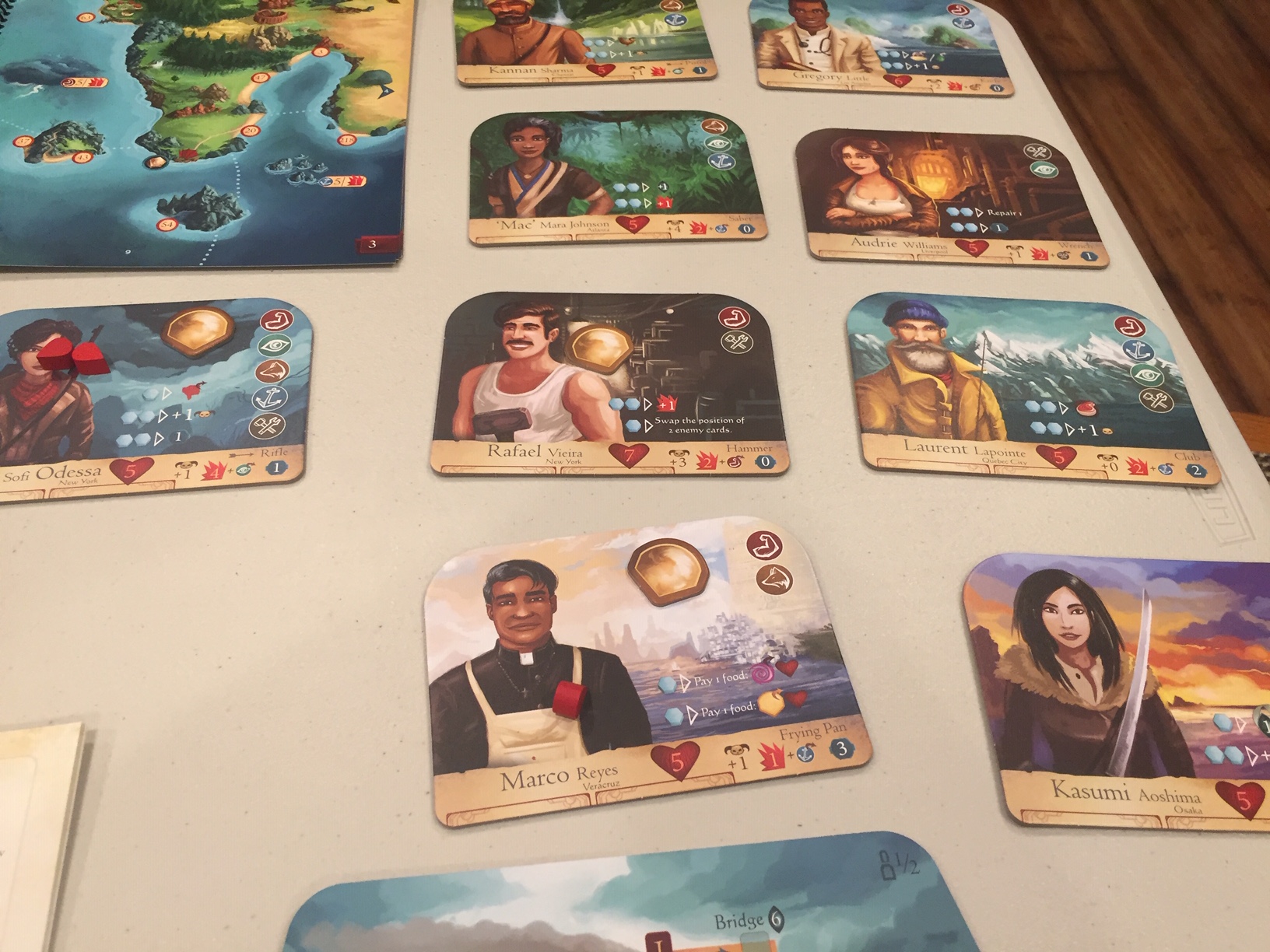
There’s a lot of cards: treasure cards (above left), status cards (above), and chest traps cards (above right). The cards are nice and readable, but there’s not a lot of art: the only cards that really have unique art are the treasure cards. The cards aren’t linen finished, but they are nice enough.

UNADJUSTEDNONRAW_thumb_250c

In general, the components are nice. The cards could be nicer, but there is a lot of heavy cardboard. If I were to make one change, I would have made the cards linen-finished.

The Elephant in the Room: The Cube Tower

UNADJUSTEDNONRAW_thumb_251c

Normally, the first thing I do it start looking at the rulebook. Nope! The first thing I expect EVERYONE to do first is start building the cube tower. The directions are … okay. I had to really look to see “exactly” what pieces go where.

There were a lot of pieces, a lot of plastic, and a lot of cardboard.

UNADJUSTEDNONRAW_thumb_251d

But, in the end, it went together. It was generally “fun” to build the tower, but I wish it had “another pass” to the directions. Eh, they were good enough.

UNADJUSTEDNONRAW_thumb_251e

The final result: The tower! Where Cubes Go! The crypt! Where some cubes will fall! The field! Where most of the rest of the cubes will fall! I gotta admit, it looks pretty cool. It fit together pretty well and it seems pretty sturdy. (It even goes back into the box all made!!)

Oh, in case you’ve never played with a cube tower, one of the reasons they are kind of cool: YOU THROW CUBES IN THE TOWER! It’s a cool kinesthetic experience!! Cubes fall through the tower, making noise!!! And even cooler: SOMETIMES CUBES GET STUCK IN THE TOWER AND DO NOT COME OUT UNTIL LATER! There is some “history” left in the tower! You throw cubes in a tower (fun) and occasionally, you get some leftover cubes from the previous turn (funner)! It’s a gimmick. But it’s a FUN gimmick!

The Rulebook


So, after building the cube tower … boy, that cube tower looks cool … oh, sorry … The rulebook!

The rulebook is about what you expect these days: the first few pages show the main components (above for cube tower and below for cards and boards).

UNADJUSTEDNONRAW_thumb_2539

The game shows set-up mid book:

UNADJUSTEDNONRAW_thumb_253d

The set-up works pretty good. Once you leave this section, the game is pretty text-heavy: there’s not a lot of pictures afterwards. It works … fine. I had several rules questions as I played, and I missed a bunch of things as I played the first few times. There’s no index, but you can “usually” find what you need. The rules are “just enough” to play, but not much more. There are some issues:

  • How is Luck used? Answer: it’s hard to find: it’s buried in a picture in the first few pages when it talks about the status board. That was the only place I found that talked about luck!
  • What do you reset? Answer: it’s kind of split into two pieces “entering a floor” and “exiting a floor”. Answer: you reset peril, and clean the field and crypt but NOT party health and NOT the cube tower!! It wasn’t clear: the game could have really used a reference card.
  • Status questions: Answer: take your best guess.

The game rulebook is … complete, but an index OR a game summary cards would gone a long way. Look, I have seen a lot of terrible rulebooks, and this is not one of them. The answers are all in there, it just needed another “push”. I got through it, I never even really raised my voice, but I was slightly frustrated at a few points.

The rulebook is fine.

Solo Game

UNADJUSTEDNONRAW_thumb_253e

So, the game works great solo: you can see they absolutely have solo rules (thank you for adhering to Saunders’ Law)!  In this case, the solo player plays 3 characters from the game. 

UNADJUSTEDNONRAW_thumb_2540

I played the Knight, the Burglar, and the Doctor for my first solo game. Although I am nervous about playing three distinct characters as a solo player (“Yikes! is there too much to manage?”), it worked fine. Each character describes its rules succinctly, and was easy to manage. The solo rules worked well. There is a way to play just two characters (outlined on the very back on the rulebook), but it involved changing enough rules that I prefer to play the main rules so I don’t have to apply too many exceptions.

It looks like main balancing for the game is that there should always be 3 or 4 characters in play: the rulebook alludes to the players needing the balance and cooperation of numerous players to win. And you know what? I needed all three of my characters to win! I needed the knight to do most of the damage, I neede the Burglar to help keep bad cubes under control, and the doctor to heal us … at one point, our party wounds were so bad, we almost lost before the end! As any veteran of D&D knows, the cleric (the doctor here) is critical to party success!

Set-Up and Gameplay

So, set-up wasn’t trivial. I had to do it in two stages: get most of the components OUT (see above) and then actually put them in the right place (see below)!

The gameplay is actually pretty simple. Each character plays a turn and that’s it! There’s no notion of Bad News (typically in a cooperative game) or the “Bad Guy turn”, as the Bad Guys are activated by the BAD cubes that come out of the tower! A character turn looks like:

  1. Pick a support ability
  2. Choose an active action (usually puts GOOD cubes in the tower)
  3. Throw GOOD cubes  and BAD cubes into the tower (your current location in the tower tells you how many BAD cubes to put in)
  4. Activate the Bad Guys  based on how many BAD cubes are out (activate rooms if cubes left over)
  5. Activate character abilities using GOOD cubes

UNADJUSTEDNONRAW_thumb_2545

Basically, BLUE, WHITE, and GREEN cubes are good cubes used by the characters. The RED, YELLOW, and BLACK cubes trigger Bad Guys abilities. Cubes that land in the crypt (the white cube above) are worth 2, everything in the field is worth 1 (the blue, red, yellow cubes above, just behind the crypt).

UNADJUSTEDNONRAW_thumb_254c

An example mid-level Bad Guy (see above, blurred so can’t see too much). Note that there are bad guys in the front row (2 yellows and 1 red) and the back row (2 yellows). When enough cubes are one the board (note the 5 red cubes), then you spend those red cubes from the board and activate that power! The game is all about bad cubes accumulating and just trouncing you now and then!!

See above for another example (from a low-level floor).

UNADJUSTEDNONRAW_thumb_254b

OverallUNADJUSTEDNONRAW_thumb_2554

See above for my winning game!

In general, I really liked this game. I got to make decisions every turn that mattered: What support cards do I use? Do I need to mitigate the BAD cubes? Do I need to put in cubes to help my next character? Which action do I activate? Do I use one of my treasures? Then, I got to throw cubes in a tower! Whee! Arguably, the only “not fun” part was following the script to make the BAD cubes activate the bad guys: it’s necessary of course, but it’s ever so slightly tedious.

UNADJUSTEDNONRAW_thumb_254f

One of the best parts of the game was that we leveled up quickly!! It seems like we leveled up just about every floor of the tower!! Leveling up allows you to reset your support cards (cards gets tapped and can only be reset when you go up a level), and you get to add a new “more powerful” ability!!! It gives you new and better decisions to make!!! And the treasure was useful too!!!

UNADJUSTEDNONRAW_thumb_2533

The only thing that mighty give me pause to recommending it to others was the length of the game. It took me an hour to set-up (first time, also had to build the cube tower), about about 2 hours to reach and defeat the Mid Level Boss, and another 2 hours to reach and defeat the final boss!! I am sure this will probably become much quicker when we play again, but I am not sure. I like taking my time and making good decisions (I did win my first game), but the game length might be a bit much for other people.

ConclusionUNADJUSTEDNONRAW_thumb_2557

The game flowed quickly when I played.   There were some moments when I really thought I might lose, but I had enough choices so I could make meaningful decisions to “not die”!   I was able to upgrade myself multiple times during play, so I felt like I was always making progress!!   There are a few fiddly moments in the game (status updating, updating the bad Guys), but there were overwhelmingly more fun moments of throwing cubes and making fun choices! 

As a solo experience, this was great.  I look forward to playing solo again!  I’m also hoping to get Part II of this review out soon: I really want to see how this will work with multiple players cooperating!  Expect Part II soon!  I was so very happy this game, I will “encourage” my game groups to play this with me!

There’s even some expansion content to keep the game fresh! (See The Tower Laboratory expansion above).

Seven House Rules for Cooperative Board and Card Games

Once you start playing a lot of cooperative board and card games, you find there are certain rules and/or situations where you wish things were different! Sometimes a small tweak in the rules can make all the difference between an uproarious fun time and a mind-numbingly boring one. Other tweaks just make the game more thematic and that much more enjoyable. I’ve paid good money for these games: why can’t I make them more fun for myself?

Some of you might argue “Well, that’s not how the designer wanted it to be played! He may have done it for balance!” Maybe, but after living in this hobby for nominally 40 years (yes, I played Starfleet Battles back in the early 1980s when it first came out), I can tell you that many games sometimes just don’t work, even if play tested extensively by a well intentioned publisher. A recent example is Tapestry from Stonemaier Games: it was a pretty big hit for this publisher, but just 6 months after it was released, they had released “balancing adjustments/rules” for the different factions in the game. If Stonemaier games (a high-quality publisher with fairly deep pockets and excellent reputation for quality) could have these problems, why not other games? Besides, at the end of the day, would you rather a game sat on your shelf unplayed because “we have to play it the way the publisher intended” or would you rather the game came out to the table with just a few tweaks?

I had originally written this list as the Top 10 Cooperative Games with House Rules“, but after getting into it, I realized a lot of those rule changes applied to more than just one game. So, I rewrote the list to concentrate on the type of rule changes itself!

7.  Adding Player Selected Turn Order to a Cooperative Game

Example Games: Marvel Champions, Sentinels of the Multiverse

Longtime readers of my blog know I adore Sentinels of the Multiverse (it made the top spot on my Top 10 Cooperative Superhero Games), but one thing that always bugged me was that I could never set-up situations where the players could set-up a group combo (like Wolverine and Colossus “Fastball Special” from the X-men comics). What I want, in a cooperative game, is Player Selected Turn Order (PTSO) (see blog entry here), where the players get to choose their player order per turn. Unfortunately, in both Sentinels of the Multiverse and Marvel Champions (two games where I really want to be able to set-up group combos), you can’t do that according to the rules: you must play in player order (usually clockwise around the table). As a house rule, we allow players to play in any order they want per turn—I feel this gives us more choices and encourages more cooperation!! I want a game to feel like I have choices to do the best things I can!! I don’t want to be constrained by some arbitrary “clockwise around the table”. The only downside of PSTO is that sometimes it can hard to keep track of who has played so far.

6. Allow Sharing, If It Makes Sense

dres

Example Games: The Dresden Files Cooperative Card Game, Sidekick Saga, Shadows Over Camelot

I like the Dresden Files Cooperative Card Game (see review here and here) and it made my Top 10 Cooperative Games of 2017.  One rule of the game really turned my friends off: you can’t share what cards you have (you must keep all your cards hidden).  And I know why the game does that: to avoid The Alpha Player Syndrome. Some player groups can be taken over by an Alpha Player who tells everyone what to do.  By keeping the cards hidden, the Alpha Player can’t tell everyone what to do: he can’t see their cards.  That fixes the problem, but it unfortunately makes the game less fun.  So, for my groups (where we are pretty good at avoiding the Alpha Player), we tend to play with all cards showing and it makes the game a LOT more fun: we talk, we collaborate, we cooperate!   I put Sidekick Saga on this list because it’s the only game I know that addresses this specifically! In the rulebook, there’s a section called Open Hand vs. Closed Hand:

There are two ways to play Sidekick Saga: Open Hand or Closed Hand … Open Hand means all Sidekick cards are face-up and everyone can see what cards everyone else has in their hands.  Closed Hand means Sidekicks can’t see what other Sidekicks have in their hand…
If you and your group feel more comfortable playing Open Hand, feel free.  It makes the game easier, but it may really slow down the game!  Open Hand can lead to some analysis paralysis.

It’s a house rule because it really depends on the house you are in. 


5. Loot Rule

IMG_6059

Example GamesGloomhaven, Frosthaven, Gloomhaven: Jaws of the Lion

This rule is very specific to to the Gloomhaven games.  It’s one of my least favorite rules in cooperative games, and one of the reasons for this list.  Rather than rant again, I will simply point you to my Gloomhaven: Jaws of the Lion Review.

House Rule: Players are allowed (if it makes sense) to pick up all the gold and treasure after a combat (and split it) without having to use the “Loot Action”.  This only applies if it makes sense for the Scenario.

  1. Are all Goblins dead?  Ya, You get all the loot. 
  2. Are Endless Elves still coming even after the combat is over?  No time to get leftovers! You only get what you loot!

4. Let Me Die If I Want

New FAZA Box Cover

Example Games: FAZA, others

I recently got a copy of FAZA in the mail.  It’s a good cooperative game, but I’ve had to house rule a few things to enjoy the game better.  Basically, you are forced to make Rebels take damage before you can (Rebels are helping you in the game), but you are required to use Rebels to destroy the Big Bad UFOS:  In other words, you must have a Rebel to destroy the Bad Guys!!   My game came down to the last turn, and I simply couldn’t win because I HAD to make a Rebel take damage before me (“Um, I throw myself in front of the Rebel!!  No, I can’t do that?  Even though it saves the world???”).  It didn’t seem thematic, and it wasn’t fun.  Similarly, the entire game is over if one player dies.  Again, this seems athematic:  I will ABSOLUTELY give my life on the last turn to defeat the aliens IF IT SAVES THE REST OF THE PLANET.  
House Rules: You can choose to take damage instead of a Rebel, you can keep playing even if a player dies.

Basically, death can have meaning in a cooperative game that it can’t in a competitive game.  Why take that away?  (See blog entry here)    

3. Don’t Use Some Dumb Rule to Decide First Player

Pandemic, Z-Man Games, 2013 (image provided by the publisher)

Example Games: Pandemic, honestly, just about any cooperative game.

In the current version of Pandemic,what player goes first?  The player with the highest City Population Card goes first.  Um, what?  Um, so I have to know the city populations?  I seem to remember the  original version was: “The first player is the person who had a cold last”.  I have also seen “The first player is the person who saw a King Fu movie last” and some other funny ones.  They are funny the first time you see them, but then they are just annoying.  What we’ve seen that makes sense: Let US CHOOSE who goes first!  

  1. In a teaching game, we let the teacher go first. That way, the other players can see “what a turn looks like” before they have to play.
  2. In a deep game, we look at the board and we decide who should go first to do the best for us: I.e., it’s a strategic decision.

House Rule: Let the Players decide who goes first.

2. Don’t Limit Shopping

IMG_4421

Example Games: Arkham Horror (2nd Edition), Thunderstone Quest (with Barricades Expansion)

When you go shopping and have plenty of money, do store owners limit how much you can buy?  “I’m sorry sir, you can only but one thing today.  We have tons of stuff, but because of store policy, you can only buy one thing.  I think the owner is trying to go out of business!”.   In both Arkham Horror (2nd Edition) and Thunderstone Quest (cooperative with Barricades expansion), there are places you can go to buy things: In AH, you can buy magical items at the Magic Shoppe, or plain stuff at the General Store.  You are allowed to look at 3 things, but you can ONLY BUY ONE ITEM, even if you have enough money!!! Similar for TQ: you can only buy 1 lantern, or 1 food, or 1 potion.


“Look, I really need 2 Lanterns to go into the Dungeon!  The town will be destroyed unless I fight the big Bad NOW!  I see you have 100s of lanterns!!!” 
“I’m sorry sir, I can only sell you one”.

This is the most ridiculous limitation in both games and it is NOT THEMATIC and it is NOT FUN. We house rule you can buy as much stuff as your money permits in one turn (we still only allow 3 cards to be drawn from the shoppes in AH).

(In my last game of Thunderstone Quest: I couldn’t win unless I got 3 lanterns to get to the bottom level, but I couldn’t buy 3 lanterns, even though it would ruin the town!!! Dumb dumb dumb rule.  With the house rule, I was able to get to the main Bad Guy and I still lost, but at least I went out trying … not shackled by some beauracracy).

1. Curtail Excessive Randomness

Example Games: Aeon’s End, Aeon’s End: War Eternal, Aeon’s End: The New Age, Aeon’s End: Outcasts, Tiny Epic Defenders

I have to admit, the main motivation for this list was Aeon’s End and all of its brethren. I still like Aeon’s End: it made the top spot on my Top 10 Cooperative Board and Card Games (and see reviews of Aeon’s End, War Eternal and Aeon’s End: Outcasts). The main problem: the turns are randomly assigned between the players and the Nemesis. In each main round of the game, the Nemesis (the big bad you are cooperatively playing against) will go twice and the players will go four times. The problem: it is possible (and not completely uncommon) for the Nemesis to go 4 turns in a row!!! If the Nemesis goes twice at the end of a round and twice at the beginning of a round, the Nemesis gets off 4 attacks you can’t respond to. You just “watch” as you die because the bad guy gets 4 attacks which you can do NOTHING to respond it: IT’S NOT FUN. I became vaguely aware of this as I played the board game, but the app really pointed it out (as the solo game it’s even MORE likely, as the players only get 3 actions per turn instead of 4).

In the app, players only get 3 turns, the Nemesis gets 2 per round!

At the end of the day, we have a simple House Rule to mitigate this randomness: The nemesis is never allowed more than 2 turns in a row. If that would happen, we simply reshuffle. This one rule may have saved Aeon’s End from the scrap heap for me!! By just mitigating the random turns a little, the game become a lot more fun!

Another cooperative game that has this problem is Tiny Epic Defenders: players simply flip cards from some deck, where Player Turn Cards are interspersed with the Bad News Cards: it’s possible you can lose the game before you ever even get the chance to go. I haven’t come up with a satisfactory solution that I can share yet, but a similar solution might be to only allow the Bad News XXX turns before players can go.

A Review of The Rise of the Red Skull. Part I: Unboxing, Solo Rules, and First Impressions

The Cover of Rise Of The Red Skull

Marvel Champions is a cooperative superhero card game based in the Marvel Universe. It’s a “Living Card Game” (or LCG) which means there are expansions, but you always know what you get. (In olden days, a “Collectable Card Game ” (or CCG), expansions were just filled with random cards: you didn’t know what you got)). I have been “secretly” collecting all the Champions expansions: Heroes and Scenarios for quite a while now: there are quite a number (see below).

Champions and all of its expansions, as of September 2020.

I am a huge fan of  cooperative superhero games (see my Top 10 Cooperative Superhero Games), but Marvel Champions hadn’t been released when I put together that list about a year ago.  In that time, Fantasy Flight has made up that time and released tons of expansions (see picture above).

Back of the box

Strictly speaking, I shouldn’t like Marvel Champions. It’s very similar to the Arkham Horror: The Card Game (another LCG from Fantasy Flight) and that just didn’t work for me (see my review here). What’s different? I think I like the theme better, I like that there’s no randomness from chit pulls, I like that there’s no choose-your-own-adventure moments that kill you. Marvel Champions is all about battling the villains and keeping your deck going. It even made my Top 10 Cooperative Games of 2019 and my Top 10 Cooperative Fantasy Flight Games. What makes this particular expansion exciting? Rise of the Red Skull offers campaign play (an ongoing story)! How well does it deliver on that campaign? Continue reading…

Unboxing

The expansion comes with a Rulebook, 5 new Villains (Crossbones, The Absorbing Man, Taskmaster, Zola, and the Red Skull), 2 new Heroes (Spider Woman and Hawkeye), 4 New “add-ons”, some Expert Mode cards, and finally some upgrades you can earn in between campaigns.

The 5 New Villains!

Of course, the best part of this expansion is that you get 5 new Villains! Of course, you have to go through all of them in the campaign, but you can also fight “one-shot” scenarios with all of them after the campaign is done.

The Two New Heroes

Similarly, you can play Spider-Woman and Hawkeye in the campaign or standalone.

Expert Cards and Campaign-only cards.

In general, the cards look just like the rest of the game and fit in the Universe just fine. It’s Marvel Champions: you either like style or you don’t! I do.

The 4 Add-Ons used by the Villains.

Rulebook

The Rulebook

The Rulebook introduces some new keywords (Permanent, Piercing, Ranged, and Setup) as well as the new mode of play : Campaign Mode.

The first chapter of the Campaign

The Rulebook doubles as the Campaign book. There are 5 scenarios, where each scenario is introduced by a a few pages of comic art to introduce the story (see above)!

Scenario 1: Text description

Each scenario is then introduced formally, with rules for Set-up and Expert Mode (if you decide to go that route).

In general, the rulebook was easy to read, and it was easy to set-up for each scenario. The rulebook uses nice, big text, and I had no trouble reading it. I was very satisfied with the rulebook/scenario book (as they are the same).

Solo Play

IMG_6624

So, Marvel Champions is pretty well balanced for 1-4 players.  Many of the mechanisms in the game are based on the number of players (the number of hit points of the Villain is usually a constant times the number of players, the amount of threat each turns is based in the number of players, etc).  So, the solo game works pretty well.
IMG_6625

When trying “new things” out, I prefer to concentrate on “the new stuff”, so I am not overwhelmed with rules.  In this case, I played through the whole campaign with a single hero: Captain America (a hero not found in the base game: you have to buy him separately). 

The campaign game basically played like Marvel Champions, with a few new rules here and there.   It worked pretty well.

Campaign Play

Scenario 2

So, I was more excited about this expansion than all the others! (Well, except for Captain America) I like Marvel Champions a lot, but the lack of story was, well, limiting. The idea that a campaign would help direct a game was amazing!

So, to prepare for the campaign, I played a number of solo games with Captain America over the week before Rise of the Red Suill arrived. When it did arrive, I pretty much played all 5 games over the weekend. I messed up the rules on the first play (I won, but I cheated), so I replayed the first scenario again. I then proceeded to play all 5 scenarios!

I don’t know if I cheated, but Captain America walked through the scenarios. It was really easy! The only scenario that gave me difficulty was Zola: I barely kept his threat under control so that he wouldn’t walk all over me. Winning seemed to be: “Keep the threat under control and occasionally do damage”.

If you lose a game, you simply have to replay it. There were no upgrades or “helpers” for losing a game. If you win a game, typically a card or two gets added to your deck (see cards above on right), or a new permanent upgrade was added (later cards in the Scenario).

The upgrades weren’t great, but they were helpful. They just didn’t really change the gameplay that much. It was cool to get something that was a little helpful, but the core game was still Marvel Champions underneath. It didn’t feel like the campaign mode changed the game THAT much. For example, the first upgrade is something you use ONCE, then remove from the game! It’s really cool when you use it, but that was the ONLY change from scenario 1 to scenario 2.

What the campaign did do: it encourages/forces you to try all all the new Villains! That was the best part! The campaign mode was a framework to try out all the Villains, and a nominal story to motivate/immerse the players.

A Month of Campaigns

Over the last month, I have been playing mostly campaign games!

Hero Realms: The Lost Village (see review here)
Aeon’s End: Outcasts (see review here)
Marvel Champions: The Rise of the Red Skull (see review… oh, you are reading it)

And, I’ll be honest, none of them really “nailed” the story. They all augmented their respective games, but I never felt like the main game changed that much. The one I enjoyed the most was The Lost Village: the cards and augmentations evolved but I think the story was the most compelling. Overall, I think Aeon’s End: Outcasts had the best story/writing overall: I also liked that I got to “choose” a lot more stuff between scenarios (you can use the new upgrades you get or completely ignore them or use an old one). Marvel Champions was good, and I liked the story, and the comic book art, but I felt like it was the game that changed the least. That’s not a BAD THING!!! I still like Marvel Champions a lot, I just think it was changed the least by the scenario augmentation.

Fiddliness: Sentinels of the Multiverse vs Marvel Champions

pic1296144

A lot of people make comparisons of Marvel Champions to Marvel: Legendary. I think a much more apt comparison is to Sentinels of the Multiverse: In both games, players controls a deck that “is” their superhero and powers!  Both decks came out kind of randomly, and both have the heroes do damage to a big bad to win.   The weird thing to me: people seem very polarized on these games!  People I l know who LOVE Marvel Champions don’t care for Sentinels of the Multiverse. And vice-versa.  I’ll be honest: I don’t get it. They are both great games, especially if you like cooperative Superhero games!!! (I like SOTM better, but I still like Marvel Champions too).   Some players complain about the “fiddliness” of  one over the other … but, let’s be honest!!!  They are both fiddly in different ways!!  I like them both, but I the recognize fiddliness in BOTH games of having to follow effects, counting damage, building decks, interpreting keywords, managing villains, and so many other things.

The reason I bring this up: The Rise of The Red Skull adds more fiddliness to the game! Between new understanding new keywords, interpreting new rules, and sorting new cards, the game becomes even more fiddly. I personally don’t mind, but you should be aware the fiddliness level of Marvel Champions rises a little more in The Rise of the Red Skull. (Should it be The Rise of the Fiddliness of Red Skull ? Nah, that probably wouldn’t sell well)

New Keywords and new Rules

Conclusion

So, Marvel Champions: The Rise of the Red Skull is a good expansion: the best part (so far for me) is that 5 new Villains! All 5 Villains played very differently; they added a lot of variety to the Marvel Champions system. If you didn’t like Marvel Champions and you were hoping the Campaign Mode would change your mind, you will be disappointed. Campaign Mode doesn’t change the base game that much: it add a neat story and some variety, but Marvel Champions is still the same core game. Like I said in the Aeon’s End: Outcasts review, the best part of the Campaign Mode (in both games) is that it gives players a framework to play all the content of the box and discover the variety therein.

I like Marvel Champions: The Rise of the Red Skull so far. It’s good. I still need to play the new heroes (Spider-Woman and Hawkeye) to see what I think of them. We’ll do that in Part II of this review! We’ll also look at how the campaign plays cooperatively with with multiple people.