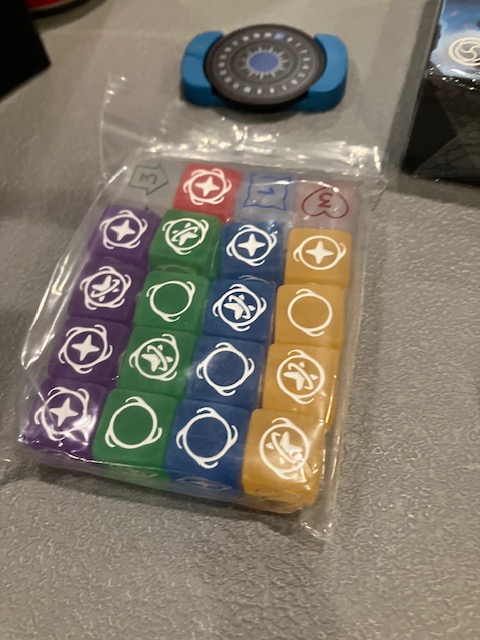
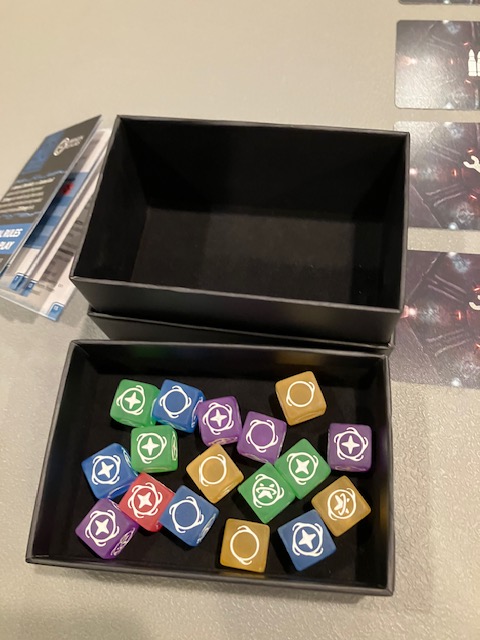
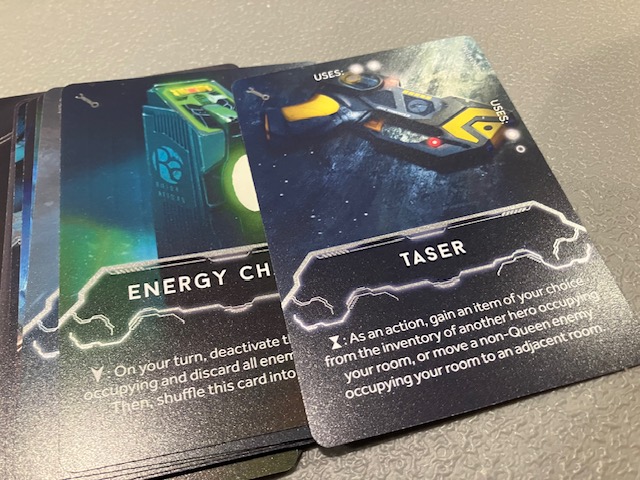
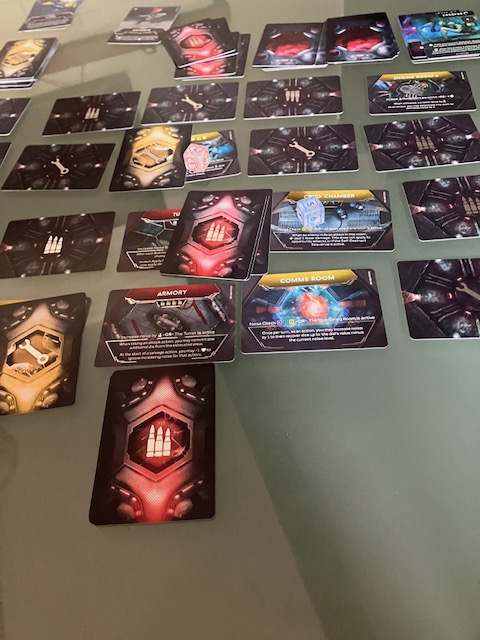
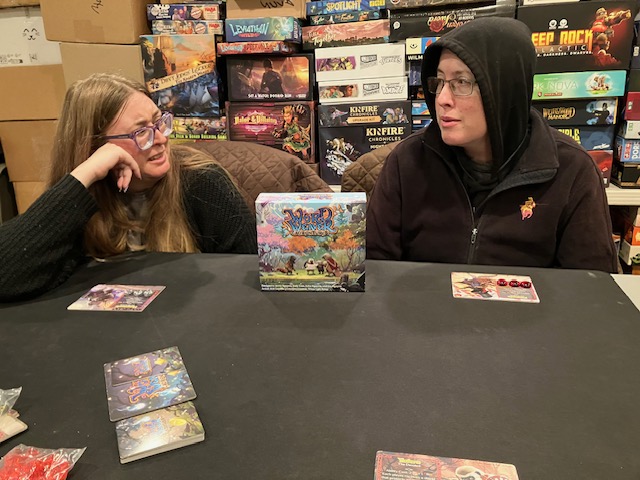
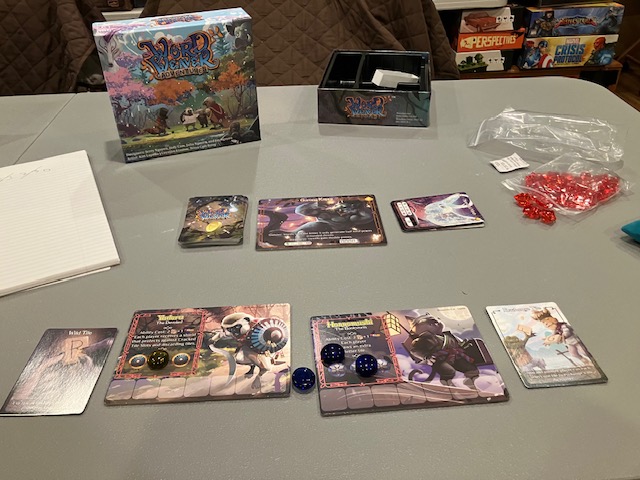
Cooperative Scrabble? A Solo and Cooperative Review of Word Weaver Adventures

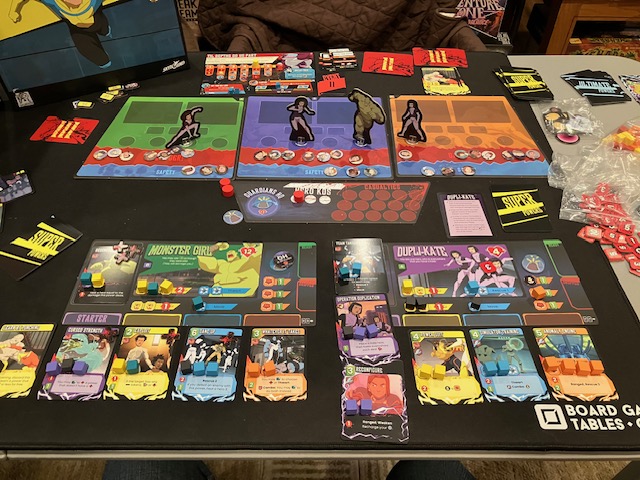
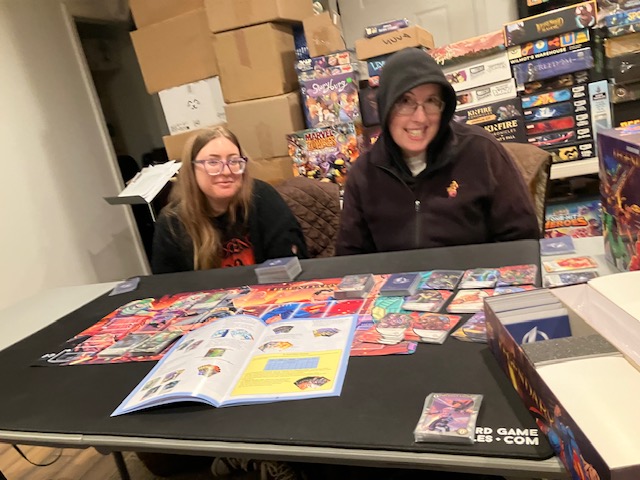
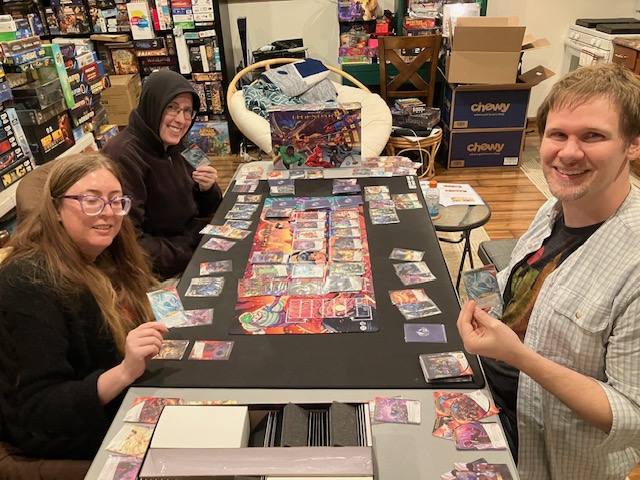
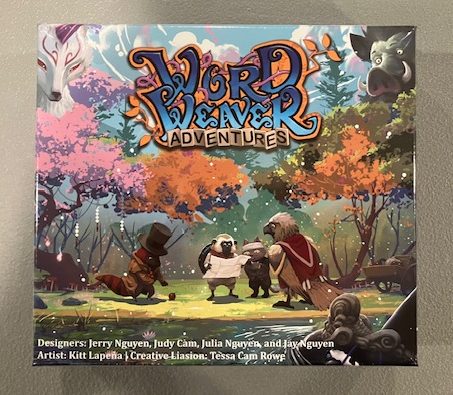
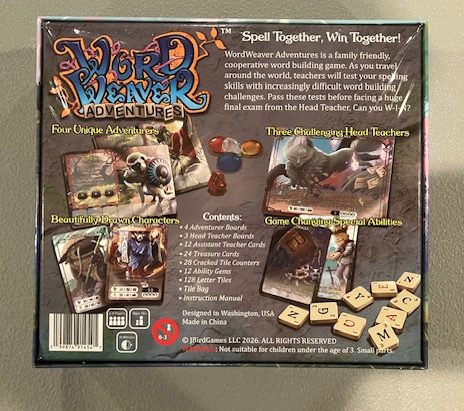
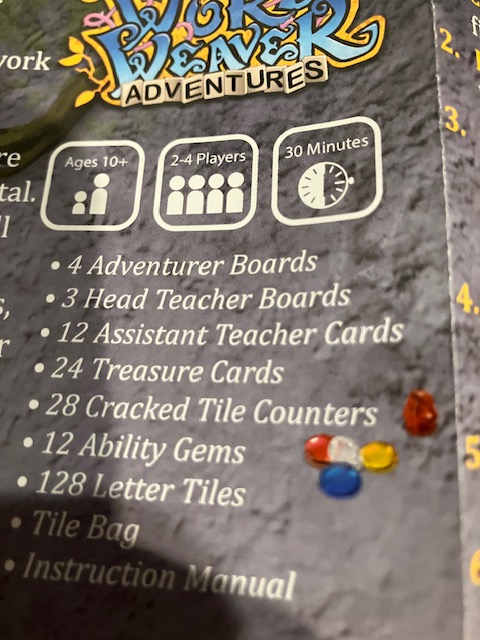
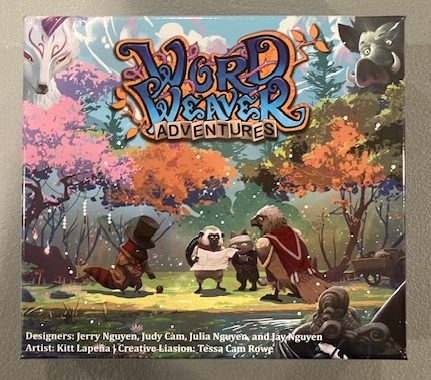
Word Weaver Adventures is a cooperative word and (sorta) boss-battler game from Gamefound back in June 2024. It arrived at my house sometime April 2026. There were delays along the way from tariffs and other issues, but it delivered!

I have to admit, I almost didn’t back this! This wasn’t a well-known company or anything like that, just a bunch of passionate new gamers. They promised a cooperative word game (maybe like a cooperative Scrabble?) .. and the art and the enthusiasm for the project amped me up enough to back the project! It ended up being a smallish Gamefound project at about $13,000 with only 152 backers.

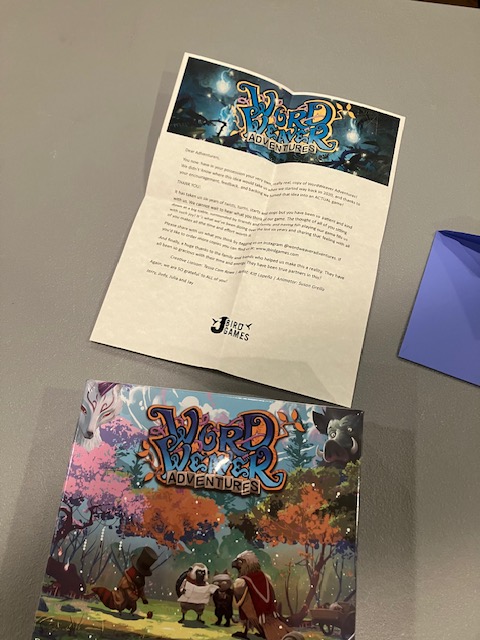
In the end, when the game finally arrived, I enjoyed the personal letter they sent. See above.

Will this be a hidden gem? Let’s check it out!

Unboxing and Gameplay

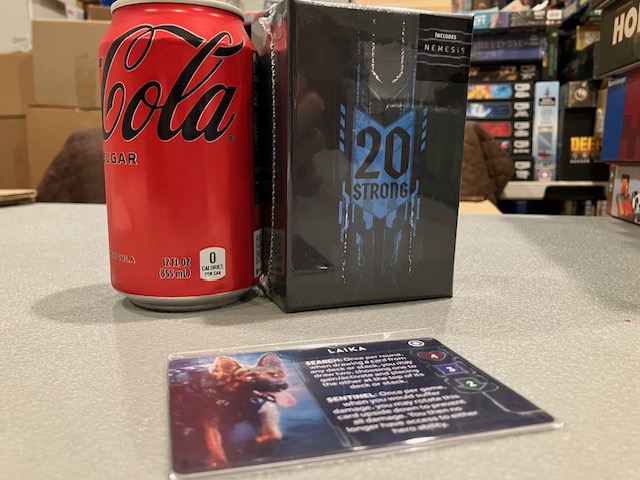
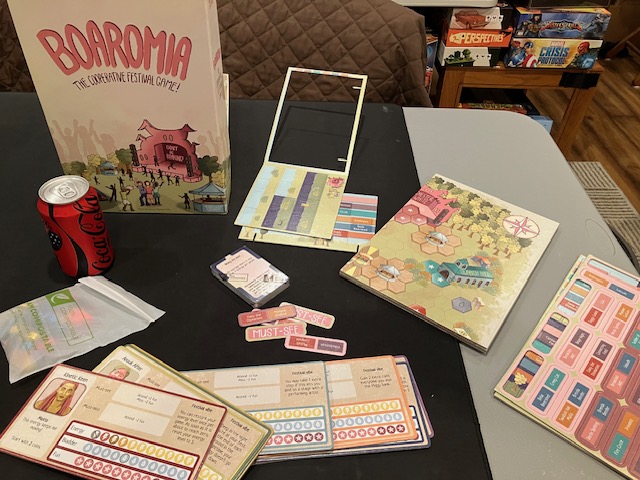
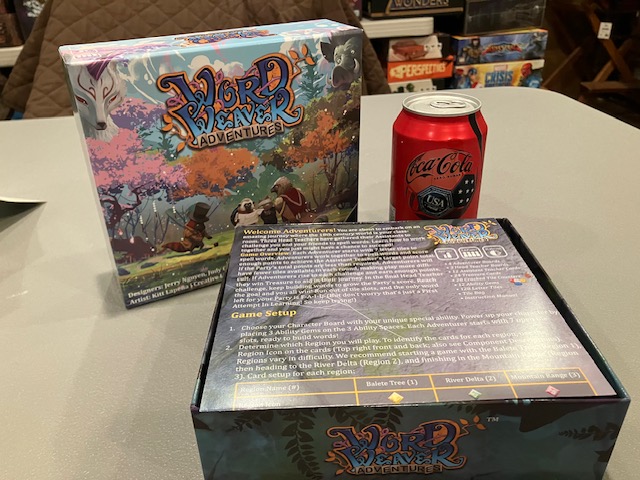
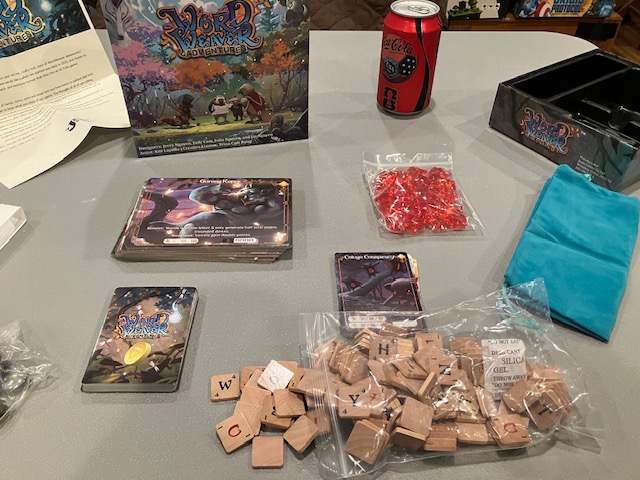
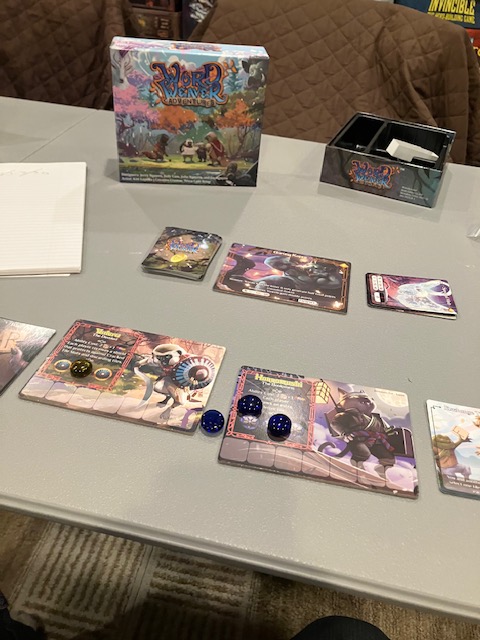
Word Weaver Adventures is a smallish box; see Coke can above for perspective.

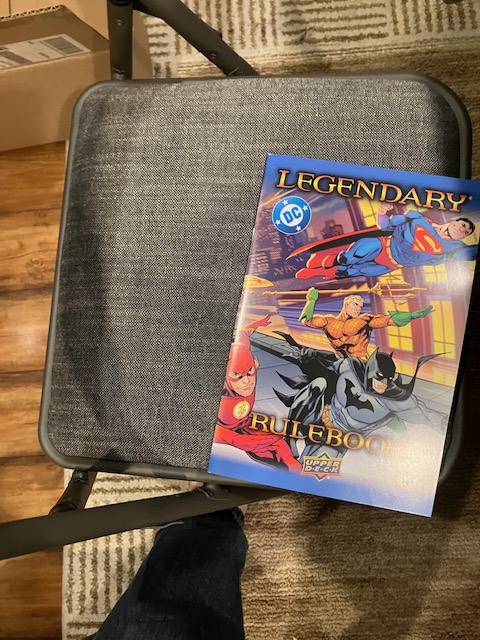
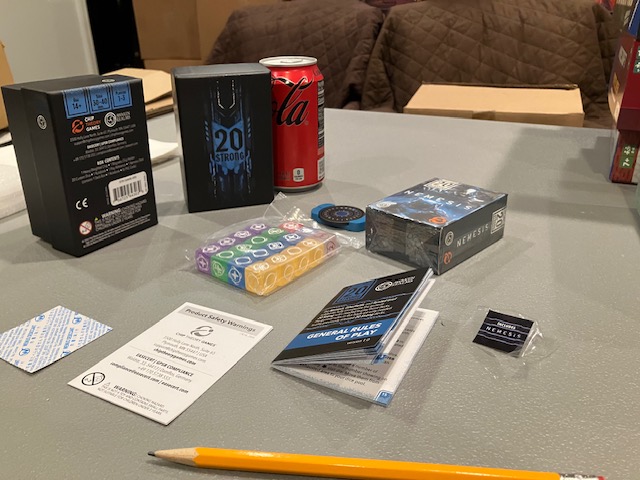
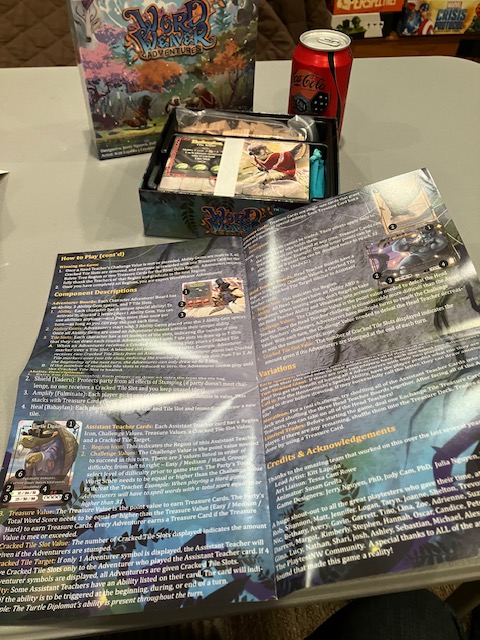
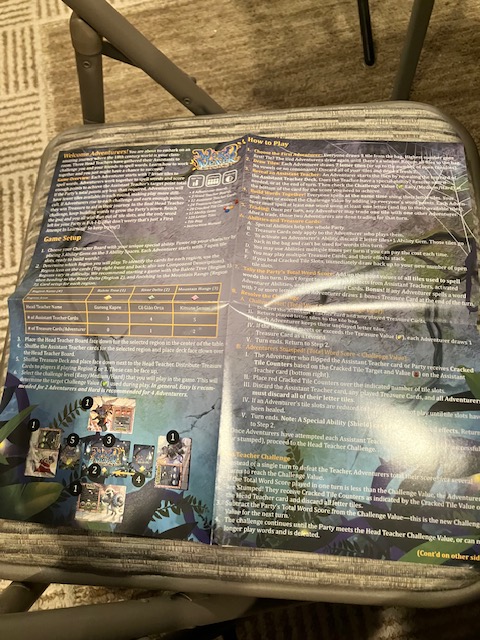
The rulebook is, unfortunately, a folded pamphlet. Sigh. See above.

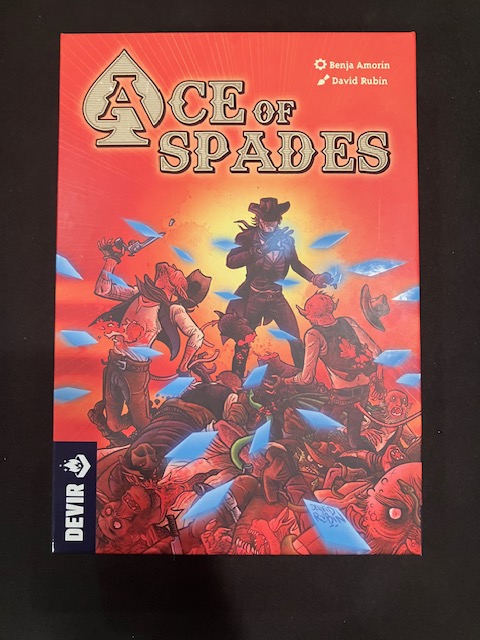
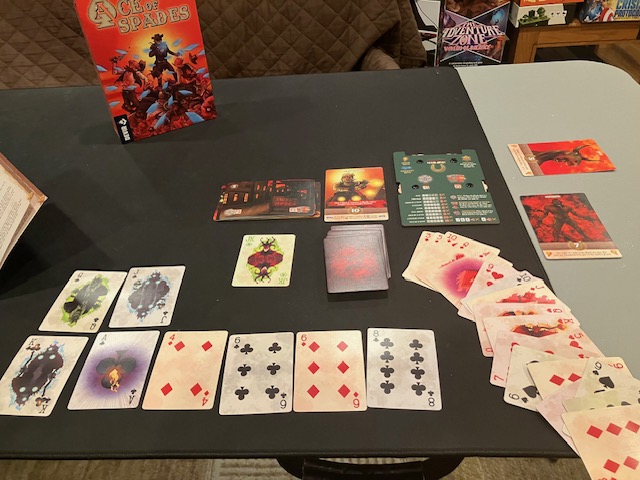
If Ace of Spades (from a few weeks ago) uses poker hands to take out bad guys cooperatively, then Word Weaver Adventures uses words (with point values like Scrabble) to take out bad guys cooperatively! There’s actually a surprising amount of overlap in the ideas!

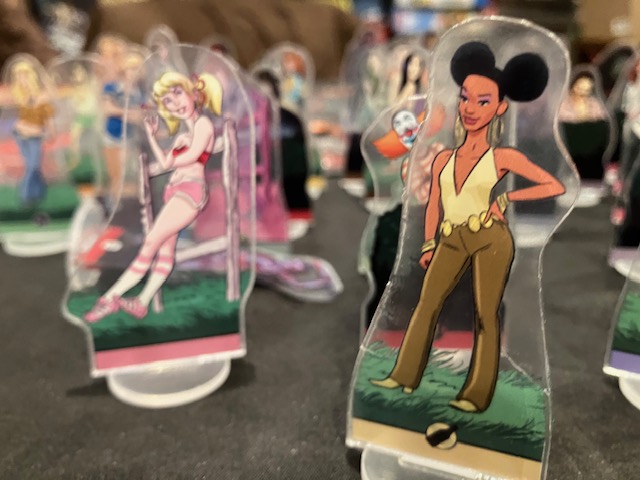
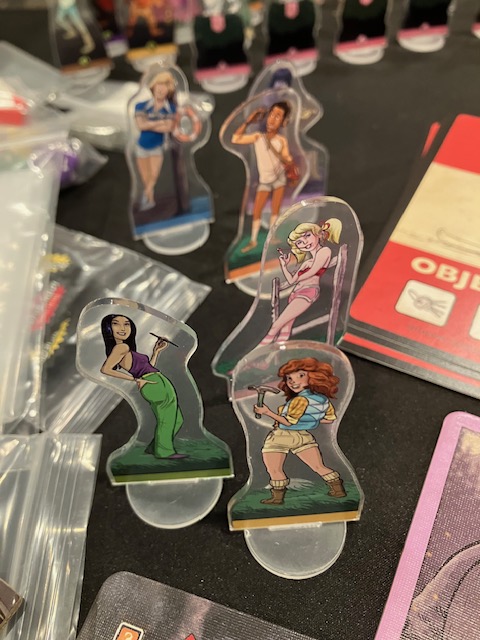
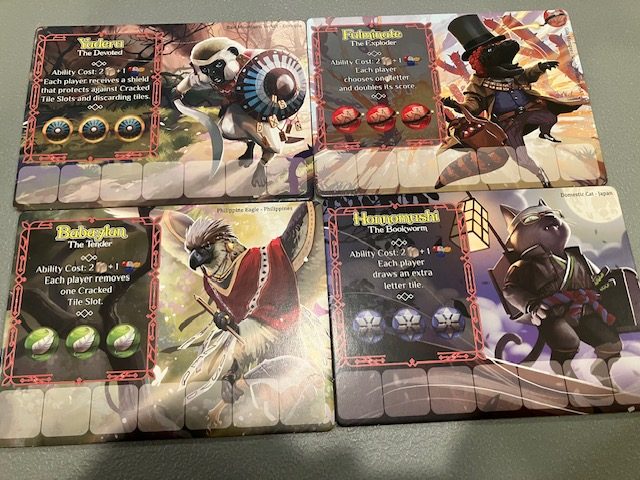
Each player takes the role of one of four characters: see the choices above.

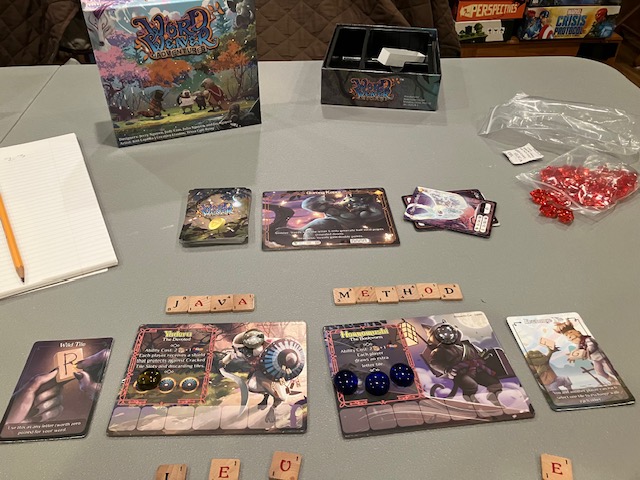
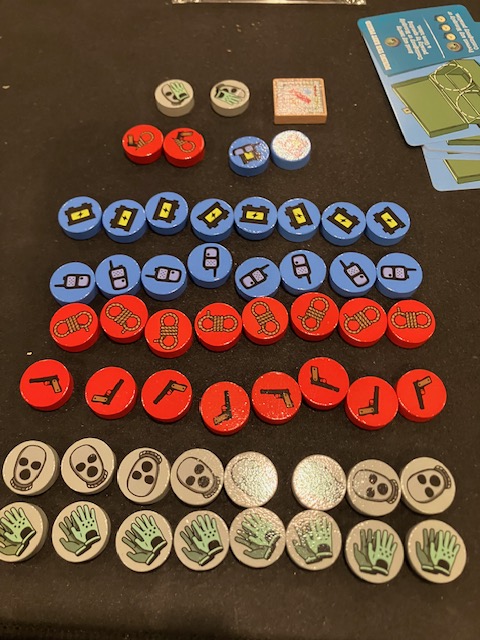
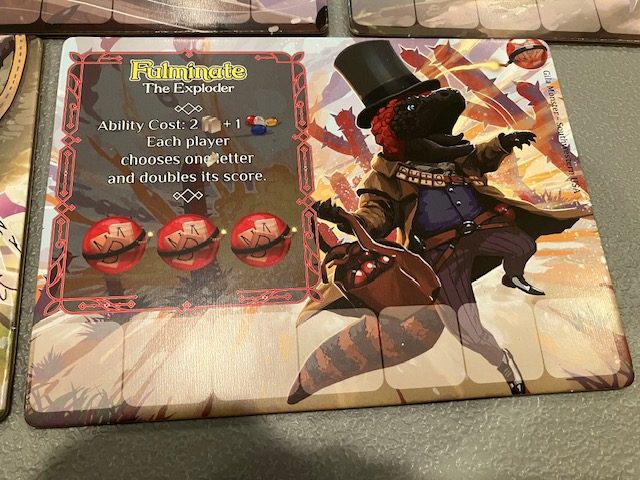
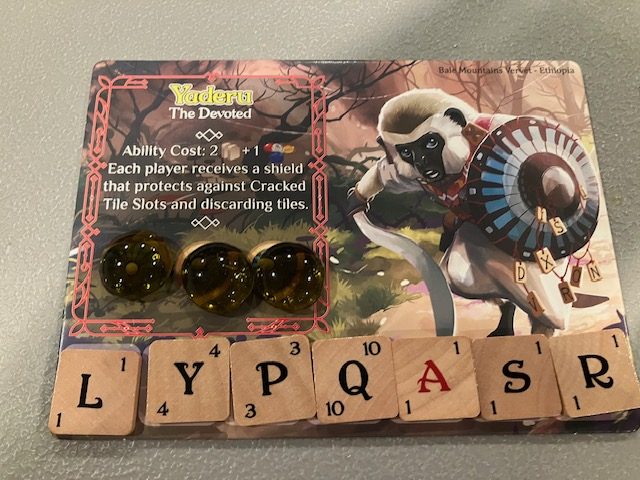
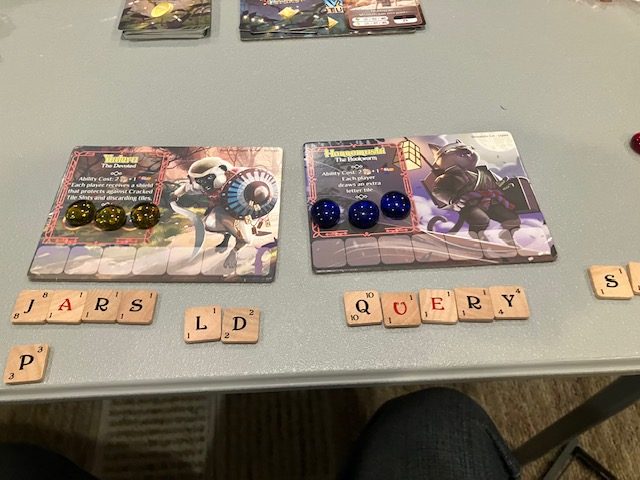
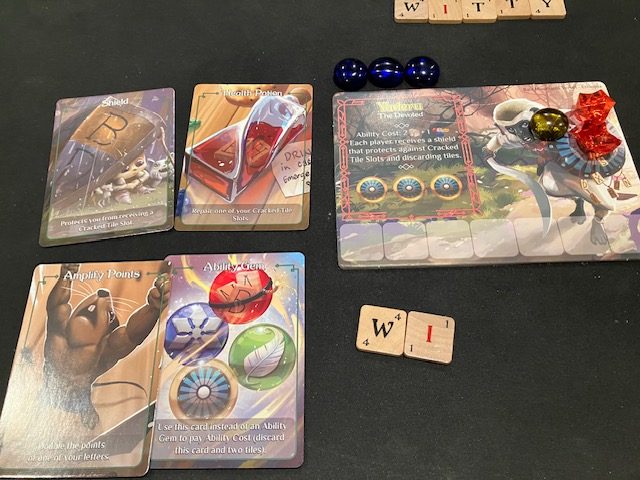
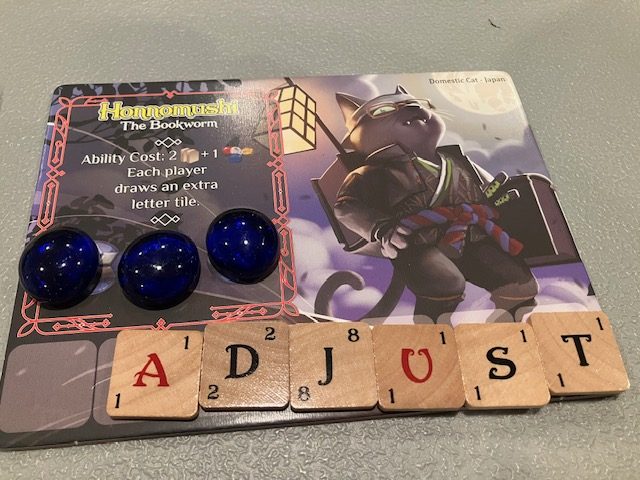
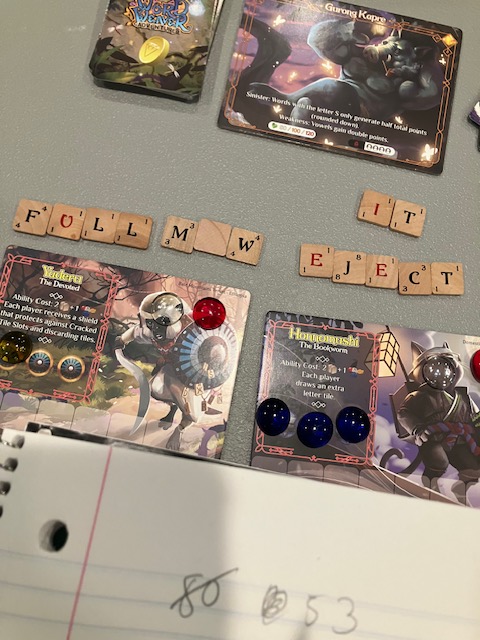
Each character has a special ability, powered by letters and gems. See above as Fulminate : The Exploder can double the value of a letter!

Each use of your power consumes a gem and 2 letters (see above). You only start with 3 gems, which means you only get to use your special ability 3 times during the game! And that use also costs precious letters!

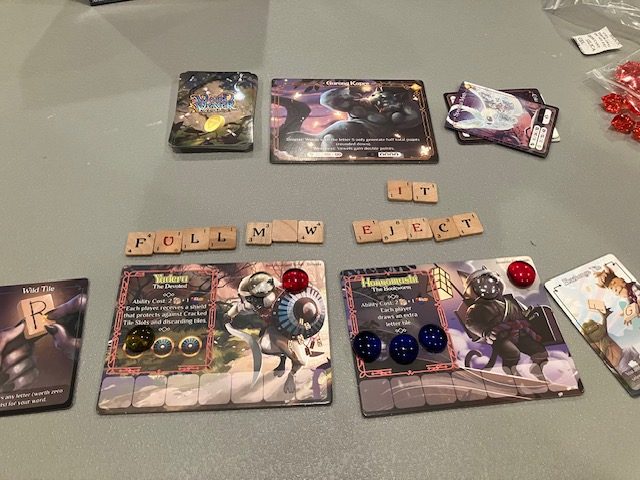
At the start of each turn, each player draws up to 7 letters, and uses them to try to spell things! It has kind of a Scrabble vibe, eh?

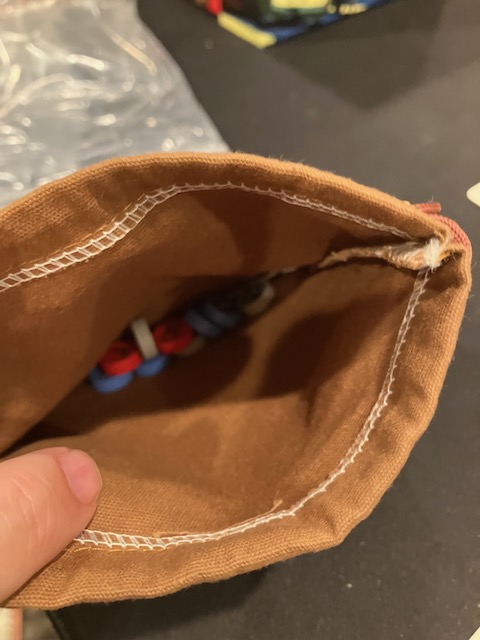
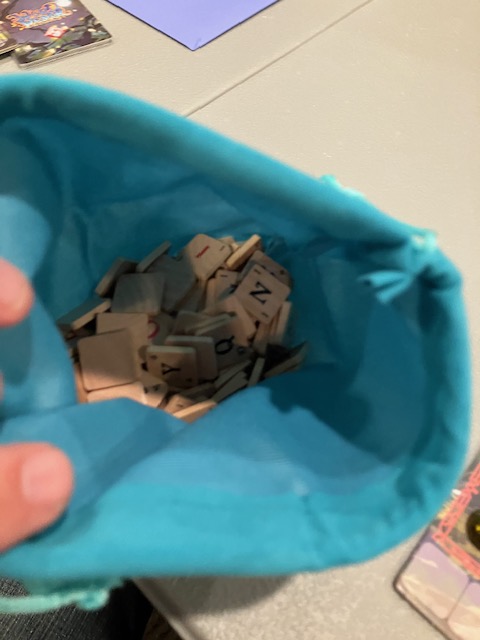
The letters are really nice wooden letters, ala Scrabble. They are in a very nice bag holding them … see above!

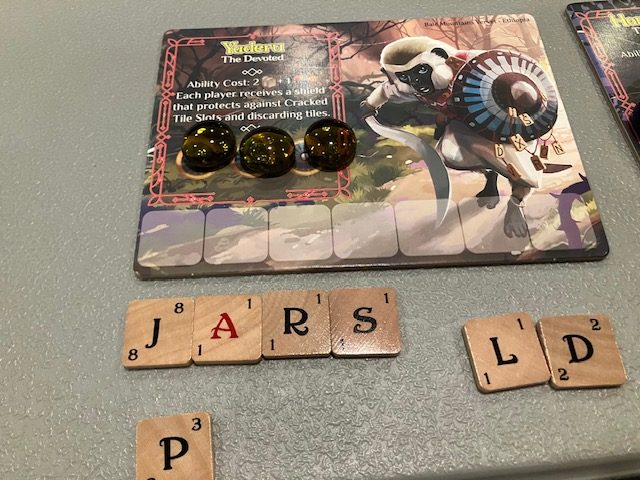
The words you spell do “damage” to bad guys! How much damage? It depends on how much the letters of the words are worth! JARS above (with no modifiers) would be worth 8+1+1+1 = 11 points of damage!

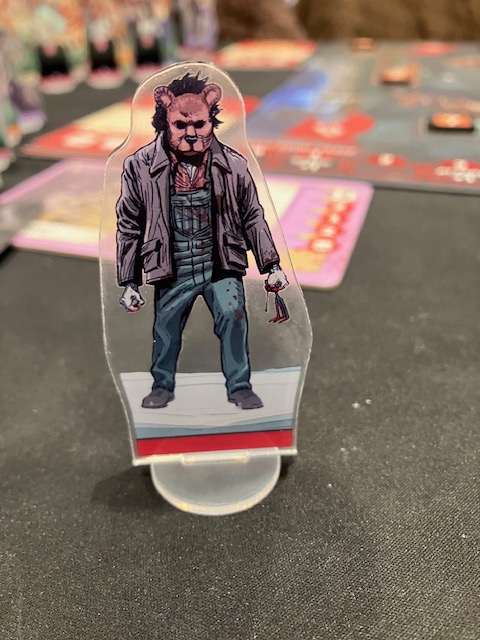
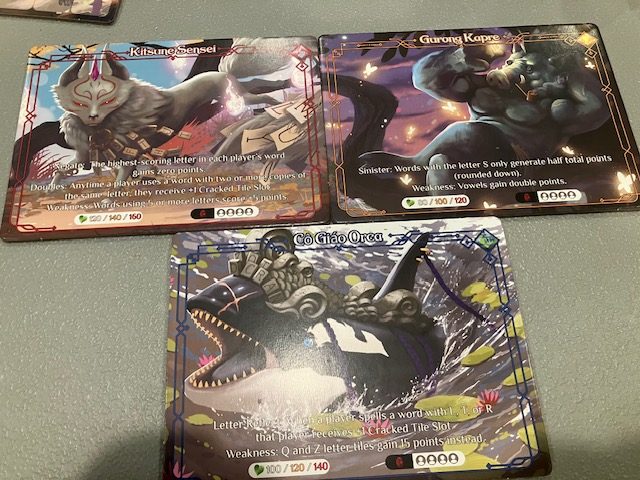
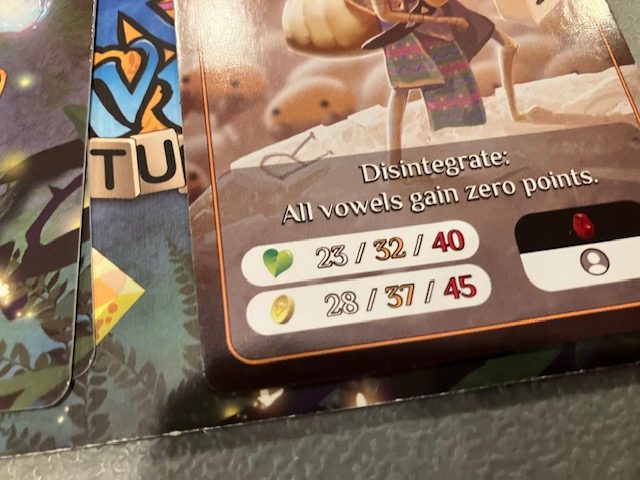
This is a boss-battler game! Sort of! To win, you have to take down one of the big bosses (see above) by doing enough damage! I keep saying this is a boss-battler, but these “bosses” are just challenging you to spell! My first pass through the game, I thought these were bosses you “defeated”! No no no!! The theme is that they are teachers quizzing you, and you have to get enough points to move on to the next teacher! The “damage” you do is just points towards overcoming a “test” or “quiz!”

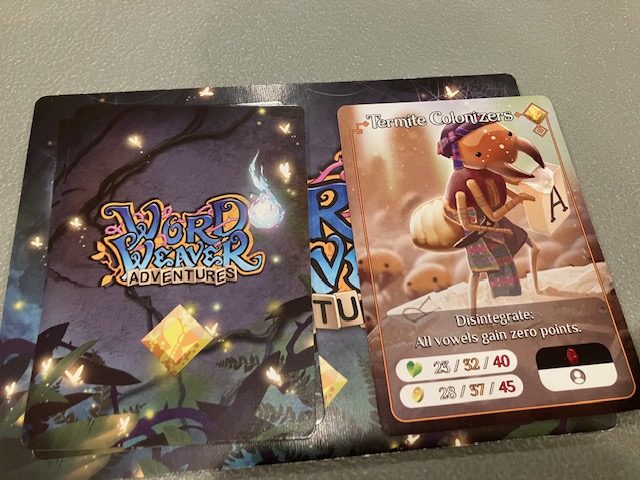
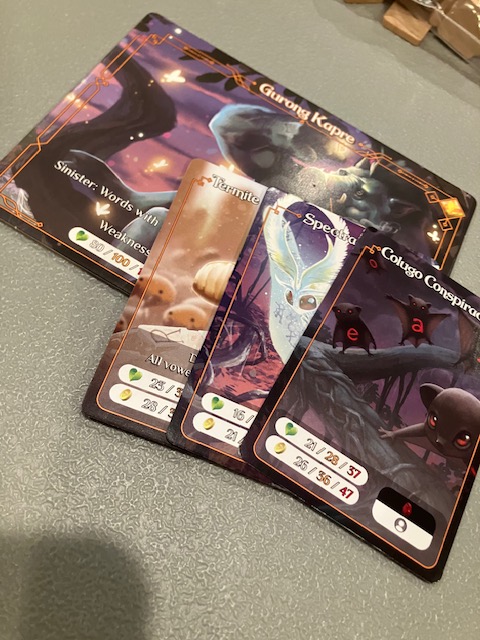
Along the way, you must pass smaller quizzes from Assistant Teachers! See The Termite Colonizers above! He’s an Assistant Teacher who gives you little quizzes! They are just a minor quizzes on the way to the big test at the end! (The bad guys are all grouped; we are spelling for the yellow diamond bad guys! See the little yellow diamond in the upper right corner)

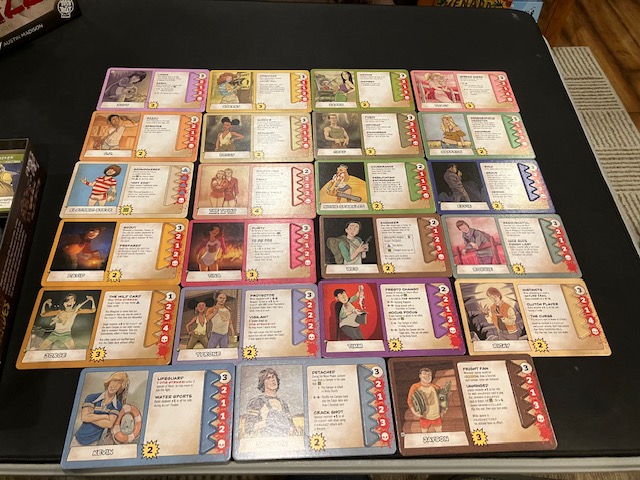
The (left) bottom of the card describes how many points they have, plus (right bottom) how much “damage” they do to the characters if the survive to the next round! Damage to characters is done “cracking” a letter spot so that character(s) get fewer letters next turn!

If the players can survive the big boss (called Head Teacher) test and take out little spelling quizzes along the way (with Assistant Teachers), players win! Basically, if all slots are cracked (meaning players can’t draw any letters), players lose!

Overall, these components are just fantastic!

Rulebook

Yes, the rulebook is a pamphlet. Sigh. I really detest this form factor for rulebooks.

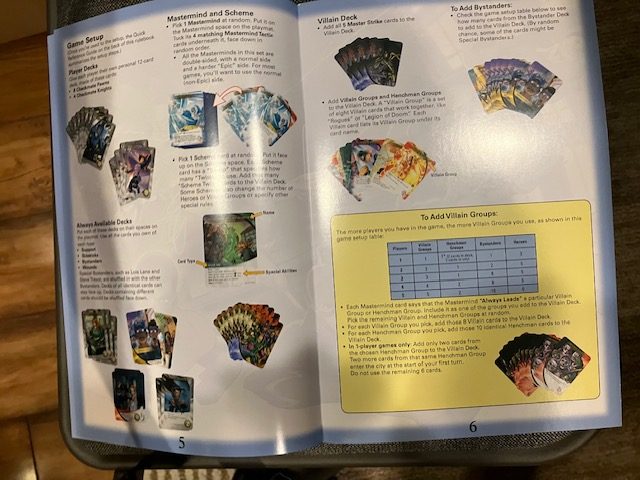
It DOES fit on the chair next to me without drooping, but the text is a little hard to read. They did a good job of not wasting space (there’s almost no wasted space: see above), and there is no droopage, but it’s still a pamphlet that’s kind of hard to read: this gets a C on the Chair Test?

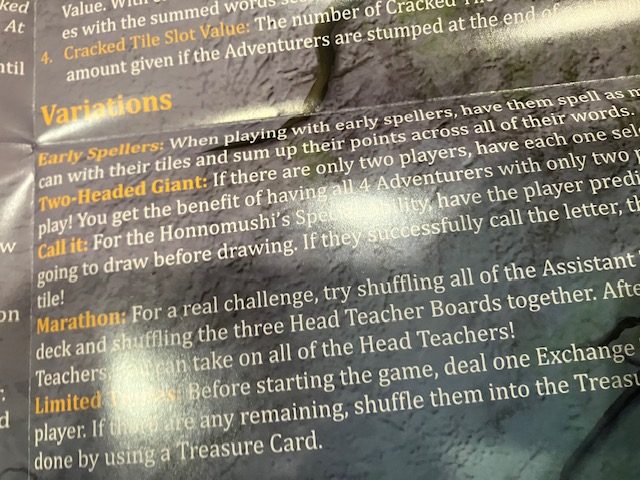
The rules were ok, but a little unclear on a few things. I didn’t realize until I looked at the Variations, that you can generally only spell one word per turn with your tiles! If you play the Early Spellers Variation (above), you can spell multiple words! Whoops! I wish that had been clearer!

I mean, I got the game played from this rulebook. . I would have been so much happier if this had been a little rulebook. But I get it; there were only 152 backers for this campaign. They did such a great job with the cards and characters and the art therein, I guess someplace had to suffer a little. I’d rather have the great art and cards (which you look at all the time) and an ok rulebook (which you only ever look at once or twice). So, I get it. The rulebook mostly taught the game; It was fine.

Solo Play

Strictly speaking, this game DOES NOT support the solo player! Only 2-4! So sad, no support for Saunders’ Law.

It is SO EASY to support solo play! Just play the 2-Player mode (play as two characters) and alternate between them as-if the game were 2-Player! This is perfect example of 2-handed solo working just fine! I found that this solo mode worked! I am a little surprised they didn’t include this simple solo mode.

This is how I learned the game; playing 2-handed solo mode! In the end, I had a fine time playing.

Cooperative Mode

We played a few cooperative games. We liked it enough, after the first game, that we wanted to play again! In fact, we probably should have upped the difficulty in the second game! We crushed it!

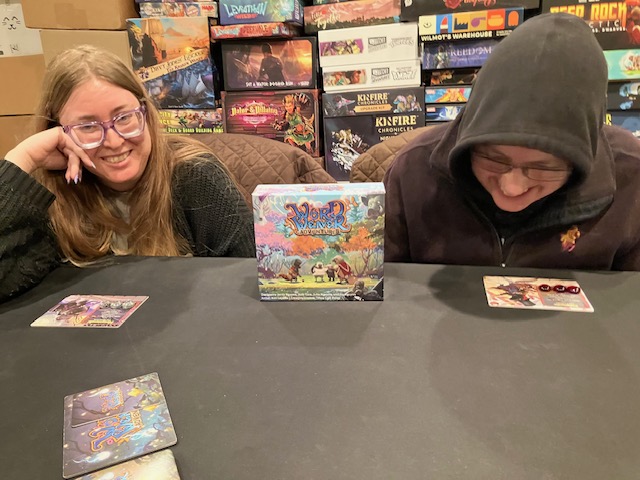
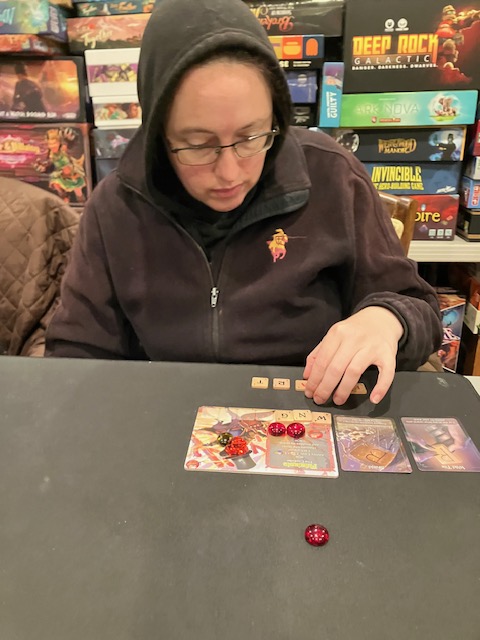
From a mechanism point of view, there isn’t really that much cooperation. Every turn, you can maybe swap one letter each, and each player can only swap once! (Which means in a 3-player game, there is a limit of one swap total per turn). Basically every turn is mostly multiplayer solitaire (see Teresa above looking at her letter) as each player tries to get the best word they can with their letters! So, there’s not that much cooperation, at least at the spelling word level.

Interestingly, even if the “spelling” part of the game had pretty minimal communication and/or sharing, some of the higher-level strategies emerged as we chatted. “You know, if I spell a lesser word, I can use my shield to protect us all from cracking!“Oh ya! Do we have good letters? I can double the best letter? Is this a good idea now?” As the monkey, I was good at shielding …

The special powers and special cards (treasures) actually became very important part of the strategy of this game. The discussions that revolve around when to use these cards was the main cooperation that emerged.

To be clear, there are NO communication limitations (thank goodness) in this game! Players can talk as much as they want! And even the rules aren’t 100% clear, I am pretty sure you are allowed to show all your tiles to all other players! That encourages the cooperation and helping! You can kinda tell when someone is having trouble with their letters, and you can look across the table and offer suggestions! I did that a few times … and I was offered suggestions a few times as well. It works; each player still make all the decisions with their own letters, but minor help occasionally from your friends does help.

The game is mostly multiplayer solitaire, as players spell their words fairly independently. There’s a minor mechanism for sharing letters, but much of the conversation that flows in the game is high-level strategizing about how to use special powers and treasures. Despite the multiplayer solitaire nature of the spelling part of the game, the rest of the game is fairly interactive and cooperative!

What I Liked

The Art: The art in this game is generally fantastic! I love the vibe that this art exudes! No adjustment needed on the art at all! This art is AWESOME!

Cooperative Scrabble: I like that I can generally describe this as a cooperative Scrabble game! Most people know what Scrabble means, but they wonder how it comes together as a cooperative game! It’s tempting to hear, “Oh, you can play Scrabble cooperatively?”

Easy To Pull Out. In general, this game is easy to pull out and teach.

What I Didn’t Like

No Solo Mode? It’s really weird that there’s no solo mode. Play 2-handed solo; it works fine.

Scaling: The game scales weirdly. It’s supposed to be Easy/Medium/Hard difficulty, but honestly, the game is so much easier with more people! If you have 4 people, you can do so much more “damage” per turn! I was struggling in a 2-Player game at the “easy” level, and I realized I would be destroying the game with 3 or 4 characters playing! So, it sorta feels like the difficulty should be a function of the number of players? It’s not!!! I think that the difficulty level should probably be the number of characters in play: Use easy for 2 characters, medium for 3 characters, and hard for 4 characters. (Note that I say characters because a solo game would be 2 characters!) I guess you can choose to make the game easier or harder by upping or lowering the difficulty.

It felt like a mistake the game had no notion for scaling for the number of characters in play. This is probably the biggest flaw in the game; there needs to be an orthogonal scaling factor for the number of players and the difficulty; they conflated them and I think that’s a mistake (and confusing).

Pamphlet For Rulebook. Yes, I’ve complained about this a lot; I’ll shut up now. I’d much rather have the amazing art and a pamphlet than mediocre art and a real rulebook. I’ll shut-up about this. The pamphlet worked. This is a personal issue.

What’s a Word? There is no discussion really of “what’s a legal word I can use?”. I think they are relying on the Scrabble back-knowledge of most people, assuming people will use standard Scrabble rules for “what’s a legal word”. But there wasn’t really a discussion.

Conclusion

Word Weaver Adventures is a hidden gem of a game! Most people know what Scrabble is, so it should be easy to pull this out and teach this to most people. As long as you know about the scaling issues (and know how to correctly use the difficulty based on the number of players), this game is great! 8/10.

You can play solo; have the solo player operate two characters and alternate between them. It’s surprising this solo mode isn’t in the rules.

I am so glad I have a simple and gorgeous cooperative Scrabble game I can pull out and show anyone.

A Pirate’s Favorite Letter? A Solo and Cooperative Review of Tanares Expedition

Tanares: Expeditions is a cooperative pirate game that was on Gamefound back in November 2024. It finally arrived at my house in late April 2026.

What Is This?

What is Tanares Expeditions: Central Sea? It’s basically Gloomhaven with a pirate theme! You fight a bunch of minor bad guys on the way to fighting a big bad boss on every quest!

Players quest! Players each play as a pirate exploring a map! That’s not quite true; there must ALWAYS be four pirates, no matter the number of players! So, a 4-Player game works best, as each player gets their own pirate to play! Other player counts can work, but you have to either take control of multiple pirates or do something special (that isn’t well specified) using something called comrades. I found the comrade rules very underspecified and underwhelming, so I always just played with 4 full pirates with full abilities. It’s a lot of work (especially for the solo player operating all 4 pirates), but you get used to it … after a quest or two. It’s still a lot of work to operate multiple pirates, even if you do use the comrades rules … so just play as full pirates.

Pirates fight! They roll barrels! (Seriously!)

Each quest offers “about” 4 encounters where it’s tactical combat! Each combat is unique and different! A full quest takes about 2.5 to 3 hours, with each encounter in that Quest being about 30 to 45 minutes.

Each combat is a little different and a little special; you don’t always do the same thing! There are challenges (see above) that help give the combat a lot of flavor! Sometimes you have to roll barrels to kill opponents, sometimes you have to push them into spikes, sometimes you get drunk on Grog, and sometimes you have to bat them into the hole with the Kraken! (I am not making this up). You can still win the combat if you don’t succeed at the challenge (BTW, the word challenge wasn’t in the Index, so you have to go looking to find it), but it’s better to succeed at the challenges if possible! Succeeding at challenges allows to activate your Sea Blessings sooner and better!

Sea Blessings are arguably the best part of the game! Basically, after each encounter, each pirate gets a new Sea Blessing! The Sea Blessings enhance each pirate character and allow them to feel more powerful very quickly! Since each Quest is “about” 4 encounters, you will have a full raft of Sea Blessings (no pun intended … well maybe a little)! See below for four full Sea Blessings active!

These Sea Blessings are also unique to your character type! Captain Mavra (above) is a Controller type which tends to focus on upgrading her abilities to do magic damage from far away! See above as she has 4 of her Sea Blessings out! Each Sea Blessing really makes her feel a little more powerful! And of course, you get some choices on the Sea Blessings that come out, so you can make your own combos!

There are 4 character types: Healer, Tank, Controller, and Striker. All quests must have four pirates, with one of each type. See above for the Healer.

See above as the solo player BARELY keeps all four sets of pirates cards together! Yes, this game takes up a LOT of real estate!

Probably the second coolest thing about this game is the powers: each pirate has two main Attacks (far left) and 1 Ultimate Attack (far right)! You can use the main Attacks all the time (once per turn), but you can only use the Ultimate Attack once per Quest!

Oh, and you’ll notice the Kickstarter awesome version of this game came with plastic stands to hold cards. These were completely unwieldy and took up waaaaaaay too much space for the solo game. We’ll see how much we like them in a 4-Player game? Honestly, I don’t think I would recommend them at all. I kept knocking over the cards. UPDATE: Andrew and I hated them and didn’t play with them. Sam and Teresa kept theirs the whole game, but their cards got knocked over quite a bit.

Sure, it looks cool all set up with these card holders (above) but I found them unusable. They got in the way, the cards fell down all the time, and I couldn’t see the map!

It was kind of a mess to player 4 characters solo, but above (with the 4 characters all scrunched together) worked MUCH better than the plastic card holders. Your mileage may vary.

Minis and/or Standees.

Players are pirates fighting pirate-themed bad guys. I got the Kickstarter version which has Minis.

There are bunch of minis; most of them are bad guys you fight! Bad pirates, Spiders, Goblins, etc. the standard pirate stuff!

Some of the minis (the big bosses, see above) are even painted!

So, I got the painted version of the game, but not all my minis are painted? Just a few? Shrug? Just so you know that not ALL your minis will be painted.

Here’s some bad guys (above and below) with their stats card and minis.

The minis seem to correspond pretty well (we had trouble correlating minis to cards in The Last Spell from a few weeks ago). So that was nice.

Combat

Combat order is decided by the initiative deck! See above! Each pirate gets a card and each bad guys gets a card.

See other side of the initiative cards above.

Once the Initiative cards are laid out, they stays like that for the rest of the encounter. See above! Those of you who have played Dungeons & Dragons might recognize this; this feels very much like the initiative system from D&D! In fact, you can even use special powers to “slightly modify” your turn order! To be clear, this is NOT Variable Turn Order (like we saw last week in Aeon’s End: Beyond the Breach)! Once the cards are out, players know the order that everyone will activate for the rest of combat! So, it may suck that the bad guys goes twice or even thrice in a row, but it’s predictable, you know it’s coming, and so you can work with it or around it!

Oh! One of my favorite parts of the Initiative system is that a Sea Curse (see above) defines attack preferences for that round! One of these cards come out every round, revealing some bad news, but more importantly: defining attack preferences!!! Bad guys are red or blue in this game, and you can see that each round has the attack preference VERY WELL DEFINED! “Red enemies go after the farthest enemy” and “Blue enemies go after enemy with fewest HP!” This disambiguations makes me very happy! They kind of dropped the ball though; if there’s a “tie”, … the players pick! No no no no no no! You already have a well-defined ordering in the initiative line! LEFT TO RIGHT! If there’s ever a tie, just use the leftmost character in the initiative line!!! ARGHGH!! ARGHGH! ARGHGH! ARGHHG! I have very strong feelings about this; I hate it when a cooperative game says “players choose”! (See my blog entry here about this: Resolving Ambiguity in Cooperative Games). They are SO CLOSE to getting it perfect; they should have use the leftmost character in case of ties! Done! So, this will be a house rule if you play with me …

This is a boss-battler; you (generally) have 3 minor combats on the way to a final combat with the boss! You have a decent chance of dying while you play … but there are many mechanisms for healing, and one-shot resurrections! This game really FEELS LIKE they want you to keep going! Even though the game is hard, there are enough mechanisms to keep you on-track … it almost feels like you have a DM who is trying to look out for you …

Campaign

To be clear, this is a campaign; you can see that designation on the cover.

The campaign is many Quests; see the quest book above! Each Quest is about 4 encounters long!

I said earlier that this game reminds me of Gloomhaven; and I stand by that. There is flavor text and story in the game … about as much as Gloomhaven (some story but it’s not the main emphasis). The main emphasis of the game is the tactical combat on the many different maps.

Each Quest (see the first one above) has about 4 encounters, and may actually span multiple maps. I would say each quest is “about” 2.5 hours to 3 hours? It depends on how much you know. Sure, my first quest was probably 4 hours, but it was a learning quest.

There IS an overarching story going on here! I gotta be honest, I kinda like the story! It feels very thematic and piratey! Each Quest, when you end, gives you upgrades and takes you to the next part of the story! The game DOES have a branching adventure … again, very much Gloomhaven.

The campaign and game feel very much a like a Gloomhaven style campaign; a story evolves, but the main emphasis is on the tactical combats (usually 4 encounters per Quest).

Upgrades

One of the best parts of this game is how many upgrades you see as you play!

We’ve already mentioned the Sea Blessings! You get a new Sea Blessing (from a deck of 5 you chose) after every encounter, so you get upgrades mid-quest to help you feel more powerful!

And at the end of every Quest, you get to upgrade your Sea Blessings so you can choose better ones! You can choose Sea Blessings that combo! You can choose Sea Blessings that fit your play-style! If each encounter is “about” 30 minutes each, that means you get a Sea Blessing every 30 minutes! It feels good to get those!

After some Quests, you get loot! See above.

After each Quest, you also usually get to upgrade an Action! See as Captain Mavra’s Tentacles Action is now level 2!

These upgrades follow you as you play; this is a campaign after all! You always feel like you are upgrading, which is a really great feeling!

Ships

Wait! There’s also ship-to-ship combat! No pirate game is complete without some ship-to-ship!

It’s not all the time, but on some quests, you must sail the Seven Seas! On Quest 3, I got to sail!

The sailing part of the game is VERY different! You have very different rules for shooting and ramming other ships! But, they seem fairly well-defined on just 2 pages of the rulebook! See above! You also don’t get Sea Blessing (boo hoo) in the sailing parts of the game. Or powers. You just do what your ship does!

If you flip your character card, you have a ship on the other side! When you sail your ship, you get to choose two things: your Crew and your Attack! See above as Captain Krog chooses a defensive crew (+3 defense) and Lightning as an Attack!

The basic combat still works, more or less, the same way! You have Initiative cards for your ships and the bad guys ships!

There’s a bunch of bad guys ships that come out (see above), each with their own weapons and weaknesses!

The sailing part of the game feels VERY different … but it still feels very piratey and thematic! I cheated a little bit to make sure I made it to the end. The good news is that, even if your ships sinks, it can come back … once. If all four pirate ships sink twice, well, then you lose. You probably will lose at least one ship, but it’s good to know you have at least one resurrect.

I liked the sailing part of the game; it really fit nicely in and really gave the game a lot of variety!

What I Liked

Art: I adored the art in this game. It’s VERY piratey and thematic.

Components/Minis. The components were all high-quality and worked really well. They looked really cool on the table.

Upgrades. Between new Sea Blessings between encounters and upgrades to Main Actions between Quests, you always feel like you are advancing and getting better. It happens quite a bit!

Sea Curse and Resolving Ambiguity: They almost got the ambiguity resolution perfect; the Sea Curse cards do a great job of helping describing attack resolution! See above! They unfortunately don’t say anything on “ties”: as a House rule, use the leftmost relevant player Initiative card to resolve ambiguity in case of ties.

Story: there’s not THAT much story, but I like what I have seen. The campaign seems well-defined.

Combats all feel different! Each combat, so far, feels very different! I rolled some barrels, I shoved into some spikes, I got drunk! sailed some ships! Everything I have seen feels just a little different and gives it a nice flavor. The Challenges really enhance that flavor too.

What I Was Annoyed Over

Dice Based: Combat is dice-based; it would remind you a lot of Dungeons & Dragons as you roll a 20-sided die and have to be over the enemy Defense. If you are rolling badly, you can just lose lose lose and it’s not fun. Sure, there are buffs, sure there are a lot of mechanisms to help you (two free resurrections!), and sure it’s just the nature of dice. I found that I had to cheat once of twice to keep the game going because of one or two bad rolls! This is one place where this is more like Dungeons & Dragons and maybe a little less like Gloomhaven.

Rulebook and Rules. There are a LOT of rules. I played a bunch of gams, and it felt like it took a while to converge to what the rules where. The rulebook is ok; it has an Index but it is incomplete (Area of Effect? AoE? Challenge?). I used it it a few times and it worked, and a few times and it didn’t. (When an Index doesn’t work, it means you have to linearly scan the entire rulebook to find a rule). I guess I’d rather have an Index that not, so maybe I’ll count that as a win.

Player Summary Cards. Seriously, only two Player Summary cards? And they are DIFFERENT? We needed at least four Player Summary Cards! My friends are fine sharing (we usually shared Player Summary cards, one per side of the table), but it was annoying to constantly be going back and forth.

Always Four Players: Gloomhaven did a great job balancing the game for different player counts; there were set-ups for 2, 3 and 4-player games! In this game, there must always be 4 pirates! It works, I understand why they did it, but it makes it harder to play the solo game (even with the comrades rule, you are still operating 4 pirates).

Conclusion

So, what’s a pirate’s favorite letter? C (for the Seven Cs!) for solo mode, and B (for Be eating lemons or you’ll get Scurvy) for the cooperative mode.

It’s probably a 7.5/10 for the solo mode; I still want to keep playing the solo campaign. I was a little bummed when I had to reset the campaign so I could play cooperatively with my friends (yes, you can reset the campaign). It wasn’t THAT much state to reset, and I have taken pictures to keep track of the decks (the state is mostly your choices for base Sea Blessings), but it was a little work. The worst part of the solo mode is just how much work it is to operate four characters AND the bad guys AND do maintenance! You can use the comrades cards to mitigate this work a little, but that gets rid of Sea Blessings which are arguably one of the best parts of the game. So, that workload for the solo players brings down the score a little.

I would absolutely recommend playing this solo for at least 3 Quests (partly so you see ship-to-ship combat) and to converge to the rules. There are a lot of rules, and the rulebook could have been better. The rules are mostly all there. I think diving right in to this with an uninitiated group is a recipe for disaster! Play it solo to learn it, then teach your friends.

Cooperative play is pretty darn good. 8/10. A lot of cooperation emerges as everyone discusses ways to get the best results using their pirates and traits! Each pirate is very different! It’s pretty clear that four players (one player per pirate) is the optimal way to play. I could see doing a 2-Player game (two pirates per player) or maybe a 3-Player game (one per, and a shared pirate?), but I always prefer when I get one character to focus on and inhabit. My group still want to keep playing, so we’ll be heading into the campaign for the next few weeks. So far, it’s been a hit.

A pirate’s favorite letter is R! ARGHHHHH when you are learning the game and coming up to speed with everything; it’s a lot of work. Once you get into it, I think you might enjoy it. Hopefully this review will help you see if this is for you.

Oh yes, this would make our Top 10 Cooperative Swashbuckling Games!

The Last Spell: The Board Game. A Solo and Cooperative Review

The Last Spell is a solo and cooperative board game (see above) based on a TRPG Tower Defense video game of the same name. The board game has the same idea; it’s a tower defense game where you cooperatively protect your town from the hordes of that monsters descend upon it!

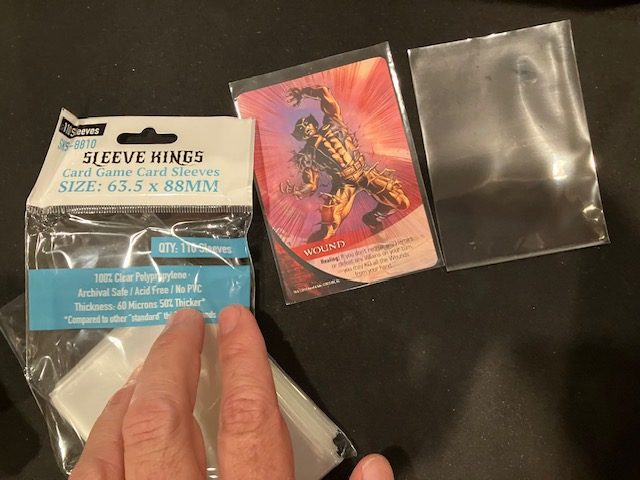
This was a pretty big Kickstarter with lots of expansions and other stuff (sleeves especially: see above). The Last Spell (the board game) was on Kickstarter back in May 2023, and it promised delivery in May 2024. It arrived at my house in early 2026, so it’s about two years late (which is not great).

Let’s take a look! We will ONLY be taking a look at the base game.

Unboxing and Gameplay

The Last Spell is a pretty standard sized box (see Coke can above for scale) except that it’s a little bit taller.

It’s taller because it comes with a bunch of miniatures!

Most of the miniatures are the bad guys (part of the swarm) that invades your town!

Each player takes the role of a single hero! See choices above!

Each player gets the card and corresponding mini (see above). BTW, the colored bases ARE NOT for the players, they are for a particular set of bad guy, but I found they helped me distinguish the good guys from the bad guys. They probably should have included bases for the good guys! Each player has a bunch of action tokens (the yellow tokens) and 4 green movement tokens. You can spend the yellow action tokens to “do stuff” (do different attacks usually) and the movement tokens to move around the board.

Each hero also gets some starting equipment and starting cards: see above.

As the game progresses, you can upgrade your equipment and get better stuff!

Interestingly, a lot of upgrades come from building certain building!s So, the players make choices for building: do we want more gold? Do we want more materials? Do we want better weapons? Do we want better magic? The buildings the players choose to build define their upgrade path!

So the game has a weird arc: it takes place over 3 days: each day has a “Day Phase” (see rulebook above) and a “Night Phase” (see rulebook below).

That’s right! Each phase is pretty complicated, and you do it three times! 3 days and 3 nights!

The Day phase is all about spending resources (Gold, Materials), building buildings, fixing buildings from the night before, and generally getting ready for the Night phase. The Day phase is “getting ready” for combat.

The Night Phase is all about combat! The heroes are fighting the hordes as they advance!

In the Night phase, cards full of hordes (see above) sit on the edge of the board and get ready to invade!

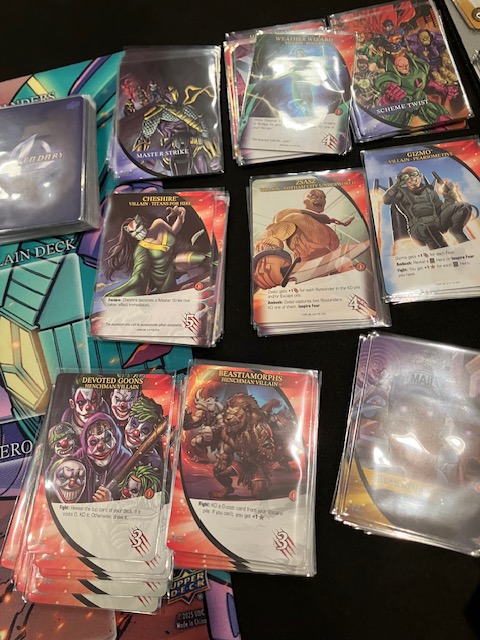
Each different type of monster has different Hit points and damage: see some above.

If the players can keep their spellcasters casting and keep all the monsters away from them, they win! If the monsters somehow kill all the spellcasters in the middle of the board, they win!

Of course, you can’t have a video game adaptation without a big boss! The big boss comes in the third night and will mess you up! See above as we were (luckily) able to kill them in that game!

In case it’s not clear, this game embraces 8-bit art (like the video game) for just about all the art, but it uses detailed minis for the monsters on the board!

This is a big mama-jama on the table and takes up quite a bit of space! See above! The components are pretty darn good.

Rulebooks

There are multiple rulebooks: one for The Day and one for The Night. At first, I was kind of upset by this … how big is this game that you need TWO separate rulebooks? But after some introspection, I think I prefer two rulebooks. Why? The alternative is a giant rulebook with a TERRIBLE binding like we saw in Valheim (see review here)! So, having two rulebook which lay flat? I am okay with that!

The rulebooks open nicely onto the chair next to me; the staple-binding keeps both pages open and easy to read. The font is fine and readable (see above) There are enough pictures to be useful has well. On The Chair Test, the rulebooks get an A-; they droop ever so slightly over the edges but generally look good on the chair next to me!

Having said that, I was very triggered by their use of the “Index”: they completely misused the word!!! See above! An Index is a list of keywords with references (page numbers or links of some kind), but an Index is sorted alphabetically so that people can easily search for relevant keywords using binary search! Unfortunately, what they label as an Index is a Table of Contents: phrases and concepts sorted by the page number! See above!!! A table of contents is used to show how the document is organized!! WHAT THEY HAVE IS NOT AN INDEX! That is a Table of Contents!!

I have to admit, this gave me a very worried feel about the rest of the game. If they can’t get this right, what else will they get wrong?

In general the rulebook was sorta “ok”. I didn’t love it, and I had some real trouble finding some rules (especially some edge cases, since they don’t have a real Index), but I guess it was “fine”. I guess. I am still upset about their misuse of the word Index. In both rulebooks.

Solo Play

There is a solo mode! Thank you for following Saunders’ Law! Hurray! It’s not that much more complicated; you start as true solo (with one character), but you can recruit extra heroes. (See the rulebook above with the Solo mode documented in the back of the Day Phase rulebook).

Here’s the thing; for my first play, I wanted the game to run as smoothly as possible without any extra exceptions. I have to teach the cooperative game to my game group, and I want as few changes as possible. In the end, I ended up playing two-handed solo: alternate between two characters and play as-if it were a 2-Player game. I think this is the best way to play your first solo game; get all the base rules under your belt in a two-handed solo mode, and then if you like it, you can try the more complex solo mode given.

So, let’s be very clear: the majority of this game is in the Night Phase fighting monsters! The Day Phase, while important (as you figure out how to spend your resources to protect your town), is over quickly! Most of the time you are fighting monsters!

And you spend a LOT of time fighting monsters. My first day (Day 1/Night 1) probably took me 2 hours to get through. Holy cow! I had to leave the game set-up on the table overnight! I got better at running the game, but I also realized I got a LOT of rules wrong (if only they had a true Index to fix this…)

My second day (Day 2/Night 2) also took about 2 hours to play. I had to leave the game set-up on the table. A lot of this was correcting my incorrect notions from the previous Day and keeping my head in the rulebooks a lot.

My third day (Day 3/Night 3) was also about 2 hours to play. This day would probably have been shorter, as I was getting to know the rules, but then the Big Bad Boss came out! And the Big Bad Boss has her own very special rules that you have to study!

I ended up winning, but the game basically took me 3 REAL days to play … I basically played one “game day” per day, and left the game set-up on my table!

This is a long game. I think the game will probably cut by a third or even a half now that I have the flow of it, but it takes a long time to get the sense of the game.

For the solo player, there is QUITE a bit of maintenance. SO MANY monsters come out and converge on the town! See above! The solo player basically has to spend quite a bit of time moving EVERY single monster towards the city; this is a lot of work. This is partly why the game takes so long to play … all the minis have to move! And the rules are “not great” when there are conflicts; they could have been better (how do I move the monsters?).

I am glad that I played The Last Spell solo to learn the game. I am also glad I played it two-handed solo; there’s just too many rules to keep track of that I don’t want to be wasting any time doing “solo stuff” that’s outside the normal path of execution. Now, tt’s one thing for ME to keep the game set-up on my table for 3 days while I wade through the game, but I cannot imagine trying to learn this with my friends at the same time! There’s just too much going on. Play this solo to learn it; play it two-handed.

Will I ever come back to this as a solo gamer? I don’t think so? There is SO MUCH maintenance for the solo gamer (moving all those minis), I can’t bear going back to this and doing all that work as a solo gamer. It’s not bad solo, but it’s just so much work! Maybe you like living in this world or really like the video game … maybe spending that time moving stuff around might be fun for you? It wasn’t for me.

Cooperative Play (4-Player)

In session 1, we got 4 of us (me not pictured) to play the cooperative game! I was a little worried the game wouldn’t fit on the table, but we made it work … see above.

The major difference between the solo and cooperative game is that NOW the maintenance is shared! Sure, more enemies come out, but the game is a little more managable (and less work per player) as each player moves “their” monsters (on their side of the baord). This might be the best reason to play this cooperatively over solo play; the load is shared.

How does the game balance for more or fewer players? It boils down to how many action tokens you get! See the rulebook above! In my two-handed solo game, both characters got 7 action tokens! In the 4-player game, we each only got 3 action tokens! Now, this is balancing because with 4-players because the players can keep the monsters under control; each player monitors a section of the board! Based on plays, it seems like the balancing “generally” works. In fact, the third day was a 3-Player game (as one player was sick), so we got to see the balancing at all player counts; it seems to work.

Even after playing solo, I was still the “rules guy”, looking up rules as we played. We were able to play 2 days of the game: 1 day, 1 night, 1 day, and 1 night. It took us about 3.5 hours to play 2/3 of the game. It was a little shorter than the solo game because we all shared the load of set-up.

What I am surprised about; how the game unfurled. We accidentally played with Player Selected Turn Order (PSTO) (because it was more fun and more strategic) and because my group knows how to deal with PSTO well. But I am surprised that we DID NOT play with simultaneous play … it seemed like most of our turns were fairly independent (“you deal that that part of board, I’ll deal with that part of the board”) as there were no interactions that we had to carefully sequence. Once the bad guys got closer, we had to be more careful, but I am surprised we didn’t play our turns simultaneously. It seems like we could? And even should have (because it would reduce play time)? I think we didn’t because we wanted to see how things went on each player’s turn? I think? Given how much work there is per turn, I really really thought we’d embrace simultaneous actions. But we didn’t.

So, 2/3 of the game done in 3.5 hours. We saved the game to resolve it later. The good news is that there is a save system … it’s a pad of paper you write on … but we just took pictures (like the picture above).

Game 3 (3-Player Cooperative)

So, we resolved to finish the game. Due to some illness, we had to wait a few waits until we were all available, and even then, we were down to 3-Players instead!

Because the game balances by simply changing the number of action tokens, we were able to jump back into the game with 3-Players, even though the game started with 4 players! It’s also a good sign that everyone wanted to play again!

Here’s the thing; it took us 3.5 hours to play the final day of the game! Some of that was just setting back up (this is a big game after all, and resetting back to the saved state was a lot of work), but some of it was just all the maintenance that has to happen.

We finished and just barely won; I think we cheated on a few things accidentally, so maybe we should have lost. Either way, it was close.

What I Liked

Components: The game was quality and looked good.

Minis: The minis were cool and added a lot of flavor.

Save Game: There was a good system to save the game between sessions. And (even though we didn’t mention it) between campaigns!

What I Not Sure About

Style clash? I know The Last Spell is a video game, so embracing the 8-bit art makes some sense. But the disparity between using nice fluid minis for the monsters (and characters), but 8-bit graphics for everything else seemed to … clash? It made it a little harder to put them together and was a little jarring. Maybe it’s not a big deal …

Sectors: The game uses sectors for ranged attacks (usually not adjacencies or spaces away). The rules are very clear how the sectors work, and yet, they were very unintuitive! I think if you know the video game, then the sector ideas make more sense. In fact, I think a video game will enforce the sector boundaries easily! In the board game, we found the sector idea to be a little clumsy and unintuitive. .. but maybe if we had played The Last Spell the video game more, we would applaud the sector idea is just like the video game? I don’t know.

Combat: Combat is decided by dice, and there are a good number of mitigation mechanisms (things you buy, abilities, etc). But if you roll poorly, you can still get screwed pretty hard. Teresa especially had a bad third and was frustrated. Yet, the combat is simple to describe and simple to play. This simplicity makes it really easy to explain, quick to play, and simple to manage. So, it’s good on those axes, but yet you can really get screwed by bad rolls. So, I don’t know how I feel about this combat. I’ve played the game enough to see “ya, things seem to average out overall”, but when you are the recipient of the bad rolls, it’s very frustrating.

Things I Don’t Like

Minis and art: Because the game uses 8-bit art and the minis are smooth entities, we actually struggled to distinguish the enemies on the board (some of them really look a lot alike). And we struggled to correlate the minis with the monster stats. In fact, in my first game, I put one monster on each stat position so I could tell them apart! (See above) The minis needed a little more differentiation, even if it were something simple like a triangular base for some, square base for others, or something with color. It was frustrating enough to mention.

Maintenance: There is a lot of maintenance to keep this game going. As a solo gamer, it’s probably too much. As a cooperative game, the maintenance is tolerable but only of you friends help. Still, there’s a lot of work to keep the minis moving.

Length: The game just feels too long. I think this is because there are few too many rules? It needed just a smidge fewer rules; we paused too many times to lookup rules …

Index. The Index is NOT an index. If it had been a true index, it would have been significantly more useful.

Icons: The Iconography is REALLY non-intuitive. We struggled with it and frequently had to look up the Icons (especially for ranged actions). It’s even more frustrating because the Icon are defined in exactly one place (the second rulebook). This really should have been on at least 1 more sheet that you could pass around.

Reactions

Sara liked this the best and would give it a 6.5 or 7/10. Teresa was right there with her.
Andrew and I were on the same page: about 5.5/10. Andrew would have called it a 6 earlier, but the Sector idea was so unintuitive, he felt that brought down the rating after the second session.

Conclusion

The Last Spell was divisive among the players in my group. We all liked the minis and the how well the game flowed once we got going, but it was still very long and had lots of maintenance in keeping the game going.

The clash of art styles between the minis and “the rest of the game” was actually a little jarring and some of the 8-bit art (mostly the buildings) was hard to distinguish. We all think the game would have been better if had been consistent between the art styles; the clash actually took us out the game a little. (This might be just because we had the minis Kickstarter version; the base game uses standees)

Interestingly, I liked another tower-defense game called Firesiege better than this (see review here from a few weeks ago), but my friend Sara liked The Last Spell better. I liked how quickly Firesiege played, but Sara seemed to like how The Last Spell played better. That’s two very different opinions!

As a solo game, the maintenance is probably too much for most people; between set-up, play, and tear-down, the solo player has way too much work to do to keep the game going. I’d probably give a 5/10 for solo. I’m not sure I’d play it again.

The Last Spell is better as a cooperative game, as the maintenance gets shared among all players. We even saw that the balancing mechanisms seem to work well at 2, 3, and 4 players! You can even switch the number of players between days! The reactions were mixed, from about 5.5 to 7/10. I think people who know The Last Spell the video game might like this a little more and give it another point.

Hopefully this review helps you decide if this is right for you. I suggest you play it and try it for yourself; there is a single day intro mode you can play to see how it works.

Flash Point: Golden State Heroes. A Solo and Cooperative Review After Full Playthrough

Flash Point: Golden State Heroes is a cooperative game about being firefighters rescuing people from a fire! It’s the third or fourth (or even fifth?) version of the Flash Point series of games. This particular one was on Kickstarter back in June 2025, promising delivery in January 2026. It arrived at my house in April 2026, so it’s about 4 months late (which isn’t bad in Kickstarter land).

Let’s take a look!

Unboxing and Gameplay

This is a pretty thick oversized box!  See the Coke Can above for scale

The reason it’s so thick is because there are 4 double-sided boards!  (2 of them go together to make a third board, so there are really only 6 different “boards”).

Each player assumes the role of a firefighter, each with different abilities!  The firefighter markers are above …

But you want to pick one of the characters.  The base game comes with 9 different characters (and if you got the Back In Action expansion, a bunch more!)   Each character has a special power that really changes how they interact with the game!

You might notice “Hey! Those are envelopes! Rich, why are they envelopes? That’s weird!!” Yup, this is a campaign game, and you will get to keep your gear in those envelopes between games.

So, this is a campaign game, with a 6 episode arc!  Don’t get TOO excited, because there’s not really that much stuff that follows you between games.  Really, the only thing that follows you is your gear.  Now, each GAME is actually quite different, as described by the Call Guide book above. 

Each episode of the Campaign has some new rules/new concepts for just that game: see above for the rules for episode 4.  It’s not really much of a spoiler; there’s no real story unfolding between games that will be revealed.

The gear is pretty cool; you usually get 4 and choose 2 at the start of the game (in later games, you draw 2 and use the previous gear).  But you get to CHOOSE extra powers to augment your built-in power!  

See as Lisa Beckett (whose base power is to mitigate Fire cards) chose stuff related the Supression Blast actions, so they can augment each other!  That’s some of the fun of this game, is that you get to CHOOSE some of your gear to go along with your innate power!

To win, you have to save 7 people (dogs and cats are people too) before the building collapses, or before 4 people get burned up!  That’s right, if you fail to save someone (because the fire engulfs them), people (dogs and cats are people too) will die!  So, this is a race to save 7 people!

Players traverse a map, looking for POIs: “Points of Interest” (the blue ? markers above).  Usually, the POIs are people (remember, dogs and cats are people too), but sometimes the POI is empty! NO!  

To save a POI (after you flip to a people side), you have to carry them out.  Sometimes, they are healthy enough to walk out on their own, but you need to get them to a “safe place” (usually the ambulance) to count as a “saved person”!

Along the way, smoke and fires comes out!  Every turn, you will roll dice and place a smoke on the cross: see as we place a Threat on 6-8!  Now, normally that would be a smoke (which isn’t QUITE fire), but since it’s adjacent to fire already there … that smoke immediately becomes fire!

This is an action point game: each player has a certain number of action points to spend per turn: see chart above.  (These are nice player summary cards).   It’s only one action to extinguish smoke, but two actions to extinguish fire!  Usually, it’s just one action point to move, but saving people around is pretty intensive, it’s 2 AP to move a victim with you…. 

To be clear, this is NOT a real-time firefighter game!  Players decide how to spend their actions WITHOUT a timer.  If you wanted a more frantic real-time Firefighter game, check out Firefighters on Duty!  See our review of that here

There are lots of other little rules, but the most important is that if you have to place a threat on a place with fire, it explodes!  This might a little like  Pandemic, but instead of disease cubes exploding, fire explodes out in all 4 directions!  It’s so much harder to fight fires after the fire explodes and spreads!! Even worse … those fires it may weaken the structure of the building and it may collapse!  Fires are bad, mkay?

This game has a LOT of nice components.  Nothing is super awesome, but all the components are good quality and easy to read.   And there are QUITE a few components in here (see above), which is why you need the extra tall box for this!

Rulebook

The rulebook is pretty good; I have a few issues with it.  

The rulebook gets an A- on The Chair Test!  It fits perfectly on the chair next to me, it has plenty of pictures that are easy to see, and a font that’s easy to read!  It doesn’t waste too much space.  I think the only reason it isn’t an A is that I wish the font were just a little bit bigger.  But Solid A- on the Chair Test!  This rulebook is the perfect size and doesn’t droop AT ALL on the chair next to me!

The Components and intro are good enough, if a little cramped.  

The rules are generally well-spelled out, but as you get into the game, there are a lot of new rules that come out and some of these interactions are not well-specified. There’s going to cracks, helicopters, lift-basket, new gear, new spaces, new vehicles, new rubble, … all sorts of new stuff!  You’ll have questions about how things interact.  Sometimes it will be there, sometimes it won’t.  The nice thing is that this is a VERY thematic game, so can kinda make a call based on theme.

A simple example is my rock, Camila Ruiz (Camila followed me throughout all my 6 games of the campaign).  She can remove a threat marker for free.   I assumed that a threat marker was anything that was a threat!  Fire, smoke, hazmat, livewires … right?  Those are all threats?  I was beginning to think that was overpowered so I went searching.  I downloaded the PDF rulebook and searched for the word threat.  There were ONLY two places; one was a mention (without a definition) and the other was a picture of THREAT next to fire and smoke at the very front!!  So, yes, a “threat” token is sparsely defined to be ONLY a smoke or fire token.  Seriously, we could have used a sentence anywhere in the rulebook, even on Camila’s card (“A threat is a smoke or fire token”).  There’s not even an excuse for not enough space:  see how little writing is on Camila’s card and how much is on Lisa Beckett’s??? See above.

This was just an example of things could have been a little clearer.  It’s not a bad rulebook, and there was a lot of good stuff.

You know, this might be a textbook defintion of why we need an Index or Glossary:  If you had to put together an Index or Glossary, they would have realized “Oh! We don’t have a real good definition of Threat to refer to!”  There are SO MANY new rules that come out as you play, that an Index or Glossary with all the rules might have been helpful?

Anyway, I learned the game from the rulebook, but I made some mistakes.  You might too. 


The Campaign

As a campaign, this is probably the least campaigny campaign I have ever played.  Basically, every game was completely independent from the previous games (the final game just uses rules from previous games).

It’s cool that at the end of each game, you get more stuff; Gear and Boost usually.  See above after the end of call 1 (game 1).  I don’t feel any guilt about spoilers because it’s just a few things!

The campaign tries real hard to have an ongoing story: see above for some flavor text after game 3.  I gotta be honest, I never read the flavor text.  It really didn’t add much to the game for me.  My friends enjoy the flavor text a little more than me, so we read some of it in the cooperative game, but … it didn’t really add a lot.

What the campaign is, more than anything, is an excuse to play through 6 different games that come in the box.  There’s really just 6 different games with a little more gear and boosts available.  The grand finale (the 6th and final game) does a little bit more by bringing in rules from previous games, but even then there’s no “state” between games.

Don’t get me wrong, I liked the campaign.  It was a fun excuse to play all 6 boards in the box!  But there’s realllllly not a story or any state that moves from game to game (you can save gear, but that’s about it).   The flavor text that’s there is there if you want it.  I didn’t really read it.  Shrug?  Maybe you and your group will really like it?  It’s there?

Solo Game

So, Flash Point: Golden State Heroes is very clear on how to play solo!  (Thank you for following Saunders’ Law!) .  On page 4, the rulebook very clearly states you simply play with 2 (or more) and the solo player operates them! See above!

So, this is not true solo play, but neither do we have to worry about any wonky new rules to adjust solo play!  Just play the game as it was meant to be played!  Like I said, Camila Ruiz was my rock as a I played; she was in every game of the campaign. 

Interestingly, during set-up (each call has its own set-up in the call book) encourages you to use one of the characters explicitly! Call 1 (game 1) encourages using Steve Sullivan by giving him a little bonus at the start of the game! (See the text above in blue).    This was a nice way to make players cycle through all the the different characters in the game to really get a sense of everything in the board.  I applaud this; it gave you a “reason” to cycle through different characters!

I played the entire campaign with Camila as one of two characters.  Each game adds some very different rules (firefighting on a boat, in an amusement park, on the edge of a cliff!), so it was nice to know one of the characters really well so I could concentrate on the new rules being added every game.  Don’t get me wrong, the base game doesn’t change THAT much, but there was some very different and interesting firefights.

I played through the entire campaign solo.  Each game was its own thing; remember there’s not “really” any holdover state from the previous games, but each board was VERY different!

I liked playing through this solo, modulo one or two issues (see below for discussion).  I would play it again.  Playing two characters worked great!


Cooperative Game

I wanted to see where this would land with the cooperative game.   I was hoping I could convince my friends to play through the campaign with me, or at least a few games!

What happened: we didn’t do great in the first game.   Or rather, the dice didn’t go our way.  We cleaned out the board quickly when we started, but we got some explosions and empty POIS at the WRONG times.  We played for about two hours and lost.  We lost two ways, out of building cubes and 4 people died!  We weren’t sure what we would have done differently, and I think that really depressed my friends.  

Sara made the comment: “Ya, this is how the game went last time we played”.   We have played previous versions of Flash Point (Legacy of Flame), and had a similar result.

Last week, when we lost our first game of  Firesiege, my friends wanted to play again to redeem themselves! (See review here!)  This week, they were just done and didn’t want to play again.  The game wasn’t broken or anything, but it just felt like it might have been a little too random.  Losing the dog in the fire was the last straw.

Randomness

This is the hardest part of the game to come to terms with; there’s a lot of randomness.  EVERY turn, you roll two dice and place a smoke/fire (see above) … and sometimes you place more!  If you roll poorly, you can cause explosions all over the place!  The more explosions there are, the more fire there is, which makes it easier to have more explosions and fire!   A few bad rolls can really wreck your game.

I got lucky when I played the solo game, but maybe this game is a little easier with two firefighters. 

Flash Point is very similar to another cooperative game called Pandemic in many ways: players travel around a map trying to keep something under control (diseases or fire), players have action points, players have special powers, players need to keep things under control or they will explode (diseases or fire)!  For a while, when I was trying to introduce new people to cooperative games, I pointed to Flash Point!  Who doesn’t love working together as fire fighters to stop a fire?  Over time, I have deferred more to Pandemic as the better game and less random (as there’s fewer axes of randomness), so I would recommend Pandemic first … it’s just the theme of Pandemic is harder to get over sometimes.  We all lived it at some point.

Which Flash Point?

Flash Point has actually been around for some time!  I Kickstarted the original Flash Point back in July 2011!  And then the Extreme Danger Kickstarter too! See picture above!  But, as you can also see … I never got my Extreme Danger out of shrink wrap!  

Then I was SO EXCITED when Flash Point: Legacy of Flame went on Kickstarter in March 2024!  See above!  The game arrived in 2025, and I fully expected this to be as great as Pandemic Legacy!  But after two games of Legacy of Flame, it just fizzled out.  No one wanted to play again. And it all boils down (no pun intended) to the randomness of the game.  No one wanted to play a Legacy game where there was SOOO MUCH Randomness in the dice rolls!  If you start off with a few bad games, you’ll completely screw yourself!  My friends, I think saw this and didn’t want to pursue Legacy of Flame.

The nice thing about Flash Point: Golden State Heroes is that each game IS so independent, you don’t have to worry about being screwed by your previous game!  I think that of ALL of the Flash Points I have played, Flash Point Golden State Heroes is my favorite version.  Why? Because you get 6 VERY different firefighting scenarios that you can play at any time!  You don’t HAVE to play the campaign: you can just jump into any game you want!   The legacy issues of Legacy of Flame don’t become an issue.

House Rule

There’s one House Rule that I don’t think the game can live without.  Sure, the game can be random on dice rolls when the smoke/fire comes out, but the fire dice rolls “generally” distributes the fire pretty evenly over the board.  The game is random at you; that’s what games do.

The problem is the Fire Suppression action.  You spend your entire turn (4 actions) to roll dice and you MIGHT hit some fire.    Are you an incompetent fire fighter?  Can you not see where the fire is?  This is so ridiculous that you roll dice and pretty much have no control over this!

You might remember Lisa Beckett (see above) we mentioned earlier: I went ALL OUT trying to make her the Fire Suppressions expert!  I gave her two Gear related to that!  See above!  And she still sucked!  Because I rolled bad!  Now she’s not just rolling poorly, but she is actively contributing to losing because she has 4 actions THAT DO NOTHING!

The Fire Suppression, I think, is broken.  In fact, I remember playing the original Flash Point, and I tended to eschew the action!  “Oh, you have to roll to see if it’s successful?  And it takes all 4 actions?  And it may not do anything?  No thanks, I’d rather just do something that I know will make some progress”.

We added a house rule: you have more control.  The players, as a group, get 4 tokens. THAT YOU CAN ONLY SPEND ONCE!!  For a  Fire Suppression action,  roll the dice normally (with flips), then you can spend a token to up/down any/either dice any number of times (up to 4).  This makes it so you can maybe can’t cheat and just Fire Suppression the rest of the game, but the few times you do need it, you have SOME control, and not just random crap! This kind of limits the Fire Suppression to 1 or 2 shots … but that’s kinda what you want?

I won’t play without this House Rule.  If I do, I simply won’t do any Fire Suppression.  It is SO AGGRAVATING to spend 4 actions and do nothing.

Conclusion

We’ve sorta been all over the place in this review, and it may sounds we don’t like Flash Point.  We do like it!  It just … it can be frustrating.   As a solo gamer, I really enjoyed playing through all the campaign (even though it’s not REALLY a campaign, just 6 different boards).  I pretty much had to add the house rule about cleaning up the Fire Suppression action, or I might have hated it too.

The cooperative game didn’t go as well unfortunately.  I think my friends would play the game again but the randomness that can happen will prevent them from ever playing any campaign.  

I personally think Flash Point: Golden State Heroes IS the best of the Flash Point games.  If you like the idea of a cooperative fire-fighting game that has a Pandemic feel, I think this is the one to get.  It has so much variety (the 6 boards are all so very different) and you can play any game you want!  It’s not REALLY a campaign; it’s just an excuse to play all the boards!

I think Flash Point: Golden State Heroes has to get a ranged rating from [6-8] out of 10.  Whenever I give a ranged rating, it means the randomness can overwhelm the game and make it not fun, but when the game “behaves”, it can be fun!  The lower end of 6 is when the dice don’t behave; the game still works but it’s much less fun.  When the game is challenging but not too random, it’s fun and can be an 8!  

If you take away my house rule for Fire Suppression, this rating falls an entire point and would be [5-7]. 


Firesiege: Underdone But Still Tasty! A Solo and Cooperative Review

Firesiege is a cooperative Tower Defense games that was on Kickstarter back in May 2024.  It promised delivery in April 2025, and missed by about a year.  I got my copy in early 2026.

Let’s take a look!

Unboxing and Gameplay

This is a fairly standard sized boxed.  See Coke can above for scale.

Players each take the role of a warrior that can earn special powers!

Each warrior starts with NO special powers, and has one of two conditions to flip them to their more “powerful” side with more hits, some powers, and usually more hit points.  See above as Gestha can flip to the other side if she either (a) she spends 5 energy or (b) has any bar reaches its max.

Once the warrior flips, they are more powerful!  And actually have special powers!  One of the tensions in the game is trying to figure when to keep the invading hordes under control and when to work on powering-up your character!

What’s being invaded you might ask?  The citadel!  The citadel is the center of the tower above!  If a bad guy reaches the center, players immediately lose!  Note that there are three lanes in which in the invaders may invade: red, green, and yellow.  

At various points during the game, the “bad news” cards will come out (see above) and cause the bad guys to spawn and move.

There are actually all sorts of different bad guys in the game but the main ones are the Skrell hunters (smaller: with 1 hit point) and Skrell Mothers (large 3 hit points).  See above.  They look NOTHING like Aliens from the movie Alien or Aliens.  Or maybe they do.   We pretty much called them “aliens” when we played.

There are also some “super” bad guys that can come out during the game at various points.  See above.  These typically have a special power and a few more hit points.

Luckily, the good guys summon little white warriors (see above) to help them or even “someone distinct from Hela, but is pretty much Hela”.

How do you win?  You need to get 6 Victory Points, and you win!  There are 3 cards that control the 3 main ways to get those 6 victory points.  The first one (far left) shows victory points you get from killing spawn points in the game … you always have this.  Killing a green spawn point nets 1 Victory Point, killing a yellow Spawn Point 2, and red 3.  Summoning Hela can help you in different ways (and summoning her gets you 1 VP).   Basically, the game can vary quite a bit, depending on the cards you get! 

There is shared tracker which tracks (1) movement (2) summoning (3) extra swords and (4) energy.  As you play, you can choose (as a group) to move these tracks up and down!  The higher the movement, the more you can mover per turn!  The higher the summoning, the more white warriors per turn!  The higher the swords, the extra oomph you can add to a combat! The higher the energy, the more you can power the special powers of the characters!

Each character has a bag of tokens that they draw from to form their turn.  The tokens are unique to the character (and color).

The player draws 3 tokens for their turn and places it on their board.  Note that the tokens have a white side and a black side!  The light side is good things the player can do with that token: actions, healing, energy, moving the V track, adding/removing walls, and a few others things  See the white tokens above.  The black side is (usually) bad stuff!  Roll the black dice!  Advance the V track!  Summon/spawn Skrell!

An interesting thing about this system is that when you choose a tile, you must do BOTH sides!  Good news is on one side, and BAD news is on the other!  So, you must do both sides!  This is a real interesting idea as you are choosing BOTH the good news and the bad news at the same time!

Even weirder is that you can’t see both sides of the tile!  When you draw, you can only see one side, but the REST of your teammates CAN see the other side!  If you have ever heard of Indian Head Poker or Hanabi, this is exactly the same idea! 

Players basically just play until they win (get 6 Victory Points) or they lose (someone dies or the hoarde track reaches the middle).  

The way the game proceeds is quite interesting; the act of selecting a tile causes things to happen (good and bad).   The game is activated by every tile you choose.  It’s kinda different and interesting.

This is a tower defense game where we, as a group try to keep the Skrell and other bad guys from reaching the middle and killing us!


Rulebook

Sadly, this is not a great rulebook.

Firstly, it does poorly on the Chair Test.  I think this is a D-; it droops really badly on the edges, has a small font, as is very hard to consult on the chair next to me.  It doesn’t fail completely because I can sorta use it on the chair next to me.

The components page starts on a good note: the components are well-labelled with a little pictures.

The set-up is “fine”, but it’s where also start noticing rulebook issues.  Some things aren’t even labelled (step 7?) and so we have to guess at a few things.  

Over the course of the first night with my game, I had SO MANY questions and issues with the rulebook that I started writing them down! 

I ended up with 2 full pages of questions and notes!  This was not a good rulebook.

If I just had a few rules questions, I would typically head on over to BoardGameGeek and try to get them resolved.  The problem was that there were just too many questions.  I was generally able to “make an assumption” and move forward for most if not all of them.  But this will be a non-starter for some gamers.

This rulebook is missing a lot.  But it has some good things too.  I like that they have a campaign, I like that it has rules clarifications for all the special cards (victory cards, super bad guys, warriors, etc).  But the rulebook is missing too much to be able to call this a good rulebook: it underspecifies the game.

Solo

So, there is a solo mode (thank you for following Saunders’ Law)! 

This is a true solo mode, with one player taking the role of one warrior.   The only real differences are that TWO bad guys must enter the Citadel (instead of one) to lose … AND the solo player can elect to flip a token using one energy.  Other than that, the game plays the same!

There’s a lot of maintenance for the solo player (Skrell, super bad guys, the track, spawn deck), but it’s not that bad.  It slightly brings down the game (it’s better in cooperative mode when all those systems are shared).    I was able to get my first game going pretty well … I don’t think I made too many rules mistakes (despite the underspecificity of the rulebook).  I had fun.

My second game went a little better as I understood how the systems worked together.  I was looking forward to my second game.

Something about this world is very appealing: it’s easy to get into, the components are top-notch, and generally the game flows really well.  I liked the solo game and would play it again.

The only thing I would change; the game is a little neutered because you don’t have others “sharing” what tiles you might have … the solo game tries to compensate for that by forcing you to spend an energy if you want to flip a tile.  I feel that energy cost  to flip a token isn’t in the “spirit” of the game … I think a better way to handle that is simply: “If you ever have all white or all black tiles in you hand, you may flip one for free.”   That way, you can still make decisions but don’t get “stuck” with all white or black tokens.  It’s a very minor house rule.

Cooperative Play

So, my group played two cooperative games in a row: we lost the first one but wanted to redeem ourselves with the second game!  And we did!  Once we had a “flavor” of the game, we were able to plan and come up with some strategies to win the game!  This is always a good sign when your groups wants to play AGAIN!

We probably could have done better with the limited communication; we sometimes probably overshared.    I hate to say this, but limited communication games typically have this problem!  Unless you are Hanabi with explicit exact rules on what you can say, then most limited communication rules are wonky.  “How Much Can I share?”  To not bog the game down, we just moved forward if we weren’t quite sure.   

Another thing we did which helped the game was share the load: Teresa took care of the super bad guys, Sara handled the Skrell, Andrew handled the spawn cards, I took care of the shared tracks.  Doing this much maintenance for the solo game does bring down my solo score a little, but sharing the load made it so we could concentrate on playing the game rather than maintaining the game as we played.

We did end up using a House Rule: we used Player Selected Turn Order (fine-grained: see discussions here) .   This allowed us to be more strategic about choosing the good news/bad news token!  “That’s a real good good news … but can we take the bad news?”  I really did NOT think this Hanabi like mechanism (where everyone can see everyone else’s token, but not their own), but it really did promote discussion as we played.  And I am surprised that it worked.

I kind of think I would only recommend Firesiege when using Player Selected Turn Order (fine-grained).  Why?  Because without PSTO, then you are STUCK with the tokens you have and you have to play them (your only choice would be the order the 3 tokens you have are played) … that’s the game playing you!   But if all players can discuss playing their tokens, it becomes more interactive, more cooperative, more strategic, as it gives the players more choice!   I played a token, then Andrew played two, then Teresa played one … we got to choose which bad news to take and which good news in the order that was more strategic!  THOSE conversations in the cooperative game made the game for me!

Conclusion

Here’s the thing; objectively, this game has a lot of problems with the randomness, the underspecificity, and the vagueness of the limited communication.  Objectively, I’d probably have to give this game a 4.5/10 or 5/10.  There’s too many problems.

But here’s the thing; I kinda liked it.  I liked the pieces, I liked how much variety is in the game, I liked the ideas that we get to choose how we move forward (bad news/good news) and I liked the way the game unfolded.  Granted, I had to throw a few house rules at this game to like it (fine-grained Player Selected Turn Order especially for the cooperative game), and a few “I think this is how you play” rules.  But I enjoyed every game I played, despite all the issues.   Subjectively, I personally would give this a 7/10; I’d be happy to play it again and teach it again.  But this HAS to be using Player Selected Turn Order (fine-grained) to get the 7/10!

My friends were a little more underwhelmed and might give this a 6/10.  There’s a little bit of caveat with that score:  I gave my friends the best games possible (by limiting their exposure to all the wonky issues), but they did want to play it twice in a a row after we lost the first game, so that’s a good sign.  If they had to learn this from the rulebook, I am sure this would have been a 4/10 … my group would hate the underspecificity.

Obectively: 5/10, Subjectively 7/10. Overall probably 6/10.  

The game was underdone, but was still tasty!

Tembo: Survival on the Savanna. A Solo and Cooperative Review.

Those of you paying attention might say “Wait, didn’t you already publish this?” And you are right! We did! It turns out we got a critical rule wrong, so our review was a little unfair! So, we took down our original review and adjusted it after replaying. Here we go with an updated review!

Tembo: Survival on the Savanna is a solo and cooperative tile-laying/tile-placement game from The Op Games.

This is a game all about exploring the Savanna but keeping the elephants alive and away from the Lion and Lioness!

This is a lighter game for players ages 10 and up.  The time range seems about right at 30 to 45 minutes.  It can play solo.

Is this game good enough to make our Top 10 Cooperative Tile-Laying/Tile-Placement games?  Let’s take a look!

Rulebook

The rulebook is decent.

The game set-up and components are on opposite pages and this works great.  The components are annotated and the set-up is well-labelled.  This part of the rulebook is excellent.

The rulebook is generally okay.  It’s not great on some edge cases: For example: when you rotate a card, can you can also rotate it 45 degree to get diagonals?  There’s no discussion of that!  From a consistency point of view, it seems like you can (because diagonal is considered adjacent), but it’s not clear.  Why are some spaces purple and white on the final board?  Do you have to place final elephants in the white zone?  When the Matriarch is by herself on the board, what does playing the Matriarch card means? When an elephant line gets disconnected, are there any special rules?  If the Lioness eats an elephant, and goes to sleep, then the Lion moves to her space with the Matriarch … it seems like you SHOULD NOT lose (because the Lioness is sleepy), but the rules make it clear whenever the Lioness and Lion are together .with the Matriarch … you lose!  This seems inconsistent with the theme of the game (sleepy Lions).

Oh yes, after a few passes over the rulebook, it’s clear that each player MUST DRAW TO THREE CARDS no matter what, on their turn.  So, they keep drawing. They should have made that clearer, instead it’s kind of buried in the text.

The rulebook was decent, you can learn the game, but don’t expect there to be a ton on edge case clarifications.  You’ll have to make your determinations in a few places.

Unboxing and Gameplay

Tembo is a fairly standard sized box. See Coke can above for scale.

Each player will take the role of one of four herds of elephants.  See the gorgeous wood elephant meeples (elepheeples?) above.

The thing is, there is only ONE matriarch who guides ALL the elephants!  See is the bigger blue elepheeple above.  Her job is to try to keep her elephant herds away from the Lioness and Lion!  See above for the gorgeous wooden pieces! Elepheeple and Lioneeples!

See above as the matriarch is shepherding the pink and grey elephants above (in a 2-player game).  Every new elephant placed on the Savanna MUST be adjacent to another elephant!  It doesn’t matter what color because this is a cooperative game: you can place your new elephants next to any adjacent elephant.  It’s worth noting that elephants are considered adjacent in both orthogonal and diagonal directions!  This is important  to note for later.

Each player has three cards that do double-duty; they form the grid for the Savanna (this is a tile-laying game after all) AND they allow placing the elephants to the Savanna.   Each player always has three cards at the start of their turn: each turn starts with the active player playing a card to the grid THEN playing another card to determine how to place elephants onto the grid.  (Actually; this was the rule we messed up.  You play EITHER to place a grid space OR to place elephats.  This rule was clear in the rulebook, so I have no excuses other than I misread it.  I do think having a player summary would have helped me; anyway, don’t be me and make this mistake).

How you are sitting at the table actually determines HOW you can place your card and your elephants!  Note the arrow in the upper left corner of the card above: if you are facing the grid, you can only play this card to the grid IN THE DIRECTION OF THE ARROW.

If I am facing the grid, you’ll notice all my cards (above) in the grid pointing away.

Interestingly, when you place a card/tile onto the board, the spot you choose has a special power (usually how many elephants to energize).    See above: one spot energizes 2 elephants for ALL players, one spot gives just you 4 energized elephants! You start with only 3 energized elephants, but you can only place energized elephants on your turn!

The secondway you can play a card: the  card you play is discarded, but it allows you to place elephants on the grid ONLY IN THE PATTERN (or just a single elephant) specified on the upper left corner of the card.  If we discarded the card above to place elephants, we could ONLY place 2 energized elephants east-west (next to a previously played elephant somewhere on the board).

To win the game, players must have the elephants visit 6 Landmarks on the board AND make it to the final location.  To “visit” a Landmark, some elephants need to occupy the purple spots of the Landmark.  See above as 2 grey elephants and 1 pink elephant visit the waterfall Landmark and earn the waterfall standee!

If you want to “scoop up” all the elephants on the board, you can play the Matriarch card (elephant card above) which returns all elephants to the players!  You might do this at certain points to limit how many elephants get chased away by Lions (but see below).

The only problem is that it costs 2 (or 5) energy to engage the Matriarch to gather all the elephants!  See the energy track above.  If you ever go to zero energy, you lose!

You can place elephants on the trees to get more energy!  See the red trees above!  If I can place two elephants there, I can get more energy! Yum!

As you play, the Lion and Lioness move.  If they are ever in a Location with elephants, all the elephants are chased off!  (They are not eaten, no.  Even though they are taken out of the game forever).  If you ever get BOTH the Lion and Lioness on the same space as the Matriarch, you also lose!  If you ever run out of elephants, you lose! If you ever run out of energy, you lose! If you ever run out of cards, you lose!

You can only win if your elephants visit all 6 Landmarks AND you make to to the final spots at the top of the board!  See above for  a winning game!

This production is gorgeous and will enchant you.  The Vicente Dutraite art and the wooden meeples are just so beautiful.

Mixing Bad News and Good News

Many cooperative games have a separate deck of “Bad News” cards, that is, cards that keep the game flowing against the players.   Interestingly, the “Bad News” cards are all interspersed into the same draw deck as the player cards!   In this case, there are two “bad” cards.

The first is the Liones/Lion cards.  When the players draw these cards, they activate the Lioness and Lion (in that order): the Lioness/Lion moves, and then will eat (pardon me, “chase”) all elephants in its region.

If a Lioness/Lion eats (chases) some elephants, it has to rest (until it stands again).

Although the Matriarch cards are “Good” cards (you can play them to move the Matriarch and collect all elephants on the board), you are FORCED to play them if you ever get two of them!  This is a unique kind of bad news because (a) you don’t have a choice and (b) the energy cost is much more significant at 5 (rather than 2).   Getting a Double Matriarch (like above) is actually bad!!

Intermixing the Good cards and Bad cards into one deck reminds us a little of The Siege of Runegar (see review here) where the Troll cards were interspersed into the playter decks of this deck-building game.

The Game Can Kinda Play You

You have to be a little careful when you play; the game kinda plays you just a little.

First, there’s not much strategy with the Matriarch cards because you are pretty much forced to play them as soon as you get them.   If you don’t, you will almost certainly get a Double Matriarch where you are FORCED to play them and lose 5 energy.  Energy is a  very limited resource; you can maybe handle losing 5 energy once … maybe.  You are almost guaranteed to lose if you take 2 Double Matriarchs.  That’s 10 Energy, … and you start with 10 or less (depending on the number of players).

After playing a bunch of games, I found that you pretty much want to play the Matriarch card AS SOON AS YOU GET IT (which costs 2 energy) so that you aren’t forced into a double Matriarch (which costs 5 energy).   That’s not really a strategy; you can’t save it up until you need it.   Every time I tried to “be clever” or “push my luck” by saving Matriarch cards, I got screwed by the double Matriarch and immediately lost.   It seems like the best “strategy” is to immediately play a Matriarch card, even if it doesn’t make any sense. 

Now this isn’t quite as bad as I first thought (on my first wrong playthroughs), because the game moves forward more slowly (I originally though you were drawing two cards per turn; BUT you are only playing one and draing one).  But it still seems imperative to play a Matriarch as soon as you can.

The game is kinda playing you.

The other problem is that the “Bad News” cards cluster and cause major havoc.  You ALWAYS have to draw up to 3 cards, even if you don’t want to!  “I’ve got a Matriarch card, I’ll just defer drawing for now!”  NOPE! You can’t do that!  There’s no choice.

The game is kinda playing you.

Games like Pandemic try to mitigate this clustering a little by distributing the bad news cards more equally over the deck (by separating the deck into 4 pieces and distributing the bad cards in those 4 sections).  I wish Tembo did something like this to help mitigate this clustering.  Or give me a choice to NOT draw.  Nope.

The above has a list of the distribution of cards. 

At the end of the day, your game will probably be won or lost by how the bad news cards cluster, despite how well you play during your turn.  But it’s not as bad as I originally thought.

Solo Game

There is a solo mode built-in (thanks for following Saunders’ Law).  

The solo player gets about 24 elephants (collected from two colors: see above as a I mix pink and grey).   The game plays “about” the same, but the solo player doesn’t get the special powers when they play a card on the board: you always just get 4 elephants when the play a card to the board.   And you can, at one time during the game, discard a Matriarch to avoid a double Matriarch,  The solo player just plays turn after turn by themselves until they win or lose.

This true solo way is “okay” to learn the game, but I don’t think it’s the best way to play the game solo.  The problems are two-fold: First, you don’t get the special abilities on the board, which is one of the only ways you can be “smart” in the game …so the solo mode takes away one of the ways you can be clever and sort of dulls the games.  Second, the double Matriarch “fix” isn’t that great.   Sure, you can choose to get rid of a Matriarch ONCE, but as I pointed out earlier, the double Matriarch problem is pretty steeped into the game.  It’s just not fun to play when are you are MORE likely the get a double Matriarch (see below).

A better way to play solo is to play two-handed solo: the solo player plays two elephant tribes, alternating between them as-if it were a 2-Player game.  I think this is a better solo mode for many reasons: 1) You are playing the game the way it was meant to be played: no special rules for solo player.  2) The odds of getting a double Matriarch are actually reduced because you are distributing the Matriarch cards between two hands!   In the true solo mode, you are much more likely to draw double Matriarchs because you have exactly one hand!  At least with two hands, the double Matriarch is less likely.  Finally: 3) Being able to use the special powers on the board allows you to be more clever.

I’ve seen this in so many games recently: a two-handed solo game is always the better way to play solo.


Cooperative

I”ll be honest, the cooperative play turned me around a little. I “leaked” the strategy that you must play your Matriarch as soon you get it (to avoid the double Matriarch) and we had a pretty good time playing cooperatively.

As a cooperative game, it’s pretty quick, and the game flows quickly if someone can explain everything. Having played at least ten times, I was able to shepherd Teresa and I through a game … and I had fun.

We didn’t get too unlucky on our deck, and generally we were able to me smart (when to play certain cards, when to eat trees). We were still forced to play our Matriarchs ASAP, but Teresa said she liked knowing that because it made it “easier” to think about.

The cooperative game was fun, we had to strategize together, and the game looks gorgeous. I had much more fun playing cooperatively than solo.

What I Liked

The Production: The production on this game, with the wooden meeples, the linen-finished cards, the gorgeous Vincent Dutraite art, and the quality of the everything really shines.

Specials: There are special one-time tokens that allow you to be “do something” special on your turn. The basic game allows you to start with 5 of them. I think without these tokens, you won’t feel like you can ever be smart, as you can be “stuck” with what you get. I will never play without these tokens.

Special Activations: I really like the decision space around the cards you play on the board. This allows you to feel clever! Do I need more elephants? Then I’ll take the +4 elephants! Does everyone need elephants? Then I’ll activate the +2 for everyone space! But I still need to connect the landmark sites, so maybe I’ll place a tile on a location JUST so I can connect locations! This was one of the most important parts of the game to make you feel smart. Taking this away from the 1-player game seems to neuter the game a little bit.

Diagonal: I really appreciate that diagonals are adjacent! You get so tired of games where everything has to be orthogonally adjacent! I feel like this opened up the decision space a little more!

What I Didn’t Like

Games Plays You. I hated that there is almost no mitigation of the double Matriarch. Can I choose not to draw? Can we distribute the matriarchs and/or Lions over parts? Nope. I sometimes feels like the game just is playing me because you pretty much forced to play the Matriarch when you get it.

It has an edge of randomness. It’s can be frustrating to lose because of the way the deck is laid-out. Or sometimes you get the Lions and all clustered and the Lion and Lioness sneak up on the Matriarch and you lose! Your game can be determined by how well you shuffle! The bad news cards can cluster and completely screw you …

The Rulebook:  The rulebook was great on the form factor, and the rules that were presented were presented clearly.  But the lack of some edge cases might really throw some gamers for a loop.  I have no problem moving forward if a rule is unclear, but some of my friends get stuck and can’t move forward.  I worry that this lack of specificity might turn off some gamers.

Conclusion

I am struggling with the score to give Tembo. I did have a good time playing once I figured out you always play a Matriarch as soon as you get it. But I still struggled with how the order of the deck can completely determine whether you can win or lose: the game can play you. BUT after replaying the game correctly, it’s not quite as bad as I thought. I still had fun.

In the end, I am giving this a ranged score: [6.5/10 to 7.5/10]. I needed to capture that I like the game when the deck is fairly well behaved, but I wanted to give a warning that the game can a little too random and frustrating. If I brought this certain groups, they might get a little frustrated by the game playing you (“you always play a Matriarch as soon as you get it …is that really strategy?”). Other groups would just enjoy the setting and production and art … and the fact that it’s a little random is mitigated by the fact the the game is quick.

I think my friends Max and Cassidy would really like this game (with a little strategy hint); they would like the cute and quick game herein.

Oh, and the given solo game is fine for learning the game, but I think it neuters the gameplay a little. If you want to play solo, play two-handed solo instead to enjoy the cleverness and choice that is still in the game (modulo the deck shuffle issues).

Tembo might make my Top 10 Cooperative Tile-Laying/Tile-Placement Games now that I have played it correctly! If I had to redo that list, it would need to be redone anyways to make sure Mists Over Carcassone (see review here) were on it! Tembo too.

Tales Of The Arabian Nights: 40th Anniversary Edition Review: There’s a Solo Mode??? And If You Squint … A Cooperative Mode???

Tales of the The Arabian Nights is a game I both hate and love. When it’s at its worst, it’s random with banal crap happening to you that you have almost no control over; it’s long and tedious. At its best, it creates some of the most memorable stories (with laughter and tears) on game nights that you’ll remember forever. It’s the best of times that I remember, and so that’s why I chose to back the 40th edition on Gamefound (see above) when it came out.

The original edition of Tales of the Arabian Nights (see above) got quite a bit of play back in my playgroups in Las Cruces. And at first, I hated it. It seemed so random; things would just happen to you!! If you were “lucky” (if you had the right skill at the right time), … things would just go your way. But, if you were unlucky, your entire story became a slog as you failed check after check. If, however, you just realize this is an adventure that “just happens to you”, and you just enjoy it for what it is, you can really have a good time. But ya, you could still have a very bad game. And it could still suck.

BUT in order for this to be a good experience, everyone has to know what they are getting into, and how random this, and how you just “gotta grin and bear it” sometimes. If you play with someone who is too serious, or who get aggravated by random stuff, or who just think “this is unfair” … you will not have a good time. Everyone has to be in on the joke. And you kinda have to be in the mood for it. That one person who doesn’t enjoy this will bring this game down very quickly. So, in some ways, this is a very brittle game because one player can easily ruin it. But if you get the right group, with the right frame of mind, with the right mood, with the right sense of humor, this can be a magical Arabian Night!

Does It Need An App?

So, this is a storybook game with a great physical storybook (see above and below). You read lots and lots of flowery text to each other.

I remember when we used to play the original version of Tales of Arabian Nights, and we’d all say “Ah, I think this game would so much better if it had an App. These books are huge! It’s so hard to remember how to look stuff up! And there’s some fiddliness! It would be better as an App!” Sure, an App could make looking up the text simpler. Sure, an App could handle the fiddliness. Sure, an App might make this easier to haul around if there were no books. But now, after reflecting back to the original version and the new version: it’s better with the books.

The books invest people into the game; people have to dig into the book and get involved! It’s a commitment to consult the grid and find the right entry! The person on your left and the person on your right are helping you look-up things in physical books! You make the choices, but everyone is staying involved! There’s a certain sweat equity in looking up and reading passages from a book;“This had better be good, darn it, because I am doing some work to make sure it moves forward!” You are invested because you are making the choices, and your neighbors are invested because they are consulting grids and charts! Everyone is invested in your ridiculous story!

It’s the physical investment in books and charts that makes this game magic. That’s the magic word; invested. You are physically and mentally and emotionally invested.

Don’t get me wrong; some of my favorite storybook games have Apps: Forgotten Waters, Freelancers, Wandering Galaxy are all excellent storybook games that take great advantage of the electronic genre with voice acting, dynamically generated content, and constantly improving stories!

Yet, Plaid Hat games did go out of their way to make physical copies of their storybooks (see above). Why? Because there is a certain magic to the physical books.

Solo Mode

Crazily enough, they made a solo mode for this game. Whaaaaat? Let’s be 100% clear here: the original Tales of the Arabian Nights did not have a solo mode! And it seems weird to have a solo mode because the fun of the multi-player game is the shared reading and shared experiences in this world. But, I think the randomness of the base game is just too much for a solo player. In the multi-player game, we can laugh at the stupid and random things that happen to each other (“Remember the time that Efreet enslaved you? That was hilarious!” “Yes It was!” ), but somehow that seems less fun in a solo mode.

So, PlayToZ wrote some solo adventures and added it to the box! The solo adventures come in their own booklet (see above) with about 15+ directed adventures. Note my use of the word directed—you still explore this world, but there’s a real underlying and scripted story that unfolds for each adventure in the game. To be clear, there are still plenty of random moments (as you still take some turns like the original game), but about half of the game is a story that’s really unfolding (from the Solo Tales book) and the other half of the game are the silly and random stuff from the base game (from the main Storybook).

My first adventure felt like I was playing a novel! The writing seemed quite good and the story was engaging! This was more like a Choose Your Own Adventures tale with real story and real writing!

The only problem with the solo mode is that the stories are limited: there are only 15+ adventures in the Solo Storybook (see above). Sure, that’s probably enough for most people, but it can limit replayability. The good news is that the story path you take does change if you make different choices, so you can play an episode again and get a different story line, a different timeline. Anyways, after 15+ stories, I will probably forget them and so I could start over. If you have an eidetic memory, you won’t be able to play the stories over without some repeats.

I am shocked this has a solo mode. But it really works well.

Base Game

So, this is a cooperative games blog, but the base game, the game everyone knows and loves, is not cooperative; it’s competitive! Tales of the Arabian Nights is a competitive game about who can get the right glory and destiny (two kinds of victory points) and make it back to Baghdad! “But Rich, you can’t talk about games that aren’t cooperative! That’s off brand for you!! You only talk about cooperative games! And sometime solo games!”

Ah, but there’s two issues here I want to address;

  1. The game is cooperative in the sense in that you are having a shared experience and working together to read the adventures out of the book.
  2. With the advent of the solo adventures, you can make this game truly cooperative by playing team solo: play the solo mode as a group pretending to be the solo player!

Granted, the base game actually has a lot of take-that mechanisms (“Choose a reaction for your opponent! “If you have a disease, you can give it to others!”), so I have to admit it’s not really cooperative. Okay, you got me there. But the reading of the storybook gives you that shared experience which feels like a cooperative game.

But the team solo is truly cooperative! You can play through the solo adventures as a team! The solo mode is a little clunky, as the solo player has to choose reactions, look-up in the grid, find the storybook entry, read it to himself, then “pretend” not to see too much on the page (so he doesn’t cheat). With a group of friends playing team solo, all this maintenance (like the base game) can be shared.

So, ya. The team solo is totally a fake thing that’s not in the game; it’s a house rule we made up. But it really works as a cooperative game.

The Base Competitive Game

Like I said, I love and hate the base game. And me and my friends played a competitive game of Tales of Arabian Nights the way it should be played … and I loved it and hated it.

I love it because I loved all the shared mechanisms, the cooperation, the interaction as everyone stays involved. See a 3-Player game above: everyone is involved in reading , listening, and consulting.

And yet, I still kinda hated it. The randomness from the original game is still there if you play the competitive game. It’s still goofy, it’s still fun, you still have to be in the right state of mind, and I still loved it, but I still kinda hated the randomness of the base game. I would maybe give the base competitive game a 6 or 7/10 … it’s very random. But still fun.

Team Solo!

We played as Team Solo one night! All 4 of us playing the solo mode as a group! What happened was that we simply played the game like the solo game, but the books and active player would rotate through everybody. I thought the game would be more cooperative, but what ended up happening was more that the active player tended to make “the choice” and we’d just say “I don’t know if that’s a good idea …” or “That sounds great!”

But, like I’ve said so many times in this review, just the act of consulting charts and reading books is very cooperative! So, instead of inflecting disease upon our fellows, we participate in the shared story … with one person being in the hot seat every turn “making decisions”.

I personally prefer Team Solo mode much more than the base competitive game, but some of my friends actually prefer the base competitive game (“because there are more choices”). So, I had more fun this week (Team Solo!) and Andrew and Teresa had more fun last week (competitive mode). In fact, Teresa likes Tales of Arthurian Knights better in the cooperative mode!

I think the team solo works for a cooperative mode (I liked it), but Tales of Arthurian Knights (see review here) is a stronger cooperative game.

Conclusion

So, this 40th edition of the game is really nice. The base game essentially feels the same as the original Tales of the Arabian Nights! If you play in the original mode, this still feels like the original game. Like I said, it’s a game I both love and hate. If you have a group in the right mood with the right sense of humor, the crazy and random things that happen to you can be hilarious! It can also be very brittle: a single player who isn’t getting it can bring down an entire game, or too many random events can just make the game feel unfun.

The solo mode is probably the most surprising addition to the game, partly because it works so well! It takes the base gameplay and adds direction and true story to the game, giving the solo player a very satisfying experience! I was also very impressed by the writing in the solo mode stories!

But, if you squint, you can also make this a cooperative game! The team solo idea works reasonably well; we tried it out one game and were happy with the gameplay. If you want Tales of Arabian Nights to be a truly cooperative game, you can do it!! Just play the solo mode as team solo … but it wasn’t everyone’s favorite way to play.

If you think you will hate the basic ideas (reading from storybooks to each other, suffering random effects as you play, even in the solo and cooperative mode), you will hate this; you know you. But if this idea of a storybook game with crazy things and lots of reading appeals to you, I think you can have some amazing experiences! And if your group is looking for a little more story, a little more cohesion, a little more cooperation, the solo mode can bring it … for both the solo player or team solo.

9 out of 10 for me for everything this does for solo! This is a fantastic production! I love it! Just be aware of what this is; you may hate it. I honestly would give this a 7/10 if it were only the original base game, but the new solo mode really expands the ways you can play the game! Solo! Cooperative! Competitive! And I liked the cooperative mode of team solo, but my friends still like the original competitive mode better.. as broken and random as that can be.

If you just want a good cooperative storybook game, Tales of Arthurian Knights is better. For a more directed solo game, Tales of Arabian Nights is better. For the competitive game, I think whichever theme appeals to you is probably better.

Burgle Brothers 3: Future Flip. A Solo and Cooperative Review

This is my official first true game of 2026! It came in mid January 2026!

Burgle Bros. 3: Future Flip is a cooperative exploration/grid movement game for 1-4 players. You and your fellows are doing a heist, but it’s in the future! You have to hack the main mainframe and get out to win! This was on Kickstarter in July 2024 and promised delivery April 2025; it arrived mid January 2026, so it’s more than a few months late.

This is definitely a little outside the theme of the previous Burgle Bros games!  Burgle Bros (the original) is a small game about doing a heist! The second one, Burgle Bros 2, was a bigger game, but still a casino heist!  See our review here of that.  Although this game, Burgle Bros 3: Future Flip has the same DNA, with floors to explore and tiles to flips and enemies to evade, it does feel a little different.

Let’s take a look!

Unboxing and Gameplay

This is an interestingly shaped box: see above for the curved corner!  The corner doesn’t seem to get in the way (I have opened and closed it multiple times and it hasn’t been a problem), so it does look cool but it doesn’t cause issues.  Also, see can of Coke for persepective.

Each player chooses one of the 10? 14? (if you got the Kickstarter, you got a few more characters) characters that comes with the game.  You’ll note that each character has a special ability, as well as number of actions (clock) and hand limit (hand).  This is a cooperative action point game; each player will get so many actions on their turn.

The wooden meeples correspond to the players.  Weirdly, they chose NOT to have the character cards be the same color as the wooden meeples?

In fact, if you aren’t careful, you may get flummoxed when you can’t find your character!  Where’s the character meeples for the two characters above???

It turns out each character has TWO sides: geared and disguised, and the meeples  ONLY correspond to the disguised side.  See above.  I am pointing this out because it might trip you up a little in your first play.   

Each character also has their own personal gear: note the little character symbol in the upper left of the gear cards.  These are special cards that are one-use abilities during the game.

There are also plenty of generic gear you can pick up after you hack a SysOp; it’s your reward for a successful hack!

The SysOps are various flavors (green, red, and OMEGA PROTOCOL): these are the baddies roaming the floors of the building trying to keep it under control.

The floors of the building are represented by neoprene mats; one for each floor!  And yes, I believe these come standard with all versions of the game!

The Patrol cards (above) control the movement of the SysOps: see above as they set the destination of the SysOp (D3 or D4).   Note that there is a different pile for each floor.

As the characters explore the floors, various tiles come out; see them above!

These are all kept in a nice bag (really, it’s nice and it fits all the tiles well).   The reason for the bag is that the tile you choose depends on either the floor you are on, whether your geared or disguised, or various other things!  This is different from other Burgle Bros games where you just put the tiles out and flip ’em when you PEEK or MOVE.  Here, in Burgle Bros 3, you have to draw a tile and flip it to the appropriate side!  And yes, that’s why it’s called Burgle Bros 3: Future Flip!
As the game unfolds, the floor unfurls and you can see where alarms, walkways, coridors, etc are.   

One of the most important things in the game is to stay out of the SysOps ways as they roam the floors!  Each player has some “cool” and some “stealth”. (eee above: the blue cube are “cool” cubes, and the masks are “stealth” tokens).  While you are cool, you are in your disguised mode but if the SysOps moves to you, you lose 1 or 2 cool cubes!  Once you “lose all your cool”, you flip to the geared side!  And now, when they move to you, you lose stealth! If you are ever reduced to zero stealth, ALL PLAYERS LOSE THE GAME!
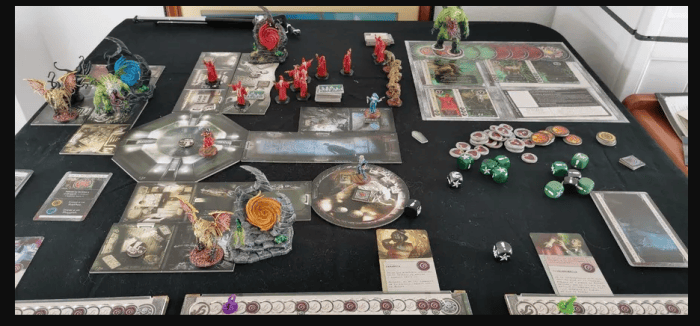
The nice little summary cards list all the things the players can do: PEEK at a tile next to you (to avoid setting off an alarm maybe), MOVE to a tile and activate it (because you need to reveal stuff quickly), CHARM (to get some hack cards), LINK and SWAP (to share gear or hacks) or use your Tool.

What’s this CHARM thing??? That seems new???  You can CHARM the co-workers of the building (hey, most people don’t like working for evil corporations and will help you with a little coercion) to give you HACK cards.  Well, they are called PROGRAM cards, but these are the cards you use to HACK the SysOps!
To win the game, you have to HACK the final SysOp on the Mainframe space!  See two such evil baddies above!  Note how many Program cards you will need to hack the final SysOp!  (There are some other preconditions: both floors have to be in OMEGA PROTOCOL and you have to be on the Mainframe space and you have to have all the Program cards!)
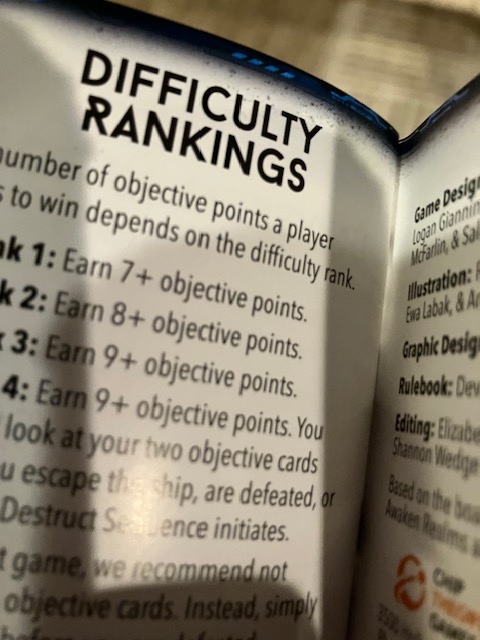
Once the main SysOp has been hacked, if all players make it back to the Air Ducts (see above), we all win!  Shared victory!! If anyone loses all their stealth, we all lose!!

Really, this production is fantastic.  I feel like they fixed a few problem we had in Burgle Bros 2!  We’ll discuss that more in the What We Liked Section below.

Overall, great production.

Rulebook

This was a very good rulebook.

It gets an A on The Chair Test: the rulebook fits perfectly on the chair next to me, it stays open, and it has a big, easy-to-read font.   There are also plenty of examples and well-notated parenthetical boxes.  See above.

The Components list is what you want: pictures of all components with an annotation underneath,

The set-up is perfect; it spans two adjacent pages, so you can set-up without having to spill over into other pages!  It’s got a picture for set-up, and it’s well marked.

In general, this was a very good rulebook.

I am on the fence on wether this should have had an Index; this is a pretty straight-forward game, so I am not sure it needed one.  But it would have nice to have an Index to differentiate things like MOVE vs ENTER and a few other concepts.  The rules are all there, not always quite where I expected them, but they didn’t take too much time to find.

This was a good rulebook.


Solo Play

Interestingly, Burgle Bros 3 lists solo play as a Variant (see above)  But I loved this!  They specified the  solo mode perfectly.  This is how I want to play solo modes!  Two-handed solo!  Thank you !

See above as I am set-up for a solo (two-handed, playing two characters)!

Your characters start on the Air Duct space, getting ready to explore!

I have to admit, I didn’t enjoy my solo game.  Many, many times, I got stuck.  It’s clear you don’t want to go near the SysOps, because you lose cool/stealth.  Sometimes, you just get stuck in a corner; you could move over the SysOps, but then you lose your precious cool.   The overall theme for this game is patience.  Sometimes, your turn is almost nothing.  It’s unfortunate, if you don’t move on your turn, there’s usually very little you can do.   Sometimes you can CHARM, sometimes you can LINK/SWAP.  But many times your turn is “well, I’d better stay here or the SysOp will move over me”.

I lost my first solo game pretty badly.  I got stick in corners too frequently, and the luck of the dice and Patrol cards just went sour.

I was very frustrated.


Cooperative Game

The cooperative game went a little better, but not much.

The same problems that plagued the solo game plagued the cooperative game.  Sometimes, a character would just get stuck in a corner and couldn’t do anything.  They’d have maybe one viable action, but have to basically just waste their turn.  They’d get stuck because a KEYCARD space came out, or the pattern on the floor cornered a character, or the SysOps simply always was coming towards you!  It’s even harder to predict what the SysOp will do when 3 people play after you!  Will you lose your cool???

The best part of the game was the endgame.  Once all the tiles had been revealed, then we could be smart and try to figure how to get out of the building!  In the endgame, we had fun as we tried to puzzle out the best way to use the spaces on the board!!

Unfortunately, I didn’t like the process of GETTING to the endgame.   It just felt so  … reactive.  All we could do was “react” to the state of the board on our turn.  There was a little bit of strategy about where people might go, but sometimes the board layout or the SysOps pattern just stopped you from doing anything.  The game felt like … stuff was just happening to me and I could do very little about it.

I hate to say it, but the game just felt too random.

What I Liked

Rulebook: this is an amazing rulebook; it’s so well done.  The parenthetical notes were just icing on the cake!

Meeples: In Burgle Bros 2, we joked that puting the stickers on the meeples was a legacy game!  Don’t mess up the stickers!  Here, in Burgle Bros 3, they got it right: have the meeples come pre-noted.  See above.

Bag:  The bag is well-done.  It would be easy to screw up how this bag worked, but they didn’t.  it’s easy to pull tiles from it and “shuffle tiles” inside.

Neoprene Mats:   The neoprene mats work well, and they fit back in the box.  (This was another potential issue from Burgle Bros 2: the mats fit weirdly).

Two Share Actions!  I adore that there are TWO kinds of sharing actions!  If you are on the same space, you can SWAP!  If you are both far away, but on a LINK space, you can still share stuff!  Most cooperative games only have one notion of sharing, and I really really liked this!  In fact, it made the endgame so much more fun because we had multiple ways to get Program cards to people to do the final hack!  

Production: In general, the production is fantastic modulo one or two issues.

Endgame: Once all the tiles were out, you could be smart. I loved how the endgame played out.

What I Didn’t Like

Frustration.  Many times, you feel like you can’t do something on your turn.  Sure, you have to be patient, but it just felt there were too many turns where “the smart thing” to do … was to do nothing.  In fact, the frustration was so palpable in the cooperative game and I noticed us getting testy with each other.  I think this is a function of the frustration level!

Colors?  Why aren’t the character cards color-coded to match the meeples?   This seems a strange decision especially because the meeples are kind of small!  The color is the main feature you can see! Making the character cards all the same color makes it harder to distinguish who is who.

Reactions

Andrew liked this the best; he was always thinking of ways to get around stuff.  He gave this a 6 or 6.5, which is actually quite high for him.

Sara liked it okay, but she got frustrated a lot.  She gave the same rating: 6 or 6.5, maybe leaning towards a 6.

Teresa generally liked it.

Rich had to most trouble with it.  He found it too frustrating and too random.  The solo game he’d give a 5, and maybe maybe a 6 to the cooperative game.


Conclusion

Burgle Bros 3: Future Flip is an amazing production; the rulebook, the cards, the meeples, are all great.  In order to enjoy this game, you have to be patient.  You have to be able to suffer turns where you do nothing.  If that doesn’t sound like fun, you won’t enjoy this game.   In fact, the game can be down right frustrating when you get stuck.

The best part of the game is the endgame; if you can make it to the point where the board is unfurled, then you can be clever and win the game and get out!  Unfortunately, in order to get to that point, you have to suffer through the random flips and turns which may lead to frustration when you feel only reactive.

This game was a little divisive in my group; some people liked it, some people didn’t.  Hopefully this review will help you decide if this is for you.

The Case For Adding Player Selected Turn Order as a Mechanism to BoardGameGeek

For turn order in many traditional board games, many games use the simple tried-and-true model that “play proceeds clockwise around the table”. The turn order is dictated by where you sit. It turns out, in many modern cooperative games, we have seen a rise in a new mechanism called Player Selected Turn Order which changes this up!

What Is It?

Player Selected Turn Order is a mechanism by which players in a (almost always cooperative) game select as a group the order in which they take their turns. Players together choose the order of play within a turn! This cooperative mechanism gives the players more agency as they can choose the order in which they takes their turns, so as to reinforce another character, set-up another character for a combo, or just get out of another player’s way. Surprisingly, there is no official name for this mechanism!

We have written a few articles about the mechanism over the years:

  1. Player Selected Turn Order In Cooperative Games: This is a high-level article from many years ago surveying the landscape. See https://coopgestalt.com/2018/02/06/player-selected-turn-order-in-cooperative-games/. The same article was put on bgg, and there were some interesting follow-ups. https://boardgamegeek.com/thread/1934592/player-selected-turn-order-in-cooperative-games
  2. Fastball Special: This is an article discussing why something like Player Selected Turn Order is necessary in cooperative games so you can set-up combos like Wolverine and Colossus’ Fastball Special: see https://coopgestalt.com/2016/07/15/fastball-special/
  3. Seven House Rules For Cooperative Games: This is article talking about some House Rules which make some games more fun; #7 is Adding Player Selected Turn Order to a Cooperative Game. See https://coopgestalt.com/2020/09/20/seven-house-rules-for-cooperative-board-and-card-games/

A game that most people know with Player Selected Turn Order (even if that’s not what they call it) is Marvel Zombicide: Heroes’ Resistance. In this game, the players control 4 Marvel heroes (always 4 heroes), and the heroes are allowed to go in any order they want.

“Spider-man gets out of the way so Hulk can smash! If Hulk smashes enough, Wasp can move and attack other zombies, otherwise, she can finish off the the zombies that will eat J. Jonah Jameson!”

By allowing the players to choose the order they activate their heroes, they can strategize together and also react to the results of the previous heroes’ turn! They can plan strategies and back-up strategies by choosing the order the Heroes play.

  • Player Selected Turn Order makes sense in solo games as well as cooperative games; for example in Heroes’ Resistance, the game requires that there always be 4 heroes in play, so the solo player gets to make activation order choices just like the cooperative game.

Coarse-Grained vs Fine-Grained

There are two flavors of Player Selected Turn Order: coarse-grained and fine-grained. The difference only shows up when a player can do multiple actions on their turn.

Consider Heroes’ Resistance: each hero gets 4 actions to perform on their turn, but they must complete all 4 actions before the next player can go!! This is coarse-grained Player Selected Turn Order: each players must take take their entire turn before the next player can do anything. It is called coarse-grained because the turns are “coarse” and large; all actions must be taken before proceeding.

In games with fine-grained Player Selected Turn Order, each hero gets some number of actions, but these actions can be interspersed among the players!

An example of a game with fine-grained Player Selected Turn Order is Set A Watch: Forsaken Isles (or any of the Set A Watch games). In these games, each player rolls some dice, and each die can be “activated” to do something (used for damage or activating a special power). When it is the players’ turns, they can choose to activate a die in whatever order they want! The Golem can take out the front heavy hitter with his 12, and he can keep going, or let someone else go. Maybe after everyone else has gone, the Golem can use his last two dice to play clean-up! It’s up to the players to decide the order they will activate their dice (or powers)! No one has to “complete a turn”, players just activate their dice in any order they want!

Basically, with fine-grained Player Selected Turn Order, the actions of the players can be interspersed however they want; there’s no notion of a player completing their turn before another. See above as each character has 3 dice to activate, and they can be activated in whatever order the players’ choose!

It’s called fine-grained Player Selected Turn Order because the player’s full turns are broken up into a finer sub-actions, and these sub-actions can be activated in any order the player’s choose.

No Official Mechanism?

Given how prevalent cooperative games are now, and given how many modern cooperative games have Player Selected Turn Order, it’s surprising that BoardGameGeek (the world’s authority and go-to place for board games) has no notion of this mechanism when it describes game!

When you go the mechanisms of a game, say Heroes’ Resistance (see link here or picture above), you’ll see no notion of Player Selected Turn Order for this game! It’s Cooperative, has Variable Player Powers, but … does it have Player Selected Turn Order? We happen to know it does, but it’s not clear from the mechanisms page!

Proposal

We’d like to propose that BoardGameGeek add the Player Selected Turn Order to their list of mechanisms so that cooperative and solo games can list it! It probably makes sense to add both Player Selected Turn Order (fine-grained) and Player Selected Turn Order (coarse-grained) since they are technically important sub-genres of Player Selected Turn Order!

In the next section, we document about 30+ modern cooperative and solo games that have Player Selected Turn Order (with notes of fine-grained vs. coarse-grained, if known). This is definitely an incomplete list that we will keep adding to! We also include links back to some of our original reviews so that we “document” that the game has Player Selected Turn Order.

Some Games With Player Selected Turn Order

Arkham Horror: The Card Game. See bgg link here.
Battle For Greyport: coarse-grained PSTO. See link here.
Chronicles of Light: coarse-grained PSTO. See link here.
CO-OP: The co-op game: coarse-grained PSTO. See link here.
Daedaelus Sentence: fine-grained PSTO. See link here.
Darkest Night (1st Edition): coarse-grained PSTO. Currently the earliest example of PSTO? See bgg link here.
Descent: Journeys Into the Dark: coarse-grained PSTO. See bgg link here.
Etherfields: fine-grained PSTO. Thanks to Hans
Fateforge: fine-grained PSTO. Thank to Hans
Hacktivity: fine-grained PSTO. See link here.
Invincible: The Hero-Building Game: fine-grained PSTO. See link here.
Mansions of Madness: coarse-grained PSTO. See bgg link here.
Marvel Zombies: Heroes’ Resistance: coarse-grained PSTO. See link here.
Marvel Zombies: X-Men Resistance: coarse-grained PSTO. See link here.
… and so many Zombicide games
OathSworn: fine-grained PSTO. Thanks to Hans
Paleo: coarse-grained PSTO. See link here.
Reckoners: fine-grained PSTO. See link here.
Sammu-Ramat: fully coarse-grained PSTO in solo mode, stilted in cooperative mode. See link here.
Secrets of Zorro: fine-grained PSTO. See link here.
Sentinels of the Multiverse RPG: coarse-grained PSTO.
Set A Watch: fine-grained PSTO. See link here.
Set A Watch: Doomed Run: fine-grained PSTO. See link here.
Set A Watch: Forsaken Isles. fine-grained PSTO. See link here.
Set A Watch: Swords of the Coin: fine-grained PSTO. See link here.
Sharknado: I don’t think this ever came out? See link here.
Space Cadets: Away Missions: coarse-grained PSTO. Thanks to Scott R.
Slay The Spire: fine-grained PSTO. See link here.
Spark Riders 3000: fine-grained PSTO. See link here.
Spirit Island. fine-grained, as players play. See bgg link here.
Texas Chainsaw Massacre Slaughterhouse: coarse-grained PSTO. Thanks to Edgar
Viticulture World: coarse-grained PSTO (a little stilted like Sammu-ramat). Thanks to Lon.

Are there any we are missing?

Crime Unfolds: How Do You Express That?

Welcome back to Detective Month!  Last week, we looked at the storybook cyber-noir detective game of LA-1!  This week, we take a look at the Escape Room game of Crime Unfolds!  A Pop-Up Escape Game 3D: Immersive Crime Game!

Every few months, my friends Charlie and Allison and I get together to play games … usually Escape Room games! They are my Escape Room buddies! This month, we are trying out the Crime Unfolds cooperative Escape Room game! Nominally, we are detectives solving a crime!

We’ll discuss our first impressions and thoughts on the Crime Unfolds system. It also brings up a few questions to ask yourself about Escape Room games. Why do you like them? Or maybe … Why do you dislike them?

Requires an App

Crime Unfolds requires an app!   That is maybe the first thing you should know.  Some people love Apps with their Escape Room games, and some people don’t.  It’s really not clear by looking at the book that this requires an App.  It’s not a big deal, as Charlie went and got one real quick.

There are 6 cases interspersed in this game.  We started with case 1.  We also, like many escape room games, started with lots of “random stuff we know will be useful later”.


Solve The Puzzle vs. Express the Answer

Over the course of one night. Charlie and Allison and Richie embarked on the first case!  It’s supposed to take an hour … it took us more than two hours.  And we are experienced Escape Roomers?? What Gives?

The problem we had over and over was not “how we do we solve the puzzle” but “how do you express the solution”?  We easily solved a bunch of the puzzles, but inputting into the app was the main hurtle!

For example: At one point, we had “shifted” away from a screen that had the arrows for directionality, so we thought we had to express NSEW via UP/DOWN or North/South/East/West using letters on the command line?  We lost at least 15 minutes … when we realized the App had those arrows in another screen.  It was very frustrating!  We had solved the puzzle, but the app had made is less than intuitive to enter.

We were pretty frustrated after this game, but after thinking about it overnight, I have come to realize that most puzzle games are like this!  You have to do two things:

  1. Solve the puzzle
  2. Express The Solution

Solving the puzzle is usually the funner part, and some games make it very easy to express the solution.  We loved Doomensions (see our review here), as expressing the solution was easy; it always took the same form as a 3 or 4 digit code.    Here in Crime Unfolds, the solution expressed itself in so many different ways! Sometimes it was interacting with some widgets on the app!  Sometimes it was saying the right thing at the command line interface!  Sometimes it pressing the right buttons!  

Our frustration with Crime Unfolds was how to express the solution!  Many times during the game, we felt like we solved the puzzle, but couldn’t move forward because the solution wasn’t expressed in the way we expected it!

After cogitating on this some more, I realized this expressing the solution can be just as interesting as solving the puzzle!  To express your solution, you have to change your perspective!! What’s the best way to express this solution?  What’s the most thematic way to express this solution?  What’s the perspective of the player in the game?  All of these contribute to different ways to express the solution.   To be fair, sometimes the expression of the solution is poorly done, and that’s just a frustration of this genre.  I think if you reset your thinking that expressing the solution is part of the puzzle, then it can less frustrating. I realize how hard it can be to do in the heat of the moment, so it’s easy to say this. 

To enjoy Crime Unfolds, you will absolutely have to enjoy thinking about new ways to express a solution to a puzzle.


Pop-Up Cool!  But You Need A Magnifying Glass!

One of things that was very cool about Crime Unfolds was the pop-up scenes that came out of the book!  It turns out 6 rooms in the book, and you take a turns visiting some of these rooms in each case.  They look really cool!  See above!

Unfortunately, some of the text/symbols on the board are hard to read!  At one point, Charlie went and got his “fine work” magnifying glasses/helmet!  We also used our phones to zoom in so we could see things!  

The pop-up stuff works well, but be aware that you may have to really zoom on the board.  There is just a little bit of “Where’s Waldo” and “I can barely see that” in this game.


Conclusion

Did we like Crime Unfolds?  Yes and no.  We only played one case, but we think it is fairly representative of what this game is.  The pop-up system works and has a very “toy” and “fun” factor to it; that was something we definitely liked.   We liked solving the puzzles but found expressing the solutions frustrating.  I think, upon further reflection, that if you go into the game knowing expression the solutions is PART of the puzzle, that might help make that more enjoyable.   

I hope I can talk Charlie and Allison into playing more cases from this book; I think there’s some fun puzzles here, but I hope we can just get over the frustrations when expressing the puzzle solutions.