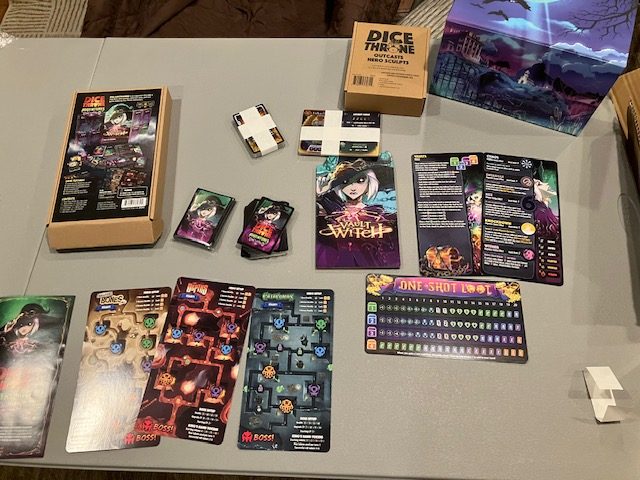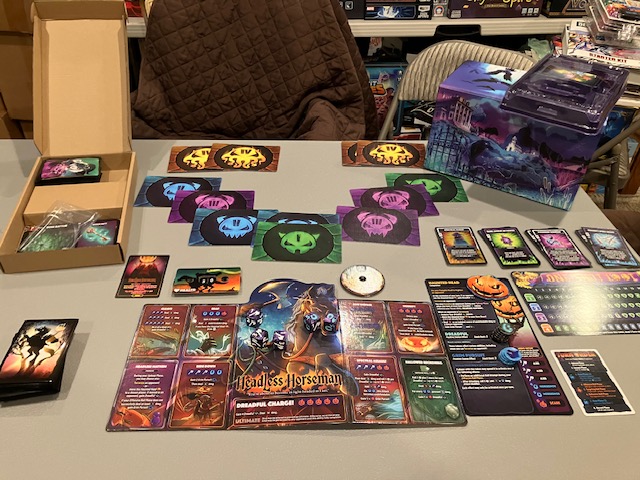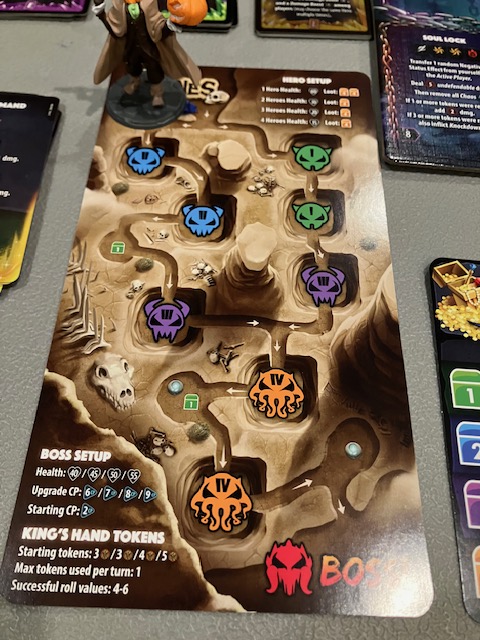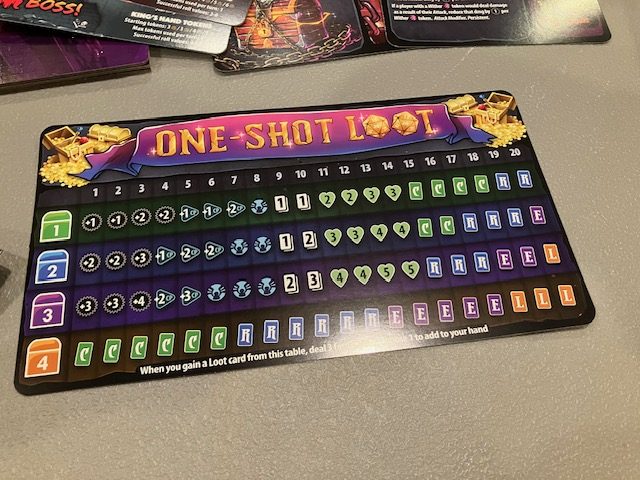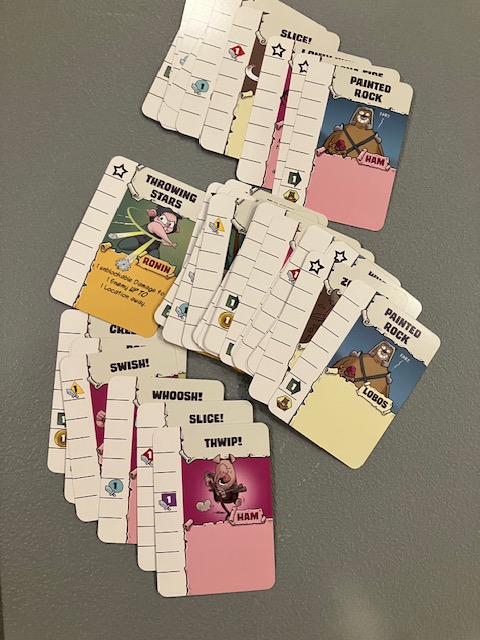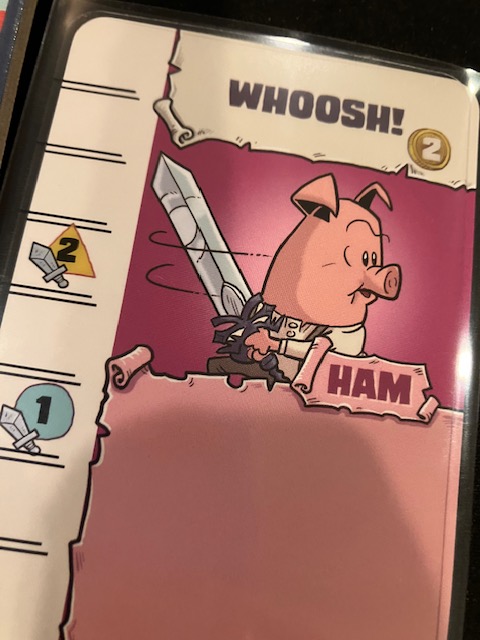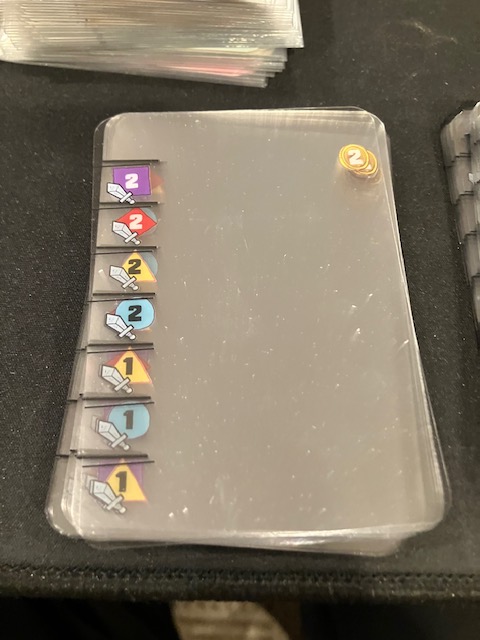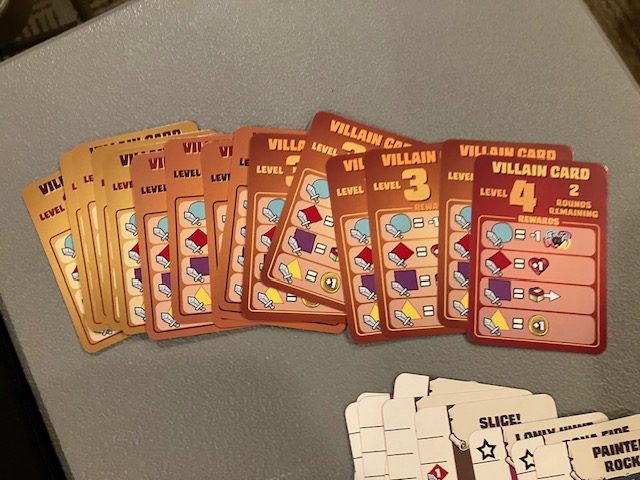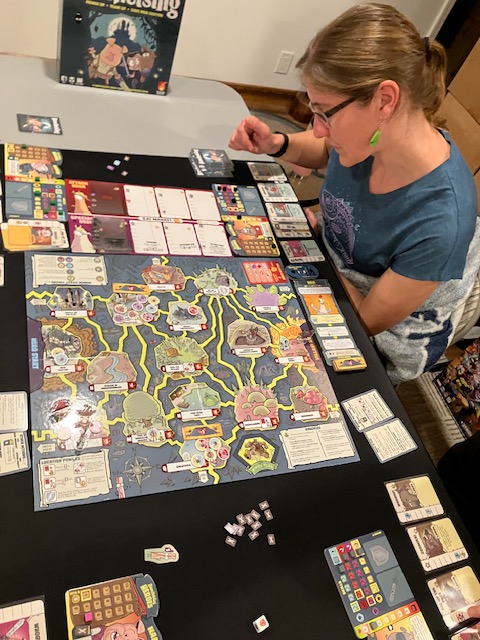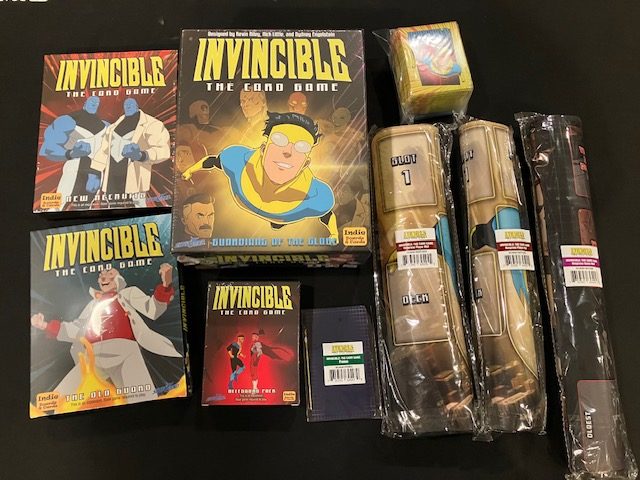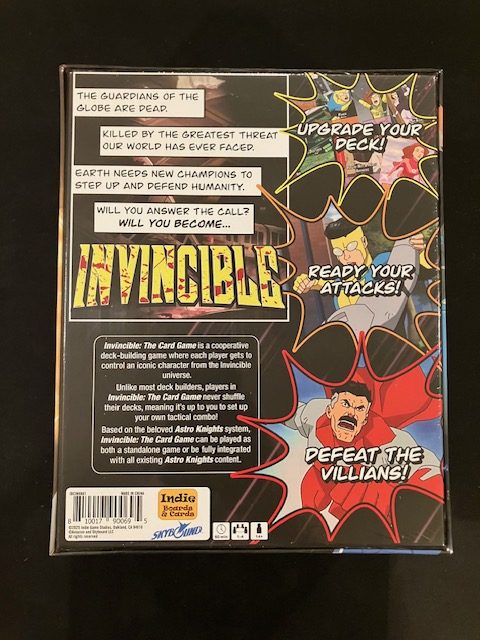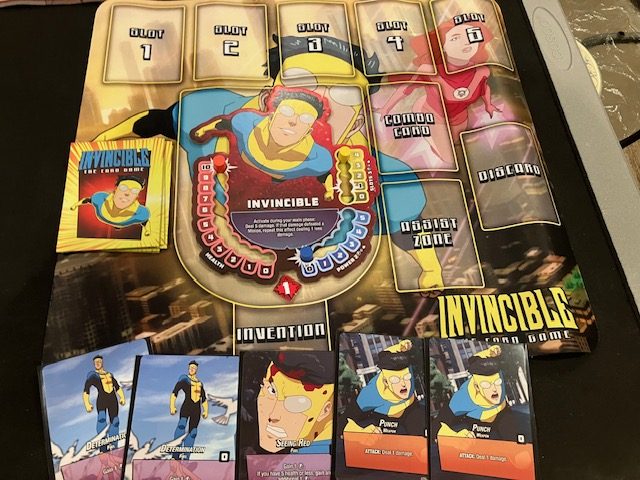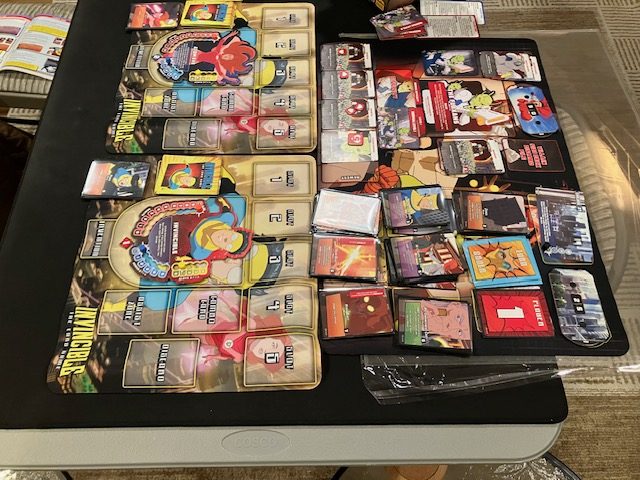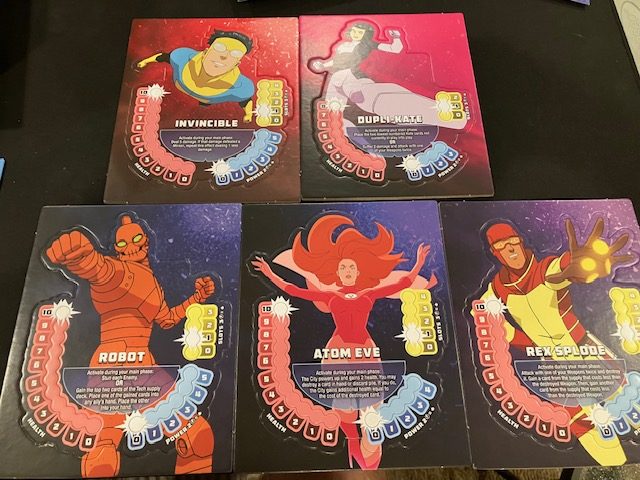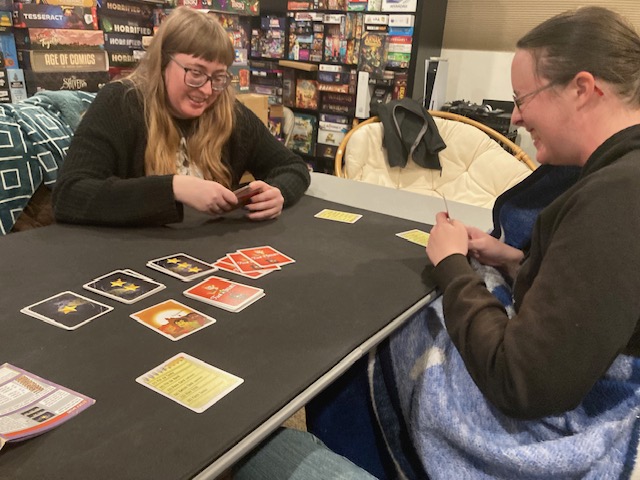
Forbidden Pandemic Island: The Card Game! A Review of The Four Doors

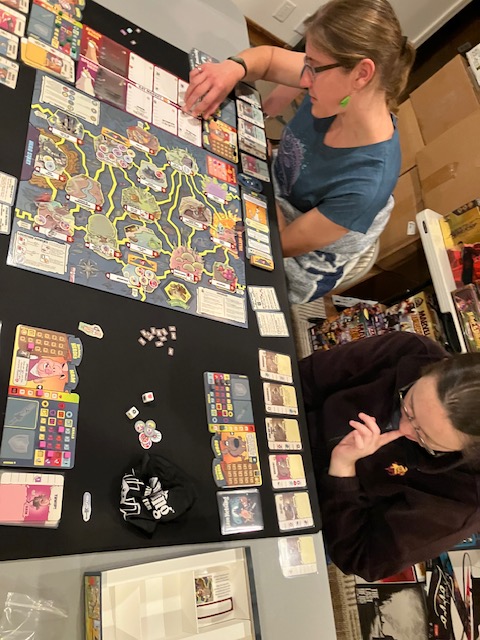
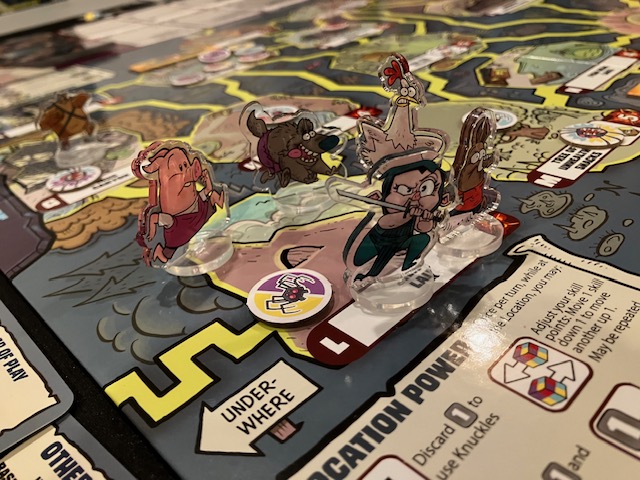
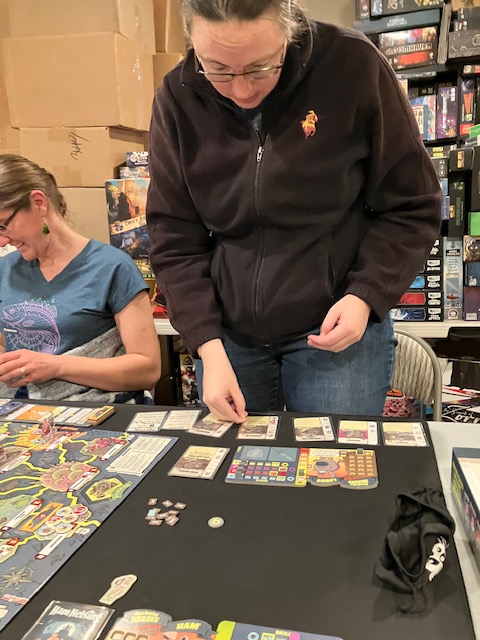
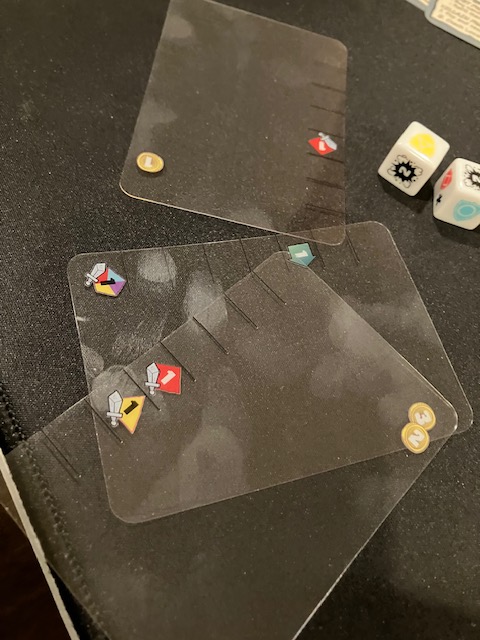
What do you get when you cross Pandemic with Forbidden Island and make a card game?  You get a cooperative card game named The Four Doors!

This cooperative card is designed by Matt Leacock (of Pandemic fame) and Matt Riddle and Ben Pinchback (of many games, but the one I know best is Legends of Sleepy Hollow: See our review here).  The Four Doors is a light little cooperative card game for 1-4 players and takes about 30 minutes to play.  If you have played Forbidden Island (a light little cooperative tile-laying game) or Pandemic (a heavier cooperative game), you might be saying … “Heeeeeeey, this kinda feels like those games a little…” … and you’d be right!

Let’s take a look!

Unboxing and Gameplay

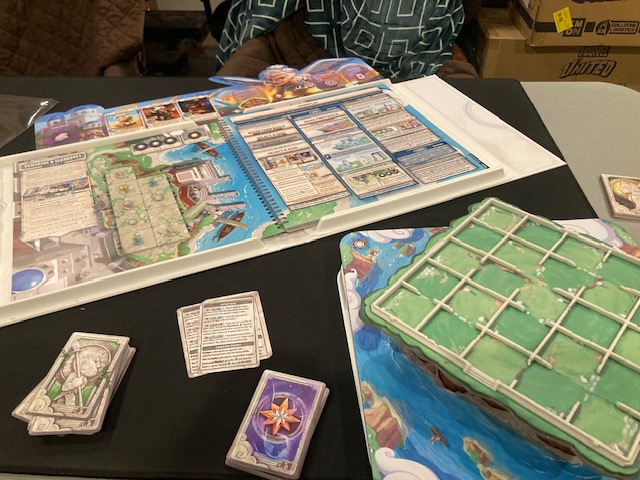
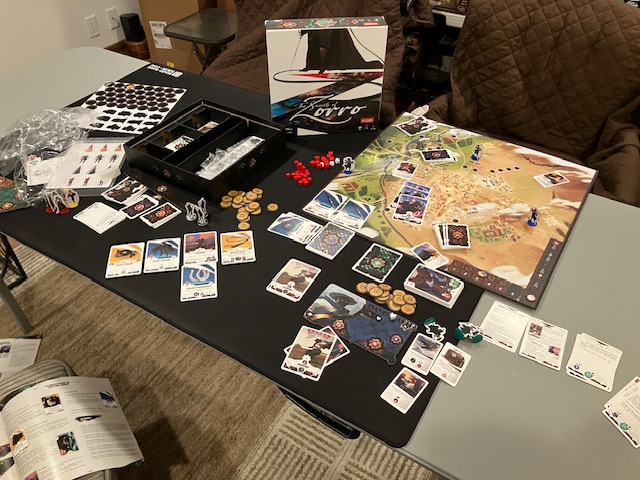
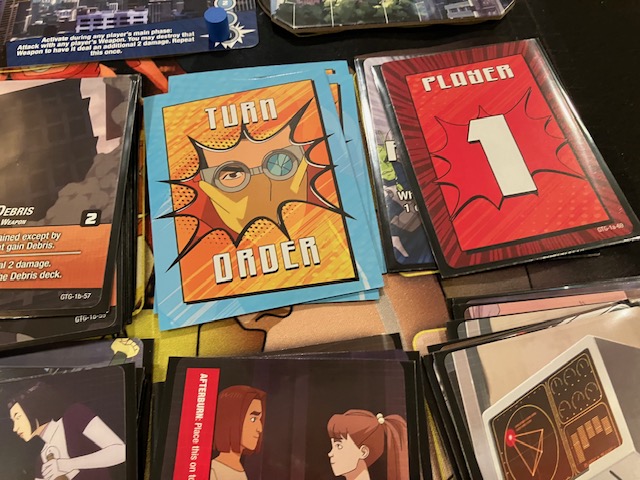
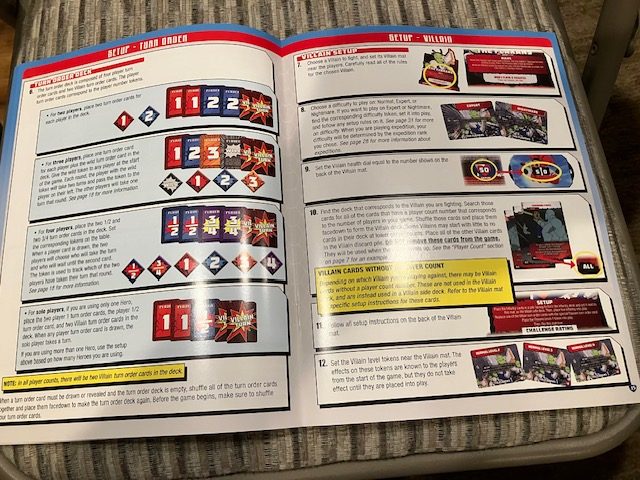
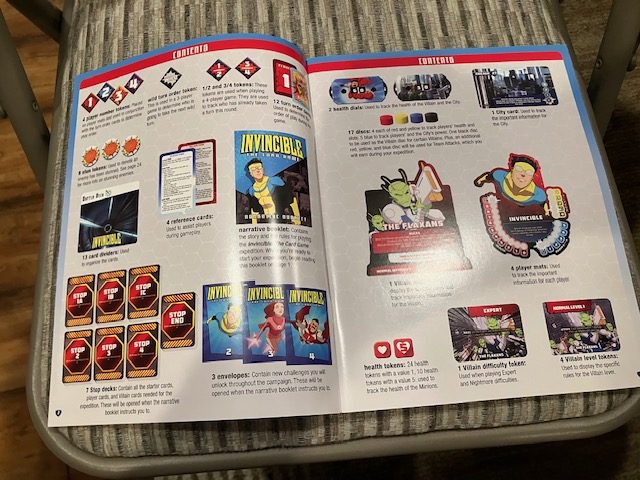
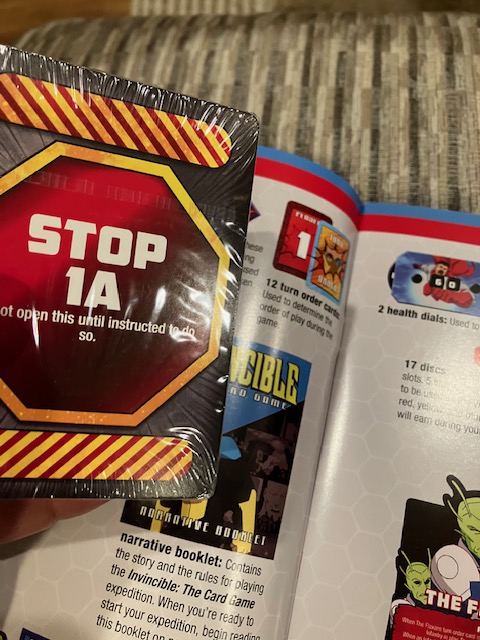
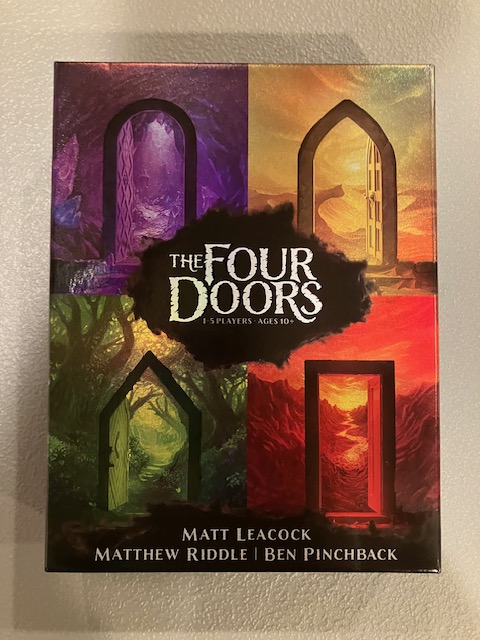
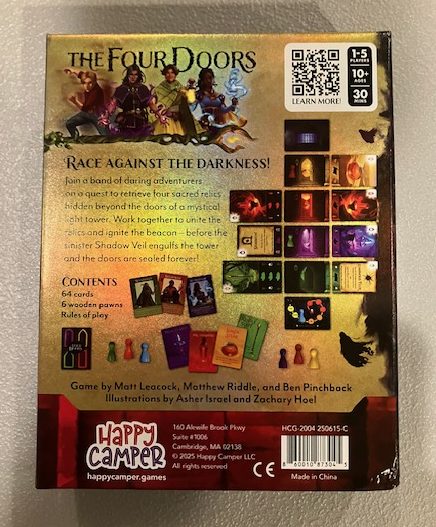
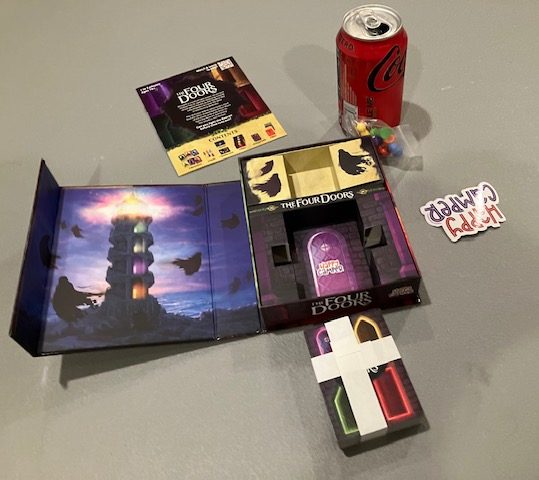
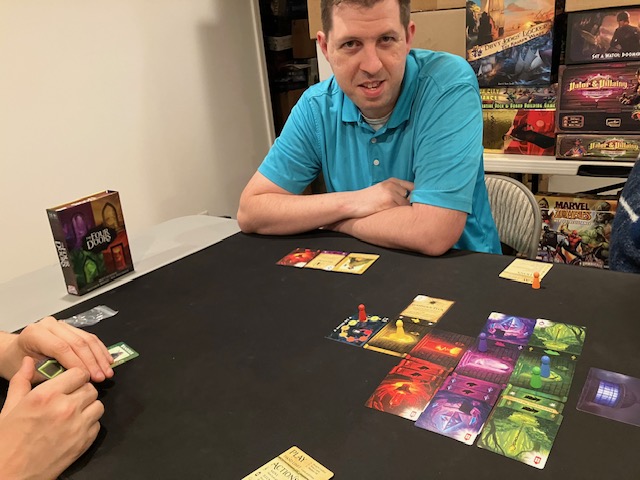
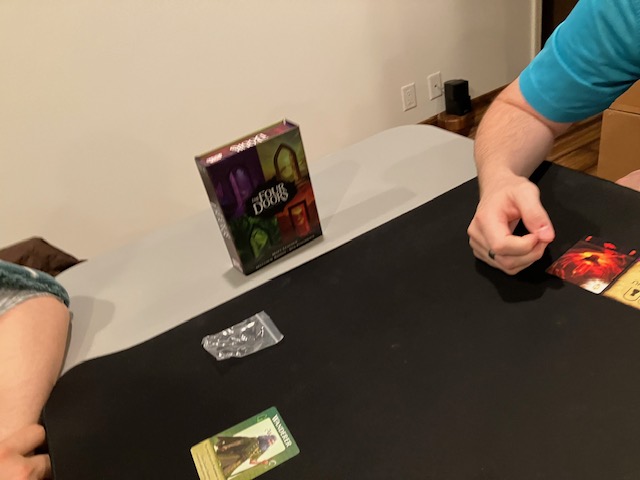
I ordered this directly from the Happy Camper website (the publisher) about 2 weeks ago?  It arrived fairly quickly (late August).  See above!  It looks kinda neat, but it’s relatively small!  See Can of Coke for scale.

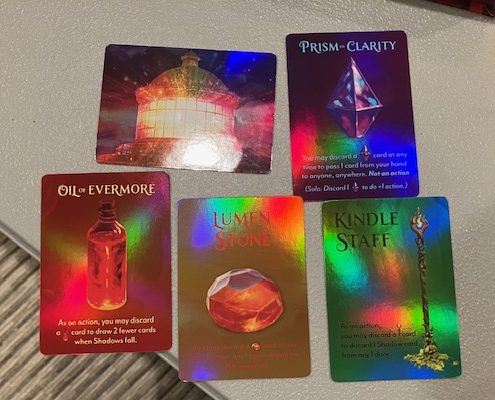
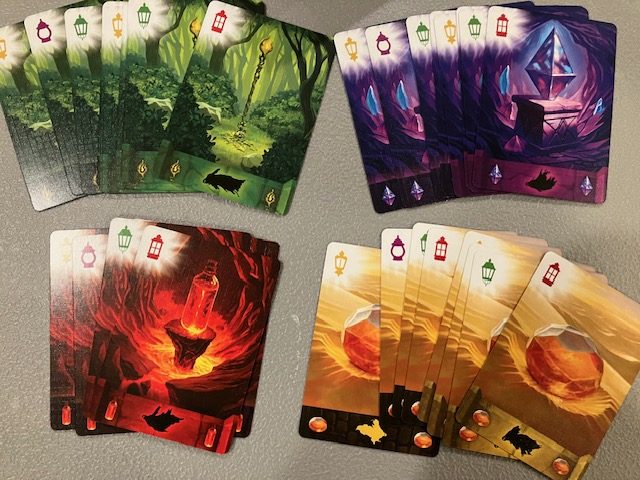
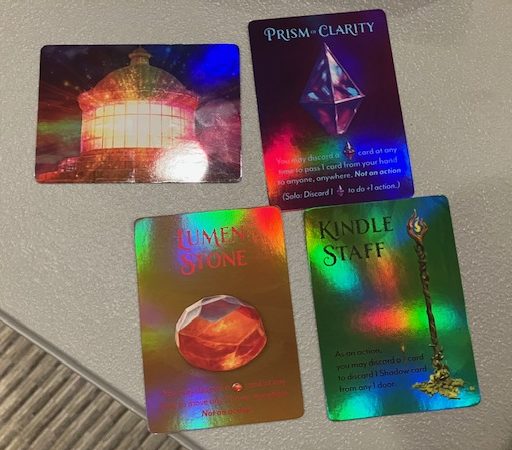
The object of the game is, as a a group, to retrieve the sacred relics above!  Yes, they looks shiny because they are foil covered cards.  They are pretty neat! And yes, this “gather 4 items” kinda feels like Forbidden Island or Forbidden Desert … you gotta collect some exactly 4 things and it’s an action point game!  (You only get 3 actions per turn!)

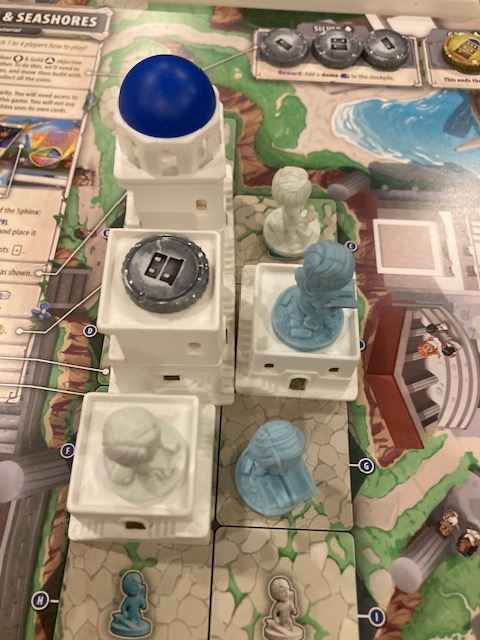
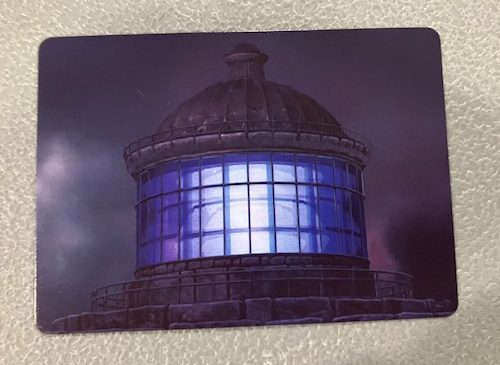
To win, you have to bring the 4 relics to the light house and turn it on to win!  (sarcasm mode on) This is COMPLETELY unlike Forbidden Island or Forbidden Desert where you have to return to the launch pad to win (sarcasm mode off).

And you have to turn the lighthouse with a special card! It is pretty cool with that foil.

… just like you need to activate the helicopter/flying machine to fly away in the Forbidden Games…

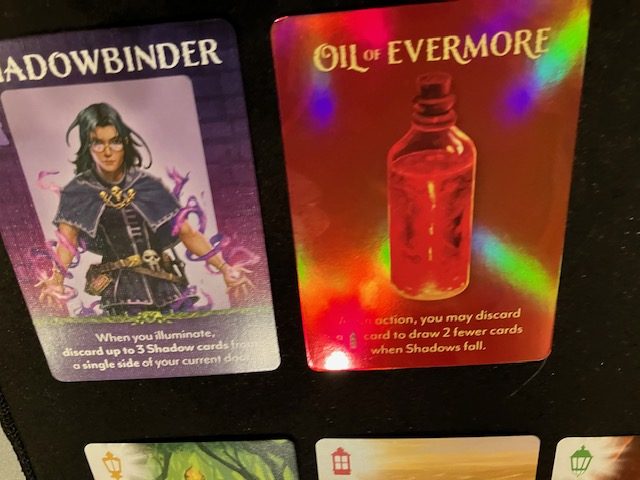
Players each take the role of one of the characters above, each with a special power (yes, like Pandemic or the Forbidden games). But the powers are pretty cool and a little different.

To retrieve a card, you have to have and discard 4 cards of the same color at a door.  (Yes, more Pandemic and Forbidden analogies).  These are in a deck that you get 2 cards from at the end of each turn.

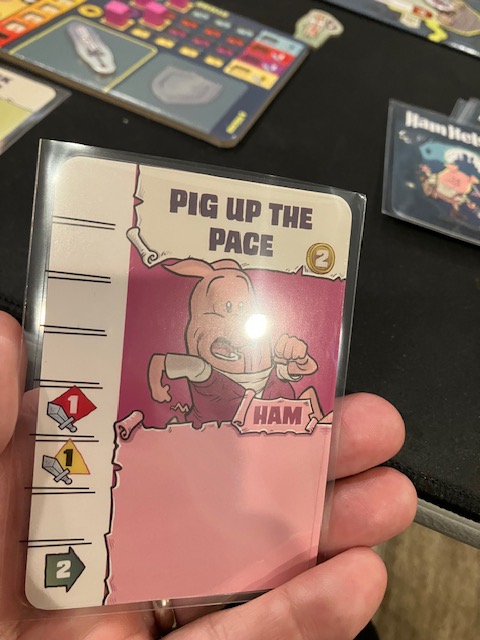
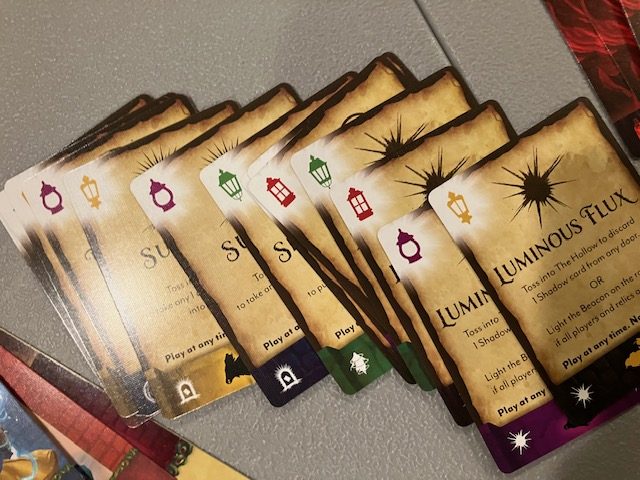
There’s some special cards you can use (spells) which you can play at any time (not just your turn), but then they are not discarded but put in place (the Hollow) where they (usually) can’t be brought back!

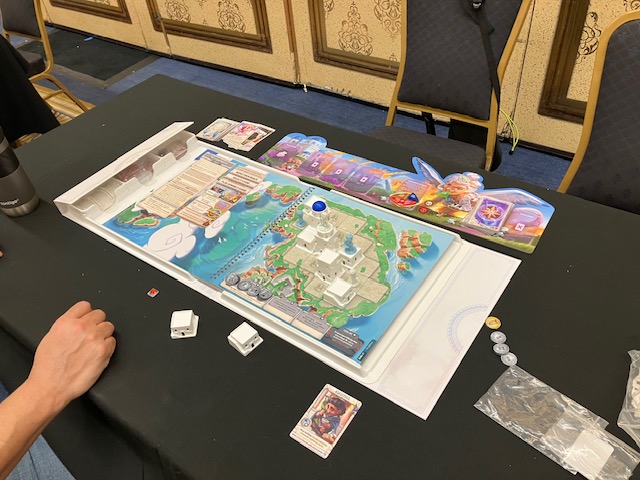
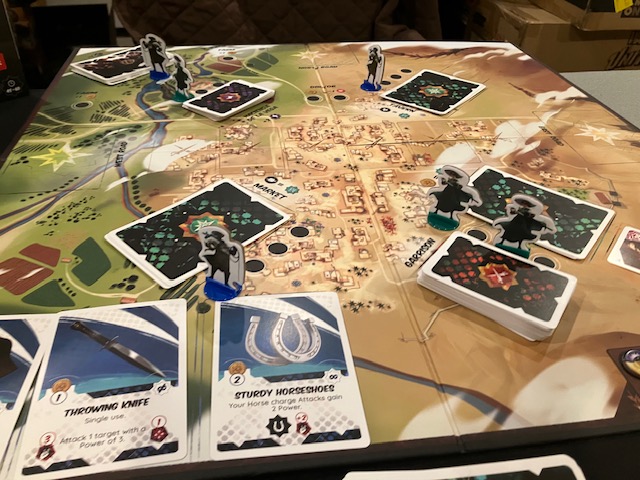
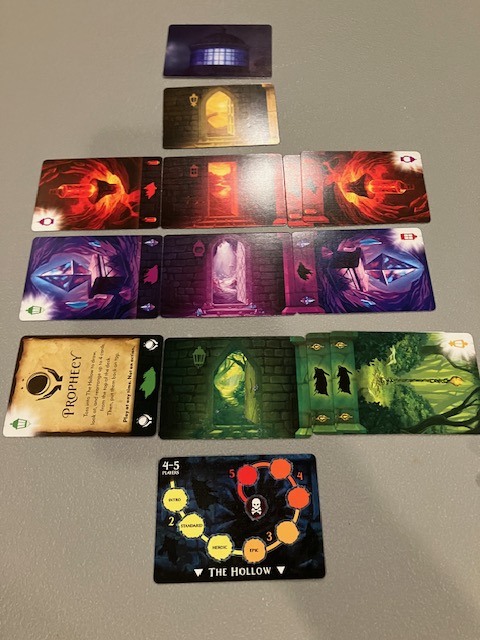
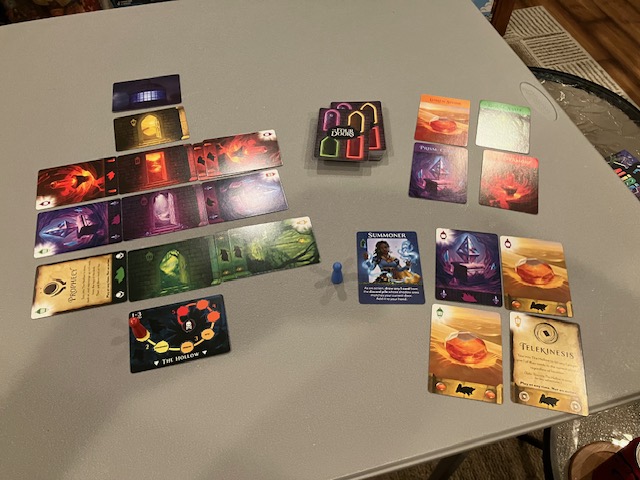
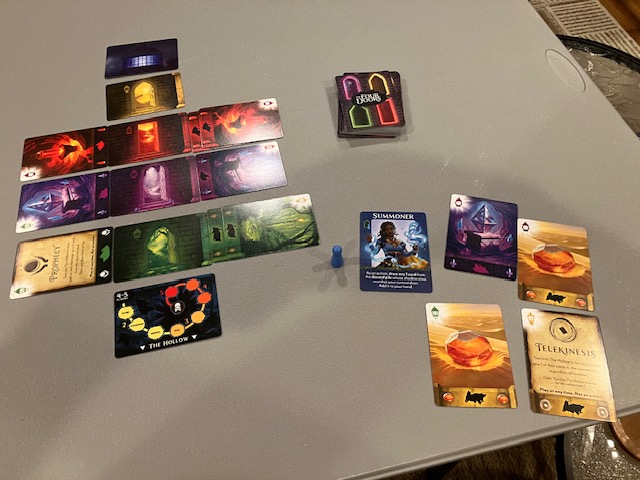
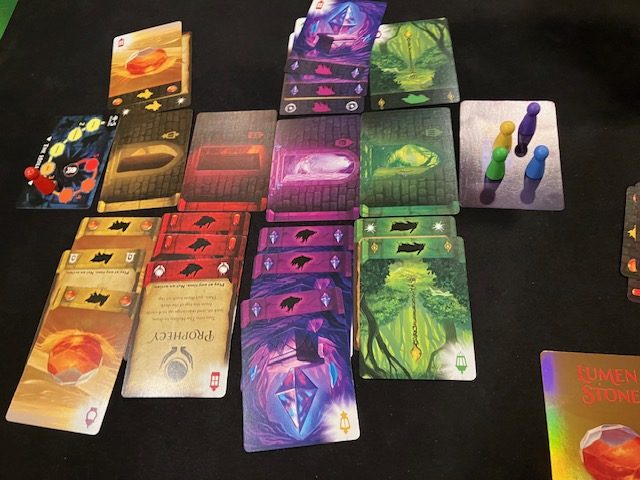
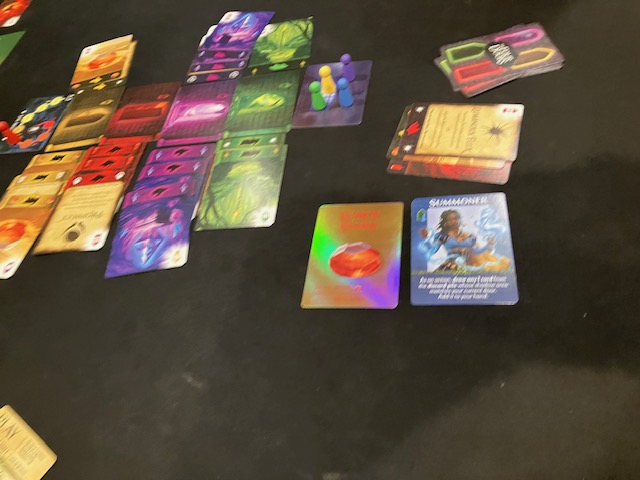
The Four Doors (that’s the name of the game, remember?) are laid out in a column: see above.  Your pawns move up and down the column and you can only retrieve a colored relic at the appropriate door.

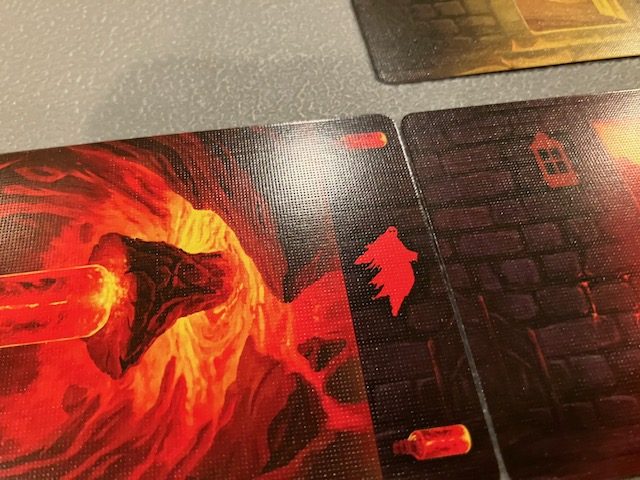
So where’s the Bad News?  This is a cooperative game after all!  Every turn, the same cards that help you also come out and hurt you!  The same deck is used for both good cards and bad cards!  It just depends on which phase you draw them!! When drawn and played as Bad News cards, these cards “further open” the rift which may seal the door forever!    If you ever get 4 of these Bad News cards attached on one side of the door, the  doors gets half-shut … then closed forever!  If you haven’t gotten the relic out before the door closes forever, you lose!

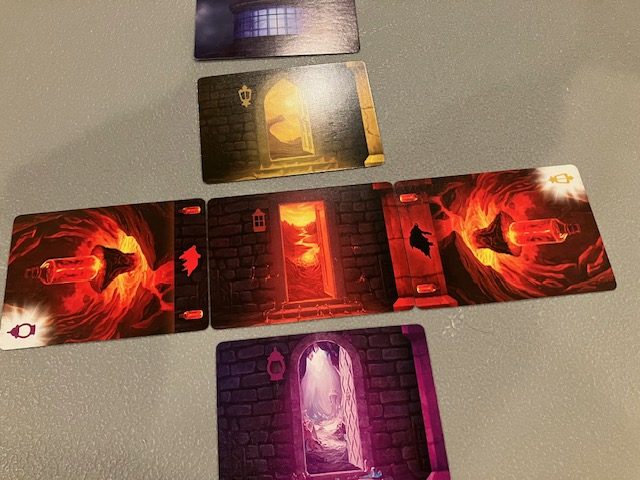
The cards attach at the sides, depending on what’s at the bottom of the card: see above and below.

Three cards attaching to the doors should feel reminiscent of Pandemic

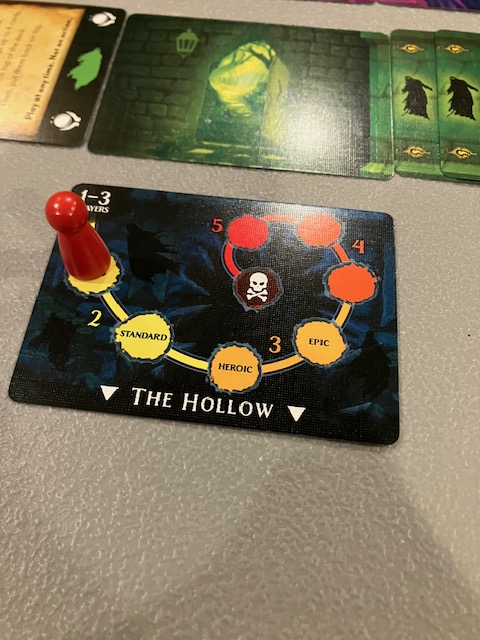
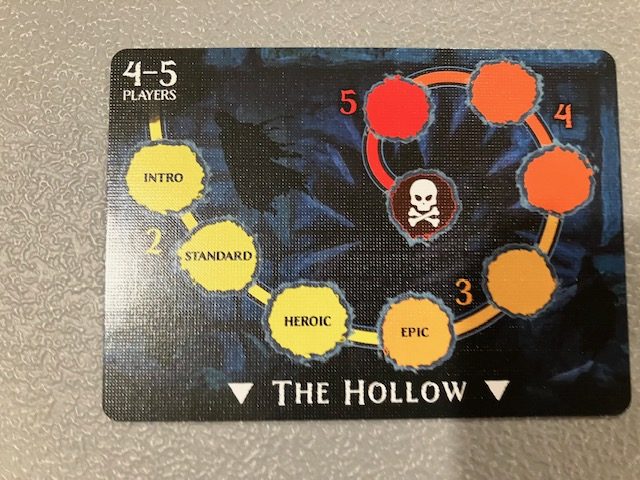
Every time the good news/bad news deck recycles, the difficulty goes up: this chart (above) dictates how many of the colored cards attach to the doors in the bad news part of the turn!

If you retrieve all 4 relics and bring them to the lighthouse before the doors close forever, you win!

Solo Mode

Congratulations to having a solo mode!  (Thanks for following Saunders’ Law!)

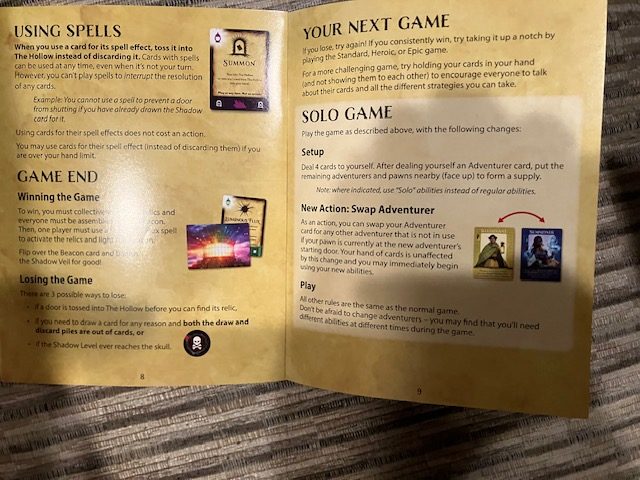
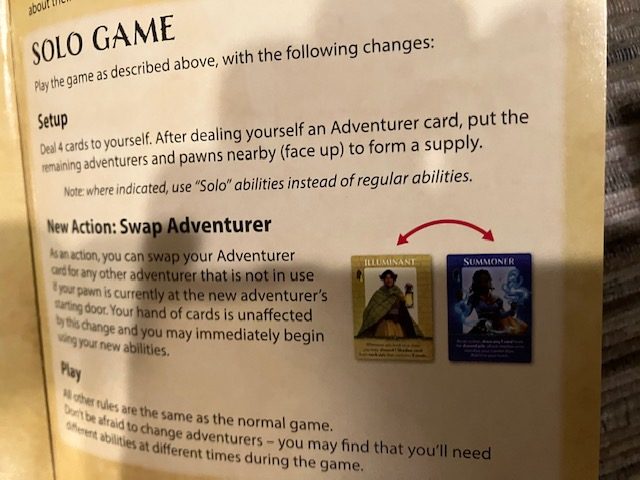
The solo game is documented on page 9 of the rulebook.  This is a true solo game; the solo player operates one character (but see below).

The only real difference is that the solo player has another action they can take: Swap Adventurer!   This allows the solo player to invest in another character whose special power may help him accomplish a short turn goal easier!

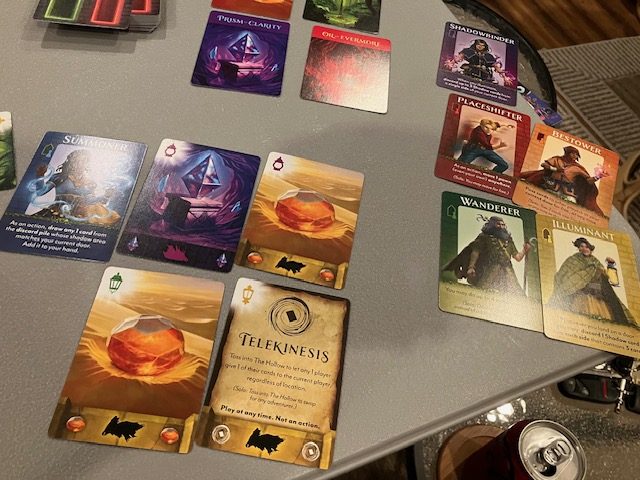
So, I kinda put the adventurers off the side so I could see all their special powers.

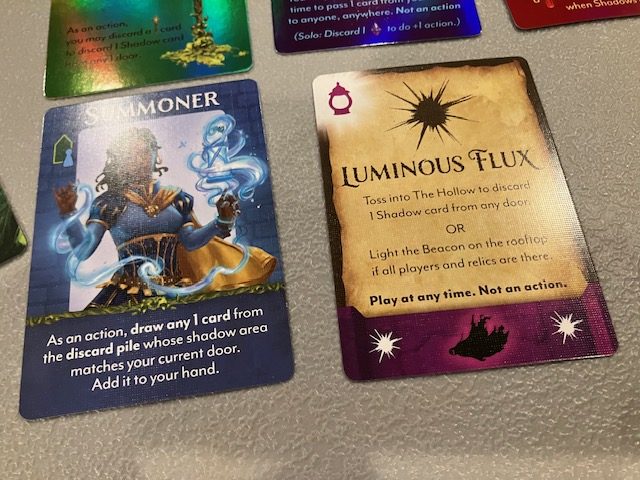
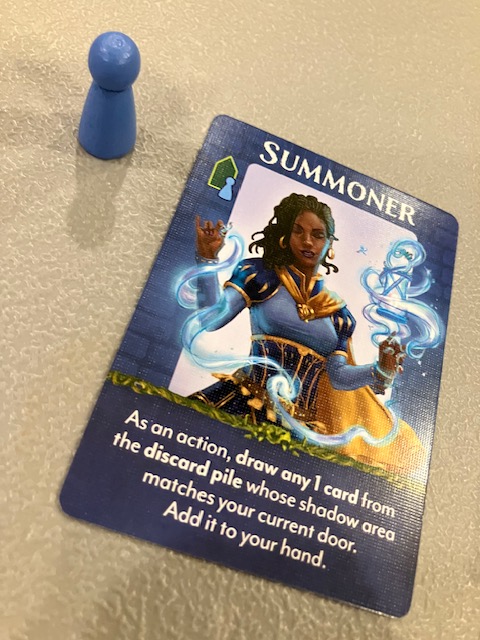
I started my first solo game with The Summoner! See above! She makes it easier to get cards you need to get relics!

And I started at novice, and boy I crushed this game.  I didn’t need to start so easy!  I also never used the Swap Adventurer once because The Summoner was so good!  She just gets the cards I want from the discard, so I never needed another adventurer!!  I started thinking about “optimal ways” to use the Swap Adventurers to best effect, which I think might be fun once the game gets harder!

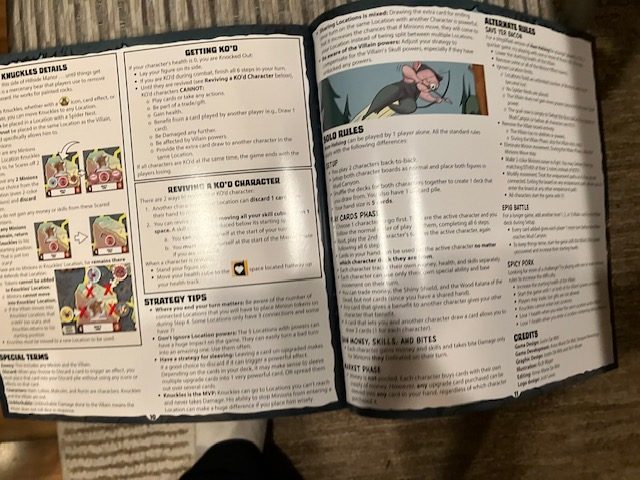
Luckily, it’s easy to adjust the difficulty level by simply getting more cards attached to doors per turn (see card above).  Instead of starting on Novice, I should start on Standard, or Heroic, or Epic…

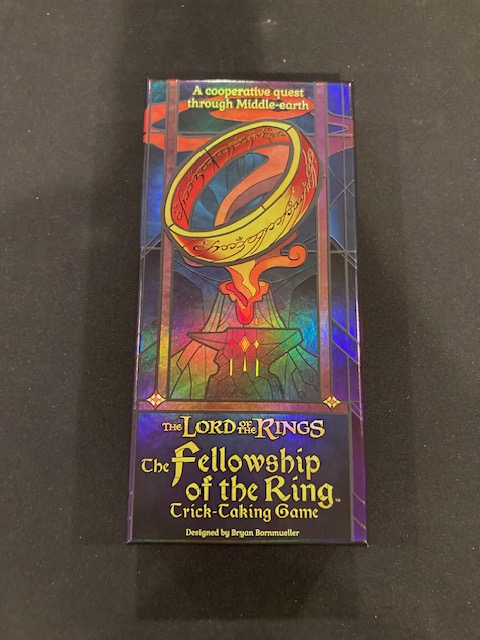
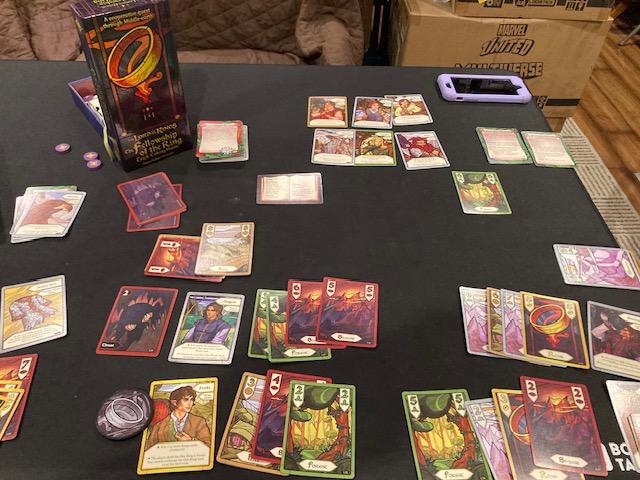
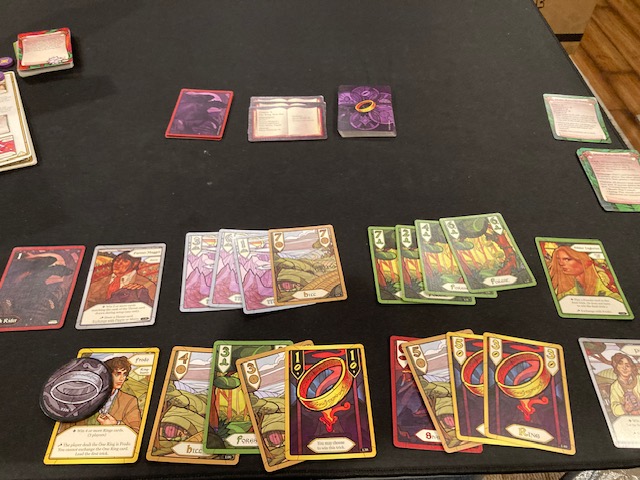
I felt like the solo mode worked well.  I felt NO NEED to try this 2-handed solo (although it would be easy to); the solo mode seemed to work well. This is VERY UNLIKE the solo mode from Lord of the Rings: Fate of the Fellowship from a few weeks ago (see review here);  I did NOT like the built-in solo mode there! I do like the built-in solo mode here in The Four Doors.

I kind of dig that you can switch adventurers to really try some fascinating in-game power switches.  I am worried this may be overpowered, but hey, if it’s too easy, just adjust the difficulty!  It’s easy to do that!

Cooperative Game

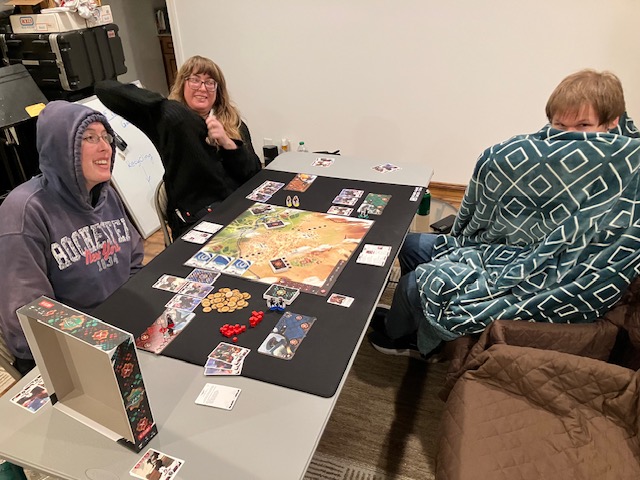
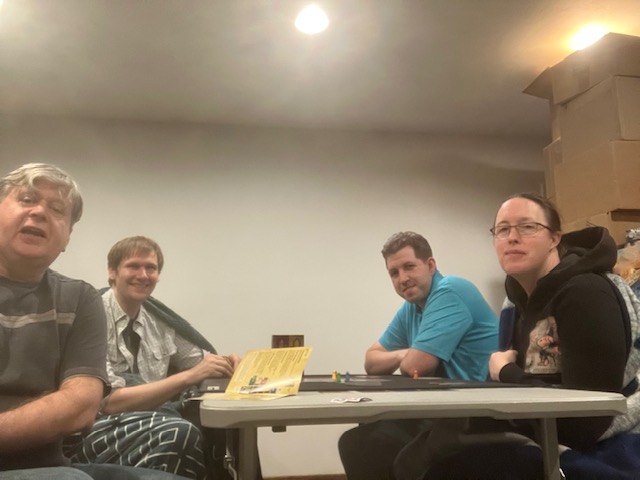
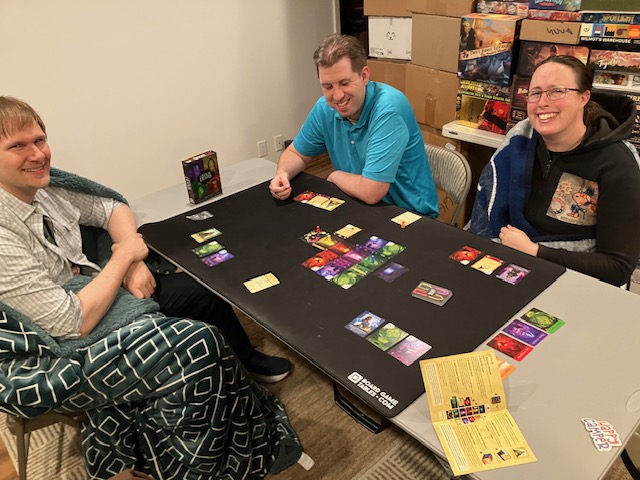
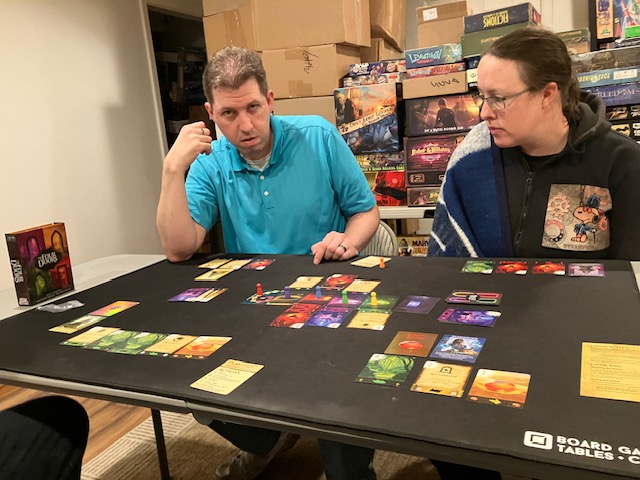
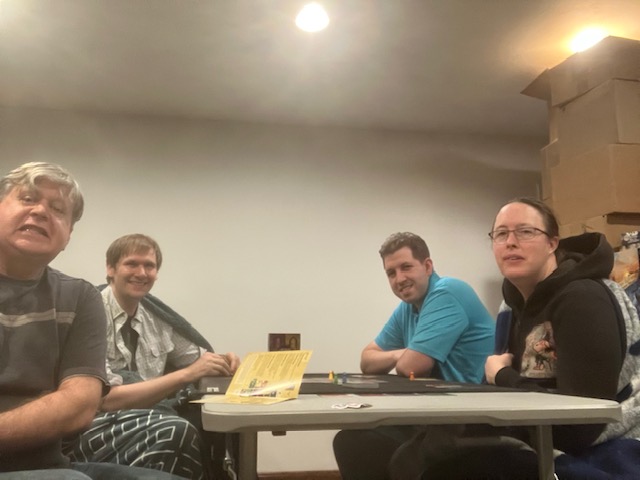
The cooperative game went well.  We played as 4-Players.

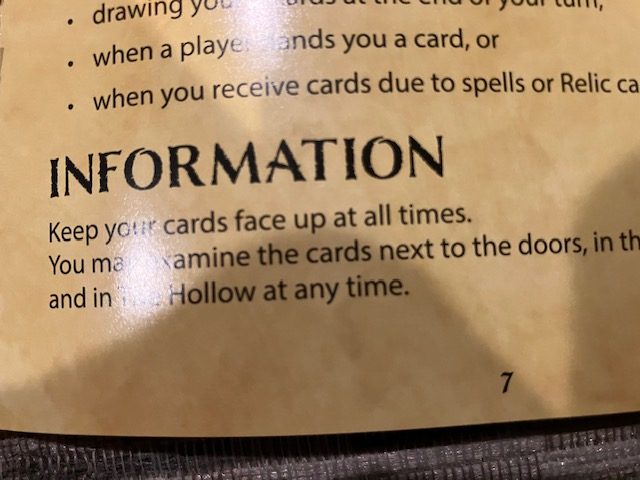
The game is open-handed, which means all information is shared!  See rules above.  I love that shared information in cooperative games!  It makes it really easy to coordinate and talk.  “Ah man, I need a red card! Wait! I see you have one!! Maybe we should meet!” I personally think this shared-information type game is much more cooperative and interactive as players can talk strategy much easier if they can see everything!  Full information does have the downside that it can invite the Alpha Player to join you, but Alpha Player Syndrome is not a usual problem for my groups.  I suppose it is something to be wary of here.

The opportunities for sharing and doing clever card combos came up quite a bit!  Between the character’s special powers, the spells on cards, and special powers on relics, we were able to pull off some really cool combos!  And the discussion came from everybody; someone might see a special combo others didn’t see!  “We need to get that relic before the door closes!!! Help!”  “Oh! Use my TELEPORT!!”

There was quite a bit of discussion and cooperation; that was really fun for us. 

I was also pleased to see that everyone got a relic, which meant everyone had an “extra” special power.  These relics have pretty neat powers too … and they also help contribute to the conversations of combos!!
Overall, this was a hit cooperatively.  Everyone had fun, there was a lot of interaction and discussion, and the combos we pulled off made us all feel smart! 

Good times.

Reactions

Andrew: Fun, 6/10
Sam: Fun 7.5/10
Teresa: 7/10
Richie: 7.0/10 solo, 8.0/10 cooperatively

My rating was initially a 7.5/10 for cooperative play, but the more I look back on my experience with my friends, the more fun I realized I had as we played!

Which One?

Which game should I play?  The Four Doors is very much like Pandemic, Forbidden Island, and Forbidden Desert.  Where does it fit in with those?

I think it depends on what you are in the mood for.  From a complexity point of view, I think Pandemic is the most challenging and complex game, Forbidden Desert is next, The Four Doors, then finally Forbidden Island.  If you want a game that is little bit more than Forbidden Island, but not too much more, The Four Doors is a great choice.  To be fair, I think all of these games are great choices.

Conclusion

I should just called this review The Four Doors: The Forbidden Pandemic! It sounds like a forbidden dance of love! But it’s not; The Four Doors a cooperative card game that feels like Pandemic/Forbidden Island/Forbidden Desert. I do think it’s different enough from those games that you can buy it and not feel like “they are all the same game!”. I think The Four Doors is a nice cooperative game to bring out for someone who is just above Forbidden Island, but maybe not quite ready for Pandemic or Forbidden Desert.

This game is easy to learn, has a great table presence, and can be a jumping on point to learn cooperative games.  It’s a little more complex than Forbidden Island, but I think it can still be a pretty good starting point as a cooperative game.

Even though this is an “easier” cooperative game, the cooperation, interaction, and combos that emerge from the game will also appeal to more sophisticated gamers.  It’s a good cooperative game!

I’d say the solo game is good at 7.0/10, but the cooperative game is better! I’d personally give it a 8.0/10, but as a group, my friends probably average this at about a 7.5/10.  Still, that’s good!

Top 10 Cooperative Roll-and-Write/Flip-and-Write Games!

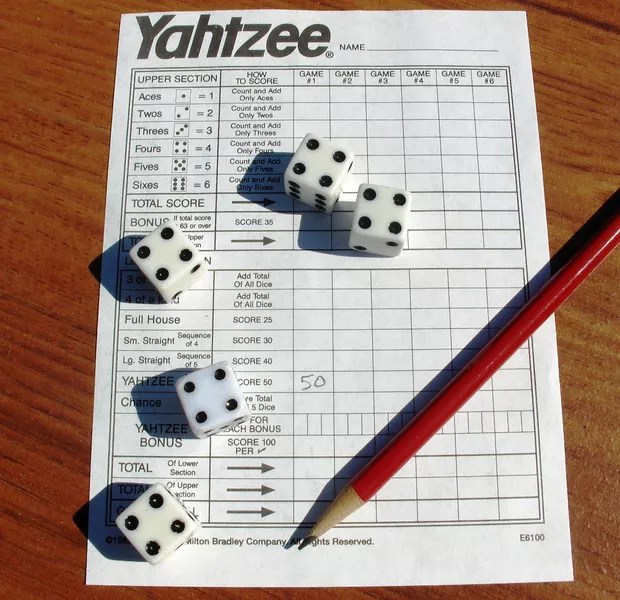
When most people think of roll-and-write games, they think of games like Yahtzee!  See above!  Players roll dice, mark things off a sheet, and try to get the best score to win!  Surprisingly, there have been a considerable number of cooperative roll-and-write games over the last few years! That’s right! Players roll dice and cooperatively mark-up sheets to solve/win together!  Now, flip-and-write games are very similar; instead of rolling dice, you flip up a card to show what you are dealing with.  It’s the same idea, it’s just the randomness is a deck of cards instead of some dice!  

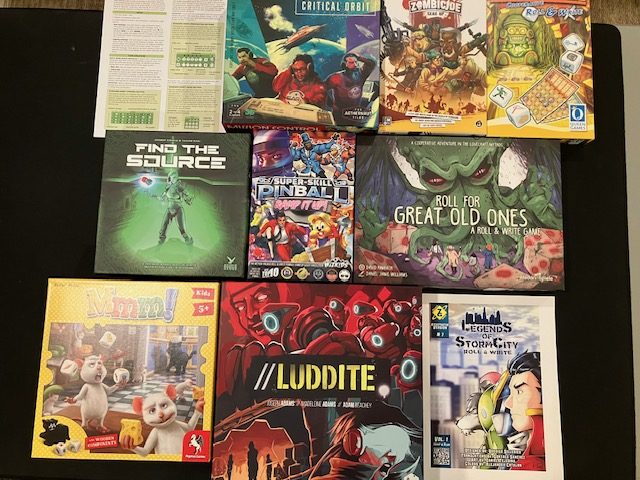
Below, we list our Top 10 Cooperative Roll-and-Write Games!  We also rate each game from 1 to 5 on how cooperative it is, with 1 being “multiplayer-solitaire” and 5 being “very cooperative“!  We also note if the game works solo: surprisingly, not all play solo!  Most roll-and-write games are about getting the best score you can collectively, but some have a more precise win condition!

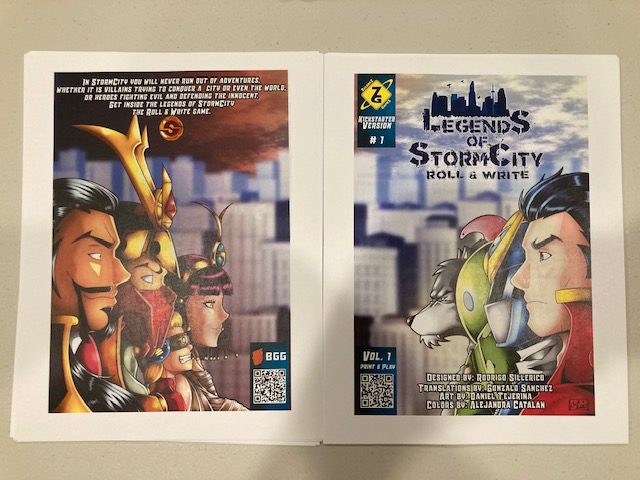
10. Legends of Storm City


Supports Solo?  Yes
How Cooperative? 2/5
Player Count? 1-4
Print and Play? Only means available
Type?  roll-and-write
Win Condition? Defeat all Elite Villains or Deactivate the Main Plan

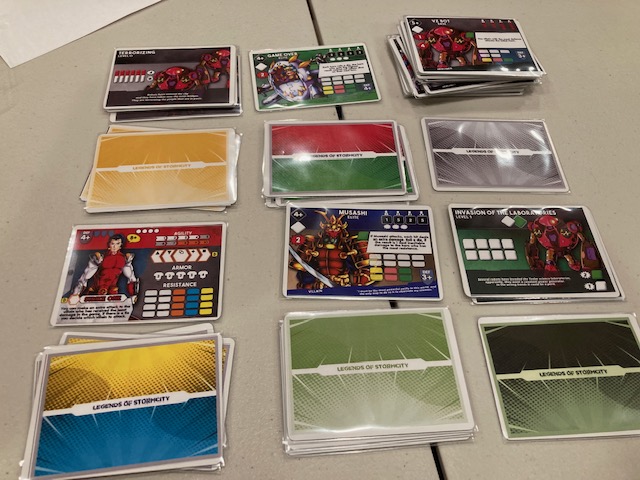
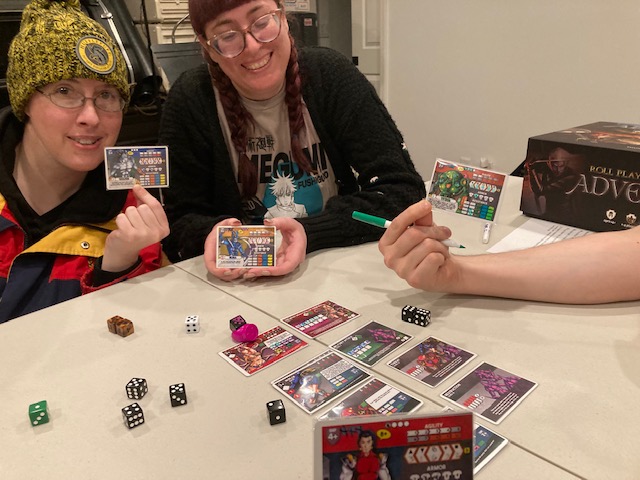
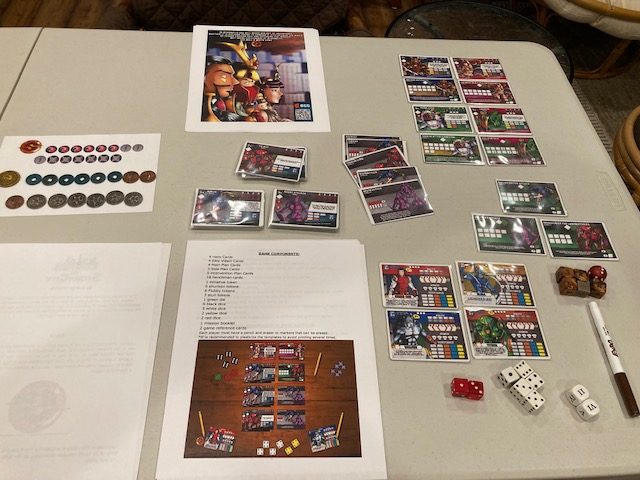
This roll-and-write has a special place in my heart, because it was the first print-and-play I have ever done!  And boy, was it a learning experience!  It also has a cool Superhero theme!

In the end, I liked the game a lot more that my friends; so that’s why this makes the bottom of our To 10 list.  

I liked the way this looked, and I loved the Superhero theme!  Take a look at our review of Legends of Storm City to see if this is something you might like!

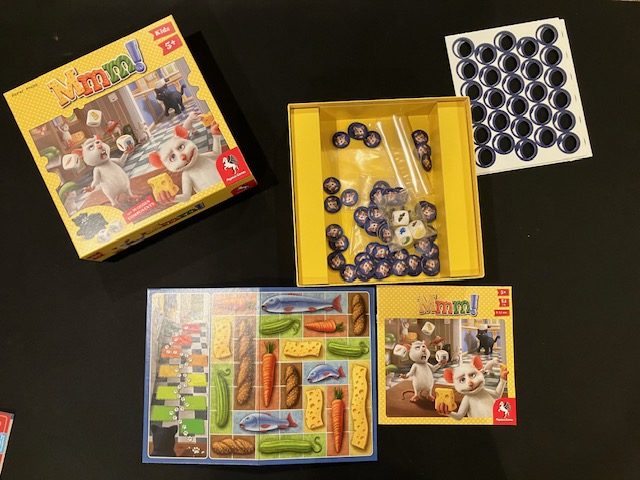
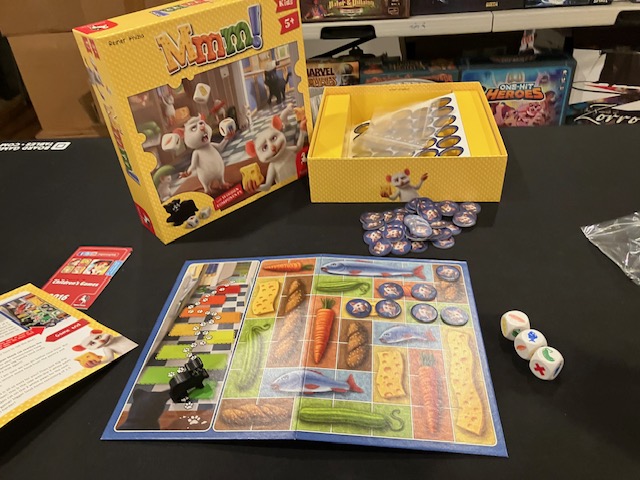
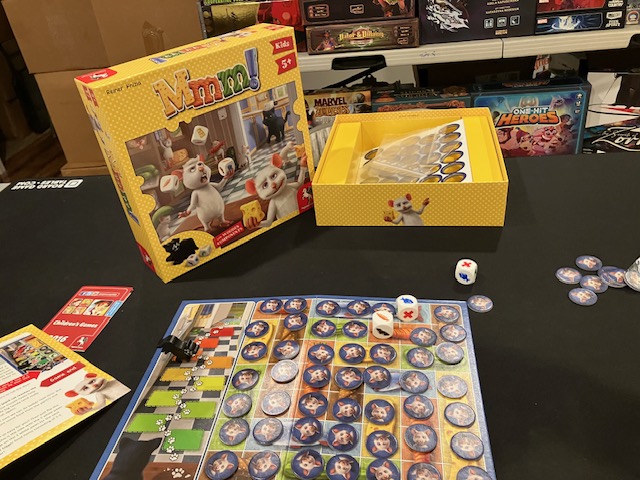
9. Mmm!

Supports Solo?  Yes
How Cooperative? 2/5
Player Count? 1-6
Print and Play? No, must buy box!
Type?  roll-and-write*
Win Condition? Mark off all the food!

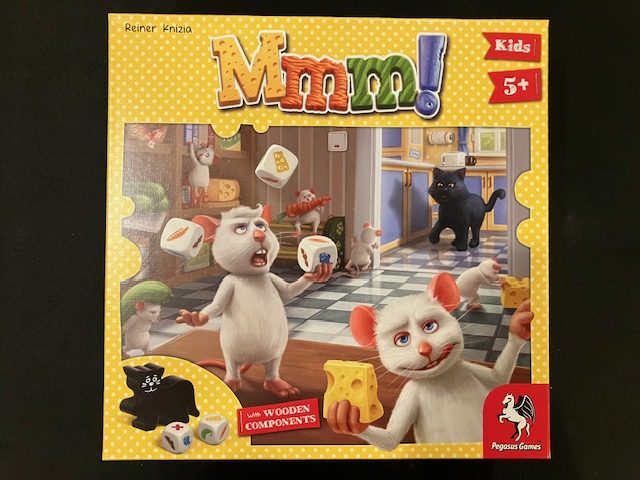
This is a little bit different than most roll-and-writes on our list: it’s intended for kids 5+, so it’s pretty simple.  The kids roll the dice every round and mark off food before the cat reaches them!  The cat only moves if some piece of food isn’t completely marked off, so kids have to learn when to push their luck and when to stay!

This is also a little different because the “write” part of roll-and-write is “mark-with-a-token” rather than write-on-a-piece-of-paper.  See above.  But it’s the same idea: you are just marking up a board!

It’s also interesting that the board is shared cooperatively among all players, so players will need to talk to help each other “set-up” the board for them on their turn!  This is a Renier Knizia game for kids, but it is kind of a neat little roll-and-write kind of game, even if it’s not “quite” roll-and-write … more like roll-and-mark!

8. Roll or Stand: Forbidden Adventures

Supports Solo?  Yes
How Cooperative? 1.5/5
Player Count? 1-100
Print and Play? Only means available
Type?  roll-and-write
Win Condition? Make it through all 4 puzzles on a page!

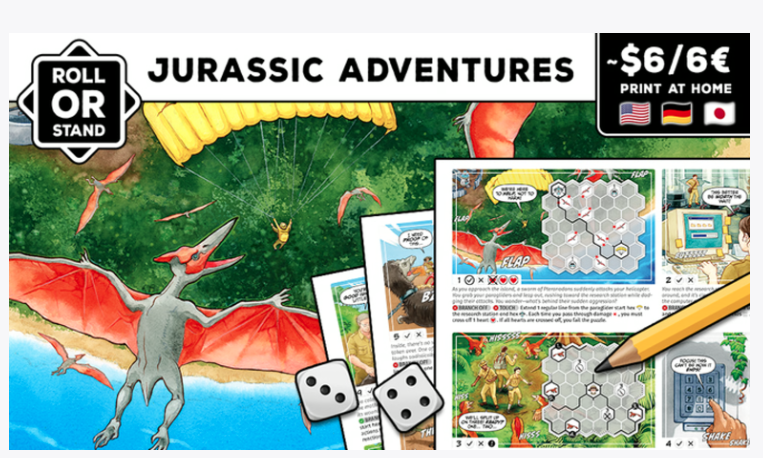
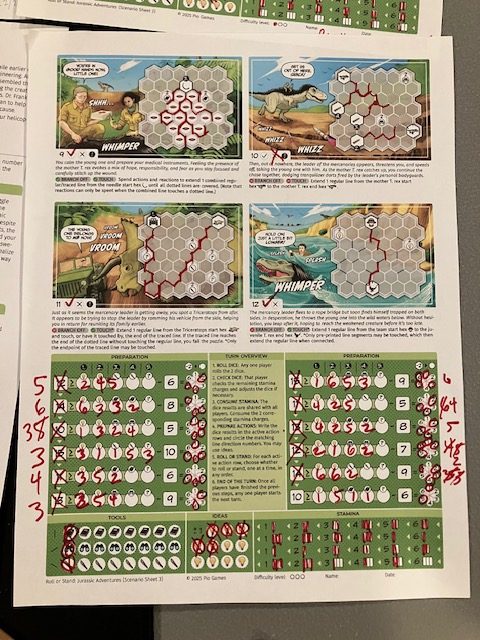
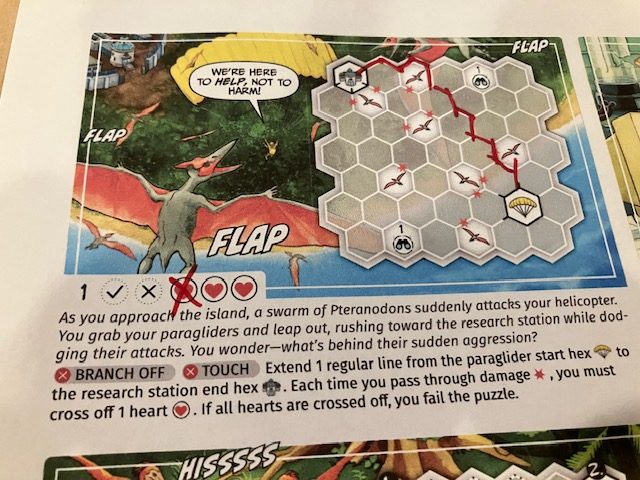
This roll-and-write has 4 puzzles per page, and has a “blackjack-like” mechanism where you push your luck to get more actions and more directions!  But if you get a number that busts, you lose an entire set of actions!  

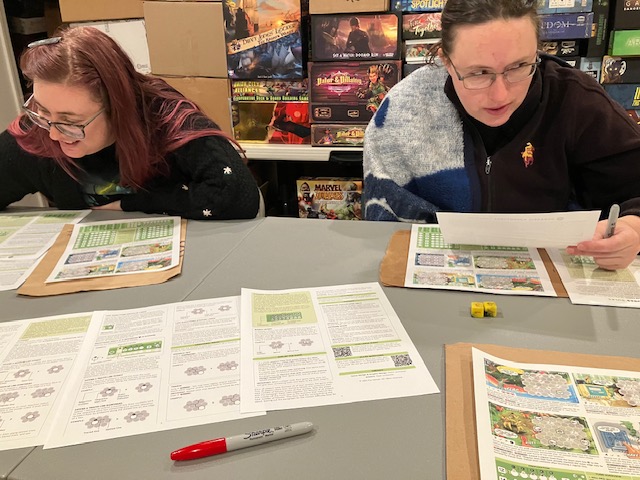
Each player has their own sheet and uses the dice as given to them, so it’s mostly multiplayer solitaire!  There is a mechanism for sharing, but resources are so limited in this game, we found that we didn’t really use the sharing too much! That’s why it’s 1.5/5 for cooperation … this is a mechanism, but we found we didn’t really use it!

Still, there’s a really neat physical aspect to this roll-and-write as you have to use the numbers marked to move around one of the four puzzles!  See above!  All-in-all, this is a pretty neat roll-and-write game!  See our review here of Roll or Stand: Jurassic Adventures to see if this might be right for you!

7. Mission Control: Critical Orbit

Supports Solo?  Yes
How Cooperative? 4/5
Player Count? 2-4
Print and Play? No, must buy box!
Type?  roll-and-write
Win Condition? Success in mission!

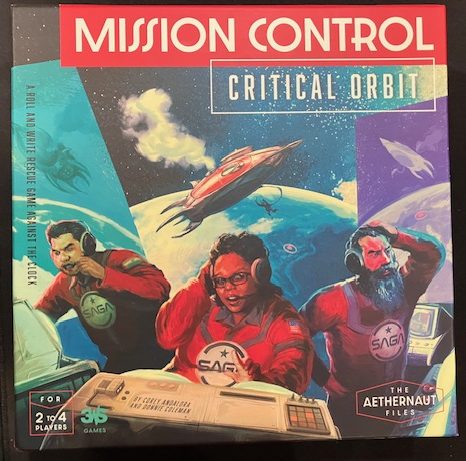
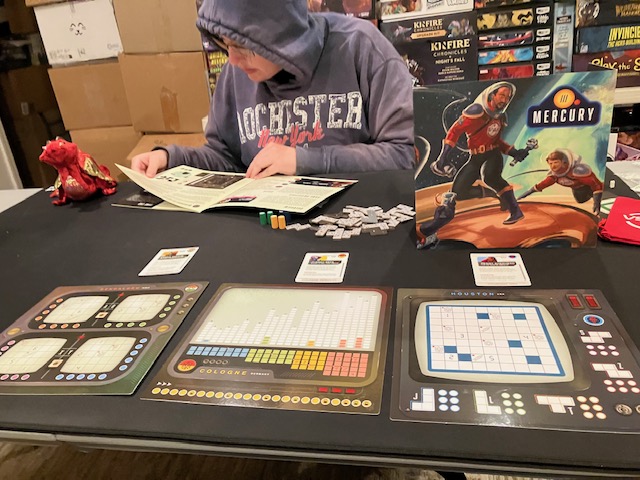
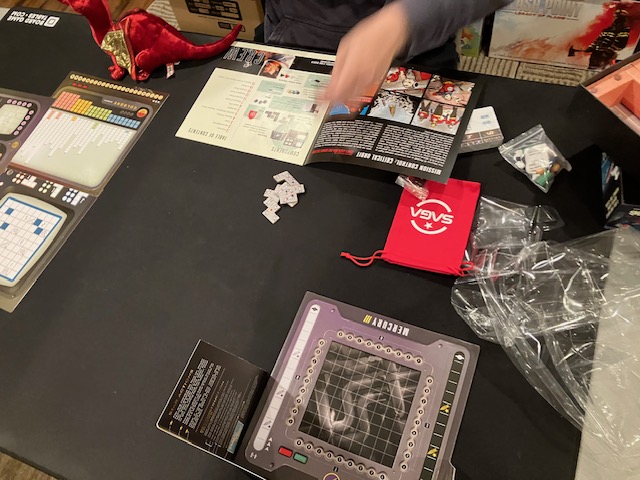
This is an interesting perturbation on roll-and-write games: First, there’s no solo play!  This is only a 2-4 Players game! Second, one player (Mercury) hides information behind a screen, and the other 1,2, or 3 players each operate some other boards!

This is also a polyominoes game, where the Mercury player has to fill in a grid!  It’s a weird cross-section of roll-and-write, hidden information, cooperation, and polyominoes!  But it’s really fun!

6. Escape: Roll and Write

Supports Solo?  No (but you can simulate solo my playing as-if it were a 2-Player game)
How Cooperative? 2.5/5 
Player Count? 2-4
Print and Play? No, must buy box
Type?  roll-and-write
Win Condition?  Collect enough gems and all players need to be on their end space!

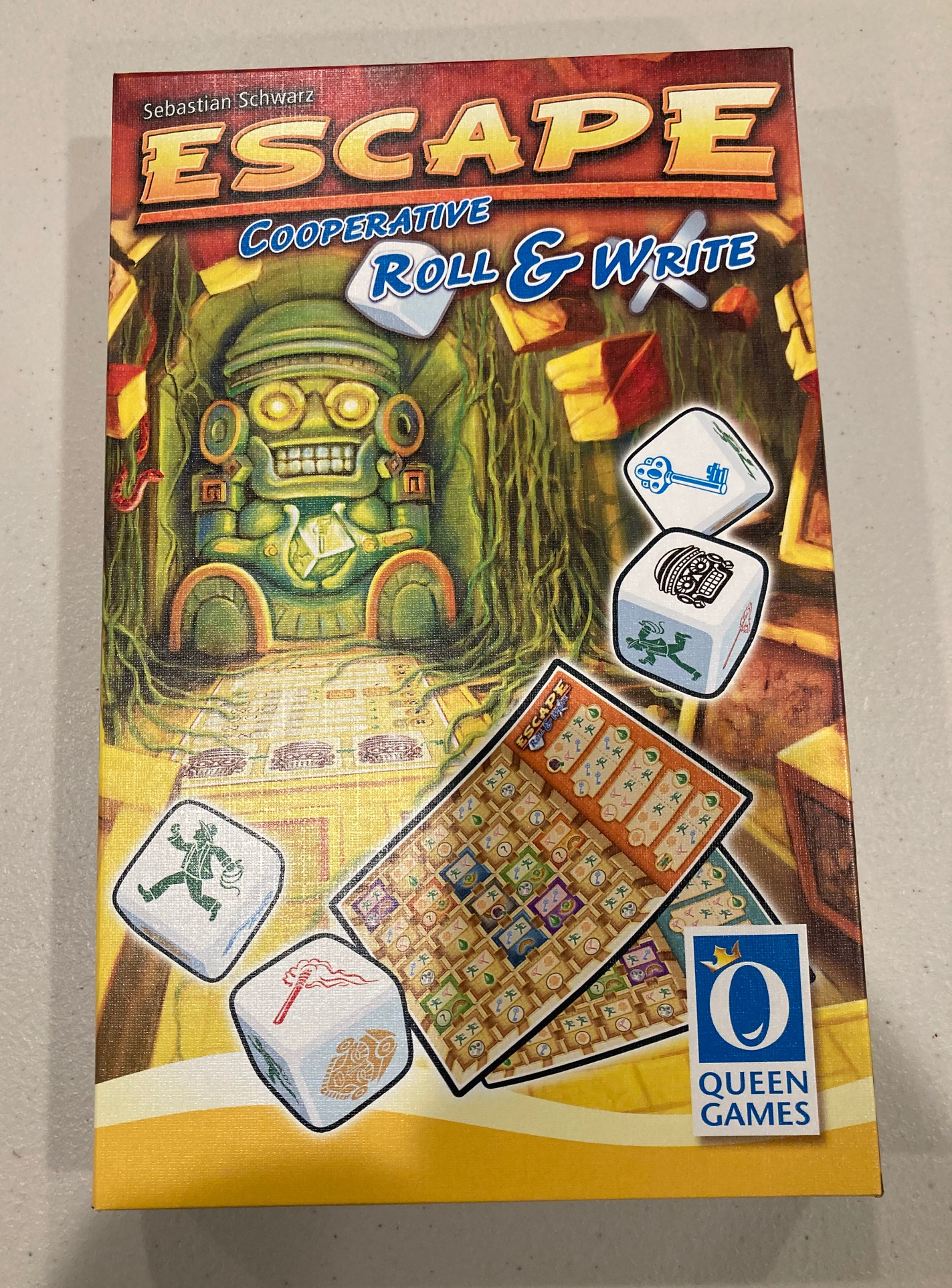
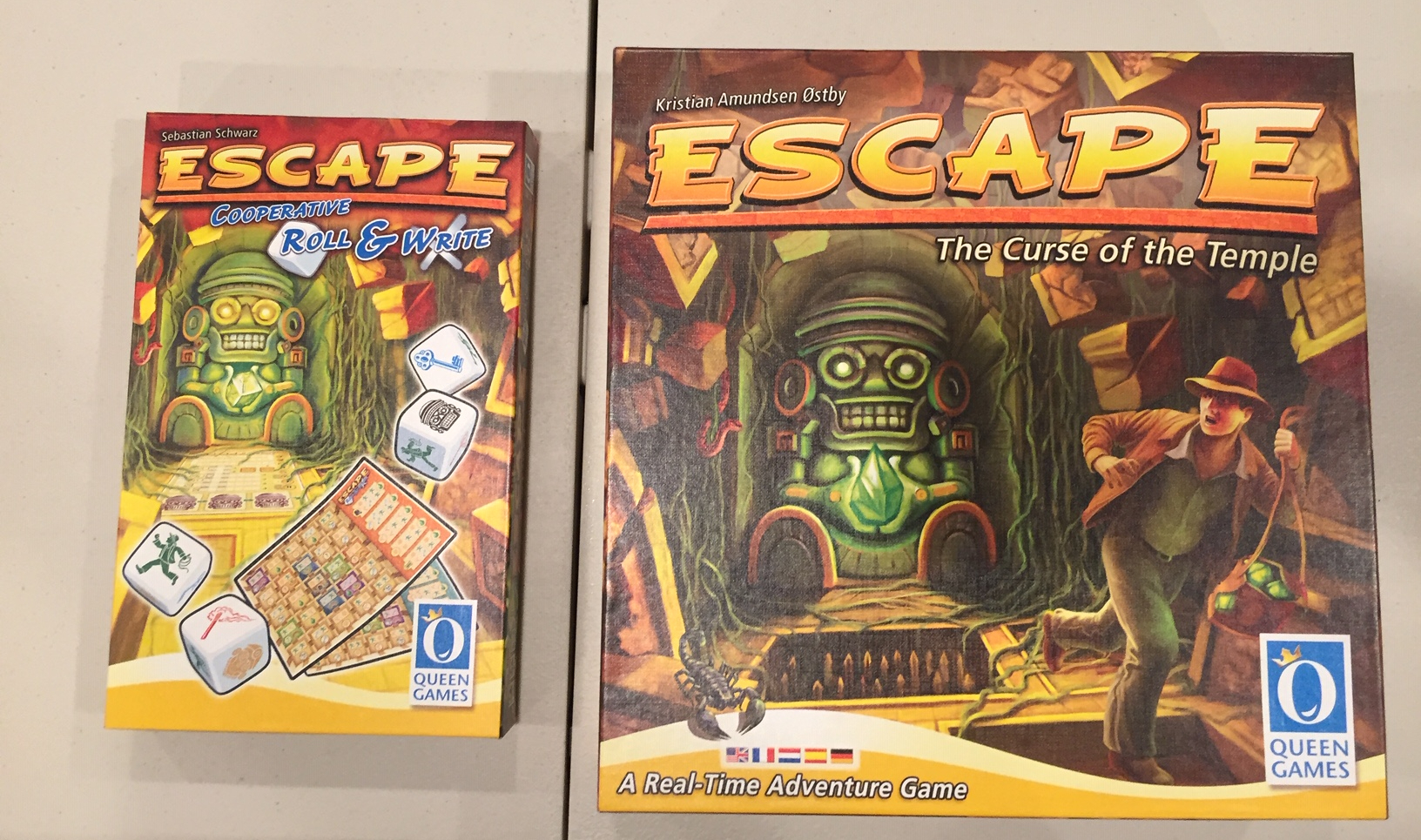
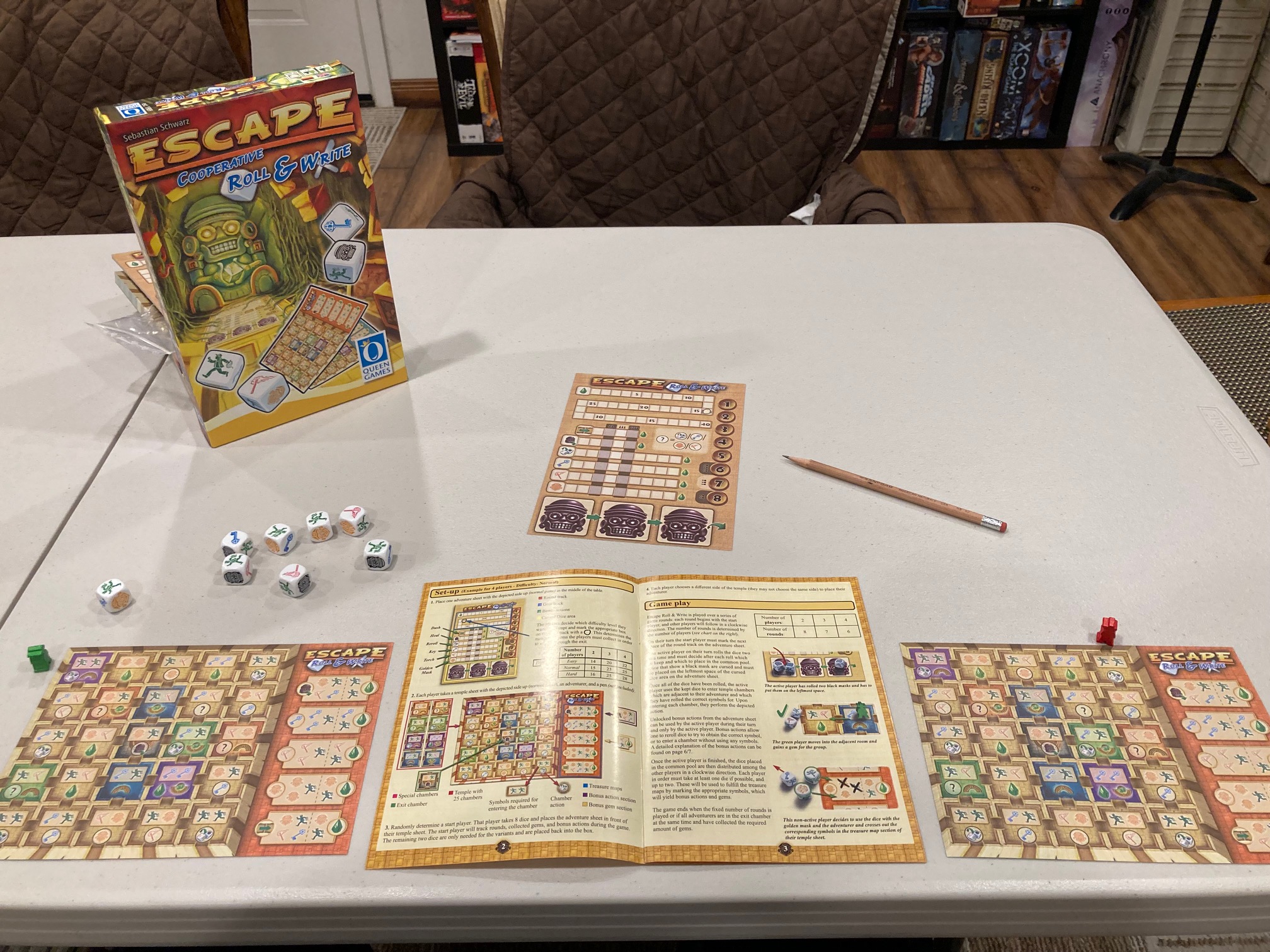
Those of you who know the original Escape: The Curse of the Temple game might be confused by this: “There’s a roll-and-write Escape game?”  Yes! 

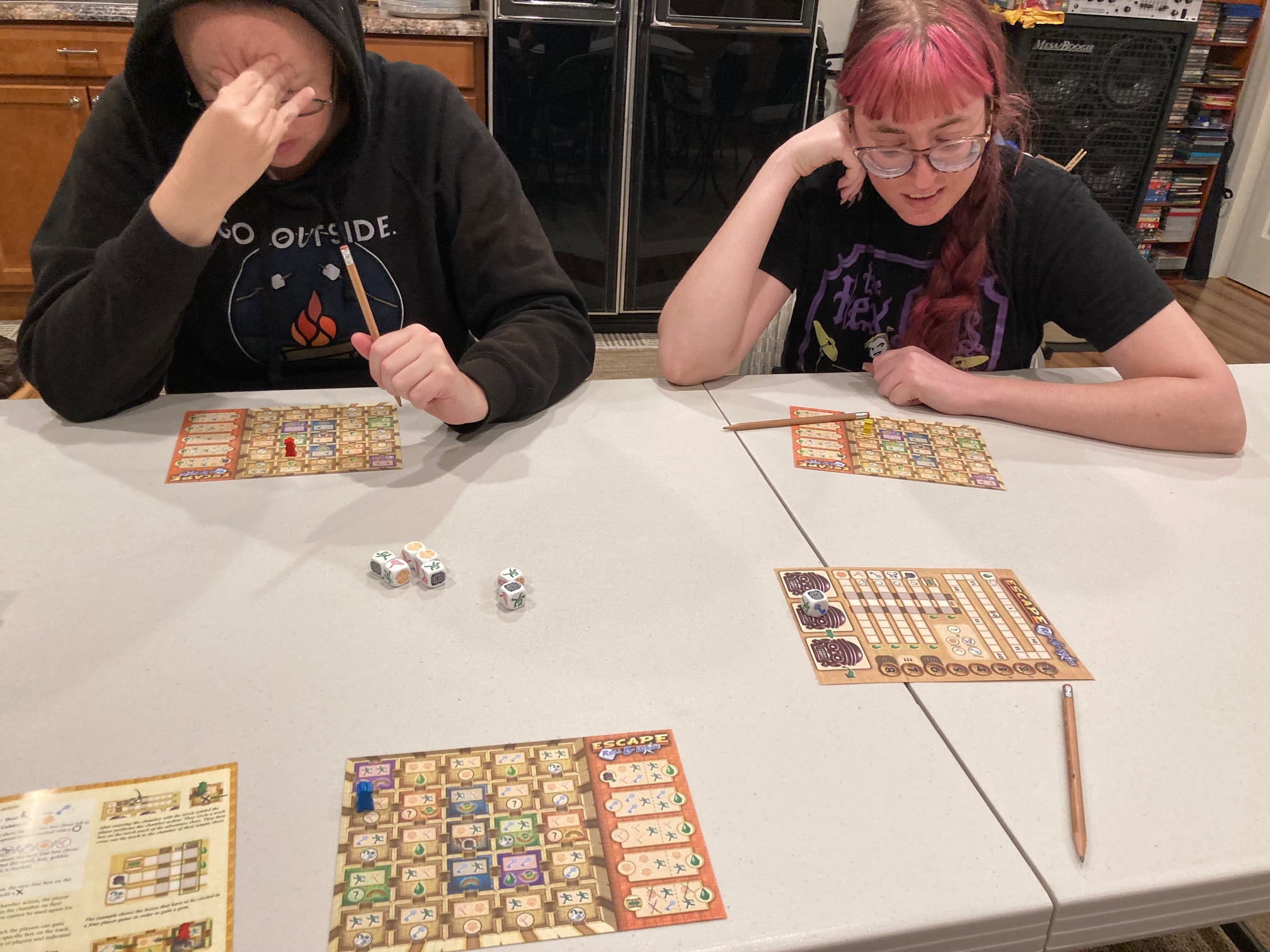
It even uses the same dice as the original Escape game!  This roll-and-write is all about the active player rolling dice, using them to move around the temple, and the remaining dice are used by everyone else!  So, there’s some cooperation and discussion about which dice the active player takes!   It’s not super cooperative, as each player moves through their own board separately, but there are still some elements!

This game didn’t take the world by fire, but it’s colorful and fun!  See our review of Escape: Roll & Write to see if this is a game you might enjoy!

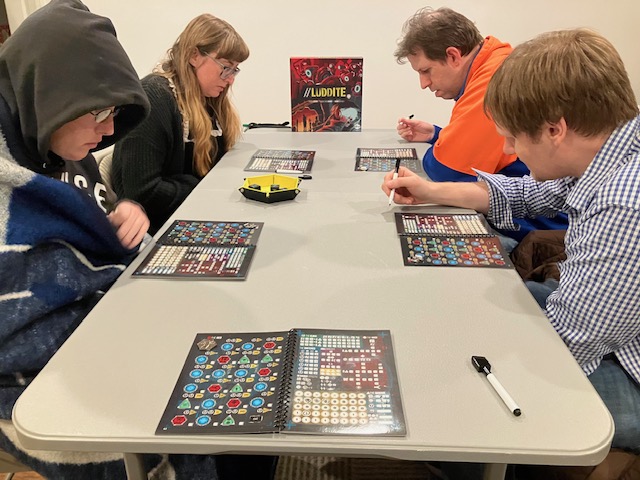
5. Luddite

Supports Solo?  Yes
How Cooperative? 1/5 
Player Count? 1-100 (1-4 in base box, but you can keep expanding)
Print and Play? Yes, but there is also a boxed version with really nice components!
Type?  roll-and-write
Win Condition?  Move your hack marker to the end, making sure you do enough damage along the way!

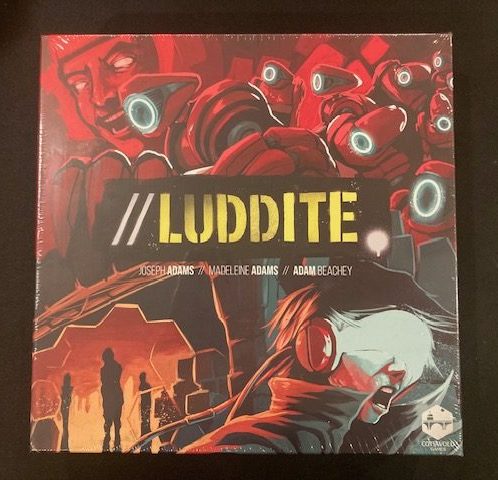
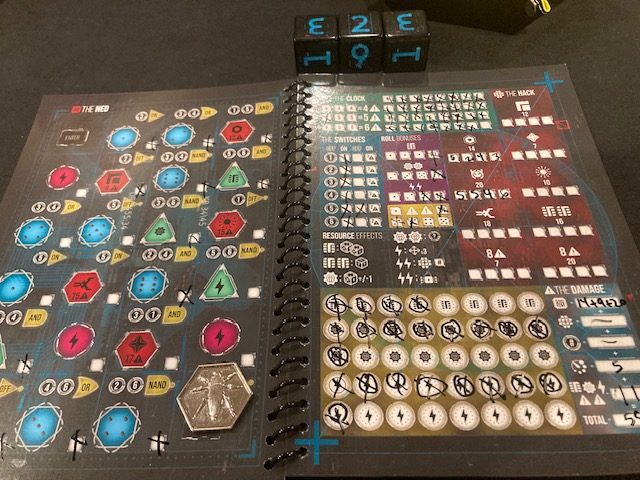
This game is probably the least cooperative and least interactive game on this list!  It’s cooperation is really to average the scores of all players and make sure that average exceeds a threshold to win!  That’s the only cooperation! 

Other than the averaging scores, this game is pretty much multiplayer solitaire!  See above! So, why did this make our list?  Firstly, some people can suspicious of cooperative games: this is a first game that’s easy for people who want to put one toe into the water of cooperative game!

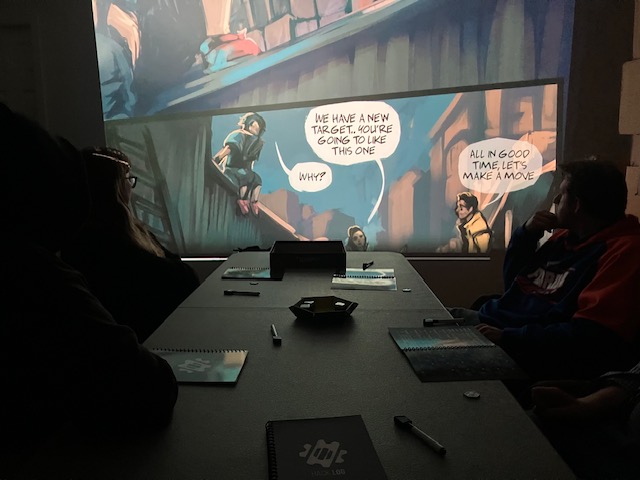
Secondly, this game has quite the story, in either graphic novel or movie form (see above)!  This story really keeps everyone involved in the game!   Luddite can be a real interesting experience if you let it!  See our review of Luddite here!

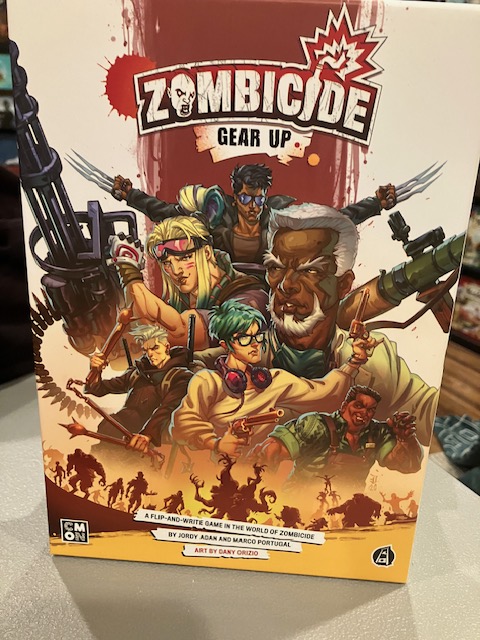
4. Zombicide: Gear Up

Supports Solo?  Yes
How Cooperative? 3/5 
Player Count? 1-6
Print and Play? No, must buy box!
Type?  flip-and-write
Win Condition?  Take out the Big Bad!

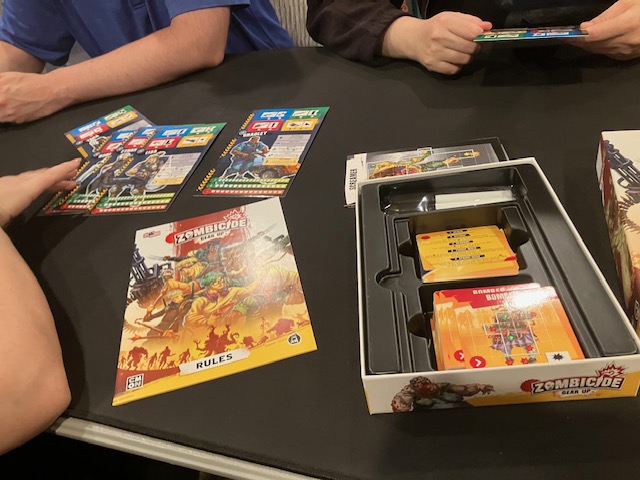
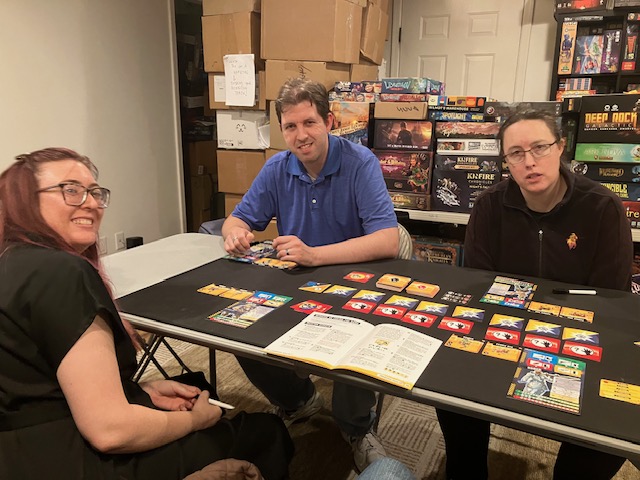
This is a gorgeous flip-and-write in the world of Zombicide!  The components are really great with nice dry-erase boards and cards!   This game is very thematic, as it simulates zombies invading your personal space! But in a flip-and-write game!

Each player deals with zombies on “their board”, but can help out their neighbors (on adjacent boards) using ranged weapons!  This is surprisingly cooperative as you have to decide (with your group) who takes which zombies, and when to use your limited resources to help your neighbors!  

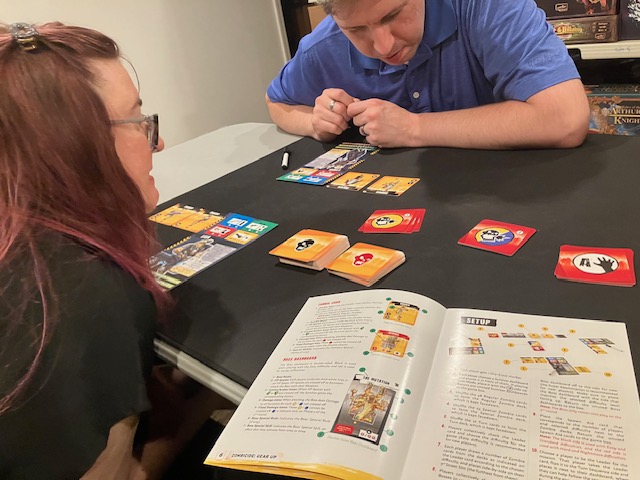
Zombicide: Gear Up went over surprisingly well with our group!  It really felt like zombies were invading … in a flip-and-write game!

3. Roll For Great Old Ones

Supports Solo?  Yes
How Cooperative? 2/5 
Player Count? 1-4 
Print and Play? Yes, but there is also a boxed version with really nice components!
Type?  roll-and-write
Win Condition?  Take out a Great Old One!

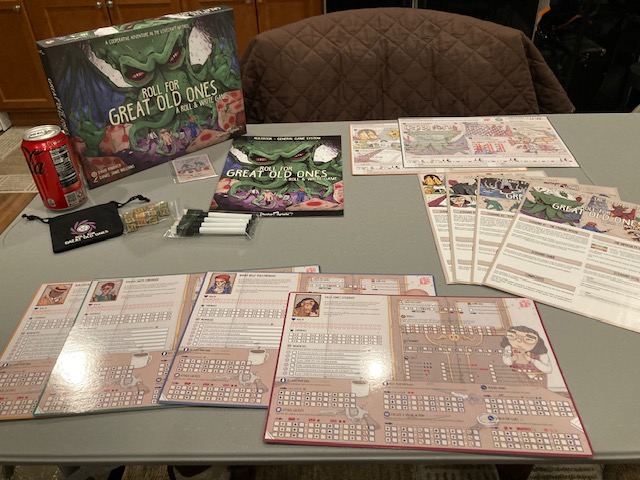
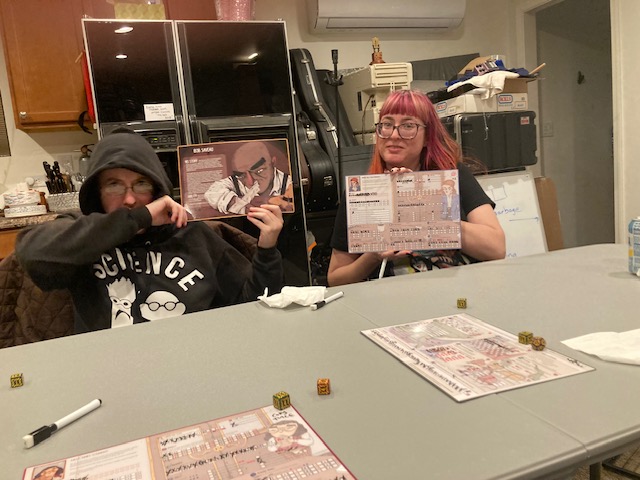
Players roll dice and must each choose one of the dice to use on their sheet!  The cooperation comes out in having players decide, collectively, who gets what dice!  After that, each player focuses on their own board to do things!

The art is a little odd, but this game is surprisingly thematic! This game made our Top 10 Solo Games of 2023!  Check out our review of Roll For Great Old Ones to see if this is something you might like!

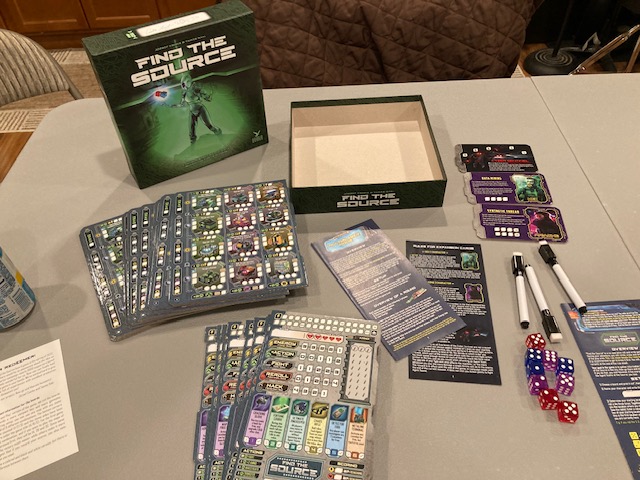
2. Find the Source!

Supports Solo?  Yes
How Cooperative? 3/5 
Player Count? 1-3 
Print and Play? Yes, but there is also a boxed version with really nice components!
Type?  roll-and-write
Win Condition?  Find the Source! … then get the best score you can.

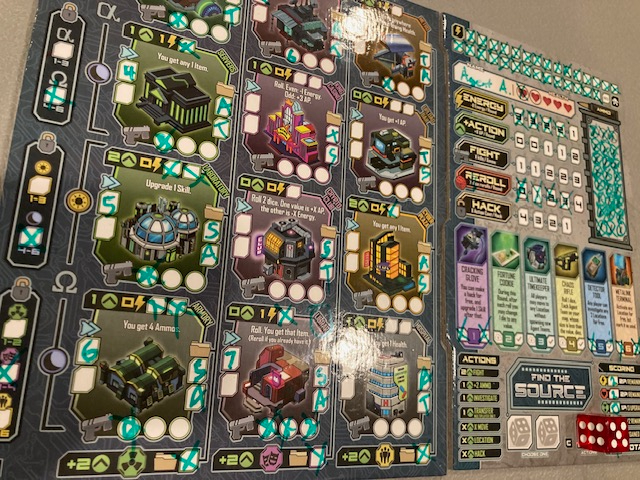
Find The Source was a game from Kickstarter; it was originally a print-and-play, but the Kickstarter upped the ante and delivered a very nice production with nice art and high-quality board!   See above!

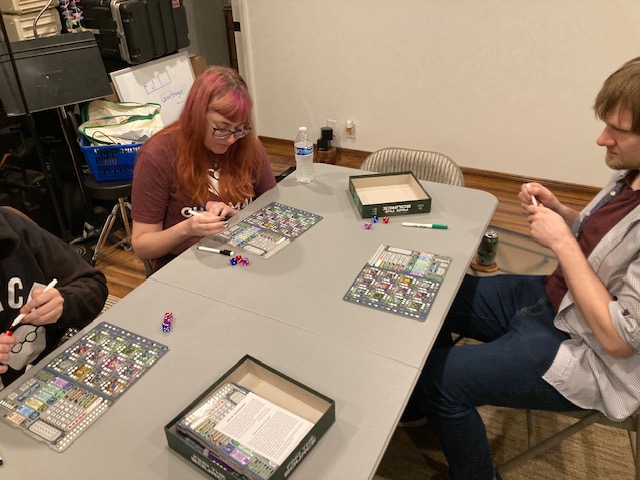
The solo game is quite fun, but the cooperative has players sharing resources easily for one action point.  There’s still a lot of multiplayer solitaire on your own board, but the sharing of resources and hacking inspires a lot of cooperation and discussion!

This was really fun to play!  It even made our Top 10 Solo Games of 2023See our review of Find the Source to see if this is for you!

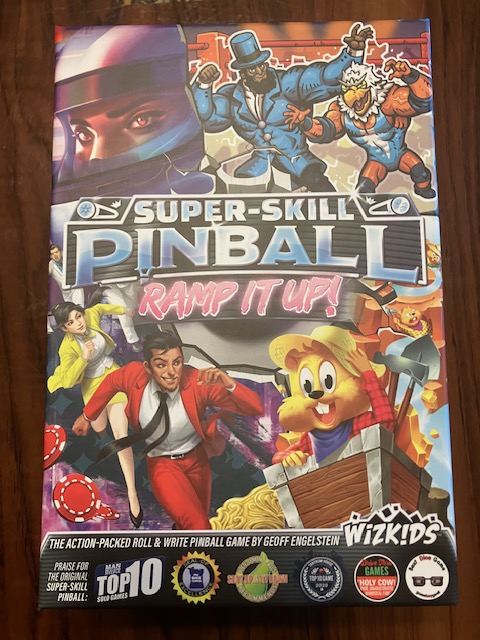
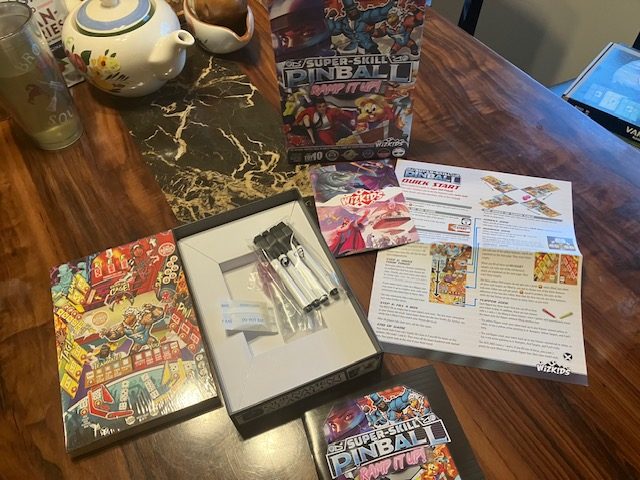
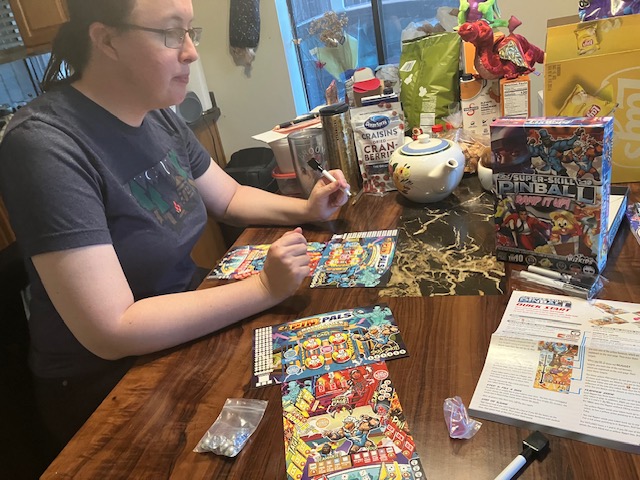
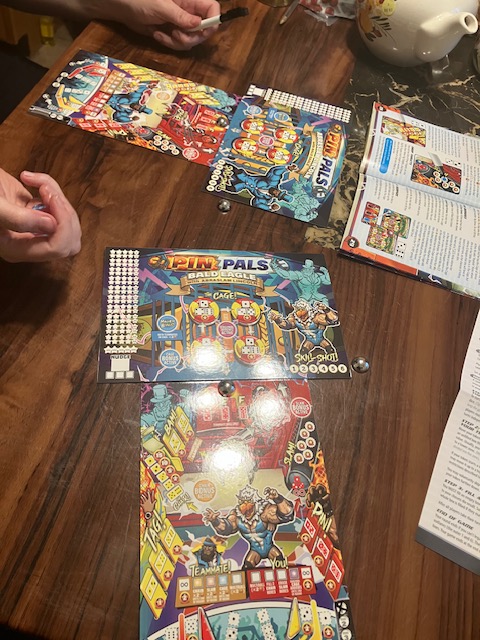
1.  Super-Skill Pinball: Ramp It Up! (Pin Pals)

Supports Solo?  Yes* 
How Cooperative? 5/5 
Player Count? 1-4 (but really only 2 or 4 players for Pin Pals)
Print and Play? No, have to buy box!
Type?  roll-and-write
Win Condition?  Get the best score you can collectively: it’s pinball!

This is a weird choice for #1 for many reasons!  First of all, there’s only one cooperative scenario of the four in this box!  That is the Pin Pals game! The rest of the scenarios are solo/competitive!  Second of all, the cooperative game is really only for 2 people (although you can have two groups of two playing at the same time), so it has limited playability!

Despite these limitations, this was our favorite cooperative roll-and-write game!  You mark off things to help your compatriot all the time as you are playing!  The game moves so quickly!  It feels like pinball!  This was very interactive as we both played pinball on our own boards, but talked as we tried to give each other bonuses!

The wrestling theme was goofy, but worked really well as we “tag-teamed” each other, marking off bonuses for each other as we played!  Even though there is only one cooperative scenario in the box, it was worth it!  I highly recommend the Super Skill Pinball system and the Pin Pals board as a cooperative roll-and-write!  It just moved along so quickly and cooperatively!


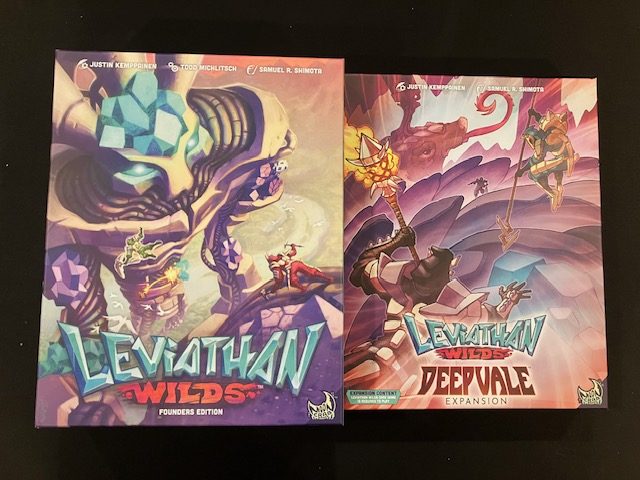
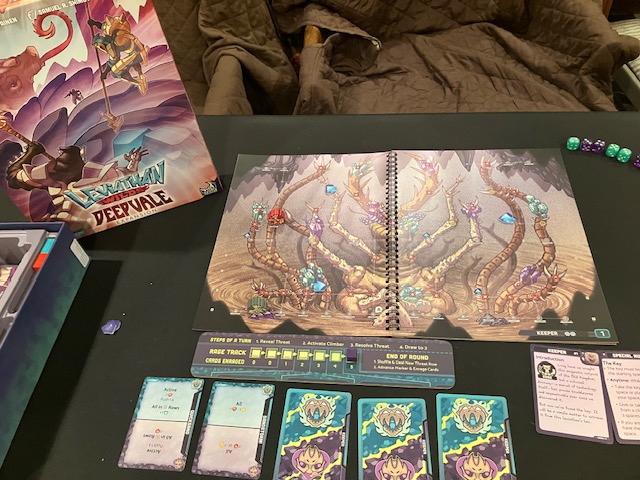
Leviathan Wilds: More Stuff! A Review of the Deepvale Expansion

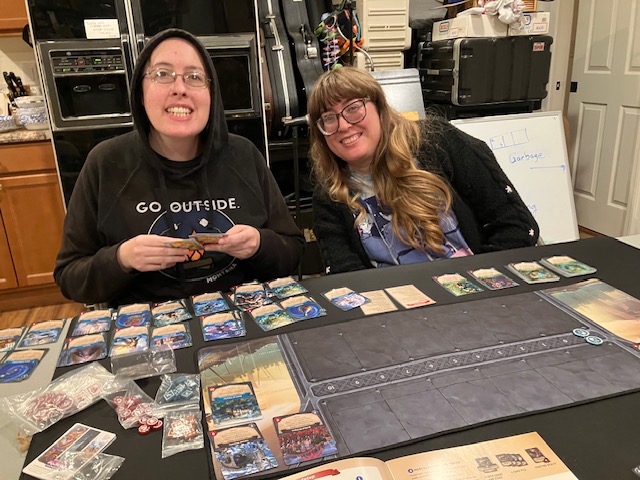
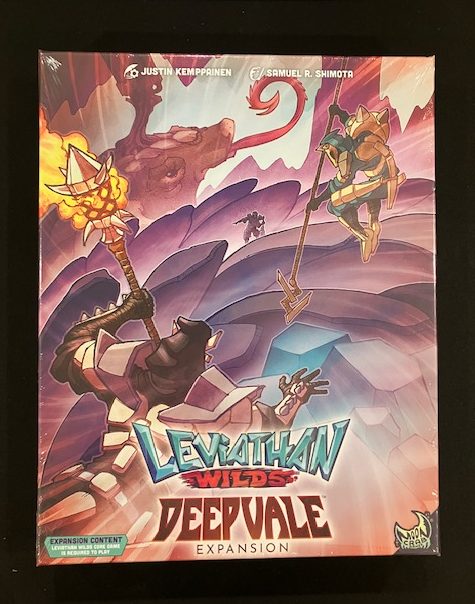
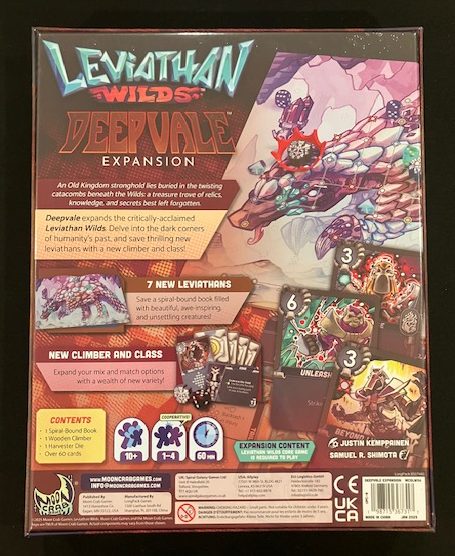
Leviathan Wilds has a special place in my heart!  It actually had to go up on Kickstarter twice to get funded originally!   It did well the second time it went up, but it was touch-and-go whether this would do well enough to fund on Kickstarter!  Luckily, it did!  Leviathan Wilds (the base game) was on my #3 on  Top 10 Anticipated Cooperative Games of 2024 and was #3 on my Top 10 Cooperative Games of 2024!

When the Deepvale Expansion went up on Gamefound, I was pretty much all in!  Leviathan Wilds has gone over great in my groups, both with gamers and people who don’t usually like cooperative games!  See our original review here!

Let’s take a look!

What Came In The Mail?

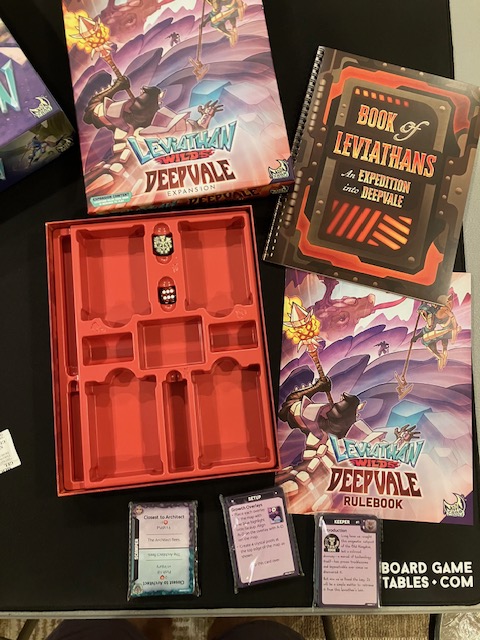
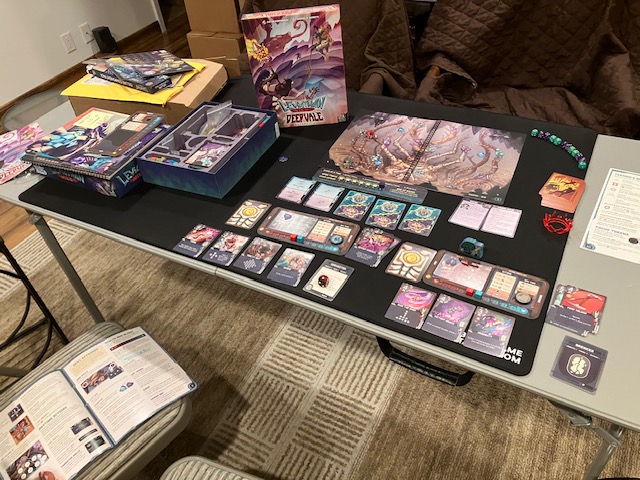
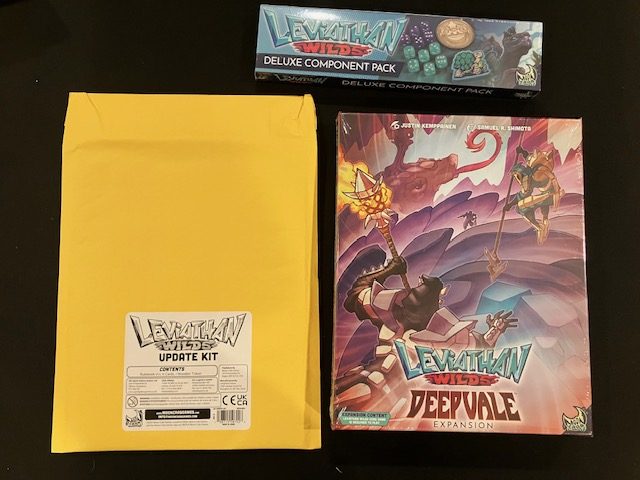
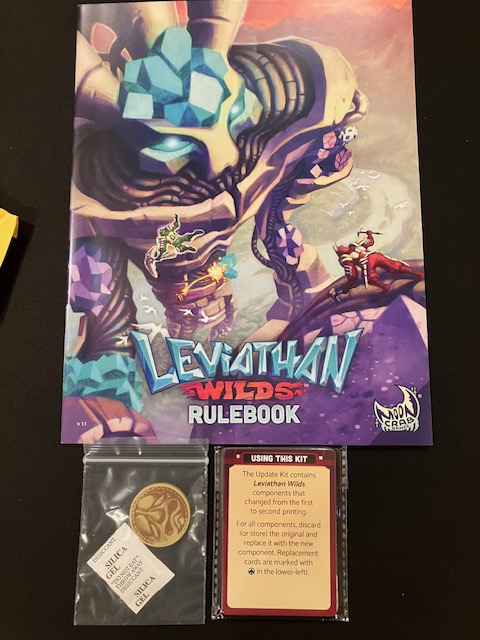
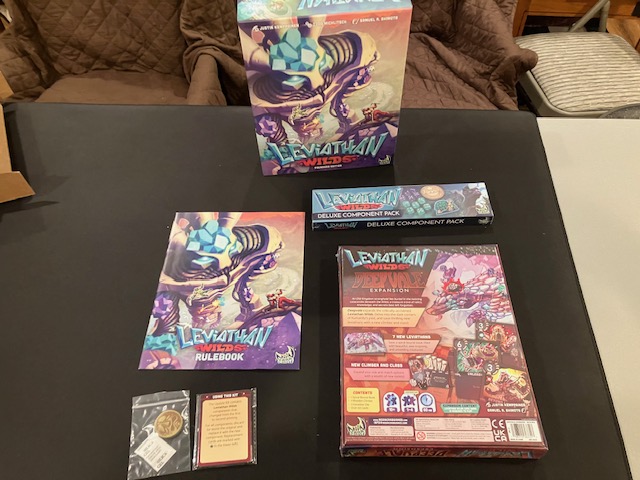
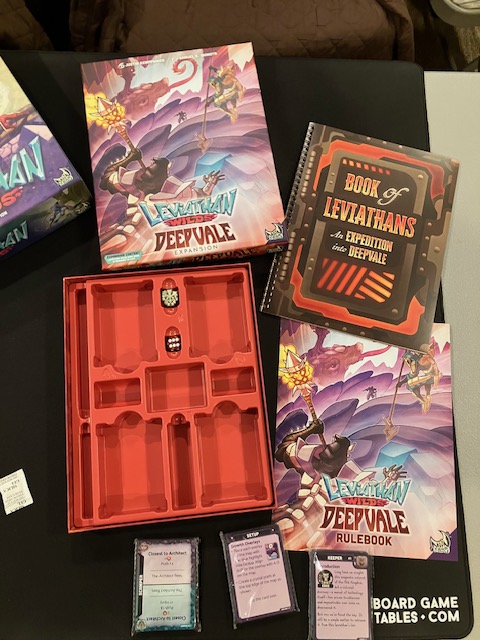
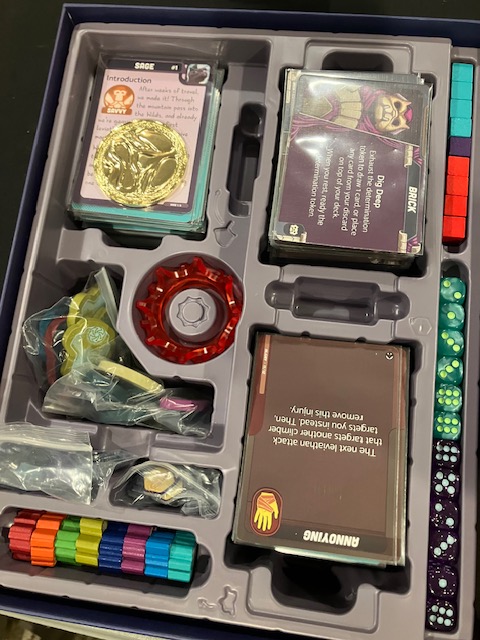
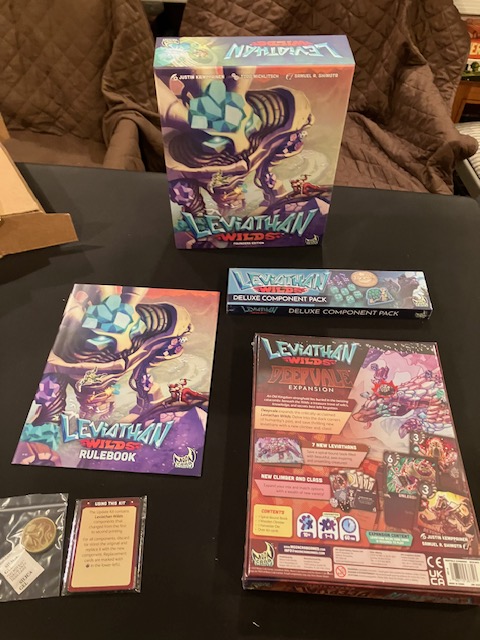
The Kickstarter actually came with three major pieces; deluxe components, upgrade kit, and the expansion itself. See above.

Deluxe Components Pack

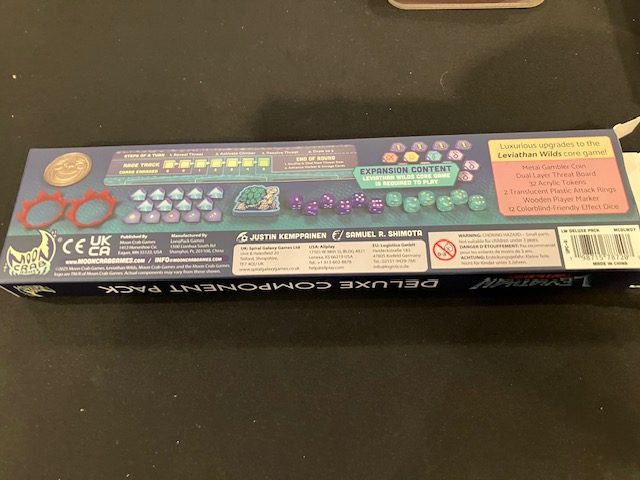
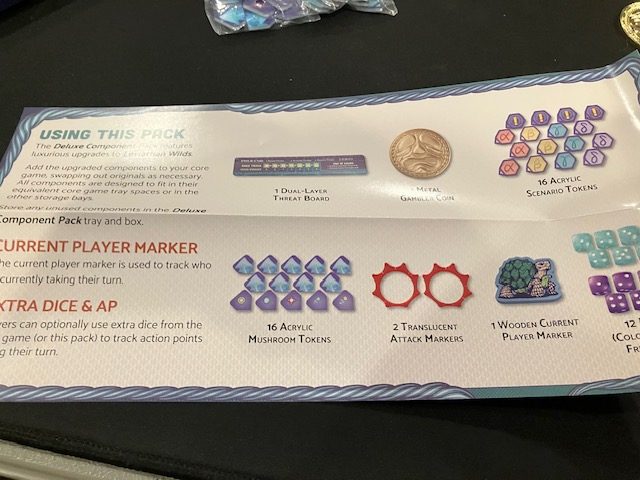
The Deluxe Components pack upgrades a lot of cardboard tokens in the game and a few other things.

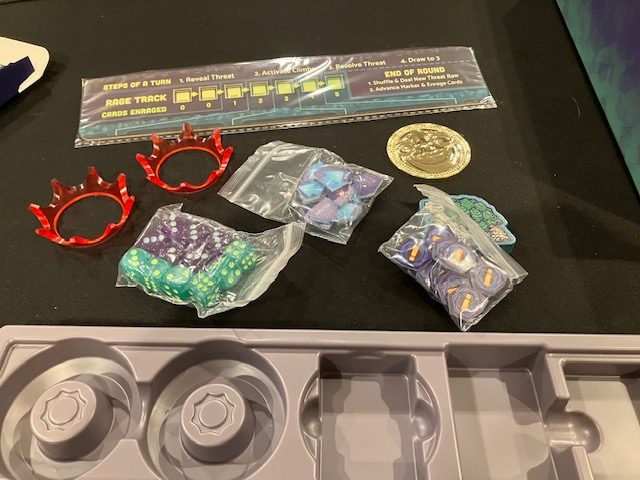
What’s in here? See above!

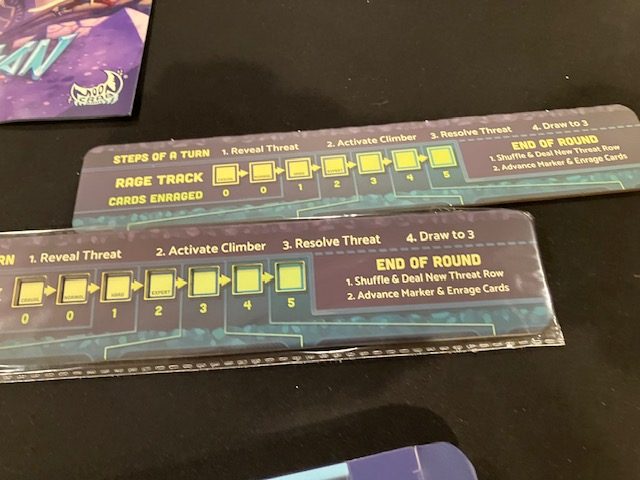
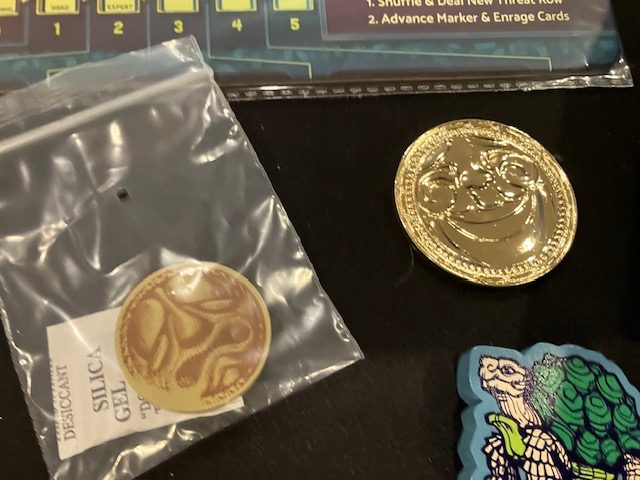
The Rage Track upgrade is now dual-layered.  This pack may be worth it just for this?

There’s a metal coin for the Gambler.

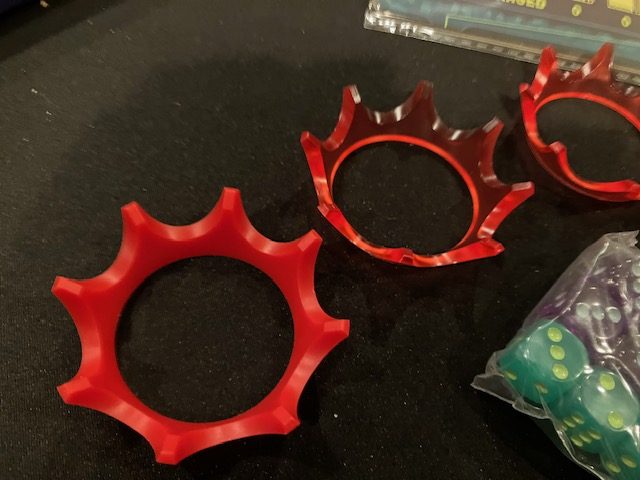
This is the silliest upgrade; the marker tokens are now CLEAR red plastic instead of OPAQUE red plastic!

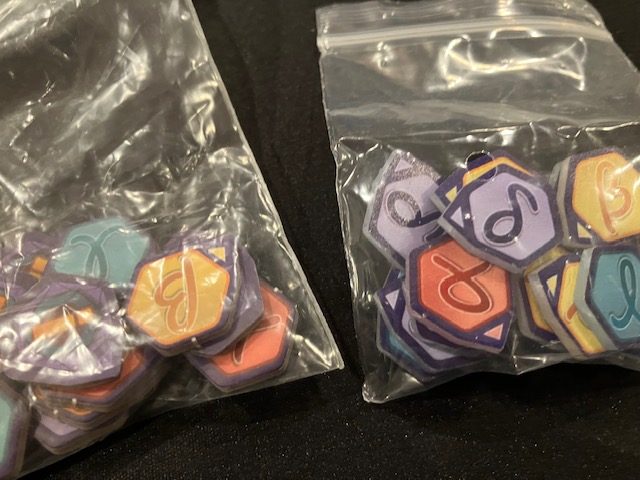
The tokens go go from cardboard to acrylic.  I love acrylic tokens, but can you tell the difference between the two above?

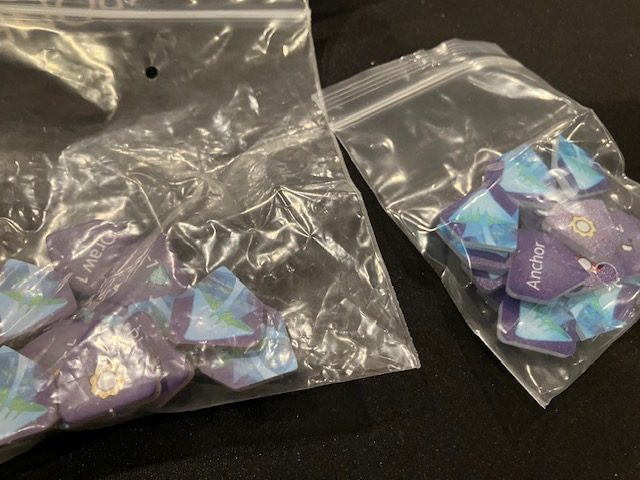
Similarly for the mushrooms: acrylic tokens are nicer, but it’s hard to really tell the difference.

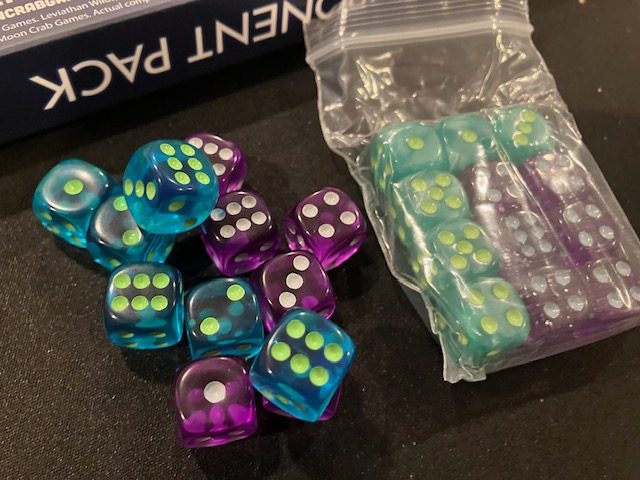
The upgrade I didn’t expect: the dice! I thought the original dice (left) were great, but apparently they don’t work for color-blind people, so the dice on the right are easier to distinguish!

Oh ya, and a nice wooden first player token (Sage the turtle!)

Do you need the Deluxe Components?  Not really!  They are great, and I am glad I have them (partly because I like the game so much), but you would do just fine with the base components.  Decide for yourself.

Upgrade Kit

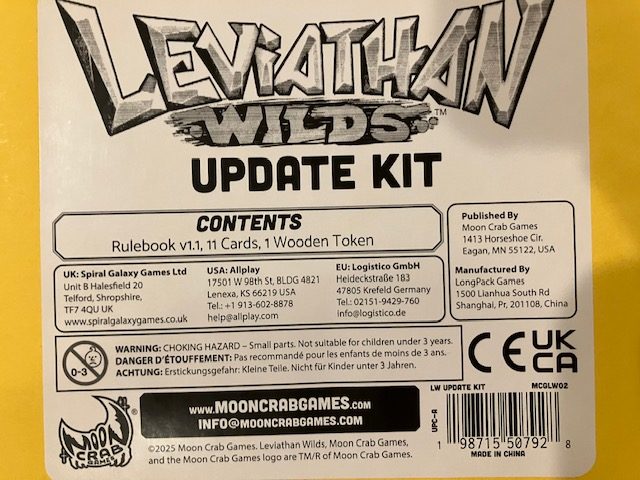
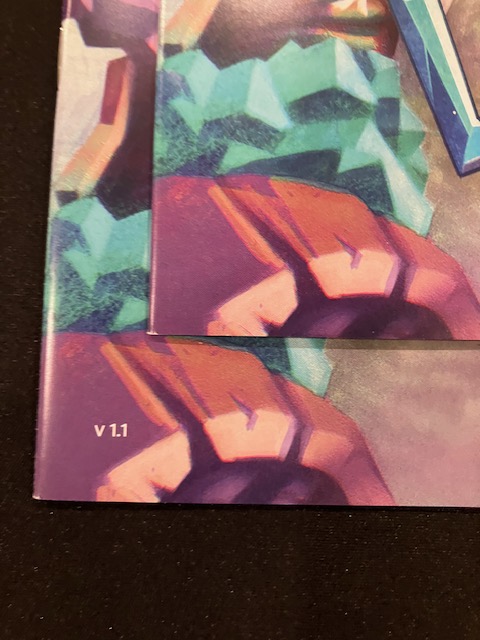
What’s in the upgrade Kit envelope?    Basically, errata and upgraded cards for upgrading from v1.0 of the original game to v1.1!

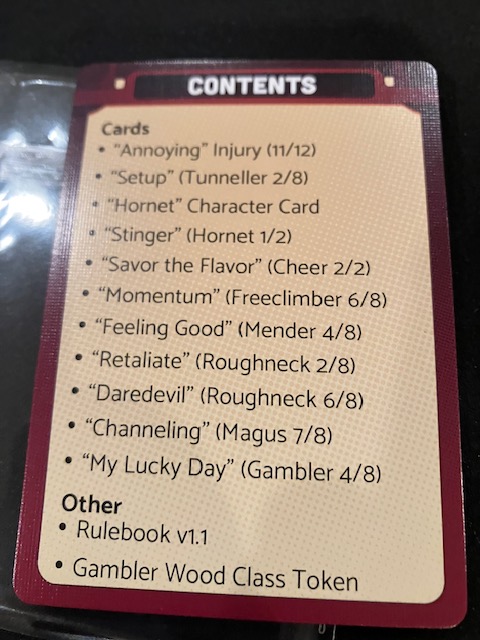
Interestingly, the Gambler token (wood) is also included!  So, you can choose the wood Gambler token (here) or the Metal one (from the Deluxe Components)!  So silly to have both.

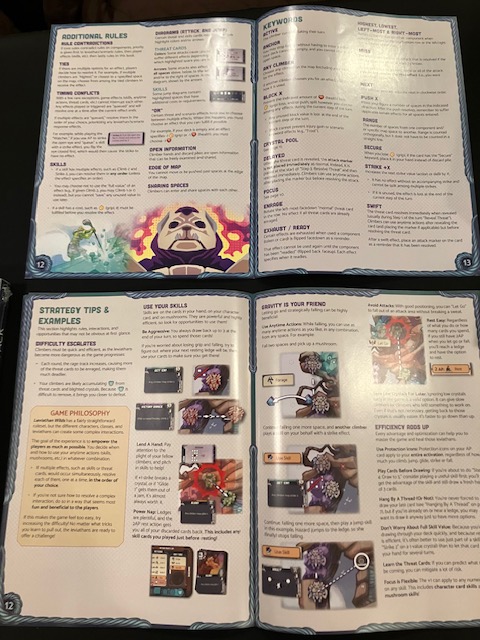
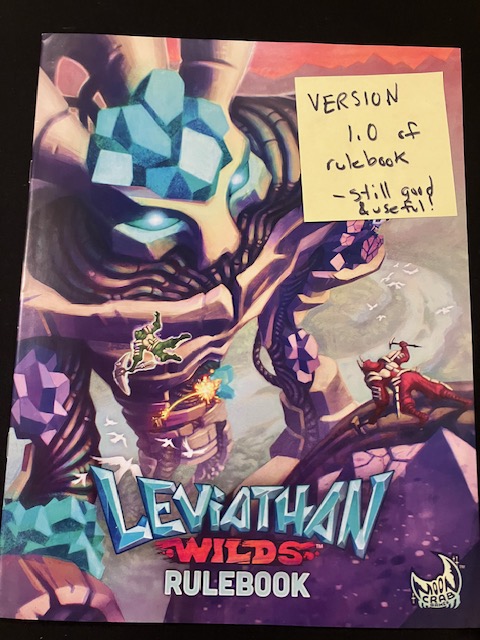
There is an upgraded rulebook:  It generally looked the same, but it had an extra 4 pages:

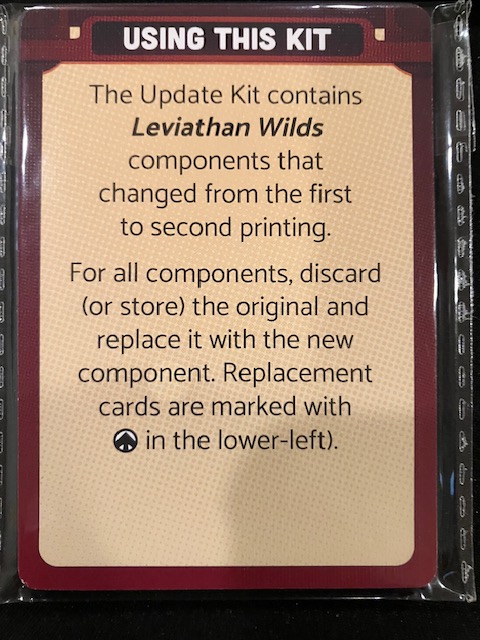
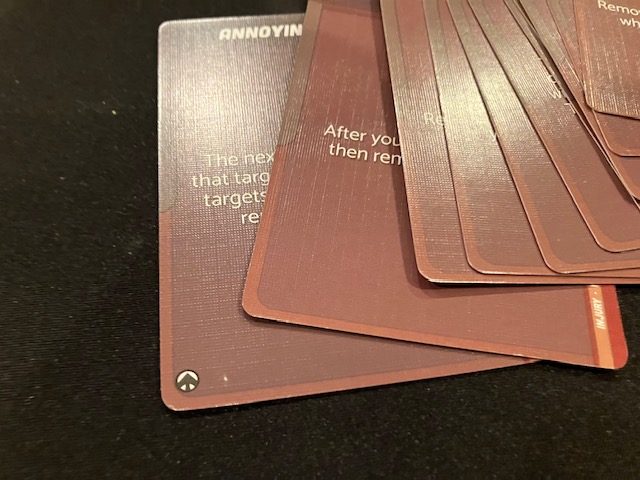
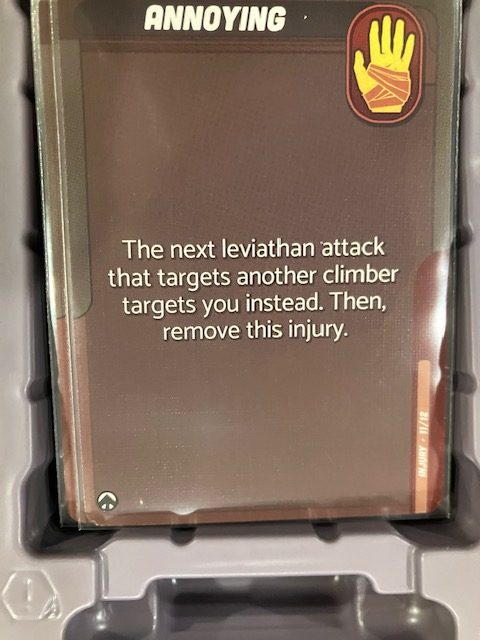
One pack of cards just replaces some cards that needed updating/fixing.  See the “new” card has the left up-arrow in the lower left corner.

I am actually chose to keep both rulebooks, but labelling the v1.0 rulebook clearly! See above!

How many times have you wished you had another rulebook while playing?  Now I do!

The upgrade kit is what you expect: a slightly better rulebook, a few replacement cards, and yet another Gambler token.

Deepvale

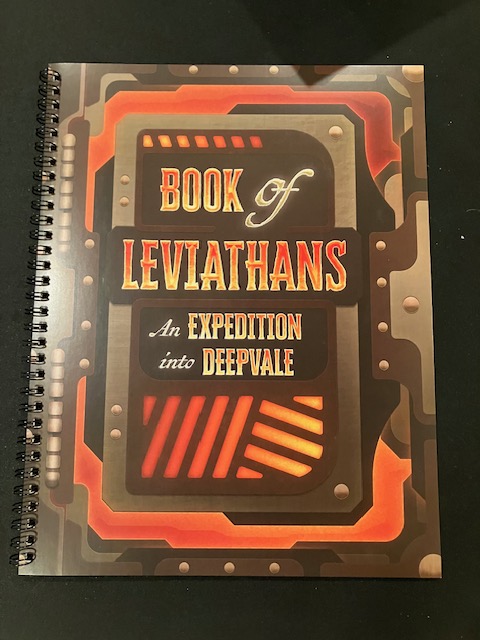
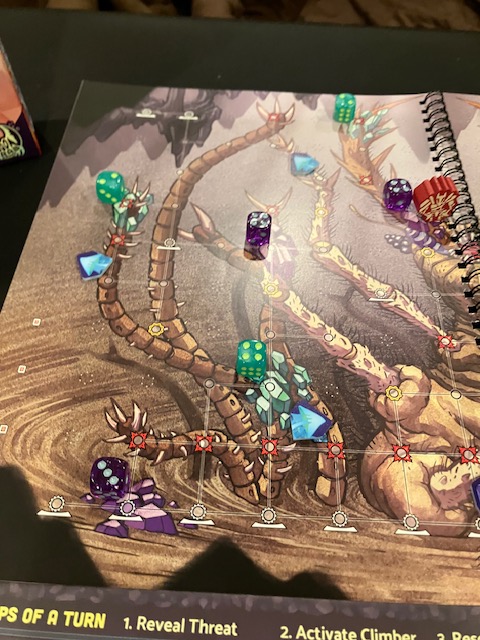
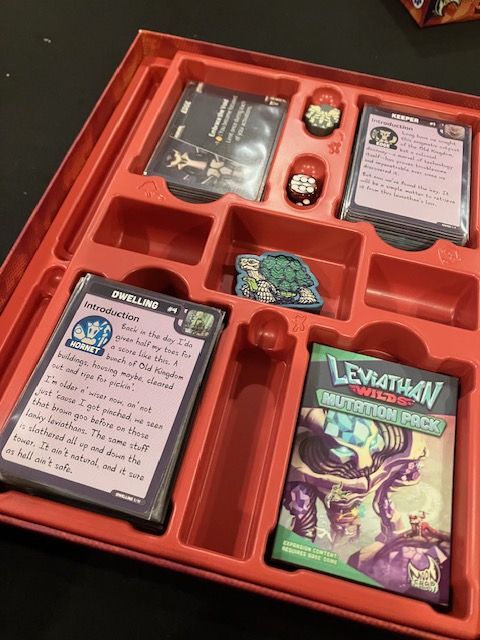
THIS is the cool thing!  It’s just more content for Leviathan Wilds!

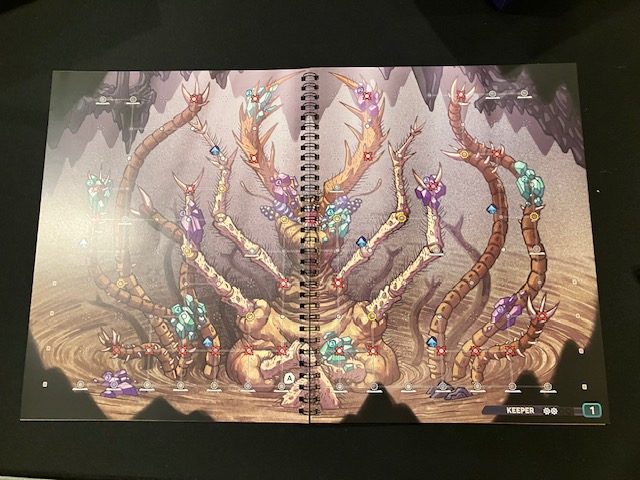
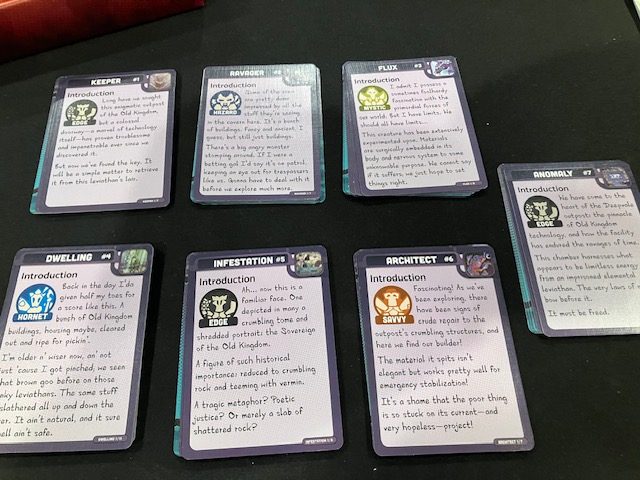
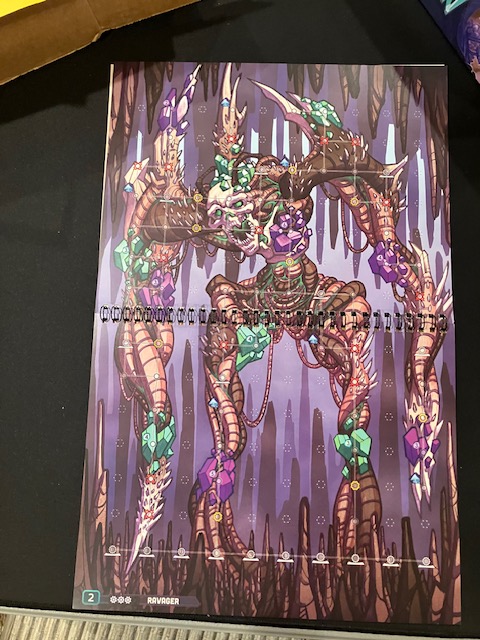
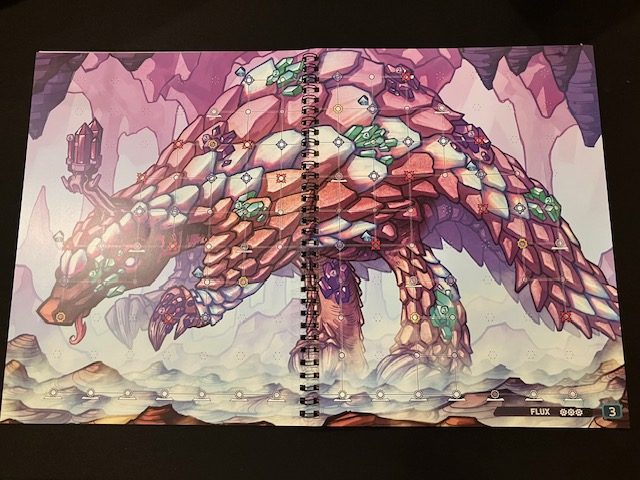
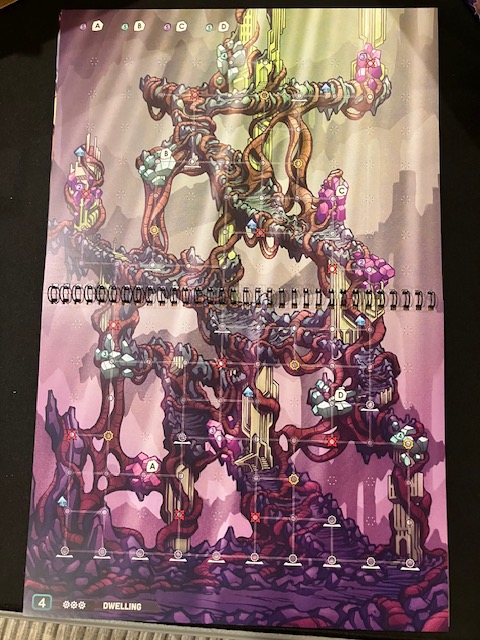
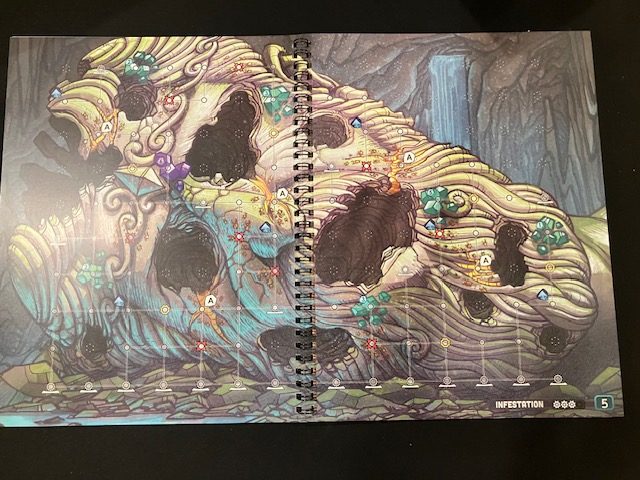
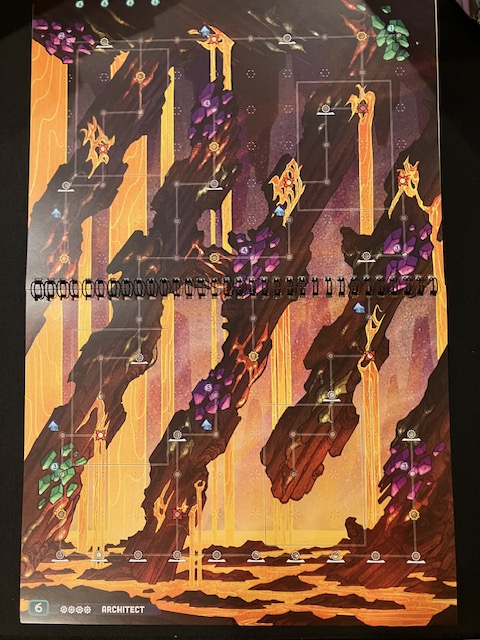
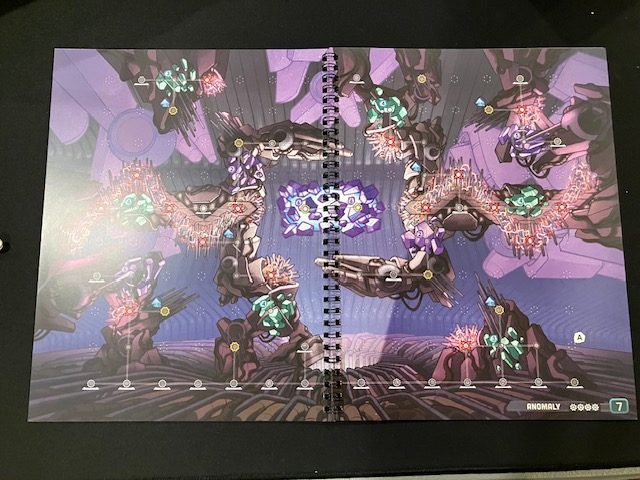
There’s a new book with 7 new Leviathans!

The Leviathans here are maybe even a little creepier than the original Leviathans!  See all 7 above!

There are, of course, new Rage decks for each Leviathan.

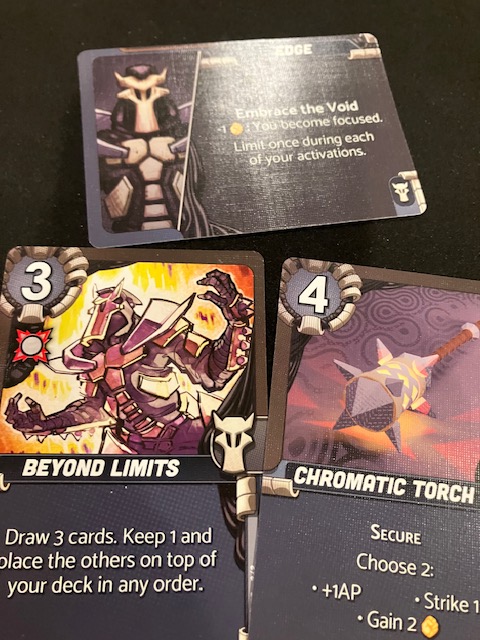
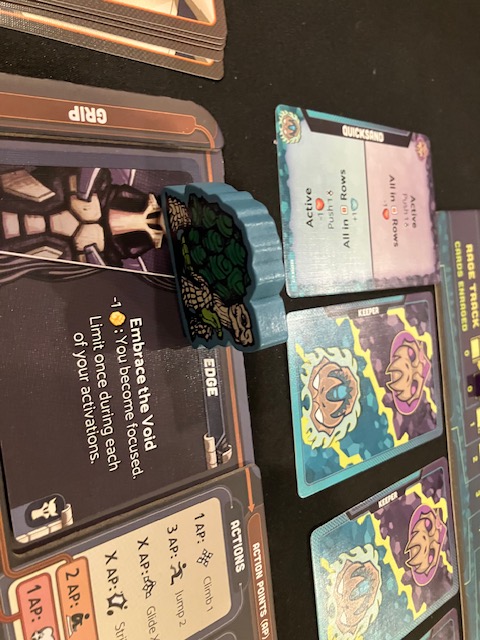
There’s a new Climber: Edge.  (I joked there should also be a Bono Climber as well.  No one laughed.)

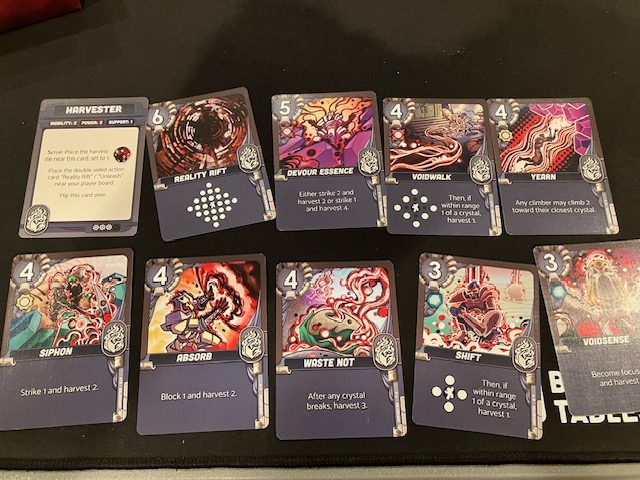
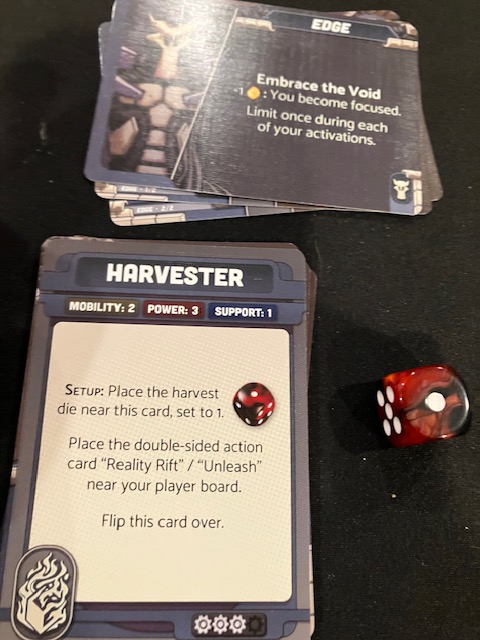
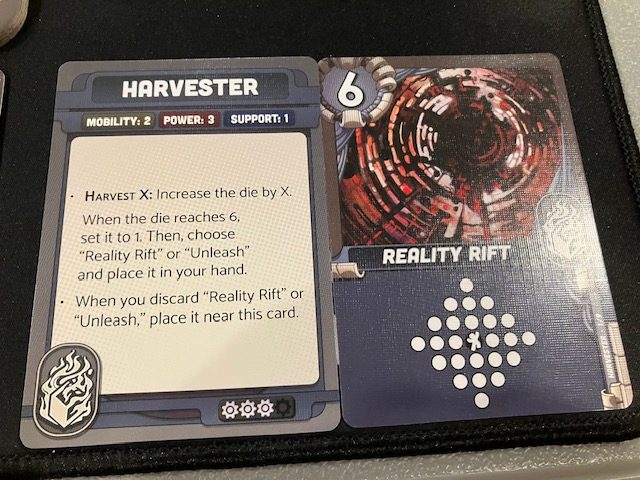
There’s also a new class called Harvester.

The Harvester has a die that keeps track of “when can I get the double-sided action card”.  This is a fairly new, if not particularly novel, new class.

Basically, this Harvester card sits on the side, and you have to “work” to get it, but it’s pretty cool!

This is a just a “more stuff” expansion! New Climber! New Class!  And 7 New Leviathans!

Solo Play

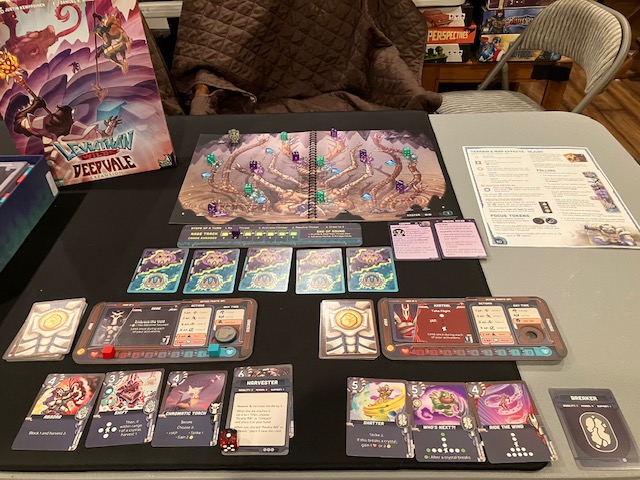
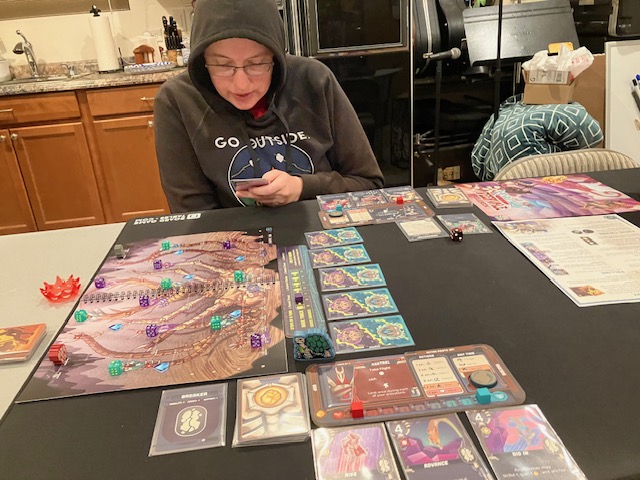
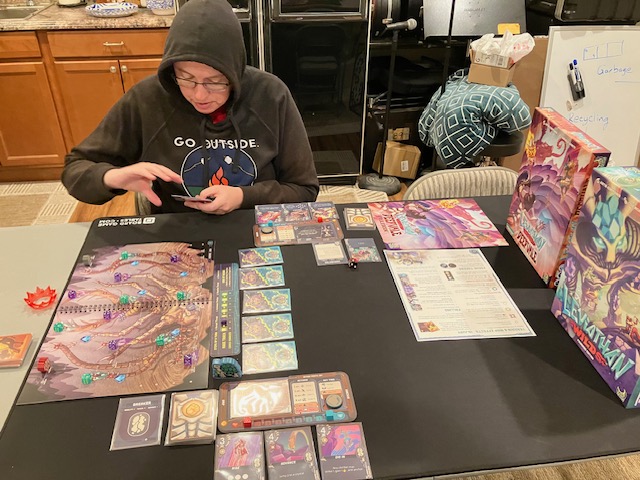
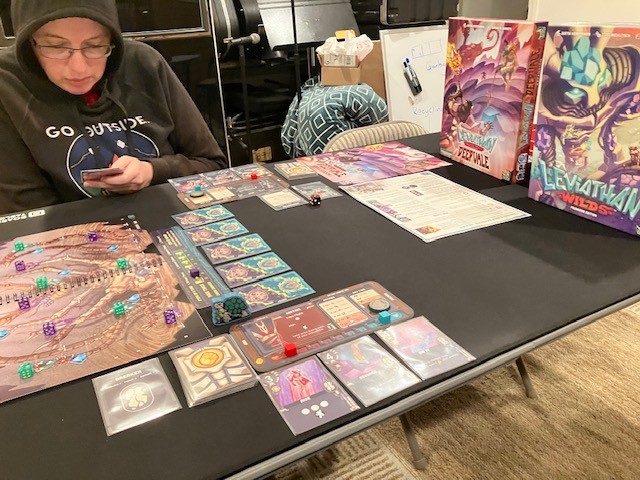
Like before (see our original review of Leviathan Wilds), I still prefer playing Leviathan Wild’s solo mode by playing two-handed: ie. play two climbers and alternate between them.

The new first player token makes it a lot easier to keep track of whose turn it is when playing solo!

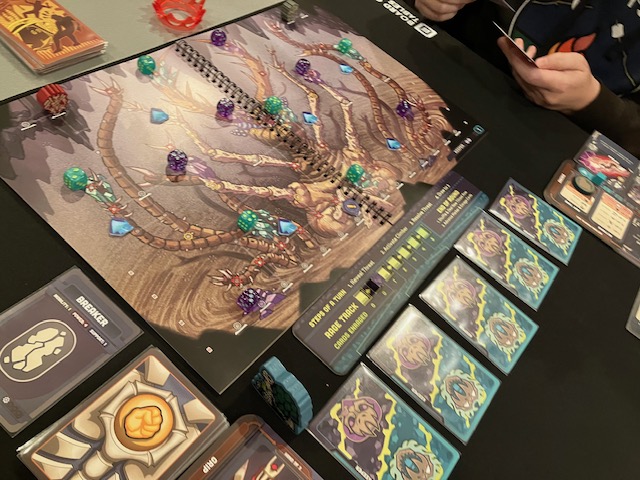
The very first Leviathan doesn’t seem that hard, but I barely lost on the last turn! I couldn’t get out with the key!

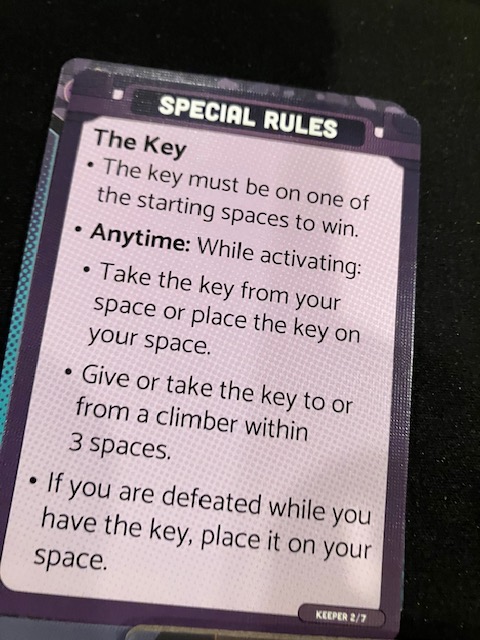
Basically, the opening Leviathan is already a little harder (Level 2 difficulty), as you have to take care of all the crystals AND get out with the key!

I lost with one turn remaining …I couldn’t get out of the cave even though I removed all the crystals!

Still, good times.  This is a great game and I feel like I had to be smart about using my resources and knowing when to push forward.  I am still learning how Edge works, but he’s a great addition.  This is still Leviathan Wilds solo.

Cooperative Play

I told my friend Teresa that I barely lost the solo game, so we had to play it again!

And unfortunately, we still lost playing 2-Player!

The first Leviathan is a level 2 difficulty, and it’s the easiest of the bunch!  Every other Leviathan is a difficulty 3 or 4!  Oof!  These Leviathans are harder!

Nothing broke.  The game still works famously cooperatively. This felt like the same Leviathan Wilds I played so many times with my friends at Dice Tower West, RichieCon 2024, and game nights!

Choice: One Box or Sleeves?

You have a choice to make with this new expansion!  You can either:

  1. Put all the new content into the original box
    or
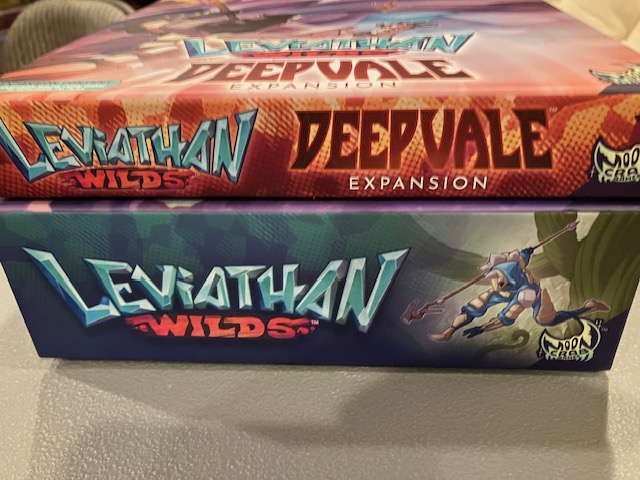
  2. Sleeve your cards, but have to use both the original box AND the expansion box!

I was tempted to put all the new cards and items into the original box, but once I sleeved the game, there’s NO WAY the expansion can fit in original box.

Yes, it was kind of annoying.

So, if you sleeve (and you want to keep the original inserts), you need both boxes.

Oh well.  I chose to sleeve the game because RichieCon 2025 is coming up, and Leviathan Wilds was such a hit at RichieCon 2024, I thought I’d make sure it stayed in good shape! So, I have to have both boxes.  I don’t think anyone will play it so much at RichieCon 2025 that I’ll need both boxes, so I’ll just take the original box.

Conclusion

If you like Leviathan Wilds, this is just more stuff for it!  Although the Deluxe Component Pack is cool, you probably don’t need it unless you love the game like I do!  And the Upgrade Kit is “nice to have” (fixing some cards) but again you don’t really need it that much.

The new content from the Deepvale Expansion is just that: new content to extend the life of the game!  Again, it’s not strictly necessary (only one new climber and one new class), but having seven new Leviathans will really extend this game for you.

The new expansion, although not really that necessary, is still nice to have.  There’s plenty of content in the original game and … you probably can be happy with all the stuff in the original game.  Still, I am glad I got this.  Solid expansion: more stuff I like.

Top 10 Solo/Cooperative Trick-Taking Games

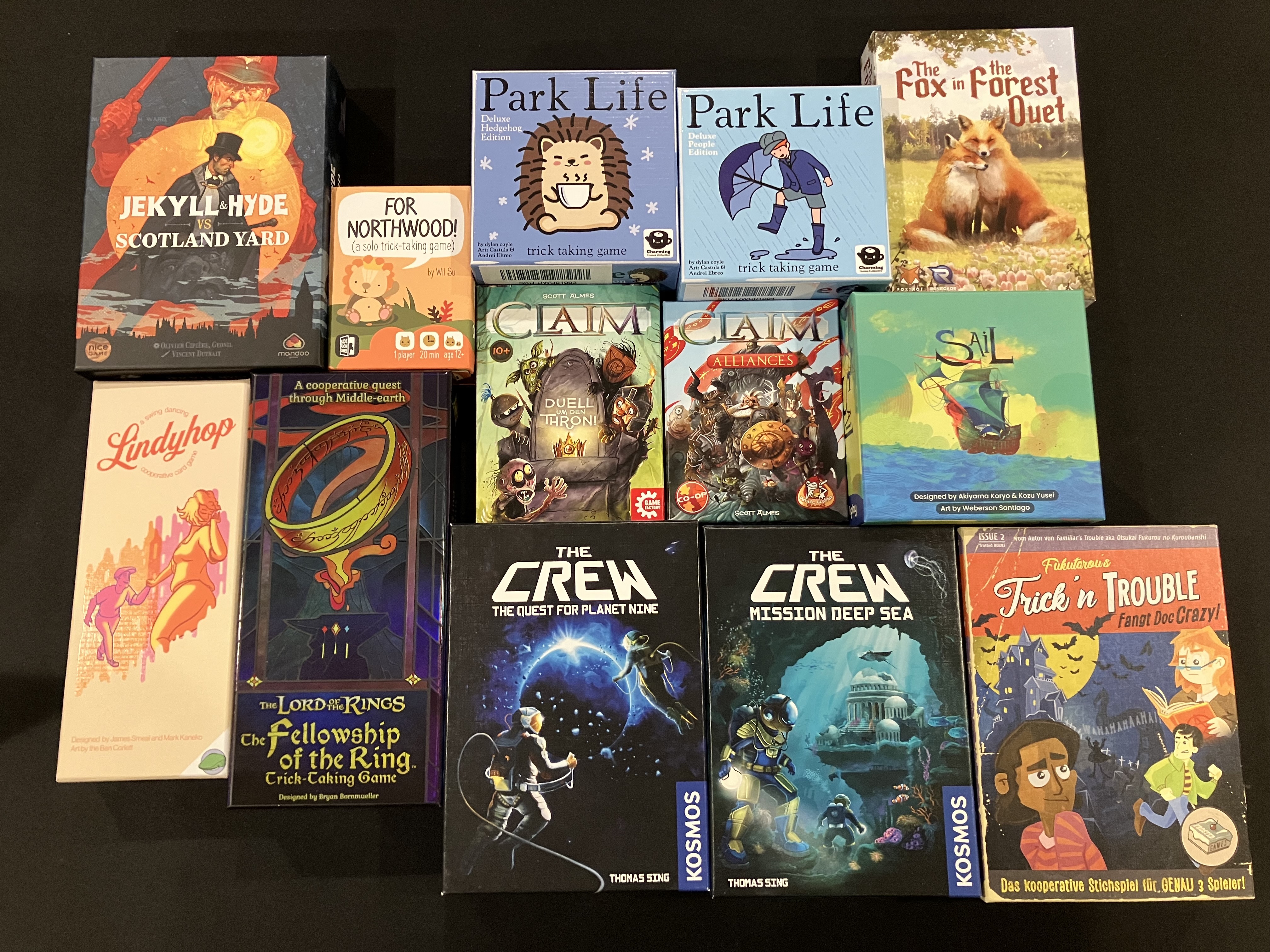
Trick-taking games are a genre that’s been around for ages: Bridge, Hearts, and a more gamery games like Rage! We’ve now reached a point where there are a lot of solo and cooperative trick-taking games as well! To be cooperative, every single one of these games has a pretty severe notion of Limited Communication … if you could just communicate anything, most of these games would become trivial! So, most games on this list have very constrained notions of communication! Interestingly, most of these games also have a very constrictive player count, so we take note of that as well! Let’s take a look below!

(We also note that two of these are in German, which required me getting a translation, and a third was mostly German but luckily included English rules!)

10. Park Life

Player Count: 1-4

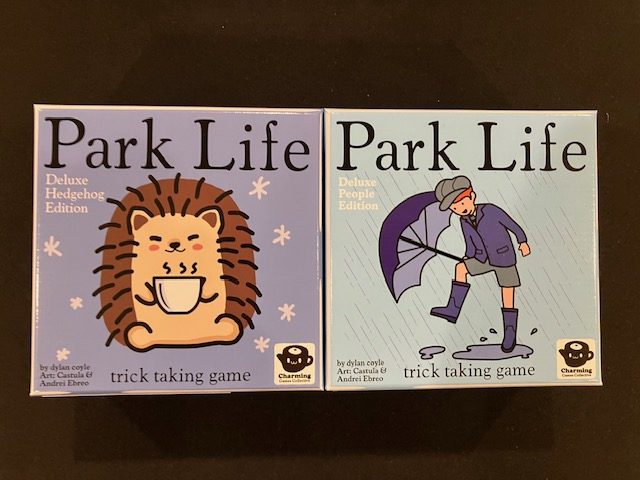
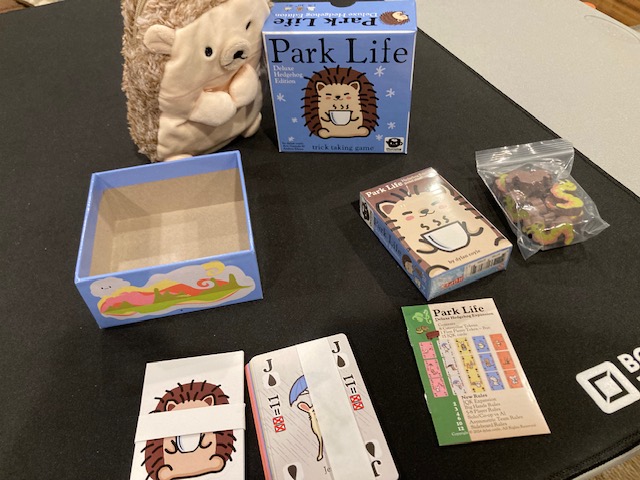
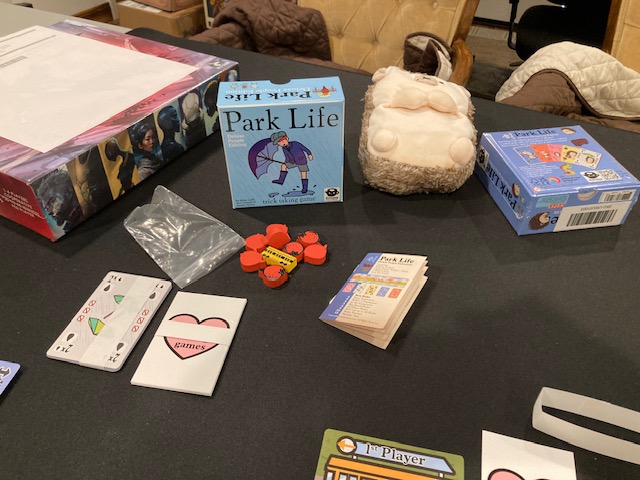
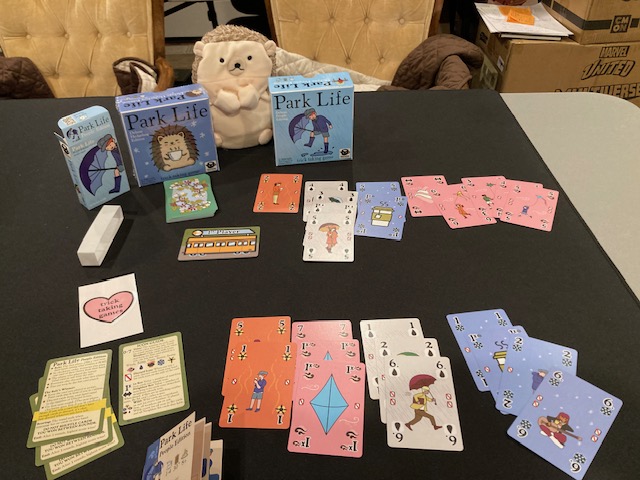
This cooperative Trick-Taking game is a little misleading because, depending on the version of Park Life you get, there’s a very different trick-taking game! 

The Deluxe Hedgehog version (above) has a different version of a trick-taking game …

.. than The Deluxe People Edition (above)! 

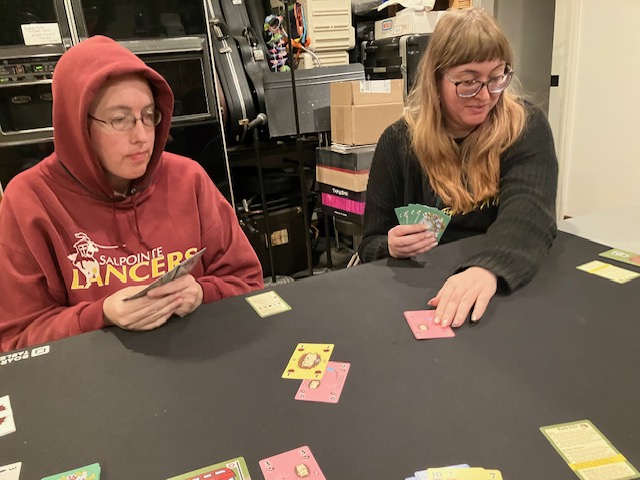
Both games have a solo game, but the game is a little better with more people.  These games are at the bottom of this list because they seem the least developed: they are very cute and have some interesting ideas for trick-taking games, but feels like they could use a little bit of either explanation or work.   

Still, you may play these and fall in love with them because of the cute art!

9. Lindyhop

Player Count: 2-Player Only

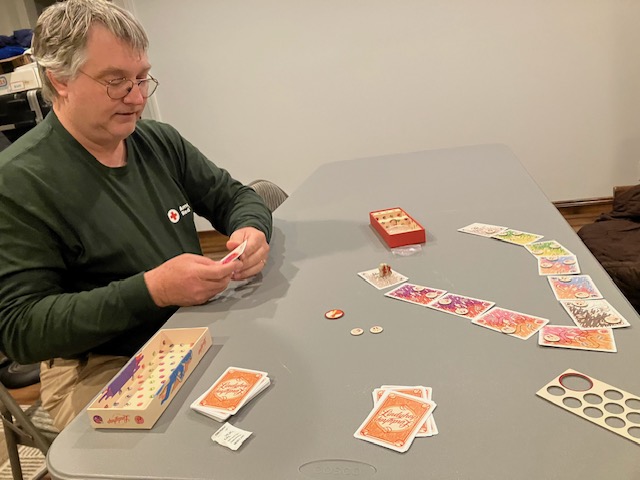
This game presents is an interesting theme, as a trick-taking game recreating a dance from 1928 (from the African American communities of New York City).  Two players “dance” with each other, with trick-taking simulating the back-and-forth/give-and-take as players try to “groove” together.

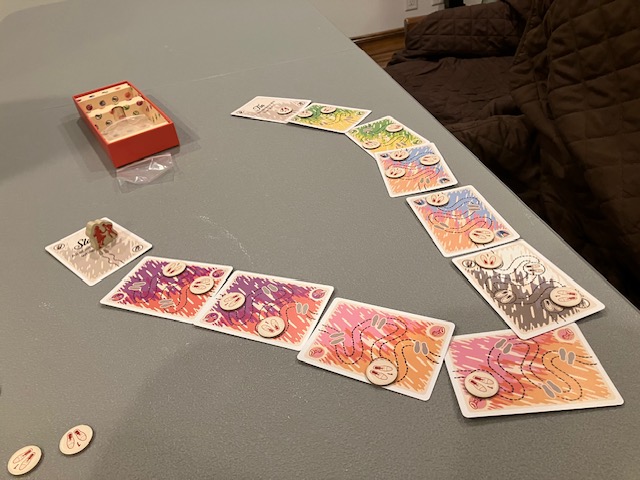
Players traverse a path together, picking up tokens if they land on exact spaces. See above.

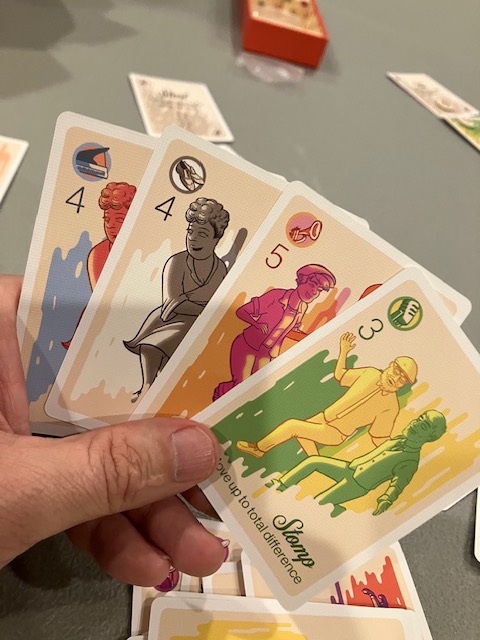
Players play cards and the difference in card value is how far they move!  The art is gorgeous (see above) and very thematic: there are even special powers on some of the cards!

The only reason this is a little lower on the list is because there is really only one opportunity to strategize: at the beginning of the game!  But it’s a fun little romp that’s easy to bring out.

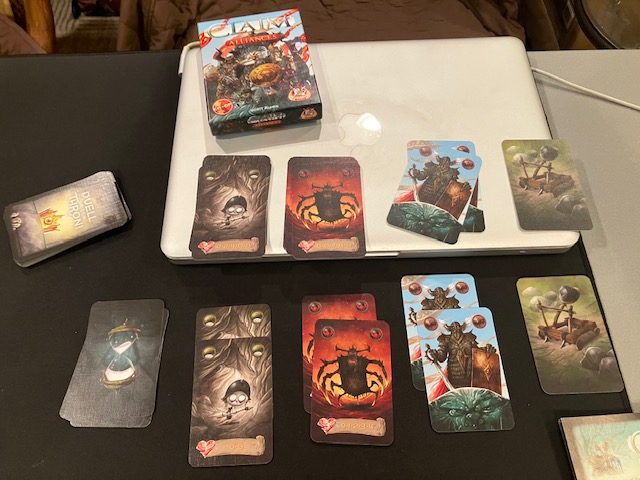
8. Claim with the Expansion Claim: Alliances

Player Count: 2-Player Only

Claim by itself is a 2-Player only competitive trick-taking game.

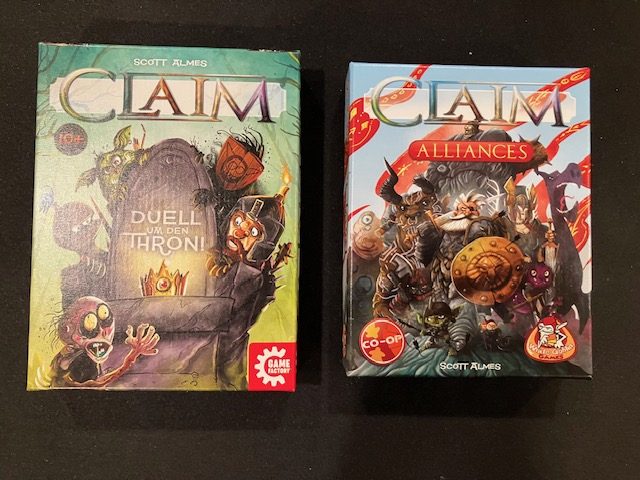
But, with the Claim: Alliances expansion (see above) this becomes a cooperative trick-taking experience!

This is one of the games that was originally in German, luckily I was able to find English rules online!

Since the way to play cooperatively is to use the Alliances expansion, you first have to learn the base game! The game proceeds in two phases, both powered by trick-taking! In the first phase, you play tricks to try and recruit cards for the next phase. The winner of each trick gets the named recruit, and the loser gets the “random” top-deck recruit! The second phase has the players trying to win factions (using trick-taking): whomever wins the most factions, wins!

In the cooperative game, some Alliance cards are added to the mix. During the recruit phase, the winner has to take an Alliance card, which includes bad guys and commanders, and at some point, both sides must have a commander whose factions they MUST win!

This is a little lower on the list because you have to get the base game under your belt before you can play the expansion. But there are some cool ideas in here, including the two phase system and some special powers on some factions!

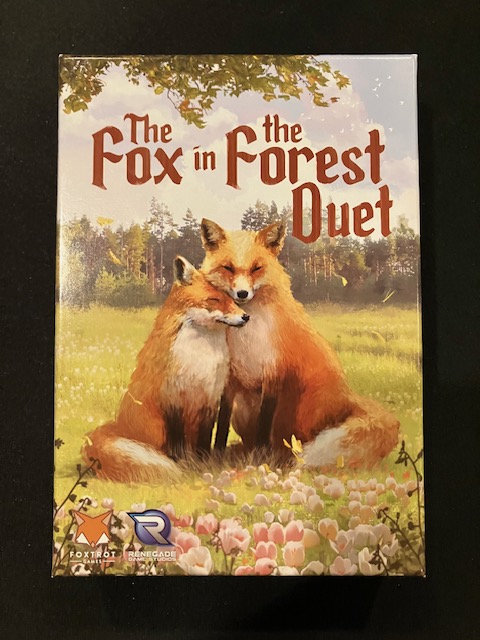
7. The Fox in the Forest Duet

Player Count: 2-Player Only

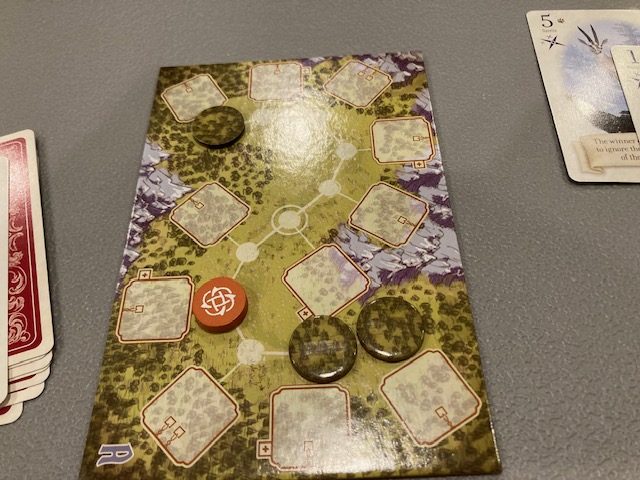
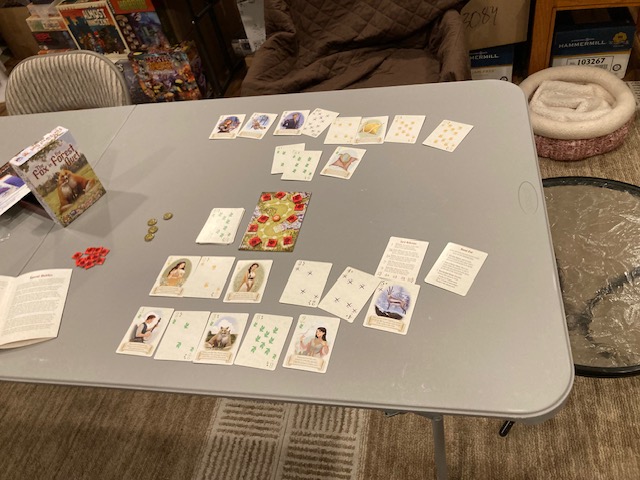
This is a 2-Player trick-taking game where players play tricks to move around a forest map collecting gems.

The art is cute and the game is pretty light.  The Communication Limitations are fairly draconian once you have your cards (you can’t even discuss strategy), but you can discuss strategy between rounds. We had fun playing it; it’s a lighter game that isn’t crazy rule heavy.

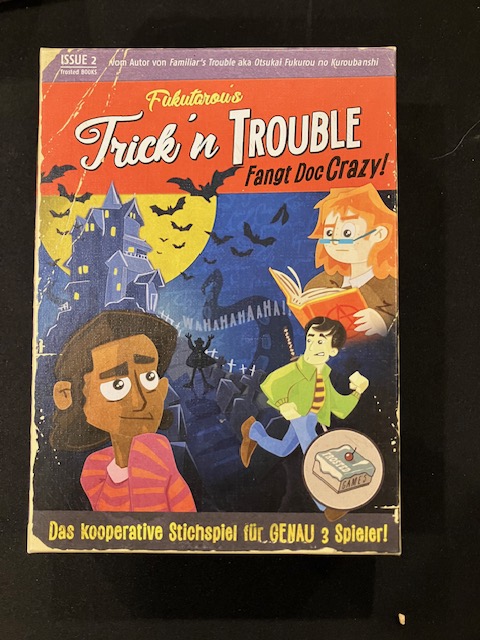
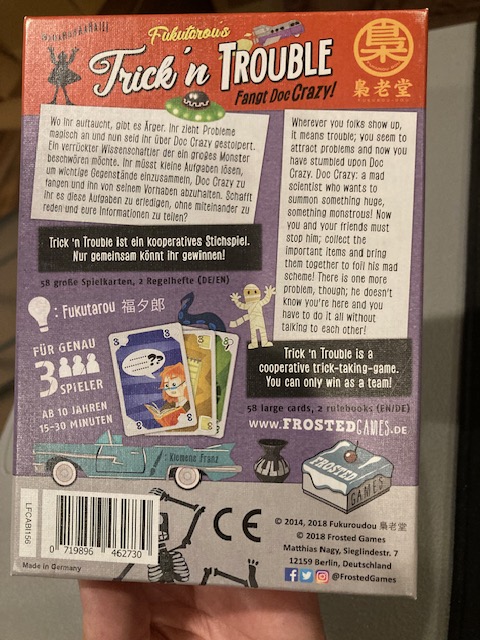
6. Trick ‘n Trouble (Fangt Doc Crazy!)

Player Count: 3-Player Only

What???? A 3-Player only game???

This is a bit of a surprise as a 3-Player only cooperative game! It has kind of a spooky (silly spooky) theme!

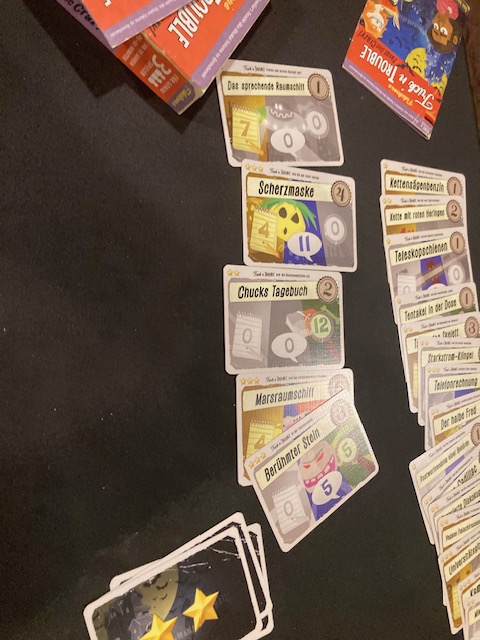
Players try to fulfill tasks based on the cards from “won tricks”: The players have a tableau of tasks to fulfill (see above).

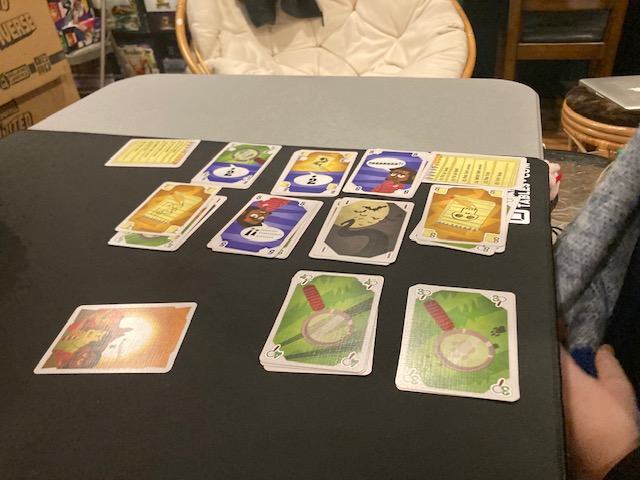
The “trick” in this game is that some of the cards are double-colored, and you can use them as you wish.

This was a surprisingly fun little game, even if the 3-Player only count is a little different.  Like most cooperative trick-taking games, the limited communication permeates and you can’t really talk about the cards in your hand.

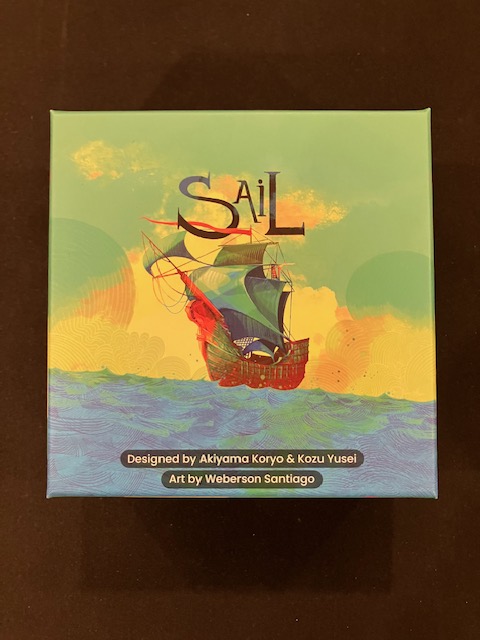
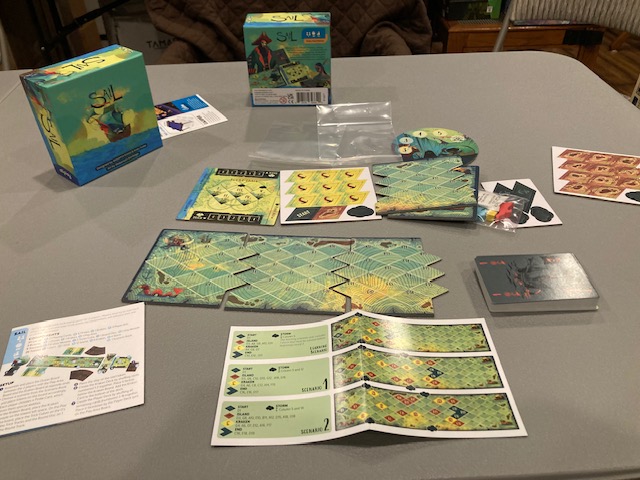
5. Sail

Player Count: 2-Player Only

I’ve been able to get Sail to the table a number of times with Sam and Kurt over the past year!  It’s a fun theme as you use trick-taking to help move a ship towards its final destination! 

Winning a trick means “usually” moving the boat in your direction (towards you), but there are many different things that happen along the way! 

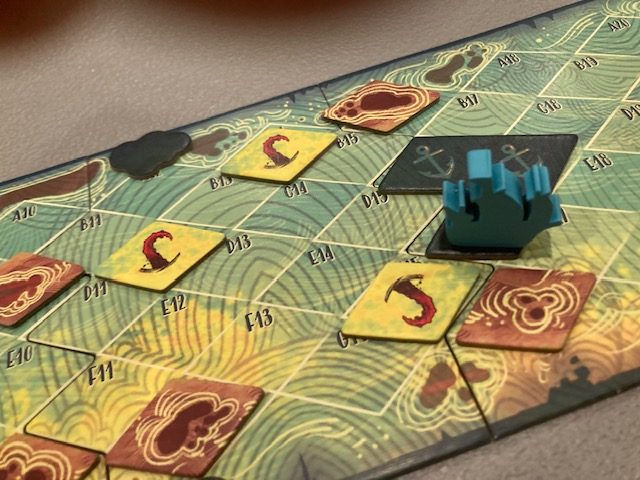
Can you avoid the Kraken?  Can you move forward when you really need to?

Using trick-taking as a means to move the ship forward is real interesting mechanism!  If you like Sail, be aware that Sail Legacy is coming to Kickstarter soon!

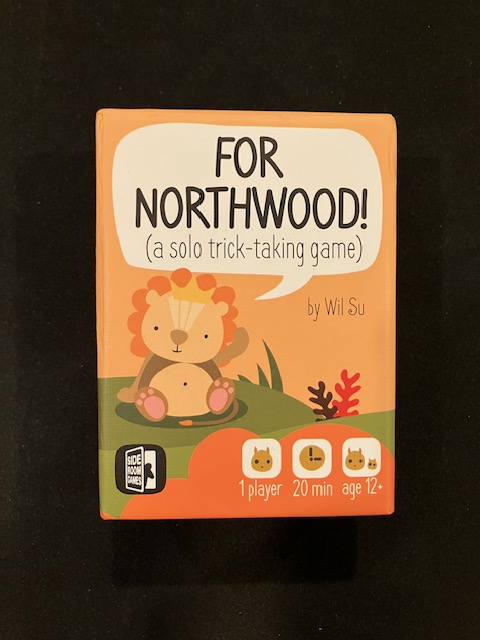
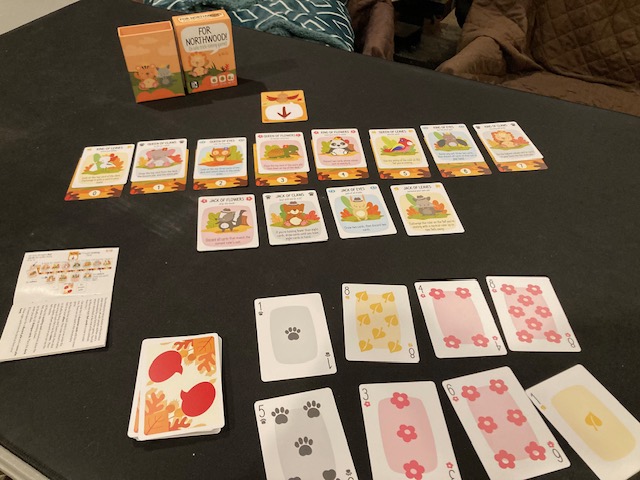
4. For Northwood

Player Count: 1-Player Only

Yes, that’s right, this is a solo trick-taking game! It sounds like this can’t work, but it works really well! The tricks are “conversations” with fiefs, and you try to make fiefs “friendly” to you by winning them over with conversation! It’s a pretty thin theme, but it works pretty well as a trick-taking schema.


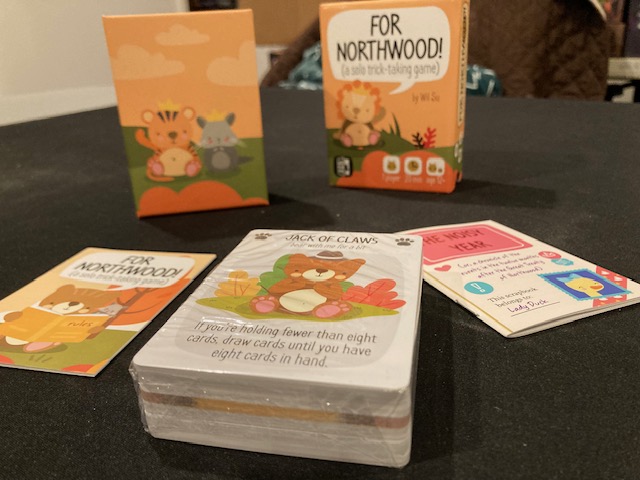
This is a tiny little game with super cute art!

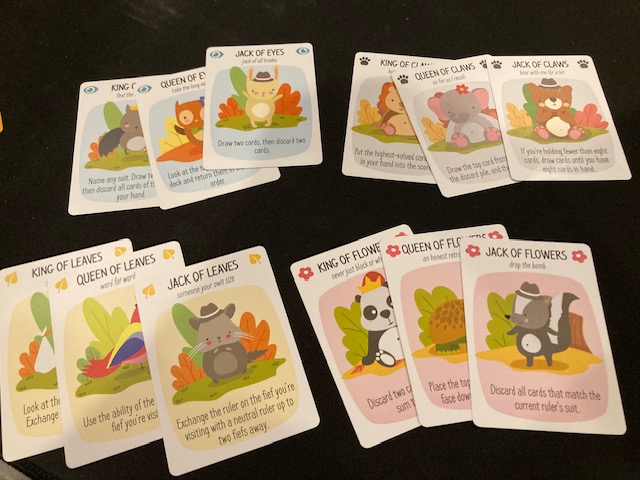
There are special powers you can activate!

Winning is a victory point threshold, as you count how many friendly fiefs you obtain (and count the stars)! Because this is a solo-only game, there is no notion of Limited Communication!  This is a really unique little game that I had to scour all the gameshops to find!  I think there were reprints, so I believe this is back in stock!

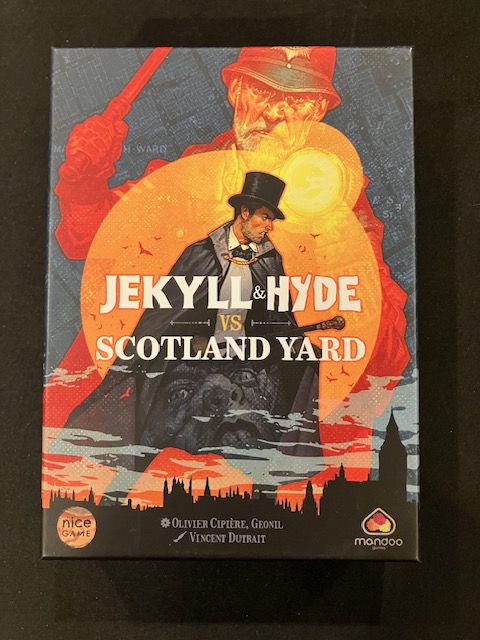
3. Jeckyl and Hyde vs. Scotland Yard

Player Count: 2-Player Only

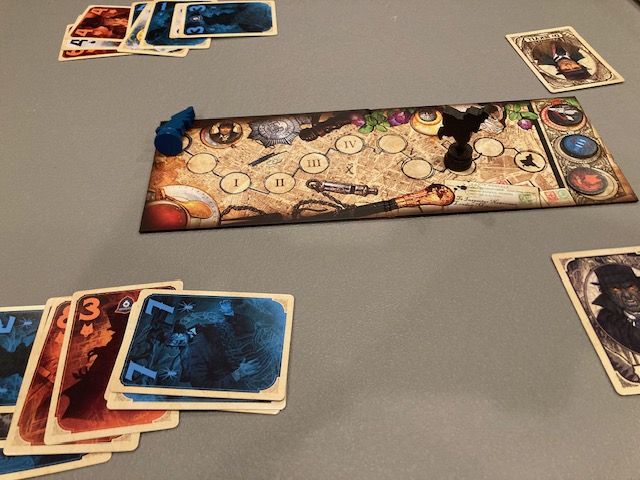
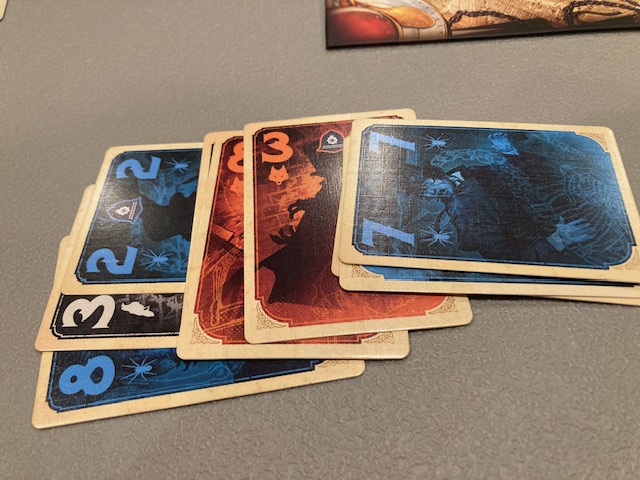
The two players cooperatively play the two sides of Dr. Jeckyl and Mr. Hyde, vying for control! 

This is a fascinating idea, using trick-taking as a way to take control of the personality!   To keep ahead of Scotland Yard, the two players must win tricks in such a way as to keep Scotland Yard off their tail!

The two players each play a different side of the personality!

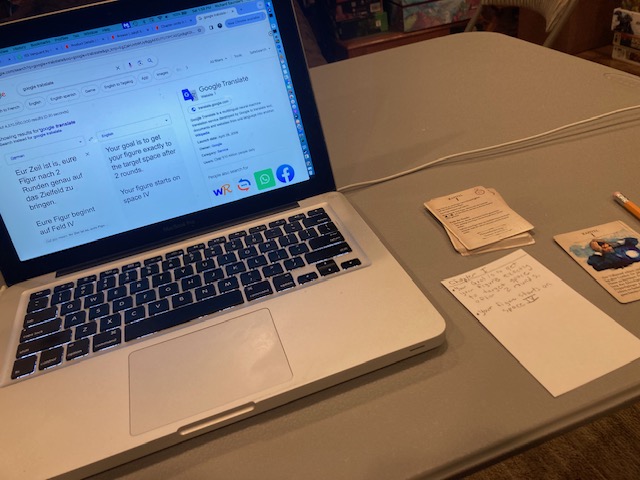
I, unfortunately, was unable to get the English version for some time, so I ended up using Google translate to translate the German text to English!  But this game was so cool, the art was so neat, and it had such neat ideas, I really liked it!  That’s why, despite only having a German copy, this made it all the way to #3!  (And I did finally get the English version: it is available more widespread now!)

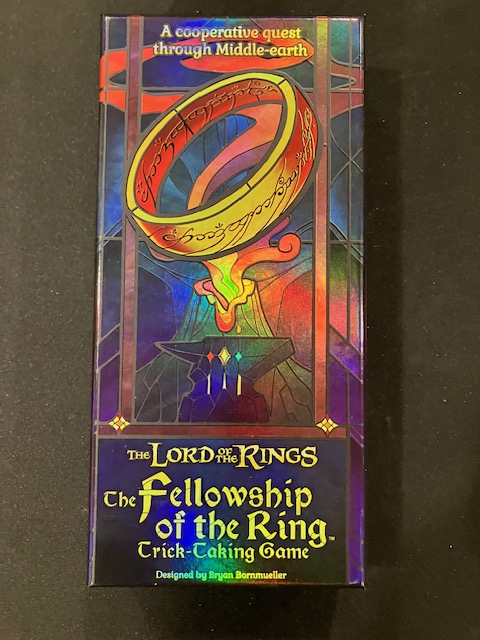
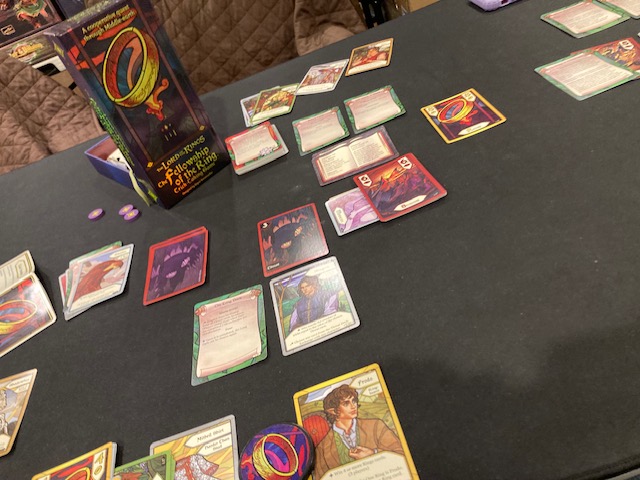
2. The Lord of the Rings: The Fellowship of the Ring Trick-Taking Game

Player Count: 1-4 Players

This game has taken my game groups my storm: everyone loves it!  

I played it solo when I was sick, and had a wonderful time going through the whole campaign solo! 

My friends in Las Cruces have played through the entire campaign as a 3-Player game and love it!  See our review here!   I played a bunch 3 and 4-Player games at Dice Tower West with my friends Becca and Tricia and had a ball!

The reason this game is so high on the list is that everyone seems to really enjoy it!  The fact that it can play at so many player counts speaks volumes to the design team!  The solo game is very different from the 2-Player game, which is very different from the 3 and 4-Player game, and yet all the different modes seem to work, and work well!  The theme seems to come through fairly well! My friend Andrew was surprised this was #2 and  NOT #1 on my list!

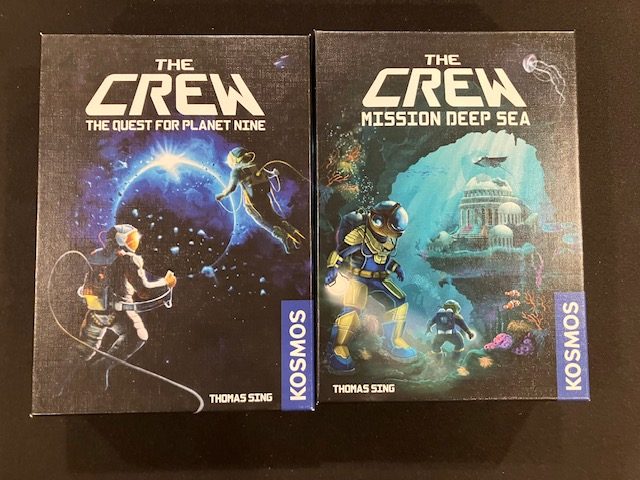
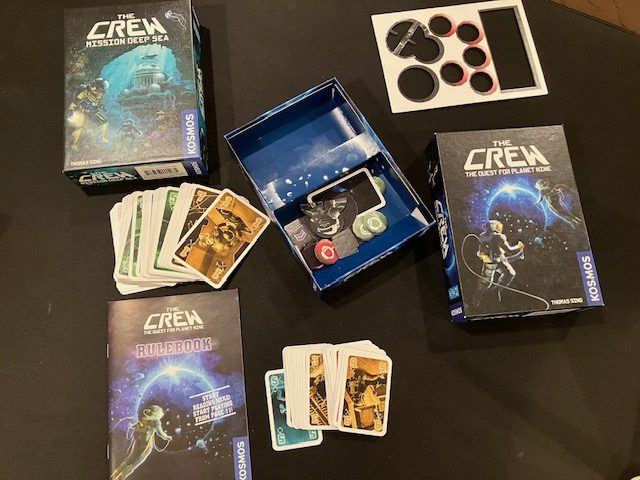
1. The Crew: Either The Quest For Planet Nine or Mission Deep Sea

Player Count: 3-5 Players (sorta 2-Player)

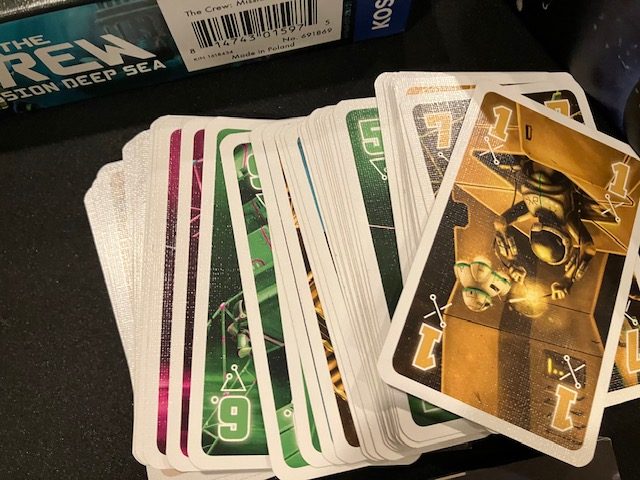
There are two different versions of this game, but they are essentially the same kind of game. Like Fellowship of the Ring: Trick-Taking game, the game players differently depending on the player count. There is a 2-Player mode, but it’s very clumsy and probably not the way you should play.

Players play tricks, but have to fulfill missions in order to win the game!  The missions give the game focus, and change every game! 

Honestly, even though I have the physical copy of both games (which are arguably the same game), I have played this game SO MUCH on BoardGameArena! During the Pandemic, this was the goto game for me and my friends! It was so easy to just bring this out and play for hours. Something called The Crew brought us together; there is probably some deeper meaning there.

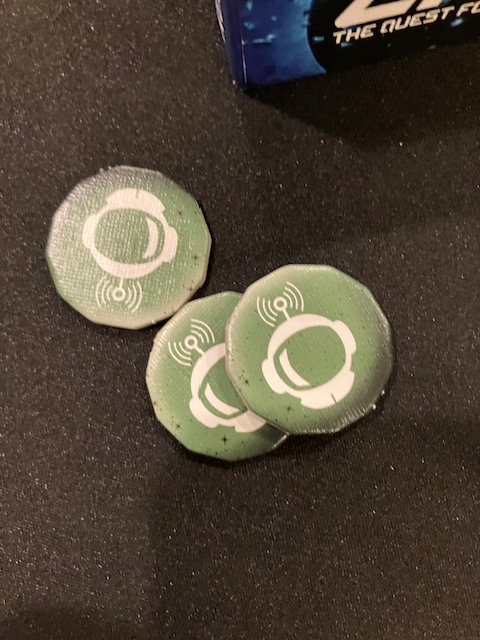
What makes this #1 on the list for me is the brilliant rule that you can communicate WHEN IT REALLY MATTERS! You have a token that allow you to communicate once during your turn, by sharing the lowest, highest, ot “only one” of your hand. This is so unique: all the other trick-taking game have very restricted communication, but essentially there’s none or high-level “strategy” communications. With this one mechanism, The Crew makes it feel like your CHOICES MATTER: It matters when you choose to communicate, it matters when you choose to hold off, it matters!

This is the #1 on my list because I have played it so much more than every other game, and it’s so easy to play online or in person, and you feel like your limited communiques matter.

More Solitaire than Sherlock: A Review of Sherlock Solitaire (the Solo and Cooperative Game)

This review has been sitting in my hopper for over a year now; not sure why I didn’t get it out earlier!

IMG_3314

Sherlock Solitaire is a very small cooperative card game for 1-2 players.  This released early in 2024: I had heard about it from my friend Sam and so I quickly ordered it from Wise Wizard website about a month ago (early March 2024).  It delivered pretty quickly!  I got it to the table solo, but I didn’t want to finish my review until I tried it two-player cooperative .. Sam really wanted to play, but he was busy most of March.  

IMG_3318

This is a very small and thin package.   It plays 1-2 players, is about 20 minutes, and plays ages 12+.

Let’s take a look!

Unboxing

IMG_3316

Sherlock Solitaire is a teeny tiny box and very thin: see the Coke can above for perspective.

IMG_3319

Except for the instruction pamphlet, it’s all cards .. just 55 cards.

IMG_3335

The cards are pretty gorgeous.

IMG_3337

The game is very pretty on the table: see above.  

Rulesheet Not a Rulebook

IMG_3315

The rulebook is not a rulebook but a rulesheet: see above.  Sigh. It’s a pamphlet.

IMG_3320

Considering it’s a pamphlet, it actually does ok on the Chair Test!  It fits on the chair next to me and I can read it!  The font is a little small (because it’s a folded pamphlet), but it worked on the chair next to me, as I consulted it during gameplay.

IMG_3322

The set-up was pretty good: see the picture above.

IMG_3323

The rules are a little sparse, but they does work.

IMG_3324

It even does a decent job at showing examples and counter-examples of “what is a set”! I appreciated that set of pictures!

IMG_3328

Given the constraints of a pamphlet, this rulesheet worked pretty well.  The pictures were all informative.  There were a number of places where some clarifications could have been provided, but the ruleset was simple enough and consistent enough that we were able to extrapolate rules when needed.

This was a decent to pretty good rulesheet.  

Gameplay

IMG_3331

Choose a starting scenario: The Intro Case (The Valley of Fear) is just to get you into the game, so it has simpler win conditions.  The Final Problem has a much harder win condition.

IMG_3329

Each player (works for 1-2 players) takes either the Watson card or the Sherlock Holmes card.  See above.   The bottom of the card shows the special abilities of each player!

IMG_3334

Basically, each character gets 4 cards on their turn to play to one of two areas: the Crime Scene or the Office.   There are two types of cards: Investigator cards (labelled 1-4: see above) and Threat Cards (labelled A-D, see below).

IMG_3336

Over the course of the game, the player(s) must play two cards to the Crime Scene and two cards to the Office each turn.

IMG_3343

In the Office, you are trying to make sets of cards: you have to alternate investigator and threat cards  (numbers and letters … see above).  All investigators (numbers) must be in the same column, and all letters must be distinct in a column: these are the “sets” the players are making.  If you get 3 full sets (4 investigators), you win!

IMG_3344

However, you still have to play two cards to the Crime Scene as well: see above.  If you ever get 2 of any type of card, you immediately discard those two cards and “do something!”  

IMG_3347

Two threat cards?  You take a wound! See two threats above …

The wound card is a “timer” of sorts: if you ever get 3 wounds, you lose!

IMG_3649

If you get two investigators on the Crime Scene, you invoke your special powers!

IMG_3342

The rulesheet does a nice job of summarizing of how to use your special powers … see above.  

IMG_3346

If you get enough sets, you win!  If you get 3 wounds, you lose!  It all happens in about 20 minutes.

Solo Play

IMG_3323

A game called Sherlock Solitaire had better have a solo mode! It does (thank you for following Saunders’ Law): it’s the main way to play!

IMG_3349

Once I got past my first few games (after I had to decipher the rulesheet), the game moved pretty quickly.  

IMG_3342

The best part of the game was when I could be clever and play my special abilities in a clever way to move cards to/from the Crime Scene/Office.   The worst part was when I just played cards and didn’t feel like I had a lot of choice.  The game was a fairly engaging way to spend 20 minutes.  It really did feel like a game of Solitaire as I moved cards around.

More Solitaire Than Sherlock

IMG_3317

With a name like Sherlock Solitaire, you might be expecting something more like a mystery. No, this is a lot more Solitaire than Sherlock: you are just playing cards like a game of Solitaire.

IMG_3335

Don’t get me wrong: I love the art! The art that comes with this game is gorgeous and very evocative of the Sherlock Holmes stories!

IMG_3341

In the end, though, there is no mystery to solve. There isn’t really a lot of theme: this could have been a Cthulu game, a Zombie game, or a Smurf game. Or anything. Nothing about the gameplay really has to be in a Victorian Sherlock Universe.

IMG_3338

The art is really the only thing that makes you think of Sherlock Holmes: and it is phenomenal art!

Two Player Game

IMG_3656

I had to wait almost a whole month to play with Sam!! He was interested in the game, but was busy with family and work all March.
IMG_3643

There are two ways to play Sherlock Solitaire 2-Player: 

  1. Play as the solo game, but both players together make all the decisions
  2. Each player takes Sherlock and Watson, and alternates turns

We chose to alternate turns.  The solo game with 2 players making all the decisions seemed less fun … and at that point, it’s just the solo game anyways.

IMG_3646

What we found was that … the second player got a little bored.   There is no strategy in a 2-Player game, as you have no idea what cards you get until your turn.  What that means is that if you are waiting for you turn,  you can do nothing useful!!  You just sit there waiting for your turn.
IMG_3648

The two-player game was much less interesting, as someone was always “waiting” with nothing to do.

… until we tried a little house rule.

House Rule for Two Players

IMG_3649

When it’s not your turn, draw some cards! Instead of sitting there “doing nothing” during your friend’s turn, you can then “be thinking” about what you want to do when it’s your turn! To keep this from being too overpowering (from the game balance perspective), we choose to just draw two cards at the end of the turn and two at the beginning of the turn.

IMG_3648

That way, we were still playing four cards per turn, but had a hint of what we could on our turn.

Weirdly, me and Sam didn’t feel like this changed the game balance too much, and in fact didn’t change our turn too much, but it felt like it mattered!  With this simple rule, we both felt more engaged, even if it didn’t change the game too much!  We felt like we mattered more, even if it was just a small amount! And that made a big difference.

Conclusion

IMG_3321

If you were expecting something with a mystery of some sort, then Sherlock Solitaire may be a big disappointment.  There’s a lot more Solitaire than Sherlock in this game: it’s basically just a card game about making sets and moving cards.

IMG_3319

The special powers of the Sherlock and Watson characters make the game interesting, as you can make many moves in the game that make you feel clever. 

IMG_3337

And despite the lack of theme to this all card game, the art is still very nice and evocative.

IMG_3648

As a solo game, I’d probably give a 5.5 or 6/10.  I might play it again: it’s pretty straight forward and quick … and there are moments where I feel clever.  I freely admit that the art brings it up the score a little bit: the fantastic look makes this game stand out on the table.

IMG_3656

As a two-player game, I would give the unaltered game a 5/10: there was just too much downtime between turns. If, however, we played with our house rule (always having two cards in your hand), then I would bump this up to a 6.5/10! We felt much more engaged even if it was just our preception! My favorite way of playing Sherlock Solitaire was 2-Player with our house rule: that’s probably how I’d play it again.

One-Hit Heroes: A Solo and Cooperative Review. Insert Funny Phrase Here.

I know, I know. You really want me to make some kind of funny phrase like “One-Hit Heroes is a one-hit wonder” or “One-Hit and it’s out!” But those aren’t really apt descriptions, so insert your own funny phrase above! Let’s look below to see what it’s REALLY like!

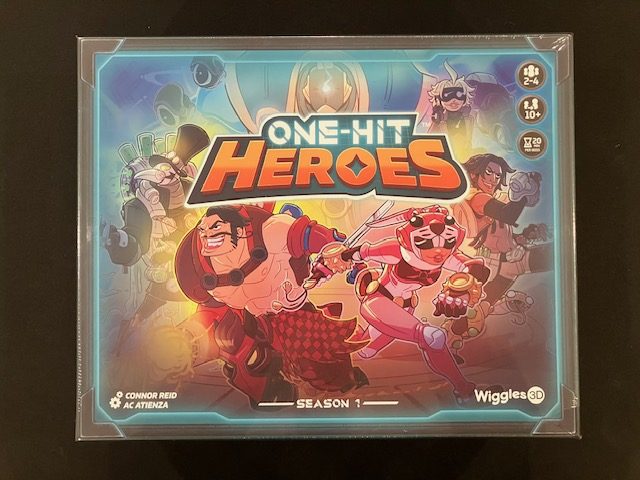
One-Hit Heroes is  cooperative boss-battling game I backed on Kickstarter back in April 2024.  It promised delivery in March 2025, and lo-and-behold, it arrived March 29, 2025!  So, it made it! Barely!

I hav to admit I was a little spicy with the delivery, as they literally left it ON THE STREET!  See picture above!  The package is literally on the street in front of my mailbox! Oi!

Luckily, everything was fine: the box and everything was in perfect shape.  (I got two little upgrades with the box; a epilogue box and an extra hero pack: see above).

I was pretty excited for this! This was #6 on my Top 10 Anticipated Cooperative Games of 2025!

Let’s take a closer look!

Unboxing

This is a medium sized box; see above and below for perspective.

It does have a slightly weird shape; it’s not a Ticket To Ride sized box.  However, it’s not too bulky or too awkwardly shaped.

It contains some cards and tokens, as well as three separate “Episodes”.  See above.

The components are all pretty high-quality. The cards are NOT linen-finished and are all very shiny.  That’s actually my major complaint with the components of the game; when playing, the games seems very “shiny”: the cards, plastic trays, are all “shiny” and can be distracting.

Rulebook

The rulebook is good.

The rulebook feels like it has a weird form factor (look how loooooong and thin it is above) …

… but when you open it up, it fits PERFECTLY on the chair next to me! See above!! The rulebook stays open, it’s easy to read, and there is no pages drooping over the edges!  One-Hit Heroes gets an A on the Chair Test! See above!
The Component page is nice; it shows and adds correlative text to everything.

The Set-Up page looks good and is easy to follow, for both the Heroes and the Boss.  See above.

It does a great job explaining the player mats!

Overall, the text is big, easy to read, has a legible font, and is annotated with many pictures describing play.  There are also parenthetical phrases notated for “extra information”.

The back of the rulebook could have been a little better, but whatever, this was a good rulebook.  It explained the game, showed the components and set-up, and was fairly easy to read.

Gameplay

Players work together to take down a boss; a single boss battle takes about 20 minutes (the box is pretty accurate in its time).  An “Episode” in the game is 4 to 5 boss battles, which each boss getting harder and harder.

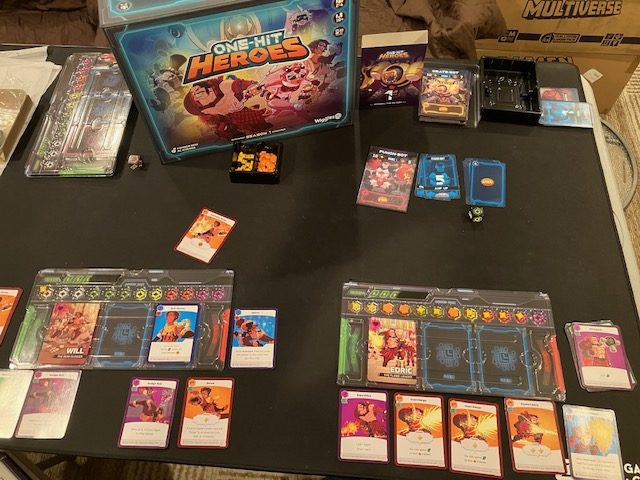
Each player takes and plays one character of the six above.  Each deck has 11 cards with very different personalities.  Take Sofia, for instance; her story is on the back of her card!

What do her cards look like?

See some of the cards from Sofia above.

Each player grabs a tray  (above) for their character and puts the cards into the tray (below).

As the game name implies (One-Hit Heroes), the Heroes can only take one hit before they die! Even more so, if any character dies, all players lose!  It’s up to the players to stop from getting hit!

Each character has two items slots for Items that “help” (see above), but arguably the Items are more important for stopping a hit!  Players can destroy an item to avoid a hit!  (Thematically, the item takes the hit instead of the character).

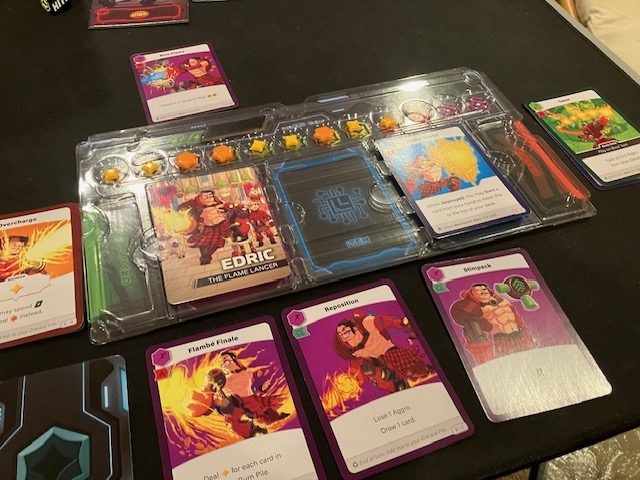
Items are a coarse way to stop hits; it’s usually better to stay out of way of hits if possible (since you only have two items)!  One-Hit Heroes uses a notion of an “Aggro track” for each hero.  See the track running left to right at the top of the tray? It’s empty for Will right now.

… but Edric (above) has a track almost full of Aggro!  Basically, the fuller the track, the more likely you are to incur the wrath of the boss and take a hit!

This is a boss-battler after all!  The Punch-Bot (the very first boss from the very first episode) only attacks when a Heroes’ Aggro is in the “red range”.  So, if the players can keep their Aggro low, Punch-Bot won’t even attack!

But, Aggro will go up.  Either from bad news cards  (like above) …

… or every Attack you do ups your own Aggro! If Sofia uses here Sidearm (above) to so one yellow damage, then does one damage to the Punch-Bot, but takes 1 Aggro!  Every attack you do that does damage causes Aggro back to yourself!

Luckily, each player has cards to manage Aggro; some cards (like Taunt above) will move Aggro around, and other cards will just discard it.    Every Hero has a different way of dealing with Aggro; some move it around, some discard it, some avoid it as much as possible, and some have cards that help others!  Each Hero has a different flavor of cards!

Interestingly, there are two different kinds of damage: yellow and orange (light and heavy damage, respectively).

To take out a boss, you have to do both all yellow and all orange damage.  Punch-Bot (above) needs to take 10 light damage and 5 heavy damage to take him out.

If players can defeat the Boss before said boss does one-hit to anyone, the players win! If the boss does one-hit to anyone (and it can’t be blocked or avoided), all players lose!  It’s a boss-battler!

Solo Play: Built-In Mode

The box is confusing; it implies there are no solo modes!  2-4 Players means no solo mode, right?  Nope!  There are actually two solo modes!

The first  solo mode is described in the Hero Set-up on page 3 (see above).  Basically, the solo mode is that the solo player has to alternate between two Heroes!  The solo description (above) is simple and very functional; it’s all you need.

For my first solo game, I played Will and Edric against Punch-Bot from Episode 1!  See above!

The game balance in this game is kept by having a Hero go, the Boss go, the next Hero go, and so on.  Basically, heroes and the boss alternate, so you can “kinda” have any number of heroes.

From a game balance perspective, I always worry that you need to adjust the hit points for the number of players … but since each Hero has exactly 1 hit point, that’s not really a problem here, is it?  Well, it didn’t seem to be: I was able to play all the way through Episode 1 (four boss battles) and I had a great time!  It was close; strictly speaking, as I lost a battle at one point, but it’s very easy to reset and play again since the game is only 20 minutes per boss.

This solo mode emphasizes that characters must work together to keep Aggro under control; in order to survive, both players will be doing things to move and discard Aggro.

Solo Mode 2: Do66-0 Pack

The second Solo mode does NOT come with the game; you must purchase the D066-0 Hero Pack (see above).

There is a little discussion of the DO66-0 pack (and a link) in the back of the instruction book.

Basically, the DO66-0 mode is a companion that you play in solo mode INSTEAD of a second Hero.

It’s much easier to play with DOGG-0:  DO66-0 gets a turn without having to provoke an extra Boss turn.    But, he also can’t do much, as he has no cards to play!  All he can really do is block and roll the damage dice … no cards.

In fact, it’s so easy to play, you can give DOGG-0 to younger players and have them play with you (that’s what Beginner Mode is).

I got to be honest, I didn’t enjoy DO66-O solo mode that much.  DO66-0 does very little on his turn: “about” one damage per turn, depending on what you roll on the damage dice. (He does add new stuff once you start drafting, and that does make him a little better).

I actually think the better use of DO66-0 is to bring in younger kids so at least they can participate; he’s so simple to play and kids can feel like they are helping.

I prefer the base (original) solo mode; it’s two characters and is how the game as meant to be played.  The base solo mode emphasizes how important the sharing and cooperation is in the game, especially to mitigate Aggro problems.    This DO66-0 solo mode was “fine”, but I probably won’t come back to it.

Cooperative Mode: Casual Gamers

My first experience cooperatively was with some casual gamers: my nieces.  We just played through a single boss: a 20-minute game.

The game was easy to explain to non-gamers!  They got the gist of the game pretty quickly, but needed a few clarifications.

I think my nieces liked the game and appreciated how short it was.  They did want to play again, but we ran out of time (it was like, Spring Break or something).

What I found: One-Hit Heroes is a pretty simple game to explain, even to non-gamers.  The hardest part was explaining some of the text on the cards, but even that wasn’t so bad.  My nieces like the game and would play again.  They also appreciated how simple it was to learn and play.

Cooperative Play: Gamers


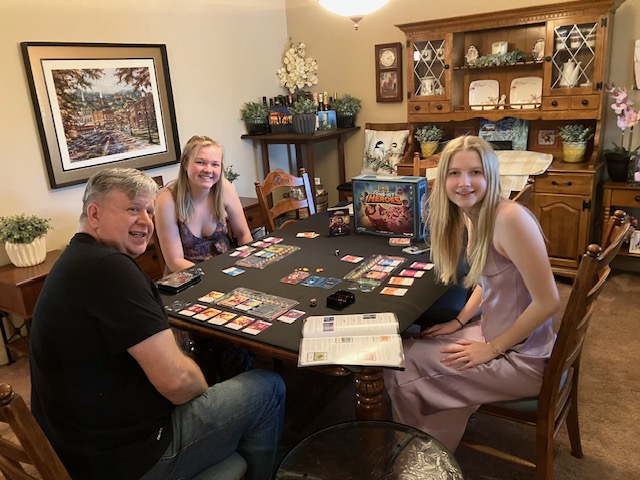
Me and a subset of my gaming group played through Episode 1 cooperatively.

One-Hit Heroes has a nice way of eliciting cooperation; you will lose if you don’t.  🙂 Maybe a better way to say that is that the game goes cause conversations to happen: “Uh oh! I am about to die!  Can anyone save me?  Should we do some stuff before the next villain?”

The cooperation seems to come out fairly organically; and thank goodness everything is open hand with full communications!  There’s no “oh, I can’t show you this because of limited communication“.  Nope!  People talk, people realize they might die, so people cooperate to block, steal Aggro (in a good way!), and try figure out the best way to move forward.

And the ability to see what’s coming ALSO helps!  By seeing the bad news coming up, but not actually here yet, seems to encourage discussion and cooperation.

Overall, the Episode 1 went well; we cooperated, we discussed, we planned, we had a good time.

Teresa was a 7/10, Andrew was a 6.5/10 (which is actually quite high for him).

Episodes

A single Boss battle is about 20 minutes.  If that’s all this game were, I’d be a little down about it.  Luckily, the Episode really fills out the game.  An Episode is a series of 4-5 related bosses, with upgrading happening between bosses!

Episode 1 has four bosses: see above.  All the bosses are all very different, and have very different arcs as you fight them.

Arguably the best part of this game are the upgrade decks!  After you defeat each boss, players get a chance to draft and add two new cards to their deck!

Skip the next few pictures if you don’t want too many spoilers.

Basically, the players “draft” and each get two cards to upgrade their deck!  This is basically deck-advancement like we saw in Adventure Tactics (see here): your deck gets better and better between games!

The decks are also labelled at the bottom right so you can separate them back to their original decks.

And after every boss, you get another 2 cards until you finish the episode!

I will say this: the game says to “draft” until you get two cards, but I think it might be more cooperative to just ‘decide as a group’ what you get.  This is the House Rule we implemented: let me and my friends choose the paths we want our heroes to take!  I understand why “drafting” works, because then you don’t have to worry about arguing over cards, Alpha Players telling people what to take, and so on.  But, if you have anything of a reasonable group, I would suggest just choosing as a group the cards you each want.  Caveat Emptor.  If you have a slightly contentious group (or are playing at a convention where you don’t know anyone), maybe drafting is the better solution.

I’ll say this again: the upgrades are probably one of the funnest parts of the game.  Unfortunately, your upgrades don’t travel with you between Episodes: you have to start fresh to a new Episode.

Things I Liked

Upgrades: Upgrading your deck is one of the more satisfying and fun parts of the game!

Arcs:  Given how simple this game is, the arcs on the different types of Bosses are all very different! It’s actually quite impressive how differently each boss plays! And fun!

Components: The components are pretty nice and I like art. It’s comic-booky and attractive without being too “cute”.

Simple: This game is easy to teach and easy to learn.  I found even casual gamers got into it pretty quickly.

What I Didn’t Like

Too Random: The game can be too random.  I lost a few games because of one die roll.  It’s not too big of a deal because it’s just 20 minutes per game, but it is frustrating that an entire game can go amiss because of one die roll!

Too shiny: It’s too hard to capture in pictures, but the game is too shiny.  The cards aren’t linen-finished, so they tend to have glare, especially in harder light.  And the plastic trays also have a lot of glare: I tried to capture some of that in the picture above.  I think this game would be a lot better with duller, linen-finished cards and a tray that was less shiny.  The glare was distracting enough that we had to point it out.

No Continuations? As cool as the Episodes are, and even thematic within, the game game doesn’t feel super thematic.  While there is continuation within an episode as you keep getting upgrades, there’s no hook that keeps you vaulting into the next episode: remember, you lose ALL your upgrades between episodes, so you start fresh.  That actually feels a little debilitating!  I’d rather the episodes built on each other you felt the deck was YOUR CREATION … as it is, you start anew every episode.   There’s no “hook”: your deck resets and you start over.  Kind of a bummer? I just spent the episode building my deck … and now it’s gone.

Conclusion

One-Hit Heroes fits well into many groups; casual gamers, gamery gamers, and even solo gamers!  The base game is easy to teach and play at 20 minutes, which makes it easy to bring out.  My favorite part of the game, though, was upgrading my deck within an Episode!  It’s fun to figure out how you want to advance your character!

The game looks great on the table and has a fun table presence!

My only real complaint is that I feel that there’s a theme or overriding reason to keep playing after I finish an Episode. I really like the upgrading my deck between Bosses in an Episode, and it’s sort of frustrating that you just “throw it all away” at the end of an Episode!

As a solo player, I’d probably give this a 7.5 or 8/10.  The game is much more fun, I think, as a cooperative experience at an 8.5/10.  It would actually give it a little higher score if the dice rolls didn’t make or break so many games!  But, since the game is so quick at 20 minutes per game, it’s usually not a big deal. 

Neat game.  I think you’ll have fun with just about any group you bring it out to.

A Cooperative Traitor Game? Wait, What? A Review of Infiltraitors

If you are like me, when you first heard the description of Infiltraitors, you thought, “Wait, What? Is this a cooperative traitor game?”

Look at the back of the box above! “Enemy Spies have infiltrated the Organization!  It’s up to you to work together to expose and eliminate all the traitors before it’s too late…”  That sounds like a cooperative traitor game, but the next line tells the real story:  Infiltrators is a cooperative deduction game for 2 to 5 players”.

Ah, it’s a deduction game!  But it really has a feel of a traitor game like Avalon!  Players are going on missions, deducing things about traitors … that sounds like the traitor game, Avalon, right?

I think the game’s title misspelled Infiltraitor on purpose to imply there are traitors in this game.  The real spelling should be Infiltrator.  I really think they did that on purpose to imply this is a cooperative traitor game … I think they mean it to replace something like Coup or Avalon.  Does it?

Let’s take a look!

Unboxing and Gameplay

For a mostly card game, this has a surprising number of cardboard components! It’s also a pretty small box (about the size of Avalon or Coup maybe?) See Coke Can above for perspective.

The bullets are a limited resource for how many “guesses” you have to find the traitors!  The gun is just a silly gimmick!

When you are ready to Eliminate a Traitor, you must physically pick up the Gun and a Bullet and “make a guess” what the traitor is (I used what instead of who … you’ll see why)!  I think the idea is that you must be very clear that you are making a guess, and picking up that gun makes it very clear to everyone!  If you are right, you eliminate that traitor and you are closer to winning! If you are wrong, … well, you have wasted a bullet … hopefully you have enough bullets left to take out the remaining traitors!

As clues come out to identify the traitors, players mark off the Clue Boards: see above.  There will be one clue board per suspect.

The rest of the game is in the cards.  There are (up to) 5 different suits, each with numbers 1-15.

There are a number of Suspects (face-down cards), depending on the Mission and number of players.  The player’s job: use clues to find the identity of all the Suspects before you run out of bullets!   If it isn’t clear, you are “eliminating” the infiltrators with bullets!

There are 20 missions described in the rulebook; they get harder and harder.  (No state is saved between Missions; each Mission is a brand new game).  The first mission, a tutorial, describes how the game works: see above!

Some number of cards are taken from the deck and turned FACE DOWN: these are the Suspects the players must cooperatively identify.    (The first Mission has only 2 Suspects: see above).

One player becomes “responsible” for  a suspect and will reveal information about the suspect as the game goes on.

Each player will have a hand of cards and use those to help reveal information about a Suspect.

To Eliminate a suspect, the players must guess the color and rank of the face-down Suspect!

How do you guess the Suspect’s color and rank?  A player will place a card down; if the color matches OR the rank matches the number or factors or multiples, then it’s considered a match!  All matches are turned up-and-down!  The lack of a match turns the card sideways.  See above as the guess yellow 10 is turned up-and-down!  It’s a match!  But does it match the color? Or maybe it matches the rank exactly?  Or it’s a multiple of 2 or 5 or 10?   This is where the deduction kicks in!  You have to use the cards you have to try to slowly deduce what the Suspect is!

It takes a little getting used to matching the multiples and factors, but luckily every card in the game lists ALL the factors and multiples it uses!  So, it seems harder than it is; once you get used to it, it flows quickly!

To be clear, one player knows who the suspect is, and all the other players are giving clues (placing cards) to help deduce!  Nominally, each player tends to take responsibility for one or more Suspects, but it’s dynamic! Players can choose when to take a Suspect and become “responsible” for it as the game flows.

If you eliminate all Suspects, you win!  If you run out of bullets, you lose!  The Infiltraitors win!

Solo Game

There is no solo game! See above: this is only for 2-5 Players!  However, this would be an interesting game to apply The Changing Perspectives idea to!  See a link here for The Changing Perspectives Idea!  Since all information is public (the clues are all public: there’s no implications or subtle innuendo), you can make deductions solely based on the information presented.

I leave this an exercise to the reader: I think you can play this solo if you want to! Much like Shipwreck Arcana (see review here), this is a deduction game where you can pretend to play both sides, using only public information for deduction.  If you get to a point where you have to randomly choose something (you are out of cards, and only one one bullet left), you can always roll a dice to decide the outcome.

Cooperative Game

As a cooperative game, this went over pretty well.  The first time we played, we played through the first three missions and had a blast!

It’s sort of ridiculous how much fun the gun and bullets were!  It sort of drew us into the game!

The first few missions are pretty straight forward, just getting a little harder each time.  You use more suits (which makes the color harder to guess) and more ranks (making the rank harder to guess).

This game came out two weeks in a row!  For a little card game, it was surprisingly popular in my game groups!  See above and below!

The cooperation worked really well; people would say “I know how to get that suspect!  You work on the other one!”  The fact that there are multiple suspects in play really also worked well—players could choose where to spend effort, both individually and cooperatively.

The Sticking Point

The game doesn’t quite explain matching rank very well … and it’s the most important part of the game! There are two basic interpretations, which the example (in the rulebook) DOES clarify.  Consider the following example: Do these two cards below “match”? (Obviously, they don’t match in color, but what about rank?)

Interpretation 1: If the lists of numbers on both cards has some number in common, they match!  Under that interpretation, the two cards above match!  (6 has 2,3,6,12;  9 has 3,9:  Both have a 3! They match!).  (((TO BE CLEAR, this is the WRONG interpretation!!!!)))
Interpretation 2:  If the hidden card (on the right, say the 9) LISTS the other card, it’s a match!  In this case, it’s NOT a match, as 6 is NOT in the list of number on 9: (3, 9).  They DO NOT match!

If you go in with Interpretation 2, that seems to be the rule as clarified by the rulebook (see above).  It took us a few games to “get” this rule.  This is possibly the biggest bugaboo that may make people dislike the game if you can’t get this rule about matching!!   I think the best way to “explain” the match rule is via Interpretation 2 of the rules above:

The Suspect card will list all the cards that it matches“.

With that simple explanation, the match rule goes from baroque to simple.  And I think it will open it up to players who might be “scared away” by discussion of factors/multiples and math!!

Traitor Experience

After bringing this out at a second game night and playing through the game with a new group, we were able to solidify our thoughts:  This feels like a traitor/social deduction game like Coup or Avalon because you are trying to deduce the identity of the traitor!  That feeling of trying to deduce “Who is the Traitor?” is really captured by this game … without being a traitor game!

I don’t really like traitor games.  They have the Disparity of Experience problem (see here) where people who have played more than you will have a distinct advantage.   And I don’t want to lie, yell, scream, accuse with my friends.  I just want to work with them and have fun!  If you like the process of trying to find the traitor, that deduction process, I think Infiltraitors really captures that feeling!   Granted, Infiltraitors replaces social deduction (which has its own flavor of play) with plain deduction, but I think Infiltraitors does a pretty good job of replicating that social deduction feeling in a purely cooperative game.

Conclusion

Does Infiltraitors  (a fully cooperative game that’s nominally about traitors) replace Coup or Avalon (games with traitors?)  Infiltraitors does a pretty job replicating the experience of finding traitors!  It may not quite your cup of tea, as it replaces social deduction with plain deduction, but if you like the idea of finding traitors but don’t like all the social baggage of traitor games, Infiltraitors might be right for you!

I think me and my groups would give this an 8.5/10!   We enjoyed it!  It was easy to get out, easy to play a few games, and it was a fun experience working together!

BUT, if you pull this out, be very very clear explaining the match rule to new players or you might scare them away!  The talk of factors and multiples may scare them away!  Don’t explain it that way, and don’t even bring it up!  Just explain the Suspect card lists all the numbers it matches; easy-peasy.

If you are looking for a game to replace Coup or Avalon, this might a really good possibility. It still feels like you are hunting traitors, but replaces the social deduction framework with a deduction framework, and it does so in a fully cooperative game.

A Comparison of Three Methods For Flattening Your Board Games

What do the three games above have in common?

If you said “They are all cooperative games“, well, you are mostly correct! (Comic Hunters isn’t cooperative by default, but there is an expansion that makes it cooperative! See here). This is a place where we talk about cooperative games, so that’s a good guess.  But there’s something else they all have in common: none of their boards sit flat! See above and below!

You can really see it on Comic Hunters (above): that board just does NOT want to lay flat!

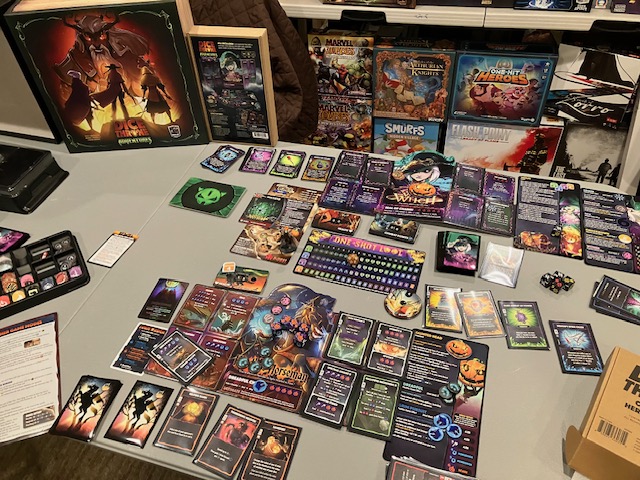
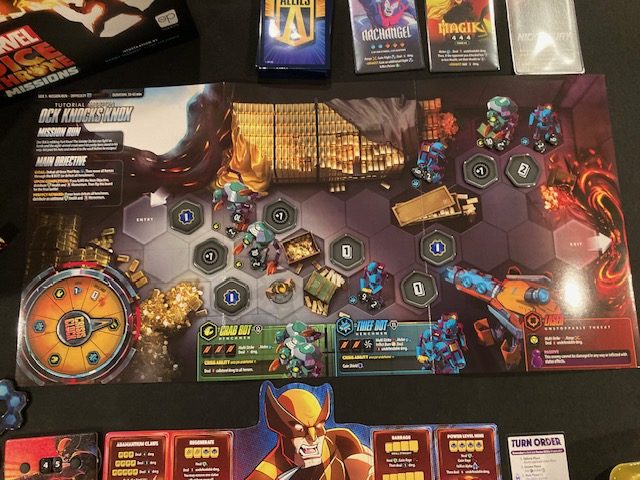
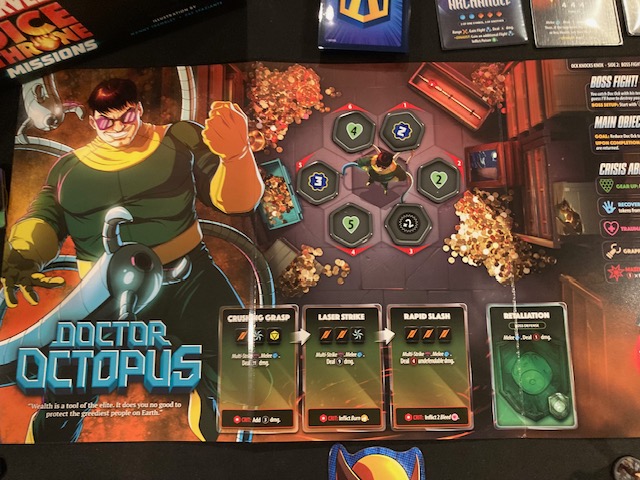
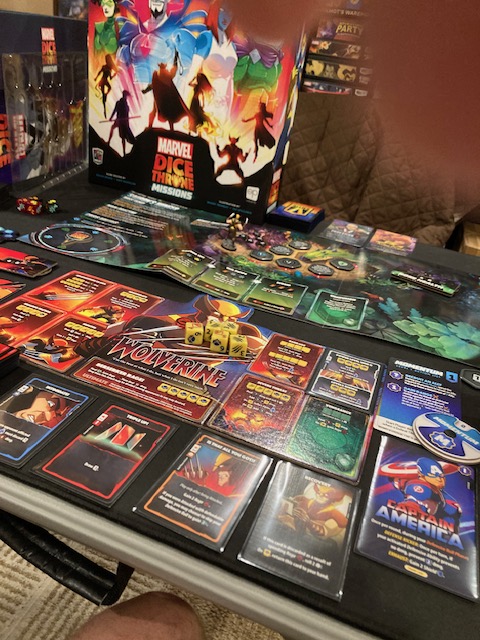
It’s weird, we never thought too much about boards not being flat enough,  but we encountered this problem a number of times in the last few years: Comic Hunters, Plum Island Horror, and Dice Throne: Missions!  These games really emphasized that sometimes a game board needs some flattening.

We’ll take a look at three different (cooperative) games and three different solutions to this problem!  The games of interest all have boards that don’t lay flat!  And they are all different sizes! See above!

  1. Plum Island Horror:  Very large 8-fold board
  2. Dice Throne: Missions:  Medium size 3-fold laminated sheets
  3. Comic Hunters: smaller 3-fold board

Solution 1: Board Butler

The Board Butler is a product specifically designed for the problem of boards-that-don’t-lay-flat.  I have seen advertisements on BGG, so I knew this existed.  I ordered it from their web site and it arrived within a week.  It was like $19.99 + taxes and some shipping (but for some reason I got free shipping).

These are basically little plastic piece you put at the edges to force the board flat.

See Comic Hunters with The Board Butler above.  It only needs 4 of the 6 pieces.

It works pretty well and it was easy to put on: no issues on Comic Hunters.

The Board Butler pieces are small enough that I need 4 pieces for the Dice Throne:Missions board: one at each edge.

See above.  The clear nature makes them relatively uninvasive.

They work well and keep the board flat.  Arguably they could obscure the text at the very bottom, but they don’t seem to.

Finally, let’s look at Plum Island Horror!

For Plum Island Horror, we have to use all 6 of the pieces, which means I can’t put them on the long ends.  This doesn’t strictly need another 2 pieces, but it might have been nice.

The Board Butler pieces work well: they hold the board down, and they don’t get in the way.

Basically, The Board Butler worked pretty well on all three games.  The weakest was Dice Throne: Missions because the Missions boards are thin laminated boards, so they didn’t fit as tight.  They fit securely (but not too tight) on Comic Hunters and Plum Island Horror.

Solution 2: Report Binding Bar

These Report Binding Bars are those little plastic sliders you put onto plastic report sheets.  See above and below.

I found a thread on BoardGameGeek that recommended these: see thread here.  You can order them here:  I got 30 of them for $13.99 plus taxes and shipping.  See above.

On Comic Hunters, they work great!  They are actually being long enough to cover both edges!

The only real complaint is that they are tight.  I was “worried” that by sliding them on, that they would TEAR the board!  They did not, but I was also very careful!  If you go with this solution, you may want to use your finger to “force” the bar open so it’s less tight:

See above as I jam my finger in there to “loosen” it up.

On Dice Throne: Missions, these are the best by far!  They hold the board tight, and they even cover both edges with one piece!  See above! I only needed 2 of the 30 pieces to hold this board together!

These just slip on easily (no chance of tearing since the boards are laminated) and hold the boards stiff and flat.

Finally, we use these for Plum Island Horror. We need 4 of them to hold the board down: see above.   Again, like Comic Hunters, these were a little scary to use because it “felt like” they might tear the board as I put them on.  So, I was very careful.

In all three cases, these held the board down and flat very tightly.  They were the cheapest by far, at 30 for $13.99, so you could easily share the cost with friends.  You probably only need to 6 each!  Even with with Plum Island Horror, you could get by with only 4!!

UPDATE: After sliding these on again and again and again on the Dice Throne: Missions boards, they started to show “slide marks”.  That is worrisome.

Solution 3: Giant Plastic Overlay

From the same thread on BGG where we got the Report Binding Bar, we also found a link for these giant pieces of plastic you can just “plop” on the board and force it down!  See Amazon link here! You get TWO pieces, but it’s $37.99 plus shipping and tax.

You just put it over your board game and “smoosh” it flat!

It turns out it also has a pocket, so if your game fits, you can just put the board inside! See above as Comic Hunters fits!

It works, it keeps Comic Hunters flat, but the plastic overlay is a bit distracting.  It’s especially shiny.

The Dice Throne: Missions boards fit in almost perfectly and look good and flat.  See above.

Plum Island Horror is WAAAY to big for a single overlay.  Luckily, when you order this, you get TWO sheets.  Two sheets work:

The problem is you CANNOT fit this board  inside the envelope (see above) , so they simply have to lay two of them on top.  Since the Plum Island Horror board is so “hefty”, even this solution had trouble keeping the board flat.

In general, this was the worst solution. It was the hardest to see, because it was so reflective, and it was by far the most expensive.  And, for the largest board, it required TWO Sheets.

The only advantage of this solution is that you can WRITE ON THE PLASTIC with a dry-erase marker!!  See above.  If you want to “annotate” your boards, at least you can do that with the overlays.

Conclusion

Which solution you gravitate towards depends on what you want!  The cheapest by far was the Report Binding Bar: it worked on all three boards well, except that it was tight on the thicker boards.  You could order 30 of them and split them between your friends for $13.99!    The best overall solution was The Board Butler; it worked on all boards well, even if it wasn’t “quite as tight” for the Dice Throne Missions board.  The Board Butler was high-quality and I never felt like it was too tight.  The Overlay was probably the weakest solution: it was the most expensive (as you needed two overlays for larger boards like Plum Island Horror), it was very reflective, and it is harder to store!  The Overlay, however, did had the unique advantage that you could write on it if you needed to!

If I were only getting something to fix the Dice Throne: Missions boards, I might get the Report Binding Bars. If I wanted something more general, I would get the Board Butler.  If I wanted to annotate my board with dry-erase markers or keep water off it, I might consider the overlay to help keep my board flat.  It’s up to you.

UPDATE: After seeing the Report Binding Bars starts to leave skid marks on the Dice Throne: Missions board, I think I strongly prefer the Board Butler over the binding bar, even for Missions.

Top 10 Cooperative Light/Party Games of 2024!

IMG_8944

What’s a party game? A party game is usually a casual game you can pull out with a fairly large group of friends and jump right into!  Many, if not most, of the cooperative party games we see are Cooperative Guessing games, where the players collectively guess something based on clues from a clue-giver! 

Surprisingly, the year of 2024 produced quite a number of cooperative party games! That’s right; cooperative party games! And most are Cooperative Guessing games! We saw some really good party games on the Top 10 Cooperative Party Games list … and here’s 10 more below just from 2024!

10. Word Traveller

IMG_8957
Player Count: 2-5
Ages: 10+
Time: 30-45 Minutes
Type: Cooperative Guessing

IMG_8958

Like many of the games on this year’s list, this is a Cooperative Guessing game!  In this game, a clue-giver will give word clues to “guide” the others around the board, trying to get to a destination on the board!

IMG_8959

This feels a lot like the cooperative word guessing games Mystic Paths or Landmarks (see below), as you use words to imply directions to travel.  What makes this a little different is that the words you choose refer to tourist spots in the maps!  There are 4 maps in the game for London, Paris, New York City, and Tokyo!  See below for the map of London!

IMG_8962

This is a real unique game and has some really neat idea in the crowded cooperative word guessing genre!  

9. Landmarks

IMG_1074
Player Count: 2-10
Ages: 10+
Time: 20 Minutes
Type: Cooperative Guessing

IMG_0980

Landmarks is a cooperative word guessing game where one player gives word clues, trying to guide the rest of the playing (cooperatively guessing) to water, treasure, and finally the exit!  This game is very similar to a game called Mystic Paths where players are moving across a map of hexes.

IMG_0982

There’s also elements of Codenames in here, as the clue-giver has a hidden map as he tries to guide the players around the map!  

IMG_8944

We have played this game with several groups, and it seemed to go over pretty well!  It takes a few plays to get the sense and spirit of the game, but once you do, it is fun.  Some people didn’t love this (because sometimes it was just too vague or the map is wonky), which is why it’s lower on this list.   The components are quite nice (with the cloth map and dry-erase hexes), and it was generally fun!

8. Adventure Party

IMG_4853

Player Count: 3-8
Ages: 10+
Time: 20-60 Minutes
Type: Cooperative Guessing

IMG_4887

This looks like a role-playing adventure game (see picture above), but it’s actually a role-playing game PARTY game!  It even says that on the cover! 

IMG_4891

It’s quite silly as a game; a player will have to do an activity and then roll a 20-sided die (secretly) behind their character shield (see above).  The Berserker has to open the door; what does a “19” mean?  The player then roll-plays what they do (based on the number they roll) and the other player have to “guess” what the roll was on based on what they roll played!  It’s a silly game that just gets sillier as you play it!

IMG_4860

In fact, it’s so simple to play this that the directions for how to play are summarized very well on the back of the box!   See above.  My friends and I had fun playing, pardon me, ROLL-PLAYING this silly adventure party game.

7. Message From The Stars

IMG_4351

Player Count: 2-8+
Ages: 11+
Time: 45 Minutes
Type: Cooperative Guessing

IMG_4613

So, this is another cooperative word guessing game, but it has elements of math and it is quite thinky.   I love this game because it’s so unique and interesting, but some people just bounced off it because of its weird blend of math and wordplay.

IMG_0391

Players plays as two teams; a team of aliens trying to communicate with a team of humans!  Teams communicate single words to each other to establish some ideas!  What letters you use in your words matters, as well as what concepts/words you are trying to communicate!  It’s great fun with lots of deduction … if you grok the game.

IMG_4364

This is a great game that can play 2-8+ people, and you can pull it out casually … once everyone knows how to play.  The biggest problem is that it takes some brainwork and time to figure out this game.  This is probably the most thinky game on this list, and why some people might not classify this as a party game .. which is why this is only #7 on this list, despite how good a game it is.  See our review of Message From The Stars here to see if you might enjoy this! (Remember, Codenames is classified as a party game, and it’s quite thinky too!)

6. Expressions

IMG_0951

Player Count: 2-5
Ages: 14+
Time: 15 Minutes
Type: Cooperative Guessing

IMG_0955

Many of the games on this list as cooperative word guessing games; this is a number guessing game!  This has a lot of deduction as players can either guess a card a player might be holding (like cooperative go-fish) or give a clue (which feels a little like The Crew).

IMG_0956

This is basically a cooperative go-fish game with elements of deduction/clue-giving (ala The Crew).  It’s probably the second most thinky game on this list (after Message From The Stars).  But this is easy to pull out, quick to explain, and quick to play at only 15 minutes! It does take a few times to get the hang of it, but people seem to want to play again!

IMG_0957

5. Da Da Da

IMG_1075

Player Count: 2+
Ages: 8+
Time: 15-30 Minutes
Type: Cooperative Classification/Guessing

IMG_8953

This is an odd duck of a game. Players take a bunch of black and white pictures and collectively classify them using only a few words, like “DA” and “BLUMP”.   Basically, the group is coming up with a language for describing shared traits using a few very simple words.  These few words are the ONLY communication that players are allowed!

IMG_8859

In the first part of the game, the players collectively classify all the pictures together using only those few words (like “DA” and “BLUMP”) as they point and move pictures.  In the second part of the game, new pictures are introduced and the players have to try and figure out, using only the new language of those few words, the new thing.    As long as you have a group that doesn’t annoyingly repeat the weird little words ad naseum, this is a fun game … it’s almost a linguistics experiment!  

It sounds like it can’t work, but my group really enjoyed it!  This is one you might want to try before you pick it up; some people will be annoyed by it, some people won’t get it, but some people will love it!  Our groups loved it!  Maybe yours will too!

4. Link City

IMG_8955

Player Count: 2-6
Ages: 8+
Time: 30 Minutes
Type: Cooperative Guessing/Classification

IMG_8956
This is a game that I didn’t like as much as everyone else, but it was such a hit for everyone else, I had to put this on the list!   One player (the Mayor) puts city Locations out, and the other players have to guess where he would place them based on the locality to other Locations in the game!

IMG_8004

The Mayor rotates every turn, so a new player has to decide what Locations go where!  It’s all about building the municipality, but with some real silly decisions!

IMG_7991

My friend Kurt loves this game and we’ve played it a number of times when he has come to visit!  If this sounds like fun, I suggest you give it a try!  A bunch of people I know and like really like this game!

3. Spotlight

IMG_8856

Player Count: 1-5
Ages: 6+
Time: 15 Minutes
Type: Cooperative Searching

IMG_8857

This is such a neat game!  It’s a very simply premise as players search a shaded picture for certain figures, counting them up!   Each player needs to find them independently on their own sheet!  If they find “enough” together, they can stay ahead and win!

IMG_8858

The sheer fun of this game is the clever sheets that are have darkened plastic.  When you place a white surface underneath, the picture comes apparent!  See the “fully darkened” picture above … and the picture with a white spotlight below!  

IMG_1011

There is no batteries or magic technology here; it’s just a white surface underneath making the plastic easily viewable!

IMG_1012

This game has worked really well in so many situations!  I have played with little kids (like 5 years old) and older adults, and big kids, and even though this “looks like a kid’s game”, people really love the Spotlight mechanism!  It’s just so cool!

IMG_1032

2. Wilmot’s Warehouse

IMG_6511

Player Count: 2-6+
Ages: 8+
Time: 30 Minutes
Type: Cooperative Memory/Cooperative Guessing

IMG_6521

Wait, this is a cooperative memory match game?  Yes, and it works surprisingly well!  This is probably Sara’s favorite game of all the games on this list! 

IMG_6516

Players draw tiles from a bag and cooperatively “come up with a story” for the shape and place it in the warehouse.

IMG_6520

After placing a bunch of tiles down, players must try to cooperatively remember what tile was what by trying to match other tiles to it!  It’s wacky and the stories people come up are really funny!    It’s surprisingly goofy, but it’s really easy to explain and jump into! See our review here to see see why Wilmot’s Warehouse is much better than you expect!

1. That Escalated Quickly

IMG_8951

Player Count: 2-8
Ages: 10+
Time: 15 Minutes
Type: Cooperative Guessing

IMG_8952

This was a bit of surprise as our #1 choice for the best cooperative party games of 2024, but it just kept coming to the table all this year!  And we all loved it! Players get asked a silly question like: “What do you tell a vampire to get him to turn you?”  (See back cover above for more questions)  And then everyone gets 1 (or 2) cards from 1-10, and everyone has to answer that question so that 1 is least likely to get turned, and 10 is most likely! But without revealing their number! (Much like Adventure Party from earlier)

IMG_8946

The guesser has to take all the answers and sort them from lowest to highest .. if they get them all in order, it counts as a point!  (You can have upto one mistake)  

IMG_8945

Like all good party games, the points don’t matter, and you just keep playing, not really caring if you win or not!  This is a mass market party game from The Exploding Kittens people; I picked it up at Target, so it’s really easy to find!  Check it out!  Hopefully you will enjoy it as much as we did!

Fellowship of the Crew! A Review of Lord of the Rings, The Fellowship of the Ring: Trick-Taking Game

This is a mouthful of a title: The Lord of the Rings, The Fellowship of the Ring: Trick-Taking Game.   See the full title above!  BoardGameGeek lists it as The Fellowship of the Ring: Trick-Taking Game. Whew! We’ll stay with the “shorter” title.   

I ordered my copy directly from Asmodee, and it arrived mid January 2025.  I tried VERY hard to get the game as soon as it came out!  I was very excited for it!!  I saw a TON of reviewers get it earlier in 2024, but as a plain-old boring paying customer, the earliest I could get my copy was straight from Asmodee’s web site in January 2025 (after pre-ordering it back in November (?) 2024).

So, what is this game? It’s a small-box game for 1-4 players, Ages 10+ with a “listed” playing time of 20 minutes. That time is reasonable accurate for describing a single game, but this is, at its heart, a campaign game! So, it’s a campaign of 18 chapters, and each chapter can have multiple games. So, a chapter is “not necessarily” one game, but many times is. (After you complete the campaign, there is a standalone mode so you can continue playing).

This game (you’ll notice I am staying away from saying the full name) is a cooperative trick-taking game! Players work together to take tricks, but under certain conditions! One of the biggest parts of the game is that it is a Limited Communication game: players are not allowed (in any way) to discuss the cards in their hands as they play. All they can do is deduce what other people have by what cards they played.

Those of you paying attention might say “Hey! That sounds like the Crew! That’s a cooperative trick-taking game too, right?” Yup! We liked The Crew quite a bit, as it made the #2 position on our Top 10 Cooperative Space Games! There’s a lot of similarities between the two: they both have ongoing campaigns that start easy and get harder, they both are smaller box games, and they both are Limited Communication games. The best description of Fellowship of the Ring: Trick-Taking game is Lord of the Rings meets The Crew. But there are some interesting differences, which we will discuss!

Unboxing and Gameplay

This is almost exclusively a card game. There are 3 decks in the game: the intro deck (far left), Part I deck (first 12 chapters) and Part II deck (last 6 chapters).

So many cards. See above.

There are some tokens; the purple tokens are used to notate “required” characters: when you play, ever player must take a character, and certain characters are required for certain chapter. The big Ring card is used to denote when Rings have been played, and thus allow leading with them (see more discussion below).

This a trick-taking game, so there are suits. Rather than “boring” hearts, spades, diamonds, etc, the suits are thematic Shadows, Hills, Mountains, Rings, and Forest. See above.

Each player will assume the role of a Lord of the Rings character (you may assume multiple characters depending on the player count).

Each character has a win condition: in order to win a game, you (usually) hav to satisfy all characters’ winning conditions!!! Notice Frodo’s “win” condition: he must win 4 or more of the Rings cards in the tricks he wins.

Pippin’s win condition is to win the fewest tricks: see above.  You’ll also note that at the start of the game, some characters are allowed to “exchange” cards with other characters.  You can’t still talk about your cards in hand, but you can give away obvious cards.  For example: you really don’t want Pippin to have too many high cards (since he has to lose most tricks), so you may give away an 8 of Hills.

An interesting rule of the game is that a player can’t lead with a Ring card unless a Ring has already been played into a previously won trick (by being sloughed off when a player couldn’t match the lead suit).  The Ring token is on the black-and-white to show: “Nope: you can’t lead a trick with a Ring suit“.

Once at least one Ring has come out, then Ring cards may be lead!  See the colorful side of the Ring above!  It now means “Yep! You can lead tricks with Ring cards now!“.

There are lots of little special rules in the game. For example, after dealing out all the cards, one card is always “lost” (to make the math work, there is always one extra card). But Gandalf has a special rule that he can take the lost card into his hand!

Each character is dealt a hand of cards and uses those to play a trick-taking game! The holder of the 1 Ring always starts the game. Frodo is almost always in play, and he always starts with the 1 Ring: see above.

Players continue playing until all their win conditions are satisfied … and they win! If, at any point, the win conditions can’t be satisified, the game is lost. In the campaign, losing means you just play the same game again until you win (usually).

A winning game moves to the next … game.  In the beginning of the campaign, that usually means the next Chapter: these are called “Short games” (see below).

Later in the campaign, you may have to play multiple games to advance to the next chapter.  These are called “Long” games (see below).

If you can get through all 18 chapters of the campaign, you win!

Solo Play

There is a solo mode for the game! (Thank you for following Saunders’ Law!) Given that The Crew (the game that this will be compared to over and over) DID NOT have a solo mode, this is huge!

The solo mode has very different rules than the main cooperative game! During the main cooperative game, all cards are dealt out, and the players (cooperatively) make decisions about what to play based on what they see in their entire hand! See above as a cooperative player has a whole bunch of cards!

In the solo game, the solo player assumes the role of 4 of the characters, and only gets “part” of each hand (4 cards each to start)! See above as Chapter 1 has the solo player playing 4 characters with 4 cards each!

Each character gets 4 cards (see above) and will get a new cards after a trick is taken! So, the solo player has to decide how to play cards based on seeing ALL Characters cards, but not all cards per hand!

So, this is a solo mode which requires the solo player to operate 4 characters! Normally, I worry about the intellectual overload, the context-switching between characters, and general maintenance. But it’s really not an issue here! Each character is very simple to operate: they don’t have special powers, they simply have a special winning condition. It’s really easy to look at the board (see above) and get a sense what each character should play!!

The solo mode requires you to look at all the cards in all the hands of all the characters and make decisions to achieve their win goals. That sounds daunting, but it really isn’t. You know EXACTLY what each character will play; what you don’t know (for sure) is what card each character will get next. The randomness in the solo game is based on what card each player gets next round. I never found this randomness too debilitating. I had a few games where the cards went against me, but it was easy to replay that game … remember, this is a 20-minute game, so any randomness in the deals (even if it completely sucks), will be over soon and you can play another game.

Said another way, I didn’t think there was too much randomness in this game to make me dislike it.

To emphasize the point that this is an easy game to get into, let me tell you that I played through the entire 18-Chapter solo game when I was sick! I wasn’t at my best, but the LOTR trick-taking game is really easy to get into! Each game is “only” 20 minutes or so, so when I got tired when I was sick, I could go take a nap, and come back again!

Let’s be clear, even though the solo game is easy to pick-up, easy to play, and easy to keep coming back to, there’s still a lot of engaging decisions! Part of the reason I liked the solo game so much was that it was engaging and “distracted” me from being sick!

The amount of manintenance as you play the game is pretty minimal; it’s real easy to play solo. But there is a lot of maintenance between games: Honestly, the worst part of the game is the constant shuffling. You need to make sure you do a really good job shuffling the cards, because a bad shuffle may cause you to lose the game! So, I ended up doing a pile shuffle after every game just to make sure thing were shuffled!

As a solo game, this game is a huge win! It’s easy to learn, easy to play, and engaging enough to keep coming back to! Like I said, I played the entire 18-Chapter campaign solo when I was sick, and it was great! It’s easy enough to play when you are “distracted”, but fun enough to keep you engaged!

Major win for having a solo mode: What’s the score?
The Crew: 0, Fellowship of the Ring: Trick-Taking Game: 1.

I liked the solo game, and even though I have defeated the entire game, I will keep it in my collection to play again solo.

Cooperative Mode

So, there are actually several cooperative modes based on the number of players. It “feels like” the best way to play the game is 4-Players (or 3-Player). (The 2-Player game is really very different; I can’t comment on that as I never got a chance to play it. I have to admit the 2-Player mode looks very daunting).

My 4-Player group sat down and played though 12 games (8 chapters) in one night over 3 hours! They won most games pretty handily, but it kept getting harder and harder! By game 8, they had to replay it 3 times! Game 8 features Tom Bombadil pretty prominently, and the joke was that game 8 was just as annoying as Tom Bombadil!

The major differences between the solo and 4-Player cooperative game:
1) The solo player sees all hands, but only a limited number of cards
2) The cooperative player sees all cards in their hand, but only can see their hand

The Limited Communication rules are VERY Clear from the rulebook: you pretty much can’t talk about anything except public information, such as player’s winning conditions and special rules.  Anything in your hand can’t be discussed AT ALL!

After playing through 8 Chapters, my friends basically said they liked this better than The Crew and it was more thematic! They liked the art, the cards, the character win goals.

The Crew: 0; Fellowship of the Ring: Trick-Taking Game: 2 (theme, art)

I like to point out that the Crew has the “very limited communication” with the communication tokens.  I actually prefer that part of the Crew: I don’t love that there is NO communication really in this game (but see below). Recall, in the Crew, every player “can communicate” once at a critical juncture with “highest card” or “lowest card” or “only card.  There is no such mechanism in Fellowship of the Ring: Trick-Taking Game: the rules for limited communication are pretty brutal.

The Crew: 1 (has some critical communication); Fellowship of the Ring: Trick-Taking Game: 2 

One Ring To House Rule Them All

Let me tell you what happened in the 4-Player cooperative game: when choosing characters to play, my friends ended up talking a little about which characters to choose. “Oh, I should probably be Pippin, my hand sucks.” “Ya, I can be Tom Bombadil I guess”. Here’s the thing: the rules are VERY CLEAR that they can’t do that!

I read the rulebook aloud to my friends: this explicitly say they can’t do this …
“During setup, players should not discuss character preferences, as this may reveal information”

My friends hated this rule! This is the one and only chance to really communicate on the game, and they felt like it made the game more fun! “Give us SOME choice! This is a house rule for us!”

I didn’t mention this, but I ended just watching and shepherding my friends through 8 chapters (I was the fifth wheel and didn’t play). And watching my friends “discuss” which characters to play seemed to engage them and made them talk! They REALLY had fun picking characters! I think it also gave them more “skin” in the game, as they weren’t just “saddled” with a character, they had a choice in the pick!

It’s very explicit in the rules that players can’t reveal any intent on characters, but I think that’s a mistake. I think the game is more engaging and more fun if players have some choice there! Honestly, this helps combat the problem I have with this game: there’s no “special communication” allowed (like The Crew!). Watching the game, it was VERY clear that allowing the players to help choose their characters was more fun, so we made it a house rule:
“Players can communicate preferences for choosing characters, but just can’t reveal what’s in their hands”.

With the house rule:
The Crew: 1; Fellowship of the Ring: Trick-Taking Game: 3 (house rule)
Without the house rule:
The Crew: 1; Fellowship of the Ring: Trick-Taking Game: 2 (no house rule)

The Campaign

The Campaign is … just the game getting harder and harder.  The campaign follows the story in the book really well; one of my players is a big Lord of the Rings fan, and they noted how well the Chapters followed the book.  But, at the end of the day, each game is pretty much independent of the previous game.  There is no “levelling-up”, there are no major penalties for losing—each game just gets “harder”.   Certain characters are “revealed” as you play, but generally the campaign is just harder and harder games. It’s a linear campaign.

If you were looking for a more operatic campaign with levelling-up, branching narrative, satisfying punishments, debilitating punishments, and state changing, this isn’t the game for you.  But, if you want a bunch of games in a row that nominally follow the plot of the book  The Fellowship of the Ring (without too much maintenance in between), this is a good game for you.

What Do You Do When The Campaign Is Over?

There are rules for playing the game after you finish the campaign: see rulebook above.  Honestly, I would just rather play the campaign again; the campaign is easy to reset, and setting up games “post campaign” looks messy.  

What I Liked


The art:  This stained-glass art for the characters was very thematic and very appealing.  The art on the Mountains, Rings, Shadows, etc. suits was also very thematic.  The art and theme is much more appealing in this game than the Crew:
The Crew: 1; Fellowship of the Ring: Trick-Taking Game: 4(with house rule and art)

The Characters: The character art and win conditions were all very interesting. One of my players pointed out they liked that the win Conditions changed every time, but they followed the characters! The Crew is a little different in that the win conditions just a condition. I think it’s a win for the Fellowship of the Ring: Trick-Taking Game that there are characters. Having characters makes the game a little more engaging! For my group at least.

The Crew: 1; Fellowship of the Ring: Trick-Taking Game: 5(with house rule and art and characters)

Solo mode: The solo mode is good. It’s easy to get into, and it’s easy to start/stop it at any time. We’ve already noted that the Crew does NOT have a solo mode, whereas this does.

What I Didn’t Like

Communications too limited: I think the Crew has the major advantage by giving players “chances” to do communication at critical times: There is no such mechanism in this game. I don’t want to undersell this point: this is one of the major reasons I adore the Crew! The whole idea of communicating a critical piece of information at JUST THE RIGHT TIME is such an engaging and interesting mechanism in the Crew. There is nothing like that here.

I will say that the House Rule we proposed (allow characters to more interactively choose characters) goes a long way towards alleviating this issue.

So much shuffling! Just be aware how much shuffling there is … you may want to sleeve your cards. Since each game is only 20 minutes, these cards get touched and shuffled a lot. I currently don’t have my cards sleeved, but maybe I should.

Conclusion

The Lord of the Rings Fellowship of the Ring: Trick-Taking Game is a fantastic game that I think people will adore. I watched as my group just jumped in and played 3 hours, and they had a ball! I watched as I played solo over the entire campaign, and I had a ball!

The best description I have of this game is The Crew meets Lord of the Rings!  It’s a very thematic co-op, at least moreso than The Crew.  My friends all preferred this over the Crew … but only if they had the House Rule that they could talk more about character selection.  Watching them play cooperatively, I would strongly recommend this House Rule: it really seemed to make the game more engaging for my friends!

The solo game was very engaging and I would play it again.  

This is a very easy game to jump into, either cooperatively or solo, and it’s easy to play (with lots of fun decisions).  I personally prefer The Crew over this (because of the critical communication rule), but my friends all preferred this game.  If I want to play solo, I can’t play The Crew, but I can play this.

Great game. I will keep both The Crew and Fellowship of the Ring: Trick-Taking game in my collection, but it appears my friends all prefer Fellowship of the Ring: Trick-Taking game.

You might want to sleeve your game if you pick it up.  My cards have started getting a little grody.