
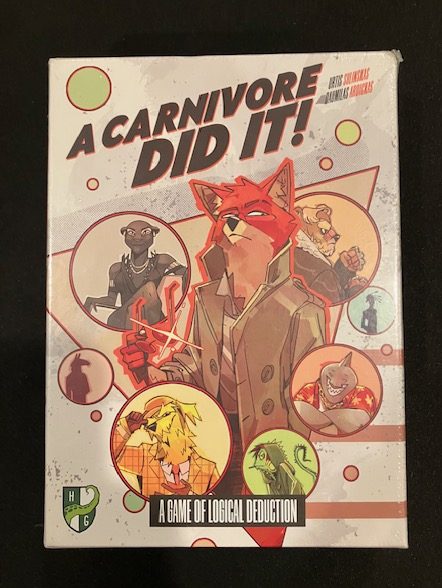
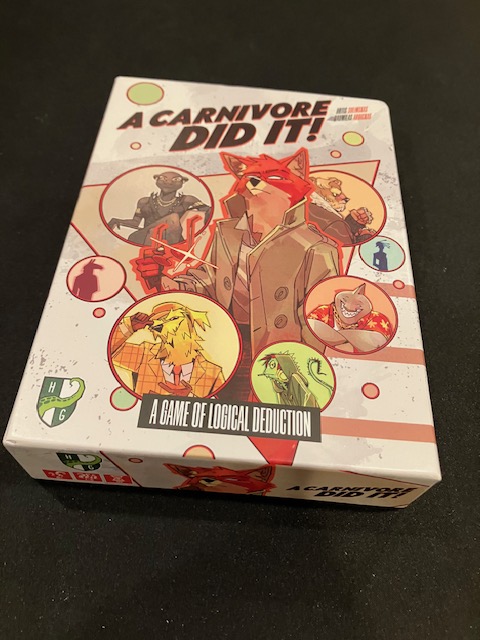
A Carnivore Did It! is a cooperative and solo game of logical deduction where players only use logic to discover the solution (as opposed to social deduction, where players deduce using very human tells). I ordered this directly from the Horrible Guild website and it arrived late October 2025
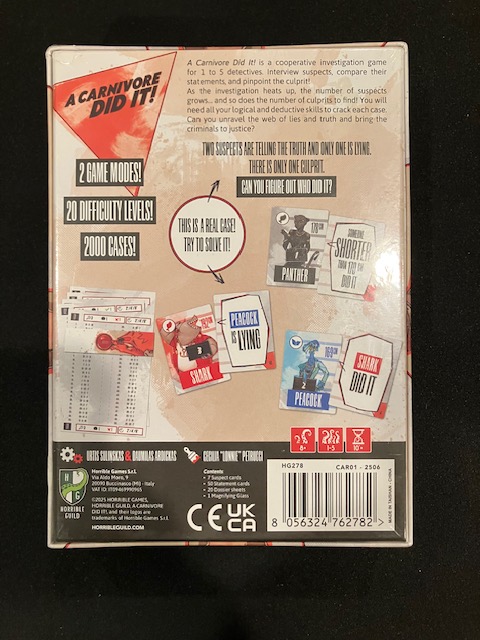
Let’s take a look!
Unboxing and Gameplay
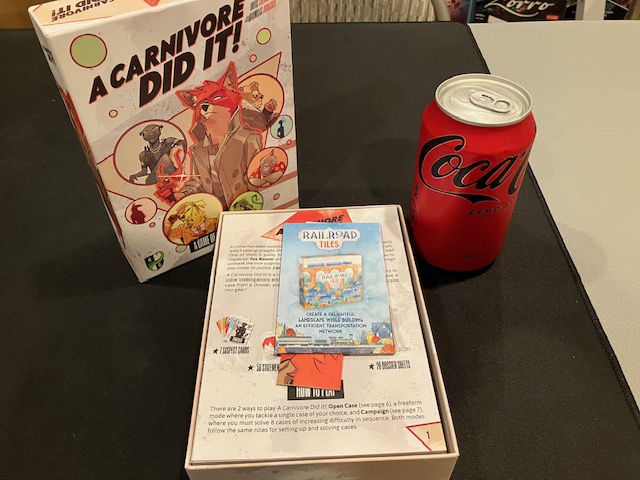
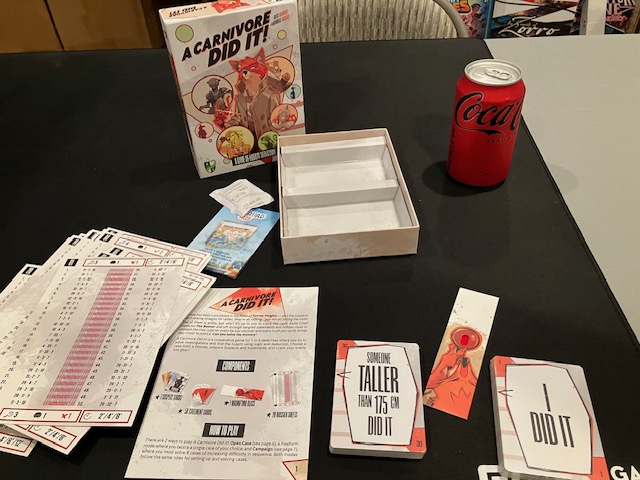
This is a pretty small package: see Can of Coke above for perspective.
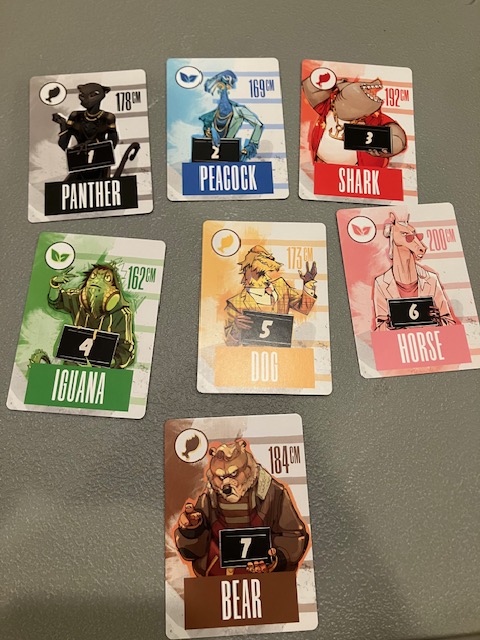
This is a game where you have to deduce (via logic) “who is the culprit” (or in later games, “who are the culprits“)? There are from 3 to 7 suspects, depending on the case. See above.
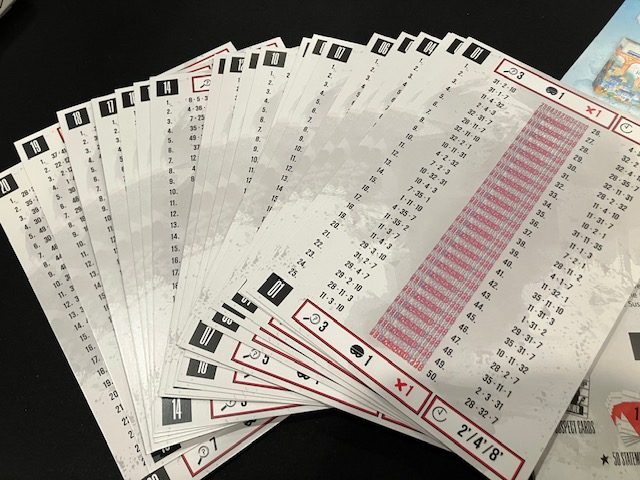
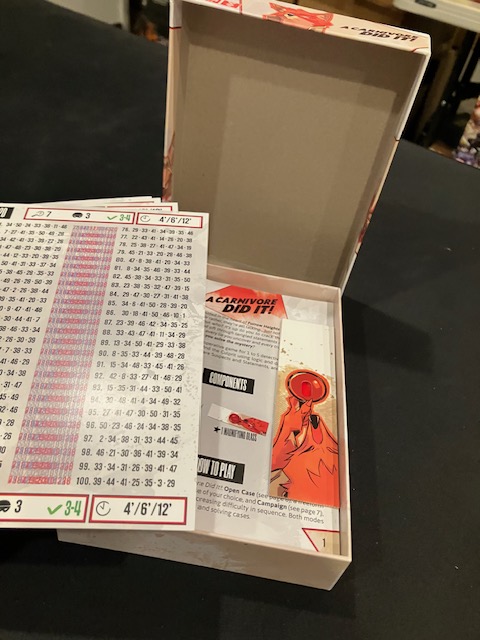
There are 2000 cases (!) in the game; see the cases on 20 cards above (100 cases per card).
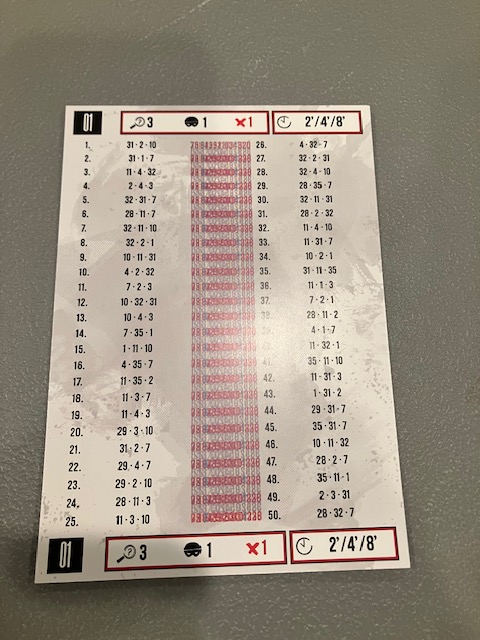
Each card has 50 cases per side.
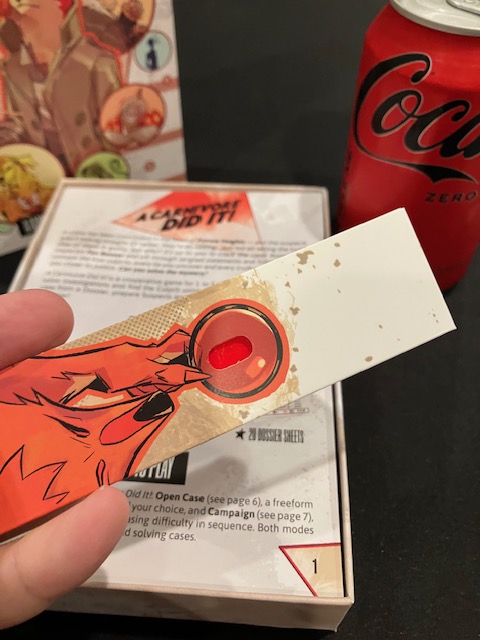
Using a little card overlay above, you choose a case with its solution.
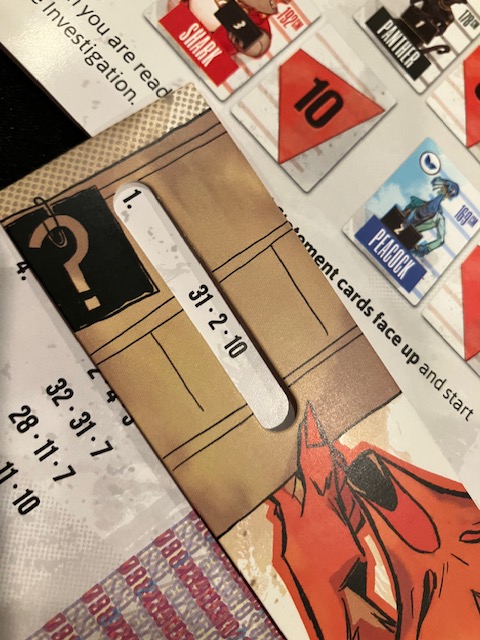
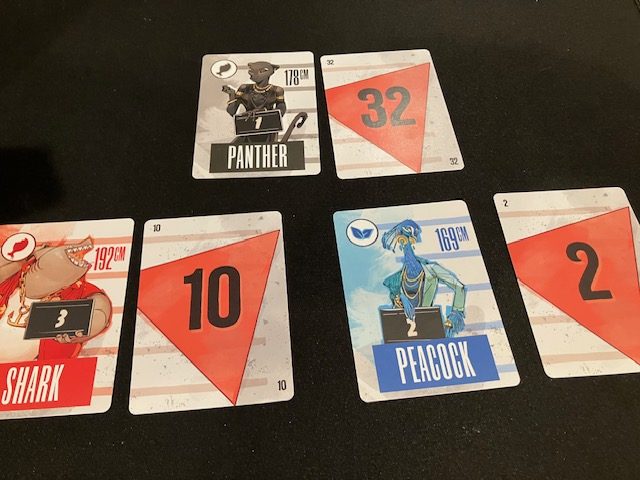
The line describes the “statements” needed for the case .. see above for case #1. We need statements 31, 2 and 10.
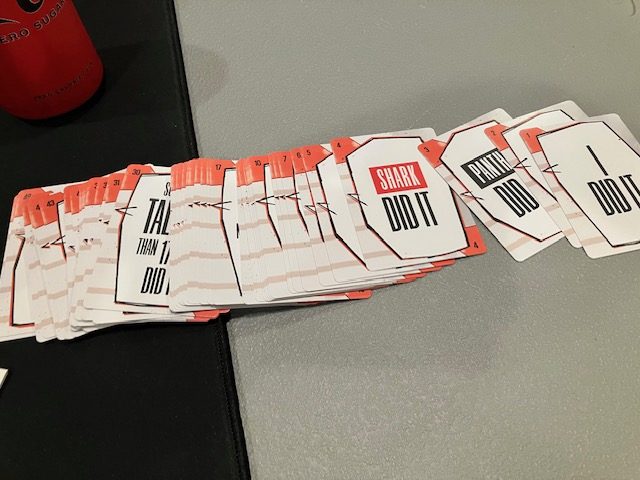
There are 50 statement cards with different true/false statements: see above.

And the solution is in exposed by the red acetate on the back side (see above, slight spoiler, except its so hard to read, it doesn’t matter).
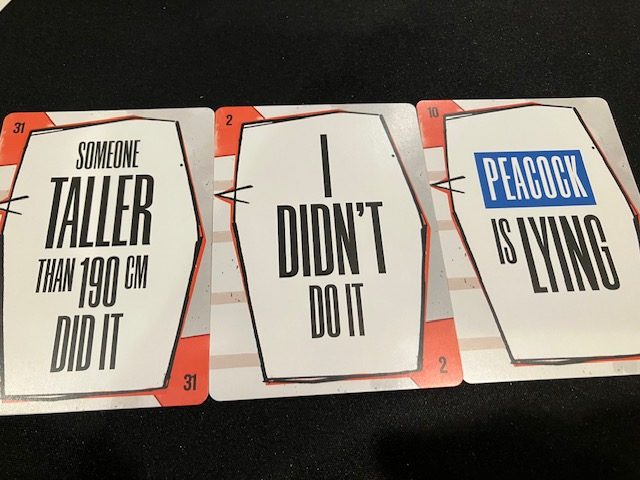
The case is specified by the numbers: the numbers choose “statements” each suspect will make. See above for statements 31, 2, and 10.
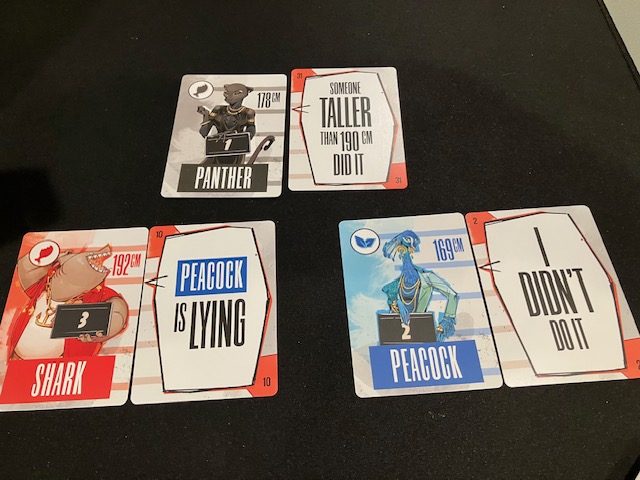
These statement are attached to the suspects (in order) so that each statement has a statement which is either true or false.
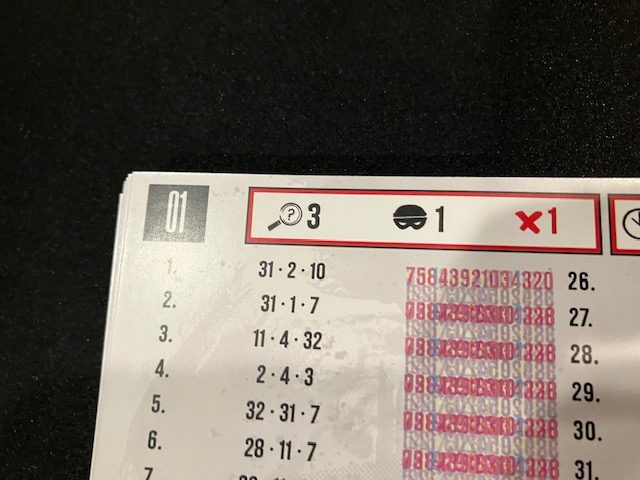
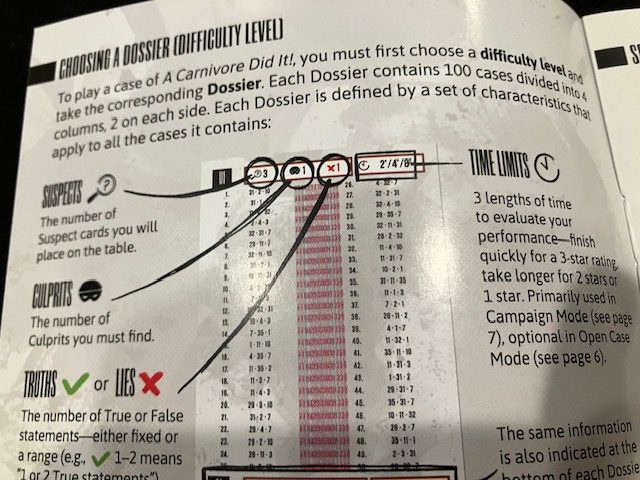
At the top of the case card, it tells you How many suspects you need (3), how many Culprits are there (1 mask), and how many LIES are being told (the red X1). All the cases on this card share these characteristics.
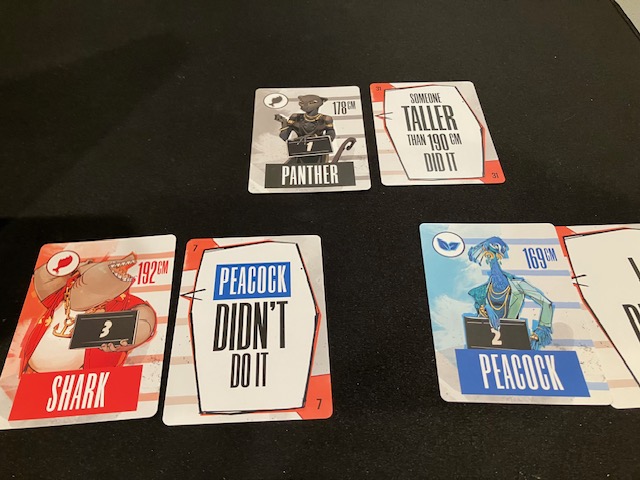
Then, using the fact that there is EXACTLY 1 lie (or 2 truths, or whatever the card says), you have to deduce who’s lying, and who’s telling the truth. The statements veracity or falsehood will indicate who the culprit is! Fun fact; the suspect lying MAY NOT be the actual suspect. People just lie sometimes!
This is a pretty compact little logical deduction game. The components are fine, except for one thing: see below.
Solo Mode
This is a Solo Team type of game; all players must work together to come up with the final answer of who did it. So the solo mode is implicit; the solo player works together with himself to solve the puzzle!
I gotta be honest; A Carnivore Did It! feels like the logic puzzles you find on standardized tests like the GRE and PSAT and SAT (although it’s been a long time since I took those); you use logic to figure out the culprit. So, playing this solo somehow gave me vibes of doing a standardized test, but without the #2 pencil and little bubbles.
To be fair, I LIKE the logic puzzle this presents. But, if you don’t really like these logic puzzles because it DOES remind of standardized tests, you will hate this solo. You may still like it cooperatively (see below).
Cooperative Play
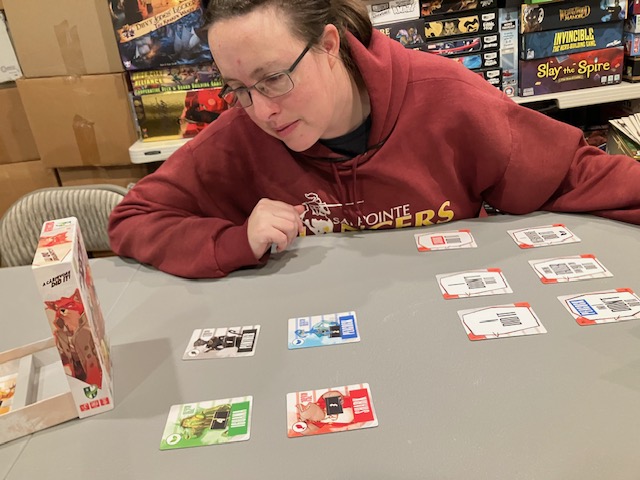
The cooperative play went as expected. Sometimes you get lost in each others thoughts, as they try to explain their reasoning.
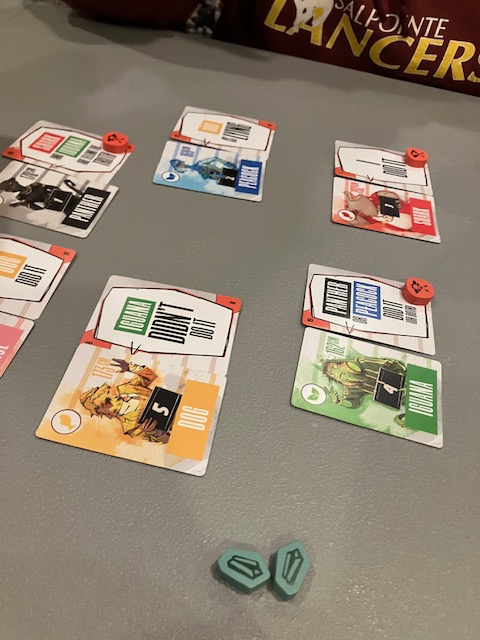
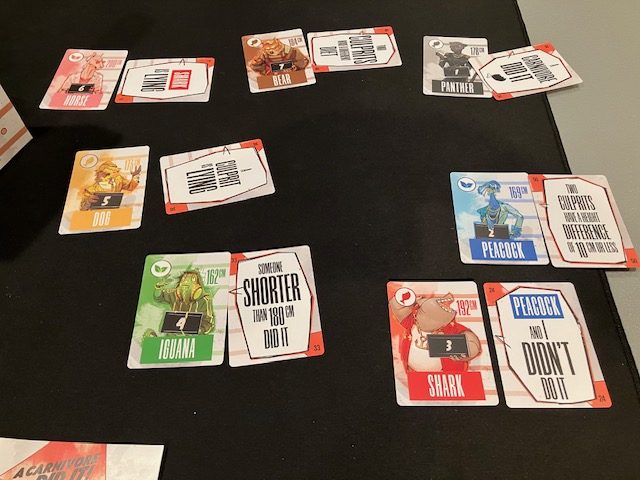
It was VERY important to come up with a systematic system to eliminate/verify statements, especially in the cooperative game! We ended up using the Trouble and Rare tokens from Kinfire Council to be False and True (respectively). See above. Without these tokens, I think it’s too easy to get lost in each other’s logic. Or just to get lost. If we were sure of a statement’s veracity/falsehood, we would add the token to the RIGHT side of the card. During hypothesis phase, we’d out a token on the LEFT side of the card to show “it’s just a hypothesis”.

Somehow, it’s a little less daunting to play with someone else, because it forces you to be more systematic. Even better, If you are flailing, then you can defer to your friend.
Cooperative was a little more fun than solo, even if we had to argue/prove a little bit more.
Issues
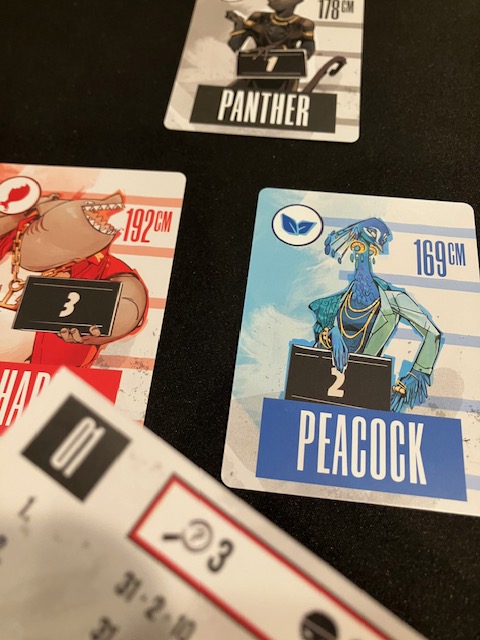
Trouble Reading: I really had trouble reading the solution. I had to zoom in with my phone (see above) and I still could barely read the answer.
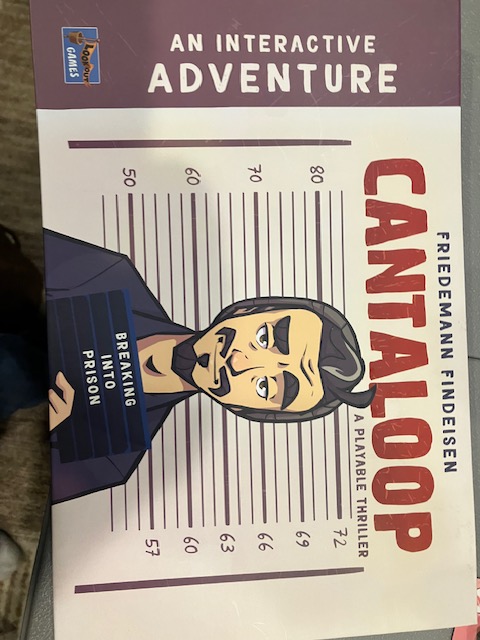
In fact, we tried using the little red acetate from Cantaloop to see if it worked better!

It worked “a little better”, but it was still hard to read!

No Explanation: So, I/We have been able to reason out all the puzzles we’ve have seen … so far. But what if you are wrong? You have no place to go to see a solution. I wish they had a web page you could go to to see the solution for each one. But there is NO explicit solution in the rulebook at all. All you get is an answer … the game does not “show its work”.
Clumsy and Frail; You have to slip the little decoder on the cards. This felt fraught with peril; I was very afraid it might break over time or maybe you accidentally tear it when you slide it down the card.
Stuff I Liked
Lots of cases: Yes, 2000 cases!
Very Clear Presentation! The rulebook even does a good job of discussing when things would still be true or false, to help answer some of the “well, what do they mean by THAT“. The and/or questions … they have a little section to help discuss that. Still, the AND/OR stuff can be confusing.
Conclusion
You probably already know right away whether you will like this game or not. If you love logic puzzles, I think this game will really resonate with you. A Carnivore Did It! reminds us a lot of the simpler logic deduction game Cat Crimes (see our Top 10 Cooperative Cat Games here).
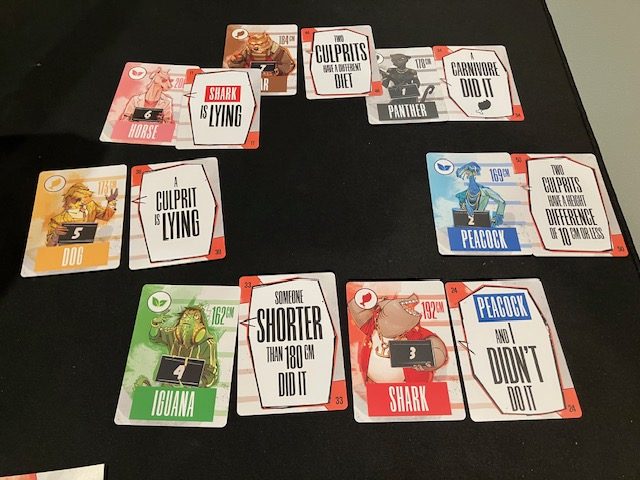
If you liked the simpler Cat Crimes, then A Carnivore Did It! is the next step up in complexity (especially when you have 7 suspects and multiple culprits)! The later cases (see one above) can be pretty challenging (but still doable).
If you don’t like logic puzzles, you will probably hate this as a solo game; it probably feels too much like a standardized test. Even if you don’t like logic puzzles, you may still like this cooperatively; sometimes it’s fun to be a fly on the wall and all of a sudden start participating and getting involved when you see the solution unfolding! Or you may hate it and feel stupid and just draw away. Only you know you.
This would probably get a higher rating if there weren’t a few component issues. This should be probably be a solid 7.5/10 or even better, but the fact the little acetate reader is really hard to use, hard to read, and possibly fragile, I worry. I also wish they had they shown their work for solutions. So, this might be a 6.5 or 7/10 instead. Or maybe it won’t bother you, and this is exactly what you wanted: “I can read the solution, and I don’t need them to show their work … I can figure it out myself!” If that’s the case, you may love this game and embrace it with aplomb … for an 8/10 game.
 coopgestalt