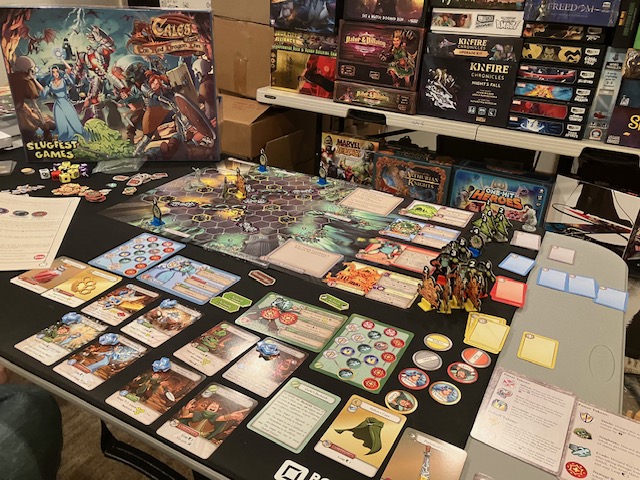
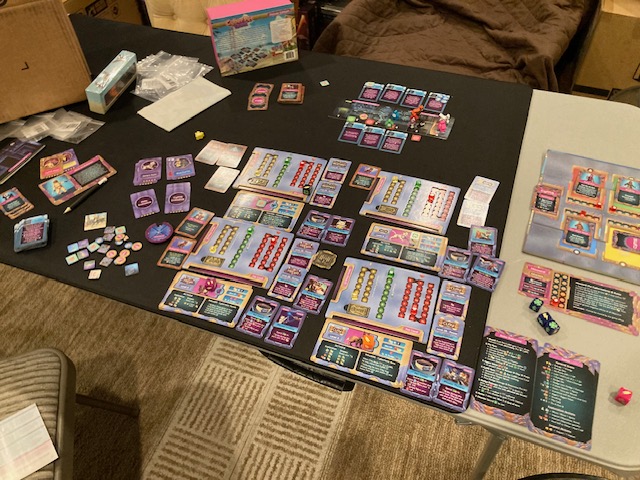
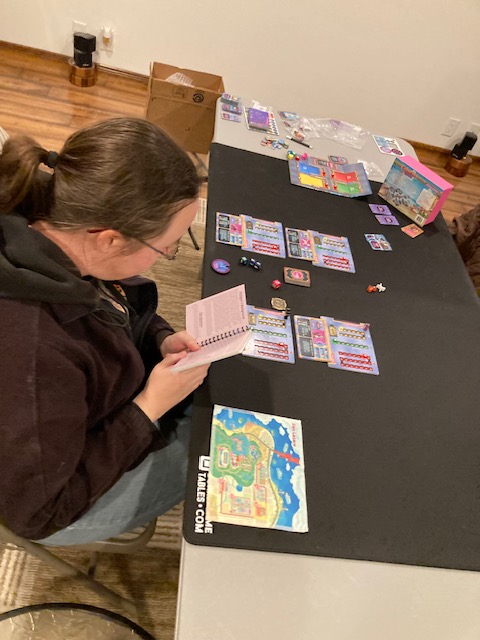
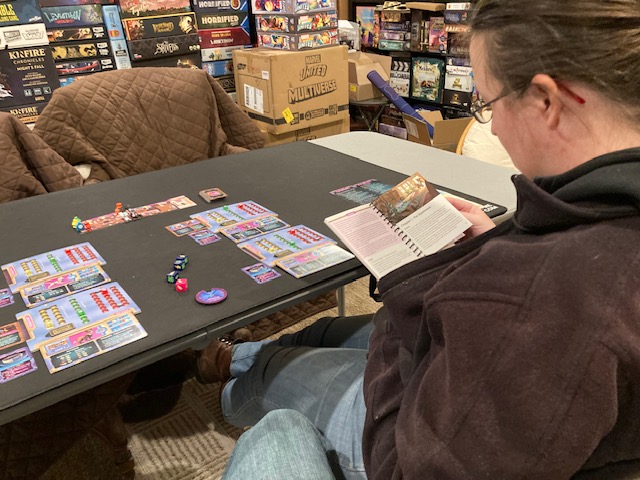
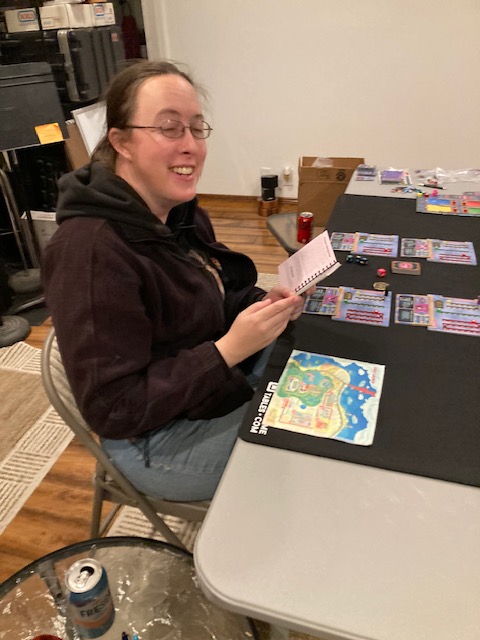
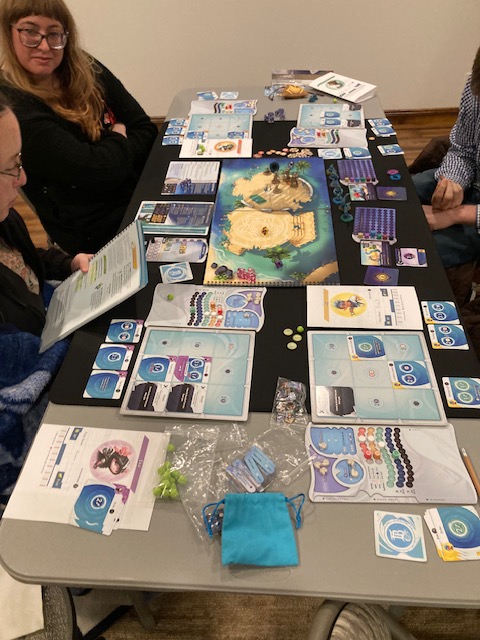
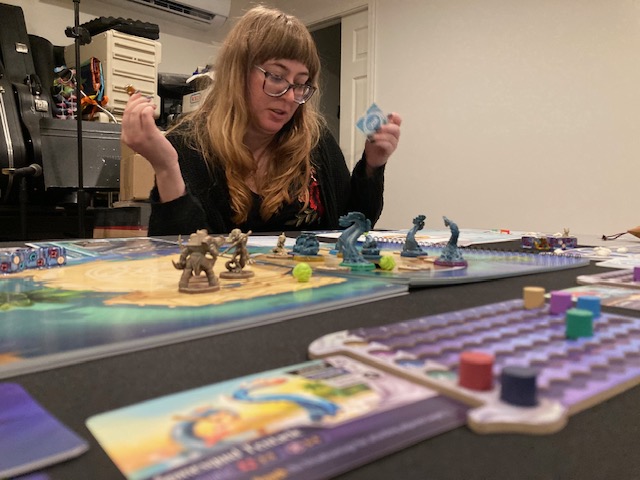
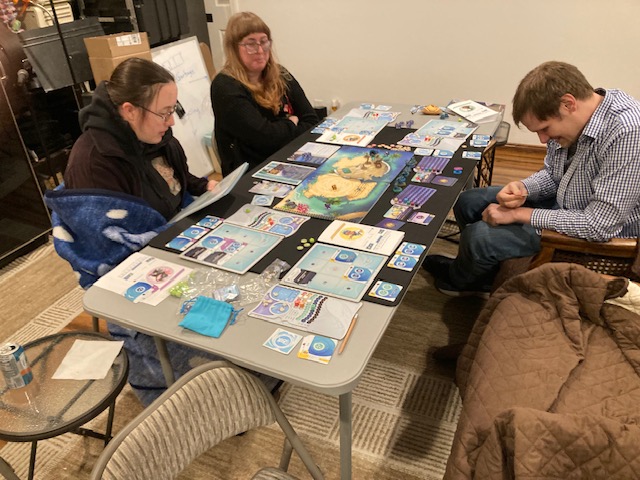
Late To The Party, But The Party’s Still Going! A Solo and Cooperative Review of Tales from Red Dragon Inn!

So, the original Tales from Red Dragon Inn was on Kickstarter way back in October 2021, and delivered to backers in 2024.  It was so popular, they had a second Kickstarter in June/July 2024, and that’s the one I backed!   This cooperative dungeon crawler for 1-4 players looked really cool!

Why didn’t I back the original? I think I was afraid of getting YET ANOTHER DUNGEON CRAWLER (YADC) campaign that I wouldn’t play!

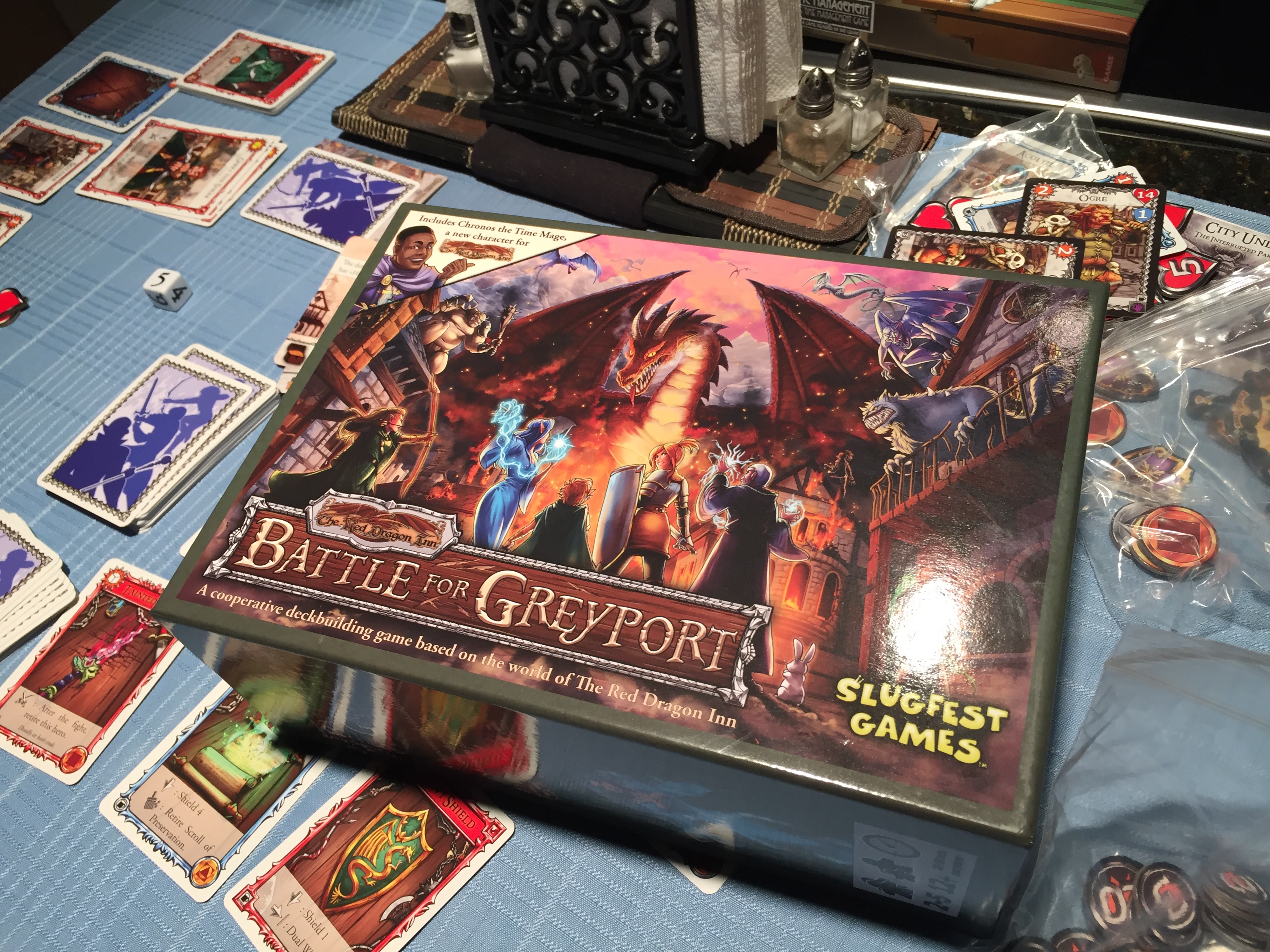
I do love this universe … especially the Red Dragon Inn cooperative Deck-Building game called Battle for Greyport (see review here and here: It’s also in our Top 10 Cooperative Deck-Building Games!)! I love the art-style and the silly vibe of this universe!

Let’s take a look!

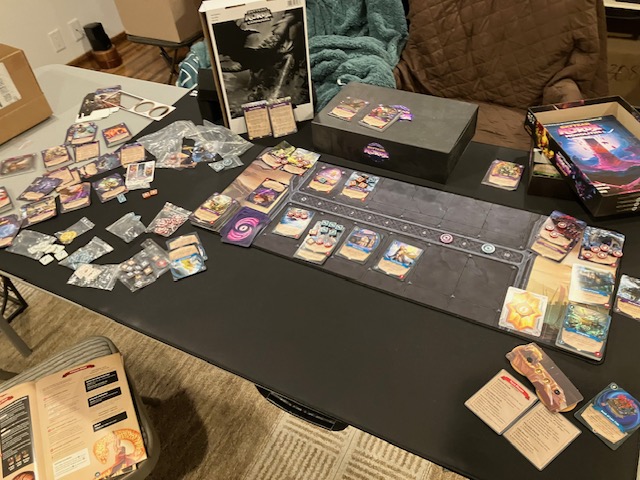
Unboxing

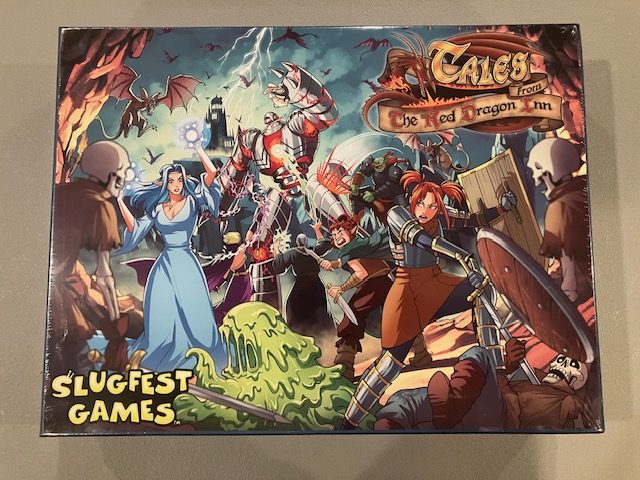
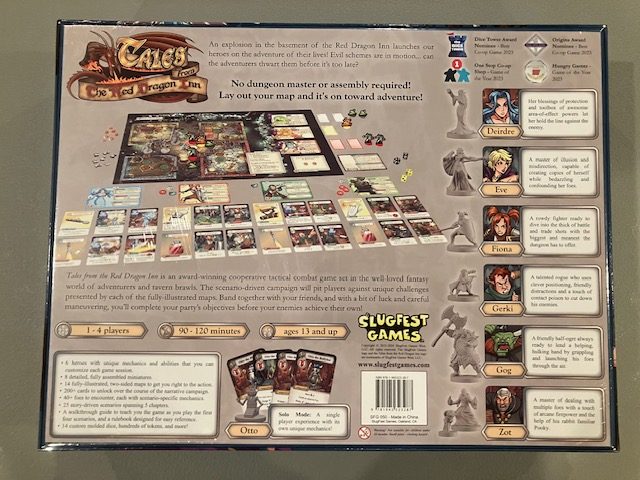
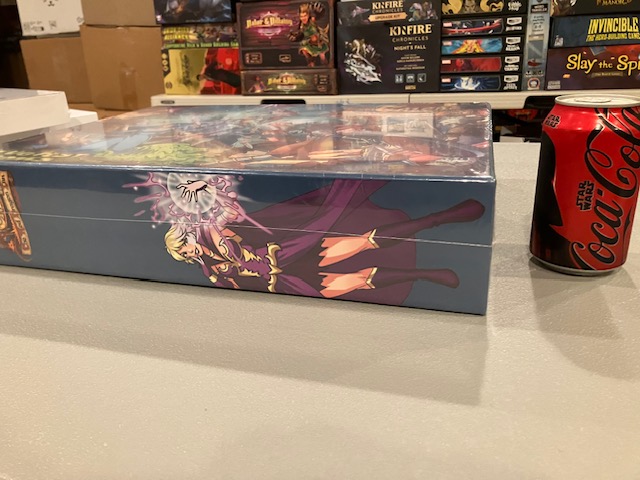
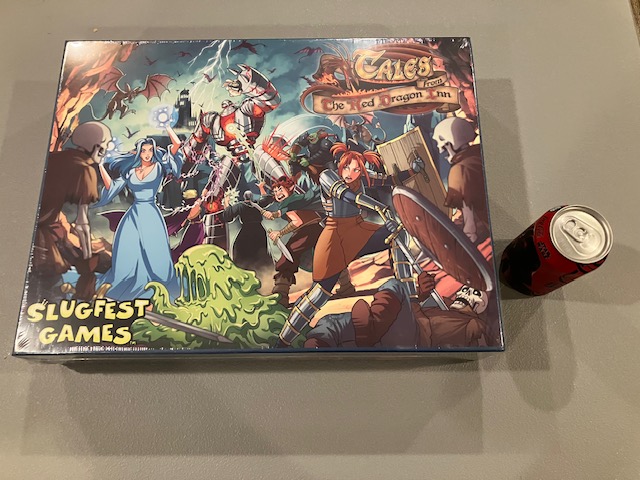
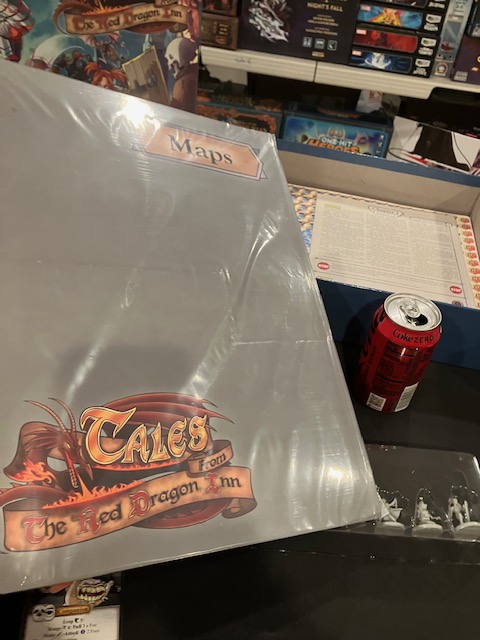
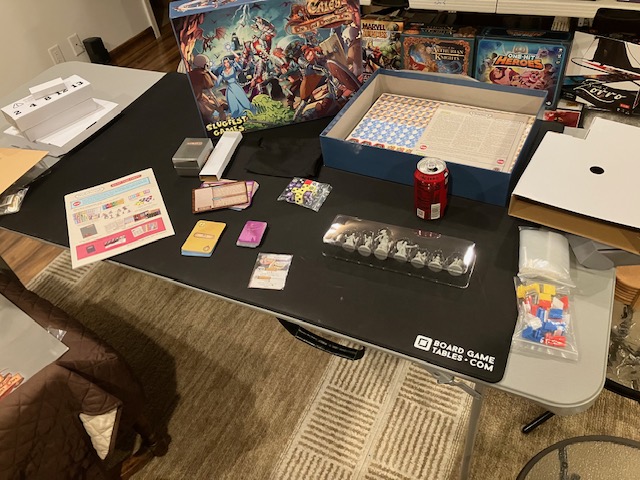
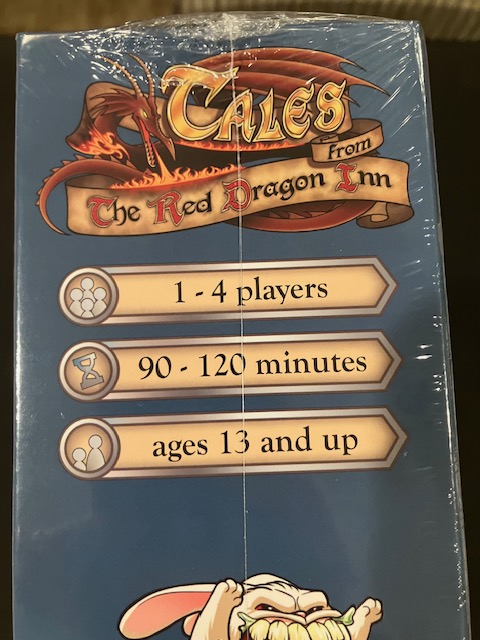
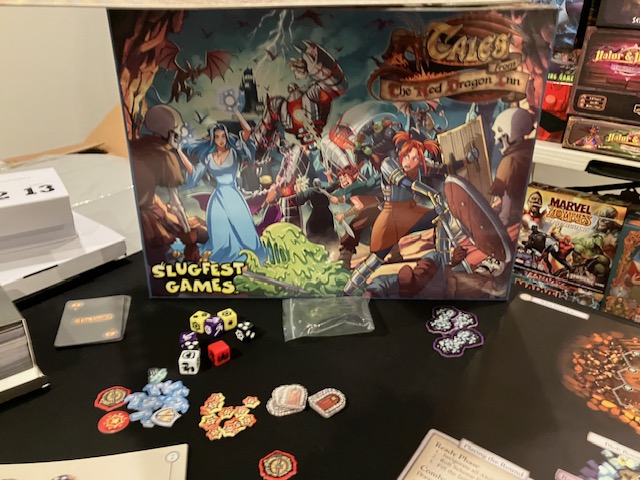
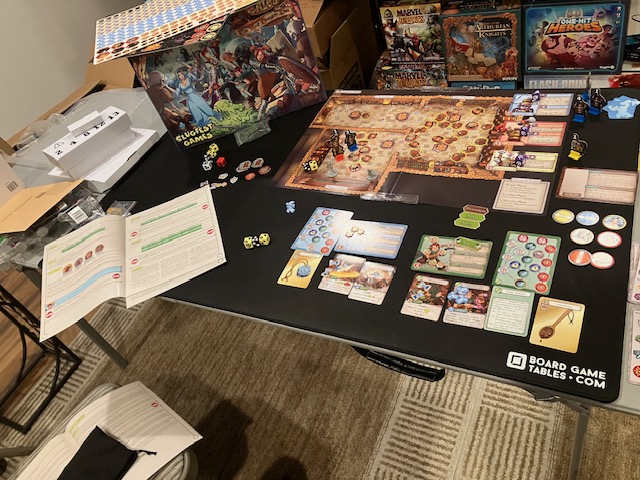
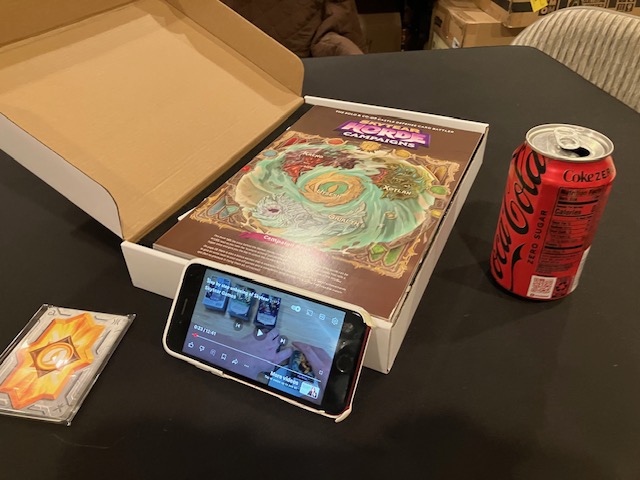
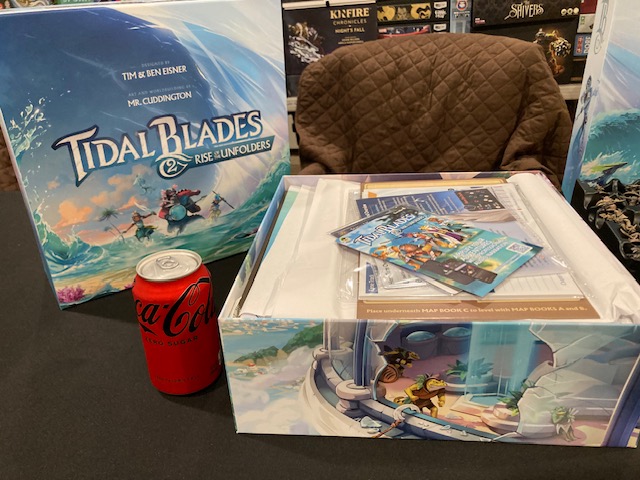
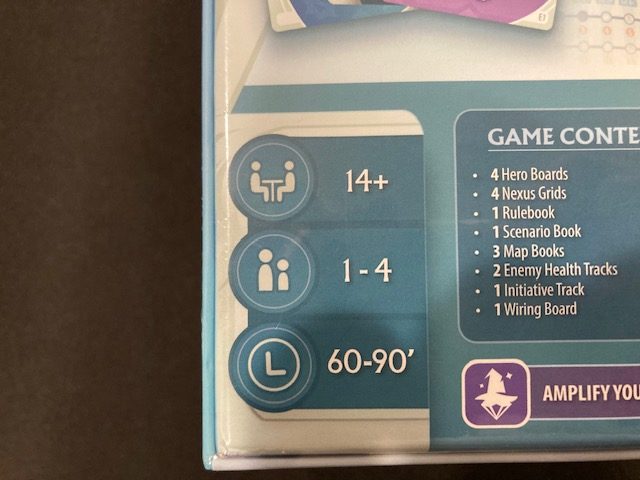
This is a fairly big mama-jamba of a box: see Coke can above and below for scale.

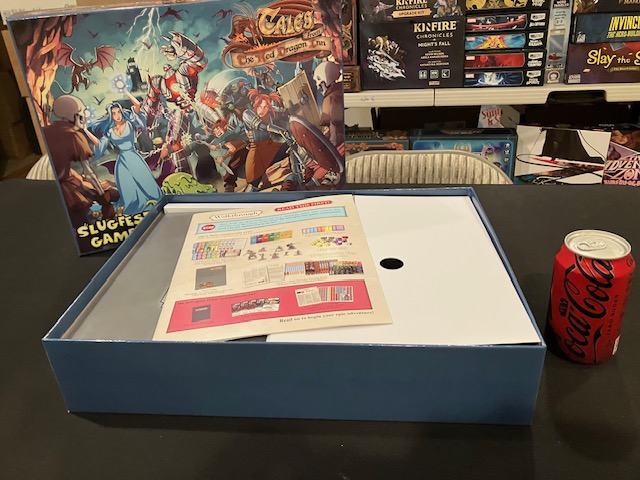
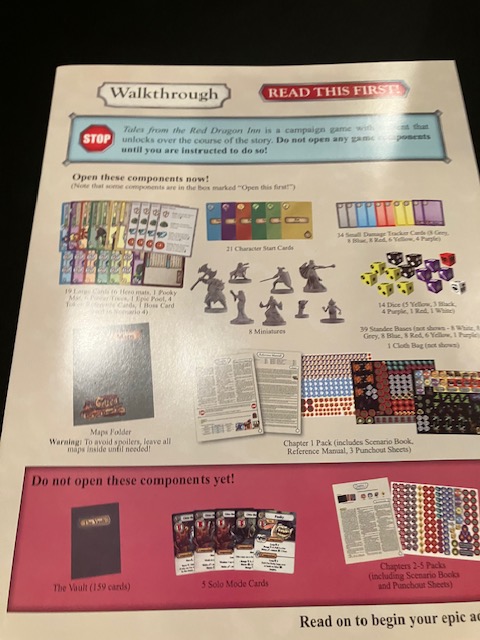
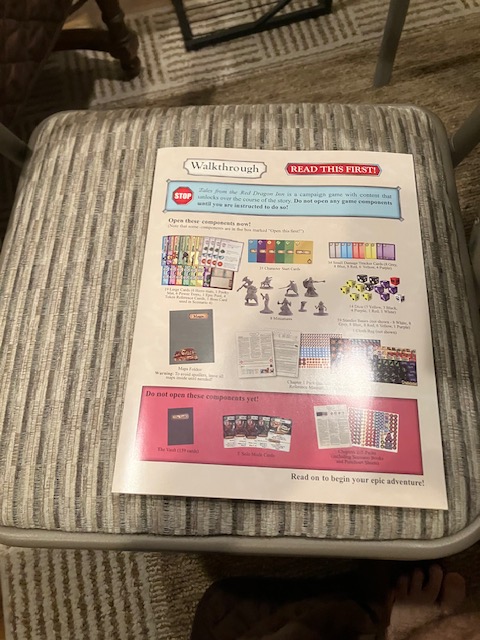
Ah, this game comes with a first-play walkthrough!  This is a really good walkthrough!

What’s in here?

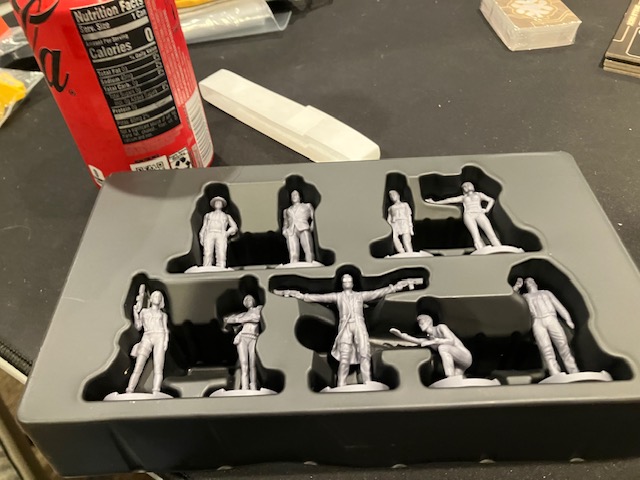
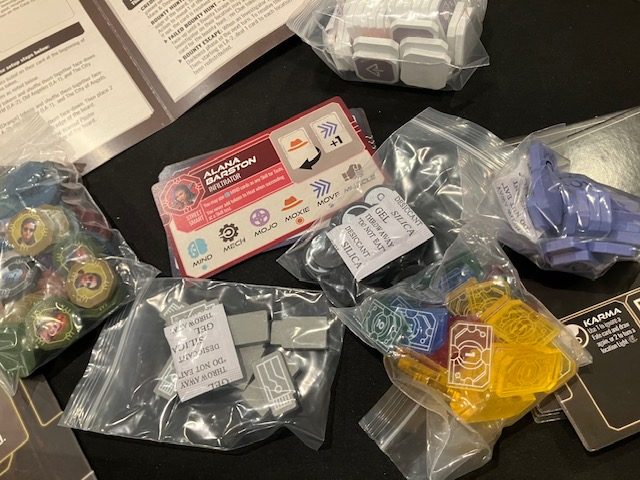
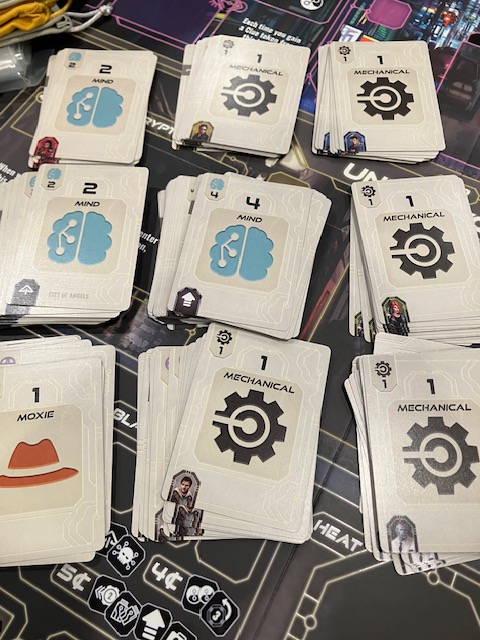
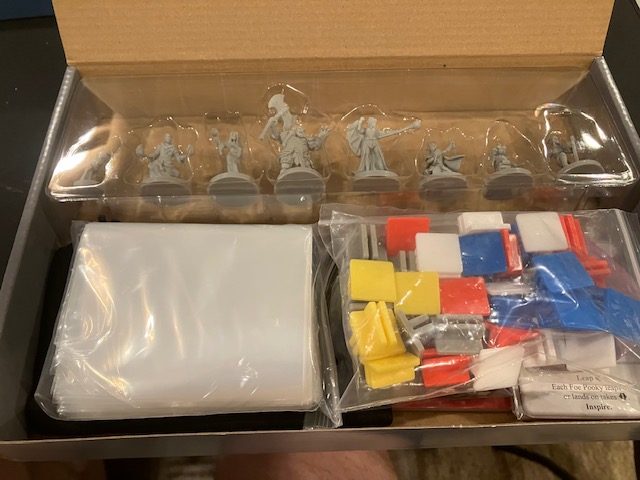
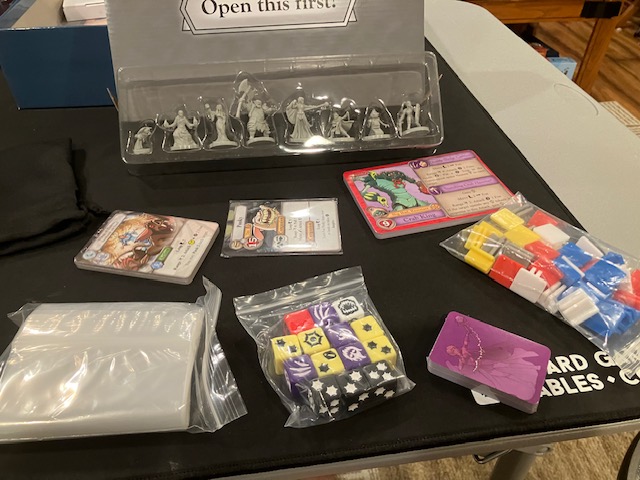
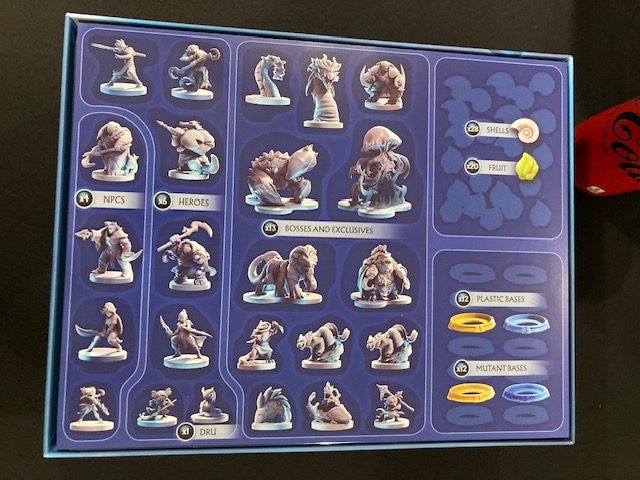
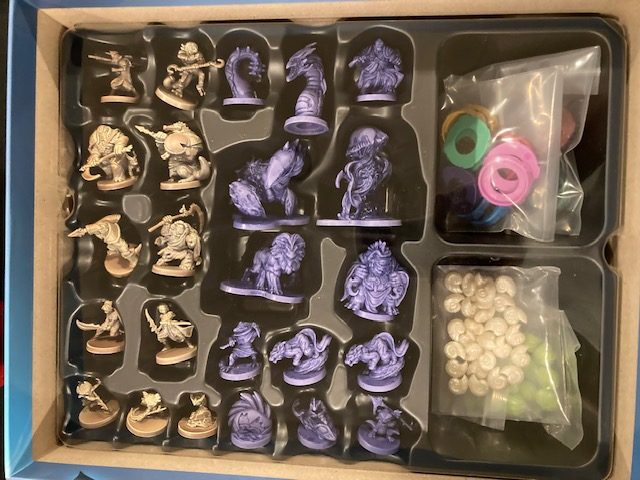
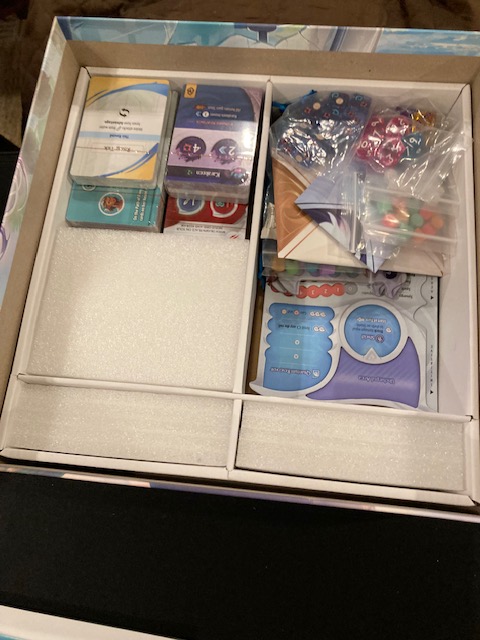
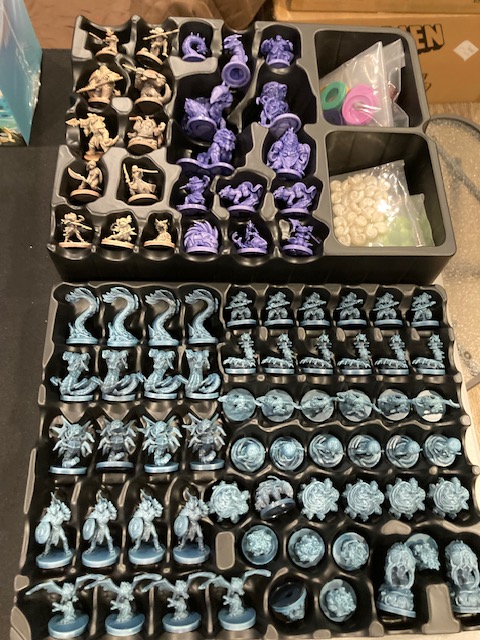
The game comes with most of the cards and minis in this little grey box.  (Grey box?  Greyport? Get it?)

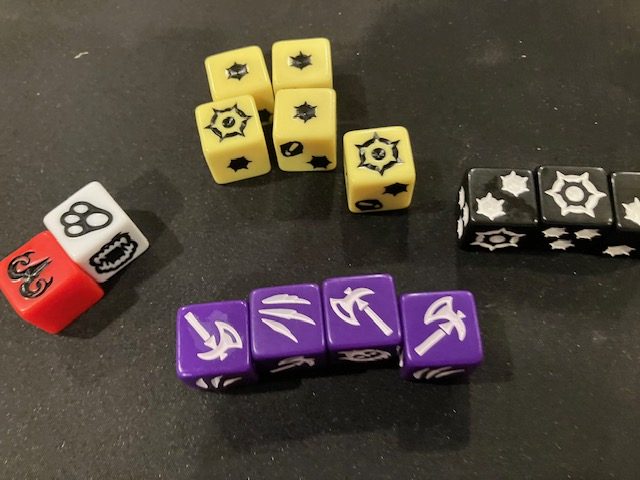
And some dice.

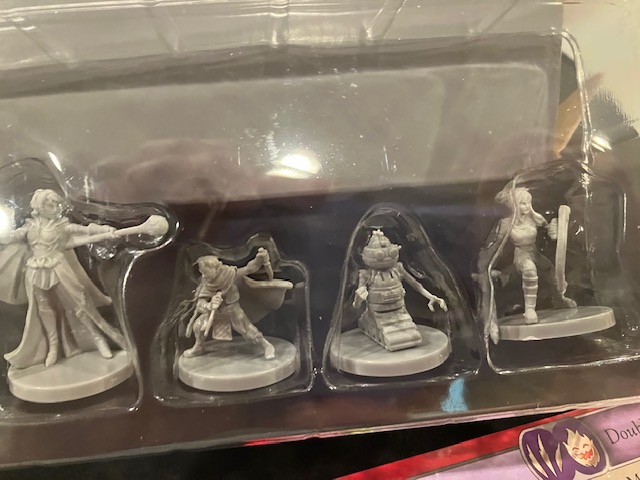
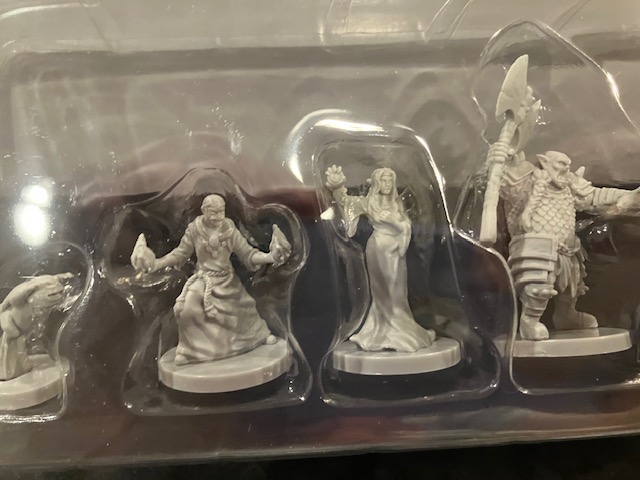
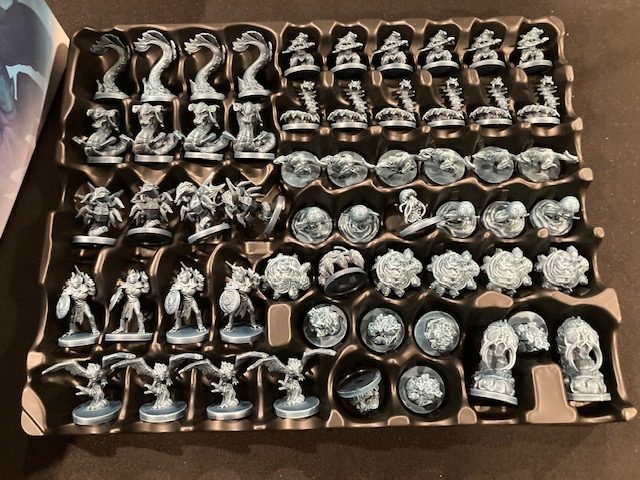
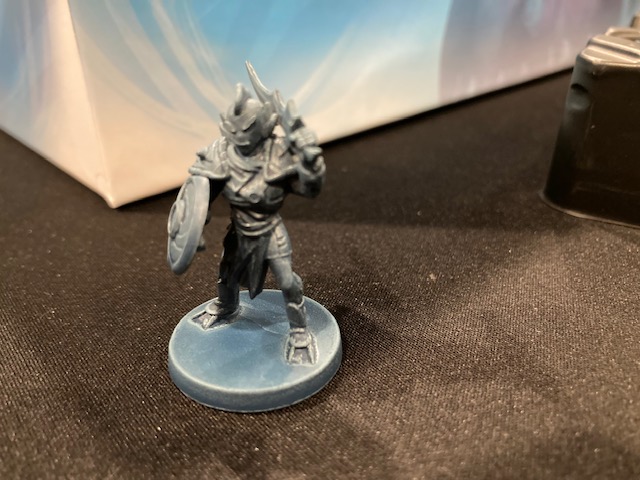
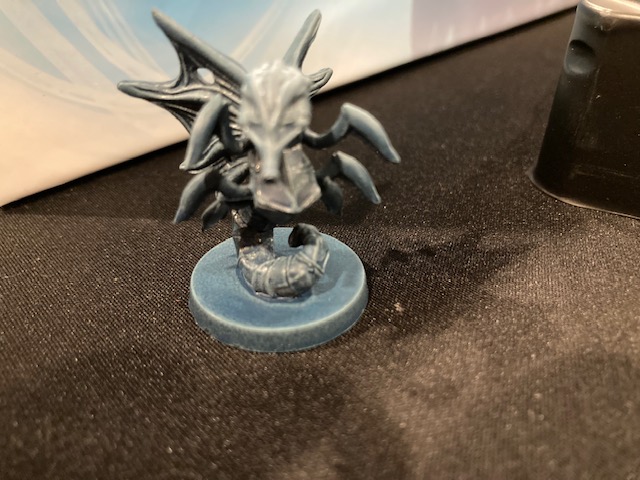
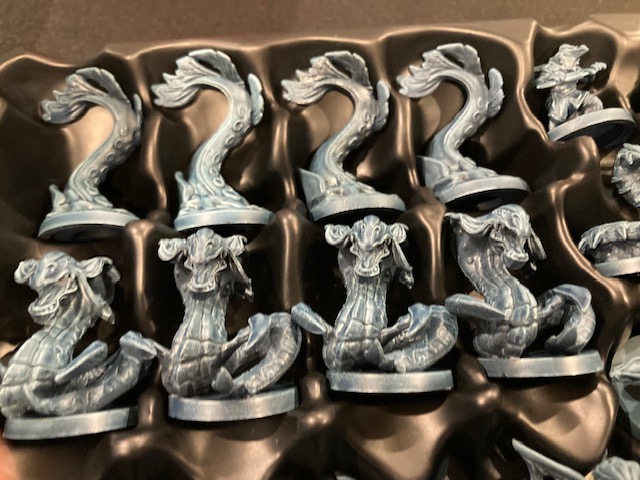
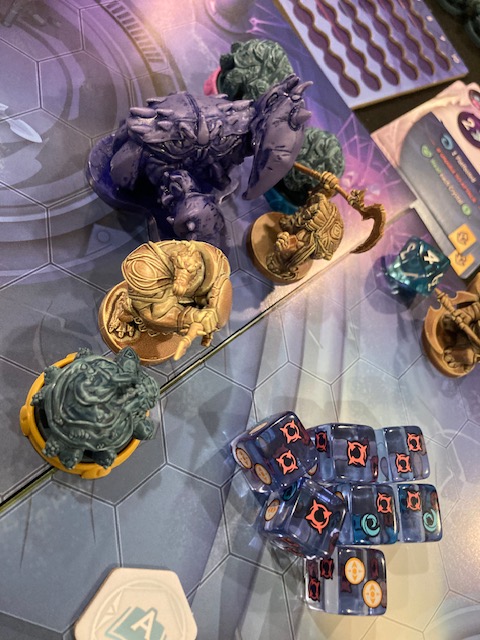
The minis are pretty good.

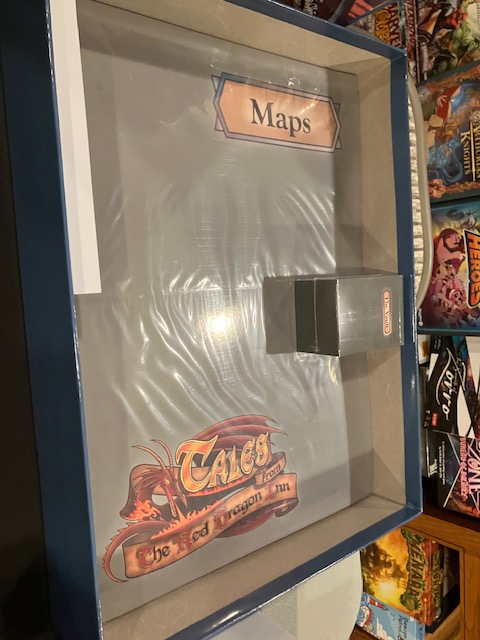
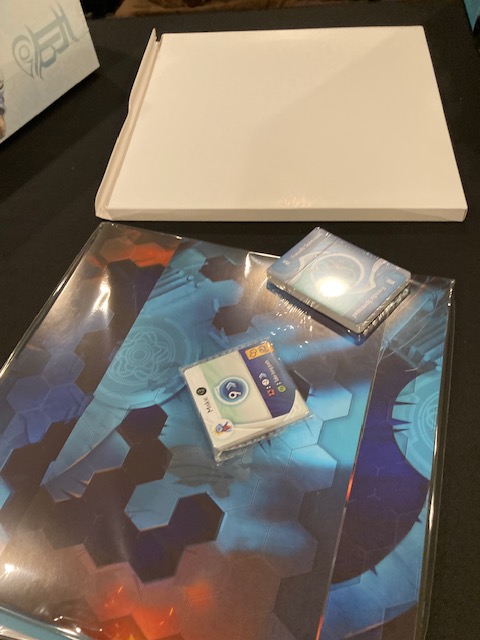
Underneath all that are the map packs.

This map pack is pretty huge! See Coke can above for scale.

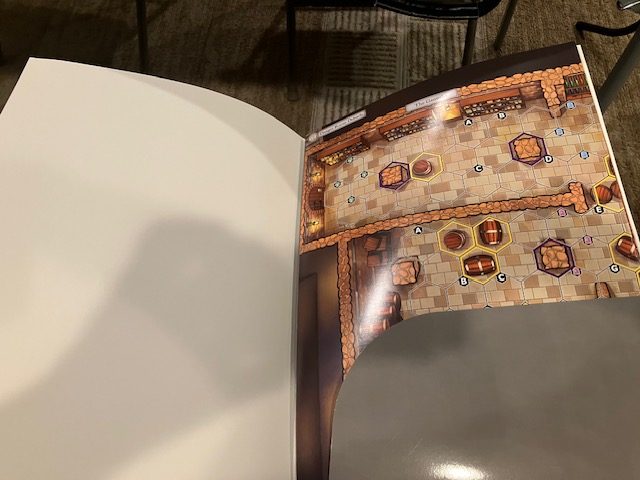
… and there are quite a few maps for the adventurers to go on!

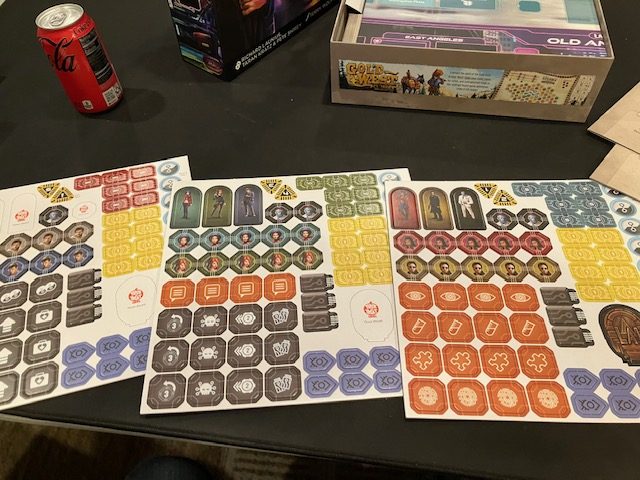
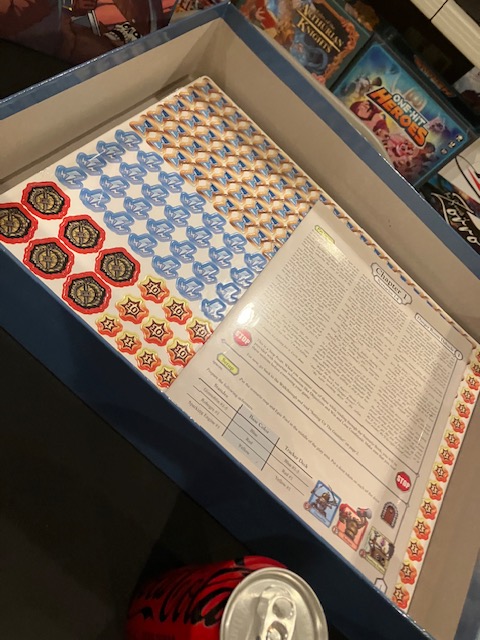
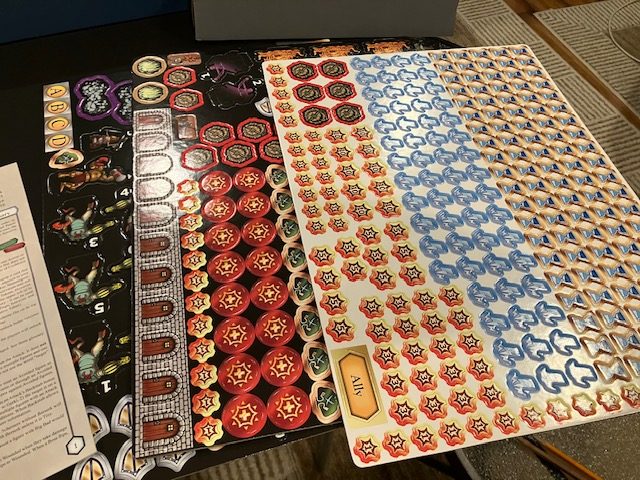
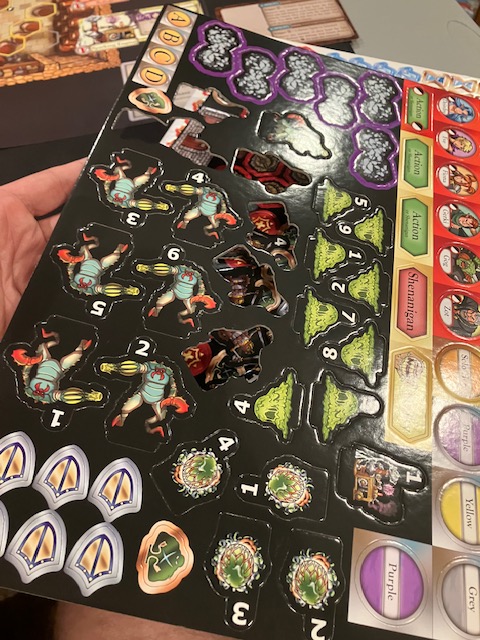
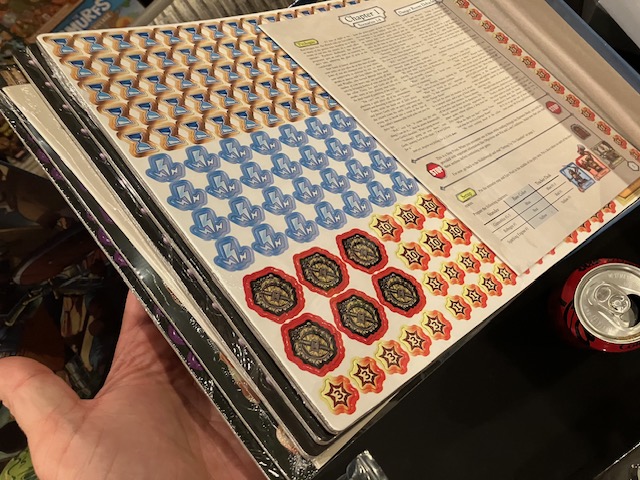
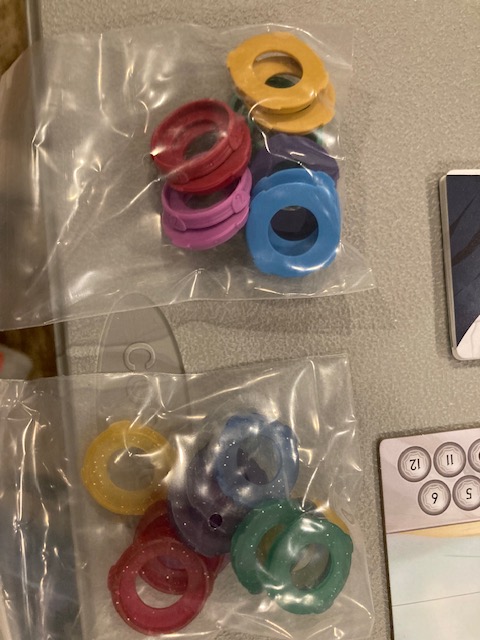
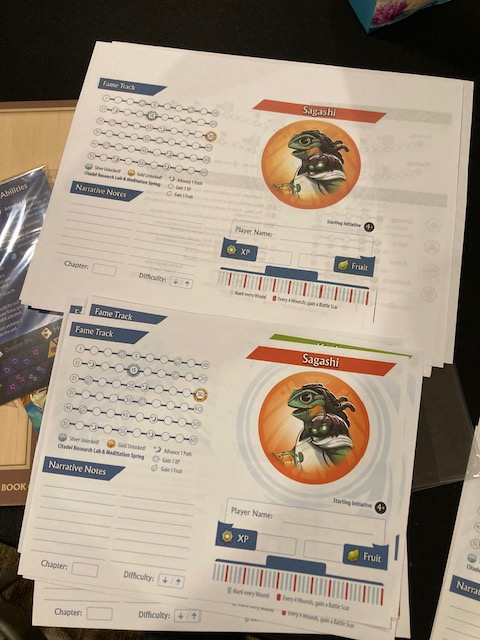
Underneath the maps are TONS OF PUNCHOUTS.  And by tons, I mean tons by weight!

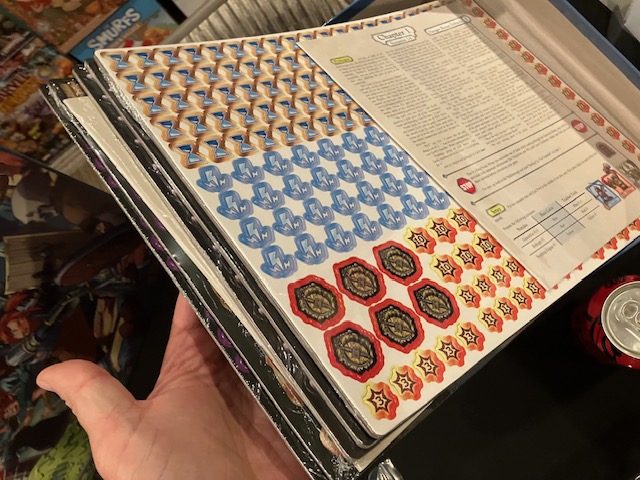
There are 5 individually wrapped punchout sets (with multiple punchout sheets per set!)

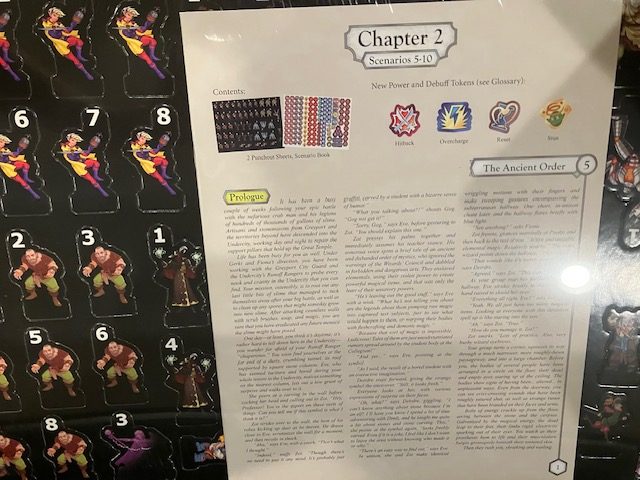
And a new chapter rulebook per set!  Whew!

There are … so …. many … punchouts!

But overall, this looks pretty cool!  I am just scared of how many punchouts there … (but keep reading below …)

Gameplay

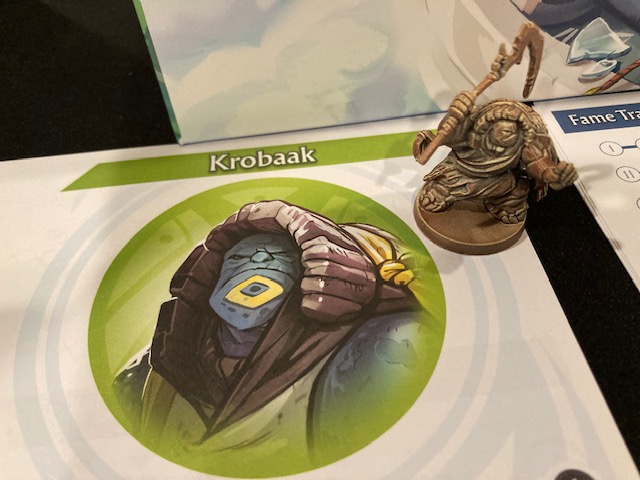
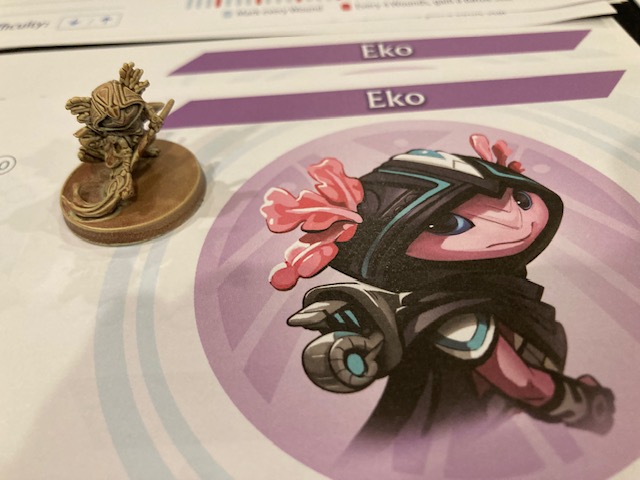
This is a cooperative dungeon-crawler where each player takes the role of a different hero … the typical Dungeons and Dragons archetypes are all here: thief, fighter, barbarian, etc.  Despite the classes being fairly generic, these characters have so much … character! 

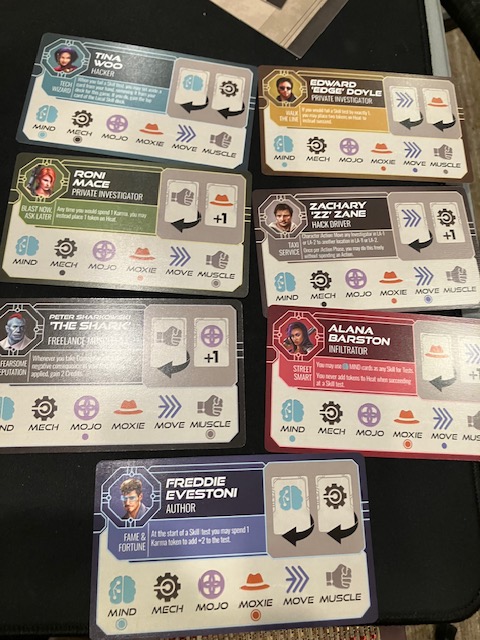
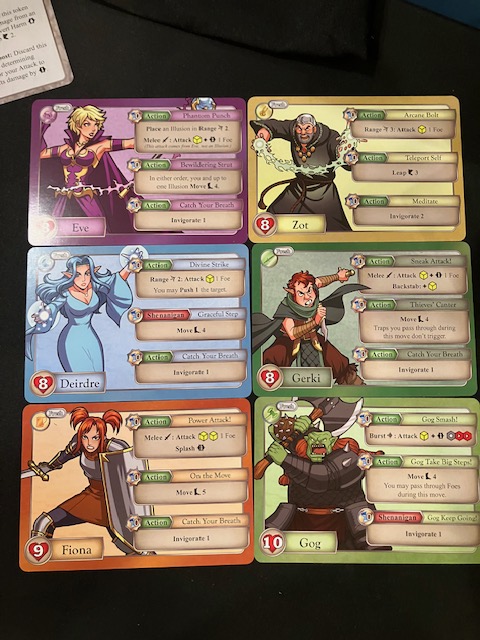
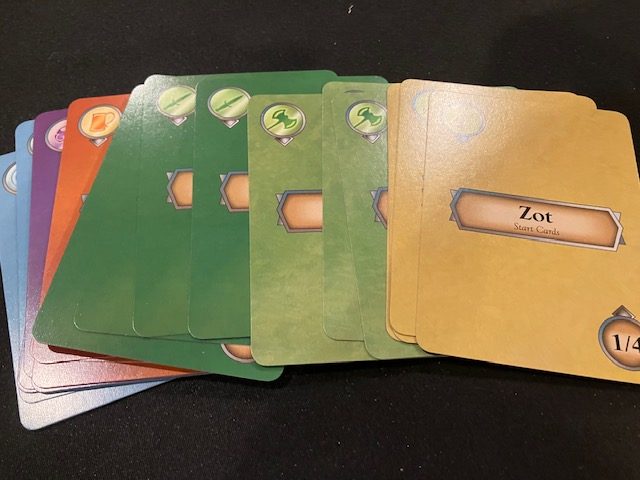
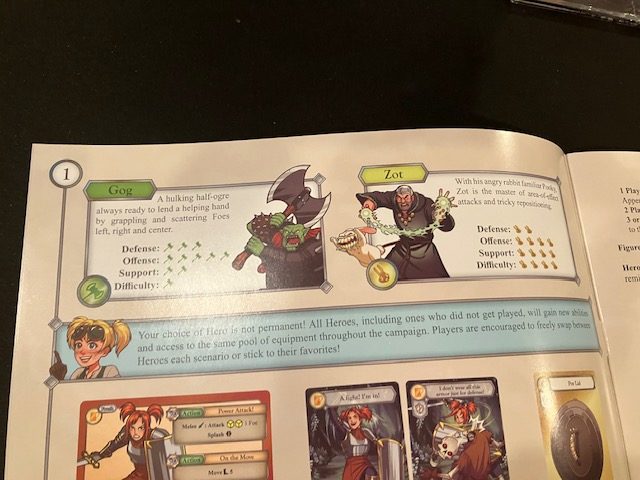
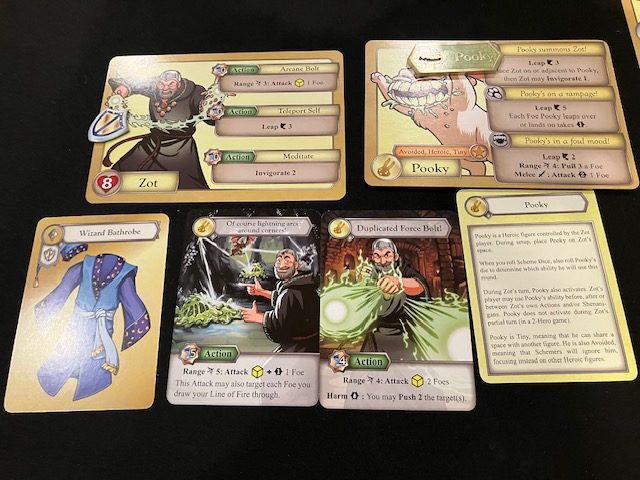
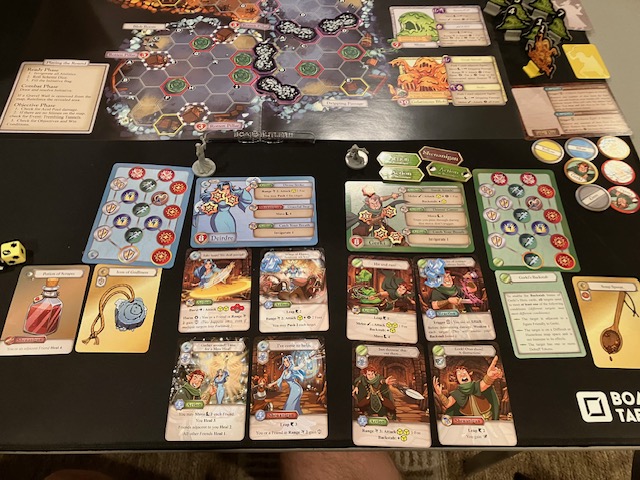
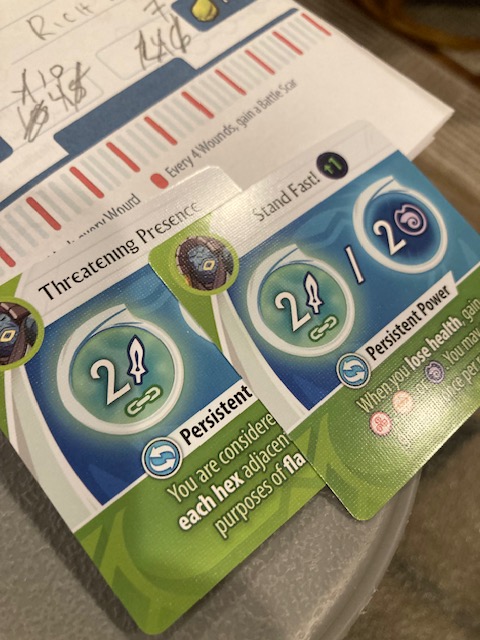
Each character has some character specific cards giving the asymmetric powers.

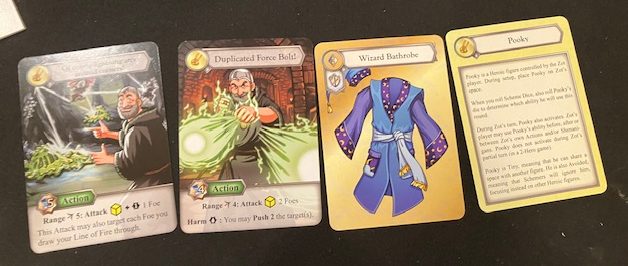
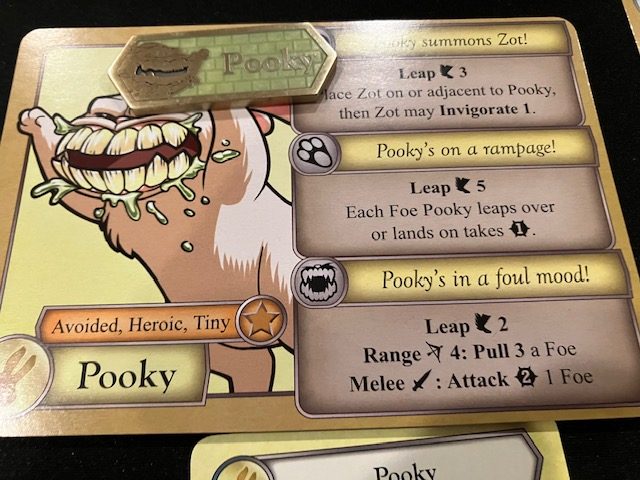
For example, Zot (above) has some special Actions specific to his character!  But notice the art and the feel!  This is not your typical dungeon crawler!  There’s character and a sense of humor here!  The game looks light and fun … and surprise! It is!  And pooky!

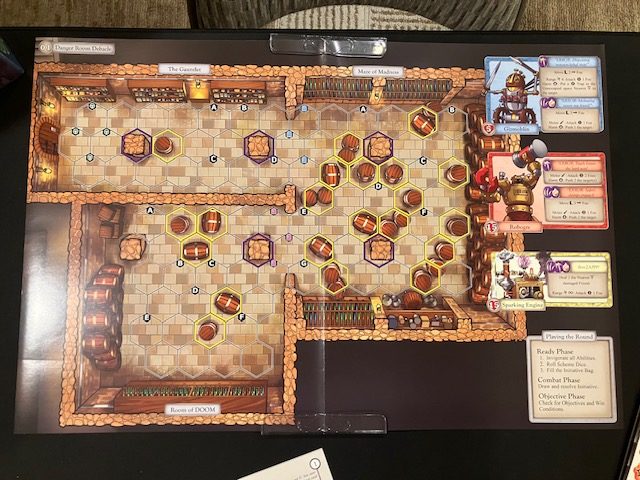
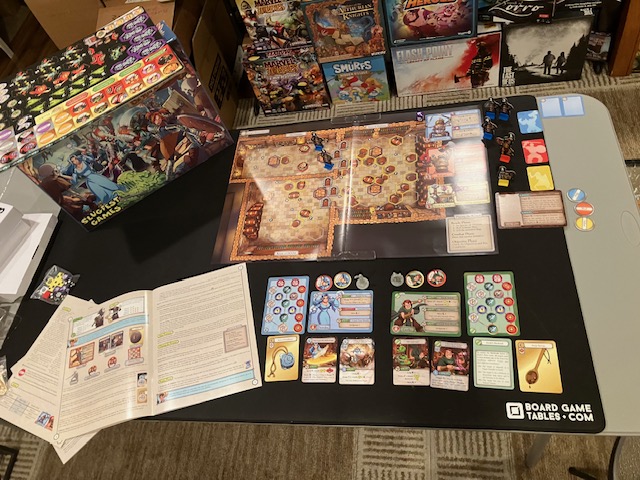
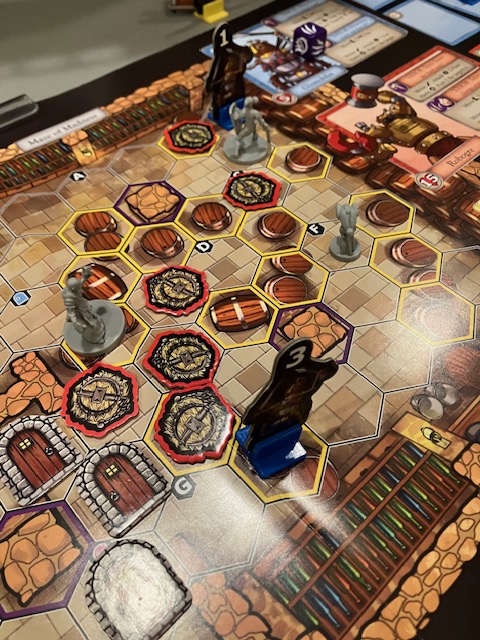
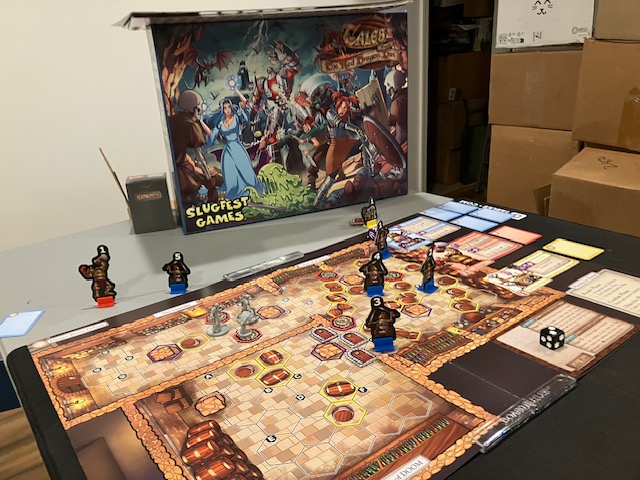
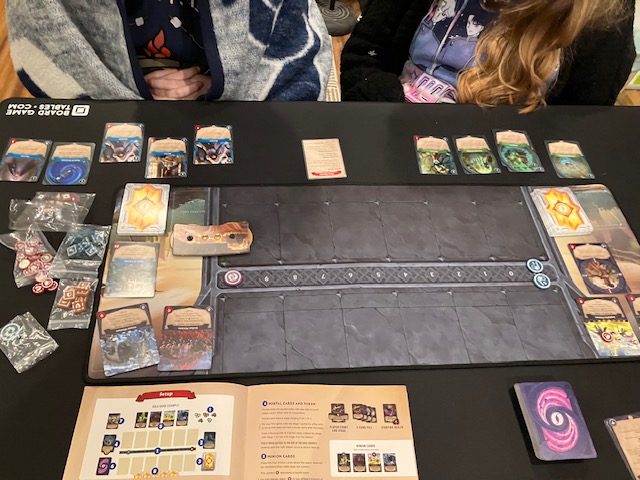
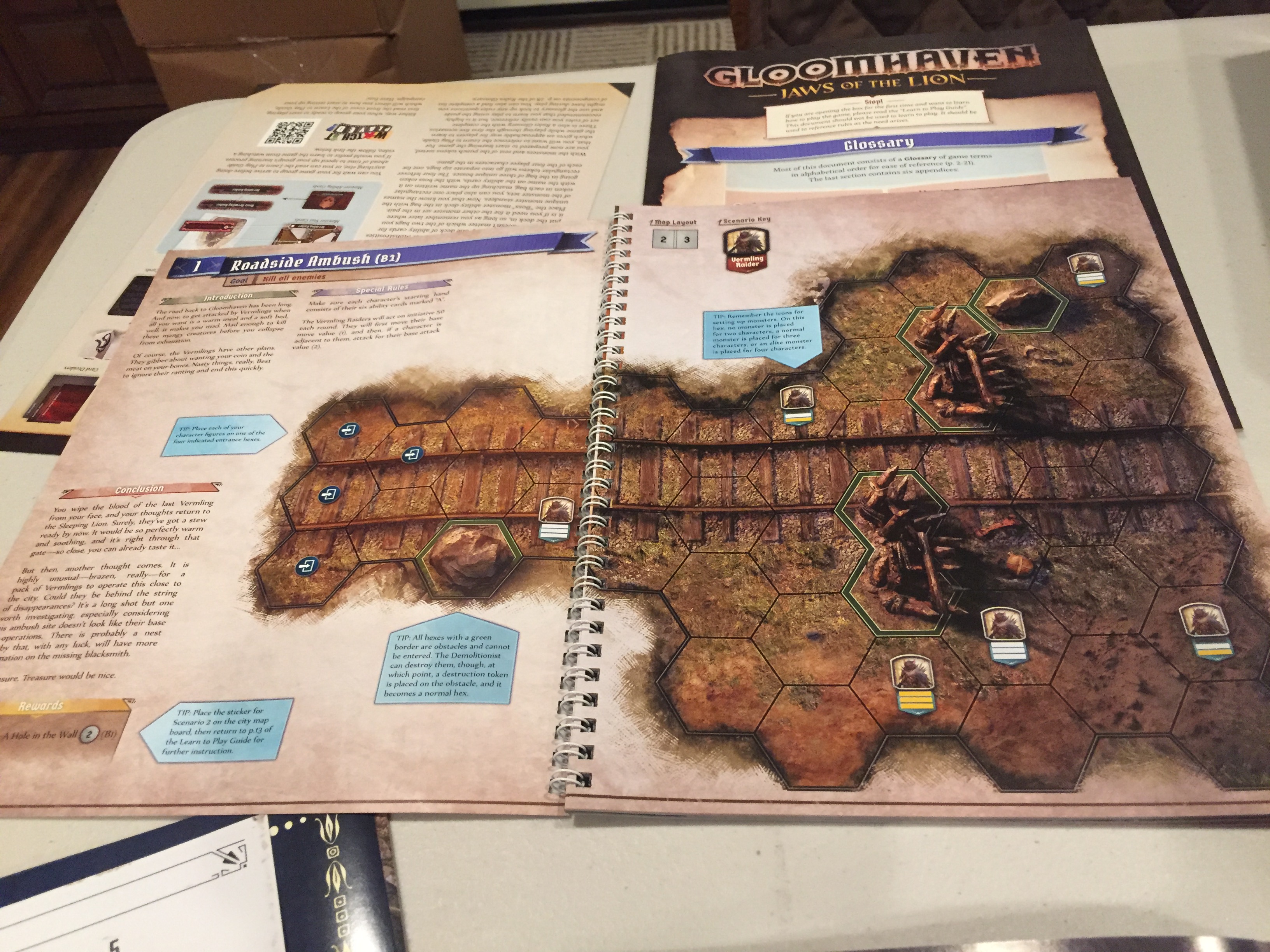
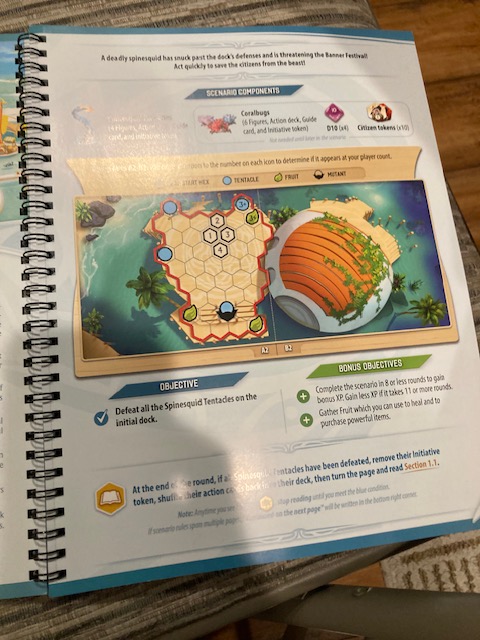
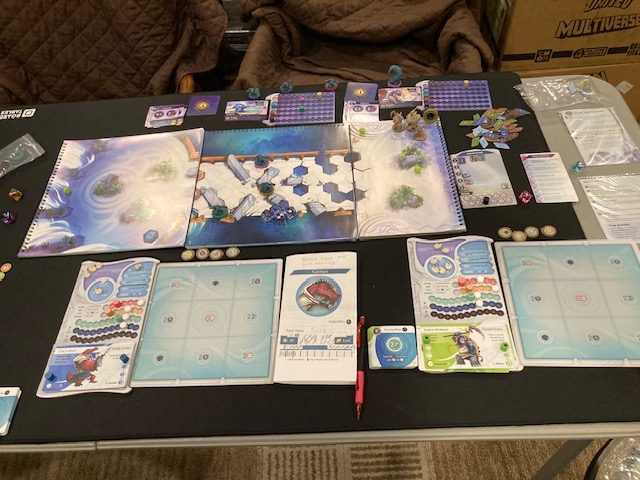
Players will set up the Chapter of their campaign; see scenario 1 of Chapter 1 above!

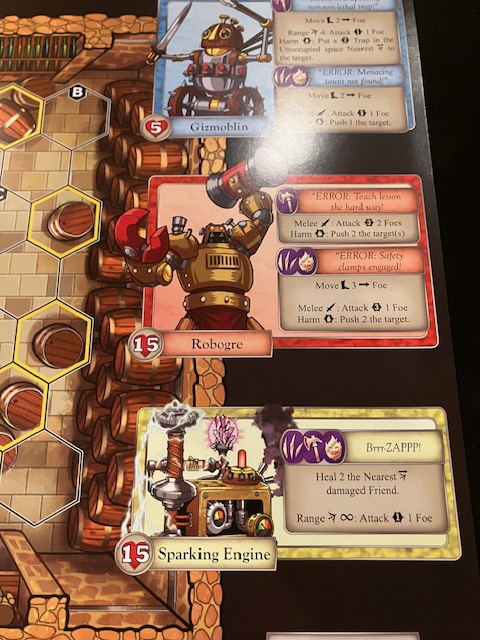
One of the coolest parts of this game is that the monsters are all described ON THE MAT!  So, you don’t have to go searching books or monster manuals for the monster info!

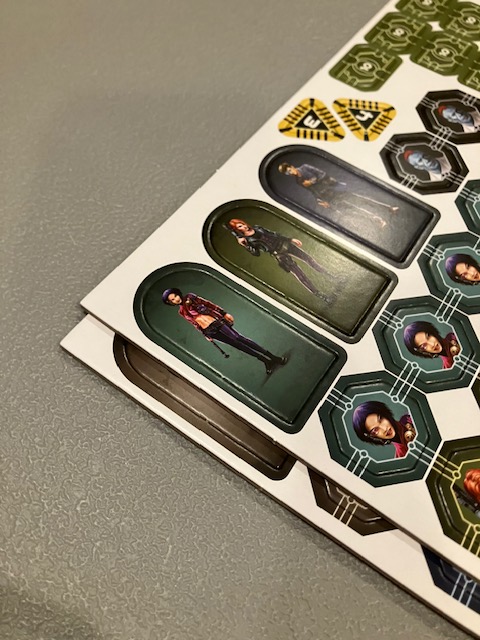
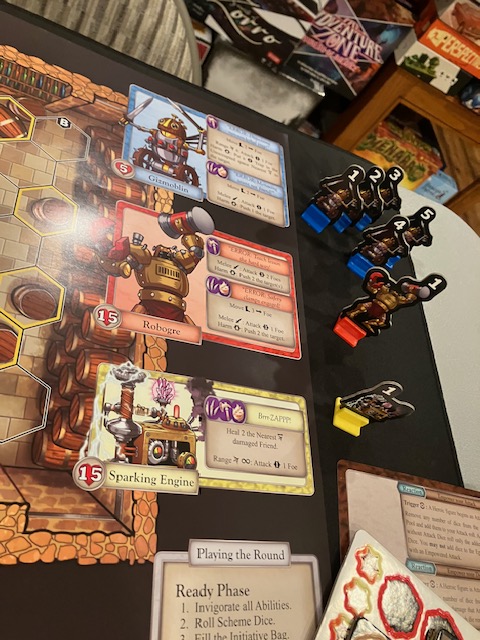
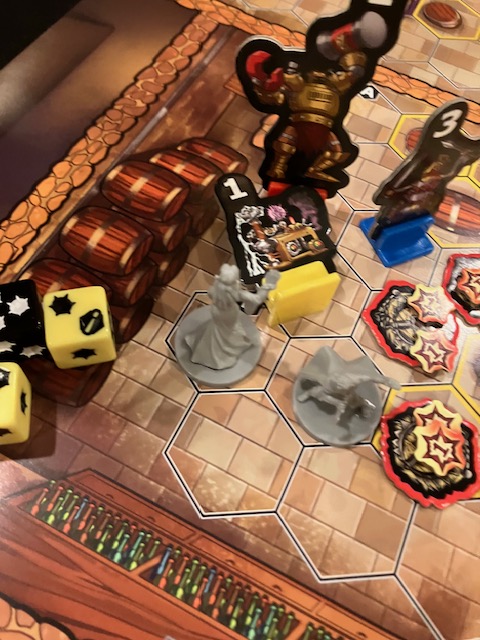
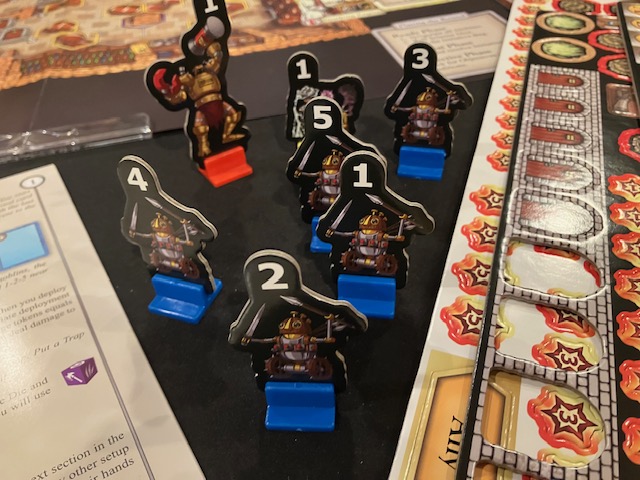
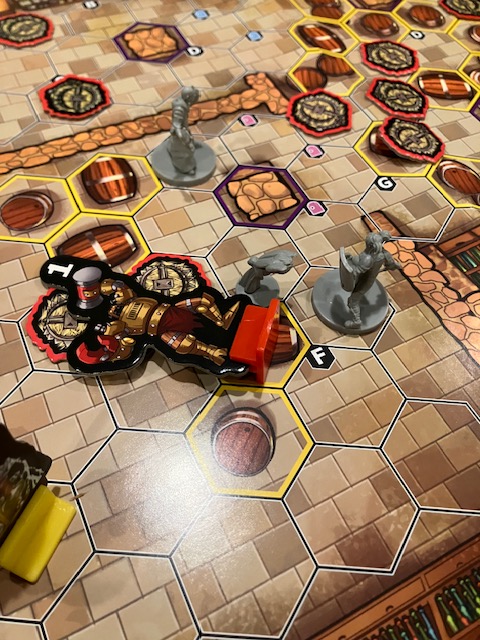
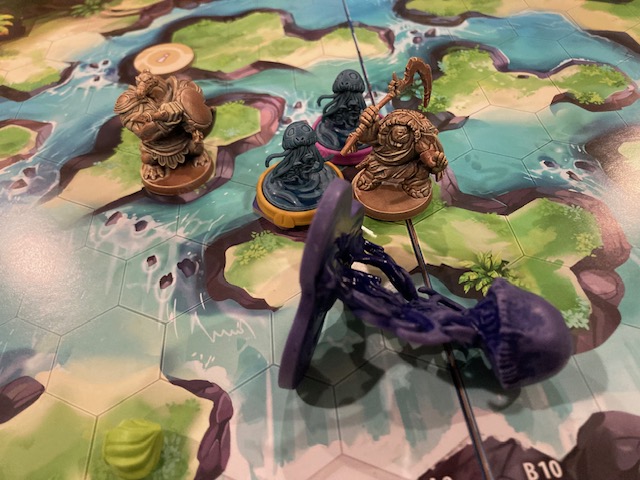
The minis are color-coded via bases, and this system works great. I was a little worried that the bases might “harm” the cardboard standees ( … Gloomhaven: I am looking at you …), but the standees stand well and the bases DO NOT harm the cardboard (NOTE: After a number of plays, there’s a little bit of wear and tear, but it doesn’t ruin the cardboard: it just indents it a little).

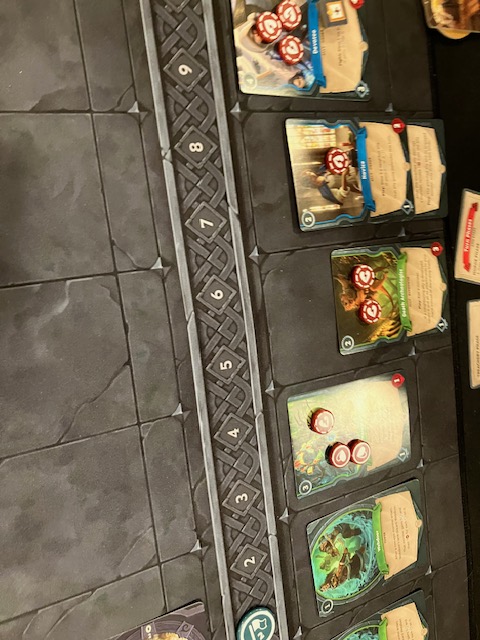
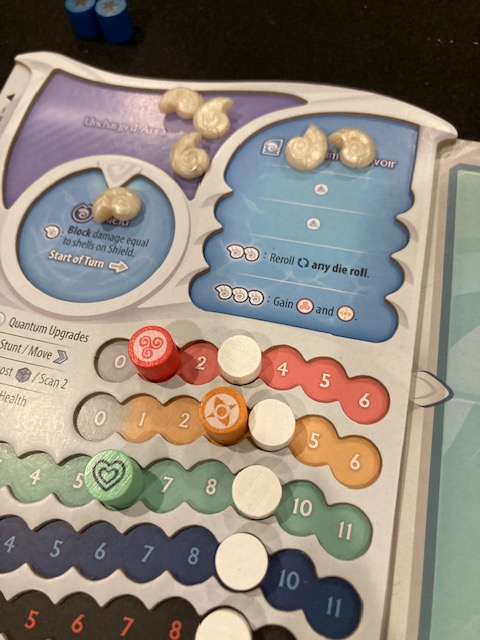
To keep track of hit points, each mini has a number above it, and  it also a little card associated with the number. See above.

It makes it really easy to correlate the mini with its hit point card!  This system is simple and works surprisingly well! They used colors really well here.
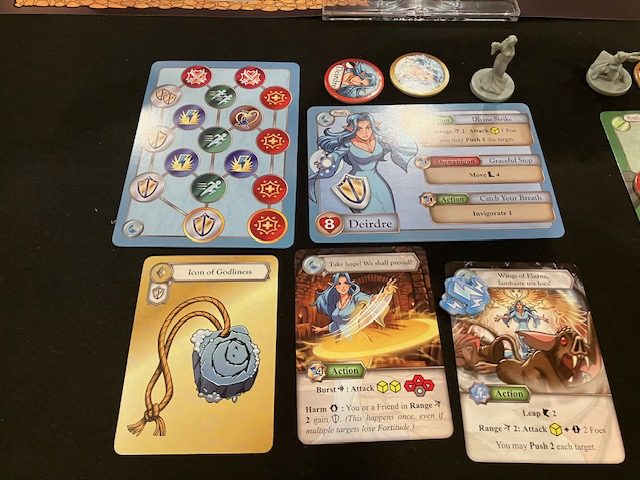
Players operate these heroes, explore the dungeon, and fight the baddies!

This is a fight-em-up dungeon crawler!

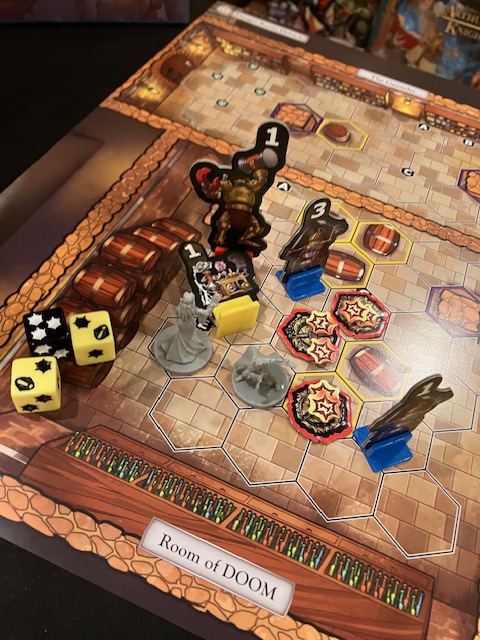
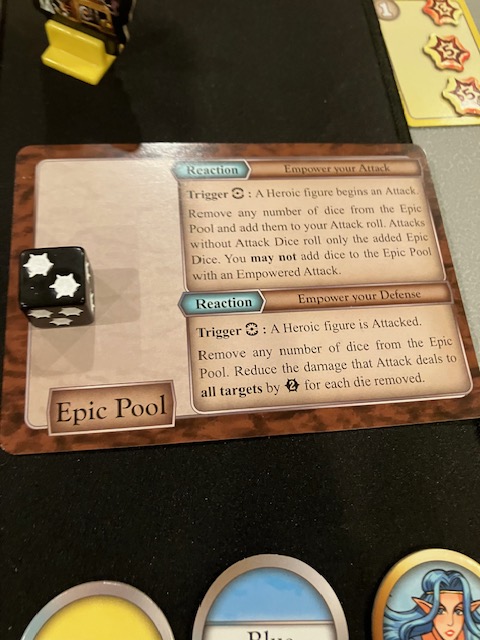
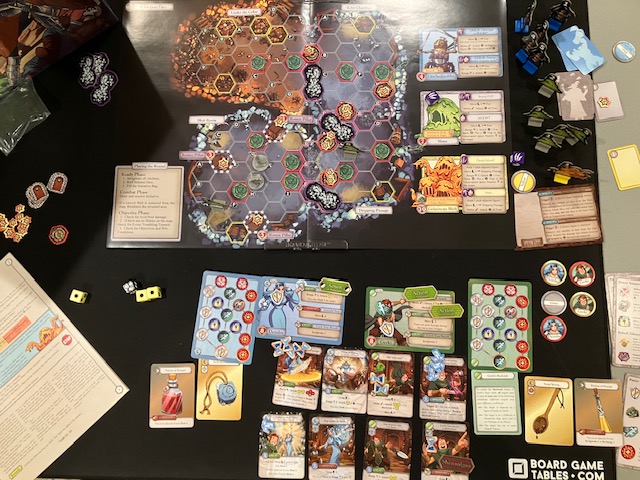
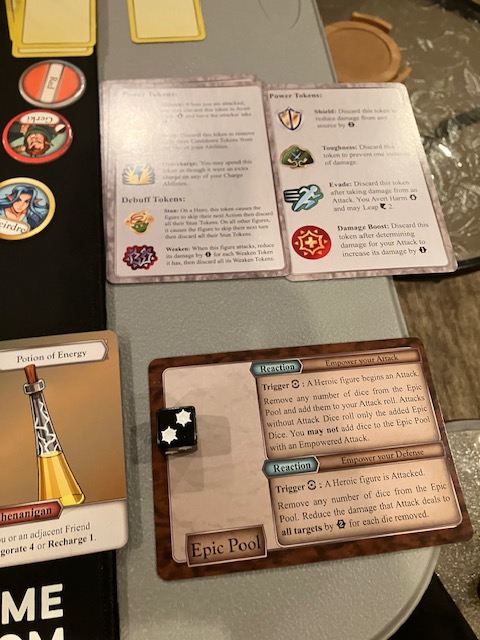
Combat is decided by the yellow and black dice.  You might be worried that the game is too random if dice decide a lot, but the dice are pretty consistent.  You will always get at least one success per dice, sometimes you will get exploding dice (which you can reroll over and over) and sometimes you will get some extra epic dice for FUTURE rolls!
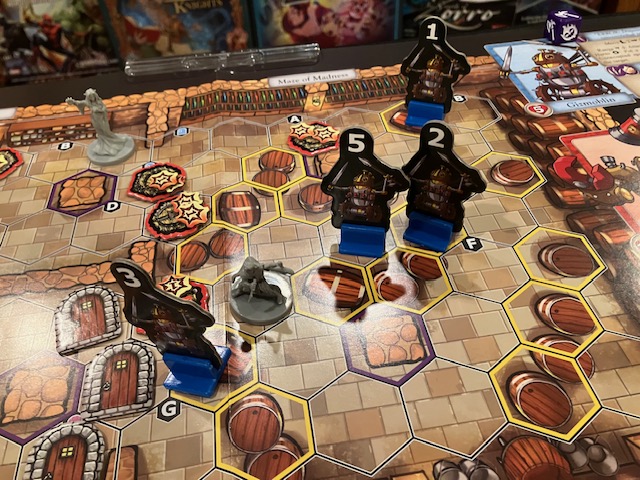
If you roll the ! (exclamation point) symbol on the yellow dice, you get an Epic black die (modulo some rules) which you can use on a future turn! My favorite part of this is that you can CHOOSE when to use the Epic dice on a future turn!  This reminds me a little of the Hour of Need system (see review here and here) where current rolls can contribute to future successes WHEN YOU WANT/NEED THEM!  You choose when to use those Epic Dice!  That’s so cool!

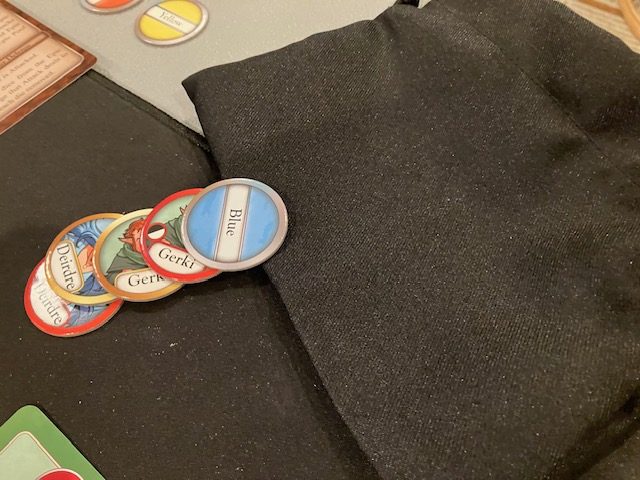
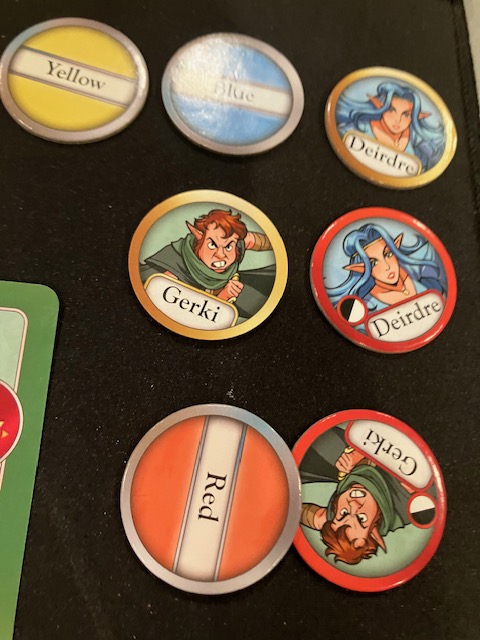
This is a Variable Turn Order game: each player and each set of monsters gets a token and one players pulls the token out of a bag to decide when each one goes.  See above.  I was very worried when I saw Variable Turn Order: was I going to have to worry about all the problems and try to come up with a solution?  See a very in-depth discussion of Variable Turn Order and its problems/solutions here!

After all was said and done, the Variable Turn Order system didn’t seem to suffer from the problems we normally see!

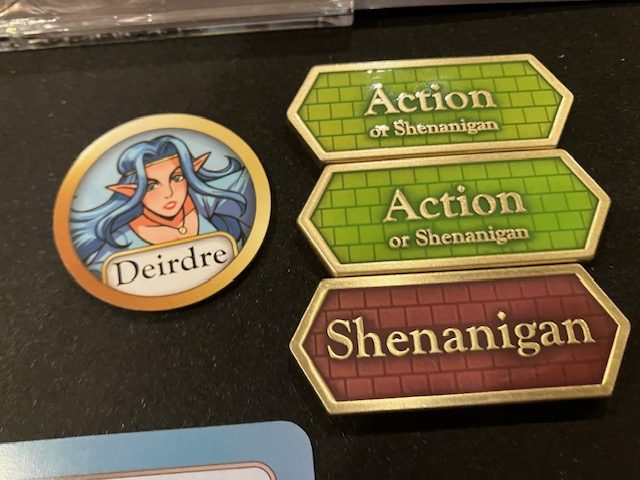
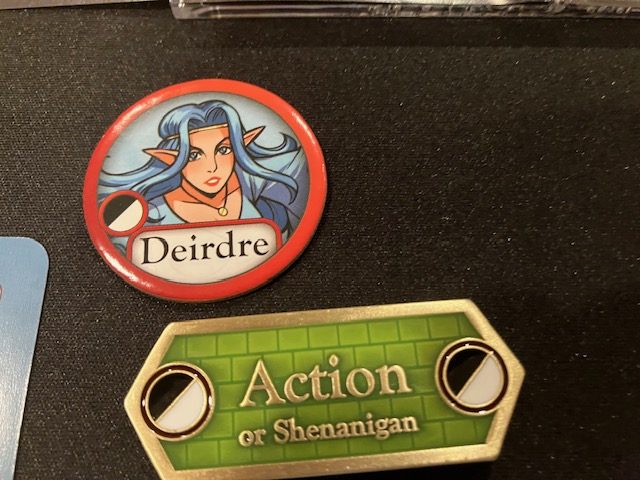
Depending on the token you draw, you either get 2 Actions and 1 Shenanigan …

Or 1 Action or Shenanigan! (1 and 2-Player games with partial actions).

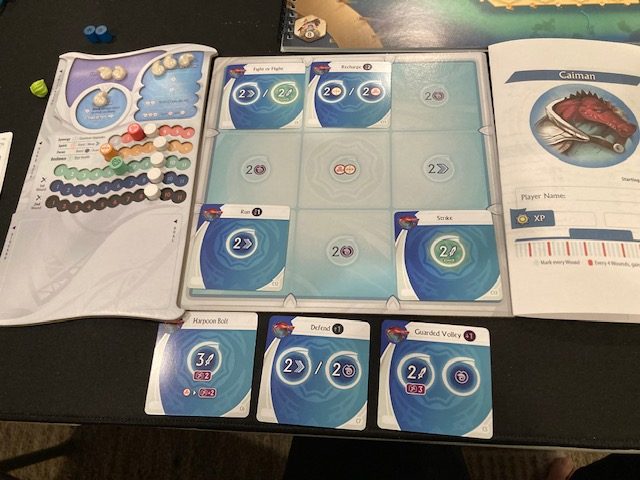
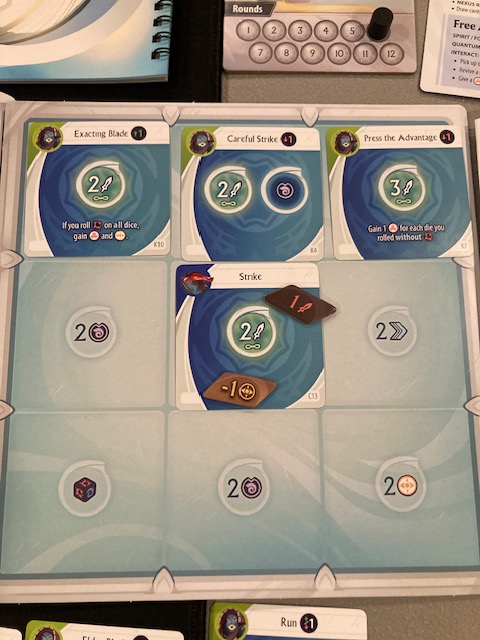
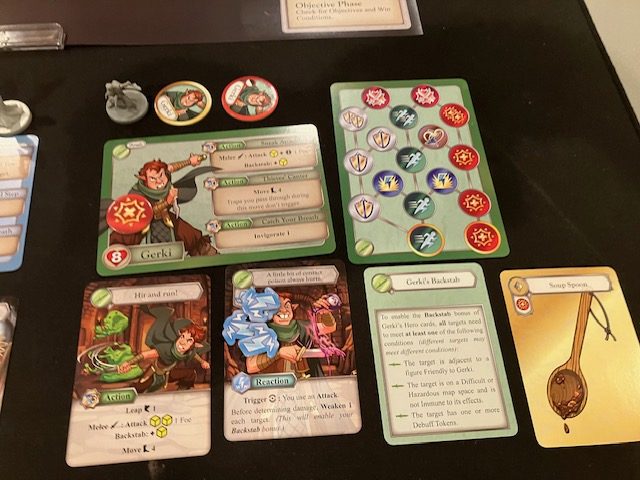
Your Actions and Shenanigans are well defined on your cards!  See above!

Note that every character has very different Actions and Shenanigans! It’s funny, that one word Shenanigans kind of implies the overall vibe in this game …

This is all about your characters moving around the maps and fighting baddies!

If you reach the final objective (killing the yellow slime above for scenario 1: see above), you win (… if you survive to the objective phase…)! If any character dies, you lose! There are other losing conditions too, as you get further into the game.

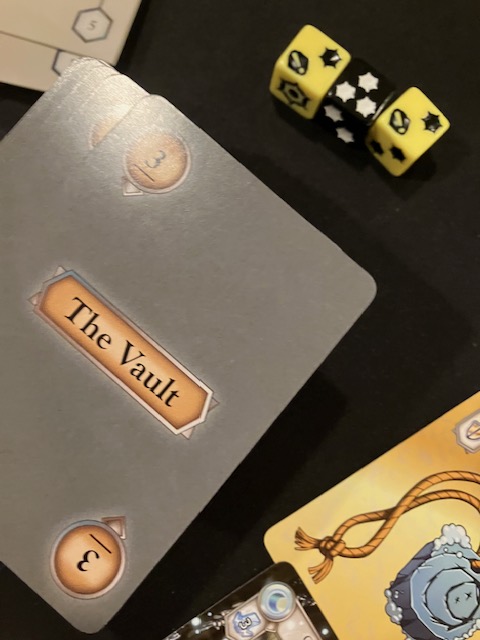
It’s a fun dungeon crawler! And you get to level-up your characters too! As the game gets further along, you can get new cards from THE VAULT which you can use to choose upgrades!

Walkthrough

By far the best part of this game is HOW GOOD the first play walkthrough is!

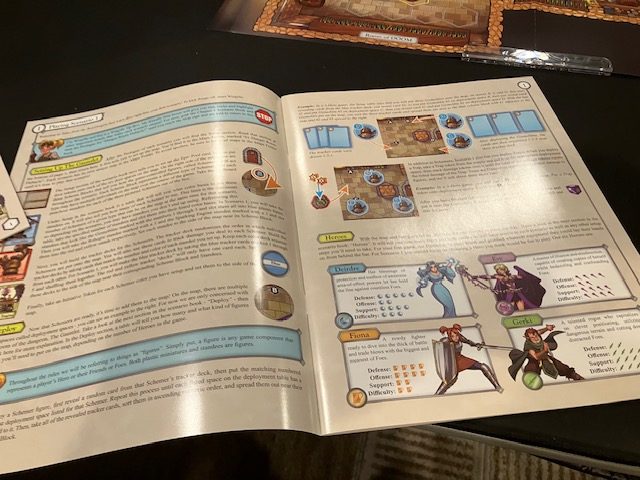
This Walkthrough takes you through the first 4 scenarios of Chapter 1 in great detail!  There’s no need to read the rulebook ahead of time (well, because there isn’t one) … you are just learning the rules as you play from the Walkthrough!

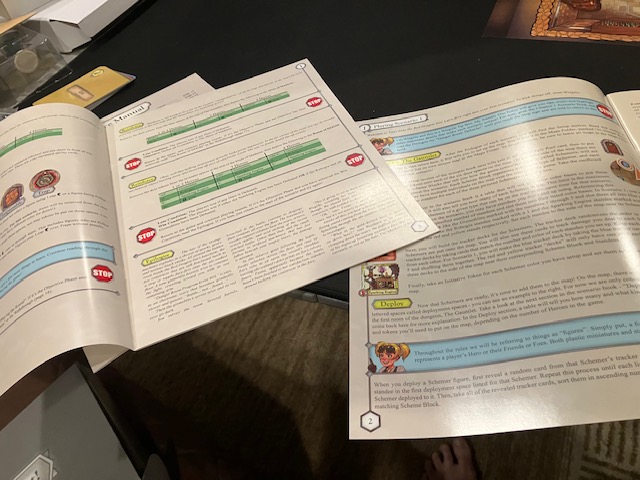
Coupled with the Walkthrough is also the Chapter Guide (see above).  The Walkthrough tells you when to look at the Walkthrough and when to look at the Chapter Guide for specific set-up.

I can’t tell you HOW MUCH I liked this walkthrough!  Worried about getting into the game?  Naaah … this Walkthrough is fabulous!  It slowly introduces you to all the rules as you go.  This reminds me very much a video game training mode; it works so well!

Incremental Punchout

One thing I was VERY worried about was punching out ALL THOSE TOKENS before you can play!  And guess what!  You don’t have to!  You can punchout what you need as the game flows!

Do you need some monsters?  Just punch them out now when you need them!

This Incremental Punchout philosophy worked really well with the way that the Walkthrough taught the rules; learn a little bit at a time, punchout a little bit at a time!!! So, don’t get overwhelmed by all the tokens … just take tokens as you need them.  I wish the rulebook had emphasized this point, because just LOOKING at the token sheets gave me heartburn! 

I strongly recommend you punchout as you go and do not do everything at once: you’ll get right into the game that much quicker!

What Is This?

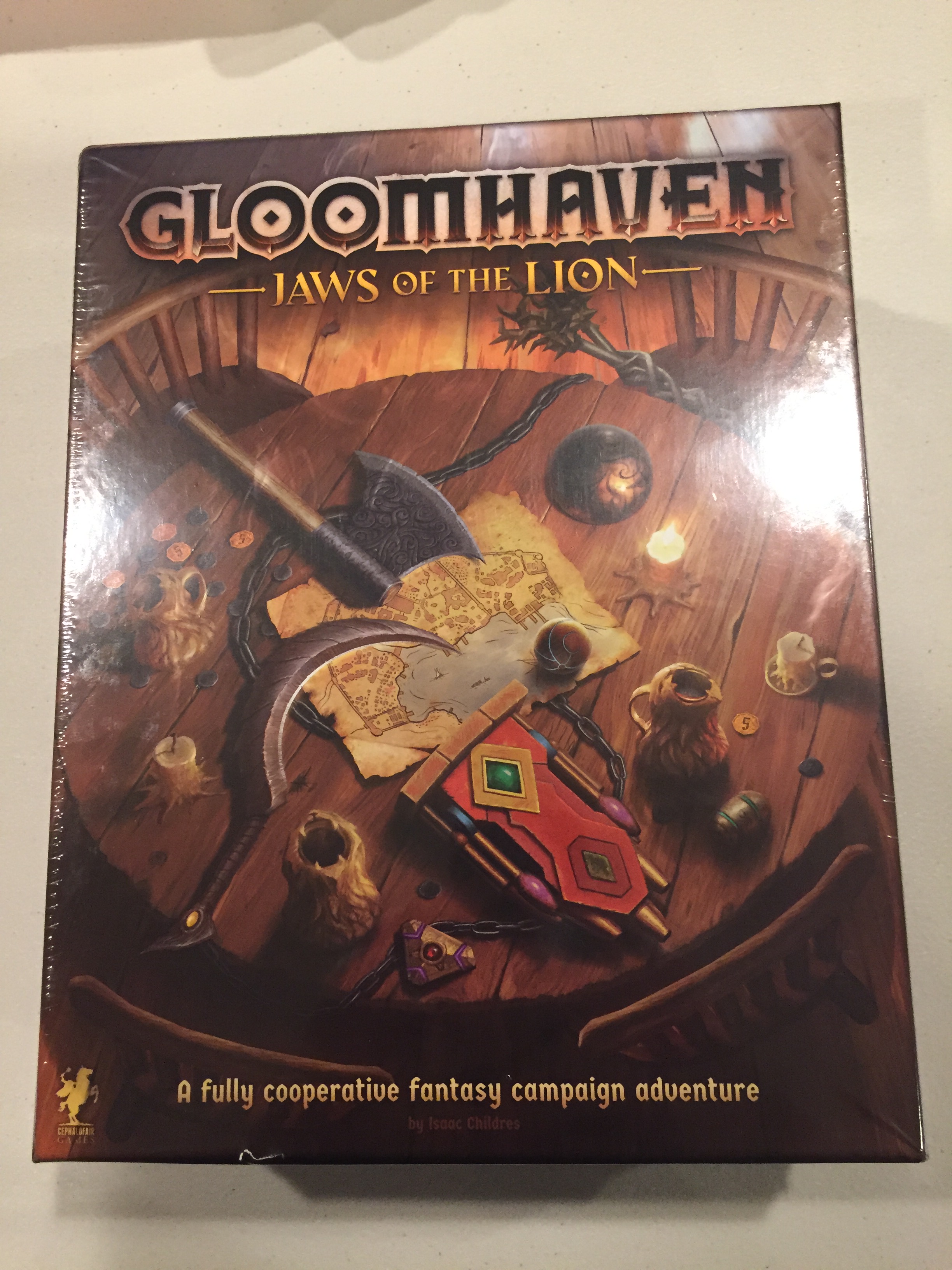
How would I describe this game?  In one word: LighthavenTales From Red Dragon Inn has a lot of similarities to Gloomhaven: it’s a cooperative dungeon-crawler campaign!  Players explore the world, fight monsters, upgrade characters, and quest quest quest.  But the gameplay is lighter, the rules are lighter, the world is “lighter”, the art is lighter and cuter … there’s no Gloom here!  

Like Gloomhaven, Tales from Red Dragon Inn does have a lot of components, but this world just feels just so easy to jump into.  

There is some story here: about as much story as Gloomhaven.  If you are looking for more adventure games, consider games like Arydia (see review here) or storybook games like Tales of the Arthurian Knights (see review here).  If you want story story story, this probably isn’t the game for you … this is a dungeon crawler where you fight monsters!

Solo Play

So, Tales from the Red Dragon Inn does support a solo mode!   (Thanks for following Saunders’ Law!)   In fact, two solo modes!

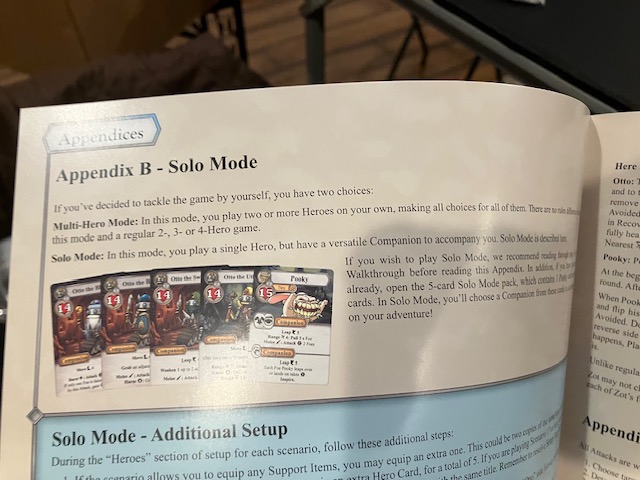
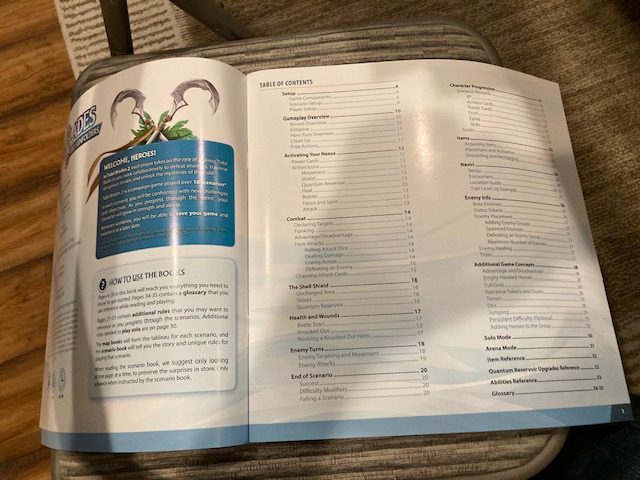
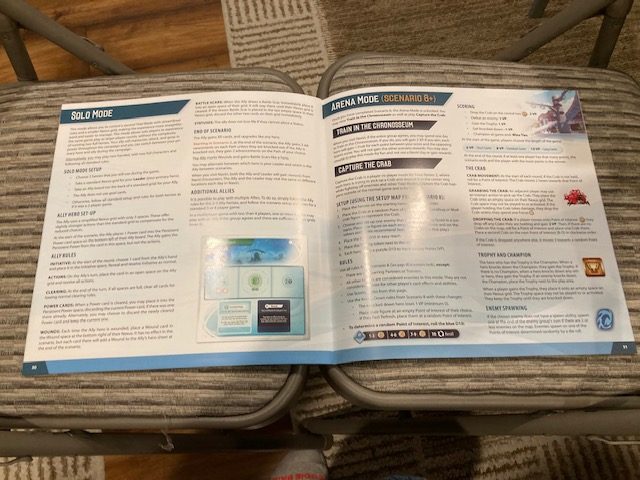
It’s a little bit of a bummer that the solo play isn’t addressed right up front … you have to go looking for the solo rules in the Glossary (a very complete book!) that comes with the game.  See above.  There are two solo modes; play normal, but alternate between some characters like a multiplayer game …  or play a solo character with a Companion.

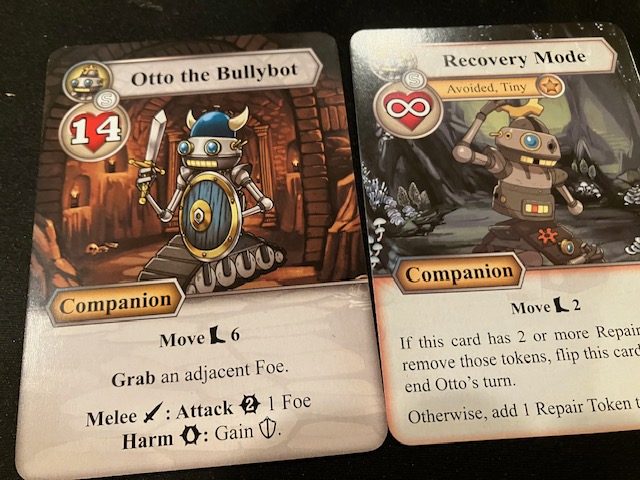
The Companion has a special set of cards: see above.  The Companion rules also take up a full page on the Glossary with lots of exceptions to gameplay.  I usually HATE solo modes with lots of exceptions to the rules, so I opted to just alternate between two characters because there are NO RULES CHANGES.  I strongly recommend this is how you play solo; the Companion is still an “extra” thing to play and doesn’t save that much context switch overhead.  At this point, I have played the first Chapter all the way through with two characters and didn’t have any problem going back and forth between characters. In other words, the context switching between two characters didn’t seem to cause me any issues as I played solo.

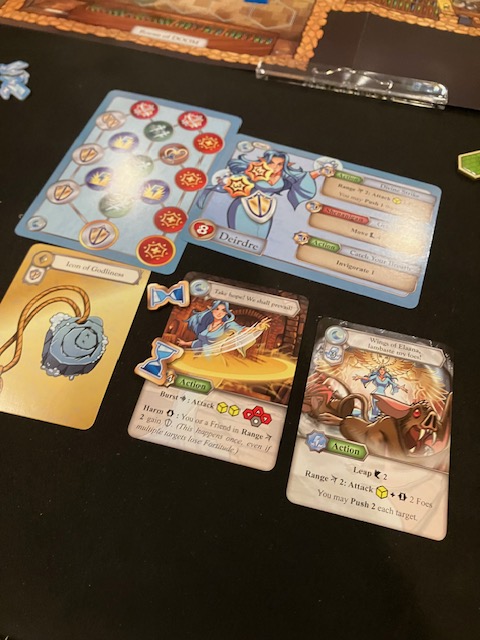
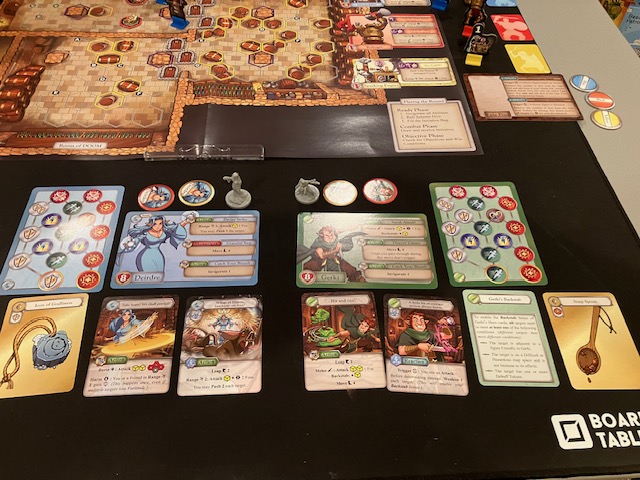
My solo game was operating Deidre and Gerki.  They made a great team!  These two characters really worked well together; Deidre is better at long distance stuff, but occasionally she’ll get in there and help Gerki!  If she stands NEXT TO some monsters, Gerki gets his backstab ability (an extra die!)  The amount of cooperation between the two was quite good.  

I have spent about 15 hours playing the game solo.  I learned the game solo, set-up the game solo, upgraded, read the Walkthrough solo, and played all 4 scenarios of Chapter 1!  I had a blast!  I loved the simplicity of the system, I loved how the characters can work together well and support each other, I loved the “sense of humor” the art implies, I loved the art, I loved the vibe!

Once you know the game, your sessions can be quicker, but be prepared for your first 4 sessions to take about 15 hours or so!  But, it flies by!  You are having fun and always doing something!

I look forward to more solo sessions, but I had to reset the game (this is not a legacy game, but it is a campaign game and you can reset it) so I could play it cooperatively with my friend(s).

Cooperative Play

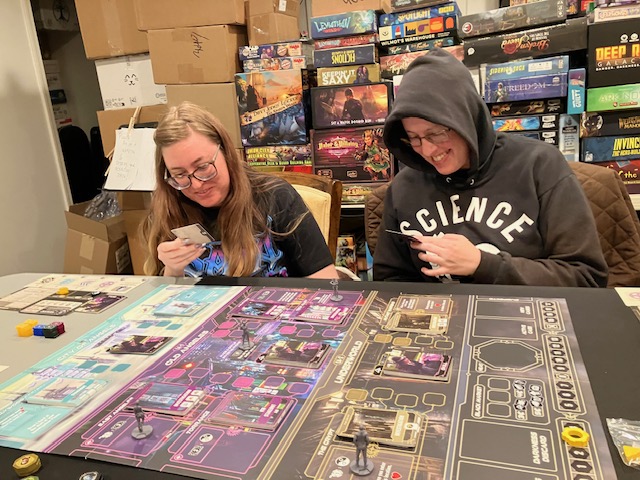
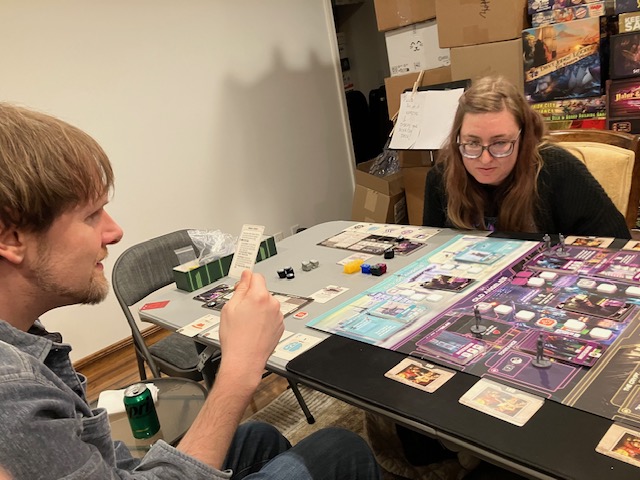
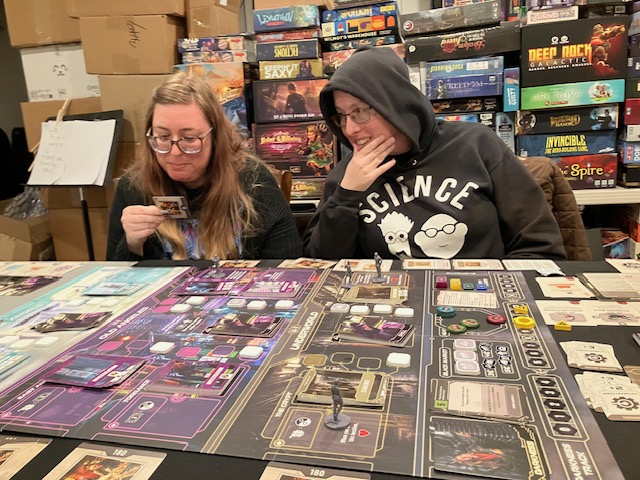
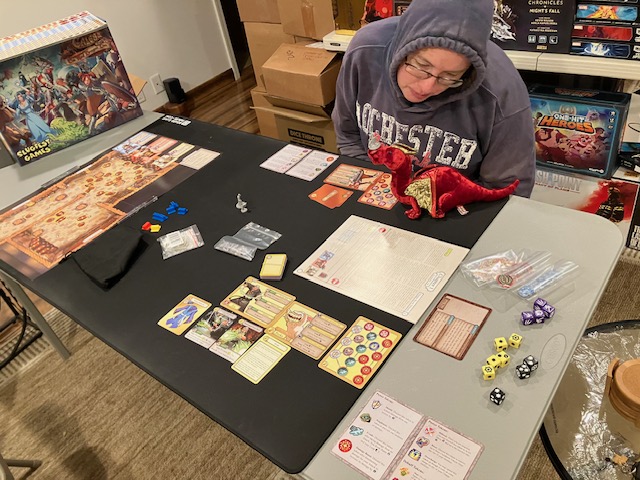
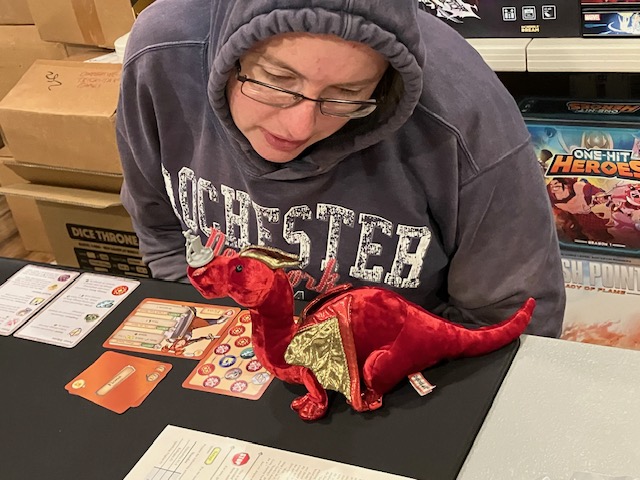
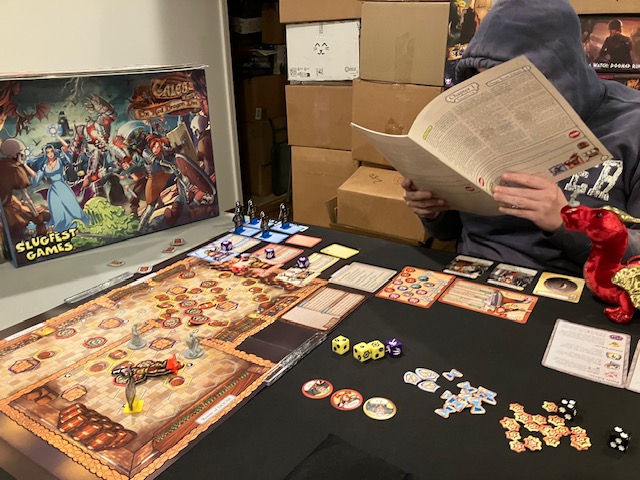
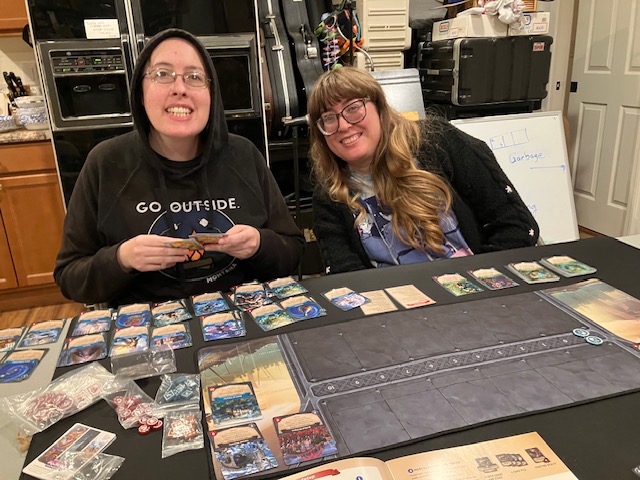
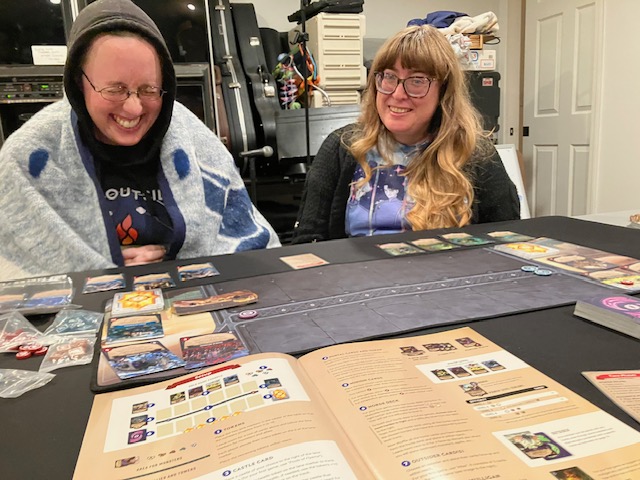
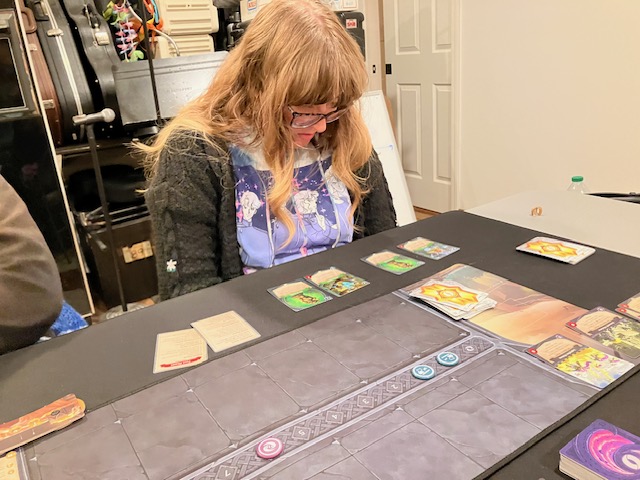
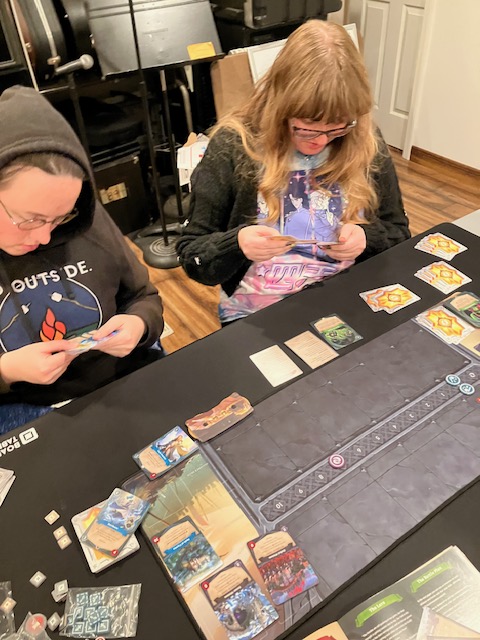
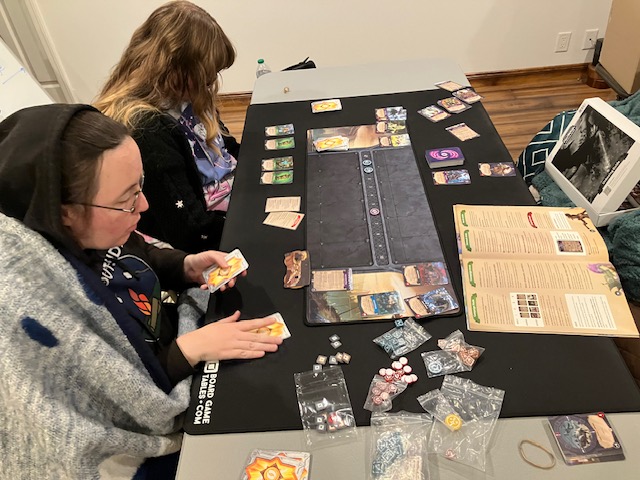
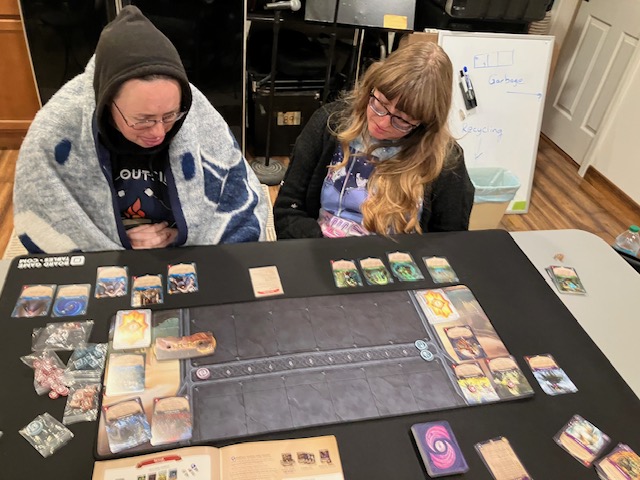
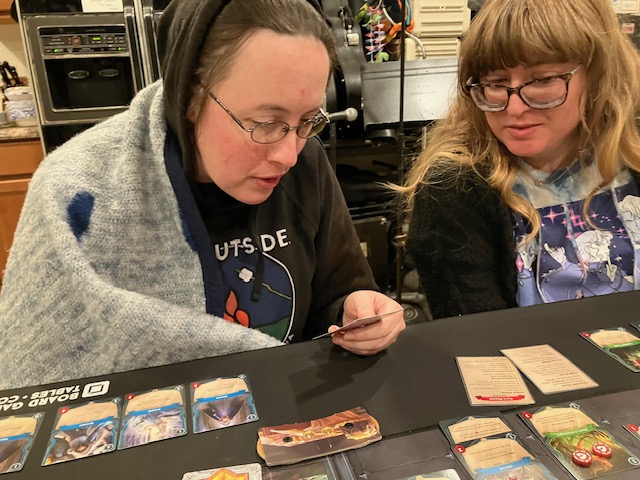
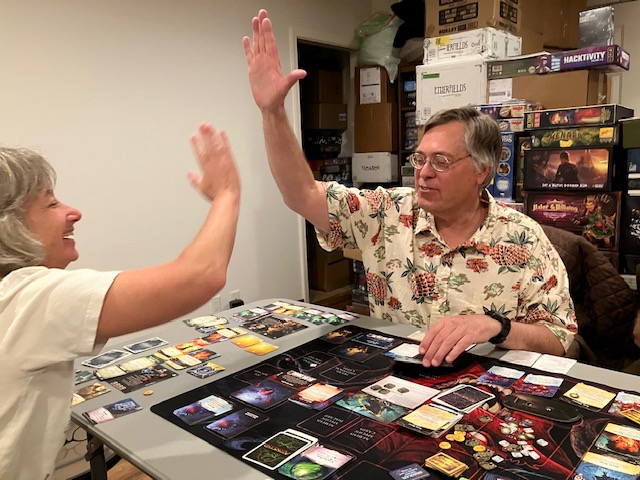
My first cooperative experience was a 2-Player game with Teresa.  She brought over a little red dragon as a mascot … it was quite apropos!

For a different experience from the solo game, I played Zot the wizard.  He was funny!

It’s hilarious that the little guy POOKY who helps Zot summons HIM!  (Not the other way around) See above!  That’s hilarious!  And yes, we are convinced this is the rabbit from Monty Python and The Holy Grail.

Like the solo game, we saw some good cooperation as Teresa’s Fiona Character was all melee, while Zot was all distance!  A good combo!

The game also moved much more quickly since I had already played the entire Chapter 1 solo.  A lot of those “15 hours” I spent in the first 4 solo games were shortened considerably!  I think Teresa and I got through Scenario 1 is about an hour!

Playing solo ahead of time significantly increased how quickly we were able to get into this game.  

Will we play more?  Basically, Teresa wants to wait until Sara comes back and then we’ll start a 3-Player campaign!  

I think it was a success cooperatively: it’s always a good sign when your friends ask to continue the campaign!

Story vs Flavor Text

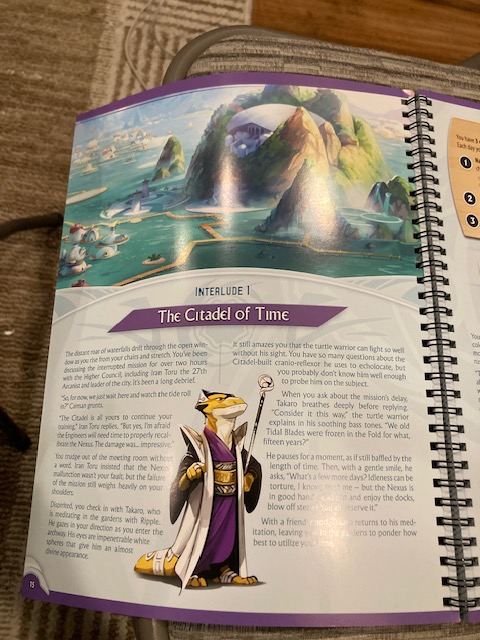
There’s not a lot of story per se, but there is a lot of flavor text that gives the game direction and charm, and helps establish the parameters of the game.   To be clear, you really don’t HAVE to read the flavor text … I didn’t read it all in my solo play, but it didn’t really detract from the game by not reading it.  Teresa LOVES flavor text, so we did read it (see above) and it did contribute to the atmosphere of the game: see above.

What I Liked

Charm: This game has so much charm!   The art style that permeates this game is just so much fun! It stays within the Red Dragon Inn universe … Dragonverse?

Unique Characters: The characters are also so unique and different! For example: the fact that Pooky (the little familiar) summons Zot is hilarious!

Walkthrough:  This first play Walkthrough is exceptional and makes it easy to jump in!

The Dice System:  I was really worried the dice system would be too random, but it’s really not.  You always get at least one success, you can get exploding dice, and you can choose to use Epic Dice if you want for “extra help”!  The Epic Dice system worked well!  You could choose when to use the Epic Dice when you really needed a win!  

Vibe:  This is a light-hearted Gloomhaven … it could have easily been called Lighthaven! Yet, it’s still a deep game with lots of play and meaningful decisions!

Level-Up:  Levelling-up is easy and interesting!  Every character levels up, but it’s not described u pages and pages of tables in a book!  You just grab the cards destined for you, or choose some! It’s really easy!

What I Didn’t Like

SO MANY PUNCHOUTS!  The sheer number of punchouts in this game is terrifying.  Word of advice, just punch out tokens as you need them.  In fact, I ended up trying to put the monsters BACK into the token sheets when I was done with them!  Partly I did this to reset the game, but the game just stores easier if you keep things in the punchout sheets as much as possible. I know, that’s not ideal. 

Part of this was a little foreshadowing too … you saw how many punchout sheets are coming, right?  Do you REALLY think you are going to be able store ALL THESE tokens in bags back in the box?  So, I put as many tokens as a I could back into the punchouts as a favor to future me.

Conclusion

Well, Tales from Red Dragon Inn should have made my Top 10 Cooperative Games of 2024 because the first release came out in 2024.  But I didn’t get it until the second Kickstarter, so I didn’t get it until 2025!  So, it will probably make my Top 10 Cooperative Games of 2025 … but it might have to be an honorable mention, just because it wasn’t released in 2024.  Or maybe I’ll just count it as 2025 since I backed the second Kickstarer … not sure …

This is a fun and light dungeon-crawler, but still lots of depth and meaningful decisions.  You fight monsters and you have fun as a group of adventurers!  There is some story here, but it’s mostly just fun flavor text.

Tales from Red Dragon Inn is a great solo and cooperative game: 9/10. It’s so fun!

I think the only reason this didn’t get a 10/10 was because the Variable Turn Order can sometimes be … disappointing.  I wish there had been a way to mitigate/control the Variable Turn Order, but it didn’t get in the way that much. 


Skytear Horde: Campaigns. Does it put the Pain in Campaign?

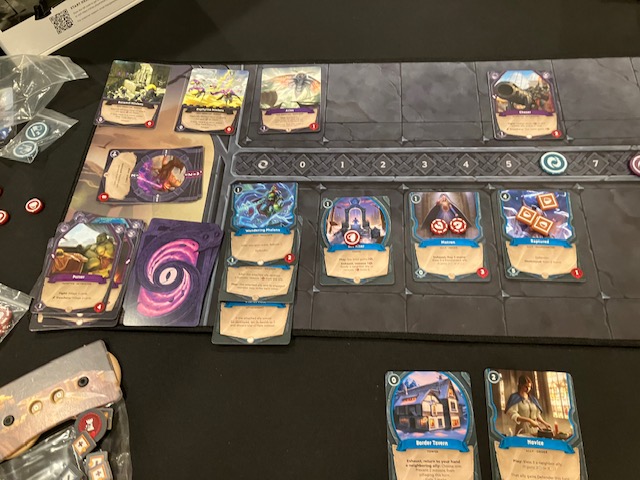
I have to be honest: Skytear Horde: Campaigns does put a little pain into the campaign.  But, knowing what the issues are before you get this game make it so you can work around them and enjoy this game as-is.  Although this is mostly a “review” of the Skytear Horde: Campaigns, it’s also of a guide of how to get the most enjoyment out of this if do you end up getting it.  At the risk of spoiling my review, I did like it and am keeping my copy but ONLY after making a few major notes.

Skytear Horde: Campaigns is a standalone expansion in the Skytear Horde series; this series of games are solo and 2-Player cooperative tower defense games. (There is nominally a 3-Player competitive game that we won’t be discussing; in our experience, it seems to be the least likely way to play)

The original base game of Skytear Horde was on Kickstarter waaaay back in January 2022, and delivered to me and other Kickstarter backers in February 2023.  See our original review here.  We did like it: it made the #5 spot on our Top 10 Solo Games of 2023!
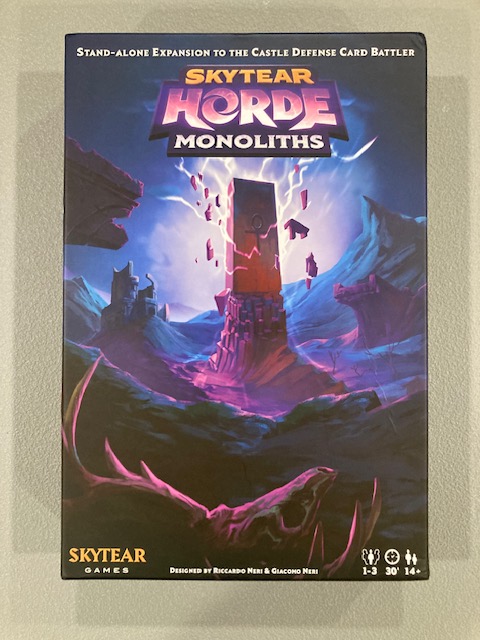
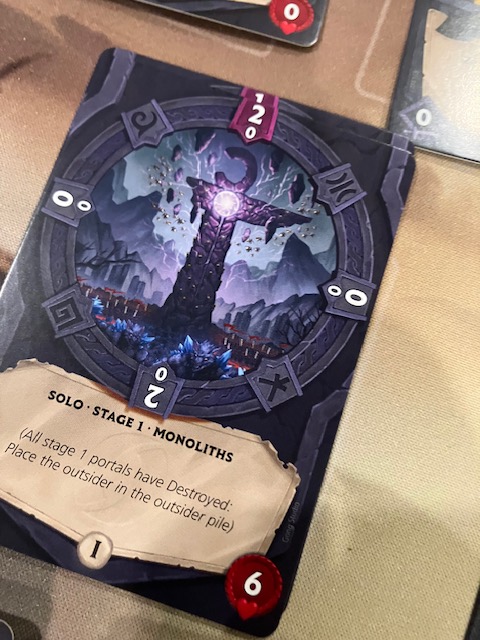
The first expansion, a standalone expansion (meaning you can play it without the original game) was on Gamefound back in May 2023 and delivered in about a year.  See our review of Skytear Horde: Monoliths here.  It also made our Top 10 Solo Games of 2024!
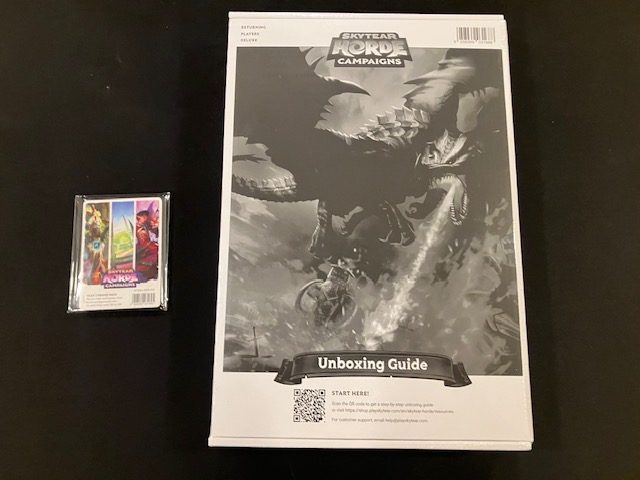
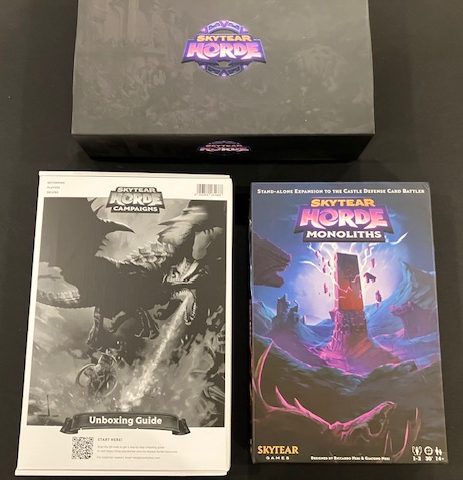
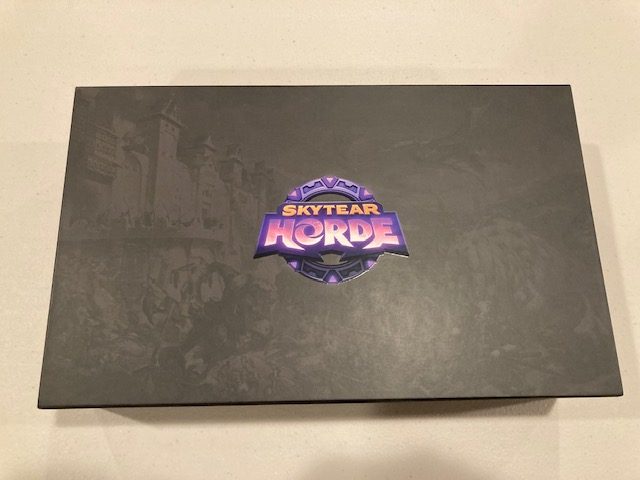
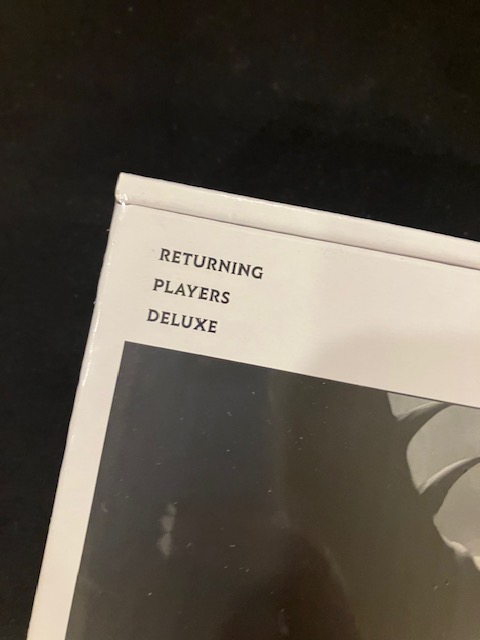
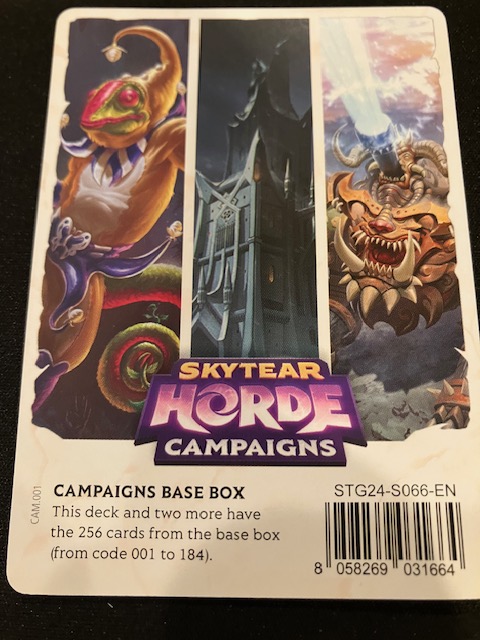
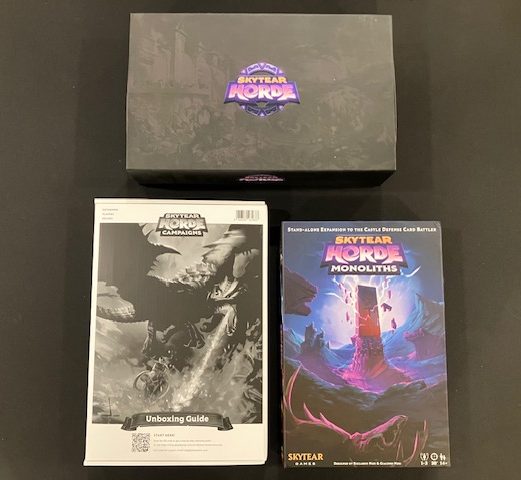
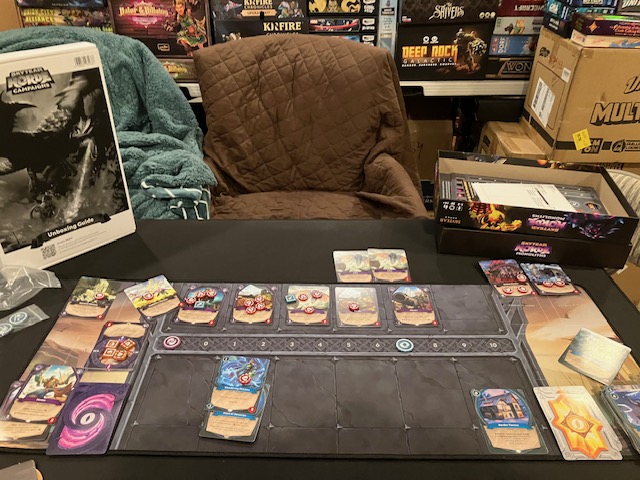
This second and newest expansion is the Skytear Horde: Campaigns box above. It’s also a standalone expansion from Gamefound. It delivered in April 2025 after promising delivery in June 2025 (it delivered early!). My box is a little lack-luster because I backed at the Returning Players Deluxe pledge, which “expects” me to merge this in with the other two.
Let’s take a closer look!

Generic Unboxing

See above for scale with a Coke can: my Returning Players Deluxe box isn’t the best box. Again, I think it’s expected for me to merge all my cards into the original game.

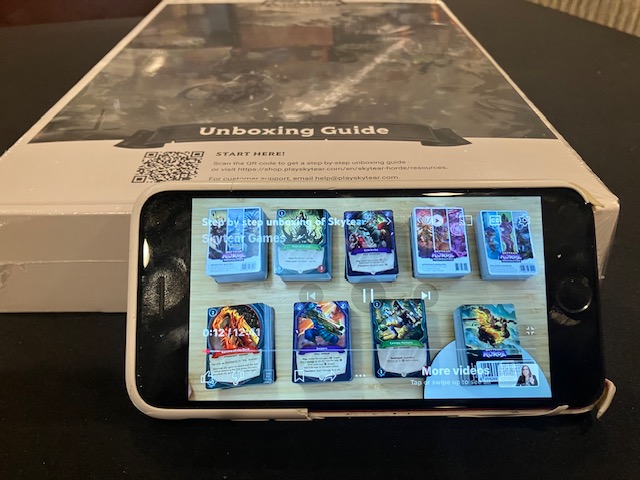
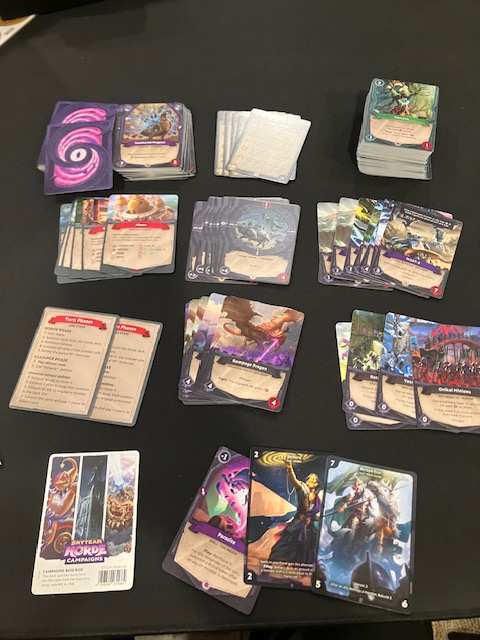
This is a game all about cards.  There’s a little unboxing video you might consider watching (see above).  I watched a little bit of it.

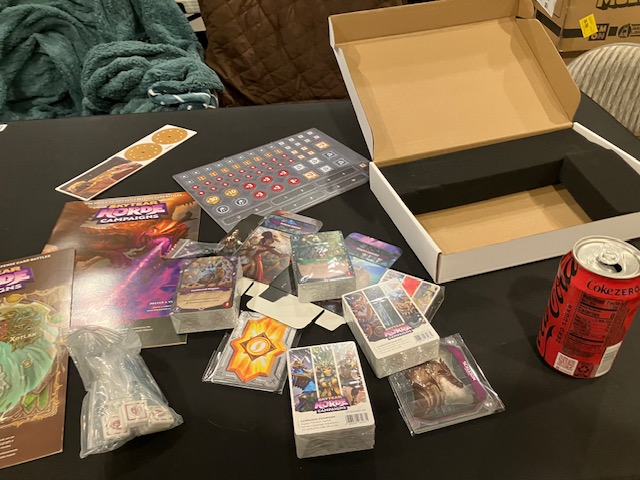
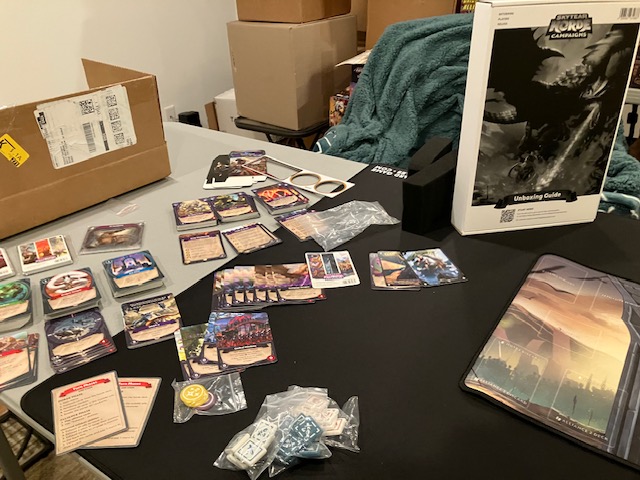
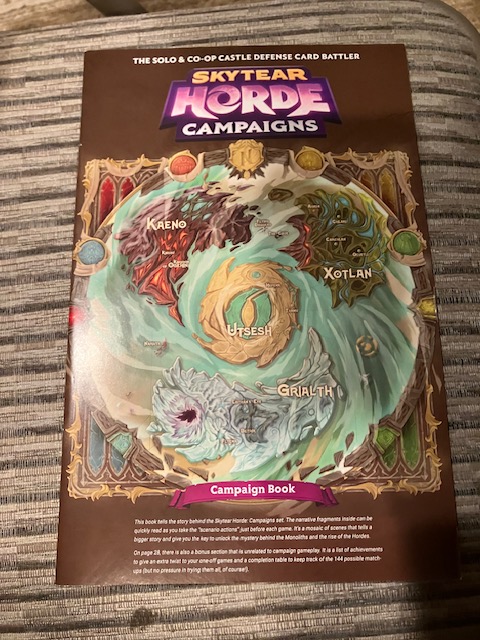
There are just a ton of cards, some token sheets, and two booklets: A rulebook and a campaign book.

The cards look pretty great and they are consistent with the cards from the previous releases.

The Rulebook

This rulebook is both blessing and curse.

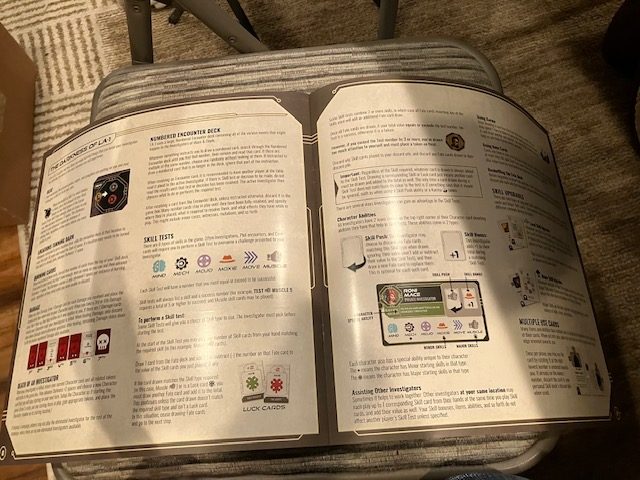
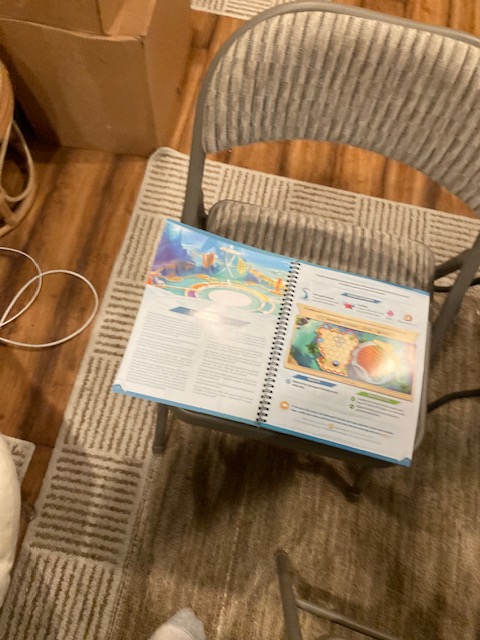
This rulebook does great on The Chair Test, opening up easily across two pages, laying flat, being readable, and no real overhang over the edges.  This gets about an A- on the The Chair Test! It’s not an A because the font could be a little bigger, especially considering how much whitespace there is.  Still, great!

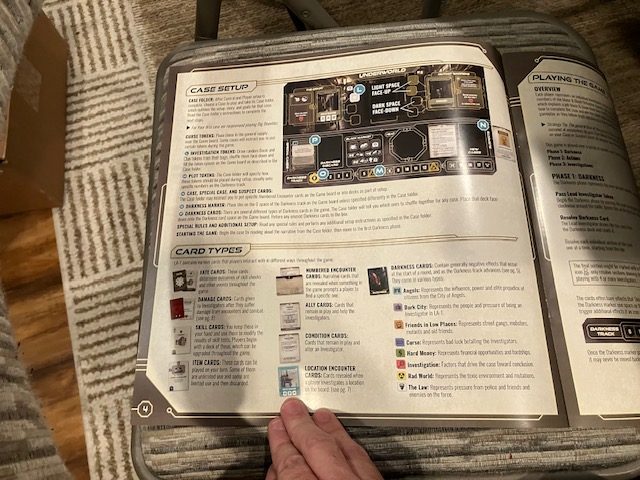
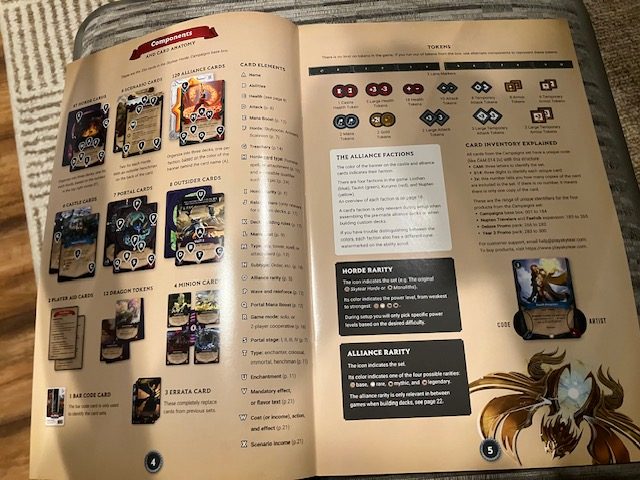
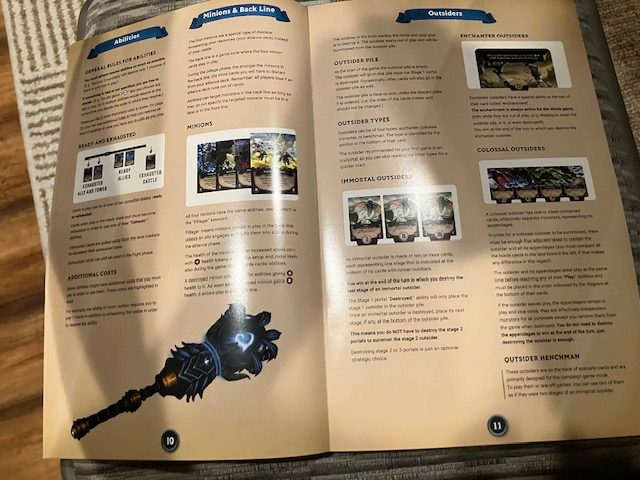
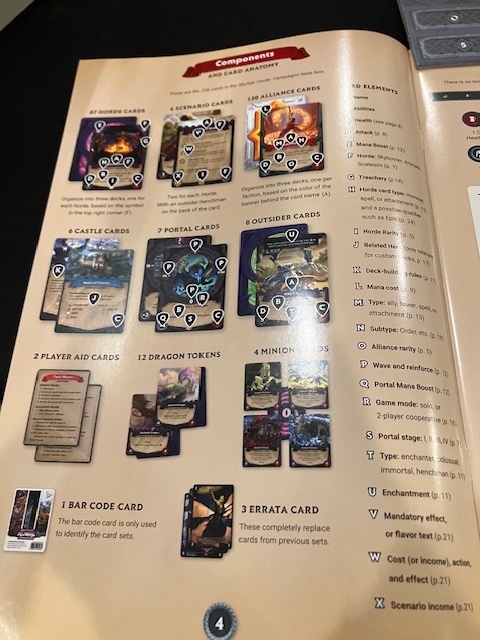
These Component pages are fantastic! I forgoed (forewent?) the card video because I wanted to handle and open all the cards myself.  These two pages where GREAT for describing how to open up and sort all the cards.   The card deck (types) even had little annotations, along with a little summary!  Very useful!

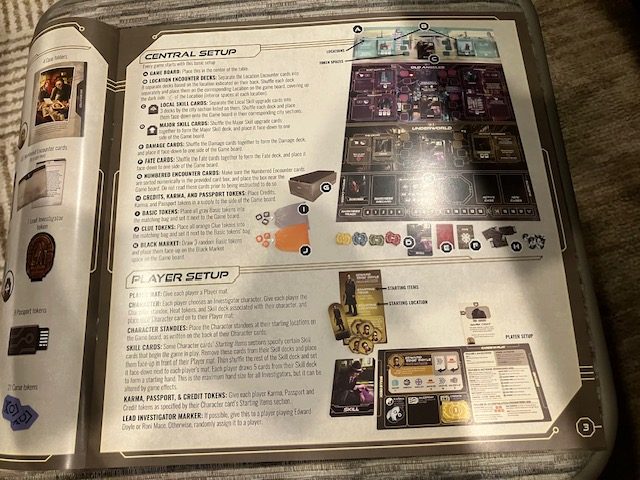
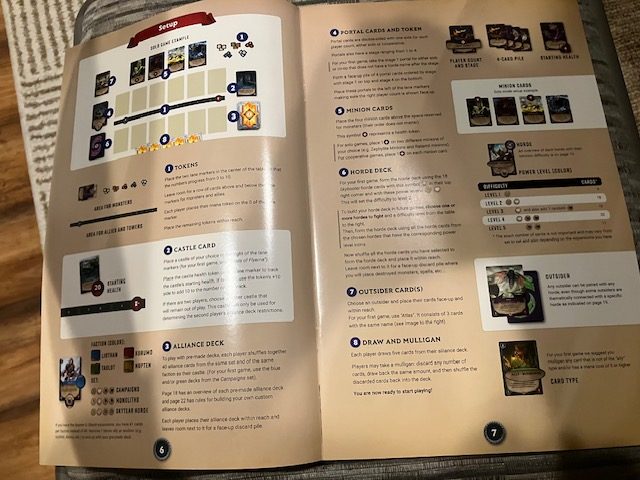
The set-up was good: it is on exactly two pages without needing going to cross to another page. See above.

The rest of the rulebook was pretty good; and it had better be.  This is the third Skytear Horde: they should know how to explain it by now!  They even note “new rules” with a sideline bar: great job!  To be fair, there’s not “that many” new rules in this set.  Note the bottom right of page 11 (above) has a new rule.

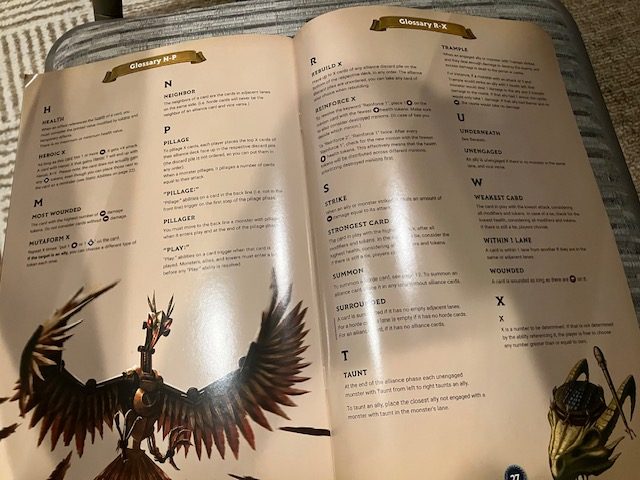
It doesn’t have an Index (boooo), but I’ll forgive it because it has a very good Glossary of keywords in the back.

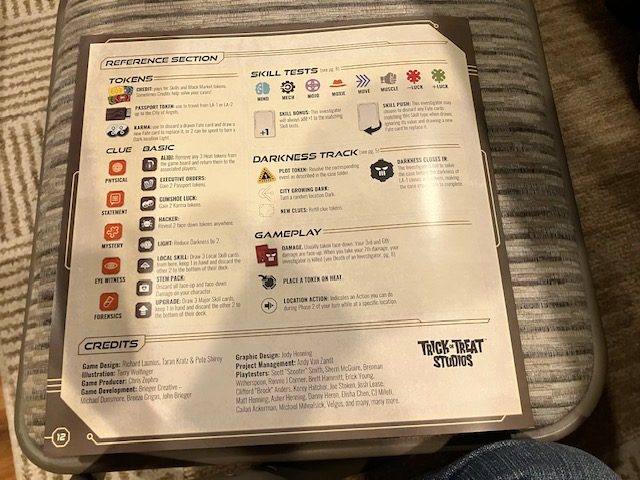
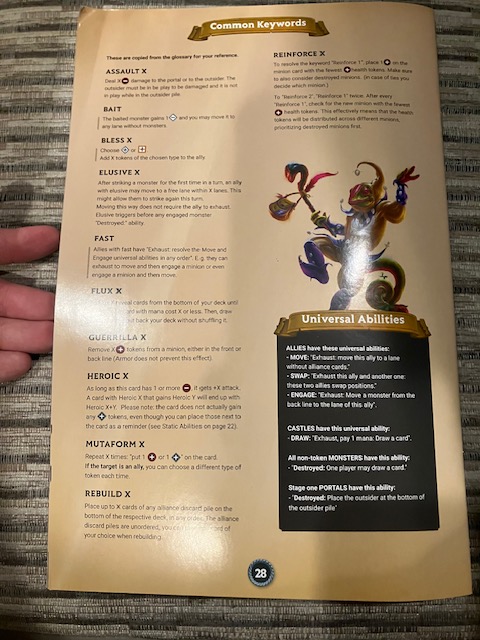
It also ends with a bang and has some other common keywords on the back.

Seriously, for the base game, this is the best rulebook so far for this series.    Great Components, good Set-Up, good rules, good Glossary, good back cover.  This is why it’s a blessing.

But why is this rulebook a curse as well?  Be patient; we’ll get there.

Cards

I want to talk a little about the cards.   They do a really nice job in general.

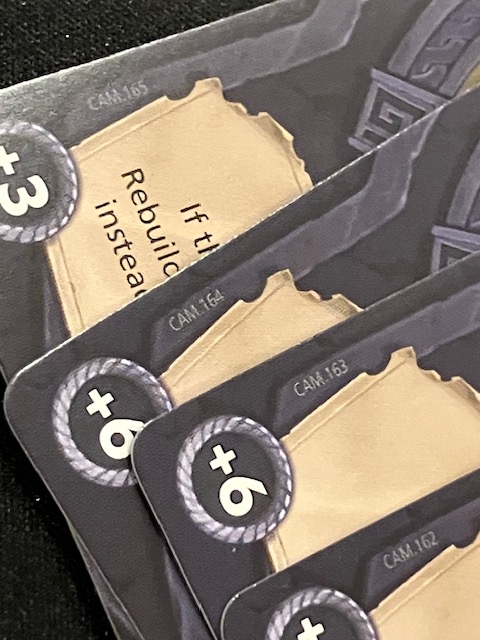
The cards are labelled with what set they come from, even if it’s a little hard to read: see above!  The Campaigns cards are marked with CAM.  I suppose I appreciate that the labels are pretty well out of the way (so they don’t interfere with gameplay), but I  really struggled to read that text! I ended up getting my phone out and zooming in on these!  When I needed to sort the cards back into their respective decks, it was a challenge!   Here’s another blessing and curse: the labels being out of the way mean they don’t interfere with play! That’s a blessing!  But sorting them is a curse because it’s a little hard to read.

Maybe those teeny labels doesn’t bother you because you like to put everything in the main box and you don’t really care which set it came from.  I like to keep my sets separated, so it did bother me.  I suspect I am in the minority.

I mean, these cards look great.  The art on them is amazing: see above.  

Gameplay

This is a solo, 2-Player cooperative (or 3-Player competitive) tower defense/lane battling game.  Players play cards to the lane to fight the bad guys and protect their castle! 

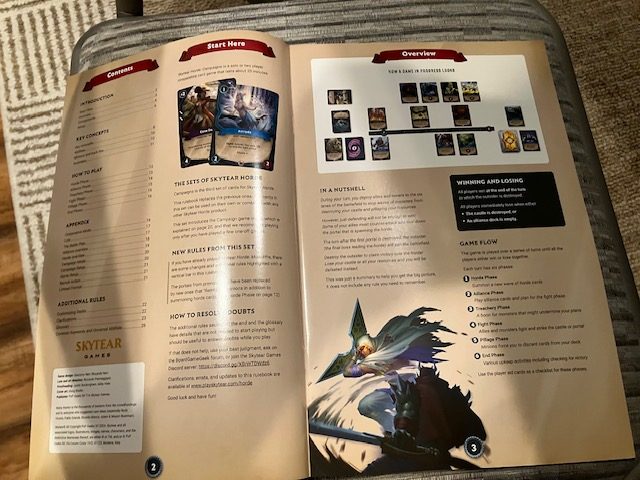
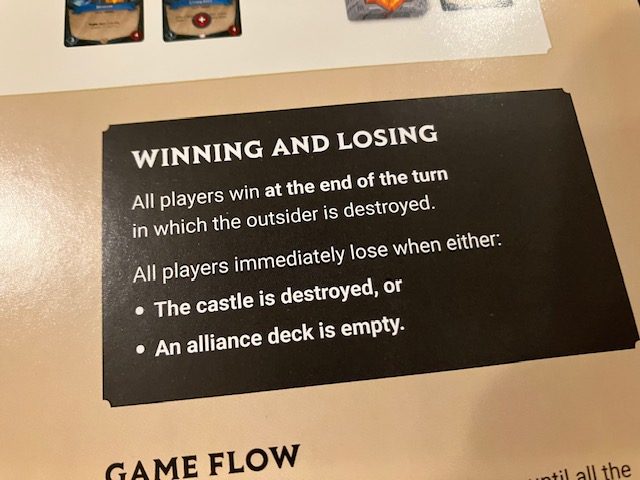
There is a very nice description of win/lose conditions at front of the rulebook: see above.

There’s a lot more discussion about gameplay in many other sources, including our previous reviews. If you know what Skytear Horde is, the expansion part of this game should feel very familiar to you.

Solo Play: No Campaign (yet)

First and foremost, the Skytear Horde games are solo games.  There are some annotations in the rules (like one paragraph) describing how to play 2-Player cooperative.  Everything else about this game screams “I am a solo game!”

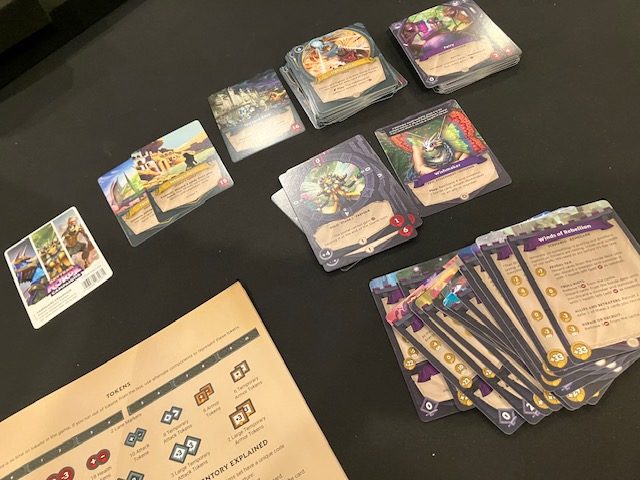
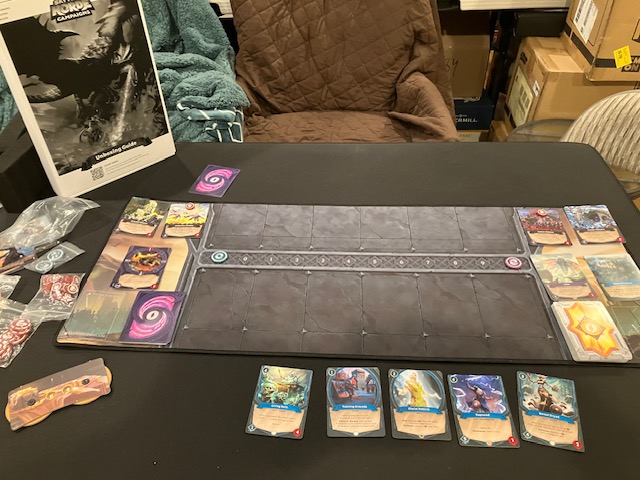
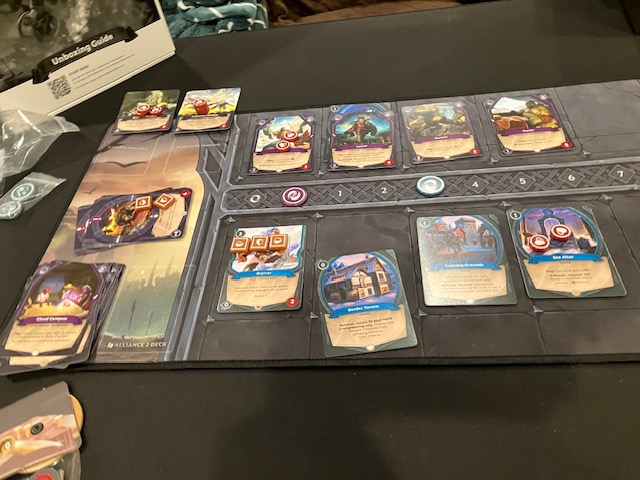
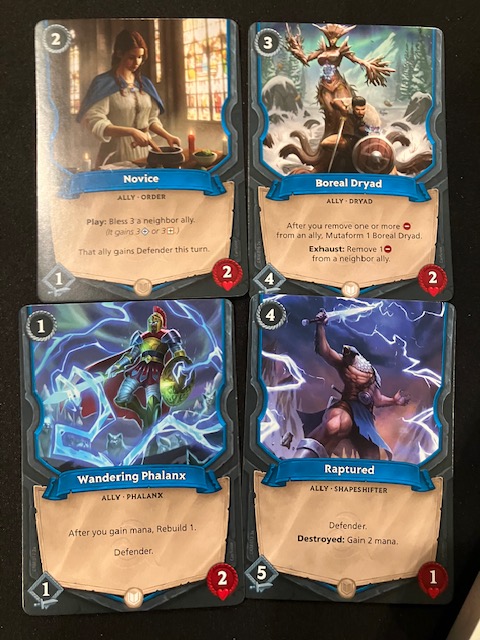
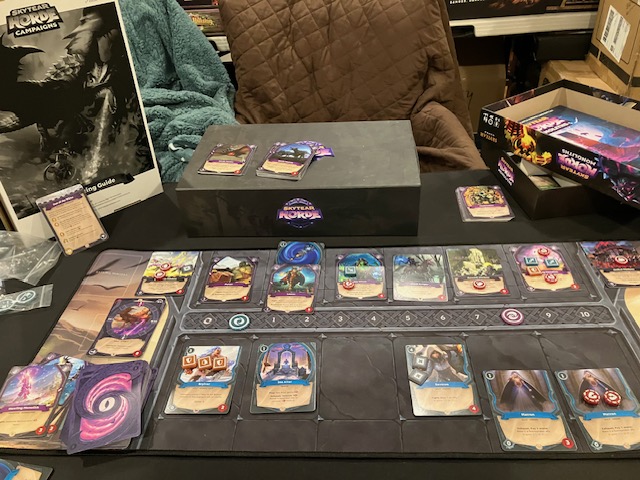
This is a true solo game: the solo player takes  control of a single Alliance faction (Two players would each take a different faction and play them separately).   See above as I take control of the Blue Order faction.

The rules suggest you DO NOT jump into this as a campaign!  The rules “recommend playing only after you have played a few one-off games”.   So, using only the content from this standalone expansion, I ended up playing about 4 one-off games to get back into the flow.  I am embarrassed how much I had to relearn to play again!

As a straight-up standalone expansion you can play, Skytear Horde: Campaigns did a great job.  Even if you never use the campaigns material, there are 4 new Alliance decks, 3 new Hordes (bad-guy decks), 6 new castles and some new Portals.  If you like Skytear Horde, this is just more stuff and you will like it.  If you didn’t like Skytear Horde, this probably won’t change your mind (but see below). The game still feels fun and I still had fun playing the new Alliance and Horde decks.  

As always, this game works great solo.  I fully expect this to make my Top 10 Solo Games of 2025!

The Campaign: The Curse

The campaign has many problems to work through.  To start off, there are two glaring errors that undermine the confidence of the campaign section right away. 

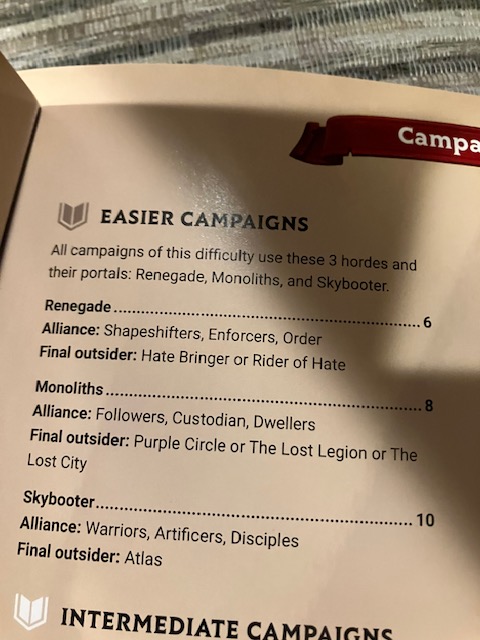
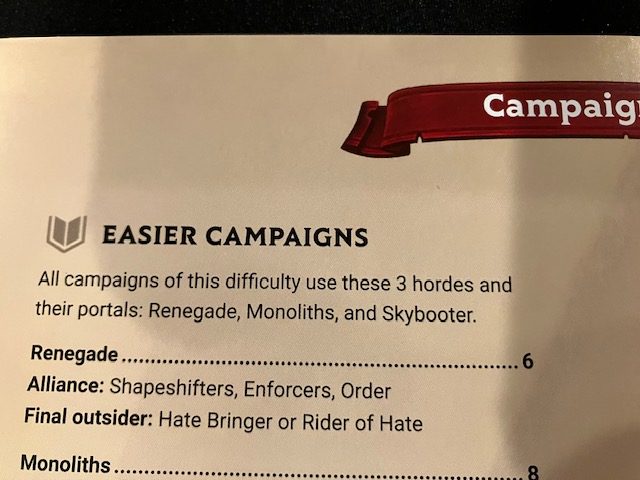
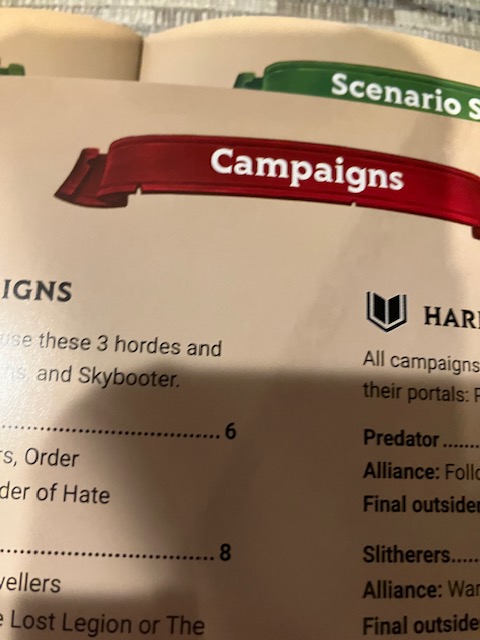
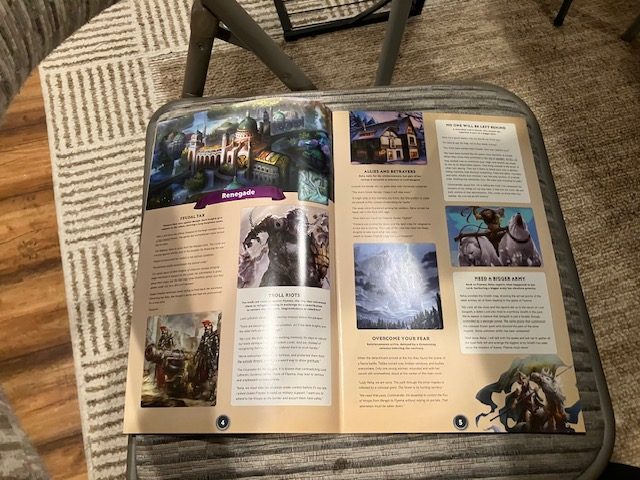
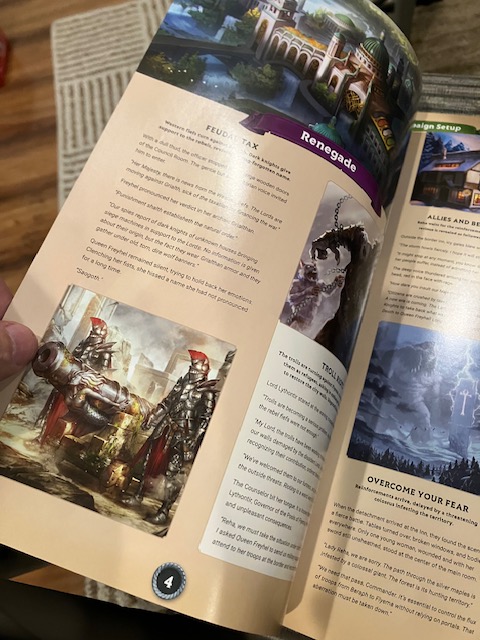
The first is that the page numbers are just wrong.  The Renegade campaign is supposed to be on page 6, but it’s on page 4.  Granted, this isn’t a big thing, but it really undermines the confidence if they can’t even get the page numbers right.

The second issue is the mislabelling of the new Blue Alliance cards.  

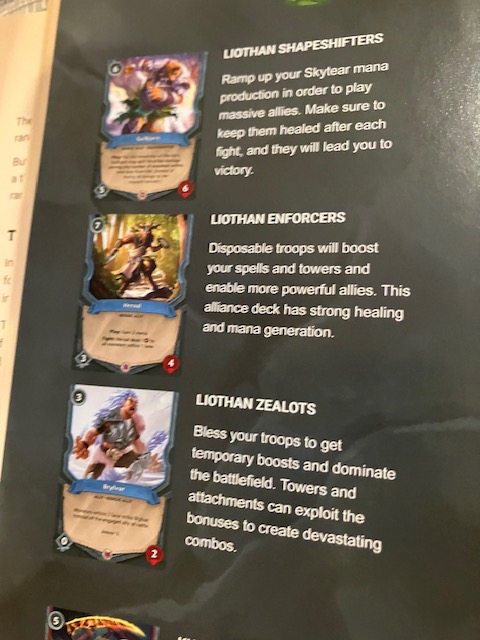
The rulebook calls the new Blue Alliance cards “Liothan Zealots” … 

… but the Campaign page labels them as Order?  I went spare trying to find the Order group, but then I think they just meant all the new Blue Alliance cards from Skytear Horde: Campaigns? I think?

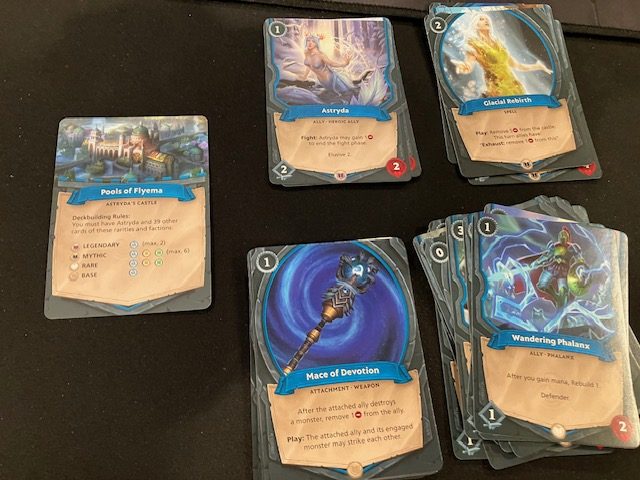
It’s a little confusing because a lot of the new Alliance cards (see above) have different subtype: see above.  Some have Order, some don’t?  If I JUST go back and look at the directions for building your first campaign deck, I am supposed to have 18 cards, and that includes the 4 different subtypes above.   After putting this all together, I *think* that these are supposed to be the Liothan Zealots (as labelled in the rulebook), and the Order indicated by the campaign book is wrong: I think that’s supposed to Zealots.  I think.

These two mistakes really undermined my confidence in the campaigns as I started into them. I wasted too much time just trying to understand what Alliance deck I was supposed to use.

Understanding the Campaign Differences

I am going to tell you this right away because it took a while for me to figure out: there are TWO types of campaigns in this game, and they are not well distinguished.  

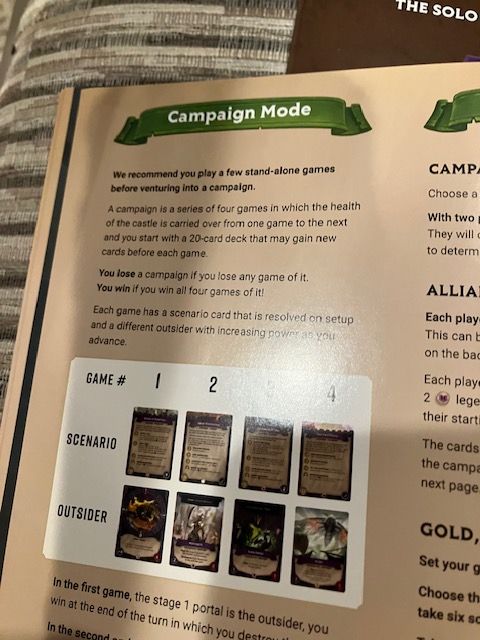
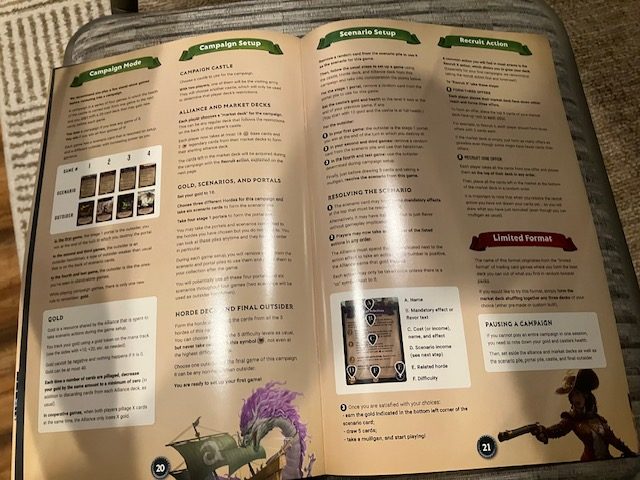
The first is what I’ll call Generic Campaign Mode: this is the type of campaign described on pages 20 and 21 of the main rulebook: see above.

The second type of campaign is the Thematic Campaign, as described on page 2 of the Campaign book (see above).

The rules as described by the Generic Campaign are different from the Thematic Campaign, and it’s very confusing.  But the Thematic Campaign still follows most of the rules of the Generic Campaign.  Confused? I was!

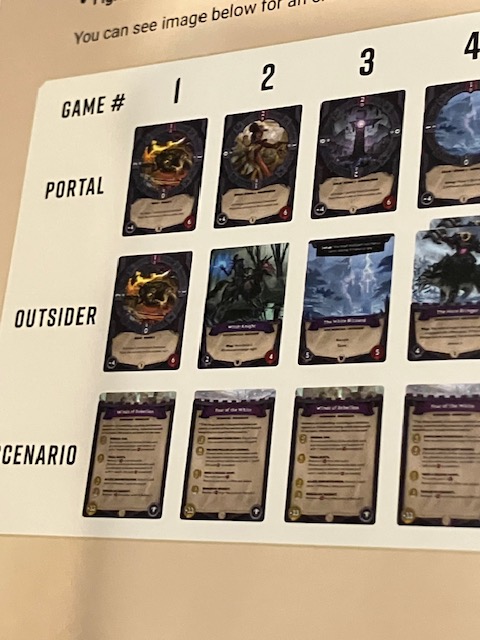
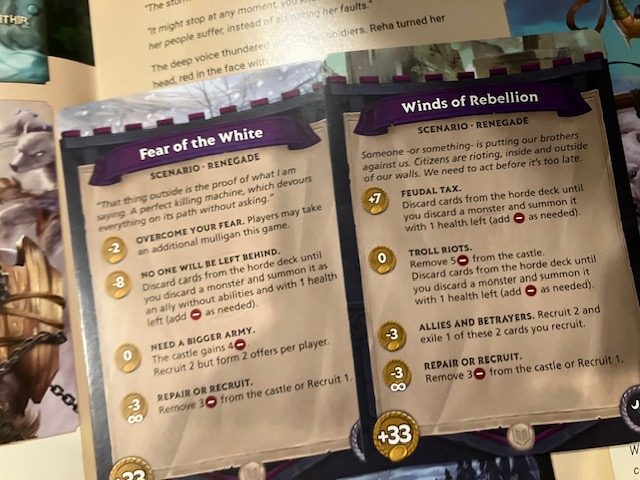
The Generic Campaign has you play 4 games, using 4 different Scenario cards.  See rules above … can you tell that all those scenario cards are different?

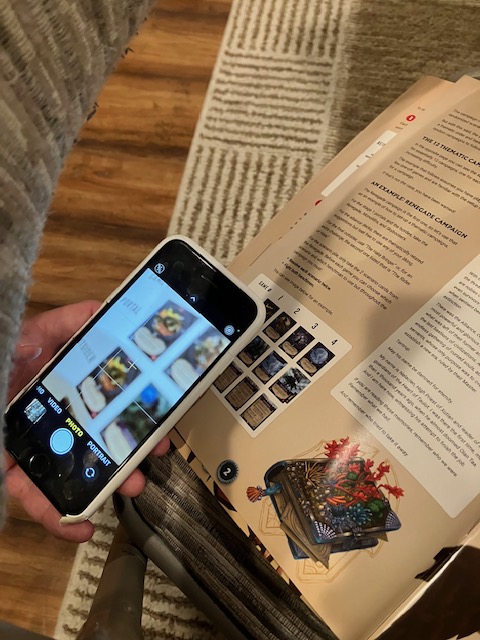
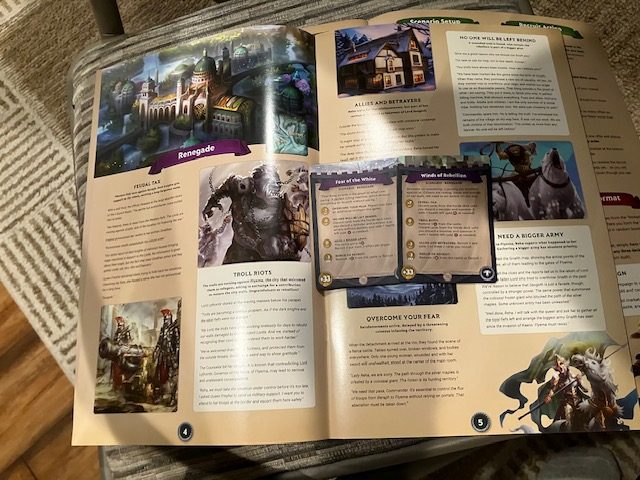
The Thematic Campaign has you use two Scenario cards twice!  It’s really hard to tell this difference!  Even though the pictures DO SHOW this difference (see above), they are so small it’s hard to tell unless you are looking at them with your phone (see below)!

See me noticing!  “Oh! We use the same 2 Scenario cards twice in the Thematic Campaign!”

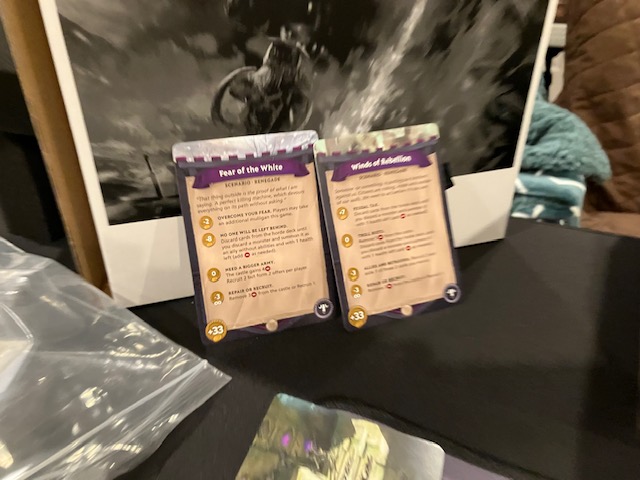
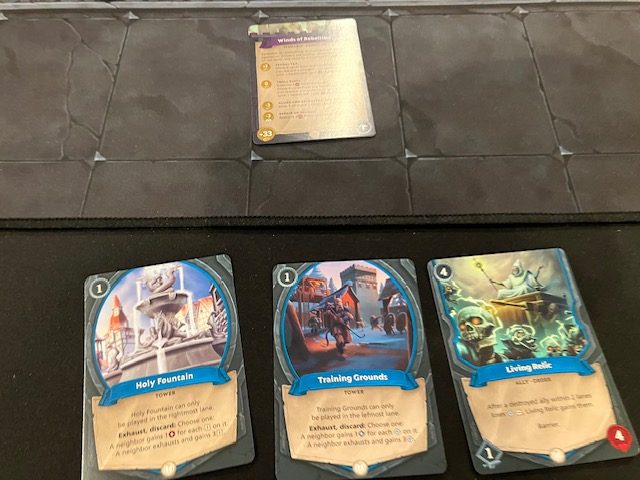
See the Two Scenario cards I used for my first Thematic Campaign!

I really didn’t feel like this distinction was clear!  I think you probably want your first game to be one of the simpler and more flavorful Thematic Campaigns!  

Another thing that’s very confusing .. “What’s the text in the campaign book for the Thematic Campaigns?”  Is this a choose-your-own-adventure?  Is this a branching campaign?  Nope!  Everything in the campaign book for Thematic Campaign is JUST flavor text!  The text nodes are referenced by the campaign cards: see above. Honestly, you actually never have to even LOOK at the two pages of your campaign … it’s just flavor!  I was actually a little dejected by this … I was hoping for something more from the two pages! And I usually like flavor text!

Be aware that the rulebook describes the Generic Campaign, but the campaign book is for the Thematic Campaign, and it has slightly different rules! Most importantly, you only use 2 Scenario cards!

Sure, it’s all there, but I lost at least an hour of my life trying to rectify the rules of the Generic Campaign vs the rules of the Thematic Campaign.  The rules of page 20 and 21 describe the rules of the Generic Campaign, and the rules from the Campaign book describe some of the differences for the Thematic Campaign.

If I had done this rulebook, I would have done things differently: I would have described the rules for the Thematic Campaign first as the main type (pages 20 and 21), then added rules for the Generic Campaign afterwards:

THIS IS WHAT THEY SHOULD HAVE DONE:
Play the Thematic Campaigns first! There are tons in the Campaign book! They have tons of flavor text, if you like that!!! And even when you are all done, you can still keep playing!  The rules for the Generic Campaign are described on the next page!”

But that’s not what they did.  

Hopefully, this helps you get over the Campaign hump easier.  This is why I think the rulebook is also a curse: the campaigns are not described well. It’s all there, but you gotta work for it.  Maybe now it will be easier for you being forewarned?

Solo Thematic Campaign

I want to be clear, once I got over the hump of understanding the campaign rules, I had fun! Basically the campaign is 4 games: the first game is a simple game with only the introductory 20 Alliance cards (a simple deck) where you ONLY have to destroy the portal! Your first game in a campaign is pretty quick and simple.

Between games of campaigns, you can spend gold to buy more cards!   Well, there’s a little more to it than that (as you spend/lose gold based on the campaign cards) ..

Basically, you perform the actions on the Scenario card you are on (see above), including spending/getting gold: see above for two Scenario cards.

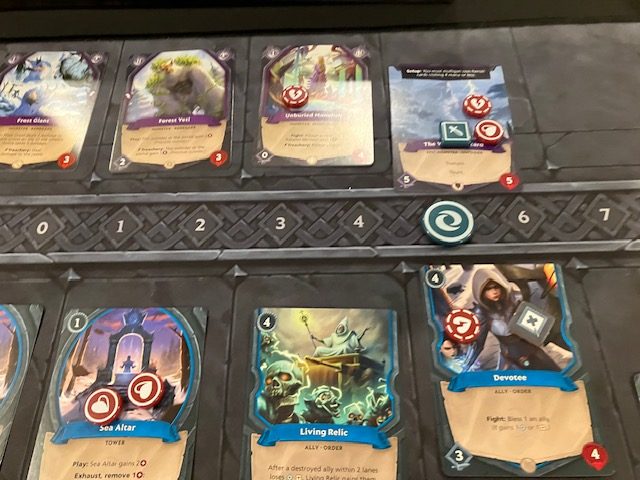
Games 2 and 3 of the Campaign, you fight the bad guys on the back of the Scenario cards! See above as the Devotee wins game 3 of the Campaign!

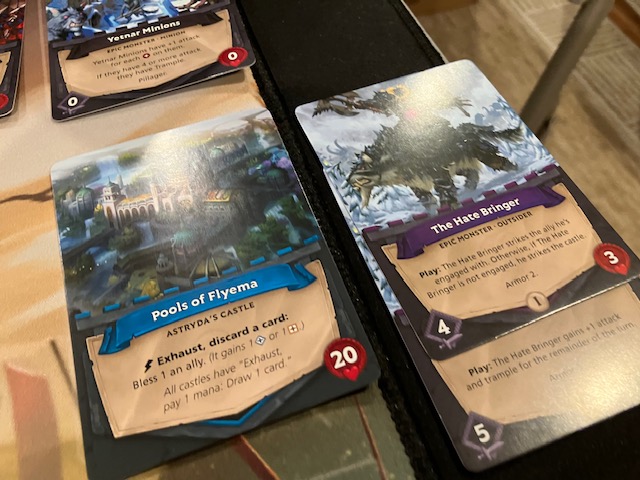
In Game 4, you fight the Outsider to win!  By the time you make it to Game 4, you have bought “pretty much” a full deck (mostly the same 40 cards as the normal one-shot games).  The difference is, you feel like you “earned” your deck!  You also feel like you know your deck that much better!  You’ve had to make choices of which cards to buy, and you just feel more invested in the campaign!

The Thematic Campaign might be my favorite way to play Skytear Horde!  Granted a Thematic Campaign game is about 4x longer than a normal … you’d think it’d be shorter, but the time you gain from the shorter games of 1, 2, and 3, you lose in set-up and between rounds doing card-buying. So, why do I like this way? You feel like you get to know your deck better, it’s fun to make choices about which cards you buy for the next game, and it’s neat to have some thematic text between games!  

I actually liked the Thematic Campaigns mode so much, I wanted to try an experiment: what if I TAUGHT my friends the game using the Campaign?

An Experiment: Teaching the Game Using The Campaign

So, even though the game suggests you only play the campaign AFTER you’ve played the one-shot game, I conducted an experiment: I taught the my friends the 2-Player cooperative game using the campaign; The Thematic Campaign!

Short answer: this worked fabulously.  I stayed out of the game, being “the rules guy” and just explained the game to them.  I set everything up (which is quite a bit of work for the Thematic Campaign), and explained the rules.

Why do I think this method worked so well as an intro game? Well, the first game is over quickly (you just have to destroy a portal), but the players get a taste of the system: they feel they understand just enough, as there are only 20 cards to learn.   Compare that to the full one-shot game of 40 cards you-don’t-know, and it’s a bit of a slog for newbies!  That first campaign game is quick and easy and gets you into the system!  

THEN, after your first game, you get to buy some new cards for you deck!  The players have to make choices, so they have to read “a few of their cards”. … but not all of them!  Just a few to buy for their next game!  So, this works great as it incrementally teaches the cards!  And players feel invested in their deck a little because THEY HAVE MADE THE BUY CHOICES.

And then the games get slower harder, building the confidence of the players, but still having deck advancement at the end of each game!

By the time the players have gotten to game 4 against “the big bad”, they are all in!  They have seen the game mechanisms in simplified form, they have built confidence in themselves and their deck, they have made choices about how their deck is built, and they have invested in the game!  THIS is the way to teach Skytear Horde!

But the method ONLY works because my friends had a “rules guy” (me) explain the game and mechanisms to them,  and set it up (the set-up is not trivial). I do NOT think the campaign would be a good way to teach someone coming in with no mentor; this method only works (currently) with a shepherd to guide the players.

Did this method work?  My friend Sara told me afterwords: “I don’t think I would liked this game if you just threw me into the one-shot game!  Slowly building my confidence really helped me enjoy the game!”

A Missed Opportunity

My experience with the teaching campaign has me thinking: this is a missed opportunity.   If the Skytear Horde: Campaigns had included a “First Play” book which CLEARLY guided the player(s) through a campaign with CLEAR instructions, this would be the Skytear Horde I would recommend to beginners!  (I emphasize CLEAR because it would be imperative for someone who really knows how to write and teach to do that “First Play” book: my confidence in the designers wavers after all my problems in the campaigns sections) .  For all the reasons I outlined in the section above, I think this should be the way to learn the game!

Unfortunately, I cannot recommend the Campaigns mode for the self-teachers until you get over the hump of learning the game and slogging though the terrible Campaigns documentation.  Which is sad, because the Campaigns mode SHOULD be the way to teach newbies the game.

Cooperative Mode

And, after all is said and done, teaching the game with the The Thematic Campaign had the side effect of helping us enjoy the 2-Player cooperative mode that much more (which we didn’t as much in the last iteration with Skytear Horde: Monolithssee review here).  Yes, it’s still fairly multiplayer solo, but my friends seems to enjoy the co-operation they did have (deciding which lanes to inhabit, which monsters to fight, etc).

What Have We Learned?

One) If you like Skytear Horde, you’ll like this.  As an expansion, it’s more of the same, in a good way.  See above.

Two) The rulebook for the base game in Skytear Horde: Campaigns is the best iteration  of the rulebook so far and it’s pretty darn good. See above.  Well, it’s good before we get to pages 20 and 21…

Three) The rule section for campaigns is terrible and you will struggle with it until you figure out there are two modes: Thematic Campaigns and Generic Campaigns.  See above.

Four) The text in the Campaign book is only for Thematic Campaigns, and it’s really only flavor text; there’s no branching narrative or anything.  You almost don’t need the campaign Book except for pages 2 and 3. See above for some flavor text for the first campaign.

Five) The Thematic Campaigns can be the best way to teach Skytear Horde, but only if you have a good shepherd who understands everything already.  There really should be a well-written and clear First Play Guide to teach newbies Skytear Horde using the Thematic Campaigns mode. This is a huge missed opportunity.

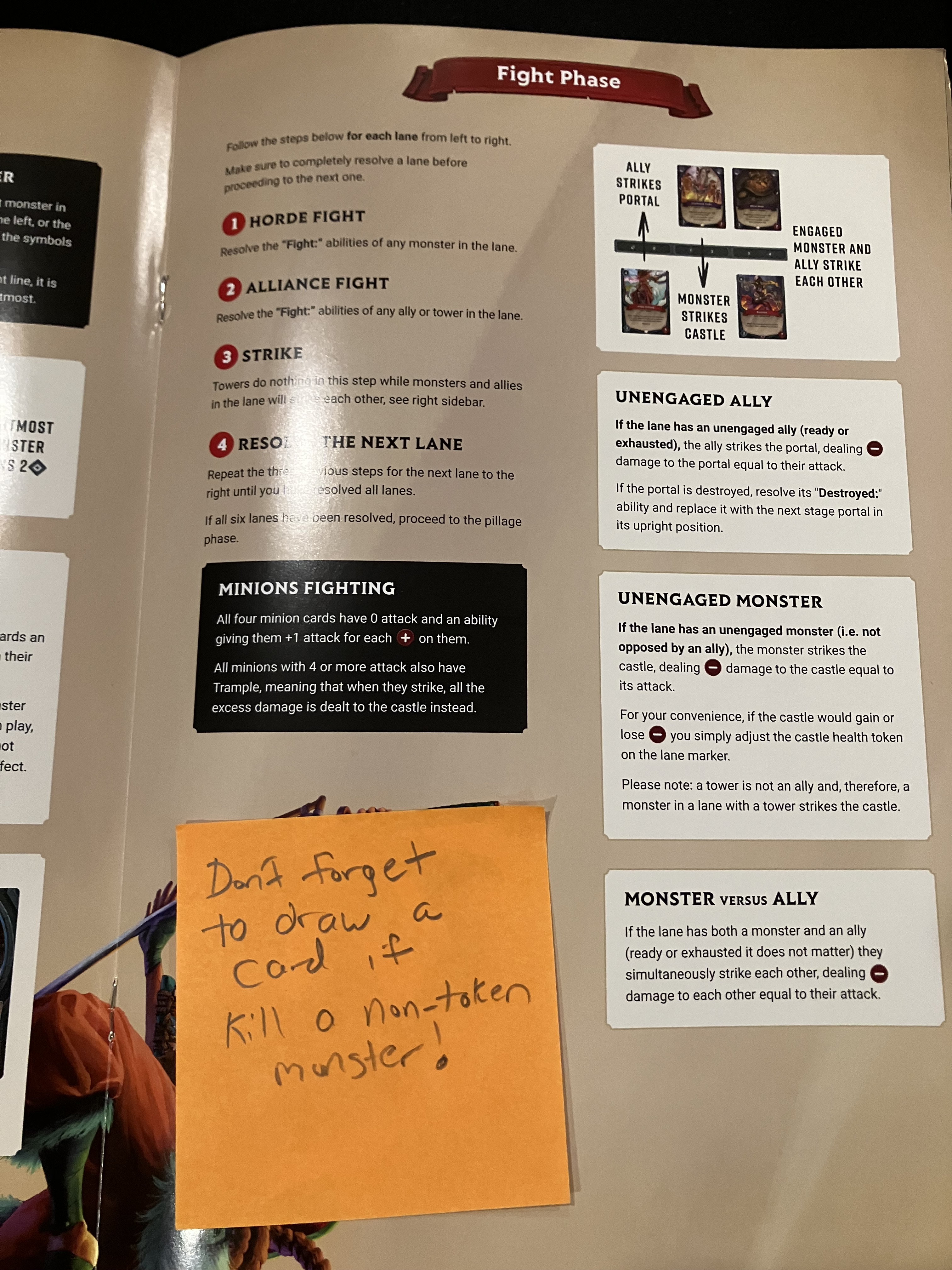
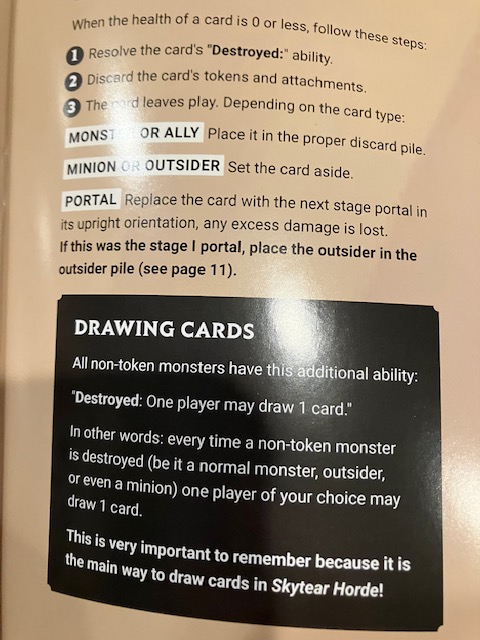
Six) I recommend putting a note in your Fight Phase page to remind yourself that you draw Alliance cards if you kill a non-token monster: see above as I did!!  The rule is documented on page 9, but you can easily miss it (because it’s not in the main flow: it’s in a parenthetical box: see below). And it’s such an important rule (and one I embarrassingly forgot in my first game), I think you need to re-emphasize it on the Fight Phase!  

Conclusion

I liked Skytear Horde: Campaigns, and it’s staying in my collection.  As a straight-up expansion to the Skytear Horde system, this is a fine expansion giving you more stuff.  The Campaigns mode has terrible documentation, but once you get through it, The Thematic Campaigns are my favorite way to play Skytear Horde now.

Just be aware of all the issues we discovered while playing; hopefully that will be enough to help you enjoy this more if you decide to get it.

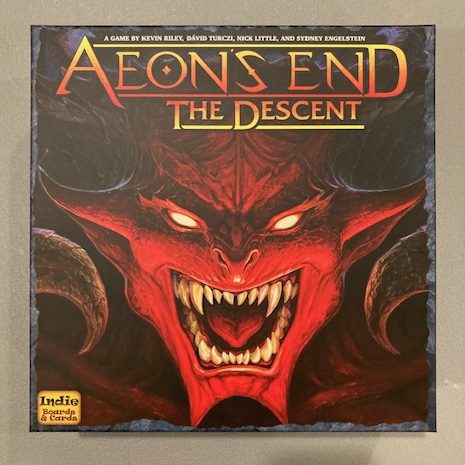
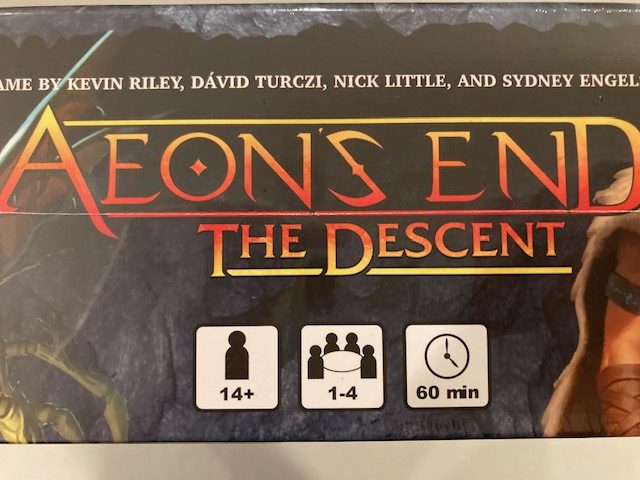
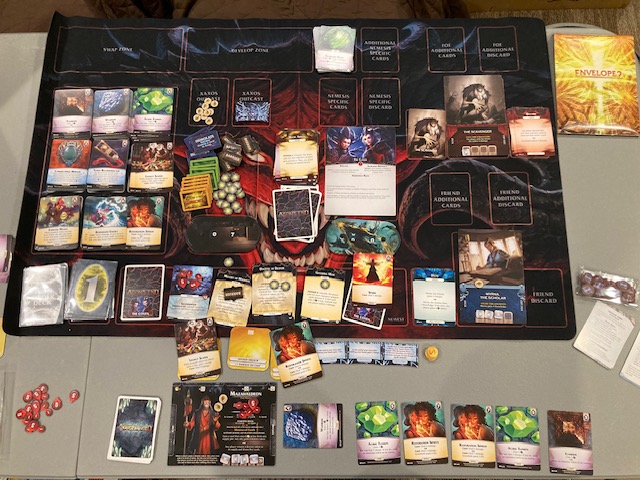
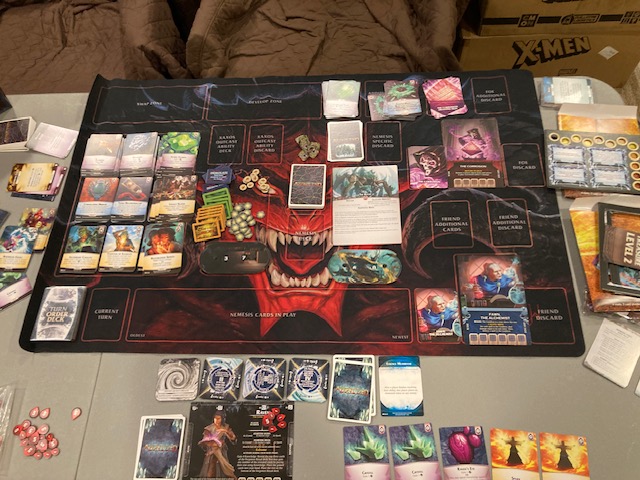
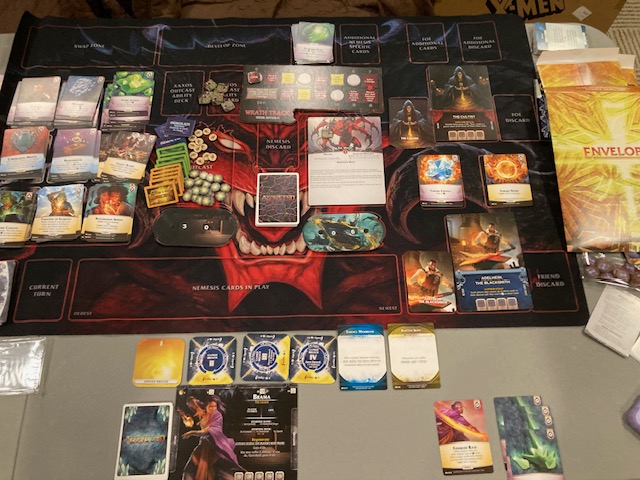
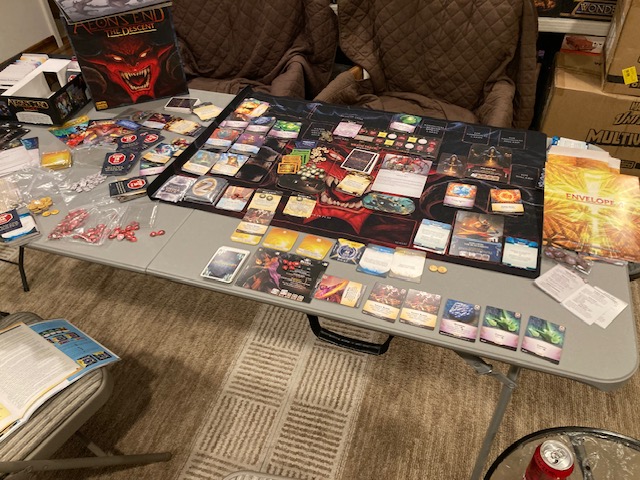
Aeon’s End: The Descent. Review After Full Playthrough

IMG_8755

Aeon’s End: The Descent (an expansion in the Aeon’s End universe, but also a standalone cooperative game) was on Gamefound back in Februrary 2024 and promised delivery in January 2025. Guess what? It actually got here early right before Thanksgiving 2024 (Nov 20, 2024 or so).  That’s right, it’s almost 2 months early!  Holy cow!  That never happens in crowdfunding land!

IMG_8600

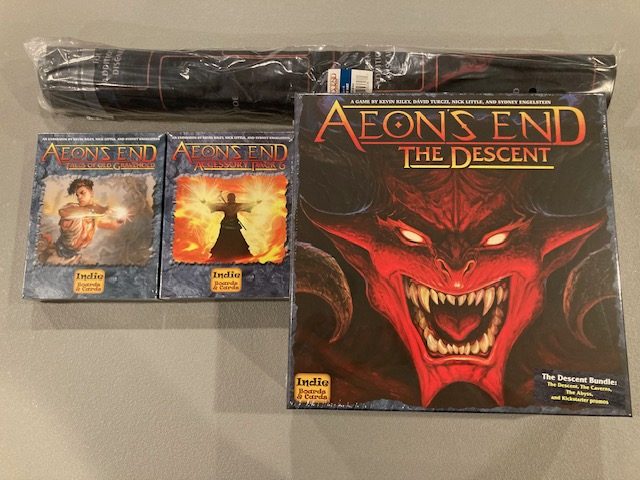
I went all-in on the new stuff and got the two expansions* (three if you count XAXOS inside), the mat, and the box!

IMG_8602

I freely admit I was on the fence on backing this.  I do love the Aeon’s End system and its ilk (Astro Knights (see review here), Astro Knights: Eternity (see review here), Aeon’s End, Aeon’s End: War Eternal (see review here), Aeon’s End: Outcasts (see review here) etc etc etc), but I have a lot of Aeon’s End content already.  I mean, this is a great cooperative deck-building game system with a mage theme, and it basically made the #1 Spot on our Top 10 Cooperative Deckbuilding Games!

IMG_8603

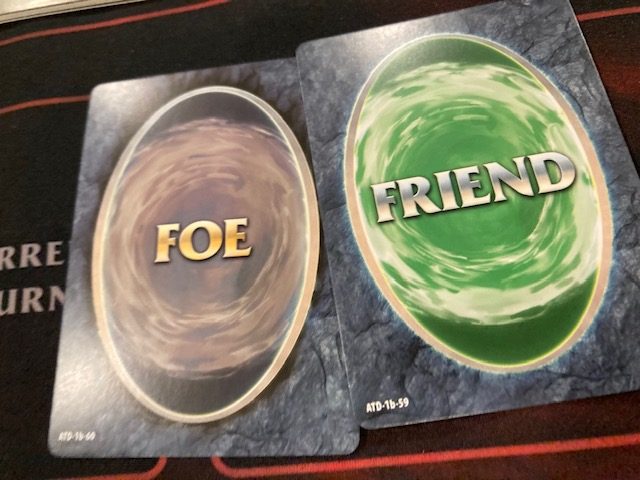
In the end, I chose to back Aeon’s End: The Descent because I was excited for the new Friends and Foes module which can be used in any game.  Not to bury the lede, but I think that new module makes the game that much better.  We’ll discuss that in detail below.

Let’s take a look!

Unboxing

IMG_8607

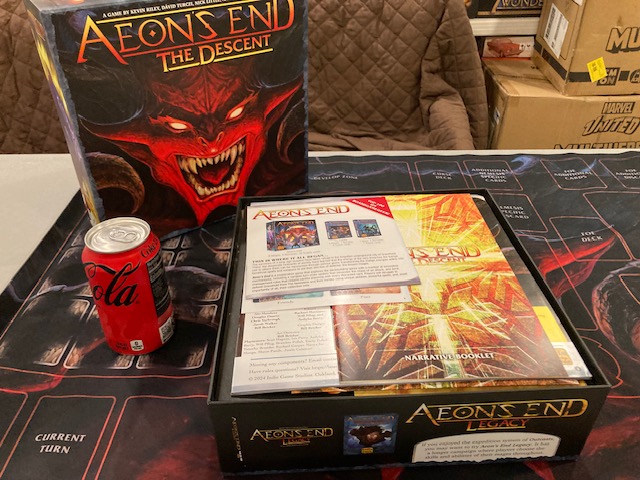
This is a pretty standard sized box: see Coke can above for reference.

IMG_8753

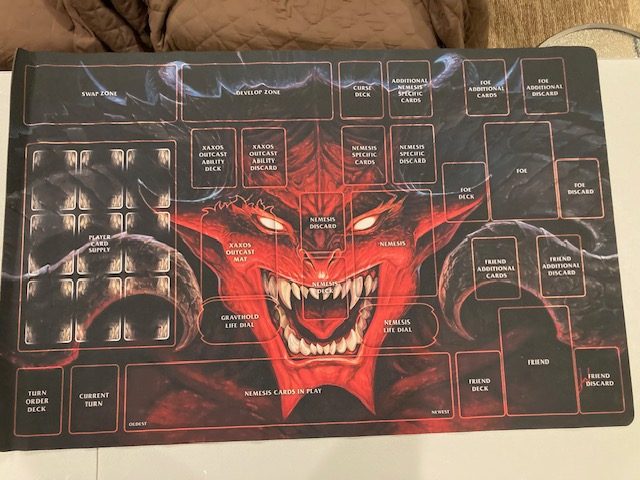
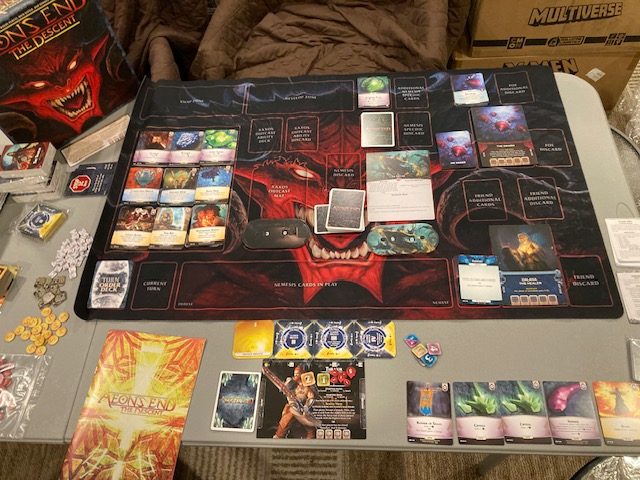
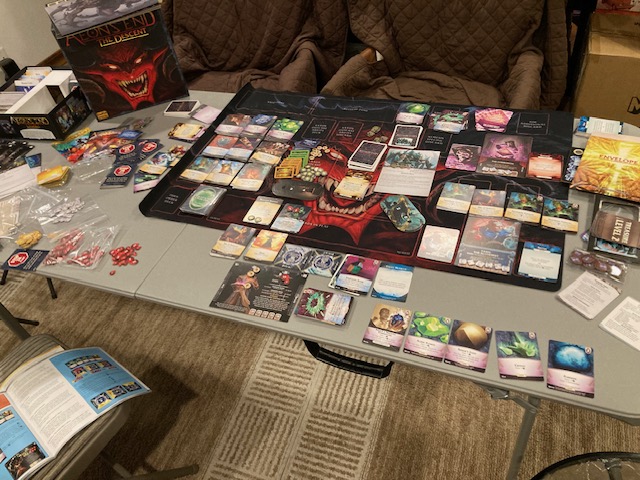
If you are considering getting this, I recommend the mat.  Of all the mats I have, the Aeon’s End/Astro Knights mats always seem the most useful: look above at how they well they help organize the play!  The mat from Conquest Princess last week was pretty good for solo, but not really useful for cooperative play.  This mat, for Aeon’s End: The Descent worked so very well in both solo and cooperative contexts.

IMG_8606

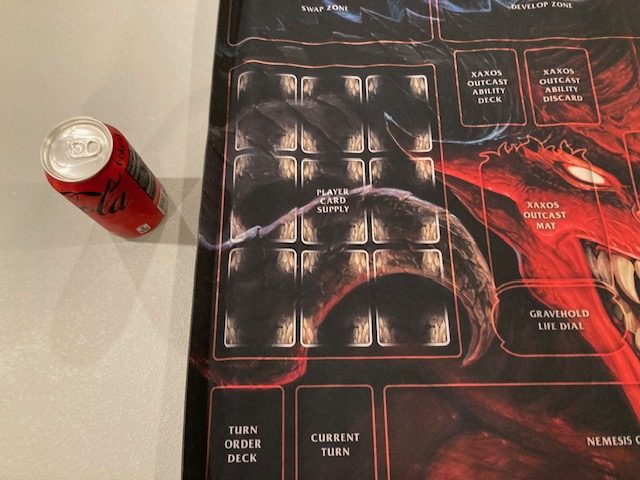
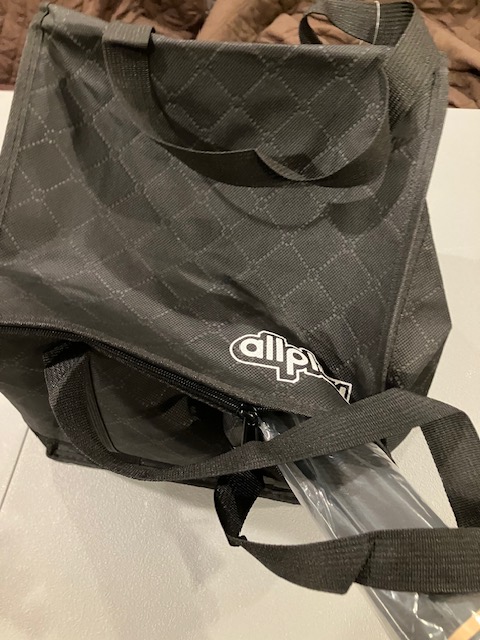
Just be wary that the mat a little big (see Coke can for scale above) and it’s a little harder to carry around (see below).

IMG_0964

IMG_8610

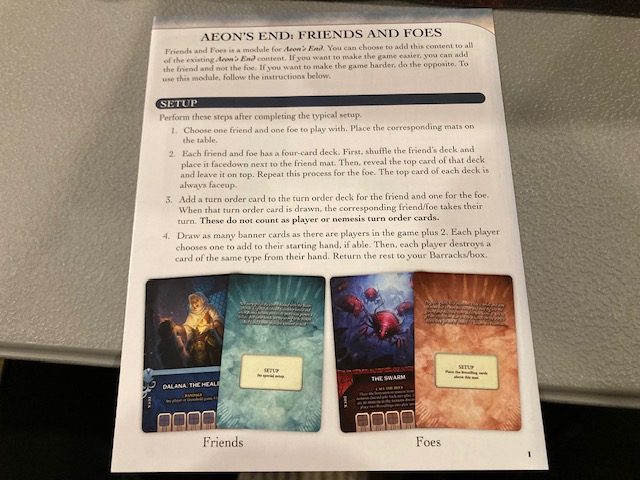
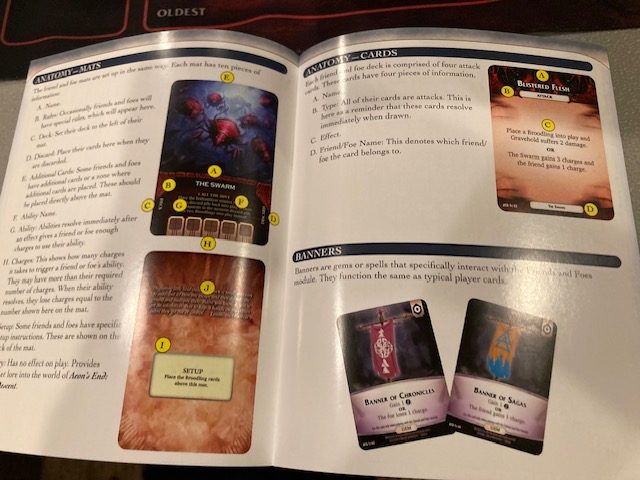
There’s a little rulebook for the Friends and Foes module; I think it’s separate so you can use it with other Aeon’s End games easier. See picture above.

IMG_8612

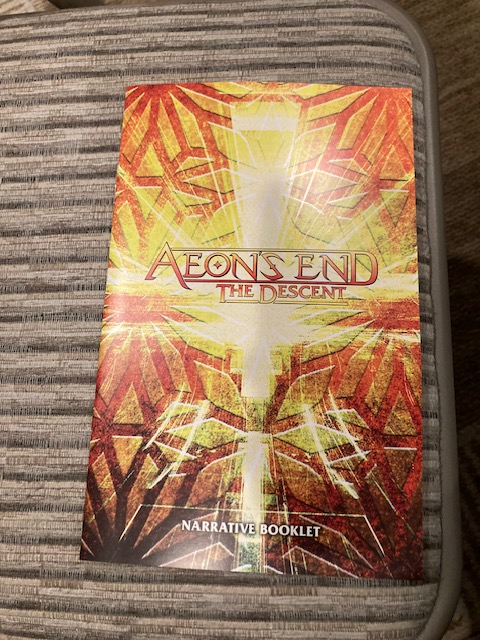
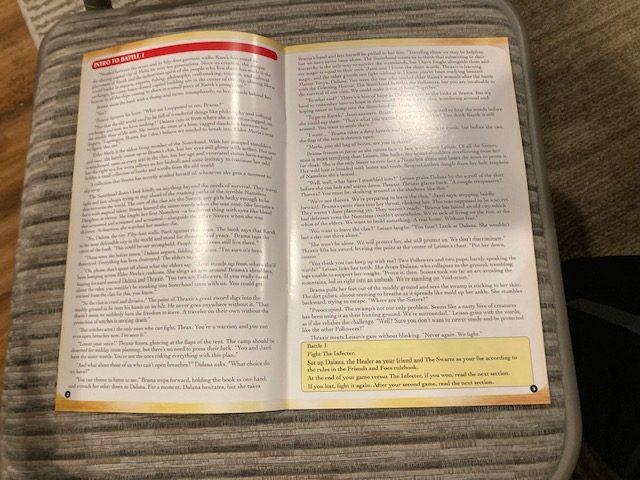
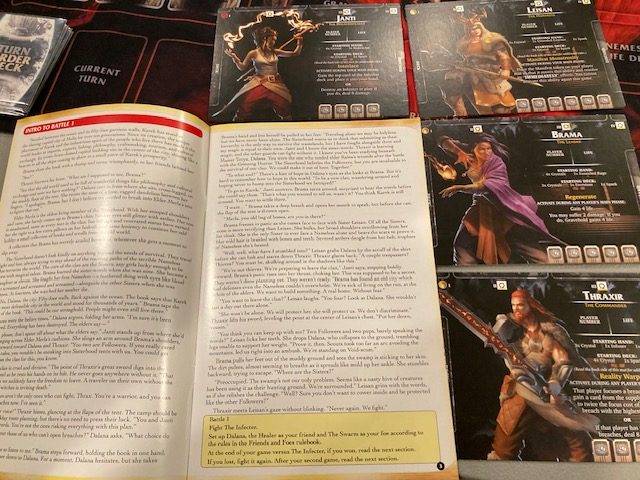
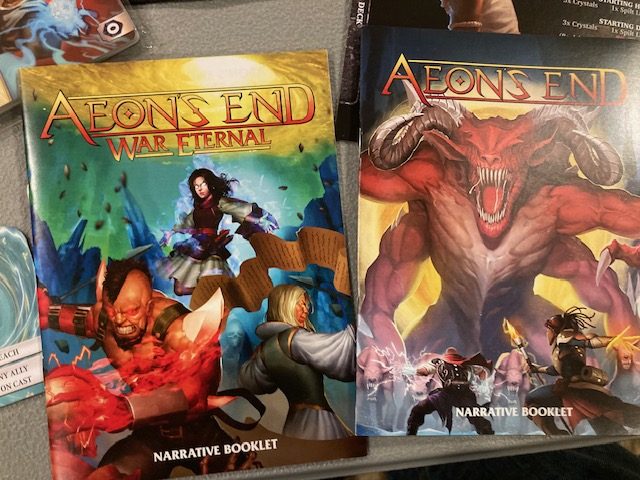
There’s a narrative booklet: this is to take you through the adventure with some text. See above.

IMG_8616

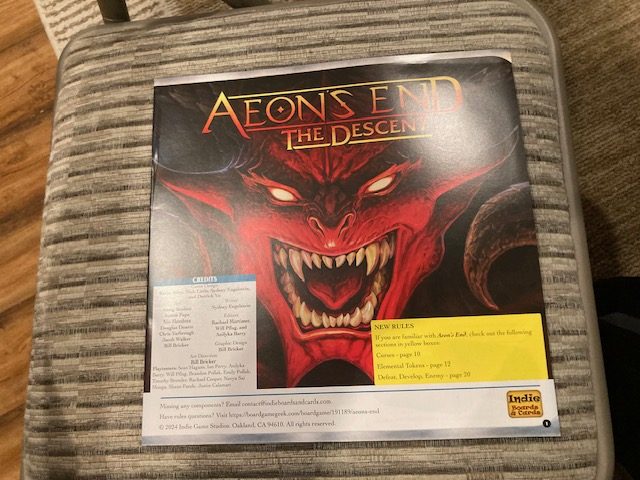
And the main rulebook: see above.

IMG_8640

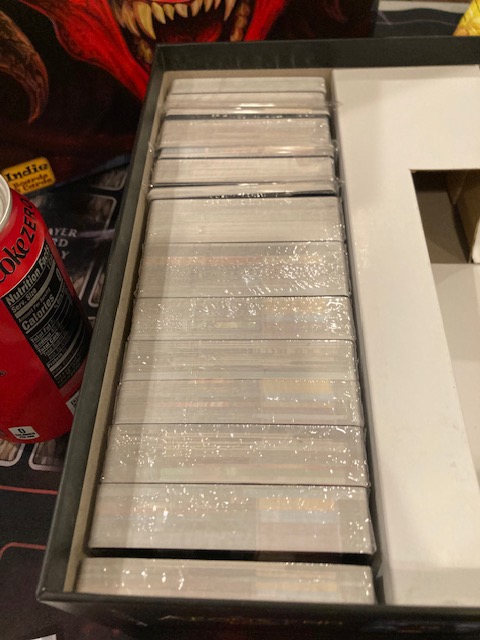
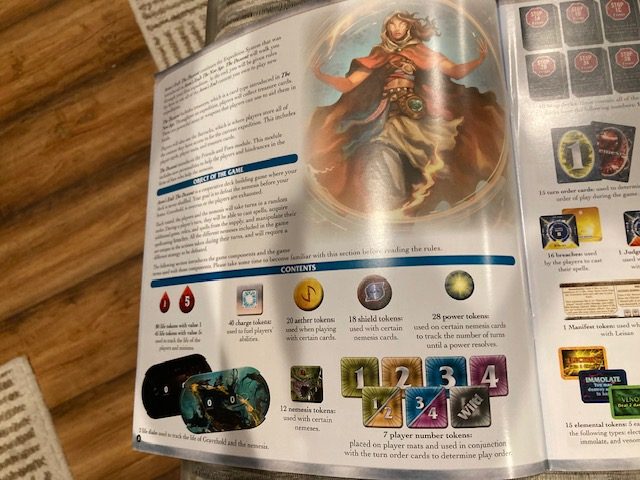
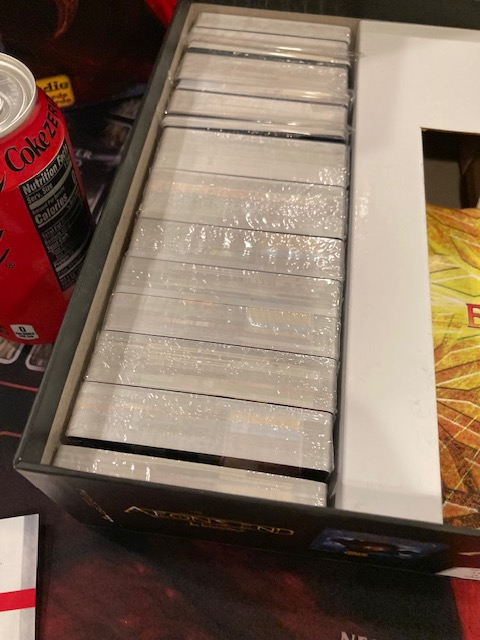
At its core though, Aeon’s End: The Descent is a card game: see SO MANY cards above and below!

IMG_8642

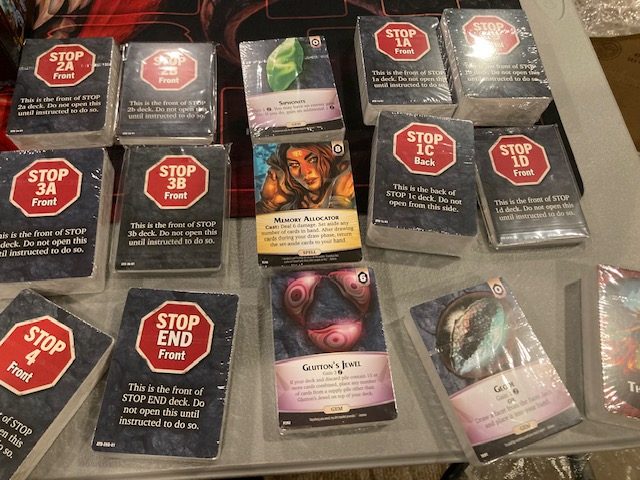
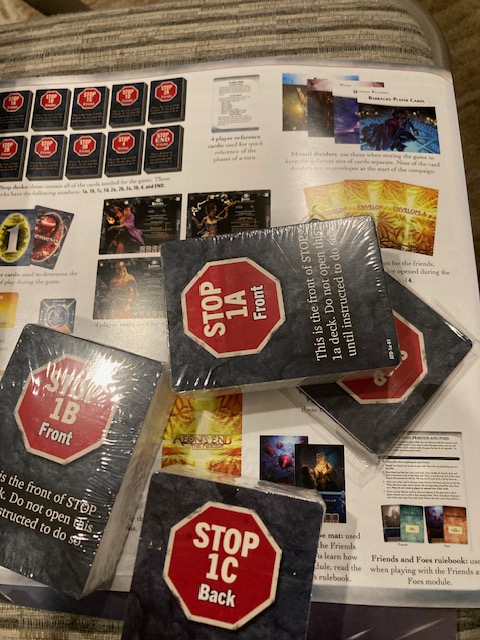
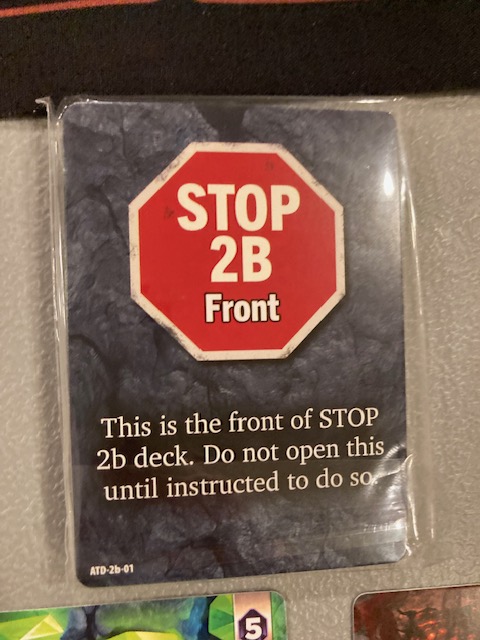
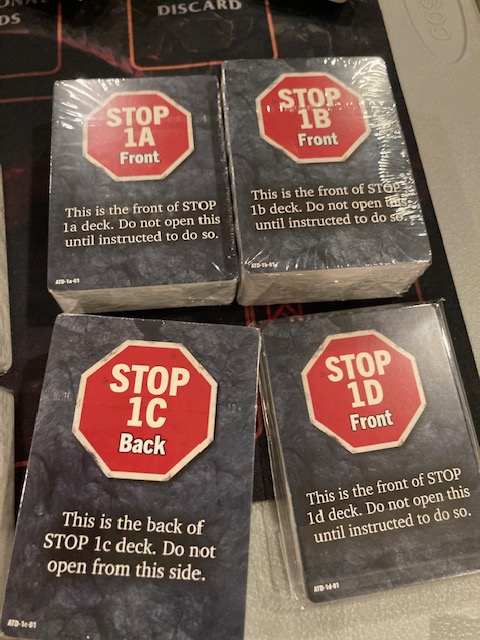
Luckily, these cards are very well organized: they have stop signs cards to surround each deck.

IMG_8742

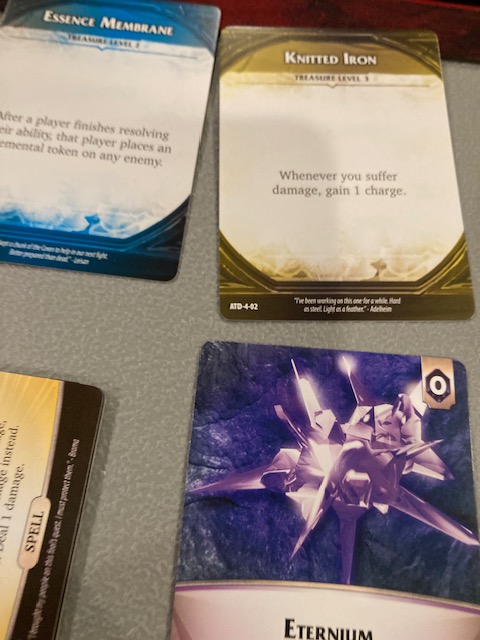
One of my favorite features of this game (and all Aeon’s End games) is that EVERY CARD IS WELL-LABELLED: see above as the Treasure card is from ATD-4-02 (bottom left of the card).  If you ever need to put everything back in original order, you can. 

IMG_8750

Spoiler Alert: I played through the entire campaign,  and I was able to reset the entire campaign (sorry, they are called Expeditions here) back to its original pristine state.  And you can! See above as I try to separate the cards back!

IMG_8758

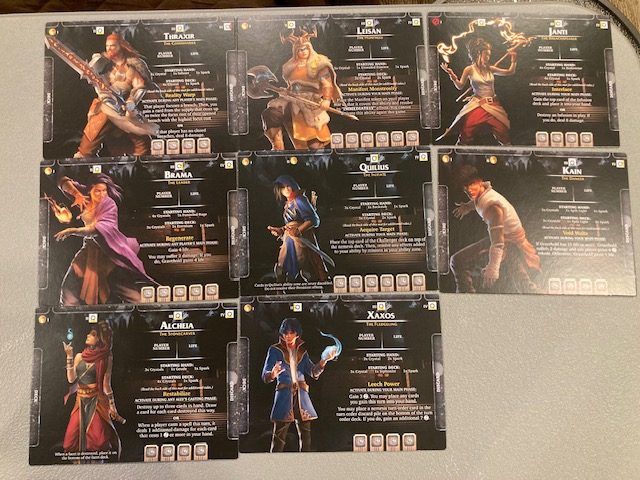
At its core, each player takes the role of a mage, and his cards become his casting deck (which he has to try to build up using deck-building).  See some mages above … and some other ones come out later!

IMG_8761

Generally, the mages are fighting a Big Bad! See some above! To win, you usually have to reduce the Big Bad to zero hit points by casting spells to do damage!

IMG_8757

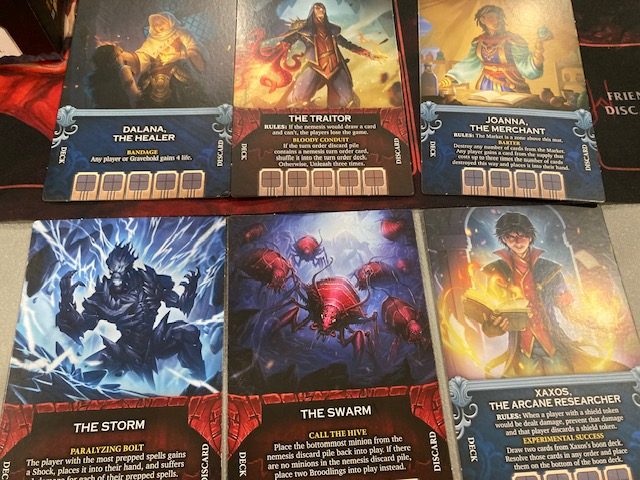
Along the way, you make some Friends and Foes, who help or hinder you just a little bit … and more come out as the Expedition unfurls …

IMG_8644

There’s a bunch of tokens which you do need to notate moneys, power, charges, and some other stuff!

IMG_8641

Generally, the components are pretty high quality, the art is good, and the production looks great. See above.

The Rulebook

IMG_8616

The rulebook is .. fine.

IMG_8617

It flops over the edges, making it harder to keep open on the chair next to me.  It really needs to be a smaller form factor: it gets about a C on the Chair Test.  I find myself grumpier and grumpier with rulebooks which are huge when opened up.  At least it does sit flat.

IMG_8618

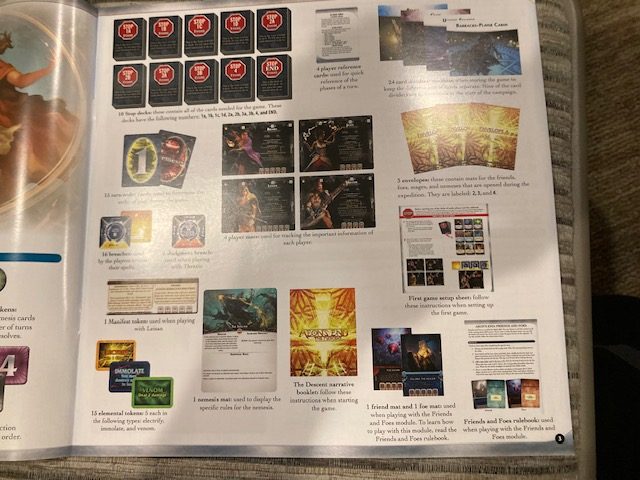
The Components page is nice* (*modulo one issue we had with Astro Knights: Eternity:  the Component pages STILL doesn’t label the Turn Order cards as coming from one of the 1X decks … you might find yourself searching in vain, until you open up all the 1A-1D decks).

IMG_8623

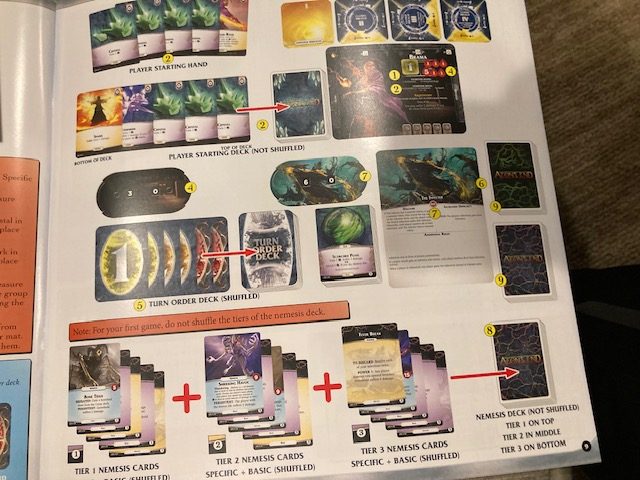
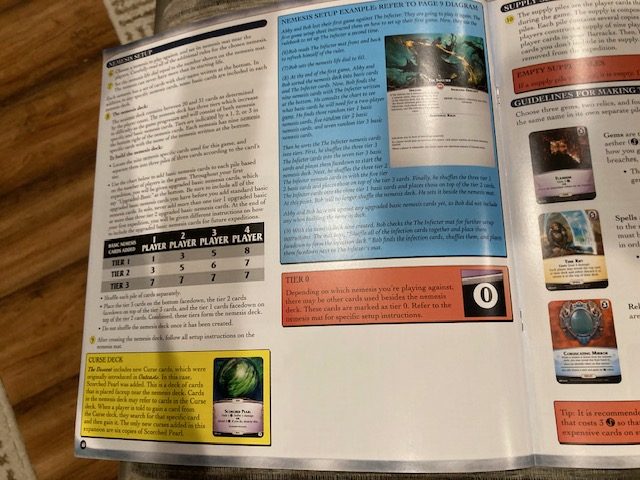
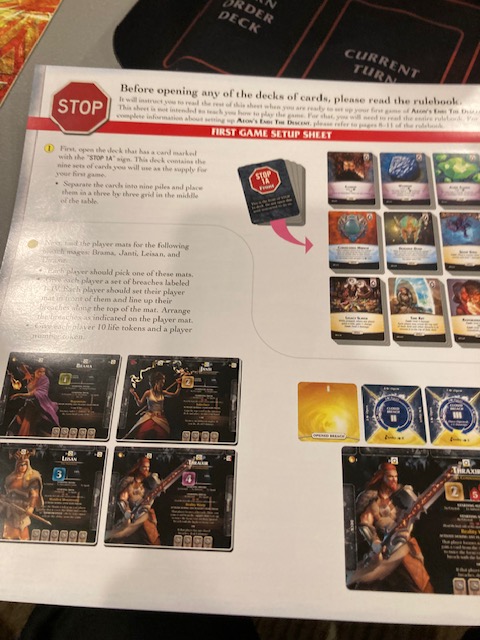
Set-ups are nice, but if you get the Play mat, you really don’t need this section.

IMG_8625

Generally, this was a good rulebook with good annotations, lots of pictures, and readable text. It even used color to differentiate new rules (in yellow) from older games.

This is a pretty good rulebook, but it had better be after making 5? 10? different versions of Aeon’s End. Although there is still one quirk in the solo rules … see later below.

Gameplay

IMG_8635

I always forget HOW AMAZING the Aeon’s End games are for that first set-up!  Aeons’ End: The Descent is no different!  See above and below as the sheet that comes with the box helps you quickly unwrap and set-up your first game!  

IMG_8646

If I ever get an Aeon’s Box in the mail, I am never worried about my first set-up*, because it always goes so well!

IMG_8701

I don’t want to say too much about gameplay because we’ve discussed it before in previous reviews.  Also, there are a lot of great videos on the internet if you want to see how it plays. But I just want to say, there are a number of new mechanisms and somehow, they keep squeezing new ideas out of the Aeon’s End system!  Every game in the Expedition has a new “angle” or “mechanism” that keeps the game fresh! A new Mage?  A new weird way to defeat the Big Bad?  Somehow, Aeon’s End is still fresh after all these years!

Friends and Foes

IMG_8707

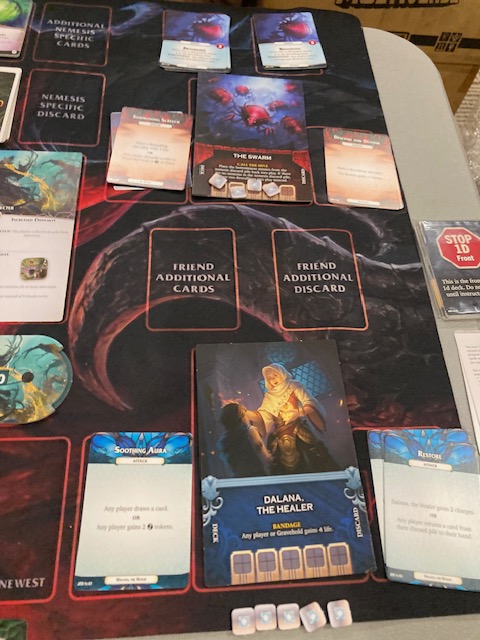
Without a doubt, my favorite new thing about Aeon’s End: The Descent is the Friends and Foes module.   Basically, two new characters become embroiled in your story: a friend and a foe!

IMG_8658

They are so embroiled, that the friend and foe each get their own turn within the turn deck!  See above!

IMG_8730

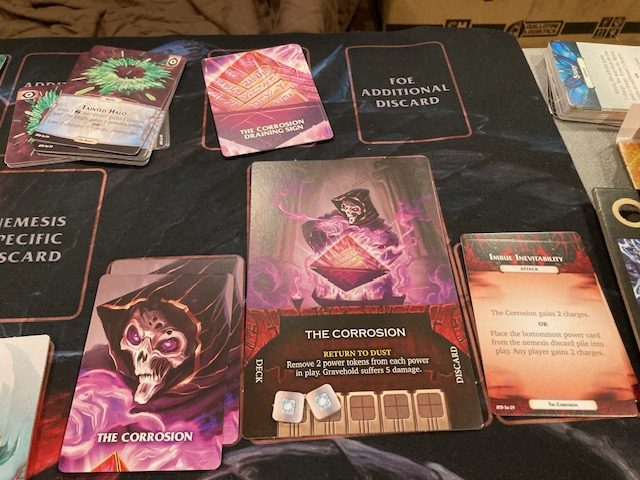
Each friend and foe slowly evolves something: the friend is building up something good for the players, and the foe is building up something bad!  See above as The Corrosion can add his Draining cards!    The nice thing about the friends and foes is that they aren’t too bad; you usually have to make a choice about the goodness/badness every turn they come up! I really enjoyed having that extra choice! 

IMG_8665

Do you add a few charges to the friend or foe?  Do you take some damage to Gravehold to avoid that charge?  The players almost always GET TO MAKE A CHOICE: what kind of good news or bad news do you want?  The players decide!!

IMG_8708

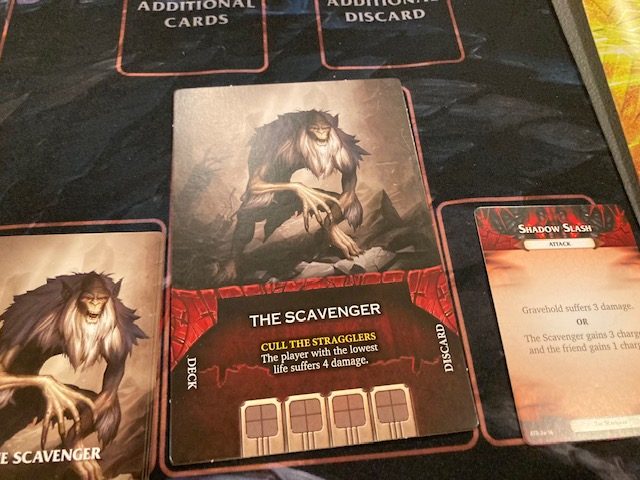
See above as the The Scavanger Foe makes players draw a card and either suffer damage to Gravehold or let the Scavenger charge up!! What do you do?  What do you do??

IMG_8711

As much as I like these choices, what I like best about the Friends and Foes is that they even-out the problems with Variable Turn Order gameplay.  What do I mean by that?

IMG_3654
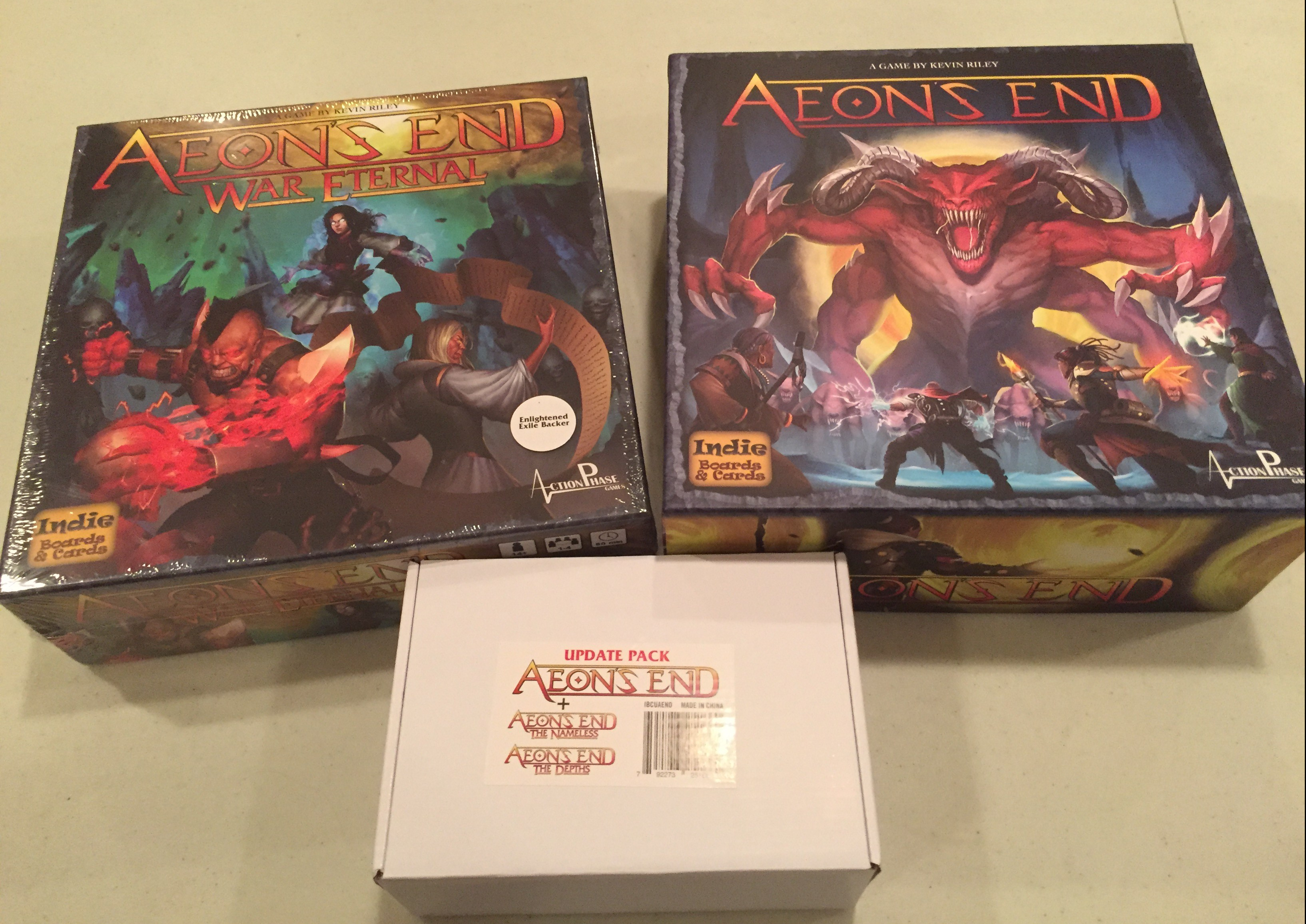
Kickstarter Edition of Aeon’s End and Aeon’s End: War Eternal (with update since I was an original Kickstarter)

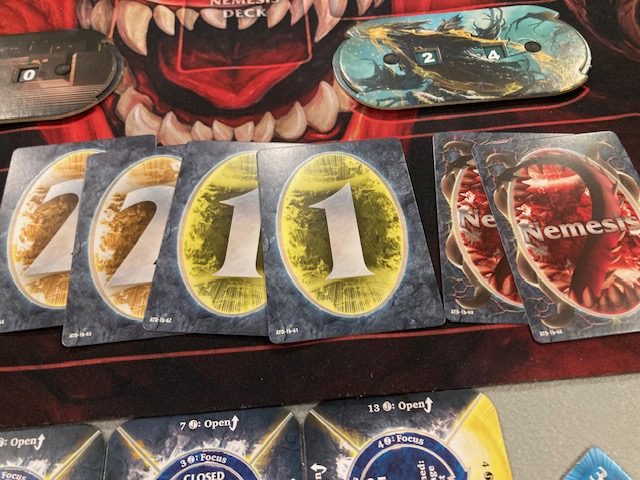
Those of you have been following my blog for sometime know that I am not a huge fan of Variable Turn Order: see the blog entry here for A Discussion of Variable Turn Order and How To Mitigate Its Randomness.   Basically, Variable Turn Order can be too random and cause pathologically bad draws which can make the game less fun.   To combat the problems of Variable Turn Order in Aeon’s End (and its ilk), I allow myself a simple House Rule: the Nemesis is never allowed to go more than 2 turns in a row. 

IMG_1115

It turns out that I didn’t have to use this House Rule in any of my games in Aeon’s End: The Descent!! Why?  One of the things we discovered when working with Variable Turn Order in Unmatched Adventures: Tales to Amaze was that the bigger the deck, the less likely you are to have pathologically bad draws!   See blog entry for more Discussion here.

IMG_8733

Because the Friends and Foes “fill-out” the Variable Turn Order deck from 6 cards (original length) to 8 cards (with one Friend and one Foe), there didn’t seem to be a need to invoke the House Rule!

In the end, I love this new Friends and Foes module for multiple reasons: it mitigates the Variable Turn Order issues I have in Aeon’s End: The Descent, it allows more choice into the game, and it has some really new ideas for how to push Aeon’s End into fresh territory.  Not to mention, you can use Friends and Foes with any Aeon’s End game!

IMG_8611

I guess I wouldn’t be me if I didn’t think the game still needed one slight House Rule: the rules say that the Charges “must go off” when the Charge track is filled (see above).   Sure, this makes sense for the Foe, but not the Friend!!!  I played several times where the Friend’s ability discharged … and it was completely useless for me!!!  But, the Friend is your friend!  Ask them to hold on until next round when they activate!  This seems like a minor house rule, but I think it feels more thematic and more empowering as a choice-You don’t have to discharge the Friend’s ability just because it’s full.

Otherwise, Friends and Foes is a fantastic module.  I probably won’t play without it from now on if I can help it. 

Expedition

IMG_8612

So, this game comes with a Campaign of 4 Sessions (4 battles): they call this an Expedition (much like in Astro Knights: Eternitysee here).   The basic flow of the game is described by the Narrative Book (see above and below).

IMG_8614

Each section starts with a TON of text.  I have to admit, I was a little daunted the wall of text, until I realized that using the character sheets/mats made it more interesting and visual!

IMG_8683

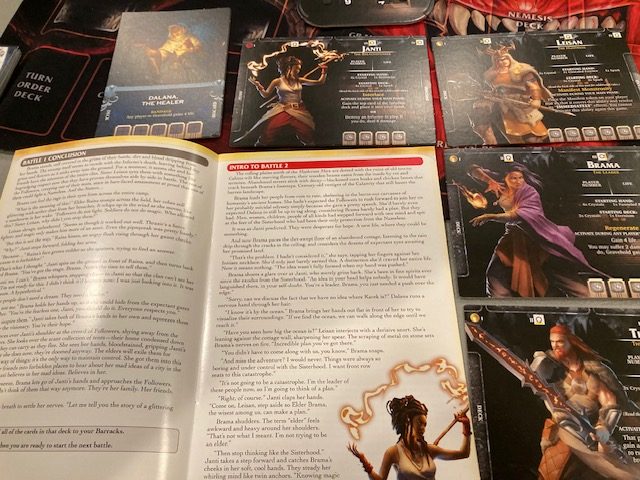
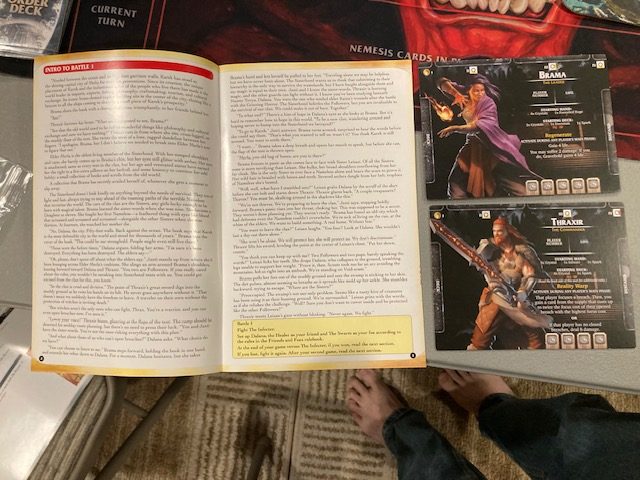
What I did: I found the character mats for each of the Mages described in the text (and the Friend),  and then I put them next to the Narrative book!  So, as I read, I could correlate who was speaking, who was acting, and who was who!  See above!  This brought me more into the story, and I recommend the same for you!

IMG_8724

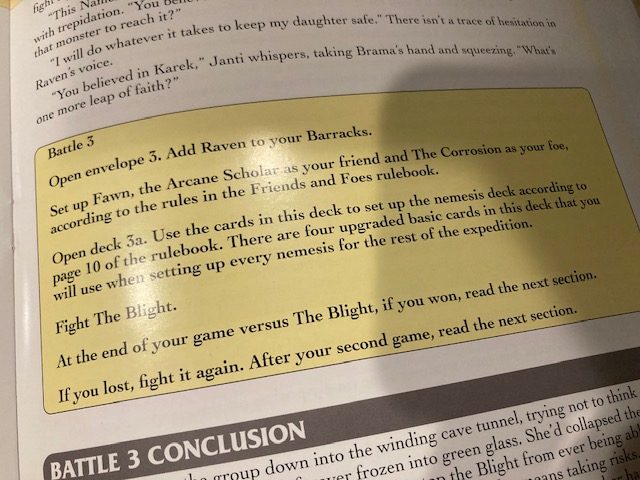
After the text sets up the story, the yellow boxes direct you how to set-up the game: see above for instructions on how to set-up Battle 3 (note, not really any spoilers in the set-up).

IMG_8638

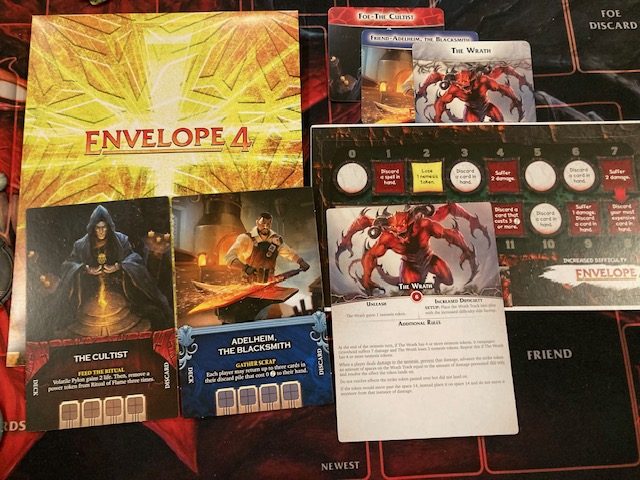
Most of the special context for the Expedition Battles is in one of three places: The Envelopes, the Specially Wrapped Cards, or the “unspecial wrapped cards”. 

IMG_8722

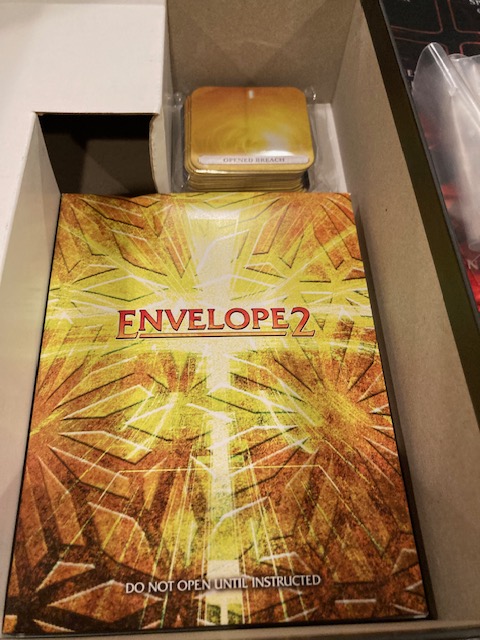
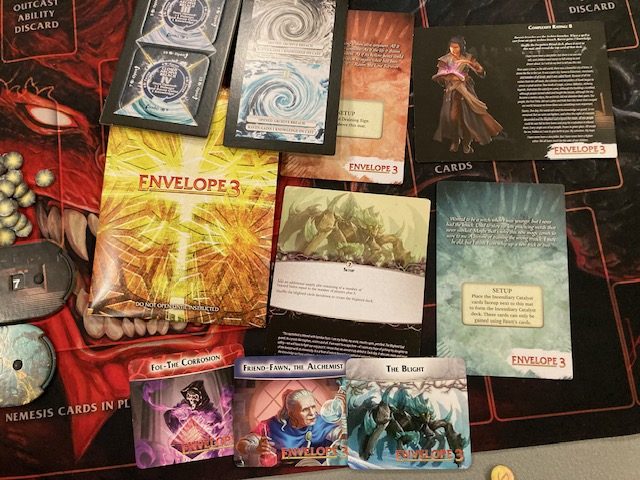
The Envelopes typically contain Friends and Foes, a new Nemesis, some dividers, and possibly some new boards.  Minor Spoiler for Envelope 3: don’t look too closely at the picture above, but that’s what’s generally in an Envelope!!!

IMG_8720

Most of the cards you need come from the special decks:  For example, you open 2B at the end of Battle 2!

IMG_8643
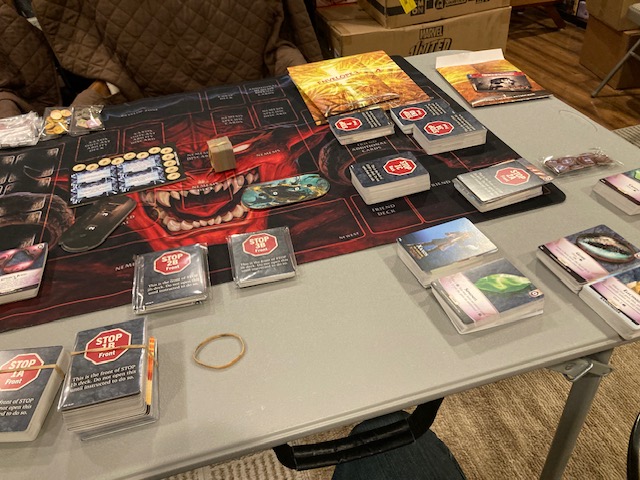
Or open 1A, 1B, and 1C at the start of Battle 1!

IMG_8639

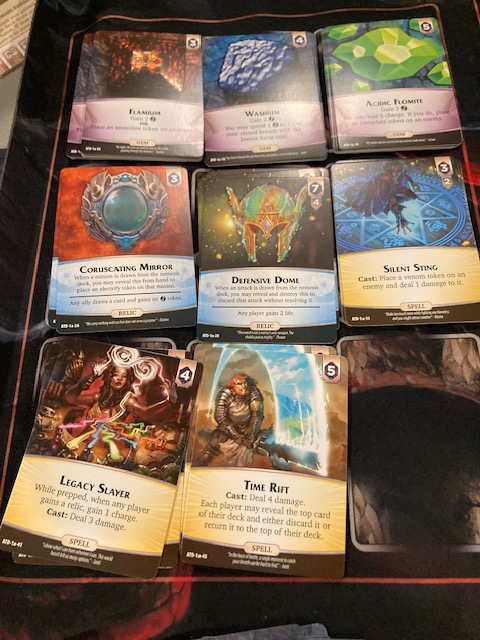
There’s a ton of other decks in the game which just “augment” your game: this allows you to have other choices for your Gems/Relics and Spells.

IMG_8677

Although your first game will have a rigourous set of Gems/Relic/Spells (see above), you can choose other cards for these.

IMG_8738

Although there are some instructions for reseting the game, I strongly recommend you take pictures (like I did) of all the stuff in the Envelopes: Again, minor spoilers for Envelope 4! See above!

IMG_8756

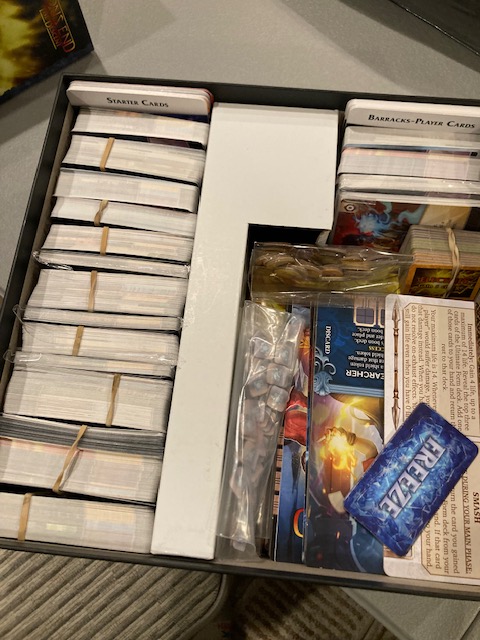
After playing through the Expedition solo (see Solo Play section below), I went ahead and re-sorted all the decks back to their original state!  I used rubber bands (I know, some people don’t like rubber bands) to keep them together.

It took about an hour or so to re-sort everything and put the box back to the original state.  You can do, but it is a lot of work.  I did this so I can play the Campaign with my friends all over again.

Solo Play

IMG_8604

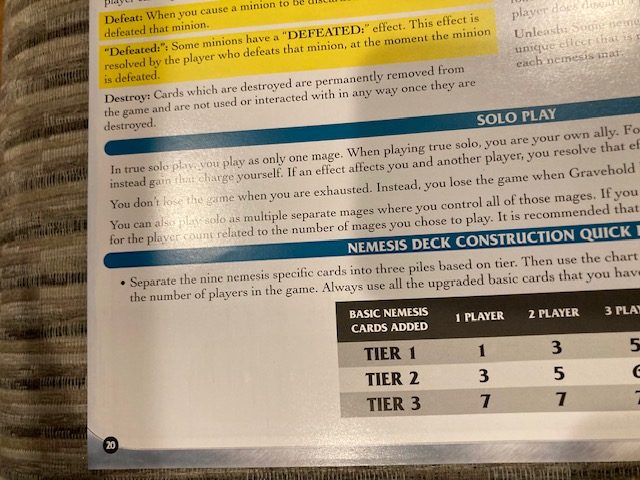
So, Aeon’s End: The Descent supports solo play (thanks for following Saunders’ Law). And it has choices!

IMG_8633

You can either play true solo mode, where the solo player plays exactly one mage OR you can play solo two-handed.  And for true solo, they mention the simple rules “You are your own ally!”  (I would have LOVED some better solo play description like this for Freedom Five from a few weeks ago:  Oh, Freedom Five, I wanted to love you so much …).  In the end, I played true solo: one mage per Battle!

IMG_8650

This true solo is interesting, because some variants of Aeon’s End only support the solo player having three turns and the Nemesis having two turns (most notably: the App for iOS! See our Discussion in Seven House Rules For Cooperative Games). This version of Aeon’s End: The Descent seems to let the true solo player have four turns (it’s unclear, because the set-up for the players has rules for 2,3, and 4 players … but not 1-Player? See page 8!). In the end, the defining text seems to be: “The turn order deck is always composed of four player turn order cards and two Nemesis turn order cards” (p. 8, Turn Order Deck).

IMG_8655

Over the course of about 4 days, I ended up playing the entire Expedition!  Although the game box says 60 minutes per game, I kind of think that’s bogus: I am an experienced Aeon’s End player, and I think I took about 2 hours per game.  To be fair, when I play solo, I tend to be more thoughtful and take longer turns.

IMG_8719

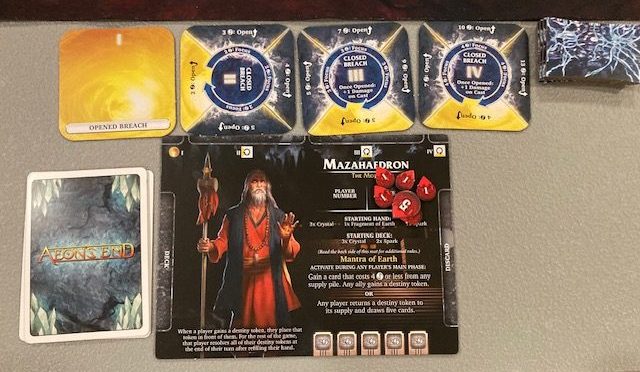
I chose to use a different Mage for each game: I started with Thraxir, went to Mezahaedron for my second Battle …

IMG_8727

Used Raven in my 3rd Battle …

IMG_8740

And finally ended Battle 4 with Brama .. the Leader!  

IMG_8747

Using a different Mage for each battle was absolutely the right thing to do!  I got to play 4 VERY DIFFERENT Mages throughout the game!  Each play style was very different, and it was fun to try to learn and discover the strategies for each Mage! I had to use Destiny tokens, Knowledge tokens, and all sorts of new stuff I had never seen before!  

IMG_8718

It was an absolute delight getting through this Expedition.  I had a blast!

IMG_8725

Although the true solo game has the solo mage advance quickly, I always worry that they may die sooner, because they only have 10 hit points total!  At least playing two-handed solo, there are 20 hit points total between the two mages … Luckily, getting too low was never an issue. I don’t know if I just chose well, but my Mages never skirted death!  I always worry about the true solo player dying too early because there are no hit point balancing mechanisms (i.e., solo player has 12 hit points or something), but it hasn’t seemed to be an issue.

IMG_8746

My only complaint might have been that maybe it was too easy?  I didn’t lose a single solo game along the way! And all of wins were pretty decisive!  Like I said, I am a fairly experienced Aeon’s End player, so that’s part of it.  Luckily, I noticed that every Nemesis does have a “advanced” mode, so if I play again, maybe I’ll do the advanced mode so it’s a little harder …

IMG_8706

In the end, I had a great time playing the Expedition solo.  I was able to learn the game to teach my friends (see Cooperative Play section below), but still enjoy a full story and campaign!  If I never play Aeon’s End: The Descent again, I feel like I still feel like I got my money’s worth. The thing is, I would like to play it again! It was fun!

Cooperative Play

IMG_0248

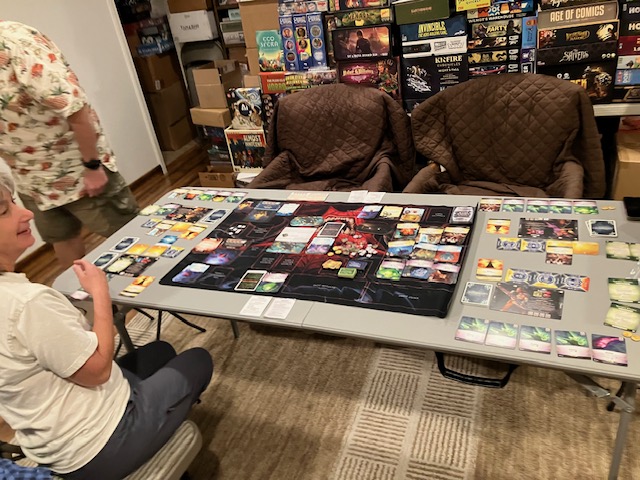
So, Robert, Becca, and Jeff and I played the first game of the Expedition! A 4-Player game!

IMG_0256

We ended up winning and generally having a good time!

IMG_8608

Becca, who doesn’t really like cooperative games that much, liked it enough that she expressed interest in ordering a copy!  I showed her the little catalog (above: came with the game) of all the Aeon’s Ends

IMG_0987

Generally, everyone was able to feel part of the team!  But, each Mage has their own personality, and I think everyone felt like they could do something interesting on their turn!  Sure, there were moments when one of us “took it for the team” and had a crappy turn, but it was always a conversation! Everyone was always involved, either figuring out their turn, or talking with others!

IMG_0991

The only “real” problem was that the game lasted a good three hours!  Granted, this is a learning game for most everyone but me, but 3 hours is a lot longer than the 60 minutes on the box!  Still, we were engaged the entire time and had fun.

Cooperative play went well, even with 4 people who are all very independent.  And none of my friends (except Becca) are really “gamers”, but everyone took  to the game pretty well!  Generally, it was a smashing success and we had fun.

One final thing: the 4-Player cooperative game seemed harder than the true solo game.  I think if we played through the entire Expedition as a 4-Player game, the game would have been much more challenging.  The game just seems harder with more people.

“Emergency Sleeving!”

IMG_0989

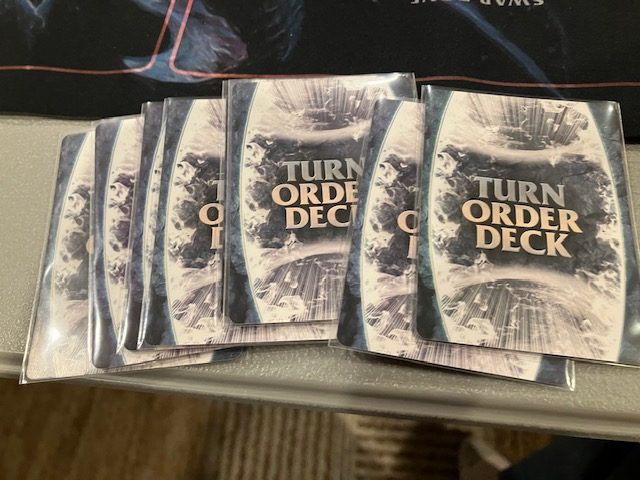
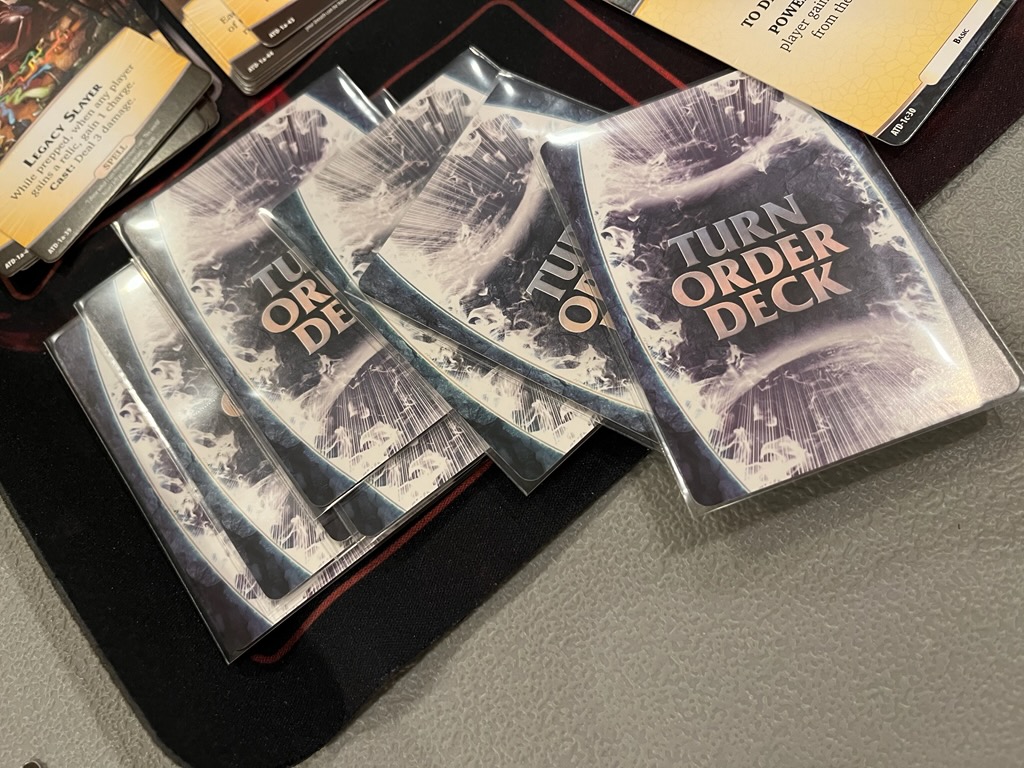
You don’t have to sleeve the game, but you really really really should sleeve the Turn Order Deck (see above).  Why?  You touch the Turn Order Deck every turn!  I didn’t sleeve my Turn Order Deck in the original Aeon’s End, and it got a little grody.

IMG_0251

Just as we were starting the Cooperative game, I remembered how “grody” the Turn Order cards, so we had to have an “Emergency Sleeving!!!!”

IMG_0245

Okay, you may now resume your regularly scheduled program.

What I Liked

IMG_8682

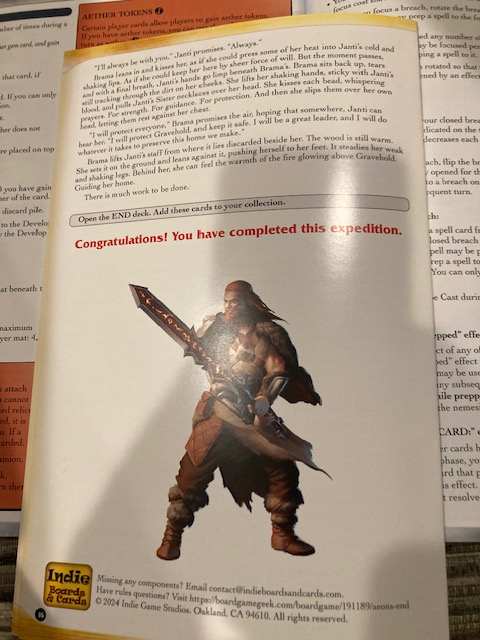
The Campaign, er, Expedition Story:  Once I got into the Expedition, I enjoyed the story.  I needed the graphic support of pictures of the characters to jumpstart me into the story, but once I got into it, it was surprisingly enjoyable. And maybe even a little moving?

IMG_8749

The Length of the Expedition:  I liked that the campaign was only 4 Battles: it seemed like just enough to be achievable.  It wasn’t too long to drag on, nor too short to leave me wanting more.  I said the same thing about the campaign in Astro Knights: Eternity: 4 Battles seems just right!

IMG_8637

Friends and Foes: I adored the Friends and Foes addition.  It not only fixed the Variable Turn Order problems (or at least strongly alleviated the issues), but also added some extra choices to the gameplay.  Overall, this module is a major win for the Aeon’s End system, and may now be a necessary module moving forward.

IMG_8735

Still Fresh:  Everything seemed “fresh”: the new Mages, the new Nemeses, the Friends and Foes, the new Gems/Relics/Spells, the new mechanisms (Knowledge, Destiny, etc)!  Somehow, even after 8 years since the original Aeon’s End, all this content still seems fresh!

IMG_8691

New Narrative Booklets:  I like that the Narrative Booklets and the Expedition mode gives you an “excuse” to play through all the content.  I like this idea!  An excuse!  It sort of went under the radar, but this also included Narrative Booklets for both the original Aeon’s End and the Aeon’s End: War Eternal.  If I need/want an excuse to playthrough those games again, I have it!  I think it’s really cool that Indie boards and cards “retro-fitted” the Expedition onto the original games!

IMG_0990

Standalone:  Were you always curious abut Aeon’s End but were turned away because of something (maybe Variable Turn Order)?  Maybe you found the Friends and Foe module  alluring?  Maybe the idea of a just-right campaign is alluring?  You do NOT have to get all the other Aeon’s End content … you can just get this standalone game and be very happy for a while!

What I Didn’t Like

IMG_8681

Wall of Text:  I grew to like the story that came out, but that wall of text from the Expedition booklet is very daunting; I suspect it will actually turn some people away.   I would have considered putting in some relevant pictures in with the next, or at least “suggested” that players keep out the Player Mats so they can have pictures of the characters as they interact.

IMG_8736

Friends Ability Activation:  I really think that the players should allow the Friend to activate abilities with a little more choice; right now they friend “must” discharge all their charges and activate their ability even if it’s not useful.   These seems against the theme; they are our friends, why can’t we work with them so they activate their abilities at better times?  This is my only real complaint in an otherwise wonderful Friends and Foes module.

IMG_8632

Rulebook and rules:  The Rulebook and Narrative books are pretty good, but have a lot of weird discrepancies!  Why is one-player set-up not mentioned in the Turn Order Deck section?  Why are Treasures not emphasized more?  It’s one page in a floating box you will miss on your first read!  The set-ups in the Narrative book seem a little … spartan?  There needs to be more emphasis that we can choose Gems/Relics/Spells between Battles! And the Turn Order cards are referenced in the Components but “hidden” in the intro decks … it needs a slightly better sentence there.

These are all minor things.

Conclusion

IMG_0992

I am not quite sure where I come down on Aeon’s End: The Descent, because I liked it so much! The Friends and Foes module, for me at least, is always necessary for any Aeon’s End game I play from now on!  My friends loved this game, even the non-gamers!  The cooperative experience has always been very strong in Aeon’s End: my plays with my friends accented how well it works! 

IMG_8726 

My solo games during the Expedition were so much fun, they will probably make my Top 10 Solo Games of 2024!

IMG_8739

Aeon’s End: The Descent breathes new life into the Aeon’s End system. I loved it. I think I will give it an 8.5/10 or maybe a 9/10. I don’t know, maybe even a 9.5/10? It was such a great experience both solo and cooperatively!

My only question: should it make my Top 10 Cooperative Games of 2024 (because it’s a standalone game) or my Top 10 Cooperative Expansions of 2024 (because it expands other Aeon’s End games)?

An Odd Little Duck! A Review of Cyber Pet Quest!

IMG_8203

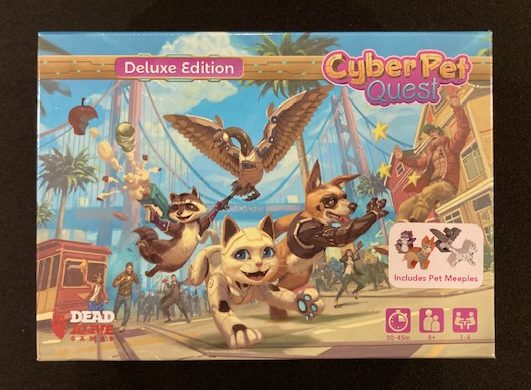
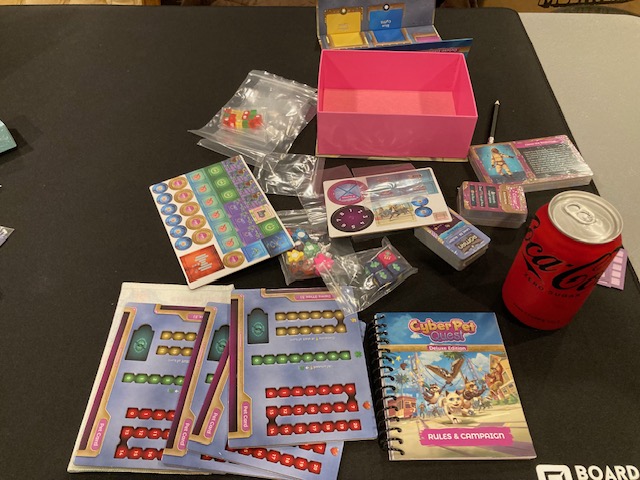
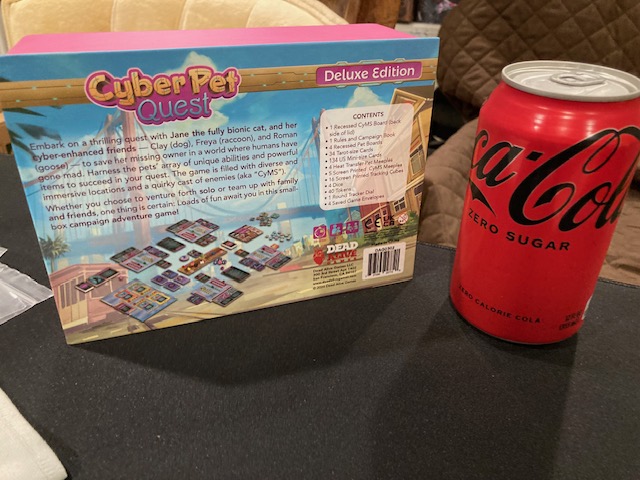
Cyber Pet Quest is a cooperative boss-battler campaign game.  This game was on Kickstarter back in April 2024, and it promised delivery in October 2024.  My copy arrived late October just before Halloween, so it arrived right on time!  Congratulations to Dead Alive Games for shipping on time!  

IMG_8201

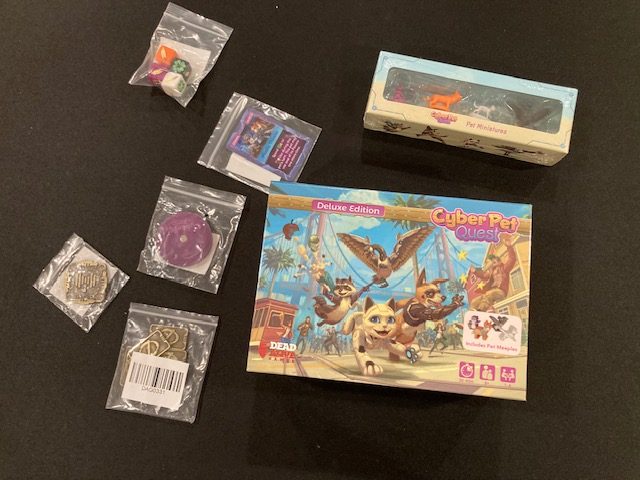
My version is the deluxe version with lots of little Kickstarter extras (see above).  

IMG_8206

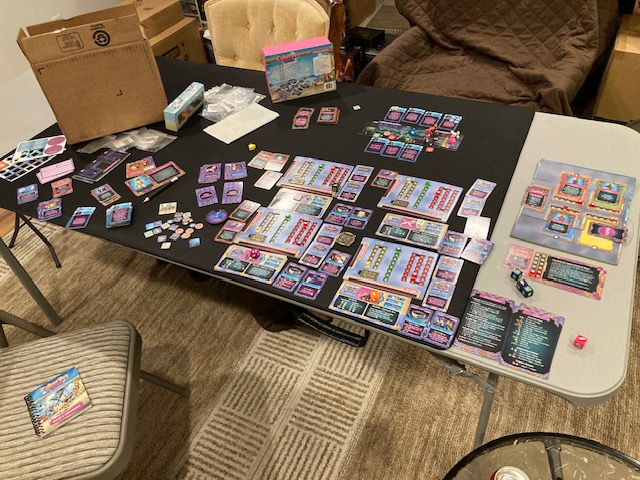
This is a smallish game, but it still has a 6+ chapter campaign game contained therein!

Let’s take a look!

Unboxing

IMG_8208

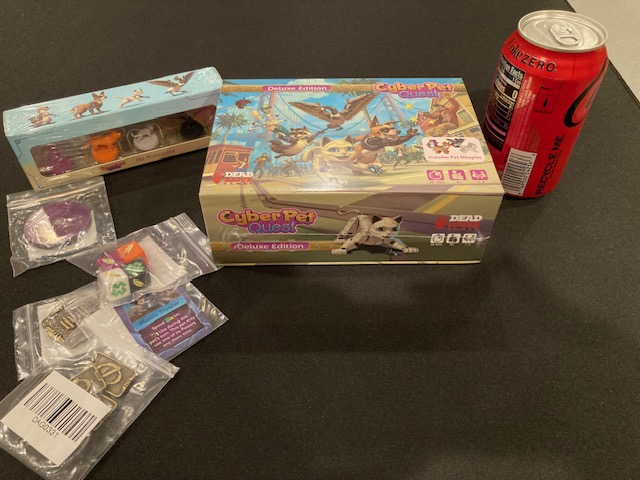
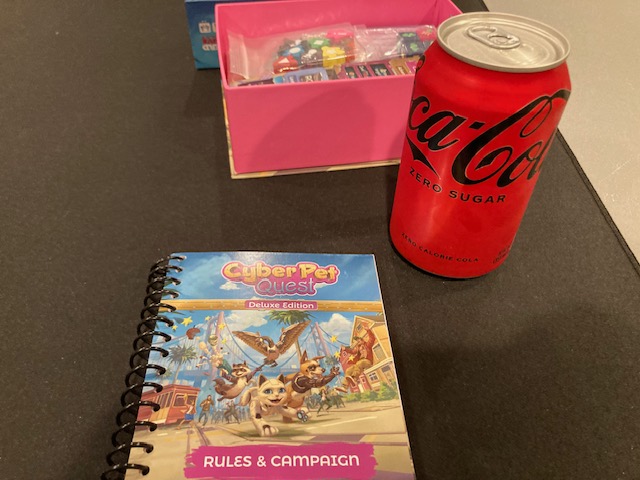
This is a small game: see the can of Coke for perspective.

IMG_8218

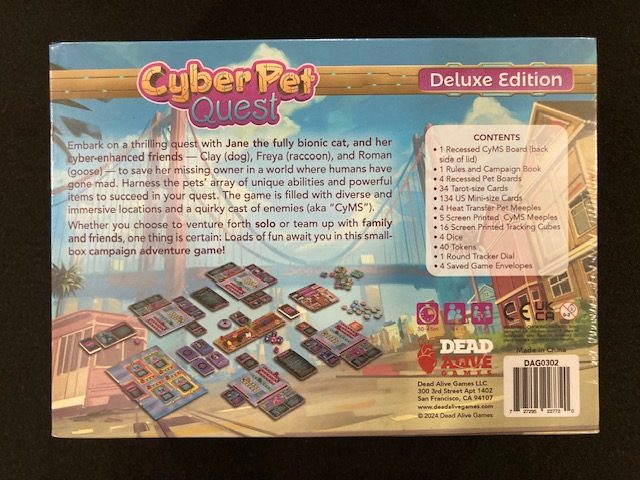
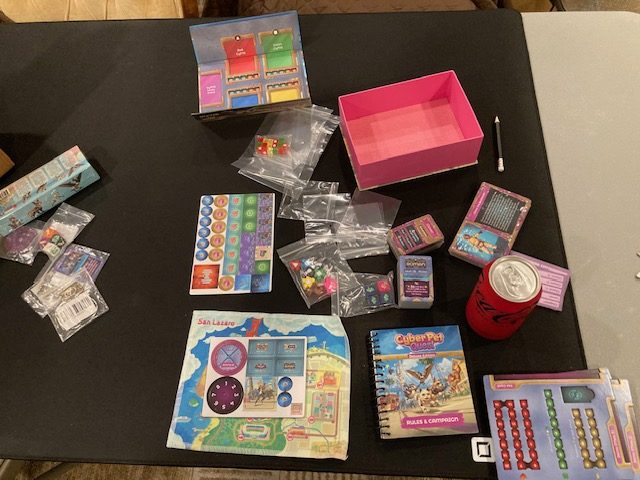
Yet, there’s quite a bit crammed into this box!! See above!  So, what is this game all about?

IMG_8256

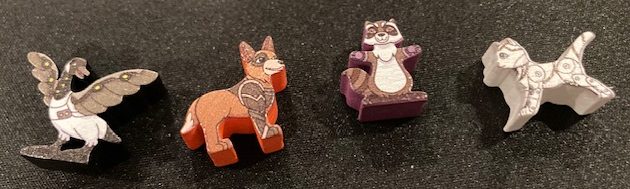
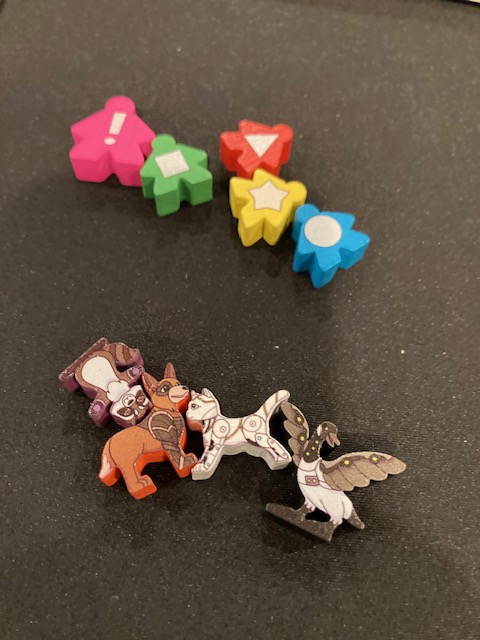
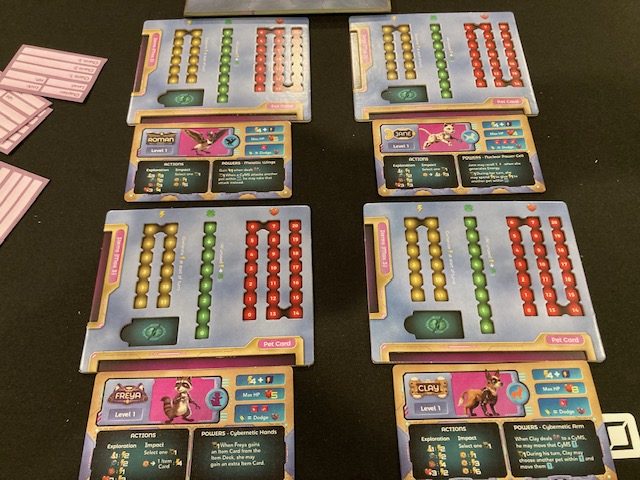
Players each take the role of the cyber pets (above, left-to-right): Roman the Canadian Goose, Clay the Australian Cattle Dog, Freya the North American Racoon, and Jane the Bionic Cat!  

IMG_8257

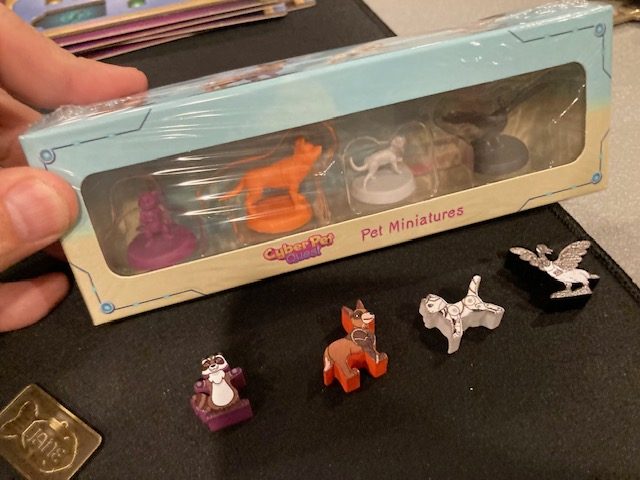
You can choose to pick up the pet minis, but I prefer the wooden meeples that come with the game (much like Run Run Run! from a few weeks ago!)  Wooden meeples for the win!

IMG_8285

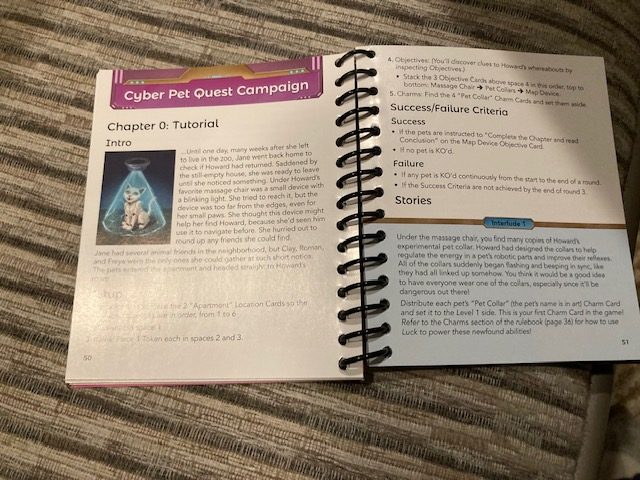
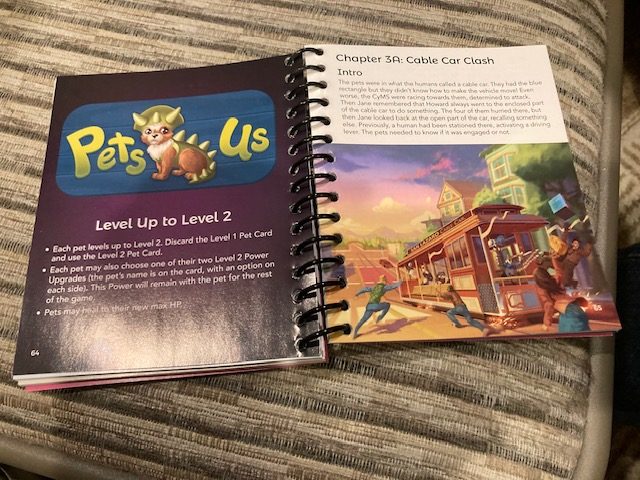
Players embark on a 6+ campaign (starting with chapter 0 to get you acclimated) working together to find their master!  The campaign is all documented in the little book that comes with the game.  It’s a tiny but long (at 108 pages) book describing the rules and the campaign.

IMG_8233

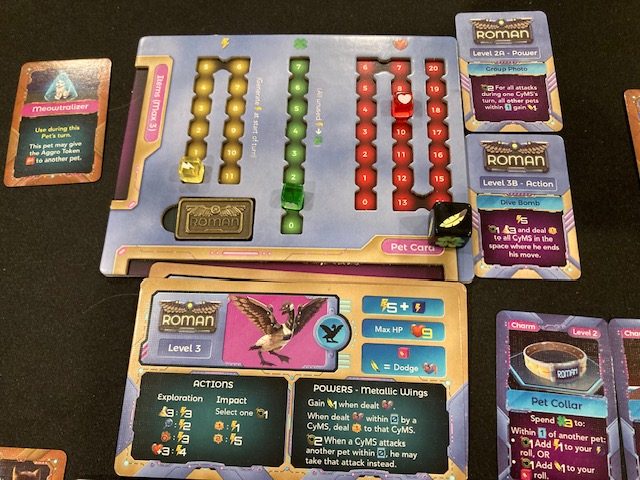
Each cyber pet is actually quite different!  The cards (above) describe the differences: how many Dodge dice, how many hit points, what actions you can take and their costs, and their special powers!  If you look closely, you can see that each pet is very different than the others!

IMG_8293

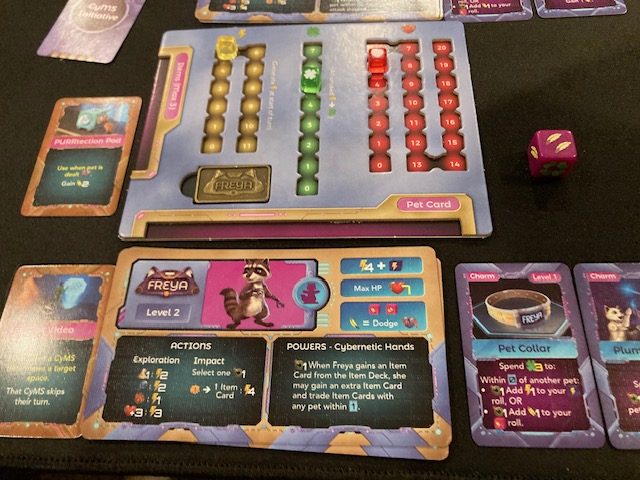
For example, see above for the Actions of Freya with their cost!

IMG_8275

Each cyber pet gets a nice dual-layered board for marking energy, luck, hot points, and “sneak status”.

IMG_8252

On a cyber pet’s turn, it is either sneaking (metal name token above turned upside down) or in AGGRO mode.  When sneaking, most things cost more energy (except for healing which is cheaper) and that pet can’t attack!  When the pet has the AGGRO token (bigger metal token), it may attack … but the bad guys are naturally drawn to it AND it takes one more damage from them!  Choosing when to sneak and AGGRO is an important strategic part of the game!

IMG_8259

There are bad guys to fight: this is a boss-battler after all!  The bad guys are the red, green, blue, yellow and BIG BOSS pink meeples! See above!

IMG_8306

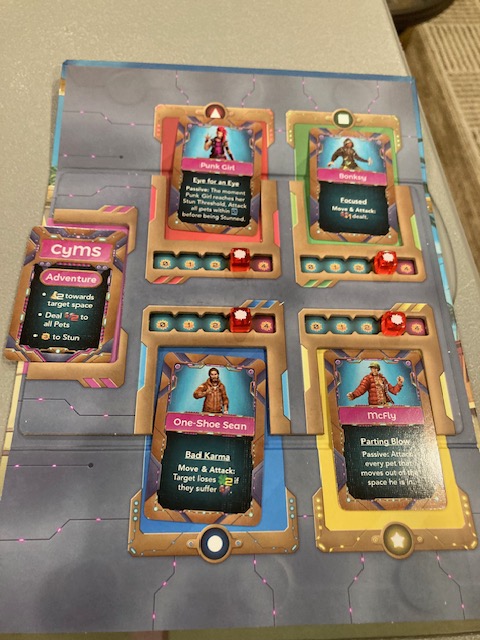
You generally have 4 CyMS (Cyber-Memetic Sociopaths) … these are generally “the minions” of the big bad boss.  See above as we choose 4 for the start of the game!  (That dual layer board with the CyMS is the top of the box. …. what??)

IMG_8283

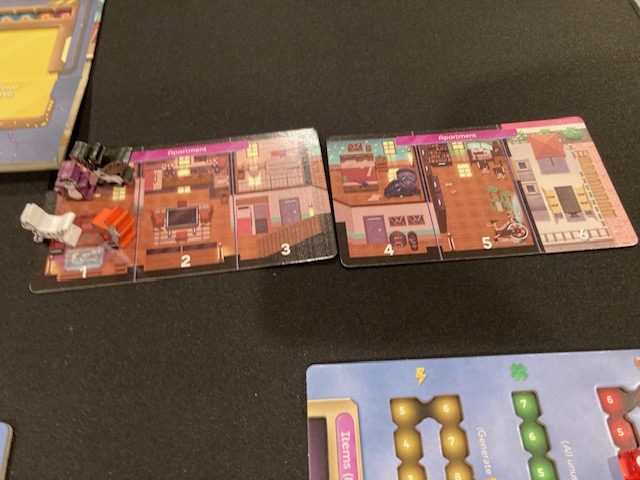
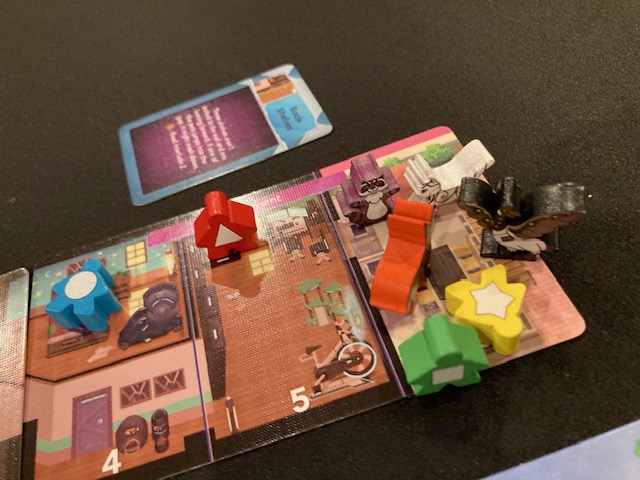
Each Chapter on the campaign happens in a group of Location cards: See above for the apartment (where the cyber pets live and start on space 1).

IMG_8290

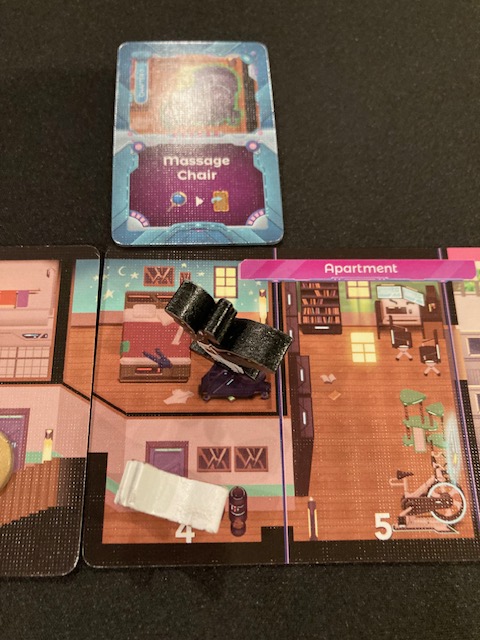
Each Location generally has some items of interest (like the Massage chair) where you have to “interact” or “look at it” to activate it!

IMG_8314

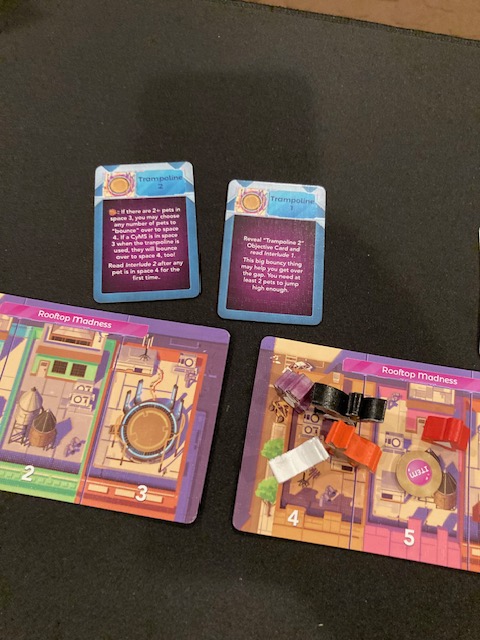
Once the cyber pets get comfortable with the mechanics of the game (chapter 0), the CyMS come out!  See above as the cyber pets try to get out of the apartment with the CyMS chasing them!

IMG_8288

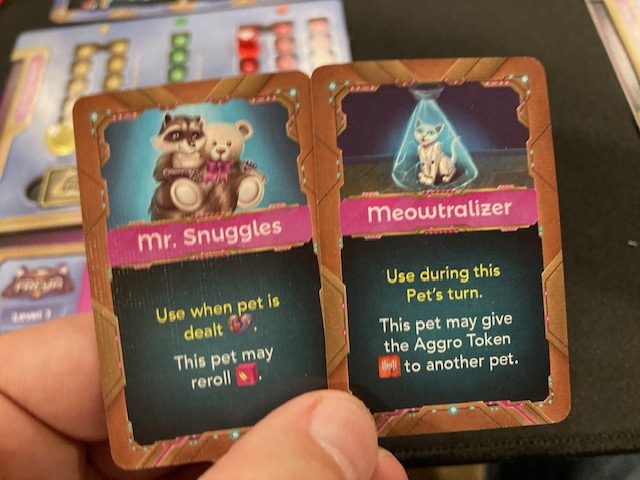
Over the course of the game, you get many things to help you in your quest to find your master!  Sometimes you get Items like above (which are one shots) …

IMG_8340

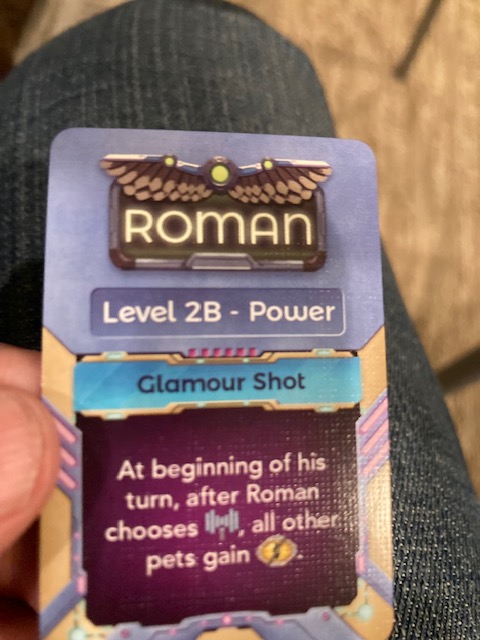
Or you may get extra powers that help you! See above as Roman gets a Level 2 power!

IMG_8318

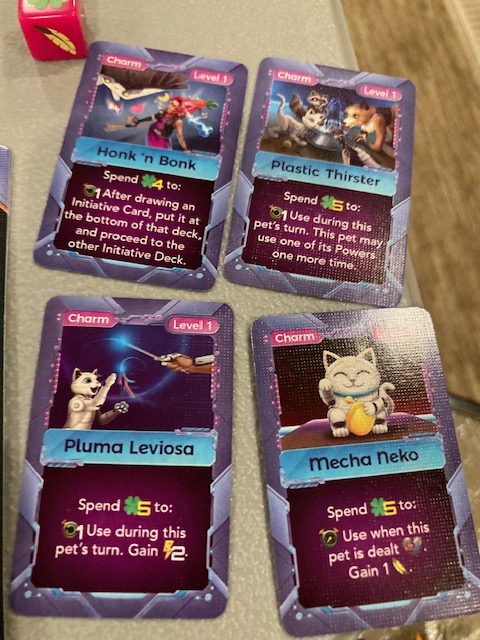
There’s also “Charms” which are permanent items that are usually powered by the “luck” resource.

IMG_8360

Finally, each cyber pet levels up as they get further into the campaign See above as Roman is on Level 3 … which influences his hit points, powers, and actions!  

IMG_8341

At the end of most chapters, the pets get some kind of upgrade, and usually it’s a choice!  Level up the character card?  Get a charm?  Get one of two powers?  The pets really do feel like they get better as you play!

IMG_8230

This is a boss-battler, so there will be big-bad bosses that you fight long the way!  See above for the bosses you may encounter!!  The story has a few turns along the way, so you may not see all the bosses on your first play-through!

IMG_8366

In the end, the components are a little small so they can fit in the smaller box, but they are all well-labelled and very readable  I have played through at least one full campaign, and I never had a problem with the smaller components: they are quite nice for this little game.  The theme is a bit odd with cyber pets.  And the game is surprisingly small.  So, this is an odd little duck of a game! (EDITOR: maybe better said, this is an odd little goose … since Roman is a GOOSE not a duck …)

Rulebook and Campaign Book

IMG_8212

The rules and campaign are all found in this little spiral bound notebook of about 108 pages (yes, 108 pages!).  See the Coke can above for perspective: I wanted to point out how little the rulebook is!

IMG_8301

This is about a B or B- on the Chair Test: I can leave the rulebook open on the chair next to me while I am playing , but the form factor is just a little too small; the font is just a little too small to be well-readable.  Since the spiral notebook stays open, we leave the grade in the “B” region, as it is still very usable.

IMG_8229

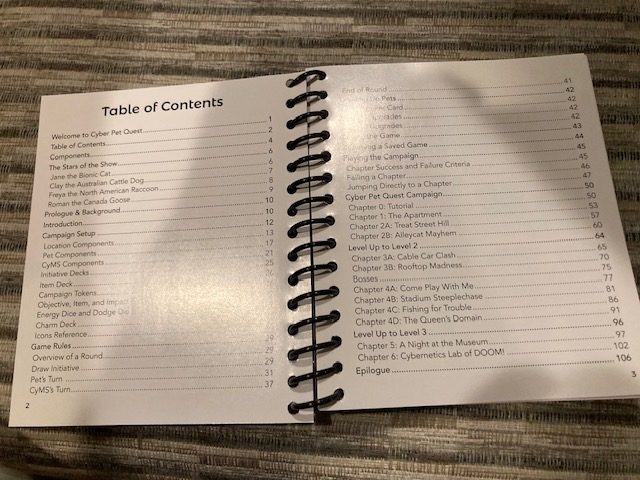
Now, the rulebook doesn’t have an index or glossary (booo!), but it does have a nice Table of Content (see above).

IMG_8227

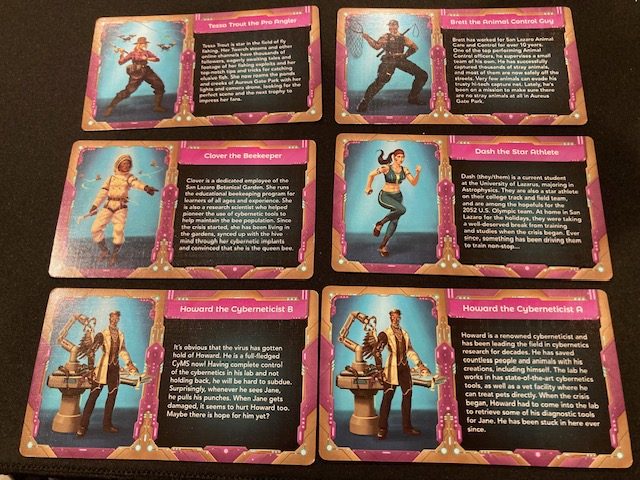
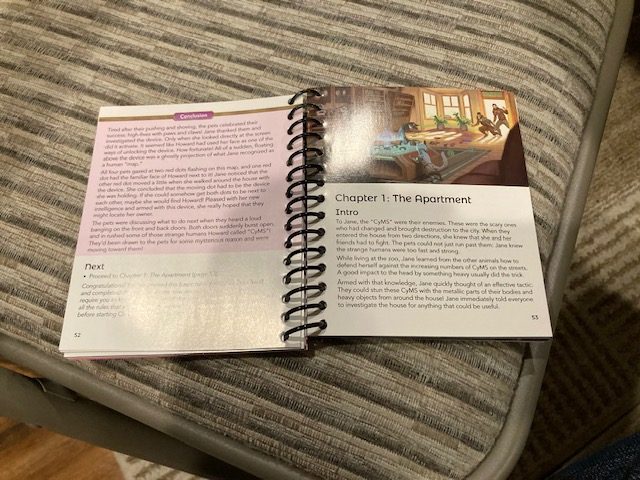
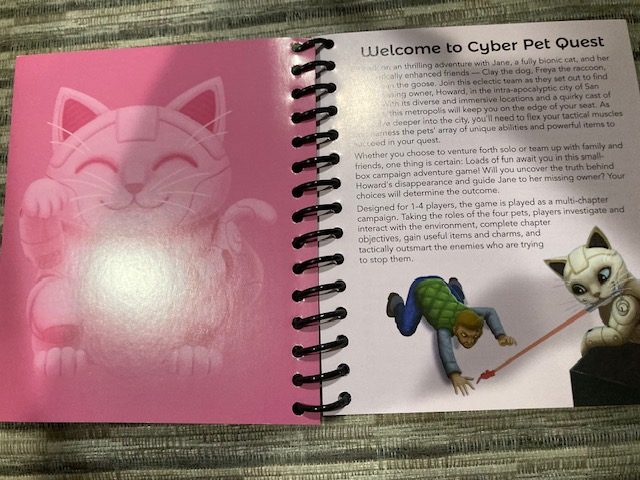
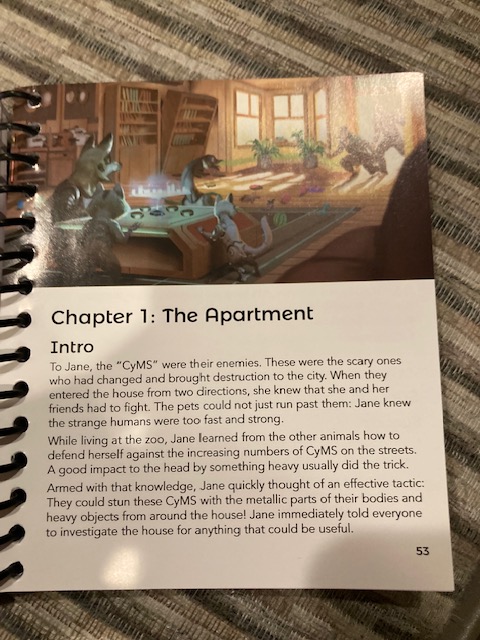
The rulebook is replete with Story! It starts off with a nice intro (see above), and continues a story (I should hope so with 108 pages of rules and campaign!).  

IMG_8265

Although there are pictures of most of the major components, there are aren’t a lot of pictures of set-up except the one above.  There were MANY MANY time where the rules referred to some component, and I just had to guess which it was (I found the sleeper components, I think I found the Horde token, but I never found the Hack tokens).

IMG_8302

The rules were okay.  There were a lot of time when I really wish there had been further elaborations of some of the rules.   Many times, I just make the best call I could knowing the basics of the game.

IMG_8323

There’s a lot of cute story here, the rules are pretty good at getting us going, but there were just too many times when things were underspecified (which token? Explain this rule please?) so I can’t call this this a good rulebook.  

It was adequate to pretty good.  I was able to play the game and move forward quickly most of the time.

Solo Rules

IMG_8204

So, Cyber Pet Quest does support solo play!  (Thank you for following Saunders’ Law!)

IMG_8269

Unfortunately, the solo mode for Cyber Pet Quest is “play and operate all 4 Cyper Pets!”  In fact, at any player count, all 4 Cyber Pets must be in the game at the same time!  

IMG_3686

Some of you might remember Set A Watch: Forsaken Isles from earlier this year: it’s solo mode also has the players operate all four characters at the same time!  See above!  

IMG_1947

It’s not that uncommon to have the solo gamer play all four characters: recall that both X-Men: Heroes Resistance and Marvel Zombies: Hero Resistance also have the solo player play all four positions! See above.

IMG_4034

In Set A Watch, although we initially had our reservations about the 4-character solo mode, it really grew on us and became the default way we played the campaign game Set A Watch: Doomed Run!  See above.  This is because the Set A Watch characters are simple enough that it’s not too much work to context switch between them. 

IMG_4373

Marvel Zombies: Heroes Resistance is harder to play solo with 4 characters because the characters get more and more complicated as the game goes on.

IMG_8343

Cyber Pet Quest sits somewhere between Marvel Zombies: Heroes Resistance and Set A Watch.  At the beginning of the campaign, it’s pretty easy to context switch between the Cyber Pet characters as they don’t have too many powers, items, charms or actions.  So, the initial games are easier to play.  But later in the campaign, after each character has levelled-up significantly, each character has a wide array of Powers! Charms!  Actions!  Each character gets MUCH harder to play, as there so much to do!  

IMG_8366

See above as the characters have so many cards in the final game: Powers, Charms, Items!!!  I admit, the sheer amount of options for each character does get overwhelming … BUT … as the solo player, I have been playing and upgrading the characters by myself!  It’s gratifying to see all the characters get better.  I think since they have been levelling up gradually (between campaigns), it doesn’t feel that bad.  I think it’s actually harder in Marvel Zombies: Heroes’ Resistance to deal with the powers creep as the characters go up quickly in the same game!  At least with Cyber Pet Quest, you have a chance to become familiar with the new powers/abilities between games.

IMG_8360

Still, there is a lot of context switching between characters as you play.  I can recommend playing the first Chapter 0 solo to see if you think you can handle this 4 character solo mode;  even if you don’t like this solo mode, the Chapter 0 solo mode makes it easy to learn the base mechanics to teach your friends.

IMG_8364

I have to say, despite the complexity of the 4-character solo game, I had fun!  I found myself playing through the entire 6+ campaign game in a solo mode last weekend!  Wait, what??  It so easy to play each game, it was fun to level-up, it was interesting to see what happened next.  I must admit, I am a little surprised I ended up playing the entire campaign solo last weekend!  But I was having fun!  And the fact that each chapter is under an hour contributed to that.

Cooperative Play

IMG_8368

Cooperative mode is a little bit more fun than solo mode: for one, you have more people controlling the 4 Cyber Pets!  Above, Teresa and I split up the Cyber Pets so that she was operating two (Roman and Freya) and I was operating two (Jane and Clay).  I do think it’s interesting that we got very invested in our characters; so much so that we really did know them by name!

IMG_8371

This is a light cooperative campaign, where cooperation seemed to happen pretty naturally.  Clay was VERY good at taking out the CyMS, while Freya was VERY good at dealing with items and passing them around.  Jane was the mover, getting to far-away stuff and distracting the CyMS.  And finally good old Roman was good at doing a little bit of everything!  We focused on each pet’s strengths and naturally felt empowered and potent as we moved around the apartment.

IMG_8367

The game is light and fun!  I suppose the best recommendations we can give this game is 

 1) I am playing it again cooperatively EVEN though I have already gone through the entire campaign!
 2) We are planning to play more games (cooperatively) in the future

In a family situation, I can see this “4 characters” working out okay! Maybe give the “favorite” character to the little ones (Teresa really liked Roman, so she got Roman), but they can still give input as how the rest of the pets work.  In other words, assign the pets in the way that brings the kidlets in the most!  And the “adults” can just make sure the game stays on track!

What I Liked

IMG_8204

Game Length: Even though this is a campaign game, I like that each chapter feels “doable” in under an hour. The game box says the game is 30-45 minutes and that’s about right! (Oh! And you can jump into any single game of the campaign if you want a one-shot! There’s a nice page that describes “get theses upgrades for set-up if you just want to play a single session!”)

IMG_8244

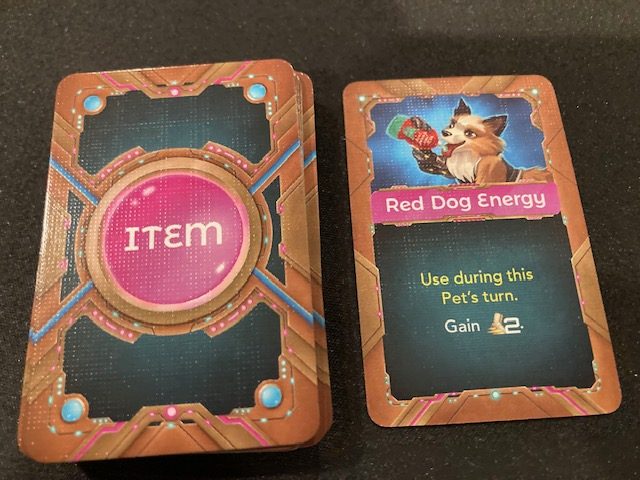
Sense of Humor:  This game is kind of light and fluffy; it has a sense of humor!  See above as one of the cards is Red Dog Energy!  And there is a Cat Videos on the Internet item as well!  This is a campaign game, but it’s light enough that the game never feels “overwhelming”.  It just kind of fun.

IMG_8348

Readable: I was very worried, since this game was so small, that the components would suffer readability issues.  Although I wish the rulebook was bigger, in general, everything was readable at the small size!

IMG_8313

Story: The story is quite cute and keeps you in the game.  It’s a light story, but still engaging.

IMG_8335

Upgrades:  At the end of each chapter, there are SO MANY ways you can get upgrades! Charms! Powers! Levelling-Up!  And you get choices: Level 1 or Level 2?  Side A or Side B? It feels really great to be moving foward and making so many choices!  We saw a lot of this same feeling in Tidal Blades 2: Rise of the Unfolders from a few weeks ago!

IMG_8348

Cooperation: There were a number of mechanisms in the game that encouraged cooperation.  The Pet Collars that you got in the very beginning allowed Cyber Pets to do extra stuff, but only if they were close to other pets!  This made for interesting tensions!  And many times, there were things to interact with that required TWO cyber pets in the same round to do something!  I liked that! It felt like the pets were cooperating to get stuff done!

What I Didn’t Like

IMG_8363

Underspecified: As the campaign gets further and further along, it feels like there are more and more places where the game needs a little more elaboration/specification. The final villain you fight has some real questions about how to operate him (Do you round up or down when you halve? How many hit points does he have?), and these kind of questions came up more than they should have during the game. As an experienced gamer, I know when to just make a ruling and move on. But I worry a family-friendly game like this might cause problems for families that aren’t as comfortable with under-specificity. Caveat Emptor.

IMG_8364

4-Character Solo Mode: Although I had fun playing the solo mode, the fact that you always have to have all 4 Cyber Pets in play isn’t ideal. I made it work, I had fun, but it’s hard to recommend the solo mode with a 4-character mode.

IMG_8353

Left-To-Right:  Every set of Locations had the Cyber Pets move left to right.  The topology was fixed in a straight line, and the pets almost always had to move all the way to the right from the left.  Although this kept a lot of rules simple (with the AGGRO token and CyMS movement), it felt a little “constricting” that every single Location set “moved left-to-right”.  It got a little tedious ALWAYS going left-to-right; I wish there had been some more topology to move around in.  And I am tired of saying left-to-right.

Turn Order

IMG_8243

The gameplay for Cyber Pet Quest has something of interest from turn order perspective:  the game play alternates between pets and CyMS!  It’s still variable, as you don’t know which pet is coming out or which CyMS is coming out, but it keeps the game balanced between the two!  Recall we have discussed Variable Player Turn Order many times here at CO-OP Gestalt (see here for a culmination of that discussion)!  The solution that Cyber Pet Quest employs against the problems of Variable Turn Order is the same as one from Adventure Tactics: Adventures in Alchemy: the Static Initiative Invariant.  Basically, this just means we alternate between Heroes and Villains.

IMG_0945

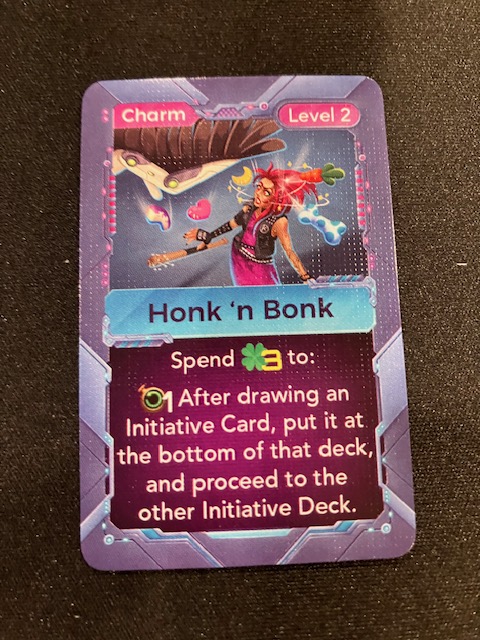
Now, I have to admit, even though I do like this solution overall, I was worried it might still be a little too random.   But, I was pleasantly surprised when I saw the game introduce Charms and Powers and Items that would mitigate some of that randomness!  See above as the Honk and Bonk Charm gives the pet some agency over turn order! As the game goes on, and the players become more powerful, they CAN affect the turn order!

So, I was happy to see both Static Initiative Invariant here as well as Power/Charms/Items to help the players control the turn order! 

Conclusion

IMG_8345

I like Cyber Pet Quest. I really didn’t expect to go through the entire campaign solo this last weekend, but I had so much fun playing, I went ahead and finished it! I like heavy campaign games like Tidal Blades 2: Rise of the Unfolders (from a few weeks ago), but sometimes it’s nice to have a light campaign game (like Cyber Pets Quest) that feels “finishable”: there’s only 6+ chapters to this game, and you can do it in a weekend! I am living proof!

IMG_8302

There’s just enough wonkiness with the rulebook being underspecified that I worry non-gamers might get frustrated with the rules.  Although there’s a lot of unique and interesting set-ups and interactions in the game, sometimes they aren’t that well-specified.  Just be aware that you might have to make some rule judgements in order to move forward.  

IMG_8366

I think this game is better as a cooperative game, since it’s just easier to share control all four cyber pets with more players.  But I still quite enjoyed the 4-character mode; but you have to be aware what you are getting into with all the extra context switching!

IMG_8226

This is a fun little cooperative boss-battler for 1-4 players; it has a cute story and a light vibe that’s quite enjoyable. I’d give it a 7/10 overall: it loses some points for some of the rules wonkiness and limited left-to-right topology, but Cyber Pets Quest was an overall enjoyable experience!

Wait, What Am I Unfolding Again? Review of Tidal Blades 2: Rise of the Unfolders

IMG_7706

Tidal Blades 2: Rise of the Unfolders is a cooperative campaign that was on Kickstarter back in April 2022. This was the follow on to the original Tidal Blades game (which is really more of a head-to-head skirmish game). I knew nothing about the original Tidal Blades when I backed this: only that the components looked really cool. I backed it because it looked like it had a cool solo and co-op campaign.

IMG_7675

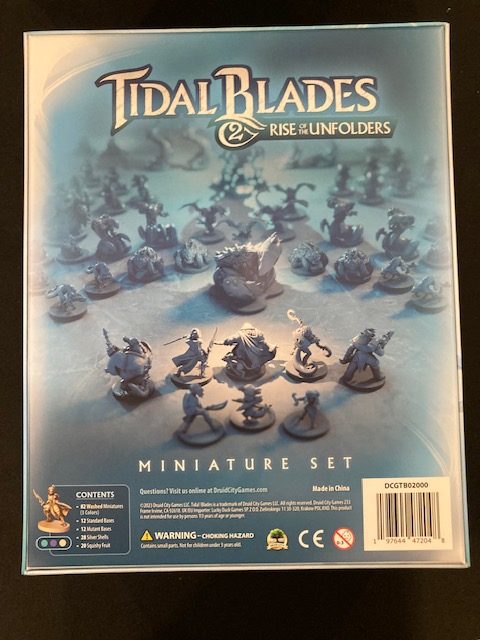
I went all-in and got the base game (lower right), the stretch goals (upper), and the miniatures (lower left): See above.  This is the deluxe version with awesome miniatures!

IMG_7679

The most important thing to realize is that this is a standalone solo or cooperative campaign game!  I.e., you don’t need the previous game at all!!! 

IMG_0939

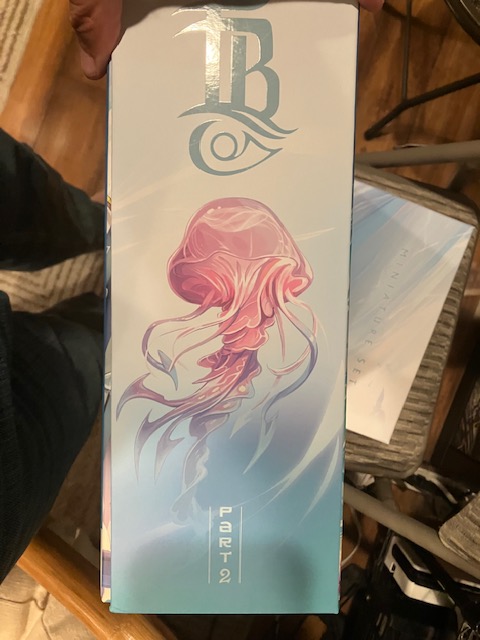
It’s a little confusing because the side of the box says “Part 2” (see above), but this is really just the next game in the same universe! Tidal Blades 2 continues with the ideas of the original Tidal Blades (which was NOT cooperative) but in a solo and cooperative game!

IMG_7704

So, in some sense, this is still a skirmish game, as players play cooperatively against monsters in the game.  Honestly, this game really gives me a Gloomhaven (see review of Jaws of The Lion here) or Batman: Gotham City Chronicles (solo or cooperative mode: see our review here) vibe! Players move around on a map in a book and fight monsters!  You’ll see what I mean more below.

Let’s take a closer look!

Unboxing the Miniatures

IMG_7678

As much as you really want to see what’s in the main box, I gotta show you the miniatures first.  They are fantastic!

IMG_7680

The minis are washed, they are tri-color,  and they have 2 sets of bases!  These are some of the nicest miniatures I have seen!

IMG_7690

The top part of the box comes with the monsters you fight: they are all notated on a sheet (and, eben better, are labelled where they are in the box!!!) at the top of the box.

IMG_7686

Wow!  The monsters are all bluish and really great! See above!  Let’s take a look at a few!

IMG_7687

IMG_7688

IMG_7689

These are pretty awesome!  Below the tray with the monsters are the Heroes and Boss Monsters!

IMG_7683

The Heroes are light brownish, and the monsters are very purple: see below.

IMG_7685

Let’s take a closer look at some Heroes (below):

IMG_7722

IMG_7721

The Boss Monsters are very purple! See below.

IMG_7695

These miniatures are just awesome!

IMG_7693

IMG_7694

The game also comes with plastic bases for the minis so you can tell them apart.  The normal bases denote the normal monsters, and the sparkly bases denote the “mutant” monster (like the Elite monsters in Gloomhaven).  The “mutants” are just the tougher version of the monsters!

We also have really nice plastic Fruit and shells (replacing the cardboard from the base game).

IMG_7828

See above as the colored hit point tracks match the colors of the base?  And the “sparkly” yellow one is the mutant!

IMG_7807

These bases really make it easier to tell monsters apart so you can track the hit points.

IMG_7880

Overall, the colors and bases are well-thought out and make each entity stand out on the table. See above with some monsters, characters, and a boss monster all in the same frame! 

These minis are just fantastic.

Rulebook

IMG_7738

The rulebook is quite good.  But it has two major flaws.

IMG_7742

The rulebook completely fails the Chair Test!  See above as it flops over both edges being almost unusable!  This rulebook made a fundamental error by being the same size as the box!

IMG_7765

Much like Batman: Gotham City Chronicles, the solution is to use TWO chairs, and have the spine of the rulebook sit in between!  See above as we can keep the rulebook open and useful!  I do like that the fonts are big!  And the rulebook is full of good pictures!  It is easy to see the rules on the chair next to me … once there are TWO chairs!

IMG_7741

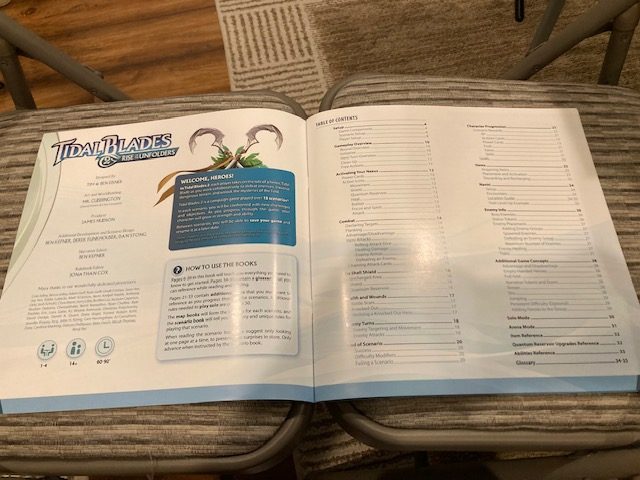
The rulebook has a Table of Contents that make it easy to look stuff up! Nice!

IMG_7770

The components pages are great, with every component having a picture and being well-labelled!

IMG_7750

The set-up is nice (it’s over three pages), but some of the set-up is deferred to the campaign book. See above.

In general, I thought this rulebook was great.   There’s a nice glossary in the back (ya), but no index.  I’ll forgive the lack of index because the glossary and Table of Contents were great.

My other major complaint (besides the form factor) was that the combat wasn’t quite as well specified as I want.  We’ll discuss that below.

Otherwise, great rulebook!

Unboxing the Base Game 

IMG_7676

This base box (and the minis box) and both pretty big!  My friends lifted the main box and were surprised how heavy it was! What’s in this gargantuan box?

IMG_7707

See how tall the box is too (relative to a can of Coke)!

IMG_7709

If you want, you can use the Foreteller app to read the “plot” as you go: this is a campaign game where a story unfolds and you may want to get some professionals reading it aloud.  I didn’t get the Forteller narration … and it was just fine without it (but it does have the option: sold separately).

IMG_7755

IMG_7762

There’s a LOT of stuff when you unbox (see above); we’ll go through the components as we discuss gameplay.

Gameplay

IMG_7711

Each player (1-4 players) chooses a Tidal Blade warrior to play. See the six options above and below.

IMG_7718

Each player gets a sheet with their character: see the six above and one (closer, below).

IMG_7717

Each character sheet is for recording stuff as your character levels up during the campaign. Tidal Blades 2: Rise of the Unfolders is campaign game! Characters will be leveling up; you will be making decisions about how to do that! This sheet will become incredibly marked up as you play…

IMG_7926

See above as Caiman has experienced a lot and marked up his character sheet!

IMG_7895

On the back of your character sheet are “tracks” where you will make choices about how you use experience points and other forms of up-levelling.   To be clear: each character is different! They have a different sheet with different cards and powers that can be activated!

IMG_7776

But, what really distinguishes the characters are the combat decks: see above!!!  Each player has a different Persistent Power (see above) when they start, as well as a different deck!!!  (Well, some cards are in common, but generally the decks are different!!)   These decks will be augmented, culled, and clogged as you play!  To be clear, Tidal Blades 2 is not a deck-building game per se (as that implies you are dynamically changing the deck as you play), it’s what we called a deck-advancement game.  We made this distinction back in our review of Adventure Tactics: See that review here for more discussion of the difference.    Suffice to say, your combat deck only changes/updates  at the end/beginning of each chapter of the campaign.

IMG_7877

What’s even cooler is that when you use of the cards during play, you activate either a row or a column on your board!  What this means, of course, is that you piggy-back on our previous turn! For example, if we just played Careful Strike to the board (top middle), we are allowed to activate ALL the actions in either the middle column or the top row!  Some actions give you shells (armor), some actions allow melee strike (swords), some actions give you resources (yellow/pink), some actions give you movement, and so one!

IMG_7892

As your character takes excessive damage throughout the game,  you can take WOUNDS (see bottom right) which clog your board!  Now, if activate the last row or column, you can’t use anything from that last space!

IMG_7889

This mechanism of playing a card to a row is central to the game!  What card you choose dictates your initiative (Stand Fast! gives me +1 initiative), your current turn, and what actions you might want to play on future turns!  And it’s really fun, because you feel like you have a lot of choices:

IMG_7835
1) Which card do I play?  It affects my current turn and initiative!
2) Where do I place my card?  It affects which “core” symbols I block!
3) Which row or column do I activate?  What previous cards do I want to leverage?
4) Do I want to finish a row with 3 cards?  I may clear it, but I get a very powerful one turn!
Each turn is just rife of choice!

IMG_7827

Each character also has spirit, focus, and some “shells” which can serve as armor or activate other abilities!  Armor in the game is handled by putting shells from your uncharged area into your blocking area!  So, if you want to play defensive for a round, you can choose the shells action! Yet another type of choice: defensive or offensive!

IMG_7965

Players move around a map of hexes, fighting creatures! (Sound familiar? Gloomhaven, I am looking at you…)  See above.

IMG_7733

The map books remind me a little of Gloomhaven: Jaws of the Lion, as you just set-up the board from a book of maps and go!  This map book was the key innovation in Gloomhaven: Jaws of the Lion. What’s cool, is that Tidal Blades 2 furthers that innovation!

IMG_6063
The storybook is the play area! Set-up is easy! Just turn to that page!

Players move around the map, but the stupid spiral binding gets in the way of the map in Jaws of the Lion!  See above.

IMG_7798

What Tidal Blades 2 does is very clever! Rather than just one map book, Tidal Blades 2 has two map books (actually 3), but each book is rotated so that the spiral bindings are on the outside!  Instead, the middles just touch and make a contiguous surface!  See above!  The middle of the board, where a lot of action is, in untainted by the spiral bindings!  It looks more like a contiguous surface!

IMG_7982

It’s really easy to set-up each chapter of the campaign!  Just turn the book to the proper pages!

IMG_7880

Combats are decided by dice: every SWORD you generate from your cards gives you a die! Red symbols are a straight-up hit, blue CAN be a hit if you have advantage (if your compatriots are flanking), and yellow focus CAN be a hit … if you spend a focus point!  And that decides how much damage you do!

IMG_7883

Monster combats are similar: all monsters perform the actions of their current card: see above as the mudcrabs move 2 (to the closest character) and then just do 2 straight damage! (This is modified a little by a damage die).

IMG_7946

There’s all sorts of monsters with all sorts of abilities! Some poison you! (See above)

IMG_7828

Each monster is tracked by a hit point track (see above) with the bases differentiating them.  The purple die (lower left) modifies every monster attack!

IMG_7977

There’s a lot more to this game, but that’s the “flavor” of the game!

Campaign

IMG_7727

Let’s be 100% clear: this is a campaign game!  It last about 18 chapters, and each game is about 2 to 2.5 hours (including set-up and tear-down: a lot of your time will be set-up and tear-down).

IMG_7830

Each chapter describes in great detail which maps you need, which monsters you fight, and what the set-up is!  See the first chapter above! (Minor spoilers above).

IMG_7932

There is a story unfolding (pun not intended) about the folds of time.  Each chapter begins with some text describing the story (picture blurred on purpose above).

IMG_7898

After a few chapters, there will be Interludes which give you a chance to level up.  To be clear, there is SOME levelling-up after most chapters, but the Interludes offer significant levelling-up!

IMG_7900

At these Interludes, Players choose where to go to “spend” their resources: the market? The floating gardens? It depends how you want to level-up your character. Cull cards? Add Items?  Add skills? Whatever you want!

IMG_7698

Although this is a campaign, the Stretch Goals pack (see above) comes with 5 one-shot scenarios.

IMG_7724

Since this is a campaign, and you have to mark up your sheet, I went ahead and made a copy of all the character sheets so I don’t have to sully the originals.  There are enough sheets in there that you “probably” don’t have to do this, but I prefer not to mark up the originals if possible.

Solo Play

IMG_7705

So, Tidal Blades 2: Rise of the Unfolders has two solo modes! (Congratulations for following Saunders’ Law!)  The simpler of the two solo modes is to just play two-handed: choose two characters and operate them as-if it were a 2-Player game.  This is the route I chose. And so should you!!

If you REALLY REALLY REALLY want a solo mode where you only play 1 character (but then still kinda have to operate some other pets/creatures anyways) with complicated exceptions, there is a second solo mode.  I usually eschew complicated solo modes because the exceptional rules are always SO HARD to keep track of!  Play two-handed: you’ll thank me for embracing the simpler mode … the simpler two-handed solo mode has NO exceptions to rules; you just play the game they way it was meant to be played.

IMG_7985

At the time of this writing, I am eight chapters into the campaign!  I have seen boss battles, several maps, several different ideas (jumping, running water, flying, etc), and some really great miniatures!    Every new chapter introduces new monsters and new ideas and keeps the game fresh!

IMG_7981

Playing two characters is juuuust about the right level of complexity.  Sometimes it’s a little overwhelming, since each character has their own deck with their own unique cards, but since the system is well-described and well-notated (seriously! The icons are VERY intuitive), it doesn’t make it too hard to context switch back and forth between the characters.

IMG_7976

One drawback is that there is a lot of maintenance for the solo player: set-up, run character 1, run character 2, operate the initiative track, operate the villains, lather-rinse-repeat, tear-down. This is really where the vibe felt like Batman: Gotham City Chronicles: there’s just a lot of work to keep the game going!  But, it’s kinda fun!  Everything is so bright and well-notated! The monsters are well-tracked (with the bases and colored hit point tracks), and the rules are pretty solid (so there’s not much second guessing, modulo one issue).

IMG_7858

I really like this solo mode: I hope to finish this campaign at some point during the year.  I am currently playing two campaigns: my solo campaign with 2 characters and a cooperative campaign with the other 4 characters (with my friends).

I fully expect this to make my Top 10 Solo Games of 2024: it’s that good!  There are just so many good choices!  Where do I go? What cards do I play?  How do I level-up my character? The choices keep me involved the whole time, even if there is quite a bit of maintenance per turn.

IMG_7705

The solo game took longer to play than perhaps it should: the box says 60-90 minutes but I frequently was at 2 hours; I also tend to like a little analysis paralysis when I play by myself.  There’s no one around, so I can try lots of things without fear of wasting someone else’s time.

Cooperative Play

IMG_7933

The cooperative experience is just in its infancy as we are only two games in, but my friends still keep wanting to play it!  “Let’s keep playing it!”  They really like it!

IMG_7943

Every player has agency on their turn; the game is just too complicated for an Alpha Player to come in and ruin a player’s experience … there are just too many choices for a single player: the Alpha Player will be too busy figuring out his own turn!! At the same time, there’s plenty of cooperation and players plan when to flank (see below), which enemies to engage, which actions to take, when to defend vs. attack!   This has a good blend of agency and cooperation.

IMG_7939

One of the things we DIDN’T like about the cooperative game Endeavor Deep Sea (from two weeks ago: see review here) was that the game didn’t “really” have any mechanisms for helping each other too much; players had a lot of multiplayer solitaire going on in Endeavor Deep Sea.  That’s not the case here!  Even you though you can choose to play multiplayer solitaire, you can also do quite a few things to directly help your compatriots!  You can spend shells to allow your friends to re-roll dice (if they run out of re-rolls)!  You can set-up flanking opportunities! You can use skills that help everyone within 2 spaces!  There’s a number of mechanisms where the sole purpose is to help your compatriots!  And that does increase the level of cooperation!  Even choosing the initiative order can be an act of cooperation!  And THANK GOODNESS there are no Communications Limitations in this game!  Just last week, we saw how the Communications Limitations ruined that cooperative game!  Luckily, you can talk all you want and work together in Tidal Blades 2!!

IMG_7940

The only real negative for the game is that sometimes it can take a while to get back around to your turn (as there is no simultaneous play): players must play in initiative order.  Like any game with lots o choices, sometimes a little Analysis Paralysis can slip in and slow down the game.  It’s still not too bad, because you can always be talking with your friends or figuring your own turn out while waiting for others.

IMG_7942

It’s easier to overlap turns in a cooperative game (like Tidal Blades 2) because you can ask your friends to leave the board “in a certain state” so you can preplan your turn!  In a competitive game, you always have to wait until the previous turns are over to re-assess the board every turn!  With a little cooperation, there can be much more overlap!  And we saw some of that overlap here in Tidal Blades 2!  It’s a minor point, but that overlap can make cooperative games (without simultaneous actions) move a little faster.

IMG_7941

Overall, this game was a lot of fun cooperatively.   It’s a good blend of agency and cooperation, and there are many ways players can help each other.  It’s fun to talk and plan with your friends!

Flanking and Advantage

IMG_7822

So, this is, at its core, a miniatures fighting game!  Which means you have rules for flanking and advantage!  If you flank  (players surround an enemy adjacently from opposite sides), you can get advantage (which allows you to turn the blue wave symbols on dice into hits)!  This is very cool, because it is a mechanism that encourages the players to cooperate and coordinate their attacks!  The best results come if you cooperate, flank an enemy and maybe get 50% more hits because you can gain advantage!

If you saw “Flanking and Advantage” and thought “What is this … 5th Edition Dungeons and Dragons?”  You are not the only one who thought that!!!  But, these ideas in this game really do help improve the cooperation: they encourage an easy way to increase the odds of hits! 

What I Liked

IMG_7691

The minis!  You can get the game and just use cardboard standees, but I would strongly recommend getting the miniatures! See above!! They are so well done, with the different bases, the beautiful sculpts, the different colors to highlight the different types!  I feel like they really made the game feel more thematic.  The minis add to the cost of the game (as you buy them separately), but I think in this case, they were worth it.

IMG_7876

Combat Mechanism! The combat mechanism of choosing a card, then choosing where to put it, then choosing a row or column to activate is so cool!   Your choices affect your current turn as well as future turns!! This mechanism is at the core of the game, and it makes you feel like you have choices at all times!

IMG_7828

Well-done Monsters! The monsters are pretty easy to run (modulo one problem, see below)!  The cards clearly specify what to do, the bases clearly denote which monster is which, and it’s pretty quick to set-up a game!  Heck, I spent more time putting plastic bases on monster minis than I did setting up the cards!  It really is easy and quick to SET-UP and RUN the monsters!

IMG_7880

Not too much Randomness!  I was very worried that there would be too much randomness with dice deciding combat … but here’s the thing, there’s not that much randomness!  There is usually at least one hit per die and sometimes your focus shows (which means you may have to spend focus if you want extra hits).  See the dice above! If you roll XXX dice, you will probably get about XXX hits!  If you have extra focus to spend, or some special abilities, or flanking (see below), you may need much better!  It’s like having a baseline of hits, and you choose (by having focus, or flanking) if you need to do better!  I really like this system!   I usually dislike the randomness of dice, but how it’s done here works for me!

IMG_7918

Easy-to-Read! The components are well-labelled, bright, and have very easy-to-discern icons!  This game is very intuitive and easy to read!

IMG_7834

The Components!  The components (even if you don’t get the miniatures ) are fantastic!!  The dual-book system solves the spiral middle problem, the cards are linen finished, the dice are clear and beautiful, and the cardboard components are well-done … just overall the components are a joy!

IMG_7965

Cooperation and Agency!  The game has many many ways to encourage cooperation, but still allow each character to have their own agency.   The card choice mechanism is very intense and full of choice; players are allowed to coordinate if they like (there are no silly communication limits)!!  Players must decide who goes after what!   Players must decide if it makes sense to flank!  But, you can’t really Alpha Player the game because each deck is so different, and frankly, each character is so involved (in a good way) to run!  Players will have intense agency on their turn to operate their character, while still having to work together to come up with a plan!  And that flanking mechanism I think really encourages finer cooperation: it’s so good to gain advantage, you just need to!

IMG_7870

Loot 2.0!  In some ways, Tidal Blades 2 feels like it should be called Gloomhaven 2.0.   One of the things we house ruled in Gloomhaven was the Loot Rule (see discussion here: Top Seven House Rule for Cooperative Games).  Basically, stopping to pick up  loot  takes you out of the flow as you have to stop and use actual resources to do that.  The nice thing in Tidal Blades 2 is that you can a free action every turn to “interact” with one item!  So, maybe you can’t pick up three pieces of fruit or five rewards, but you can move by something and pick it up without needing to spend one of your precious actions.  Granted, you may still have to spend movement, but usually a reward (when you kill an enemy) comes out right next to you, and you just pick it up!  We enjoyed this free interaction SO MUCH more than Loot in Gloomhaven!

What I Didn’t Like

IMG_7978

Wait, What Am I Unfolding?  I love story in my games (it’s why I like Astro Knights: Eternity better than the original … it has a compelling story!!), but the story and the writing here feels … forced and a little turgid.   And I like story!   But it felt like Tidal Blades 2 were trying to hard to have their own “surfer-techno” lingo, and it just didn’t work for me.   I tended to just skim over the exposition and head straight into the scenarios.

IMG_7767

Enemy Movement:  As easy as the monsters are to set-up and operate, the AI for the monsters movement is a little weak.  There’s some nonsense about “clockwise heading north” in the case of ties, but the description in the text and the picture don’t match (for me anyways).   In the end, the final rule for specifying things is done using “Fastest Initiative”: the character with the fastest initiative is the tie-breaker … that tended to be my goto rule!  Many times, that was the tie-breaker (when it was really unclear) for us because it just make things easier.  Otherwise, the enemy movement phase becomes an overwrought “look at all possibilities”, which isn’t fun.  Gloomhaven did a better job at specifying the enemy AI, but at the cost of more rules.

The AI basically works, but if you focus too much on it, the game can become overwrought.  I worry that zealots for rules will make playing this less fun as you spend the entire game getting the AI rules “just right”.  And that’s fine if that’s what you want, but I think most people won’t love that.  Just play the game; it’s good!

Bases didn’t Work? Some of the mutant bases didn’t quite work: the miniature just kind of “slipped” out the base: see the video above.  It wasn’t all the mutant bases, and most of them worked, but it was weird that some of them didn’t work!

Reactions

IMG_7942

Rich: This is probably a Top Ten Game of the year, both solo and cooperatively! I am keeping my solo campaign alive as I still venture cooperatively with my friends!  There is just so much to like!  This feels like the next evolution of Gloomhaven!  This is a 9.5/10 for me. I just wish the AI was better and the story was better: that’s what keeps it from a 10/10.
Sara: I really liked it! Let’s keep on playing it!  It’s probably a 7 for me!
Andrew: Ya! Let’s keep playing it! A 6.5 or 7 for me!
Teresa: I loved the minis and how the game worked, 7 or 8 for me! It was like a better Gloomhaven, and not nearly as dark!

Conclusion

IMG_7945

Tidal Blades 2: Rise of the Unfolders is a fantastic game!  I still am not quite sure what we are unfolding (I think we are unfolding space and time), but there are so many things to love in this campaign miniatures skirmish game!   The components are first-class, the miniatures are stellar, the cards are easy-to-read and intuitive, the combat system has so many great choices, the leveling up is fun, and the campaign is really interesting! In some ways, Tidal Blades 2 is the next evolution of Gloomhaven as Tidal Blades 2  evolves the map book ideas, the Loot rules, and the combat with the row/column mechanism!

IMG_7890

The card “activate column/row” mechanism works so well, that I think it elevates the game significantly.  It’s such a unique mechanism and makes the player feel like they can do so much! I expect to see this mechanism in upcoming games because it just works so well.

IMG_7923

This is a 9.5/10 for me, with my group rating in highly with 7s and 8s as well. This will make our Top 10 Solo Games of 2024 and the Top 10 Cooperative Games of 2024!  

Project PEGASUS: A Campaign for Marvel United

IMG_7430

The Project PEGASUS series was one of my favorite comic series when I was a kid. It took place in Marvel Two-In-One Issues 42, 43, and 53-58 back in 1978 and 1979. There are several reasons I liked this story: it featured the Thing and a really interesting cast of characters, including Quasar and Man-Thing! Plus, it’s one of the few times you see the art of John Byrne and George Perez together.

IMG_7404

Once Season 3 of Marvel United arrived, I saw that Project PEGASUS was indeed a Location from the Multiverse base set: see above (we reviewed the base Multiverse set here)!

IMG_6665

We also got a chance to play some of the campaigns that came from the Marvel United Campaign Decks!   See last week as we reviewed some of these experiences!

IMG_6672

See all the great series of Marvel Comics!  But where’s the campaign for Project PEGASUS?

Never mind, I’ll do it myself.

The Road To Development

IMG_7386

Over the past month, I have read and re-read the Project PEGASUS series (a burden of joy) to get a sense of what its campaign might look like.  See above as I have taken out most of the content I need!

IMG_7368

After coming up with a general outline of what the Villains, Heroes, and Games should be, I started to put something together!  See above for written notes on the first draft of this campaign.

IMG_7388

I’ve have also had some play testing from my friends, as well as many many many solo games (with 2, 3, and 4 Heroes).

In the end, I am very proud of the Campaign I came up with: it follows the story of Project PEGASUS pretty well and adds some new ideas to Marvel United.

IMG_7429

Over the last few weeks, the campaign has evolved quite a bit: I have some added some new Villains and Heroes for the final cut. 

IMG_7406

Some of the ideas in the Project PEGASUS campaign are a little outside the box, because even though Season 3 made this all possible, I will still missing some pieces (Heroes/Villains/etc) to make the campaign complete.  So, I had to improvise using what I had. 

I am very proud of what I did for Games 1 and 5, and especially Game 2.  But be aware that those games are a little different.

What Do I Need?

IMG_7017

Like all of the campaigns, The Project PEGASUS campaign needs a lot of pieces stolen from all parts of Marvel United. See the complete list below.

• Base Marvel United
• Spider-Geddon Marvel United
• Multiverse Marvel United
• Season 1 Stretch Goals
• Season 3 Stretch Goals
• Fantastic Four
• World War Hulk
• Annihilation
• Civil War
• Enter The Spider-Verse
• War of Kings

Current State

IMG_7431

The current draft of the campaign is at version 1.0.1.  I fully expect there to be revisions made as me and others playtest it. 
UPDATE: We are now at 1.1.0: we had some explanation clean-up and a few balance adjustments to Game 1!
Oct 20th, 2024 UPDATE: Updated to 1.2.0: Added explanation of how to play solo, updated Game 2 with better descriptions and a rules fix/clarification.

Feel free to download the PDF below and give it a try!!!   If there is interest, I can try making the form factor more like cards (with Rules cards and Event cards), but right now the Events are presented alongside the Games of interest in the PDF document below.

 If you have any feedback (too easy, too hard, spelling problems, unclear rules), please email us at returnfromsubroutine @ gmail.com

We’d love to hear from you!  How did it go?


Campaign Decks for Marvel United: How Much Story Do They Add?

IMG_6665

The Campaign Decks were part of the Multiverse Marvel United Absorption Expansion Explosion (where we received so much new context for Marvel United)! !

IMG_7013

The Campaign Decks give you just that: campaigns you can play through using the Marvel United system.

Let’s take a look!

Unboxing and Gameplay

IMG_6666

This is a surprisingly small box of cards: see Coke Can above for scale.

IMG_6667

The game comes with a very small pamphlet (sigh, I am not a fan of pamphlets) and 114 cards for 8 campaigns.

IMG_6672

Each campaign is 8 to 23 cards each, with Age of Ultron and Maximum Carnage being 8 cards, X-Cutioner’s Song and World War Hulk being 13 cards,  War Of Kings and Dark Phoenix Saga being 16 cards,  Avengers vs X-Men being 17 cards, and The Age of Apocalypse being a whopping 23 cards!

IMG_7015

Each campaign has two types of cards: Campaign Set-Up and Rule cards (top cards: each game in a campaign is defined by one of these) and Campaign Event cards (bottom cards: which are brought out during certain points of the campaign).

IMG_6673

The front of the Campaign Set-Up and Rules card define the parameters of each encounter: the Villain you will fight (Emma Frost above), the Heroes you can operate (Prof. X, Storm, Wolverine, Colossus above), and special set-up or rules (split the start-up, must start with HANGAR BAY, etc.). See above.

IMG_7014

The back side of the Campaign Set-Up and Rules defines special rules for that scenario, as well as  triggers to bring out Event cards: see above.  Warning: minor spoiler below!!

IMG_6868

Events are related to the scenario you are fighting: see as Event 01 brings some rules into play once you rescue Kitty Pride.  Many times, Events just add Heroes to your roster: this is important, as it gives you more choices of Heroes to play when you fight (and some Heroes are better in certain scenarios).

Basically, these cards control the progression of games.

IMG_6668

Generally, you need almost all of the Marvel United content to play these Campaigns.  The back of the pamphlet tells you ALL the base games/expansions you need to play through!

IMG_7017

See how The Dark Phoenix Saga, Age of Ultron, and Maximum Carnage all require a whole bunch of expansions! And a very disparate set of expansion as well!

IMG_6669

These expansion all look really cool … but how do they play?

Campaign Flavors

Not all campaigns are created alike.

IMG_6836

The World War Hulk campaign requires players to play in the one-vs-many mode known as Super Villain Mode in the game: this is definitely not solo or full cooperative!

IMG_6832

The Maximum Carnage campaign requires the players to do The Carnage Challenge (at least for games 2 and 3).

IMG_6835

The War of Kings requires team vs. team mode, at least for the first game, then the game goes back to being solo and/or cooperative for games 2, 3, and 4.

IMG_6837

The Avengers vs X-Men is mostly Super Villain Mode (one-vs.-many), and game 1 is a special PVP mode: Clash of Heroes.

IMG_6841

The rest of the decks (Age of Apocalypse, Age of Ultron, X-Cutioner’s Song, and Dark Phoenix Saga) can all be played solo or cooperatively.

We’ll only be looking at those decks you can play solo or cooperatively today.  Over about 2 weeks, we were able to get through a few campaigns.  Let’s take a look!

Campaigns and Spoilers?

IMG_6888

So, to talk about the campaigns, we have to talk about some of the stuff that happens.  However, that could mean spoilers.  We have done two full playthroughs in this review: decide if you want to read them or just jump ahead to the Conclusion!

The first campaign is the Age of Ultron story.  There are some very minor spoilers in this section (just below), but if you want to go in the game without knowing anything, skip to the Conclusion!

The second campaign is the Dark Phoenix Saga. There are some pretty significant spoilers in that playthrough, both in terms of reveals and stories!   If you know X-Men #131-137, the story won’t have have any spoilers, but some of the events/happenings may still be spoilers.  Since this playthrough has Major Spoilers, we’ve moved this section ALL THE WAY TO THE END to the Appendix section.  Feel free to read it if you want more of a feel what the Campaigns look like, and you don’t care about Major Spoilers

You have been warned. 

Age Of Ultron Campaign: Minor Spoilers Ahead

IMG_6677

The Age Of Ultron campaign is 3 to 4 games long (depending on how well you do). This is probably the best campaign to start with.  (There a few minor spoiler ahead: skip ahead to the Conclusion if you want to avoid any spoilers).

IMG_6680

Basically, you fight Ultron a LOT, and he gets stronger and stronger as you play!

IMG_6681

Each game will usually have a different set of Heroes you can play: I started the campaign with Wolverine and Iron Man, but was told (by the Campaign Set-Up and Rules card) that I had to use some different Heroes for Game 2.  I liked that I had to change Heroes (it kept the game interesting), as I had to try to pick a good set of Heroes to play together.

IMG_6700

Winning or losing a game usually gets you an event: so far, many good events I see add a new Hero to the Campaign Roster (see above as Spider-Man joins the roster as a new Hero I can play!)

IMG_6697

My second game used Emma Frost and Black Widow together.  Wow, were they good together!  Black Widow‘s predictive power made a huge difference!  They took out Ultron!

IMG_6704

Finally, I used Captain America and Iron Man for my Game 3!  They (barely) kept Ultron under control …

IMG_6710

Basically, by (barely) defeating Ultron in game 3, I was able to avoid a final Game 4 (which gives a few more chances to defeat Ultron).

There wasn’t a lot of story per se in this campaign, as my Heroes were just doing the best they could in each Game.  It was, however, very thematic to have Ultron get better and better and better in each game! Really, he was quite tough by the time Cap and Iron Man took him on. I probably should have lost (and had to play Game 4).

IMG_6709

It was fun to play the Age of Ultron campaign, Ultron had an interesting progression, but there really wasn’t any story. 

Conclusion

IMG_6840

In the end, the Campaign Decks reminded me a lot of Set A Watch: Doomed Run (see our review here).   Why is that?  Each particular game of Set A Watch: Doomed Run is thematic, but the story tying them together is very very loose: it’s so loose you can drop players in and out of the campaign as you play!  And I think that’s true here as well! Each Campaign game is thematic and fun, but it doesn’t really twist and turn very much; each Campaign is fairly linear.  If you were looking for a thematic story with lots twists and turns to entertain you, the Campaign Decks aren’t really that.

IMG_7017

There’s a few “twists” I saw, but in general, I think the purpose of the Marvel United Campaign Decks is an excuse to relive your favorite comics and an excuse to play through the ridiculous amount of Marvel United content.  There’s a lot of theme, especially if you know the stories involved, but the Campaign Decks don’t present a deep, dark, complex adventures: they are just an excuse to play Marvel United and relive your favorite comics!  As long as you know what the Campaign Decks are, they might be right up your alley.

Just be aware HOW MUCH Marvel United Content you must have in order to play these!

Appendix: Dark Phoenix Saga Campaign: Major Spoilers!!

IMG_7015

NOTE: There are MAJOR SPOILERS ahead!  Skip this Appendix if you don’t want any spoilers!!

The Dark Phoenix Saga campaign is a little longer at five games.  Honestly, it will probably be more: you will almost certainly lose a few games, because the game gets hard! I lost two games along the way, but was able to come to a successful conclusion (so six games total).

IMG_6845

I was really looking forward the Dark Phoenix Saga: when Jean Grey fights for her life in X-Men #137, it was a very powerful and moving story. Could the Campaign capture some of this?

IMG_6844

Well, the Dark Phoenix Saga starts Game 1 with Emma Frost and Kitty Pryde (ShadowCat): see set-up above! This is reminiscent of issue X-Men #131 where Kitty Pryde wanders the Hellfire club trying save her compatriots … see below.

kityp

IMG_6848

In this Game 1, I had Wolverine and Professor X take on Emma Frost.  Remember, you have choices of which heroes you can use!  Part of the fun of the campaign is trying to find the best heroes…

IMG_6851

Well, it turns out I played my first game so very wrong (I missed some of the threat effects and special rules about accelerating the Master Plans, and didn’t realize I was supposed to find Kitty), so I restarted halfway through.  

IMG_6868

Wolverine and Professor X were able to find Kitty and take out Emma Frost.

IMG_6869

This led to Game 2:

IMG_6872

IMG_6875

Game 2’s villain is Sebastian Shaw: a Hellfire club member!  We are firmly in issues #131-#137 of the X-Men now!  It feels like we are in X-Men #132 fighting Shaw!

xmen132

IMG_6882

We were required to play Jean Grey and Cyclops: definitely very thematic!

IMG_6883

And why isn’t Jean Grey called Marvel Girl like in the comic … but I digress … I mean, her secret identify is her hero name?  No, she should be Marvel Girl (Jean Grey).

IMG_6887

Shaw was rough: I ran out of cards (losing the game) and had to flip Event 5.  To be fair, this loss feels very thematic, as Sebastian Shaw really trounced the X-Men in this particular series of comics!!

IMG_6890

Too late!  But, at least I had Nightcrawler on my Roster now …

IMG_6891

The next game up (Game 3) had us fight the villain Mastermind: he’s the evil creature trying to take over Jean Grey‘s mind!

IMG_6894

IMG_6893

We get to choose heroes in this Game!  If you look carefully at the Threats, you realize you want to try to keep the Heroes together (bad things happen to lone heroes).  Nightcrawler pretty much HAS to teleport every turn (the black text on his cards means you are forced to do that), so it would be easy to keep the Heroes together.  When the Heroes WOULD take damage, Kitty was able to phase and mitigate that!!  This was a great combination of Heroes for this game.  And it felt thematic: Kitty’s phasing kept them safe, and Nightcrawler’s teleportation kept them together.

IMG_6899  

This was thematic from the character’s perspective.  The story not as much (I should have used Wolverine: Wolverine fights alone!)

IMG_6904

Then Jean Grey becomes Dark Phoenix.  Oof!!!!  There’s some really thematic stuff that happens in this part of the game, but I don’t want to give away too much.

IMG_6905

Dark Phoenix was one of the hardest battles I have ever had.  

IMG_6906

I started with Kitty and Cyclops, but after losing to Dark Phoenix once,  I had to “remove Kitty” from play.  I could only keep playing as long as I had 4 Heroes in my Roster.

IMG_6917

See above as Dark Phoenix easily takes out Cyclops and Kitty.

IMG_6924

I get to try again: For my next trial against Dark Phoenix, I brought out Nightcrawler  (and you are required to keep Cyclops).

IMG_6927

I was able to eke out a win, but just barely.

IMG_6914

Dark Phoenix’s Master Plan cards are just rough!

IMG_6910

I fully expected to need 3 or more games to beat Dark Phoenix.  I mean, she’s Dark Phoenix.

IMG_6930

Even though the X-Men were able to defeat Dark Phoenix, … things happened while Jean Grey was Dark Phoenix. Like, she ate a sun and destroyed a world, so she must stand trial. 

darkphoenixsaga18

And Gladiator is the one to deal with her. 

IMG_6936

Jean Grey must fight, since she’s fighting for her own life.  The choice of Wolverine is important here: we know from playing Gladiator from the War Of Kings, it’s important to always have a full hand!  Since Wolverine has his healing factor, he is an exceptional character to play against Gladiator.

IMG_6953

In the end, Wolverine and Jean Grey were able to defeat Gladiator.  And win the campaign!

IMG_1884a

Although, technically, Jean Grey doesn’t survive … they don’t tell you that … see above …

IMG_6952

I know the Dark Phoenix story and wow, this felt incredibly thematic!   From how hard Dark Phoenix herself is, to some events in the deck, the Dark Phoenix Saga Campaign Deck was very thematic.  To be fair, the Campaign Deck didn’t “tell a story”, but it sure reminded me of one of my favorite X-Men stories of all time.