Review of The Captain Is Dead—Part II. Solo Rules

In Part I of my review of The Captain is Dead, I was frustrated with the solo player rules that came with the game.  As you recall, the rules that come with the game ask the solo player to operate 3-4 characters in the game.  I am sure, once you know this game, this might be a fine solo mode, but first time players or novices will be intimidated by that.

I have been playing the game pretty much non-stop since I got it (yes, it’s fun), but playing with my own variant of the solo rules.  I think I have a fairly robust set of rules for a solo player operating only 1 character.

IMG_3173

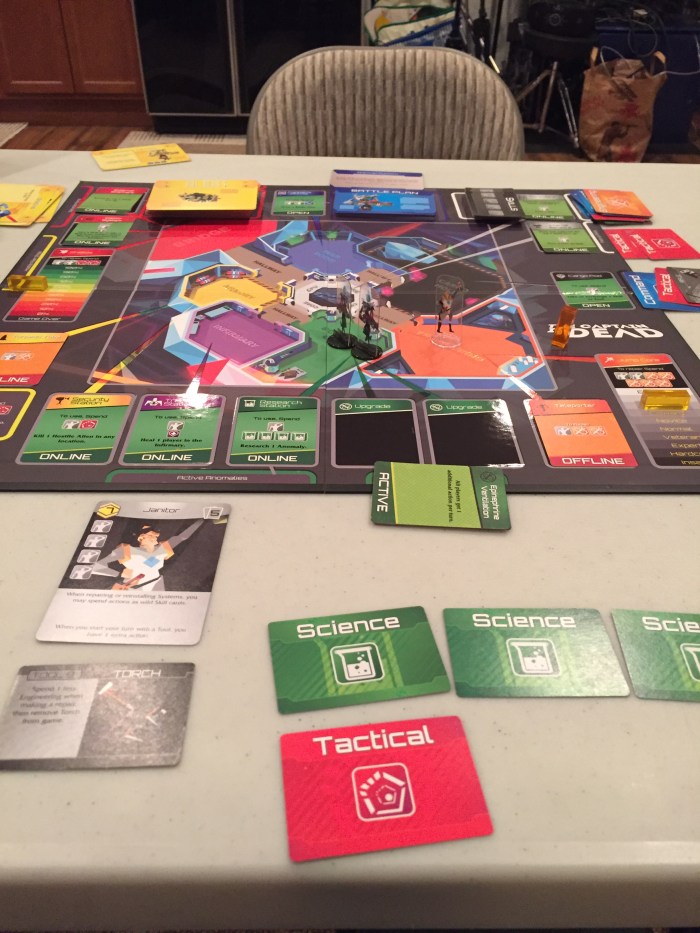
The Janitor Fights Alone!

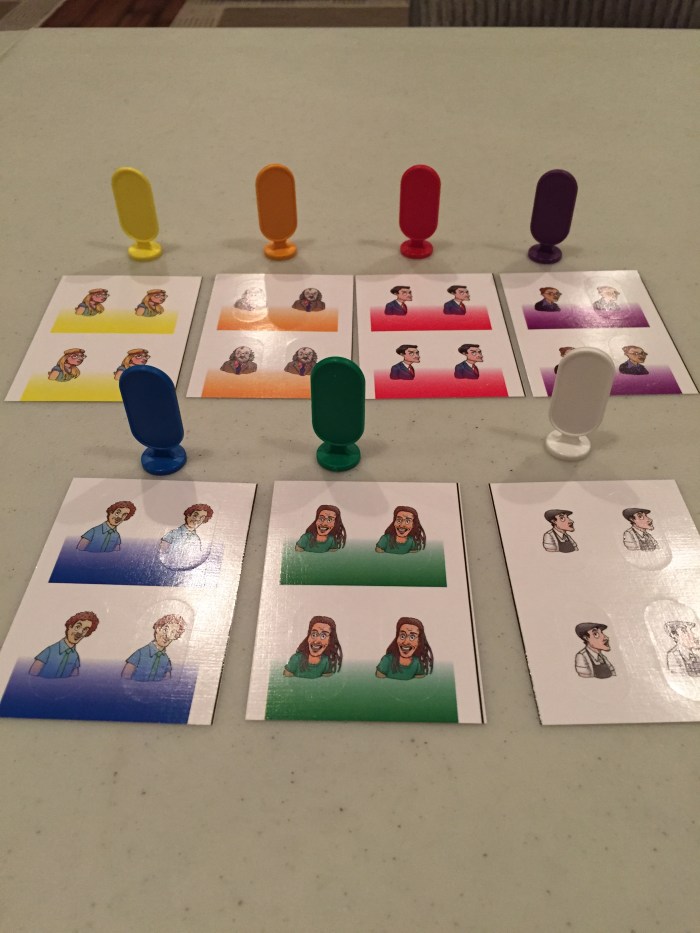
Solo Player Rules For Operating One Character: Choose a Character

First, you probably want to limit which characters you play.  Six characters don’t give ANY advantage to play, as their skills involve other players (or rules which you ignore):

Telepath, Science Officer , Diplomat, Cyborg, Ensign, Hologram: Don’t Play These in a SOLO Game!

The Cyborg looks great, but he can get stuck too easily.  All of the other characters special powers involve working with other characters.


These characters are okay, but not real great: playing them doesn’t give a lot of advantages:

Counselor, Medical Officer, Crewman:  Probably don’t want to play any of these characters, but you can if you want a challenge.


The four characters are pretty good to play: they do just enough to allow you to do a few interesting things, but aren’t great:

Weapons Officer, Tactical Officer, Soldier, Teleporter Chief: Pretty Good to Play, Not Great


Finally, these 5 characters work really well solo:

First Officer, Chief Engineer, Admiral, Janitor, Scholar: Great for Solo play!

I strongly recommend playing one of the last 5: they are fun to play, you use their abilities all the time, and they each offer a different “way” to play.  If this is your first time playing, play the Janitor: he can make up for cards he doesn’t have by spending an action.

Solo Player Rules For Operating One Character: Set-Up

  1. Up your hand limit by 2.   You won’t be able to get anything done otherwise.
  2. Instead of each character adding a Skill card to the Cargo Bay, just randomly choose 3 skill cards from the main deck and put them there.  Thus, your single character starts with 5 skills.
  3. Do set-up normal otherwise.

Solo Player Rules For Operating One Character: Play

The game plays normally, except: Whenever you draw Anomalies, follow the rules as if it were a 2-Player game.

And that’s it!

Summary

It really is easy: Pick one of the proper characters, up your hand-limit by 2, fill the cargo bay with 3 random skills, and follow the 2-player rules for anomalies. That’s it!

I have been playing this way for the past few days and really enjoying the game.  It’s not hard to play this game with a single character.  I hope this set of rules improves your experience with the game!  It certainly has mine: I have had a lot of fun playing as a solo player.

I have a bunch of people coming over tomorrow night to play in full cooperative mode with lots of players.  We’ll see how the game goes!

Review of The Captain is Dead — Part I. The Unboxing and First Impressions

IMG_3174

I remember when The Captain is Dead was on Kickstarter back in 2014! It was a cooperative board game in a space setting.  It was also a game that used the Games Crafter for fulfillment! Most Kickstarter games use China for fulfillment (as it’s soooo much cheaper), but here was a Kickstarter that was successful using a much lower threshold printing service! It looked cool! I wanted to pick it up! ………. and it was $50. Ooph. Don’t get me wrong: it looked cool, but $50 seemed a bit much for a game I didn’t know much about. I kept thinking I wanted a copy of this game … maybe I’d ask for it for Christmas …

Well, time came and went and I forgot about this game. In the meantime, apparently AEG picked up the game and had it printed! I picked it up fairly recently  for $39 from FunAgain! And it had with a much better aesthetic and much better pieces than the original!

Components

The components are pretty good.

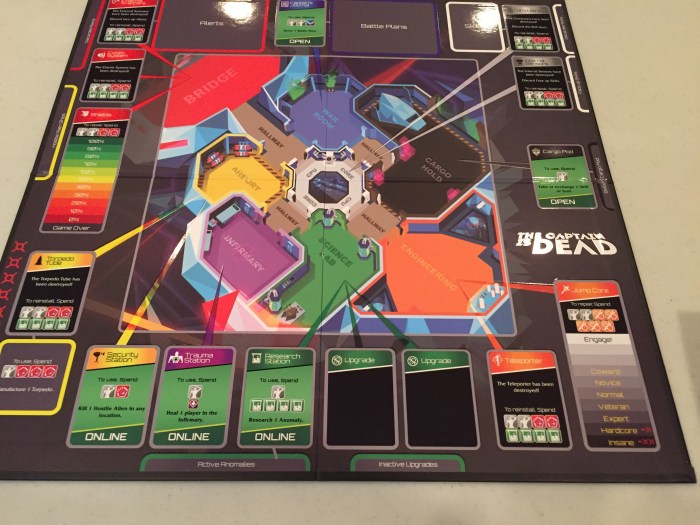
The cards look good, but they aren’t linen-coated.  The rulebook is fairly picture-heavy and looks good (but we’ll talk about the actual contents below).  The board looks really nice: a lot of the locations are shiny:

IMG_3168

It’s kind of hard to see from the picture, but certain spots look “shiny”, almost like they are stickers on the board.  I was worried that would be too distracting when I was playing, but it wasn’t.  It just looks shiny.

IMG_3171

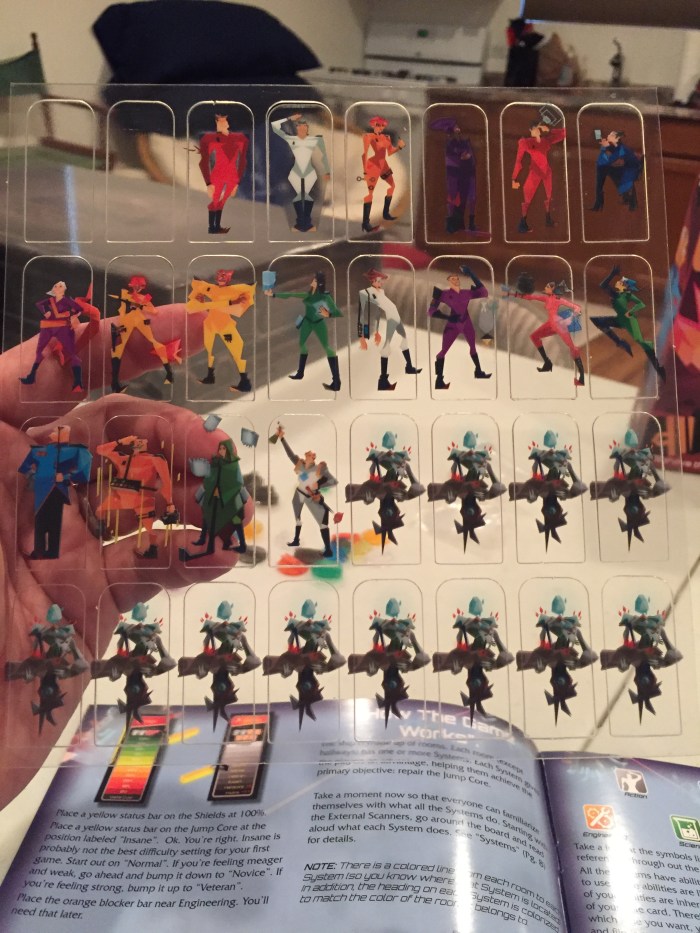
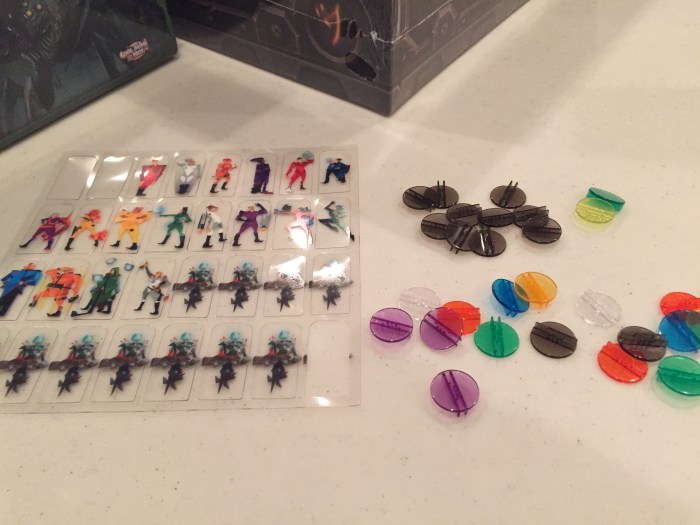
The markers are kind of interesting: they remind me of Shrinky-Dinks from when I was a kid! (Does anyone remember Shrinky Dinks?  They were clear plastic sheets you’d draw on.  The sheets would “cook” in the stove (seriously) and shrink and harden significantly!  But I digress…).

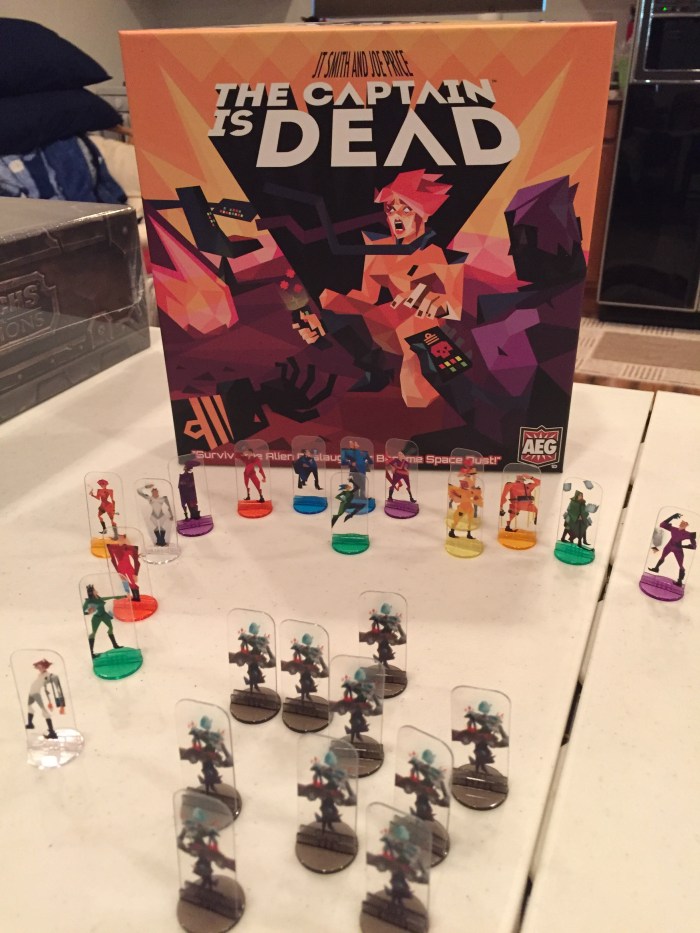
The components look really cool, but it’s a little hard to distinguish some of the characters.  All the aliens (the bottom 12 from the picture above) are easy to distinguish, but the characters that players use are somewhat hard to distinguish.  Part of it is the art style: it’s kinda cool, blocky style, but sometimes gets in the way.

I was slightly annoyed that I had to figure out which marker went with which base:

IMG_3172

There are no directions in the box for how to put together the markers!  You just have to intuit this out!  It wasn’t hard, but it was kind of annoying.  Who on earth would make markers so hard to put together?

IMG_3176

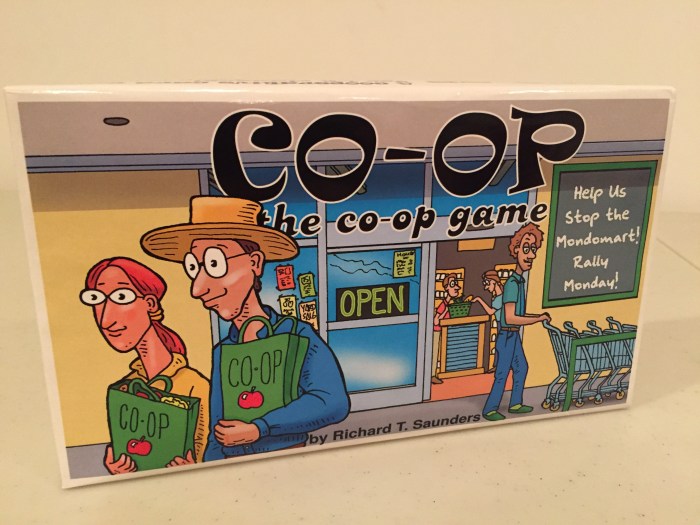
Oh.  Right. I did the same thing for CO-OP.  Curse you, irony!  Moving on …

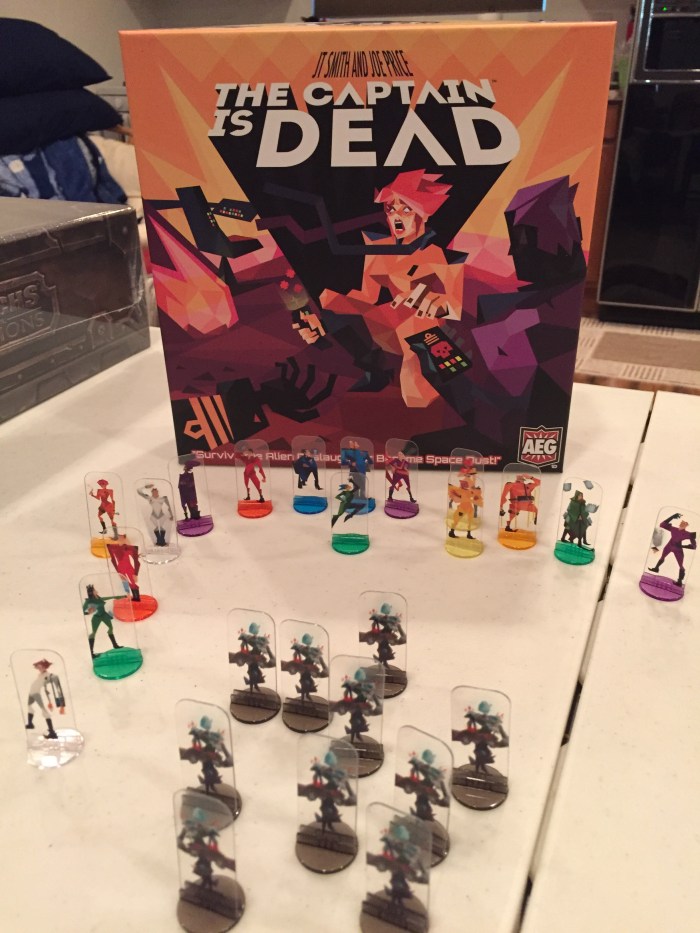
Once I got all the pieces together, I have to say, they look pretty cool!

IMG_3174(1)

They look very spacey and very thematic.  After being annoyed at punching everything out, I have to say, I like how this looks.

Star Trek: Let’s Not Get Sued!

The Captain is Dead is NOTHING like Star Trek, except for the billions and billions of similarities.  Seriously, one of the reasons I wanted to get this game is because it looks like you could kind of play the crew of the Enterprise: it’s a cooperative game in a Star Trek universe.  And it is Star Trek: you know it, I know it, we all know it. Shields? Transporters?  C’mon.

One gripe I have it with the color scheme.  In the game, you have different colored cards representing COMMAND (blue) and SCIENCE (green)and ENGINEERING (orange) and some other types (TACTICAL (red).)

IMG_3173

Does anyone else think there might have been some better colors to choose?  Ahem.

all3

Seriously, I feel like this is a major missed opportunity.  When I think of command, I think of Kirk’s gold uniform!  When I think of Engineering, I think of Scottie’s red uniform and Science/Spock in blue.  I know it’s a minor quibble, but it really could have evoked the theme a little bit more.  Of course, if you like Star Trek: The Next Generation, the colors are a little better:

sttng

This is a little closer: gold is ENGINEERING (good match), the bridge and TACTICAL is red (but COMMAND is still blue) and MEDICAL is green.

So, I guess the maker’s of The Captain Is Dead were ST:TNG fans more than the original series.

How Many Players?

IMG_3177

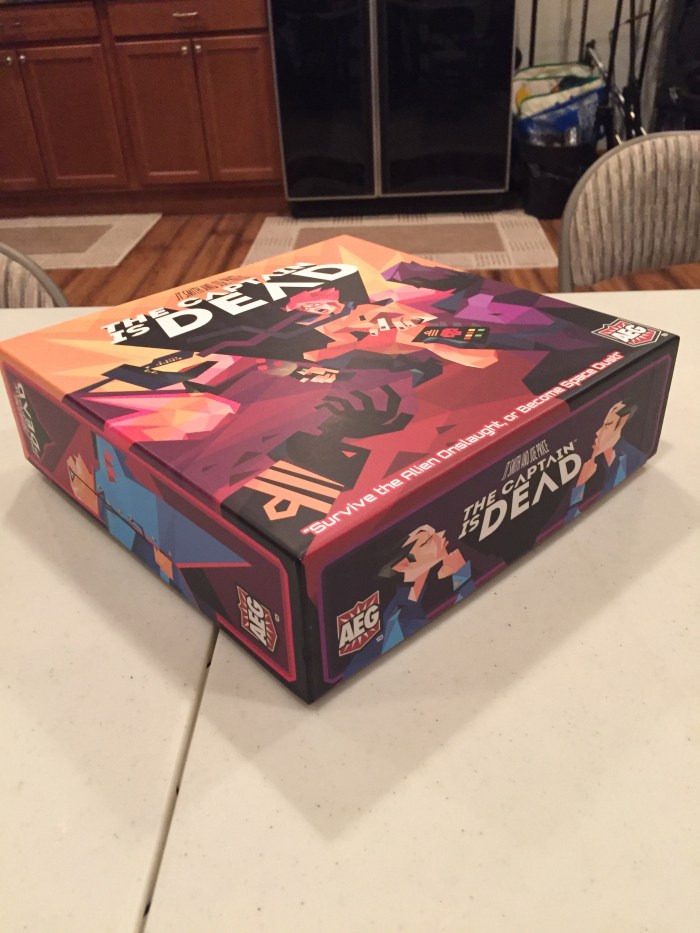
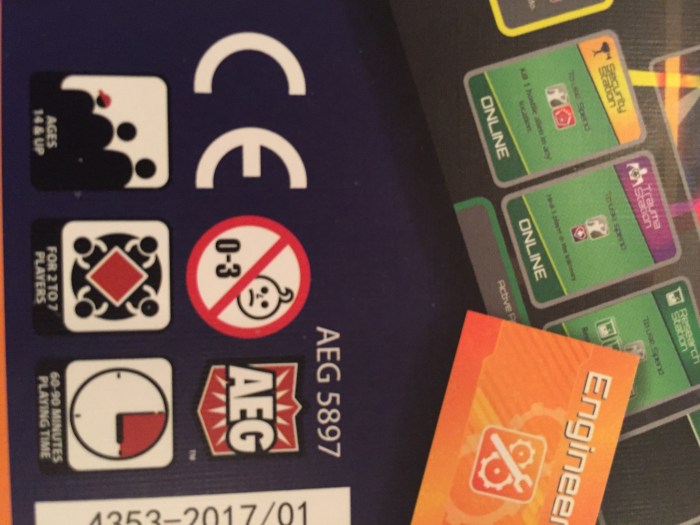
Um, how many players?  Can I play 1 player?  I looked on the box and in the front of the rulebook and had trouble finding any indication of player count.  It’s not obvious on the box.  But you gotta look hard:

IMG_3178

On the back of the box in little, teeny letters is the player count.   I think this is the ONLY place in the entire game where it lists the player count.   I think this really should have gone in the Rulebook, and  we start our battle with the rulebook.

Oh, the Rulebook!

The rules are inconsistent and have some extraneous sentences.  It tries to be funny (and I laughed), but I’d rather they were a little bit more coherent.   The way it explains “pick a character card and marker” is convoluted.  For a while, I thought they meant “choose one at random and then take more”.  The rules ramble for a paragraph when one sentence would do: pick a character card and take it’s appropriate standee.  That’s all they had to say.

They also list a lot of special abilities of location, but they don’t really give any more information than is on the card for that location.  I can understand being terse on the text of a card (where space is limited), but if there are any intricate details, the rulebook is the place to explain that away and it doesn’t.  For example: The Internal Sensors.  Um, how do the cards at the Internal Sensors refresh?  Am I allowed to take any card there?  Or just the last? Can I spend an action to refresh?  Do I have to wait until the last one is chosen and then they get automatically refreshed?  So many questions AND THIS IS IMPORTANT!  Getting these cards is critical to winning the game!  So, I just made a choice and moved forward.   I plan to consult the FAQ (I assume there is one somewhere) tonight.

The rulebook was enough to get me going.  I was able to get a game underway.  But I’ll be honest, I expected a much better rulebook.  This game has gone from Kickstarter to being picked up by AEG!  It’s had plenty of evolve and get better.  I still felt like I was reading the Kickstarter rules.

Solo Rules: What SHOULD I Do?

There is a section in the back that talks about how to play solo. (So, shouldn’t the player count on the back of the box been 1-7 instead of 2-7? But, I digress)  The rules say that you should play 3-4 characters as a solo player.  3-4?????!?!?!?!  I have never played this game before!  Each character has special powers, and I already have a lot of reading for all the locations in the game.  There is too much context switching (at least for a novice and first-time player) to run 3-4 characters effectively.

I’ll be honest, this SOLO mode feels really tacked on. So, I kind of made up my own rules just to get through a game.  I played one character, that’s right kids, one.  All I had to do to get this to work was (a) up the hand limit  (b) don’t do the first 5 “bad news” cards.   I basically made the game easier.  That’s it!  And I was able to get through a game and learn the rules.  Why couldn’t they have done this?  I feel like the SOLO mode was tacked on, and I really don’t think it would have taken much to make it so one player could play. I get “later on”, when you know the game playing 3-4 characters.  But, as an intro player, they needed some rules for a solo player working one character.  At this point, I need to issue a mandatory reminder of Saunders’ Law.

So, can my Janitor saved the ship?

IMG_3173

I thought it would be funny to have the Janitor play solo. Can the Janitor save the ship? It turns out, he’s a good character to play by himself.

Thoughts on Gameplay

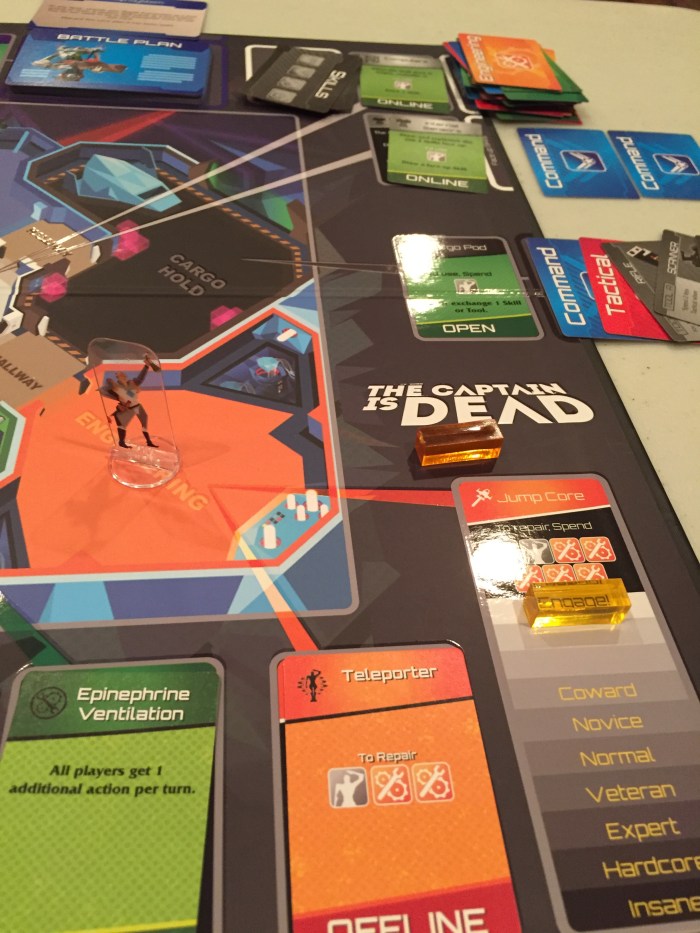
My lone Janitor saved the ship! He repaired the Warp Code (pardon me), the Jump Core with Windex and was able to save the ship!

IMG_3175(1)

I was very worried after the missteps (with the component punchout, the poor rulebook, and the poorly-done solo mode) that I had gone too far down the well.   I was a little cranky when I started the game.

But, you know what?  I had fun!  My Janitor cruised around the ship killing aliens, launching torpedoes, fixing the Jump Core, doing research to get the Epinephrine Ventilation, and getting some Battle Plans.  I tried to do a little bit of everything to get a sense of the game.

In the end, it was fun.  My first playthrough was a success and I had fun.  I think others will enjoy this.  Other people will have a much more positive experience than I did because they won’t have to suffer through the rulebook!  I will teach them!  (That’s a different torture). I really expected the game to be a little more refined and polished, especially after AEG picked it up, but it’s still fun.

We’ll see what happens in Season 2: The Wrath of Continuing!  Watch the skies for Part II of this review!


Part II: Review of Zephyr

IMG_3126


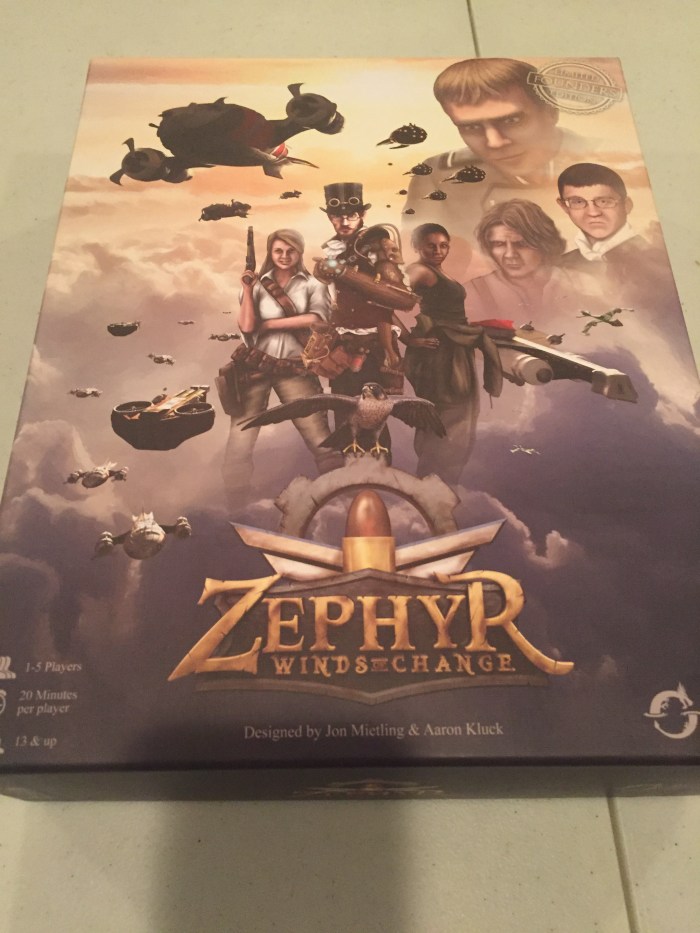
If you recall, I did a preliminary review of the cooperative steampunk game Zephy:Winds of Change about a month ago.   Since then, I’ve had a chance to play Zephyr a lot more, both with friends and by myself.  What do I think?

Building The Deck Of Your Ship!

So,  this is kind of a deckbuilding game!  You are building your ship by buying new systems with scrap (the currency of the game) and slowing adding these systems to your ship throughout the game.  But what that means is that you are adding new cards to your deck of actions.  On your turn, you draw cards and can perform some of those actions.  The more cards you have, the more options you have.  (A lame joke here is that you add cards to build the deck of your ship, so it’s a deckbuilding game!)

IMG_3131

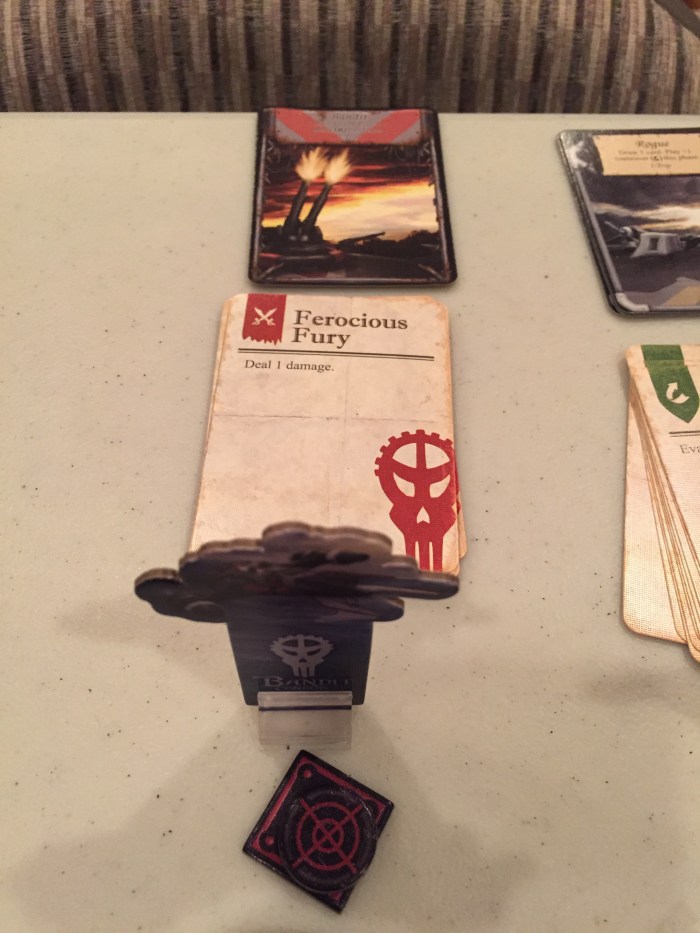
This game has a neat mechanic (no pun intended, as a lot of the characters in the game are mechanics) where the number of cards you can actually play is based on the number of crew you have (+1 for the implicit captain).  So, in the picture above, I can play three action cards: One for the imperial, one for the rogue, and one for the captain (implicit position).

This is further complicated by some constraints.  The first: you can only draw “a certain number of cards per turn”.  This depends on the ship you have (and usually, the number of upgraded systems you have).  Early in the game, you can only draw 2 or 3 cards.  Later, hopefully, you can draw a lot more.

The reason you want a lot of cards per turn is that each crew can only do certain things.  In the example above, the rogue can only do “evade” type actions, and the imperial can only do “attack” type actions. The captain, who know his ship, can do any type of action.

So,  that’s a twist on deckbuilding: only certain cards can be played by certain player types.  That’s new and interesting!

But, there is NO CULLING mechanism to get rid of weaker cards.  All you can really do is augment (add to) your action deck by buying new systems!  It appears that the only way to get rid of an action is to lose a battle, and (maybe) lose an action  card.  But it’s random!  So you have NO control over this.   After playing a few times, it’s not the end of the world that there is no culling mechanism.  But it feels like it should be there.

IMG_3127

Thoughts

In general, do I like this game?  Yes.  Is it a good game?  Yes.  Is it a very good game?  The components are very good and push it that direction.  Is it a great game? Probably not.

At the end of the day, it is a little too random to be a great game.  I roll for scrap, I roll for systems from a commander, I roll for rewards rolls, I roll for attack, I roll for critical hits.   So, I could be limping along because of bad rolls and my friend soars completely upgraded.   It’s mitigated by the fact that this is a cooperative game, but it’s still hard to sit back and watch your friends smear the enemies while you can barely do anything. I don’t feel like I can do a lot of planning because I just get what the dice give me.

I was also hoping for a little more exploration: the first few times just felt like attack-slogs, where every single turn was combat combat combat.   We started doing a lot more salvage runs, and that gave the game a lot more variety (the salvage runs draw cards from a deck).   It reminded me of the encounters in Arkham Horror a little: some great flavor text and some interesting and thematic situation.  Really!  The salvage deck kind of salvaged (yuk yuk yuk) the game for me by making it feel just a little bit more of an exploration game.

Don’t get me wrong, this is a fun game!  But it really is a lot about attacking and defending airships, while building an action deck.

I wish there was more exploring; I wish there was more planning for building your ship.  I think building your ship is the FUNNEST part of the game, and it feels just a little too random.

If you just want a fun “fly around a shoot bad guys together” game with amazing components, this really is a very good game.   The randomness may turn you off,  but if you accept that, this game can be a lot of fun.  (To be fair, this is MUCH LESS random than “Tales of Arabian Nights”)

I give it a 6.9 out of 10.   It would get a 7 if it were just a little less random.


Saunders’ Law: All Cooperative Games Should Have a Solo Mode

I have too many board games. Cough. If I see a board game that is cooperative, more times than not, I will just pick it up. My collection has ballooned because of this! And I was reminded (recently) how ridiculous I have become … a friend bought another friend over for games night at my house. He was so overwhelmed by all my games (some not even opened), he ended up filming a video panning over all my games. Okay, okay, I need to get some of them played.

So, recently, I have been on a quest to get more games played! And because my favorite type of game is cooperative, 9 times out ten, the game is a co-op. The best way to get my games played is to learn it first, then teach it to my friends! But I am BLOWN AWAY by how many cooperative games do NOT have a solo player mode for me to learn with! Really! Off the top of my head:

  • Sentinels of The Multiverse: Only play 3-5. What the Hey? I had to make my own solo rules. See end of article.
  • Battle for GreyPort: See previous review.
  • Time Stories

I don’t understand this! It should be easy to have a solo mode in a cooperative game! If NOTHING else, the solo rules should be “take 2 positions in the game and have the solo player play both positions” (or 3 or whatever). It’s not the best way: sometimes it will work (CO-OP solo mode explicitly has the solo player play 2 characters in the game), and sometimes it won’t (Sentinels of the Multiverse needs 3 characters for balance—there is so much going on, it’s too overwhelming to play 3 characters).

So, to all game designers of cooperative games, I henceforth issue this challenge:

Saunders’ Law: All cooperative board games should have a solo mode!

Why?

  1.  For Teaching Purposes! The best way to learn a game is to have someone teach it to you. If someone can’t teach it to you, then you may have to learn it from the rulebook (by yourself).  Game teachings almost always goes better when someone learns the game (by themselves),  then teaches everyone.Example: Recently, I taught my game group “Zephyr: Winds of Change” (as I pursue Part II of my review). The game has great solo rules, and I was able to learn the game enough first, then teach it to my group.With a solo mode, it is so much easier to learn the game. Then we can teach others.
  2.  For Replayability! Sometimes I can’t play with other people. Or sometimes I don’t want to play with other people. I am always on the lookout for games that work well in solo mode so I can play it. Most cooperative games can easily add a solo mode in and make the game that more attractive to consumers.I can’t tell you how many times I have played Atlantis Rising as a single player because it was really fun. Or Arkham Horror. Or Sentinels. Or CO-OP. Or Secrets of the Lost Tomb.
  3. It’s Usually Easy! This really only applies to truly cooperative games. Games where there are traitors, or semi-co-oops, this doesn’t make sense. But when a cooperative game is fully cooperative (where the players win or lose as a group), then there already is an engine for pitting “bad effects” against the players. Typically, it’s not much harder to add a solo mode, even if the solo player just plays those multiple positions by himself.
  4.  More people Will Buy it! This goes hand-in-hand with replayability. A game with a bigger player counts brings in more customers. As an example from my own world: Recently, Mansions of Madness 2nd Edition came out. I only picked it up because it had a solo mode (1-6 players). The original First Edition of the game DID NOT have a solo mode (2-5 players), which is one of the many reasons I didn’t buy the first edition.

To drive this home, I will note an experience we had with Time Stories  about 6 months ago. Time Stories is for 2-4 players: there is no solo mode.  Because the game is a “play-once story” with lots of plot that can be spoiled, you can’t just try it first.  So, we tried, as a group, to learn this game with 4 players.  We got bogged down in some of the rules because no one knew how to play.  We did get through it, but it would have gone much better if just one person had been able to play  it first.  My friend Josh and I were talking: we think Time Stories would really benefit from a tiny  deck (5? 8? cards) that demos most of the mechanics for a solo player.   Then, that one person can learn the mechanics, without spoiling the rest of the game, and teach others.  A solo mode is Time Stories would have gone a long way for our group.  Honestly, that game group’s opinion of Time Stories was sullied because of our “group-learn” experience.

I hope game designers will heed Saunders’ Law: I think it will make the hobby a better place.

Addendum: Solo Rules for Sentinels of The Multiverse (abbreviated)

Solo variant 1): Go play the iOS/Andriod App. I am not being flippant here: it really is a great way to play solo mode. The app takes care a lot of the fiddliness for you, so that playing 3 SuperHero characters (the minimum you can play with) isn’t too overwhelming.

Solo Variant 2): Take 2 characters to play with: the solo player operates two SuperHeroes. When the characters play, they each play twice: hero 1, hero 2, hero 1, hero 2. This “simulates” playing a 4-player game (with is fairly balanced), but with much less overhead–there’s only two characters to operate.

Solo Variant 3): Play 3 characters. This will work, and it’s pretty fun once you know the game, but it is still an awful lot of maintenance for 1 solo player. I like the game enough that I will play this way sometimes.

More and More Mutants on Kickstarter Lately!

Recently, there have been a slew of Kickstarters for cooperative board games that I (and hopefully you!) may interested in.  Weirdly, the ones I have been interested in are “mutations” of many games I have referred to in my blog over the last year …

1. Sentinels of Earth-Prime

https://www.kickstarter.com/projects/1780208966/sentinels-of-earth-prime?ref=user_menu

If you look at my blog about my top 5 games of all time, you’ll note Sentinels of The Multiverse occupies the number 2 spot!  Well, Green Ronin (responsible for the Super Hero RPG Mutants and Masterminds) has teamed up with Greater Than Games to make Sentinels of Earth-Prime, a bunch of new heroes and villains using the Sentinels of the Multiverse system.  It’s a mutant!  It JUST came online, and it has already hit its funding mark. Check it out here!

2. Island Of Doctor Necreux, Second Edition

https://www.kickstarter.com/projects/977252844/the-island-of-doctor-necreaux-second-edition?ref=user_menu

pic2862472_lg

I was very excited when I saw this was up for a second edition.  I JUST wrote a blog entry here!  But here again, it is a mutant, as it is the 2nd edition of the game I really liked!  Check it out here!

3. Shadowrift Expansions

https://www.kickstarter.com/projects/shadowrift/shadowrift-skittering-darkness

ff75b21a4c08b02e96f666e4c2167df8_original

I wrote up a top 10 favorite cooperative games Off The Beaten Path, and Shadowrift (the first edition) was on it!  Right now, more expansions (and you can get the second edition at the same time) are available here!  It has definitely evolved and mutated since I got the first edition …

4. Gloomhaven, Second Edition

https://www.kickstarter.com/projects/1350948450/gloomhaven-second-printing?ref=user_menu

Where’s Gloomhaven on my blog you might wonder?  You may even search for it and say “Darnnit Rich, I don’t see Gloomhaven anywhere on your blog!”  And strictly speaking, you’d be right.

I see Gloomhaven as the spritiual successor to Dungeons and Dragons/Pathfinder: it’s the RPG mutated to Card form.  Recall that D&D/Pathfinder is my favorite game of all time.

5. Thunderstone Quest

https://www.kickstarter.com/projects/alderac/thunderstone-quest-from-aeg

d322a01c3d7986204a59b381270a43c1_original

An adventuring deck-building game.  Kind of a mutant of Shadowrift and Gloomhaven! All right, I may be reaching for that last one, but it looks really cool.


So, those are 5 cooperative games appearing on Kickstarter now or very recently.  I am looking forward to all of these!


Island of Dr. Necreaux: Second Edition is on Kickstarter!

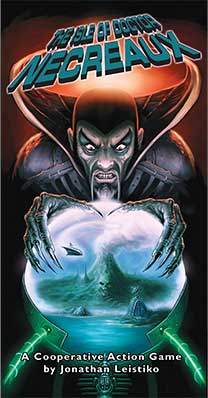
A while ago, I listed my favorite cooperative games Off The Beaten Path.  It seems like all top 10 cooperative games list the same games over and over, so this was my attempt to give some love to some other overlooked co-op games.  One of my favorite little games on this list was The Island Of Dr. Necreaux.  I had played the original first edition and really enjoyed it.

iseofdrn

One common complaint about the game was that the FAQ was bigger than the rules!  Well, a second edition is now on Kickstarter !!!  It has more colorful art, and (hopefully) will fix a lot of the discrepancies from the first edition.

pic2862472_lg.jpg

I have to admit, I really enjoyed the “Flash Gordon”-esque art from the first edition, but I am excited to see how they’ve updated the rules.  And new colorful art!

As I type this, the Kickstarter ends in five days and they are not quite there yet.  Get out there and pick this game up!  It really is a great game, and I am telling you, this is a really unique cooperative game that’s quick, thematic, and very fun.

I already have the first edition (and really like it!), but I really want this game to succeed so I just backed it myself a few minutes ago.

Review of Zephyr: Winds of Change — Part I. The Unboxing and First Impressions

IMG_3072
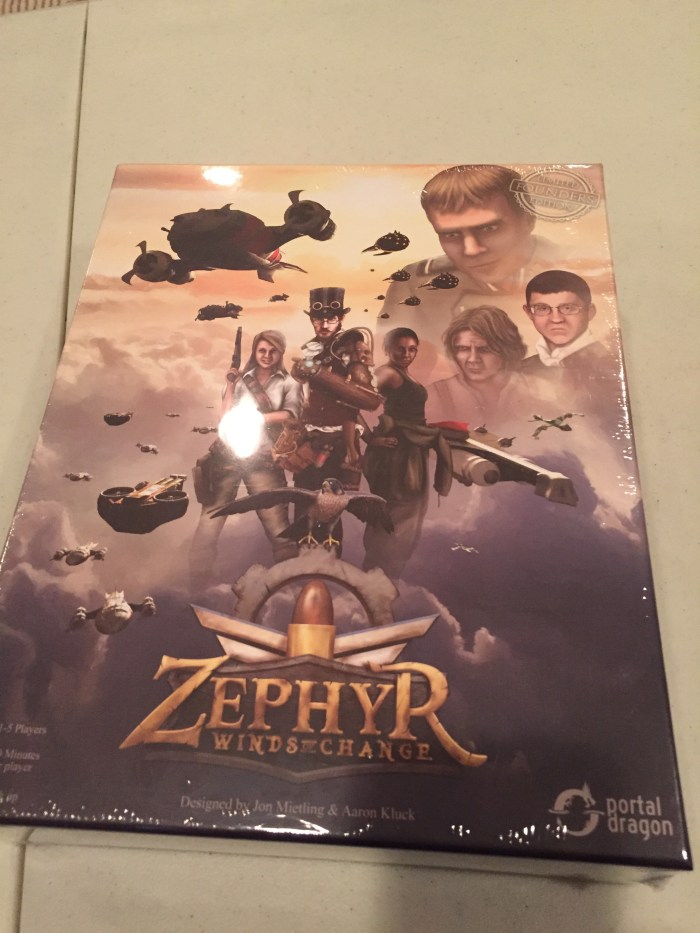
Just today, I received my copy of Zephyr: Winds of Change. It’s a cooperative board game set in a SteamPunk world, with fighting, flying airships! What’s it look like?

Unboxing it reveals a lot of good looking components.

This was a Kickstarter that promised delivery in March 2017. It only missed by about 2 weeks (it’s currently April 14th), which is pretty good for a Kickstarter!
https://www.kickstarter.com/projects/portaldragon/zephyr-winds-of-change

It looks fantastic.

My plan is to review this game in several parts. Part I will be the unboxing and first impressions (after playing through it once to see how it works). Later on, after I’ve had a chance to teach it to others and play full sessions, I will have a better idea of how it plays long term.

So, here we go …

Unboxing

Unboxing revealed very high quality components. The cards are nice quality (linen-coated I think), and have some great art.

One of the coolest features of this game is that there are clear cards (the lady below) that go on top of normal cards: the combination makes a “new card” (sorta like Mystic Vale).  There are 40 clear cards (called “personality cards”) that be fitted onto the faction cards.

The rulebook and Introduction look real good. They have plenty of pictures inside, use big fonts and seem easy to read. This is a good sign.

As I am punching out the pieces and separating out decks, I am consulting the main rulebook. I do like everything I am seeing, but I am slightly annoyed that the decks aren’t marked better. They use iconography, which is fine, but a word like “Assignments” and “Missions” coupled with the Iconography on the back of the decks would make the game easier to learn. I understand the goal these days is to make things as language independent as possible, but given the amount of text in this game, it wouldn’t have taken much work to mark the backs of the decks. This is a very minor annoyance, but one nonetheless.

IMG_3078

Learn From My Mistake

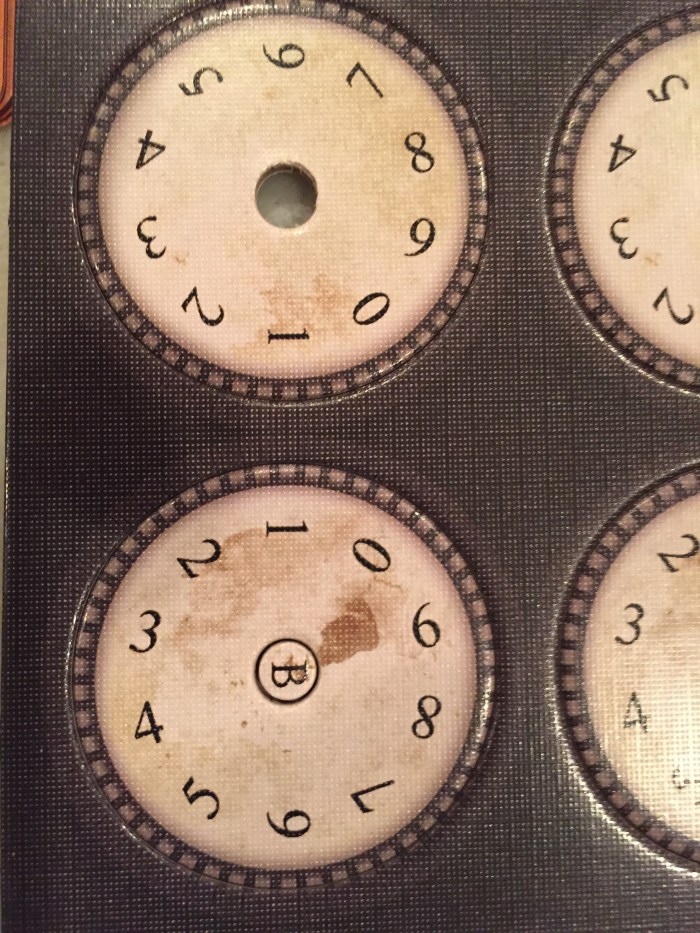
As I start punching out pieces, I am concerned when I get to the dials. 99% of the time, the teeny-tiny little holes to punch out can be thrown away and/or ignored. THESE MATTER IN Zephyr! The A and B must line up. If you accidentally punch them out too soon, you may lose track of where the As and Bs go!

IMG_3076

Probably the easiest thing to do is Punch out just the A pieces (so you don’t lose track of which is which). Don’t forget to punch out the square holes BEFORE you attach the plastic peg/hole. You want the smooth sideof the peg on top, and the rough open side underneath the dial.


Attach the A pieces first, then repeat with the B pieces.

It sounds stupid to emphasize this, but, how many games care about these teeny tiny holes? Most games DO NOT .. Zephyr does.

Color Continuity

My first real gripe is that the colors don’t seem consistent. Take a look at all the cards that have the same sign (for this faction).

IMG_3090
The symbol is three different colors: deep blood red, white,  and off-red on three different places (target, ship, and cards, respectively).  The faction cards don’t even have a symbol (strictly speaking, the factions can crew any ship, so it maybe confusing to have the symbol).

It’s not the end of the world, as you can follow the symbol, but I would have
expected the color to be the same everywhere. See two other ships below.

IMG_3080
Another place: the upgrade cards. The colors on the markers (which are systems you put onto your ship) don’t quite match the colors on the cards. Again, not the end of the world, but still slightly annoying. It’s not a big deal, except that the silver cards in my deck look much more orange than silver. They almost match the bronze upgrades. I am sure it was a printing issue, but hopefully they will fix it in a later version.

Intro Book

The intro book is real good into getting you into the “feel” of the game quickly, and taking you through the core mechnisms quickly.  It’s very well laid-out, with lots of pictures.  It’s a big font, and “thematic”.  I got the sense of the game very quickly after reading this.

I found a few editing minor errors, the biggest of which was that the “Day One” paragraph finished a sentence with an “or” … or WHAT???

The bigger concern was that I couldn’t “play” through the Intro scenario.  They had Missions and Assignments “hard-coded” in the book.  Which first I thought was great (“I don’t have waste an Assignment card or Mission card on the Intro scenario, which I will only play once”).  But, you want to put cubes on these cards to mark things.  See above: I want to put my ship on the Assignment card (like I would in the real game), but I can’t, because I can’t then turn the page!

Honestly, this is a minor quibble, because this introduction is very well-written and really brings you quickly into the game.  I just wanted to “put the cubes and markers” on cards like I would have in the real game.

This Was Cool

IMG_3087

Scenarios tell you how long they will take to play!  That’s a GREAT IDEA!  Depending on the group of friends or time constraints, you can decide which Mission.  And even based on the number of playing.  *Stands up and applauds* What a great idea.

First Playthrough

First of all, bravo.  Zephyr has solo rules which are simple: they are just a minor tweak to the main rules.  I can learn the game by myself so I can teach it to others.  It seems, to me, that all cooperative games should have solo rules (I am looking at you, Battle For GreyPort).  And Zephyr’s seems to work well.  I think I got the sense of the game pretty quickly.  I am a little nervous to scale it up because there is some weirdness describing how other players interact with each other, but that’s what the second part of this review will accomplish.

The rulebook was pretty good to good: I could find things when I wanted to, the overview had page numbers to the more “complete” description, but tended to describe everything in outline form so you had a sense of where the game went.

IMG_3106

There we also Summary Cards, which I think almost every game needs. *More applause*

I liked that there were “common builds” described on the last page (the back over of the rulebook) for that first few times you play.  I do wish it had been referenced somewhere, because I only found it when I went looking for the Solo Rules modifications.   (It may have been, but I didn’t see it).  Make sure you check out the back cover of the rulebook the first time you play.

So, was the game fun?

Yes.

I built a ship (using the “common builds”) and worked backwards to see how scrap was used to build the systems.  Ahh!  I get it!  I suspect some of the fun in this game comes from building your ship, once you understand all the systems (bronze, silver, gold and epic) and how they can work together.

As you go through the game, you will add onto your ship.  And, to be frank, I liked that.  After some big combat, you get “scrap” as your reward, and you use that scrap to upgrade your ship.  Pretty easy, thematic, and fun!

The combats, a vital part of the game, took me a while to grok.  I’m still not sure I understand everything. When can I play certain cards?  Am I allowed to play an extra card because the Silver upgrade said I could?  Can I heal a shield while in combat, or can I only heal on the next round after the damage is taken?

The combat is basically simultaneous between you and the bad guy(s).  So, sometimes it’s unclear when some effects go off.  I probably need to look through the glossary and/or a FAQ to double-check some of that.  So, some of the combat is a little fiddly and unclear. But, it seemed okay once I got it.

Final Thoughts for Part I

So, I enjoyed myself.  I’d like to play again.

I am very happy with the experience.  I got into the game quickly from the intro book, the rulebooks were pretty good to good for when I started real games, and I had fun.

The components are pretty spectacular.  Barring my issues with the color (which frankly, didn’t get in the way when I was playing), the ship card and crew cards (with the clear backgrounds) were just great to look at and fun to use.

I need to play Zephyr with friends a bunch of times to see if I am going to enjoy this more.   Stay tuned for Part II.

Dedicated to Tobias James.  We’ll miss you little guy.

IMG_3068

“My Top 5 Games of All Time!” or “What I Want In A Cooperative Game!”

I have to admit; I’m not really a fan of the “big coooperative” games this year that won the Board Game Geek awards.

  1. Arkham Horror: The Living Card Game just failed for me (see my review here).
  2. I am still learning Mansions of Madness, but at this point in time, the game is overwhelming me with its complexity. I spent two hours pouring over rules and set-up … and it just took it out of me … I couldn’t take any more, so I boxed up Yig and Hastur (before they turned me mad) hoping to try again soon.
  3. And I can’t get Mechs vs Minions. To be fair, I could have Kickstarted it, but the price point scared me away.

So, it almost looks like I didn’t like COOPERATIVE games???? Absolutely not! Here are my Top 5 Games of all time … note that that they are ALL cooperative!

arkhamhorror

5. Arkham Horror. I love this game, and it was probably the very first cooperative board game I ever played. I just loved that a board game could be cooperative! (And NO, Eldritch Horror has NOT replaced Arkham Horror for me).

img_2563
4. CO-OP: the co-op game. This is self-serving, but I still like playing my game to this day.  It’s still fun for me to puzzle how to barely save the CO-OP in the last turn!

pandemic.jpg
3. Pandemic (any version). Just a great game.  And yes, I am showing the old cover art because that’s the version I have.

sotm
2. Sentinels of the Multiverse! Why did it take so long to realize a cooperative super hero game?   (And yes, I am using the original box art because I got the original game waaaaaay before it was popular and had a second edition.  I had to order it from the web site because that was the only way to get the game back then).

dd.jpg
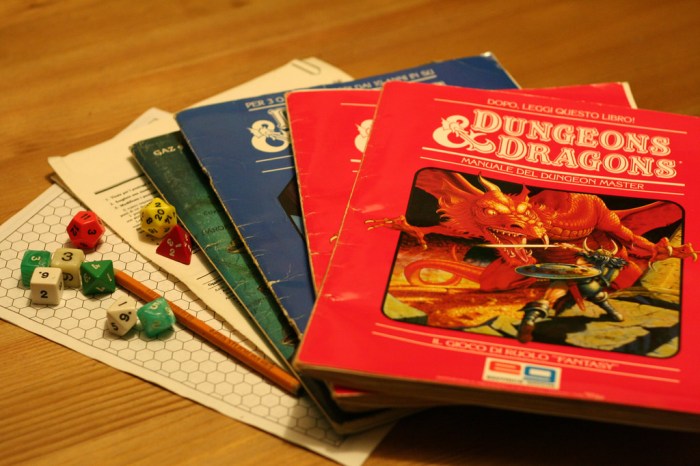
1. Pathfinder and/or Dungeons and Dragons RPG: I love it because of the adventure I explore cooperatively with my friends!  (And yes, I had the old version, so that’s the art I am using … I am seeing a trend here …)


I put Dungeons and Dragons (or its equivalent Pathfinder, which is really what I am playing these days) at the top of my list because, it is really the first cooperative game I ever played! And it is open to imagination within a rule system. Some of my favorite experiences of all time were my friends and I exploring a world together.

So, I think my RPG experiences with D&D color what I want in a cooperative game. I want to be part of a movie! I want to have a plot that unfurls, where my decisions make a difference, and where there is some critical moment that decides the game!

What I like about Arkham Horror is that I feel like I can do whatever I want: there’s a lot of choices! I can go get a spell, a weapon, a unique item, heal, explore, close gates. My world is wide open! And the way we investigators work together influences whether we win or lose. Sometimes, no matter what we do, we will lose. But those moments when we just barely win or barely lose are the stuff of memories!

“Remember that time I closed the gate in the last round just before the last Doom token came out??!?!”

I like Pandemic and Sentinels because they are more puzzly: you have to do the best you can with the resources you have (which are much more constrained than Arkham Horror or D&D). These games still feel like movies to me though. In SOTM, Legacy punches and takes out the villain just before the the bad guys descend en masse! In Pandemic, the Medic flies to Laos in the nick of time to stop a massive outbreak!

One game that I like (but didn’t mention on my Top 5 list) was Agents of Smersh. It is also cooperative. It has a lot of these movie-like and puzzly qualities too … It has a book of encounters to be read aloud, but you are still making choices and moving around. (In my mind, Agents of Smersh completely replaces 1001 Arabian Nights. Agents of Smersh is a real, honest to goodness game, whereas 1001 Arabian Nights is just an activity … a fun one, but nevertheless not a game).


So, what do I want in a cooperative game?

Something that feels like a Movie. Me and my friends are working together. Making real choices. Just barely defeating the game in the last moment. And sometimes losing. (But not always losing: AH:LCG, I am looking at you …)

When I designed CO-OP, I wanted:

  1. Lots of flavor text like Arkham Horror and Agents of Smersh and SOTM. I like text, and I like the atmosphere it brings when you read it. All the cards in the game have some kind of flavor text, whether it be silly quotes or explaining what the card does.  In some ways, I wanted a book of encounters like Smersh, but I was able to simplify and achieve that with text on the cards …
  2. Meaningful choices. There’s a bunch of things you can do on each turn, but the work action forces you to look at all your cards and think about a lot of things at once: What do I play? Should I support another player? SOTM really influenced me a lot on this.  I like how SOTM and Pandemic force you to make the best of what you have.
  3. Suspense! … where we just barely defeat the game. I spent a lot of time balancing CO-OP so it wasn’t too easy or too hard. I can’t tell you how many games we just barely won in the last round, only because we puzzled how to use the cards just right. And that’s what I want!

In all the games in my top 5, there are always “movie moments” where we just barely won or lost. And we still remember to this day.

CO-OP represents a fusion of all my favorite games: a movie-like quality in a balanced puzzly game with lots of flavor text.


So, I am still hopeful for Mansions of Madness: it look like it will definitely evoke a movie-like play environment. I am just worried that “upkeep” will kill it: there’s SO MUCH upkeep at the start of the Investigators Phase! I am worried that all that upkeep will take me “out of the movie”.

I am willing to chalk up my Mansions of Madness issues as simply jet-lag from my Australia trip (see last blog entry). Or maybe I just went mad from playing …………. hahahahahahahah …. hahahahahahaha ……

Thoughts on Board Game Apps

Recently, my wife and I had a chance to vacation in Australia for 2 weeks.
We saw Kangaroos, Wallabys, Koalas, Wombats, and some other cute creatures.


Part of the Australia experience is flying that loooooooong 14 hour flight from the United States into Sydney. I am not great at sleeping on  planes, so I had to keep myself busy/entertained. I ended up trying a lot of solo board game apps on iOS; in other words, a lot of solo play! Strictly speaking, not all the games I played were cooperative, but solo play is something I like to discuss here occasionally too.

Here are the apps I looked at/played for 14 hours!

  • Star Realms
  • Pandemic
  • Agricola
  • Sentinels of the Multiverse
  • Splendor

I was originally going to write a “review” of each of them, but I realized there were some things they all shared in common (or didn’t share), so I thought I’d touch on those items instead.

No Scrolling

There was a time when I was the Agricola champion in our group. This grew, partly, out of my familiarity with the game. I would play the solo mode of Agricola over and over, trying to amass the most points. (The ‘recommended’ solo mode has you play a campaign, but I preferred the single solo game, where you take some random selection and play it a few times trying to get the best score). It was even so ridiculous that I would play on the airplane! That doesn’t SOUND ridiculous , but this was before there were applications on an iPad!  So how did I play? I took pictures of the cards I drew, then I would “play” the game, writing out my progress. I could fit an entire play on a small piece of paper. Here’s a sample of a few of my plays.

IMG_3049

So, when I found the Agricola app, I was ecstatic! No more silly piece of paper! But, then I played it and ergh. I was very frustrated very quickly. Why? I think it boils down to the fact that the actions were all scattered all over the place and you had to “scroll” to look around. Ergh. I didn’t play it much because I was constantly looking and scrolling to see what the actions were. What I WANTED was one screen, with an overview of everything where I could zoom in if I wanted more information! I realized I wanted something like my weird little pictures.

I also downloaded the Pandemic app just before I left for Australia. Pandemic is probably a top 5 game for me. It’s great. I used it when I taught an intro Python course. (I’ll discuss this more in a later blog post). I looove the game. It does a great job … but … it scrolls. Ergh. I want everything on one page. So, again, I didn’t really play it very much.

I also played Star Realms, Sentinels, Splendor on my plane trip. I ended up playing these three things a lot more. Splendor has no scrolling, and Sentinels and Star Realms have minimal scrolling.

My conclusion: I don’t like apps that scroll. Splendor is simple enough that everything can be on one page. Star Realms does a great job of “zooming in” on cards if you want to read them, as does Sentinels. If you get too many cards, both Sentinels and Star Realms have to scroll through.

I want everything on one page so I can get an “overview” of the game, just like playing a real board game. I want to be able to look at the page and get a sense of everything. If I want more information, I want to just click on a card (kind of like picking up a card and reading it during a game).

So, Agricola and Pandemic are fails for me on that front, while Star Realms, Sentinels and Splendor work well.

Apps Might Be the Best Way To Learn

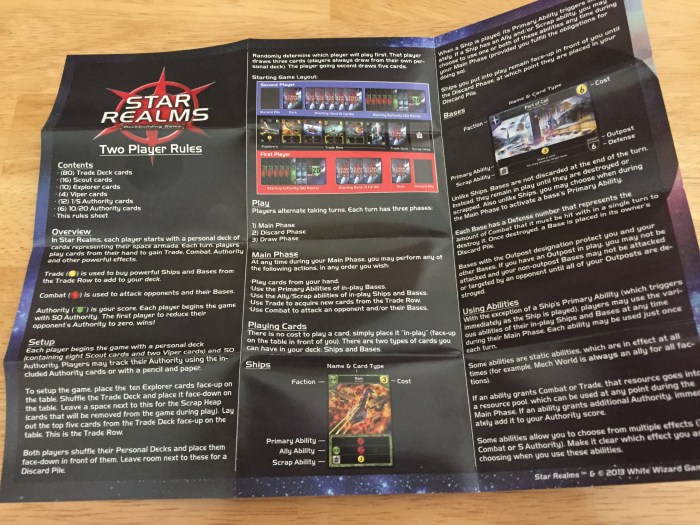
My Star Realms card game has been sitting unplayed for some time. I bought it because some the Dice Tower people really liked it, and it was cheap. I remember opening the box to read the rules, and was just “underwhelmed” by the one sheet of rules. It wasn’t even a booklet, but a kinda pamphlet. Ugh. It was kind of hard to read. So, I put the rules down and moved on to something else. Star Realms remained unplayed.

IMG_3048_90

BUT, the iOS app has a great tutorial! While in Australia, I downloaded it because it was the right price (free with in-app purchases) and because I already have the card game!
I was up and running in about 5 minutes. It was also easy to try stuff and just see what happens. The Star Realms tutorial is the way to learn the game. Don’t (blech) learn from the rules “rulebook” (notice the quotes).


While in Australia, I wanted to teach my nephew and niece Pandemic. We couldn’t find a copy of Pandemic board game (not even at Australian Target), so I showed him the app. That was the right way to do it! I could easily go through the rules, show him a lot of the cards and the roles. We never found a copy (surprisingly), but I think he might be getting one for Christmas! The app was just enough to get him interested.

As much as I didn’t enjoy playing the Agricola app, its tutorial was great. Sentinels and Splendor seem to have good tutorials too.

One of the conclusions from this trip: the iOS App might be the right place to teach and/or learn a game! Besides YouTube videos and forums and the rulebook, the iOS/Android app is another resource for learning a game.

Where’s the UNDO?

I had a loooooot of fun playing the Star Realms app. But one thing continually frustrated me. I would hit a card wrong and accidentally play it instead of looking at it. Grrrrrrrrrrrrrr. Could I back-up and replay that? Nope. I was just stuck. THERE WAS NO UNDO.

If I were playing Star Realms with my friends, I could say “Whoops! I meant to get the coin not the Authority … is it okay if I slightly redo that?” I am not talking completely redoing a turn, just a minor glitch.

Nope. No UNDO.

When learning a game, it would be nice to be able to “take back” a turn to see if you could do anything different. Or if the plane is “jostled” and you accidentally hit the wrong space!

Sentinels gets this right. You can do a slight UNDO (usually replaying up to 3 turns previously). If you mess up, or just meant to do something else, you can just backup with the UNDO.

I didn’t get far enough into Pandemic or Agricola, but neither Splendor nor Star Realms have an UNDO. Only Sentinels.

I want an UNDO in my iOS games! It is much more like the board game experience: you can a replay a turn, or slightly re-try something. It frustrates me that so few apps have this feature. To me, it is my goto feature for apps.

Music Control

When I play Sentinels, I either put some music on in the background or watch a video (more like “listen” to a video). Sentinels has some good theme music, but you can turn off the theme music so you can listen to your own music. I really appreciate how thoughtful Sentinels was with this level of control.

Splendor and Agricola also worked on this front. I was able to watch a video (“picture in picture”) or listen to my own music. There were controls for the level of music and sound in the game.

Star Realms failed in this regard. I had to listen to its music. It has good enough music. But, after a while, I want my own.

It sounds silly, but I want to be able to control the Music I listen to in a game.

Final Thoughts

  • Star Realms was fun as an app, despite its frustrations with Music and NO UNDO. I’d give it 7.5/10 as an iOS app.
  • Splendor was particularly fun, and except for it’s lack of an UNDO, was great.
    I’d give it 8.0/10 as an iOS app.
  • Sentinels is, in my mind, the prototypical app and fun fun fun. 10/10 as an iOS app.

Agricola and Pandemic were well done and beautifully implemented. But I didn’t
want to play them because of the scrolling. I can’t rate them because
I didn’t want to play them.  I’d rather play Agricola with my weird little pieces of paper.

IMG_3050_90

Arkham Horror Living Card Game Review

Yes, the picture below is for the Arkham Horror Board Game, NOT the Arkham Horror Living Card Game (LCG).  We are going to go back in time and look at the board game before the LCG.
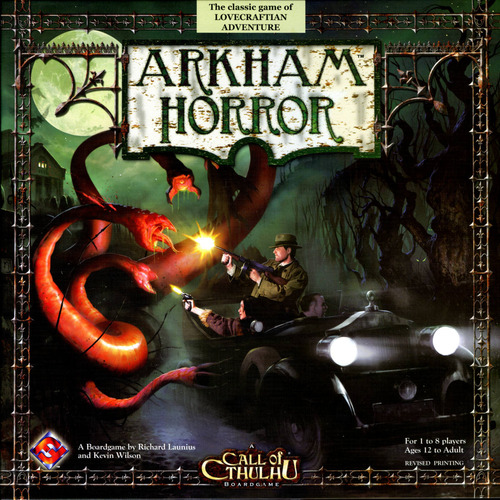
arkhamhorror

Some Background

Cast your mind back not so long ago  … My friends and I would play Arkham Horror: The Board Game (not the LCG) every chance we got. For years, it was our go-to game. We would spend all afternoon, or all evening, playing. Some of the wives didn’t get it, some did. We loved exploring Arkham, plotting how to close the gates, scheming to save our skins. Great fun. Arkham Horror: The Board Game.

For my Bachelor Party, we played an 8-Player Arkham Horror: The Board Game with every available expansion (I think there were 6 at the time). We had to assign one player per expansion to be responsible for the rules, because there were so many. Fun times.

But Arkham Horror: The Board Game got too big. Too many expansions!  (I think this is a common criticism). I actually had an extra copy of the game (for when I taught Software Engineering and had my students implement the game in Java). We had to break open a fresh copy to play it one Halloween.

We loved Arkham Horror: The Board Game, but there were too many expansions. And a common complaint was much set-up and tear-down.
Could Arkham Horror: the Living Card Game (AH:LCG) fix all the problems with Arkham Horror: The Board Game? Could it be just as much fun? Was it to be the savior?

No.

Review of Arkham Horror: The Living Card Game (AH:LCG)
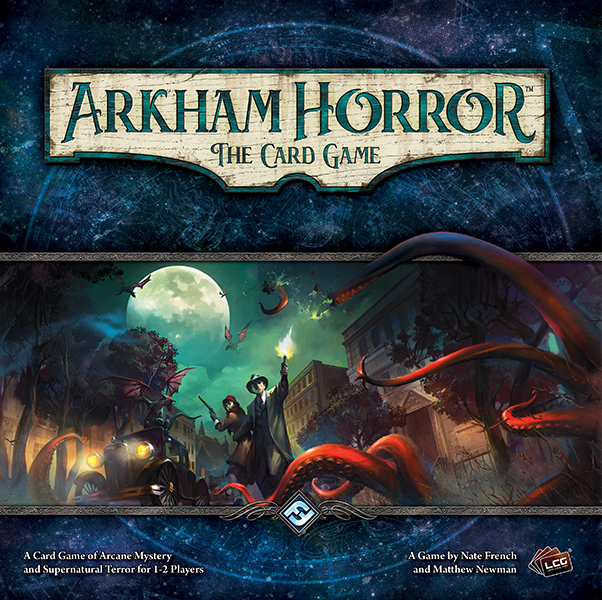
lcg
So, I will be stepping on a lot of toes here. On BoardGameGeek, AH:LCG is up for Game of the Year. A lot of people on Dice Tower say it’s their favorite game of 2106. I’m sorry, I don’t get it.

To be clear: I like Arkham Horror: The Board Game. I was *really* looking forward to the LCG. I anticipated liking it so much, I pre-ordered every expansion for the LCG on CoolStuffInc even before I played for the first time.

Then I played AH:LCG. Ergh. Then tried again. Agh. And tried again. Blah. And again. I canceled my order with CoolStuffInc for all the Arkham Horror: LCG expansions.  I don’t want to play it anymore.

What’s good?

There is some goodness about the game.

The art is amazing. Wow. I can’t fault this at all. It’s a beautiful, well-rendered game. It definitely evokes the Cthulu Mythos.

You can play it as a solo player. I will probably finish playing out the game as a solo player to “get my money’s worth”. A lot of other games have solo rules tacked on, but this game works very well as a solo game.

There’s also a neat story here.

What’s bad?

Chits for used for creating “random rolls”.

Really? I was reminded by an old D&Der that the very first box of the D&D game used chits instead of dice because, as the story goes, they ran out of dice in the production, so had to go with the chits. I think if my first D&D box had come with with chits, I may have bailed on D&D. There’s something very cool about the dice, especially to a newbie.

It’s not like this game was cheap. I paid $34 on CoolStuff … for about 200 cards. I regularly see AH:LCG on Amazon for $55 (and more!). It’s even more than that at my FLGS. It’s not like Fantasy Flight aren’t making plenty of money. Some dice would have gone a long way here, especially cool mood dice.

The counter-argument, of course, is that “then the designers can’t adjust the difficulty with dice! The scenarios all have different chit distributions!”  Ok, let’s talk about that …

Swingy!

This game is SOOOOO swingy. One bad pull, and the game is over. One card deals you damage for the difference between the expected and pulled value. If you pull a -4, you are dead. Gee, that was fun.

There are ways to mitigate it: build a better deck (that can cost money, see below), pre-allocate resources better (better playing: I am okay with that), get rid of the -4!

There’s a difference between being a hard game and a lucky game. I feel like there is too much luck involved to win AH:LCG. I want some strategy.

Limited Replayability

Once you played a scenario, a lot of the “magic” is gone. This game looks fantastic, and you want to see the story unfold! But once you’ve seen it unfold, and then you die because of something stupid, you didn’t want to play it again. You know what’s coming now, and you are frustrated because you died because of something stupid.

There is an interesting story here. Don’t get me wrong. But, once I have finished playing this, I just don’t think I’ll play it again.

I payed $45 for Arkham Horror: The Board Game and have gotten easily 50, if not a 100, plays out of it. I don’t think I’ll get more than 8 plays out of AH:LCG.

More Money!

Like I said, I got a “smoking deal” for the game for $34. But, for the price, I expected more components. More dice? More cards? Don’t get me wrong, the cards that came with it are fantastic. But, I don’t think I would have payed $50 for the game (which is what almost everyone else is charging) knowing what I got.

And this whole thing feels like a money grab:
“Hey, buy some new scenarios!”
“Hey, buy our playmat!”
“Buy another copy so you can play 3-4 players”
That really turns me off. And my friend Josh pointed out that building a great deck really requires two copies of the game. So, to make the game less swingy, I have to invest in 2 decks??? Or to play 3-4 players??

So, I am up to $68 to make the game less swingy and/or support 3-4 players. Eh.

Time to Set-Up/Tear-down

So, the set-up and teardown is similar to Arkham Horror: The Board Game. An hour to set-up, and an hour to tear-down. (Putting the cards back in a specific order is essential if you want to play again, so yes, an hour). It’s fiddly, getting the cards out in a specific order. And the numbers are SO SMALL!  I have good eyesight and was straining to see the numbers!

I don’t mind some set-up and tear-down time.

But, for Arkham Horror, we’d get a 2-4 hour game out of it. For AH:LCG, I might get an hour game. If I don’t die from something stupid.

Too much effort for a short game.

Well-Written but LOOOOONG Rules

The rules are well-written. Especially the first-time through.

The rulebook and first time scenario rules reminded me of Mage Knight. (For the record, I really enjoy Mage Knight). Mage Knight!!! For those of you who have never played Mage Knight, it is a large, complex, intricate game with tons of cards/pieces, where you explore a large world. It has one of the most complicated rulebooks I have ever come across. The rulebook does it’s job, but it is a BIG rulebook. But I am okay with it, because Mage Knight is a BIG game.

AH:LCG is NOT a big game. It is small or maybe medium game. In my opinion, there are too many rules for such a small game.

Not As Fun As I Had Hoped

I wanted to like the game SOO MUCH! And it was kinda fun.

But after I beat the first scenario, (barely!), I died in the “post-game” because I made the wrong choice in a “Choose Your Own Adventure” choice. Really? Gee, that was fun.

Although the “Choose Your Own Adventure” books were cool when I was a kid, I never liked the randomness. It seems like you’d make the “right choice”, and it was always the “wrong choice” in the book.
And, ending an closely fought game with a stupid “Choose Your Own Adventure” ending, and then dying because of a random/bad choice, was just deflating.

Summary

Too Swingy, too many rules for what it is, too much set-up for what it is, too expensive, too little replayability.

There was some fun, some great art, and an interesting story, but all the other negatives drove the rating down.
Sorry. My BoardGameGeek rating was a 5.

EDIT: I was trying to figure why I like Time Stories, which also has limited replayability, but why I don’t like AH:LCG. I think it’s because Time Stories is less swingy, and there is a MECHANISM for backing up and restarting that’s part of the game! In AH:LCG, I just die.