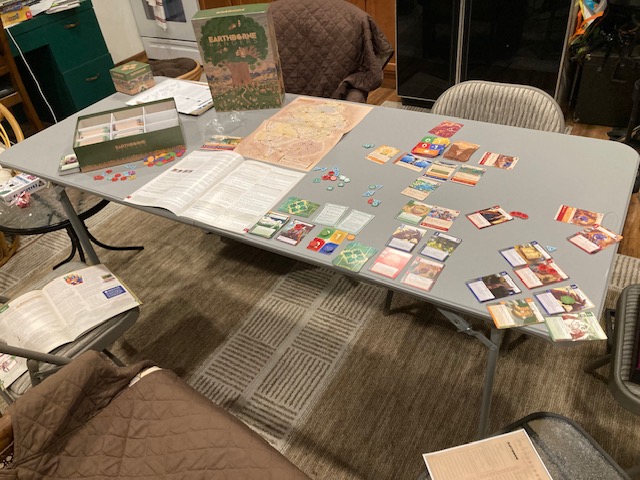
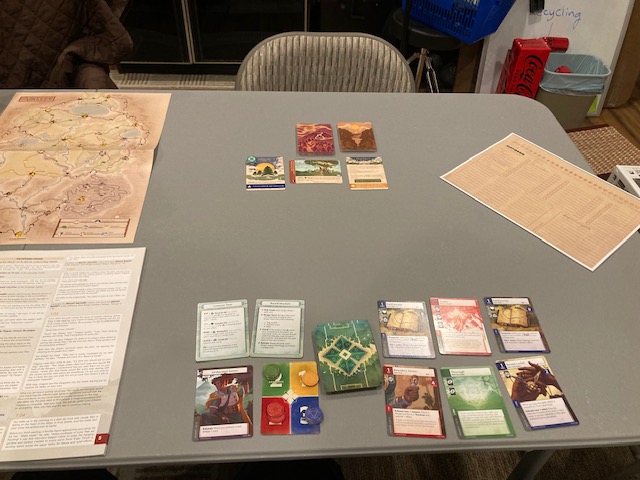
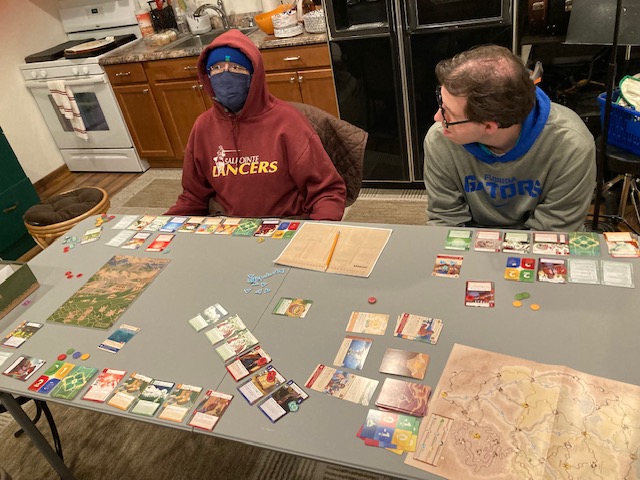
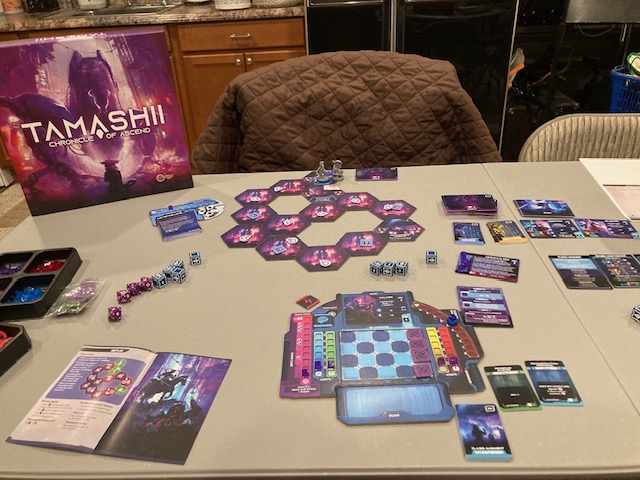
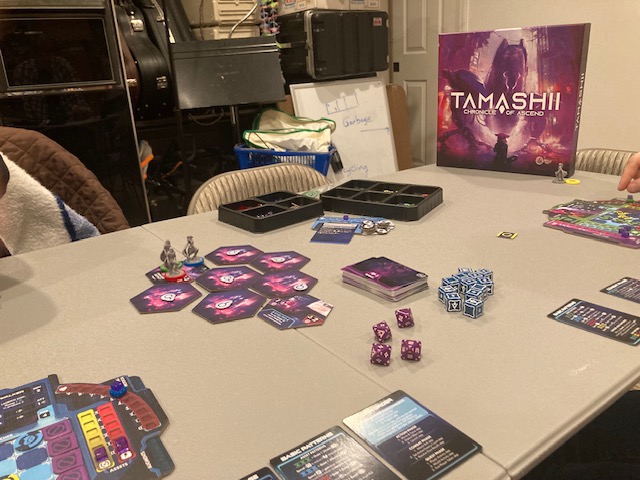
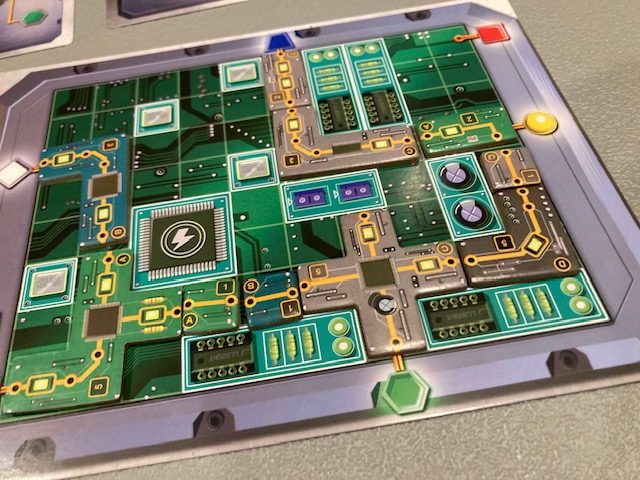
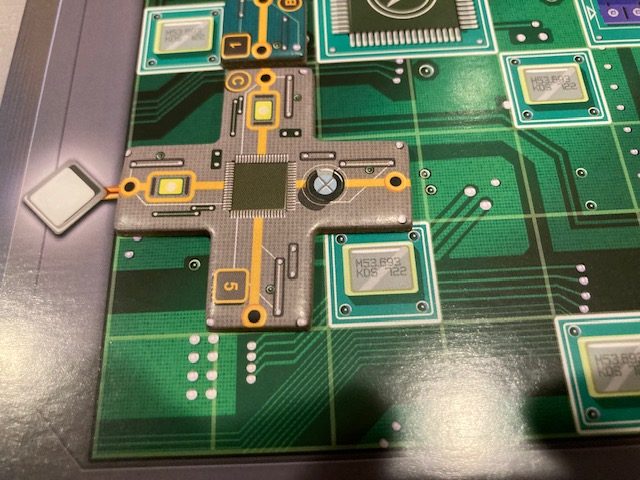
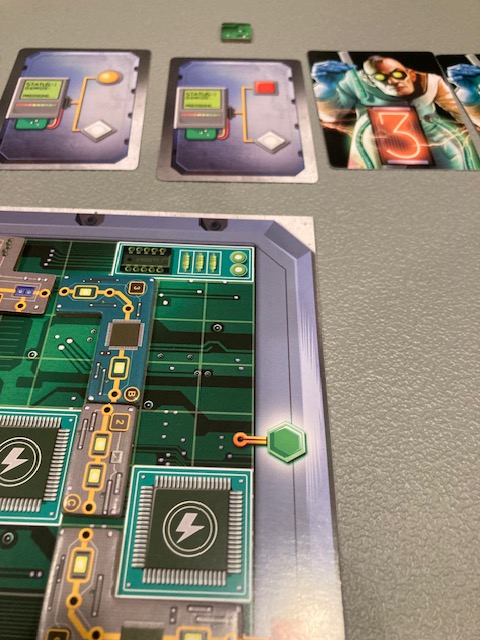
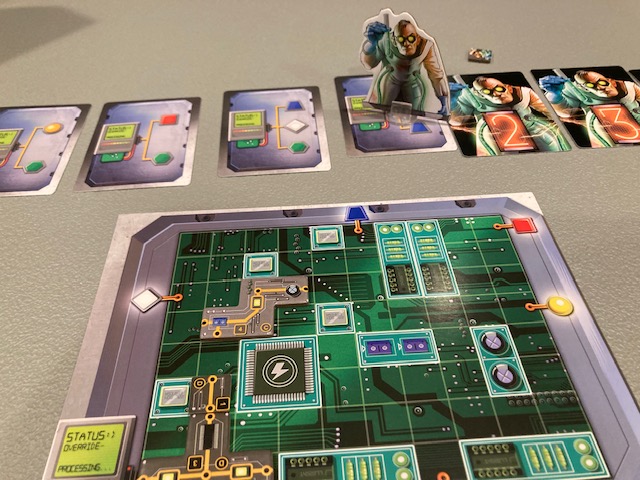
A Review of Tamashii: Chronicle of the Ascend. Is This What Programming is Really Like?

Tamashii: Chronicle of the Ascend is a cooperative programming game from Gamefound This game was originally on Gamefound back in April 2022. It delivered to my house in late September 2023.

This is a cooperative game for 1-4 players, taking 90 minutes (more on that later) for ages 16+. We were very excited to get Tamashii: it was #9 on our Top 10 Anticipated Cooperative Board and Card Games of 2023! Our only concern was that it was an Awaken Realms game … (well, strictly speaking, it’s an Awake Realms Lite game). Even though their games are gorgeous with amazing production, we’ve had mixed luck with their games. For example, our Tainted Grail (another game from Awaken Realms) experience started amazingly (see Part I) only to be tarnished by the grind of the game (see Part II). Let’s hope Tamashii endures!

Unboxing

IMG_0327

Like all Awaken Realms games, the box Tamashii comes in is pretty well padded and packed. It’s a quality box!

IMG_0328

The game comes with a nice letter from the publishers (on top).

IMG_0329

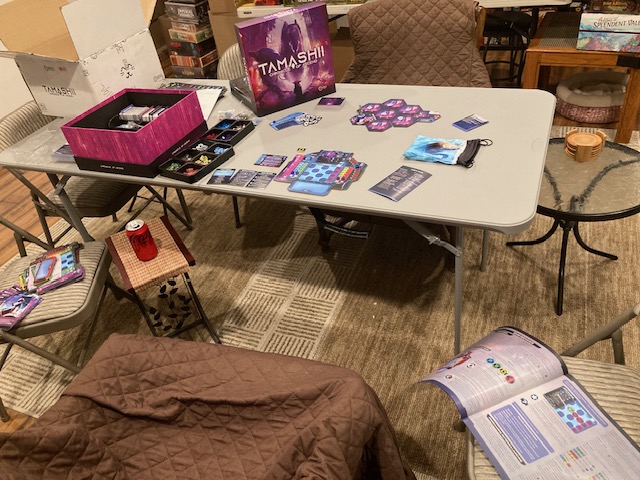
The game itself is pretty big (but not as big as other Awaken Realms games).

IMG_0331

See the Coke can above for scale.

IMG_0342

What’s inside?

IMG_0344

The rulebook is right on top: it’s a big square thing.

IMG_0364

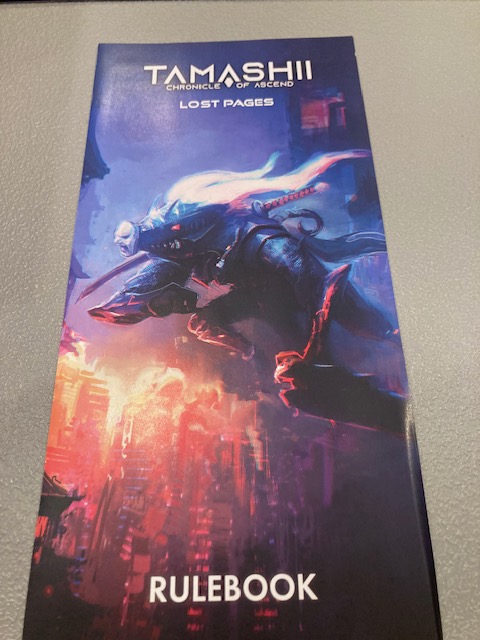
There’s a nice lost Page rulebook.

IMG_0368

There are quite a number of punchout sheets: some of these will be unnecessary to punch out because they are minis which replace them.

IMG_0369

IMG_0370

I really like that there is a sheet showing where all the minis go on top of the minis! I wish they were labelled (more on that later).

IMG_0371

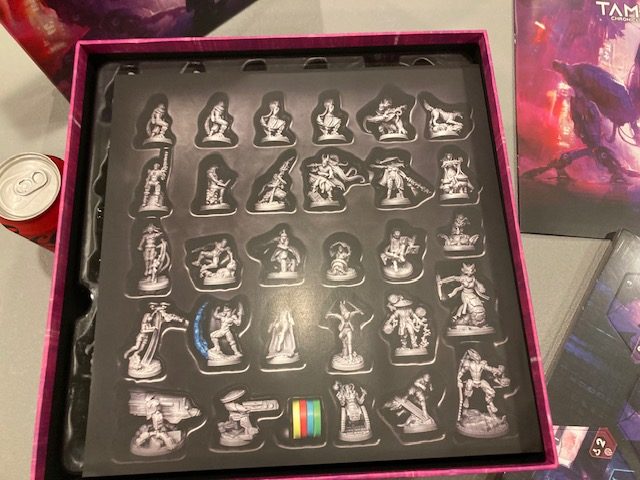
The minis themself are pretty cool: Lots of cyber-anime minis! This game is set in a post-apocalyptic cyber future in Japan, so these minis really capture that.

IMG_0372

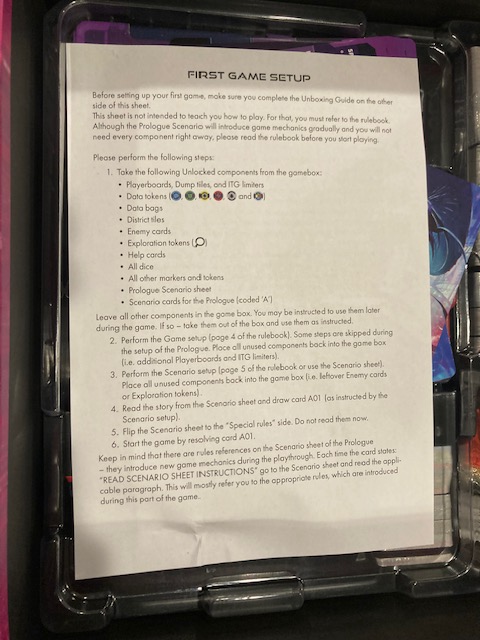
Underneath the minis are a special set-up sheet (for first timers).

IMG_0373

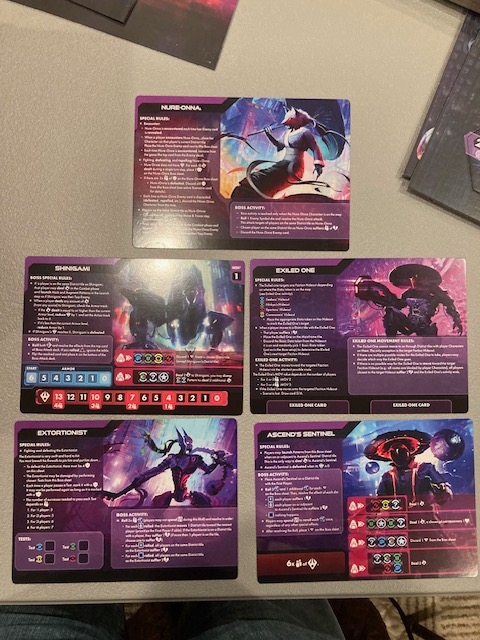
There’s a bunch of bad guy cards! (You don’t necessarily see these right away).

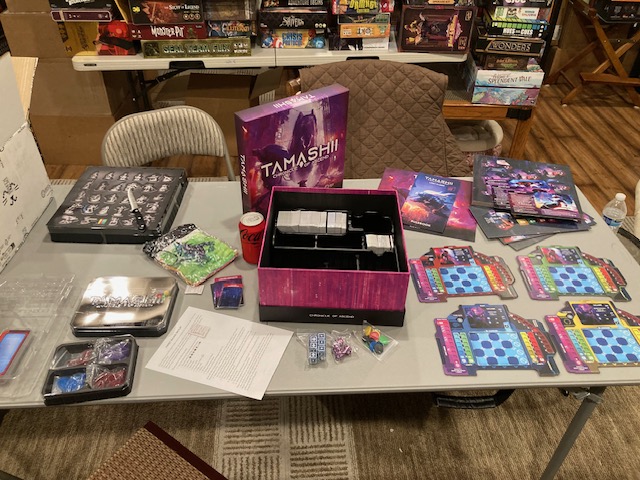
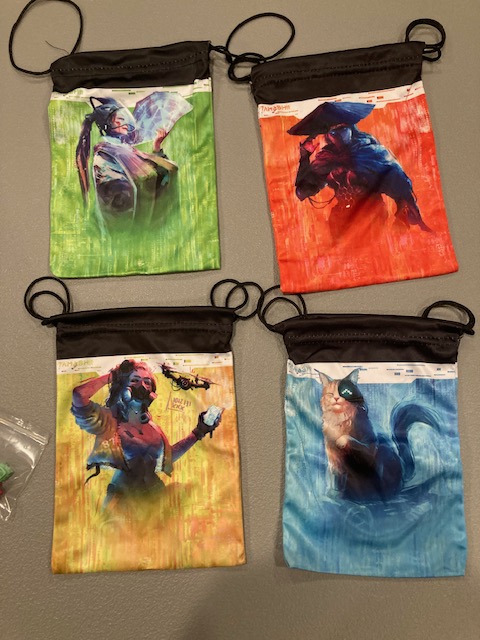
There’s a bunch of cards, dice, player boards, scenario books, and bags!

IMG_0399

There’s a lot in this box! It looks pretty good!

First Time

IMG_0380

My first time through was a little daunting. Was I supposed to read the rulebook first? The Unboxing Guide above “sort of” showed what you needed to do, but like most games this big, it makes sense to correlate components and labels from the rulebook. This correlating gives you names for later references (“forward referencing”).

IMG_0346

IMG_0403

Our first couple of hours with the game was just unboxing, looking at components, figuring out what everything was, and using the Unboxing Guide to get going. Don’t expect to jump right in to this game! There will be a lot of reading and correlating of components.

Rulebook

IMG_0344

This rulebook is … pretty good to good.

IMG_0345

It gets a C+ on the Chair Test, as I can’t really put it on the chair next to me without it flopping all over the place. Now, the font is big enough to read some of it, and for some of my solo plays, I was able to use the Chair to hold the rulebook. But my first few plays absolutely had me putting this monster square rulebook on my player table (thus eliminating some play space).

IMG_0346

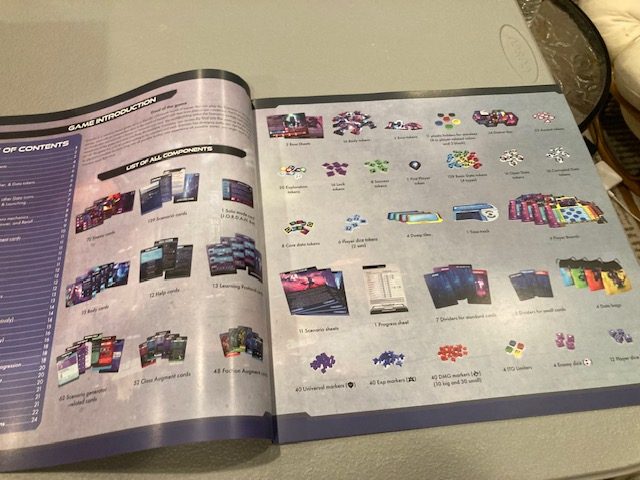
The Table of the Contents and Components (with names) on the first two pages is fabulous.

IMG_0347

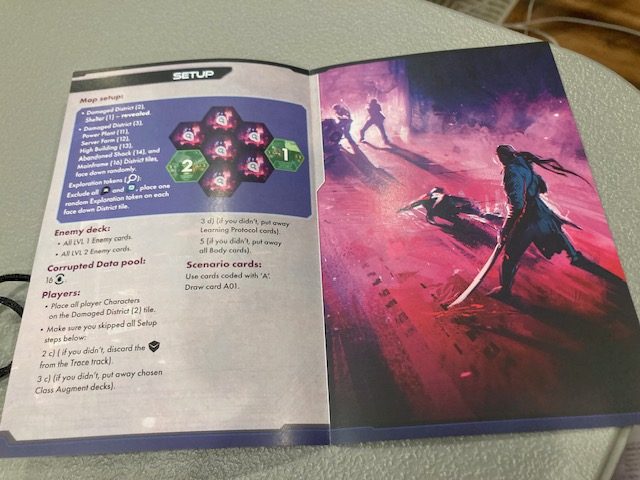
The set-up on the next page is quite good too (if a little “small”).

The rest of the rulebook is pretty well notated with Labels and pictures. I don’t necessarily love the organization, as a I struggled a few times looking for a rule.

IMG_0363

BUT: Most importantly, it has an index! Not only an index, the “main definition” of a keyword is highlighted in BOLD so it’s easy to go find where a rule is! This Index really saved the rulebook for me. I don’t quite get the organization, but the fact that the Table of Contents and Index are so well done makes this a very usable rulebook.

IMG_0353

The rules are a big long, but they all seem to be here. I think I had most of my questions answered when reading or playing without too much bother.

IMG_0343

But then the rulebook ends with a BANG putting a nice “important Keywords, Key Phrases and Icons” on the back!

I didn’t love the form factor (C+ on the Chair Test), I didn’t love how long the rulebook was, and I didn’t love the organization, but the Index, Table of Contents, and back cover made this a pretty good to good rulebook.

First Few Days

IMG_0401

My first few days with this game were very strictly delineated. First day: unpack the game and get a sense of all the components: this was a few hours. See above.

IMG_0426 (1)

Second day, set-up the game and start reading through the rulebook, at least a little. This was a few hours too.

IMG_0416

The third day was to be playing through the first Scenario: PROLOGUE. I didn’t have to read the whole rulebook before I played, I just had to read portions as “new rules” were revealed. The little prologue did a good job of not getting caught up in the rules. So, you’d play a few turns to get the hang of some introductory rules, then uncover the next part which had new rules. Then you’d stop and read the few new rules. Then return to playing, getting a sense of the new rules. Then stop, read a few new rule. Return to playing, get a sense, read some new rules and so on … until you got all the rules!

IMG_0419

This piecemeal way of learning the rules worked pretty well. So, at the end of Day 3, I had a pretty good sense of the main rules of the game. The previous two days were shortish, but day 3 was pretty long at about 3.5 hours. It’s a lot of work to play, read, play, read, play read! Make sure you give yourself plenty of time to play.

Gameplay

IMG_0406

This is a bag-building game! Each player had their own bag, and they can cull tokens, add tokens, and generally do bag-building like operations. These tokens are placed on your console (see below).

IMG_0447

The tokens are yellow, green, blue, and red. Each of these corresponds to an Asset in the game: yellow is reroll, red is extra dice during combat, green is shielding, and blue is memory for upgrades.

IMG_0429

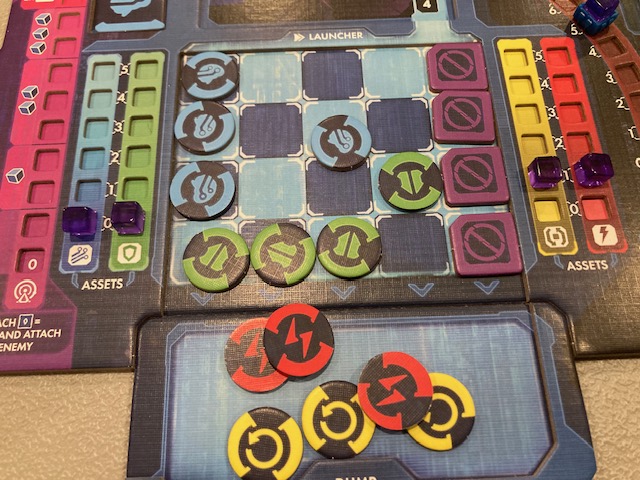
As you pull tokens from your bag, you put them on the your Launcher in the light-blue spaces. Then you “program” moving the tokens around to form patterns. “Programming” is essentially two operations: moving a token 1 space or swapping two adjacent tokens. What you are trying ot form is patterns!

IMG_0482

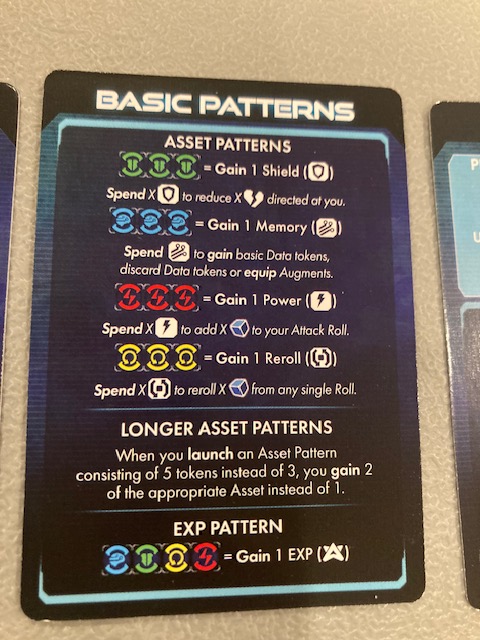
The basic patterns are three in a row: if you can launch that program, you get that resource!

IMG_0429

In this example, I can launch three programs simulaneously: A red basic patterm (giving me one energy), a blue basic patterm (giving me one memory), and a green basic pattern (giving me one shield).

IMG_0407

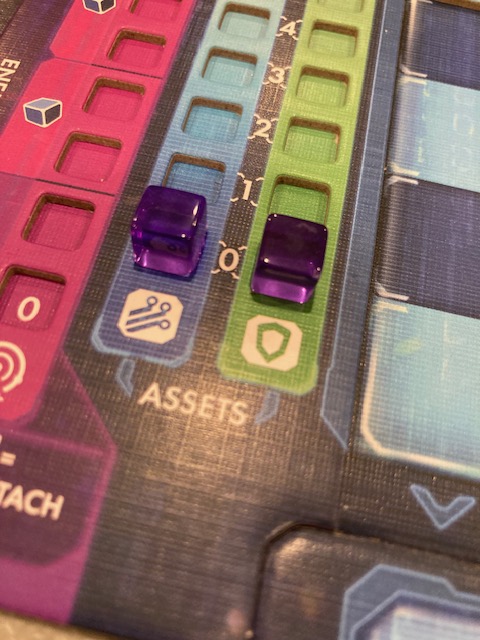
Up your assets to reflect the new status!

IMG_0430

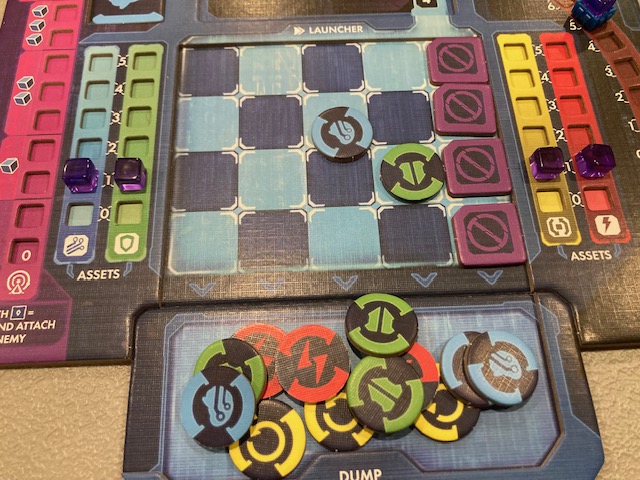
As the programs launch, you place the used tokens in the “Dump” (think discard) just below your board. We just launched the red program above to get 1 red energy!

IMG_0432

As you launch programs, your launcher becomes empty and your dump becomes full. If you ever need to draw a token from your bag and you can’t, you immediately take all tokens from the Dump into your bag and start drawing from there (the “Dump” is like a discard pile in a deck-building game).

IMG_0508

Although this is a deck-building .. pardon me … bag-building game, it is also an exploration game. There are numerous scenarios in the game, and each scenario sets-up a different topology of tiles to explore. Unexplored tiles are flipped over with a “honeypot” token on each one: when you explore it, you flip the token and usually get an asset or something good. It depends on the scenario of course, but usually exploration is good as it opens up the map: you can’t move quickly through tiles you haven’t explored!

IMG_0416

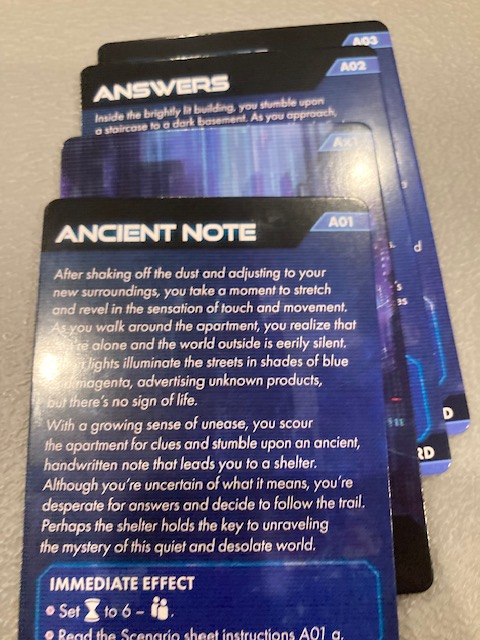
The scenario is controlled by a little book that describes set-up: see above for the PROLOGUE set-up! Each scenario has a little story where you make some “Choose Your Own Adventure” Choices while completing challenges. The game flow is controlled by a Deck for your scenario.

IMG_0422

Usually there in an objective to each part of the story!

IMG_0423

Some of the challenges to overcome are defeating enemies in combat. Combat is a little different in this game: enemies “attach” to you and you have to fight them in the combat phase. This seems pretty thematic: the idea is that you are running around the city trying to get away from the big bad AI, so occasionally they will catch site of you!

IMG_0518

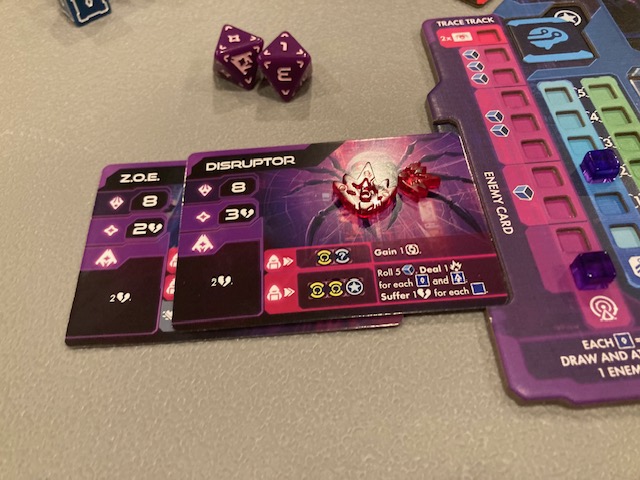
You can either launch programs to do damage, or you can just straight up attack with dice. See above as the DISRUPTER can be harmed with yellow/? program or y/y/core.

IMG_0446

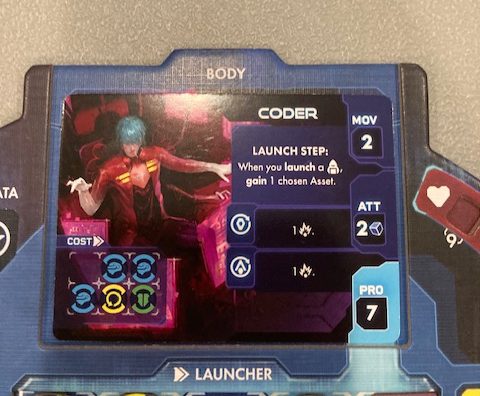
You’ll see the CODER character has 2 ATTack dice when we does fight.

IMG_0445

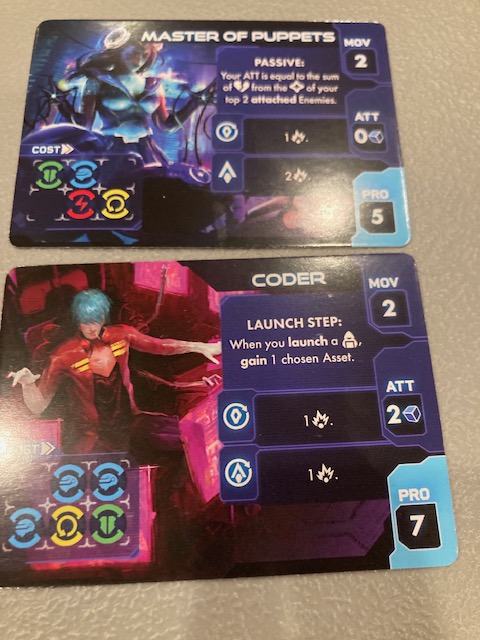
Oneof the cooler elements of the game is that you can upgrade your body to get better Skills: ATTack, or MOVe or PROgramming! You can inhabit the CODER body if you launch the program in the lower left!

There’s also many ways to upgrade your character while you are playing: you spent memory (blue) or EXP (experience) to get AUGMENTS, get new tokens for your bag, cull tokens from your bag, and other ways!

IMG_0513

If you can fight, explore, upgrade, and and hack your way to the final card, you win!  

Whew.  Yes, there are a lot of rules to this game. BUT, there are three reference cards (everyone gets their own copy) to help!

IMG_0506

Solo Play

IMG_0420

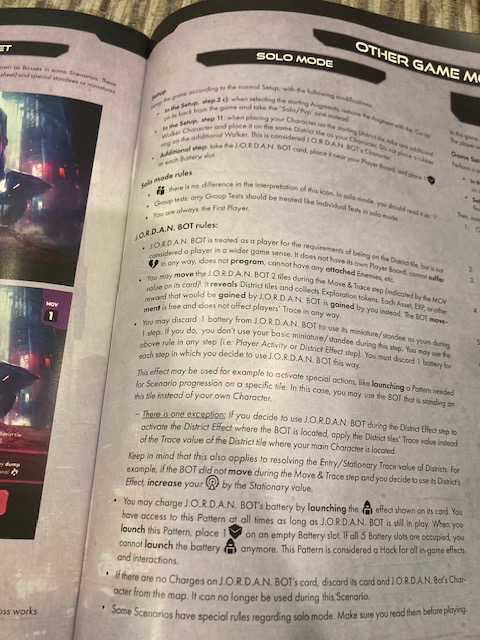
The game has solo rules that work pretty well (thank you for following Saunders’ Law!). There is a half of a page near the back of the rulebook that describes how to play solo: see above. It looks a little daunting at first, bt there are really just two main rules: Use the JORDAN BOT to help you explore, and when you see the PLAY ICON, it counts as just 1 player. So, you only have to play 1 character to play solo.

IMG_0421

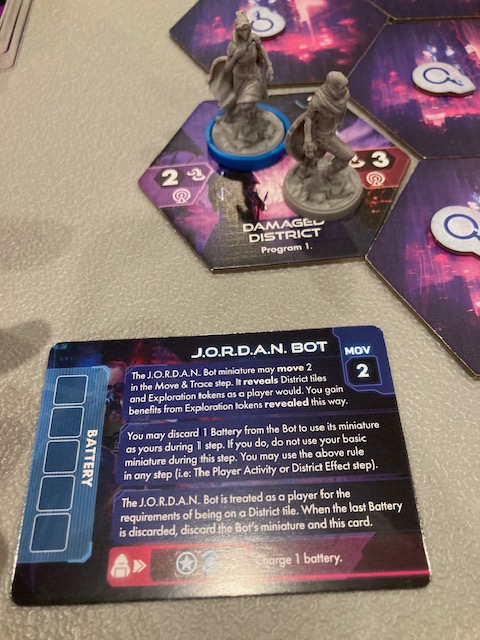
The JORDAN BOT (see card above) basically helps you get the board explored more quickly, and he’s easy to just move without any special rules or skills. Occasionally, you can launch programs from the JORDAN BOT (which can be useful) for 1 battery. See above.

Solo play went pretty well: I think you pretty much have to play this solo first to teach your friends! There are sooo many rules!! Now, once you get the majority of the rules under your belt, it’s easy to teach the rules so you can your friends can move forward quickly.  The game is pretty intuitive once you get over the rules hump.   Like I said earlier, it took me three days to get to my first solo game.  But once I got there, the game seemed to open up.

IMG_0520 (1)

Later on, after playing cooperatively with my friends, I went back and played some more scenarios solo.  This is a pretty thinky solo game, which I like.  The game says 90 minutes, but I still haven’t had a game that short yet. Most games have been at least 2.5 hours, if not more.  I do admit that some of that is “we tend to be thinky”, but I don’t think we are are prone to Analysis Paralysis.  

IMG_0516

I like the game solo, but there are a few problems that I am still unsure about: see below.

Cooperative Play

IMG_0475

It was absolutely essential to play solo before teaching my friends. Even with me being familiar with the game, it still took 2.5 to 3 hours to teach and play the PROLOGUE with my friends.

IMG_0479

Andrew tends to be the most thinky of our group, and that definitely contributed to the length of the game, but I still am not convinced this game can be 90 minutes!

IMG_0490

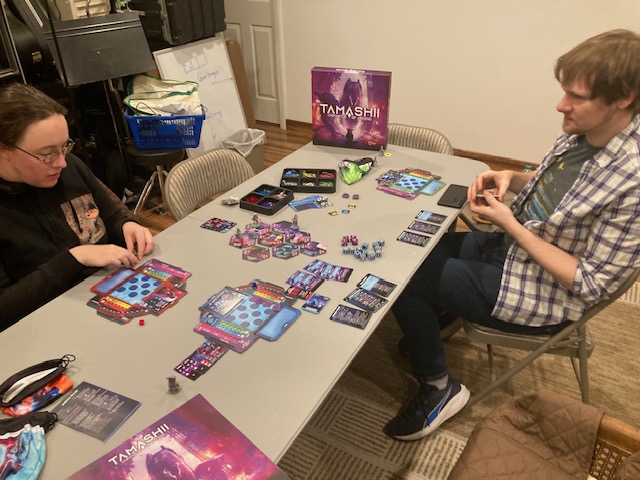
How did it work cooperatively? There aren’t that many mechanisms that allow players to share, at least in the PROLOGUE. So, the intro game felt like we were all kind of playing our own game without much interaction. There are no shared monsters, at least in the beginning! All monsters are fought in solitaire … at the beginning. In fact, we house ruled the game to do simultaneous play at most steps to move the game along quicker!

IMG_0481

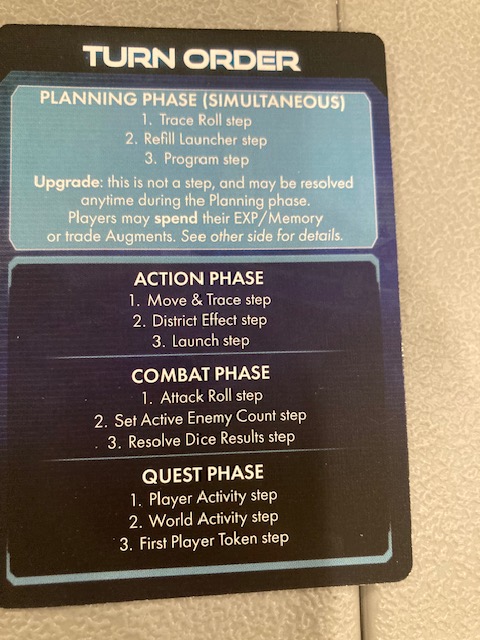
By default, the Planning Phase is Simultaneous (see the Turn Order card above), but after we played for about an hour, we realized that the Action and Combat steps could also be simulataneous! That really sped up the game!

IMG_0489

Now, at some point, we started getting AUGMENTS and skills which allowed us to help our neighbors, which should have made us stop play simultaneously. The “helps” for your neighbors were still simple enough that we could continue playing simultaneously, but we are all engineers and computer scientists! Engineering/Computer Science skills tend to embrace concurrency and recognize when there might be simultaneous-play collisions. At some point, unfortunately, I expect we will have to start playing serially again, which will slow down the game.

IMG_0478

My friends liked the game enough to play again. I think the choice to move to simultaneous play helped that: the game might hve been too long with out that decision.

Campaign

IMG_0511

So, this is a campaign game, but it may not be what you expect. As you complete scenarios in the game, you do not level-up your character, and you do not unlock new items for your character.  

IMG_0514

Instead, when you complete a scenario, you unlock items and make them “generally available”.  For example, at the end of the first PE0x283 scenario, I unlocked 5 new cards (new enemy) and some new Faction augments.  BUT NONE OF THE CHARACTERS GOT THEM immediately. These new cards are now “available” as part of the game: the new monsters “may” come out when you shuffle the enemy deck, and you “may” get the new faction Augments when you get to draw one, and so on.

IMG_0519

To be clear: your character starts from scratch at the beginning of each new scenario!  So, the only level ups you get are ones that you may see when you have to draw from a particular deck. Basically, the game gets more “stuff available” as you play, which you may or may not see depending on where you go/what you do.  

IMG_0503

Do, I like this?  I like that the game gets more and more stuff as you play, so there will be cool new stuff to see.  But, I didn’t love that your character doesn’t level up between scenarios.  I think I was expecting some kind of level up system, and I was a little disappointed that there wasn’t one.

This may just be setting your expectations for the game. Just be aware.

Level Ups During The Game

IMG_0456

Even though your character doesn’t progress as you play, there are still many opportunities to level-up as you play.  Whenever you kill an enemy, you get a EXP token: every two EXP allows you to do some cool upgrades. You can also spend BLUE (memory) to cull and add more tokens to you bag.

IMG_0439

And then there’s the LEVEL UP card which gives you some focus on some level up you can achieve.

IMG_0513

So, even though you don’t get the dopamine hit of “leveling up” at the end of each scenario, there still is leveling up as you play.

Traces

IMG_0517

By far my least favorite mechanism in the game is the Trace: there’s a pink trace to the left of your player board that shows where the trace roll is currently at: see above.

We didn’t talk about this in the Gameplay section, but the way enemies attach themselves to you is by rolling dice based on your current “trace” roll. Basically, the higher your Trace, the more dice you roll: every “o” you roll attaches an enemy to you!  In practice, it “feels like” you get about 2 enemies every 3 turns.  So, some turns you won’t have enemies attacking you (which frees you to actually explore and upgrade), but then other turns you may have 3 enemies on you!

IMG_0518

What I dislike about this is the randomness of it.  Every dice you roll gives you about  50-50 chance of getting an enemy.  You can mitigate this a little by using the rerolls, but you need to understand that the re-rolls are very scarce resources!! And even with a reroll, you may still get the enemies.   It was frustrating because the Trace elements “force” you to play as fast as you can: every time you move or stay still, you up your Trace rating.  In fact, you are encouraged not to sit in one place too long because your Trace score goes up faster.  Arguably, this is very thematic!  You are traipsing around the city being followed by the big bad AI, so you need to keep moving!

IMG_0486

But it was the least fun aspect of the game.  If you rolled poorly, you would get 1 enemy per turn.  And maybe you waste your rerolls to try to slow it down, but that just means you don’t get your rerolls for combat when you need them the most!

I found the Trace to be a little too random, and it forced the game to push forward a little too much.  I just wanted it scaled back just a little…

In one game, I was able to keep the Traces down so I only got a monster every 2 or 3 turns, and in one game I was inundated with monsters almost every turn!  And that’s very unbalancing, as you  have to “waste” your programming to fight, waste your rerolls to mitigate the rolls, and waste your time. Too many monsters was just not fun.

IMG_0515

I wish the Traces felt more balanced. What I saw: Roll badly on Traces and you lose the game. Roll well on the Traces and you win the game.  So, it doesn’t matter how great the rest of the game is, as the Trace rolls seem to define the game. And that frustrated the heck out of me.  It caused me to lower my score of  what’s a pretty good game otherwise.

(Half-formed idea for a house-rule: maybe you always get one free reroll? Or maybe you can spend a memory to just lower the Trace track?  Just give me something more so I can mitigate the Traces a little more).

And Yes, I know there’s a mechanism for eliminating an enemy with a program without getting EXP, and that does help to mitigate the enemies a little more, but it still consumes resources and may only work for a few times, depending on how many corruption tokens you get. Even with that, I still felt so under the gun all the time… I never felt like I could just “enjoy” the puzzles or enjoy this fairly cool world .. I just had to run around as fast I could. Tamashii is a cool world with cool art and cool ideas … but I couldn’t enjoy it as much.

House Rules

IMG_0477

Our experience is that the game is significantly longer than 90 minutes. So, in the cooperative mode, we strongly advise that you play each section simultaneously as much as you can.  Our beginning games seemed like it was pretty easy to play Planning, Movement, and Combat simulataenously without issue.  It made the game seem shorter and more engaging.  

At some point, you won’t be able to use simultaneous play, but  I think your cooperative game will be that much more enjoyable the more you enable it.

Error Bars

IMG_0399

I like this game and would give it a 7.  The randomness of the Traces and some of the scenarios brings that down for me.  But how much?

In a game where the rolling feels balanced or better, I will give this a 7, but in a game where a few rolls (especially on the Traces) completely screw up a two hour game, I will be much more feisty and want to give this a 5 or 6.

I feel like this game doesn’t deserve a 5: there’s too much to like! But it’s also doesn’t deserve a 6, it makes the game sounds too midling. But it also doesn’t deserve a 7: the randomness can really ruin a game.

So I will give it a range of 5-7:  that range indicates what the game can be when things are fairly balanced (a 7), but how awful it can be when the dice conspire against you.

To be clear: if this were a faster game with fewer rules, the randomness wouldn’t be so devastating.  But, after putting 2 hours into a game (with lots of rules) and having it ruined by a few bad Traces rolls… that is very frustrating because there’s so much investment.  

I think some minor rebalancing of the Traces or a slightly different mechanism for attaching enemies would easily make this game a strong 7.5/10.

Miscellaneous

IMG_0487

I really wish the minis were labelled somewhere in the game. I have absolutely no idea when to pull these out. Are these enemies? Bodies to inhabit? The Big Bad Guys? As we inhabited some new bodies in one game, we looked and looked and looked to see if any of the minis were it. Maybe? I remember that Tainted Grail did a pretty good job of labelling, so this was a little disappointing. I have all these great minis … and I am not sure when to use them!

IMG_0496

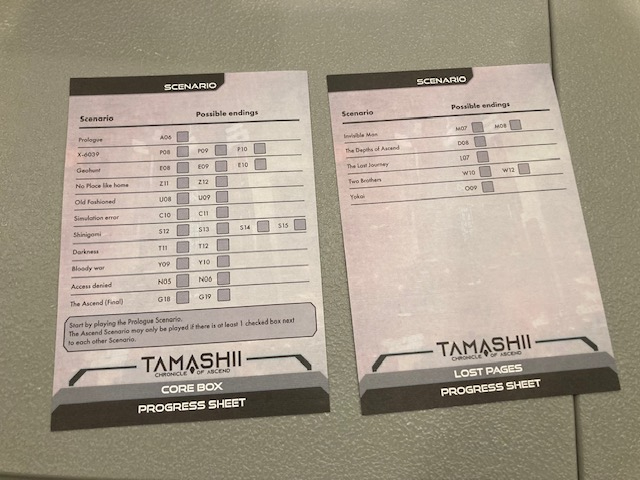
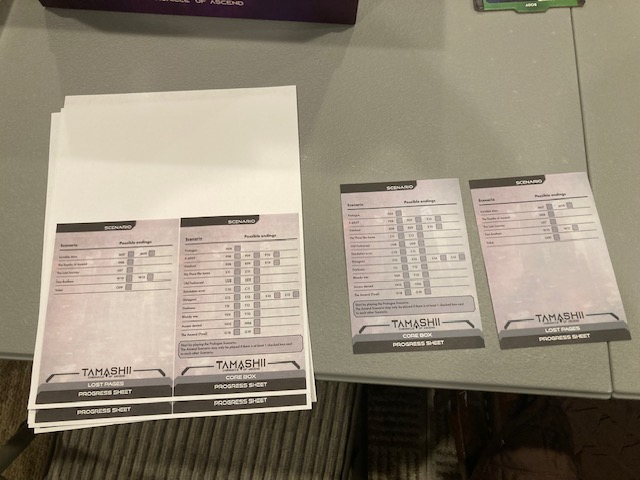
Since this is a ongoing campaign, there is a little checklist you use as you play (see above) to mark progress. . I strongly recommend either printing out a new copy or just photocopying these! I have at least two games going now, one solo and one cooperative, and I need multiple copies! See below.

IMG_0497

Programming

Is this game like what programming is really like in the real world? Not really.  Not at all, actually.  But the idea of using patterns to represent little programs was still fun.  There is some tie to computer science: a lot of times, especially in early computer science, people would study arrays of data looking for optimal ways to rearrange said data (sort it, heapify it, merge it, etc).  And the little programming in Tamashii of swap/move tokens “kinda” feels like trying to find the optimal moves in data.  So, ya, there’s an element of programming?  Maybe?

Conclusion

IMG_0504

I’ve played this mostly solo and I would give it a range value: 5-7 out of ten. When the randomness doesn’t bowl you over, this is a solid game which I like. When the dice and randomness of the game destroy you, it’s not so fun.

My friends (who haven’t played quite as much) would give the cooperative game:
Teresa: 7 and I want to play again
Andrew: 6 and I’ll play again if you want.

Tamashii is pretty good, but it may be a little long:  luckily, it’s easy to shorten by simply adding more simultaneous play in the cooperative game.  But I think the deciding factor will be if you like the extra “spicy” randomness of the Trace rolls.  That extra randomness of Trace rolls will either excite you or disgust you: decide for yourself.

A Review of 14 Frantic Minutes! (The game, not the 14 Minutes)

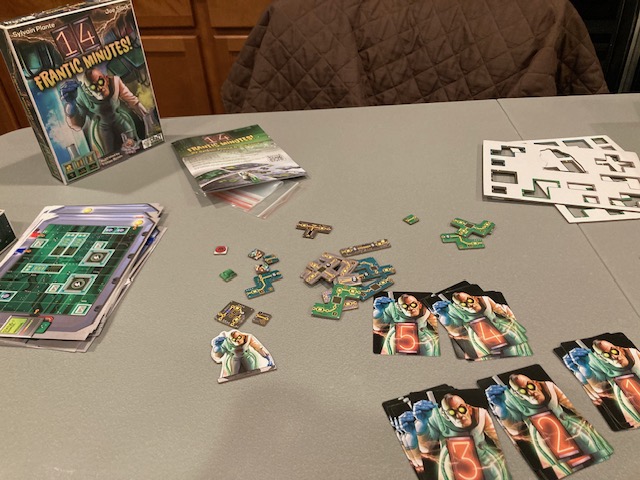
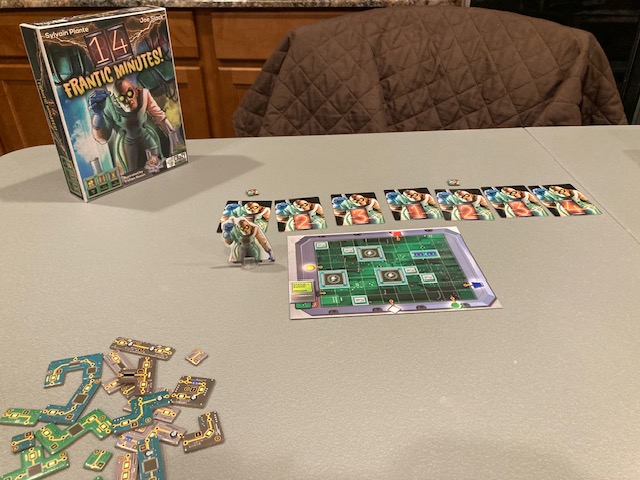
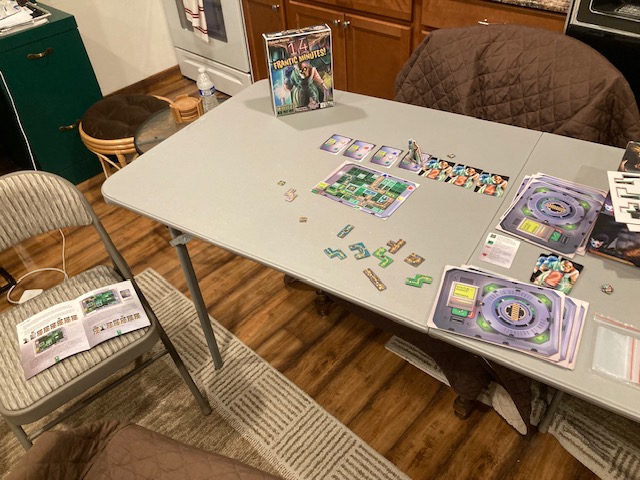
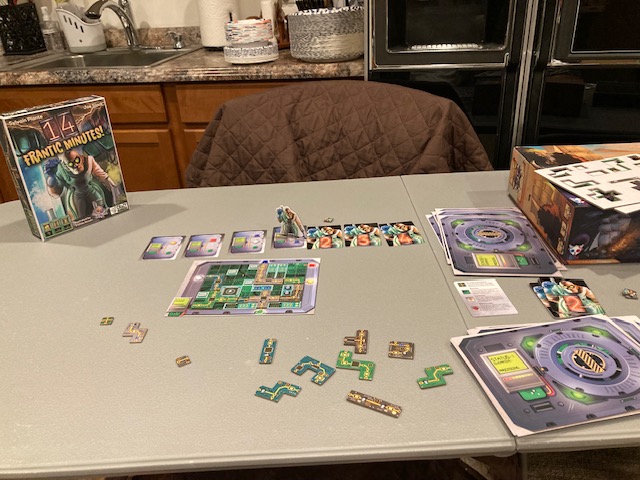
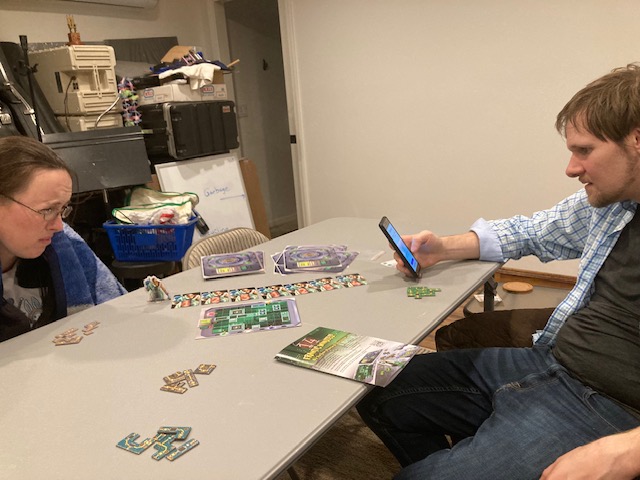
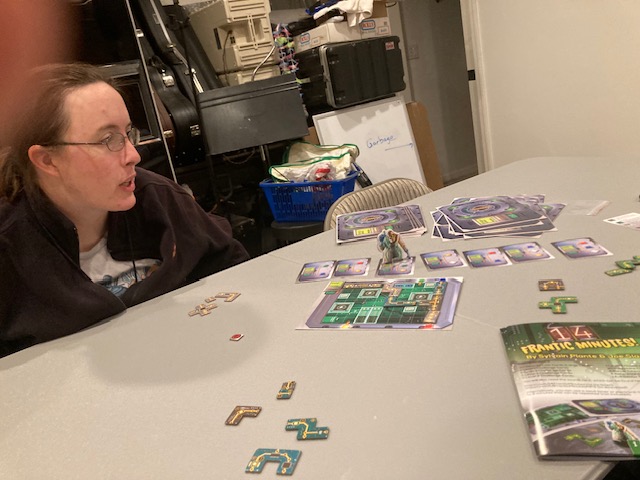
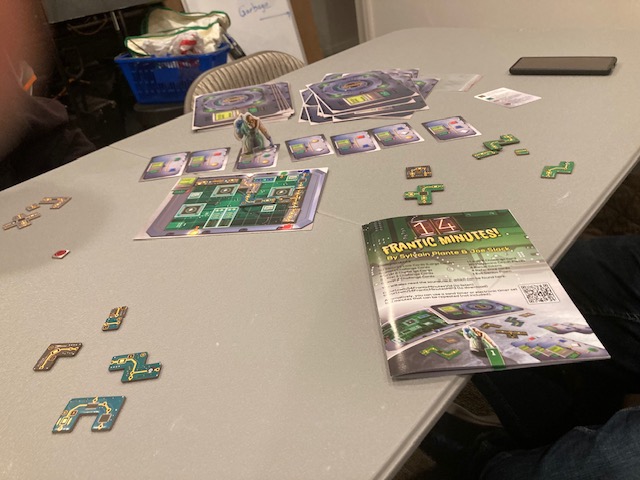
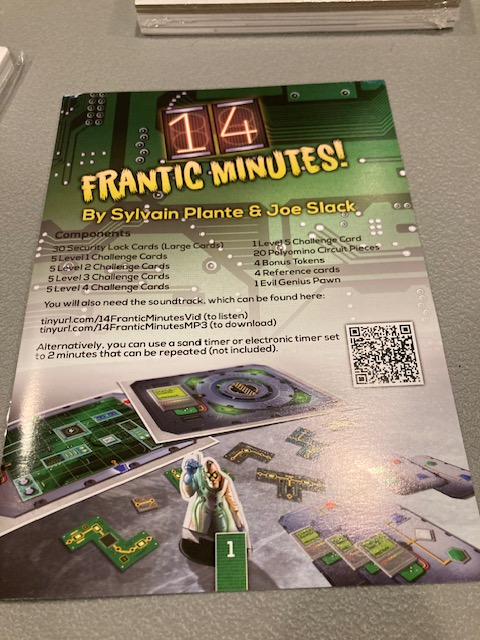
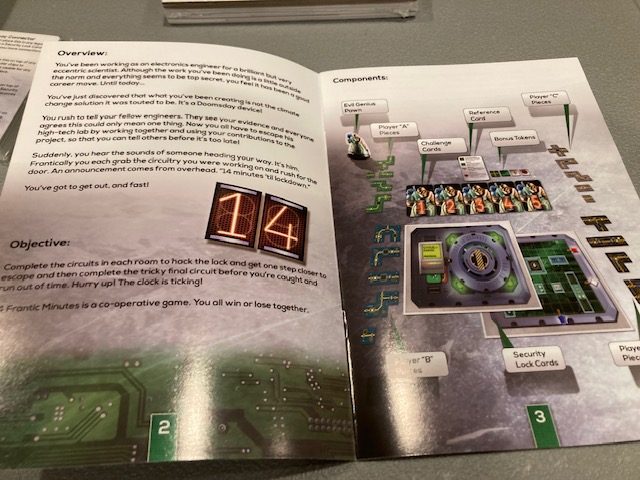
14 Frantic Minutes! is a cooperative real-time polyomino tiles (aka Tetris pieces) game that was on Kickstarter back in November 2022 and delivered to me in mid-July 2023. Considering that it promised delivery in November 2023, this is fantastic! We had a streak of 6-in-a-row of Kickstarters delivering on-time or early!

IMG_9434

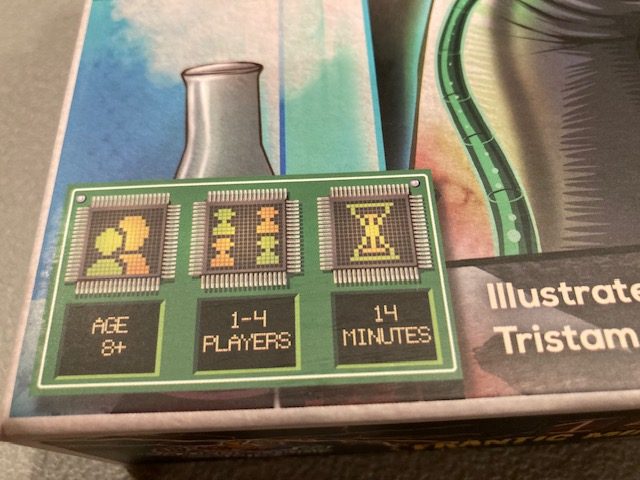
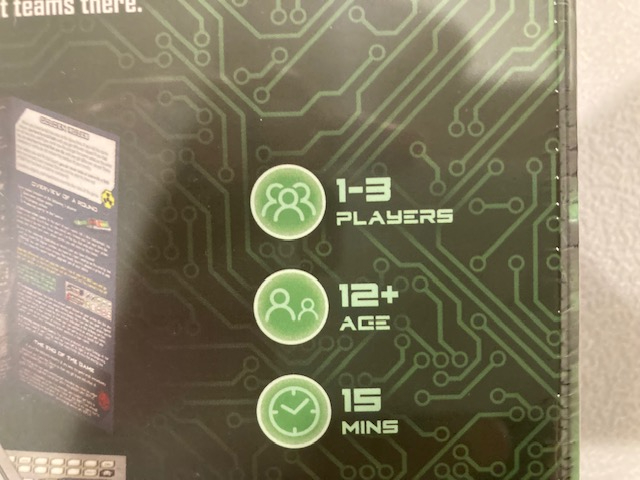
This is a game for 1-4 players, Ages 8+, and an accurate gameplay length at 14 minutes … if you play real-time with the timer.

I backed this game for three reasons: (1) cooperative, (2) tile-laying, and (3) the art.  Call me a shallow gamer, but I really like the art-style for this game!  But, cooperative tile-laying games have been really tearing up the scene for us lately, with Race For The Raft being one of the best tile-laying games of the year (see out review here)!  Will 14 Frantic Minutes! make our Top 10 Cooperative Tile-Laying Games?   Stay with us until the conclusion to find out!

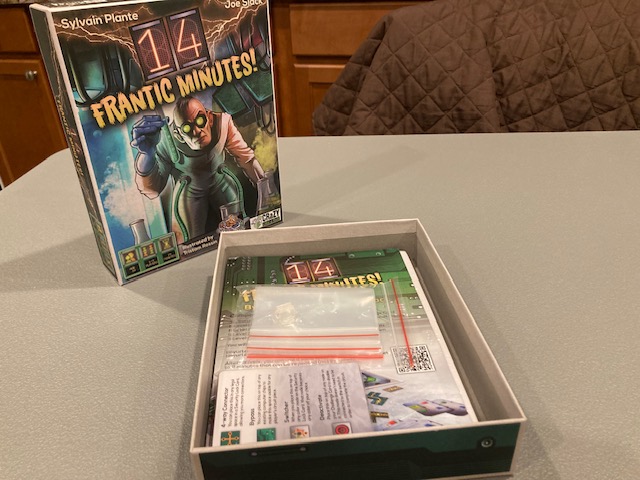
Unboxing

IMG_9487

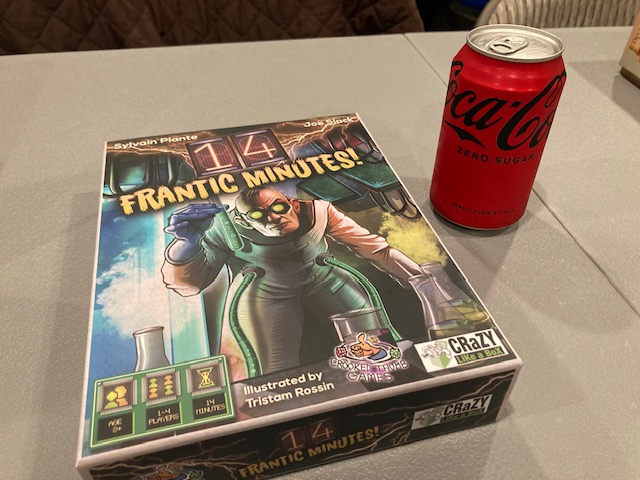
14 Frantic Minutes! is a smaller box game than many games we have seen lately: see the box above with a can of Coke for reference.

IMG_9436

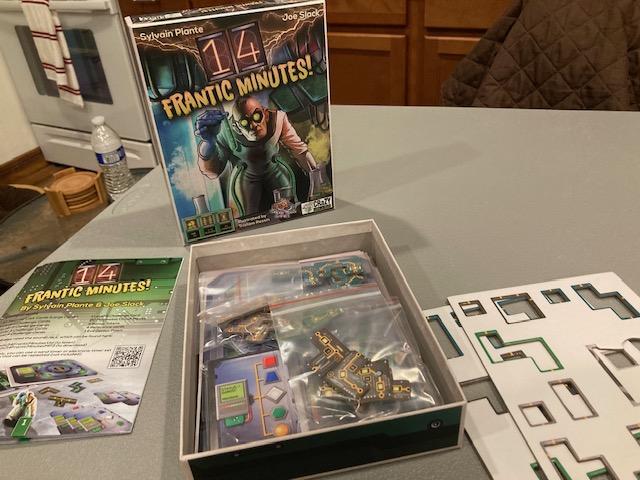
The box looks fairly empty, with no too many components.

IMG_9437

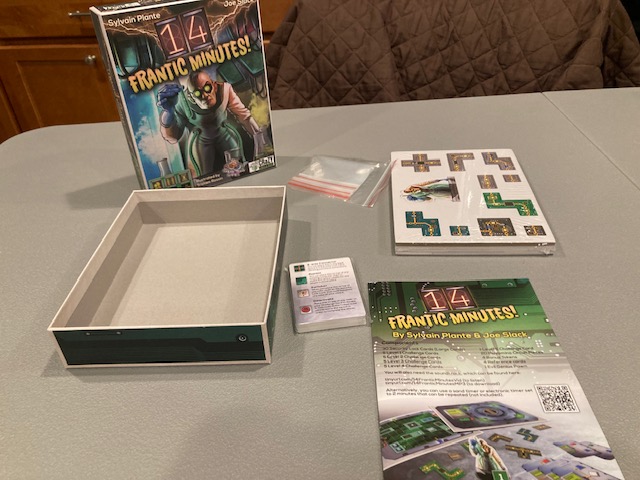
There’s a rulebook, some plastic bags, cards, a bunch of tiles, and some punchouts.

IMG_9448

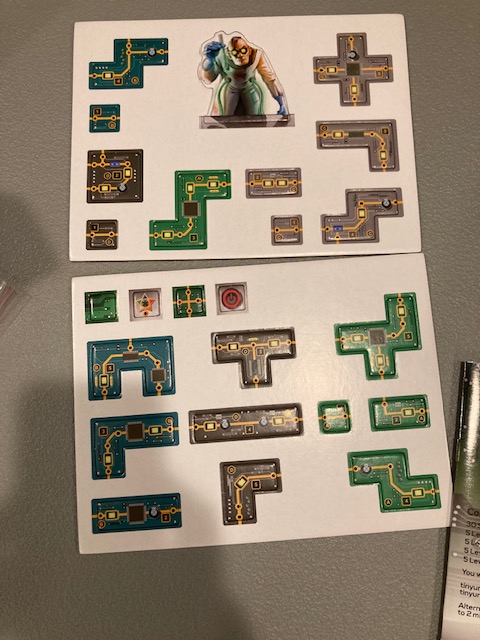
I did say this is a polyomino tile-laying game, but there are surprisingly few polyomino tiles! See above.

IMG_9449

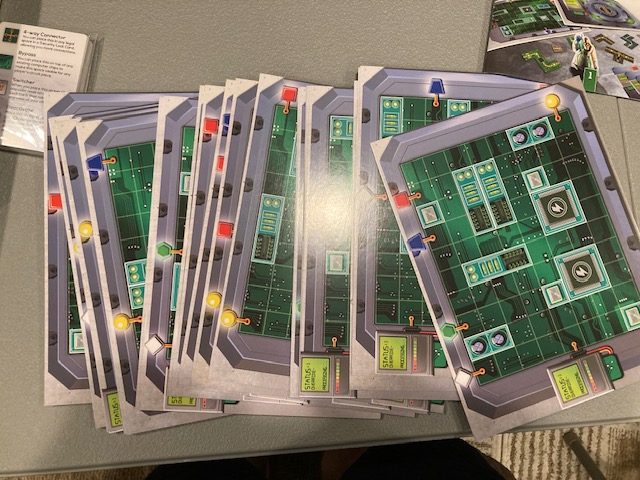
The majority of the heft in the box are the 30 Security Lock cards (which I think are poorly named and/or labelled). These are the playfields for the polyomino tiles.

There are also a small number of cards: they are not linen-finished.

IMG_9455

And that’s about it! The components look pretty nice, if a little repetitive (that Evil Guy on the cover is on a lot of cards and components).

Gameplay

IMG_9486

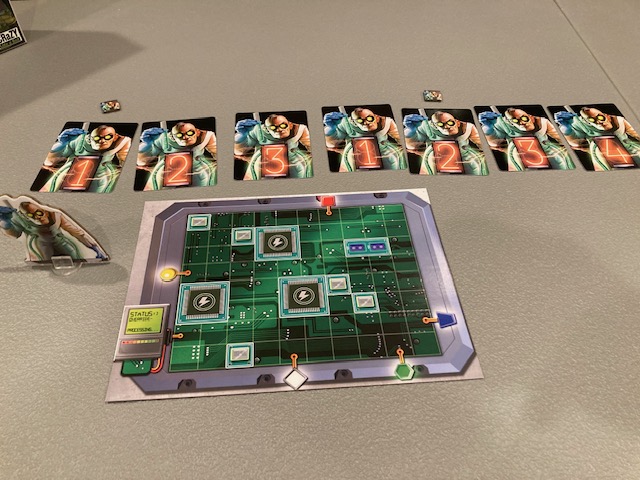
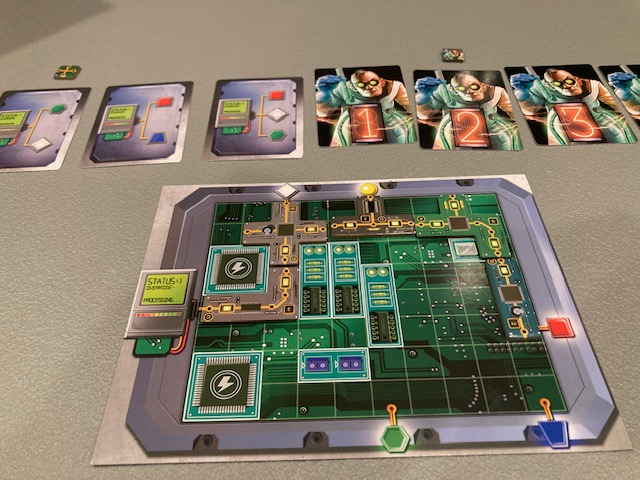
Gameplay is pretty straight-forward: there are 7 Challenge cards showing what connections need to be made (each card is a “room”).

IMG_9461

At the start of the game, you “flip” the first Challenge card (labelled “1” above: this is the difficulty of the connection) and start!

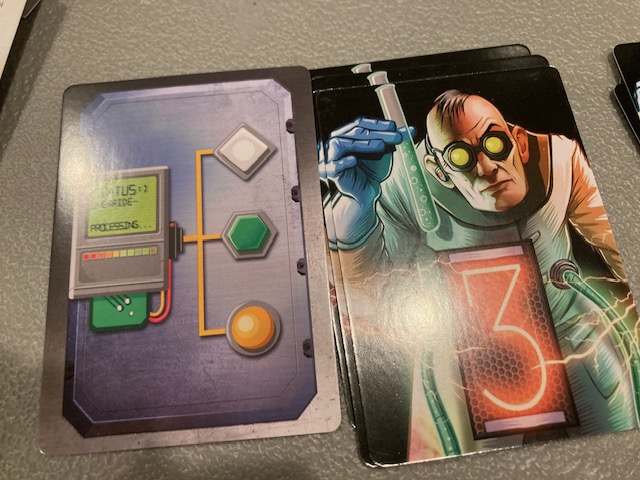
IMG_9452

Each connection card looks something like the above: it indicates what spaces need to connected to the main unit (the Switch). To be clear, all of the shown node symbols need to be connected to the Switch to move to the next room.

IMG_9482

See above as the white/yellow/green and blue nodes all connect to the main switch!

IMG_9476

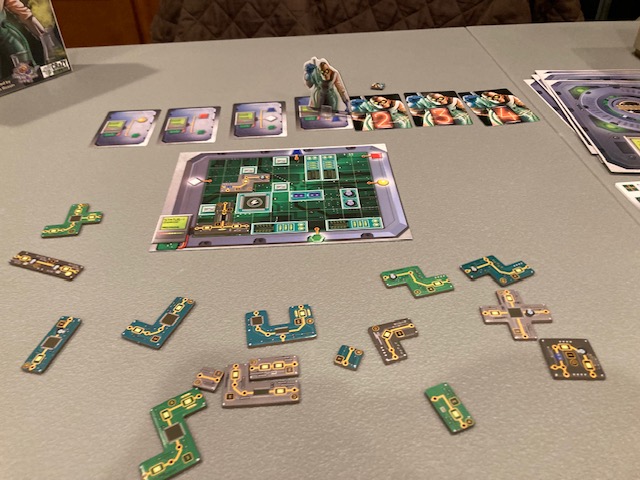
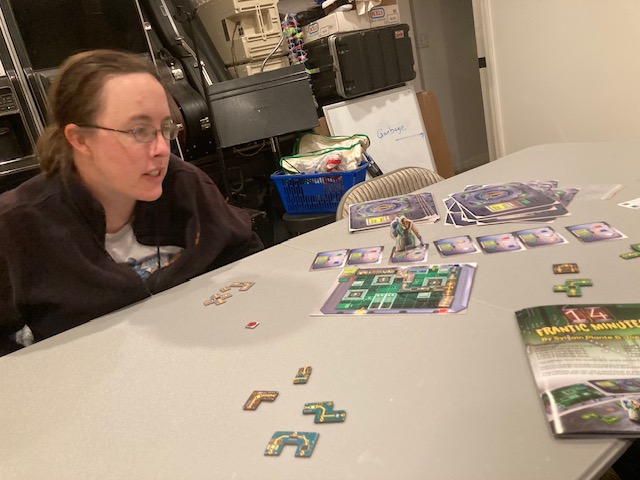
Players each have a small supply of polyomino tiles, and are all working together to place them on the board to create the circuit! There is no turn order, as players just frantically place their tiles on the board! About the only rule constraining the players is that they can ONLY play their tiles (or the neutral player tiles in a 3-Player game). Other than that, players can talk, show tiles, and communicate as much as they want!

IMG_9487

This is a real-time game! You have 14 minutes (using supplied timer) to get through all 7 rooms!

IMG_9472

Every time you complete a circuit, you flip the next card and grab a new room (aka Security Lock Cards) and start the next circuit!

IMG_9480

The timer occasionally makes the evil bad guy “levil augh” and close a door: whenever that happens, he moves forward one room (at the top). If the badguy ever reaches your current circuit/room (at the top), players lose! If you can do all circuits before the bad guy reaches you, you win!

Solo Play

IMG_9460

So, this game follows Saunders’ Law and has a very viable solo mode. The rules do a very nice job of telling players how to set-up for 1 to 4 Players. Basically, there are 4 sets of 5 polyomino tiles for 4 players. In a solo game, the solitary player gets all 20 tiles! (In a 4-Player game, each player gets one set of 5 tiles). See the solo player above all set-up with all the polyomino tiles in the lower left!

IMG_9485

To get familiar with the pieces, I played my first game without the timer. I strongly recommend everyone do this! I think you need to get comfortable with the pieces to have any chance at this. It probably took me a half hour to do an “untimed” version of the first 7 circuits.

IMG_9483

My next game was timed using the app: and boy did I do terrible! I think I only got to room 4 before I lost. But that’s okay! This game is pretty quick to set-up and try again. Seriously 14 minutes for a game is easy to try again.

IMG_9479

I kind of enjoyed this without the timer as a relaxing puzzle. It sounds like it would be “too easy” when the timer isn’t goading you, but it’s really not! At least, not at first. I found myself looking forward to just relaxing and playing without the timer. I think once that gets too easy, then maybe the timer makes sense?

Cooperative Play

IMG_9602

Cooperative play started the same way as solo play: we ended up playing a full game without the timer. It took about 35 minutes. We had fun, it gave us a chance to learn the pieces .. and it was still hard! Sometimes 3 people end up getting in each others way!

IMG_9604

We did win the 3-Player game with the timer … we think. The problem is that the app stopped because Andrew’s phone shut off after 5 minutes. But we think we won?

IMG_9603

Generally we all liked the game, if we didn’t love it.

Problems

IMG_9438

The biggest problem with the game is the “app”. You can only download using the little Q-box on the front of the rulebook. (Alternately, you can use a timer that resets every 2 minutes). Andrew didn’t want to download it because it took him to a “sketchy” dropbox location. I downloaded without (I think) incident. The other problem was that the laugh and door close weren’t always clear: it seemed like we struggled trying to figure out what the noises meant and then sometimes didn’t hear them! “Is the laugh the next room, or is it the door close?” I think it’s the door close, but in frantic real-time, sometimes we didn’t hear it! It needed to be clearer … louder?

IMG_9439

There were some things that weren’t clear the first few times we played: some of the connections are unclear (when it leaves a colored Node, can it come off in any direction? After many plays, I think the answer is no). But these problem go away after a few full plays: you get familiar with the components and get a sense of how everything works.

Replayability

Even though this is a small box game, I think there is still a decent amount of replayability in here. You can make the game harder by varying the Challenge cards (higher numbers are harder), and the 30 Room Cards give lots of different layouts in which to build your circuits!

Conclusion

IMG_9605

We had fun playing. The game doesn’t really embrace the non-real-time option to play, but I personally think I had the most fun playing without the timer. I saw this is just a fun little puzzle.

IMG_9470

We wish the app were better, but with a little experience, we got it going.

IMG_9455

This feels like a fun little cooperative filler: you can guarantee it’s at most 14 minutes! It’s easy to set-up and easy to play. I can see this being a perfect convention game to play while you are waiting to get to your next game…

I liked it the most:

Rich: 7/10
Teresa: 6/10
Andrew: 5.5-6/10

I think this would make my Top 10 Cooperative Tile-Laying Games, just not near the top of the list.

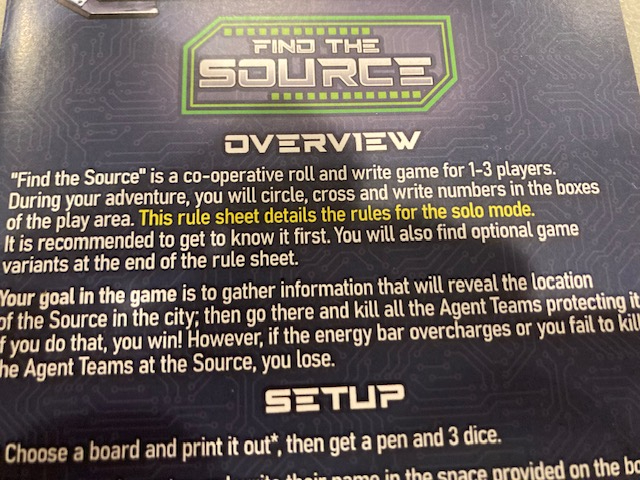
A Review of Find The Source: A Solo/Cooperative Roll-And-Write

Find The Source is a solo and cooperative roll-and-write game from Kickstarter. This game was on Kickstarter from Dec. 13th 2022 to Jan. 12th, 2023 and it arrived at my house Oct 4th, 2023. It promised delivery June 2023, so it’s about 4 to 5 months late (depending on how you count it). I used to say “that’s pretty typically late for a Kickstarter game“, but recently games have been arriving a lot sooner Still, it’s not egregiously late, so it’s no big deal. (I still have Kickstarters that are years late, so 4 to 5 months is nothing).

IMG_0245

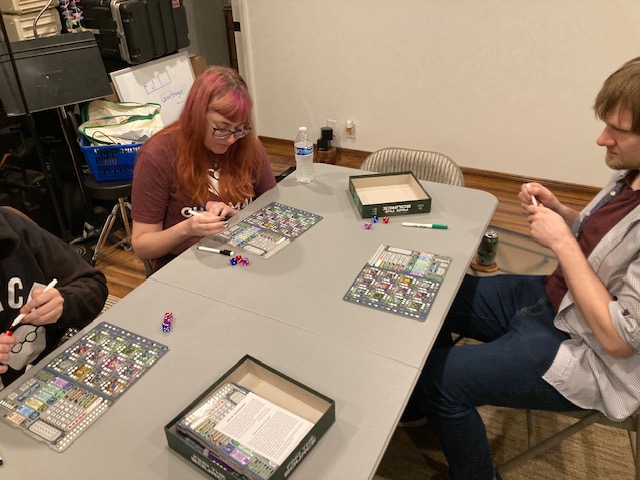
This is a game for 1 to 3 players. The game box says 15 minutes for play time, and wow does that feel wrong! The solo game might be 15 minutes once you know the game, but the cooperative game feels much longer, like 30 minutes to 60 minutes! So, this is still a quick game, just not as quick as the box might say.

IMG_0242

The 3-player upper limit is a bit odd, but this is mostly because the game only has a limited number of boards.

Let’s take a look!

Unboxing

IMG_0246

I paid extra from the Kickstarter to get the boxed version.  See the Fresca can above for scale.  Now, most people from the Kickstarter (2563/2733 backers) actually just did back the the print-and-play version for this: the print-and-play was only $5 (versus $39 for the actual physical version).  Recall that we tried print-and-play with The Legends of Storm City (another cooperative roll-and-write) at the start of the year, and our conclusion was the print-and-play was too much work and and too much money for us: we’d prefer the physical version.  So, we put our money where our mouth was and we got the physical version!

IMG_0247

There’s a nice intro from the developers just inside the box: the little touches help.

IMG_0248

There’s a built-in expansion (adding three different boards): the rules are in a teeny sheet at the top.

IMG_0249

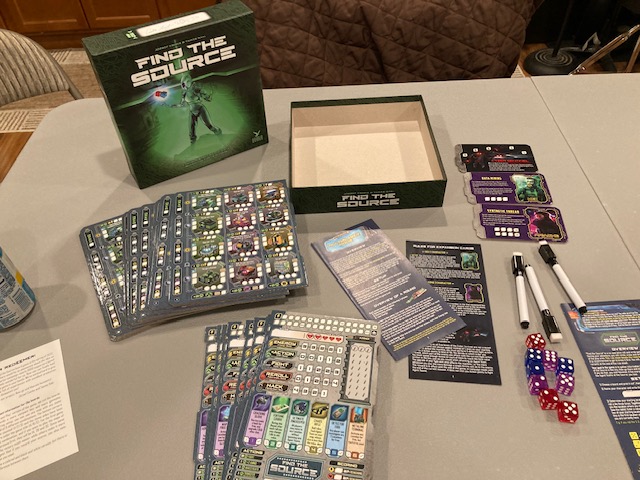
The game is mostly dry-erase boards and dice: see above! The box is filled all the way to the top with boards.

IMG_0250

These are the cardboard boards for the expansions.

IMG_0251

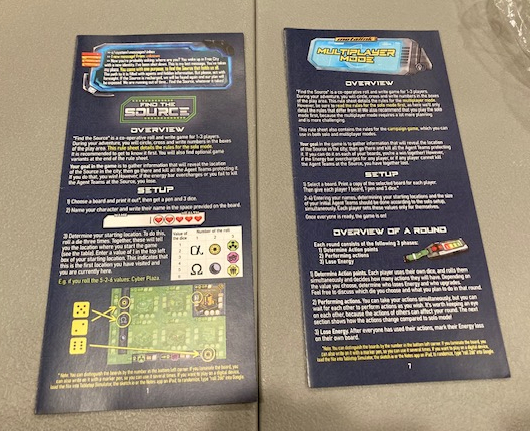
The rulebooks are tri-fold pamphets?!? There’s two rulebooks actually! One for solo play (see above) and one for multiplayer play (see below).

IMG_0291 (1)
The multiplayer rulebook

IMG_0255 (1)

There are 9 player boards in 3 sets of 3 (labelled A, B, and C). When you play a multiplayer game, everyone in the group must get a board from the same set (we figured this out later: it wasn’t clear from the rules). The reason: each player board has a set of 6 items and they all have to be the same items so you can “give” items to each other (without having to read another board).

IMG_0281 (1)

Basically, the three sets give the players some variety: the items are different depending on which set you use.

IMG_0256 (1)

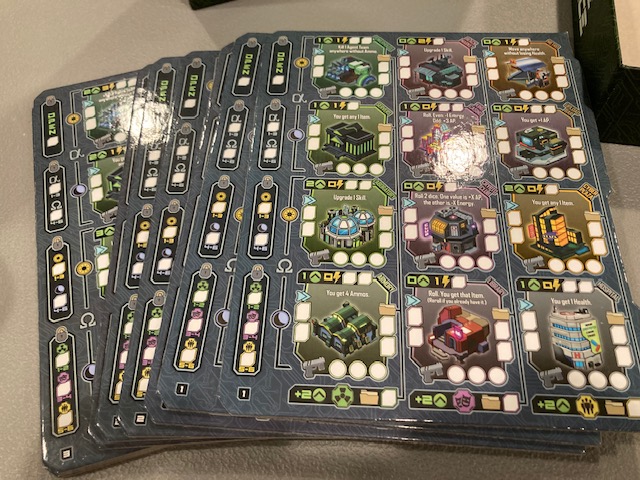
The other 9 boards are 3 sets of the 3 city tiles: like the player boards, when playing multiplayer, all players must get a tile from the same set (labelled 1,2,3). Each city has different locations with different abilities and layouts. Again, the three sets of cities are for variety.

IMG_0258 (1)

And then there’s 9 dice (3 for each player) and 3 dry-erase markers with cool looking erasers. Overall, this is why I paid $39 for this: I get nice dry-erase boards, nice dice, nice markers (well, OKAY dry-erase markers) and a nice package. I am totally glad I paid the $39 for a nice package, rather than trying to print everything myself and wasting time/energy when the printed version is nice!

Rulebook

IMG_0253 (1)

I don’t love that the rulebooks are trifold pamphlets.

IMG_0291 (1)
The multiplayer rulebook

I do like that the recommend way to play is to learn the game is to read the solo rulebook first and THEN play multiplayer. So, read the solo pamphlet first, play a game, and then you can teach your friends multiplayer!

I’d probably give this a C on the Chair Test! Why? Even though it fits well on the chair, the font is really tiny and impossible to read on the chair next to me. I had to have the rules pamphlet on the table as I played: that font is pretty small!

IMG_0252 (1)

Overall, the rules were okay. There were a few misses in explanations, but it did a good enough job teaching the game. I just wish the rulebook, pardon me, pamphlet, had bigger fonts and more of a rulebook presence.

Gameplay

IMG_0292 (1)

This is a roll-and-write game.

Every turn, every player rolls two dice (doubles are always rerolled) until you get two different values. You get the choose one of the dice to use: this is the number of Actions you get this turn. (Mark the actions on the third die and put it on your sheet: see below).

IMG_0270 (1)

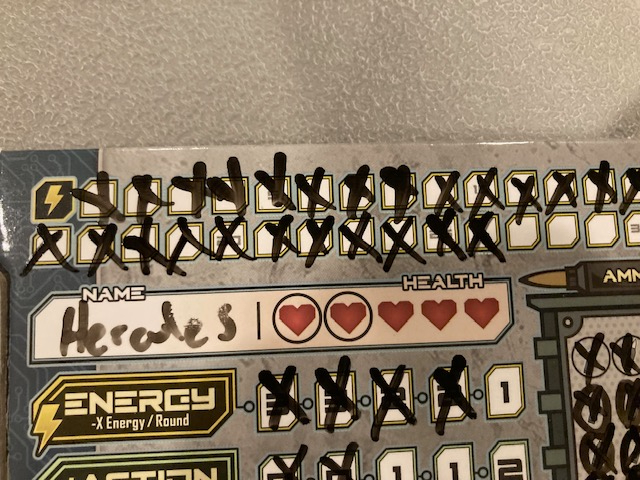
Why would you not always choose the bigger number for number of Actions? For one, the bigger number costs an energy! Each player has a limited amount of energy at the top of the player sheet: if any player ever runs out, game over!

IMG_0279 (1)

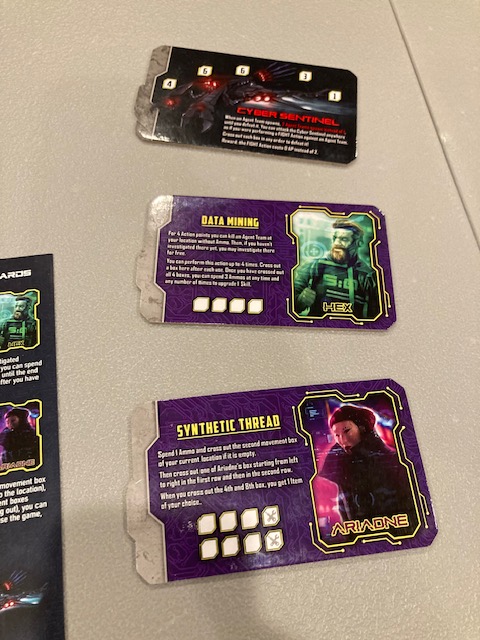
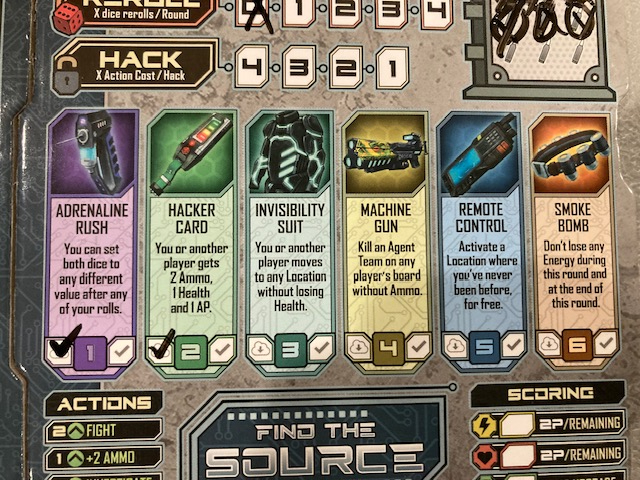
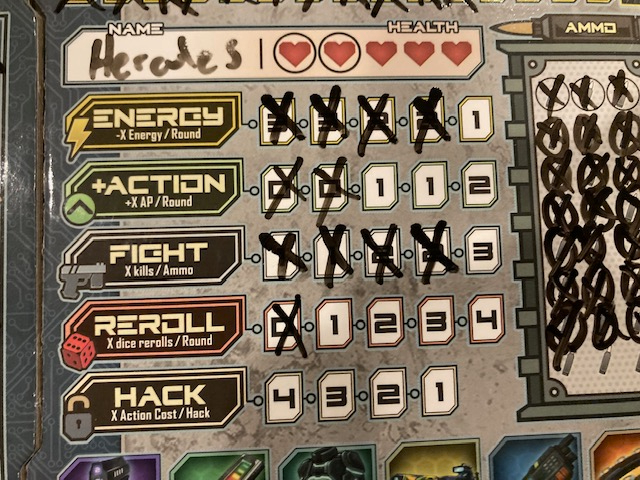
The second reason is that if you choose the lower number of actions, you get to upgrade one of your five skills!

IMG_0280 (1)

Everytime you X a skill, you make it a little better. For example, I upped the REROLL skill and get 1 reroll of the dice per turn! Early in the game, it may make sense to take the lower number to up your skills.

IMG_0299 (1)

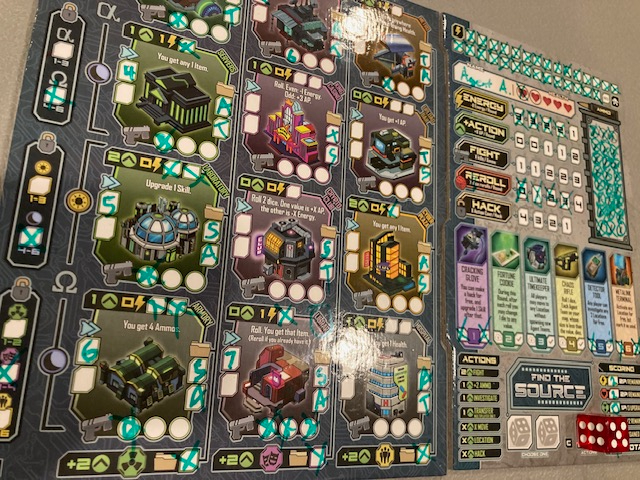
To the left of your player board is the city! See Above. Players use Actions to fight gangs, move, activate locations, and investigate! In case it wasn’t clear from the name of the game, the purpose of the game is to Find the Source!! The Source is a city location where the big bad hides out .. you have to find the Location of the Source, storm in there, and take out all Agent Teams at that Location! If you do that, you win! Players lose if they ever run out of energy or can’t manage to take down the Location of the Source.

Find the Source

IMG_0284 (1)

Locations have a little folder on them: to help find the Source, you have to spend an action to Investigate (put an X on the folder). Once enough Locations are investigated in a row, a player can HACK to find a portion of the Location (which column, or set of rows).

IMG_0277 (1)

Once you find the Source, you will populate it with Agent Teams, and all players will have to take out the Source on their board to win (the Source is the same on all player boards).

Solo Play

IMG_0265 (1)

It’s so interesting that the game has a separate rulesheet for solo mode! And in fact, it suggests that you play a solo game before expanding to the Multiplayer Game! So, this game absolutely follows Saunders’ Law! I would say this game was probably solo first, then the multiplayer tacked on: at least that’s what it feels like.

IMG_0283 (1)

Solo set-up is pretty easy! Find a player board and a city board and stick them together! There’s 3 different types of player boards (where the Items vary) and 3 different types of cities (where the Location abilities vary), so there’s some variety in the game! Note that the boards actually physically fit together very nicely: they are slotted.

IMG_0285 (1)

The solo game was pretty fun. My first game was a win, but I cheated: I forgot to pay energy costs when I used Locations. Later games were closer, but still fun.

IMG_0287 (1)

Overall, the game was longer than 15 minutes as the box says. I tend to ponder more, so I suspect my solo games going forward would be 20-30 minutes for the solo games.

IMG_0286 (1)

The game is really Find The Source to win, but there is also a notion of score, so you can try to do better on later games and “best” your high scores.

IMG_0288 (1)

As I played, I always felt engaged. I had to think ahead of what I wanted to do, choose when to take fewer actions to upgrade skills, but always balance energy and ammo. Honestly, the solo game worked pretty well. I can imagine playing this when I am waiting for someone to come over, or if I want to kill 20 minutes. It’s pretty easy to get going, the rules are simple (once you know them), and the game sets-up so quickly!

Cooperative Play

IMG_0294 (1)

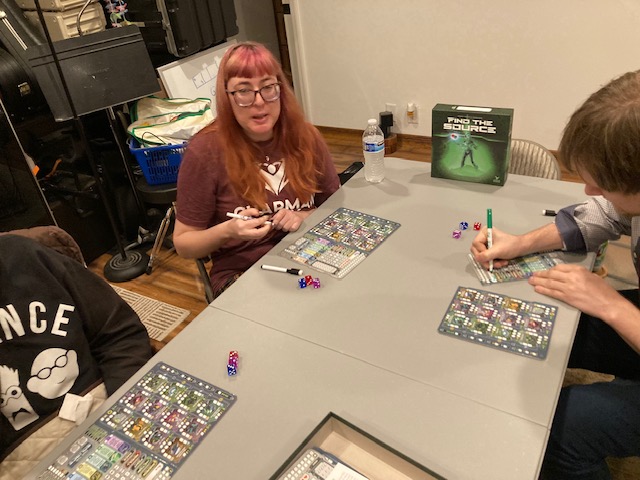
The cooperative game is very similar to the solo game! Every player gets a board (making sure the player and city boards match), and does everything the solo player would do on their board only. The difference is that the investigate and HACK Actions are shared, so when any player investigates, ALL players mark information! The HACK Action becomes a lot harder, as more players have to investigate rows of the city to enable the HACK. So, players need to coordinate as they play: “I will investigate King Casino this turn! Someone else needs to investigate there too so we can HACK!”

IMG_0297 (1)

The other major difference is that players can use an Action to “share” Ammo, Health, and Items! If one player is lacking on a turn, players can “give”!

IMG_0301 (1)

Players all win or lose together: if any player runs out of energy, then all players lose! Once the Source has been discovered, it’s the same on all city boards! So, each player must “handle a different entrance” of the Source Location and take out the Agents! Players when when all players have handled the Agents at their entrance!

IMG_0286 (1)

Score still matters: if the players win, all players compute their individual scores and the LOWEST score is the score for the team! That’s why the “share” action is so important: if one player is rolling well and another is rolling poorly, there is a way to share the wealth to try to keep all scores up.

IMG_0295 (1)

This game felt “a little” like multi-player solitaire, as each player tends to concentrate on their own board. The shared Investigate/Hack actions did help elicit some cooperation (as did the share action). This isn’t a game where everyone is engaging in massive amounts of cooperation, but there is enough that you still will enjoy playing with your friends. And the Alpha Player seems to lay dormant, as everyone is too busy focusing on their own board…

Some Issues

IMG_0264 (1)

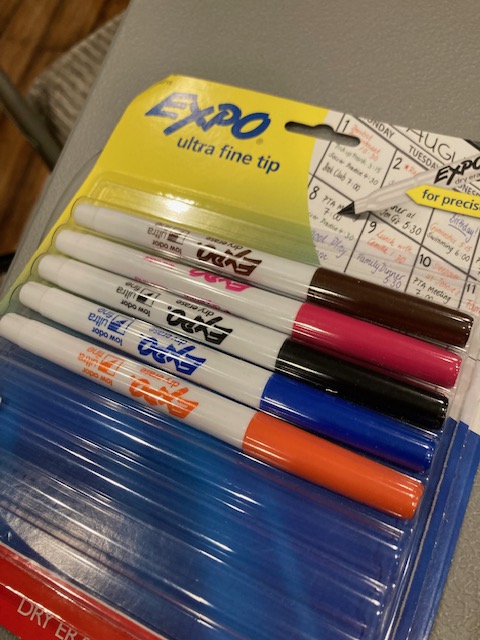
The erasers for the game are fantastic … they do work well! (I don’t think I’ve ever seen white dry erasers) But the included dry-erase markers have too “fat” of a marker: the writing on the board looks messy. Nowhere is that more obvious than the scoring section: it looks messy.

IMG_0286 (1)

We ended up using ultra-fine dry erase markers when we played again!

IMG_0296 (2)

These are a lot easier to read!

IMG_0300 (1)

Sara used the purple ultra-fine marker and it looked cleaner! Honestly, we’ve had this issue with “too fat” dry-erase markers with HexPloreIt (see our review here) and other games that use dry-erase markers. It would be nice if game used ultra-fine markers.

IMG_0282 (2)

Another issue we had was “where are we in the city???” The current city Location is the “highest number” to the left of the city, but as you go back and forth between city board and player board, it might be nice to have some kind of pawn to show where you were …

IMG_0324 (1)

So, even though the game doesn’t come with a pawn, we recommend getting one for your board: we stole that one out of Mechanical Beast (a cooperative tile game that’s not quite a tile laying game: see our Top 10 Cooperative Tile-Placement/Tile-Laying Games). It’s a minor thing, but it helps.

Cool Stuff

IMG_0264 (1)

The erasers on the pens are fantastic: I know I already said that, but they were some of the best dry-erase erasers I’ve seen! They worked really well!

IMG_0260 (1)

A Cool feature: The boards are two-sided! See above! One side is black-and-white, and one is color! So, if you find the color version too “busy”, you can use the black-and-white side instead! All my friends and me chose the color side, but I definitely admit the black-and-white side is much less busy.

IMG_0291 (1)
The multiplayer rulebook

There is a campaign to try: it basically just takes you though all the boards. I personally found that one game was “just right”, I’m not sure I need the campaign, but it’s cool that it is there.

It’s also cool there is some variety in the boards: it won’t be the same game everytime and it’s really easy to use different player and city boards.

Conclusion

IMG_0292 (1)

There aren’t a lot of cooperative roll-and-write games. We liked Escape: the Roll and Write Game (see review here), and The Legends of Storm City Roll and Write Game (see review here) was a bit of a miss for most of my group, but I think Find The Source may be our current favorite cooperative roll-and-write game! It’s got great components, it has solid rules, has interesting choices as you play, it’s easy to set-up, it’s easy to learn, it’s easy to play, it’s quick to tear-down, it’s quick, and it’s fun. It might be a little samey if you play too much, but it’s easy to pull this out occasionally and play in 20-60 minutes (depending on your player count). One caveat: You should probably get some ultra-fine markers, and a pawn or three.

I’d say this is a solid 7.5/10.

Marvel Midnight Suns: The Best Game Of The Year

IMG_9608

Yup, you are reading that right: Marvel Midnight Suns is my Game of The Year. And this is probably surprising to some of you since this is a cooperative board and card game blog! We love cooperative and solo games here at CO-OP Gestalt, but Marvel Midnight Suns just captivated us. Why are we talking about it a video game in a board and card game blog?

IMG_9609

I realize I am late to the party calling Marvel Midnight Suns my Game of the Year: It came out in Dec. 2, 2022 for the Ps5. But I didn’t get it until mid March 2023.

Solo Game

IMG_9610

Let’s justify this right away: we talk a lot about solo games here at CO-OP Gestalt! We have discussed many solo board games such as The Dark Knight Returns (see our review here), or Eila and Something Shiny (see our review here). We also frequently discuss Saunders’ Law, which addresses solo modes in board games (see more discussion here). And Marvel Midnight Suns is a solo game: it only plays 1-Player (see back of box above). And it’s an offline game: you can play the whole thing without being connected to the internet. But, strictly speaking, it is a video game (not a board game).

IMG_9503

We have discussed solo video games here before: For example we discussed why Monkey Island has influenced my expectations of solo board and card games here: I think Marvel Mystery Suns will also influence my expectations for solo games for years to come.

It’s a Superhero Game!

IMG_9526 (1)

Anyone who follows CO-OP Gestalt knows how much we like solo and cooperative Superhero games: See our Top 10 Cooperative Superhero Games list!

IMG_9531

You get to play so many interesting characters in this game! Iron Man! Captain America! Wolverine! But what really sold me on the game, you get to play Illyana Rasputin, aka Magik! I loved the New Mutants growing up, and so this was a blast of nostalgia!

No mistaking it, this is a Superhero game. With a touch of magic.

Why

IMG_9530

There are four things that really make this Game of the Year for me:

  1. Deck-Building
  2. Exploration
  3. Story
  4. Friendship

Deck-Building

IMG_9511

This is a deck-building game. Wait, what? That’s what I thought when I first played it! We love our cooperative deck-building physical card games: See our Top 10 Cooperative Deck-Building Games! Normally, when I think of Deck-Building games, I think of card games. Yet, here we are, Marvel Midnight Suns uses deck-building as it’s main combat mechanic!

IMG_9509

This means that combat is turn-based: it’s not a real-time free-for-all. You draw cards, play cards to do damage and “other things” (see above as we can hack a console), and redraw cards to try to get what you need. I mean, it’s a deck-builder!

IMG_9527 (1)

One of the great things about this is that there are so many ways to upgrade your deck! There are about 12 heroes with 8 cards each in their deck. That doesn’t sound like a lot of cards, but there are so many ways to upgrade those 8 cards!

  • If you have multiple copies of the same card, you can upgrade a card and add an additional ability
  • You can get new cards as rewards for missions
  • You can exchange resources for cards (at the forge)
  • You can craft cards if you have the blueprint
  • You can add abilities to cards with resources

IMG_9517

And some I  am probably forgetting!  Tony Stark and Dr. Strange both help you get the upgrades you need.

IMG_9520 (1)

I often wonder if this could be a physical card game … but I don’t think it would work well.  There are so many things that the game keeps track of for you, and I worry a physical version would be very fiddly.  So, it’s good that it’s a video game.

Exploration

IMG_9529

The thing this game really nails is exploration. You are (mostly) playing the Hunter (more discussion below) interacting with many heroes in the Abbey. The Abbey is a world unto itself, with beautiful scenery and a beautiful architecture. I think this game is meant to be played in about 50 hours, maybe less. I think I played for 100 hours? But, I spent the first part of the game just exploring as much as I could!

IMG_9522 (1)

This world is gorgeous and exploration is fun and relaxing! The gardens and forests of the Abbey are just beautiful! Sometimes, I would just explore to relax because it’s so gorgeous. And exploration is good: it helps you find and unlock things that are necessary to push the plot forward.

I haven’t enjoyed exploring a game so much since Psychonauts (another great solo video game).

Story

IMG_9528

I think there is a better story here in Marvel Midnight Suns than most Marvel shows right now! This is a big, expansive story spanning many villains and heroes! I mentioned I played for 100 hours getting through the story, and it felt like there was an interesting story the entire way through! There were plot twists, there were highs and lows, and the story was emotional! I mean, I would pay money to see this story turned into a Marvel Movie.

Friendship

IMG_9532

The characters were not two-dimensional in the story! You play the Hunter in this game, and one of your goals is to organize the heroes and befriend them. One of the great mechanics of the game is that you are trying to make friends with all the characters! As you did things together (played video games, played cards, watched a movie, did Yoga) you would up your friendship with each character individually! That’s right! Friendship was per character! And better friendship means you were better at fighting together! And the dialogue and reveals seemed very sincere and realistic. Seriously, the friendship mechanic of this game was fantastic: I want to see more of this mechanic in more games: both video and board/card games.

Problems

IMG_9533

This wasn’t a perfect game, but it’s darn close. There were few things I would change:

  1. I would add a compass so you would know which way Hunter is facing when he travels. Too many times, I went back and forth between the map/character view because it wasn’t clear which way he was facing: that was slightly annoying.
  2. The game seemed to get “buggier” the longer I played. It was always still playable, but one time near my end, it just crashed! Sometimes, in the later game, the “people want to to talk icon” was visible but no one wanted to talk, sometimes you couldn’t talk to people who said they did. I would have “fixed” those bugs?

Expectations

IMG_9513

This game raised the bar for what I want in a solo game!

I want better stories now! I want exploration that’s both relaxing and interesting and beautiful! I want better deck-builders! I want more ways to level-up my cards in a deck-building game! I want voice-acting and animated cut scenes!

Sigh. It’s hard to get a lot of those in a physical board/card game. But Marvel Midnight Suns has raised the bar anyway.

Conclusion

IMG_9611

I bought a Ps5 just so I could play this game! There is apparently a version of Marvel Midnight Suns coming out for the Switch, but not until Dec 2023. Was it worth it to buy this?

IMG_9531

Absolutely! I think I got about 100 hours of gameplay out of this. The game was about $60, the Ps5 was $500, so let’s call it $600 all-in. That’s $6 per hour of entertainment! You know what, it was totally worth it: I had fun and wanted to keep playing. I will play the game again in the future! I kind of want to keep playing it with new content (there’s some downloadable content).

IMG_9514

If my teenage self had this game, he never would have left this house.

It’s not a card game per se, but Marvel Midnight Suns may be the best deck-builder game I have ever played.

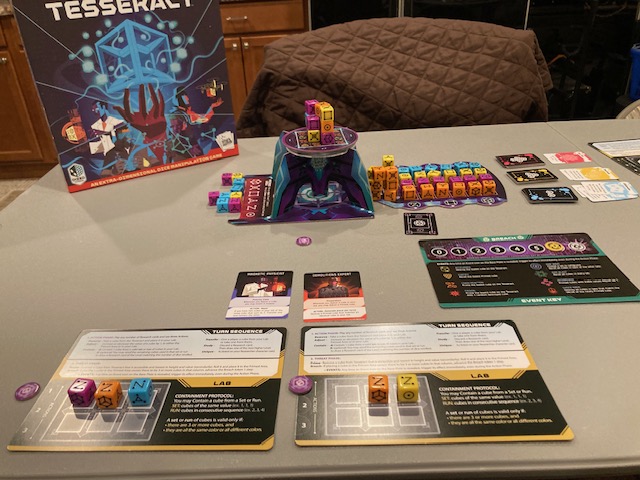
A Review of Tesseract: A Cooperative Cube Game!

IMG_9927

It’s all Lon’s Fault! A few years ago, I used to go Lon’s office to say “hi” and he had the coolest metal dice in his office! Steel Dice! Aluminum Dice! Titanium Dice (maybe?)! Every time I see metal dice, I think of Lon. Hi Lon!

IMG_9943

Well, when Tesseract (A cooperative dice-placement/cube manipulation game) came onto Kickstarter, I was enthralled! And it’s all Lon’s fault! The Metal Dice (see above) looked so cool! It was so cool looking that the #1 spot on my Top 10 Anticipated Cooperative Games of 2023!

IMG_9928

This cooperative game, Tesseract (plays 1-4 players in 90 minutes) arrived at my house in mid-September, 2023. It was on Kickstarter back in November 2022, but unfortunately promised delivery in July 2023. Ah well, the streak of Kickstarters delivering early or on time has now been broken: Tesseract was about 3 months late (to me: I think other Kickstarter backers in the rest of the world got it earlier).

IMG_9925

I got the base game and the metal dice upgrade: Again, it’s all Lon’s fault!  

Unboxing

IMG_9930

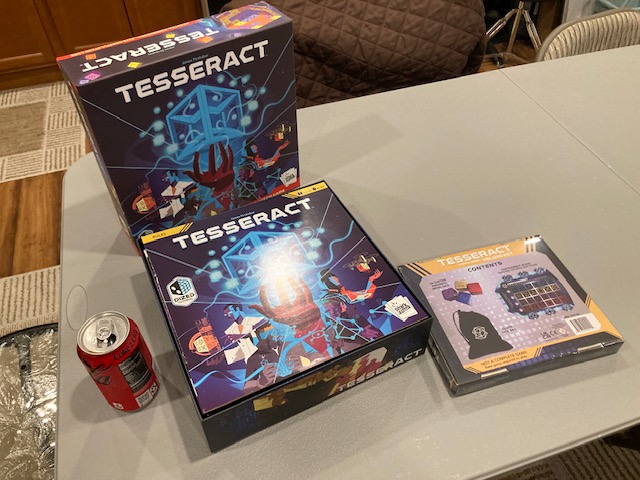
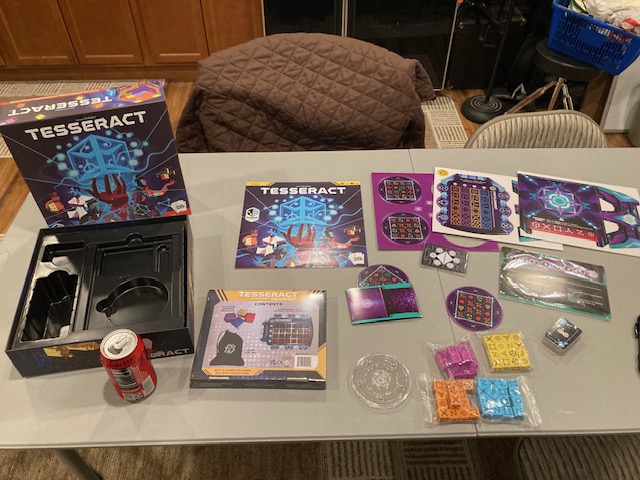
This is a pretty standard sized box, with the oversized rulebook that fits flush with the box: see my can of Coke above for perspective.

IMG_9932

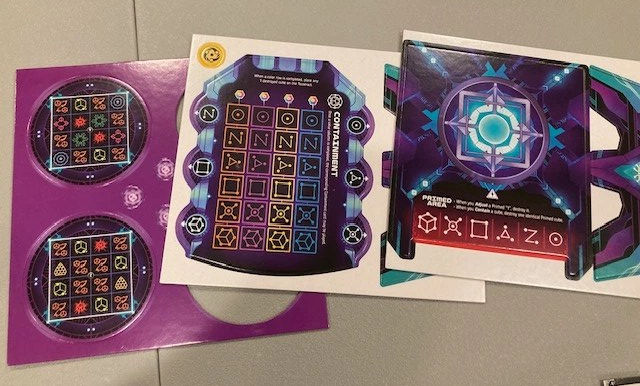
There’s a number of punchouts for building the cube-holder.

IMG_9933

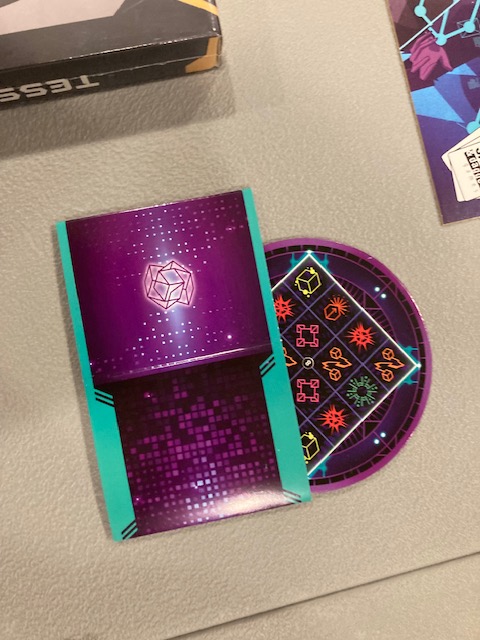
There’s a sleeve that looks a little like a “Hot-Pocket” sleeve. (This maybe an American thing only? If you don’t know what “Hot Pockets” are, I encourage you to look them up: Jim Gaffagan you tube videos may be the funniest source of info). These sleeves will be used for guiding the dice (see more pictures/discussion below).

IMG_9939

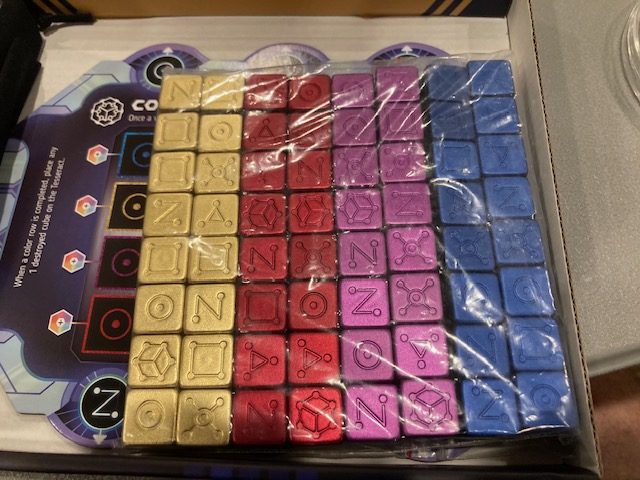
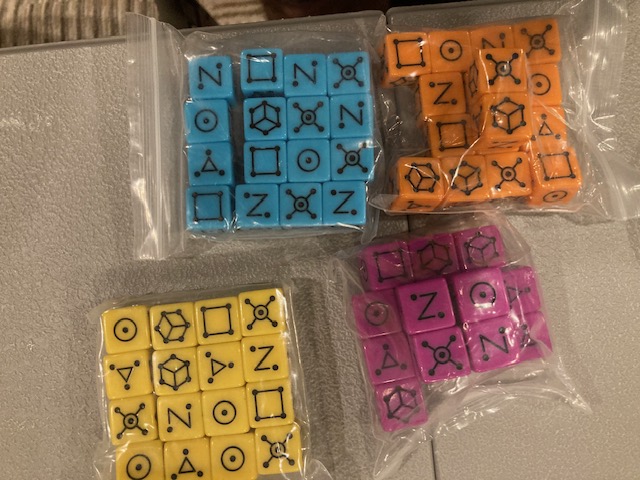
The base game comes with 64 plastic dice that are well-labelled and easy to read.

IMG_9937

Maybe Lazy Susans are cool now? The game comes with a Lazy Susan for “spinning” the dice cube. (Planet Unknown was very popular last year and everyone raved about the Lazy Susan with that game). We’ll see more how this works in the gameplay.

IMG_9955

There’s a number of giant Mats: breach, player sheets, and something else.

IMG_9941

The game looks pretty snazzy! “But what about the metal dice, Rich???” Hold on! Hold On! We’ll get to those after a look/play with the base game. Look, as cool as the metal dice are, they are expensive, and they don’t come with the base game.

Rulebook

IMG_9948

The rulebook seemed pretty good overall.  Unfortunately, it gets like a C+ on the Chair Test: it’s huge and flops all over the place:

IMG_9949

Despite that, the rulebook does a pretty good job of showing set-up and taking you through the components, set-up and the core rules.

Set-Up

IMG_9985

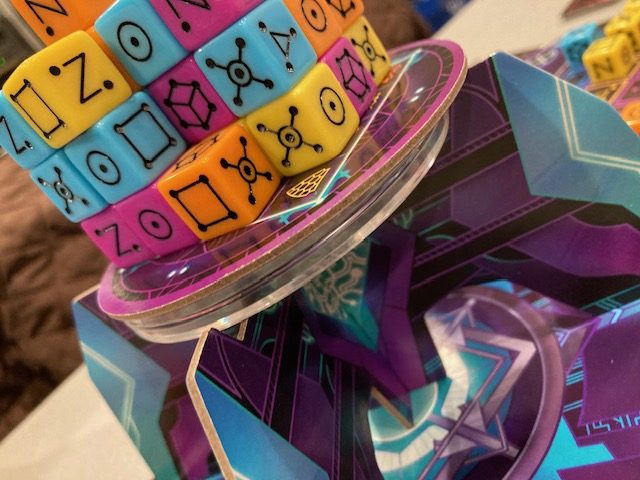
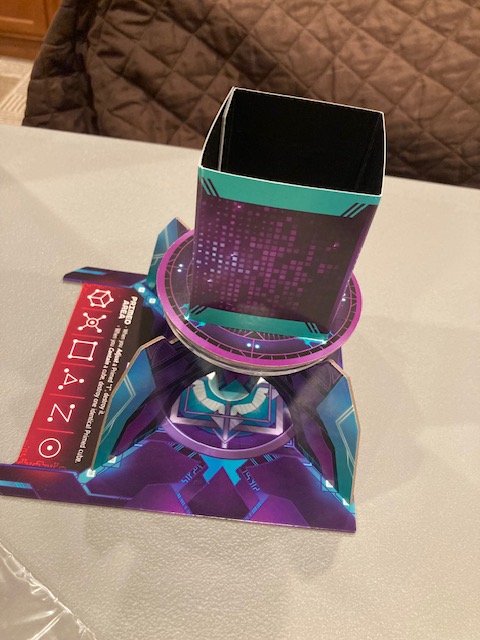
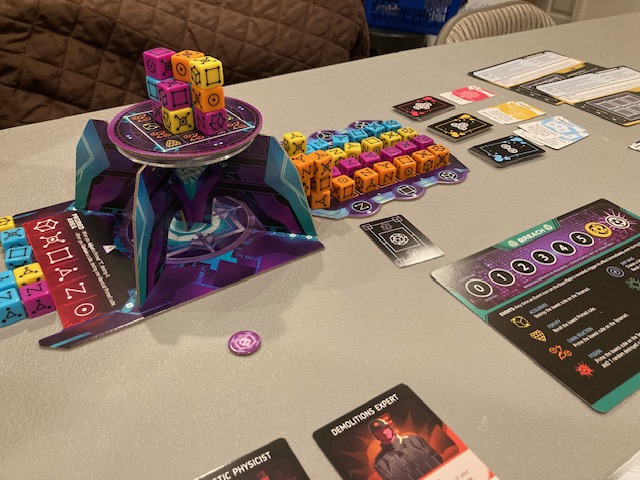
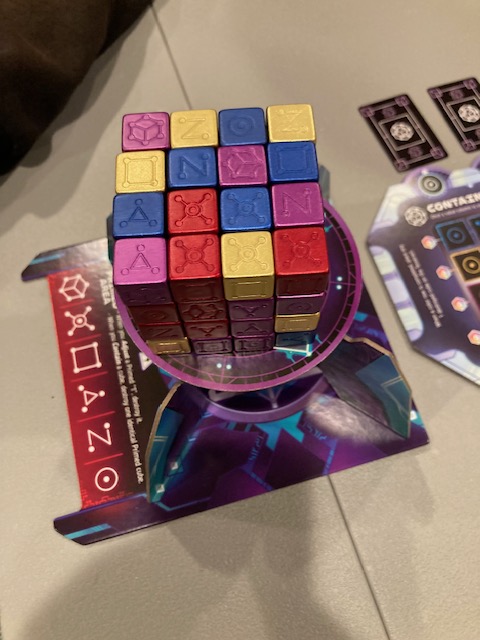
The first part of set-up was building the Lazy Susan holder.  The Tesseract, the 4x4x4 cube of dice, lays atop the Lazy Susan. See above with a nice perspective on how the dice fit.

IMG_9938

The little Lazy Susan has 5 ball-bearings so it can rotate easily.

IMG_9934

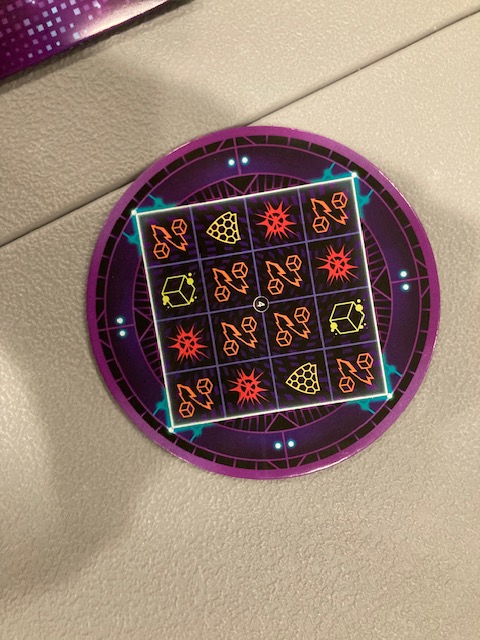
You put on on these circular cardboard pieces atop the Lazy Susan.  When a column completes, each symbol activates a bad news in the game.

IMG_9956

The Lazy Susan and bad new circle sit atop a little mechanism to keep it aloof.  The little dice sleeve (the “Hot Pocket” sleeve we saw earlier) opens up so it can guide the dice down during set-up.

IMG_9958

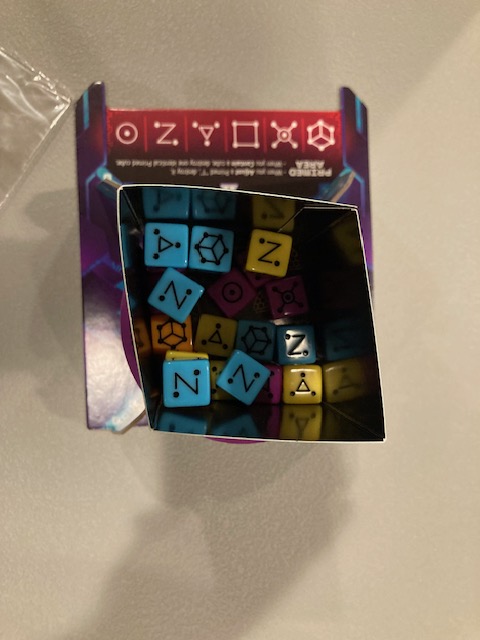
Then you start pouring dice into the little stand!

IMG_9959

It’s a little wonky to get the dice in there at first: see above.  You have to make sure the dice fill the 4x4x4 template perfectly.

IMG_9962

Once you get all the dice in there … you slowly remove the sleeve … to reveal …

IMG_9963

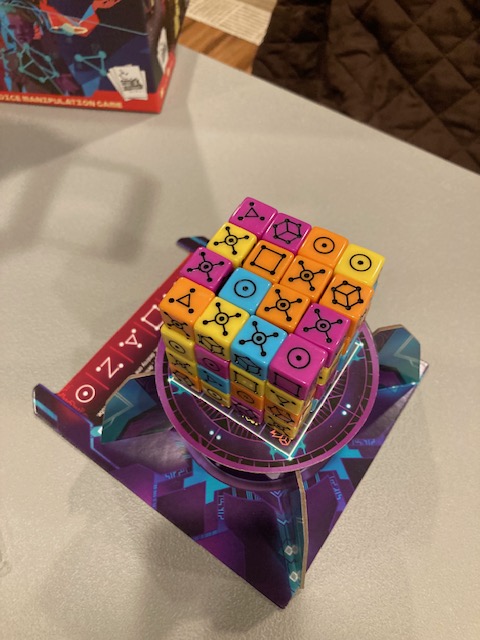
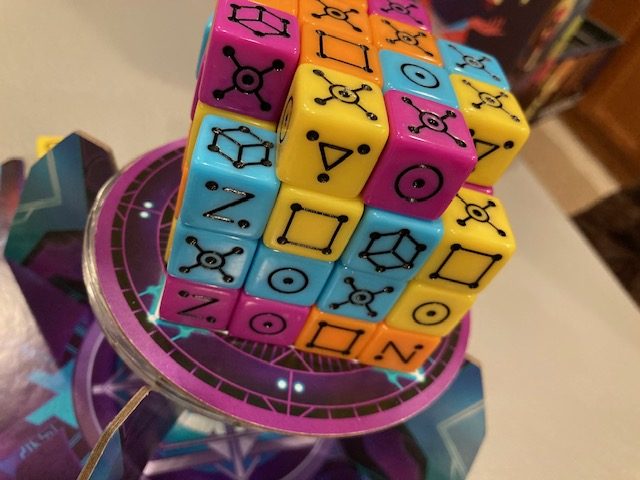
A stunning cube of dice!

IMG_9964

The rest of the set-up is much less interesting, but the rulebook describes it pretty well.

IMG_9970

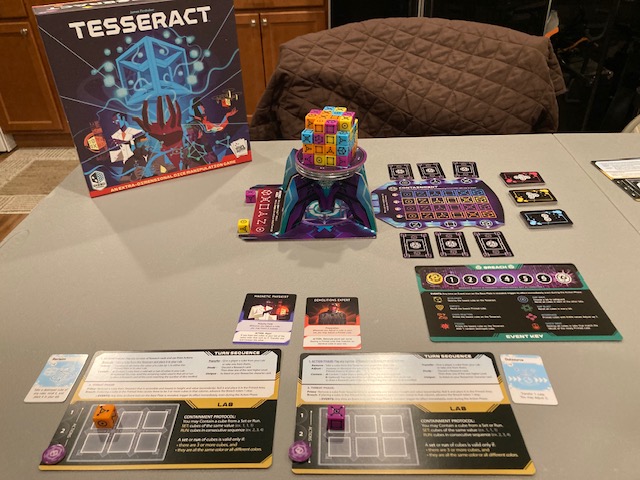
All set-up: the game looks pretty cool!

Gameplay

IMG_9950

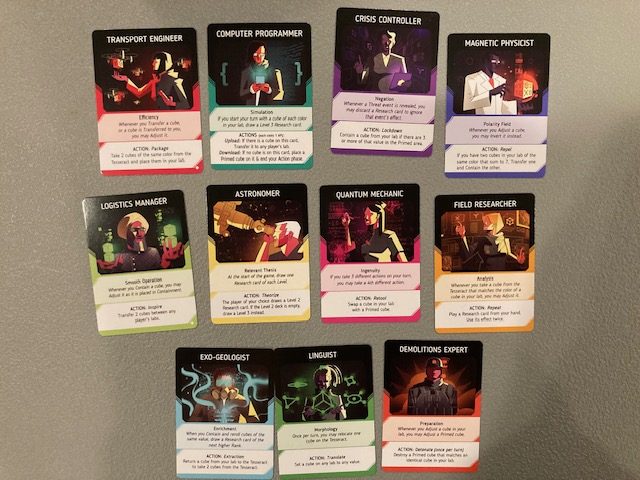
Each player chooses a special role at the start of the game: each of these give special powers (both active and passive) for manipulating the cubes and other parts of the game. Players gets asymetric powers.

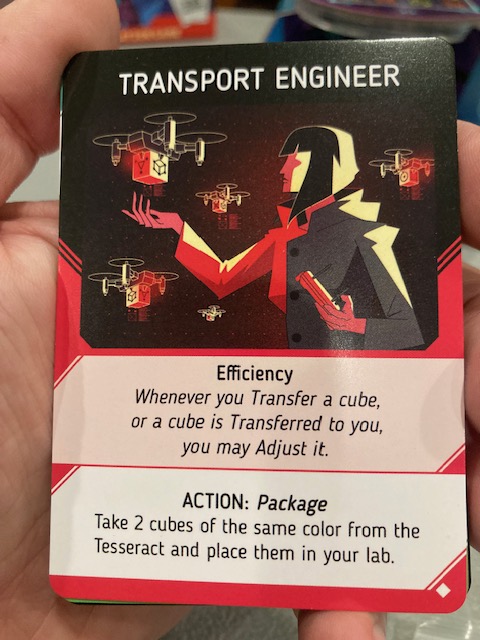
IMG_9997

For example, the Transfer Engineer above has a passive special ability (Efficiency) which allows dice manipulation. The ACTION is a special action only the Transport Engineer can take on their turn. Every player gets three ACTIONs on their turn.

IMG_9974

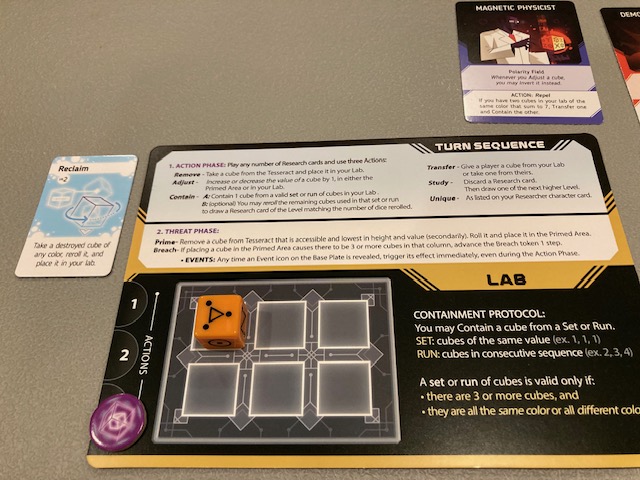
The Turn Sequence is noted on each players player sheet (each player gets one). This game is all about manipulating dice, so every player has a “lab” that contain 6 dice to manipulate.

IMG_9987 (1)

How do you win? If you can get 24 of the dice into containment (4 rows with 1-6 on them), the players win! As the game flows, dice slowly come of the cube, both as good news and bad news.

IMG_9979

If the cube is ever empty, players lose!

IMG_9990

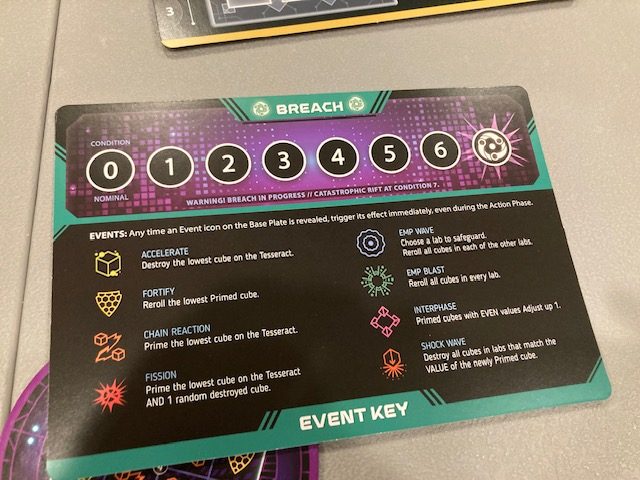
Every turn, one die will come off the cube during the Bad News phase: it gets re-rolled and placed in the appropriate space of the primed area. If there are ever three dice in a single zone, the breaches chart goes up 1! This feels slightly like a Pandemic element, as you have to keep the primed area under control (like the map in Pandemic).

IMG_9992

If you ever get 7 breaches, players also lose!

IMG_9995

The majority of the game is trying to keep the Primed Area under control, while slowly containing dice, and watching as the Tesseract gets smaller and smaller! The ACTIONS you perform all have some effect on that.

Solo Play

IMG_9965

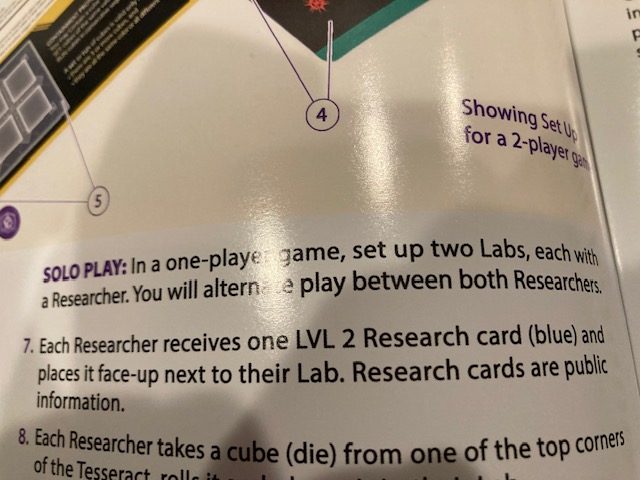
There is a nice sentence above step 6 describing solo play :”In a one-player game, set up two Labs, each with a Researcher.  You will alternate between both Researchers.”  Huzzah!  That’s all it takes!  Congratulations to giving us a simple solo game (and following Saunders’ Law)! No special exceptions! 

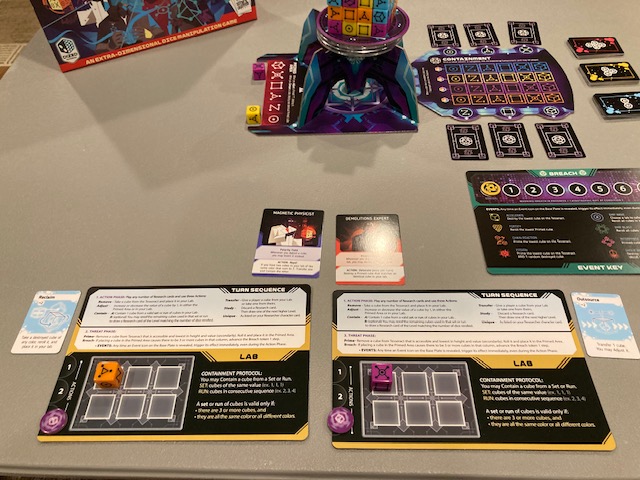
IMG_9975

See above as I have a solo game getting ready to go! It was pretty easy alternating between the two Researchers. The Researchers are very consistent in specials: they both have a special Action and a special passive power. You are pretty sure those specials will be the difference between winning and losing, so it wasn’t too hard to switch between them and remembering to use the powers.

IMG_9994

I was learn to play a solo game pretty easily. It was fun! There would be no problem teaching my friends, as the solo game scales perfectly well and up to 2-4 players.

Cooperative Play

IMG_0011 (1)

I asked my friends which dice they liked better: metal or plastic. Overwhelmingly Metal Dice! So, that’s what we play with from now on.

IMG_0018 (1)

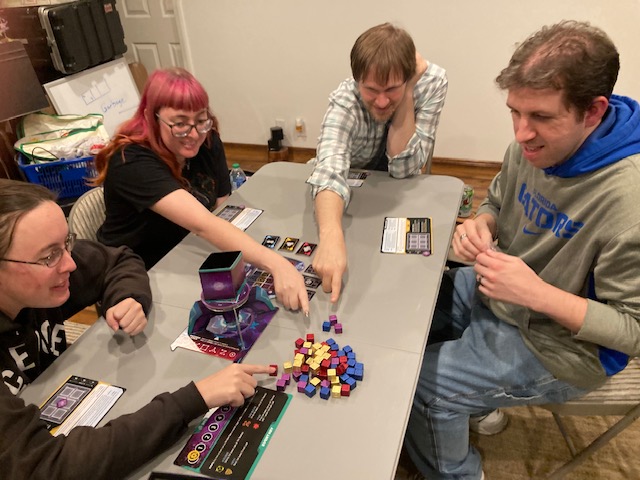
Interestingly, people seemed to stand up around the table to play cooperatively! Part of that was to get a good perspective on the Tesseract!

IMG_0014 (1)

The game seemed to scale well, and there were a lot of cooperative mechanisms and powers in the game. The sharing/trading aspect of dice was a real interesting dynamic! Sure, you can always take a die you need from the Tesseract, but if you do that too quickly, the Tesseract depletes and you lose! So, the players tend to share/trade dice more than I expected in the game. There was a good amount of cooperation and talk!

IMG_9976

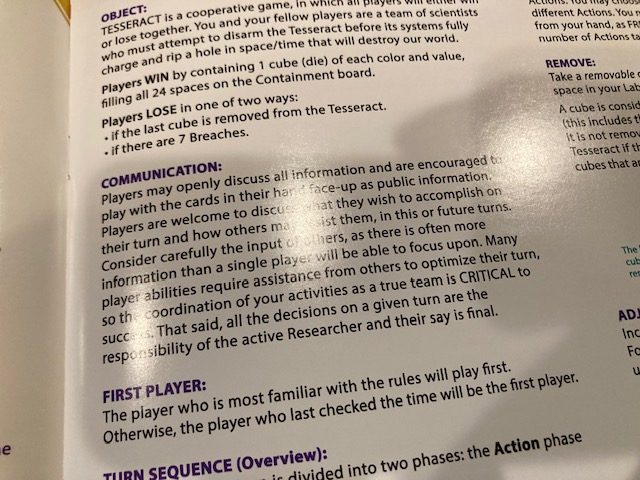
One of the things I really like about Tesseract is the game encourages players to share and talk as much as possible! There’s an entire paragraph in the rulebook (see above) to that end! Now, I like “limited communication” co-op games, but I get tired of the “limited communication”, because I want to sit down (or stand up in this case) with my friends and interact/talk/have fun! So, I think the cooperation works really well here.

Dexterity Game

IMG_0020 (1)

The rulebook says clearly “this is not a dexterity game”, and yet, it felt like it, a little. You have to carefully pull the appropriate dice off the Tesseract without spilling it over. Now, we never did, but Andrew leaned on the table at one point and it almost caused a catastrophe of fallen cubes! So, it’s not a Dexterity game, but the cube tower is a little more precarious than it looks. Make sure you set-up on a stable, flat surface to avoid any issues! One bad lean will kind of ruin the whole game.

Metal vs Plastic Dice

IMG_0012 (1)

The Plastic Dice that come with the game are perfectly serviceable and they look fine and work fine. In fact, we think the plastic dice are probably a little easier to read.

IMG_0017 (1)

But it’s clear the metal dice were the favorite. They feel “more spacey” and more like what a Tesseract would be made of! But, they are an add-on, and they are expensive. Like significantly: the base game was $50 on the Kickstarter, and the metal dice + game was $130! So, an $80 difference (and the Kickstarter calls them a $128 value so maybe more in retail).

IMG_9978

The game works fine with Plastic Dice. If you aren’t sold on the Metal Dice, try the base game with plain dice. You can probably buy the metal dice later if you really like the game.

Cube Games

IMG_3610
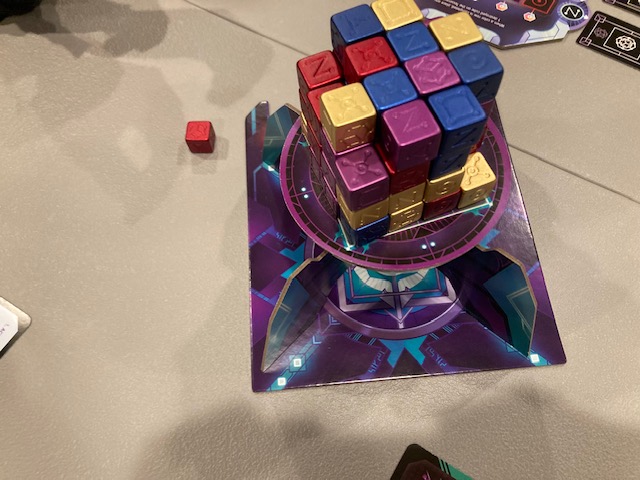
The bad news die force the players to remove one cube, their choice of color

Those of you paying attention might remember we reviewed another cooperative Cube Manipulation game last year: Minecraft: Portal Dash! (See our review here). And it surprised us how much we liked it! It made our Top 10 Cooperative Games of 2022! It almost feels like this should be its own category of game now … Cube Manipulation? There are a surprising number of similarities between the games, as the Tesseract, err Cube, is both the good news and bad news of both games! They’re different games: I think Tesseract is tighter and more streamlined, but Portal Dash has a certain charm to it as well! If you like one, you may well like the other.

Toy Factor

IMG_0023 (1)

There’s a large amount of toy factor in the game: the Lazy Susan, the aloft dice cube, the metal dice. And I think it works! It makes the game attractive and more interesting to play! However, there is a good game underneath as well. Unfortunately, the Lazy Susan wasn’t “quite as cool” as I hoped, as it seemed to be a little precarious. It sill worked overall, but it still felt “a little” like a Dexterity Game .. more than it should. I do think that’s a minor complaint, but just one to be aware off.

Game

IMG_0016 (1)

There’s a good game here. There’s some mechanisms that don’t make sense at first (“Why would I want to reroll my dice to get cards?”) until you’ve gotten into the game. There are plenty of interesting ideas here to keep players engaged! Occasionally, it felt like there was maybe one too many rules (For example: You can destroy a dice in the primed area if you contained the same dice in the Containment area: we forgot this rule a number of times, but at least it’s notated on the Primed Area) and we have to remind ourselves of those, but that’s great in a cooperative game! That is one advantage of cooperative game: players can work together to remember those rules! Arguably, that contributes to the cooperation in the game.

Conclusion

IMG_0020 (1)

Tesseract is a really great game.  Me and my game groups loved the toy factor, the metal dice, the gameplay, and the overall feel of this game!  The game underneath the toys is also quite good! It had a little bit of Pandemic vibe in a few places, but there were enough new and interesting mechanisms to note that this is not some kind of Pandemic clone. In fact, between Tesseract and Minecraft: Portal Dash, it may be we are seeing a new type of game: Cube Manipulation!

This will easily make my Top 10 Cooperative Games of 2023.  It was #1 on my Top 10 Anticipated Cooperative Games of 2023 for a reason!  But, we all know it’s Lon’s Fault!!

(For the record: I bought this game and all extras with my own money.  We never accept free copies of any games nor take any money/incentives from any publisher or anyone.  This is and has always been our policy at CO-OP Gestalt, but we thought we needed to say it more often.  You may hate our opinions, but at least you are sure they are our own).

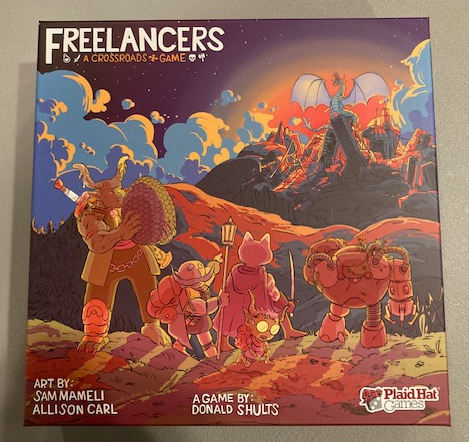
A Review of Freelancers: A Cooperative Game That Works Well With 5 Players!

IMG_9823

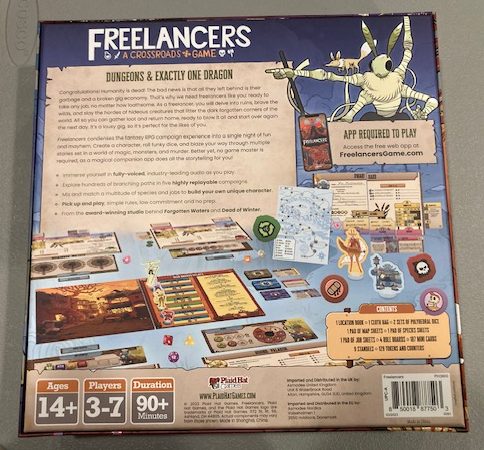
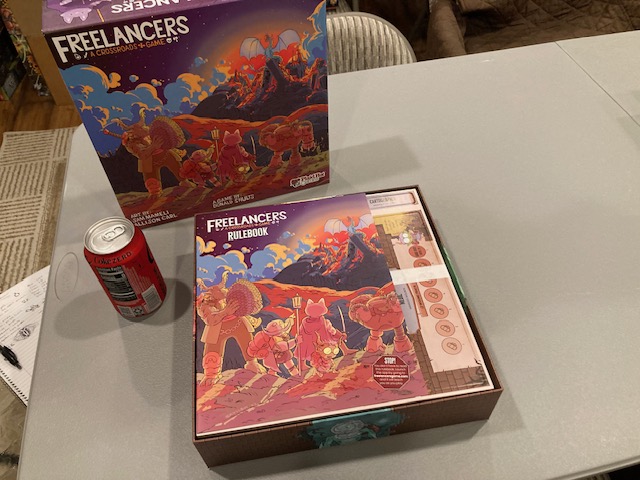
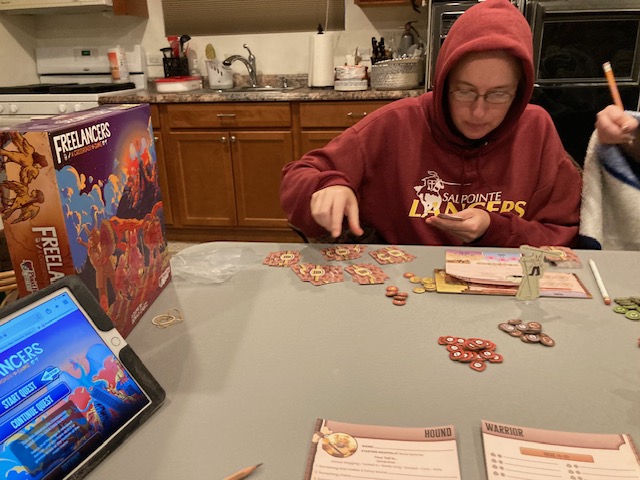
What am I going to do? Usually, my game groups are 3 or 4 players, but this week ended being 5 players!! Argh, it is sometimes harder to find “non-party” games that work well with 5 players!! Hmm, I am looking at recent arrivals and see something called Freelancers! It just came in the last week (early September 2023). Looking at the back of my Freelancers game (a cooperative Crossroads game), it says the player count is 3-7! See below ..

IMG_9822

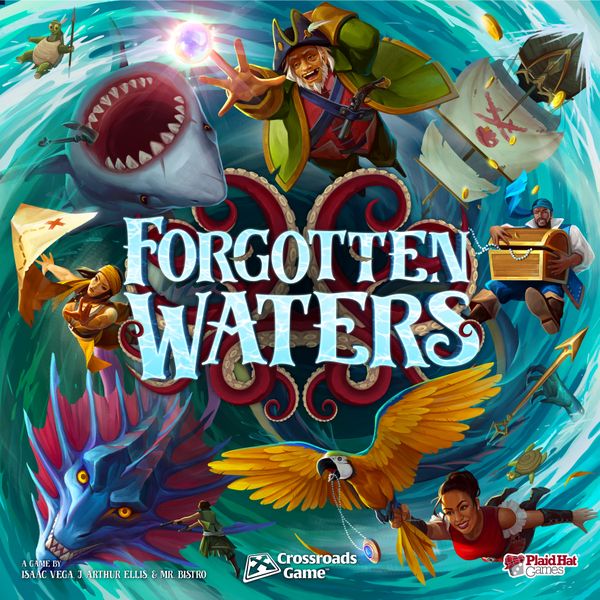
This seems like the perfect game for tonight! We have all played Forgotten Waters (another game in the Crossroads game system) and really liked it (see here): Freelancers is the newest game in that line. We’ll probably like that? It looks fun! It looks silly! (Spoiler: it is VERY fun and it is VERY silly)

Unboxing

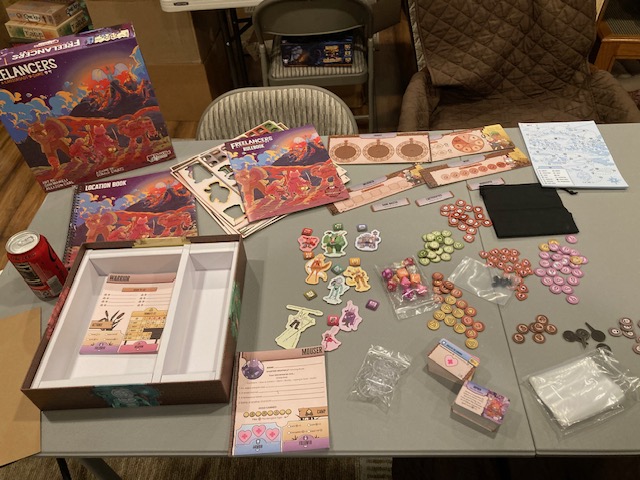
Well, I gotta unbox this before my friends get here … they’ll be here in an hour!

IMG_9825

This is a pretty standard sized box, it looks pretty easy to unbox.

IMG_9826

The rulebook looks pretty short (it’s only 12 pages). And I love this art!

IMG_9827

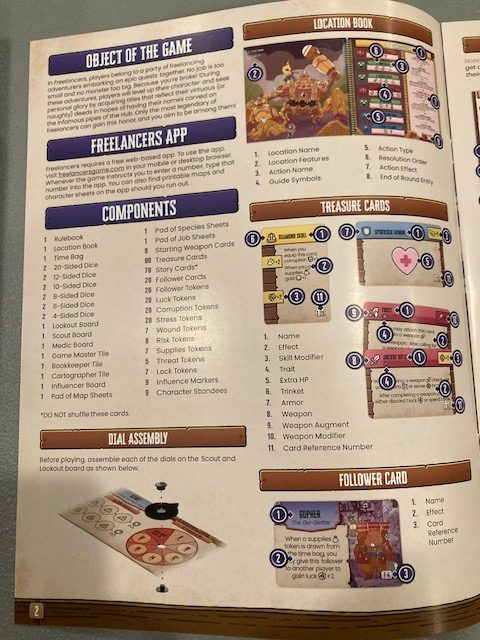
Oh, the pieces are well-labelled (but they don’t correlate the list of components with a picture, Boooooo!)

IMG_9828

There’s a lot of cool stuff in this box!

IMG_9829

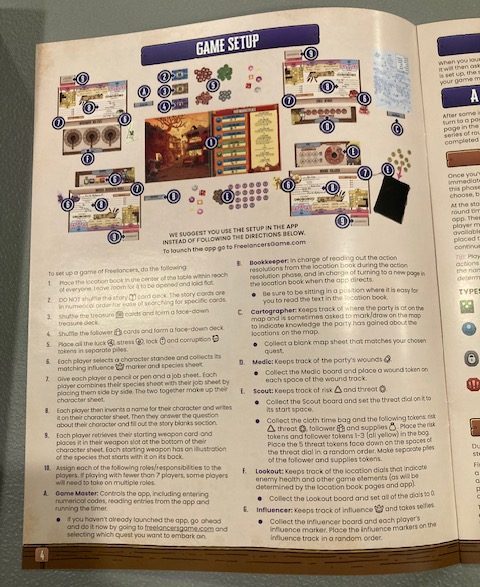
That set-up looks pretty good: I think this will be easy to get to the table!

IMG_9840

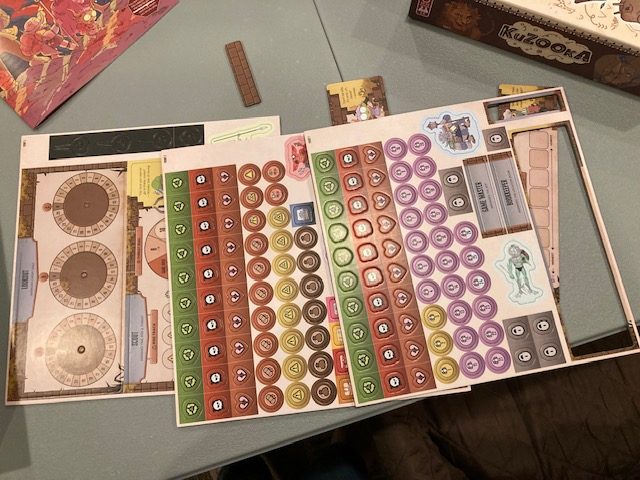
Well, there’s some cardboard to punch (3 sheets, not too bad).

IMG_9845

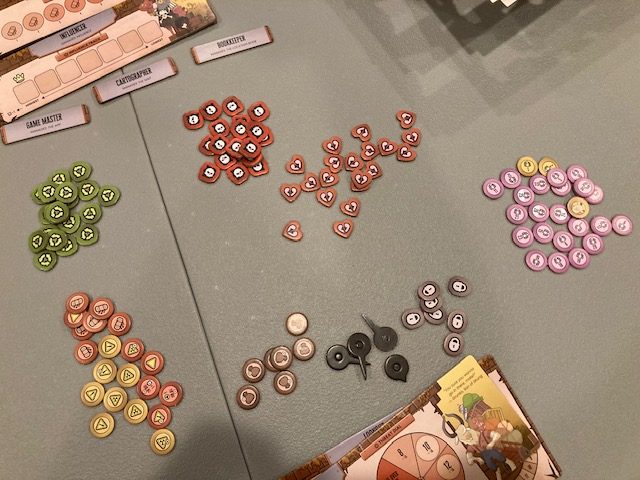
Oh my, there’s a lot of tokens! BUT!

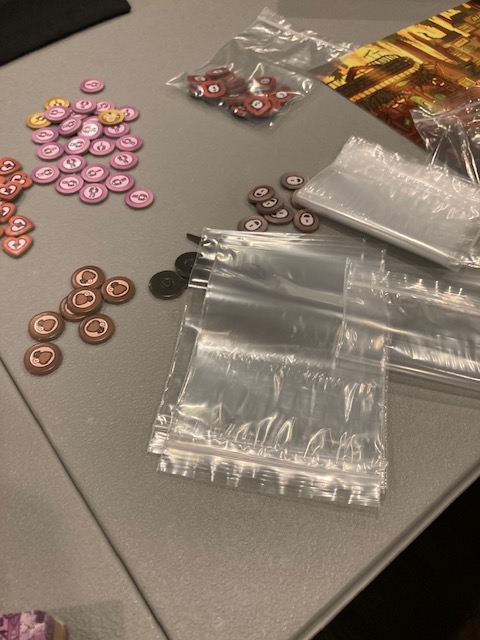
IMG_9868

BUT, there’s a lot of plastic bags that come with the game too! That’s great!

There’s a lot of cards: treasure, story, first stuff: this is all very readable and fairly well-notated.

The Location book looks really cool too!

The components looks pretty great! I love this art style and this game screams quality! I am super excited to get this to the table!

Solo Play! Oh No!

IMG_9863

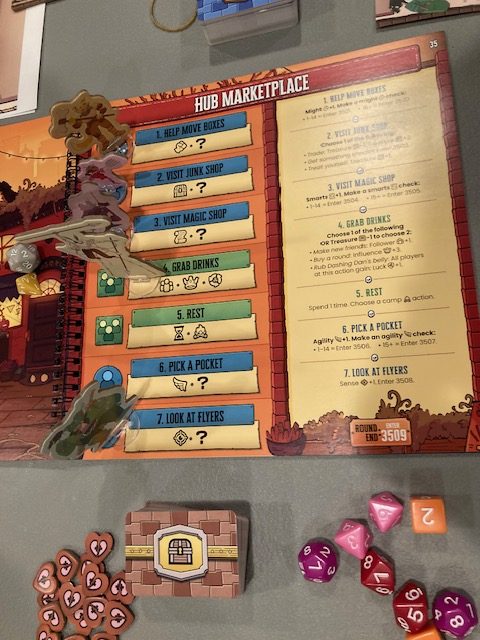
Oh no!  My friends will be here soon! I don’t have time to play this solo!  Gah!  I always like to play it solo so I can teach it first!!!  And it’s not even clear if I CAN play this solo!  (It turns out you can, but you have go hunting OUTSIDE the box: There are no solo rules included in the physical game, but the web site has rules for solo and 2-Players in the Variants section at https://www.freelancersgame.com/ ..  unfortunately, by the time I saw this, it was too late!  But Freelancers does follow Saunders’ Law!  There is a viable solo mode!)

Set-Up

IMG_9895

This is a storybook game: see our Top 10 Cooperative Storybook/Storytelling Games for more examples of this type of game! 

pic5253984

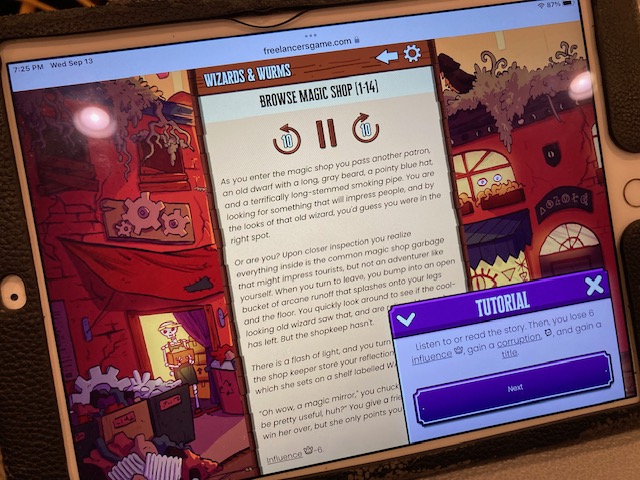
In our case, this is yet another storybook game like Forgotten Waters where the story is all in the app! (No storybook required)! There is a giant amount of story being read by the app at http://www.freelancersgame.com!

IMG_9844

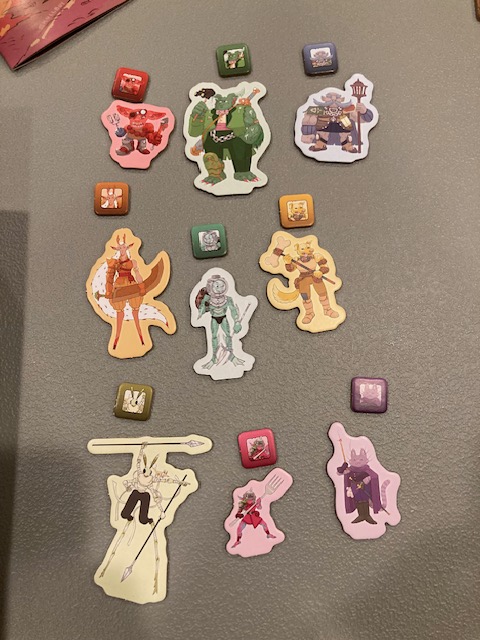
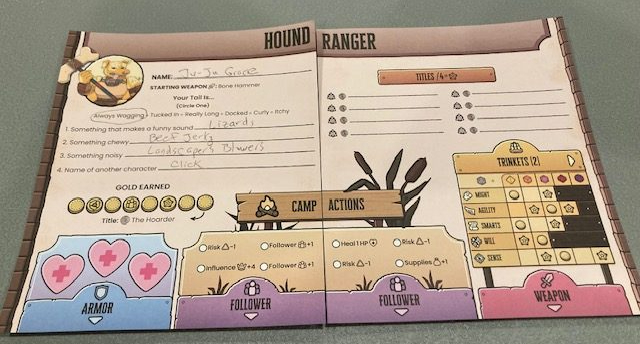
Each player chooses one of the figures/characters to play (these are the Species in the game)! See above! There are an interesting assortment of characters! The Imp! The Hound! The Troll! The Mouser! .. and other stuff! This game can play up to 7! We are just playing at 5 right now …

IMG_9852

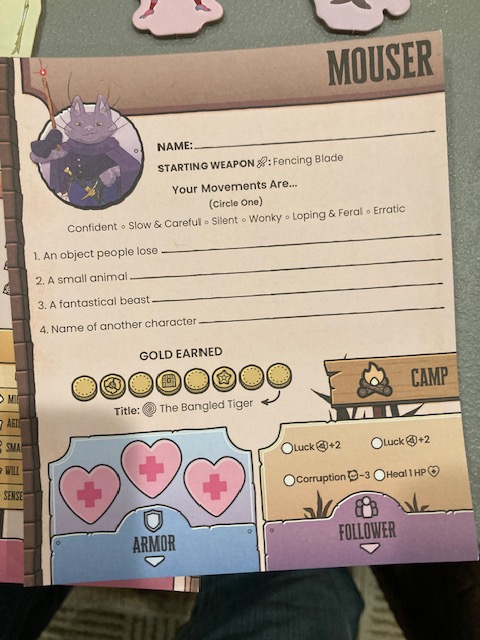
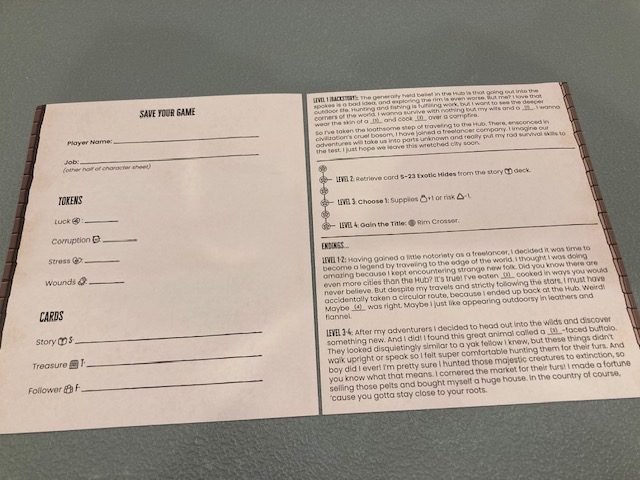
Each player gets a Species sheet (above) corresponding to the chosen character: see one such Species Sheet above (say that 5 times fast). You’ll be filling in some silly information on this sheet: this game has a Mad Libs element where you will be using this information to “define” your character!

IMG_9855

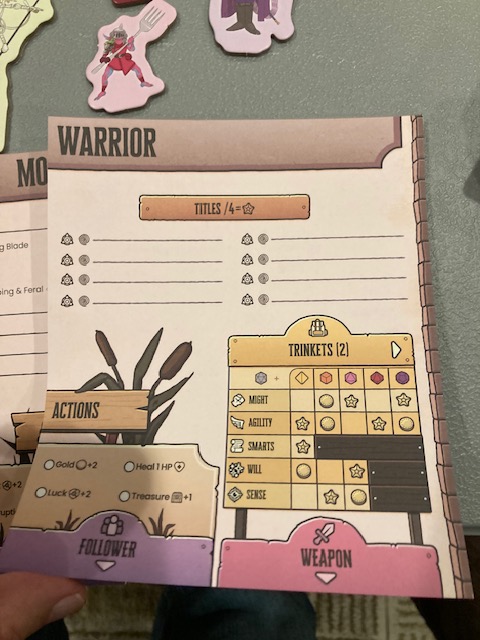
The second sheet you get is the Job: See the Warrior job above.  The most important thing on the Job sheet is the skill matrix: you will be using that to make skill checks (and mark up when you get better as you play).

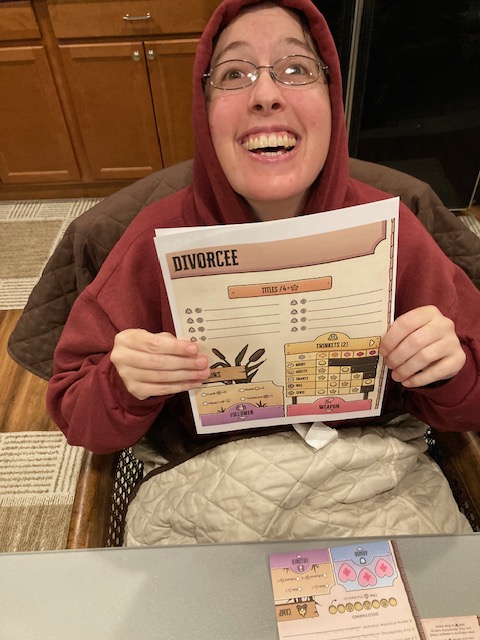
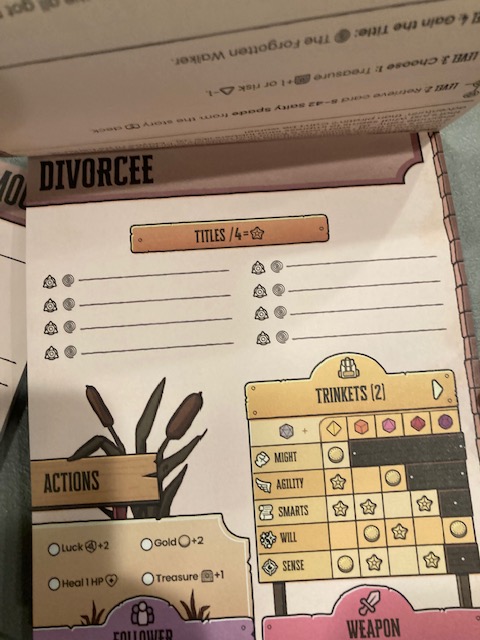
See some other jobs above. You’ll note that Divorcee is a job. Yes, yes, Divorcee. If you had any idea that this was a serious game, you now know for sure this is a silly game.

Putting a Species and Job together, you get your fleshed-out character!

IMG_9871

Each player also gets a starting item (see above.

IMG_9846

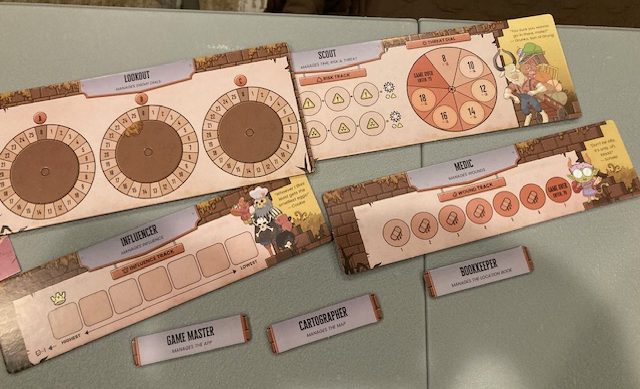
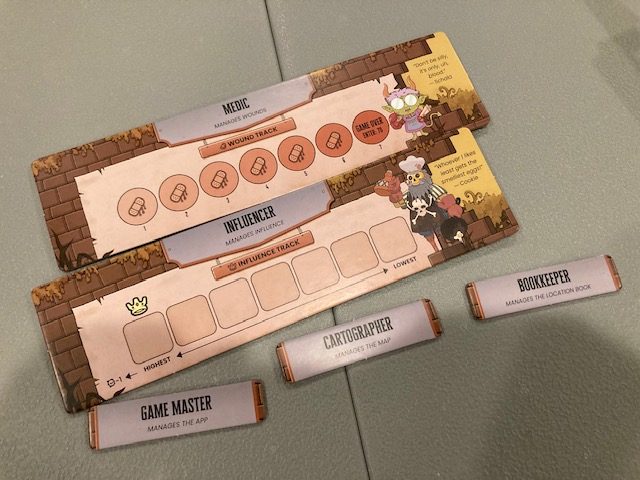
There are also 7 roles/responsibilities that need to be assigned to the players: Since there were only 5 of us, some of us took two roles! This really makes the game very cooperative! Every player will be doing some role which is essential to the gameplay! (The Influencer board reminds of the the Sidekick of Interest (SOI) Track: see our post here about Resolving Ambiguity is Board Games).

After everyone fills out their sheets, they read aloud the story on the other side!

IMG_9882

And we are ready to play!

Recommendation: Print The Job and Species Sheets

IMG_9884

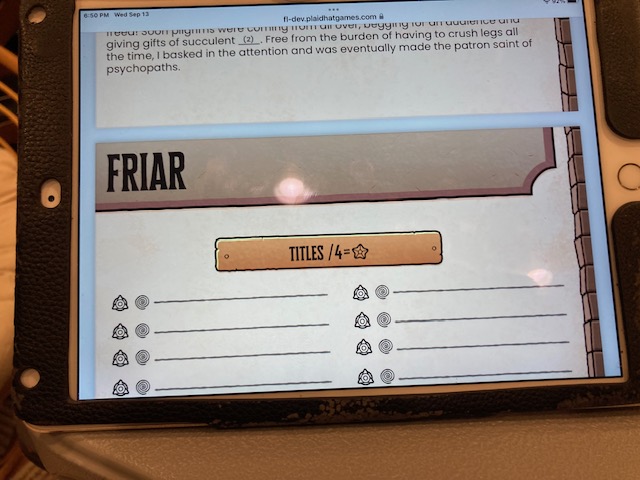
The game does come with a pad of a bunch of Species and Jobs, but there aren’t very many!  Before you play, you should go the web site (https://ww.freelancersgame.com) and print copies of everything! See the Friar job above in the app!

IMG_9886

For example, there’s only 1 copy of the Divorcee sheet, so I had to print a copy for Teresa! I suspect EVERYONE will want to play the Divorcee, so you probably will want to print out copies rather than use the pads that come with the game.

IMG_9881

There’s three copies of the Species (3 Hounds, 3 Mousers, etc), but only 1 of (most of) the Jobs! I strongly recommend proceeding to http://freelancersgame.com and printing out some Species/Job sheets before you play! Otherwise, you will use the included pads VERY quickly! (Each quest uses a new set of characters, so yes, you will go through them quickly!)

Tutorial

IMG_9893

I was worried about learning the game as we played: it was NOT a problem!! The tutorial system that comes in the web site was fantastic! We DID NOT need to read a lot of rules! We just jumped right in! And the app guided us through the game easily! Granted, this is a relatively simple game, but this just worked.

Gameplay

IMG_9864

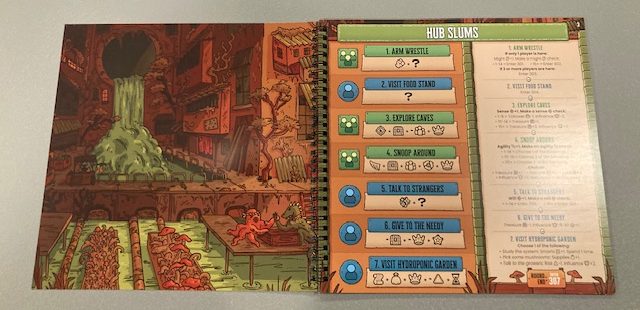
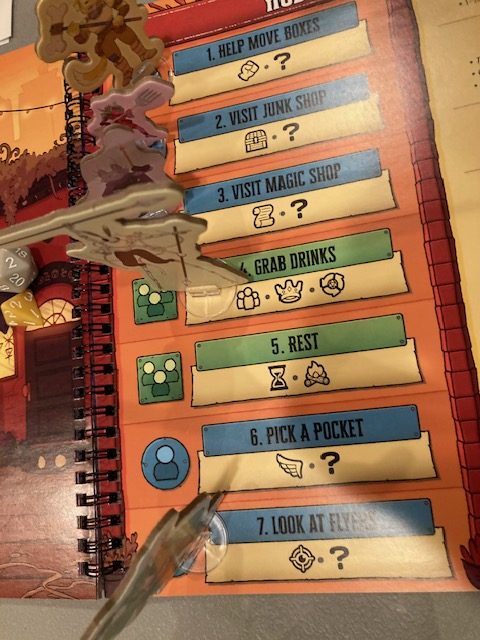
The main mechanic in this game (besides the story in the Storybook/app) is that this is a worker placement game. The Location book opens to your current Location (see above) and sets the stage with a cool picture on the left, and the worker placement board to the right.

IMG_9891

In a timed fashion (there is a little 45 second timer in the app), players have to place their markers in Influencer order on the current work page! The little graphics give you a sense of what you will get when you go there, but you are not supposed to have a lot of time to figure stuff out!

IMG_9892

Once all players have placed their marker, the right side of the page gives more detail about what the Location does: you resolve the actions top to bottom. See above.

Most actions involve skill checks: you roll a 20-sided die for the base skill, but as you get “better”, you get a better and better bonus die to help you! First a d4, then a d6, d8, d10, and finally a d12! Usually, you get an upgrade to the skill you are going to attempt before you attempt it. Most skill checks want a 15 or higher to “do well”.

IMG_9890

Of course, success or failure consults the app!  And you get some silliness or story advancement or further choices!  

IMG_9896

There are a number of quest included in the game: each quest has a unique ending and twist! Our was to fight a dragon and beat it up!

IMG_9895

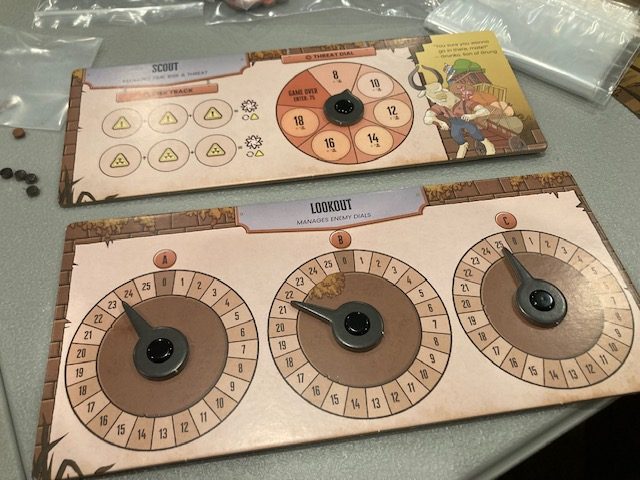
Generally, the game game is run by the app, and all the players man their positions as they play: Game Master (runs the app), Bookkeeper (actions from Location book), Cartographer (handles map), Medic (keeps track of wounds), Scout (tracks Risk), Lookout (updates dials), Influencer (mans SOI chart).

IMG_9851

As we play, we alternate between the Location book (with the Worker Placement Locations) and the Map (for exploration) Again, the app lets you know when you need to do stuff.

The App

IMG_9889

The app (really, a web site you go to: https://www.freelancersgame.com, but it feels like an app) is quite good. The voice acting is really good! Surprisingly so! The story is pretty fun, if a little goofy. Actually, it’s very goofy. But it’s still really fun! We really enjoyed listening to the story as it unfurled. We miss reading to each other “a little”, but the 7 roles/responsibilities keep us engaged as we listen to the story!

We played online (meaning we were connected to the web-site the whole time), but you can download the content and play the game off-line: see https://www.plaidhatgames.com/freelancers-crossroads-game-downloads/

Silly

IMG_9888

This is a silly game: between the Mad Libs on your character sheets, the silly (but great) art, the story, and the choices, this is a silly game! I think it’s even sillier than Forgotten Waters! This would absolutely make our Top 10 Cooperative Games With a Sense of Humor! (Note that Forgotten Waters is #4: Freelancers would probably make the #3 position!)

Just so you know what you are getting into: this game seems like it might be a “serious post-apocalyptic game” from the description on the back, but it really isn’t. This is super silly.

Cooperation

IMG_9876

There’s quite a bit of cooperation as players each have a job to do! See the Lookout and Scout jobs above! Players almost feel like they are members of a crew keeping the party afloat … in fact, that’s exactly what players were in Forgotten Waters: a Pirate Crew! So, that analogy works better in the previous game, but the same idea still applies here: players work together as a party of adventurers trying to “keep the party going”. Each player has a particular duty and must do their duty to keep going!

IMG_9842

That idea of giving each player a role(s) is a great way to keep everyone involved! This collaboration really contributes to everyone feeling important to the mission! It’s a really great mechanism: it’s hard to have an Alpha Player because there is so much to do, shared among the players!

Refinements upon Forgotten Waters

IMG_5675
Special Swag: ARH! It Holds the cards and tokens!

The general consensus was that this was a better version of Forgotten Waters: the system had evolved just a little to be a touch simpler and more interesting.

IMG_5680

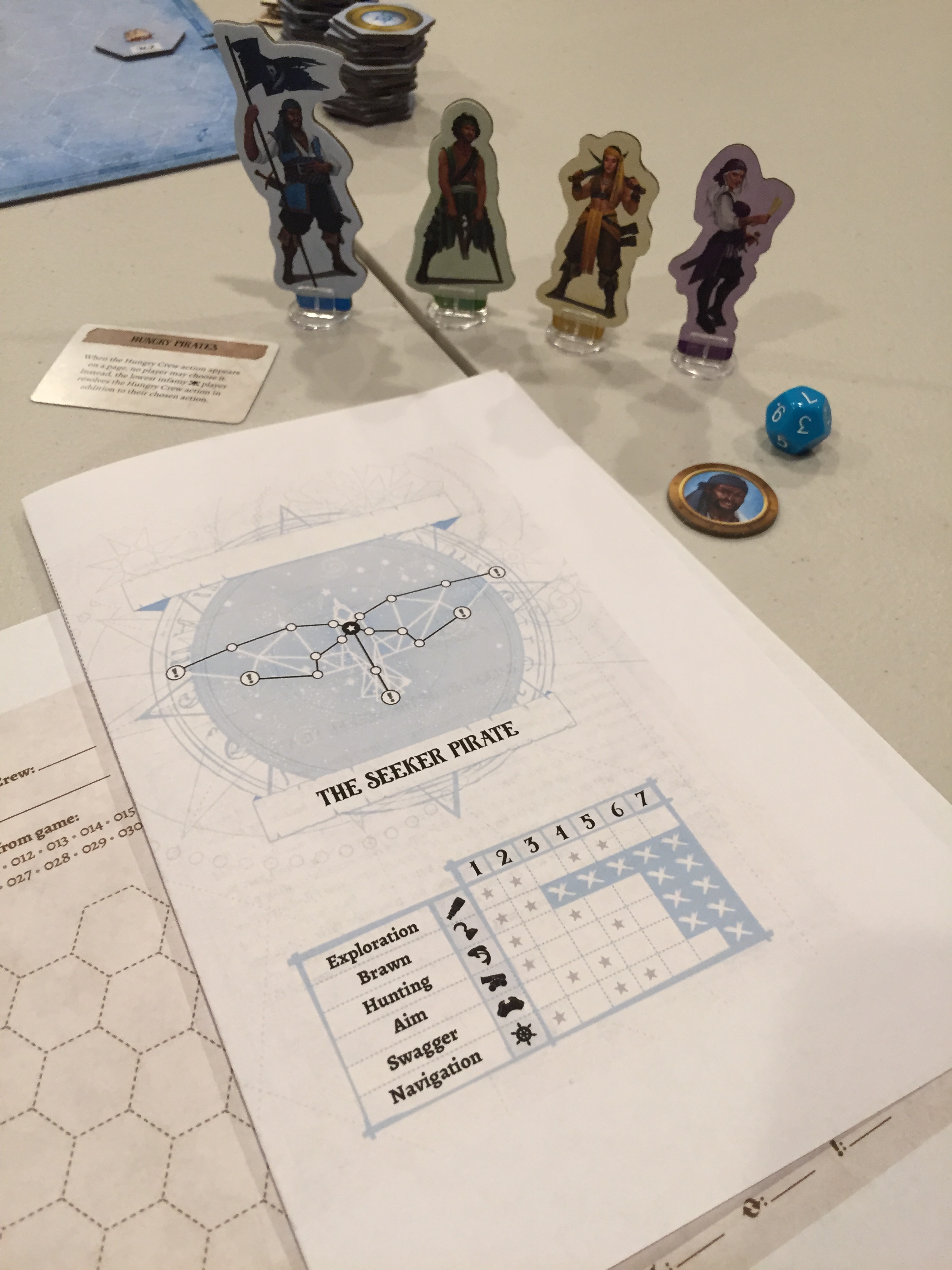
For example, consider that the level-up system is simpler in Freelancers.  In Forgotten Waters, there was a more complex system with marking up a constellation of stars.  That constellation system (where you mark out a constellation on your way to level-up points) is gone from Freelancers!

IMG_9882

On the back of the Freelancer character sheet is a simple linear level upgrade (see sheets above).  Rather than having a complex system with the constellation of Forgotten Waters, Freelancers has a much simpler system!  My players enjoyed this: the simplicity helped moved the game forward (rather than getting stuck in the constellation).

IMG_5685
A losing solo game …

The map and exploration system is also much simpler in FreelancersForgotten Waters had a big hex map which players explore.

IMG_9850

In Freelancers, the exploration is a little more “contained” on a given map: see above.  Generally, the exploration feels a little more on rails in Freelancers, but it is definitely simpler.

IMG_5679

The skill upgrade system is very similar in both games.  The difference here is that the upgrades are simpler in Forgotten Waters: pluses just add to your skill rolls.

IMG_9857

In Freelancers, you actually add a different die to your rolls as you upgrade (d4, d6, d8, d10, d12)!  This adds an element of randomness, but there’s something very cool about getting bigger and bigger dice to help your skill rolls!  See the skill sheet above.

IMG_9879

In general, my players liked Freelancers better than Forgotten Waters: they liked the evolutionary changes to the game.  I think I like the changes/evolutions better, but I personally still like the pirate theme and more “open” exploration of Forgotten Waters.

In the end, both are great games.  Freelancers is slightly simpler and has slightly better/evolved mechanisms.  It’s the theme that’ll probably decide for you.  Silly Pirates or Silly Post-Apocalypse?

NSFW

IMG_9835

So, the game can be NSFW.  At some point, a “choice” is made, and this makes the game have a section or two that is NSFW.  It’ll be clear when you make this choice: just be aware this is coming.  If you don’t mind some cursing and innuendo (and directness), then you are probably safe.   If you are playing with kids or worried about offending anyone, make sure you choose the “safer” and more “family-friendly” path. 

Conclusion

IMG_9885

Freelancers went over like Gang-busters! Everyone had a fantastic time playing! The silliness, the story, the roles, were just so much fun! Everyone just loved this game! 8 and 8.5/10 all around. This will easily make the Top 10 Cooperative Games of 2023, the Top 10 Cooperative Games With a Sense of Humor, and the Top 10 Cooperative Storybook/Storytelling games!

Oh ya! And it worked fantastically as a 5-Player Games! Sometimes it’s so hard to find a good 5-Player cooperative game!

This game was so much fun!

A Retro Review of Pandemic Iberia

IMG_5647

Pandemic Iberia is a cooperative “secret train” game: This is all the description I needed to entice my friend Robert in! He’s a huge fan of maps and trains! He’s also a huge fan of Pandemic (probably because of the map on the board). So, I was surprised that he had never encountered Pandemic Iberia! It has all of his favorite things: maps, trains, and Pandemic!

IMG_5631

Even though Pandemic Iberia was released in 2016 (some 6 years ago), it’s still a great game! That’s why we occasionally do these Retro Reviews: to shine a light on some really great older games. Our last Retro Review was Now Boarding! See that review here.

And this review is also for Greg: Greg told me he likes train games, so I wanted him to see what Pandemic Iberia looked like.

Play Twice (Back-to-Back)

IMG_5645

 When I used to play more with my friend Jeremy, he had instituted the rule that “we must play every new game twice: back-to-back!”  The rationale is that the first game is a learning game (where everyone is learning the rules, the mechanisms, and the flow of the game), but it’s the second game is when it all comes together.  While the game is still fresh in everyone’s mind, we can dive into the second play!

And that’s what we did for Pandemic Iberia!  Although we had all played Pandemic before, Pandemic Iberia is just different enough that it took a little more thought to get into it.  So, the first game was a learning game (and we lost horribly).  The second game was much more focused and directed, because we learned from our mistakes in the first game!

So many Pandemics…

IMG_5641

Pandemic Iberia was the “first” Pandemic variant! Since then, we have seen so many different variants: Wrath of the Lich King (A World of Warcraft Pandemic), Star Wars: Clone Wars, Pandemic Legacy Seasons 0, 1, 2, Fall of Rome, The Dice Game, and I am sure there are some that I am forgetting!  (Becca would argue that Flashpoint: Fire Rescue is her favorite Pandemic game, even though it’s not even in the Pandemic universe!  Its gameplay is just similar to Pandemic, but with a firefighting theme).

IMG_5633

Unlike the later games like Star Wars: Clone Wars (which we reviwed here) and Wrath of the Lich King (which we reviewed here), Pandemic Iberia is still very much Pandemic! You are still curing diseases, you are still roaming a map, you are still dealing with outbreaks! It still feels like Pandemic.

IMG_3476

Don’t get me wrong! I loved the Star Wars: Clone Wars (A Pandemic system) game: It made my Top 10 Cooperative Games of 2022, but you had to really squint to the see the Pandemic underneath. Pandemic Iberia is much closer to the source material.

What’s Different?

IMG_5629

In Pandemic Iberia, you still move around the map trying to quell the diseases. You still have to discard 5 cards of the same color at a Hospital (rather than a research station, but it’s the same thing) to research a disease. You still have to research 4 diseases to win. You still have to worry about outbreaks infecting adjacent cities, You still have to be leery of cities with 3 disease cubes!

IMG_5649

One very interesting new idea in Pandemic Iberia is the “region” idea. Regions are areas on the board enclosed by brown lines: see the region above surrounded by Ourense, Leon, Gijon, A Corona, and Santiago De Compostela. There are a number of places in the game that utilize this new idea. The most obvious is the “Purify Water” action, which is a new type of action. At the cost of an action and a card, you can “Purify Water” and place some Purification Tokens (the water drop above) in a region! Each purification token prevents the addition of one disease cube into a city adjacent to the region that contains it (the token is discarded after it prevents a disease).

This is really interesting, because it allows players a mechanism to prevent future infections without having to be in the region! Some of the characters (like the Nurse) also have special abilities based on regions.

IMG_5634

One other major change is how big movement is handled. Gone are the ideas of direct flights: you must either take the train, or travel from port city to port city.

The “secret train” idea is that you can build a network of train tracks on the board. When the game starts, there are no tracks! You must build out the infrastructure! See above as we have quite a nice train infrastructure on the board. So, when you take the train, you can move to any city in the connected network for just one action! But, that means someone else had to help build the train network on previous turns!

Of course Robert chose the special power that makes it so he can build two train tracks for one action: that’s partly how we got our network up so quickly!

IMG_5640

The port city to port city travel requires you to discard a card, but then you can move from a port city to any port city (with the color of the card you discarded). All port cities are marked with Anchors (see above).

IMG_5633

You still have to deal with Epidemics like in Pandemic. Unfortunately, once you research a disease you don’t “cure it” or “eradicate it” like you did in base Pandemic. This is a thematic twist: this is a game set in 1848, so you don’t quite have the technology to cure! All you can do is research. You still need to research all 4 disease to win!

What We Liked

IMG_5647

We really liked the theme! With the real-world pandemic making us weary of the world-wide Pandemic, there was something charming about casting back to a previous era (1848) on the Iberian peninsula. The map of Iberia, the art on the backs of cards, the style of the game really transported us to a simpler time. Somehow, harkening back to an older era with a smaller map made this “whole Pandemic thing” feel more palatable, and dare I say, fun?

IMG_5630

We really liked how the new ideas: the regions, the railroads, the ports, the purify waters! The railroads in particular were such a nice touch: they make the game feel even more strategic. A lot of Pandemic is keeping the diseases under control, but spending actions early in the game to set-up a train network (with the topology of our choosing) made the game feel harder, but more interesting! We had to figure out when it made sense to spend actions for building tracks!

And the purify waters action/region ideas was just a new and really cool way to “prevent” outbreaks even if you weren’t there! Again, it made the game that much more strategic.

IMG_5639

The game is absolutely harder. We lost our first game. But it made us want to try again! By pulling together and playing better as a group, the game absolutely encouraged that much more cooperation. It was clear: we had to cooperate well or we die.

IMG_5646

A minor thing, but a thing nonetheless: I enjoyed that there was always something interesting you could do with all of your actions! Even if you had an action left over, you could choose to either “purify water” in a adjacent region, or build a train track. I have had games of Pandemic where I threw away actions (to end up in the right space to trade), so it was nice to feel like you could always do something!

Intensity

IMG_5628

Strictly speaking, Pandemic Iberia is harder than Pandemic.  It requires a lot of thought, planning, and cooperation to win.  Pandemic Iberia is a very intense game: you may love that, or you may hate that.  Jeff and Becca like the original Pandemic better  because it has a little more laid-back feel: they feel like you can sit back and enjoy your turns a little more in Pandemic.  They still enjoyed Pandemic Iberia, but thought it was much more manic that base Pandemic.

Robert adores the trains and strategy and I believe Pandemic Iberia is now his favorite Pandemic.  I think I am with Robert: I love the new systems and the strategy they introduce. 

Conclusion

IMG_5634

Pandemic Iberia was a hit with my group! It’s like a 9/10! It’s a very hard, very strategic version of Pandemic. If you are looking for the next step-up in strategy from Pandemic, consider checking out the very first variant: Pandemic Iberia. It’s charming setting but manic gameplay might be just what you are looking for in a difficult, but strategic cooperative game.

Greg, I really do think you’d like Pandemic Iberia.

A Review of the Cooperative Lord of The Rings: Adventure to Mount Doom Board Game (Solo review only, we’ll see why…)

IMG_9654

Lord of the Rings: Adventure to Mount Doom is a game I got from a recent GameNerdz order. I believe it just came out in the USA (as of Sept. 1st, 2023): this is a Kosmos game, which typically has more of a European presence. This is a cooperative game in the Lord of the Rings universe. It’s a little surprising, given that we saw the Lord of The Rings Adventure Book Game just a few months ago! We loved that game: see our review of it here!

IMG_9655

Even though the Lord of the Rings Adventure Book Game was a lighter cooperative game, this one seems even lighter!

IMG_9656

This Adventure to Mount Doom has only 50 minutes play time, with 10+ ages … the same age group, but this game promises a “full” Lord of the Rings Experience in 50 minutes!

Components

IMG_9659

This is a pretty standard sized box.

IMG_9660

The rulebook is very readable, if the font is a little small. It does a nice job showing and labelling all components and getting a good picture of set-up. The rulebook is only 8 pages! But it does a good job.

IMG_9662

The box is probably too big for all its components.  Just some cards, standees, and dice.

IMG_9663

The components are nice, despite the cards not being linen-finished. Everything is very readable.

Gameplay

IMG_9667

This a cooperative game. Um, this is roll-and-move. Wait, wait, wait! Don’t run away just wait! It’s more interesting than you think.

IMG_9783

Players do NOT play any individual Lord of the Rings character, they play the fellowship, trying to move the fellowship (piecemeal) from Rivendell to Mount Doom! See above as the fellowship starts with 5 groups on Rivendell!

IMG_9683

Note that there is a die for each group (Frodo&Sam, Merry&Pippin, Aragorn, Legolas, and Gimli). Each turn, the current player will be rolling some dice and moving forward some members of the fellowship! Incidentally, the game does a great job, in both the rulebook and components, of making it clear which color applies to which group!

IMG_9791

If you can get the ring-bearer (Frodo&Sam) to Mount Doom at the board, the players win!

IMG_9706

On the left side of the track is a courage track for the Ring-Bearer: if it ever goes to the bottom, players lose!

IMG_9717

Or, if all the Nazgul make it onto the board players lose!

IMG_9690

Here’s the roll-and-move part … every turn, the current player rolls 4 dice: 2 colored (which allow the corresponding fellowship to move) and 2 black encounter dice (usually bad news). They choose one colored die for fellowship movement, then one black die for an encounter.

IMG_9694

There are 6 encounter spaces at the bottom of the board: some are good (3 is green: Arwen is a friend makes it so you can avoid one bad space on the move) and some are bad (2 is Saruman: he amasses the Uruk-hai) and some are unknown until you flip them (1 and 6).

IMG_9702

IMG_9701

If the encounter card leaves the board, the symbol underneath is “usually” good: above, you can choose to move Gimli up to 2 spaces (after we take Arwen).

IMG_9692

After you roll for the first choice, then you still roll the black dice and two more colored dice: you have no option on the second black die: you must take it.

At point, you execute your turn: Have the black encounter, move the fellowship character, have the second black encounter, then move the second fellowship character.

IMG_9710

Every time the ring-bearer enters a new area, you have to clear the encounter cards and get the encounter cards for the next section of the board. As you expect, the encounters get less and less friendly as you get closer to Mount Doom.

IMG_9684

There are other rules (how you can heal, how you fight, how you can get Gandalf cards, how you accidentally get Nazguls, etc), but at it’s core: this is a roll-and-move game: Per turn, you basically get to roll 7 dice total and get to choose 3 of them (1 black and 2 colored) and get stuck with 2 of them (1 black and 1 colored) (2 go unchosen or re-rolled). Note that you do get to choose which of the colored dice you roll, so that helps.

IMG_9790

Once the ring-bearer gets to Mount Doom, the game changes a little: only the ring-bearer moves, and only 1 black die gets rolled: you just have to suffer the consequences and hope you get to Mount Doom!

IMG_9788

Roll and Move

IMG_9708

Are you still reading? Yes, this is a roll-and-move game. But there is some choice. You still get stuck with 1 completely random encounter each time (the second one), but at least you can choose the first. And you get to roll at least 4 colored dice and choose two of them. So, this isn’t quite like a roll-and-move like Life or Monopoly: you do get some choice..

IMG_9787

And sometimes you will roll bad: see above as I barely get my fellowship moving with 1 and 2!

IMG_9704

And sometimes you will cruise! See above with a 5 and 6!

IMG_9703

There are reasons to choose lesser numbers sometimes: see above! If any of the three land on the space 2 spaces away, you lose courage! So, maybe you’ll take a 1 over a 2 to avoid the courage loss! There are choices along the way.

Solo Game

IMG_9688

Congratulations on following Saunders’ Law and having a viable solo mode!  In this case, since no one plays any particular character (you just move parts of the fellowship depending on your dice rolls), it doesn’t really matter how many people: the Gandalf and friend cards can be used by anyone.  

IMG_9717

In my first game, I lost horribly near Mount Doom as too many Nazgul came out: When all 7 come out, I immediately lost! It was frustrating, as my Nazgul came out because I rolled poorly on my second encounter rolls! I had no way to mitigate that! So, I just lost.

IMG_9713

I had actually lost earlier, but I kept playing because I wanted to see the endgame. It turns out the Sauron’s Eye (see above) totally screwed me out of my courage, and my courage fell below 0 way before I lost to the Nazgul.

IMG_9721

My first game was a learning game. Lessons: keep the courage up and stay away from the Nazguls!

IMG_9785

My second game went a lot better: I almost lost, but Faramir made all the difference in the end game:

IMG_9789

I used Faramir to move the last 4 spaces of Mount Doom: this avoided all the bad stuff along the way! I am pretty sure I would have lost had I not played this card at the end!

IMG_9791

Both solo games were (correctly notated) at about 50 minutes. I lost my first game and won my second game.

Randomness

IMG_9711

I had to have to have a long think about this game after playing it. Yes, it is perhaps a little too random. The second encounter roll can almost never be mitigated, and if you roll poorly, the Nazgul will eat your lunch and you will just lose.

IMG_9696

But, you have some choices along the way. So, is this too random?

IMG_6418

I am reminded of Ranier Knizia’s original cooperative Lord of the Rings game. We joke that it should be called “Getting Killed by Sauron” because it’s so hard … but you know why it’s so hard? It’s so random! The randomness there comes from the event tiles. You have no idea what event tiles you will get as you play, and so few ways to mitigate those event tile flips! Yet, we still seem to like the original Lord of the Rings game. Honestly, there is some nostalgia there, as the original Lord of the Rings game was one of the first cooperative games out there!

IMG_9705

So, Adventure To Mount Doom maybe has a little more “bad news” mitigation or maybe the same? But it’s only 50 minutes! So, maybe my brain thinks “Lord of the Rings needs to be an Epic game, so 50 minutes is too short!” … but maybe it isn’t. I think the amount of randomness here is probably less than the original Lord of the Rings game by Knizia. So, am I a hypocrite if I like the Ranier Knizia game but not this one?

Cooperative Play

I couldn’t get my group to play this cooperatively. 

“Wait, this is roll-and-move?”

“Well, yes. “

“Is it kind of random?”

“Well, yes. But it’s better than you think!”

“You aren’t really selling it.”

So, they heard roll-and-move,  they figured it was too random, and they were done.  I think this prejudice might be widespread.

Conclusion

IMG_9684

So, this game was better than I expected, but it’s still a roll-and-move. The solo game was okay, but I don’t see myself playing it again solo. And I couldn’t get my game group to play it.

But I encourage you to look into your soul and remember how random the Ranier Knizia’s Lord of the Rings game was and ask yourself to reconsider randomness. Adventure to Mount Doom is only 50 minutes, and there are interesting decisions along the way, even if it is maybe too random. At least it’s short!

In the end, I am keeping the game because I think this can be a good introductory cooperative game for people who have only seen older roll-and-move games like Life and Monopoly. I can see someone new to the hobby enjoying the Lord of the Rings theme and still getting into Adventure to Mount Doom. I also can see families with kids (at the bottom end of the age range: 10-11) enjoying this.

Hard-core gamers will probably hate this, or at least they think they will. It’s better than they think.

A Review of Midnight Murder Mysteries: Cooperative and Solo Modes Only

IMG_7053

Midnight Murder Mysteries is a cooperative detective/deduction game that was on Kickstarter back in June 2022. Ir promised delivery in January 2023, but it only arrived at my house sometime in April 2023 … a few months late for a Kickstarter isn’t bad.

IMG_7052

This is the 2nd Edition of the original game. I have no knowledge of the original edition, but I do love mystery/detective games: See our Top 10 Cooperative Detective Games! That’s why I backed this game. Let’s take a look! (There is also a competitive mode, but we don’t review that here).

What Is This?

IMG_7054

This is a detective/mystery game. Players work solo or cooperatively to uncover a murder! (There is also a competitive mode, but we don’t review that here).  There are about 9*3 or 27 cases here in 3 case books (the Kickstarter version has an extra casebook bringing it to 36 cases).  

IMG_7092

Each case in the case book is described on two pages: the premise (left above) and the paths (right above).  As you investigate, you can investigate a location or talk to a suspect (if you are in the same space as that entity).  You can ask each suspect about their alibi, what they may have witnessed, and possible motives: each of those questions is a separate action.  Each investigate has a number next to it which leads you to an entry in the same book.

IMG_7075

Each entry (see above) gives some information which you can mark off on your clue sheet (see below).

IMG_7093

You can only get the information from a suspect if you are in the same location, so you will be having to walk around a ship to find them!

IMG_7089

There is a built-in timer: you must solve the murder before the ship gets back to port!

IMG_7088

The timer (above) gives you “about” 10 turns to solve the murder!

IMG_7106

Once you are forced to (or choose to) solve the murder, you flip over your clue sheet and fill in CULPRIT, MOTIVE, and MODUS OPERANDI … and a backup, just in case you are wrong. You read the solution and score your investigation with a 100 being perfect and 0 being, well, terrible.

This game is all about trying to optimize your actions to get the most info before you run out of time!

Components

IMG_7060

The components are pretty good. The case books are readable (if a little small). The board is well-labelled and easy to navigate.

One major complaint about the components is that the bases DO NOT fit well into the standees.

IMG_7078

The stands are way too tight. I ripped the first Suspect standee. See above and below.

See the tear at the bottom? After that, I used a plastic knife to hold the base open so none of the other standees would rip. See above. I do wish they had included a few more bases because I am never taking these out again!

IMG_7083

However, assembly is a one-time thing. Just be very careful putting your standees together.

IMG_7058

I think the most impressive component is the HUGE clue pad: there are so many clue sheets! See above.

Solo Game

IMG_7073

There is a solo mode (see rules above): You are trying to solve the murder before Simon the Purser. Simon is running around the ship (as are you), and you are both trying to solve the mystery before the other.

IMG_7103

The solo mode is okay: it kind of gives you a sense of how the game works. If Simon is in an area with you, you can’t investigate unless you use an action point to move him away. His movement is controlled by the event deck, but he can essentially teleport to any location on the ship. This is frustrating since movement is so much more expensive for the solo player.
IMG_7101

There is also a notion of publicly and privately investigating, but it really is just a counting exercise: public investigating is only one action point, but Simon gets to cross off a path. When Simon has 30 PATHS crossed off, you trigger the end of game! … and you see if you have solved it, getting some points based on where Simon was.

IMG_7093

The solo mode was okay: I found it to just be “optimizing actions” to avoid Simon getting to 30, so it didn’t really feel like he was investigating. My own investigations were fun enough, but there was a lot of Simon upkeep.

IMG_7108

Solo mode taught the basics of the game. It was good enough for that, but I wasn’t compelled to play it solo again.

Cooperative Play

IMG_7340

Cooperative play was good…ish. It’s weird that players don’t share information (mostly) until the very end of the game. Each player conducts their own investigation, but there is no real sharing of information as the game plays! Each player is conducting their own private investigation, reading from the book independently. As they play, the can share whether a location is “good, bad, or meh” information AND THAT’S all the information can be shared!! So that game proceeds in a lot of silence as players read (silently to themselves) from the case book.

IMG_7343

But, the end of the game was explosive! People could barely contain themselves when they could finally talk to each other. “Do you know what I found?? I couldn’t tell anyone! Oh my gosh!!” No one could communicate (much) for most of the game and it was like a dam burst at the endgame!! It was like everyone just exploded!! It was exciting and furious, as information about the murder flew around the table. The end of the game was absolutely the best part of the game, as players shared and postulated together, trying to come up with the murderer, means, and motive. It was boisterous and exciting.

Strategy

IMG_7105

There is strategy to the game, even though the Suspects come out very randomly. Movement is precious in this game, so players have to come up with some strategy to get the fewest moves and most investigations. There’s some rules that seems “throwaway” when you first see them: At the end of your turn, you can move a SUSPECT up to two zones. Okay? Turns out it’s critical to use this to move the SUSPECTS to you rather than wasting your own actions. So, there will be a lot of discussion about who to move to help the others. My first game, I didn’t get why that was important, until I saw how much moving wasted my actions. There is some strategy to optimizing your investigations.

The Alpha Player Lurks

IMG_7079

One of the things we don’t touch on a lot here in Co-op Gestalt is the threat of the Alpha Player (see our discussion here for more elaboration of the Alpha Player Problem). A lot of people have had cooperative experiences ruined by an Alpha Player, including myself. I, generally, have been fairly lucky that my game groups get along well and cooperate well: the Alpha Player is (almost) never a problem for my groups. However, it’s important to remember that the shadow of the Alpha Player is always lurking nearby, waiting to ruin a cooperative game … so, it’s good when games feel like they have explicit mechanisms to safeguard against the Alpha Player.

IMG_4182

Recall from our review of King of Monster Island that we liked the game, but the turns felt pretty independent without much interaction. Although this generated a negative reaction at first, we realized that this might actually be a positive: this game guards against the Alpha Player! If you are in a situation where you might be playing with an Alpha Player (your brother, you-know-the-guy-in-your-game-group, maybe even yourself), this would be a good entry: the fiercely independent dice rolls keep the Alpha Player at bay as each player enjoys their own turn!

IMG_7344

And Midnight Murder Mysteries also seems to keep the Alpha Player at bay! Each player fills out their suspect sheet independently , makes their way around the board independently, and pursues their own investigation … independently! The only time the players really cooperate is at the very end when they share all the info they have. So, as the players play, there really is no chance for the Alpha Player to tell you what to do!

IMG_7345

There is a cost, though for warding off the Alpha Player: there’s really no interaction as you play. I tended to role-play an annoying kid, and we all sort of did stuff to be silly just to engage a little. So, again, that could be a positive or a negative: you can use the time to talk as friends about whatever you want, but you aren’t engaging in the game proper.
Downtime: The Main Problem and a Potential Fix

IMG_7339

The main problem with Midnight Murder Mysteries is that there is a lot of downtime while you wait for the other players to “read silently” their chosen path from the casebook. Now, there are a few places when investigators can share, but we found that the bulk of the time was just waiting for the previous player to finish reading silently. This downtime kind of took a toll on us as we played.

IMG_7050

But the downtime can be alleviated! Although I got two copies of the game for gifting (one for myself, one for a friend), I think that was a happy accident! We think the way to play best cooperatively is play simultaneously! Each player reads of out their own independent casebook and pursues their own independent path each turn from their own independent book! Players will need to figure out who to move before the round begins, but during the round, the “reading of the book” can take place simultaneously. This can pretty much remove all downtime and the game can go much faster.

IMG_7049

The only way this can work is if you have multiple copies of the case book. It turns out that some of the cases are online in the Print and Play. So, if you have multiple devices, you can access the case books online so that each player will have their own case book! Or if you have multiple copies of the game (like me), you can physically share multiple physical copies.

IMG_7103

Granted, there are some issues that need to be resolved: how do you handle things that are supposed to happen in order? Generally, the only things that seemed to matter were either the sharing of information or the moving of suspects. If the players decide, as as group, which suspects should be moving before the turn begins (rather than piecemeal), then that can work. It might take some tweaking, but since this is a cooperative game, the players can decide together how to deal with this!

In general, this simultaneous play house rule takes this cooperative game from something we liked okay to something that is fun and quick to play we liked a lot more! With simultaneous investigations, that 75 minute play reduces substantially (depending on how many case books you have)! Some of the casebooks are online for the Print and Play version: that’s probably your best bet to have multiple copies of the case books.

Conclusion

IMG_7060

Midnight Murder Mysteries is a curious beast. The solo game isn’t great, but it’s good enough to teach the game. The cooperative mode isn’t very interactive until the very end, but this can be both boon and bane. The Alpha Player will never take over this game because each player in the cooperative mode will have their own investigation which won’t be influenced by the Alpha Player, but this comes at the cost of some interaction. Luckily, the endgame is explosive and highly interactive and really makes up for the earlier lack of interaction.

IMG_7345

The worst part of the cooperative game is the downtime between turns, as you wait for each player to read silently from the case book. With a simple house rule, by just using multiple copies of the case book and investigating simultaneously, you can get rid of a lot of waiting and make the game that much more punchier! Without the house rule, the game is probably a 5.5/10 or 6/10. With the house rule, the game really speeds up and becomes a 7/10 or 7.5/10.

IMG_7339

But, it depends on how you want to play! Do you want to play a game where you and your friends can hang out just shoot the breeze while you play? Then play Midnight Murder Mysteries cooperatively as-is: no Alpha Player will come and ruin your game. If you want your game punchier and more intense, consider playing simultaneously with multiple case books. The thing is, you can choose what’s best for your group!

A Review of Bedlam in Neverwinter: A Dungeons & Dragons Escape Room in Three Acts

Prelude

IMG_8135

Bedlam in Neverwinter is an Escape Room room game in the Dungeons and Dragons universe of Icewind Dale. This is a game is three Acts: Each Act lasts 90 minutes as players work together to solve puzzles and try to solve an ever growing mystery. Act I, Act II, and Act III are all connected: the story all culminates to a final solution in Act III after playing through each act.

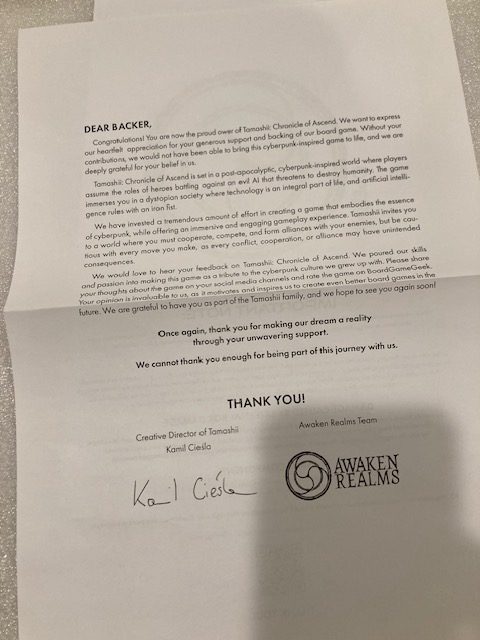
IMG_8139

After each Act, you can save your game for another session (which is what we did), or continue straight to the next act. We played the three Acts over three sessions in June and July of 2023.

IMG_8140

The time on the box seemed apropos: each act was about 90 minutes. The box also says 2-6 players. We ended up playing with three people. If you were stranded on a desert island with this box, you probably could play solo as two characters and still enjoy it, but like all Escape Room games, usually more brains are better to progress the game.

IMG_8138

This Escape Room style will very familiar to those of you who played the Clue: Treachery at Tudor Mansion game from earlier this year: see our review here. There are differences, though, which we’ll see below.

IMG_8142

As the prelude closes, we get ready to play.  You’ll notice we can’t do anything at all until the players arrive! As soon as you open the box, it tells you to STOP!

IMG_8143

Act I: Mystery at Ten Towns

IMG_8145

Charlie and Allison are my Escape Room buddies: we’ve played quite a number over the years (including many Murder Mysteries: they were part of Red Carpet in Ruins from a weeks ago). This seemed the ideal game for us: we have played many sessions of Dungeons and Dragons together as well as many Escape Room board games! This game was made for us!

Continue reading “A Review of Bedlam in Neverwinter: A Dungeons & Dragons Escape Room in Three Acts”