Top Ten Things I Learned From Kickstarting

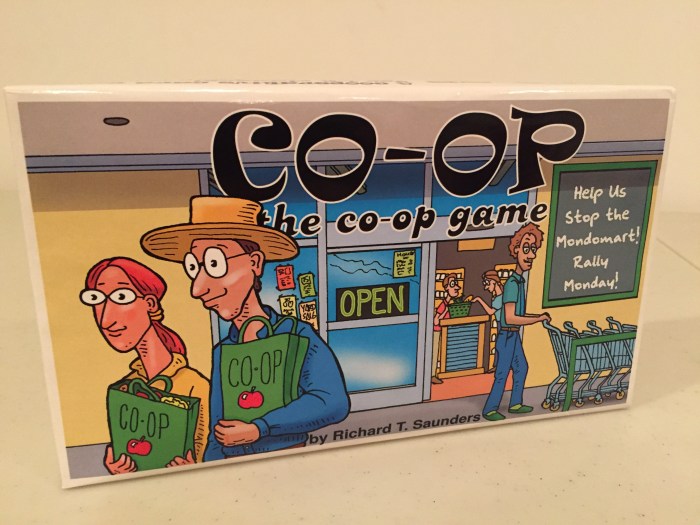
Huzzah! The Kickstarter for CO-OP: the co-op game funded. It was a success, but it didn’t make a major splash. To be honest, I am very happy that it was any kind of success. I have seen some good kickstarters fail. So, I set my funding goal fairly low and made two plans: barely funding and substantial funding. Barely Funded! Huzzah! Still a success! So, I am executing a plan for a small print run.

img_2563

Along the way, I learned some weird/interesting/simple things about the Kickstarter process. For future Kickstarters, here’s a list of some interesting things I encountered along the way when running my Kickstarter.

Honorable Mention lesson:  Have two plans so you can be successful at a small or large level  of funding.  If you are a small publisher like us, it’s nice to have multiple levels of success.  This may not matter if you have a lot of experience or are a big company.

10) You get SPAM in your Kickstarter messages. What? SPAM? I got 10-20 messages from SPAMMERS who wanted to be my social media outreach, (for a nominal free of course). It was directed SPAM (no real estate deals or anything like that), but still SPAM. Hm. I wonder if someone should do a Kickstarter for a product that filters SPAM in the Kickstarter messages?

9) Vote Trading. Many people (5-10?) with active Kickstarters reached out to me: “Hey, if you support my Kickstarter, I’ll support yours”. A different variant of SPAM. In a dark hour, when my funding velocity was negative, I did it. Only once, for a project that looked okay. I felt dirty and never did it again. I am hoping by posting this, maybe I can get some absolution. Sorry.

8) People will Cancel. Oof, the worst feeling in the world is when someone supports your project, then backs out. And it’s their right: Kickstarter has made that one of the options. So, you have to steel yourself for that. It’s easy to say “Yes, I know that can happen”, it’s different when you see it. Recently, I saw a video by Tom Vasel who said this happened to him in the Dice Tower Kickstarters … up to $30,000 in the last bits of the project! (This is one reason Dice Tower is moving to Indie-Gogo: when someone gives you money, it is immediately withdrawn).

7) Reviews and advertising didn’t help that much. I spent $500 on advertising and maybe, maybe got 2 people from that. A lot of my supporters came from people I had personally met and playtested my game, Social Media, friends, and UNPUB testing (Rincon Tucson and San Diego). If I had made it to GenCon, I suspect I would have gotten a lot more support. I just wasn’t ready for GenCon.

I will say this: even though I didn’t get a lot of click-thrus, the reviews and ads gave me some legitimacy. The reviews showed a real game, and the ads showed someone cared/supported my game enough to spend money on it. So, I can’t quantify the “legitimacy”, but I suspect it helped me keep people who came to my site.
6) BoardGameGeek. I should have put my game on BoardGameGeek sooner. I was under the impression that I couldn’t register a game until it was “legitimate” (in Distribution). Not true. Although when I did finally register, we had just funded, so it was clear the game was legitimate at that point. I think I got some more traffic once I was on BGG.

Like the reviews and advertising, being on BGG gave me some more legitimacy.

5) Non-traditional buyers. As hard as it may be to believe in this day and age, not everyone likes Kickstarter and the act of putting Credit Cards on the Internet. I had one customer send me a check and one customer give me cash. So I did the paperwork of creating an accounts for both of them and “funnelling” their money through a credit card.

I am happy they cared enough to want the game, so I was happy to do the paperwork (Internet work?) for them. Make the customer happy.

4) Try to give lots of updates. When I first started, I didn’t want to give too many updates (I don’t want to annoy people with too many messages). The more I looked around at other projects and talked to people, I came to the conclusion that people seem to want those messages. They may not read them all, maybe they’ll just glance at them, but it gives a warm fuzzy. They may even get slightly annoyed, but it shows you care enough to try to reach your backers.

I heard about some projects where the people just disappeared with the money. I don’t want to be that guy. I want people to feel fully engaged, knowing what I am thinking.

So, I am probably more chatty in my updates than I should be, but I want people to feel like they are being kept in the loop.

3) Eye on Shipping. I made my game to fit in the USPS Fixed Rate Small box. On purpose: if I only got the minimal funding, I wanted to be able to ship by myself (if I had made the bigger levels of funding, I would have gone with Naked Shipping).

One really neat product I found was the Scottie Stuffer: it allows me to fit two of my games in the USPS Fixed Rate small padded envelope and still have great protection. For those of my backers who bought two games, that’s how we are able to get them two games for the cheaper price.

2) Feedback is important. It always good to have several friends you trust give you brutally honest advice at every level. I thought I was ready to Kickstart much sooner, but really got some honest feedback that really helped me. At every stage, my friends have helped by by proofreading, pointing out errors, and so on. Try to get as much feedback as you can at every stage: the Kickstarter, the Updates, the Comments, etc.

1) Friends matter. This was my first Kickstarter, and I got a lot of support from non-traditional gamers. Thank you.

Daedalus Sentence Review

pic2942209

When it comes to Kickstarters, I am a sucker for the cooperative game! I have supported as lot of kickstarters just because they were cooperative! And that’s where Daedalus Sentence came from for me …

https://www.kickstarter.com/projects/167427101/the-daedalus-sentence-escape-from-space-prison-co

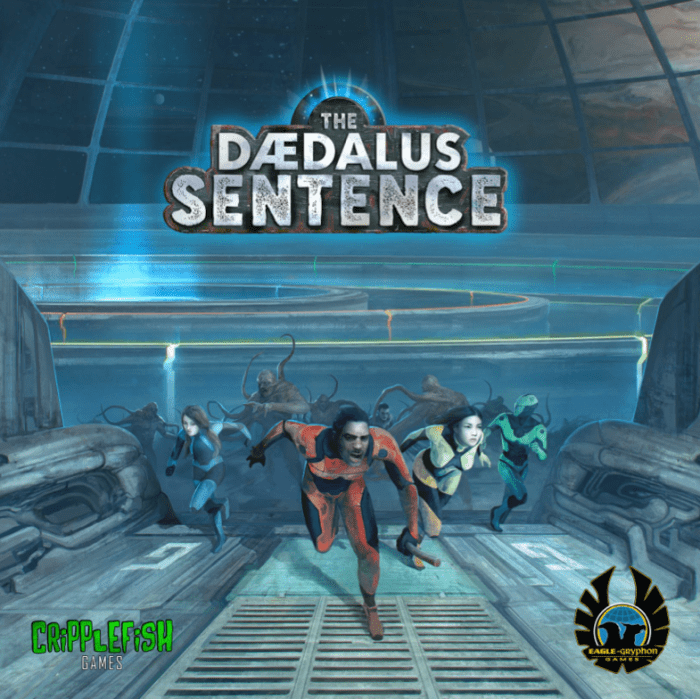
The Daedalus Sentence looks really cool. It has rotating, concentric rings and a LOT of moving pieces. Did it live up to how it looks?

I’ve played two games now with two very different groups of friends. We’ve lost one game and won one game. Group one is me, Josh and Jeremy (Jeremy hates cooperative games, but it looked cool enough for him to try), who are younger gamers. Group 2 is me, Junkerman, CC and Kurt, who are older gamers about my age.

Theme: 8
Gameplay: 7
Instructions: 5 (6 because they have game summary charts)
Cooperative Play: 8

Background: Some of us love cooperative games, and some of us (Jeremy) hate cooperative games.

Theme:
Wow! The whole reason we played this one because Josh and I really wanted to unbox this one and see how it worked. Jeremy came in late and was sucked in to playing (but he thought it looked cool). The whole idea that all there rings can really rotate, and fairly easily I might add, made it “fun” to do maintenance.

I would describe this as the prison from “Guardians of the Galaxy” meets Pandemic! It felt like we were in a prison, trying to discover the way out. We have to get from the inner rings to the outer rings to escape! It looked very science-fictiony, and felt the same way. We are trying to escape a space prison! That theme really came out.

Nit-pick:
If you JUST look at the rules summary, and the rules, it’s not clear how to get out of your cells! It looks like someone has to get you out of your cell, but how do we do that if we are all stuck AT THE START OF THE GAME? After searching the rulebook and the game summary, someone finally read the “flavor text”, which implied all the cells were all open (from a power burst). I’m all for flavor text, but when a rulebook is as big as the Daedalus Sentence, you tend to skip flavor text! Make it CLEAR we can just get out at the very beginning. This cost us about 10-15 minutes and kind of put us in a grumpy space to start.

Like: I like the Game Summary. It’s one of the better ones I’ve seen: it has all the actions you can do, it gives a very good summary of how those actions work, and we could “mostly” figure out the game from the rules summary (occasionally looking at the rulebook for clarifications). Like many games of this ilk, it has special locations with special powers: the Game Summary even summarizes what you can do at the different locations really well! That was great!

Dislike: My only quip with them Game Summary was that the “special locations” didn’t feel well distinguished. You really had to stare at it (“Oh! There’s a vent there”!) or consult the OTHER side of the Games Summary (“Wait, which one was a Research Lab again?”). Seriously, just put a picture of the location (even a small one) on the Game Summary next to the action. That way you can immediately draw your eye from the location to the summary.

In general, I really liked the Game Summary: without it, I think we would have been a lot more frustrated learning the game. I just wish the Special Locations were more distinguished.

Gameplay:
Josh and Jeremy jumped right in. We consulted each other, we tried to figure out the best thing to do, we tried to figure out when to open the way to the next ring. I think it’s a good game for cooperative gameplay: we are all just trying to get out of this prison (which of course we were wrongly put in!)

I am a huge fan of “Player Selected Turn Order”, and Daedalus Sentence uses it! We each get 4 actions per turn, and we are allowed to take those 4 actions in any order with the other players. So I can move (Rich action 1), Josh moves (Josh action 1) then researches (Josh action 2) then give me a card (Josh action 3), then I can (Rich action 2) use that card. Our actions support each other!

Most of the time, each player just used all 4 actions in order, but when it made a difference, we could go in any order. I know some people don’t like “Player Selected Turn Order” because they think it’s too hard to coordinate, but it was definitely NOT a problem in either game I played.

Jumping right in seemed to work. We learned parts of the game “On Demand”: how the circles worked, how to get to the next set of rings, how the locks worked, how to open the locks. The Games Summary really helped for this.

I like that the game has a simplicity to it, in that all actions are related to just one set of cards. The cards show either a colored ring, a minotaur (easy guard) or a Lactate (hard guard). (And they aren’t really called Lactates, but that’s what we called them in both gaming sessions). Rings show a color and a direction. When used in the maintenance phase, they show which ring rotates. A Minotaur or Lactate spawns a new guard in the maintenance phase.

The cards are also used for the actions. The players can replace maintenance cards (on Special Locations) so they force different rings to rotate.

The cards are also used for the combination to the gates. Each gate (to the next ring) needs to be opened by the players playing cards for the combination.

So, prison actions, player actions, and combinations all used the same deck! I thought that was pretty cool. We even did some strategy to keep Lactates and Minotaurs out of the main deck (in our hards) to make sure there was less of a chance they’d come out.
The Good News: I liked both games I played. I had fun, and I think my friends did too (Jeremy had fun, but in spite of the game). The game seems to foster cooperation. I think it’s a good game. The coolness factor of the rotating rings wears off, but I still feel like this is a good game. It has a vaguely Pandemic feel.

The Bad News: Ugh, the first game we lost felt very arbitrary. If you get caught by a guard once, you get sent back to your cell … at the middle of the board. And someone has to come rescue you. The first game felt like … stalemate. We were just about to escape (almost ALL Minotaurs were on on the board), and I got a stray minotaur in my space randomly. So, back to my prison I went. There’s no way my friends could go all the way back in and save me. Too many minotaurs. We knew we couldn’t win anymore, so we just quit.

That’s not good. Part of the reason we quit because the maintenance was unbearable: all the Minotaurs were out, 4 rings were spinning per turn, and it just wasn’t fun. We knew (as experienced gamers) we couldn’t save me and win, but we would have to “plod” and play it out. Nope. We just quit.

The second game (with a different group) was much more fun: I think that’s partly because we kept the Minotaurs and Lactates under control—there weren’t may of them. So, the maintenance didn’t weigh us down too much. Although it still got slightly annoying to go through 4 possible rotations every turn at the end.

Summary:

I like this game. I will play it again. I think CC and Junkerman would too. I think Kurt and Josh are on the fence, but Jeremy definitely won’t play it again.

It’s fun. I like the theme, I like the cooperative gameplay, but the maintenance on the rings and guards might turn you off (especially at end game).

Getting Ready To Kickstart! CO-OP: the co-op game!

After months of design and development and test, we are ready to Kickstart CO-OP: the co-op game!  We’ve had many blog entries here in coopgestalt where we discussed decisions, playtesting, rules, and general development of the game.  We’ve had a few false starts, but we’re just about ready!

The official date we go live is November 15th.

Thanks to Bob Diven for the great art he’s given us!  Final Totals:

  • 200 cards (63 Happenings, 99 Groove cards, 27 Goods cards,7 COOPERATE cards, 4 Locations)
  • 18 Jumbo Cards (7 characters, 5 days of the week, 3 Game/Icon Summary, 2 Scenario cards, 1 Money Chart): all double-sided with content on both sides!
  • 15 Markers (7 standees, 6 VIBE gems, 1 Money marker, 1 Happening Dude marker)
  • 1 Rulebook (16 pages, 4.5″ by 8″)
  • 1 Box (big enough to hold everything, small enough to fit in the USPS small flat rate box) about 5″ by 8.5″!

Special thanks to everyone who helped out!  It’s a long list, and I’m sure we’ve forgotten someone (not on purpose)!

Thanks to playtesters and helpers Anya and Robert, Chris M., Alan C., Kevin D. and family, Byron & Jenn H., Drew, J on S., Cynthia, Junkerman, Kurt D., John M., Mike H., Bob A., Sam K. and family, Lon F., Charlie C., Alison C., Clint J., Cary J., Audrie T., Stephan T., Leif T., Teresa F., Sara B., Ben P., Jon G., Robert C. and wife (Alison), Mark S., Nancy S., Madeline M., Adam N., Jeremy W., Dustin and wife, Robert S., Jeff H., Jeff Barr, Random, Jacob, Kylie, Scott S., Jeff, David H., Erin, and Robin. From UNPUB: Olivia, Max, Geoff, Sun, Katie, Rob, Ben, and Milo. Thanks to Bob Diven for the great art! Special thanks for Jenny J., Chris C., Josh M., Don W., Martha C., and Andrew A. for their extra support and help! A shout-out to “Isle of Games” for their support!

UNPUB Tucson at Rincon 2016!

One of the better gaming events in Tucson is the Rincon Board Game Convention.  If you’ve never been, they have board games, RPGS, miniatures, card games, new prototypes, games for kids … almost any game you would want!

This year, we were able to get some playtesting in for CO-OP at the UNPUB mini event:

Thanks to all who attended and for some great playtesting!

And yes, they kinda looks like some of the characters from CO-OP …

… but I promise you, it wasn’t on purpose!

Seriously, all feedback was great!  Most, if not all problems, were because people came late to the event.  One remark was:

If I had set-up the game myself, I think a lot of my confusion would have gone away.

Another comment was:

I didn’t know when to play a card, but I realize that was because I was late and missed some of the rules.  The Game Summary card was really helpful!  Too bad I didn’t see it until after the game!

Everyone who filled out an UNPUB form said they’d play again and that they’d buy the game.  Unfortunately, I don’t know what the people who didn’t fill out forms think …

Mythos Tales Unboxing


Mythos Tales was a very successful kickstarter, doing 5x it’s initial asking!
https://www.kickstarter.com/projects/8thsummit/mythos-tales

I am excited for it because it combines detective work with co-operative play in the genre/world of Arkham Horror (a perennial favorite at our games table, especially on Halloween).  It was described to me as Sherlock Holmes: Consulting Detective meets Arkham Horror.

My copy of Mythos Tales arrived just today. Super cool!   But my unboxing left me a very pleasant surprise! What’s that you may ask???  … wait and see!

First, the box opens up with a nice “Thank You” flyer (+errata). Very classy.

img_2419
The game box has very nice artwork and is very high quality.

img_2420
But what’s this underneath the gamebox?

img_2421
I got candy! I think that is the coolest thing ever! Thank you 8th Summit games!  It’s amazing how such a little thing made me so happy. (I love Smarties).

I opened the actual gamebox and looked inside .. holy cow! So much stuff! I think this will be a deep, deep game that will last me years.

img_2425
I like to savor stuff like this, so I am excited to play.

Watch for a review in this space after a deep play!


Top 10 Co-operative Board Games “Off the Beaten Path”

There are a lot of top 10 lists for co-operative board and card games, but I have noticed that they tend to rehash the same games over and over.

To that end, here is a list of my top ten “off the beaten track” co-operative board and card games.

10. Shadowrift:
https://boardgamegeek.com/boardgame/112092/shadowrift

shadowrift
I believe it was originally a Kickstarter, but I picked it up at my local  game store (the original edition).   This (at the time) was unique, as it was a co-operative deck-building game. The theme was simple: keep Haven Town from being overrun.

Shadowrift is hard to set-up, but once you get into it, it’s pretty fun. (I strongly recommend finding a youtube video for set-up: we liked this one).

Currently, there’s a second edition, but I only have the first. My friends and I always enjoyed it when we played it, so I have new reason to buy the new one. The newer edition has better components, but again, I was happy with the first.

9. The Isle of Dr. Necreaux:
https://boardgamegeek.com/boardgame/42892/isle-doctor-necreaux

iseofdrn


An interesting co-op card game, where splitting the party is a mechanic!

I don’t even think this game is in print anymore. I just adored this game: it has some interesting game play ideas: every turn, you decide how many “challenges” (cards) to flip. Too many and you get overwhelmed and “die”, too few and you won’t save the scientists/get off the island in time!

The FAQ is bigger than the rulebook, and there are some ambiguities. If you like rules very cut-and-dried, you won’t like this game. Fairly often in the game, you have to make a rules interpretation to move on; this can be fairly disconcerting to some gamers. But, for me, it was kind of thematic! “I’m on this weird island! How do I deal with this weird stuff?” You just deal with the weird stuff and move on.

I adored this game (I know I said that), but I can see why others might not like it. It’s worth checking out just to “split the party”; the fact that they have a mechanic for that is worth at least a few plays.

8. Agents of S.M.E.R.S.H:
https://boardgamegeek.com/boardgame/111105/agents-smersh

smersh
A fun co-op game with lots of immersive reading, originally a kickstarter.

Thematically, you are secret agents from the 70s. (Think Bond in the era of James Bond with Sean Connery, but much sillier).

This game was originally a kickstarter. I introduced it to a lot of my friends: they liked it so much they bought it themselves!  (I had the first edition, there is currently an updated 2nd edition).  It’s best described as Tales of Arabian Nights meets Pandemic and Arkham Horror. There’s lots of reading that can be very immersive: every turn, someone reads some text from a VERY big book about a secret agent challenge, and you either succeed or fail in the challenge. You move around a map, trying to squash Dr. Lobo and his minions before they destroy/take over the world!

One complaint I have heard about Tales of Arabian Nights is that it’s too random (and it really is!). If you like the idea of Tales of Arabian Nights, but want something with strategy, SMERSH is for you!
My friend Joe bought the game because the reading aspect is very helpful in his classroom: it seems to encourage kids to to read more.

My friends Charlie and Alison bought it because they loved the co-op nature and the flavor text is very immersive.

This is a fun game. It also has a sense of humor. (There’s at least 2 expansions, one is named “Swagman’s Hope”.)

7. Ygdrassil:
https://boardgamegeek.com/boardgame/71671/yggdrasil

yg


A fun co-op set in Norse Mythos. Very hard, but very fun.  This game comes out a lot onto our table.  It seems to be a real crowd pleaser.

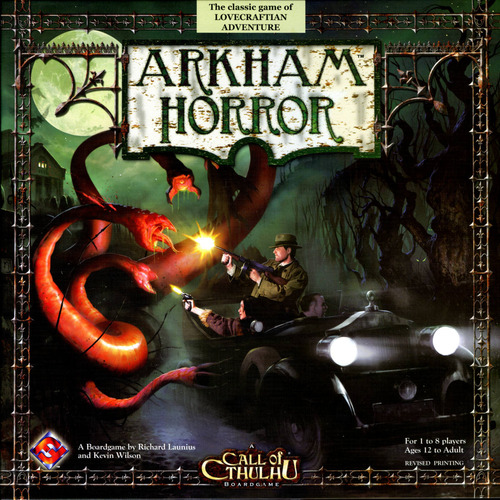
6. Arkham Horror:
https://boardgamegeek.com/boardgame/15987/arkham-horror

arkhamhorror

A very big, very thematic Cthulu Mythos board game squarely set in town Arkham. It’s almost a role playing game, in that you play a character with abilities and equipment and stats, but it is  still “limited” to a board game (to keep some of the complexity down).

So, you might wonder, “How is this off the Beaten Path? Arkham Horror is an mainstream game!” Well, I was “shocked” how little presence Arkham Horror had at the Fantasy Flights board game center in Roseville MN (I got to visit when my wife and I visited her family). There was just a few copies of the game and the expansions. It didn’t seem like they were pushing it very much. It seems like the new generation of Fantasy Flight games is getting the love: Mansions of Madness, Eldritch Horror and Elder Sign.

I suspect that Arkham Horror has gone as far as it can, and Fantasy Flight is hoping to next generation of Cthulu Games will take hold.

My friend CC even thinks the newer games (esp. Eldritch Horror) are more modern and have slighly better mechanics (and he introduced me to Arkham Horror!).

But I’ll play Arkham Horror just about anytime. It has a special place in my heart: for my Bachelor Party, we played Arkham Horror and 6(!) expansions at the same time. EVERY SINGLE EXPANSION AT ONCE. To keep track of the different boards and rules, every player was responsible for one expansion.

I still think it’s a great game. If you like Role Playing Games, but just don’t have a DM or time to make up an adventure, Arkham Horror feels very much like an RPG while still being bounded. It’s a great game, if a little complicated.

To my mind, it’s the first real co-operative board game.

(And, I also loved it so much, I tried to get my Software Engineering course to implement it.)

5. Dead Men Tell No Tales:
https://boardgamegeek.com/boardgame/141423/dead-men-tell-no-tales


deadmen

This was originally a kickstarter .

I am a sucker for co-op games, so I picked this one up. I also picked up a second copy for my friend CC (as a birthday present) because I knew his kids love pirates (and CC is the only person I know who likes co-ops as much as me).

CC, a bit of a connoisseur of games (and quite the designer), was really taken with the game. He thought the dice mechanic was interesting and original. I also noticed that the game was pulled out many times at one of my Las Cruces gaming groups. “Did you bring Dead Men Tell No Tales?”

It was a good gift and it is a good game.

4. Secrets of the Lost Tomb:
https://boardgamegeek.com/boardgame/150484/secrets-lost-tomb

secretsofthelosttomb

This was originally a kickstarter.

For gameplay, it can be best described as Arkham Horror meets Betrayal at House on the Hill (but fully co-operative for the entire game). The theme is very Indiana Jones/Johnny Quest with exploration of crypts and tombs and defeating all sorts of evil creatures. In some ways, I like this better than Arkham Horror because each time you play, the scenarios are very different (with different win conditions,  set-up, etc) a la “Betrayal at House on the Hill”. The only problem with scenarios is that there are a finite number of them which may limit your replayabilty a little.
There’s a lot of pieces, but it’s lots of fun. There are TONS of expansions, but I still only have the base game, as I haven’t played through all the base scenarios yet.

A long game, but lots of fun if you like a lot of role-playing aspects in
a board game.

3. Say Bye to the Villains:
https://boardgamegeek.com/boardgame/140795/say-bye-villains

saybyetothevillains

My friend Jeremy brought this over some time ago. I was skeptical: it’s a co-op that plays 3-8 players. 3-8?  We ended up playing a game with 7 people. And it was FUN! There are very few games that work well with 7 or 8 people, especially a co-op, and this one pulled it off. I am sad to say we haven’t played this as much as we should, but it was really fun.

I bought it the next day.  Part of the reason this one gets such high marks is because of the 3-8 players for a co-op.  So few have that now.

2. Big Book of Madness
https://boardgamegeek.com/boardgame/171233/big-book-madness

bbom

This game is fairly new, and has hit our table quite a few times.  I suspect many of my friends may go and buy it they like it so much (CC already has!).  Check out our review and discussion of the game here.

I wonder … this game has quite a bit of “Parry Hotter” in it (I don’t want to get sued …), so I am curious how well the Harry Potter Deckbuilding game (out very soon) stacks up (no pun intended) against this.  Will the one that was developed with the IP work better?  Or will the “offshoot” be a better game?  Time will tell …

1. CO-OP: the co-op game
http://www.picklingtools.com/coop61.pdf

coopgame1

Hopefully, a kickstarter in the future.

This is a my own creation, which I have working on for about 9 months now. I still like playing this game! I like co-op games that are very puzzly, especially ones you can play by yourself or with others; that describes CO-OP to a T. I also like games with a sense of humour (The Secret of Monkey Island, Chez Geek, Munchkin, Agents of SMERSH, etc.) and I tried to instill humor into a game without sacrificing gameplay. I also find that some things are missing from a lot of co-operative board games, mainly “Why can’t you play in any order?”. If players control the order, they can make some neat combinations that can really move the game along (See this blog posting for what I call “The Fastball Special”).

So, I am hoping to take CO-OP to a kickstarter maybe at the start of next year. Be on the lookout!

Fastball Special

fastball

80’s X-Men

I grew up in the 80’s with the X-Men of Claremont/Byrne/Austin:  this particular incarnation of the X-Men is the basis for many of the current X-Men movies (Dark Phoenix, Days of Future Past) and spinoffs. The great stories and art really carried me into another world! What I would have given to be training in the Danger Room with Cyclops and Wolverine and the rest of the team!

One of the lessons of Charles Xavier’s school was co-operation. If you couldn’t work together in the Danger Room, you’d fail the exercise. If the team failed to work together in the field, they’d die!

The epitome of this co-operation is the Fastball Special.

The Fastball Special is where Wolverine climbs onto Colossus, Colossus throws Wolverine, and Wolverine attacks. It’s a very co-ordinatinated long distance attack. And it doesn’t work unless Wolverine and Colossus work together in a very particular order.

Superhero Games


It surprised me how long it took for there to be a co-operative Super Hero board/card games. With the popularity of super hero teams working together: the Avengers (“Avenger Assemble!”), Teen Titans (“Titans Together!”) and the X-Men (“To me, my X men!”),  it seemed only natural to me that a co-operative Super Hero game would be in the works.

Sentinels of the Multiverse was the first to get there (Gen Con 2011),  with Marvel’s Legendary (November 12, 2012) and DC’s Super Hero deckbuilding game  (11/30/2012) following. There are others, and we’ll do a round up in  later blog post, but these are the most popular at the time of this writing.

Turn Order


The interesting thing to me is that it’s hard to do anything like a Fastball Special in any co-operative game!

Most co-operative games require players to play in clockwise, counter clockwise, or some very specific order. If Colossus plays before Wolverine, they couldn’t set-up the Fastball Special!

Sentinels, for example, requires players to play in clockwise order. Thus, if I want Legacy to help Wraith with something, but Wraith plays before Legacy, I am out of luck! So, at my gaming table, we actually  have a “house rule” for Sentinels that players can play in any order  they want so they can pull  off something like a Fastball Special if they need to.

So my question is, “Why, in a co-operative game, can’t you play in any order you want?”

CO-OP: The co-op card game

One of the mantras of “CO-OP: the co-op card game”  is that I wanted a co-operative game that I wanted to play. To this end, I made sure (during the design phase) that players could play in any order they wanted! (Also called “player-selected turn order”).

Here’s the thing: it can make things a little tricky. During one fairly recent playtest, I got the following comment:

“It’s a little hard to keep track of who’s played if we go in any order we want. If we just went in clockwise order, we don’t have to worry about that”.

And that’s one major reason why I think a lot of co-op games  don’t embrace “player-selected turn order”; It adds complexity. Also, people aren’t used to it! They expect to go in one order because that’s what they’ve always done in so many other board games.

But there are a couple of simple solutions.

Solution 1: Don’t Worry About It

Okay, this is not the “ostrich head in the sand” solution, but sometimes simply noting (smetimes) it just may not be a problem. For example, in CO-OP, we noticed that in 1 and 2 player games (1 player game plays two characters),  no one ever really complained about “Ugh, who has played?”  There’s only 2 characters, so people don’t get lost. It’s no big  deal, so no special mechanism is needed to deal with it. It really depends on how much information has to be “remembered”: a small amount doesn’t require anything special (because in the case of of CO-OP, keeping track of  2-players is easy).

Solution 2: Use a Marker

Use a marker.

Okay, this is a obvious solution, but there are many ways to skin this cat:

  1. Turn something (card) sideways (“tap it”) to show you’ve gone
  2.  Knock a marker over (one that stands) over to show you’ve gone
  3. Move a marker off a “home” space to another space to show you’ve gone
  4. Every player has a marker and they give that marker to a special player
    after they’ve gone.

After all the markers are consumed (to show everyone has gone), then the
markers are returned to their natural state to get ready for the next turn.

For CO-OP, we went with a variant of solution 3: every player has a stand-up marker (with a picture of the character) that they “move” from their character sheet to the StoreFront, Warehouse, Yoga Studio or Park to show what action they’ve taken. Why solution 3?

  1.  There’s no natural card to turn sideways. All cards have other things on them, and turning something sideways will “goose” other markers.
  2.  Thematic reasons. CO-OP is all about going to the Store to work and the Warehouse to meet distributors, so it’s very thematic to move your marker from place to place to show when you’ve gone.
  3.  Kids like it. We are targeting the age group about 10 and up. Kids really seem to like moving markers around!
  4.  ALL players can easily see if your marker is on your home or elsewhere. There’s no need to ask “Have you gone?” if you easily see the marker has moved.

A small complaint I’ve heard is that the marker idea is “fiddly”, but once  people see why you do it, they don’t seem to mind it as much. For example: At an UNPUB event in San Diego, I was playing a 2-player game of  CO-OP with a fellow game designer. A few turns into the game, another fellow joined us and we went to a three player game. After the game was over, the other designer noted:

“I thought for the two-player game, the marker you have is fiddly.
But once the third player joined, it felt like it was imperative that
we have this marker! I totally understand why you want the marker now.”
Otherwise, you lose track of who has played.”

Conclusion

Was it worth all the work to allow players to play in any order? Absolutely! I’ve noticed in my playtests that people seem to plan more and work together (one of the goals of CO-OP), because they KNOW they can go in any order to help each other out.

  1.  One character can pass off a “problem” CUSTOMER to Billy Crisp so
    Billy (on his turn) can sell him anything
  2. One character can pass of a DISTRIBUTOR to a BIZZIE that turn so the BIZZIE can get more goods to the Warehouse.
  3.  A player can play first and play a card that gives everyone else more cards (so all other players have a better selection that turn)
  4. words words words  (lots of other ways, but let’s not spoil them!)

There are a lot of ways players can use turn order to decide what’s the best cards to play. I think it adds a new dimension to co-op games, as it makes the turn order strategic.

I’d like to see more co-operative game embrace player decided turn order so more “Fastball Specials” can happen!

Cartman Co-operative

We just coined a new phrase today: Cartman Co-operative.
My friend Josh and I were discussing the new Star Trek: Frontiers game; it’s a re-theming of Mage Knight into the Star Trek universe. We are both fans of Star Trek, so we were looking forward to playing it. (I am excited: it just shipped yesterday).

“I wonder how much it’ll be like Mage Knight. I mean, it’s co-operative, but we all seem to do what we want. I want to attack that monster, but so do you, so whoever gets there first gets the monster.”

“It’s Cartman co-operative: I do what I want.”

Cartman

If you’ve ever watched South Park, the character Cartman is the epitomy of selfishness, as exemplified by his catch-phrase (one of his many):

“I do what I want”.

cartman

This seemed to be the vibe every time we played Mage Knight. In general, we were helping each other, but if there came a chance for glory, we tended to take that chance (regardless if it would have been better if someone else did it). I am not saying everyone plays like this, but for some reason, the games we played seemed always to  go this way.

Games that are Cartman Co-operative

If the nature of a co-operative game encourages more “free will” and  selfishness, we will call it a Cartman co-operative game.

Examples:

  • Mage Knight: (The canonical Cartman co-operative game)
  • Legendary

Why Legendary? Since there is a lot of emphasis on victory points (and some of the heroes you choose concentrate more on points rather than winning), the game is co-operative unless someone can “do what they want” to get more points at the end.

I think any co-operative board game that tends to concentrate on points will tend to be Cartman co-operative. Can you think of others?