
No, this has nothing to do with the Scorpion’s song Winds of Change from 1990.
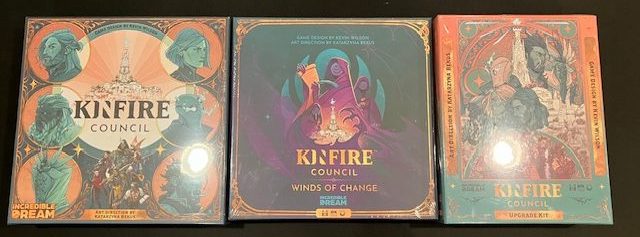
You guys are totally gonna laugh at me. I didn’t back the original Kinfire Council when it back on Kickstarter! Despite it being a Kevin Wilson game! Why??? I usually really like Kevin Wilson games! Between cooperative games like Arkham Horror (2nd Edition), Kinfire Chronicles (review here), and even traitor games (which I don’t usually like) like The Stuff Of Legend (review here), Kevin Wilson makes some great games!
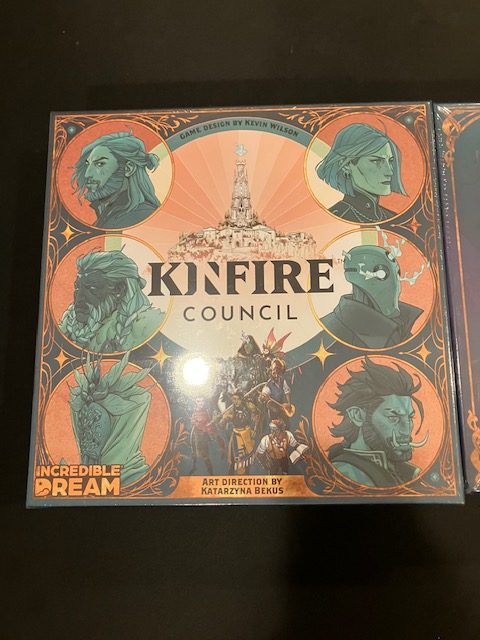
The base game Kinfire Council (see above) is a competitive worker-placement game, which looked pretty mean! It has voting on resolutions (which may screw the town or other players), and cultists that players may join-up at any point! It looked like someone put traitor mechanics and take-that mechanics into a worker placement game! No thank you! Me and my group like cooperative games; this just didn’t look like it was for me/us.
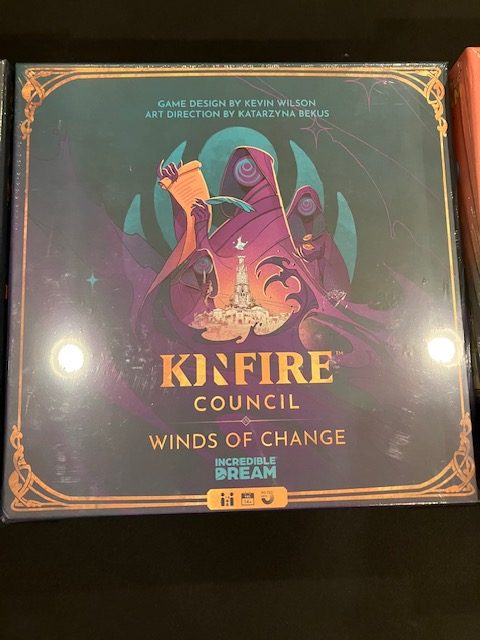
Somehow I missed the memo that Winds of Change (see above: an expansion that seemed to be part of the same Kickstarter) made the game solo and cooperative! You have to forgive me on this; it’s buried a little bit in the Kickstarter page! In fact, if go searching the page within your browser, the word “cooperative” doesn’t even come up! (It’s hidden in the pictures of the page).
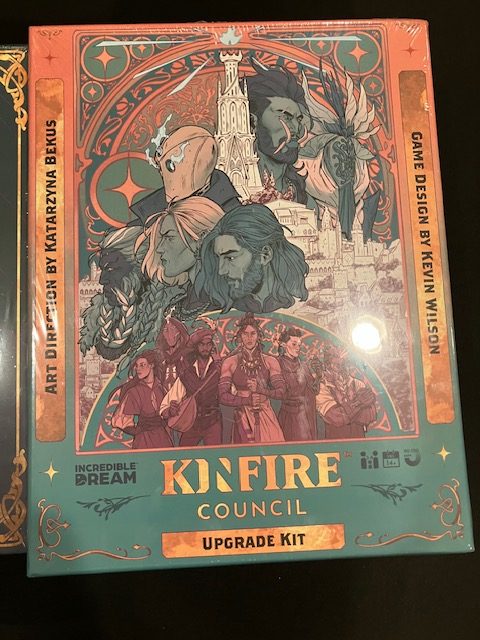
Also, I am always suspicious of games where the solo and cooperative game are obvious add-ons.
But I did get it. It took some effort.
So, is this any good? Is it worth getting both Kinsfire Council and the expansion Winds of Change JUST so you can play solo and cooperative? The answer’s a little more subtle than you might think.
Unboxing And Base Gameplay
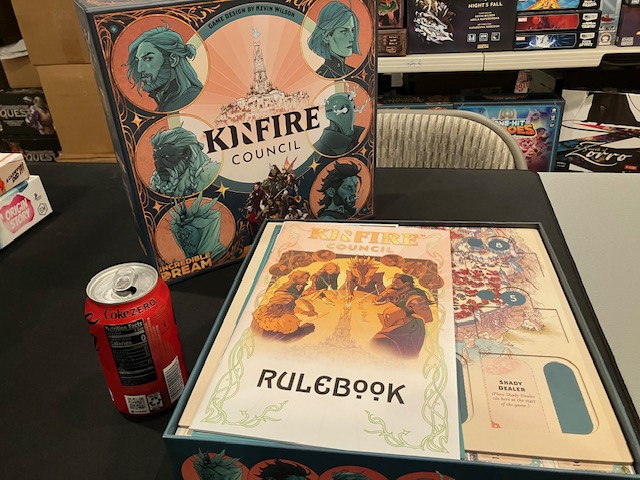
The base game is pretty standard sized box; see Coke Can for perspective.

There is a LOT of stuff in this box! See above!
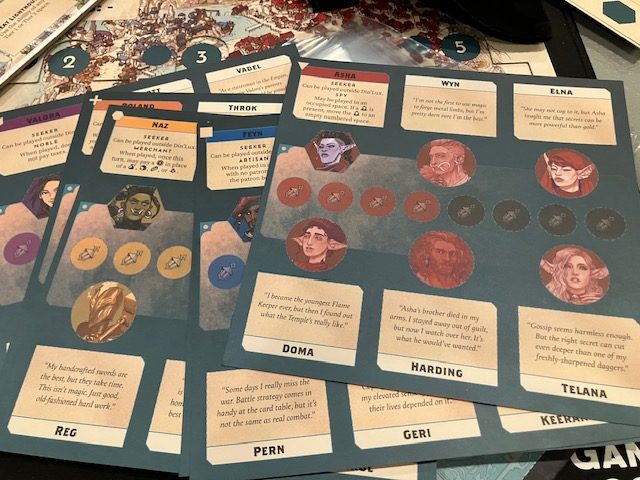
Each player chooses (or randomly gets) a Worker sheet … see above …
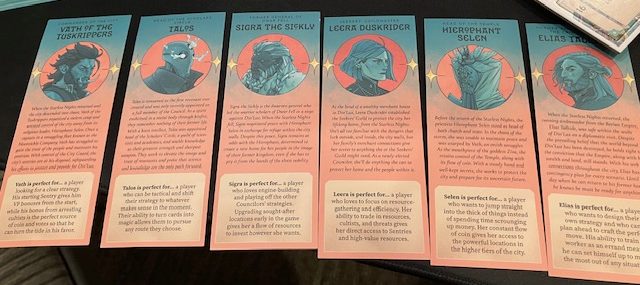
And a Councilor sheet! See above!
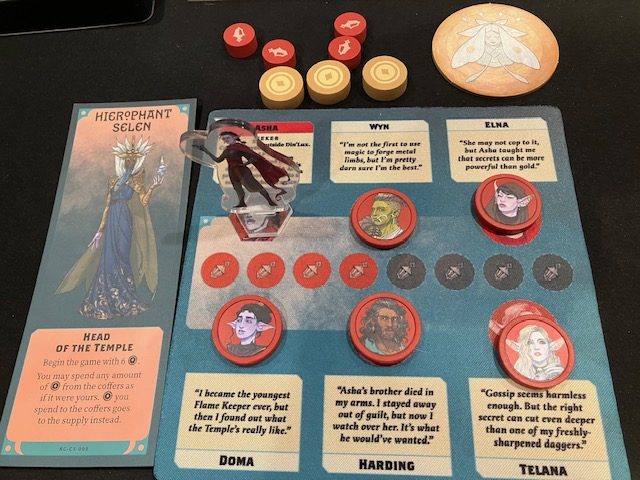
Together, the Councilor and worker sheet form your tribe! See above! (They don’t actually have an official name for this combination in the game, so I am using tribe to mean the combination of a worker sheet and a Councilor). The Councilor is cool because it gives special asymmetric powers (see Head of the Temple above; she knows how to handle gold)! Each player also gets a number of “generic” workers (see the 5 above).

The acrylic standee is a special worker called “The Seeker” who can go outside the city and do other special things.
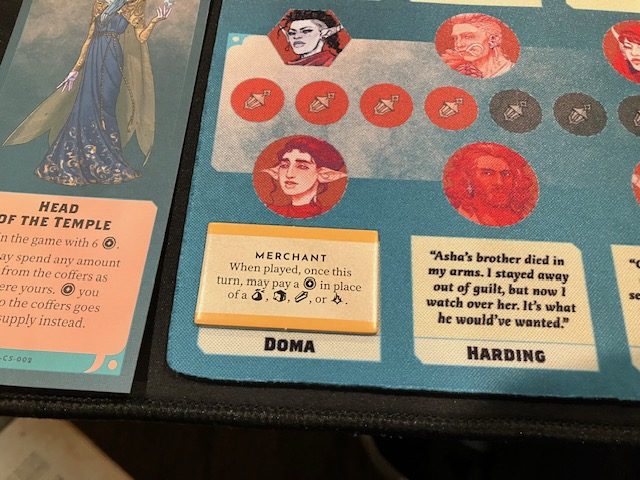
As the game unfolds, you can upgrade your workers! See above as Doma gets to be a Merchant!
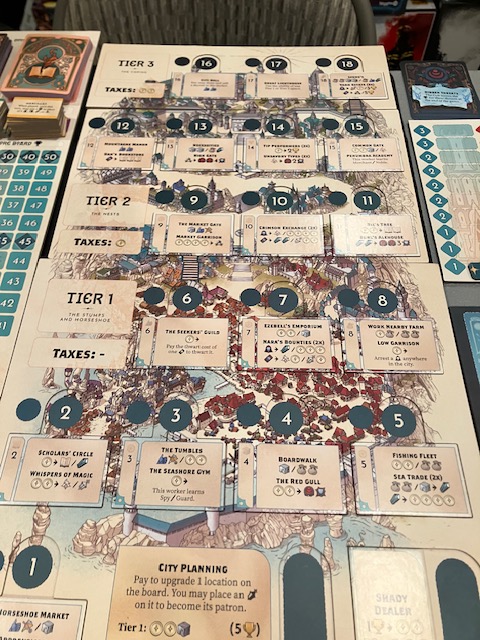
At the end of the day, this is mostly a worker placement game! Your workers and Seeker can be placed throughout the city and activate Locations! Only one per Location .. unless you have something special!

Many Locations have a choice: do you activate the top or bottom? For example (see above): The top is a choice between EITHER getting 2 coin or 2 food. The bottom action is trading; the worker can convert 2 food or 1 common into a moon stone (rare) OR one moon stone (rare) into 4 coin. These are some of the main resources in the game!

It’s probably safe to say this game is a resource acquisition/conversion game too! See a bunch of the resources (from the Upgrade pack) above.
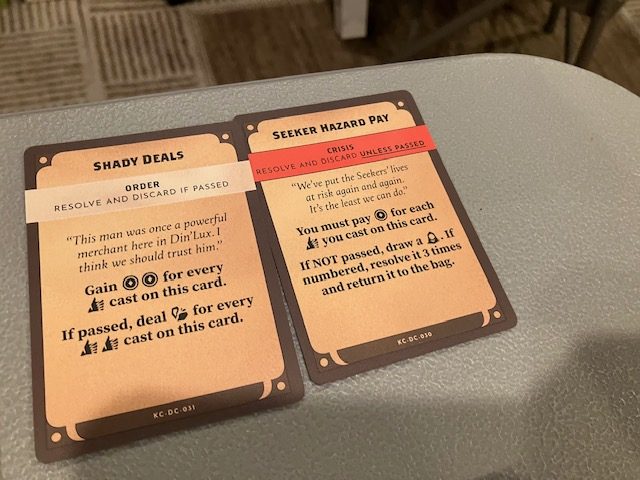
Kinsfire Council is also a voting game; you are members of a council for the city (I mean, it’s in the name for goodness sake). Every turn, two Decree cards come out (see two examples above). In order for these decrees to pass, they have to get a majority vote! If you are in league with the Cultists, you may want to vote against them! Or you may want to pass a decree that helps you but hurts the city! Or you may not care at all and just ignore the decrees, preferring to spend resources on other things! It DOES cost action/resources to vote! So, you have to decide to vote or not!
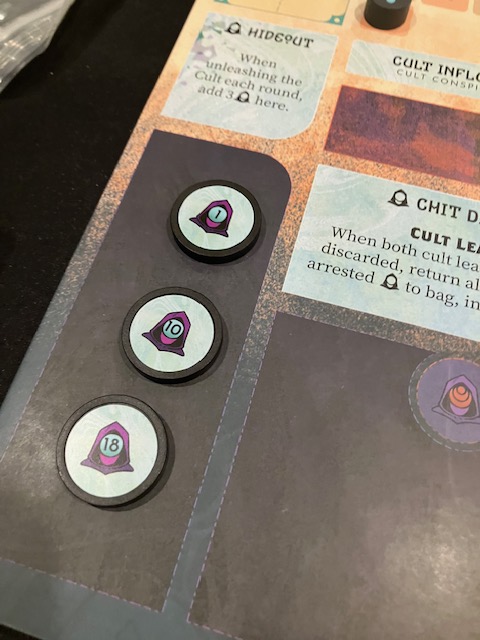
Another issue the players have to deal with … Cultists come out! They clog the worker placement board and make it so you can’t go there!
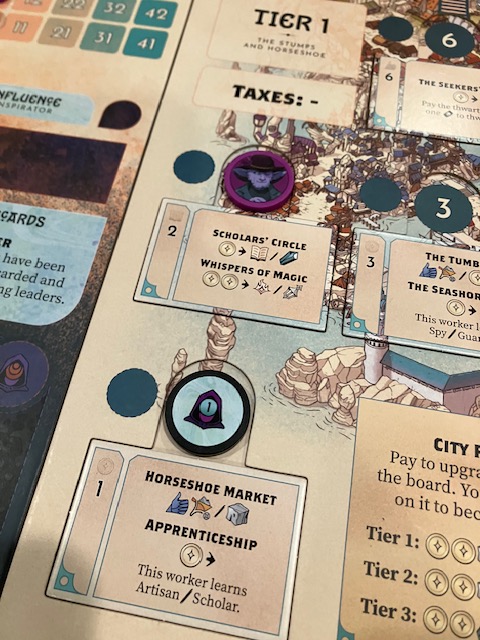
See above as the #1 Cultist clogs the #1 Action space! Luckily, your workers can arrest Cultists, by being adjacent to them (but unfortunately, arresting a Cultist takes your action, unless you are a guard…).

The Cultists also cause threats to come out! The threats don’t necessarily immediately trigger! They usually only trigger when enough Trouble tokens gets placed! (Thing in the Tunnel above needs 2 Trouble to trigger). If you can discard the necessary resources (at the bottom left of the card), you can stop the threat before it comes out AND get victory points (bottom right)!
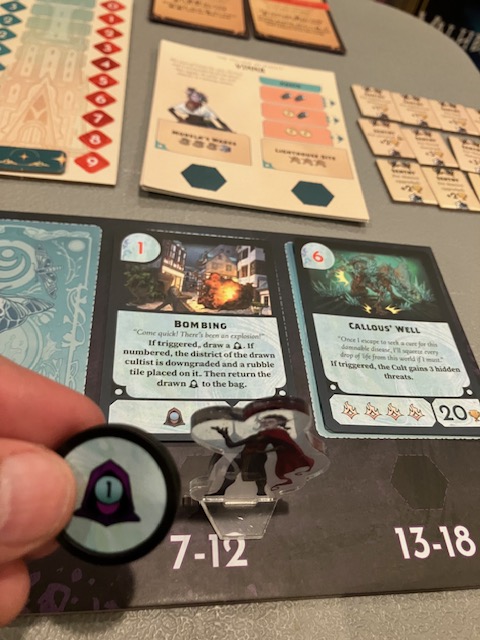
Every Cultist placed will either place a new threat or add a trouble, depending on its number (see the bottom of the threat board).

It sounds crazy, but Cultists are resources too! Even after you arrest some, you can still use the Cultists (say, as hostages for taking out threats: see above!).
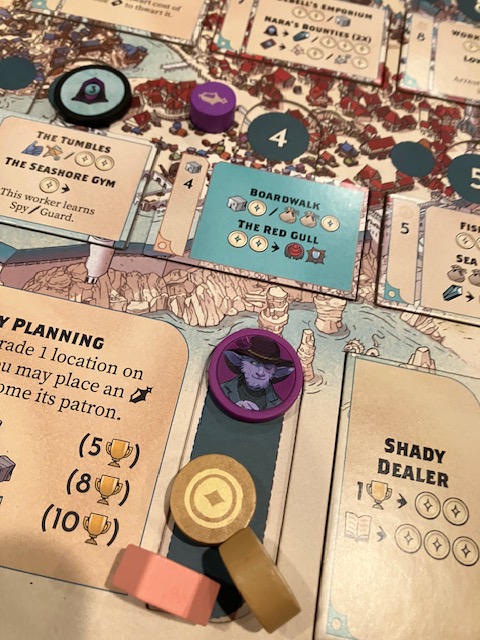
There’s lot of good stuff going on too; you can also upgrade spaces on the board by using the City Planning space! See above as it flips the white space to the blue side making it better!
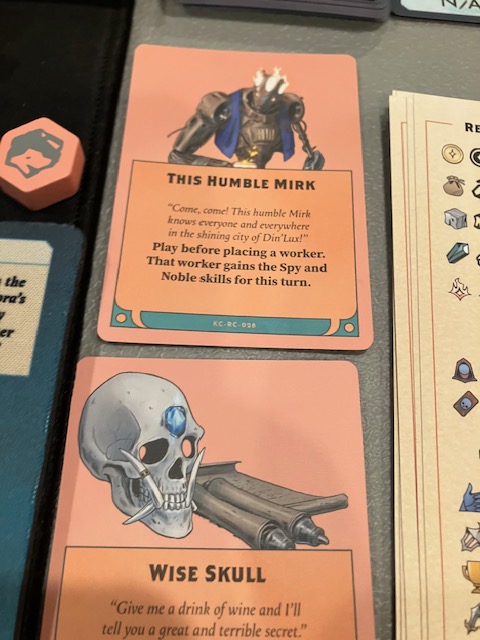
There’s also Research (which is like good news cards) which can be really helpful too. Like everything in Kinsfire Council, the Research cards are ALSO resources that may be traded in (besides doing the something useful).

Along the way, you have to keep the city healthy: the chart to the left are the resources you need to “feed the city” (3 food) and “keep it clean” (1 gold): this is called City Needs!! If players don’t collectively keep the City Needs under control, the city get more Cultists! Interestingly, you don’t have to use a full action to take care of the City Needs; this is just an errand … every action has a free errand you can run! (Thematically, it somehow makes sense that politicians see taking care of City Needs as a simple errand, not a full action).
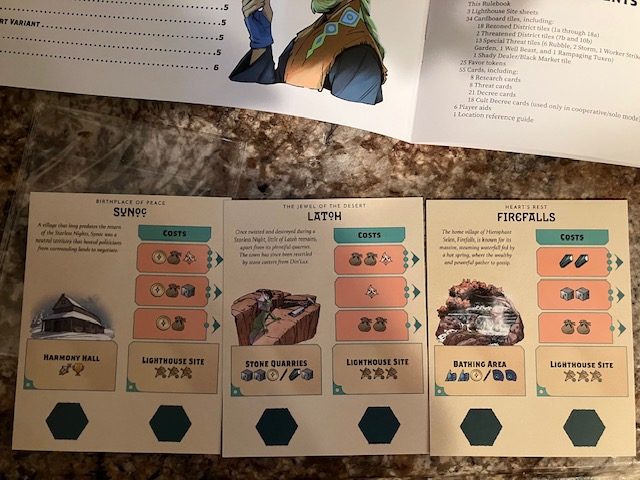
As part of the errand phase, you can also build the tower! (See three such tower cards above!) The Towers serve as inspiration to the city! The Cultists hate the tower, because it provides inspiration and hope! So, the less of the tower you build, the more Victory points the Cultists get!

To win, you need the most Victory Points: this is a Victory Point game! See the Victory Point track above! You’ll also notice that the Cultists have their own Victory Point marker! It’s possible for the Cultists (to be clear, Cultists are NOT a player) to win the game! If the Cultists win, whosoever has the most Cult Influence wins the game instead!
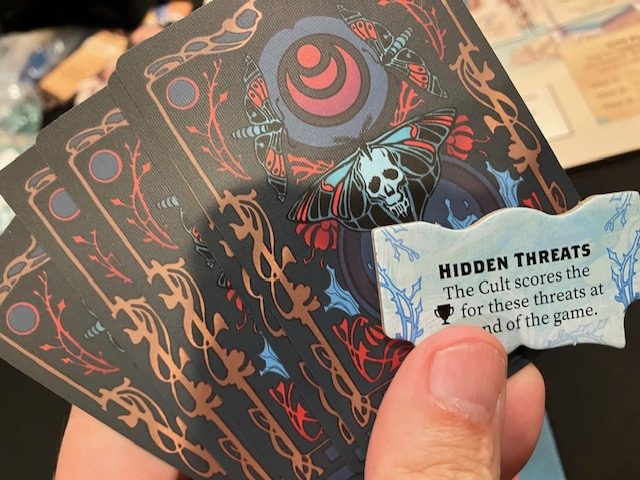
At the very end of the game, the Cultists reveal the Hidden Threat deck (created at the beginning of the game, and added to by certain decrees and threats) and add THOSE Victory Points to the Cultists!
The above 4 Hidden Threats would add 44 Victory Points to the Cultists!

This is a worker placement game, but with some really interesting ideas with voting, upgrading spaces, battling cultists, special workers, upgrading workers, collecting resources, doing research, building towers, and maybe … aligning with the Cultists behind the scenes!
Do you try to keep the city healthy or just let it go to hell and let the Cultists take over? That’s all part of this competitive game!
Rulebook
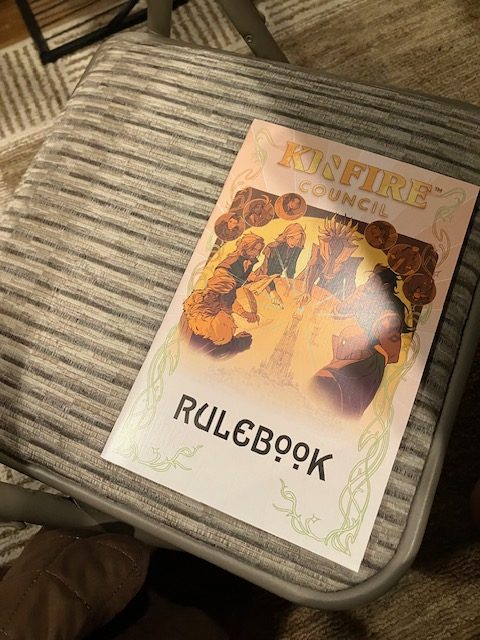
Good rulebook.
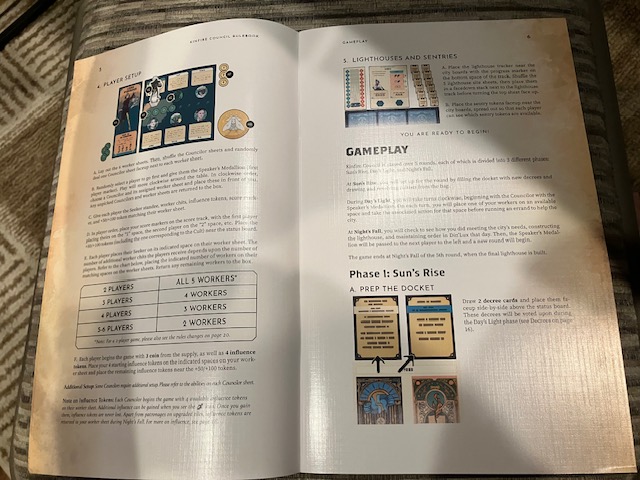
It gets a A- on The Chair Test (it could be an A, but the font could be a little bigger, especially seeing how much white space there is on the page). BUT the rulebook has a great form factor, has some decent pictures, doesn’t droop down over the edges of the chair next to me, and it stays open to be easily consulted. Great job guys!
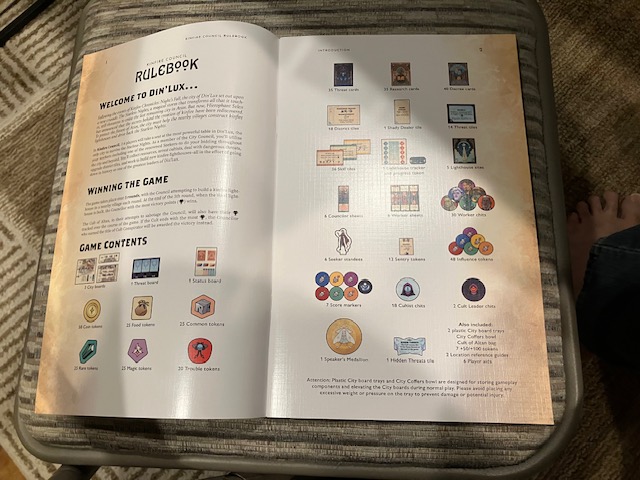
The components pages are good; pictures and correlating text is always a good thing. See above.
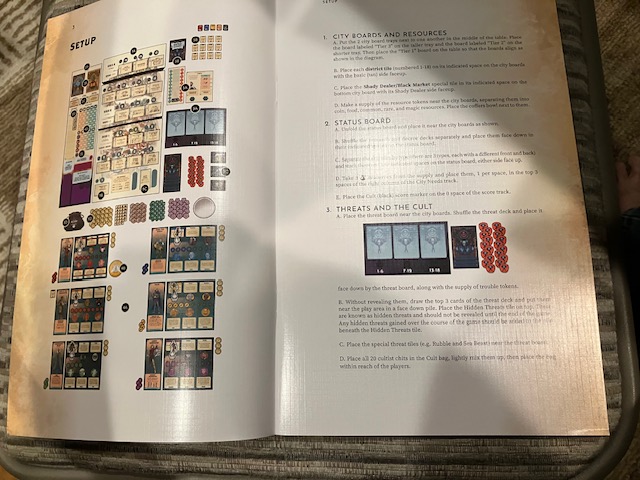
The set-up is also good; pictures and labels help! See above.

Holy crap, there’s even an Index, and I used it multiple times! It was a useful Index!

The rulebook even ends with something useful on the back; see above.
My only complaint was that there were a few things that were unclear in the rulebook. I posted on BoardGameGeek and got some responses; I post the thread here so you can benefit from my questions! (The Designer, Kevin Wilson even answered and tacitly approved the answers).
Other than that, very good rulebook.
Solo Game (Unofficial)
To be clear, the base game of Kinfire Council is for 2-6 Players and is a competitive worker placement game. There is no solo game built-in to the base game!
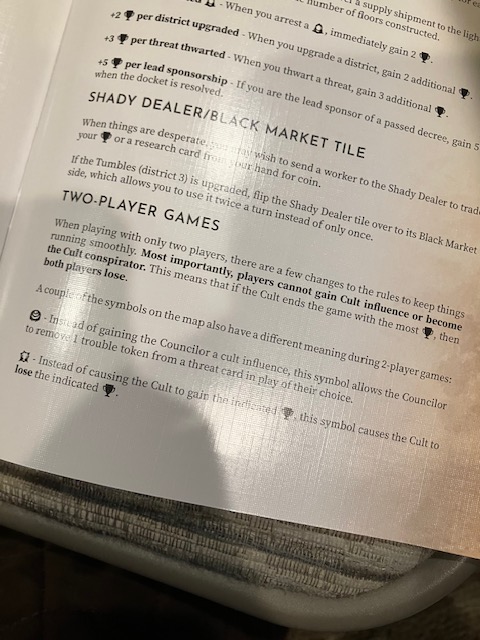
BUT, if you squint at the 2-Player rules a little (see page 20 from the base rulebook above) you can see the implications of a simple solo game!
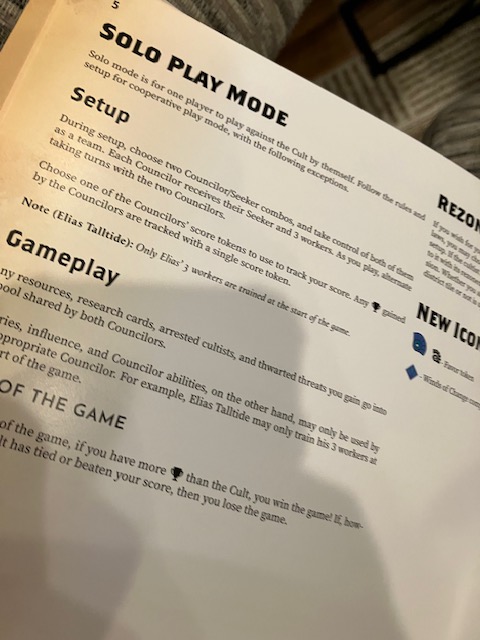
In fact, the solo mode from the Winds of Change expansion is ALMOST the 2-Player game from the base game!
Basically, the official solo game and 2-Player game doesn’t allow player(s) to go after Cult Influence. To win, the player(s) must get more Victory Points than the Cultists! Interestingly, the solo (and 2-Player mode) redefine the Cult influence action to eliminate Trouble tokens and SUBTRACT Cult VP (rather than add Cult Influence and ADD Cult VP).

So, you can play the base Kinfire Council solo … unofficially! It’s really just the 2-Player game where you MUST be against the Cultists!
To win the (unofficial) solo game, you play like normal, and BOTH players VP must surpass the Cultists! See above as I lose my first unofficial solo game as the red tribe is still behind on VP!
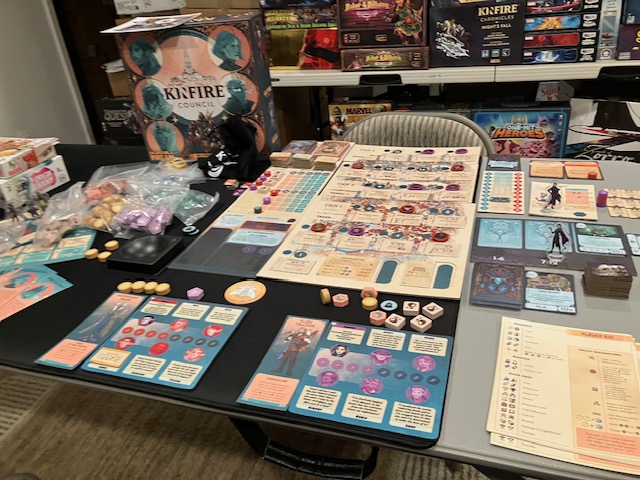
To be clear, this is an unofficial solo mode that is my own creation to just learn the game. It’s not very hard, but it does teach how the game plays. The solo player takes control of two tribes and plays the game normally, like a 2-Player game, but alternating between the tribes.
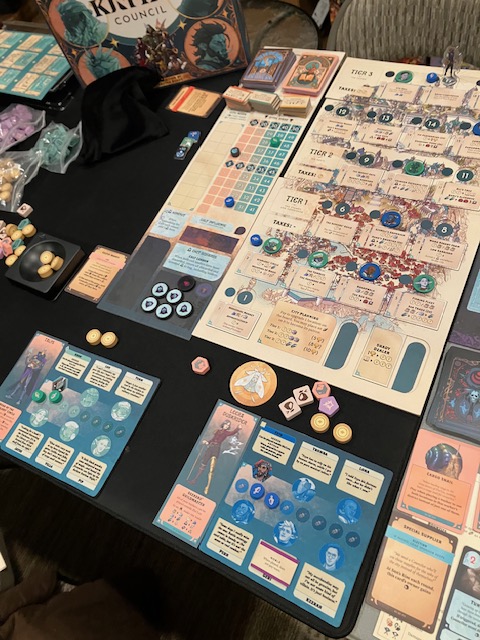
So, I played a couple of solo (unofficial) games to learn the game. This is a great way to see all the rules and systems! This (unofficial) solo game is MUCH EASIER than the official solo mode. The official solo mode is WAY HARDER, but when you are learning the game, I think this (unofficial) solo mode is more approachable! Basically, the official solo mode has more rules, more things to keep track, is a little oppressive (especially at the beginning), and may be a little too frustrating (in the beginning).
I lost my first (unofficial) solo game and decisively won my second (unofficial) solo game. But I learned the game.
If you have played The Captain’s Chair, you know that it has two official solo modes. The “simple” solo mode teaches most of the mechanics of the game without being too oppressive. Once you know the basics, the “hard” solo mode is how you want to play. I think that same idea applies here.
Play the (unofficial) solo mode (which is basically just the solo player operating the 2-Player game by himself) to see how the game works; you only need the base game for that. If you enjoy that, then you can decide if you want to move on the official (and much harder) solo mode from Winds of Change.
Winds Of Change Unboxing
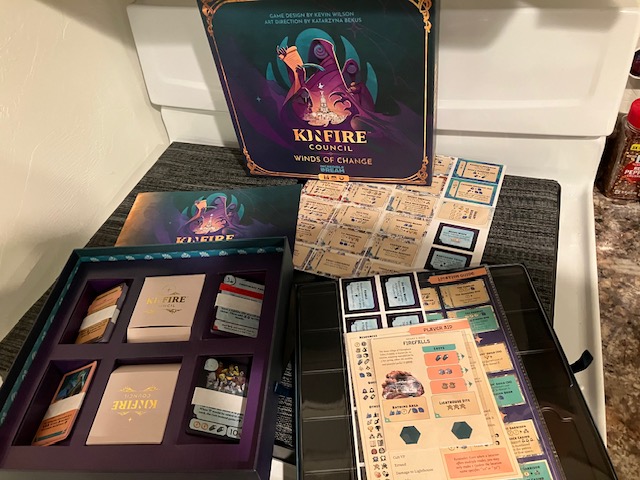
Winds of Change is the expansion that provides official solo and cooperative rules for base Kinfire Council.
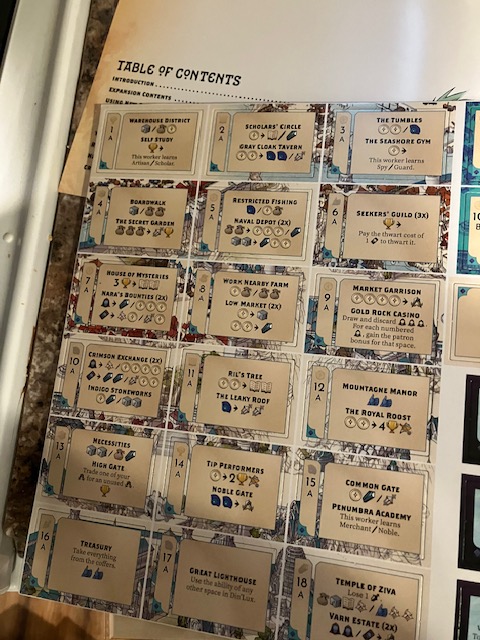
It adds a bunch of new Locations you can swap from the base City Locations.
It adds three new Towers to swap in.

A bunch of new cards.

And a new resource called Favor Tokens which is like Magic, but its use gives the Cultists Victory Points. (Honestly, in all my plays, I stayed away from these resources)

BUT the most important thing this adds is the new Cult Decree Cards (see above). This is what makes the solo and cooperative games more challenging! This is the new key ingredient!

Basically, every turn, when you normally get two decrees (which you may or may not want), you ALSO get a Cult Decree card at the same time! Just like the Decrees, you have to get the votes on Cult Decrees to make sure they don’t take hold!

The Cult Decree cards are even worse than you think because they ALSO have an immediate bad news (look at the bottom of the card)!
Official Solo Mode (Winds of Change)
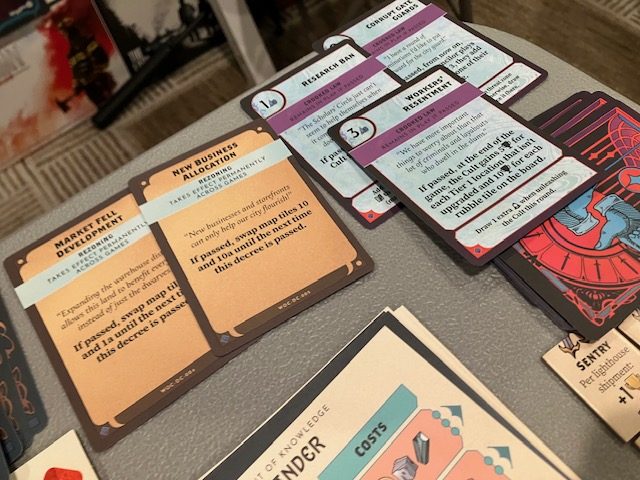
If the (unofficial) solo mode is too easy, it’s the Cult Decrees that make the official solo game in Winds of Change a LOT harder.

The official solo mode is very much like the 2-Player mode. Two tribes must work together (see above) to make sure the city survives the Cultists! The three real differences are:
1) Players must now deal with Cult Decrees (GULP!)
2) The two tribes share all resources in one pot
3) Each tribe only has three generic workers instead of five generic workers
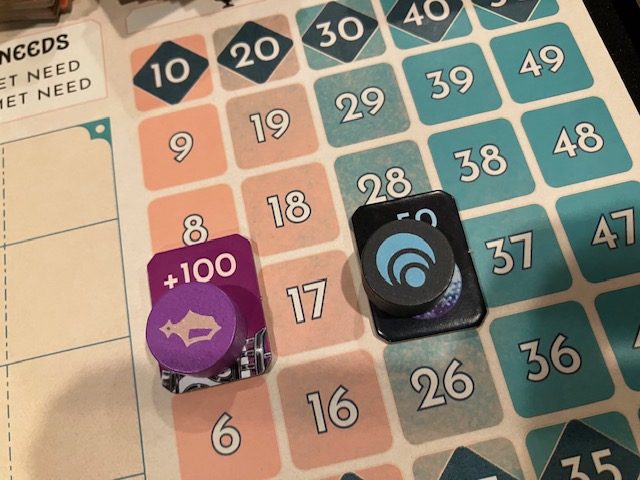
Since the two tribes now share all resources, there is only one Victory Point marker. Both tribes move the same VP marker! See above! To win, the solo player must simply beat the Cultists!

The official solo mode is still basically the same game, but there’s no back-stabbing or bad councilors to worry about! The two tribes cooperate! The solo player alternates between the two tribes and plays normally. The real difference is that all resources are shared between the two tribes AND they have to deal with the pesky Cult Decrees!

The official solo game definitely feels more oppressive! Your first few turns feel like you can just barely hold back the tide of Cultists! It’s a little overwhelming! I think I had some bad luck in my first official solo game, so I cheated a little just to make sure I moved forward to see the whole game!

In my second official solo game, I felt like I got it! In the beginning of the official solo game, it’s HARD to keep the Cultists under control, but by the time you make it turn 5, you have a little bit of an engine going and you have enough resources to make a difference! It feels … inspiring … when you can wrest control of the city from the Cultists! This is our city, darn it!
The official solo game is much harder that the (unofficial) solo mode (as we discussed earlier), but it is a good challenge and it will be a solo mode to keep you coming back.

It’s just a little bit of work to keep the solo and cooperative components separate from the base box. (I actually ran out of space on my table, and had to put the Winds of Change box on my stove!!! See above) It’s actually kind of annoying to put everything away.
Cooperative Game
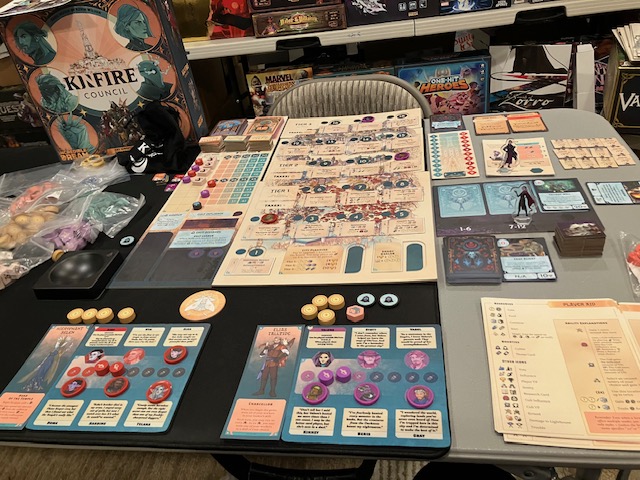
You could easily play the 2-Player mode from the base game cooperatively as a 2-Player game. And frankly, except for the Cult Decree Cards, it’s pretty much the same game. Again, the Cult Decree Cards make the game SO MUCH harder.
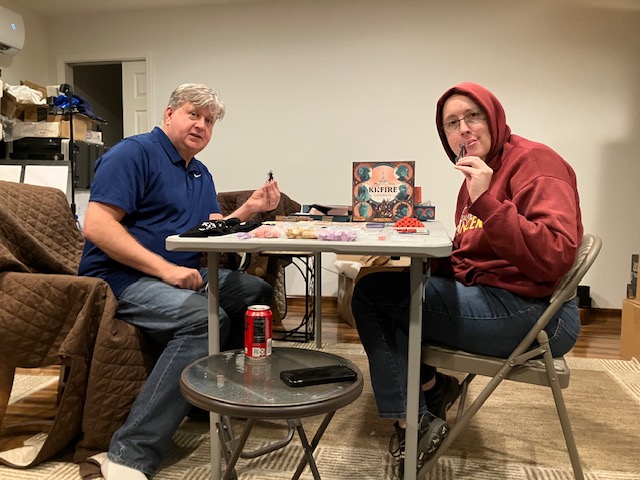
For one of our 2-Player cooperative games, we played with the official Winds of Change cooperative rules with the Cult Decree cards. We wanted the challenge!
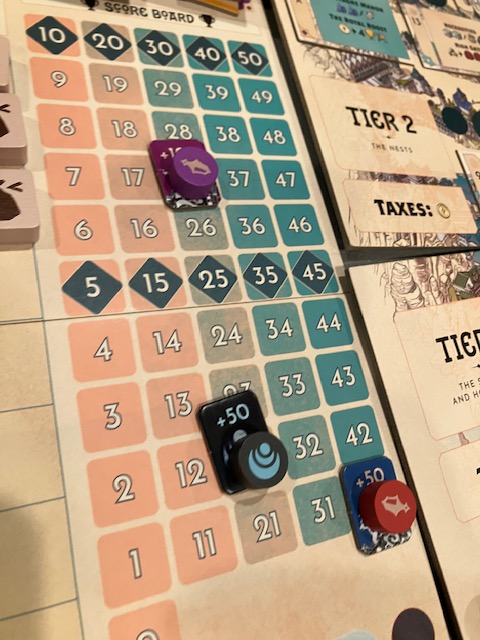
In the cooperative game, each player has their own VP marker. Like before, ALL PLAYERS must have more VP than the Cult, or they lose! See above as we win! Both Teresa and I had more VP than the Cult!

The Winds of Change also has new Player Aids (which are quite good: see above).
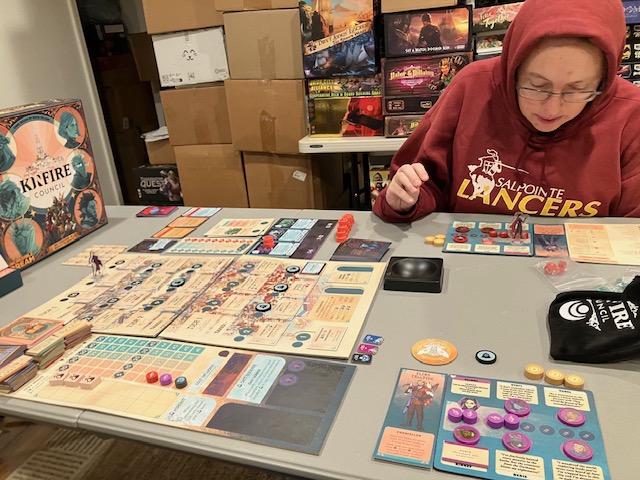
Basically, we had fun playing cooperatively! There’s a lot of multiplayer solitaire, which means we both have agency on our turns. But we still have to talk a LOT to make sure we arrest the Cultists and keep the Cult Decrees under control! I think this game a really good balance of having solitaire agency but still requiring plenty of cooperation! At the end of the day, YOU decide how to move your workers, but still work together to keep the Cultists down!
House Rules: Cooperative – Sharing

There was one thing that really surprised us in the cooperative game; there is no rule for sharing resources!
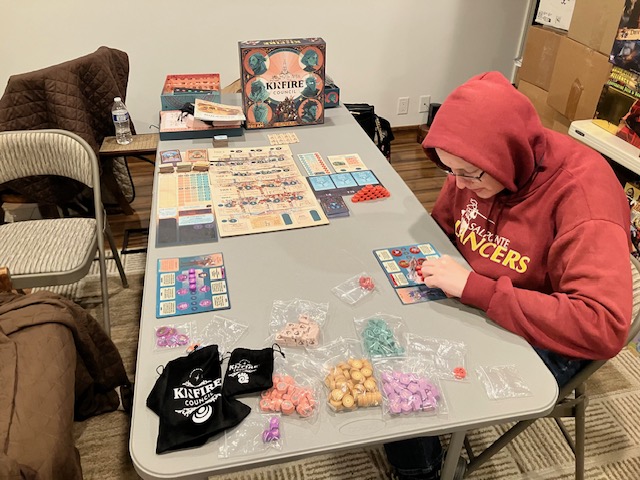
In the official solo game, the two tribes share all resources, so there’s no need for any sharing rules. But, the cooperative game has no mechanism for sharing?

We came up with a House Rule that seemed to work fantastically! You can use an errand to share any single resource!!! It’s an easy place to add the sharing mechanism, and it’s very thematic! “Oh, as an errand, I need to make sure my friend has some Magic to stop the threat on their turn!”

It’s not free, as it still takes up an errand to do it, but it made the game a LOT more cooperative! “Can you deliver me a Cultist?” If my friends just needed one resource and could save us an action, why not do it?
It was sort of funny to have all resources (including Cultists and Cards) being something you can share. For the Cultists, it reminded us of doing prisoner transfers across town.
We STRONGLY recommend adding this House Rule: as one of the options for an errand, you may choose to share a single resource. If you can’t build the tower, or resolve City Needs as your errand, maybe you can still do something useful with your errand and help your compatriots.
Sharing as an errand made the game more cooperative, more interactive, and more fun.
House Rule: Solo – Don’t Require Alternating

In the official solo game, you MUST alternate between the two tribes as you play. But, why? Since all the resources are shared, it doesn’t matter as much! In fact, sometimes you have more options if you can choose any order you want! Maybe you want to use tribe 1’s three workers FIRST (because they are all guards) and THEN do all of tribe 2’s workers after the board has been cleaned of Cultists! I found many times, when playing solo, I accidentally didn’t alternate ANYWAYS! You sometimes forget to alternate … but it doesn’t really change the game. In fact, it gives you more options! If you can choose the order of the workers of the tribes, sometimes you can pull off something really clever that maybe you couldn’t if you were forced to alternate.
This isn’t a big deal for a House Rule, but I think it makes the solo game just a little more fun: give me more choice so I can feel clever.
Thoughts

We were originally supposed to play a 3-Player cooperative game, but Sara fell sick and just wanted to listen to us. Here’s the funny thing; just listening to us play and narrate our turns to her, Sara gave this game a 7.5/10! She said it sounded really fun!
Teresa really liked it. About a 7.5/10 as well.
I liked both the solo and cooperative modes a lot. The solo game was about a 8.0 as was the cooperative game. With the house rules we proposed, both go up to an 8.5/10. In fact, the sharing as an errand rule was such a good house rule, it might even make it a 9/10.
Conclusion
You can play the base Kinfire Council game as a solo and cooperative game to see if you like it (using the unofficial rules we described). These unofficial solo/cooperative modes are pretty easy, but they give a good sense of the game. If you like the game, then the Winds of Change expansion makes the game much more challenging.
Is it worth getting both?? I personally think it’s worth getting both Kinfire Council and the Winds of Change expansion to play this solo and cooperatively. It’s a lot of work to get there, between learning the base game, cooperative game, set-up, combining games, and set-up, but the unofficial solo rules can make it a LOT easier to learn the systems of this game.
If you do get Kinfire Council and Winds of Change, I strongly suggest you play with the cooperative house rule sharing as errand, as it makes the game more cooperative, more interactive, and more fun; it brings the game to almost a 9/10 for me (cooperative mode). Even without that rule, it’s still an 8 or 8.5/10. It’s so cool that a cooperative worker placement works so well!
The official solo mode is great, but a minor house rule (for relaxing the alternation) makes it a little more fun, as it gives the solo player more choice. Solo: 8 or 8.5/10.
 coopgestalt
3 thoughts on “Kinfire Council + The Winds of Change Solo And Cooperative Expansion. A Journey and A Review!”