

Unstoppable is a cooperative deck-building/card-crafting game! This was #4 on my Top 10 Anticipated Cooperative Board and Card Games of 2025! This was on Kickstarter back in June 2024, and delivered to me Saturday January 17th, 2025! I backed it, expecting it to arrive later in 2025, but it actually delivered early! (It originally promised February 2025). Amazing!

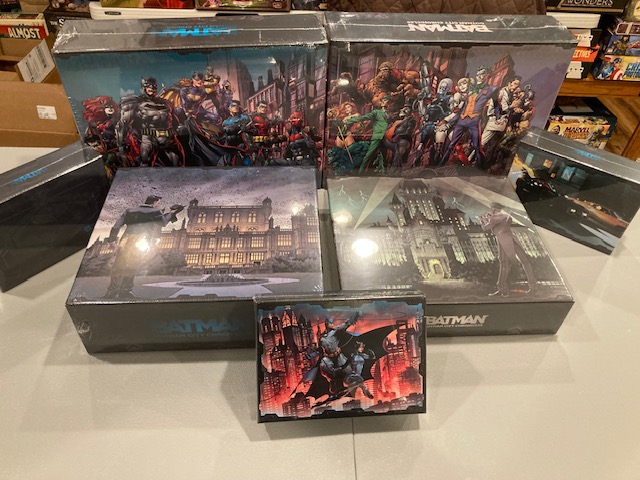
This delivered with three playmats, the Tyrant’s End expansion, and the base game: see above.

So what is Unstoppable? The game describes itself as a Roguelike Momentum Deckbuilder … meh, that’s an okay description, but I’d prefer to call it a deck-building/card-crafting boss-battler instead (I think it’s just “hot” to call games “roguelike” at the moment).

Be clear that this game ONLY supports 1 to 2 players before you get too excited; this game reminds me of a more tightly-coupled Astro Knights (see our review of Astro Knights here and here): Unstoppable still has that sci-fi feel, that deck-building feel, and that boss-battling feel … just like Astro Knights, but it also has some really different ideas. What do I mean by that? Let’s take a look below!
Unboxing

The Unstoppable base box is actually not that big; see Coke can for perspective above.

This is a deck-building game (and card-crafting: we’ll touch on that in a second) , so there are a ton of cards: See above.

There’s also some money tokens (credits, far right: I mean, this is a deck-building game, so you have to buy SOMETHING to upgrade your deck), hit point tokens (middle: you gotta do damage to take out minions on the way to the big bad boss), and some action point tokens (far left: yes, this game has action points too!).


There’s not THAT much in the base box; mostly cards and tokens and a few larger mats.
Playmats

I can hear some of you asking … “So Rich, why are there three playmats?” An excellent question.

The playmats are double-sided.

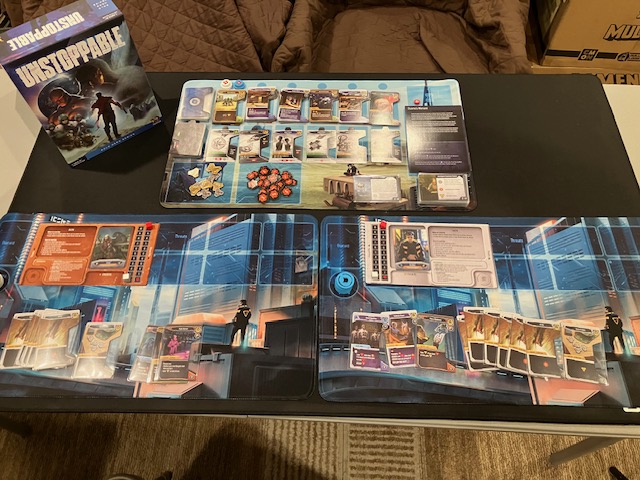
One side of the playmat is a single player mat. This is where one player’s cards, play board, threat, tokens, etc. goes. See above.

The other side of the playmat is where the main upgrades (this is a deck-building game, remember?), the core cards, and the big bad boss you battle lives. See above.

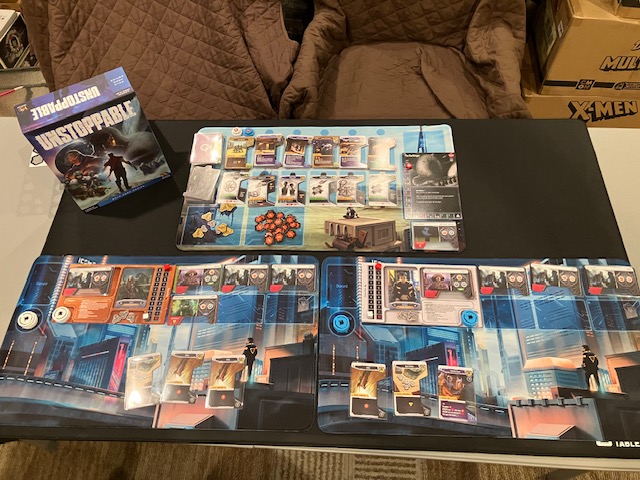
The reason there are three playmats is because the game is either 1-player or 2-players! Each player gets a mat (2 mats) and the big bad boss gets a mat (for up to 3 mats). See below for a 2-Player set-up:player 1 on left, player 2 on right, upgrades/boss on top.

So, to be clear, the playmats cost extra money; they don’t come with the game. Were they worth the extra money? So, I paid $100 for the base game, 3 mats, and one expansion. I like how they mats organize the game, but strictly speaking you don’t need them!

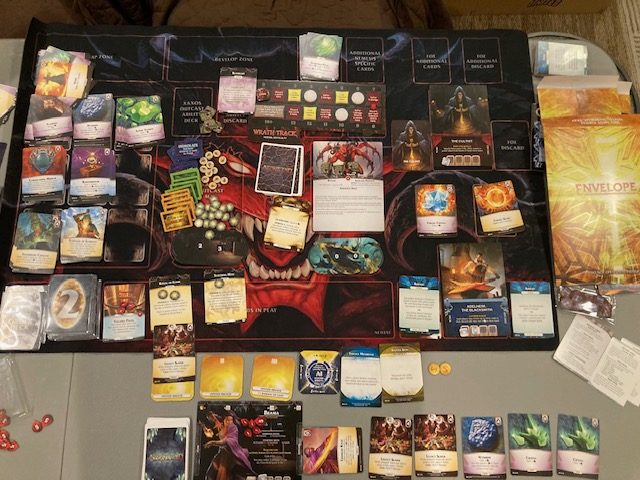
The rulebook DOES show how the game sets-up without the mats, so you don’t need them. But I liked them; much like the Aeon’s End: The Descent playmat was so useful, so too was the playmat for Unstoppable. But maybe you should see if you like the base game before you go investing all the $$$ for the playmats and expansion … keep reading …
Rulebook

I am a little grumbly with this rulebook. There are about 3 or 4 things that it could have EASILY done to make it SIGNIFICANTLY better.
The good news is that it gets an A- on the Chair Test.

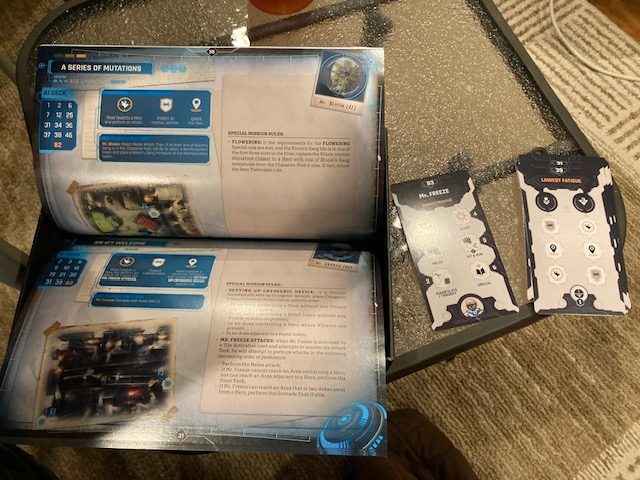
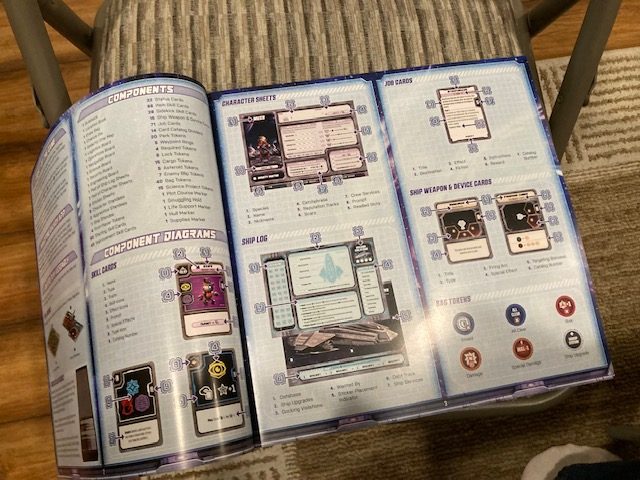
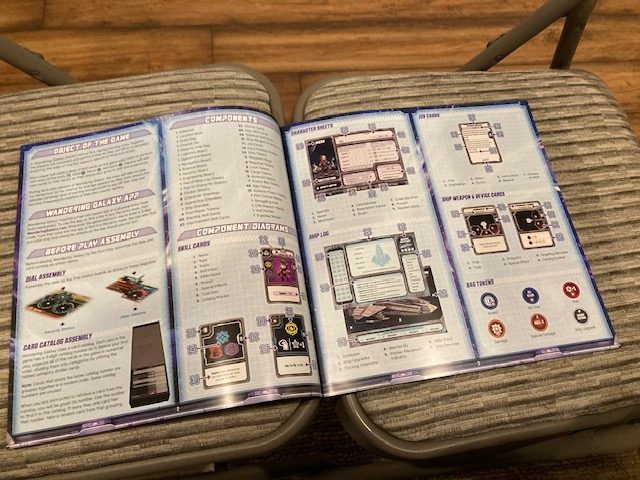
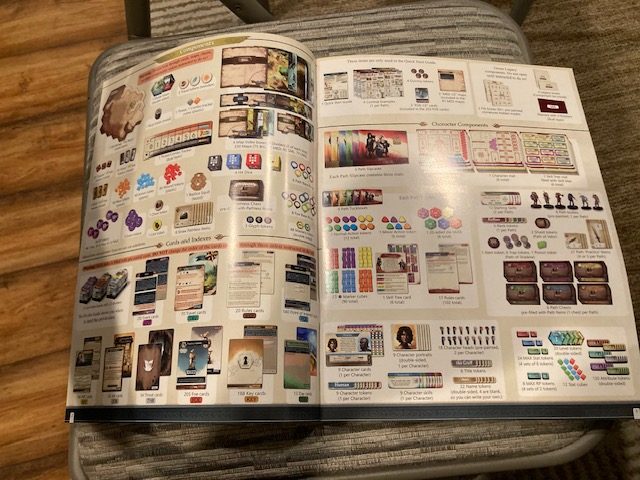
It opens up and sits perfectly well on the chair next to me, making it easy to consult. So, they definitely did that right: see above.

The Components page (on the left above) is “okay”. The first real problem is … how do you set this up? There is a discussion (right side of the page) about “how you set-up and sleeve” the game, but THERE IS NOT A SINGLE PICTURE describing it! I was able to figure it out, but people who have no idea what card-crafting is or even deck-building will be completely lost with these directions (far right side of the page). A single picture might take this game from unplayable to playable for certain people. And a little picture would have made me happy; show me how the decks fit together. Please? I feel like the description above wasn’t quite enough.

The set-up was pretty good: see above.

The next place I had problems was the card anatomy. Here, the Defense and Bonus areas on the Threat Cards were poorly described. The problem is that most Threat Cards use the SKULL symbol, and it’s not clear what that means (the skull on the Threat Cards is a different color and/or outline than the reference card: we discuss more below). A simple example describing one combat would have helped that.

The rest of the rulebook is pretty good.

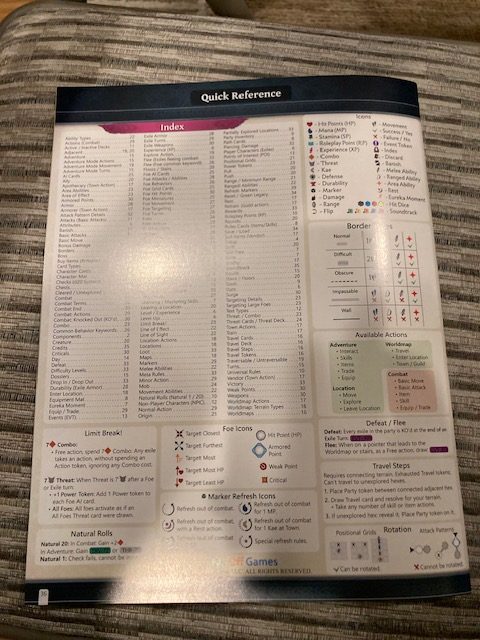
I also really wanted a game summary on the back; I ended up paging through the gameplay pages over and over as I played; it would have been nice had those been summarized on the back.
This rulebook was … ok. I just wanted a few more examples, a few more discriminators, and a few more pictures in the rulebook to help me get into the game. After a little trek onto BGG (see thread here), I feel like I got my questions answered, but the rulebook could have been better.
It worked. Mostly. Except for set-up. It could have been significantly better with a few extra pictures.
Storybook

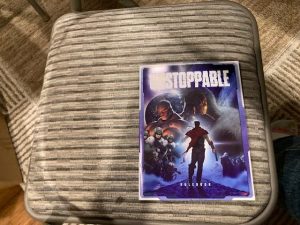
There is a storybook for the game. You don’t need it to play the game. It’s just flavor text. I never read it, and I feel bad for not reading it?
Sleevening

Like I mentioned in the rulebook section, it was more work than I expected to get this game into playable shape. It took me about an hour or so? Basically, you have to “sleeven” the game and put a bunch of cards into sleeves.

Let’s be clear: the sleeves come with the game! Although this is “mostly” a deck-building game (you can build a deck, add better cards, and cull lesser cards: See our Top 10 Cooperative Deck-Building Games for more discussion of deck-building games), it is also a card-crafting game; this is a term that came into parlance with another of John D Clair’s Games: Mystic Vale (although this is a slightly different flavor of that idea). This game is built for you to put cards inside the sleeves, and have multiple cards together at the same time.

Once the cards get going, they will have two sides: a core side (above right: the GOOD side) and a Threat side (above left: the BAD side). There we actually two cards inside the sleeve! This basically allows the GOOD side and BAD side to vary independently.

The GOOD sides are what the characters can do in the game: deal damage, shield themselves, etc. See above.

The GOOD cards tell you which BAD cards they pair with; see the backs above (well, the intro cards do, once you start playing, you get random BAD cards).

The Threat cards (the other side) will be the bad guys that the players fight during the game. These cards, when defeated, will turn over and flow into the GOOD guys hand on the good side!

You might ask “Why do we have these weird rules and weird backs/fronts?” It’s to support UPGRADES (and allow the fronts and backs to vary independently, but that’s a complex discussion).

Probably the coolest part of Unstoppable is that you can UPGRADE a card: it stays attached to the card … in the sleeve! The reason these cards are so WEIRD-shaped is that the upgrades go into the right part of the card and basically stay attached/stay in the card sleeve so that card is better for the rest of the game!

See above as we try to choose between two UPGRADES: Do I want to making it Repeating or add a 2000w Arc Capacitor? The repeater gives me three separate shots, but the capacitor gives me one big shot!! Which do I want?

I choose the capacitor! See as I slide it in …

… and see as it augments my card! Pretty cool!
This is the core crafting mechanic of the game; this is the cool gimmick.
Gameplay

Each player chooses one character to play: see above.

The back of your card indicates which specialized cards you start with (and a little flavor text).

The player sets-up with their starting deck: three special cards and 7 standard “starting” cards. They set-up on the player side.

Your deck goes on the character mat, with Armor and Hit points being tracked.

You also set-up three Threats you must deal with in your personal space. You start with three cards in hand, three action points, and three Threats to deal with.

To play a card, you need to be able to pay the Action point cost (in the upper right corner). Playing Strike gives you a simple 1 hit point of damage.

You do damage to one of the three Threats: see above (more of them if they are FAST); if any of these Threats survive to the next round, they will do Damage to you!

If you take out a Threat, the card FLIPS to the GOOD side and comes into your hand! That’s right, you don’t really draw from your deck: the main way to get new cards in your hand is to take out Threats! That’s very interesting!

Of course, this is a deck-building game, so you have to get new cards somehow. Basically, every turn, you get to choose one of three (you draft) the three cards where the BLUE LEVEL marker is (see above). There are 6 levels of core cards, with higher levels being obviously better!
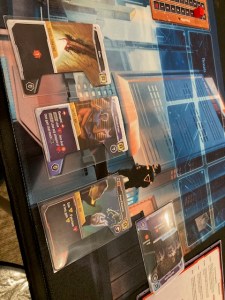
Every time you empty your deck, you level up and move the level marker up. (There are also ways to move the level marker up quicker, but only temporarily). Leveling-up is a fun time; you get to CULL a card, move the level marker up, and anticipate some new “better” cards!

This is a boss-battler, so you have to take out the BIG BAD BOSS; depending on which one you choose. See above. Interestingly, you can only do “boss damage” (see it blurred below) when you kill certain threats from your deck. These special threats get added every time you level up (and you usually start with 2 of these “boss threats”: see Below.)

There’s actually quite a bit more to the game, but that’s the basics.

Build a better deck and craft better cards! Take out local Threats on the way to taking out the Big Bad!
Solo Play
So, this game is definitely built for solo (thanks for following Saunders’ Law), with 2-Player being the secondary mode. See above: even the font hints at that disparity (SOLO is all big)!

I ended up playing about 10 games of the solo game in the first few days after I got this game! There are three bosses that come with the game, and I was able to defeat each one … after I lost a few times. (There are ways to up the difficulty, and there are 4 characters to play with to give the game more replayability)

It takes a little while to get into the “flow” of the game. There are a lot of rules, there are a lot sections, but there are a lot of decisions (in a good way) to make too.

For example, there are 4 factions in the game that all play VERY differently! If you have multiple cards of a faction, they can “support” the other cards and make them more powerful! I tended to get the Silver faction (the little diagonal raven) in my first few games. But there is also worth in getting multiple factions, especially with the UNITE keyword which gives you special on how many different factions you have in play/in hand!

My favorite decisions in the game came when I was stuck; it was pretty clear that I was going to die and lose, but if I could upgrade my cards JUST RIGHT before I went into battle, I could stay alive! The UPGRADES, and the fact that you can do them anytime on your turn, really make it so you can pivot and be smart! I really appreciated that I could feel clever. Deck-building games tend to have some randomness in them, but the UPGRADE mechanism is what kept me from being too grumpy with that randomness.
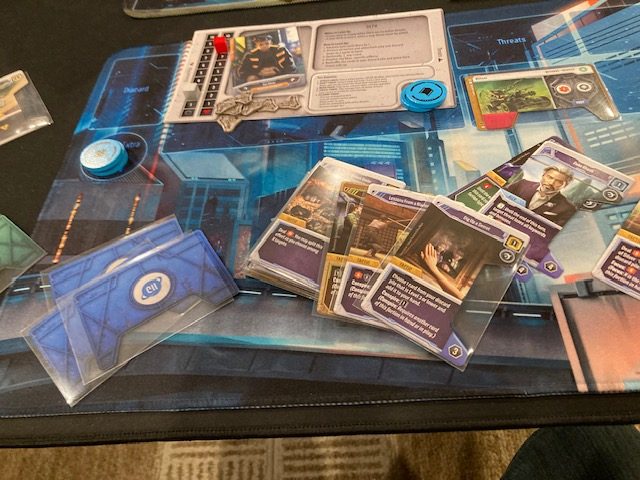
I will say that the solo player doesn’t have to do too much work once the game is going, but the set-up and ESPECIALLY the tear-down is a lot of work! Going through your entire deck and separating the core cards and threat cards is so much work. Besides the “unsleevening” (which was a sub-optimal experience), the tear-down is one of the biggest “oofs: that’s a lot of work” in the game. See above as I tear apart the decks!
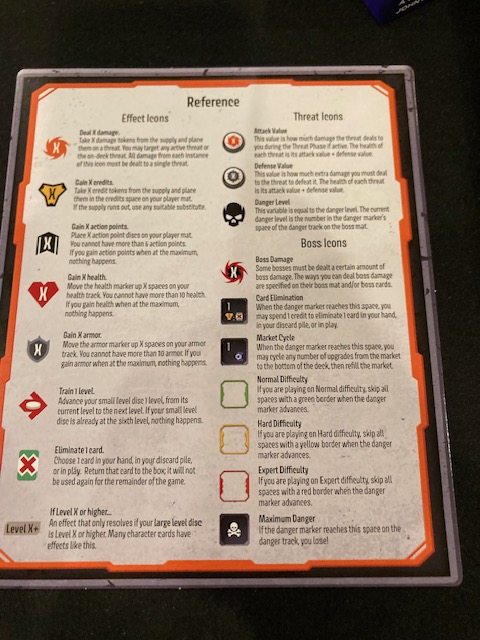
There are a lot of rules, a lot of Icons, a lot of factions. I appreciated that, by playing this solo, I could learn the game and take whatever time I wanted. I could then teach my friend. Not friends, because the cooperative mode is ONLY 2-Players.
Cooperative Mode
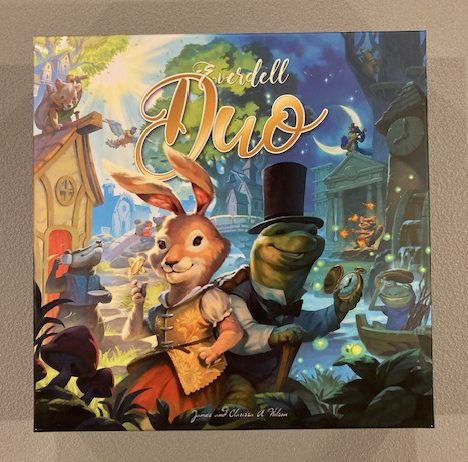
Yes! Thank you! Unstoppable has a cooperative mode with NO Communications Restrictions! I get so tired of having some obscure rules to obscure the communication when playing cooperatively with my friends! I said this in Everdell Duo (see review from a few weeks ago) and I’ll say it now: let me and my friend(s) talk! We play games to play, laugh, talk, strategize, and have fun together! I am so glad we don’t have to worry about any Communications Restrictions as we work together! Thank you Unstoppable for allowing full communication!
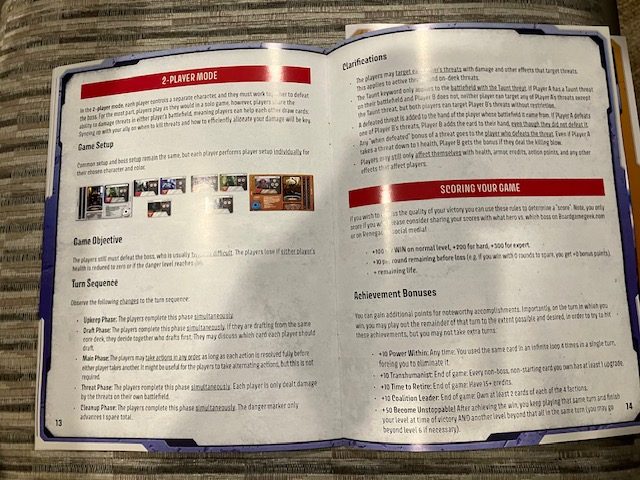
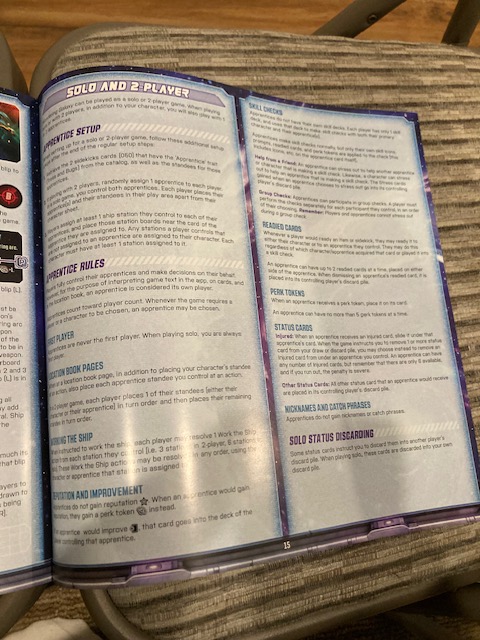
The rules for 2-Player are in 1.5 pages (pages 13 and 14: see above); the idea is pretty straight-forward: each player is playing multi-player solitaire for the most part. The BIG BAD BOSS has twice as many hit points (for scaling to 2 players), so both players still have to do “about” the same amount of damage and play “about” the same amount of game.
Most of the 2-Player cooperative game proceeds simultaneously, as both players play out their turns at the same time. (This helps keep the game flowing quickly). The only times where the two players must worry about the order they play is (1) when drafting the new card (players are allowed to choose who drafts first), and then (2) in the Main Phase, the game uses Player Selected Turn Order (one of our favorite mechanisms), where players can intersperse their plays however they want! This is fantastic! Me and my friend can decide the best way to take out Threats together! The only prerequisite is that the entire action must “finish” before the next one. (We found we could even do the Main Phase simulataneously many times as well!)
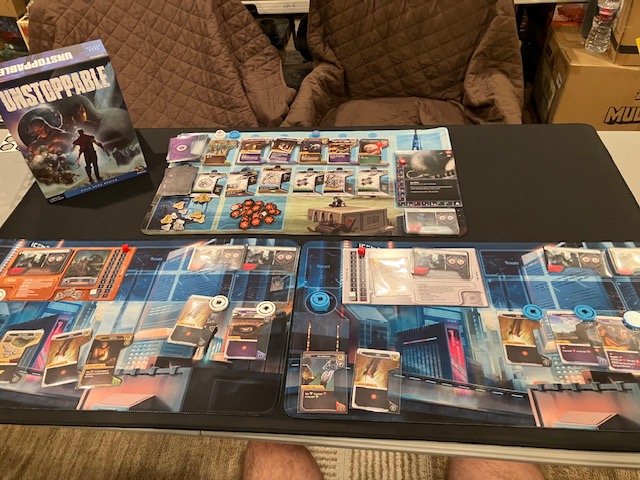
Although the players can talk through how to play together, the only way they can help each other is to eliminate Threats (by attacking their battlefield) for each other … and that’s it! There’s no sharing of any resources (credits, cards, armor) or anything else. So, this is very much multi-player solitaire.
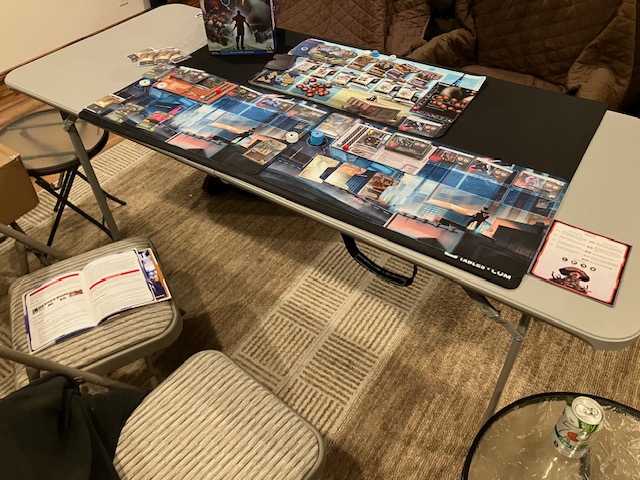
In my first two-player game, I lost because my friend has a bad draw and couldn’t recover … if I just could have given him a few credits, he would have survived! So, although you can talk and strategize together, you can’t help each other out THAT much. The game is balanced pretty well for the solo player, so it’s rare you can actually “eliminate a threat” from your friend without screwing yourself, at least in my experience.
I liked the 2-Player cooperative mode, but I wish there was a little more cooperation: this is generally a multiplayer solitaire experience. Even sharing credits might have made this feel just a touch more cooperative without changing the gameplay too much … it’s even thematic! “I’ll wire you some credits!” This is a minor house rule that would I suggest to make the game just a little more cooperative.
Things To Look Out For
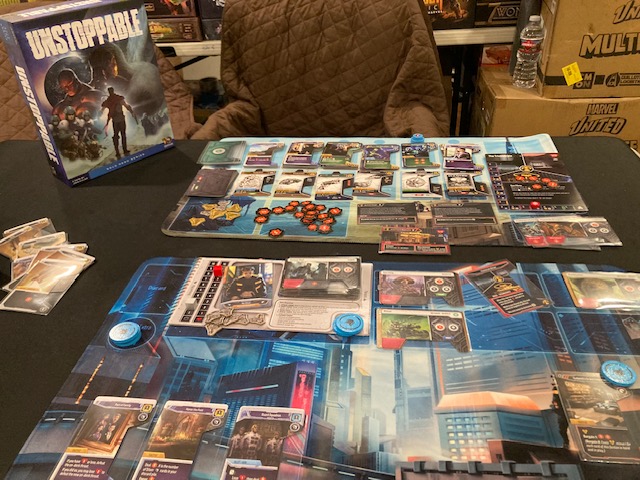
As I played a bunch of games, I ran into some issues that I feel I should point out; maybe I can make your experience better.
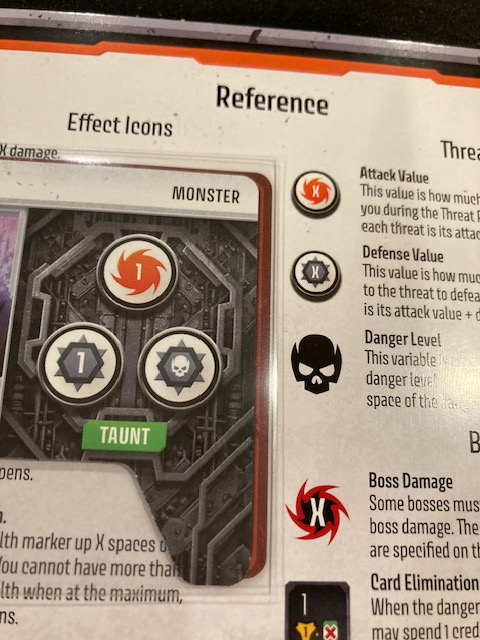
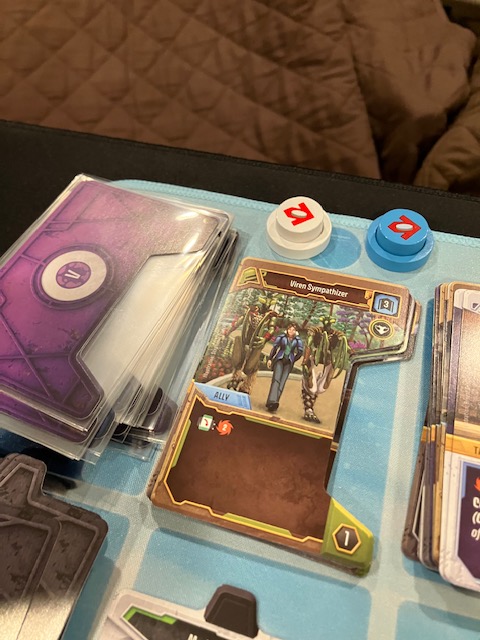
What does the Skull mean? When you see the SKULL on the Threat (MONSTER) card (see above), that means “use the current level number on the BIG BAD Boss card“. You might miss this the first time through because the Reference cards have the SKULL as a black on white, but every single Threat card has the SKULL as white on grey like the example above (or white on orange) … so you don’t correlate that they are the same symbol because the colors don’t match!
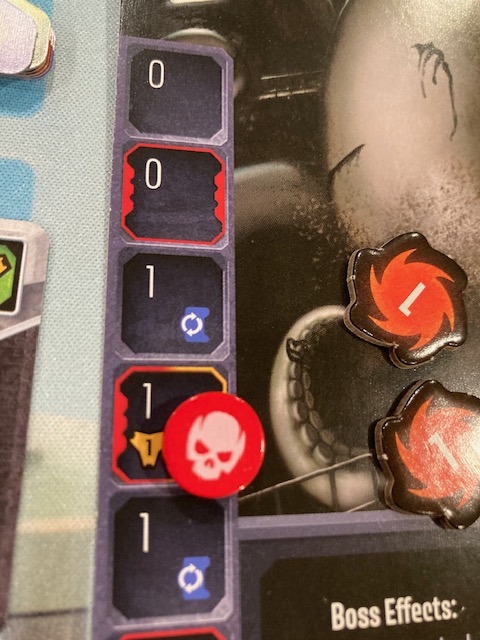
…Even more confusing, the marker on the BIG BAD BOSS map is red. So, these symbols don’t color-coordinate at all! When the RED token is on the 1, it means “1” (for the Defense of the Monster above). There was never a clear example of this in the Rulebook, and the lack of color-coordination can can be confusing, so just be aware of the issue. Once you know this, it’s easy.
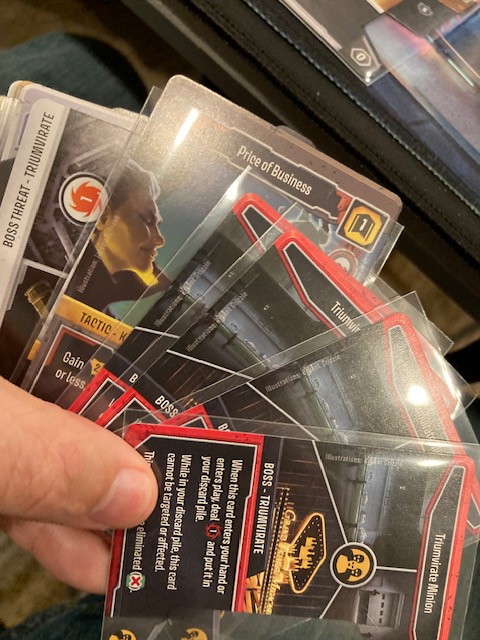
Boss Cards Shuffle Weirdly: Because the Boss Damage cards (see above) don’t ever have a Core (GOOD card) inserted in with it, they shuffle weirdly. I tended to get all the BIG BAD BOSS cards at the front or back of the deck because they are just “lighter” and shuffle differently in your deck. Go out of your way to make sure you shuffle your deck well (maybe a pile-shuffle) so that you don’t have all these cards clump together. (You DO NOT want these cards to clump together)
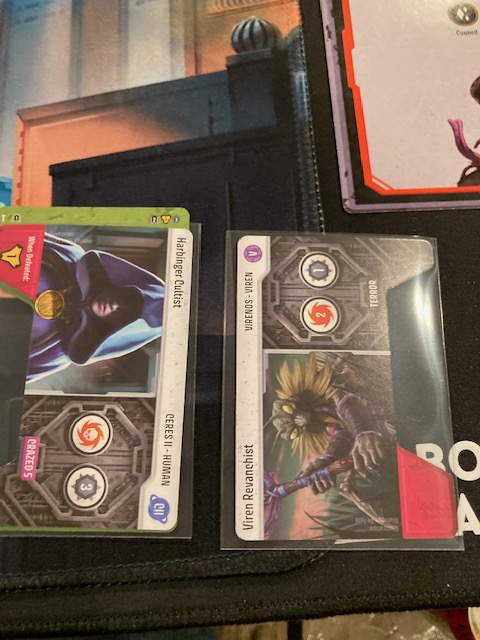
You can put the cards in backwards! See above as the Viren card is in the sleeve upside down. You know this because the card next to it is correct with the Core card extruding out the top. If you put a core card in here, it won’t line-up correctly.
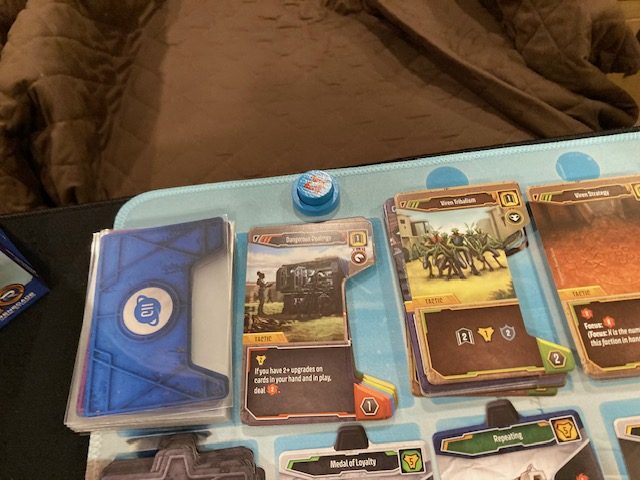
…Have the opening on the Threat cards on the TOP so the Core cards can just slide in; see above.
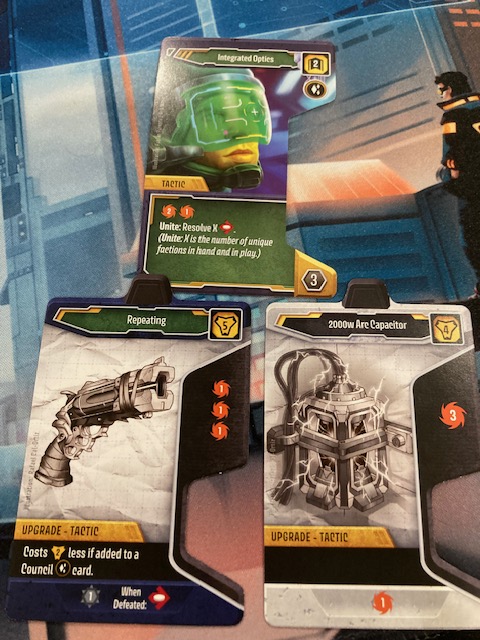
Multiple Attacks vs. Adding: It’s still not clear if each Orange Swirl is considered a separate attack or just additive. If I add the Repeating, does each attack get the addition of the card it augments? Probably not? Also, since there is (currently) no notion of damage reduction in the game, 3 single attacks of 1 and 1 single attack of 3 will be the same against one opponent, but the Repeating will obviously be better IF if it really is 3 separate attacks (which is probably why it’s more expensive). I am using deduction (based on what I know about the game) to figure this out, rather than having the rules tell me. That frustrated me a little.
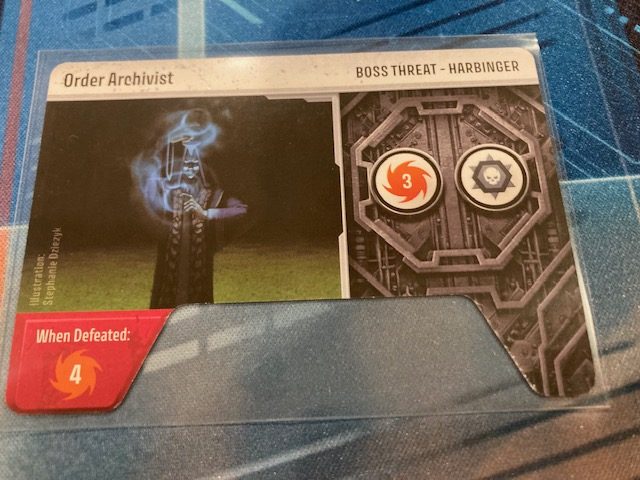
When Defeated: What does it mean when the “When Defeated” shows the Attack icon for the Boss Threat cards? See above! Does the Boss Threat have a Death Curse and do 4 Damage to you as it dies? Or do you get to do 4 Damage to another threat? It’s not clear. After playing about 10 games, I am pretty confident it’s a true bonus for the player: because the Boss Threats don’t come back into your hand (they do Boss Damage), they don’t help you with other threats, so you need the Bonus damage to be a HELPER! So, it’s a true bonus; you can do 4 damage to something else! If it were the other way around (with the Threat doing 4 damage to you), this game would be called Unbeatable instead of Unstoppable because it would be so hard!
What I Liked
Factions: The factions in this game really added a lot of flavor to the game. I mean, this is a deck-building game, which we’ve seen tons of. The four different factions really added some new flavor to this genre.
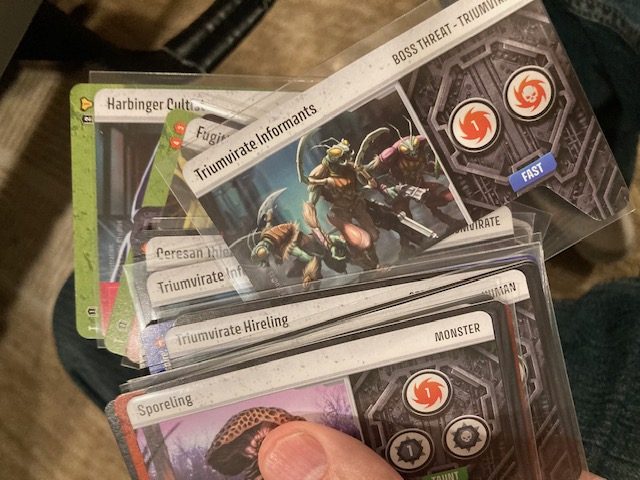
Threat and Core: The fact that the core cards and the Threat cards are tightly coupled was really interesting! Granted, this is the core gimmick (pun not intended) that makes this stand out (with the card-crafting), but it does work.
UPGRADES: At the end of the day, the UPGRADE system worked so well; this is the fundamental reason this game stands out. You can upgrade your cards independently, and that’s a really interesting decision! Adding the UPGRADES on an ad-hoc basis saved me many times, and it really makes you feel clever when you upgrade and turn a 3-Action Point card into 1-Action Point card!
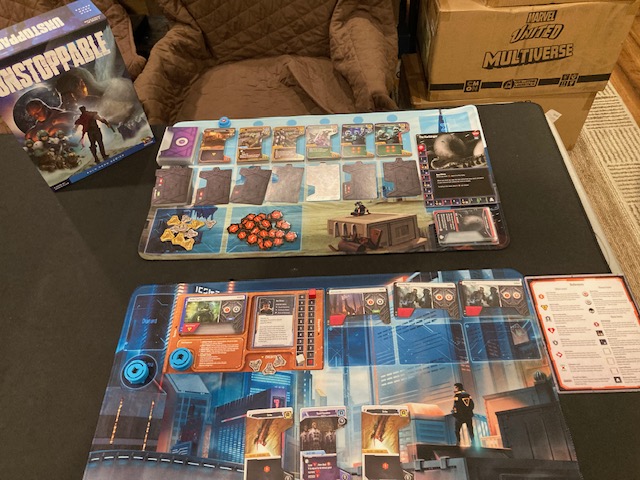
Looks: The game looks good. And the playmats really do help.
What I Didn’t Like
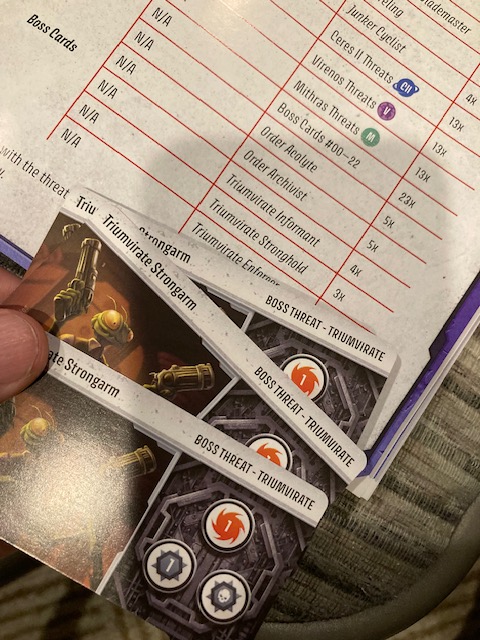
The Introductory Experience: The introduction to this game and the “sleevening” weren’t great experiences. I am very worried they would turn off a less-experienced player to the point of abandoning the game. It reminded me a little of my first experience with Marvel Legendary many years ago … if a friend hadn’t helped me with my first game, I may have given up on it! Just a few more pictures and explanations, please? (Another game I really liked from last year, Union City Alliance (a co-op deck-builder) had this same problem: see here).
Tear-down: The game moves quickly as you play, but tear-down in this game is a lot of work: you have to separate many many cards from their sleeves.
Ambiguities: There were just enough ambiguities in the game that I was frustrated a few times. Again, I wish the rulebook had a few more examples, a few more pictures, a few more discussions, maybe even an index. In this review, I tried to point out problem areas so hopefully they won’t trip you up.
Theme and Comparison to Astro Knights

How much theme is here? There’s about as much theme here as in the base Astro Knights game; although I think I would give it to Astro Knights for feeling just slightly more thematic.
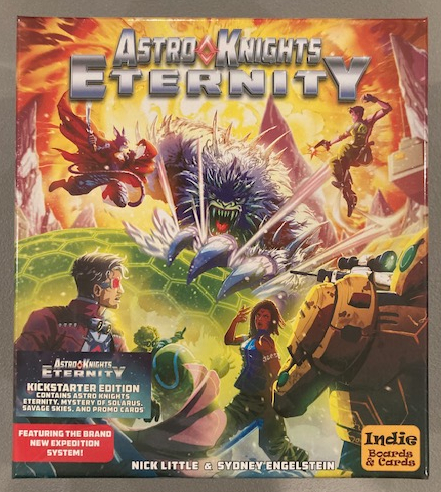
Although, If we were comparing it to Astro Knights: Eternity, I would definitely say Eternity is more thematic … mostly.
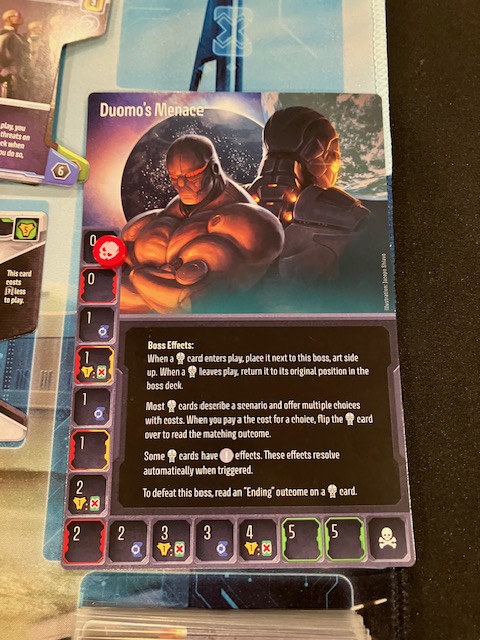
Although the thematic element depends on which BIG BAD BOSS you fight! In your first few Unstoppable games, you should fight The Harbinger then The Triumvirate (in that order). Those games teach you the technical mechanisms of the game. The final boss (Duomo’s Menace: see above) actually has a little story and some choices! See below!!
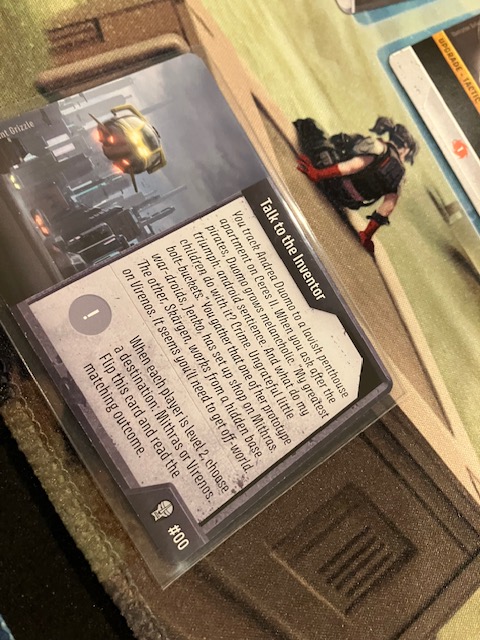
There is a deck of 21 cards (see above) and you make decisions (like a Choose Your Own Adventure story) as it takes you through different parts of the deck!
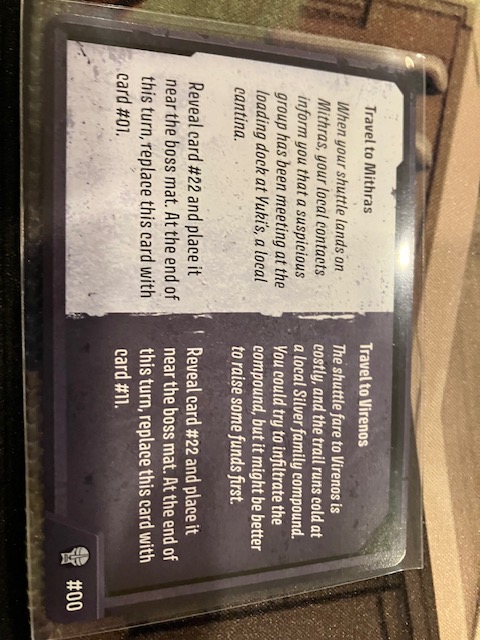
Minor spoiler above (that’s why it’s sideways), but it’s the first decision you would come to … see above. These decisions take you through different parts of different stories!
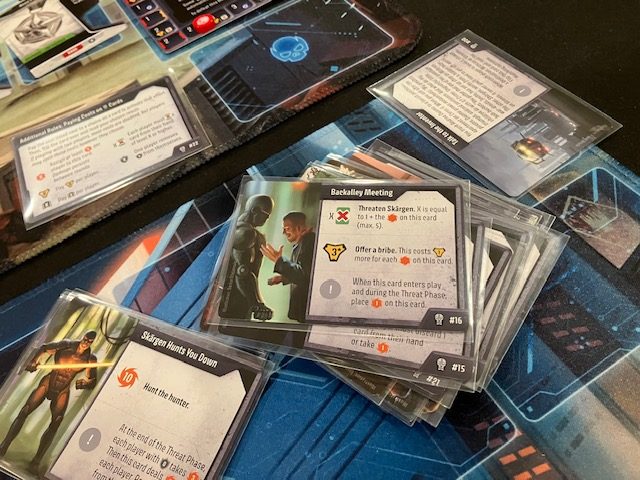
There’s a bunch of different endings (don’t look too closely above) for that adventure! The final boss Duomo’s Menace has quite a bit of theme and feels like a little adventure!
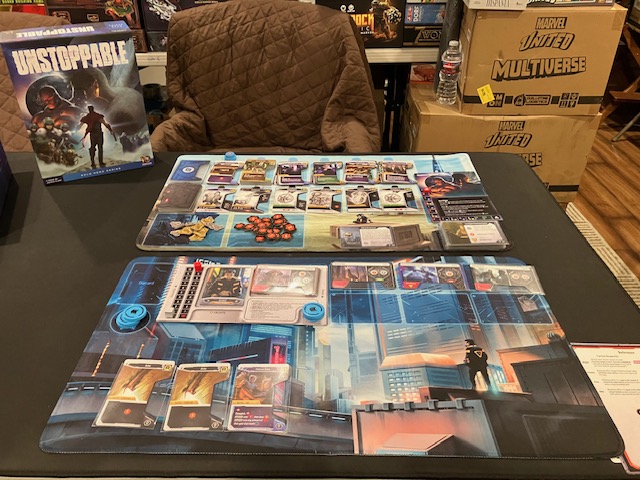
Would I recommend Astro Knights or Unstoppable? They are both great sci-fi cooperative deck-builders, but it depends on what you want! Astro Knights is a little simpler and plays more people (at 1-4 players). Unstoppable is more difficult and plays fewer people (1-2 players). Astro Knights, especially if you are playing the Eternity expansion, feels more thematic, but, Unstoppable has slightly better gameplay with its card-crafting mechanic …and it does have a thematic adventure for the final boss!! As a cooperative experience, I would give the edge to Astro Knights because it feels more interactive. In the end, I have both and like both!
Conclusion
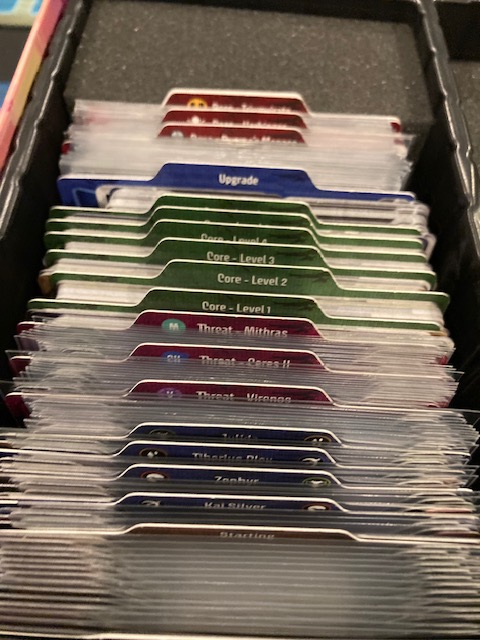
Yes, I liked Unstoppable! Quite a bit! It’s definitely staying in my collection for the solo game, but I can see it being ideal for playing 2-Player with my friend Joe!
The deck-building and card-crafting aspects of this game are unique and this brings some new ideas to that genre: upgrades, defeating cards to draw them, special boss damage … to name a few! To be clear, the main gimmick of this game (the card-crafting) DOES WORK and it works well.
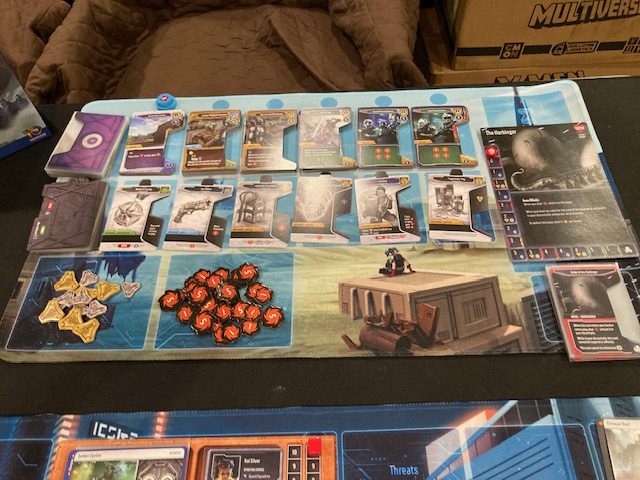
I really did like the playmats and would recommend them, but they do make the game more expensive; strictly speaking, you don’t need them.
Overall, I’d have to give this a 8.5/10. I want to give it more, but the “unsleevening” experience and the rulebook could have been a little better.



 coopgestalt