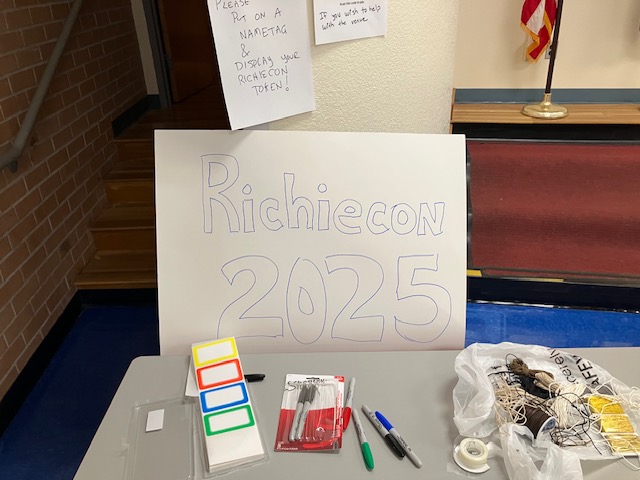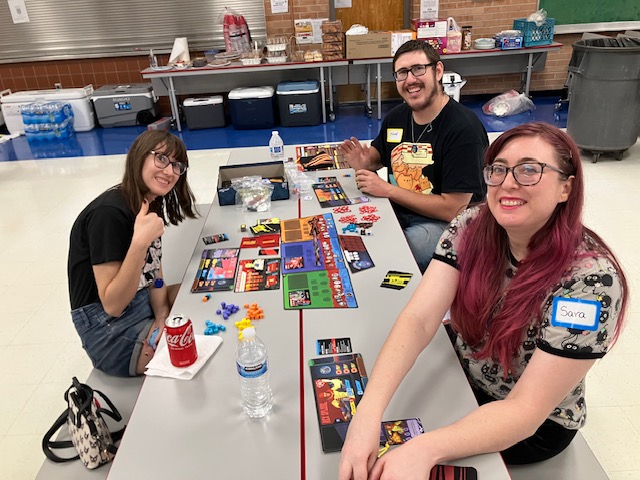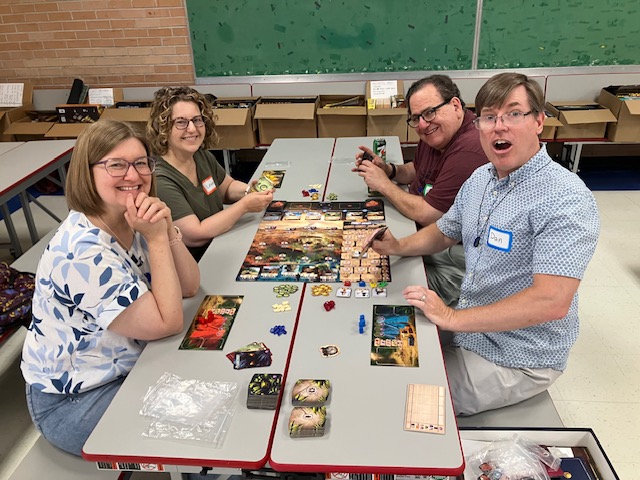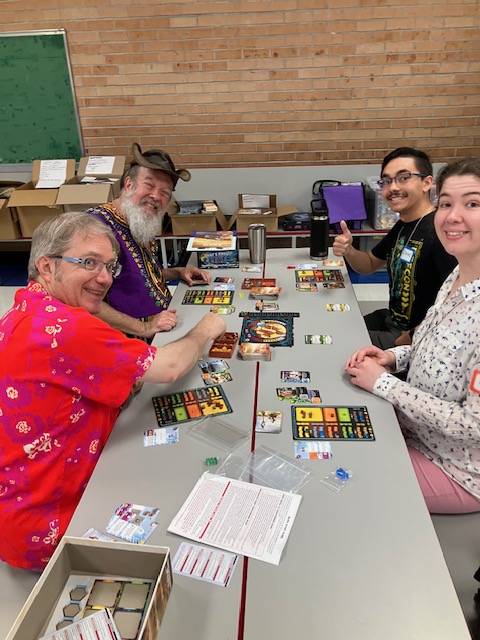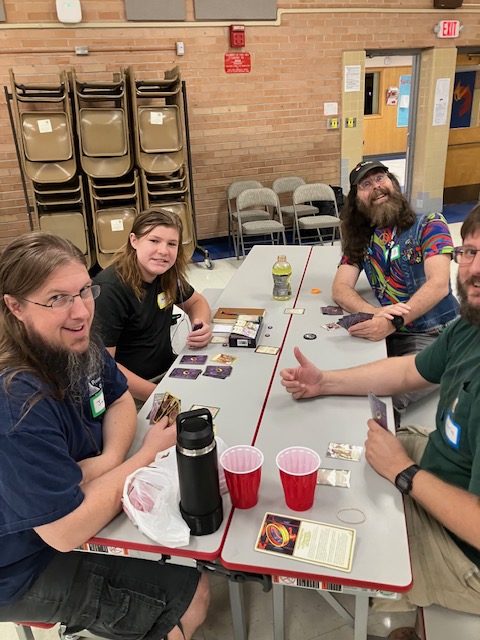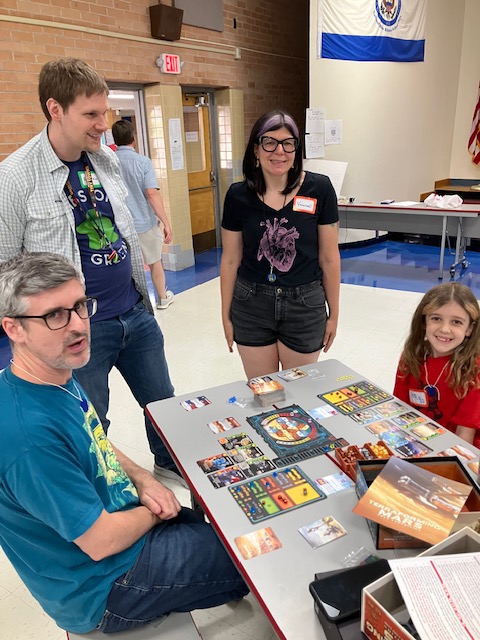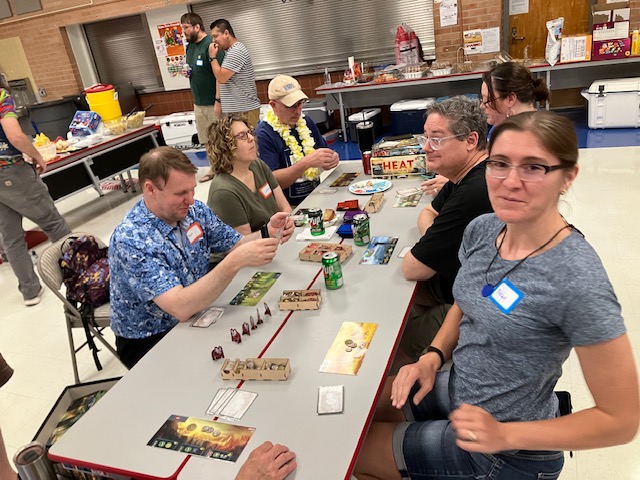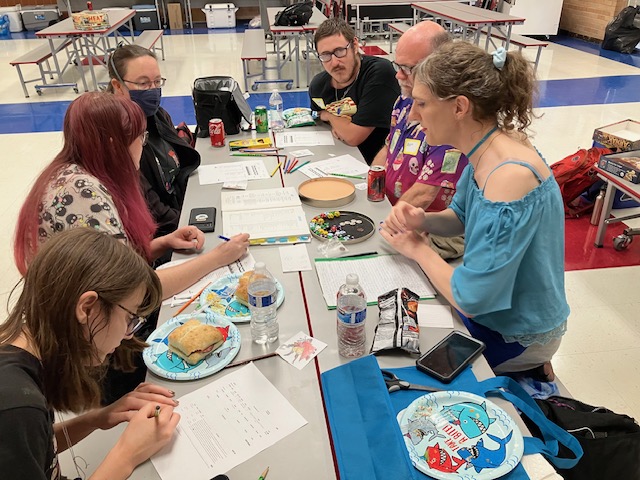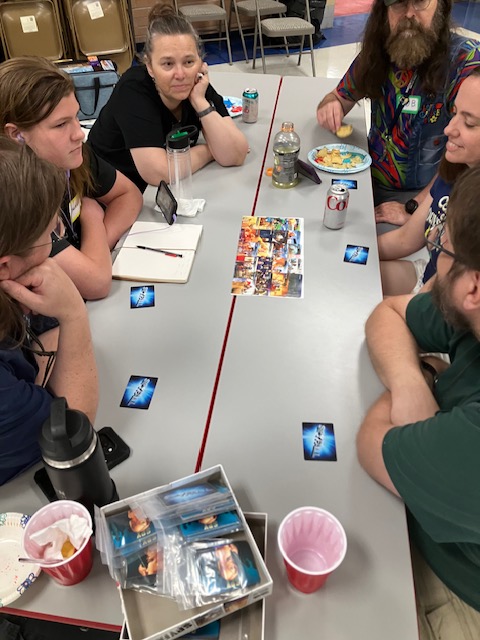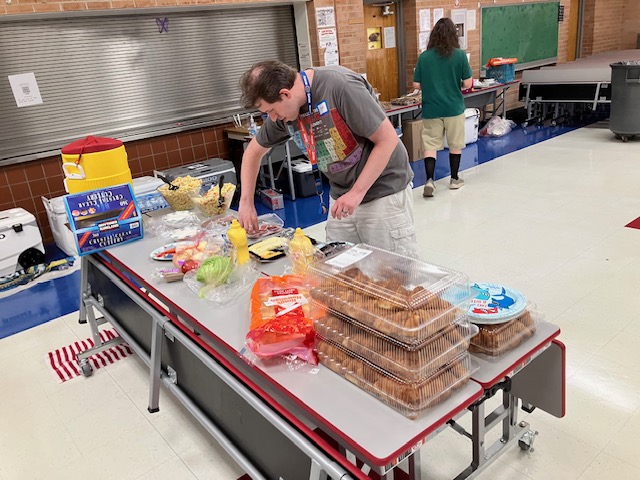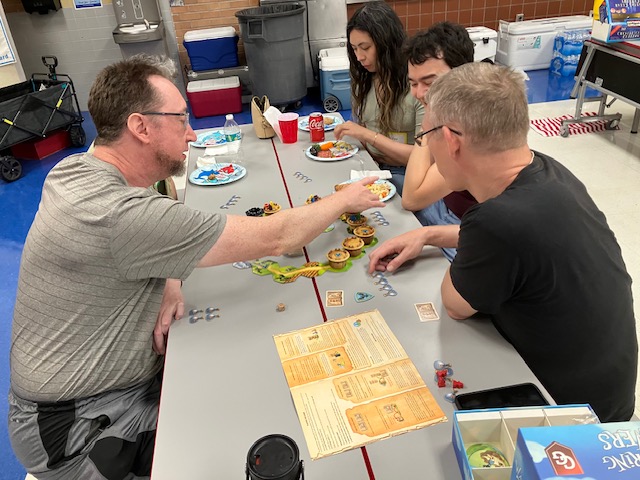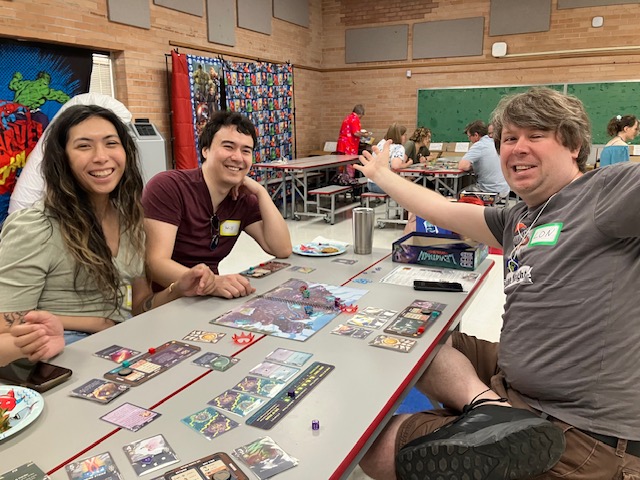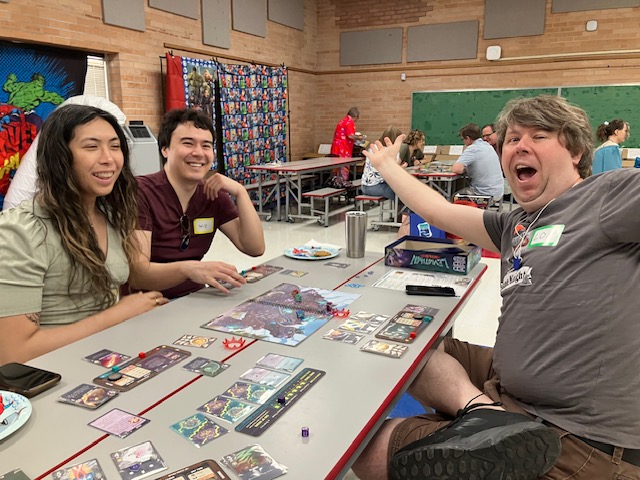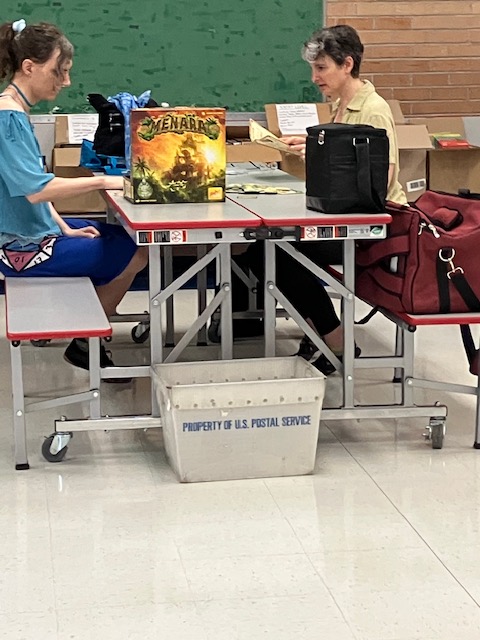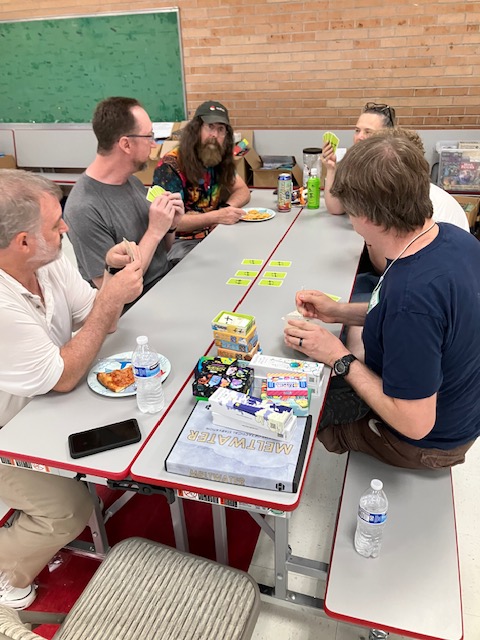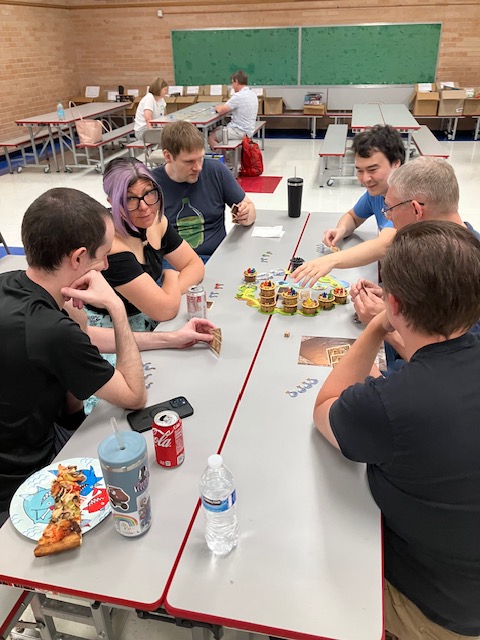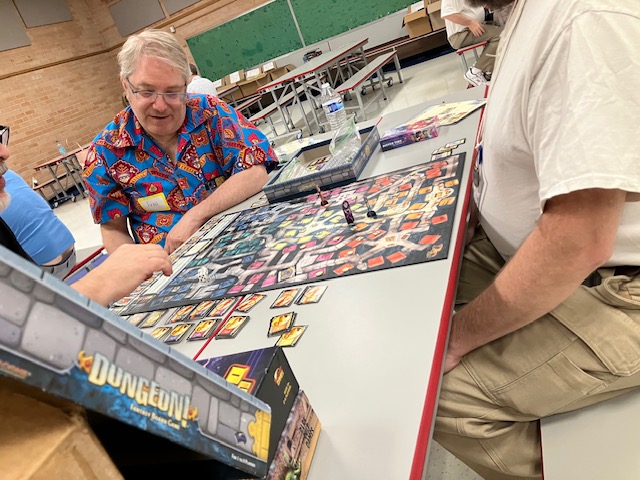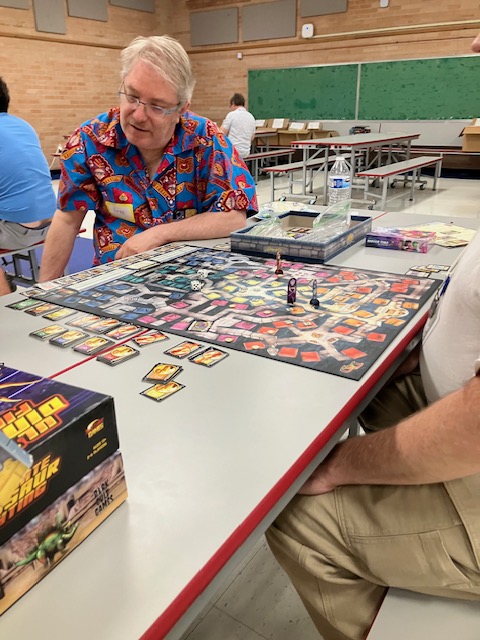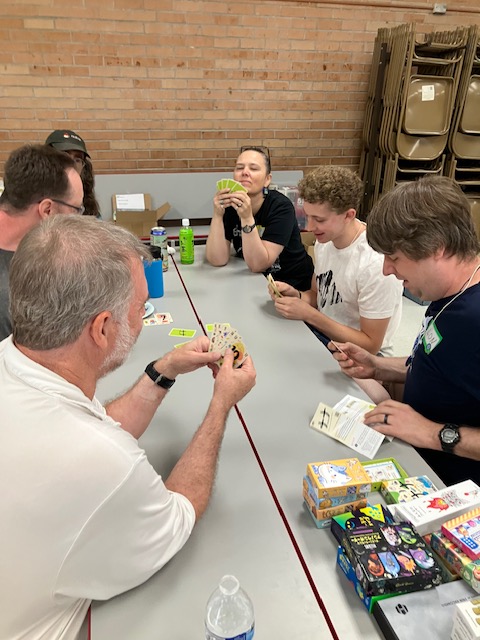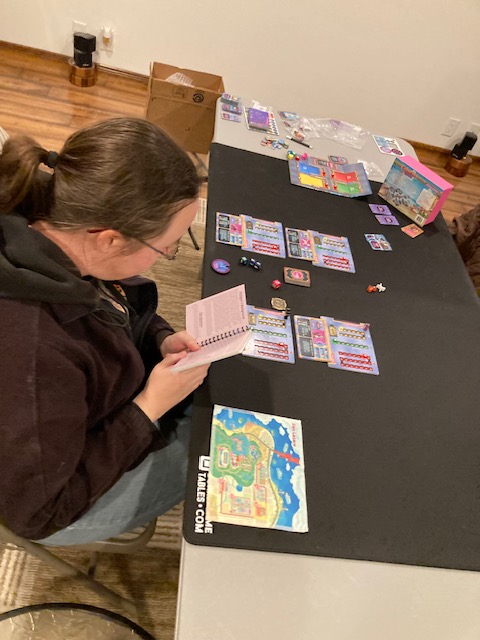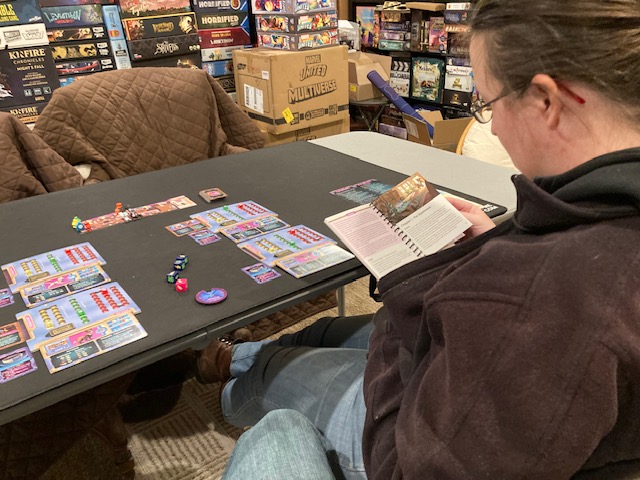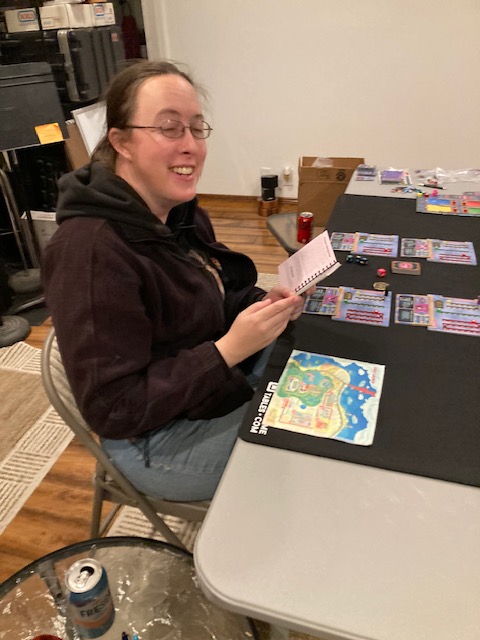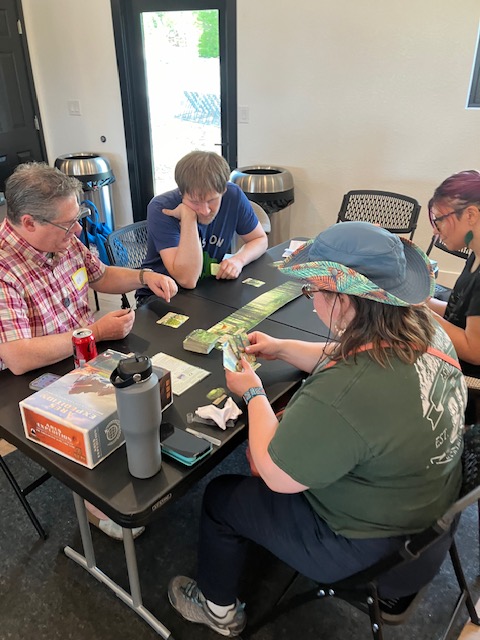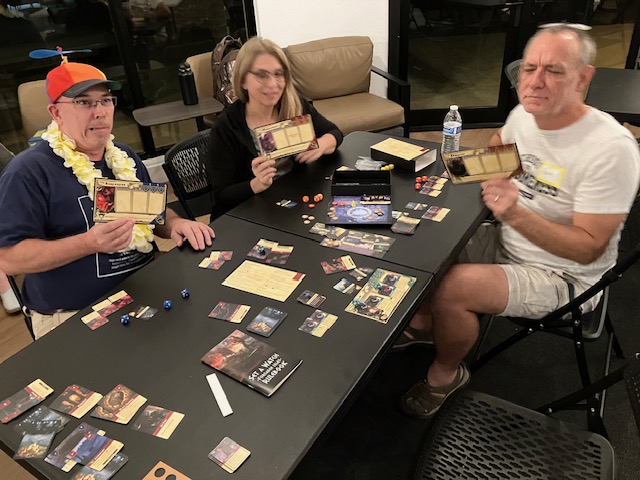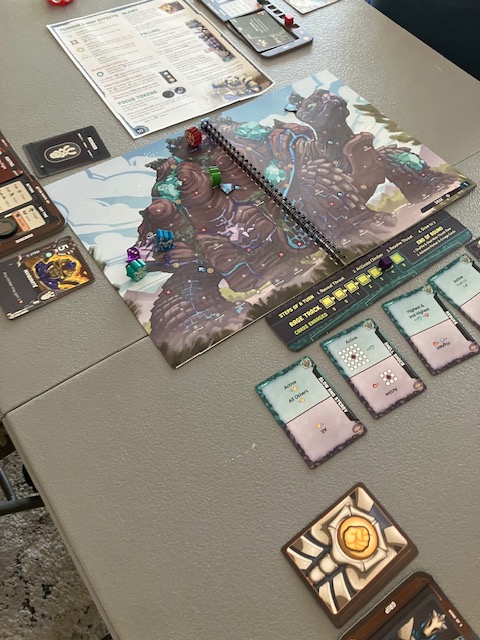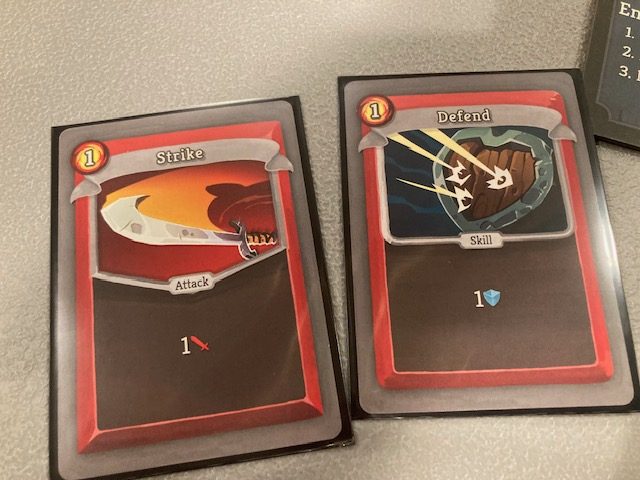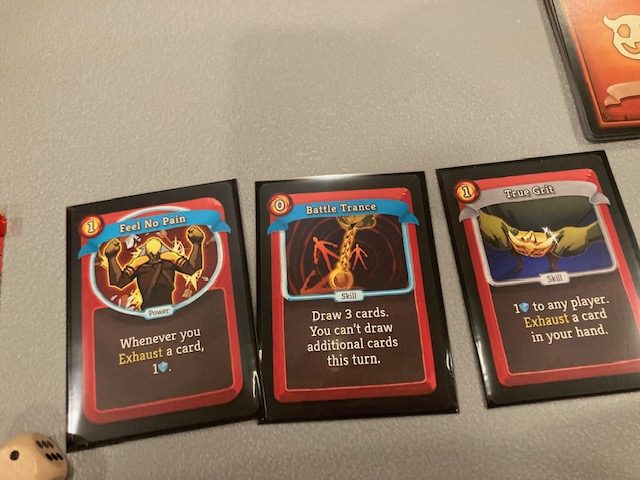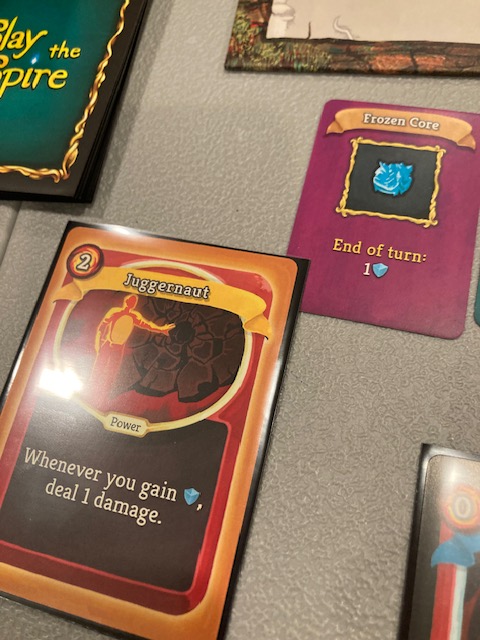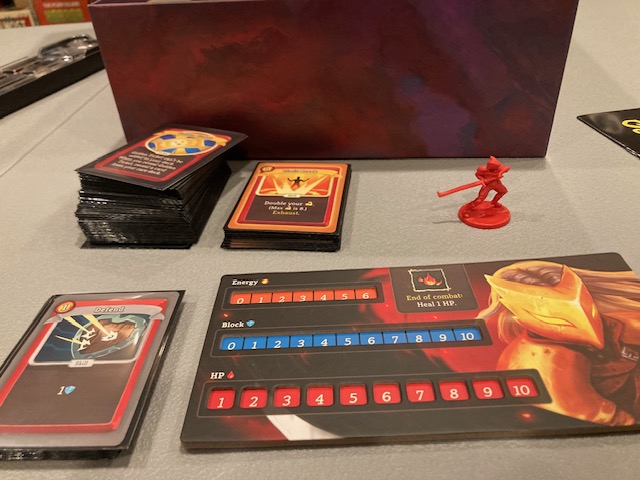
RichieCon 2025 And Top 6 Interesting Games In The Last Year!

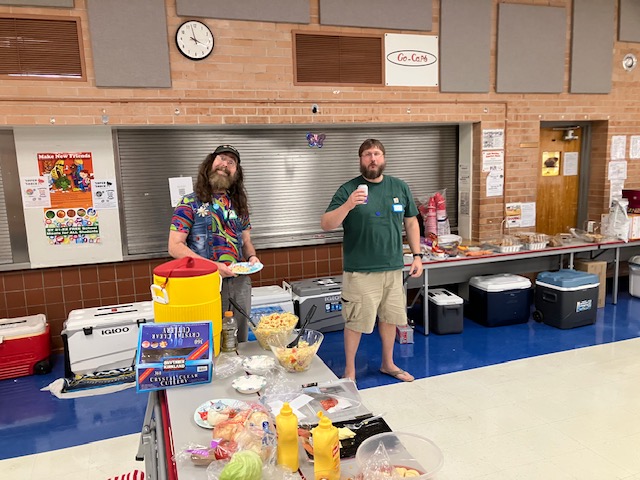
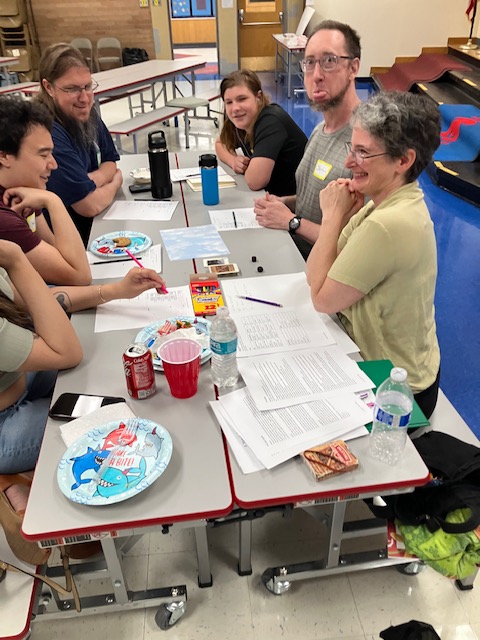
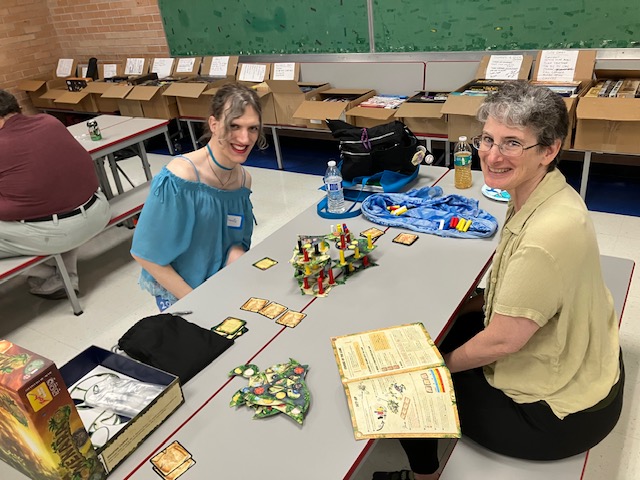
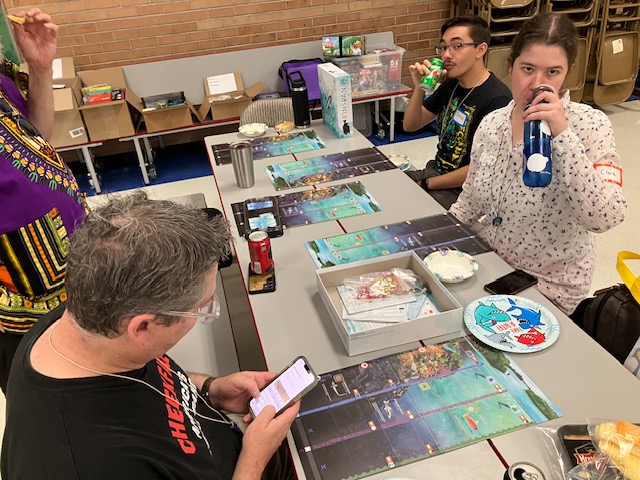
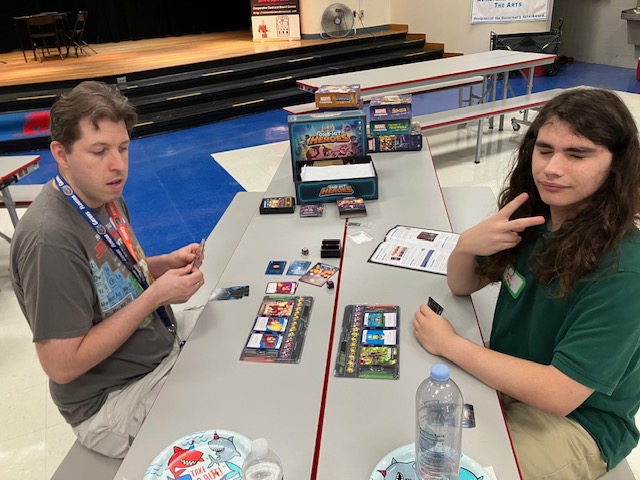
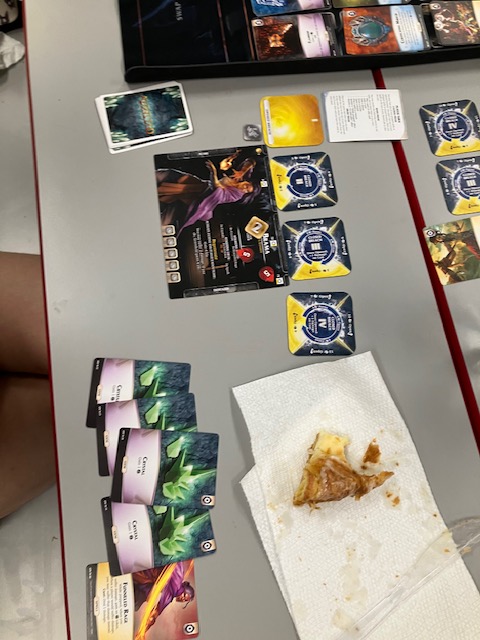
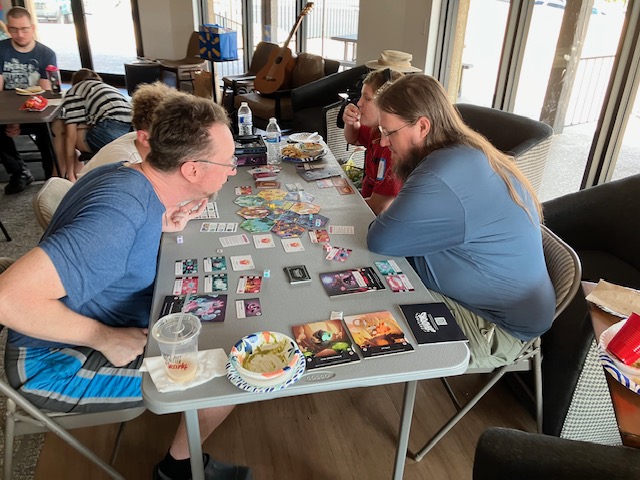
RichieCon 2025 had a lot of drama this year!  We had to get a new venue this year because of … reasons. 

If you want the long version of why we got a new venue, I encourage you to listen to “Tales of Horror” in the Dice Tower Podcast “Where Credit is Due” (timestamp 32:41, see link below)


New Venue

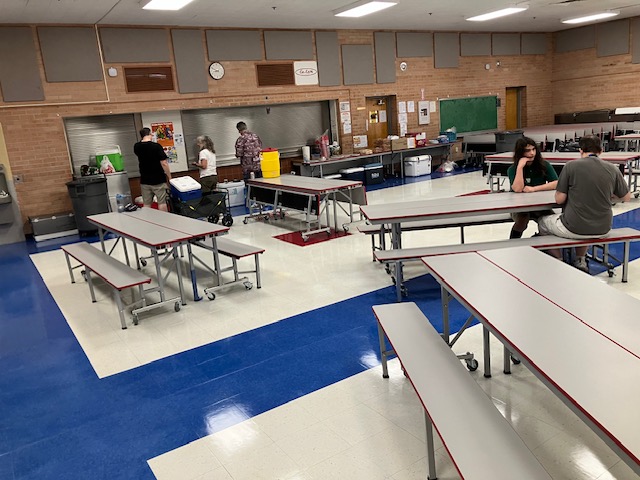
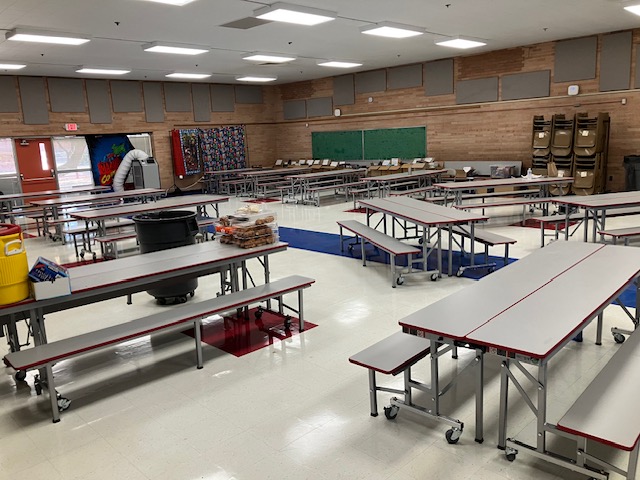
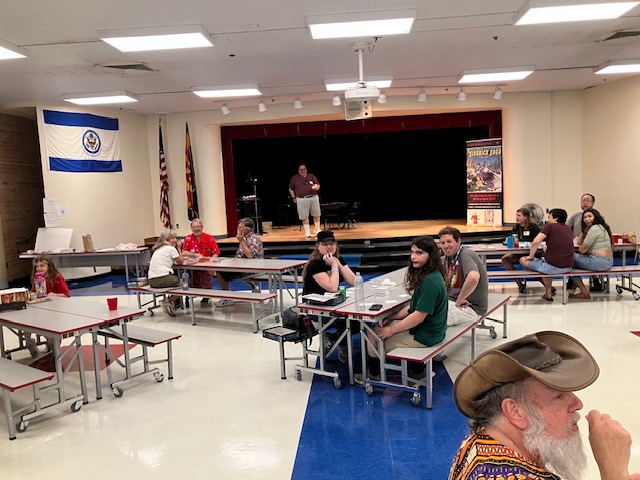
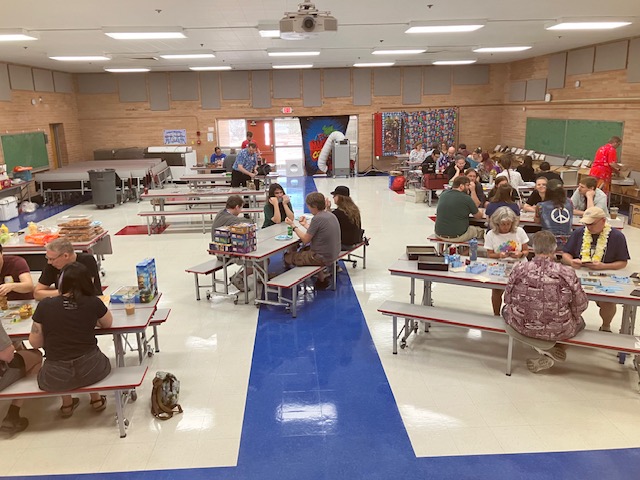
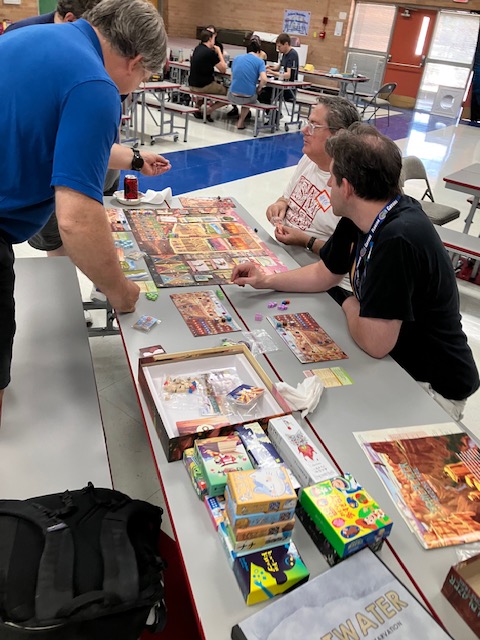
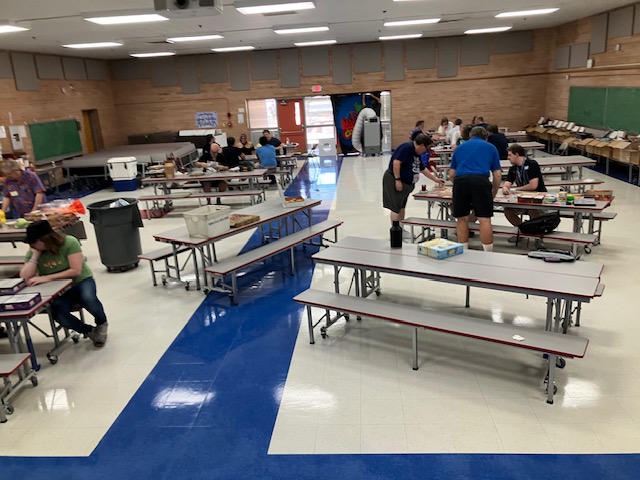
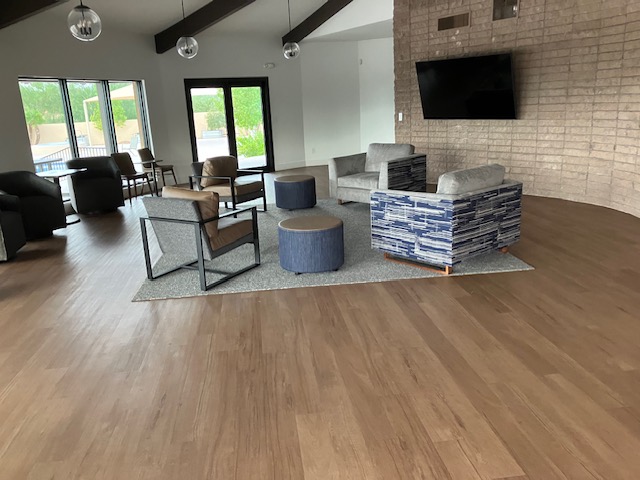
For RichieCon 2025, we had to go looking for a new venue.  We ended up at Fruchthendler Elementary School!

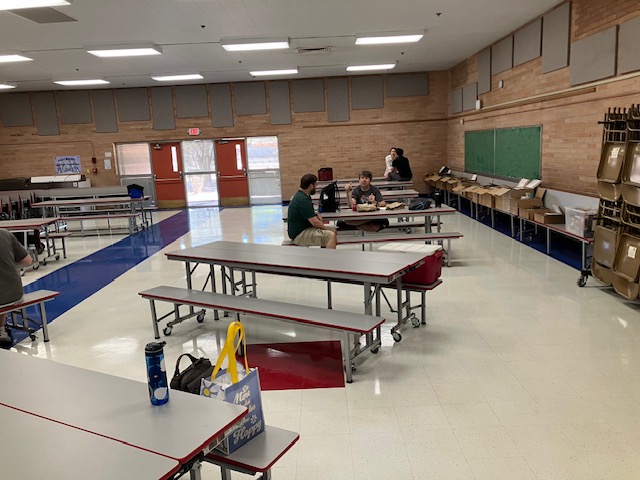
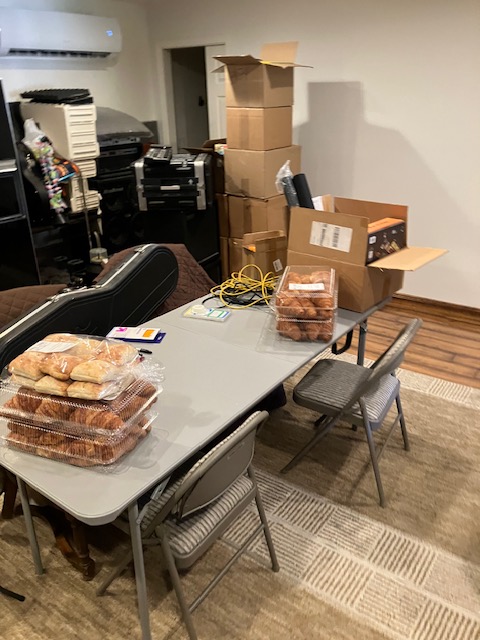
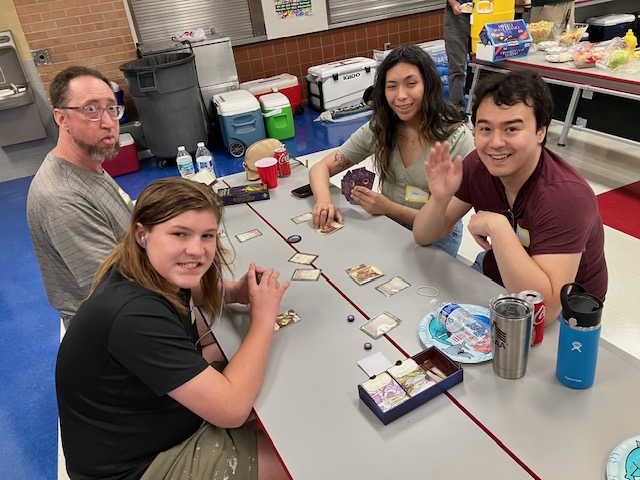
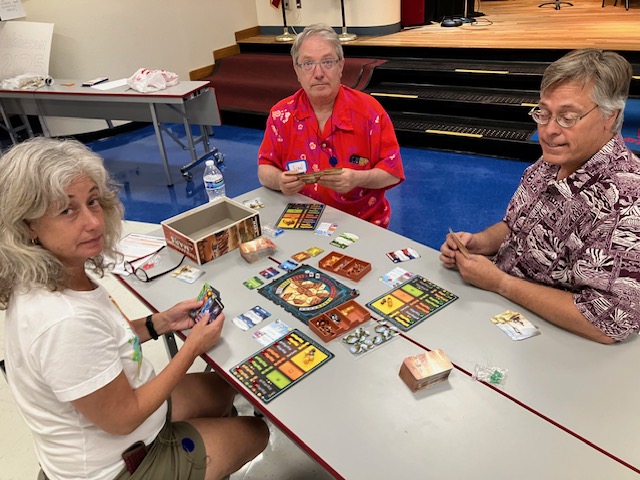
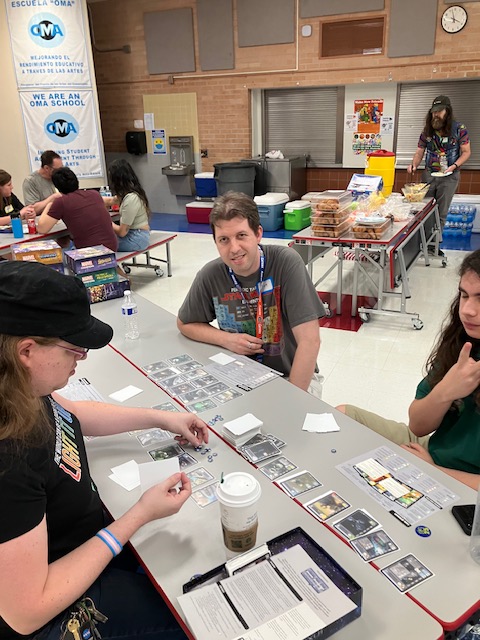
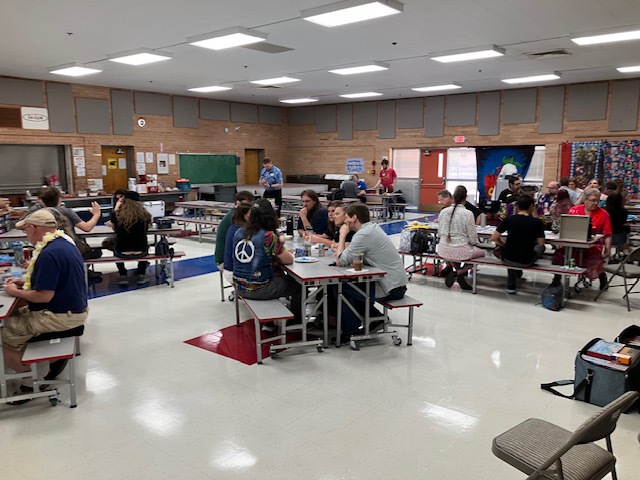
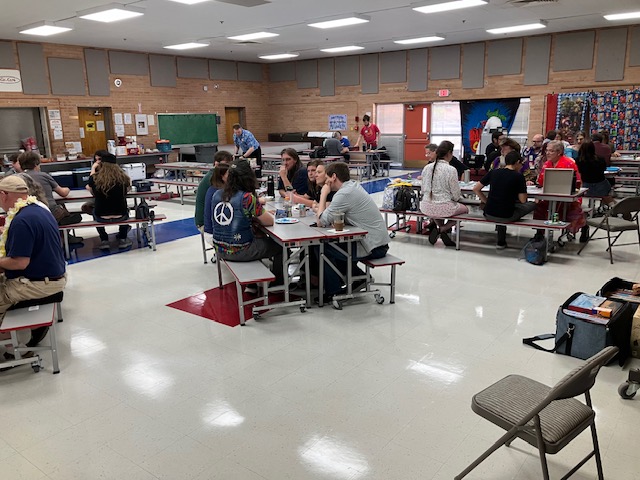
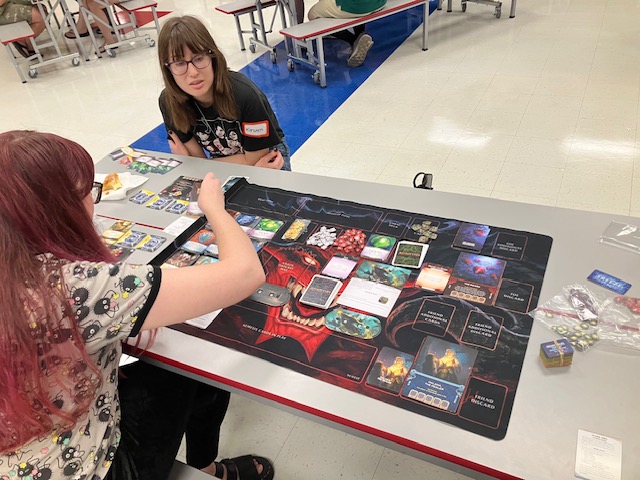
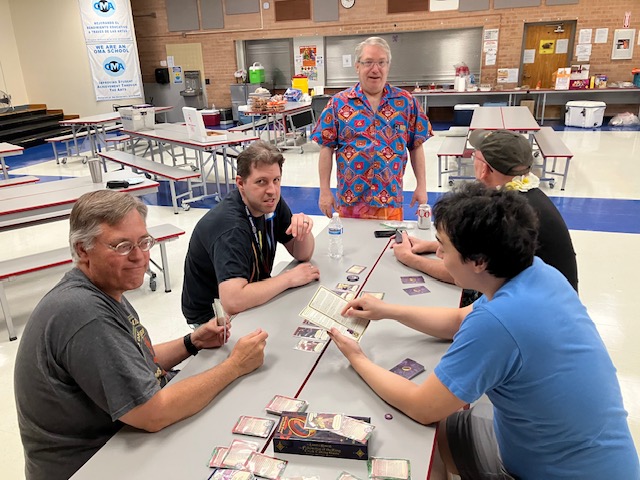
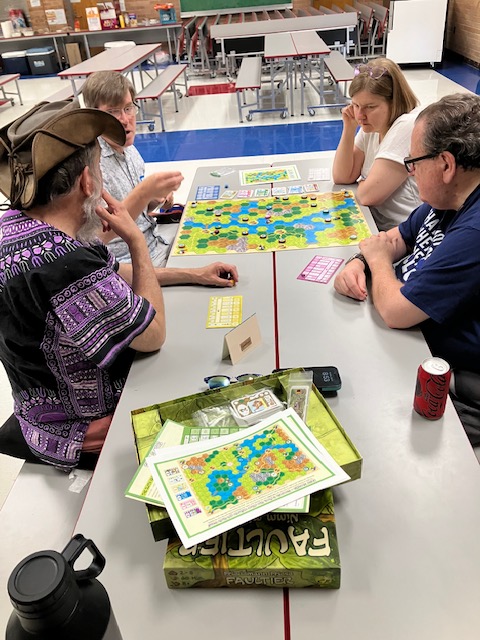
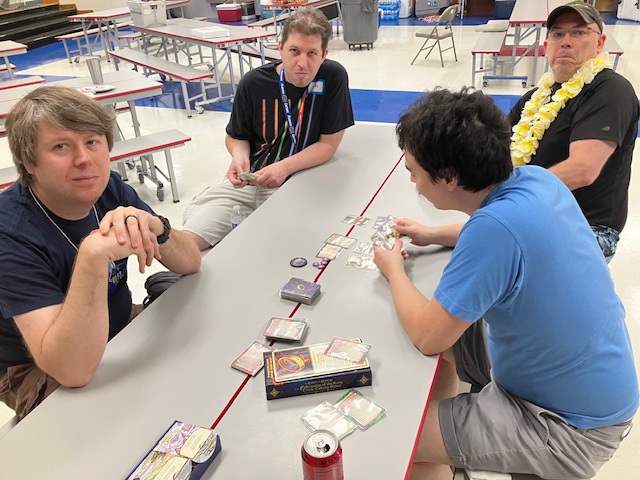
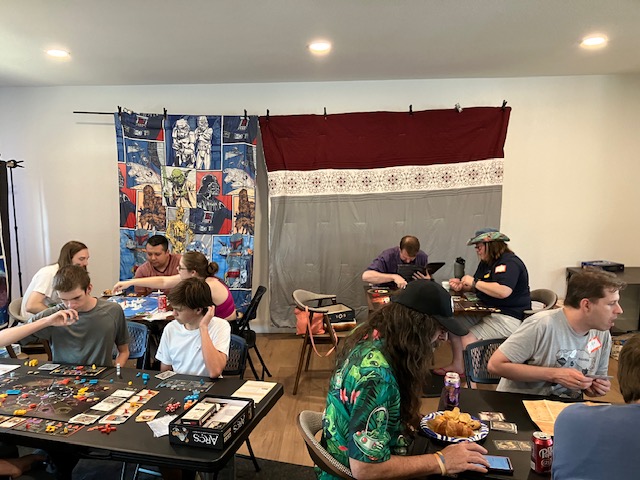
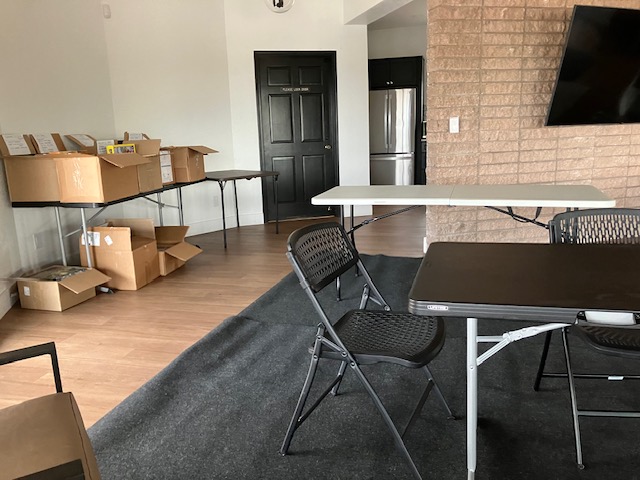
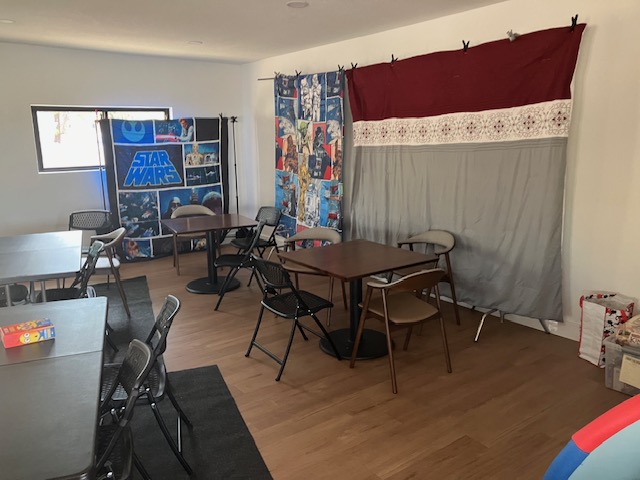
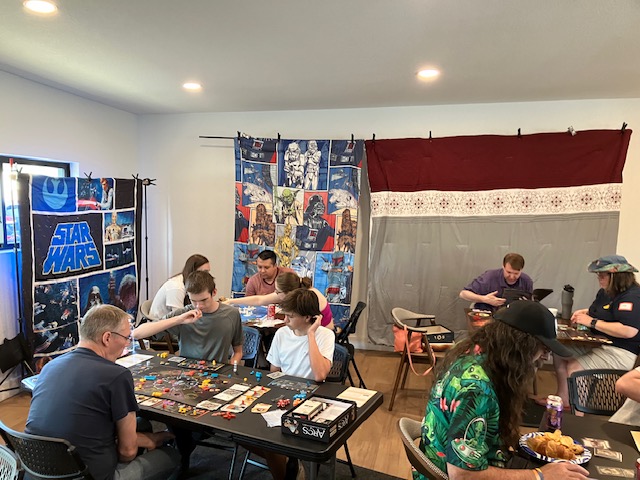
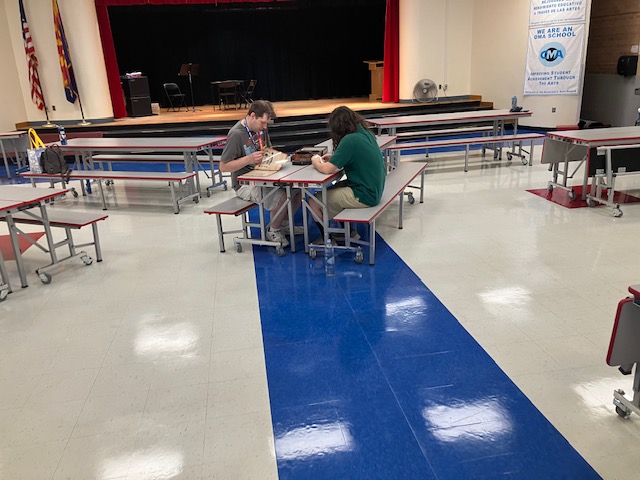
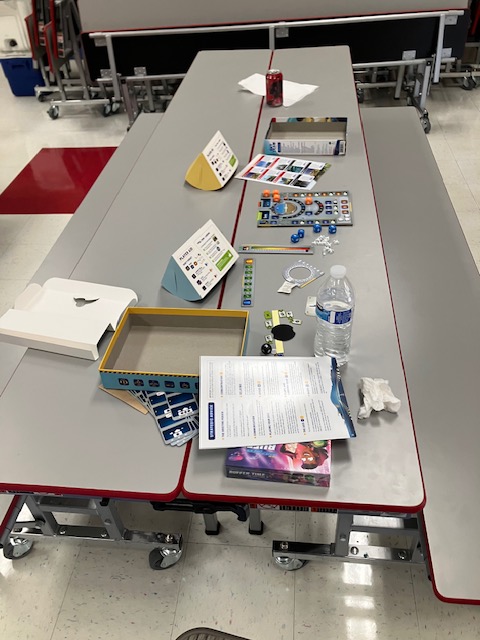
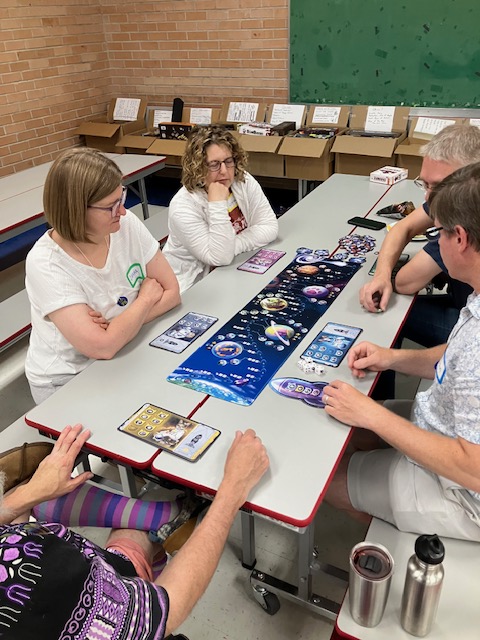
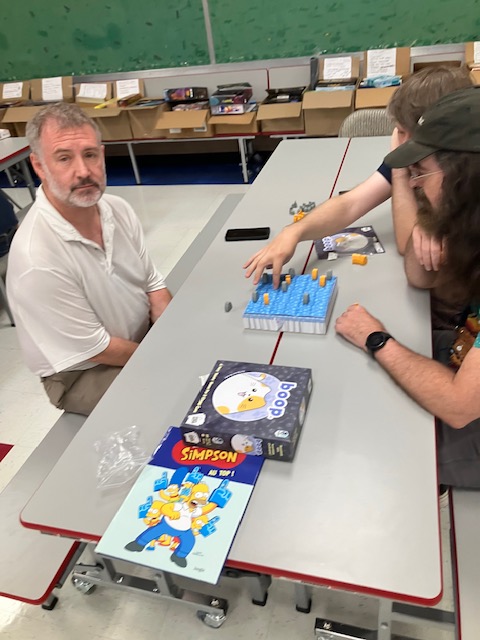
This venue was great! It was a little expensive to rent it for two days, but it was spacious and easy set-up in!  The cafeteria had plenty of tables!

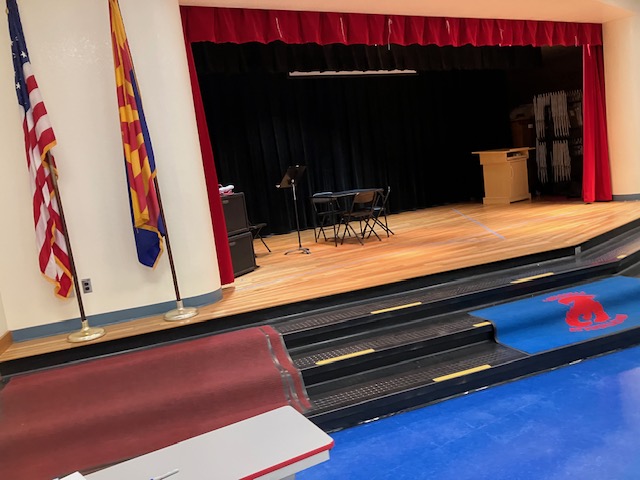
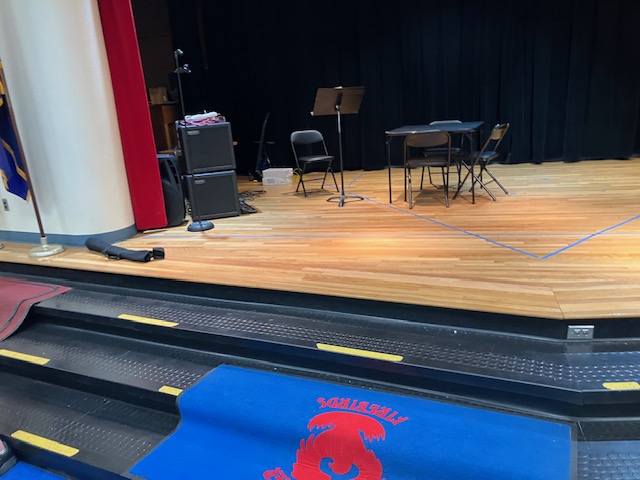
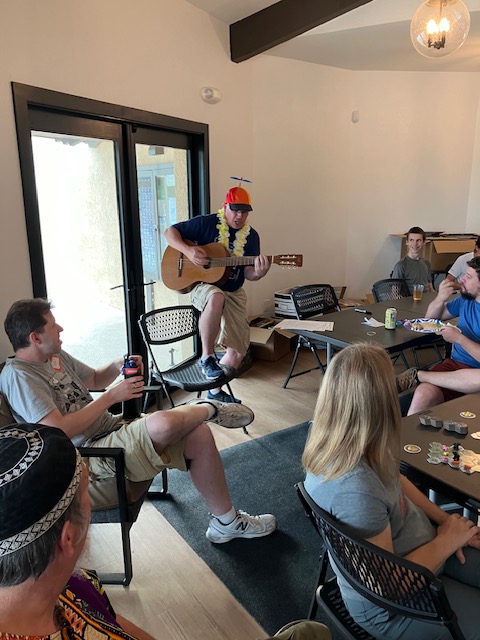
It even had a stage which we used some presentations (see below).

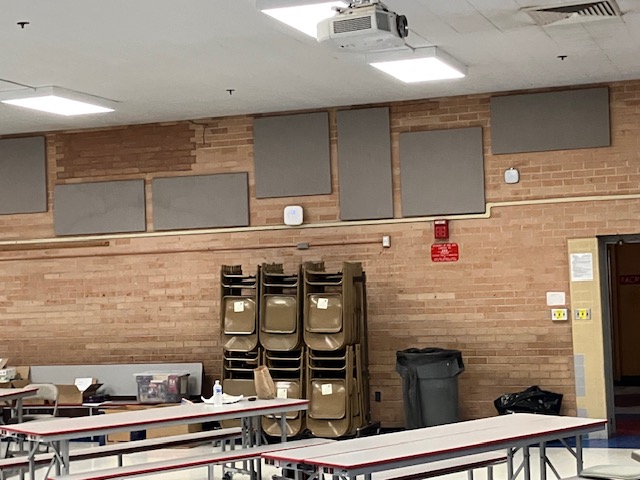
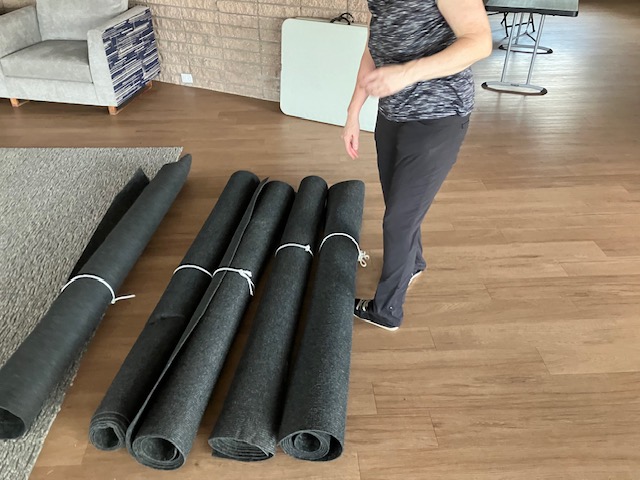
The best part of the new venue was the sound baffling!  The major complaint we always got from the Rec Center was how LOUD it was.   With the Sound baffles all over the cafeteria, that was not a problem this year!

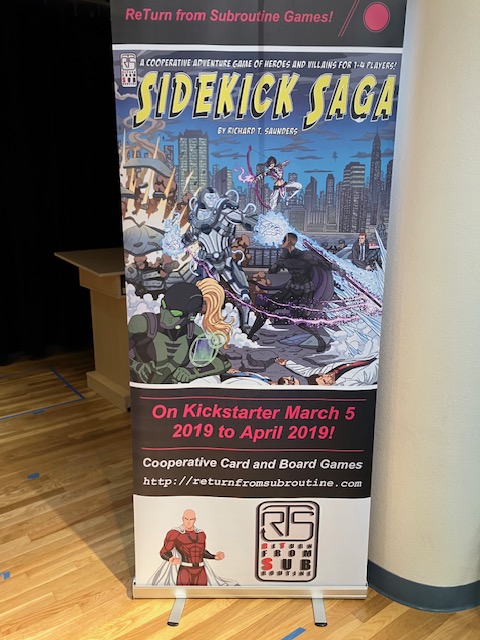
Because of the cost, we engaged a Sponsor to help defray the costs: Thanks to Return From Subroutine Games for helping out!  See their website here!

Day -1: Getting Coolers

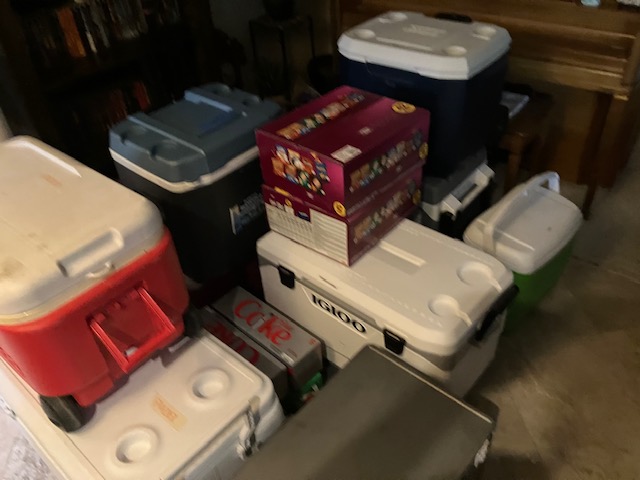
Because of the new venue, we don’t have a refrigerator any more! So, I had to put the call out to all my friends to get coolers to store drinks and perishables in!  In the weeks leading up to RichieCon 2025, I collected about 10 coolers!

We actually ended up having too many coolers, but that’s a good problem to have!

Day 0: Boxception and Sleeve-It!

We end up playing some games as we get ready for RIchieCon … but they aren’t the funnest games in the world!

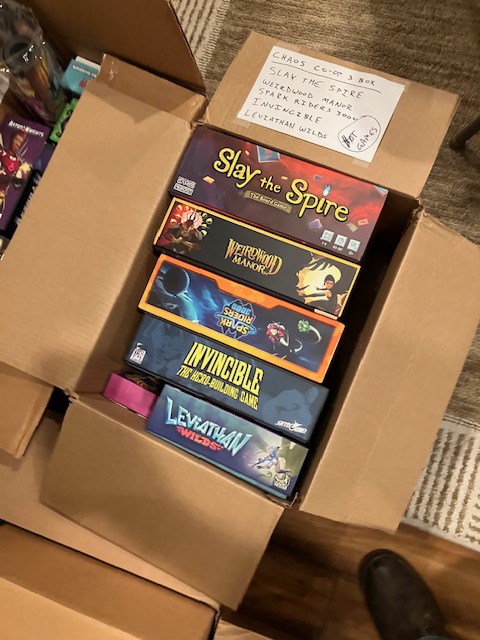
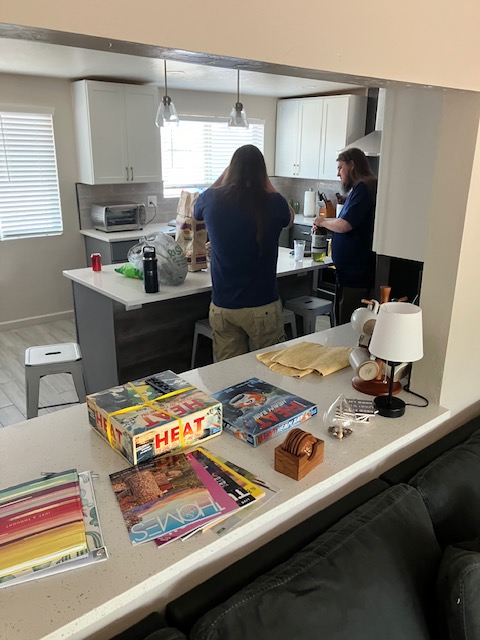
The Wednesday before RichieCon has become Boxception: The Cooperative Dexterity game of putting boxes in other boxes! 

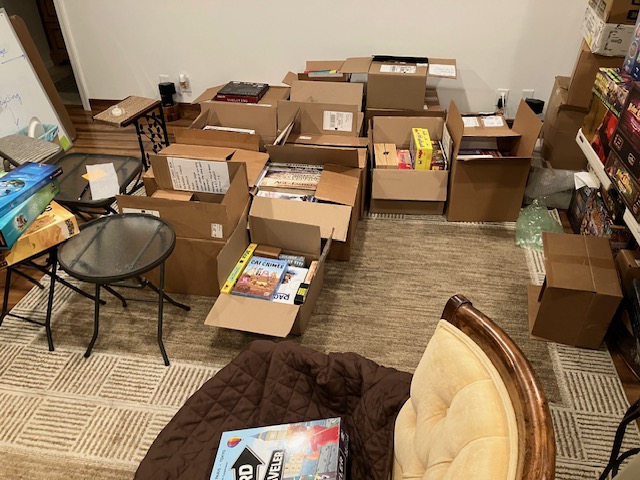
We end up putting about 200 games into 20 boxes over the night! (Some boxes have tons of games, some have just a few!)

We also spend some time playing “Sleeve-It!”  In this case, Teresa played a solo game of “Sleeve-It!” with the Lord of the Rings Trick-Taking game!

Day 1: The Secret RichieCon House

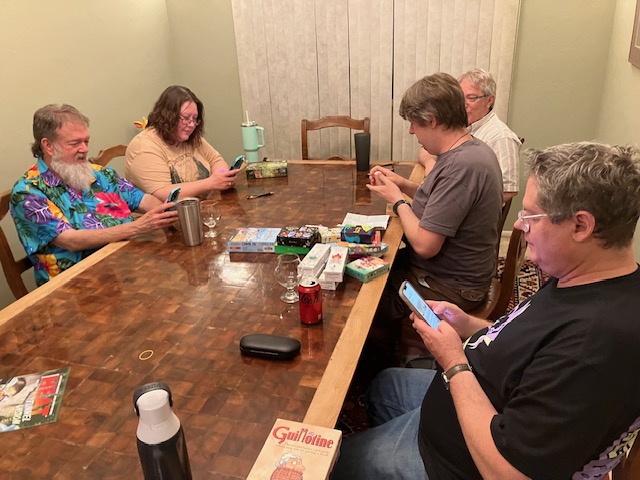
A large contingent of people rent an AirBNB and stay near Fruchthendler so that it’s easy to go back and forth: it also is a great place to game before everyone arrives!  Most of the out-of-towners end up here over the course of Friday before we have access to Fruchthendler!

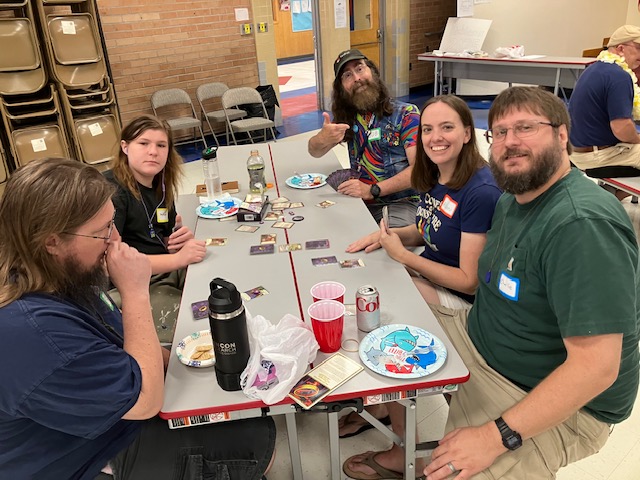
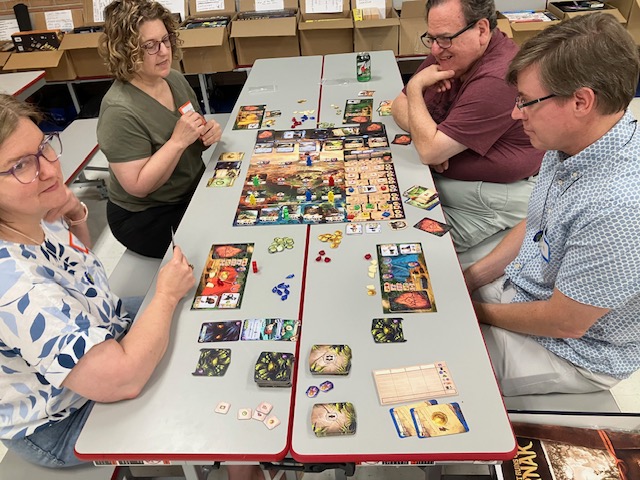
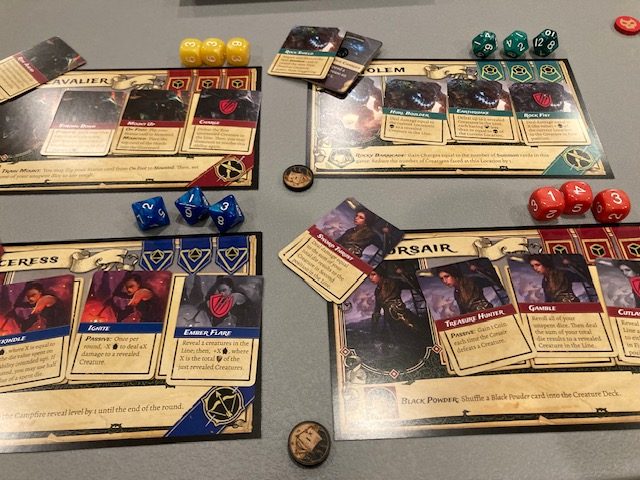
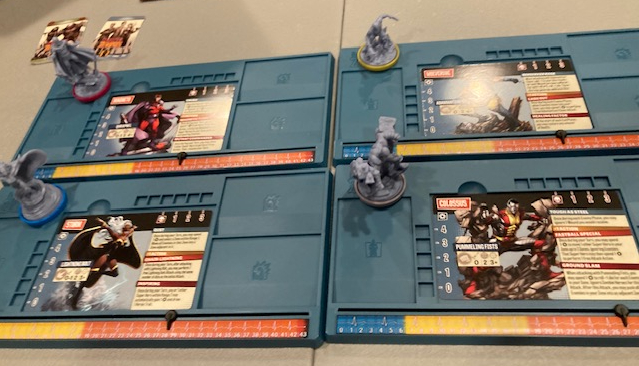
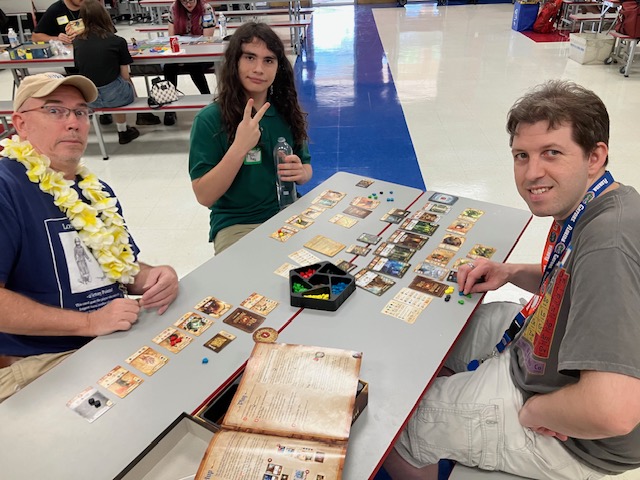
Day 2:  RichieCon 2025 Starts!

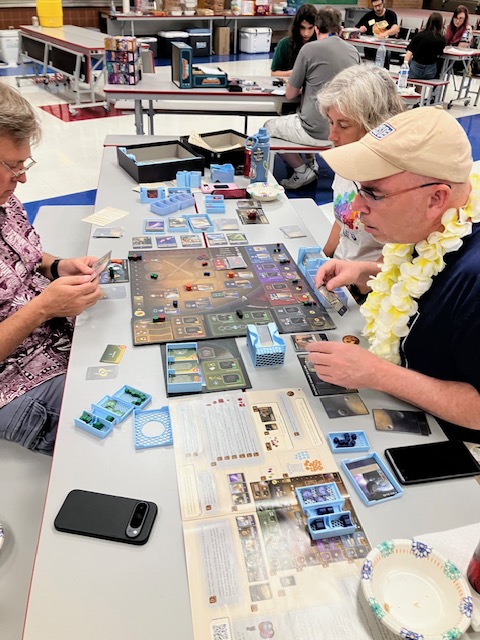
Day 3, The Last Day: RichieCon 2025


Top 6 Interesting Games Since Last Year!

On Saturday of RichieCon, we like to do a little show to bring the RichieCon Community together! In that show, we discuss some games that drew our attention since the last year.  The purpose of this list is to give people some ideas of games to play for the remainder of RichieCon! Without further ado, here’s our 6 questions with answers from Richie, Kurt, and Sam!

#6: What game from the last year surprised you the most?  Good or bad surprise?


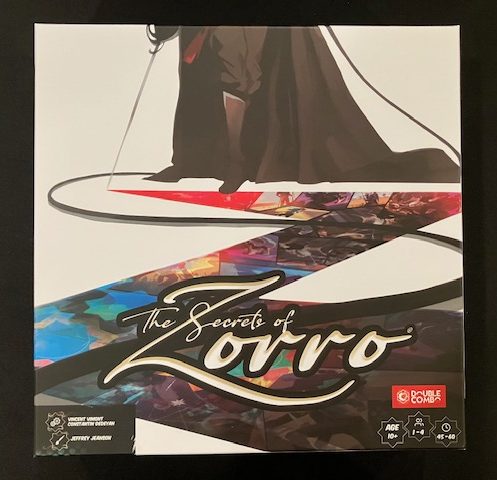
Richie: The Secrets of Zorro.  This fun little cooperative game didn’t have a very big Kickstarter, but me and friends really liked it!  It’s quick, it’s fun, and very thematic!  Good Surprise! See our review here to see if you might like it!
Kurt: Wandering Galaxy; disappointing given the awesomeness of Forgotten Waters & Freelancers Sam: Luddite. From watching the comic book into video on the wall in the man cave I was expecting it to be very story driven and thematic and RPG-like. It turned out to be a very fun roll and write that had none of that. See Richie’s review here.


#5: What game in the last year do you disagree with reviewers on?


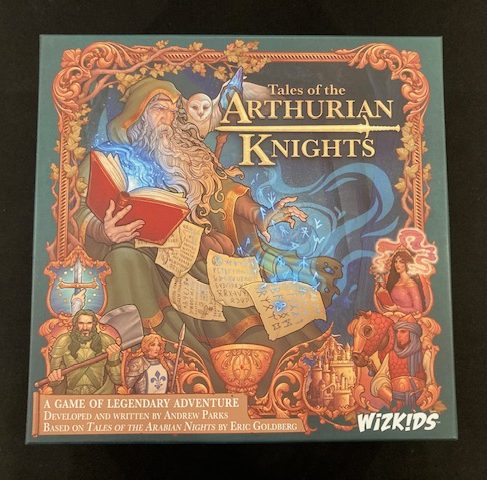
Richie: Tales of Arthurian Knights.  This game went over like gang-busters in my group, getting played multiple times and getting borrowed for birthday parties!  All of my friends gave it a strong 8.5 (maybe 9), but the the Dice Tower seemed less enthusiastic and only gave it a 6 or 6.5.  We were very surprised!  We loved it!  See our Review here.

Kurt: THE GANG! Tom Vasel didn’t like this game very much, but my group (Kurt’s group) loved loved this game! 

Sam: Soul Raiders. Tom V. thought it was great end gave it an 8. I wanted to like it because it has great art and a great premise but ended up being too random and grindy for the story driven feel that it was giving off. My final score 5.5.  See our thoughts here.


#4: What game (that you paid for) did you really dislike? It’s easy to dislike games other people paid for, but what did you pay for that you disliked?


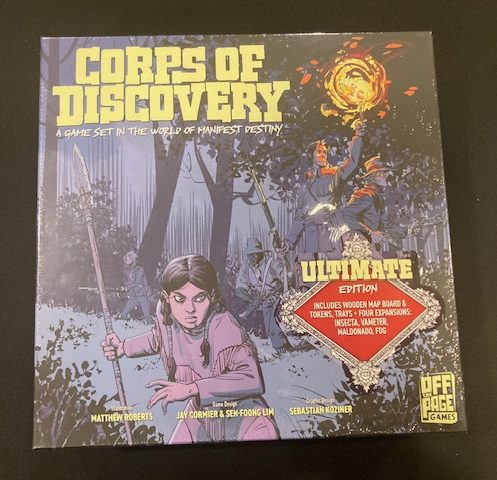
Richie: I bought and sold two games because I disliked them so much.  Corps of Discovery: in a game where one resource can mean the difference between winning and losing, the rules needed to be tighter.  It didn’t land for me (I gave it a 4/10), but it might for you.   The Dice Tower and other reviewers seem to like this game (9/10), so try it for yourself to see if you might like it.  See our thoughts here.    I also wanted to like Freedom Five sooooooo muuuucch, but I ended up hating it and selling it. I am still very depressed about this: see our very different review here.

Kurt: Bear Mountain Camping Adventure.  It’s all Richie’s fault; he pointed me at the game! I backed it, but when it came in, it wasn’t fun even though the production was gorgeous.

Sam: I don’t actually have one this year… Perhaps because I’ve been both buying and playing less this year I’ve been more selective (sorry Rich) and haven’t both bought and played a game I didn’t like. EDITOR: to be fair, part of Rich’s job is to review games, so he’ll take chances more


#3: What game that came out in the last year that you liked but other’s didn’t?


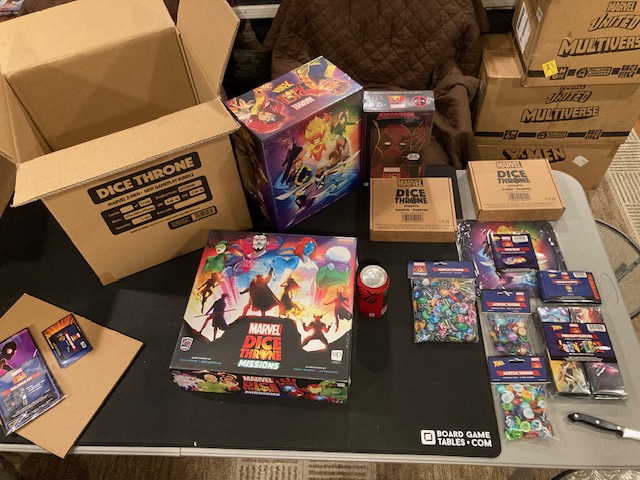
Richie: Dice Throne Missions/Dice Throne X-Men.  I loved this new system that makes the Dice Throne game work solo and cooperatively, but my friends didn’t love it nearly as much.  See our thoughts here.
Kurt: Link City.  This is pointed at Rich: he said he didn’t like it.  (EDITOR: To be fair, I didn’t love it as much as other people, but I recognized that lots of people did, so it still made the Top 10 Cooperative Party Games of 2024!)
Sam: Ecosfera. This one is the opposite for me – I didn’t like playing it 2 player because it felt like my turns were basically scripted and I had no agency. However others in the group enjoyed it at higher player counts.  See the review here to see what Sam’s talking about!


#2: What was your favorite expansion that came out in the last year?


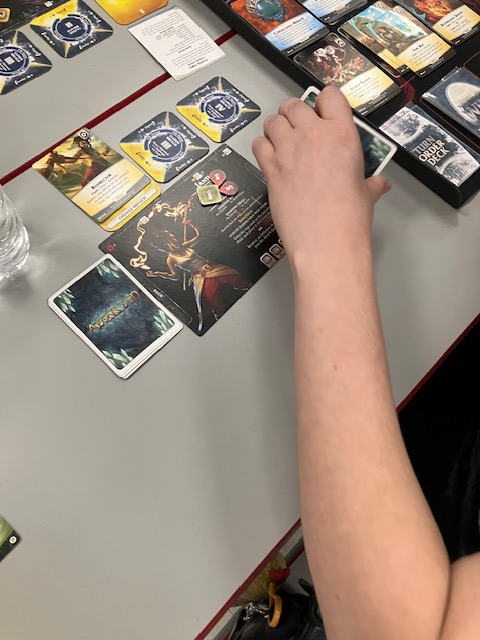
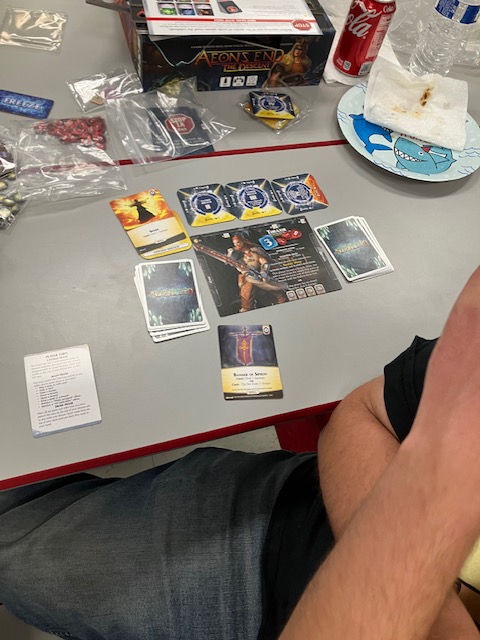
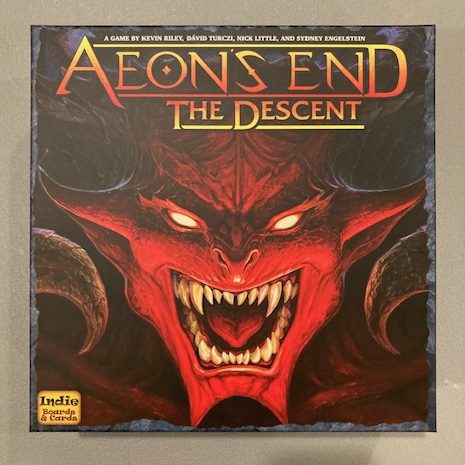
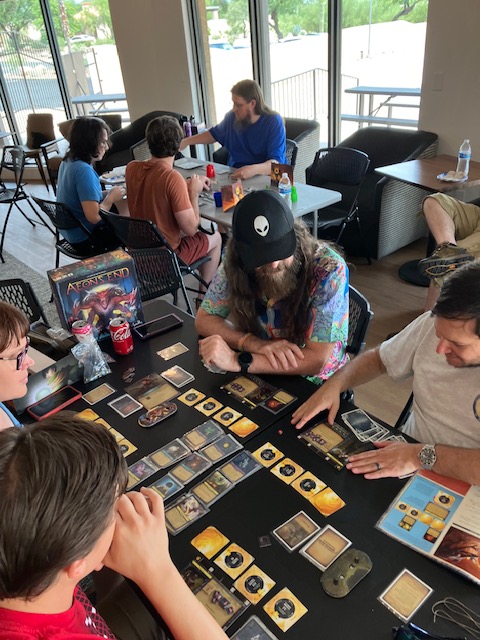
Richie: Aeon’s End: The DescentAeon’s End is a great cooperative deck-building game with mages working together fighting the Big Bad.  Aeon’s End: The Descent is a standalone expansion in the same universe, but adds the The Friends and Foes module!  This module makes Aeon’s End a little more balanced as it tends to mitigate the Variable Turn Order problems! See our review here for more discussion.

Kurt: Forest Shuffle (Alpine & Woodland Edge)
Sam: Townsfolk Tussle: Foul Neighbors. We played with the expansion characters and bosses and it worked great. Our final battle ended in the perfect cartoon way of pushing the plunger on the dynamite and blowing up both the outhouse and the big bad in one shot. (EDITOR: It was so fun! That’s why it made our Top 10 Cooperative Expansions of 2024!)


#1: What was your favorite game that came out in the last year?

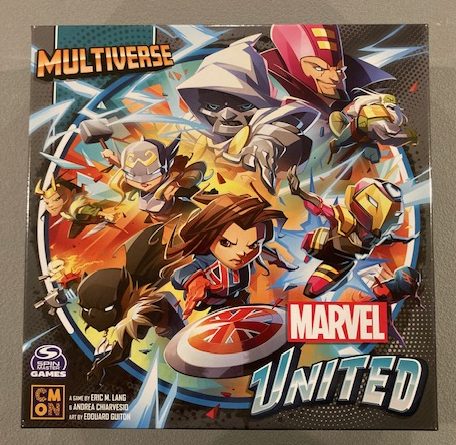
Richie: Marvel United Season 3/Multiverse.  It’s not even close: I spent so much time playing the content of Season 3 and I had so much fun. Sentinels of the Multiverse used to be my favorite game of all time, but I think Marvel United has supplanted it!

Kurt: Tie: Fromage & Fellowship of the Ring Trick taking game

Sam: Limiting to only those released in the last year: Fellowship of the Ring trick taking game. It’s light, fast, thematic to the story, plays well, and is easy to just keep playing and lose track of time while going through the different chapters.  Expanding to played no matter release date: Imperium (specifically classics). I really enjoyed how each civilization feels and plays differently from each other even though they all share common market decks and basic mechanics.

Solsbury Hill

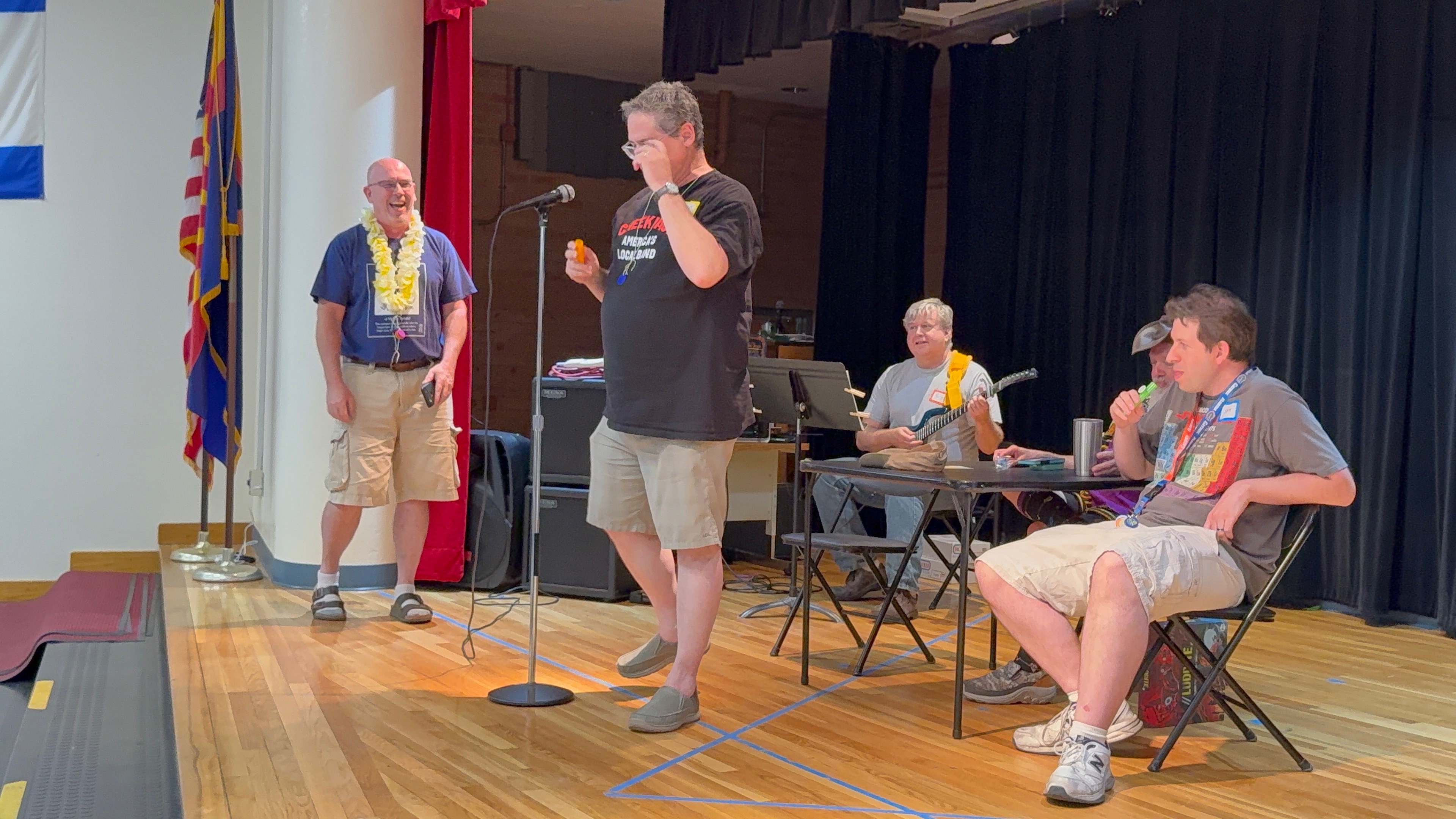
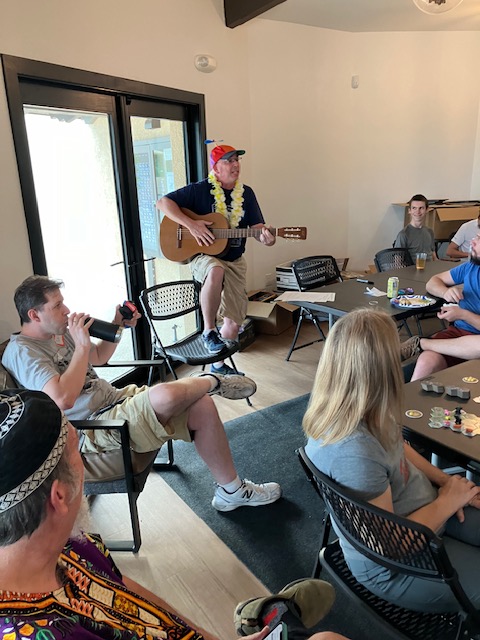
It’s become a tradition that every year, Joe must sing a parody song and make everyone laugh.  This year, I helped and together Joe and I penned the parody Fruchthendler (sung to the tune of Solsbury Hill) as a means to vent our frustration of getting unceremoniously kicked out of the Rec Center.  It’s mostly meant in jest, but with a little heartfelt sentinement!  We also had the audience participate with Kazoos.  No joke. Thanks for Mike H. for directing the world’s greatest kazoo group!  See lyrics below, and video below that!!!

Fruchthendlersung to the tune of Solsbury Hill

Driving up to Fruchthendler
I could see the parking lot
Left the public defender
Firebird is our new mascot   (Firebird is the mascot of Fruchthendler Elementary school)

This was something of a mess,
Called HOA, they had disclosed
Richie Con would be suppressed
Through attrition, I got hosed

I called Cthulu in frustration
The Swim Team cancelled my reservation,
It’s like that game of Gloom Gloom Gloom,
“Joe”, I said,
“Grab your games, we’re going to clone the zone”

Yeah, clone some zones

The Aquatics had made me blind
The chlorine spewed out from my guts
Our holy grail had been maligned
Our old game venue had been cut

So I bravely ran away
Quest to find a new place to hut
With my minstrels Joe and Mike
And where’d you get them coconuts?

I was feeling down in chicanery

Highly Overbearing Authority  (stop song in cheesy fashion to point out that we satirically re-acronymed HOA)
They won that game of Gloom Gloom Gloom”
“Mike”, I said,
“Grab your games, we’re moving Richie-Con”

Hey –like your mom…

Found a new place to play our games
It’s probably when we want to be
Because of HOA I have no claims
To a place I thought was free

Screwed by faceless bureaucrats
Who close their gates to my party
Add one to my gaming stats–
In their pool, I will pee                –soon as I saw “pee,” I had to go there…

I’m not afraid of their displacement
Even if I have to pay rent
I won that game of Gloom Gloom Gloom
“Kurt”, I said,
“Keep your games, and come to Richie Con!”

“Wha!”

“Hey!”

“Con!”

Most Played Games

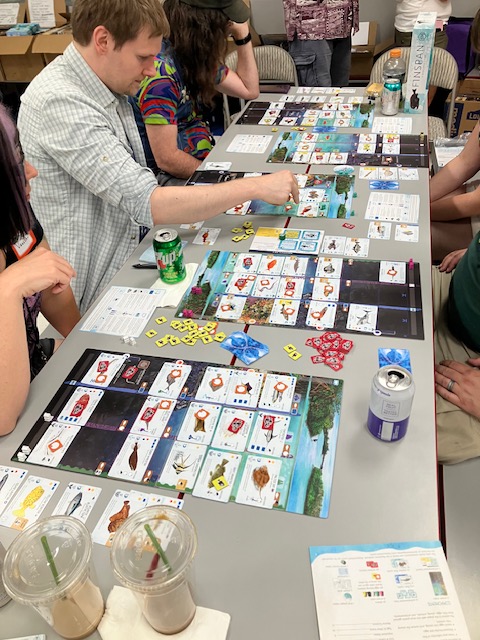
Terraforming Mars: Ares Expedition was played quite a bit! I personally saw at least 3 plays of it!

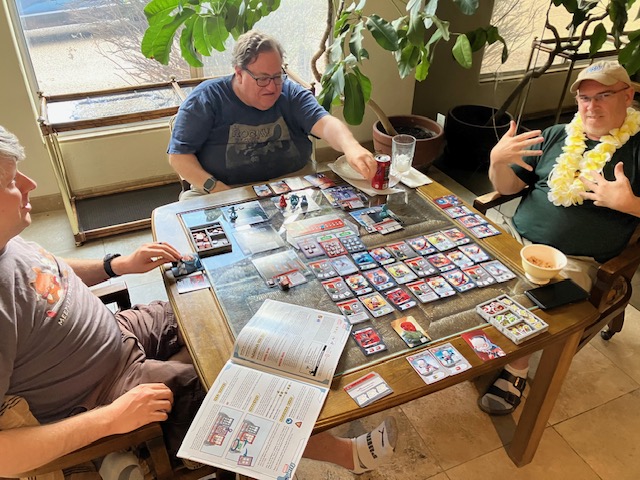
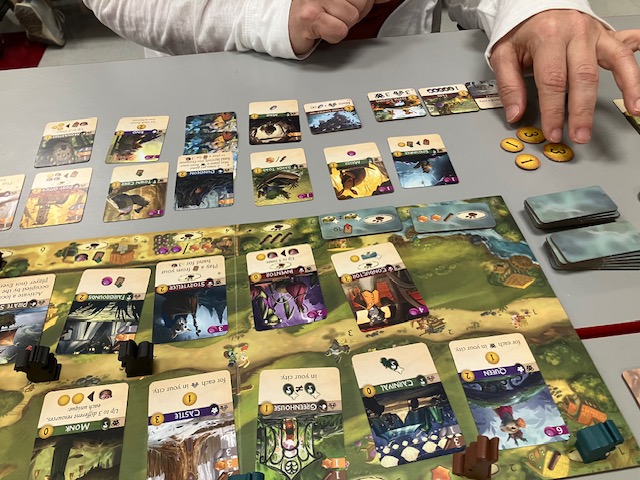
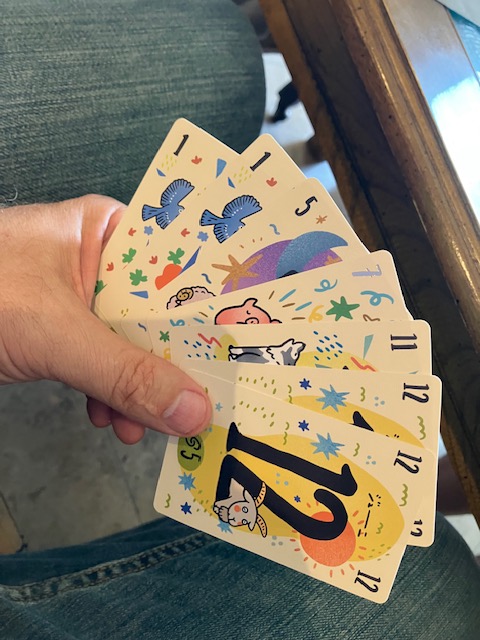
By far the most played game was Lord of the Rings: Fellowship of the Ring Trick-Taking game!  We had sleeved it just before, and it was good thing we did!  It was pretty much always being played!

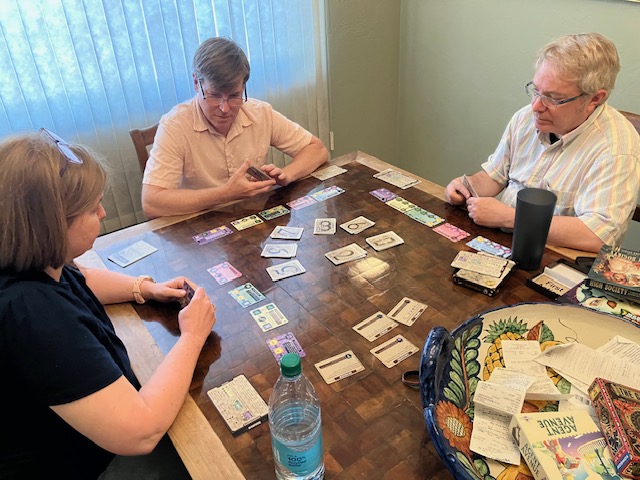
I saw Lon teaching Nana (Japanese version of Trio) quite a bit!

I saw Aeon’s End: Descent played a number of times!

Weird Games

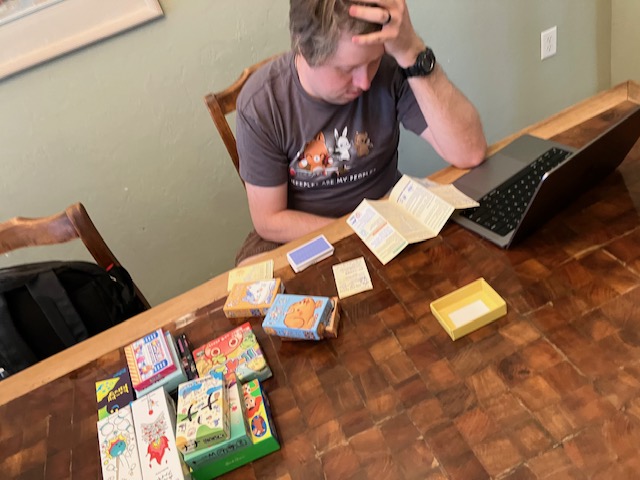
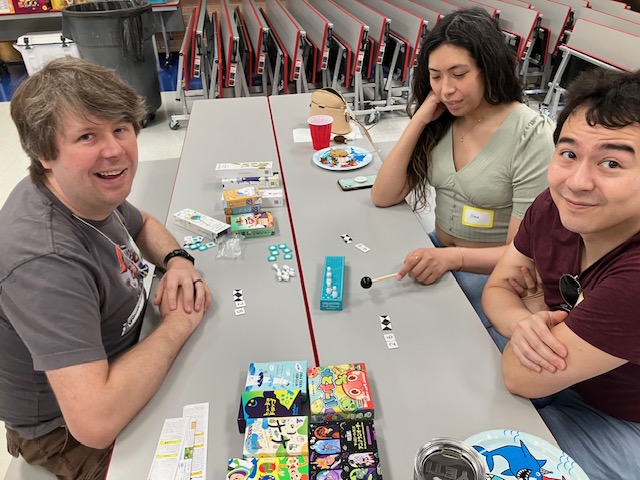
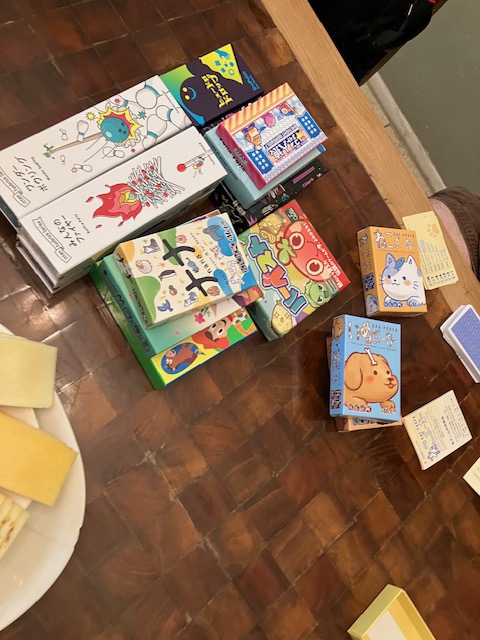
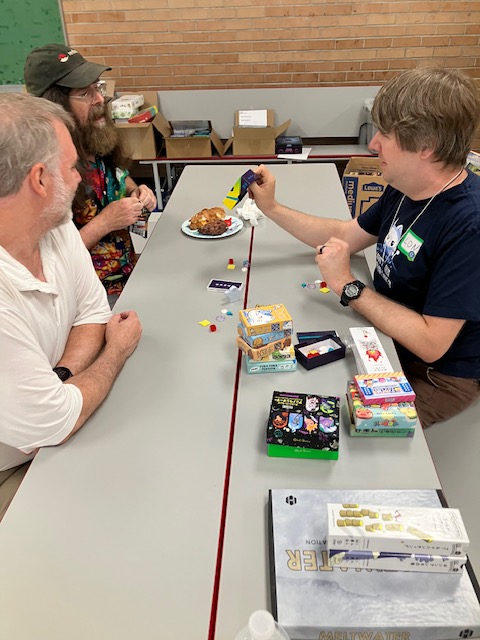
Lon brought a lot of weird games from Japan.

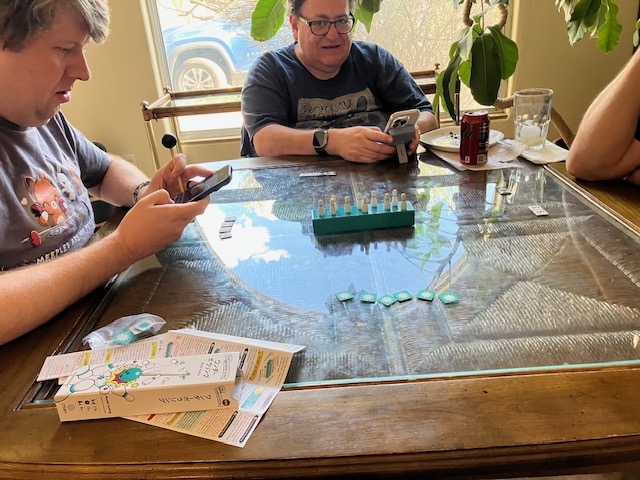
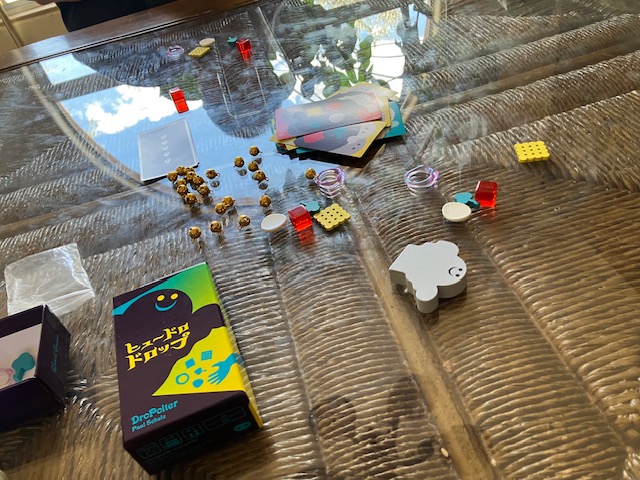
 DroPolter (above) was this weird one like Jacks where you grab things on the table, but can’t drop anything!

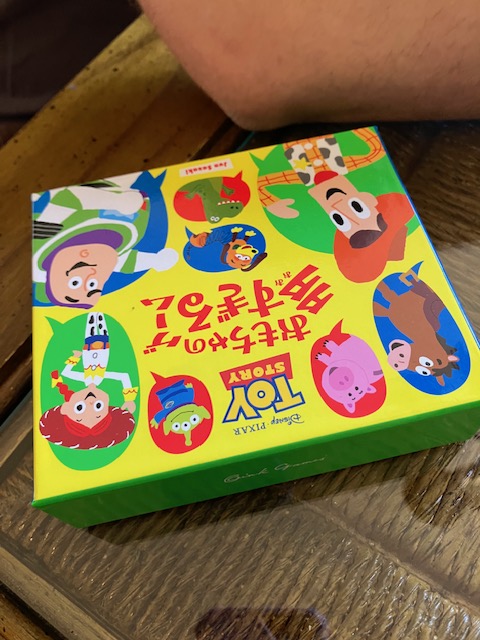
Toy Story is a cooperative memory game ONLY in Japan! It was my birthday present!

Nana is the original Japanese game that’s the inspiration for Trio!

There were several RPGs going too!

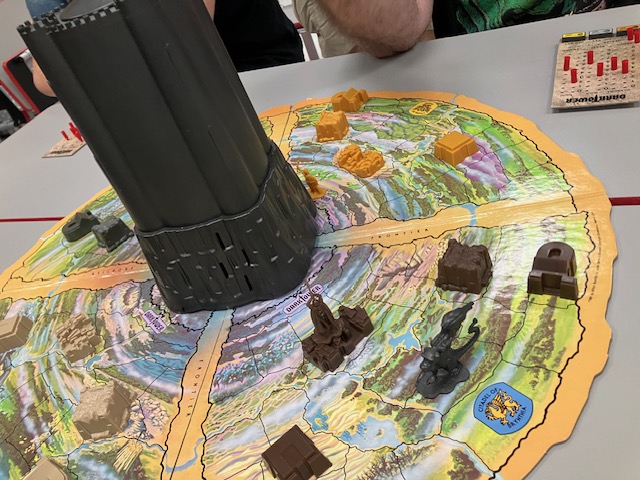
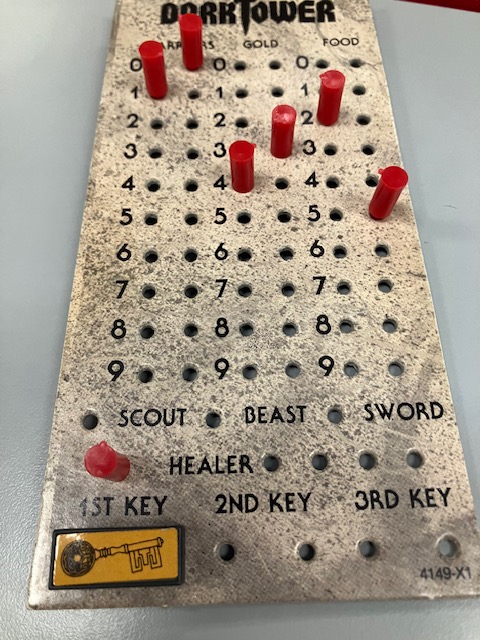
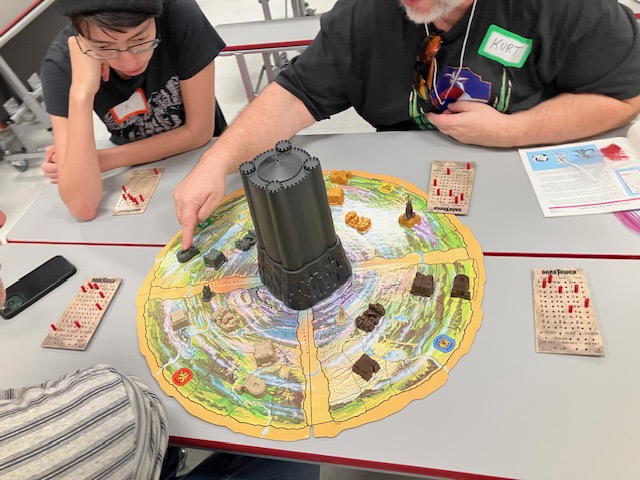
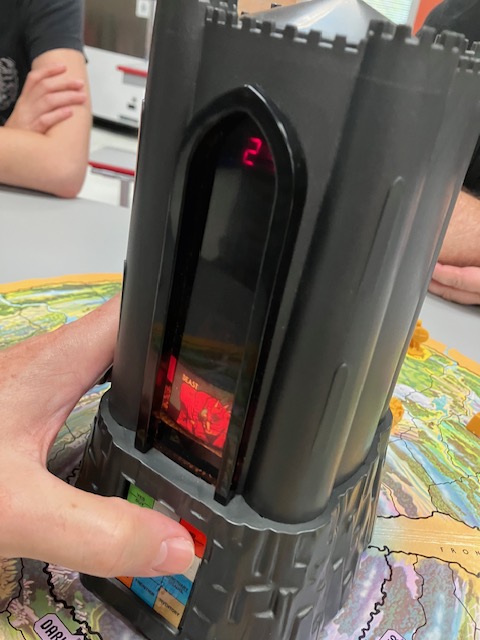
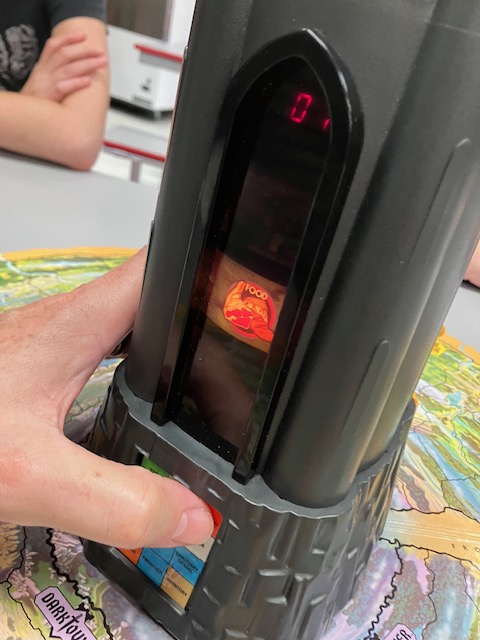
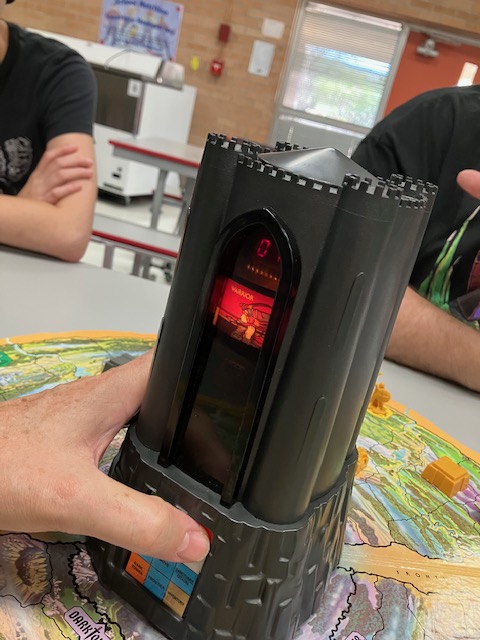
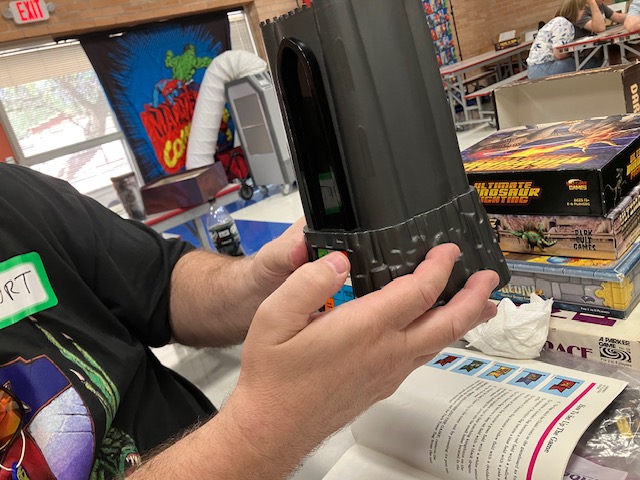
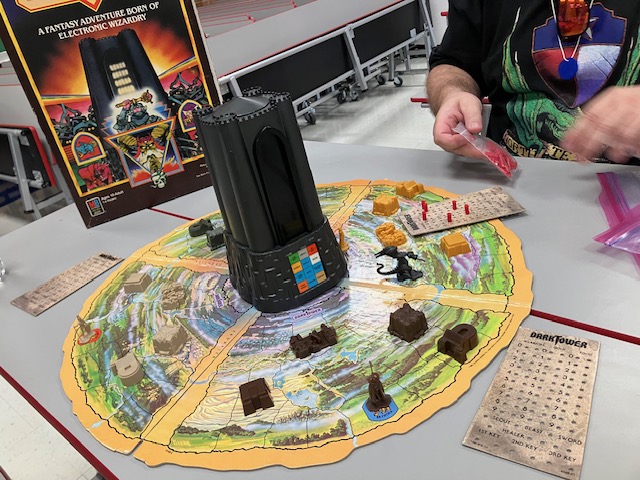
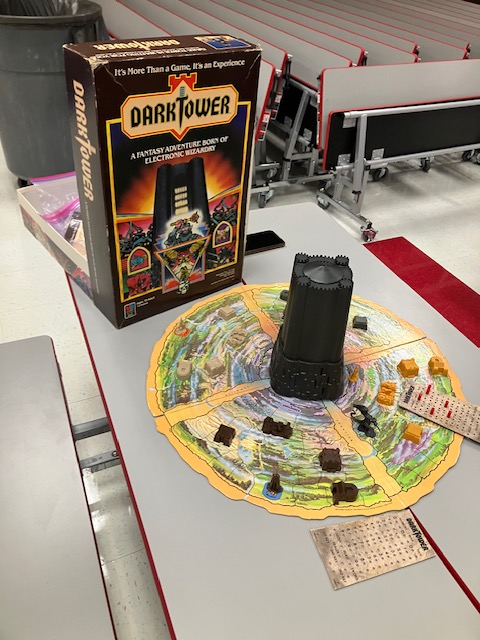
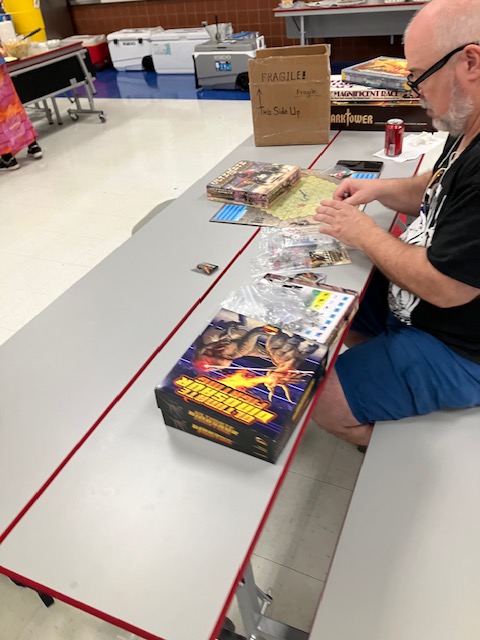
Kurt R. brought the original Dark Tower game … and it worked!  Did you know that they stored the values in BCD in 128-Nibble RAM memory?  Josh looked it up!  This game is from 1981!!!

Conclusion

After all was said and done, was it worth it?  I think so! I got to see friends from out of town and play games with everyone for my birthday, and that’s what I wanted!

What will happen next year?  I really don’t know!  This was a very expensive and stressful year because of the events leading to the venue change.   I love the new venue, but it is expensive.  Will we come back?  Come back next year and find out!


Santorini: Pantheon Collector’s Edition and Riddle Of The Sphinx Review, Mostly the Solo and Cooperative Experiences

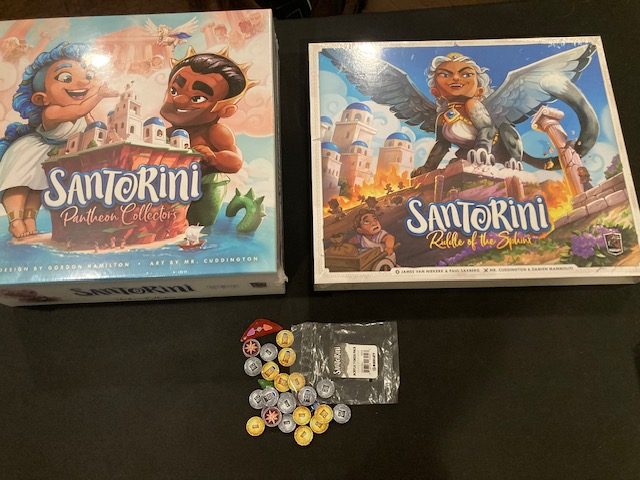
Santorini: Pantheon Collector’s Edition and Santorini: Riddle of the Sphinx both arrived at my door February 28th, just in time for weekend!  
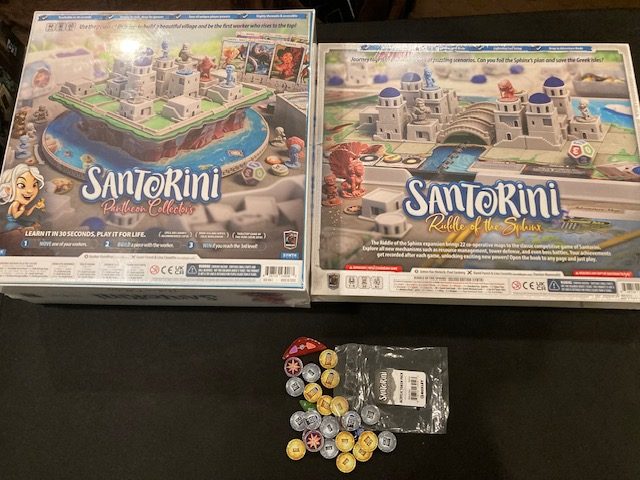
These were originally on Kickstarter back in April 2023, and promised delivery May 2024: so it’s not quite a year late, but it is pretty late.  At least it finally made up!  I have been waiting a while for this game: it was #8 on my Top 10 Anticipated Cooperative Games of 2024!
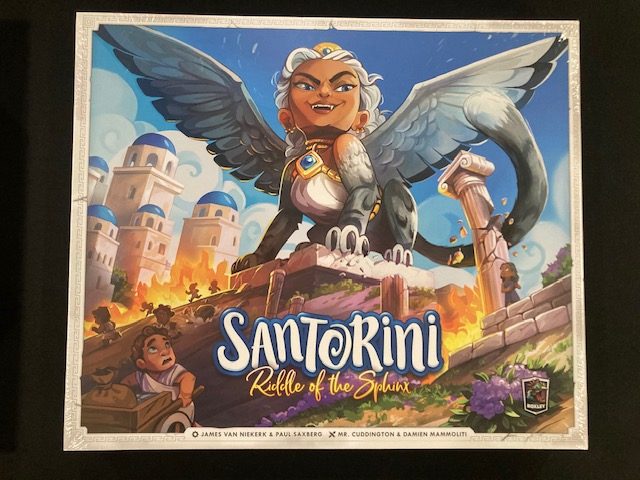
I was very excited for Santorini: Riddle of the Sphinx (which we’ll just call Riddle of the Sphinx from now on), as it promised to take the base game Santorini and make it into a solo and cooperative experience!  
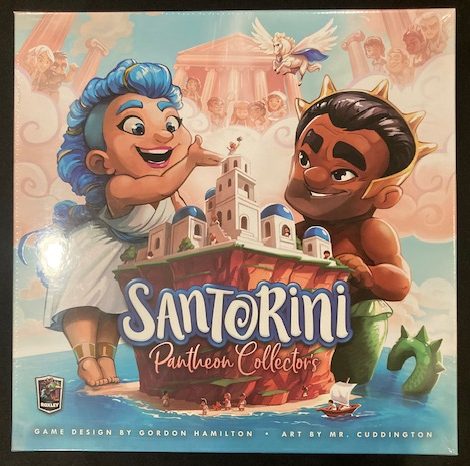
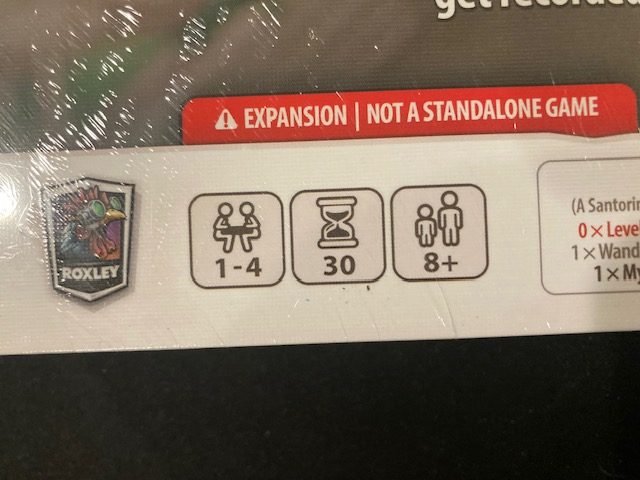
However, Riddle of the Sphinx is an expansion: you must have one of the Santorini  base games to play it (for some of the components).  This particular Kickstarter offered up the “deluxe” Santorini: Pantheon Collector’s Edition, so that’s the one I backed.  

I ended up playing pretty much all weekend, so let’s see how that unraveled!  Was this worth the wait?

Day 1: The Game Arrives and Santorini Gets Played!

February 28th, 2025: The package arrives with both games!  
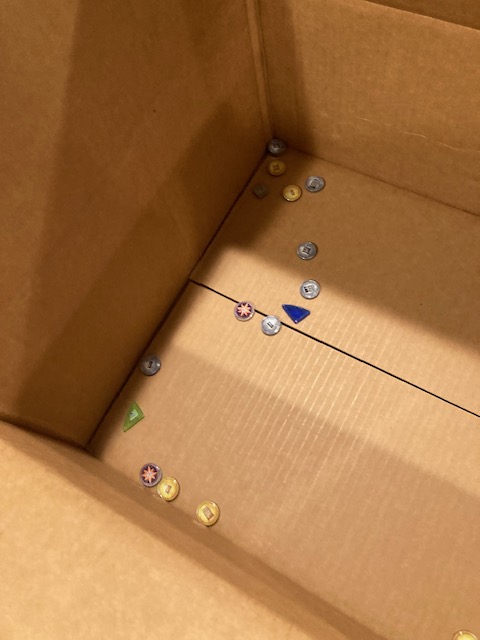
The acrylic tokens bag opened up and spread them everywhere … make sure you pick up all yours!

You can’t play Riddle of the Sphinx until you know how to play the base game of Santorini. So, that’s where we started.
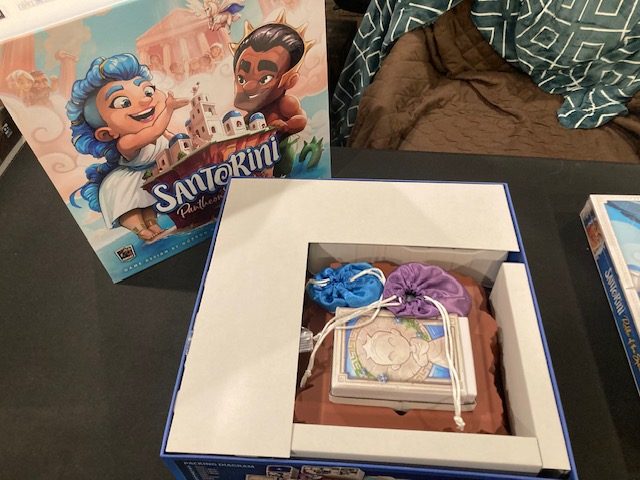
This edition has quite a bit of extra stuff.
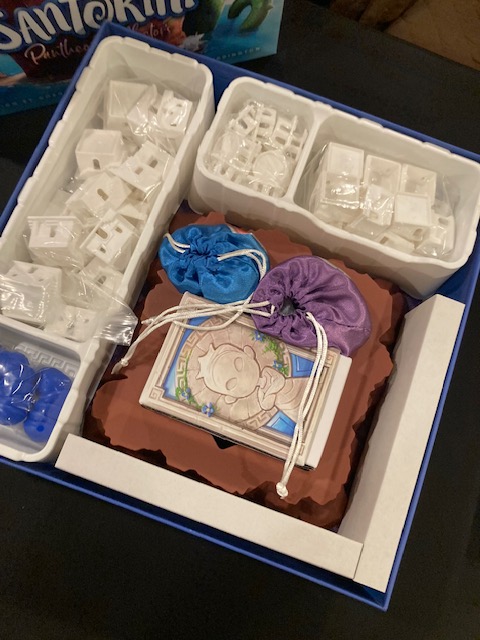
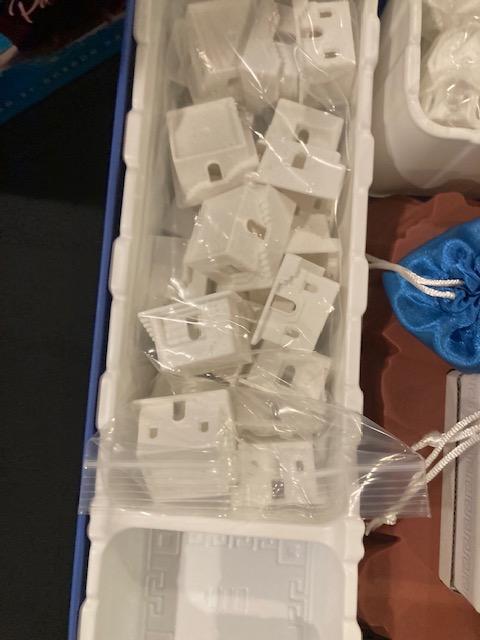
The white blocks and domes are the key components to the game: these are what gets built on the main board.  Those little white blocks have quite the toy feeling!
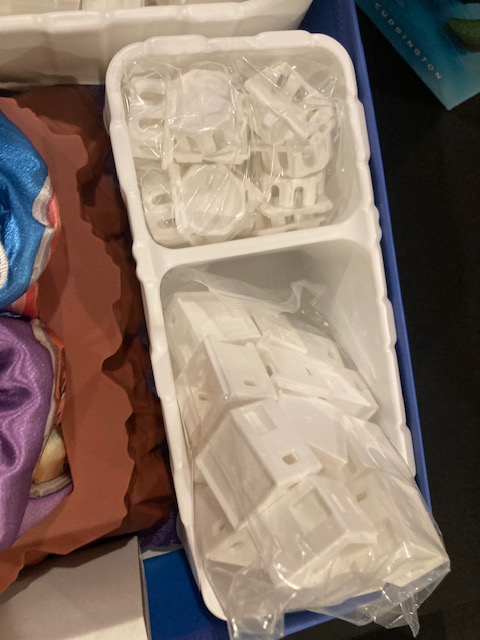
These blocks are the main pieces that will be shared with Riddle of the Sphinx.
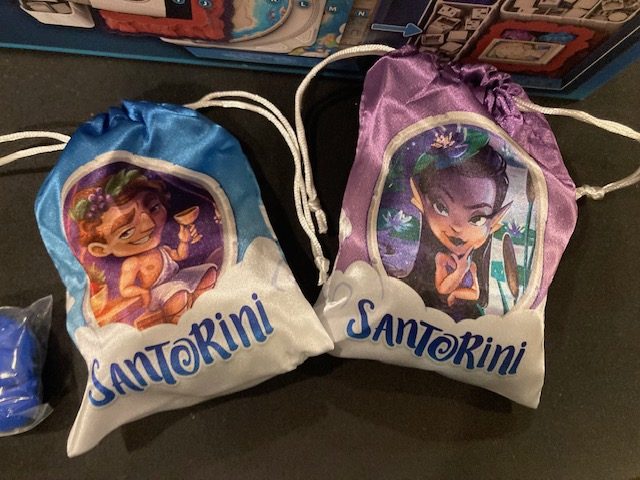
There’s some neat bags with lots of components.  A lot of these aren’t necessary for the main game.
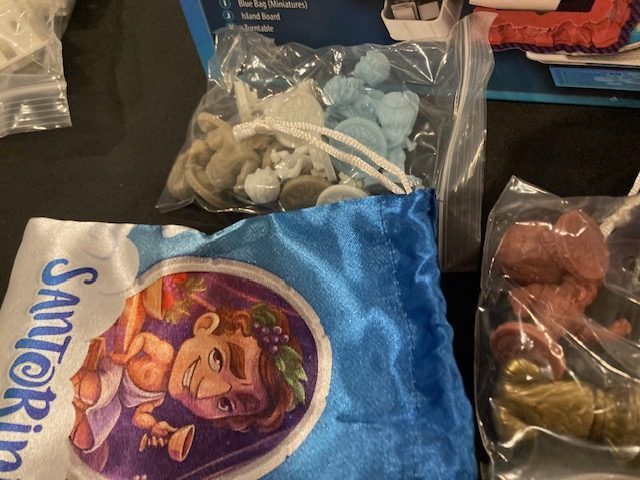
But the workers (in the blue bag) are important; they are what moves around the map.
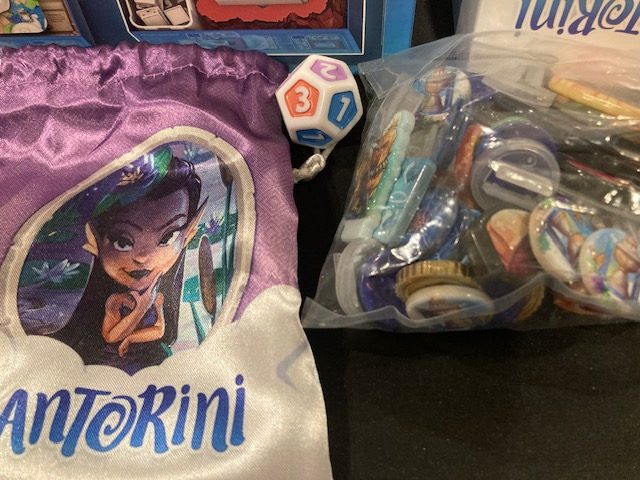
The purple bag has a lot of stuff … that I don’t think you will need until you play a LOT of Santorini and want more content.
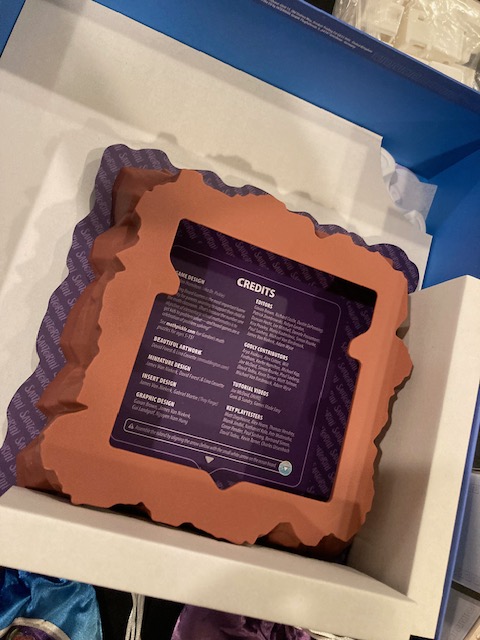
The most important piece for the main game is the board (packed upside down).
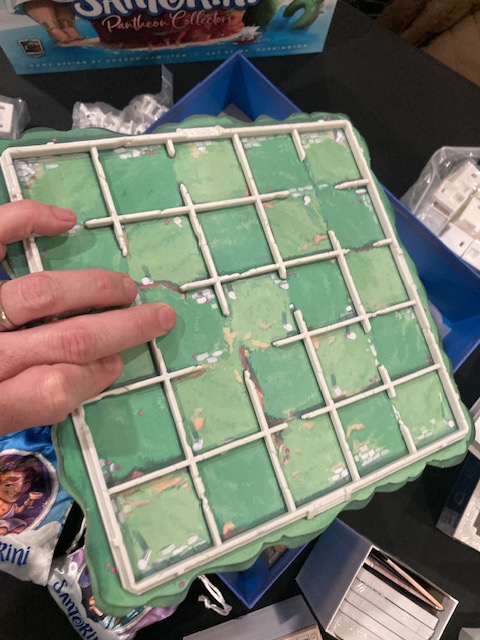
It looks gorgeous!  
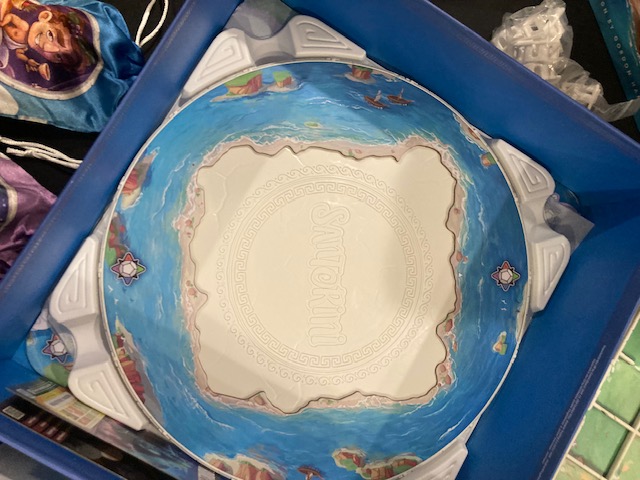
There’s even a lazy susan for it to rotate on!
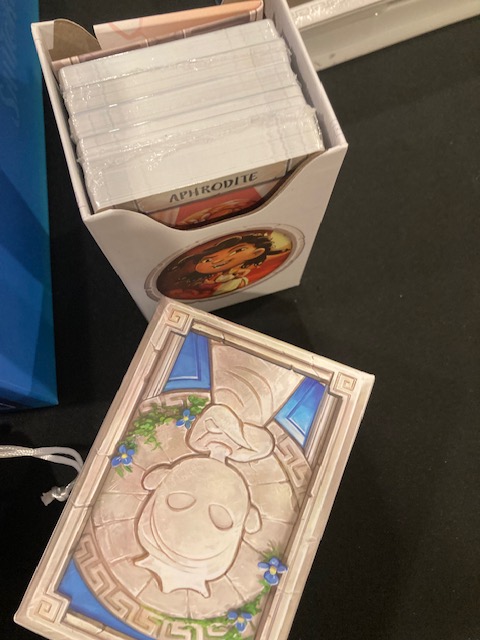
There are some God Cards here (God Cards give each player special powers).  We need these cards for the base game, but we will NOT need them for Riddle of the Sphinx.
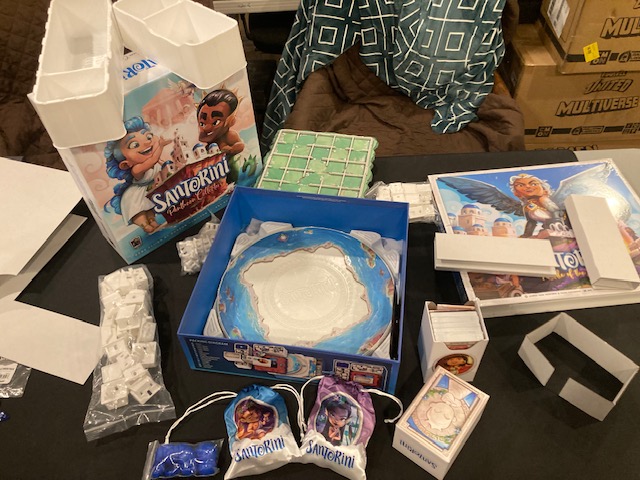
This is a really nice production.  It just looks gorgeous.  I probably spent too much money to get the deluxe Pantheon Collector’s Edition, but it looks nice.
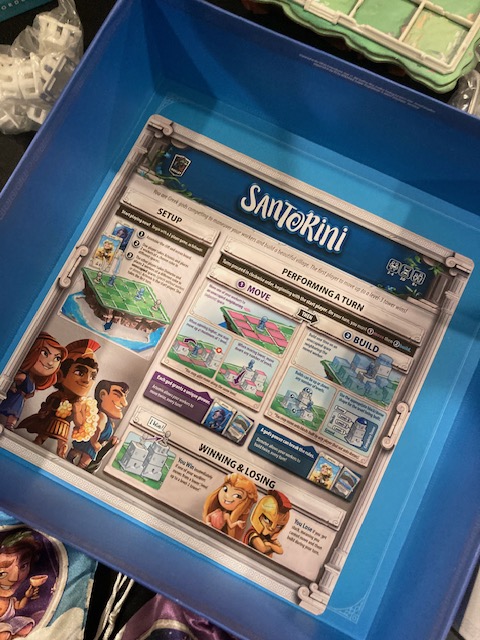
The rules are hidden on the bottom of the box!
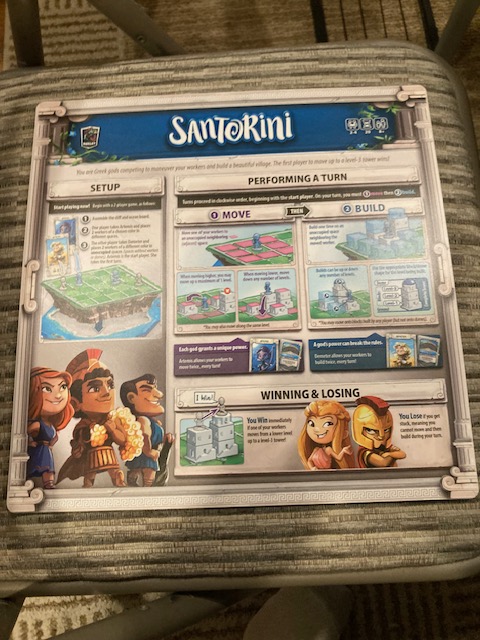
Normally, I would give rules that take up the whole box an F on the Chair Test, but since the rules are ALL ON ONE SIDE, I am going to give this an A!   The rules lay out and are easy to consult!!
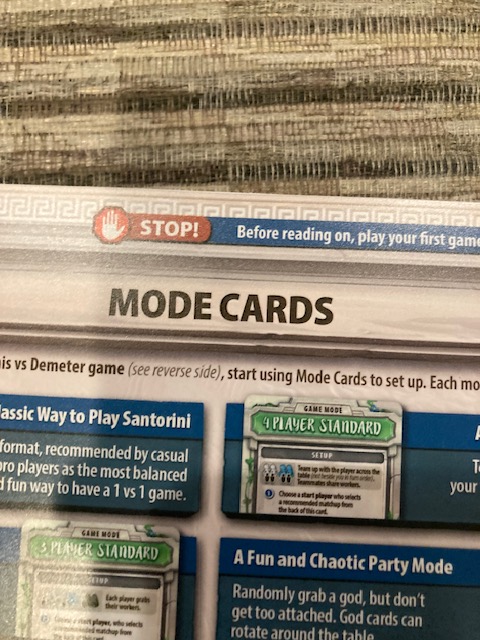
These rules are succinct and terse, but still pretty darn clear.  The game can be described in one page! 
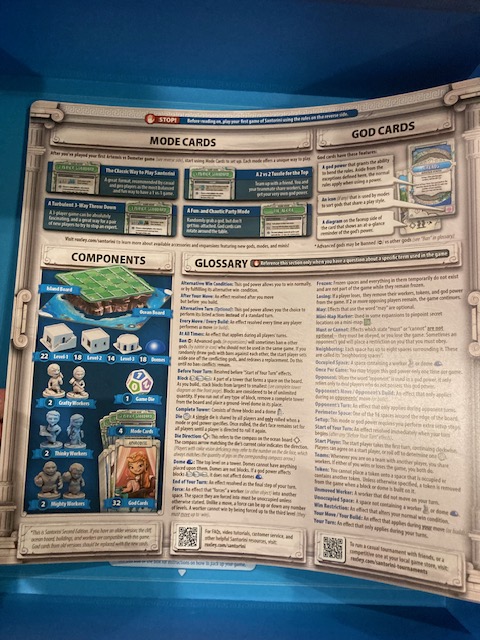
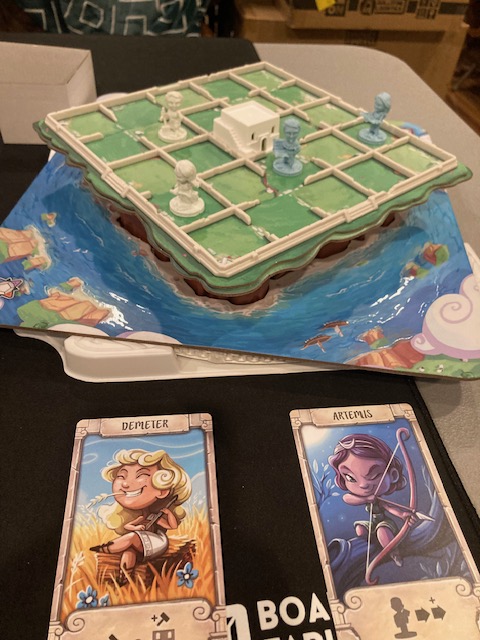
There’s a really nice little “first game set-up” which takes you through your first step or two of Santorini with Demeter vs. Artemis!
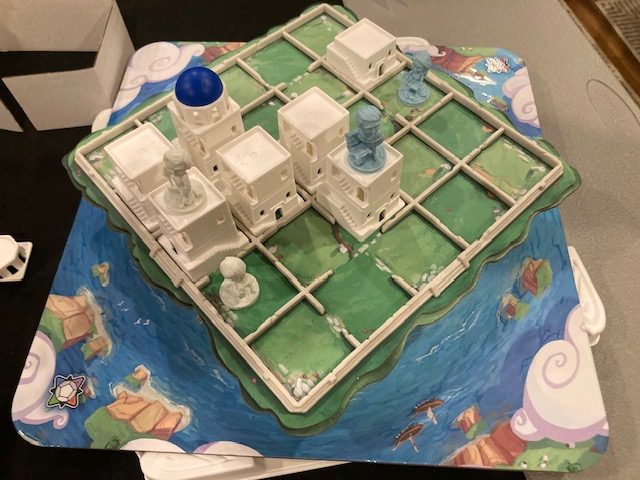
As you play your first game (I played Me vs Me), you get a sense how everything works.  And the buildings that pop-up look really cool! See above!
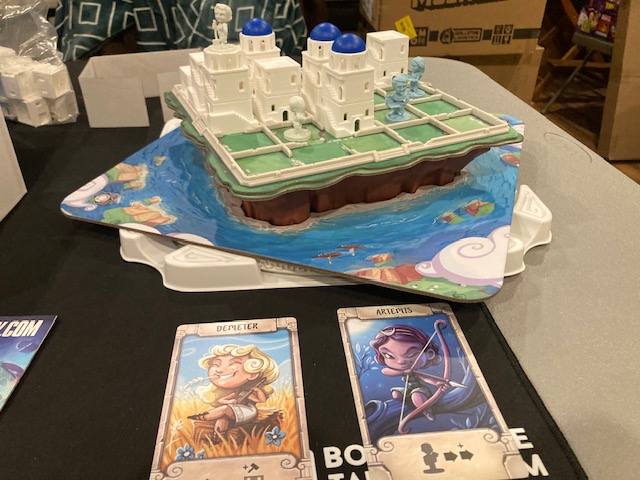
At the end of my first game, I felt like I understood the mechanisms!  This was a simple abstract strategy game that looks really cool!  I see why Santorini has survived in the board game zeitgeist for so long! It’s easy to play, easy to describe, easy to learn, but has tons of interesting and strategic decisions.  This is a neat game.  
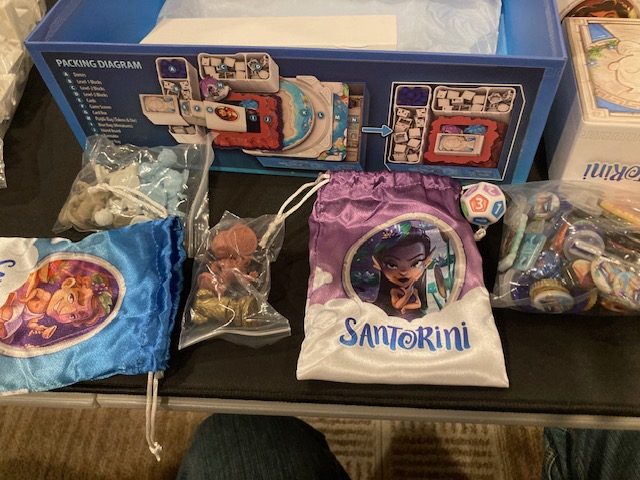
For the record, I do want to mention that it’s not too hard to pack everything back into the box … there’s a little graphic on the side that shows how to do that!
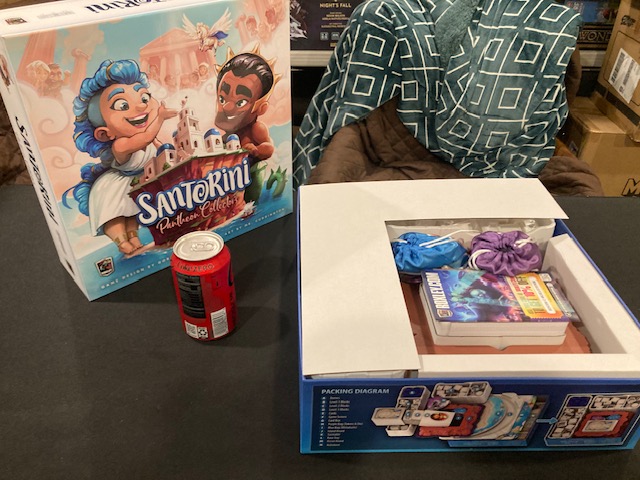
So, I was able to play and learn the base game!  I look forward to learning Riddle of the Sphinx tomorrow!

Day 2: Unboxing and First Games of Riddle of the Sphinx
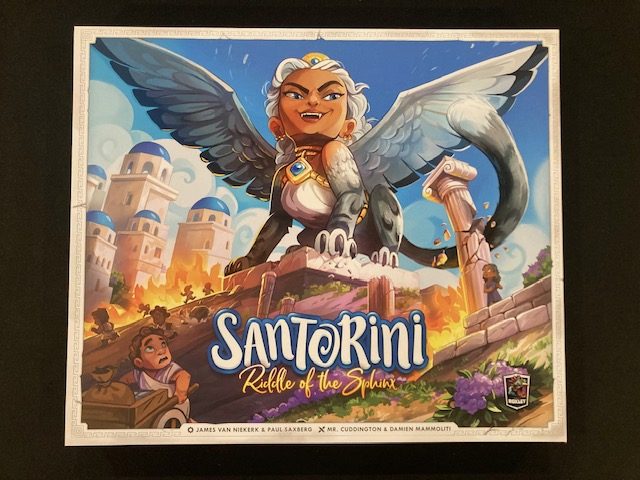
First thing Saturday morning, March 1st, I woke up and was excited to get to Riddle of the Sphinx

It turns the competitive base game of Santorini into a co-op and solo game!
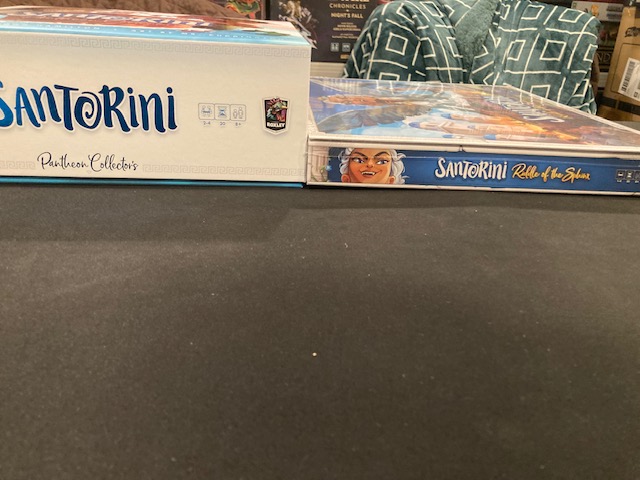
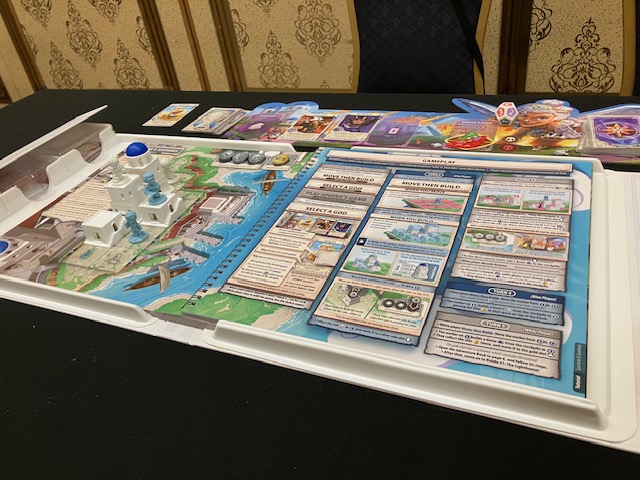
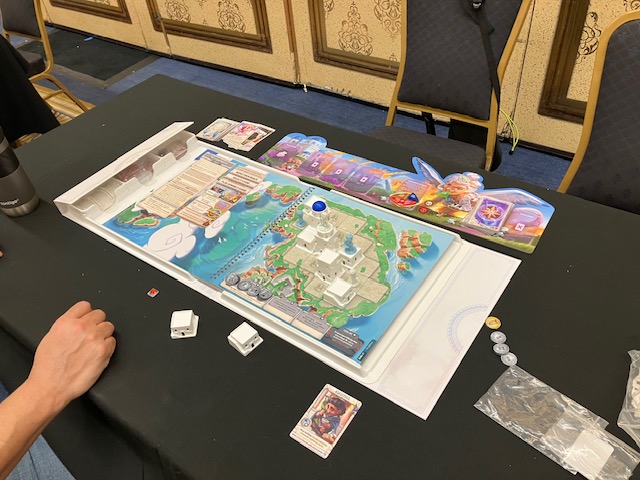
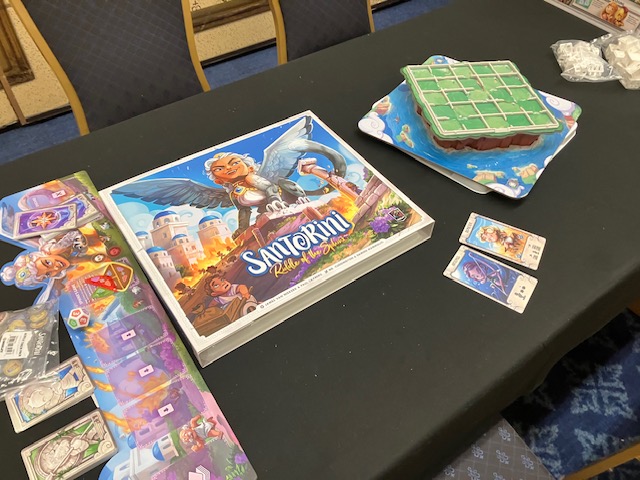
Riddle of the Sphinx has a weird form factor: see above.
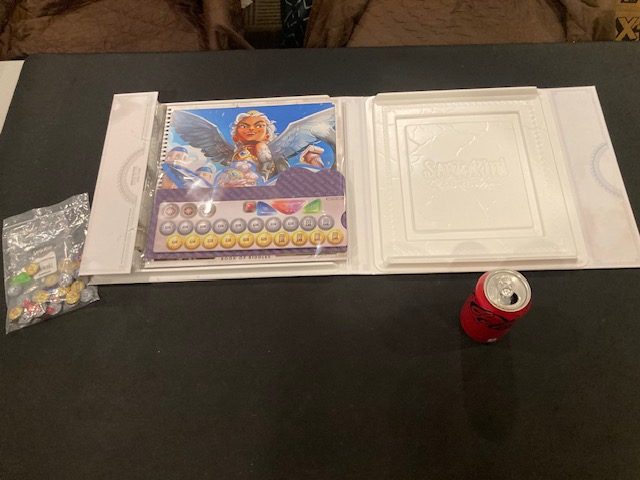
It’s a very wide box that opens like a book: see above (with Coke can for perspective).
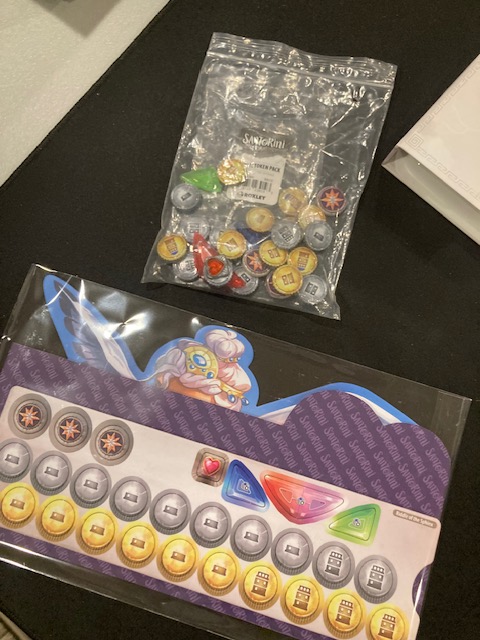
The Acrylic tokens replace the cardboard tokens.
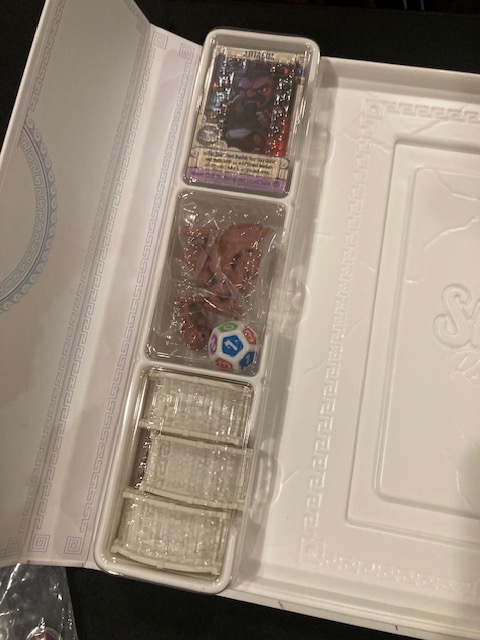
Off to the left are the bridges, figures, dice, and cards. I am glad I took a picture of this, because when I went back to repack the game, I had to consult my pictures!
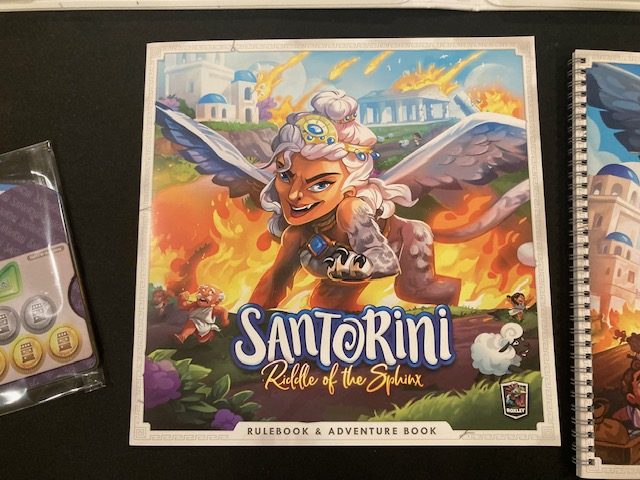
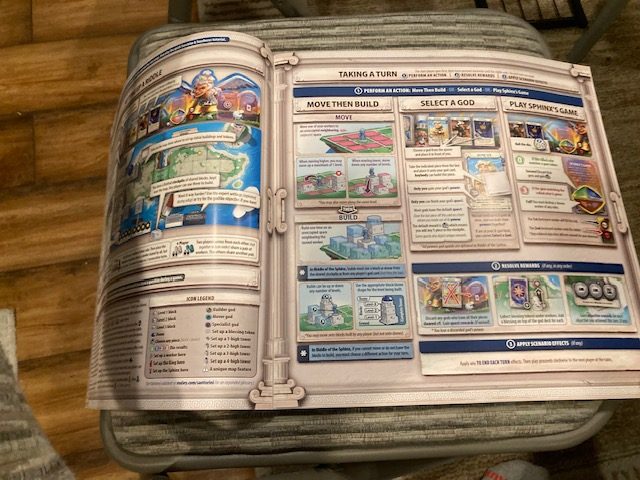
The rulebook … is huge. Not from a length perspective, but huge as in “the form factor of this book is very wide and very tall!

This rulebook completely fails the Chair Test as it droops over the edge and makes it very hard to consult on the chair next to me.  See above.
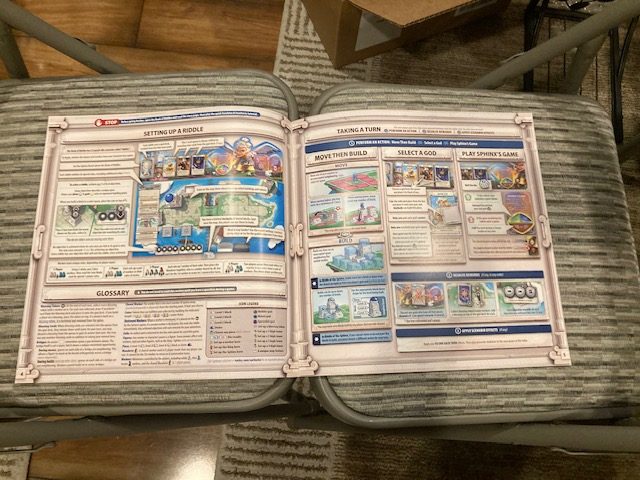
The standard workaround for rulebooks this big is to put them across TWO CHAIRS, with the spine in the middle.  (We first discovered this “workaround” when we looked at Batman: Gotham City Chronicles: see here).  This makes it so can consult the rulebook on the chairs next to you.  Sigh: this rulebook has a terrible form factor!  It’s far too engulfing!
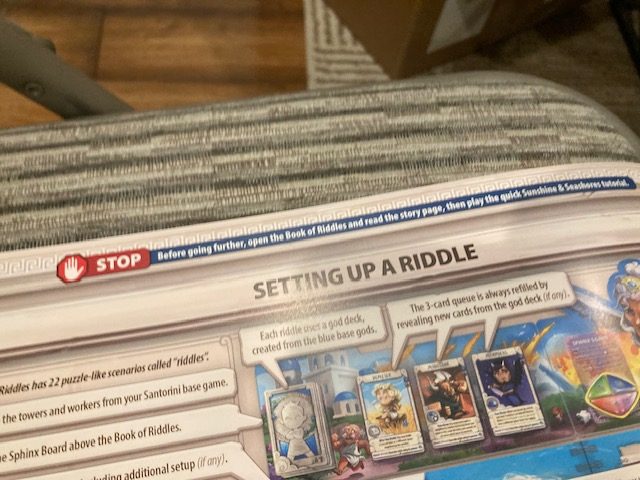
The weird thing is, you almost don’t need the rulebook???? The Book of Riddles (which we’ll discuss below) has an EXCELLENT tutorial built in!
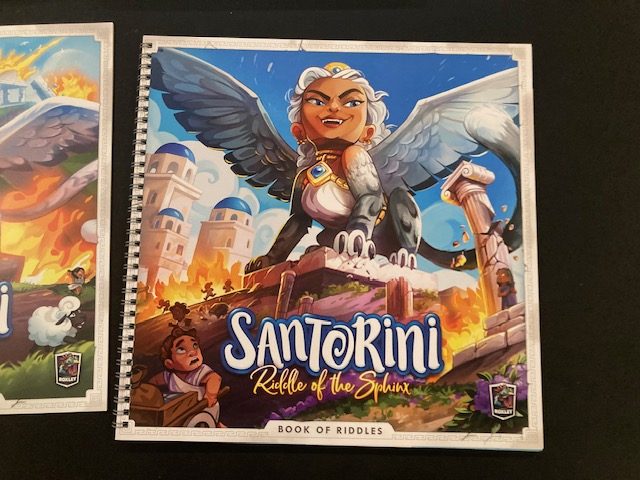
The Book of Riddles (see above) is the main component of this expansion.  There are 22 “riddles” in here which the player(s) must solve!  
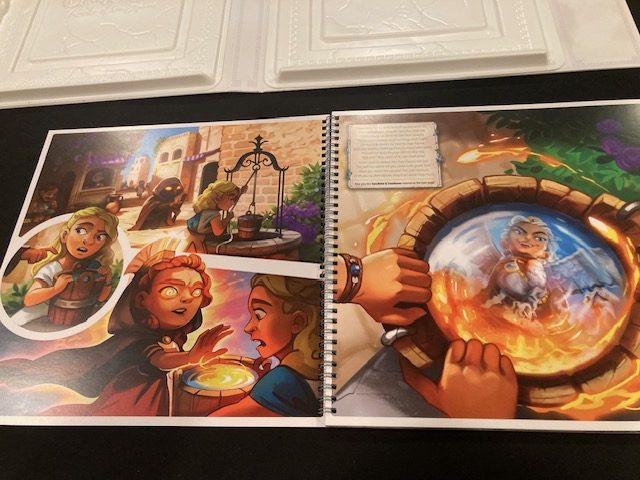
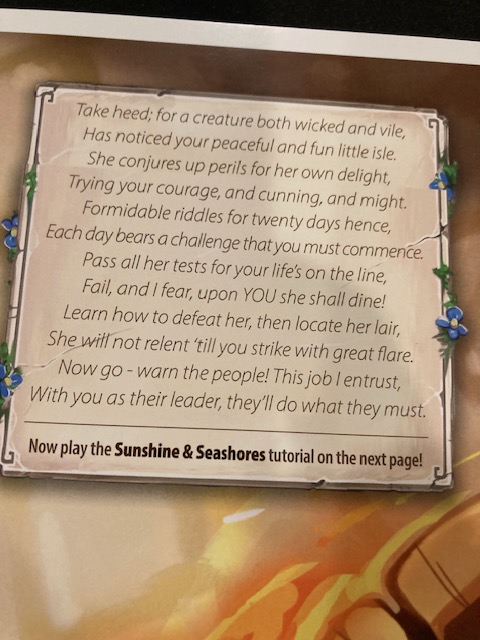
The Book of Riddles throws you into the first game with some pretty pictures and flavor text …
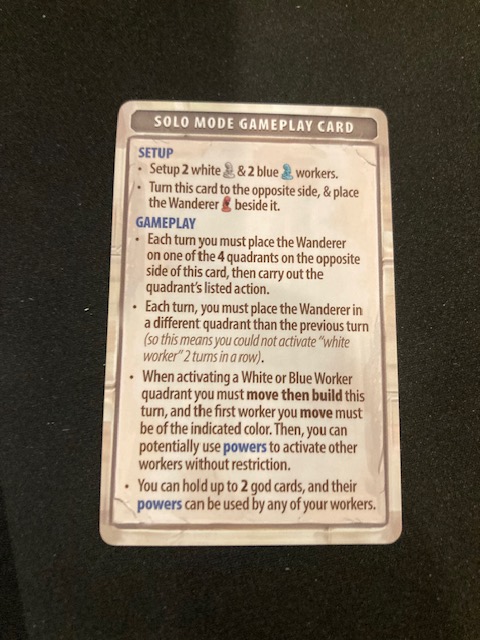
A quick note: we’ll be playing solo, which means we have some weird special rules.  We have to have a figure called the “Wanderer” whose sole purpose is to make sure we never do the same action twice in a row!
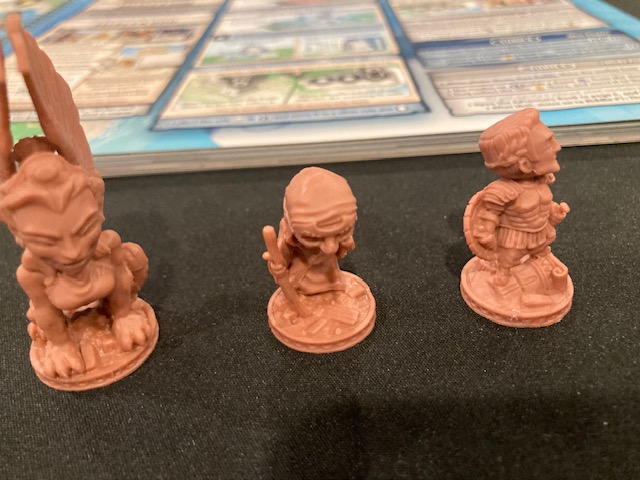
The Wanderer is the middle guy (we’ll see the Sphinx and other dude later).
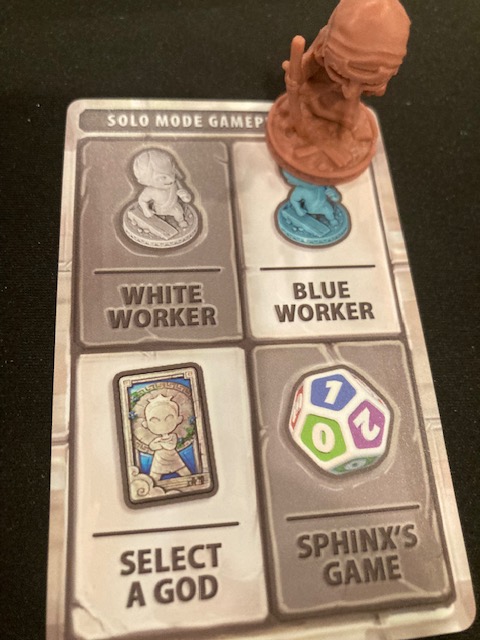

Using the Wanderer,  the solo player selects an action each turn (one of the four above), but can never choose the same action twice in a row.
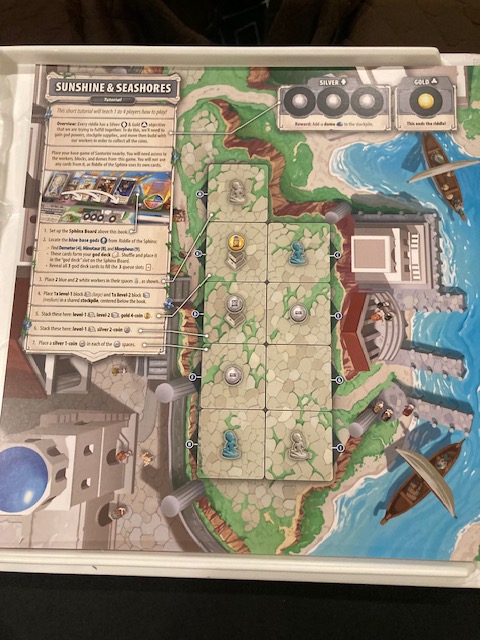
The first Scenario is Sunshine and Seashores: see above! 
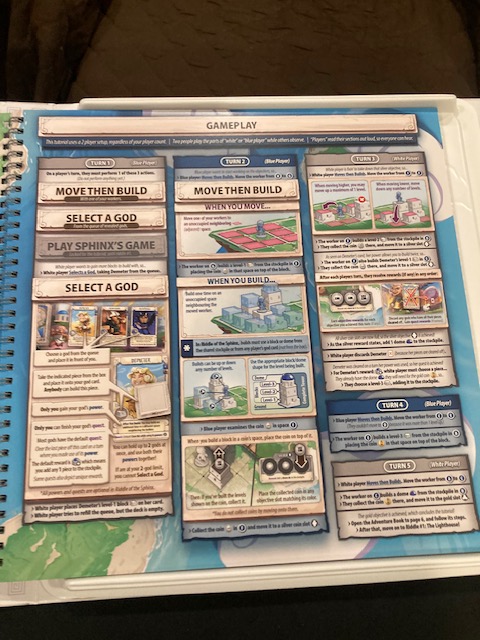
The opposite side of the page has a painfully precise (in a good way) description of how to play the first riddle!  This is a complete, step-by-step run-through of a winning game so you can see how all the rules work together!  This tutorial is a fantastic way to learn how Riddles work!
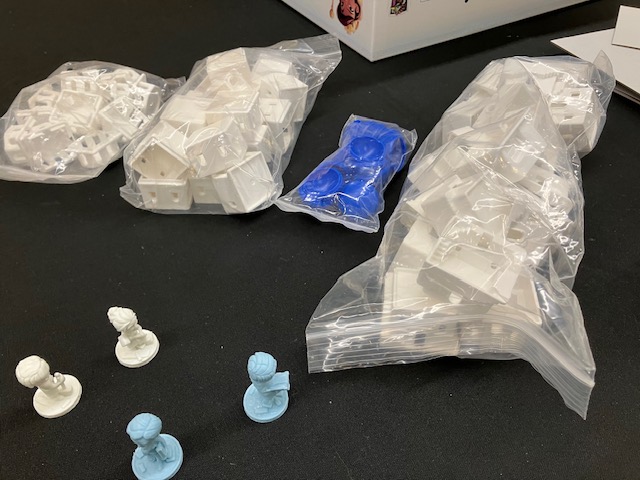
The only thing you “really” need from the original Santorini box are the blocks and the workers.  That’s it!  See above!  All that other stuff you saw as I unboxed Santorini: Pantheon Collector’s Edition?  Completely useless here!
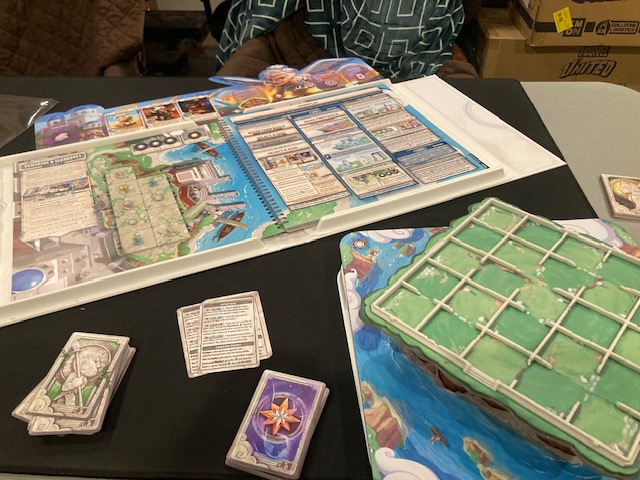
In fact, I made the mistake of thinking we needed the original board (above right) when I played my first game!  Nope!  
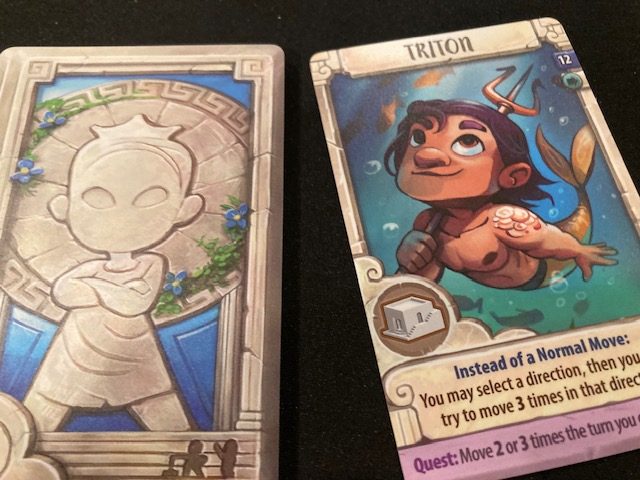
Riddle of the Sphinx has its own God Cards: see Base Gods above and Friendly Gods below!
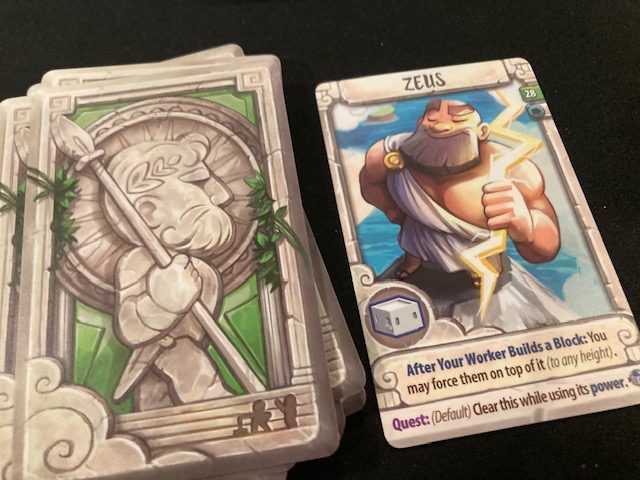
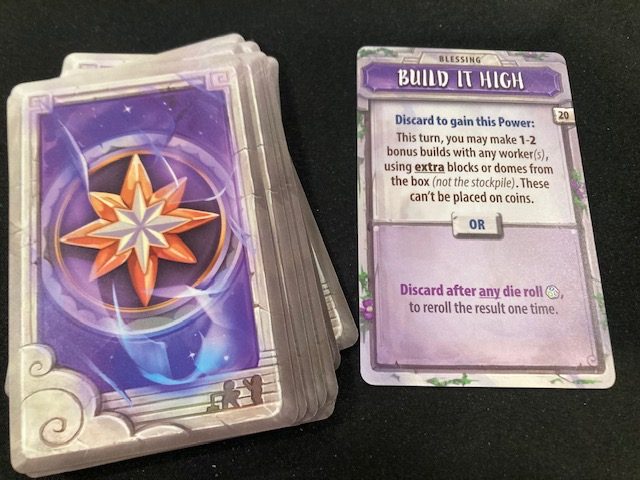
There’s even a notion of Blessings that comes out in later games!
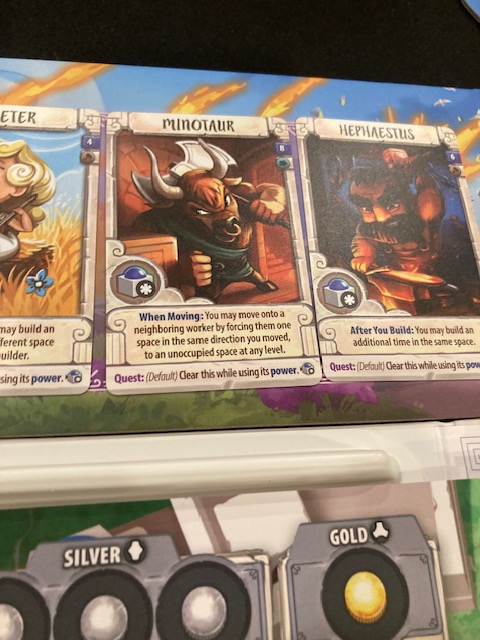
The Gods are a little different here; you kind of use them up and throw them away!!
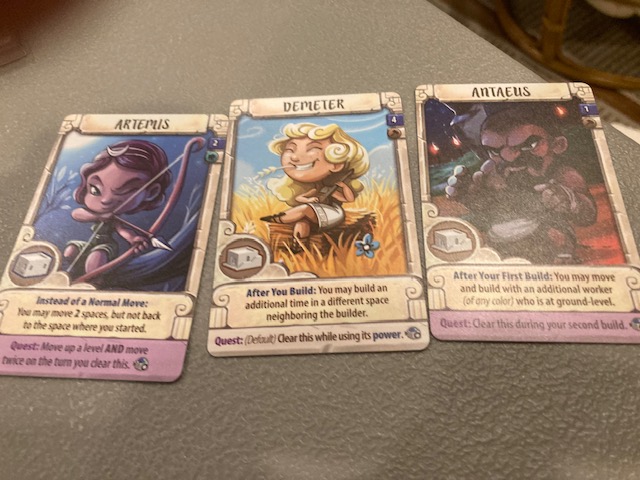
The Gods give you powers, but if you complete their quest (at the bottom of the card), you (usually) get a new piece you can build.  Why is that so important?
Riddle of the Sphinx is a game about scarcity.  You don’t have all the pieces you need to build your towers and edifices, so you have to earn them as you play.  By having Gods complete their quests, you get new pieces so you can build as you need to. 
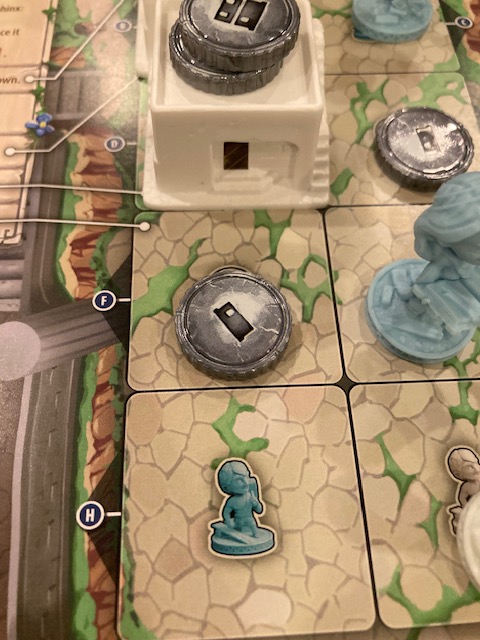
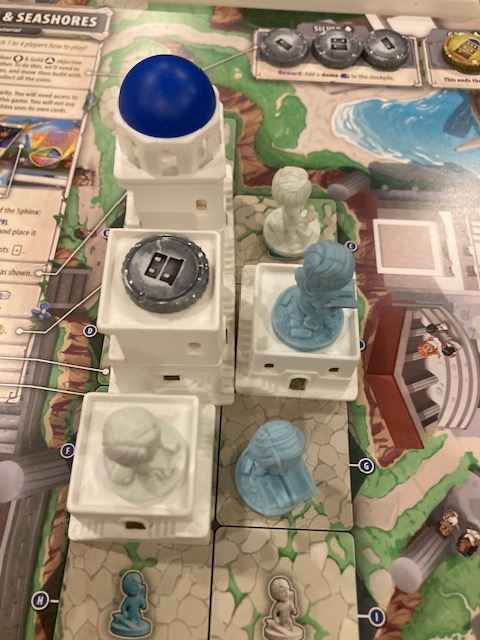
The coins on the map describe what you need to build: see above as I need to build a level 1 building underneath the coin to get it!
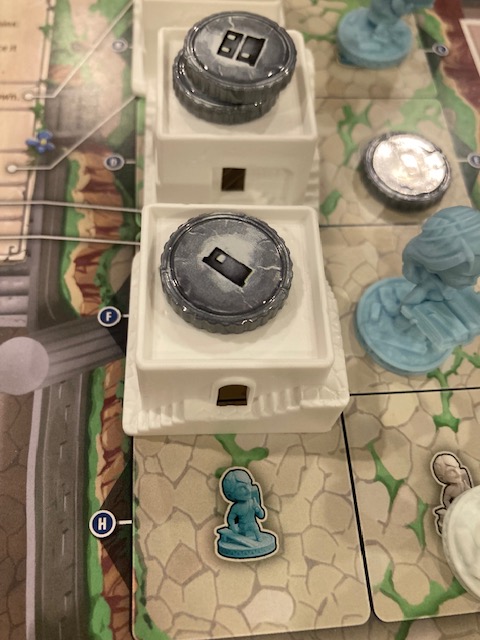
And then I do!
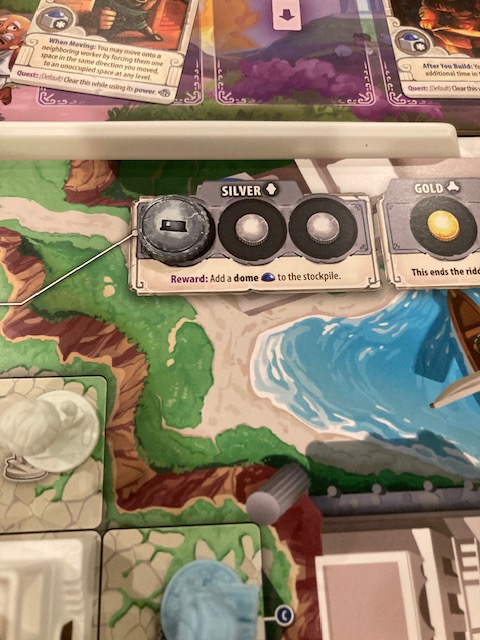
The coin goes to the top (or bottom) of the page to denote you have “finished” that subgoal.    Usually, you need to get all Gold coins to complete the Riddle, and all the Silver coins give you extra help/bonuses.
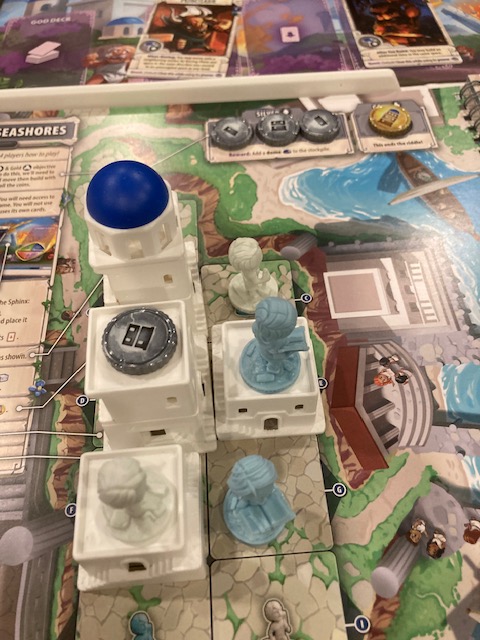
See above as we build everything, as we try to understand how to solve a Riddle! It’s all about building towers when pieces are scarce!  You have to earn the pieces to build what you need!  

I need to be clear here; this tutorial is great!  I jumped right in and was able to start playing right away!  The tutorial held my hand for the first game, and then threw me into my second game.  And I was felt so comfortable jumping in after that!
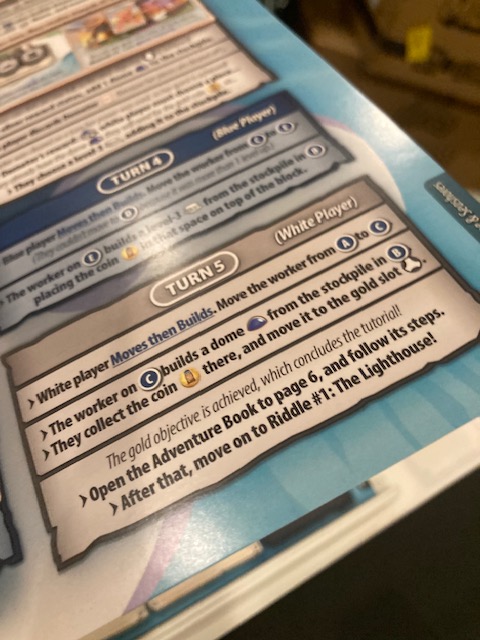
See above for an example of how good that Tutorial is!
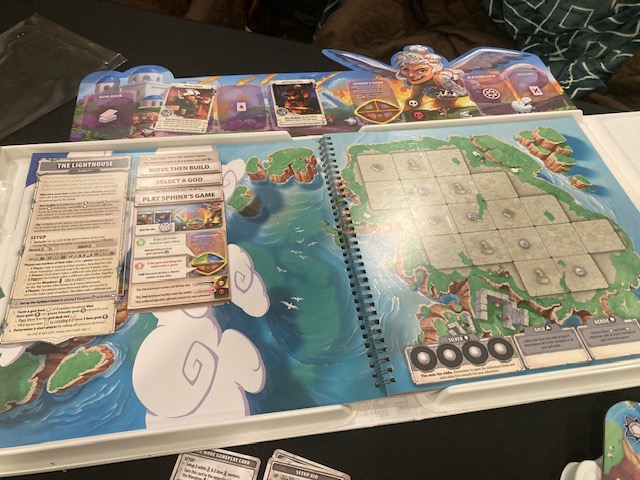
After the Tutorial is Riddle 1!  As I jumped into Riddle 1, they added some new rules: The Sphinx’s game!
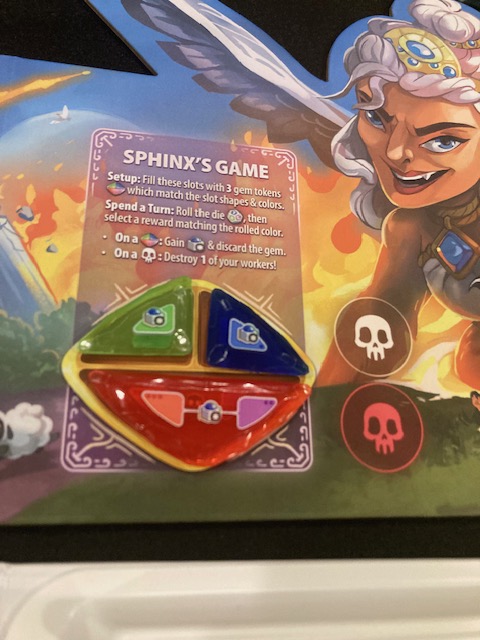
The Sphinx’s Game allows you to roll the dice and “hopefully” get one of the gems! If  you get a gem, you get  free piece to build! If you fail (because the gem is gone), you lose a worker!
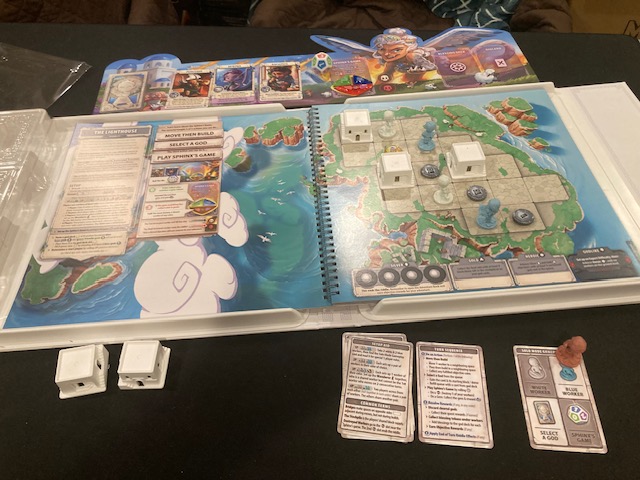
Just like our Tutorial, the game board does a real good job describing set-up on the same page as the Riddle itself. It’s interesting, I don’t think I ever looked in the rulebook for any rules in the first few games: almost everything I needed was presented in the set-ups of the various riddles.
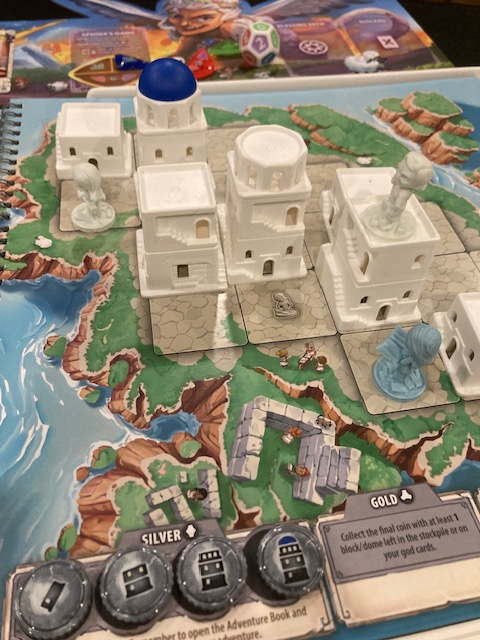
Look how great this looks: see above.
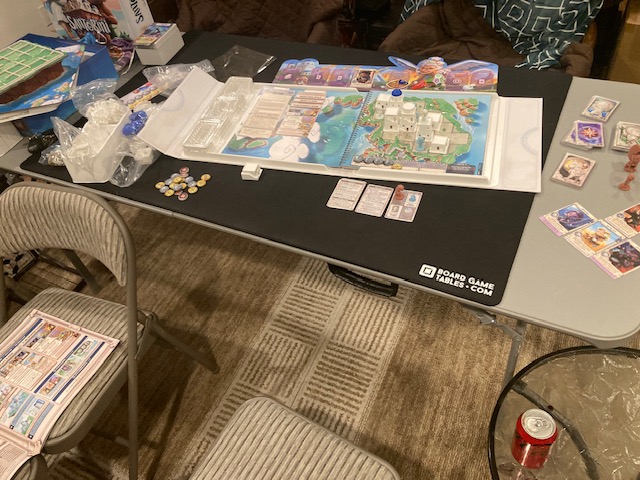
At the end of Day 1,  I unboxed Riddle of the Sphinx and played through two scenarios solo;  this gave me the sense of how everything worked.  
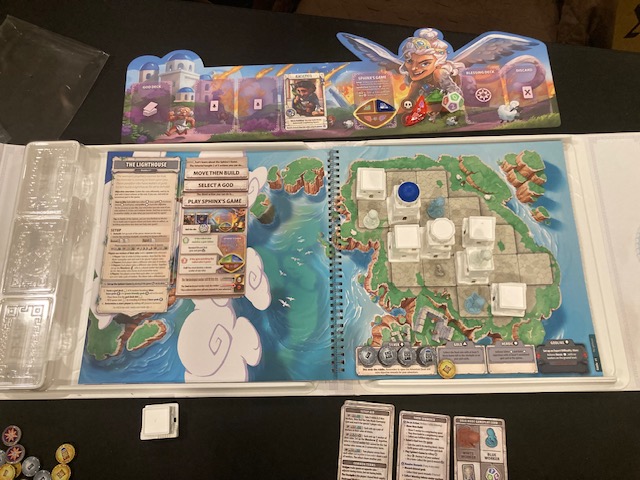
This is a puzzle; you have to figure out when to build, when to recruit god powers, when to finish a god quest (so you can get more pieces), and when to finish the Riddle (which usually means building a tower on a gold piece place!).

Day 2: Campaign and More Play
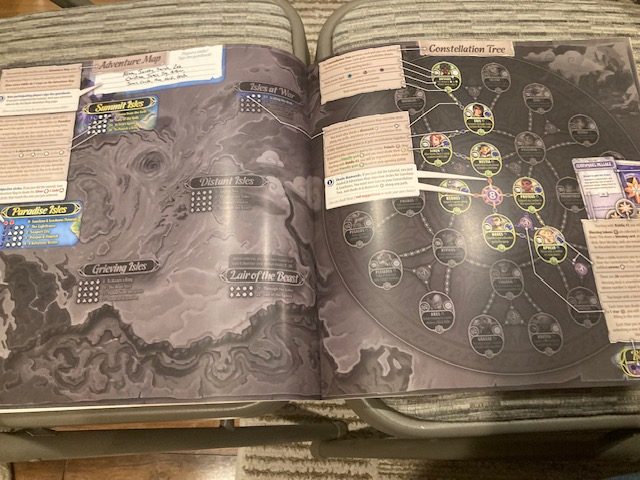
So, Riddle of the Sphinx is kind of a campaign game.  Included in the rulebook are two pages per campaign: The Adventure Map and the Constellation Tree.  
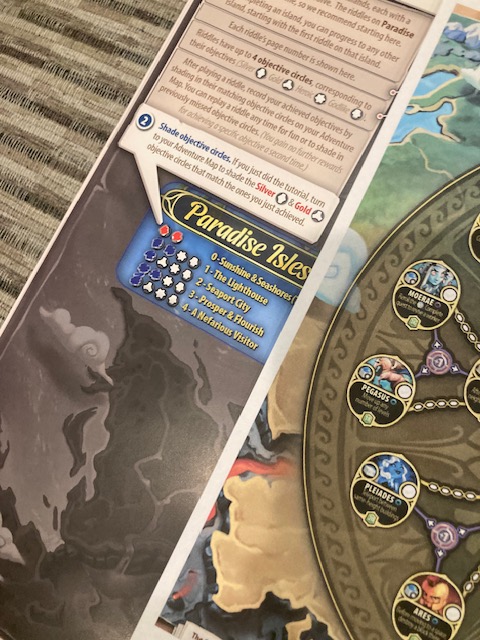
The Adventure Map has you “mark” off bubbles on how well you did when you finished a puzzle.   (There are multiple conditions you can satisfy, see below).
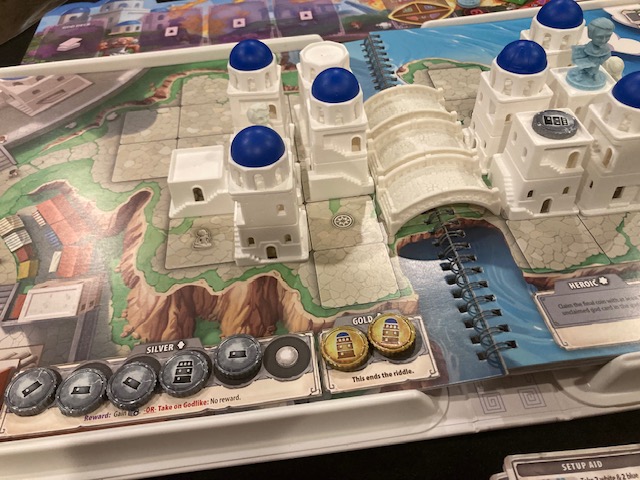
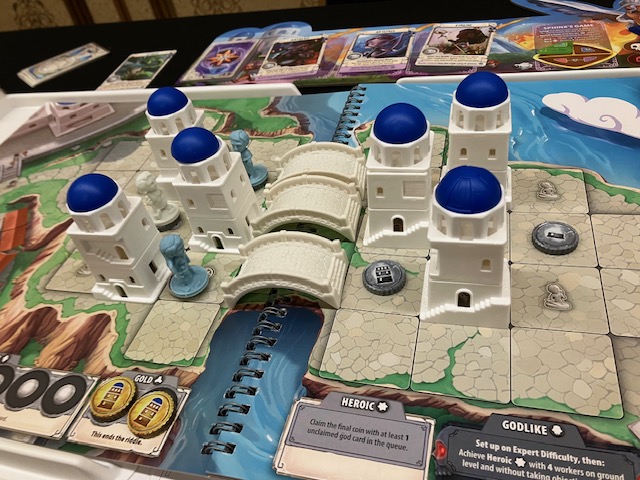
See above as there are Silver, Gold, and Heroic (above) conditions you can satisfy. Godlike not pictured.
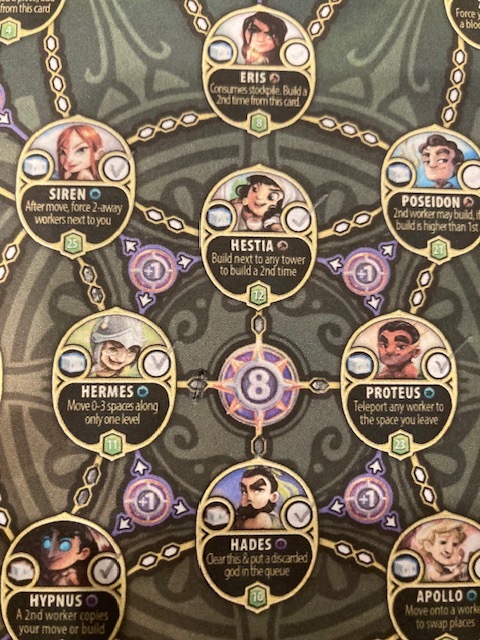
The bubbles you mark off in the Adventure Map corresponds to how many bubbles you can mark off in the Constellation Tree! See above!  Basically, the Constellation Tree unlocks what are called Friendly Gods!  The more Friendly Gods you have, the more control you have when you attempt a puzzle (remember, God powers are pivotal to doing the riddles, especially if the powers are useful).
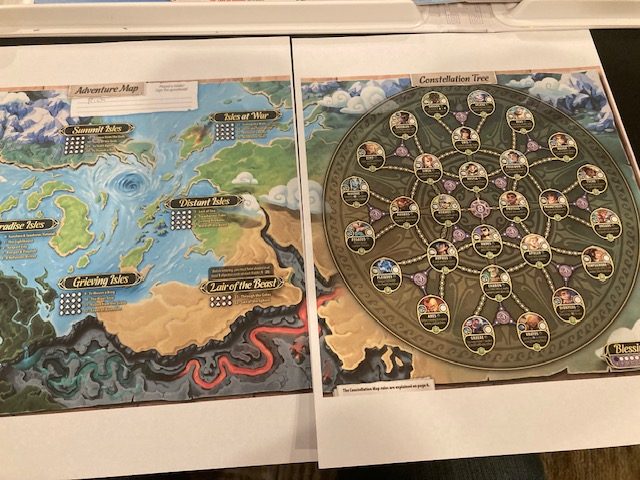
Rather than sully my pristine books, I went to make a copy of the two pages …  well, it’s too big for my copier, but you CAN just print them directly from Roxley’s web site.  So, to play a campaign, you need both pages (see above).  After every Riddle, you mark off how many achievements you did!  And then you can “maybe” unlock a Friendly God or two!
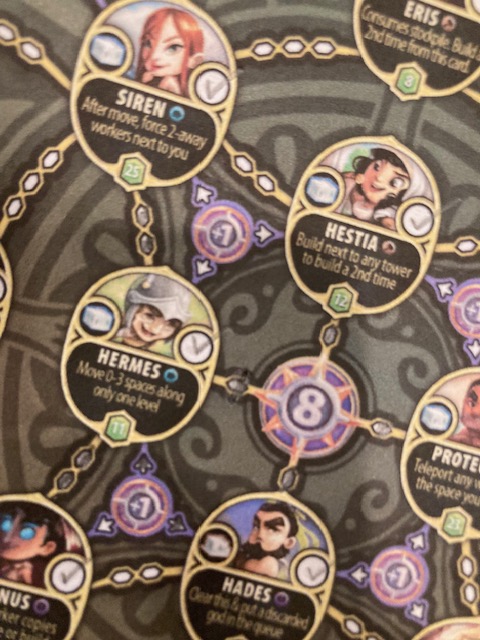
I used a pencil (see above): Warning! You should probably use a red marker or something VERY distinct.  It’s REALLY HARD to tell what you marked with a pencil.  Can you tell above?  Even zoomed in, I can barely read it!   Learn my mistake, use a more “colorful” writing implement so you can see the marks.
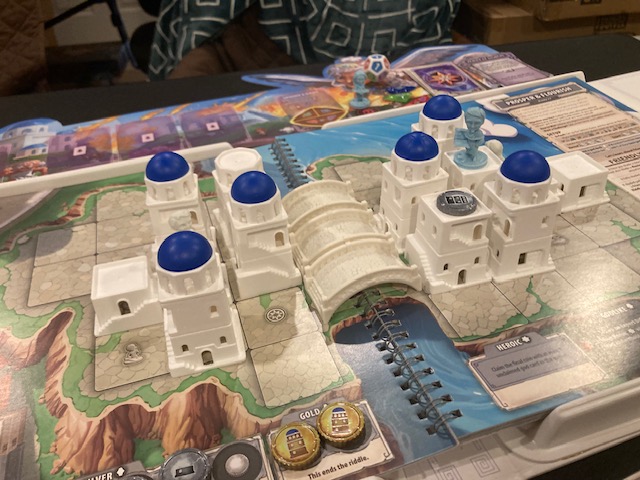
So, the first part of my Sunday was getting the Campaign maps marked up for my first few games, when I headed into more puzzles!
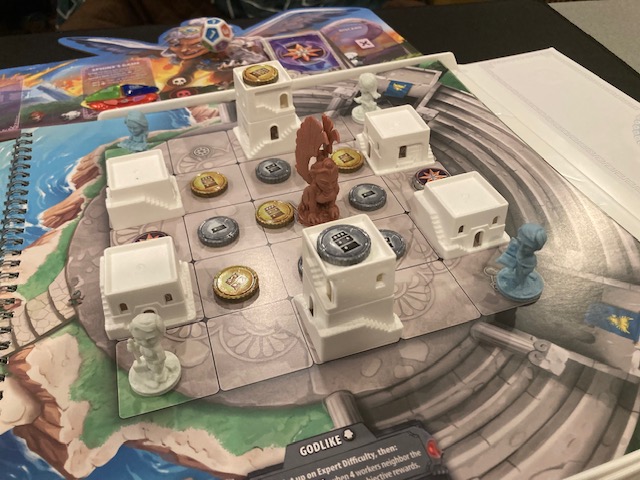
At one point, the Sphinx even made an appearance!
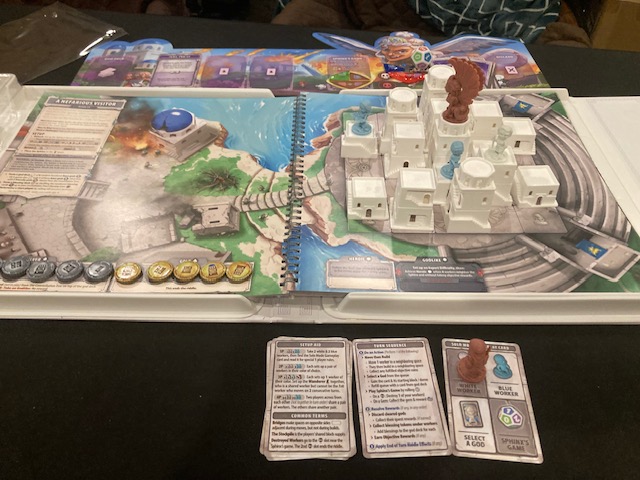
By the end of Day 3, I had played 6 Riddles and started my way into a solo campaign.

This is a puzzle; make no mistake about it.  It’s more puzzle than game.  I loved it. You may not.

Cooperative Play
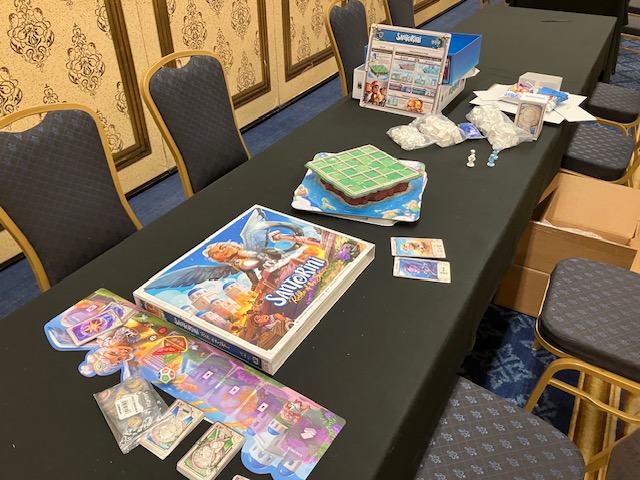
     

So, this is different week: I am at Dice Tower West and not with my normal gaming group. I brought Riddle of the Sphinx with me to play it cooperatively with “some people”.  My core game group and I have a base level of trust and respect, so cooperative games are easy for us to jump into.  Sometimes, it’s a little harder to jump into a cooperative game with people you don’t know.  How did that go for us with Riddle of the Sphinx?
I met a real nice fellow named Charles.  He and I had a very frank discussion about the Alpha Player problem  before we started the game.  I worry, since this is more of a puzzle than a game, that Riddle of the Sphinx might drift towards having Alpha Players take over.  
From our very frank discussion, we made it clear that we would be supporting each other but still occasionally having suggestions: no Alpha Playering.   I admit, I had never thought of this solution to the Alpha Player problem: just talk about it and agree to not do Alpha Player each other.  And you know what? That worked fine!
Charles and I started from scratch and played the first 4 riddles (plus tutorial) in about 2 hours.  We had a good time and got some riddles done.  (Since I had played solo previously, I was able to shepherd the game and make it much faster to teach and learn).
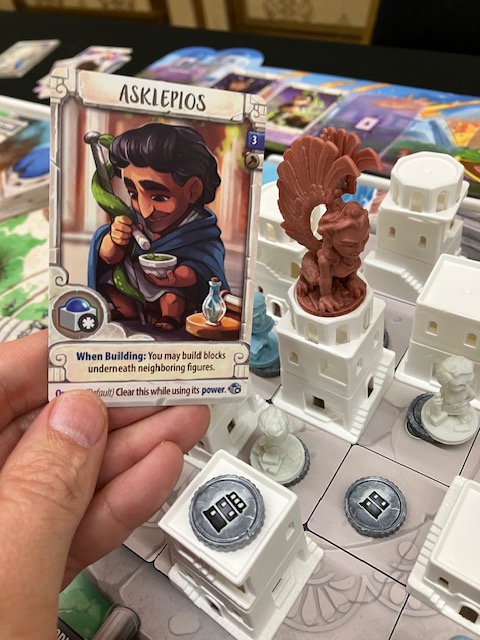
Two observations came up during co-op play:  
1) Even though this is a puzzle (which tends to attract the Alpha Player more), because we have God Powers (i.e., assymetric powers: Charles had Asklepios, see above, and he was pivotal!), it’s harder to Alpha the other players because all the God Powers are very different.  It’s not impossible, but it does make it harder to keep track if each player is cycling through God Powers fairly quickly.
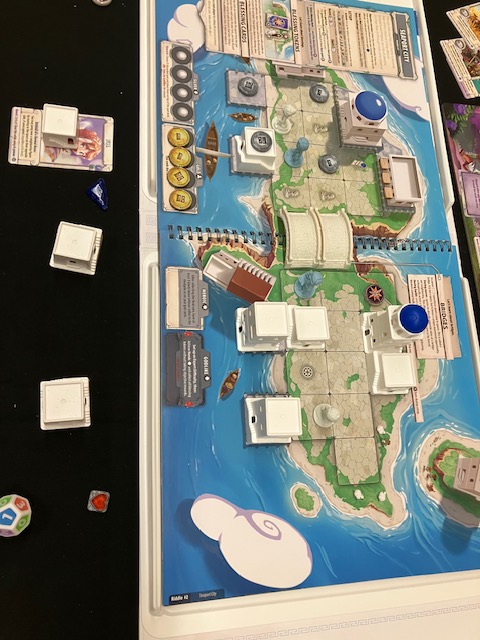
2) You can solve the game without burning your brain(s).  In a convention environment, you just want to have fun and play.  If you “ignore” the silver goals and just concentrate on “winning” a game, you can just do the gold goals, and the game isn’t too hard. It becomes a lot harder if you want to do ALL the silver goals!    You can adjust the level of difficulty of the game as you are playing!  You can choose to just go for the win, OR you can choose to get as many objectives as you want! The former is a more “light-and-fun” mode, whereas the latter is a more “brain-burny” mode.   

So yes, because this is more of a puzzle, it could have easily turned into an Alpha Player experience.  But, between diverting the Alpha Player with a frank discussion, and having the asymmetric God Powers, the Alpha Player Problem wasn’t a problem.

The puzzle was fun cooperatively.  

Curse and Blessing
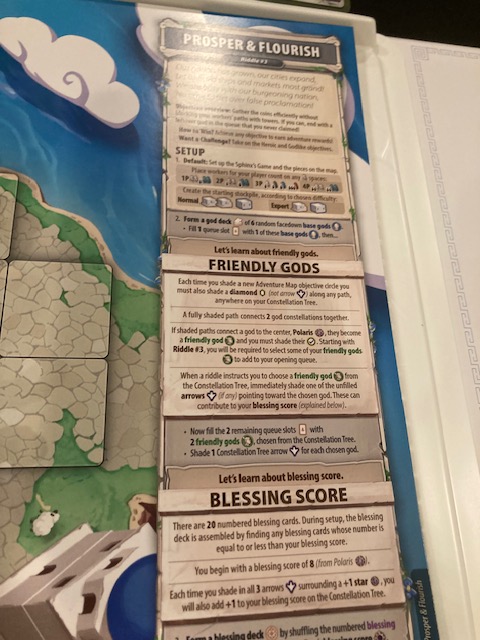
One of things that blew me away was how easily I was able to learn the game as I wen by reading the little blurbs on the board: see above as a Riddle 3 game introduces “Blessings” and “Friendly Gods” to the base game.   I mean, this was absolutely a fantastic way to learn the rules.  New rules are explained AS THEY COME out, and it makes sense.

… until I turned the page and started working on the next puzzle.  “Wait, what were the rules for Blessings again?”  Once I had set-up the next puzzle, I couldn’t go back and re-read that rule.  Frustratingly, the rulebook sometimes didn’t have this same text.  How do I look up that rule again?  I did go to BoardGameGeek a few times, and I did Google some things.

This way of learning is both a blessing and a curse.  It’s a blessing because it’s so easy to jump right in, and the rules are on the page themselves!  It’s a curse because you can’t go back and re-read those rules once you’ve set-up the next puzzle.

The rulebook probably should have replicated the on-page instructions from the Adventure book  in the rulebook  (or somewhere). The same text I used the learn the rule would help me solidify the rules in my head.   If you feel like you CAN’T go back, it’s frustrating.  Imagine in a classroom:

“Teacher, could you explain the Blessings rule again?  I didn’t quite get it.” 
“No, that’s on a blackboard in another classroom.”   

I found the rulebook, especially for the Riddle of the Sphinx to not be great at helping me find rules and disambiguations. See next section for another example!

Occupied/Unoccupied
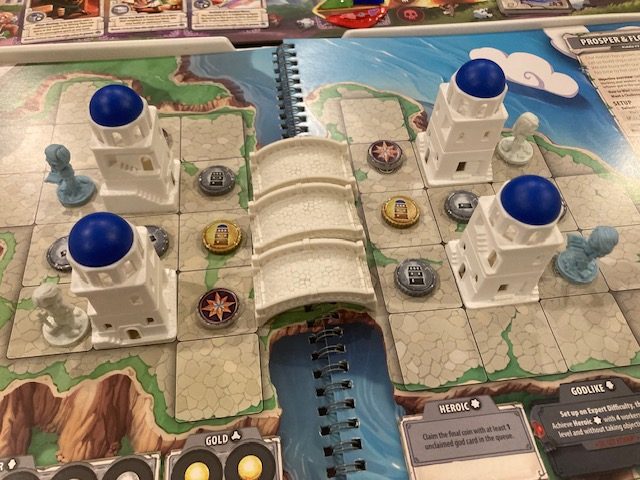
One rule that particularly seemed frustrating was the occupied rule.  You can’t build a piece on a space that’s occupied.  Or move onto a space that’s occupied.  In the base game, the only things that can occupy spaces are workers/figures or blocks/domes.  Is a coin or a blessing on a space considered occupied?  Physically, yes!! That coin or blessing coin is physically occupying the space, so it prevents me from moving there, right?  Intellectually, I think the idea is that the coins/blessings are just goal markers, so they are NOT occupying, just notating!! 
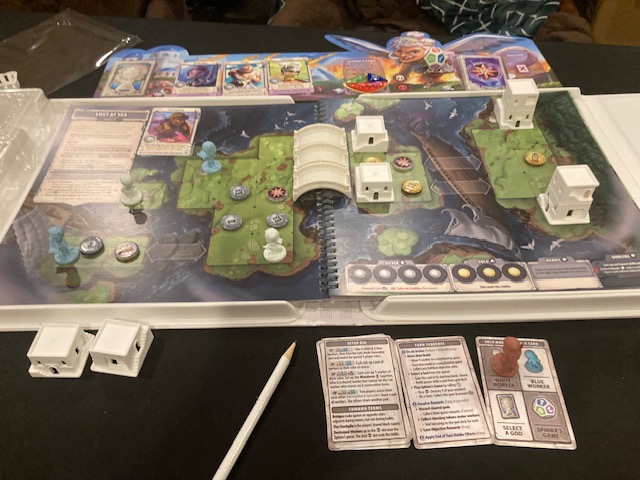
It wasn’t until 100% clear until Riddle 5, when one of the workers actually started on a space with the Coin (bottom left, blue worker), that coins don’t block you.  It’s pretty clear you can move through coins, I think, if you can start on a coin.  

The rules for Riddle of the Sphinx, and especially Santorini, are brief and succinct.  But I think they omit some clarity.  A few more sentences here and there would have helped.  This particularly issue seemed vexing, and I felt like I was “cheating” if I moved through/onto a Coin.  “It’s physically blocking me … should be it a game blocker too?”  I think that it is NOT a blocker but a notation … it could have been clearer.

Things to Watch Out For
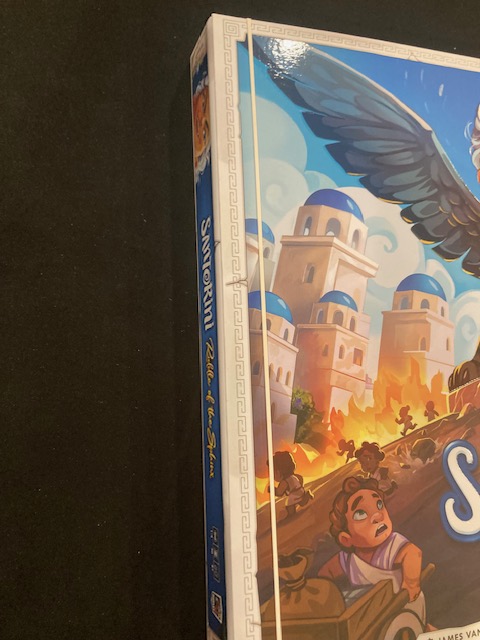
Magnetic Clasp Not Secure: The binding holding the Riddle of the Sphinx box closed is a magnetic clasp.  It did’t feel very secure; I would recommend a rubber band or something to hold it more secure.  See above for my rubber band solution.

Use Bright Marker: When you mark bubbles on the Constellation Tree or the Adventure Map, don’t use a pencil like I did (see above).  Use a sharpie or red marker or something that really stands out.


Print out:  Rather than sully your Adventure book, just print out a copy of the Adventure Map and Constellation Tree from your printer.  See above. Not only do you keep your original books pristine, the copies from your printer will be on paper that you can actually write on (the paper from the original is very slick).

Conclusion
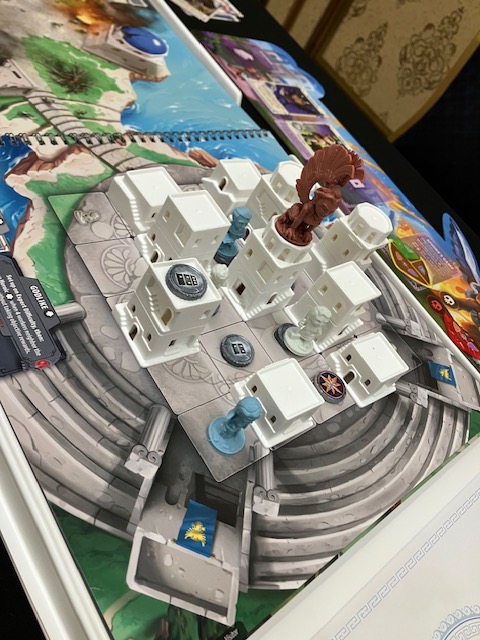
Riddle of the Sphinx is clearly more puzzle than game.  There are elements of randomness that make it more gamey (which base gods do you get, do you risk rolling a die, etc), but in general: this a puzzle.  You need to know that before going in; you may love the idea of a solo or cooperative puzzle using the base rules of Santorini!  You may hear that it’s a puzzle to solve and run screaming.  Do what you will.
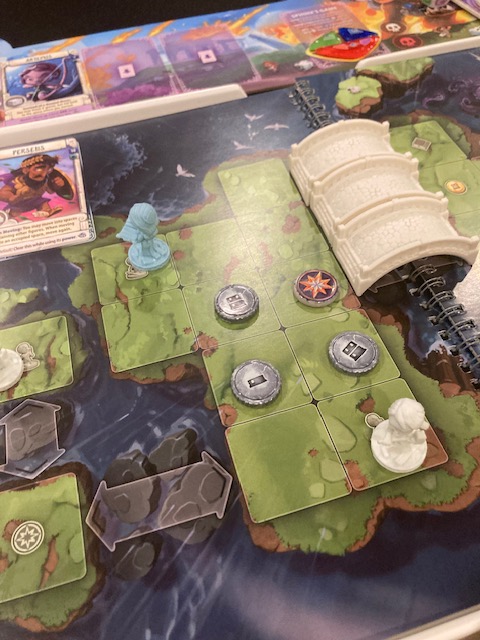
The solo game worked really well; it’s easy to come back to because the rules are pretty straight forward, and it’s easy to save in campaign mode.    You can play as much or as little of the campaign as you want.

The cooperative game can succumb to the Alpha Player problem if you aren’t a little careful; Riddle of the Sphinx is a puzzle after all is said and done, and puzzles tend to bring out that Alpha Player.  We suggest having a frank discussion about the Alpha Player problem (it worked for us), or just play with a group you already trust and respect.  The rapid cycling of asymmetric God Powers did help alleviate the Alpha Player problem a little.

I would absolutely play Riddle of the Sphinx again as a solo game; it’s like an 8.5 or 9 out of 10 for me.  It was really fun, and the components were great.  The cooperative game, I would play again, because you can adjust the difficulty as you play.    I would, however, be very cautious of the Alpha Player issues before I suggested Riddle of the Sphinx  to a group, just because, as a puzzle, it’s too easy to fall into the Alpha Player trap.  That trap make it a little harder to get out as a cooperative game, so maybe it’s a 7.5 or 8/10 for a cooperative game.  It’s fun, it’s adjustable, but you have to be a little careful.

Good game.

An Odd Little Duck! A Review of Cyber Pet Quest!

IMG_8203

Cyber Pet Quest is a cooperative boss-battler campaign game.  This game was on Kickstarter back in April 2024, and it promised delivery in October 2024.  My copy arrived late October just before Halloween, so it arrived right on time!  Congratulations to Dead Alive Games for shipping on time!  
IMG_8201

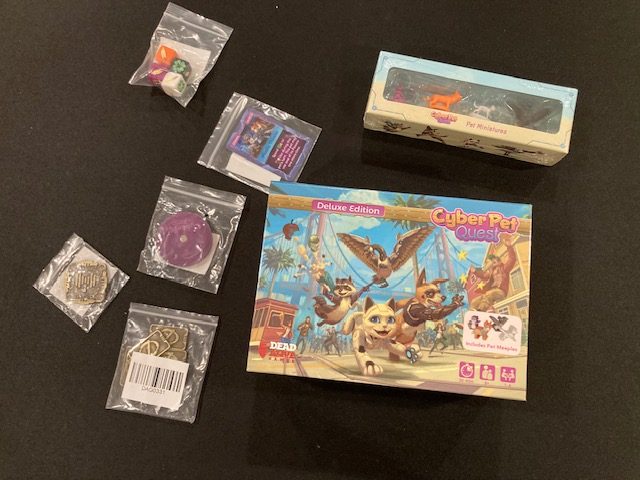
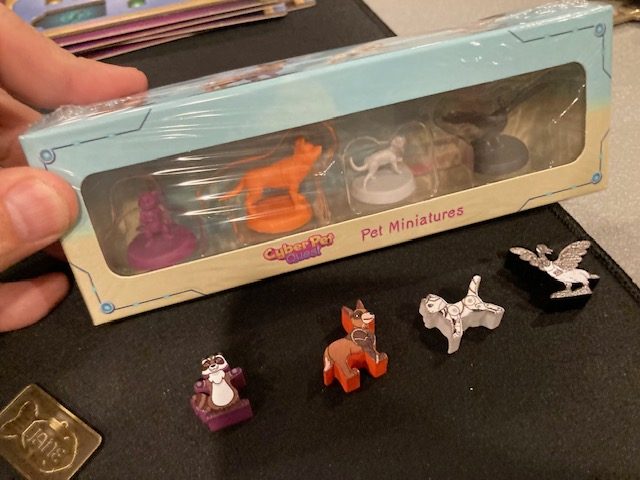
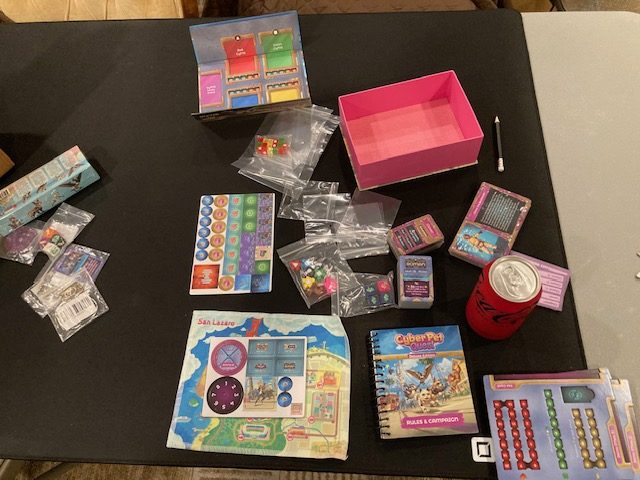
My version is the deluxe version with lots of little Kickstarter extras (see above).  

IMG_8206

This is a smallish game, but it still has a 6+ chapter campaign game contained therein!

Let’s take a look!

Unboxing

IMG_8208

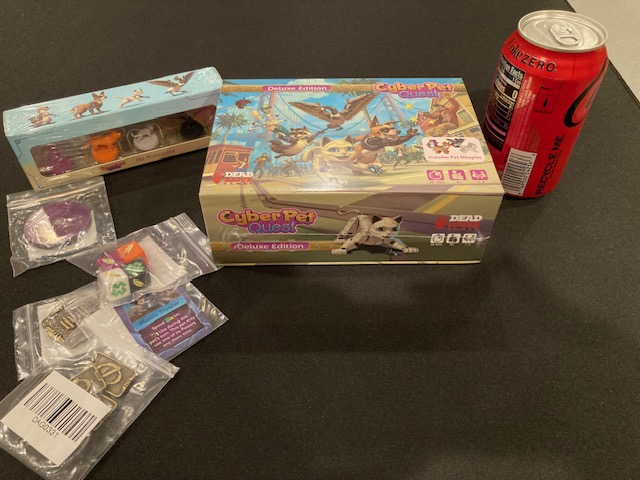
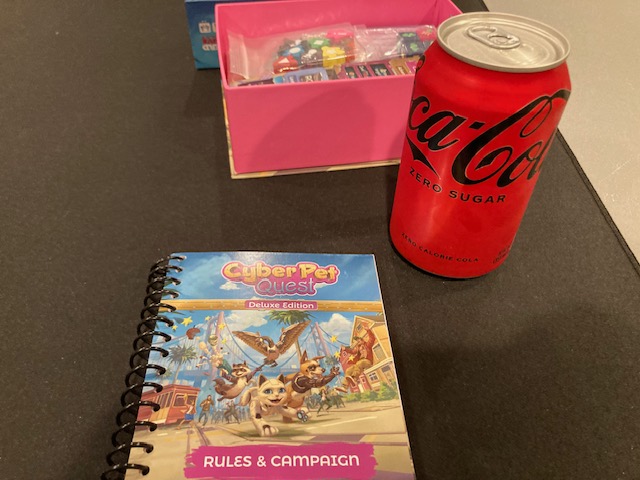
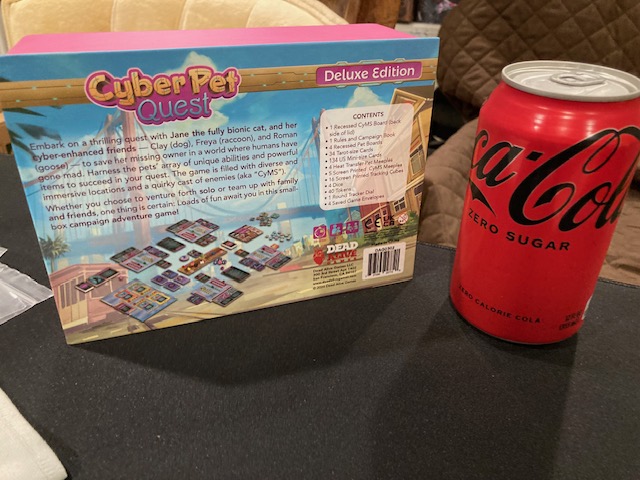
This is a small game: see the can of Coke for perspective.

IMG_8218

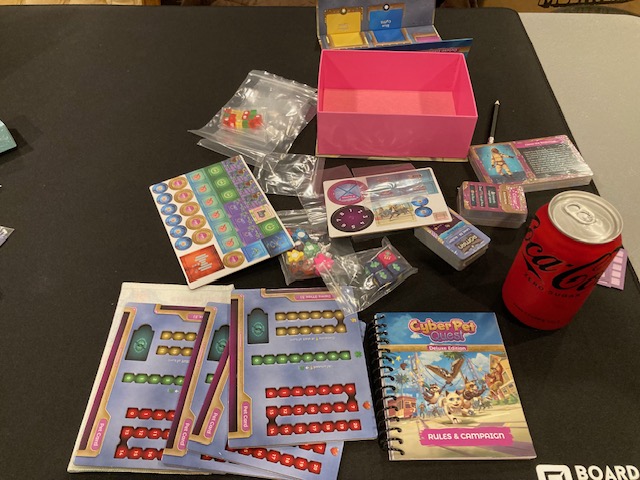
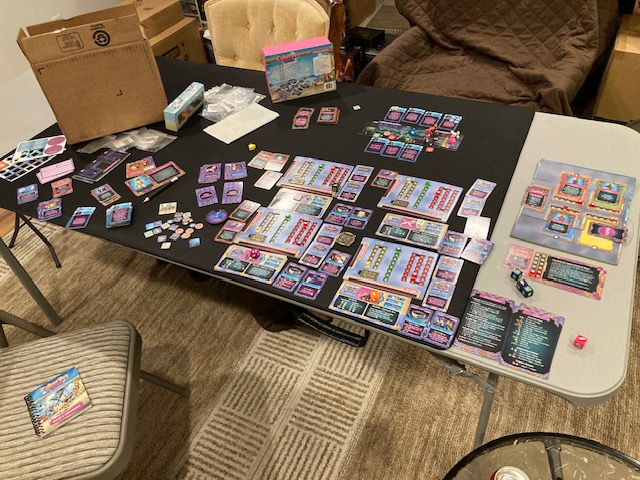
Yet, there’s quite a bit crammed into this box!! See above!  So, what is this game all about?

IMG_8256

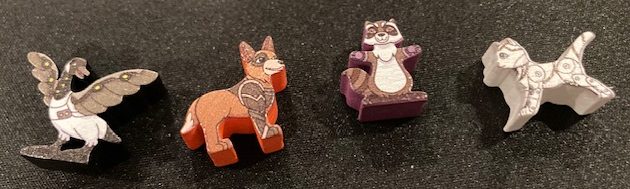
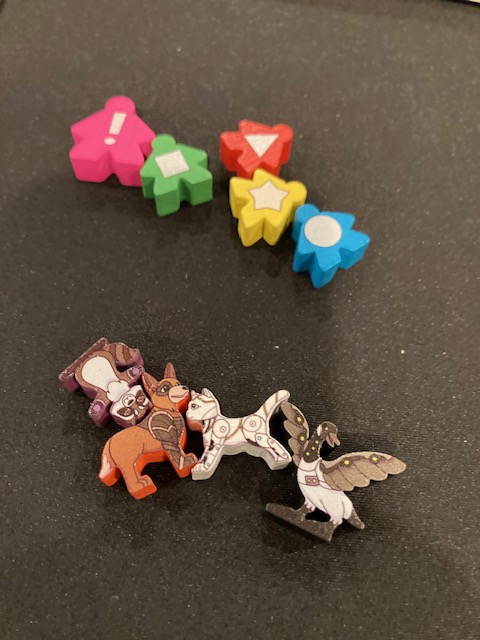
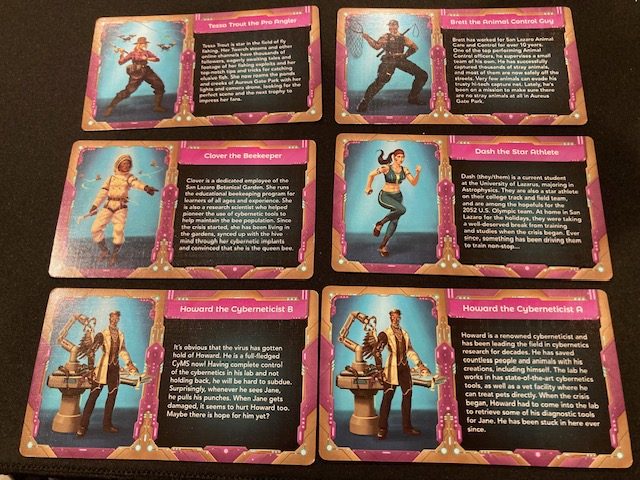
Players each take the role of the cyber pets (above, left-to-right): Roman the Canadian Goose, Clay the Australian Cattle Dog, Freya the North American Racoon, and Jane the Bionic Cat!  

IMG_8257

You can choose to pick up the pet minis, but I prefer the wooden meeples that come with the game (much like Run Run Run! from a few weeks ago!)  Wooden meeples for the win!

IMG_8285

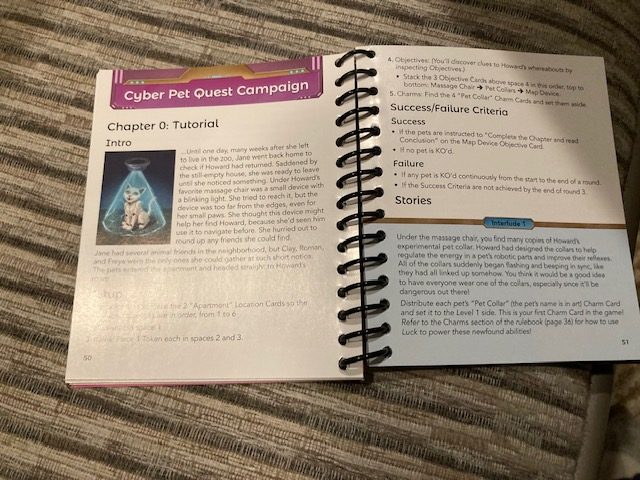
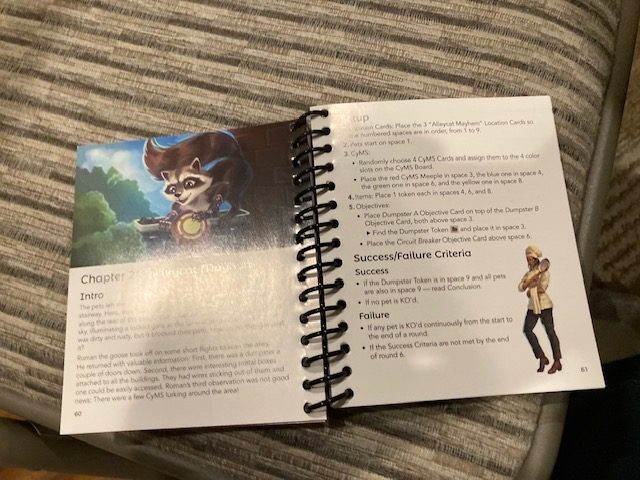
Players embark on a 6+ campaign (starting with chapter 0 to get you acclimated) working together to find their master!  The campaign is all documented in the little book that comes with the game.  It’s a tiny but long (at 108 pages) book describing the rules and the campaign.
IMG_8233

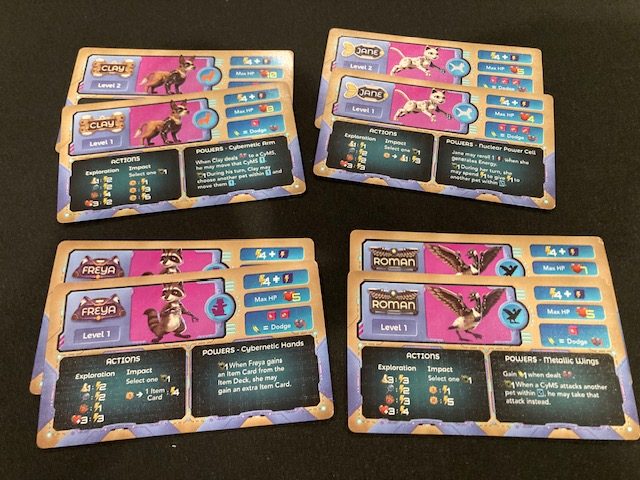
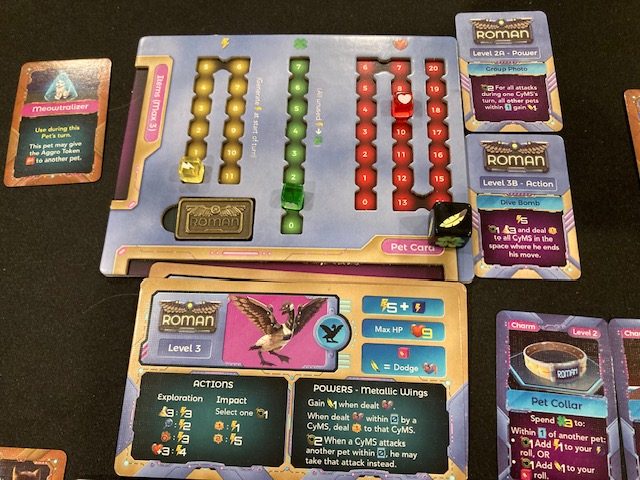
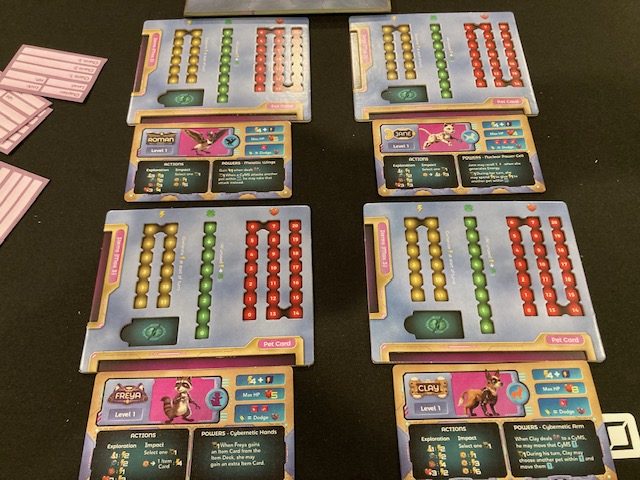
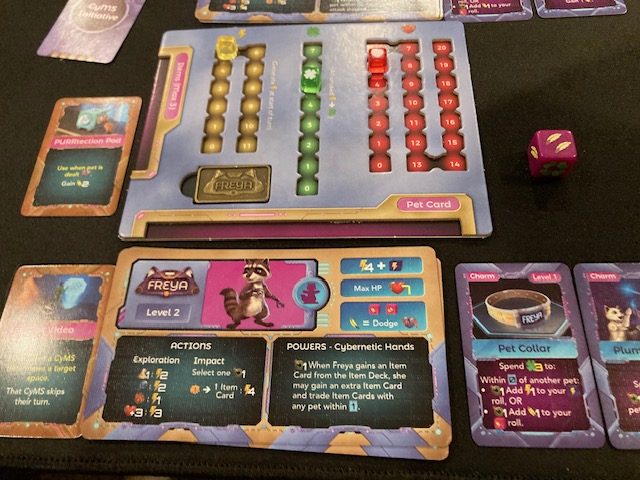
Each cyber pet is actually quite different!  The cards (above) describe the differences: how many Dodge dice, how many hit points, what actions you can take and their costs, and their special powers!  If you look closely, you can see that each pet is very different than the others!

IMG_8293

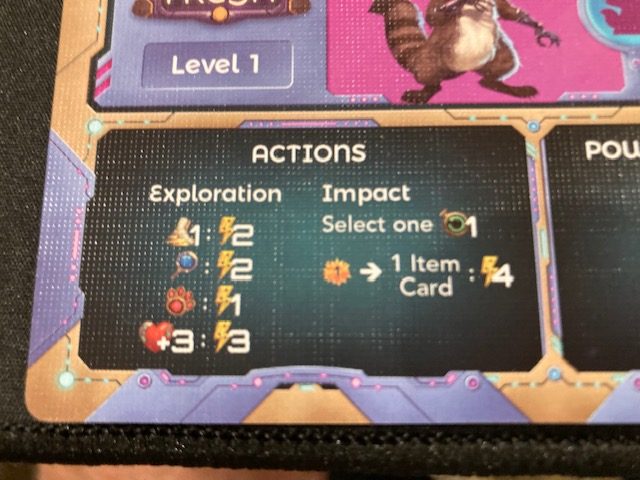
For example, see above for the Actions of Freya with their cost!

IMG_8275

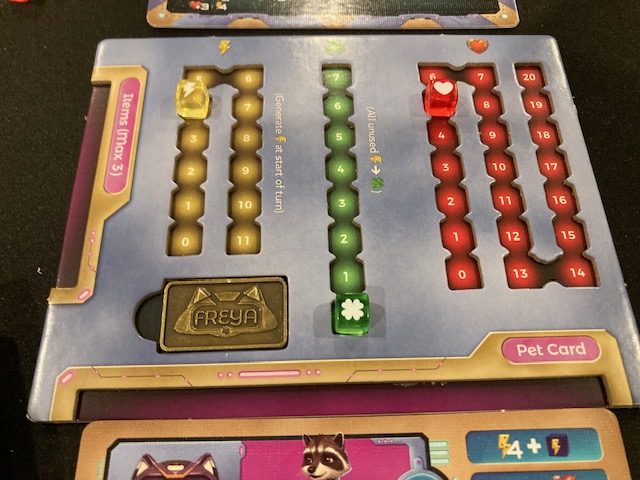
Each cyber pet gets a nice dual-layered board for marking energy, luck, hot points, and “sneak status”.

IMG_8252

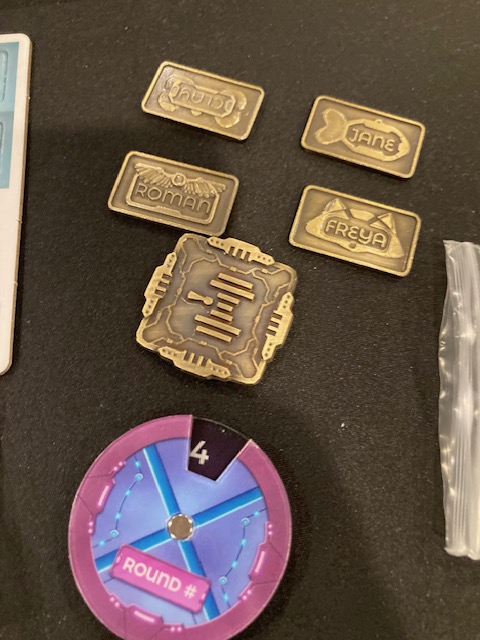
On a cyber pet’s turn, it is either sneaking (metal name token above turned upside down) or in AGGRO mode.  When sneaking, most things cost more energy (except for healing which is cheaper) and that pet can’t attack!  When the pet has the AGGRO token (bigger metal token), it may attack … but the bad guys are naturally drawn to it AND it takes one more damage from them!  Choosing when to sneak and AGGRO is an important strategic part of the game!

IMG_8259

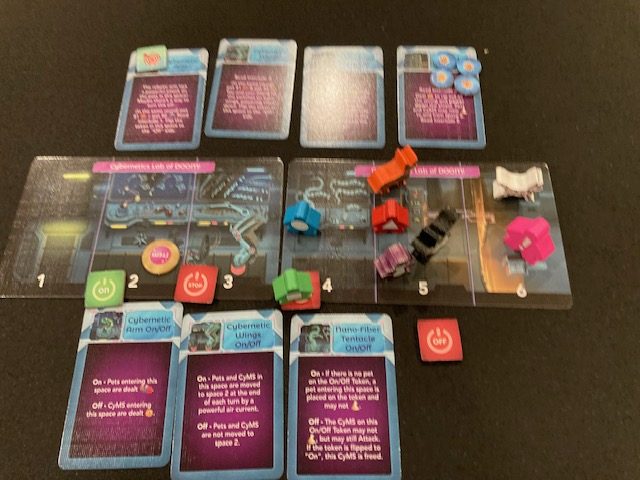
There are bad guys to fight: this is a boss-battler after all!  The bad guys are the red, green, blue, yellow and BIG BOSS pink meeples! See above!

IMG_8306

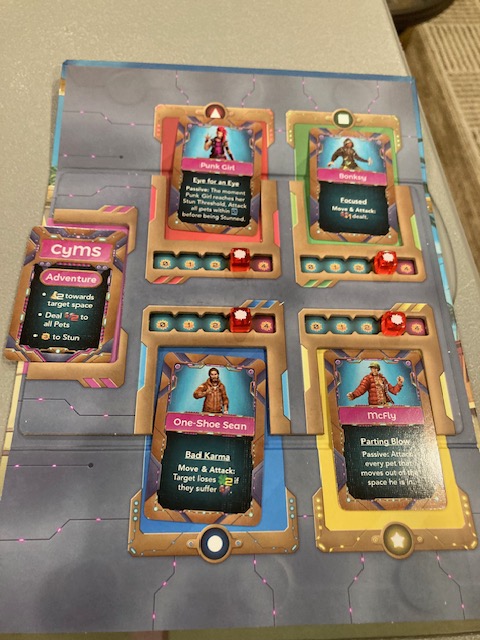
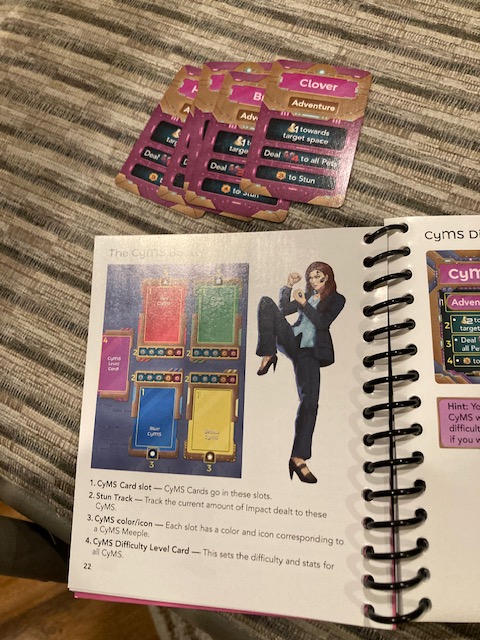
You generally have 4 CyMS (Cyber-Memetic Sociopaths) … these are generally “the minions” of the big bad boss.  See above as we choose 4 for the start of the game!  (That dual layer board with the CyMS is the top of the box. …. what??)

IMG_8283

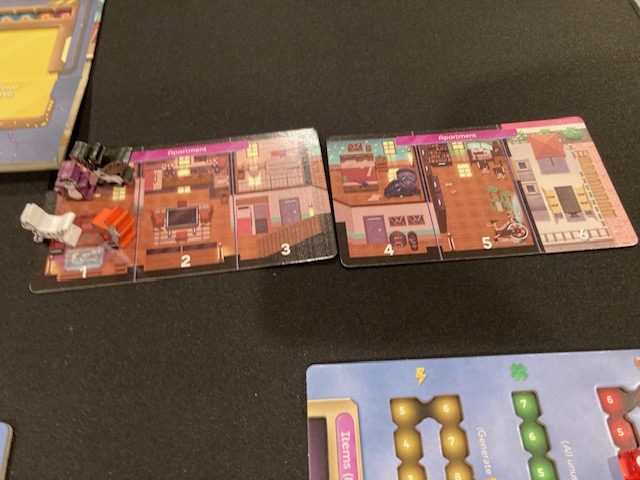
Each Chapter on the campaign happens in a group of Location cards: See above for the apartment (where the cyber pets live and start on space 1).

IMG_8290

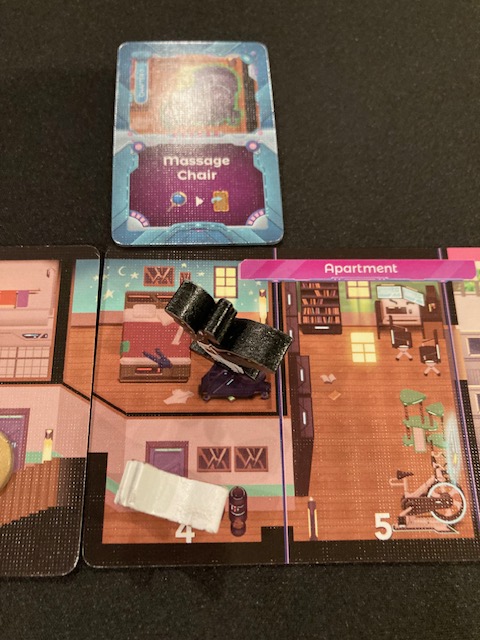
Each Location generally has some items of interest (like the Massage chair) where you have to “interact” or “look at it” to activate it!

IMG_8314

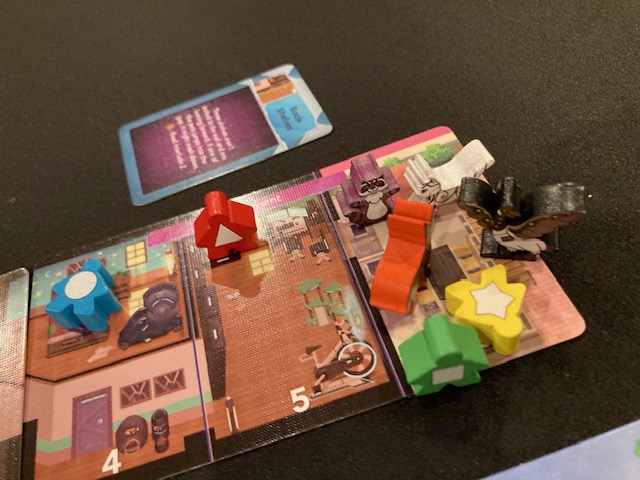
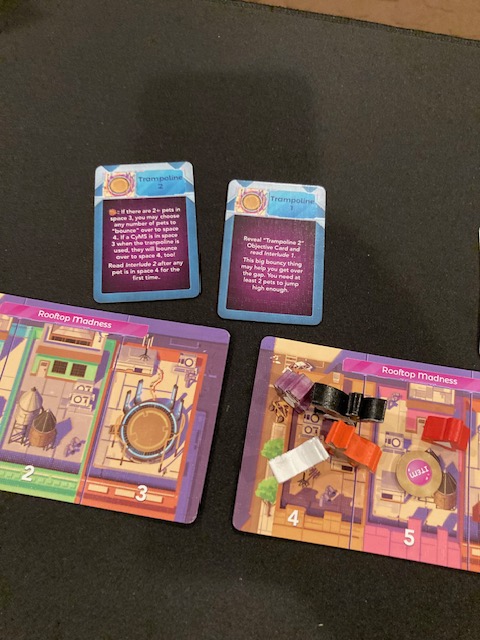
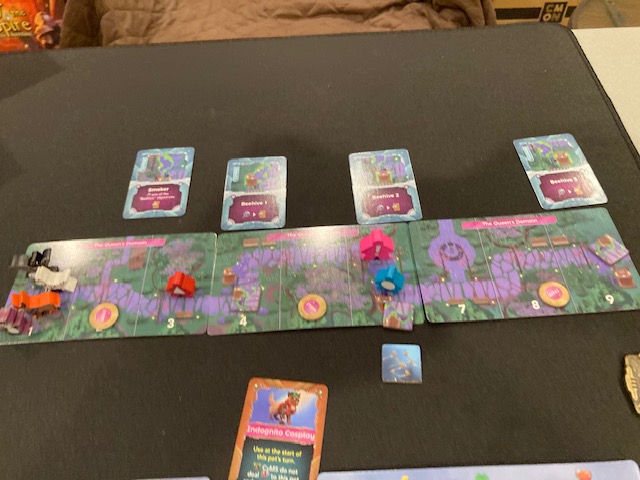
Once the cyber pets get comfortable with the mechanics of the game (chapter 0), the CyMS come out!  See above as the cyber pets try to get out of the apartment with the CyMS chasing them!

IMG_8288

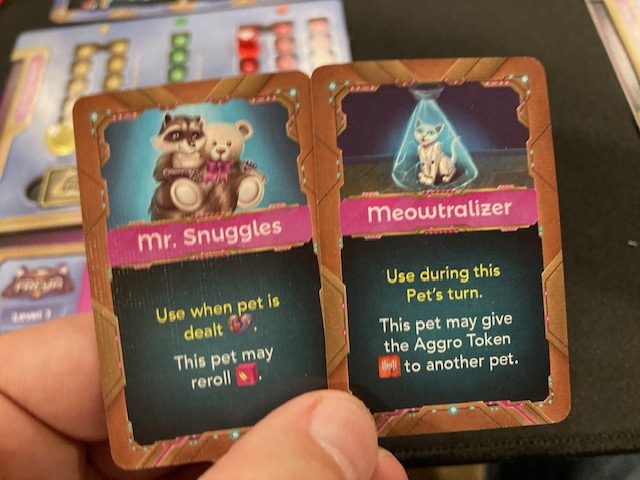
Over the course of the game, you get many things to help you in your quest to find your master!  Sometimes you get Items like above (which are one shots) …

IMG_8340

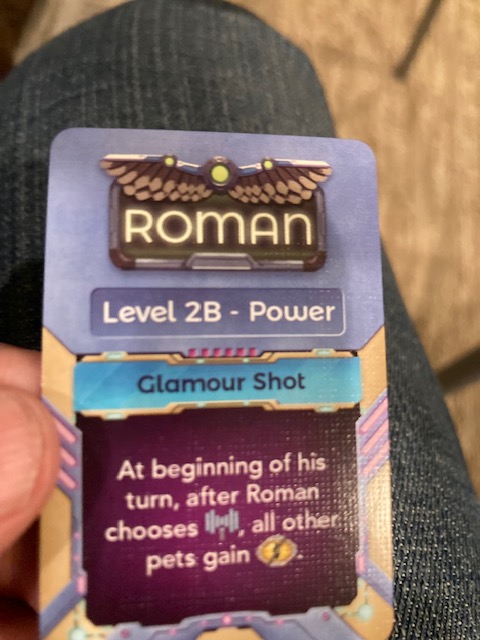
Or you may get extra powers that help you! See above as Roman gets a Level 2 power!

IMG_8318

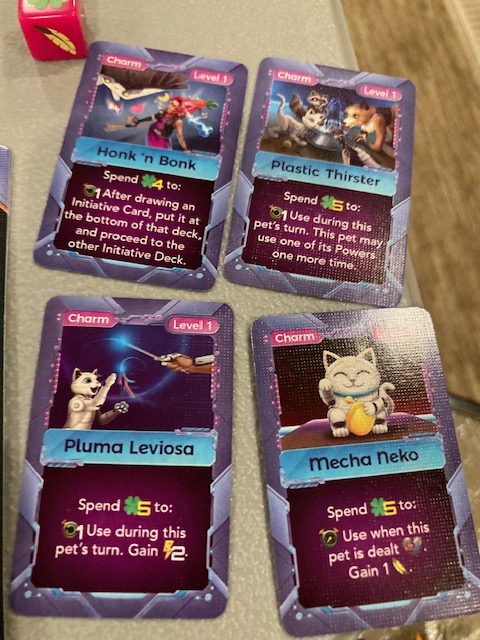
There’s also “Charms” which are permanent items that are usually powered by the “luck” resource.

IMG_8360

Finally, each cyber pet levels up as they get further into the campaign See above as Roman is on Level 3 … which influences his hit points, powers, and actions!  

IMG_8341

At the end of most chapters, the pets get some kind of upgrade, and usually it’s a choice!  Level up the character card?  Get a charm?  Get one of two powers?  The pets really do feel like they get better as you play!

IMG_8230

This is a boss-battler, so there will be big-bad bosses that you fight long the way!  See above for the bosses you may encounter!!  The story has a few turns along the way, so you may not see all the bosses on your first play-through!

IMG_8366

In the end, the components are a little small so they can fit in the smaller box, but they are all well-labelled and very readable  I have played through at least one full campaign, and I never had a problem with the smaller components: they are quite nice for this little game.  The theme is a bit odd with cyber pets.  And the game is surprisingly small.  So, this is an odd little duck of a game! (EDITOR: maybe better said, this is an odd little goose … since Roman is a GOOSE not a duck …)
Rulebook and Campaign Book

IMG_8212

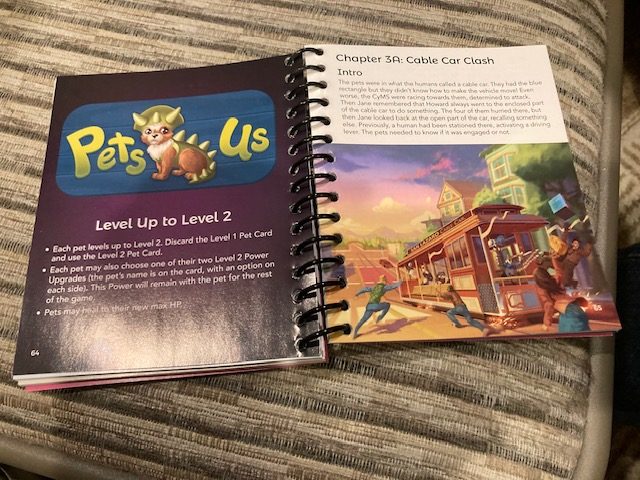
The rules and campaign are all found in this little spiral bound notebook of about 108 pages (yes, 108 pages!).  See the Coke can above for perspective: I wanted to point out how little the rulebook is!

IMG_8301

This is about a B or B- on the Chair Test: I can leave the rulebook open on the chair next to me while I am playing , but the form factor is just a little too small; the font is just a little too small to be well-readable.  Since the spiral notebook stays open, we leave the grade in the “B” region, as it is still very usable.

IMG_8229

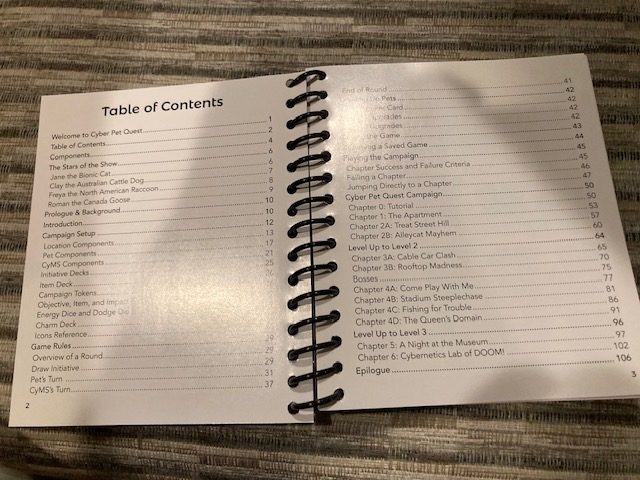
Now, the rulebook doesn’t have an index or glossary (booo!), but it does have a nice Table of Content (see above).

IMG_8227

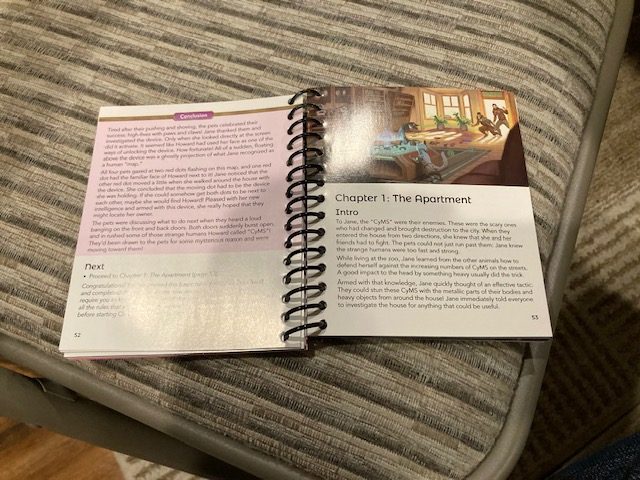
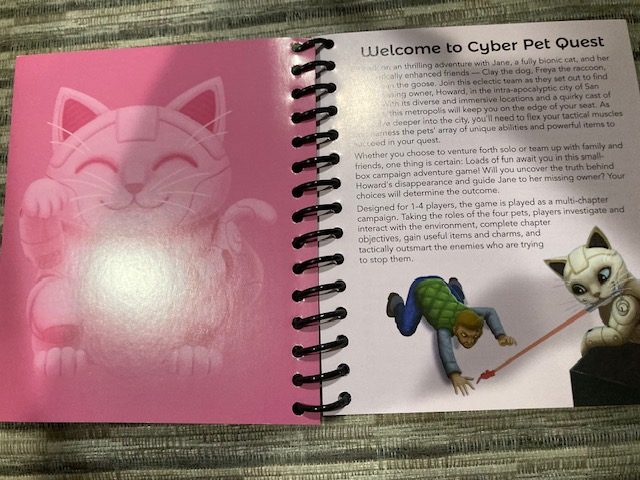
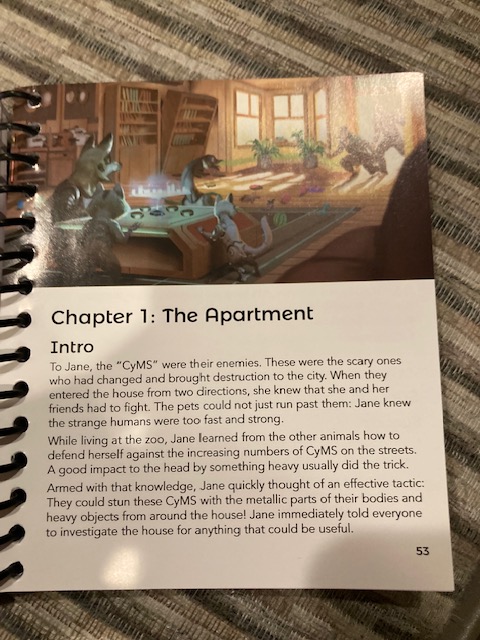
The rulebook is replete with Story! It starts off with a nice intro (see above), and continues a story (I should hope so with 108 pages of rules and campaign!).  

IMG_8265

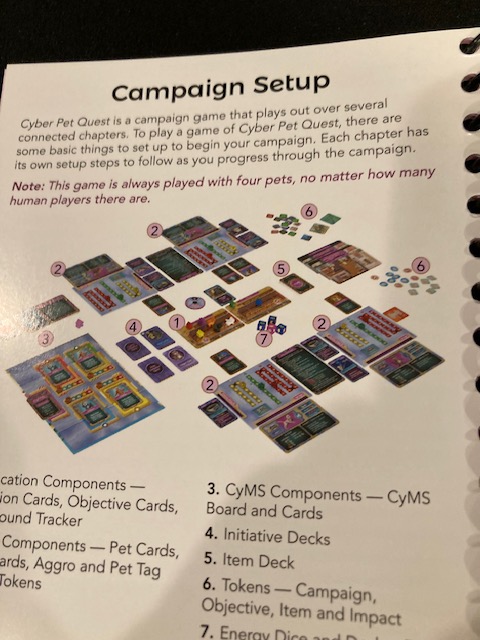
Although there are pictures of most of the major components, there are aren’t a lot of pictures of set-up except the one above.  There were MANY MANY time where the rules referred to some component, and I just had to guess which it was (I found the sleeper components, I think I found the Horde token, but I never found the Hack tokens).

IMG_8302

The rules were okay.  There were a lot of time when I really wish there had been further elaborations of some of the rules.   Many times, I just make the best call I could knowing the basics of the game.
IMG_8323

There’s a lot of cute story here, the rules are pretty good at getting us going, but there were just too many times when things were underspecified (which token? Explain this rule please?) so I can’t call this this a good rulebook.  

It was adequate to pretty good.  I was able to play the game and move forward quickly most of the time.
Solo Rules

IMG_8204

So, Cyber Pet Quest does support solo play!  (Thank you for following Saunders’ Law!)

IMG_8269

Unfortunately, the solo mode for Cyber Pet Quest is “play and operate all 4 Cyper Pets!”  In fact, at any player count, all 4 Cyber Pets must be in the game at the same time!  

IMG_3686

Some of you might remember Set A Watch: Forsaken Isles from earlier this year: it’s solo mode also has the players operate all four characters at the same time!  See above!  

IMG_1947

It’s not that uncommon to have the solo gamer play all four characters: recall that both X-Men: Heroes Resistance and Marvel Zombies: Hero Resistance also have the solo player play all four positions! See above.

IMG_4034

In Set A Watch, although we initially had our reservations about the 4-character solo mode, it really grew on us and became the default way we played the campaign game Set A Watch: Doomed Run!  See above.  This is because the Set A Watch characters are simple enough that it’s not too much work to context switch between them. 

IMG_4373

Marvel Zombies: Heroes Resistance is harder to play solo with 4 characters because the characters get more and more complicated as the game goes on.

IMG_8343

Cyber Pet Quest sits somewhere between Marvel Zombies: Heroes Resistance and Set A Watch.  At the beginning of the campaign, it’s pretty easy to context switch between the Cyber Pet characters as they don’t have too many powers, items, charms or actions.  So, the initial games are easier to play.  But later in the campaign, after each character has levelled-up significantly, each character has a wide array of Powers! Charms!  Actions!  Each character gets MUCH harder to play, as there so much to do!  

IMG_8366

See above as the characters have so many cards in the final game: Powers, Charms, Items!!!  I admit, the sheer amount of options for each character does get overwhelming … BUT … as the solo player, I have been playing and upgrading the characters by myself!  It’s gratifying to see all the characters get better.  I think since they have been levelling up gradually (between campaigns), it doesn’t feel that bad.  I think it’s actually harder in Marvel Zombies: Heroes’ Resistance to deal with the powers creep as the characters go up quickly in the same game!  At least with Cyber Pet Quest, you have a chance to become familiar with the new powers/abilities between games.

IMG_8360

Still, there is a lot of context switching between characters as you play.  I can recommend playing the first Chapter 0 solo to see if you think you can handle this 4 character solo mode;  even if you don’t like this solo mode, the Chapter 0 solo mode makes it easy to learn the base mechanics to teach your friends.

IMG_8364

I have to say, despite the complexity of the 4-character solo game, I had fun!  I found myself playing through the entire 6+ campaign game in a solo mode last weekend!  Wait, what??  It so easy to play each game, it was fun to level-up, it was interesting to see what happened next.  I must admit, I am a little surprised I ended up playing the entire campaign solo last weekend!  But I was having fun!  And the fact that each chapter is under an hour contributed to that.

Cooperative Play

IMG_8368

Cooperative mode is a little bit more fun than solo mode: for one, you have more people controlling the 4 Cyber Pets!  Above, Teresa and I split up the Cyber Pets so that she was operating two (Roman and Freya) and I was operating two (Jane and Clay).  I do think it’s interesting that we got very invested in our characters; so much so that we really did know them by name!

IMG_8371

This is a light cooperative campaign, where cooperation seemed to happen pretty naturally.  Clay was VERY good at taking out the CyMS, while Freya was VERY good at dealing with items and passing them around.  Jane was the mover, getting to far-away stuff and distracting the CyMS.  And finally good old Roman was good at doing a little bit of everything!  We focused on each pet’s strengths and naturally felt empowered and potent as we moved around the apartment.

IMG_8367

The game is light and fun!  I suppose the best recommendations we can give this game is 

 1) I am playing it again cooperatively EVEN though I have already gone through the entire campaign!
 2) We are planning to play more games (cooperatively) in the future

In a family situation, I can see this “4 characters” working out okay! Maybe give the “favorite” character to the little ones (Teresa really liked Roman, so she got Roman), but they can still give input as how the rest of the pets work.  In other words, assign the pets in the way that brings the kidlets in the most!  And the “adults” can just make sure the game stays on track!

What I Liked

IMG_8204

Game Length: Even though this is a campaign game, I like that each chapter feels “doable” in under an hour. The game box says the game is 30-45 minutes and that’s about right! (Oh! And you can jump into any single game of the campaign if you want a one-shot! There’s a nice page that describes “get theses upgrades for set-up if you just want to play a single session!”)

IMG_8244

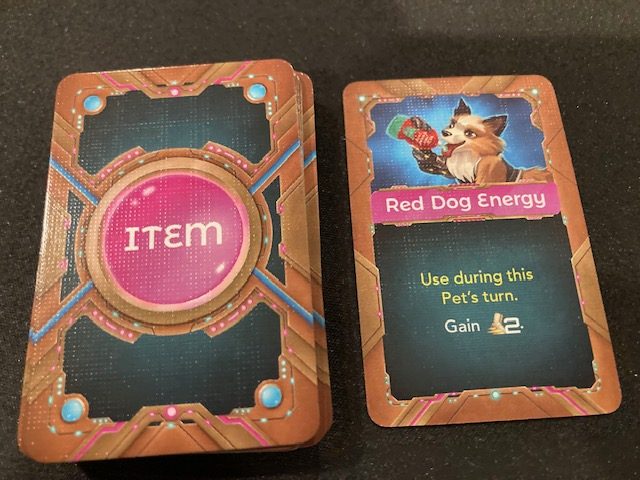
Sense of Humor:  This game is kind of light and fluffy; it has a sense of humor!  See above as one of the cards is Red Dog Energy!  And there is a Cat Videos on the Internet item as well!  This is a campaign game, but it’s light enough that the game never feels “overwhelming”.  It just kind of fun.

IMG_8348

Readable: I was very worried, since this game was so small, that the components would suffer readability issues.  Although I wish the rulebook was bigger, in general, everything was readable at the small size!

IMG_8313

Story: The story is quite cute and keeps you in the game.  It’s a light story, but still engaging.
IMG_8335

Upgrades:  At the end of each chapter, there are SO MANY ways you can get upgrades! Charms! Powers! Levelling-Up!  And you get choices: Level 1 or Level 2?  Side A or Side B? It feels really great to be moving foward and making so many choices!  We saw a lot of this same feeling in Tidal Blades 2: Rise of the Unfolders from a few weeks ago!

IMG_8348

Cooperation: There were a number of mechanisms in the game that encouraged cooperation.  The Pet Collars that you got in the very beginning allowed Cyber Pets to do extra stuff, but only if they were close to other pets!  This made for interesting tensions!  And many times, there were things to interact with that required TWO cyber pets in the same round to do something!  I liked that! It felt like the pets were cooperating to get stuff done!

What I Didn’t Like

IMG_8363

Underspecified: As the campaign gets further and further along, it feels like there are more and more places where the game needs a little more elaboration/specification. The final villain you fight has some real questions about how to operate him (Do you round up or down when you halve? How many hit points does he have?), and these kind of questions came up more than they should have during the game. As an experienced gamer, I know when to just make a ruling and move on. But I worry a family-friendly game like this might cause problems for families that aren’t as comfortable with under-specificity. Caveat Emptor.
IMG_8364

4-Character Solo Mode: Although I had fun playing the solo mode, the fact that you always have to have all 4 Cyber Pets in play isn’t ideal. I made it work, I had fun, but it’s hard to recommend the solo mode with a 4-character mode.

IMG_8353

Left-To-Right:  Every set of Locations had the Cyber Pets move left to right.  The topology was fixed in a straight line, and the pets almost always had to move all the way to the right from the left.  Although this kept a lot of rules simple (with the AGGRO token and CyMS movement), it felt a little “constricting” that every single Location set “moved left-to-right”.  It got a little tedious ALWAYS going left-to-right; I wish there had been some more topology to move around in.  And I am tired of saying left-to-right.

Turn Order

IMG_8243

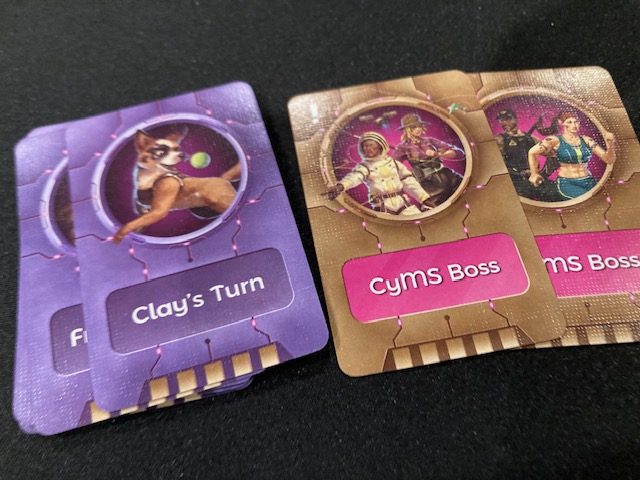
The gameplay for Cyber Pet Quest has something of interest from turn order perspective:  the game play alternates between pets and CyMS!  It’s still variable, as you don’t know which pet is coming out or which CyMS is coming out, but it keeps the game balanced between the two!  Recall we have discussed Variable Player Turn Order many times here at CO-OP Gestalt (see here for a culmination of that discussion)!  The solution that Cyber Pet Quest employs against the problems of Variable Turn Order is the same as one from Adventure Tactics: Adventures in Alchemy: the Static Initiative Invariant.  Basically, this just means we alternate between Heroes and Villains.

IMG_0945

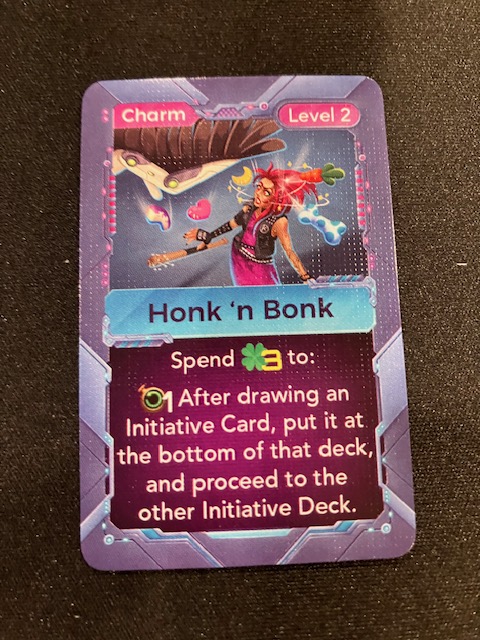
Now, I have to admit, even though I do like this solution overall, I was worried it might still be a little too random.   But, I was pleasantly surprised when I saw the game introduce Charms and Powers and Items that would mitigate some of that randomness!  See above as the Honk and Bonk Charm gives the pet some agency over turn order! As the game goes on, and the players become more powerful, they CAN affect the turn order!

So, I was happy to see both Static Initiative Invariant here as well as Power/Charms/Items to help the players control the turn order! 

Conclusion

IMG_8345

I like Cyber Pet Quest. I really didn’t expect to go through the entire campaign solo this last weekend, but I had so much fun playing, I went ahead and finished it! I like heavy campaign games like Tidal Blades 2: Rise of the Unfolders (from a few weeks ago), but sometimes it’s nice to have a light campaign game (like Cyber Pets Quest) that feels “finishable”: there’s only 6+ chapters to this game, and you can do it in a weekend! I am living proof!

IMG_8302

There’s just enough wonkiness with the rulebook being underspecified that I worry non-gamers might get frustrated with the rules.  Although there’s a lot of unique and interesting set-ups and interactions in the game, sometimes they aren’t that well-specified.  Just be aware that you might have to make some rule judgements in order to move forward.  

IMG_8366

I think this game is better as a cooperative game, since it’s just easier to share control all four cyber pets with more players.  But I still quite enjoyed the 4-character mode; but you have to be aware what you are getting into with all the extra context switching!

IMG_8226

This is a fun little cooperative boss-battler for 1-4 players; it has a cute story and a light vibe that’s quite enjoyable. I’d give it a 7/10 overall: it loses some points for some of the rules wonkiness and limited left-to-right topology, but Cyber Pets Quest was an overall enjoyable experience!

RichieCon 2024 and Top Interesting Games Since Last Year!

IMG_0671

RichieCon 2024 has come and gone!  This year there were some twists and turns, but everything worked out in the end!  For those of you who don’t know: RichieCon 2024 is the gathering of Richie and his friends … honestly, it’s just an excuse to play games every year!  It’s not even really a Con, but we like to put a little pomp into it to make it sound more bombastic.  This is actually the 10th year of RichieCon, but only the 9th actual convocation (as we skipped a year for CoVid).   

IMG_0737

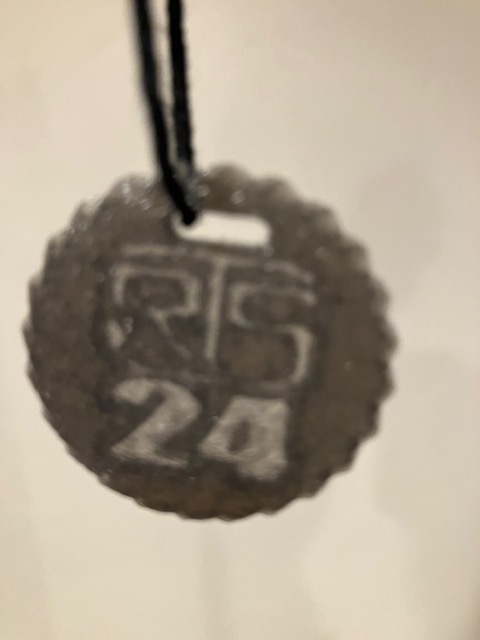
This year’s RichieCon 2024 token is cool: it’s actually hollowed out and you can only see the year and RTS symbol if you hold it up to the light! See above!  You need the Token to get into the Con, and it can only be obtained through “secret means!”  (Find me or Max in the Hall).  Thanks to Josh M. for designing it and Max M. for printing it!

IMG_0713

The name RichieCon is a bit of a joke: I asked my friend Kurt many many years ago:
“Hey, you wanna go this board game convention that’s far away?” 

Kurt said, “Man! That’s like a $1000 plane ticket and then a $1000 hotel bill!  Why don’t you host your own convention and call it RichieCon! It’ll be a lot cheaper!”

And thus, RichieCon was born.

PreCon

IMG_0599

The week before RichieCon is a lot of putting boxes in boxes.  To have some semblance of order, I try to put related games in bigger boxes and label what’s in there.  See the “hot games” box above!

Sam and Teresa and Sara usually come over and help me put everything together. A big thanks to those three for all their help this year! See some of the boxes we put together above!  

RichieCon Day 0: Secret RichieCon House

IMG_0604

RichieCon has a lot of out of town guests that come into town a day early (Friday) and randomly show up with no place to go.  I learned many years ago that it’s nice to have a “secret” RichieCon house for out-of-town guests to hang out on Friday before the Con.  

The “secret” RichieCon house is modeled after the out-of-towners dinner you have for out-of-town guests for a wedding. It’s a way to say “thank you” for coming from so far away! This year, we had guests from Portland WA, Austin TX, Denver CO, Phoenix AZ, Las Cruces NM, Albuquerque NM, and from as far away as Madison WI!

RichieCon Day 1: Morning Pivot!

IMG_0619

RichieCon Day 1 hit a scheduling SNAFU, so we had to pivot and hold RichieCon Day 1 partly at the “secret” RichieCon house!  I guess it’s not so secret anymore!

Thanks to everyone who helped me move boxes and boxes and boxes of games to the “secret” RichieCon house! I couldn’t have done it without Sam, Charlie, Jeremy, Joe, Kurt, and a bunch of other people I didn’t see moving boxes because I was so busy! RichieCon is a community effort!

RichieCon Day 1: Part II!  This Time, It’s Personal

Once we got into the Rec Center for the second half of the day, many games were played!

RichieCon Day 2: More Games!

Sound Mitigation

IMG_0619

If you have ever been to a board game convention, you know there is a lot of background noise.  We had some issues last year with the background noise being too much, so we tried some sound mitigation techniques.  Basically, the Rec Center has very hard sonic surfaces, so sound bounces and echoes a little too much.  Luckily, the Rec Center bought a fairly large carpet (see above) to help with some of that.

IMG_0628

We also bought 5 CostCo rugs (for $18 each) to augment the sound mitigation of the  hard sonically bright floors. See above and below.

IMG_0631

I also have some friends who work in theater and they were able to hang up up some “quilts” on the wall:

IMG_0687

These quilts (see above) were hanging and absorbed some of the sound.

IMG_0672
The general consensus was that the rugs and quilts all helped, but not quite as much as we hoped.  We will probably hang more quilts and get more rugs for next year!  Thanks to Becca and Jeff for providing the hanging quilts!

Games of the Con

IMG_0642

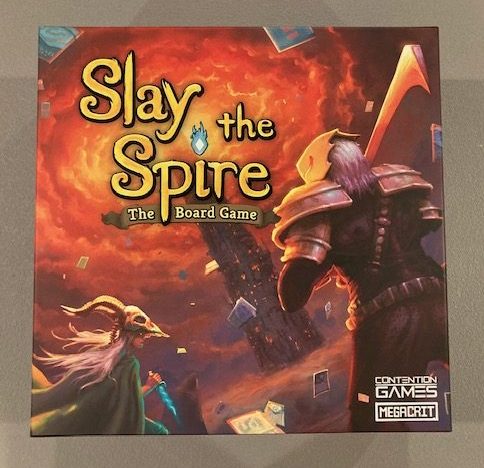
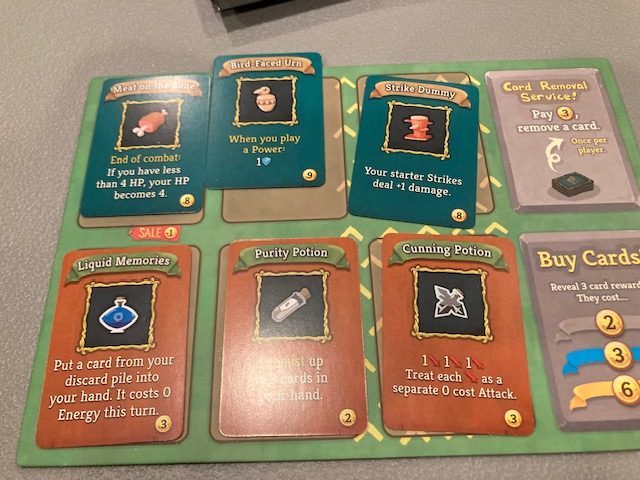
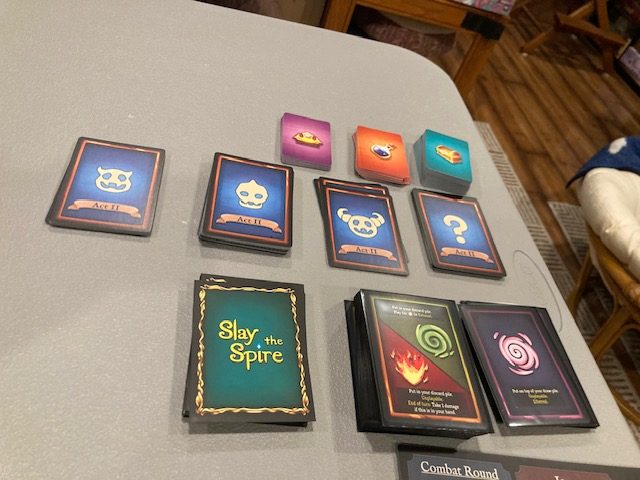
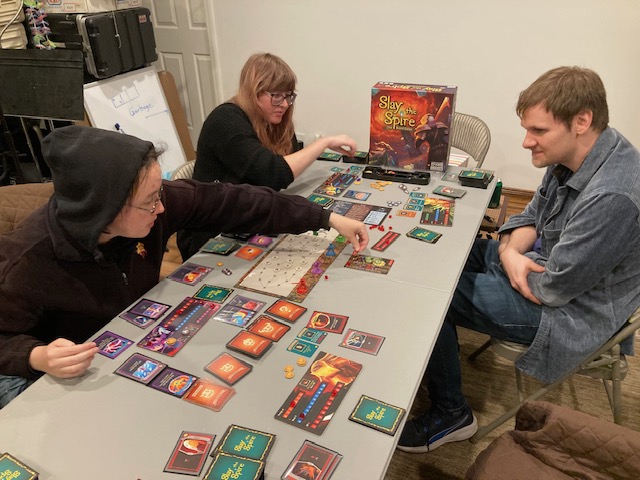
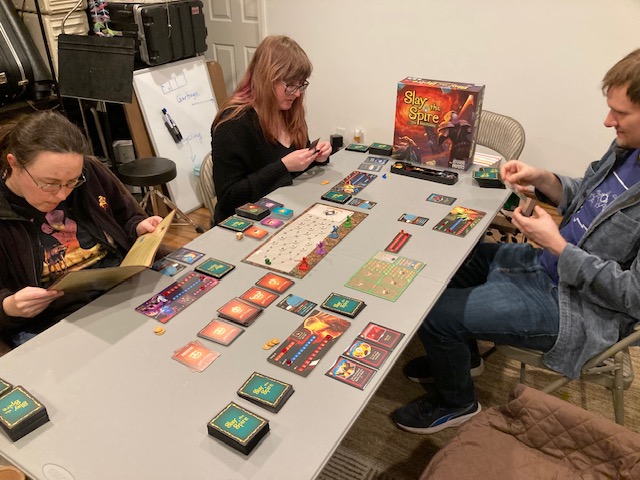
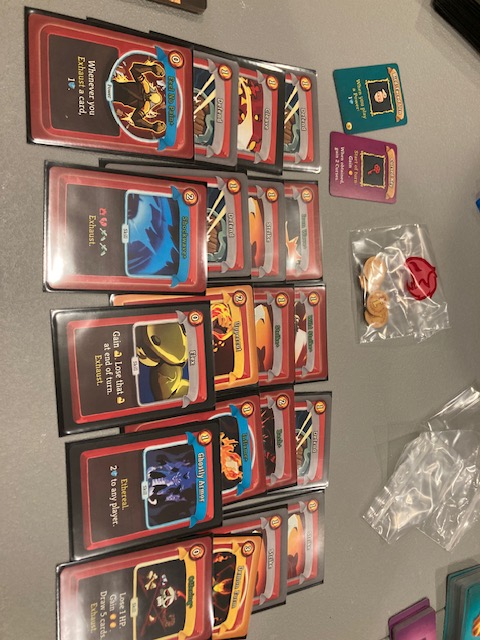
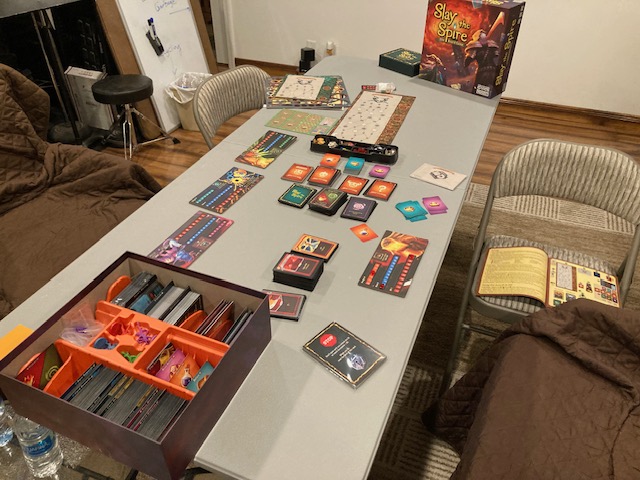
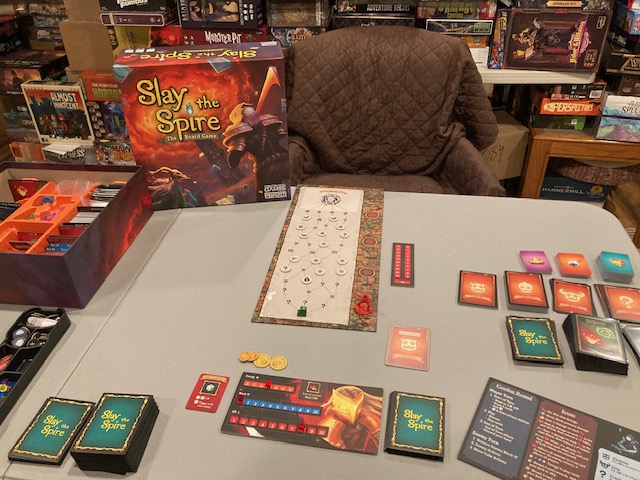
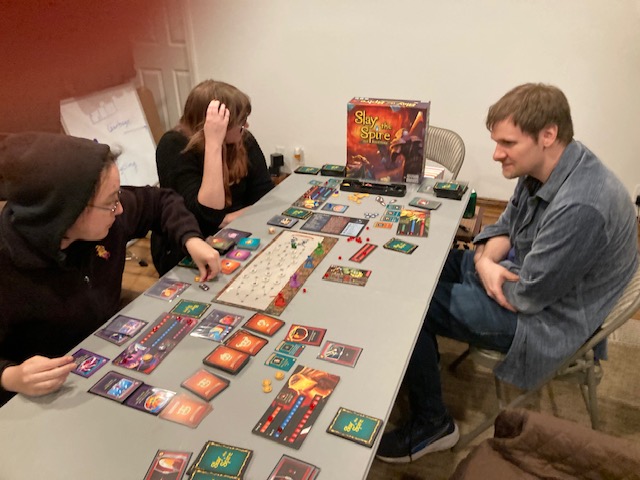
I think the game of the Con was Slay The Spire!  I saw this game played more than any other game!  I think I taught it 3 to 4 times over the course of 3 days and it was played more time than that! See above!

IMG_0684

Flock Together was pretty popular! I saw this played a bunch of times! See above!

IMG_0690

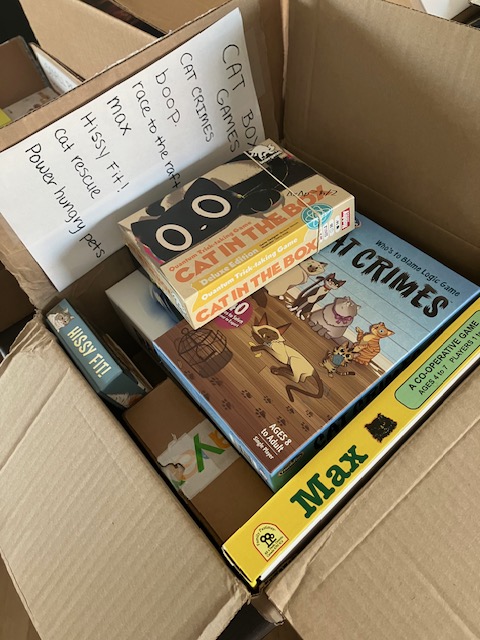
The Cat Box was a running joke: “Play Games from the Cat Box!”  But, there were a lot of games played from here! Race To The Raft!  Cat In The Box!  Hissy Fit!  Power Hungry Pets! I saw all of those games played at least once!

IMG_0676

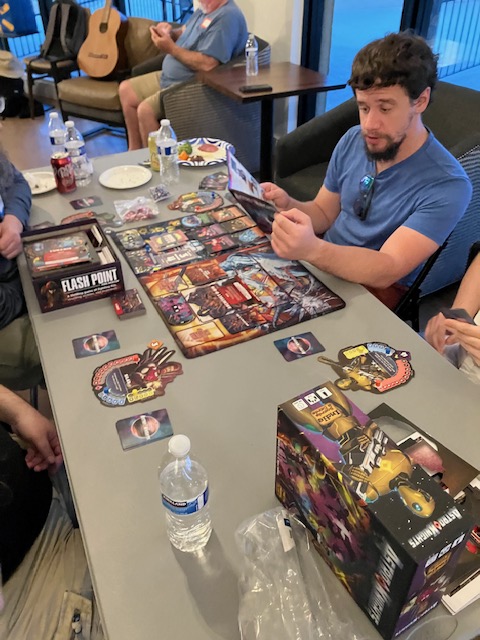
The Astro Knight games were popular: I saw both the base game and Astro Knights Eternity being played!  I suspect that’s my fault … see below …

IMG_0659

Casting Shadows was quite popular! I think that was played at least 3 times!

IMG_0715

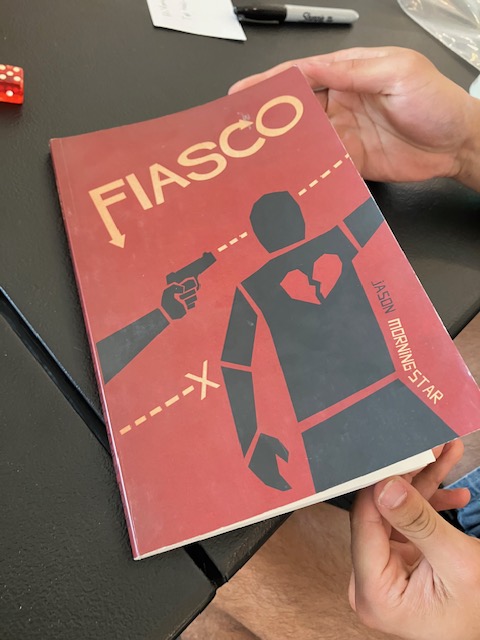
The weirdest game I played was the RPG Fiasco: It reminded me a lot of Spirit of 77!  The point is to make each other laugh as you make up crazy stuff!

IMG_0706

Forest Shuffle may have the other big game of the Con after Slay The Spire: Kurt taught this game many many times!  See above!

IMG_0677

SO many great games played!  Set A Watch! See above!

IMG_0610

Leviathan Wilds was also quite popular!  I taught that at least three times, and I saw other people playing it!

Interesting Games

IMG_0673

Every year, we stop the Con for a little bit to have a “meeting of the souls” where we all talk about our favorite board games! It’s a chance for everyone to give feedback on games they’ve enjoyed since last we met!!  The real point of this is to try to recommend games that people might be interested in.  What happens is that we recommend games, and then we end up teaching them the rest of the Con! 

#6 What game from the last year surprised you the most?  Good or bad surprise?

IMG_4652

Rich:

Slay The Spire was a huge surprise to me! I almost didn’t back it on Kickstarter, but wow! My games groups loved it and it was probably the most played game at RichieCon!

Sam:

 – Hissy Fit. It’s a light, fast, cute game about getting your cat into the carrier to go to the vet. It is also surprisingly fun to play.

#5 What game in the last year do you disagree with reviewers on?”

pic7068528

Rich:

Two weeks ago, Daybreak won the Spiel Des Jahres.  Everybody seems to love this game except for me. I generally love Matt Leacock designs, but this one felt way too random for me.

Sam:

Tom Vasel didn’t like Race to the Raft. However, I really enjoyed the puzzley nature of creating the path and moving the cats to get them all off the island.

#4 What game (that you paid for) did you really dislike? It’s easy to dislike games other people paid for, but what did you pay for that you disliked?

IMG_5214

Rich:
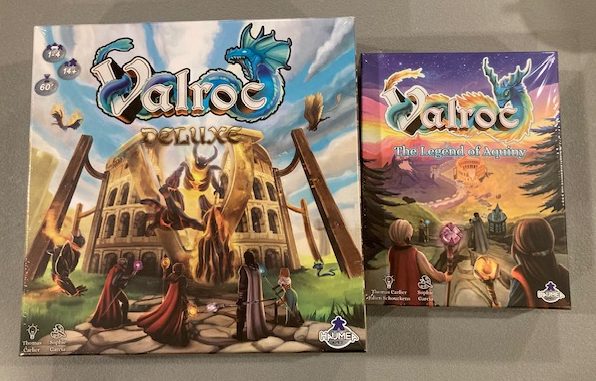
The cooperative expansion for Valroc: The Legend of Aquiny.  The base game of Valroc is a card-drafting, worker placement game that’s pretty good.  The cooperative expansion looked cool with campaign envelopes, but the limited communication was too limited and the very very slow upgrade paths made this not fun.  I would still recommend people try the base game Valroc.

Sam:

I picked up a copy of Call to Adventure (a story crafting game) and felt kind of meh about my plays of it. I’m hopeful that it may grow on me as I play more and actually get the rules all the way right.

#3 What game that came out in the last year that you liked but other’s didn’t?
IMG_5623
Rich:
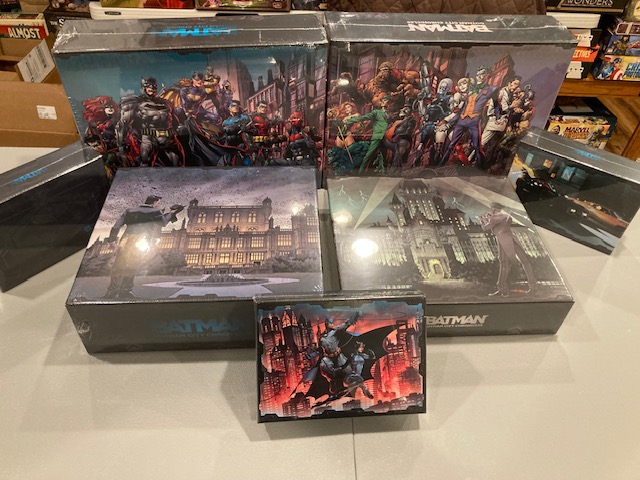
Gotham City Chronicles: Solo and Co-operative Expansion.  This was so much work to get to the point where I could play solo (6 days of reading and printing and setting-up), but in the end I had fun.  I don’t think most people like Gotham City Chronicles, especially Shut-Up & Sit-Down, because it’s so much work. But I still like it!
 
Sam:
 
Almost Innocent. I really enjoyed the logic puzzle aspect of it. Richie didn’t enjoy it but was also really tired that night and not necessarily sharp enough to do heavy logical deduction.

#2 What was your favorite expansion that came out in the last year?

IMG_3540

Rich: 
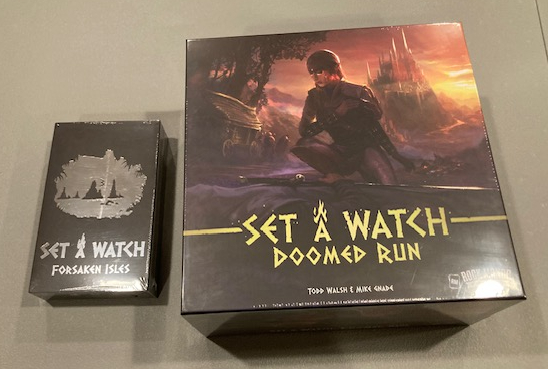
Set A Watch: the new stand-alone expansion and the Set A Watch: Doomed Run! (Strictly speaking, they came from the same kickstarter)!  I love this system because even if you roll badly, you can still place dice on powers to activate them!

Sam:

– +1 on Set a Watch: Doomed Run. I only played one of the missions but it was fun to play the characters that were assigned to me and use their powers and items. The two I had ended up chaining together pretty well.

To be different:: Astro Knights Eternity. It’s a good cooperative deck building game and the story parts surrounding the scenario were really good too.

#1 What was your favorite game that came out in the last year?
IMG_5877
Rich:
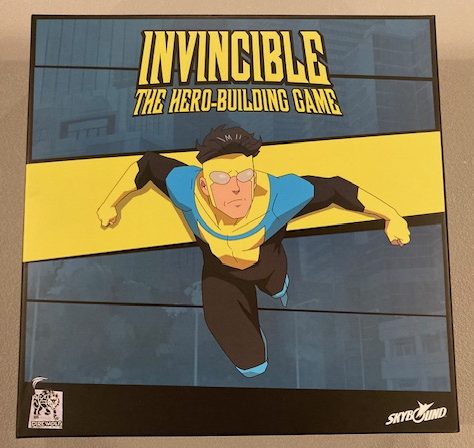
A cooperative bag-building super hero game set in the unique world of Invincicble?  Sign me up!  This game was so much better than I expected, the upgrade paths makes this game engaging and keep you involved!
 
Sam:
 
+1 to Invincible (Richie) and World Wonders (Kurt)
 
To be different: Age of Civilization. It’s a really tight worker placement game where you draft your unique civilization powers which include number of workers and then use your workers to research technology, get money, build wonders, and go to war to get victory points. Bonus points: it’s a small box, has good solo modes, and takes 45 minutes to an hour.
 

Theme Song

IMG_0674

During the “meeting of souls” and sharing of games, Joe shared with us his version of the theme Song for RichieCon!  Sung to the tune of the Suffragette City by David Bowie!  And yes, the entire room said said “Hey Man!” at the appropriate places!

RichieCon City: sung to the tune of Suffragette City by David Bowie (new lyrics by Junkerman)

Hey Man, you gotta play in the game
Hey Man, custom pieces ain’t no shame!
Hey Man, your kickstarter is drear.
She said your package should be shipping by the end of the year

Hey Man, you really gotta choose
Hey Man, which game you gonna lose
Hey Man, you better learn all the rules
She said you’re getting killed by Sauron or the Cult of Cthulu

[Chorus]
Oh don’t lean on us man cuz you can’t defeat the wizard
I’m back in RichieCon City!
Well don’t lean on me man cuz you blew up all the kittens
You know my RichieCon City!
It’s outta sight, it’s alright!

Conclusion

IMG_0733

As we bring all the games back to the house …

IMG_0718

As we clean the Rec Center and put it back the way it was ..

IMG_0729

And we lock the door .. heading home … we wonder …. was it all worth it?

Yes! It was! It so much fun to see everyone, despite the issues! We look forward to seeing everyone next year!

A Review of Slay The Spire (The Board Game) From Someone Who Doesn’t Like Rogue-like Games And Has Never Played The Video Game!

IMG_4652

Rogue

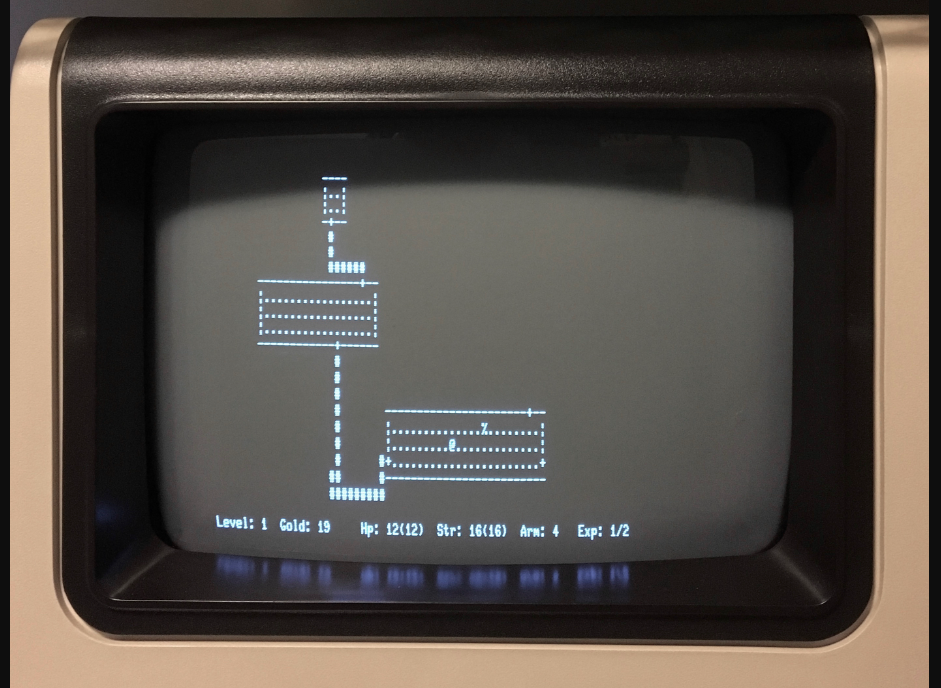
When I was an undergrad at college, a lot of my friends played a game called Rogue on the vt100 computer terminals.

vt100rogue

It was a little dungeon crawler that my friends spent HOURS and HOURS playing.

It’s a Dungeon Crawler? Fun!  Do you save you characters very often?
“Uh, … no.  You just play until you die.  You don’t save characters.”
I’m out!”

And that was pretty much where I learned to dislike Rogue-like games.  If I play a dungeon crawler spending hours leveling up my character, I want to save it!  Part of the fun, for me at least, is returning to my character that I’ve invested in.  I have no desire to play a formless character that just dies.

To be fair, my opinion has not aged well.  I have been informed by many people that Rogue-like games have some saving capability.  Still, my malformed opinion has persisted through the years.

Slay The Spire

IMG_4653

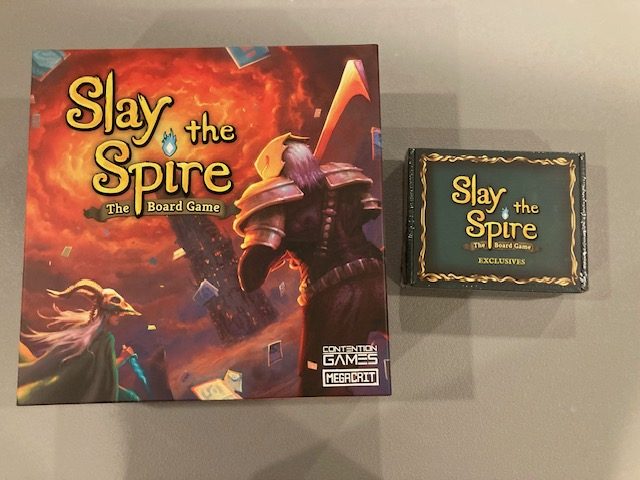
Because of my prejudice against Rogue-like games, I have never played the original Video game Splay The Spire.  I must admit, though, that I was intrigued by Slay The Spire (a cooperative deck-building game) when it appeared on Kickstarter back in November 2022.   The original Slay The Spire video game was really only a solo game … maybe the transition to cooperative board game would make it something more up my alley?

IMG_4657

This arrived at my house in May 2023 (see above); it had promised delivery in Dec 2023, so it’s about 5 months late.  In the world of Kickstarter, 5 months late is not bad.

IMG_4656

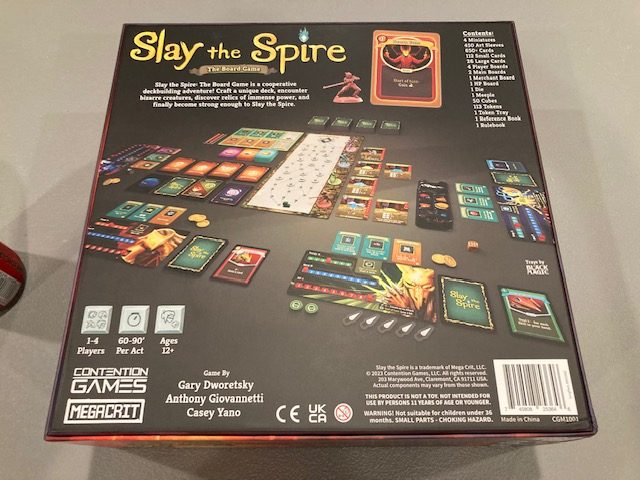
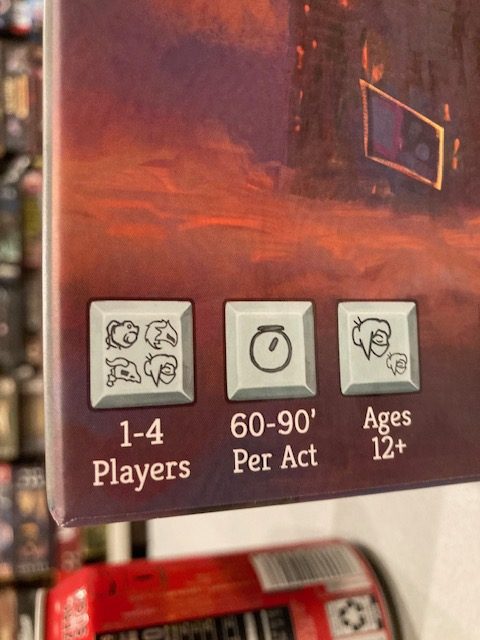
This is a cooperative board game for 1-4 players, Ages 12+, with only 60-90 minutes per Act!  I was intrigued!  To be fair, a lot of my friends seemed “excited” to play this game, so I freely admit that their enthusiasm was contagious.  

Let’s take a look!

Unboxing

IMG_4659

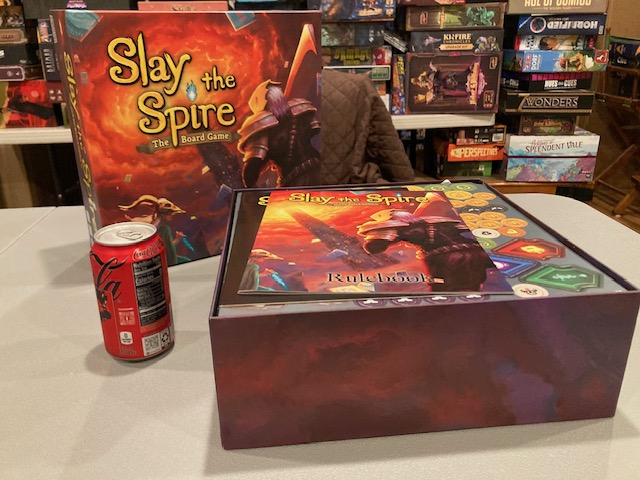
This is a pretty tall box (see Coke can above for perspective), but  it’s about the same form factor (in length and width) as a Ticket To Ride size box.

IMG_4661

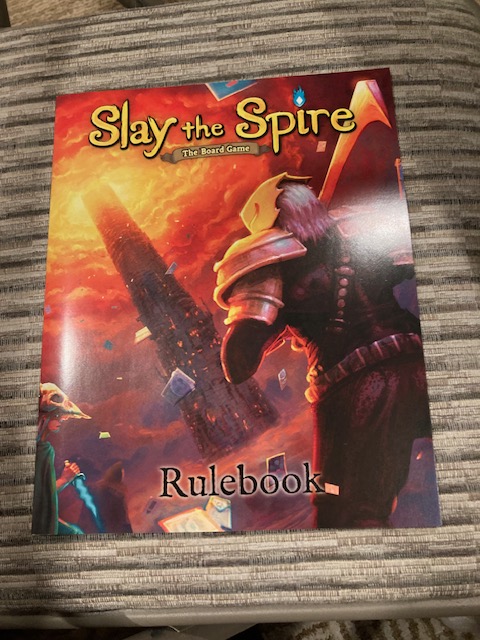
The top of the box has the rulebook and Upgrades and Items guide.

IMG_4665

Don’t be too impressed by this Upgrades and Items guide: all it does is show all the cards!  It has no disambiguating text!

IMG_4668

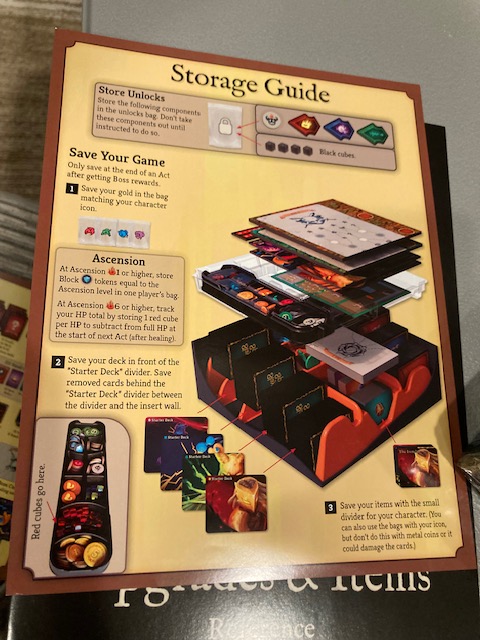
There is a very nice boxing/unboxing guide for putting this together and taking this apart. See above.

IMG_4680

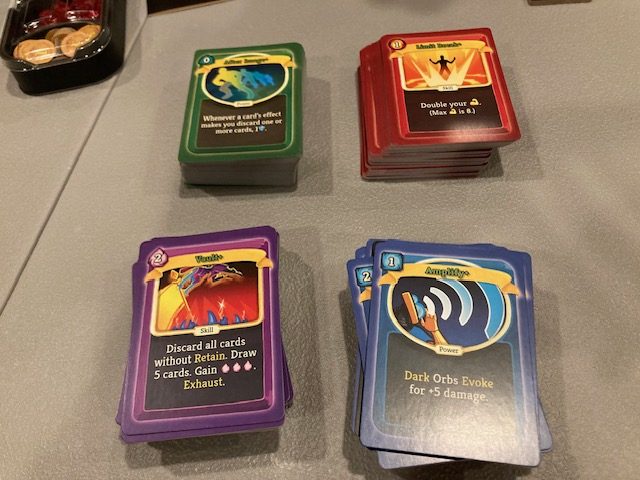
Are you like me as one of the few people and didn’t know that Slay The Spire Video Game was a deck-building game? Well, the board game is also a deck-building game!  As a deck-building game, this game comes with SO MANY cards!  See above and below. And its own sleeves!  For more discussion of Cooperative deck-builders like this, check out our Top 10 Cooperative Deck-Building Games!

IMG_4721

I have been informed that the cards and art look exactly like the Video Game.

IMG_4687

And there are a ton of cards and boards!  See above!  This game looks really fantastic! See above!

And it looks like the Video Game.
IMG_4731

I want to be 100% clear about this: this production is amazing!  It’s a deck-building game that comes with sleeves!  The tokens come in an easy-to-use tray! The cards can all be stored very easily in the box!   The box is easy to repack!   They really knocked it out of the park on the production of this game!

Gameplay

IMG_4673

Each player chooses one of 4 characters to play: see the characters above. I have been informed by players of the Slay The Spire Video Game that these are straight out of the Video Game!
IMG_4688

Each player also takes the corresponding figurine: these will be used to notate which “row” you will be fighting in; we’ll describe that more below.
IMG_4708

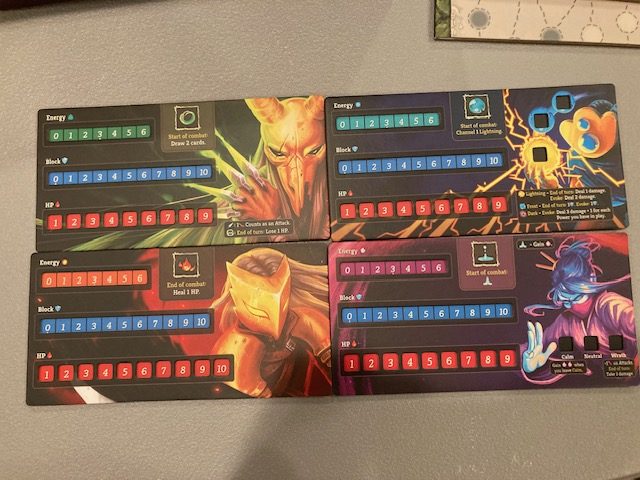
Each player has their own deck of cards to start with: each deck is a little different and really represents a different play style.  Simplifying a little too much: the blue deck is defensive, the red deck is offensive, and the green deck is all about poison.  

IMG_4774

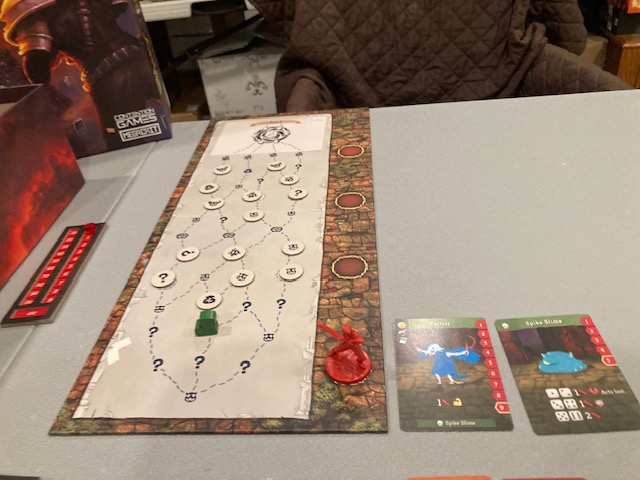
Players together choose a “path” to take to get to the final Bad Guy (at the top of the board above). These decisions can have you fight a monster, summon the merchant, build a fire (“smith” or heal: I learned the word “smith” from one of the Slay The Spire Video Game friends), fight Epic monsters, or take events. I was informed these choices were very reminiscent of things that happen in the Video Game.

IMG_4814

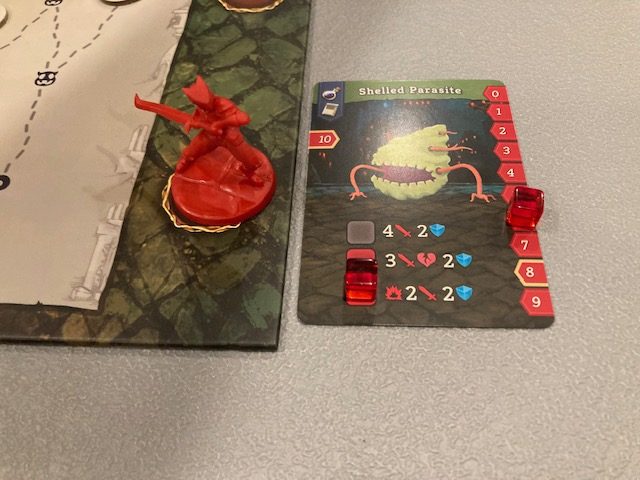
When you fight a monster, each row next to a character gets some monster(s) from the Encounter Deck! See above as “the red guy” fights a Shelled Parasite. (I don’t know “the red guy’s” name because it is not notated on his board). Note that the monster has some hit points (left and right of card), and some icons: those icons tell you what the monster does when it attacks you.

IMG_4759

As a card game, you play cards to attack your monster and/or defend yourself!! Shields up your defense (blue icons above), and swords up your attack (red swords above). You only have a limited amount of energy per turn to spend to play a card (usually 3 energy worth), so that limits which cards you can play (the energy cost is in the upper left corner).

You draw up to 5 cards every turn, and discard all when you are done. That feels very much like a deck-builder.

IMG_4772

Typically after you win a battle with a monster, you can add an upgraded card to your deck: you deal 3 and choose 1 (apparently, just like the Video Game). See an example draw above.

IMG_4844

See above as some of my cards have a GREEN text for the title?  This means that I was able upgrade the card BY FLIPPING IT OVER!  Each card has two sides, a normal side and an upgraded side: you can “Smith” to turn the card over and therefore improve it!!  This is a really neat mechanic in a deck-building … and rare! I can’t think of another deck-builder that does this!

IMG_4795

You can also occasionally get new additions from a rare deck (see yellow outline): these are much better cards!

IMG_4752

To be clear, each character has their OWN upgrade deck to draw from and their OWN rares deck to draw from!  See above: the red guy has a starter cards (grey outline), upgrade deck (black outline), and rares deck (yellow outline).  This makes each character very distinct as they are built to upgrade a specific way.  Like we said earlier, the red guy’s decks concentrate on attacks, blue guy’s deck concentrate on defense, and green guy’s decks concentrate on poison.  

IMG_4776

You occasionally can buy stuff from the passing merchant, including potions or treasures and even random cards. This even includes a way to cull cards: we call this The Andrew rule: A deck-building game MUST have a fairly systematic way to cull cards. Luckily, Andrew would (and does) like this game because he can cull cards.

IMG_4807

Along the way, there are all sorts of other cards that come out: Events, Monsters, Potions, Treasures, Epic Treasures, and deck-cloggers (Daze and fire).  I have been told this is just like the video game!

IMG_4819

But of course, the purpose of all this is to take down the Big Bad Monster at the top!  See above as I fight the Big Bad Bronze Automaton and a Bronze Orb! 

Like many cooperative games, all players win together when they defeat the Big Bad, or they lose if any of them dies! So, it’s in everyone’s best interest to cooperate and keep each other alive!

The Rulebook

IMG_4661

 I need to talk about the rulebook.  It’s okay, but not great. It really should have been better given how great the production of the rest of this game.

IMG_4689 (1)

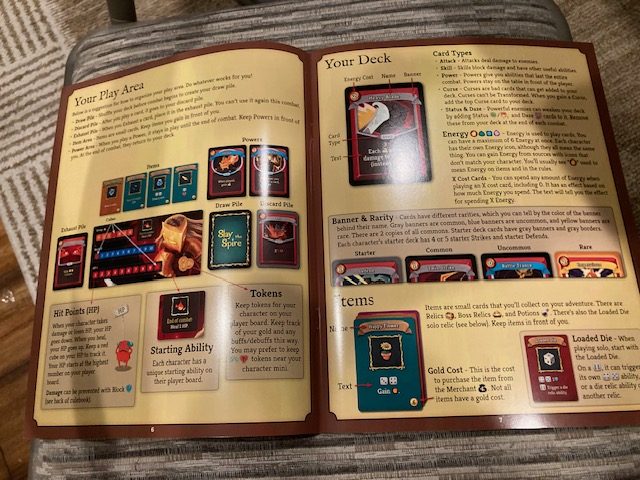
It does well on The Chair Test: it only droops over  the edges a little, the font is big and readable, and the book stays open on the chair next to me so I can see the rules without taking up precious table space.  This rulebook gets an A- on The Chair Test!!

IMG_4690

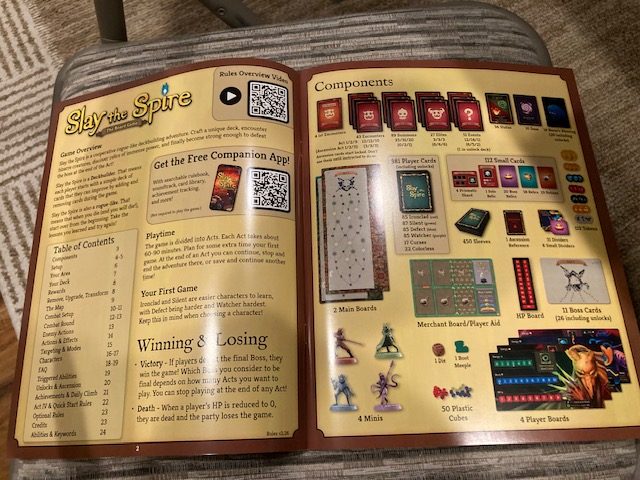
The game starts off great with a Table of Contents, a link for a Companion App, a link for a How to Play video, and a list of all components (most) with correlating pictures!!  Very very nice! I felt very happy to see this!  My only fix might be that I had wished they had labelled the tokens better … there are a lot of tokens and I didn’t know what any of them were!! 

IMG_4691

The set-up is pretty good, but this where the cracks start to develop.  This is my first example of this rulebook being too minimal: I accidentally shuffled the Summon deck, but it doesn’t say WHY you shouldn’t it!  I didn’t know how to recover?!?!??!  It turns out the Summon deck should “probably” just be alphabetically sorted so you can find cards easily … that’s the only reason to not shuffle it, you just make your life harder when you have to find a card.  Really, I could have used a sentence:

  “Don’t shuffle the Summon Deck because you will be searching for cards (alphabetically) in it later in the game.  Just sort the deck alphabetically if you accidentally shuffle it!

But other than that, the set-up went fairly well.  

IMG_4692

This rulebook is pretty well annotated with lots of pictures and examples.   See above.  In general, the rules are fairly clearly set out.  But the real problem with this rulebook is that it seems to assume that you have played the video game.  There are a lot of places where a rulebook for a normal game would be chastised.  I can’t tell you how many times I played with Jon and Keala (who have played the Video Game A LOT), and when I went to lookup a rule, they told me “it’s just like that in the video game!  So it probably means that!” So many times, they clarified a rule by saying “it’s like that in the video game!”  … which is not good for those of us who haven’t played the video game or other Rogue-Lites.

IMG_5328

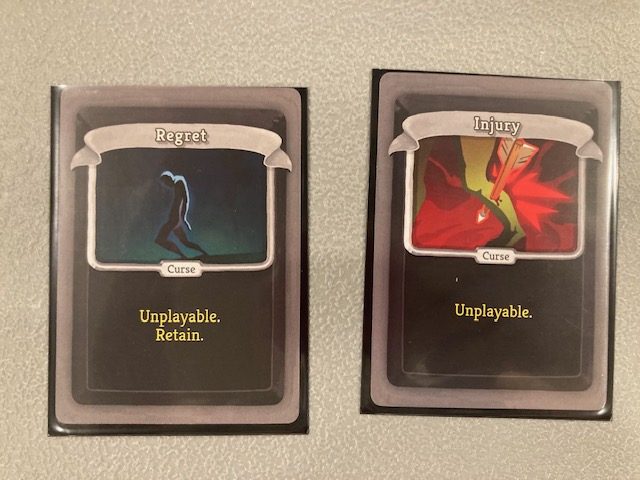
My canonical example of this was the Regret curse.  I actually got two curses one one turn, Regret and Injury (see above)!  My reading of these was that Injury was a worse curse because it keeps clogging my deck as I draw it and shuffle it back in.  I though Regret was a better curse because you just got once and it was out of your deck.   Nope! It clogs your hand so you draw fewer cards!   You draw up to 5 cards, so if Regret is in your hand, you can only draw 4 cards.  I didn’t think the rule was well-specified in the rulebook, but when I asked Keala and Jon they said “Oh it’s just like the Video Game, you can only draw 4 cards!”.  I really wish the rules had made this clearer!  This is just one of SO MANY examples where Jon and Keala said “Oh it’s like that in the video game!”.  This rulebook should have been vetted by someone who has NOT played the video game so as to clarify a lot of finer points.

IMG_4701

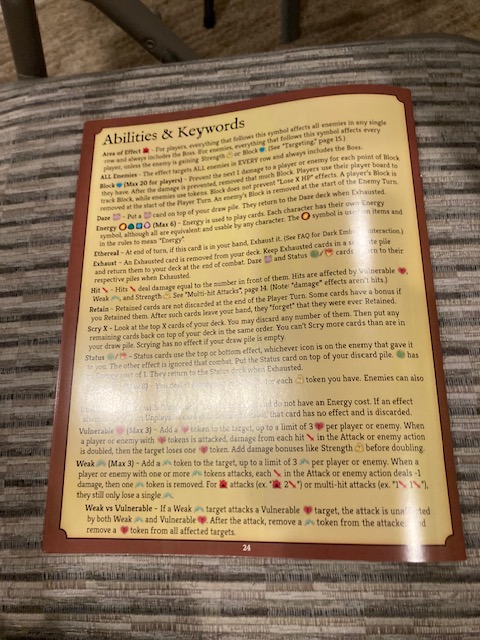
Even though this game doesn’t have an Index (and it really should), the back of the rulebook had an invaluable list of Abilities and Keywords.

Don’t get me wrong, there’s a lot of good stuff in the rulebook, but it was too minimal in a few places (For example: a few more sentences about the Retain keyword or why Summon deck shouldn’t be shuffled).  I was able to learn the game and playthrough solo … and I had fun. I was able to play cooperatively with a bunch of friends (who hadn’t played the Video Game) … and we all had fun.  It wasn’t until I played with seasoned Video Gamers that knew the game that I realized this rulebook needed some more clarifications: it depended a little too much of knowledge of the video game.

Solo Game

IMG_4788

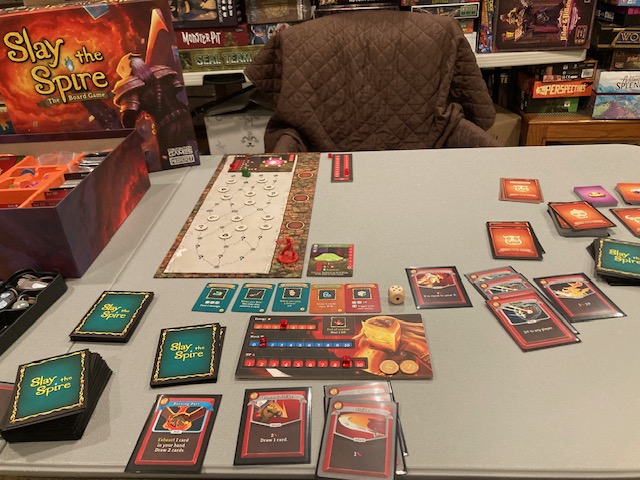
Like the Video Game, you can play this solo (thank you for following Saunders’ Law)! See above as I set-up the red guy for a solo game. There’s not really a lot of special rules or exceptions for the solo game, you just play! The main balancing mechanisms are really in combat:

  1. In plain combat, a monster comes out per row (i.e. per player). Thus, the solo player will be fighting just one row of monster(s).
  2. In Big Bad combat, the number of hit points is scaled to the number of players.

So, in general, you can just jump in and play the solo game without any real special rules! Thank you Slay The Spire! It was SO EASY to jump in solo!

IMG_4846

I had so much fun playing solo that I played through the first three Acts of the game! I had a blast!  There are so many places where you upgrade or get new cards, that you always feel like you are making progress!  You always feel like you are getting better!

Really, solo was fun.  I had a blast. I played wrong on a few points (one to discuss below), but even without knowing the Video Game, I had a good time.

Cooperative Play with Players Who DO NOT Know the Video Game

IMG_4895

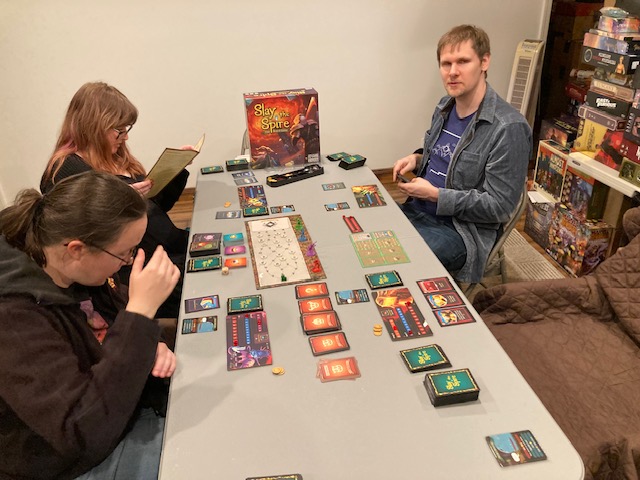
I ended up playing a full 4-Player game of Slay The Spire with three of my friends who have never played the Video Game!  We ended up playing through Act I in one night in about 90 minutes (with a little extra time for set-up and tear-down).   So, I just had to teach the game as-is … no one (including myself) had ever played Slay The Spire the Video Game!

IMG_4896

The biggest conceptually difference, of course, is that this is a fully cooperative game! Slay The Spire is always thought of as a solo game! But the board game is fully cooperative!

IMG_4898

The biggest change is that every character gets his/her own row of monsters to fight!  See above!  While you nominally tend to fight the monster in your row (it sort of becomes “your responsibility” as it does damage to you only), you can target any monster in any row!  So, if a monster has a particularly bad effect for everyone (certain monsters can attack everyone), or if a comrade just needs a little help, players may choose to work together to take out particularly vexing monsters! 

IMG_4903 

My favorite rule in this game is that it allows fine-grained Player Selected Turn Order (see more discussion of PSTO here).  The rulebook calls this out on page 12:

“Players can play cards, use potions, and activate abilities in any order they choose.”

What this means, is that we (as players) can intersperse our actions to accomplish things! If we need Sara to play a Potion, then Andrew attacks to add a Vulnerable, to which then Sara can play another card and attack (for double damage), we can do that! Players can work together to find the best combination of their interspersed actions to take down the baddies!

IMG_4897

In fact, in some ways, Slay The Spire gets the best of both worlds! Since you “generally” need to fight the monster in your row, players can do Simultaneous Actions to fight their own monster, but defer to fine-grained Player Selected Turn Order if they really need to! The Simultaneous Actions helps keep everyone involved … rather than waiting for “your turn”, you can all fight the monsters at once … this means there is much less downtime.

I think this is where Slay The Spire shines the brightest as a cooperative game: the players can choose the best way to play to either help each other (with fine-grained Player Selected Turn Order) or move the game along quickly (with an easy way to Simultaneous Actions fighting your monsters!) It’s the player’s choice, and I noticed we shifted between these modes pretty seamlessly when we played! It was something I didn’t notice until I looked back on our plays.

IMG_4901

The cooperative game worked fantastically, probably better than the solo game because I got to talk and strategize and have fun with my friends!

Cooperative Play With People WHO HAVE PLAYED The Video Game

IMG_5308

So, I wanted to make sure I played this game cooperatively with some friends who have played the video game: I wanted to see what they thought.   Jon and Keala (above) are both fans and have played (and like) Slay The Spire the video game.

IMG_5312

What happened sort of surprised me: we fell into a rhythm fairly quickly.  Every time there was any rules question, Jon or Keala spoke up and said “Well, it’s like this in the video game”, so we didn’t spend very much time pouring over the rulebook.  The Video Game became the reference implementation of the game!  This was both cool and annoying.  It was cool that the game seemed to fall inline with the Video Game, but it was annoying that the rulebook didn’t do better at explaining a lot of things.

IMG_5310

We had so much fun playing, we ended up playing Act I and Act II in one night!   The game just seemed fun to everyone.

IMG_5304

Jon saved our bacon a number of times: he had the ability to shield other players (as the blue guy), which worked out very well!  I would be able to attack something (as the red guy) and Jon (as the blue guy) would shield me or Keala (the green guy) so that we wouldn’t die!   This cooperation seemed seamless!  It just happened that way!   

IMG_5311

The game really clicked for everyone that night: I feel like I know the game better (with all my friends’ comments on how the Video Game works), and I was able to bring my friends into the card game quickly from reading the rules.  We had a great time and plan to play again!

A While

IMG_5313

It’s taken a while for me to get to this point.  I initially had some misgivings about the game.

At first, I was grumpy at the rulebook for how minimal is was: it really needs a lot more elaborations on the rules.  There was one rule in particular I was enchanted with, until I realized I was playing wrong. The “Draw 5 Cards: there is no maximum hand size” (p. 12) lead me to believe that maybe I had more choice of which cards I could discard.  Maybe I could keep cards between hands?   Why else would you emphasize this rule of no maximum hand size?  Jon and Keala had to tell me this, but you always discard all your cards!! All of them! … just like in the video game.   (to be fair, it is in the rulebook but it is one sentence).  I think that rule is there to show that during your turn you can draw as many cards as you want.  

IMG_5074

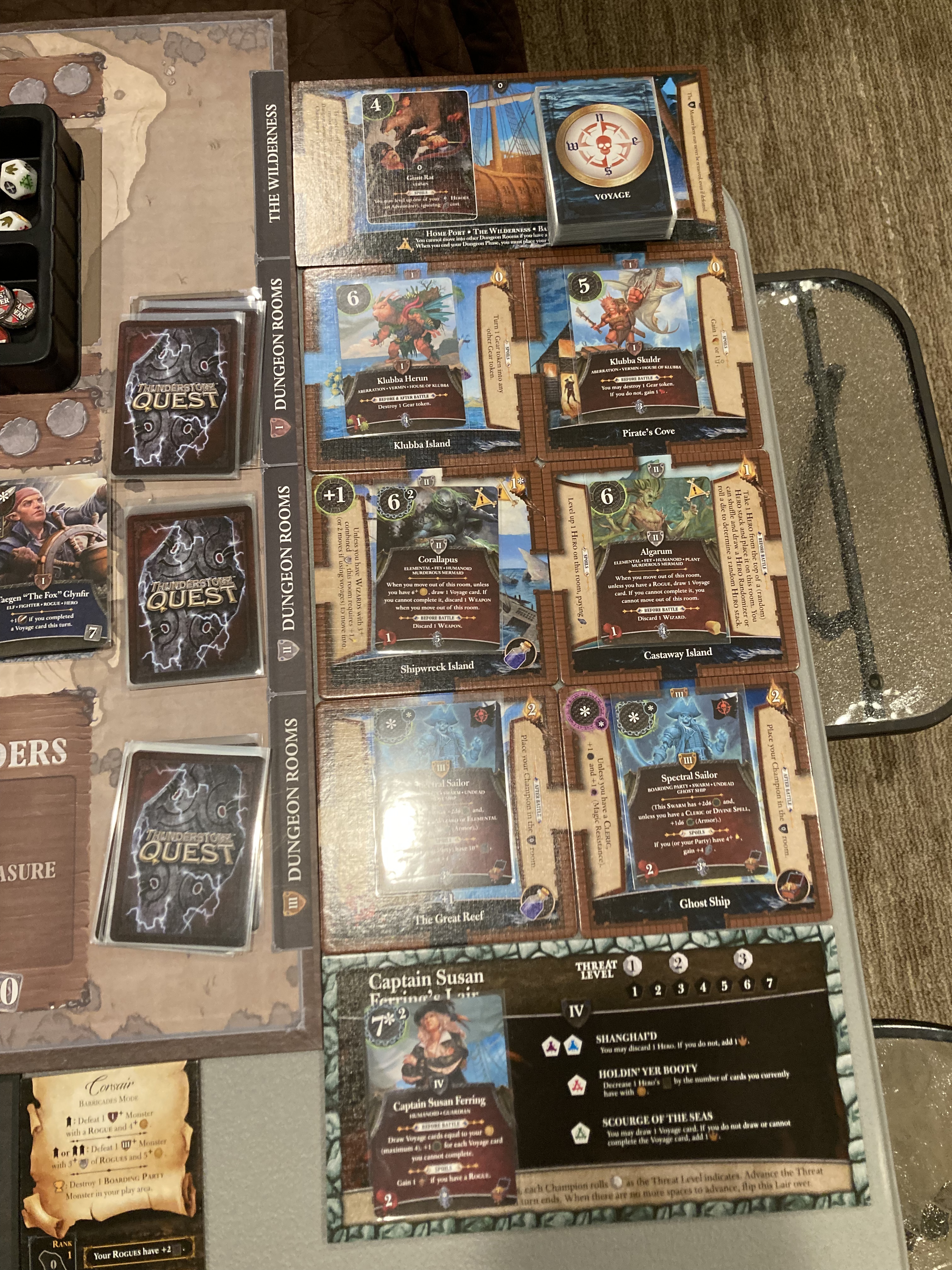
Another thing that threw me off for a while was the art. I had just gotten a new deck-building expansion for Thunderstone Quest (see art above), and the art and graphic design for Thunderstone Quest (above) is significantly better than the art for Slay The Spire (below).

IMG_4805

Comparatively, the art for Slay The Spire is a little anemic after looking at Thunderstone Quest. But I seem to be the only one who doesn’t love the art.  I will admit, the art for Slay The Spire has grown on me a little: it’s very simple and not too busy.  It’s also very readable.  But since I have never played the original video game, I was not as “enchanted” with this art as others.

Flaws

IMG_5314

This is a funny flaw in the game: you can’t (easily) have multiple games going on!  You can save your game fairly easily (putting the appropriate cards in the appropriate slots), so you know you can come back and do another session.  The problem is, if you want to play another game, you can to reset ALL THE CARDS for each deck!!  We worked around it by taking pictures of our decks: if worse comes to worse, we can always use the picture of all our cards (see above) to recreate our save game.   I suspect many people will want to try this game, and we won’t be able to easily have many games going on.  In some ways, this is a product of its own success: it’s so much fun, people want to try it!  But, be aware that a single game is easy to save, multiple games will require taking pictures of all your cards. And also the Unlocks sheet (see below) .. which presents more issues.

IMG_4799

Another problem with this game is it’s really unclear how you move on once you play through Acts I, II, and III.  The Ascension decks (see above) add some variety and keep the game interesting, but it’s kind of unclear how this fits in.  Do you start a new game at Act I with the changes?  Do you start a new deck?  To play Act IV, you have to unlock it, but are you playing Act III again and again and again?  Like everything I have seen in this rulebook, I wanted more elaboration!  This rulebook frustrates me!  Give me an example, give me a few more sentences, give me a page!  I have played a solo game all the way through Act III.  What do I do now?  Add Ascension cards? Start over at Act I?  This is very unclear!!!   This is probably my biggest ding against the game: I don’t know exactly how to move forward.  Sure, I suspect I will post to BoardGameGeek and someone will respond, and I will be able to move forward.  But this rulebook does not make it clear how to move forward after Act III. UPDATE: I had lunch with my friend who has played the Video Game.  He told me that in the Video Game, you just reset everything (including you deck) back to ACT I, but make a few cards (like the uncoloreds) available.  I really DID NOT get that sense from the rulebook … another instant where knowledge of the Video Game helped and the rulebook didn’t. 

Conclusion

IMG_5300

Honestly, this Slay The Spire board and card game has really grown on me: I have played it solo numerous times, and I have shown it to many diverse game groups. The more I play it, the more I seem to like it!  The upgrade paths makes this game great: there are so many opportunities to augment and upgrade your deck as you are playing!  The fact that each players is so distinct in both powers and upgrades really contributes to how great this game is!

IMG_5302

The production is fantastic, and the art is … thematic to the game.  I have grown to appreciate the simple art and graphic design, but I still think the art and graphic design is a little anemic.  

IMG_4758

The solo game is great: it’s about an 8.5/10.  It’s easy to play, and there’s really no exceptional rule changes needed to get the solo game to the table.   

IMG_4902

The cooperative game is about a 9/10: the base game is all there, with all the upgrade and augment paths, but the cooperation really shines brightly! Players can choose so many ways to help each other with fine-grained Player Selected Turn Order, with Simultaneous Play keeping everyone engaged at all times! And even though these play modes seem mutually exclusive, players seem to weave in and out of Simultaneous Play and PSTO without even noticing! 

IMG_5301

Players who know Slay The Spire the video game might find this to be a 10/10 for them: the game is great and also evokes so much atmosphere from the Video Game!  

Over the course of many  play sessions (both solo and cooperative), I ended up liking the game more and more.  There are some issues with the rulebook, as it seems to assume players know Slay The Spire Video Game pretty well! Other than my issues with the rulebook, the game is great.  Putting everything together, this feels like a 9.5/10 as an overall production!  This game surprised me how much I liked, especially given my anti-Rogue-lite tendencies.

Point-And-Click Adventure for Families! A Review of Eppi: An Interactive Adventure Book

IMG_2581

Eppi is the second series of games in the Paper Point-and-Click line of games from Lookout Games.

img_9161-e1623455483876

The first game in this series was Cantaloop by Friedemann Findeisen: see our review here! We loved Cantaloop so much that it made the #1 spot on our Top 10 Cooperative Games of 2021! This was a series of three games: we liked all three of them! See here, here, and here!

IMG_2587

What makes these games so interesting is that they are the paper book equivalent of the old “point-and-click” video games! 

IMG_7336

Think of the Secret of Monkey Island, King’s Quest, or the more recent Thimbleweed Park. Players “point-and-click” at objects in their world (on the computer screen), combining objects to solve puzzles! Players also move around, exploring the world they play in!

underwater

These games are all about combining objects and exploring the world, trying to solve the puzzles in the story you uncover along the way.

IMG_2634

However, instead of a computer screen, these Paper point-and-click games have book and cards! You combine cards, solve puzzles, and flip through the book exploring the story therein!

IMG_2583

Let’s take a look at Eppi!

Unbooking

We can’t have an unboxing, as this is mostly a book. So this is an unbooking.

IMG_2589

Eppi is a book first and foremost: everything else is contained in the front pouches at the front of the book.

IMG_2590

The big bottom pouch contains the inventory page, the play sheet, a postcard map, but most importantly … the red decoder!

IMG_2596

This little red decoder is the main gimmick of the game! Hidden text in the book waits for you to unearth via the red decoder! The red decoder reveals important text in the adventure! See above as you encounter Eppi for the first time in the hall! 

IMG_2599

Most of the “objects” you will interact with come from the three card pockets. As you reveal text in the game, you will uncover more cards which you can combine!

IMG_2620

One thing that’s differentiates Eppi from the original Cantaloop series is that about a third of the cards are stickers rather than cards: see above That’s right, this is a legacy game (but see below)! As you explore, you will put stickers on locations to reveal new options or hide old options that are no longer relevant!

IMG_2607

The map tells you where you can go in the house, and the corresponding pages of the book. Note that you can’t get into certain rooms until there are unlocked via triggers! (You can’t get to Saira’s Study until you hit trigger D4!)

IMG_2616

The play sheet comes with a little matrix of “triggers”: as you explore and combine objects, you will mark triggers on the sheet to show you’ve “accomplished certain things”. 

IMG_2612

This same Play Sheet also has your “TODO” list: in order to win the game you have to accomplish 5 goals! See above. (Why are there two Play Sheets above? Keep reading!!).

IMG_2621

The rest of this game is the book! 

  • The introduction and tutorial is fabulous and tells you how to explore and combine objects!
  • The next section has the 12 Locations (2 pages each) in the game
  • The next section are Cut-Scenes (further expansion of the plot as you move forward)
  • Finally, the last section is a Help Section

IMG_2614

This game looks great! It has a very family-friendly and welcoming vibe to its art. It’s very clear this is aimed at younger kinds and families! I mean, it says that on the cover, but the art choices reinforce that.

Legacy or Campaign Game?

IMG_2634

Since you are supposed to put down stickers as you play, this is pretty much a legacy game! You won’t be able to replay it again … or will you? You really can’t remove the stickers (they are very sticky), and you also mark up the Play Sheet with the triggers. So, this is a legacy game (but see below)! And honestly, what kid doesn’t like putting on stickers? For some families, the stickers may the best part of the game.

IMG_2627

Having said that … If you are very careful, you can reset the game: you can use little pieces of tape to “tape” the stickers in the book rather than stick them.

IMG_2664

I was able to play the entire game all the way through, using just little bits of tape on the edges to hold the stickers down (see above). After I was all done, I was able to reset the entire game by just carefully pulling off the tape! If you use small, little pieces of tape, you can keep the stickers down without too much work to remove it later. The bigger the piece of tape, the harder it will be to remove!

IMG_2612

The only thing other thing you need to do to reset it: make a copy of the trigger sheet! That’s why I have two copies of the Play Sheet above: one is a copy!

IMG_2644

So, with those two “tricks” (tape and a copy of Play Sheet), I was able to reset the back to pristine condition after full playthrough (it did take a little bit of time to undo the tape).

IMG_2631

It’s a little fiddly to keep making little pieces of tape, but I suppose no more fiddly than trying to stick the sticker on and aligning it just so. However, I suspect the best way to play is to just put the stickers in: the best part of being a kid is playing with stickers!

IMG_2586

The only reason you may not want to put stickers in your game is that this is a 3-Part series (I think): this is Part I after all.  The next Eppi book is “probably” a year away, so you may want to replay this game again just before the next one comes?

In general, it’s probably more fun to put the stickers in (it’s a legacy game)! If you are just a little careful, you can get by and make it resettable (making it a campaign game). It’s up to you!

The World

IMG_2597

Most locations in this world look like the above: the left side of the page has a lot of hidden text (to decode with the red acetate) and the right side of the page is a picture of the room you are currently in (with objects you can combine with). As you explore the room, you will combine objects and read some of the text on the left!

IMG_2608

The typical way to combine objects is to align the left side of a card with either a location or the right side of another card. If the two letter code (u6w6 from the picture above) corresponding to the arrows shows up on the appropriate sheet, you can read it with the red decoder! Otherwise, if there’s no such code, nothing happens! (It’s like trying to combine a bowling ball and a feather, it doesn’t make sense, so nothing happens).

IMG_2635

Sometimes, the little red decoder will tell you to read a cut-scene: it looks like the above, where characters talk to each and further push the plot and character development.

IMG_2655

This game is all about “trying” things in this world: Do these objects combine? Do this object combine with this location? Nothing here? Let’s look around at a new Location! You try stuff, go to new Locations, and just keep exploring this world.

Flow

IMG_2654

This is an adventure game: you will start off making tons of progress, then slowly and slowly start making less and less progress until you hit a wall. Eppi has the same ebb and flow as most adventure games: sometimes, when you are stuck, you just have to go around and just “try stuff”! Arguably, the least exciting thing about adventure games is the brute force approach is sometimes needed: it can be boring and soul-crushing to just try stuff that makes no sense. Even worse, it’s harder in this game because you physically have to do a lot more work to just “try stuff” (turn pages, combine items, look up text, see if it decodes: Lather, rinse, repeat). But once you break through that wall, it’s so exciting! The story picks up again, and things make sense again!

565435-the-secret-of-monkey-island-special-edition-playstation-3

Eppi is an adventure game! Every point-and-click adventure game I have ever played has this same flow: lots of cool stuff then some frustration, then excitement, some more frustration, then more excitement!

Help

IMG_2640

If you do get stuck, there is a Help Section in the back of the book (see above). In this case, you lookup help sections by seeing what trigger conditions you are missing! You correlate your Play Sheet and find the lowest trigger you are missing! This is usually where the problem is! 

IMG_2639

A few times, I had to look up some help, but I had to look at more than one trigger to find what I needed. But it was there! It’s a little confusing the first few times you try to use the help. One of my biggest problems was that I sometimes forgot to mark off a trigger, so that prevented me from moving forward!

This isn’t the best Help system, but it seemed to work for me once I kept at it.

Story: Solo vs Cooperative

IMG_2586

So, Eppi is a family friendly story! In fact, the main characters of the game are a family! Mom and Dad and some kids of all ages!  As you explore this game, a story moves forward.   But, why read a story when you can play it?  

IMG_2657

The two main ways to play Eppi are solo or cooperative.  Cantaloop (the first of this kind of games) definitely felt like more of a solo game, although arguably you could play it cooperatively.  Eppi feels like it is better at being both solo and cooperative: it absolutely works solo (that’s the way I played it), and then it absolutely works in a family environment (a 7-year old girl and her family gave us some feedback).

Solo

IMG_2584

I ended up playing the entire game solo one Sunday: it took about 5 hours (the box says 5-8 hours, so that’s accurate). 

IMG_2643

I definitely stopped and took a break at some points when I was getting frustrated, so wall-clock time was probably more like 7 hours, with 5 hours of play and 2 hours of taking a break.

IMG_2631

This would be easy to reset if you needed to: you just take a picture of the cards you have, and put everything away. If possible, it’s probably just a little easier to keep everything set-up between sessions, but you may not have that luxury.

IMG_2654

The solo game worked pretty well. I got stuck a few times and had to consult the Help. In general, it was pretty fun.

Cooperative Family Mode

123_1 (4)

What I Liked

IMG_2621

Turning pages to explore and move through Locations worked great: the binding is good for that, and the pages are high quality: they definitely learned from the Cantaloop experience! The very first Cantaloop game had lesser quality paper, and it actually made a difference, as you were much more careful turning pages (afraid to tear them)! With the higher quality paper and binding, it’s easy to make your way through the book.

IMG_2623

The stickers are cool. In Cantaloop, they “new scenes” were on cards, and if you turned the page, you would have to reset the scenes. By putting the “new scenes” on stickers, you can work through the book quicker, as you don’t have to worry about “new scenes” flopping around! Besides, stickers are cool … especially for kids! (And, like we said, if you are careful you can get the equivalent experience with taping the cards, but you should use the stickers!!!)

IMG_2586

By making the Eppi game more “family-friendly” (to be clear, Cantaloop was NOT family-friendly), it opens the door to cooperative play more than the original Cantaloop: the story and art is very inviting in Eppi! It’s just something the whole family can be immersed in. This definitely feels the cooperative mode is much more accessible. I loved Cantaloop, but it really is best as a solo game. I think this might Eppi might be more fun as a cooperative game.

IMG_2587

I adore this genre: the Point-And-Click Adventure game is fairly rare! I am so glad Cantaloop did well enough to spawn further games in this genre. I love this genre so much! More games like this please!

IMG_2598

The tutorial was very good: it showed what you can and can’t do when you combine objects.

What I Didn’t Like

IMG_2645

In the original Cantaloop, when you combined cards, the lowest number card ALWAYS had to be on the right: this reduced the number of ways you could try to “combine” two objects. Why didn’t Eppi adopt this rule?  You effective may double the amount of work you have to do to combine objects, as you may have to combine the cards twice! 

IMG_2636

I liked the story here, I did.  But, the wit of the original Cantaloop isn’t in here … which makes the game seem like a little more work.  Even if you got a puzzle wrong in Cantaloop, frequently there were funny jokes or amusing turns-of-phrase!  So, every time you worked for clue, you got rewarded by either advancing the plot or some joke!  I didn’t realize until I played Eppi that the jokes in Cantaloop distracted me from all the physical work you have to do to move the story forward!  Let’s be clear: there is a lot of physical activity of moving cards, combining objects, reading red text, turning pages, marking triggers, turning to cut scenes!  Whew!  All physical activities!  

I think some of this will go away if you play cooperatively, as the game is more about the cooperative experience with your family.  But I think the “work” to move the game forward is a little more prevalent in Eppi if you solo it.

IMG_2661

The final puzzle was pretty hard.  I feel like it was almost out-of-scope/too hard for a family game: I suspect you will have to use the Help System to finish the game.  That last puzzle seemed a little too much, even with a whole family looking at it.

Conclusion

IMG_2659

I am so happy there are more Interactive Adventures like Cantaloop! Eppi is a fun game solo or cooperatively, but I think the best place for it is the cooperative game with the family …

IMG_2582

… and that’s what the cover says! It doesn’t lie!

I like Cantaloop better overall, partly because of the non-stop humor, but I had a lot of fun with Eppi. This is a solid 7.5 solo, maybe 8 cooperatively with your family.

Top 10 Cooperative Point-And-Click Adventure Board and Card Games

Welcome back to Cooperative Adventure Game Month! We have talked a lot about cooperative adventure games this month, from the silly Starlings Box One to the grimy noir Saints and Sinners.We end this month with a discussion of a Top 10 of one of our favorite kinds of cooperative adventure games: the point-and-click adventure!

Make sure you re-read that! Yes, this is a list of Board and Card Games (not Video games) that work like the original LucasFilm point-and-click adventure games such as The Secret of Monkey Island, The Day of the Tentacle, or the more recent Thimblewood Park! Granted, a board or card game doesn’t have a mouse pointer to move and click, but there’s certain elements that make a game feel like a point-and-click video adventure game!

IMG_3164

What makes a board game a point-and-click adventure game? For us, it breaks down into three fundamental elements:

  1. You explore a world!  The game is about exploration and discovery, as you “move” from location to location.  In the point-and-click video games, you could “point-and-click” to move around a map!
  2. You solve puzzles by combining objects!  You need to find objects and combine them in unique ways to solve puzzles. In the point-and-click video games, you would “point-and-click” on items/verbs to combine them!
  3. You move along in a story!  You are part of a story: this is interactive fiction!

So, if a board or card game has these fundamental elements, we call it a point-and-click adventure game! If it moves from location to location like a duck, combines items like a duck, and is part of a story like a duck, it’s a duck!

the-secret-of-monkey-island-commodore-amiga

Take a look at our review and discussion of the newest  Monkey Island game for more thoughts on what we like about these type of games! 

To be clear, all the games on this list are “play-once” because you reveal the plot and main elements!  You can play it again, but you probably want to wait a few years until you forgotten everything!

Honorable Mention. Choose Your Own Adventure: House of Danger

pic4092537
Ages: 10+
Play Solo? Yes, but best with a group
Number of Players: 1 or more Players
Time: 60 minutes per chapter (5 chapters)

This isn’t quite a pure point-and-click adventure game, but it’s so close we have to mention it!  You explore a very silly world, find objects, and use them for both dice mitigation and helping you with puzzles.

pic4093960

But this feels so much like a point-and-click adventure!  We make choices in the game and we explore the world, but it so silly! The dice are the only reason House of Danger is down at an Honorable Mention: the dice take the pure puzzle aspect out and poke just a little bit of randomness here.

There is another game in the Choose Your Own Adventure series, but House of Danger was the funnest!

10. The Shivers

IMG_4573

Ages: 10+
Play Solo? No, there has to be a GM: best with a group
Number of Players: 2 or more Players
Time: 60 minutes per chapter (5 chapters)

The Shivers is almost more of an Role Playing Game (RPG), as you have to have to have one player “run” the game, so you can’t really play it solo.  That’s really the only reason this is #10 on this list ….

IMG_4623

Otherwise, this is a beautiful game with Pop-Up Components!  The physical nature of this game makes it feel more like point-and-click than many of our games on this list!  But the RPG nature and lack of solo drop it just a little. 

IMG_4628

This game is a fun little cooperative point-and-click type adventure game with a sense of humor and beautiful components!  Take a look at our review of The Shivers to see if this is something you might like.

EDITOR: We recently got a comment on our blog about the Shivers from William T Tiller:

Its funny you should compare it to Monkey Island because I did the Shivers art. I am Bill Tiller, and I worked at Lucas Arts as a lead artist on the adventure games The Dig, and Curse of Monkey Island, and A Vampyre Story. In fact there are a few refences and easter eggs that refer to Monkey Island in The Shivers. Larry Ahren, a writer, designer, and animator on Day of the Tentacle, Full Throttle and director of Curse of Monkey Island also wrote one of the scenarios in the game. Those may be the Shivers game feels a lot like a point and click adventure game.

9. Coded Chronicles: Scooby Doo! Escape From The Haunted Mansion

pic5239705
Ages: 12+
Play Solo? Yes, but best with a group
Number of Players: 1 or more Players
Time: varies (there are a number of interconnected scenarios)

Players take the role of their favorite Scooby Doo characters and explore the Haunted Mansion, solving puzzles to pursue the mystery in this box! The object interaction is very simple (using the first number of the character combined with the number of an object), but it’s a pretty simple and elegant way to combine objects! 

IMG_2670

This is one of the simpler point-and-click adventure games on this list (with House of Danger being the simplest), but it’s a really fun mystery! And it totally feels like a point-and-click adventure as you explore the house, combine objects, and work towards solving the final mystery!

There are other games in the Coded Chronicles series as well if you like this style of adventure game!

8. Paper Point N Click: Eppi
IMG_2581

Ages: 8+
Play Solo? Yes, but best with a group. The solo mode is still quite good!
Number of Players: 1-4 Players
Time: 5-8 Hours for the whole adventure

Eppi is the next adventure book game series in the Paper Point-and-click line of games.

IMG_2656

This game is an exemplar of the great things a board game can do in the  point-and-click genre!  This particular game is aimed more towards families and is probably best in a cooperative group, but it still works very well solo.  The exploration, story, and puzzles that come out of this game are just outstanding!  This feels like a real point-and-click adventure game.  This is aimed at a younger or family-friendly audience, which may be outside your wheelhouse (which is why it’s only #7).

Unlock Epic Adventures: Mission #07

IMG_0205

Ages: 10+
Play Solo? Yes, but probably best with a group
Number of Players: 1-6 Players
Time: 60 minutes

The Unlock! games are nominally called Escape Room games, but they share quite-a-bit of DNA with point-and-click adventures!  The Unlock! games, which use cards and an app on a phone to direct the action, are a perfect example of point-and-click adventure games!  A story unfolds as you unlock new locations and items, and you to explore and combine items to push forward!

IMG_0206

This particular box has three adventures in it (See Unlock!  Epic Adventures, which we reviewed here), all of which are great point-and-click adventure games!

IMG_0207

But it was Mission #7 (the last of the adventures) that really captivated us!  This story was fun and interesting and tried a few new things we haven’t seen in Escape Rooms before!

6. Unlock! The Adventures of Oz

IMG_2690 (1)

Ages: 10+
Play Solo? Yes, but probably best with a group
Number of Players: 1-6 Players
Time: 60 minutes

The original Unlock! games came 1 game to a pack: later on, they started packaging them up up three at a time.

IMG_2692 (1)

Before we got Mission #07 in the Epic Adventures box, The Adventures of Oz was available and one of our favorite Unlock games!

IMG_2691 (1)

My favorite explanation that this is a Point-and-Click adventure is the back of the box: Search the scenes!  Combine Objects!  Solve Puzzles!  The Adventures of Oz was a really fun adventure that I was mesmerized back at an early RichieCon in 2018: it tried some really interesting things and was such a great adventure!

5. Chronicles of Crime

Final Box Art

Ages: 12+
Play Solo? Yes, but probably best with a group
Number of Players: 1-4 Players
Time: 60-90 minutes

Chronicles of Crime is very much an app-driven game!  It made the #2 spot in Top 10 Cooperative Games 0f 2018! To quote:

If I had to characterize this game, I’d say it’s an old text-style adventure game!  What?  In the old adventure games, you could only “manipulate” the items on screen on in your inventory.  “Get light”, “Drop light”, “talk man”, “ask guard about skull” and so on.  In this game, all your items are on cards in front of you!  When you want to interact with the items, you use your smart phone to scan a code on some cards!  So, if you want to “ask guard about skull”, you’d scan the code on the Guard card, then scan the code on Skull card!  And the phone would tell you what he said!
 
This interaction is great!  Except, you are trying to solve a crime by interacting with the world in front of you!  Really, really fun!   You move around from location to location, physically LOOKING at animations at locations (really!), and then scan cards.  (“I think there’s a shovel here at this location … Um … Oh! There’s a ‘gardening tools’ card!  Scan that!”)
 
Surprisingly fun, amazing graphics (you HAVE to have a smart phone to play), but a lot of content!  It’s also easy to play!  A GREAT game!

There are multiple versions of this game: 2400, 1400, 1900, all of them very interesting iterations on the base game! I’d recommend any of them! In fact, 2400 made our Top 10 Cooperative Expansions of 2021!

4. Unlock! The Treasure of Tonipal

IMG_2693

Ages: 10+
Play Solo? Yes, but probably best with a group
Number of Players: 1-6 Players
Time: 60 minutes

So, this is one of the more difficult of the Unlock! series!  The pirate theme and puzzles really kind of make of you feel like you are reliving some of your Secret of Monkey Island days!  

IMG_2694

Without giving away too much, this point-and-clock adventure had one of the funnest stories and the best “last puzzle” I’ve ever played.  I want to replay this again it was so much fun!

3. Adventure Series: The Grand Hotel Abaddon

IMG_2495

Ages: 12+
Play Solo? Yes, but probably best with a group
Number of Players: 1-4 Players
Time: 90 minutes per chapter (3 chapters)

This is a very different kind of point-and-click adventure game: it’s quite text heavy, but it uses cards to denote objects and locations.  

IMG_2497

The Location cards are oversized cards, and the objects in the game are plain cards marked with numbers.  

IMG_2499

Every player assumes the role of a character, with little standees moving around this world.  The story centers on a hotel as “strange things” happen.  It’s quite an interesting story that unfurls over 3 sessions!  This is the 4th game in the Adventure Series line: it made our Top 10 Cooperative Expansions of 2022! We really loved this game!

2. Adventure Series: The Dungeon

Ages: 12+
Play Solo? Yes, but probably best with a group
Number of Players: 1-4 Players
Time: 90 minutes per chapter (3 chapters)

The Dungeon is in the same series of games as our last entry: The Adventure Series.  This game series burst onto the scene in 2019, and it was so fun it made it all the way to out #2 spot on the Top 10 Cooperative Games of 2019!

This was probably the first board and card game that really felt a point-and-click adventure game!  You explored a dungeon!  Combined items!  Solved puzzles! You ventured through a story together!   There was nothing else like this, and this series totally captured my game group!

1. Paper Point N Click: Cantaloop

img_9161-e1623455483876

Ages: 16+
Play Solo? Yes, probably best solo
Number of Players: 1+
Time: 5-8 Hours

Cantaloop nails the point-and-click adventure book game better than any game I have ever played!  When this came out in 2021, it was ground-breaking!  Using the book format with red acetate decoder to move through an adventure game was new and original.

IMG_9240

The way players moved through Locations, combined objects, and solved puzzles was very innovative! Even the help system was innovative!

IMG_9195

What made this so good was the writing! Jokes were strewn everywhere, and everything seemed well-thought out! Remember when Monkey Island would tell you a joke when you tried to combine two weird things? The same happens in Cantaloop! Cantaloop rocketed to the #1 Spot on my Top 10 Cooperative Games of 2021 !

IMG_6808

This series is an ongoing story over three books, told in 3 standalone books: Breaking Into Prison, A Hack of a Plan, and Against All Odds. See our reviews of all three games here, here, and here.

IMG_1055

The only thing to be careful of is that the games are slightly raunchy (see above) and some adult material slips in (which is why the game is 16+ for ages), but it’s always done to be funny and doesn’t detract from the game.