The Adventure Zone: Bureau of Balance is a very light cooperative story-telling game. Players each create a character and take them through a very light adventure to find some “relic” or Object D’Interest. All players quest together as a team. See below.
Characters
Pads for each template character type
This is a light dungeon-crawler game: each character will create a character using one of the 5 prototypes in the game: Priest, Wizard, Warrior, Bard, or Rogue. See picture above.
The act of creating your character is fairly quick: you answer 3 simple questions about the “nature” of your character and use that to help guide your character through the game. In general, you want to stay “true” to your characters (but if you don’t, there are no real consequences).
A close-up of the Wizard sheet
Take a closer look at the Wizard sheet (above) for a sense of the questions you’ll be asked to set-up our character. Again, this is a story-telling game, so you are just “goofing” and creating a backstory out of your imagination.
You can see our group took this VERY seriously: we went with an Italian food motif with Lil’ Meatball (the warrior), Noodle (the Wizard), Sauce (the Bard), and Parmesan (The Priest). See below.
This character-creating process should be an immediate indicator of whether you will love or hate this game: the game does seem to lean towards silliness.
Components
This is mostly a card game: the cards will specify events and monster to overcome: you will tell stories of how you overcame said events and monsters.
This is not a “pure” storytelling game: you will be rolling the dice (above) to see if you pass events/defeat monsters. Generally, with the dice and your “extra plusses”, you will have to roll OVER the amount on the card. The mechanism is dirt-simple.
For example, to get through “The Great Gate” above (green card on right), the current player will have to roll-play, tell a story, and get a 6 or above to get through the gate. Some events will get extra plusses if you incorporate extra story elements.
As you play, you can turn in completed events/monster for treasure. See some treasure above.
Rules
We chose to watch the video by Becca Scott to see how to play. I would recommend watching this video to learn: it was reasonable and she is very upbeat.
After we basically got set-up, we’d occasionally look at the video to get clarifications.
We had to look at the rulebook “a little”, but in general, the video was good enough.
Gameplay
Gameplay is pretty simple: everyone gets a turn trying to defeat a monster/event on the board. Once you go all around, you get to “reset” you character (each player has a help token they can use once per round).
One other player can offer to help, but it uses their “help” token. If you defeat the event/monster, you keep the defeated card … with enough of them, you can turn them in for treasure.
You have no choice on which treasure you get: you just get the top card of the Treasure deck. LIke the Haunted Doll … not sure we would have chosen that as treasure!
You can lose if the “party health” goes to zero (top of the board). Each failure in the game will cause some damage to the “party health”, depending on the event/monster.
And that’s it! Players keep going until they get through 2 piles on the board, and they lose f the party health goes to 0! Very simple.
Solo Mode vs Cooperative Mode
There is no given solo mode: this is a game for 2-5 players. This is a light, cooperative story-telling game. There’s no reason you couldn’t play two characters (you definitely need at least 2 characters so they can help each other) to play solo, but it seems like it would be not fun.
This is a cooperative story-telling game where you feed off of each others stories and silliness. It really should be played as a group.
Thoughts
This is a very light game: I know, I’ve said that a lot. It’s a little random, as you have no control over what treasures you get, but I guess that’s the nature of treasure, isn’t it? The game presents a framework for storytelling and gives you places to tell little stories. It forces you to roll some dice so you do fail sometimes (sometimes failure is funnier than succeeding) and make the game interesting. There is an interesting notion of cooperation, as each player can use offer help or accept help from a few characters, but at the cost of not being to help others.
Each player gets a token to help others: see the +2 for the Wizard above. Once it’s spent, it can’t used until the round (each player gets one go) ends.
There was a little bit of strategy in the endgame as we had to make sure we could defeat the final puzzle by spending our help tokens properly. In general, though, this was just a light game where we told stories and had fun.
Conclusion
You’ll probably know if you’d like the game after getting here: if you want a light, cooperative, story-telling game, this is fun. The Adventure Zone: Bureau of Balance presents a nice framework for a silly storytelling game. The combat/events mechanisms are dirt simple and keep the prospect of failure in the game so as to make the game at least somewhat interesting (it’s boring to win all the time).
Interestingly, I think my friends like this game a little more than I did: they like RPGs and play them quite a bit, so the notion of creating a story and populating that world was appealing. I didn’t like it quite as much, probably because it felt just a little too random. But, this game was still fun: I got to hang out with my friends one evening and tell silly stories.
Oh yes, this game encourages silliness: For example, see above: Steven The Goldfish is treasure? Take a look at our Top 10 Cooperative Games With a Sense of Humor for other games with a silly view.
Those of you paying attention might be saying “Wait a Minute! Ark Nova is an engine building game that’s completely competitive! You can’t play it cooperatively!”
Or can you?
Well, this would be a pretty short blog entry if you couldn’t.
An Idea From Solo Mode
To win the solo mode, you need to get at least zero victory points! Scoring is a little different in Ark Nova: it is a victory point game, but the number of victory points you get is (nominally) the difference between your Appeal value and your Conservation track (modulo some rules for snapping to an edge).
See the picture above: My victory points for a solo game were 80 – 67 = 13 victory points (the conservation track uses the smallest number in the range on the green track). Don’t expect huge scores in this game: if you can get a positive score, that’s a big deal! (Note, if this were the other around, I would have -13 victory points! A loss!)
Engine Building in a Zoo
Ark Nova game reminds me a little of Terraforming Mars meets Endangered: it’s an engine builder (with lots of cards: see above) with a zoo/conservation theme where you build your own zoo: see below.
Building a Zoo!
Ark Nova is also about as long as Terraforming Mars: It’s quite long, and the more people play, the longer it is.
Take That!
At first blush, this seem like is that there really isn’t any “take-that” in this game. By “take that”, we mean mechanisms were you intentionally do something bad to another player to help yourself. In our first solo game, we didn’t see any cards that would “screw” other players. That gave us hope that maybe turning this into cooperative would work! Generally, you are just worried about building the best engine you can and doing the best on your turn! There is player interaction in the sense that you might take an animal someone else wants, or start the break early, but these are much more passive interactions. Generally, you aren’t out to get people: you just want to build build build.
Unfortunately, after playing again and looking closer at the rules, there are quite a number of “take-that” mechanisms in the game: stealing cards or money, putting poison, hypnosis, constriction. See images form the Icon sheet below. All the yellow/red tokens are “take-that” to some extent.
This might be a sign that a cooperative mode is a bad idea. To make this work, we’d have to either (a) completely eliminate these cards or (b) rewrite the text so the effects are different. The deck is MUCH too large (212 cards) to go through it apriori and eliminate the “take-that” cards before game, so we’ll have to eliminate them as they come up.
Cooperative Play
Once we get rid of the “take-that” cards in the game, it’s very simple to add a cooperative mode. Ready?
In the cooperative mode of Ark Nova, players work together to build their engines with the intent that no player gets negative victory points. Players win together if all players have zero or more victory points!
And that’s it! Well, that’s the idea at least: we use the idea from the solo mode that negative victory points are bad, so that all players must work together to make sure none of their fellow compatriots are lagging. We like this idea because it keeps the entire flow of the game, but still gives somewhat of a notion of cooperation in the endgame.
DungeonLords
Those of you with good memories might think “Hey, didn’t you propose something like this for DungeonLords?” Good memory! Recall from this Top 10 Games That Can Be Played Fully Cooperatively, we added some rules to make DungeonLords cooperative! The idea was very similar:
In the cooperative mode for DungeonLords, players win as a group if they can keep all Dungeons “pristine” and unexplored by the hero parties.
We dubbed this stay-out-each-other’s-way cooperative, and that’s very similar to what we propose here: players will mostly just try to stay out of each other’s way as they play.
What Really Happened
We started Ark Nova with the best intentions to play it cooperatively. “How hard can it be? Play normally and get rid of the take-that cards as you play!” Harder than you think.
First of all, there’s a lot of cards with a lot of text in the game that come out (in the display or in your hand). Culling the “take-that” cards dynamically is actually a lot of work because we have to read a lot of cards as they came out: this really ground the game to a halt. In the end, we just let the “take that” cards come out because they weren’t that bad. But, it seemed like an inauspicious start.
Also, what really happened: we all got too invested in our boards!! We played for 3.5 hours (4-player game). After so much investment in time and momentum (individually) in our zoos, we just kinda “forgot” about playing this cooperatively. After 3.5 hours, we were also tired and kinda just wanted the game to end. My players essentially said that “there was too much thinking: trying to embrace a cooperative mode at the endgame just seemed out of reach”. It was too much.
Conclusion
Is it a good idea to turn Ark Nova into a cooperative game? I don’t know, but our first experiment/session in this endeavour was a complete flop. Players (individually) got too invested in their own zoos and it was too hard to break out of that mold. It almost feels like we just ran a psychology experiment: “What happens if you try to add cooperation to a world-view that has already embraced competition?” In our case, the cooperation failed.
That doesn’t mean we might not still pursue this cooperative idea, but preliminary results show that this is perhaps a bad idea for Ark Nova.
Sometimes, we receive games that we only play once or a couple of times. That’s not enough information for a full review, but it’s usually very telling if no one wants to play the game again. Sometimes we really just don’t like a game, or sometimes a game just doesn’t hit for us, or sometimes a game just doesn’t stand out for more plays. Here’s a look at three games we’ve played in the last few months that we didn’t love. We’ll start with our least favorite and end with our favorite.
Quick Review: Tiny Epic Dungeons
This game was infuriating. The components are pretty amazing, with screen printed wood minis and linen cards…
…but the rulebook was horrible.
I rage-quit my first solo game because the rules were so bad.
I asked my friends to play a game with me and see what I did wrong: “Surely I was doing something wrong!” After playing through again, they had the same reaction: this rulebook isn’t very good and it seems to be missing information.
Andrew found a 14-page supplement (that’s right 14 pages!!) online to to understand the iconology of the game: this supplement was critical to understanding the game. Even with that, the game just wasn’t that easy to play, and it wasn’t fun.
Nobody in my group liked it: We’d probably give it a 3.5/10. It only gets a 3.5 instead of a 3 because the components were so nice.
We could be completely wrong on this one: The rating on BoardGameGeek was like 7.8/10.0 at the time of this quick review, but no one in my group liked this game. At all. I will probably never play this again.
Quick Review: Tales From the Loop
I played this one solo first to get a sense of the rules: the rulebook was “ok”, not great: it needs a better organization, but all the rules were mostly there.
Then, we played a 4-player game. The basic mood of the room was “Eh, it was okay”. We like the kid stuff the best (“do your chores sometime during the week”), but the game didn’t really hit us. I had seen the show, but my friends hadn’t: I had described the TV show Tales From The Loop as a “Twilight Zone meets spartan Scandinavian sensibilities”.
This game didn’t really convey that sense. I didn’t get the feel from the game, and my friends didn’t get that feel either. The game was ok. It felt like it would be a bit samey after a while. It was also pretty complicated too.
No one really hated the game, but no one necessarily would suggest it again. I think we’d give it a 5/10 as a group. If someone wanted to play, we’d play again.
Quick Review: Mortum Medieval Detective
So, this was a weird one. I was super excited to play this: me and my friends had played Suspects (the murder mystery game) over a few weeks (see review here) and this seemed to promise that same mystery (with three cases, just like Suspects), but in a Medieval setting.
Sounds cool! But the game wasn’t at all what we expected. It didn’t feel like a mystery at all! There were some things you had to figure out, but it was more like “explore until you find things”: I never felt we had a chance to uncover and follow the mystery, we either just got lucky or we didn’t.
We guessed at the solution and did really well, but it all felt too random: we don’t felt like we deserved the score we got: we felt like we just got lucky.
After playing, we realized that if we reset our expectations to this being a “story in which we explore in a Medieval setting”, then the game is much more fun! But with the word Detective in the title, we expected much more of a mystery like in our Top 10 Cooperative Detective Games. Of all the games here, we might play this one again: we were interested in trying it again after we reset our expectations: We’d probably give this a 6/10 currently. This one may still go up in ratings: we just don’t know what we think. It was a weird one.
A number of weeks ago, we reviewed Hour of Need (see review here). One of our complaints was that the game looks like a “sea of grey” on the board: see above. The lack of miniature bases for a game with a fair number of miniatures (especially with the Kickstarter Bystander and Minion upgrade pack), is a bit discouraging. So, we did a little bit of research and found 3 (well, 4 but you’ll see) different solutions for miniature bases. Let’s take a look at what we found!
Note: If you are good and painting and have already painted your minis, hush. This is a solution for those of us who are “painting challenged”.
What To Look For
What I need is about 30 or so more rings like the ones behind Guerilla above. The rings above are for the Lackeys, and since the Lackey’s cards are already color-coded for those colors, we can’t use Red/Green/Blue/Yellow for anything else in the game! So, we want “something” like this:
4 for the Heroes (preferably a different color for each one, but not necessarily)
10 for the Minions: probably something grey or greyish
8 for the Bystanders: probably white or silver or something lighter, like their innocent hearts!
1-4 for the Villains: probably something black, like their hearts of evil! There’s usually only one in play at a time, so we probably only need 1 color
My first choice was to try and find a bunch of the silicon/rubber rings like those that come with the game: (like the rings behind Guerilla above). I was surprised that I could not find them! At least not for 25mm bases. So I had to try to find something else!
Solution 1: Metal Rings
This wasn’t the first solution I first thought of (in fact, it was the last thing I ordered), but it was the first one to arrive from Amazon.
15 rings of 4 different colors
For $12.99 from Amazon (see link here), I got 60 metal rings. They are 4 colors that come with this were silver, gold, black, and gunmetal (brass).
The official title from the Amazon page:
Rustark 60 Pcs Assorted Multi-Purpose Metal O Ring 1 inch /25mm 4 Colors Thick Webbing Metal Buckle Loop Ring for Hardware Bags Ring Hand DIY Accessories (Silver, Gold,Black, Gunmetal)
I freely admit these metal rings were a little bit of a Hail Mary: “This will never work”. BUT! Holy cow! They actually worked really well! See below.
The Minions (above) have “black” base and look fantastic with the metal!
You can even pick them up and the rings stay on! See picture above. They also have a nice “heft” to them when you lift and move them around (the metal is heavier).
Now, the rings are a little bit fragile: if you move them around too much, they dislocate a little so they aren’t flush against the base. See Micro Man below:
But, sometimes the easiest thing to do is just find another ring in the pouch or “push the ring down”.
Check out some more pictures below: I chose to put the Silver ones on the Bystanders, Grey on the Minions, Bright Gold on the Heroes, and Brass on the Villain.
Finally, you see what they look like when we put them on the board!
They seem to work pretty well: I can tell the difference between the Bystanders, the Lackeys, the Minions, and the Heroes!
I decided, for the moment, to store the rings in the Bystander/Minion Upgrade pack. It worked pretty well! See above.
You can pick up the minis and move them around, and the rings still stay on the minis
Overall, this solution was a surprise that it worked as well as it did. Had I ordered it first, I may not have looked into the other solutions! (It was my last order from Amazon).
Price: $12.99 + tax (shipping was part of price) Arrived: Quickly. It took 1-2 days from Amazon. Looks: Great and classy (I mean, metal!) Feels: Nice heft Disadvantages: Rings don’t quite stay on/fit perfectly, but they still work well. Sometimes the colors aren’t as distinguishable because they are metal and the shine sometimes can obscure the color.
This solution gets an 8.0/10. Very good, not perfect. The metal really makes it look very cool and the rings generally stay on the bases.
Solution 2: Rings of Power
The Rings of Power are plastic bases intended for Dungeons and Dragons type miniatures to show “status”: invisible, hindered, and stuff like that. Most of the status tokens like this I found were already labelled with actual words (like “Invisible”, “Hindered”, etc) so those were non-starters. TheRings of Power were the first ones I found that DID NOT have any visible words … which would be perfect for distinguishing my Hour of Need minis!
The Rings of Power were $9.99 on Amazon (see link here). Note: from the Amazon description, and almost every place I found these, they have the numbers mislabelled! Its say 18 of the 25mm bases, and 54 of the 50mm, but it’s actually the other way around! There are ACTUALLY 54 of the 25mm bases, and 18 of the 50mm bases! I think the official title of these is:
Rings of Power – Tabletop Condition Markers – RPG Board Game Accessories – Colorful Ring Set for HP, Effects, Damage, Spells, & Stats – for DND & More Strategy Games – 72 Pieces, Standard & Mini Size
Mine came from Amazon after about 3 days: it got a little squished in shipping. See above and below.
The rings are just in a plastic bag inside:
I think I was most excited of all the three products to get these, because I love the way they look! They seem to fit the characters:
But unfortunately, the rings are a little too big. The figures just rest inside the ring and don’t bind to the miniature at all. If you lift the mini, the ring just stays on the table.
If you put jut a smidge of scotch tape on the bottom, you can get them to stay.
Overall, I chose a different color for each Hero: Orange for Majesty’s hair, Red for Stride’s color, Cyan for Micro Man’s color, and Green for Guerilla’s color. See below.
I chose to use the light pink for the Bystanders (lightest color): See below.
I chose purple for the minions: it was the “darkest” color: Note we are missing one because there are only 9 rings for each color (and 10 bystanders).
Overall, they look like this:
Rings of Power solution for Hour of Need
On the board, they look pretty good and are very easy to distinguish: See below.
If you want to use these rings without some tape, you have to just slide the miniatures around the board or deal with them coming off all the time. But they look nice!
Price: $9.99 + tax (shipping part of price) Arrived: Quickly. It took 3-4 days from Amazon. Looks: Cool with those little waves Feels: Fine Disadvantages: The rings are too large and the minis will pull right out of the rings.
This solution gets an 6.9/10. I didn’t love that the minis just slid right in and out: I could fix it with a piece of scotch tape, but that felt tacky. I wish there were 10 of each color (there’s only 9), but this is a minor gripe. This was the cheapest and easiest solution to use out of the box.
Solution 3: Plastic Bases from ETSY
These color rings from ETSY were the first thing rings that I ordered because they had all the colors I wanted! See link here!
I could ask for 10 whites, 10 greys, and 10 other colors etc. and get exactly what I wanted. The price was probably too much: I ended up paying about $40 for 30 rings. Let’s see how they look!
There were several mis-starts (my first order got lost, and a few colors were missing, and I had to get a signature from the Post Office), but I finally got these!
Take a look at a Bystander: they do fit underneath.
Unfortunately, they do NOT stay tight to the bottom of the minis! Oh no!
Luckily, you can put them OVER the mini and they stay on!
Putting them over the mini for the Bystanders seemed to work really well:
Similarly, the grey bases worked really well for the the Lackeys:
Unfortunately, the other colors don’t work over the Hero minis: they can’t fit around their costumes!
So you could still use them underneath of course, but then they slide off.
The Villains half-work: Dowager works but Curtain does not (over the mini that is):
Overall, these work great for ones that can go OVER the minis, and they still work “ok” for everything else.
On the board; they look like:
Overall, these worked really well for the Bystanders and Lackeys! You can use the bases for all the minis in the game, but unless you can slide it over the mini, you will need some tape to keep the bases in place.
Price: Total $40.64 = $27.54 (price for 30) + $1.68 (tax) + $11.42 (shipping) Arrived: It took a while: it came from Spain. It took 6-8 weeks? Looks: Good and consistent with the original Bases that came with the game Feels: Fine Disadvantages: Not flexible rubber/silicone like the base game
These are probably a 7/10 because they worked pretty well, but they lost points for a few reasons: they work great when used “over” the mini, but they slide around if place under (like The Rings of Power). They also lost points because they were so expensive compared to the other solutions! But, they were most consistent with the original game and looked like they “came” with the game.
The Best Solution?
The best solution would be if the game came with 40 of the silicon bases like the 8 above that came with the game. They all fit and stay on the minis. But I searched and searched and could NOT find these! (I may have found an Ebay site with a few). I admit being a little blown away that these were not really findable/viable.
EDIT: Well, it turns out they are available… sort of, not really. When I kickstarted Hour of Need, I could have added 12 more silicon rings to my pledge! See here. There weren’t any new colors, but at least they could have helped. The problem: at the time of this writing, you currently can’t order any new stuff from the Gamefound. It mocks me: “Oh, you want 12 new rings? Just like the base game? Sorry! You can’t order at this time!” Sigh.
Conclusion
Which solution works best for you depends on what you want: they all work, but each has advantages and disadvantages.
Metal Rings solution for the Hour of Need minis
The metal rings (above) gives the game some class and heft but are still cheap and stay attached to the minis pretty well.
Rings of Power solution for Hour of Need
The Rings of Power (above) are the cheapest and easiest solution. But the rings don’t stay attached to the minis without some help (either a piece of tape or just siding the minis around the board). They are loose enough to be annoying.
The ETSY bases (above) are by far the most expensive, but they are the most consistent with the bases that came with the game. If you can place the bases over the mini, then they stay attached so much better! Otherwise, you have the same problem as the Rings of Power (with bases sliding around).
Since I bought all of these products, I might opt for an amalgam solution which uses all three at the same time!! I am thinking Rings Of Power for the Heroes (they are VERY distinguishable with the wavy shapes, and the colors match them better: I’ll have to tape them to keep them in their rings, but it’s only 4 minis to tape), The ETSY white bases for the Bystanders, and the Metal Rings for all the Bad Guys!
Or maybe use the translucent colors from the Rings of Power (for the Heroes) since they are more distinctive?
Which do you like better?
Overall, Hour of Need looks so much better with distinctive minis. See the board below!
Appendix: Batman The Animated Series, Shadow of the Bat, BardSung, and Marvel United
For comparison’s sake (and to see how well these solutions scale outside of Hour of Need), how do these solutions work with the minis from the Batman The Animated Series, Shadow of the Bat game?
The metal rings just about work
The metal rings just abut work, but they don’t quite fit on the bases, so when you move the minis around, they kind of slide off:
Worse, the Metal rings don’t work with some minis at all: Batman looks like he’s hula-hooping because the rings don’t fit!
The metal rings probably aren’t a good solution here: the bases seem just a touch larger than the bases for Hour of Need.
What about the Rings of Power? These work a little better, as all the minis just fit in the bases:
But they have the same problem as they do in Hour of Need: they are a little too big and fall off when you pick up the mins:
Just like Hour of Need, at least the Rings of Power work, and you can avoid the slide-off problem with either some tape or just slide the minis without moving them.
The ETSY solution works well with Batman, but not ManBat.
For BardSung, we have all the same problems as Hour of Need: if the rings can’t fit OVER the minis, they will slide around (and the metal ones seem to work pretty well).
Marvel United minis are too big for any of these solutions, in case you wanted to know.
This expansion delivered to us in the last month (early June 2022): Steelslayer was on Kickstarter some time ago. Although I got both The Reckoners and The Steelslayer expansion on Kickstarter, I have seen this game in a lot of online stores, so it’s fairly widely available.
To be clear, the Steelslayer expansion requires the base game of The Reckoners to play. You can play a game with almost everything new using this expansion, but you still need a lot of trays and tokens from the original box. The original Reckoners is a game that plays 1-6 players in abut 75 minutes, and this expansion continues that tradition (The game is typically longer, but that estimate is accurate enough).
Unboxing
The Steelslayer box is about the third of the size of the original box, see above. This is probably because the expansion doesn’t need all the trays and tokens from the base game (recall there were a LOT of GameTrayz from the original game).
The expansion is pretty densely packed in this box: there’s no way you are going to be able to combine the boxes into one!
The rulebook seems to be the same high-quality as the original rulebook (both of these are high-quality rulebooks). The first pages make it really easy to jump in with list of components (and their pictures) plus a quick discussion of replacements.
The game comes with a campaign sheet (two-sided, see above). If you want to play a campaign. I’ll be honest, I love this game, and I’m not convinced I would ever play the campaign mode: there’s no “story” there, just “a bunch of games”. Some people might like this as a framework to play a lot of content.
So much stuff crammed in here!
There’s a lot of great stuff in here! It looks like the original game!
This is a modular expansion (which means you only have to add in what you want), so let’s unpack it modularly.
Module 1: New Reckoners
The first module adds four new characters to the game: Val, Mizzy, Exel. and Sam: see above and below.
To support 4 new characters, the expansion includes 4 new boards (see above: you have to reuse the Game Trayz from the original game), new power cards (see above), and 4 new minis (see below).
All the minis come in a nice little case: see below.
The new characters have new dice allocations, so in order to support the new characters working with the older characters, new dice were included with the game. See below: notice they are just MORE of the same dice, except for the 8-sided die, which we’ll discuss later…
I’ve played all the characters in the new expansion, and they all feel a little different from the base game (if not revolutionary), but they do mix-it-up if you want. Of all the modules to add in, this is probably the easiest: just add new characters. I think Mizzy (below) is my favorite: she blows up stuff.
This module is incredibly easy to add in: just use one of the new characters!
Module 2: New Equipment
New equipment
The new equipment is an interesting module because it can either completely replace the old equipment cards or just augment them! If you just want all new stuff, you can just use the new equipment cards: there are enough new equipment cards to do that! (There are a few equipment cards that use some new rules from the expansion, (ok, maybe it’s just the Kidnap equipment card) but even then they are still generic enough to be used with just the base game or just the expansion). You can also choose to just add these to your equipment deck for more variety.
Because of game balance, the expansion chose to replace some equipment cards (Med Kit and Fuel Cells) with more expensive versions.
This expansion is very easy to add in or replace the old equipment.
Module 3: New Epics
The designers chose to make an interesting decision here: with this module, you can completely replace all the old Epics (bad guys who aren’t the main villain) from the original game! This is a “use one or use the other” expansion: you can only use ALL the new Epics or ALL the old Epics (some enterprising players may try to find ways to mix them, but I wouldn’t). See new Epics below.
With these new Epics are a bunch of new rules and tokens:
This expansion includes a bunch of new tokens for these new rules and activations: strictly speaking, they all make the game harder!! The red shield must be removed before Enforcements can be removed, the blue shield must be removed before Epic sliders can be lessened, and the copy epic action (? tokens) repeats some of the Epic Actions. (The orange tokens are special rules for the main Villains).
The dreaded 8-sided die
The most feared of the new rules is the 8-sided die: some actions in the game require you to roll the dice and “do the bad stuff” on the dice. It’s all bad. And it’s random. Mostly, the new Epics use this, but there are other places in the game that use the dreaded 8-sided die as well.
This expansion is a little harder to add in because there are a lot of new rules with the new Epics. It also makes the game harder.
Module 4: New Boss Epics & Cities
New Boss Epics & Cities!
This is by far the most complicated modular expansion, but arguably the most interesting. This adds two new Boss Epics to the game: Regalia and Limelight! See below.
If you choose to fight either of these Boss Epics (instead of Steelheart), you are upping the complexity of the game quite a bit. Both of these Boss Epics change the game pretty significantly!
For one, each new Boss has it’s own set of City Tiles: Regalia uses the Babilar cities and Limelight uses the Ildithia City Tiles! See below for a sample Babilar city tile: notice the special research track on the right hand side not in the original city tiles!!
Limelight even has his own book!
A bunch of content is exclusive to Regalia:
And a bunch of content is exclusive to Limelight:
It’s really cool that the game changes so much from Boss Epic to Boss Epic, but be aware: there’s new rules and complexity added for each new Boss Epic. Even though none of us likes extra complexity, arguably that’s the best way to give this game some new “oomph” as the game really does change.
This particular module is very hard to add in (so many new rules and complexity), but the most rewarding for new game play.
Reminder
Before I played the expansion, I replayed a solo game with the original base Reckoners: I just wanted to make sure I remembered all the base rules! I wanted to jump into the expansion without feeling too confused. This was a reminder in two ways: I reminded myself of gameplay and rules, but secondly, I reminded myself how much I love this game! If I never played the expansion, but it just encouraged me to replay the base game, then it has done its job. This game is great.
Solo Play
I jumped on feet first into this expansion, using as much new stuff as possible! I am using all four expansion modules: two new Reckoners (Val and Sam), only new equipment, all new Epics, and a new Boss Epic. See set-up above.
Val and Sam (above) played well together: Val’s ability to move Sam or remove a barricade was perhaps underwhelming at first, but it was critical to winning my game. Sam’s weird re-roll ability makes sense once you realize Sam has all colored dice, which means there’s exactly one double symbol on each one! So Sam wants to try to roll as many doubles as you can, so Sam ends up rolling and re-rolling a little bit more because he really wants those doubles!
Regalia is interesting because her research track is essentially distributed all over the city. Each new Location has its own research track on the right (see Central Park above). When you kill an Epic, you (typically) cause that research track to go down. Only once ALL cities have the research track at zero can you try to kill Regalia!
Regalia also has a bad news decks and a good news deck to balance things out. When Regalia moves, she moves to a location with the new characters and “does a bad news card” (purple cards above) on them. The green deck (fortune cookie) gives the good guys some extra symbols to spend later.
Overall, the solo games work great: play two characters! Thank you the Reckoners and Steelslayer for following Saunders’ Law so well! And the new expansion seems to continue that tradition: the solo game works great, with the expansion providing all sorts of new content.
My only complaint is that I had to have two rulebooks open all the time: the original Reckoners rulebook (on the table on the left) and the new Steelslayer expansion rulebook (on the chair on the right). There are just a lot of things to follow, but luckily it’s easy to find things in both rulebooks.
Cooperative Play
So, I don’t know a lot about Brandon Sanderson (this game is based on his Reckoners books), but I think this game is a just a fantastic cooperative dice-driven superhero game. My friends, who are all huge Brandon Sanderson fans, wanted to play the game (and expansion) because of the tie-in to the universe of the Reckoners! My cooperative games went over really well with Brandon Sanderson (and the Reckoners) fans. They all thought the game was very thematic and consistent with the books!
From a game play perspective, we tended to pair up when needed: Jared and I tended to team-up early in the game (see above). But as the game moved forward, we tended to pair-up when needed: “I can take out this Epic by myself, go help Charlie!” The amount of communication and cooperative in this was just fantastic! You still feel like you can do things on your turn, but working together seemed so seamless in this game! I think a lot of this is due to the Player Selected Turn Order (PTSO): players can take their turns in any order they want! But the PTSO is even more fine-grained here, as we can intersperse our turns and intersperse when we play dice! “Hey, I’ll hang back and see if anyone needs anything: Oh! Allison needs one more research! I’ll move to her, Allison takes her turn, then I’ll move to Jared!”
All the players loved this game: I suspect the Brandon Sanderson theme helped them into the game, but once they got into the game + expansion, I think they all really liked it.
One possibly caveat: I had done my darndest to make sure I had all the rules internalized so the teach would go quickly. I facilitated the game, but to be fair, everyone caught on pretty quickly. The only game stoppages were to look up the new icons from the new expansion. Frankly, there are a lot of new icons and they aren’t always that intuitive!
Conclusion
Steelslayer is the best kind of expansion: it reminds us how great the original game is! With the Steelslayer expansion, our rating of the Reckoners has gone from an 8.5 to a 9.0/10.0 or maybe even 9.5/10.0!! As a modular expansion, we can add what you want to to base game to make it better: new characters and/or new equipment and/or new Epics and/or new Boss Epics (and cities)! Or we can choose to go all-in and get a completely new experience in the Reckoners with everything all new!
About the only negative thing about this expansion is that it can make the game more complicated, but only if we play with the new Boss Epics. But, again, since the expansion is modular, we don’t have to play the new complicated villains, we can just play with the new characters or equipment to augment the base game.
Overall, The Reckoners: Steelslayer is a fantastic expansion that we highly recommend: it gives more content to a fantastic game, thus giving it more replayability and a longer life.
As an aside, the Marvel United: X-Men expansions (see discussions here, here, and here) were an “obvious” choice for Expansion of The Year for 2022, but Steelslayer was so good, it may well supplant it. We’ll have to see how the year goes…
Let’s be clear here: there are at least two cooperative Batman The Animated Series games: Gotham Under Siege and Shadow of the Bat. This week, we are focusing on the Pete Walsh and Kevin Wilson design called Shadow of the Bat (see picture above). Gotham under Siege (see picture below) is a fantastic Batman game that made our Top 10 Cooperative Dice Games and Top 10 Cooperative Superhero Games. Gotham Under Siege is a different dice game that we will discuss again later: these two games will have some unexpected crossover!! What does that mean? Keep reading fearless reader!
Kickstarter
Batman The Animated Series: Shadow of the Bat (sometime called Batman: The Animated Series Adventures) is a cooperative and competitive Batman game (yes, it’s both, but we are only looking at the cooperative mode) that was on Kickstarter back in March 2020, with promised delivery in December 2020. They did not make this date: I believe they delivered in early 2022: I only know this because I picked up the game online after it delivered. The original Kickstarter price was just too much money for me to be all in, so I chose to wait until it was cheaper online! I wanted to see what the game was like before I threw $300 (!) at it.
This Kickstarter is of historical significance in many ways: IDW decided to stop making games altogether recently, and this will probably be the last Kickstarter game IDW ever does! Those of you paying attention might remember a list we had up in late 2021: Top 6 Cooperative Games To Grab Before IDW Games Disappear Forever!! Number 2 on this list was Shadow of the Bat! To be fair, we expectedShadow of the Bat to be a good game (it’s a Kevin Wilson design, one of our favorite designers), but we hadn’t actually played it yet. Let’s take a closer look.
We are going to do this a little differently than normal, only because it took us a while to get into the game: we are going to divide this into days (really, one session per day) over which we explored the game.
Day 1: Unboxing
On a recent trip to Denver, I brought Shadow of the Bat with me, hoping to play it with my friends. For many reasons, it never came out. One reason was how big and ominous this game is! It’s bigger than a normal box (see Coke can above for scale) and it has quite a number of components.
It’s got quite an array of tokens: I mean a LOT of tokens! It’s the first thing in the box!
Look at how thick that is! There are SO MANY TOKENS to punch out. Foreshadowing: we will have to spend an entire session/day to JUST punch out and organize the tokens.
One of the coolest things in the box are the miniatures! There’s quite a number of them! See above.
There are also a quite a number of terrain boards. If you think this is starting to look like a skirmish miniature game, you wouldn’t be wrong.
Underneath all the minis and terrain boards and punchouts are the cards and dice. Oh yes, this is a dice game! Each player will have a set of 3 dice and the remaining dice are “battle dice”.
The rulebook is quite thick (we’ll take a closer look later) and the game also comes with two whole scenario books for 12 issues of set-up. The rest of the game is in the cards! See below.
Competitive Mode cards
Closer look at some competitive mode cards
The cards look very consistent with art from Batman The Animated Series.
After unboxing the game to try and play it, I chose to wait until I got home to finish unpunching the tokens. There were SO MANY TOKENS, I knew they would just all clunk around in my luggage if I punched them out in Denver. So, Day 1 was just getting acclimated to the components.
Day 2: The Unpunching
There are a LOT of tokens. I thought my next session would be a solo playthrough. I was wrong! I spent the entire session unpunching. See all the tokens above and below.
In the end, I chose to punch tokens out in clumps: the rulebook describes all the tokens on one page of the rulebook, so I tried to punch out tokens in the groups specified: See below.
You will also happen to notice there were NO CORRELATING PICTURES for the tokens. I had to kind of guess what was what. I was very grumpy at this (we had similar problems in Deep Space D6), but I did find some token descriptions in the back pages of the rulebook: See below.
So, before you go absolutely crazy, make sure you poke your head in the back of the rulebook as you punch out tokens: quite a few of them have correlating pictures.
In the end, I chose to store the tokens in bags in the same groupings they were described in the rulebook: I used a sharpie to write on the bags (see above) to notate what was inside. (For the record, I had to do that thing we hate: I had to count the number of tokens to make sure I had the right kinds … there still weren’t quite enough descriptions).
This bears emphasizing: there were a lot of tokens.
After spending a few hours putting all the tokens together, I was done. Gameplay would have to wait for another day.
There are so many tokens, they almost don’t fit in the box! See above.
Day 3 Interlude: The Miniatures
I took a brief Interlude day to just play with the miniatures. I tried a couple of stands to see how they worked:
In the end, the minis are fairly distinct and I could use the little yellow stands that came with the game.
The minis are pretty good.
The lighter plastic makes them easier to distinguish than the Hour of Need minis (from a few weeks ago).
I like the minis. They work pretty well and look pretty good on the board.
Day 4: First Solo Play
I finally got the game set-up! I even played through it. And I got so many rules wrong. But, it was good to try to get through the first game to get a sense of everything, at least of the main flow. I won, but it was a huge cheat: I missed so many rules.
Day 5: Second Solo Play, First Correct Solo Game
Okay, after an unboxing, getting familiar with the components, unpunching the tokens, playing with the miniatures, reading the rulebook, and getting a bad play under my belt, I finally played a proper solo game! And you know what, it was fun. It just took a long time to get there.
Rulebook
This rulebook is pretty okay, but it feels really long (well, because it is). I almost felt like I was reading a rulebook for an RPG!
There’s a nice chapter listing right up front, but there is no Index: seriously? Did we not learn anything from Hour of Need ‘s lack of an index last week? Indices are critical for complex games like this. But at least this rulebook has many glossaries (se below)! So they do get points for that.
The game is both competitive and cooperative: the rules for both are interspersed among each other, which made it a little more difficult to deal at times.
The next few pages have components. They do commit the cardinal sin of not having pictures immediately with the list of tokens, but they make up for it by having a lot of those pictures in the glossaries and the next few pages.
There are a LOT of components in this game.
This rulebook is pretty okay. It’s long, the competitive/cooperative sections are well-labelled, but sometimes annoying that the two sections are interspersed with each other.
The rulebook’s only real sin is not having an index. The rest of it is … okay. The rulebook tends to label things and have decent examples. This is just a big game with lots of rules, so it’s easy to get lost in the rules sometimes.
Seriously, I felt like I was reading rules for an RPG (“Rules for crouching? Smoke? Doors?”).
Solo Play
Yes, Shadow of the Bat game has a special set of rules for solo play (congratulations on following Saunders’ Law). I admit I was a little worried at first, because the scenarios I looked at always seem to a need 4 characters!! Was I going to have to play 4 characters all the time? Thankfully no.
Actually, the real problem is that the solo mode is not called the solo mode: it’s called The Dark Knight Mode!!! Once you realize that The Dark Knight Mode is the solo mode, you are happy that it’s only two pages of extra text with few extra rules. Basically, the solo player plays the lone character Batman (only one hero). The extra rules: Batman gets to act three times during a full turn (normally, each hero character only gets to act once), gets a few bonuses on abilities, always gets an extra wild symbol, and has one extra ability card (which allows him to heal focus: see below).
I’m always very nervous when solo modes are outside of the main flow (Marvel United has such a contorted solo mode), but the extra rules for The Dark Knight Mode were easy to understand. Better yet, these extra rules were readily notated with the extra card (see above) and and cardboard augment (see below): these two extra physical components remind the players of most of the extra rules!! And these new rules were straight-forward to assimilate into gameplay. Honestly, I was very pleased with how well the solo play was described and notated.
Solo mode gets a cardboard helper to remind the solo player
As I said earlier, my first play was pretty much a disaster, but I don’t blame the solo mode: Shadow of the Bat simply has a lot of rules.
My second solo play went a lot better once I had a better feel for the components and rulebooks and basic game flow.
I will say this: I had to have the rulebook open the entire time: my nose was pretty much buried in the rulebook as a I played.
I liked the solo play.
Dice Game
Despite all the minis and rules, Shadow of the Bat is (at its core) a dice game.
Each player assumes the role of a character (Batman, Robin, etc) and each character gets their own three Action Dice. These dice dictate what actions the character can do that turn: Move, Melee Attack, Ranged Attack, Defend, sometimes both, and a Special. If you don’t like what you roll, you can spend a Focus token to re-roll dice you don’t like, but you can only do that once. These Action Dice dicate what you do on your turn: you “spend” each die to something on your turn.
If you do decide to attack something, then you roll the Attack Dice (black dice below): These decide how many hits you get.
You get 1 hit, 2 hits, or a Defend. Like the Action Dice, you can re-roll Attack Dice by discarding a Focus.
Dice decide most things in this game.
Cooperative Play
One of the more interesting things of the cooperative mode are the way dice work: you share one of your dice with your left neighbor and another dice with your right neighbor. It kind of reminds us of Marvel United meets Second Wonders where you “share” your Actions with your neighbors.
Tokens show what was shared with your two neighbors
To do that, you roll your three dice and choose 1 for each neighbor: Having decided which dice face to give to each neighbor, you then give a little token (Dice Placement Token) to your neighbors to notate what “extra” actions they get. See below.
Dice Placement Tokens: used to notate what dice you gave your neighbors
What this means in reality is that you get 5 actions per turn (3 from your dice and 2 from your neighbors).
This really reminded me a lot of a cooperative Seven Wonders or Marvel United, where you are sharing your symbols with you neighbors. This did encourage cooperation among me and my neighbors, but not as much as I expected: as a player, you are trying very hard to get your own symbols, so you are trying to decide to re-roll at the same time as your neighbors. In practice, you tend to roll in isolation and then share a symbol if you neighbor wants it! Still, it worked reasonably well.
Scaling and Player Counts
One of our least favorite parts of this game was the player scaling for 3 players. While the solo game works great (with the player playing Batman and getting 3 initiative cards), the multiplayer game always requires 4 characters to be in play! For a 4-player game, this is perfect (as each player takes control of one character). In a 2-player game, each player takes control of two characters each: this can be daunting for beginners but at least it’s balanced. But, as we saw in the 3-Player game (above), we didn’t love the flow of one player controlling two characters while everyone else only controlling one. It felt like you had to wait longer for your turn, and the flow just seemed “off”.
If you DO play 3 players, make sure that the player taking control of Commissioner Gordon does NOT get the extra fourth character! Gordon already has to deal with putting his beat cops out!! See above. The rules already recommend the 4 characters to play: maybe they should recommend how to divvy the characters in a 2 or 3 player game?
We have seen some games (like Legends of Sleepy Hollow,see our review here) that always require 4 characters, and that didn’t always quite work. Luckily, Shadow of the Bat has a great solo mode that avoids some of the issues Legends of Sleepy Hollow had. So: 1, 2, and 4 players works well enough: 3-Player can work, but it was by far our least favorite player count.
Miniatures Game
Looking at the set-up above, you might guess this is a tactical and strategic miniatures game with RPG elements. And you would be right! There are so many rules surrounding the miniatures and the map that this game reminds me of a miniatures game more than a strict board game. The game is all about moving the minis and the actions on the map. There are some items to help and some abilities, but Shadow of the Bat is really all about moving around the board tactically to beat up bad guys.
Compare this to Hour of Need a few weeks ago (which we reviewed here): Hour of Need (see above) is very similar to Shadow of the Bat in many ways. Each player takes the role of a Superhero, the game has a tactical map, players roll dice to hit, and heroes move around beating up bad guys. This is all very similar to Shadow of the Bat! The main difference is that card play is the central mechanism in Hour of Need! There are so many ways to use/interact with the cards of the game, and you absolutely have to use the cards as much as possible if you want a chance of winning!
Shadow of the Bat is much more about moving the minis in tactical and strategic ways … almost like a war game. Sometimes you move to be defensive, sometimes you attack, sometimes you lure other people away. There are so many rules and tokens for dealing with things on the miniatures map: crouching, smoke, doors, bombs, etc etc etc.
Shadow of the Bat is a miniatures game set in a world of Superheroes, with lots of thematic elements. Hour of Need is a very thematic Superhero game with card play, which just happens to have miniatures and a map. If you see the difference.
Choice vs Randomness
To be clear, I like this game. I think I like it more solo than cooperative, but in general I am keeping this game.
However, here’s my main problem with the game: you roll dice to decide your actions. You don’t get to choose: the dice determine what you get to do. For a game with so many rules and so much set-up, you don’t get a lot of choice because you have to take what you get when you roll. Now, this can be mitigated by a re-roll (but only one re-roll and at the cost of the a Focus token), and you can get actions from your neighbors (but only in cooperative mode). But, at the end of the day, you may not get to do what you want. And that’s frustrating.
For some reason, I don’t have as much an issue with this same dice system in the Reckoners: Just like Shadow of the Bat, TheReckoners only allows you to do what you roll. But there’s several differences: In TheReckoners, you get to re-roll up to three turns for free! AND you can roll in any order you want (Player Selected Turn Order) as you re-roll! AND you can always do something with your dice! AND one dice face is a future wildcard!! The dice mitigation is much much higher in the Reckoners: you can usually do something interesting. And The Reckoners is much simpler than Shadow of the Bat: it’s just a dice game that won’t last all night. Shadow of the Bat is supposed to be a much deeper game, but I feel like this dice action mechanism holds it back a little.
Just last week, I was lamenting that a lot of cooperative games use “let the players decide” when ambiguity shows up. Shadow of the Bat uses “let the players decide” in a number of places. For one, there is no order of how the Bad Guys attack.
Consider the map above: When the dudes with Machine Guns(above) come up in initiative order, in what order to they attack? How do they move? There’s notions of both, but especially when they are this clustered, the players will have to make a lot of edge case calls about how they move. It’s not a big deal (you get used to it and it worked pretty well honestly), but some people may really not like this.
I admit I was excited when I saw that each Bad Guy had a “preference” of who they attack! See the bottom of the cards above: the up-arrow heart means those Bad Guys prefer to attack players with the most hit points! The down-arrow heart means those Bad Guys prefer to attack lowest hit-point heroes. But just like most cooperative games, whenever there was an ambiguity, Players Choose. I got all excited because I thought, for a moment, there was a more ambitious ambiguity resolution mechanism.
One other issue: how do we keep track of how many Hit Points each Bad Guy has? I ended up choosing to put the hit points “under” each Bad Guy, but I wish there were a better mechanism. (My friends also thought that was a major flaw).
The Arkham Horror Connection
Both Batman games from IDW are by the two co-designers of Arkham Horror Second Edition: Kevin Wilson designed Shadow of the Bat and Richard Lanius designed Gotham Under Siege. They are both Batman games, both cooperative games, both fundamentally dice games, and both in the Animated Series universe. Which is better? I think Gotham Under Siege is lighter and easier than Shadow of the Bat, and frankly it’s easier to get to table: I think I like Gotham Under Siege better (even though it’s fundamentally a random dice game): it’s just quick and easy and doesn’t outstay it welcome. I do like Shadow of the Bat, but it’s a much longer and heavier game. Sometimes the randomness of the dice in such a heavy game is a little out of place.
Conclusion
I like Shadow of the Bat, but I suspect a lot of people won’t. This feels like a big tactical miniatures game with tons of interesting rules, but the limited dice mitigation and random player order feels out of place in a game with so many rules. The randomness can just beat you down. I think Hour of Need is the better overall Superhero game: there are so many choices and upgrade paths in that game that players always feel like you can do cool superhero stuff. In Shadow of the Bat, player actions are limited by what they roll on the Action Dice. Having said that, Shadow of the Bat can be very cool as a puzzle game, where limited actions form the constraints of the puzzle (players do the best you can). Like I said, I really enjoyed this game solo.
Shadow of the Bat is a cool miniatures game that dwells on the map and tends to be less about being a Superhero game and more about being a cooperative/solo tactical minis game. I like it: it will come out when that’s what I want. Your mileage may vary.
Echoes: The Microchip is the latest in the Echoes series of games. These games use sounds and sonic clues to help guide you through a mystery and/or story. These games are “one-and-done”: once you have solved them, you probably won’t play them again since you know the solution. Luckily, you can pass these onto a friend when you are done, as you don’t destroy anything as you play.
These games definitely require an app for either iOS or Android: the apps present the sounds and sonic clues to you as you play. The phones are also used (at least in this version) to scan cards.
echoes requires an app
Unboxing
The echoes games are very small: both in price and stature. Take a look at the scale compared to the Coke can! And I think I paid $10.99 for my echoes game.
The instruction book is a fold out. Ugh. I usually hate fold outs, but this worked “okay”.
There are two sets of cards in the game: The larger, heavier cardboard cards (see above) that represent major story points. The lighter ones are cards that fill in the story between the story points. The heavier ones have the white outline.
Overall, the components are fine: the game looks a little abstract as you look at the pictures, and you realize: there’s not too much here…
App
The game requires an app. I downloaded it to my iOS device and COULD NOT get it to work! So, then Andrew downloaded his Android version, and it seemed to work fine. After a while, I realized that mine didn’t work BECAUSE I HAD THE RINGER ON SILENT!!! Since this is a game about hearing things, I thought it made sense to put my ringer on silent. Nope, that essentially made the app silent as well! Caveat Emptor! The app works fine for both iOS and Andrioid, but don’t forget to take your phone off of silent ringer!
echoes requires an app
Once you have the app working, you scan cards and it tells little stories or plays little snippets for each card.
Gameplay
This game kind of reminds me of Timeline: you have to put cards out “in order”. You listen to little snippets of sound/story on each card and then have to put some of them in order. Once you have them all in order, you have figured out the story! As you play, you put “triples” of cards together with major story point Cards and scan them—if you have the correct cards in the correct order for the major story point, you have solved part of the puzzle!
See Sara and Teresa trying to find some triples: 3 minor cards to go with 1 major card.
If you can put all the cards in order, based on the sonic clues, you win! And you figured out what happened in “the story!” Interestingly, as you play, more and more of the story gets revealed, as you hear more and more sounds from a section you have completed. Once you complete a major story point, it plays through the whole story for that piece!
Player Count
The game says it plays solo, and I am sure it works fine. But this game seems a lot more fun with a group as you listen to clues, have discussions, and work together to put the clues together to form the story.
Conclusion
Echoes: The Microchip was fun. It was about an hour. It was light. We enjoyed ourselves, but it wasn’t deep by any means. The best analogy I would use that it was a “sonic jigsaw puzzle”: it kept us entertained for a short period, and it was fun, but it wasn’t anything super memorable. The idea of using sound clips was novel enough that it gave us a fresh new experience.
I’d play another. So would my friends. It wasn’t great. But it was entertaining.
I’d say “play this at a convention” if you could, since it’s a “one-and-done” game, but this game really needs a room with quiet so you can hear all the sonic clues: Conventions never have quiet room!
We recently reviewed Batman: The Dark Knight solo board game (see here). One thing that seemed very weird in the game was how much choice the player had to make decisions when there was an ambiguity. It really got us thinking about how we resolve ambiguities because so much of Batman lets the players choose.
For instance, when placing a bad thing on the maps, each Location has three types of bad things and the player simply gets to choose which one! (See above). Or, sometimes you place things in a region: a region has multiple locations, so you get to choose which Location in a region! (See below: the region is specified by the little token next to the GCPD track).
Another place where the player gets to make a choice is when choosing the events: each card has a “good thing” section (blue Detective section or red Fight section) and a “bad thing” section (yellow Event section), and you get to choose 2 cards for their “good thing” and 1 card for it’s “bad thing”: See below.
Of these three player choices, we found the Event/Detective choice incredibly thematic! It represented a mature Batman having to make the best of a very bad situation: sometimes you have to choose to survive certain Bad things just to move forward. It was incredibly thematic for a dark Batman game.
But, the other two player choices felt … lazy.
“Hey, where are we gonna make the players put the tokens?” “I dunno, let them decide.” “What about the regions?” “I dunno, let them decide”.
I am being intentionally negative about this to make a point: there is a lot of ambiguity in the game and most of the time Batman: The Dark Knight Returns chooses to let the player decide. The alternative is to make a rule system that resolves every ambiguity: in a game full of lots of rules already, you can imagine that would really weigh it down.
Marvel United: Days of Future Past
Batman: The Dark Knight Returns is a fairly complicated with lots of rules, so maybe it let the player decide things to simplify the rules. But there are ambiguities of this type in most cooperative games! Even the simpler superhero game Marvel United has to deal with ambiguities: we reviewed the expansion Days of Future Pasthere fairly recently.
When a Sentinel would move towards a hero and it is the same distance away on the left and the right, what do you do? In this case, there doesn’t seem to be a rule for it, so “players choose”.
Cooperative vs Competitive Ambiguity
These ambiguities don’t seem as big a deal in a cooperative game as they are in competitive games: players can work together to come up with the best solution to the ambiguity, but in a competitive game, such ambiguities can mean the difference between winning and losing! So, many competitive games have a much stricter rule set (hopefully) to stave off these issues, but perhaps cooperative games have a lower bar because you can always “just defer to the players in case of ambiguity?”
Get the errata!
I mean, we saw all sorts of issues with the rules in Cantaloop: Book 2 (from a few weeks ago, see here): it desperately needed an errata for a scene, and the review discussed the many ambiguities in the programming puzzle rules!
This is where I gave up: E2. I stopped caring
Are ambiguities something that just permeates cooperative games because it’s easy to just defer to the players?
“I dunno, let the players choose”.
Seems Wrong
I’ll be honest: it just seems wrong to me to let the players choose ambiguity resolution in many situations! I think that’s why the choices in Batman: The Dark Knight Returns bothered me so much. The players want to win, so they’ll probably choose the ambiguity resolution that will help them the most! And that seems wrong to me! The game should be fighting and providing an engrossing experience!
It “takes me out of the game” to have to resolve some ambiguity decided by “letting the players decide”. For example, imagine the light saber duel between Darth Vader and Obi-Wan Kenobi in Star Wars: the movie stops, and Darth Vader turns to the audience to ask “Which way should I turn?” Nope. Nope. Nope. Let the Villains fight me, however flawed their logic!
The Sidekick of Interest (SOI) Mechanism
One trend I have noticed is that more cooperative games are starting to use (something like) the Sidekick of Interest mechanism to help disambiguate! In Sidekick Saga, whenever a Bad Guy has choice to attack two Heroes and they at the same distance, the Sidekick of Interest chart helps to disambiguate!
Consider the example below:
Who does the Bully Attack?
In the example above, if Shadow Walker and Black Bird are the same distance from the Bad Guy, who does the Bully Attack? Answer: consult the SOI Chart!
A 4-Player Game of Sidekick Saga
According to the SOI chart above, the Shadow Walker is “more interesting” and becomes the target!
Black Bird became more interesting!
Later in the game (after Black Bird becomes more interesting by taking out some Bad Guys), Black Bird becomes the favored target in the wake of an ambiguity!
The Gang is on the same Location as two Sidekicks: who do they attack?
The SOI mechanism is resolution mechanism for “who does the Bad Guys attack” when there is ambiguity.
The Quartermaster Board (see above) has the Infamy Track which is JUST like the SOI chart! The players are ordered left to right. The players can do silly things in the game to go up and down in infamy, but it’s really just a fun disambiguation mechanism! What order do players place their pirates on the storybook? In the order spelled out on the Infamy Track! (Infamy and Interesting even start with the same letter I!)
The Legends of Sleepy Hollow
Legends of Sleepy Hollow is a cooperative game from our Top 10 Anticipated Games of 2022 that we reviewed here! This incredible thematic game is all about fighting weird sleepy hollow creatures on a map! See below.
Much like Sidekick Saga and Forgotten Waters, Legends of Sleepy Hollow has a notion of a SOI chart! In this case, it’s called simply the Attack Priority Chart. See below.
The mechanism is used the same way as the SOI chart: if two good guys are at the same range, which do the bad guys attack? The only difference is that the Attack Priority chart is static for a scenario, i.e., it doesn’t change for the entirety of the scenario. Every new scenario has a different Attack Priority Chart! But it works just like the SOI chart in every other way.
Static vs Dynamic
Black Bird became more interesting!
The fact that the SOI chartand the Infamy Chart change as you play makes them dynamic! In Sidekick Saga, every time a Sidekick takes out a Bad Guy, he rockets to the top of the SOI chart!
Bad Guy 1: “Hey! Did you hear??? Blackbird took out Hacker Noir!”
Bad Guy 2: “What??? Oh that does it, I am going after him now if I get a chance!”
Although this dynamicism makes the game exciting and strategic as you have to think about WHEN you should take out a Bad Guy, it is slightly fiddly to maintain the SOI chart: players are sliding tokens left and right all the time. Forgotten Waters dispels some of this fiddliness by assigning that job exclusively to one player: that’s the Quartermaster’s job!Legends of Sleepy Hollow sidesteps the fiddliness issue completely by simply not having moveable tokens at all!
It’s really just a tradeoff. A dynamic SOI chart is exciting and strategic, but potentially fiddly. A static SOI chart is much less fiddly, but at the cost of some excitement and strategy. Of course, the lack of a SOI chart is the simplest solution, but at the cost of taking players out of the game.
Conclusion
I am excited to see more games using the SOI Chart mechanism! I really don’t like it when cooperative games (especially ones where I am fighting bad guys) make the “players choose” in ambiguous situations! I feel like the “players choose” resolution mechanism is anti-thematic and takes the players out of the game. Hopefully we’ll see more games use mechanisms like the SOI chart in the future!
And hopefully companies won’t lazily just use “player choose” as a default mechanism when they don’t know what to do to resolve ambiguity.
Appendix: I Really Do Like Batman: The Dark Knight Returns!
I really do like Batman: The Dark Knight Returns. I think the design embraces the player choice on purpose, and it is very interesting to have so many places where players choose. I think it’s an interesting design choice. And it works much better in a solo game.
It’s just that it was so weird it got us thinking about these issues.
Hour of Need is a cooperative superhero adventure game for 1-4 players (5-6 with expansions). It was the #1 entry on our Top 10 Anticipated Cooperative Games of 2021! That should also tell you how late this game is: it just arrived earlier this week (Wednesday, May 18th, 2022) after promising delivery November 2020! So, this is pretty late: about a year and a half! It’s still better than the 5 year delay on Sentinels of Earth Prime (which we reviewed here), but we were very happy to finally get this!
All-in for Hour of Need!
Long term readers of this blog know I love cooperative Superhero games (Marvel United has been grabbing our attention a lot lately: the Days of Future Past and Fantastic Four expansions in particular), so when Hour of Need came up on Kickstarter, I went all in and got everything. We’re mostly just going to look at the base game, but we will show (in the Appendix) some of what came in the other boxes.
Hour of Need is a game by the Sadler brothers, who did Warhammer Quest Adventure card and Heroes of Terrinoth! Those two games topped our Top 10 Cooperative Fantasy Flight Games so we were very excited to get another one of the Sadler Brothers games (Hour of Need) to the table.
Unboxing
There base box is pretty big. See above with reference Can of Coke.
As we unbox, we see the two books on top: the Rulebook and Issue Guide.
There’s quite a bit of content here:
Let’s take a look at some of this up close! It all looks pretty cool!
Instead of Environment Decks, you have Issue Decks
Just like Sentinels of the Multiverse, there’s always a Villain deck in play
Rulebook
This Rulebook is … okay. I was able to learn the rules from this book, but there were some problems.
The first 8 pages were exemplary: It started with a tiny overview and with a list of components and pictures correlating those components:
The next two pages have a nice overview/anatomy of most cards: I would have preferred this later, but this still worked here:
Next comes a Set-Up picture: That’s great! A two page spread with set-up on one side and picture on the other. I wish they have labelled the picture with letters/numbers corresponding to the steps, but that didn’t get in the way of me getting everything set-up.
Next comes a discussion of the board, annotated with some great descriptive text.
The first 8 pages were great: it was exactly what I wanted and needed to get going. The rest of the rulebook makes some fundamental errors, unfortunately.
Take a look at further pages above: there is a lot of text! There aren’t many pictures or annotations that could really be used to spruce up the explanations.
Another problem was the use of Comic Book font for some rules:
I think Comic Book font is thematic and good for cards (it helps solidify the theme during gameplay), but in a rulebook, I think it’s a mistake. The rulebook for Oblivaeon made this same mistake. What’s even weirder is that Hour of Need MIXES the fonts! Some rules are are in a more traditional font (see right page above) while some rules are in the Comic Book Font (page left above).
Another mistake was putting critical rules in the parenthetical boxes. See above: it lists the rule for flipping the Scheme cards which we didn’t see our first couple of playthroughs! Generally, parenthetical boxes are outside the “main flow “of reading, so you might “skip” it thinking it’s just a further elaboration. Nope! This was a critical rule! I understand wanting to “emphasize” a rule, but the boxes (like above) are kind of outside the flow. Unicornus Knights had this rulebook problem (putting critical rules in parenthetical boxes) in their first edition rulebook (see discussion here), but they fixed that in their second edition rulebook (see discussion here) by incorporating the critical rules into the main text flow.
My final complaint, and this is the biggest, is the lack of an index. I had so many questions as I played, and I had no way to look up rules without having to search the whole rulebook.
I want to be clear: I learned the game from the rulebook, so it was ok. But it was harder than it should have been. Some of my complaints (like the font and parenthetical boxes) are minor issues that are perhaps more personal opinion. But the lack of annotated pictures and lack of a complete index really did make the game harder to learn.
Miniatures
Some of the minis
The minis for this game are pretty good. These minis are a little smaller than some games (like Tainted Grail which has bigger minis), and they aren’t quite as detailed, but they are pretty good. Above are the good guys and bad guys. Below are some Lackeys for the Bad Guys.
The Lackeys of Dowager are on the top row, and Lackeys for Curtains on the bottom row.
You can see the scale of the miniatures: that’s the good guy Guerrilla (above) with the Coke Can just behind it for reference.
The minis for the Good Guys
You can see the Good Guy minis a little more close up … (above) and the Bad Guy minis (below).
The minis for the Bad Guys
I’ll have to admit that I had a little trouble correlating the minis to the good guys and bad guys: I had to use the first pages of the rulebook to make sure I got them right:
The only problem I have with the minis is that they are smaller, so it’s harder to see the features across the table! Frequently, I would mess up which character was which. I really wanted some way to help distinguish them.
If you look behind Guerrilla, you’ll see some colored disks for the bottoms of the minis! But those aren’t for the main Heroes or Villains! Those are ONLY for the Lackeys, which come out much less frequently! An old principle of computer design is to “optimize for the common case”. In this case, Heroes and Villains are on the board more MUCH MORE than Lackeys, so maybe we should be using those for the main characters instead. If I were to redo this game, I would use the colored disks for the Heroes and Villains and some minor mechanism for the Lackeys! Something like …
Each hero gets a different color. Maybe the hero cards should be somehow keyed to those colors? I understand that the primary colors are used for other things in the game (peril spaces), so maybe a different palette for the heroes (pink, cyan, purple, orange). Something that is visually distinct so I can make them out across the board! (EDIT: After some scrutiny, I am thinking Majesty gets some flavor of orange for her Orange hair, Guerilla gets metallic green for his green/Army motif, Micro Man gets cyan/light blue as it matches his costume, and Slide gets either silver or dark red for her costume?):
The Villain gets black.
The Lackeys keep their primary colors (since the cards are already keyed to those colors).
The Minions get grey (if you have the Kickstarter extras): grey for bad, but not totally bad.
The Bystanders get white (if you have the Kickstarter extras): white for innocent
Although I liked the miniatures, the game board looked like a sea of grey with the minis on it. I frequently got confused as to which mini was which. See below.
Admittedly, some of the problem here is that I used the Kickstarter extra: minis for bystanders and minions: (You might say they put the mini into Minions … hahaha. I’ll see myself out).
This Kickstarter extra adds more grey figures. So, there are some solutions to distinguish the minis:
Paint the minis. Some people love doing this: it’s not for me.
Go on Etsy and find 25mm colored miniature bases (I found one site that would fulfill the order and get 30 bases of the colors I mentioned, but it would be about $27)
Out of the box, it can be hard to distinguish the characters. It caused me consternation when playing: I am strongly considering the Etsy solution to get some bases!
Hybrid: “Best of Breed”
Hour of Need is a modern cooperative Superhero game, taking elements from many Superhero games (cooperative and non-cooperative) that came before it: Marvel Champions, Sentinels of the Multiverse, Sidekick Saga, Batman The Animated Series: Shadow of the Bat, and even the older Heroes Wanted game!
Hour of Need and some of its “influences”
Individual Threat Area: Each player having his own Threat Area is straight out of Marvel Champions
Modular Deck System (MDS): The MDS is essentially the cardplay from Sentinels of the Multiverse: the cardplay and basic structure of the game mirrors Sentinels of the Multiverse closely
Hex-Based Movement: Not that hex-based movement is anything new, but I remember the board, with all the peril tokens and problems, being reminiscent of Heroes Wanted. The board also had some overlap with Batman The Animated Series: Shadow of the Bat
Attack and/or Solve: On your turn, you can Attack or Solve much like Attacking or eliminating Threat Tokens from Marvel Champions.
Story: Much like Sidekick Saga and Batman The Animated Series: Shadow of the Bat, there is a story that helps guide the play. Marvel Champions has also attempted with their expansions (such as the Rise of Red Skull expansion which we reviewed here) with limited success
Dual-Use Clue cards: Much like Sidekick Saga’s Lead cards are dual-use, the Clue cards in Hour of Need are dual-use.
Exploding Dice: The Sadler Brother’s also used exploding dice in Altar Quest
Dice for Combat: Interestingly, a lot of modern super hero games don’t use dice for combat: Sidekick Saga, Sentinels of the Multiverse, Marvel Champions all use deterministic combat based on cardplay. Batman The Animated Series: Shadow of the Bat does use dice for combat, as does Hour of Need.
Hidden Villain: The Villain remains “hidden” until the players reveal him somehow. In Sidekick Saga, you have to work through the Protection Hierarchy: Hour of Need has a simpler mechanism combining with the SOLVE mechanism.
Types of Cards: Sentinels of the Multiverse and Sidekick Saga have Ongoing and One-Shot hero cards, Hour of Need has (resp.) Constant and Instant hero cards.
Overall, I think Hour of Need represents a hybrid “best-of-breed” approach, incorporating some of the best mechanisms from modern superhero games. The question is: how well does it do amalgamating all these different systems?
Steep Learning Curve
As you might guess from the previous Hybrid: “Best of Breed” section (which lists many of the mechanisms and influences of the game), this game is hard to learn because there’s a lot to it! The learning curve for this is very steep! I had to play Hour of Need three times (twice solo and once in a group) before I got all the rules right! There are so many rules, so many conditions, so many little devices, that this game is very daunting to learn. To be clear: I have previously played and loved all the games Hour of Need is based on! And I still had all sorts of issues getting through this!
One of the major problems is that the flow is interrupted in a lot of places. The game embraces Player Selected Turn Order (PTSO) (which we love: see our post on PSTO here), but that can mean it’s little harder to see “who’s next” and the flow isn’t necessarily clear. (To help mitigate that, Hour of Need does have 2 Action tokens per player). Also, when a player finishes his second Action, he immediately have to deal with his Threat Area, regardless of the fact that other people still need to go. The flow of control gets interrupted frequently: once you get used to it, it’s not so bad. Unfortunately, as you are learning the game, the context switching overhead of all the flow control changes just really throws players for a loop! Frequently they ask “Wait, what? What’s next? What are you doing?” That jump really affects people learning the game because it throws them out of the flow.
Another major blocker for learning the game is the rulebook. While this rulebook is not bad, it’s not great. Never have I ever seen a rulebook as in need of an Index as Hour of Need! (The obvious joke, which I chose not to make, was “It should be called Hour of Need of an Index!“. But I like the game, so I don’t want to make some stupid joke like that.) There are so many things I wanted to look up as we were playing (“Wait, what’s a cunning ploy icon?” “Where is showdown described?”), but without a good index, I have to search the rulebook linearly for terms!!! (And didn’t find them sometimes …) There seem to be a lot of terms that are consistently used, (which is good: the nomenclature does seem consistent), but those terms really need to be defined in a Glossary or cross-referenced in an index … or both?? Why not a Glindex in the Rulebook: A cross between a Glossary and an Index which defines the terms and indexes further elaborations of those terms in the rulebook??? That would really go very far in making this game easier to learn.
Between quite a number of rules and mechanisms, many jumps in control flow, and the lack of a good index, this game is very hard to learn. That doesn’t mean you can’t learn it, (as I was able to), but you might find yourself very frustrated. After my second game (where I still hadn’t gotten everything learned), one of my friends said “Ya, I don’t need to play this again. Too any rules.” That was an ARGH moment.
I think this game really needs a First Play Starter Guide much like Tainted Grail’s exceptional First Play guide (which we discussed here) or Sleeping Gods First Play Guide (which we discussed here). I mean, the game does suggest a first scenario::
But given the complexity of this game, that little blurb above is not enough!! A First Play Starter Guide would help you learn the game, guiding you though the rough edges and more confusing rules! It would have gone a long way towards making the learning experience more palatable. I mean, it took me three games to get it. Most people probably won’t be that patient to learn the game.
Gameplay
Hour of Need shares quite a bit of DNA with Sentinels of the Multiverse (which we reviewed here). The basic gameplay structure is just like Sentinels of the Multiverse:
The Villain plays first: it plays card(s) from its deck
Heroes each play a card(s), perform some actions, draw a card
Environment (or Issue) plays card(s) from its deck
And each hero deck feels very much like a Sentinels of the Multiverse hero deck: you get a deck, and start with 4 cards. Each player has a certain number of hit points (as indicated on their hero). If you “blinked”, you might think you were playing Sentinels. See Majesty’s first set-up of her deck below.
There are even Instant and Constant types of cards (much like One-Shot and Ongoing cards)!
And this is where the game diverges.
Each Hero gets two actions: some actions are used when you play a card:
The little action token in the bottom right tells you it costs an action to play this card
Otherwise, you can also use actions to DRAW 1 CARD, MOVE, PLAY 1 ACTION CARDS, ATTACK, or SOLVE. Every hero gets two actions.
There’s a MOVE action because you must move around a board! See above.
There’s a straight up ATTACK option you can do if a Bad Guys is nearby and has hit points: See Dowager above with 15 hit points, and I’ve already done 10 damage!
To deal with this Bad Guy, you need to SOLVE (rather than ATTACK)
The WidowMaker above has to be dealt with using “brains and finesse”, and using your SOLVE ability.
Each Hero has Hit Points (in red circle ), ATTACK power (in yellow explosion) and SOLVE ability (in pink bubble): See Majesty’s abilities above. Majesty is good at ATTACK(3), but not so good with the SOLVE (1).
Those numbers (3 for ATTACK, 1 for SOLVE) refer to how many dice you get for a roll! Now, these dice are very interesting, because every die gives you a success of some sort: The plain explosion gives you one SUCCESS, the mask gives you one FOCUS (which you can spend in a future dice roll to turn a mask into SUCCESS), both (SUCCESS and FOCUS) and a BURST! The BURST is really cool because it gives you a success, but then allows you to keep re-rolling that die! You can keep re-rolling that die as long as you roll more BURSTS! It’s theoretically possible to roll 100 SUCCESSES with one die … it’s not likely, but it could happen. These are called Exploding Dice. (Important safety tip: the dice do not actually explode)
To defeat the WidownMaker, you need 4 SUCCESSES (SUCCESSES persist, so it can take more than one turn to defeat him) as you SOLVE. To defeat Dowager, she’s down 10 hit points, so you only need 5 SUCCESSES.
This Exploding Dice is the main mechanism for resolving the two main activities in the game: ATTACK and SOLVE.
There’s a lot of other interesting ideas in the game: Heroic Feat Icons, Scheme Spaces vs. Scheme Panels, Showdown combats, Bystander Rescuing, Ally Cards, Clue Cards, Crisis Cards, Issue cards, Focus Tokens, Revealing the Villain, Issue tokens, and more! There’s just not enough space to go over all the ideas in here!
The basic idea: move around the map, ATTACK bad guys and SOLVE problems with Exploding Dice on your way to cooperatively taking out the VILLAIN! If you defeat the VILLAIN, you win!
Storytelling Optional
The game really does enforce the idea of story more than most Superhero games: there are Issue Cards (see below) and an Issue Guide (see above) which together presents a story. At the end of each round, an Issue Card (below) comes out which advances said story: these cards are typically more for in-game effects. The Issue Guide (above) typically augments the story with more flavor text.
Issue card area
While most of the issue conditions and story come out on the cards (see the issue area above), the Issue Guide also helps in two ways: (1) giving clarifications and (2) Story Moments.
See the Issue Guide (above) open to the current issue: The right hand side of the Issue Guide presents text that the players may “optionally read” called Story Moments. The left hand side (in yellow) offers clarifications to rules on the cards (most of the issue’s rules are on the cards that come out: See below for some more Issue cards).
Hour of Need was interesting because it offers these Story Moments as “things you MAY read, but don’t have to!”.
Some gamers love the storytelling elements in games, and some gamers hate those elements. My game groups tend to prefer “extra exposition” of the storytelling game, but I thought it was interesting that Hour of Need gave players a choice!
Solo Play
Solo play works well in the game: Thank you for following Saunders’ Law! See above for a solo game set-up. You can play just one Hero and that solo experience is simple and works well: There’s no need to play multiple Heroes (unless you want to, but that’s more for experienced players). So your first play can be simple as you only have to learn one hero.
There’s a three mechanisms for scaling the game to the proper number of players:
Some decks (like the Villain deck) need cards removed that say “1P” on them. You’ll have to go through the deck at Set-Up time and get rid of certain cards
The number of “Villain Cards” that gets drawn during the Villain turn is the number of players: Each player has to take a villain card. So, at the start of a 3-Player round, the Villain gets 3 chances to act. In a solo game, there’s only one Villain card per round.
If there’s ever a little “Player Icon” on a card, you have to multiply that attribute by the number of players. See Dowager example below.
For example, Notice Dowager’s Villain card below.
It has a 5P for the SOLVE: this means it takes 5 SUCCESS per player to SOLVE this problem. In the solo game, that just means 5 * 1 = 5 Total. (This is very reminiscent of the HERO Icon on Sentinel of the Multiverse cards for scaling).
I’ve played several games solo and had a great time. The solo rules are “easy” to integrate into your solo play, as they are just part of the main flow! Once the game is set-up and the 1P cards are eliminated, the game just plays normally. And it’s fun! Playing only one Hero works great: You aren’t overwhelmed by having to run multiple Heroes!
Cooperative Play
Cooperative play works: but only if someone really knows the rules well, especially when teaching. This game can bog down too much if you don’t know the rules. I hate to say this, but I lost Sara after we played a cooperative game. The game just appeared to be too much: too many rules, too many mechanisms, too much.
All I can think was that I did a poor job explaining it to her and lost her, but I thought I knew the rules well enough to explain them. Apparently I didn’t.
Teresa, on the other hand, had fun.
Why I like This Game
There’s a lot of complexity in the game: so much, that I almost stopped learning the rules once. It took me three plays to get the rules right, and along the way I lost a player who said she doesn’t really want to play the game again.
But once I internalized the rules, once I understood all the choices I had along the way, I was in! There’s so many ways to be heroic: Do you save the Bystanders? Do you solve the mystery? Do you beat up a Minion or Lackey? And every choice seems to have some kind of reward on the form of Clue cards:
Succeeding at a task in game (vanquishing a bad guy or solving a riddle) gets you a clue card: these little rewards are multi-use cards to use later: do you want the ability on the card? Or do you just want more dice later? This just allowed me to be more heroic later: I got to choose when I needed to be heroic! I liked that I had that choice.
The exploding dice were a bit of surprise to me as well: I’m surprised how much I liked them given that I prefer deterministic combat of games like Sentinels, Marvel Champions, and Sidekick Saga. I loved that these dice were designed to always gave you some kind of success, even if it’s just a “future” success (in the form of a FOCUS token)! I also loved the BURST which could allow you to keep rolling! Every so often you get on a roll (pardon the pun) and just really roll well!
I like a lot of choice in trying to get stuff done. I realize that some people will find “all-the-ways-to-get-stuff-done” overwhelming! And to be fair, I was overwhelmed by my first few games. But I was able to get to a point where I had internalized the rules so I could enjoy the game. I felt like a Superhero, exploring the map, attacking bad guys, solving problems, saving Bystanders, and having to make those hard decisions that Superheroes make.
Sentinels Replacement?
Has Hour of Need replaced Sentinels of the Multiverse for me? No, Sentinels is a lighter game (I never though I’d call Sentinels “light”) and Hour of Need is a more of a complex experience with a story and more strategic choices. When I want lighter game, I’ll play Sentinels. When I want a longer experience, I’ll play Hour of Need.
Replayability
Once major problem is that Hour of Need only comes with 4 Issues to play through, 4 Heroes, and 2 Villains: this can limit replayability. Luckily, there are a number of expansions already available. See Appendix A at the end for more elaboration on expansions.
Conclusion
Hour of Need is a modern cooperative superhero game, representing a hybrid: “Best of Breed” approach, incorporating mechanisms and ideas from a lot of cooperative superhero games. But this approach has created a very complex game with a steep learning curve. The rulebook needs some reworking (and it really needs an Index), but it can teach the rules: it will just take you a while to get through them. Once you have the rules internalized, the game flows really well. And the gameplay offers a myriad of choices: it really makes you feel like a superhero!
After all is said and done, Hour of Need is a contender for my Top 10 Cooperative Games of the Year! But probably only for me. This is a game which I really can’t recommend to everyone. If you think you’ll like Hour of Need, even after all my discussion of complexity and modern cross-breed mechanisms, give the game a try. Realize that some of the people I played this with don’t really want to play Hour of Need again (because of the complexity), but others in my group seemed to really like it.
If you are looking for a game that takes Sentinels of Multiverse (SOTM) and expands on it in story, strategy, and choices, all while keeping SOTM base flow, Hour of Need is a great pick. But if you find Sentinels of the Multiverse to be fiddly (like some of my friends), there’s no way you will like this: Hour of Need turns the fiddliness and complexity of SOTM up a notch.
The base game of Hour of Need doesn’t have a ton of replayability (there’s only 4 Heroes, 4 Issues, and 2 Villains), but if you do like the game, there are several expansions: See the Appendix below.
Appendix A: Kickstarter Expansions
All-in for Hour of Need!
There’s quite a number of boxes of extra content. Let’s take a look below.
Gem and Ice (above) is a standalone expansion (yes, you don’t need the base game). It comes with 2 new Heroes, 2 New Issues, and 1 New Villain. With this expansion, you can play the base game at 5-6 Players. This includes a new board, new minis and a new issue guide.
Judge and Jury (above) is a standalone expansion. It comes with two new Heroes, 2 New Issues, and 1 New Villains. This includes a new board, new minis, and a new issue guide.
The Jade Kid (above) is a new Hero. She comes with 2 minis. I believe she’s a Kickstarter extra.
Redemption takes some of those Villains (One Liner from Judge and Jury, and Curtains and Dowager from the base game) and turns them in Heroes. There’s 3 decks and 3 new minis.
The Stretch GoalsBox includes a new Villain (Acrid) and a new Hero (Fault) plus some minis and cards. The minis are cool because they are clear and clear green!
Paint The Roses is a light cooperative deduction game for 2-4 players. This was on Kickstarter back in November 2021. They promised delivery in April 2022, and you know what? They almost made it! I think I got my copy a few weeks ago in early May 2022. Given how many Kickstarters miss their delivery dates by months and years, I am going to count this as a win! Good job Northstar games!
Back of the Paint The Roses box
Paint The Roses is a tile-laying game set in the world of Alice in Wonderland. We are seeing a lot of these lately: there was Wonderland’s War, and the cooperative Dice Placement game Automated Alice which we liked (see review here), and some others on Kickstarter.
Unboxing
This is the deluxe version of the game with plastic tiles.
The little plastic tiles are super nice. See below.
Each tile has a color (rose color) and shape (heart, diamond, club, spade). This two pieces are what players will be matching/guessing.
The little plastic container contains both the tiles and some minis (!) and clue tokens.
The red queen chases us around the board trying to chop our heads off. The bunny represents points in the game where the queen accelerates. We (as a group) are the little painter.
The queen “chases us” around the board (see above). Whenever we pass the the bunny, the queen speeds up and adds a rose (which increases her speed by one!).
The queen at full speed! 5 (base speed of 1, +4 for each rose she rides)
If the queen ever catches us, we lose.
We win if we fill the garden with roses without dying. See above for a full garden!
During a turn, we get to choose one tile: the 4 choices are placed in the offering.
The board is truly nice, with indents to place the tiles (see above).
Below the tray and boards are a bunch of cards and pads.
Most of the cards above are expansions.
The other main cards are the “queen’s whim” cards. See above.
The cards are all nice and linen-coated (see some of the reflection above on the whim cards).
SInce this is a deduction game, the game also gives you some pads to take notes with. See above with more whim cards.
Overall, the component quality is very high, and this looks good on the table.
Rulebook
Well, there’s sort of two rulebooks. There’s the base rulebook (above) and the expansions rulebook (below).
We’ll come back to the expansions later.
The base rulebooks is fine: it does what we expect, components, set-up, how to play pretty nicely.
Overall, I had no trouble learning the game form the rulebook.
The rulebook evens ends with a player’s aid. Yay! The game doesn’t have a summary sheet per se, so this back of the rulebook was nice.
Basic Gameplay
The premise is that players are gardeners and must paint the roses in the garden to match the mad queen’s whims! Each player has a secret “whim” card which represents one thing the queen wants in her garden! But players (as fellow gardeners) can only obliquely communicate, lest they anger the queen!
See above for a whim: the queen has told me she wants to put a red rose next to a red rose!
This is a limited communication game: each player can only communicate by putting out their tiles and then putting clues down. The choice of tile and number of clues are the ONLY pieces of information that a player can communicate on their turn!
After putting down my red rose tile (see above) and putting my purple clues out, the other players guess what the whim was. The number of clues tell you how many things you matched on the tiles around you. (I made an error: there should only be 1 clue above, as there was only one red rose adjacent to the tile I put out). After that, the players try and guess what the whim was! In this case, if the players guess red rose/red rose, we get 3 victory points!
Solo Play
There is no solo play in this game (in spite of Saunders’ Law). To be fair, since this is a hidden information game (with the whims hidden), it’s hard to make a solo game. We did try the Changing Perspective’s Idea (see here for more discussion) and it kinda worked. I played solo as a two-player game, keeping two whims. The two player mode has a few changes (see below).
Using “only the information on the board”, I alternated between players, trying to guess what the current player’s whim was. This means I have to “pretend” I don’t know what the whim is and ONLY USE THE INFORMATION ON THE BOARD. The problem is, this becomes very mechanical and you have to calculate the odds quite a bit: “In this configuration, there is a 1 in 3 chance I can guess the whim: each of the three possibilities is likely!” So, I’d pull out a dice and roll: a 1-2 is option 1, 3-4 is option 2, and 5-6 is option 3. If the odds were ever better than 50% for possibility, I would just guess the more likely outcome. 50% or under, I’d calculate the odds and roll a 6-sided die. (Note: no die is included with the game).
Unless you really like computing the odds yourself and rolling, you probably wouldn’t like this way of playing. I could see this as being a good way to teach “how to compute odds” (for younger kids), or at least practice “computing odds”, but I suspect most most people wouldn’t really enjoy this way of playing.
A Winning solo game
Anyways, this game doesn’t come with a solo mode. This was just me trying something to learn the game so I could teach my friends.
Cooperative Play
The game works much better as a cooperative game! At 3 and 4 players, the game really does seem to work well! I struggled a little with the 2-Player game (because it has weird rules to try to scale it back), but it worked ok. I think this game is probably best at 3 or 4 players.
Most games start with just trying to guess from the basic clues given, then more and more negative information tends to sway the players.
Negative and Positive Information
It’s very easy to play this as a light game: “Oh these are my clues, here’s what I guess!” … and make it a light simple game. You can also make it as complicated as you want by noticing both negative information and positive information! By positive information, I mean “what information is gleaned from a tile choice/tile placement”: the direct information that follows from that choice. By negative information, I mean the “indirect information that is gleaned from tiles not chosen and tiles not placed”. If a player does not play a tile, that can be as much information as the tile the player chose!
Or, where does a player play a tile? If they had played a tile in one place it’s telling, but they played ELSEWHERE, it would have been more telling, so they must have the other one! This game can be a deeper deduction game if you want … or not. If the group you are with really wants to “go down the rabbit hole” (ugh, did I really just make that joke) of noticing which tiles/spaces weren’t played, this game can become much deeper.
The game lasts about 20-35 minutes: 20 minutes if you play light, 35 minutes if you play deep.
Expansions
So, this game comes with 9 (10 if include the Caterpiller expansion from the Kickstarter) expansions! I’ll be honest, I think this is a little ridiculous. Paint The Roses is a very simple deduction game that sings because of its simplicity. These expansions are all over the over place from different designers (some big names too) and they change up this game in different ways, but just a little.
I tried a couple, they were ok. They added a little more randomness, but they added some fun new cards. I mean, we liked the expansions ok.
In the end, If Paint The Roses were my favorite game, I can see enjoying the expansions as a way to add life to the game. Or, this could be a good game for a couple: they can go through the whole game over a few months, with each expansion bringing new life! Theses expansions provide a conduit to play new content in a familiar environment.
In the end, I think most people will probably ignore the expansions and just play the base game. But maybe I’m wrong.
Conclusion
A Winning solo game
Paint The Roses is a nice cooperative deduction game with beautiful components that I can recommend. It’s not great, but it’s very enjoyable. It’s easy to bring this out if you just want a simple 20 minute game. It’s also easy to bring this out as a more complex game (35 minutes) for game groups that wants to follow up on both positive and negative information.
If you find you love the game, you’ll find there are many many expansions that come with the game, but I don’t see most people playing them: they will probably only be for people who resonate deeply with the game.


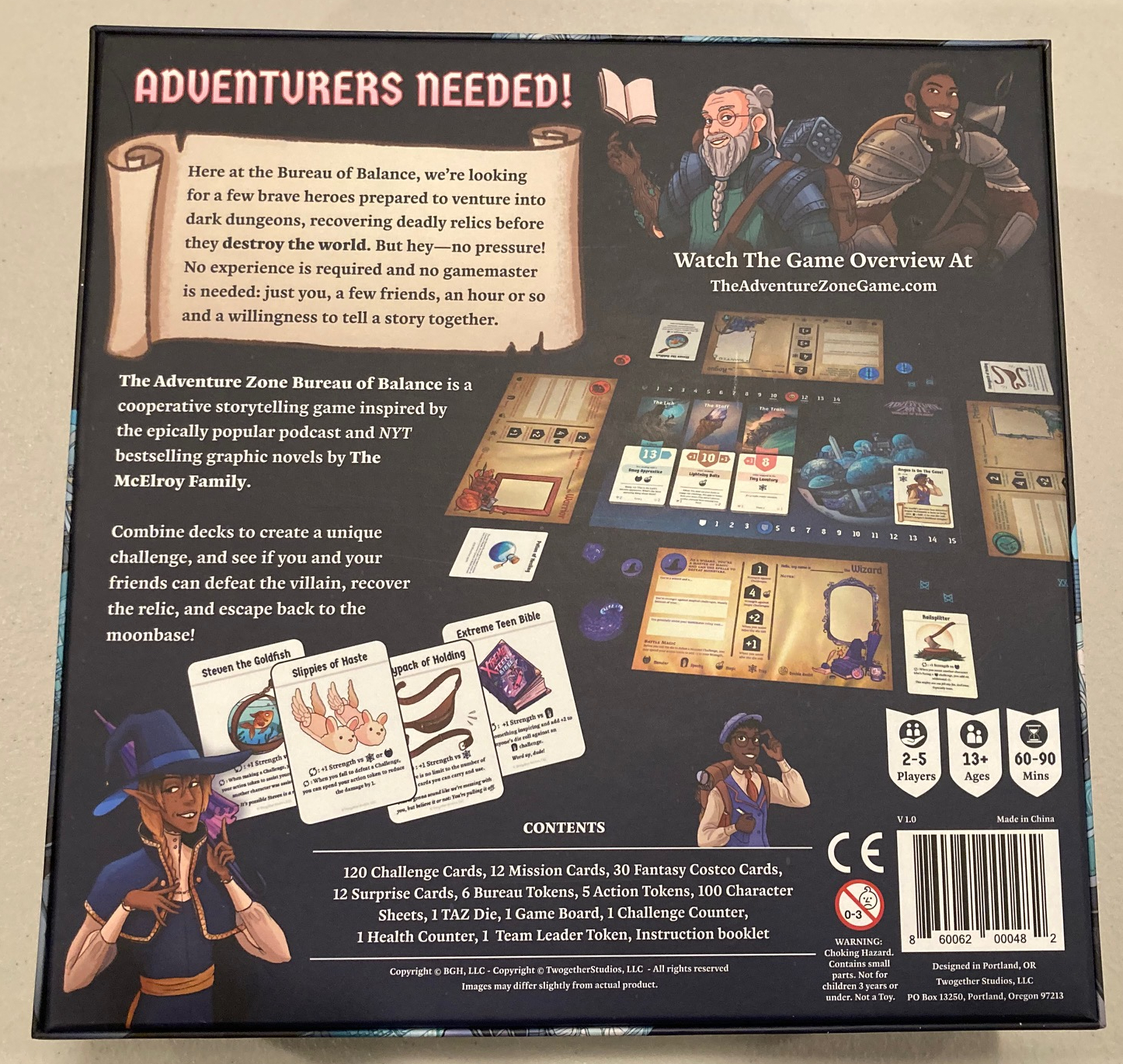
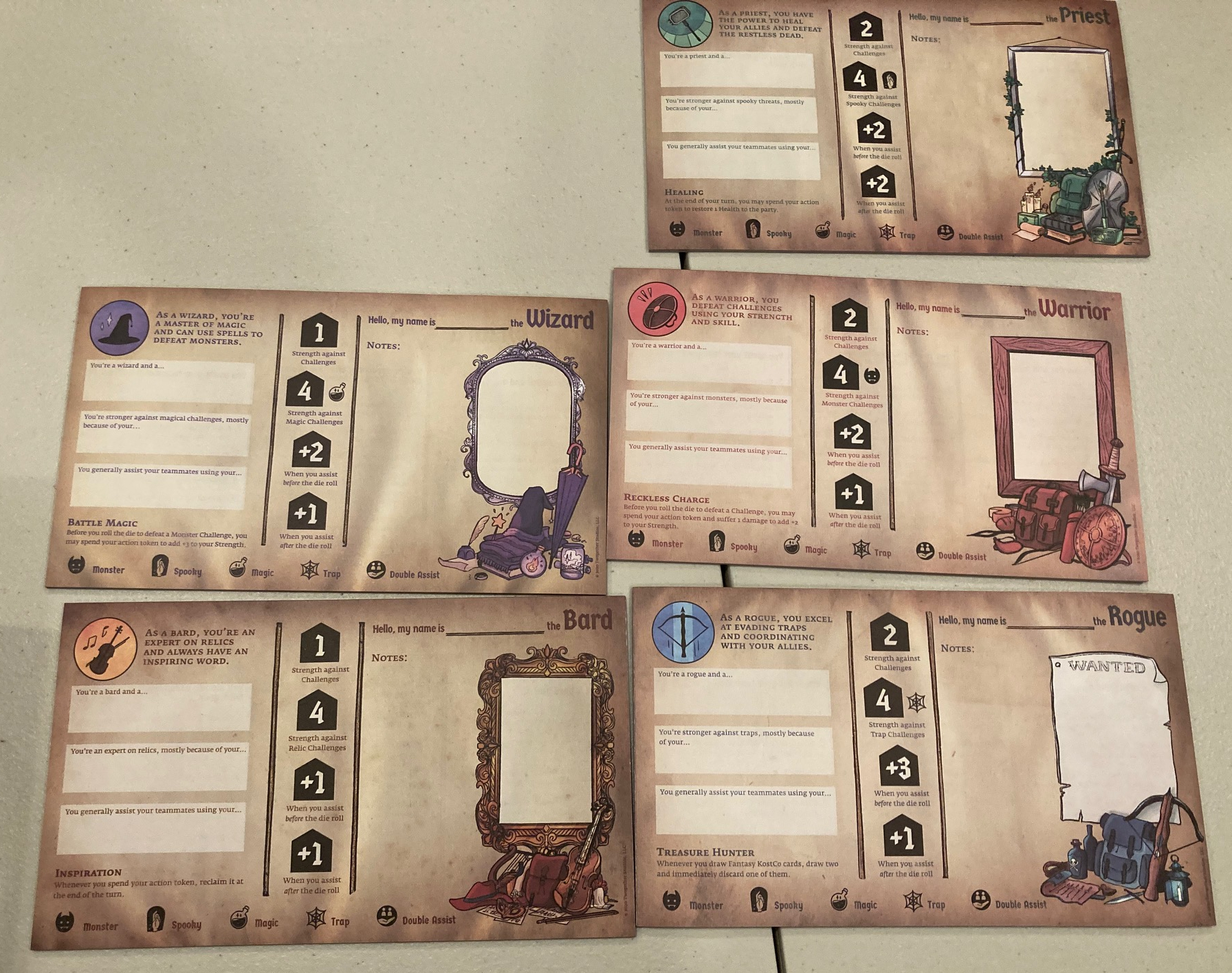

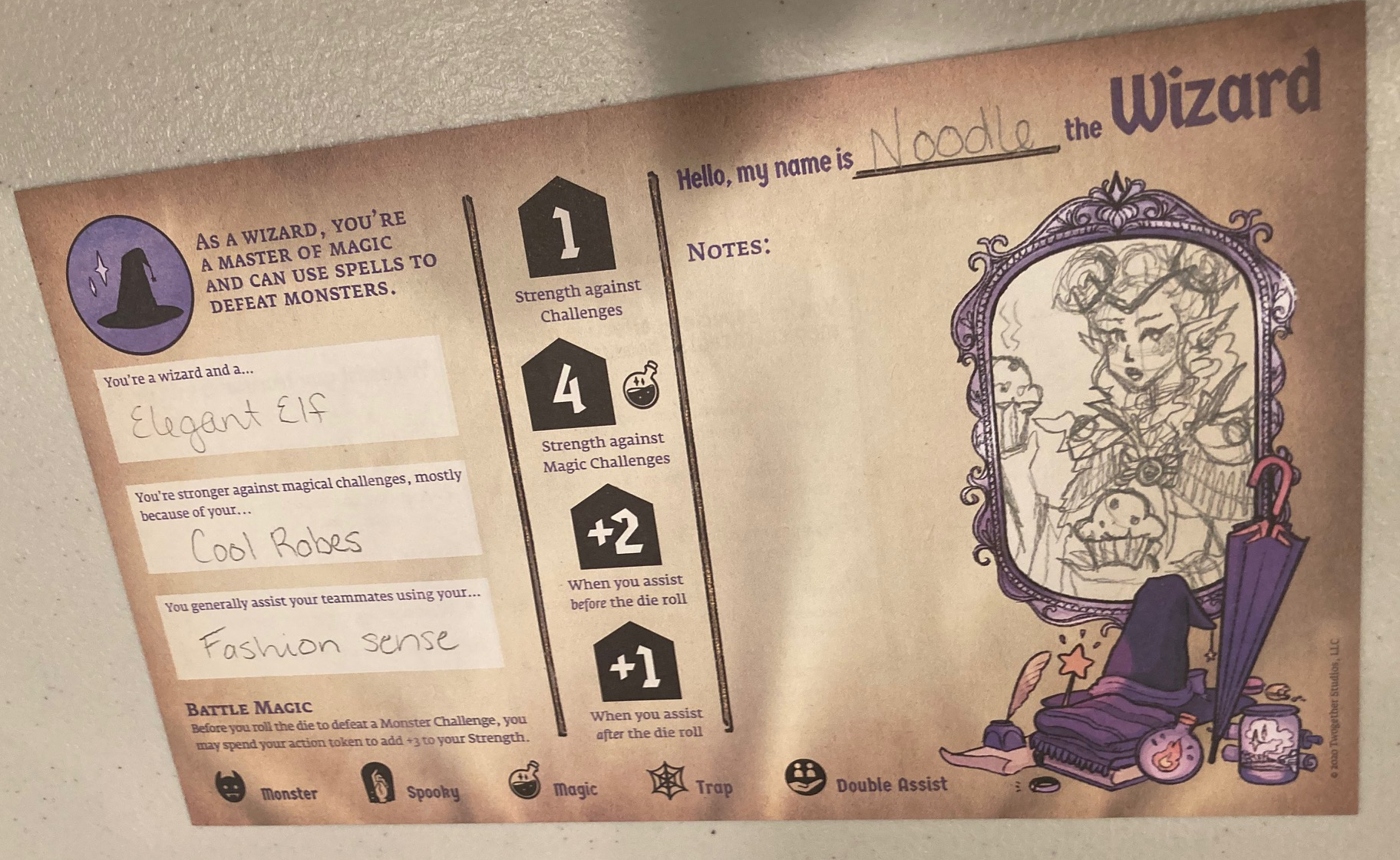
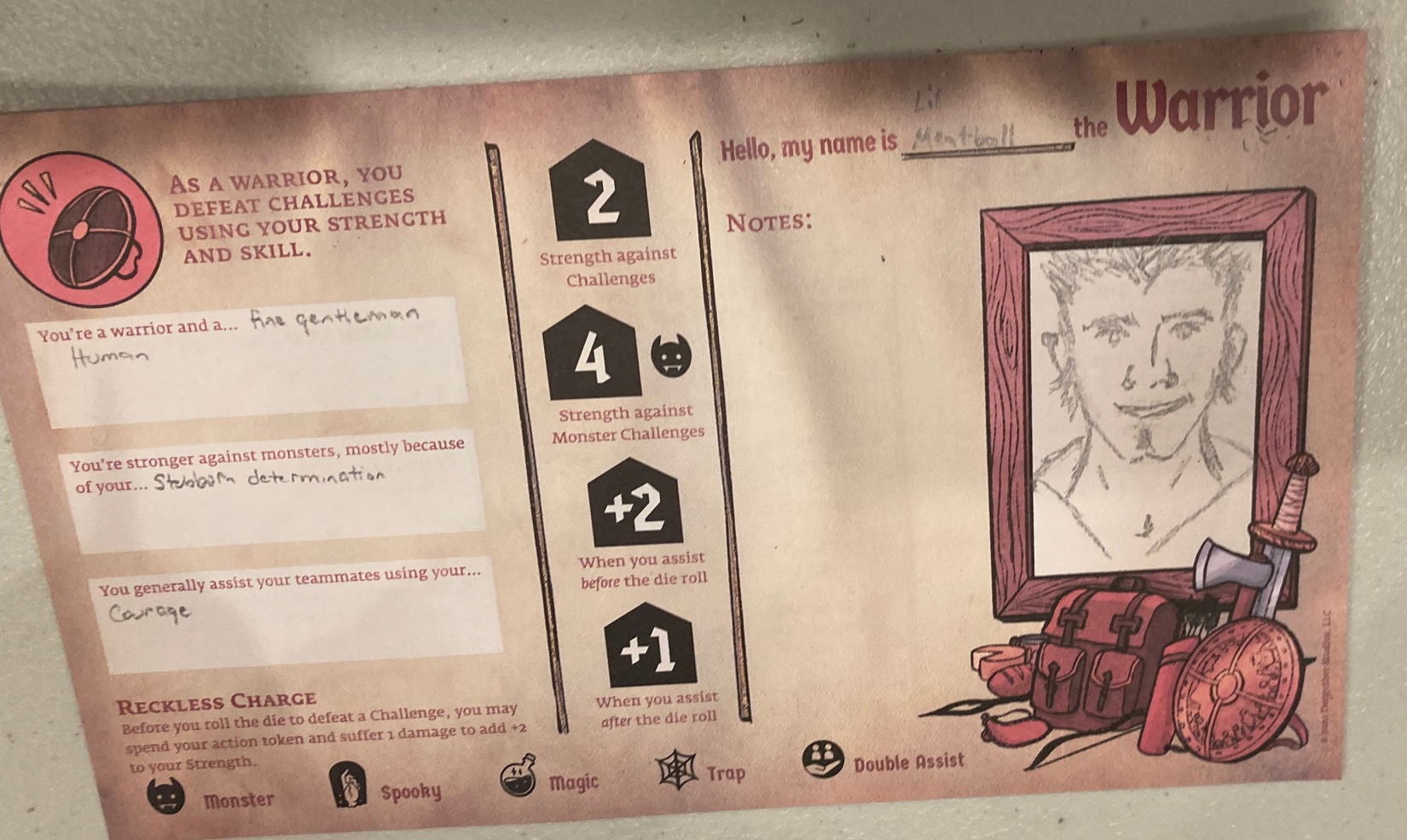
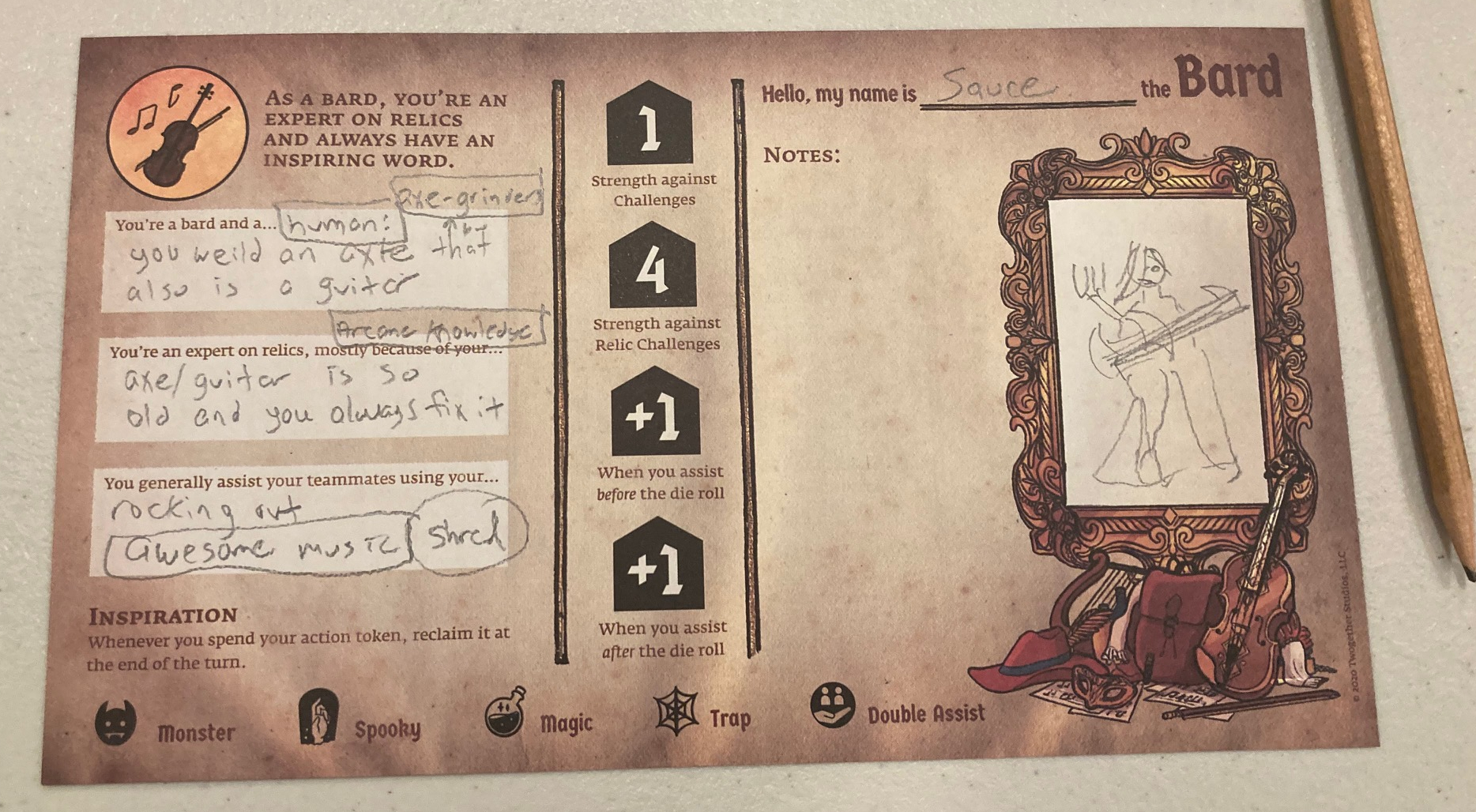
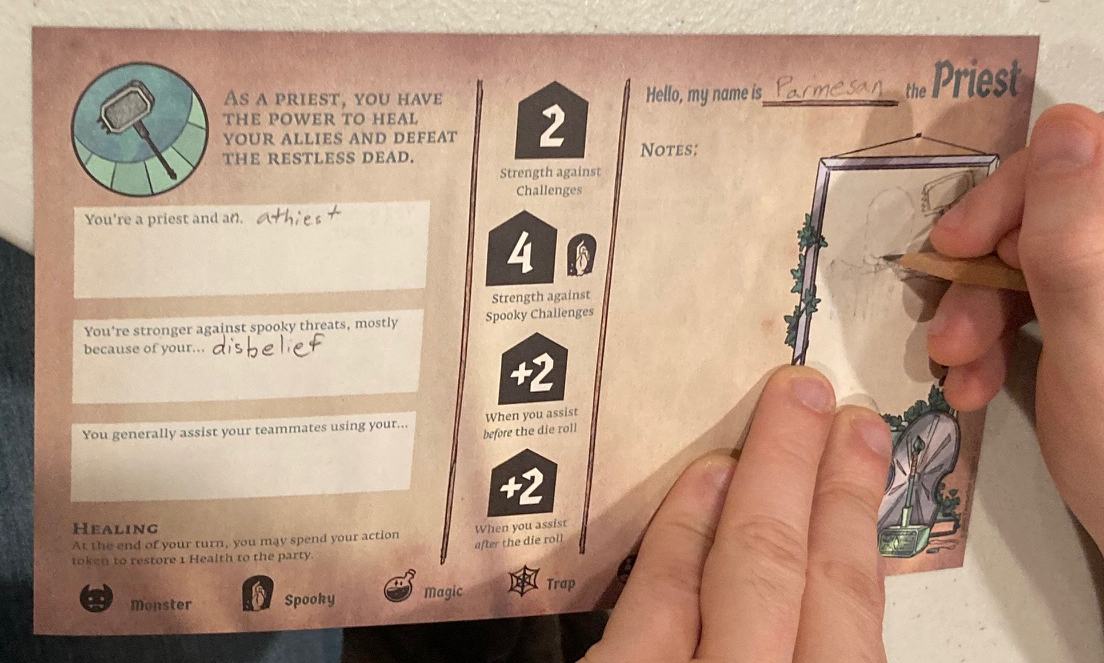
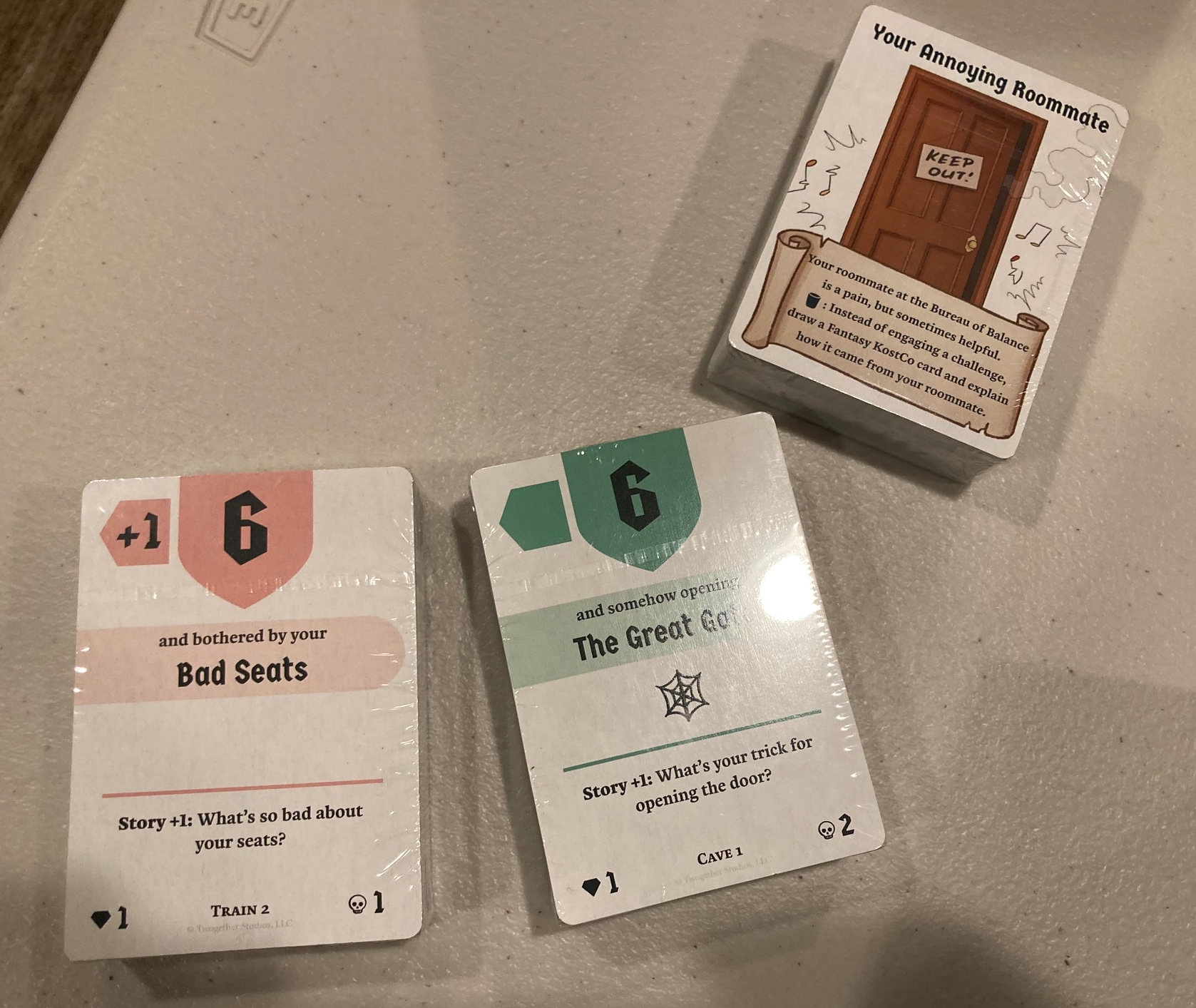
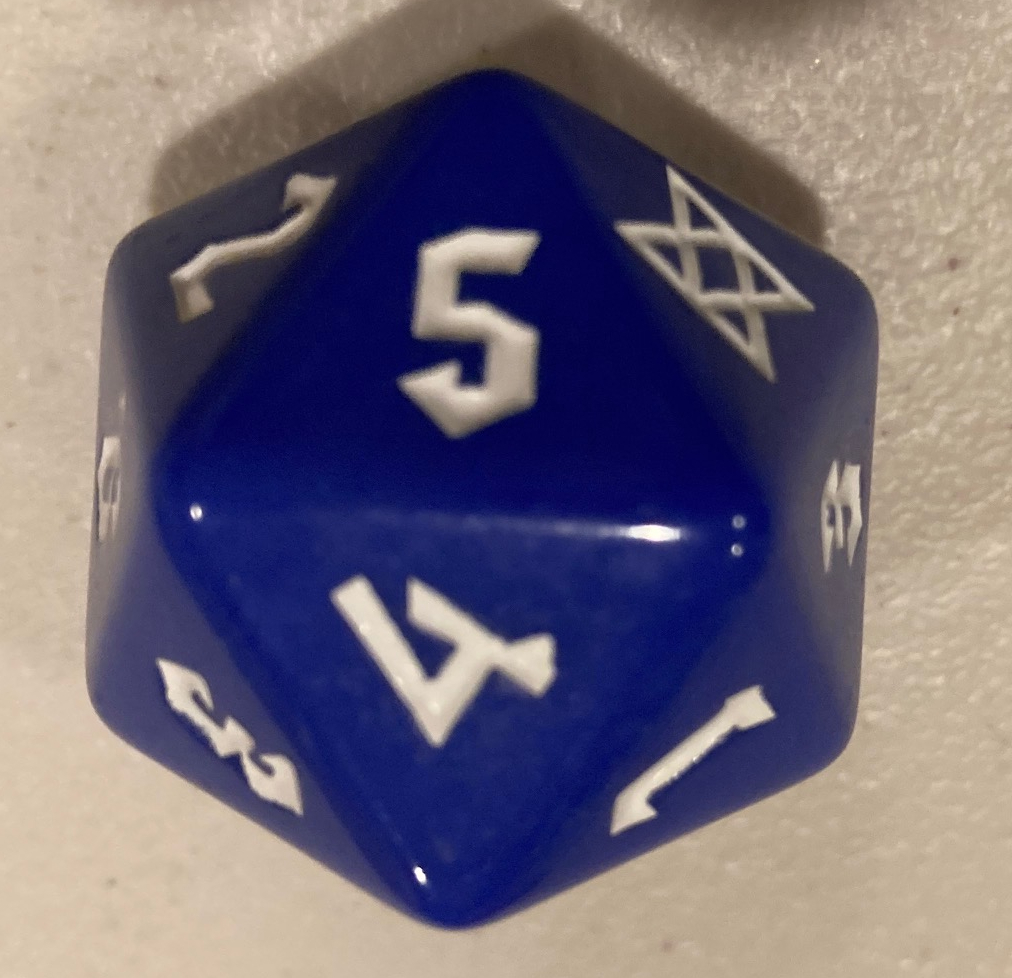
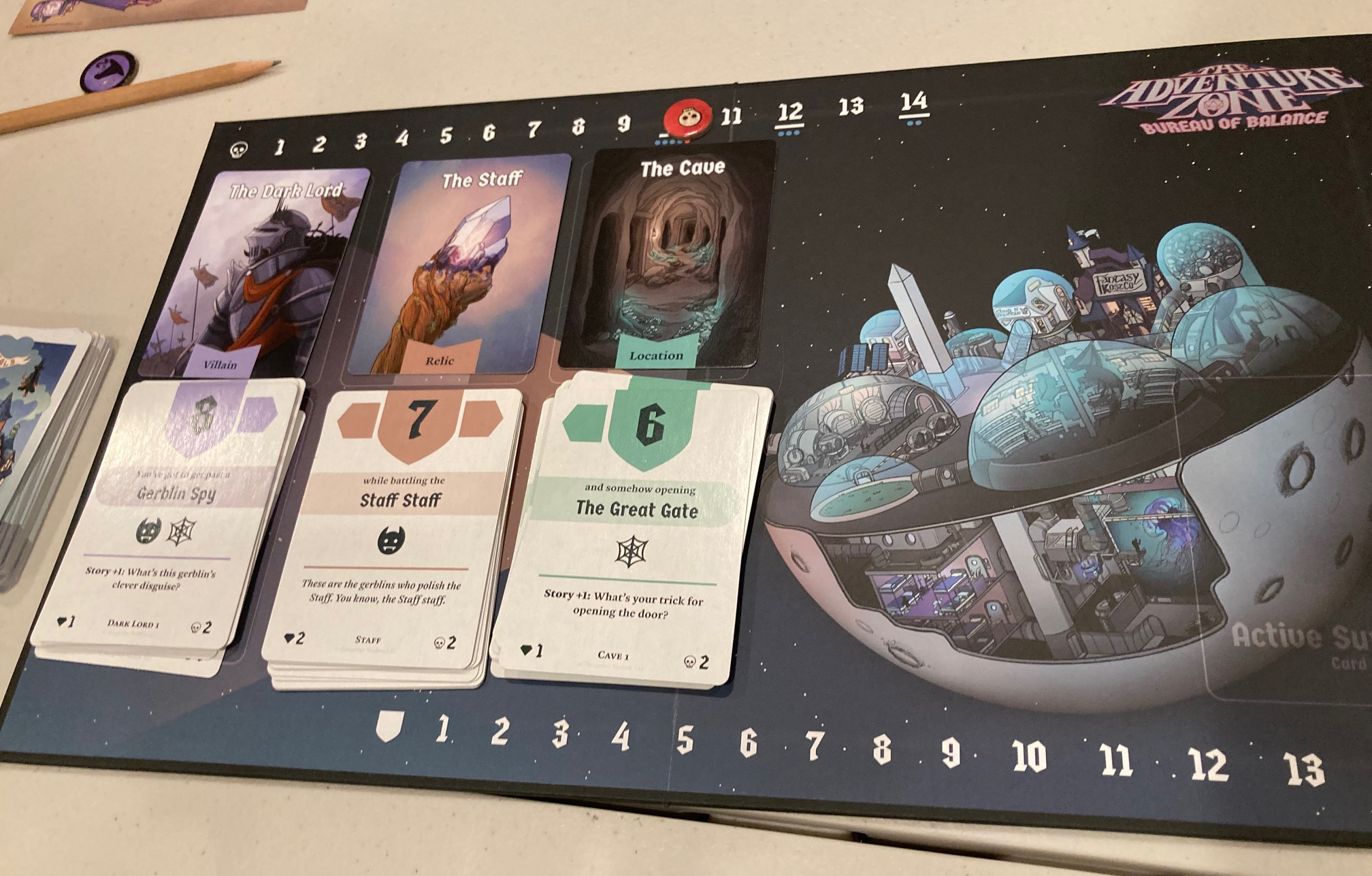
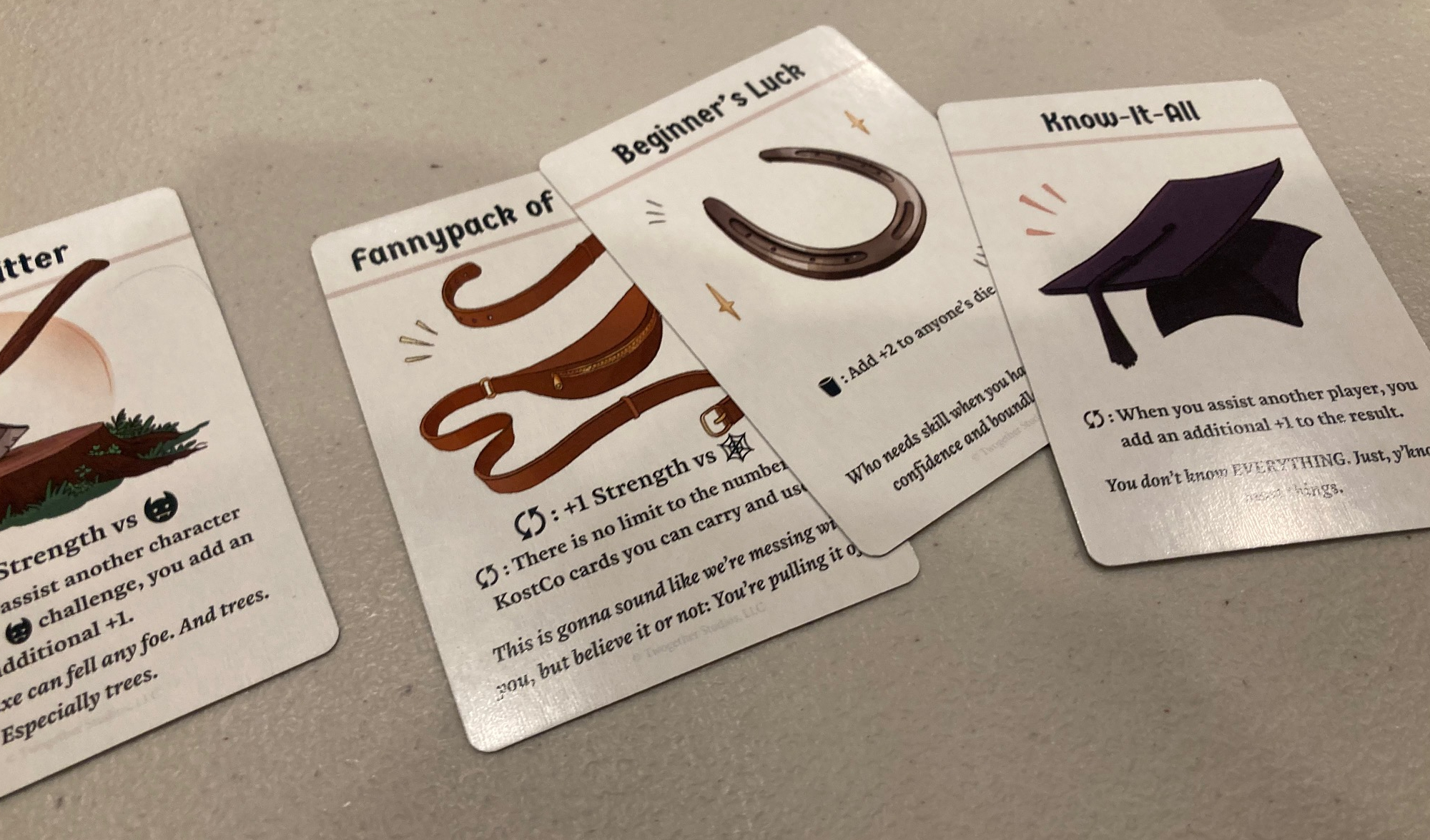
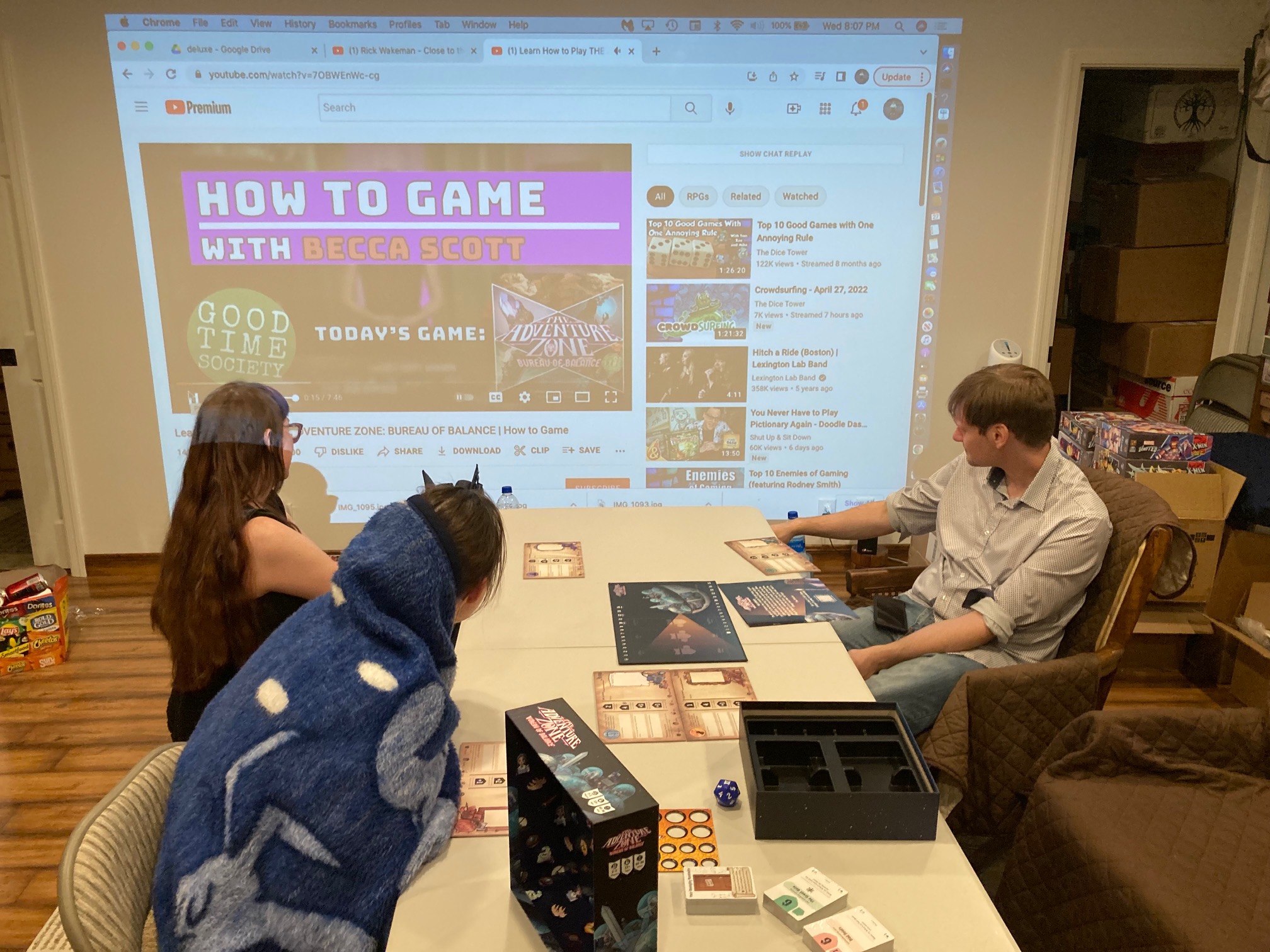
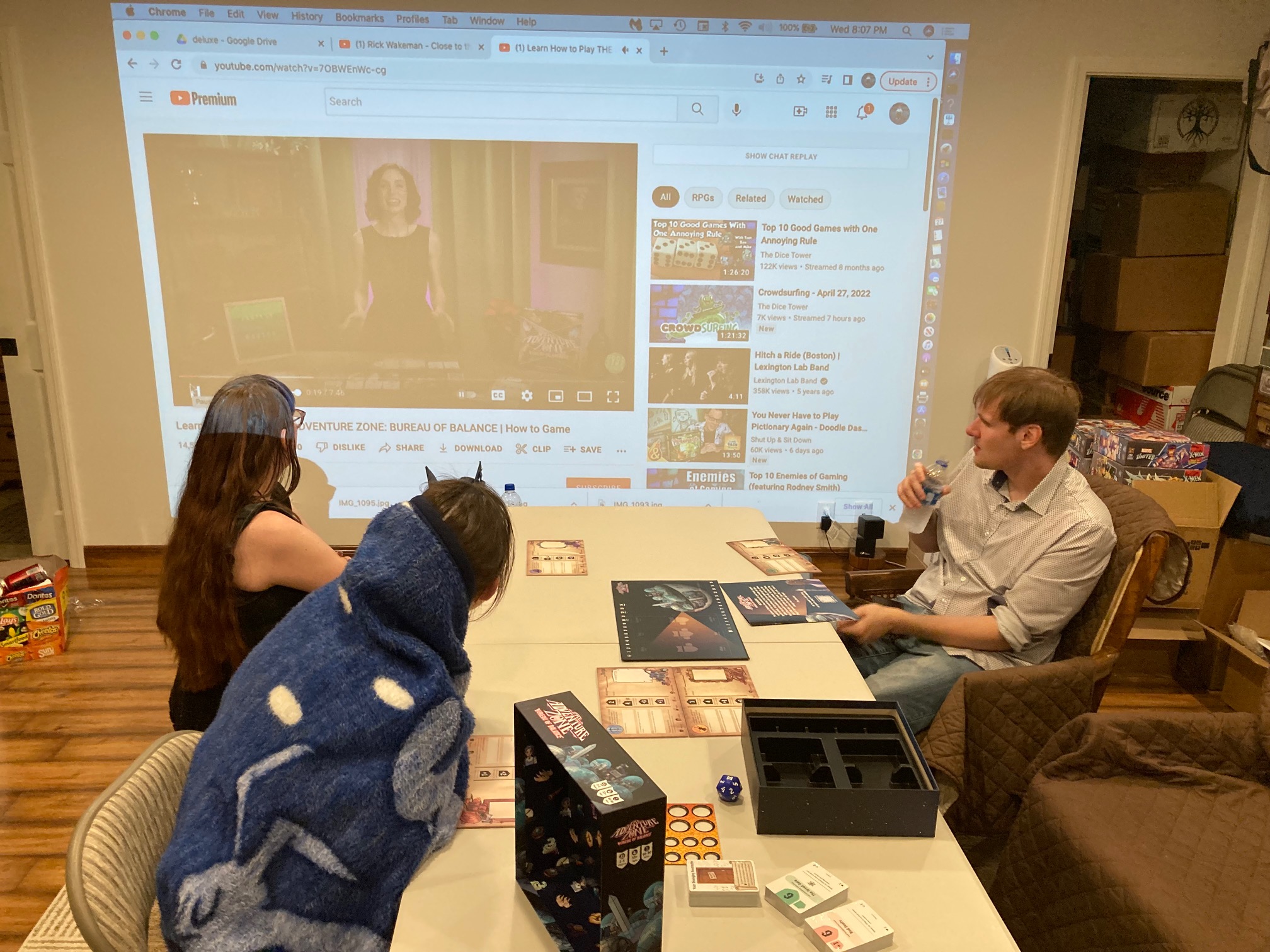
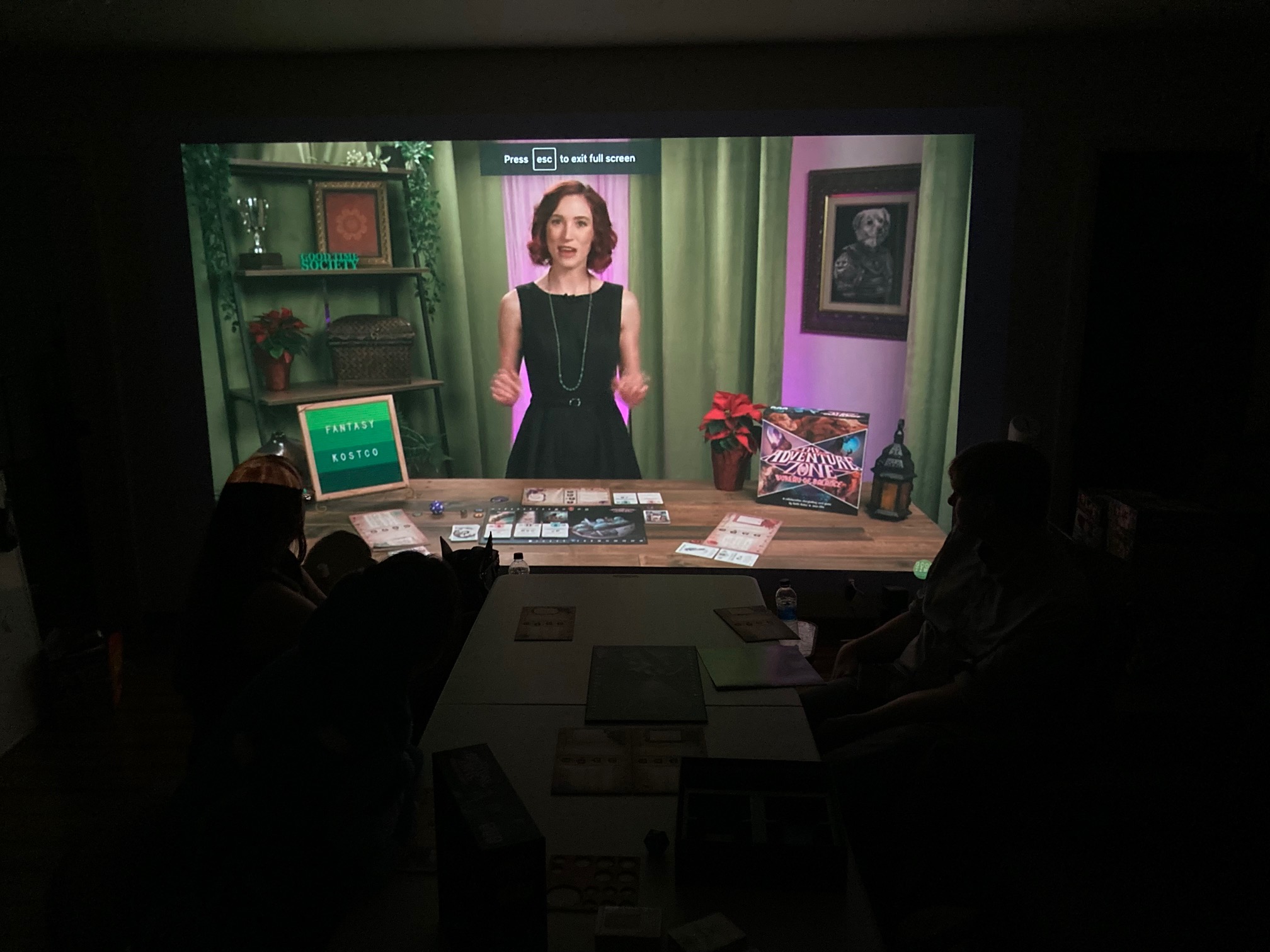
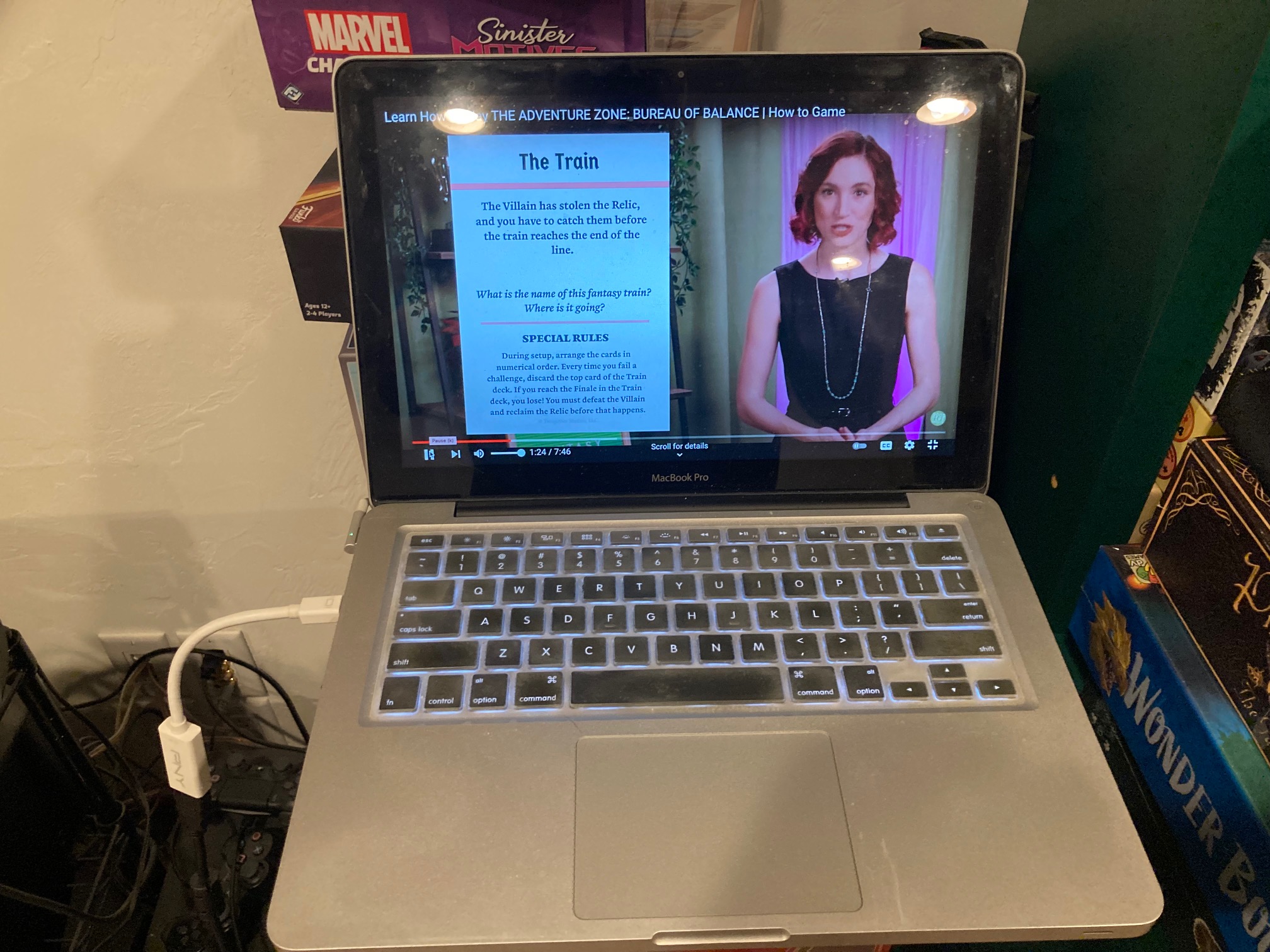
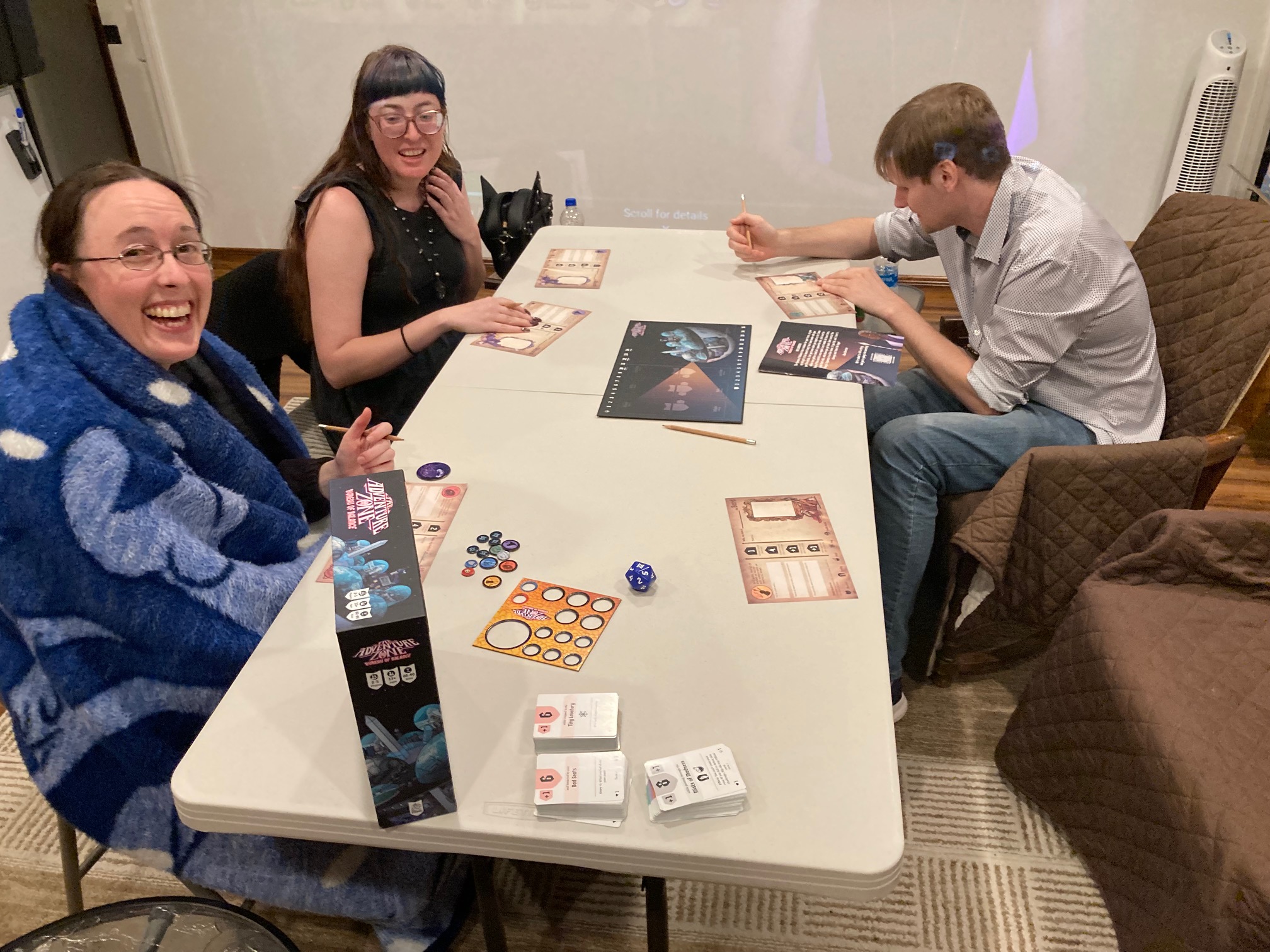
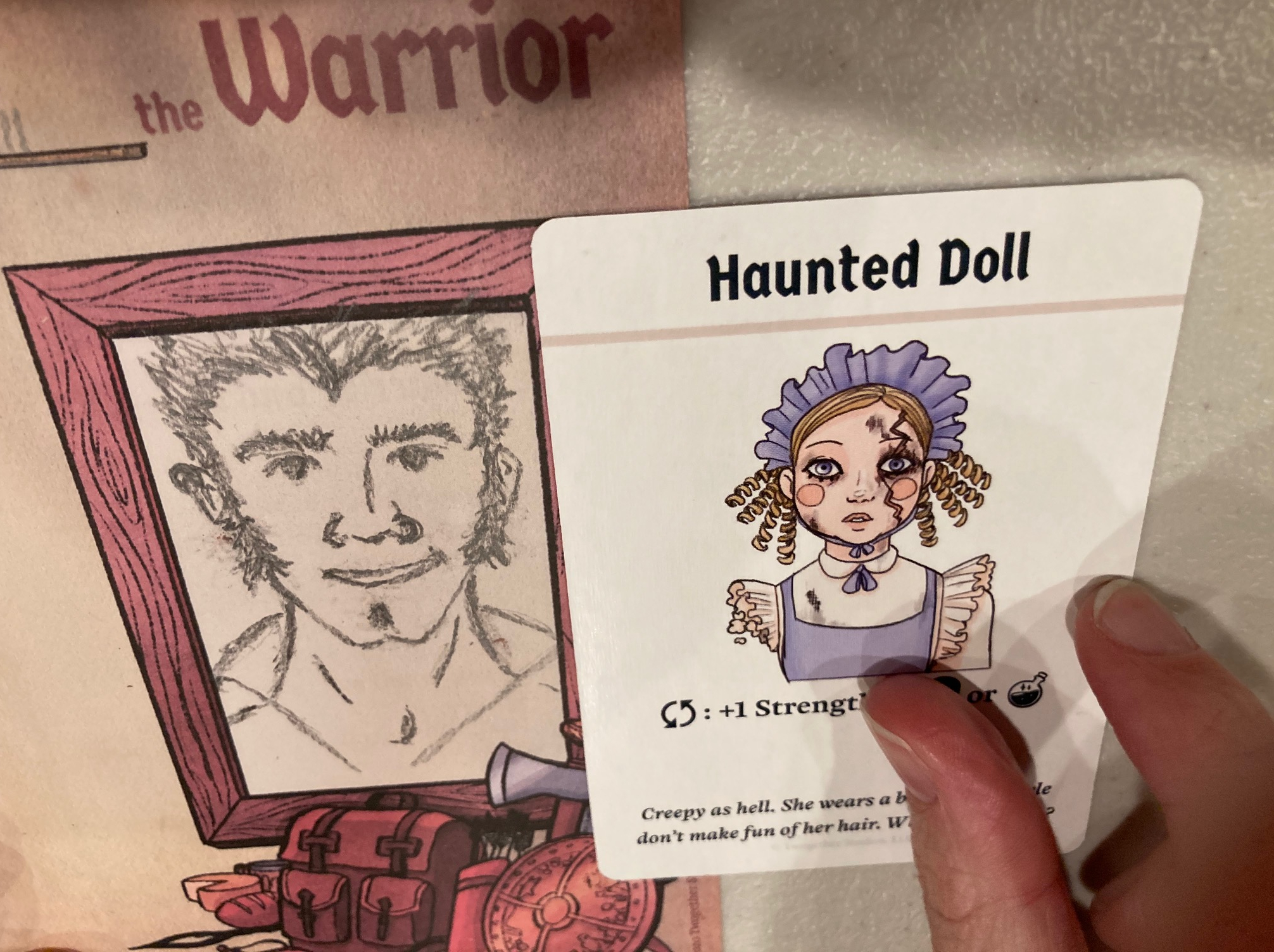
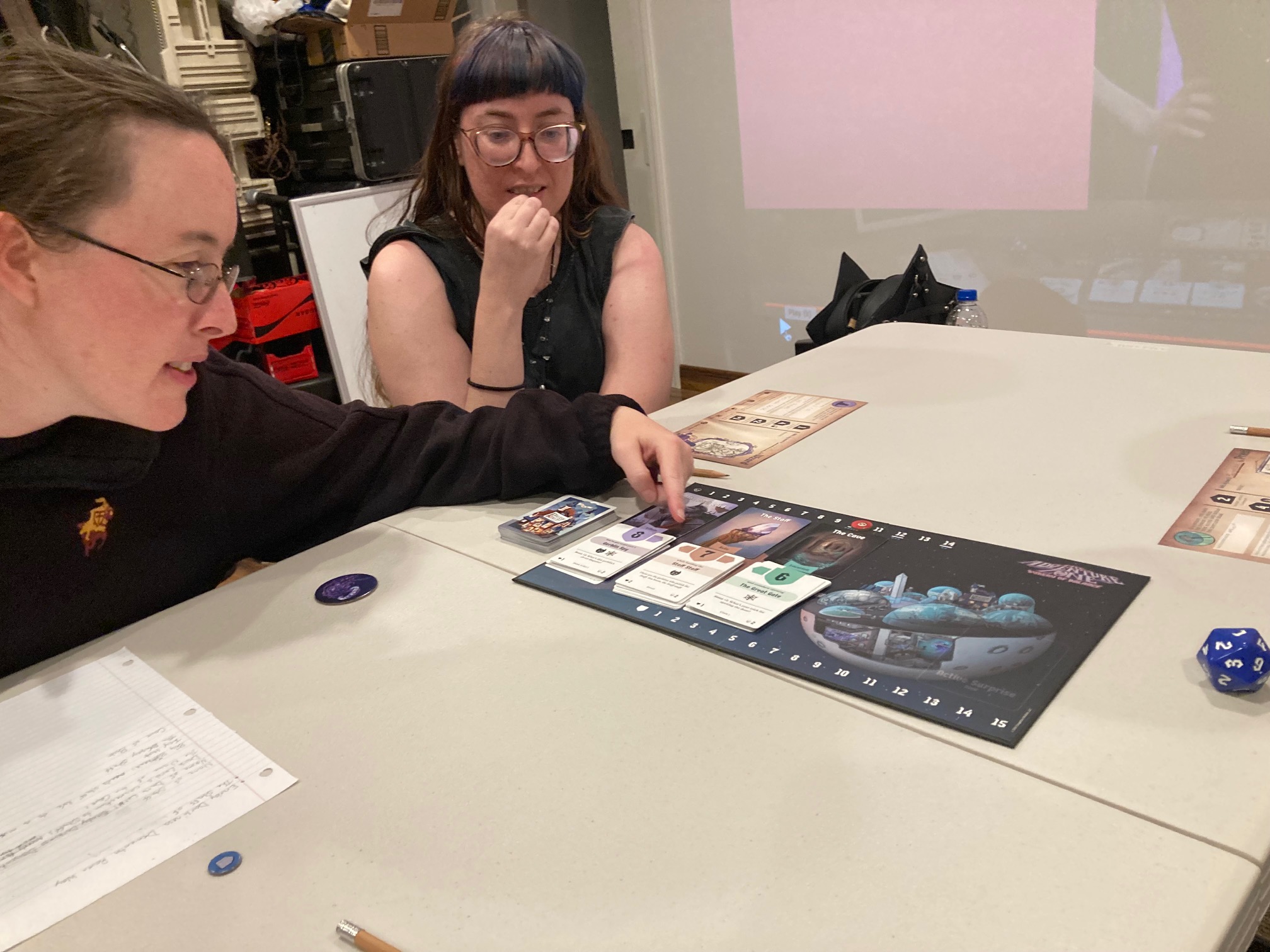
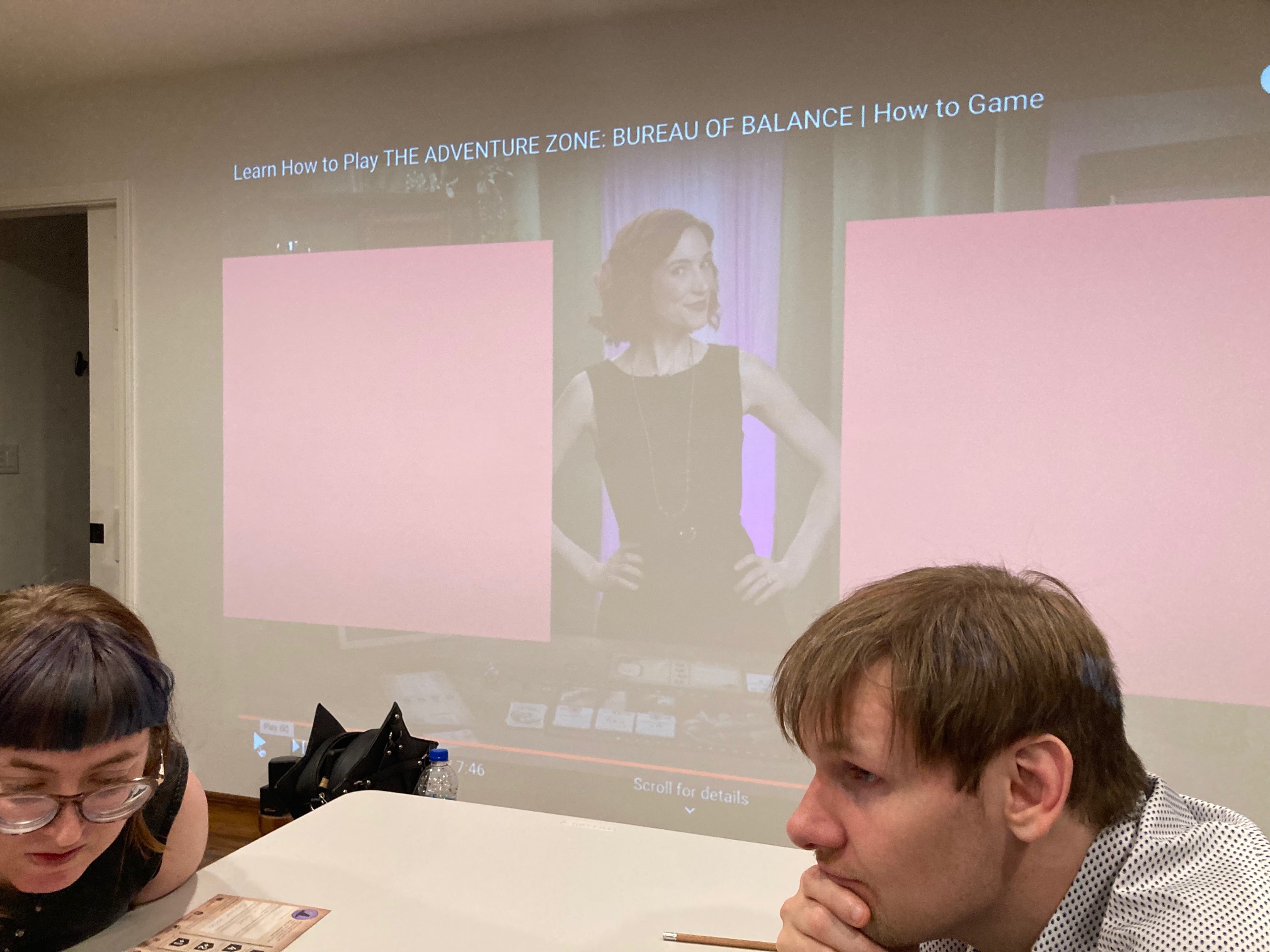
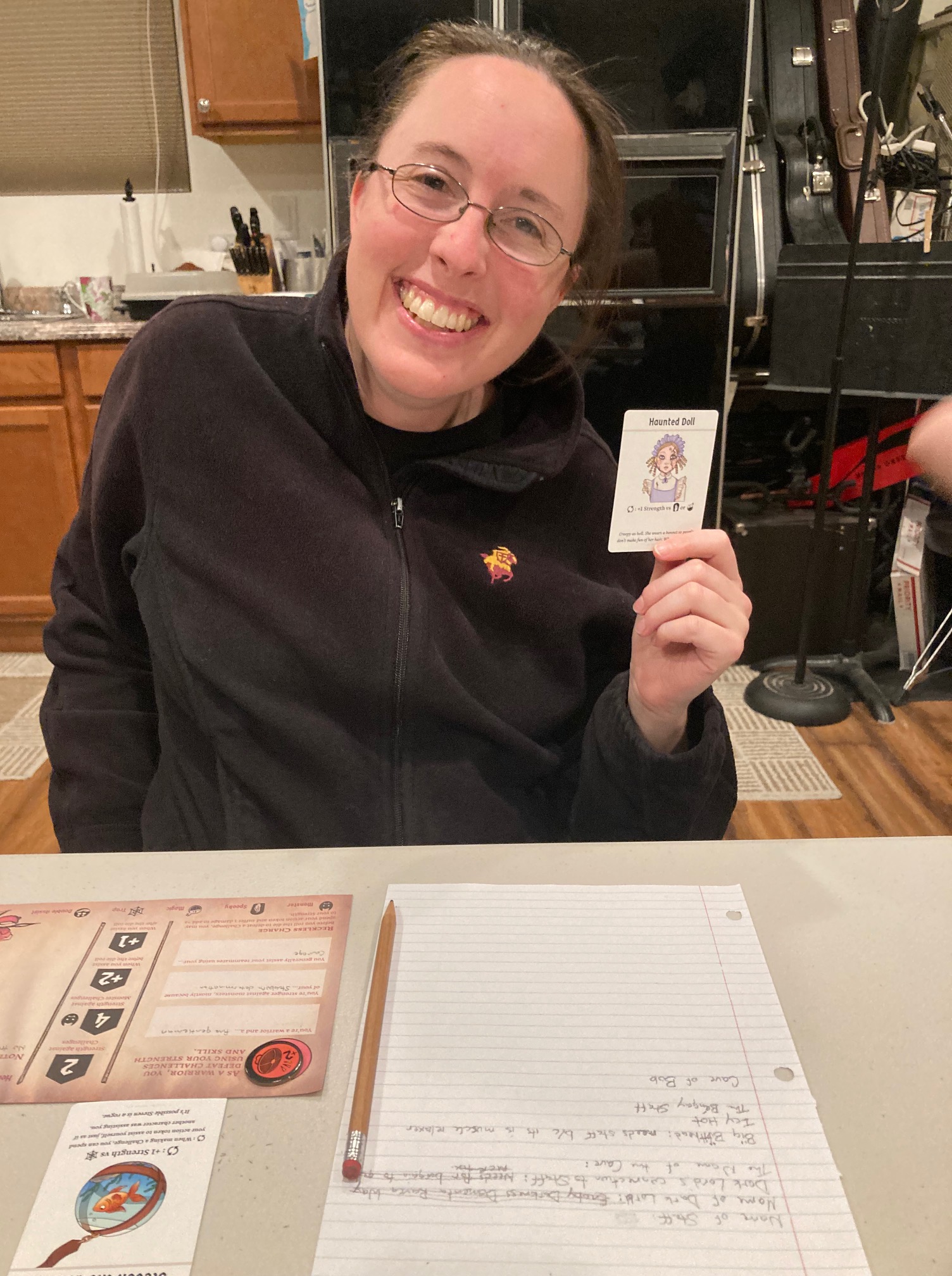
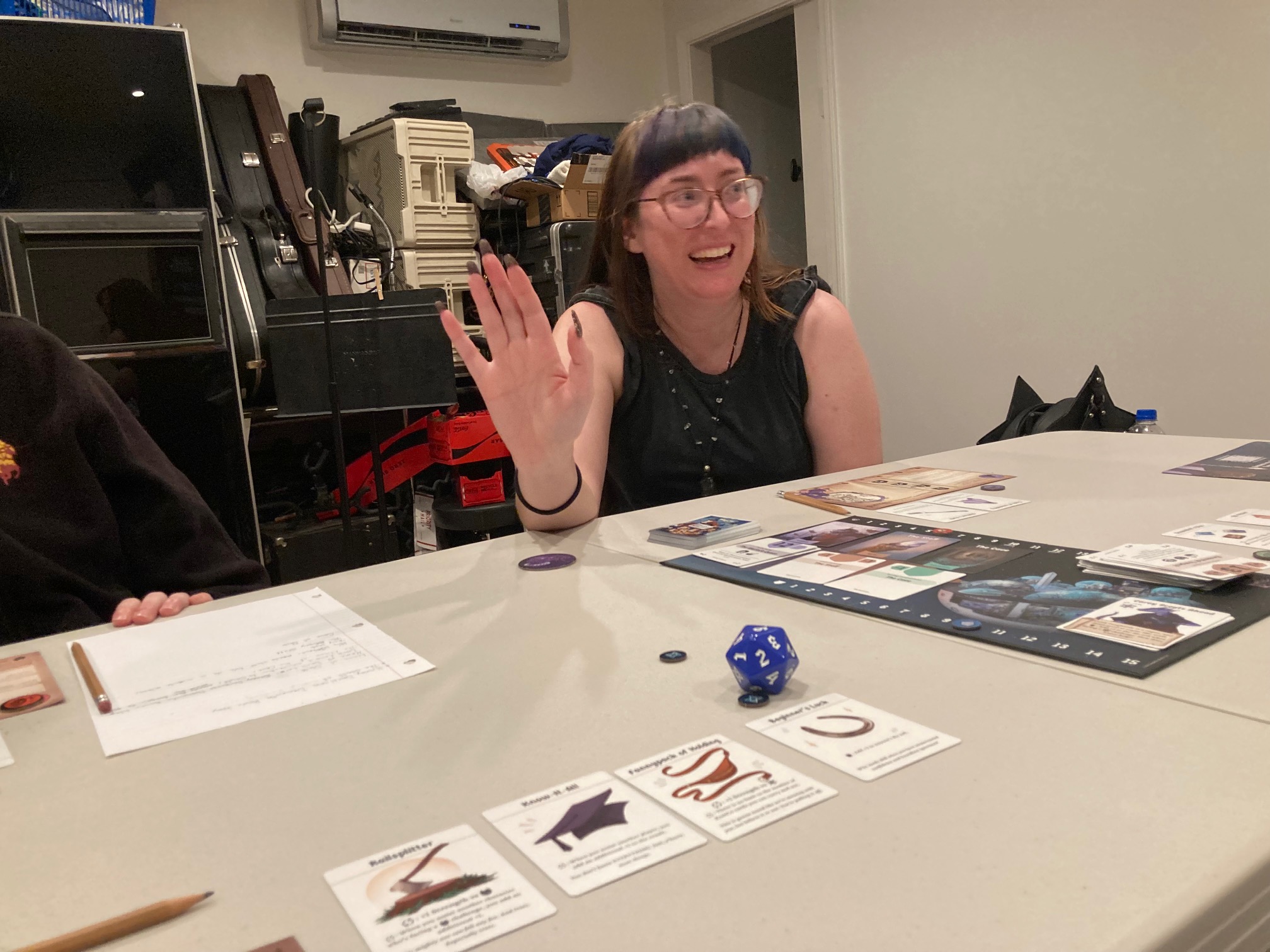
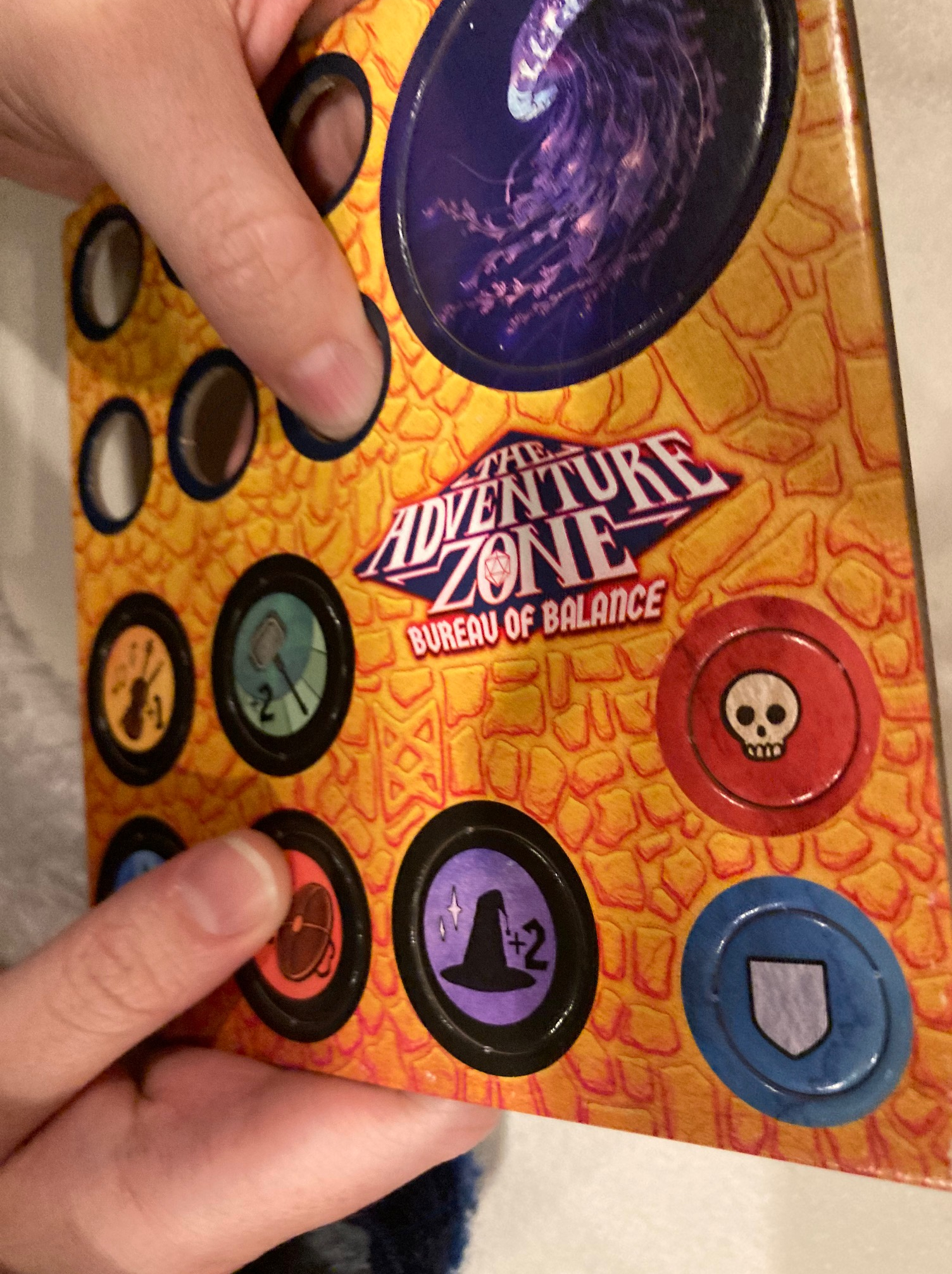
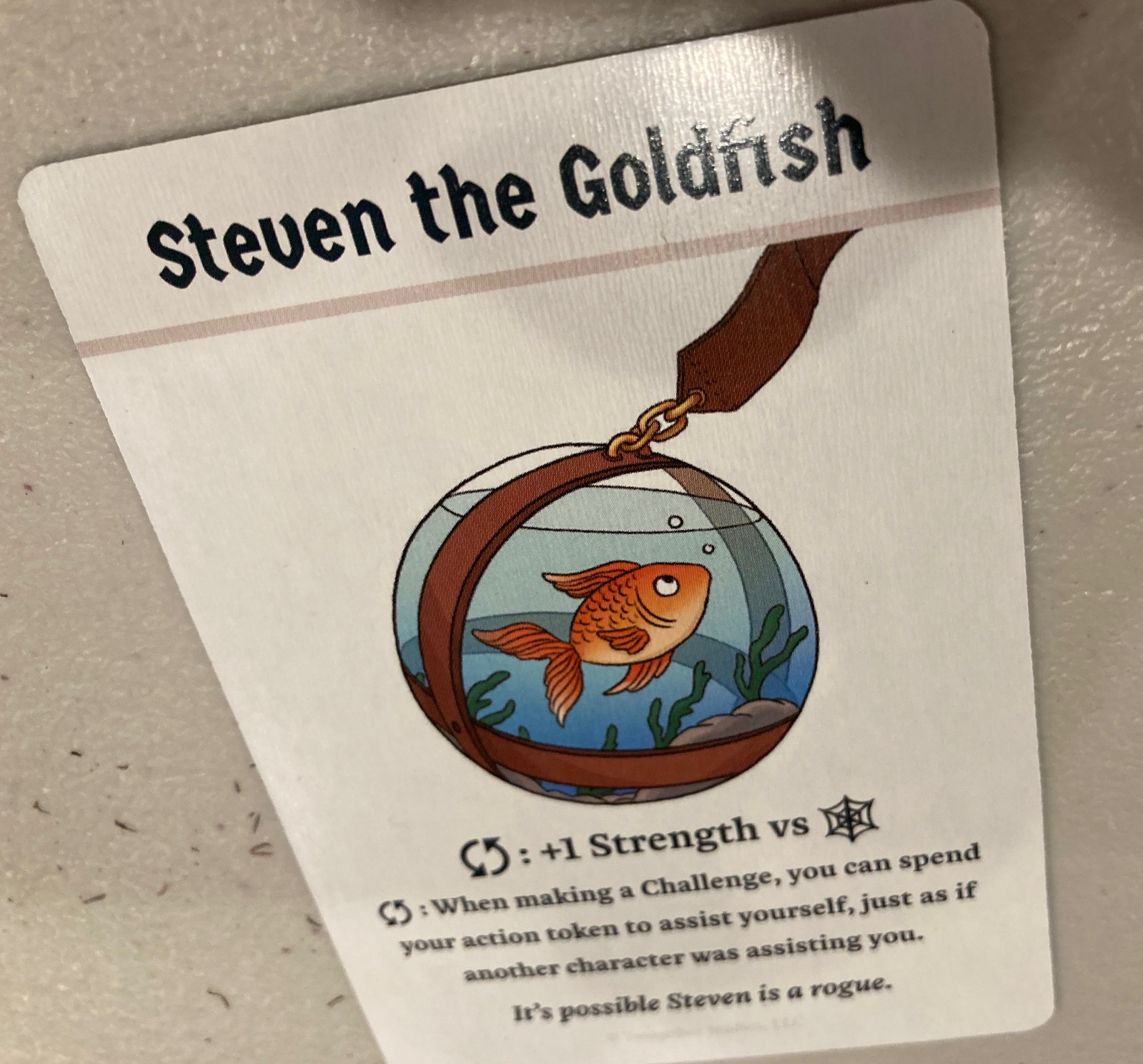
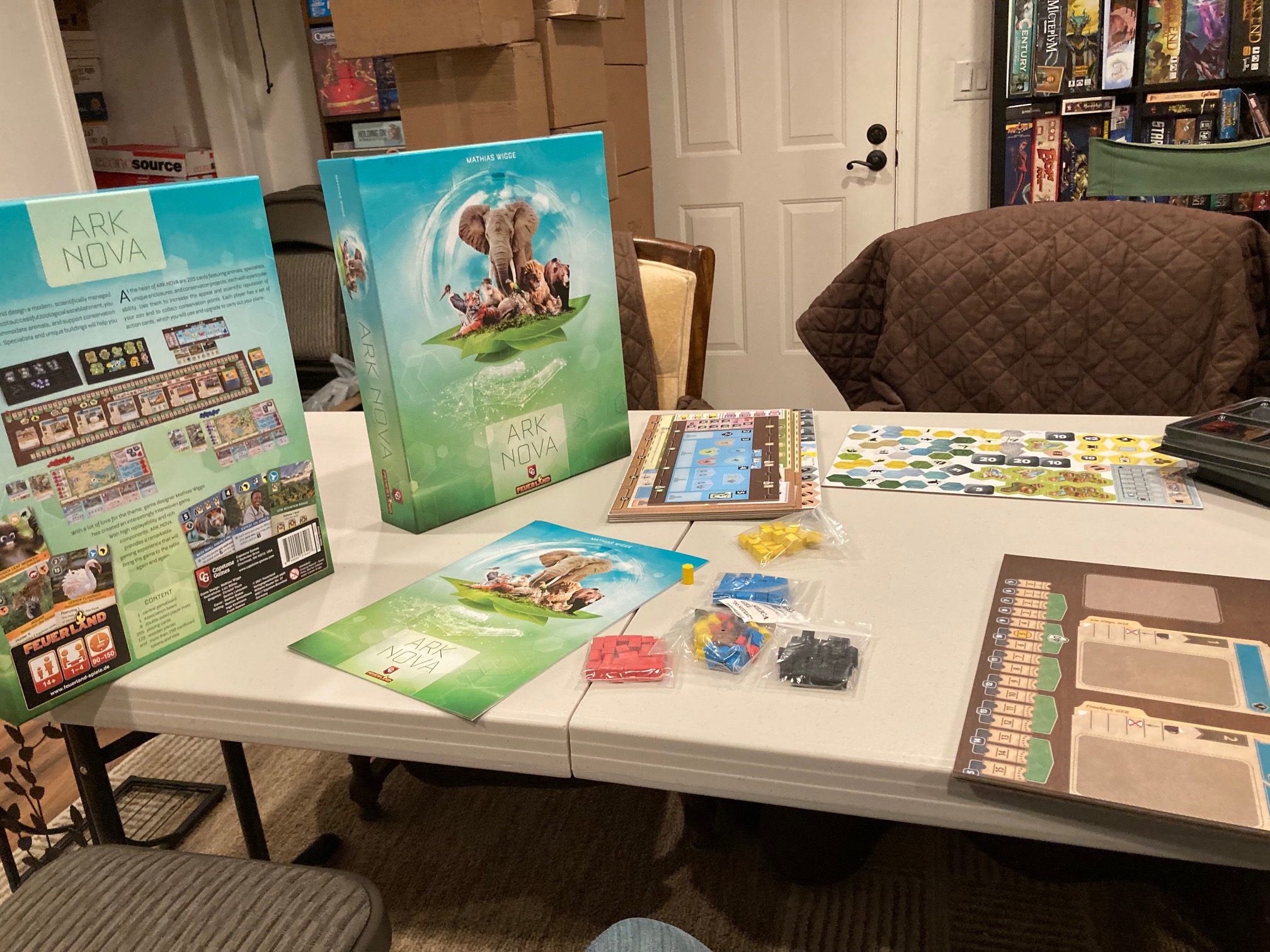
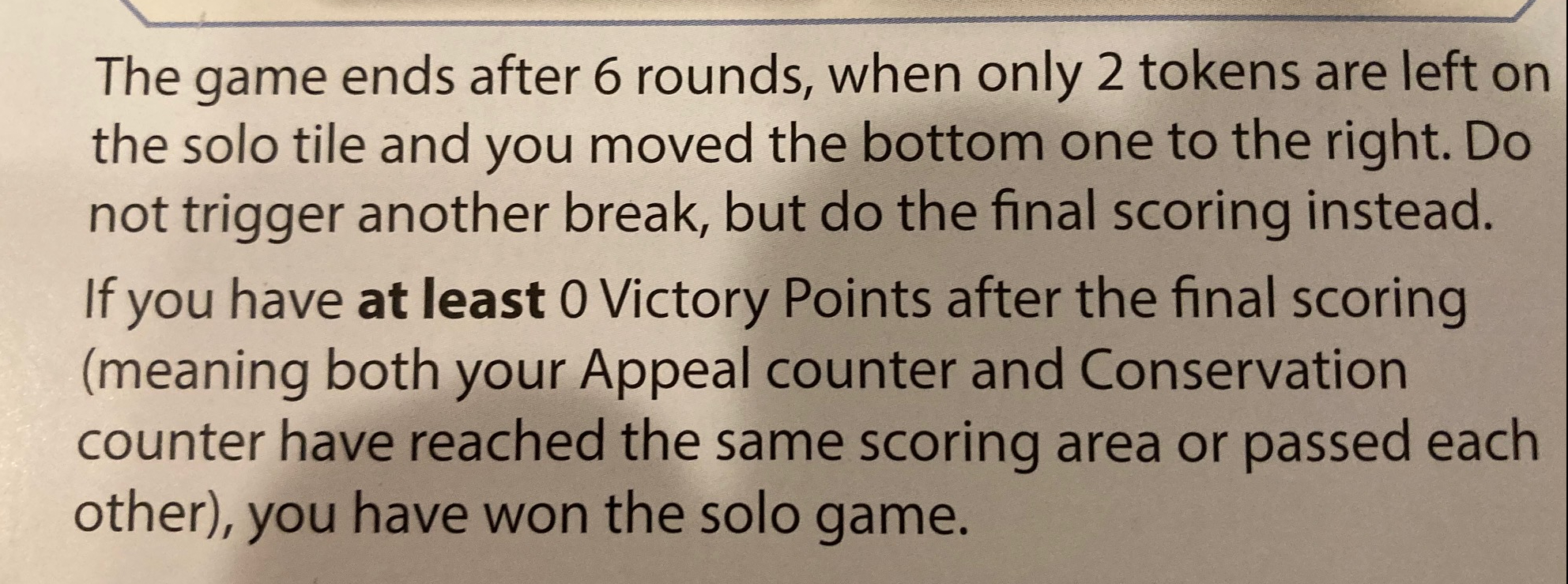

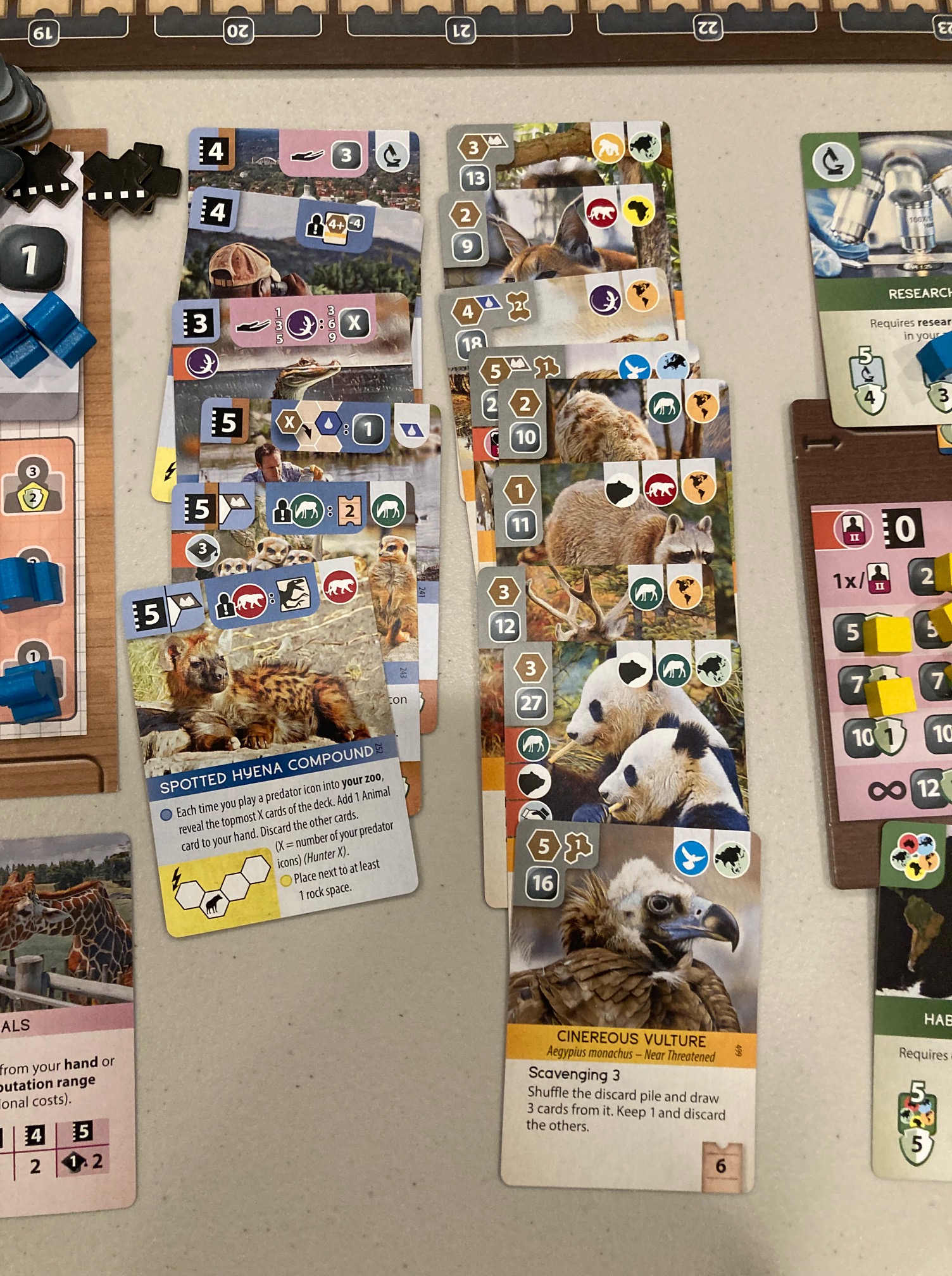
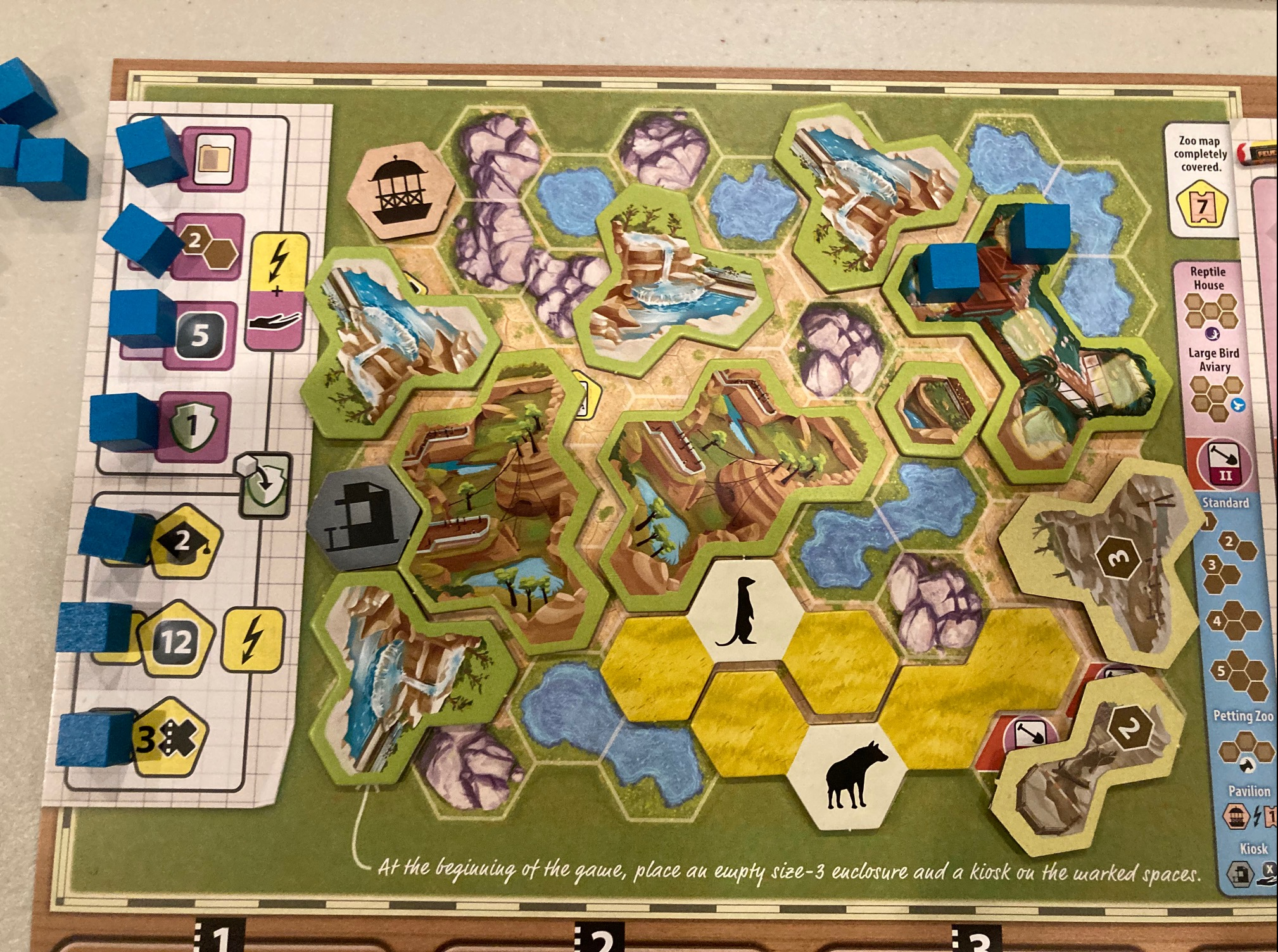
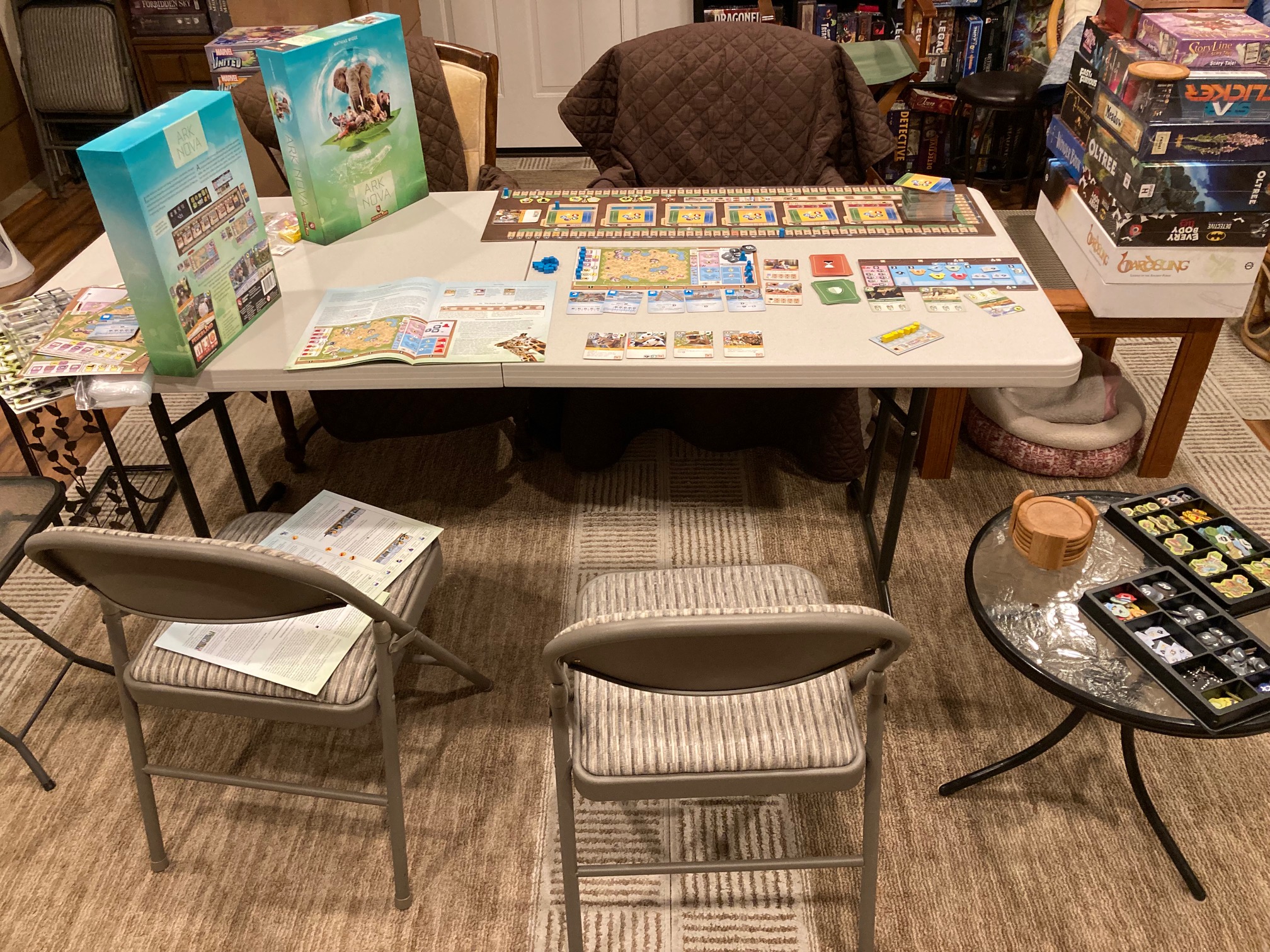
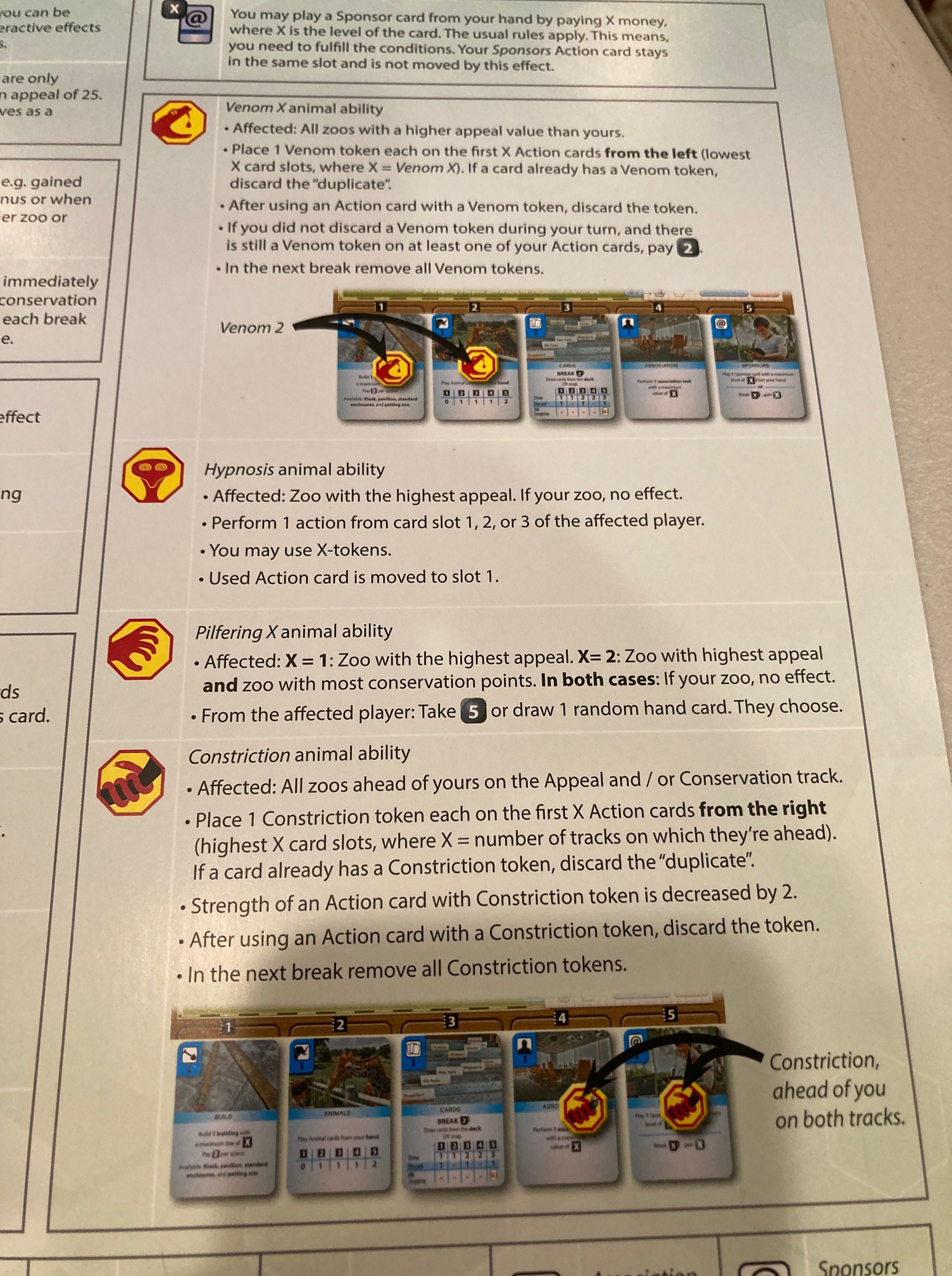
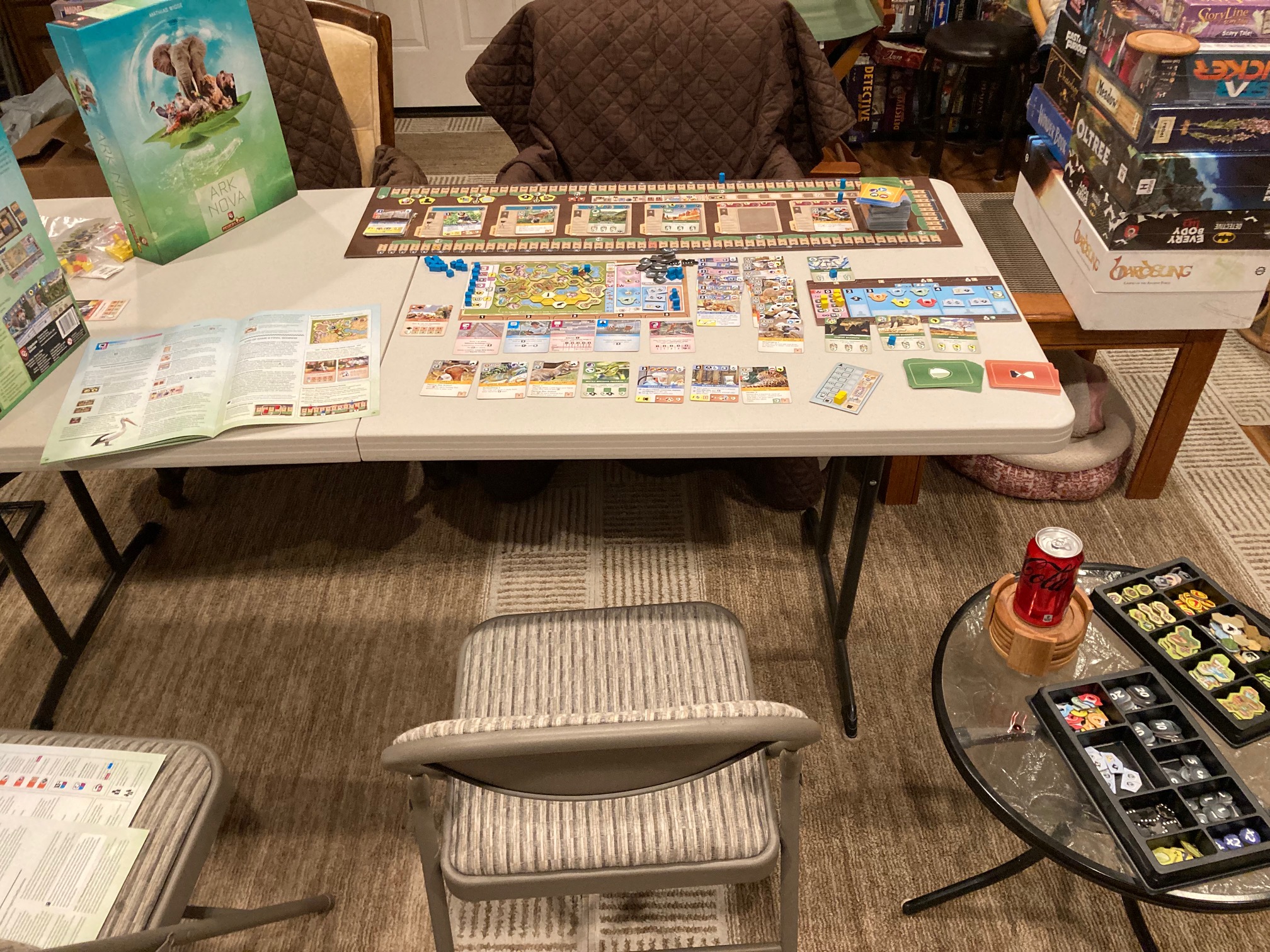
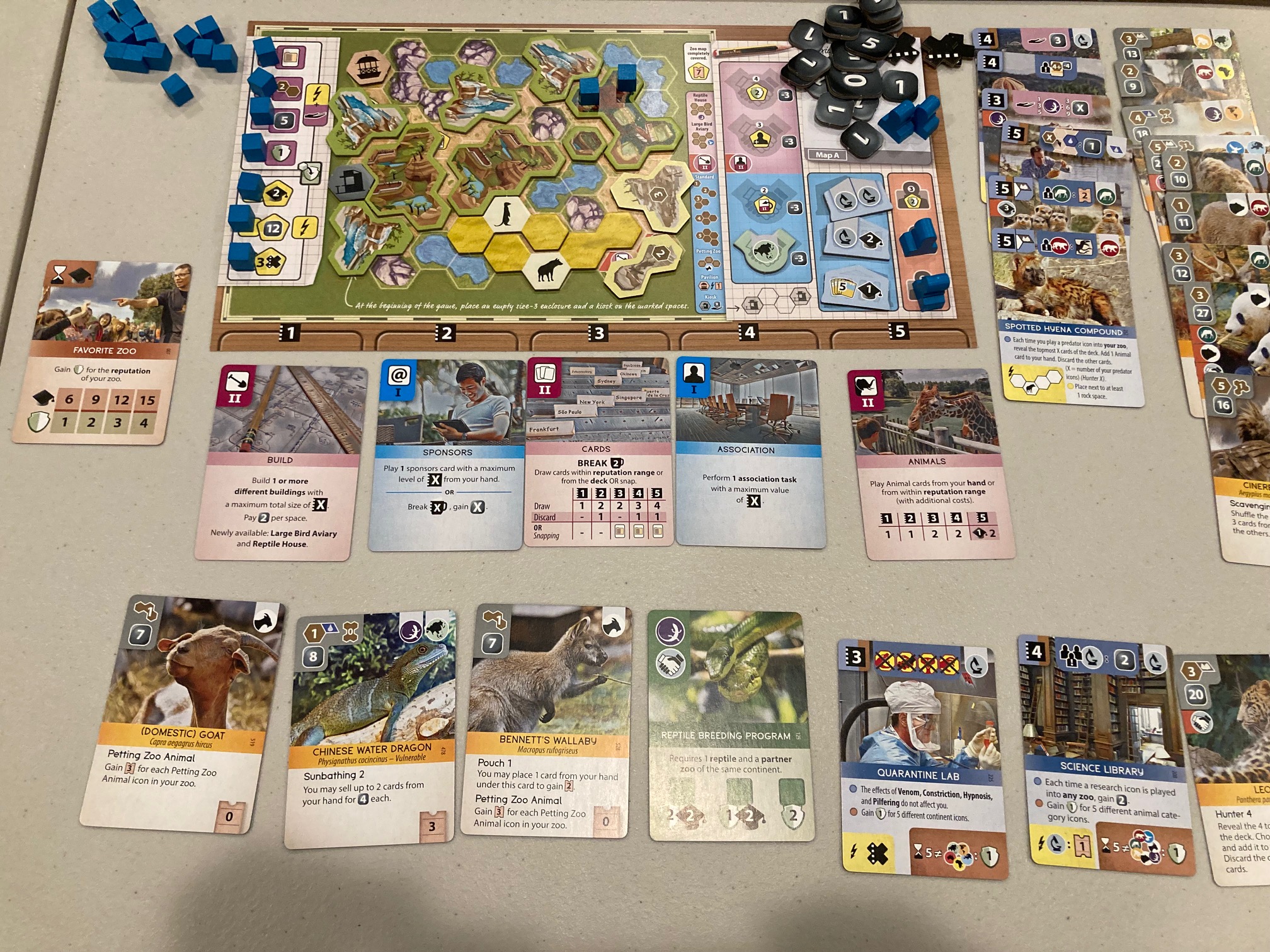
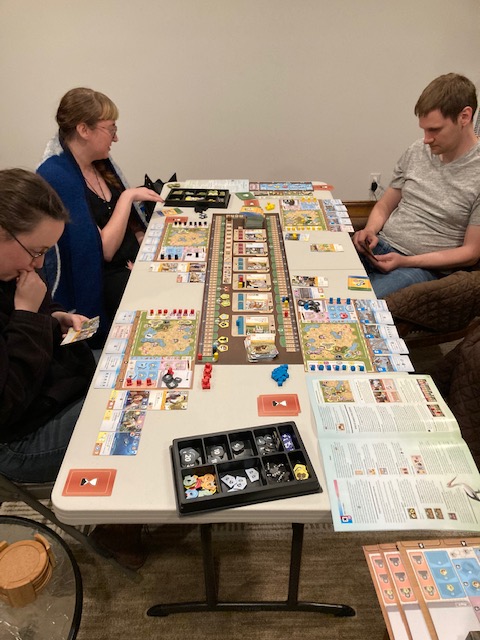
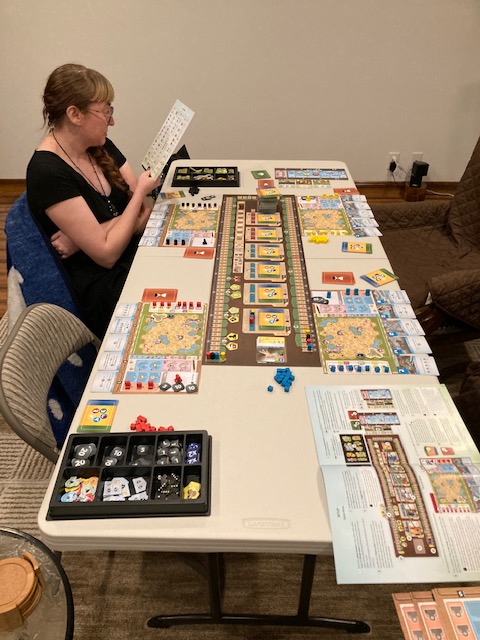
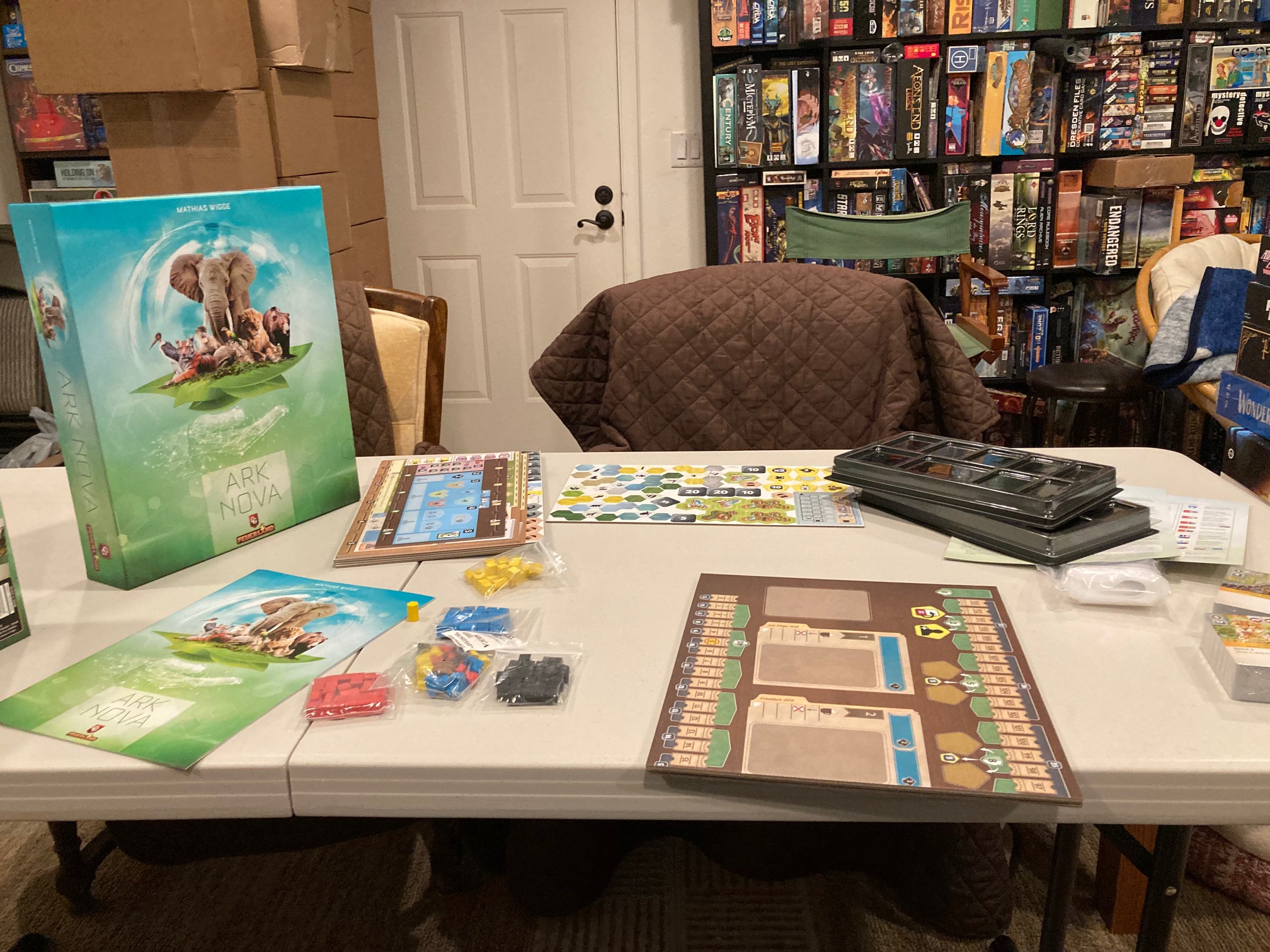


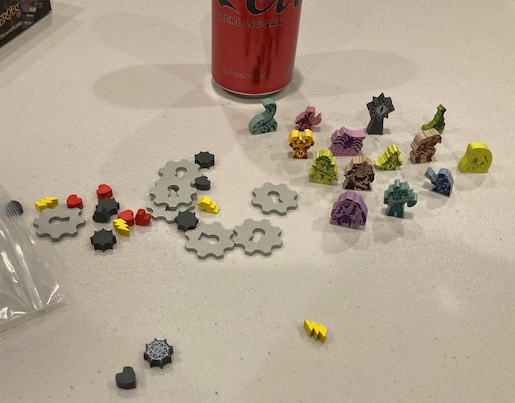


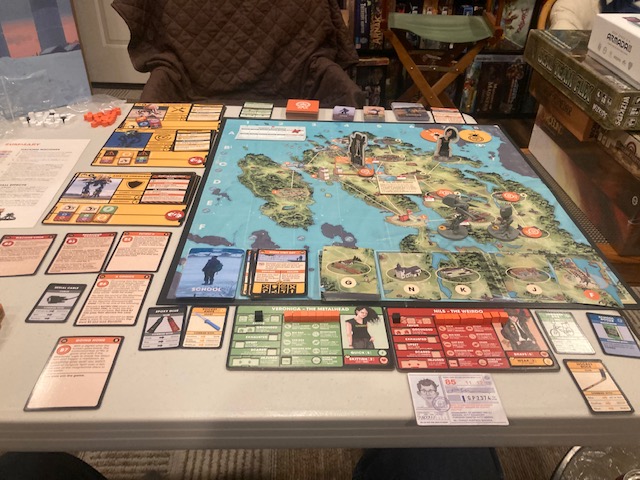


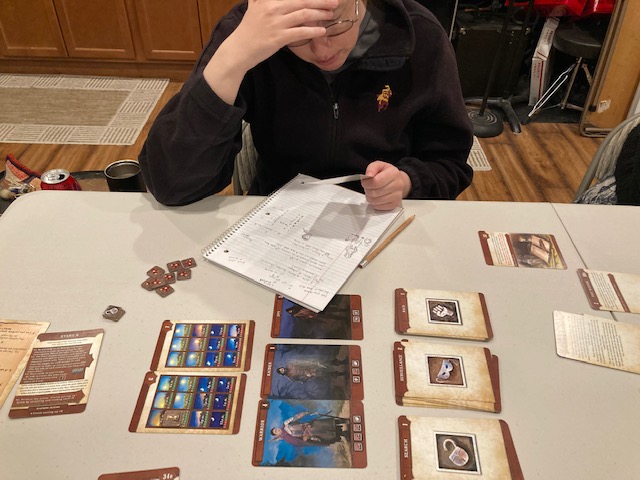

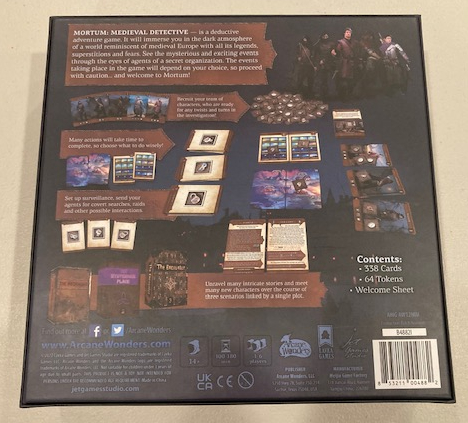

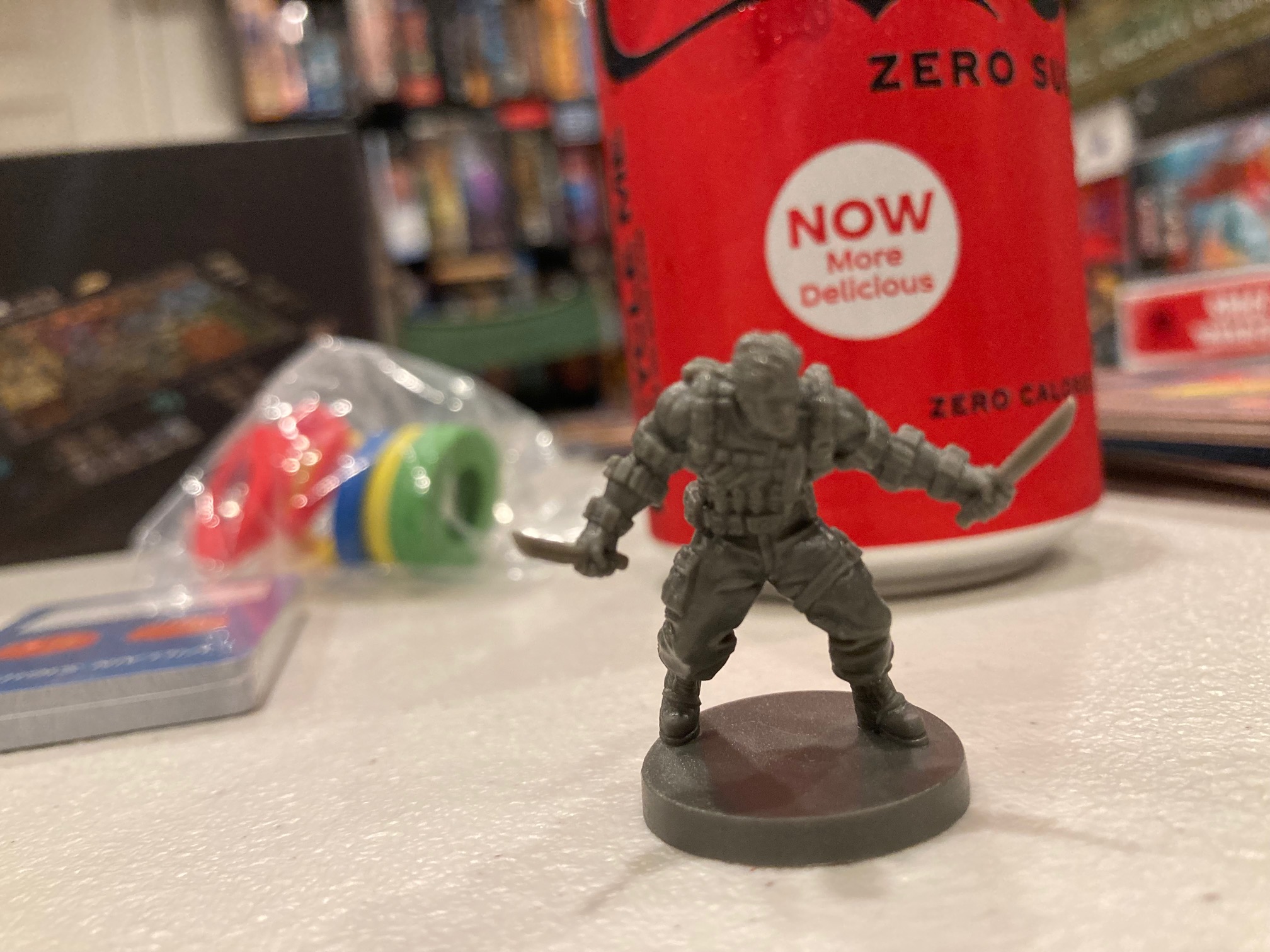
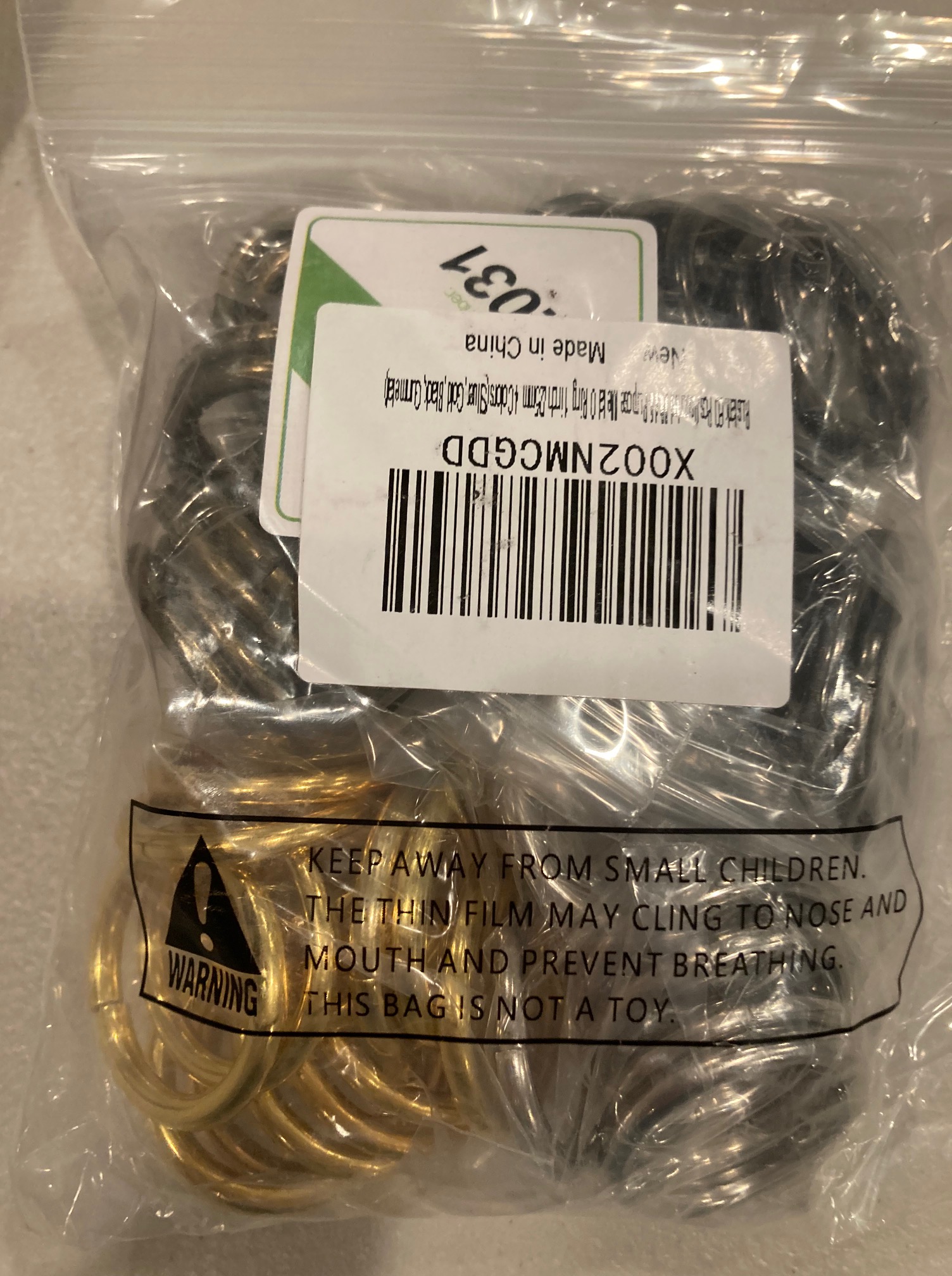

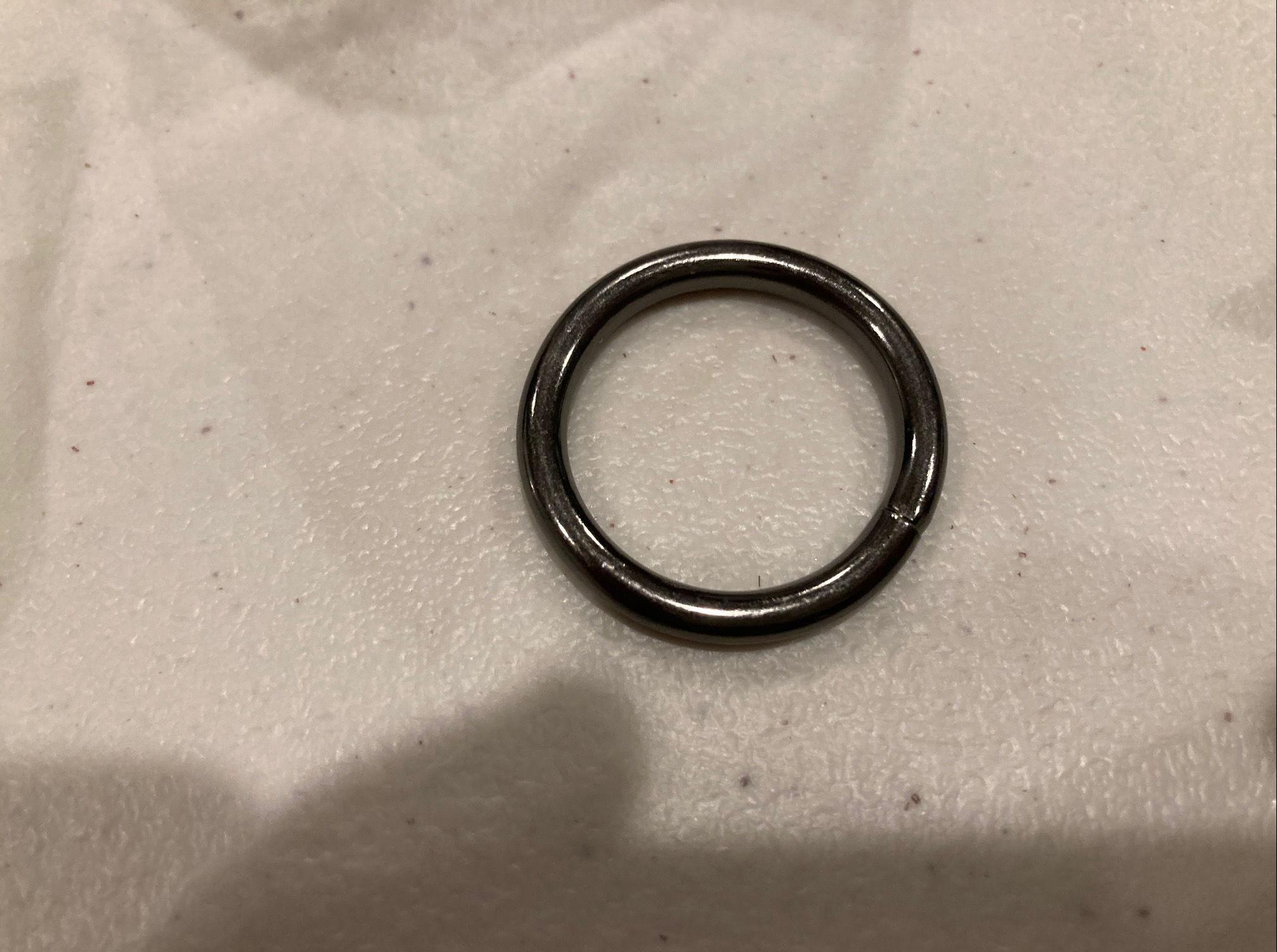
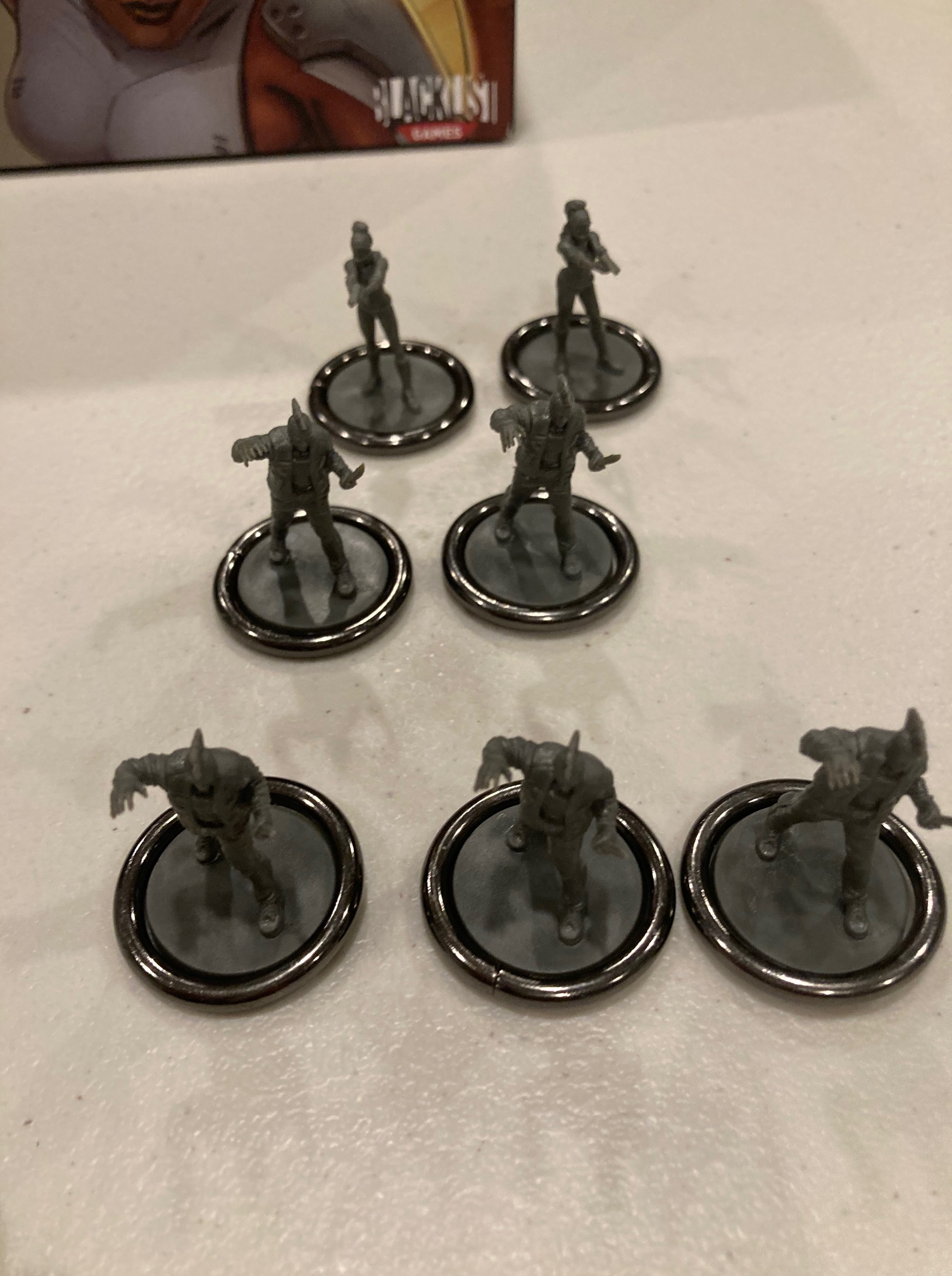


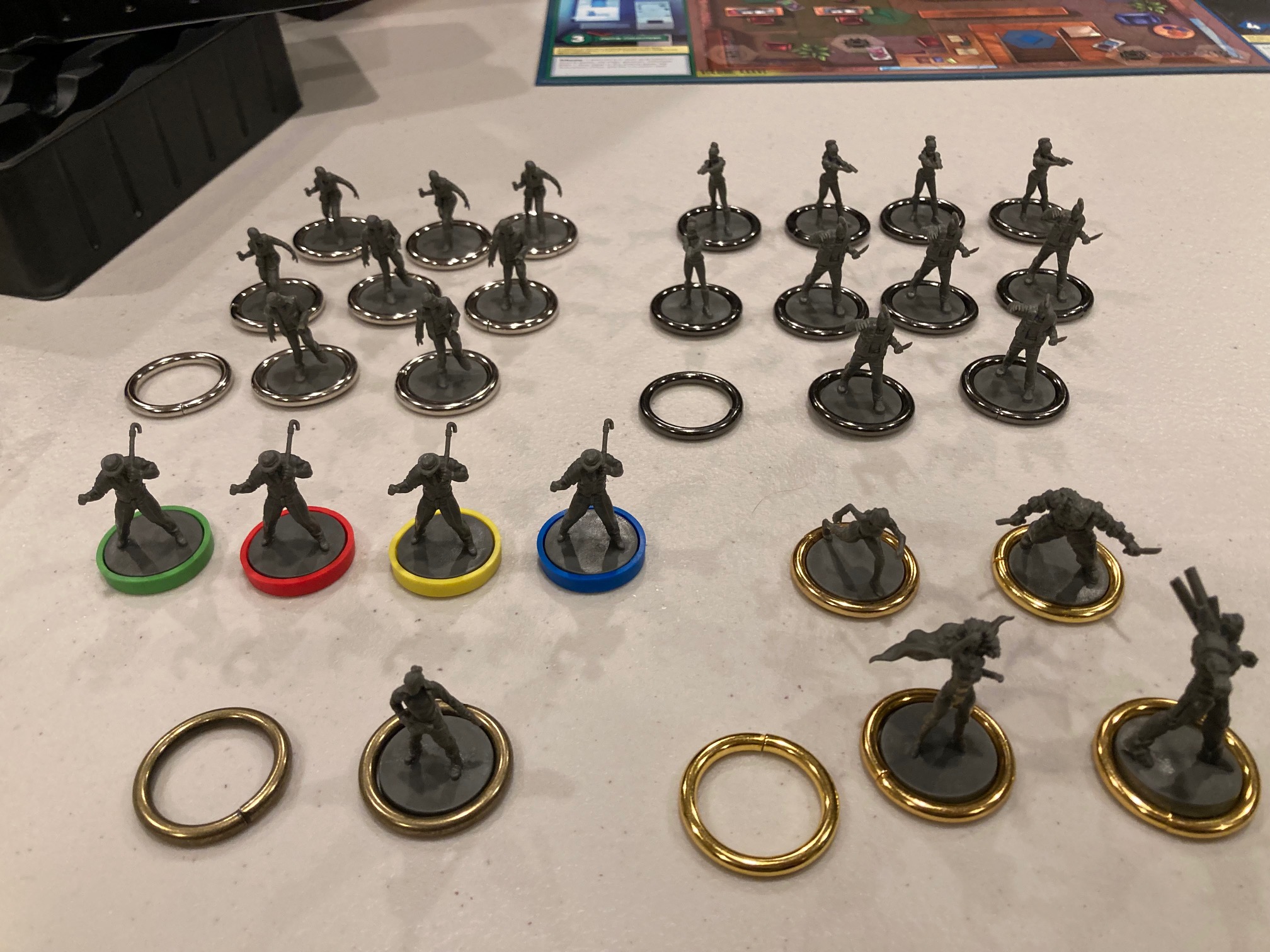


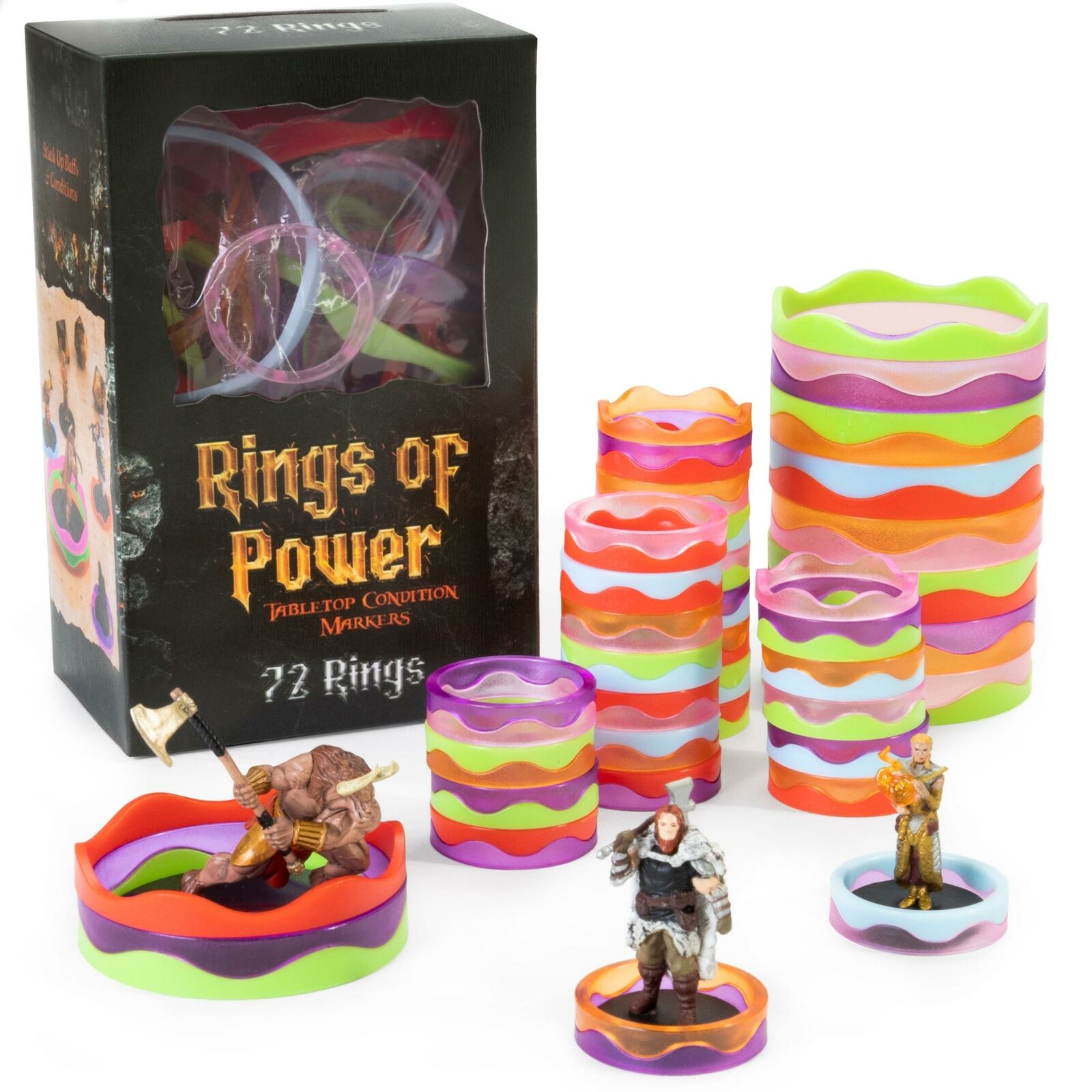
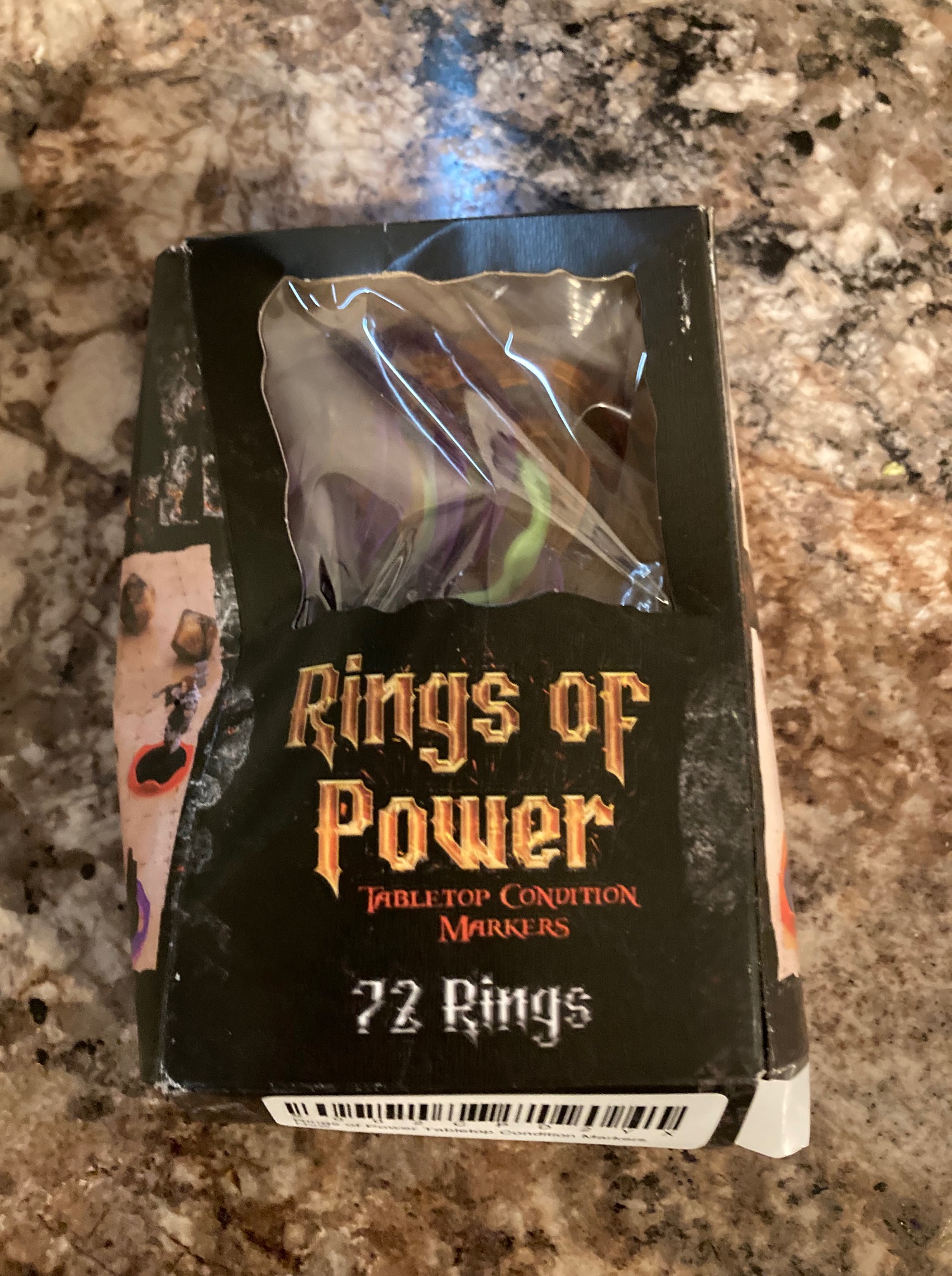


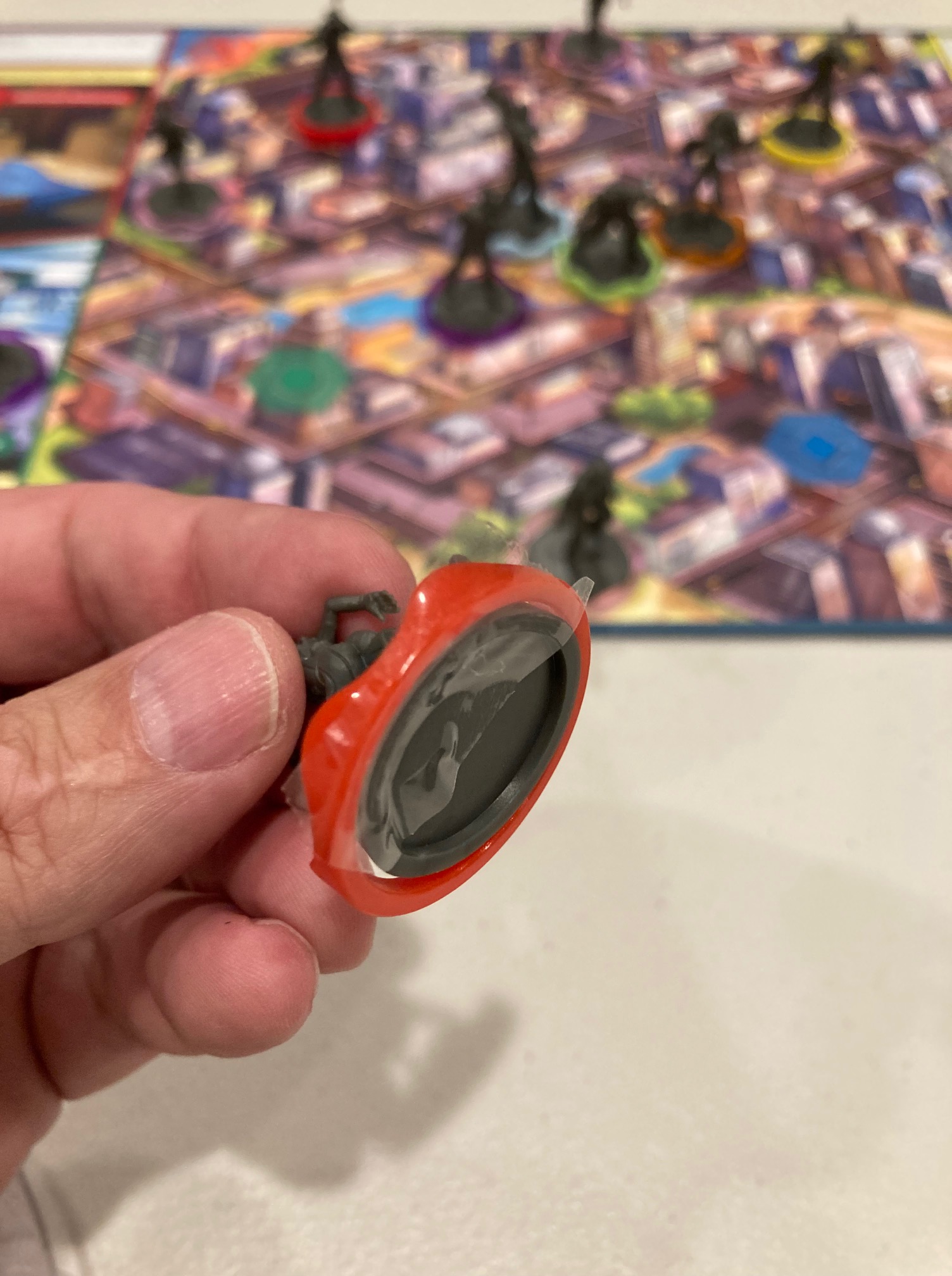


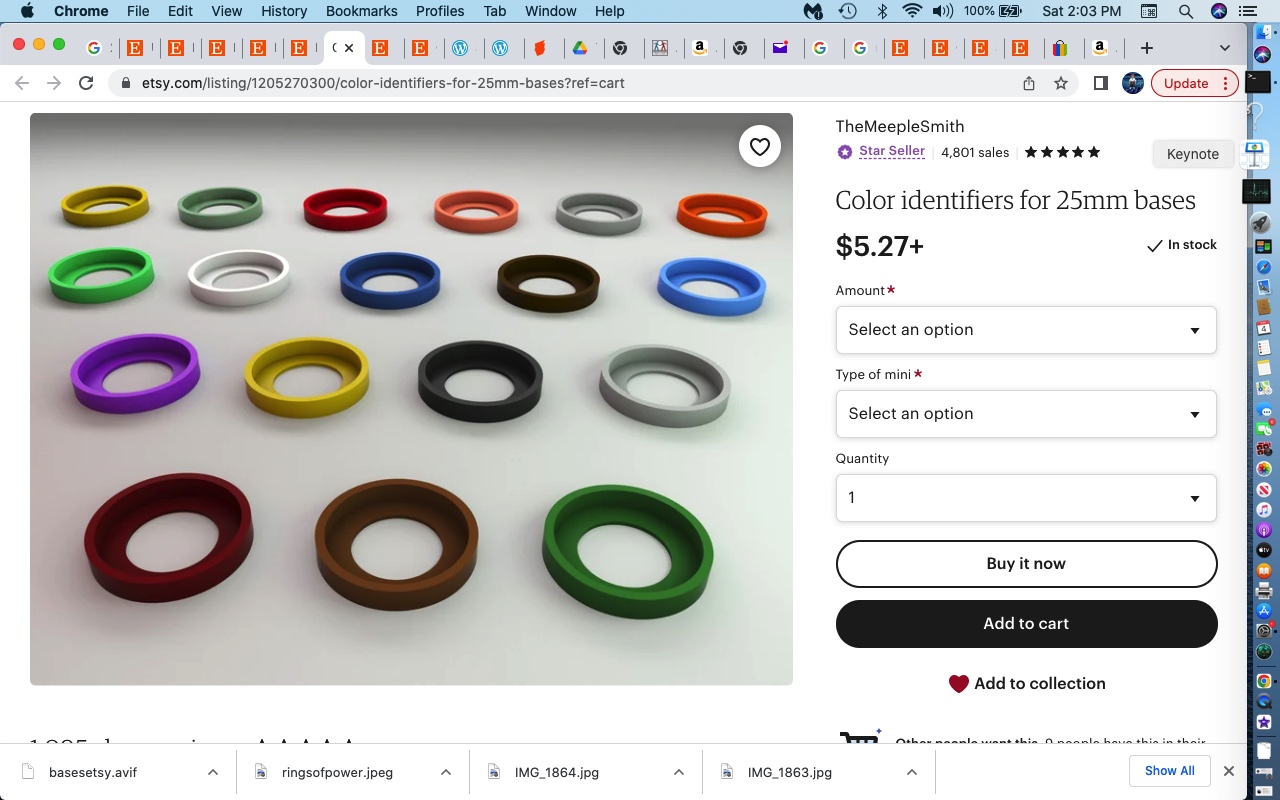


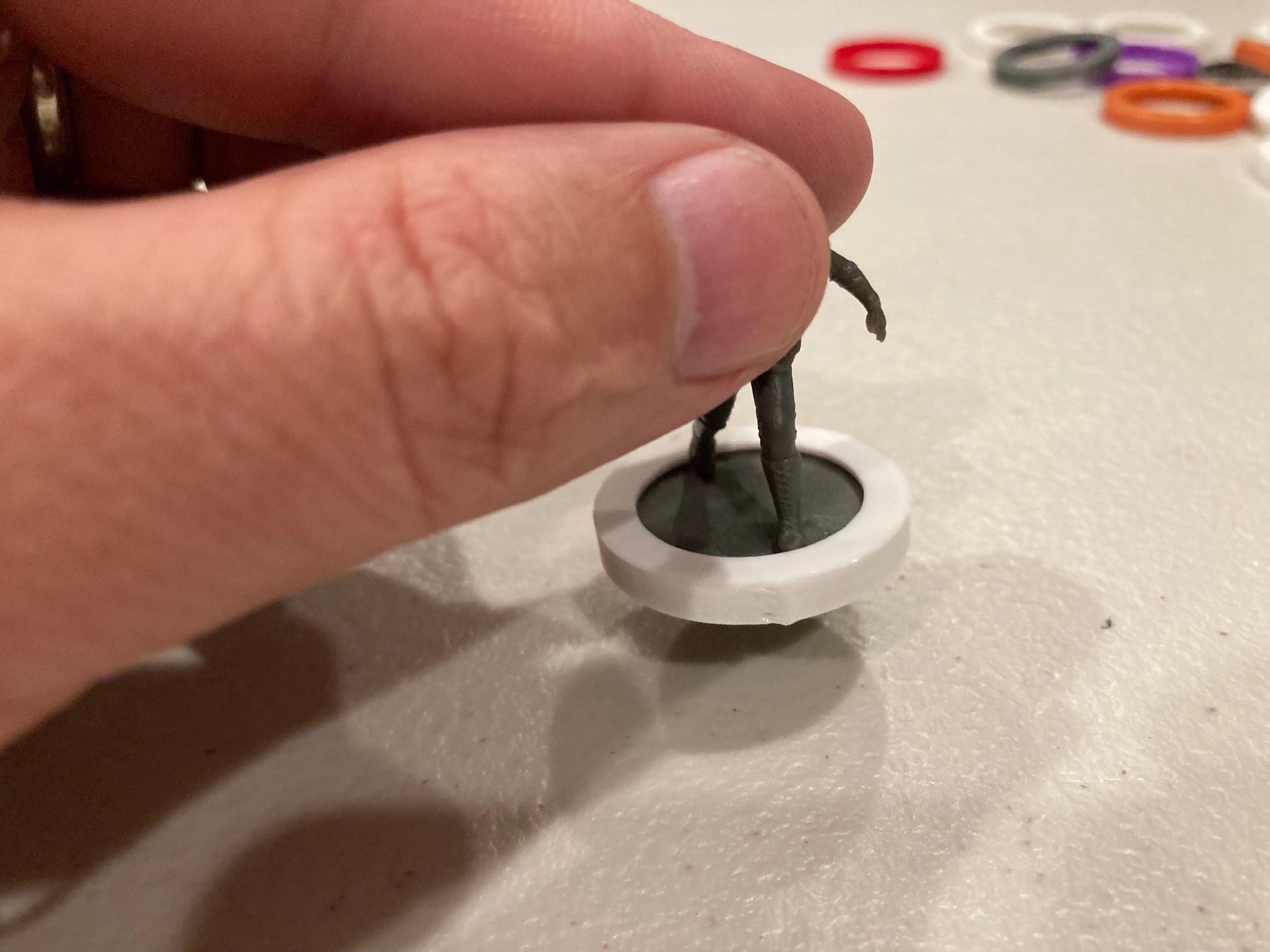


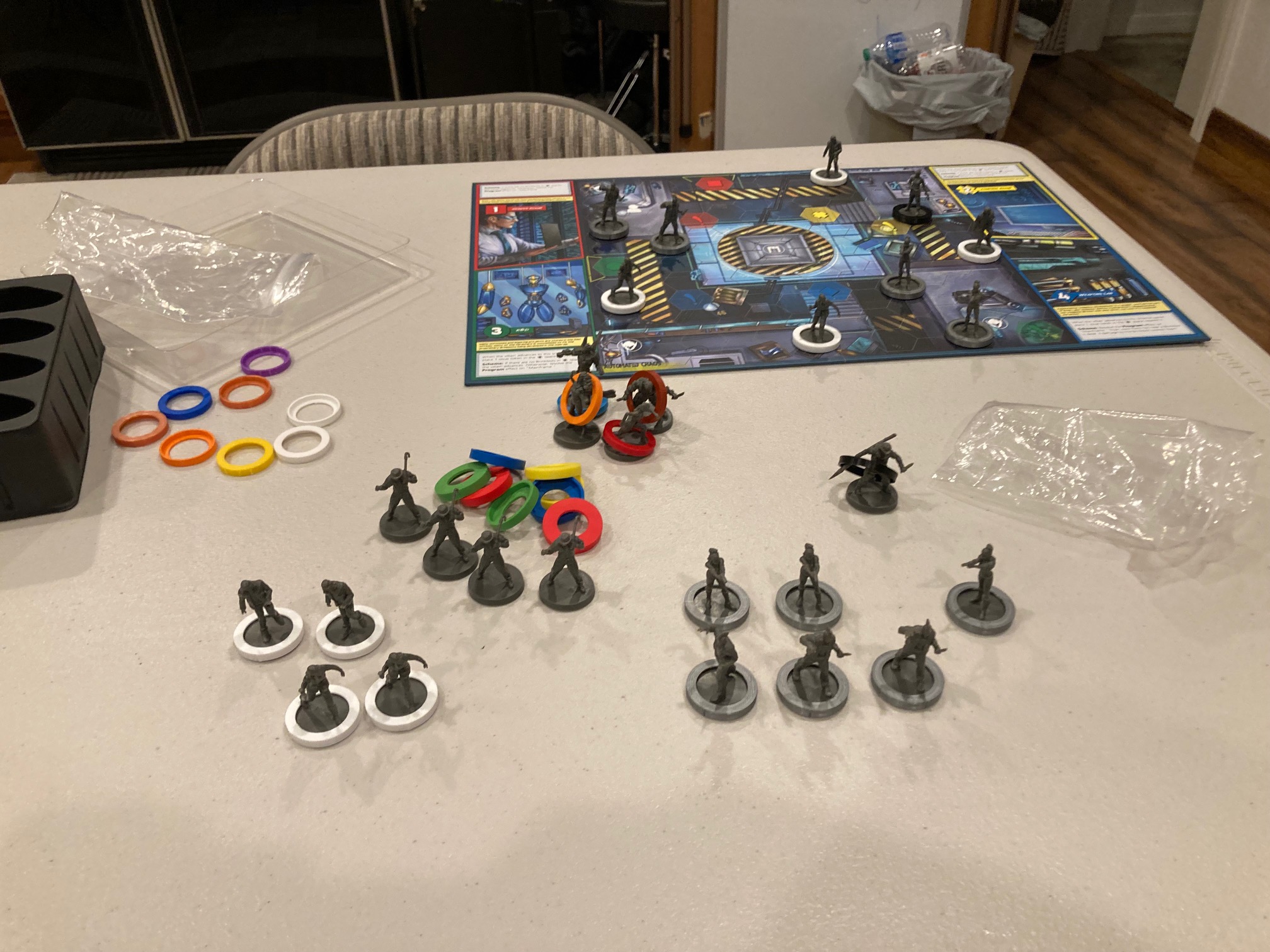


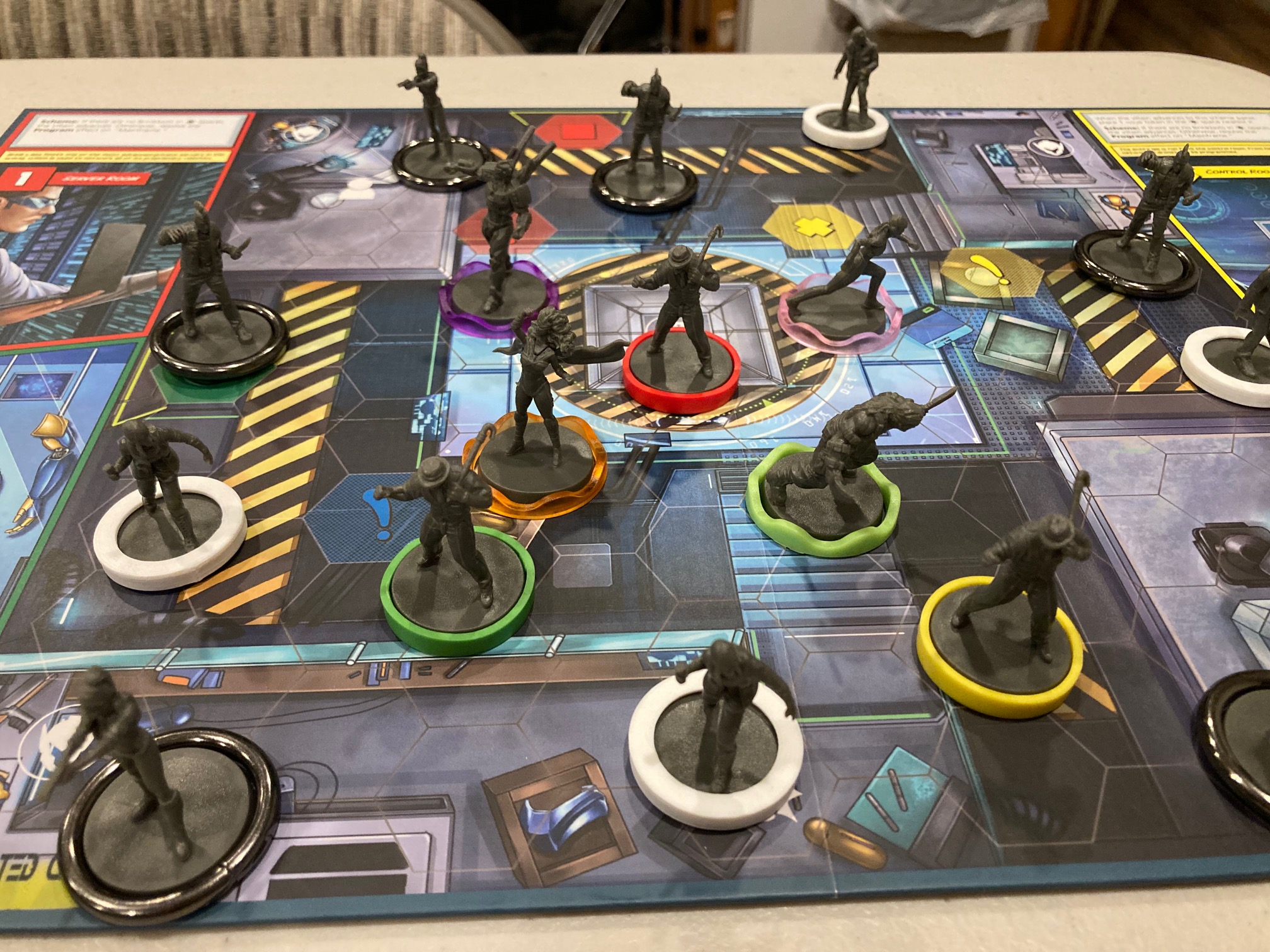
 For comparison’s sake (and to see how well these solutions scale outside of Hour of Need), how do these solutions work with the minis from the Batman The Animated Series, Shadow of the Bat game?


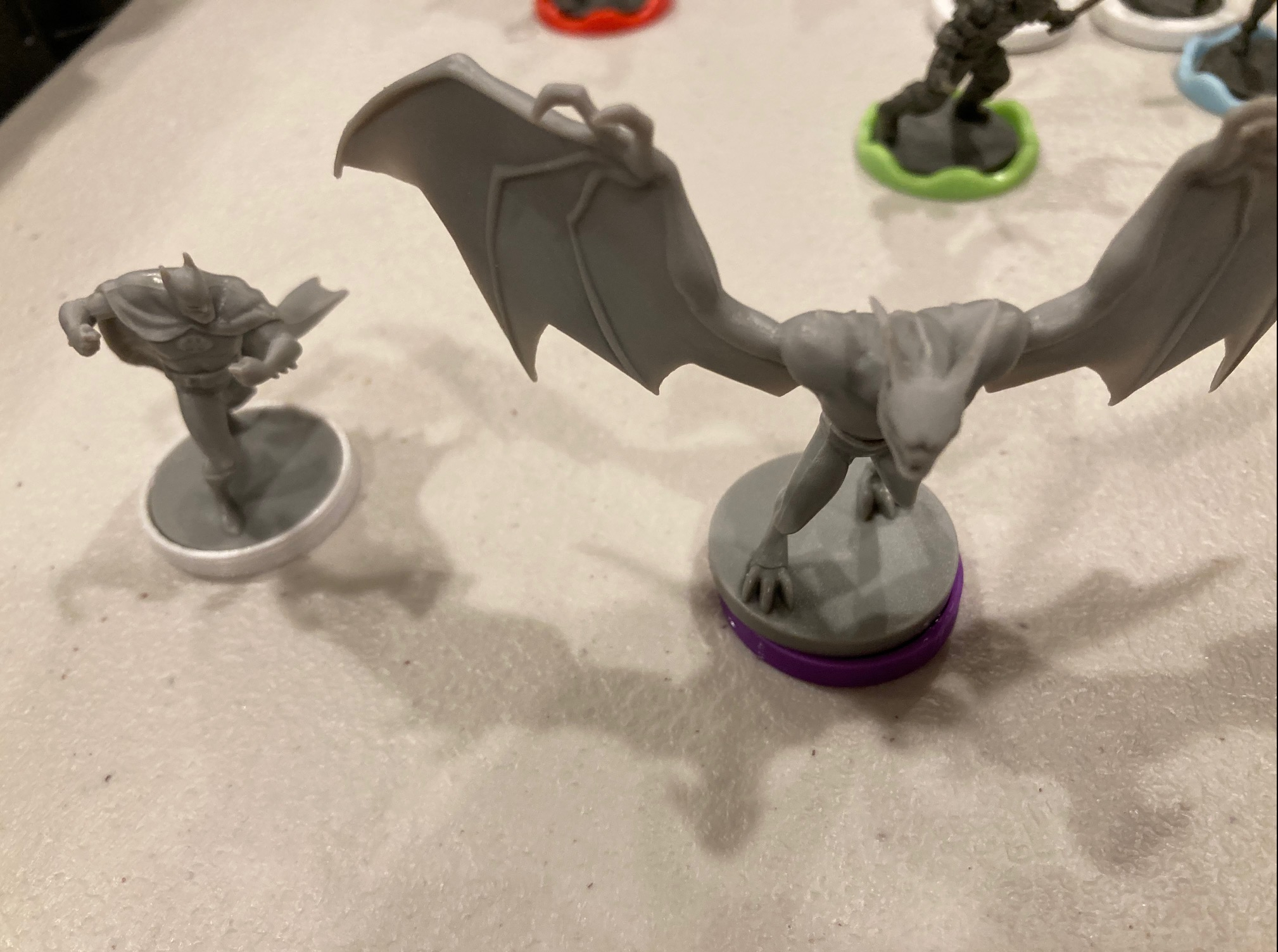


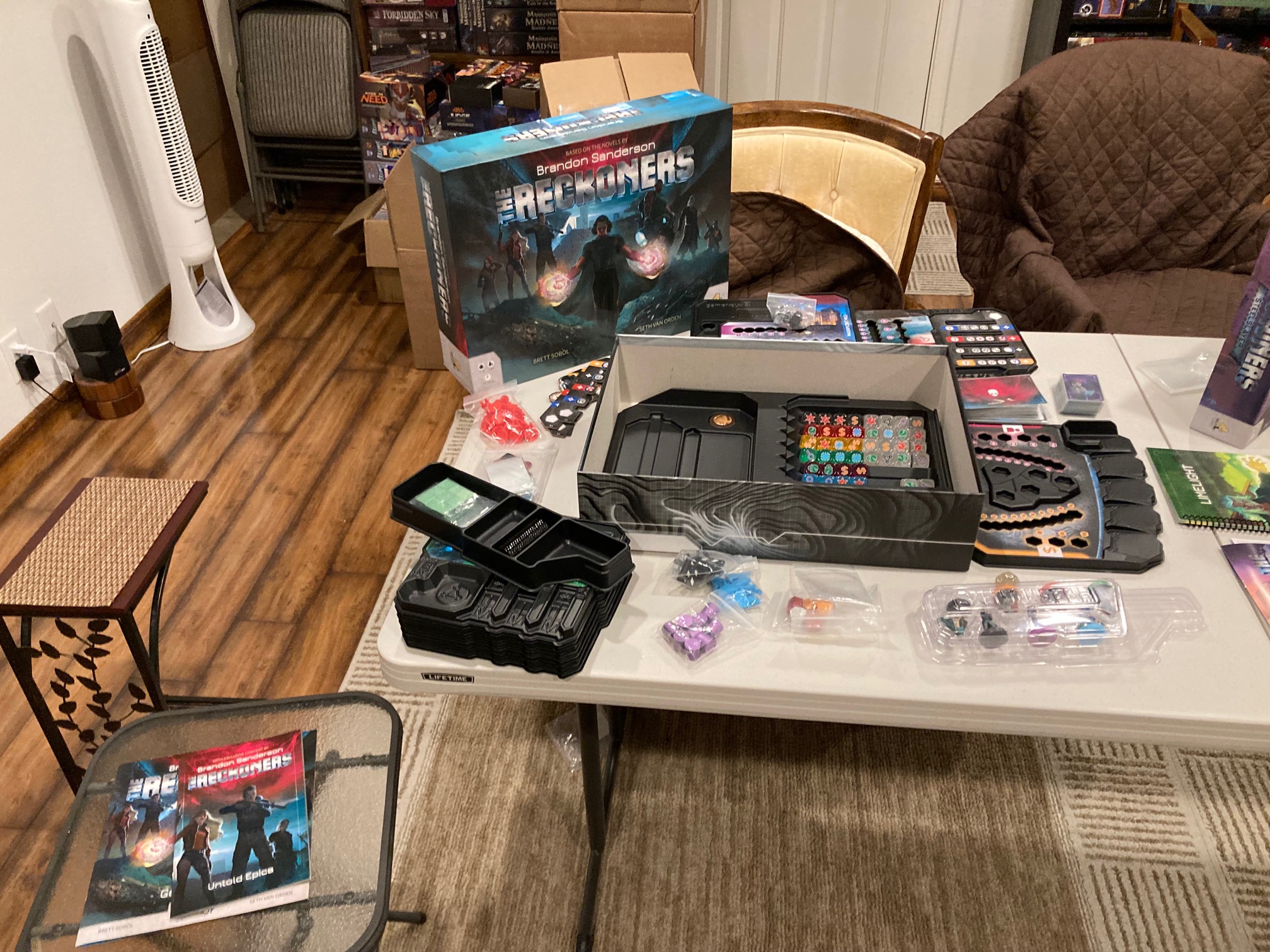
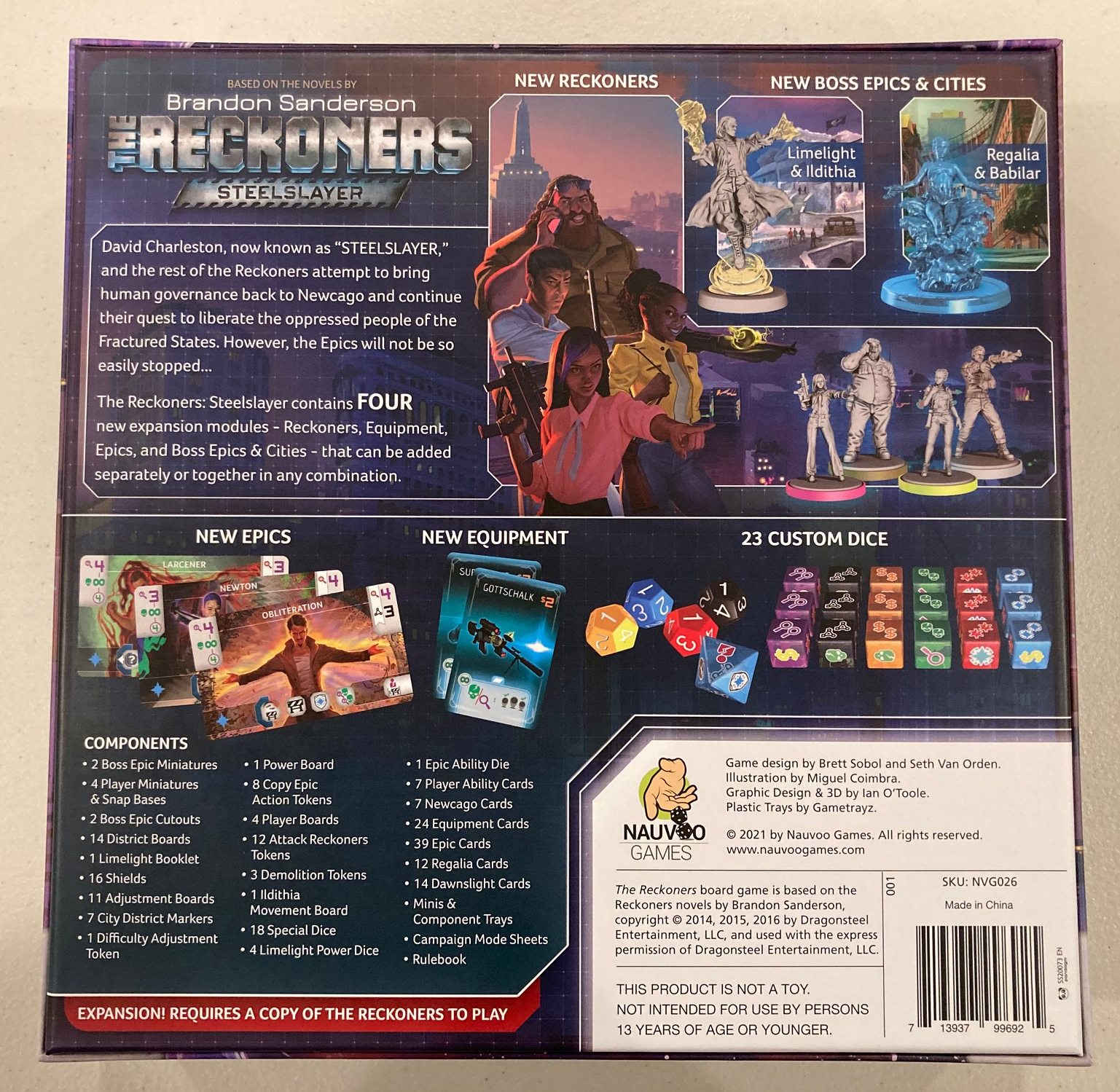
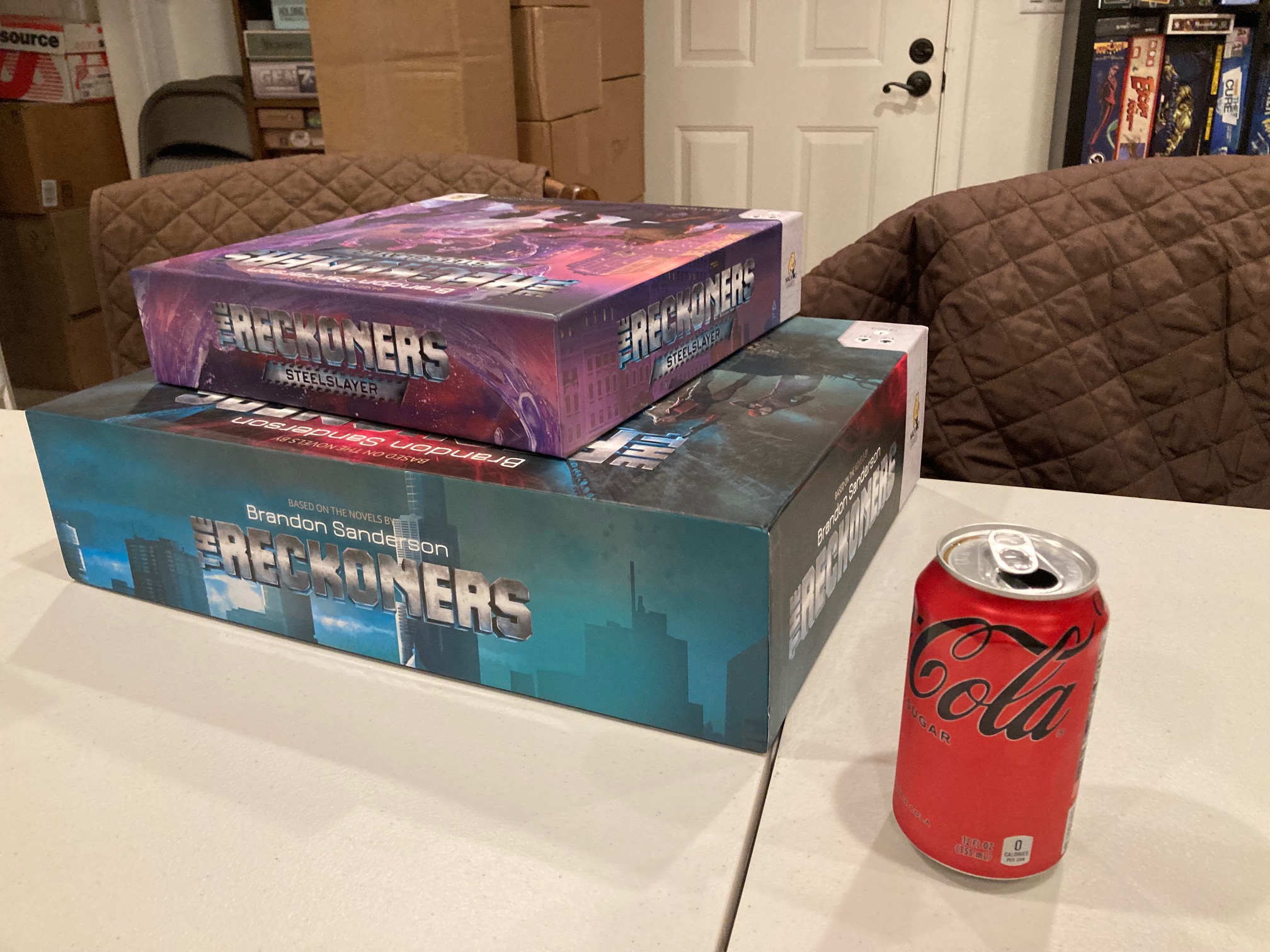
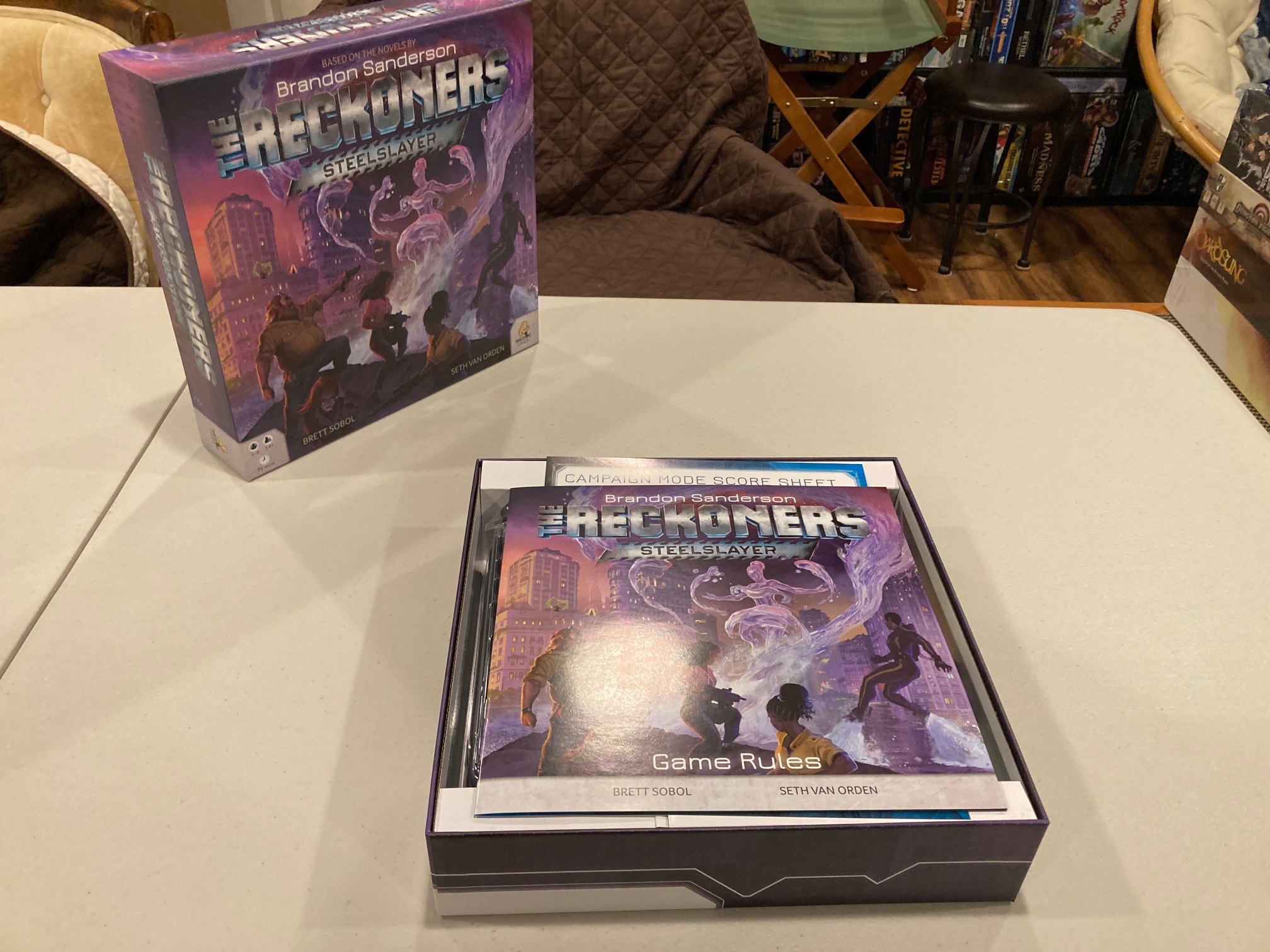
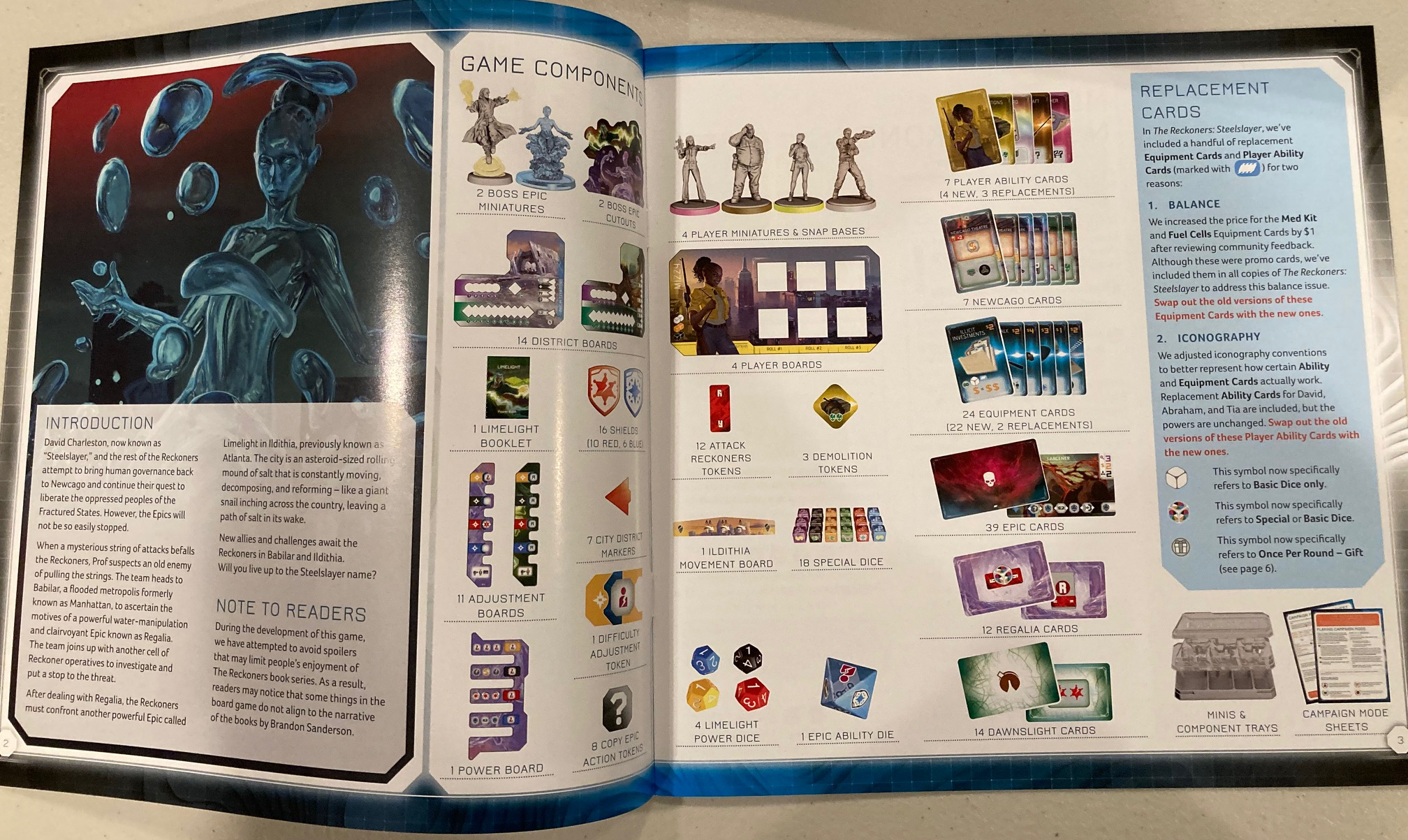


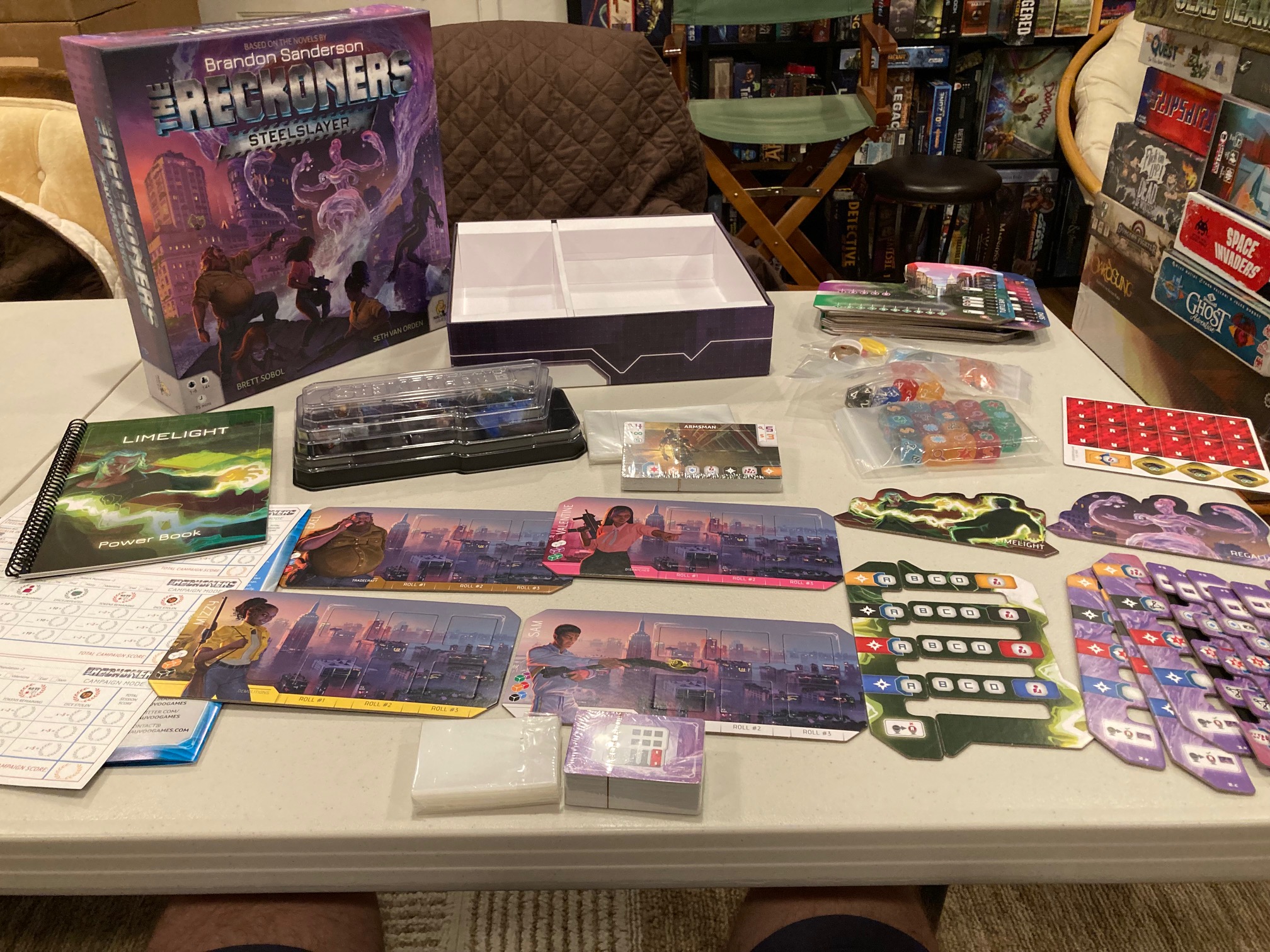
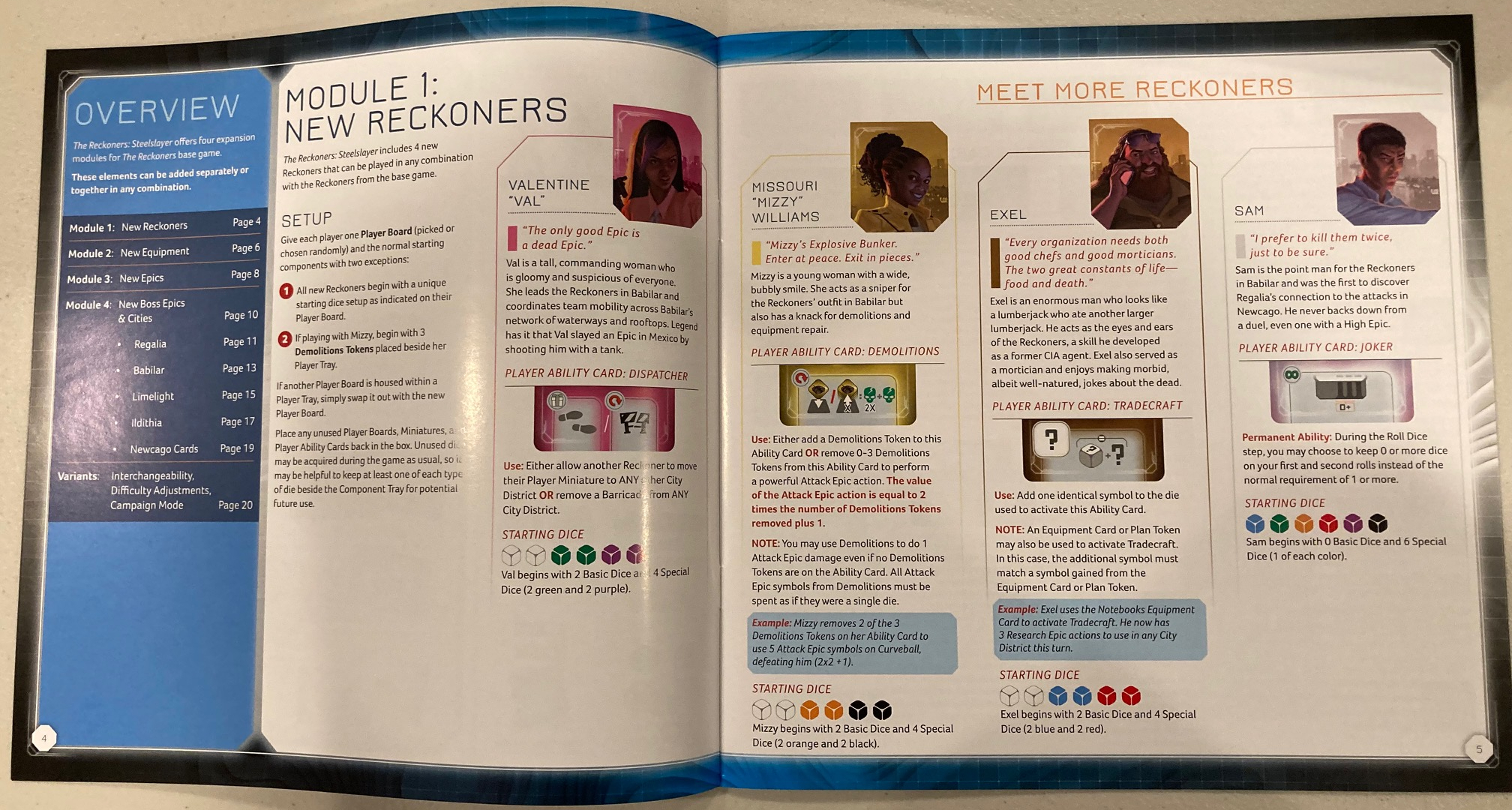
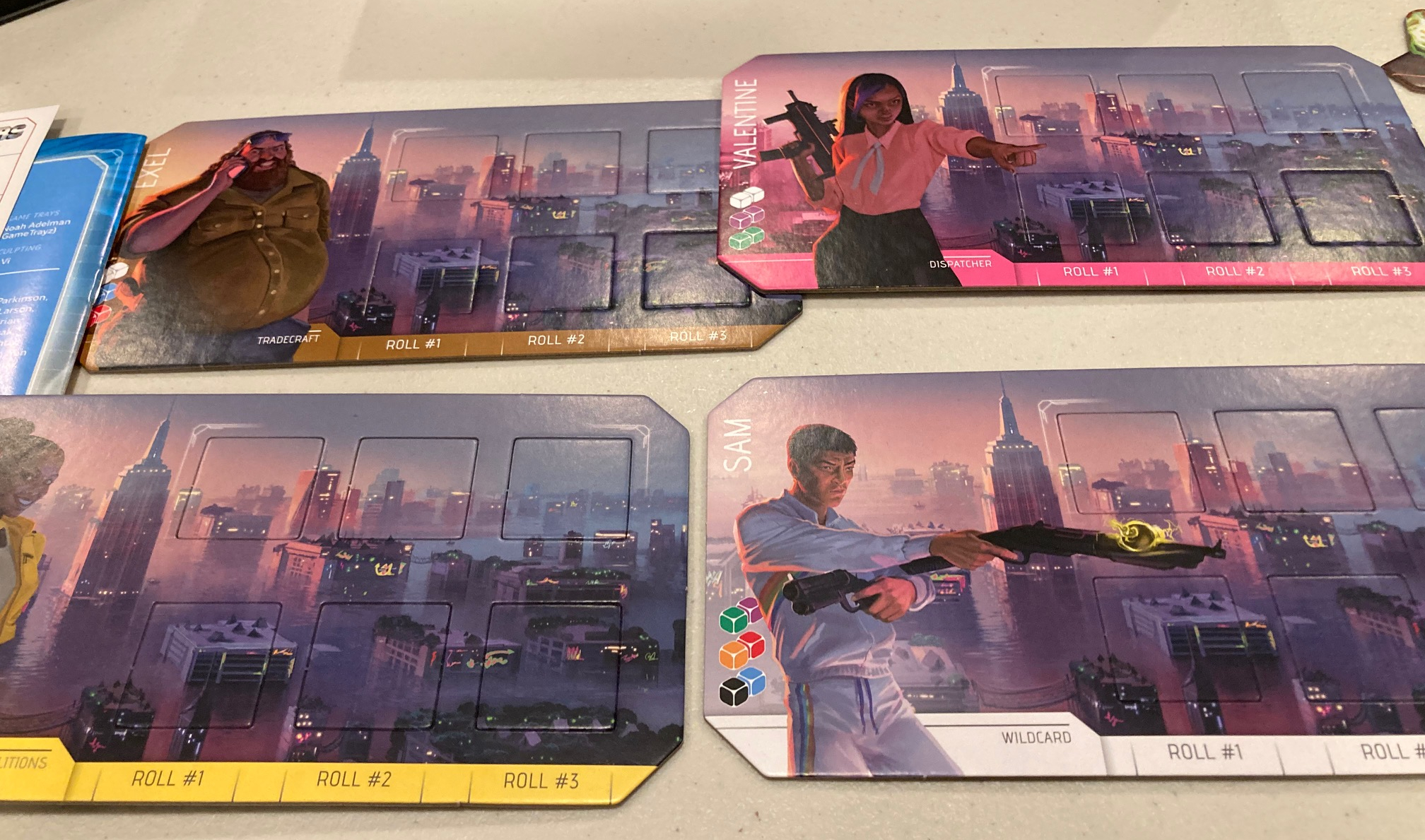
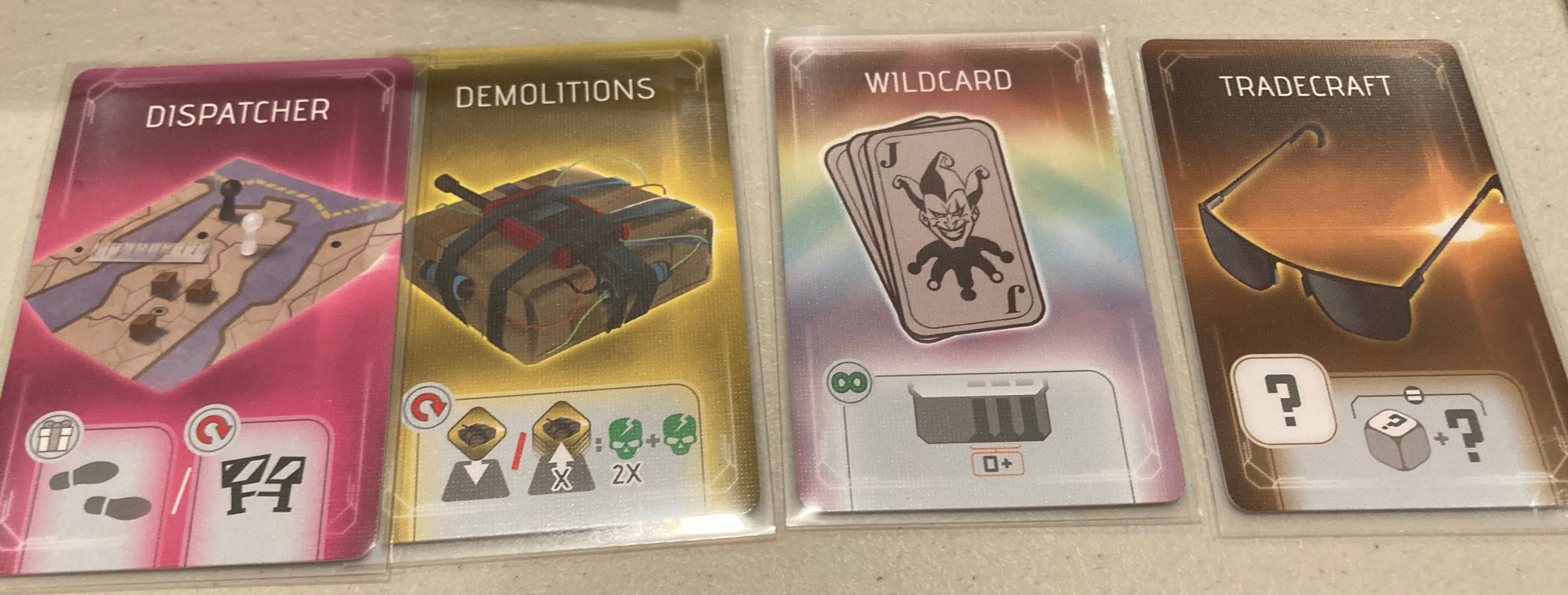
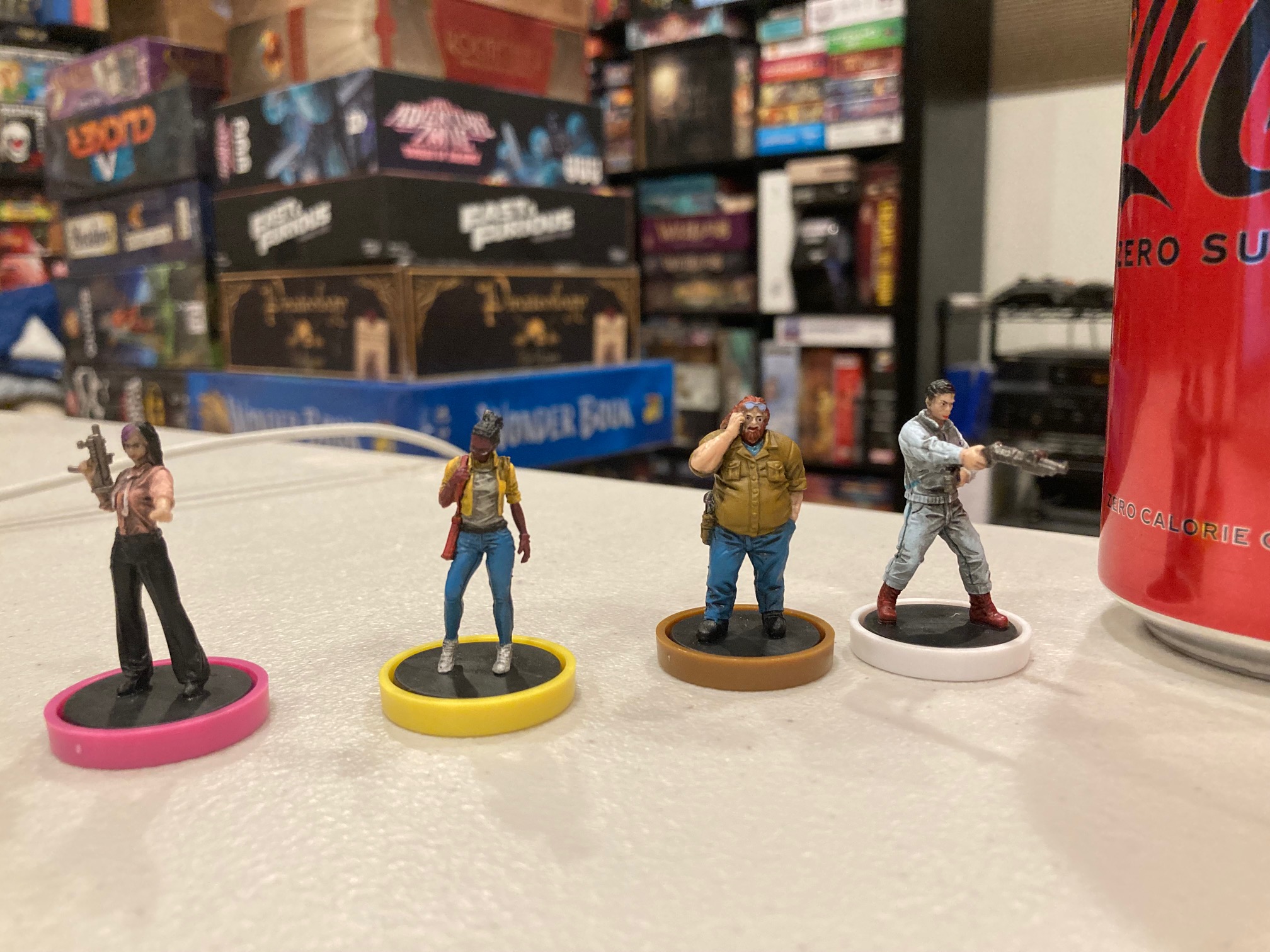
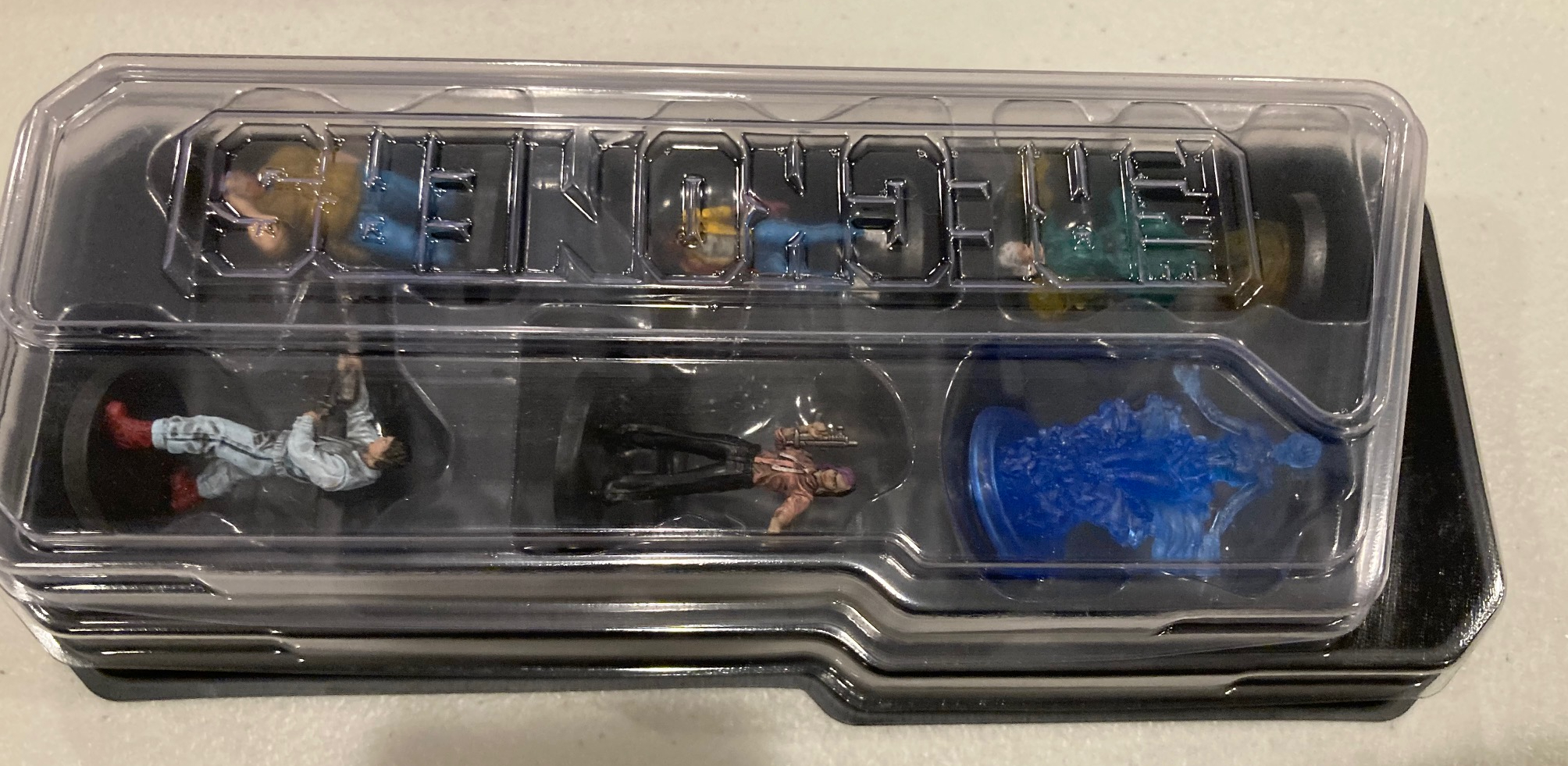
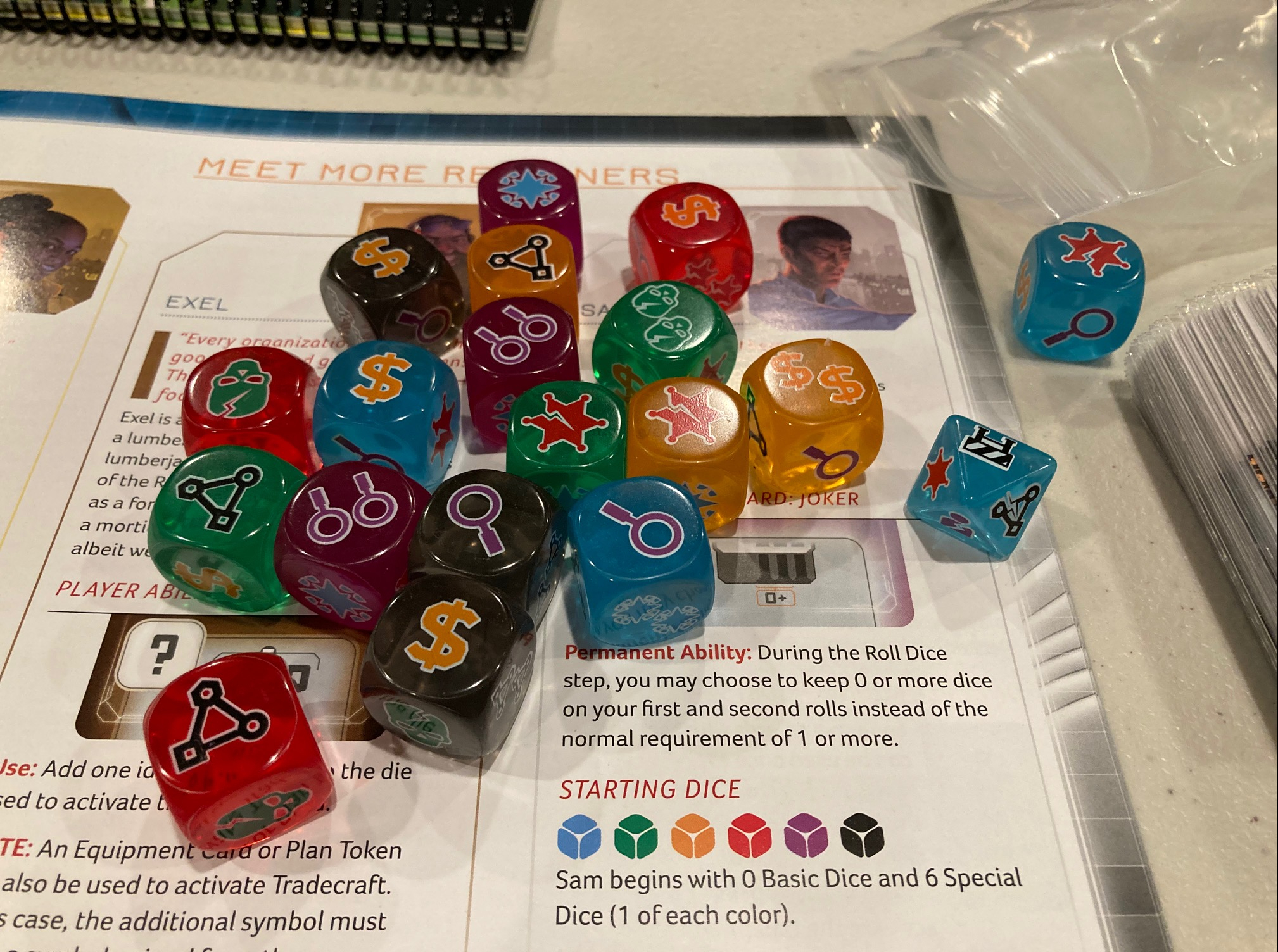
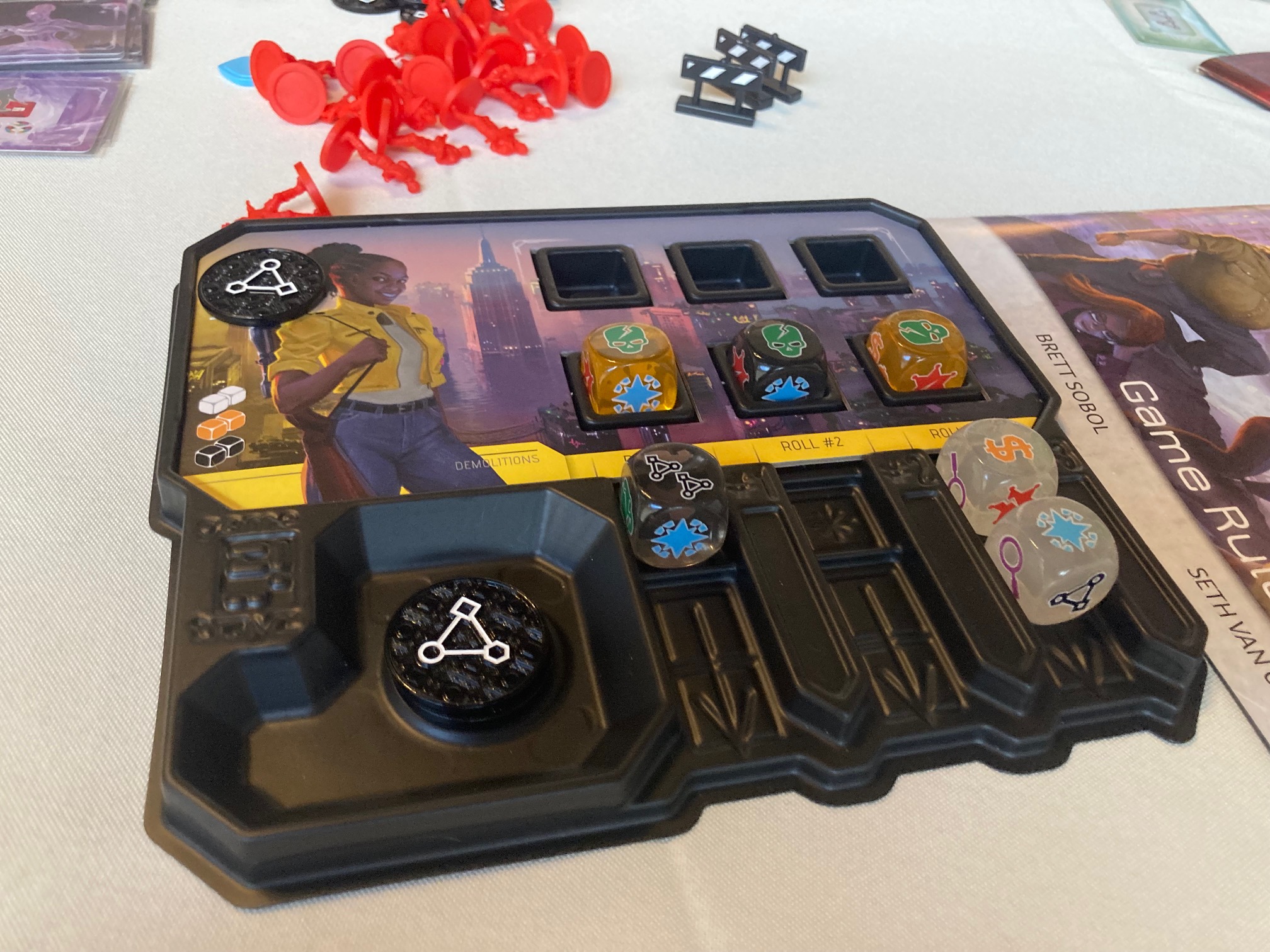
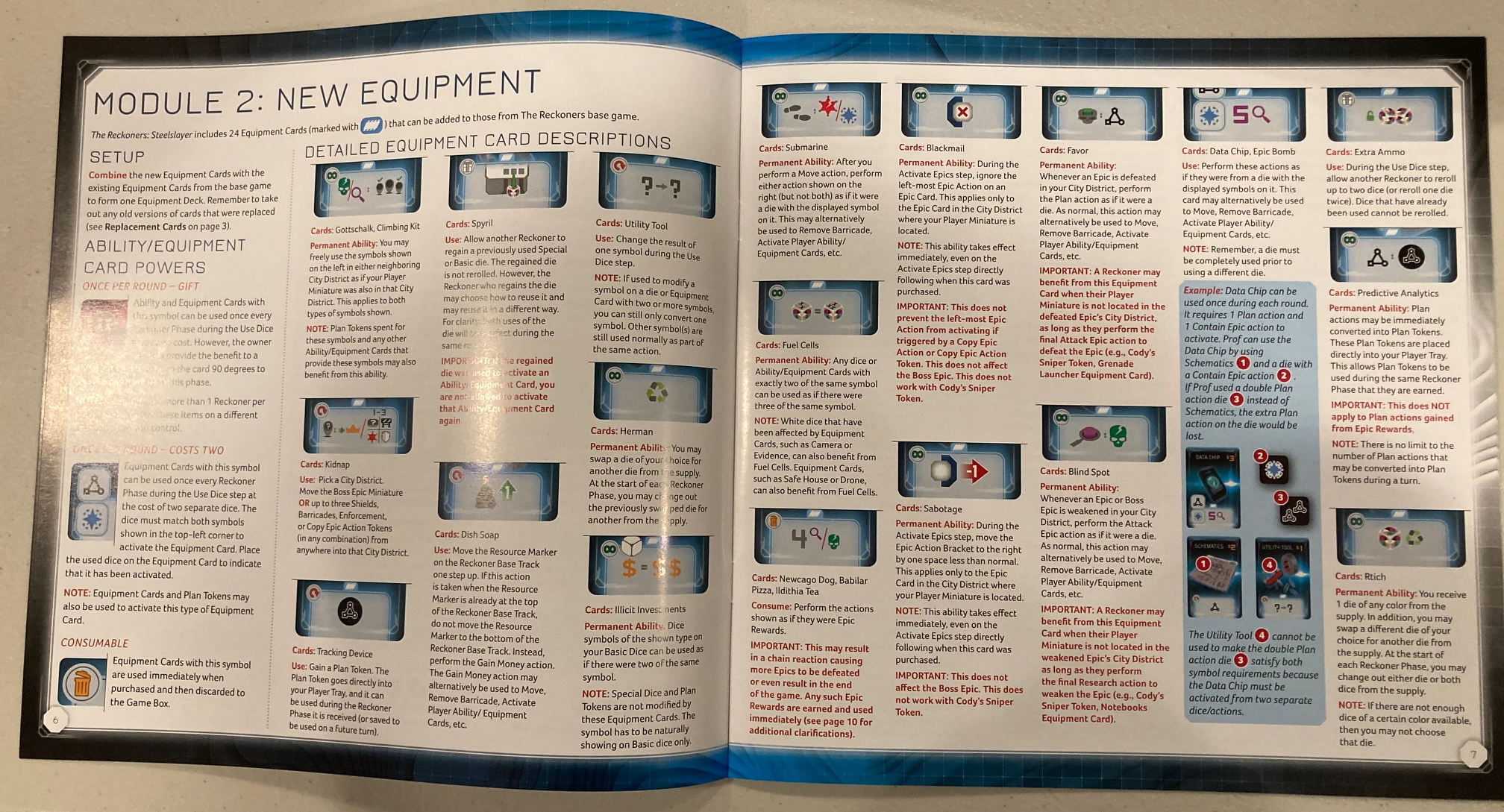




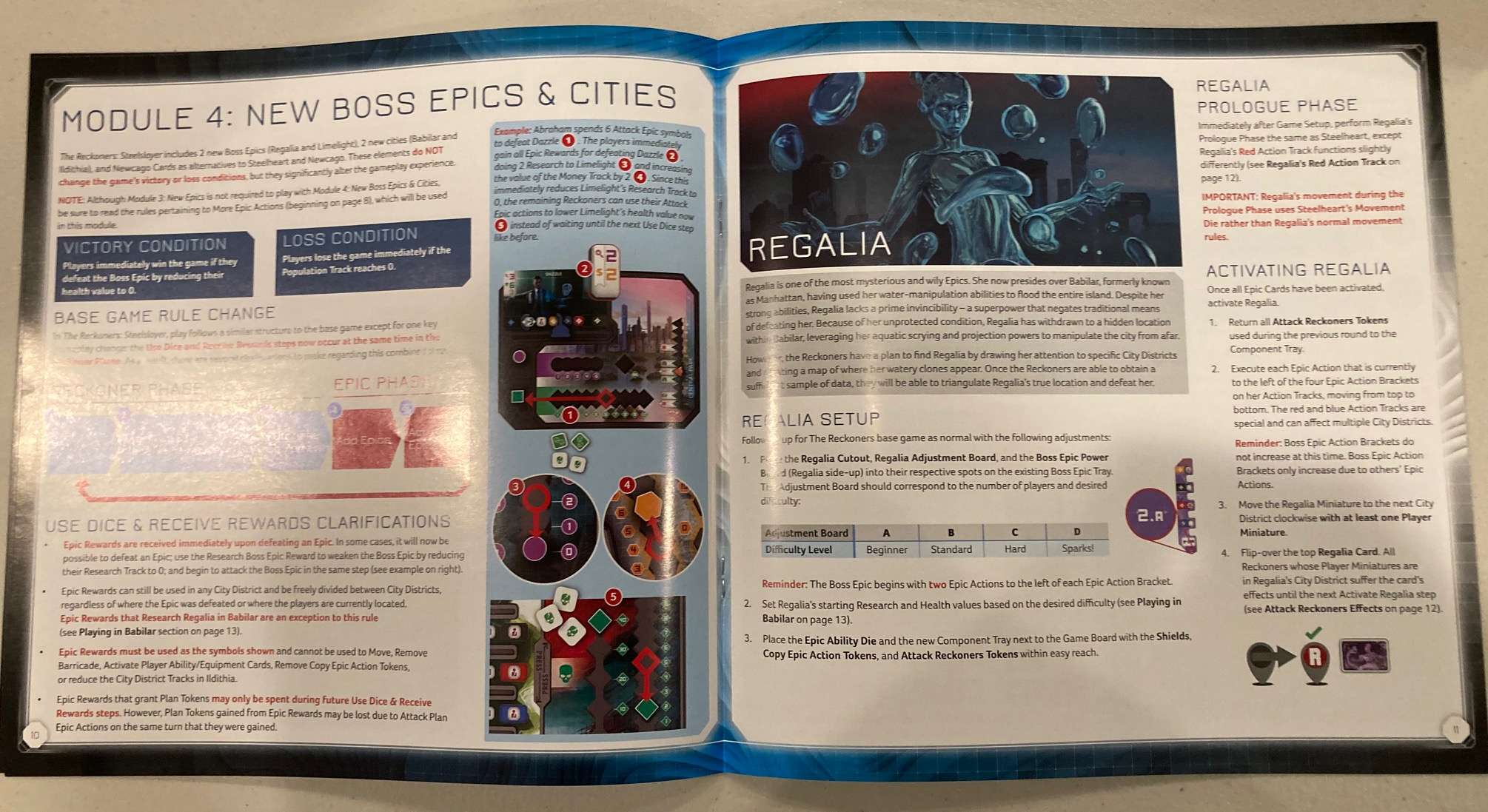
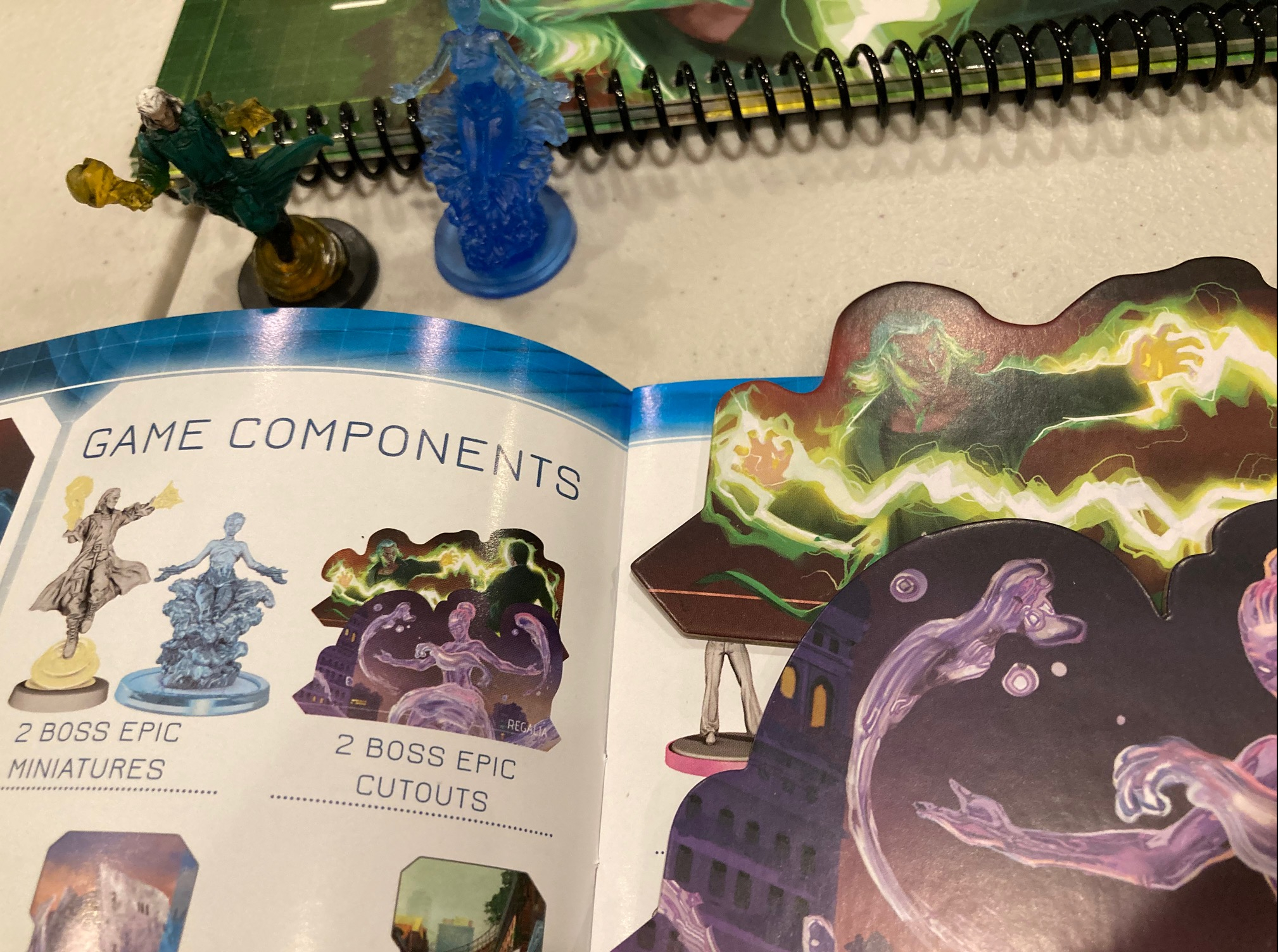
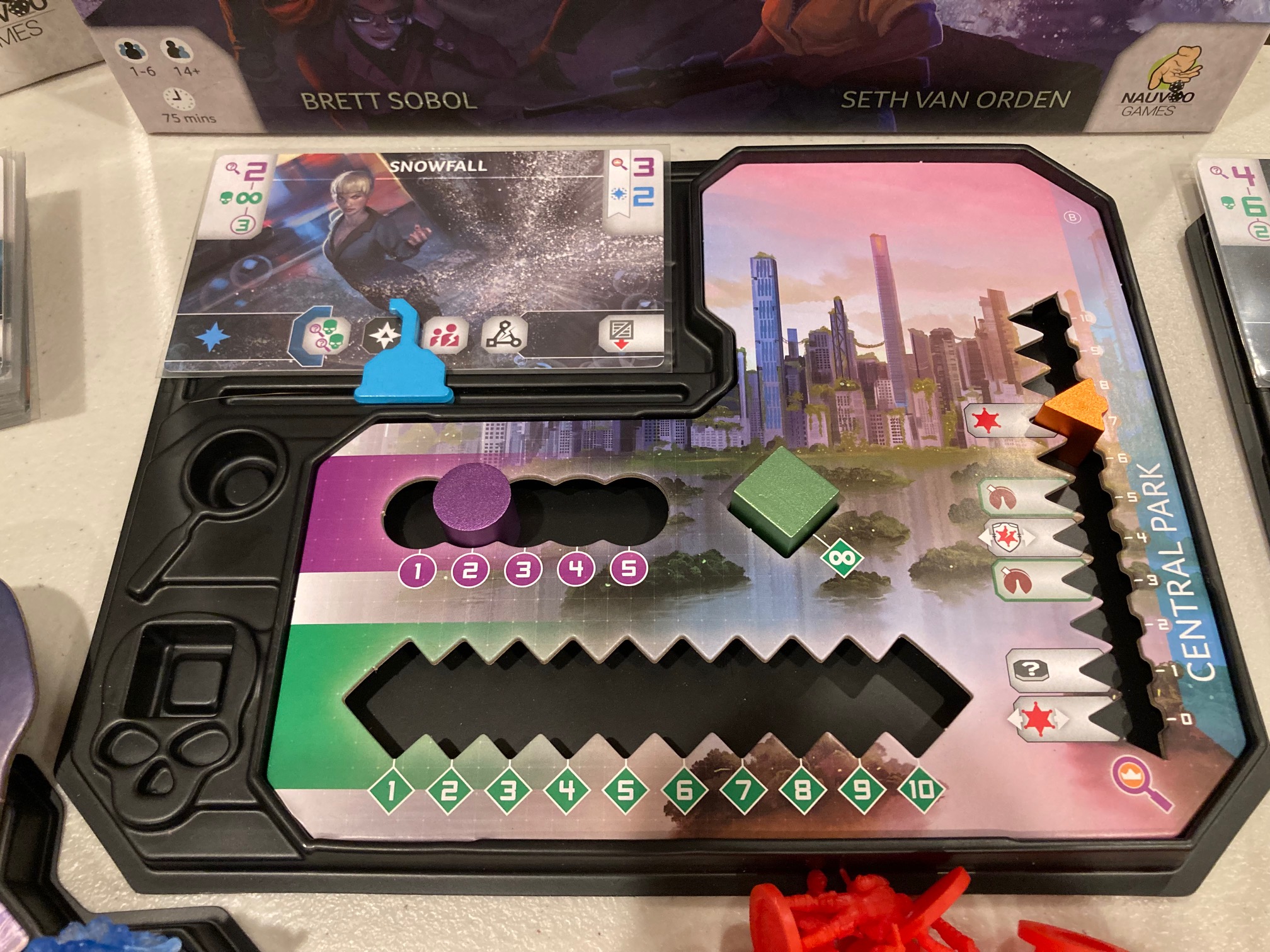


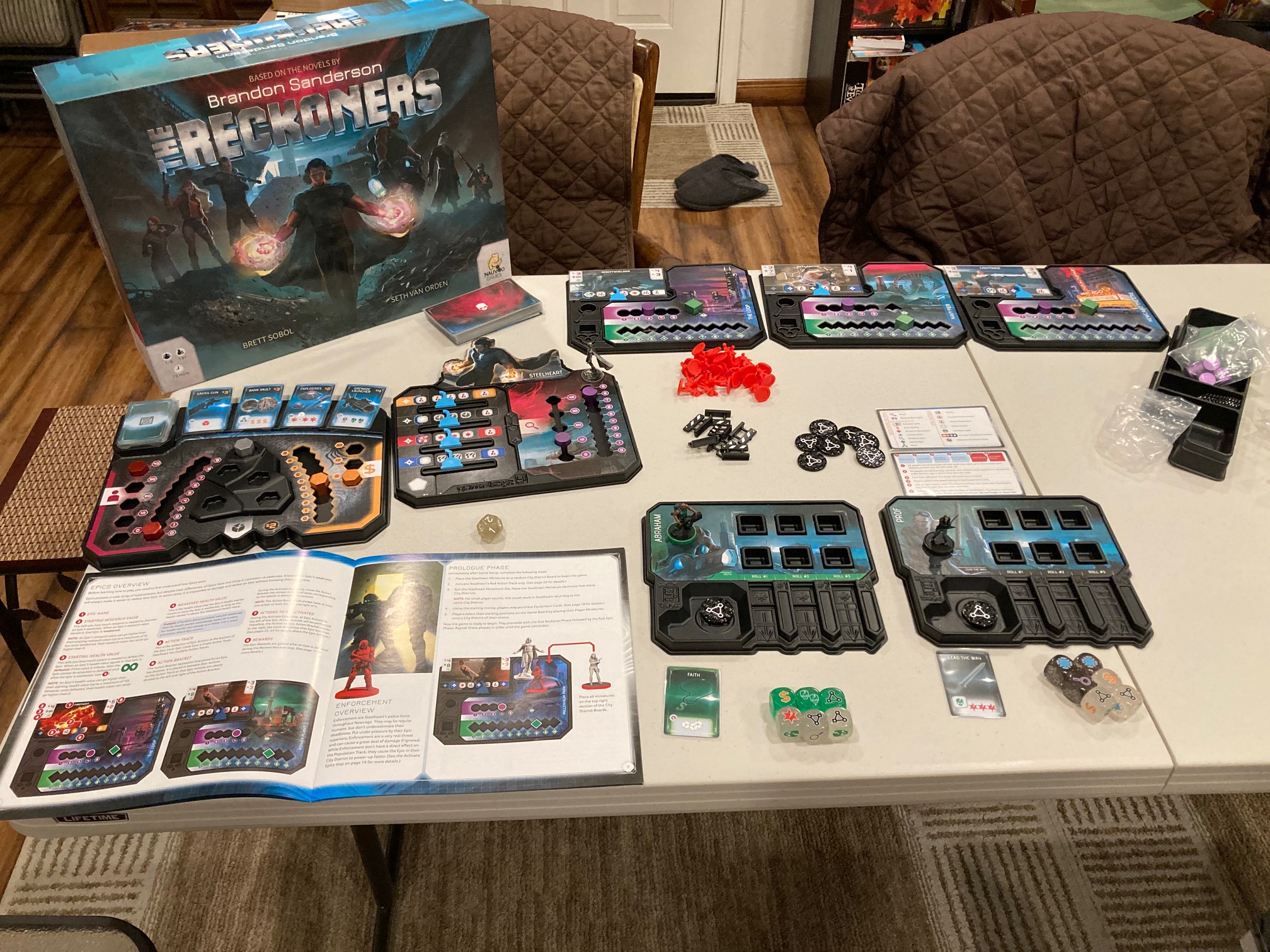
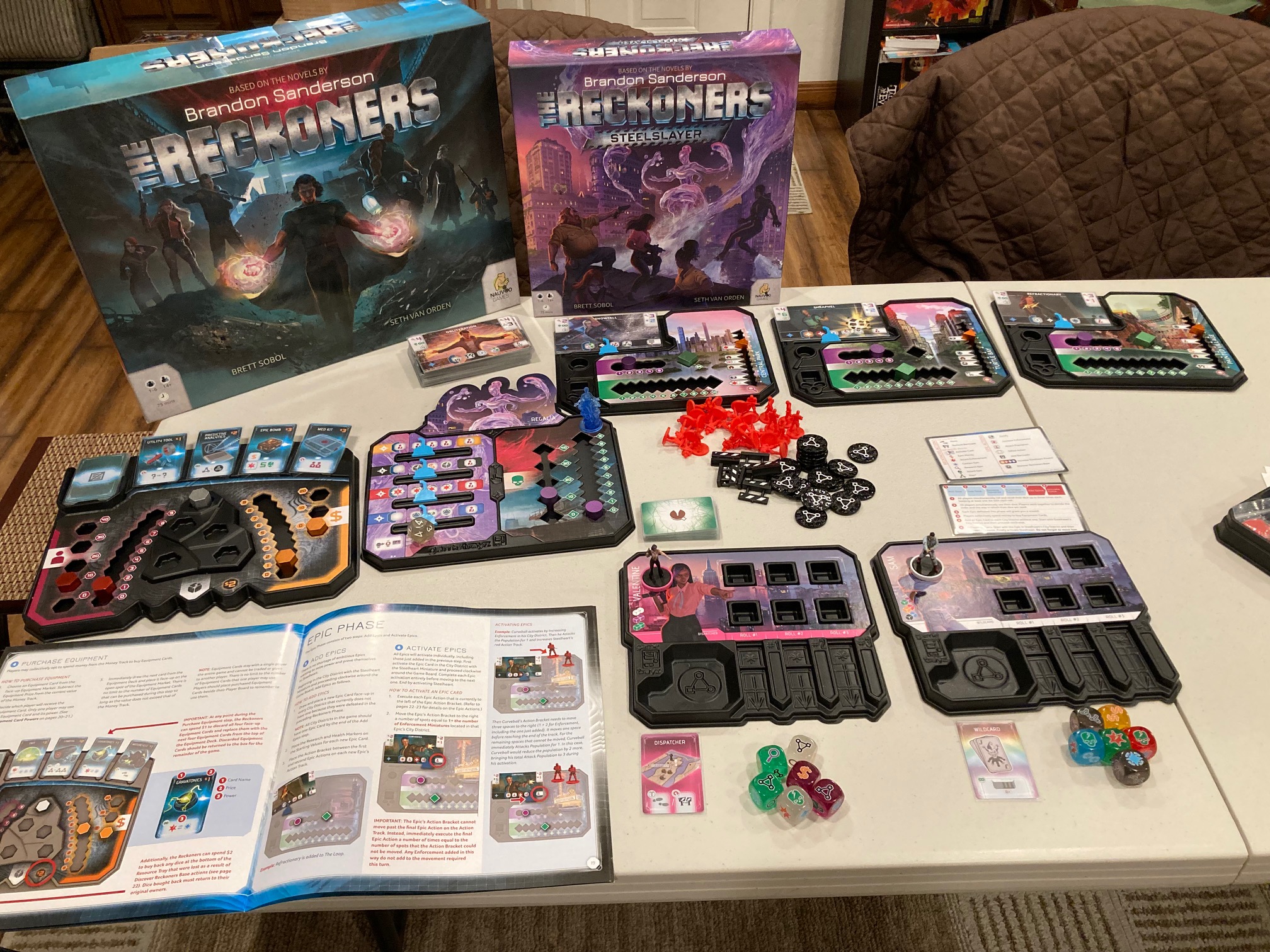


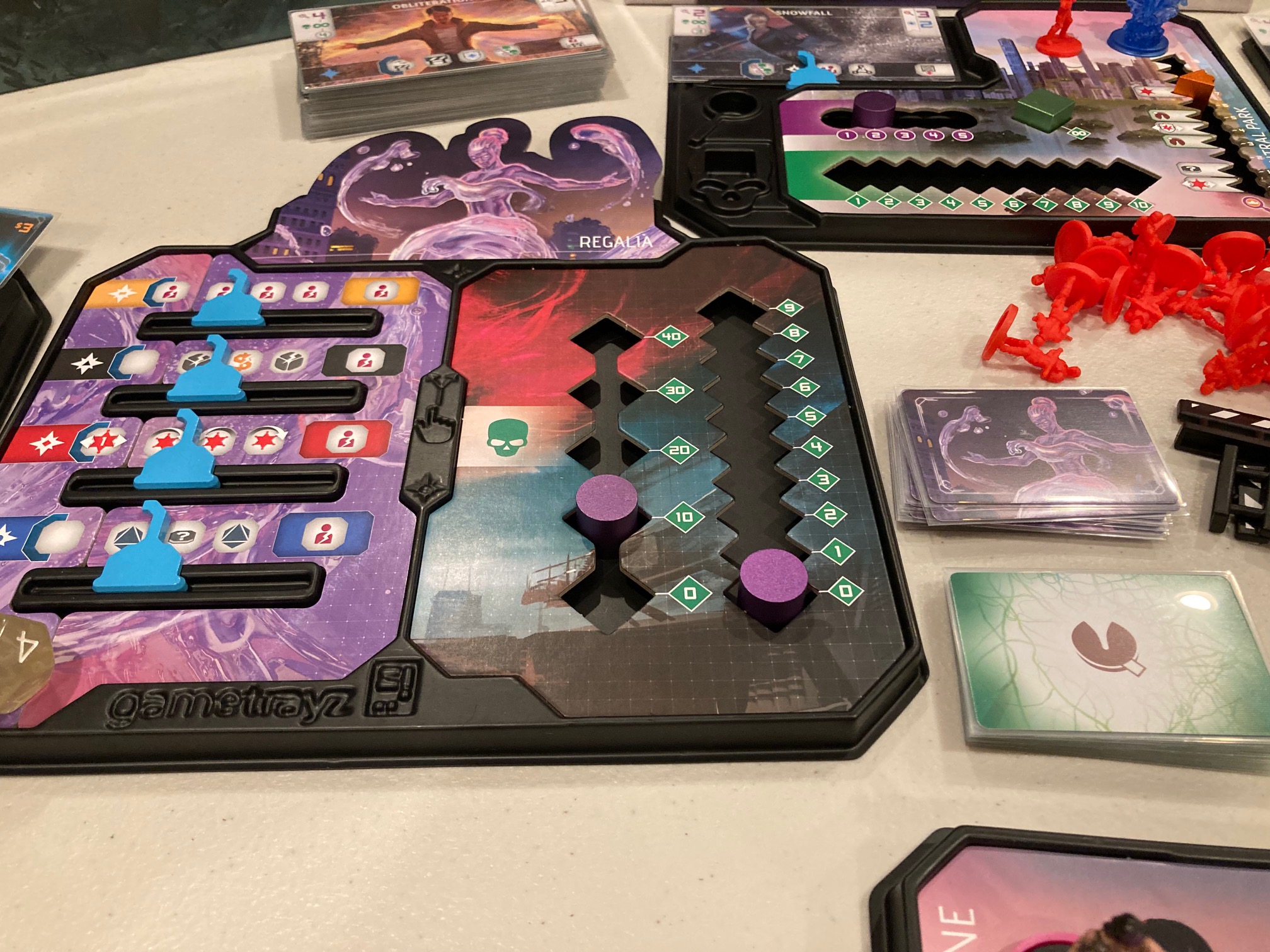
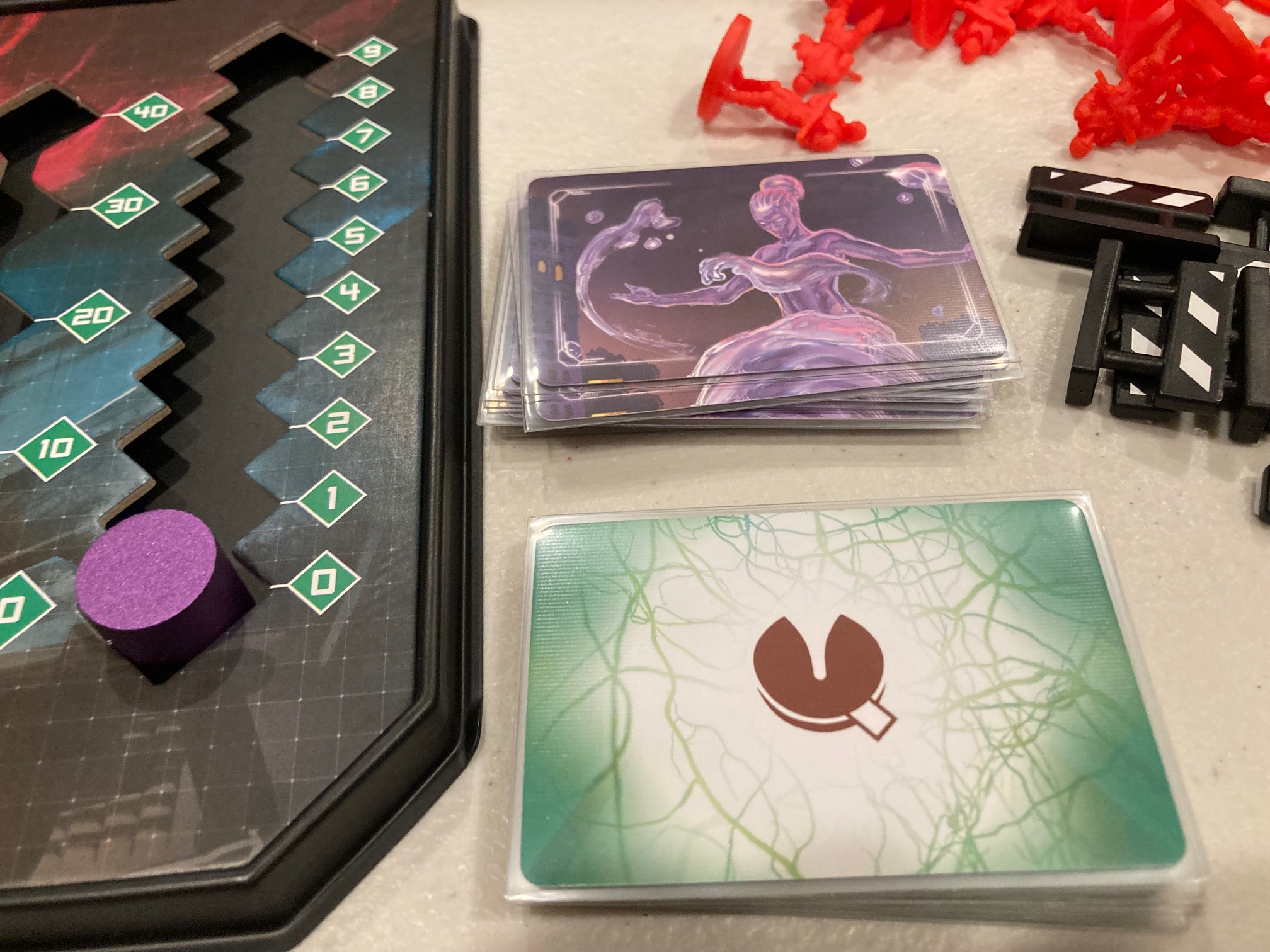
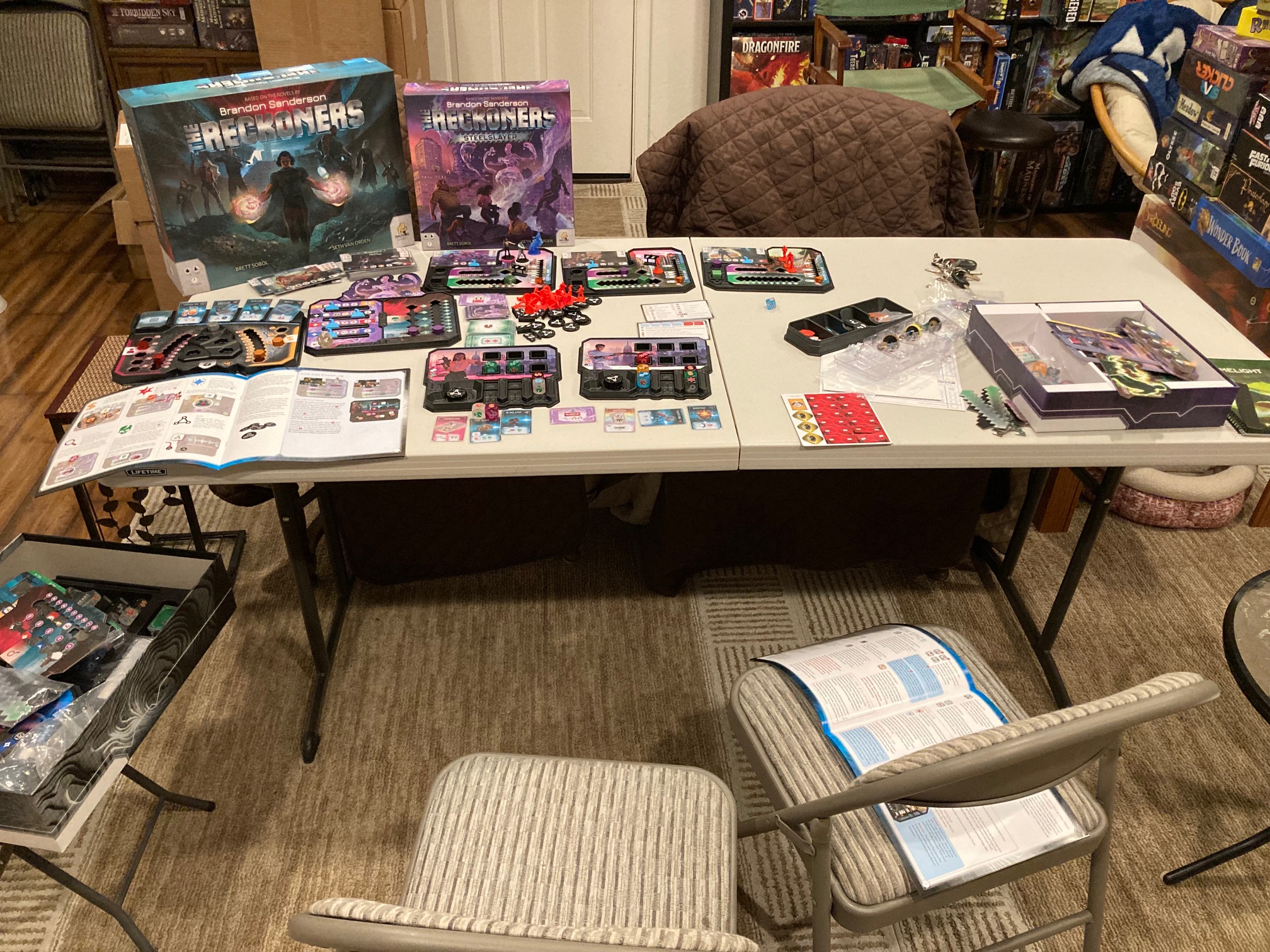
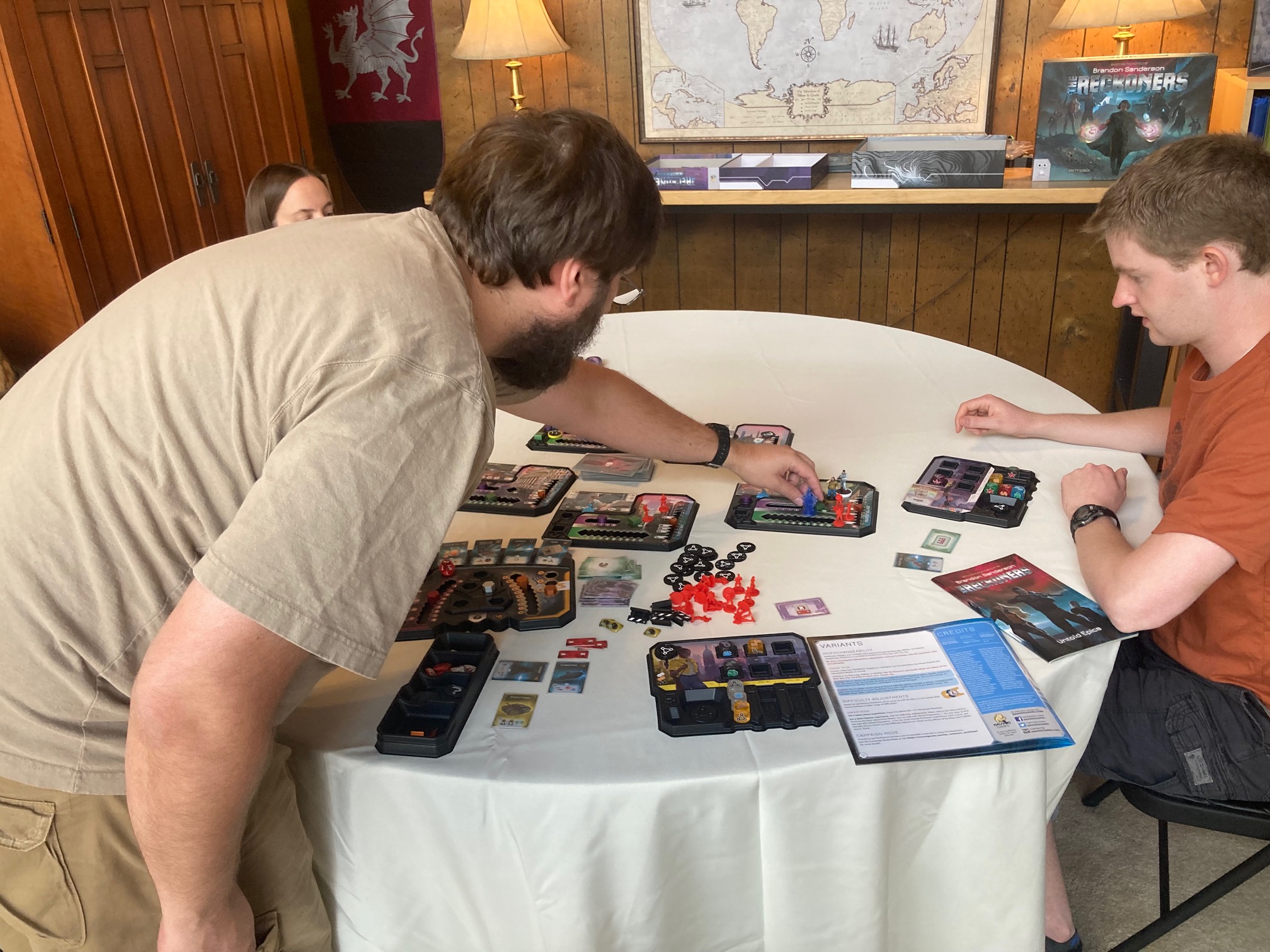
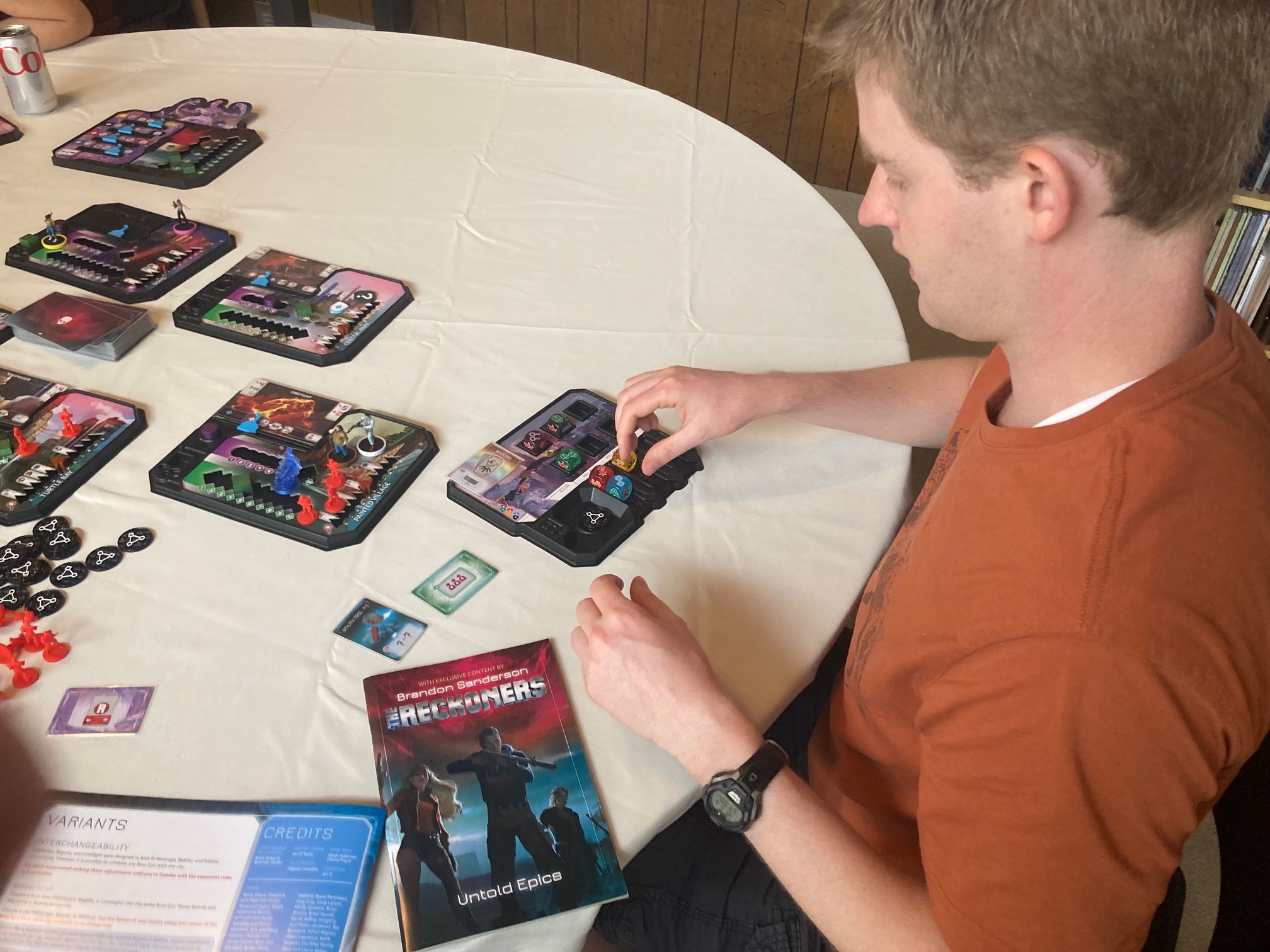

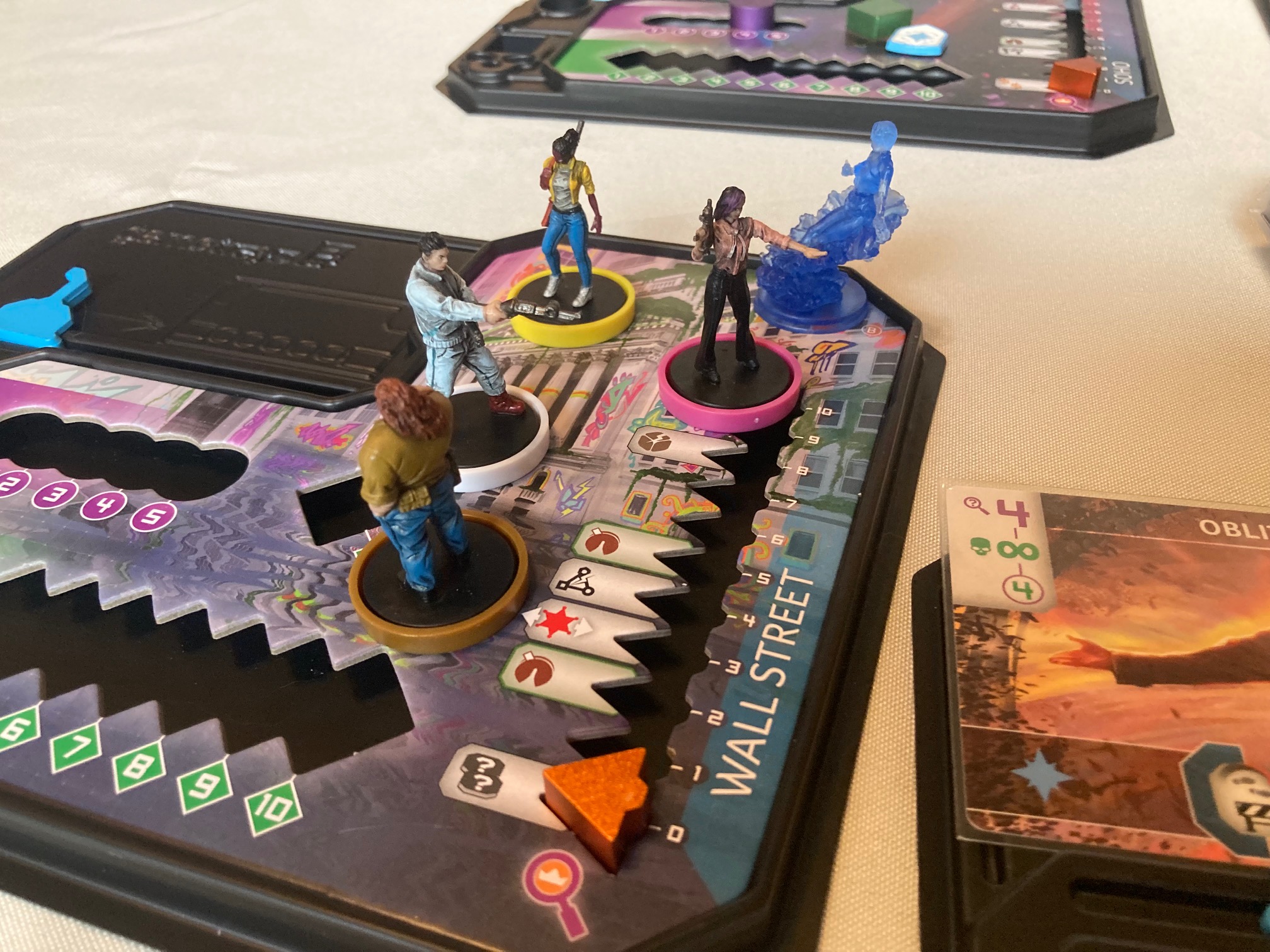


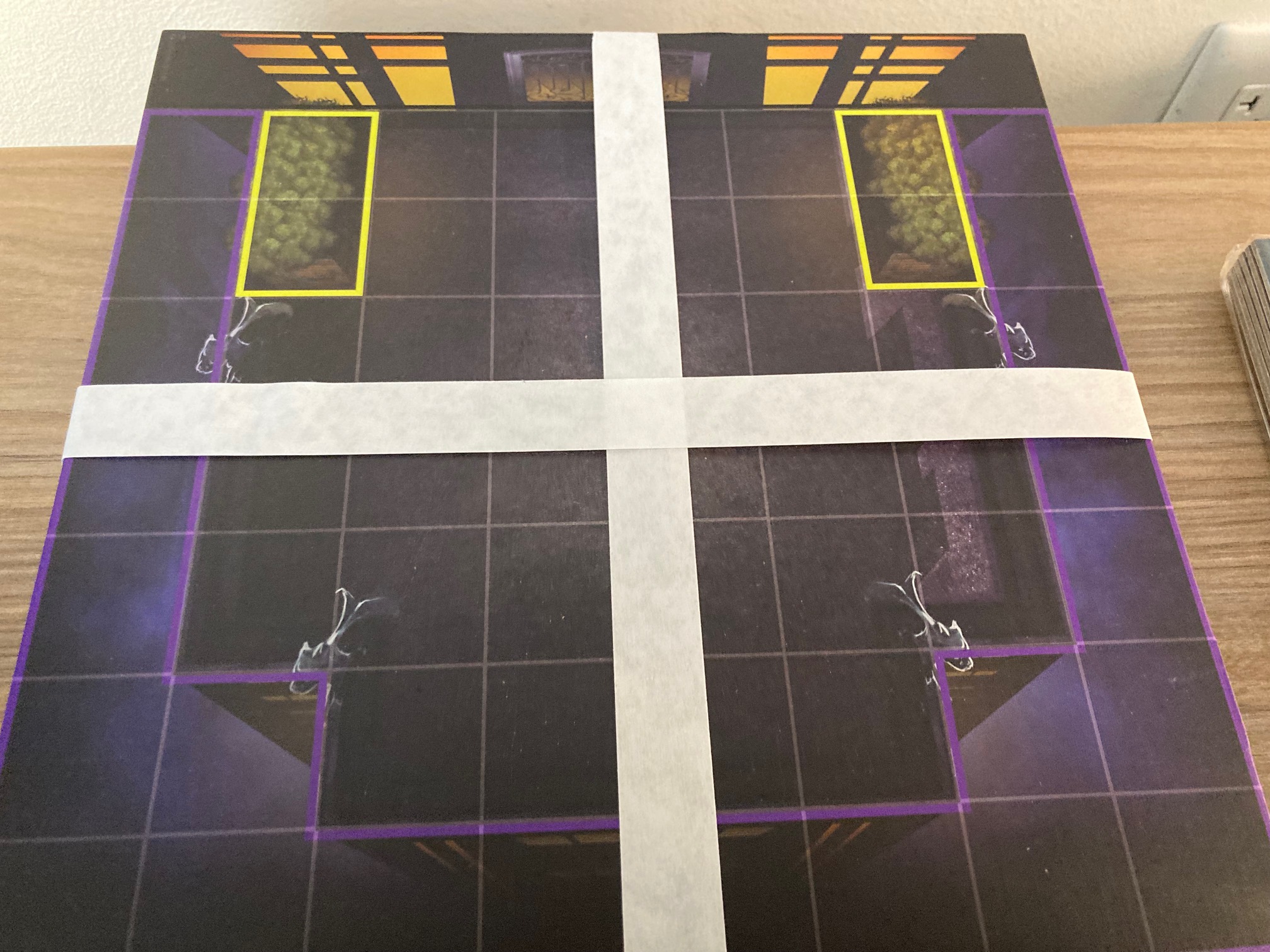


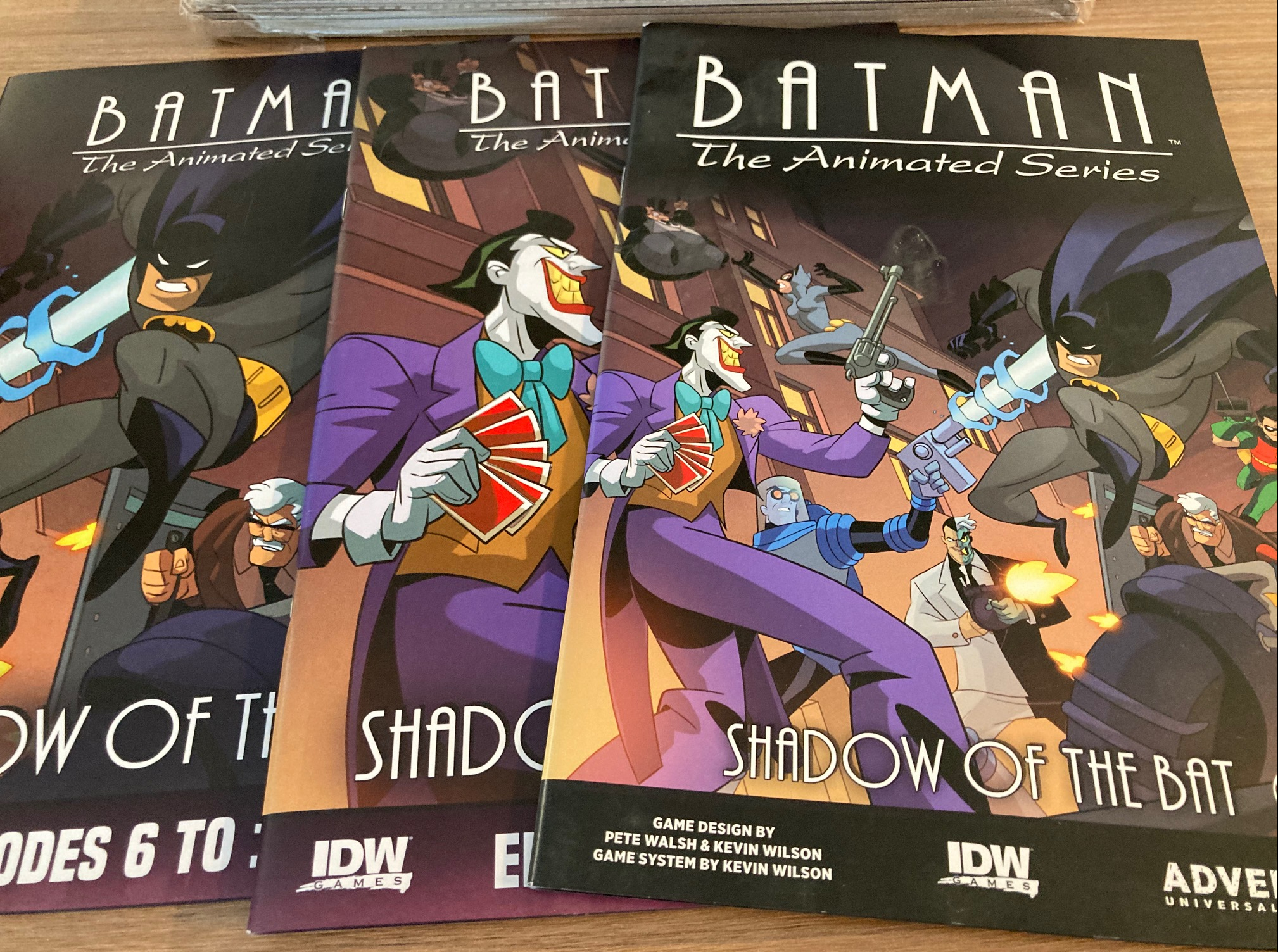


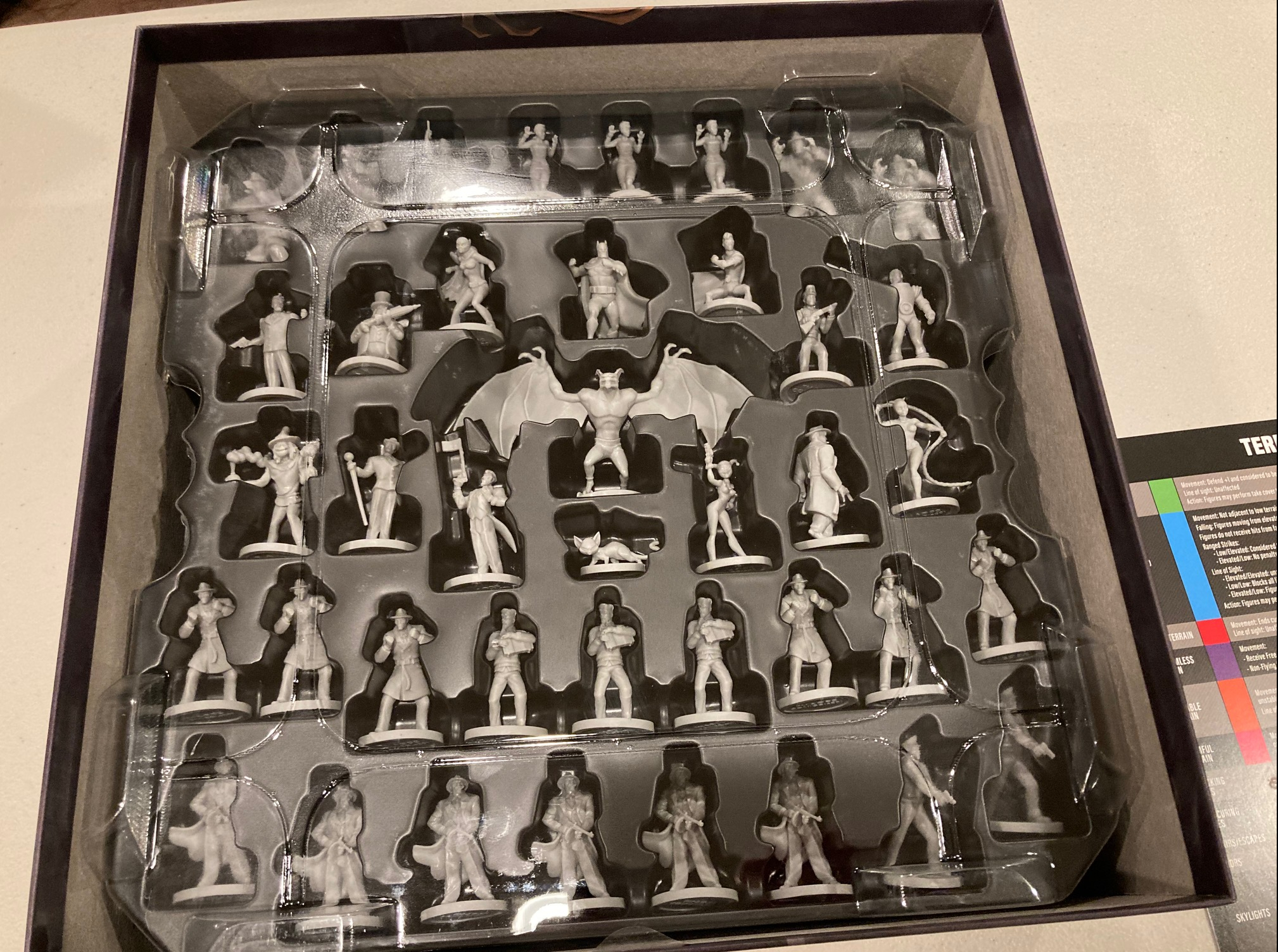


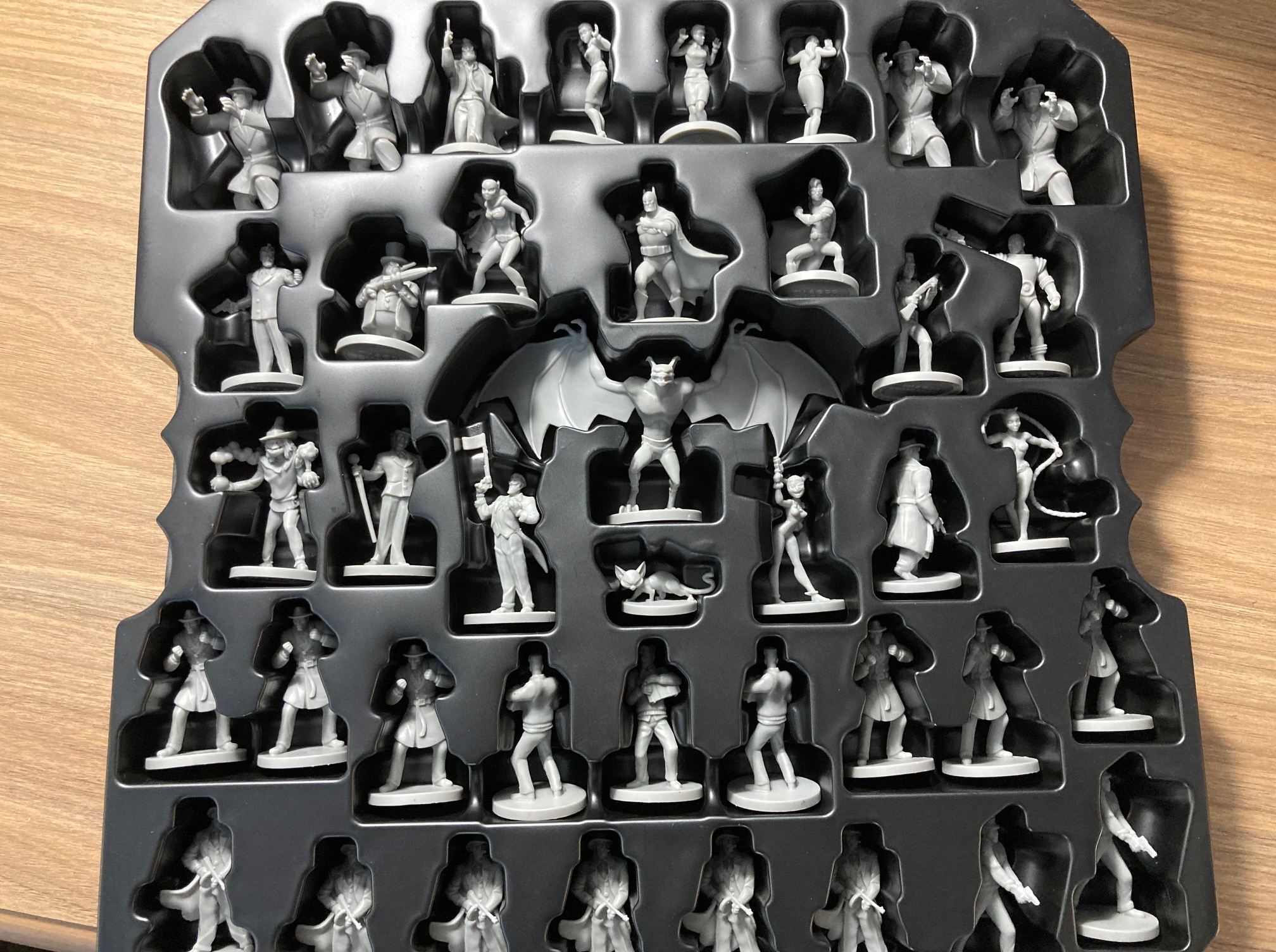

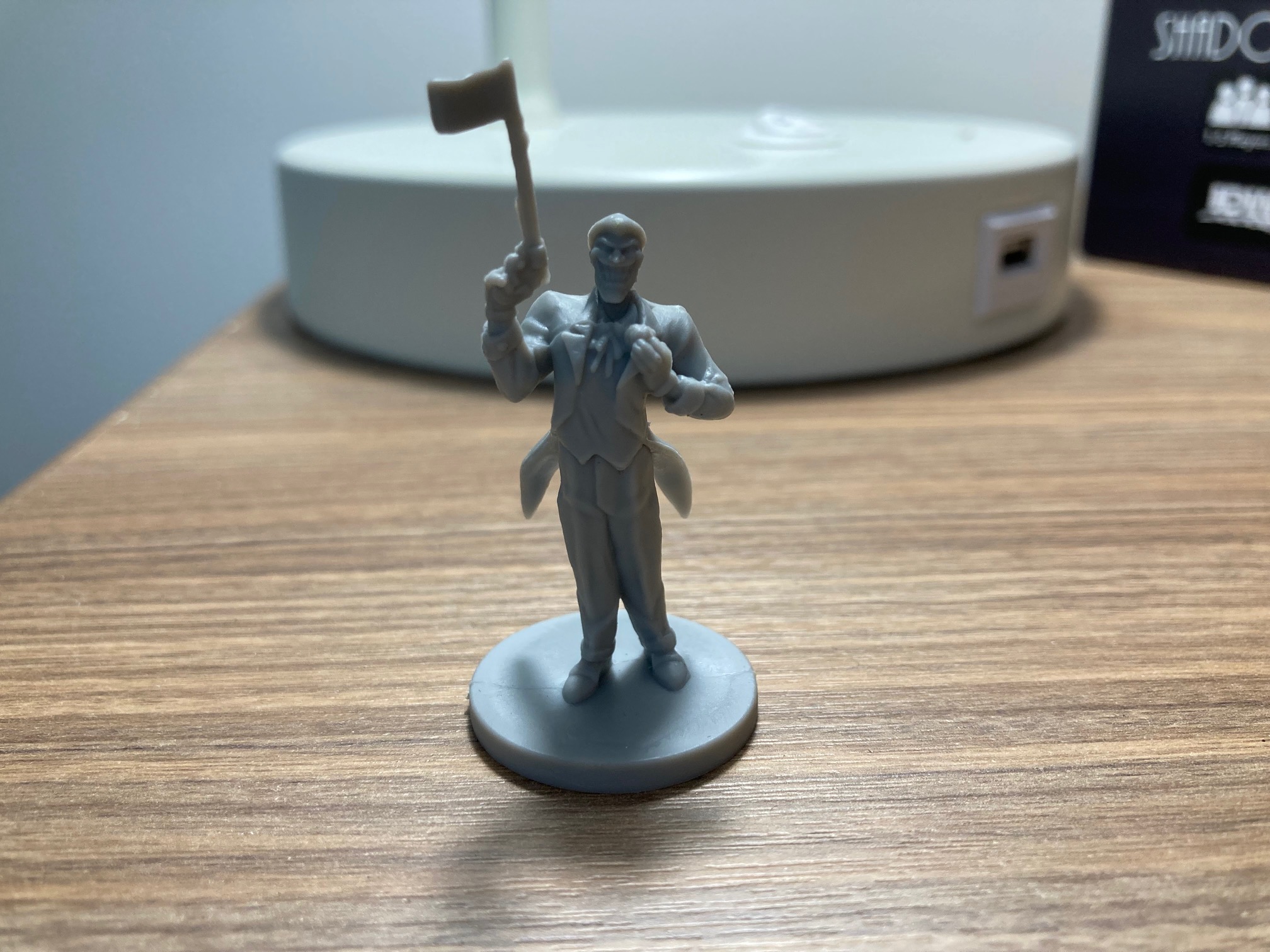


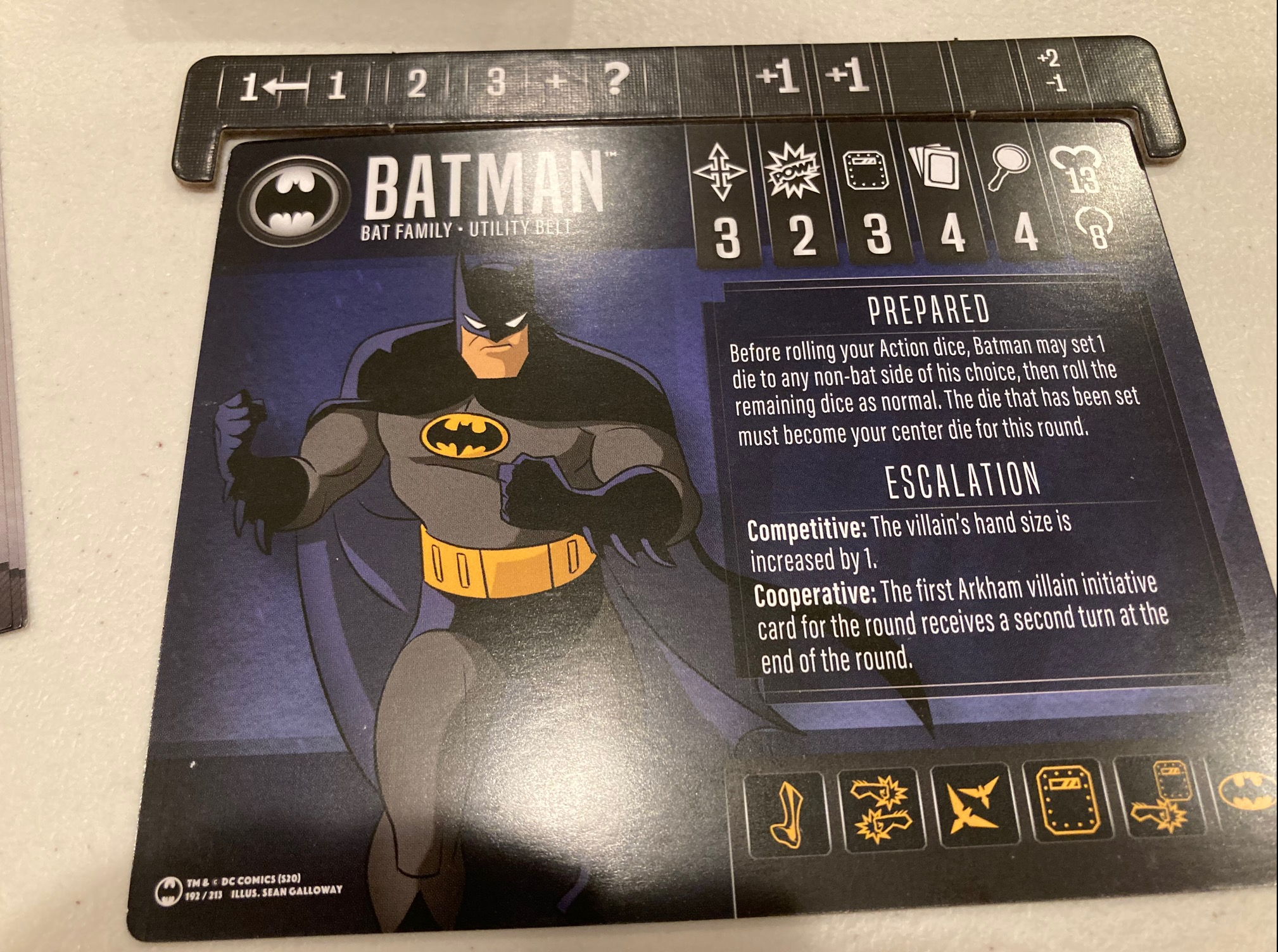

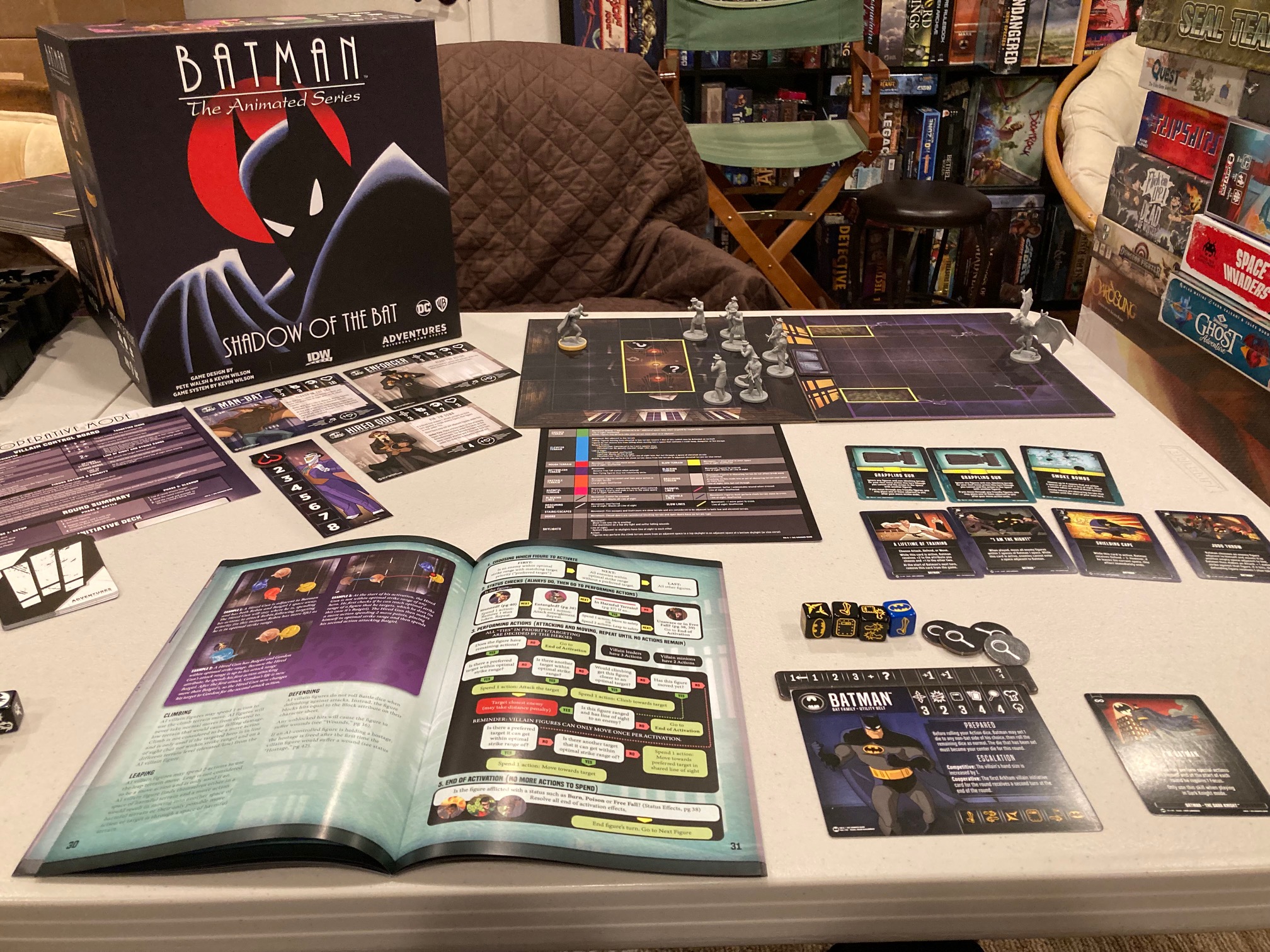


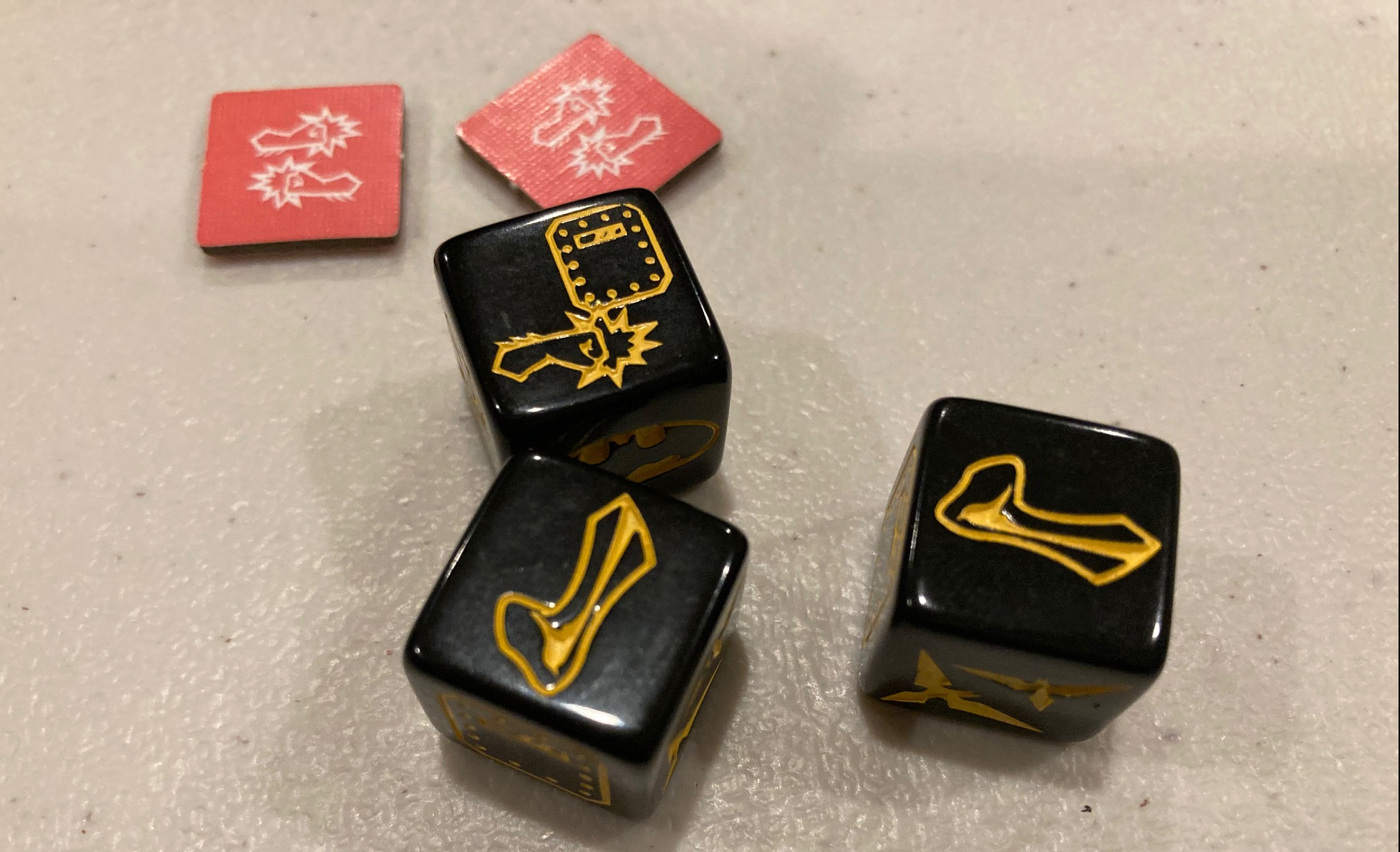


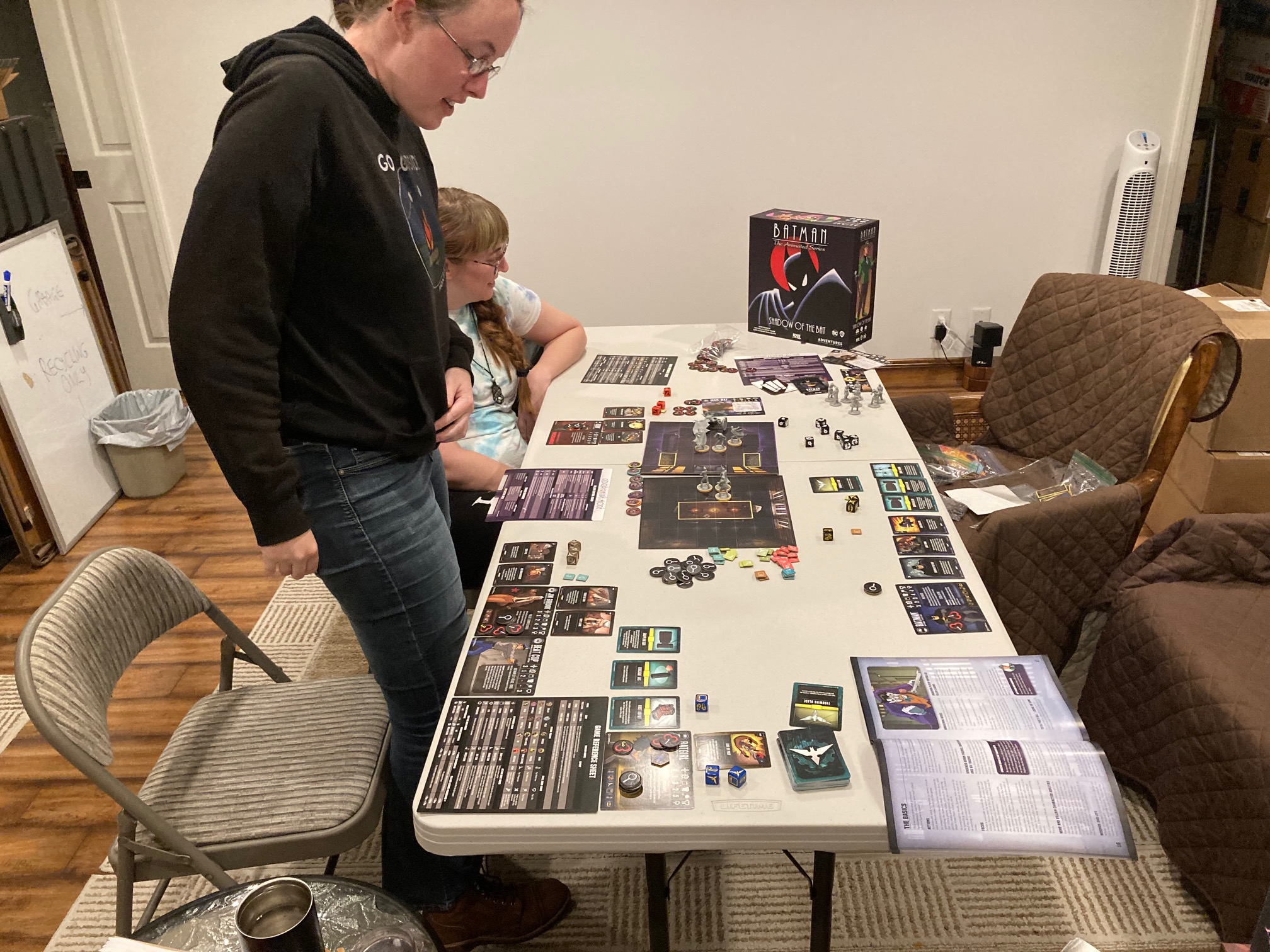

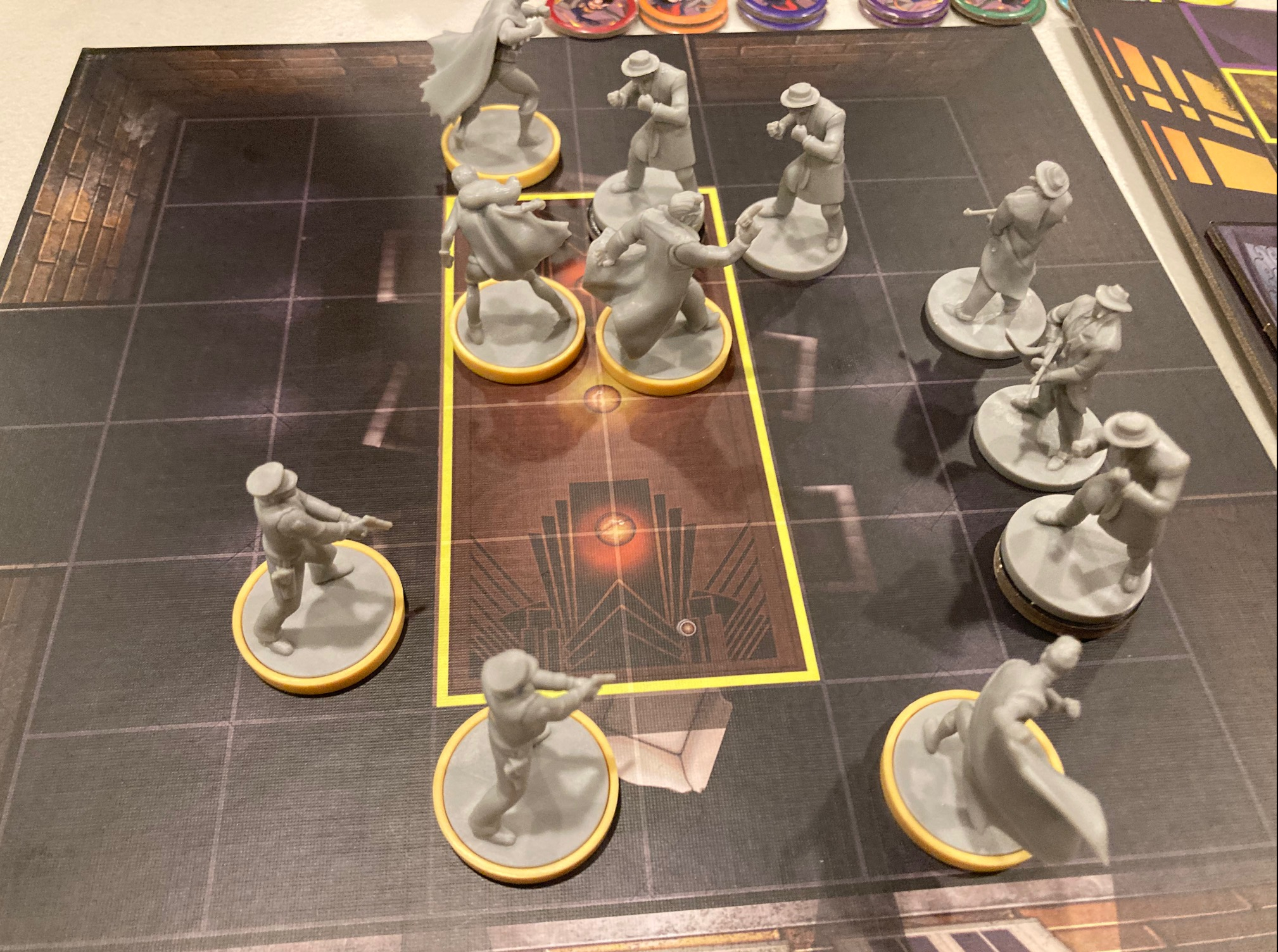

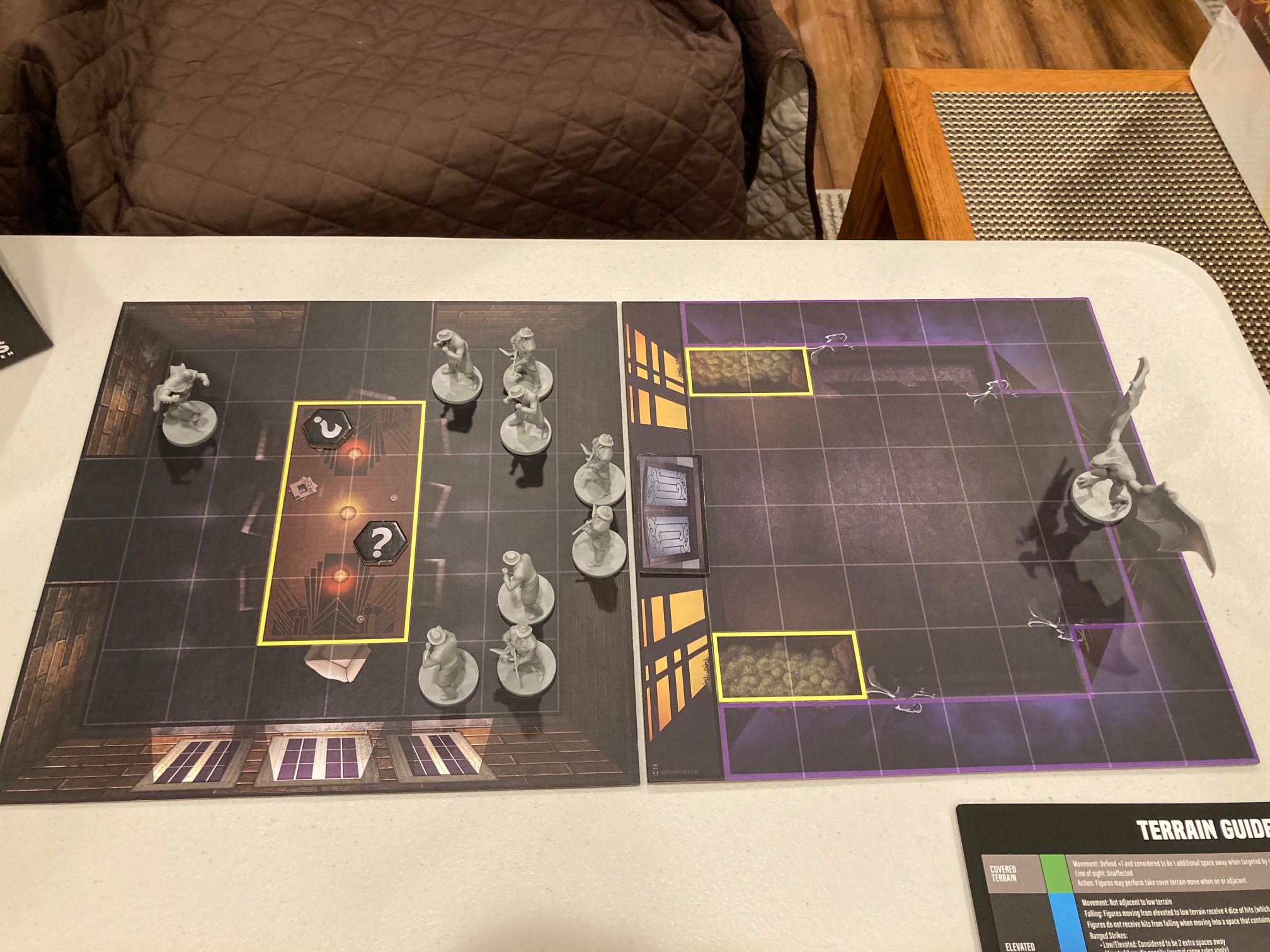


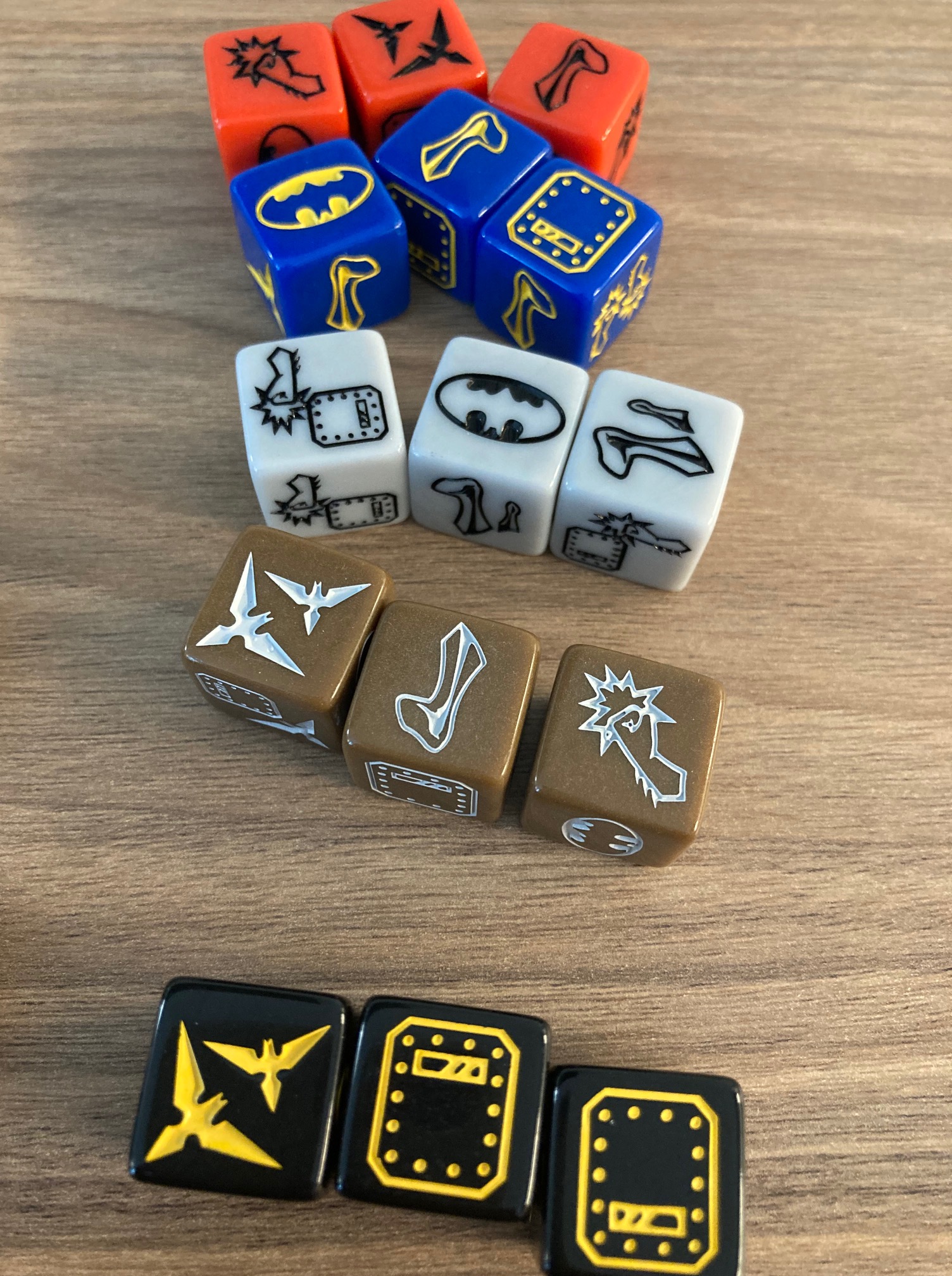
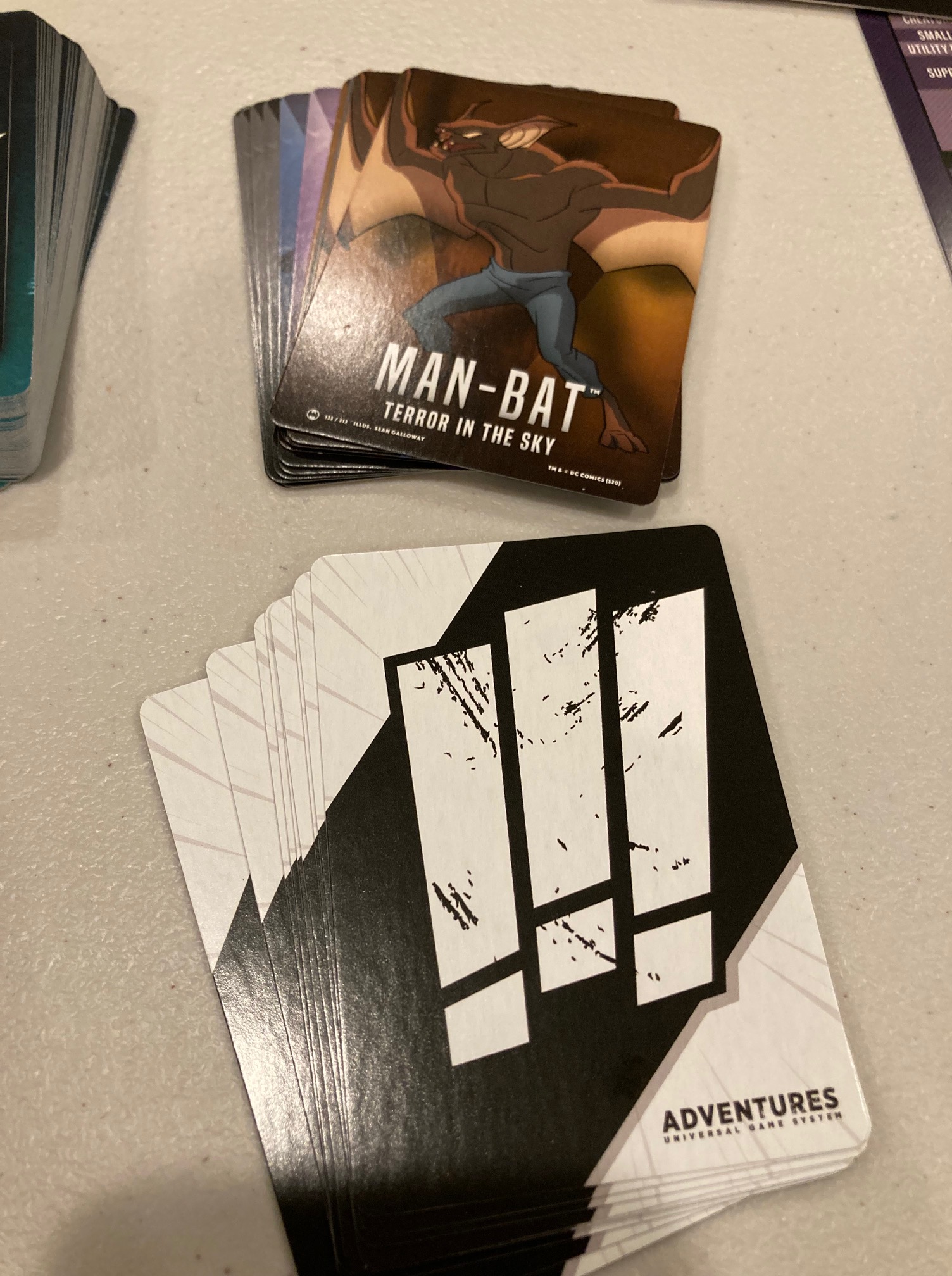



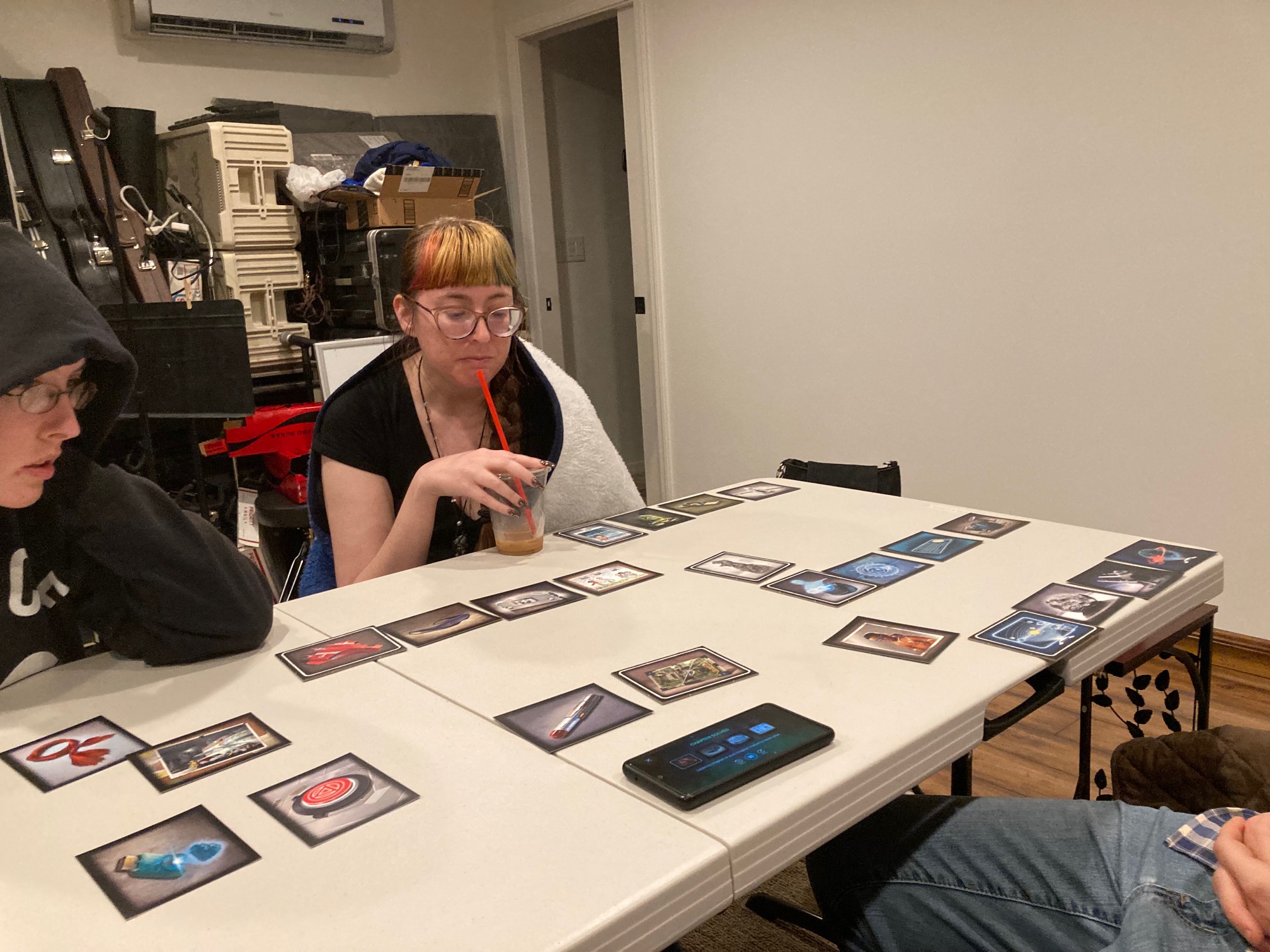

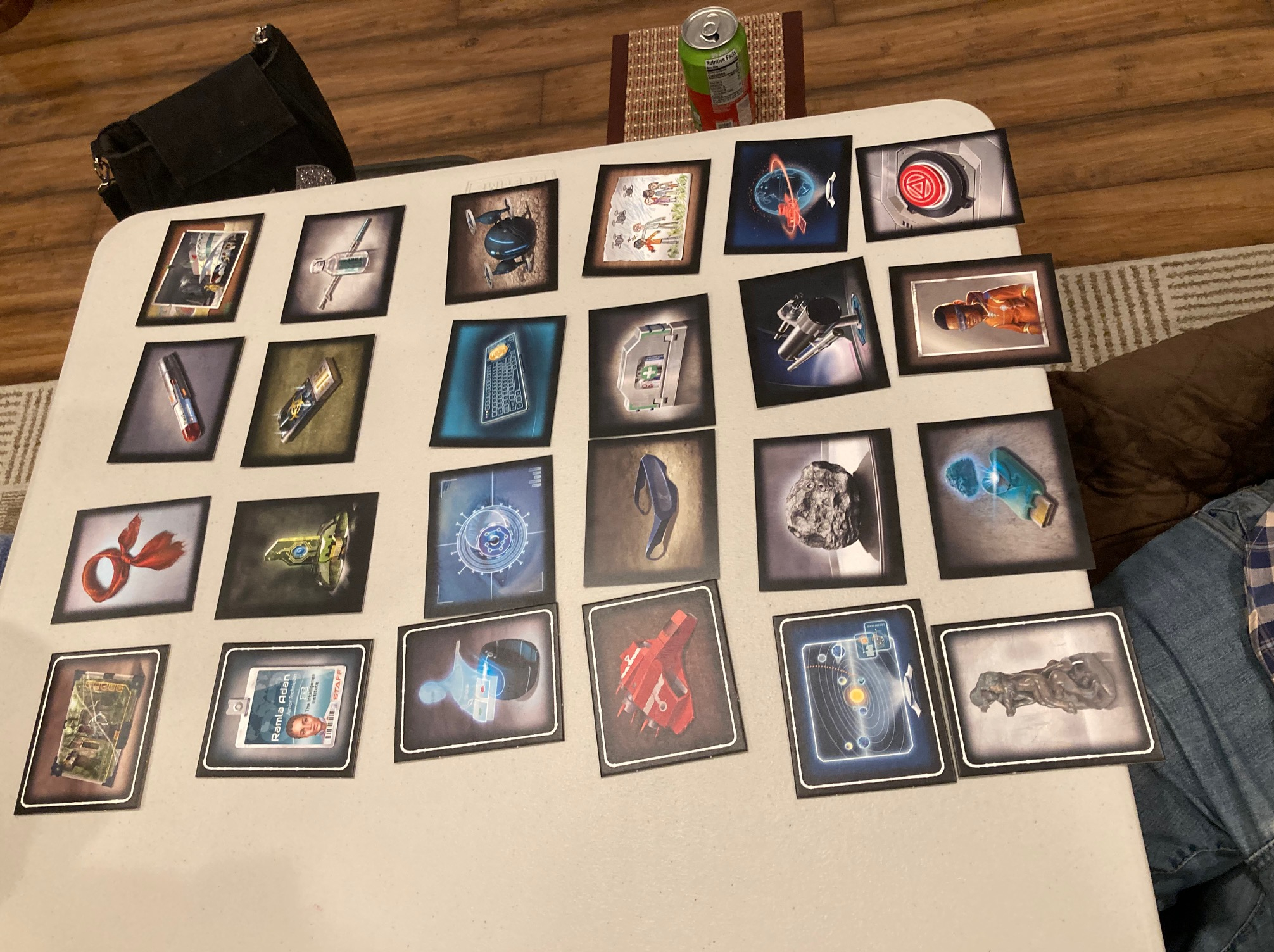

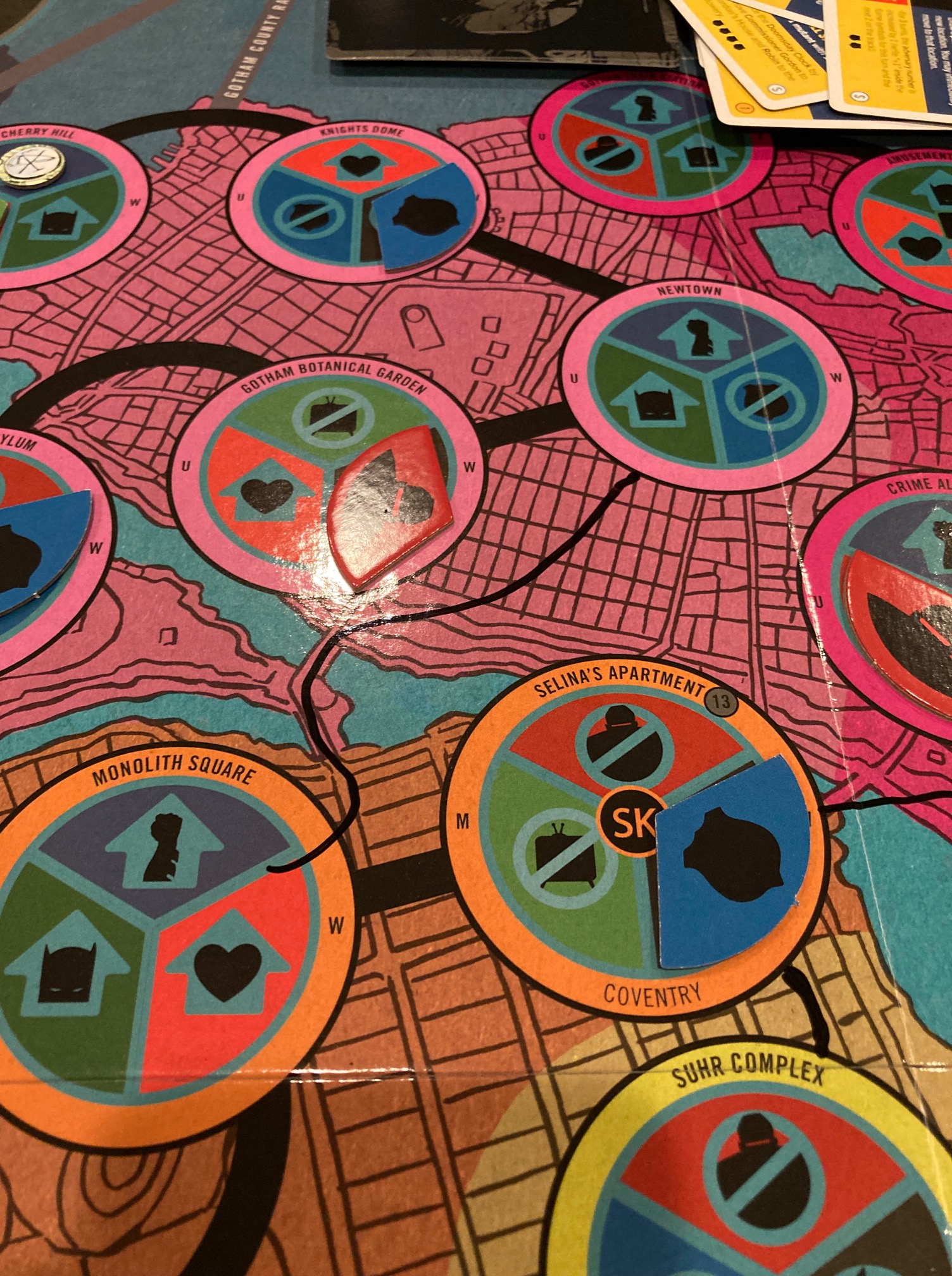
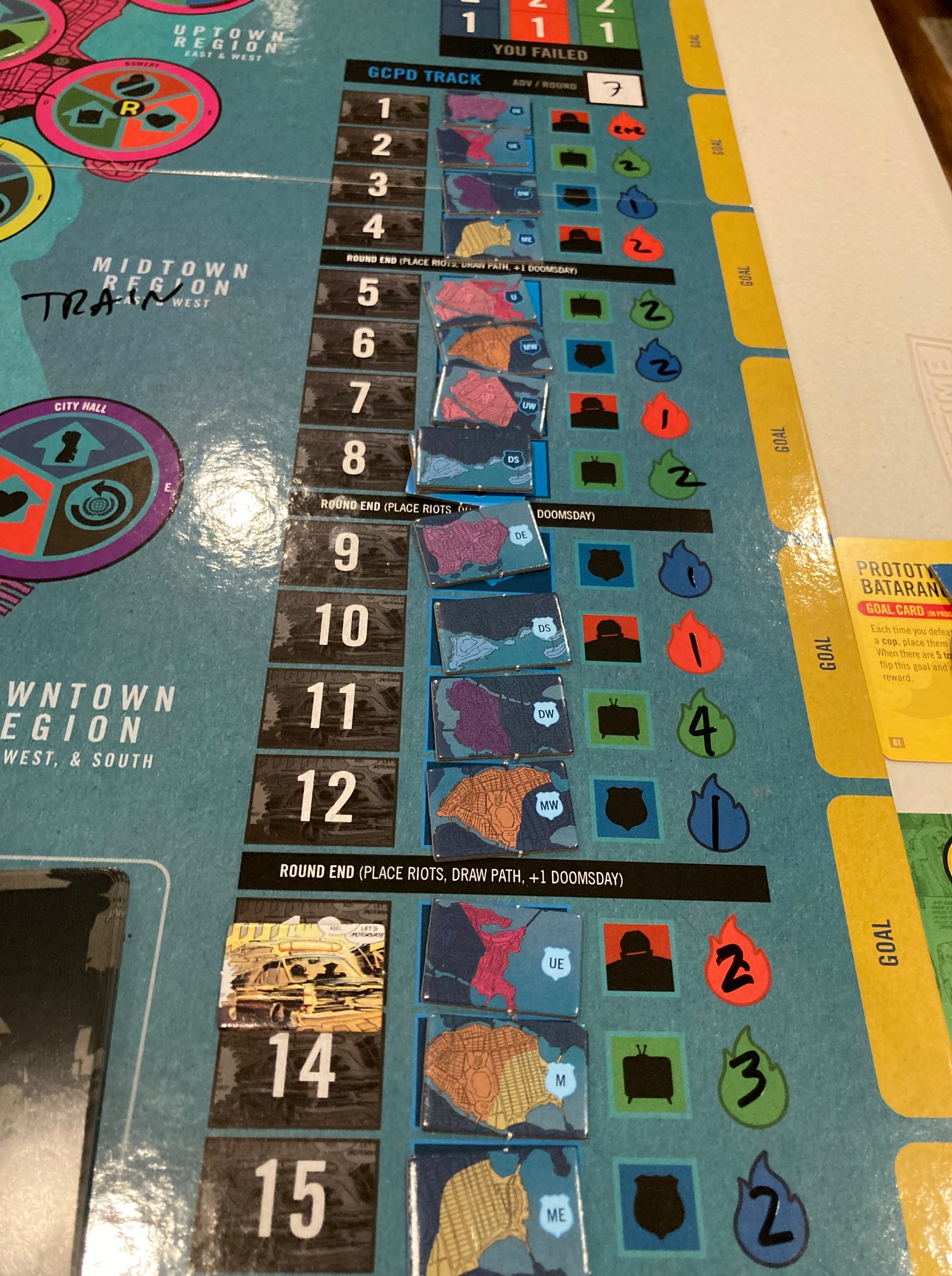


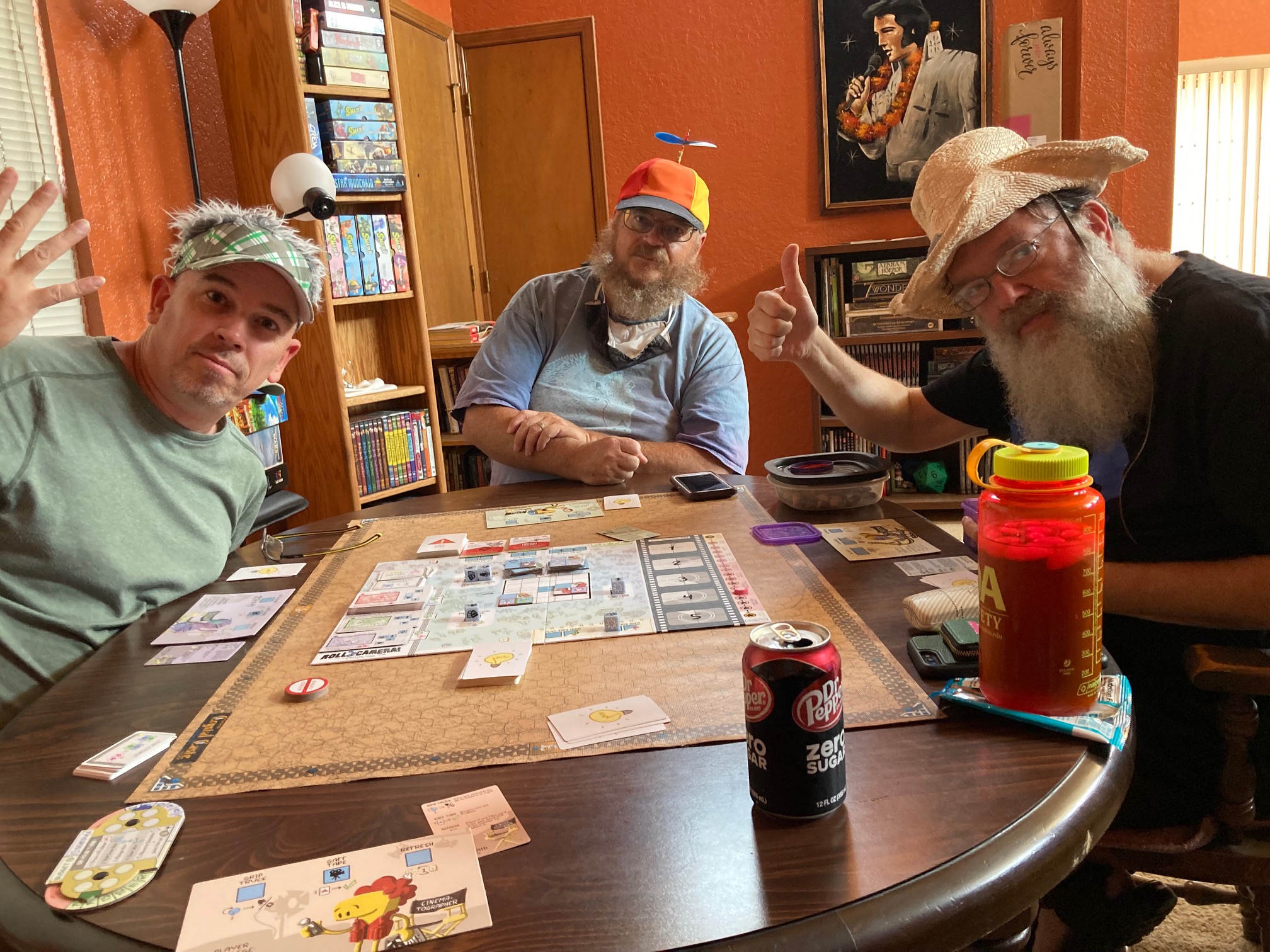
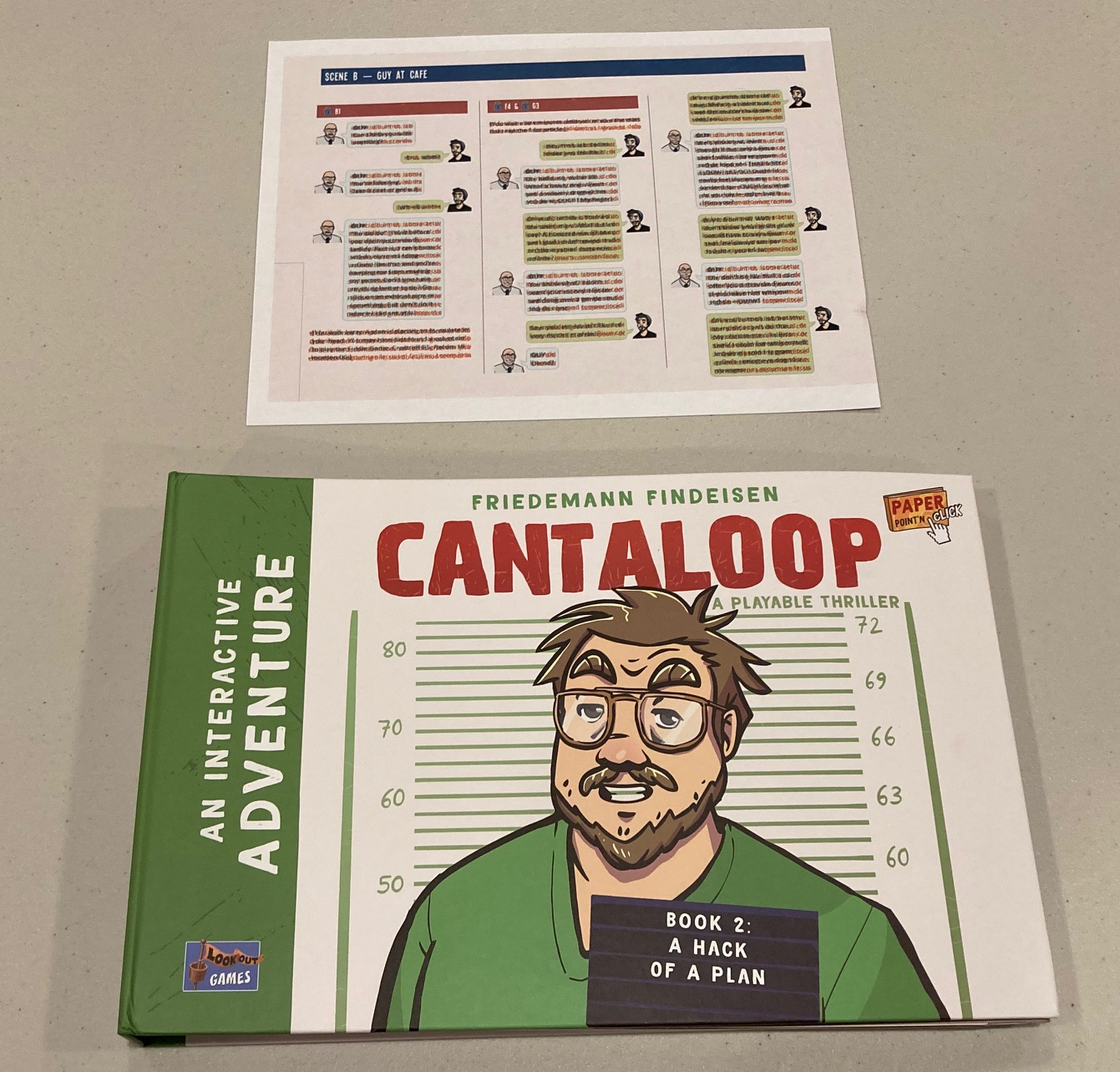
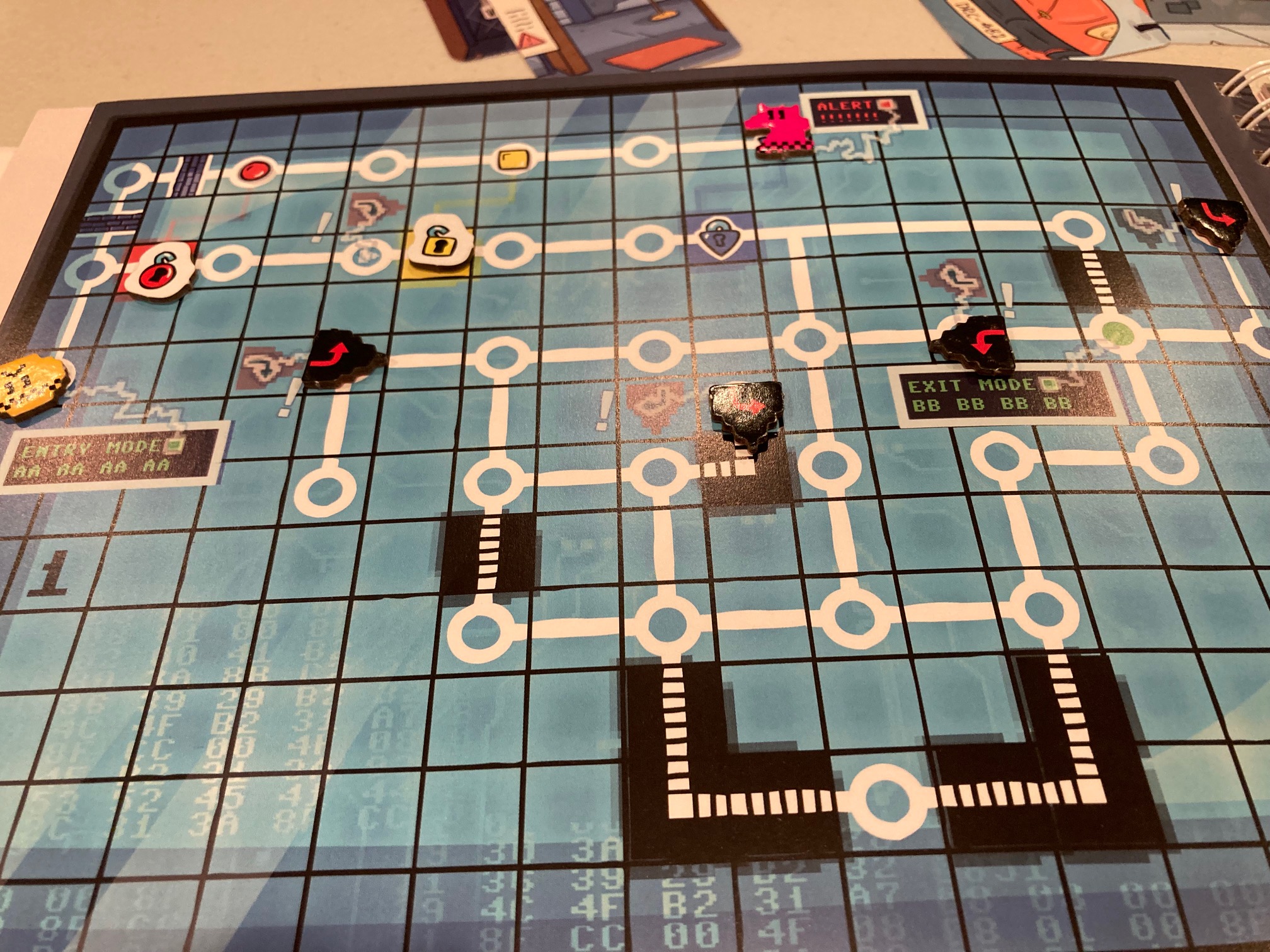

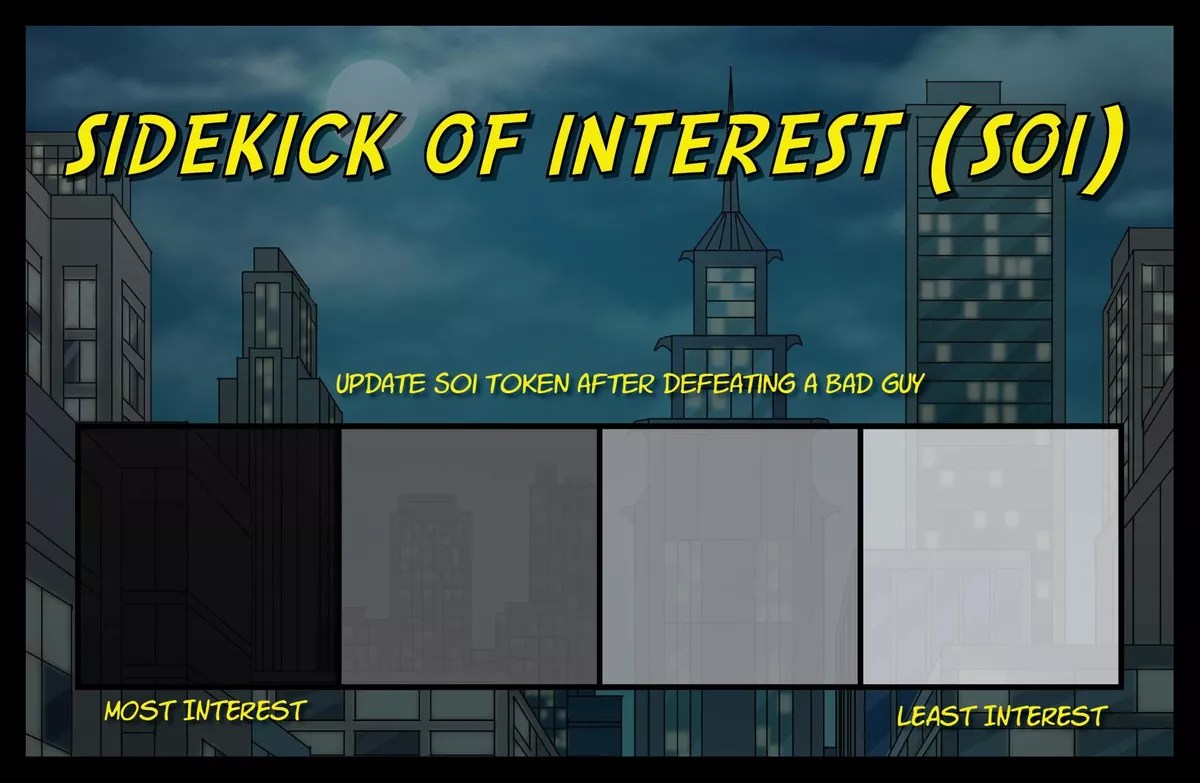


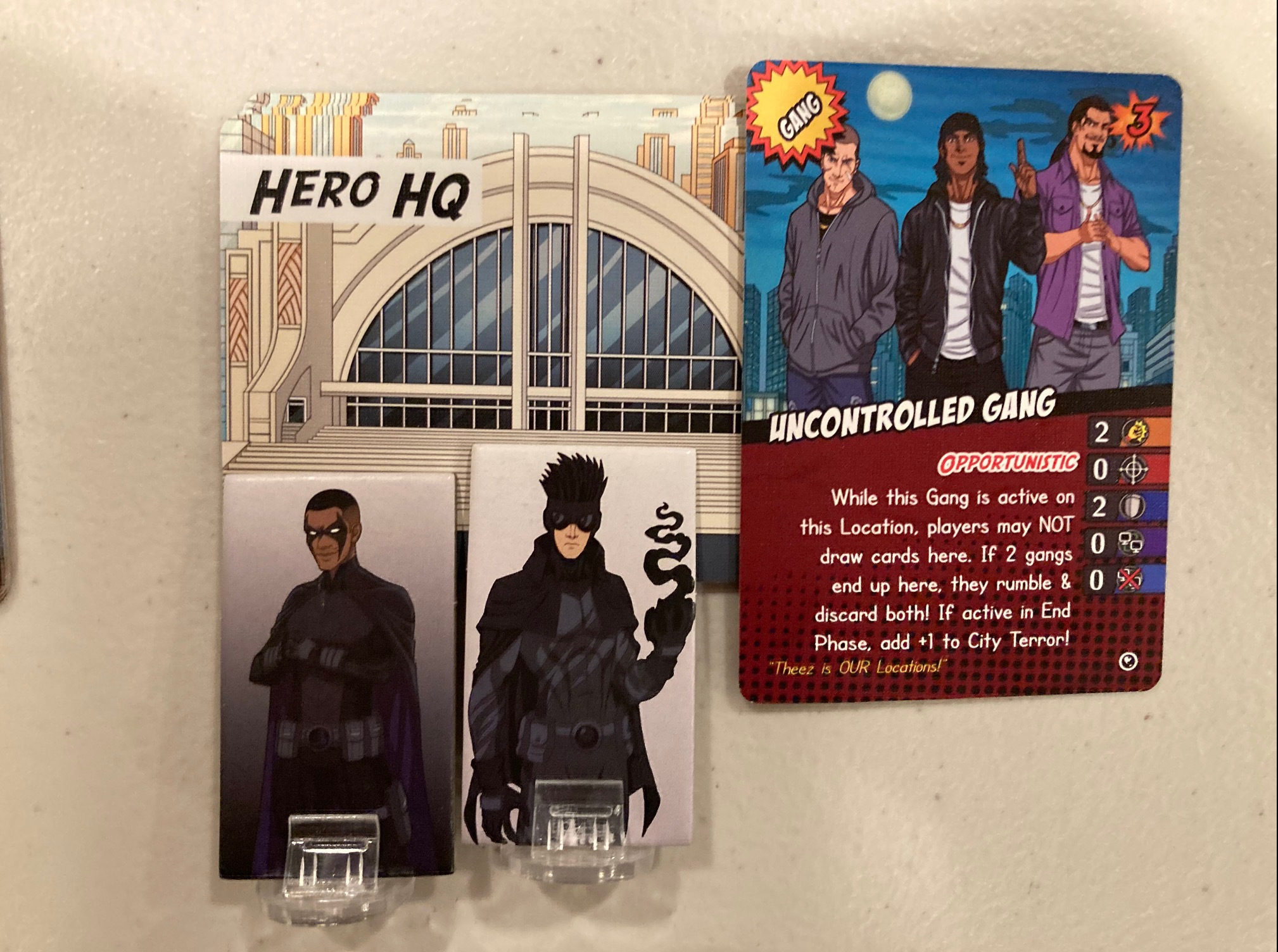

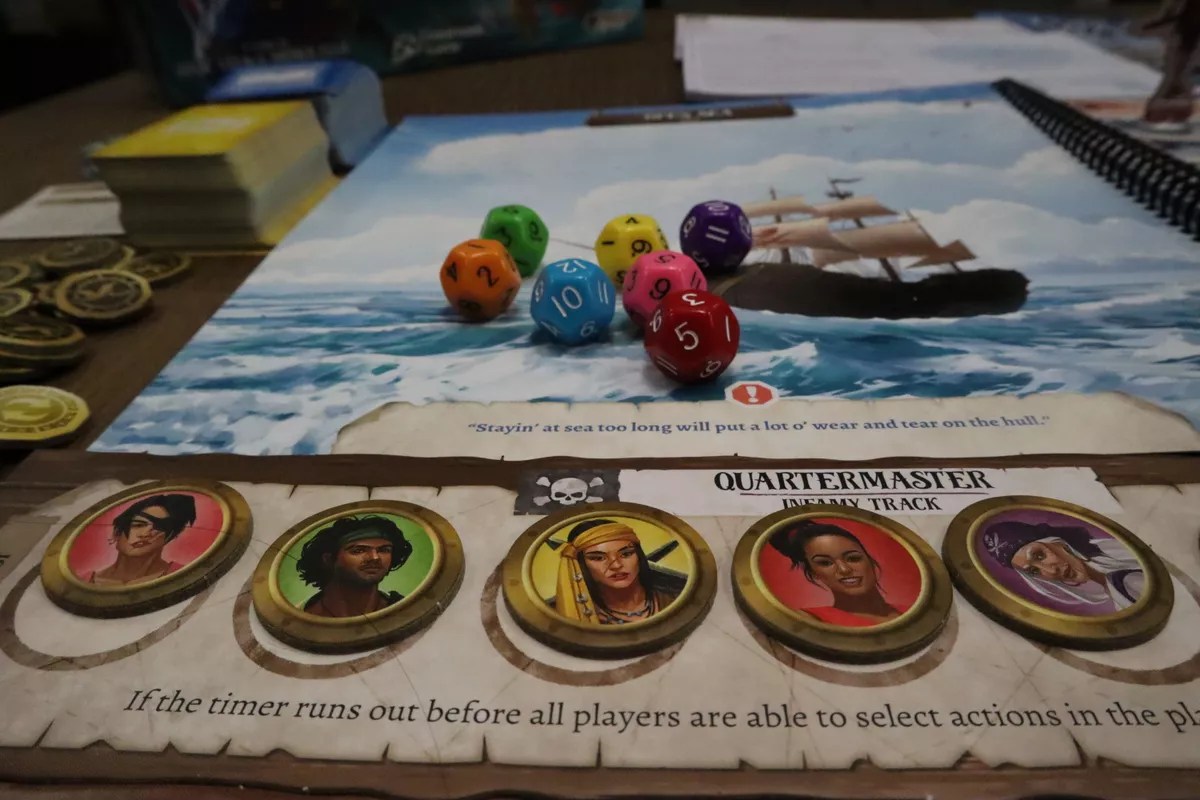
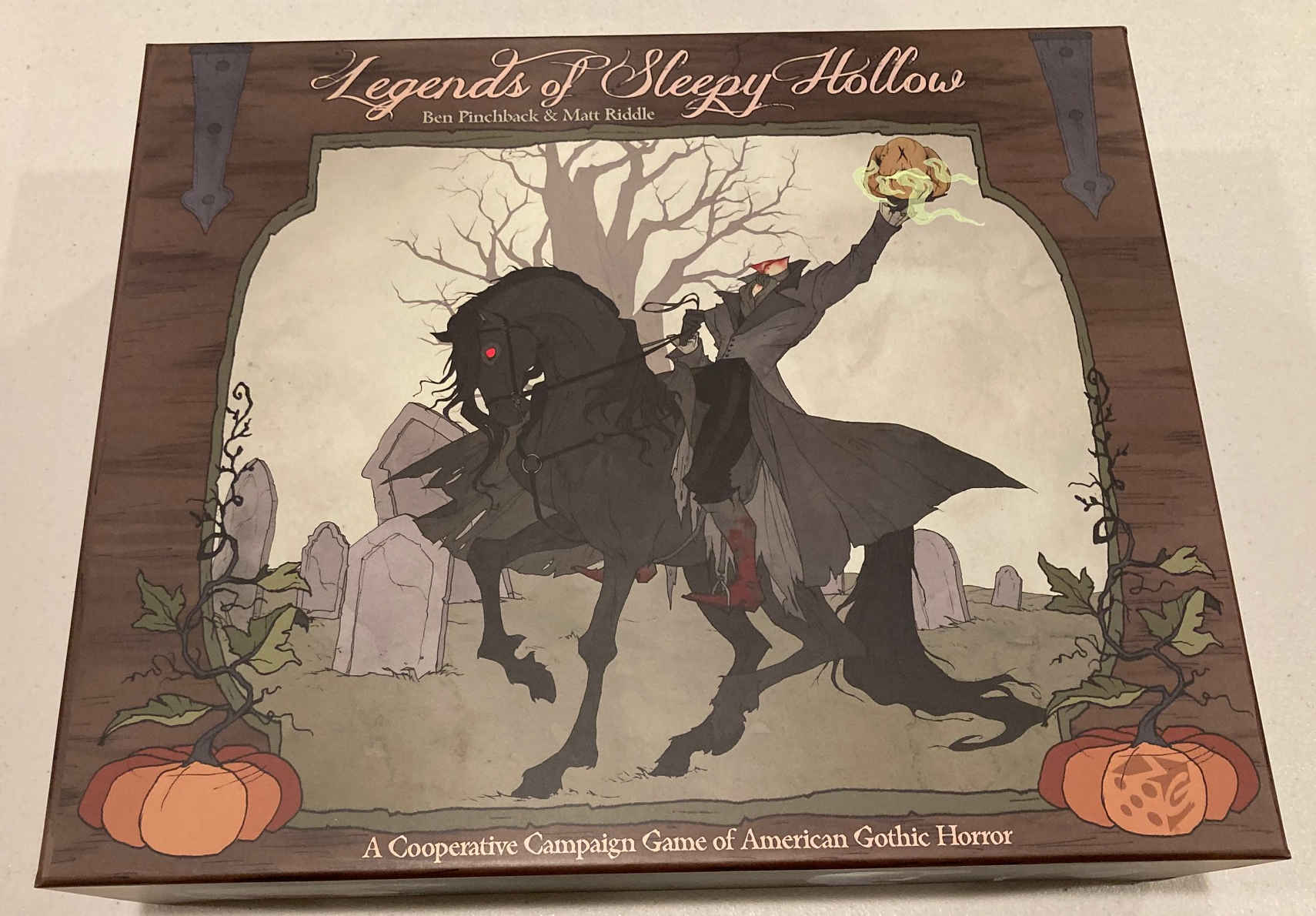


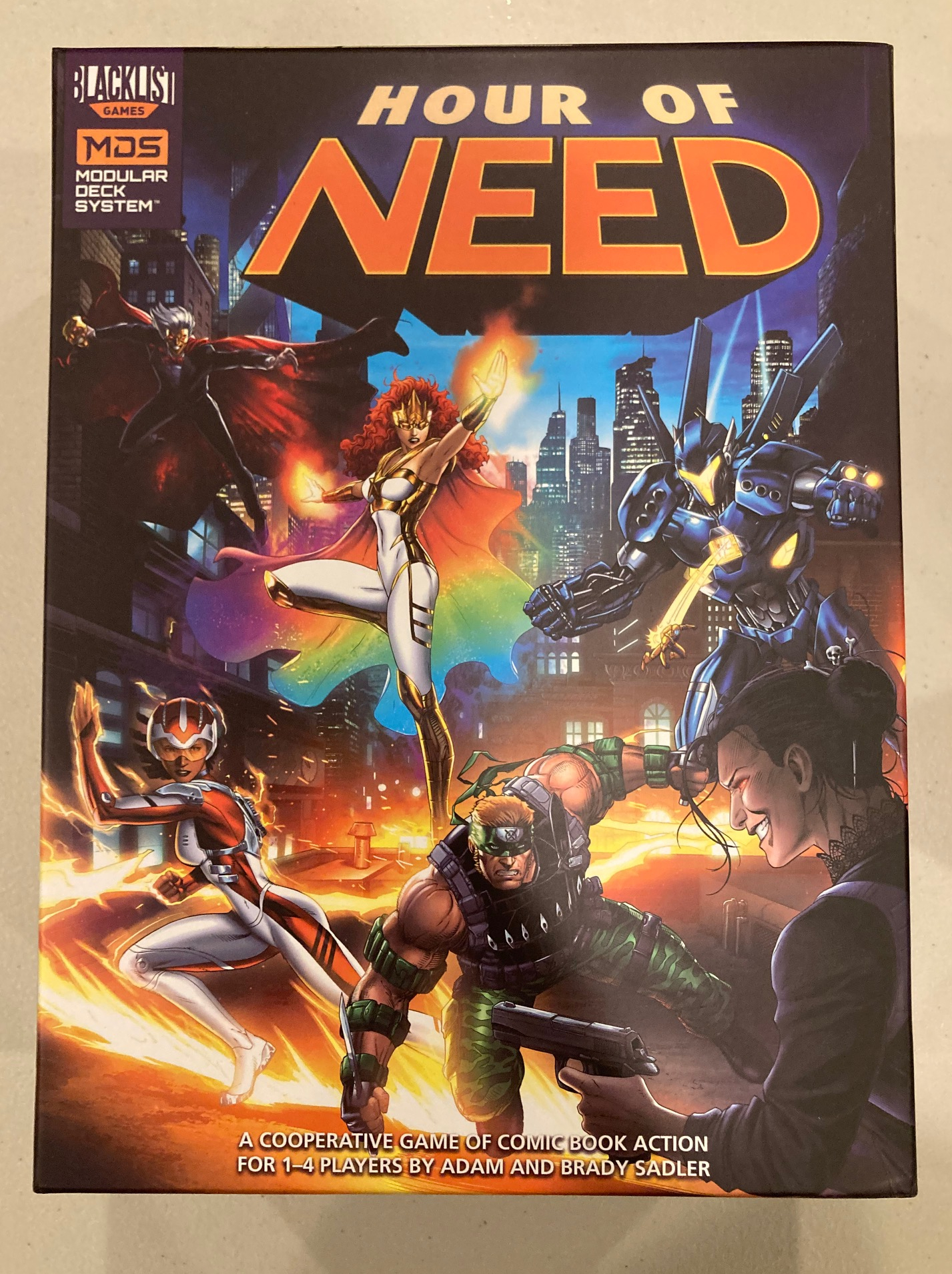
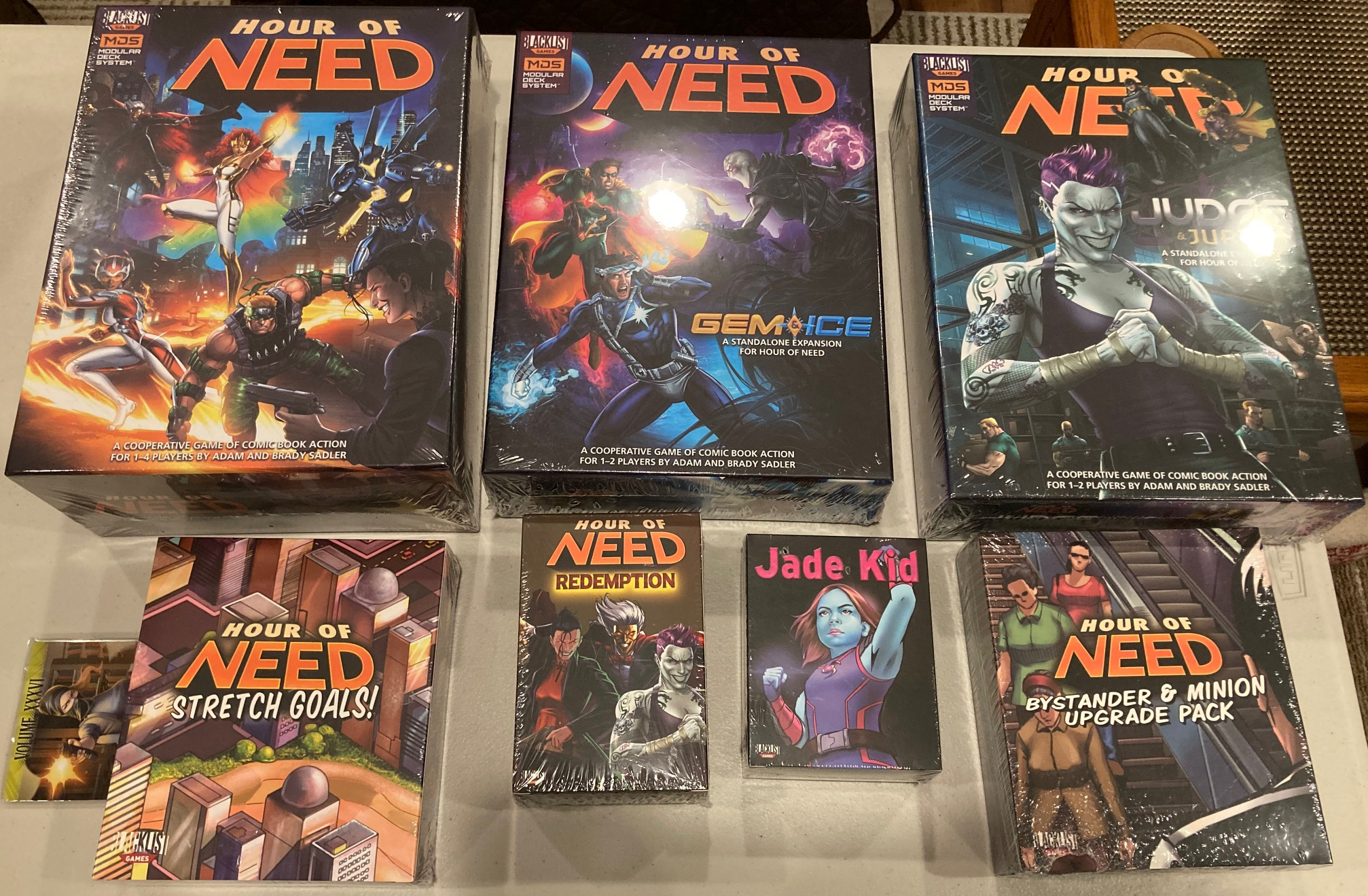

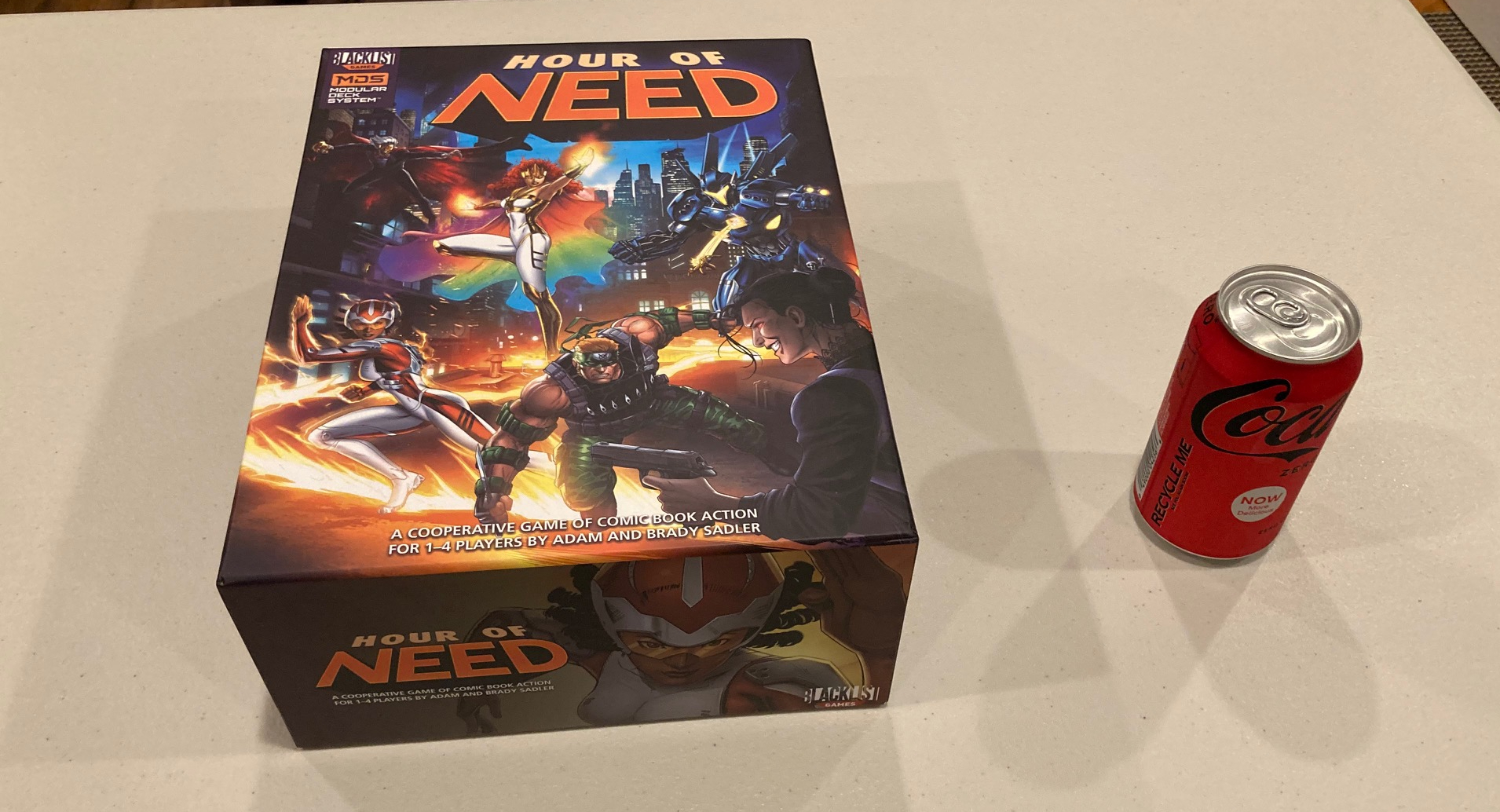

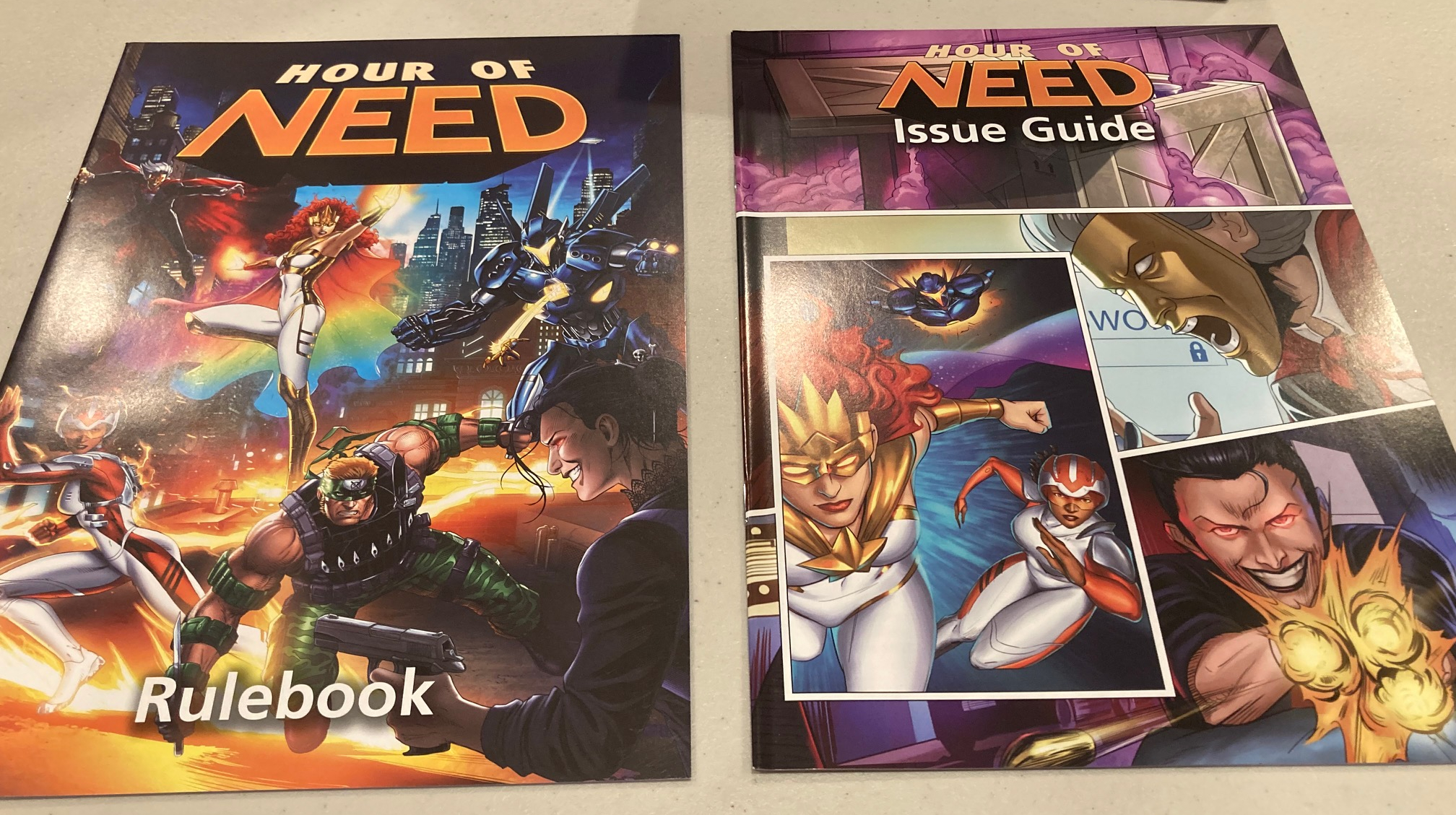
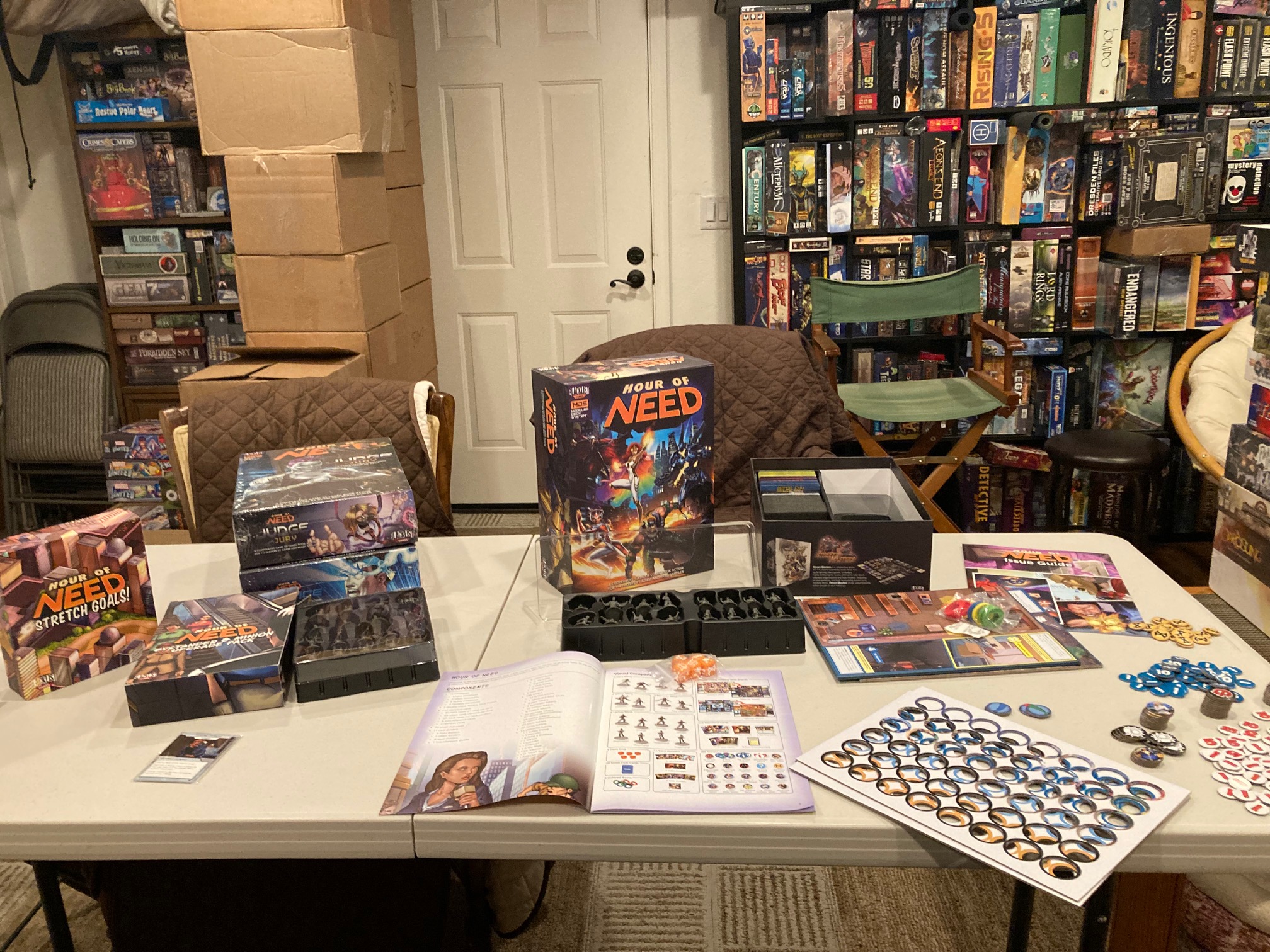


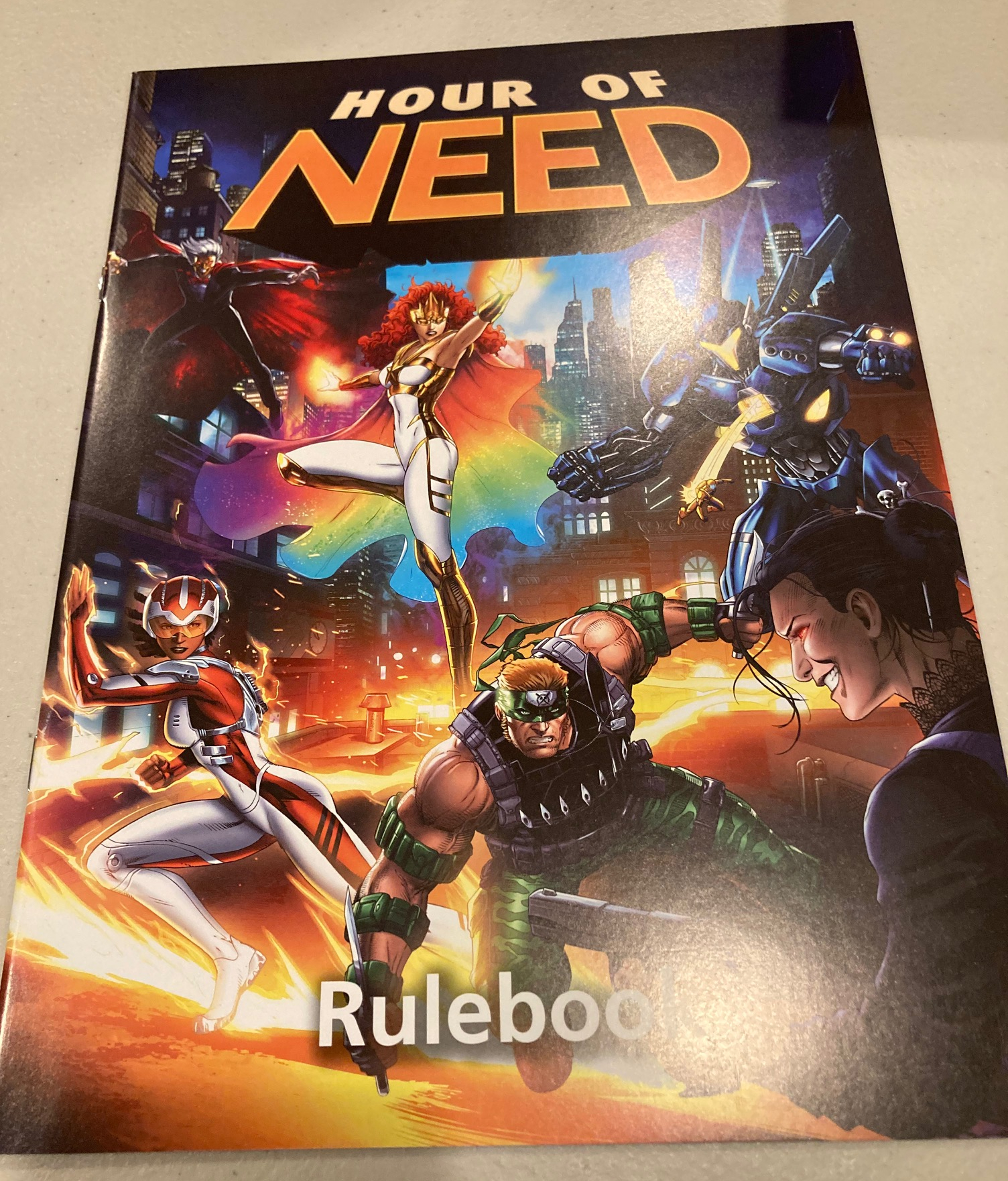


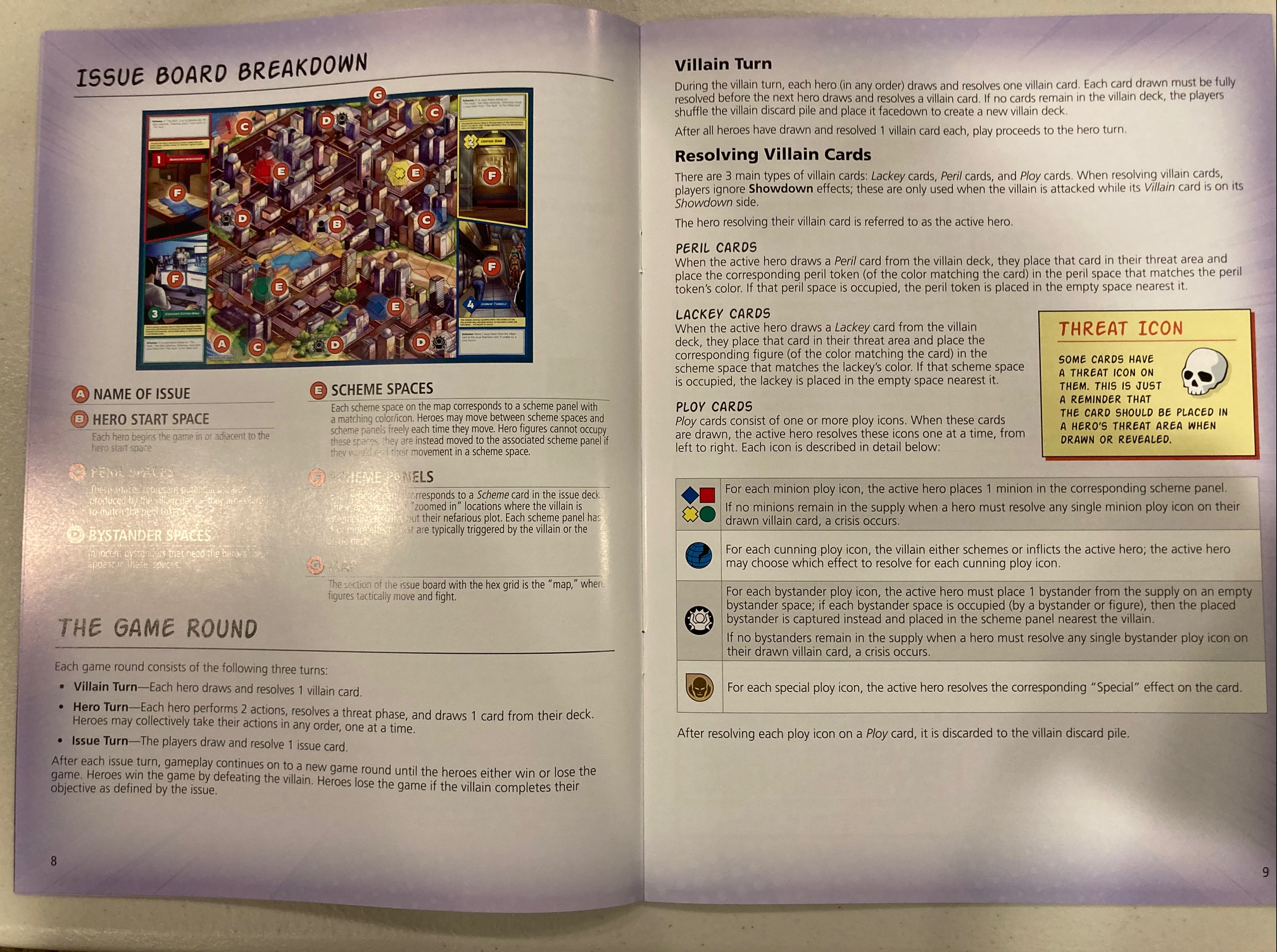


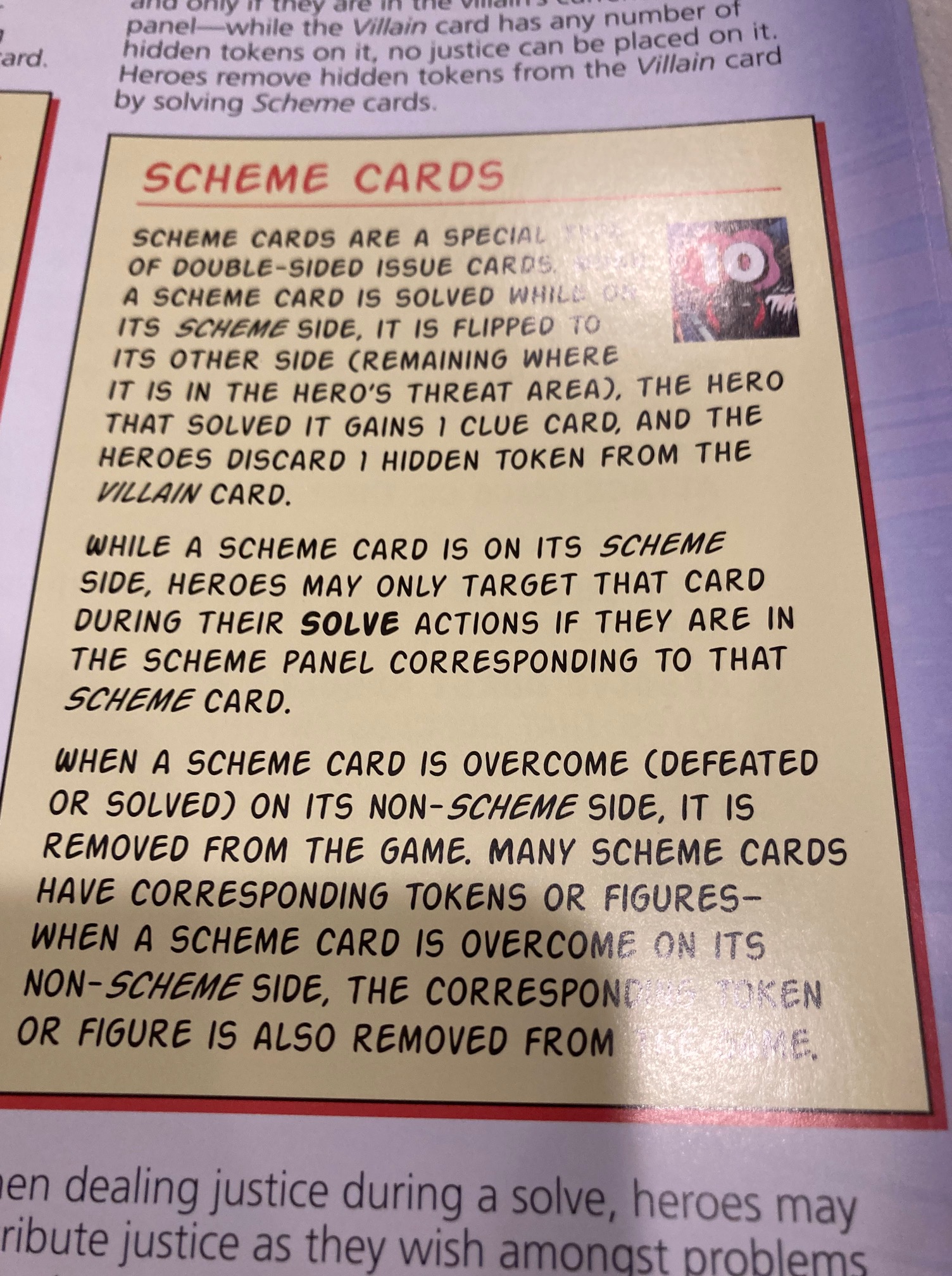
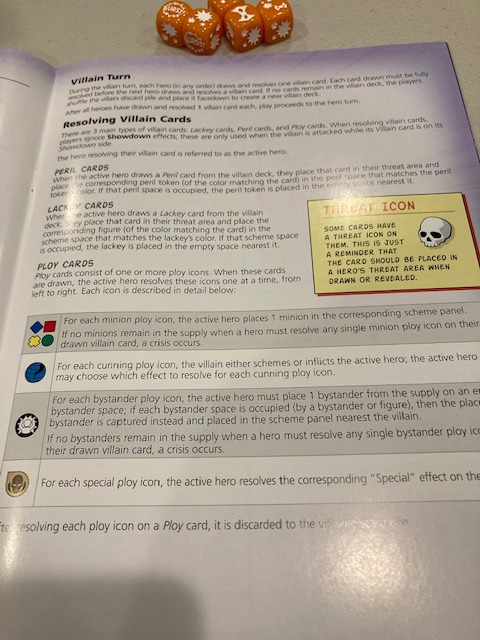
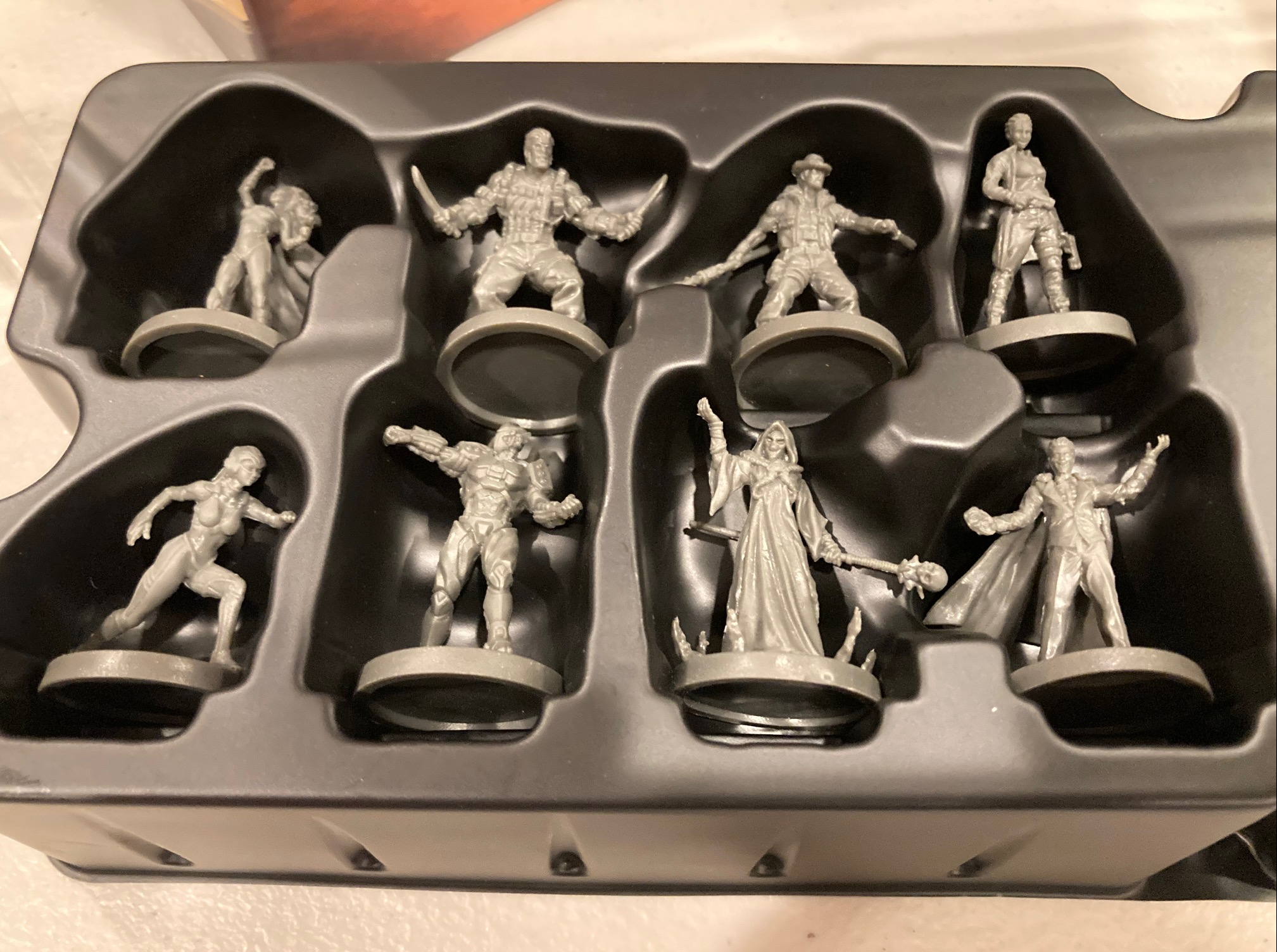
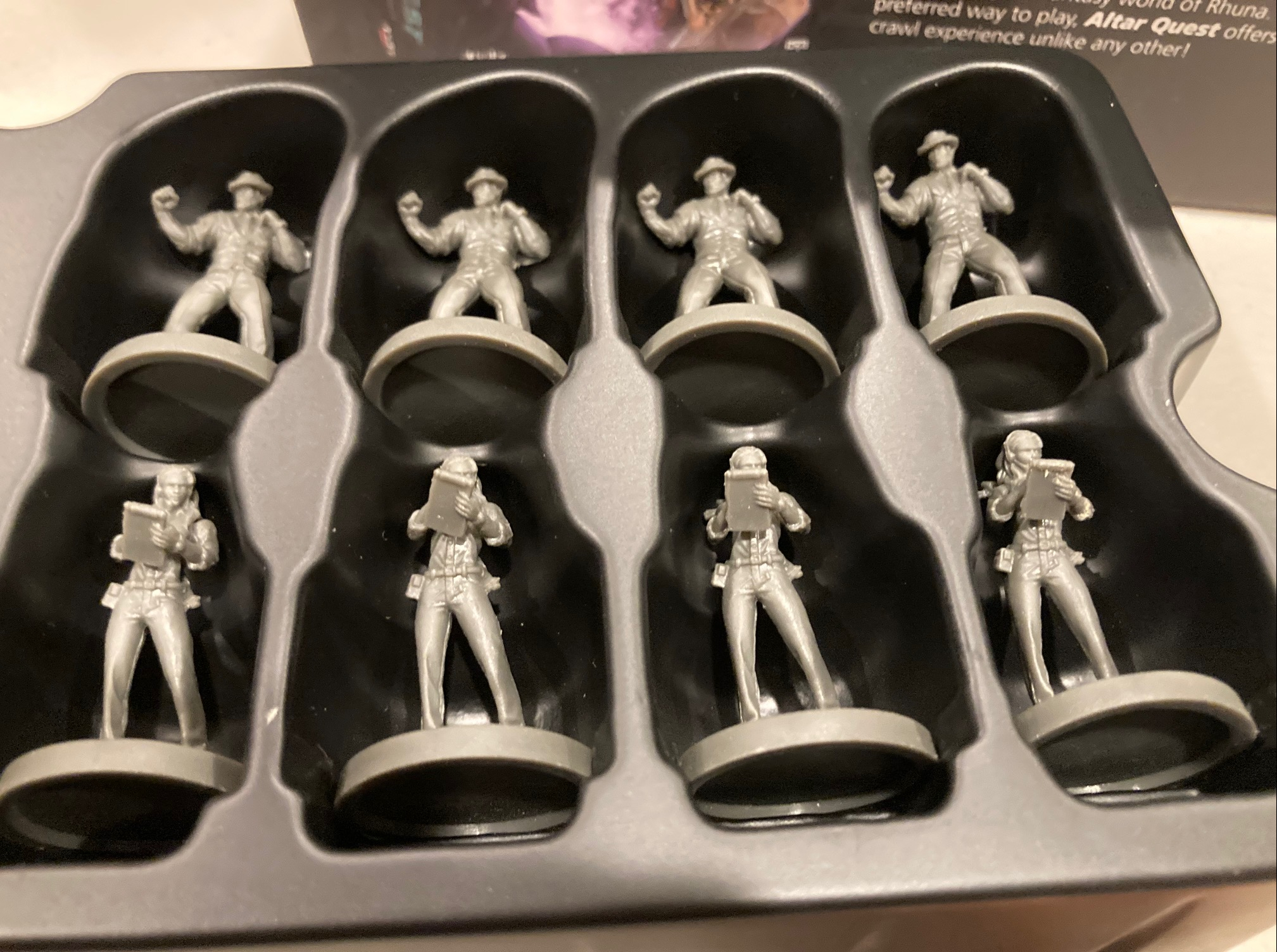
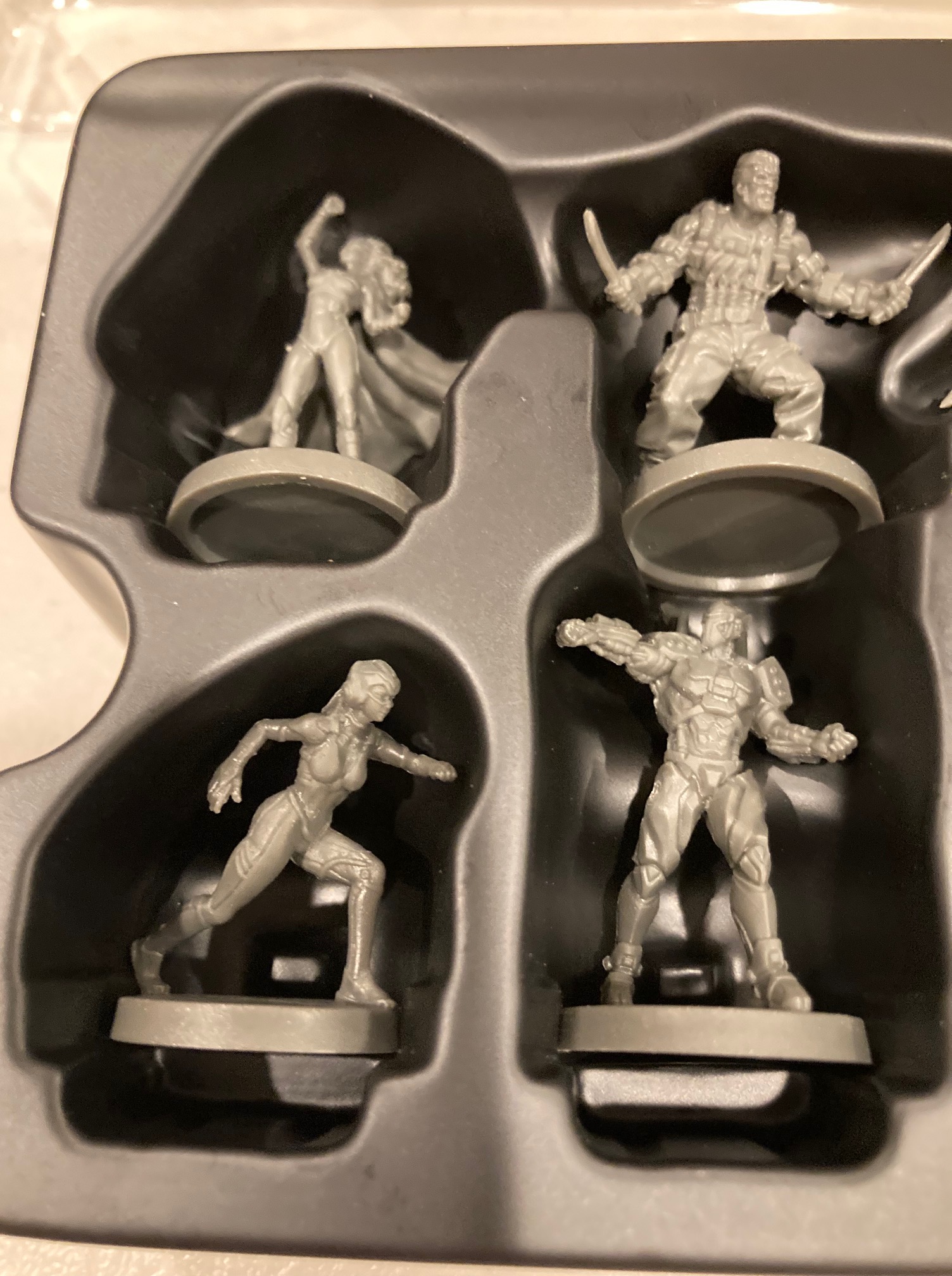

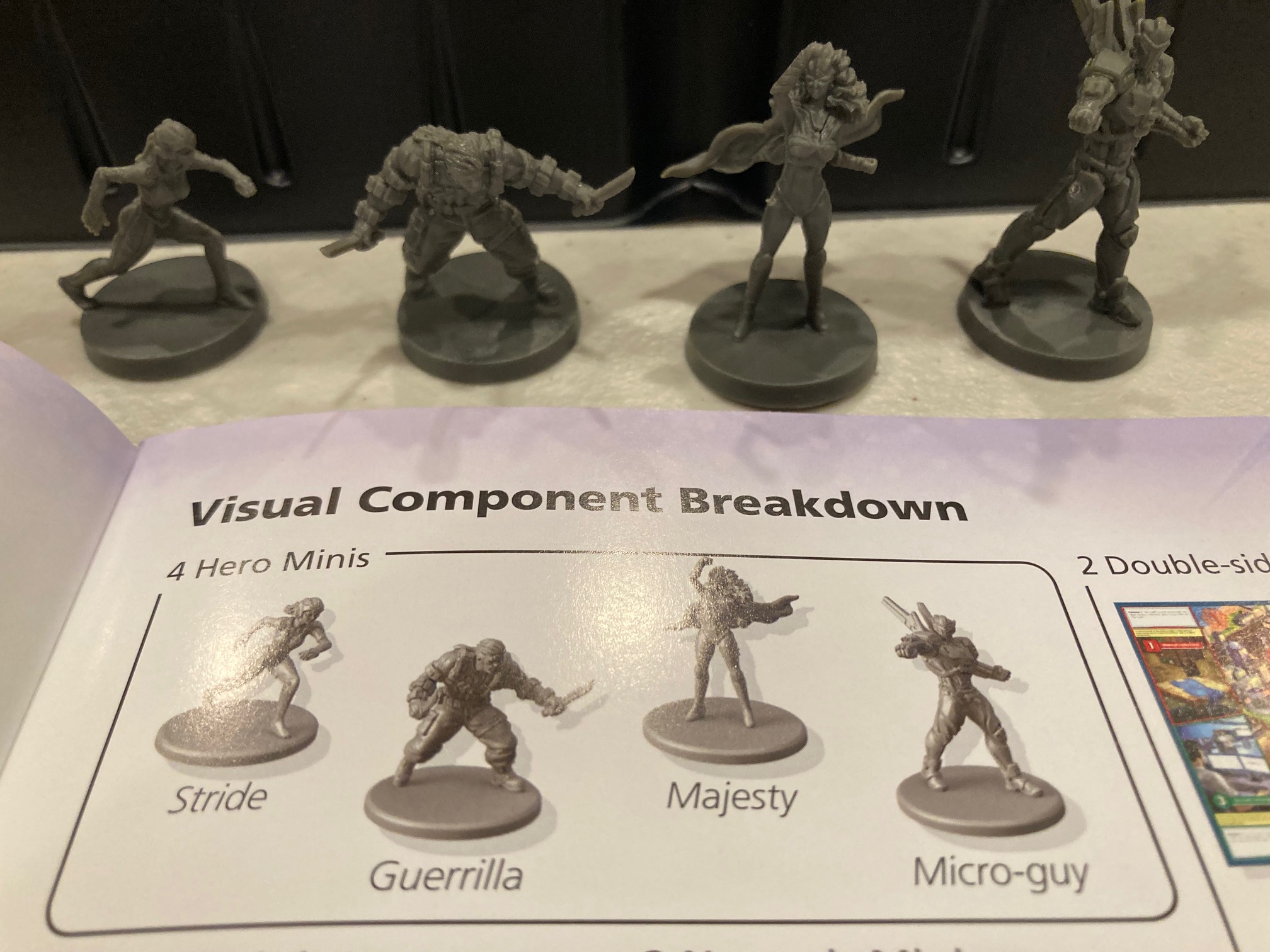

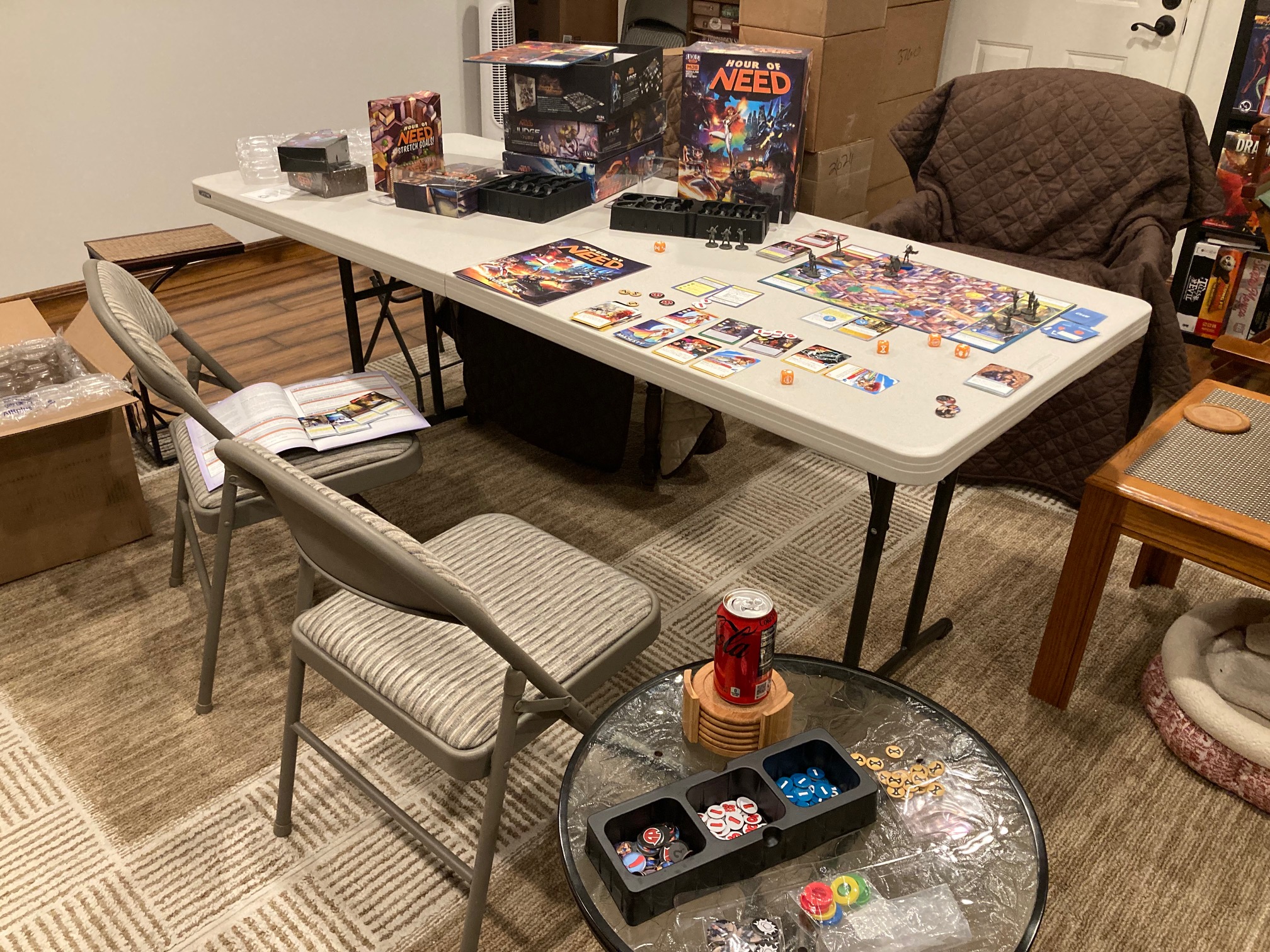
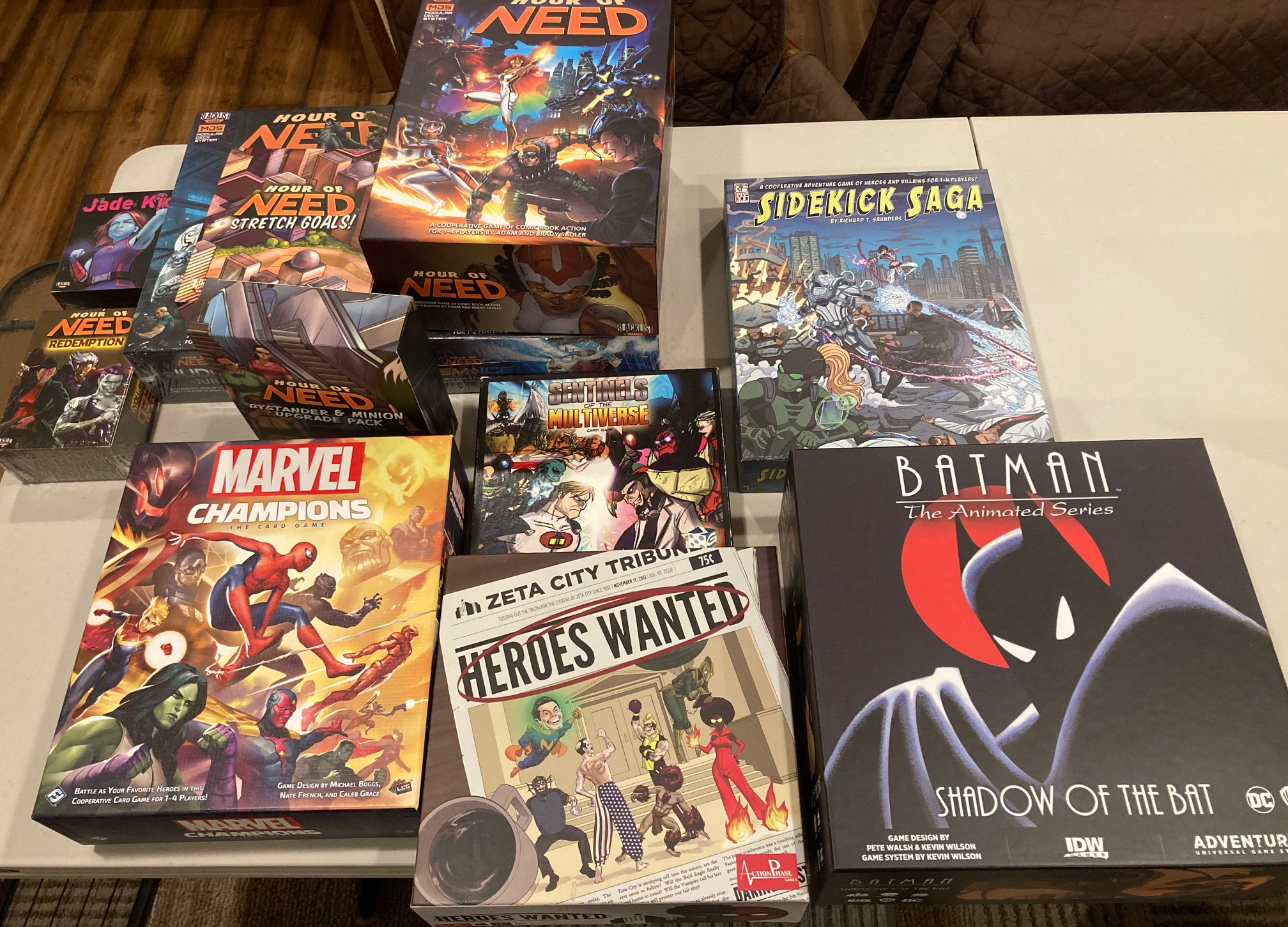
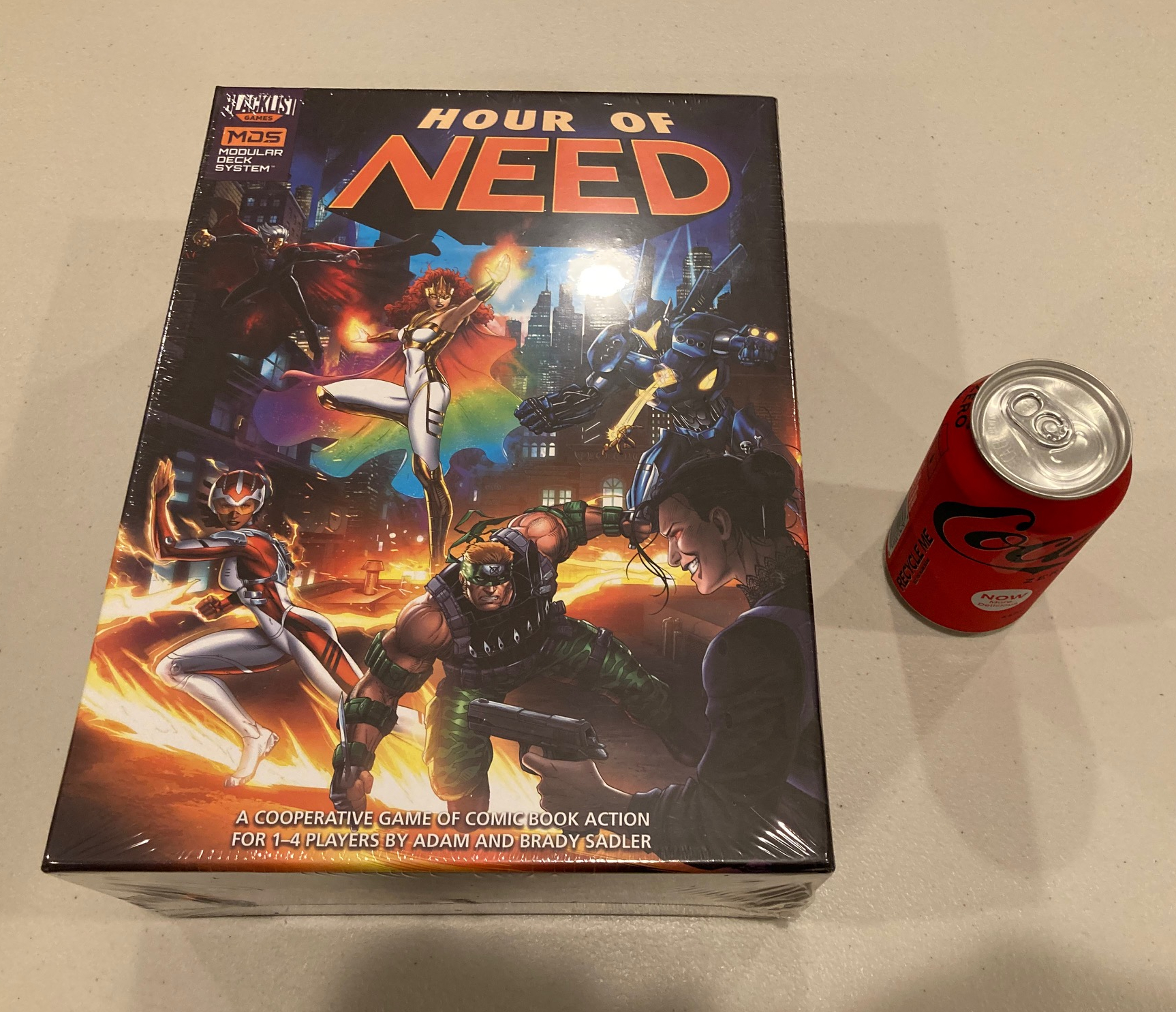


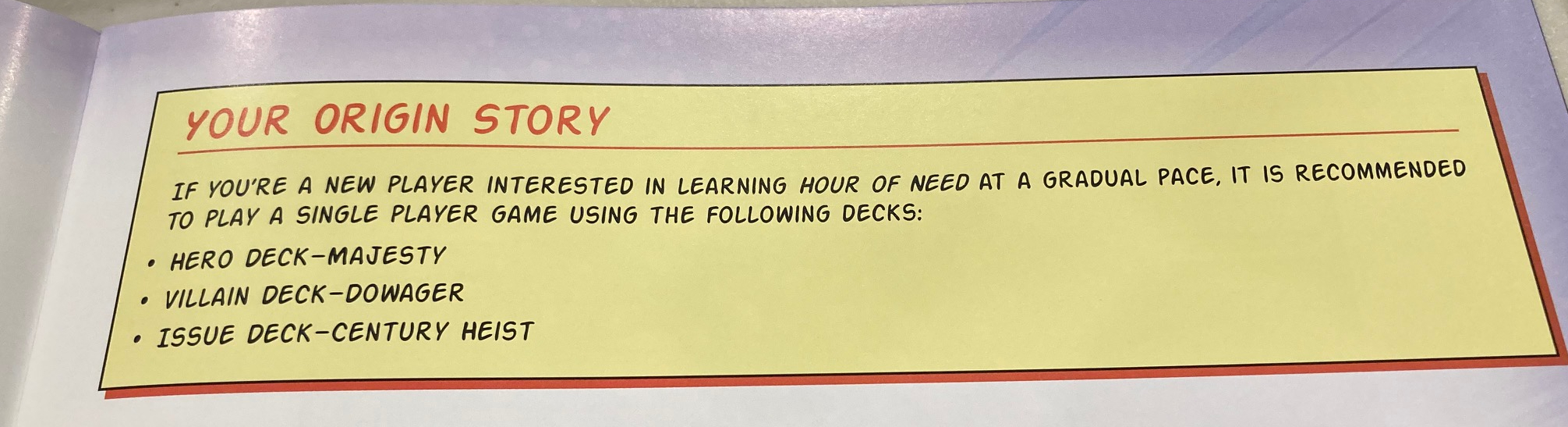
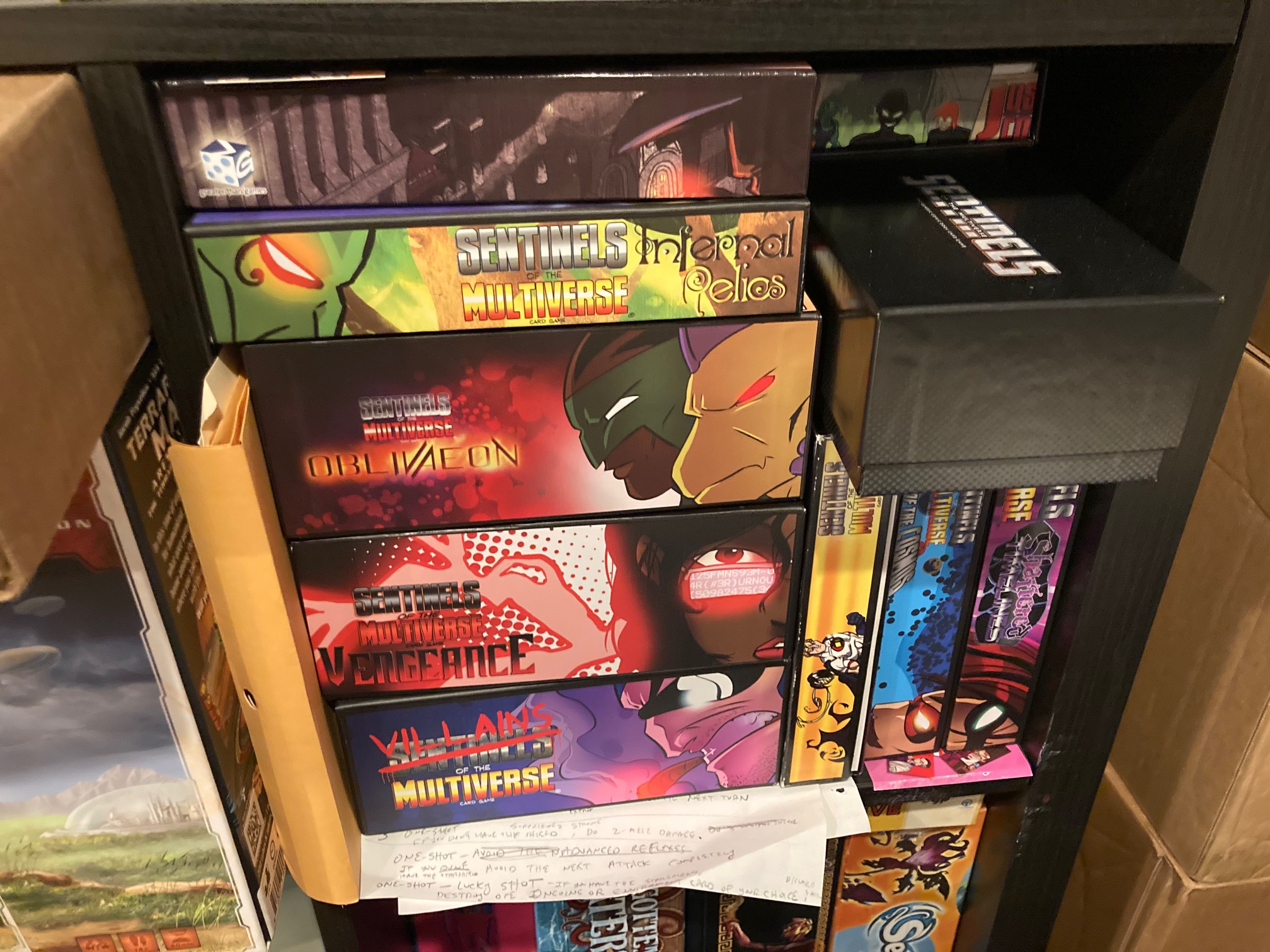
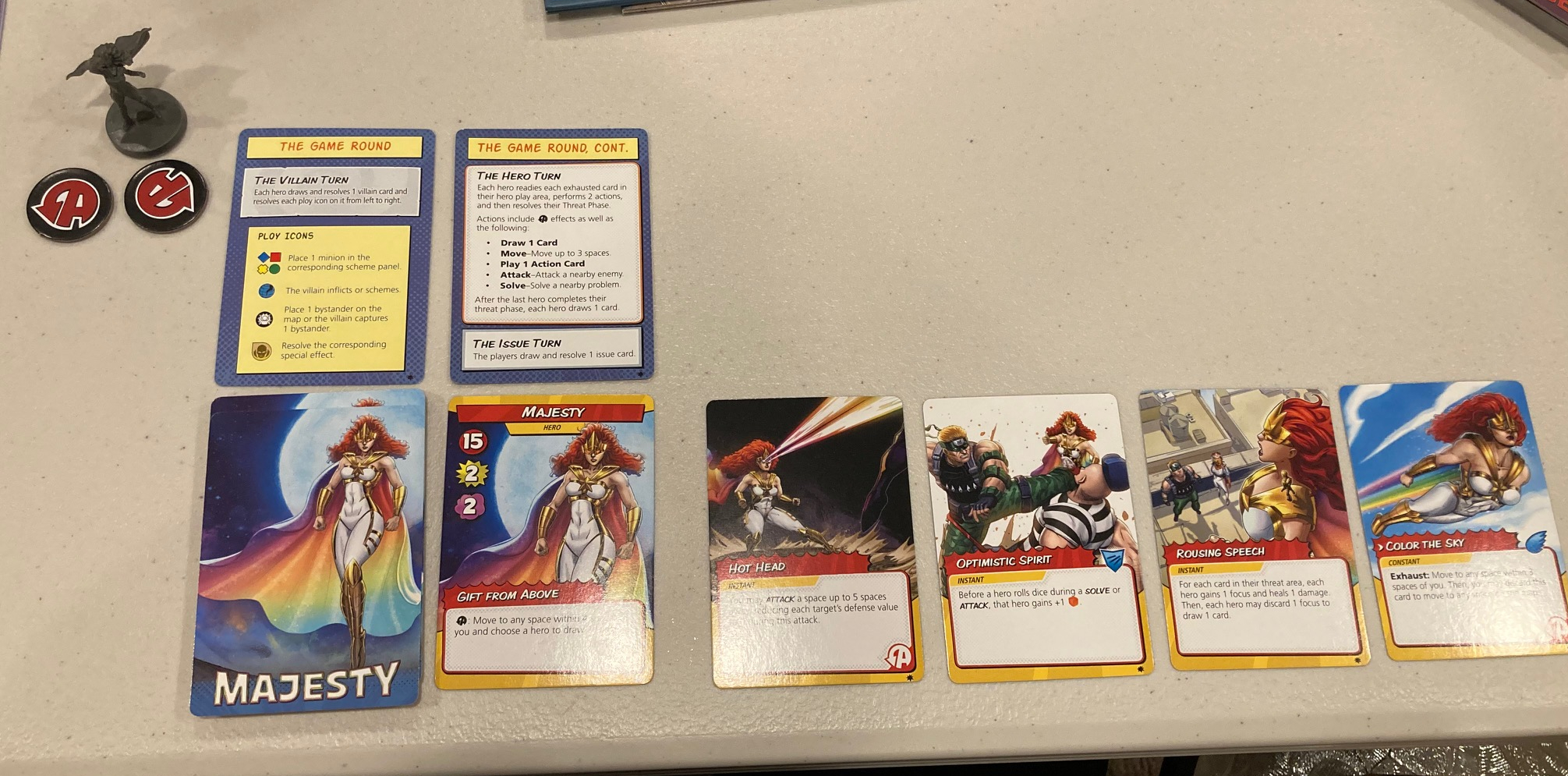


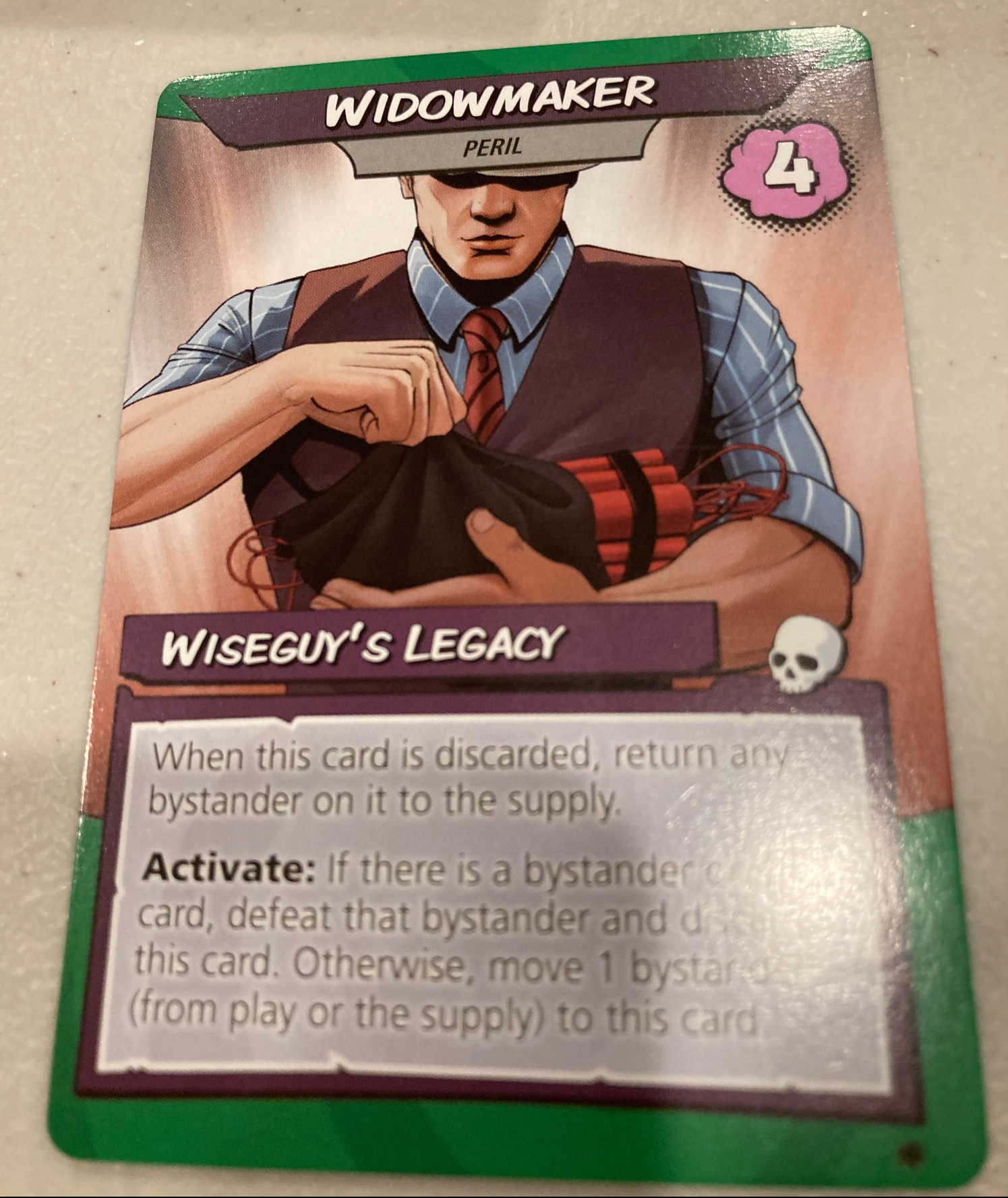
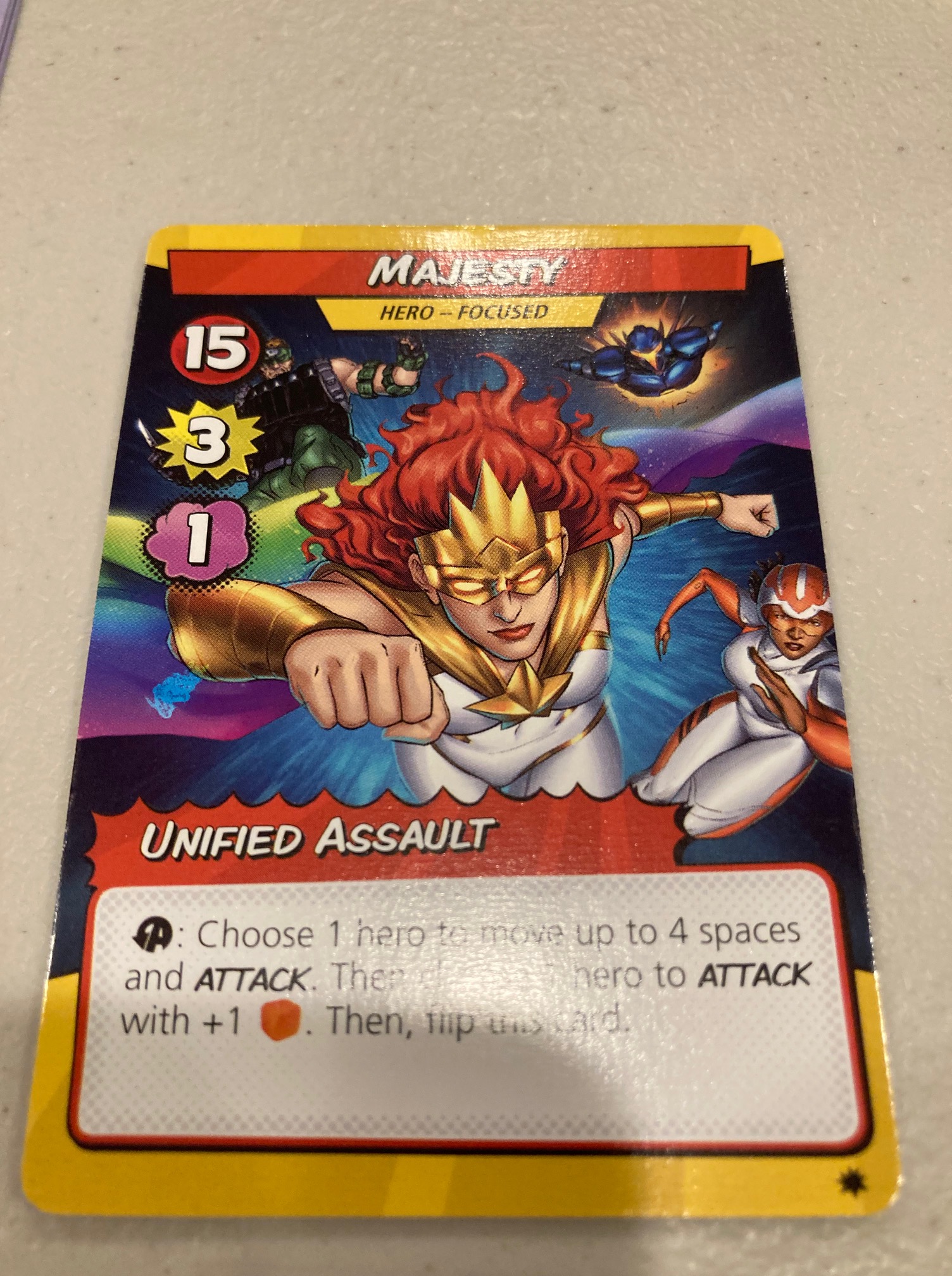
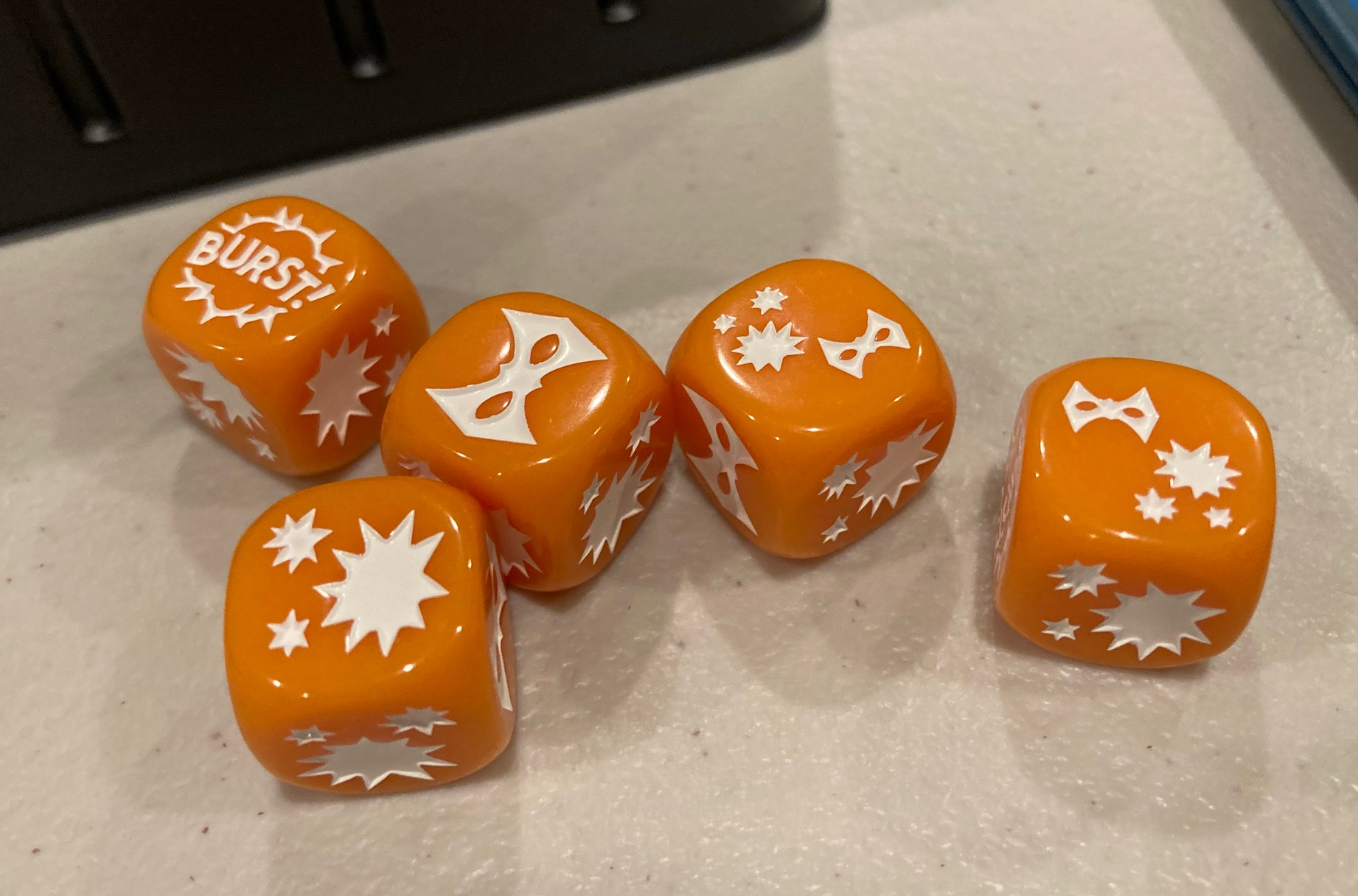


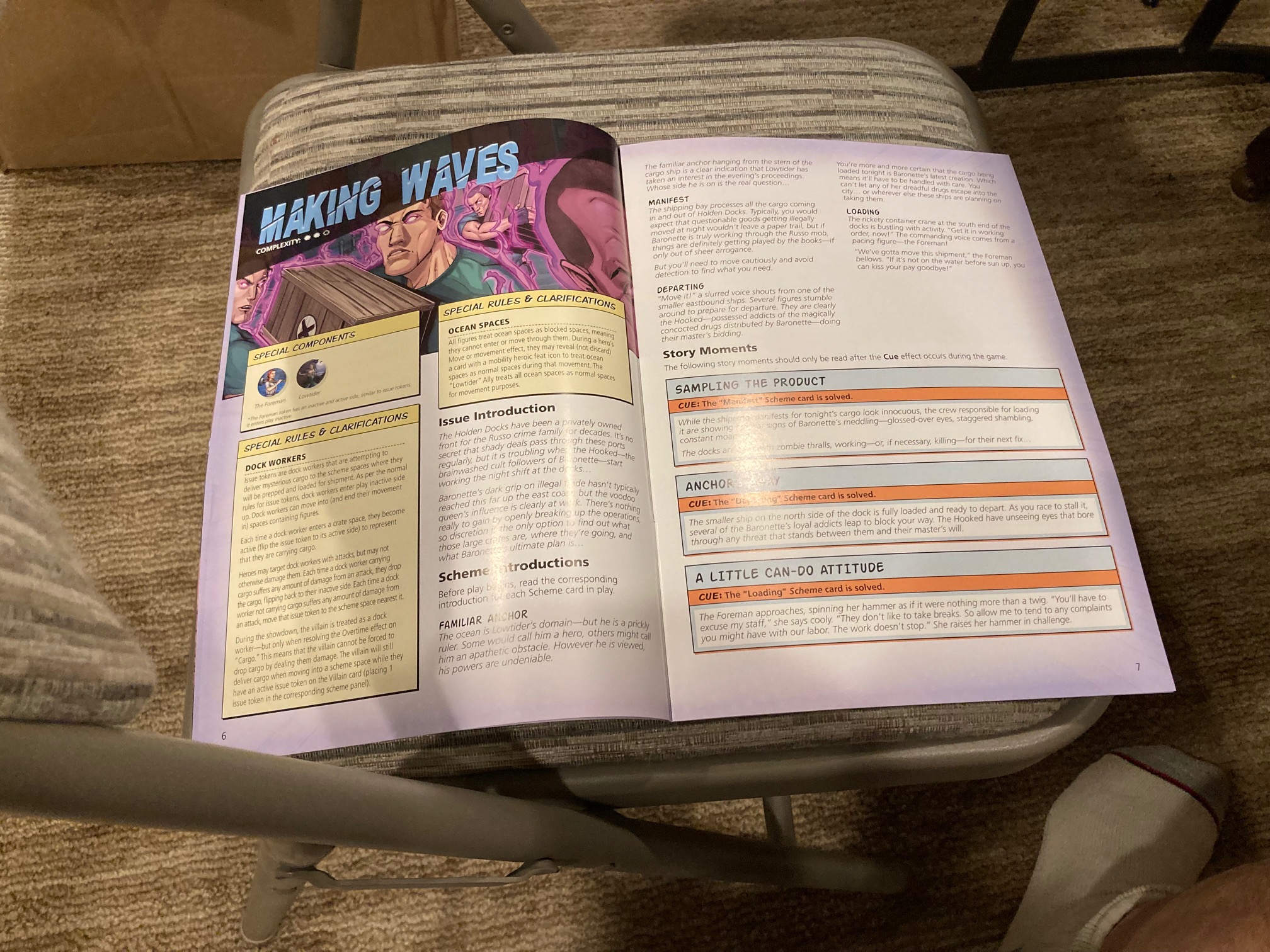
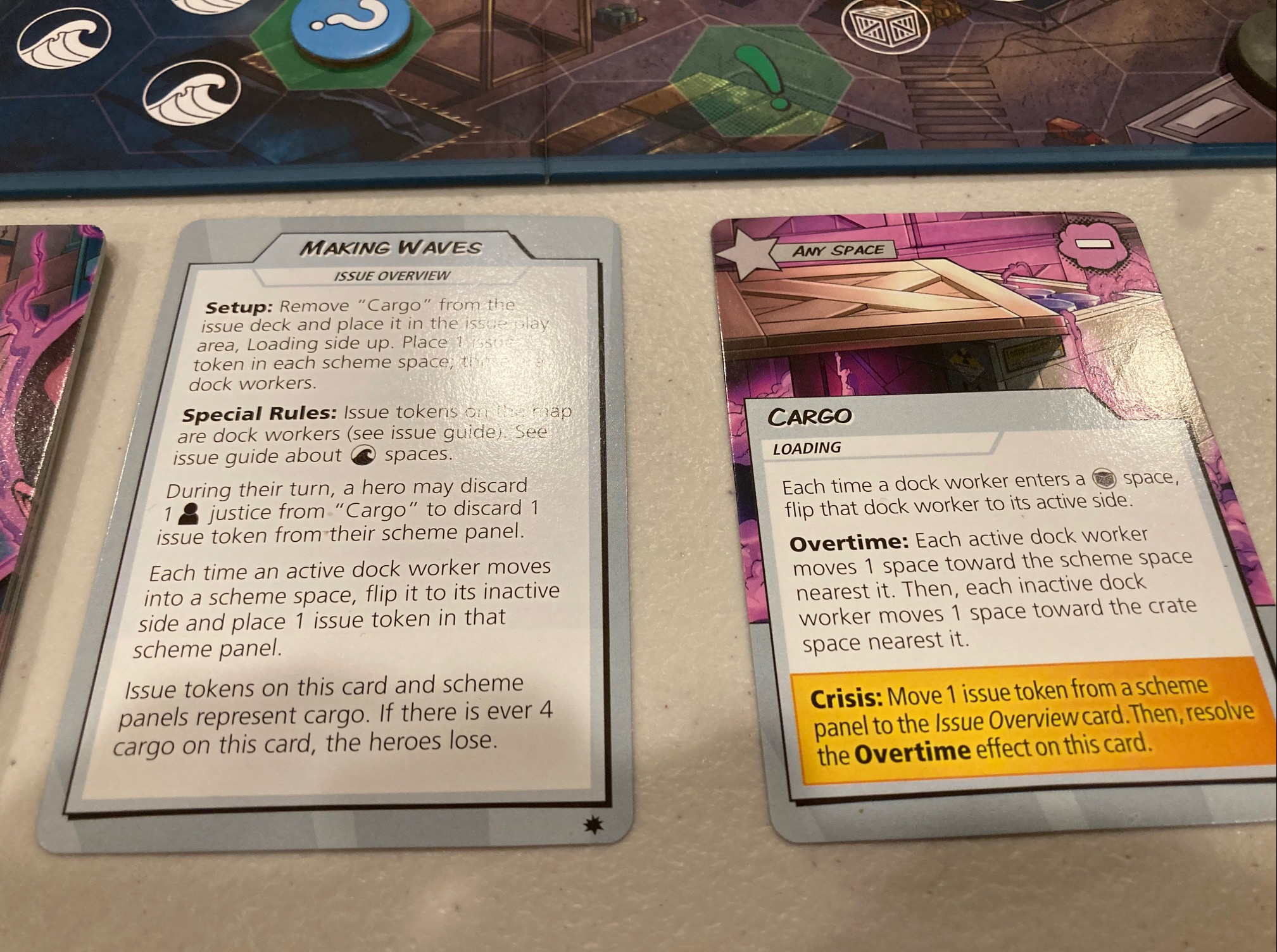


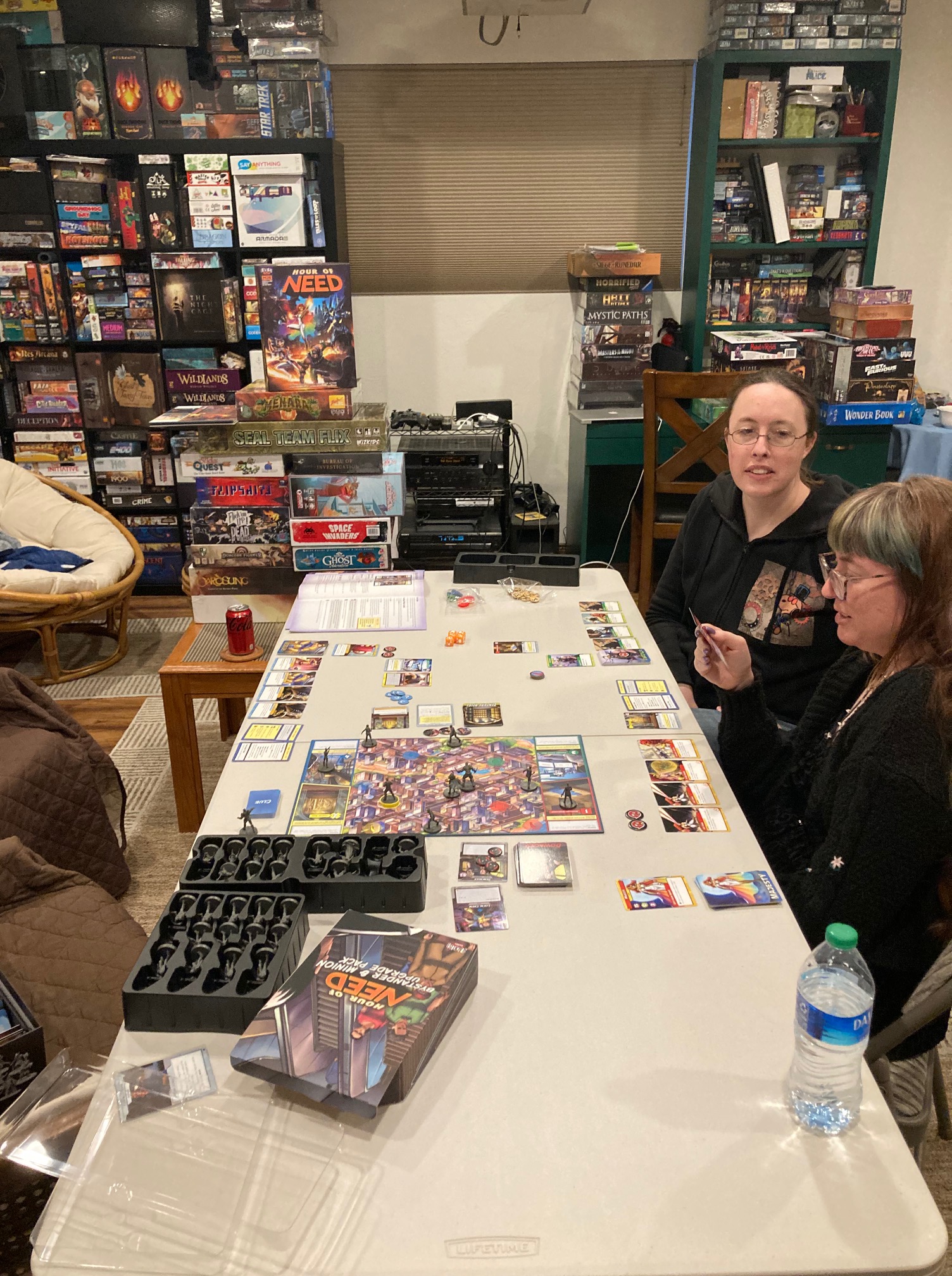


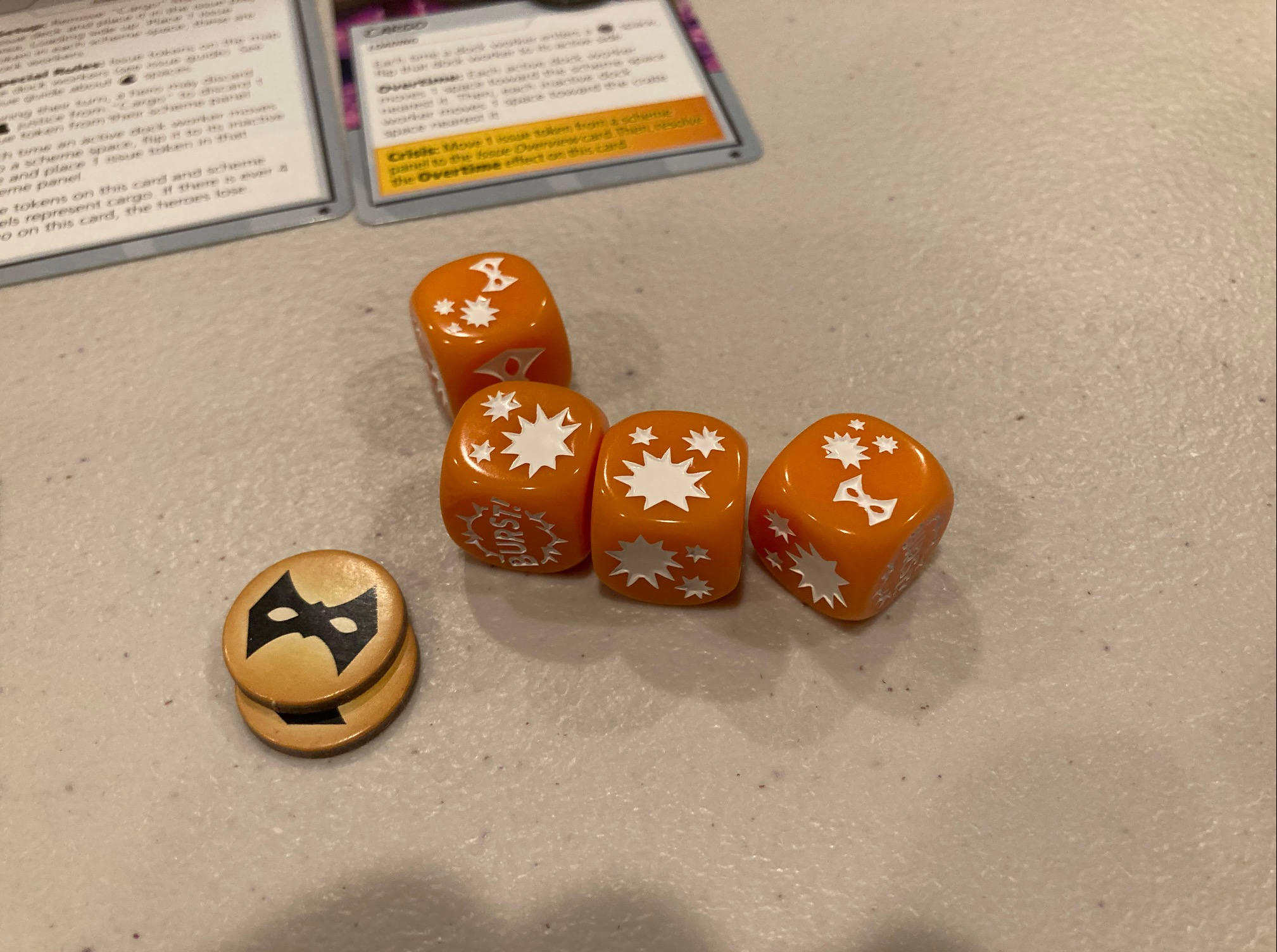


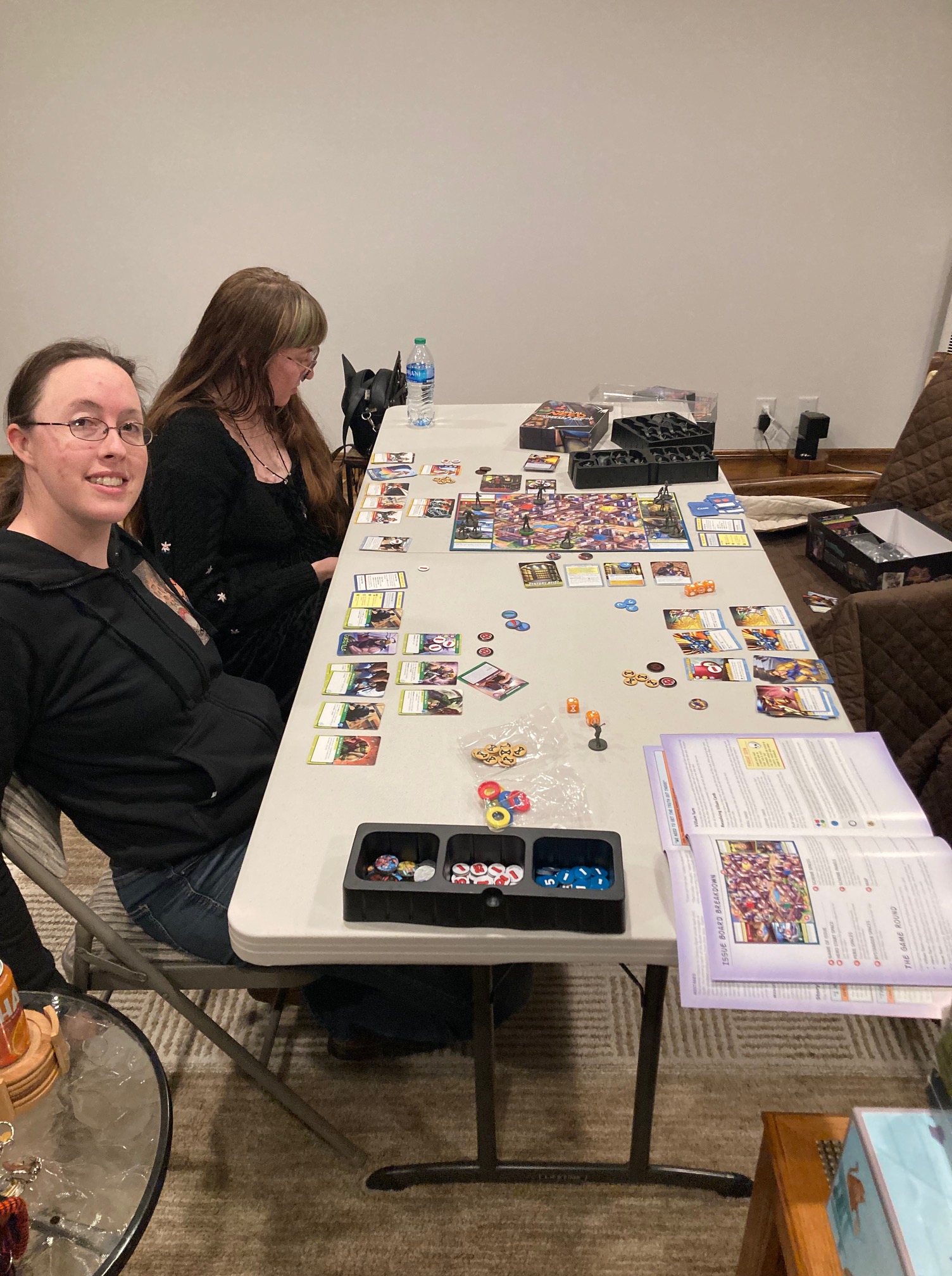
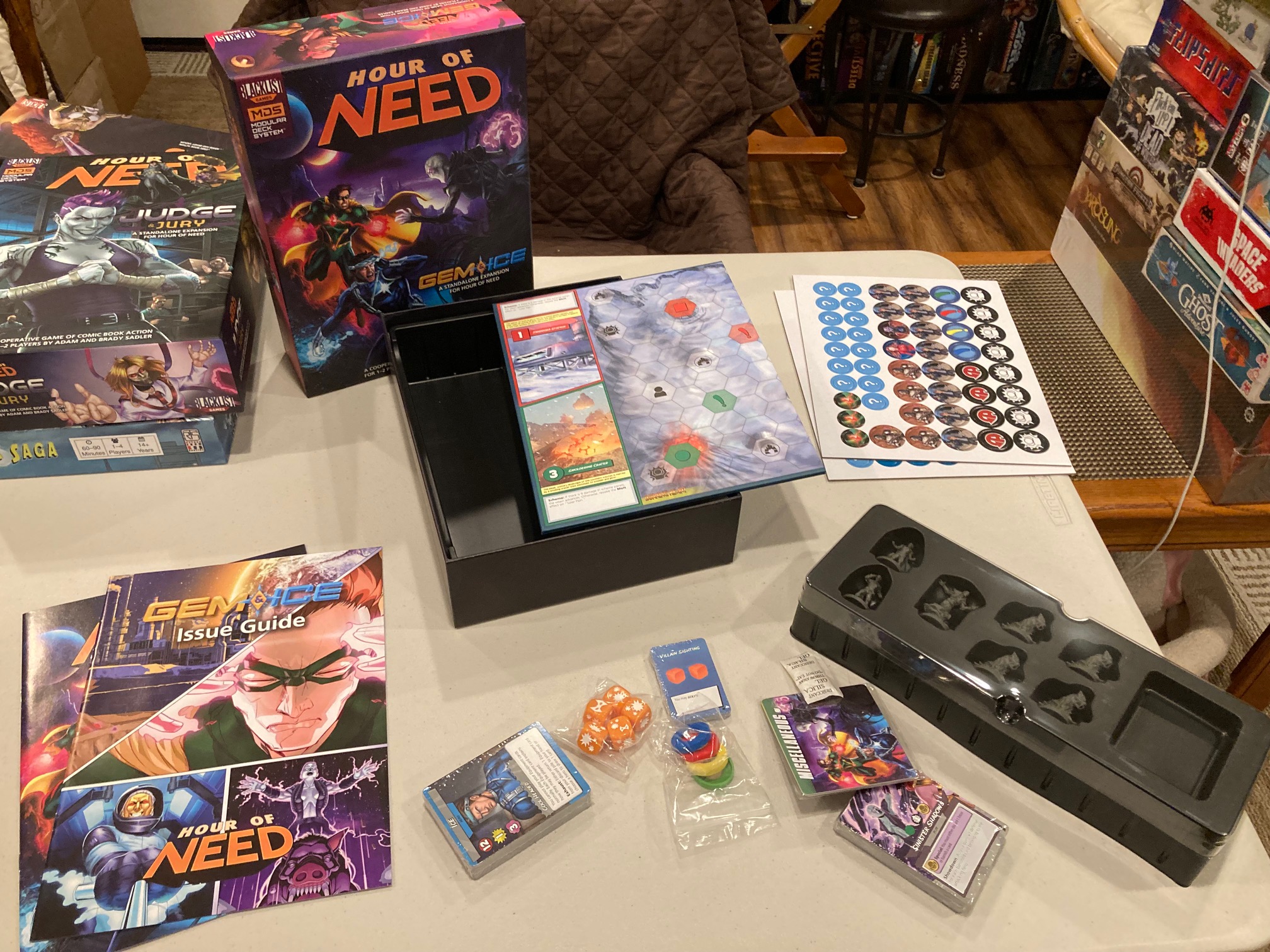


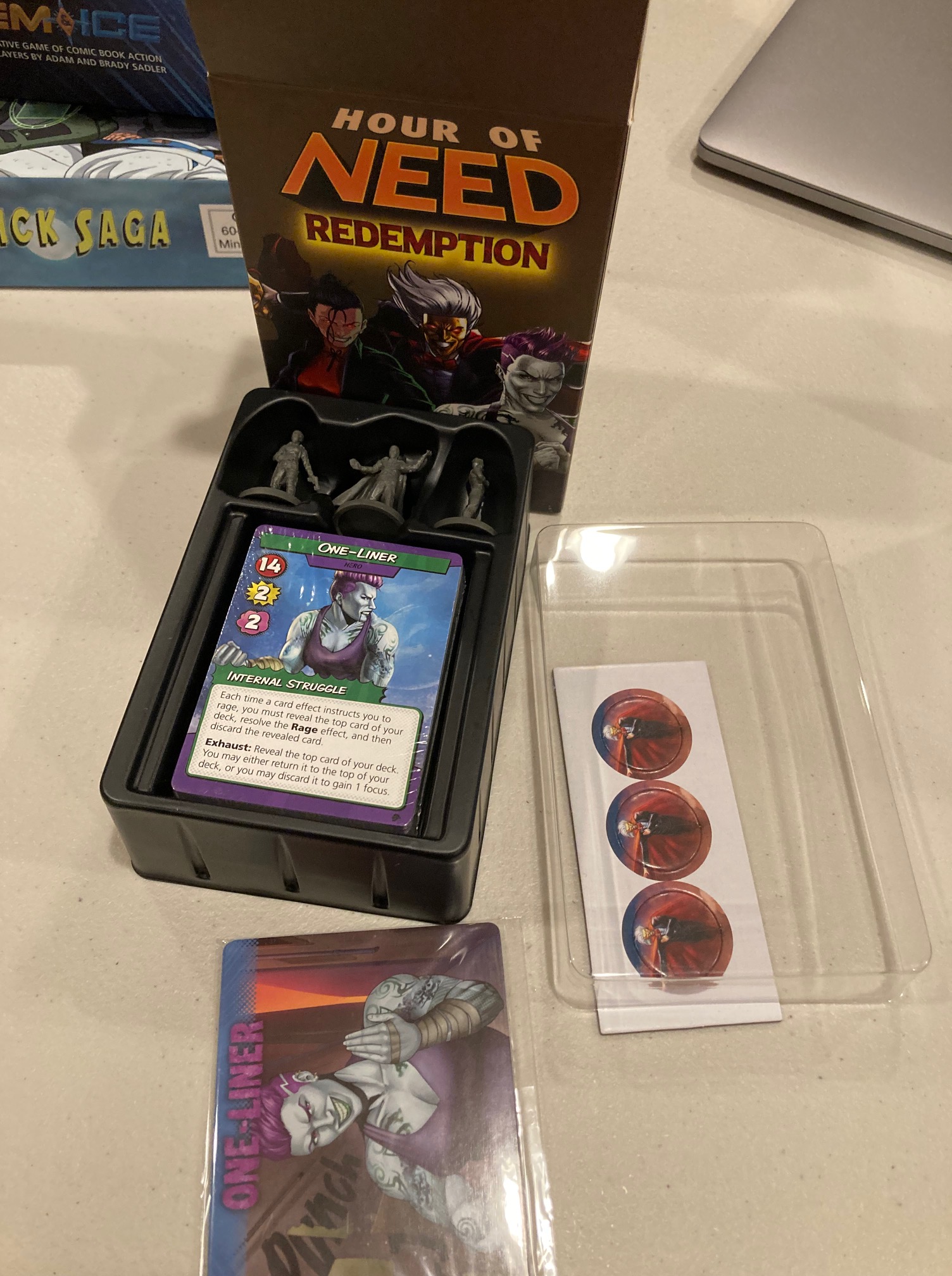
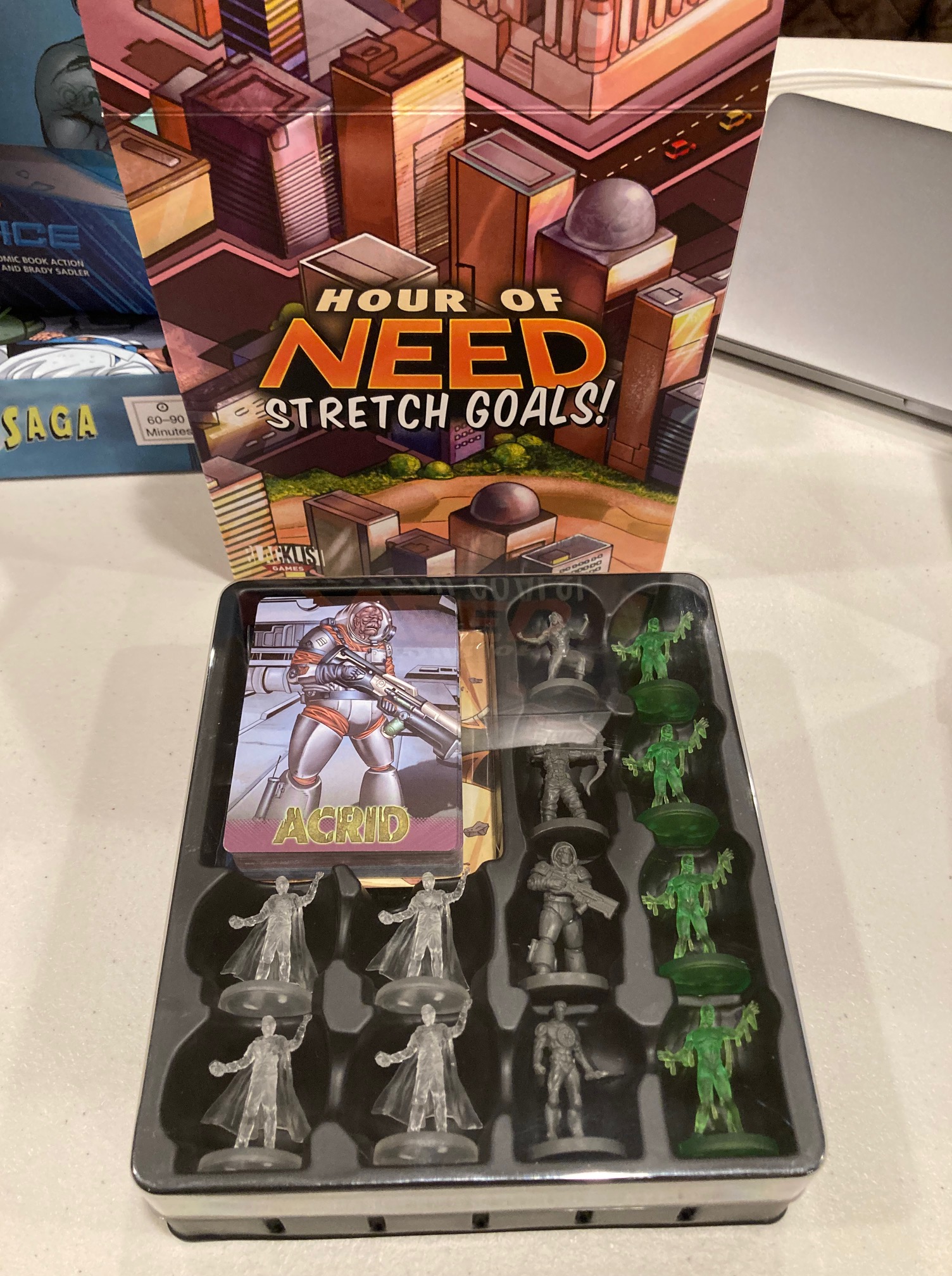



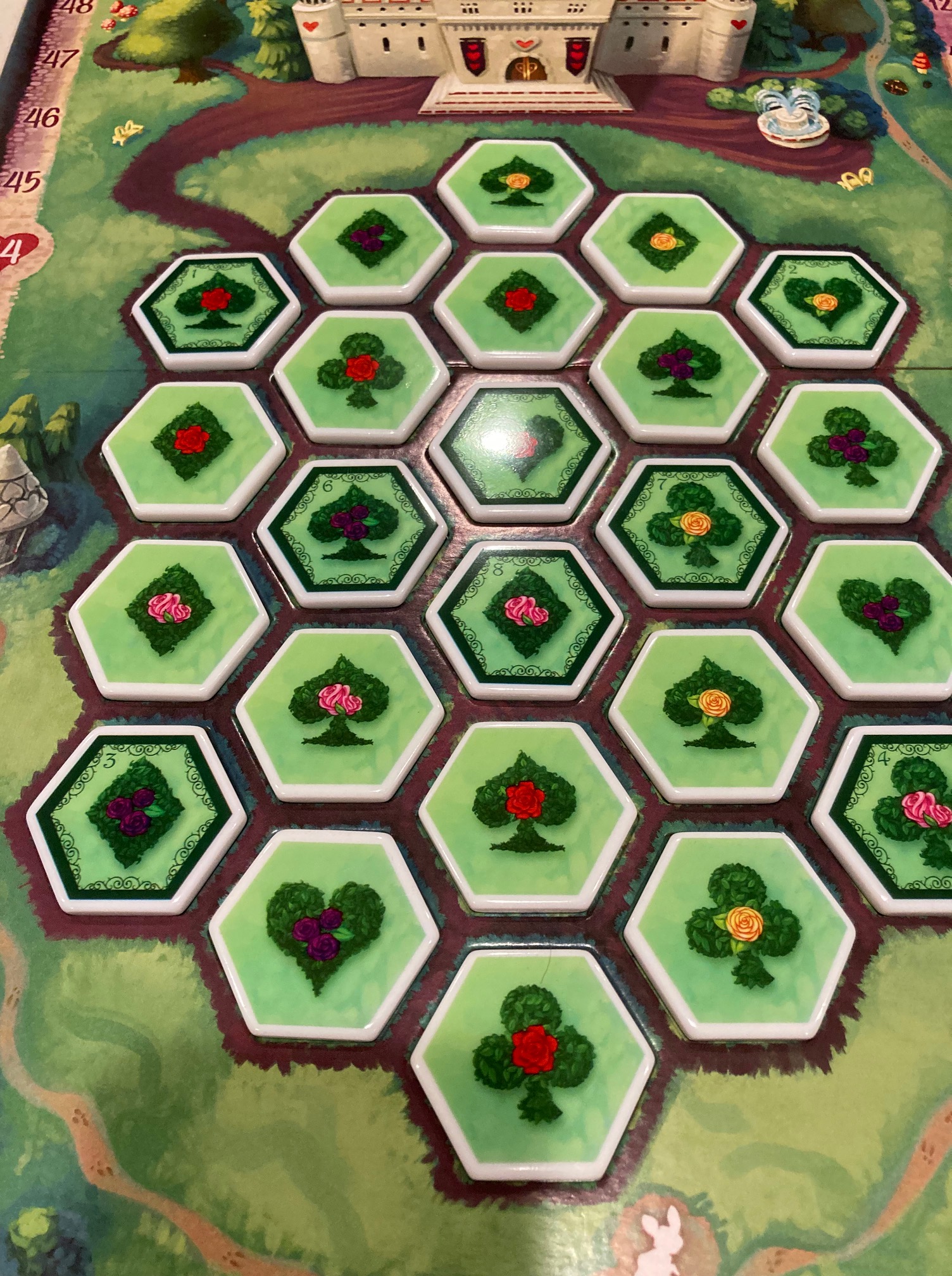
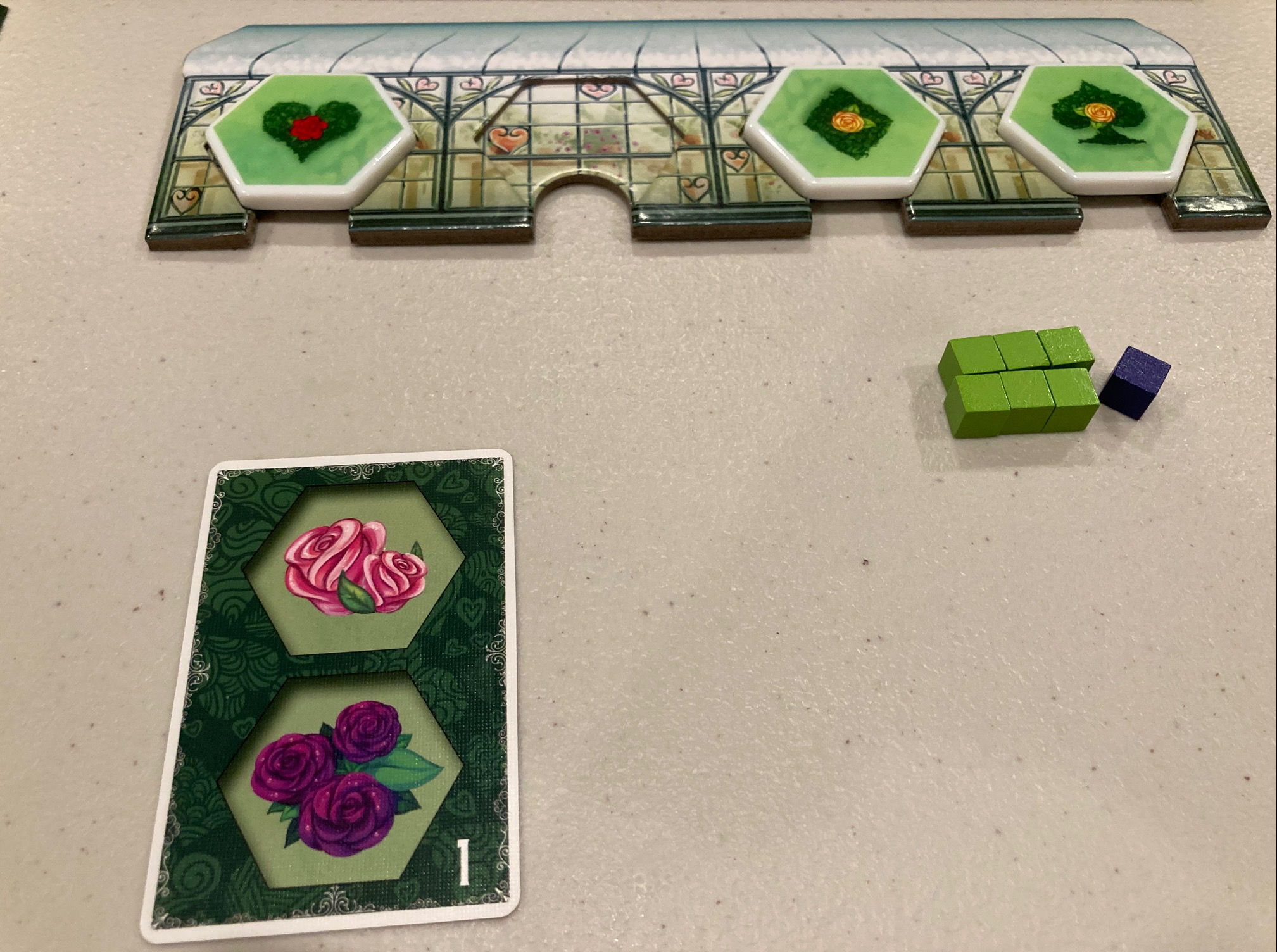

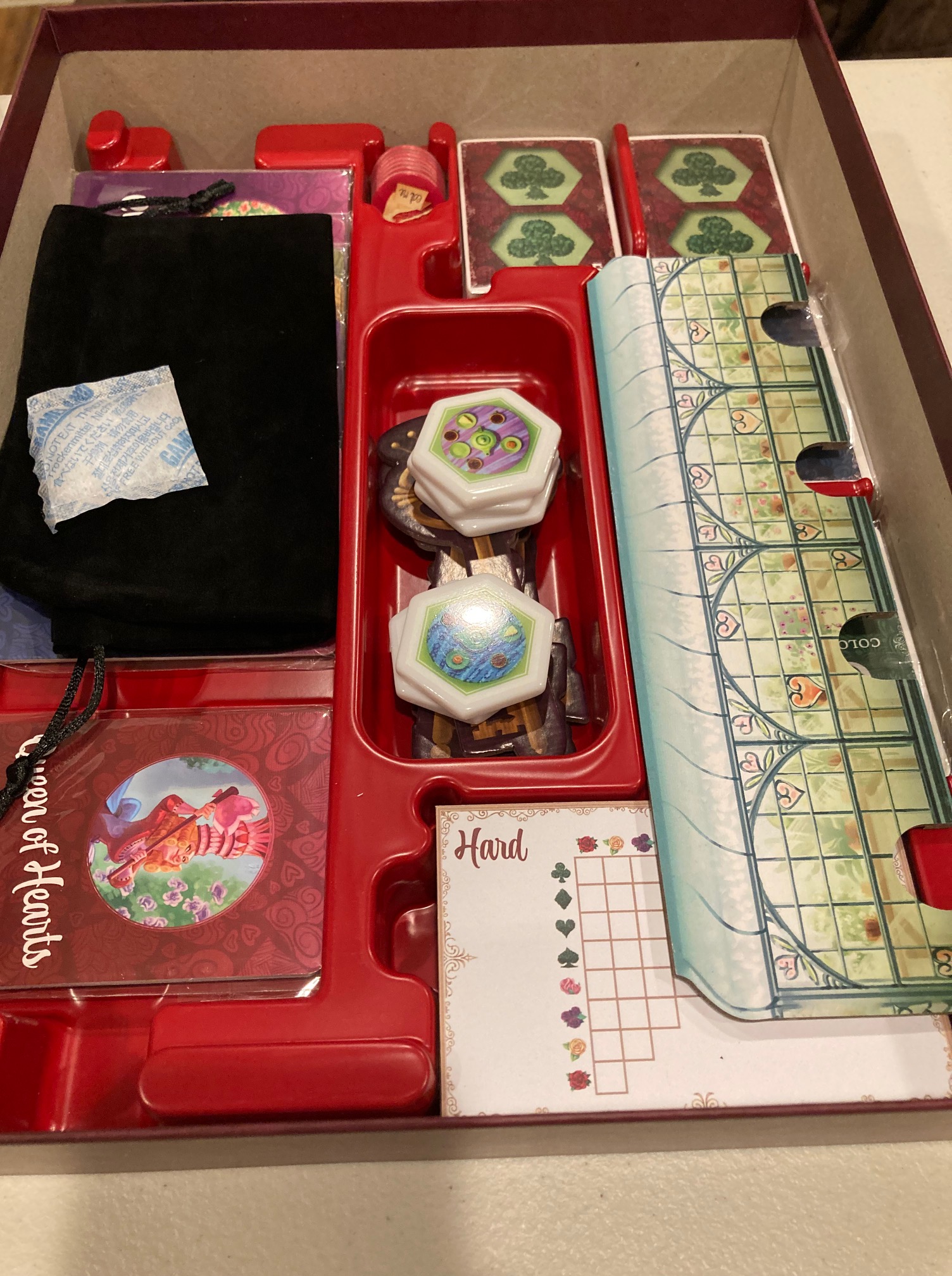
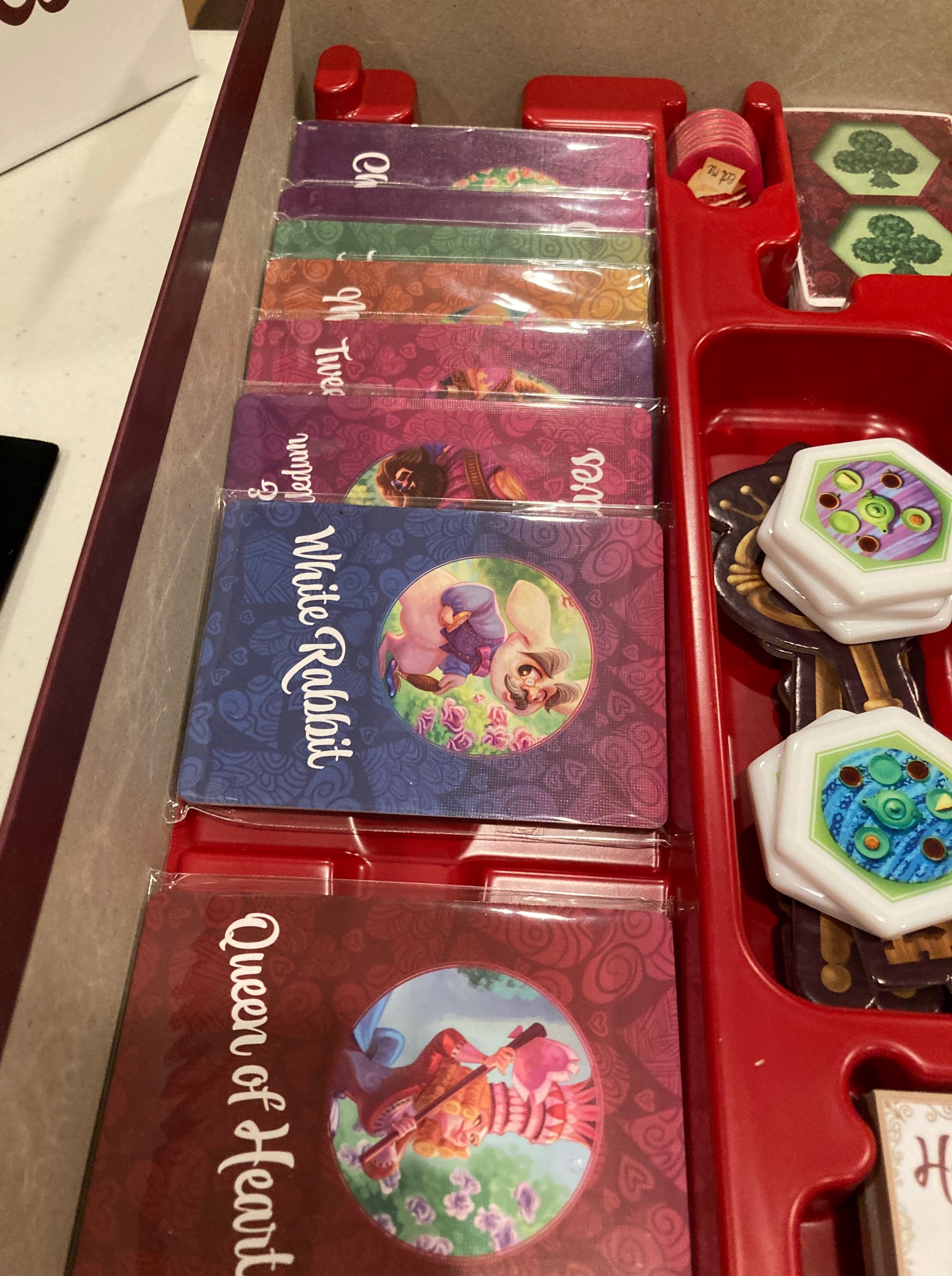
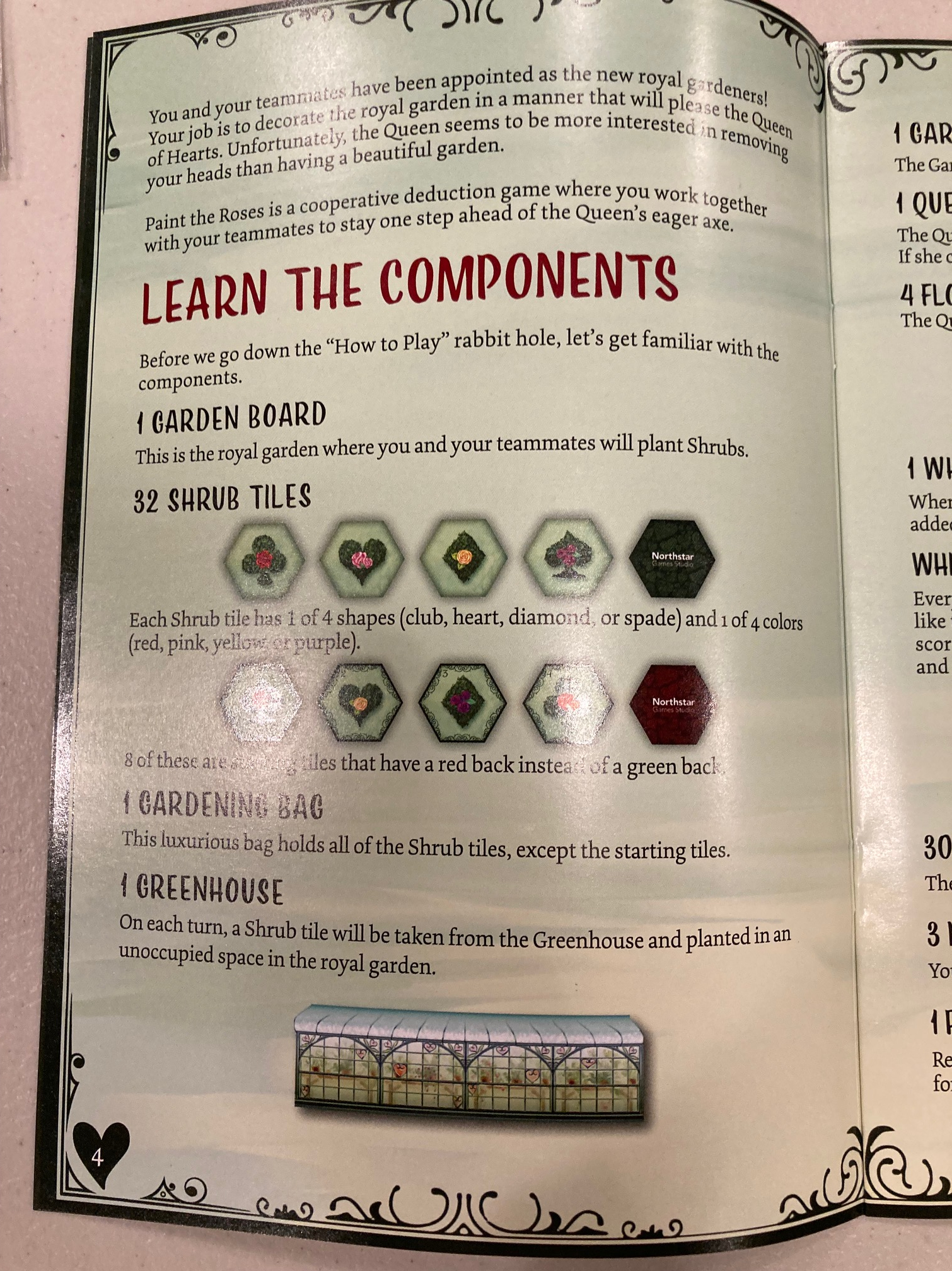
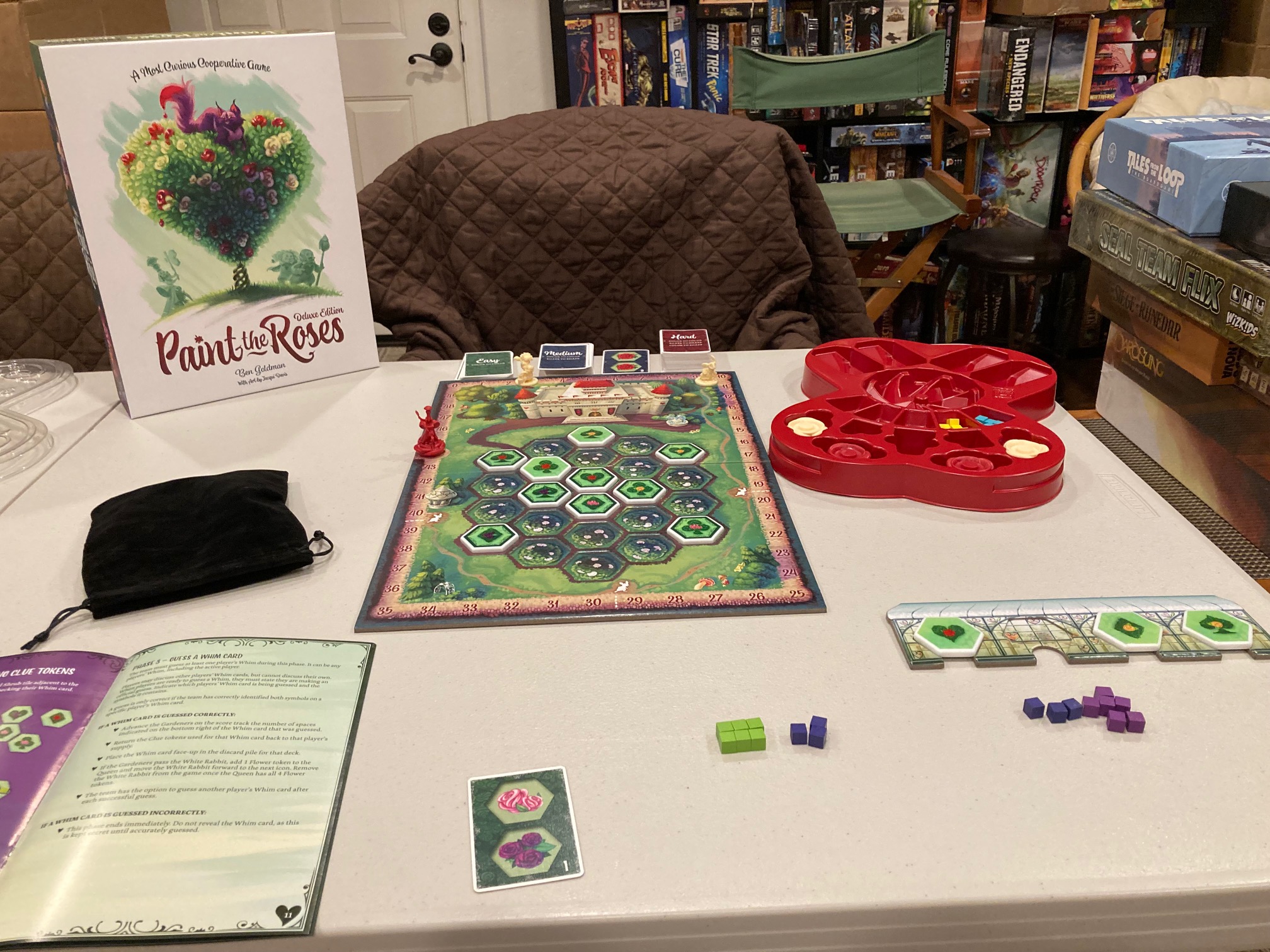
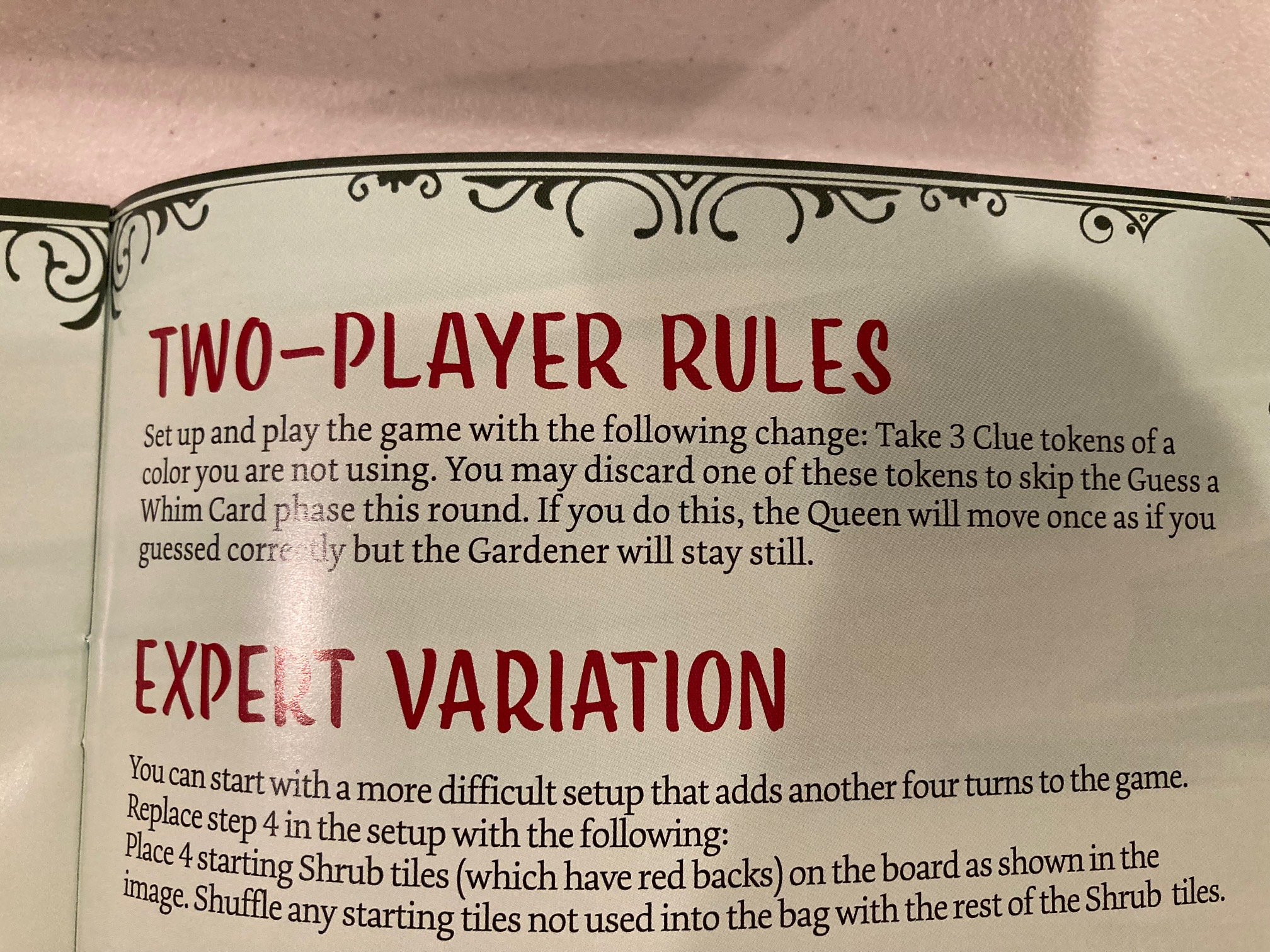
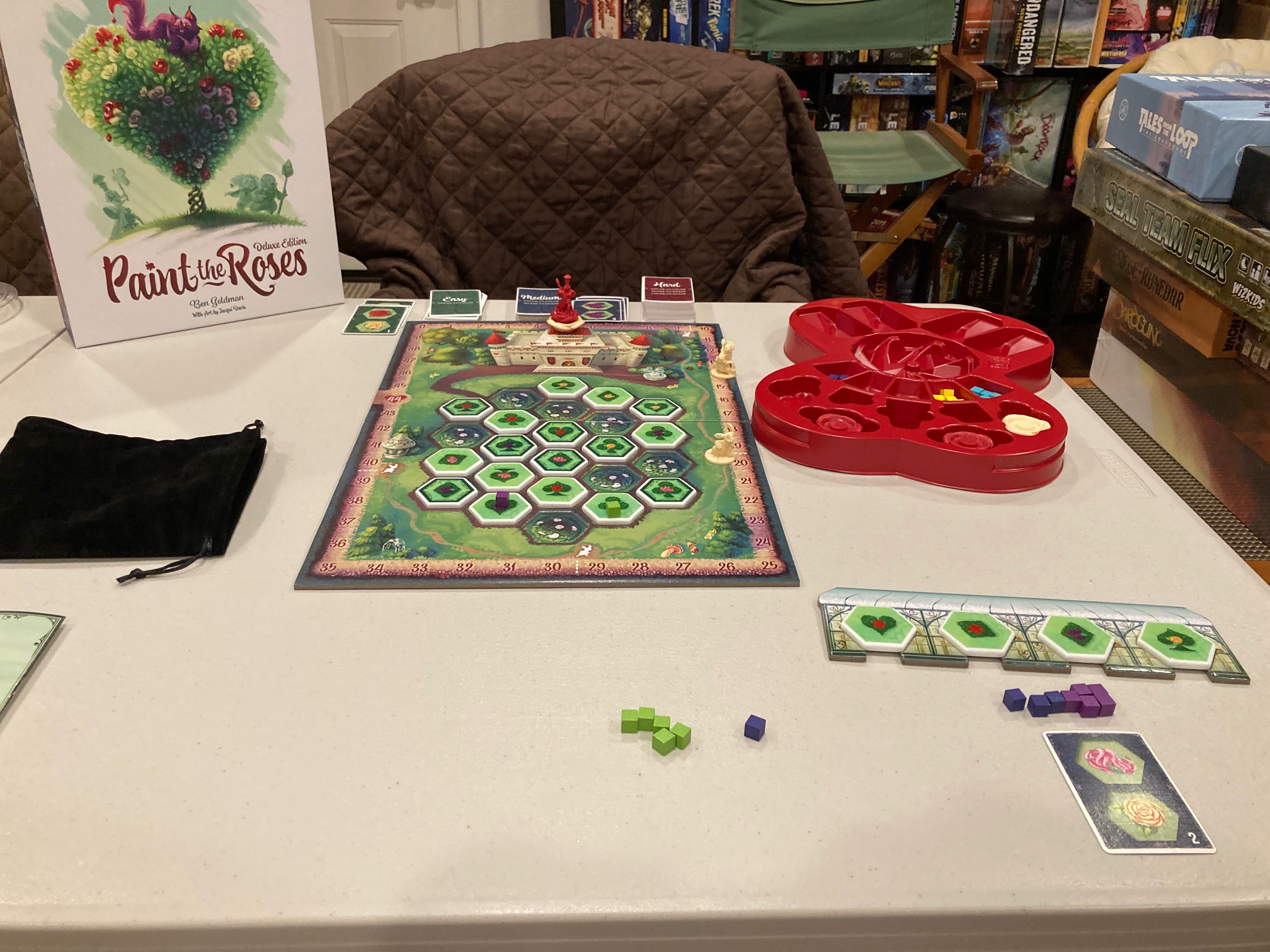

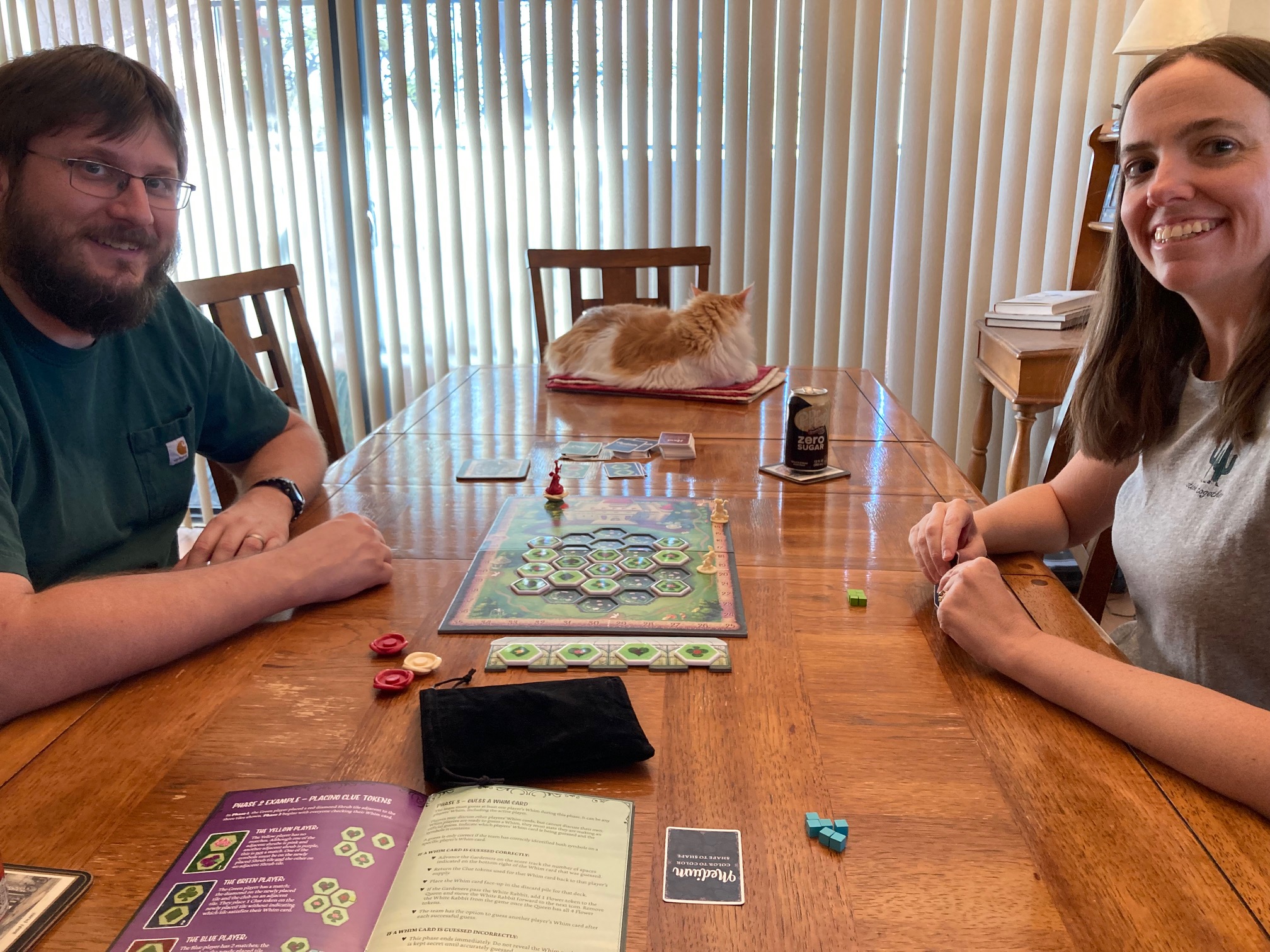
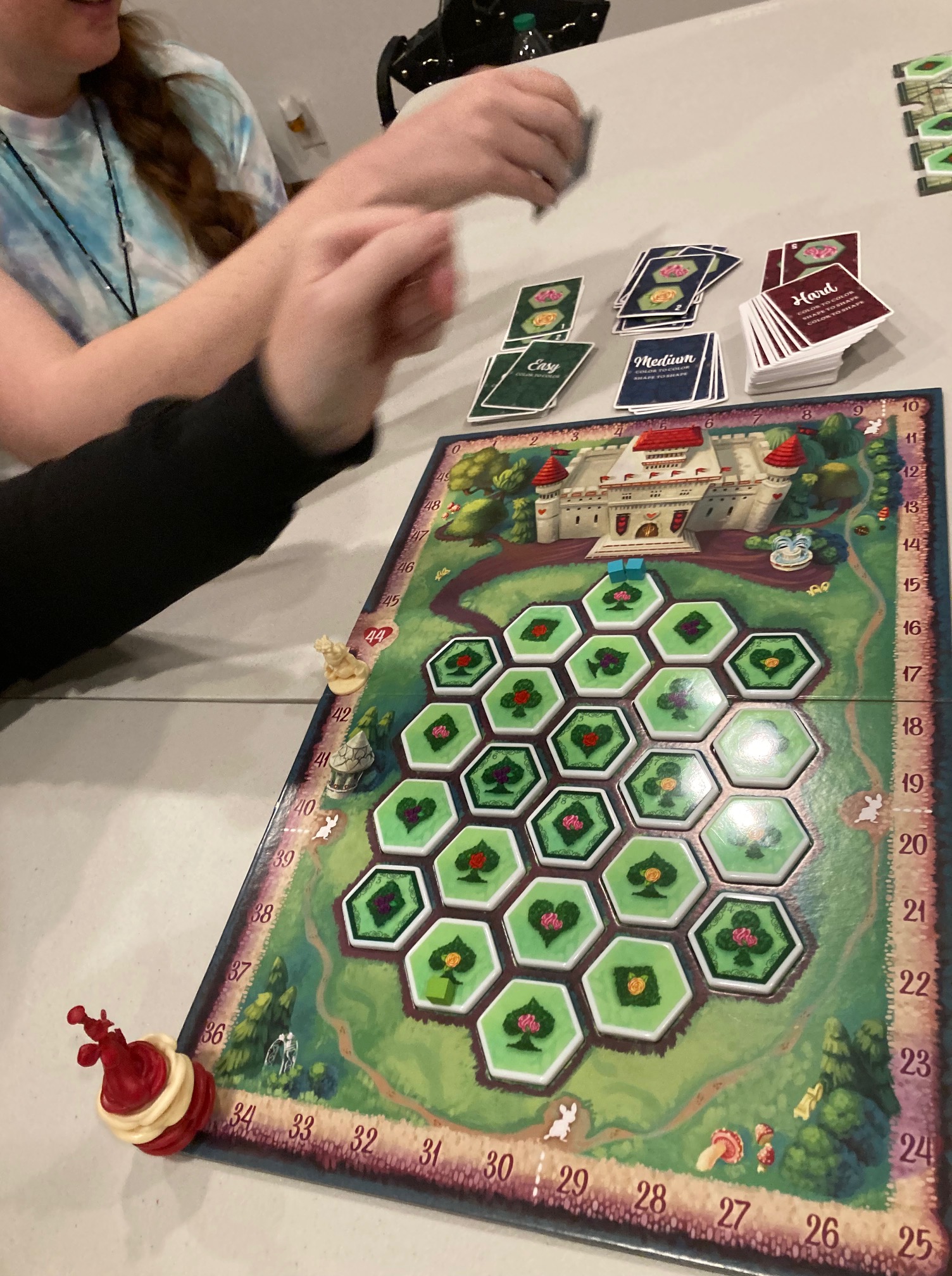
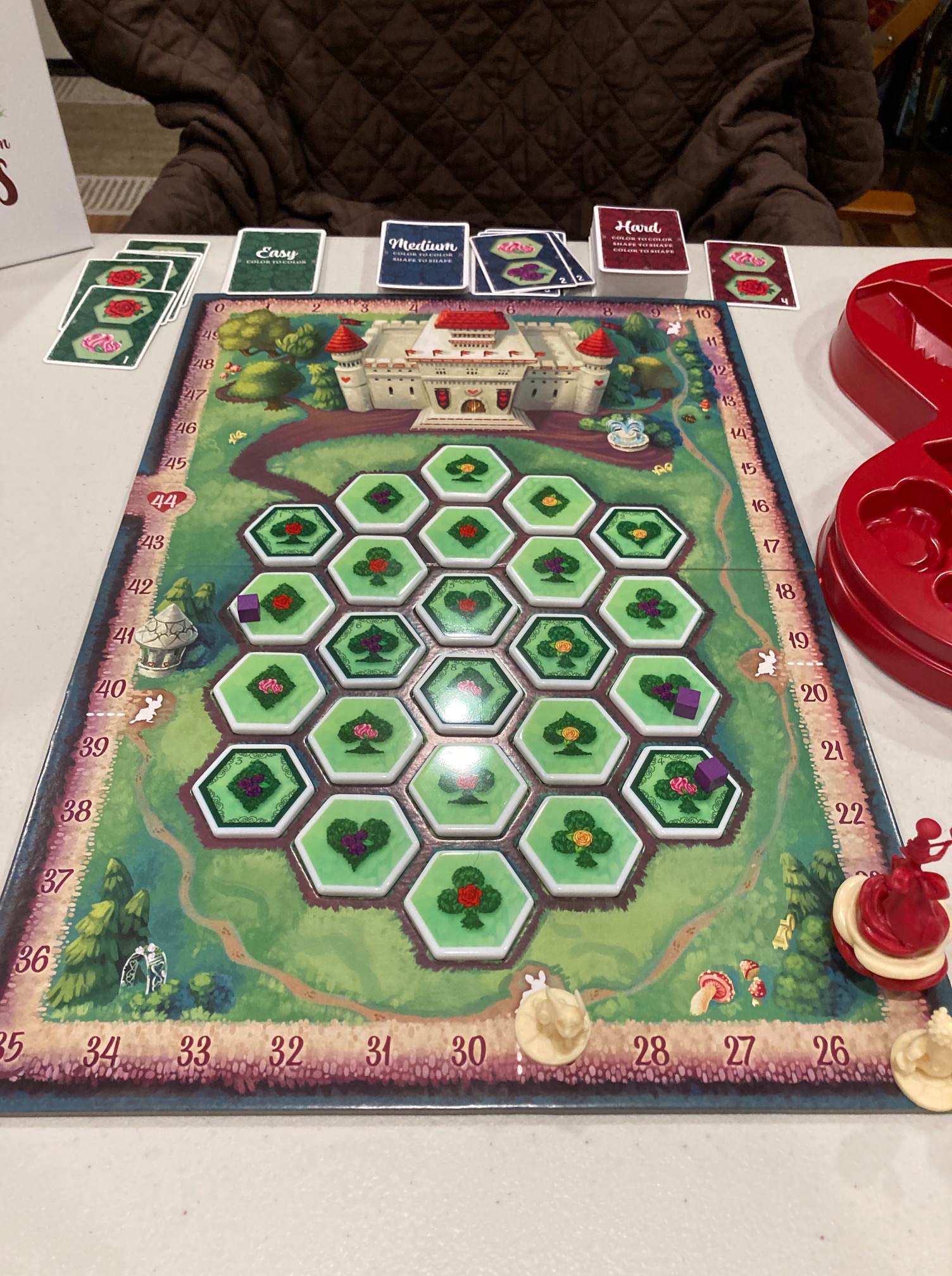
 coopgestalt