Sometime ago, I wrote a blog post called “Fastball Special” about Player Selected Turn Order in cooperative games. The idea is simple: why can’t players select the order they get to act in a cooperative game? It’s another place players can work together to get optimal results. I have been buying lots of cooperative board games over the last year. It’s been almost 2 years since I wrote the “Fastball Special” entry! And I have only found 3 (well … 2 and half …) games with Player Selected Turn Order! And none of them are well known games! Here’s the ones I know of.
The Daedalus Sentence
I kickstarted this game quite some time ago and gave a review here. This is the first game out “in the wild” I found where players could actively choose the order to use their action points. Every player gets 4 action points, but you can use them (among the players) anyway you want! You could even intersperse your actions among the actions of other players. It was very cool! But, in my plays of the game, we didn’t seem to take advantage of this. Or rather, we didn’t seem to NEED to take advantage of this. So, it was cool, but it wasn’t clear it was necessary to win.
Sharknado: The Board Game
Yes, you read that right. There was a Sharknado: the board game. But … this was a Kickstarter that didn’t fund. So, I count it as “half” a game. According to the web site, they still plan to release this! But I haven’t seen anything about it. Anyway, here’s why it caught my eye at the time:
No specific turn order – The game plays in two phases: the Player phase and the Sharknado phase. During the Player phase, you and your team can take actions in whatever order works best for your strategy.
How cool! But … I never saw how well it worked. Because, at the time of this writing, it still hasn’t come out.
CO-OP: the co-op game
Yeah, the game I made. It one of the central mechanisms of the game: players go in any order they can in the Player’s Turn phase:
On the Players’ Turn, they can choose to go in any order they want. For example:
Players decide they really need goods in the Warehouse. If CP goes before Henry, CP can give Henry the card he needs! CP Junior goes first and gives Henry Hall a Distributor card. Then, Henry Hall plays the Distributor, using his special power to get one more good to the Warehouse.
Sometimes, you don’t need this extra flexibility, but sometimes you do! Take a look at this review from kh-km.com for further look and discussion of this.
Player Selected Turn Order Necessary?
I feel like Player Selected Turn Order is a “natural mechanic” for cooperative games. For example, I house rule Sentinels of the Multiverse and allow Player Selected Turn Order when I play. It makes it more “fun” (at least to me) as I have more choices.
But there are reasons not to like it:
It can make complicated games “more complicated” as you add yet “another choice” /”set of choices” to a myriad of choices a player already has.
It’s harder to notate. In most cooperative games, players go clockwise, following the first player marker. As soon as you make the players select, it gets harder to notate. “Who’s played this turn? Did I play? Did you play? Wait, how can I tell?” During my play testing of CO-OP, I went through a lot of different ways to notate it until I arrived at something that seemed to work well enough.
Players aren’t used to it. If there are only three (well, 2.5) games with this mechanic, players really aren’t used to it. So, it may tend to confuse people more.
Are there other cooperative games I have missed (heck, I’ll even take semi-cooperative) with this mechanic?
Recently, The Games Crafter discontinued their purple coin game piece. See picture below. In other words, you can’t get games with the purple coin (at least, made by the Games Crafter) any more.
Those of you familiar with CO-OP: the co-op game may know the purple coin as something slightly different: The Happening Dude token! It’s very similar in function to a First Player Token but not quite the same: The Happening Dude doesn’t go first, he just reads the Happenings for that day, and then the marker rotates to the next player.
What Do I Want in First Player (or Happening Dude) Marker?
What characteristics do you want in a First Player (Happening Dude) marker?
The reasons I chose the purple coin as The Happening Dude:
Cost. It was cheap. Don’t discount this. I printed 120 games and had to pay for every single piece!
Heft. It had some heft. Among the tokens in the Games Crafter menagerie, it was one of the larger ones. You want to have something large enough to “pick up and pass around” the table. Admittedly, the purple coin is smaller than I liked, but I didn’t have a lot of options.
Visually Distinct. When passing the token around the table, you want something visually distinct that you can pick out from across the table. “Who’s the first player? Oh, you!” I remember the first player token from Arkham Horror getting lost in the shuffle sometimes because it tended to blend with a lot of the other components.
Thematic. You want it to fit with the game. The purple coin was fairly generic and had a happy guy on it: The Happening Dude! But yes, I admit, it wasn’t particularly thematic for CO-OP: the co-op game.
In a perfect world, I would have had something “fun and unique”. We talked about a hat, a talking stick, a bead (seriously!), and a headband (Hippies like headbands). In the end, the purple coin was “good enough” for the price. Recall that CO-OP wasn’t as cheap as I hoped: my cost was about $34 per game. The purple coin was only 10-12 cents If I recall correctly.
The “obvious” Happening Dude token would have been a ‘peace sign’ on a poker chip or a large cardboard cutout. A poker chip would be cheap, but the way stickers work in the Games Crafter made it complicated (and more expensive) to make that work. Similarly for a card board token. (If you buy a sheet of stickers or cardboard, you have to buy the entire sheet, regardless of how much you use it. And that’s PER GAME. The Games Crafter charges you PER GAME for one sheet, even if you only use a little bit of the sheet. And you can’t split the sheet across games, unless you (the buyer) do it manually off-line in a separate order. Like I said, complicated.)
In the end, I made a tradeoff. The cost was probably the main reason I didn’t choose a “funner” piece.
RIP Purple Coin
Oh what great times we had Purple Coin! I’ll miss you! Your friend looks like he’s a pretty Happening Dude. Do you think he can do your job? He’ll never replace you, but he can have fun with us.
What do you think? He’s a pretty cool Happening Dude (or Dudette)… I mean, I can see right through him!
2017 was a pretty great year for cooperative games! I personally have bought over 30 cooperative board and card games this year! Some were bad, some were okay, some were good, and some were great! This list captures the best 10 (well, maybe 11 or 12) cooperative board and card games of the year.
One thing that was reinforced heavily this year was that cooperative games need a solo mode (aka Saunders’ Law). Recently, my friends and I, as a group, tried to learn Sword and Sorcery (a cooperative dungeon crawler). It failed. Miserably. It was just too much to learn as a group. (It might be a perfectly good game, but the group learning and rulebook were so frustrating, I haven’t been able to get it back to the table). This reinforced (to my group anyways) that someone needs to learn the game first, then teach it to their friends.
Venom Assault (2016): Strictly speaking this came out in 2016. I received my Kickstarter copy (yes, there will be a lot of Kickstarters on this list!) in December 2016, and I don’t think it hit distribution until 2017. So, you could argue that most people didn’t get this until 2017. But technically, this can’t qualify for 2017, but I think it deserves a mention.
Venom Assault is a cooperative deck-builder set in the world of … something very similar to, but legally distinct from, … G.I. Joe. You play together as a group fending off the hordes of VENOM (the bad guys) as they threaten locations around the world/board. I love the art in this game: the art on the cover (above) belies the art on the cards. Every card looks like a panel from a well-illustrated G.I. Joe comic. The game is interesting too! It’s a deck-builder, but it adds a combat mechanism with dice that works pretty well. I haven’t gotten this to the table as much as I like, but I think this is a really good game.
Playable Solo? No, but it is easy to play 2 characters.
Battle for Greyport
Battle for Greyport (2016) is a cooperative deckbuilding game set in the world of The Red Dragon Inn. I did a full review of the game here. It is a pretty game, has lots of content, and was a lot of fun (although I wish it had solo player rules). Again, like Venom Assault, this came out officially in 2016, but Kickstarters didn’t get it until December 2016 and most people probably didn’t get it until the 2017. Fun game!
Playable Solo? No, and it is difficult to play solo.
Okay, let’s head to our top 10!
Number 10: Dresden Files Cooperative Card Game
Playable Solo? Yes, but needs some slight tweaking. See this post.
After all is said and done, I seem to like this game more as a solo game. It did okay with my game groups, but not great. I really liked it, though, and I thought it was very thematic. The art was great and the gameplay is short (30 minutes). It’s really easy to learn (the rulebook is good) and it has some interesting card mechanics I haven’t seen elsewhere. It’s not the best game in the world, but if you liked the Dresden Files book series, you will enjoy this.
It’s at number 10 because I liked it a lot more than my game groups. See Part I and Part II of my full review here to see if you will like it.
Number 9: Rising 5
Playable Solo? Yes! And good rules for solo mode in the rulebook!
Given that this game is basically just cooperative Mastermind (a pattern guessing game), it went over very well both solo and with my game group. The game is basically two parts: playing so you are allowed to earn a guess, and then guessing the pattern. The art in the game was beautiful and the game is simple enough to get into quickly, but the pattern matching makes the game very thinky.
The main board, with two side boards/expansions (along the left edge and top edge)
The art is amazing and really helps keeps you engaged. Simple, beautiful cooperative Mastermind.
See my full review here to see if you might be interested in the game.
Number 8: Witches of the Revolution
Playable Solo? Yes! And it has good rules in the rulebook!
This is a cooperative deckbuilding game. Yes, there are a lot of those around now, but this one is different in a number of ways. First, the theme is interesting! You are all witches working together to help the colonists win the American Revolution! (It’s a neat theme, but it’s not necessarily pervasive). As a deckbuilder, it has an interesting new mechanic: when you buy new cards, you destroy the cards you buy with! In other words, you cull your deck when you buy new cards. As you play, your deck tends to get smaller when you buy! Culling and buying are coupled into one mechanism.
The game has a pretty good rulebook. The game itself isn’t terribly complicated. The art isn’t great, but it’s good enough and thematic enough. See below. The cards and the components are good.
The board itself (above) notates a lot of the rules on the board itself, which was very helpful.
Overall, my game group liked it and I liked playing it solo.
This game definitely cries out for an expansion: I feel like this might move it up my list with a little more content.
Number 7: Tie!! Aventuria the Card Game and Gloomhaven
Playable Solo? Yes.
Some of you might be saying, WHAT? “How is Gloomhaven so low on your list and tied with a minor Adventure game?” Calm down, let me explain. Both of these games satisfy my “I want a dungeon crawl adventure game” itch. Sometimes I want a long crawl, taking all day. And Gloomhaven scratches that itch. But sometimes, I want a quick crawl, taking an hour. And Aventuria scratches that itch.
Warhammer Quest was a simple RPG-lite card game that cried out for more content, but unfortunately Fantasy Flight Games broke up with Games Workshop! And we never saw any more content (well, we saw 2 new characters but no new adventures). Aventuria fills the gap that WQ left: it already has 3 new adventures/expansions (which I already picked up)!
Gloomhaven, of course, has 100s? 1000s? of hours of content! It’s an amazing game! The gameplay is fun! The game is huge and the components are amazing! It’s an amazing RPG adventure!! Really!!! It’s Tom Vasel’s favorite game of all time! Only, I have a few problems with it (which is why it didn’t make it up further on my list).
Playing Lawyerball. The rulebook is 52 dense pages. It is a very good rulebook! Let me make that clear! But, as I played, I felt like I was a lawyer reading Tort Law (“Section 3.2 refers to subsection 12.3 about the Stun rule”). I am sure that once I know the game, it flows faster, but there are a lot of rules.
Set-Up. It takes a long time to set-up a scenario digging through all the cards and scenarios and markers. It can take a while and it will take it out of you if you aren’t in the mood. Again the components are AMAZING! But, sometimes I am not in the mood for 30-60 minutes of set-up.
The Loot rule. I have played Dungeons and Dragon in MANY different incarnations (original edition, first edition, advanced, second edition, third edition, 3.5, Pathfinder). And, in 99% of those games, you kill the monster THEN you get the treasure. In Gloomhaven, you have to go out of your way DURING COMBAT to get your loot!! Which means, as soon as you kill the last Archer, you CANNOT get the treasure chest that was 20 feet away from the Archer because you didn’t LOOT during combat??? What??? This seems very athematic and it doesn’t make sense to me. This one rule really took me out of the game and frustrated me. I will get used to it, but it’s a rule that maybe belongs in a simple card game NOT a full-fledged adventure almost RPG!
Both Gloomhaven and Aventuria are RPG-like games I want to play. They belong together at number 7.
Number 6: The Aeon’s End Suite (Aeon’s End and War Eternal)
Kickstarter Edition of Aeon’s End and Aeon’s End: War Eternal (with update since I was an original Kickstarter)
Playable Solo? Yes. And good solo rules in the rulebook.
Aeon’s End was a very pleasant surprise! I didn’t get to it right away, but once I did, wow! I loved it as a solo game and my game group loved this game. One of my friends even went out and bought it right away!
Aeon’s End (and War Eternal) are cooperative deckbuilding games. (War Eternal is a standalone game or can be combined with the original Aeon’s End). I know, there’s a lot of these on my list! But, Aeon’s End puts a real nice spin on the deckbuilding mechanic: you don’t have to shuffle your discard! Thus, when you discard cards to your discard pile, you can discard in any order you want so that you can build combos. When you are ready for more cards, you simply flip the discard deck over! No shuffling!
The players take the role of mages cooperatively fighting a big bad monster. You buy spells, relics, and gems (much like a Dominion style marketplace with cards and coin). But there’s so much more here! Spells, breaches, cooperation, major spells to be recharged …
When you first get the game, it does a VERY GOOD JOB of teaching you the first game! The decks are labeled and tells you what cards to put out first!
At the end of the day, we loved this game! It was fun, it was a good cooperative game for a group or solo play!
Playable Solo? Sure, but then they are used up! These Escape Room games make more sense to play with a group!
Wait, do I see a list within a list? Do I see a GASP … sublist? Yes. There are 4 main sets of “Escape Room in a Box”. Unlock, Exit, Escape Room in a Box, and Deckscape. And those I played were a blast! Here’s my top 3!
3. The Unlock series. The House on the Hill went over great with all my game groups. Since this game is reusable, I was able to play it again (or rather, watch it be played) with multiple game groups! I wasn’t sure about the app integration at first, but it worked well enough.
2. The Deckscape Series. Deckscape: Time Test was a pleasant surprise. It was easy, fun, and we got through it in an hour. And its reusable! It was probably the simplest of the Escape room games, but it was really enjoyable.
Honestly, I thought this would be my number 1 Escape game. But then, one of them surprised me!
1. Unlock: Tonipal’s Treasure.
This is the closest thing to the Monkey Island video game I’ve ever played in a board game. As some of you know, I love Monkey Island! And this really reminded me of an Adventure Game. The time ran out at 1 hour, but we kept playing for another hour because we loved it so much! (Yes, it’s very hard). I liked this Unlock game so much I WILL PLAY IT AGAIN!! Yes, that’s right, a one-shot game was so much fun, I will play it again! So much fun!
Honestly, all the Escape Games I’ve played I have enjoyed. The Exit games are pretty amazing, but you can only play them once. At least the others can be played again by some of your friends.
Number 4: Unicornus Knights
Unicornus Knights Rulebook
Playable Solo? The rulebook does not specify a solo mode, but the game plays great if the solo player controls three characters in the game.
This game I truly like. I want to play it again and again. There’s some really interesting mechanics and art. It’s a cooperative game where the players work together to help the Princess retake her kingdom from the baddies. The only hitch, she’s very, shall we say “Spirited” and wants to just walk right in and take it back (and that’s a suicide mission). The players, as her trusted advisors, clear the way for the Princess so she won’t die before she gets to the big baddie. You go along her path and befriend or neutralize other characters who may try to stop her.
This game has so many things going for it. Great art, great new mechanics (the Fate mechanic deserves it’s own mention!), a great cooperative experience. It should a truly great game. (See my review HERE)
But the rulebook is terrible. The way combat is described seems easy until you go to play. There are so many unspecified combinations and ideas. This game might be higher on my list if the rules were better. A second edition of this game would go a long way towards generating interest in what I think, is a truly great game.
I still love it as a solo game, and my friends seem to like it as a cooperative game.
Number 3: Spirit Island
Playable Solo? Absolutely! Great rules!
Spirit Island is probably (except for Gloomhaven) the most complex game on my list. It has a lot of mechanics and rules, and is probably best described as a euro-cooperative game. Players work together as spirits on an island to beat back some settlers who are trying to colonize their island! It is the inverse of Settlers of Catan! But it is great. I loved it as a solo game, and all my friends loved it as a cooperative game.
The rules were complex, but I found the rulebook very readable. When I taught the game to my friends, I sat out and helped shepherd the game along:
As of this writing, the game is kind of hard to get a hold of. I originally got the Kickstarter, but CoolStuffInc keeps getting in stock and it sells out quickly. If you find the game, I strongly recommend picking it up. It’s great fun!
This entry might surprise some of you. First of all, the original Captain is Dead came out quite a while ago (2014) as a Kickstarter using the GamesCrafter. The game did so well that AEG picked it up and reprinted it and the reprint came out in 2017. So, the AEG version is eligible for the 2017.
This game is awesome! It’s basically a cooperative Star Trek game! The captain of the Enterprise (or whatever the legally distinct name of the ship is) has died from the first salvo of an alien attack! The rest of the crew has to work together to get the ship out of there before the aliens take over/destroy the ship. Players play very recognizable characters (Transporter Chief, Engineer, Admiral, etc) and have variable player powers. (My favorite is the Janitor. It makes me think that would have made a great Star Trek character. But I digress …)
I love the theme, and I’ll play it anytime anyone wants to. My friends all liked it (except for the 7 player game) and I love love love playing the game solo. Such a fun and thematic game!
This game Kickstarted at the end of 2016, but the game wasn’t delivered until February 2017. This is kind of a cheat to put this on the list, because I designed it. But here’s the thing, I still like playing it! I have played CO-OP probably more than any of the other games on my list … combined! It has a lot of things I want in a cooperative game:
Player Selected Turn Order: I get so frustrated when I can’t control the order of turns in cooperative games! If we are supposed to be working together, why can’t we go in any order we want? So few games have that, but CO-OP: the co-op does and it an ESSENTIAL part of the game
Short Game/Small Footprint/Easy Set-up: It usually takes 30-45 minutes to play a game, and it’s a small box. The set-up … well, it is easy once you’ve done it a few times. I recently added a QuickStart Guide on BGG to help newbies set-up. Overall, it’s a game you can get going quickly.
A Sense Of Humor: I love games like Spirit Island and GloomHaven, but they are all so serious! It seems like most cooperative games are SO SERIOUS! “Work together or we all die!!! Ahhh!!!” I learned gaming from the well of Monkey Island, which is NOT a serious game. It has a sense of humor, but still manages (in my mind) to be a great puzzle and a great game without sacrificing gameplay.
Variable Player Powers: All the people at the CO-OP can do something different! Every time you play, you can play someone very different.
Lots of “Bad News” Events: The “bad news” cards (Happenings) have enough variety to keep the game very different for a long time.
Works Great Solo.
There are some shortcomings to the game (the lack of art/graphic design is probably the biggest shortfall), but at the day, it’s my favorite game of 2017 and I will play it anytime you want to. Or, I will play it solo anytime.
Rising 5: Runes of Asteros, the Kickstarter “Collector’s Edition”
About a week or so ago, my copy of Rising 5: Runes of Asteros arrived. Rising 5: Runes of Asteros is a cooperative deduction game for 1-5 players. I had backed the Collector’s Edition (see over-sized box above) and have been looking forward to it for some time! I had seen the Dice Tower folks play/review it months ago and they really liked it. But, that was months ago! I have to admit to being mildly annoyed that the Dice Tower reviewers got their copy well-before the people (like me) who kickstarted it. But, I understand! The publisher wants to generate interest in the game and sending pre-copies to reviewers is a way to do that.
So what came in the box?
Unboxing!
The box is chock full!After pulling out all the boards and rulebooks, we have the figures and cards!
The game box is surprisingly chock full! Because I got the Collector’s Edition from Kickstarter, I also got the art book. I almost never get the art books, but I really wanted all the coolness of the Collector’s Edition. The book came in the box! It wasn’t separate!
Art book from the Collector’s Edition
The game comes with really nice minis. Surprisingly nice. The different colors make it very very easier to distinguish the figures across the board. I think if the figures had all been gray, this would have made it a little harder to distinguish (even though they are all very different).
Very distinct and very nice Minis. Unfortunately, the minis only come from the Collector’s Edition
The boards and side boards are gorgeous!
The main board, with two side boards/expansions (along the left edge and top edge)
The top side board is for an expansion (the game comes with quite a number of expansion/variants) and the side board (mostly) is just to help keep track of the cards. I don’t think the left side comes with the normal edition, but the top board does.
Top board (expansion/variant). This expansion is used to keep track of when a character fails a combatSide board. Keeps track of one expansion and some cards.
As you can tell, this game is beautiful! The art of Vincent Dutrait is pretty fantastic.
Rulebook and Directions
The game comes with two rulebooks (1 in English, 1 in French) and 2 double-sided sheets describing a plethora of expansions. Seriously, there seem to be a lot of variants and ways to change up the main game!
This expansion adds more powers to the charactersAnother expansion: he gives you little side questsYet another expansion and the Marker for the current sun condition
The rulebook is pretty good. In my first play, I was able to get up and playing pretty quickly. So, this is a case where the rulebook was a relief … it wasn’t hard to read! Whew!
Solo Rules
A Solo Game set-up and ready to go! Even though I am using all boards, I am just playing the basic game. The boards are too pretty to put back in the box!
The rulebook has well-described solo rules. They actually followed Saunders’ Law! And the rules for the solo play were good as well. I was able to learn the game quickly and directly from the rulebook. The solo rules change the base game very mildly; you play normally, but have another hand that is used just to “support” the main hand.
I was able to learn the game from the rulebook, play it solo that same night, and teach it to my friends the next night. I had no trouble getting through this. In fact, the great art and design made me want to get through this.
Core Mechanic
The game is a cooperative deduction game. In it, all players are working together to find the pattern to keep the gate sealed. At its core, Rising 5 is all about finding the right pattern on hexes in the middle of the board.
Find the right hexes and the right pattern to win the game!
The players must find the right 4 hexes to put in the middle (there are a total of 7 differently colored hexes) and put them in the right place (each hex must go to an exact place). That’s made a little easier because there are always 4 hexes in a grid (like above).
And that’s the fundamental puzzle of the game. (There are symbols on the hexes, but it’s the color that matters). As you play, you get hints as to the symbols are set-up (see how to get hints below). To some of you, this might remind some of you of a game called Mastermind from the 1970s.
That’s where the similarity ends. This game had a lot more going on around this core puzzle. First of all, there is a level of indirection on the hints. Rather than tell you which hex colors are proper (and in the right place), the hints are given in the form of some spirit animals. Yes, that’s what I said.
There are seven spirit animals, and seven hexes. At the start of the game, hexes and spirit animals are randomly assigned, so exactly one hex maps to exactly one spirit animal. And all seven are mapped. At the start of the game, YOU DO NOT KNOW HOW THE HEXES MAP TO THE SPIRIT ANIMALS. That’s one of the things you have to deduce in the game.
So, when the game gives you a hint, you get something like this:
The “hint” is in the form of the spirits, but how do those correspond to the hexes you need?
This hint tells you about the current configuration of spirits, not the hexes!
The single BRIGHT spirit tells you that one of your hexes is the right color and in the right place. The semi-bright spirits (two) tell you two of the hexes are the right color but in the wrong place. Finally, the dark create (the spider) tells you that one of the hexes is simply the wrong color.
This hint tells you that 3 of the 4 hexes are the correct color, but one of them needs to go. But unless you know the correspondence between hex colors and spirit creatures, that doesn’t help!
So, as you play, things happen which help you deduce the correspondence between the hex colors and the Spirit Animals.
Getting Hints
To get hints on the current configuration (no configuration shown here), you need to get 4 cubes on the altars, and then you can ask for a hint!
To get a hint, you have to work for it. You need to put 4 Silk Cubes on the 4 altars on the middle of the board to get a hint. You can to get these Silk Cubes (little green cubes) in a number of ways!
Visit a Location and defeat a Monster. Every monster you kill gives you some number (usually 1 or 2) Silk Cubes.
A Monster! When you kill this guy (by rolling 1 or more on a die), you get a single Silk Cube (green cube) to put on the altars.
Visit a location and get help from a “friend”.
When you visit a location with this guy, he’ll either give you a Silk Cube OR move the Eclipse Marker back.
Use special artifacts or (sometimes spelled artefact in the rules) Relics which simply give you Silk Cubes when you use them.
Some Relics give you Silk Cubes and some Artifacts give you Silk Cubes
You can usually get an artifact by visiting a location. Relics are much harder to get: you have to kill a big bad monster!
A Big Bad monster! Takes 5 to kill on the die! (But the die only goes to 4 …). If you kill him, you get a clue about Spirit Animals and also a Relic!
Once you get 4 Silk Cubes, any character can spend a turn to get a Hint.
Characters
There are 5 characters and they are all have very different, but essential, assymetric powers. You might think you are each player assumes the role of a single character throughout the game … and you would be wrong. On your turn, you activate one of the characters with your cards and have them move, encounter, or get a hint.
Each character has 11 character cards. Players are dealt 5-6 random character cards
At the start of the game, each player is randomly dealt 5 or 6 (depending on the number of players) random character cards. On your turn, you choose which character (if any) to activate to move across the world, explore locations, fight monsters, or consult at the altar to gain a hint.
This is part of the cooperative nature of this game. Each player decides which character to activate on their turn to make further progress on the puzzle.
Bad News Everyone!
What’s that red moon?
Like any cooperative game, there are many ways to lose, but only one way to win.
You win if you solve the puzzle (all 4 correct colored hexes in the proper 4 locations)
You lose if the Eclipse Track goes to the bottom (causing a terrible Eclipse!)
You lose if go through all player cards.
Red Moons come out which will advance the Eclipse track: if it ever gets to the bottom, the planet is melted and players lose!
The Eclipse track is on the far right. If it ever reaches the bottom red mark, Game Over! Players lose!
Every so often, some Red Moon comes out of the character deck and “helps” to advance the Eclipse Track. It’s clever because the Eclipse Track will advance downwards by the number of Red Moons out on the board (on the monster cards). The Red Moon don’t move the Eclipse Track right away: after a Red Moon card is revealed (when a player ends his turn and draws character cards), the effect doesn’t take place until the end of the next player’s turn. This means the next player has a chance to mitigate the effect of the drawn Red Moon card.
A Monster! When you kill him (by rolling 1 or more on a die), you get 1 Silk Cube (green cube) to put on the altars.
Notice the Monster card above has a single Red Moon (above the giant 1) on it! Every monster has at least 1 Red Moon. At the end of the turn, all Red Moons on Monsters are summed up, and that’s how far the Eclipse Marker moves down. Let’s hope it doesn’t get to the bottom … or else!
How Do You Win?
Solve the puzzle. But, important note, the ONLY way to move hexes around is with the ORAKL character. His special ability is to swap two hexes (either on the map, or from the side).
So, the only way to make progress in the puzzle is to activate ORAKL. Most of the other characters have special powers which help you in the game (better combat, better movement, better Eclipse position). These special powers give you advantages to keep the game going. At some point, you have enough Silk Cubes so you can use a hint and see the result of ORAKL’s hex movements. (One nice feature: HAL can copy ORAKL’s special power if he’s on the same location and also swap hexes).
This game is about swapping hexes with ORAKL’s power, fighting to get 4 Silk Cubes, analyzing the hints, and finally deducing what the final puzzle is.
The Lady or the Tiger
An App on your phone helps run the game
At this point, I should mention that this game is “usually” app-driven. Usually, you take a picture of the board with the app (when you have collected enough Silk Cubes) and the app gives you the hint! It also shows the history of hints to help the players deduce the final puzzle.
A few of things about the app:
I was surprised it was NOT on the iPad app store, but it WAS on the iPhone app store. Not sure why, no big deal, but it seemed weird.
My first (solo) game went fine using the camera to take pictures. I think my second game (in a different locale) had weird problems—we couldn’t get it to focus and give us a hint! We were frustrated for a few minutes.
Luckily, there is a way to enter “manually” the configuration of the board to get the hint
All in all, the Rising 5 app worked well enough. If, however, you don’t have smart phone, there is a way to have one player “pretend” to be the app. That player has to sit out and just give hints. So, it’s not the funnest way to play, but if you don’t have the app, you can still play this game.
One player can set-up the puzzle (behind the box) and give hints when the players want them!
Living In This World
Quite some time ago, a friend of mine strongly recommended Cryptonomicon by Neal Stephenson. Cryptography and Turing? Sounds great! Only … I didn’t like it. At all. To me, it was long and wandering and didn’t get to the point. After discussions with my friend Derek (who looooooves Neal Stephenson and got his Kindle autographed by him), we came to this conclusion: Derek agreed that Stephenson was long-winded, but he liked going along for the ride—he liked the universe. Being part of the Cryptonomicon universe was fun, even if the story is perhaps overwrought.
What does this have to do with Rising 5: Runes of Asteros?
At the end of the day, this game is just basically Mastermind, an old game where two players played against other. One player created a pattern, and the other player tried to guess it. At it’s core, Rising 5 is Mastermind.
But, while Mastermind is abstract game with no theme …
Rising 5: Runes of Asteros has theme in buckets!
The main board, with two side boards/expansions (along the left edge and top edge)
Each character has 11 character cards
The sun track is on the far right. If it ever reaches the bottom red mark, Game Over! Players lose!
Art book from the Collector’s Edition
If you like the world the game lives in, then you are okay with all the flourishes to Mastermind! At it’s core, this game is just Mastermind. But all the stuff around it, I think, was fun! It added a lot of color, theme, art to the core idea. But, if you are a reductionist, you may not like this game! If you can only see the Mastermind game at the core, you may be annoyed by all the flouishes. Much like I was annoyed by all flourishes of Cryptonomicon.
Conclusion
What a great World to Play in!
At the end of the day, I loved the flourishes on top of cooperative Mastermind. The idea of having to work for your hints, forming strategy to when activate the characters, fighting monsters, finding relics and artifacts .. it all worked for me. I liked it as a solo game.
My friends and I played as well (at 4 players) and we all loved it. Everyone wants to play again! We all joked that this game is WAAAY overproduced for what it is, but world is so colorful and bright, it’s more like joking that we got too much candy for Halloween. No one was really complaining about the amazing art and theme …
I think a lot of people will really like Rising 5. I think some reductionists may be annoyed by all the flavor and claim “It’s just Mastermind all prettied up”. Yup, and how pretty it is.
Original First Edition Kickstarter Edition of Aeon’s End
So, about a year ago (November 2016), I received the Kickstarter edition of Aeon’s End. And it sat the unopened. For almost a year. *Cough*
Kickstarter Edition of Aeon’s End: War Eternal
In Mark 2017, the sequel/follow on to Aeon’s End came up on Kickstarter: Aeon’s End: War Eternal. I went ahead and backed that as well. I am a bit of a completionist, so I figured I get this as well. Even though I haven’t played the original. *Cough*
Kickstarter Edition of Aeon’s End and Aeon’s End: War Eternal (with update since I was an original Kickstarter)
Since I was a Kickstarter on the original game, I received an Update Pack for the original game. What’s in it? I didn’t know. I hadn’t been following too closely, but I will reveal its contents below!
Well, not directly below. We’ll reveal its contents below HERE …
Aeon’s End
The inside of Aeon’s End (Original Kickstarter Edition) Box
I finally, just a few weeks ago, busted out Aeon’s End (first) and played it (by myself and with some friends). And you know what? It was good! I like it as a solo game, and my friends really enjoyed it as a cooperative game.
Why did I wait so long to pull this out?
Aeon’s End: War Eternal
Inside the Kickstarter’s Edition of Aeon’s End: War Eternal
So, after enjoying the original game, I broke out the second game (War Eternal). Better everything. Wow!
Intro Games
Intro Game Sheet for Aeon’s End
One of the things both games get right is the very first game you play. There is a sheet that shows you how to play your introductory game! The cards are even all divided up into A, B, and C piles.
First game: All the packs are set-up for you
The game is all prepared for you and very easy to set-up for the first game. Given how many cards there are in this box (see pictures above and below), this is a very good step. In fact, I will stand up and applaud this! I was up and playing within 30 minutes.
I picked this character for a solo game (War Eternal) because she could heal herselfThe initial resource set-up from the first game of War Eternal
Deckbuilding
This is a deckbuilder: Every Character has a hand of cards (below Gex) and a draw deck (left of Gex) and a place to discard (to the right of the Gex). The place to buy new things is just above (not all resources pictured).
Aeon’s End and War Eternal are cooperative deckbuilding games. All players in the game are mages working together (casting spells, using relics and gems) to defeat a big bad. It is definitely a deck-builder: it feels a lot like Dominion (the granddad of all deckbuilders) in a lot of ways: you buy gems (money) to get more to buy better spells (houses). So, if you’ve played Dominion before, you will get this game quickly. My group of friends (fairly experienced gamers) jumped right in quickly.
But the hook here: NO SHUFFLING! When you discard cards into your discard, you can (within a small set of rules) discard the cards in any order you want. So, when your main deck runs out of cards, you simply move your discard deck to the deck AND DON’T SHUFFLE! I have to admit, this was probably one of the best things about this game! I liked Dominion, but the constant shuffling really detracted from liking the game: I remember waiting and waiting for other players because they had to shuffle on their turn to get their cards (especially once you got an engine going). In Aeon’s End/War Eternal, you just flip your deck and keep drawing! Much less slowdown! And you can “choose the order” of your discard (mostly) at the end of your turn so usually you can do that at the end of your turn and not hold up the next player. It really felt like much less slowdown!
Components
The components for Aeon’s End: War Eternal are first rate. There is a counter for the bad guys, the boards for the bad guy and the player characters are very readable and usable. Everything really pops.
The interesting thing is that the components for the original Aeon’s End aren’t as good! That’s what’s in the Update Pack: better cards.
Update Pack: What’s in the Box?
Update Box to update the cards from the original Aeon’s End to better cards!
When I got the War Eternal in the mail, I also got the update box. It basically updates all the cards from the original game. I guess some people complained about the original art design from Aeon’s End, and the manufacturer responded and updated the art.
Left: Card from the original edition of Aeon’s End. Right: Card from the Update Pack.
You can see above the changes. They seem all in the name of making the cards easier to read and use in the game. The original cards are physically “darker” than the new update cards. The font on the update cards is bigger (except for the theme text on the bottom is MUCH smaller, but that doesn’t effect normal gameplay: it just adds theme if you want to read the cards). And the picture is bigger because they got rid of the black borders.
I thought the original cards were fine (in fact, we played with them a few times). But, I do admit: the new update cards look nicer and are easier to play with.
Learn From Mistakes
They really did up their game for the components in War Eternal. It really looks like the manufacturer listened to their customers and fixed up a lot of things in the game. They learned from their mistakes.
First: the inside of the box (see above). In the original game (left), the player board and monster boards didn’t fit very well in the box: they sit sideways kinda fitting in the box. In the new game (right), they made a section for the boards (upper right corner of the box). Everything feels like it fits in the box better.
Top: character card from Aeon’s End. Bottom: character card from War Eternal.
Second: the boards aren’t shiny! The character boards and the monsters were shiny in the original edition, and it made them harder to read. The newer version also seems a lot easier to read: the graphic design just feels better. I feel like I can read Indira’s card (bottom: War Eternal) better than Malastar (top: Aeon’s End).
Left: Bad Guy from Original Edition of Aeon’s End. Right: Bad guy from War Eternal.
Similarly, the character boards for the bad guy monsters. Rageborn is shiny and a little harder to read.
Turn Order Cards from War Eternal
Third: the Turn Order cards are significantly improved!
All cards were updated from the update pack!
Fourth: And probably the most important, *ALL* the cards were updated. A lot of cards!
There are a lot of cards in the update pack!
In general, the War Eternal seems to have better components and cards. At the time of this writing, a second edition of Aeon’s End is coming, which is supposed to update the quality of the game to the same level as War Eternal.
Solo Game
Solo Player Set-up
The solo play game works well. You can play with just one character and learn the game. My only complaint was that the solo rules were relegated to the back page (both the Aeon’s End and War Eternal rulebooks). Since my first play of most games is almost always a solo play, I wish those would be addressed up front. But it’s a minor quibble.
The game works really well as a solo game: I had fun and only had to play one character. There is a lot going on, and I imagine playing with multiple characters would have made my first playthrough much less enjoyable.
A finished solo game, I won!
Theme and Cooperation
Theme and COOPERATION
This game is a great cooperative game. It moves quickly, and everyone was helping each other out. In the beginning of the game, most people built their decks separately without consulting each other too much (and in fact, we ran out of diamonds because too many people tried to get that Gem). But, but the middle of the game, we were making decisions together!
“Do I kill the minion first or take out the power?”
“Can I use my special spell?”
“Can you help charge me for my special spell?”
“Can you heal me?”
“Who should take the damage from the event?”
And in the end game, the game slowed quite a bit as every decision became important to winning the game. But not in a bad way! We were all so invested in the game, we talked! We discussed! It kind of reminded me of a basketball game … stay with me here … the last minutes of a basketball game takes forever, but it’s the most exciting part of the game! The same can be said of Aeon’s End/War Eternal! That last few turns because very exciting as we make choices.
Everyone I played with enjoyed the game. They all want to play a game. This is probably the biggest hit at the game table in some time.
Deckbuilder But Not a Deckbuilder!
So, if you’ve played Dominion, you’ll get the basics of this quickly. But there is a lot more to the game. There’s a notion spells, a notion of breaches to be focused so you can cast multiple spells, each character has a special power that has to be charged up, and there’s a big bad that has events and does bad stuff to everyone! It’s a cooperative deck builder, but it’s much more than that. And yet, it didn’t feel too overwhelming.
The one thing that was very overwhelming was building the big bad’s event deck at the start of the game. It’s quite involved with three levels of danger (1,2,3) and you to mix and match basic cards with specialty cards. It’s the one part of the game that seemed to drag: everyone had to wait for me to build the bad guy’s deck. Other than that, the game flowed well.
Conclusion
I shouldn’t have waited so long to open and play these games! They were fun! I even ordered an expansion (The Depths) on CoolStuffInc before I realized I already had it in the original edition of the Kickstarter! (It was hidden in the box … that I didn’t open for a year). Luckily, CoolStuffInc let me cancel that particular piece.
In the original Kickstarter Edition, I ordered the expansions! They came stuffed inside the box
Aeon’s End was a great game, and so was War Eternal. They are both stand-alone games, but can be combined into one. If you find yourself interested in the game, either version will do to give you the full experience. I liked it as a solo game and my friends liked it as a cooperative deckbuilding game.
In the end, I think this is probably an 8/10 on BoardGameGeek.
Recently, we played through London Dread. Pretty good rulebook, decent game. One thing struck me when I was reading the rulebook in the Gaining Resources section on page 11:
Whenever you gain resources, they must be distributed as evenly as possible among the Characters present in the location responsible for the gain. For example: … It’s not legal to give all 3 items to one of the characters …
This is a very minor point in the game, but it really bothered me. What if my character has been rolling bad and needed for all 3 items for the endgame? The other characters may be doing fine, but I may need all the items so I can go further! It’s clear, that in order to win the game, all characters need to do well in the final challenges! Or we will lose. So, why was the game micromanaging such a small decision?
It bothers me because the rule doesn’t seem in-line with the overall structure of the game: this is a cooperative game where we are making decisions together to decide our fate, and this rule micromanages how we can share. I suspect the rule is there to mitigate Alpha Player Syndrome. But, I don’t think it will: if you have an Alpha Player at the table, this little rule won’t do much. Or maybe it’s there for balance?
All it does it make me mad (not real mad, but irate). Why take away a decision in the game? If we lose because of this rule, I will be more than mad. I will be … a lot more mad.
Rules That Micromanage the Cooperative Experience
I have seen rules like this in other games:
Arkham Horror: You can only buy 1 item at the store when you go shopping. Um .. what? You already get a “random selection” of items anyways. And it seems very unthematic that the store wouldn’t let you buy as much as you want!
Dresden Files Cooperative Card Game: You can’t pass using stunts. In my review of the Dresden files, I was surprised how much space in the rulebook was spent on this minor clarification. Usually you never want to waste a stunt, but if it means the difference between a winning strategy or not, why limit us? It seems arbitrary and limits choice.
London Dread: You are forced to share your items as fairly as possible.
Uno: This isn’t a co-op, but this rule always struck me as the prototypical micromanaging rule: You have to play Draw 4 if you can’t play another card. Really? We have always house ruled that you can play the Draw 4 whenever you want (I don’t really play Uno anymore, but it’s one of those strict rules that always seemed stupid. You have so little choice in the game anyways, why restrict choice even more?)
Can you think of any other games with micromanaging rules like this?
House Rules
In our games, we house rule these. You can buy as much at the store as you want, you can pass using your stunt, you can share your items as you which. And you can play Draw 4 whenever you want.
I don’t feel like we are cheating. I feel like we are overcoming a micromanaging rule. We get more choice, and the game becomes more fun.
Or, a better way (for the manufacturers to look at this), is that we want to play their game more! So, let’s not make rules that micromanage!
In this episode, We reveal some of the secrets of CO-OP: the co-op game! But GASP! What could they be? Read on …
CO-OP Runs Its Course
Today I went to Isle of Games (a game store in Tucson) to buy the very last copy of CO-OP in distribution. In the irony of ironies, I was buying my own game from the game store! Why? Interestingly enough, I had two people email me this week to ask for a copy of the CO-OP. Two people I couldn’t say no to.
Clint has previously and ever so graciously given me copies of his books:
Writing Virtual Environments for Software Visualization
Program Monitoring and Visualization
… and I wanted to return the generosity. Clint had told me his son took his copy of CO-OP off to college, and that he himself didn’t have a copy at home. So, he asked me for one. I have just a few copies left for myself, partly because I *like* playing my own game, and partly because it’s fun to remember, and partly it’s a potential resume for game companies in the future. So, I went down to Heroes and Villains and bought a copy. Their last copy.
“Wait, I thought you said you bought your last copy at Isle of Games,
not Heroes and Villains?”
I did. The second-to-last copy was at Heroes and Villains. The last
copy is (or at least was) at Heroes and Villains.
Well, as I said, two people this week emailed me asking for a copy. Scott and Jen, who had missed the original Kickstarter (because they have little ones) asked for a copy. Of course, I was happy to oblige my good friends.
Wishful Thinking
I had always hoped CO-OP would do better. Don’t get me wrong, I am happy for the success I had with CO-OP! I had great backers and great play-testers and just a great experience making the game. I just had hoped I would do a little better.
I am just happy now that people (like Clint and Scott and Jen) want to play it. I get enormous happiness just knowing some people are playing my game.
But, it’s clear now CO-OP has run it’s course:
I am sold out, and I have only gotten the two emails (the two above) asking for a reprint/new copy.
I sent a copy to the Dice Tower and they didn’t review it. (To be fair, Tom was very upfront with me saying they have a huge queue and it may not get reviewed). I think I had always hoped a good review from the Dice Tower would spur the game on for a second reprint.
I did get a very good review from George Jaros on GJJGames, but he didn’t like it very much. (But it was a very well done review: see here).
What Did I Learn?
The GJJGame review had some real good stuff in it. Here are some reflections on some of his points.
Art Matters. Probably the biggest ding CO-OP had from the review was the art. I am very happy with the artists who helped me out (as a personal favor: Bob Diven and Derek Jones: thank you!), but a lot of my art was clip art that I bought (and it wasn’t cheap either!). But, at the end of day, my art should have been better. (It was quite a journey looking for art, maybe someday I will write about it here …)
Price. I went out of my way to make the cheapest game I could with my limited resources. From the Games Crafter, the cheapest I could get my game was $28 per game–I had to print at least 100 for that price (Without that volume discount, they game would have been about $50 per copy!) Also, at the very end, I went ahead and upgraded all the cards to Linen and UV coating for an extra $6 per game. So my cost per game (at the volume 100 mark) was $28 + $6 = $34. That’s my cost to make the game.
Shipping Is Expensive! I tried to find the best shippping, but Naked Shipping couldn’t help me out unless I had more than 100 to ship (maybe more)? So, for the small print run I had, the cheapest/secure/protected way to ship was the USPS Priority Mail envelope, at $7.15 per game. (I was able to shave a few dollars if someone ordered two copies). So, when I charged $28 (+ $6 for shipping) in my Kickstarter, I was making absolutely no money. I was just doing it because I wanted to get my game made. At the very end, I was able to consolidate some shipping to New Mexico, California, and Arizona (where the majority of my supporters were), so I was able to pay the extra $6 per game for upgraded cards.
Outrageous price. I guess when the GJJ review said the game cost was outrageous, he’s comparing it to other mass-marker games: If I had the game printed in China, it would have been about $12,000 for 1000 games (plus shipping). Then maybe I could have charged less. But, my Kickstarter only made about $3000, so I had to go with something that would work with my meager budget.
At the end of the day, I did the best I could for my customers on the price and art without losing my shirt.
At the end of the day, it was a wash for me. But I didn’t do it for the
profit. I did it because I love games.
Wall of Text
An interesting passage from the review called the CO-OP rulebook a wall of text. And you know what? He’s right!
In my job, I read a lot of technical reports, journals, and articles which are typically mostly text. I personally have no trouble with lots of text. I think this also stems from my background as an RPG player from Dungeons and Dragons growing up (and Pathfinder more recently). RPGs tend to be very text heavy and that doesn’t bother me.
Most everyone I playtested with had no problem with the wall of text. English majors, Electrical Engineers, Computer Scientists, Physicists, Ph.D.s in Family Sciences, Game Store Owners. But, maybe I didn’t quite have enough people to blind playtest the rules,
so I never heard that the text was a problem.
But, the review was right. There should have been more pictures, more set-ups, more examples showing the cards in action, more pictures. Okay. Lesson learned!
I am happy that the review noted the rules were complete.
What I take away from that: if you like SOTM , you may like CO-OP. If you don’t like SOTM, you probably won’t like CO-OP.
Isle of Games
Isle of Games was very supportive as a game store during this whole process: the were backers on my kickstarter, they helped me refine and playtest the game at the store during open play, and were generally very supportive. Heroes and Villains was supportive as well, which I am thankful for.
So, at the end of the day, when I have to buy my own game back from Heroes and Villains and Isle of Games, there’s something poetic about that. They helped me and I was able to help them sell some games and do business.
Celebrate CO-OP!
At this point, I think CO-OP has run its course. It’s now sold out everywhere. Unless something big happens, I don’t plan to reprint the game.
Today, to celebrate CO-OP: the co-op game running its course, I played a few solo games with 3 CO-OP characters: Henry Hall, CherryPit Jones, and CP Junior with the “Live Life to the Fullest!” Scenario. I do think this is my favorite scenario in the game.
It was quite humorous that my first celebratory play was THE WORST GAME OF CO-OP I EVER HAVE PLAYED! I lost, and I lost hard! This was demonstrating some of the randomness GJJGames was worried about. But then, I thought about it some more, and I remember many games of Pandemic, Ghost Stories, Sentinels of the Multiverse, and Arkham Horror where we just lost quickly because of bad card draws. There was randomness, but it didn’t diminish my enjoyment of the game! I think it’s okay if sometime the randomness beats you down (as long as it doesn’t happen all the time). It just makes me want to play again right away.
So, I played CO-OP again right away! I played again and barely won in the last round. This is my usual experience with CO-OP: on the last round, I usually just barely win or barely lose. (“If only I had one more action!!! Wait, if he goes first, ah-ha! We can win!”)
I am very proud of CO-OP. I think it’s a fun game.
CO-OP Secrets!
Secrets Inside the Box!
Here are some secrets about CO-OP you may not know.
The “CP” in “CP Junior” stands for “CherryPit” because CP Junior is CherryPit Jones’ son.
A bigger secret: Leigh Galbreif is CP Junior’s Mom! (Gasp!) That’s why CP is BOTH a Hippie and Bizzie.
I have a script for “CO-OP: the movie” somewhere. The premise: CP Junior has just graduated with an MBA and is coming back to the store to say hi to this Dad. While helping his Dad with some paperwork, CP finds the legal notice in the mail that the city will sell the store’s assets to pay back-taxes if they don’t come up with the money soon. CP enlists people in the community to help him, including his Mom. The cards in the Groove deck tell the story of the movie as CP does Random Acts of Kindness (which help him) and some old lawyer he used to play guitar with. In some last crazy scheme at the end of the movie, CP saves the CO-OP and reunites his Dad and Mom. Yay! I even have some songs picked out. (Yes, mostly Hippie songs).
CO-OP: the co-op game started life as an entry into the Greater Than Games: Meta game contest. It didn’t win or even place. I think that’s because the game wasn’t quite as mature back then. (The Goods cards weren’t added yet, see below).
The Goods cards were a later edition to the game, and they all came from a mammoth brain-storm session down in Las Cruces, NM. 90% of those silly goods were thought up by Chris C., Joe G., Kurt D., Mike H., and John M.. The GJJ Games review said the Goods cards were one of his favorite parts of the game! Thanks guys!
And the biggest secret of all: the premise of CO-OP: the co-op game is very loosely based on a King of the Hill episode called “Raise the Steaks!”
Hank waits outside the CO-OP
In this episode, Hank has terrible steak from MegaLoMart and finds the CO-OP in town has amazing meat for steaks. Hank (reluctantly) has to join the CO-OP to get the steaks, but finds out he’s the only one who really understands how to run a business. The CO-OP members keep the VIBE up, and Hank keeps the place running. In the meantime, MegaLoMart has designs on taking over the CO-OP …
That King of the Hill episode is one of my favorite of all time: It shows two groups, typically in conflict, working together: the Hippies and the Business-minded people (from which I coined the term Bizzie for the CO-OP game). They find common ground. And it seemed like the perfect premise for a cooperative game.
Play a game of CO-OP then watch the “Raise the Steaks!” episode. I think you will laugh and find common ground.
In my mind, the greatest video game of all time is The Secret of Monkey Island! It’s fun, it’s engaging, it’s humorous, it’s adventuresome, it’s silly, it’s romantic, and it’s non-linear. Many people say that most graphical adventure games, up to Monkey Island, were fairly linear. With the advent of Three Quests, Guybrush Threepwood (that’s who you control in the game), could try to solve three puzzles concurrently. If he got stuck on one, maybe he could make progress on one of the others. Monkey Island was very innovative on that front.
How Many Times Have You Bought It?
Here’s a metric to see how much you like something: How many times have you bought it?Ask yourself, how many times have you bought Star Wars (or your favorite movie)? On VHS tape, on Laserdisc, on DVD, on Blu-Ray! Or your favorite album? On Album, cassette, CD, and streaming! Or … your favorite video game.
Here’s how many times I have bought Monkey Island:
The Secret of Monkey Island (original and Speical Edition): Amiga 3000, iPhone, iPad (twice), Playstation 3
Monkey Island 2: LeChuck’s Revenge: Amiga 3000, iPhone, iPad (twice), Playstation 3
The Curse of Monkey Island: Windows 95
Escape from Monkey Island: Windows 95 (?)
Tales of Monkey Island: Playstation 3
I love this game, and will replay it every few years. It makes me laugh every time, and I have a ball reliving the game.
Disney Acquires LucasFilm
Not that everyone doesn’t already know this, but Disney bought Lucasfilm lock, stock and barrel. And that barrel of Grog includes Monkey Island. Ron Gilbert even tweeted, asking Disney if he could get the IP for Monkey Island back:
Dear @Disney, now that you’re not making games, please sell me my Monkey Island and Mansion Mansion IP. I’ll pay real actual money for them.
As to my knowledge nothing ever happened on this front. I have heard that Disney is afraid that they might dilute their “Pirates of the Carribbean” franchise if they allow Monkey Island to move forward.
Pardon me while I beg for a moment: Please Disney! Please let Ron make the final Monkey Island! I will buy it three times! (See my record for buying Monkey Island stuff!)
And thus we come to the saddest part of this. Neither The Secret of Monkey Island nor LeChuck’s Revenge will work on your iPad or iPhone if you upgrade to IOS 11. The Monkey Island games are 32-bit applications, and the newest iOS won’t support those anymore.
And Disney won’t let them update it anymore. Or they won’t spend the resources. Or something.
In this day of viruses and security holes and hackers, you probably want to upgrade your devices to the newest IOS 11.
So, you can:
Upgrade and lose Monkey Island
Buy a Playstation 3 and download it
Keep an old iPad around and play it from there
Boot up your old Amiga 3000 (will it still boot? I think so!) and run it there
R.I.P. Monkey Island
I love Monkey Island. I would love to see it updated for IOS 11. I would love to see Ron Gilbert write the final installation (so we can know the real secret of Monkey Island!). I would love to design a Monkey Island board game (such a fun IP). I would love to just see Monkey Island get some more love.
I don’t know if we can do anything to bring it back … but HEY DISNEY! I will buy Monkey Island stuff if you put it out!
Did that help?
UPDATE: GOG has Monkey Island!
A few weeks ago, my friend sent me an email: GOG has the first few Monkey Island Games available!
Perhaps more exciting, you can also get The Curse of Monkey Island! I have an old Windows 95 Box whose SOLE PURPOSE is to run The Curse of Monkey Island (COMI)! With the GOG version, I can now play it on my Mac laptop. I know that COMI is not considered canon by some people, but I think it really fits well into the Monkey Island mythos. Heck, it’s worth it just because of Murray.
If you don’t know Murray, you have to play the game, he’s hilarious.
Anyway, just wanted to shared you can still get Monkey Island in other ways!
So, at the latest RICHIECON 2017, I decided to cull some games from my collections I just will never play again. I wanted to give them away at a raffle, but then I realized that people may not want some of the games I want to cull! So, rather than inflict a game on someone who doesn’t want it, I instituted a Penny Auction. Yes, a Penny Auction. Bidding starts at a penny and goes up however it goes. The record for highest bid this year was held by Junkerman for … Alien Uprising. For 100 pennies!
Why did I put my copy of Alien Uprising on the Penny Auction block?
I have decided that I really don’t like games where I have to roll dice to tell me what to do. I know the Dice Tower guys hate this mechanic too … see this video: Sam’s #1 is Rolling for Actions/Movement. And this is exactly what Alien Uprising does. You roll to see what you can do that turn. There are some strategies to mitigate this with re-roll abilities and the like, but I find I do NOT enjoy this mechanic and thus don’t enjoy this game. (Neither does Sam Healey). Sadly, this may be the reason I never finish my Nemo’s War review: I just really hate this dice-rolling mechanic for actions. (Nemo’s War looks great, I just don’t think it’s for me).
Junkerman, who paid 100 pennies for Alien Uprising, really went to town on learning this game! He found some house rules that Richard Lanius uses to make the game better, he brought it to his game group! I’ve asked him to share his review of the game below. Enjoy!
Junkerman Review of Alien Uprising
Alien Uprising review
Components: 5
The board can be confusing during the game, as several components and spaces are similar colors and shapes. Debris tokens are difficult to keep track of, and the character markers are too small. All the little fiddly energy markers and repair markers are such a pain –DON’T bump the table, or you may as well start over. Sliders are so much better in fiddly games. Heck, all you need is a bunch of those Hero-click bases with the number ranges you want, then just set one on the card and click to keep track of energy, ammo, repairs, etc… Also, am I the only OCD player who thought that the cardboard ship components should not be all different sizes? The odd sizes aren’t used for a larger, more readable font… No reason for this.
Rules: 5
I was confused about a few things until I watched a YouTube play-through which went through all four phases. The first round was like, “Okay next I roll the dice… Looks like I got some wrenches –they might not be as useful on the first turn, maybe I should re-roll them. Hmm… Better check the rules to see what other things they can do…” And I had to do that with almost everything. The video play-through gave me a better feel for what’s good and bad, and where to push your luck.
This sheet chronologically organizes the rules through setup, then in order through all four phases. 20x easier to look up a rule.
There was a good deal of confusion about the (two) numbers on each space relating to movement, line of sight, melee, and where the aliens go –likewise there was also some confusion between sectors and zones relating to where the aliens can go, line of sight, melee. etc… Example: Diesel’s heavy blaster says it can attack all creatures in one ZONE. It says nothing about SECTORS. Also, it doesn’t specify if it acts like the grenade. Does one hit wound all aliens in that Zone (ie. does one hit represent one shot, or a whole clip of shots)? We extrapolated from other weapons that one hit represents one shot, but the weapon lets you use a lot of shots at once, and then you apply the hits (dice) to aliens one at a time in any order you choose –but only aliens in one sector (within line of sight), and only one zone. The ability to attack multiple aliens, and the ambiguity with ZONE are both answered in the FAQ.
Being able to wound aliens while defending (especially with the laser sword) was confusing. We just used Richard’s heroic defenders home-rule to do a max of one wound if the player’s defense roll was higher than the alien attack rolls, but technically, this lets you hit multiple aliens if several are attacking.
Because of the aliens being able to access the ship from all sectors, we thought players in the ship could help other players in any sector. The ship is actually not considered to see all sectors, only sector 4. Also in the FAQ.
Once we figured things out, the game mostly played smoothly. Then it was just a question of figuring out how to squeeze in some strategy while being overwhelmed with damage control tasks.
Gameplay: 6
It feels like a cross between “Defenders of the Realm” and “Elder Sign.” We also compared it to “Lord of the Rings” with the expansion, which was so unwinnable that we just refer to it as “Getting Killed by Sauron.” We might start calling this game, “Getting Killed by Aliens.” My gaming group has a small masochistic element which causes us to occasionally pull out a particularly broken game which nevertheless has fun or nerdy elements. This game might fall into that category, but it could be too long and too fiddly to get played on such occasions (the elements aren’t as fun).
First off, I don’t favor the dice approach to taking actions. I think most reviews refer to this being a particularly frustrating element. I love Arkham Horror, but I hate Elder Sign. This has the worst of both. You can get stuck in Arkham horror, just from what’s happening on the board, and you can get stuck in Elder Sign from bad die-rolls. Here you can get stuck from both. Getting stuck is frustrating. You probably have 8 things you need to do on any turn, 4 of them might be critical, but you might not be able to do any. I generally avoid games which have a “lose your turn” effect –I’m buying the game to play it, not to just sit and watch… I do like the “Yahtzee” mechanic to get extra action dice, but I think the game would play better with every player having one or two standard actions, and then the random extra actions feel more like extra fun rather than scraping the bottom of the barrel to do something.
We used the three Richard Launius home-rules. We’re pretty sure we wouldn’t have won without them.
After playing, several of us described the game as “too swingy,” meaning that you can go from doing pretty good to doing terrible in one turn.
Strategy: 4
I give it a 4, because several elements were completely ignored in the base game. 1. We all chose characters whose powers affect the dice. This (and lucky debris) was the key to winning for us. I almost feel cornered by the game into choosing the same characters because of this –it doesn’t feel like you want a strategic mix of talents, just more control over the dice… …We almost always got the extra action dice. Now, although it’s clear that extra action dice are one of the keys to winning, at no time did we feel like we were really able to handle the alien onslaught. Basically, we were just slowing them down, and having barely won our first game, I can say that we really don’t expect to win very often. It’s brutal. 2. The “Line of Sight” numbers on spaces were initially confusing, and later ignored as shooting long distance was a very inefficient use of dice (which are the premium resource). We completely avoided these and always shot at short range. If these are to be useful, there needs to be a strategic weapon which is regularly used at medium and long ranges. 3. We found the turret, scanner, and energy thingy, but left them in the dust as they required both repairs and crystals –the critical resources for our escape. Our strategic interests in fixing the ship are too heavily opposed with using one of the devices. Interestingly, we did a couple of strategic “suicide runs,” where we’d leave a player in a zone with aliens to prevent them from advancing. Lucky rolls helped there, but regardless, that strategy was super helpful. I give the game a plus for that sort of situation. However, another down side was the alternate (impossible) win condition of the rescue ship. I don’t see how you could ever win this way. Even if you could manage the aliens (you can’t), you’d run out of gestation cards long before the ship arrived. Our ship made it only five spaces along the rescue track (12 to go) with only one gestation card left. Even if you start with the homing beacon, it looks impossible –not a strategic option…
Cooperation: 7
This is definitely a coop game. I think there is a fair amount of true cooperation. First, you have to distribute the dice. That requires some teamwork. Second, there are often sacrifices which need to be made by an individual to help the group. Third, many powers and skill cards can be used to aid other team members.
Home rule ideas:
Next play session, I want to add a few of my own home-rules. Through most of these, I want to embrace the possibility of bad die-rolls being an ordinary part of game play, and not necessarily a game-ender. We noticed that this is managed to some degree by using “useless” dice to “pick up” debris. Here are a few other ideas to push the game into a true “easy mode.” Some of these ideas could be used to replace the lame debris (anything powered by crystals) with the “future expansion” debris, where “Future expansion #1” is one of the items below, etc…
An expendable “decoy” on the ship that can be launched (with an action die) to prevent all troops being added to one sector that turn. This would give the players at least one guaranteed option for strategy in managing aliens (obviously, Diesel has the sonic grenade if he is among the crew).
An expendable item that lets you spend ALL the dice to do something cool (a semi-strategic use for one terrible die-roll). Or a replacement for lame debris. Ideas:
Transporter: Teleport everyone back to the ship. This would be really nice if the previous turn everyone had used the last action to pick up debris.
Scanner: reveal all debris in one sector
Regroup: Everyone draw a character card
Energy Pod: Everyone recharge all items
Warp Field: Prevent drawing next alien gestation card.
Tractor beam: pull one debris (from any zone) into the ship. If it’s an alien and there are no players in zone 0, then you lose, otherwise fight alien.
Rolling three aliens gets you the bonus dice (current rule) and the addition of three aliens causes alien confusion (new rule) ==> alien special abilities (tunnelers, archers, leaders) don’t activate this turn, but melee resolves normally.
Alien Research. Spend 3 alien dice on the ship (all on one turn) to give +1 to all shields this round.
One crystal is a “blue crystal” (total: 1 blue, 2 regular, and 1 red). The blue crystal can be used twice (eg. to power the turret, and then transferred to the engines).
Earlier this year, my mother passed away. She was a wonderful Mom and a giving, caring person. One of the things I will always remember about my Mom is the hope and optimism she gave to my life. During her recovery, she always had a positive attitude and did the best with what she had. She taught me this lesson as a young boy by telling it to me: Make the best of the hand you are dealt and she showed me this lesson as she approached her rehabilitation during her last few months. I miss you Mom.
Game Design Philosophy: Make the Best of the Hand You Are Dealt
One of my favorite games of all time is Sentinels of the Multiverse. I give it a 10/10 on BoardGameGeek. It’s thematic, captures the feel of comic book superheroes really well, and is just fun. One of the philosophies of the game (whether stated or not) is that you try to make the best you can from the cards you have.
Each player is dealt 4 hero cards at the start of the game and as you play, you typically play 1 card and get 1 card per turn. Sometimes you start with junk, sometimes you start with exactly what you need, and sometimes you have to just survive until you get what you need! Sentinels embodies the Make the best of what you are dealt concept, and it’s very thematic! In sooo many comic books, the hero pulls out a victory by doing something slightly offbeat (working the stuff around him, using special information, or trying something risky). And sometimes, the hero loses! Sentinels captures this spirit by giving you some cards, and you have to make due with what you have.
Strategy vs. Tactics
My friend Josh and I have this discussion: what’s the difference between strategy vs. tactics? In the end, it boils down to the timeframe of a plan you concoct. If a plan is to be executed over a “long term”, then it’s “strategy”. If a plan extends to the “short term”, then it’s “tactics”. For our discussion below having to do with board and card games, strategy is the long term planning and over more than just a couple of turns. Tactics are the plan for the next turn or two.
Is Sentinels a strategic game? You could argue, since the villains, hero and villain cards are randomly dealt and selected, there can’t be any strategy, as you are just reacting to the cards being played. Clearly, Sentinels is tactical, as you react to the cards that come out. But is it strategic? Absolutely!
Consider Baron Blade (one of the bad guys from the intro deck). In order to defeat Baron Blade, you have to stop him from bringing the moon to the earth! You have 15 turns to do that. Once you stop him, then he becomes a combat terror doing quite a bit of damage. The long-term strategy: concentrate on stopping 15 villain cards from coming out by any means necessary. A secondary goal would be getting prepared for combat with him once you stop the moon from crash-landing on earth.
As you play cards, you must consider the short-term effects (tactics) and the long-term effects (strategy). Should I play an ongoing card now to help later (strategic)? (Fortitude, in the example above is an ongoing card that helps reduce damage) Or should I just do something immediately helpful?
The game can be hard, and you can still lose because of randomness. But that’s what I want in a game! I want to know I did the best I could at both long-term and short-term planning. And I may still lose. But at least you went out doing the best you could.
CO-OP: The co-op Game
CO-OP: the co-op game. A cooperative card game embodying the Make the Best of the Hand You are Dealt philosophy.
Co-op: the co-op game, my own creation, has this design philosophy throughout: Make the Best of the Hand You are Dealt. You are given 5 cards to start, and from those you do the best that you can.
Two Player Set-Up: Each player gets 5 cards to do the best they can with
So, absolutely, it’s definitely a tactical game, as you play the best moves you can for the next turn or so.
Is it a strategic game? I would argue YES.
Strategic Examples
INSTAGROOVE cards have immediate effect, but CONTINUOUS GROOVE cards are like “shields” triggered later in the game.
Many, many, many playtests have the players just barely winning or losing at the very end of the game. But only if they have some idea what’s going on! If players don’t have a longer-term plan for when to use COOPERATE actions, when to use DISTRIBUTORS, when to use CUSTOMERS, when to use the special powers of the characters in play, they will probably lose.
The end of the week is a critical time. At the end of Friday, goods move automatically from the Warehouse to the Storefront. This will only happen 2 or 3 times per game (depending on the number of players and difficulty), and you have to plan ahead to make sure there are enough Goods in the warehouse.
The Storefront will almost certainly close at least once in the game. Are you ready for it? Do you keep some cards in your hand for a good SHARE action on those turns? Or do use COOPERATE actions?
Managing the VIBE. Because the Park only lets you go to OKAY on the VIBE track, you have to be careful. Do you try to get everyone AWESOME early on so you can get some extra cards? Or do you get everyone to OKAY and save cards for the long-term to boost the VIBE?
Which cards do you keep? Each player has a hand-limit of 5. At some point, you will have to make some long-term vs. short-term decisions.
When do you play CONTINUOUS GROOVE cards? Most CONTINUOUS GROOVE cards are not immediately effective, but will shield the players from harm in later terms. By playing these cards, you are employing strategy.
Conclusion
I admit this blog posting is a reaction to some criticism that “Sentinels and CO-OP: the co-op game are too random”. CO-OP: the co-op game takes a big heap of design philosophy from Sentinels, and I believe BOTH games have both strategy and tactics that help mitigate the randomness.
At the end of the day, I like games (like CO-OP and Sentinels) where you “Make the Best of the Hand You are Dealt”. I believe the wide variety of cards makes it more fun to try to figure out new combinations. I like them both and think they are great fun.

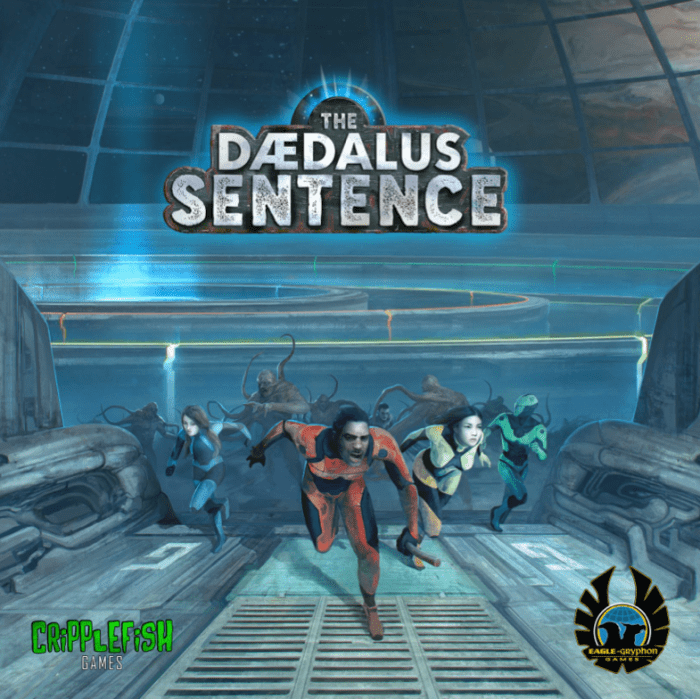
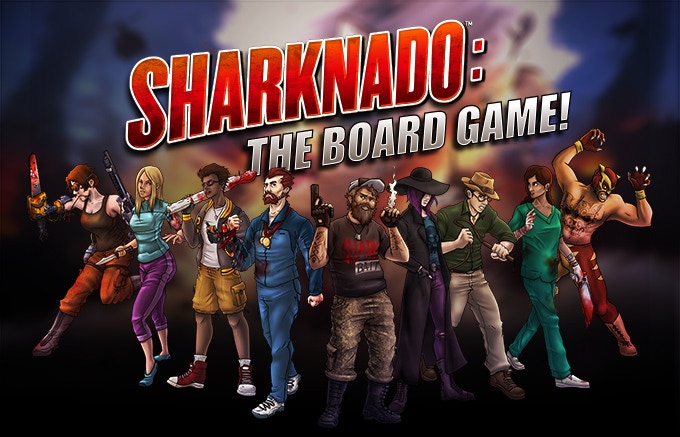
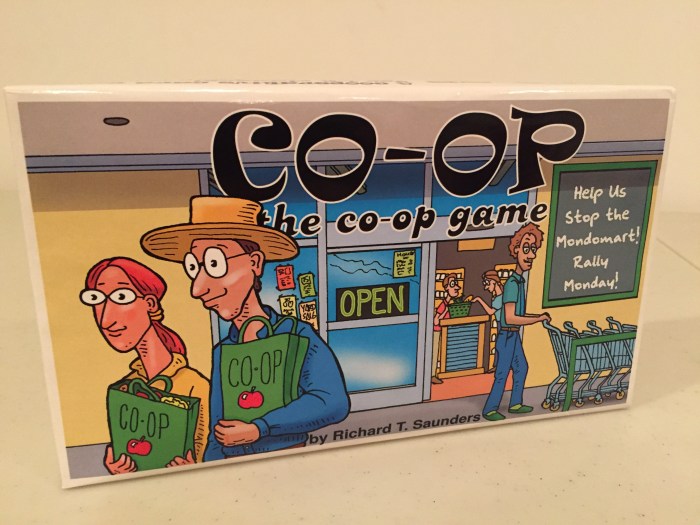
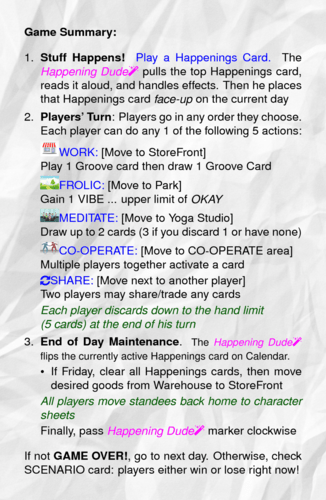


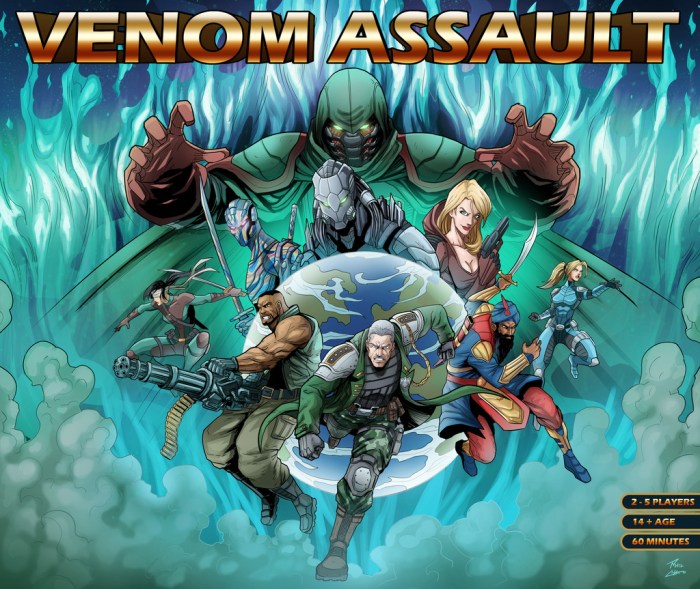
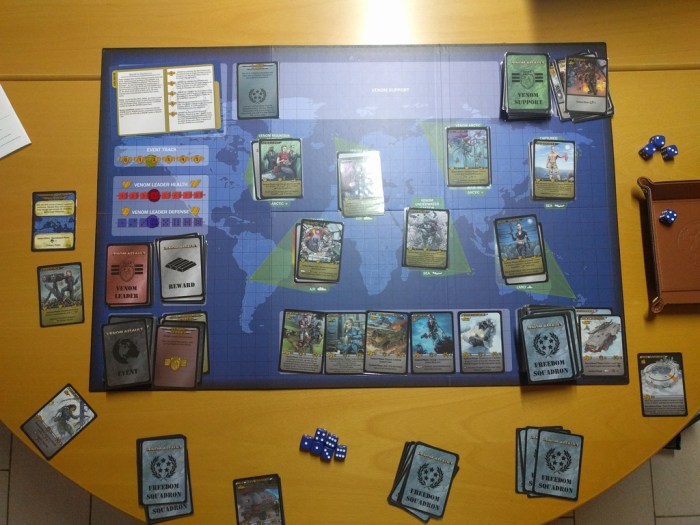
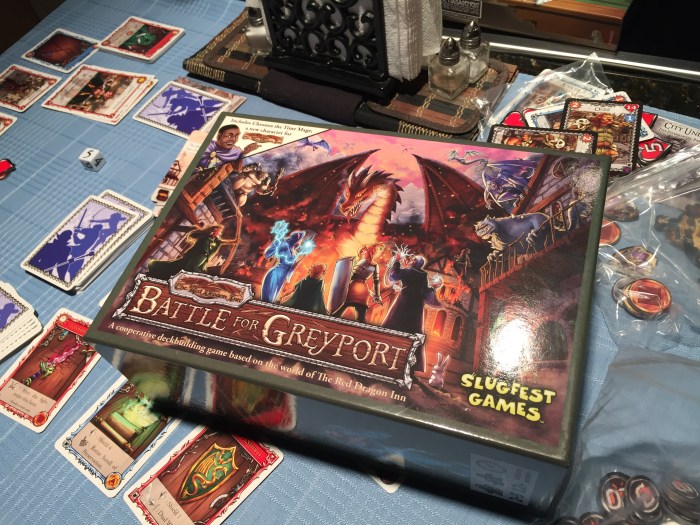
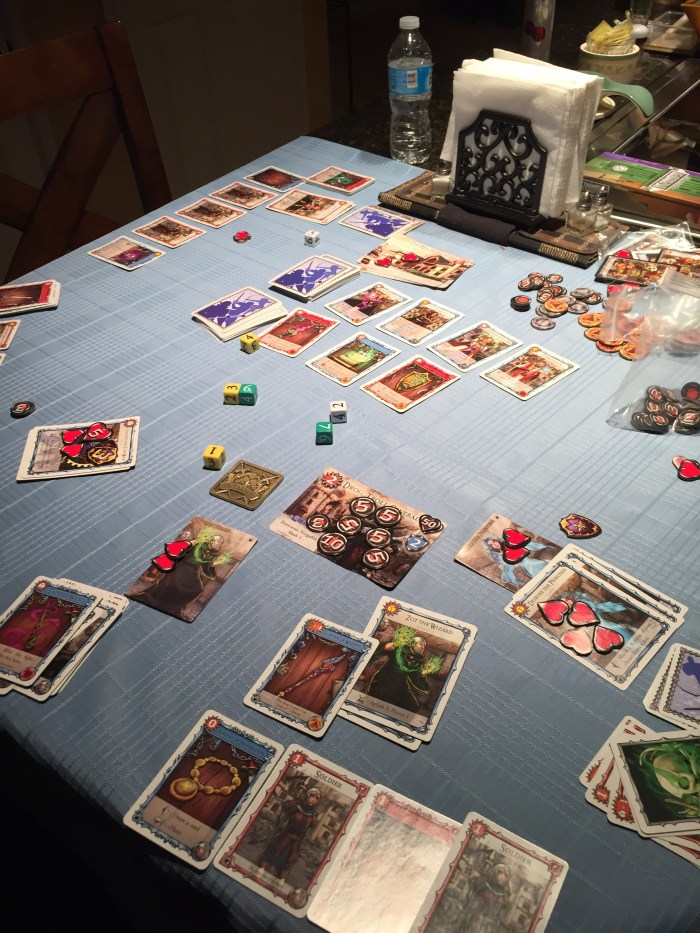
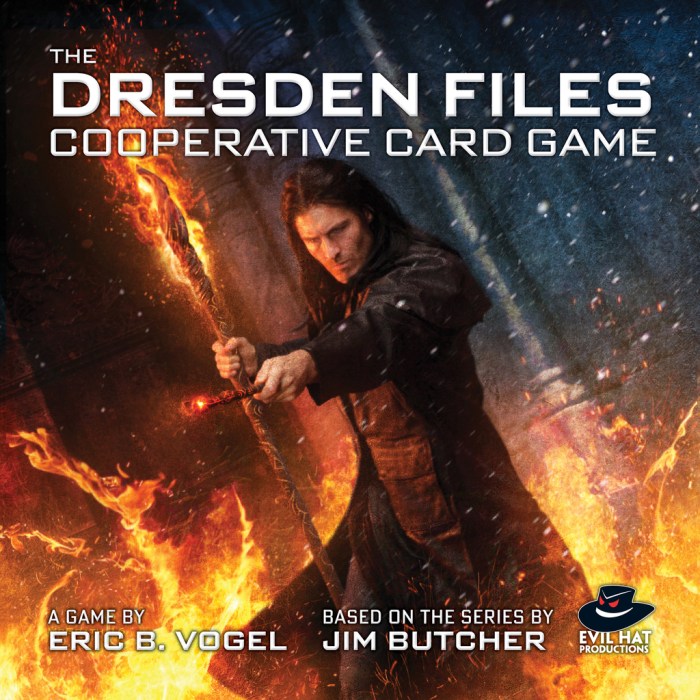
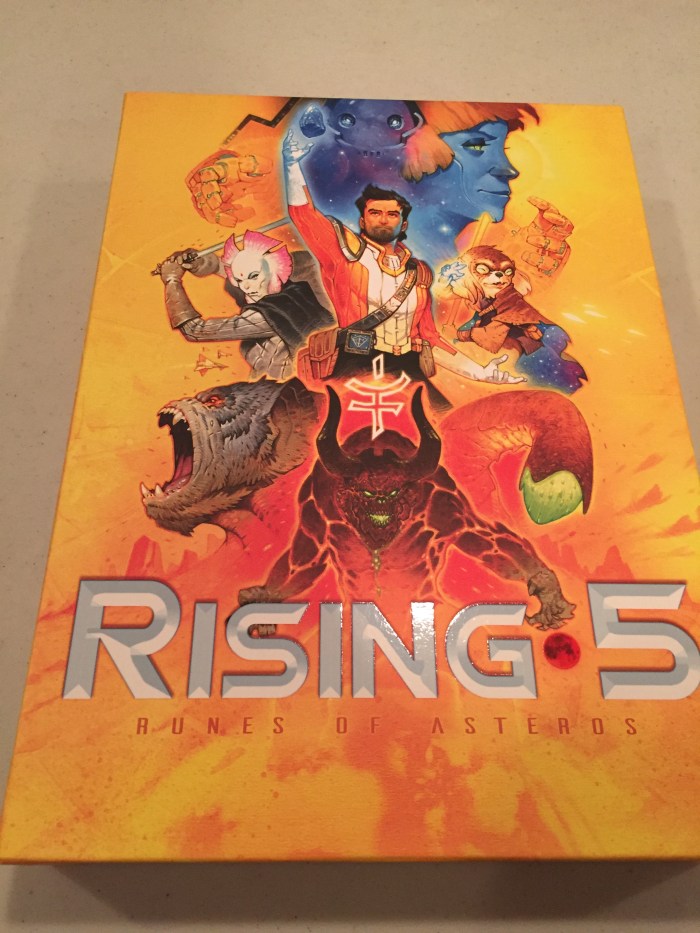
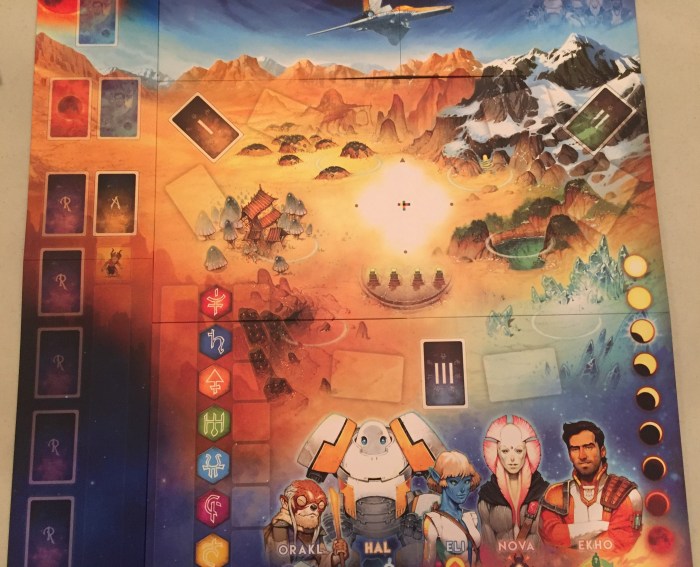
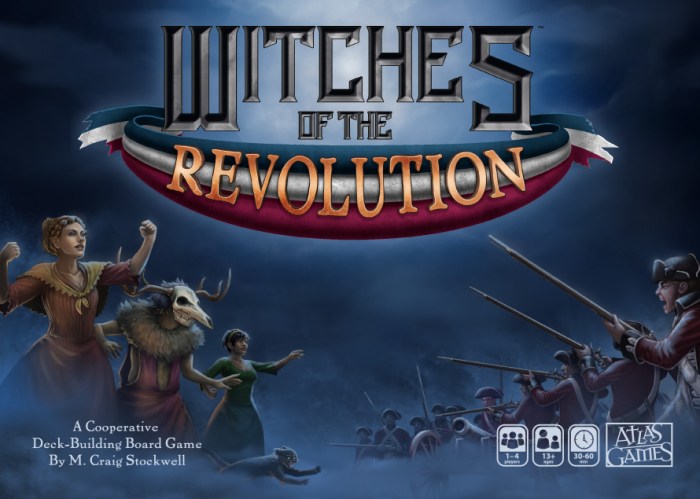
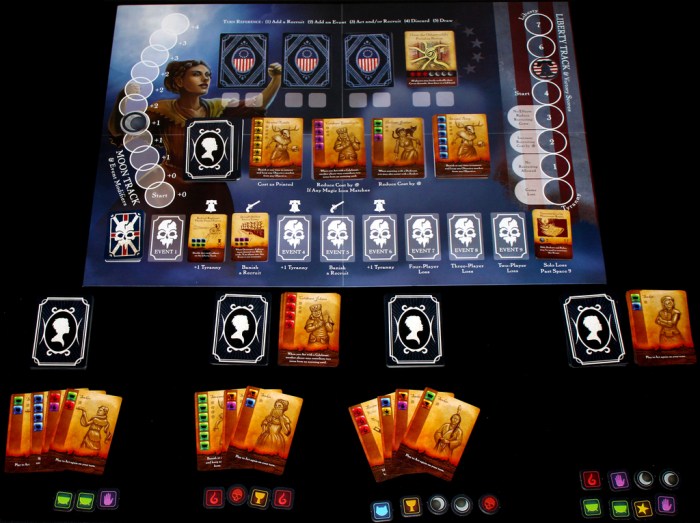


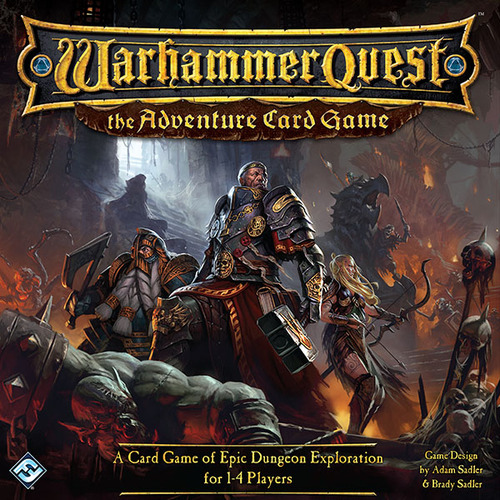 :
:
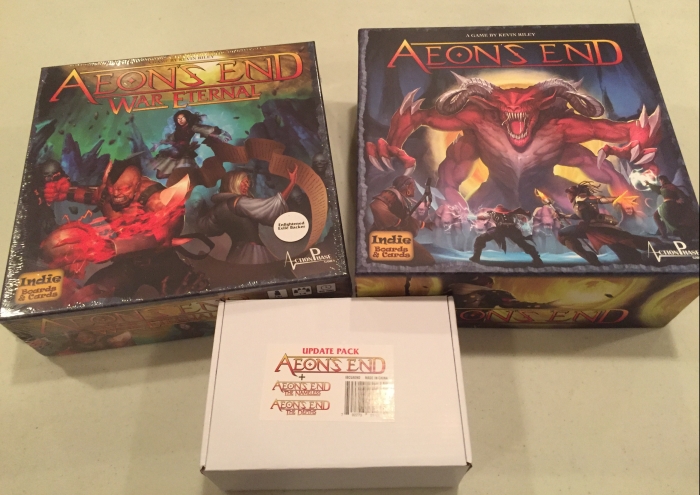
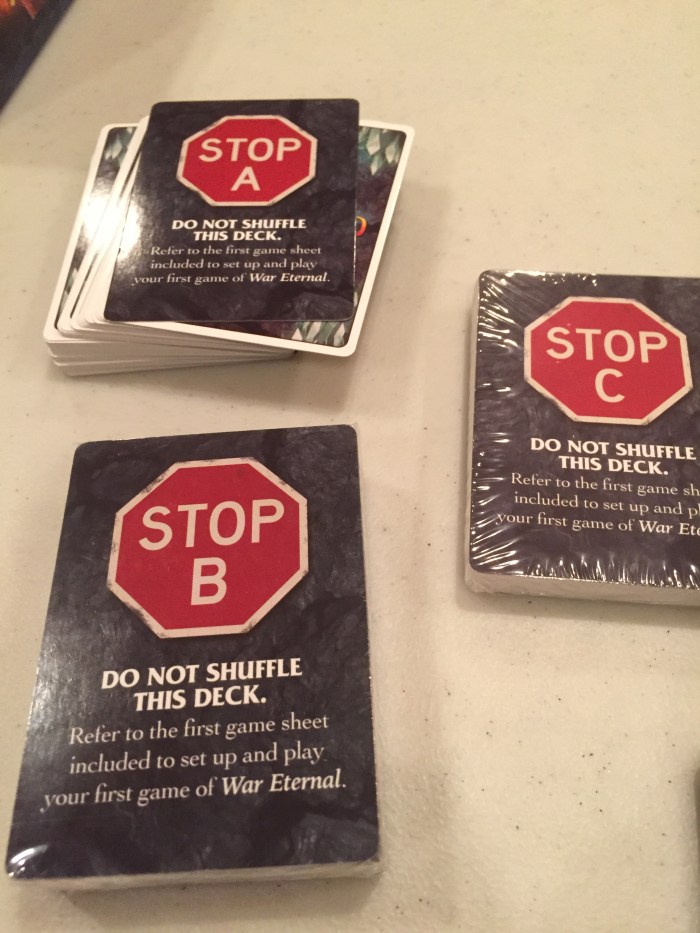
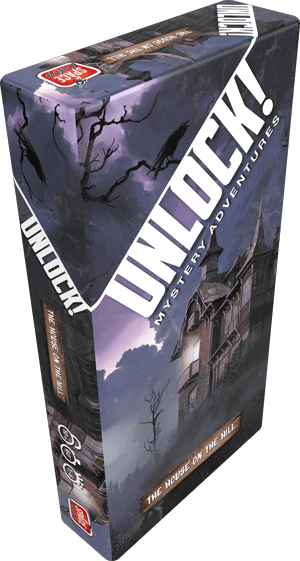
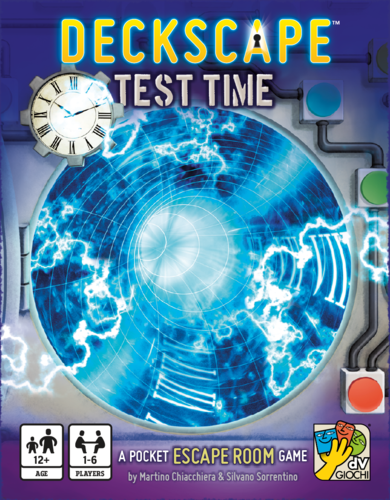
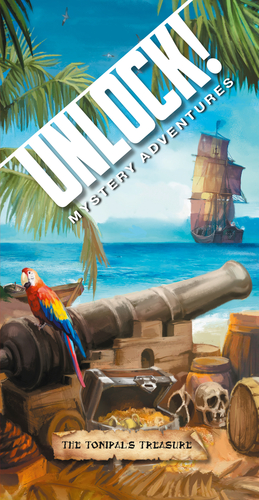
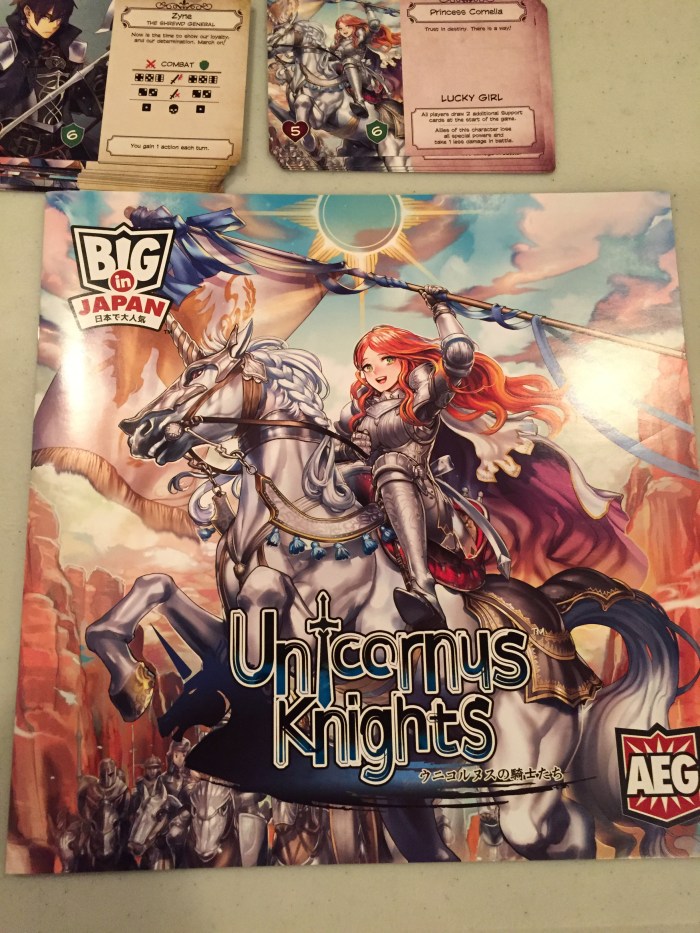
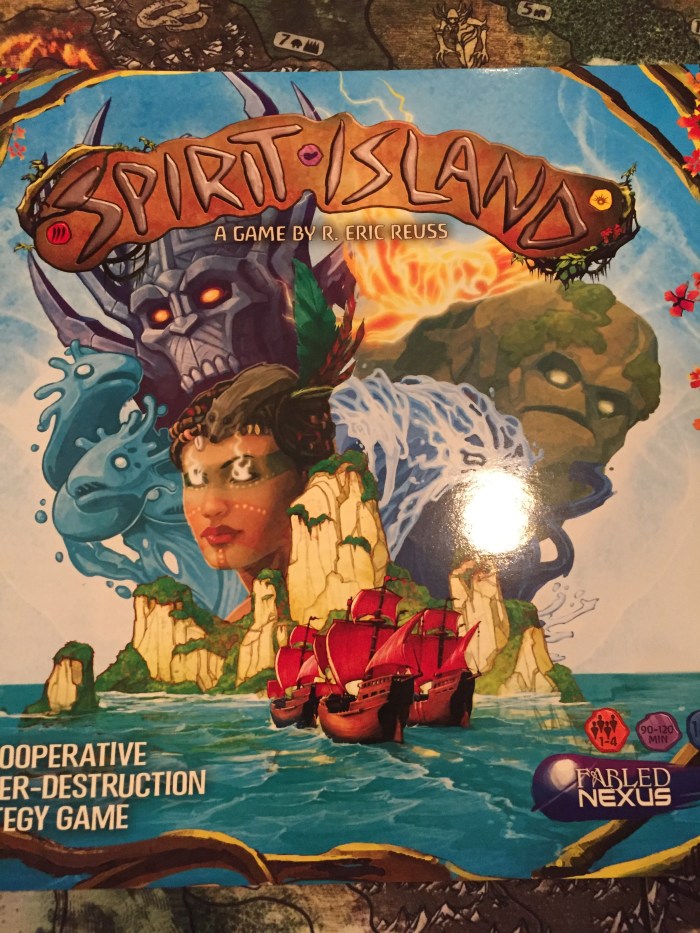
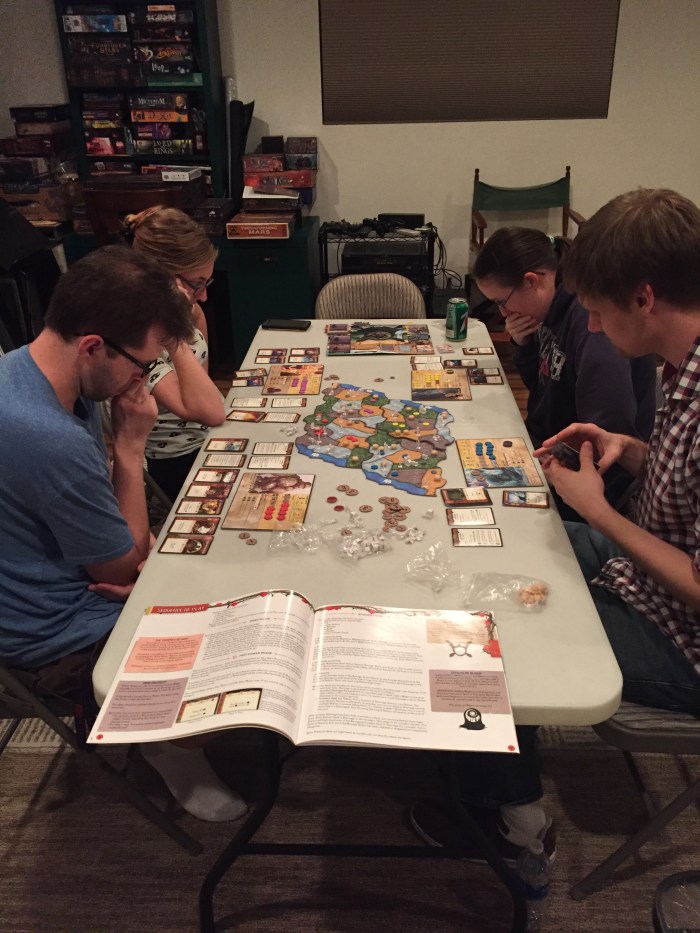
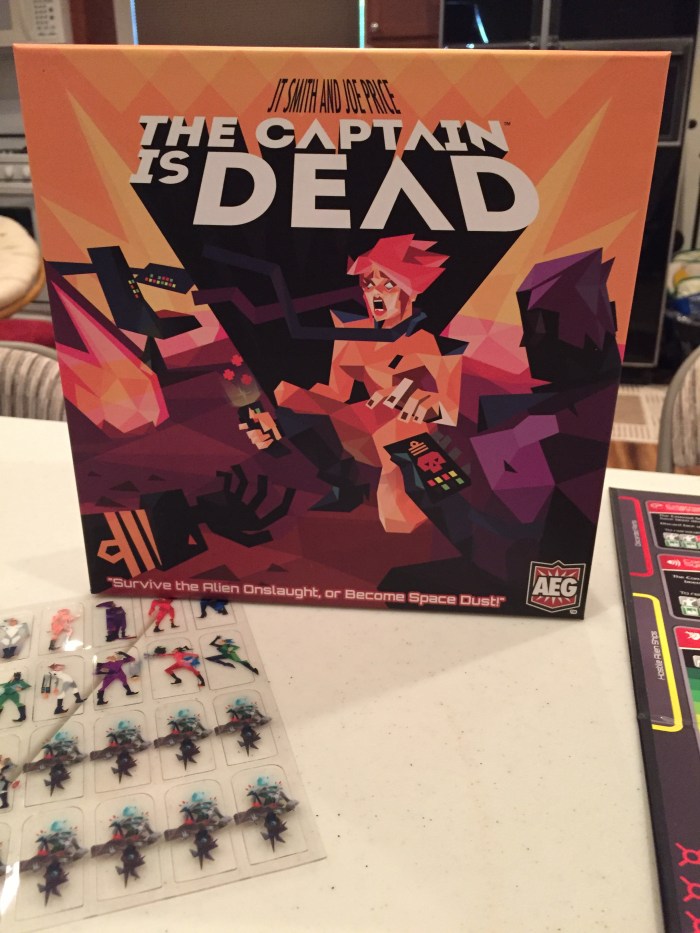


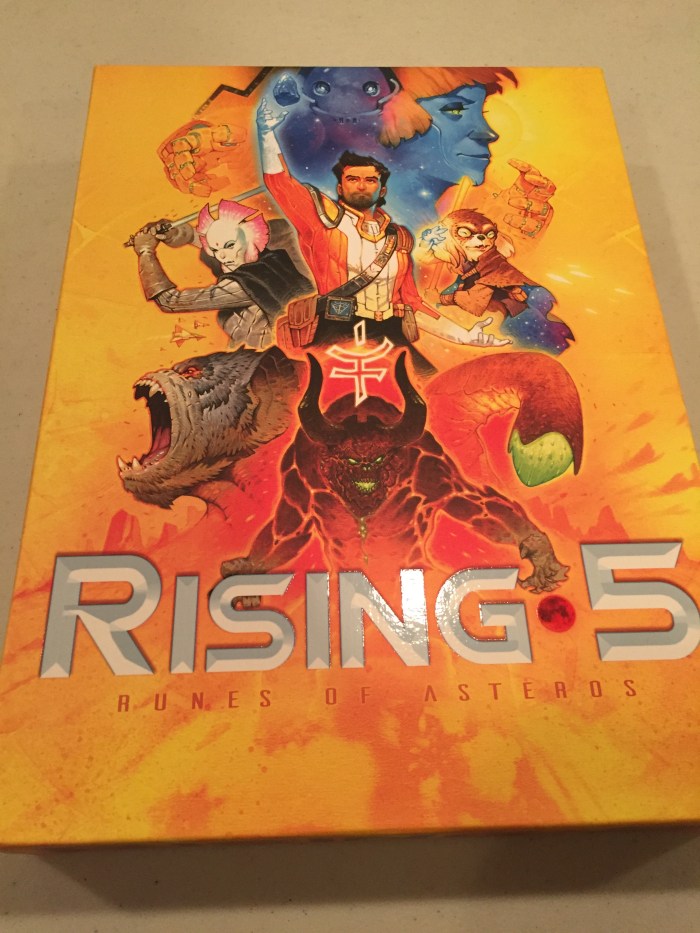


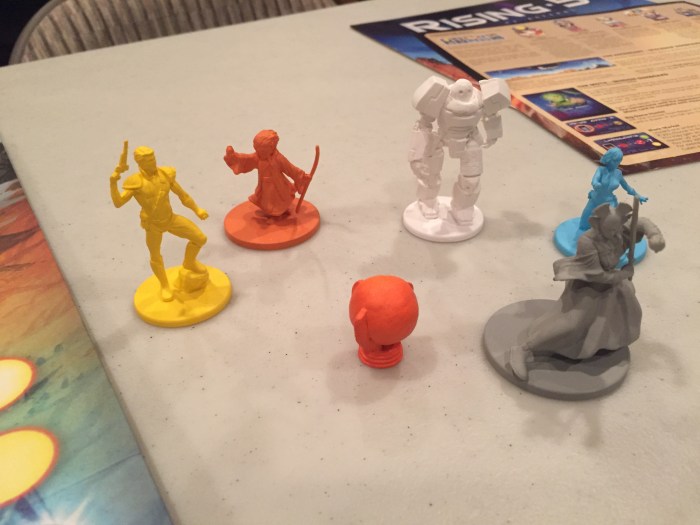


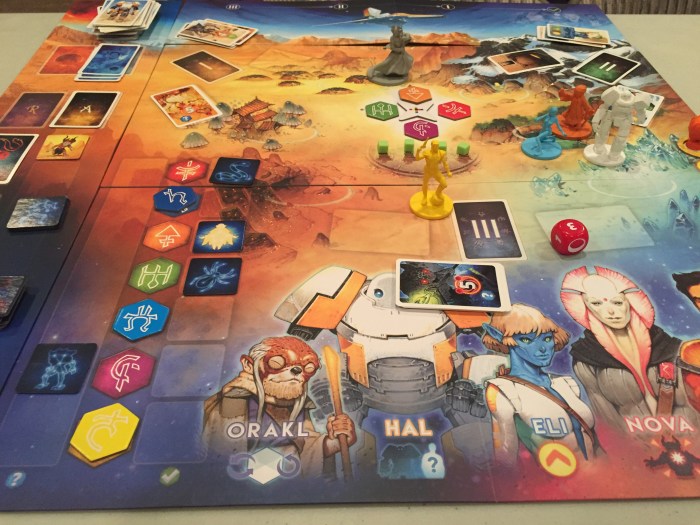
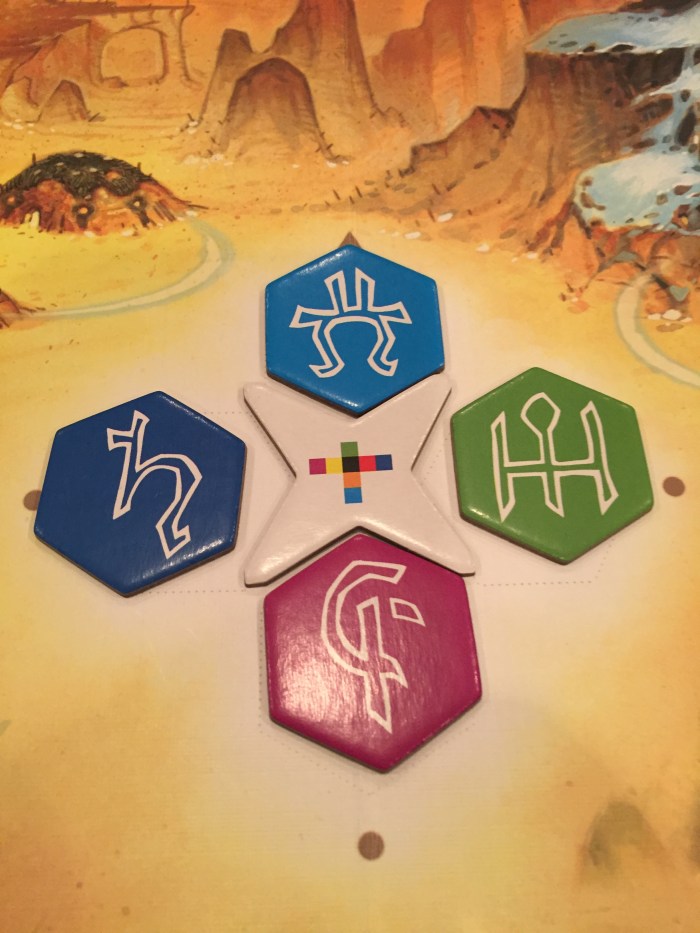


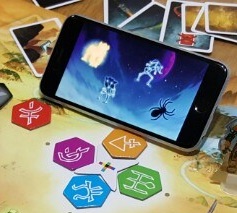


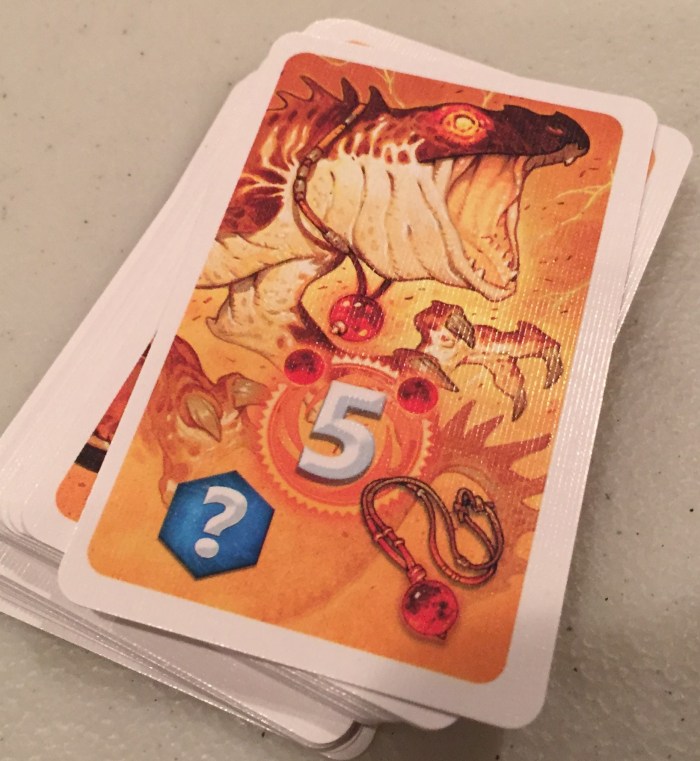


 So, the only way to make progress in the puzzle is to activate ORAKL. Most of the other characters have special powers which help you in the game (better combat, better movement, better Eclipse position). These special powers give you advantages to keep the game going. At some point, you have enough Silk Cubes so you can use a hint and see the result of ORAKL’s hex movements. (One nice feature: HAL can copy ORAKL’s special power if he’s on the same location and also swap hexes).


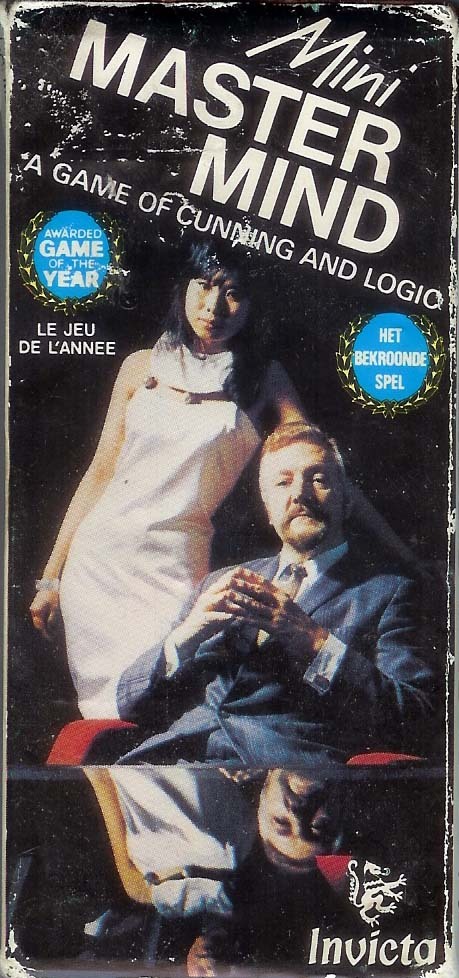


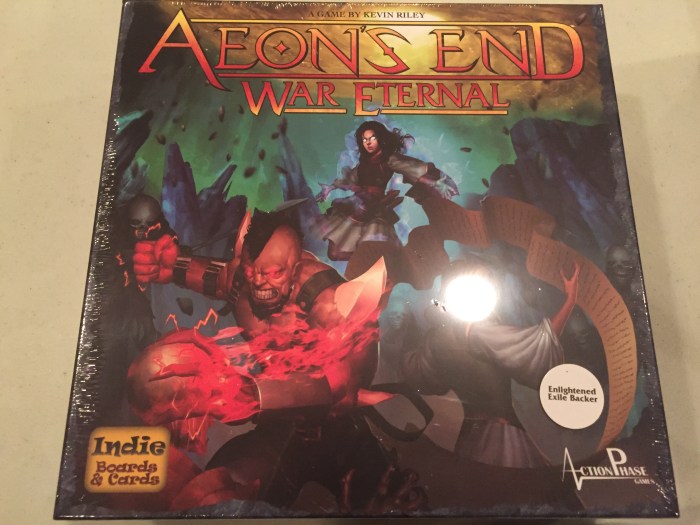

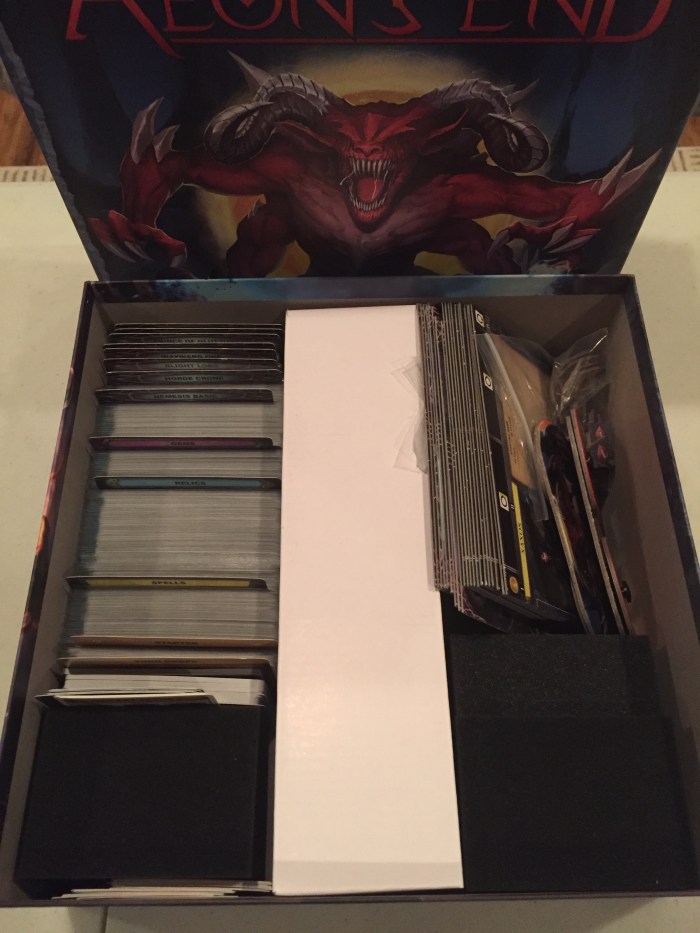
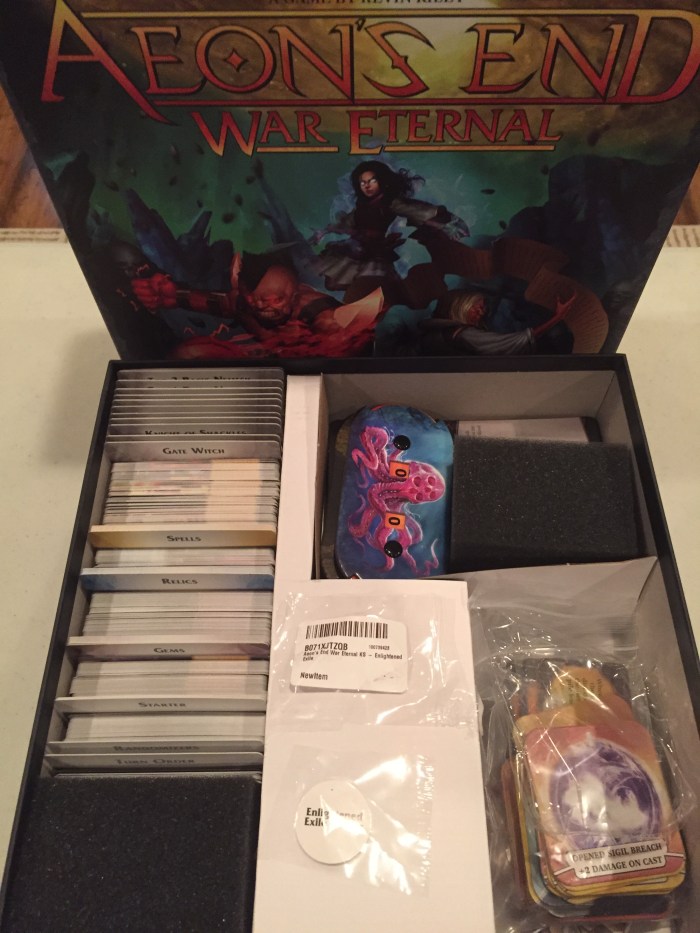
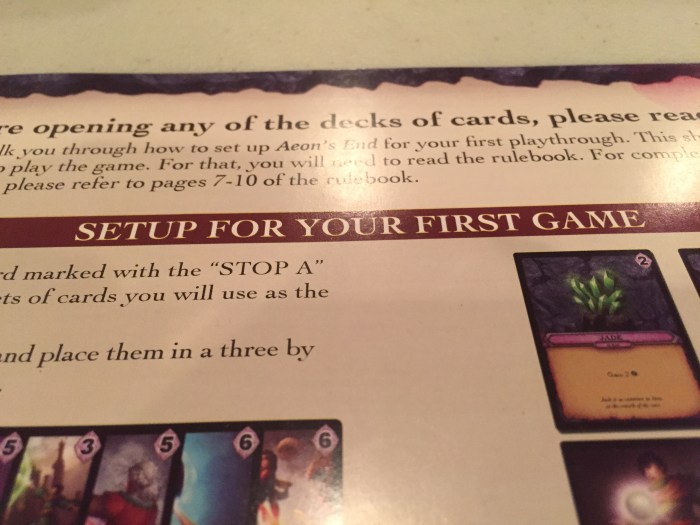
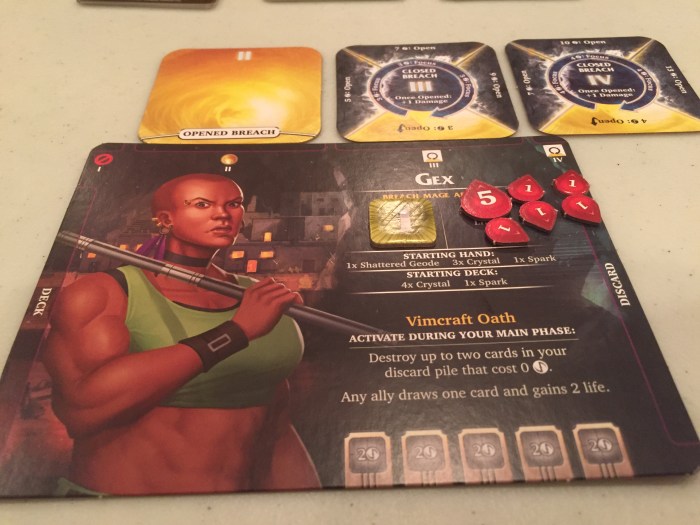
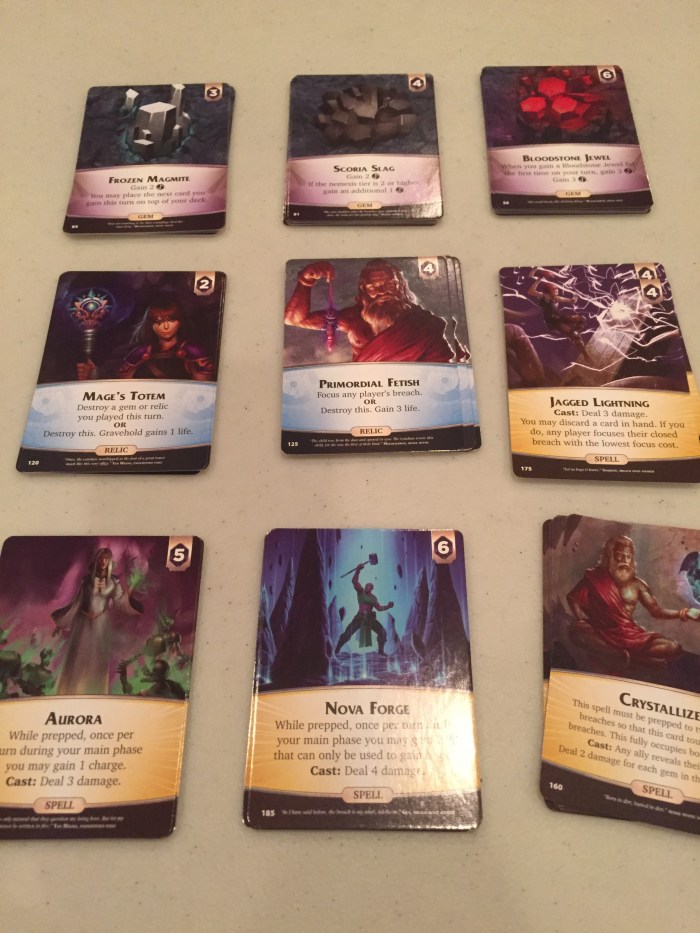
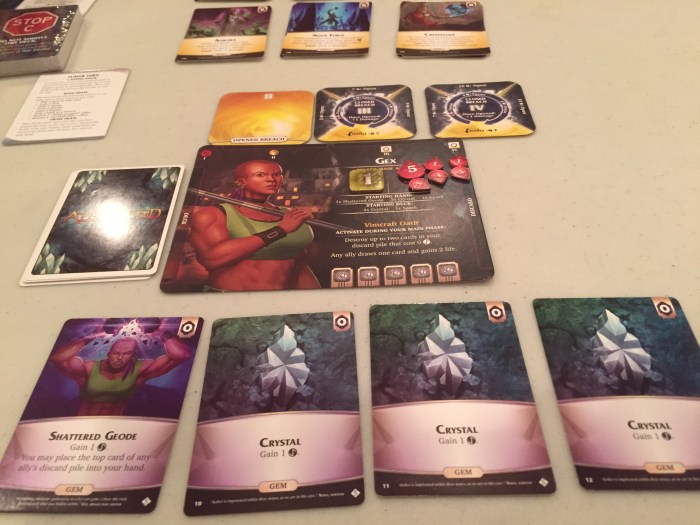


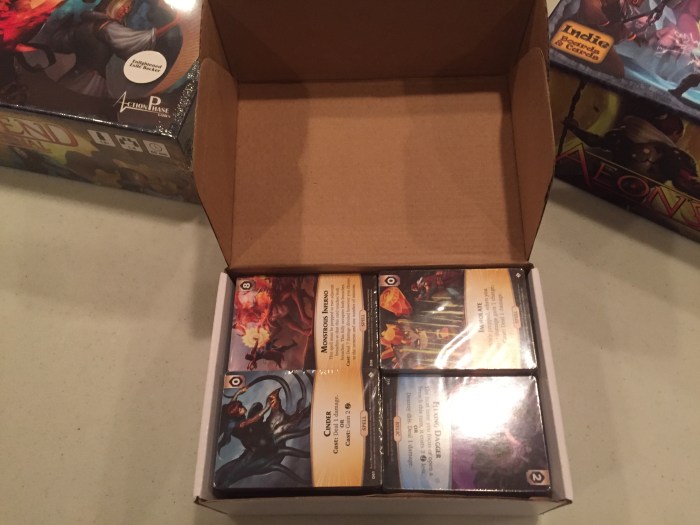
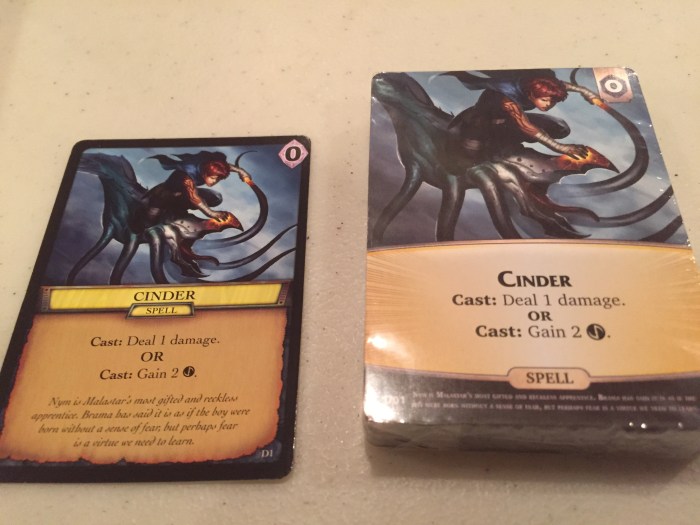


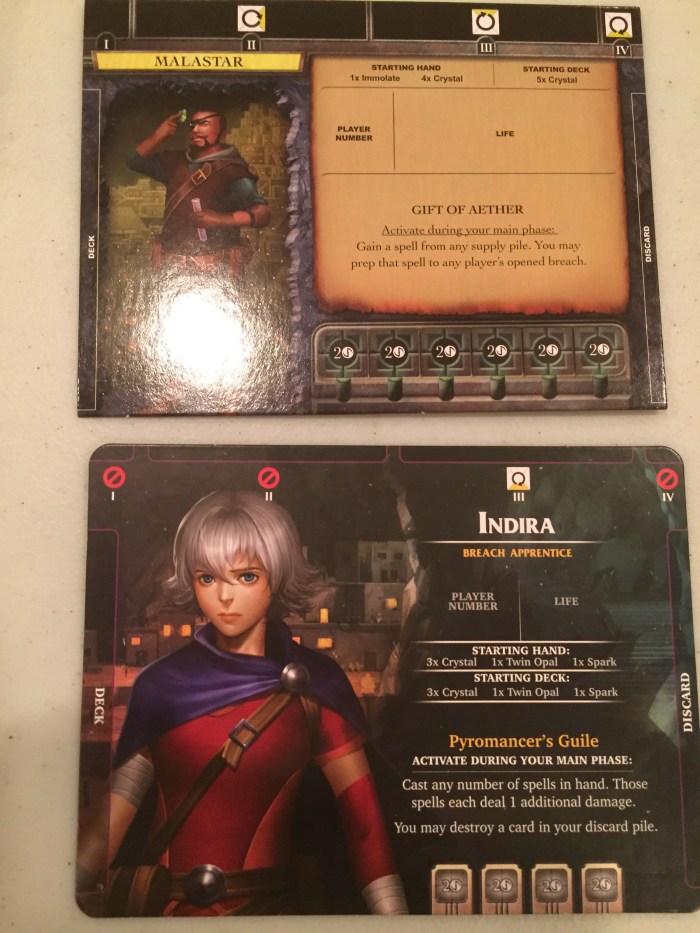
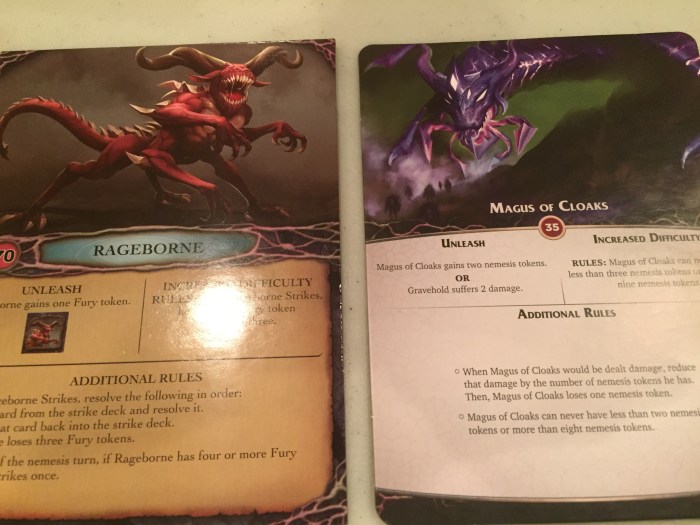
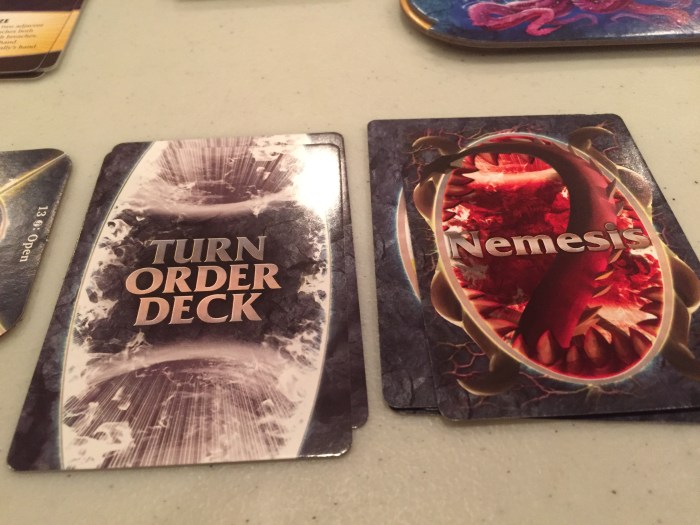
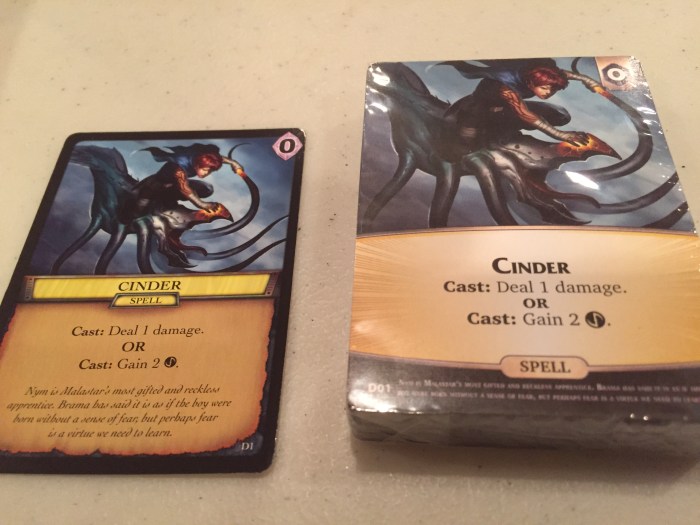
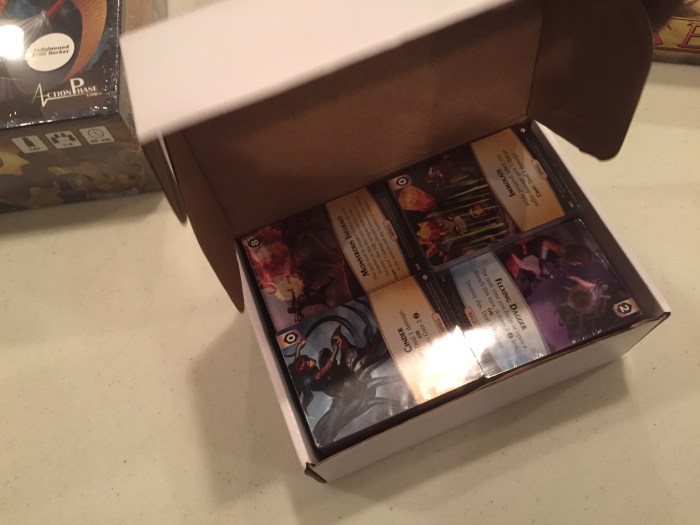
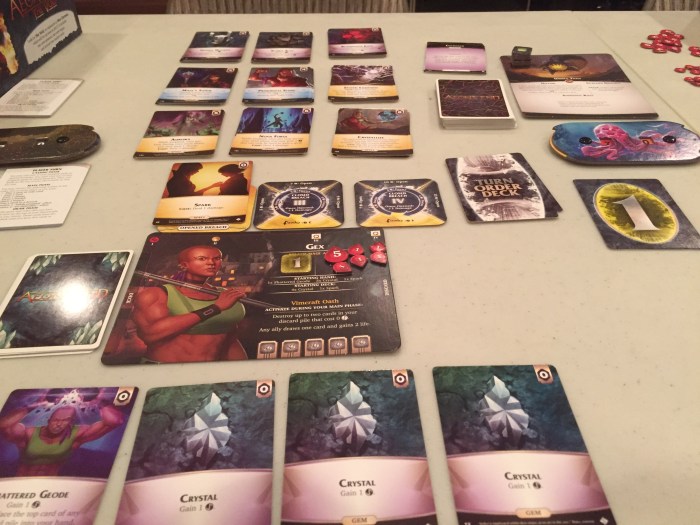
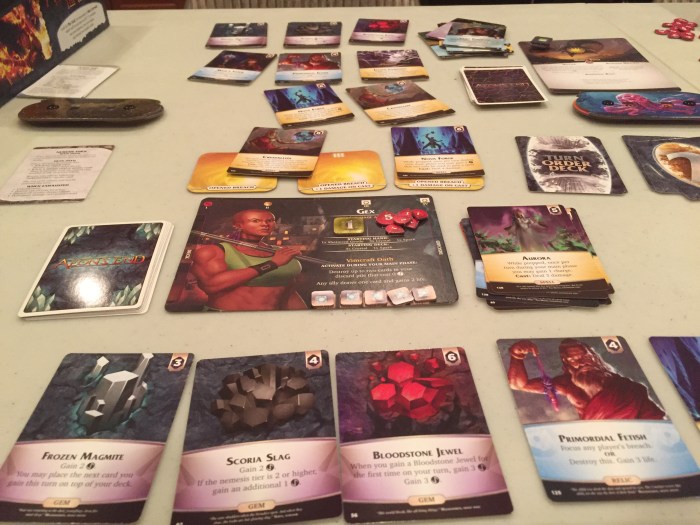
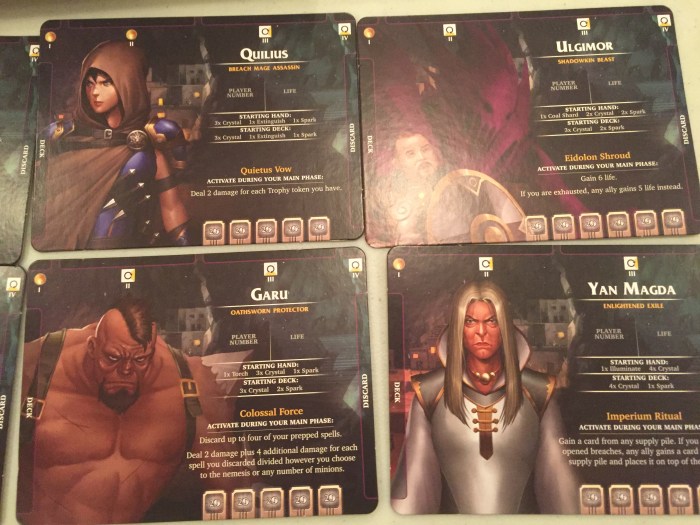


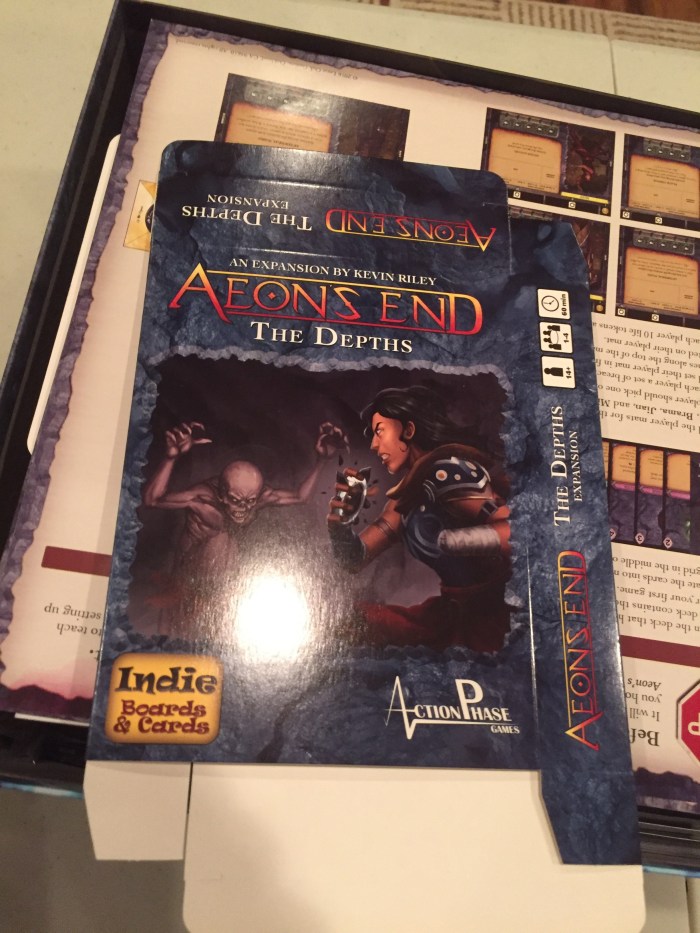
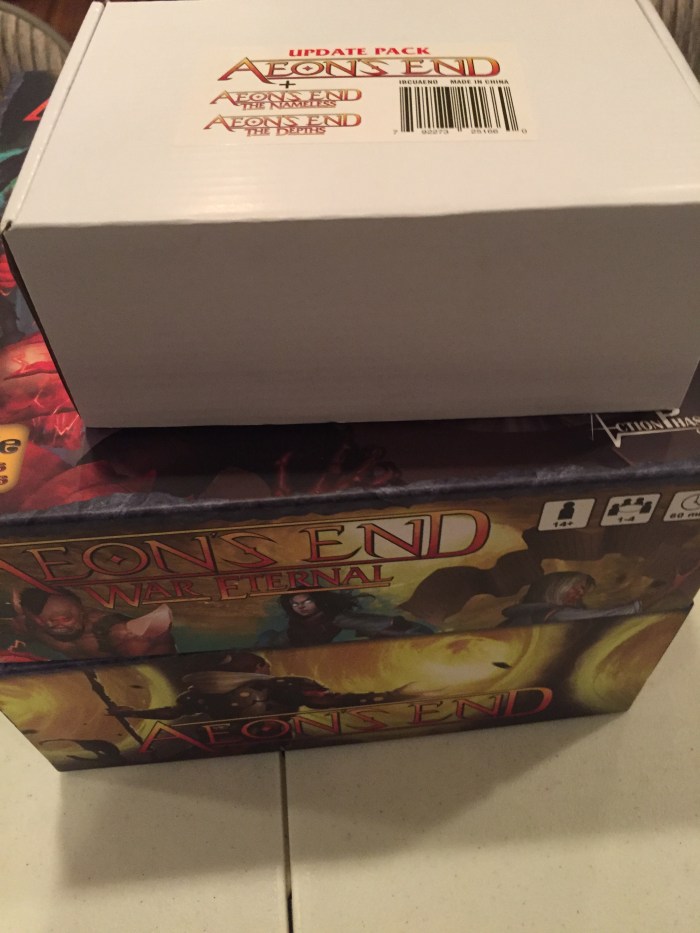










 If you don’t know Murray, you have to play the game, he’s hilarious.
 So, at the latest

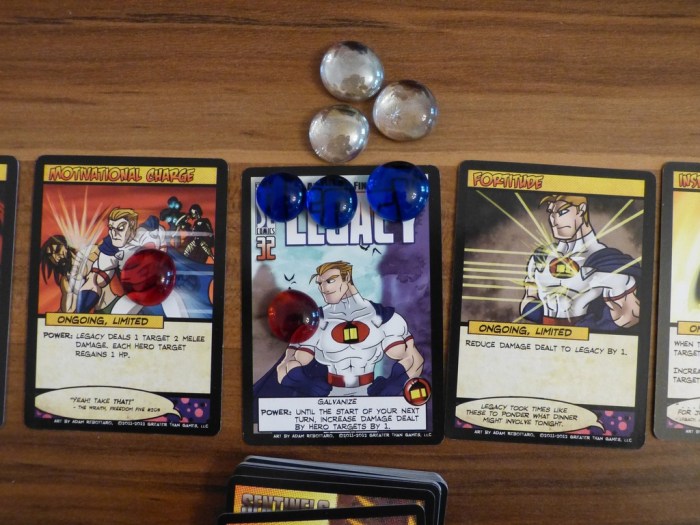


 coopgestalt