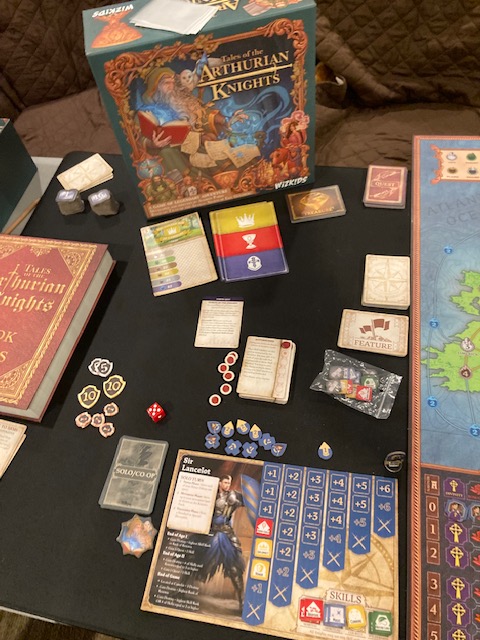
Crime Unfolds: How Do You Express That?

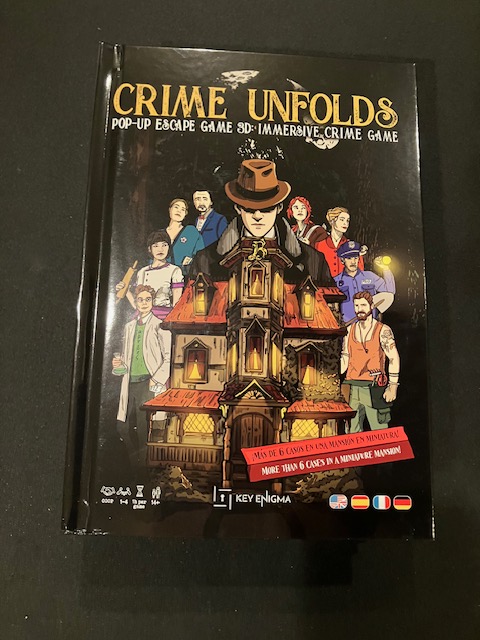
Welcome back to Detective Month!  Last week, we looked at the storybook cyber-noir detective game of LA-1!  This week, we take a look at the Escape Room game of Crime Unfolds!  A Pop-Up Escape Game 3D: Immersive Crime Game!

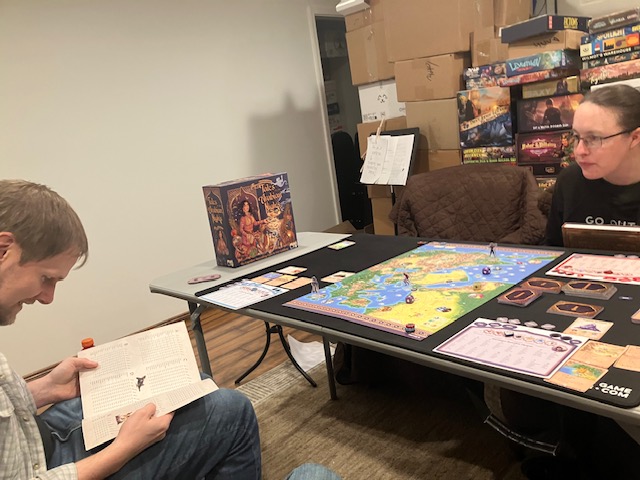
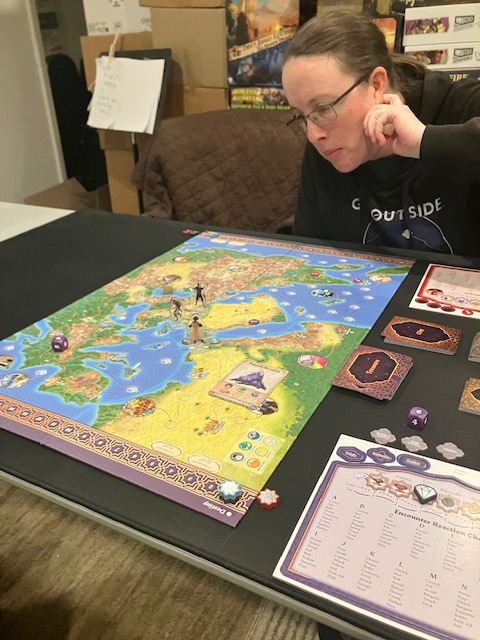
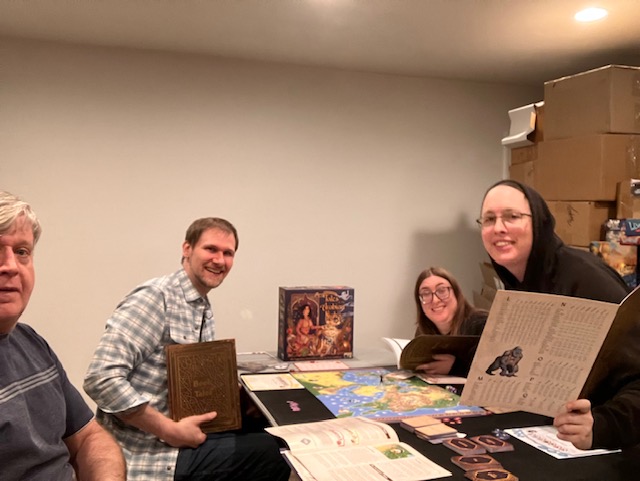
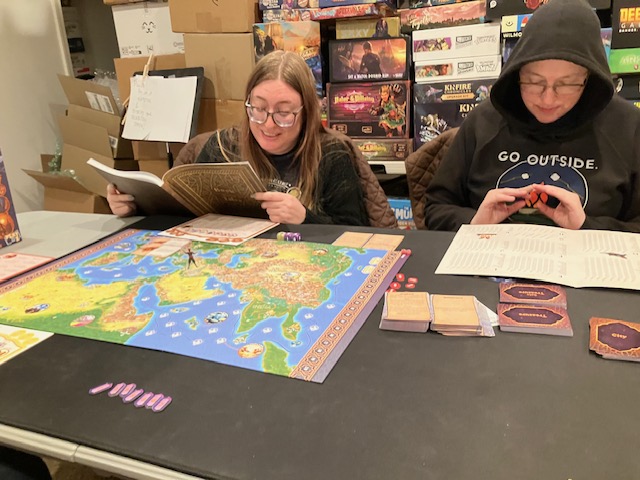
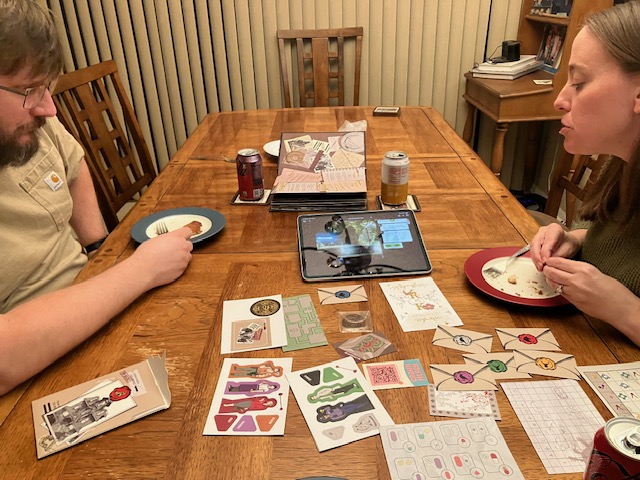
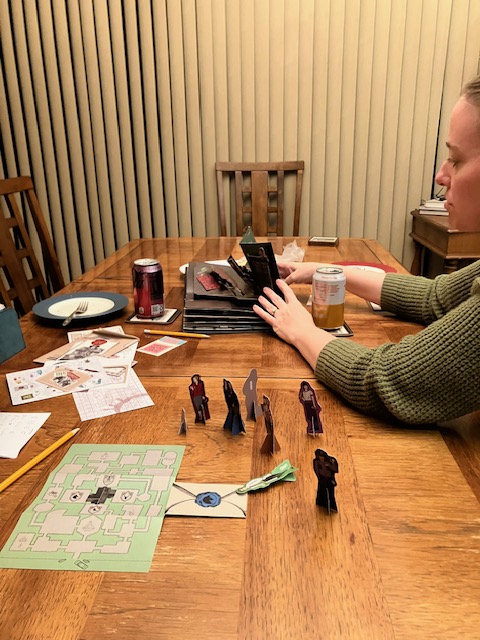
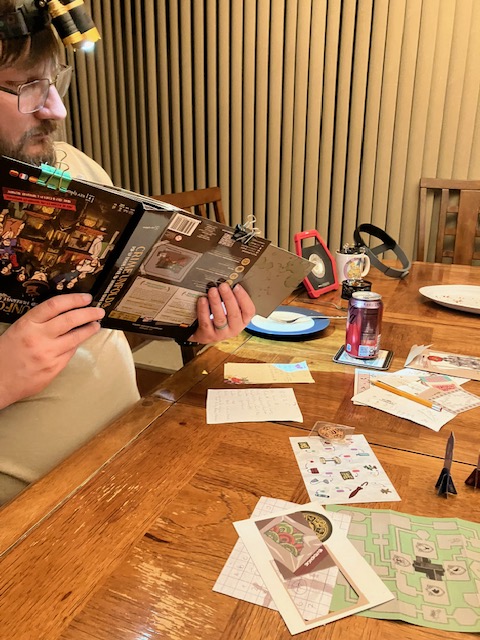
Every few months, my friends Charlie and Allison and I get together to play games … usually Escape Room games! They are my Escape Room buddies! This month, we are trying out the Crime Unfolds cooperative Escape Room game! Nominally, we are detectives solving a crime!

We’ll discuss our first impressions and thoughts on the Crime Unfolds system. It also brings up a few questions to ask yourself about Escape Room games. Why do you like them? Or maybe … Why do you dislike them?

Requires an App

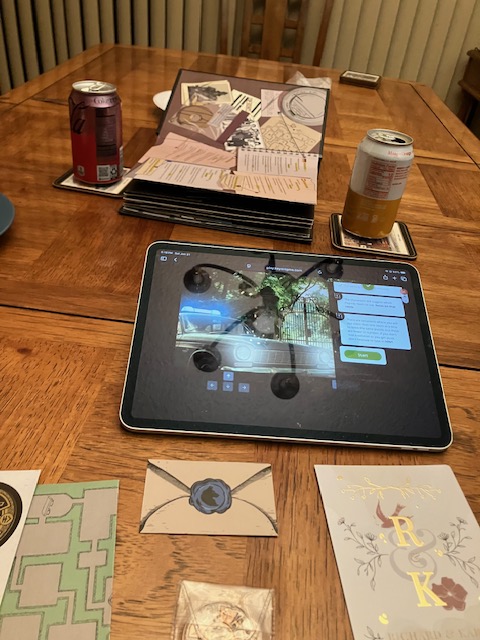
Crime Unfolds requires an app!   That is maybe the first thing you should know.  Some people love Apps with their Escape Room games, and some people don’t.  It’s really not clear by looking at the book that this requires an App.  It’s not a big deal, as Charlie went and got one real quick.

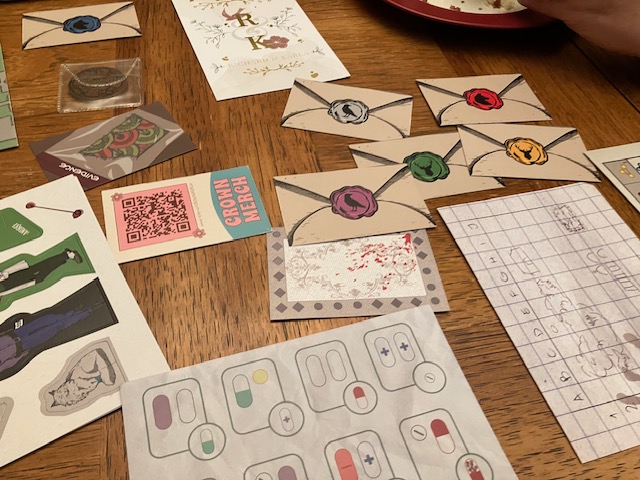
There are 6 cases interspersed in this game.  We started with case 1.  We also, like many escape room games, started with lots of “random stuff we know will be useful later”.


Solve The Puzzle vs. Express the Answer

Over the course of one night. Charlie and Allison and Richie embarked on the first case!  It’s supposed to take an hour … it took us more than two hours.  And we are experienced Escape Roomers?? What Gives?

The problem we had over and over was not “how we do we solve the puzzle” but “how do you express the solution”?  We easily solved a bunch of the puzzles, but inputting into the app was the main hurtle!

For example: At one point, we had “shifted” away from a screen that had the arrows for directionality, so we thought we had to express NSEW via UP/DOWN or North/South/East/West using letters on the command line?  We lost at least 15 minutes … when we realized the App had those arrows in another screen.  It was very frustrating!  We had solved the puzzle, but the app had made is less than intuitive to enter.
We were pretty frustrated after this game, but after thinking about it overnight, I have come to realize that most puzzle games are like this!  You have to do two things:

  1. Solve the puzzle
  2. Express The Solution

Solving the puzzle is usually the funner part, and some games make it very easy to express the solution.  We loved Doomensions (see our review here), as expressing the solution was easy; it always took the same form as a 3 or 4 digit code.    Here in Crime Unfolds, the solution expressed itself in so many different ways! Sometimes it was interacting with some widgets on the app!  Sometimes it was saying the right thing at the command line interface!  Sometimes it pressing the right buttons!  

Our frustration with Crime Unfolds was how to express the solution!  Many times during the game, we felt like we solved the puzzle, but couldn’t move forward because the solution wasn’t expressed in the way we expected it!

After cogitating on this some more, I realized this expressing the solution can be just as interesting as solving the puzzle!  To express your solution, you have to change your perspective!! What’s the best way to express this solution?  What’s the most thematic way to express this solution?  What’s the perspective of the player in the game?  All of these contribute to different ways to express the solution.   To be fair, sometimes the expression of the solution is poorly done, and that’s just a frustration of this genre.  I think if you reset your thinking that expressing the solution is part of the puzzle, then it can less frustrating. I realize how hard it can be to do in the heat of the moment, so it’s easy to say this. 

To enjoy Crime Unfolds, you will absolutely have to enjoy thinking about new ways to express a solution to a puzzle.


Pop-Up Cool!  But You Need A Magnifying Glass!

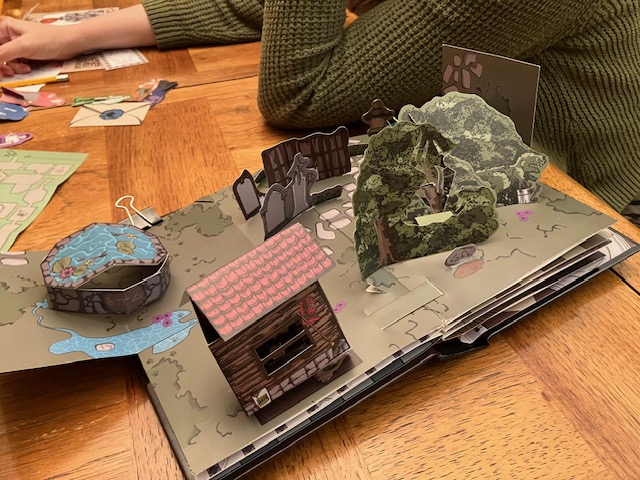
One of things that was very cool about Crime Unfolds was the pop-up scenes that came out of the book!  It turns out 6 rooms in the book, and you take a turns visiting some of these rooms in each case.  They look really cool!  See above!

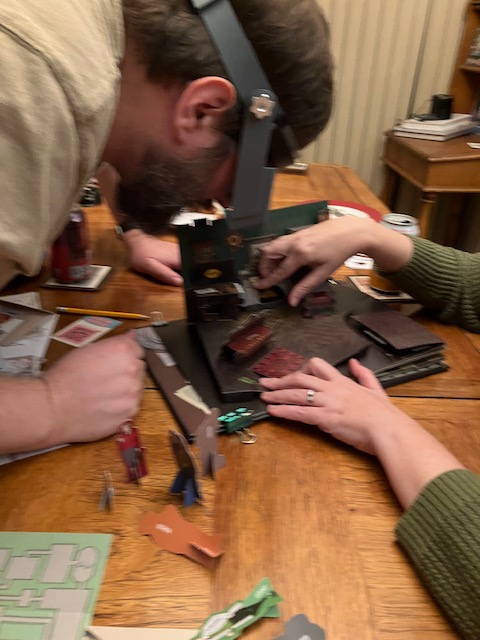
Unfortunately, some of the text/symbols on the board are hard to read!  At one point, Charlie went and got his “fine work” magnifying glasses/helmet!  We also used our phones to zoom in so we could see things!  

The pop-up stuff works well, but be aware that you may have to really zoom on the board.  There is just a little bit of “Where’s Waldo” and “I can barely see that” in this game.


Conclusion

Did we like Crime Unfolds?  Yes and no.  We only played one case, but we think it is fairly representative of what this game is.  The pop-up system works and has a very “toy” and “fun” factor to it; that was something we definitely liked.   We liked solving the puzzles but found expressing the solutions frustrating.  I think, upon further reflection, that if you go into the game knowing expression the solutions is PART of the puzzle, that might help make that more enjoyable.   

I hope I can talk Charlie and Allison into playing more cases from this book; I think there’s some fun puzzles here, but I hope we can just get over the frustrations when expressing the puzzle solutions.


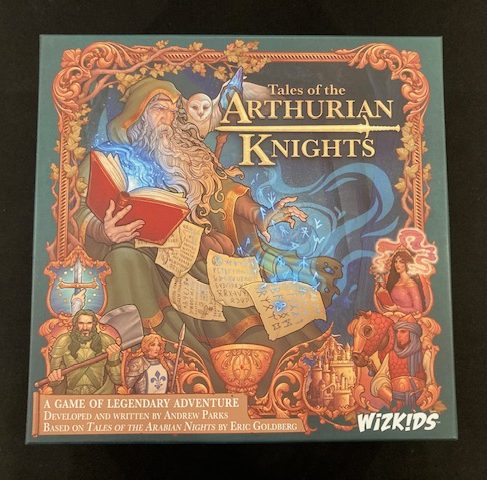
A Story Unfolds: Review of Tales of the Arthurian Knights (Solo and Cooperative Modes)

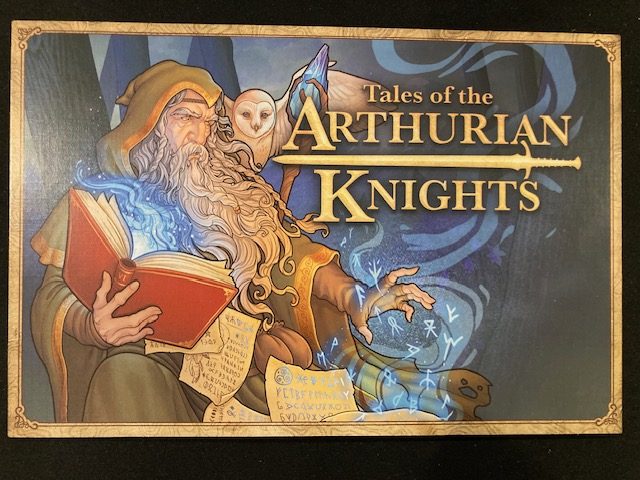
Tales of the Arthurian Knights is a cooperative and solo storybook game. What’s a cooperative storytelling/storybook game you might ask?  Take a look at our Top 10 Cooperative  Storytelling/Storybook Games for more discussion of this genre!

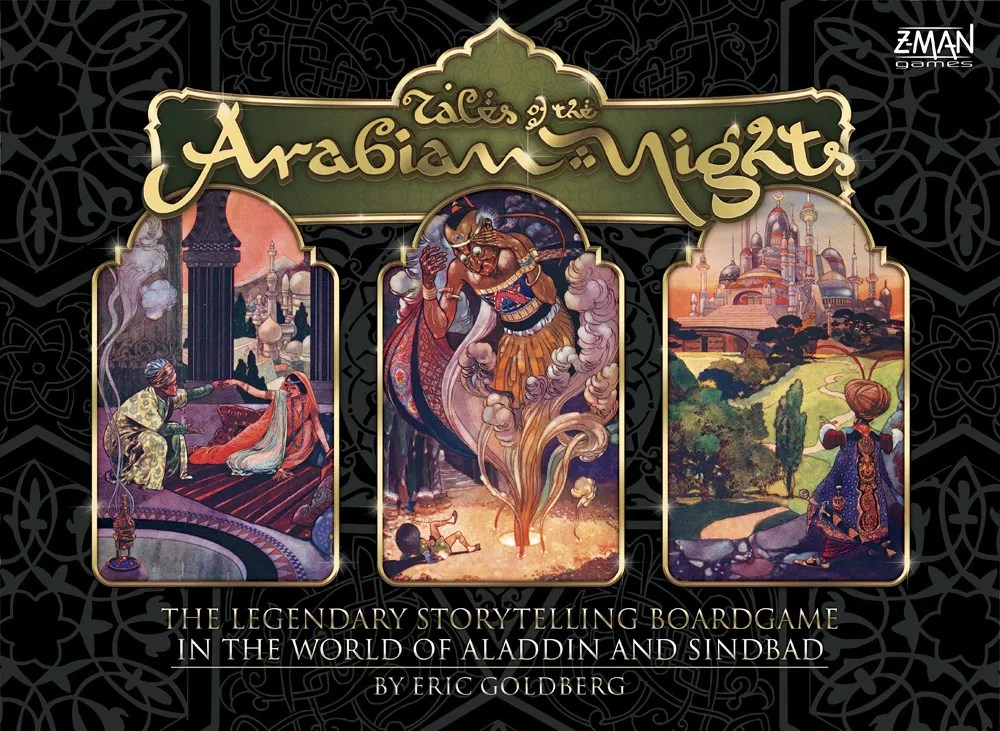
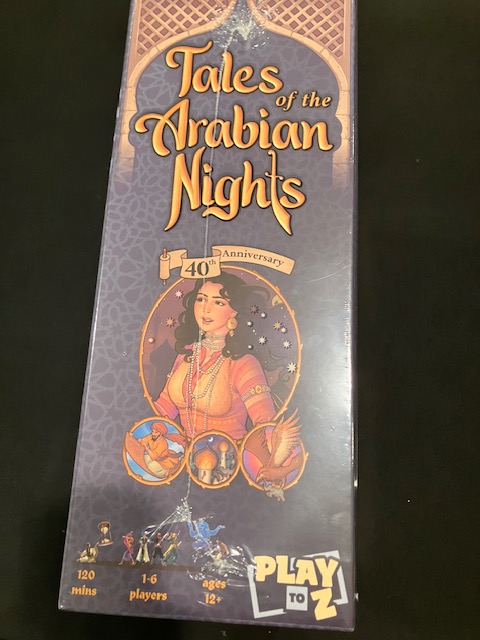
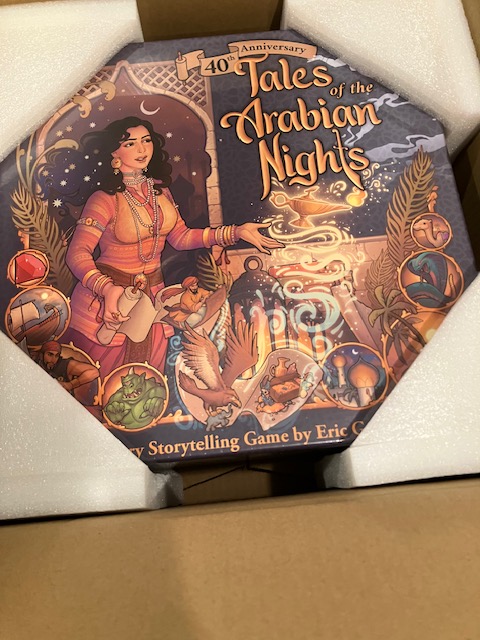
Tales of Arthurian Knights is a follow-up to the hugely popular storybook game Tales of the Arabian Nights, (another massive storybook game) … but the original is not cooperative!

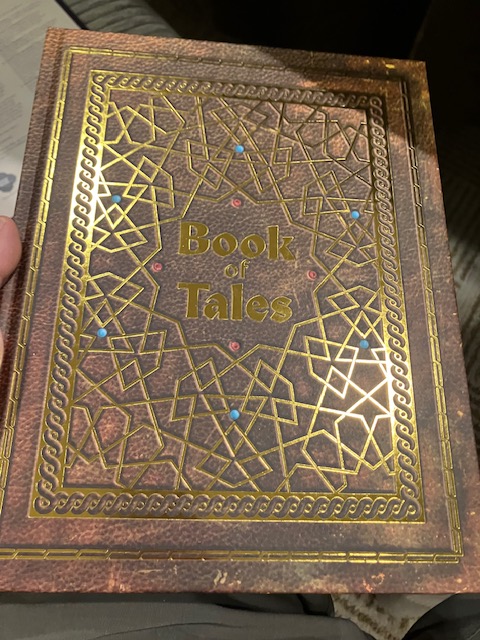
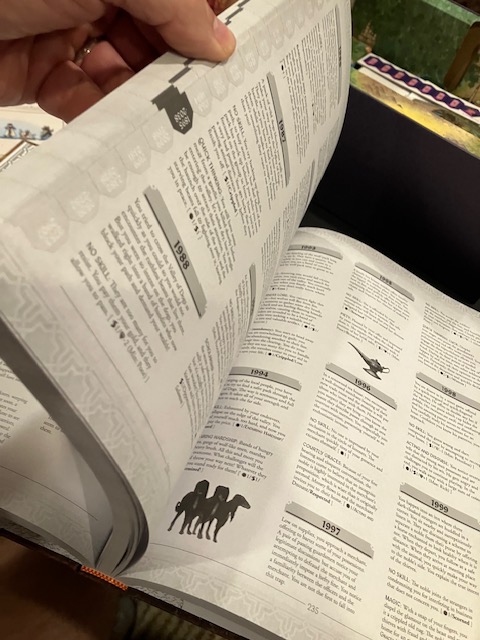
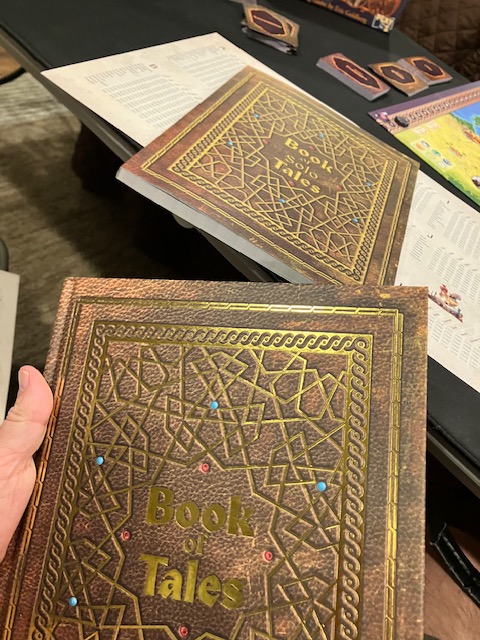
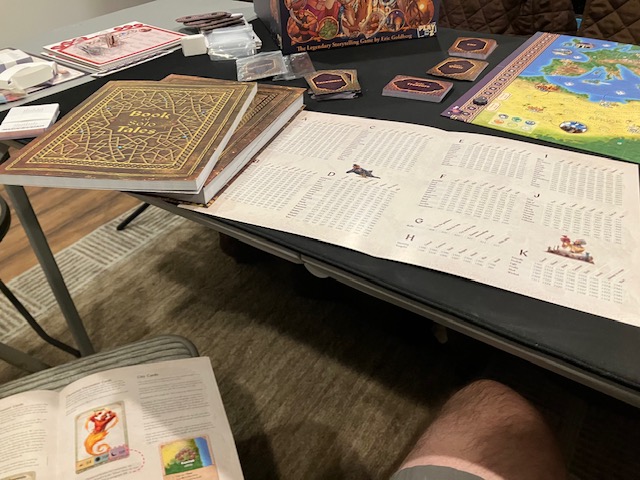
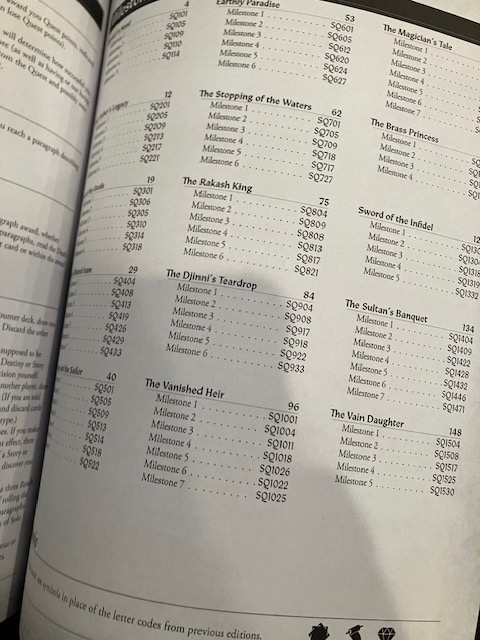
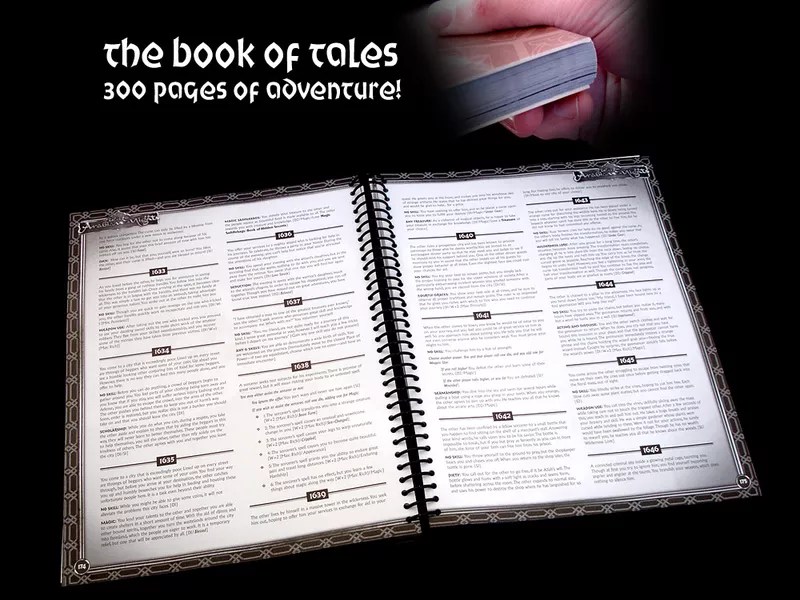
What makes this “Tales of …” series of these games so impressive is the size of the book(s) that come with the game! Players basically make skill checks and have adventures from this book! See the book from Tales of the Arabian Nights above!

Now, the original game Tales of the Arabian Nights was a competitive game (although my friend Greg always argued that it was kinda a co-op), but Tales of Arthurian Knights has added a true solo mode and a true cooperative mode! Let’s take a look!

Unboxing

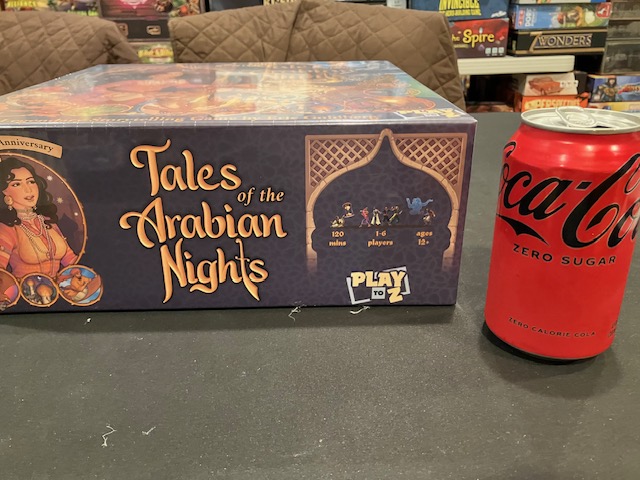
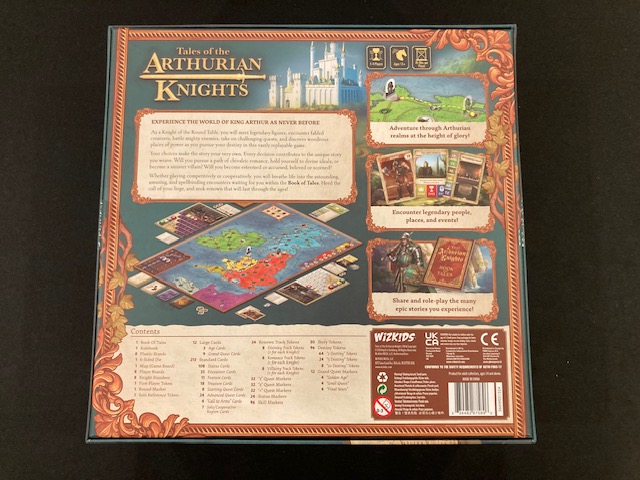
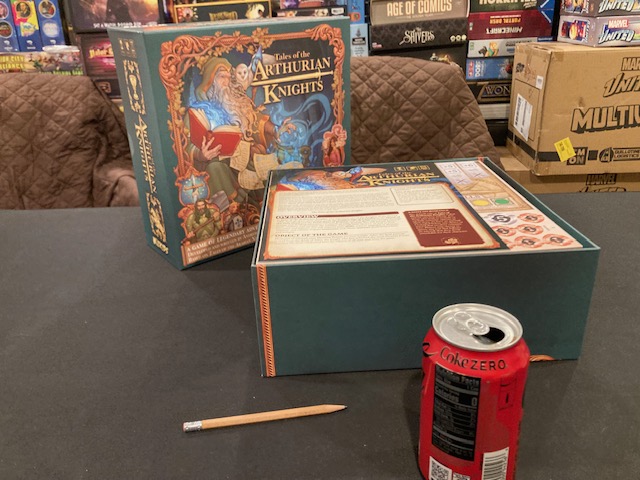
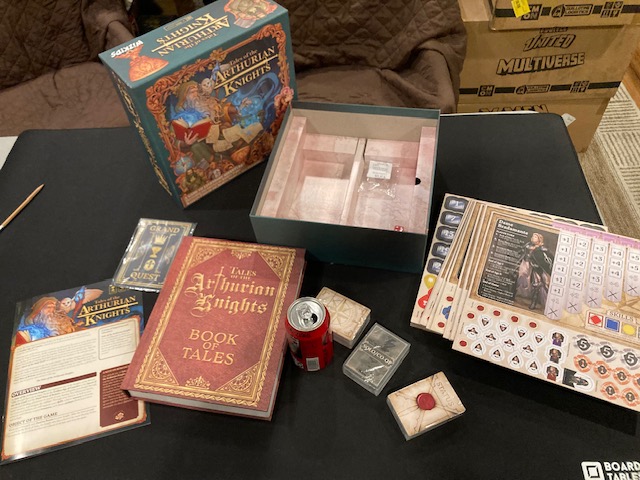
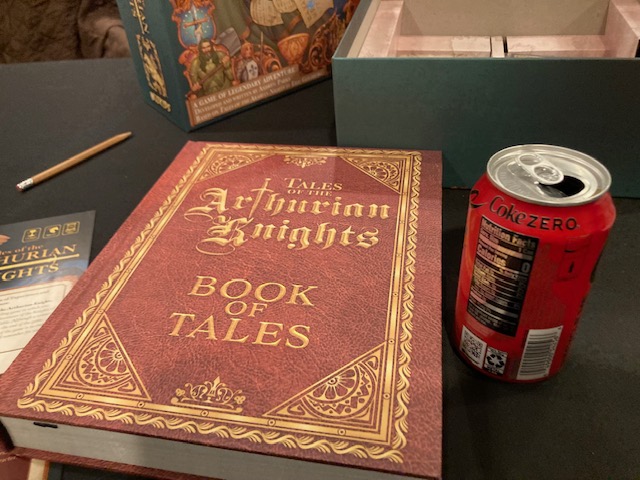
The size of this box feels pretty standard, except that it is a pretty tall box! It’s also quite heavy! See the Coke can and #2 pencil for perspective on the size.

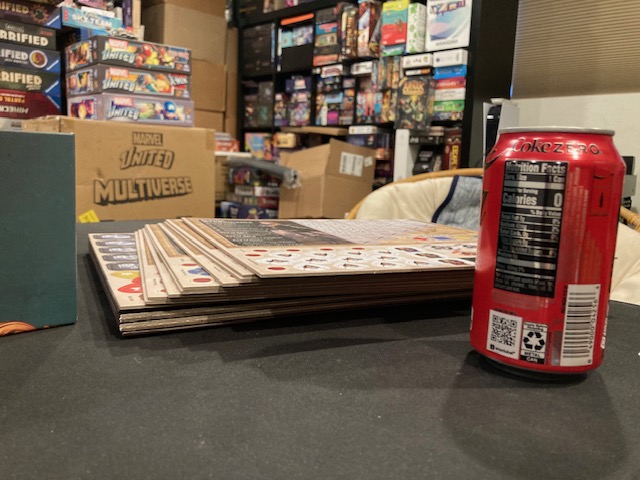
There are a TON of cardboard sheets to punch out! A ton I tells ya! See above as I use the Coke can to demonstrate how tall the pile of cardboard is!

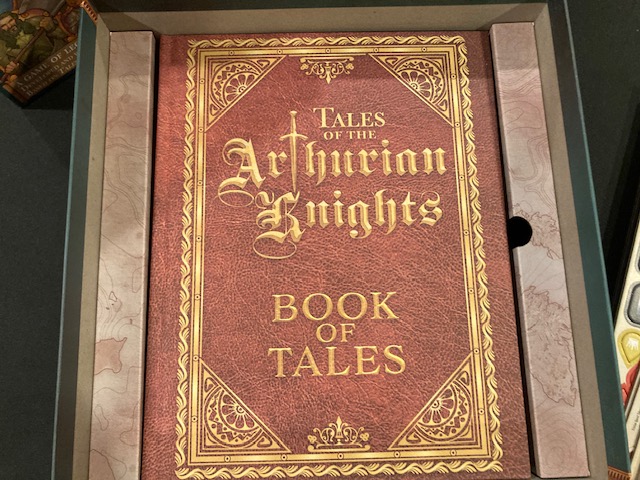
But what makes this game heavy and a storybook game … is the storybook.

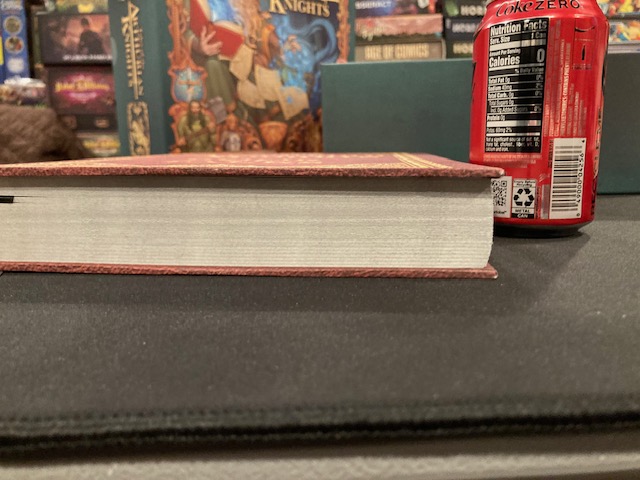
This is a hardcover storybook! And it is very thick! See the Coke can again measuring its height!

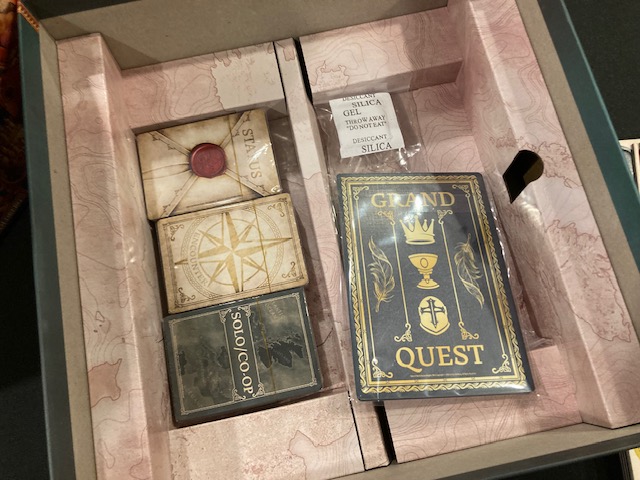
Underneath the storybook are a bunch of cards.

That’s what’s in the box … let’s take a closer look at some of the components!

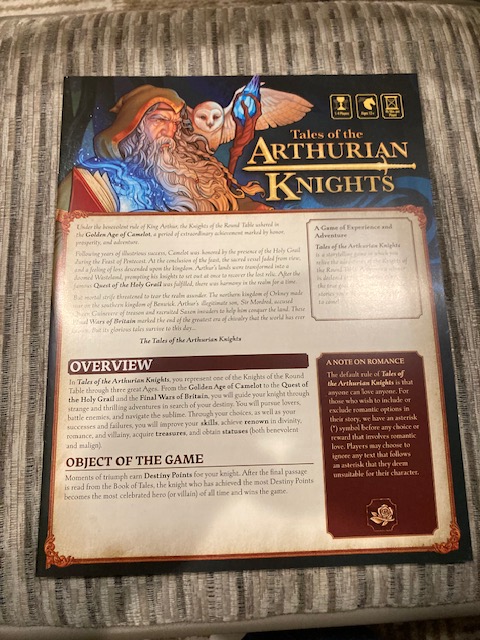
The Rulebook

The rulebook was pretty darn good.

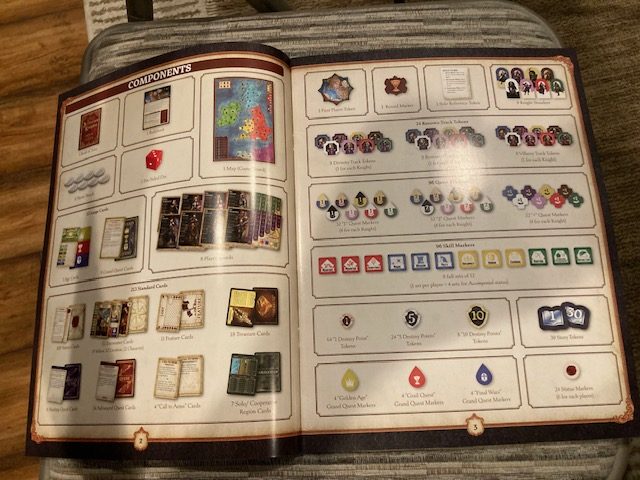
The components page shows just about everything, but here’s a little warning: you should be careful about how you punch some stuff out (we’ll discuss this more below).

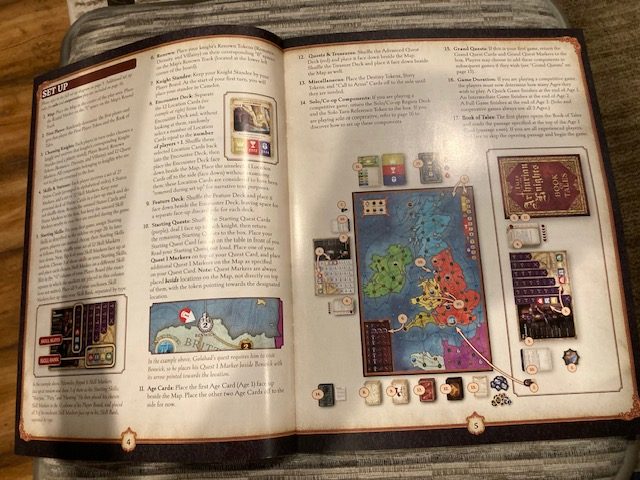
The set-up is across two pages and has a picture and correlating notations; it works great.

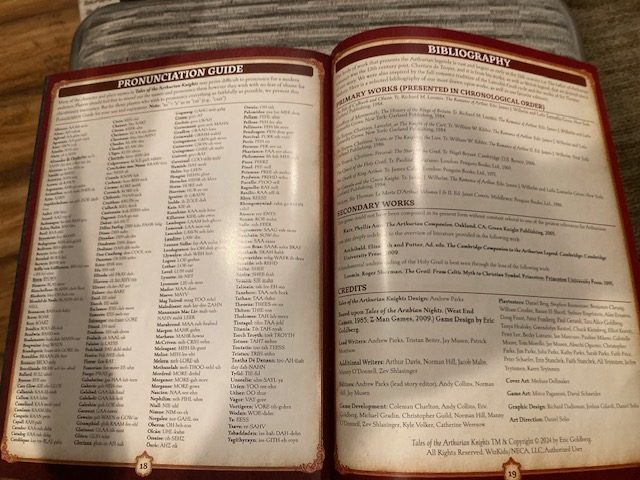
There’s even a Bibliography (!) and A Pronunciation guide! That’s right! You can tell the people who made this game really care about the Arthurian Mythos! This care shines through from the very beginning, and manifests in the writing!

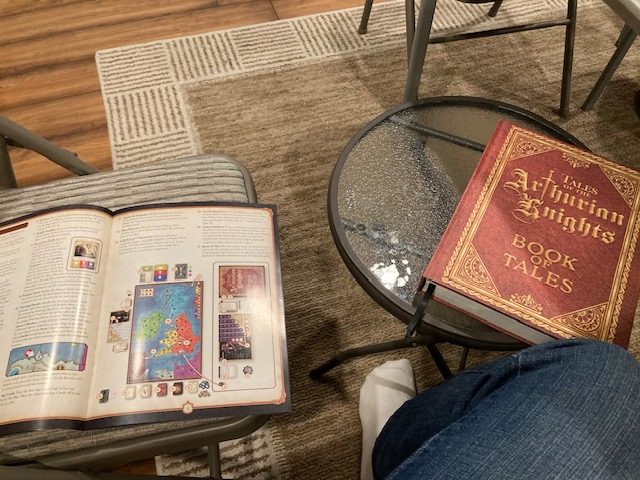
In general, this was a good rulebook: the fonts are big, the pictures help understanding, and it seems well organized. And the game gets an A- on the Chair Test: I can keep the rulebook open on the chair next to me, and it stays open and flat so it is easy to consult!

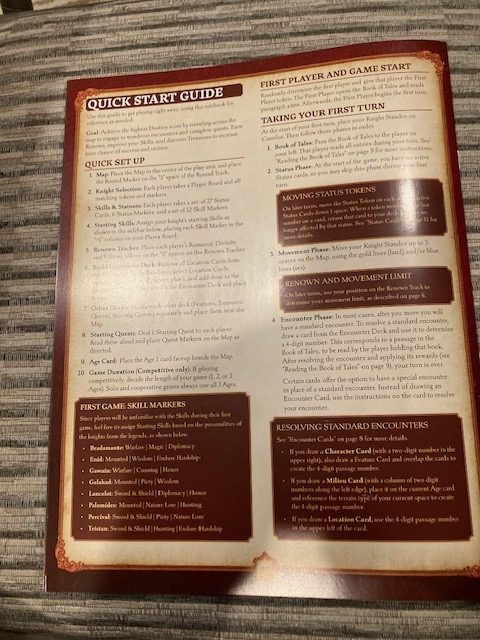
And the rulebook even ends with a QuickStart guide on the back: see above.

This was a good rulebook.  The only major fault with this rulebook was that it didn’t have an Index (which is weird for a game that has a Bibliography and Pronunciation Guide), but it wasn’t that big of a deal.

Storybook

The storybook is GORGEOUS! It’s a hardcover! The entire game centers on the stories that come out of this book!

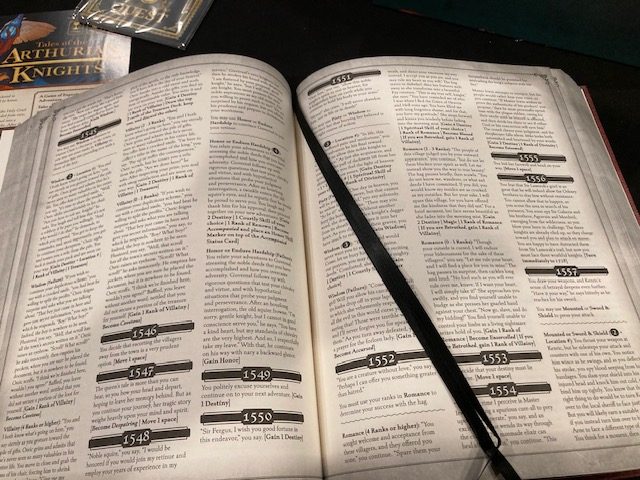
Even the paper is nice (it’s not cheap paper by any means), and it has a built-in bookmark … what?? See above!

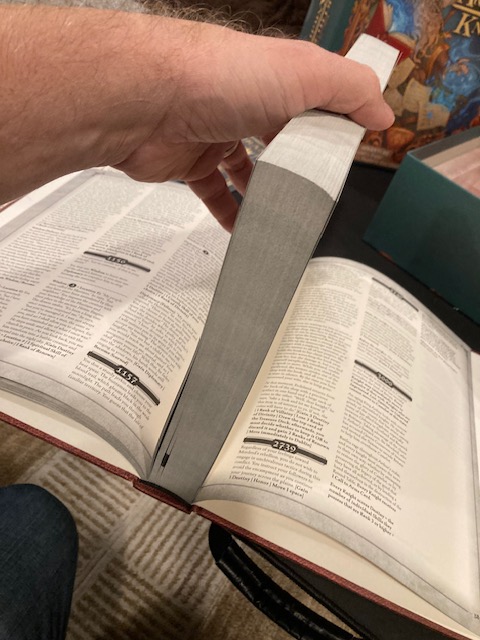
The binding on the book is very high quality! I still do that thing you do with new textbooks; slowly open the book and let pages fall left-and-right to ensure I don’t break the binding. (Am I the only one who does that?) See above.

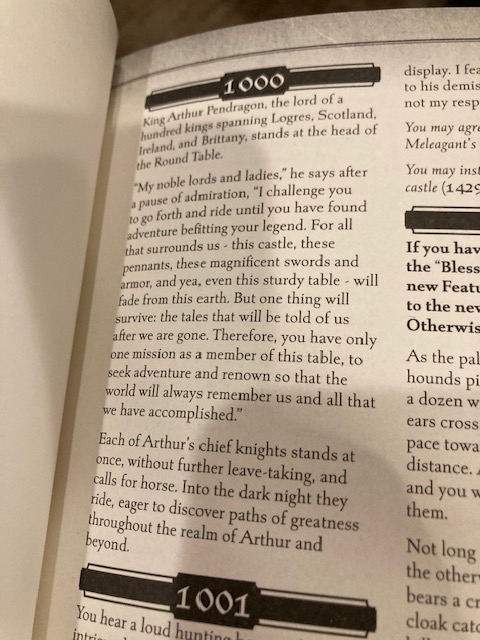
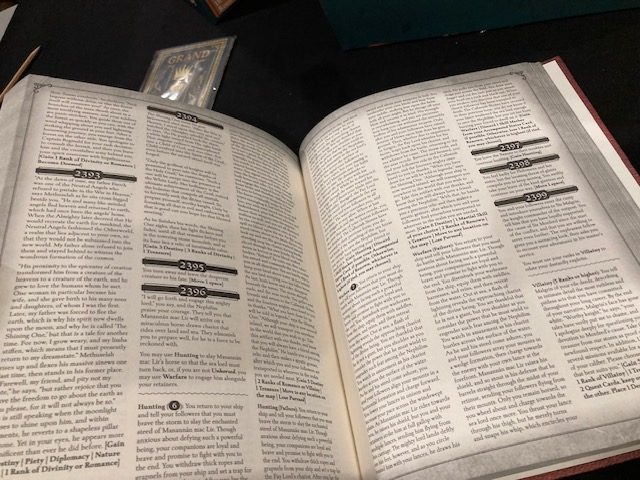
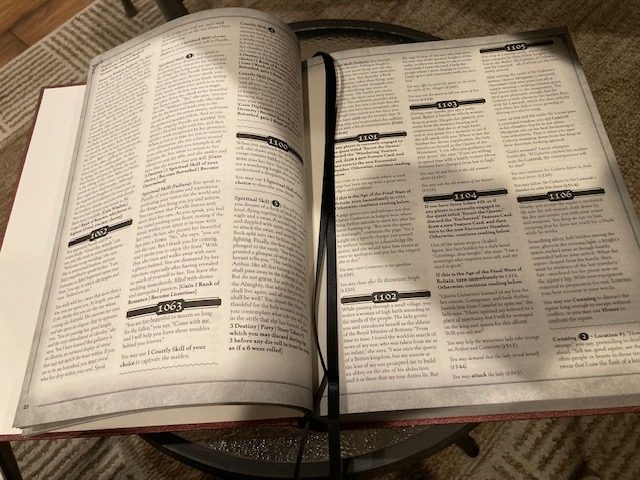
The font is easy to read and it’s high quality: and no, the above isn’t a big spoiler: it’s the VERY FIRST ENTRY every game reads (but it shows what the font looks like).

Most entries in the book have you read some text to the current player (or yourself if you are playing solo), and presents you with a choice … something like … Do you want to use HONOR to solve this issue or PIETY?  You make a skill check against that Skill and read the appropriate SUCCESS or FAILURE.    

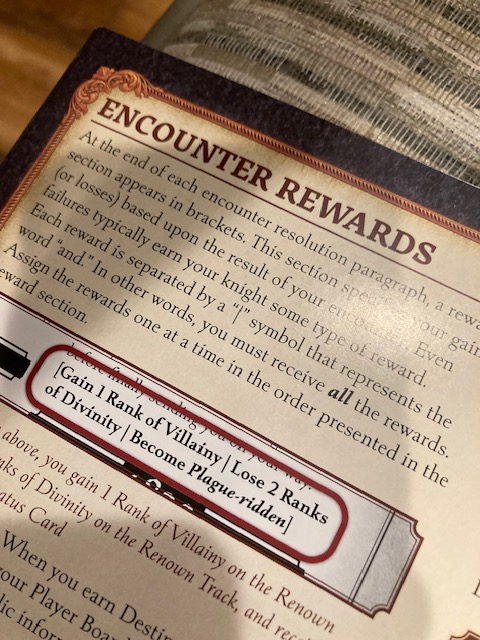
See above for an example for a reward (from the rulebook). Getting a SUCCESS usually gives you extra Skills, extra Ranks in Divinity/Villainy/Romance, or Statuses.

This storybook is just gorgeous (you said that Rich … I know, I know, it’s just so awesome).

Punchouts

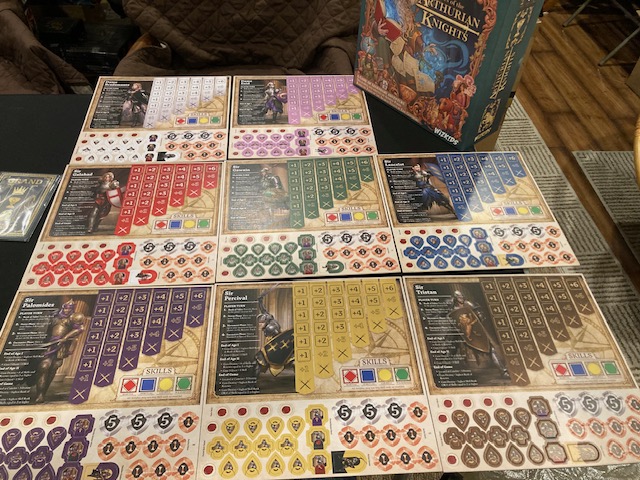
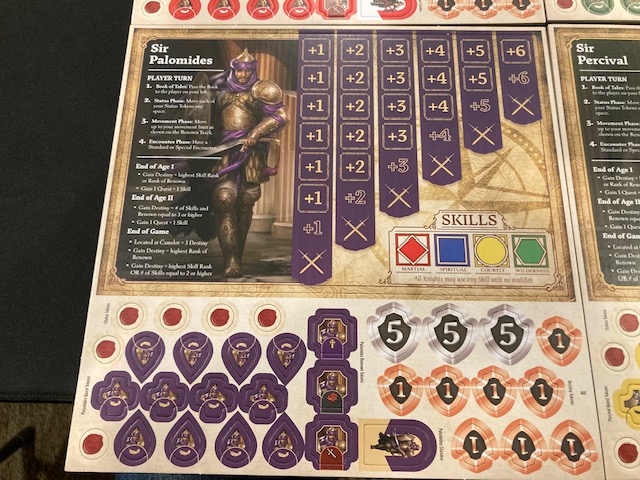
There are a LOT of punchouts for this game (see above): BE WARNED!! I don’t think you need to punch them all out at first.  Each player takes the role of a Knight of the Round Table (see above: there are 8 possible Knights).

You really only need to punchout the components for THAT KNIGHT! Most of the tokens I need to play Sir Palomides (see above) are just on HIS SHEET; so there’s no reason to punchout EVERYTHING.

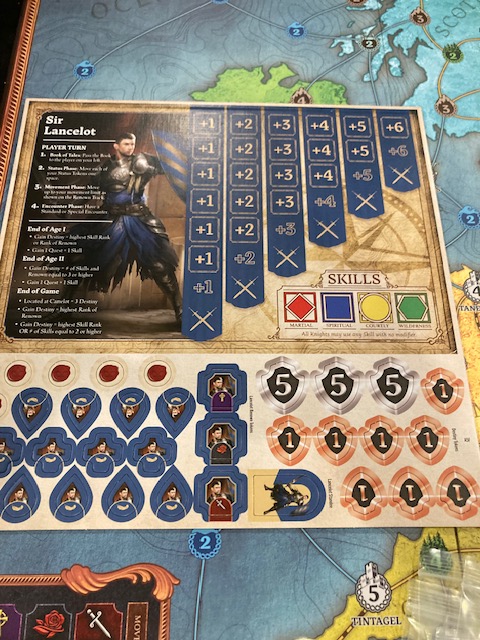
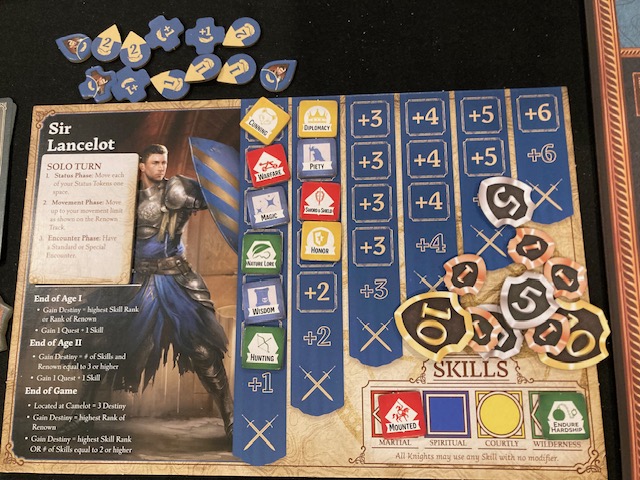
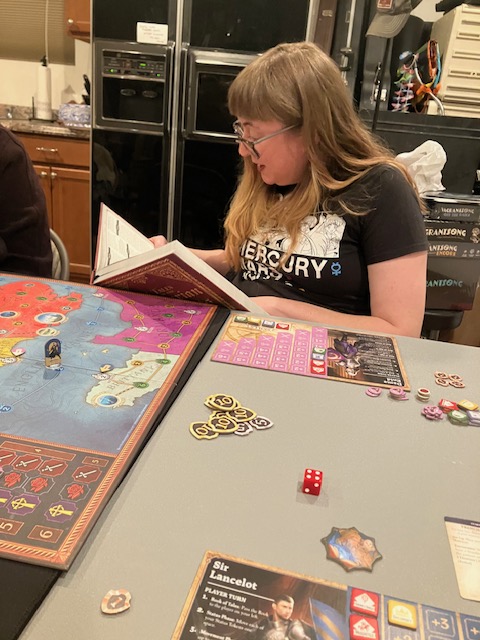
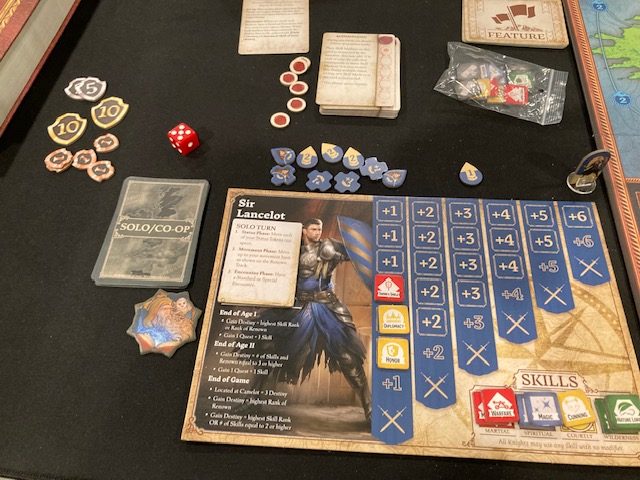
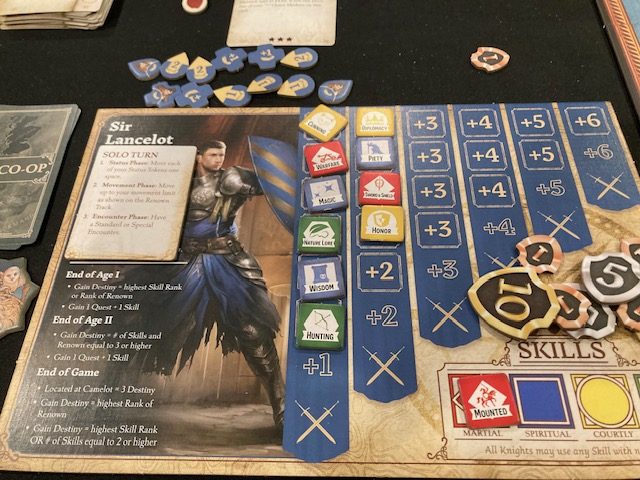
I played Sir Lancelot in my first solo game.

I only punched out the components for Sir Lancelot … I didn’t have to punch out everything!

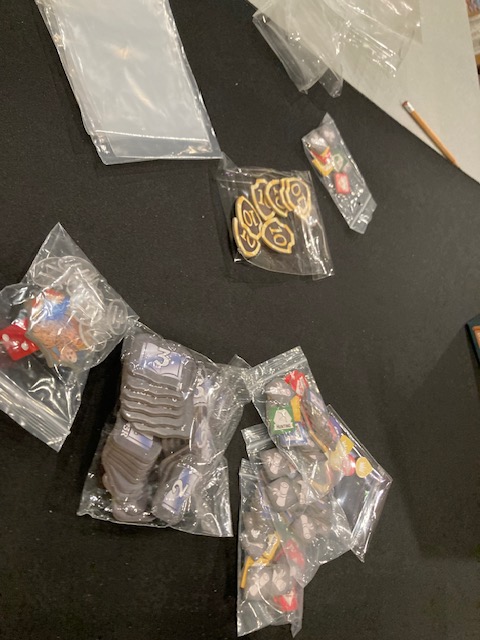
I hate to say it, but I wish this game came with baggies. I stole baggies from some other games I have, and used those. Basically, I give each character THEIR OWN BAG for tokens (and the other shared components go into other bags).

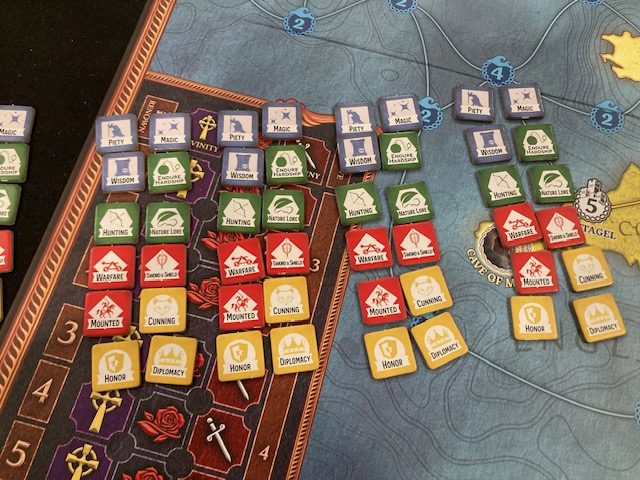
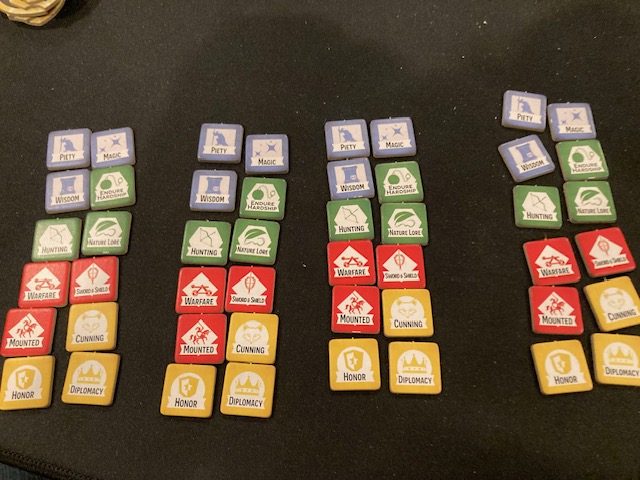
You will to punchout the Skill tokens: every Knight gets 12 (which only some become active as you play).   I made separate bags for each set of 12 tokens.

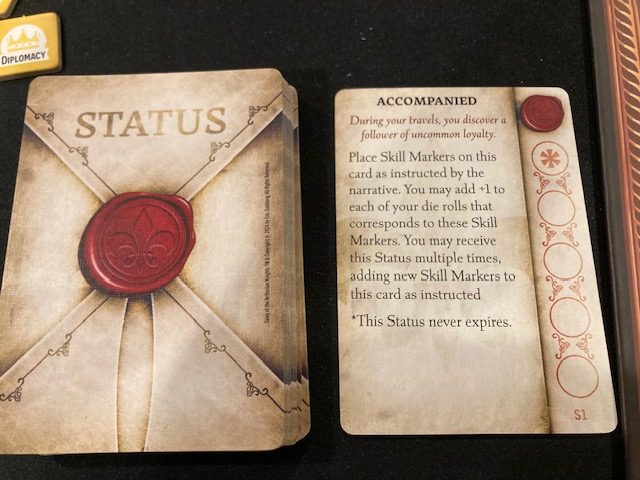
In fact, there are 8 sets of Skill tokens (even though the game only plays 1-4 players): Why? Because you can  be ACCOMPANIED and have a companion who has skills … like I said, I just punched out the Skill tokens and put each 12 into separate bags (for a total of 8 separate bags of Skill Tokens, and 8 different bags for the 8 characters).  

This game really needs baggies I think.

So, be wary: if you punchout everything right when you open the game, you might want to have a bag per character to store their stuff. And 1 bag per 12 Skills. And a few more baggies for other components.

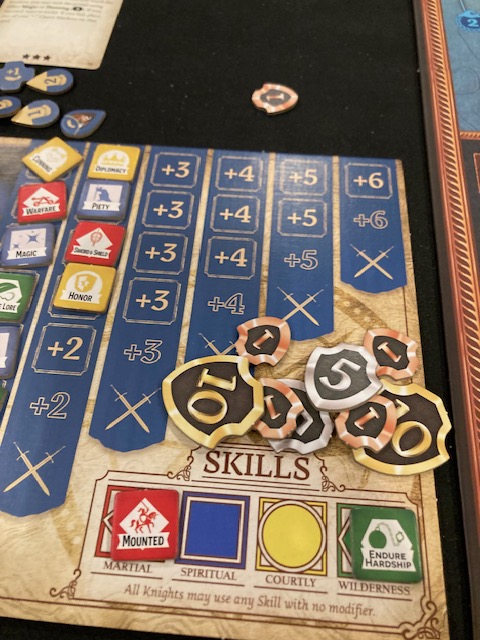
The SKILLS give you bonuses to certain SKILL checks: See above as Lancelot gets +2 on Peity, Shield and Sword, and Honor SKILL checks.

Status Cards

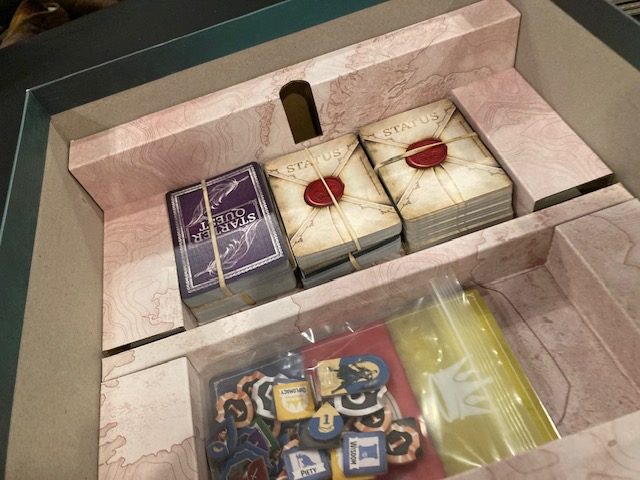
As you play the game, stuff happens to you. And this is represented by the STATUS cards! Each player gets a stack of STATUS cards which may become activated as you play.

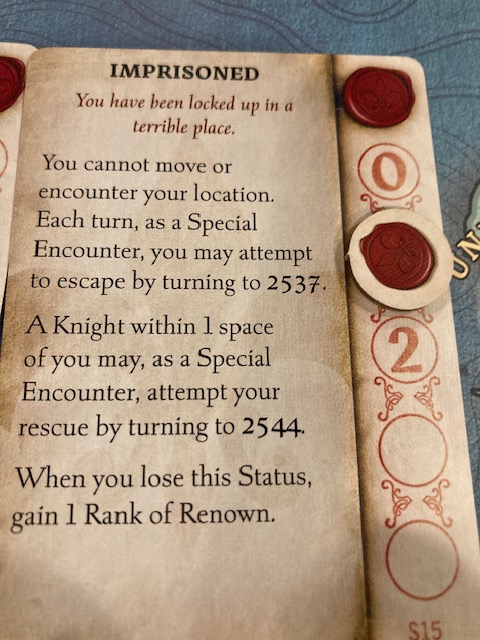
The nice thing is that STATUS cards can expire! See above as I am IMPRISONED! As the start of every turn, if I can’t escape my prison, the STATUS token (red dot) moves down, and if it ever moves to the last space, the STATUS goes away naturally! I have to say, after some games of Tales of Arabian Nights, I got stuck in prison and couldn’t get out! At least with this “expiration” mechanism, I won’t get completely stuck!

Quests

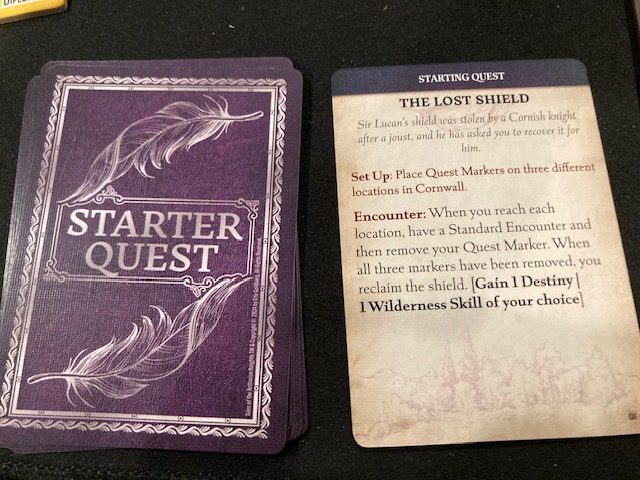
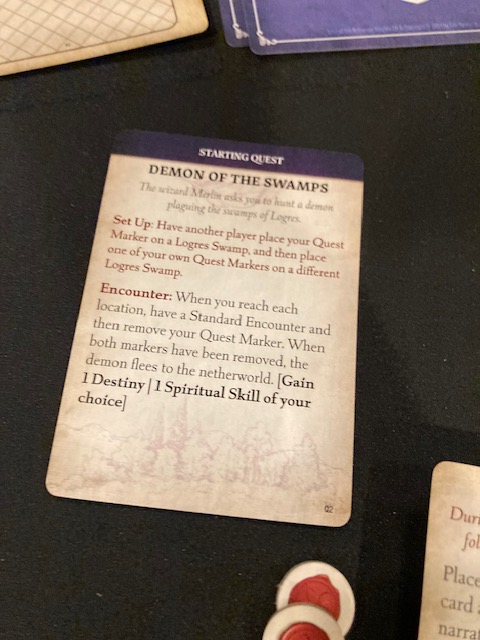
What generally “directs” you in the game is the QUEST!  Every player starts with a STARTING QUEST (see above) and that directs you to places on the map to “do stuff”!  You don’t HAVE to do these quests, but usually the rewards for QUESTS are worth it!

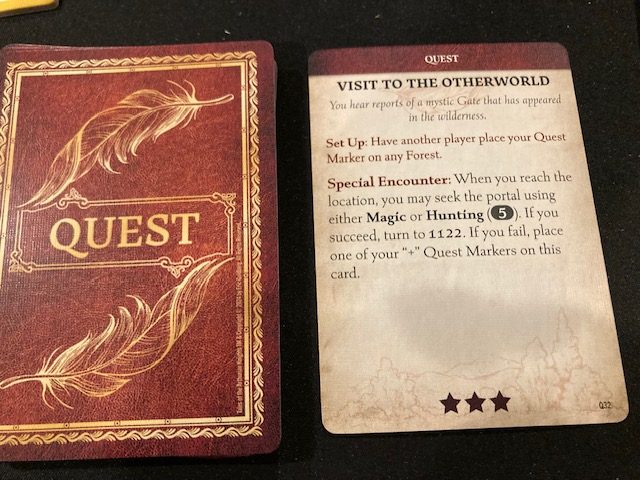
There are many places where you can get more QUESTs as you explore, but if you never have one, you just draw from the QUEST pile!

Your QUESTS have a very pick-up and deliver feel; you usually have to visit 1 or 2 Locations on the map (see above), and do “something” (SKILL check, standard encounter) to finish the QUEST.


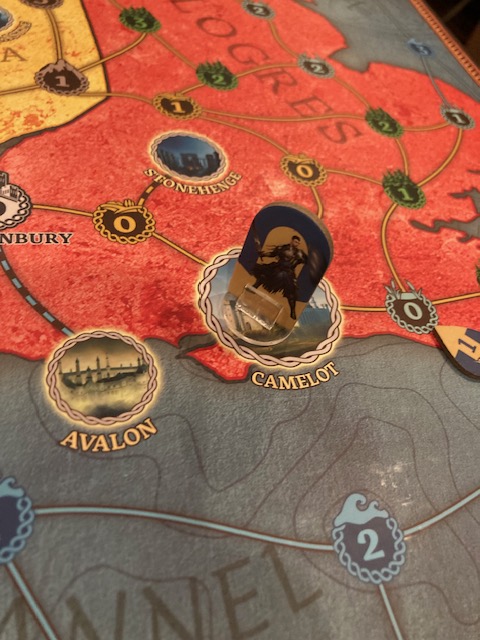
The QUEST locations are notated with your little markers (see above).

Destiny

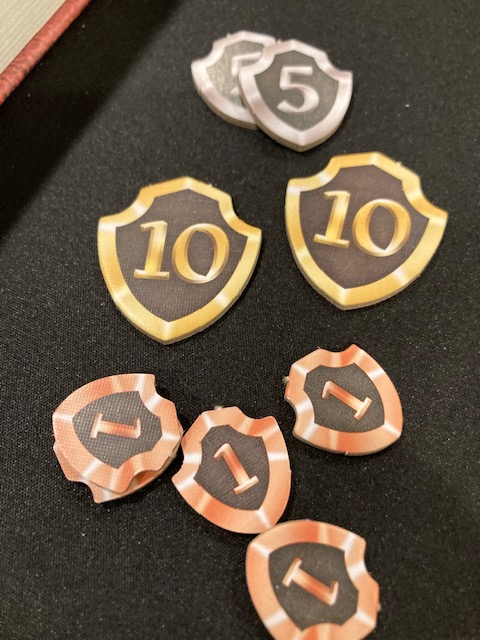
To win the game, you (solo/cooperative group) need to get enough DESTINY POINTS: see above.

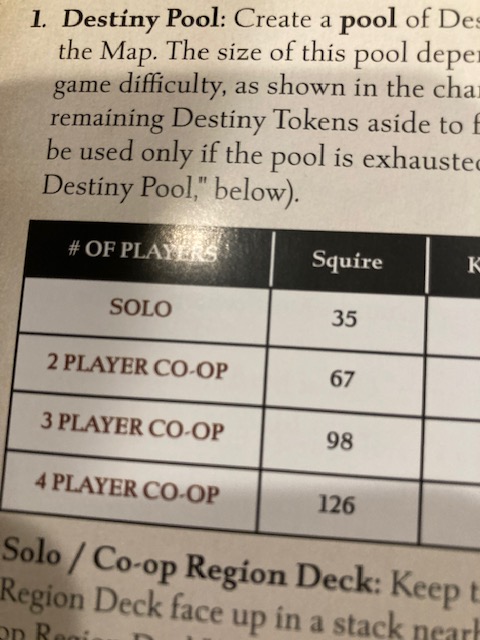
How much DESTINY you need depends on the number of players and the difficulty you choose. For example: The solo game at SQUIRE level requires 35 (see above), and a 4-Player cooperative game requires 126 DESTINY!

You mostly get DESTINY from two sources; completing  a QUEST (see above) or succeeding on a SKILL check.  There are also other ways that come up in the game, but those are the most likely sources.

The Map and Encounters

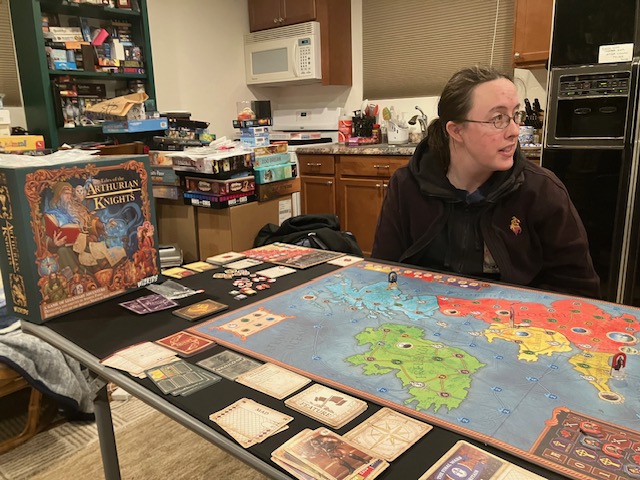
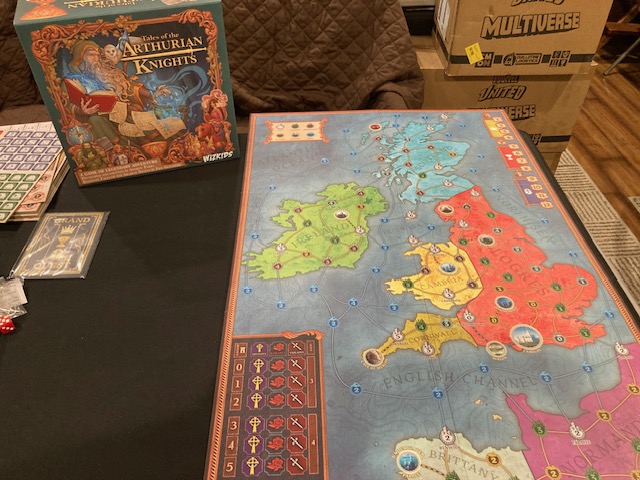
This is a big game where you explore the world, hunting down QUESTS as you move around the map!  Just about everything you do has someone read “something” from the storybook!

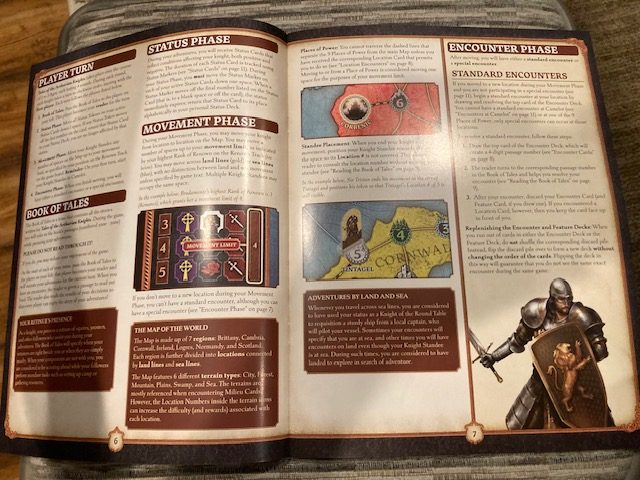
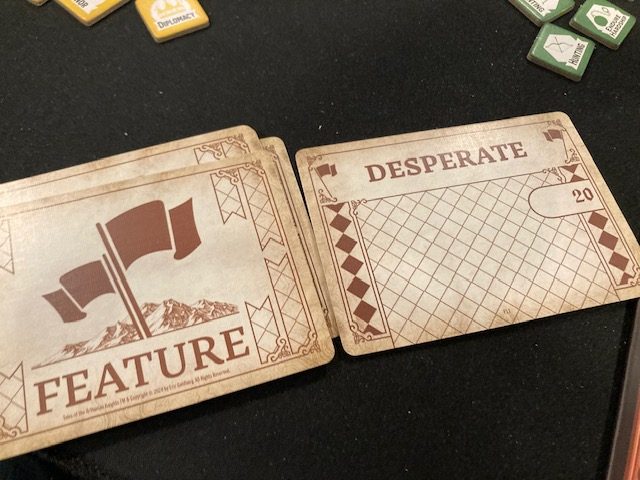
The most common encounters (standard encounters) are in the game are made up from two decks: a FEATURE deck (which has an adjective and the last two digits of a 4 digit number) …

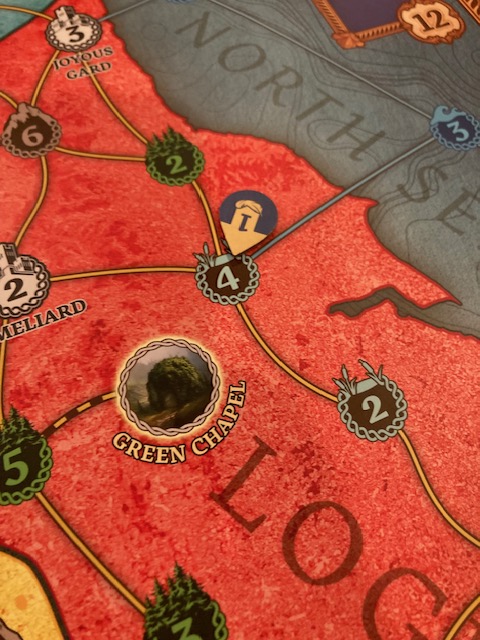
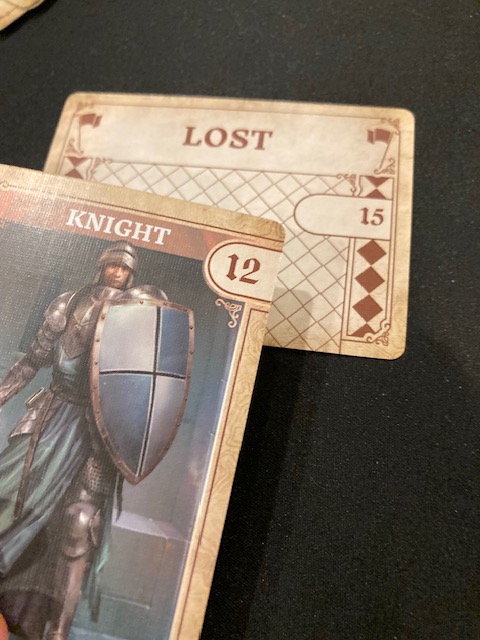
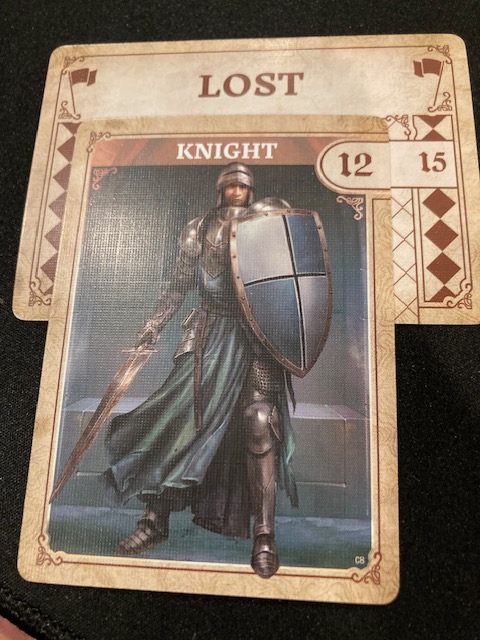
And the ENCOUNTER deck, which is frequently a traveller.  The LOST KNIGHT will be entry 1215 in the storybook!   See above! And that will be the encounter for that Location!
Every encounter in the storybook is a 4-digit number (see above).
And that’s the basics of the game; explore the world, go on QUESTS, read from the Storybook, make skill checks, and try to get enough DESTINY to win!

Solo Play

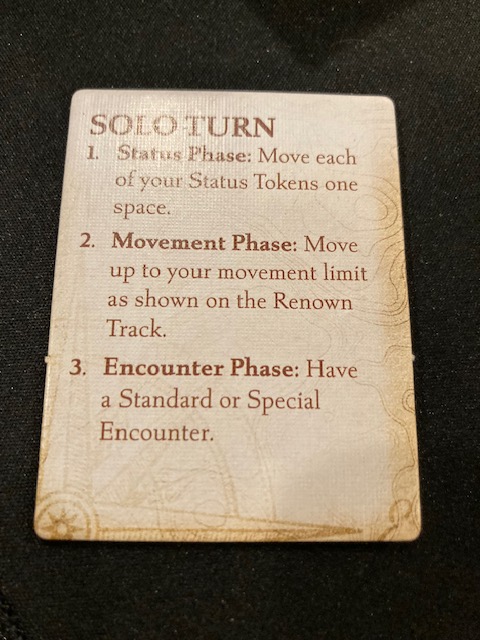
So, there is a solo mode in this game (thank you for following Saunders’ Law), and it is “generally” well-thought out; but there are some issues.  

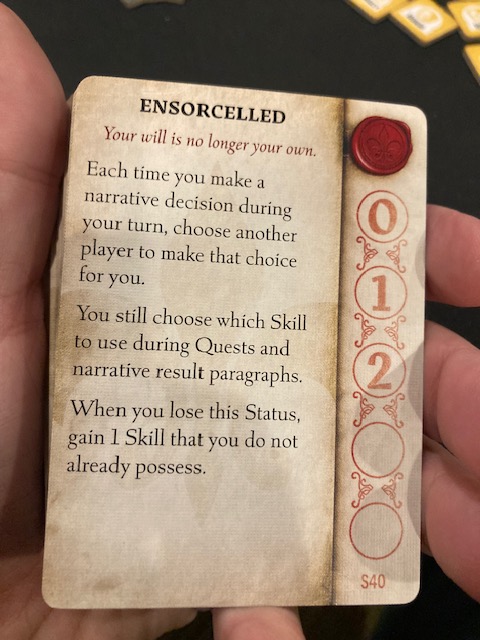
Let’s be clear; even though Tales of Arthurian Knights has a solo and cooperative mode, it is a competitive game first.  Most STATUSES and QUEST cards have “another player” make a choice for you!  See above as ENSORCELLED STATUS has another player, who is your competitor, make choices for you!  

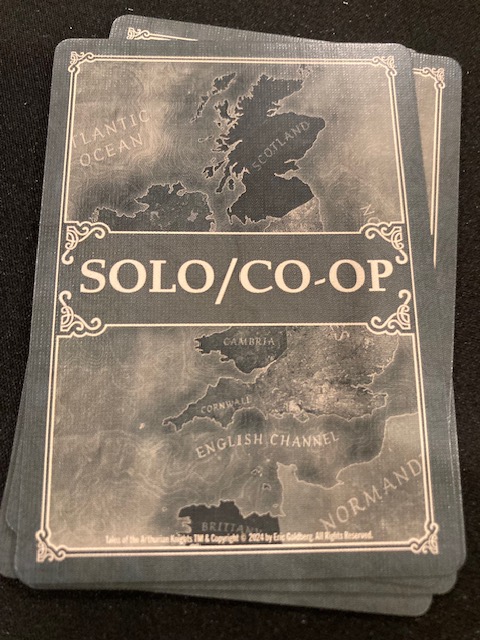
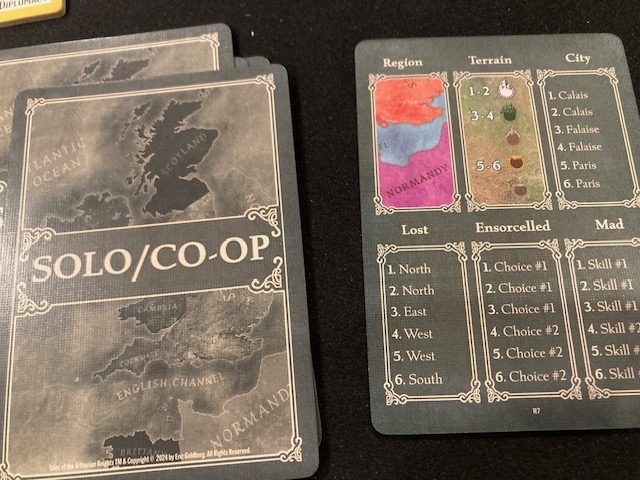
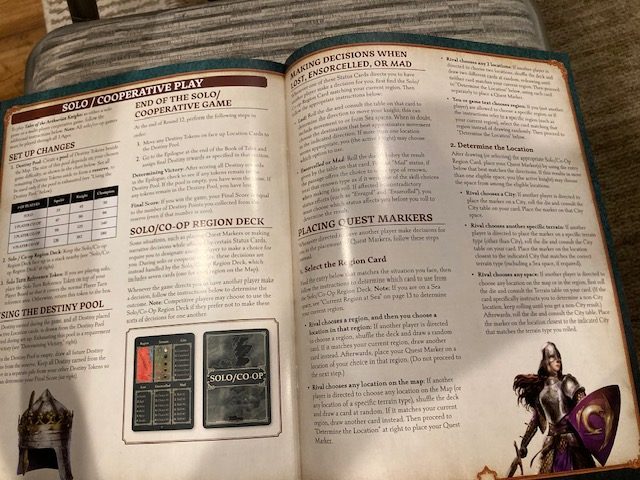
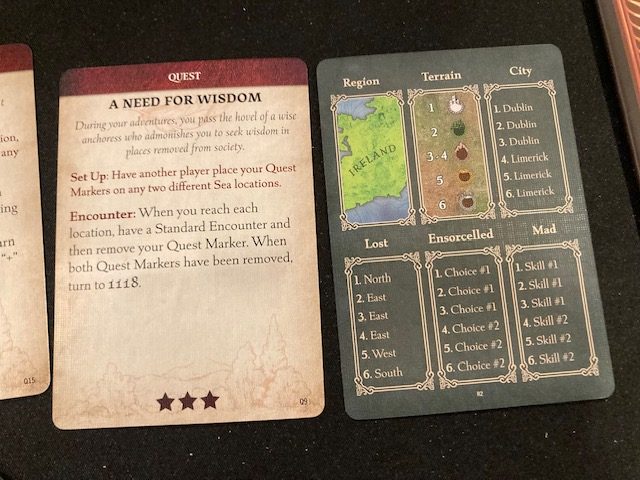
So, when another player is supposed to make a choice for you, you instead draw a card from the SOLO/CO-OP deck (see above) and that makes the choice for you! 

For example, if another player were to choose a REGION, the card above instead specifies what to do.  Same with City, Terrain, or the STATUSes LOST, ENSORCELLED, or MAD.  Don’t know what to do?  Draw a card!

The problem is that there are still ambiguities that come up.  Which Forest space?  Which sea space?  There’s a whole page discussing how to place things from those cards, and it’s still not 100% clear sometimes; Honestly, it’s a little bit of a wart on this system.  Rather than get bogged-down in some detail, I’d get “about” where I was supposed and just pick one.  It’s better to move forward than get obsessed. (Because this game can very random, it feels very silly to obsess on some of these rules).

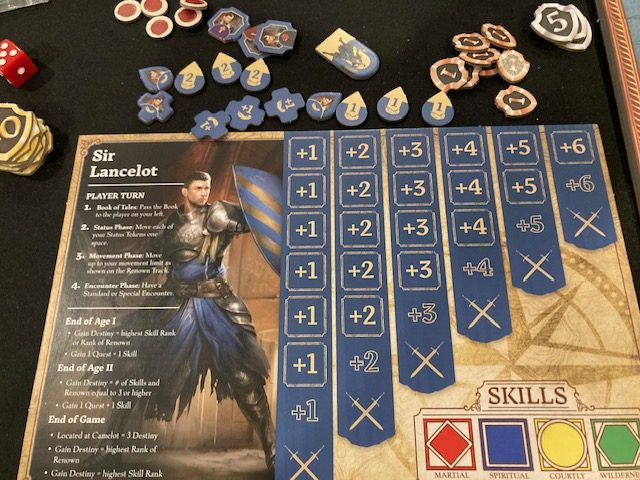
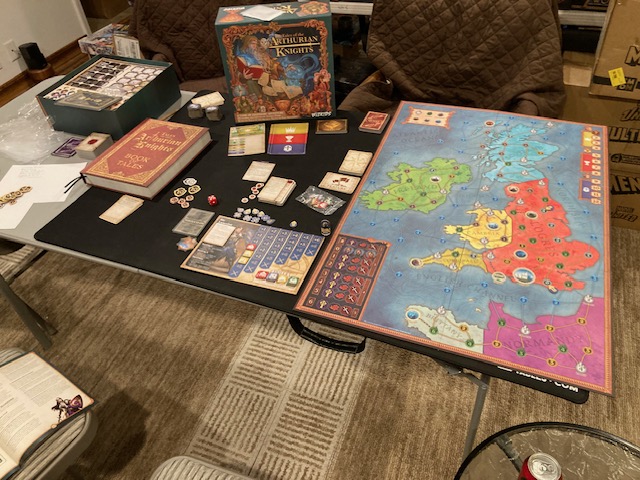
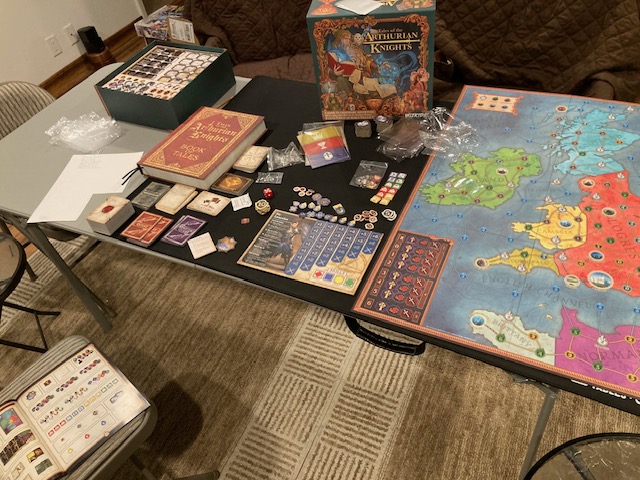
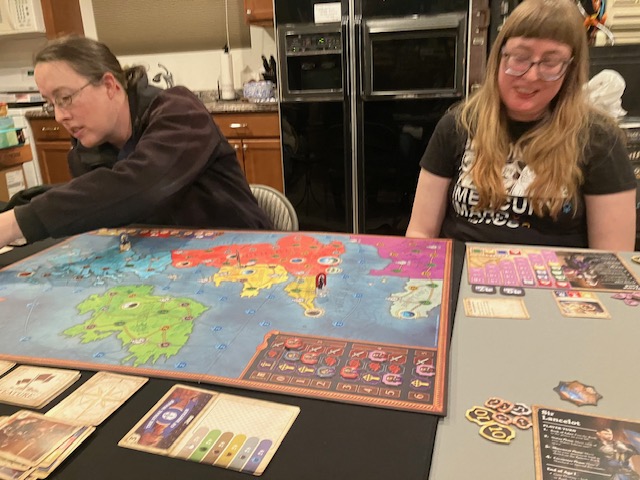
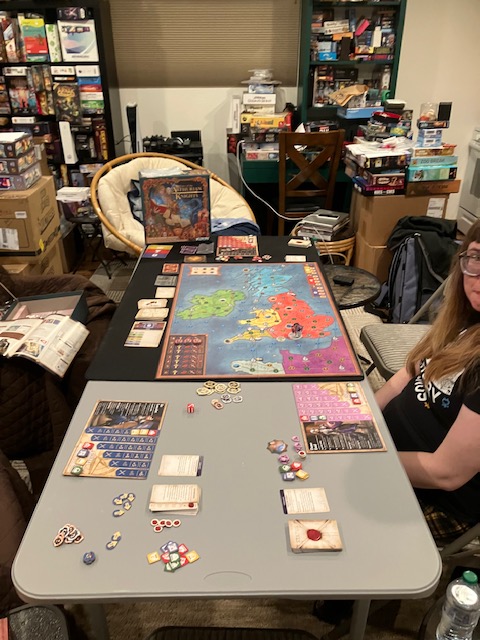
Besides that one issue, the solo game worked pretty well. See above as I had the board set-up!

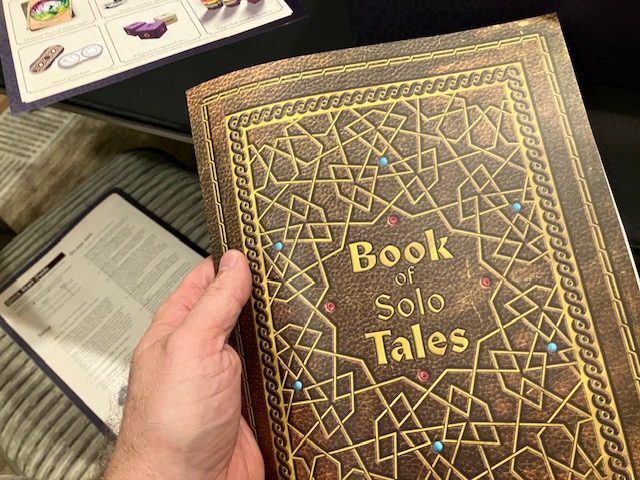
This is a true solo player game: the solo player plays one character! See above as I played Sir Lancelot. Player proceeds pretty much as the main game; just get enough DESTINY to win!

What this means, of course, is that the solo player has to read all the text to themselves. You have to be a little careful not to read too far ahead, as you can see what the “difficulties” are when you really shouldn’t: “Choose PIETY or HONOR” (oops, I accidentally saw that HONOR needs a 4 check, but PIETY is a 6 … I’ll just go with HONOR”): you aren’t really supposed to know the difficulty of your checks. You are supposed to choose the check based SOLELY on the type of check, nothing else! So, it’s easy to “accidentally” cheat and see what the SKILL checks are.

But, if you can survive 12 rounds (you have to play a full 12 rounds) and get enough DESTINY (see above as I do!), you win!

The solo experience is fairly sedate; you read to yourself, you roll the dice, you make choices. It was fun, and I really enjoyed the text, but it’s a quiet experience with a lot of reading.

The solo mode is a great way to learn the game, but I didn’t love it because it was so sedate. It was a good way to learn most of the systems of the game, and I might play it again solo. The solo mode is a 6.5 or 7/10? It works, and it teaches the game, but I didn’t love it (especially with some of the ambiguity).

Cooperative Mode

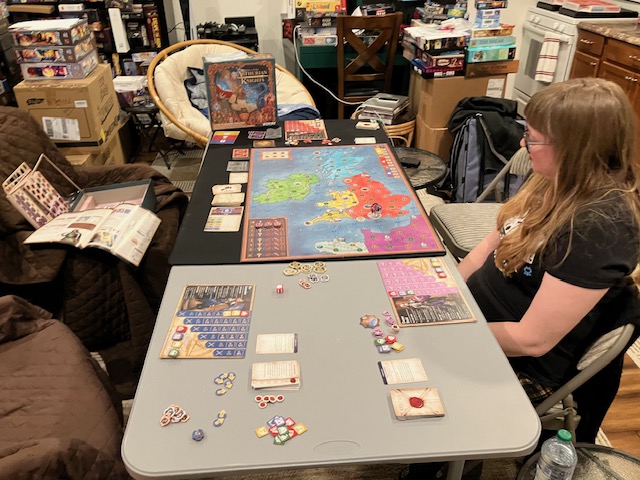
Cooperative mode, on the other hand, was a rolicking good time!

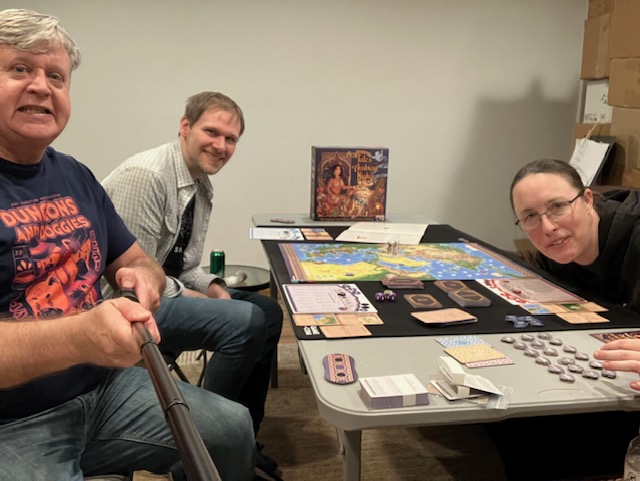
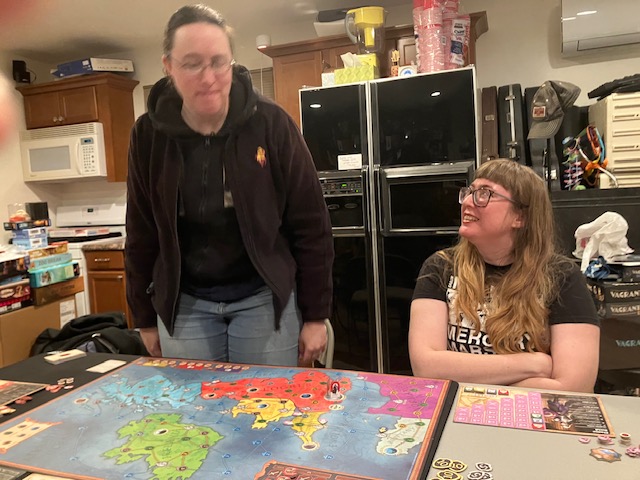
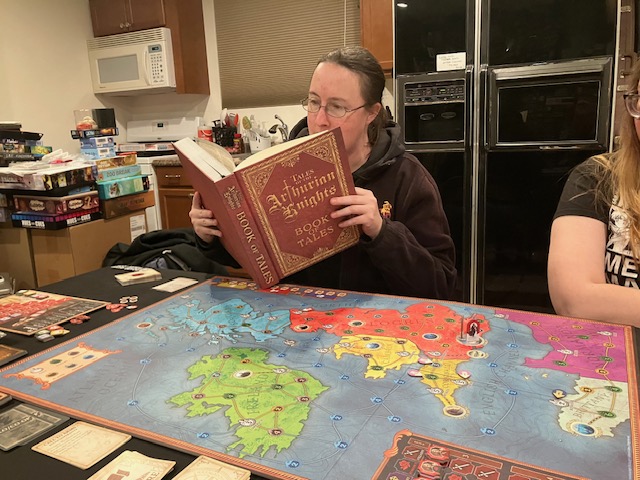
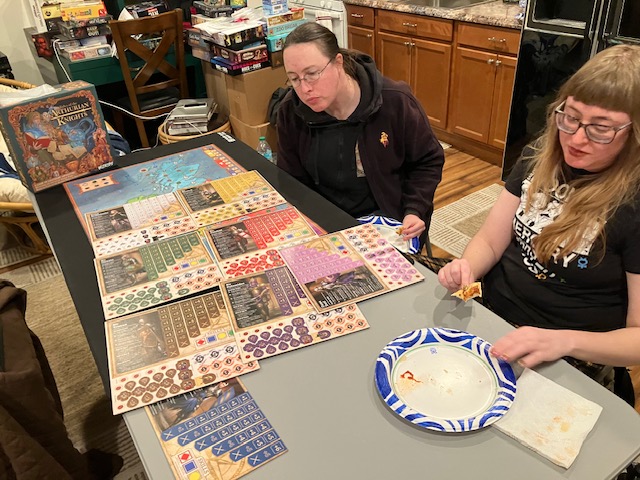
It’s hard to believe, especially since the players are reading from this tome all the time, but the game was such a HOOT! What happened was that we read the book with silly voices! We quoted Monty Python and the Holy Grail all night long!

Some of the best things that happen in the game are when you FAIL and the story just gets crazy! Sara’s story was so wacky as she had three lovers, including Morgana! We laughed as Dame Enid’s Villany track escalated as she kept three lovers! In the meantime, Sir Galahad struggled to keep his Villainy down! Sure, you make choices as the game proceeds, but you may or may not make it … it’s all the crazy things that happen!

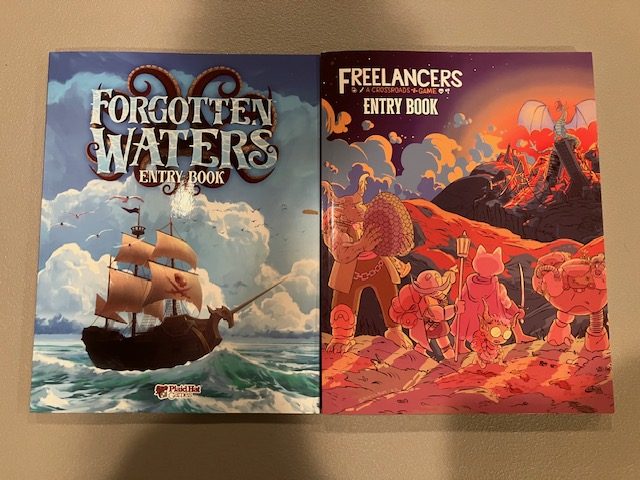
Let’s be clear, this is not a “silly” storybook game like Wandering Galaxy (see review here), Freelancers (see review here), or Forgotten Waters (see review here)! Those game are built as silly from the ground up! But Tales of Arthuran Knights is nominally a serious game (I mean, it’s got a Bibliography for goodness sake), but the moments that happen, the plot twists, the fails, the wins, are all kind are electrifying! The mood of the game is light as Monty Python quotes fall from the tongue (“Bad, naughty Zoot!”) and players giggle at your wins and losses! “Wait, Dame Edid has THREE lovers now??? Save some for everyone else, Sara!!”

My players loved this game! They gave it an 8/10, which is especially high for Sara!

The only thing that would have made this more fun is if it were more cooperative! We certainly enjoyed reading to each other, but at the end of the day, the game was pretty much multiplayer solitaire as we each had our own adventures! Had there been mechanisms for “questing together” or “moving together”, maybe that would have elevated the game to a 9/10 or 10/10? Don’t get me wrong, we LOVED this game, but we just wish there were a little more cooperation …to be clear, there’s plenty of interaction among the players, as they read to each other and choose entries, so there is definitely full engagement, but that’s sort of outside the game (in the running of it). The actual cooperation in-game is pretty much non-existent. Again, this game is great, but it’s not a cooperative touchstone by any means.

Overall, my friends loved this game.   It was so fun!

House Rules

One possible set of house rule to encourage cooperation might be the following:
1) If two (or more players) are on the space or move through each other, they can “pick-up” and “drop-off” other characters during movement. This might allow some sharing of movement points and encourage players to move together and move quicker around the map. They have to talk and discuss strategy!
2) If another character is with you on an encounter, that other player can spend his DESTINY (we would assume players get their own DESTINY even if needs to be shared) to up SKILL roles: discard DESTINY on a one-for-one basis to increase the check!!! BUT you could only do that if someone ELSE did it, not the person in the encounter! (I think this means each player would still get their own encounter though … it’s just travelling together allows players to influence each other)
These two House rules might help engender a little more cooperation. They would obviously need more some balancing (I think it might make the game slightly easier), but it’s easy to just up the difficulty level by one and see how you do!

What I Liked

Failure is still good! We didn’t mention this when we discussed SKILLS, but even a failure is good! First of all, sometimes a failure is interesting or even funny from a story perspective, so that good! More importantly, a failure on a SKILL roll almost invariably leads to “gain experience” in that SKILL and up it by 1! For example, If I fail a DIPLOMACY SKILL check, I will learn from it! “Oooooohhh, that’s a good example of what NOT to do when negotiating! Lesson learned!” .. and my DIPLOMACY goes up +1!

The Game Is Electifying Cooperatively! If you have the right group who is just a little silly, will quote Monty Python, and read the text with silly accents, this game is just electrifying and a fun romp! I think to enjoy this game to the fullest, you have to “lighten up” a little and just enjoy the ride!

Cooperative mode:  The original Tales of the Arabian Nights was fantastic, but it was a competitive game!  By Tales of Arthurian Knights being cooperative, it seems to “lighten” the atmosphere a little.  In general, this new version just seems more approachable.

What I Didn’t Like

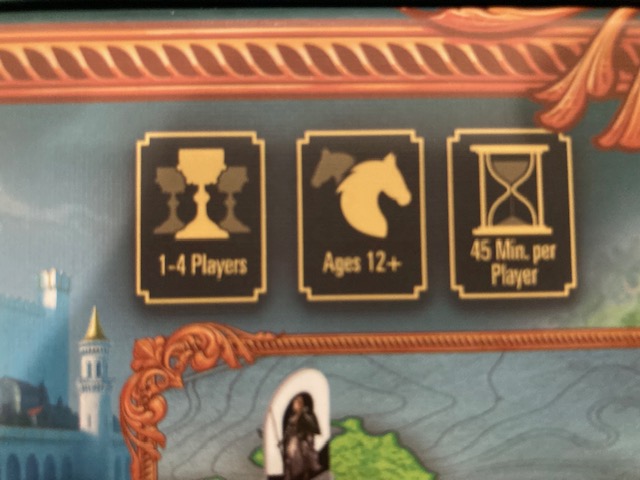
Time is wrong: After many solo and cooperative plays, I think the playing time is off. I’d say it’s more like 1 hour per player (plus set-up and tear-down). It’s not a big difference, but it may keep you from playing the 4-Player game!! The 3-Player game at 3 hours is just about the right time.

Ambiguity/Extra Complexity: In the solo and cooperative mode, you depend on the solo/coop cards to resolve ambiguity when placing Locations and other things. Unfortunately, sometimes the rules are just ambiguous or at the very least contorted for placement! See above as we place on Sea spaces, which require looking up the rules for placing Quest Markers which span almost an entire page! In the end, you still just “Place the Marker on the location closest to the indicated City that matches the correct terrain type (including Sea space, if required)“. I think, if you study page 17, you can resolve most things, but it’s much more complex than it should be. This can really take a light-hearted game and bring it down: “Please give me a few minutes to look up this rule!“. In the end, we just kept the game moving and made the best choice on the card to keep the game moving.


Reboxing:  I think you will struggle with the reboxing.  Even with little baggies (which don’t come with the game: make sure you get some), you may struggle to fit everything in the box.  

Randomness

Let’s be clear about one thing: this is a story you (hopefully) get swept up in!  Although you do “level-up” as you play (your SKILLS get better and better, and your Renown goes up, etc), it’s still kind of a random game.  

I get the LOST KNIGHT encounter randomly (see above) which might be great for my SKILLS, or it might be sucky!   Stuff happens to you, and you roll dice.  This is a game with a lot of randomness!  The dice make the SKILL checks more random!  The encounters you get are random! The QUESTS you get are random!  I normally hate all that randomness, but it works here!  Why?

Because this is a story that you get swept up into!  Maybe, like Dame Enid, you’ll have 3 lovers! Maybe, like Sir Lancelot, you’ll have no love in your life, but get the plague and save others from the plague!  It’s all about what happens to you as you play! It’s all about the well-written story, the shared experience, the aloud reading, and the silly fun with your friends! It’s random, but it’s fun.

To be clear, Tales of the Arabian Nights was even MORE random (and that could be a bit much); at least Tales of the Arthurian Nights has backed off on some of the randomness and improved upon the original (with expiring statuses, upgrading skills, and upping reknown).  If you didn’t like Tales of the Arabian Nights, this may still appeal to you.  If you like Tales of the Arabian Nights, you may find this even more enjoyable!  It’s a slightly less random experience. 

Conclusion

What a great time! I think that Tales of the Arthurian Knights might be my friends’ favorite game we have played in some time! They both give it an 8 or 8.5/10: it would actually be higher, but the game is mostly multiplayer solitaire! The game is very interactive, but just not particularly cooperative. We did suggest some House Rules to encourage a little more cooperation; see previous section.

The solo game works, but it’s just a little less fun because you are just reading to yourself as random things happen to you. What makes this game great are the crazy things that happen to you when you are with your friends! That shared experience of failing and being swept up in the story is so much more satisfying when you are with your friends! So, I didn’t love the solo game: The solo game is still respectable and will teach the game: 6.5 or 7/10.

In the end, this is best as a shared experience where players get swept up in the story and don’t care too much about “winning”; it’s all about the experience! It’s all about the story!

If you are willing to quote Monty Python and the Holy Grail, be open to the story that unfolds around you, read lots of text, and enjoy this with a light heart, I think you might really enjoy Tales of the Arthurian Knights! Be aware that there is a lot of reading, so if that doesn’t sound like fun to you, you may want to stay away from this game.