Top 10 Cooperative Point-And-Click Adventure Board and Card Games

Welcome back to Cooperative Adventure Game Month! We have talked a lot about cooperative adventure games this month, from the silly Starlings Box One to the grimy noir Saints and Sinners.We end this month with a discussion of a Top 10 of one of our favorite kinds of cooperative adventure games: the point-and-click adventure!

Make sure you re-read that! Yes, this is a list of Board and Card Games (not Video games) that work like the original LucasFilm point-and-click adventure games such as The Secret of Monkey Island, The Day of the Tentacle, or the more recent Thimblewood Park! Granted, a board or card game doesn’t have a mouse pointer to move and click, but there’s certain elements that make a game feel like a point-and-click video adventure game!

IMG_3164

What makes a board game a point-and-click adventure game? For us, it breaks down into three fundamental elements:

  1. You explore a world!  The game is about exploration and discovery, as you “move” from location to location.  In the point-and-click video games, you could “point-and-click” to move around a map!
  2. You solve puzzles by combining objects!  You need to find objects and combine them in unique ways to solve puzzles. In the point-and-click video games, you would “point-and-click” on items/verbs to combine them!
  3. You move along in a story!  You are part of a story: this is interactive fiction!

So, if a board or card game has these fundamental elements, we call it a point-and-click adventure game! If it moves from location to location like a duck, combines items like a duck, and is part of a story like a duck, it’s a duck!
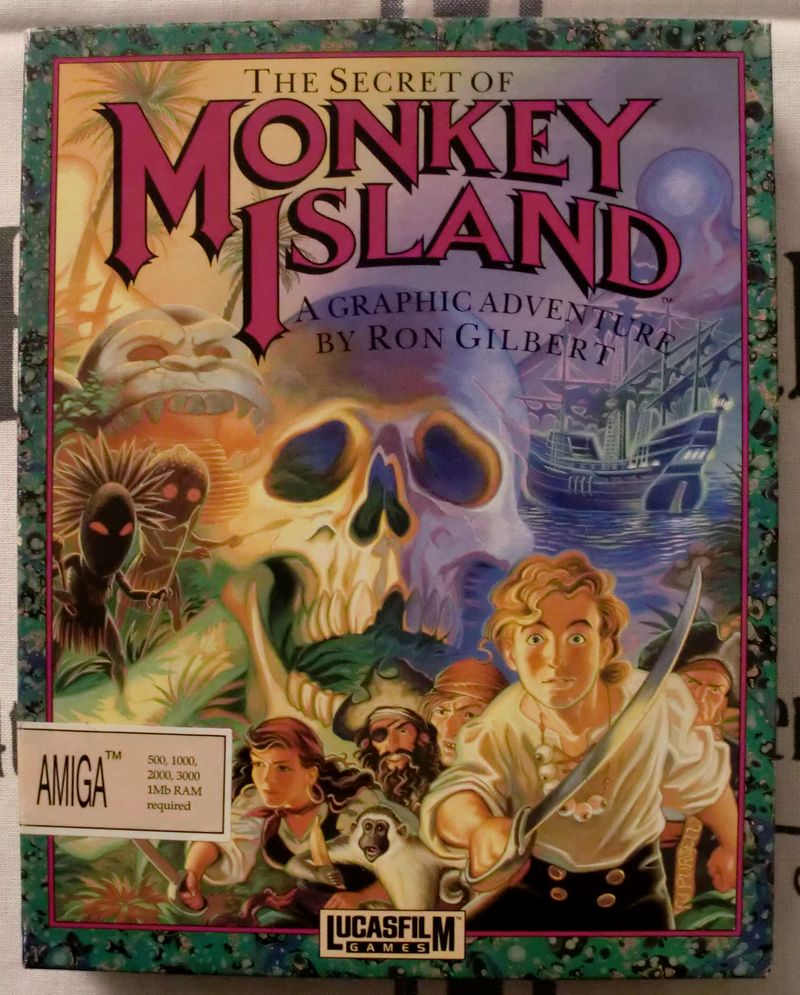
the-secret-of-monkey-island-commodore-amiga

Take a look at our review and discussion of the newest  Monkey Island game for more thoughts on what we like about these type of games! 

To be clear, all the games on this list are “play-once” because you reveal the plot and main elements!  You can play it again, but you probably want to wait a few years until you forgotten everything!

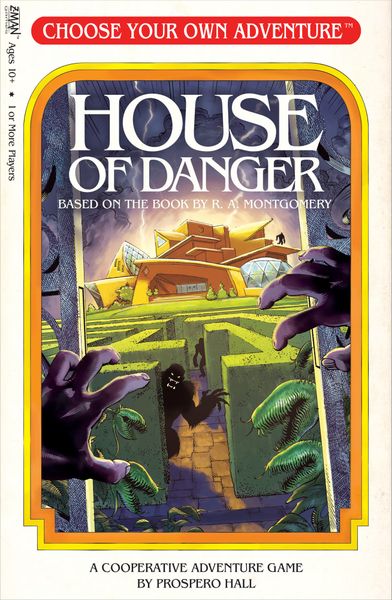
Honorable Mention. Choose Your Own Adventure: House of Danger
pic4092537
Ages: 10+
Play Solo? Yes, but best with a group
Number of Players: 1 or more Players
Time: 60 minutes per chapter (5 chapters)

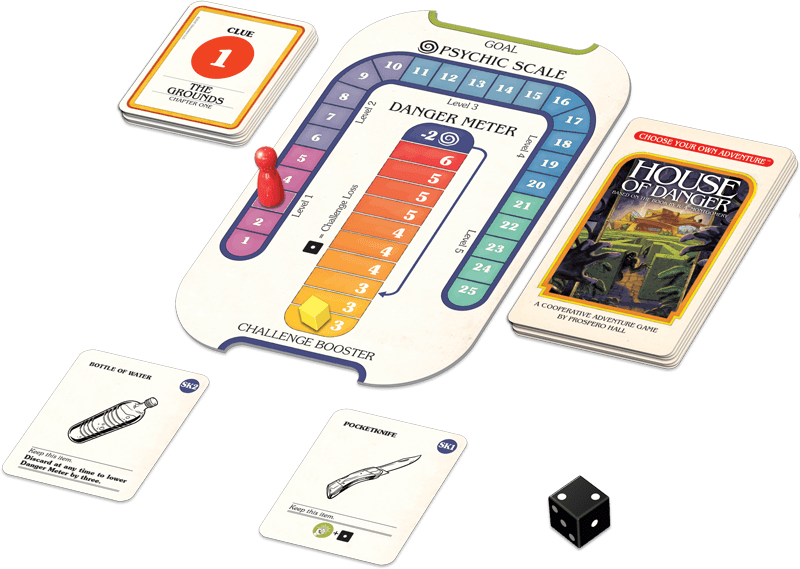
This isn’t quite a pure point-and-click adventure game, but it’s so close we have to mention it!  You explore a very silly world, find objects, and use them for both dice mitigation and helping you with puzzles.
pic4093960

But this feels so much like a point-and-click adventure!  We make choices in the game and we explore the world, but it so silly! The dice are the only reason House of Danger is down at an Honorable Mention: the dice take the pure puzzle aspect out and poke just a little bit of randomness here.

There is another game in the Choose Your Own Adventure series, but House of Danger was the funnest!

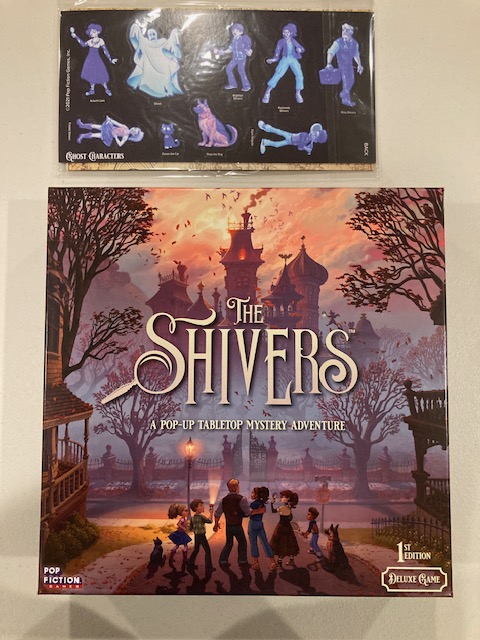
10. The Shivers
IMG_4573

Ages: 10+
Play Solo? No, there has to be a GM: best with a group
Number of Players: 2 or more Players
Time: 60 minutes per chapter (5 chapters)

The Shivers is almost more of an Role Playing Game (RPG), as you have to have to have one player “run” the game, so you can’t really play it solo.  That’s really the only reason this is #10 on this list ….

IMG_4623

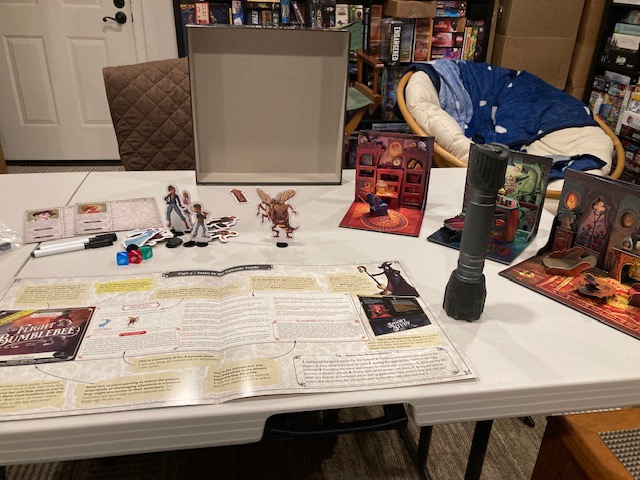
Otherwise, this is a beautiful game with Pop-Up Components!  The physical nature of this game makes it feel more like point-and-click than many of our games on this list!  But the RPG nature and lack of solo drop it just a little. 
IMG_4628

This game is a fun little cooperative point-and-click type adventure game with a sense of humor and beautiful components!  Take a look at our review of The Shivers to see if this is something you might like.

EDITOR: We recently got a comment on our blog about the Shivers from William T Tiller:

Its funny you should compare it to Monkey Island because I did the Shivers art. I am Bill Tiller, and I worked at Lucas Arts as a lead artist on the adventure games The Dig, and Curse of Monkey Island, and A Vampyre Story. In fact there are a few refences and easter eggs that refer to Monkey Island in The Shivers. Larry Ahren, a writer, designer, and animator on Day of the Tentacle, Full Throttle and director of Curse of Monkey Island also wrote one of the scenarios in the game. Those may be the Shivers game feels a lot like a point and click adventure game.

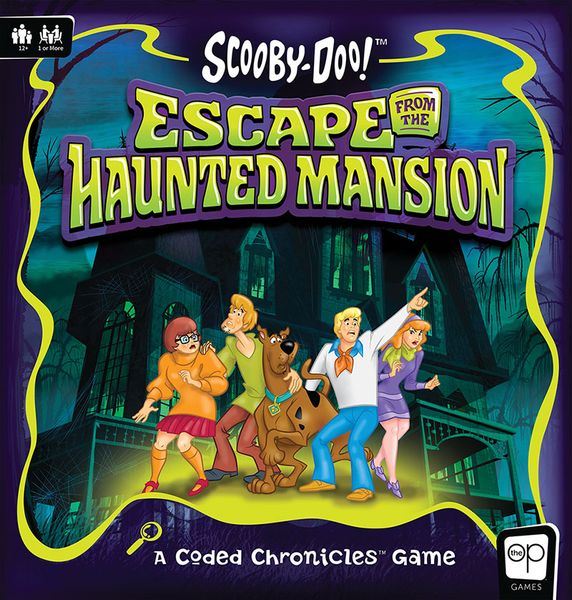
9. Coded Chronicles: Scooby Doo! Escape From The Haunted Mansion
pic5239705
Ages: 12+
Play Solo? Yes, but best with a group
Number of Players: 1 or more Players
Time: varies (there are a number of interconnected scenarios)

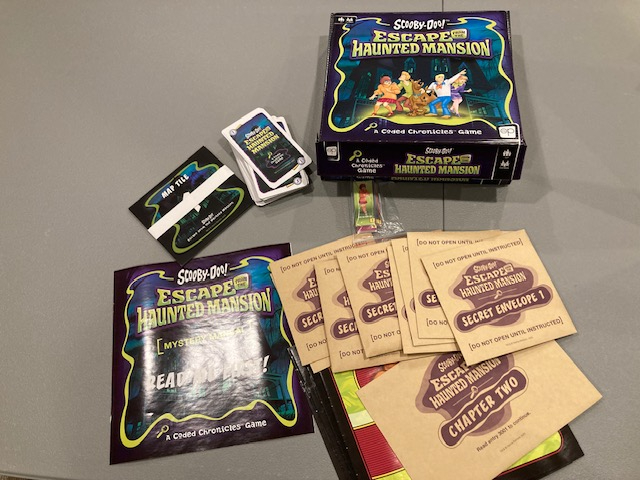
Players take the role of their favorite Scooby Doo characters and explore the Haunted Mansion, solving puzzles to pursue the mystery in this box! The object interaction is very simple (using the first number of the character combined with the number of an object), but it’s a pretty simple and elegant way to combine objects! 
IMG_2670

This is one of the simpler point-and-click adventure games on this list (with House of Danger being the simplest), but it’s a really fun mystery! And it totally feels like a point-and-click adventure as you explore the house, combine objects, and work towards solving the final mystery!

There are other games in the Coded Chronicles series as well if you like this style of adventure game!

8. Paper Point N Click: Eppi
IMG_2581

Ages: 8+
Play Solo? Yes, but best with a group. The solo mode is still quite good!
Number of Players: 1-4 Players
Time: 5-8 Hours for the whole adventure

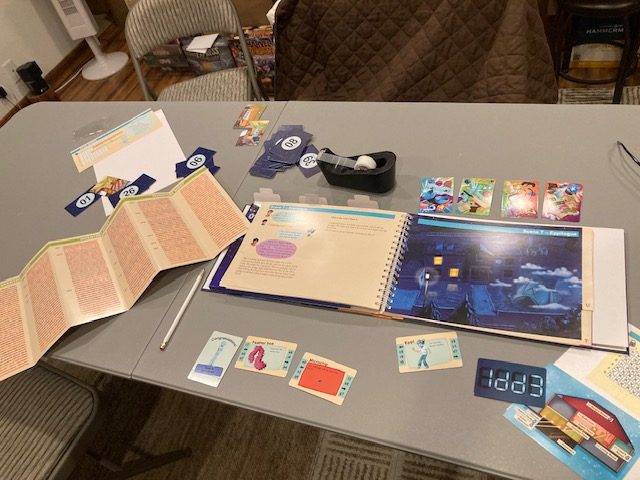
Eppi is the next adventure book game series in the Paper Point-and-click line of games.
IMG_2656

This game is an exemplar of the great things a board game can do in the  point-and-click genre!  This particular game is aimed more towards families and is probably best in a cooperative group, but it still works very well solo.  The exploration, story, and puzzles that come out of this game are just outstanding!  This feels like a real point-and-click adventure game.  This is aimed at a younger or family-friendly audience, which may be outside your wheelhouse (which is why it’s only #7).

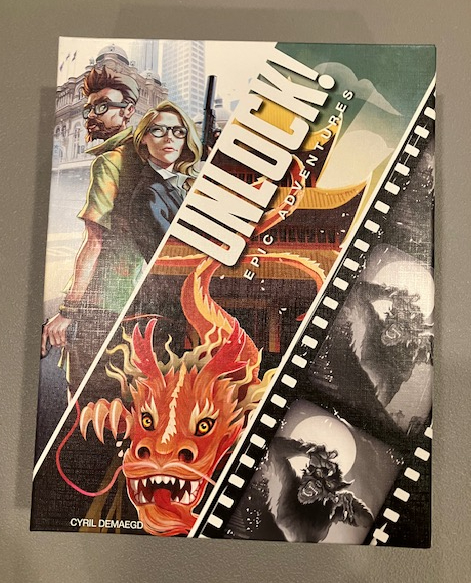
Unlock Epic Adventures: Mission #07
IMG_0205

Ages: 10+
Play Solo? Yes, but probably best with a group
Number of Players: 1-6 Players
Time: 60 minutes

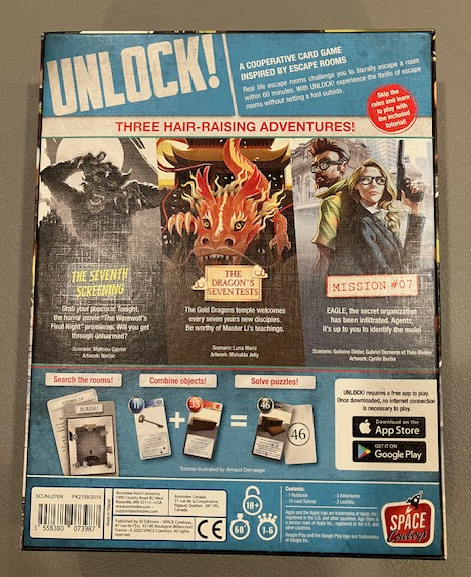
The Unlock! games are nominally called Escape Room games, but they share quite-a-bit of DNA with point-and-click adventures!  The Unlock! games, which use cards and an app on a phone to direct the action, are a perfect example of point-and-click adventure games!  A story unfolds as you unlock new locations and items, and you to explore and combine items to push forward!
IMG_0206

This particular box has three adventures in it (See Unlock!  Epic Adventures, which we reviewed here), all of which are great point-and-click adventure games!
IMG_0207

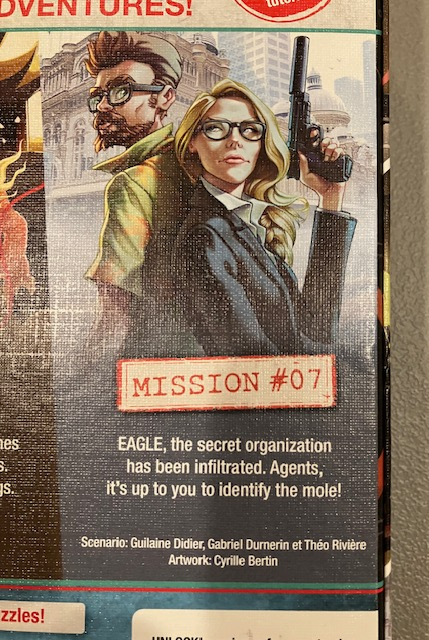
But it was Mission #7 (the last of the adventures) that really captivated us!  This story was fun and interesting and tried a few new things we haven’t seen in Escape Rooms before!

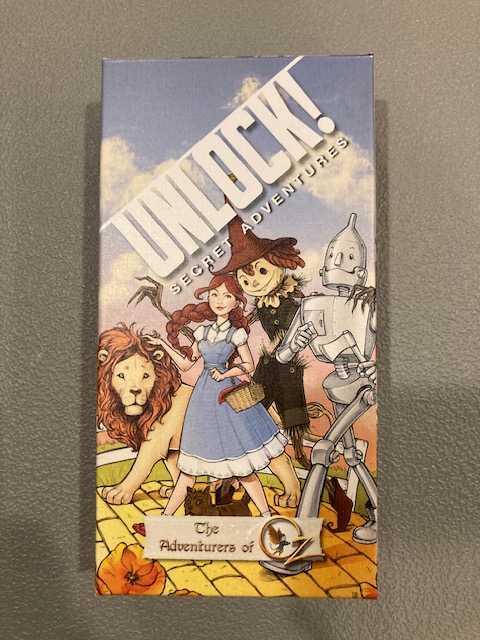
6. Unlock! The Adventures of Oz
IMG_2690 (1)

Ages: 10+
Play Solo? Yes, but probably best with a group
Number of Players: 1-6 Players
Time: 60 minutes

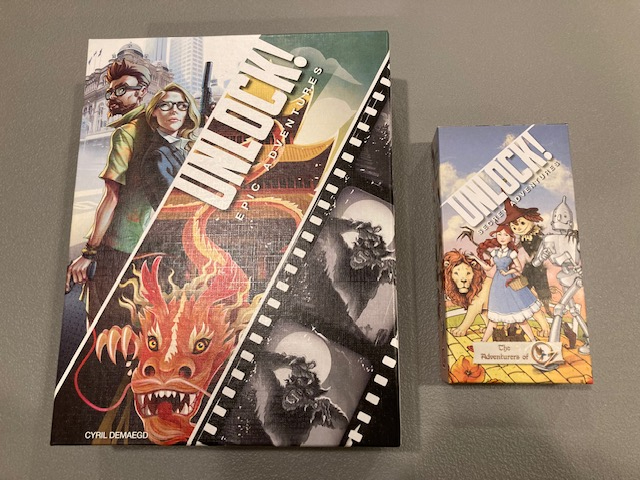
The original Unlock! games came 1 game to a pack: later on, they started packaging them up up three at a time.
IMG_2692 (1)

Before we got Mission #07 in the Epic Adventures box, The Adventures of Oz was available and one of our favorite Unlock games!

IMG_2691 (1)

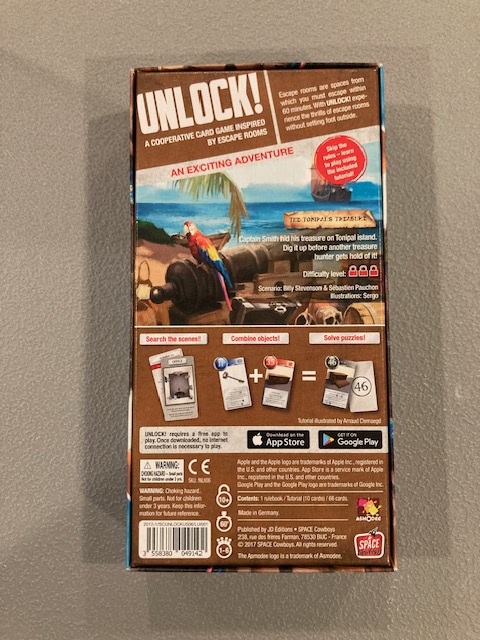
My favorite explanation that this is a Point-and-Click adventure is the back of the box: Search the scenes!  Combine Objects!  Solve Puzzles!  The Adventures of Oz was a really fun adventure that I was mesmerized back at an early RichieCon in 2018: it tried some really interesting things and was such a great adventure!

5. Chronicles of Crime

Final Box Art

Ages: 12+
Play Solo? Yes, but probably best with a group
Number of Players: 1-4 Players
Time: 60-90 minutes

Chronicles of Crime is very much an app-driven game!  It made the #2 spot in Top 10 Cooperative Games 0f 2018! To quote:

If I had to characterize this game, I’d say it’s an old text-style adventure game!  What?  In the old adventure games, you could only “manipulate” the items on screen on in your inventory.  “Get light”, “Drop light”, “talk man”, “ask guard about skull” and so on.  In this game, all your items are on cards in front of you!  When you want to interact with the items, you use your smart phone to scan a code on some cards!  So, if you want to “ask guard about skull”, you’d scan the code on the Guard card, then scan the code on Skull card!  And the phone would tell you what he said!
 
This interaction is great!  Except, you are trying to solve a crime by interacting with the world in front of you!  Really, really fun!   You move around from location to location, physically LOOKING at animations at locations (really!), and then scan cards.  (“I think there’s a shovel here at this location … Um … Oh! There’s a ‘gardening tools’ card!  Scan that!”)
 
Surprisingly fun, amazing graphics (you HAVE to have a smart phone to play), but a lot of content!  It’s also easy to play!  A GREAT game!

There are multiple versions of this game: 2400, 1400, 1900, all of them very interesting iterations on the base game! I’d recommend any of them! In fact, 2400 made our Top 10 Cooperative Expansions of 2021!

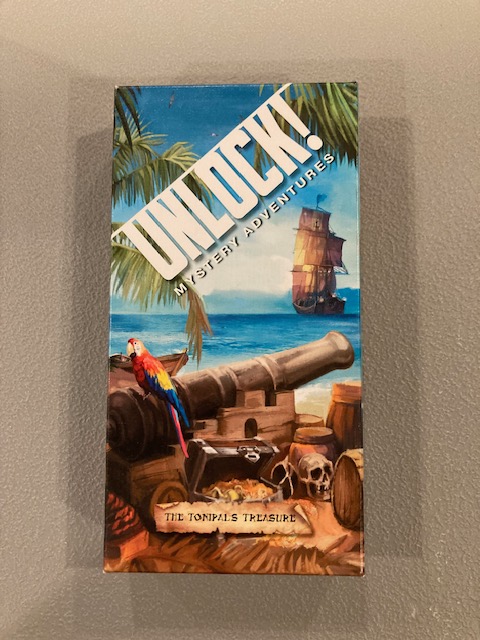
4. Unlock! The Treasure of Tonipal
IMG_2693

Ages: 10+
Play Solo? Yes, but probably best with a group
Number of Players: 1-6 Players
Time: 60 minutes

So, this is one of the more difficult of the Unlock! series!  The pirate theme and puzzles really kind of make of you feel like you are reliving some of your Secret of Monkey Island days!  
IMG_2694

Without giving away too much, this point-and-clock adventure had one of the funnest stories and the best “last puzzle” I’ve ever played.  I want to replay this again it was so much fun!

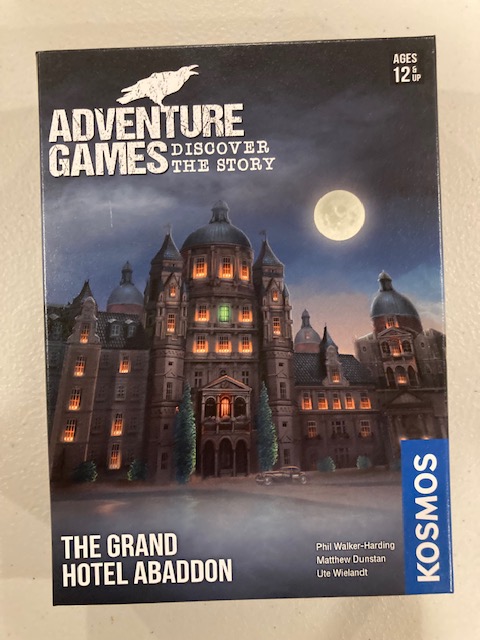
3. Adventure Series: The Grand Hotel Abaddon
IMG_2495

Ages: 12+
Play Solo? Yes, but probably best with a group
Number of Players: 1-4 Players
Time: 90 minutes per chapter (3 chapters)

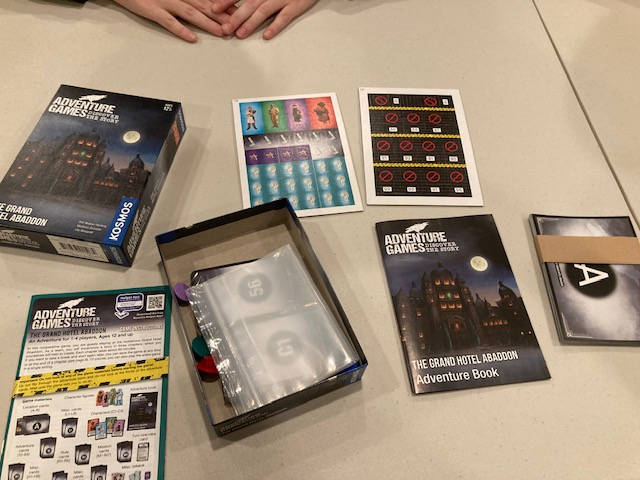
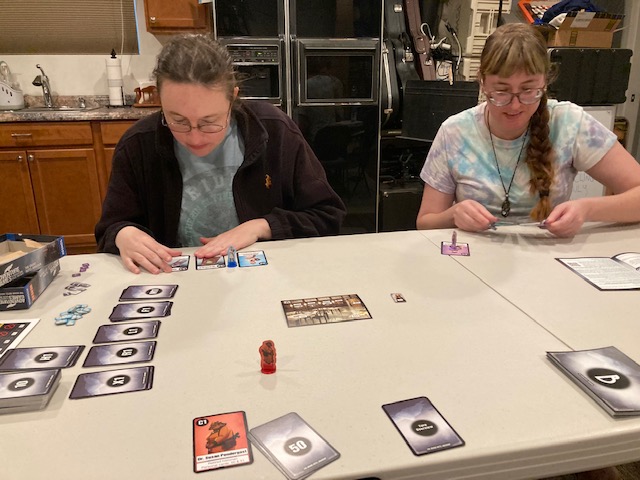
This is a very different kind of point-and-click adventure game: it’s quite text heavy, but it uses cards to denote objects and locations.  
IMG_2497

The Location cards are oversized cards, and the objects in the game are plain cards marked with numbers.  
IMG_2499

Every player assumes the role of a character, with little standees moving around this world.  The story centers on a hotel as “strange things” happen.  It’s quite an interesting story that unfurls over 3 sessions!  This is the 4th game in the Adventure Series line: it made our Top 10 Cooperative Expansions of 2022! We really loved this game!

2. Adventure Series: The Dungeon

Ages: 12+
Play Solo? Yes, but probably best with a group
Number of Players: 1-4 Players
Time: 90 minutes per chapter (3 chapters)

The Dungeon is in the same series of games as our last entry: The Adventure Series.  This game series burst onto the scene in 2019, and it was so fun it made it all the way to out #2 spot on the Top 10 Cooperative Games of 2019!

This was probably the first board and card game that really felt a point-and-click adventure game!  You explored a dungeon!  Combined items!  Solved puzzles! You ventured through a story together!   There was nothing else like this, and this series totally captured my game group!

1. Paper Point N Click: Cantaloop

img_9161-e1623455483876

Ages: 16+
Play Solo? Yes, probably best solo
Number of Players: 1+
Time: 5-8 Hours

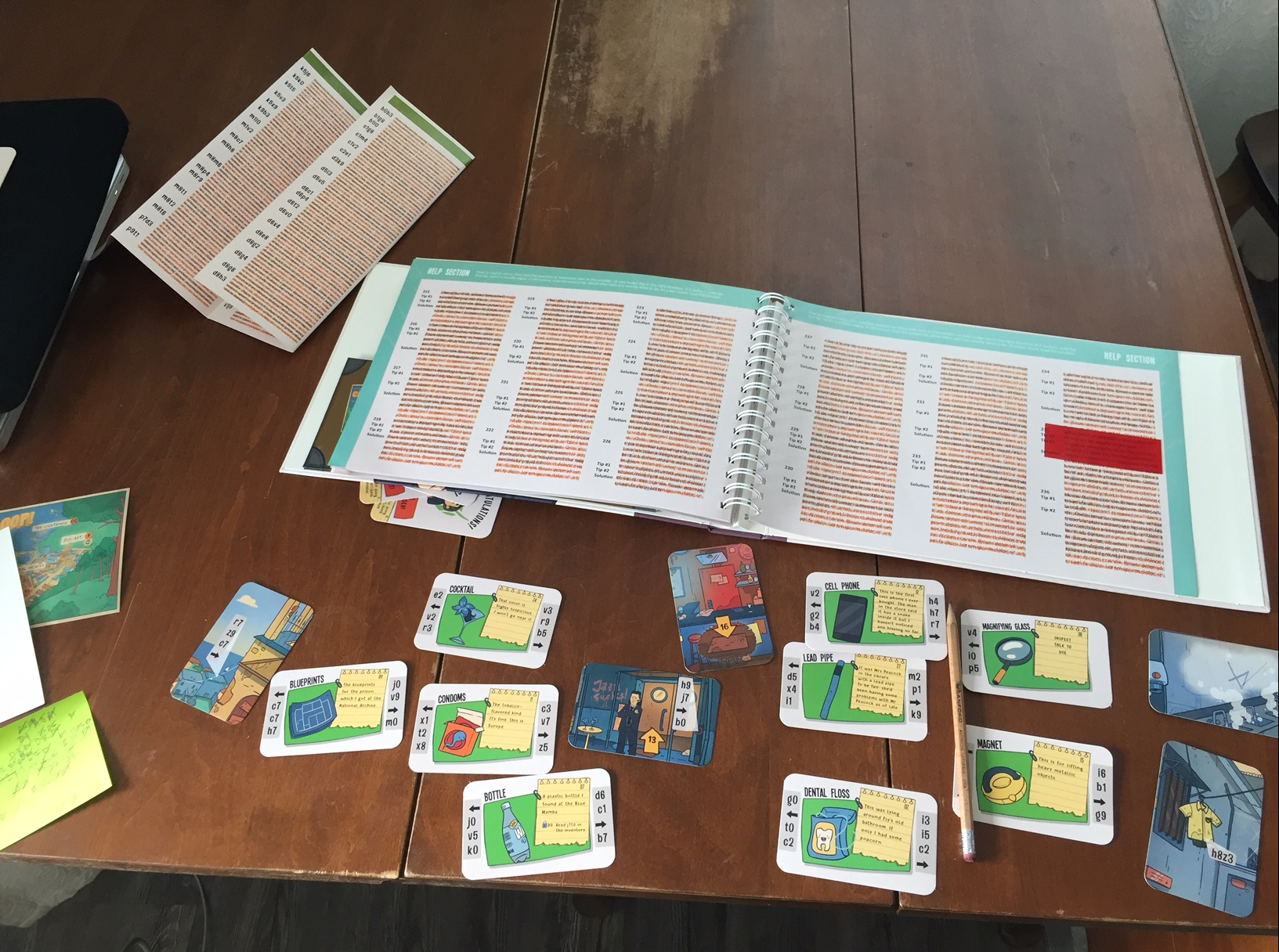
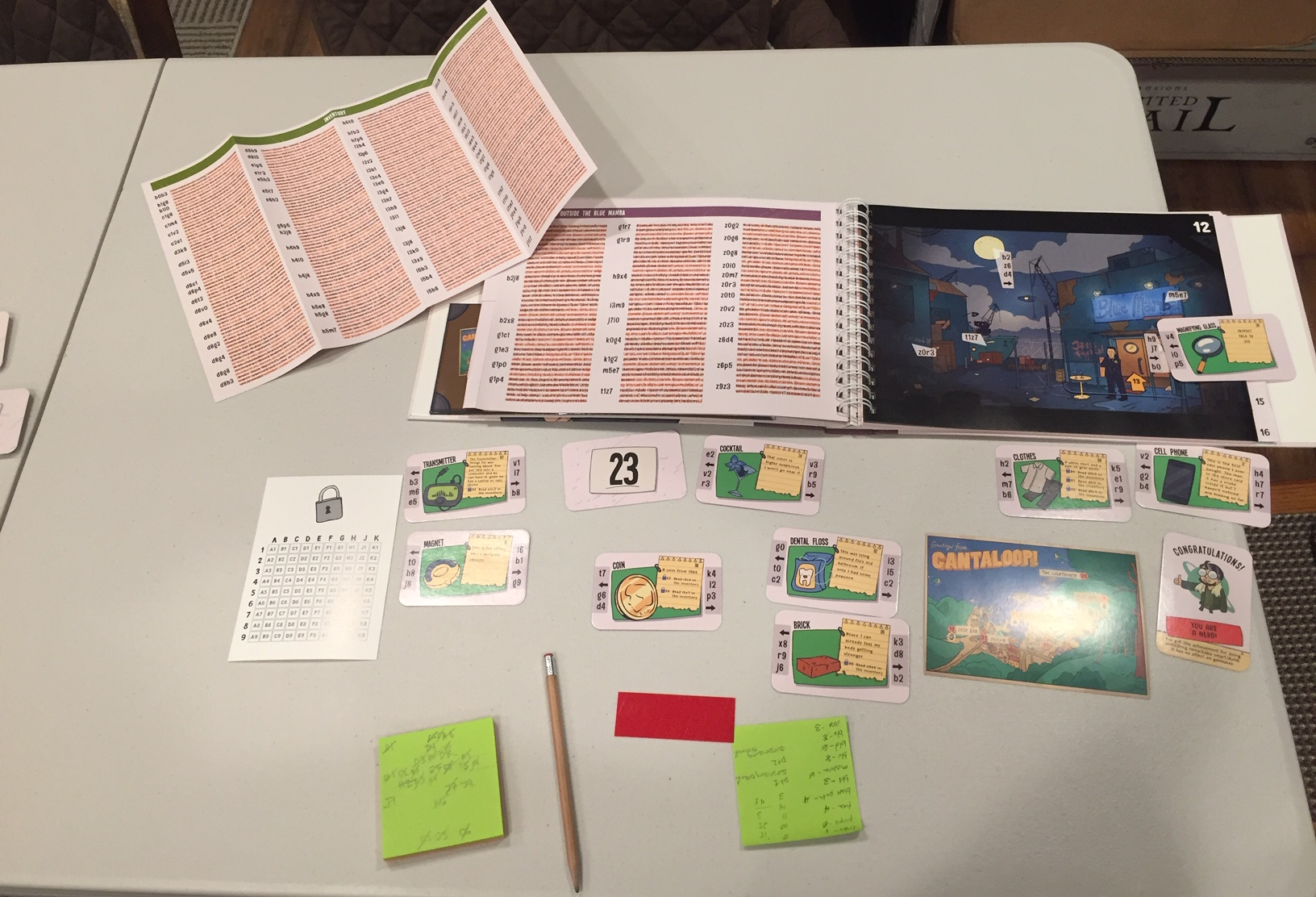
Cantaloop nails the point-and-click adventure book game better than any game I have ever played!  When this came out in 2021, it was ground-breaking!  Using the book format with red acetate decoder to move through an adventure game was new and original.
IMG_9240

The way players moved through Locations, combined objects, and solved puzzles was very innovative! Even the help system was innovative!
IMG_9195

What made this so good was the writing! Jokes were strewn everywhere, and everything seemed well-thought out! Remember when Monkey Island would tell you a joke when you tried to combine two weird things? The same happens in Cantaloop! Cantaloop rocketed to the #1 Spot on my Top 10 Cooperative Games of 2021 !

IMG_6808

This series is an ongoing story over three books, told in 3 standalone books: Breaking Into Prison, A Hack of a Plan, and Against All Odds. See our reviews of all three games here, here, and here.
IMG_1055

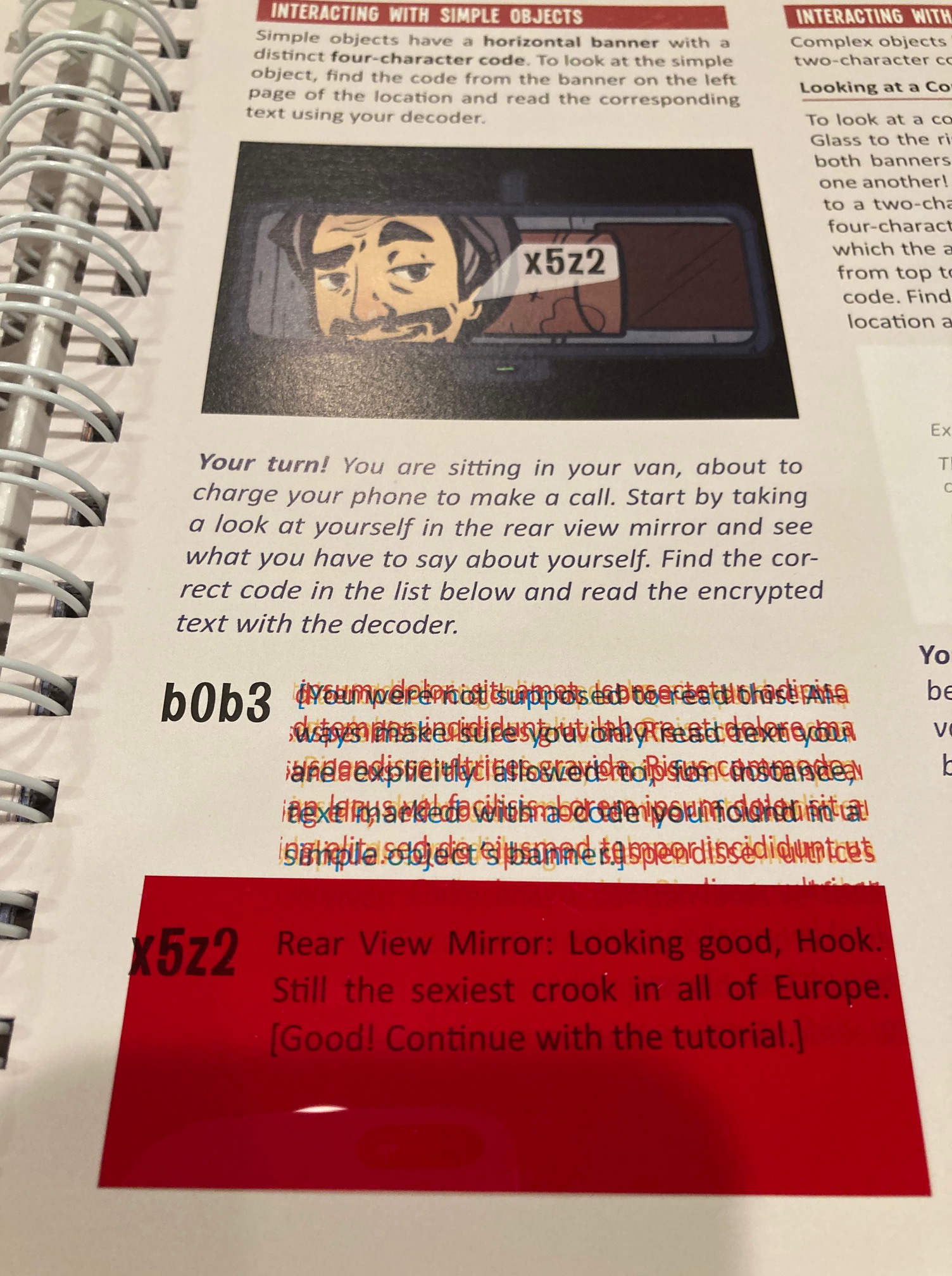
The only thing to be careful of is that the games are slightly raunchy (see above) and some adult material slips in (which is why the game is 16+ for ages), but it’s always done to be funny and doesn’t detract from the game.

Play An Episode of House! A Review of NYC: Emergency Room (A Medical Mystery)!

Welcome back to Cooperative Surprise Month! This month has seen a surprisingly good cooperative game set in 700 BC called Sammu-Ramat, a “lost” review of Chainsomnia, and a light-and-fun cooperative game called Hissy Fit with the surprisingly weird theme of taking cats to the vet! This week, we take a look at another game with a surprisingly weird theme: NYC: Emergency Room!

NYC: Emergency Room is billed as “A Cooperative Medical Mystery Game” for 1-4 players, Ages 14+. That lower bound of age may seem low or high, depending on who you are, as there are discussions you would want “mature” adults discussing (birth control, the human reproductive system, death, pain, diarrhea). So, be aware that this medical mystery game requires an adult attitude!

NYC was a game I picked up at Target a few weeks ago (early February): I was on the fence about it. On one hand, I love murder mystery games (see our Top 10 Cooperative Detective Games) and escape room games. On the other hand, I generally don’t like medically themed games (too depresssing). Should I pick it up?

IMG_3154

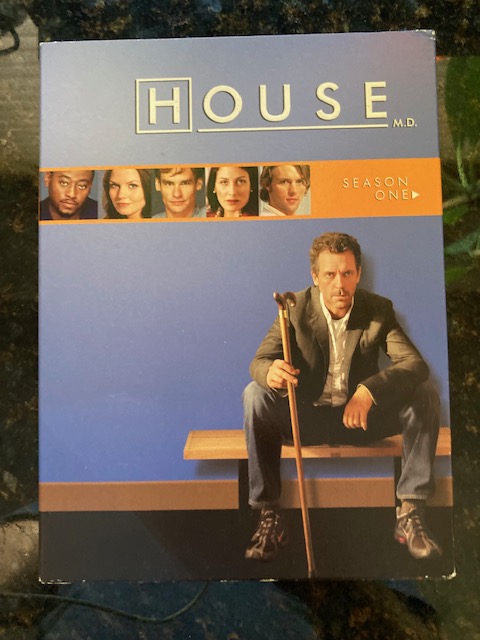
Then I remembered how the TV show House was originally billed as a a medical mysteries show. If you don’t know the TV show House, it is basically Sherlock Holmes as a doctor solving strange mysteries, but in the medical field (Get it? “House” & “Holmes” … “Wilson” & “Watson”). The show, while pretty dark, is quite interesting!

IMG_3151

In the end, that’s why I picked up the game: “a fun medical mystery like House”. Or at least, that was my hope!

Unboxing

IMG_2914

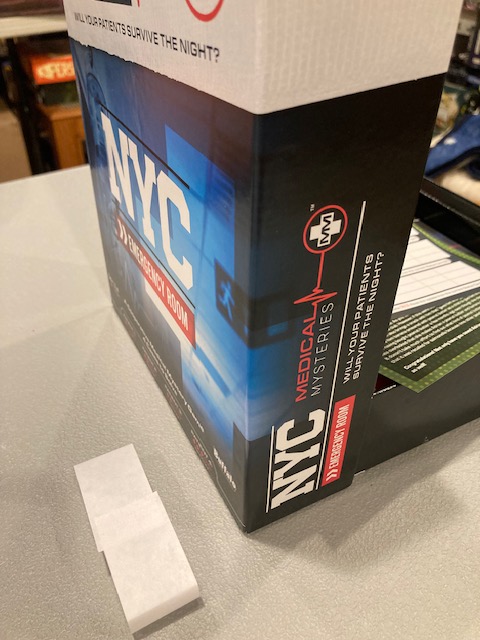
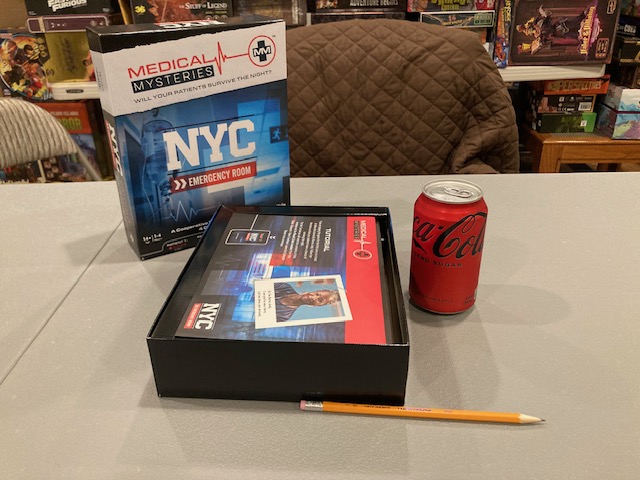
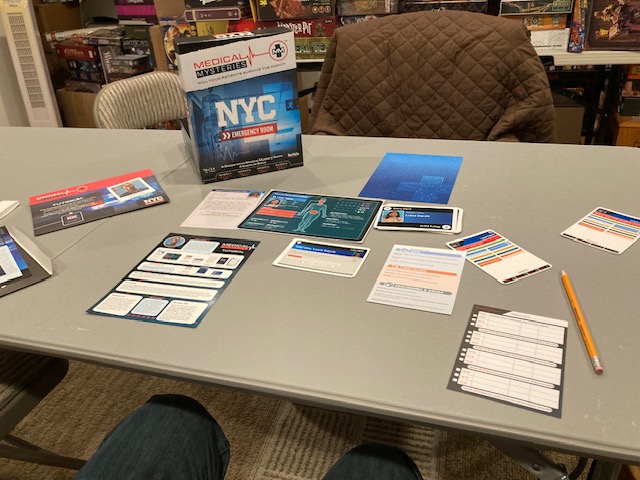
NYC: Emergency Room is a pretty standard sized box. See the Coke Can and #2 pencil for perspective.

IMG_2916

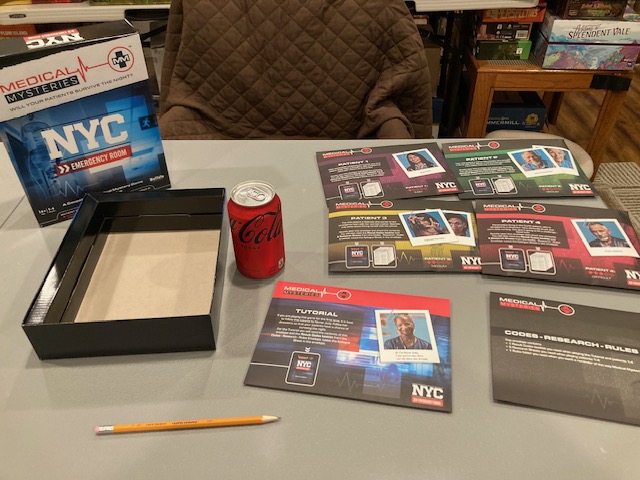
The game is really just a bunch of envelopes!  All the components are in one of six envelopes.  

IMG_2917

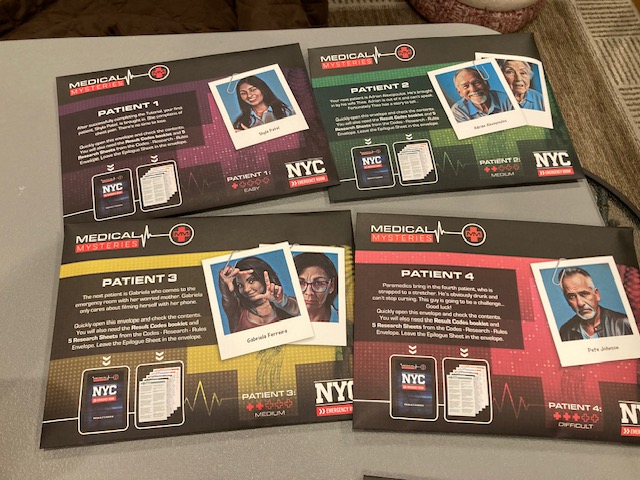
Four of the envelopes are cases for four different patients.  Each one of these is a different case.

IMG_2919

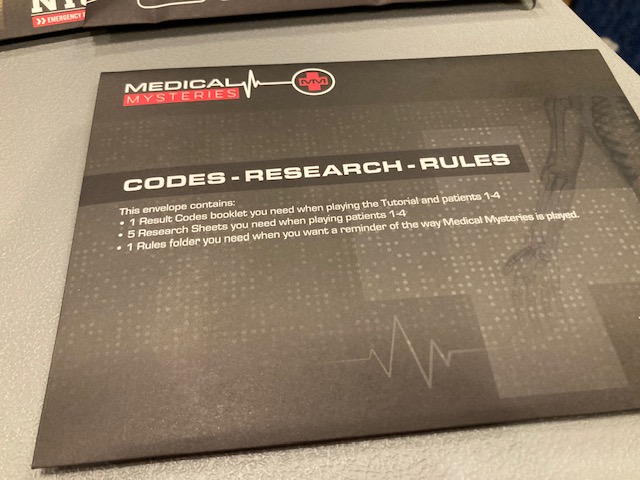
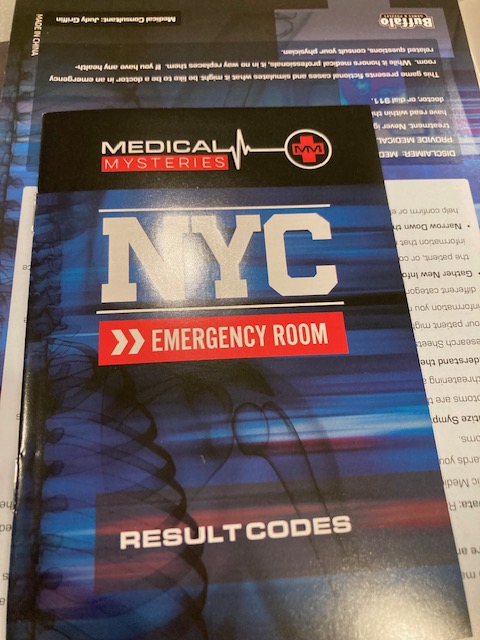
There is one envelope that has components every game needs: that’s the Code/Research/Rules envelope. See above.

IMG_2918

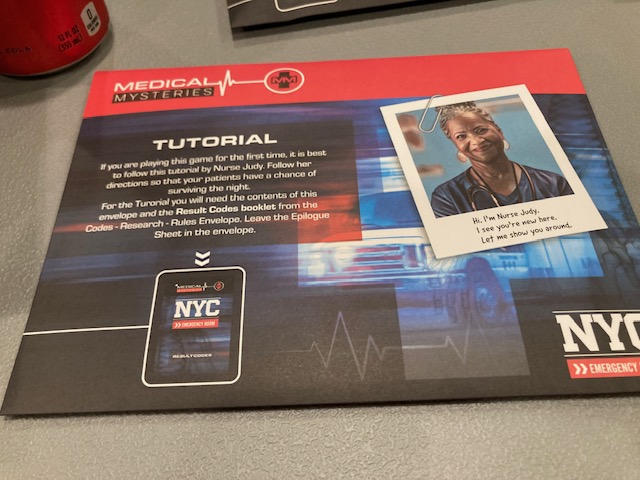
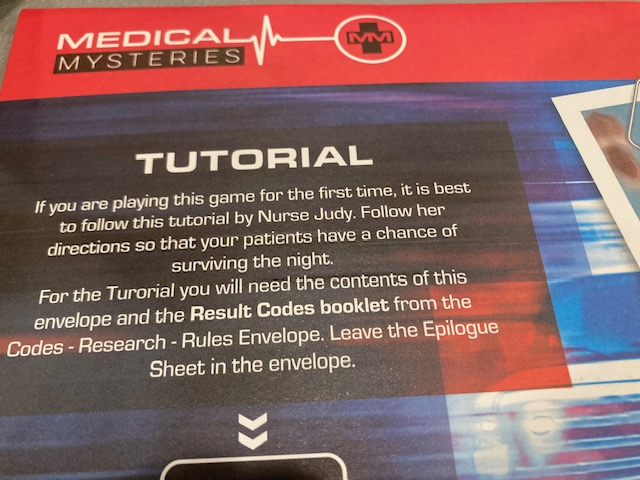
The first patient, though, is not one of the four envelopes… there’s a tutorial that walks you through your first case: Nurse Judy recognizes you are just starting out, and tries to help you through the process!

IMG_2922

It’s kinda cool is that every envelope tells you exactly what’s inside (see above)! I can totally see passing this game onto other people after I am done, so it’s good to make sure each case has everything you need to do it!

IMG_2923

Considering this is a game from Target, the quality is actually pretty good for everything (see above for some contents of the first envelope).   It’s surprisingly good how good these components are!

Rulebook

IMG_2925

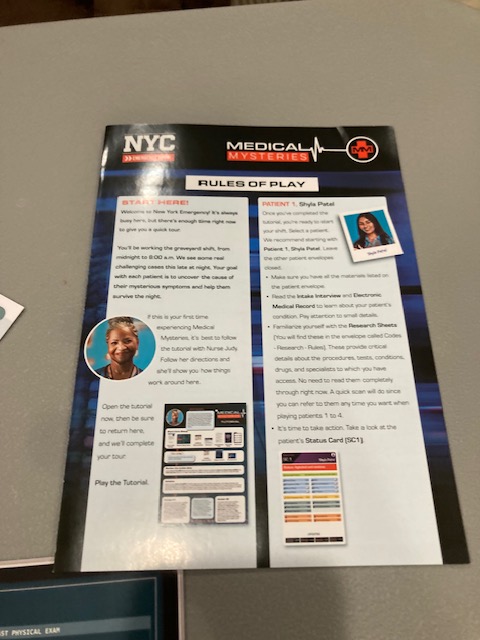
There is a rulebook, but you don’t even start with it.  You start with Nurse Judy’s tutorial pamphlet.  It walks you through your first game, and honestly, it does a fantastic job.

IMG_2941

By the time I got through the Tutorial, I don’t think I ever looked at the rulebook!  (It comes in the black Codes envelope).  Seriously, I can’t complain or laud the rulebook because I never needed it.   The pure joy of the Tutorial made the rulebook almost unnecessary.  I may have looked it at once later for a rules clarification, but I’m not sure how much you’ll use it.  Listen to Nurse Judy, and you’ll be fine!

The Tutorial

IMG_2926

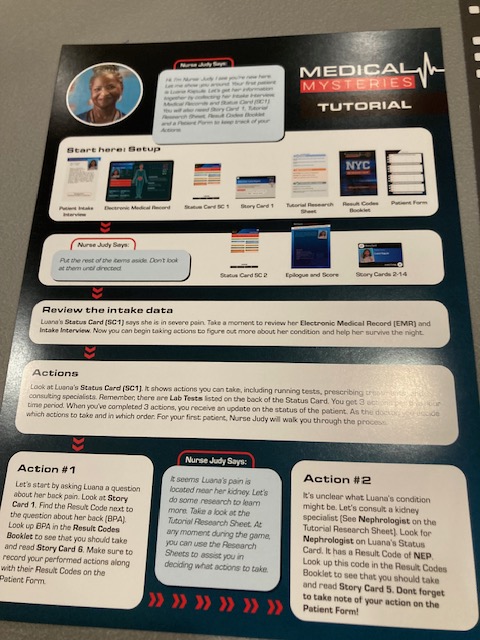
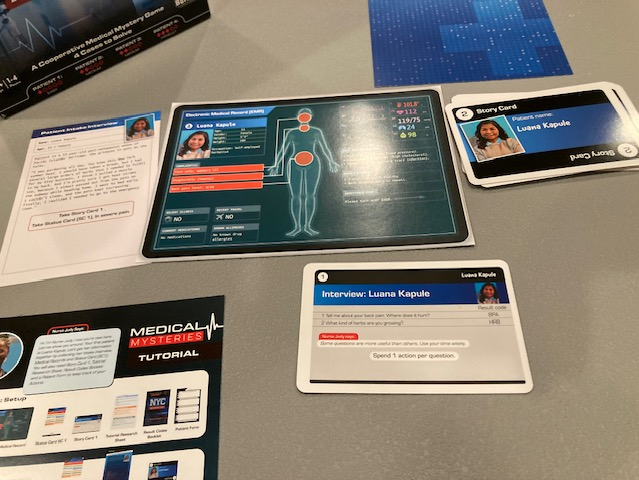
The tutorial takes you quickly through a simple case with Luana Kapule: see above. IMG_2927

This was very easy to set-up and a very quick game.  I think I got through the Tutorial in about 20 minutes.

IMG_2929

Seriously, this is one the best tutorials I have seen in a while.  You see all the things you should do, the things you shouldn’t do, and the game walks you through the playthrough very precisely.  

You know that a Tutorial is good when you don’t think you need the rulebook anymore:  20 minutes in, and I think I know the game.  I call that a successful tutorial!
Gameplay

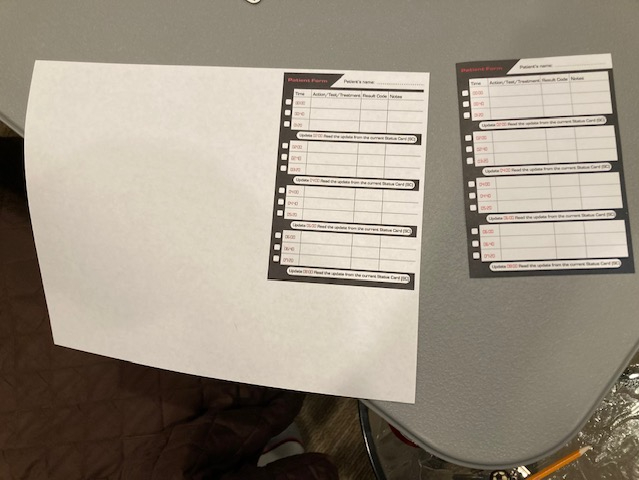
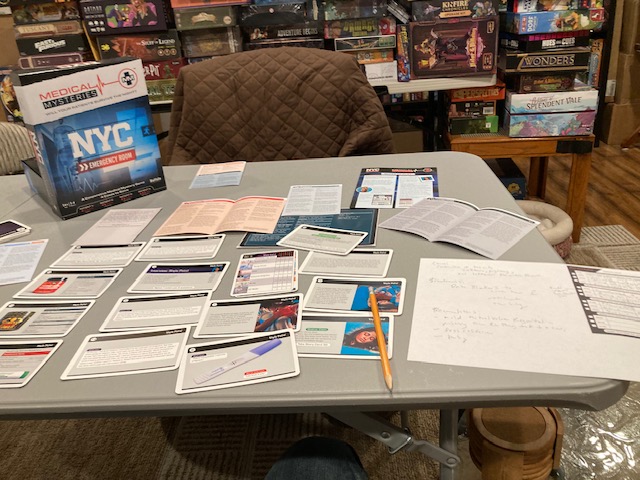
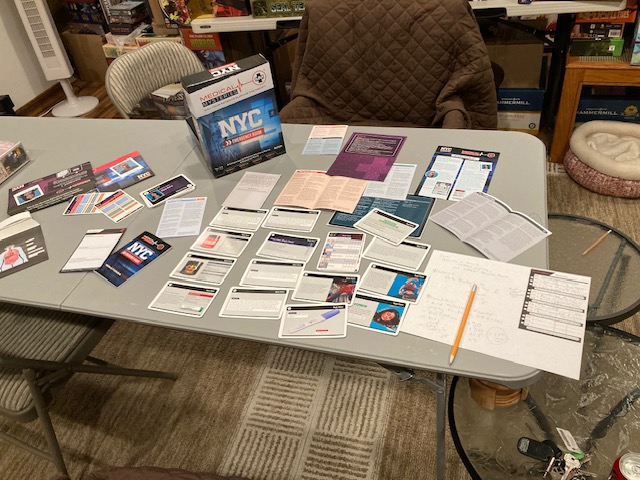
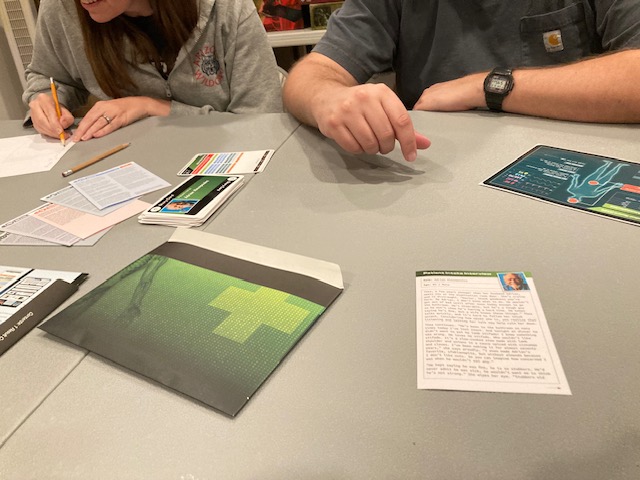
The game is all about what tests and consultations and medications to administer to a patient over a night (a timeline).  You are measured by, frankly, if the patient survives the night.  You have a sheet that you keep track of everything you do and what time you do it: see above.

IMG_2928

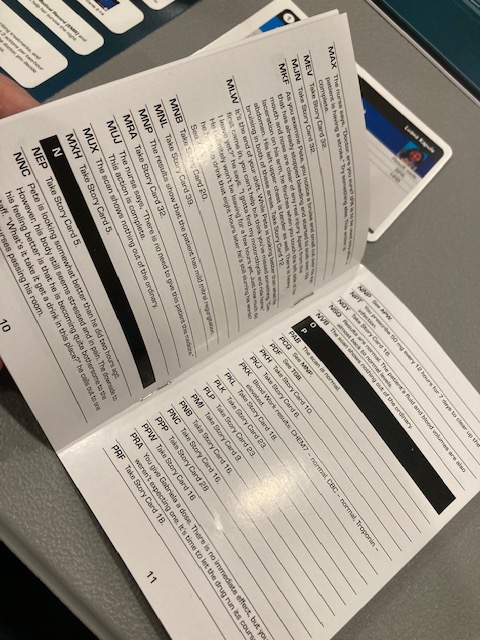
As you run tests on your patient, you will get codes to look up in the code book: they tell you what happens: frequently, this means you draw a card from a deck of “how the patient is doing”.  Note: the results of the tests do change as time marches forward!  Gulp! Make sure you run that test at the right time!!

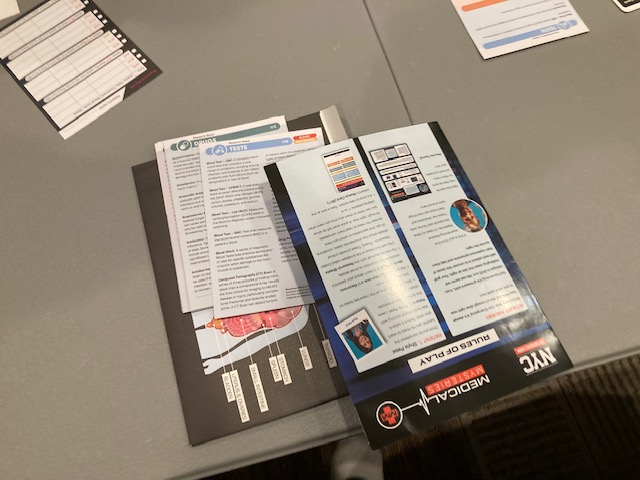
IMG_2940

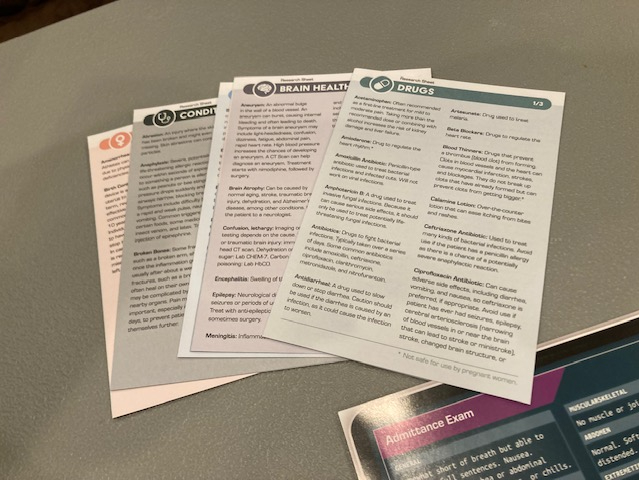
What tests do you run?  Holy cow, all the things you can do or know is presented in about 5 pamphlets brimming with medical information!  See above.  This particular mechanic kind of reminds of Sherlock Holmes: Consulting Detective. 

pic2564759

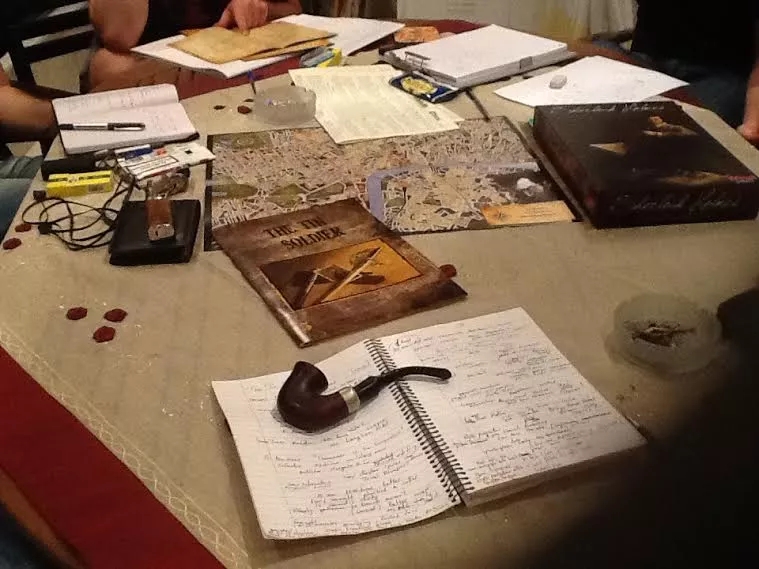
Not directly, but the sheer volume of medical information in the game reminds me of the sheer volume of materials in Sherlock Holmes: Consulting Detective: the maps, the phonebook, the newspapers.  This is a good thing: it really feels like medical mystery! You just have to look in the right place to solve the mystery!

IMG_2929

If you can keep the patient alive by running the right tests (remember, tests can be invasive in many ways) and finding the right thing to do (which may be medication or something else), you win!

It goes without saying, but if your patient dies, you lose!

Solo Game: Patient 1

IMG_2926

Strictly speaking, my first solo patient was from the Tutorial: but Nurse Judy basically kept me out of trouble, so I don’t know if that counts.

IMG_2937

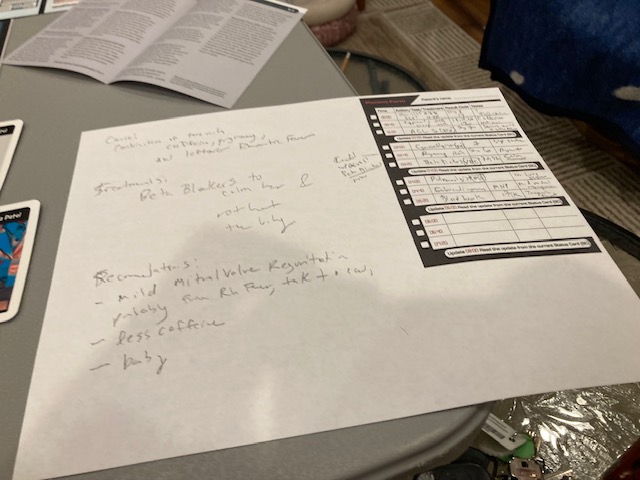
Before I began, I made a copy of the timeline sheet (see above) and left room for notes on the left.  I strongly recommend you do this as well!  First, by making a copy, you can reuse the first case later.  More importantly, I think, is that having the extra space to make notes was a big deal.

IMG_2932

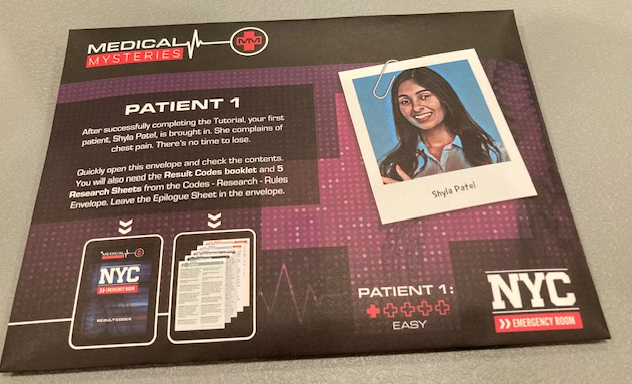
You never forget your first patient: mine was Shyla Patel.   

IMG_2935

I had to make sure I interviewed her to make sure I knew what was going on.

IMG_2946

I was able to do the proper tests and figure out what was going wrong with her.  Along the way, there were places where I could have done “something bad”, but in the end, I kept Shyla alive.

IMG_2947

She left the Emergency Room alive and in good health. It was a good day.

IMG_2940

Shyla never saw me looking, but my head was buried in these medical pamphlets the entire time.  This is a game about research, it’s a game about following up, it’s a game about what it’s like being a doctor.  (I always wonder if doctor’s do the same thing when we aren’t looking … “What the heck was that?  I gotta look in my pamphlets!”)

IMG_2945

It was incredibly engaging, but there was a lot of research, a lot of taking notes (see above) and a lot of reading.  I love that stuff, but some people don’t.  

Why watch an episode of the TV show House when you can just play it? I really enjoyed this game solo.

Cooperative Game

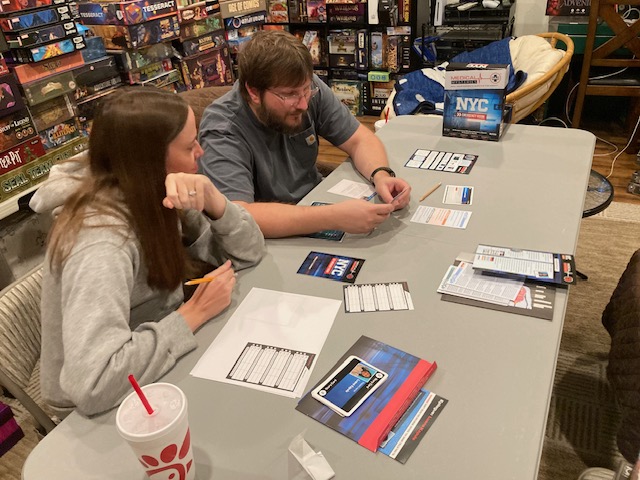
IMG_3153

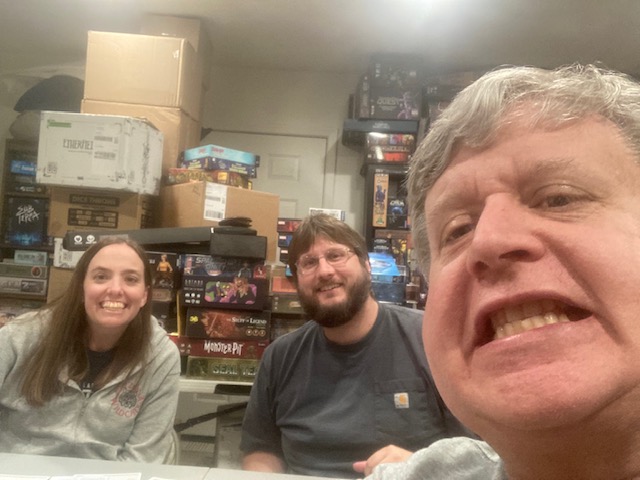
It’s Charlie’s fault I started watching the TV show “House”, so I felt it was apropos that he and Allison play this with me!

IMG_3146

Rather than try to explain the game to them, I simply had Charlie and Allison go through the Tutorial.  This was interesting: I am so used to explaining games to people, but I realized this game is just complicated enough that it makes sense to use the Tutorial again!  Rather than teach the game, just play the Tutorial! It really is that good!

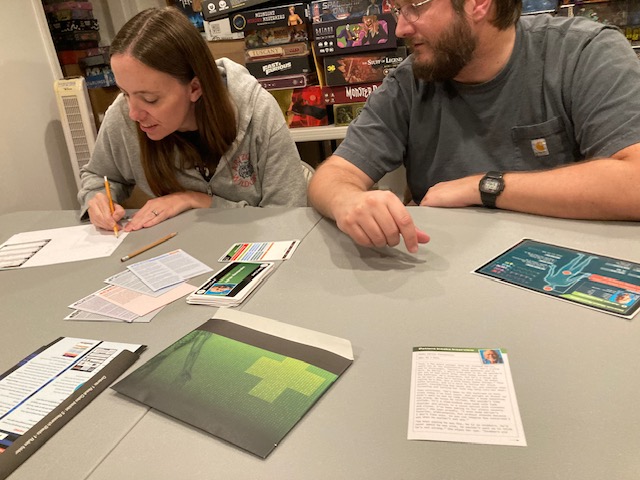
IMG_3149

After they finished the Tutorial, we encountered Patient 2: Adrian Alexopolous.

IMG_3150

The cooperative game was very much like the solo game, but now we have a group of “other doctors” we could bounce ideas off of!  I like this shared responsibility: it’s a little scary to take full responsibility for a patient yourself, and this shared burden made it a little easier to endure.

IMG_3152

The burden of taking notes, reading cards, consulting pamphlets also made the game move a little more quickly than the solo game.

IMG_3147

Although I liked the solo game, and didn’t have any problem taking the full responsibility of a patient myself, I can see many people bouncing off this!  By having a team of doctors helping each other to help the patient, I can see many people preferring the cooperative mode over the solo mode.  

What I Liked

IMG_2920

The Tutorial is fantastic.  It just gets you into the game right way: it’s the best way to teach new players, even if you already know the game!

IMG_2940

I like all the medical information available.  I wish the medical pamphlets were bigger books written in a bigger font. I did a lot of reading and research with these!  It felt like the world was large, something to explore, even though I was only reading medical texts.

IMG_2917

The mysteries are interesting and engaging.  And the components are great too, especially for a Target game.

What I Didn’t Like

IMG_2940

I already said this in the What I Liked Section, but I wish the medical pamphlets were bigger with bigger fonts.  In fact, a lot of these pamphlets had two or three different things in them! I wish they had been broken up a little better … I am sure this is a “it costs money to make big pamphlets” issue, but they would have made it a little easier to use.

IMG_2945

In the end, I made copies of the charts/timeline, but it bugged me a little that there weren’t multiple copies of these little sheets: there was only one for each patient!  For multiple reasons (extra space for notes, enabling this patient to be re-used), I strongly advise you to make a copy like I did above!

Conclusion

IMG_2923

I really enjoyed NYC Emergency Room and so did my friends.  As long as you don’t have trouble with the theme, mature situations, and potentially life-or-death situations, this is a great mystery game! 

IMG_3151

In fact, you could argue that the theme is very engaging because you are making “real” life-and-death situations for a person you meet in the Emergency Room!  Those tense situations may be too much for some people, but if you can handle it, I think it is fantastically riveting!

IMG_2924

Allison gives this a 8/10, Charlie says it’s a “Solid Game” (I couldn’t get a number out of him).  I think I am right with Allison: this a 7.5/10 or 8/10 for me.  My hesitancy comes only the theme being potentially being very divisive: “I don’t want to be a doctor right now, that sounds too stressful!“.  I get it, sometimes it might not be as appealing to be a doctor in a stressful situation! Having said that, in the cooperative game, that burden is shared making the game a little more palatable. 

IMG_3154

Why watch an episode of House when you can play it?  Just remember when doing patient interviews: “Everybody Lies.”

A Review of Chainsomnia

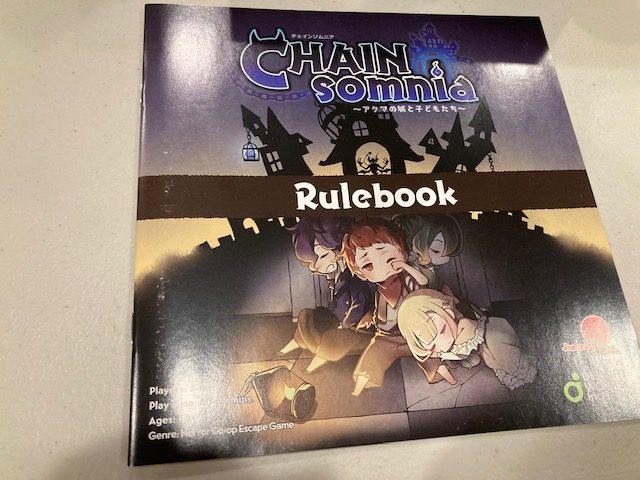
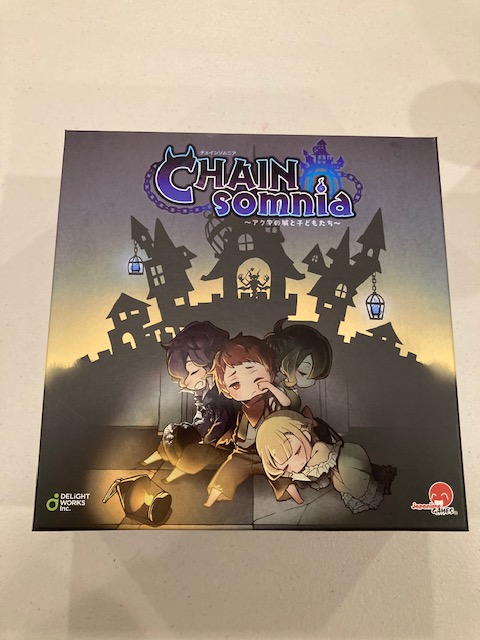
Welcome back to Cooperative Surprise Month! Last month we looked at the brand new game (Sammu-ramat) which was so surprisingly good! This week, we surprised ourselves by finding an old review which we never published! This is a review for the cooperative game Chainsomnia by Seiji Kanai! Let’s take a look!

Chainsomnia was a cooperative game I picked up from GameNerdz fairly recently (EDITOR: at the time this was written, it was June 2023 .. ahem).  It was a Kickstarter game, but I didn’t know that when I ordered it from GameNerdz (I guess I missed the Kickstarter).  Chainsomnia was appealing to me because it looks like a light cooperative game from the designer (Seiji Kanai) of Unicornus Knights!  I think that Unicornus Knights is something of a hidden gem (see Part I and Part II of our review), as it made our Top 10 Cooperative Games of 2017!

IMG_6696

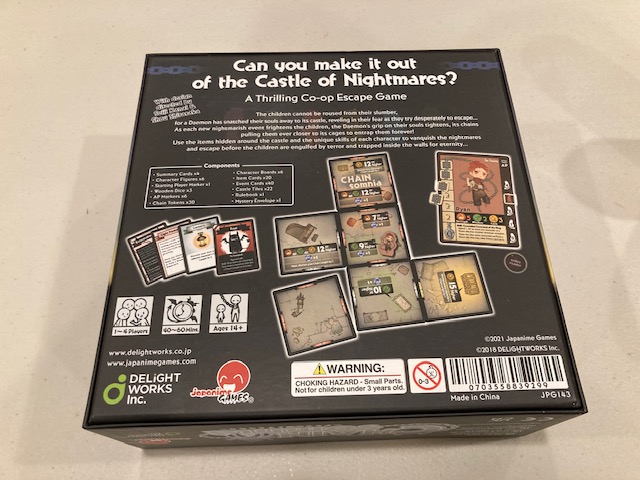
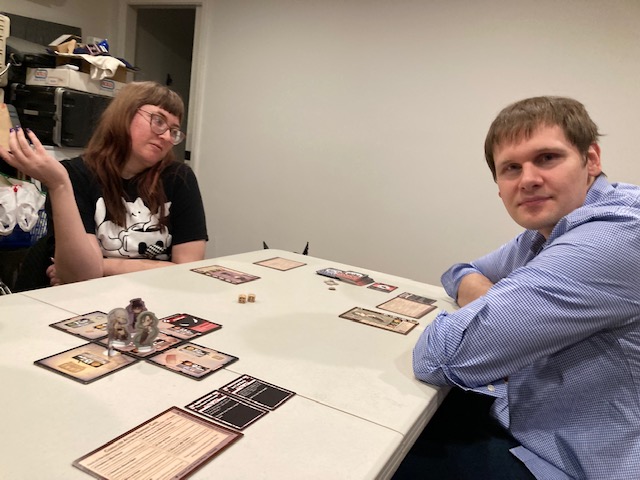
This game is about a bunch of nightmare-ridden little kids trying to get out of a castle of nightmares! It’s for 1-4 players, 40-60 minutes, and ages 14+. Let’s take a look.

Unboxing and Gameplay

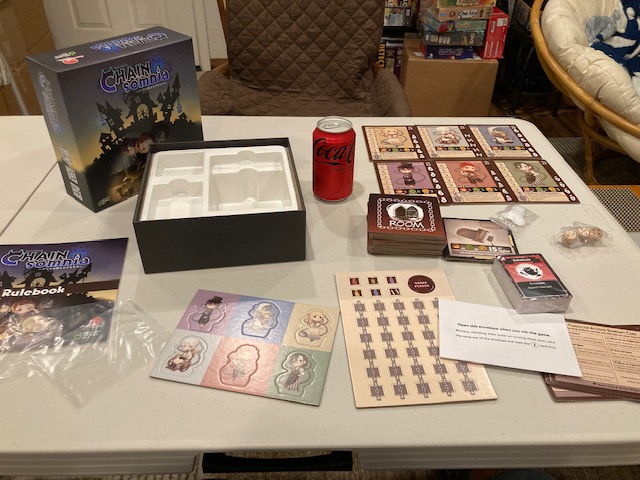
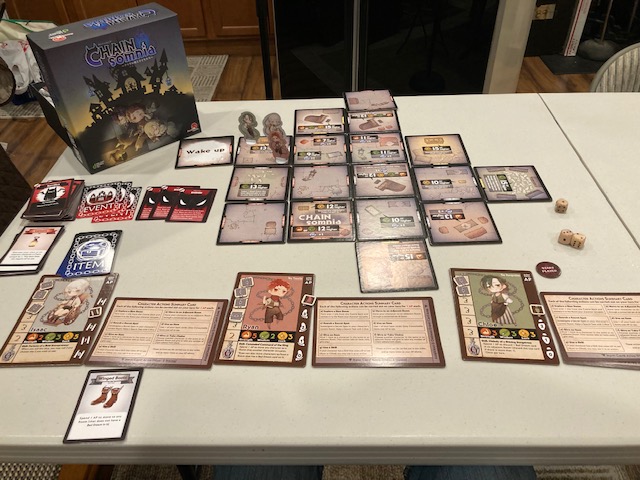
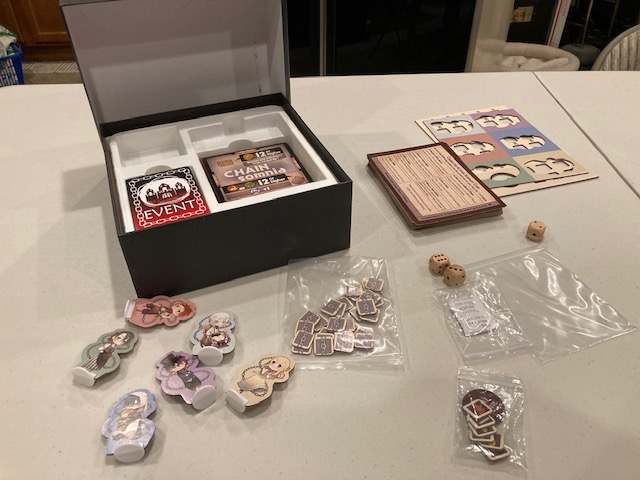
IMG_6697

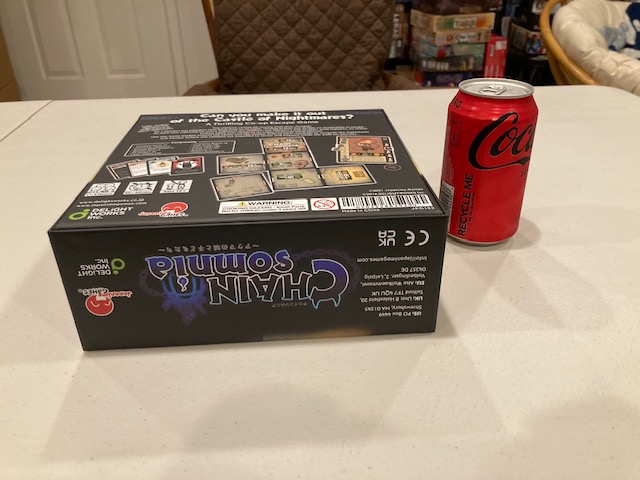
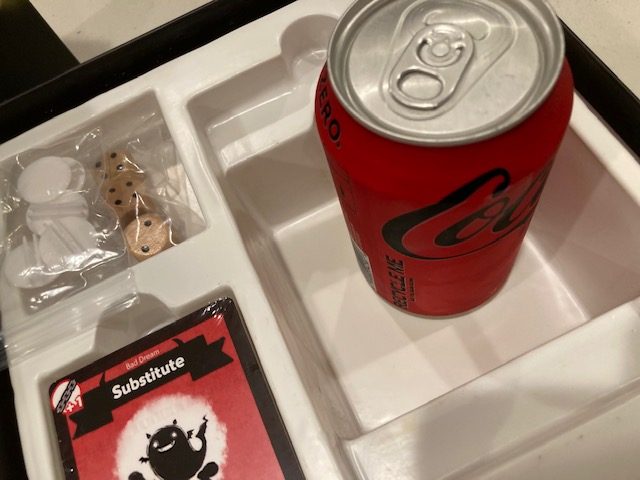
This is a pretty deep box.  The Coke Can actually fits inside it pretty well!

IMG_6720

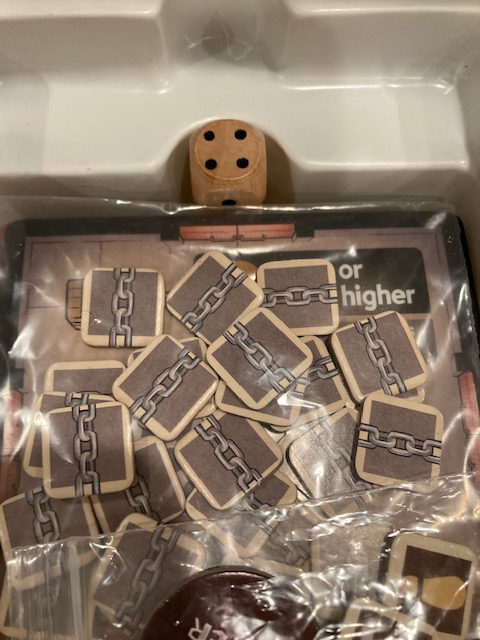
Seriously, this is a pretty deep box: mostly for the tiles.

IMG_6721

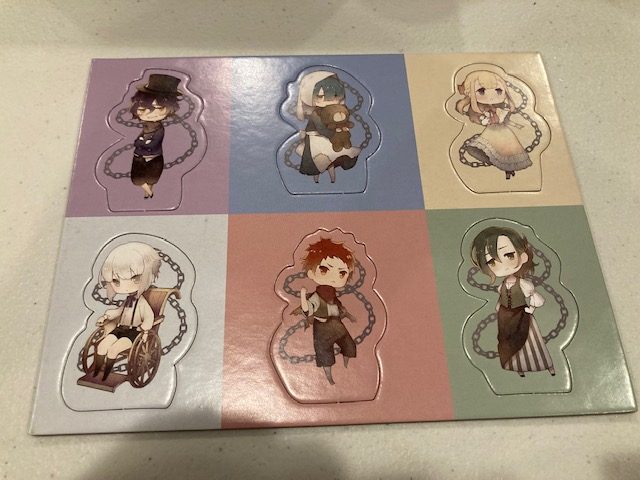
Each character takes the role of a child trapped in the castle:

IMG_6716

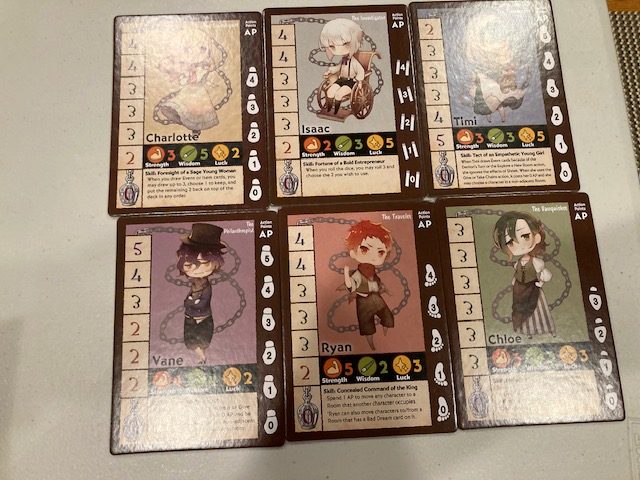
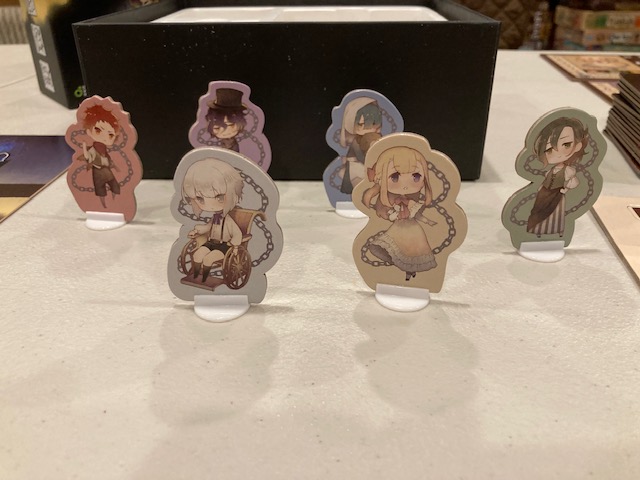
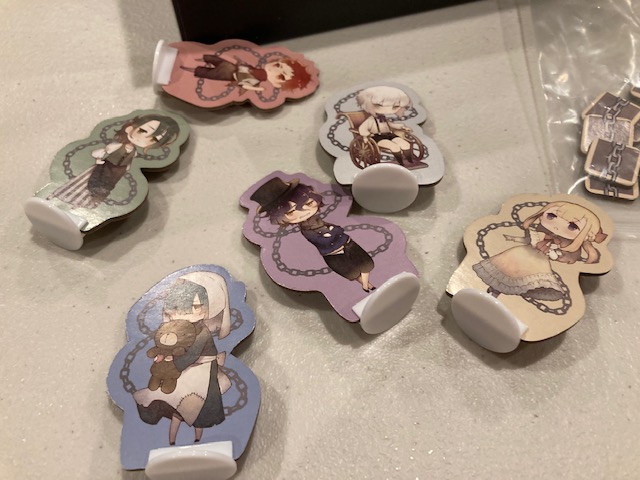
Each character has a standee and a character sheet.

IMG_6717

IMG_6725

Each character has some abilities (Strength, Luck, and Wisdom) which will form the the basis of a two-dice ability role.

IMG_6747

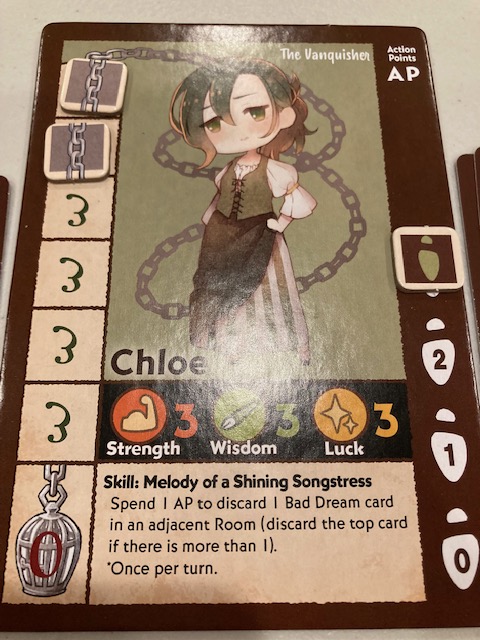
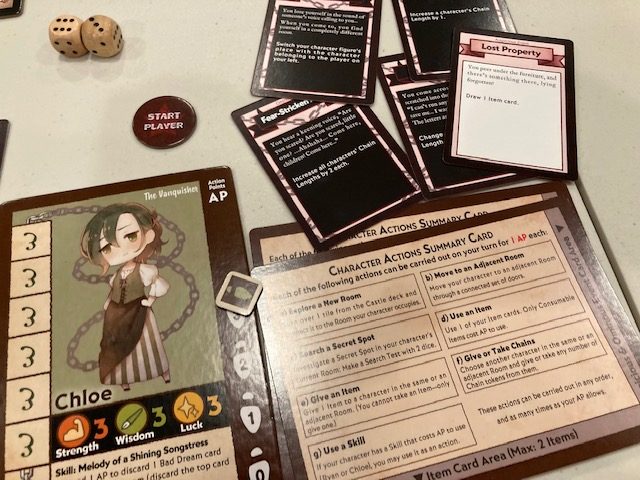
For example, Chloe above has 3 Strength, 3 Wisdom and 3 Luck.  She can also get rid of Bad Dream easily with an AP (Action Point).

IMG_6748

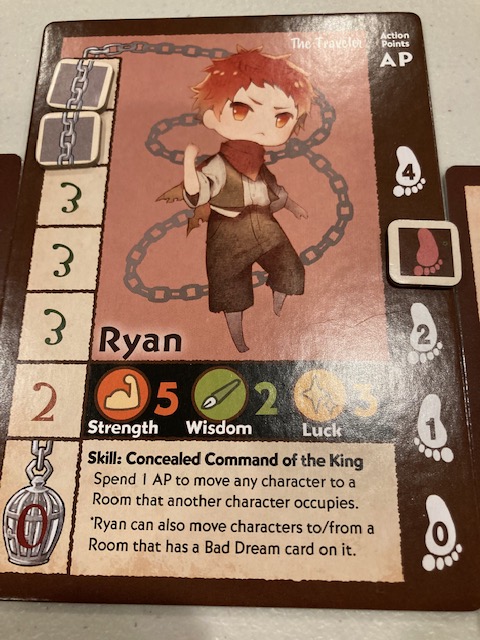
AP stands for Action Point.  The little chart to the left shows you how many AP you have per turn.  As you get Chains in the game (Ryan above has 2 chains), it reduces the number of AP you have per turn.

IMG_6718

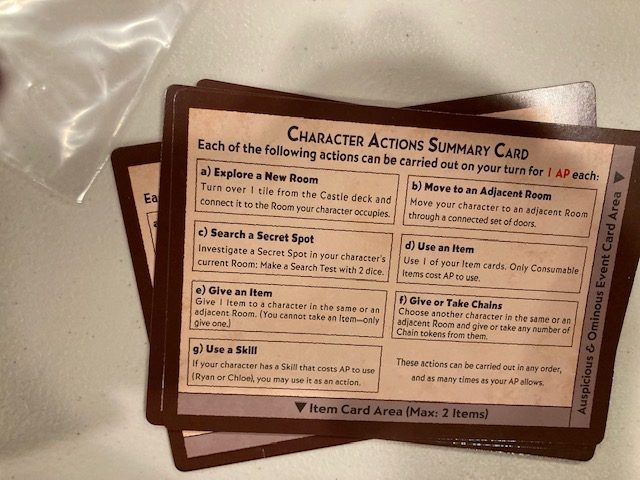
The Summary Cards summarize what you can do, but basically explore, search, give, skill, move, use or take.

IMG_6755

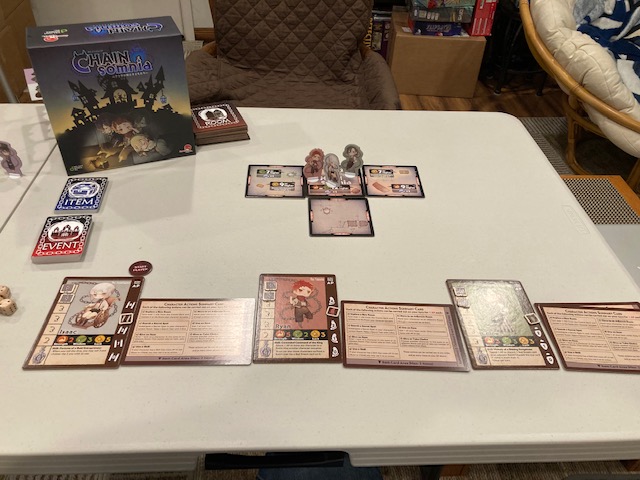
In order to win, the characters must cooperatively explore the Castle to find the way out: the Way Out is the last card in the tile deck.  See Chloe winning the game for everyone by finding the Way Out … when there are no Bad Dreams on the board.

IMG_6728

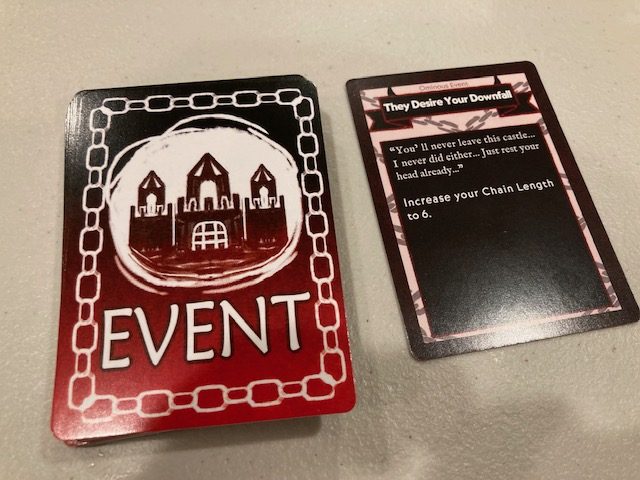
Like most cooperative games, there are “Bad News” cards that come out.  In this case, the Bad News cards are called “Events” and come out every time you explore and discover a new Room.

IMG_6753

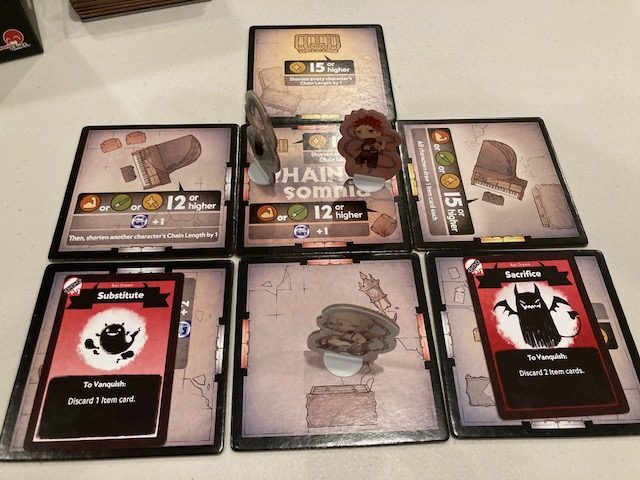
Generally speaking, the Event cards are full of nightmares that clog up the rooms.  You can’t enter a room with a nightmare until you take it out.  How do you take it out?

IMG_6735

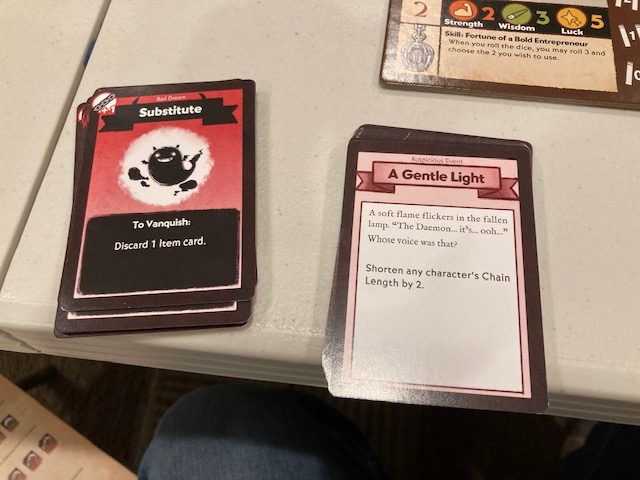
Each Bad Dream is different (for example, above you have to discard an Item), but generally you have to make a skill check on 2 dice, and roll higher than your skill.  If Ryan’s Strength is 5 and requires a 11+ Strength to Vanquish, then Ryan will need to roll a 6 or more (6+5 >= 11) on two dice to succeed in the Skill check.

IMG_6727

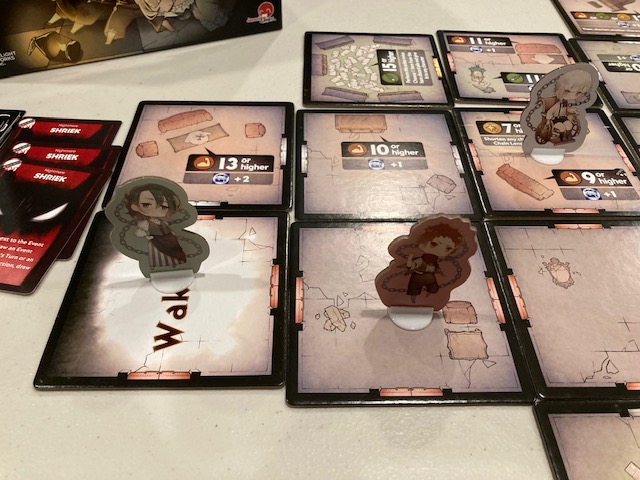
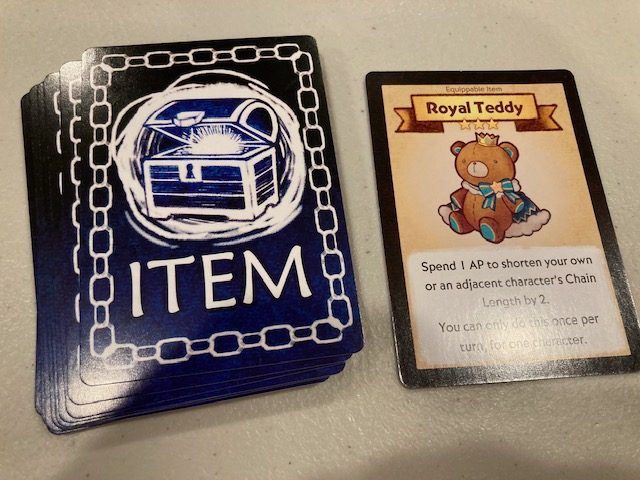
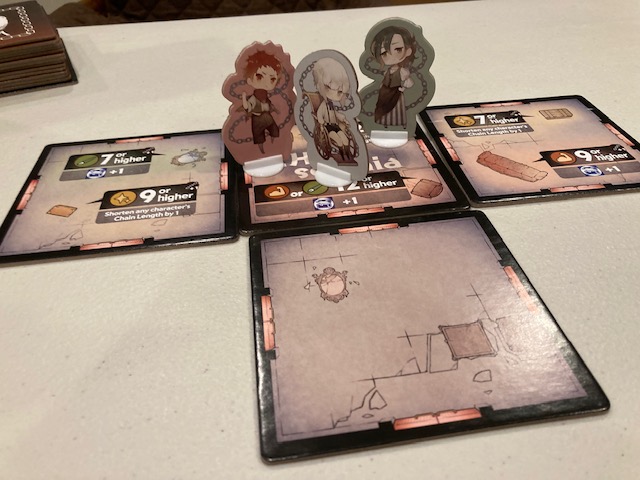
Incidentally, skill checks are how you get Items (very useful tools): generally, each room will tell you what you need to roll to get one.  In the first room (see below), if you roll a 12 or higher on any skill check, you get an item.

IMG_6739

IMG_6759

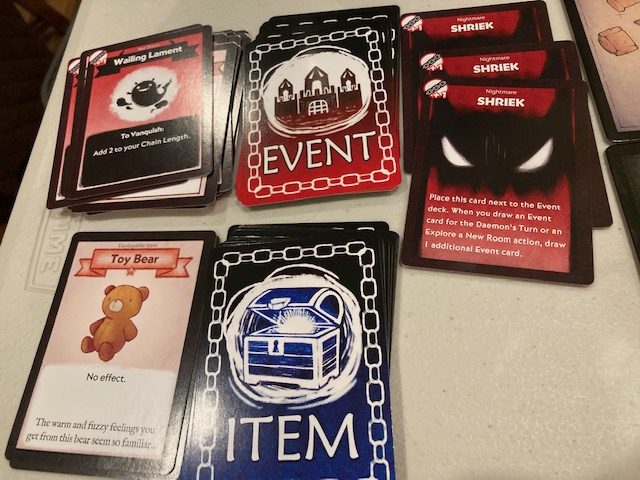
There are other very bad cards that modify the Event Deck (see Shriek above) but if you make it through all Event cards without finding the Way Out you lose.  If you can get to the Way Out and defeat all Bad Dreams on the board you Win!

IMG_6724

The components are quite cute, if a little minimal.  The cards are not linen finished.

Rulebook

IMG_6700

The rulebook is good, except that it doesn’t talk a lot about edge conditions.  As we played the game, a bunch of questions came up (“Are Action Points dynamic?  Do you immediately lose/gain an AP as a result of a chain change?”).  There was a FAQ, but it didn’t answer the questions that seem to come up with us.

IMG_6701

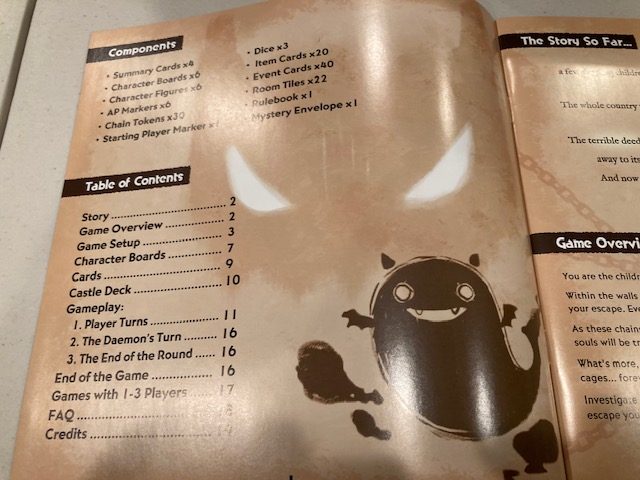
The components list had no pictures, but the Set-up was well-labelled to counteract that.   In general, there were appropriate pictures and the game was explained well-enough.  I even like that it had a FAQ, it just didn’t seem to address the questions we had.  I’ll call the rulebook good enough.

Solo Mode

IMG_6738

Congratulations to Chainsomnia for following Saunders’ Law and having a solo mode!

IMG_6713

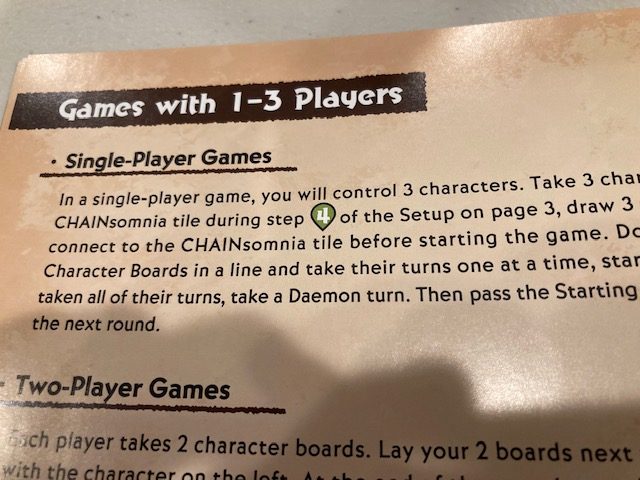
Unfortunately, the solo player must take control of 3 characters.  Similarly, a 2-Player game would have each player take control of 2 characters.  Basically, there must always be 3 or 4 characters in the game.  This isn’t ideal for the solo because there’s always the context switch issue as you jump from character to character, playing each one separately.
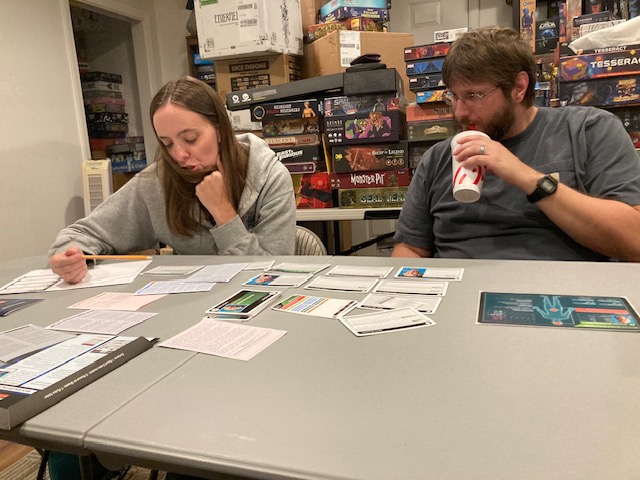
IMG_6748

Luckily for the solo mode, the context switch issue is not too problematic: each character has a pretty simple character with one “major” power.   For example, if one of your characters were Ryan (see above), it’s easy to remember he’s strong (strength of 5) and can also eliminate one monster for one AP.   There’s not too much to remember for each character, so context switching from character to character isn’t a big deal. Contrast this to the characters from Marvel Zombies: Heroes Resistance where each context switch becomes heavier and heavier as the characters get more and more abilities in the game (see our review here).  While the extra abilities in Marvel Zombies: Heroes Resistance are cool, it makes it significantly harder to play multiple characters.

IMG_6752

It took me two solo games to get a win.  I remember losing my first game and saying, “Nope! I wanna play again! I know what to do now!”   I think your strategy really depends on the characters you choose, so my second game was with the same 3 characters.

IMG_6765

I made one major mistake in both solo games: I forgot to save my Ominous Event cards and my Auspicious event cards.  In most every other cooperative game, you throw away events when you are done … Nope!  Here, they are a measure oh how well you did.

IMG_6719

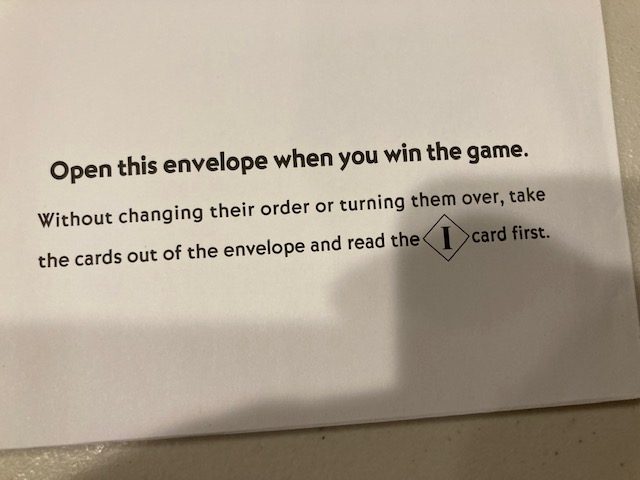
When you open the secret envelope, you need those cards.  I didn’t realize this until after my second game! 

(Picture deleted from review to avoid spoilers)

Minor Spoiler: Basically, you measure your victory (in the event of a win) by how many Auspicious Events and Ominous Events you got.    That was kind of cool: it’s a hidden and secret way to measure success, and gives you a reason to play again to try for a “better” win.

IMG_6755

I didn’t love solo mode (mostly because of the 3 character issue), but it was fun enough to play again.  It also gave me enough insight to teach to my friends.

Cooperative Mode

IMG_6862

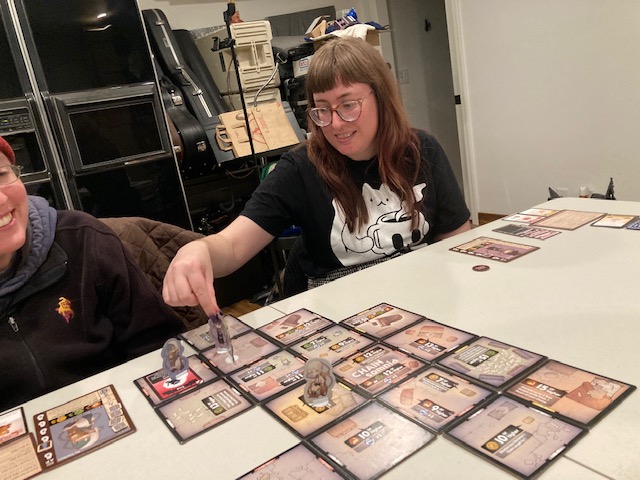
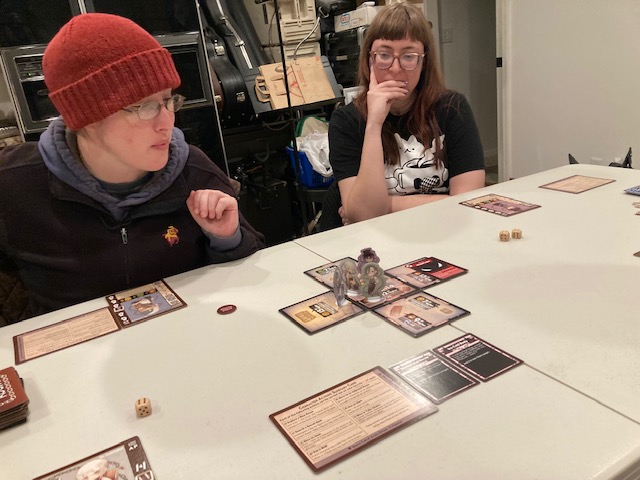
This game went over pretty well as a cooperative game: probably better than I expected.  Since you always need at least 3 or 4 characters in play (this totally reminds me of Unicornus Knights), a 3 or 4-player game is probably ideal: that way every player gets exactly one character to operate, and it’s easier to inhabit and connect with the game if you are “that character”.

IMG_6864

I noticed that, as we were playing, we really did consult each other a lot … and console each other a lot.  “Hey, don’t worry: I can take care of that nightmare!”  “Hey, don’t worry, I can get you an item!”  Sara’s character’s power allowed here to give items to other people anywhere on the board … this was huge! It allowed us to power up!  Even if we had a bad role, the game evoked a pathos: “It’s all right, we’ll get you out of that mess.”  Maybe there’s something about being a little kid that brings out the best in people, and makes them want to help each other?

IMG_6861

There were a lot of fun little moments playing cooperatively.  I knew the game had gone well when we spent the post-game talking about all sorts of other ways we could have won/lost, been more strategic, etc.  People cared enough to keep thinking about the game, even when it was over!

Repacking

IMG_6766

What’s going on with this box?  It has a huge insert, but the game doesn’t fit back into the box unless you do one of two things:

  1. Always remove the plastic bases
    OR
  2. Pack the dice into the fingerholes!

IMG_6767

Those of you who have played GloomHaven know the problem with constantly removing/adding the plastic bases!  Basically, the bottom tears!  So, I chose to leave the plastic bases on.  Which means the game box WHICH IS HUGE doesn’t fit the game!  I had to be clever … and put the dice in the fingerholes.

IMG_6770

Yup, not ideal, but then the game fits. See below for pictures of how I fit the game in.

Conclusion

IMG_6694

Chainsomnia was pretty fun.  Although the rules were missing a lot of edge cases, the game was still pretty easy to teach and play.  The group liked it, but didn’t love it:

  • Teresa, Rich: 7/10, liked it, would suggest it
  • Sara: 6.5/10 liked it, would happily play, maybe wouldn’t suggest it as first choice
  • Andrew: 6/10 Liked it well enough, would play again

The biggest issue with the game was that it felt a little “samey” after a few plays.  You could mitigate that by switching up the characters to have different strategies.  It was also maybe a little too lucky with so much emphasis being placed on the dice.
Chainsomnia was fun enough.  We actually would not recommend this for kids: even though this game is cute, the nightmares attacking kids might not go over well with younger players.  This game is more for older kids who like light cooperative games with an anime look.
EDITOR: At the time Our Top 10 Cooperative Tile-Laying/Placement games was written, Chainsomnia just barely squeaked onto the list as #10. I hate to say it, but I think Race for The Raft came along, moved to the top of the list, and pushed everything down one space (see our review here: it’s that good)! So that means Chainsomnia is #11 now …