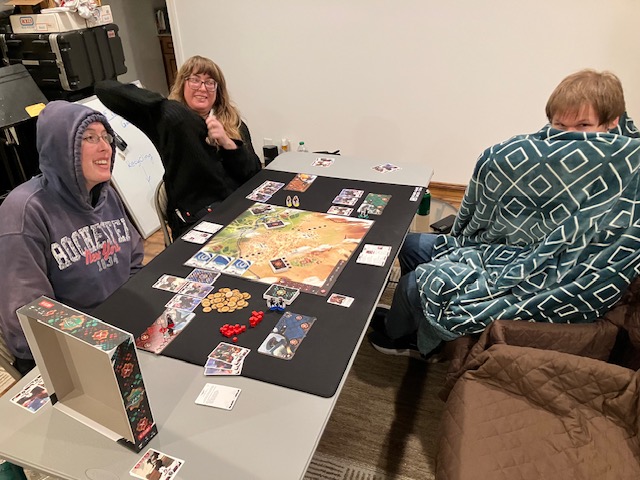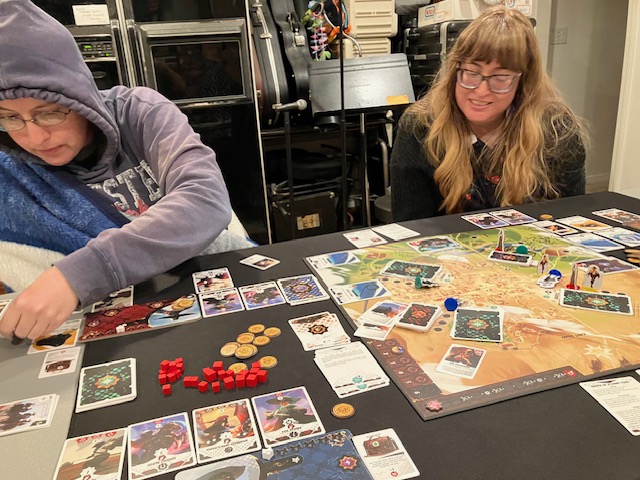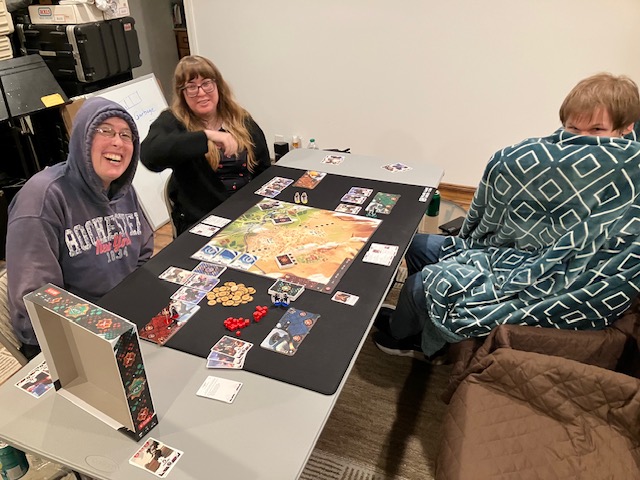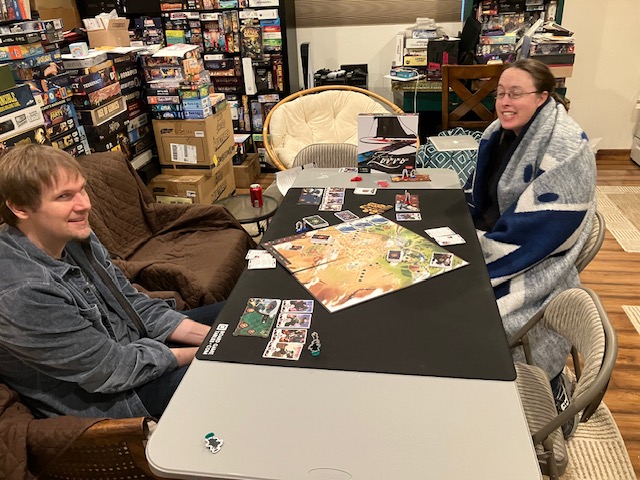
Bloomchasers: Add Some Coziness To Your Solo and Cooperative Life

Bloomchasers is a solo, cooperative, and competitive game that was on Kickstarter back in April 2024 .   I backed it (see above) and it delivered May 20th, 2025 to my house!  It originally promised delivery in January 2025, so it was about 5 months late (which is not bad in Kickstarter terms).

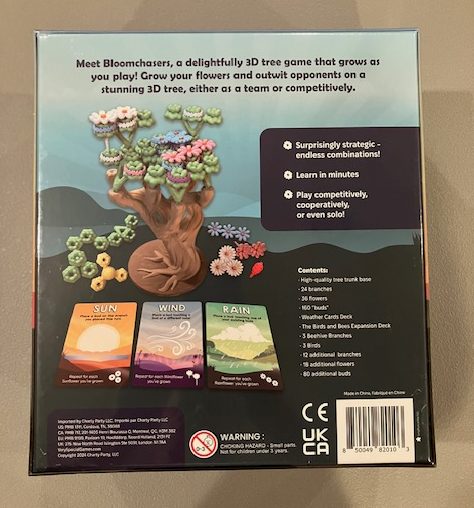
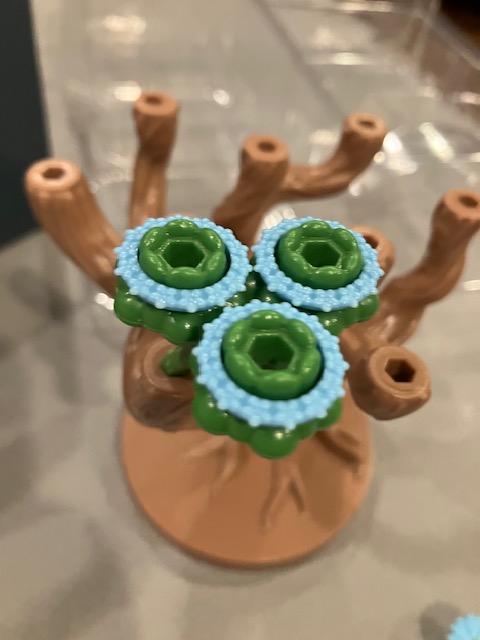
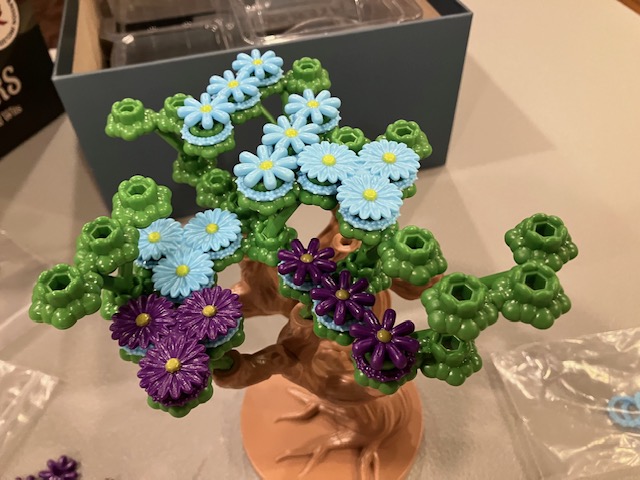
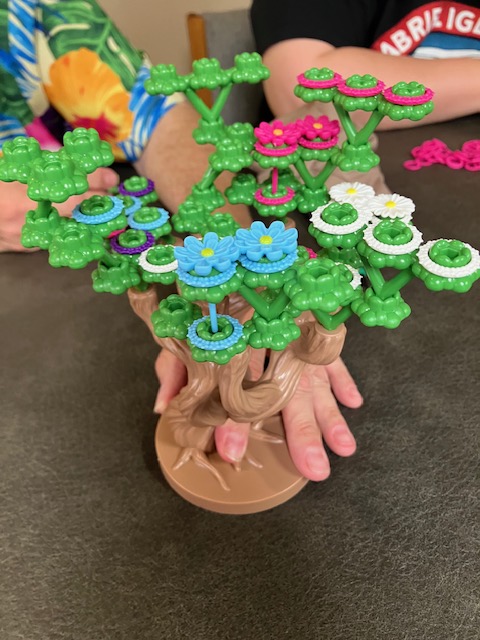
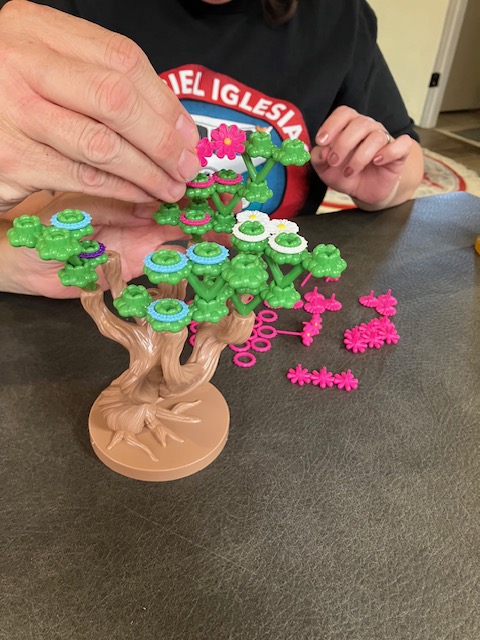
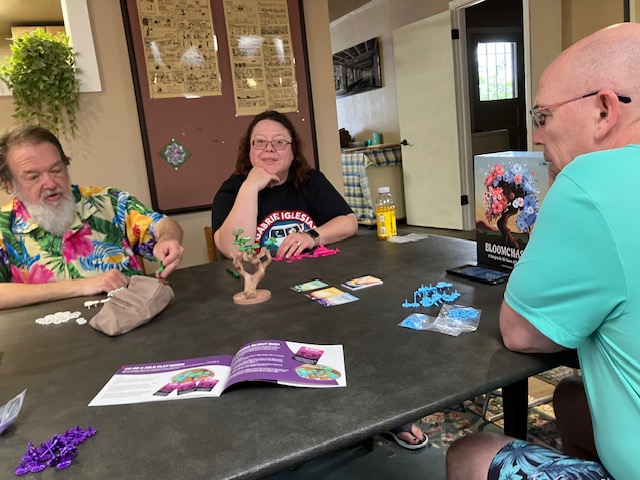
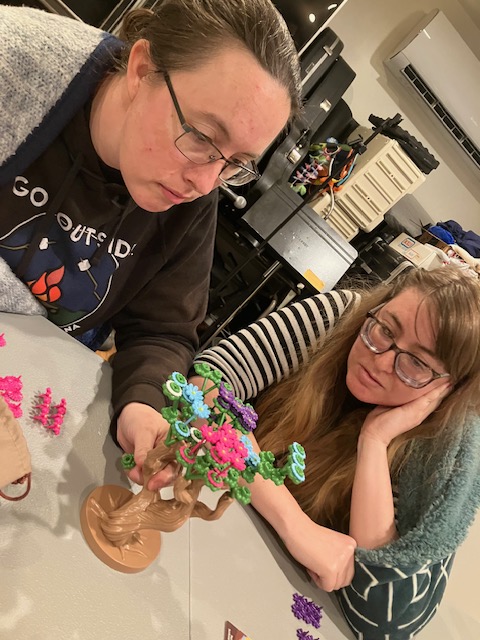
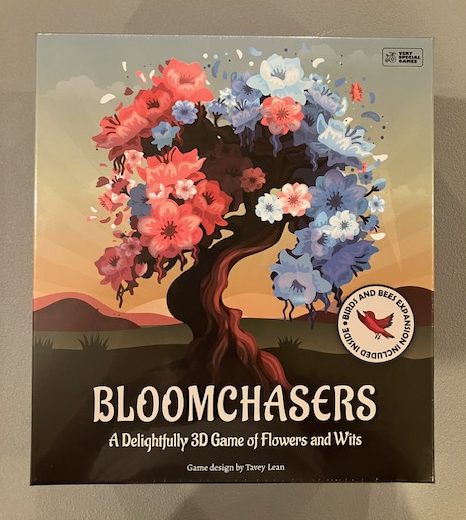
This is a hard game to describe; you build branches, buds, and flowers on a 3D tree!  It looks really cool! You can see what it looks like on the back of the box, but we’ll see some real pictures in our runthrough below.

Although there is a competitive mode, we are just focusing on the solo and cooperative modes.  Let’s take a look!

Unboxing

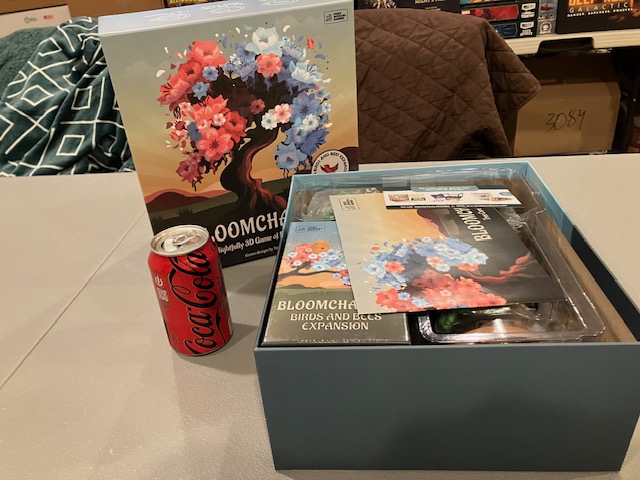
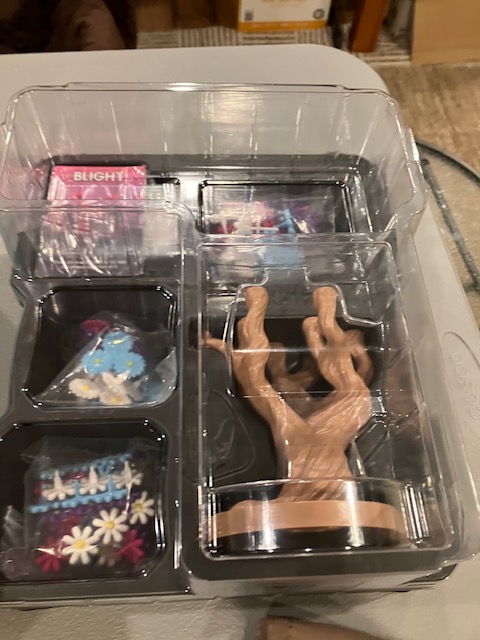
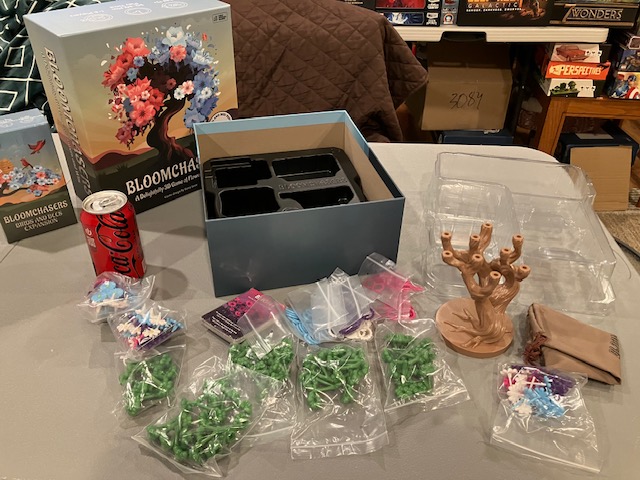
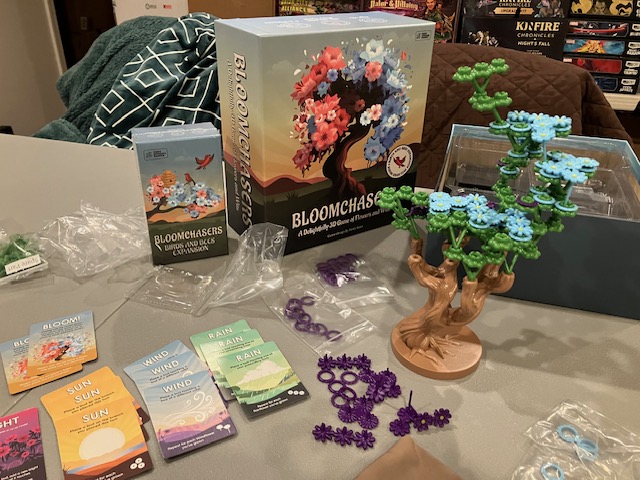
This particular edition has both the base game and expansion built in!  It’s a pretty big box! See the Coke can for perspective above.

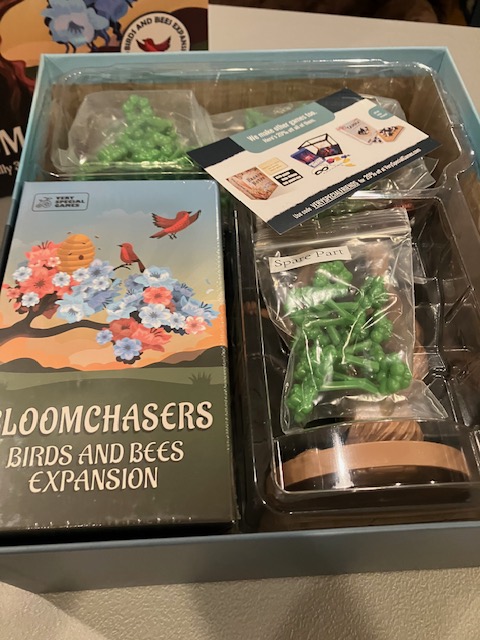
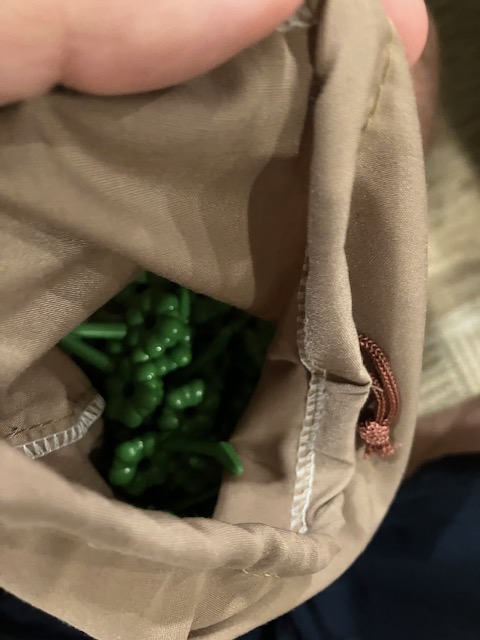
It has a lot of little plastic pieces for the trees.

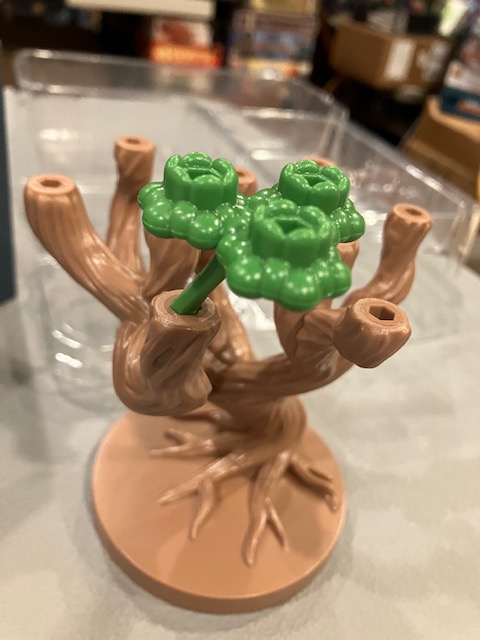
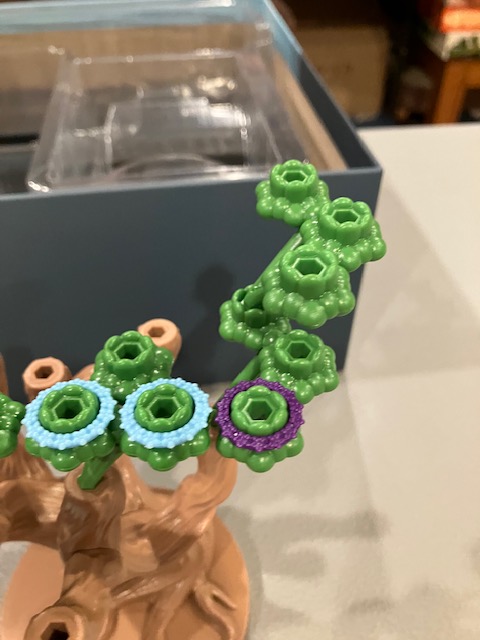
The green pieces (they kinda like of look like broccoli) are the main branches the players put on the tree.

The tree is a giant piece you put the branches into and some flowers!

I mean, the game is unique looking and interesting!

Gameplay

Every turn, players take on branch (“brocolli”) and put it on the tree.

The branches go on the tree in any empty space (or in a space with your bud).

You put buds on the tree, (little circles), trying to certain layouts of your buds.

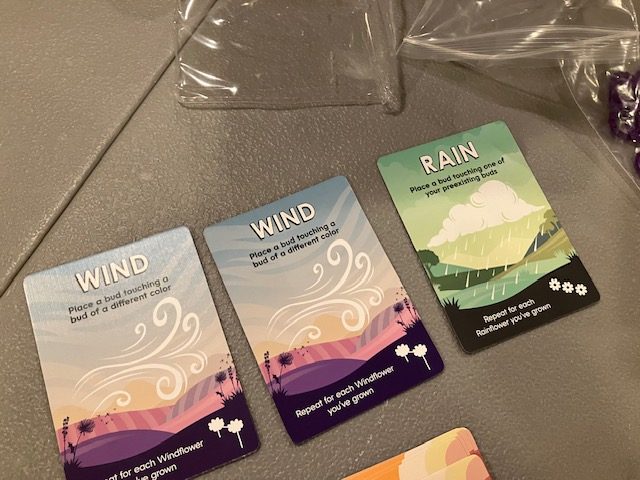
Before you place a bud, you have to use one of the weather cards which “defines” how you can put a bud on the tree.

During a “bloom” card, you can place flowers on your tree where blooms are!

Your goal is place as many flowers as possible, and you get points based on “the frequency” of the weather cards.  The frequency of weather cards matters because it’s easier and easier to place certain flowers if there are more weather cards.

You’ll notice at the bottom of the weather cards, that if you have flowers already played, you get to play MORE BUDS!

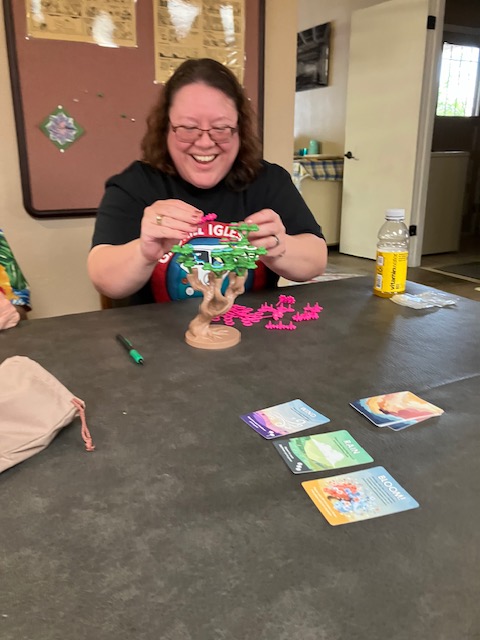
The game looks really great as you try to get as many flowers as you can!

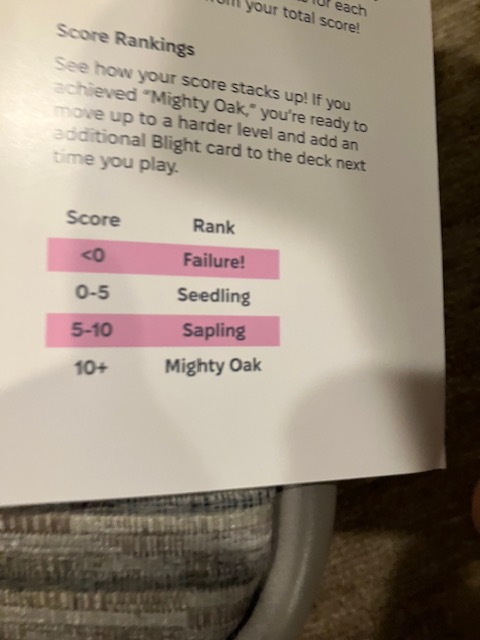
This is really a game about scoring and trying to do better than last time!  (Although, we found the scoring wonky in the solo and co-op)

Rulebook

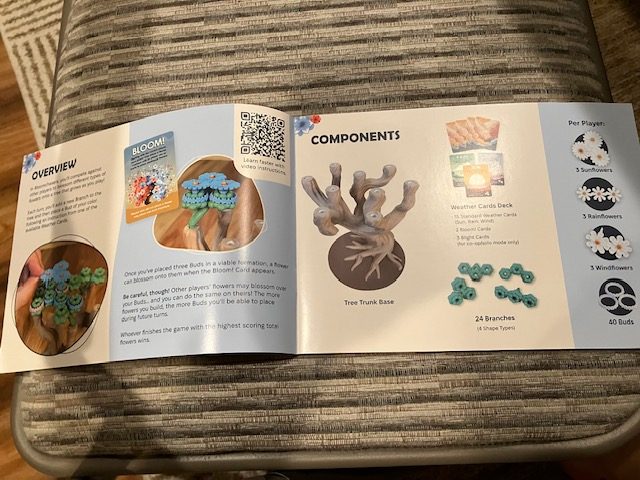
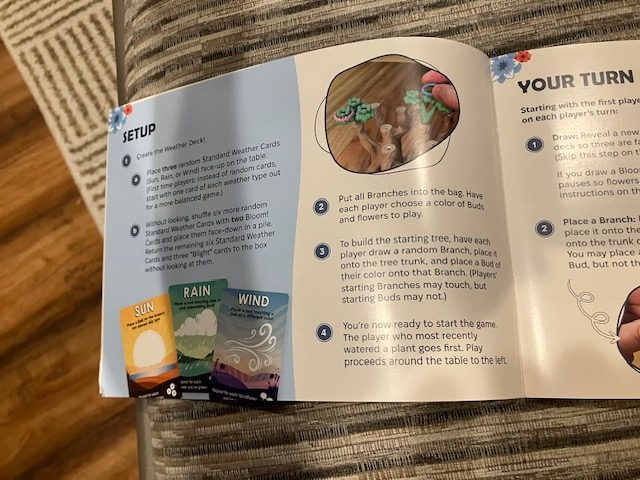
The rulebook is okay.  The form factor isn’t great; see above as it gets a B- (?) on the Chair Test.

The rules are described adequately, but it does miss several points that are quite important to play.

  1. What is considered adjacent?  It turns out adjacency is also a 3D concept!
  2. What is considered a bud?  Even after you place a flower on a bud, it is still considered a bud!
  3. How do the 3D flowers works?  It is described in the rulebook, but it needed a better pictures.  Everyone I played with always played this wrong the first time

All of these issues are addressed in this BoardGameGeek thread, and later in a thread with a FAQ:  I encourage you to follow up on this thread if you want to play!  Apparently the designer made several rulings on some of these issues during the kickstarter …

It’s a little frustrating that these fundamental issues were not addressed in the rulebook. But at least there is an avenue (BGG) to address the issues.

Dexterity Game

I played the game with two sets of friends; my first set of friends are “less dextrous” then myself, and they called this a dexterity game!  Many times, when trying to place buds, they would nudge the tree and cause buds to fall off.  It happened enough times that they declared, partly in jest, but partly in truth, that there is a little bit of dexterity element to the game!

The table we played on “may” have had something to do with that.   It was a little soft, and the table was quite large, which means we had to lean across a little more.

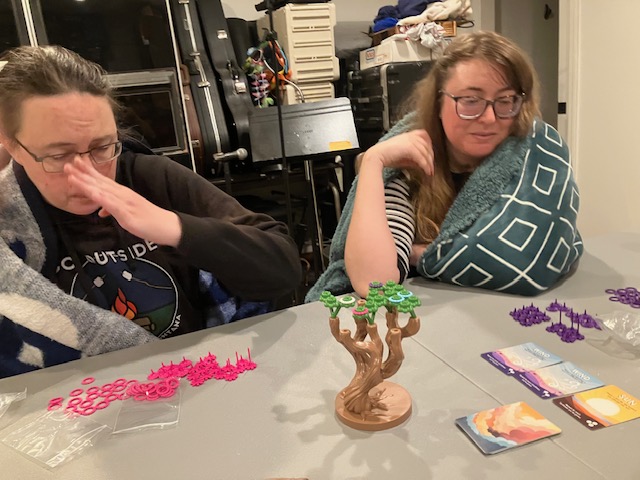
On the other hand, my other set of friends and I played on a harder CostCo table (see above) which was more stable and we were all “closer” together.  Although we didn’t struggle with the dexterity aspect as much, looking back on the games, we still had a few “knocking buds off” incidents.

I think the moral of the story; play on a harder table, try to keep your group close, and recognize there is a dexterity element to the game which may or may not affect your enjoyment of the game.

Randomness and Strategy

The game has some strategy, as your choices matter about how you place your buds.  But, when the Blight cards come out (which are the “bad news” branches) and when the Bloom cards come out (“good news”) are a little random; even after two Bloom cards come out, they get shuffled back in!  So you may get Blooms or Blights at the wrong time!

I personally think this extra randomness takes the pressure off the game.  If this game has far less randomness (if you could see which weather cards were coming,  if you could see which branches were coming,  if you have more foreknowledge when the blooms happened), I think the game would take on a different character as people would try very hard to plan things out.  But because there really is quite a bit of randomness, the game is more chill: “Eh, you get what you get and don’t have a fit”.    It’s weird to say this, but I think the randomness (which I usually don’t love) coupled with the theme, makes this a more enjoyable game.

The Joy

The Joy in this game is building a tree with flowers.  There are choices, which make you feel involved (which Weather card do you use? Where do you place a branch? Where do you place a bud?  What am I hoping for?), but because the Blooms and Blights and Weather cards are “fairly” random, you don’t feel like you “have” to optimize this game within an inch of its life.

Conclusion

My niece has a saying that she frequently quotes to her sister: “You get what you get, and don’t have a fit.”  And I think that encapsulates my feelings of this game.  It’s a cozy game where the joy is in building a beautiful tree with flowers.  Do you have choices and feel like they make a difference?  Yes, you can help your friends with your choices, you can set up your flowers, you can place buds strategically.  But because you know there is some randomness to the game, you don’t stress about your choices as much; “You get what you get, and don’t have a fit”.  I freely admit that the fun of building the 3D tree and the flower theme help that cozy feel.

Be aware that there may be a little bit of a dexterity element to this game, and that you should really consult BoardGameGeek to make sure you get rules clarified.  But otherwise, I liked this game and will keep it! 7/10.

Skytear Horde: Campaigns. Does it put the Pain in Campaign?

I have to be honest: Skytear Horde: Campaigns does put a little pain into the campaign.  But, knowing what the issues are before you get this game make it so you can work around them and enjoy this game as-is.  Although this is mostly a “review” of the Skytear Horde: Campaigns, it’s also of a guide of how to get the most enjoyment out of this if do you end up getting it.  At the risk of spoiling my review, I did like it and am keeping my copy but ONLY after making a few major notes.
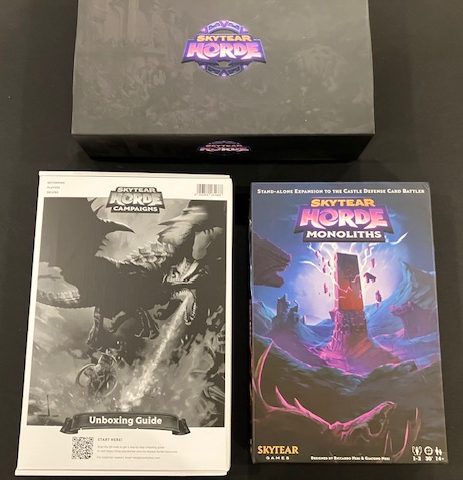
Skytear Horde: Campaigns is a standalone expansion in the Skytear Horde series; this series of games are solo and 2-Player cooperative tower defense games. (There is nominally a 3-Player competitive game that we won’t be discussing; in our experience, it seems to be the least likely way to play)
The original base game of Skytear Horde was on Kickstarter waaaay back in January 2022, and delivered to me and other Kickstarter backers in February 2023.  See our original review here.  We did like it: it made the #5 spot on our Top 10 Solo Games of 2023!
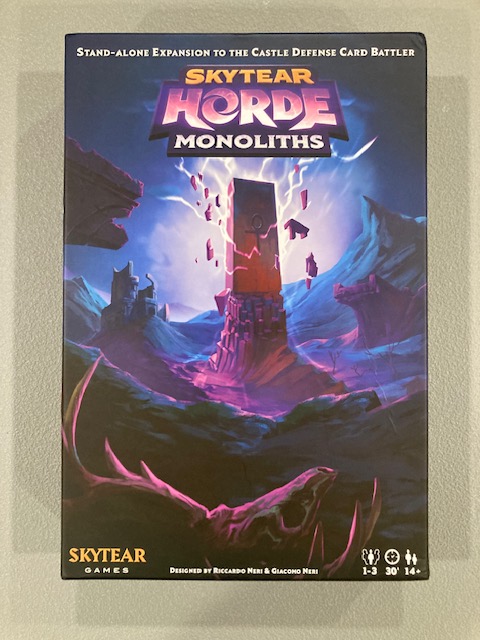
The first expansion, a standalone expansion (meaning you can play it without the original game) was on Gamefound back in May 2023 and delivered in about a year.  See our review of Skytear Horde: Monoliths here.  It also made our Top 10 Solo Games of 2024!
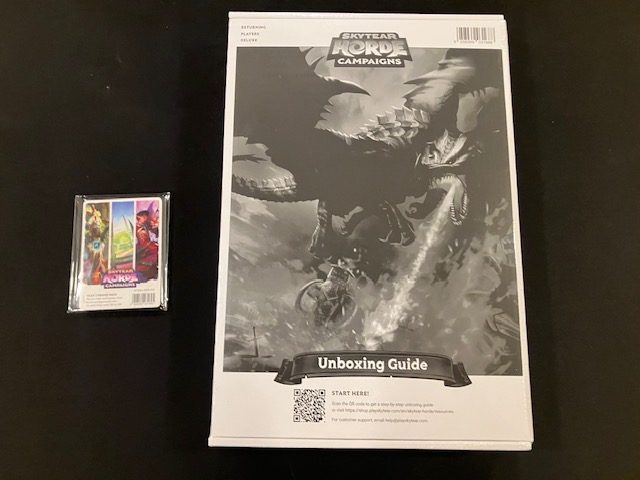
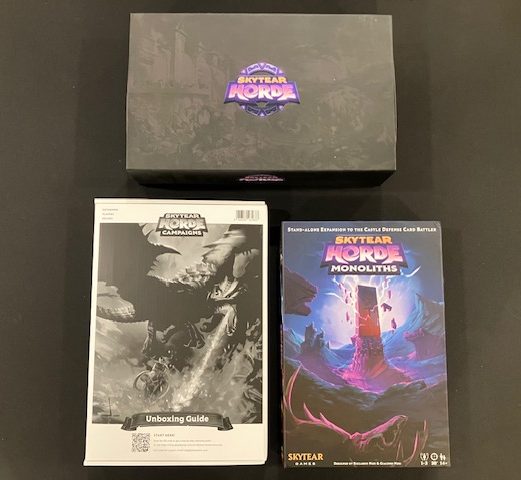
This second and newest expansion is the Skytear Horde: Campaigns box above. It’s also a standalone expansion from Gamefound. It delivered in April 2025 after promising delivery in June 2025 (it delivered early!). My box is a little lack-luster because I backed at the Returning Players Deluxe pledge, which “expects” me to merge this in with the other two.

Let’s take a closer look!

Generic Unboxing
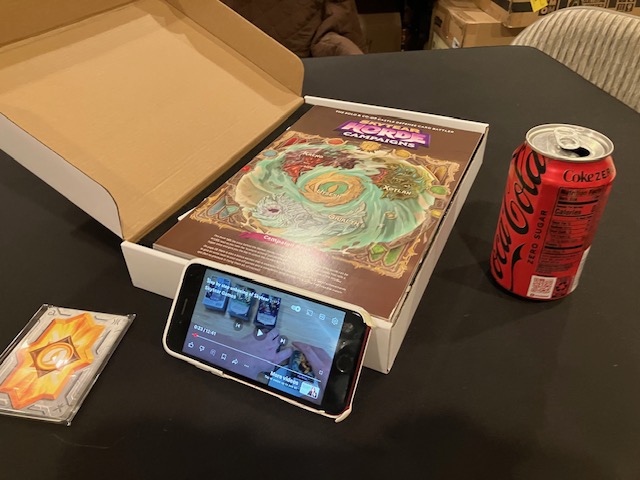
See above for scale with a Coke can: my Returning Players Deluxe box isn’t the best box. Again, I think it’s expected for me to merge all my cards into the original game.
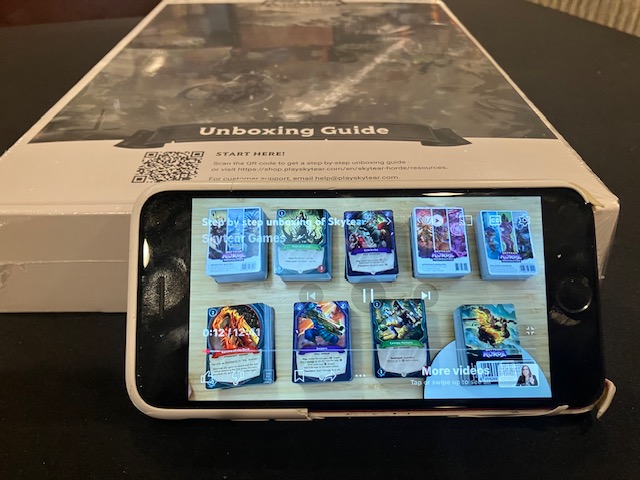
This is a game all about cards.  There’s a little unboxing video you might consider watching (see above).  I watched a little bit of it.
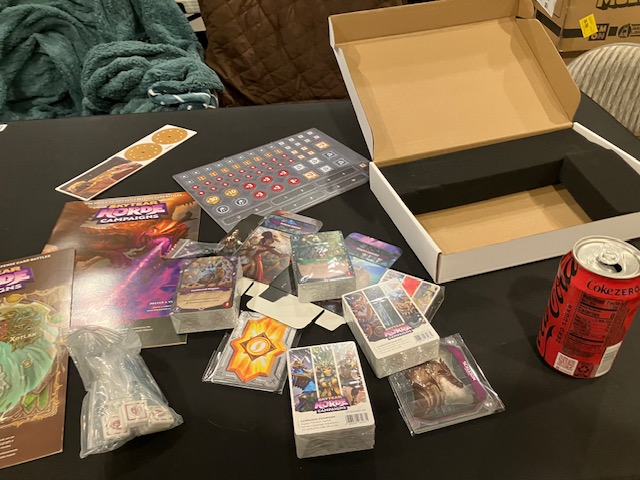
There are just a ton of cards, some token sheets, and two booklets: A rulebook and a campaign book.
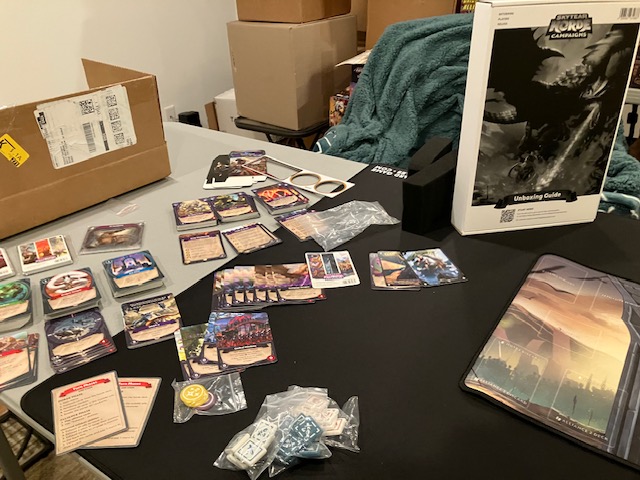
The cards look pretty great and they are consistent with the cards from the previous releases.
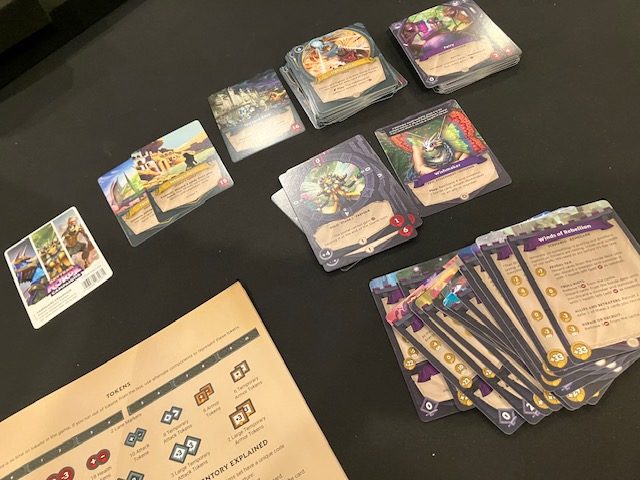
The Rulebook
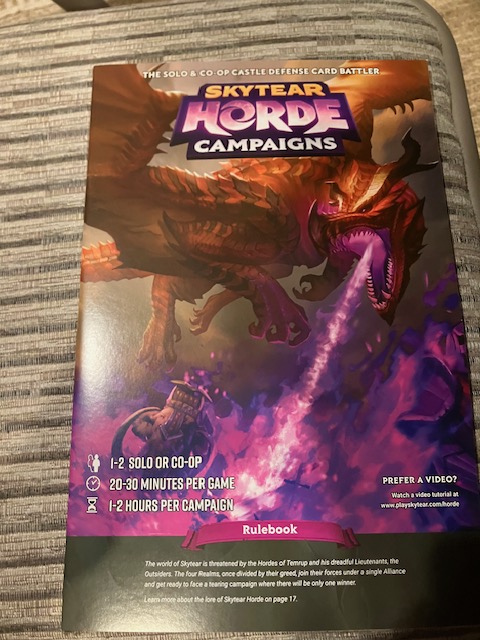
This rulebook is both blessing and curse.
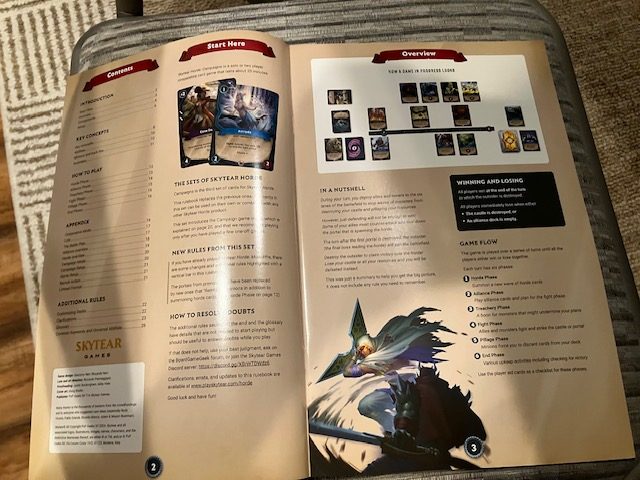
This rulebook does great on The Chair Test, opening up easily across two pages, laying flat, being readable, and no real overhang over the edges.  This gets about an A- on the The Chair Test! It’s not an A because the font could be a little bigger, especially considering how much whitespace there is.  Still, great!
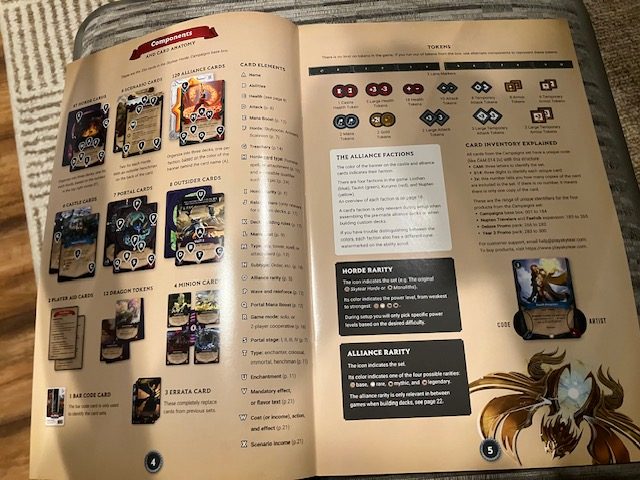
These Component pages are fantastic! I forgoed (forewent?) the card video because I wanted to handle and open all the cards myself.  These two pages where GREAT for describing how to open up and sort all the cards.   The card deck (types) even had little annotations, along with a little summary!  Very useful!
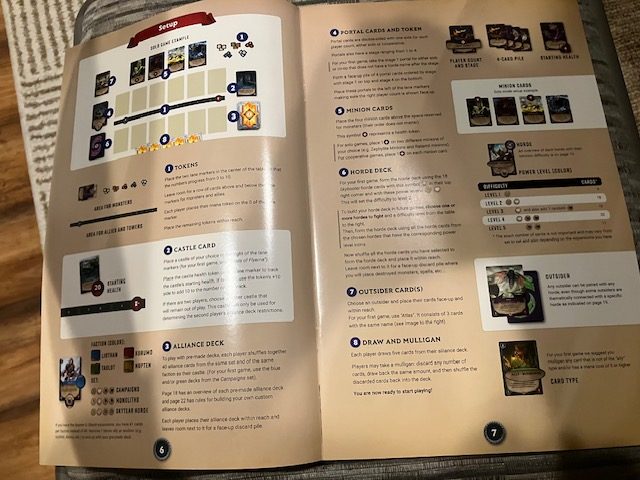
The set-up was good: it is on exactly two pages without needing going to cross to another page. See above.
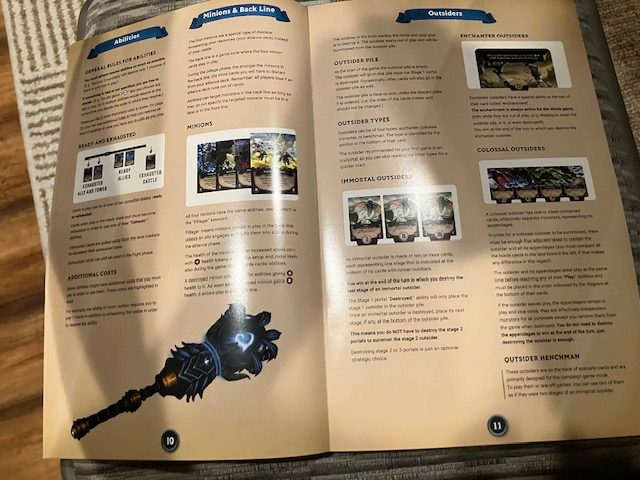
The rest of the rulebook was pretty good; and it had better be.  This is the third Skytear Horde: they should know how to explain it by now!  They even note “new rules” with a sideline bar: great job!  To be fair, there’s not “that many” new rules in this set.  Note the bottom right of page 11 (above) has a new rule.
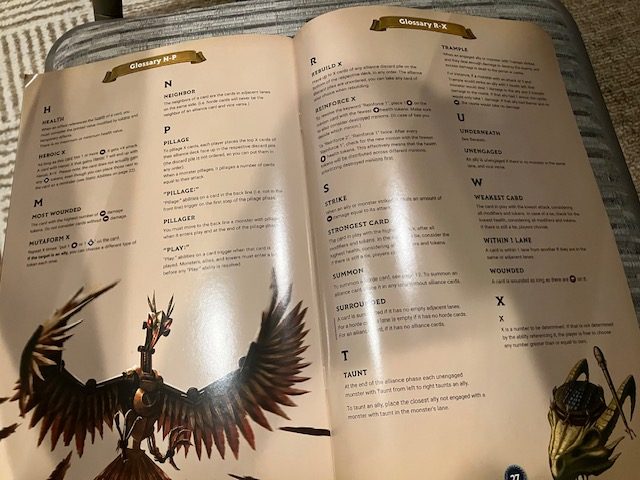
It doesn’t have an Index (boooo), but I’ll forgive it because it has a very good Glossary of keywords in the back.
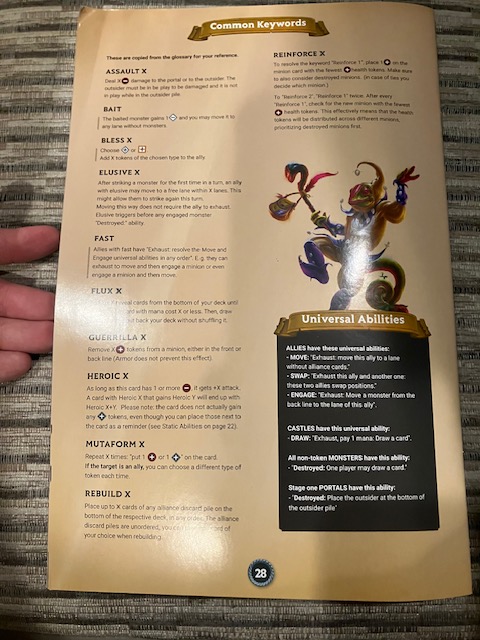
It also ends with a bang and has some other common keywords on the back.

Seriously, for the base game, this is the best rulebook so far for this series.    Great Components, good Set-Up, good rules, good Glossary, good back cover.  This is why it’s a blessing.

But why is this rulebook a curse as well?  Be patient; we’ll get there.

Cards
I want to talk a little about the cards.   They do a really nice job in general.
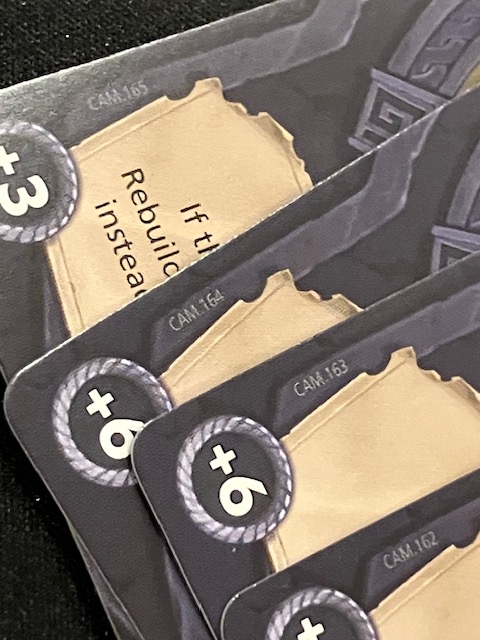
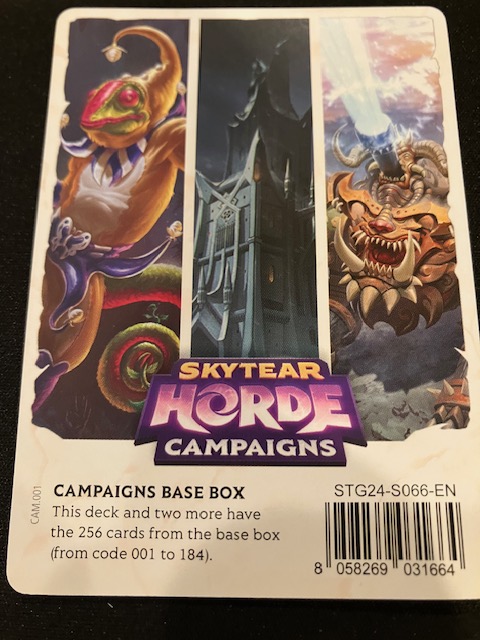
The cards are labelled with what set they come from, even if it’s a little hard to read: see above!  The Campaigns cards are marked with CAM.  I suppose I appreciate that the labels are pretty well out of the way (so they don’t interfere with gameplay), but I  really struggled to read that text! I ended up getting my phone out and zooming in on these!  When I needed to sort the cards back into their respective decks, it was a challenge!   Here’s another blessing and curse: the labels being out of the way mean they don’t interfere with play! That’s a blessing!  But sorting them is a curse because it’s a little hard to read.
Maybe those teeny labels doesn’t bother you because you like to put everything in the main box and you don’t really care which set it came from.  I like to keep my sets separated, so it did bother me.  I suspect I am in the minority.
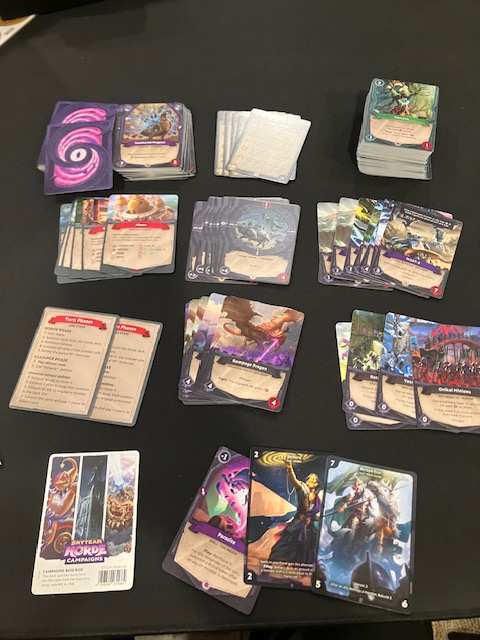
I mean, these cards look great.  The art on them is amazing: see above.  

Gameplay
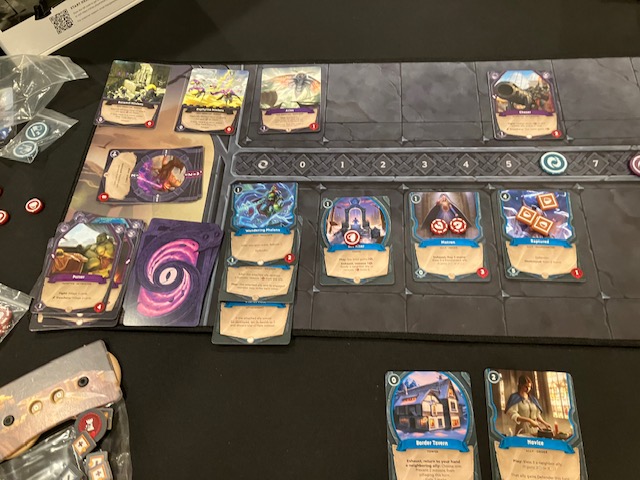
This is a solo, 2-Player cooperative (or 3-Player competitive) tower defense/lane battling game.  Players play cards to the lane to fight the bad guys and protect their castle! 
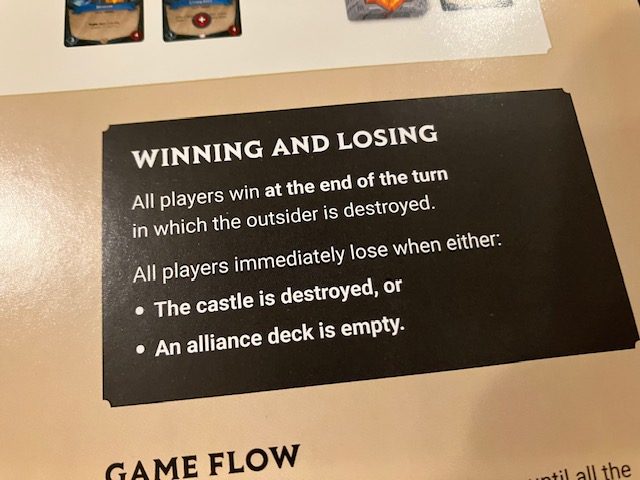
There is a very nice description of win/lose conditions at front of the rulebook: see above.

There’s a lot more discussion about gameplay in many other sources, including our previous reviews. If you know what Skytear Horde is, the expansion part of this game should feel very familiar to you.

Solo Play: No Campaign (yet)

First and foremost, the Skytear Horde games are solo games.  There are some annotations in the rules (like one paragraph) describing how to play 2-Player cooperative.  Everything else about this game screams “I am a solo game!”
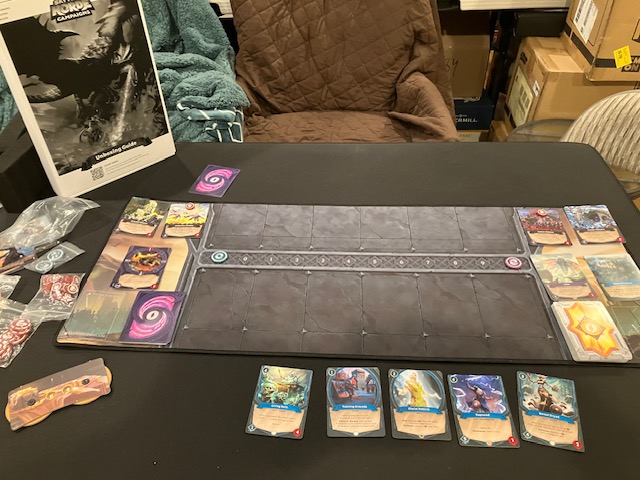
This is a true solo game: the solo player takes  control of a single Alliance faction (Two players would each take a different faction and play them separately).   See above as I take control of the Blue Order faction.
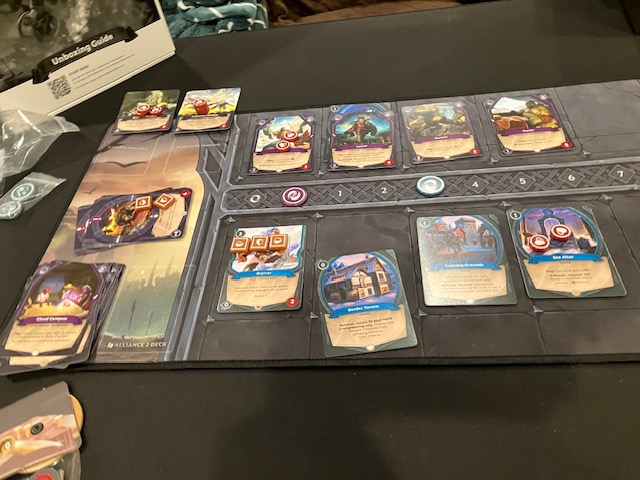
The rules suggest you DO NOT jump into this as a campaign!  The rules “recommend playing only after you have played a few one-off games”.   So, using only the content from this standalone expansion, I ended up playing about 4 one-off games to get back into the flow.  I am embarrassed how much I had to relearn to play again!
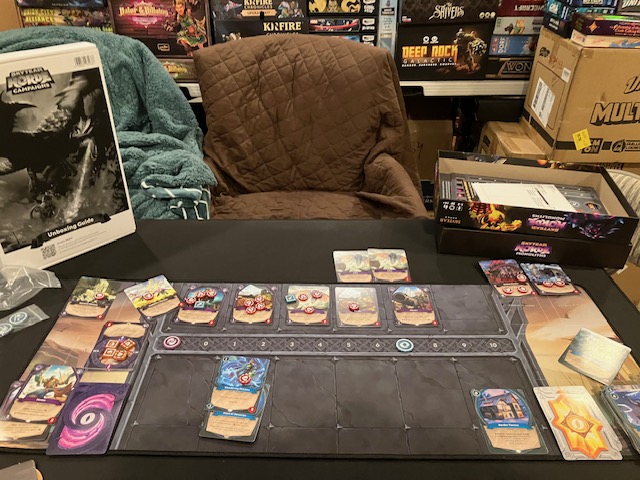
As a straight-up standalone expansion you can play, Skytear Horde: Campaigns did a great job.  Even if you never use the campaigns material, there are 4 new Alliance decks, 3 new Hordes (bad-guy decks), 6 new castles and some new Portals.  If you like Skytear Horde, this is just more stuff and you will like it.  If you didn’t like Skytear Horde, this probably won’t change your mind (but see below). The game still feels fun and I still had fun playing the new Alliance and Horde decks.  

As always, this game works great solo.  I fully expect this to make my Top 10 Solo Games of 2025!

The Campaign: The Curse
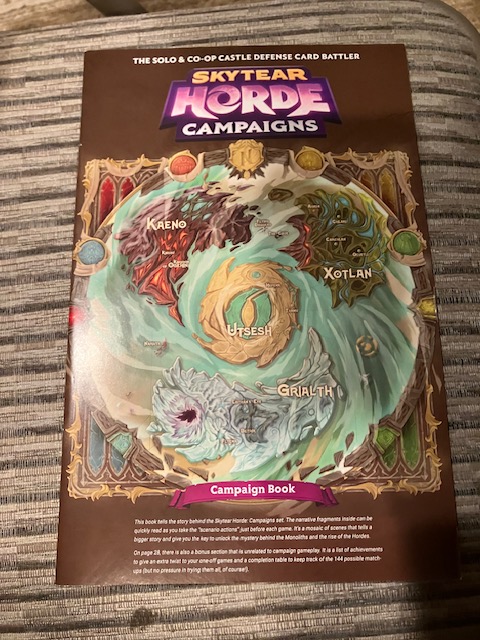
The campaign has many problems to work through.  To start off, there are two glaring errors that undermine the confidence of the campaign section right away. 
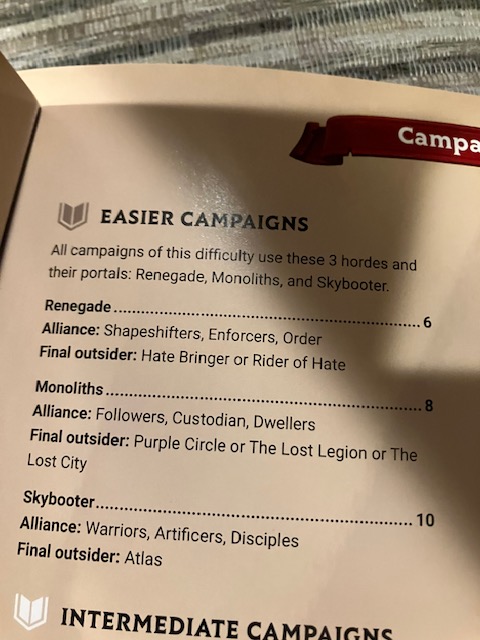
The first is that the page numbers are just wrong.  The Renegade campaign is supposed to be on page 6, but it’s on page 4.  Granted, this isn’t a big thing, but it really undermines the confidence if they can’t even get the page numbers right.
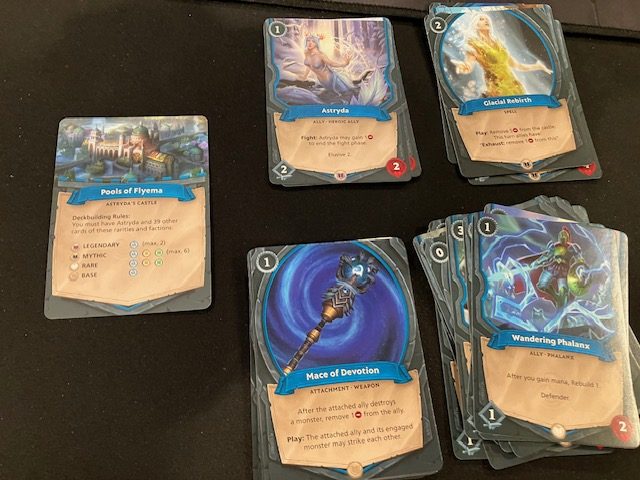
The second issue is the mislabelling of the new Blue Alliance cards.  
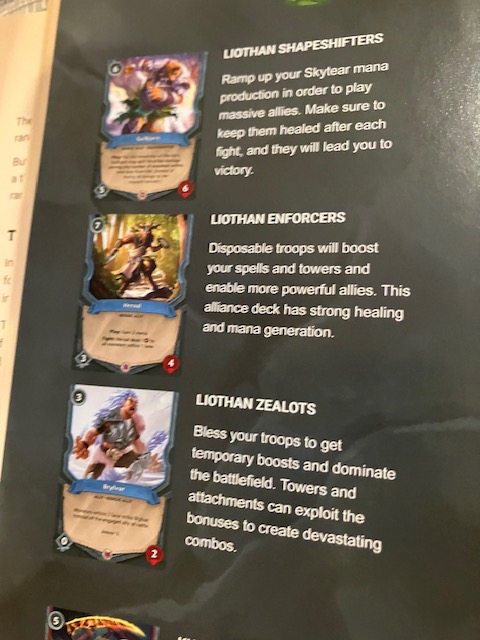
The rulebook calls the new Blue Alliance cards “Liothan Zealots” … 
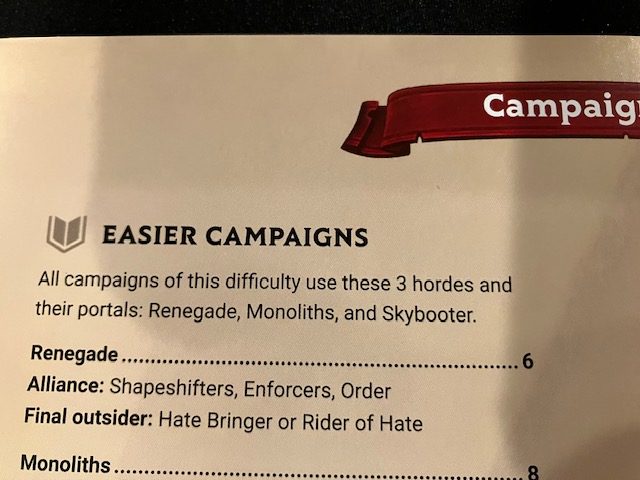
… but the Campaign page labels them as Order?  I went spare trying to find the Order group, but then I think they just meant all the new Blue Alliance cards from Skytear Horde: Campaigns? I think?
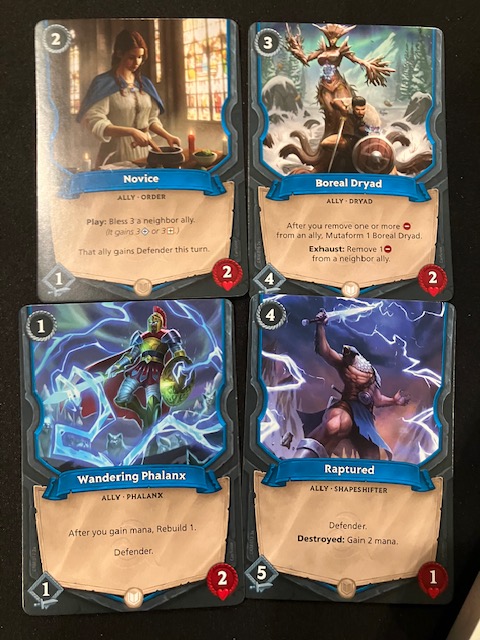
It’s a little confusing because a lot of the new Alliance cards (see above) have different subtype: see above.  Some have Order, some don’t?  If I JUST go back and look at the directions for building your first campaign deck, I am supposed to have 18 cards, and that includes the 4 different subtypes above.   After putting this all together, I *think* that these are supposed to be the Liothan Zealots (as labelled in the rulebook), and the Order indicated by the campaign book is wrong: I think that’s supposed to Zealots.  I think.

These two mistakes really undermined my confidence in the campaigns as I started into them. I wasted too much time just trying to understand what Alliance deck I was supposed to use.

Understanding the Campaign Differences

I am going to tell you this right away because it took a while for me to figure out: there are TWO types of campaigns in this game, and they are not well distinguished.  
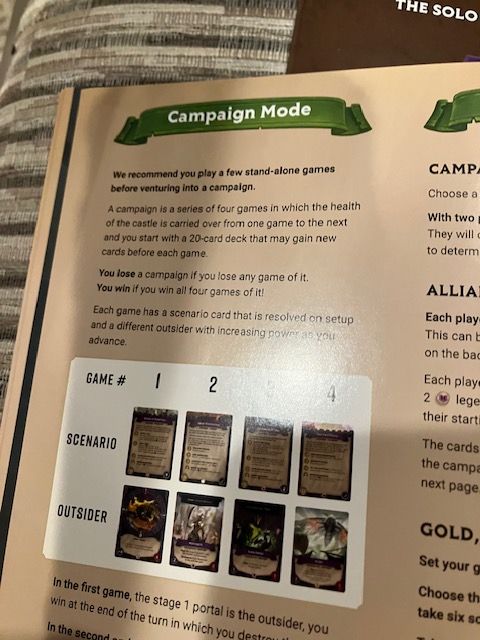
The first is what I’ll call Generic Campaign Mode: this is the type of campaign described on pages 20 and 21 of the main rulebook: see above.
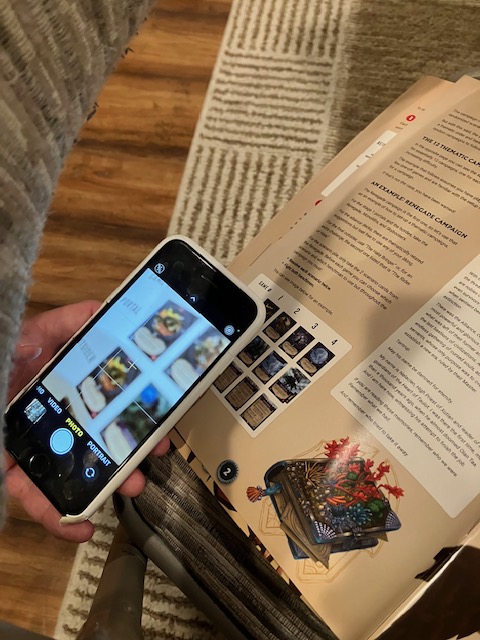
The second type of campaign is the Thematic Campaign, as described on page 2 of the Campaign book (see above).

The rules as described by the Generic Campaign are different from the Thematic Campaign, and it’s very confusing.  But the Thematic Campaign still follows most of the rules of the Generic Campaign.  Confused? I was!

The Generic Campaign has you play 4 games, using 4 different Scenario cards.  See rules above … can you tell that all those scenario cards are different?
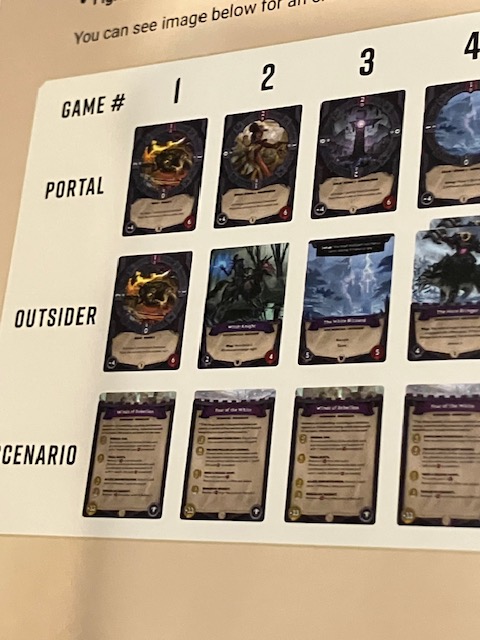
The Thematic Campaign has you use two Scenario cards twice!  It’s really hard to tell this difference!  Even though the pictures DO SHOW this difference (see above), they are so small it’s hard to tell unless you are looking at them with your phone (see below)!

See me noticing!  “Oh! We use the same 2 Scenario cards twice in the Thematic Campaign!”
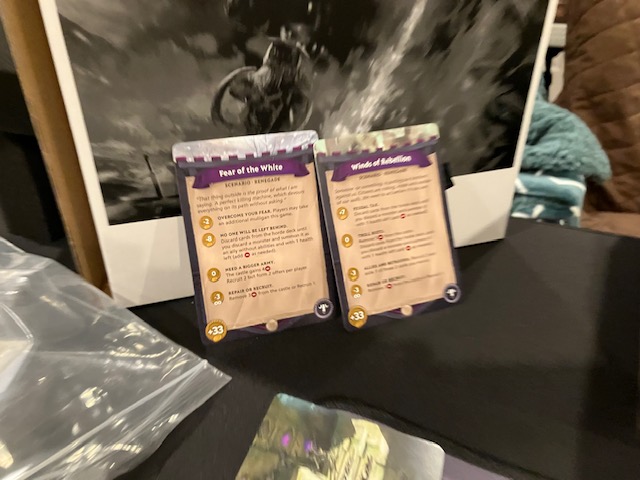
See the Two Scenario cards I used for my first Thematic Campaign!

I really didn’t feel like this distinction was clear!  I think you probably want your first game to be one of the simpler and more flavorful Thematic Campaigns!  
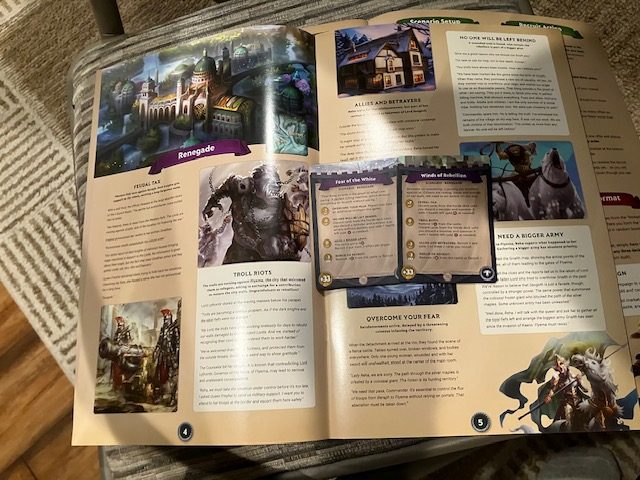
Another thing that’s very confusing .. “What’s the text in the campaign book for the Thematic Campaigns?”  Is this a choose-your-own-adventure?  Is this a branching campaign?  Nope!  Everything in the campaign book for Thematic Campaign is JUST flavor text!  The text nodes are referenced by the campaign cards: see above. Honestly, you actually never have to even LOOK at the two pages of your campaign … it’s just flavor!  I was actually a little dejected by this … I was hoping for something more from the two pages! And I usually like flavor text!
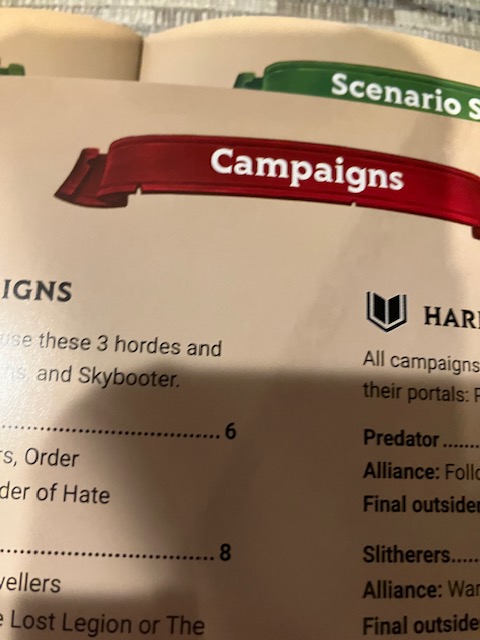
Be aware that the rulebook describes the Generic Campaign, but the campaign book is for the Thematic Campaign, and it has slightly different rules! Most importantly, you only use 2 Scenario cards!

Sure, it’s all there, but I lost at least an hour of my life trying to rectify the rules of the Generic Campaign vs the rules of the Thematic Campaign.  The rules of page 20 and 21 describe the rules of the Generic Campaign, and the rules from the Campaign book describe some of the differences for the Thematic Campaign.

If I had done this rulebook, I would have done things differently: I would have described the rules for the Thematic Campaign first as the main type (pages 20 and 21), then added rules for the Generic Campaign afterwards:

THIS IS WHAT THEY SHOULD HAVE DONE:
Play the Thematic Campaigns first! There are tons in the Campaign book! They have tons of flavor text, if you like that!!! And even when you are all done, you can still keep playing!  The rules for the Generic Campaign are described on the next page!”

But that’s not what they did.  

Hopefully, this helps you get over the Campaign hump easier.  This is why I think the rulebook is also a curse: the campaigns are not described well. It’s all there, but you gotta work for it.  Maybe now it will be easier for you being forewarned?

Solo Thematic Campaign
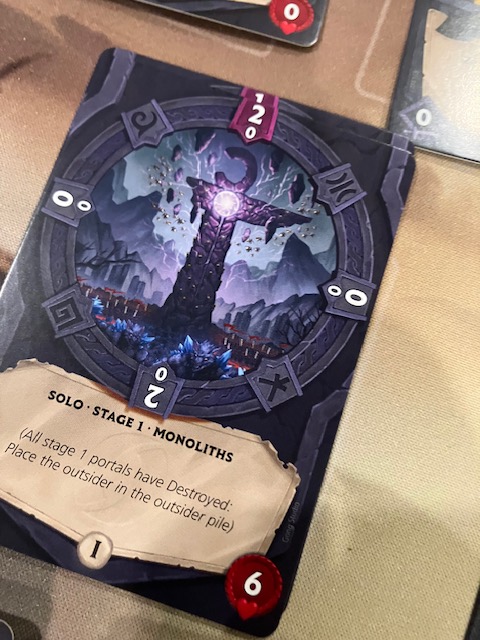
I want to be clear, once I got over the hump of understanding the campaign rules, I had fun! Basically the campaign is 4 games: the first game is a simple game with only the introductory 20 Alliance cards (a simple deck) where you ONLY have to destroy the portal! Your first game in a campaign is pretty quick and simple.
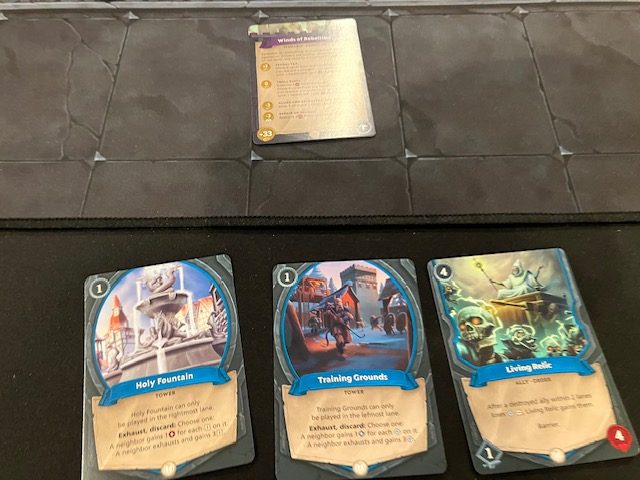
Between games of campaigns, you can spend gold to buy more cards!   Well, there’s a little more to it than that (as you spend/lose gold based on the campaign cards) ..
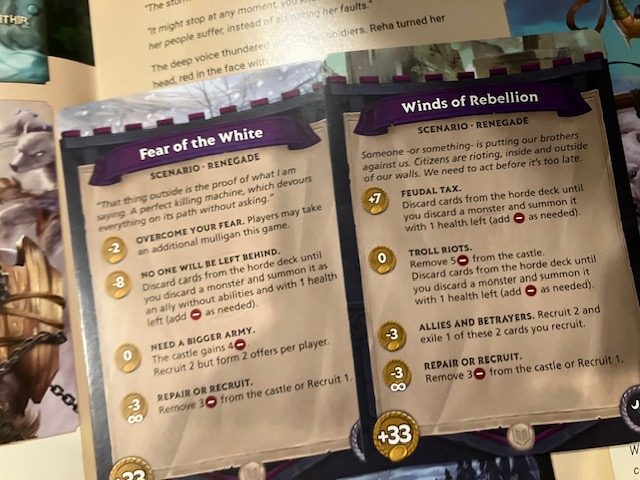
Basically, you perform the actions on the Scenario card you are on (see above), including spending/getting gold: see above for two Scenario cards.
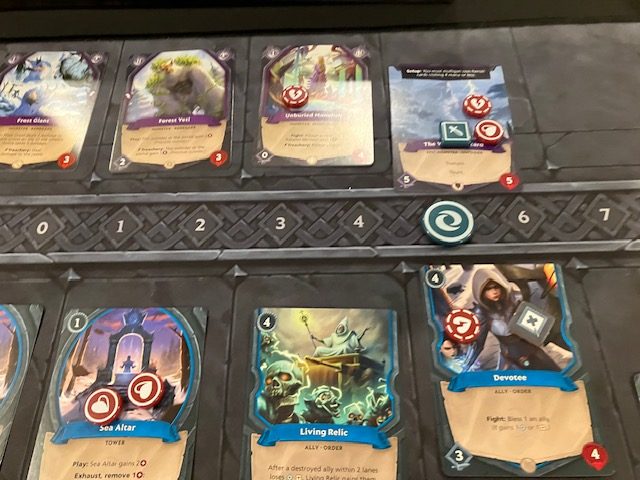
Games 2 and 3 of the Campaign, you fight the bad guys on the back of the Scenario cards! See above as the Devotee wins game 3 of the Campaign!
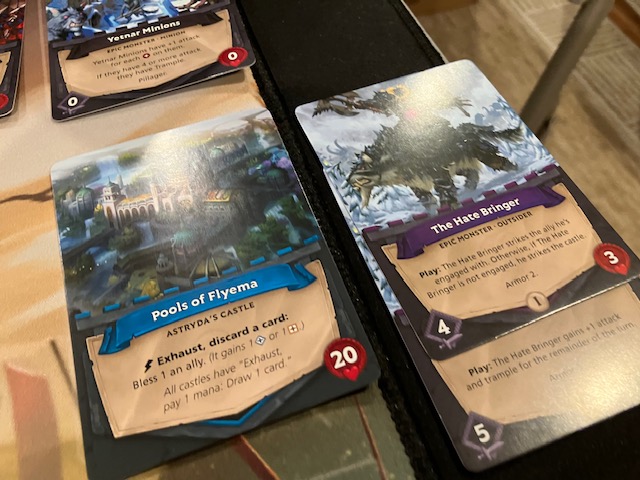
In Game 4, you fight the Outsider to win!  By the time you make it to Game 4, you have bought “pretty much” a full deck (mostly the same 40 cards as the normal one-shot games).  The difference is, you feel like you “earned” your deck!  You also feel like you know your deck that much better!  You’ve had to make choices of which cards to buy, and you just feel more invested in the campaign!
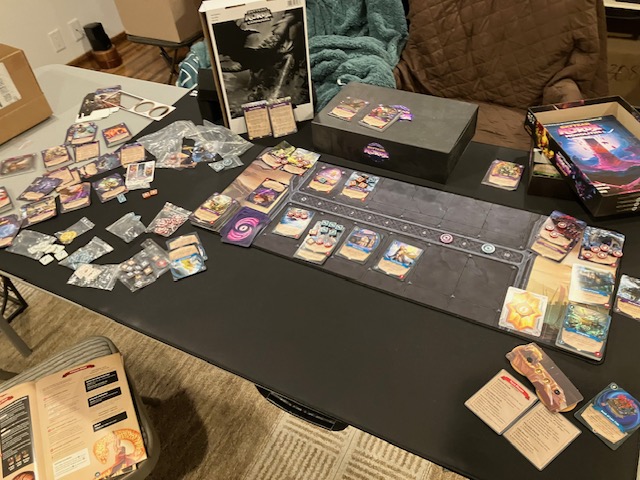
The Thematic Campaign might be my favorite way to play Skytear Horde!  Granted a Thematic Campaign game is about 4x longer than a normal … you’d think it’d be shorter, but the time you gain from the shorter games of 1, 2, and 3, you lose in set-up and between rounds doing card-buying. So, why do I like this way? You feel like you get to know your deck better, it’s fun to make choices about which cards you buy for the next game, and it’s neat to have some thematic text between games!  

I actually liked the Thematic Campaigns mode so much, I wanted to try an experiment: what if I TAUGHT my friends the game using the Campaign?

An Experiment: Teaching the Game Using The Campaign
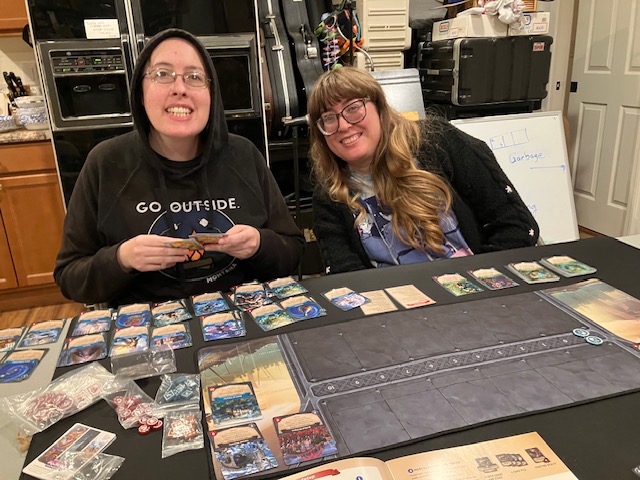
So, even though the game suggests you only play the campaign AFTER you’ve played the one-shot game, I conducted an experiment: I taught the my friends the 2-Player cooperative game using the campaign; The Thematic Campaign!
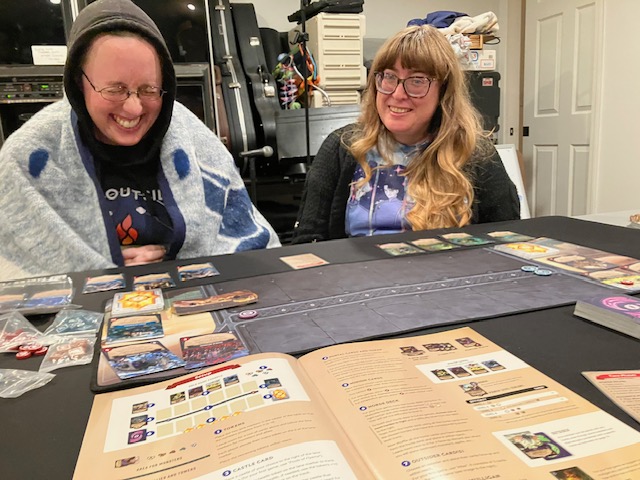
Short answer: this worked fabulously.  I stayed out of the game, being “the rules guy” and just explained the game to them.  I set everything up (which is quite a bit of work for the Thematic Campaign), and explained the rules.
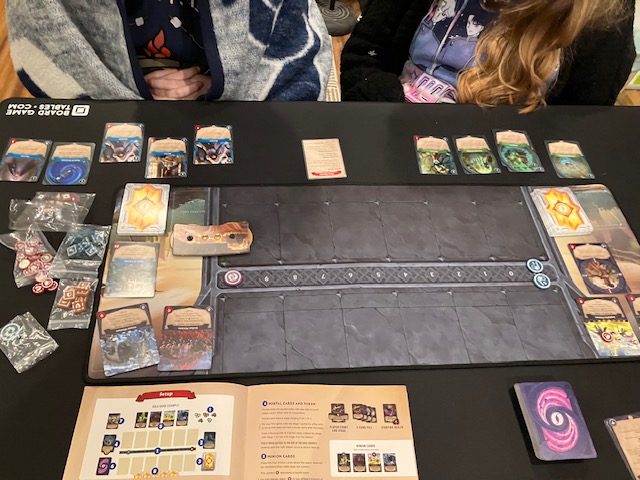
Why do I think this method worked so well as an intro game? Well, the first game is over quickly (you just have to destroy a portal), but the players get a taste of the system: they feel they understand just enough, as there are only 20 cards to learn.   Compare that to the full one-shot game of 40 cards you-don’t-know, and it’s a bit of a slog for newbies!  That first campaign game is quick and easy and gets you into the system!  
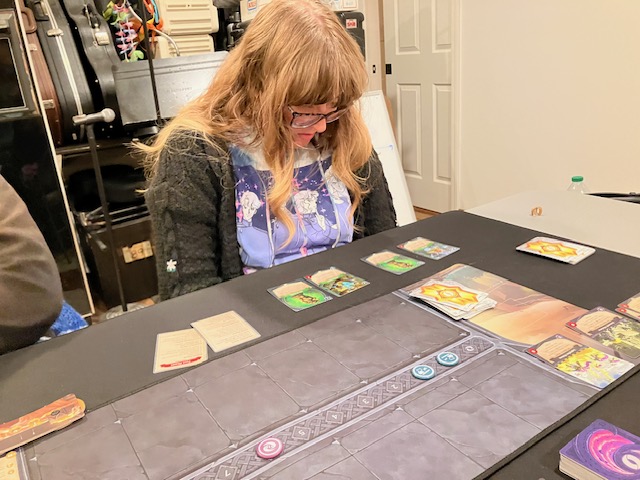
THEN, after your first game, you get to buy some new cards for you deck!  The players have to make choices, so they have to read “a few of their cards”. … but not all of them!  Just a few to buy for their next game!  So, this works great as it incrementally teaches the cards!  And players feel invested in their deck a little because THEY HAVE MADE THE BUY CHOICES.
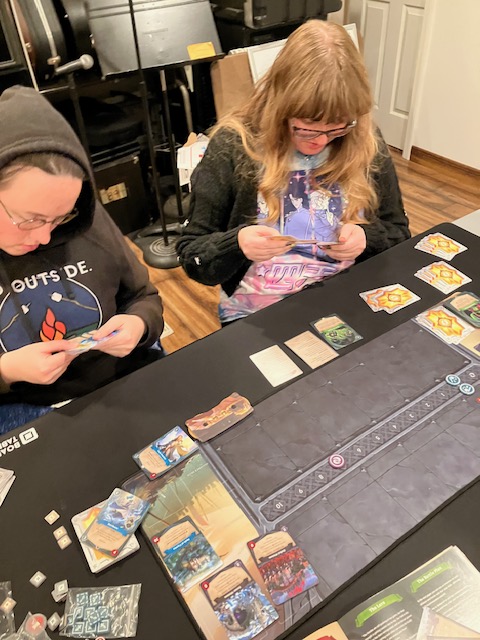
And then the games get slower harder, building the confidence of the players, but still having deck advancement at the end of each game!
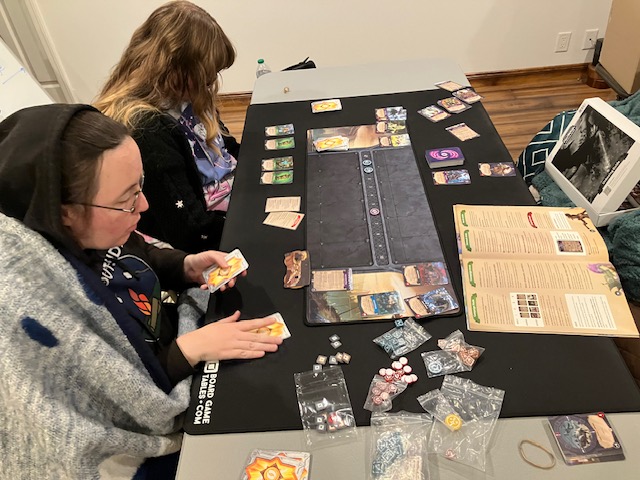
By the time the players have gotten to game 4 against “the big bad”, they are all in!  They have seen the game mechanisms in simplified form, they have built confidence in themselves and their deck, they have made choices about how their deck is built, and they have invested in the game!  THIS is the way to teach Skytear Horde!
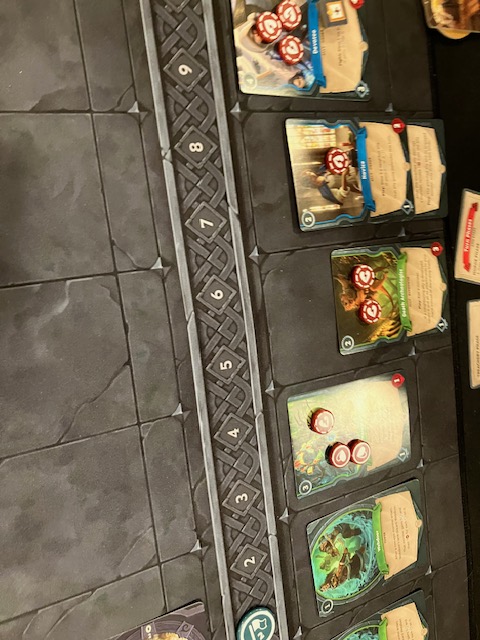
But the method ONLY works because my friends had a “rules guy” (me) explain the game and mechanisms to them,  and set it up (the set-up is not trivial). I do NOT think the campaign would be a good way to teach someone coming in with no mentor; this method only works (currently) with a shepherd to guide the players.
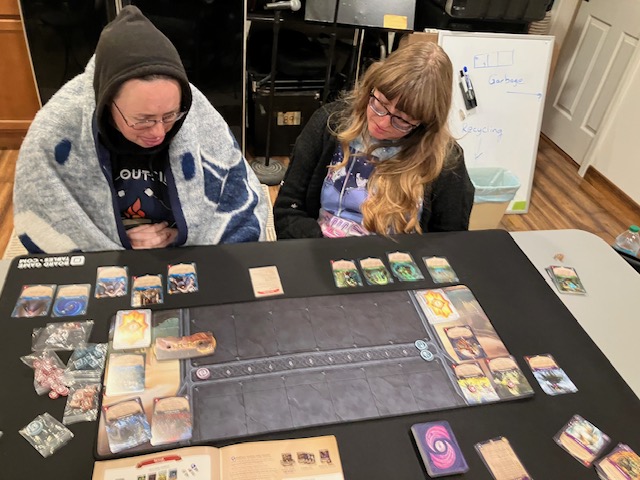
Did this method work?  My friend Sara told me afterwords: “I don’t think I would liked this game if you just threw me into the one-shot game!  Slowly building my confidence really helped me enjoy the game!”

A Missed Opportunity

My experience with the teaching campaign has me thinking: this is a missed opportunity.   If the Skytear Horde: Campaigns had included a “First Play” book which CLEARLY guided the player(s) through a campaign with CLEAR instructions, this would be the Skytear Horde I would recommend to beginners!  (I emphasize CLEAR because it would be imperative for someone who really knows how to write and teach to do that “First Play” book: my confidence in the designers wavers after all my problems in the campaigns sections) .  For all the reasons I outlined in the section above, I think this should be the way to learn the game!

Unfortunately, I cannot recommend the Campaigns mode for the self-teachers until you get over the hump of learning the game and slogging though the terrible Campaigns documentation.  Which is sad, because the Campaigns mode SHOULD be the way to teach newbies the game.

Cooperative Mode
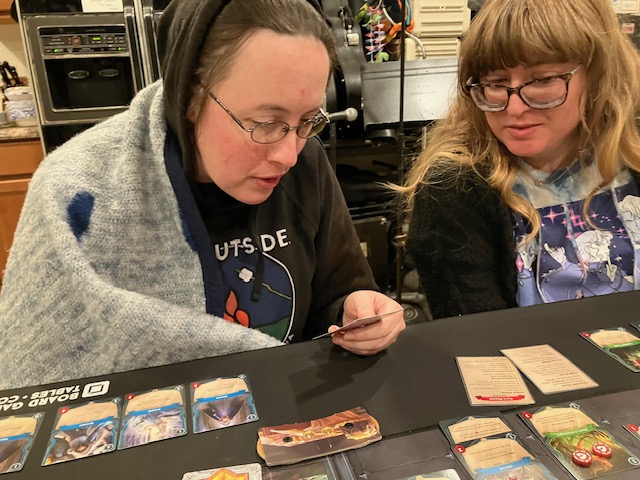
And, after all is said and done, teaching the game with the The Thematic Campaign had the side effect of helping us enjoy the 2-Player cooperative mode that much more (which we didn’t as much in the last iteration with Skytear Horde: Monolithssee review here).  Yes, it’s still fairly multiplayer solo, but my friends seems to enjoy the co-operation they did have (deciding which lanes to inhabit, which monsters to fight, etc).

What Have We Learned?

One) If you like Skytear Horde, you’ll like this.  As an expansion, it’s more of the same, in a good way.  See above.
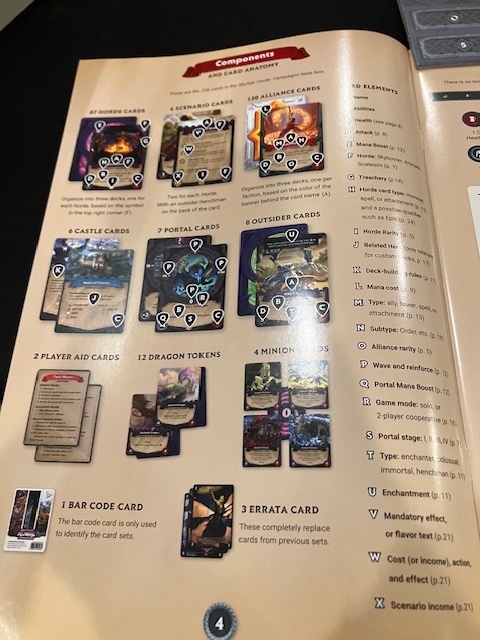
Two) The rulebook for the base game in Skytear Horde: Campaigns is the best iteration  of the rulebook so far and it’s pretty darn good. See above.  Well, it’s good before we get to pages 20 and 21…
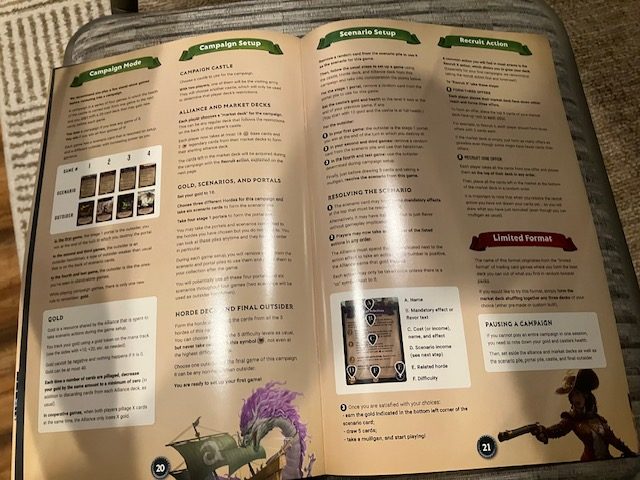
Three) The rule section for campaigns is terrible and you will struggle with it until you figure out there are two modes: Thematic Campaigns and Generic Campaigns.  See above.
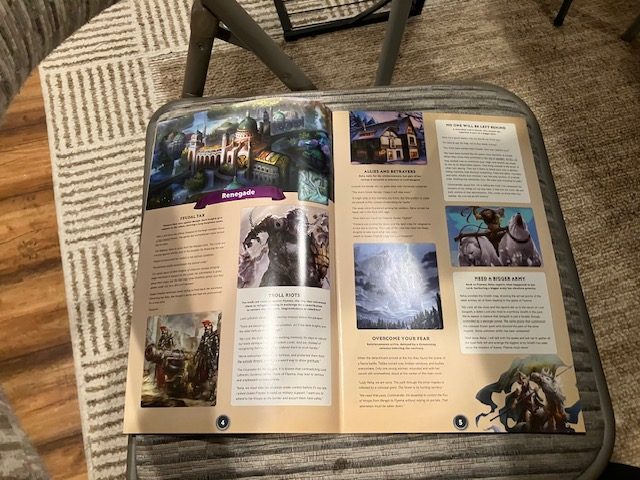
Four) The text in the Campaign book is only for Thematic Campaigns, and it’s really only flavor text; there’s no branching narrative or anything.  You almost don’t need the campaign Book except for pages 2 and 3. See above for some flavor text for the first campaign.

Five) The Thematic Campaigns can be the best way to teach Skytear Horde, but only if you have a good shepherd who understands everything already.  There really should be a well-written and clear First Play Guide to teach newbies Skytear Horde using the Thematic Campaigns mode. This is a huge missed opportunity.
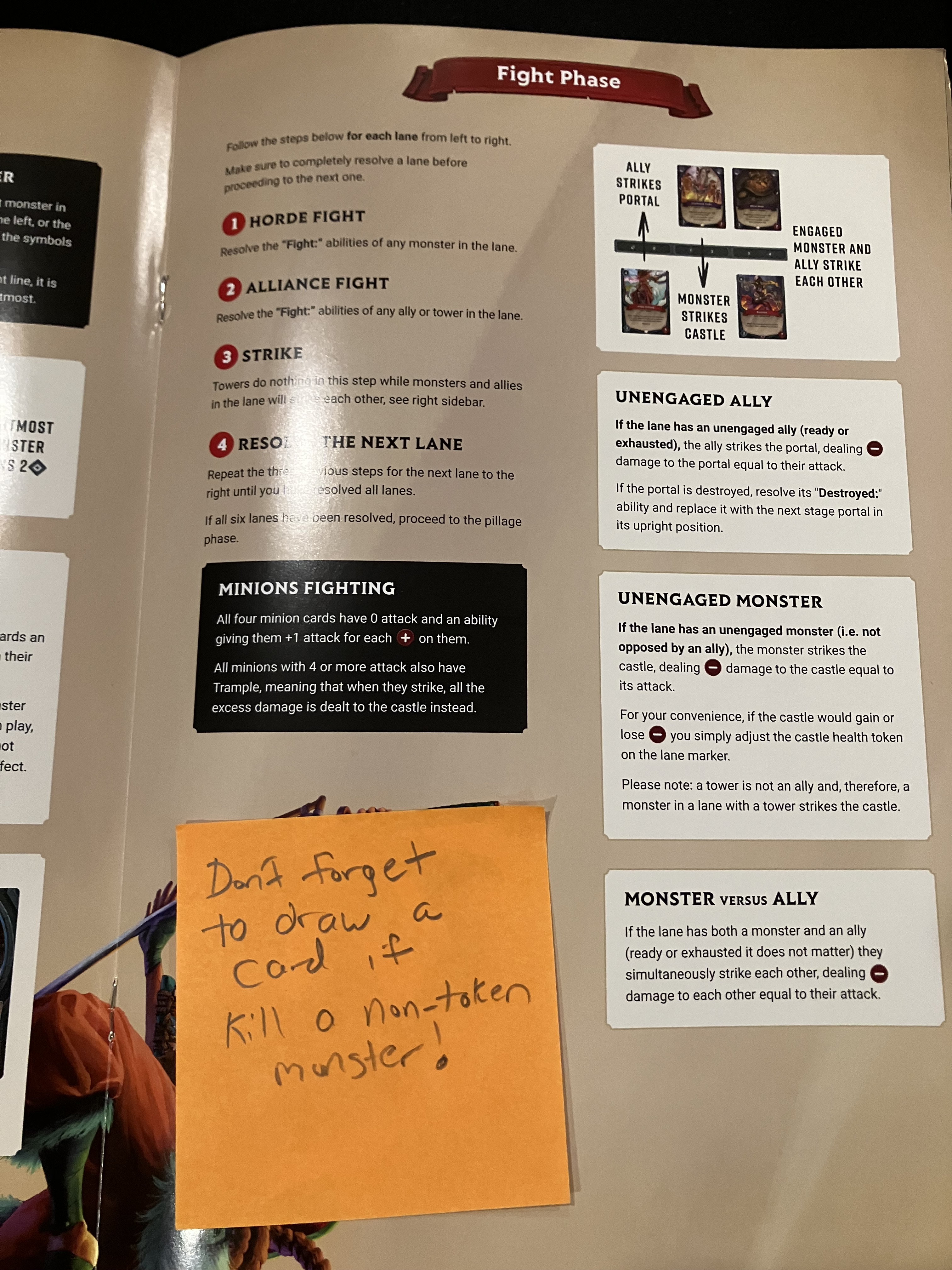
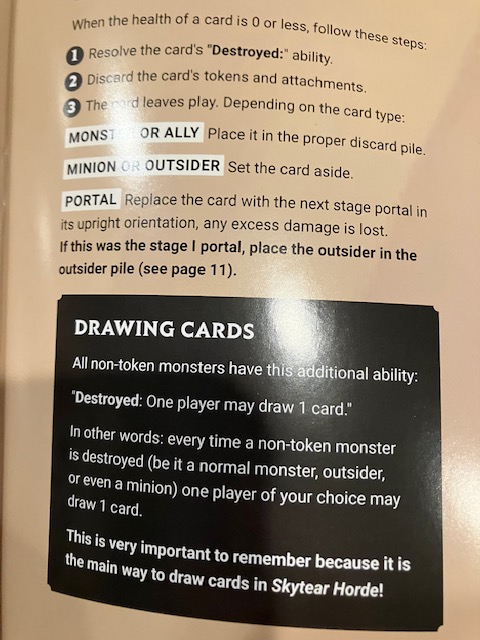
Six) I recommend putting a note in your Fight Phase page to remind yourself that you draw Alliance cards if you kill a non-token monster: see above as I did!!  The rule is documented on page 9, but you can easily miss it (because it’s not in the main flow: it’s in a parenthetical box: see below). And it’s such an important rule (and one I embarrassingly forgot in my first game), I think you need to re-emphasize it on the Fight Phase!  
Conclusion
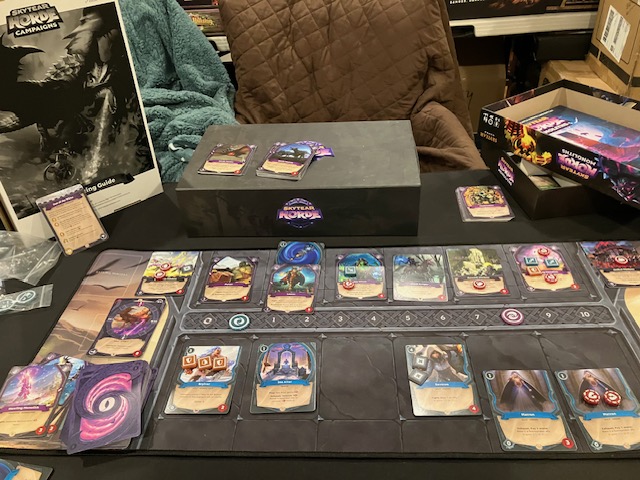
I liked Skytear Horde: Campaigns, and it’s staying in my collection.  As a straight-up expansion to the Skytear Horde system, this is a fine expansion giving you more stuff.  The Campaigns mode has terrible documentation, but once you get through it, The Thematic Campaigns are my favorite way to play Skytear Horde now.

Just be aware of all the issues we discovered while playing; hopefully that will be enough to help you enjoy this more if you decide to get it.

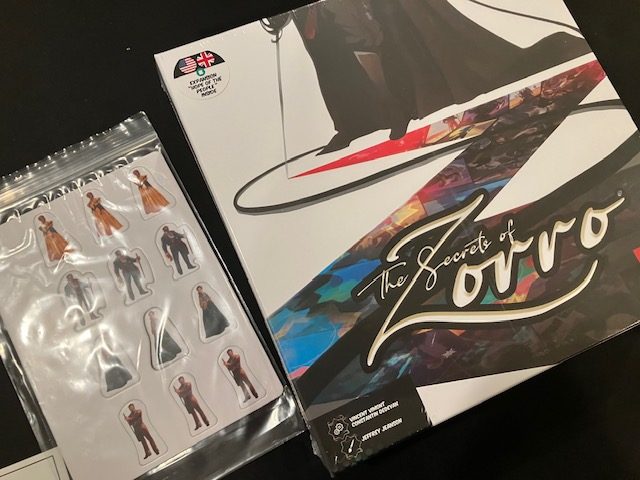
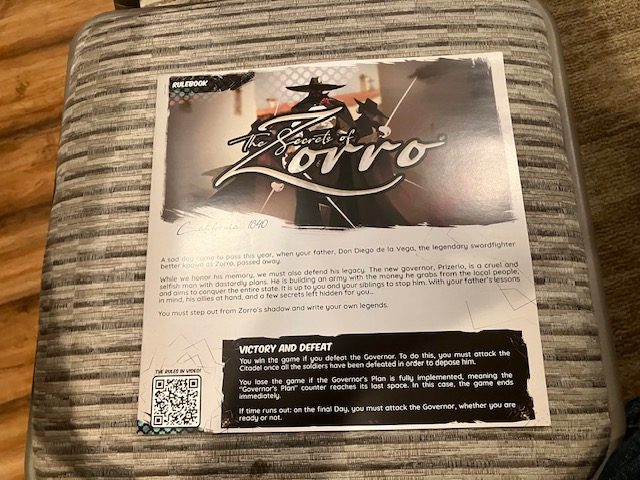
Review of Secrets of Zorro: Or “Where Do You Think YOU’RE Going, Señor Beaver?”

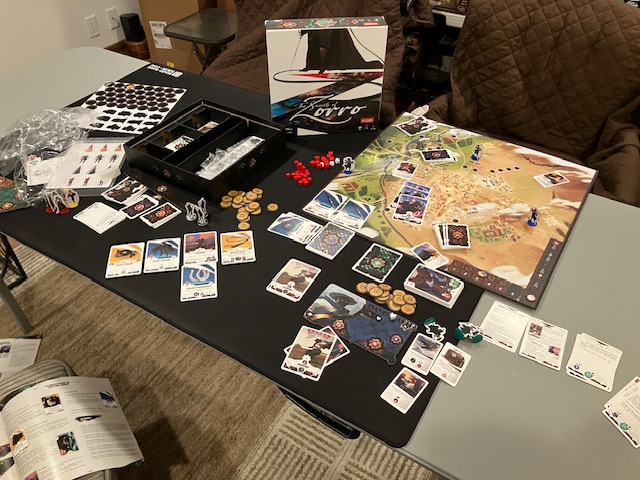
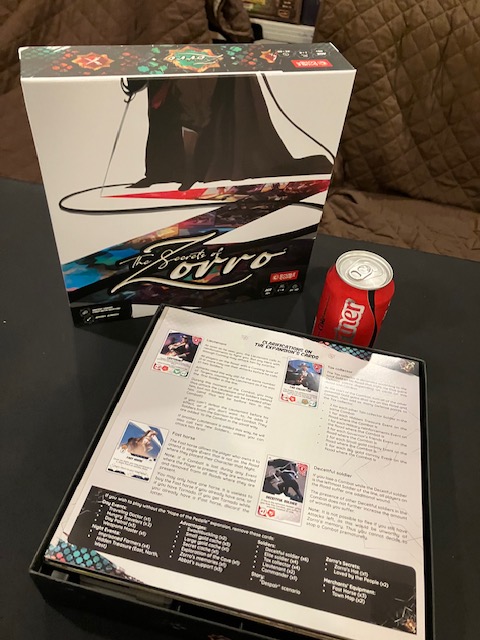
I freely admit that The Secrets of Zorro board game kinda sat around my house unplayed for a while.  I got it from Kickstarter, about 3 or so months ago … but it didn’t look great.  I mean, I did back it and I did pay real money for it (as I always do)!  So, I uncovered it one game day, and said, “Hey, let’s try this: I hope it doesn’t suck.”

The Secrets of Zorro is a cooperative worker placement and boss-battler game for 1-4 players. It obviously lives smack dab in the middle in the Zorro universe … the Zorroverse? That’s right! Cooperative worker placement? Boss-battler? Zorroverse?

Let’s take a look!

Unboxing and Gameplay

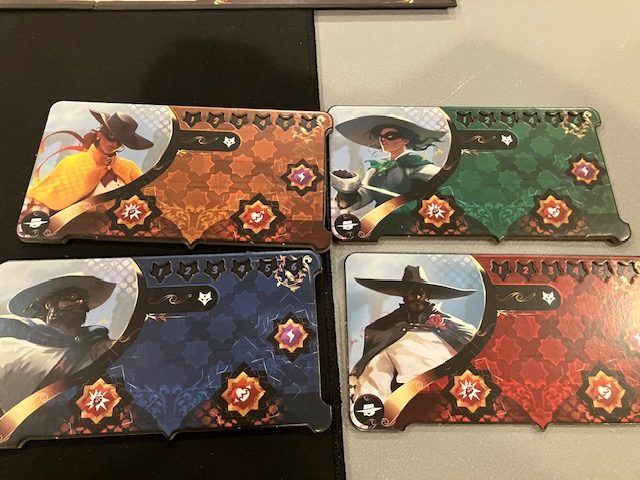
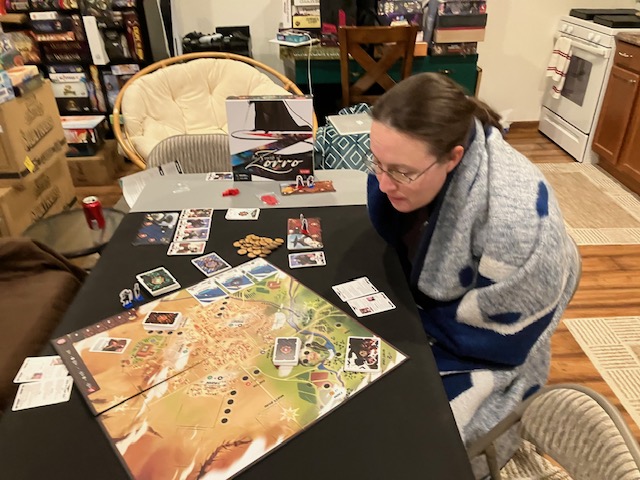
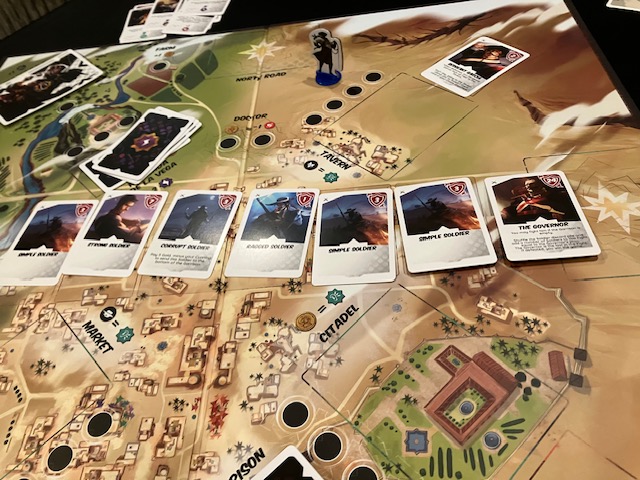
Each player assumes the role of one of the children of Zorro!  The “real” Zorro has died, and it’s up to his children to assume the mantle of their father! They will fight for justice together! (There are no special asymmetric powers, you are just kids of Zorro!)

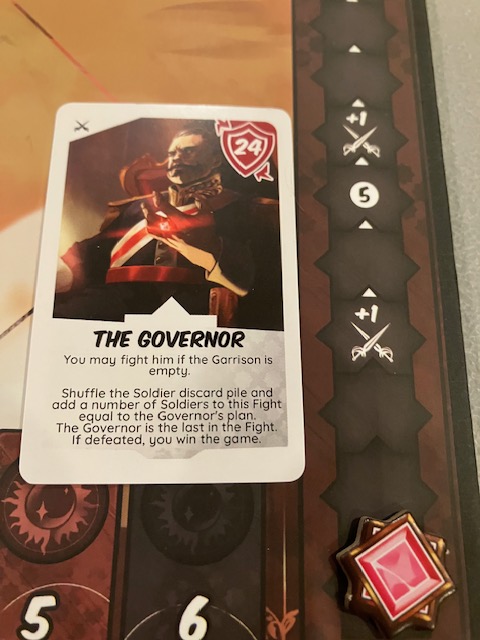
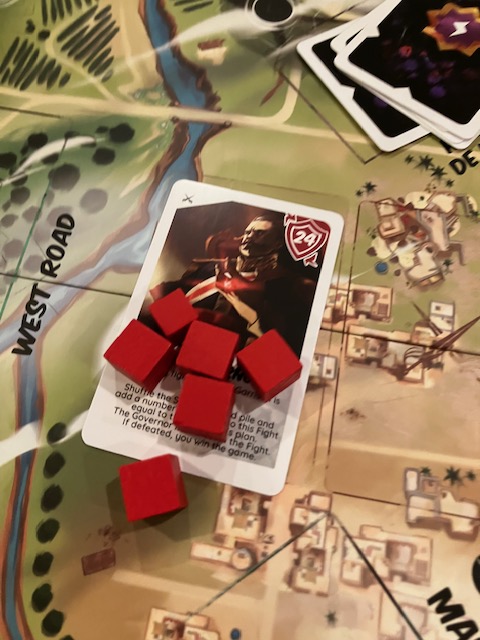
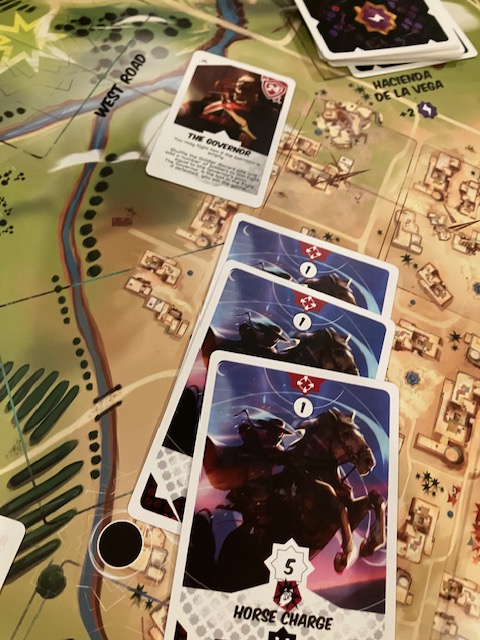
To fight for justice, you must defeat the evil Governor who is destroying the town!  This is a Boss-Battler after all!  See above!  We tended to refer to bad guy as the Governator (with thick Arnold accent), because this village is in California after all….

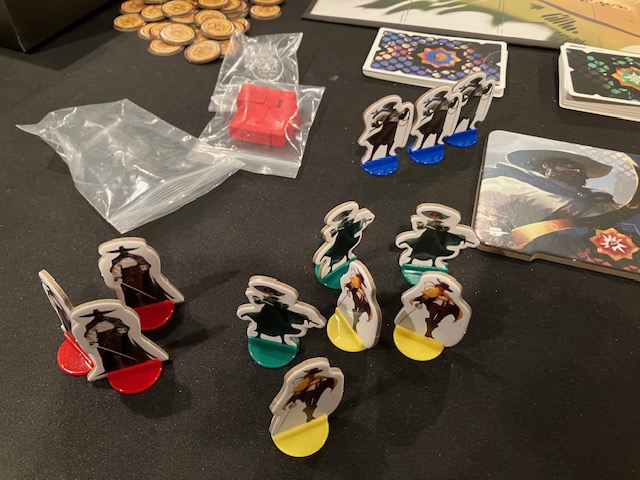
As part of the worker placement system, each player gets 3 worker placement tokens (only 2 at certain player counts).

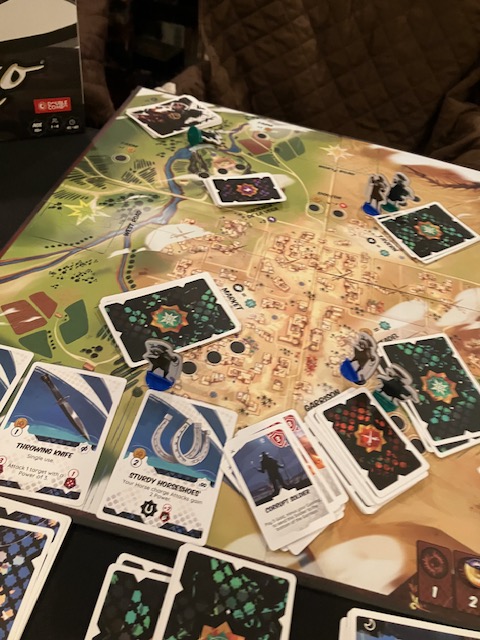
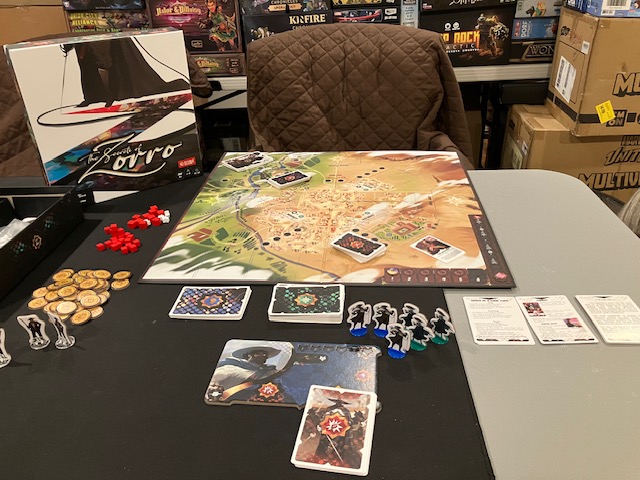
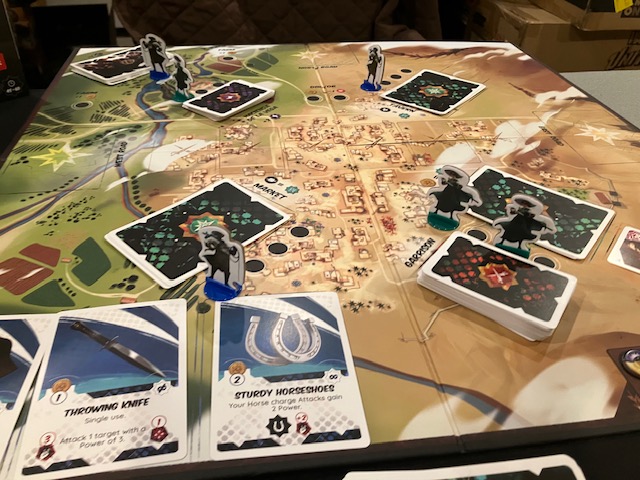
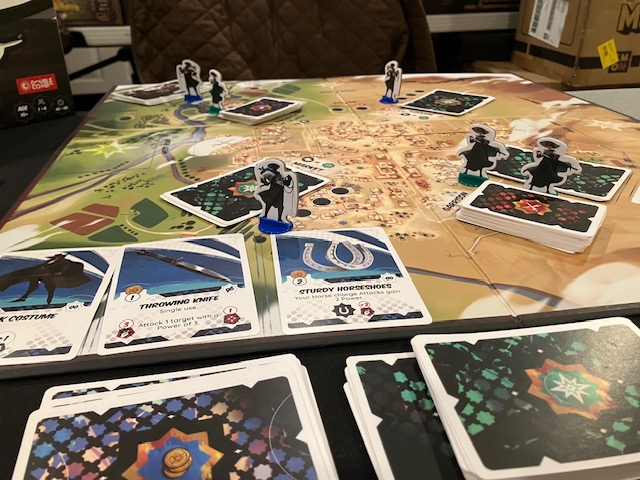
The tokens are placed around the village, doing different things at each Location!  See above as the tokens go on the black spots!

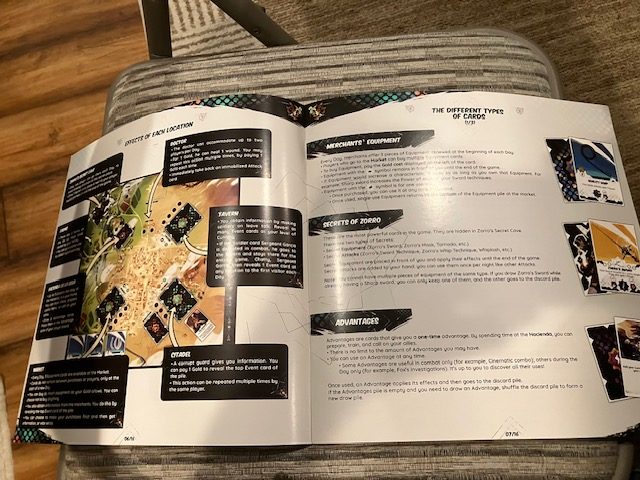
The function of each Location in the village is outlined in the rulebook (see above), but basically you can go to the Tavern to see “what’s going on” with the soldiers in town, you can go buy some cool new gear, you can heal yourself at the doctor, you can work the fields to get some money, and you can bribe some guards at the Citadel to get more info about the solider’s movement! 

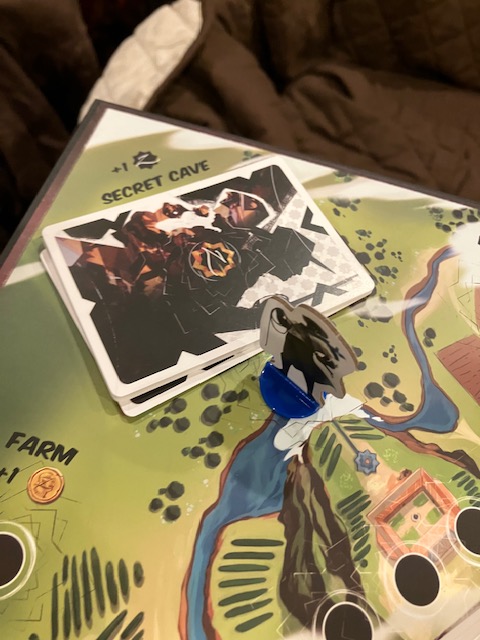
And last but not least, you can explore your father’s Secret cave to find some of his old stuff! See above! (Dad has some GREAT STUFF!)

As a cooperative worker placement game, the group decides “together” the order in which to play and activate the locations!  That’s right! Player Selected Turn Order permeates this game! (See here for more discussion of Player Selected Turn Order). Players work together to figure out the best locations to populate as a group!

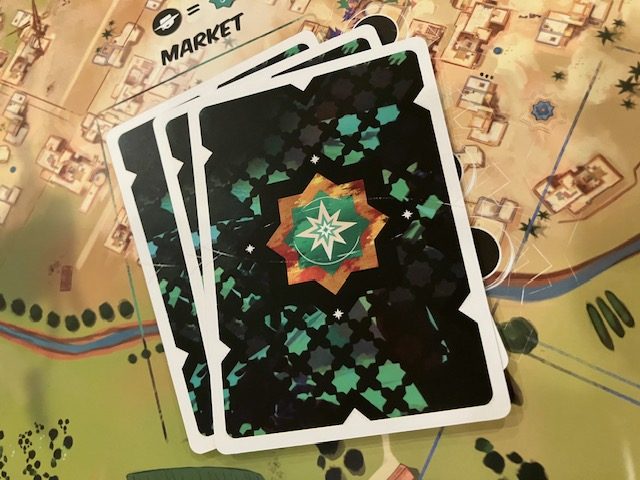
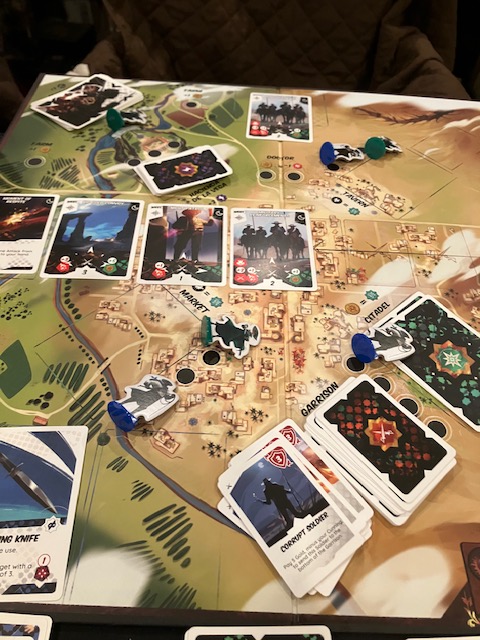
It’s important to go to the Market, The Tavern and other places around town because you NEED to reveal the Green cards (above)!  These cards contains “soldier movements” in the night, and will indicate how the soldiers will be doing bad stuff!

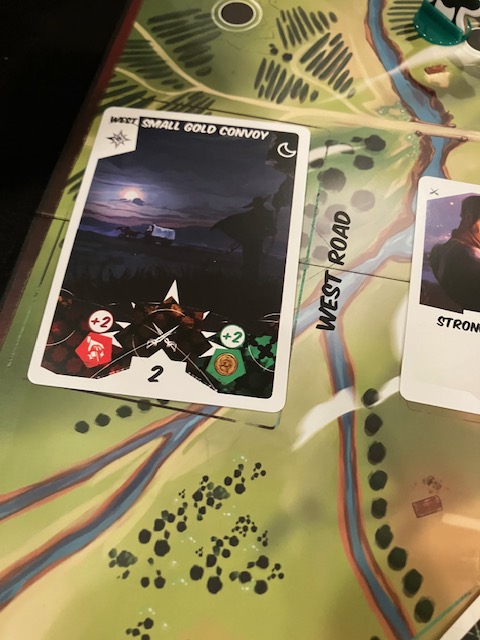
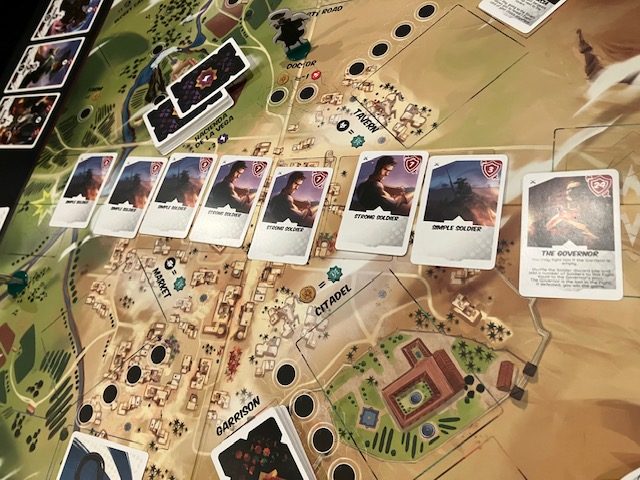
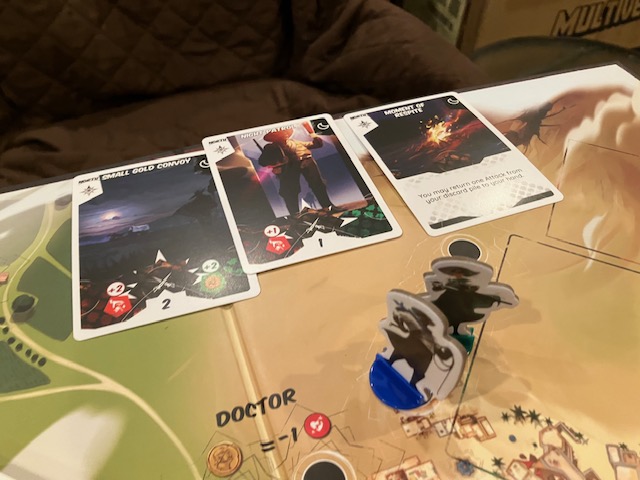
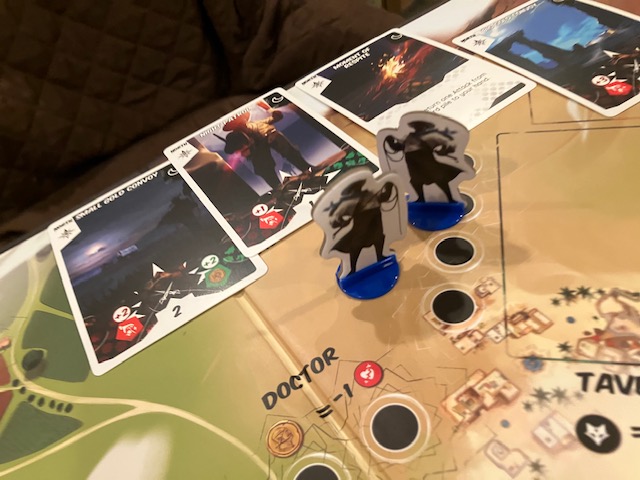
In the night phase, the Soldiers will go to the “outskirts of town” doing dastardly deeds for the Governator! See above!  Players, as the kids of Zorro, need to keep the soldiers in check!  If you don’t “deal” (ie., fight) with the Small Gold Convoy above (on the West side of town), they will cause the Governor’s plan to advance by 2!  (The red +2).  If you defeat the soldiers, you get 2 gold (the green +2) instead.

Players must choose where to go at night!  Sure, you are fighting cooperatively, but you only have limited resources, so the more you know about the soldiers movements (see above: we have three soldier groups going to the north), the better you can spread out to combat the governor’s forces!  In the day, you have to balance upgrading your kid of Zorro (buying new stuff, adding advantages, looting your Dad’s cave) with tracking the soldier movements (by bribing soldiers, drinking with some locals, or hanging out with the merchant!)  It’s actually quite thematic: you gotta hang out  in town to get intelligence!

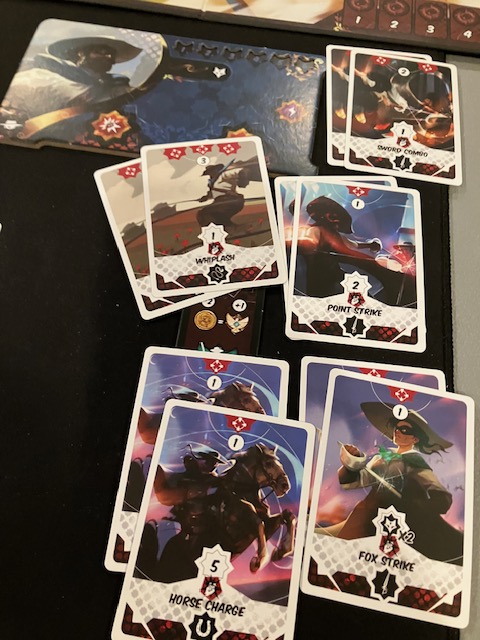
The fighting system is simple but interesting!  The players, as a group, get to choose how to attack, and in what order! (Again, more Player Selected Turn Order!) Each kid of Zorro has 5 such combat cards, 1 of each above. There are whip attacks (which can hit multiple soldiers), horse tramples, and some sword attacks!  They all feel very thematic!  See above!  

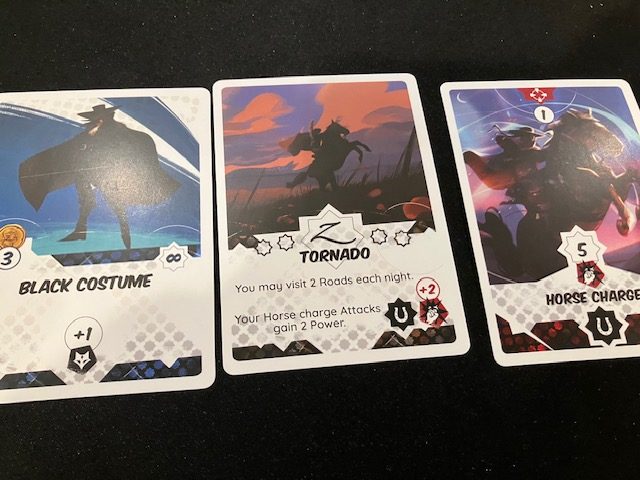
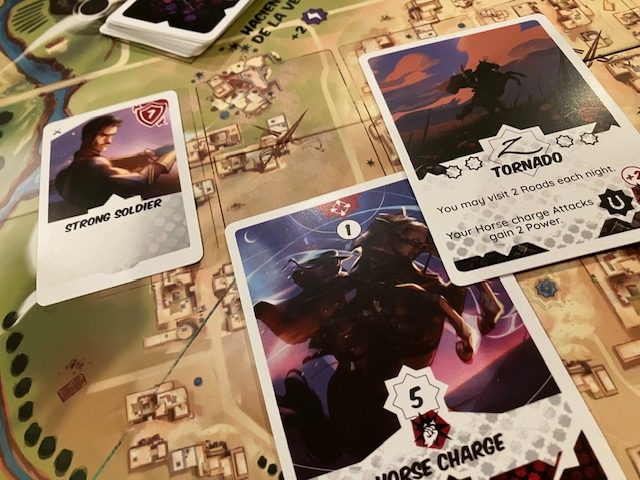
As you play, you can get more stuff to help you: Tornado (by far the best card in the game, coming from your Dad’s Secret cave) augments your Horse Charge AND allows you to be in two places at once during the night!  You can also buy gear like the Black Costume above (for 3 gold) from the Merchant!!

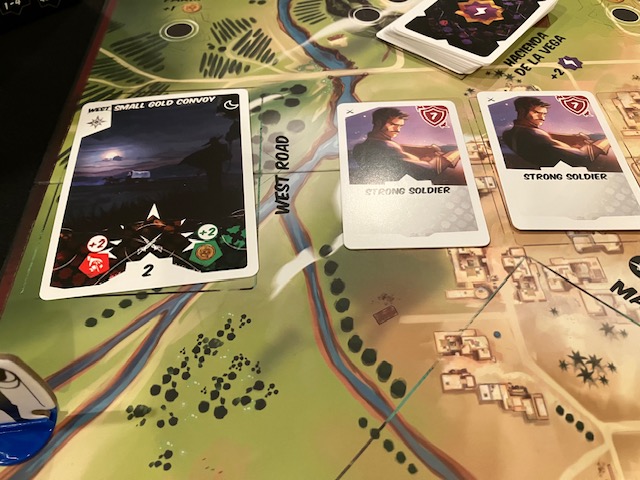
Once you decide to fight, you dedicate some of your fighting cards (in whatever order you please) to fighting the soldiers!  The Small Gold Convoy got two Strong Soldiers!  Gulp! 

Luckily, Tornado and the Horse Charge can take one of them down in a single hit! See above! You do have to fight the soldiers left to right …

Basically, you alternate day (worker placement) and night (battle soldiers) until you exhaust all the soldiers in the citadel and force the Governator into a final fight!  The better you do at keeping the soldiers (in the night phase) in check, the fewer the Governator will have in the final battle!

If you can beat the line of solider protecting the Governator and take him out (see above), you win! If you take too long or lose too many battles with solider at night, you lose!

It’s worth noting the wound mechanism is simple and clever; if you ever lose a fight, you have to place one of your fight cards in the wound section of your character, and you can’t get it back until you heal or see a doctor (normally, you get all your fight cards back every night).

Rulebook

I didn’t love this rulebook.  It was missing some rules, and it could have been better in a few sections.  But because this is a very thematic game, some of the missing rules you can easily extrapolate.  For example: Where do the soldiers go if players lose a combat?  I had trouble finding the rule, but it seems thematic that they go back to the Garrison.  The lack of clarity in some rules wasn’t a deal-breaker (like it was in Corps of Discovery from a few weeks ago) because this game is pretty darn thematic!

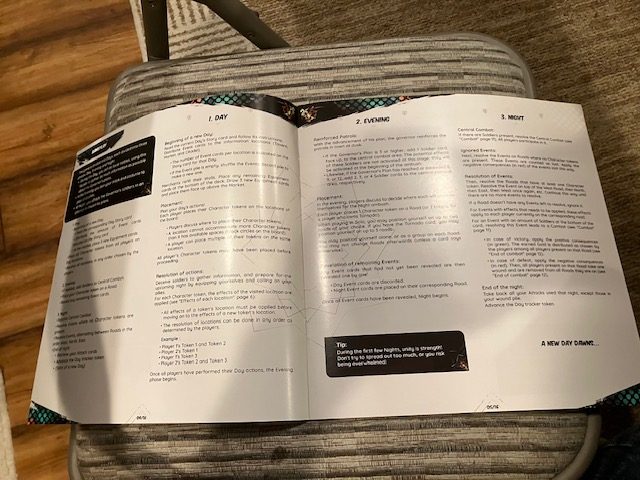
The rulebook gets about a B- on the Chair Test.  It can work on the chair next to me, as it stays open, but it could be slightly smaller and have a slightly bigger font.  B- is still pretty good.

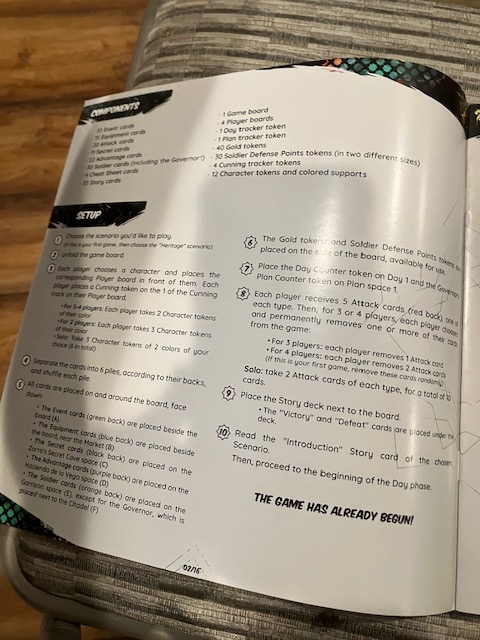
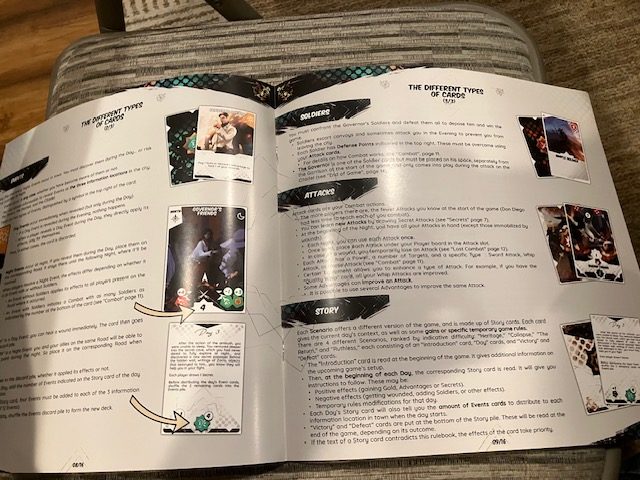
The Components list made me grumpy (see top of page) because there were no pictures! In fact, I had to count cards to make sure I understood what each type of card was! That’s not ideal.

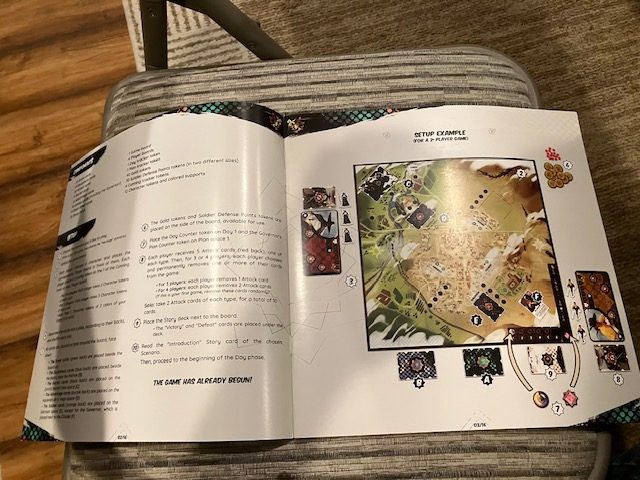
The Set-Up (above) did help answer a lot of questions, and it even had a nice picture with the correlating instructions on the opposite page!  So, that helped alleviate some of the component issues.

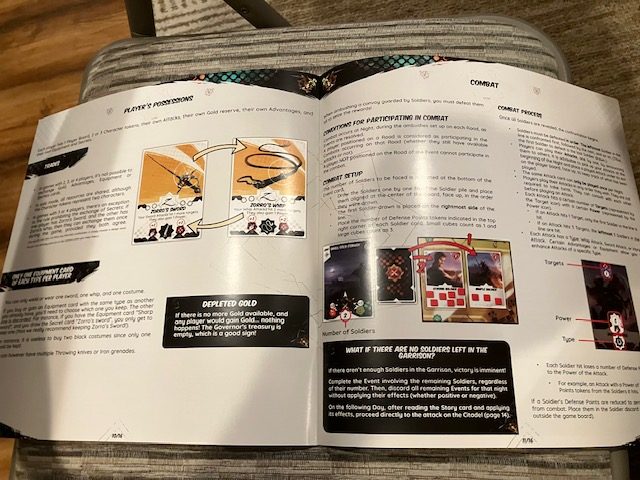
The rules were okay.  A few might have been clearer, but it taught the game.  See more pictures above.

The picture (above) with list of actions at each Location was pivotal to playing the game!

Except for one major rule omission, the rule book was good enough. We moved forward with only a little bit of grumbling. It taught the game well enough. Let’s move on.

Solo Play

So, congratulations to The Secrets of Zorro for following Saunders’ Law and having solo rules! 

The solo mode is a true solo mode where the solo player inhabits a single kid of Zorro.  

Theres not too many changes for solo play: For balance purposes, the solo character gets 10 combat cards (see above) instead of the 5 or so.  

The solo player actually gets 6 worker placement tokens (see above for 3 of blue and 3 of green).

And when going out of town during the night phase, the solo player can go to TWO outskirts places by himself.  

Other than that, the game pretty is the same as the cooperative game.  In this case, the solo player is just operating a lot of workers and combats by himself!

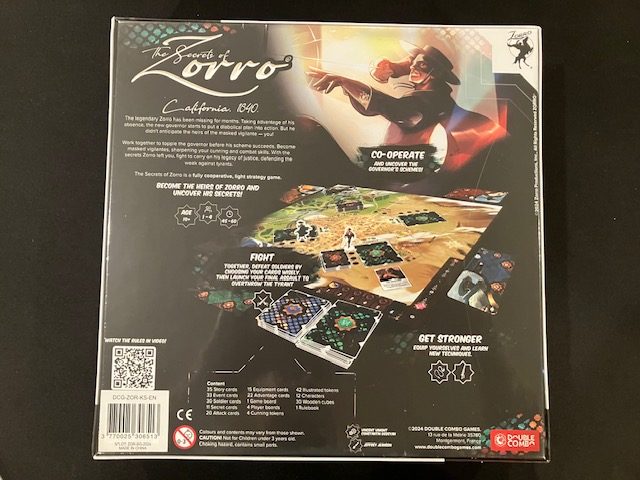
The solo game works pretty well to teach the game: after one game, I felt like I had most of the rules down.  It was also pretty fun.  I could see playing solo again.  It was also pretty quick: the game box says the game takes 45-60 minutes and that is pretty accurate!  The game’s mechanism are straight forward, and as the solo player, I had lots of choices! It’s easy to learn.

Cooperative Play

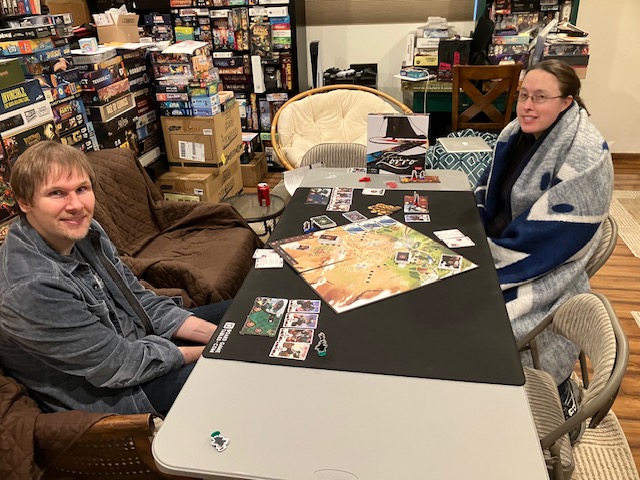
Even though the solo mode was fun enough, the game really shines as a cooperative game!  Over two weeks, the game came out numerous times!  By request! Once as a 3-Player game with me, Teresa, and Andrew (see above) …

… and once as a 4-Player game with me, Sara, Teresa, and Andrew!  

The Player Selected Turn Order really keeps everyone involved all the time!  During the day phase, players have to decide when and where to place their tokens! Then during the night phase (when you fight the soldiers), that same Player Selected Turn Order is still in force as  players decide the order in which they attack!  It made everyone feel involved and active!

In fact, as the Kids of Zorro working together, a little bit of role-play even emerged! 

“Hey Sis, can you help me fight to the North?
“Okay, Bro, but you owe me!  Dad always liked you best!”

It was actually a little surprising that the role-play emerged! I wasn’t expecting it!  But, as Kids of Zorro, we all felt kinda connected!  That role-play was a major benefit I did not see when playing solo! That extra little silliness really ratcheted-up the cooperation!

This is not a heavy, plodding game: it has a light air to it, and was much more fun than I expected!

“Where Do You Think YOU’RE Going, Señor Beaver?”

A very very long time ago, when I was a kid in the 1980s, the same 10 or so movies showed on HBO all the time.  There was one such Zorro movie that me and my friends watched and quoted quite a bit! My friend’s CC and John watched the movie a lot more than I did, but one of the lines from the movie  still gets quoted today: “Where do you think YOU’RE going, Señor Beaver?”

I had to ask my friend CC: “Um what was that movie you and John always quoted?”  It was Zorro: The Gay Blade starring George Hamilton.  It was a silly movie according to CC!  It was a fun romp … it was funny and a little silly, but still had lots of action and great sword play! Just like you want from a Zorro movie!!  I bring up that movie because, somehow, the spirit of that movie seems to shine through this game!  This is a light game, but still enough interesting decisions and cool combat with swordplay, whips, and horses!  You fight bad soldiers to take out the Governator!  But it’s fun!  Not too heavy!

And no, I’m not going to tell you the context of the quote.  You have to watch the movie to find out for yourself.

House Rules

This game is really fun, but it needs some house rules.   The thing is, they are all thematic and make the game more cooperative and more fun!

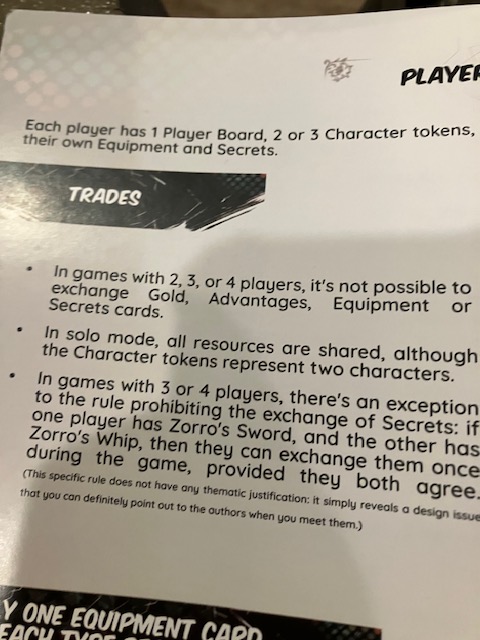
1) First of all, there is no trading!  See rules blurb above.  I get that it might be for balance, but it makes the game feel like “you just get what you get, you have no choice“: And that’s not fun.  It really came home to us how ANTI-THEMATIC this “no-trading” rule was when I was wounded and needed a gold to heal myself.

“Hey Sis, can I have a gold? I really need to go to the doctor!”
“NO!  I cant give you one!”
“But we all live in Dad’s house at the end of the day and come home to each other … you can’t give your wounded brother a single gold to help him heal?”
“NO!  Go work in the fields and get your own gold!”

We assume (maybe wrongly) that we all go back to Dad’s house at the end of the day.  It seems like we should be able to share at least gold and equipment at the end of the day (I get that Advantage cards can’t be shared) because we all sleep in the same house?  Like I said, add some trading at the end of the day makes the game feel more fun and more engaging and more strategic (as you feel like you don’t get STUCK with something).

2) Ride to other Outskirts!   The Horse Charge is the best base attack in the game!  But it seems very thematic that if you discard the Horse Charge during the night phase, you can ride to another “outskirts” Location and help your brothers and sisters!!!  The fact that Tornado already allows something like this speaks to this rule.    It’s not too damaging to balance, as it’s the best base attack in the game!

It was our experience that both of these house rules made the game more fun, more thematic, and more cooperative!  

Things I Liked

The Secrets of Zorro was: Easy to learn.  Easy to teach.   It had reasonably quick games.  The art on the cards was really nice.  I loved how the Player Selected Turn Order permeated the game in both worker placement and combat.  I was surprised and delighted by how much role-play emerged in the cooperative game!  The game was very cooperative and engaging at all times!

Things I Didn’t Like

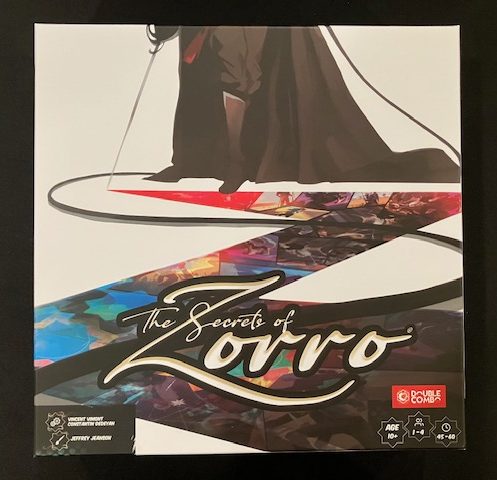
I love the art in the game, but I don’t love this cover.   There’s some great art in here and I feel like the “attract mode” of the cover might cause some people to pass it over. Don’t!  It’s a fun little game!

The rulebook could use a little sprucing up (better back cover, a few rules need to be clarified or elaborated, components description page needs to be much better).

Overall Reactions

We all liked this game enough to play it two weeks in a row!

Andrew: solid gameplay, 6.5 or 7. Probably 7 with house rules.
Sara: 7?
Teresa: 7? 7.5?
Rich: 6.5 or 7 for solo game.  7.5 for cooperative game, 8 with house rules.

I think the only reason it didn’t get a higher score was that it is still pretty light and doesn’t have tons of replayability (they do, however, have an expansion which helps with some of that).   This was a keeper for my group: Probably 7.5/10 overall.

Conclusion

I didn’t expect to really like The Secrets of Zorro, but I really did, as did my group!  The cooperative experience was really engaging because of the Player Selected Turn Order and the role-play that emerged from being the kids of Zorro!  

We have a few house rules to suggest that make the game more fun (making it about a 7.5/10), but even the base game was still a 7/10!  The Secrets of Zorro was fun, quick to teach, quick to play, and a fun experience fighting for Justice!

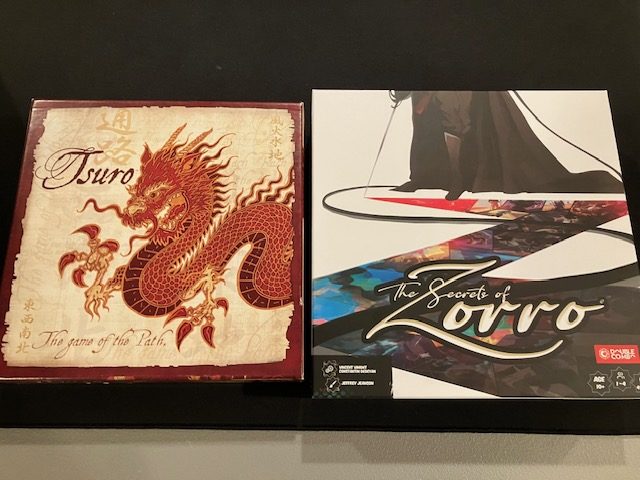
Just don’t accidentally pronounce Zorro like Tsuro with your friends!! For a few minutes, Andrew was confused why we were fighting bad guys in the Tsuro game???

Top 10 Solo/Cooperative Trick-Taking Games

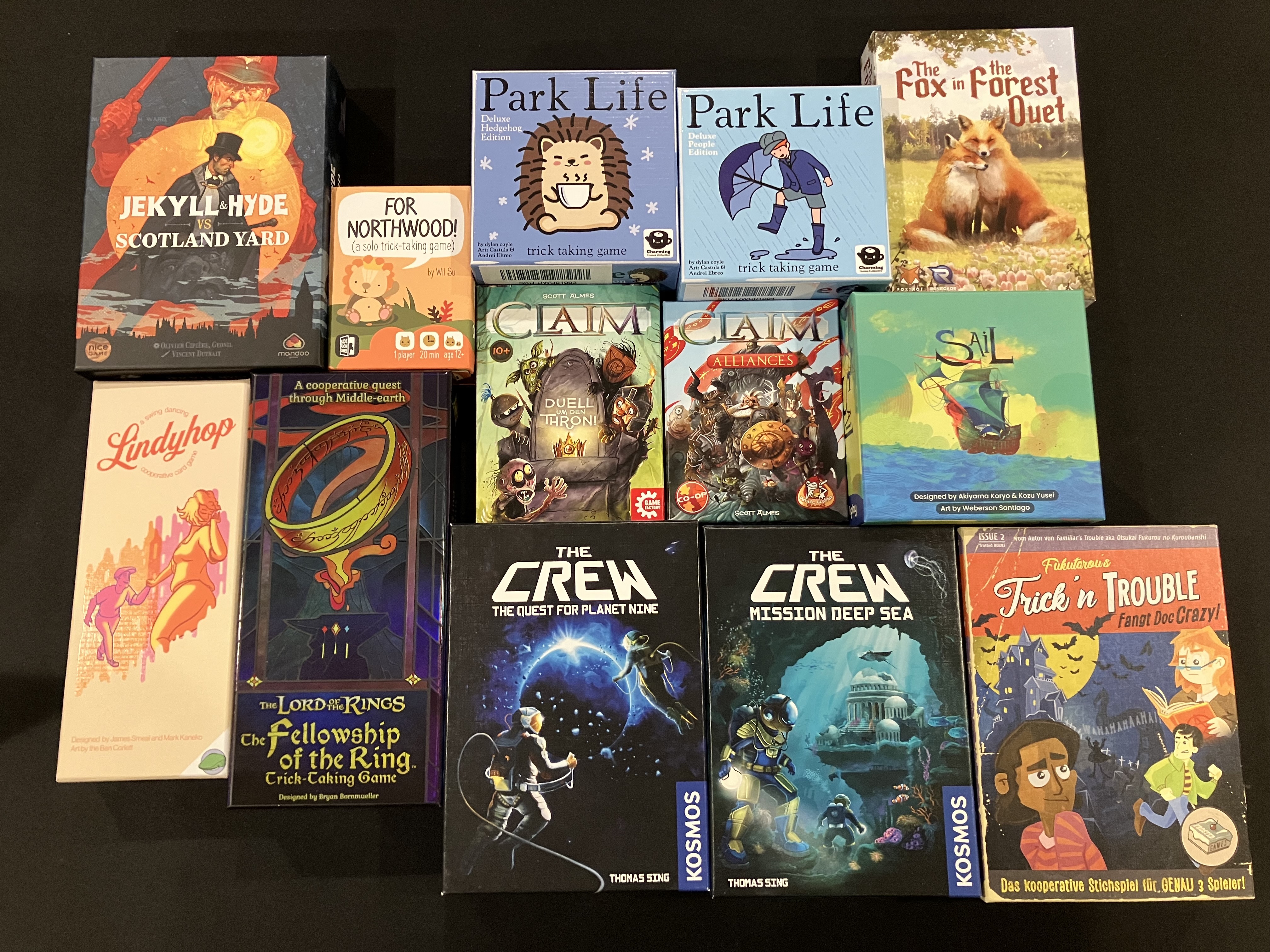
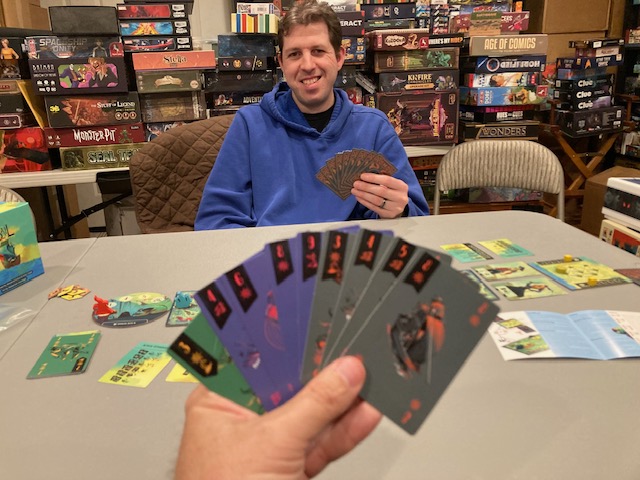
Trick-taking games are a genre that’s been around for ages: Bridge, Hearts, and a more gamery games like Rage! We’ve now reached a point where there are a lot of solo and cooperative trick-taking games as well! To be cooperative, every single one of these games has a pretty severe notion of Limited Communication … if you could just communicate anything, most of these games would become trivial! So, most games on this list have very constrained notions of communication! Interestingly, most of these games also have a very constrictive player count, so we take note of that as well! Let’s take a look below!

(We also note that two of these are in German, which required me getting a translation, and a third was mostly German but luckily included English rules!)

10. Park Life

Player Count: 1-4

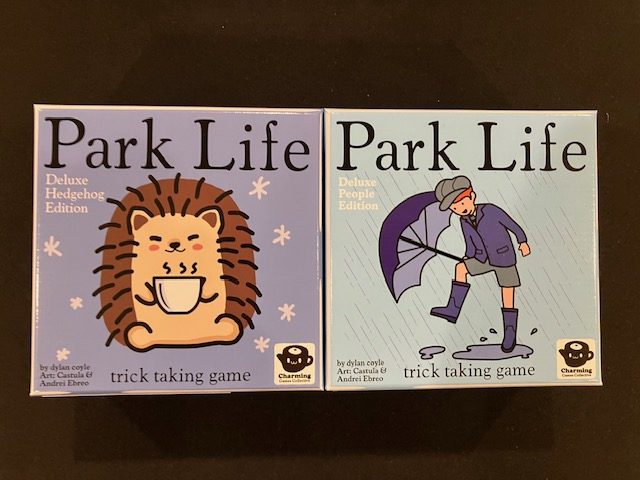
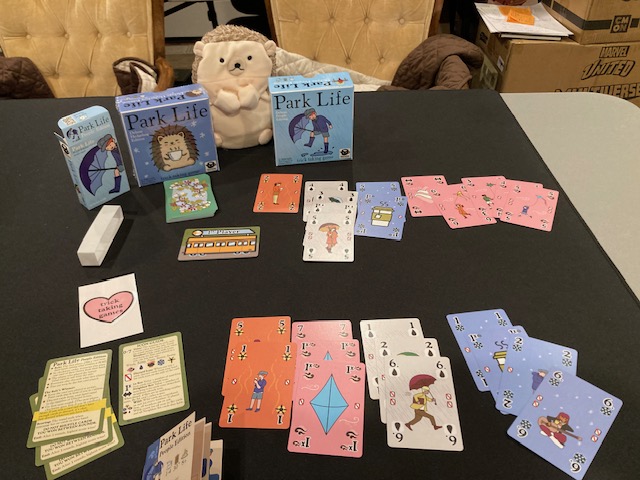
This cooperative Trick-Taking game is a little misleading because, depending on the version of Park Life you get, there’s a very different trick-taking game! 

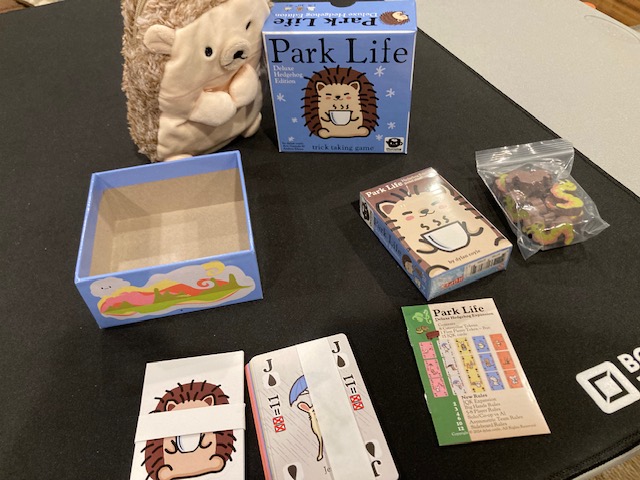
The Deluxe Hedgehog version (above) has a different version of a trick-taking game …

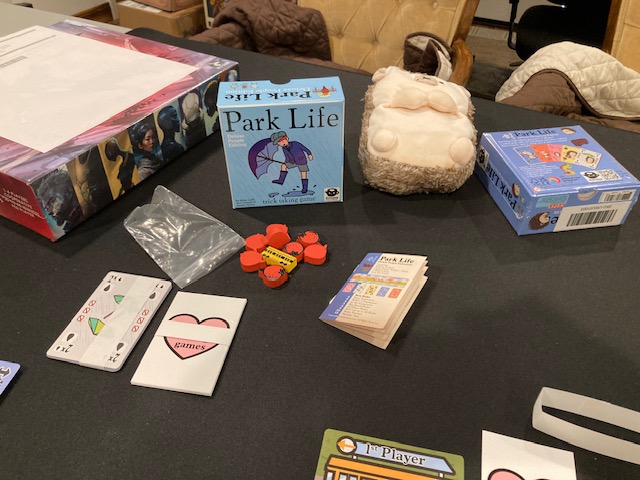
.. than The Deluxe People Edition (above)! 

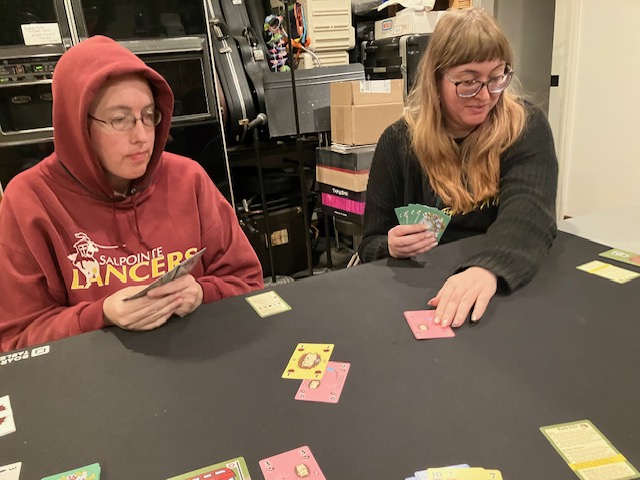
Both games have a solo game, but the game is a little better with more people.  These games are at the bottom of this list because they seem the least developed: they are very cute and have some interesting ideas for trick-taking games, but feels like they could use a little bit of either explanation or work.   

Still, you may play these and fall in love with them because of the cute art!

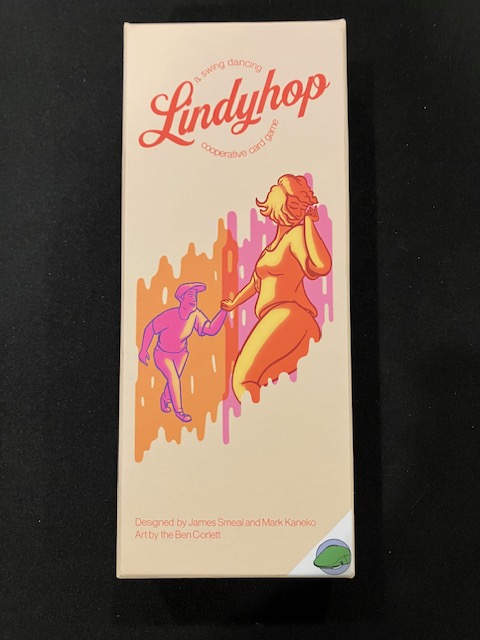
9. Lindyhop

Player Count: 2-Player Only

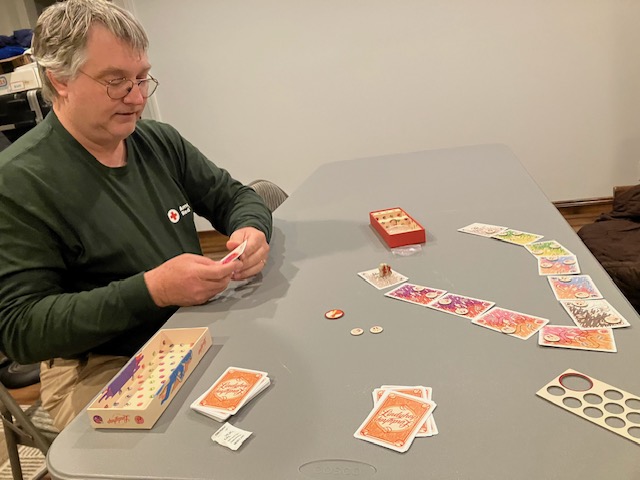
This game presents is an interesting theme, as a trick-taking game recreating a dance from 1928 (from the African American communities of New York City).  Two players “dance” with each other, with trick-taking simulating the back-and-forth/give-and-take as players try to “groove” together.

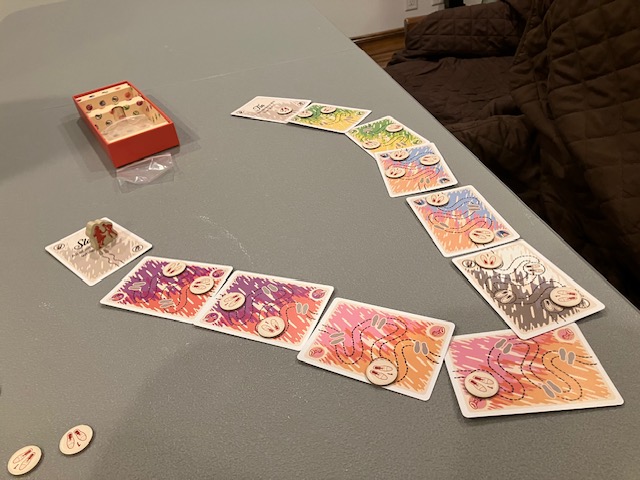
Players traverse a path together, picking up tokens if they land on exact spaces. See above.

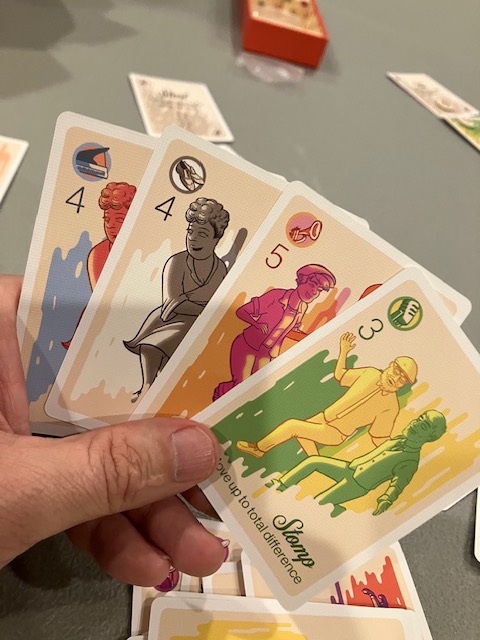
Players play cards and the difference in card value is how far they move!  The art is gorgeous (see above) and very thematic: there are even special powers on some of the cards!

The only reason this is a little lower on the list is because there is really only one opportunity to strategize: at the beginning of the game!  But it’s a fun little romp that’s easy to bring out.

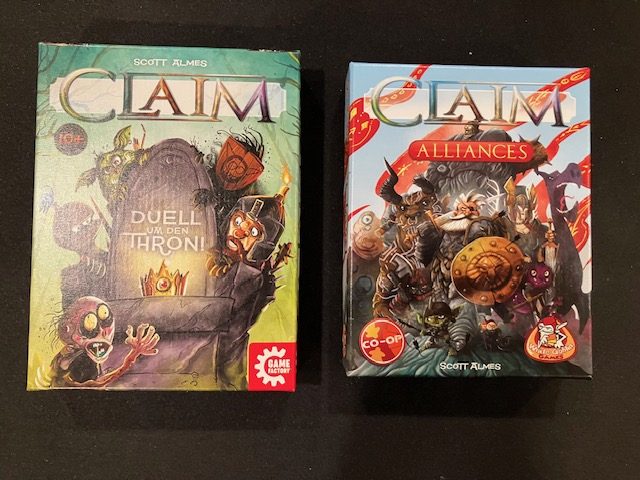
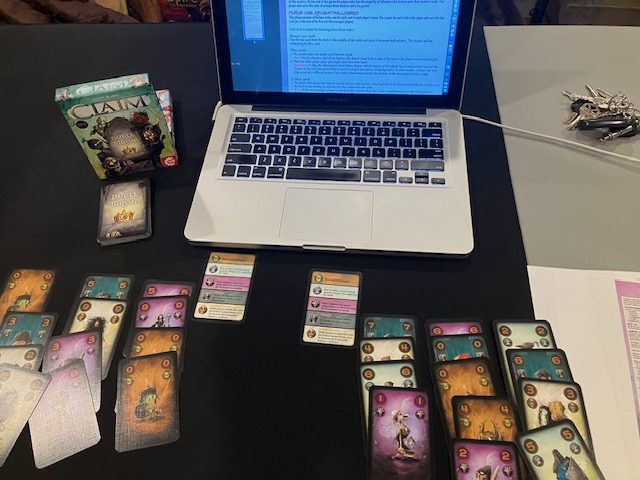
8. Claim with the Expansion Claim: Alliances

Player Count: 2-Player Only

Claim by itself is a 2-Player only competitive trick-taking game.

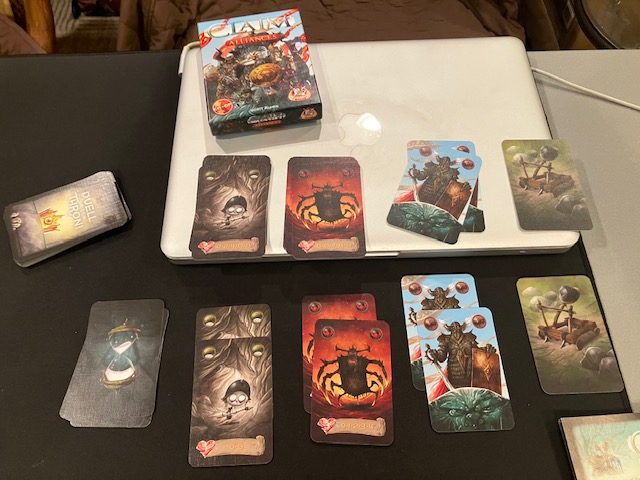
But, with the Claim: Alliances expansion (see above) this becomes a cooperative trick-taking experience!

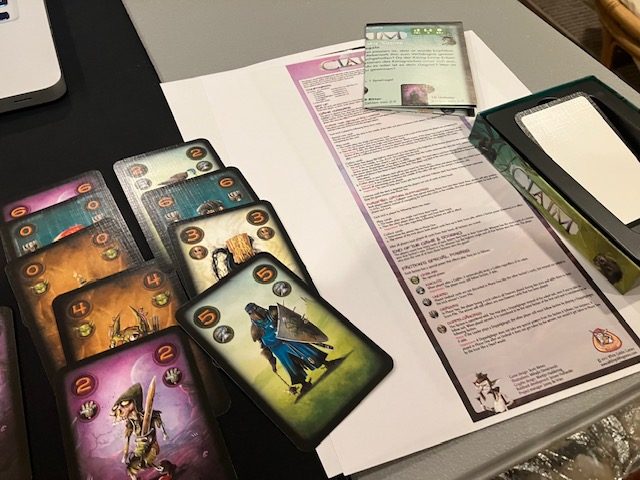
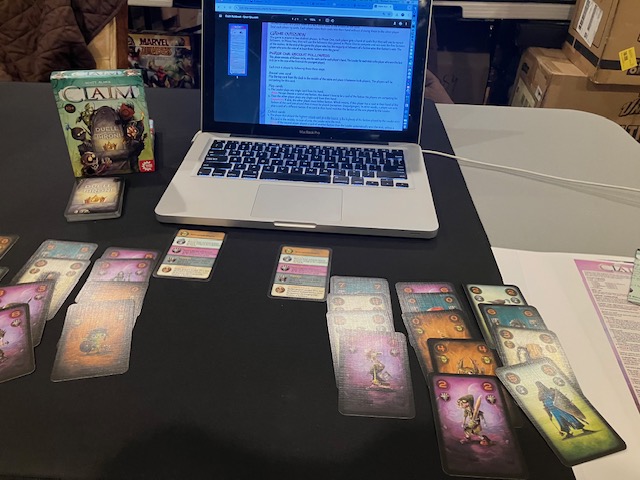
This is one of the games that was originally in German, luckily I was able to find English rules online!

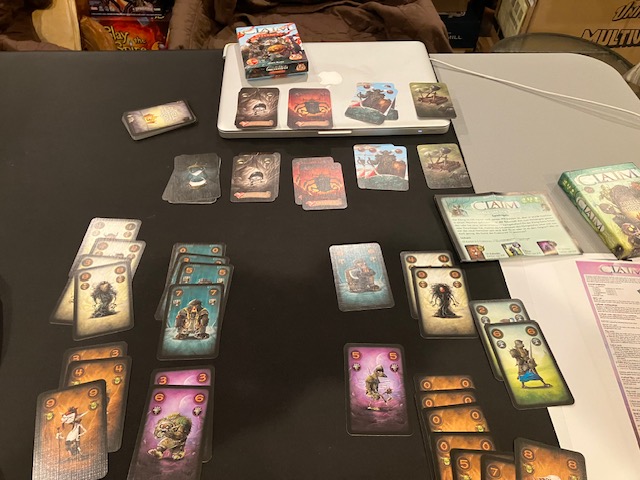
Since the way to play cooperatively is to use the Alliances expansion, you first have to learn the base game! The game proceeds in two phases, both powered by trick-taking! In the first phase, you play tricks to try and recruit cards for the next phase. The winner of each trick gets the named recruit, and the loser gets the “random” top-deck recruit! The second phase has the players trying to win factions (using trick-taking): whomever wins the most factions, wins!

In the cooperative game, some Alliance cards are added to the mix. During the recruit phase, the winner has to take an Alliance card, which includes bad guys and commanders, and at some point, both sides must have a commander whose factions they MUST win!

This is a little lower on the list because you have to get the base game under your belt before you can play the expansion. But there are some cool ideas in here, including the two phase system and some special powers on some factions!

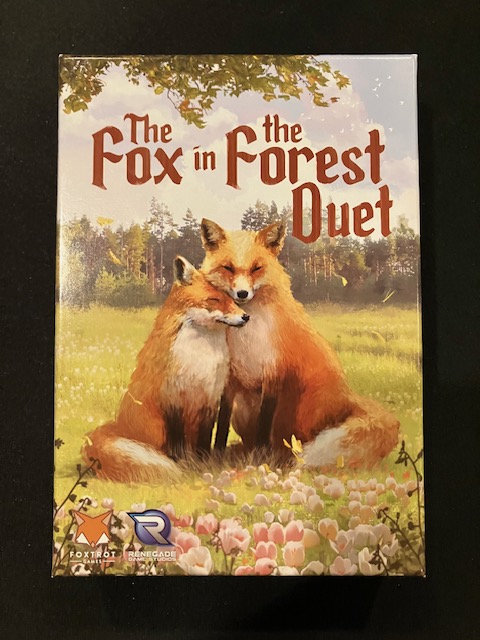
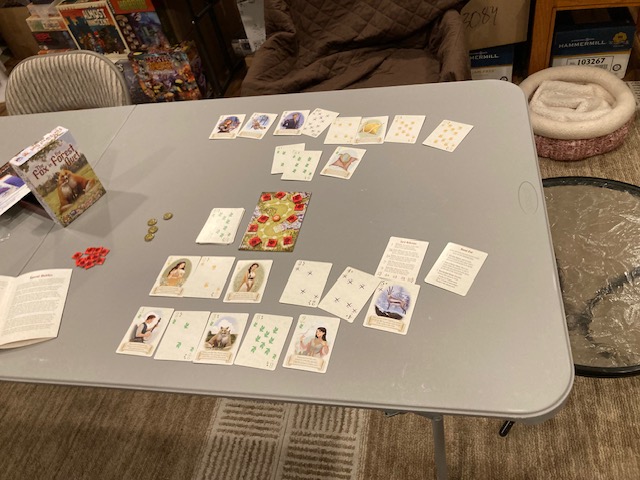
7. The Fox in the Forest Duet

Player Count: 2-Player Only

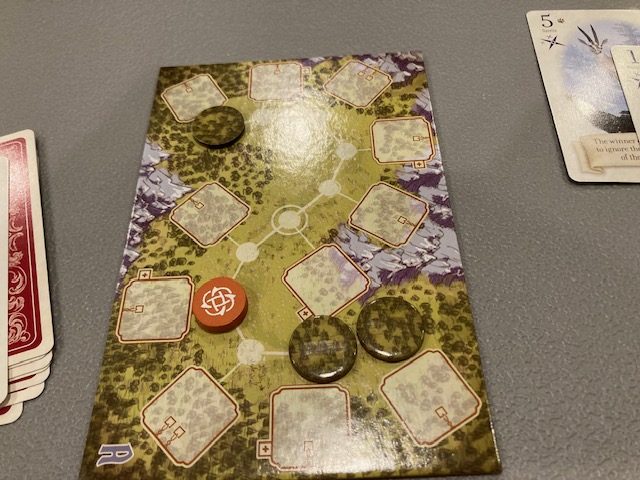
This is a 2-Player trick-taking game where players play tricks to move around a forest map collecting gems.

The art is cute and the game is pretty light.  The Communication Limitations are fairly draconian once you have your cards (you can’t even discuss strategy), but you can discuss strategy between rounds. We had fun playing it; it’s a lighter game that isn’t crazy rule heavy.

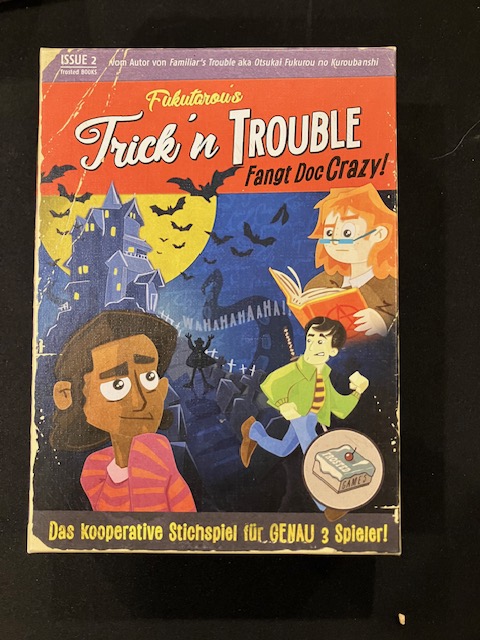
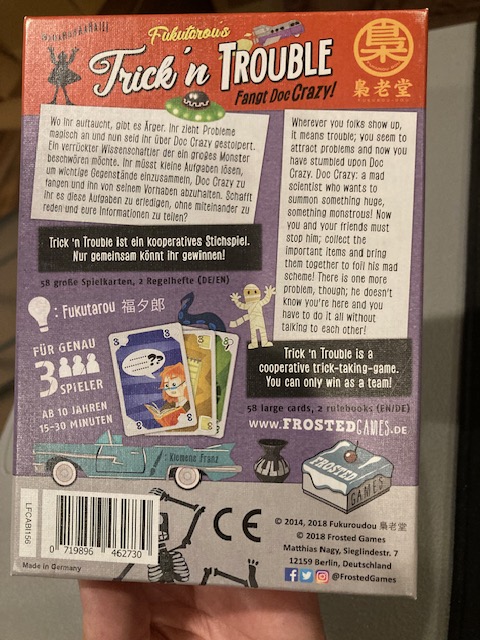
6. Trick ‘n Trouble (Fangt Doc Crazy!)

Player Count: 3-Player Only

What???? A 3-Player only game???

This is a bit of a surprise as a 3-Player only cooperative game! It has kind of a spooky (silly spooky) theme!

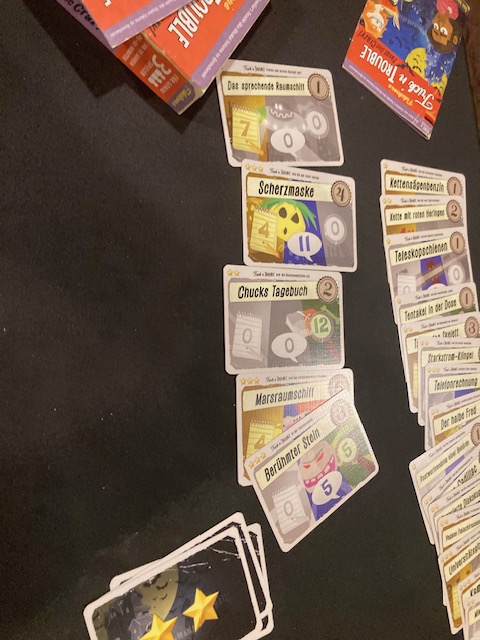
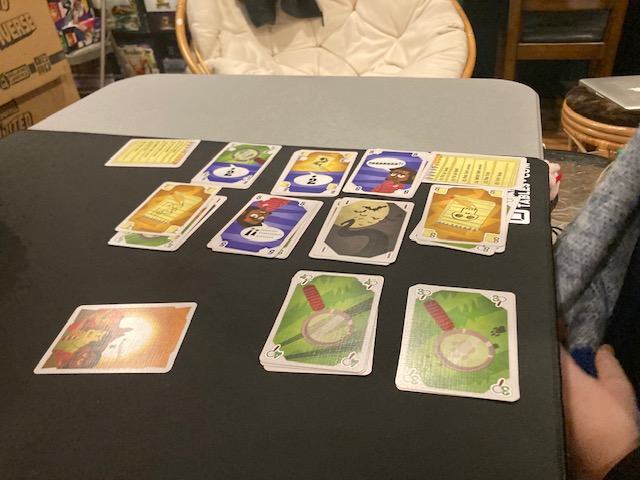
Players try to fulfill tasks based on the cards from “won tricks”: The players have a tableau of tasks to fulfill (see above).

The “trick” in this game is that some of the cards are double-colored, and you can use them as you wish.

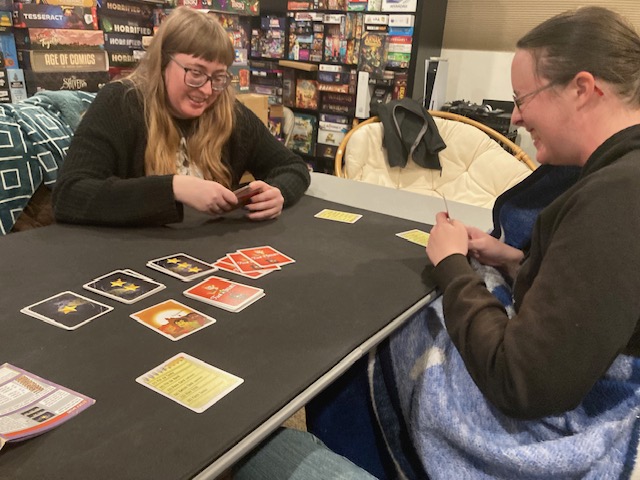
This was a surprisingly fun little game, even if the 3-Player only count is a little different.  Like most cooperative trick-taking games, the limited communication permeates and you can’t really talk about the cards in your hand.

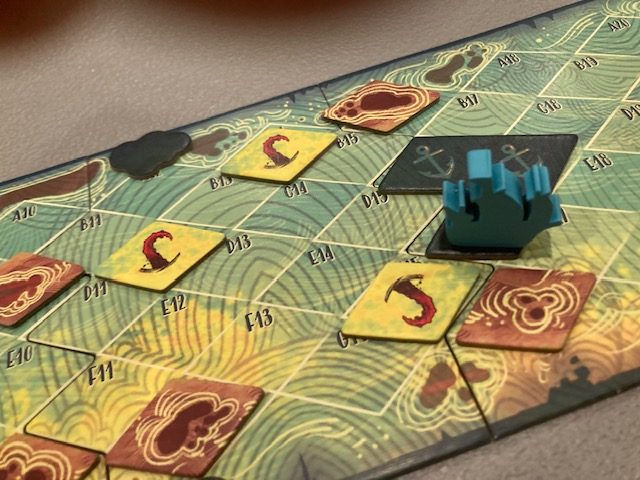
5. Sail

Player Count: 2-Player Only

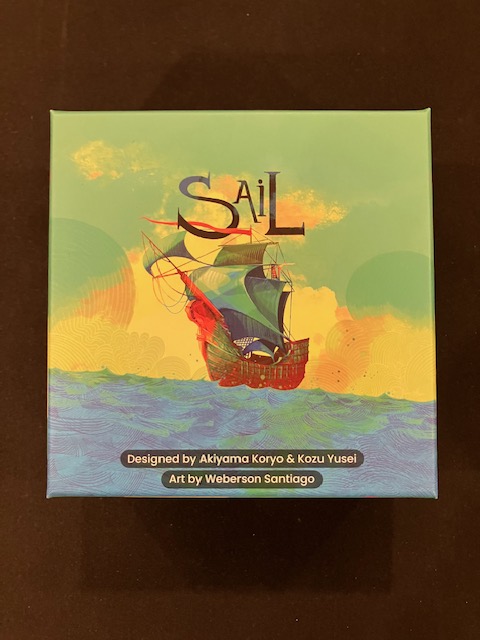
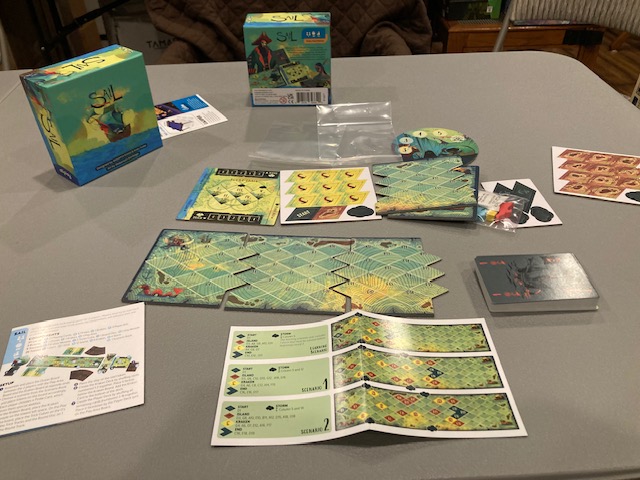
I’ve been able to get Sail to the table a number of times with Sam and Kurt over the past year!  It’s a fun theme as you use trick-taking to help move a ship towards its final destination! 

Winning a trick means “usually” moving the boat in your direction (towards you), but there are many different things that happen along the way! 

Can you avoid the Kraken?  Can you move forward when you really need to?

Using trick-taking as a means to move the ship forward is real interesting mechanism!  If you like Sail, be aware that Sail Legacy is coming to Kickstarter soon!

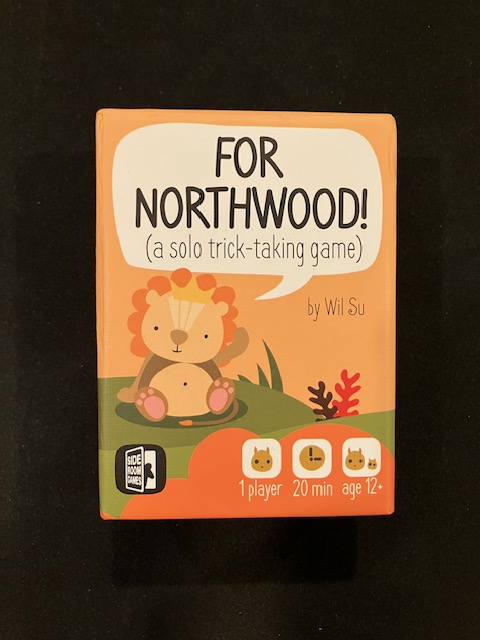
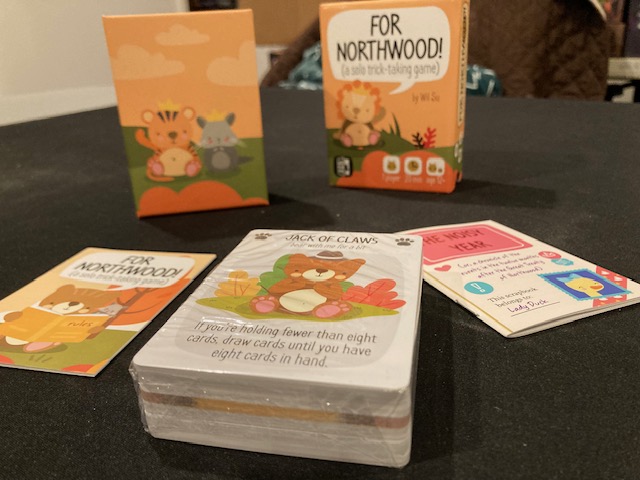
4. For Northwood

Player Count: 1-Player Only

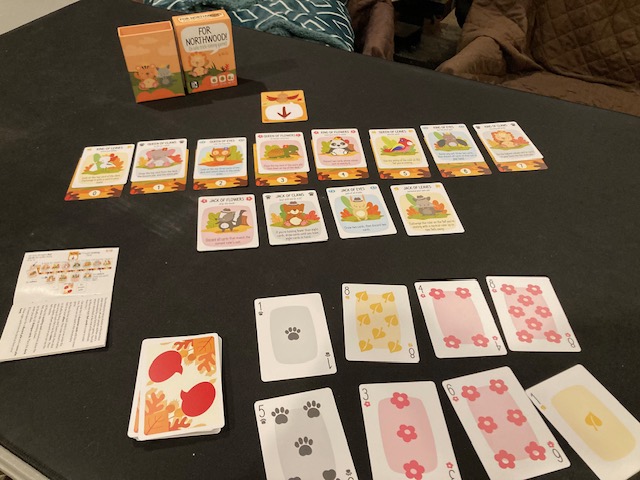
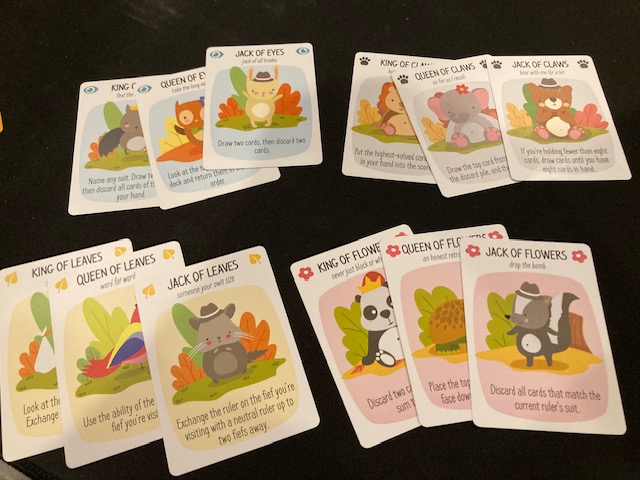
Yes, that’s right, this is a solo trick-taking game! It sounds like this can’t work, but it works really well! The tricks are “conversations” with fiefs, and you try to make fiefs “friendly” to you by winning them over with conversation! It’s a pretty thin theme, but it works pretty well as a trick-taking schema.


This is a tiny little game with super cute art!

There are special powers you can activate!

Winning is a victory point threshold, as you count how many friendly fiefs you obtain (and count the stars)! Because this is a solo-only game, there is no notion of Limited Communication!  This is a really unique little game that I had to scour all the gameshops to find!  I think there were reprints, so I believe this is back in stock!

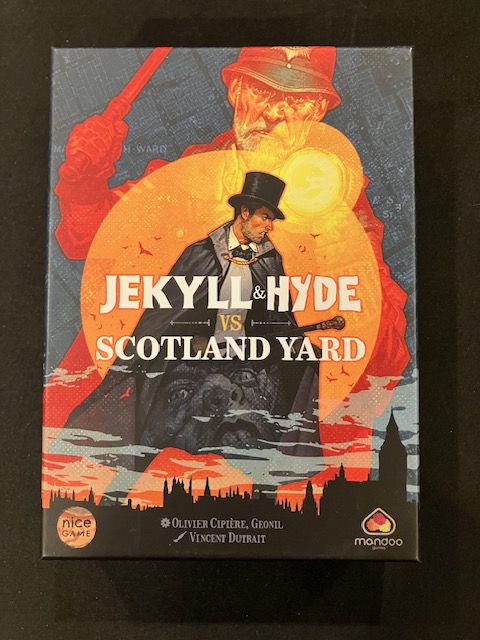
3. Jeckyl and Hyde vs. Scotland Yard

Player Count: 2-Player Only

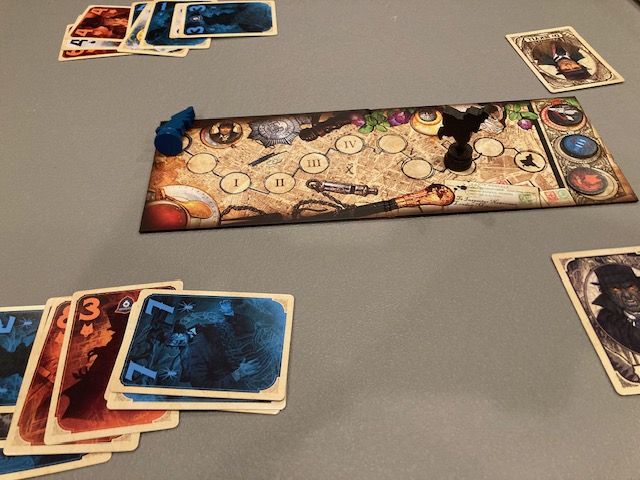
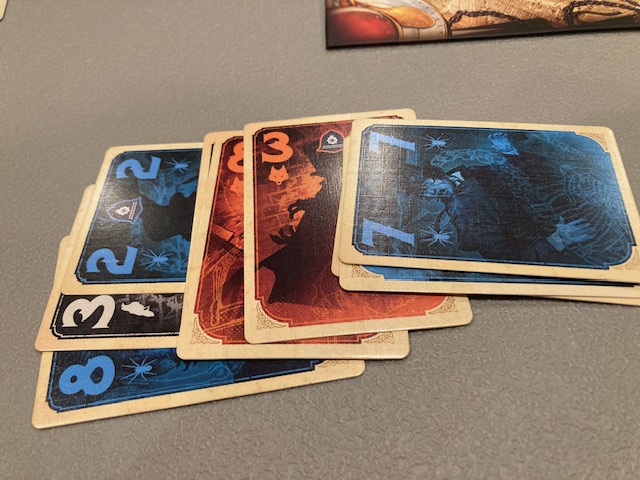
The two players cooperatively play the two sides of Dr. Jeckyl and Mr. Hyde, vying for control! 

This is a fascinating idea, using trick-taking as a way to take control of the personality!   To keep ahead of Scotland Yard, the two players must win tricks in such a way as to keep Scotland Yard off their tail!

The two players each play a different side of the personality!

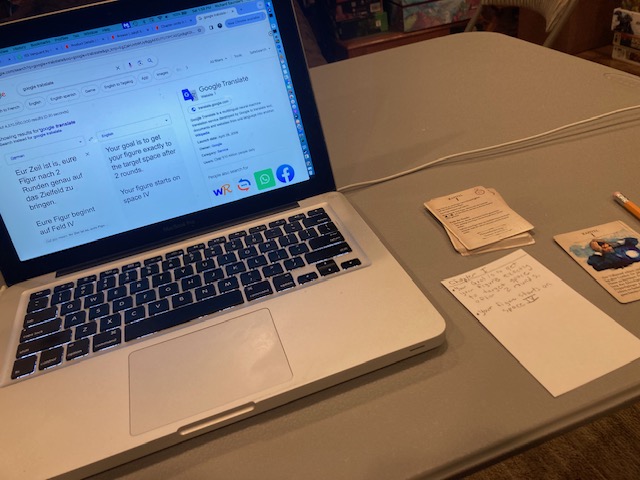
I, unfortunately, was unable to get the English version for some time, so I ended up using Google translate to translate the German text to English!  But this game was so cool, the art was so neat, and it had such neat ideas, I really liked it!  That’s why, despite only having a German copy, this made it all the way to #3!  (And I did finally get the English version: it is available more widespread now!)

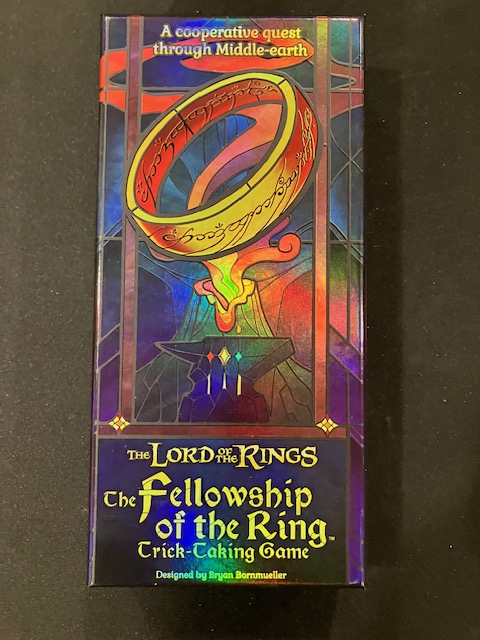
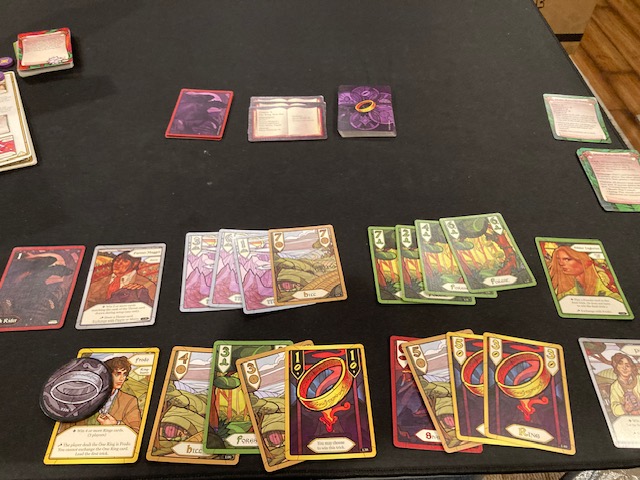
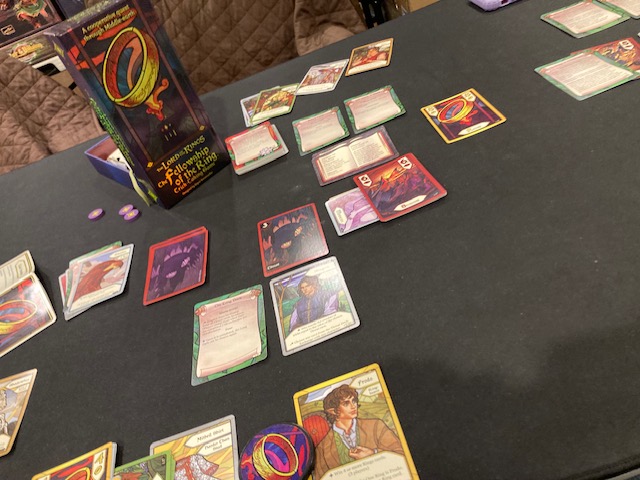
2. The Lord of the Rings: The Fellowship of the Ring Trick-Taking Game

Player Count: 1-4 Players

This game has taken my game groups my storm: everyone loves it!  

I played it solo when I was sick, and had a wonderful time going through the whole campaign solo! 

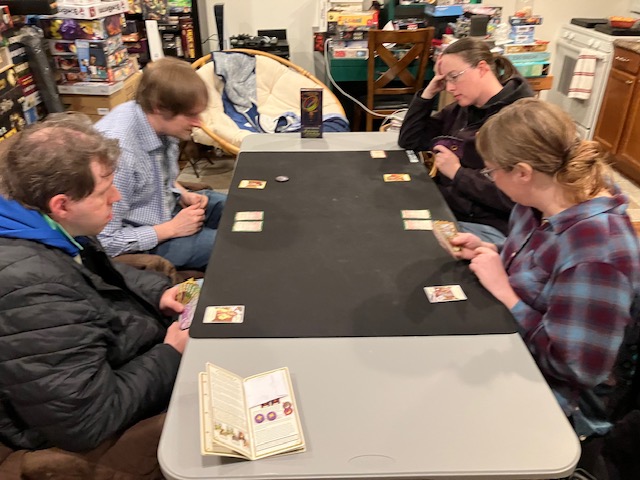
My friends in Las Cruces have played through the entire campaign as a 3-Player game and love it!  See our review here!   I played a bunch 3 and 4-Player games at Dice Tower West with my friends Becca and Tricia and had a ball!

The reason this game is so high on the list is that everyone seems to really enjoy it!  The fact that it can play at so many player counts speaks volumes to the design team!  The solo game is very different from the 2-Player game, which is very different from the 3 and 4-Player game, and yet all the different modes seem to work, and work well!  The theme seems to come through fairly well! My friend Andrew was surprised this was #2 and  NOT #1 on my list!

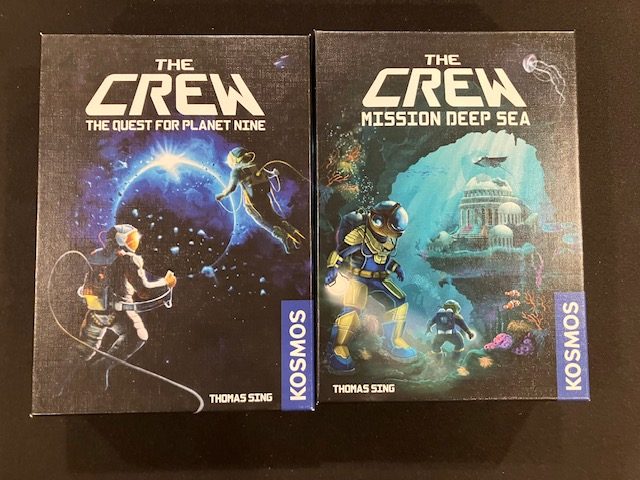
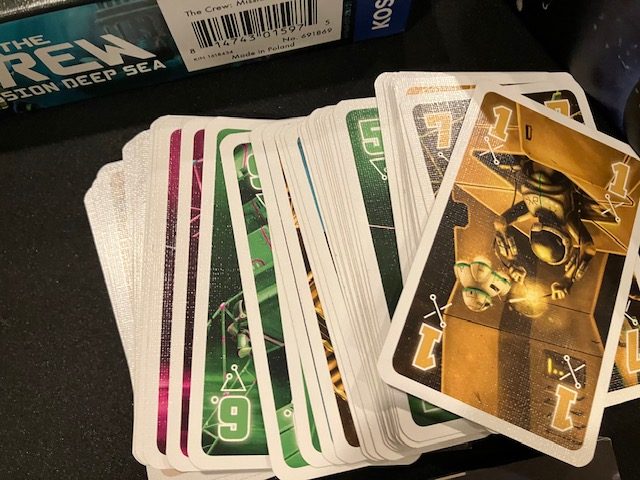
1. The Crew: Either The Quest For Planet Nine or Mission Deep Sea

Player Count: 3-5 Players (sorta 2-Player)

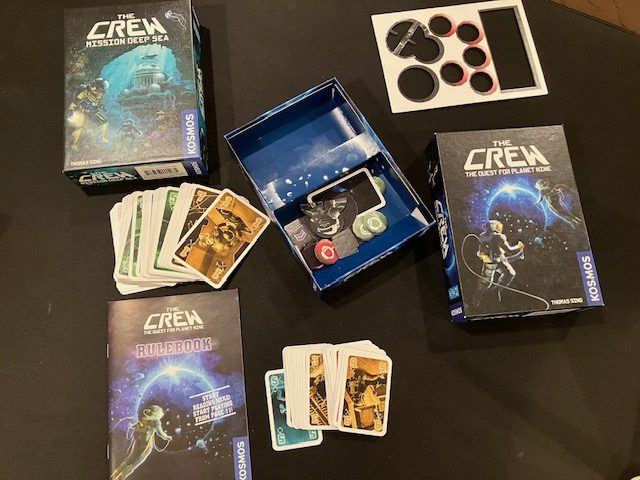
There are two different versions of this game, but they are essentially the same kind of game. Like Fellowship of the Ring: Trick-Taking game, the game players differently depending on the player count. There is a 2-Player mode, but it’s very clumsy and probably not the way you should play.

Players play tricks, but have to fulfill missions in order to win the game!  The missions give the game focus, and change every game! 

Honestly, even though I have the physical copy of both games (which are arguably the same game), I have played this game SO MUCH on BoardGameArena! During the Pandemic, this was the goto game for me and my friends! It was so easy to just bring this out and play for hours. Something called The Crew brought us together; there is probably some deeper meaning there.

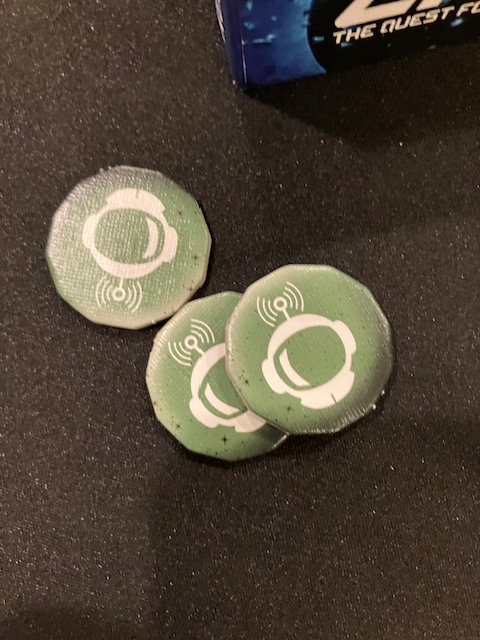
What makes this #1 on the list for me is the brilliant rule that you can communicate WHEN IT REALLY MATTERS! You have a token that allow you to communicate once during your turn, by sharing the lowest, highest, ot “only one” of your hand. This is so unique: all the other trick-taking game have very restricted communication, but essentially there’s none or high-level “strategy” communications. With this one mechanism, The Crew makes it feel like your CHOICES MATTER: It matters when you choose to communicate, it matters when you choose to hold off, it matters!

This is the #1 on my list because I have played it so much more than every other game, and it’s so easy to play online or in person, and you feel like your limited communiques matter.

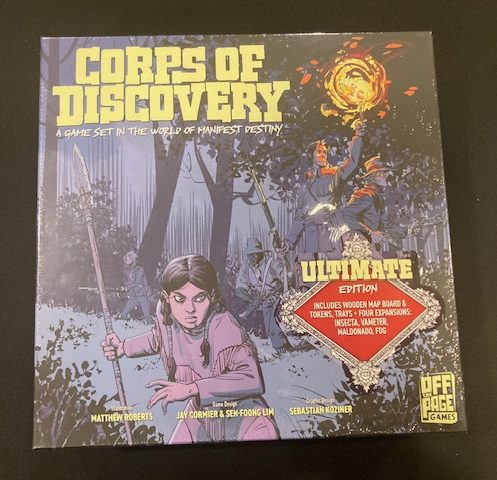
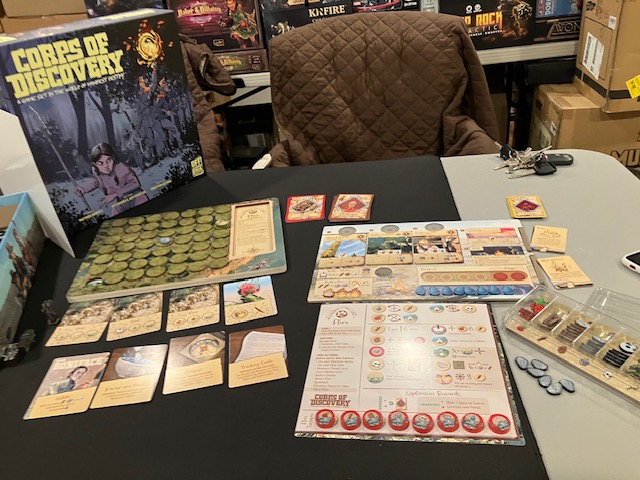
Corps of Discovery: A Cooperative and Solo Game

Corps of Discovery is a cooperative game that was on Kickstarter back in May 2024. This promised delivery in Jan 2025, and it was about 3 month late, arriving in late April 2025.

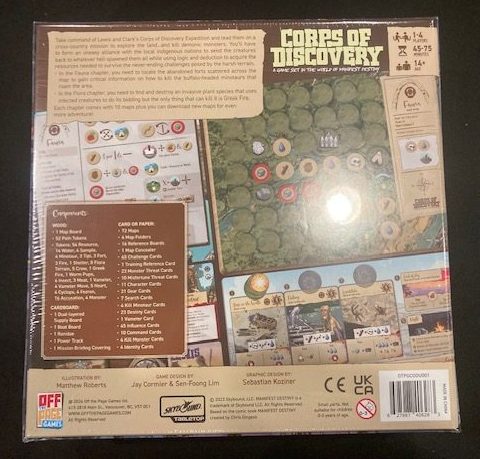
This looks like a thematic adventure/exploration game set the in era of Manifest Destiny and Lewis and Clark!  And it is NOT!  This is a deduction game, with bare hints of theme.  The text on the back of the box even hints at this being a thematic game:

“Take command of Lewis and Clark’s Corps of Discovery and lead them on a cross-country mission to explore the land … and kill demonic monsters.”

Sounds like a thematic exploration adventure, huh? Nope nope nope nope nope nope nope! Corps of Discovery is a deduction game! A cooperative deduction game, but a deduction game nonetheless! You need to know that going in or you will be severely disappointed by that description.

Let’s take a look!

Unboxing

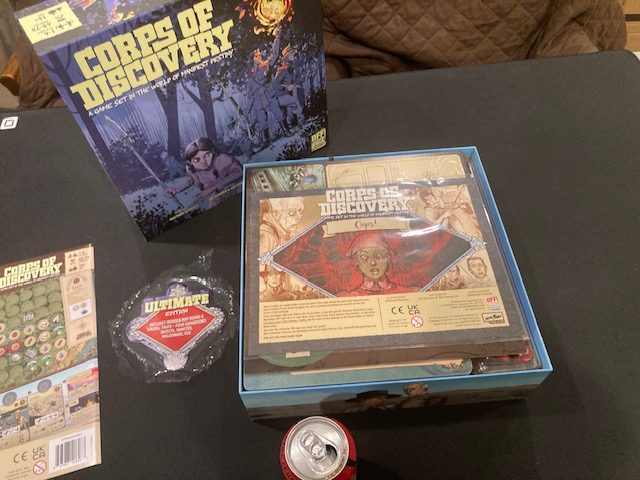
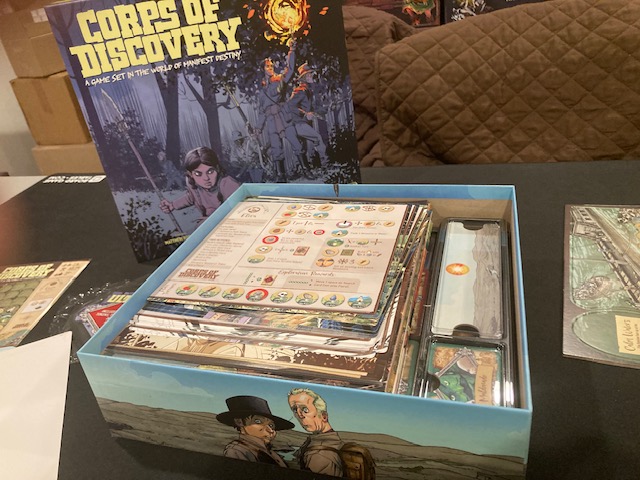
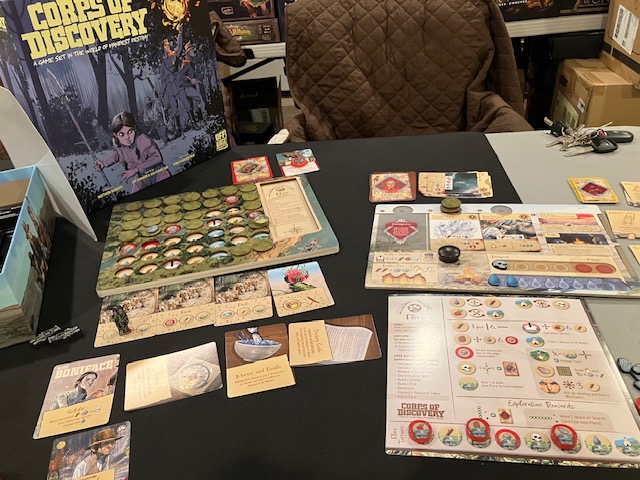
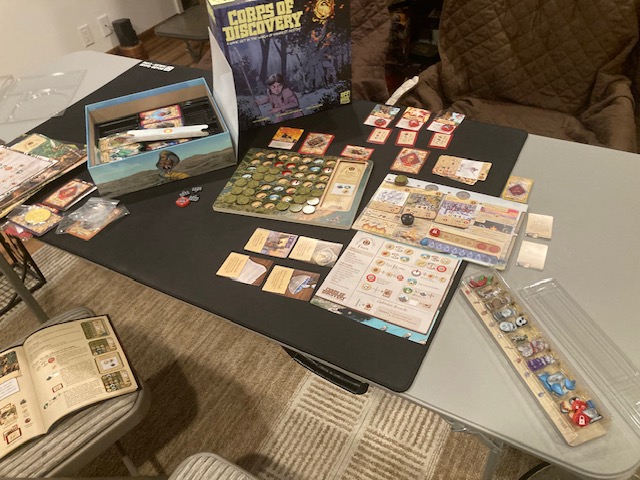
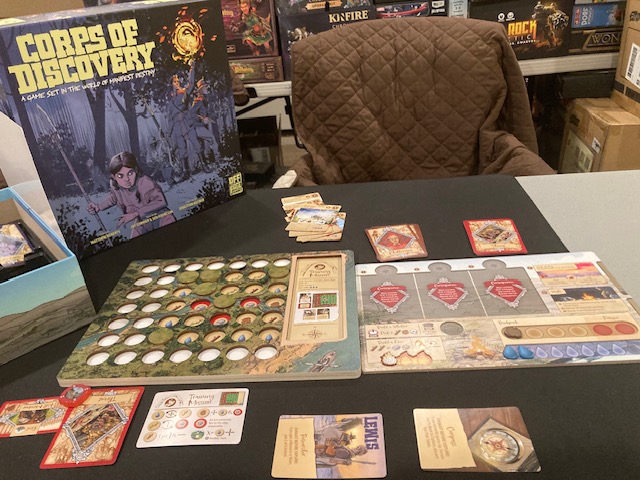
Corps of Discovery is a pretty standard sized Ticket To Ride style box.

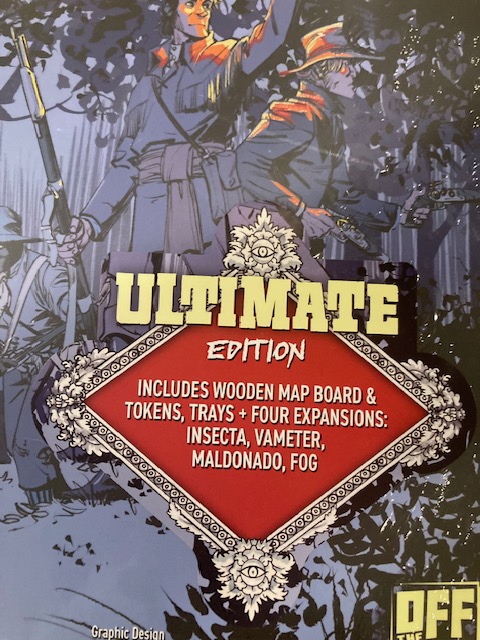
Now, we are showing the Ultimate edition of the game, which has slightly nicer components and a few expansions (see above).

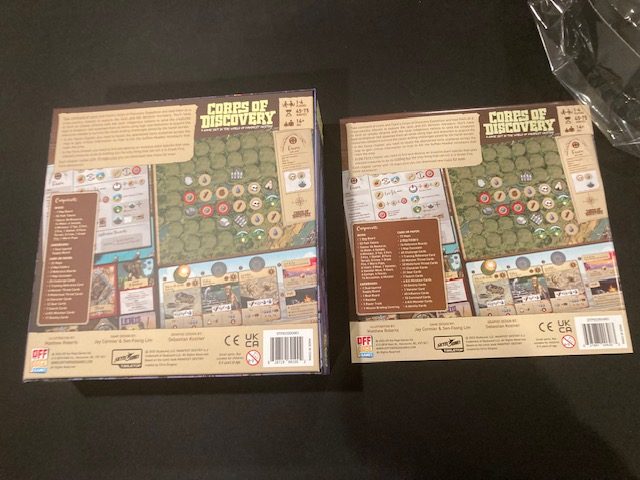
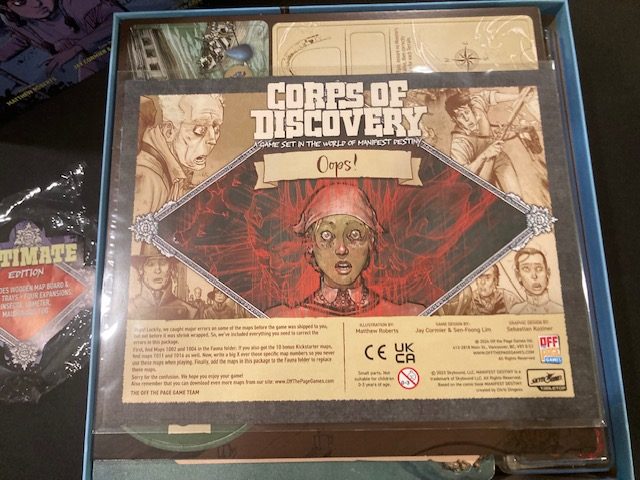
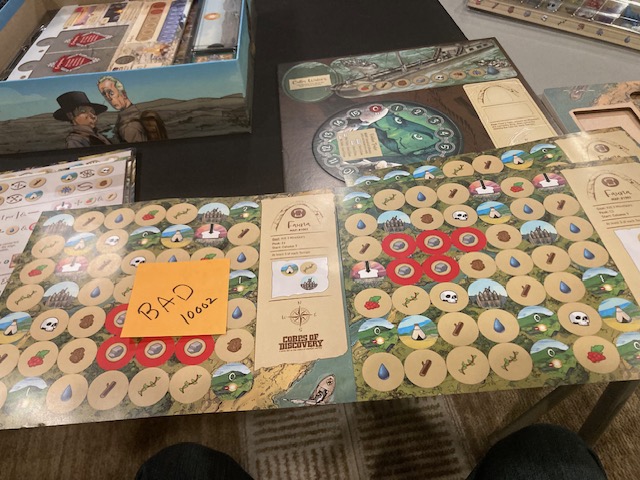
The unboxing starts poorly, as you have to “fix” some maps in the game.

See above: as I have to X (or notate) which maps are bad.  Now, they aren’t full maps, there are just partial maps, so one side of the maps is good and the other side is bad!!  So, you still have to keep your “bad” maps, because one side is ok.   This started me off a little grumpy, but at least they fixed the problem.

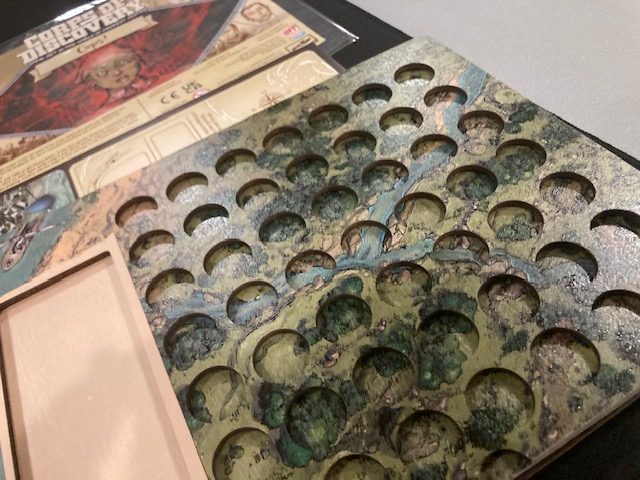
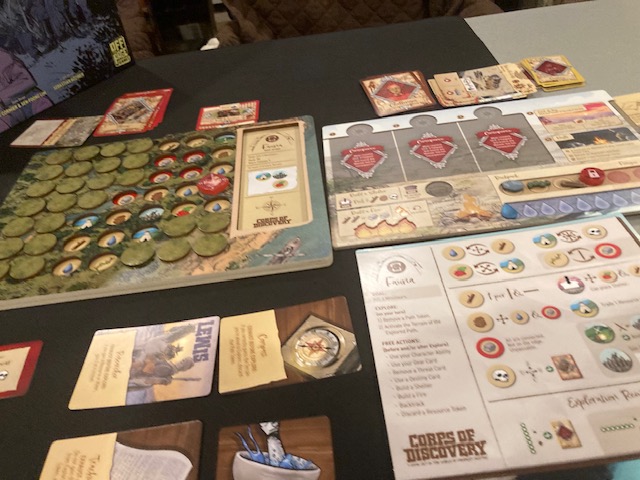
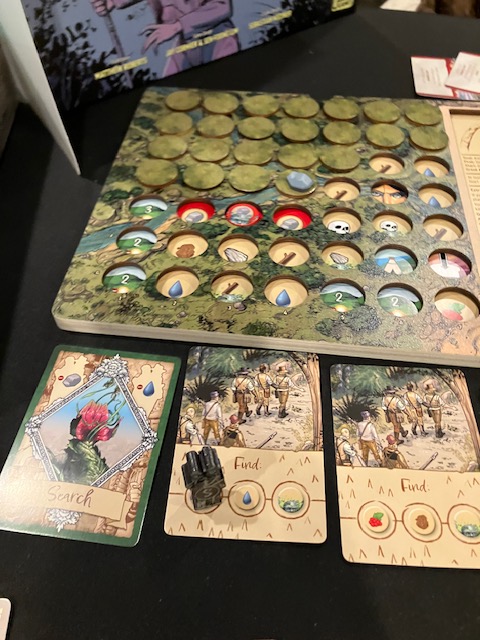
The main part of the game, the key part of the game is the map holder above: in the Ultimate Edition, this is a beautiful wooden map.

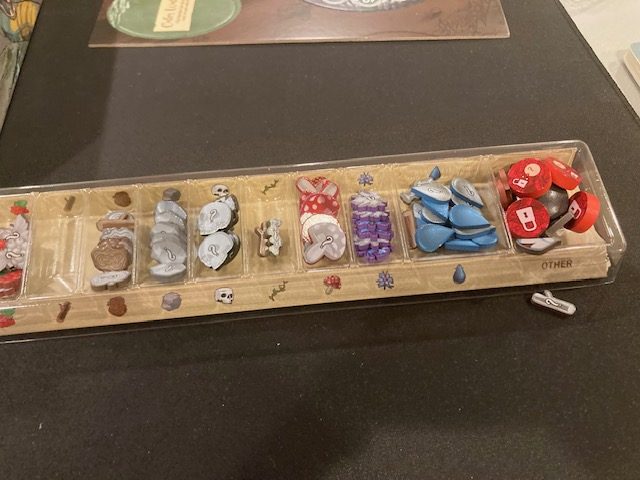
There are some resource tokens (and a holder, which got very badly shaken up in delivery).

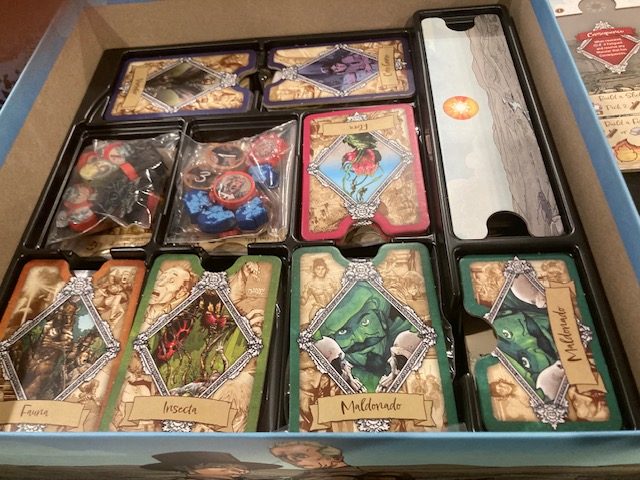
Underneath all that are BUNCHES and BUNCHES of maps!

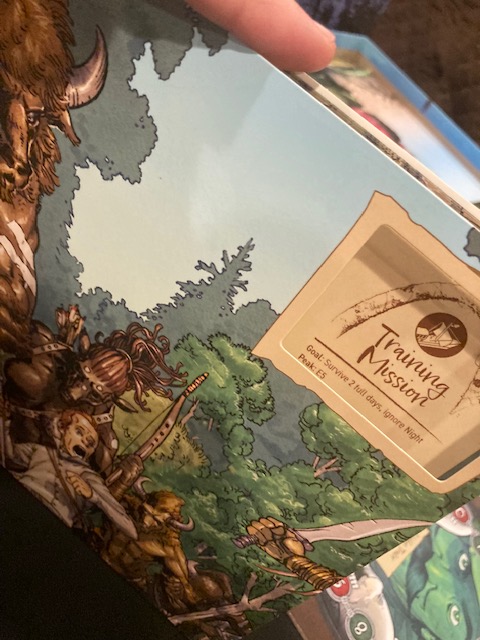
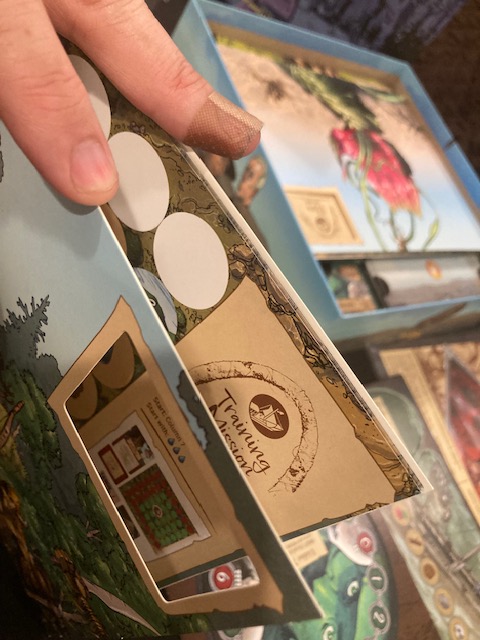
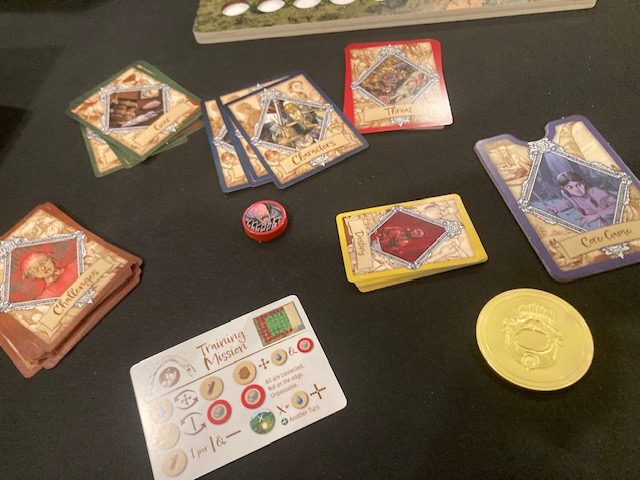
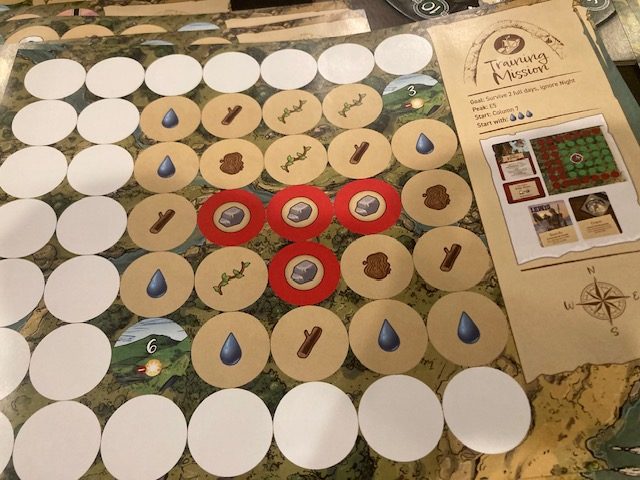
There are different “themes” of folders with different maps: see the training mission folder above.

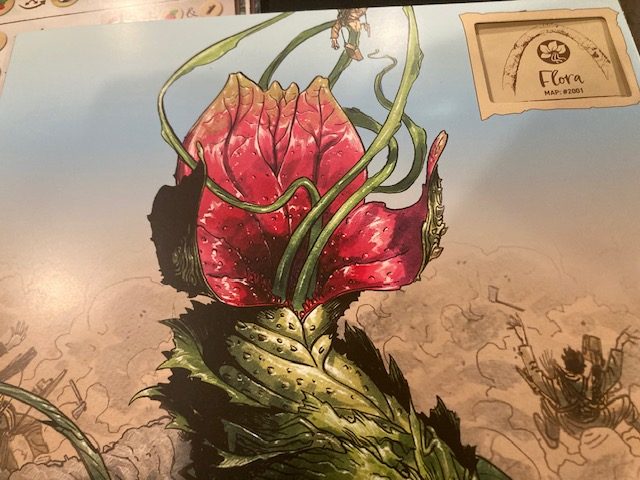
See the Flora map pack above.

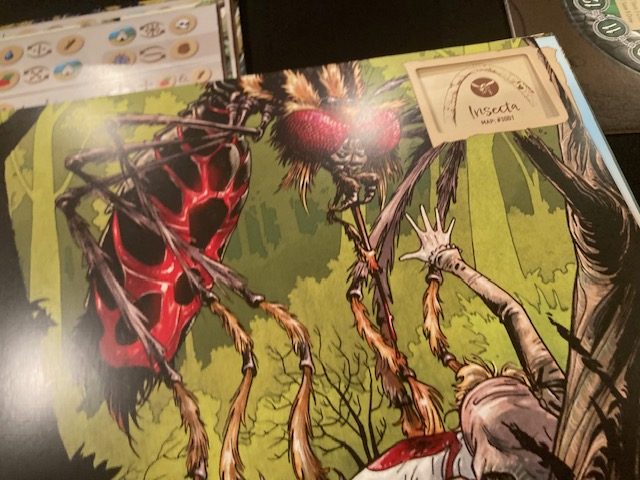
See the Insecta map pack above.

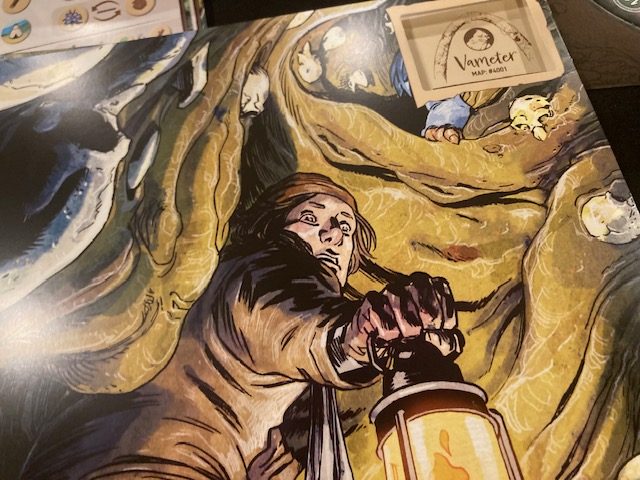
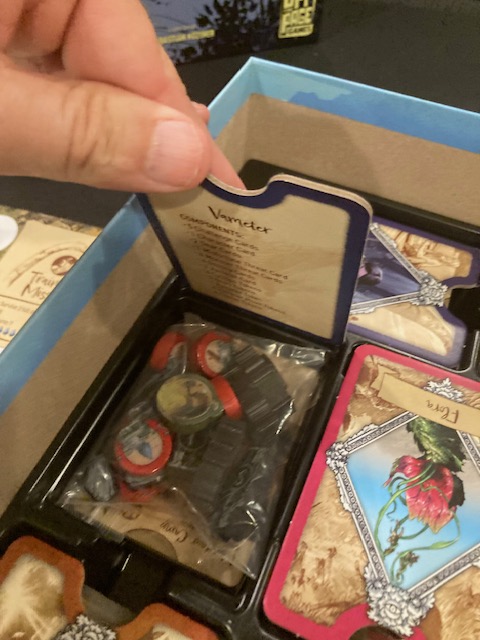
See Vameter map pack above.

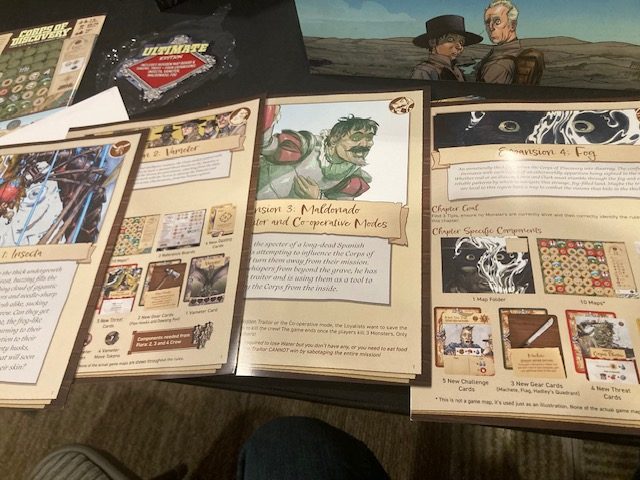
Coupled with these folders of maps are missions and the goals. See above.

Underneath all the maps are holders for the tokens for each Map pack.  Note that mine got shaken up a little, so the components are a little wonky.  I wish there had been a discussion somewhere of what all these things were, but you will figure it out … it could have been easier.

Basically, under each hard card are some components for the necessary map pack.

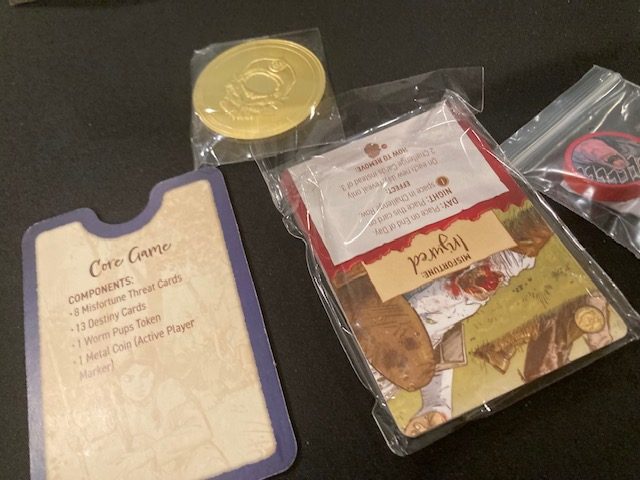
See above for some core components under the Core Game hard card.

The components are pretty nice, but you have to like the comic-book art style of the game. I do, but others may not.

The quality of these maps is a little flimsy, which isn’t a big deal if you are careful.

I was a little underwhelmed by the quality of the components, especially because of the errors on the maps! I did like the variety of maps, the comic-booky art, the wooden resources, and the wooden map holder. My friend Lon texted me after he got his copy: he was less than thrilled with the quality:

I saw you posting about Corps of Discovery. I will say, I am not super happy with detail and packing quality. The manuals and the backs of the expansion tiles have different numbers of items (that is just bad), so I don’t know which is right. Also, I’m missing 8 tokens…at least I think so. Since I don’t have an actual list of the number of individual resources, but it looks like I’m missing several of those, plus I know I’m missing two water, and 1 Tipi. On top of that they had the errored maps and tokens, with I’ll say substandard ways to fix them (proxy the tokens, and to save a few pennies, we’ll have you “x” out the bad maps, so we can print 2 sheets instead of 4).

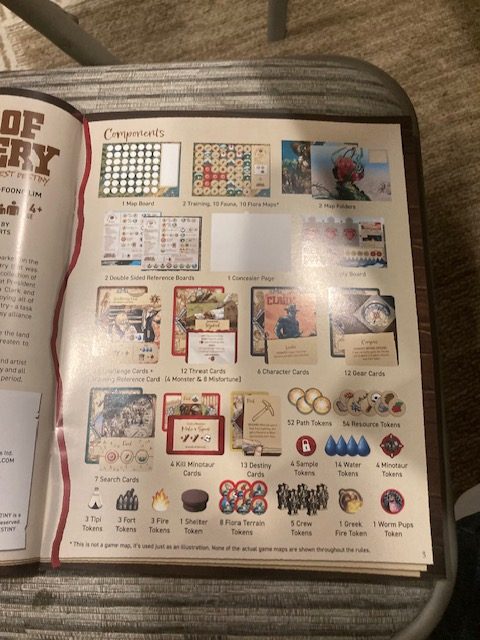
Lon is also talking about the components page: it doesn’t give an accurate count of the resource tokens, so we don’t know if we got them all!!

You saw how messed up they were.  So, are we missing some?  I don’t know! They aren’t clearly enumerated the rulebook!

The component quality left a little to be desired, but I think Lon was grumpier about the components than I was.  The rulebook, however, left me MUCH grumpier than Lon.

Rulebook

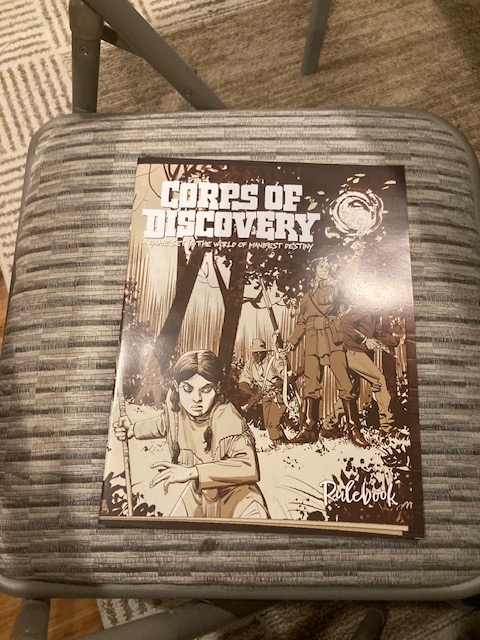
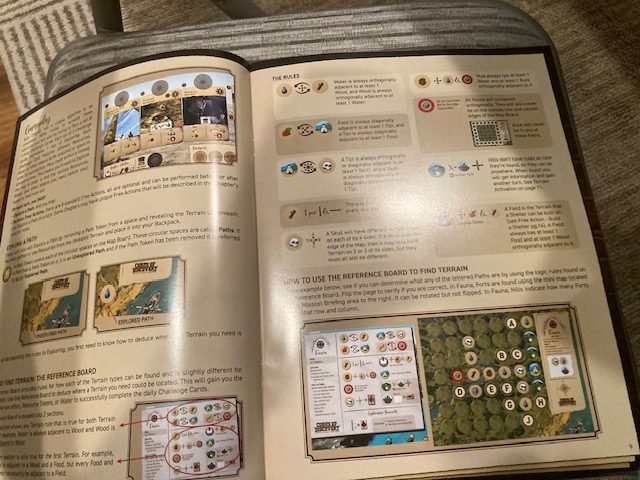
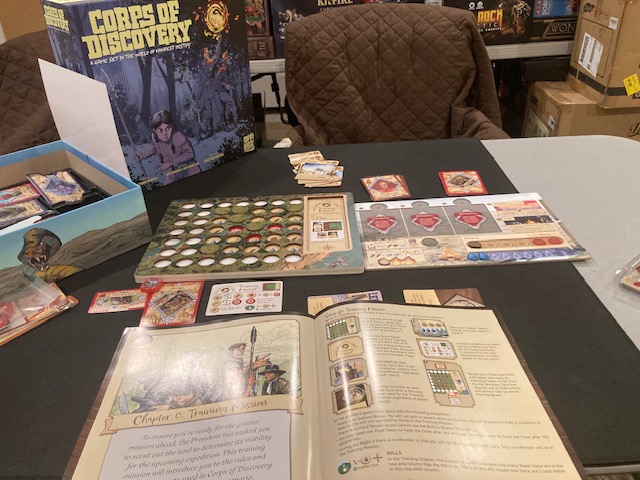
I have not been this frustrated with a rulebook in a very long time.  The rulebook looks like it might be okay (it actually gets an A- on the Chair Test),  but for a deduction game where every word matters, this rulebook struggles to specify the rules well.

A few weeks ago, I didn’t love Soul Raiders, but I even reprimanded the rulebook for too many examples.  Oh, if only that were the case this week!

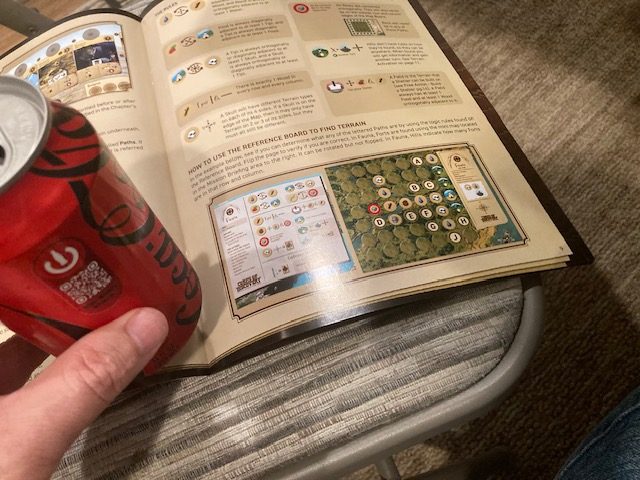
There was essentially ONE example on page 9; and it didn’t do a great job: the example crossed page boundaries, so it made it it harder to correlate the rule with the example.  It also was too small!  I struggled to read the page because it was a little too small in the rulebook! Also, some of the rules we so small because they were hidden in the text of the box!  

See Coke can above for scale: it’s too small!

This is a game where a single resource can make the difference between winning and losing.  Yet, there are so many places where things are poorly specified.    Some examples:

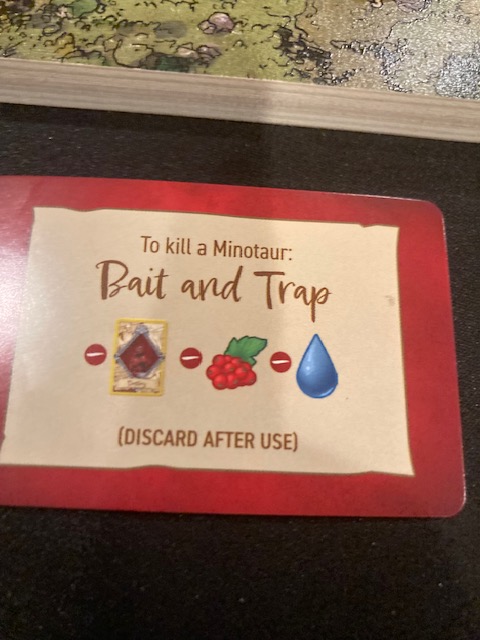
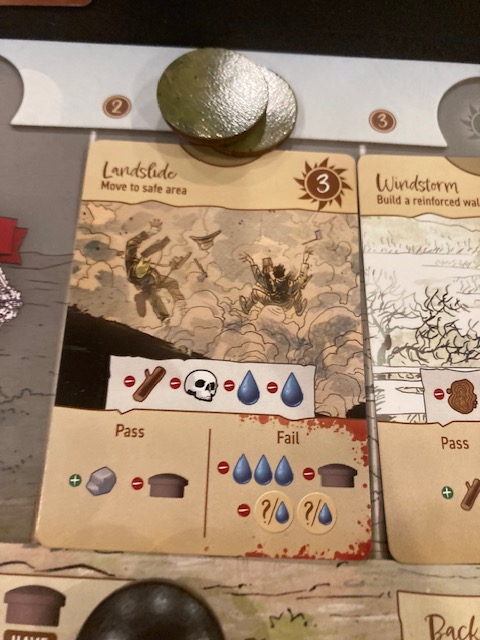
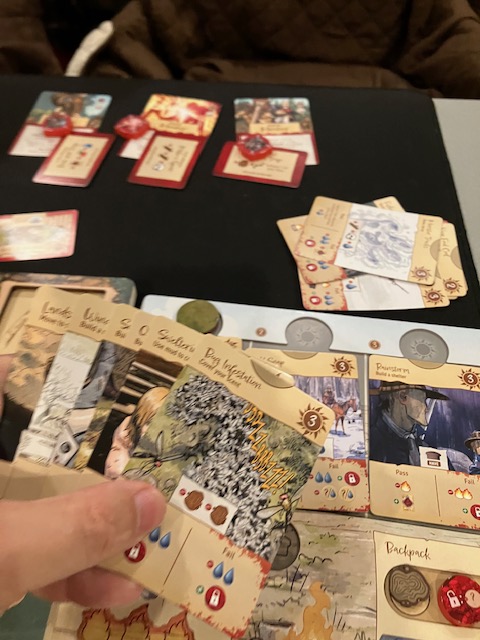
What happens when you discard a Challenge? (see Bait and Trap card above) Are there rules about which one? Can you discard one in progress?  Do you keep the path tokens for the next challenge that replaces it?  This makes a HUGE difference!   The summary icon page at the back of the rulebook DOES NOT show this and offers no explanation in the rulebook.

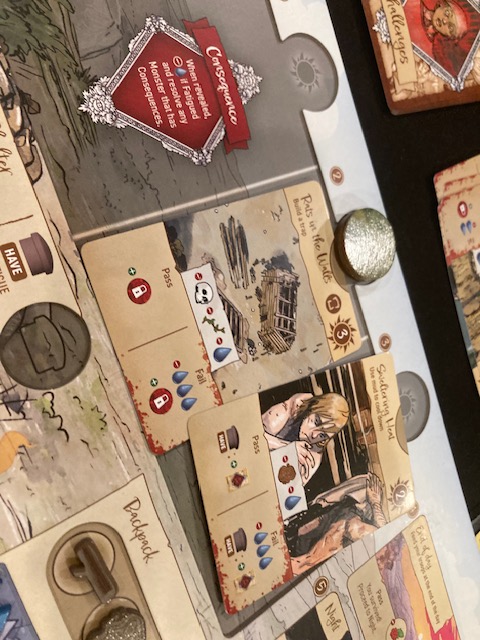
What happens when you add a Challenge?  (see Pass/Fail on Sweltering Challenge above).  Can you specify where the challenge goes in the day?  Before? After?  Can you put it to the front?  Can you choose NOT to add a challenge?  (Usually, you want to, but sometimes you want to move to the end of the day to reset all your Gear).  Again, there’s no specification anywhere and these rules make all the difference in the world.

What does the ?/Water notation mean?  See above on the bottom of the Landslide card.  I went spare looking for it! 

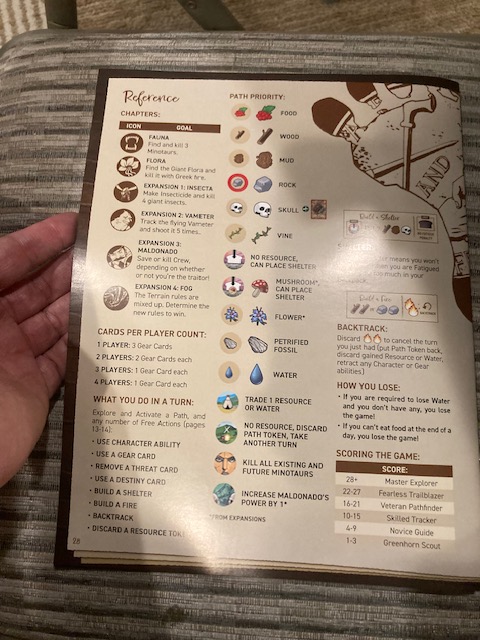
It’s not on the back page with the summary of icons!! See above!! I figured it could maybe mean three things:
1) discard a water or some other token (I think this is the actual interpretation)
2) make it so the minotaur lines don’t require lossage
3) lose a water ONLY IF it’s on the ? side, or off the board (or remove a ? water from the board)
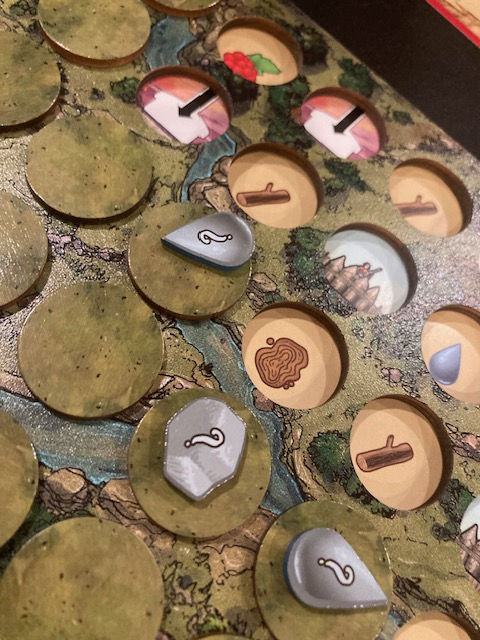
This is one place where the token iconography failed: the ? side is useful for the players to “mark” what they think resources are.  Corps of Discovery conflates the meaning of ? to be “any single resource” and also “notate where a resource might be”.  Which is it? 


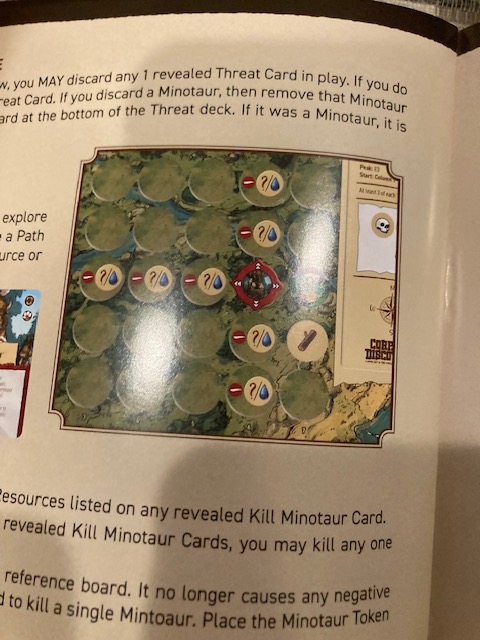
The final meaning is not where you expect it on the rulebook: I expected an explanation on the last page with the icons: NOPE!  It’s hidden next to the path rules and Monster Threat Effect on page 10????  It’s not even clear if it’s supposed to be a token?   It sure looks like it from the picture, but I have none of these tokens in my game!!

Another problem: this page 9, which is arguably most important page in the rulebook, does not specify all the rules that appear in the Training Scenario!  It alludes to some of the rules, but isn’t clear.   See this posting over on BGG: With a little help from the internet, I figured out what was going on here.  But I feel like this page needs to explain a few more rules.

In a thematic game, I don’t mind making a few snap judgements for rules, but deduction is all about precision.  This game needs an Index, more examples, more clarifications, and some rules need to be actually specified.

Gameplay

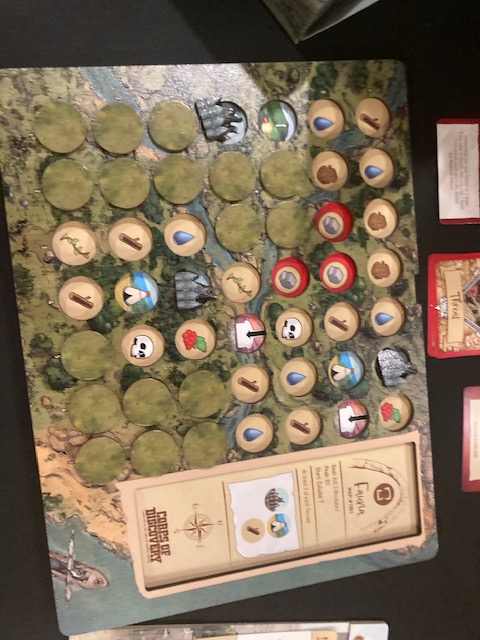
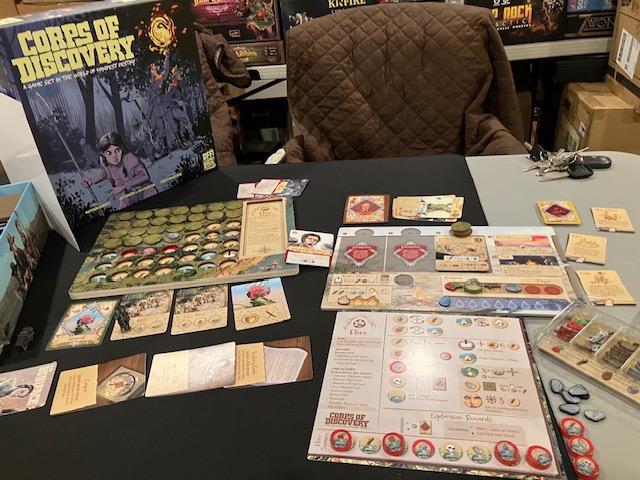
If I said this played like Minesweeper, would you get mad at me?  Players uncover spots of the board grid using deductive rules (board sideways to maybe not give any spoilers; each map is unique).  What’s revealed leads to more clues about what’s around you!

These spots have resources which you use to overcome challenges and monsters.

It’s Minesweeper, with resources and a lot more deduction rules.

10 Plays

I gave myself 10 plays to play the game: I played two of the Training Scenario, six of the Fauna Scenario, and two of the Flora Scenario.  This took place over two weekends with pretty much my the last weekend being consumed by this game.

I was able to beat the Minotaurs reliably in the Fauna scenarios after about 5 plays.

The Flora Scenarios kicked me around.  I lost.  Hard. And I didn’t have fun.

By the end, I was tired of looking for the fun in this game.  After my 10th game, I was done.

Randomness

Like I said, I was able to defeat the Minotaurs reliably after 5 games. But I noticed that my score ranged from 3 to almost a perfect score (27)!  I got “lucky” and just happened to have the right cards come out and the right resources emerge so I was just able to trounce the minotaurs!  This was right after a game where I barely won, and I got 3 points.  The score was more of a representation of “how lucky” I was; one game, I got lucky and obtained almost a perfect score! One game, where I got trounced by my Misfortunes, I won … but barely.   The score meant nothing:  It just noted how lucky I was.  To be clear, I didn’t play THAT differently between games.

In the Fauna games, the game felt VERY lucky; how far you could advance, and when you get the Flora Terrain tokens, just felt very lucky.  (Uncovering Flora tokens means you don’t get the resource, and you have NO IDEA if you will uncover a plain resource or a Flora resource).

In a game where Deduction is such an important part of the strategy, there seemed to be too much luck for me to want to come back to this.

Conclusion

I wanted to like this game so much.  I was initially a little disappointed that it wasn’t particularly thematic, but I still really like Deduction Games, so I was still so happy to move forward with what it was. A deduction game needs tight, well-written, and well-documented rules; sadly, that was not the case with this game!  The rulebook was one of the most frustrating rulebooks I have encountered in sometime.  To add insult to injury, I felt like a lot of scenario-specific rule were also under-specified.  Even powering through the rules and making the “best I can” with the rules as given, I found the game just too random for a game that just leans so heavily on hard deduction.

I gave Corps of Discovery so many chances; I forced my way through ten games, hoping to “finally” overcome the hump of rules.   But I rarely had fun playing: I was always just so angry at the randomness and poorly specified rules.  I am selling my copy. 

Maybe you’ll like it if you can power through it; maybe being forewarned about the pitfalls will help you like it.  Corps of Discovery has a really original premise, and it has some great ideas, but it just never came together for me.  Maybe it will for you.
EDIT: My copy has been sold.