
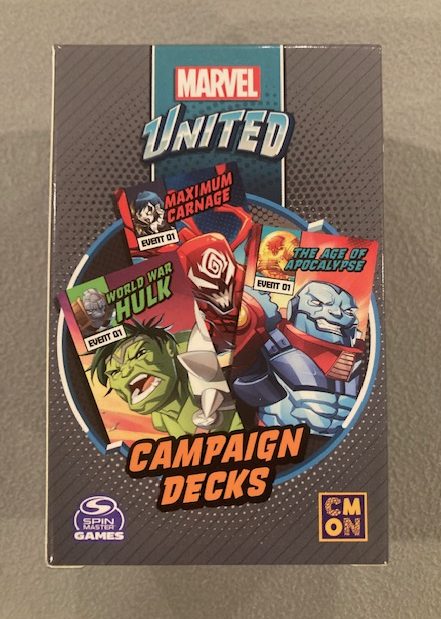
The Campaign Decks were part of the Multiverse Marvel United Absorption Expansion Explosion (where we received so much new context for Marvel United)! !
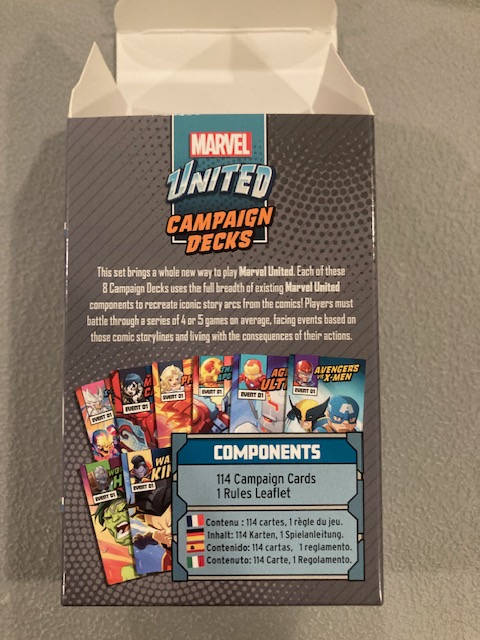
The Campaign Decks give you just that: campaigns you can play through using the Marvel United system.
Let’s take a look!
Unboxing and Gameplay
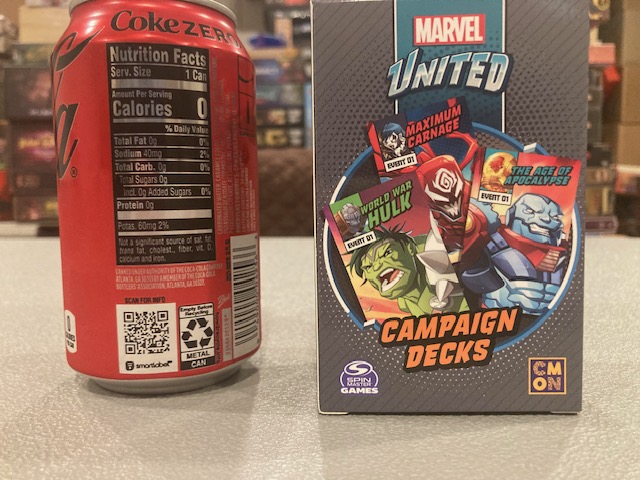
This is a surprisingly small box of cards: see Coke Can above for scale.
The game comes with a very small pamphlet (sigh, I am not a fan of pamphlets) and 114 cards for 8 campaigns.
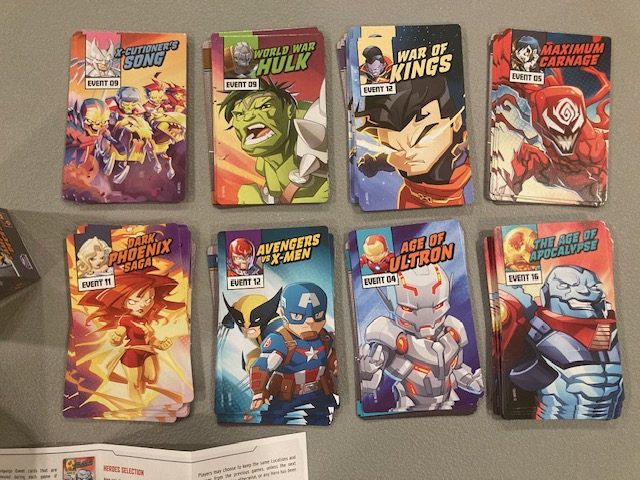
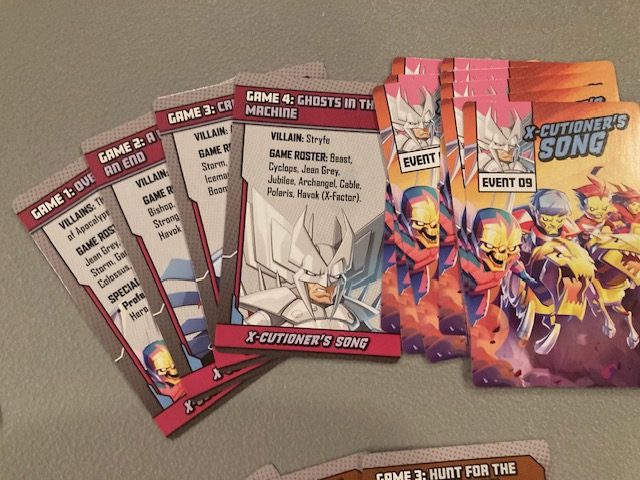
Each campaign is 8 to 23 cards each, with Age of Ultron and Maximum Carnage being 8 cards, X-Cutioner’s Song and World War Hulk being 13 cards, War Of Kings and Dark Phoenix Saga being 16 cards, Avengers vs X-Men being 17 cards, and The Age of Apocalypse being a whopping 23 cards!
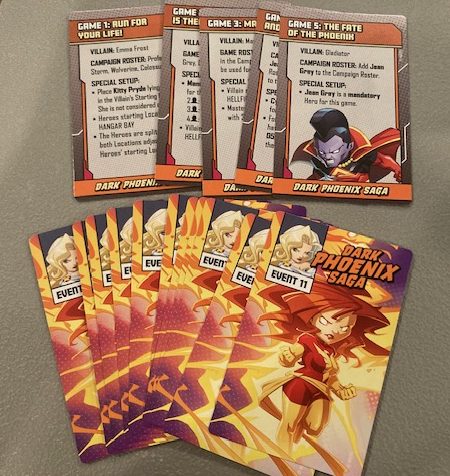
Each campaign has two types of cards: Campaign Set-Up and Rule cards (top cards: each game in a campaign is defined by one of these) and Campaign Event cards (bottom cards: which are brought out during certain points of the campaign).
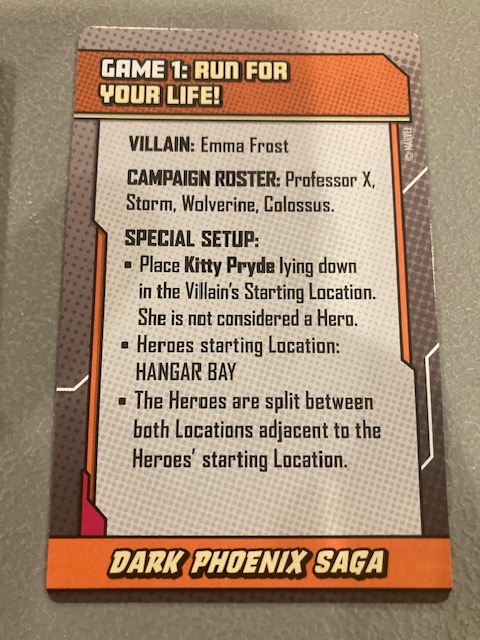
The front of the Campaign Set-Up and Rules card define the parameters of each encounter: the Villain you will fight (Emma Frost above), the Heroes you can operate (Prof. X, Storm, Wolverine, Colossus above), and special set-up or rules (split the start-up, must start with HANGAR BAY, etc.). See above.
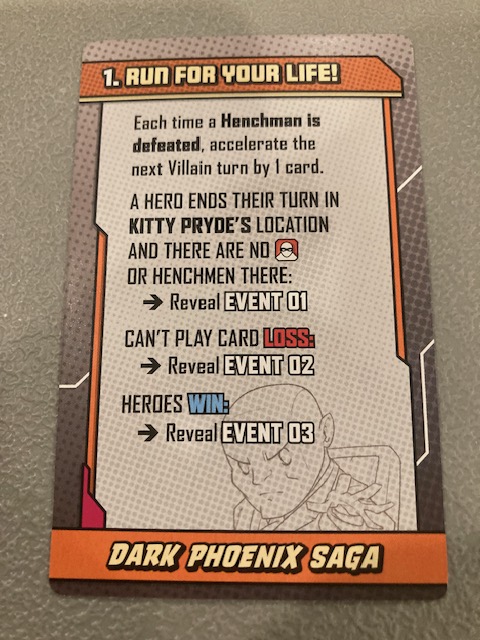
The back side of the Campaign Set-Up and Rules defines special rules for that scenario, as well as triggers to bring out Event cards: see above. Warning: minor spoiler below!!
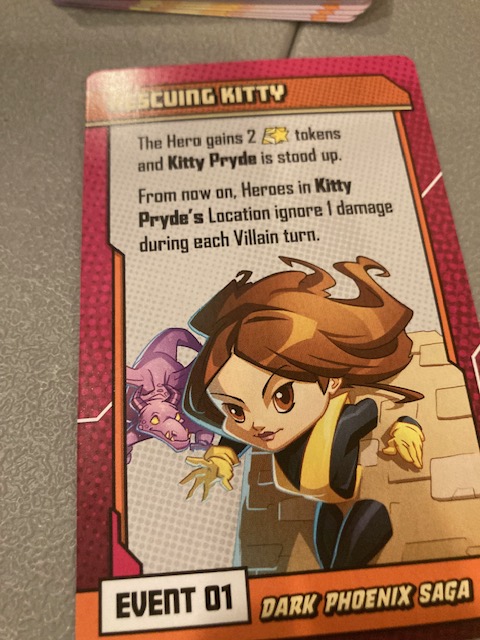
Events are related to the scenario you are fighting: see as Event 01 brings some rules into play once you rescue Kitty Pride. Many times, Events just add Heroes to your roster: this is important, as it gives you more choices of Heroes to play when you fight (and some Heroes are better in certain scenarios).
Basically, these cards control the progression of games.
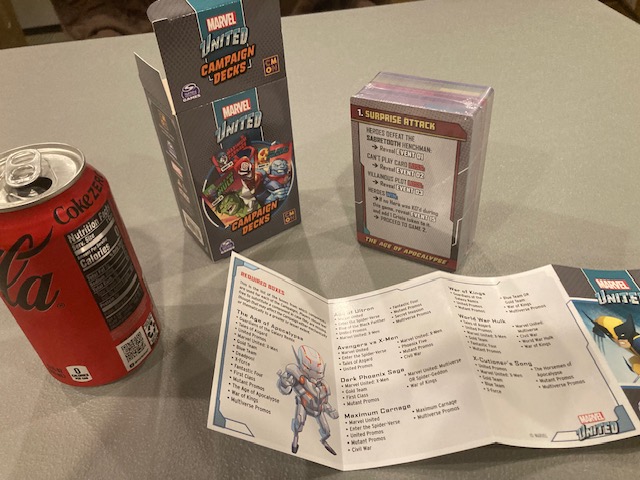
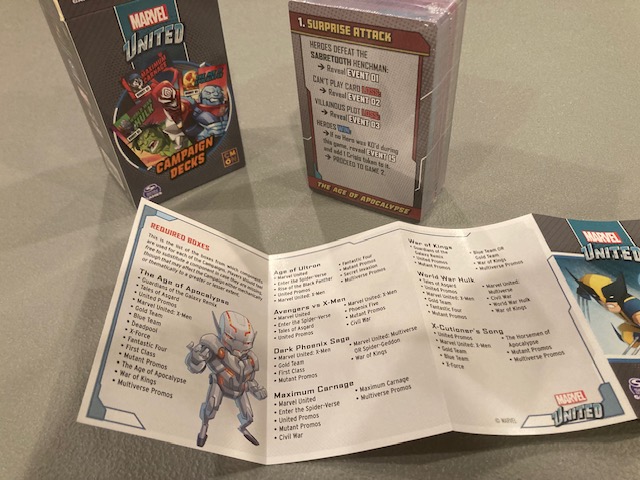
Generally, you need almost all of the Marvel United content to play these Campaigns. The back of the pamphlet tells you ALL the base games/expansions you need to play through!
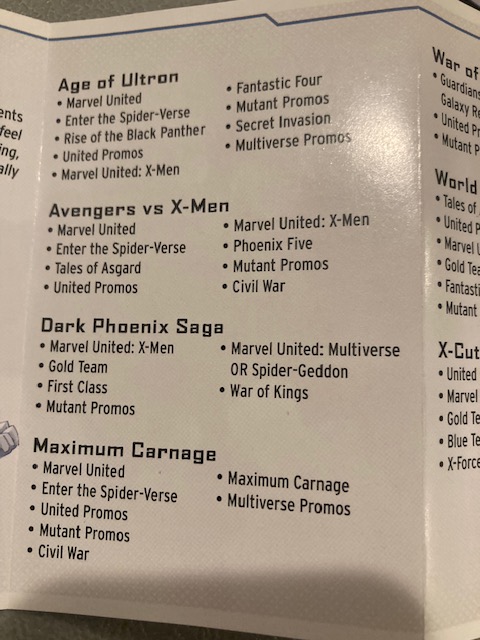
See how The Dark Phoenix Saga, Age of Ultron, and Maximum Carnage all require a whole bunch of expansions! And a very disparate set of expansion as well!
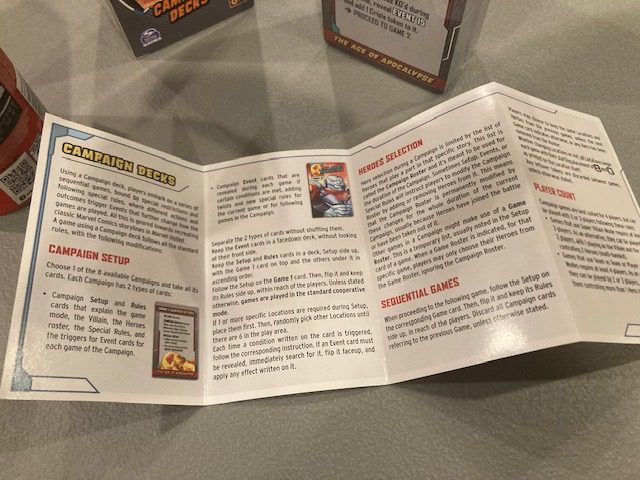
These expansion all look really cool … but how do they play?
Campaign Flavors
Not all campaigns are created alike.
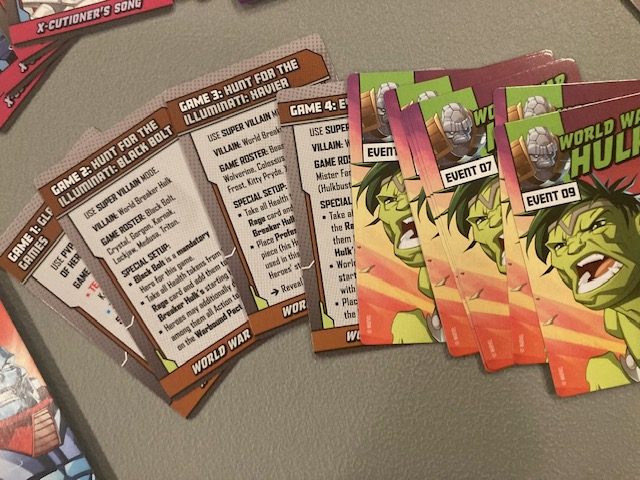
The World War Hulk campaign requires players to play in the one-vs-many mode known as Super Villain Mode in the game: this is definitely not solo or full cooperative!
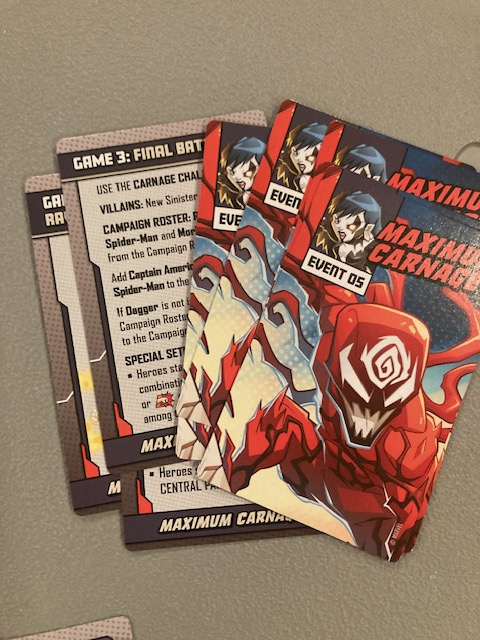
The Maximum Carnage campaign requires the players to do The Carnage Challenge (at least for games 2 and 3).
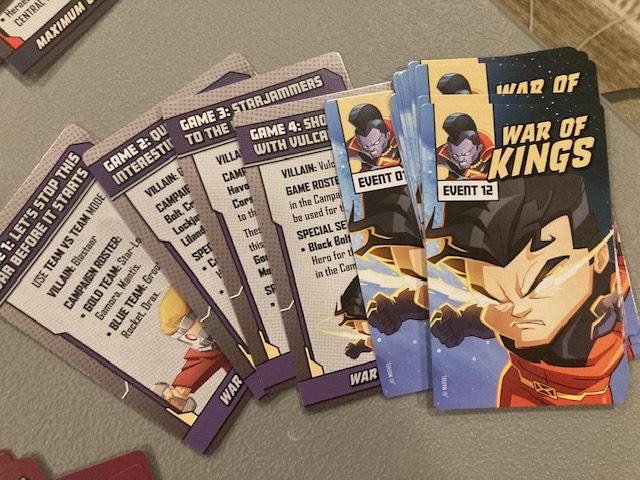
The War of Kings requires team vs. team mode, at least for the first game, then the game goes back to being solo and/or cooperative for games 2, 3, and 4.
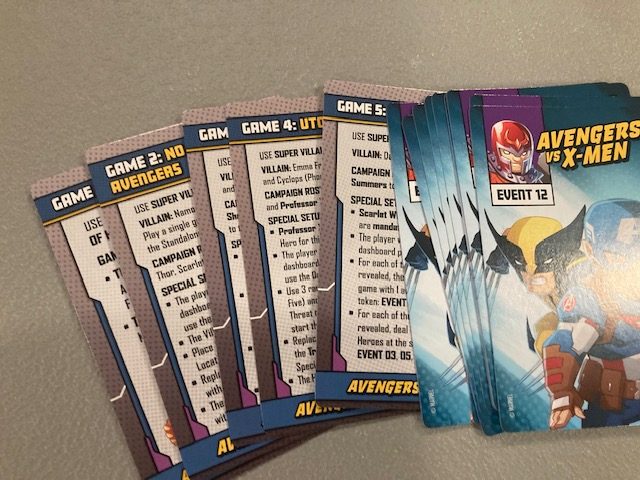
The Avengers vs X-Men is mostly Super Villain Mode (one-vs.-many), and game 1 is a special PVP mode: Clash of Heroes.
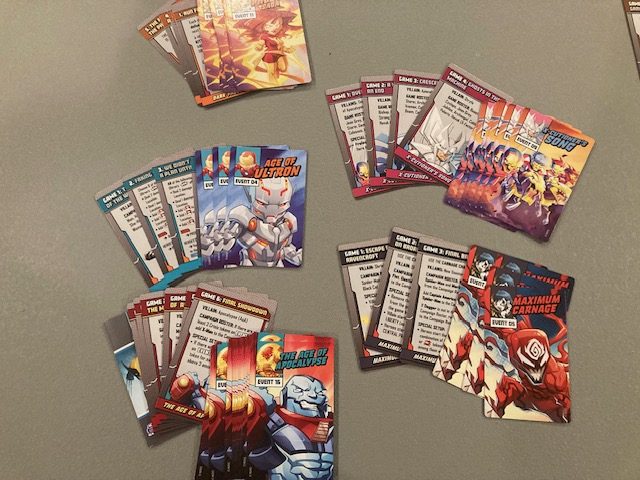
The rest of the decks (Age of Apocalypse, Age of Ultron, X-Cutioner’s Song, and Dark Phoenix Saga) can all be played solo or cooperatively.
We’ll only be looking at those decks you can play solo or cooperatively today. Over about 2 weeks, we were able to get through a few campaigns. Let’s take a look!
Campaigns and Spoilers?
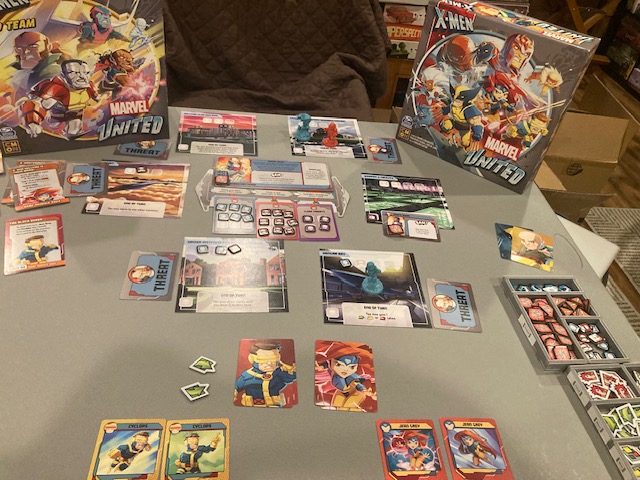
So, to talk about the campaigns, we have to talk about some of the stuff that happens. However, that could mean spoilers. We have done two full playthroughs in this review: decide if you want to read them or just jump ahead to the Conclusion!
The first campaign is the Age of Ultron story. There are some very minor spoilers in this section (just below), but if you want to go in the game without knowing anything, skip to the Conclusion!
The second campaign is the Dark Phoenix Saga. There are some pretty significant spoilers in that playthrough, both in terms of reveals and stories! If you know X-Men #131-137, the story won’t have have any spoilers, but some of the events/happenings may still be spoilers. Since this playthrough has Major Spoilers, we’ve moved this section ALL THE WAY TO THE END to the Appendix section. Feel free to read it if you want more of a feel what the Campaigns look like, and you don’t care about Major Spoilers.
You have been warned.
Age Of Ultron Campaign: Minor Spoilers Ahead
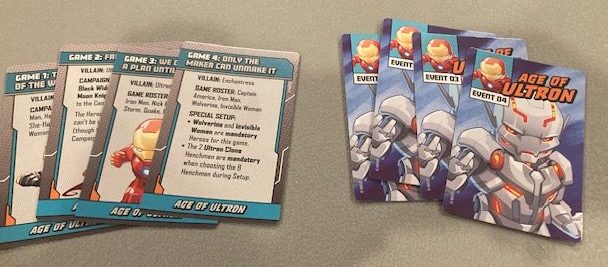
The Age Of Ultron campaign is 3 to 4 games long (depending on how well you do). This is probably the best campaign to start with. (There a few minor spoiler ahead: skip ahead to the Conclusion if you want to avoid any spoilers).
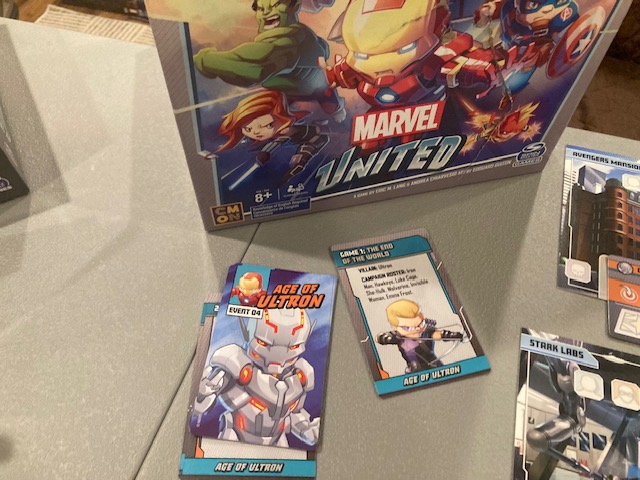
Basically, you fight Ultron a LOT, and he gets stronger and stronger as you play!
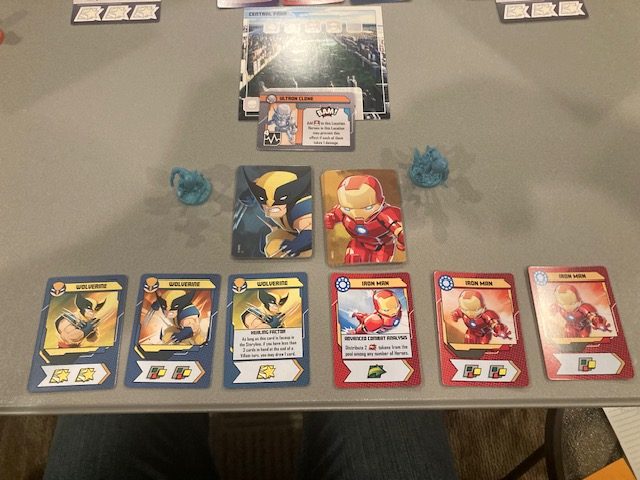
Each game will usually have a different set of Heroes you can play: I started the campaign with Wolverine and Iron Man, but was told (by the Campaign Set-Up and Rules card) that I had to use some different Heroes for Game 2. I liked that I had to change Heroes (it kept the game interesting), as I had to try to pick a good set of Heroes to play together.
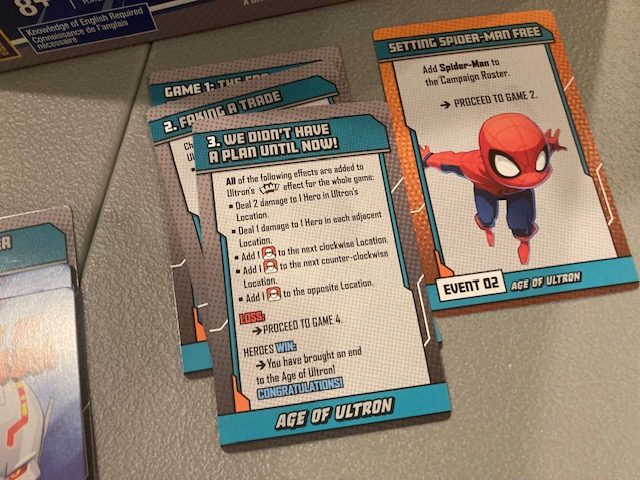
Winning or losing a game usually gets you an event: so far, many good events I see add a new Hero to the Campaign Roster (see above as Spider-Man joins the roster as a new Hero I can play!)
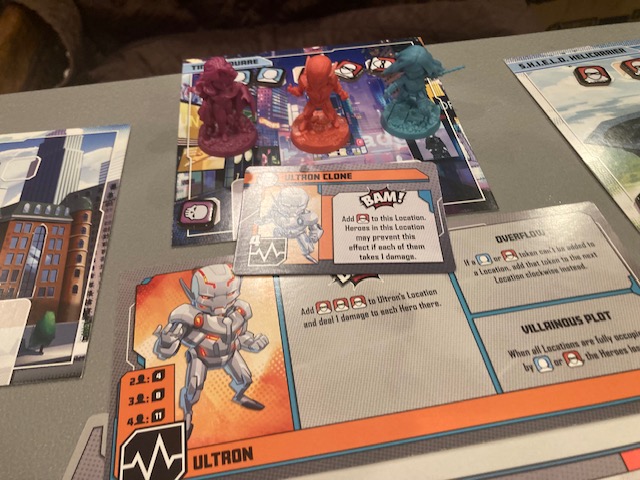
My second game used Emma Frost and Black Widow together. Wow, were they good together! Black Widow‘s predictive power made a huge difference! They took out Ultron!
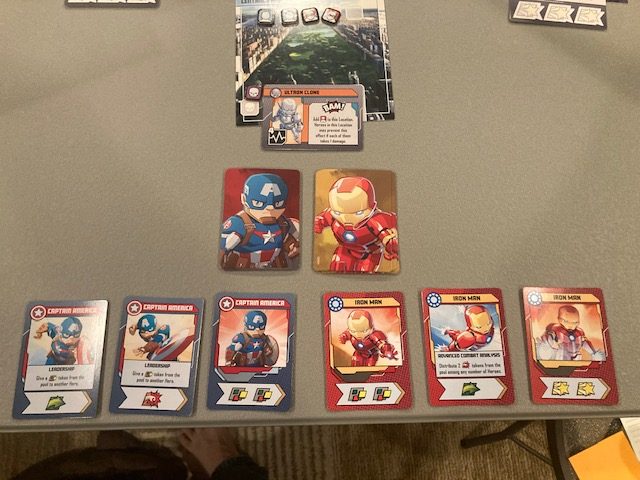
Finally, I used Captain America and Iron Man for my Game 3! They (barely) kept Ultron under control …
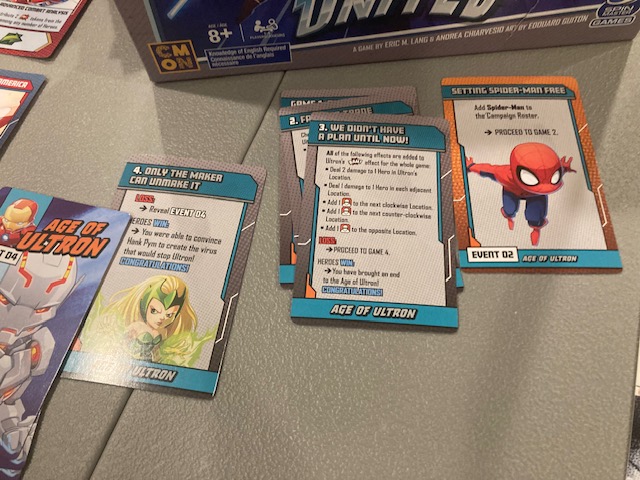
Basically, by (barely) defeating Ultron in game 3, I was able to avoid a final Game 4 (which gives a few more chances to defeat Ultron).
There wasn’t a lot of story per se in this campaign, as my Heroes were just doing the best they could in each Game. It was, however, very thematic to have Ultron get better and better and better in each game! Really, he was quite tough by the time Cap and Iron Man took him on. I probably should have lost (and had to play Game 4).
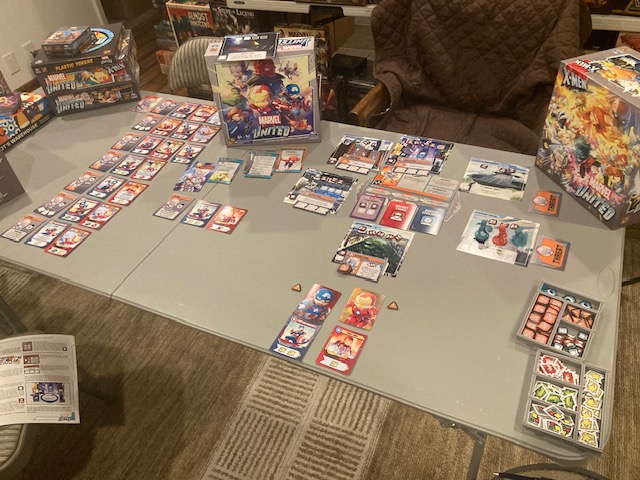
It was fun to play the Age of Ultron campaign, Ultron had an interesting progression, but there really wasn’t any story.
Conclusion
In the end, the Campaign Decks reminded me a lot of Set A Watch: Doomed Run (see our review here). Why is that? Each particular game of Set A Watch: Doomed Run is thematic, but the story tying them together is very very loose: it’s so loose you can drop players in and out of the campaign as you play! And I think that’s true here as well! Each Campaign game is thematic and fun, but it doesn’t really twist and turn very much; each Campaign is fairly linear. If you were looking for a thematic story with lots twists and turns to entertain you, the Campaign Decks aren’t really that.
There’s a few “twists” I saw, but in general, I think the purpose of the Marvel United Campaign Decks is an excuse to relive your favorite comics and an excuse to play through the ridiculous amount of Marvel United content. There’s a lot of theme, especially if you know the stories involved, but the Campaign Decks don’t present a deep, dark, complex adventures: they are just an excuse to play Marvel United and relive your favorite comics! As long as you know what the Campaign Decks are, they might be right up your alley.
Just be aware HOW MUCH Marvel United Content you must have in order to play these!
Appendix: Dark Phoenix Saga Campaign: Major Spoilers!!
NOTE: There are MAJOR SPOILERS ahead! Skip this Appendix if you don’t want any spoilers!!
The Dark Phoenix Saga campaign is a little longer at five games. Honestly, it will probably be more: you will almost certainly lose a few games, because the game gets hard! I lost two games along the way, but was able to come to a successful conclusion (so six games total).
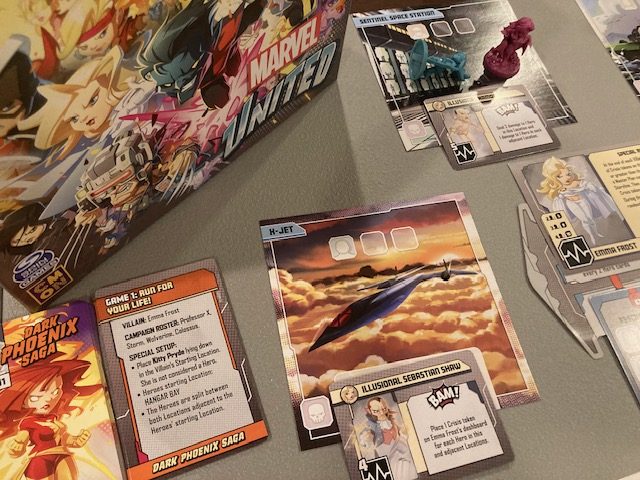
I was really looking forward the Dark Phoenix Saga: when Jean Grey fights for her life in X-Men #137, it was a very powerful and moving story. Could the Campaign capture some of this?
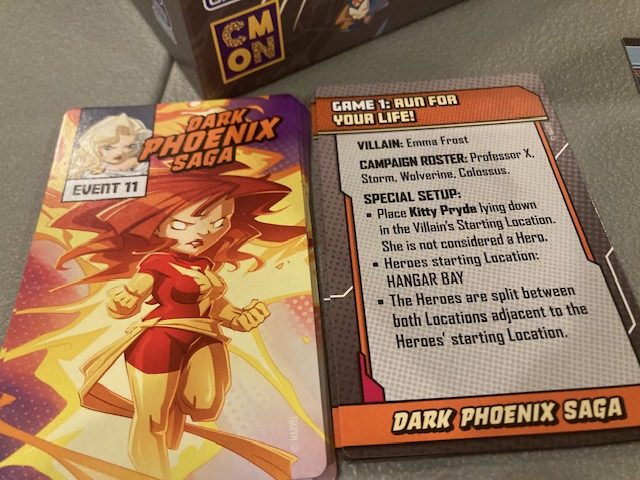
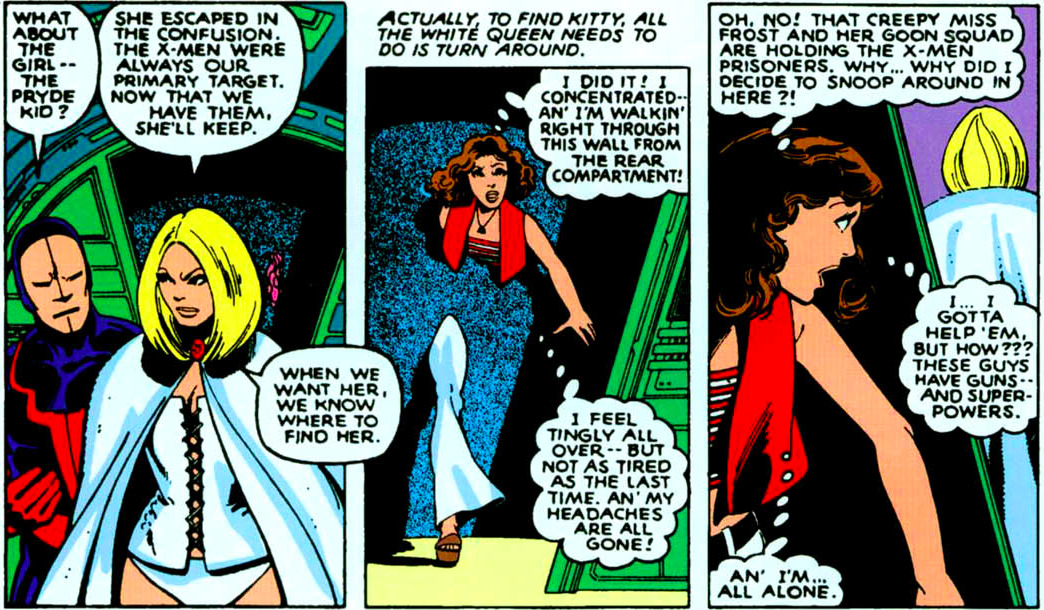
Well, the Dark Phoenix Saga starts Game 1 with Emma Frost and Kitty Pryde (ShadowCat): see set-up above! This is reminiscent of issue X-Men #131 where Kitty Pryde wanders the Hellfire club trying save her compatriots … see below.
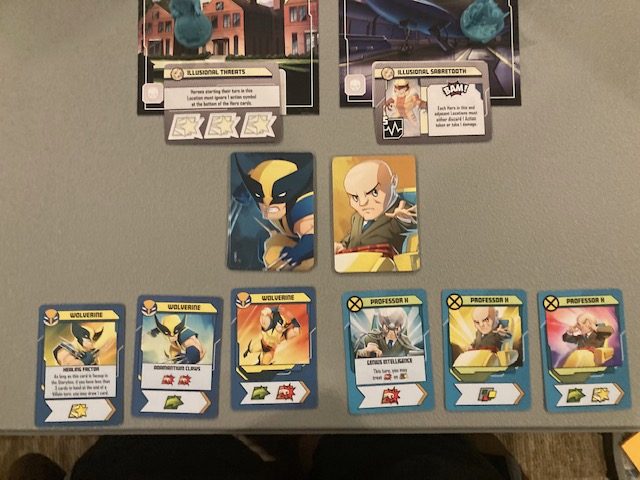
In this Game 1, I had Wolverine and Professor X take on Emma Frost. Remember, you have choices of which heroes you can use! Part of the fun of the campaign is trying to find the best heroes…
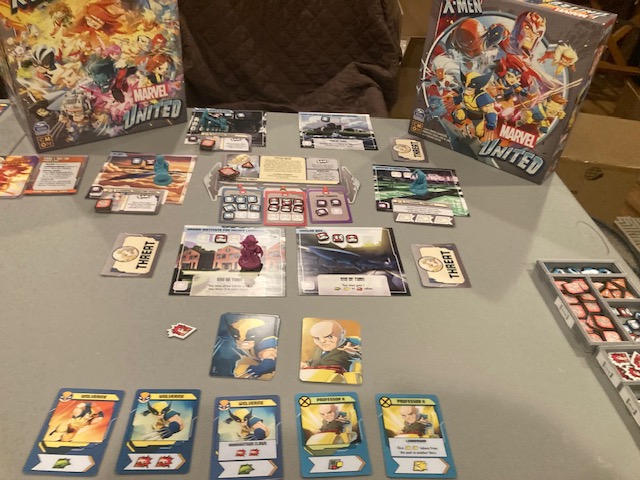
Well, it turns out I played my first game so very wrong (I missed some of the threat effects and special rules about accelerating the Master Plans, and didn’t realize I was supposed to find Kitty), so I restarted halfway through.
Wolverine and Professor X were able to find Kitty and take out Emma Frost.
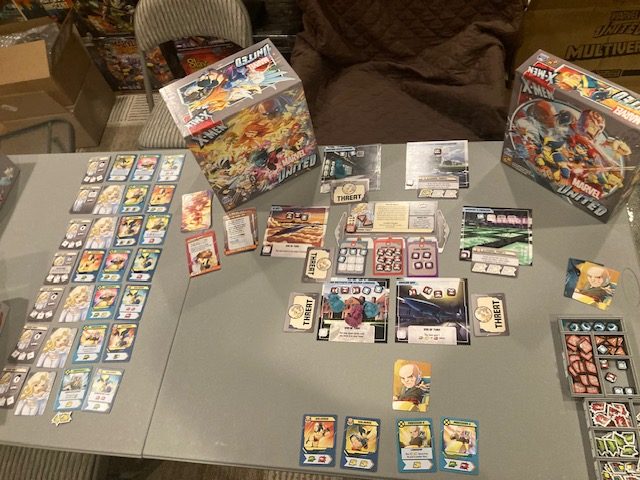
This led to Game 2:
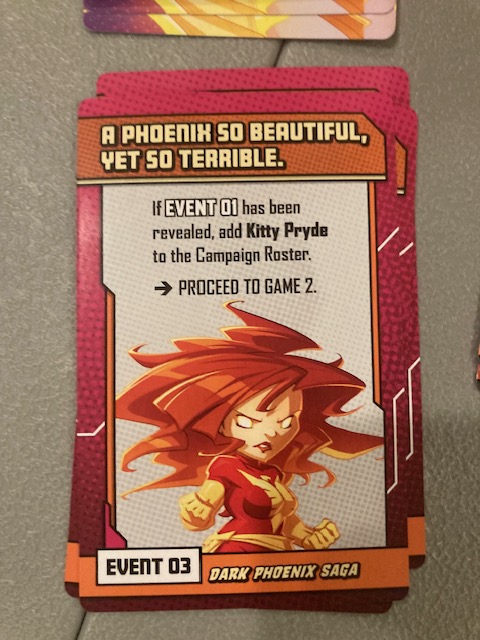
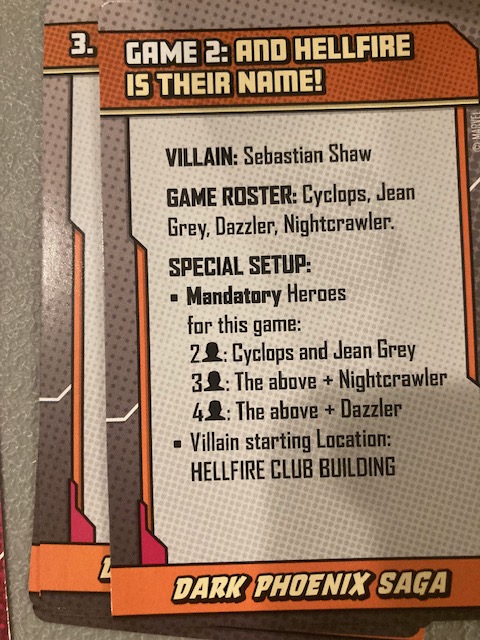
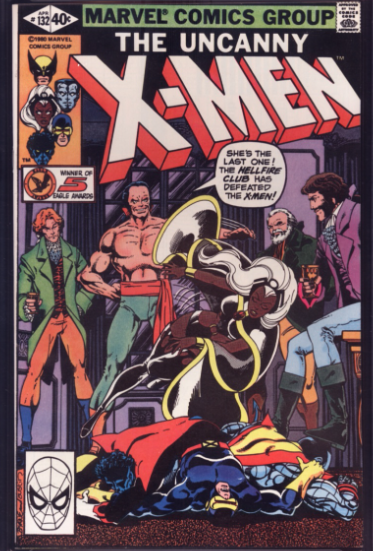
Game 2’s villain is Sebastian Shaw: a Hellfire club member! We are firmly in issues #131-#137 of the X-Men now! It feels like we are in X-Men #132 fighting Shaw!
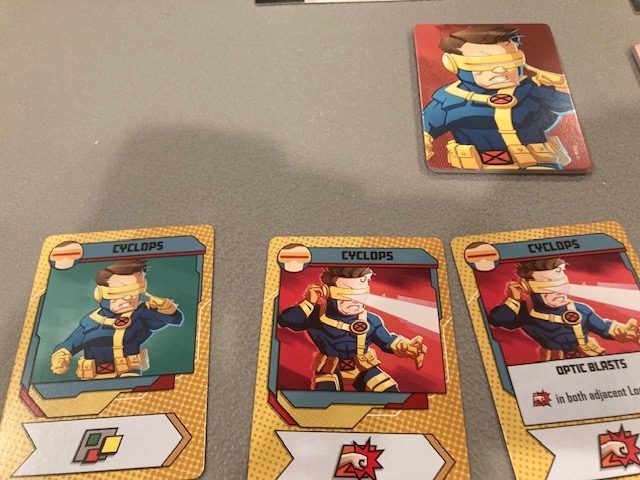
We were required to play Jean Grey and Cyclops: definitely very thematic!
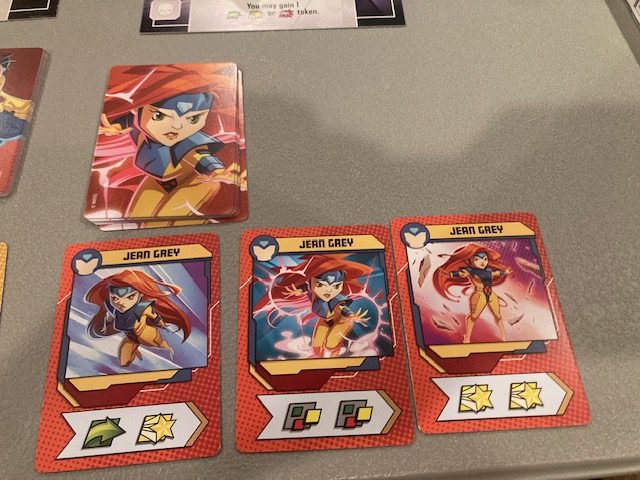
And why isn’t Jean Grey called Marvel Girl like in the comic … but I digress … I mean, her secret identify is her hero name? No, she should be Marvel Girl (Jean Grey).
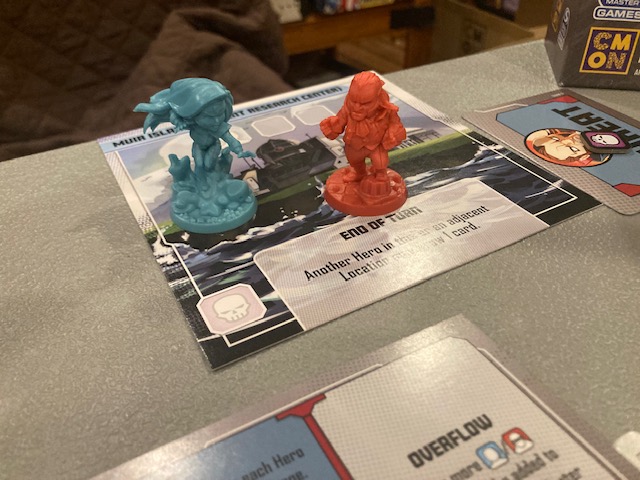
Shaw was rough: I ran out of cards (losing the game) and had to flip Event 5. To be fair, this loss feels very thematic, as Sebastian Shaw really trounced the X-Men in this particular series of comics!!
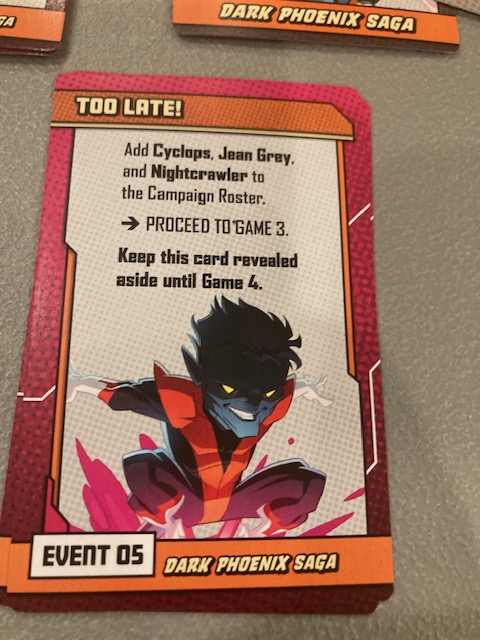
Too late! But, at least I had Nightcrawler on my Roster now …
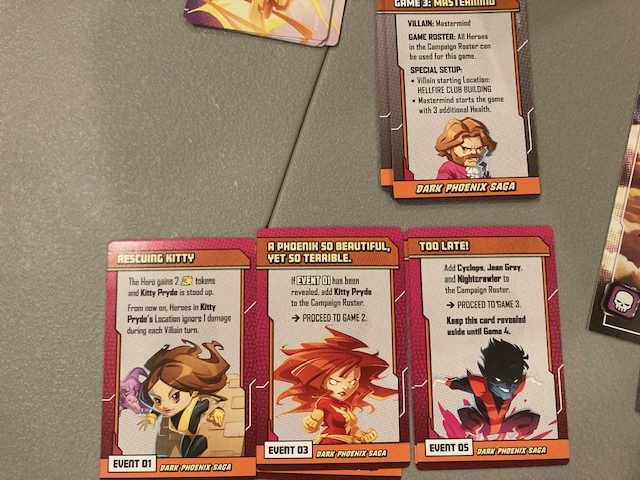
The next game up (Game 3) had us fight the villain Mastermind: he’s the evil creature trying to take over Jean Grey‘s mind!
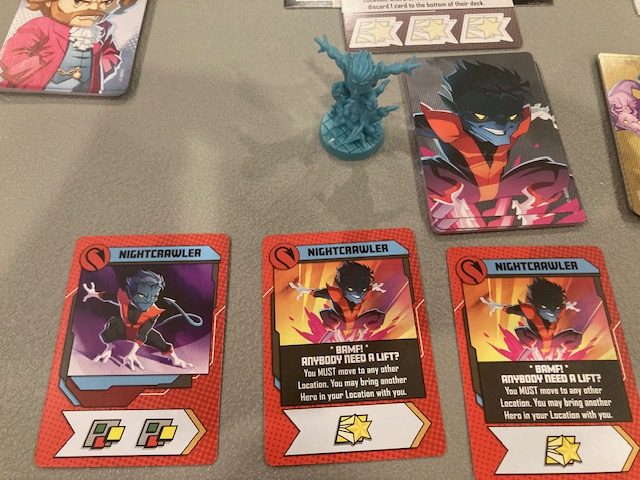
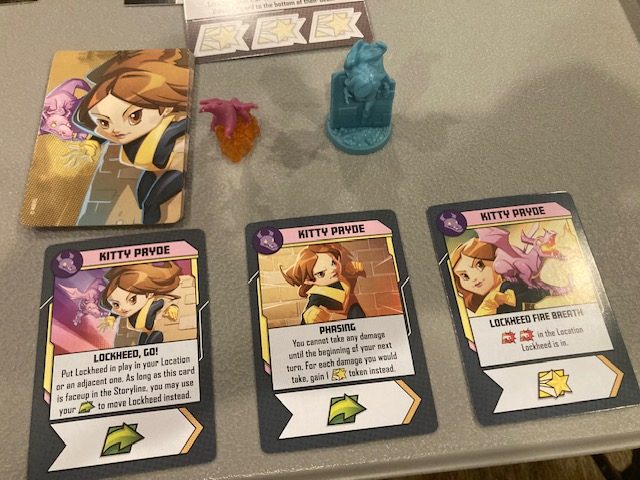
We get to choose heroes in this Game! If you look carefully at the Threats, you realize you want to try to keep the Heroes together (bad things happen to lone heroes). Nightcrawler pretty much HAS to teleport every turn (the black text on his cards means you are forced to do that), so it would be easy to keep the Heroes together. When the Heroes WOULD take damage, Kitty was able to phase and mitigate that!! This was a great combination of Heroes for this game. And it felt thematic: Kitty’s phasing kept them safe, and Nightcrawler’s teleportation kept them together.
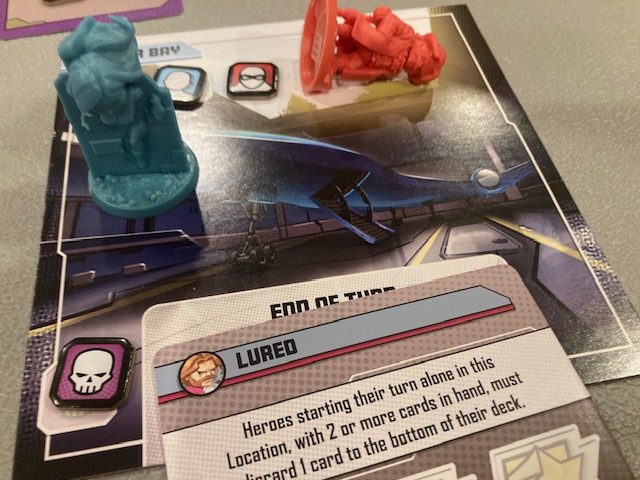
This was thematic from the character’s perspective. The story not as much (I should have used Wolverine: Wolverine fights alone!)
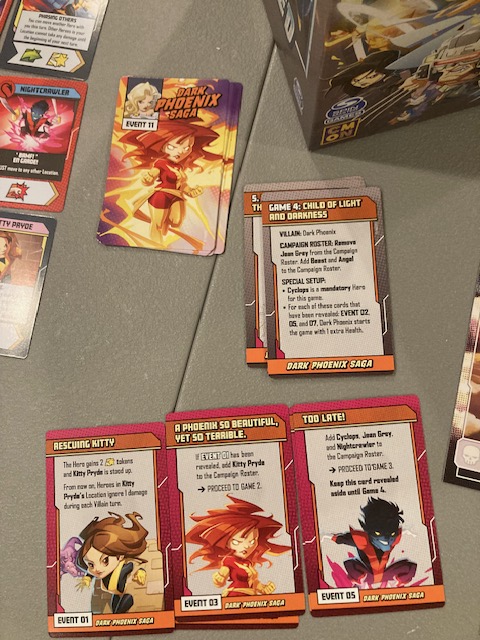
Then Jean Grey becomes Dark Phoenix. Oof!!!! There’s some really thematic stuff that happens in this part of the game, but I don’t want to give away too much.
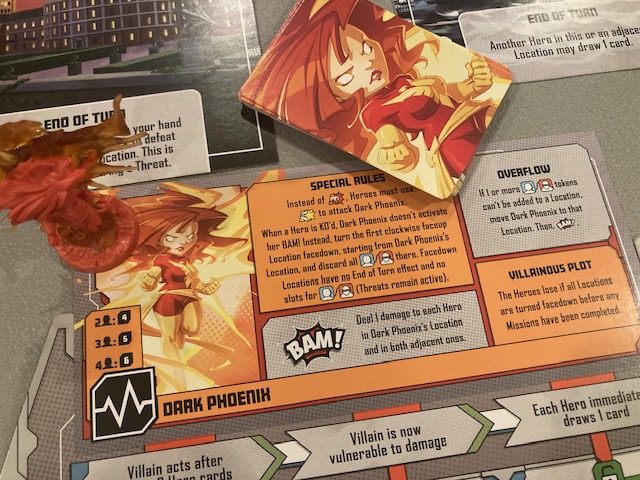
Dark Phoenix was one of the hardest battles I have ever had.
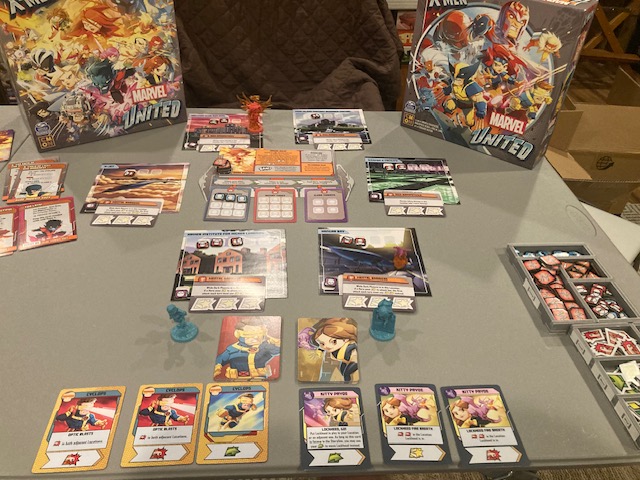
I started with Kitty and Cyclops, but after losing to Dark Phoenix once, I had to “remove Kitty” from play. I could only keep playing as long as I had 4 Heroes in my Roster.
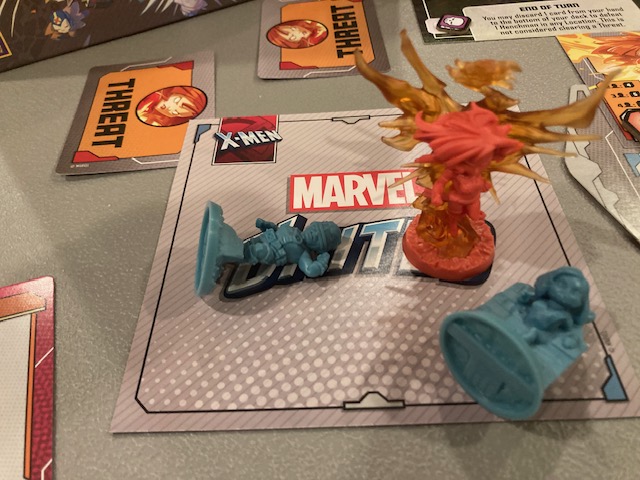
See above as Dark Phoenix easily takes out Cyclops and Kitty.
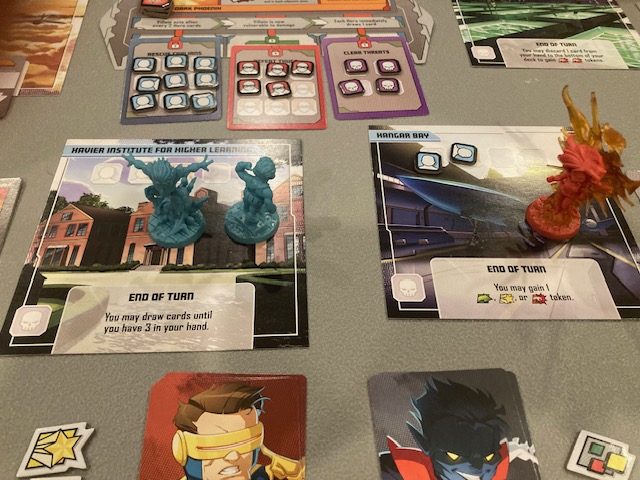
I get to try again: For my next trial against Dark Phoenix, I brought out Nightcrawler (and you are required to keep Cyclops).
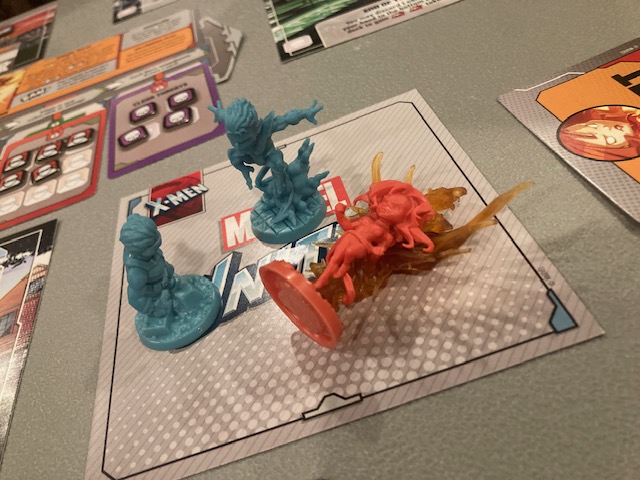
I was able to eke out a win, but just barely.
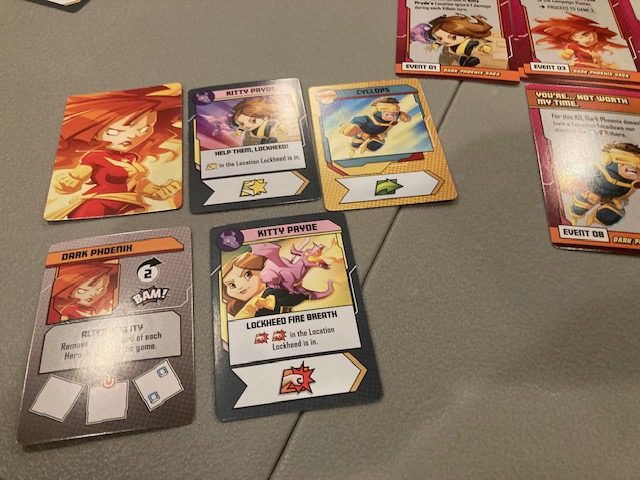
Dark Phoenix’s Master Plan cards are just rough!
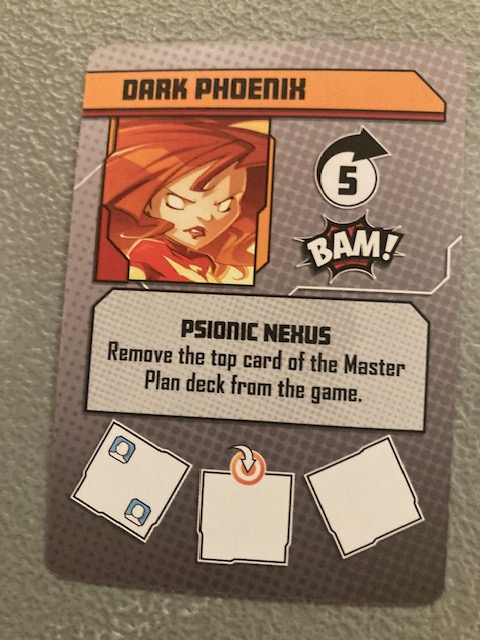
I fully expected to need 3 or more games to beat Dark Phoenix. I mean, she’s Dark Phoenix.
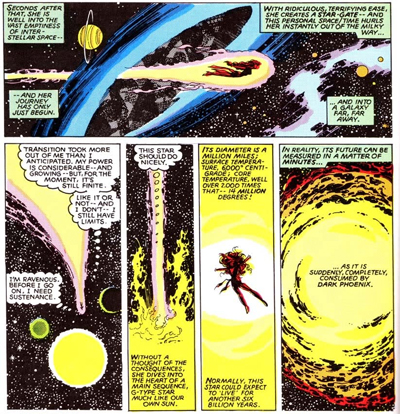
Even though the X-Men were able to defeat Dark Phoenix, … things happened while Jean Grey was Dark Phoenix. Like, she ate a sun and destroyed a world, so she must stand trial.
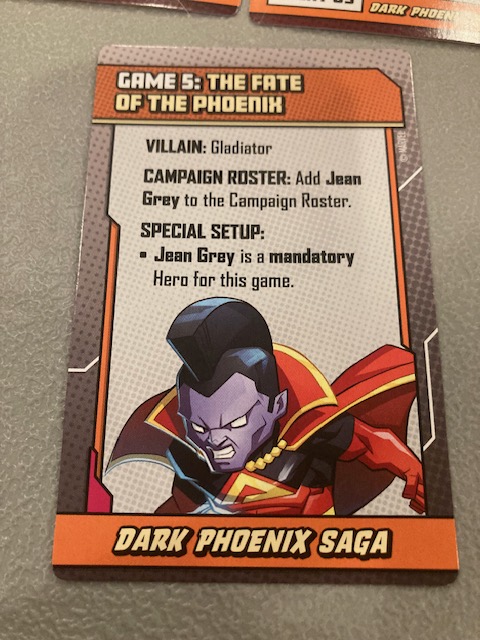
And Gladiator is the one to deal with her.
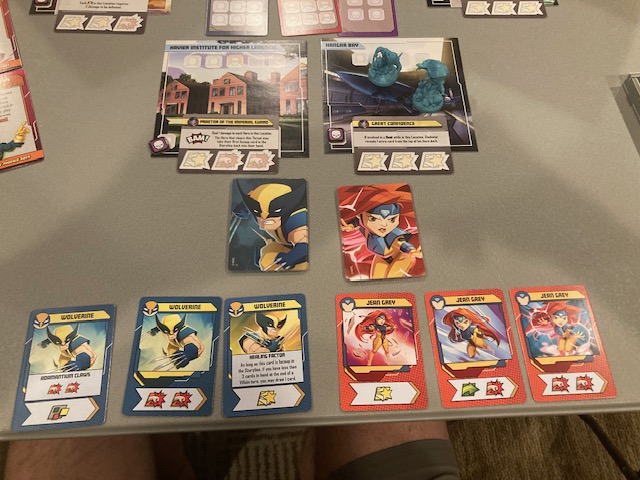
Jean Grey must fight, since she’s fighting for her own life. The choice of Wolverine is important here: we know from playing Gladiator from the War Of Kings, it’s important to always have a full hand! Since Wolverine has his healing factor, he is an exceptional character to play against Gladiator.
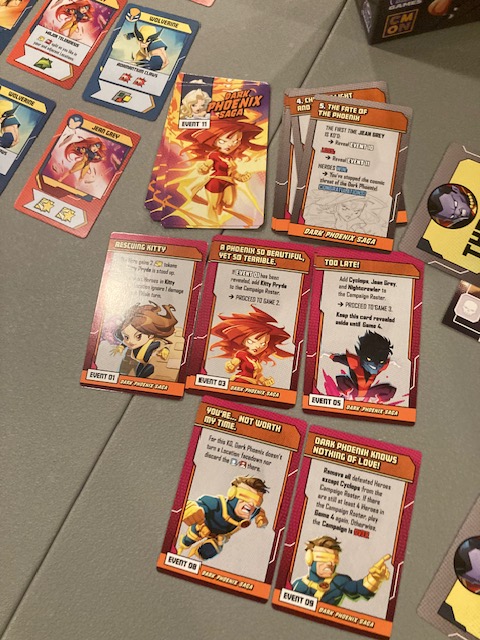
In the end, Wolverine and Jean Grey were able to defeat Gladiator. And win the campaign!
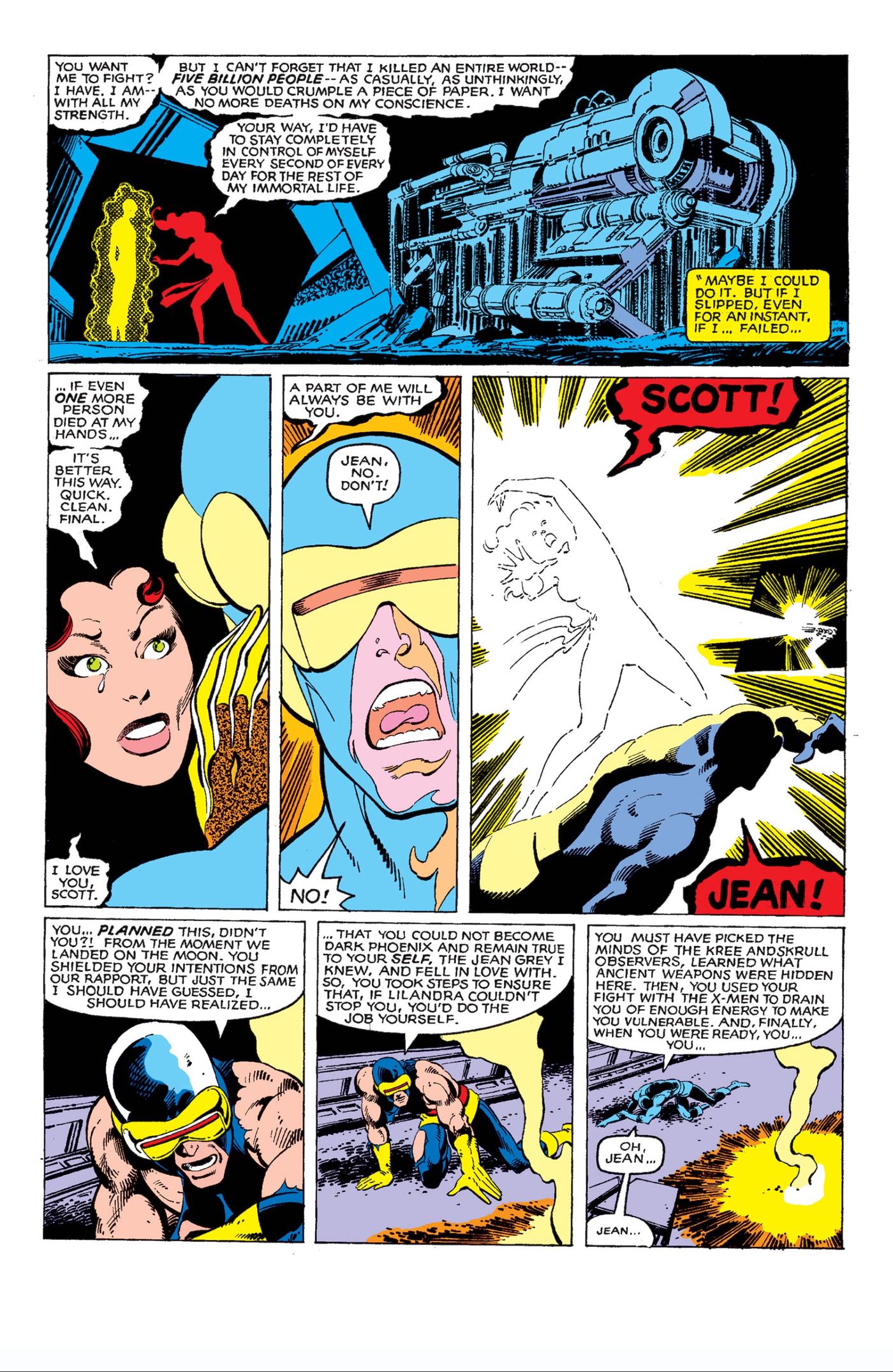
Although, technically, Jean Grey doesn’t survive … they don’t tell you that … see above …
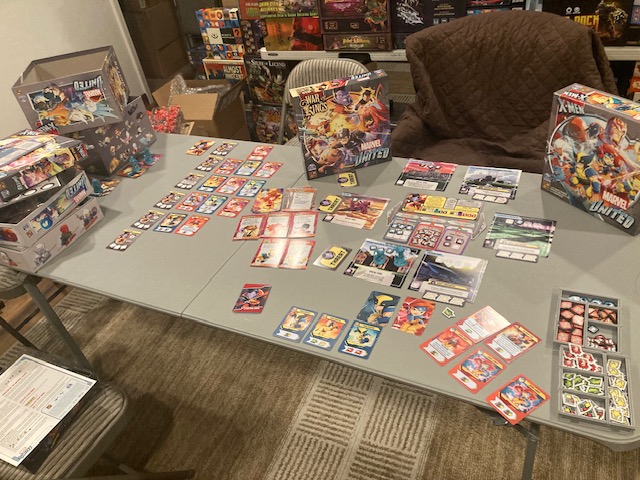
I know the Dark Phoenix story and wow, this felt incredibly thematic! From how hard Dark Phoenix herself is, to some events in the deck, the Dark Phoenix Saga Campaign Deck was very thematic. To be fair, the Campaign Deck didn’t “tell a story”, but it sure reminded me of one of my favorite X-Men stories of all time.
 coopgestalt
3 thoughts on “Campaign Decks for Marvel United: How Much Story Do They Add?”