
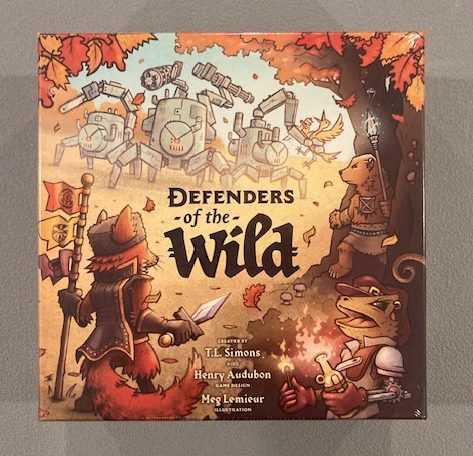
Defenders of the Wild is a cooperative tactical fighting game that was on Kickstarter back in October 2023. It promised delivery in August 2024, and lo and behold, it arrived at my house in early August 2024! A Kickstarter that delivers on time! That never happens!
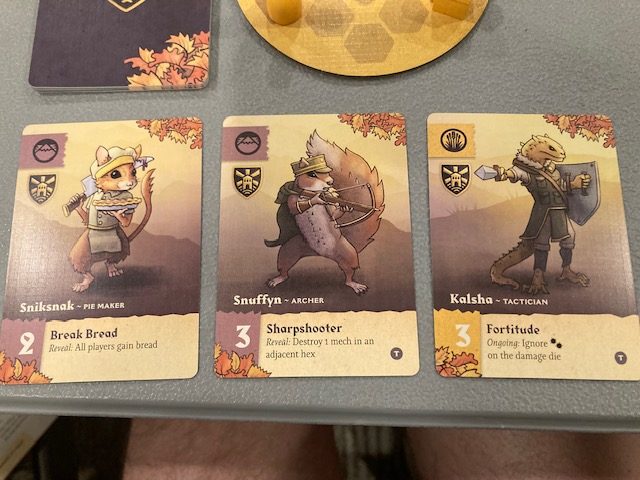
I was initially drawn to this game because of the art. See above: The art of Meg Lemieur permeates the game and it is gorgeous. I think that art is a big component of why this made the #9 spot on my Top 10 Anticipated Cooperative Games of 2024!
The game looks to be something like a cooperative version of Root: cute animals are at war … not with each other, but with the machines threatening to take over the forest!
This looks to be a cooperative game with some strategy and tactics.
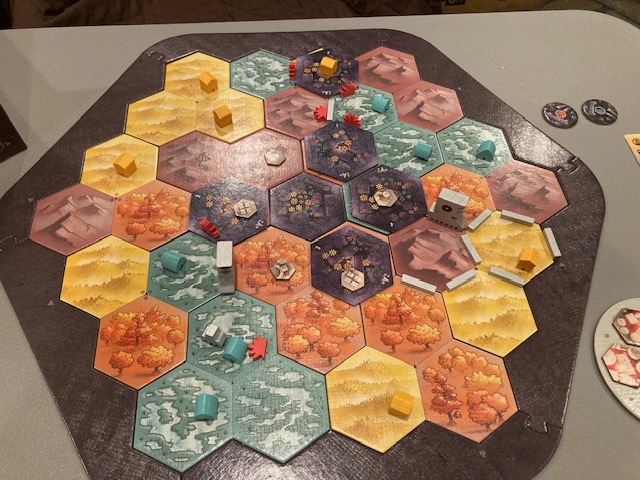
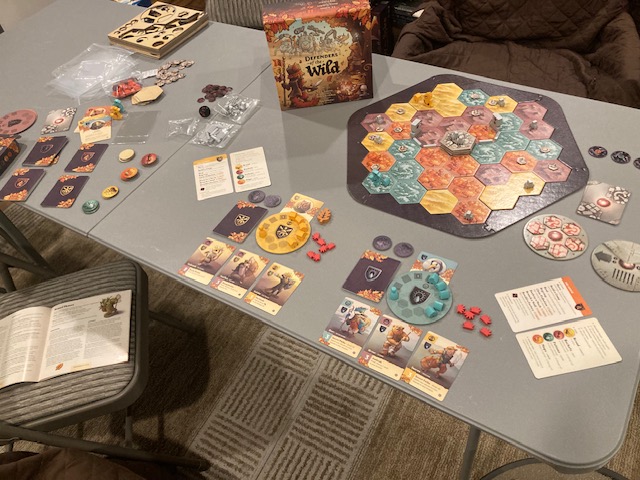
I see a hex map (see above) and the game immediately has a war game quality to it. And that’s not a wrong assessment for this; Defenders of the Wild has elements of a cooperative war game.
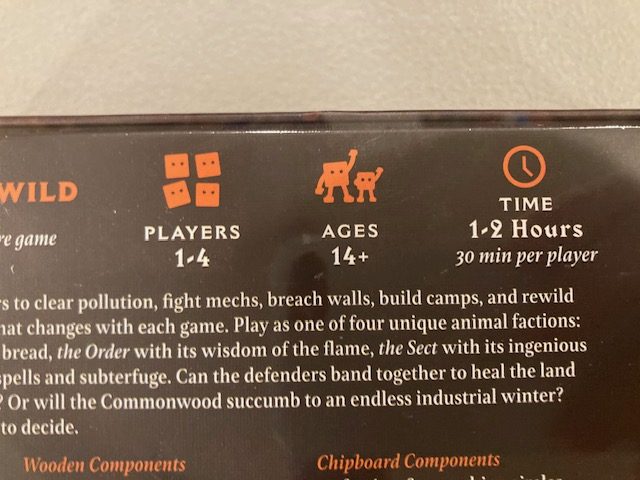
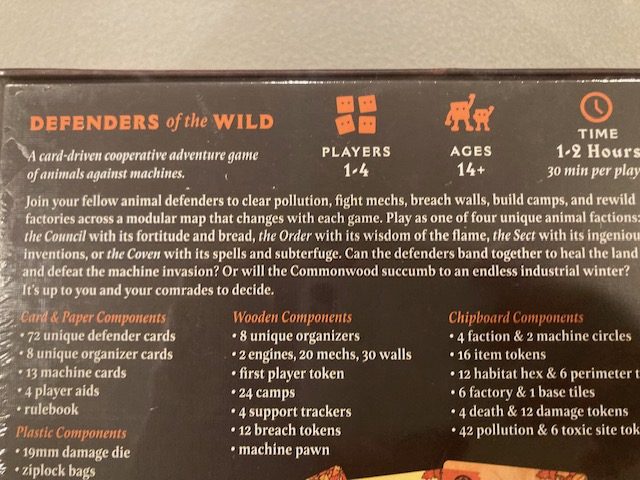
This a slightly deeper and more technical game than some cooperative games, so the 14+ age requirement is fairly accurate. Most of my playtimes have been about 20% longer than listed (maybe 1 hour 20 minutes or so), but the play time on the box is still fairly accurate. I have also played the game at 1, 2, and 3 players, and it seems to work at all those player counts.
Let’s take a closer look!
Unboxing and Gameplay
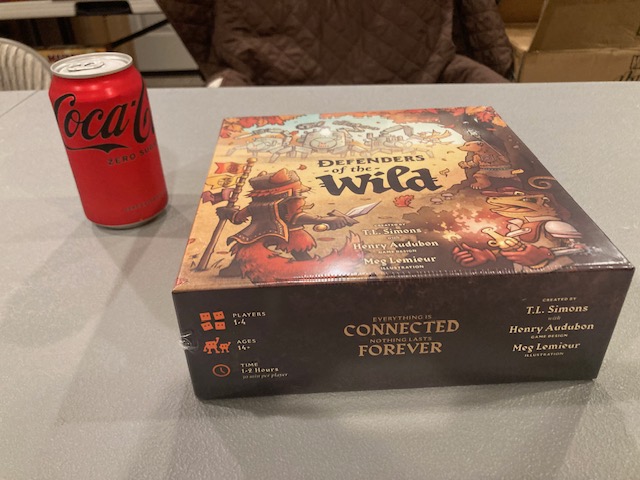
I was surprised when Defenders of the Wild arrived: it’s a smaller box than I expected! See above and below with a Coke can for scale.
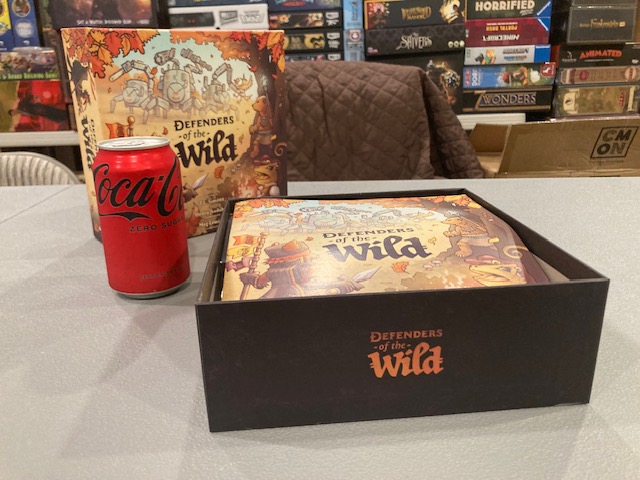
Despite the smaller size, the game is gorgeous.
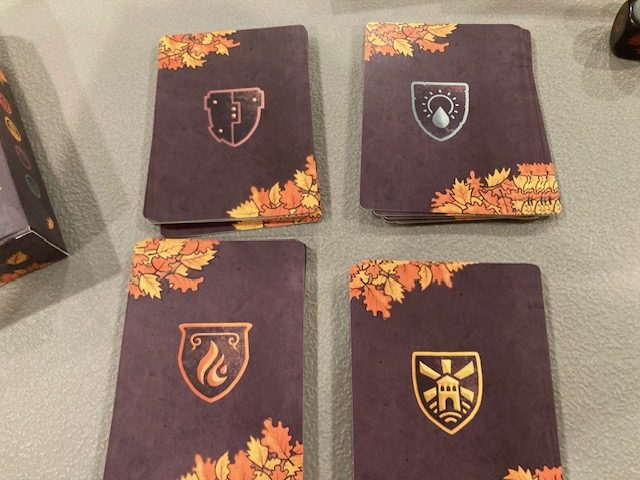
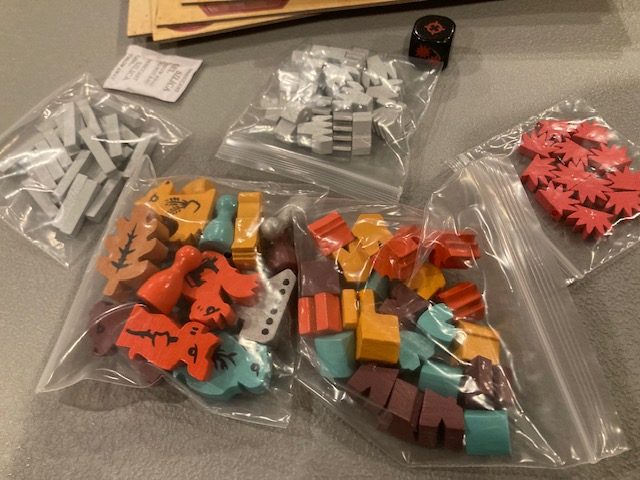
In the game, each player chooses one of 4 factions to play: the factions define which deck of cards you get (see above) and the tokens you get (see below).
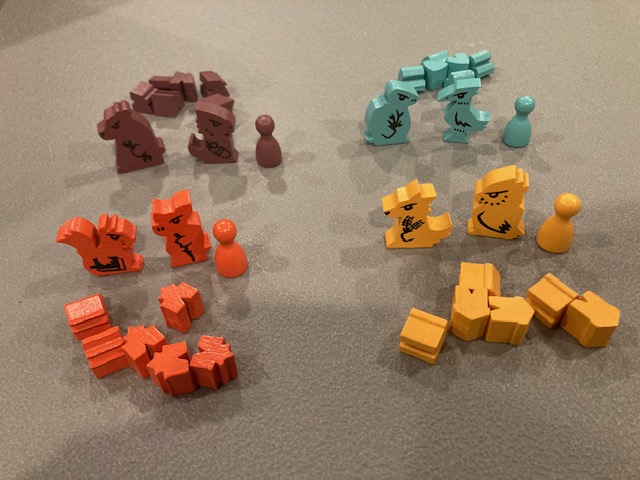
You can see why a Root comparison is obvious here with the cutesy but fighty meeples (above). Even the colors of the meeples seem to imply Root.
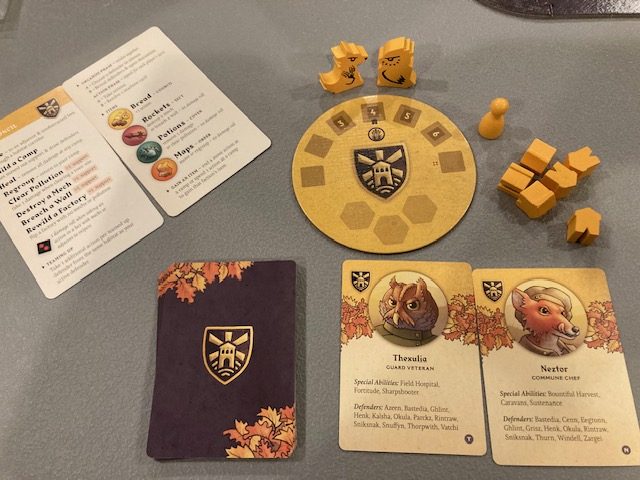
Each player then grabs up their player board, cards, camp, and chooses one of the two Organizers: the Organizers (see Thexuloa and Nextor above) are the “leaders” of your faction, and form the flavor of the Defender deck you get.
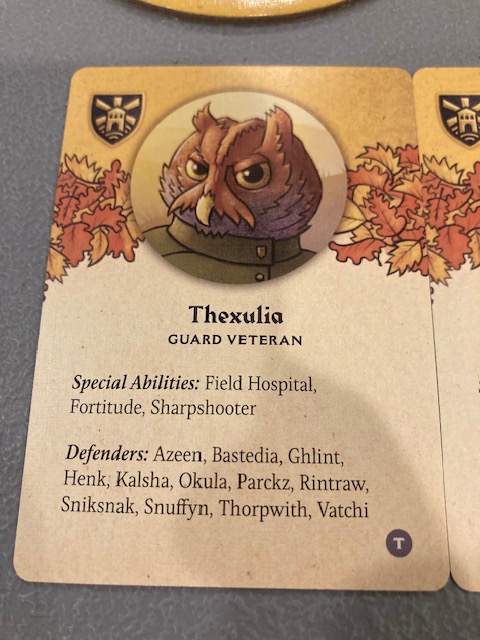
You don’t get all the Defenders from a deck: you only get a subset. If you choose Thexulia, you get the Defenders listed above.
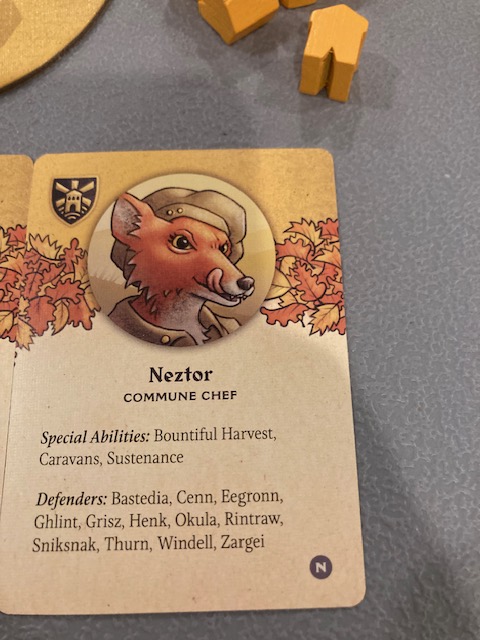
Nextor (above) gives your Defenders deck a slightly different flavor from the same deck of Defenders.
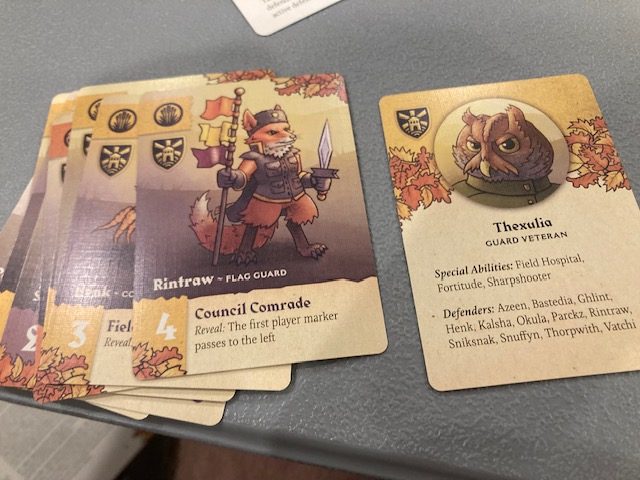
The Defenders (like Rintraw above) are the cards you play during the game. You have twelve Defenders that you cycle through (and then reshuffle if needed).
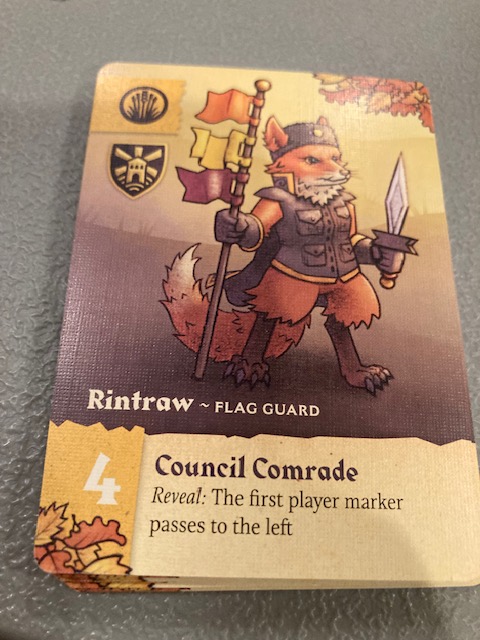
Every turn, you must play a Defender: each Defender gives you three things (See Rintraw above as an example):
1) The number of action points (lower left: 4 for Rintraw above): how many actions can you do that turn?
2) Preferred terrain (upper left: Plains for Rintraw): what terrain do you travel best through?
3) Special: when you reveal “something” usually happens (bottom of card): what happens when I reveal the card?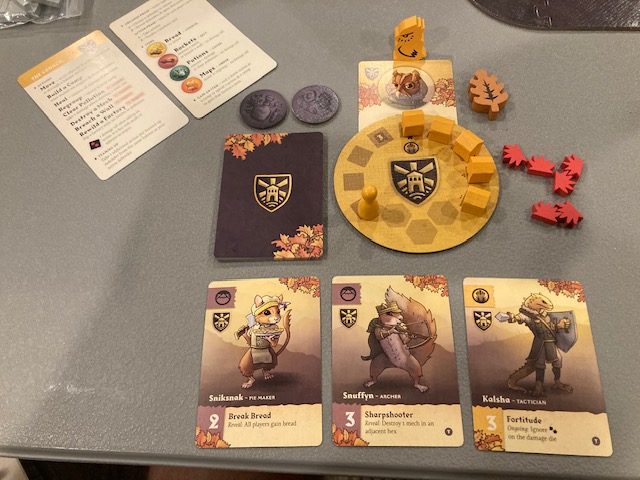
Depending on where you are in the game, you will have three or fewer Defenders to choose from: see above as we have a full complement of Defenders.
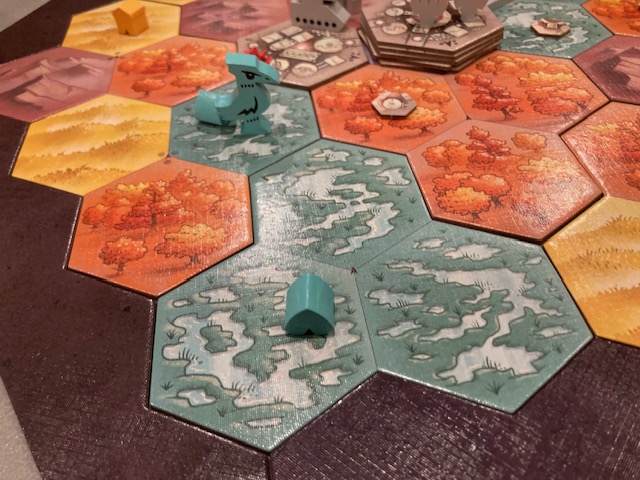
You DO NOT get a new Defender card every turn: you ONLY draw back to your hand limit (3) when you build a new camp! See above as the Zyrinn prepares to build a camp and get her three Defenders back! You must be building all the time to get your Defenders back!
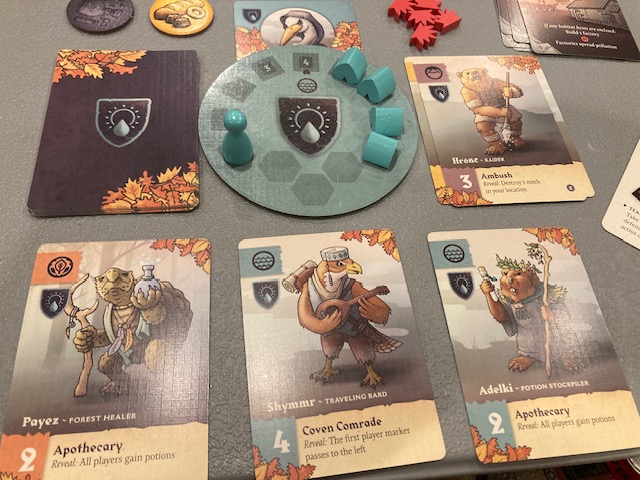
You can only build a camp if you have enough “support” in the game: The little pawn on the circular support board above denotes “how much support” you have: you can’t build a camp until the pawn reaches the next campsite!
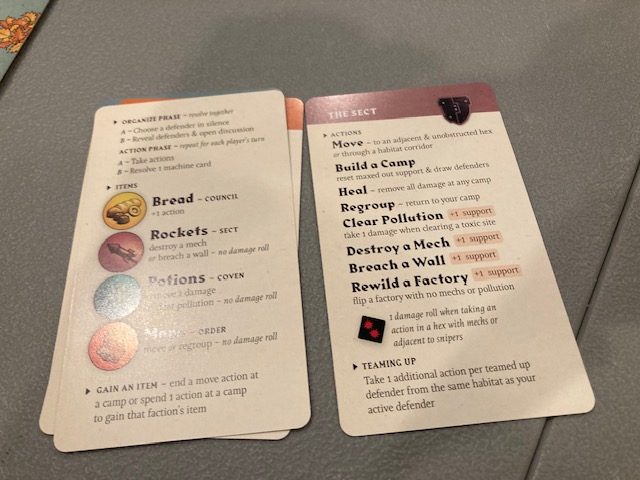
How do you get support? A bunch of actions each give you one support: see the Summary cards above! Every time you Clear Pollution, Destroy a Mech, Breach a Wall, Rewild a Factory, you get a +1 support and your pawn moves forward closer to a camp.
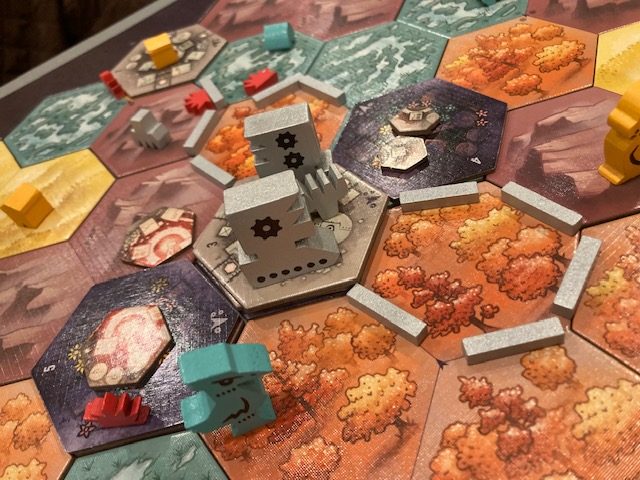
This is a tactical game (with some strategy): players will be moving around the map cleaning up the pollution (the little hexes), taking out Mechs (the small silver claws) and breaching walls built by the machines!
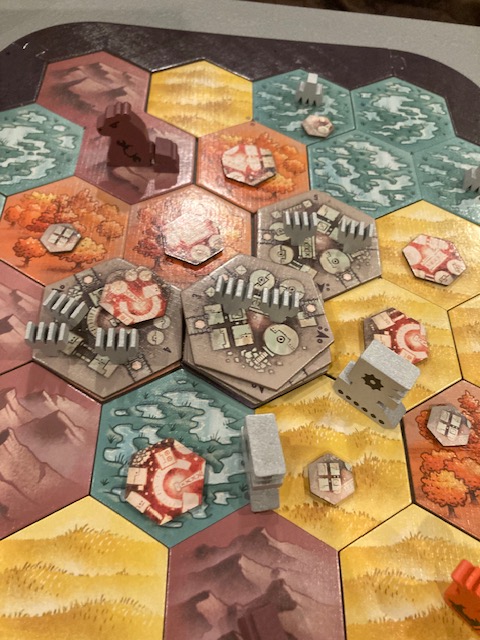
This is a game about cleaning up the wilds: the pollution, toxic waste, the mechs, and the factories. Players loses if too much of the forest becomes toxic, a factory needs to be built and there’s no more, or 2 Defenders from the same Habitat are killed.
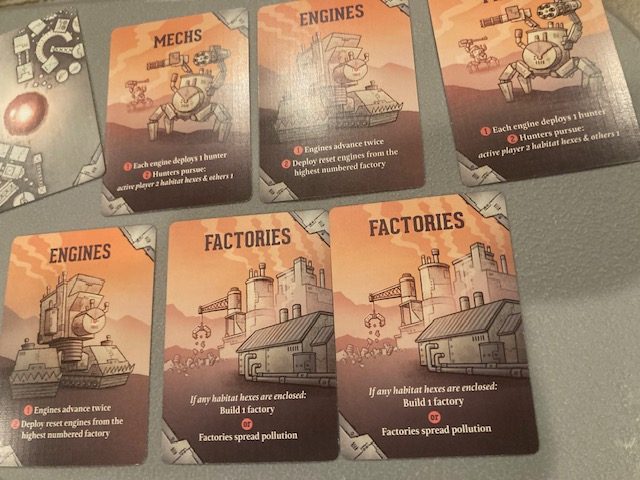
How do factories, mechs, and pollution come about? From the Machine cards: see above. One machine card comes out after every turn and builds factories, spreads pollution, or generates more mechs. The same 7 cards are shuffled and come out over and over. Each Machine card is very distinct and generates “bad stuff” in a very particular way.
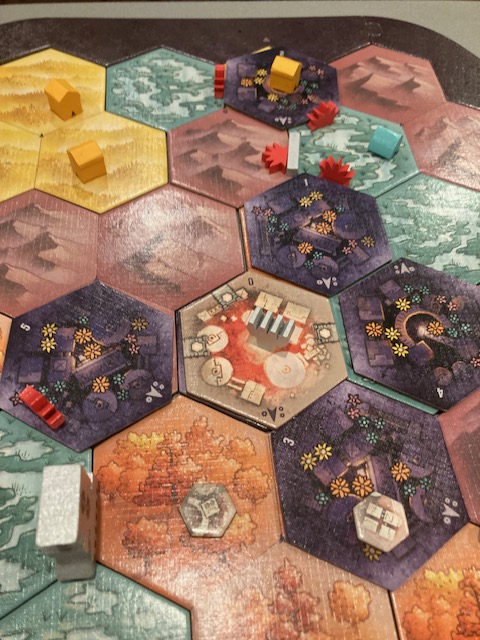
Players win if they “rewild” all of the 5 the 5 factories (see the purple hexes above: they used to be factories) and build all of their camps!
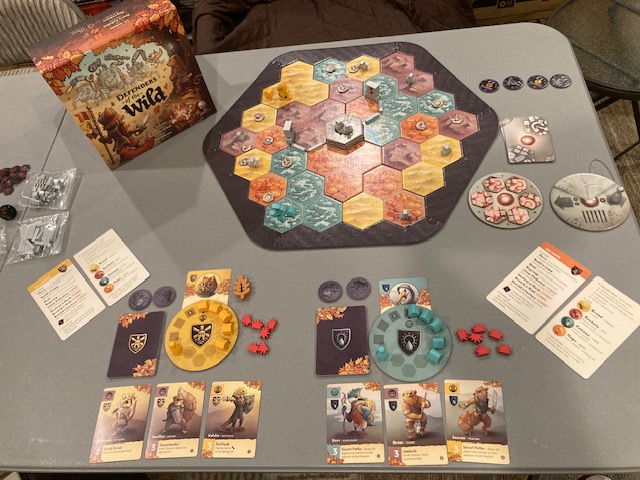
The game has beautiful art and a very good production.
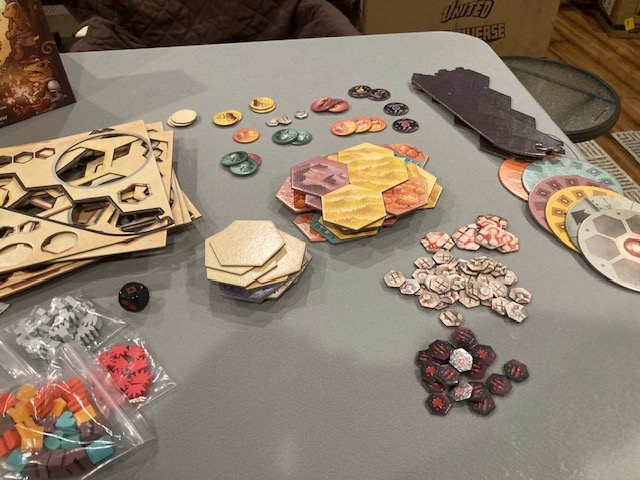
The components are high-quality with
1) wooden meeples, camps, and organizers
2) linen-finished cards
3) thick cardboard hexes
4) beautiful art
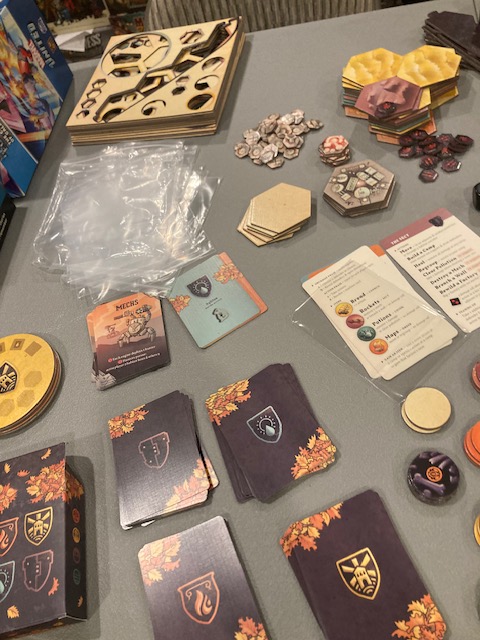
The game unboxes and makes you think: “This game looks cool“.
Rulebook
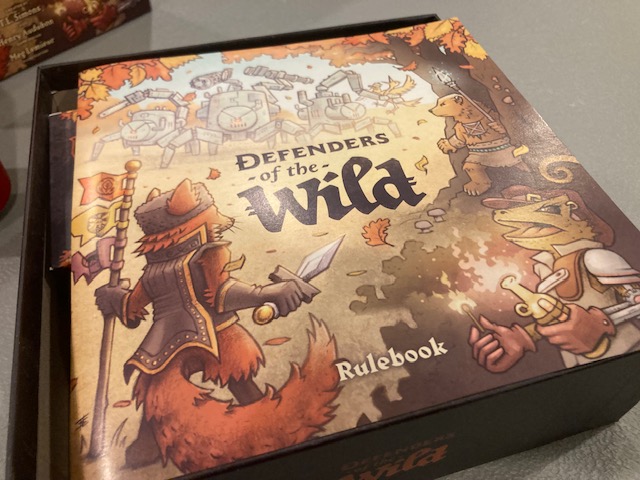
The rulebook is okay. There are certain things I really like about it, and certain things I really don’t.
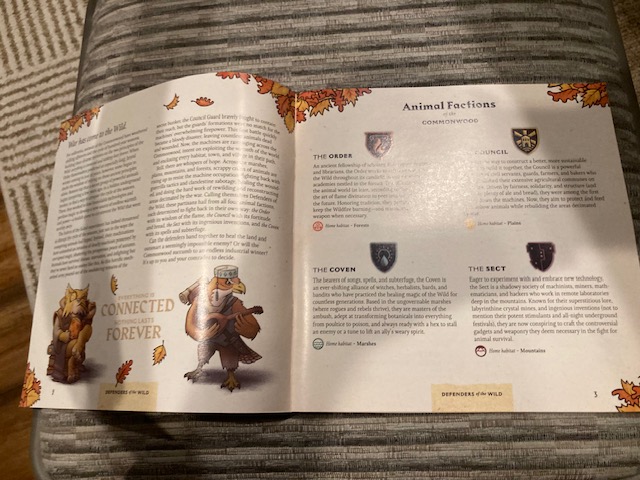
It gets a B- on the Chair Test: The font and form factor are both a little small, so it’s a little harder to see it on the chair text to me. Also, there is a lot of text in the book (see above): it really needed more accompanying pictures. But, it stays in the B range because the rulebook does NOT flop over the edges: it stays open and I can consult it on the chair next to me.
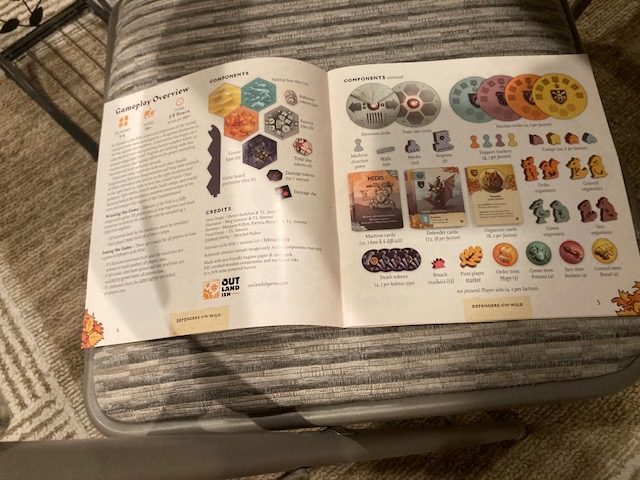
The Components page is great: it shows all the components and marks them so you can correlate the stuff. Good job!
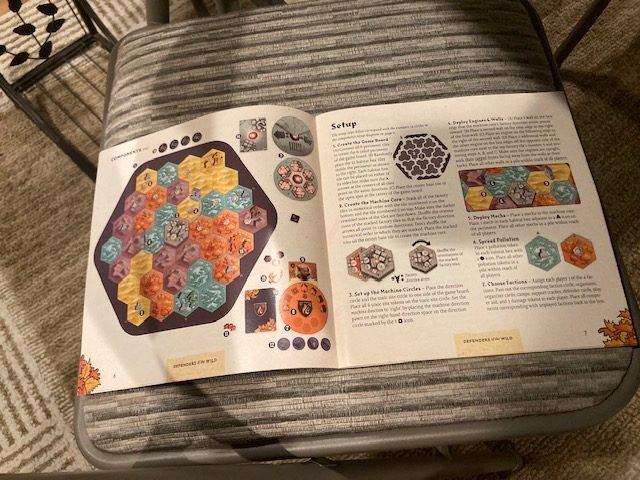
The set-up is pretty good, but it has some flaws. For one, there’s a lot of text, especially since it spills over in the next page.
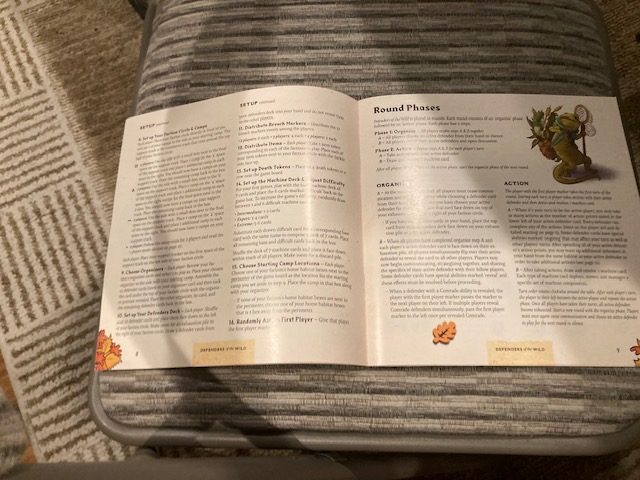
There is generally a lot of text in the rulebook (see above); it feels like a few more pictures would have helped. Also, sometimes the rulebook reads like a legal document.
An index would have been nice; there’s a lot of rules in this rulebook.
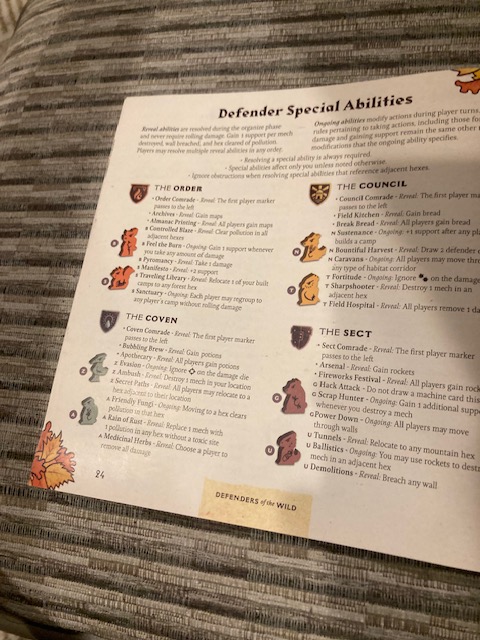
The rulebook ends with a description of the cards/Defenders in each deck. This wasn’t the most useful thing to put on the back because the descriptions don’t say anything more than the cards. I would have preferred a glossary or something close to an index.
The rulebook was very text-heavy, needed some more pictures, needed a few more elaborations (see sections below), and it probably needed a glossary or index (as it’s very rules heavy). It was ok. I was able to learn the game from the rulebook pretty well, but it took a few tries.
Solo Plays
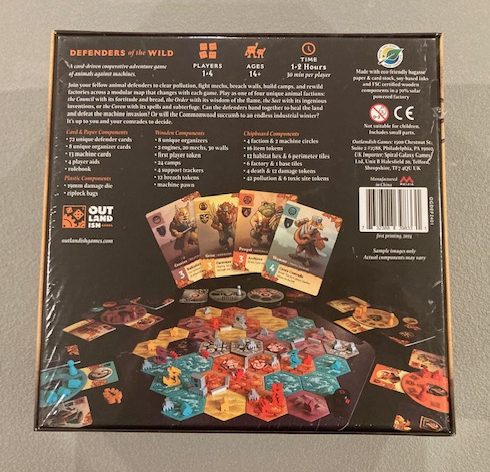
Defenders of the Wild supports solo play (congratulations for following Saunders’ Law). See the back of the box above.
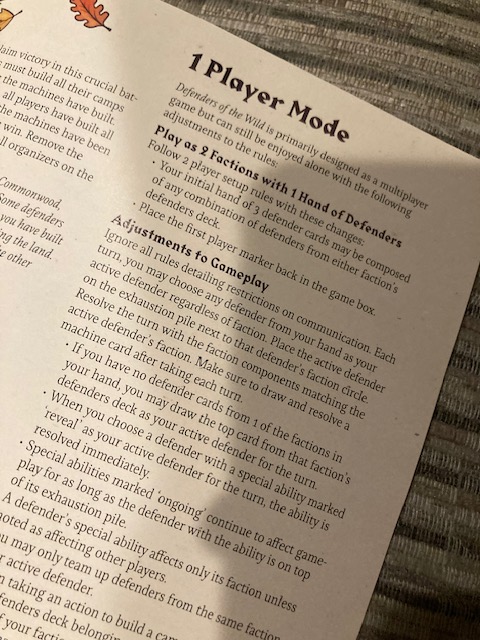
Unfortunately, the solo rules take up half of a page, full of rules that are exceptions to the base game. See above. The basic idea is that you play as a 2-Player game, but with some non-standard way of handling the Defender cards.
This game has so very many rules, I can’t recommend throwing another set of rules at the solo player. I ended up just playing all my solo games as a two-handed two-player game, where I alternated between players like a normal 2-player game. There are no exceptional rules when you play two-handed two-player; the game plays normally and this seemed to work just fine. For your first learning game, I absolutely recommend playing this way: there are far too many rules for you to be throwing another half-page of new rules at the players.
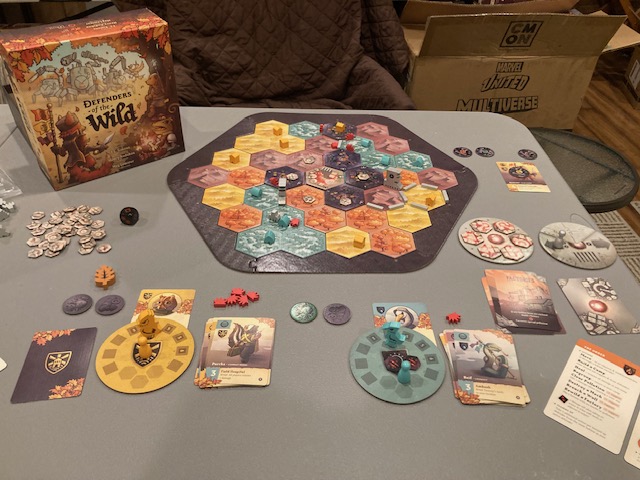
My first solo game ended in a win, as I rewilded all the factories without dying! See above. BUT, as it turns out, I got a lot of rules wrong. It took me about four (five?) gameplays to get all the rules down; there are a lot of rules in this game.
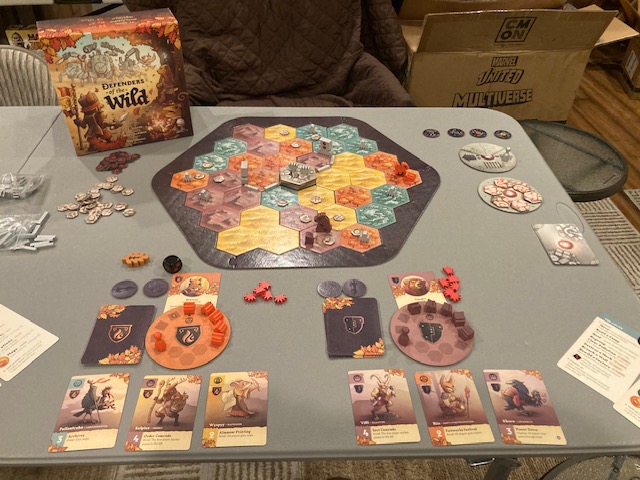
My second and third solo games were pretty rotten.
I got smashed by toxic waste in my second game (when three pollutions congregate on a single spot, it turns into toxic waste). Too many toxic wastes came out, and I just lost quickly! It was very depressing.
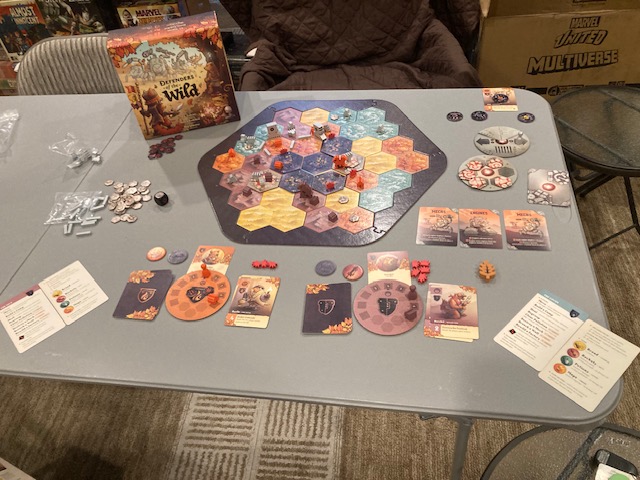
My third game, where I got most of the rules right, was a defeat as my second Defender got crushed (recall: you lose if a SECOND Defender from a faction dies). I started to get the cadence of the game by the third game, as I was close to a win: I had one factory left.
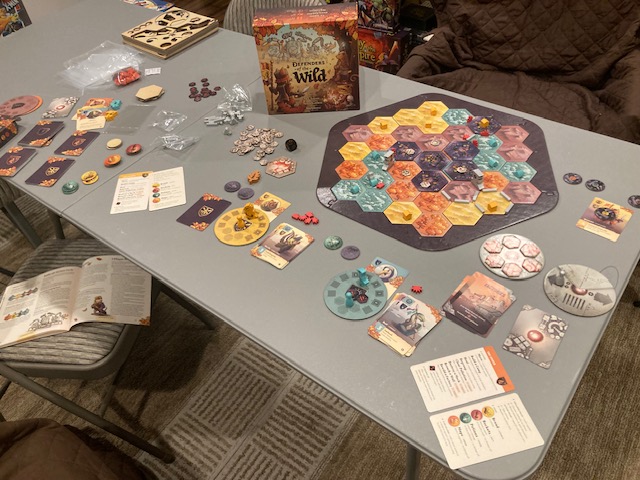
Unfortunately, my loss on the third game had me worried that the game might be too random. Whether I won or lost depended on just a few die rolls or card flips.
Cooperative Games
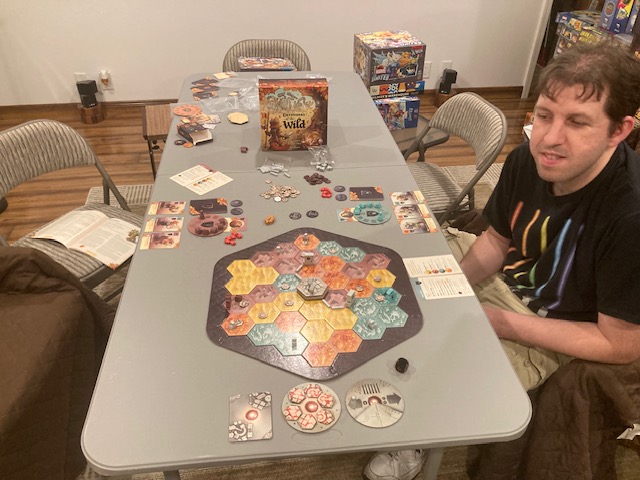
My first cooperative play (after 3 solo games) was a 2-Player game with Sam. There were still one or two rules I was getting wrong: having Sam there forced me to rethink/resolve some of those.
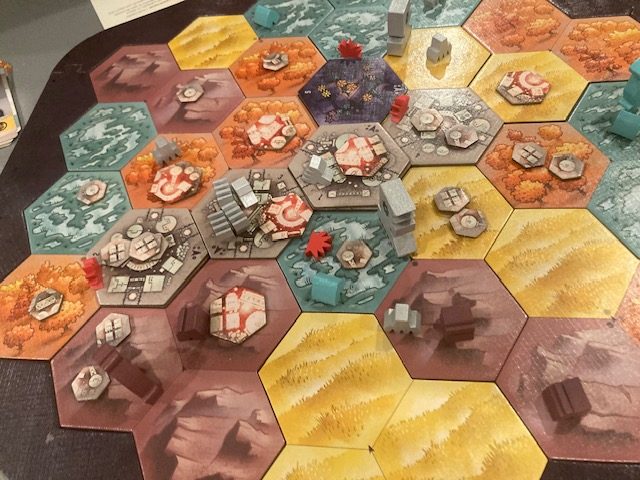
Our 2-Player game was also lost by too much Toxic Waste: see above. We couldn’t get into the Factories to rewild them (for various reasons), so the Build Factories action becomes “spew pollution” when there is no enclosed space for a factory.
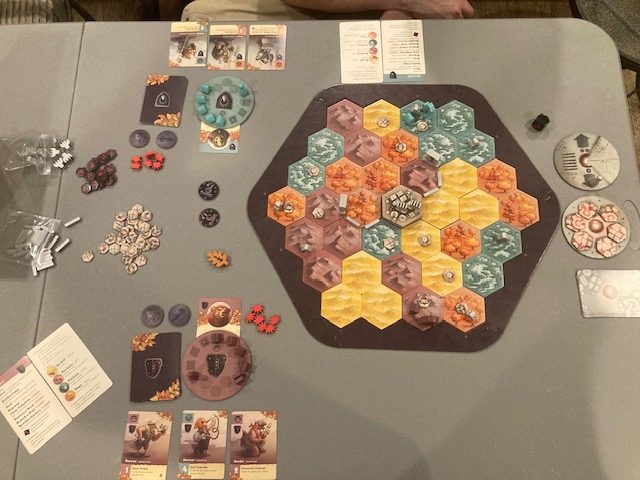
We were doing “okay” in the game until the Bad News (the Machine cards) just seemed to conspire against us: we had 4 factories built in so many rounds, then pollution just spilled out as we couldn’t clean up or shut them down. It was very depressing. We didn’t feel like we could do anything about it.
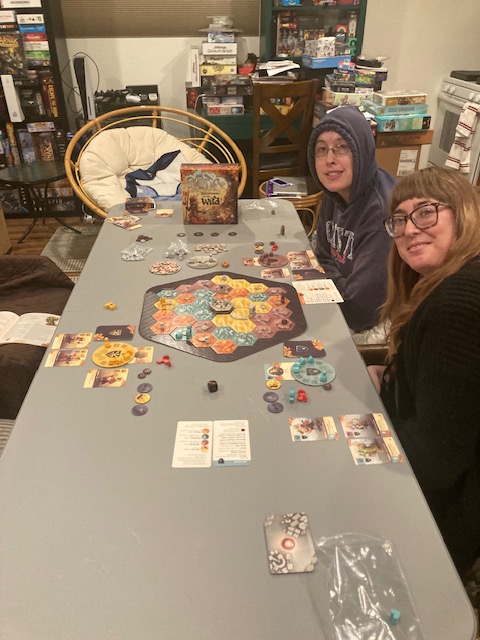
My next cooperative game was a 3-Player game.
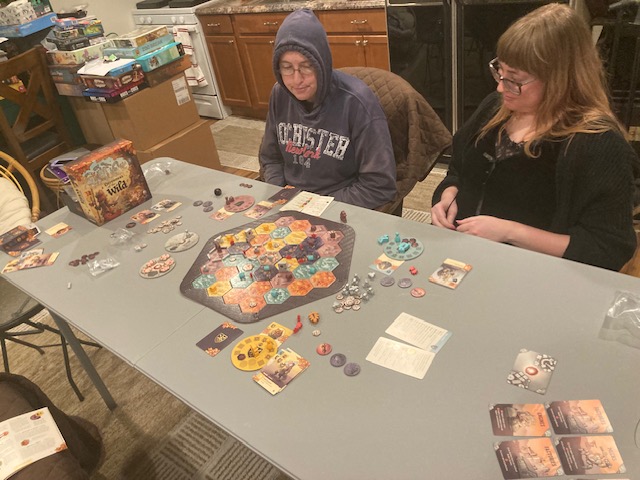
Even after five games under our belt (solo and co-op), we were still “discovering” or “reinterpreting” the rules.
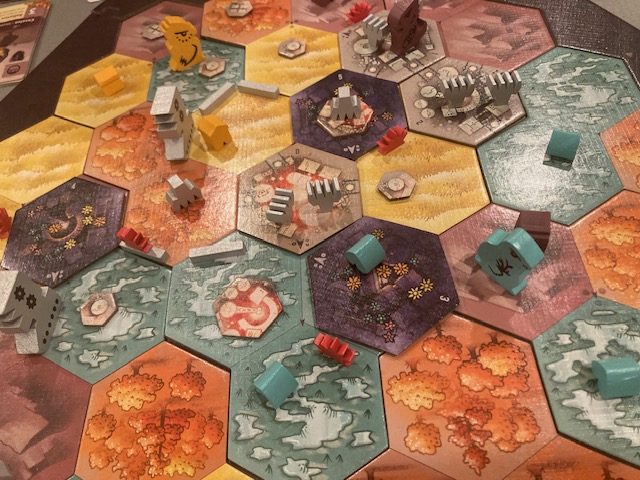
For example: You lose if you can’t build the final factory, but what does that mean? Does there have to be an enclosed area out (we think so, but we weren’t sure)?
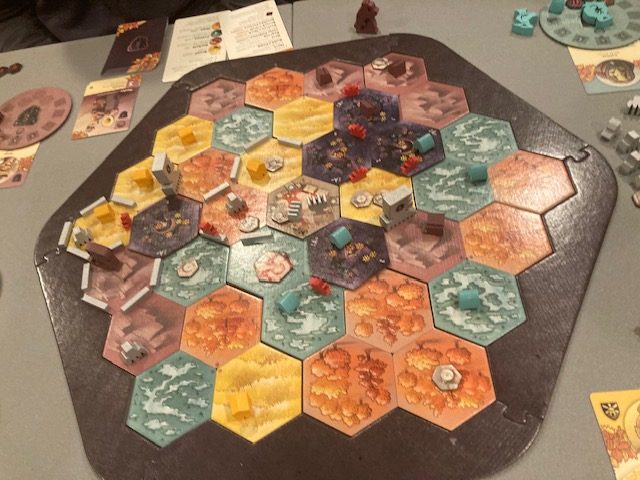
Our game ended in a loss because of one card flip: we had no way to mitigate the Machine card that came out! All Teresa had to do was use one action to build her final camp, and we lost because of the way the Machine cards came out. I suppose it was suspenseful that we lost on a final Machine card, but it felt anti-climactic. “Oh, we lost because of something random we can’t do anything about?”
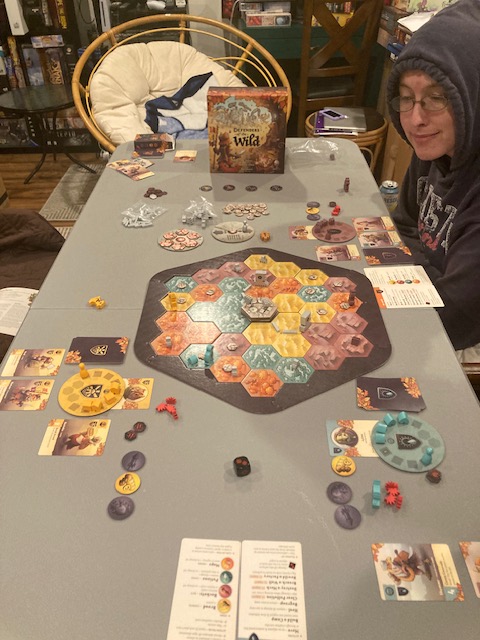
One thing I will say: the game feels “easier” with more players. Why? You have more Defenders that can die (6 = 3 * 2 for a 3-Player game), you have more camps on the board where you can rest or gain tokens at (as the camps are much more likely to be in reach with more players, as there are more of them), and Defender cards that help all players help more players, and there’s more “reach” as players can spread out to get the Factories/Pollution/Toxic Waste under control quicker.
In a 1 and 2-Player game, I/We struggled hard to get stuff done, to move, to clean, to build. In a 3-Player game, it seemed a little easier to get stuff done.
What I Liked
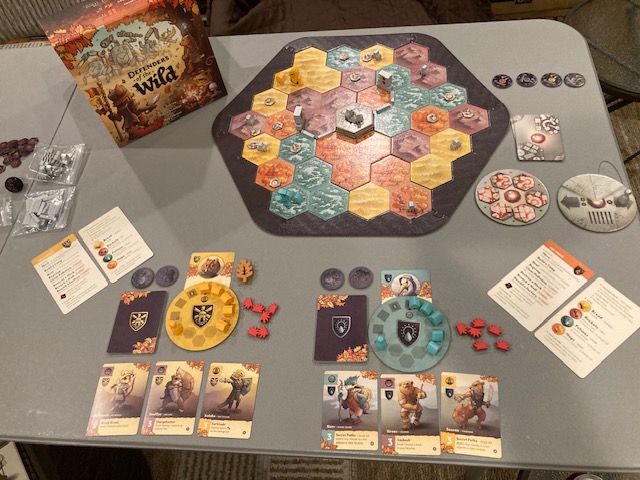
One: This game looks good on the table and the components are high quality.
Two: I like how the woodland creatures are well-colored coded and consistent, and the Mechs are all silver and metallic. It’s very clear what are the natural forest pieces, and what are the metal intruders.
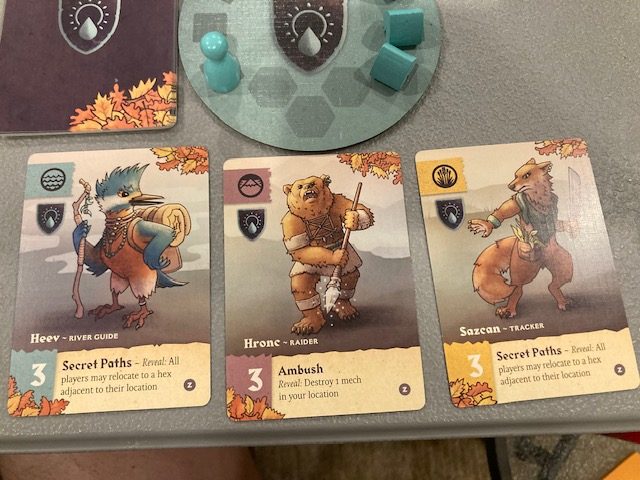
Three: I love the art in this game. Meg Lemieur knocked it out of the park.
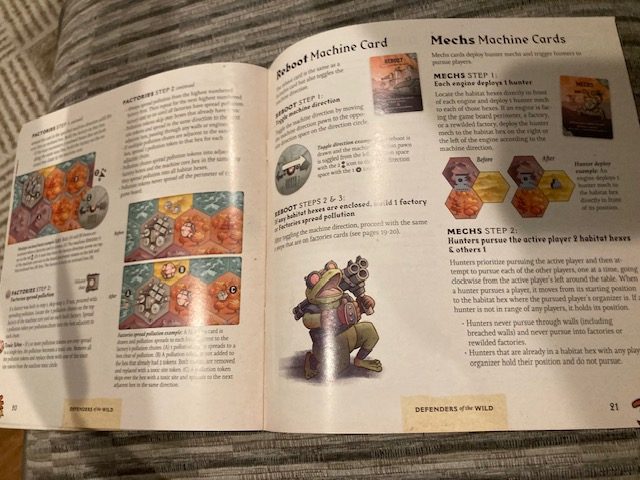
Four: This rulebook isn’t great, as it misses some elaborations/descriptions of rules, but it does something that most cooperative games don’t do: Defenders of the Wild tries to specify what happens in all edge cases when there are questions. Most cooperative games just throw their hands up in the air and say “players just choose something together if there’s a question” … which I always think is a cop-out. I write about this issue in more detail here in Resolving Ambiguity in Cooperative Games. For all of its issues, I really have to applaud Defenders of the Wild for trying to specify all edge cases! This leads to some weird/fiddly rules (“you have to preserve the arrow direction on the factories when you move or flip them”, “Machines reset on hex boundaries after scanning in the direction of the Direction Circle”), but it’s all in the name of specifying the behaviour of the Bad Guys.
I stand-up and applaud Defenders of the Wild for this. It’s refreshing to see a cooperative game try to be complete in specifying edge cases.
What I Didn’t Like
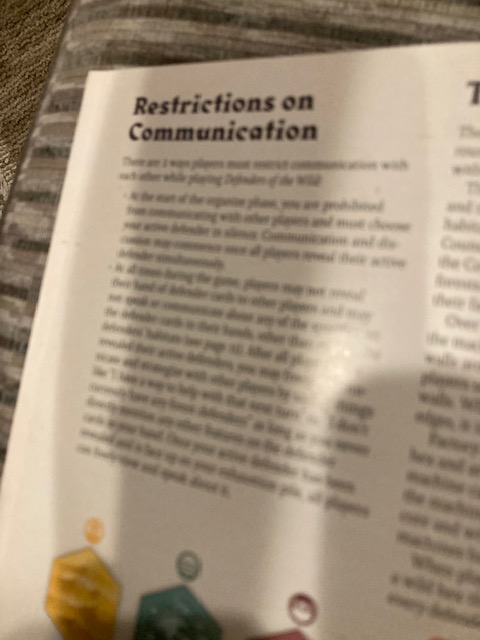
One: Why are there Communication Restrictions? I didn’t discuss it in the overview, but this game has restrictions on communications when choosing the Defender to play: all players all shut-up, can’t say anything, and must choose the Defender to play in silence. See rules page 10 (above).
I hated this Communication Restrictions and my friends hated this Communication Restriction. Rules like this are almost always to keep the Alpha Player in check (so one player doesn’t tell everyone what to do). In this game, I don’t think that’s much of an issue. In fact, it made the game less cooperative, less strategic, and less fun. Each player’s turn “tends” to be like a multiplayer solitaire turn anyways: a player takes his turn and others don’t really get involved; in fact, there’s nothing anyone else can do on your turn! So, each player tends to take their turn “maybe” with some advice from others.
So, by taking away the ONE decision point where players might be able to help each other, this rule makes the game even less cooperative and strategic. I really think this rule is a misstep; this game needs every little bit of strategy it can get. Otherwise it becomes a random slog.
:
Two: Not enough choice! There’s a rule that you only get new Defenders when you build a camp. I understand why this rule sort of “forces” you to build camps, as camps are an important part of the game: This rule strongly encourages you to build camps. But not having a full hand of three Defenders completely takes away your choice during the game. When you have a full hand of three Defenders (see above), the game feels strategic: “I can make choices relevant to the state of the board and the future and my friends“. If, for some reasons (say too much randomness, see below), you can’t get a camp built (and you have no more Defenders), you are completely at the mercy at the top card of your Defender deck (which you can’t even see). So, the game is playing itself! You just turn over the top Defender card and “see” what happens that turn! It is not fun, it doesn’t feel like you have any choice, and it feels like the game is playing you.
I really feel like a very simple house rule could fix this: it would be something like “you can draw a card after every turn“. There’s still a chance to play a support cards (which will exhaust your cards faster), but maybe building a camp STILL refills your hand to three Defenders. I feel like I should always have some sort of choice, or why I am even here? The game is just playing itself.
Three: Too much randomness! We haven’t discussed it at all, but there is a 6-sided die in the game. Whenever you perform an action next to a sniper Mech (see more Sniper issues below) or on the same space as a Hunter mech, you must roll the die. A sniper hits you 50% of the time for 1 point of damage. A Hunter hits you 33% of the time for 2 damage and 50% of the time for 1 damage (83% of the time, you will take damage)! That may not seem like much, but 4 damage kills a Defender! And two dead Defenders means the end of the game.
If you roll poorly AT ALL during the game, you have to start play very conservatively! Let’s say I was aggressive for one turn and rolled poorly, killing a Defender. For the rest of the game, I CANNOT take any chances, as another dead Defender means Game Over!! So, the game becomes like you are walking around on your tip-toes to get anything done. It’s not fun as you feel like you can’t do anything.
“We need to rewild that factory! I’ll do it! Oh wait, I just 2 damage from a mech, one more roll and we lose the game, I’ll just run away, heal, and come back.”
You might just say “stay away” from the mechs. That’s impossible; they are constantly being spewed out, and the middle of the board (where you need to be for rewilding factories) is full of snipers who will just pick away at you. Since you can NEVER enter the core, you just have to take it (unless you happen to get a Defender, there’s just a few who can kill Mechs from afar). This becomes a game of running up, doing one little thing, then running away.
In many games, I just felt like I couldn’t get anything done because of a few early bad rolls: once you have one dead Defender, your moves seem so tentative and dull and not fun …and you have to be careful, otherwise you will probably lose.
Four: Machine Cards are also too Random! In my first 2-Player game, we got 4 factories built in quick succession, just because of the way the cards came out, they spewed pollution and caused so much Toxic Waste! We had no chance! We couldn’t clean it up fast enough, and we couldn’t rewild the factories. We got destroyed.
If you have a few factories out and then get the two Factories at the end of the deck, reshuffle, then also get those Factories at the beginning, you can get 4 pollution spews in a row! You can’t come back from that! This is like the Variable Turn Order problem we see in games like Aeon’s End or The Plum Island Horror. If the “Bad News” cards come out in just the wrong way, you can get totally screwed. See our full Discussion here in A Discussion of Variable Turn Order and How To Mitigate Its Randomness!
That discussion does offer a potential solution: maybe the players can have a few “fate” tokens which they can spend to “skip” or “redraw” a bad news. I am not proposing getting rid of a Machine card for a turn, but it would be nice if the players had a “hacker” token (more thematic than a Fate token) where they could choose one of the top two Machine cards. Only spend it when it matters and it would allow the players to feel like they have some agency in their own fate.
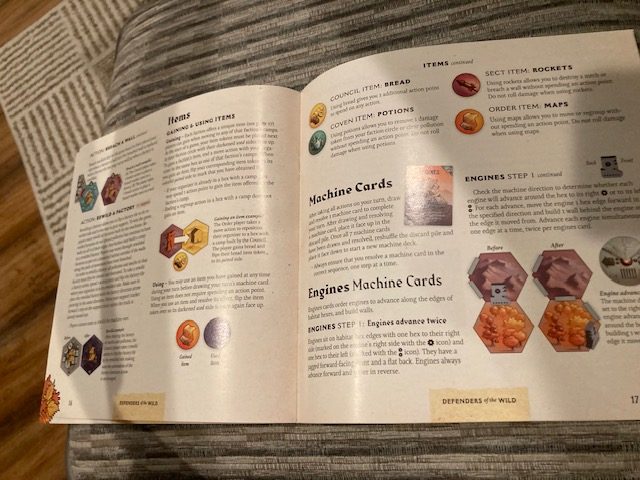
Five: Too many things underspecified. This is harder to say, because I really like how this game tries to specify everything. It misses some important things, and some things are so subtley described, it’s not clear. I sometimes feel like I needed to read the rulebook like a legal document.
Some examples:
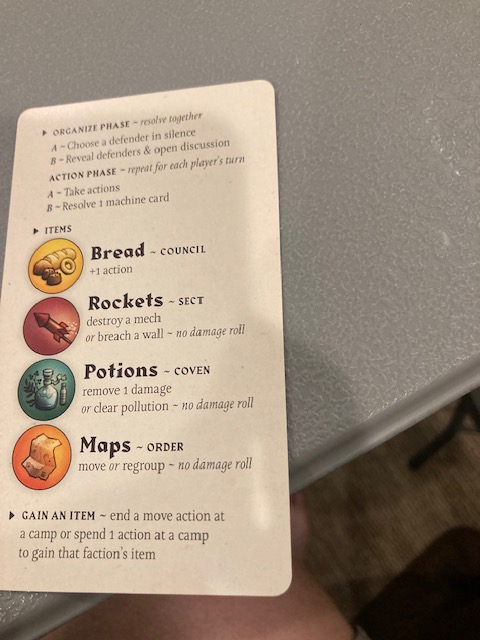
Rockets: Rockets kill one Mech without a dice roll. It does NOT say whether it’s on the current space ONLY or also an adjacent space? A Rocket, thematically, feels like it could reach a space next to it. I am fine believing it’s just the current space (and that’s the way I played it), but it’s not clear. One sentence would clear this up. Or MAYBE a Rocket even will destroy ANY mech on the board? That would be game-changing! But it’s not clear. UPDATE: After the 5th game, we found a Defender whose text said “Rockets can be used to target adjacent hexes”, implying they could only be used in the current space all other times.
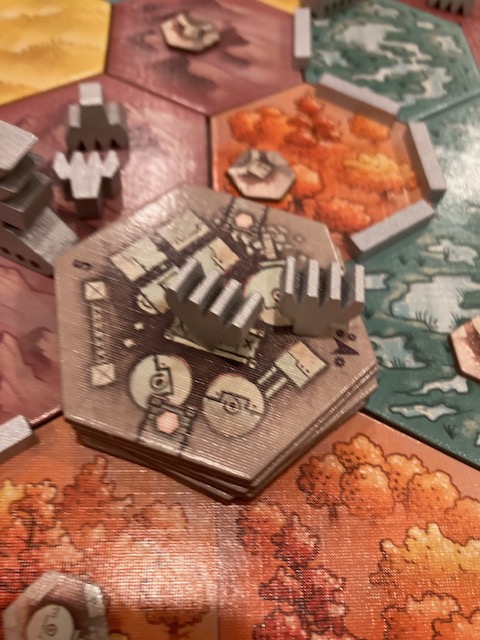
Hunters vs Snipers: A Sniper is defined by being a mech in a Factory, and a Hunter is defined by being a mech in a Habitat space. I think. I don’t think a Sniper can ever becomes a Hunter or vice-versa. I think. Why is this not clearer? What I did, as a house rule, was to place SNIPERS with the prongs on the top, and the HUNTERS as the mechs with the prongs on the bottom: see picture above. This seems like a very easy way to help visually distinguish the two types of mechs, but the rulebook just calls them both mechs. It’s very easy to miss the difference as you are playing. Again, I just wanted a few more sentences on this: the description in the rulebook feels like a legal document. “We are defining a sniper to be a mech on a factory”. (Does a Sniper turn into a Hunter if a tile is rewilded? Technically, a rewilded factory is still a factory, so maybe, but a few sentences would be helpful).
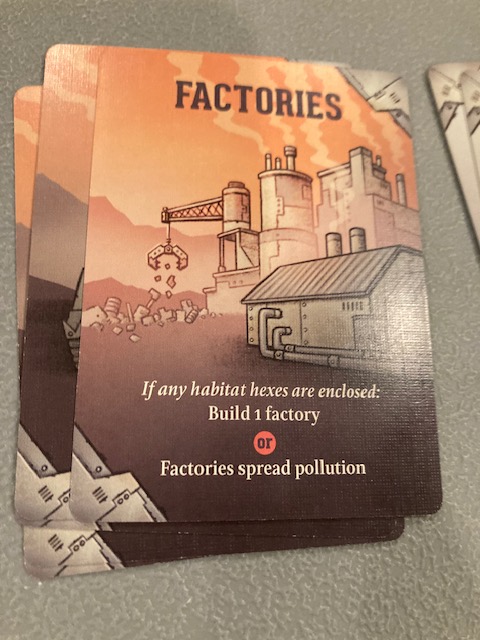
The Factories Machine card: All the rules are NOT written on this card. When you build a factory, you are ALSO supposed to deploy 2 Snipers to the Core. (And you have to move everything with the new factory). This is nowhere to be found on the factory card!!! A few simple sentences on the Factories Machine card that would help make the game easier to play. It feels like you have to keep your nose in the rulebook at all times or you might miss a rule! I like the art of Meg Lemieur on the Factories Machine card, but I would rather have the Machine cards more complete and functional than pretty.
These are just some examples of missing or rules needing better descriptions. If you don’t play with the right interpretation of any of these, this game becomes substantially different.
House Rules
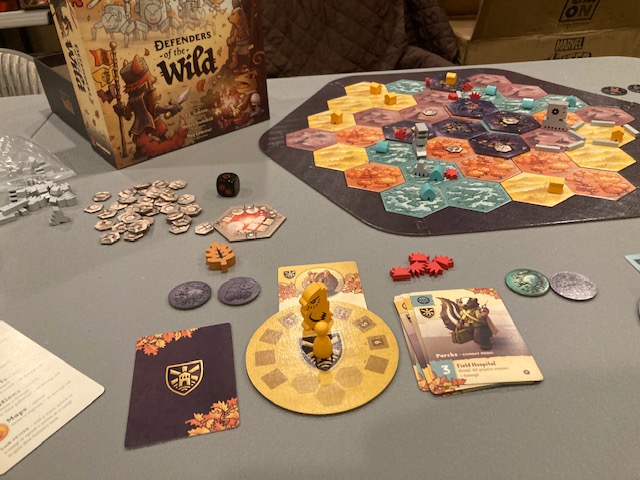
We really want to like this game. We love the art, we love the universe, we love the ideas, we love the basic idea of a cooperative kind of wargame. But we are really struggling with the game, as it feels too random. Here’s a set of House Rules that you might try in your game if you are struggling with it like we are; maybe try some and keep the ones you like.
- Always draw a Defender card at the end of your turn. This isn’t a panacea, as you can still get down to fewer cards by using support actions, but it least it generally keeps you feeling like you have choices every turn. A camp build will always bring you back to 3.
- Turn the mechs upside down to denote Snipers, and rightside up to denote Hunters.
- Have a pool of 2 or 3 (4?) Hacker tokens. When a Machine Card is drawn that is decided to be too devastating, you can discard a Hacker token to take the next Machine card instead. This helps give the players a little control over the pure randomness of the Machine deck.
- Get rid of all Communications Restrictions. The game already feels like multiplayer solitaire! Allow the players to find the best Defenders to help everybody AS A GROUP so the game feels more cooperative!! (If you are having Alpha Player issues with this rule, then either don’t play with that person, or put a timer on Defender choosing).
- Allow players to discard a Defender card rather than take a damage; not killed, but it definitely leaves the game: maybe it’s KO’d. The randomness of the die is NOT fun: I wish there were more mitigation methods for it (This rule is probably the one we feel most unsure about).
Granted, these will all make the game easier, but the game is already pretty hard. If you feel like these House Rules make the game too easy, there are also DIFFICULT Machine Cards which make the game substantially harder.
House Rules 2 and 4 are probably ones I would absolutely recommend for everyone! You can probably take or leave House Rules 1, and 3 and … especially 5.
Reactions
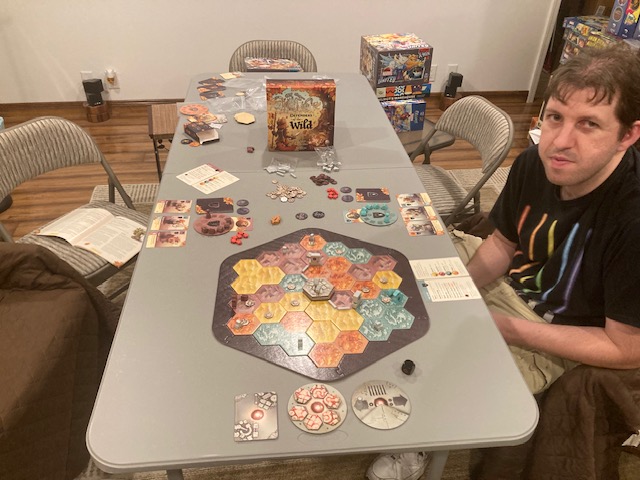
Sam: “I currently give it a 6, I would like to play it some more to refine my opinion.“
Rich: “I am really struggling with this game. I want to like it so much, but it is far too random for me. There’s a lot of great things in the game, and I feel like there are people who would like this game as-is: Objectively, I would give it a 6/10. Subjectively, as-is, I would give it a 4/10 because I don’t ever want to play it again: it’s too random. With some House Rules, I would maybe move up a couple of points to a 6/10 or maybe more. There is so much to like in this game.”
Sara: “This is under a 5 for me. It wasn’t fun, and I was glad when it was done. It was just too random. I might play it again if someone really really wants to play, but probably not. I really wanted to like it.”
Teresa: “I dunno, a 5 or a 6. It was frustrating, but I had fun with the little animals. “
Conclusion
Defenders of the Wild is a game that introduces a wonderful world with a wonderful production. The randomness of the game (from random die rolls to random Machine cards) held this back for me and my groups. After a number of plays, it’s clear that you can get to strategies where you mitigate some of that randomness (as you do get better as you play more), so it’s not just a random slog. But the question is: is it fun to get there? My groups didn’t think so, but that’s just some opinions.
I think the target audience for Defenders of the Wild might be war-gamers looking for a cooperative adventure. War-gamers are used to dealing with swings of randomness from skirmish to skirmish in pursuit of a greater victory: it’s clear, you can get better at this game as you play, so there is definitely both strategy and tactics. If you were looking for a cooperative Root, this might be a decent pick for you! It has the cuteness of Root, the war-gamer nature of Root, but in a cooperative game!
This game seems to be better with more players, as there seem to be more opportunities to get stuff done on your turn (more camps, more chances to push your luck since dying isn’t quite as critical, etc), and that seems to lead to better mitigation of some of the randomness. Unfortunately, the one and two player games just seem to succumb to the randomness too quickly.
This might be the perfect game for you and your group: take a look at what we saw. Be aware that the randomness and some of the underspecificity of the game led my group to rate this from 4/10 to 6/10. I don’t think any of us thought this was a bad game, but it just wasn’t for us.
If you do find yourself wanting to try this out, I recommend playing this out with bigger groups for the best chance of a good experience.
 coopgestalt
Just to clarify (maybe I missed it in the article) but you draw defenders equal to the number revealed on your support track, not back up to 3… also two defenders dead only means game over when they’re from the same habitat.
LikeLike