
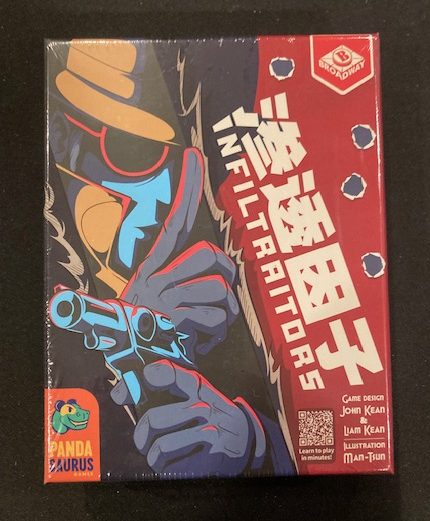
If you are like me, when you first heard the description of Infiltraitors, you thought, “Wait, What? Is this a cooperative traitor game?”
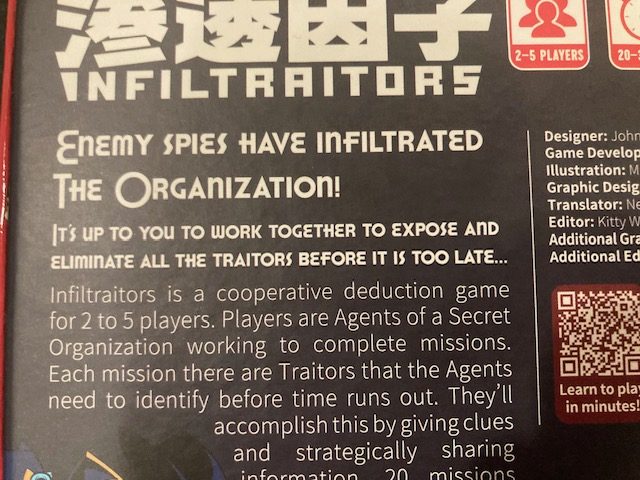
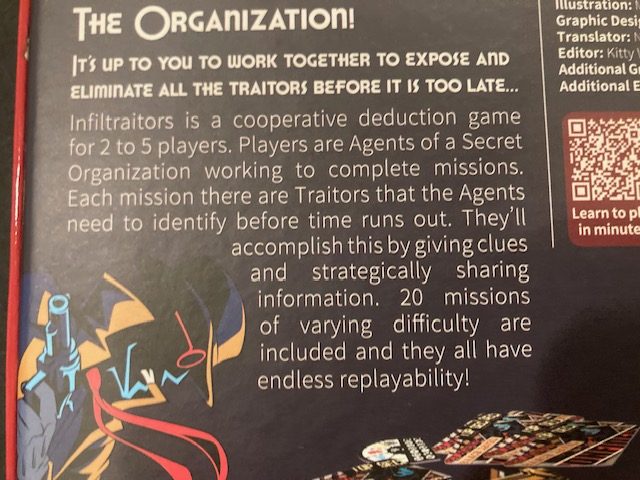
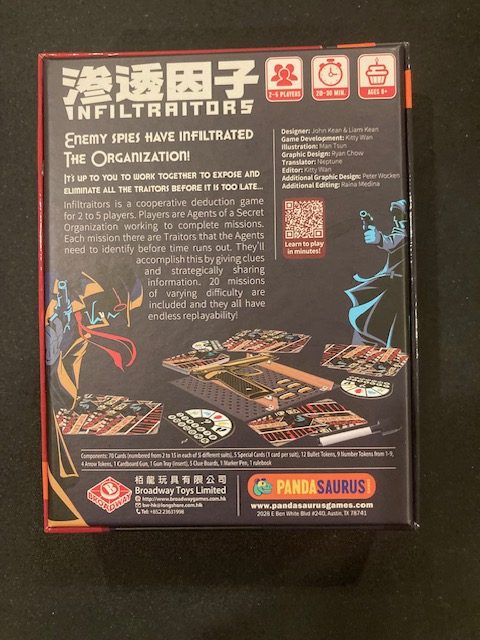
Look at the back of the box above! “Enemy Spies have infiltrated the Organization! It’s up to you to work together to expose and eliminate all the traitors before it’s too late…” That sounds like a cooperative traitor game, but the next line tells the real story: “Infiltrators is a cooperative deduction game for 2 to 5 players”.
Ah, it’s a deduction game! But it really has a feel of a traitor game like Avalon! Players are going on missions, deducing things about traitors … that sounds like the traitor game, Avalon, right?
I think the game’s title misspelled Infiltraitor on purpose to imply there are traitors in this game. The real spelling should be Infiltrator. I really think they did that on purpose to imply this is a cooperative traitor game … I think they mean it to replace something like Coup or Avalon. Does it?
Let’s take a look!
Unboxing and Gameplay
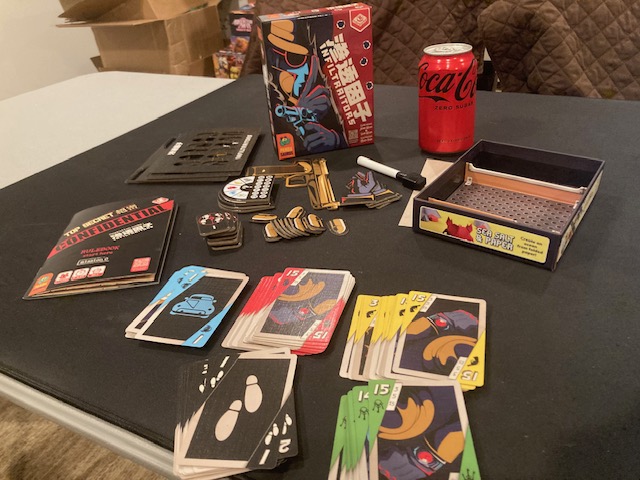
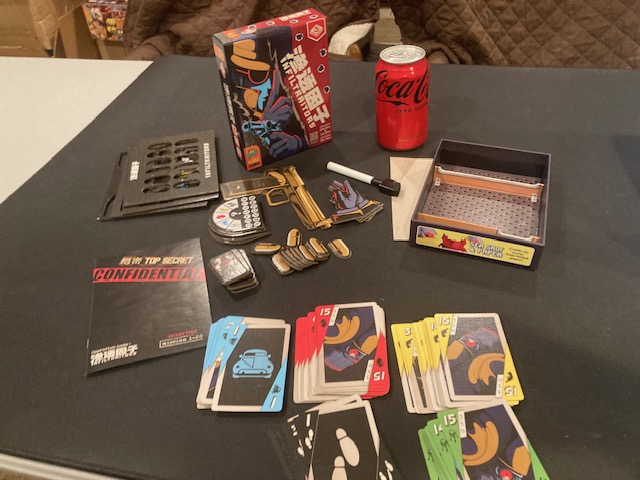
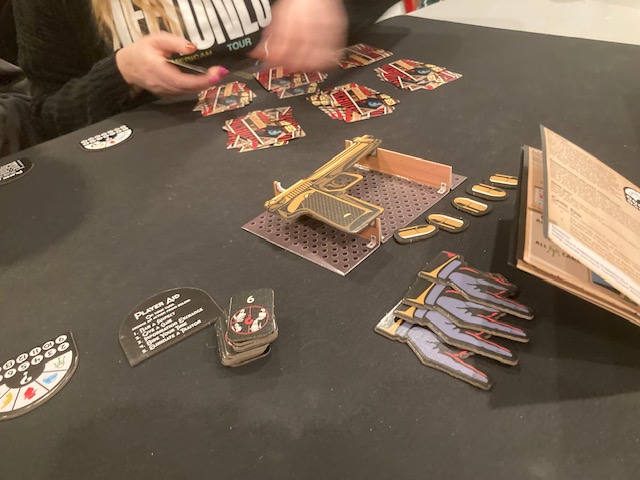
For a mostly card game, this has a surprising number of cardboard components! It’s also a pretty small box (about the size of Avalon or Coup maybe?) See Coke Can above for perspective.

The bullets are a limited resource for how many “guesses” you have to find the traitors! The gun is just a silly gimmick!
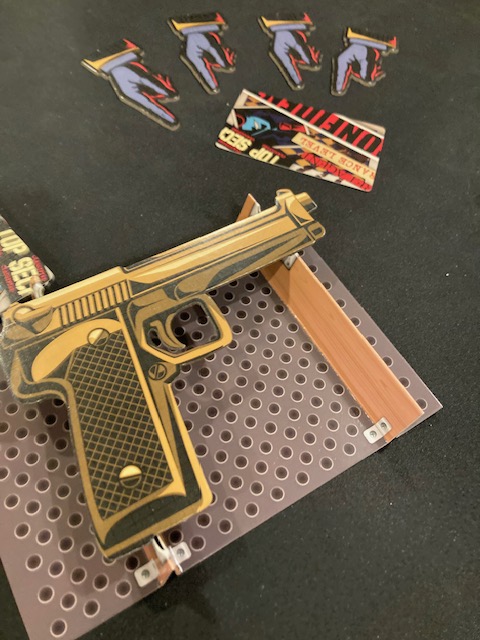
When you are ready to Eliminate a Traitor, you must physically pick up the Gun and a Bullet and “make a guess” what the traitor is (I used what instead of who … you’ll see why)! I think the idea is that you must be very clear that you are making a guess, and picking up that gun makes it very clear to everyone! If you are right, you eliminate that traitor and you are closer to winning! If you are wrong, … well, you have wasted a bullet … hopefully you have enough bullets left to take out the remaining traitors!
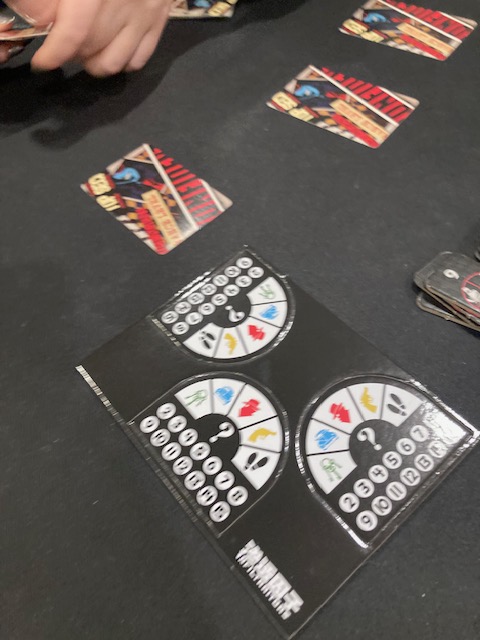
As clues come out to identify the traitors, players mark off the Clue Boards: see above. There will be one clue board per suspect.
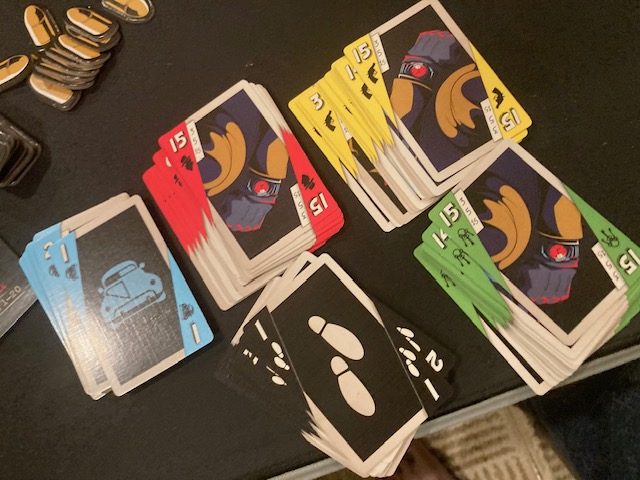
The rest of the game is in the cards. There are (up to) 5 different suits, each with numbers 1-15.
There are a number of Suspects (face-down cards), depending on the Mission and number of players. The player’s job: use clues to find the identity of all the Suspects before you run out of bullets! If it isn’t clear, you are “eliminating” the infiltrators with bullets!
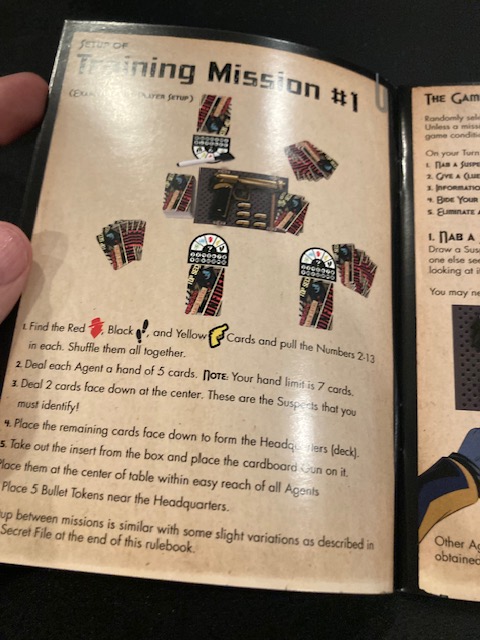
There are 20 missions described in the rulebook; they get harder and harder. (No state is saved between Missions; each Mission is a brand new game). The first mission, a tutorial, describes how the game works: see above!

Some number of cards are taken from the deck and turned FACE DOWN: these are the Suspects the players must cooperatively identify. (The first Mission has only 2 Suspects: see above).
One player becomes “responsible” for a suspect and will reveal information about the suspect as the game goes on.
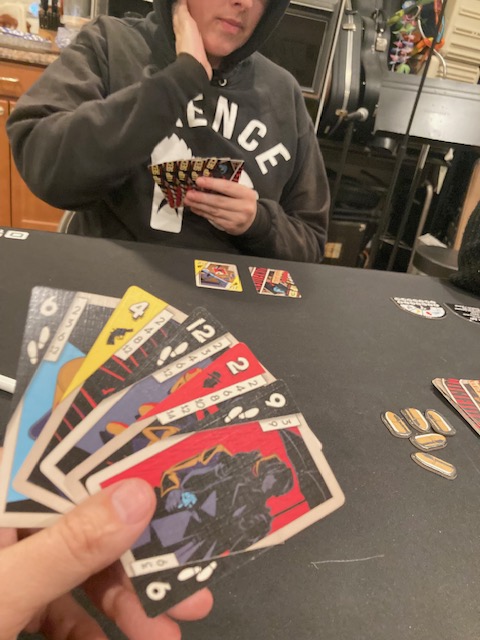
Each player will have a hand of cards and use those to help reveal information about a Suspect.
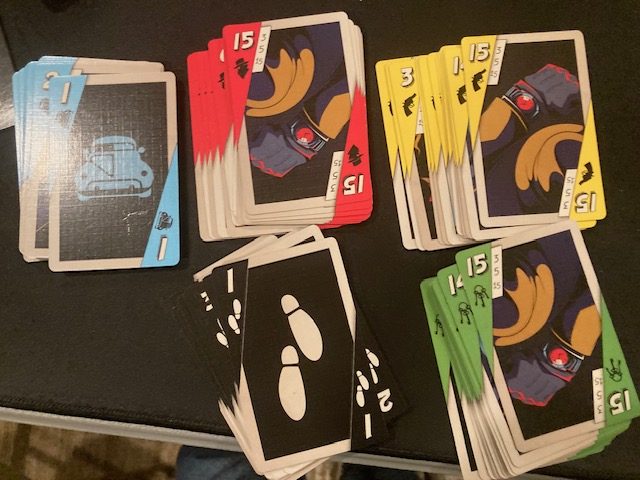
To Eliminate a suspect, the players must guess the color and rank of the face-down Suspect!
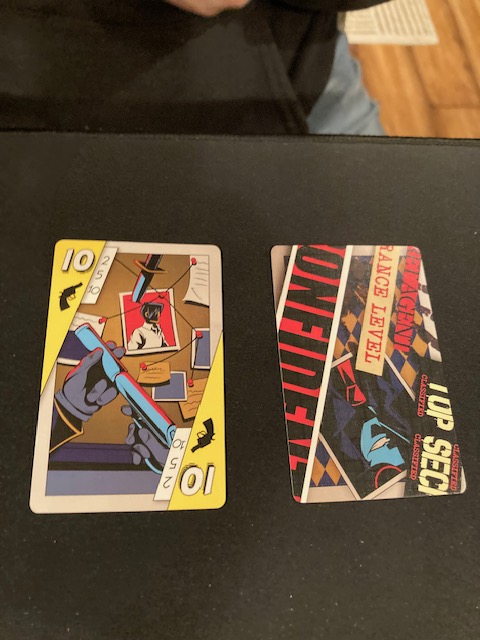
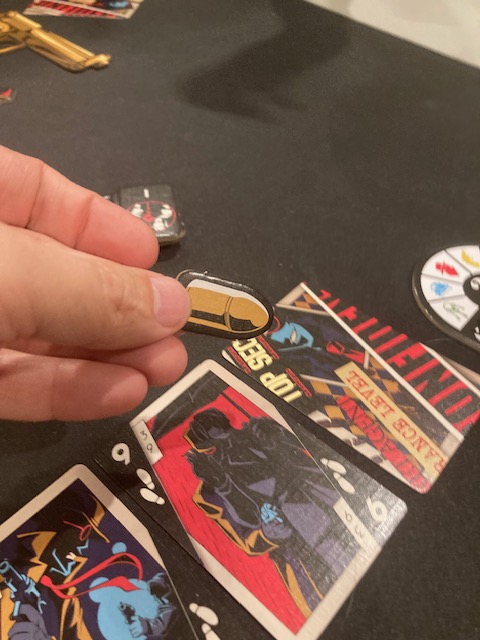
How do you guess the Suspect’s color and rank? A player will place a card down; if the color matches OR the rank matches the number or factors or multiples, then it’s considered a match! All matches are turned up-and-down! The lack of a match turns the card sideways. See above as the guess yellow 10 is turned up-and-down! It’s a match! But does it match the color? Or maybe it matches the rank exactly? Or it’s a multiple of 2 or 5 or 10? This is where the deduction kicks in! You have to use the cards you have to try to slowly deduce what the Suspect is!
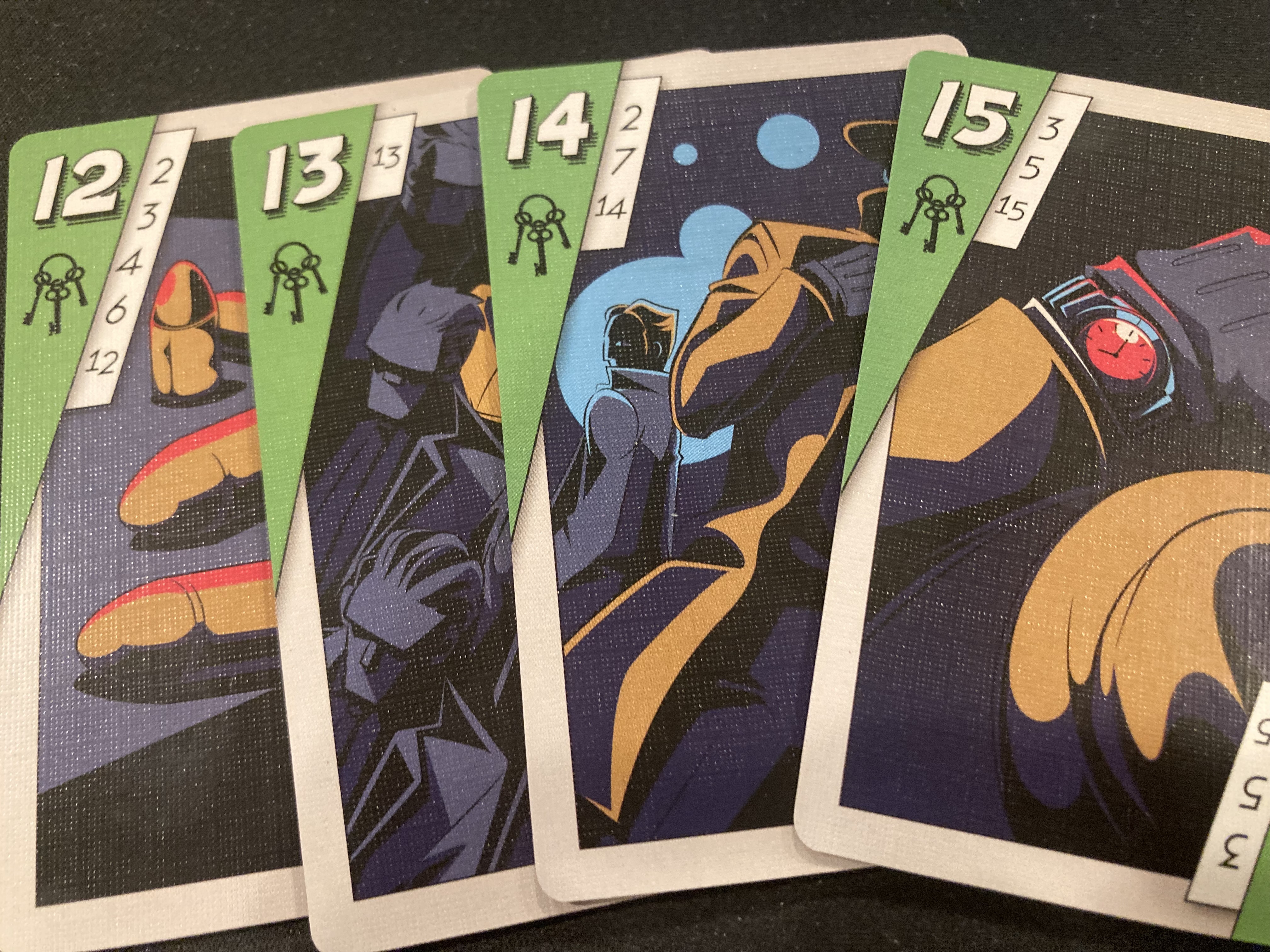
It takes a little getting used to matching the multiples and factors, but luckily every card in the game lists ALL the factors and multiples it uses! So, it seems harder than it is; once you get used to it, it flows quickly!
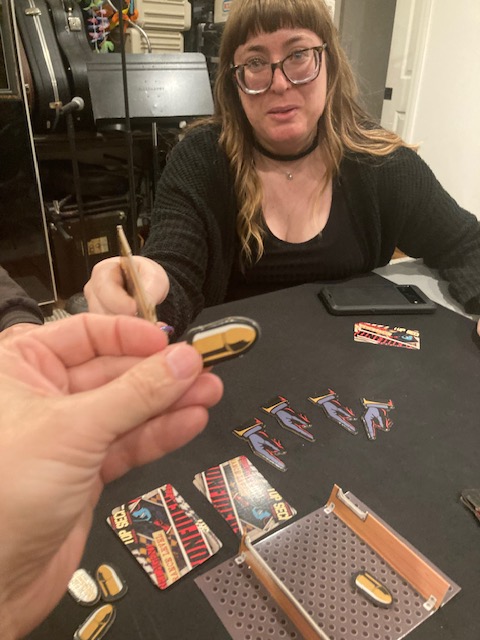
To be clear, one player knows who the suspect is, and all the other players are giving clues (placing cards) to help deduce! Nominally, each player tends to take responsibility for one or more Suspects, but it’s dynamic! Players can choose when to take a Suspect and become “responsible” for it as the game flows.
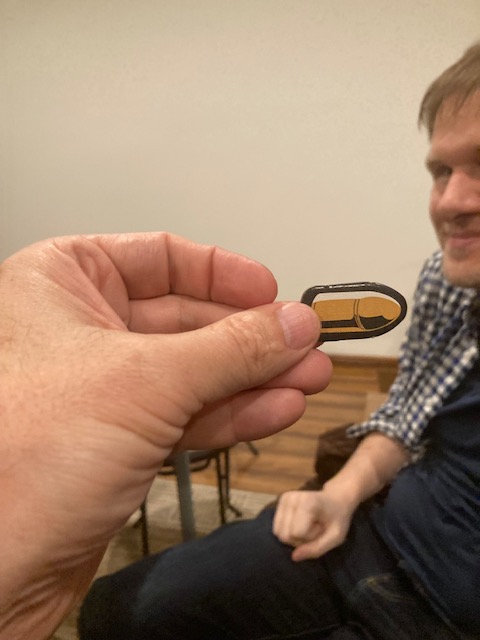
If you eliminate all Suspects, you win! If you run out of bullets, you lose! The Infiltraitors win!
Solo Game

There is no solo game! See above: this is only for 2-5 Players! However, this would be an interesting game to apply The Changing Perspectives idea to! See a link here for The Changing Perspectives Idea! Since all information is public (the clues are all public: there’s no implications or subtle innuendo), you can make deductions solely based on the information presented.
I leave this an exercise to the reader: I think you can play this solo if you want to! Much like Shipwreck Arcana (see review here), this is a deduction game where you can pretend to play both sides, using only public information for deduction. If you get to a point where you have to randomly choose something (you are out of cards, and only one one bullet left), you can always roll a dice to decide the outcome.
Cooperative Game
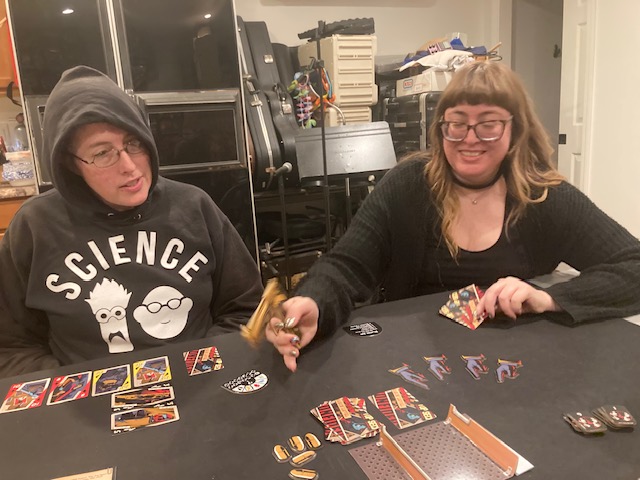
As a cooperative game, this went over pretty well. The first time we played, we played through the first three missions and had a blast!
It’s sort of ridiculous how much fun the gun and bullets were! It sort of drew us into the game!
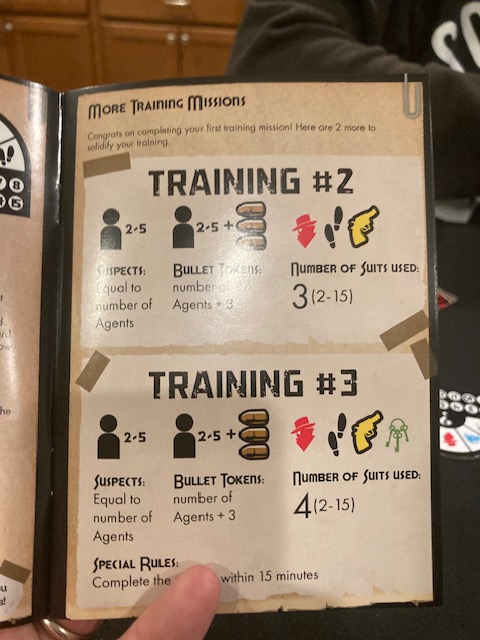
The first few missions are pretty straight forward, just getting a little harder each time. You use more suits (which makes the color harder to guess) and more ranks (making the rank harder to guess).
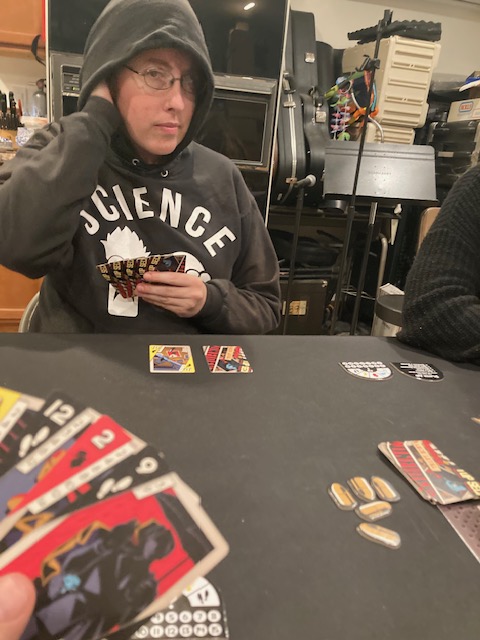
This game came out two weeks in a row! For a little card game, it was surprisingly popular in my game groups! See above and below!

The cooperation worked really well; people would say “I know how to get that suspect! You work on the other one!” The fact that there are multiple suspects in play really also worked well—players could choose where to spend effort, both individually and cooperatively.
The Sticking Point
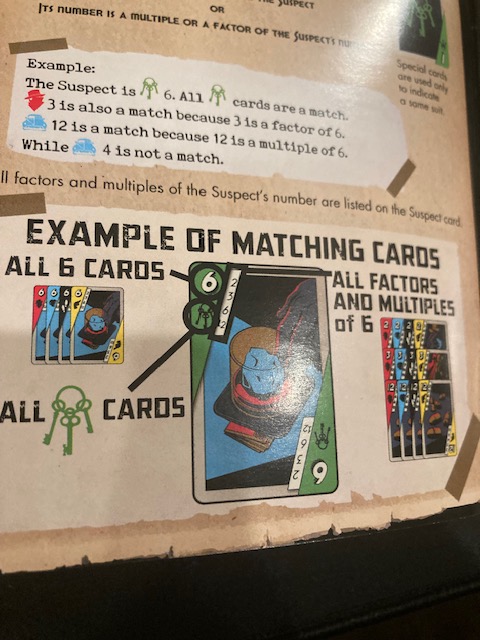
The game doesn’t quite explain matching rank very well … and it’s the most important part of the game! There are two basic interpretations, which the example (in the rulebook) DOES clarify. Consider the following example: Do these two cards below “match”? (Obviously, they don’t match in color, but what about rank?)
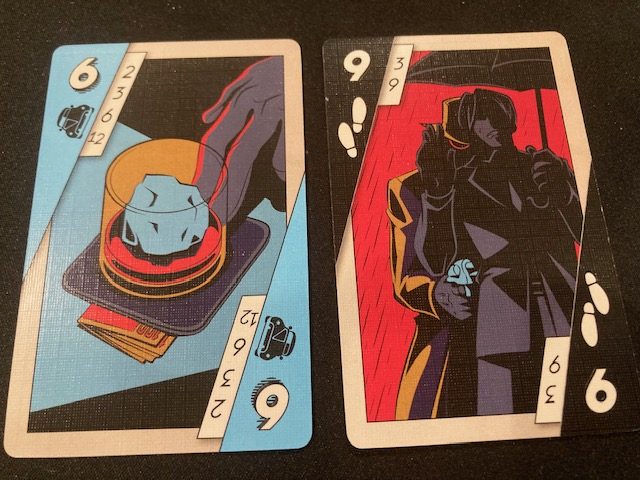
Interpretation 1: If the lists of numbers on both cards has some number in common, they match! Under that interpretation, the two cards above match! (6 has 2,3,6,12; 9 has 3,9: Both have a 3! They match!). (((TO BE CLEAR, this is the WRONG interpretation!!!!)))
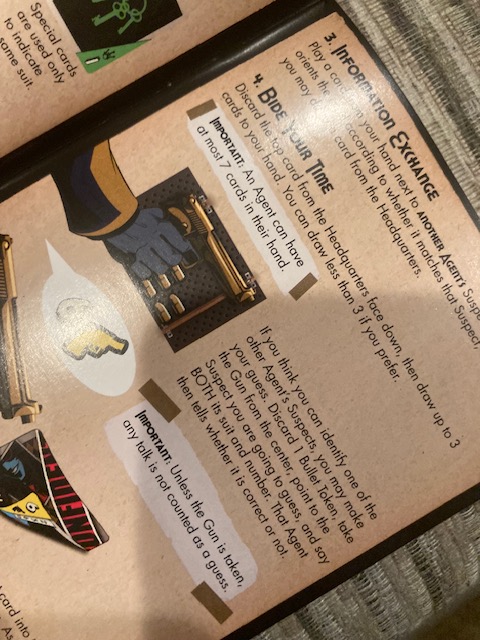
Interpretation 2: If the hidden card (on the right, say the 9) LISTS the other card, it’s a match! In this case, it’s NOT a match, as 6 is NOT in the list of number on 9: (3, 9). They DO NOT match!
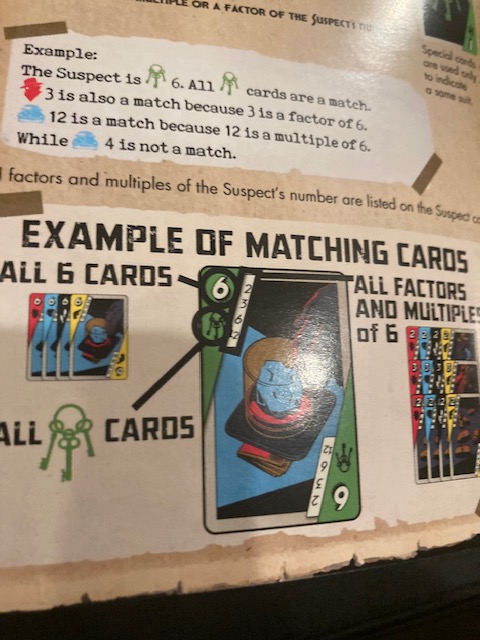
If you go in with Interpretation 2, that seems to be the rule as clarified by the rulebook (see above). It took us a few games to “get” this rule. This is possibly the biggest bugaboo that may make people dislike the game … if you can’t get this rule about matching!! I think the best way to “explain” the match rule is via Interpretation 2 of the rules above:
“The Suspect card will list all the cards that it matches“.
With that simple explanation, the match rule goes from baroque to simple. And I think it will open it up to players who might be “scared away” by discussion of factors/multiples and math!!
Traitor Experience
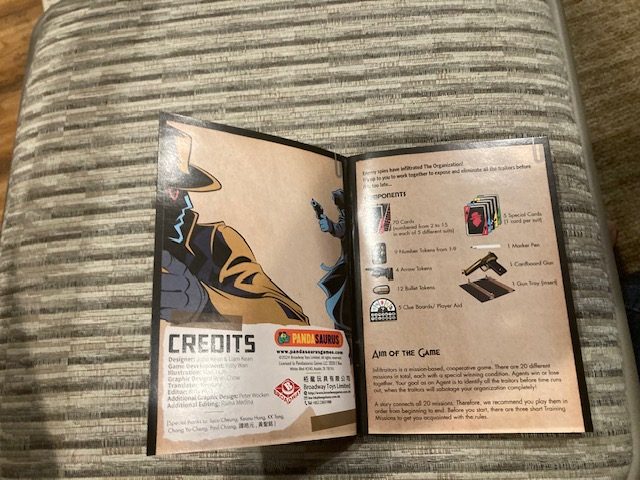
After bringing this out at a second game night and playing through the game with a new group, we were able to solidify our thoughts: This feels like a traitor/social deduction game like Coup or Avalon because you are trying to deduce the identity of the traitor! That feeling of trying to deduce “Who is the Traitor?” is really captured by this game … without being a traitor game!
I don’t really like traitor games. They have the Disparity of Experience problem (see here) where people who have played more than you will have a distinct advantage. And I don’t want to lie, yell, scream, accuse with my friends. I just want to work with them and have fun! If you like the process of trying to find the traitor, that deduction process, I think Infiltraitors really captures that feeling! Granted, Infiltraitors replaces social deduction (which has its own flavor of play) with plain deduction, but I think Infiltraitors does a pretty good job of replicating that social deduction feeling in a purely cooperative game.
Conclusion
Does Infiltraitors (a fully cooperative game that’s nominally about traitors) replace Coup or Avalon (games with traitors?) Infiltraitors does a pretty job replicating the experience of finding traitors! It may not quite your cup of tea, as it replaces social deduction with plain deduction, but if you like the idea of finding traitors but don’t like all the social baggage of traitor games, Infiltraitors might be right for you!
I think me and my groups would give this an 8.5/10! We enjoyed it! It was easy to get out, easy to play a few games, and it was a fun experience working together!
BUT, if you pull this out, be very very clear explaining the match rule to new players or you might scare them away! The talk of factors and multiples may scare them away! Don’t explain it that way, and don’t even bring it up! Just explain the Suspect card lists all the numbers it matches; easy-peasy.
If you are looking for a game to replace Coup or Avalon, this might a really good possibility. It still feels like you are hunting traitors, but replaces the social deduction framework with a deduction framework, and it does so in a fully cooperative game.
 coopgestalt