
Welcome to 2026! This month, we are looking at games that were on the 2025/2026 cusp. This one we received December 18th, but we couldn’t get it played fully until January 2026, so we are counting it for our lists as a 2026 release! Take a look below!
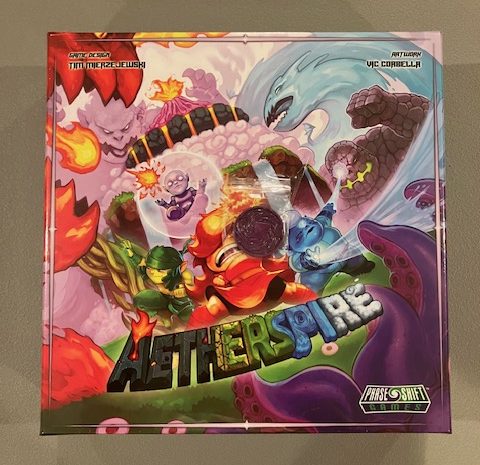
Aetherspire is a cooperative tower-defense, 3-D building game that was on Kickstarter back in October 2024; it promised delivery in October 2025. There were some miscommunications, and some retail stores had copies (in late November 2025) before Kickstarter backers (my copy arrived December 18th, 2025). I admit seeing this in retail before I got my copy made me a little grumpy (since I kickstarted and paid real money to back this), but I guess I am just glad to see this game get out there.
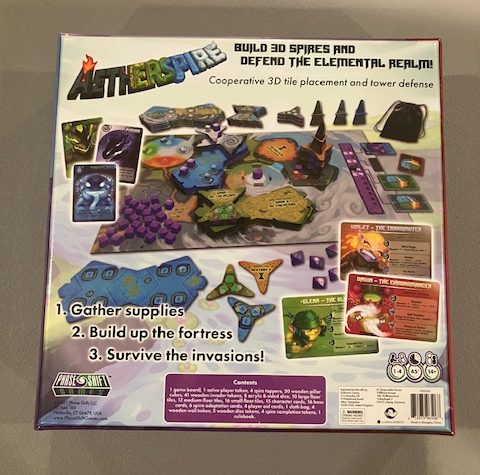
This is a really interesting looking game (“3-D building?? What is that??? That sounds cool!”) that piqued my curiosity in last year’s Top 10 Anticipated Cooperative Games of 2025! But because of the late arrival, we couldn’t get it played fully (solo and cooperatively) until 2026, so we are counting it (for our internal purposes) as 2026 release.
Let’s take a look!
Unboxing
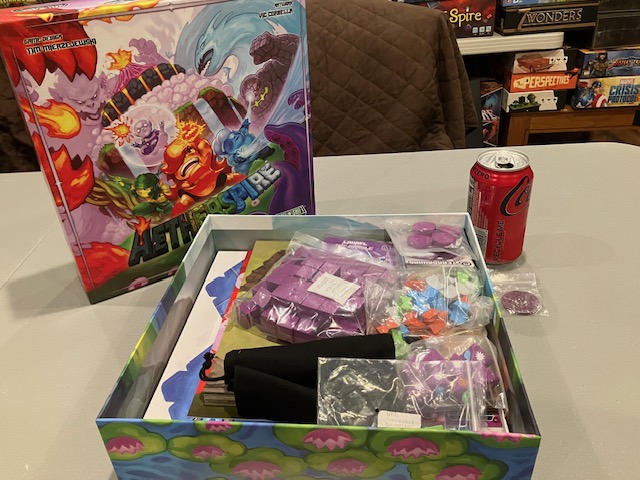
See Coke Can above for scale.
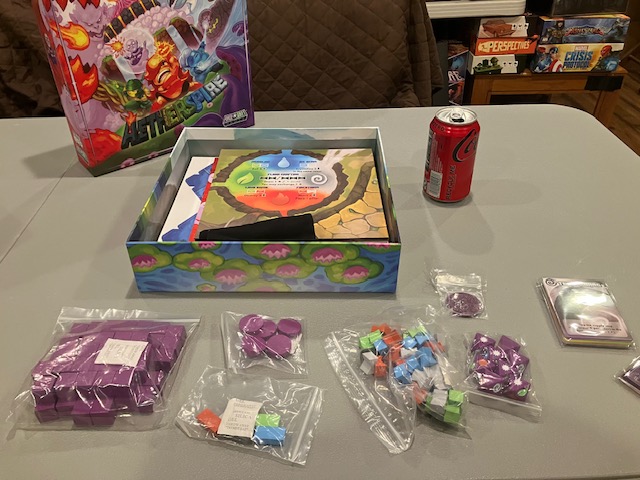
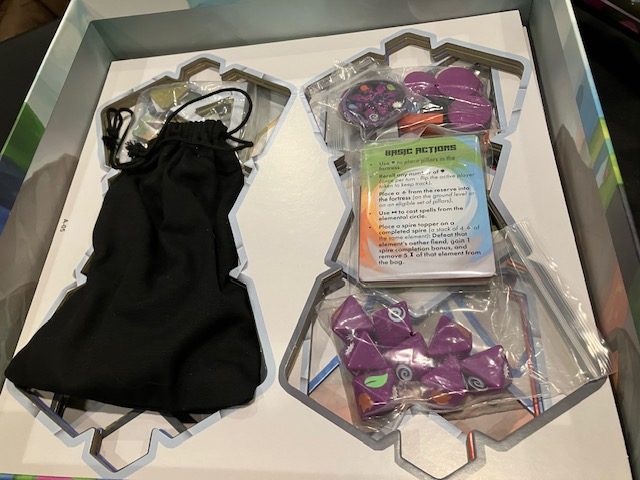
There are quite a number of really nice components in this box.
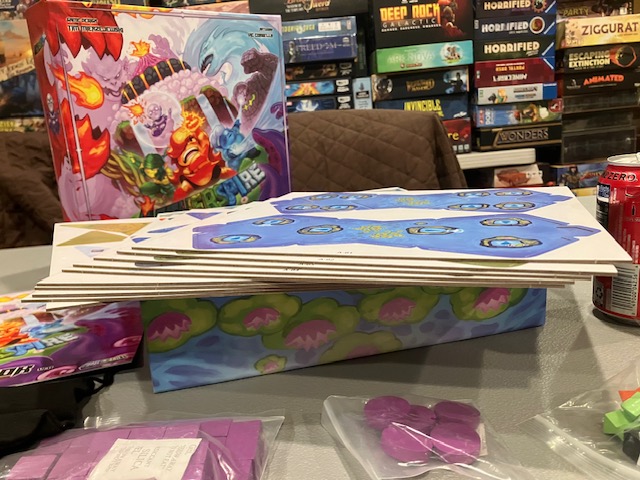
There is QUITE a bit of cardboard to punch out!

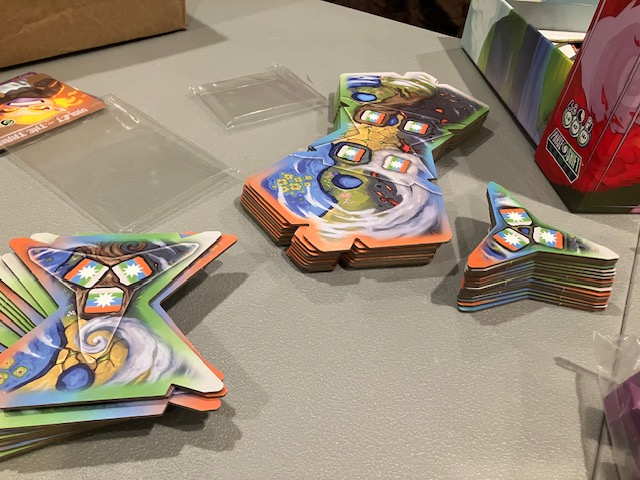
Most of the cardboard is for pieces to build 3-D structures on the board! See above!
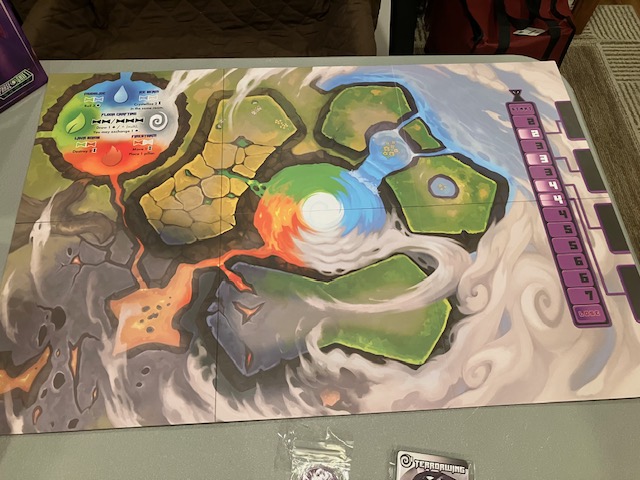
There’s also a really nice board where you build!
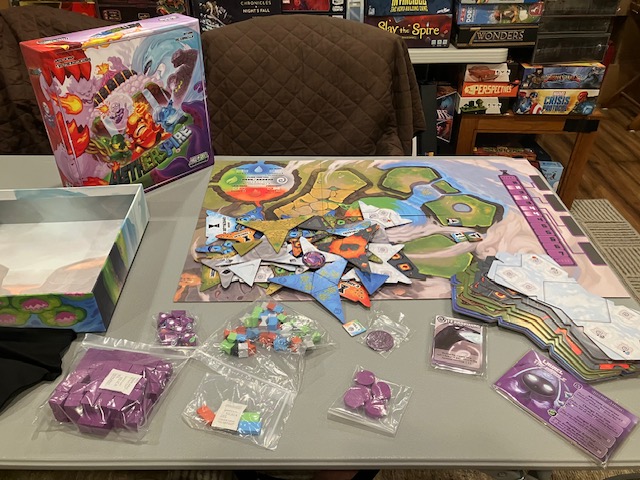
Overall, these components are pretty great! (In the previous Kickstarter that failed, the components were even nicer, but they were a little too expensive, which is why this regrouped and relaunched. To be honest, I am very happy with the quality of the current version).
Gameplay
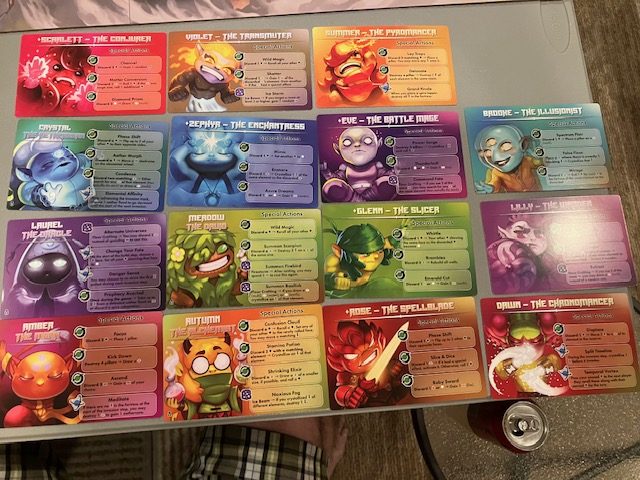
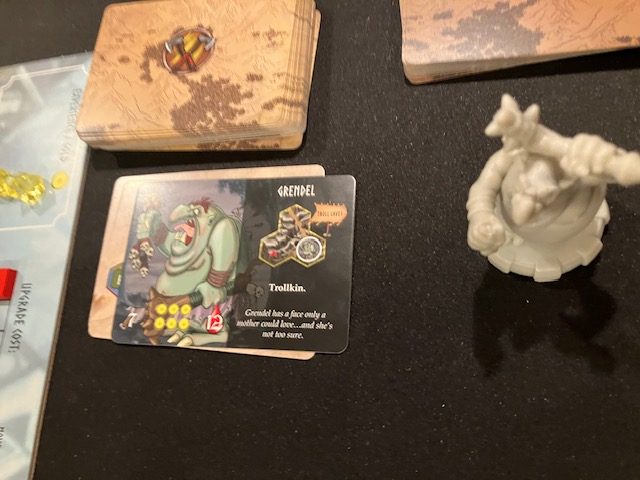
Each player takes control of one of 15 (!) characters; each character has special powers.
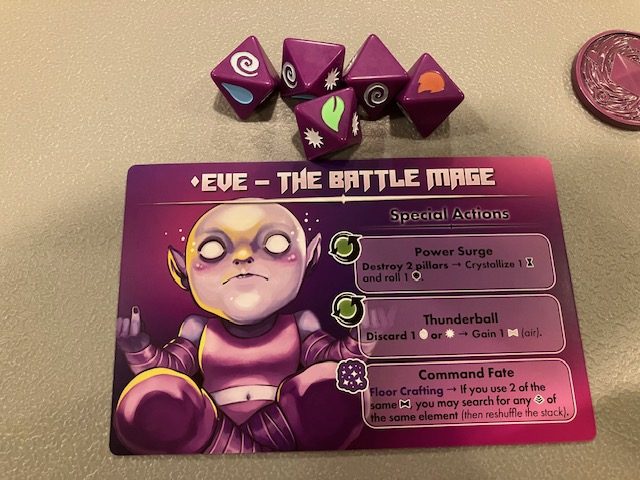
Each character’s power are notated on the sheet (see above). Generally, these special powers allow the character to manipulate tiles, manipulate dice, and/or manipulate spires.
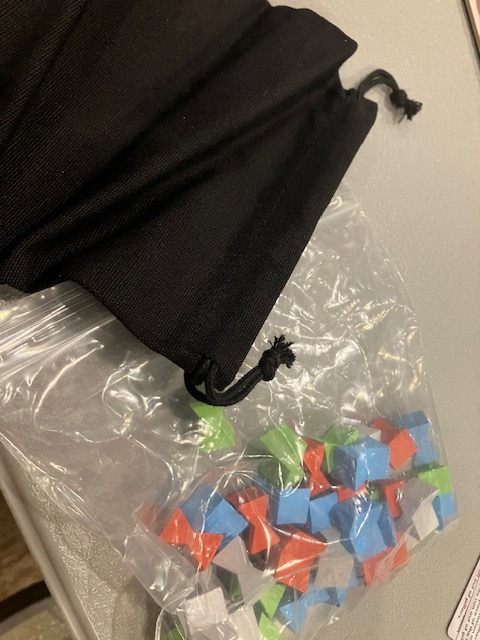
This is a bag-pulling game; it’s not really bag-building, as bag-building implies players put stuff in there for purposely to change the odds. Having said that, there are decisions players make during the game that do change the distribution of the pieces … so you could argue this is a bag-building game? Maybe?
The pieces you put into the bag are dual purpose: they are both the invaders (that clog spaces on your board) and spell-pieces that allow you to use special powers!
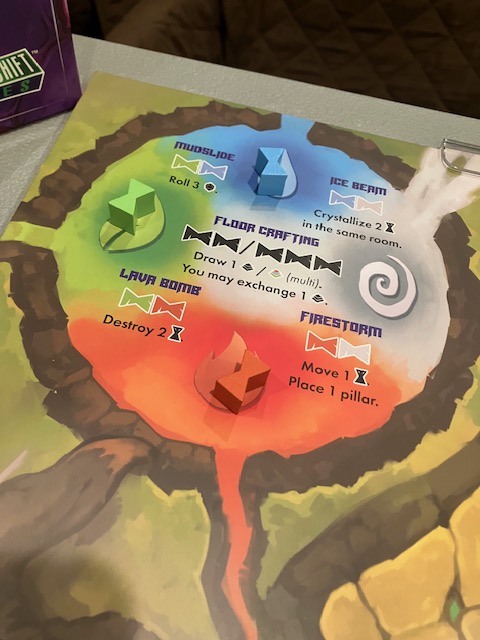
At the start of each player’s turn, he/she get 3 pieces that go into the spell area above. Discarding combinations of the pieces allow the players to cast spells to help them! See above!!! The spell is the important thing here (Lava Bomb destroys invaders!), but again the pieces do go back into the bag, so what pieces you use for spells has at least some bag-building implications.
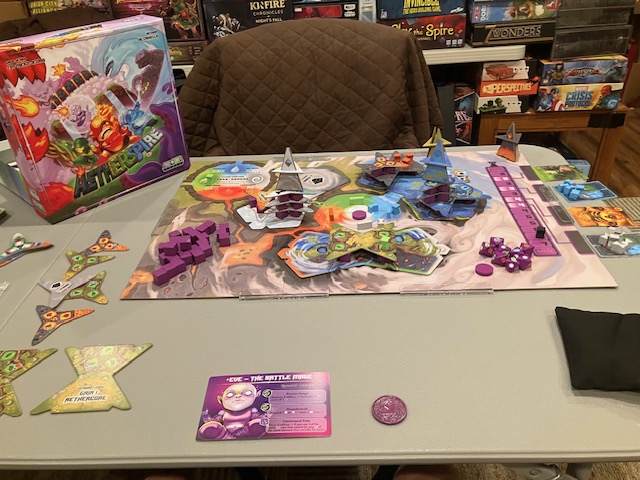
During the end of every turn, using the same bag, the invaders are pulled and placed on the pieces in the middle! The invaders clog spaces so you can’t build!
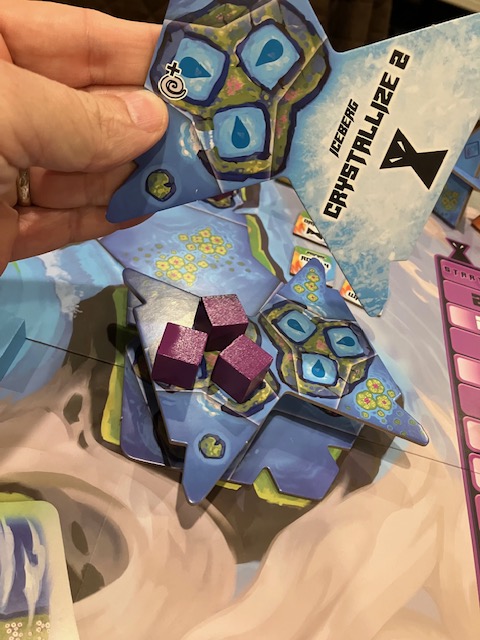
As the game unfurls, you are trying to build spires of height 4 (for each element). You use puple pillars to build bases for the next levels: see above.
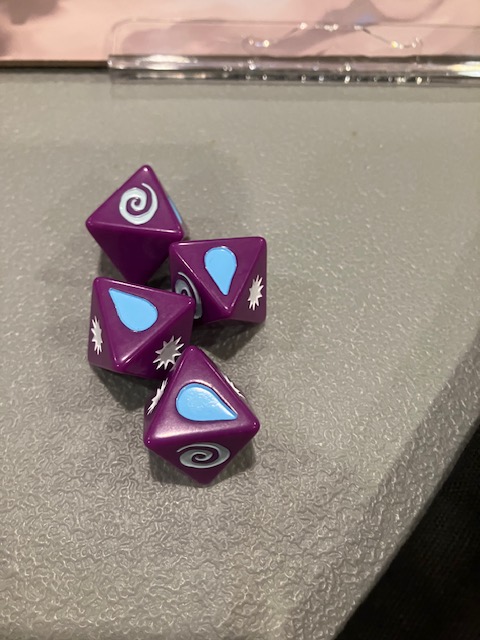
The purple dice are “generally” how you build purple pillars! Note above as the player can build three pillars on water spaces, and one pillar on an ice space! There are other powers and spells to build pillars, but generally the purple dice build the purple pillars.
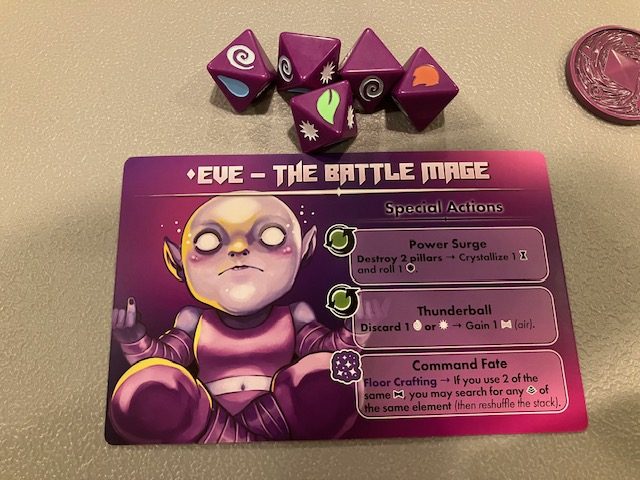
At the start of every player’s turn, they get to roll 5 dice, and they help determine what the player can build/do that turn!
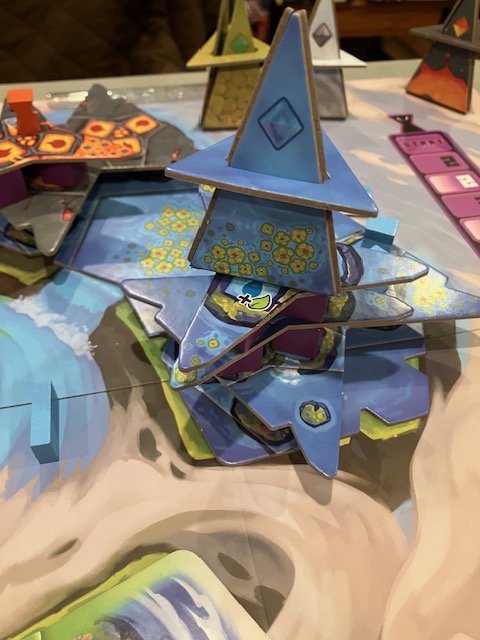
A completed structure of height 4 (where all levels are the same element) allows the player to build a spire! See above! Once all four spires have been built, players win!
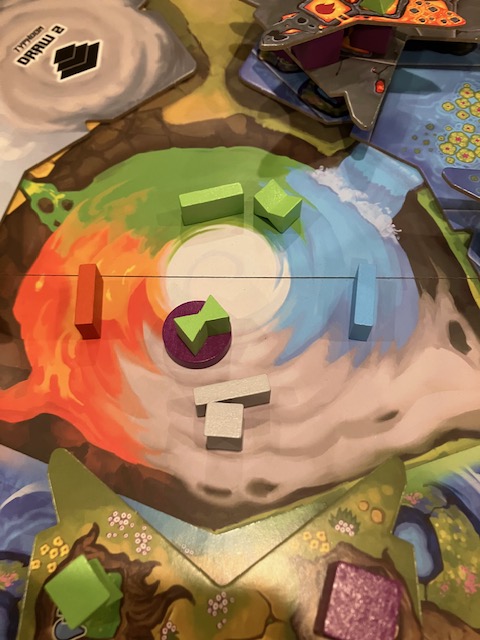
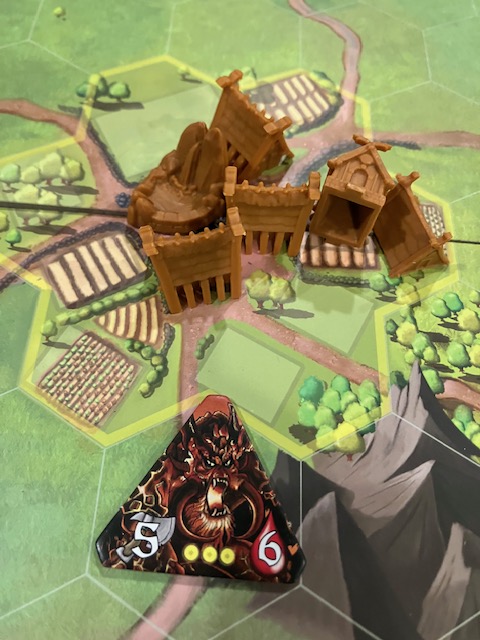
If there are no empty spaces for the invaders to occupy, then they tear down the walls and attack the gooey center! If all the purple (circular) pieces in the middle are removed, players lose!
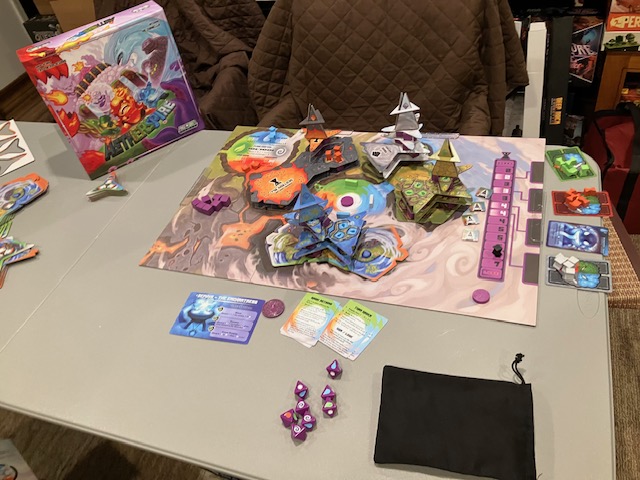
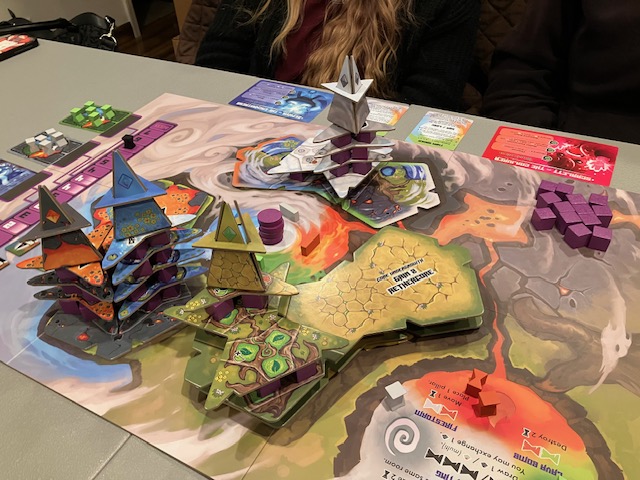
A winning game looks like the above! 3-D towers built with 4 spires! Pretty cool!
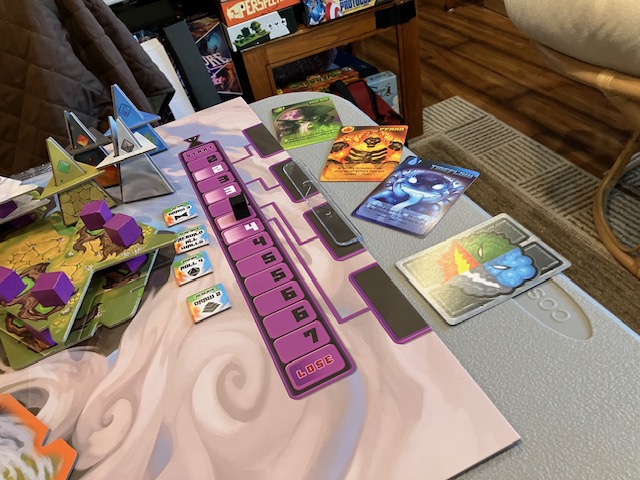
Along the way, during the bad news phase, the spirits of the elements are awoken.
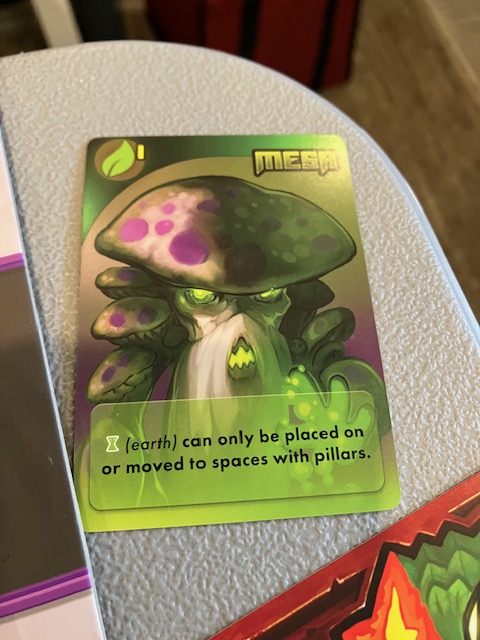
Each one of these has special powers which makes it harder to build the spires. But building a full spire will KILL the appropriate spirit, so some of the game may be deciding which one to go after!
There are other ways to lose, but usually you will lose when too many invaders come out and there’s no place for them to go! (If you wait too many turns, you run out of time and just lose: see above).
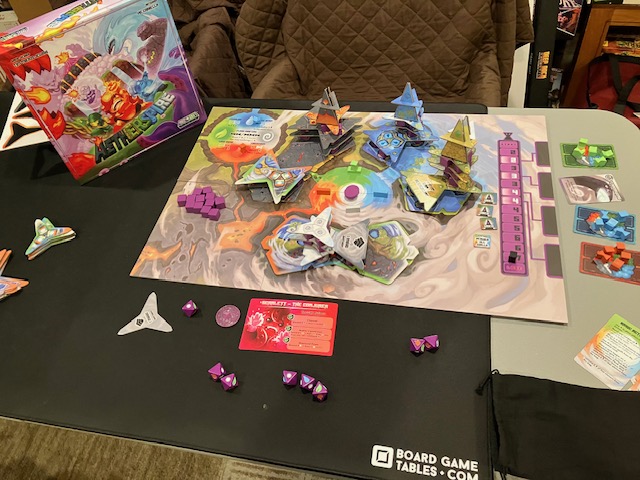
Even if you don’t win, a “nearly-completed” gane looks pretty cool! See above!
Rulebook
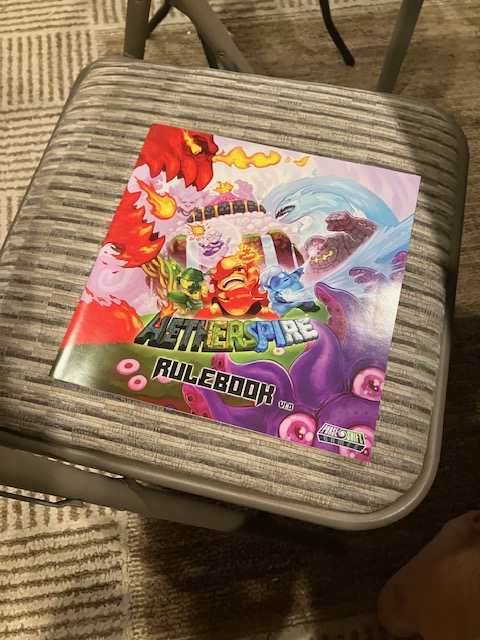
The rulebook is good.
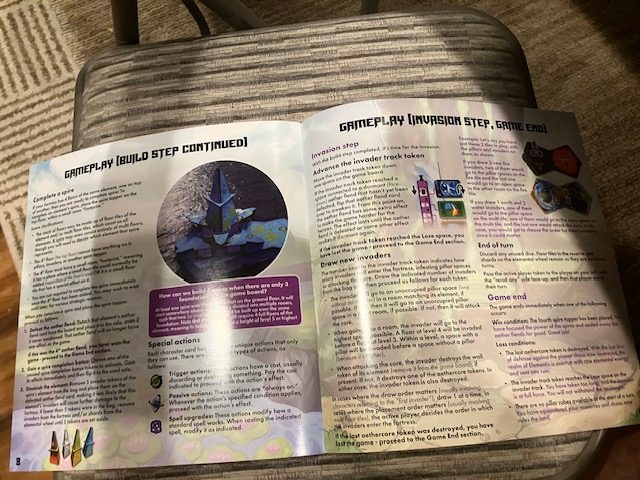
The font is pretty big and readable, the rulebook stays open next to me on the chair, but there is a little bit of droopage over the edges, so this gets about a B+ on the Chair test.
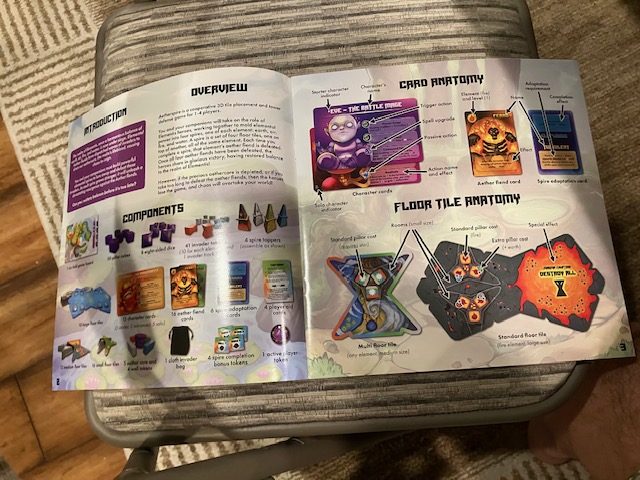
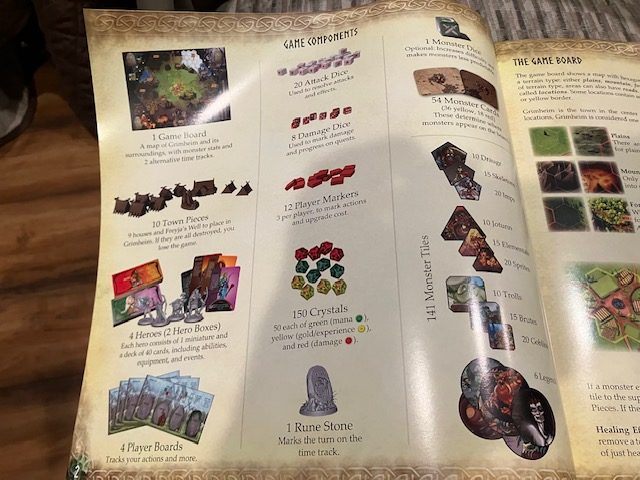
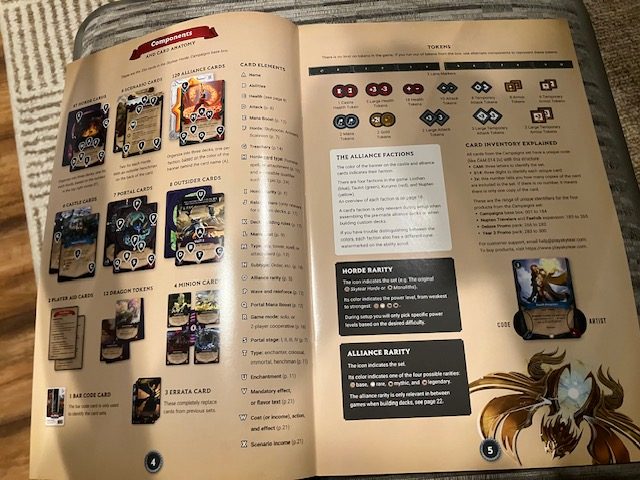
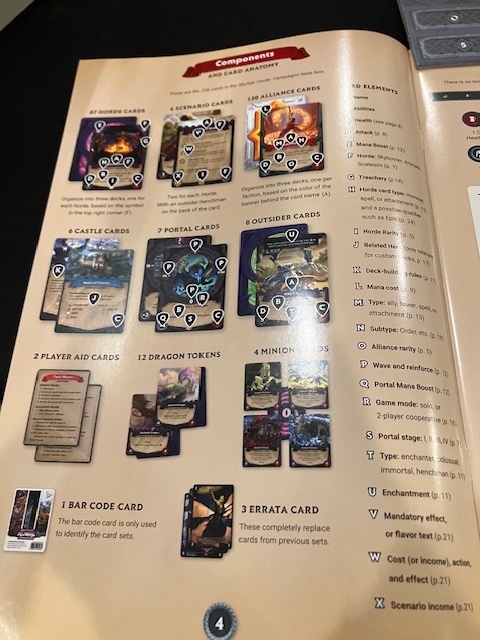
The Components are well-documented with pictures and annotating text.
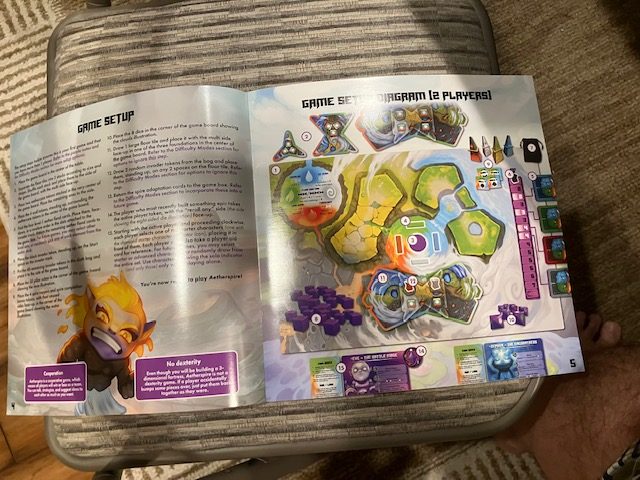
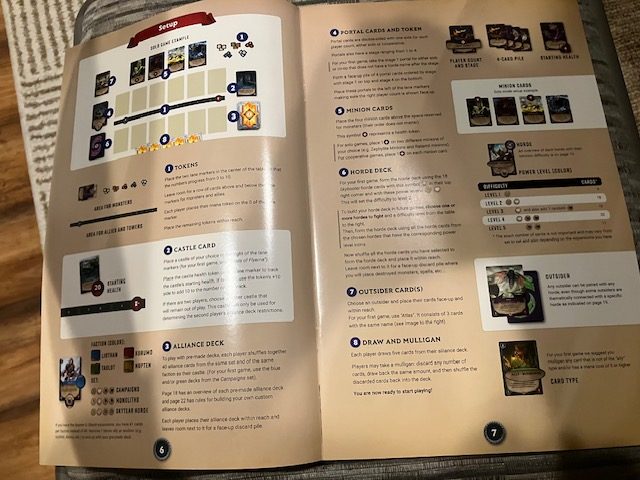
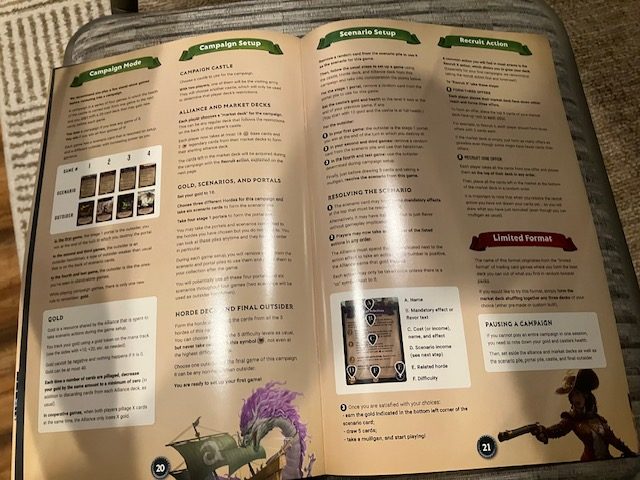
The set-up is perfect: it spans two adjacent pages, stays open, and marks where everything goes.
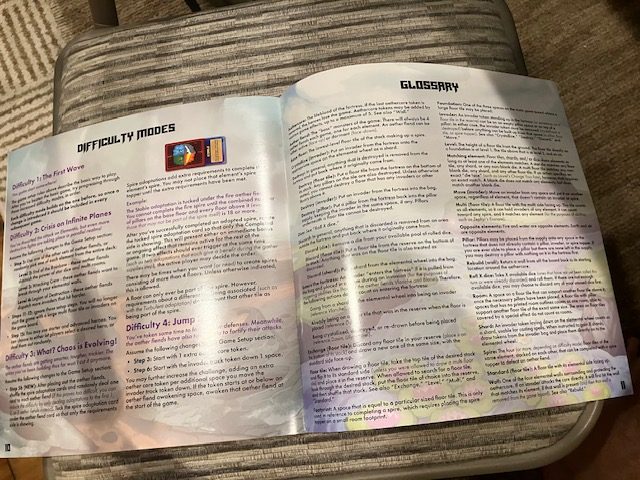
There’s no index, but there is a glossary (see above), and we found that to be good enough.
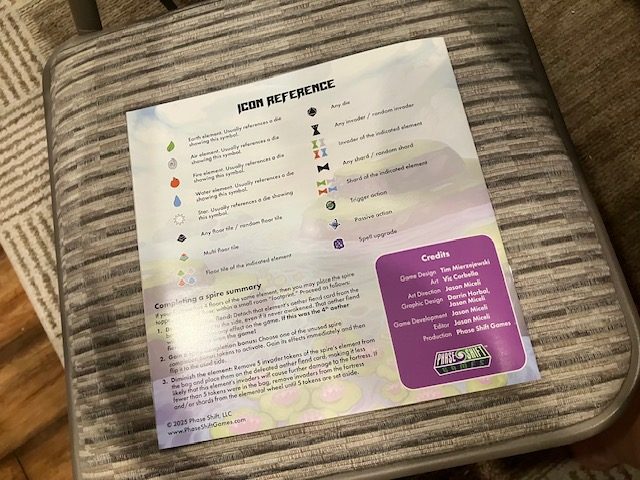
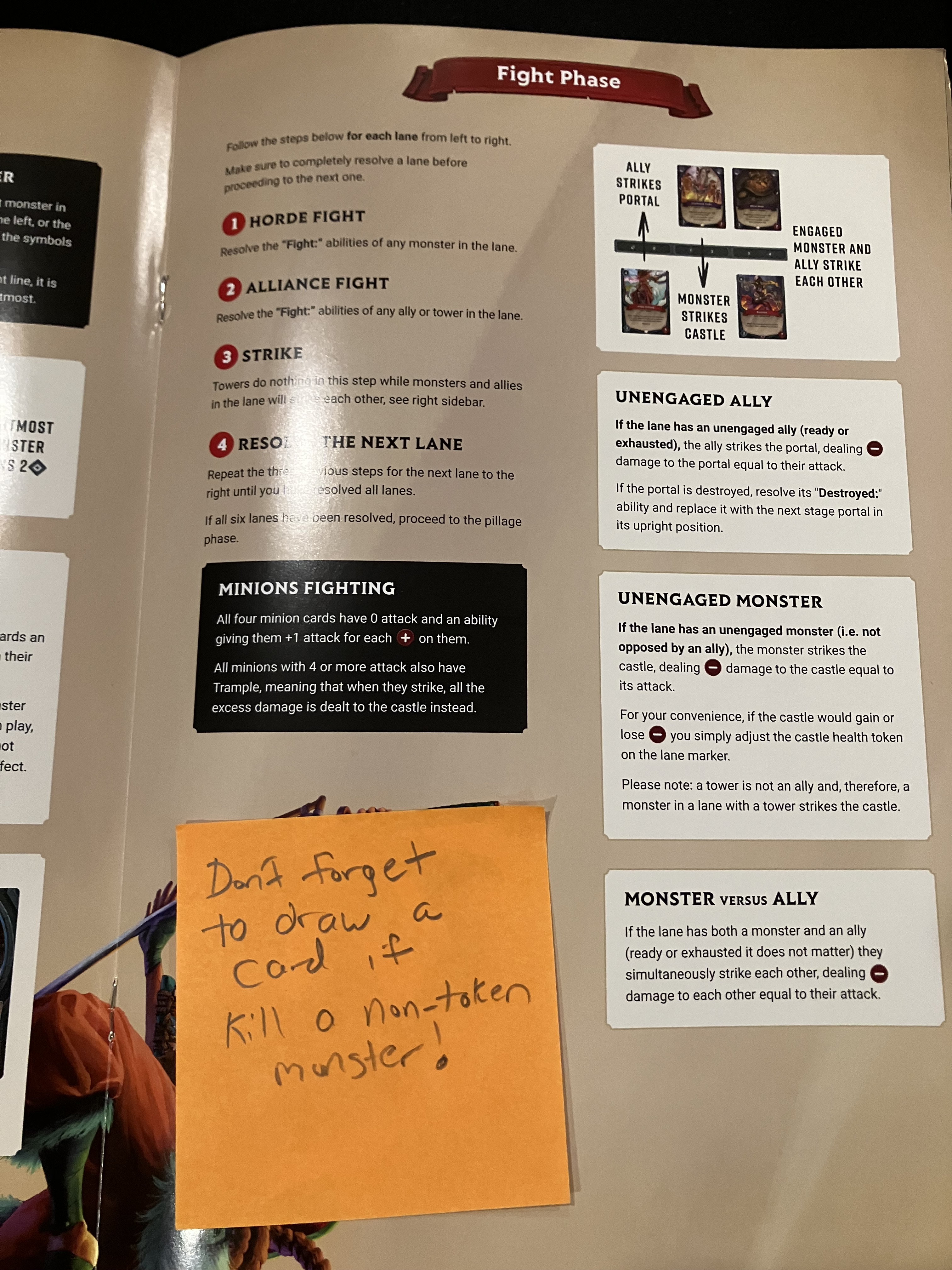
The rules end with a nice Icon reference. See above.
Generally, this was a good rulebook. There were a few questions on some edge-cases on rules (see our BGG post here), but the designer seems pretty engaged and answered our questions over there pretty quickly.
Overall, nice job.
Building vs. Dexterity
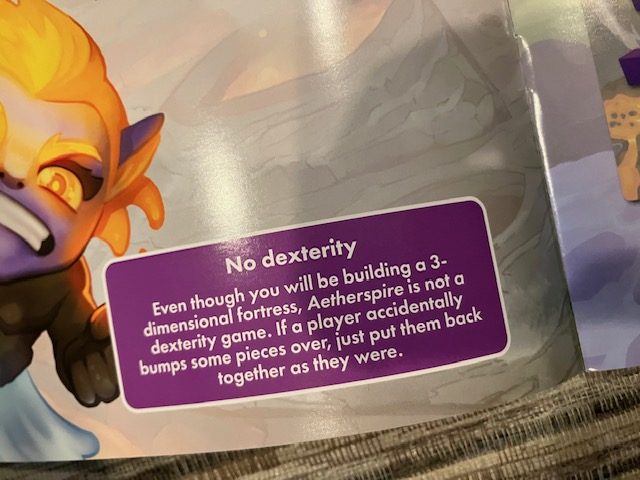
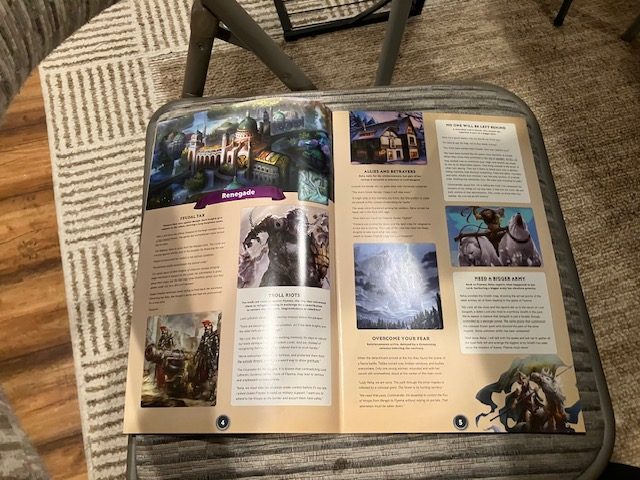
The rulebook makes it VERY clear this is not a dexterity game. See above. In all my plays of the game, I never really had any problem knocking stuff over. (EDIT: update, yes, in our cooperative game we had an “oops” moment, but it was easy to rebuild). But I like this acknowledgement! This game is about building cool towers!
Solo Mode
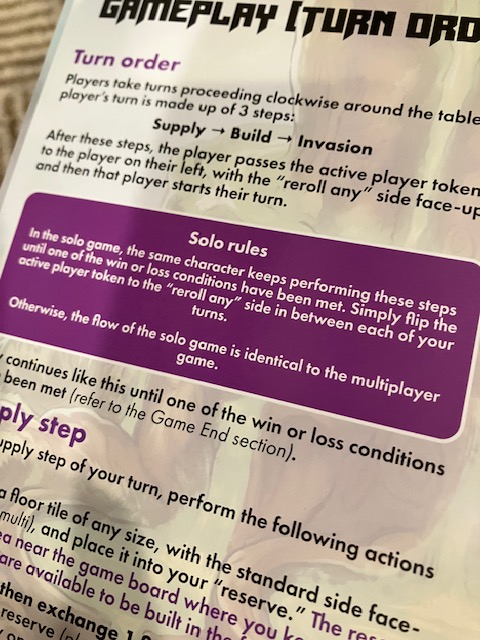
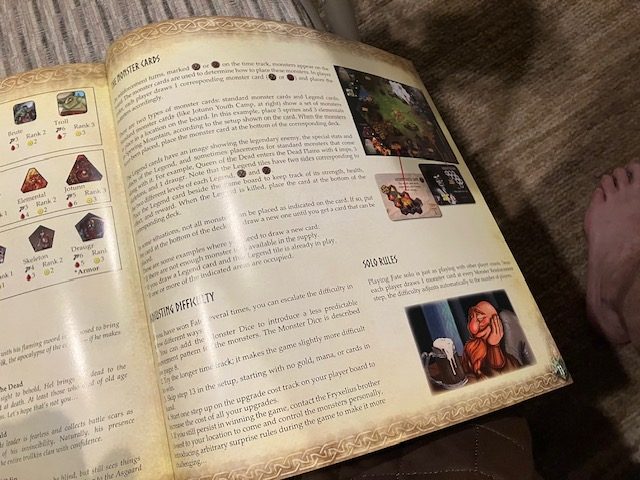
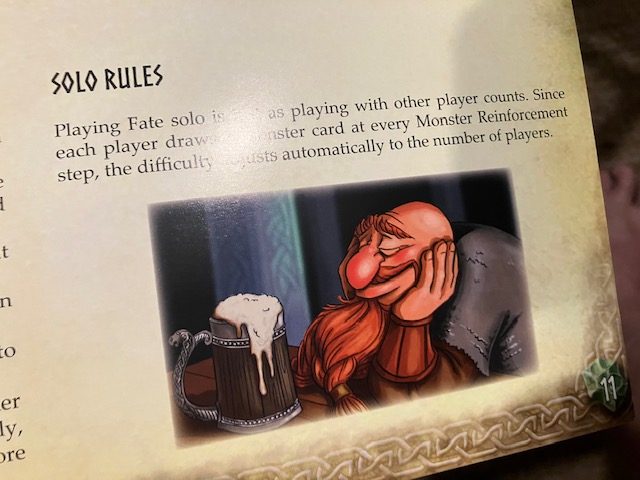
Yes! This rulebook does a GREAT JOB of acknowledging how the solo mode works! See above! Thank you for following Saunders’ Law! The game is true solo, were the solo player operates one character and pretty much plays the game just like normal (no real changes). I applaud this solo mode!
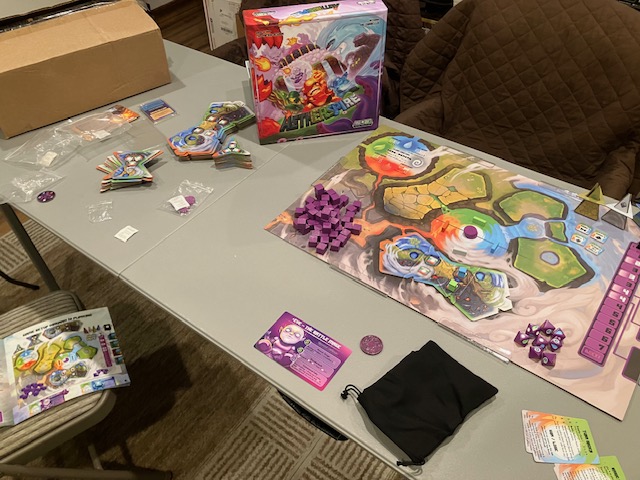
Over the course of a week, I played about 3 solo games with different characters. The purple guy! See above!
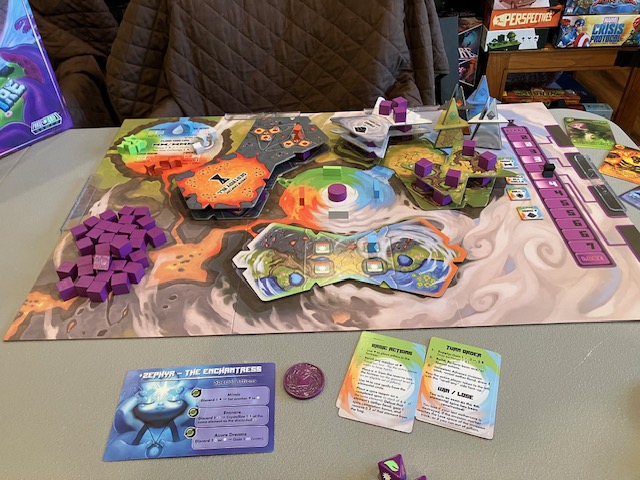
The blue guy!
…and the red guy!
Strictly speaking, I didn’t win any of my games! I cheated in my middle game just to see what the endgame looked like (and it was a minor cheat, but it was still a cheat).
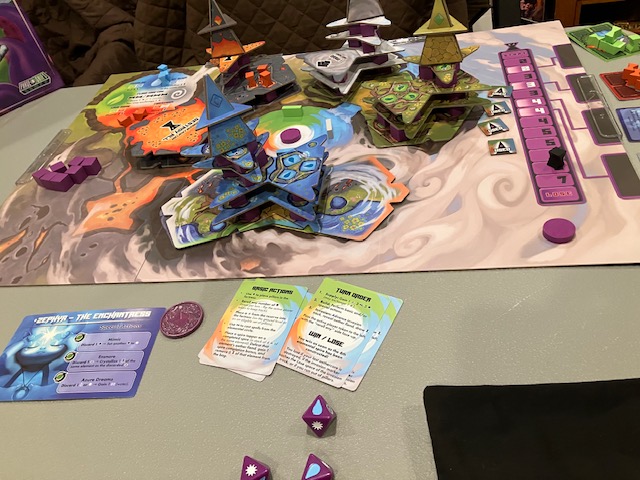
This game is hard. You have to balance the randomness of the dice with the number of invaders points and the scarcity of spell components. Every decision you make has some repercussion: if you kill some invaders with a spell, then the spell components go back into the bag … which kills the invaders, but changes the distribution in the bag! If you build too much too soon, you may build so that the invaders have no place to land and they end up breaking down the walls!
I have, over the course of my plays, developed some strategies. There is some strategy, but also a lot of tactics, as you have to play the dice as they are given.
The randomness can be a little frustrating sometimes, but usually there are just enough mechanisms to deal that randomness (you always get a free re-roll every turn, your special powers can do stuff to “useless” dice, and the spells can help. Having said that, the game can sometimes feel just a touch too random. At the end of day, if you roll poorly, you will lose.
But I liked the way all the systems of the game worked together; they all interacted in interesting ways. I had fun playing.
As a solo gamer, it’s easy to get this out and start playing. The amount of maintenance per turn isn’t too bad, and the game moves along as quickly as the solo player likes. The only “bad part” is how much work it is to clean up the game at the end; there are a lot of components that need to be separated!
Cooperative Play
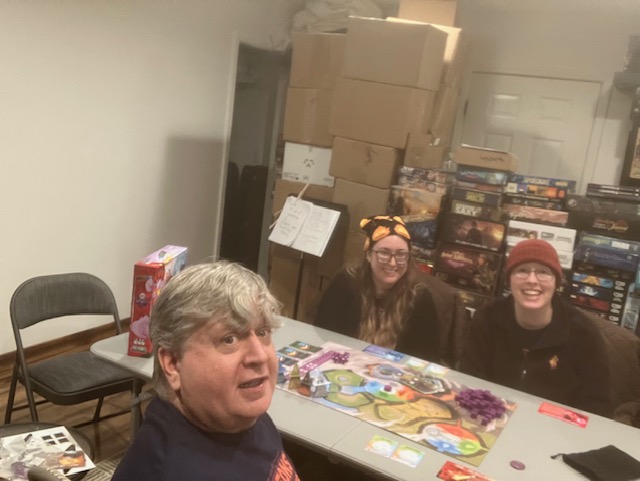
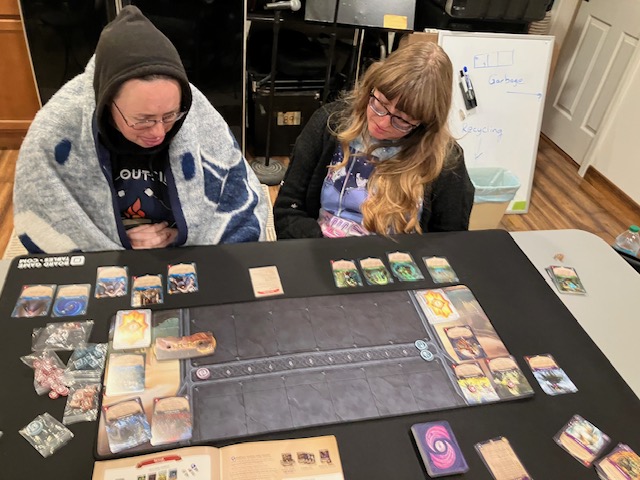
Cooperative play went over very well!
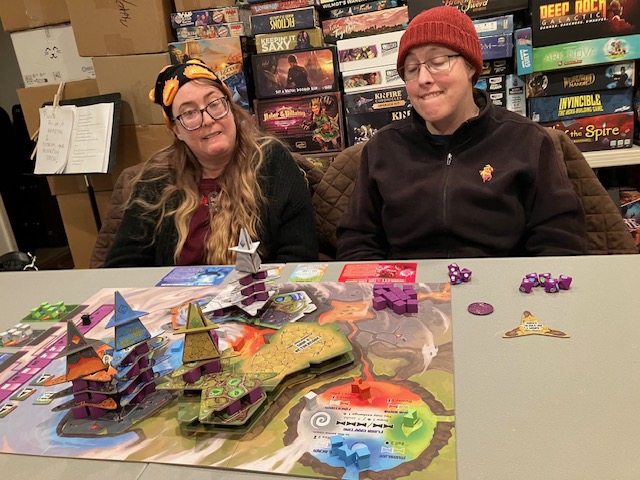
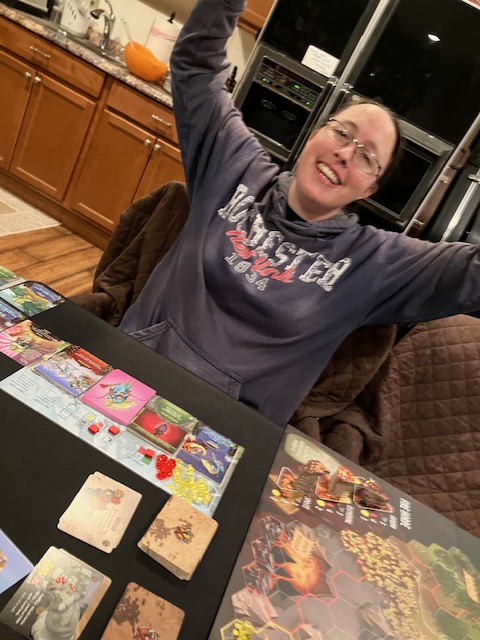
Using a minor house rule (see below), we were able to win a game! It was very satisfying.
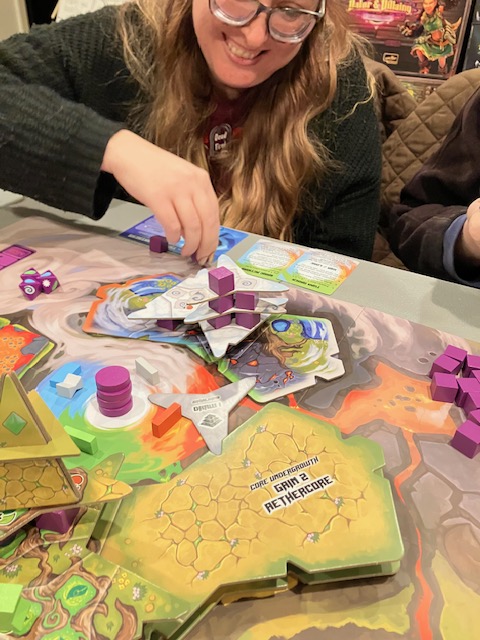
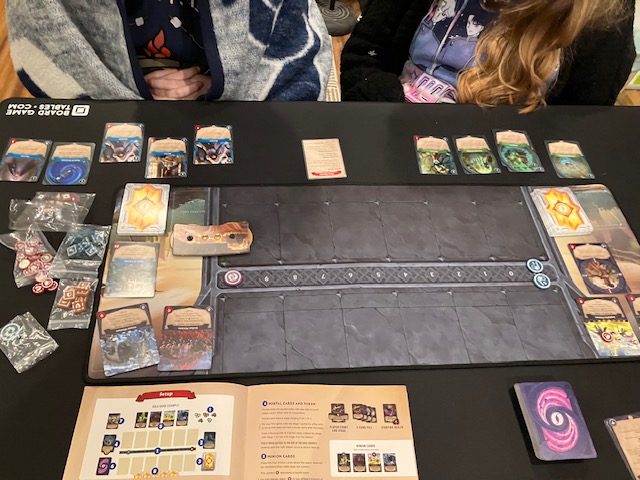
In the cooperative game, there’s no real mechanisms to encourage cooperation. Each player’s turn is very multi-player solitaire! A player rolls the dice and decides how to use the dice and the spells and deal with the invaders. A lot of people I know really like this style of cooperative game, as it’s much harder to have an Alpha Player ruin the game … since I can only use my own powers and my own dice. (Typically, none of the special powers of your character can be used outside of your turn). So, it might seem this game isn’t particularly cooperative.
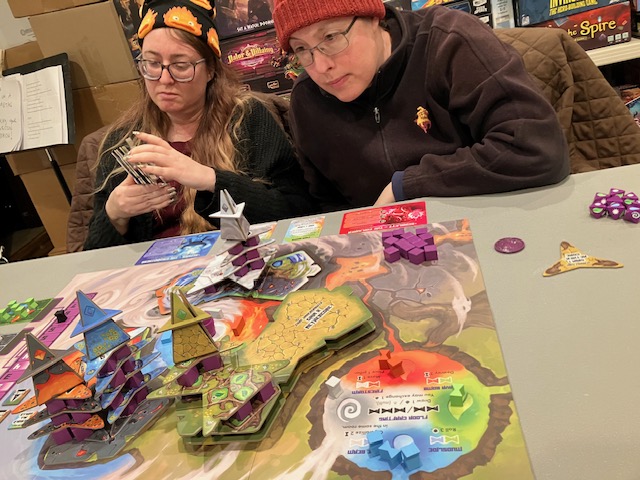
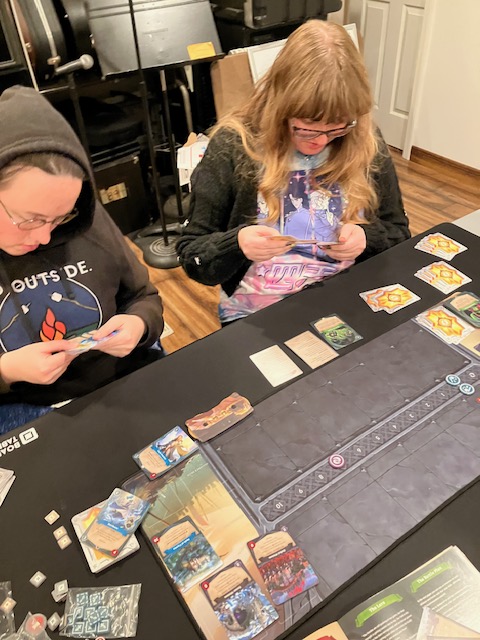
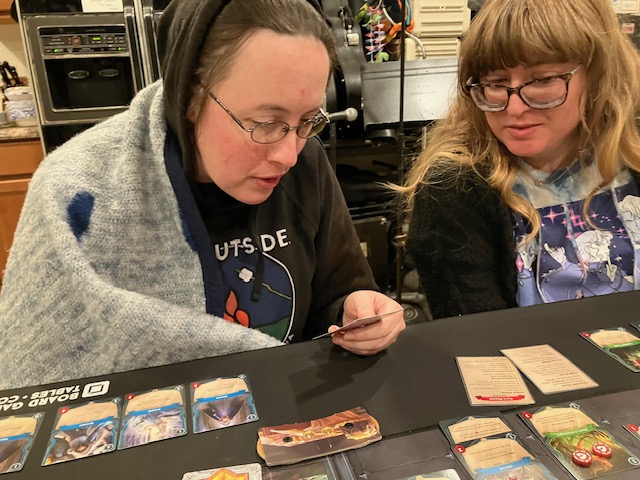
Even though the game has no mechanisms to encourage cooperation, a lot of “high-level” cooperation occurs! Which invaders do we deal with? Which spells do we use? How do I use rerolls? What Spires do we complete? It’s all high-level discussions.
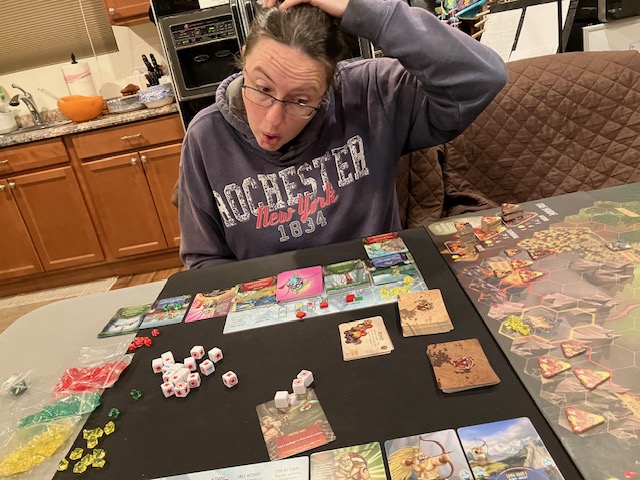
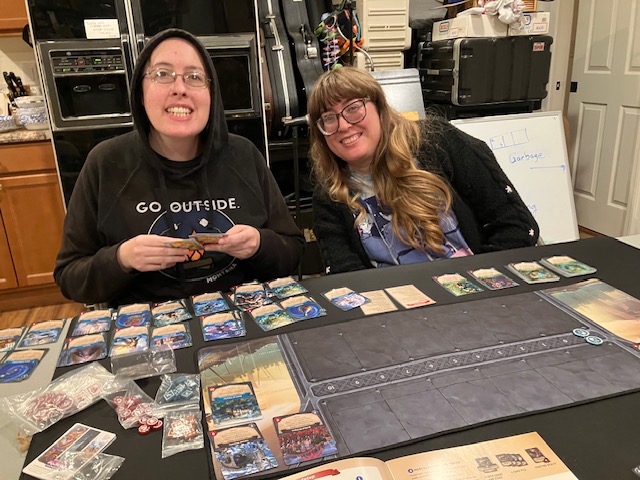
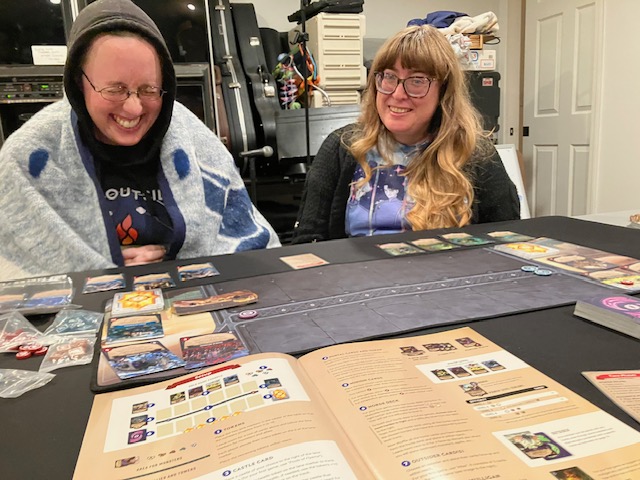
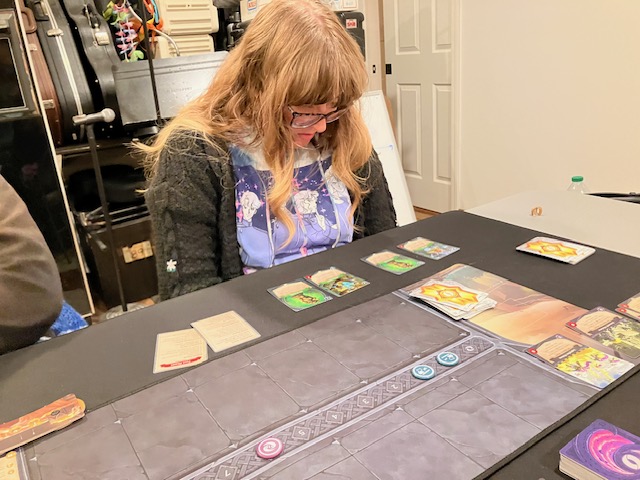
My friends and I, who cooperate very well, had a great time playing this. We talked a lot about high-level strategy and interacted/discussed/cooperated quite a bit.
I also think this would be an excellent game to play at a convention! Since you may not know other players very well at conventions, a multi-player solitaire game is a good choice. It’s harder for Alpha Players to show their ugly head, and each player can execute their own turn, but still conversing with other players!
House Rule: Re-rolls Must Roll Something Different!
There is a very frustrating thing with using re-rolls as a mitigation mechanic: if you re-roll and roll EXACTLY THE SAME THING. As a house rule, we suggest that, if you roll the same thing on a re-roll, you can re-roll until you get something different.
Some Component Issues
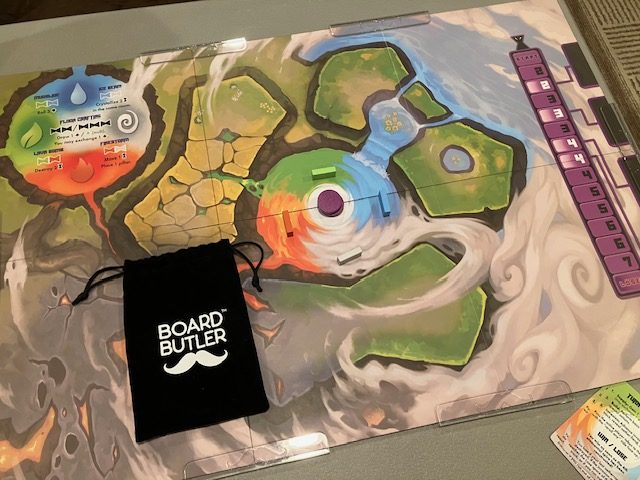
My board had trouble laying flat; I had to use a Board Butler (see above) to make sure the board stayed flat. I feel like this is a bigger deal in this game because you are building a 3-D structure and the board NEEDS to be flat and stable. After my third game, it was a little better and I didn’t need the board butler.
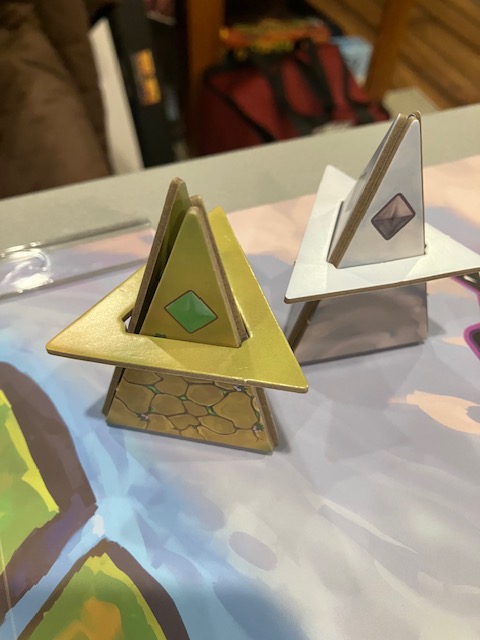
The spires didn’t seem very “stable”. See as the green spire just kinda opens up, but the white spire stays very compact. I suspect a little glue might fix this issue. It’s not a big deal, but it was annoying to try to move the spires around when they sometimes kind of open up or fall apart. Again, I think a little bit of glue will fix this, so it’s not a big deal.
Randomness
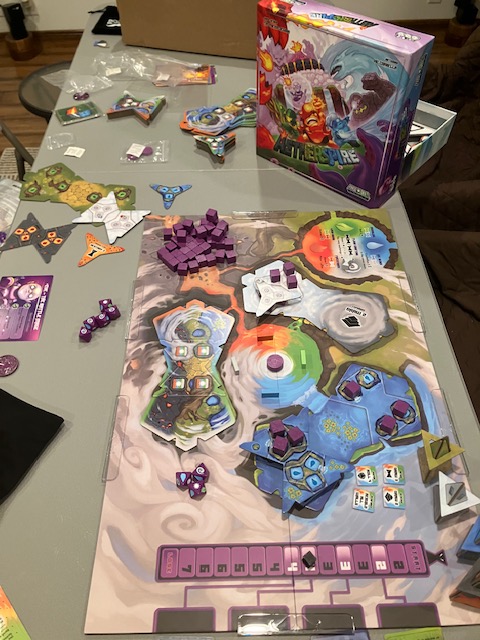
There’s a lot of ways to mitigate randomness in this game, and there are a lot great decision points; I really like all the places where you can make choices. For example, at the start of every turn, you get one building piece (you choose the pile), but you can still swap away if you get something you don’t want! I also like that you essentially have a re-roll every turn! (But see our House Rule above). I also like that the spell pieces are also the invaders! It’s cool that you have to think about how the invaders and spell pieces distribute into the bag! All your choices seem important.
At the very end of the day, though, this is still a dice game. If you roll poorly and there are no mitigations left, you will lose. It’s not a big deal because generally there’s enough mitigation so that you don’t have this feeling too often. Be aware: occasionally, you will be grumpy when you roll badly. You have to decide if that’s too much for you. The good news is that the game is pretty quick. I think 45 minutes estimate might be too little shy; my games were more like 60 to 90 minutes.
Conclusion
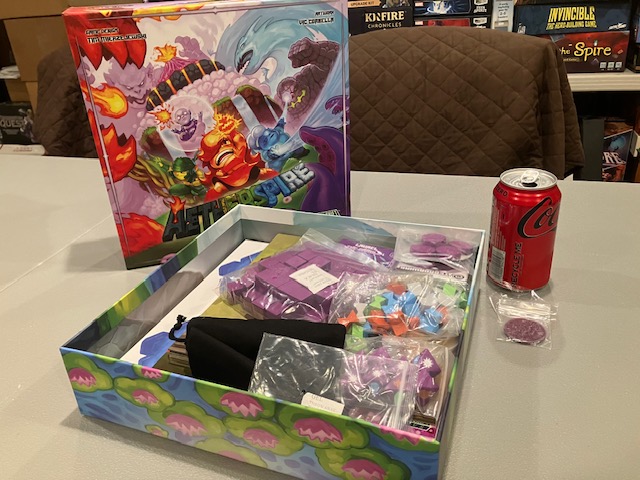
Aetherspire is a really neat tower-defense and 3-D building game. I liked it and my friends like it.
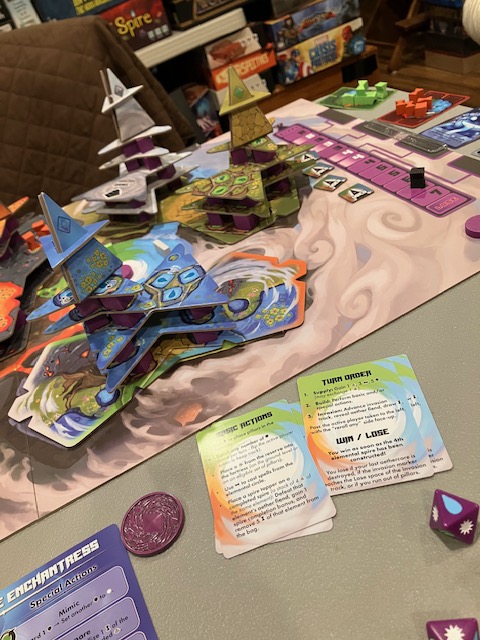
The structures you build are very cool and look great! It’s fun to be part of that process! See above! It’s a very kinesthetic and interactive experience!
The game can be just a little random, but there are enough mitigation methods (plus our House Rule) that it’s not usually a problem. At the end of the day, this is still a dice game that can still stab you in the eye.
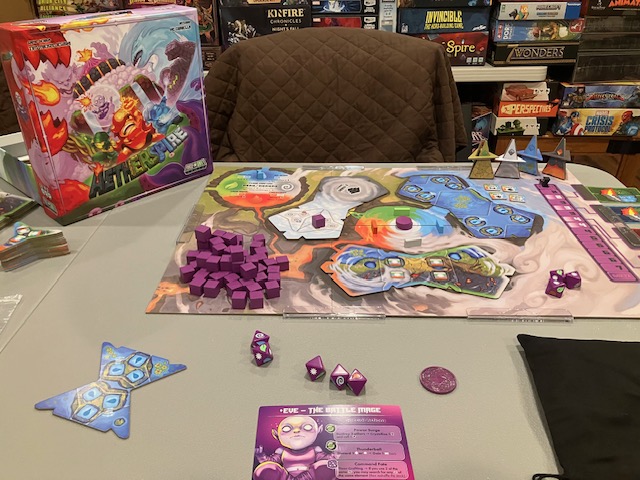
My friends and I had a great time playing this! It looks good, it’s fun to build, and there’s enough choices that you always feel like you can do something!
Me and my friends all agree in this one: 8/10 for cooperative mode! It was so much fun! 8/10 for both solo and cooperative mode … although the cooperative might have been a little higher if there just a few more mechanisms for cooperation: the cooperative mode is pretty much multiplayer solitaire with a few high-level discussions of strategy … but that may be what you want at a convention … or to avoid the dreaded Alpha Player.
Side Note: This probably would have made my Top 10 Cooperative Games of 2025 if I had gotten it a little bit earlier … be on the lookout for this on my Top 10 Cooperative Games of 2026!




 coopgestalt