
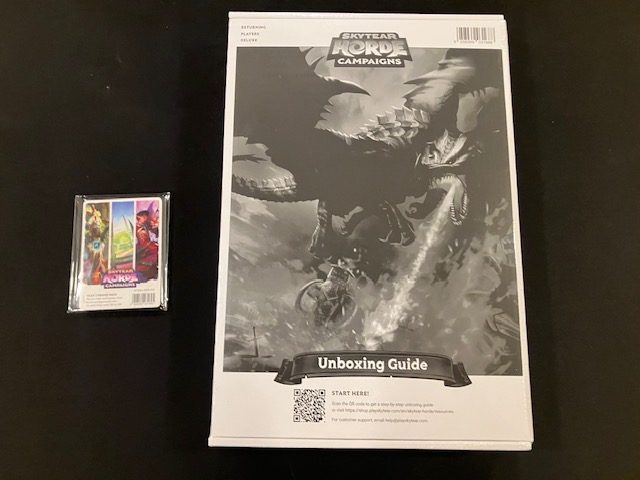
I have to be honest: Skytear Horde: Campaigns does put a little pain into the campaign. But, knowing what the issues are before you get this game make it so you can work around them and enjoy this game as-is. Although this is mostly a “review” of the Skytear Horde: Campaigns, it’s also of a guide of how to get the most enjoyment out of this if do you end up getting it. At the risk of spoiling my review, I did like it and am keeping my copy but ONLY after making a few major notes.
Skytear Horde: Campaigns is a standalone expansion in the Skytear Horde series; this series of games are solo and 2-Player cooperative tower defense games. (There is nominally a 3-Player competitive game that we won’t be discussing; in our experience, it seems to be the least likely way to play)
The original base game of Skytear Horde was on Kickstarter waaaay back in January 2022, and delivered to me and other Kickstarter backers in February 2023. See our original review here. We did like it: it made the #5 spot on our Top 10 Solo Games of 2023!
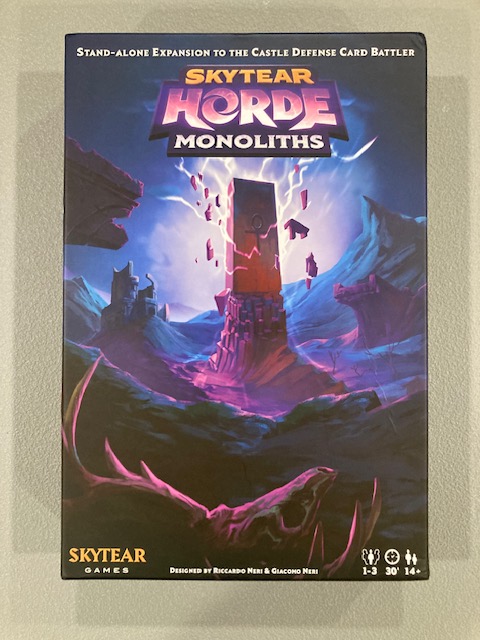
The first expansion, a standalone expansion (meaning you can play it without the original game) was on Gamefound back in May 2023 and delivered in about a year. See our review of Skytear Horde: Monoliths here. It also made our Top 10 Solo Games of 2024!
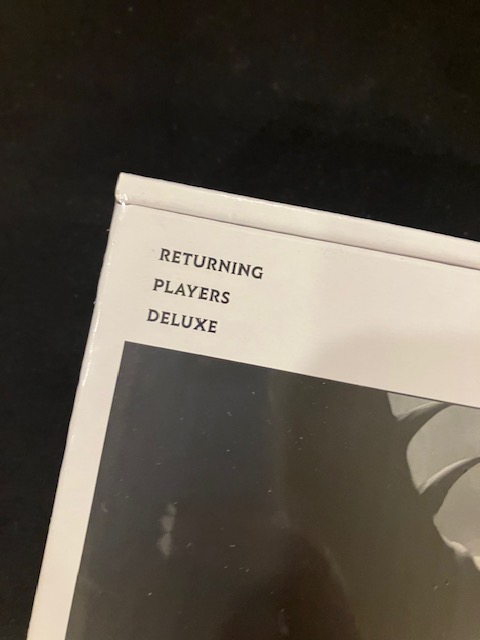
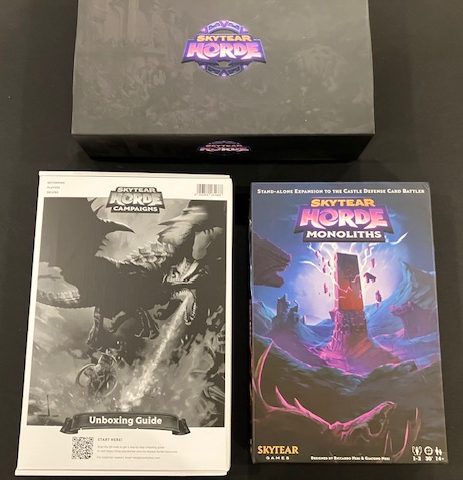
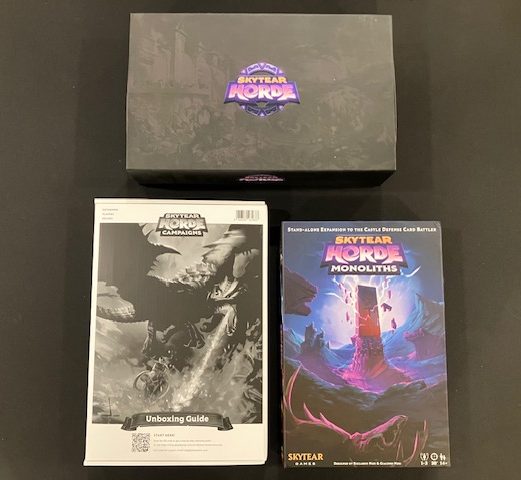
This second and newest expansion is the Skytear Horde: Campaigns box above. It’s also a standalone expansion from Gamefound. It delivered in April 2025 after promising delivery in June 2025 (it delivered early!). My box is a little lack-luster because I backed at the Returning Players Deluxe pledge, which “expects” me to merge this in with the other two.
Let’s take a closer look!
Generic Unboxing
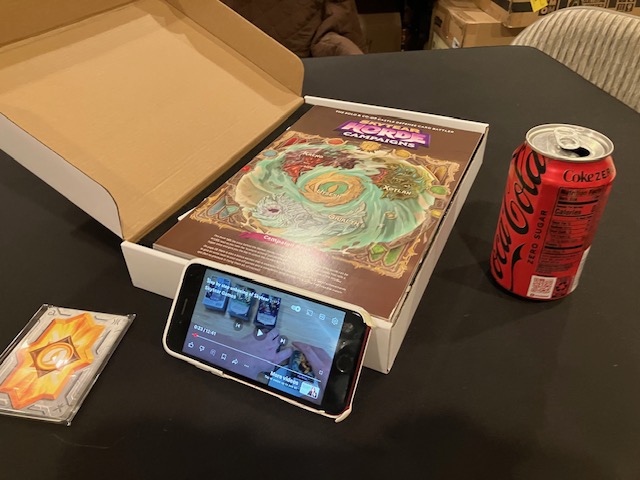
See above for scale with a Coke can: my Returning Players Deluxe box isn’t the best box. Again, I think it’s expected for me to merge all my cards into the original game.
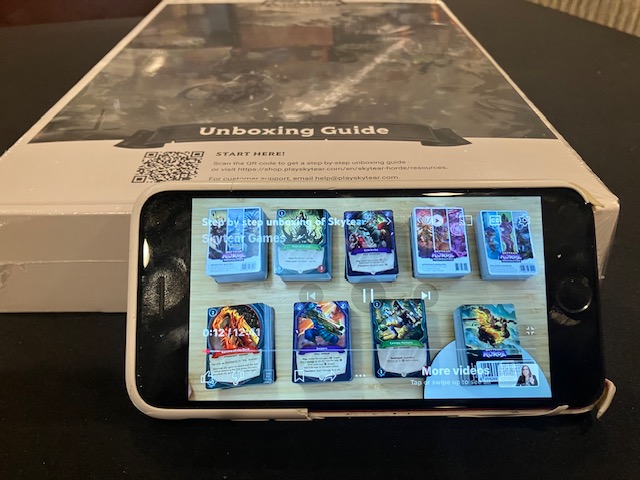
This is a game all about cards. There’s a little unboxing video you might consider watching (see above). I watched a little bit of it.
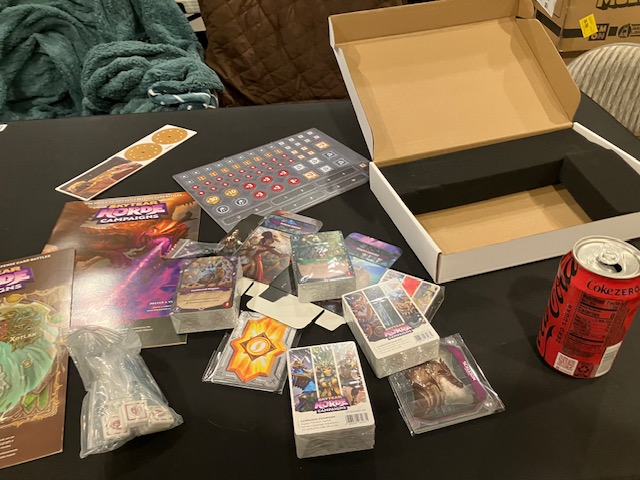
There are just a ton of cards, some token sheets, and two booklets: A rulebook and a campaign book.
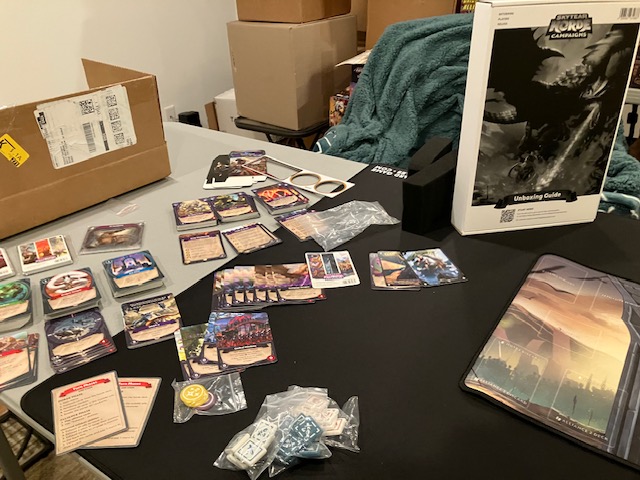
The cards look pretty great and they are consistent with the cards from the previous releases.
The Rulebook
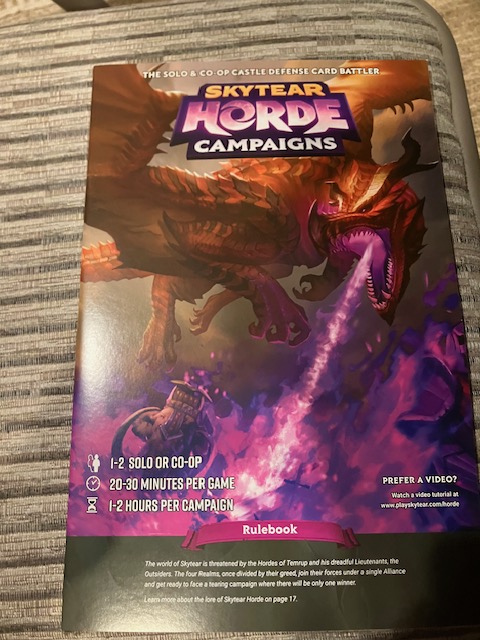
This rulebook is both blessing and curse.
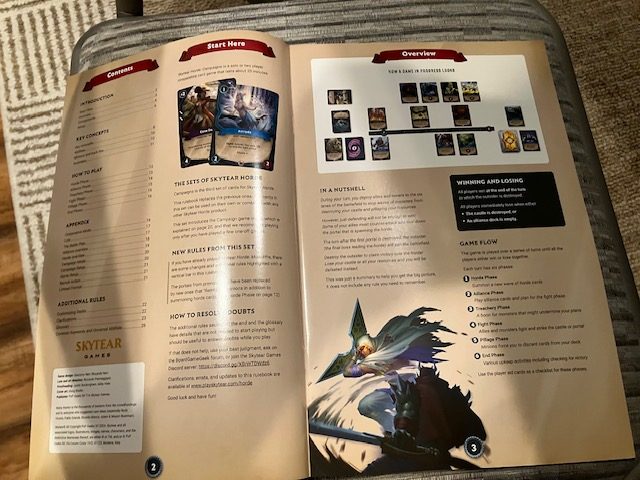
This rulebook does great on The Chair Test, opening up easily across two pages, laying flat, being readable, and no real overhang over the edges. This gets about an A- on the The Chair Test! It’s not an A because the font could be a little bigger, especially considering how much whitespace there is. Still, great!
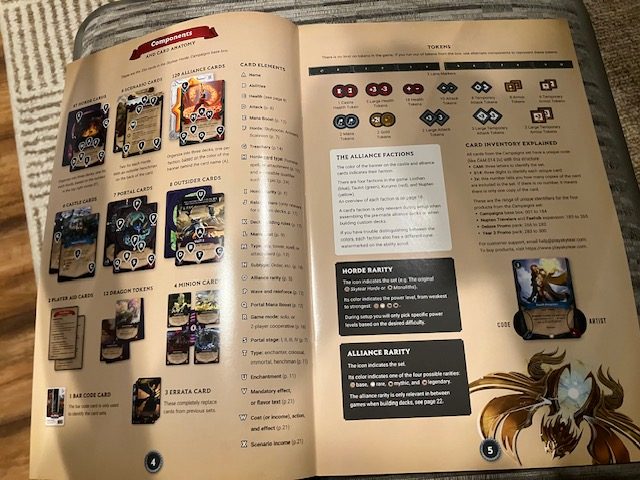
These Component pages are fantastic! I forgoed (forewent?) the card video because I wanted to handle and open all the cards myself. These two pages where GREAT for describing how to open up and sort all the cards. The card deck (types) even had little annotations, along with a little summary! Very useful!
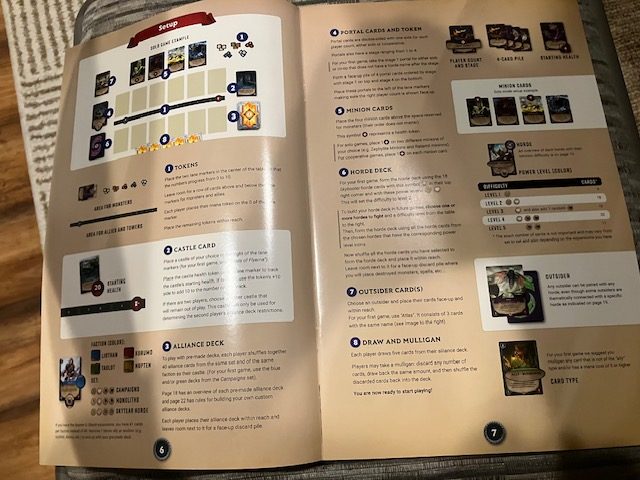
The set-up was good: it is on exactly two pages without needing going to cross to another page. See above.
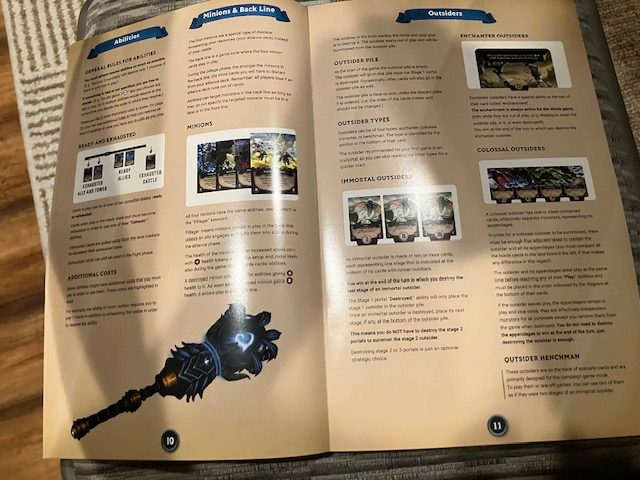
The rest of the rulebook was pretty good; and it had better be. This is the third Skytear Horde: they should know how to explain it by now! They even note “new rules” with a sideline bar: great job! To be fair, there’s not “that many” new rules in this set. Note the bottom right of page 11 (above) has a new rule.
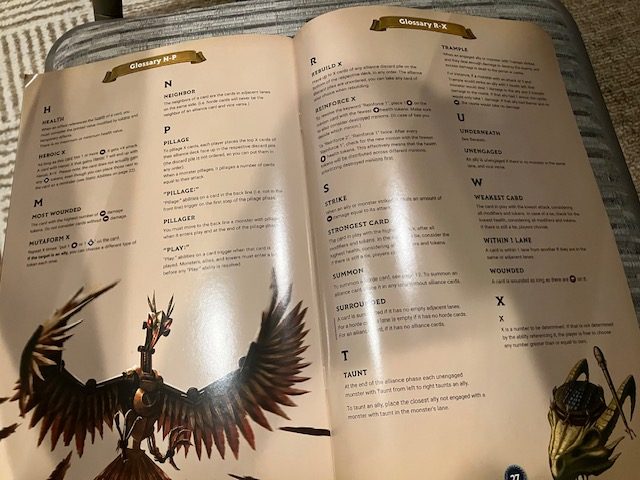
It doesn’t have an Index (boooo), but I’ll forgive it because it has a very good Glossary of keywords in the back.
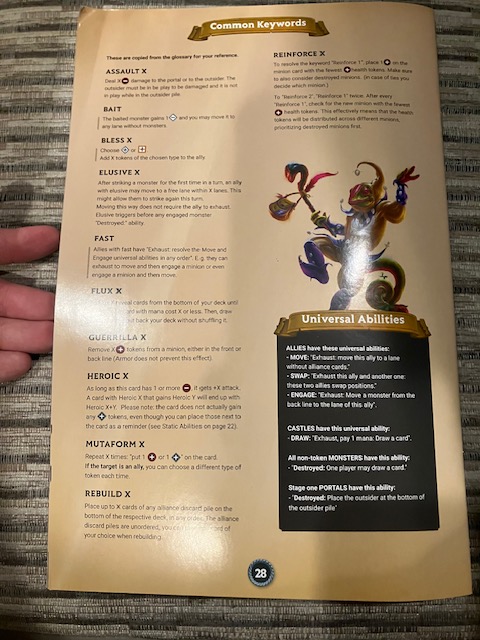
It also ends with a bang and has some other common keywords on the back.
Seriously, for the base game, this is the best rulebook so far for this series. Great Components, good Set-Up, good rules, good Glossary, good back cover. This is why it’s a blessing.
But why is this rulebook a curse as well? Be patient; we’ll get there.
Cards
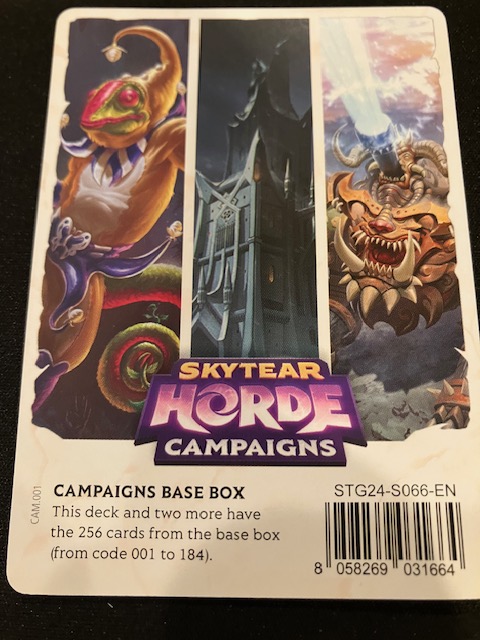
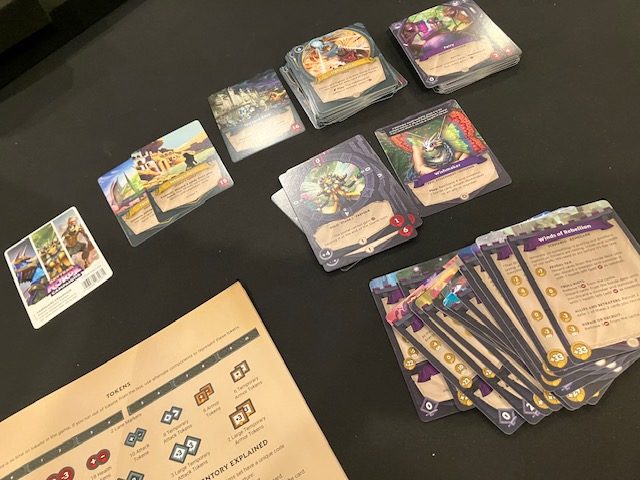
I want to talk a little about the cards. They do a really nice job in general.
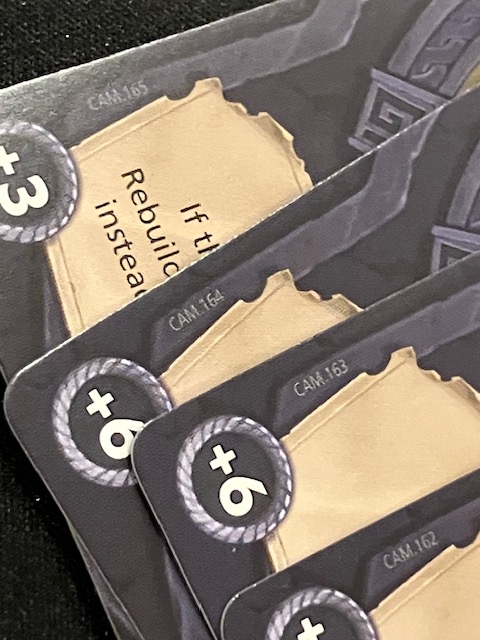
The cards are labelled with what set they come from, even if it’s a little hard to read: see above! The Campaigns cards are marked with CAM. I suppose I appreciate that the labels are pretty well out of the way (so they don’t interfere with gameplay), but I really struggled to read that text! I ended up getting my phone out and zooming in on these! When I needed to sort the cards back into their respective decks, it was a challenge! Here’s another blessing and curse: the labels being out of the way mean they don’t interfere with play! That’s a blessing! But sorting them is a curse because it’s a little hard to read.
Maybe those teeny labels doesn’t bother you because you like to put everything in the main box and you don’t really care which set it came from. I like to keep my sets separated, so it did bother me. I suspect I am in the minority.
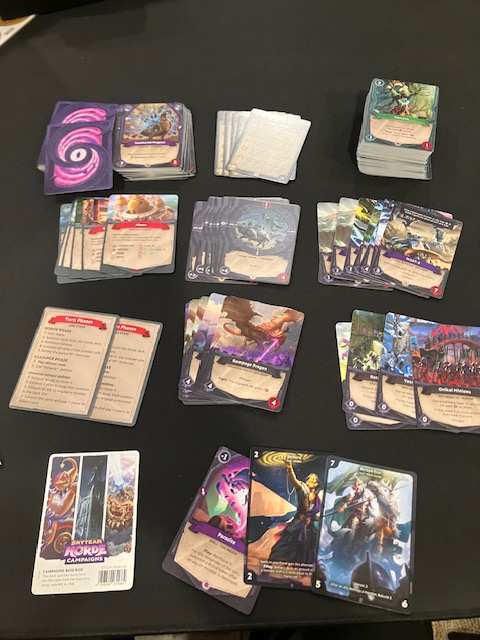
I mean, these cards look great. The art on them is amazing: see above.
Gameplay
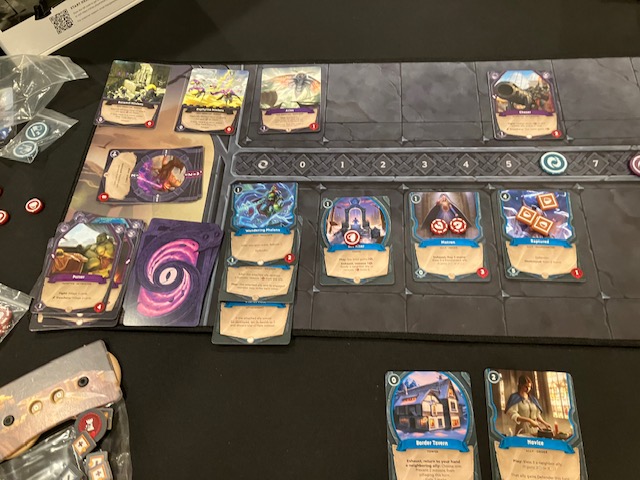
This is a solo, 2-Player cooperative (or 3-Player competitive) tower defense/lane battling game. Players play cards to the lane to fight the bad guys and protect their castle!
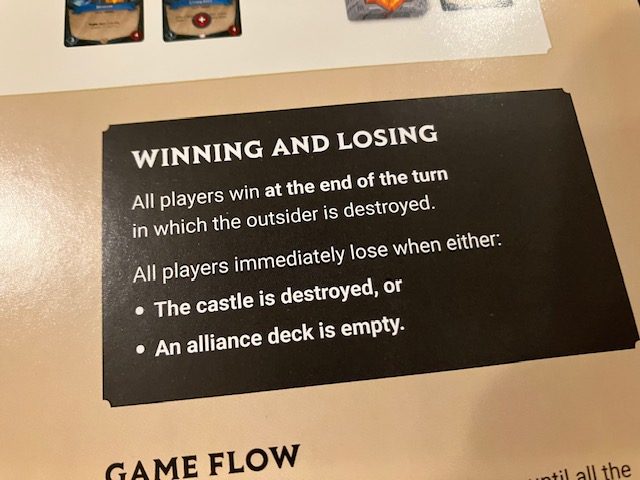
There is a very nice description of win/lose conditions at front of the rulebook: see above.
There’s a lot more discussion about gameplay in many other sources, including our previous reviews. If you know what Skytear Horde is, the expansion part of this game should feel very familiar to you.
Solo Play: No Campaign (yet)
First and foremost, the Skytear Horde games are solo games. There are some annotations in the rules (like one paragraph) describing how to play 2-Player cooperative. Everything else about this game screams “I am a solo game!”
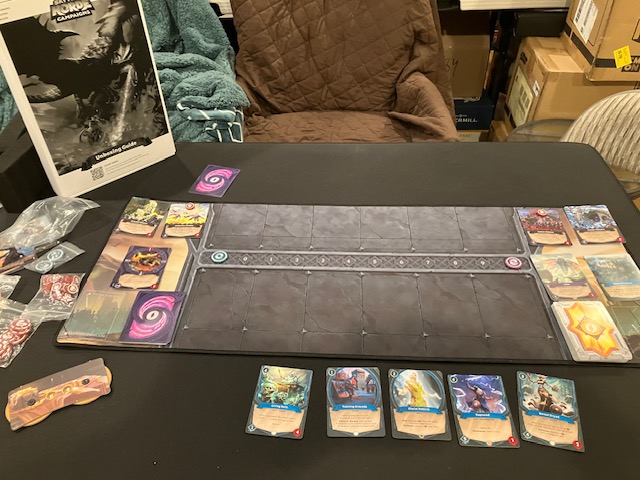
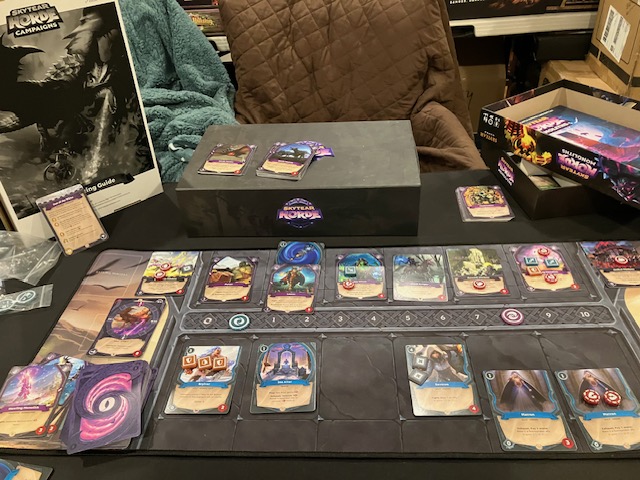
This is a true solo game: the solo player takes control of a single Alliance faction (Two players would each take a different faction and play them separately). See above as I take control of the Blue Order faction.
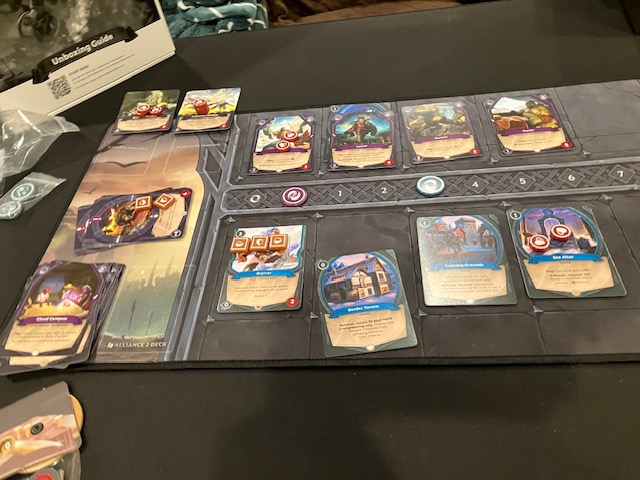
The rules suggest you DO NOT jump into this as a campaign! The rules “recommend playing only after you have played a few one-off games”. So, using only the content from this standalone expansion, I ended up playing about 4 one-off games to get back into the flow. I am embarrassed how much I had to relearn to play again!
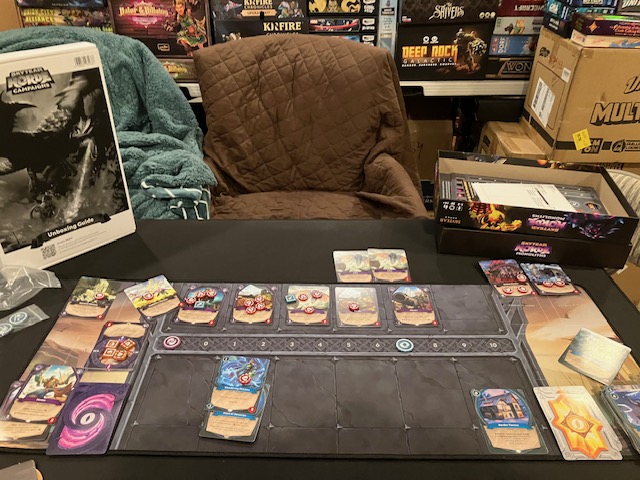
As a straight-up standalone expansion you can play, Skytear Horde: Campaigns did a great job. Even if you never use the campaigns material, there are 4 new Alliance decks, 3 new Hordes (bad-guy decks), 6 new castles and some new Portals. If you like Skytear Horde, this is just more stuff and you will like it. If you didn’t like Skytear Horde, this probably won’t change your mind (but see below). The game still feels fun and I still had fun playing the new Alliance and Horde decks.
As always, this game works great solo. I fully expect this to make my Top 10 Solo Games of 2025!
The Campaign: The Curse
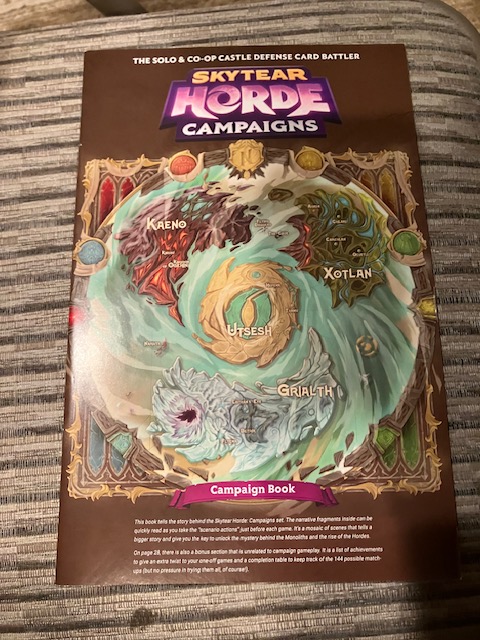
The campaign has many problems to work through. To start off, there are two glaring errors that undermine the confidence of the campaign section right away.
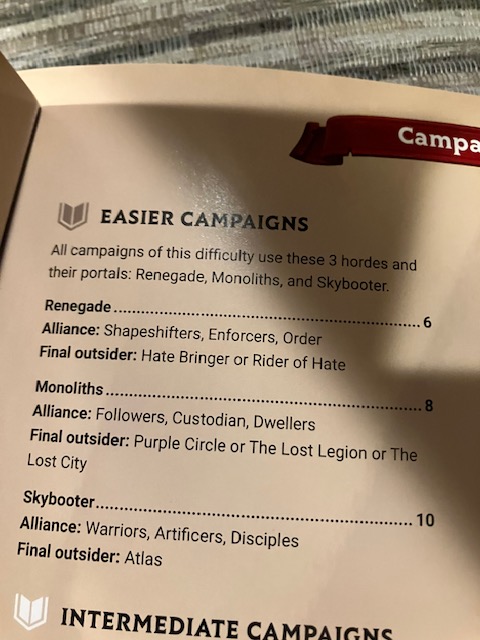
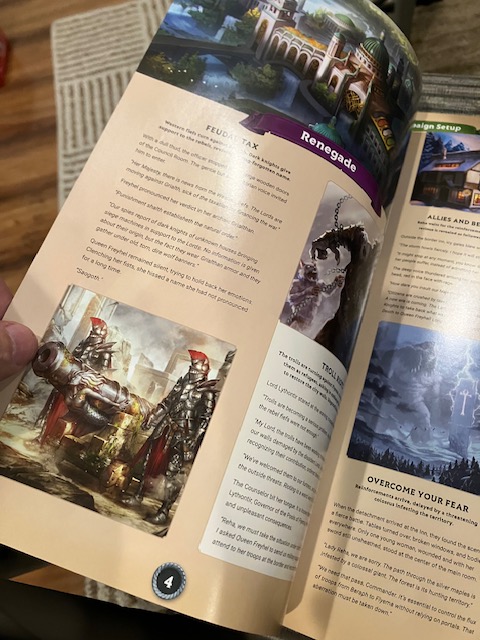
The first is that the page numbers are just wrong. The Renegade campaign is supposed to be on page 6, but it’s on page 4. Granted, this isn’t a big thing, but it really undermines the confidence if they can’t even get the page numbers right.
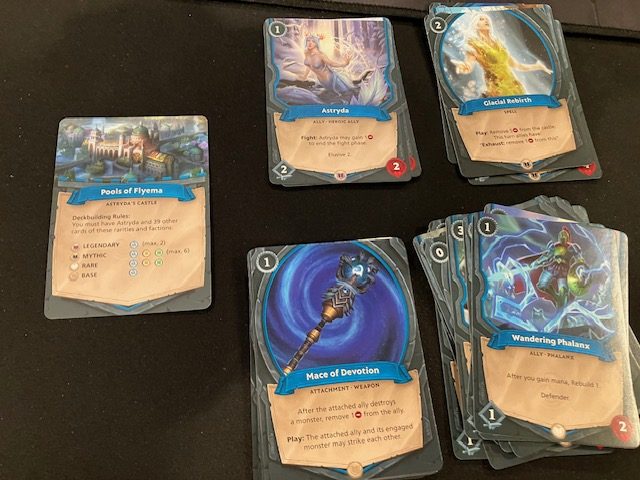
The second issue is the mislabelling of the new Blue Alliance cards.
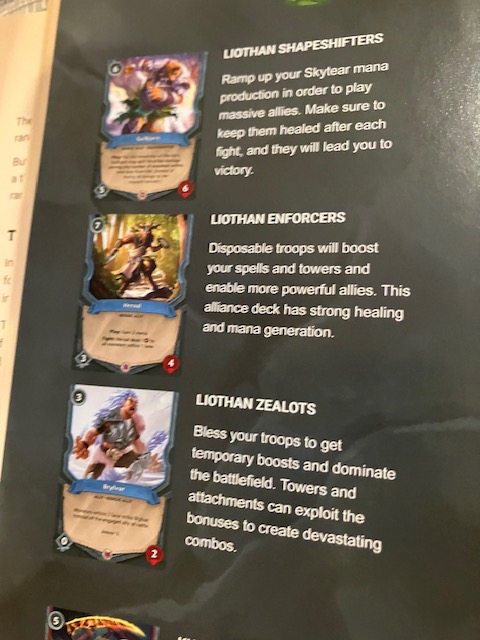
The rulebook calls the new Blue Alliance cards “Liothan Zealots” …
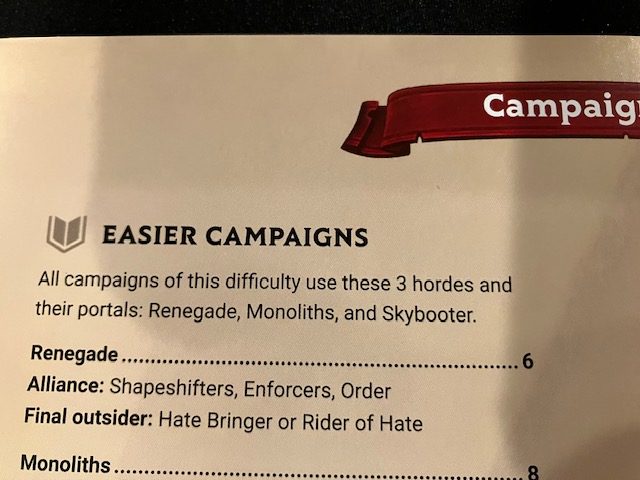
… but the Campaign page labels them as Order? I went spare trying to find the Order group, but then I think they just meant all the new Blue Alliance cards from Skytear Horde: Campaigns? I think?
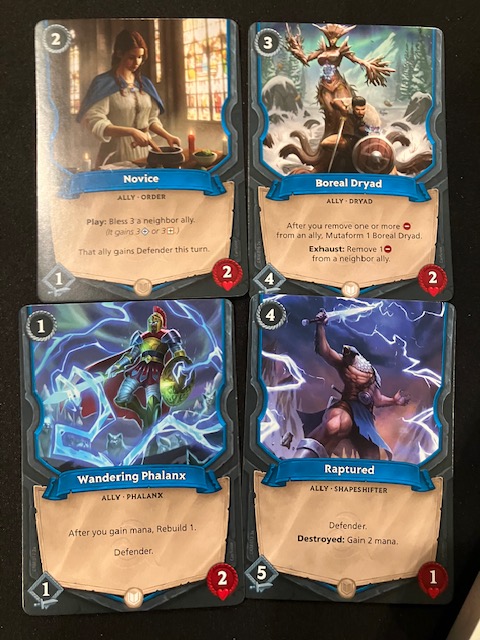
It’s a little confusing because a lot of the new Alliance cards (see above) have different subtype: see above. Some have Order, some don’t? If I JUST go back and look at the directions for building your first campaign deck, I am supposed to have 18 cards, and that includes the 4 different subtypes above. After putting this all together, I *think* that these are supposed to be the Liothan Zealots (as labelled in the rulebook), and the Order indicated by the campaign book is wrong: I think that’s supposed to Zealots. I think.
These two mistakes really undermined my confidence in the campaigns as I started into them. I wasted too much time just trying to understand what Alliance deck I was supposed to use.
Understanding the Campaign Differences
I am going to tell you this right away because it took a while for me to figure out: there are TWO types of campaigns in this game, and they are not well distinguished.
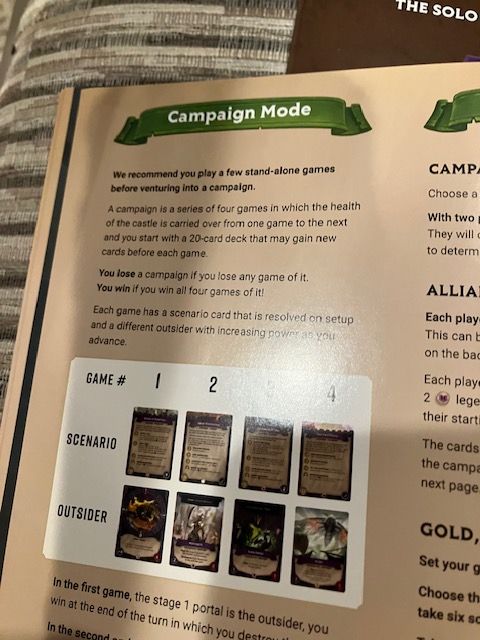
The first is what I’ll call Generic Campaign Mode: this is the type of campaign described on pages 20 and 21 of the main rulebook: see above.
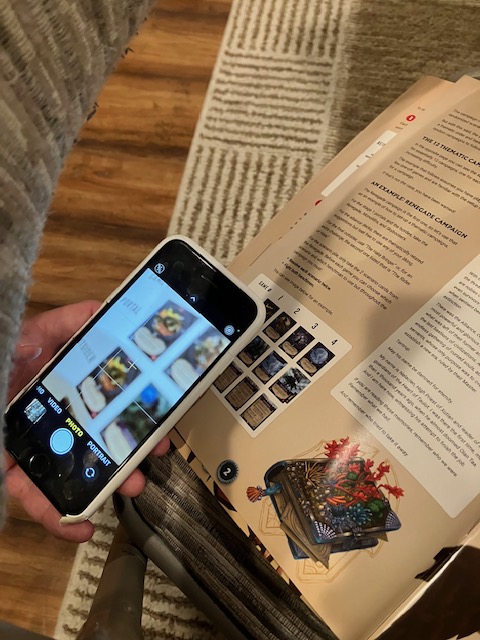
The second type of campaign is the Thematic Campaign, as described on page 2 of the Campaign book (see above).
The rules as described by the Generic Campaign are different from the Thematic Campaign, and it’s very confusing. But the Thematic Campaign still follows most of the rules of the Generic Campaign. Confused? I was!
The Generic Campaign has you play 4 games, using 4 different Scenario cards. See rules above … can you tell that all those scenario cards are different?
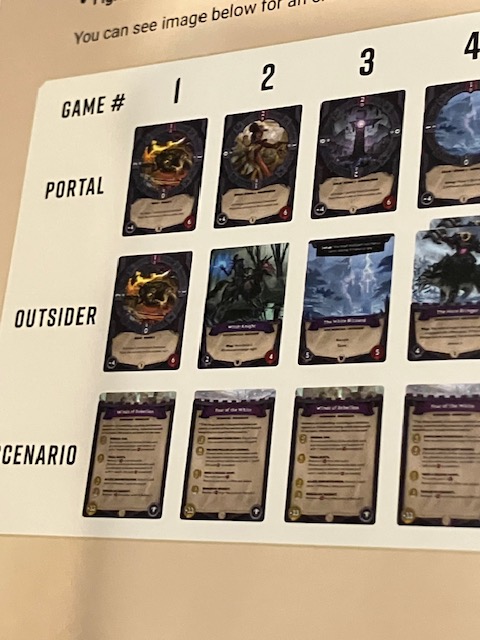
The Thematic Campaign has you use two Scenario cards twice! It’s really hard to tell this difference! Even though the pictures DO SHOW this difference (see above), they are so small it’s hard to tell unless you are looking at them with your phone (see below)!
See me noticing! “Oh! We use the same 2 Scenario cards twice in the Thematic Campaign!”
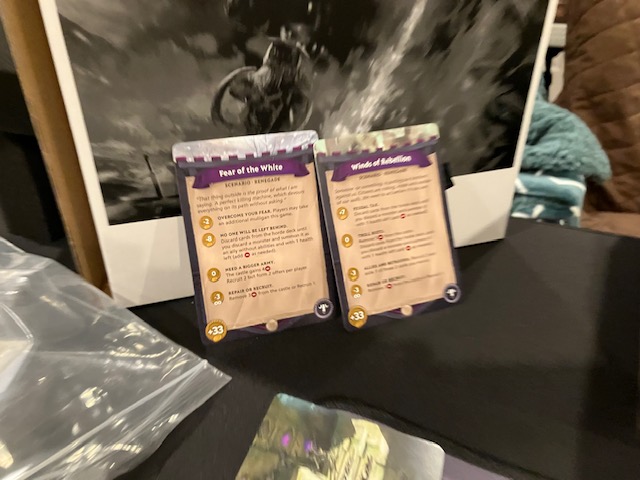
See the Two Scenario cards I used for my first Thematic Campaign!
I really didn’t feel like this distinction was clear! I think you probably want your first game to be one of the simpler and more flavorful Thematic Campaigns!
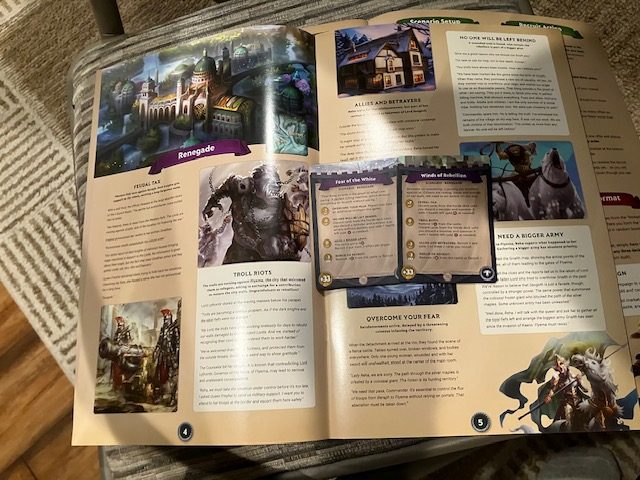
Another thing that’s very confusing .. “What’s the text in the campaign book for the Thematic Campaigns?” Is this a choose-your-own-adventure? Is this a branching campaign? Nope! Everything in the campaign book for Thematic Campaign is JUST flavor text! The text nodes are referenced by the campaign cards: see above. Honestly, you actually never have to even LOOK at the two pages of your campaign … it’s just flavor! I was actually a little dejected by this … I was hoping for something more from the two pages! And I usually like flavor text!
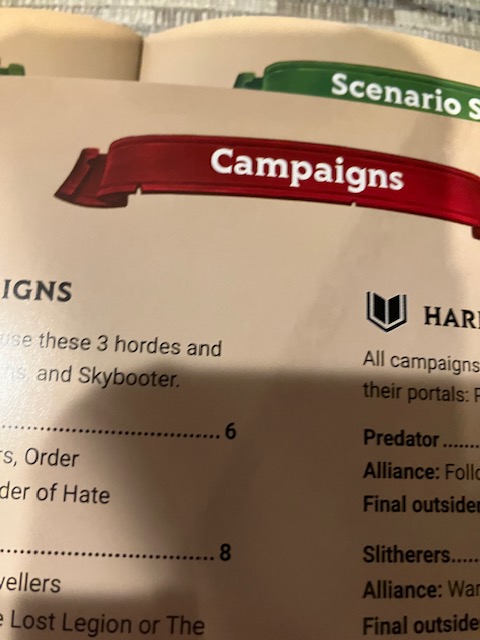
Be aware that the rulebook describes the Generic Campaign, but the campaign book is for the Thematic Campaign, and it has slightly different rules! Most importantly, you only use 2 Scenario cards!
Sure, it’s all there, but I lost at least an hour of my life trying to rectify the rules of the Generic Campaign vs the rules of the Thematic Campaign. The rules of page 20 and 21 describe the rules of the Generic Campaign, and the rules from the Campaign book describe some of the differences for the Thematic Campaign.
If I had done this rulebook, I would have done things differently: I would have described the rules for the Thematic Campaign first as the main type (pages 20 and 21), then added rules for the Generic Campaign afterwards:
THIS IS WHAT THEY SHOULD HAVE DONE:
“Play the Thematic Campaigns first! There are tons in the Campaign book! They have tons of flavor text, if you like that!!! And even when you are all done, you can still keep playing! The rules for the Generic Campaign are described on the next page!”
But that’s not what they did.
Hopefully, this helps you get over the Campaign hump easier. This is why I think the rulebook is also a curse: the campaigns are not described well. It’s all there, but you gotta work for it. Maybe now it will be easier for you being forewarned?
Solo Thematic Campaign
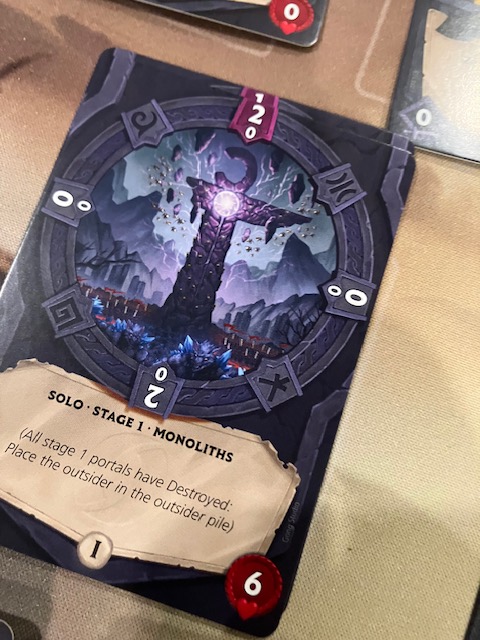
I want to be clear, once I got over the hump of understanding the campaign rules, I had fun! Basically the campaign is 4 games: the first game is a simple game with only the introductory 20 Alliance cards (a simple deck) where you ONLY have to destroy the portal! Your first game in a campaign is pretty quick and simple.
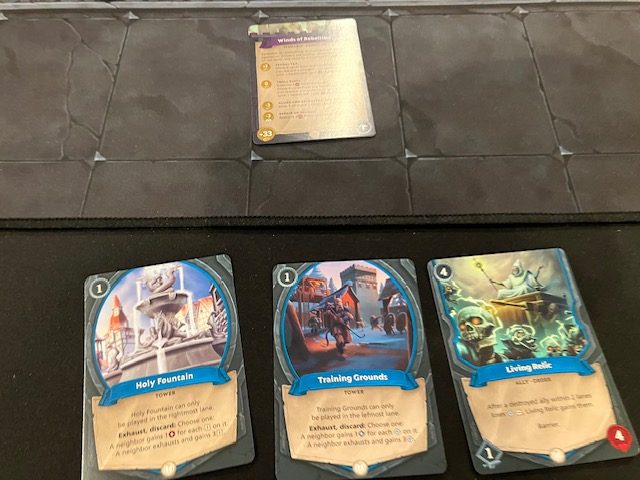
Between games of campaigns, you can spend gold to buy more cards! Well, there’s a little more to it than that (as you spend/lose gold based on the campaign cards) ..
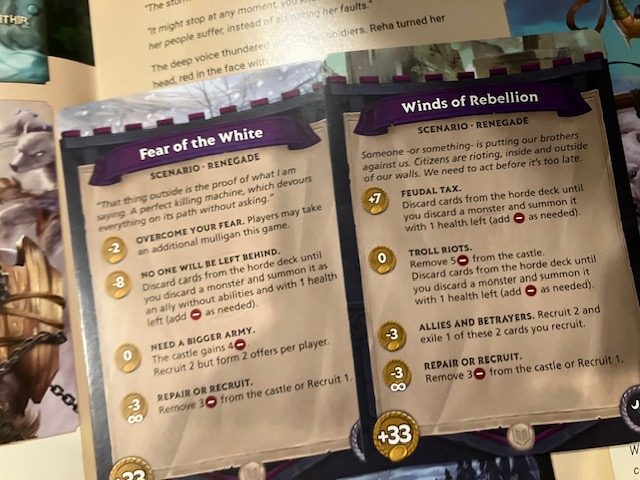
Basically, you perform the actions on the Scenario card you are on (see above), including spending/getting gold: see above for two Scenario cards.
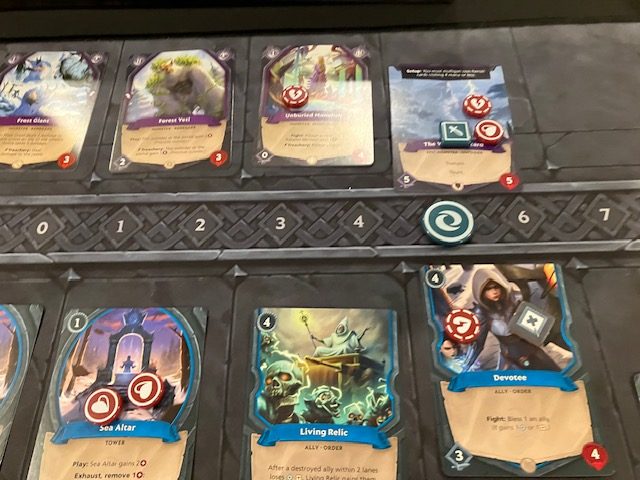
Games 2 and 3 of the Campaign, you fight the bad guys on the back of the Scenario cards! See above as the Devotee wins game 3 of the Campaign!
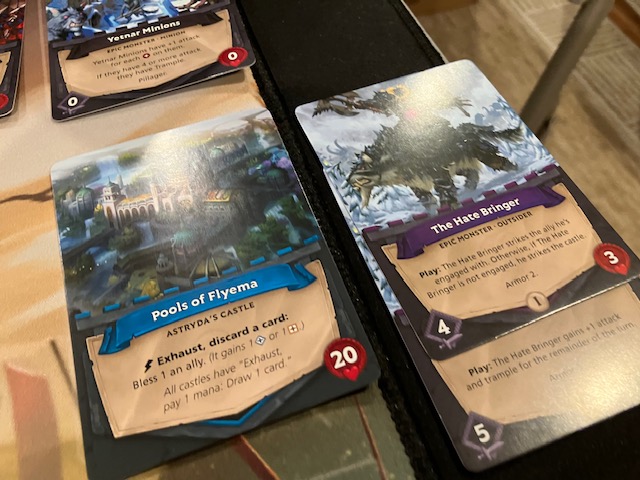
In Game 4, you fight the Outsider to win! By the time you make it to Game 4, you have bought “pretty much” a full deck (mostly the same 40 cards as the normal one-shot games). The difference is, you feel like you “earned” your deck! You also feel like you know your deck that much better! You’ve had to make choices of which cards to buy, and you just feel more invested in the campaign!
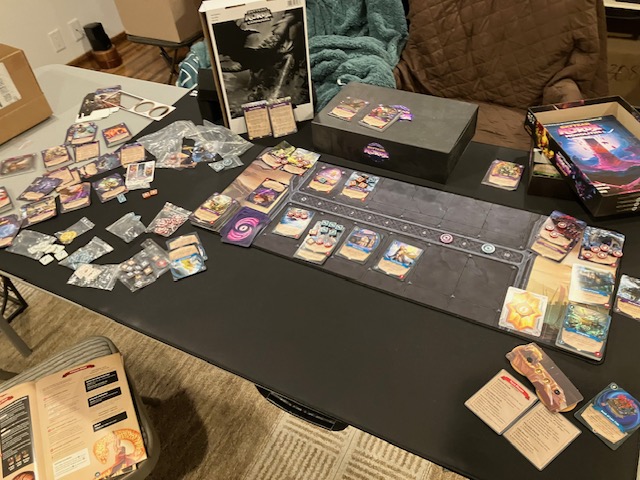
The Thematic Campaign might be my favorite way to play Skytear Horde! Granted a Thematic Campaign game is about 4x longer than a normal … you’d think it’d be shorter, but the time you gain from the shorter games of 1, 2, and 3, you lose in set-up and between rounds doing card-buying. So, why do I like this way? You feel like you get to know your deck better, it’s fun to make choices about which cards you buy for the next game, and it’s neat to have some thematic text between games!
I actually liked the Thematic Campaigns mode so much, I wanted to try an experiment: what if I TAUGHT my friends the game using the Campaign?
An Experiment: Teaching the Game Using The Campaign
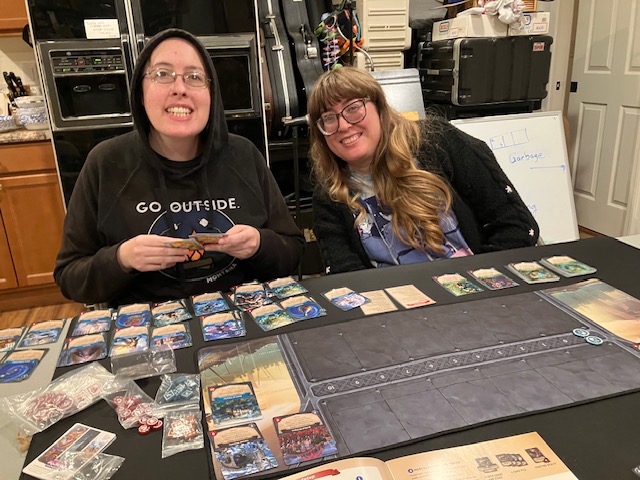
So, even though the game suggests you only play the campaign AFTER you’ve played the one-shot game, I conducted an experiment: I taught the my friends the 2-Player cooperative game using the campaign; The Thematic Campaign!
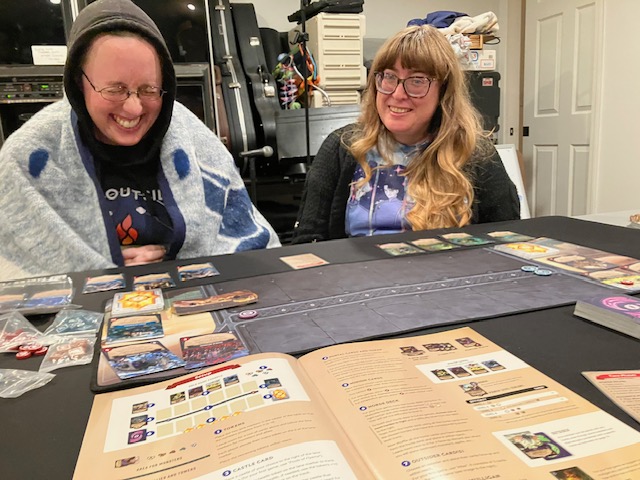
Short answer: this worked fabulously. I stayed out of the game, being “the rules guy” and just explained the game to them. I set everything up (which is quite a bit of work for the Thematic Campaign), and explained the rules.
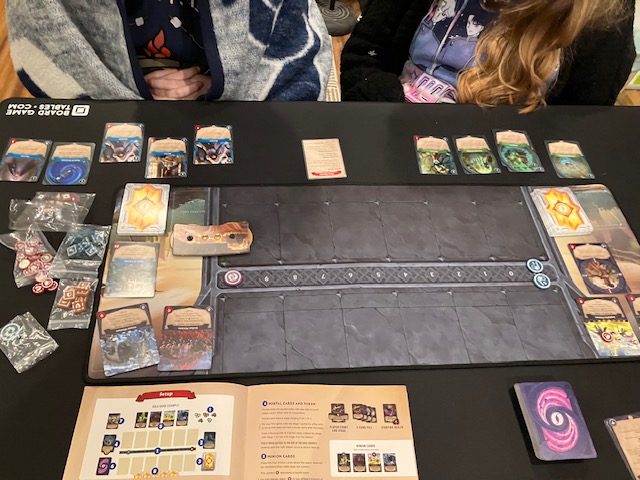
Why do I think this method worked so well as an intro game? Well, the first game is over quickly (you just have to destroy a portal), but the players get a taste of the system: they feel they understand just enough, as there are only 20 cards to learn. Compare that to the full one-shot game of 40 cards you-don’t-know, and it’s a bit of a slog for newbies! That first campaign game is quick and easy and gets you into the system!
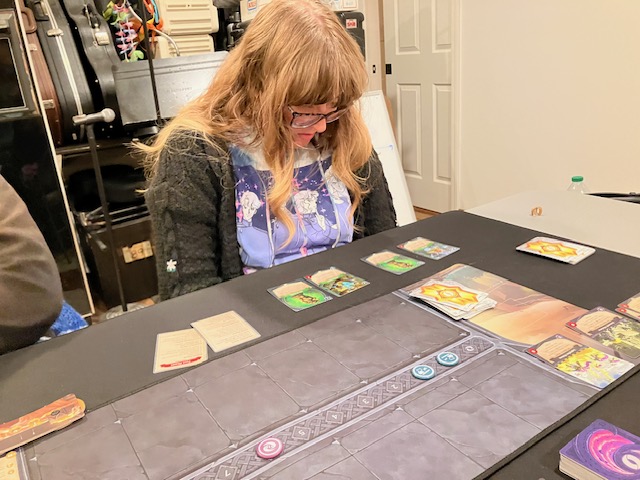
THEN, after your first game, you get to buy some new cards for you deck! The players have to make choices, so they have to read “a few of their cards”. … but not all of them! Just a few to buy for their next game! So, this works great as it incrementally teaches the cards! And players feel invested in their deck a little because THEY HAVE MADE THE BUY CHOICES.
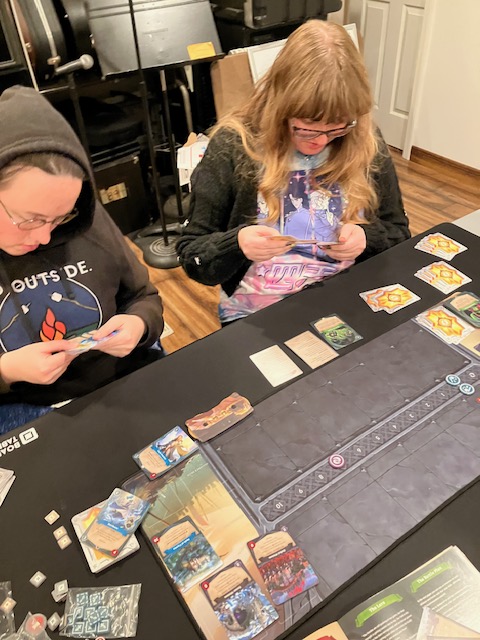
And then the games get slower harder, building the confidence of the players, but still having deck advancement at the end of each game!
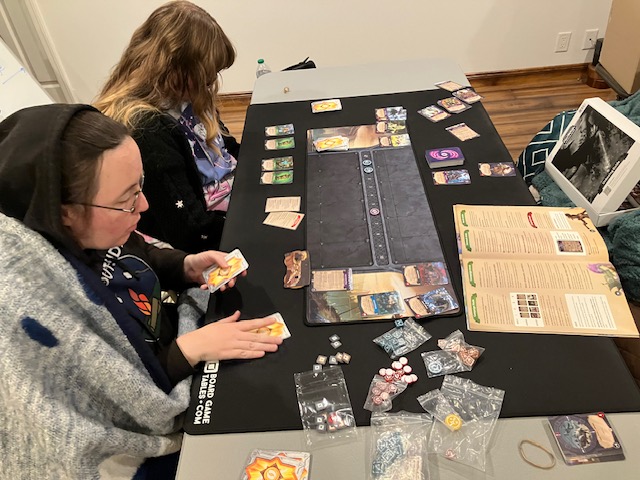
By the time the players have gotten to game 4 against “the big bad”, they are all in! They have seen the game mechanisms in simplified form, they have built confidence in themselves and their deck, they have made choices about how their deck is built, and they have invested in the game! THIS is the way to teach Skytear Horde!
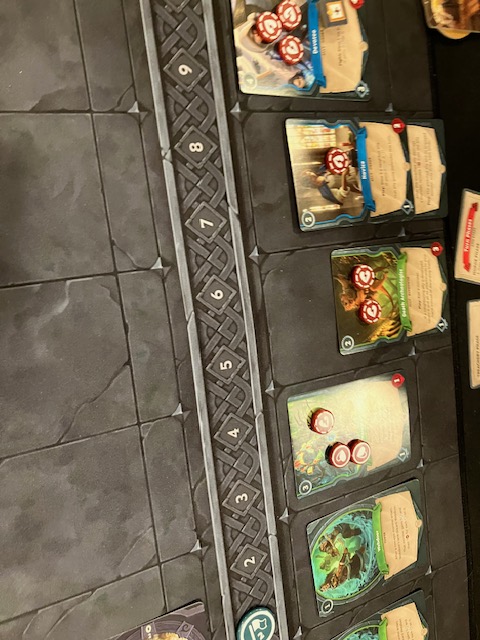
But the method ONLY works because my friends had a “rules guy” (me) explain the game and mechanisms to them, and set it up (the set-up is not trivial). I do NOT think the campaign would be a good way to teach someone coming in with no mentor; this method only works (currently) with a shepherd to guide the players.
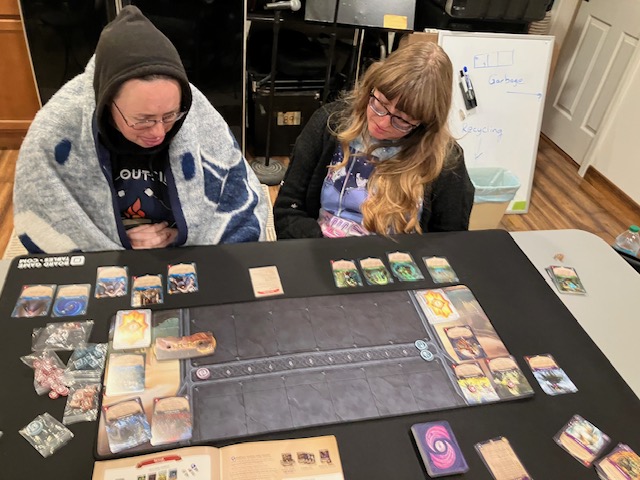
Did this method work? My friend Sara told me afterwords: “I don’t think I would liked this game if you just threw me into the one-shot game! Slowly building my confidence really helped me enjoy the game!”
A Missed Opportunity
My experience with the teaching campaign has me thinking: this is a missed opportunity. If the Skytear Horde: Campaigns had included a “First Play” book which CLEARLY guided the player(s) through a campaign with CLEAR instructions, this would be the Skytear Horde I would recommend to beginners! (I emphasize CLEAR because it would be imperative for someone who really knows how to write and teach to do that “First Play” book: my confidence in the designers wavers after all my problems in the campaigns sections) . For all the reasons I outlined in the section above, I think this should be the way to learn the game!
Unfortunately, I cannot recommend the Campaigns mode for the self-teachers until you get over the hump of learning the game and slogging though the terrible Campaigns documentation. Which is sad, because the Campaigns mode SHOULD be the way to teach newbies the game.
Cooperative Mode
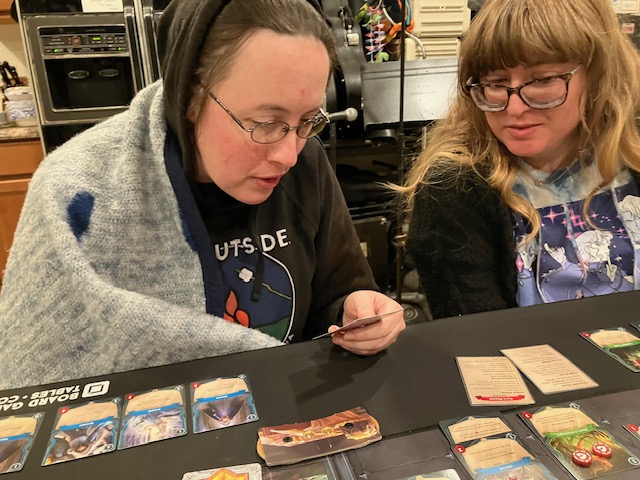
And, after all is said and done, teaching the game with the The Thematic Campaign had the side effect of helping us enjoy the 2-Player cooperative mode that much more (which we didn’t as much in the last iteration with Skytear Horde: Monoliths: see review here). Yes, it’s still fairly multiplayer solo, but my friends seems to enjoy the co-operation they did have (deciding which lanes to inhabit, which monsters to fight, etc).
What Have We Learned?
One) If you like Skytear Horde, you’ll like this. As an expansion, it’s more of the same, in a good way. See above.
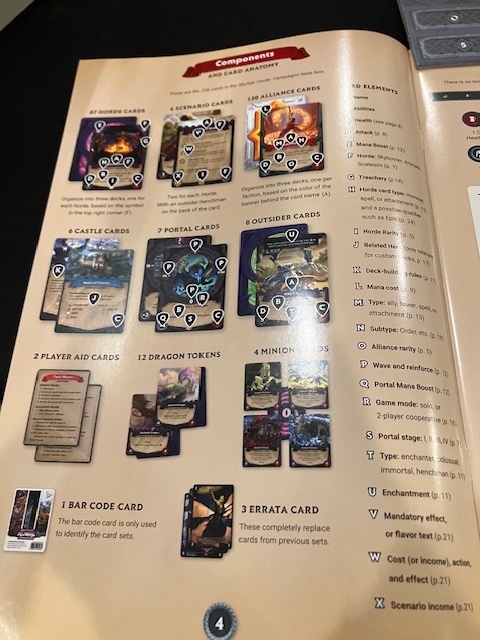
Two) The rulebook for the base game in Skytear Horde: Campaigns is the best iteration of the rulebook so far and it’s pretty darn good. See above. Well, it’s good before we get to pages 20 and 21…
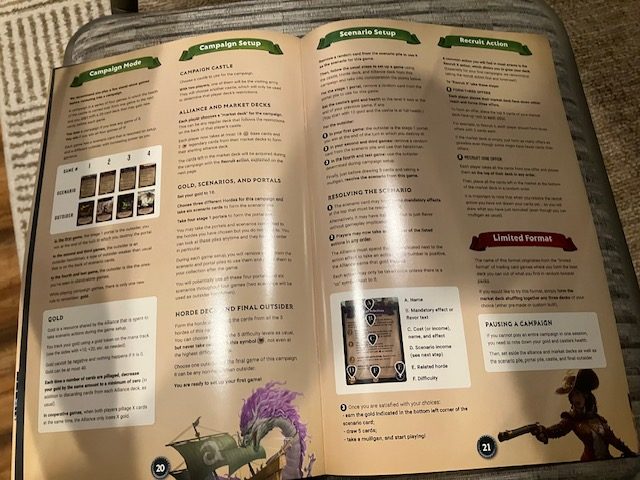
Three) The rule section for campaigns is terrible and you will struggle with it until you figure out there are two modes: Thematic Campaigns and Generic Campaigns. See above.
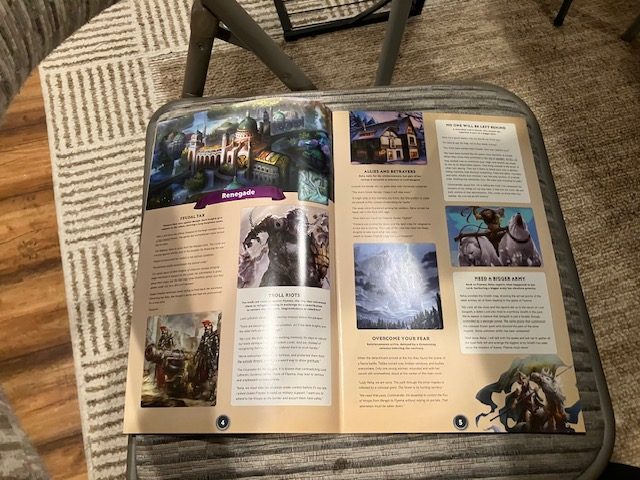
Four) The text in the Campaign book is only for Thematic Campaigns, and it’s really only flavor text; there’s no branching narrative or anything. You almost don’t need the campaign Book except for pages 2 and 3. See above for some flavor text for the first campaign.
Five) The Thematic Campaigns can be the best way to teach Skytear Horde, but only if you have a good shepherd who understands everything already. There really should be a well-written and clear First Play Guide to teach newbies Skytear Horde using the Thematic Campaigns mode. This is a huge missed opportunity.
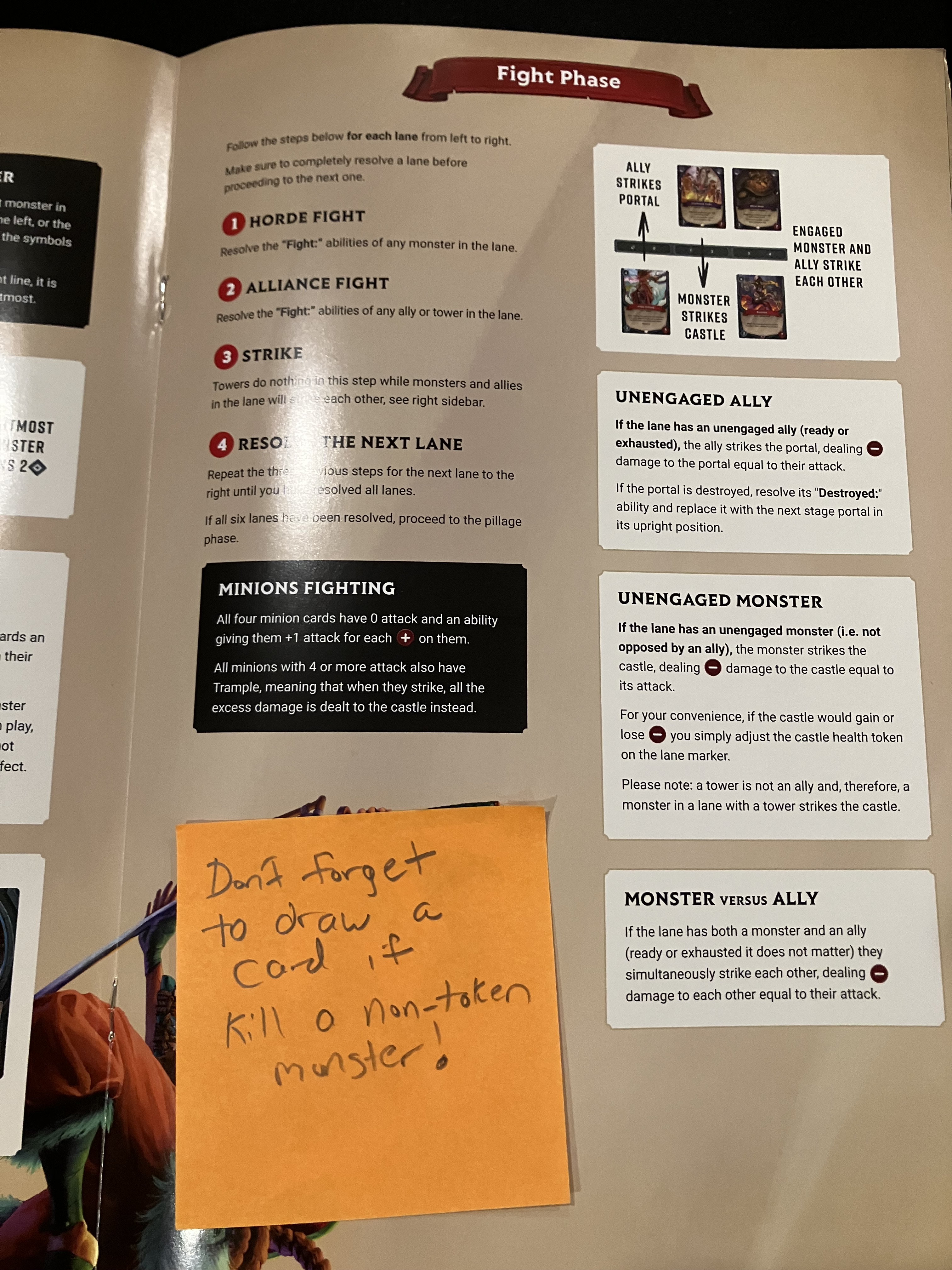
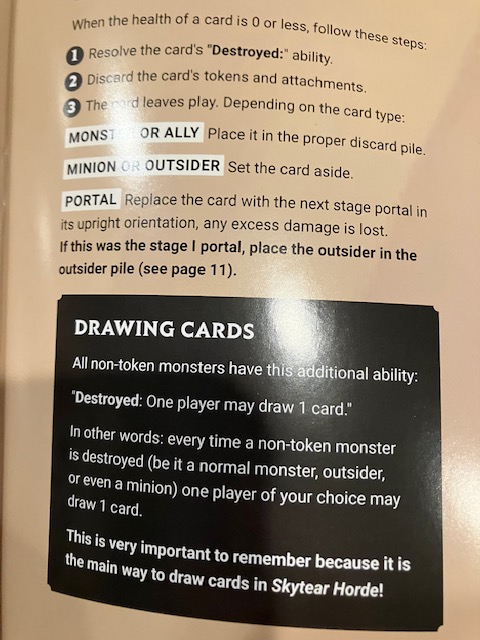
Six) I recommend putting a note in your Fight Phase page to remind yourself that you draw Alliance cards if you kill a non-token monster: see above as I did!! The rule is documented on page 9, but you can easily miss it (because it’s not in the main flow: it’s in a parenthetical box: see below). And it’s such an important rule (and one I embarrassingly forgot in my first game), I think you need to re-emphasize it on the Fight Phase!
Conclusion
I liked Skytear Horde: Campaigns, and it’s staying in my collection. As a straight-up expansion to the Skytear Horde system, this is a fine expansion giving you more stuff. The Campaigns mode has terrible documentation, but once you get through it, The Thematic Campaigns are my favorite way to play Skytear Horde now.
Just be aware of all the issues we discovered while playing; hopefully that will be enough to help you enjoy this more if you decide to get it.
 coopgestalt