Designer’s Diary for Sidekick Saga

As we pass the 6th Anniversary of Sidekick Saga being on Kickstarter, let’s look back to the original design and development process! This was a labor of love for me; I have collected comics since I was 10 years old, and I think I still have every comic I every bought! I love comic books and Super Heroes! I wanted a cooperative Super Hero game with a story, as none really existed at the time!! Let’s look back and see how this design came about! For the record, all pictures in this diary are from my own personal comic collection! See below as I go hunting for comics!

Inspirations

But let’s jump in … what inspired Sidekick Saga?
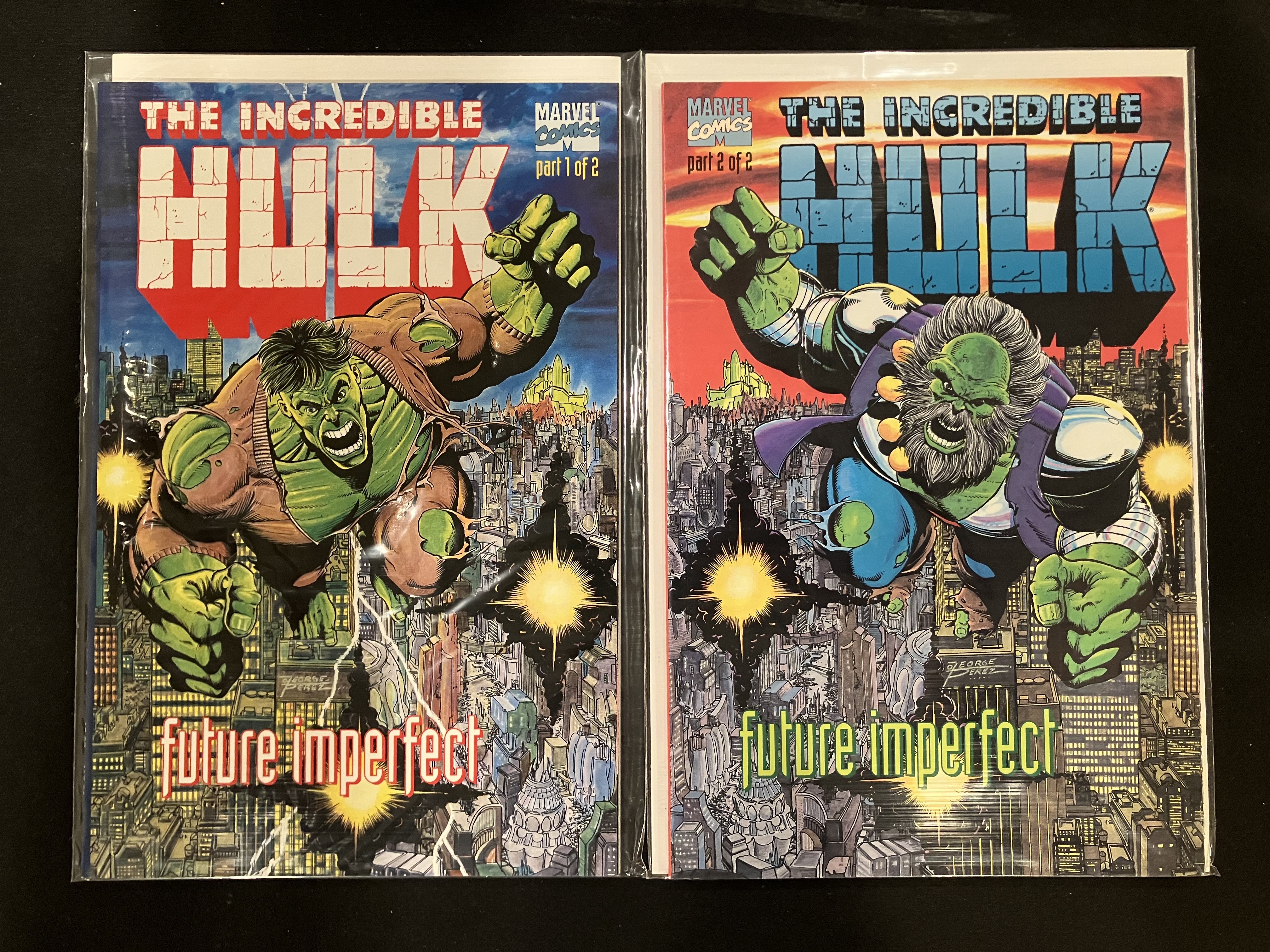
Sidekick Saga started life from an inspiration in (surprise) a comic book: Future Imperfect by Peter David and George Perez.  There’s one very notable scene in Future Imperfect when Rick Jones, (the sidekick of the piece, and sidekick of many heroes like Captain America and Hulk), keeps the Maestro at bay using a collection of “artifacts”: Iron Man’s gauntlets, Captain America’s shield, Thor’s Hammer!
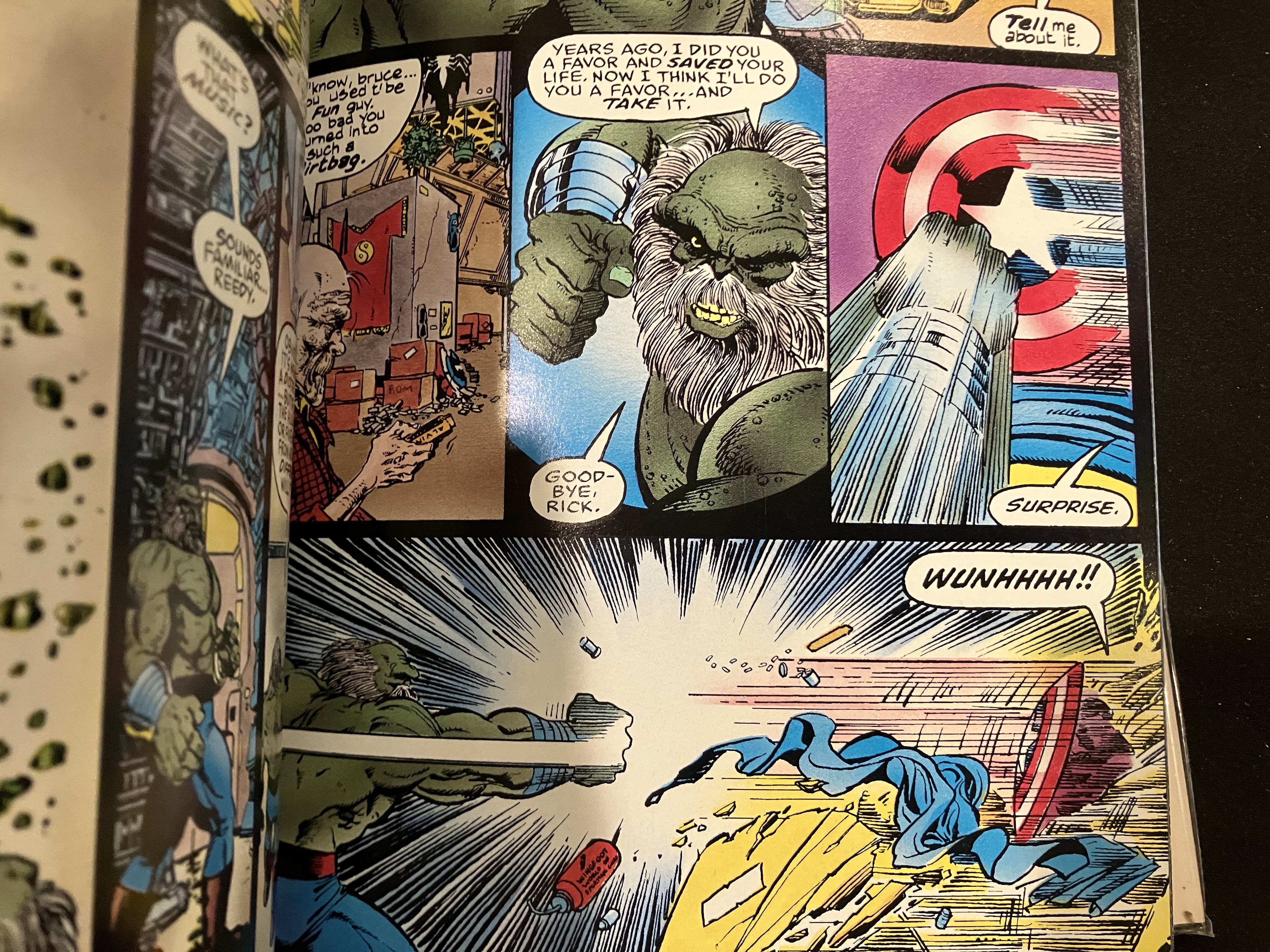
The sidekick, by being smart, was able to hold his own (with a little help) with the Maestro, an incredibly powerful villain!
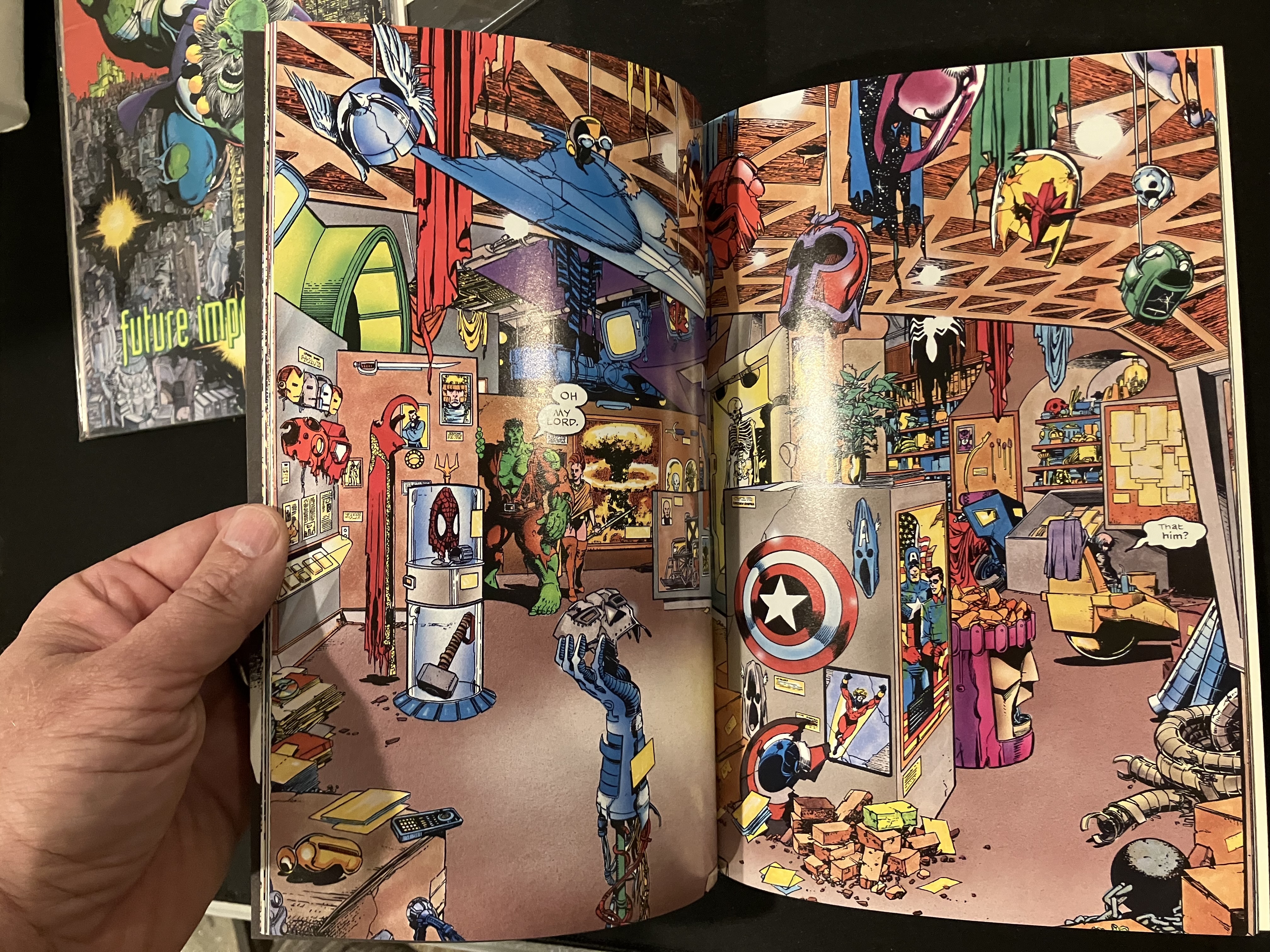
The scene above, with its collection of items, stirred something within me … 
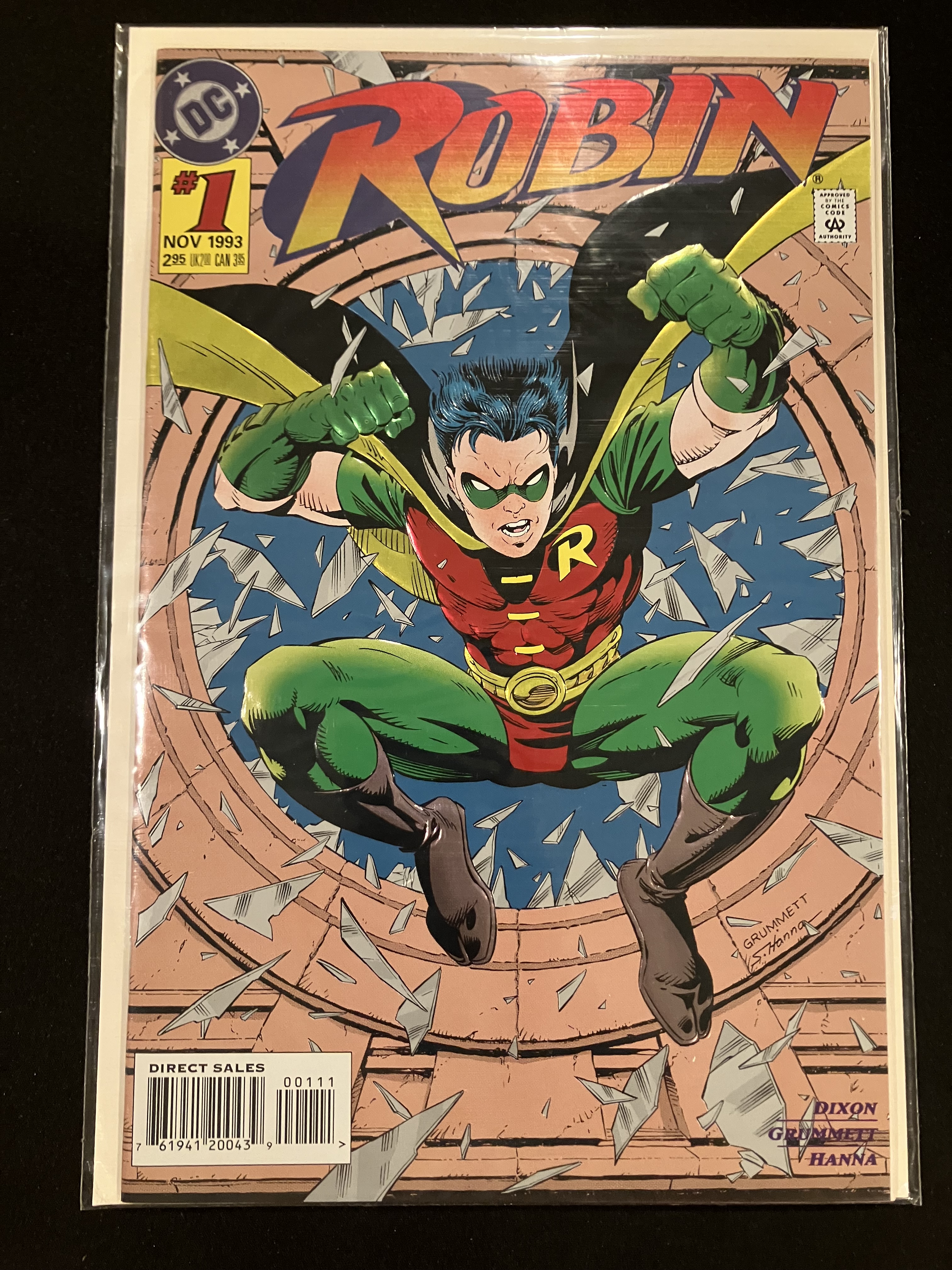
Another comic that inspired Sidekick Saga was the 1990’s Robin (by Chuck Dixon, Tom Grummett, and Scott Hanna). In this era, Tim Drake became the third Robin, and frankly, was the smartest of all the Robins! He figured out Batman’s identity! In this series, the Tim Drake’s Robin patrols Gotham without Batman, but has help from The Huntress, Oracle, and even Commissioner Gordon!  Tim Drake is mostly just a normal human doing the best he can to ward off evil, using his smarts and his fellow heroes to fight crime!  The cooperation of the Arkham Sidekicks was pivotal to their success!

Another unlikely source of inspiration was Buffy The Vampire Slayer Season 5 finale.  Some SPOILERS: in the Season Finale, Buffy used pretty much EVERY WEAPON at her disposal, from other episodes in Season 5, to fight the big bad at the end! There was something familiar about this approach; it’s what Rick Jones did in Future Imperfect!  In this case, it inspired more of the idea that some important items persist from game to game.  It also kept alive the idea that “collecting stuff” was an important part to battling the big bad!
A final unlikely source of inspiration was a game called Seven Wonders.  You heard me. It was interesting that, at the time, my friends were very bi-modal on two games: they either loved Seven Wonders and hated Sentinels of the Multiverse or hated Seven Wonders and loved Sentinels of the MultiverseWhat if I could unite these groups and have the notion of cooperative drafting? What if, rather than working against each other in a drafting game, you could pass each other what we needed? This created the whole idea of Supply Lines: cooperative drafting, much like Seven Wonders (it even had a directionality of the Ages): see above.

Putting all these elements together served as the basis of Sidekick Saga: I wanted a cooperative drafting game (where players would pass each other cards they needed) where players explored the city looking for technology to help them fight the big bads! And every card should matter!  You might not think something matters (like stuff in Season 5 of Buffy), but then all of a sudden, it becomes important!

Leads and Legacy

As the development of the game progressed, I need to refine the exploration-type mechanic to the game.  For the Sidekicks to succeed, they had to find stuff (like Buffy or Rick Jones)!  Some stuff was incredibly useful, so it seemed like you had to “pay” for it somehow! This introduced the idea of Leads (originally they were called clues, but I was worried this might invoke too much of a Clue game comparison): if you hunt down enough Leads, you can find where Jor’s Hammer (I didn’t want to get sued), the Star Shield, or the Cave Warrior’s car (which looks nothing like the Batmobile) would be stored!    I originally considered the idea of having to have “different kinds of Leads“, but dismissed it quickly as it would too frustrating if you got the wrong types of LeadsLeads were generic: if you got 6 Leads, you could get the Cave Warrior Car which would help you move around the city faster AND protect yourself!
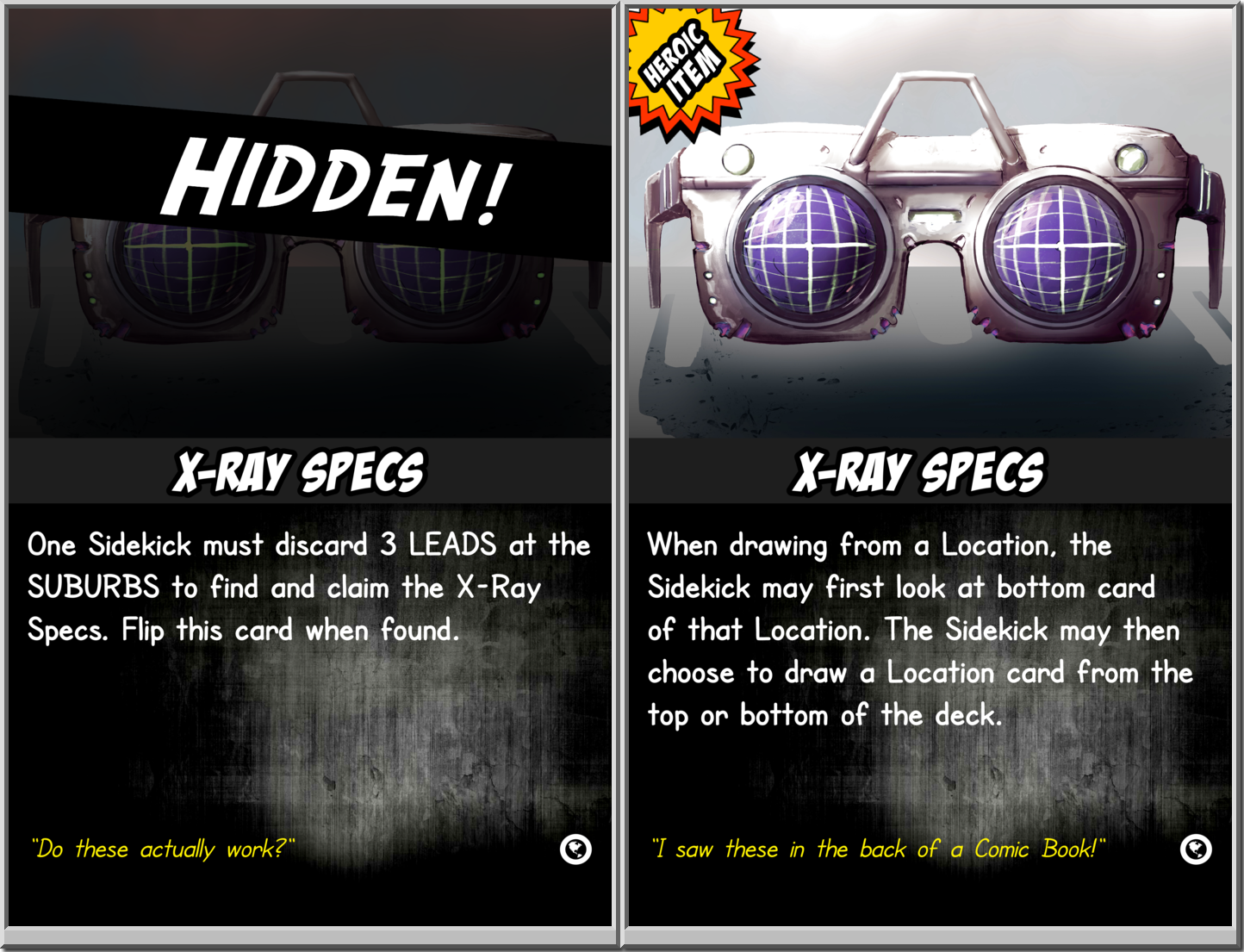
We dubbed these very special Items as Heroic Items: these were very special items that were hard to find!  They might take three to six turns to get one of them during the game, so you didn’t want to lose them between issues!  So, Sidekick Saga became a “legacy” game when any Heroic Items you obtained persisted from game to game! 
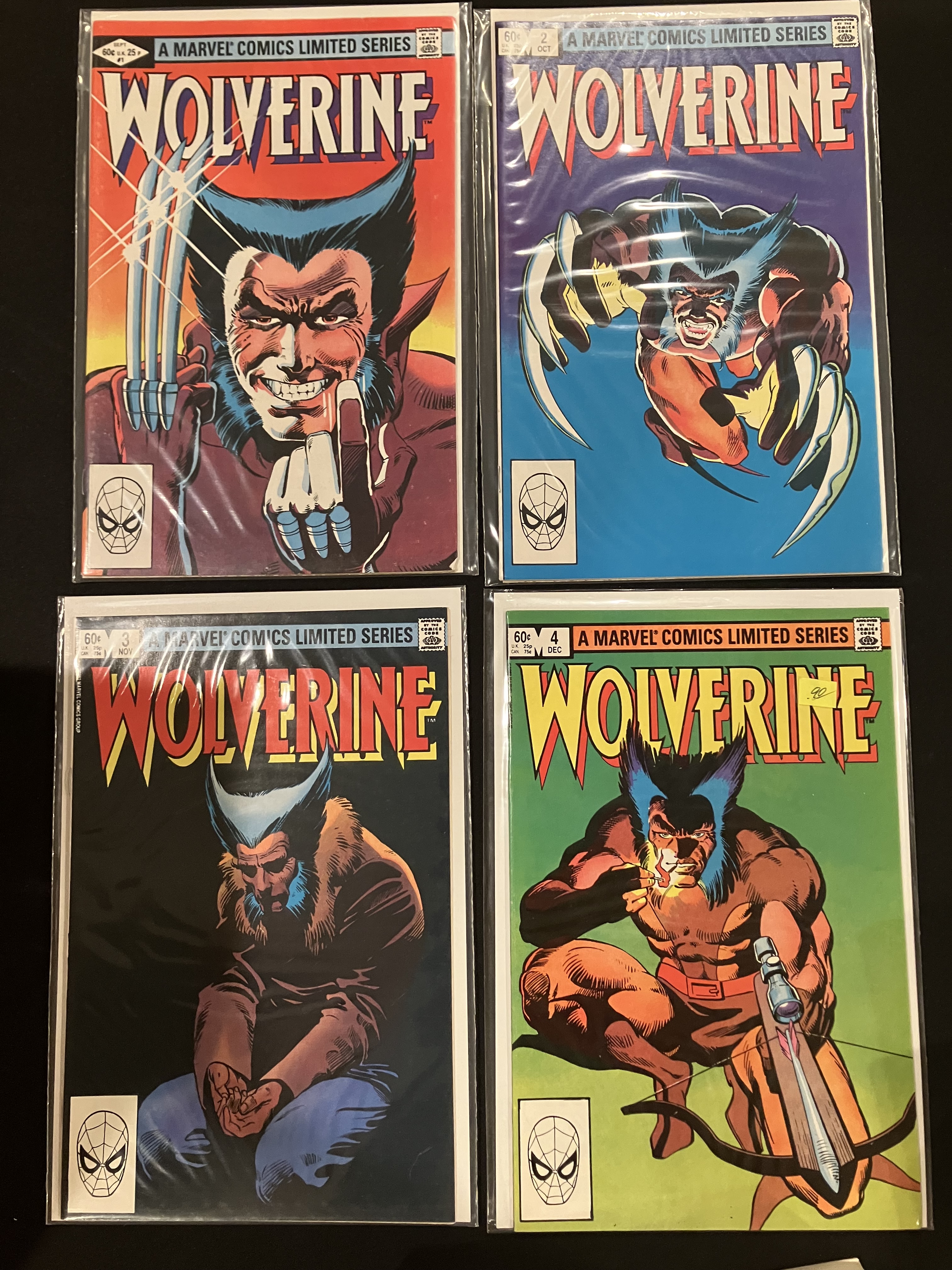
Honestly, I really liked the idea of a story spanning multiple issues! It’s very typical of comic books of my era: a massive story would unfold over 4 to 6 issues of the comic!  Think of the amazing story that unfurled from Issues 1 – 4 of the original Wolverine mini-series!  Things would change massively from issue to issue, and what the heroes did really mattered! So, the idea of a legacy comic story was something I really really wanted to embrace.

(And the time Sidekick Saga was in development, there were NO Super Hero board games with an ongoing /legacy story)
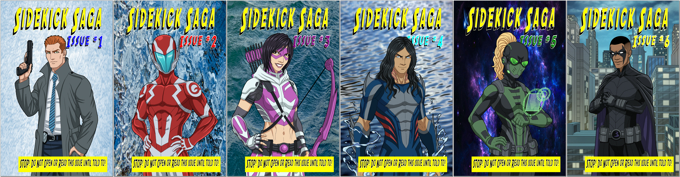
In this case, each “game” would be an issue of a comic book series. What was the story? All the Super Heroes had disappeared!  What had happened to them?  All that was left were the under-powered Sidekicks!  Could these lowly Sidekick keep the bad guys at bay while they tried to solve the mystery of what happened to all the Super Heroes?  That was the story I wanted; that was the story that would make the Sidekicks take center stage!

So, Heroic Items, would persist from issue to issue. It introduced a tension; do heroes pursue Leads to get a Heroic Items, at the cost of making it harder to defeat the current bad guys?
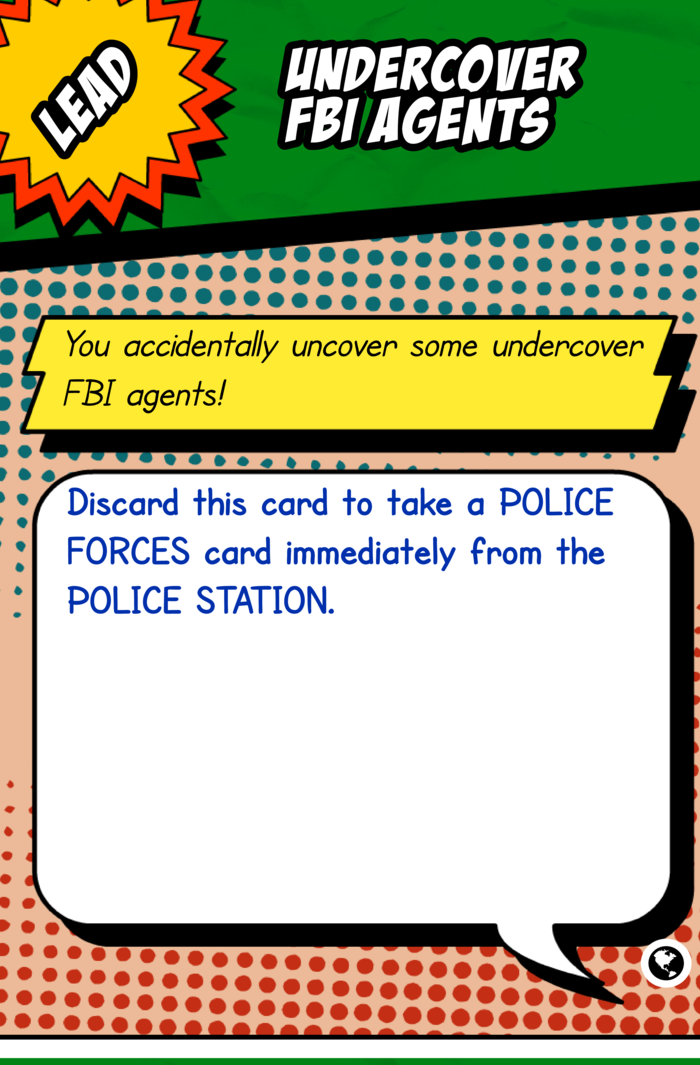
To help alleviate some of this tension, The Leads became multi-use cards; you could either save them up to get a Heroic Item, or you could use them directly (Leads would also do something useful for you). This gave players more agency, more choice: they could pursue Leads, but could also just use them as needed (for immediate help or later help)!

Exploration
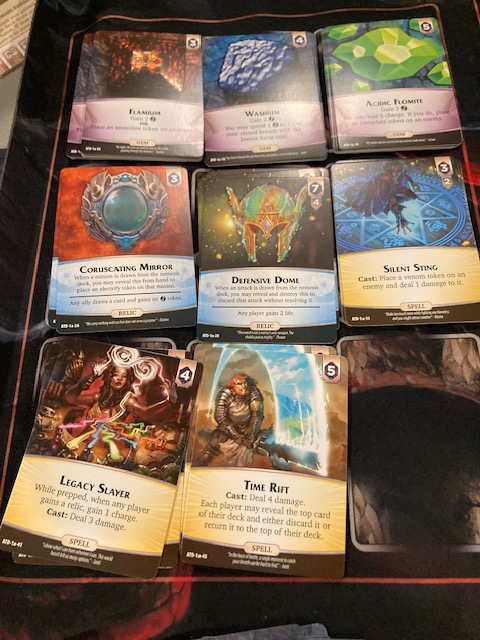
The exploration idea came from playing cooperative deck-building games like Aeon’s End; nine different things you could get! I liked cooperative deck-building games, but to me it always seemed an inversion of what I wanted: In deck-building games, you know what you buy, but you typically have no control over when it comes out!  What if you inverted that idea and made it so you don’t know exactly what you get, but once you get the cards, you can  play them whenever you want!?

That’s the idea of the city; each Location in the city has 8 cards, and those cards are “related” by a theme: The Police Station has Police cards, Rincon Labs has Scientists and Technology, The Suburbs have a lot of Research/Lead cards, etc. You have an idea what you will get, but maybe not exactly. Then, once you get stuff from a Location, you can play it whenever you want!
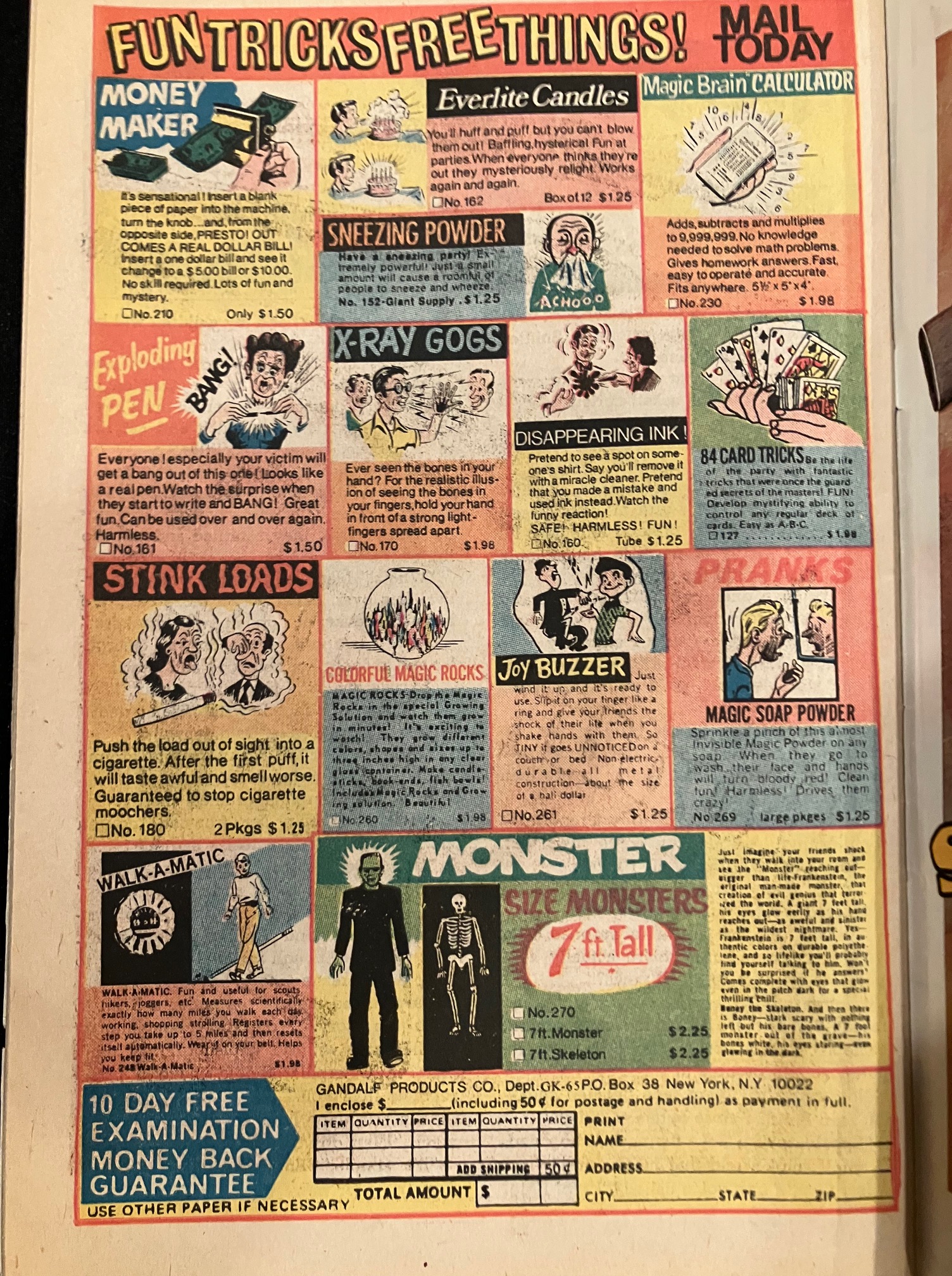
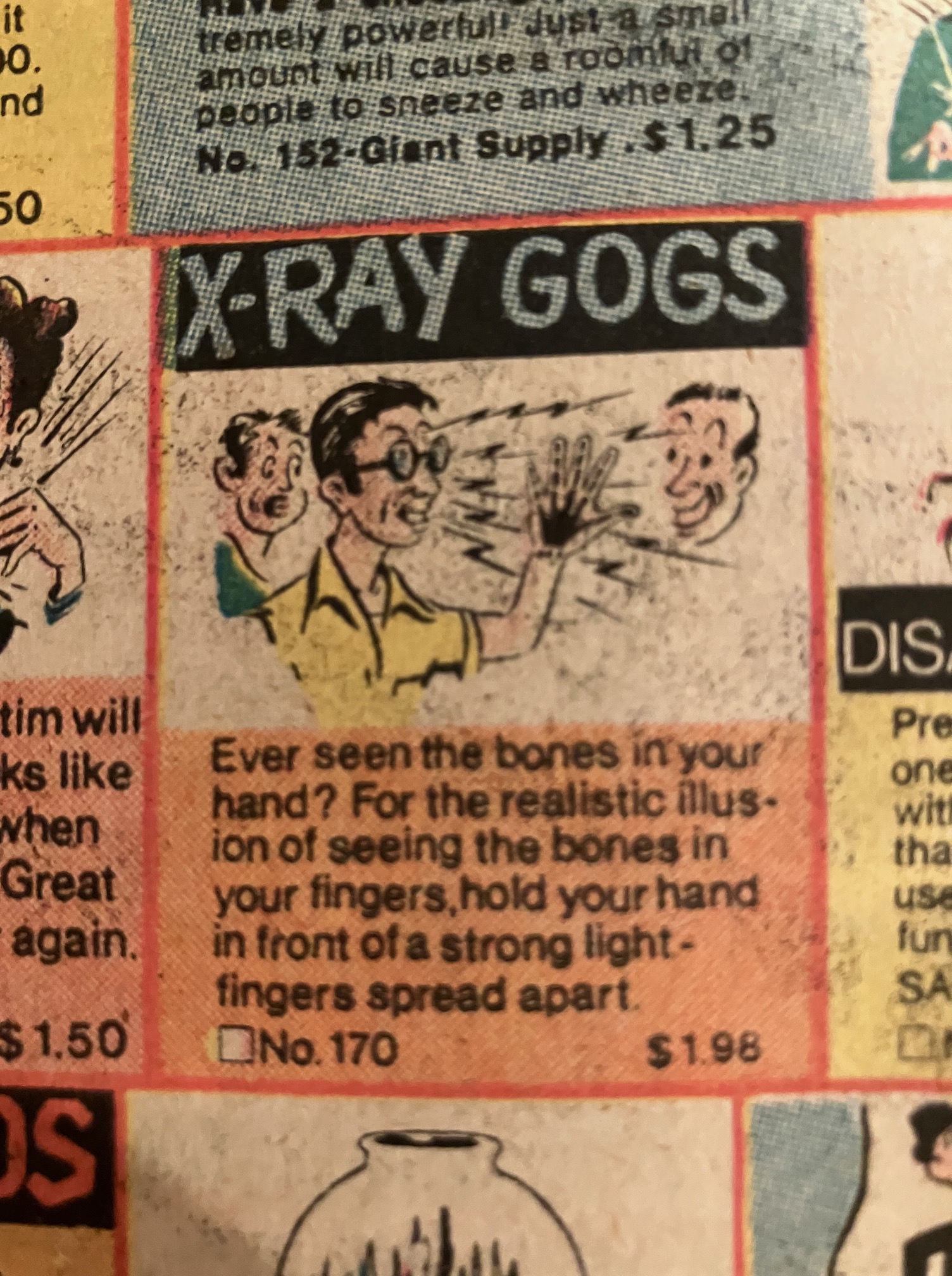
But through Heroic Items like the X-Ray glasses, you might have a little more control. And X-Ray glasses are an inside joke for anyone who grew up with comics; there were always ads for these things in the comics!
So, players move around the city and explore locations looking for technology and Leads to help them in their quest to take down the big bad!

Secret Identity and Hero Modes
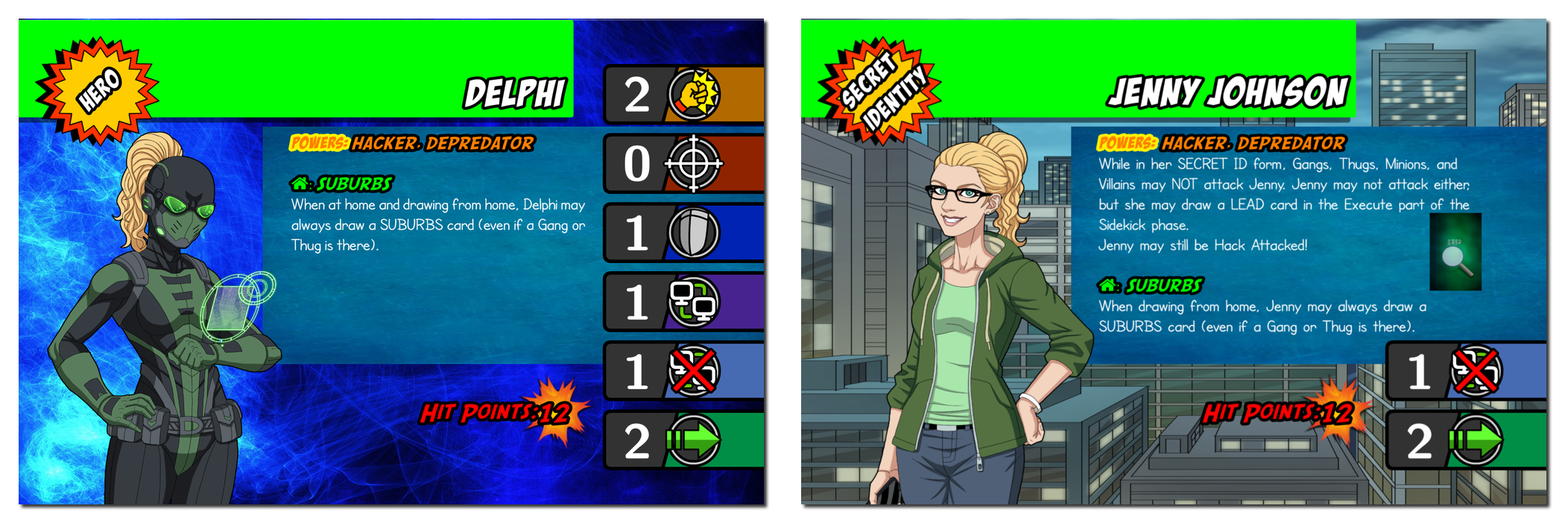
Another thing I wanted was the tension of Secret Identity vs Hero form. The Secret Identity is absolutely am essential tool to keep the Sidekicks out of trouble!  (At the time I was exploring this idea, Marvel Champions had not come out yet, and to my knowledge, it was an original idea to have players go from Secret Identity to Hero and back. I documented my playtest here on my Unpub play of Sidekick Saga, which was 6 months before Marvel Champions was released; so, don’t go saying I copied Marvel Champions on this!)
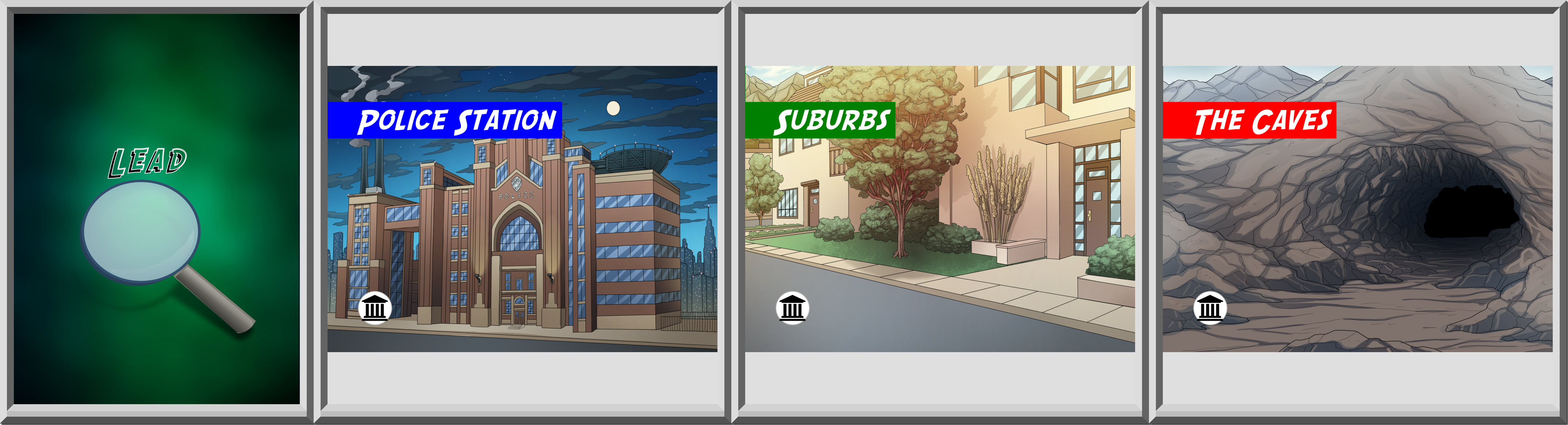
But, I also wanted the Secret Identity mode to be useful; when you go into Secret Identity, you escape combat, but that’s also a main way to get Leads in the game!  The Secret Identity is all about doing research away from combat!! When you are in Secret Identity mode, you get BOTH a Lead AND a card on your Location!  But, of course, while you are doing this research, the Bad Guys are getting more and more powerful since you aren’t fighting crime!  It’s that tension you see in comics all the time! When do I go into Secret Identity mode to research (and stay out of the Bad Guy’s way) and when do I go into Hero mode to fight crime? That’s a big part of being a Sidekick!  It’s also a big part of the game!
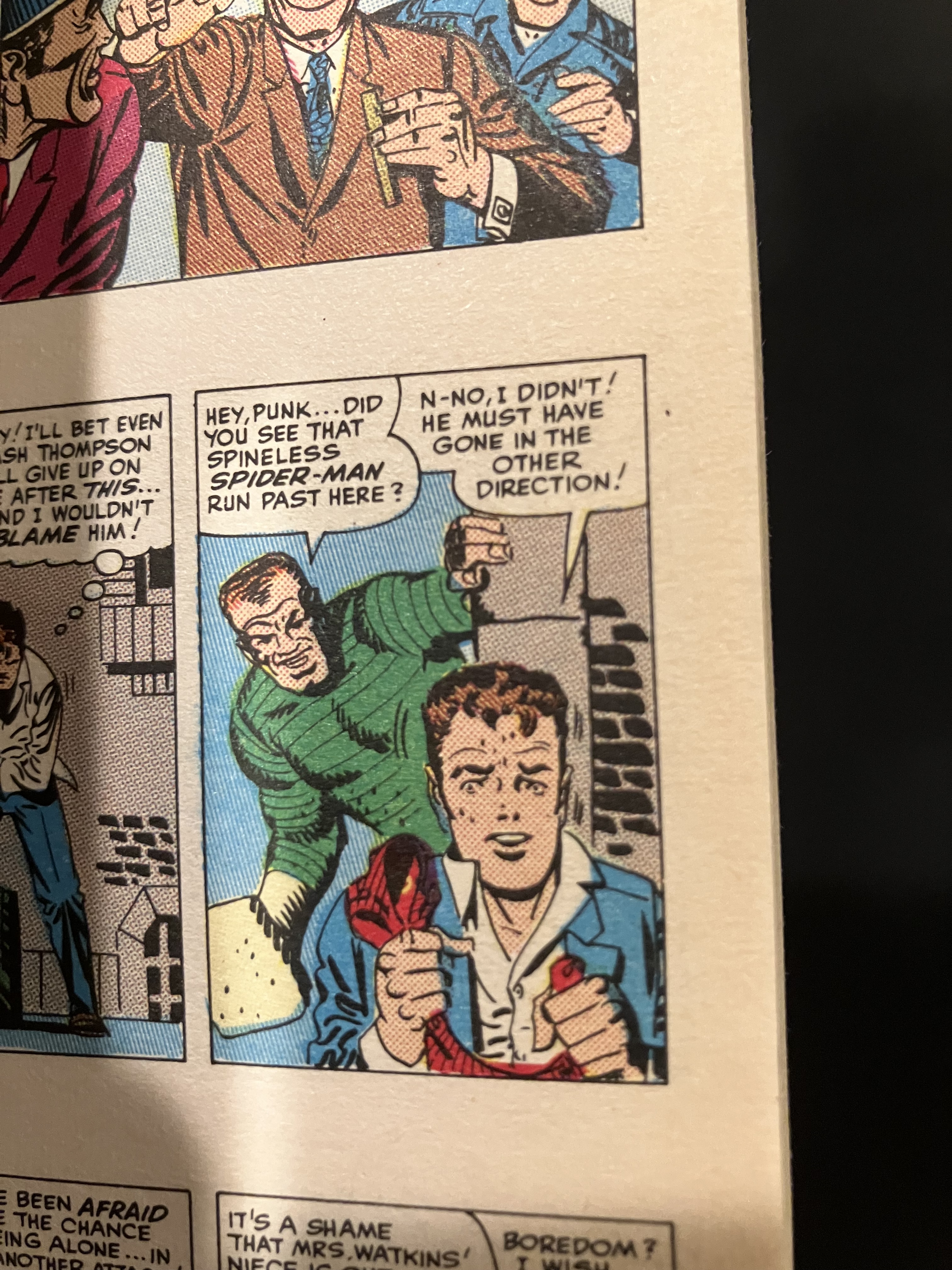
I still remember a particular scene in The Amazing Spider-man #18 where Spider-man changes back to Peter Parker to escape the Sandman.  See above!
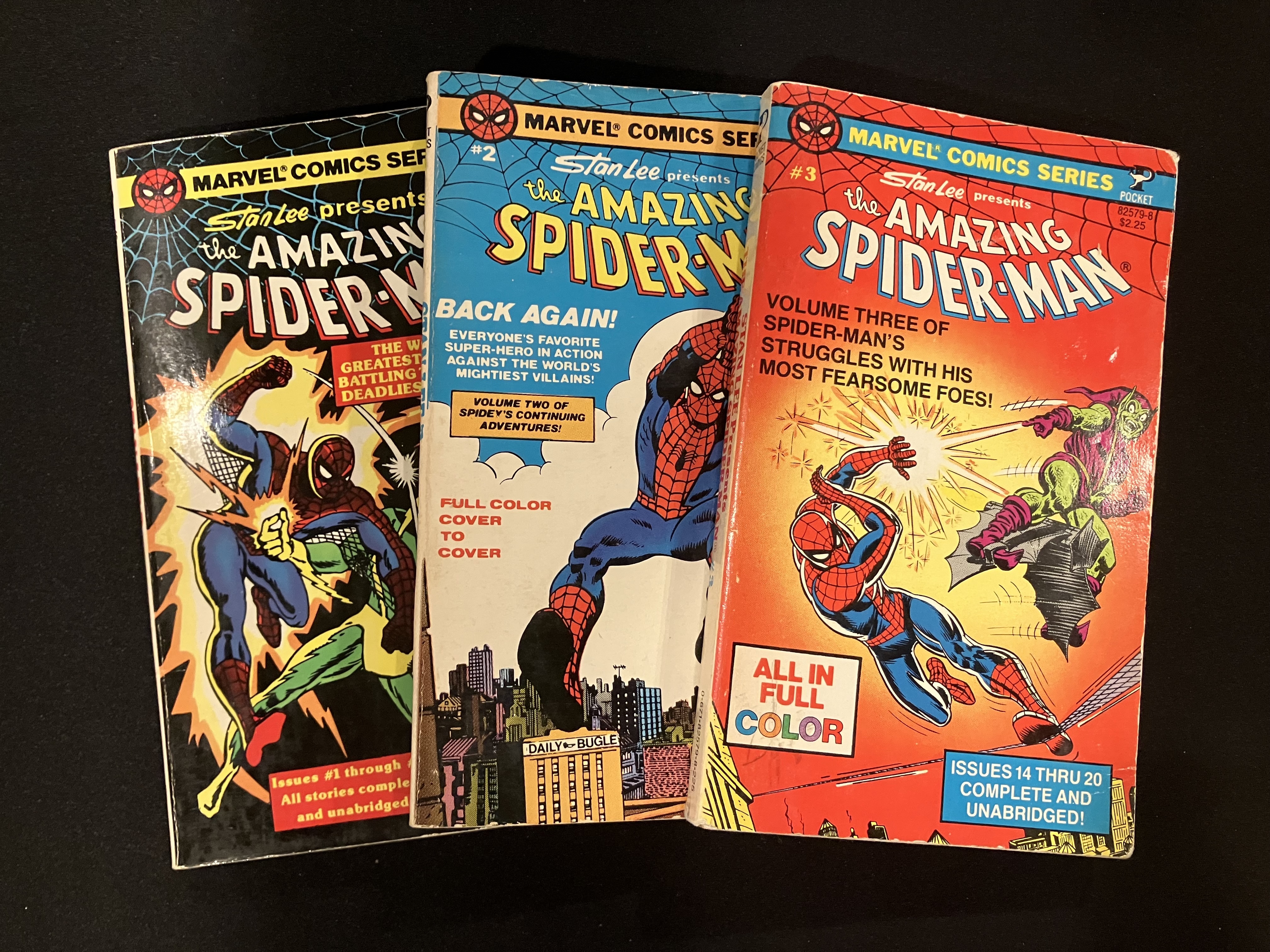
Those original Stan Lee/Steve Ditko Spider-man comics (which I read when I was a young kid), had quite the influence on me! I still remember those scenes! (I didn’t have the original Spider-man comics that are worth tons … I was just a kid! I just had the little collection of books : see above). But Peter Parker used his Secret Identity as a tool so many times in those early Spider-mans … I really wanted a mechanic like this this in the game to capture that!

Advancement

One of the funnest part of Dungeons and Dragons is leveling-up: I wanted to make sure there usually some notion of leveling-up between issues: new powers, new Heroic Items, new heroes, … something to give fun choices between issues! I also wanted to make sure losing wasn’t so devastating!
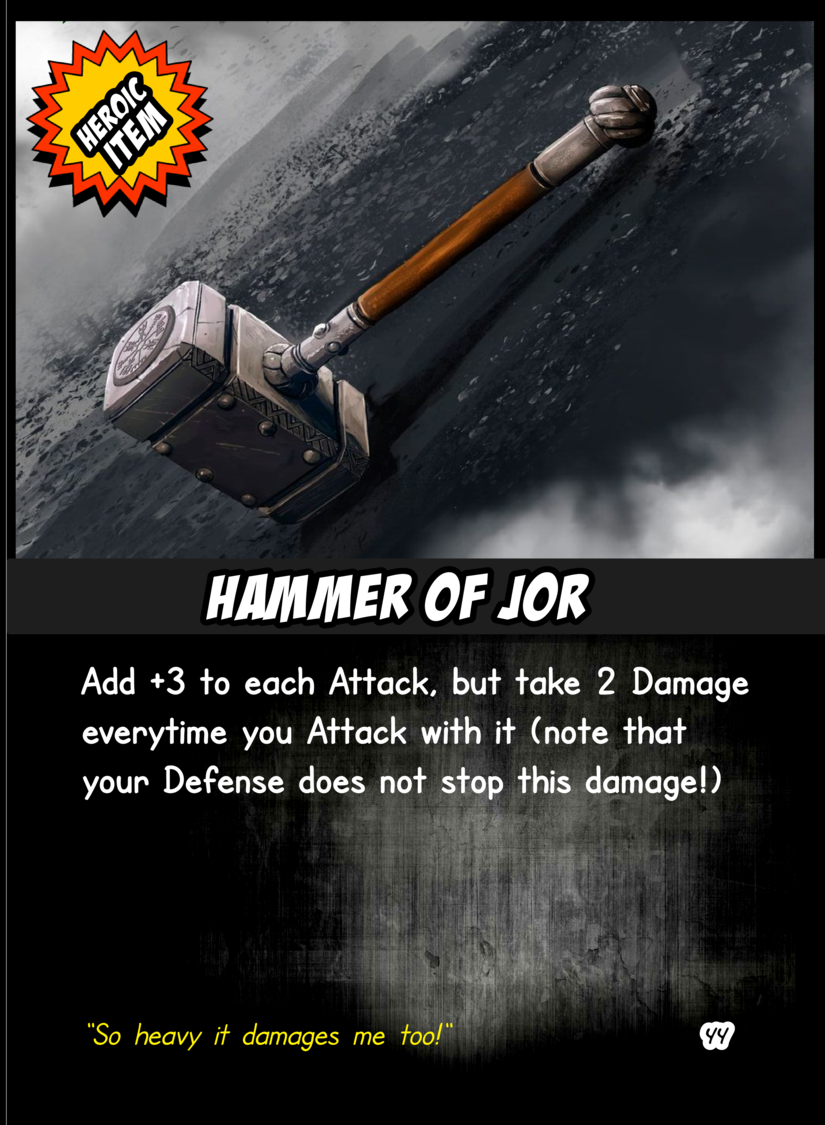
If the players lose an issue, then new items, new Heroic Items, new things are introduced into the game .. and they get to try again! I wanted this to be a self-balancing game; if it was too hard, then new stuff would come out to help the Sidekicks!

Protection Hierarchy
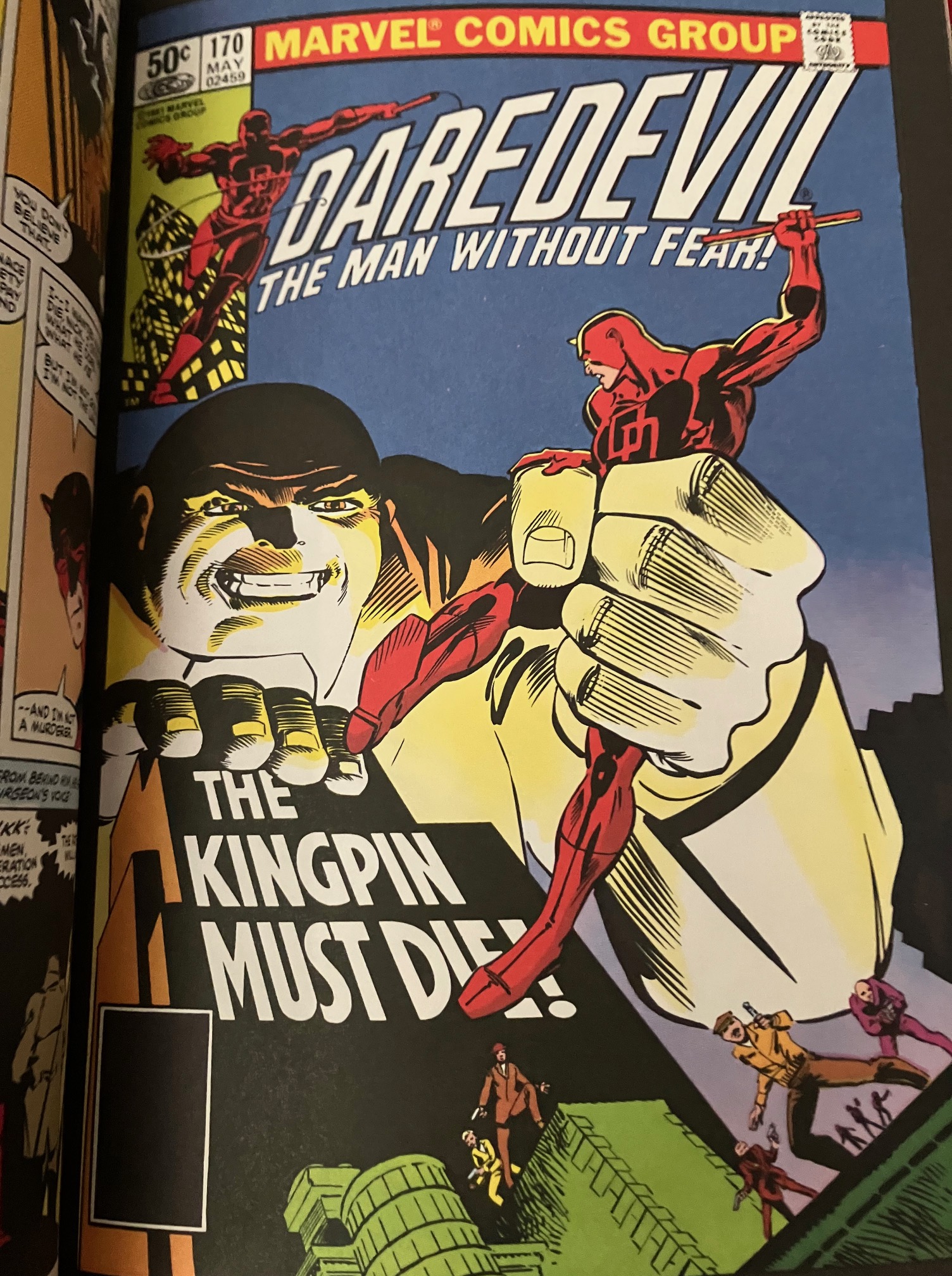
One of the final pieces of the puzzle was the Protection Hierarchy; I remember reading many Daredevil or Batman comics where the hero has to work from the bottom-up to uncover the network of the Kingpin/crime lord who is running the city! And typically, the phrase “Stop protecting your higher ups; they don’t care about you!!!” comes up when the good guys question the underlings … what if that were actually a mechanism?  What if you couldn’t actually even take out the bad guys higher up in the criminal network until you’ve “dealt with” with all of their subordinates?  What if the subordinates actually “protected” the higher-ups? 
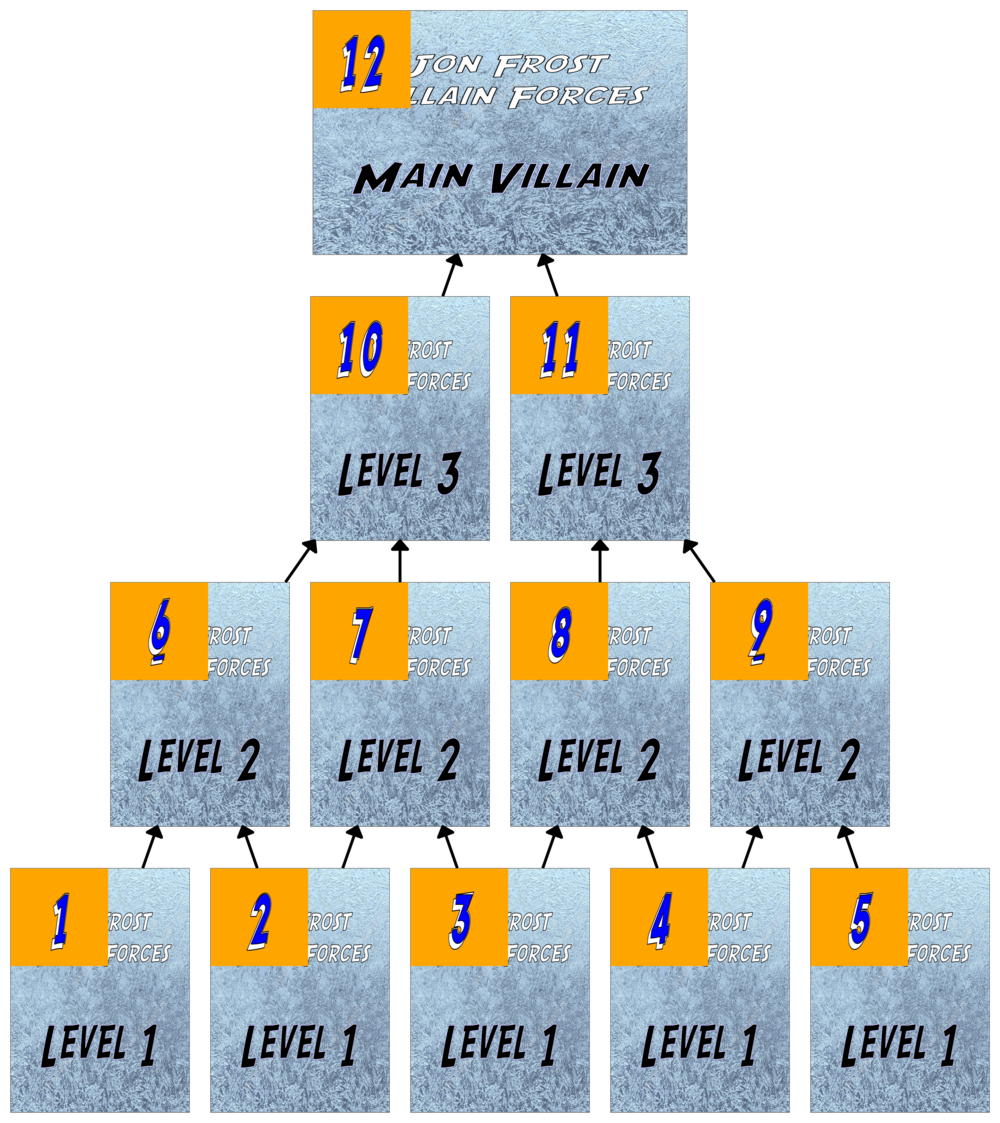
And that’s exactly what the Protection Hierarchy is in Sidekick Saga: you can’t attack any upper level bad guys until you deal with the subordinates first!  The lower level bad guys protect the higher one! (But, of course, the upper level bad guys can do stuff to YOU … because it’s hard to be a Hero!)

Hacking
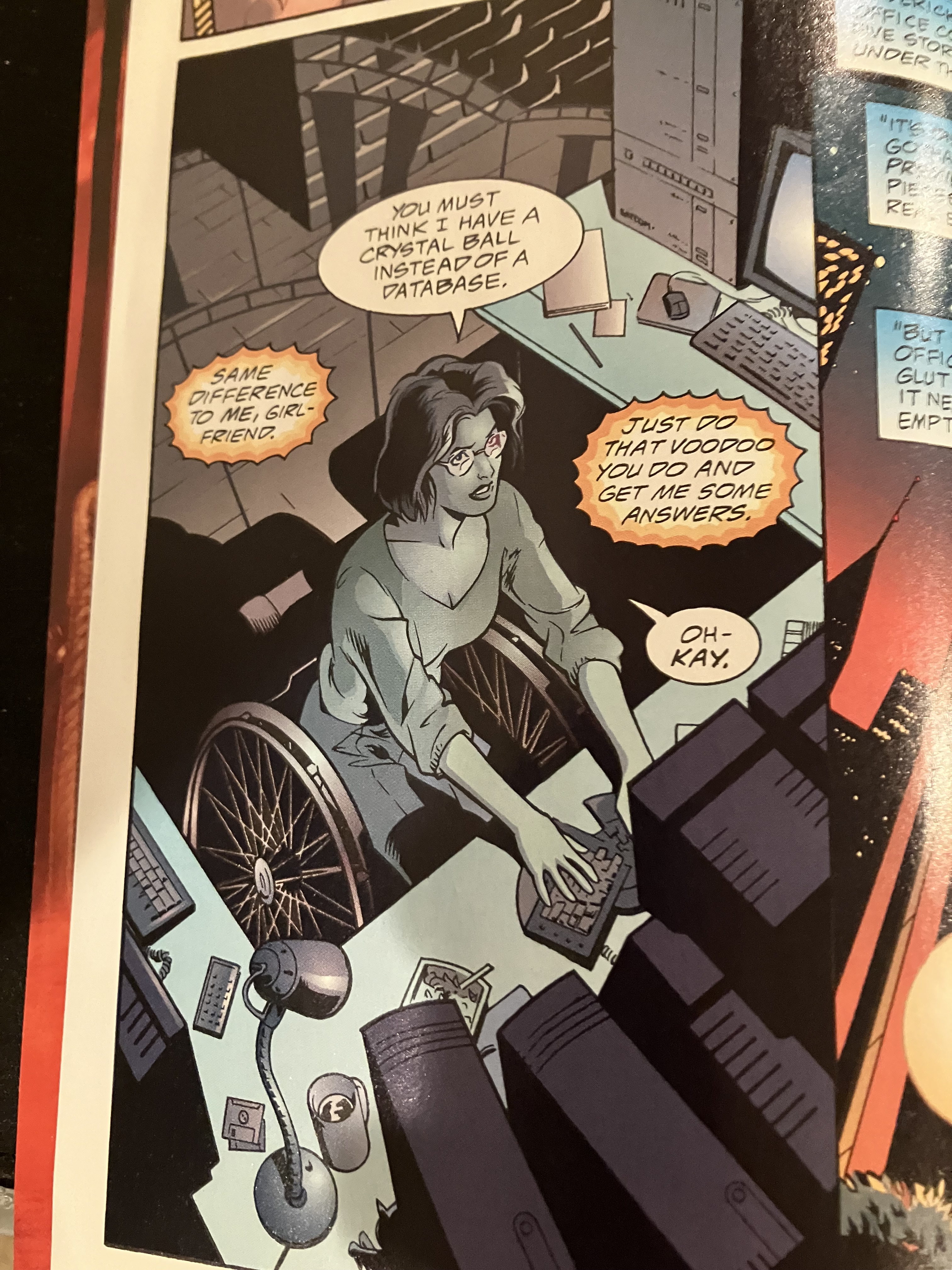
If there’s any one mechanism that is really inspired by the Robin or Birds of Prey comics, it’s Oracle and her hacking abilities.  
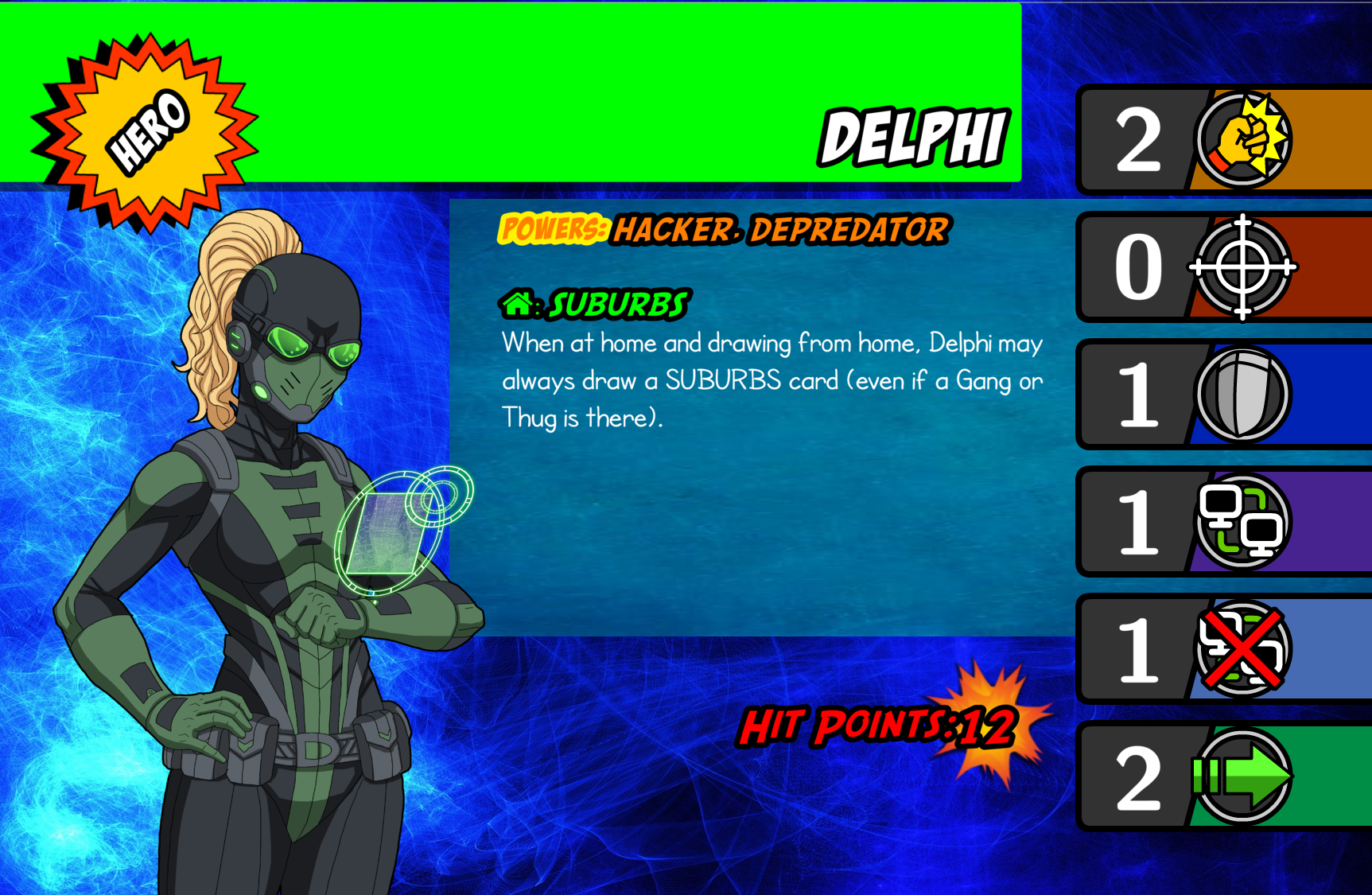
Oracle is a hacker who helps Robin (well, she helps the Dick Grayson Robin more, but that’s beside the point) by finding out information and “distracting” the bad guys with her hacking. How could we represent this idea in the game?  Delphi (inspired by Oracle) can hack the bad guys and put them into disarray!

 The idea of disarray is that the bad guy is so busy “dealing” with the results of Delphi’s hacks, they couldn’t do anything else. I loved the idea that even if you can’t take out a bad guy, maybe you can keep it out the way for some time. Thematically, the idea of “causing an alarm to go off”, “turning off the power in the building”, etc. are things that a hacker would do.  And what does it do?  It distracts the bad guy (puts them in disarray) for a few turns.

The idea of hacking was further improved by allowing hacking to bypass the Protection Hierarchy! Delphi can hack the upper level bad guys and keep them from wrecking the Sidekicks!

Art

I don’t love the art in most Super Hero board games: it always feels like they get artists who are great artists, but don’t “get” Super Heroes!!   It felt like they didn’t love Super Heroes like I did!  I just remember that I never loved a lot of the art of the first few Super Hero games I played, and I wanted something different for Sidekick Saga:  I wanted an artist who got Super Heroes.  I wanted someone who’s art really embraced that ethic!
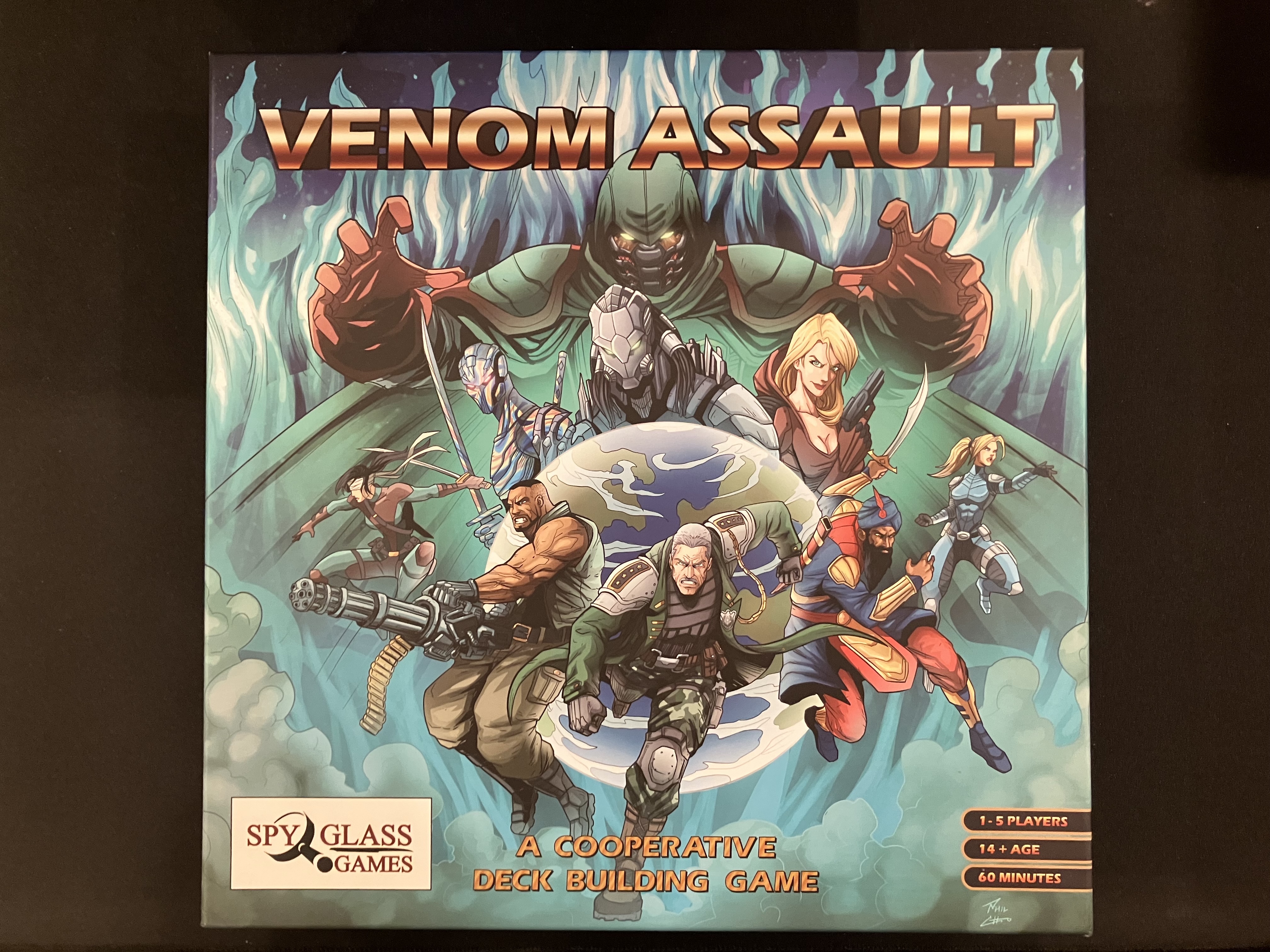
One of my favorite parts of working on Sidekick Saga was working with the artists, especially Phil Cho!  I adored his art from Venom Assault (see BGG entry here) and his Deviant Art page showed that he really understood Super Heroes!   I contacted Phil, and he was very willing to  help out. 

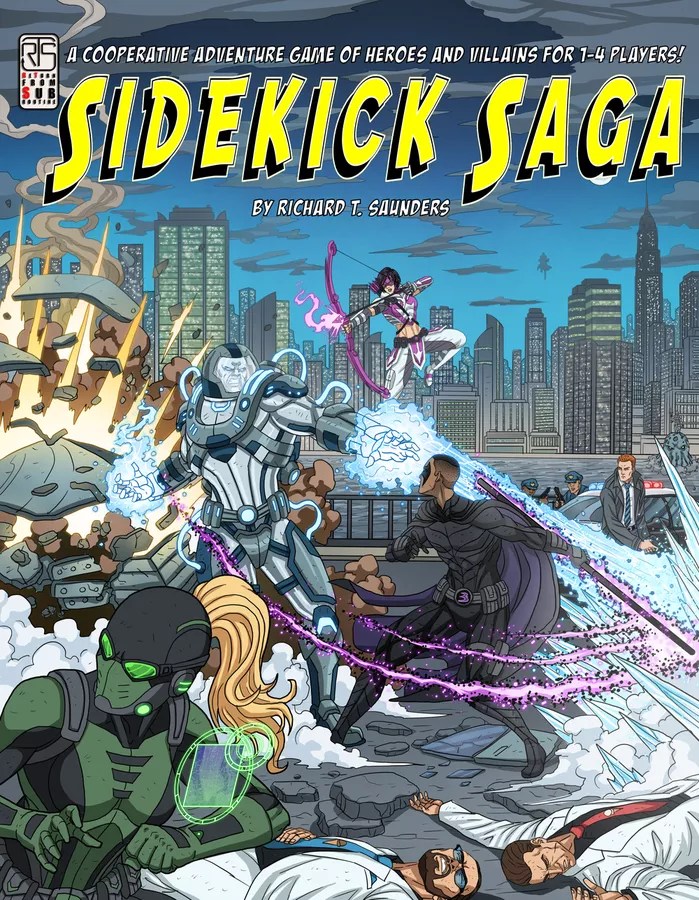
To this day, the cover for Sidekick Saga is one of  my favorite pieces of art of all time, maybe because it has such personal meaning to me. Given more time, I would have had Phil Cho do all the art in the game, but I had promised my Kickstarter backers delivery quickly, so I did work with a few other artists to help out.
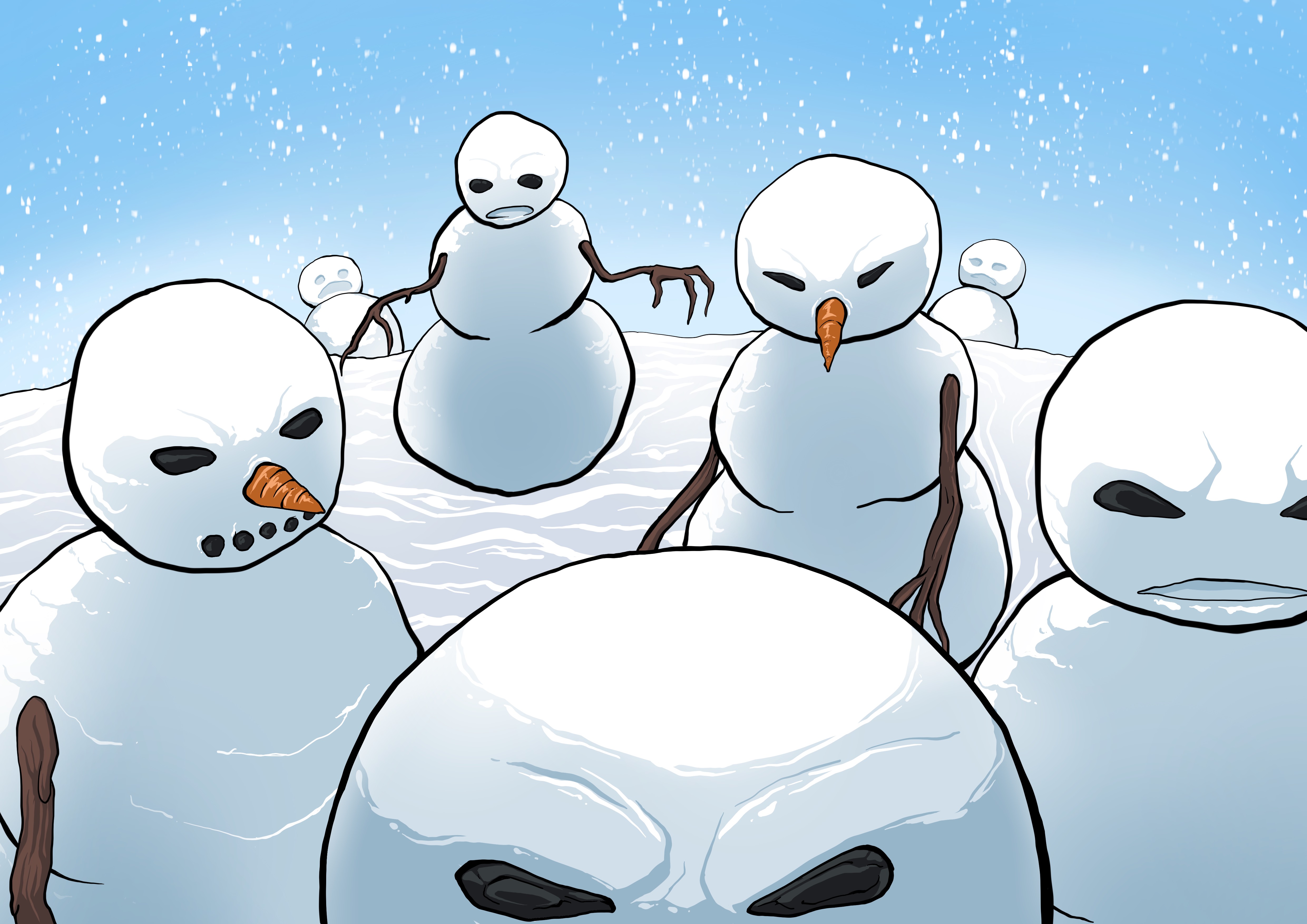
Christina Murphy did a fantastic job stepping up and “matching” Phil’s art! One of my favorite of her pieces is the army of snowmen! So creepy and so what I wanted!
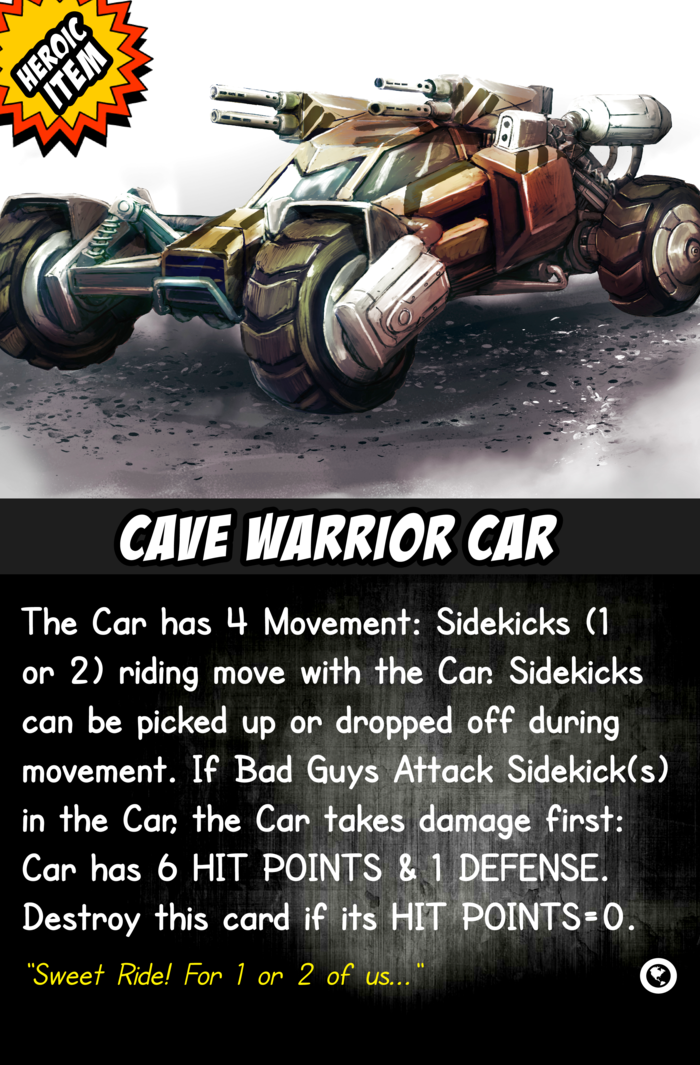
I also had William Liberto help out, mostly with the Heroic Items: I wanted all the Heroic Items to have a similar and consistent vibe, and he did a  great job!

Final Thoughts

I am very proud of Sidekick Saga! It’s the game I wanted!  It’s a Super Hero game with an overarching story! It has exploration, it has cooperative drafting, it has every card being useful in one way or another (by being multi-use or directly useful), and it has ways for the Sidekicks to be clever in their combinations!  I play the entire Sidekick Saga at least one a year, and I am always happy that the game unfolds differently every time!  How could I use all the cards and powers I  had to defeat the bad guys?  It’s different every time!

I know Sidekick Saga didn’t have a great critical reception, but I am grateful to all my backers who supported the original Kickstarter and all the people who reached out to me over the years in support; thank you to all of you.  
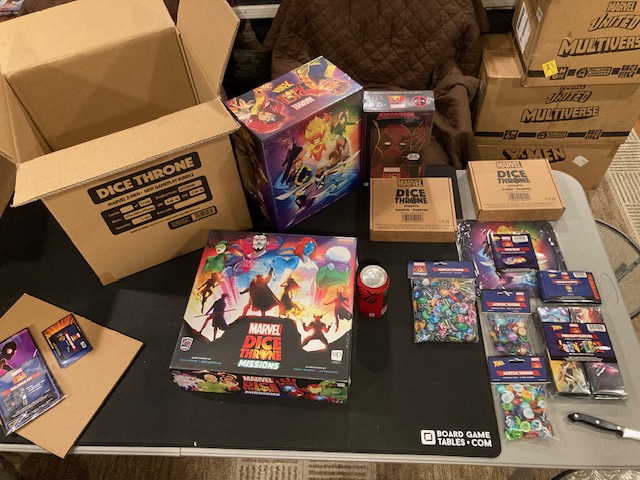
Dice Throne Missions and Dice Throne X-Men! A Solo and Cooperative Review!

Follow me, dear reader, as I invest three days of my life into unboxing, sleevening, tokening, and playing the new X-Men Dice Throne and Missions! Watch as I play solo (me vs. me solo and true solo) and cooperatively (with a group of 4), but encounter some unexpected things along the way! Hopefully my journey will inform you if this is something that would be for you!
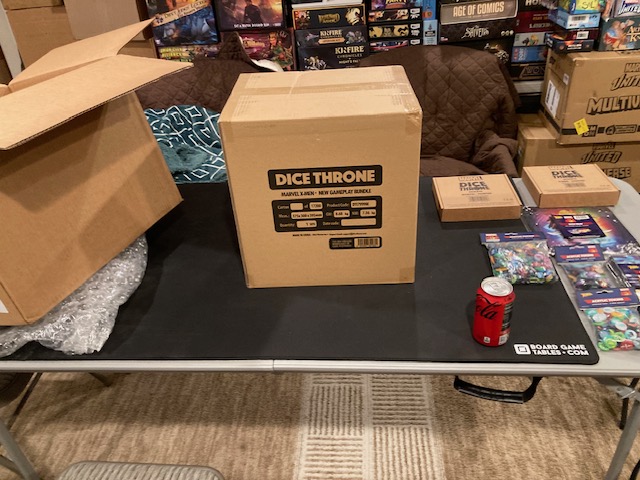
 Dice Throne: X-Men and Marvel Dice Throne: Missions (and a whole bunch of stuff) arrived at my house at 12:30 pm on Monday, February 20th, 2025.  I was very excited to get this Kickstarter, so I happened to note the time when it arrived!  This was #2 on my Top 10 Anticipated Cooperative Games of 2024!  And it was “only” 7 months late! (promising arrival in August 2024)!  But what is this giant thingee?
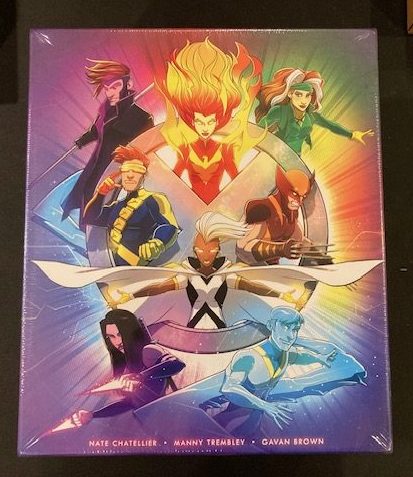
The first big box in here is the Dice Throne: X-Men box; you each play a member of the X-Men!  This is a dice-chucking game with a Yahtzee-type re-roll mechanic: you roll dice, trying to roll a straight or full house or 5-of-a-kind (stuff like that) to activate your super powers!  These powers, when activated, nominally do damage or other crazy things to your opponents.   This is a fully competitive game where the heroes beat each other up: think of the X-Men Danger Room!   You are training in the Danger Room!  (That’s why heroes fight heroes, ya, that’s it: don’t ask too many questions about why heroes are fighting heroes….just enjoy the game)

But why are we talking about a competitive game on this solo and cooperative blog?  Because the second big thing that came with this was Marvel Dice Throne Missions! Marvel Dice Throne Missions (we’ll call it Missions from now on) is an expansion that takes the competitive Dice Throne system and makes the game both solo and cooperative!

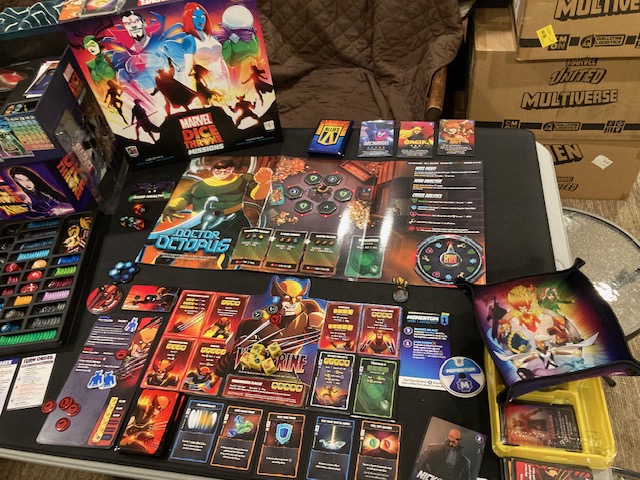
The next three days of my life were consumed by the Dice Throne stuff above.  The Dice Throne: X-Men box and Missions box are very closely tied together, as you need a set of heroes to play the Missions! Although you can use any of the Dice Throne heroes (including the original Season 1, Season 2 (see review here) , and Marvel heroes (see review here)), we are going to look at Dice Throne: X-Men and Missions together!!! … because that’s how we played it …

Let’s go back in time and see how three days unfolded ….

Day 1: Unboxings and First Plays

Day 1 was a long day: I got the box at 12:30pm and pretty much unboxed, sleevended, tokened (yes, that’s a word … now), and played non-stop until 8 at night!  There was so more unboxing  and sleevening and tokening than I expected …

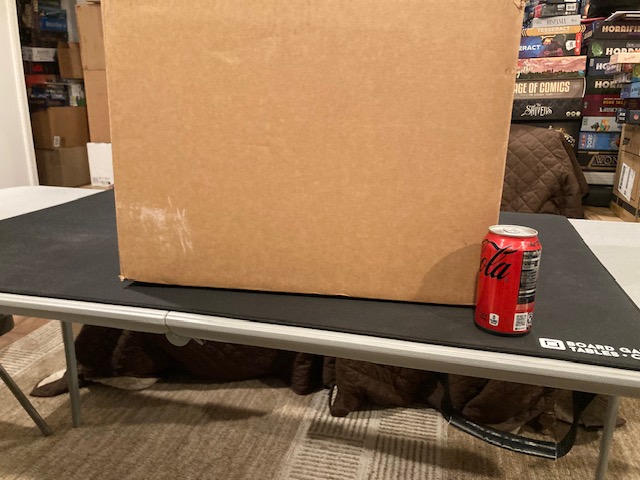
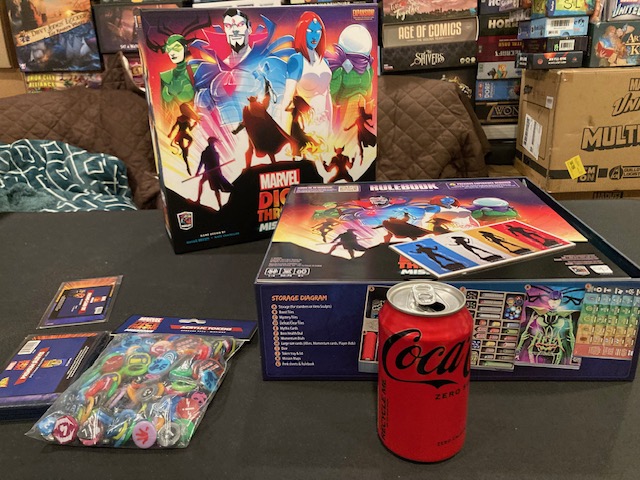
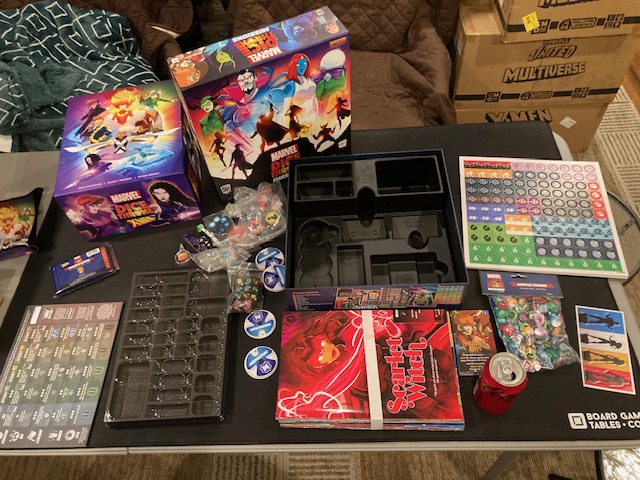
What arrived at my house was a giant box! See Coke Can above for perspective.

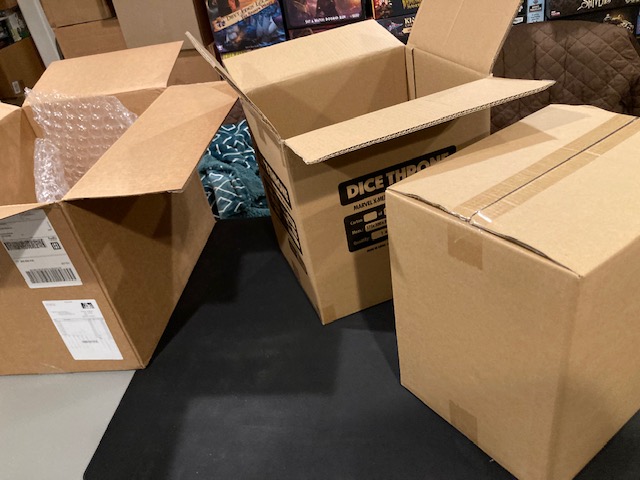
The crazy thing was that this was a box in a box in a box in a box situation! See above!

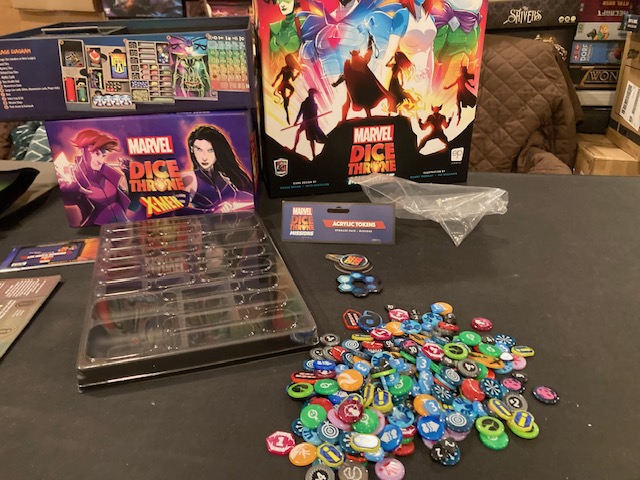
On top of the Dice Throne: X-Men box (above) were all the acrylic tokens and some of the figures (right).

Day 1: The Figurines Unboxing

You don’t need the figurines for plain Dice Throne.

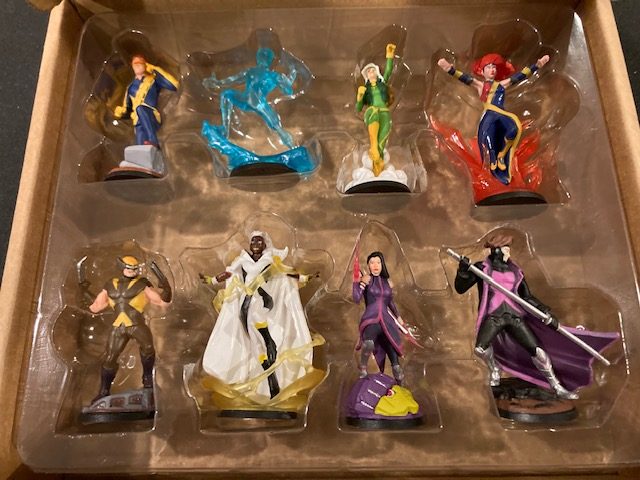
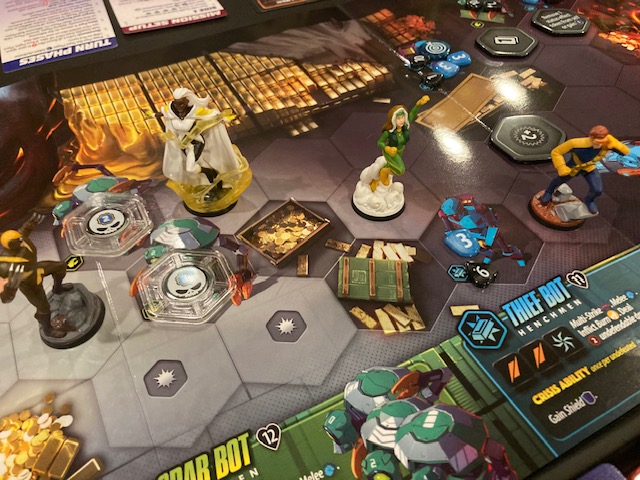
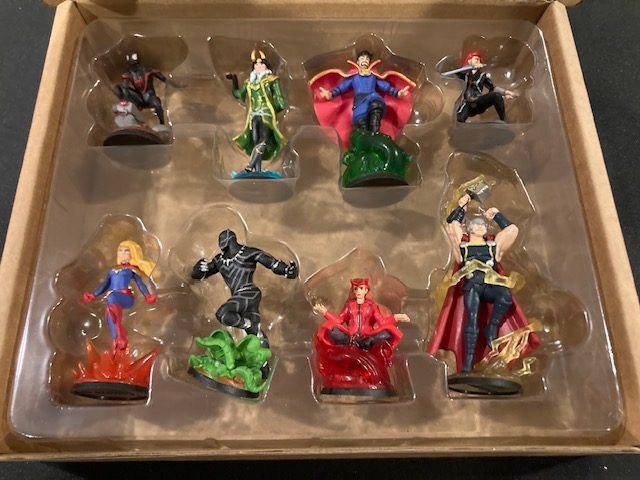
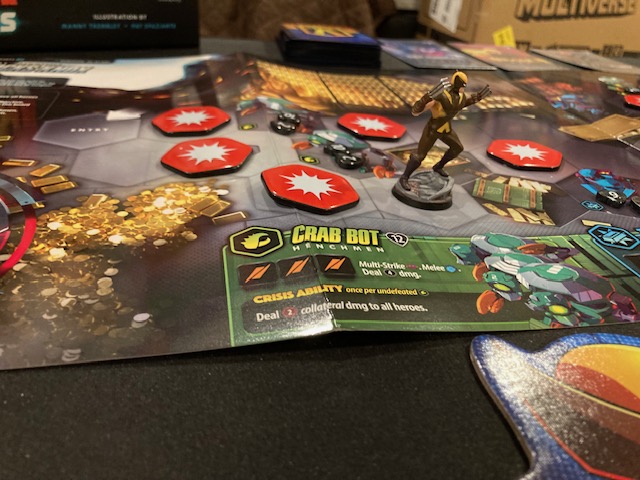
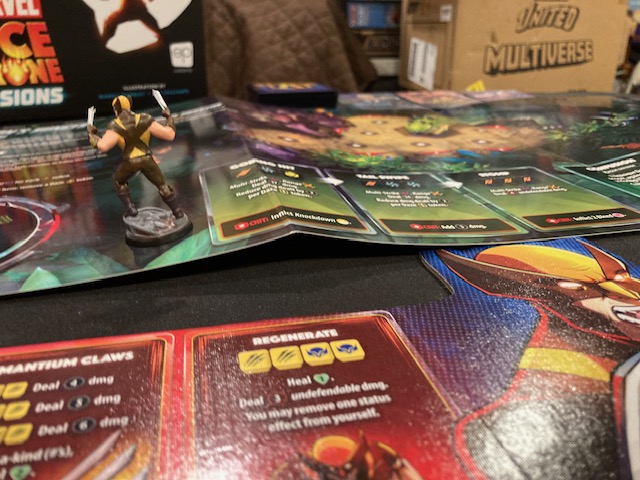
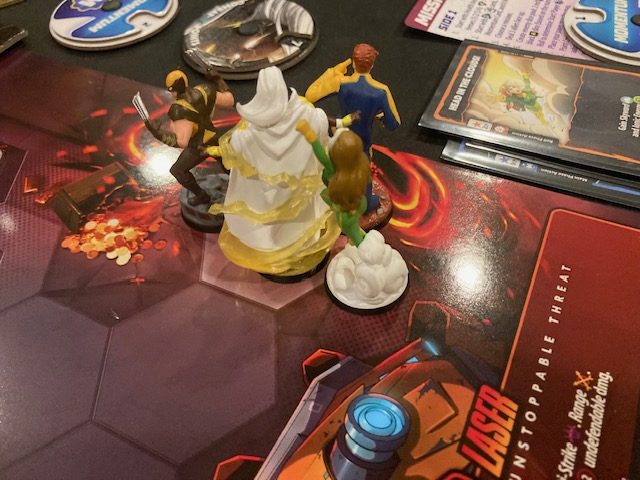
The figures are only for the cooperative expansions Dice Throne Adventures or Missions, as figures for the board … you don’t need these figures at all to play competitive plain Dice Throne!  See all eight figures above in the package … and below on a Missions board.

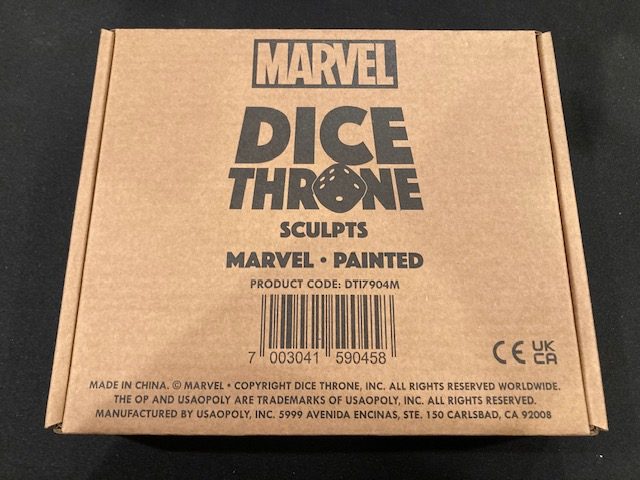
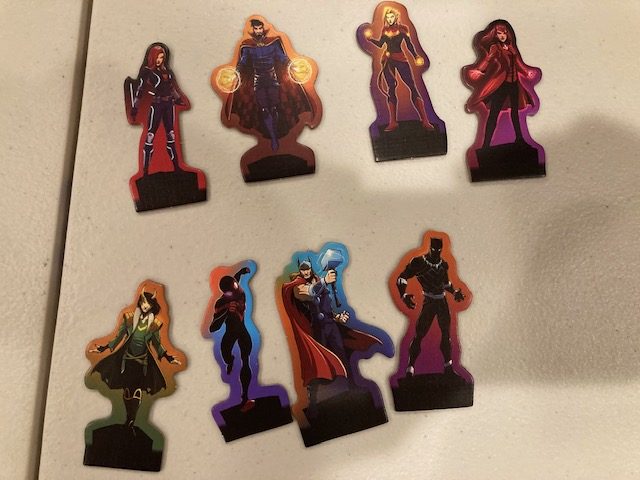
Because the original Marvel Dice Throne did NOT have an option for figures, they included that option here in this Kickstarter! See above for the Marvel Dice Throne figures and below for their standee equivalents!

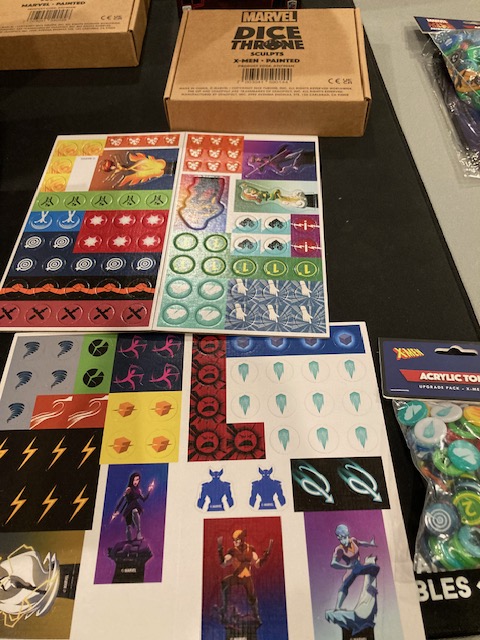
To be clear; the X-Men Dice Throne (and Marvel Dice Throne) come with cardboard standees so you don’t need to buy the figures (see below for X-Men Dice Throne punchouts, including the standees).

If you are on the fence for buying the figures, remember: they aren’t strictly needed!  You can just use the standees and “probably” buy the figures at a later date if you are so inclined.

Day 1: Acrylics and Sleevening

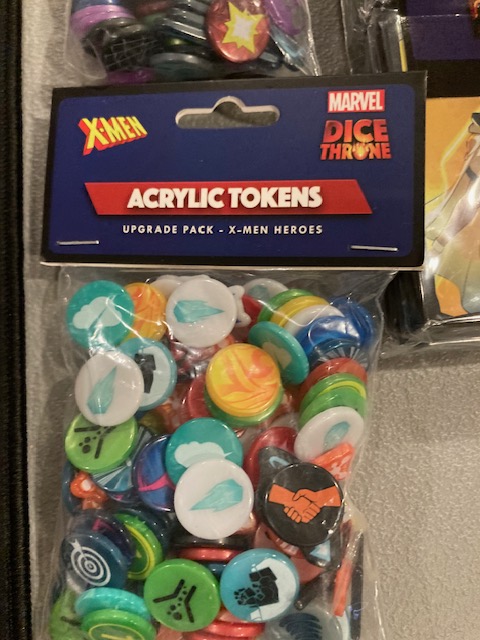
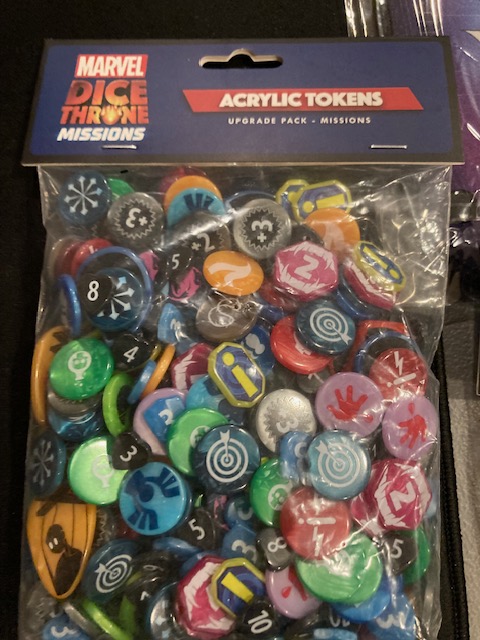
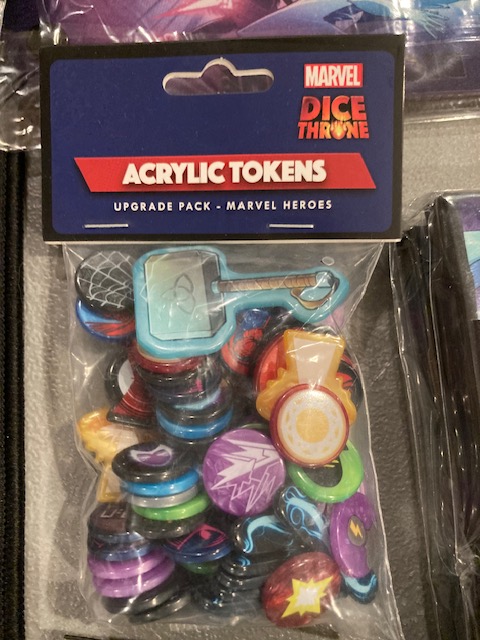
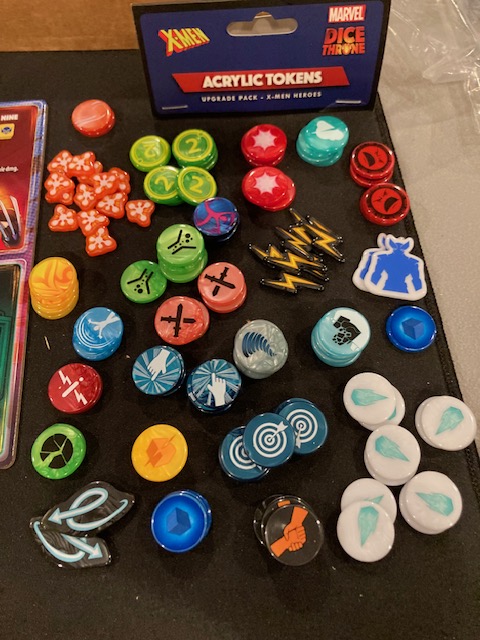
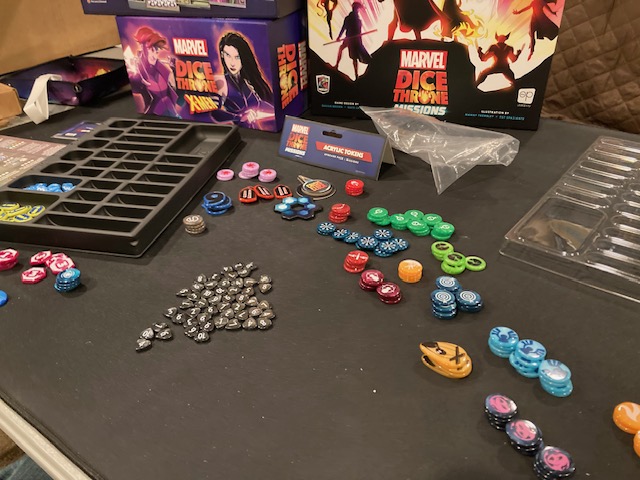
Another upgrade I got were the Acrylic tokens; again these aren’t necessary.

The acrylic token upgrades packs are for Marvel Dice Throne, X-Men Marvel Dice Throne, and Missions—These just replace the cardboard tokens.

Again, the games include all the tokens you need, so these acrylic tokens aren’t necessary.  I really thought they made the game pop a little more, so I liked them.

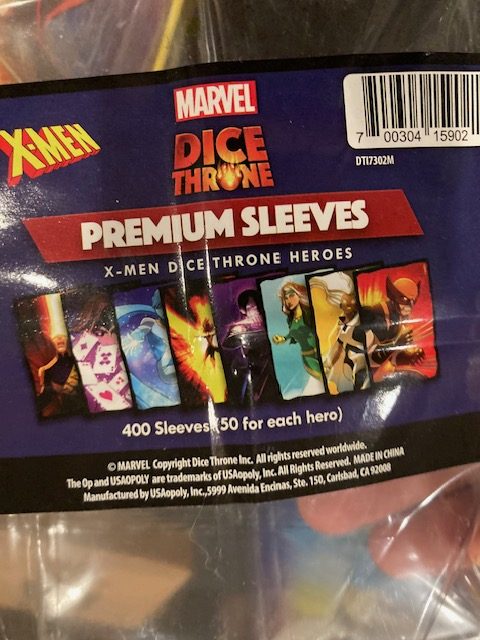
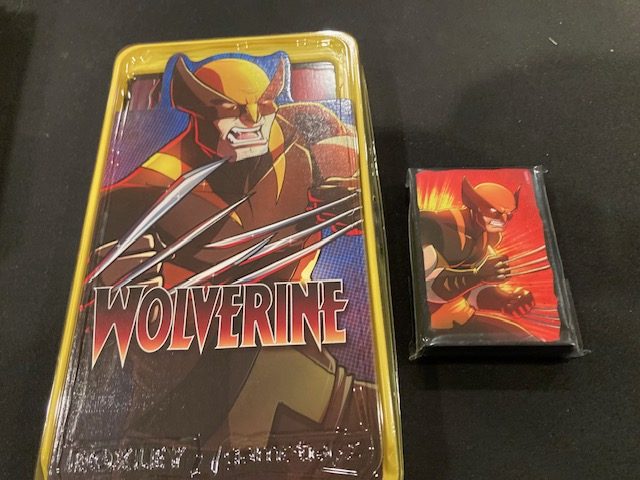
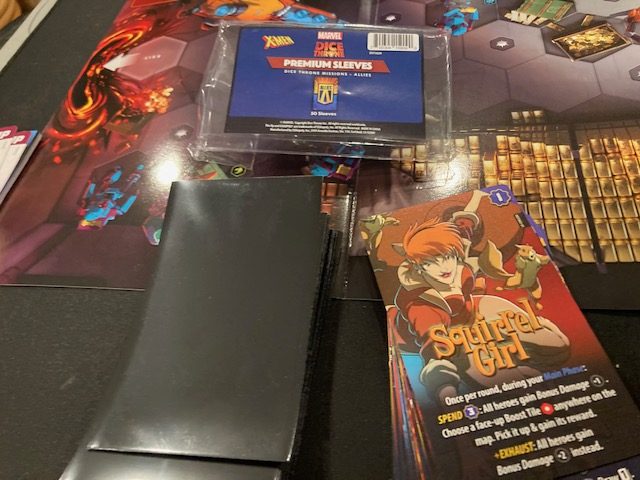
I also picked up the premium sleeves: see below.

Again, strictly not necessary. But very nice!

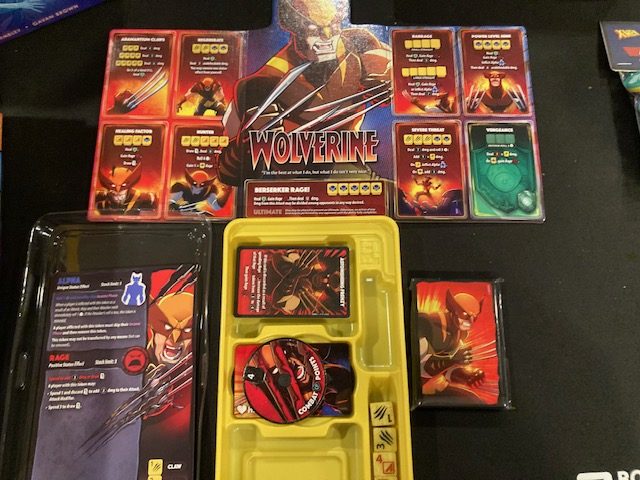
After ooggling the figures, basically, I spent the next 2 or so hours putting the acrylic tokens and sleeves into the X-Men Dice Throne character boxes! 

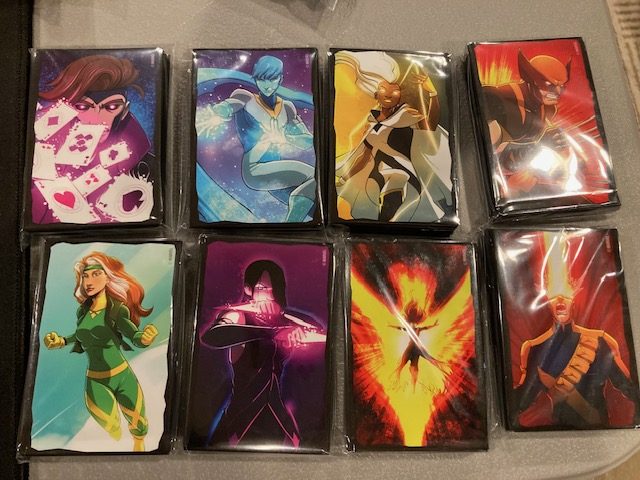
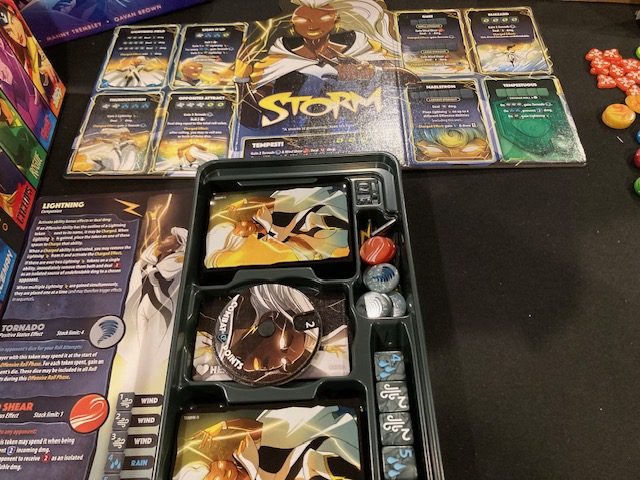
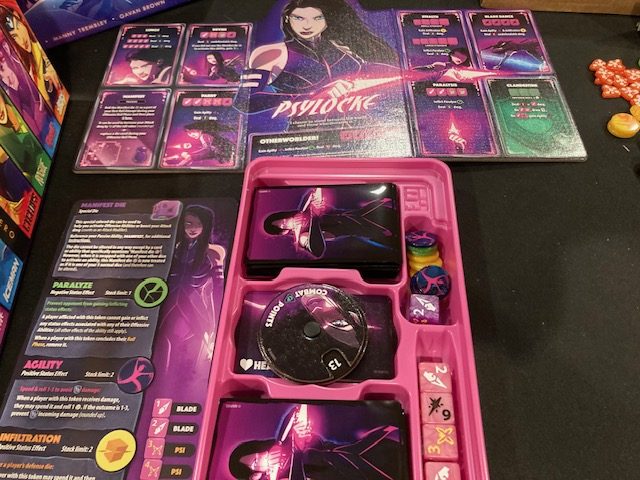
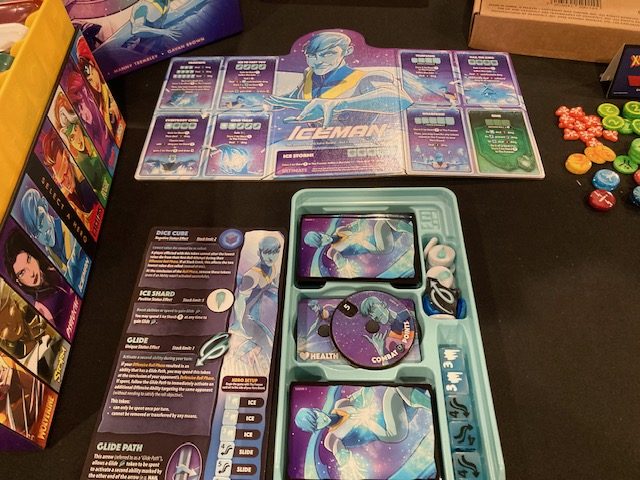
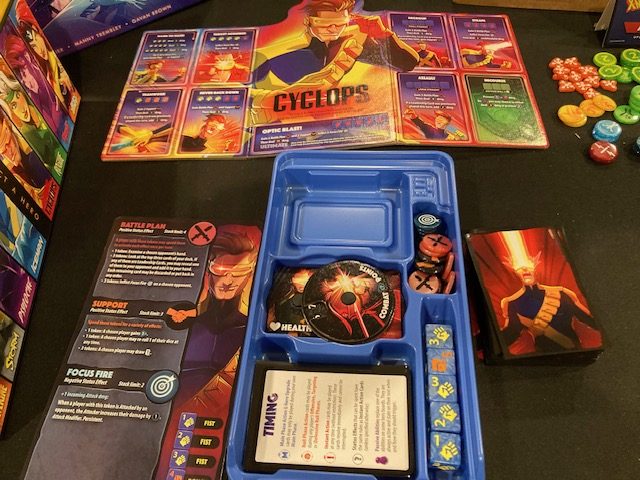
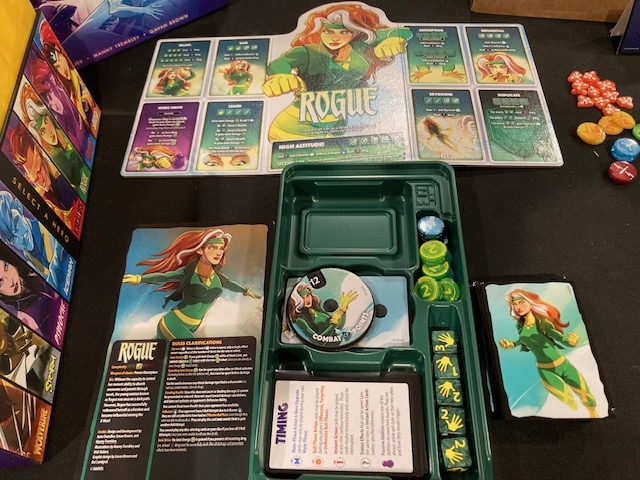
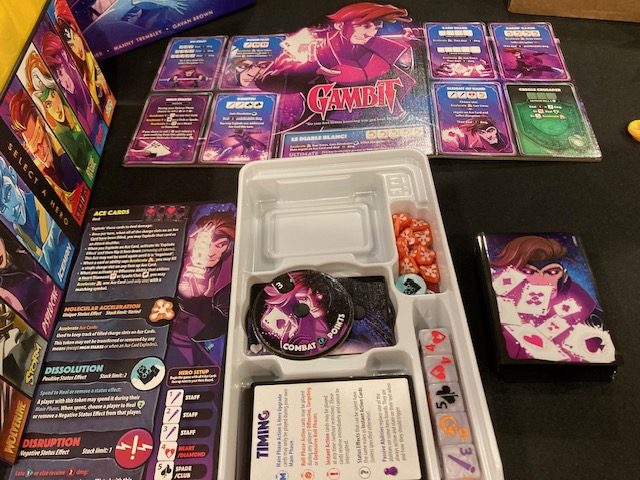
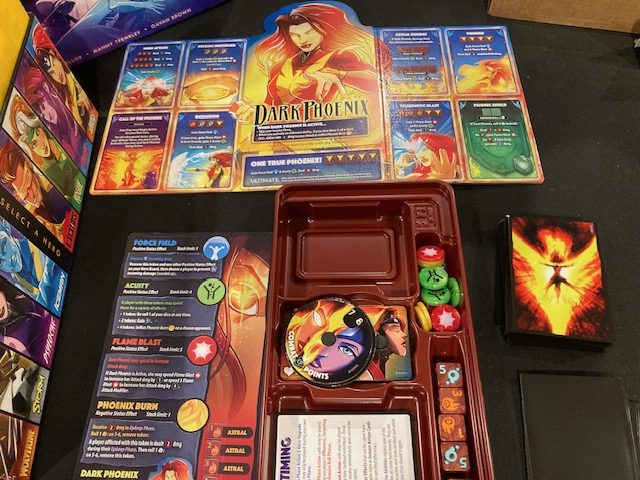
Whew! Look at all those tokens above!! See below for all 6 characters sleeved and … tokened? (yes, it is a word now: I’ve used it twice).

Yes, this was a long and tedious 2 hours.  But the characters looks great!

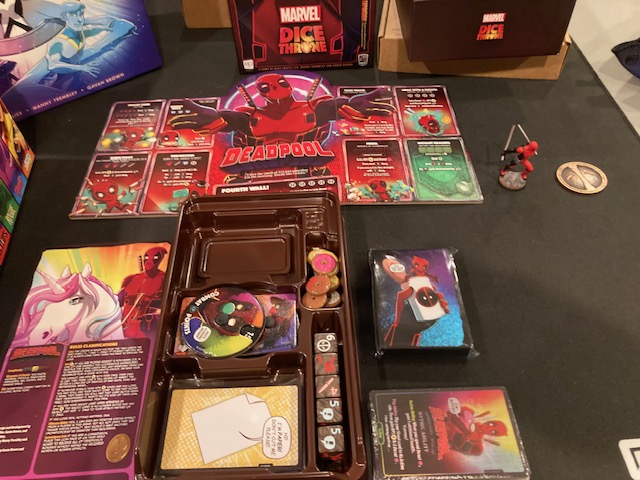
Oh yes, and Deadpool wants you to know he is an expansion!  He is a character you can play (he also came with this Kickstarter, but he is a separate expansion you have to pay extra for). I went ahead and unboxed, sleeved, and tokened him too.  See above.

Day 1: First Play

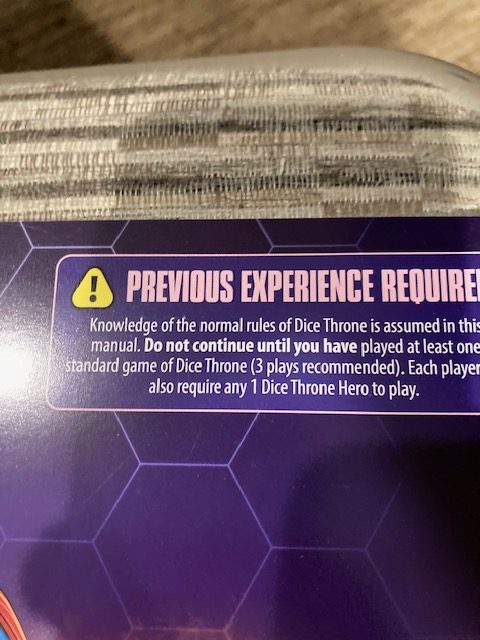
As a reminder, you “probably” don’t want to jump into Missions (cooperative) if you haven’t played the base Dice Throne (competitive)!  See the warning above from the Missions rulebook.

I love Dice Throne, but it has been a while since I played. So I decided to do a Me vs. Me solo game, and play against myself!  This was mostly to remind myself of the rules and see the new characters! Those of you out there are thinking that I will “pander” and play Wolverine vs. Deadpool.  Nope!

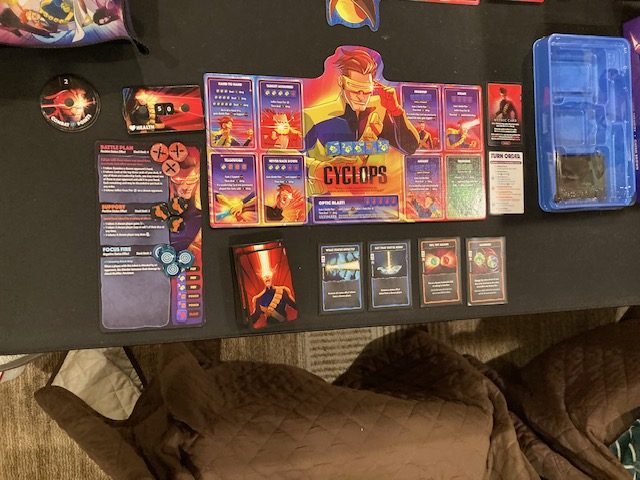
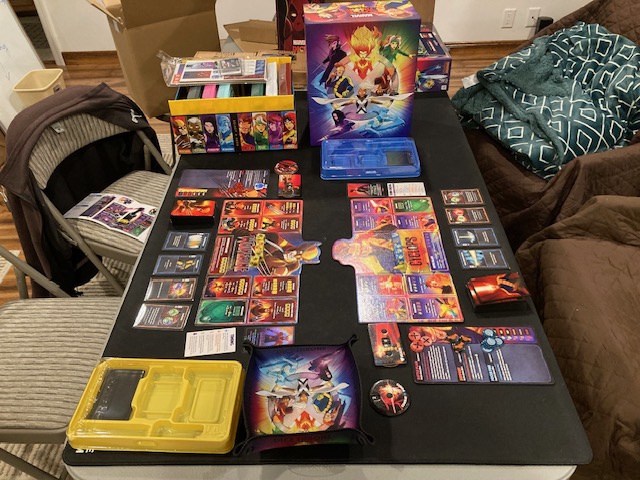
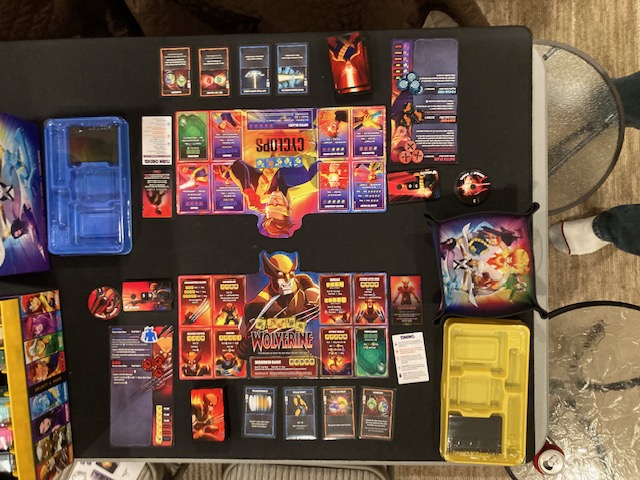
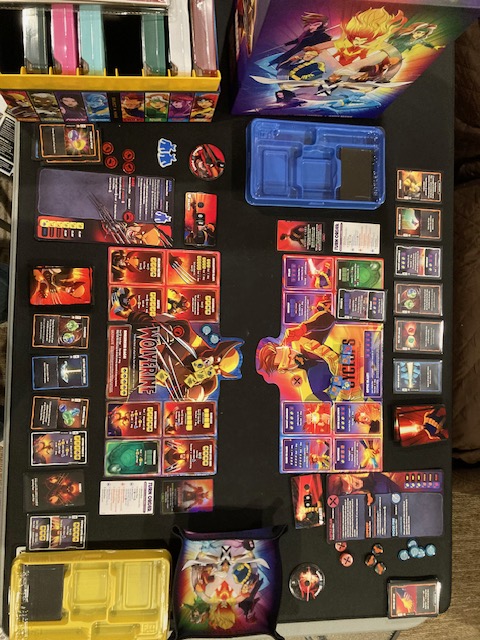
I ended up playing Wolverine vs Cyclops. Me vs Me!

Basically, I’d literally switch seats when I had to play the other character: I always like this swapping because it really feels like you are playing both sides well!  

It was an interesting match: Wolverine won, but just barely.  Cyclops looks like he will do best in a cooperative game, as his abilities have some emphasis on helping other players!  He has leadership cards and support tokens/abilities that help others!  Wolverine just heals and does damage … as you’d expect.

This game was reasonably quick, maybe a hour? It went by pretty quickly and I got to learn about Wolverine and Cyclops.

Day 1: Missions Unboxing

Yes, we are still in Day 1.  I told you this was a long day!  But a good day! I finally got to unpack Missions!

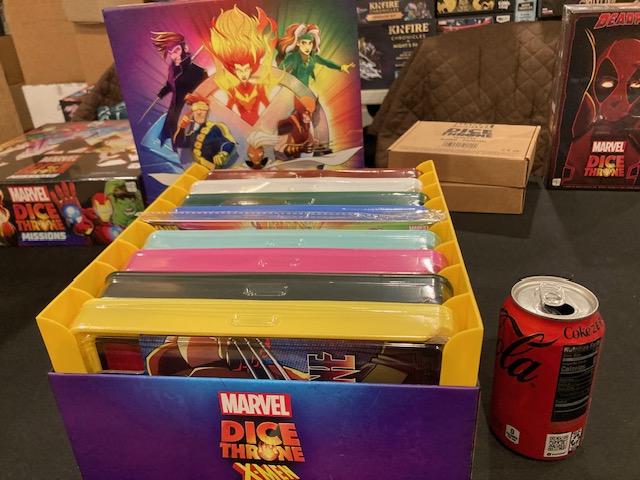
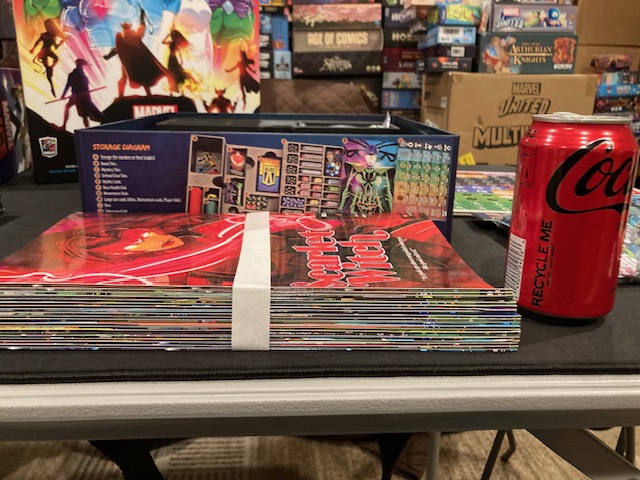
The most AMAZING thing is all the little mission books that come with the game!! Holy cow!!  See how many there are?  I put a Coke can next to them for perspective!

My only real complaint with the missions is that they are hard to keep open! We’ll see that more later.

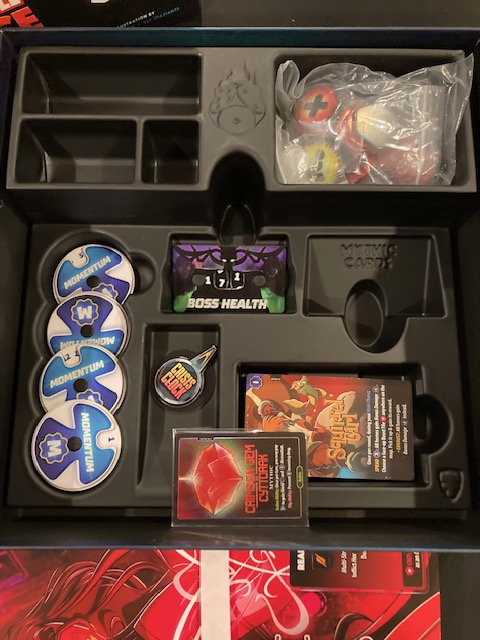
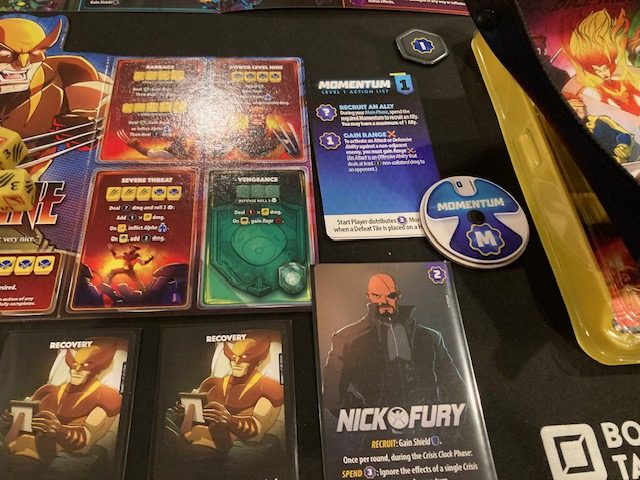
There’s some Momentum dials (this is a new mechanism in the game: each character gets a dial), Allies (another new mechanism: these must be bought with Momentum), and some other tokens.

The Momentum is a major new mechanism in the game; you can actually level-up your Momentum card (as you play more games)!

I mean, this looks great!  See above!

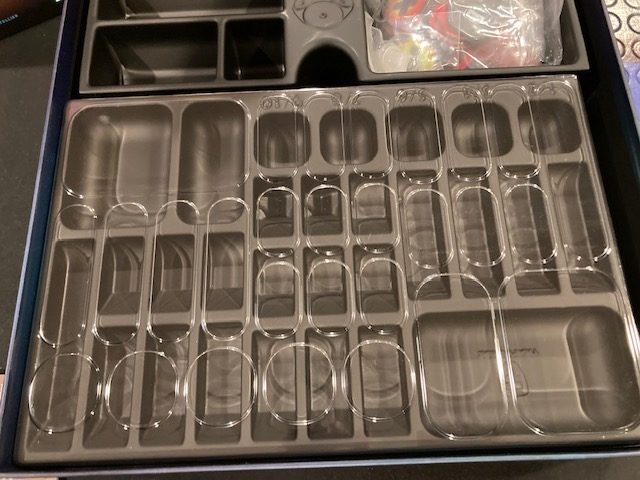
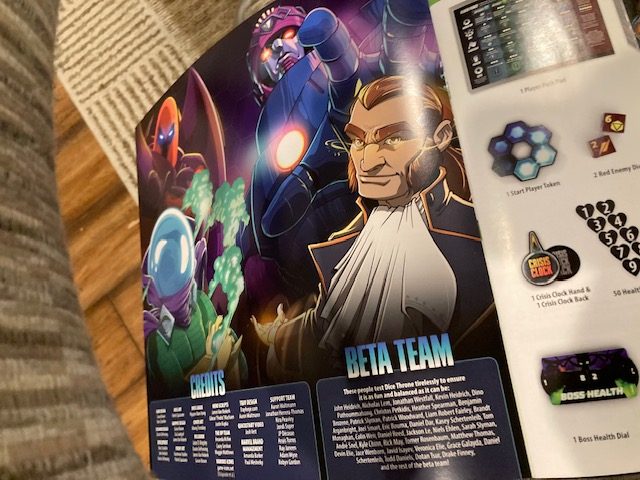
At the top is a tray for tokens: see above.

There are a lot cardboard tokens in Missions … but I ended up replacing them with the acrylic tokens.  This took about the next hour of my life.

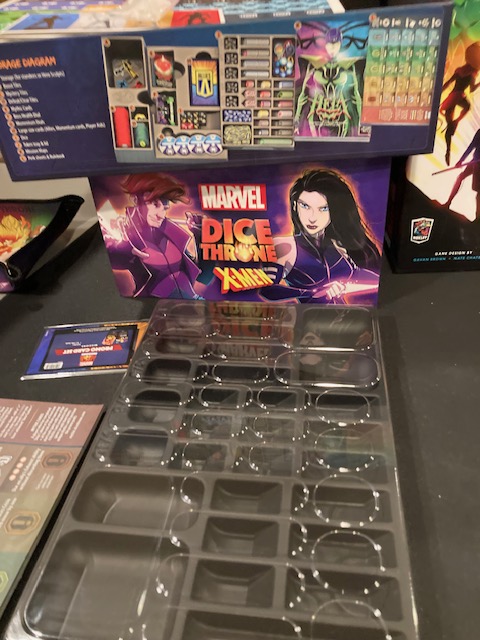
At first, putting tokens in the token tray looks VERY DAUNTING.  And it is. Until you notice the side of the box!!! See above!!  The side of the box shows you how to put the token into the tray!

Sounds like an easy job?  Oof.  This was the most tedious thing I did on Day 1.


I basically had to separate out the tokens into piles and start putting them into the box, all while trying to match the picture on the side of the box!!

I mean, it does look cool when you are done … see above.

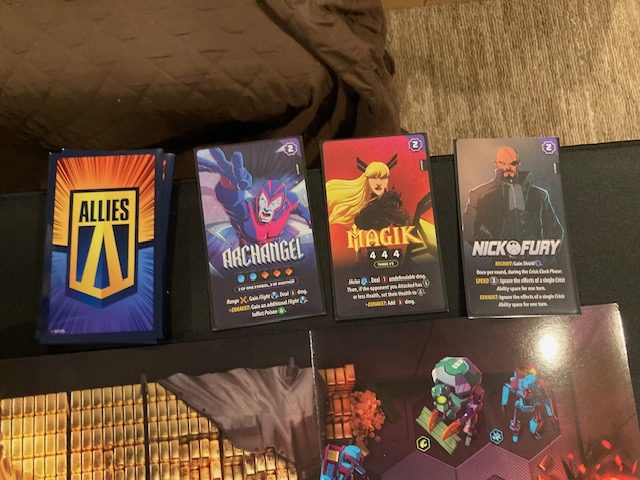
Finally, I sleeved the Alllies:  these sleeves were extra (I had to pay for them).

But they look pretty cool.

Day 1: The rulebook

There are a few things I have to say about the rulebook.

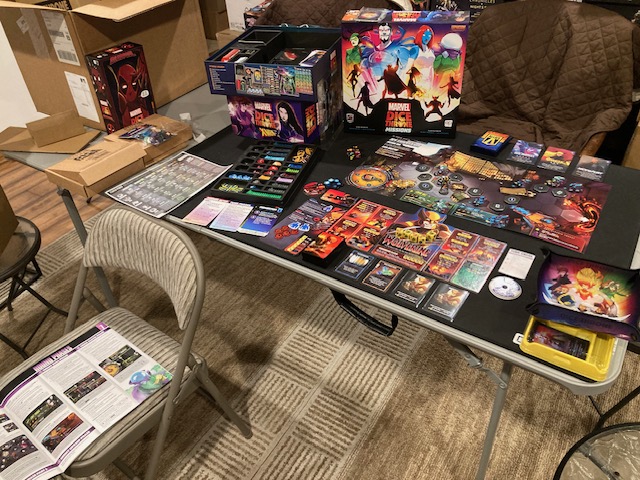
It completely fails the Chair Test: it droops over the edge of the chair and almost falls off!  

I ended up using the workaround I discovered in my review of  Batman: Gotham City Chronicles!  You need two chairs to hold the rulebook, with the spine in the middle!

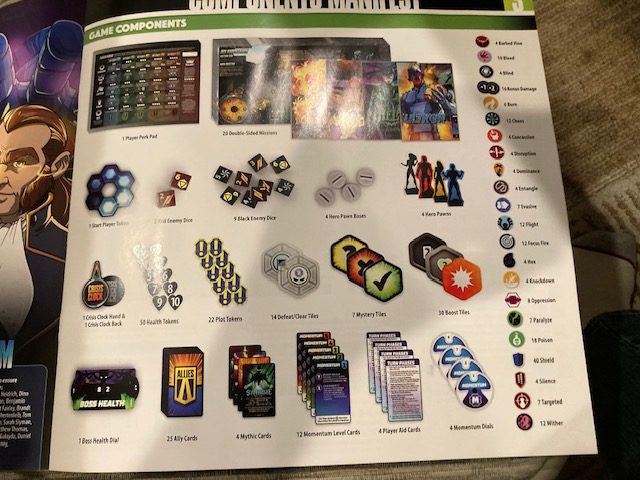
The rulebook was generally good otherwise: it had a good components page (see above).

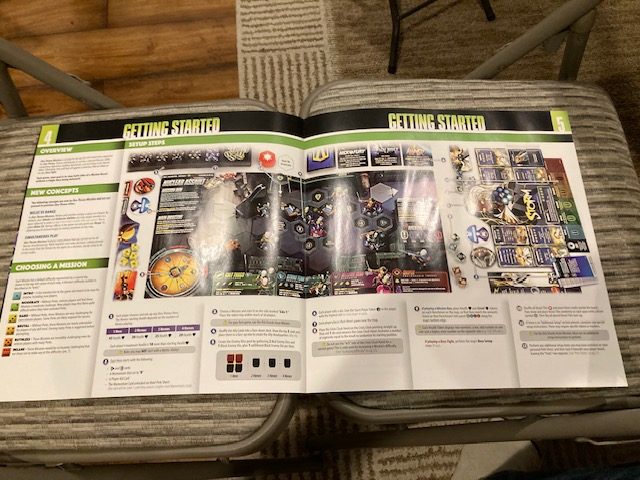
It had a good two-page spread for set-up: I got going right away.

The rulebook had a big, readable font, useful pictures, and even little parenthetical text to emphasize issues.  

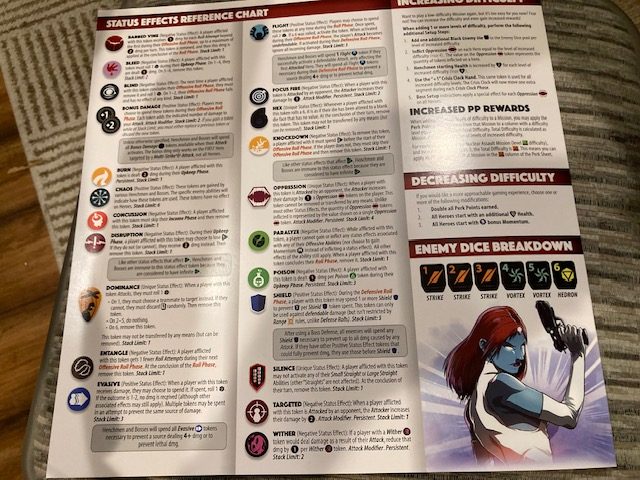
The best part was that the back cover had a list of all the statuses on the back.  This was generally a good list of statuses and their effects, but we did have some questions as we played… some of the status descriptions needed more clarification.

This was generally a good rulebook, but I hated the form factor.  It seems like the worst form factor I have seen in a while.  I actually had to change chairs in my cooperative game so I could sit somewhere where I could set-up the the two chairs to see the rulebook! The rulebook is huge and there is no almost no way it’ll fit on the table.

Day 1: Set-up for Solo play

I know, it’s hard to believe we are still in Day 1.  I had just finished dinner, and I am still setting up my first Mission!  

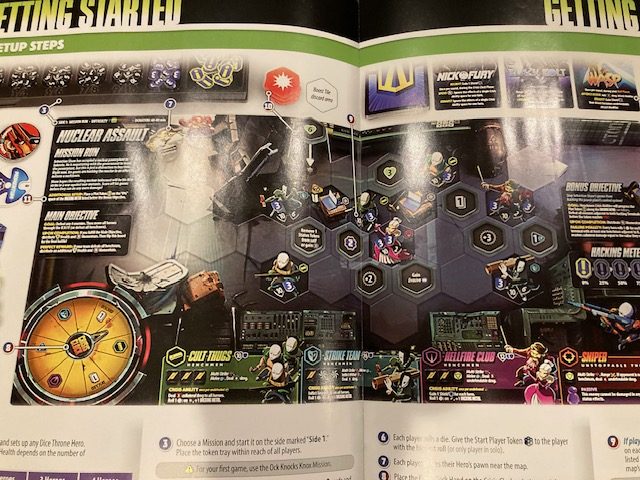
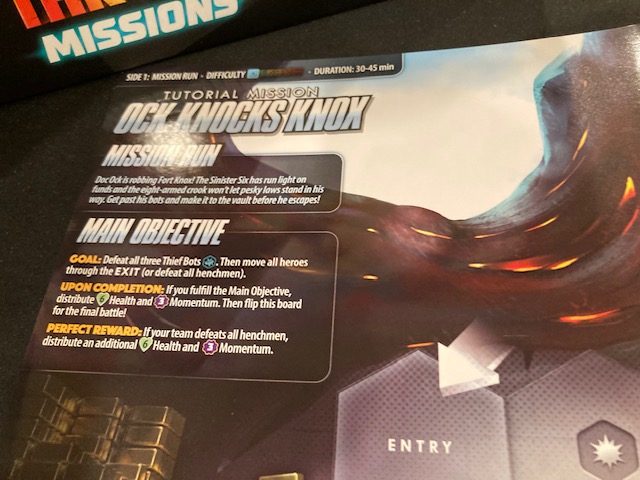
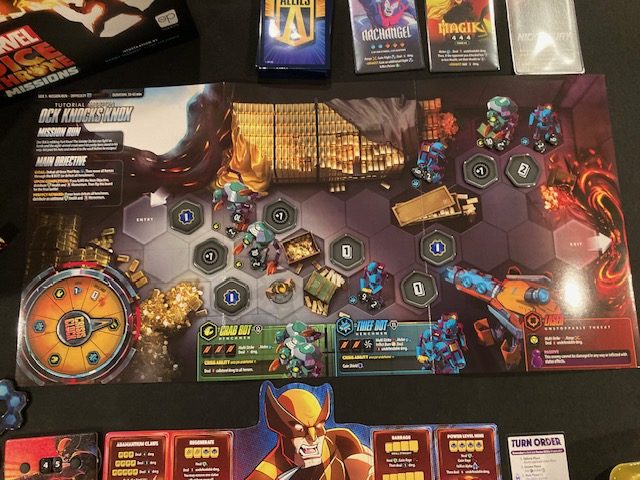
Missions have two sides; the front side is generally fighting some henchmen … (see above)  …

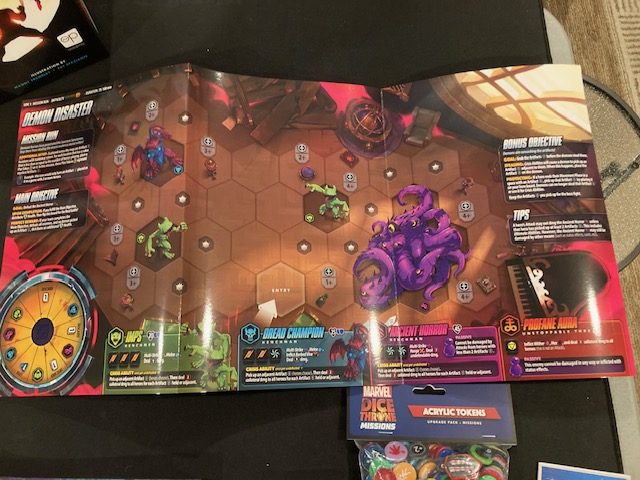
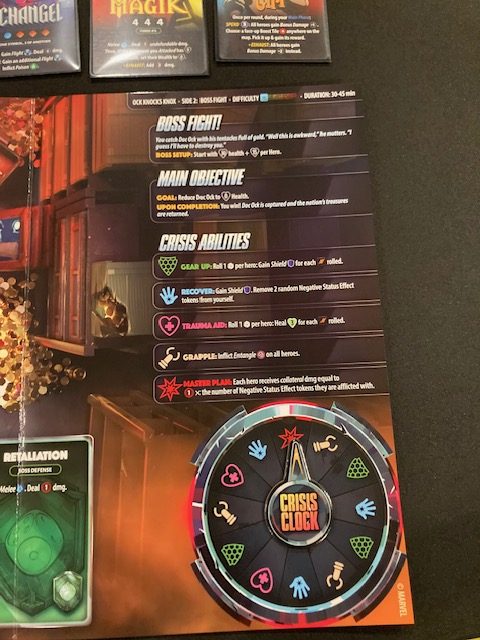
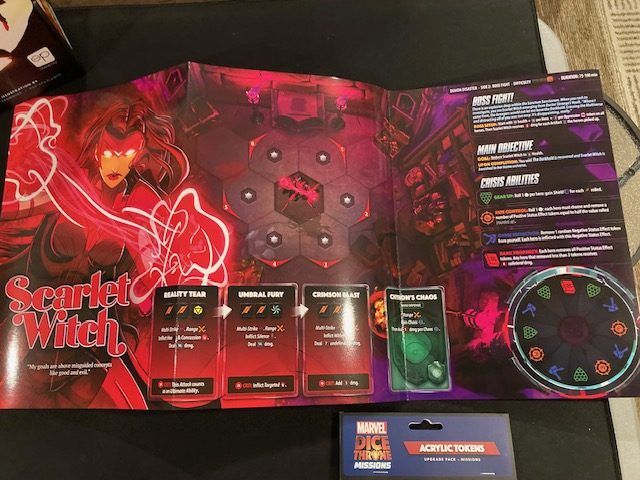
… and the back side is Boss Fight (Scarlet Witch in this case.. see above)!

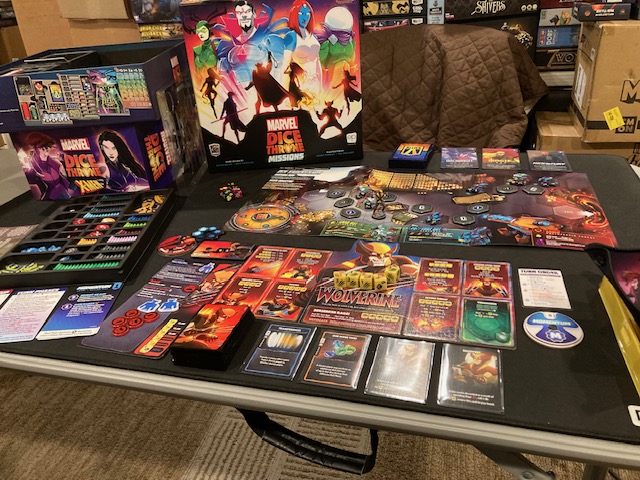
To win the mission, you need to complete both sides!  See above as I start setting up side one of the mission … and get grumpy that it won’t stay flat …

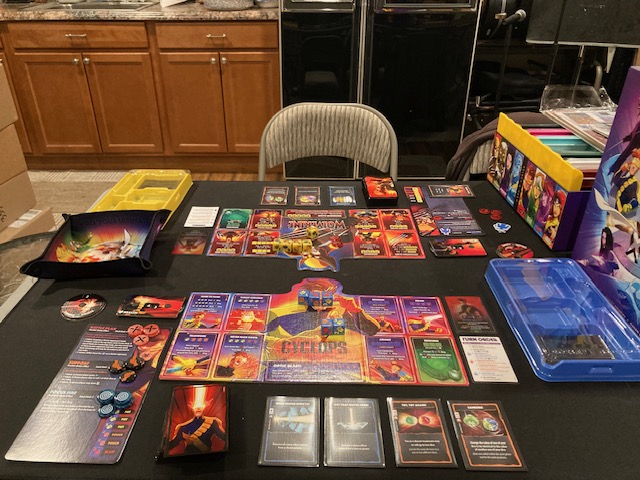
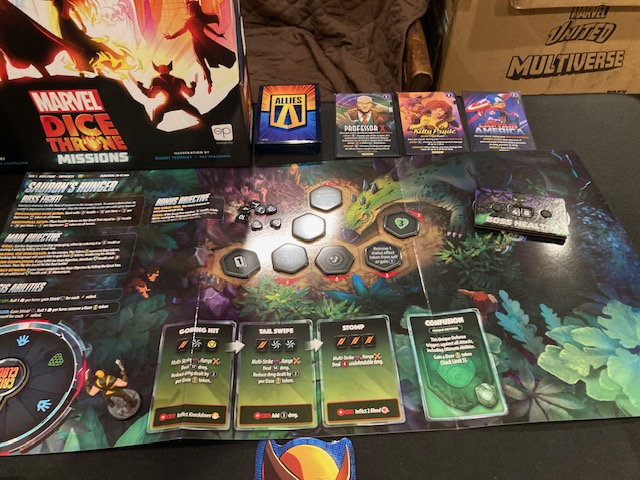
I chose Wolverine to go on the solo mission: see above!  Note that the rulebook suggests the mission above to start on … so that’s the one I am playing!!  This is true solo play; I will be playing one character as I take on the Henchmen … on side 1 of the mission.

Day 1: Side One of the Mission

I was approaching the end of my Dice Throne Day (yes, I am still in Day 1!!!), as I got a chance to try out solo play with Missions on side 1 of my first mission.

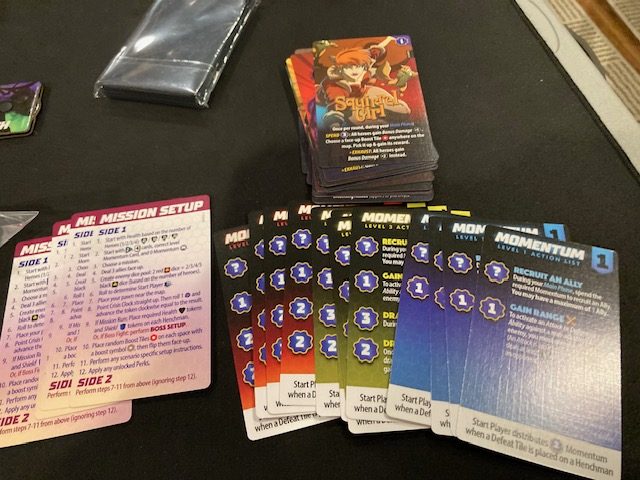
Momentum is a huge new mechanism in the game: you are rewarded with Momentum when you take out a henchman or something in the game!  It’s kind of like experience points, but it’s a little more dynamic in that you can spend it anytime!  You can spend Momentum to give you range (typically, you can only attack things next to you) or to buy Allies.

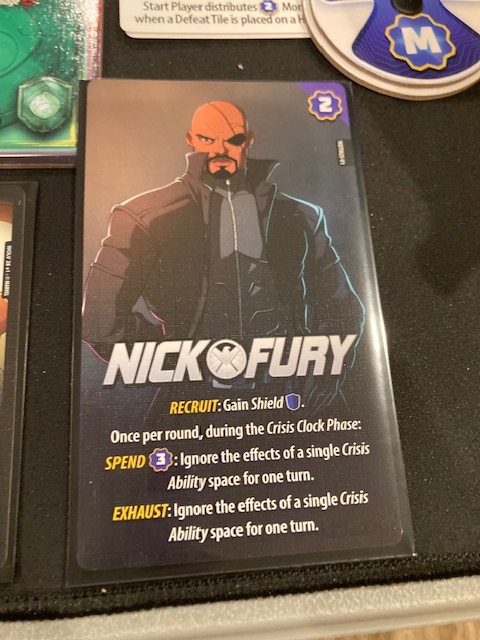
The Allies give you extra abilities/powers that make the game more interesting. They typically can be used for a “minor” ability without discarding, or for a “major” ability if you discard it (see Nick Fury above). 

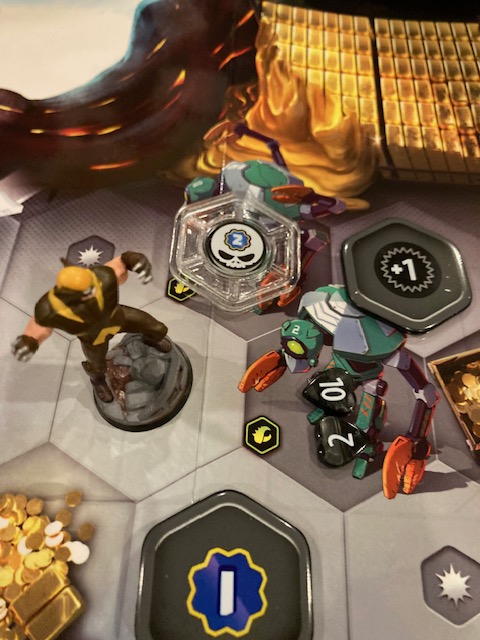
What I liked was that when you “cleared” a bad guy, you put down a clear token (see above) to note that he was dispatched!  And the token reminds you of the 2 Momentum you get for killing … I mean clearing him!

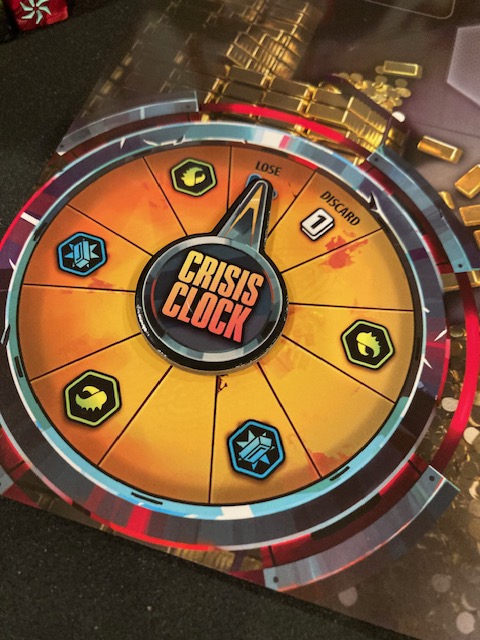
Another major mechanism is the Crisis Clock: at the end of each round, the hands of the clock move 1 per player and may invoke some harsh penalties (depending on the mission).

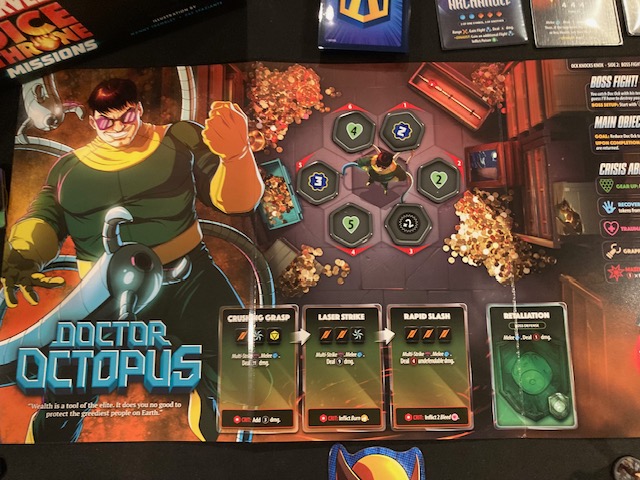
There’s other things going on, but that’s generally most of it!  See above as I cleared the board and made my way towards fighting Doc Ock!  …. but that would have to wait for tomorrow … it’s been a long day!

Day 2: More Missions

I had to work most of Tuesday, but after I got home, I was consumed with playing more Missions!
Note!  When you flip the mission to the other side, you keep you character’s Hit Points, Momentum, and everything the way it was!  While you reset BETWEEN missions, you DO NOT reset when you FLIP the mission!

The Boss Fight side of the Mission 1 basically just has you straight up fight the big boss! And the Crisis Clock is much more damaging!

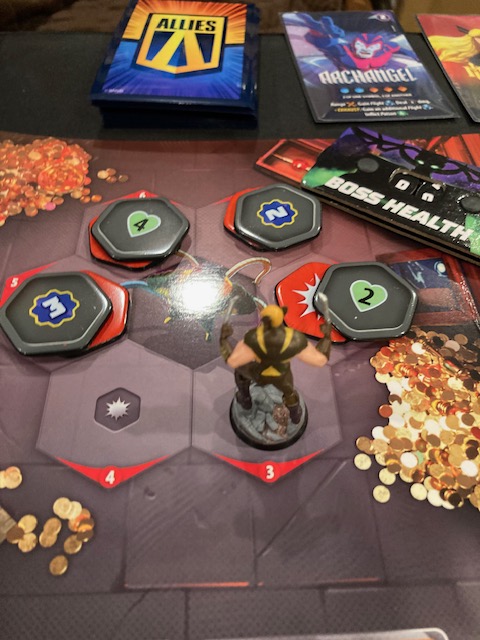
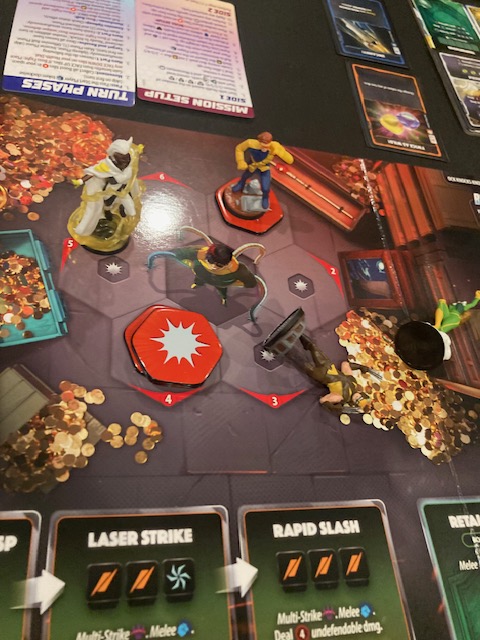
You are in harms way as you actively are right next to the Boss! See above!  No moving away!

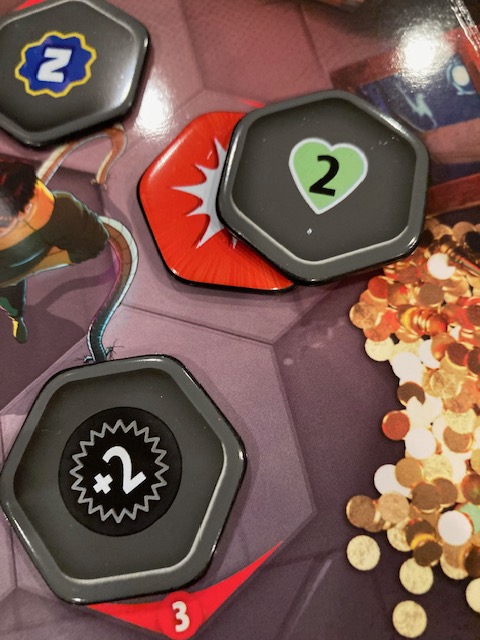
One interesting note; there are tokens that, if you end your turn there, you get a bonus.  So, you can get the +2 token if you go to space 3 above. But if the space has the red tokens underneath, you always get those … but only AFTER The bad guys attacks you!  And there is a cost for moving to a space with red tokens … the boss typically does more damage (crit) to you!

In the end, I defeated Doc Ock pretty handily; I think my Ally made this much easier.  

I went into the Boss Fight with 15 Momentum and basically kept the crisis track completely under control using Nick Fury.

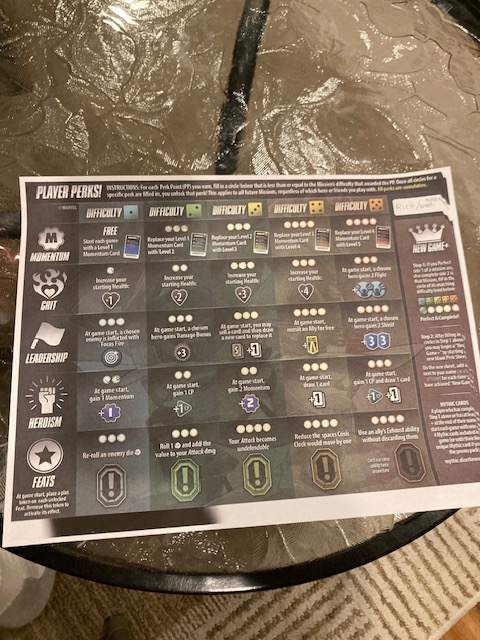
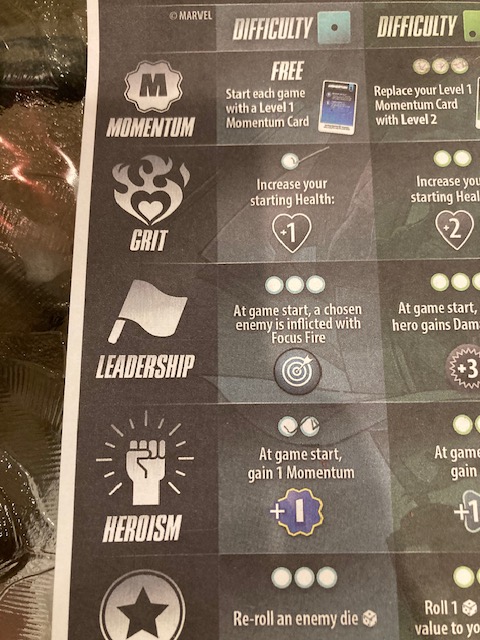
After you defeat a Mission, the player gets “Perk Points”!  These are another thing that are kind of like experience points!  You use them to make your character better.  You may spend some Perk Points to start the next mission with a little more momentum, or have a focus fire, or other things!

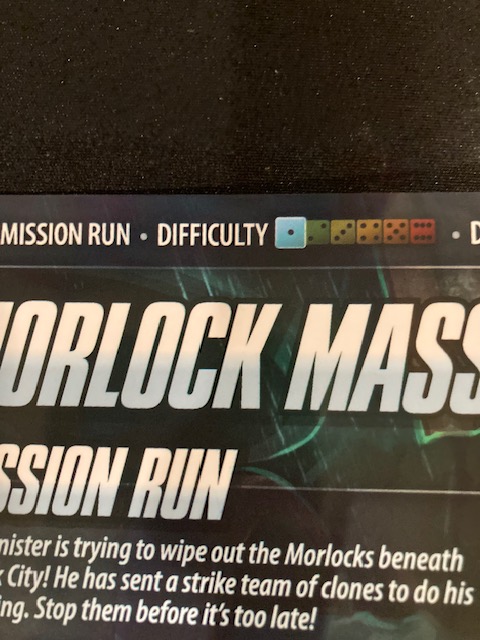
There are 6 levels of difficulty in the game; they are marked on top of the mission sheet you choose. See below.

You reallllly don’t want to try harder missions until you have some Perk Points from previous missions!   So, while this isn’t a campaign “per se”, the game encourages you to keep playing and get Perk Points so you can handle more difficult missions!

You could always cheat and just give yourself a bunch of Perk Points to level up yourself ….

I moved on to a harder mission: level 2!

You can really see the Mission board problem above …

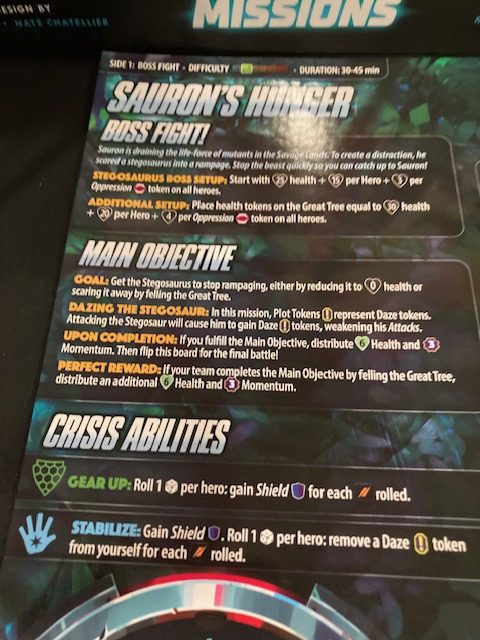
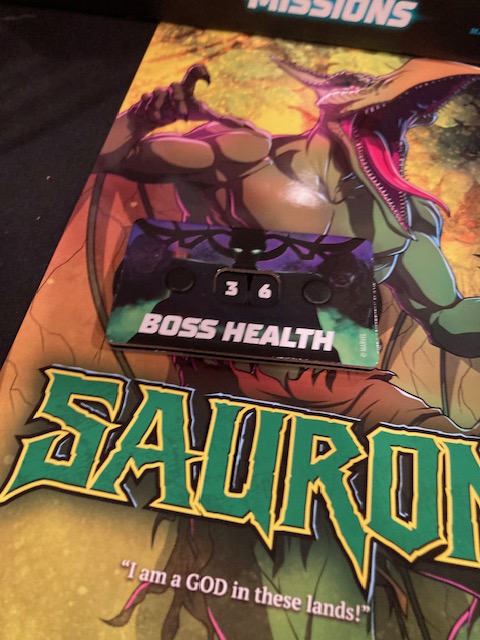
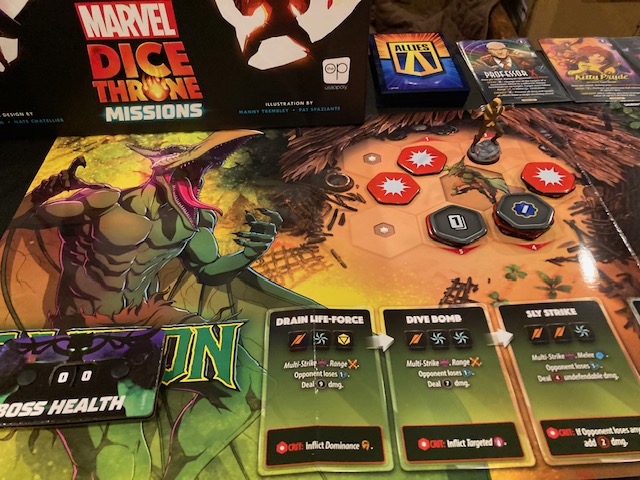
Sauron’s Hunger was my second mission … and I had a blast!

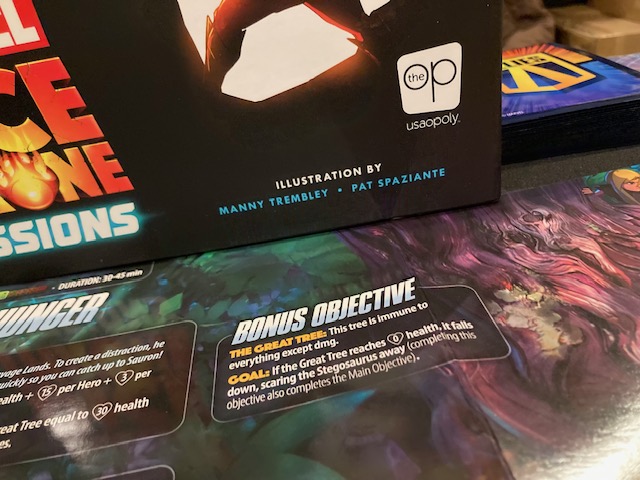
Wolverine went after the tree so he could get the Perfect Reward (see above) and more Perk Points at the end of the game!

The second side of the Mission was another Boss Fight: see above!

This one was a little harder, but I expected it to be for a level 2!

In the end, I was able to win and finish another Mission!  It was definitely a little harder. I had two missions under my belt, and I looked forward to another!

Day 3: Cooperative Play

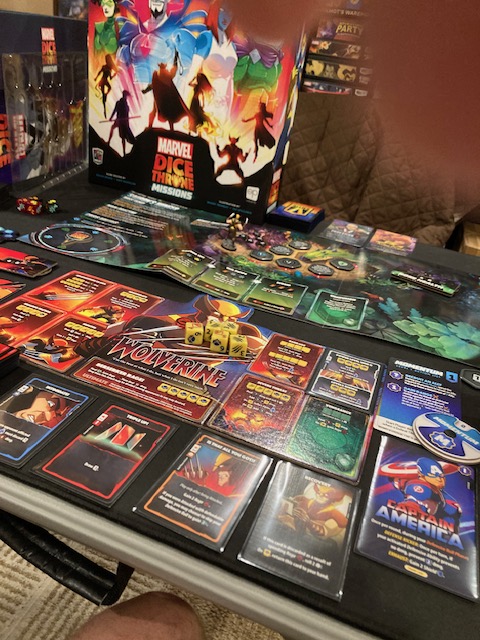
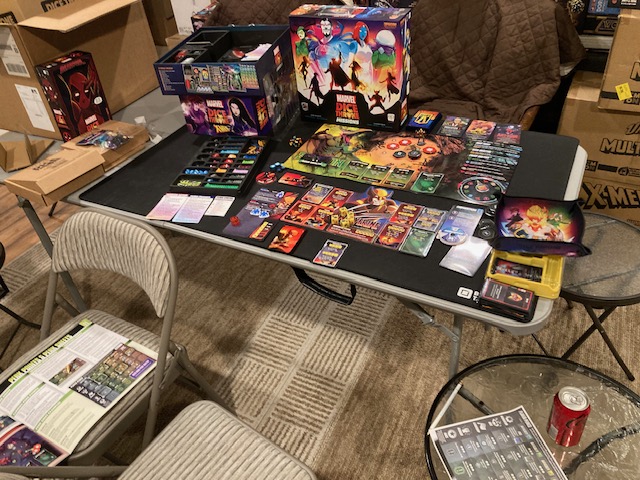
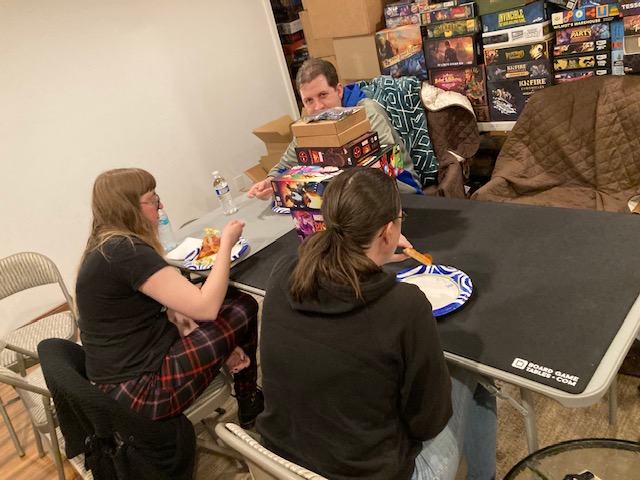
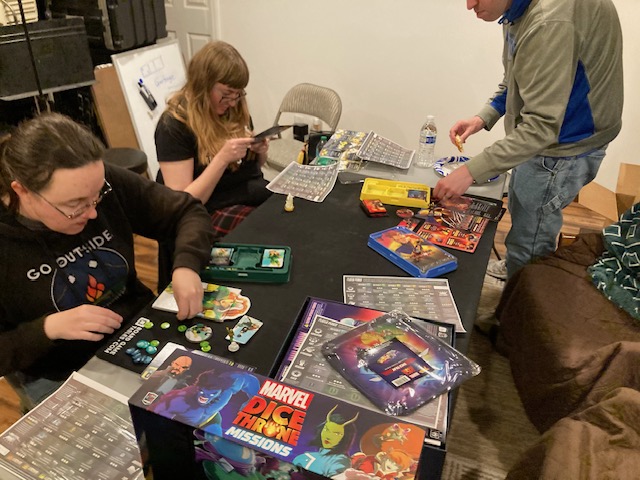
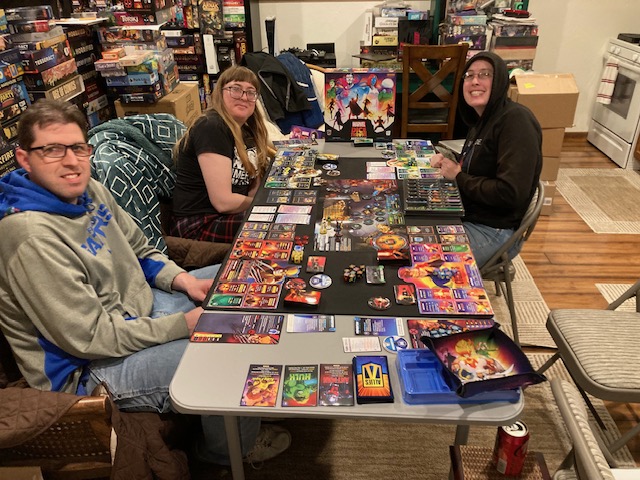
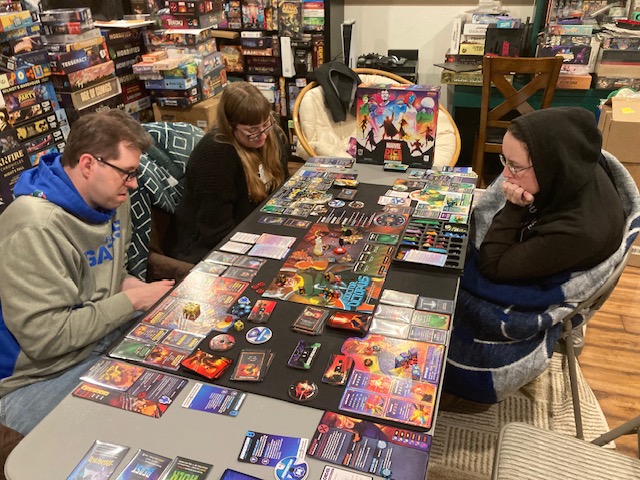
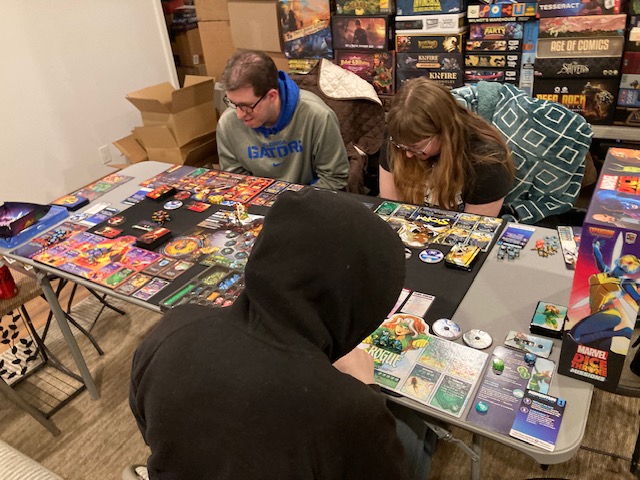
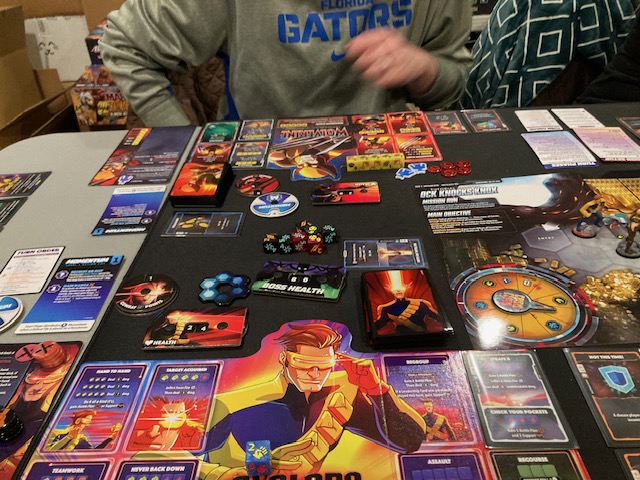
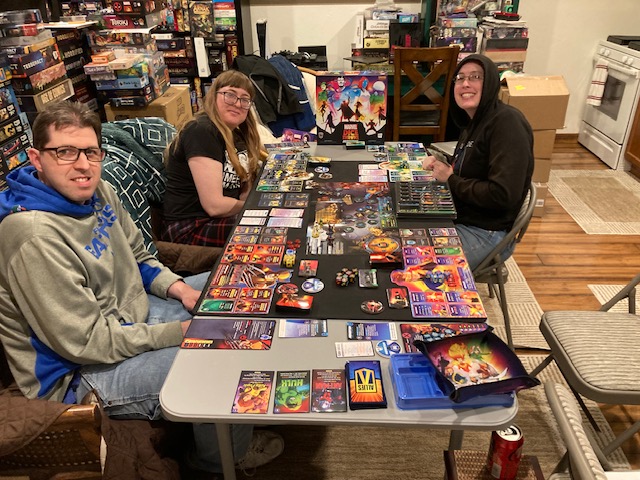
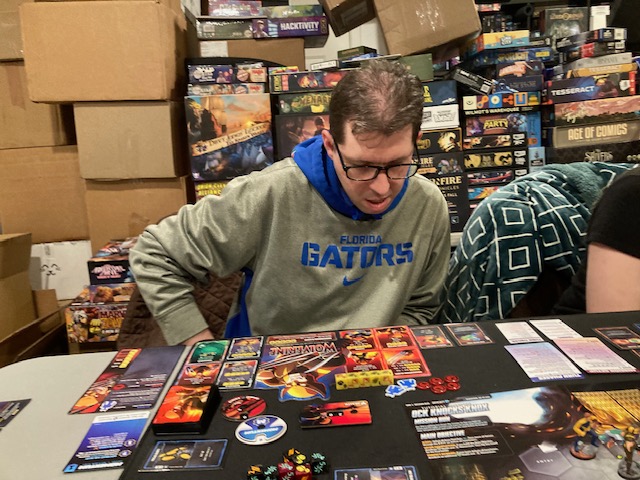
With two days of solo play and set-up experience, I felt ready to teach my friends! We ended with a 2-hour Mission fighting Doc Ock again!

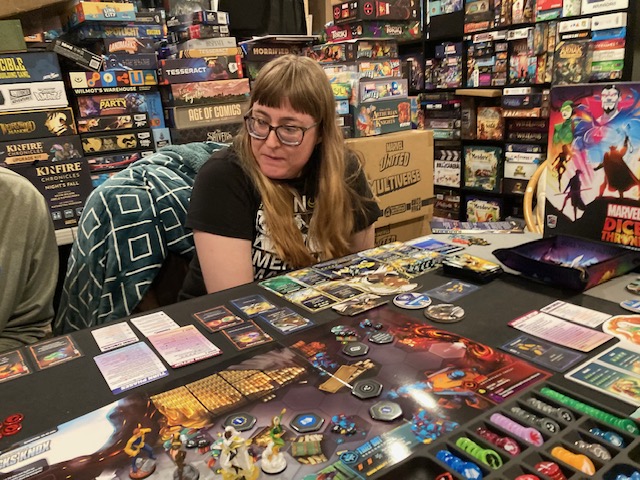
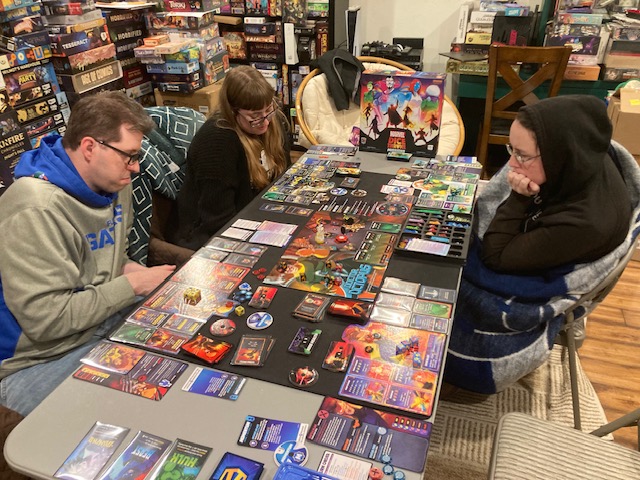
This was a 4-Player cooperative game.

I took Cyclops because I wanted to test his Leadership abilities.  Sara and Teresa took their favorite characters: Ororo and Rogue (respectively).  Sam doesn’t know the X-Men as well, but he knows Wolverine.

Although we beat the first side of the mission, we lost to Doc Ock as he killed two of my players.

Solo Play

The solo play was a hoot to me!  I kept wanting to do more Missions and get more Perk Points!! What are some of the other missions that lay ahead??  Wolverine is probably a better character to play solo; he is good at damage and he can heal himself.  I worry that Cyclops or other heroes might struggle with hit points a little.

I had fun, I was engaged, and I felt like all my rolls mattered!  

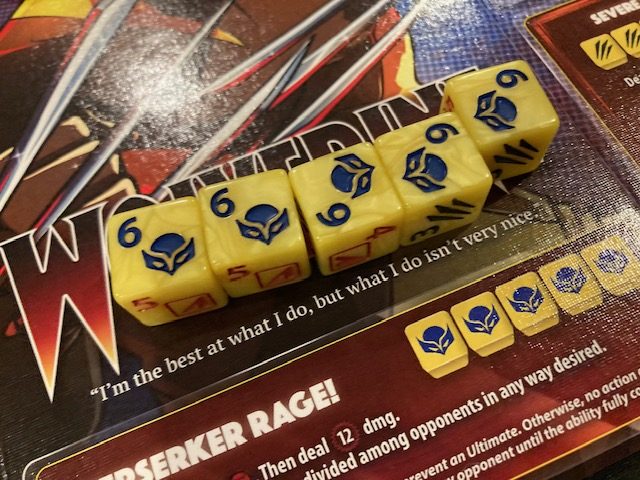
I was able to push my luck (and I usually hate dice games), but usually there is a good roll or card that can help you get “something good” on your turn.  With Wolverine especially, even if you didn’t have a good roll, the lesser abilities typically healed him, so something good always happened.

Over the course of two days, I had fun.  I was engaged, and I saw how important Allies are (especially their Exhaust ability) and how Momentum worked.   These are both new things to the Missions mode and they really made me feel like I always had more options.

I would give the Missions solo mode an 8.5/10.  It was great.  It may be that you have to choose a hero that works well with solo; I am not sure Cyclops would have done as well.

Even the me vs me solo mode was fun! Not quite an 8.5/10, maybe 7.5/10, but that was a fun way to play solo too!

Cooperative Mode

This was a surprise for me: my friends didn’t enjoy cooperative Missions very much.  And they (mostly) love the X-Men!!!

Although there is simultaneous play keeping everyone involved (you only serialize your turns when you do damage; all other times, every one is rolling and re-rolling and playing cards simulaneously), no one felt like there was a lot of cooperation.  As Sara said, “it feels like Dice Throne is not a cooperative mode and this feels a little forced.”

I even played Cyclops to try to elicit more cooperation: I’d always say “Hey! I’ve got some support tokens!  Use me! I can help you reroll or get CP if you need it!”  … and I think my players used me once.  And I tried really hard to get them to use me!!

You might think that “Well, your players don’t like co-ops, or they just don’t like to co-operate” and that is patently untrue!  I play co-ops all the time with this group!!  And they cooperate very well together!  For some reason, this just didn’t work.  And Sara even said, “Eh, you can cooperate, but there are many other co-ops I’d rather play.”

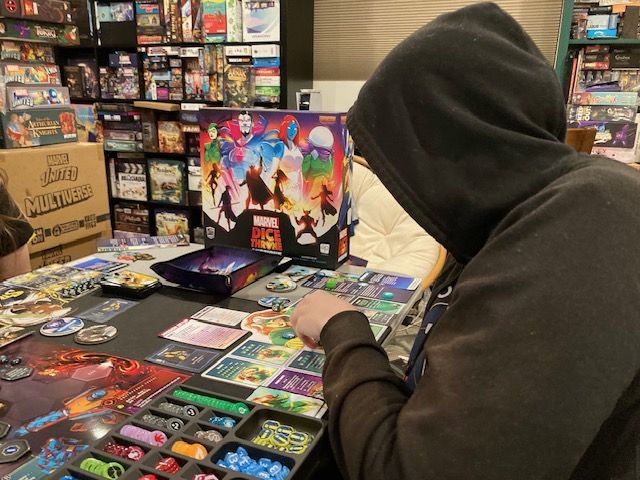
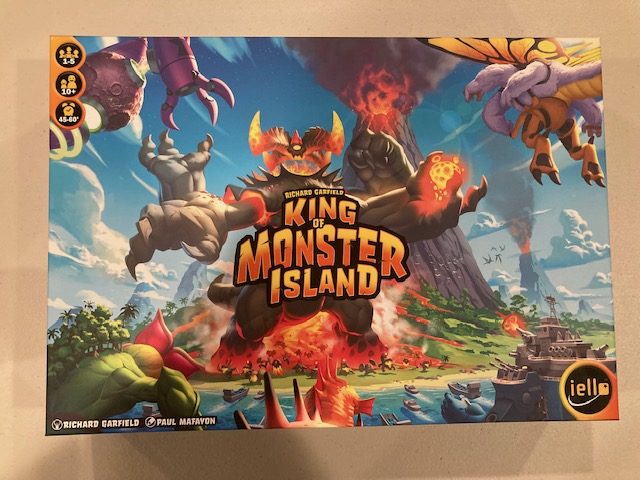
I actually have a theory about this!  When we played King of Monster Island a while ago (see review here), we liked the King of Monster Island game, but it also seemed to not promote cooperation as much!! Why? It also has the familiar Yahtzee re-roll mechanism (roll 3 times, keep the ones you want) just like Dice Throne Missions!! And while that mechanism is very engaging, people seem to become TOO engaged in that to the point they don’t cooperate!  It’s a weird thing to say, but too much engagement on your own stuff lessens the cooperation!  And I think that’s what happened here: we all got so caught up in our own characters, we forgot to cooperate!

Maybe this problem would go away after repeated plays, but you have to want to continue playing! And I am sad to say my group mostly doesn’t really want to play this again.

Having said that, maybe if you have a group that really likes cooperative multiplayer solitaire games (no Alpha Player), maybe this is something your group might enjoy!  There doesn’t seem to be a lot of cooperation, just a bunch of heroes beating up stuff and rolling dice!  Maybe that would appeal to your group!

Reactions

Rich: I liked the game solo a lot! 8.5/10: I was engaged and I liked my decisions. Cooperative was probably a 7/10? I still liked it but there wasn’t much cooperation.

Teresa: I got to play Rogue! And I had fun! 7/10

Sara: I don’t know, I just didn’t think it was great.  There wasn’t much cooperation, and even though I love Storm, it wasn’t that interesting to play her.  There are a lot of other cooperative games I’d rather play.  The cooperative mode just feels tacked on. It was okay.  6/10

Sam:  It was okay. 6/10.
Sam actually had a very full write-up on his cooperative experience, which he emailed to me!  I will reproduce that at the end of this review, after the Conclusion.  Read that for another perspective!

Conclusion

I expected X-Men Dice Throne and Missions to go over like gang-busters!  And while it did for me (for the solo mode especially), my group wasn’t that impressed with it.  

The game has gorgeous components, even if you choose not to upgrade everything.  My only real complaint was the Mission mats frequently has trouble staying flat.  This looks like a comic book world on the table, with its colorful villains, colorful heroes, and gorgeous dice and cards.

I think the cooperative mode didn’t go as well because people tended to be too focused on their own mat and their own rerolls … and this self-focus seemed to actually discourage cooperation!  I thought that my group, who love the X-Men, would adore this!  And they did not.

As a solo game, I am very comfortable giving this an 8.5/10.  I will play again, and I look forward to getting more Perk Points to try harder and harder missions!

As a cooperative game, it feels like the game lands at a 6.5/10.  Although Teresa and I would play it again as a co-op, I don’t think Sam and really Sara would.  For more details, see Sam’s Perspective below.

So, that’s my journey: Three Days of Dice Throne!  I loved it! My friends … not so much.  Your group may still love the cooperative Missions especially if they love co-ops that are more multiplayer solitaire.

Sam’s Perspective

Overall score: 6 – would play again if everybody else wanted to but X-Men as Wolverine combined with the Missions mode isn’t something I’d necessarily request or suggest (I could see it being 7-7.5 with avengers)

 
TLDR version:
I feel like this is turning into a scathing review and that’s not my intended tone. This particular combination of theming (X-Men aren’t really my thing) and components (flat printed enemies against hero minis didn’t really feel like we were fighting bad guys) just didn’t land for me.
 
The essay:
Because I’m an uncultured swine :), I’m not familiar with X-Men or their lore or anything other than the Deadpool movies (1 and 2) and being able to pick wolverine out of a lineup. Therefore, the characters didn’t really speak to me and I was unable to appreciate the references/accents/etc. Because of the movies, Doc Oc is also linked as a spiderman villain in my mind. 
 
I feel like I could have used a “sparring match” or two of the competitive version to get used to my character before taking him against the villains cooperatively. 
 
The components felt a bit jarring – minis for us vs enemies printed on the map just felt like I was standing around and taking swings at air. I feel like I would have felt more immersed if the bad guys were also minis (even though they didn’t move) or if we were flat tokens in the same plane as our opponents. 
 
I can’t quite put my finger on it but the movement and momentum mechanics also felt a little bit off to me.
 
I remember enjoying the original dice throne (though I missed out on the adventures and the original marvel set) probably because it was a set of generic archetypes I could get into – the rogue, paladin, gunslinger, monk, pirate, etc. 
 
I think I would also have enjoyed this more with the “original”marvel characters (avengers) even without having as much time to get into how my character works. Wolverine might also have been too simple – basically 9 variations on “get angry, hit hard, heal” depending on what you rolled. It didn’t really feel like I had much to set up and pull off, just wander around and try to roll good combinations so I could swing really hard at the air where an enemy was.