Top 10 Cooperative Roll-and-Write/Flip-and-Write Games!

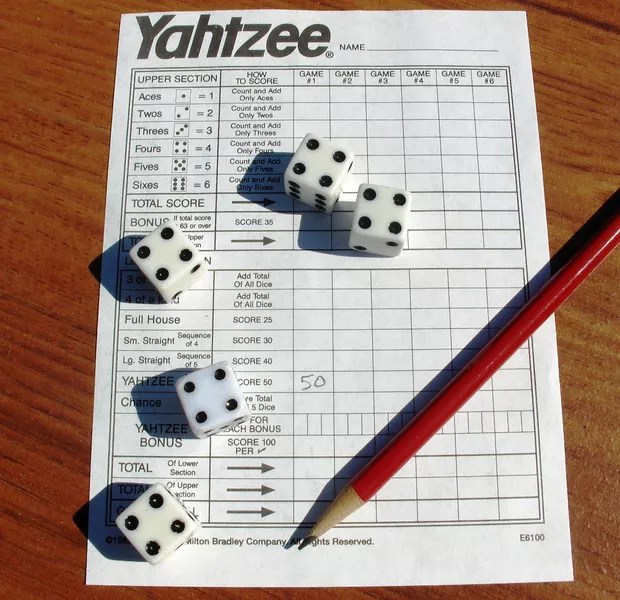
When most people think of roll-and-write games, they think of games like Yahtzee!  See above!  Players roll dice, mark things off a sheet, and try to get the best score to win!  Surprisingly, there have been a considerable number of cooperative roll-and-write games over the last few years! That’s right! Players roll dice and cooperatively mark-up sheets to solve/win together!  Now, flip-and-write games are very similar; instead of rolling dice, you flip up a card to show what you are dealing with.  It’s the same idea, it’s just the randomness is a deck of cards instead of some dice!  
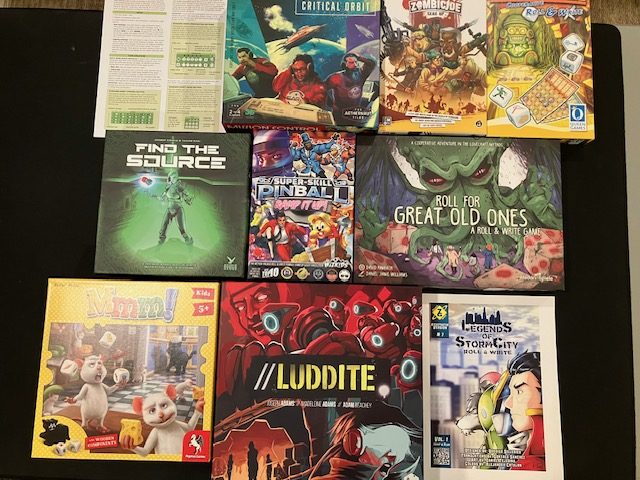
Below, we list our Top 10 Cooperative Roll-and-Write Games!  We also rate each game from 1 to 5 on how cooperative it is, with 1 being “multiplayer-solitaire” and 5 being “very cooperative“!  We also note if the game works solo: surprisingly, not all play solo!  Most roll-and-write games are about getting the best score you can collectively, but some have a more precise win condition!

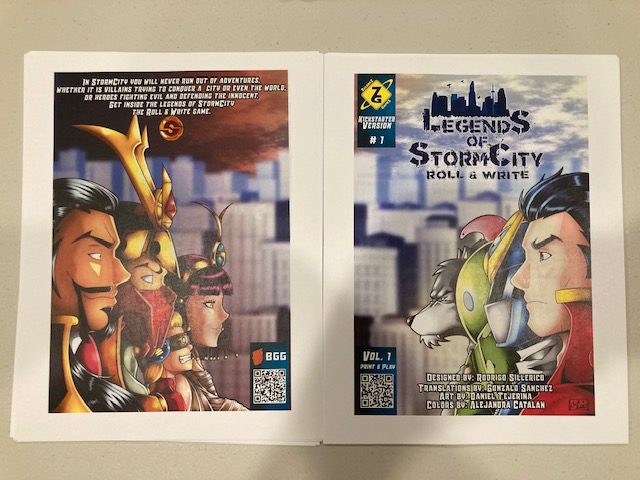
10. Legends of Storm City

Supports Solo?  Yes
How Cooperative? 2/5
Player Count? 1-4
Print and Play? Only means available
Type?  roll-and-write
Win Condition? Defeat all Elite Villains or Deactivate the Main Plan
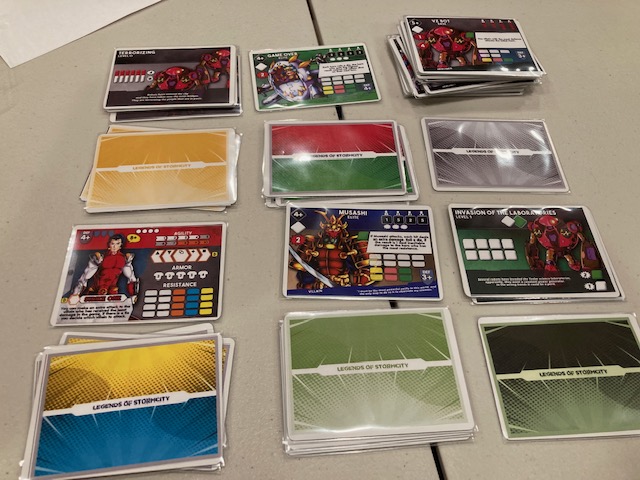
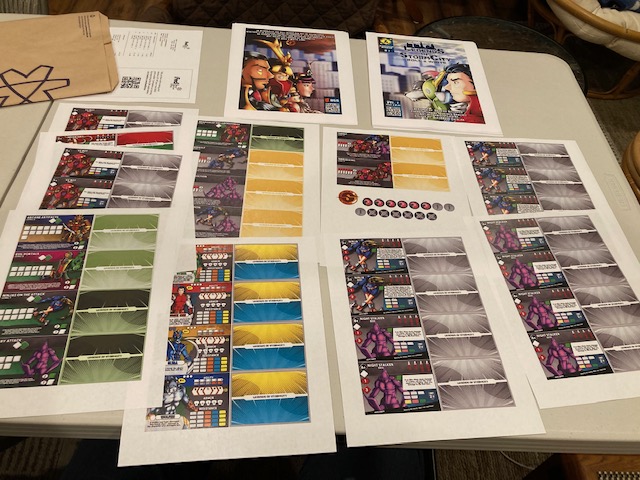
This roll-and-write has a special place in my heart, because it was the first print-and-play I have ever done!  And boy, was it a learning experience!  It also has a cool Superhero theme!
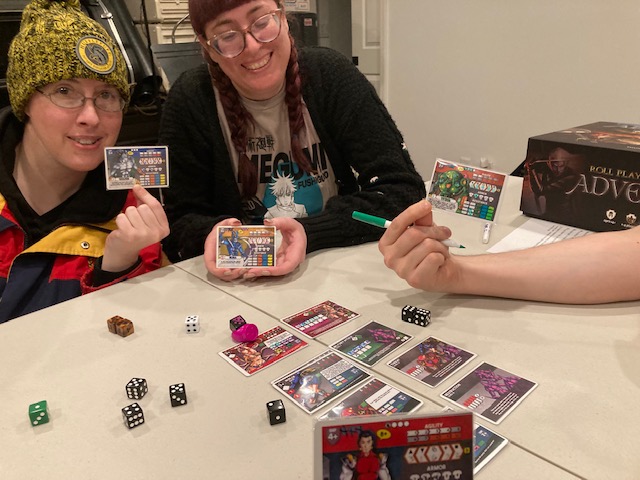
In the end, I liked the game a lot more that my friends; so that’s why this makes the bottom of our To 10 list.  
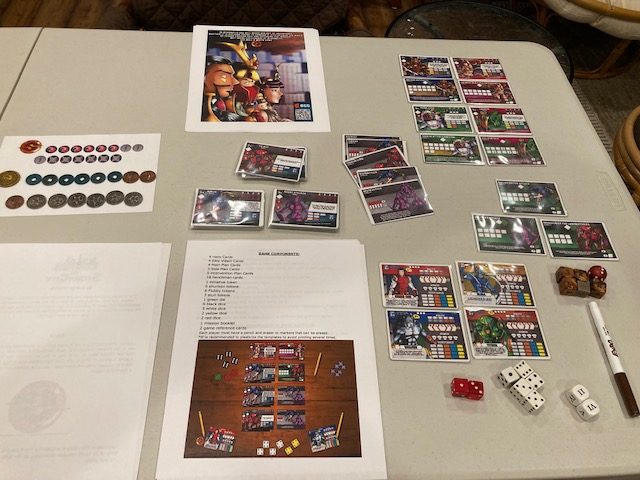
I liked the way this looked, and I loved the Superhero theme!  Take a look at our review of Legends of Storm City to see if this is something you might like!

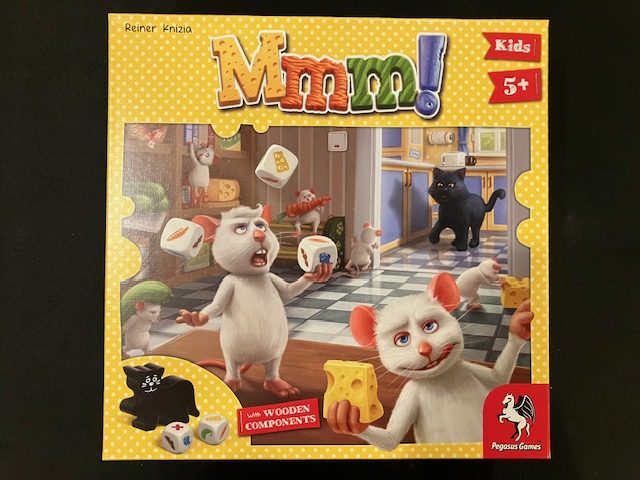
9. Mmm!
Supports Solo?  Yes
How Cooperative? 2/5
Player Count? 1-6
Print and Play? No, must buy box!
Type?  roll-and-write*
Win Condition? Mark off all the food!
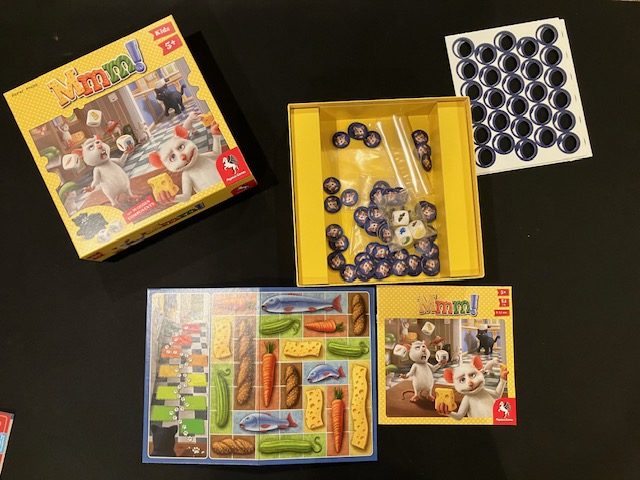
This is a little bit different than most roll-and-writes on our list: it’s intended for kids 5+, so it’s pretty simple.  The kids roll the dice every round and mark off food before the cat reaches them!  The cat only moves if some piece of food isn’t completely marked off, so kids have to learn when to push their luck and when to stay!
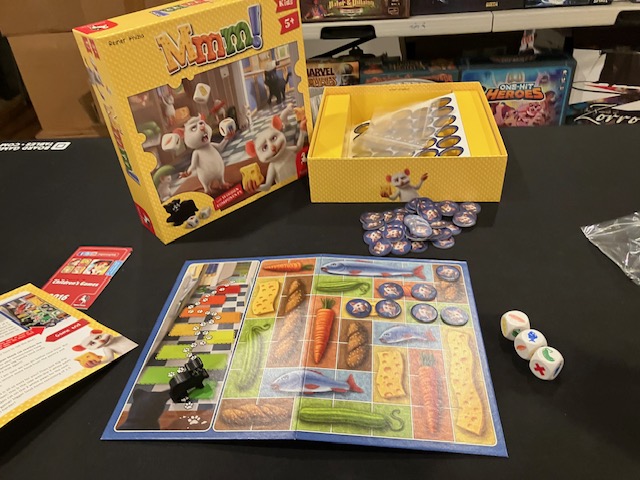
This is also a little different because the “write” part of roll-and-write is “mark-with-a-token” rather than write-on-a-piece-of-paper.  See above.  But it’s the same idea: you are just marking up a board!
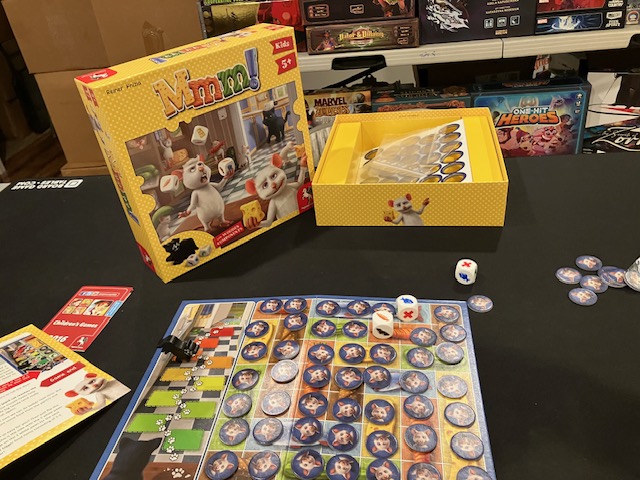
It’s also interesting that the board is shared cooperatively among all players, so players will need to talk to help each other “set-up” the board for them on their turn!  This is a Renier Knizia game for kids, but it is kind of a neat little roll-and-write kind of game, even if it’s not “quite” roll-and-write … more like roll-and-mark!

8. Roll or Stand: Forbidden Adventures
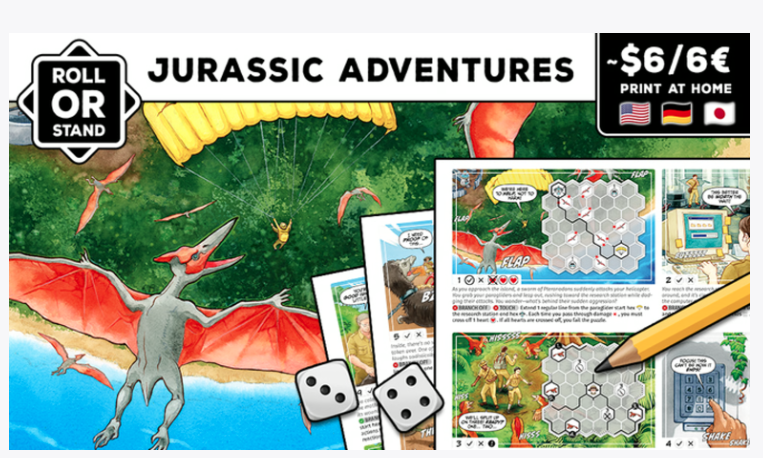
Supports Solo?  Yes
How Cooperative? 1.5/5
Player Count? 1-100
Print and Play? Only means available
Type?  roll-and-write
Win Condition? Make it through all 4 puzzles on a page!
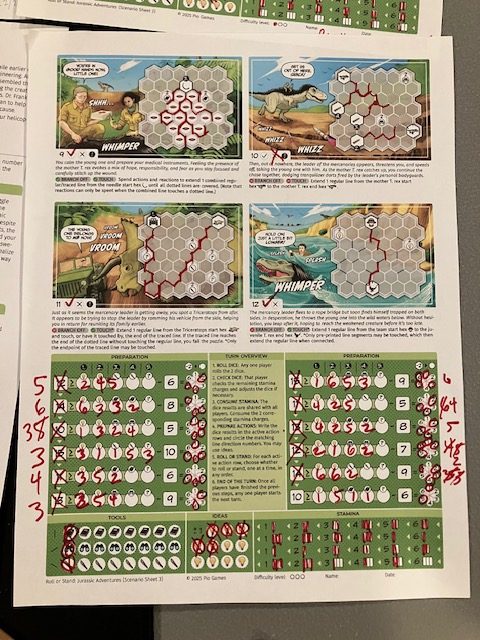
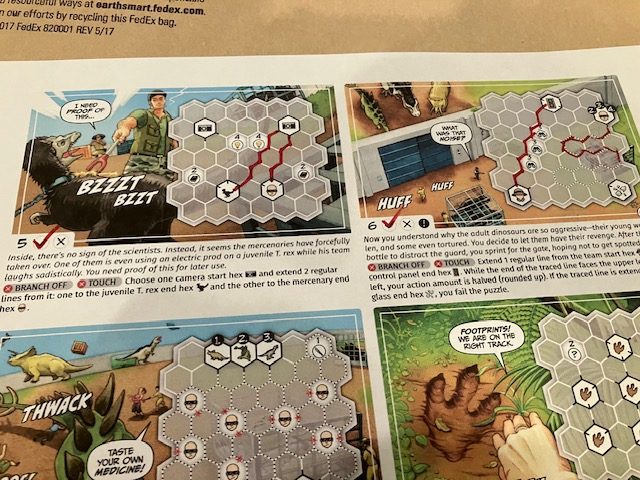
This roll-and-write has 4 puzzles per page, and has a “blackjack-like” mechanism where you push your luck to get more actions and more directions!  But if you get a number that busts, you lose an entire set of actions!  
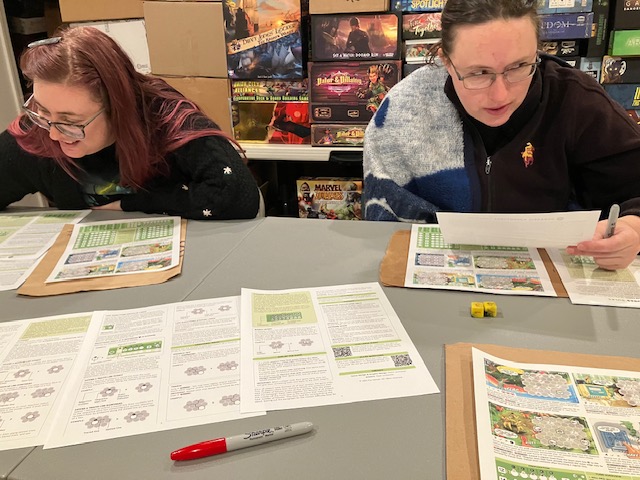
Each player has their own sheet and uses the dice as given to them, so it’s mostly multiplayer solitaire!  There is a mechanism for sharing, but resources are so limited in this game, we found that we didn’t really use the sharing too much! That’s why it’s 1.5/5 for cooperation … this is a mechanism, but we found we didn’t really use it!
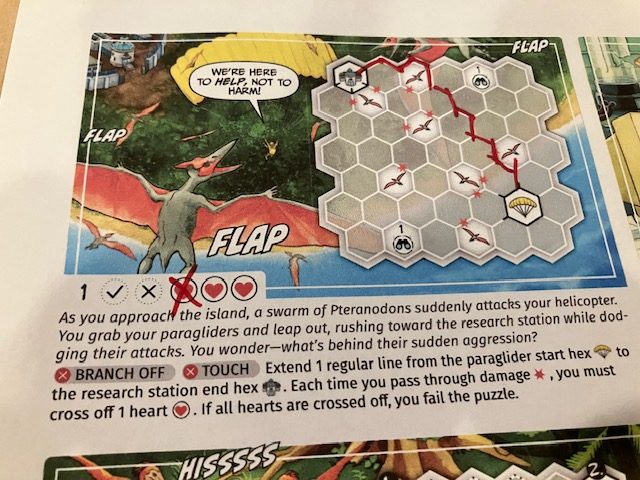
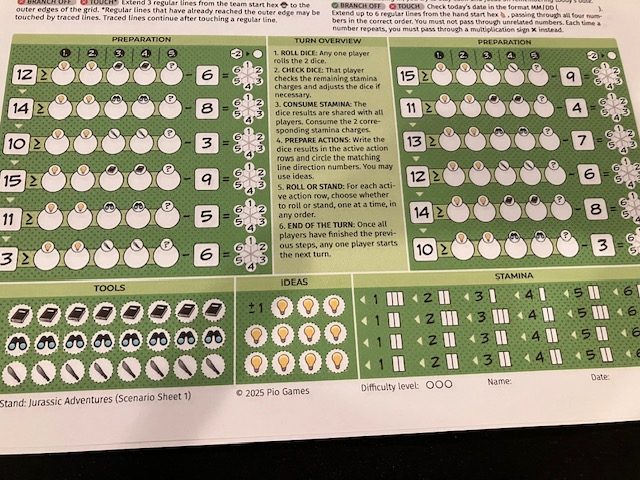
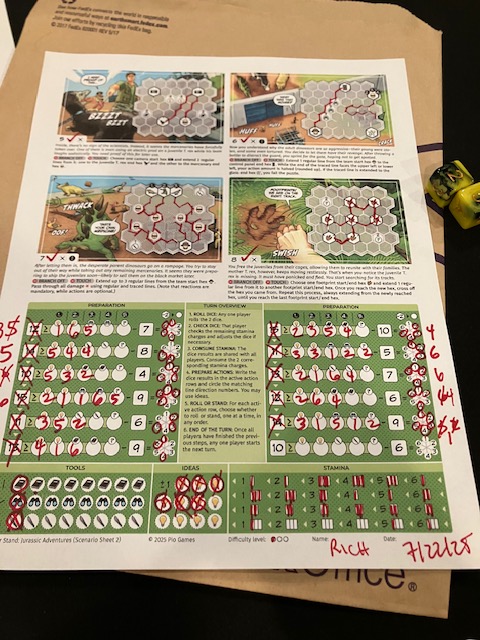
Still, there’s a really neat physical aspect to this roll-and-write as you have to use the numbers marked to move around one of the four puzzles!  See above!  All-in-all, this is a pretty neat roll-and-write game!  See our review here of Roll or Stand: Jurassic Adventures to see if this might be right for you!

7. Mission Control: Critical Orbit
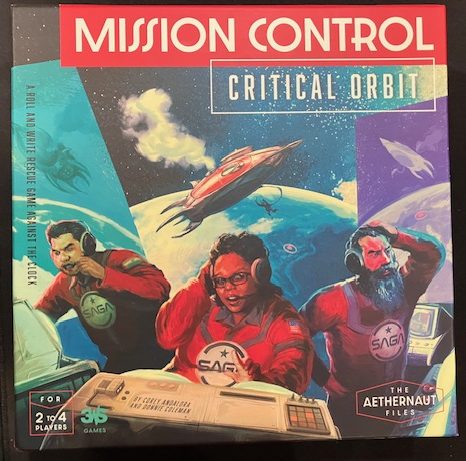
Supports Solo?  Yes
How Cooperative? 4/5
Player Count? 2-4
Print and Play? No, must buy box!
Type?  roll-and-write
Win Condition? Success in mission!
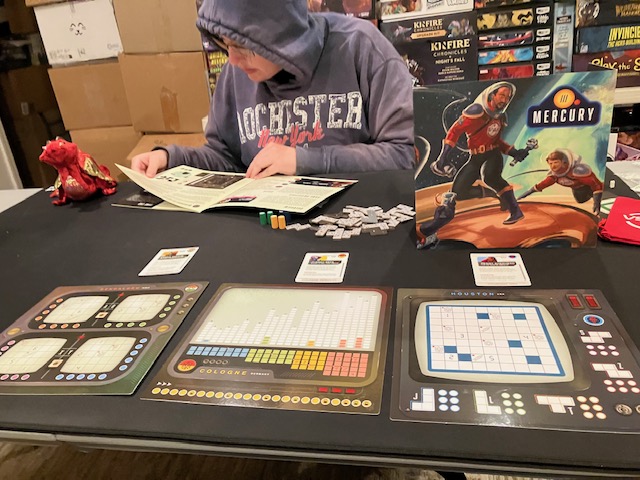
This is an interesting perturbation on roll-and-write games: First, there’s no solo play!  This is only a 2-4 Players game! Second, one player (Mercury) hides information behind a screen, and the other 1,2, or 3 players each operate some other boards!
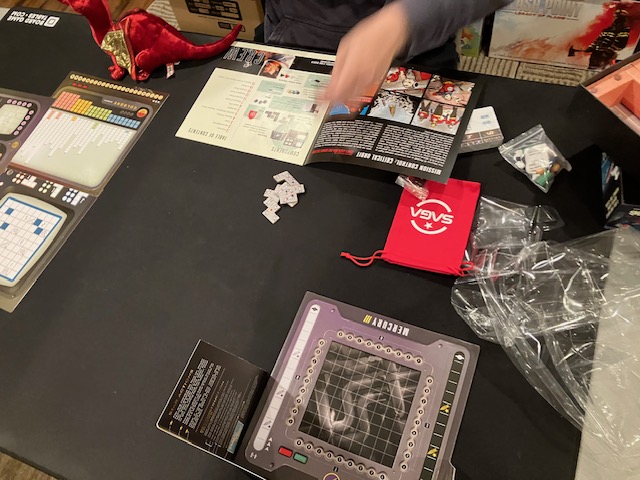
This is also a polyominoes game, where the Mercury player has to fill in a grid!  It’s a weird cross-section of roll-and-write, hidden information, cooperation, and polyominoes!  But it’s really fun!

6. Escape: Roll and Write
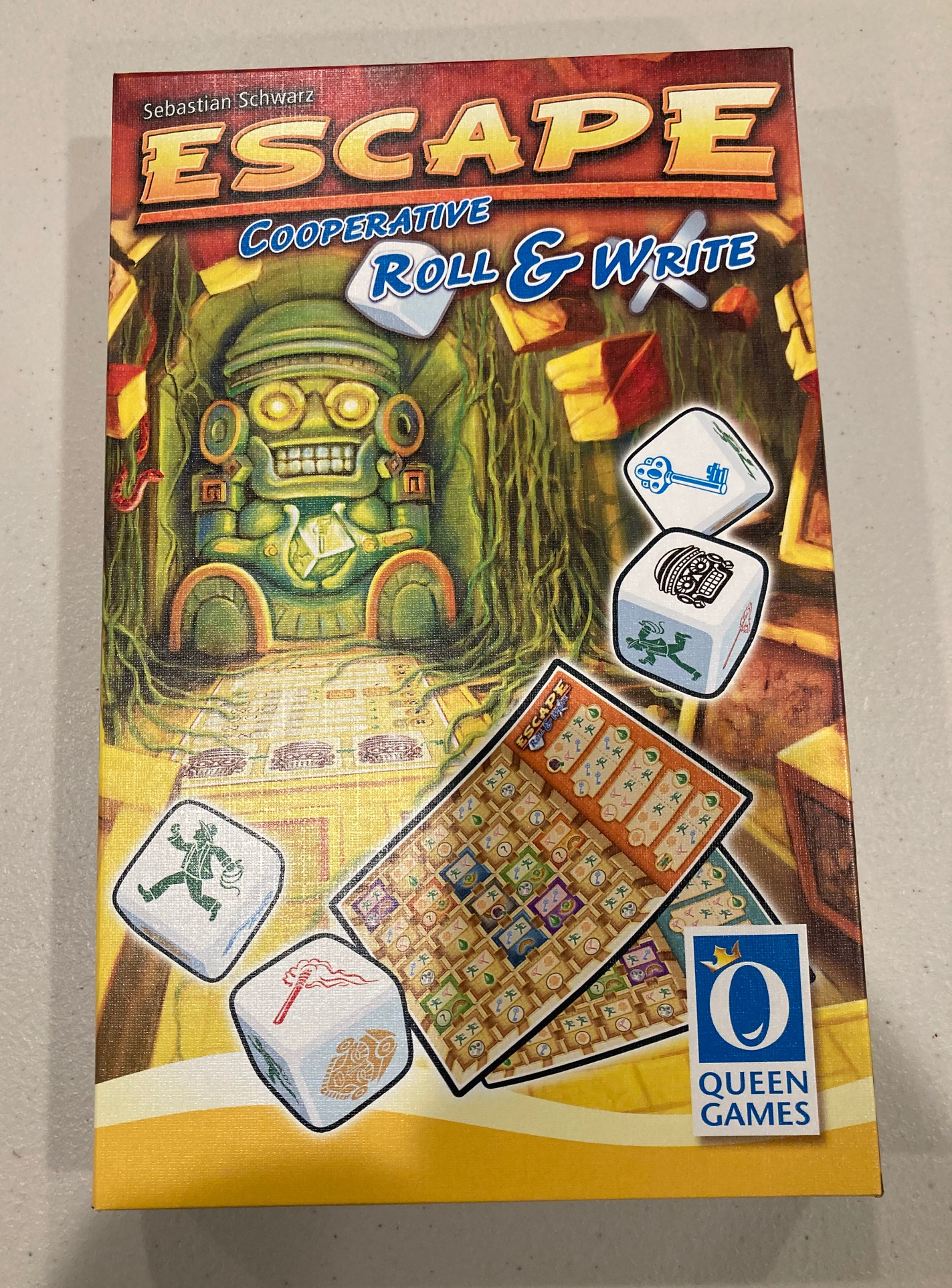
Supports Solo?  No (but you can simulate solo my playing as-if it were a 2-Player game)
How Cooperative? 2.5/5 
Player Count? 2-4
Print and Play? No, must buy box
Type?  roll-and-write
Win Condition?  Collect enough gems and all players need to be on their end space!
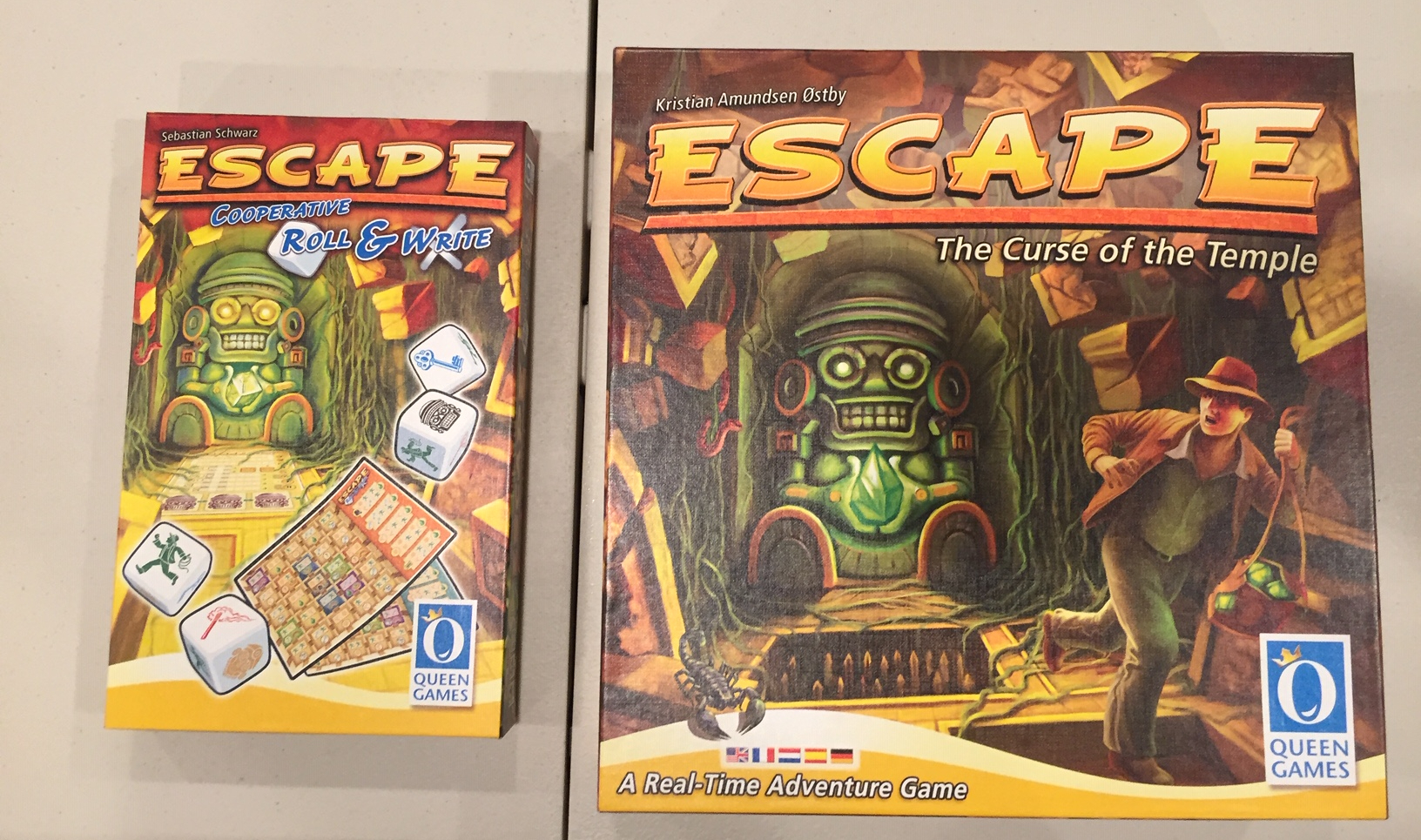
Those of you who know the original Escape: The Curse of the Temple game might be confused by this: “There’s a roll-and-write Escape game?”  Yes! 
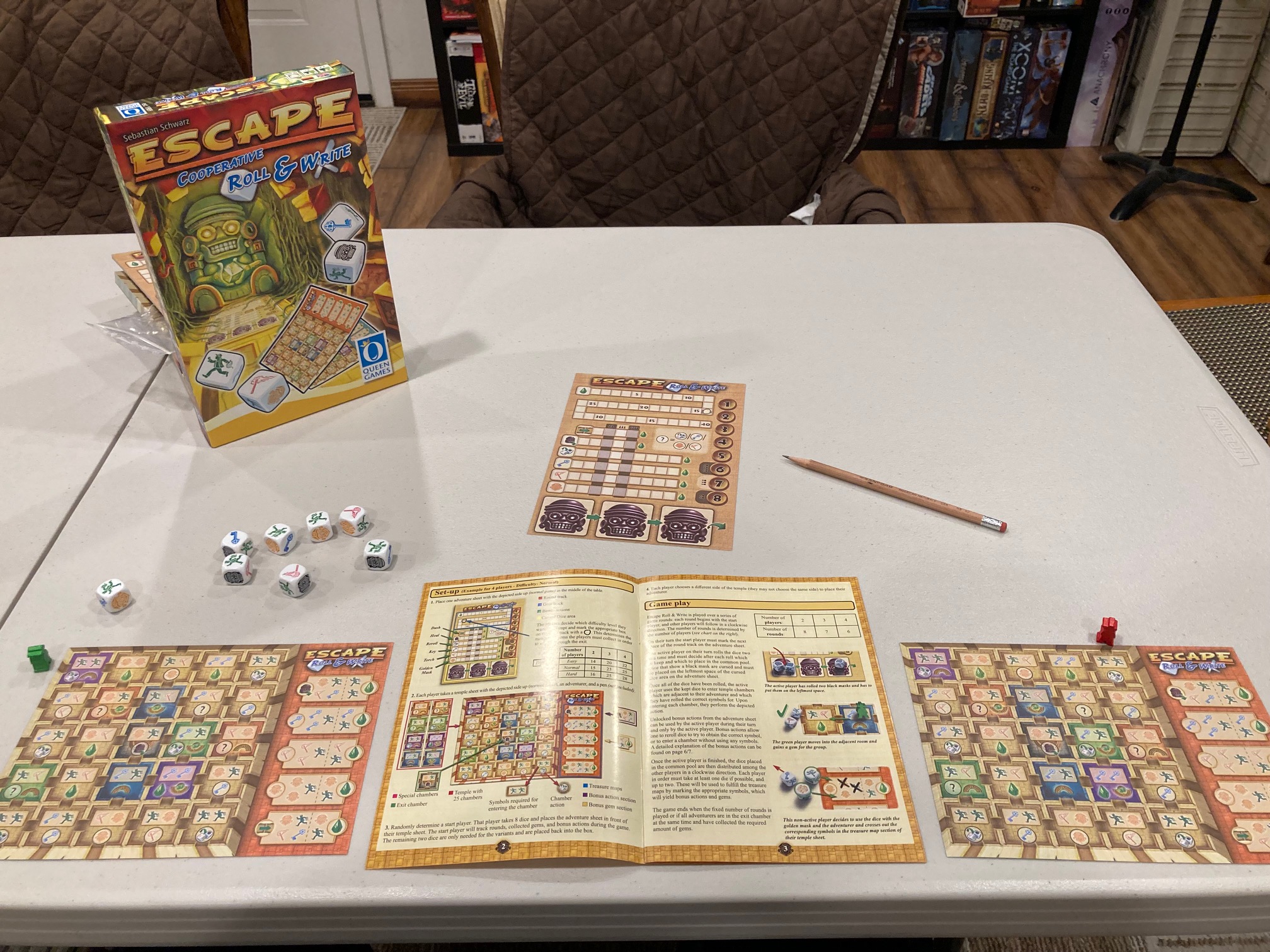
It even uses the same dice as the original Escape game!  This roll-and-write is all about the active player rolling dice, using them to move around the temple, and the remaining dice are used by everyone else!  So, there’s some cooperation and discussion about which dice the active player takes!   It’s not super cooperative, as each player moves through their own board separately, but there are still some elements!
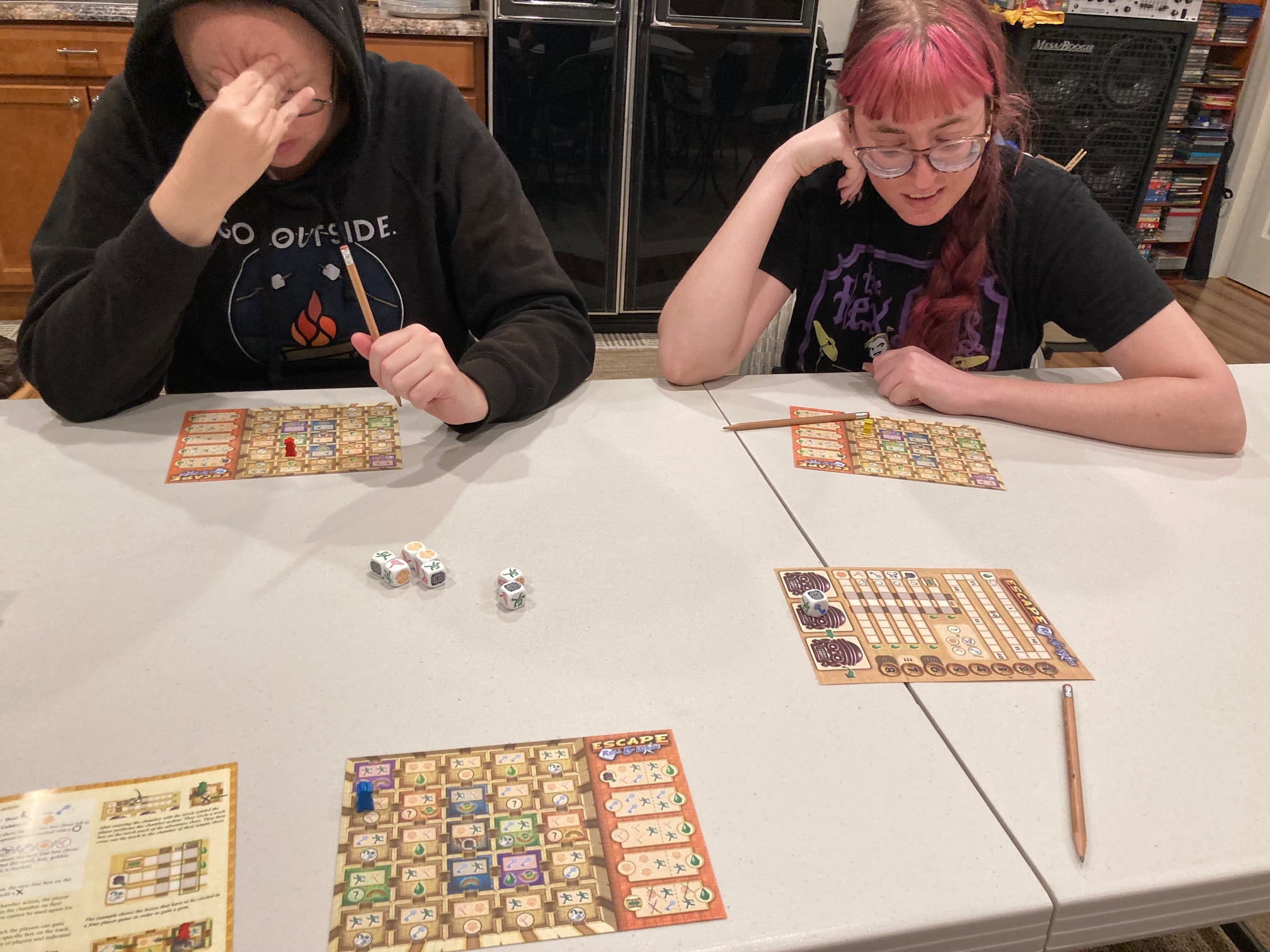
This game didn’t take the world by fire, but it’s colorful and fun!  See our review of Escape: Roll & Write to see if this is a game you might enjoy!

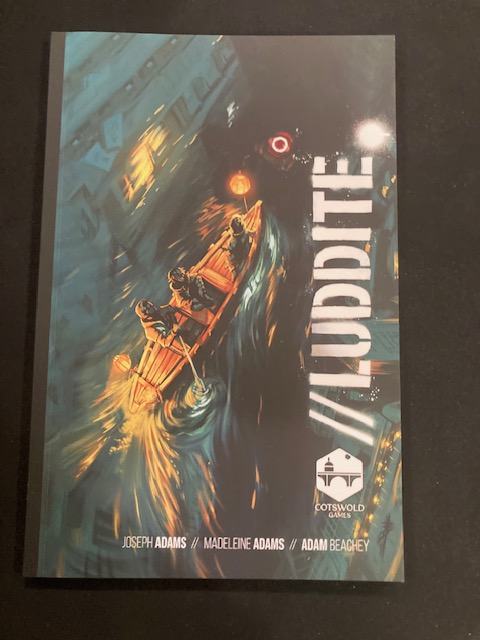
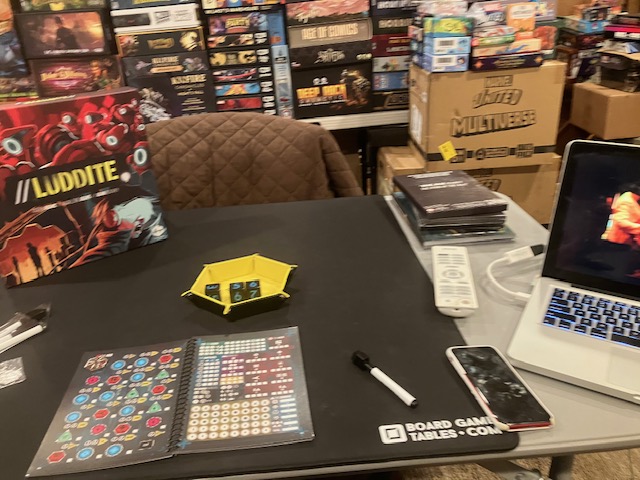
5. Luddite
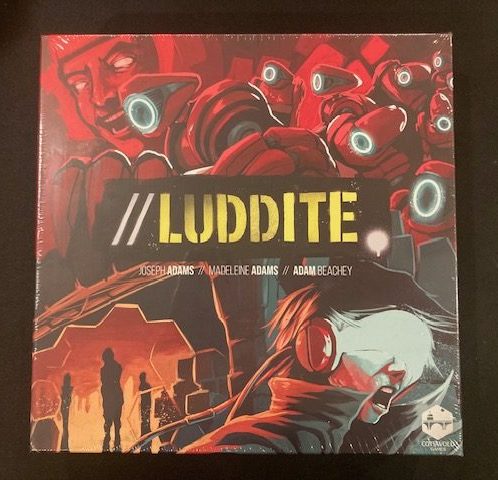
Supports Solo?  Yes
How Cooperative? 1/5 
Player Count? 1-100 (1-4 in base box, but you can keep expanding)
Print and Play? Yes, but there is also a boxed version with really nice components!
Type?  roll-and-write
Win Condition?  Move your hack marker to the end, making sure you do enough damage along the way!
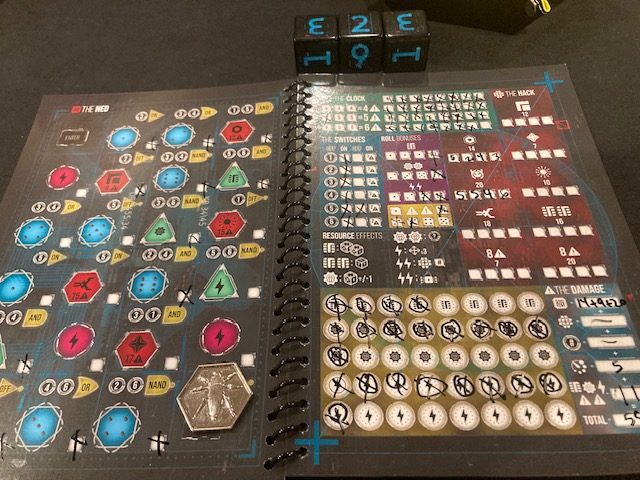
This game is probably the least cooperative and least interactive game on this list!  It’s cooperation is really to average the scores of all players and make sure that average exceeds a threshold to win!  That’s the only cooperation! 
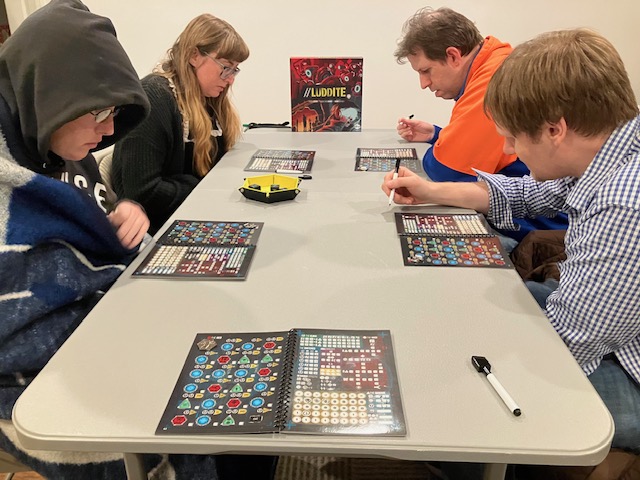
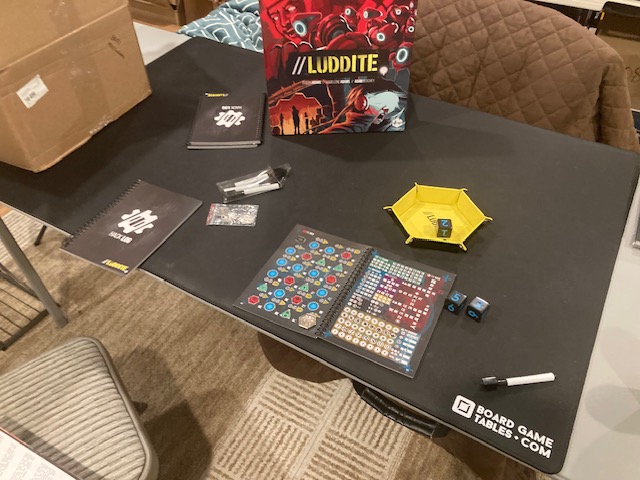
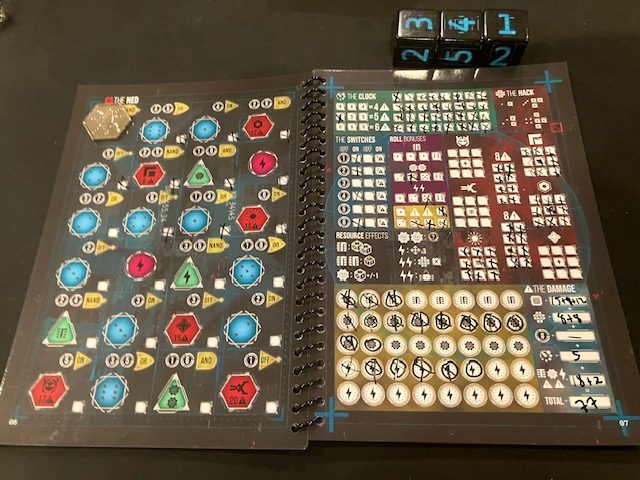
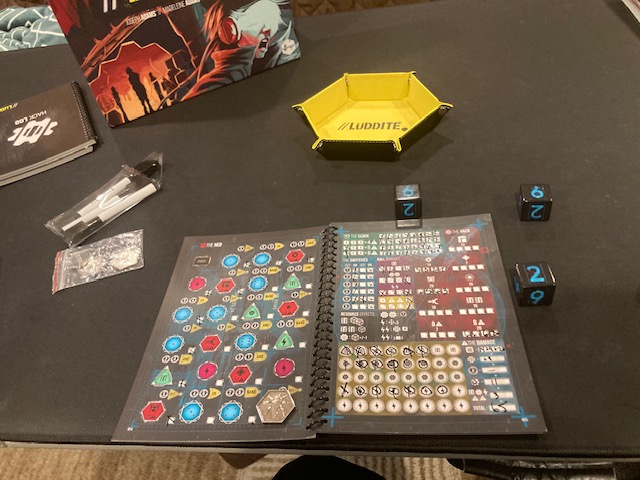
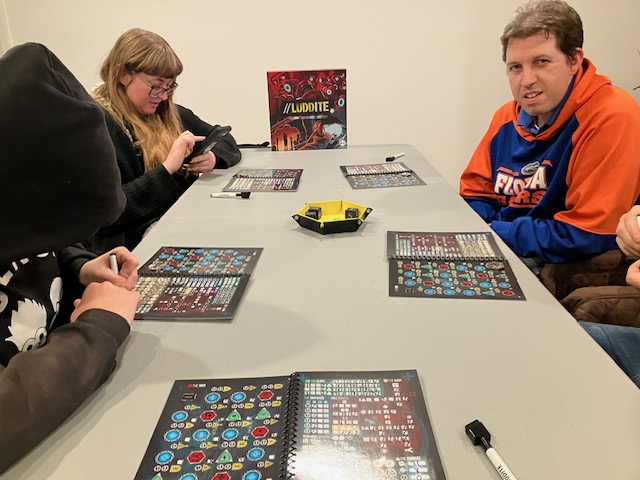
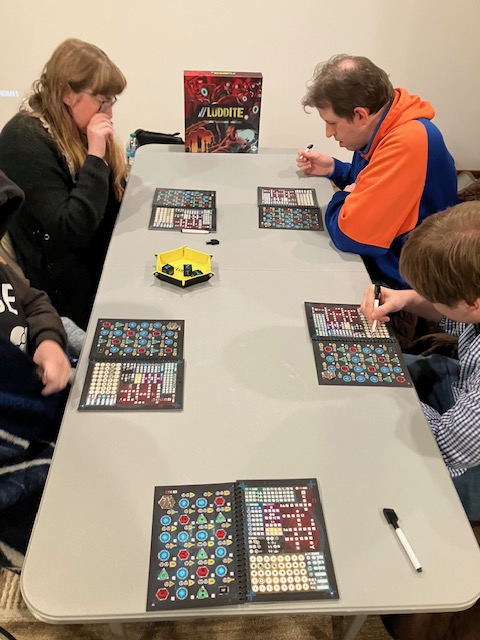
Other than the averaging scores, this game is pretty much multiplayer solitaire!  See above! So, why did this make our list?  Firstly, some people can suspicious of cooperative games: this is a first game that’s easy for people who want to put one toe into the water of cooperative game!
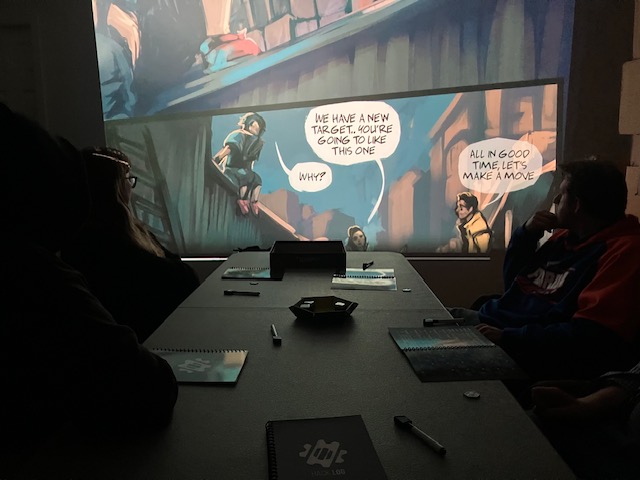
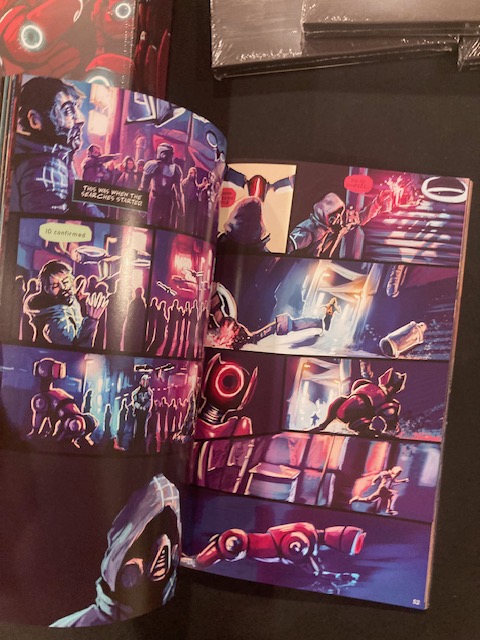
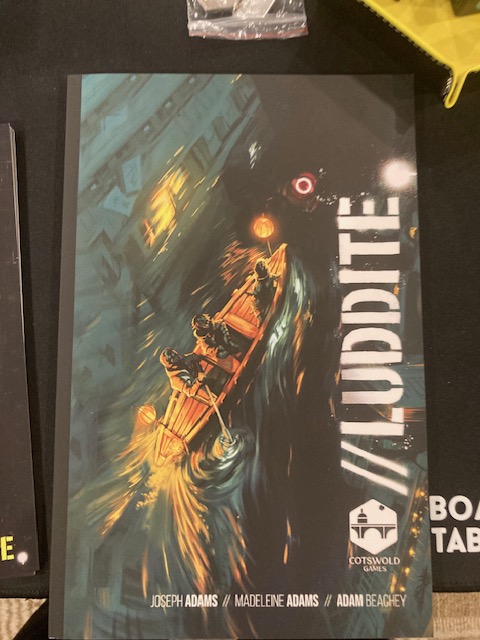
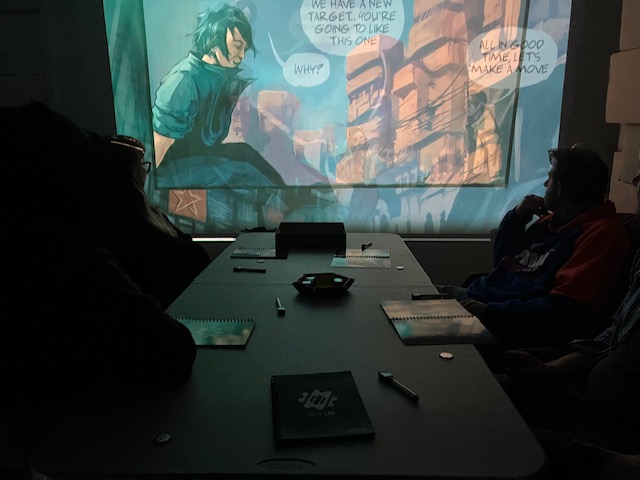
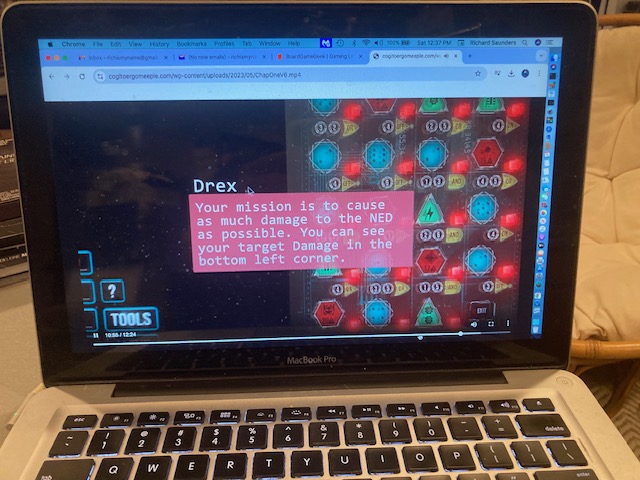
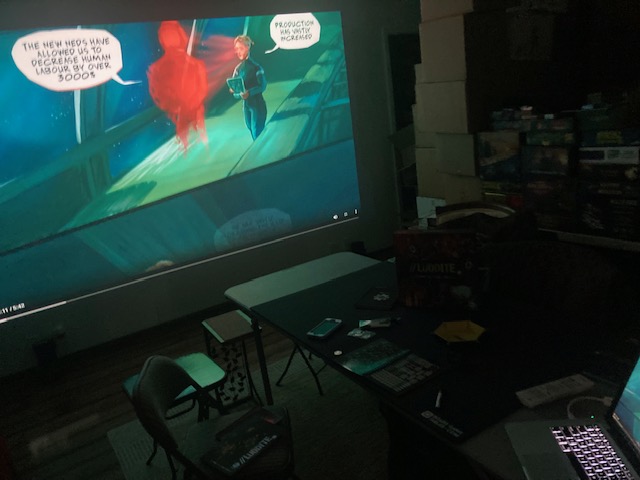
Secondly, this game has quite the story, in either graphic novel or movie form (see above)!  This story really keeps everyone involved in the game!   Luddite can be a real interesting experience if you let it!  See our review of Luddite here!

4. Zombicide: Gear Up
Supports Solo?  Yes
How Cooperative? 3/5 
Player Count? 1-6
Print and Play? No, must buy box!
Type?  flip-and-write
Win Condition?  Take out the Big Bad!
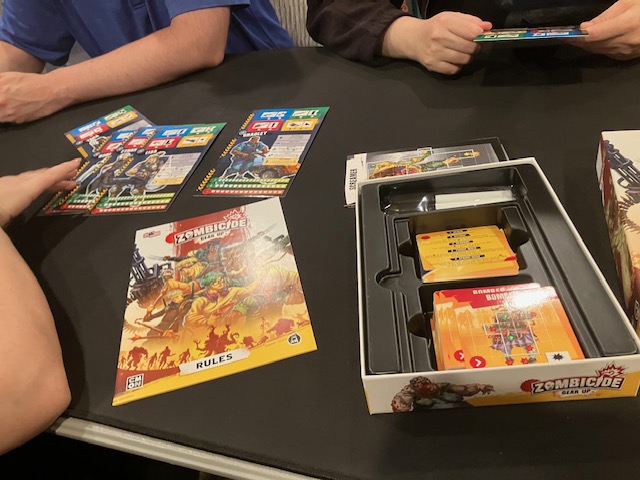
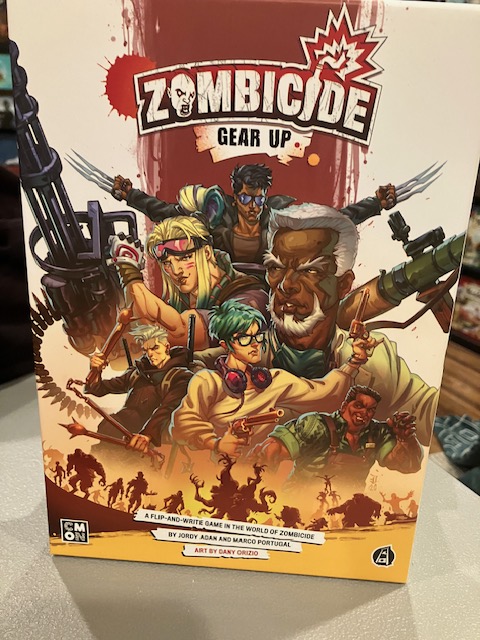
This is a gorgeous flip-and-write in the world of Zombicide!  The components are really great with nice dry-erase boards and cards!   This game is very thematic, as it simulates zombies invading your personal space! But in a flip-and-write game!
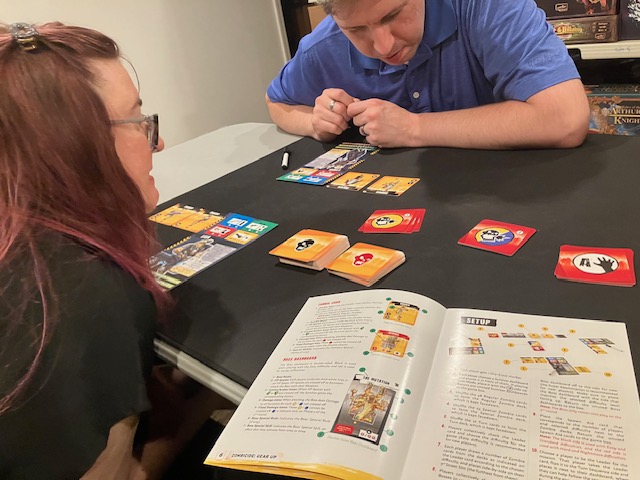
Each player deals with zombies on “their board”, but can help out their neighbors (on adjacent boards) using ranged weapons!  This is surprisingly cooperative as you have to decide (with your group) who takes which zombies, and when to use your limited resources to help your neighbors!  
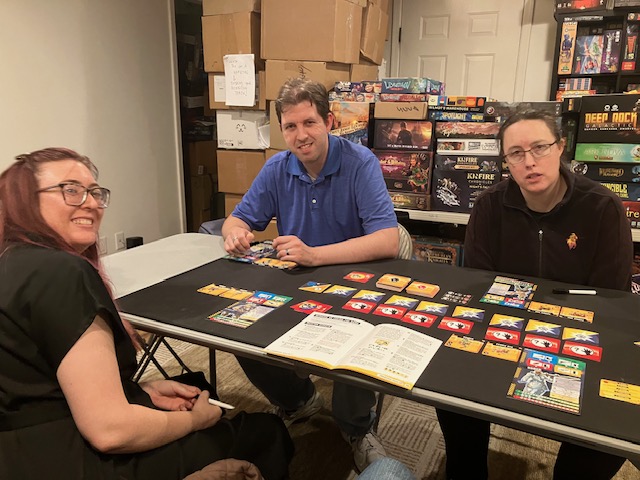
Zombicide: Gear Up went over surprisingly well with our group!  It really felt like zombies were invading … in a flip-and-write game!

3. Roll For Great Old Ones

Supports Solo?  Yes
How Cooperative? 2/5 
Player Count? 1-4 
Print and Play? Yes, but there is also a boxed version with really nice components!
Type?  roll-and-write
Win Condition?  Take out a Great Old One!
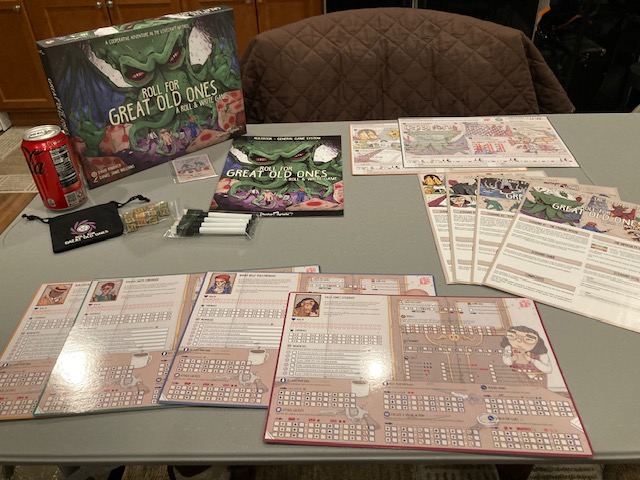
Players roll dice and must each choose one of the dice to use on their sheet!  The cooperation comes out in having players decide, collectively, who gets what dice!  After that, each player focuses on their own board to do things!
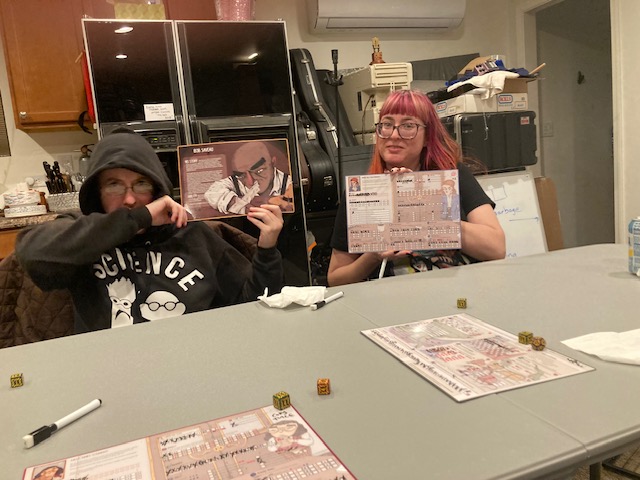
The art is a little odd, but this game is surprisingly thematic! This game made our Top 10 Solo Games of 2023!  Check out our review of Roll For Great Old Ones to see if this is something you might like!

2. Find the Source!

Supports Solo?  Yes
How Cooperative? 3/5 
Player Count? 1-3 
Print and Play? Yes, but there is also a boxed version with really nice components!
Type?  roll-and-write
Win Condition?  Find the Source! … then get the best score you can.
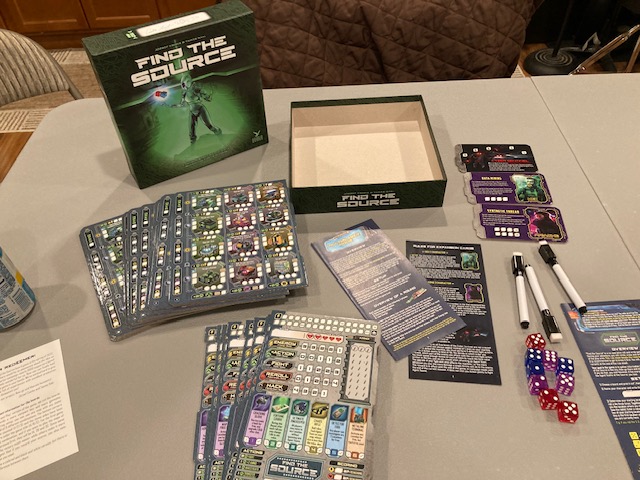
Find The Source was a game from Kickstarter; it was originally a print-and-play, but the Kickstarter upped the ante and delivered a very nice production with nice art and high-quality board!   See above!
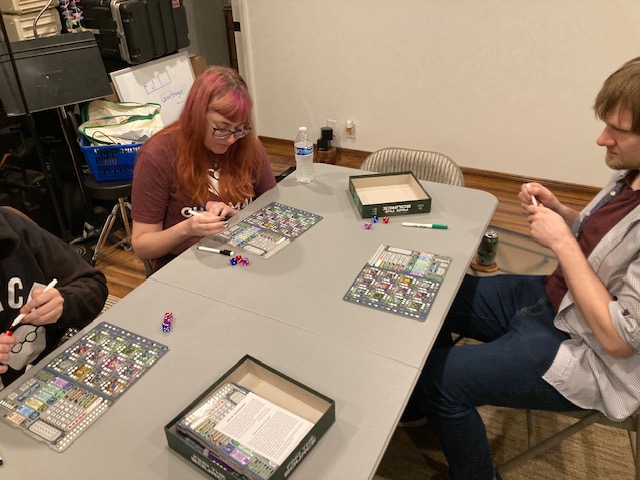
The solo game is quite fun, but the cooperative has players sharing resources easily for one action point.  There’s still a lot of multiplayer solitaire on your own board, but the sharing of resources and hacking inspires a lot of cooperation and discussion!
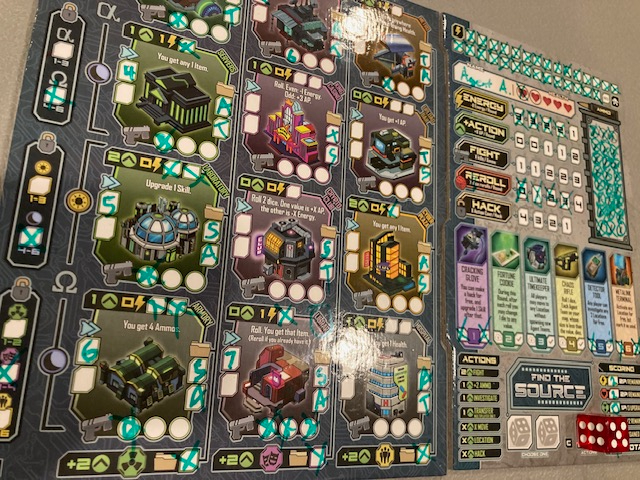
This was really fun to play!  It even made our Top 10 Solo Games of 2023See our review of Find the Source to see if this is for you!

1.  Super-Skill Pinball: Ramp It Up! (Pin Pals)
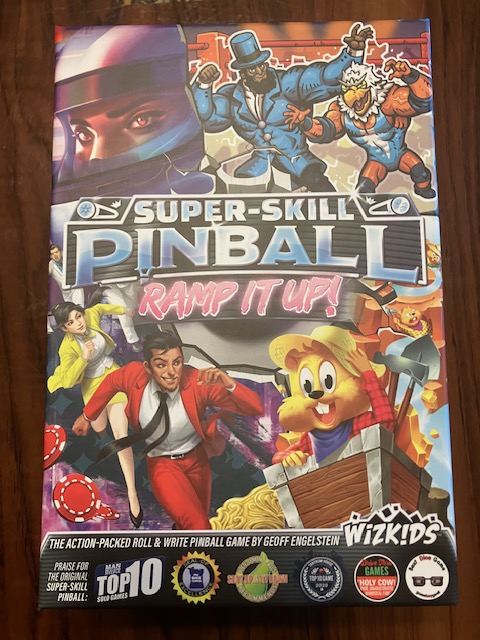
Supports Solo?  Yes* 
How Cooperative? 5/5 
Player Count? 1-4 (but really only 2 or 4 players for Pin Pals)
Print and Play? No, have to buy box!
Type?  roll-and-write
Win Condition?  Get the best score you can collectively: it’s pinball!
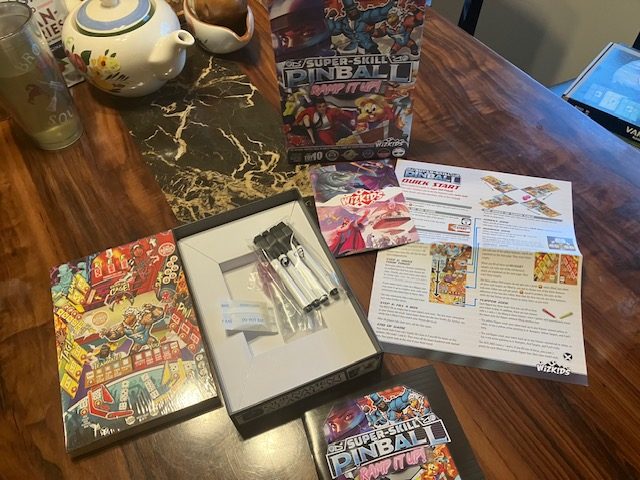
This is a weird choice for #1 for many reasons!  First of all, there’s only one cooperative scenario of the four in this box!  That is the Pin Pals game! The rest of the scenarios are solo/competitive!  Second of all, the cooperative game is really only for 2 people (although you can have two groups of two playing at the same time), so it has limited playability!
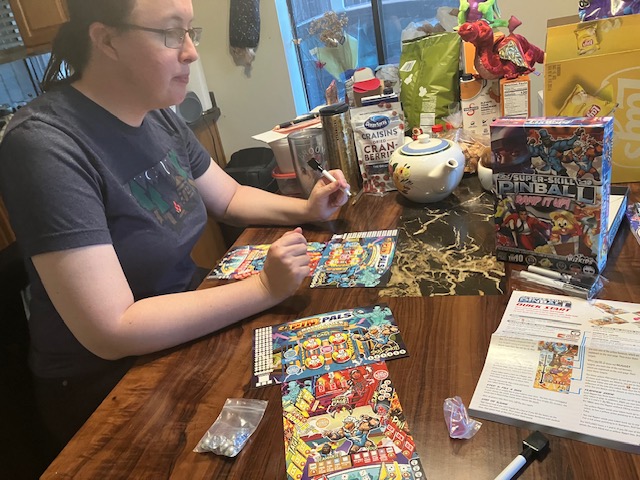
Despite these limitations, this was our favorite cooperative roll-and-write game!  You mark off things to help your compatriot all the time as you are playing!  The game moves so quickly!  It feels like pinball!  This was very interactive as we both played pinball on our own boards, but talked as we tried to give each other bonuses!
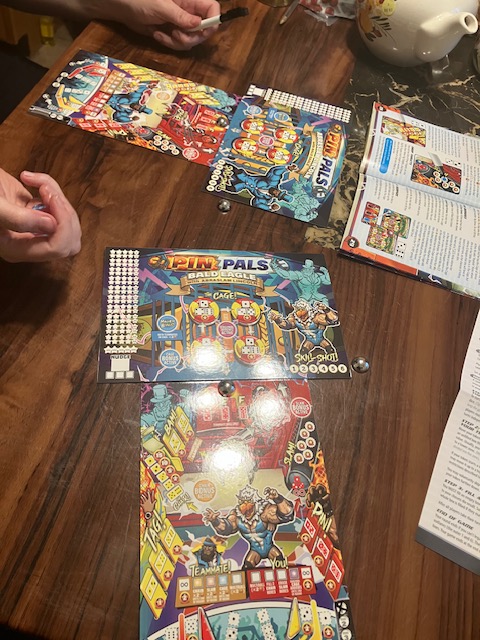
The wrestling theme was goofy, but worked really well as we “tag-teamed” each other, marking off bonuses for each other as we played!  Even though there is only one cooperative scenario in the box, it was worth it!  I highly recommend the Super Skill Pinball system and the Pin Pals board as a cooperative roll-and-write!  It just moved along so quickly and cooperatively!


A Cooperative/Solo Print-And-Play Roll-and-Write Game! Roll or Stand: Jurassic Adventures! The Theme is EXACTLY What You Think It Is!

Roll or Stand: Jurassic Adventures is a print-and-play solo and cooperative roll-and-write game that was on Kickstarter back in March 2025, and it promised delivery in April 2025.  That’s right! One month afterwards!!  And it did it!!!  How did they do that?  Because there was no actual physical delivery; I was sent some PDFs in email after the Kickstarter fullfilled.  It’s a print-and-play!

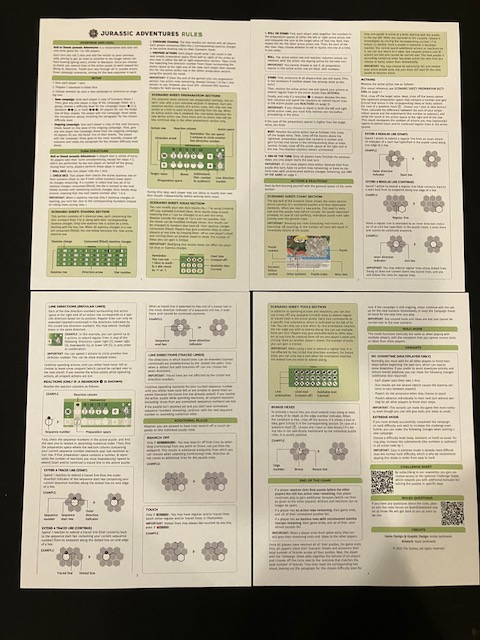
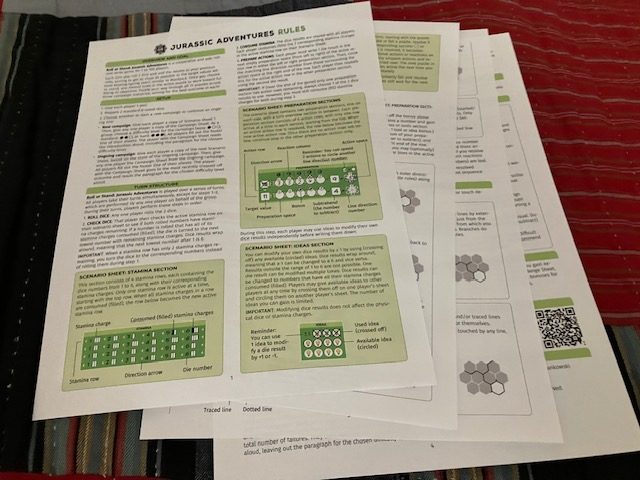
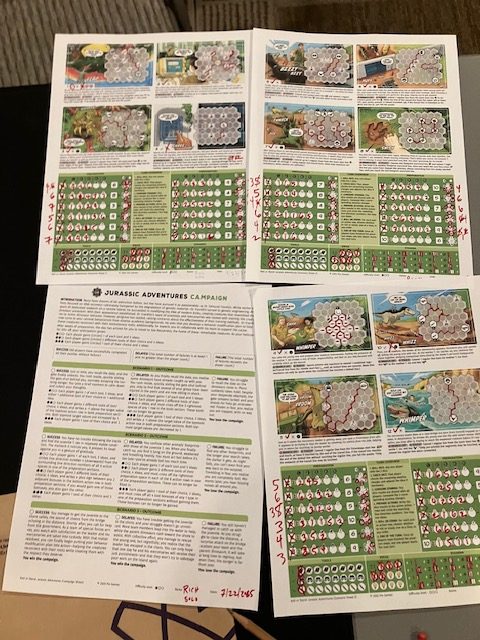
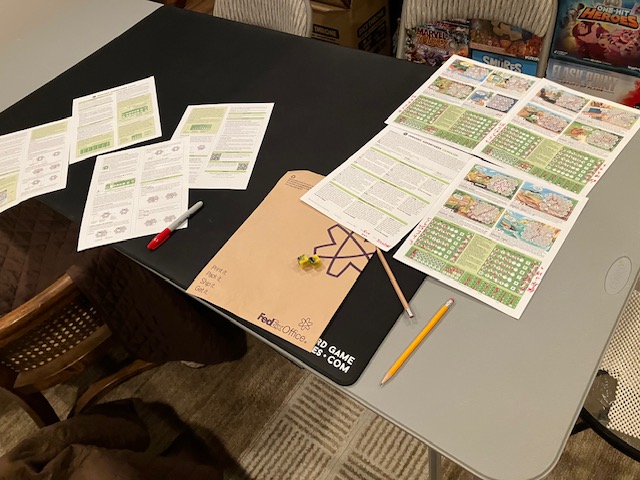
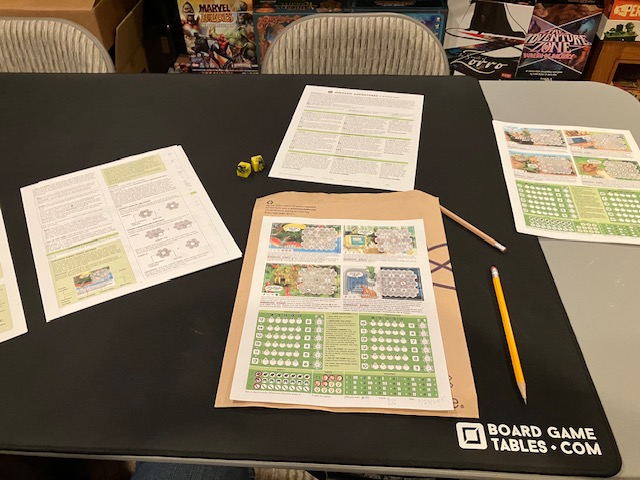
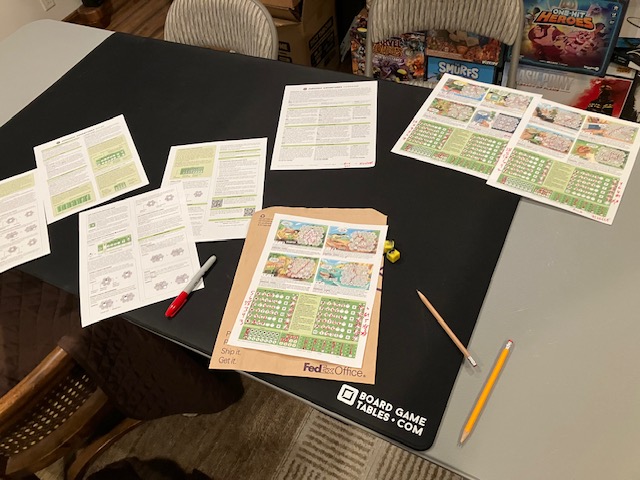
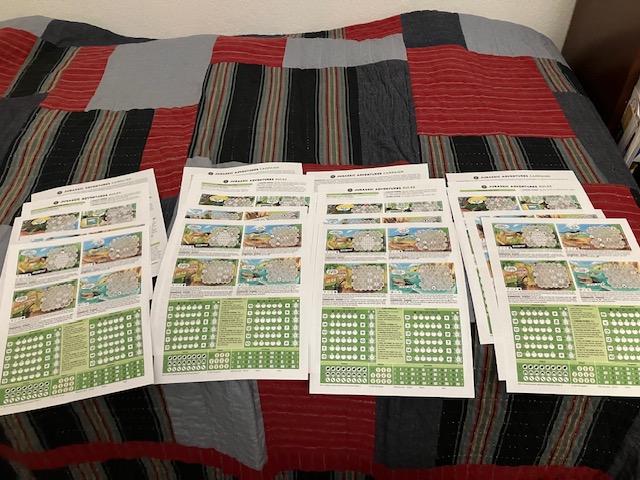
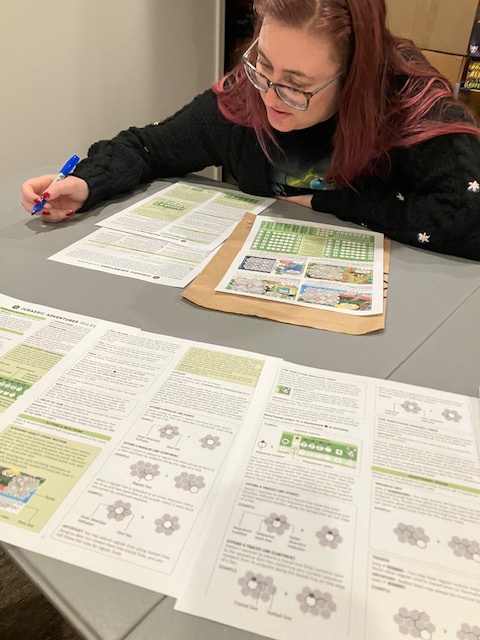
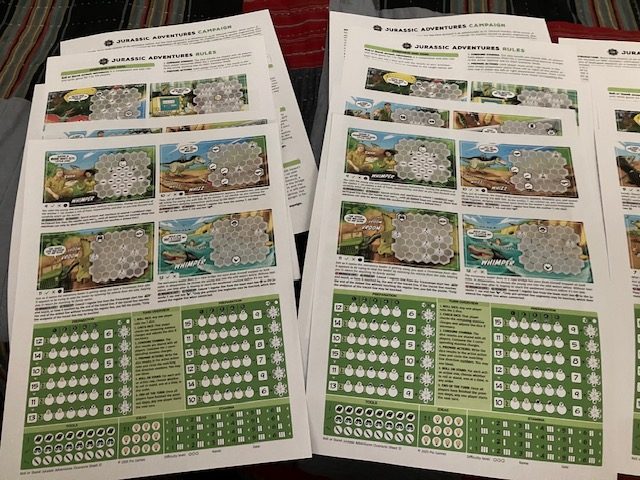
In order to play, you need to print 3 pages per player (if you want the full campaign). You also need just one copy of the rules (4 pages of rules) and one copy of the campaign rules (1 page).  See above. For one person, you need to print 3+1+4 = 8 pages.  For 4 people, you have to print 4*3 + 1 + 4 = 17 pages.

Ever since my first print-and-play was a little more work and money than I expected (see our review of Legends of Storm City), I picked up a newer printer that was was MUCH cheaper to print stuff on.  I was able to print pages for one solo game and a 4-Player cooperative game without worrying too much about the cost.  (But see our Legends of Storm City review if you want more discussion of how much it can cost to print print-and-play games!)

In case it isn’t instantly clear (see above): this is a roll-and-write with a Jurassic Park theme! The publisher probably won’t get sued for calling it Jurassic Adventures, but you never know!

Let’s take a look!

Printing

What are the pages you need to print?

The rules: See above.  The rules are very nicely done over 4 pages.  The rules have lots of examples! The font, although is a little small, is very nice and, dare-I-say, pleasant to look at?

There were a few times when I wish the rules were a little better, but they do seem to specify everything: you might just have to look through them a little.   Luckily, you can reuse these rules over and over after you print them.

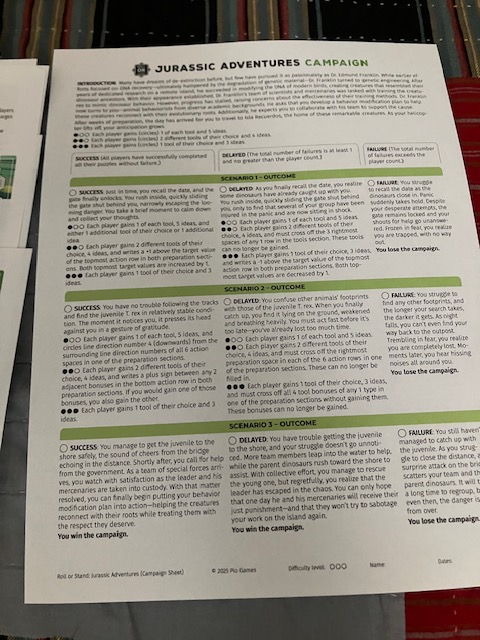
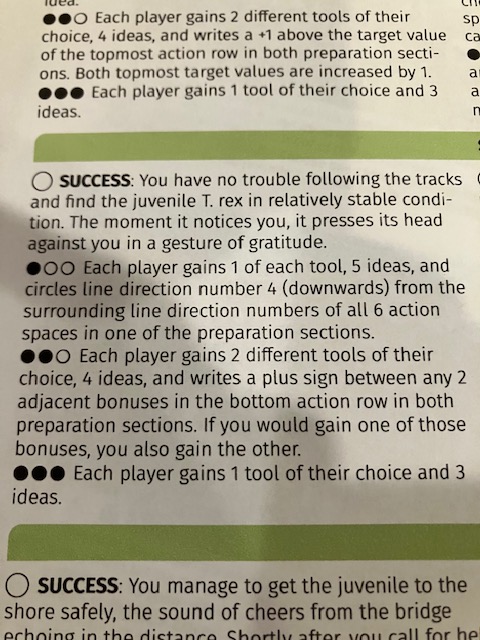
The Campaign Sheet:  See above.  This sheet gives bonuses and starting conditions for each game plus a little flavor text.  You only need one of these for each group (arguably, you can reuse this over and over if you don’t put your name at the bottom).

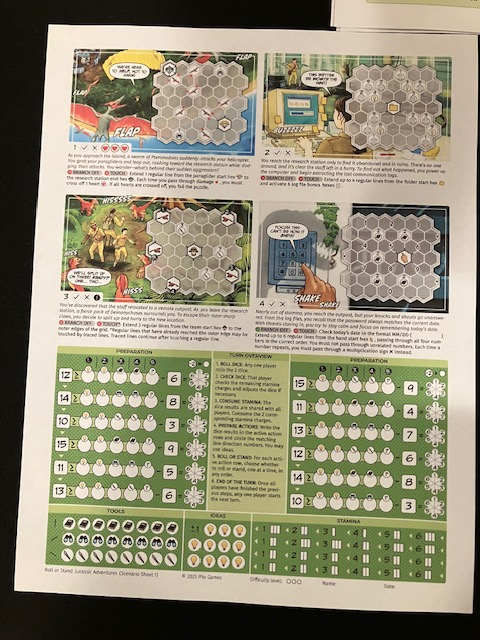
But the most important pages are the 3 Scenario Sheets (see them above). Each player will need their own copy of these Scenario Sheets to play: this is the one thing of which EVERYONE will have to have their own copy!

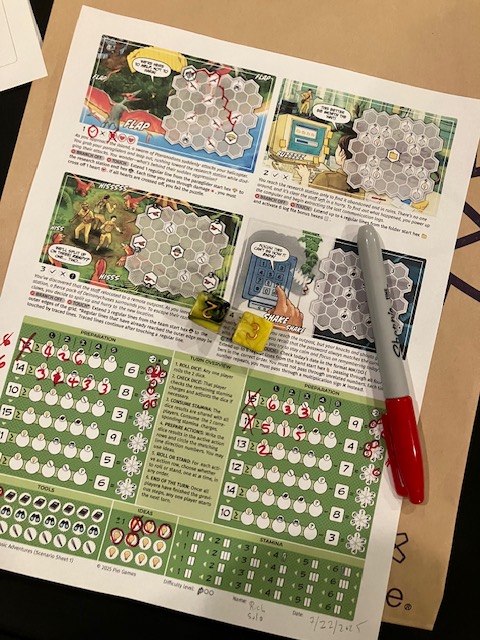
Each scenario sheet has four chapters (puzzles) at the top of the page (see above), and a shared preparation area at the bottom.  The player will marking both the top part AND and bottom part up! See below!

Gameplay

Every turn, two dice are rolled (you have to supply your own dice).   These two numbers are shared to everyone playing.

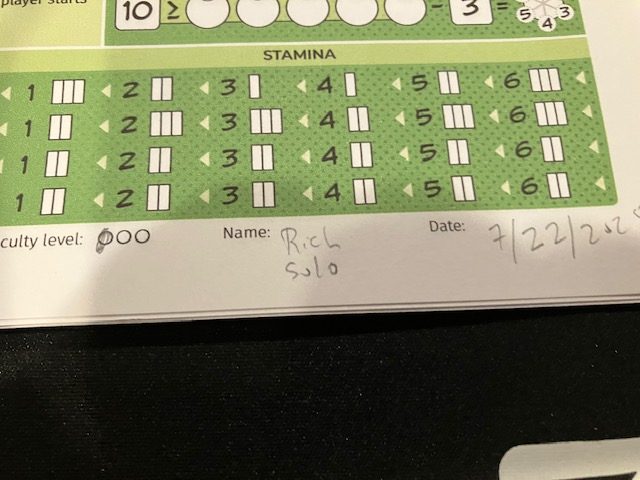
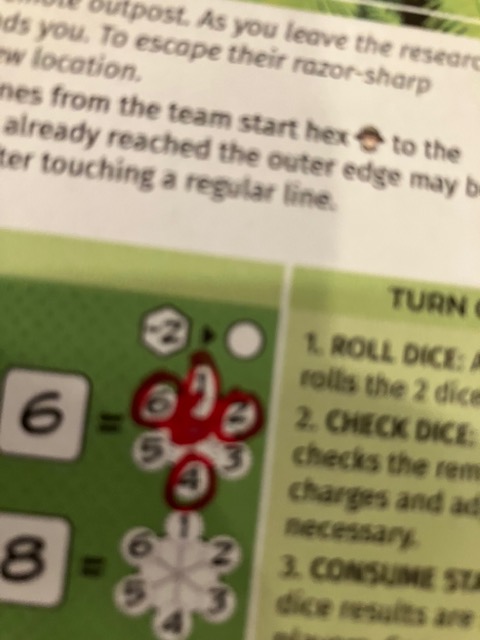
The stamina area “forces” dice to a certain regime; if there is no entry (“charge”) for one of the numbers you rolled, you must decrease that die until you find an empty charge (rolling over back to 6).  Once a stamina line is “filled”, you move to the next line … and possibilities open up again.  Let’s be clear; when the stamina line is almost filled, you have a very good idea what the next numbers will have to be!  This really helps mitigate some of the randomness of rolling dice!

After you get your two numbers, you choose to record one number on the left Preparation side and one number to the right Preparation area. See above.

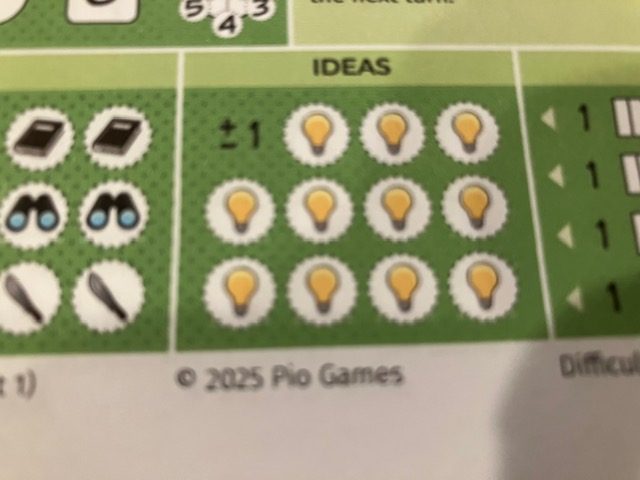
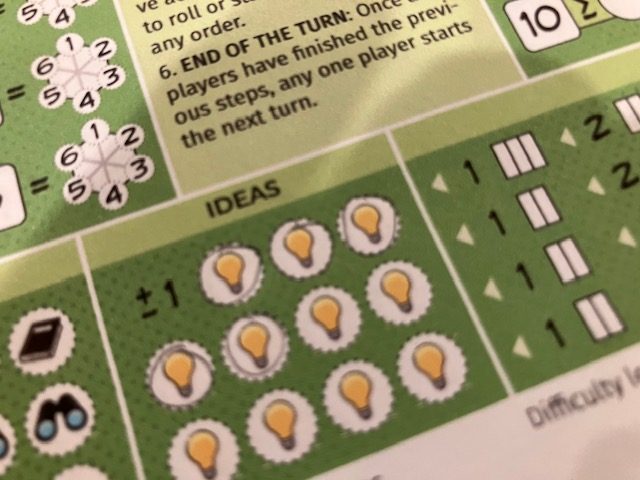
If you wish to “futz” with your two numbers, you can cross off “ideas” to add or subtract one to the numbers (for you only: this doesn’t affect anyone else).

You record the number to the next empty box.  If you want, you can push-your-luck and “roll”, hoping to add more numbers to you line on the next roll of the dice.

Or, if you want to, you can “Stand” (marking off the leftmost square with a cross) and activate your actions!  You are now committed to act!

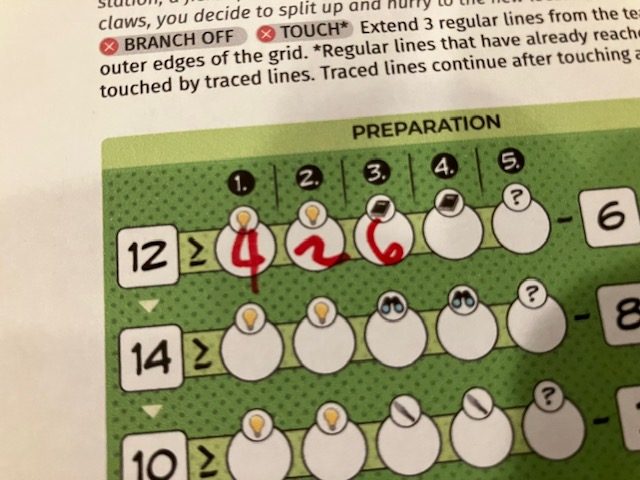
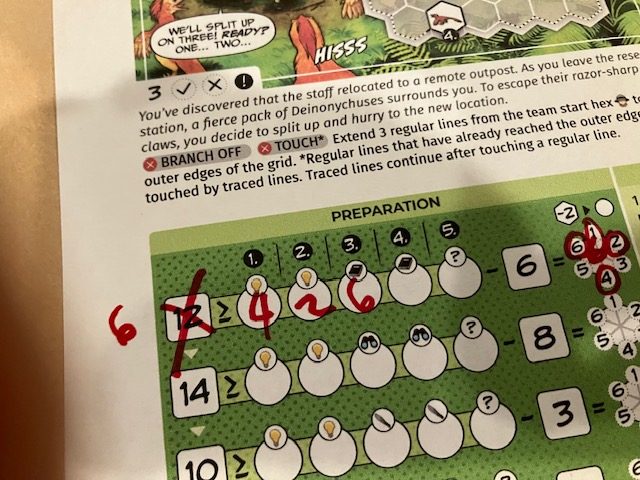
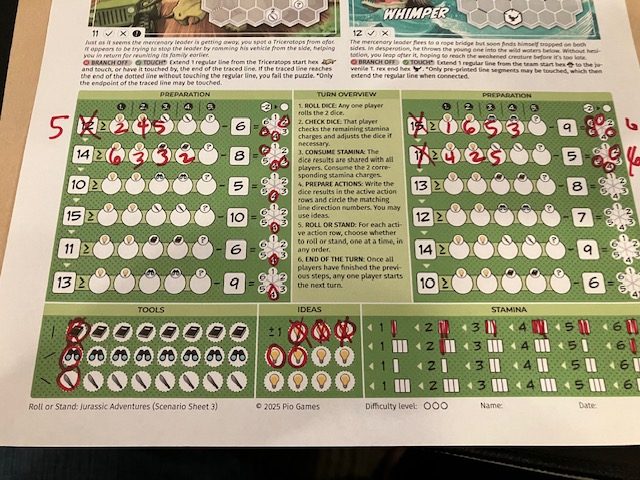
The number of actions you get is based on how far you pushed your luck: the longer you wait, the more actions you get.  See above as I get 6 actions when I activate my line!

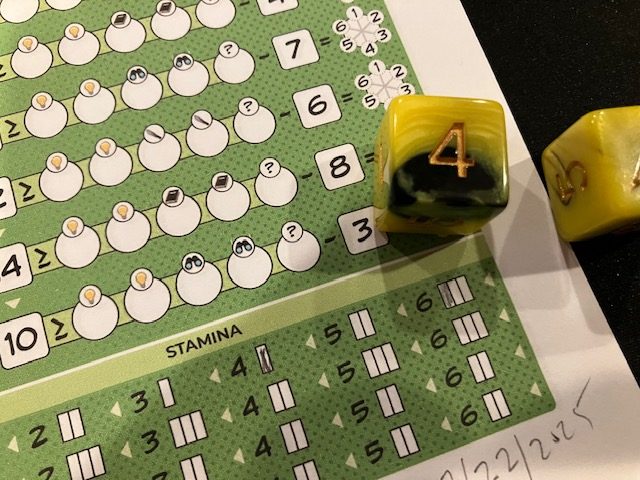
How many actions do you get?  Your sum (4+2+6 = 12) – rightmost (6) = 6 actions!

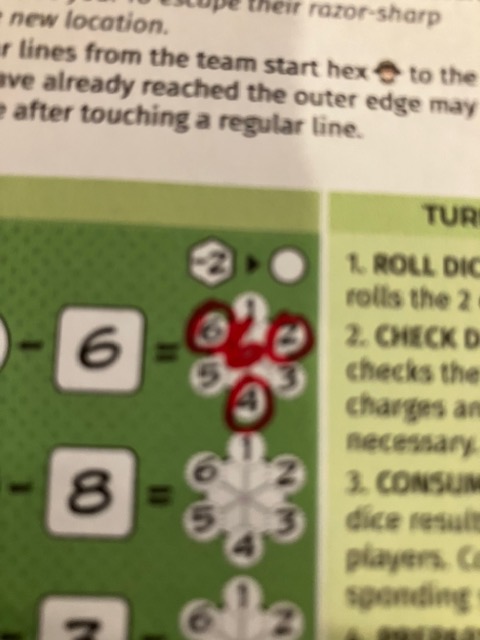
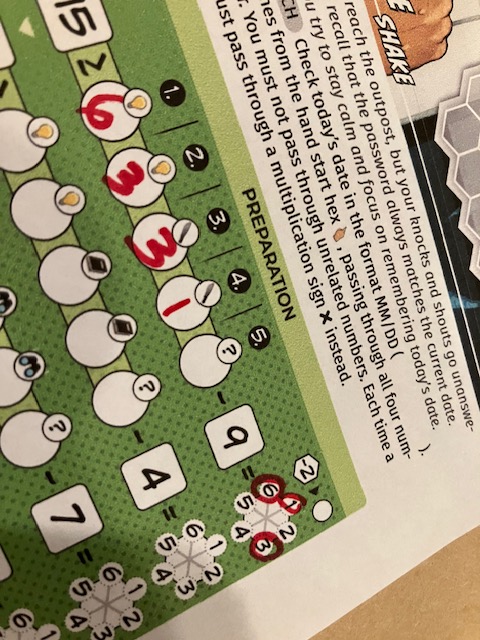
Note that you CAN BUST if you put too many numbers on a line!  In the case above, I BUST because my numbers exceed the MAX (10) by being 2+3+1+6 = 12!!  If you do BUST, you lose all the actions of that line BUT you get a booby prize of one of the tools (the rightmost symbol: the binoculars at the right under the 6).

So this is a game about pushing your luck, and knowing when to activate a line to get your actions! The Kickstarter called this a “blackjack-like” mechanism! Basically, push-your-luck so you don’t bust!

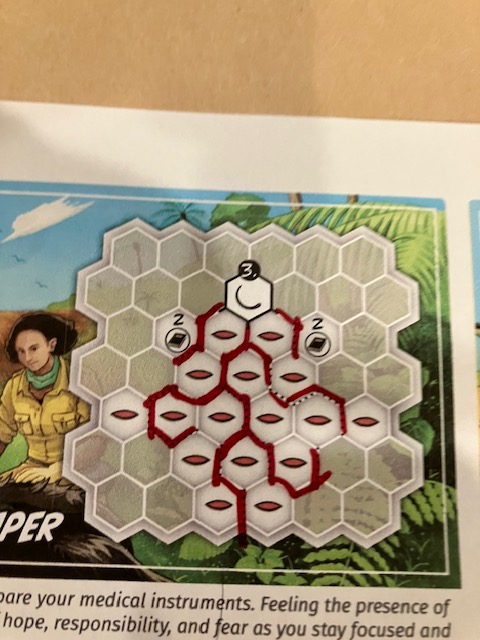
Once you have your actions, what do you do with them?  Basically, you mark off lines on the current puzzle!  With each action, you can mark a line!

Which lines?  It depends on the numbers on the line!  On the line above, I had a 2, 4, and 6 which means I can only draw upper left, upper right, and down lines!

That’s right!  You are limited to what lines you can draw by the numbers you used to activate the line!  

This is why ideas and Tools are so important! If you really need to up/down a dice, you can use ideas or tools to draw the line you need!  Be careful!  Ideas/Tools are a limited resource!

After you achieve the current puzzle, you immediately move to the next! 

If you can get all 4 puzzles done before the stamina or preparation lines run out, you are done!

Whether or not you win depends on “how many puzzles you failed!”  If you failed NO puzzles, you get the Success story!

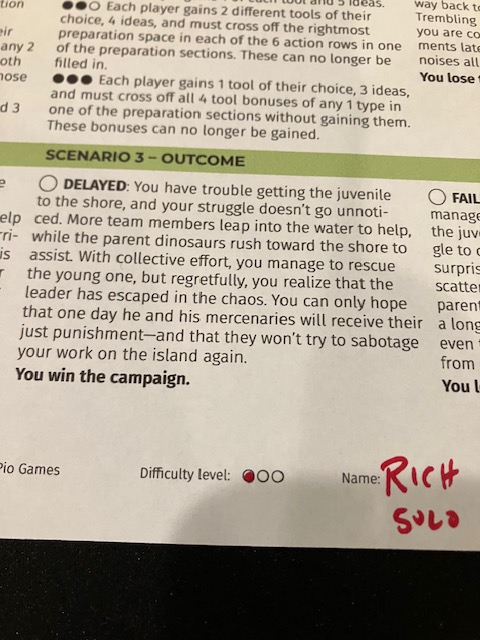
If you have under 1 failure per player, you get the Delayed outcome (which is usually still a success .. see above!)

Play all 3 scenario sheets for a full campaign!

Solo Play

I had my solo copy ready since April 2025, but I just had never gotten around to playing it.  It didn’t take too long to print out (3 months ago), but I was ready to go!

Over the course of one evening, I played through the entire 3-sheet campaign. I took a break after scenario 2 for dinner, but came back to it.  All in all, it probably took about 2 hours to play all the way through, with about an extra 1.5 hours of reading and deciphering the rules.  

The solo campaign is easy to get to the table; it has some interesting decisions as you have to decide when to use your limited ideas, limited tools, which dice to use in which area, when to stand and when to roll!

This is also a very spatial-oriented puzzle, as you have to make sure you have the right line segments to do what you need to on your current puzzle!  The puzzle above starts at the top (3), and you want more “downwards” line segments to help!

There’s a lot of great decisions, but the game moves along at a pretty good clip.  You can have as much analysis paralysis as you want, but generally the game moved along.  I freely admit that I stopped a few times and had some analysis paralysis …

I had a fine time playing solo.  Even though the puzzles are similar in some ways (just draw line segments), they were pretty thematic with the “Jurassic park”-like concept.  There was a good variety over 12 puzzles in the campaign—I saw a neat little story unfold.

Fun solo.

Cooperative

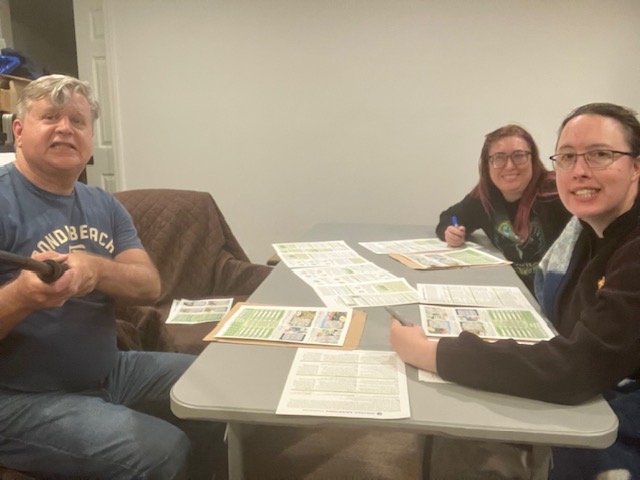
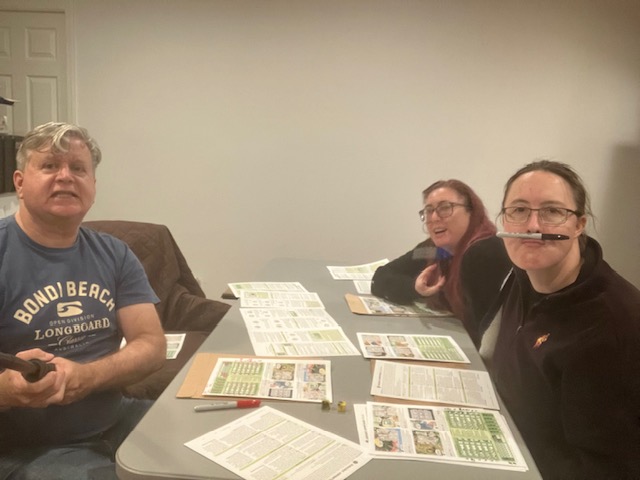
For my cooperative game, I readied myself for a 4-Player game.  I may have overprinted the game; I probably didn’t have to print rules sheets for everyone, but in my group, people like to have their own copy of the rules!

We ended up only playing a 3-Player cooperative game!  

This went over … okay.  The only real opportunities for cooperation are that you can share Ideas and/or Tools.  Thematically, that made some sense!  “Hey!  I got an Idea I can share with you!” Unfortunately, we didn’t end up sharing at all!  The resources are so limited in the game (you only have so many Ideas and Tools) that it never felt good to share them!  Although the opportunity was there, we never availed ourselves of the “sharing”.  

This game was mostly multi-player solitaire. But at least we weren’t getting in each others way.

Pen vs. Pencil

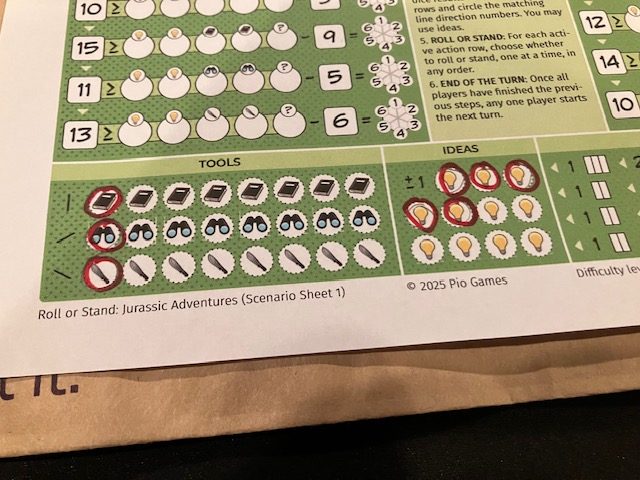
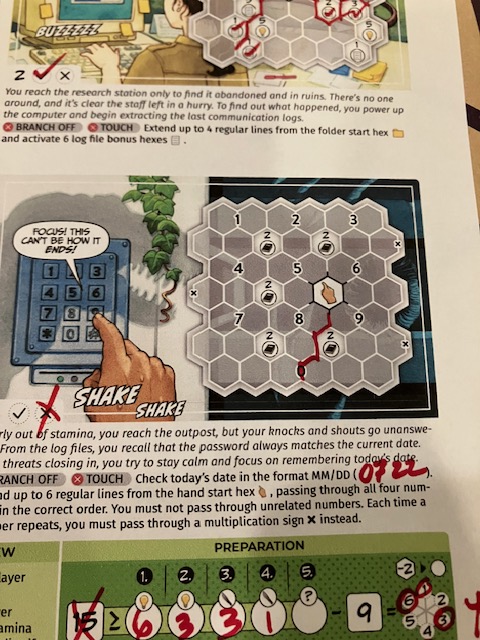
A pencil probably won’t work with this game.  Can you tell I circled the first 5 Ideas above?  No? Me neither!

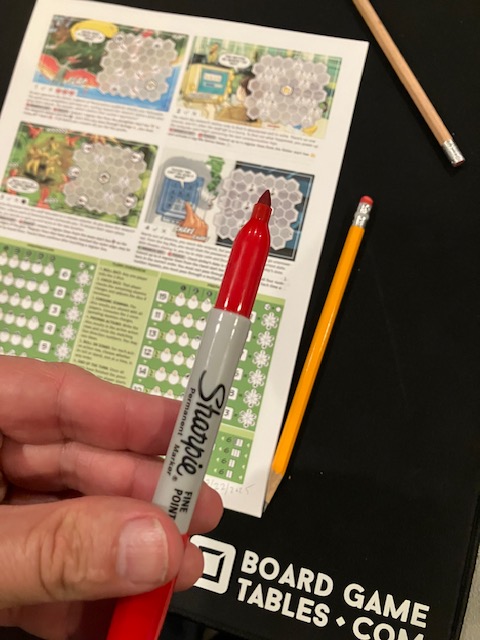
I ended up using a red sharpie so it was VERY clear when I noted something. See above.

Ah!  Now you can tell I circled the Ideas!

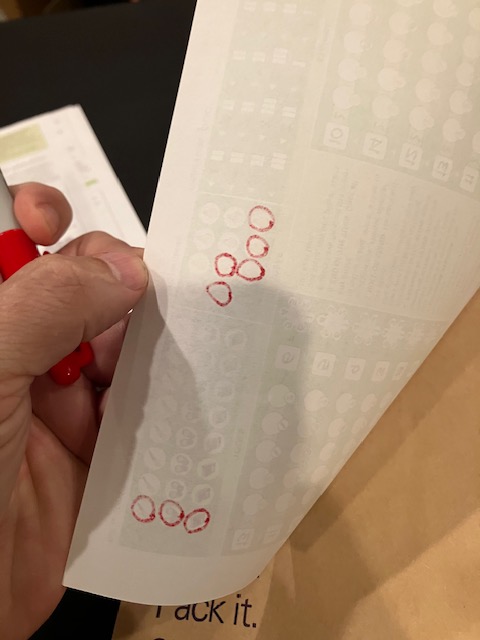
Of course, sharpies may bleed, so I got a paper bag on the back side to handle any bleed through.

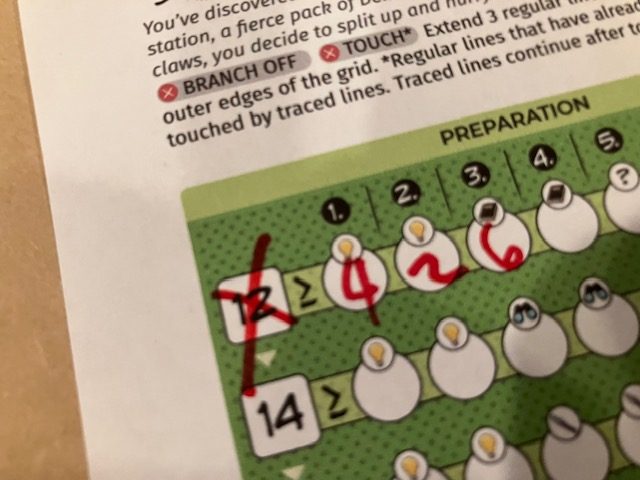
The only problem with the Pen is you really can’t correct any mistakes.  Remember my BUST example?  Can you tell that was a 6 on the right?  It was only a 6 after I “sorta” corrected it.  

If you find yourself wanting to play more of this, consider laminating the Scenario sheets and using dry-erase (extra-thin!!) markers; then you can correct them and re-use the sheets over and over.

Small House Rule

The rules specifically say to write the number of actions in the right most area: see above as I clumsily write a 6, and it obscures the direction wedges!

What I ended up doing is writing the number of actions off to the side!  See above as the actions are on the LEFT for the left prep area, and the actions are on the RIGHT for the right prep area!  And then it’s MUCH easier to see which wedges are available for your actions, since the action number isn’t obscuring the wedges!

Things I Liked

Theme: there’s a surprising amount of theme and story 

Choices: I generally feel like I have a lot of choices, and I know what’s coming because of the stamina concept forging the dice.   This had just enough randomness to be interesting, but not enough to infuriate me.

What I Didn’t Like

Too small: the sheets at times felt a little too small! Each scenario sheet feels like it should be two sheets; the top half should be its own sheet, and the bottom half should be its own sheet. I am surprised this wasn’t a printing option. The whole thing does fit on a page, which is nice, but I think if I wanted to laminate this and use dry-erase pens, I’d want bigger sheets. I wish a full-sized upper half and full-sized lower half had been PDFs included in my distribution.

Cooperation: There wasn’t really any cooperation.  Although the opportunities were there, we didn’t avail ourselves of them because the resources were so limited.

House Rule for More Cooperation

How can we cooperate more? One complaint is that the game really wasn’t that cooperative.

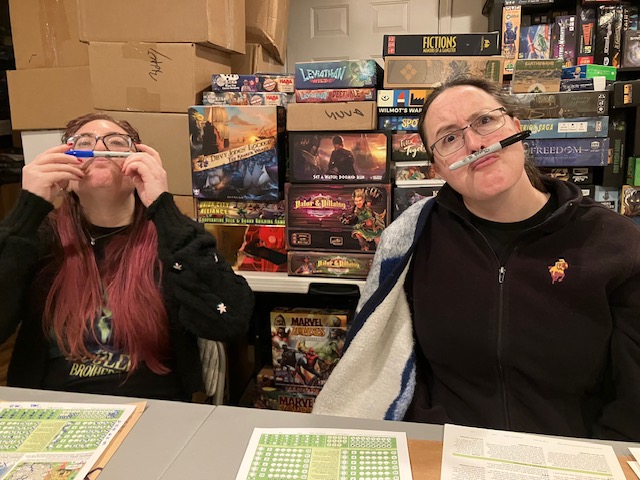
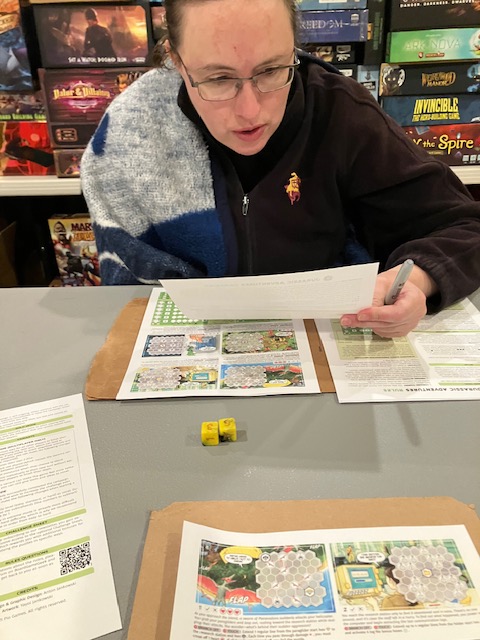
Looking back on our cooperative game, the one thing you can do is change the dice separately! The players have to take the dice as rolled, but then each player can spend Ideas “separately” to +- 1 the dice on their board. What if this were more cooperative? What if, as a group, we could decide to spend an Idea and have it change a dice for all of us? This would promote a lot of conversation and lots of interaction! “Well, I really need a 6!” “But we both need 5s!” “Hm, you can save an Idea if you change it once!”
This is just an idea for a House Rule, but it would make the game more cooperative and interactive.

Conclusion

Jurassic Adventures was a mixed bag.  I liked it solo and might play it again: the theme and gameplay was fun!  It was a 6.5/10 or maybe 7/10.  My friend Sara probably wouldn’t play it again cooperatively, (5/10) but my friend Teresa would (6/10).  Although the game bills itself as cooperative, it felt much more multiplayer solitaire … mostly because the resources were so limited that it was too hard to share!   We do propose a house rule that might make Jurassic Adventures more cooperative and more enjoyable, but you may like this “mostly” multiplayer solitaire game as it is.

If you do play this, make sure you play with a pen instead of a pencil; even though you can’t correct your pen without making a mess, you just can’t see the pencil marks!

Luddite Can Be An Experience, If You Let It. A Review

Luddite arrived at my house about a month or more ago, but I have been afraid to open it.  Why?  I mean Luddite was the #5 entry on my Top 10 Anticipated Cooperative Games of 2024!  I paid money and Kickstarted it!! Why was I worried?

Luddite “looks” big because it has a graphic novel associated with it; there’s a lot of story here.  I was afraid I’d mentally have to prepare myself to embrace it.

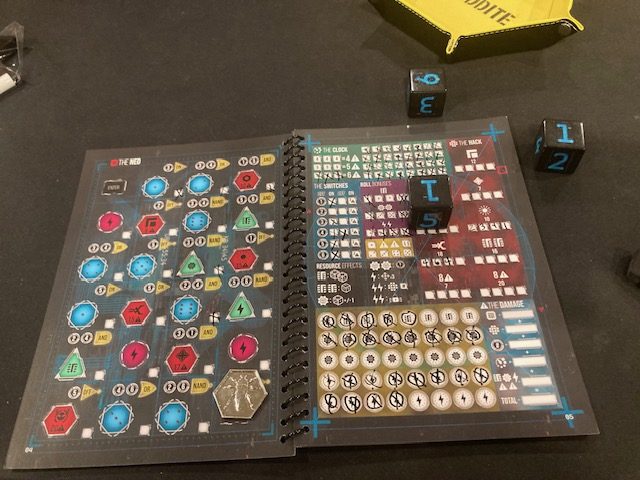
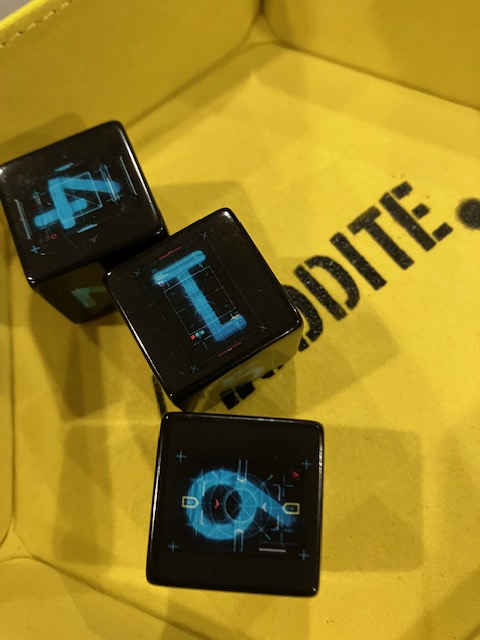
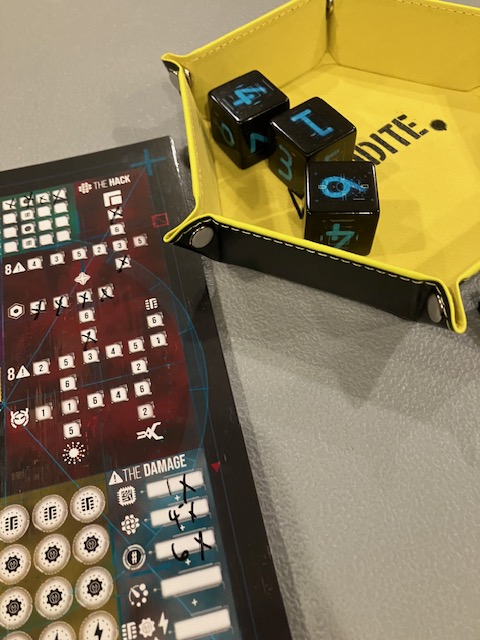
I don’t know why I worried!  At the end of the day, this is “just” a roll-and-write game!   You roll 3 dice, mark off spaces on your sheet above (See above) and try to score points (aka damage)! The base game is pretty straight-forward!

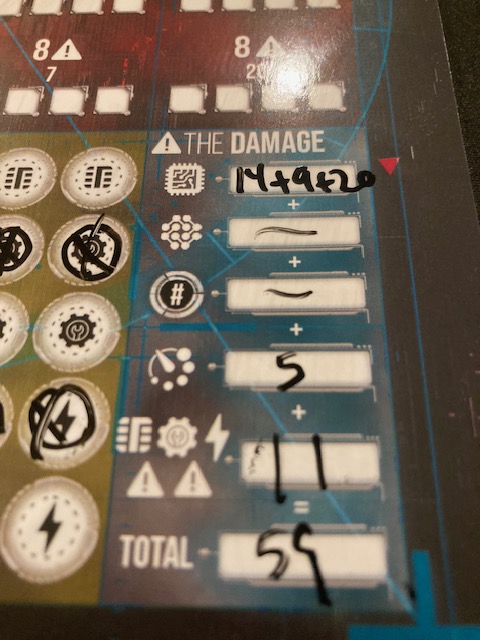
The object is to do enough damage to move to the next level! You need 60 at easy difficulty; see above as I miss by 1!  Heart-breaking!

In order to inflict the damage, you have to “move” the metal token (left side above; from the START to the END): if you don’t move that token, you can’t do any damage at all!  So, while trying to get “points” (aka, damage), you also have to make sure the token above moves!

The game plays solo, cooperatively, and competitively.  The solo game is all about doing enough damage,  and the competitive game is “who can do the most damage to win”.   The cooperative game is really just multiplayer solitaire: take the scores of all players and average them to get a score; if that score is high enough, players collectively win!

To be clear, there is NO cooperation in the cooperative game; each player just takes their own book and plays completely independently.  Players can’t help each other, they can’t share anything, they can’t use a dice on another players board … nothing.  This is as multiplayer solitaire as you can get.   If you want an experience where you are working with your friends, chatting, strategizing, working together, … this isn’t the game for you.  BUT if you have friends who are “suspicious” of cooperative games, or people who don’t like the cooperative games, this can still work for you! 

No one will tell you what to do, as everyone’s head is down and looking at their own board! See above!  And no one gets in anyone else’s board in any way!
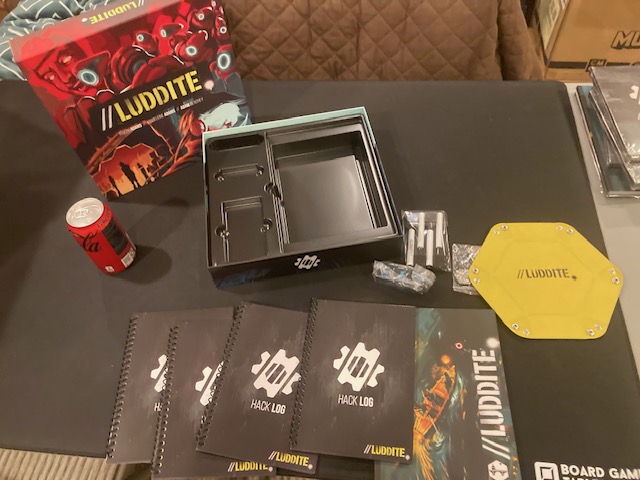
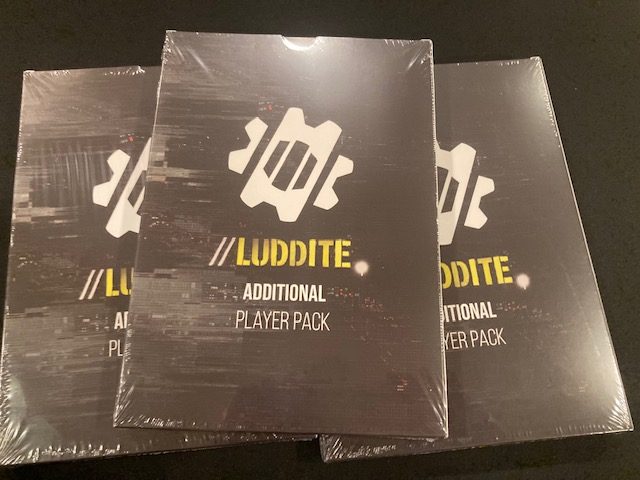
I made the mistake of getting 3 more “Additional Player Packs” (see above), but what this means is that 3 more people can play!    Basically, Luddite can scale to as many people as you want because there is no interaction between players!!  I am thinking of trying a 7-Player game of Luddite at RichieCon this year! (I have 4 packs in the base game and 3 packs from additional buys = 7 player boards!)
So, you can view this complete lack of player interaction as a good thing or bad thing, depending on the group you are playing with.

Solo Experience

If this was all there was to Luddite, there’s not much making it stand out, is there?  It’s a pretty good roll-and-write game for the solo player, and it’s a pretty good cooperative roll-and-write that scales to any number of players … even if there is no player interaction.

However, if you let it … this game can be an experience!  The Graphic Novel that comes with the game tells the story of some people who have been “made redundant” by AI and how they are fighting back!

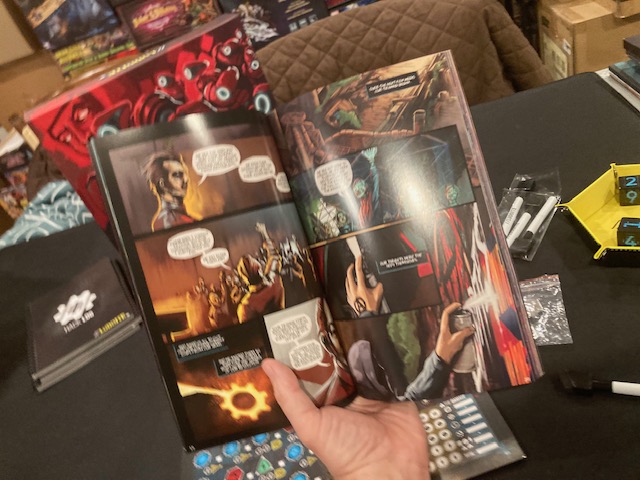
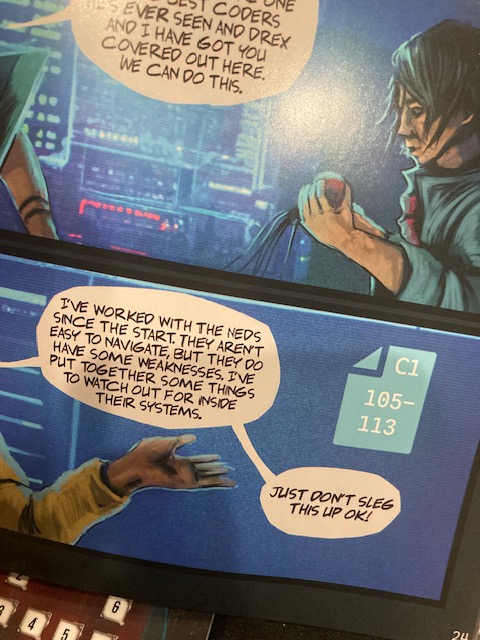
The Graphic Novel gives you a back-story, then at certain places, tells you what chapter/pages to turn to! See above!

This was more immersive than I expected.  If you let it, this game can feel very immersive.  For my solo experience, I read the graphic novel that came with the game …

… and each new game is a progression of the story, even if the boards look very similar. See above as I win (solo) chapter 3!

Somehow, it seems for a game named Luddite (Luddite: someone who eschews technology) … that you HAVE to read the physical graphic novel, right?

Cooperative Experience

It turns out, the comic book is also online … in a video!  It has voice-acting, and shows the comic progressing!  See above!

For the cooperative game, it’s “harder” to enjoy the graphic novel in its physical form … you have to pass it around, or wait for others to read it, or read over people’s shoulders.  But, if you go to the Cotswold Group website, they have the entire graphic novel online! (And even a little tutorial)

So, even though it’s seem against the spirit of a gamed named Luddite, the cooperative experience is made so much better by watching the comics-turned-to-videos!  Arguably, that experience engulfs you and all your friends into the game!  It’s a shared story you are all experiencing!

To be fair, it helps the experience if you can show the video on a big screen or TV: see above. It feels more immersive that way.

House Rule/Hack (Get it? Hack? In a game about Hacking?)

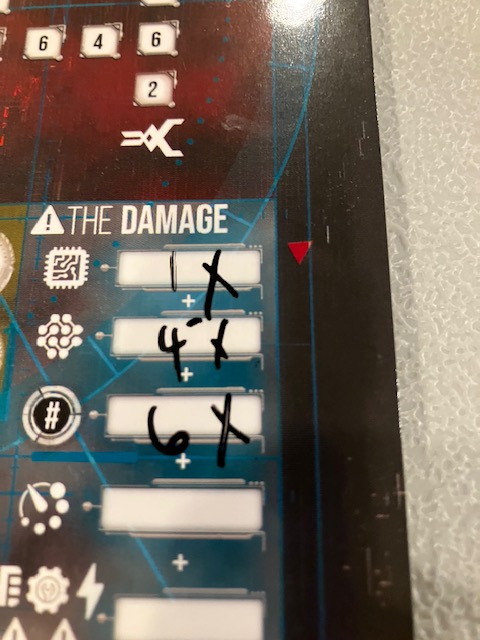
The dice are a shared resource everyone shares in the cooperative game: they are rolled and placed in the middle for everyone to see!  But sometimes, in the heat of playing, you may forget which dice you used for which activity.  Surprisingly, there’s no place on the sheet to “notate” which dice we used !!

Since you don’t compute your damage until the very end of the game,  you can use the Damage section!  

This little house rule/hack made it easier to play the game cooperatively, as you could all independently note the dice rolled and how/when/where you used them.  

Conclusion

If you let Luddite be an experience that carries you along in its story (either as a graphic novel or comic-turned-video), I think this can be a really fun and immersive experience.

A reductionist might say “Luddite just a roll-and-write” …  but at least it’s a good one. I really enjoyed all my plays of this.   The base game is pretty straightforward and quick, and it has lots of meaningful decisions.

The cooperative game has literally no interaction between players, which can be a curse or a blessing, depending on the group you are playing with.   But, because of that lack of interaction, this game can scale to pretty much any number … as long as you have the boards!

This is a good solo roll-and-write (7/10), and a pretty good cooperative roll-and-write (6.5/10 or 7/10, depending on what you want), but it’s the story and experience that elevates this just enough that I would recommend you try this: 7.5/10.

I still think it’s hilarious that a game called Luddite has such a great online presence.  I mean, a game called Luddite should ONLY have the physical version, right?

Appendix: Binding

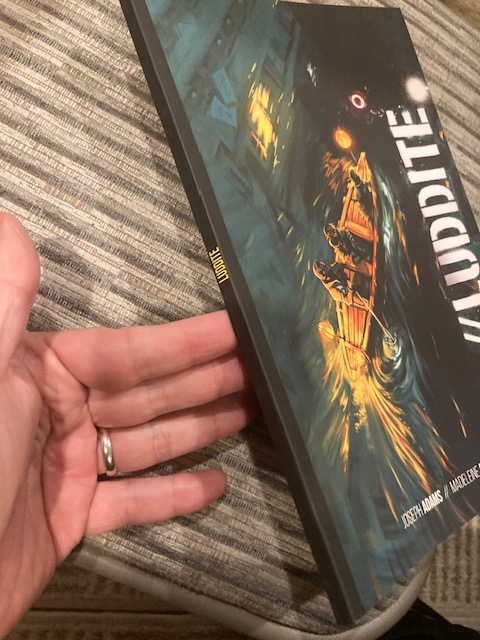
I normally despise this kind of binding, especially on something you need to hold open! See my review of War Story, Freedom Five, and Forests of Admiron if you don’t believe me!  For a graphic novel, it’s “okay” since you are just reading it and holding it open. See below.

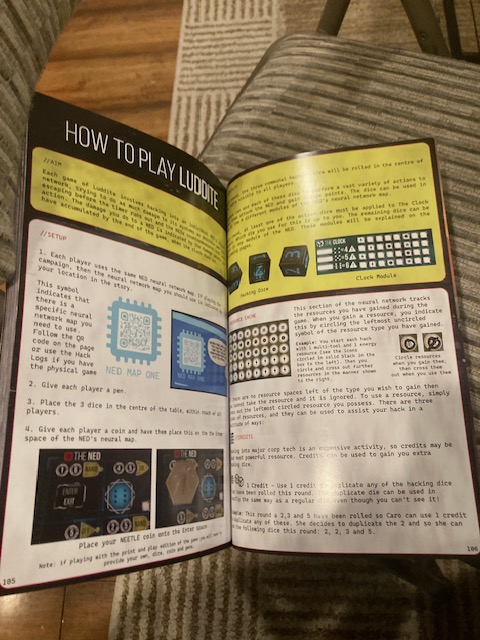
Where this binding fails is when you have to read the directions in the back of the book!  See below as I try to wedge the book into the edge so it’ll stay open!  I hate this kind of binding for rulebooks!

See above as I attempt to hold it open!!!   Honestly, the rules should have been in a second standalone book that could be lain flat and open.  As a graphic novel, this kind of binding is “fine”.  But the rules portion of the graphic novel (in the same book, this really made me grumpy.