
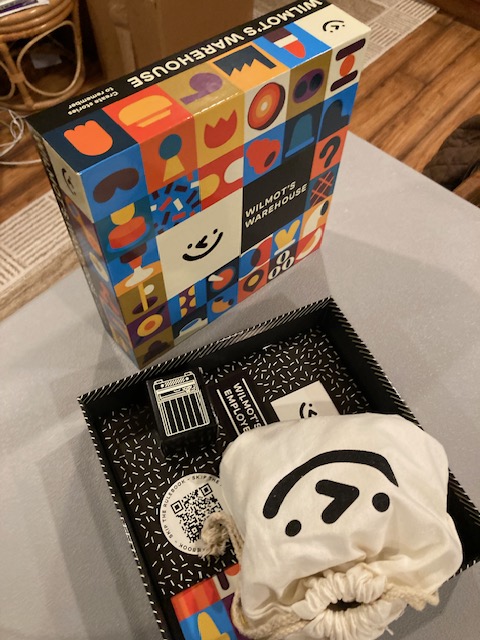
Wilmot’s Warehouse is a cooperative memory game for 2-6+ players; it also has some real-time aspects as well.
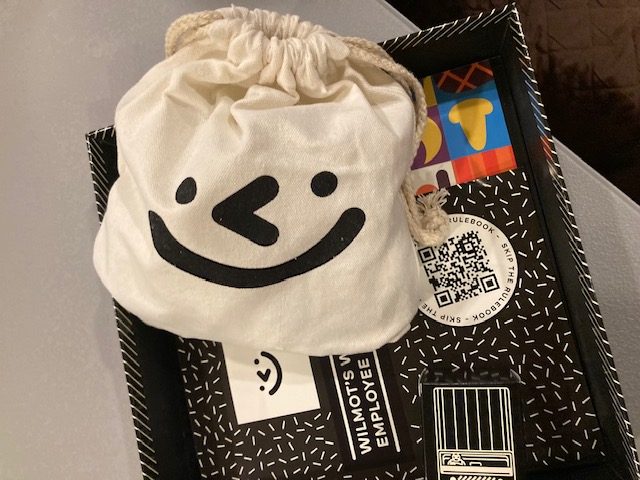
Wait! Don’t run away yet! Despite it being both a memory game and a real-time game, it’s actually pretty good. Really. I’m not kidding. Keep reading! Please!
Gameplay
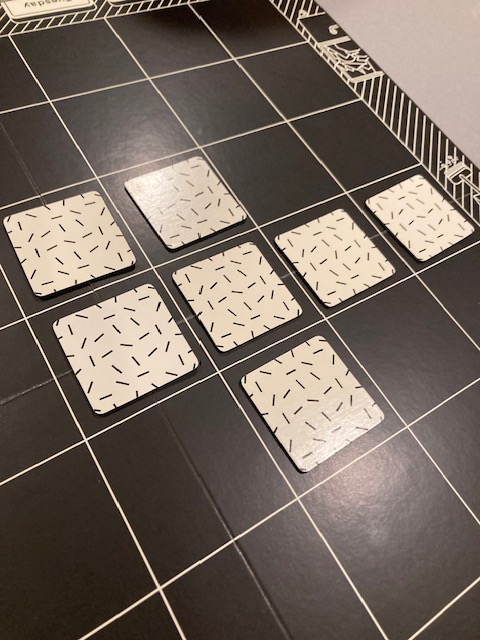
There’s not much to the game: as a group, you place tiles down “cooperatively” down on a board: this board is the warehouse in Wilmot’s Warehouse. (And I have no idea who or what Wilmot is).
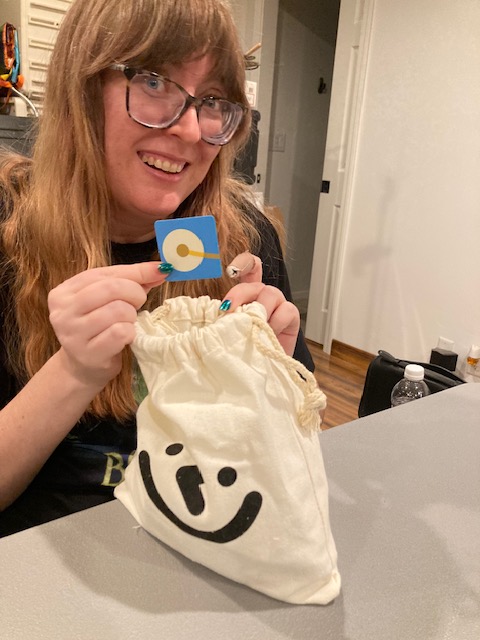
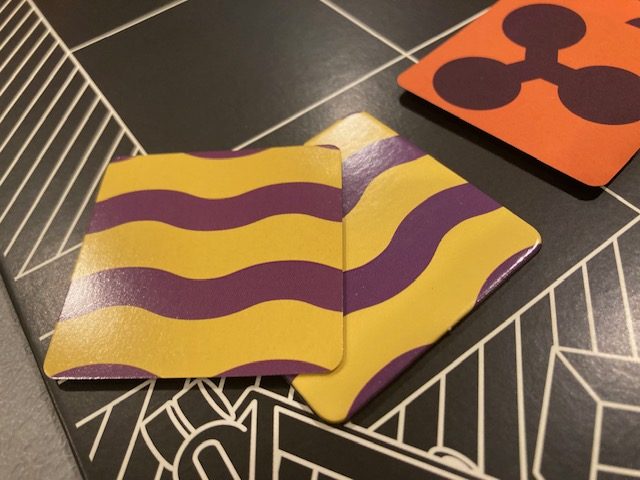
Players have some random tiles (see above) that originally come out of a bag. Players, as group, get to look at the tile and decide cooperatively what it is! See tile above: “What is this? A yo-yo? A Coffee cup?“
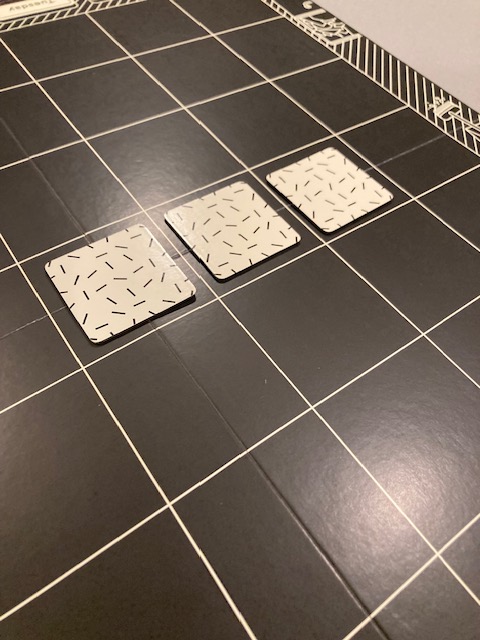
Once players, as a group, have decided “what it is”, they place it facedown on the board. To help remember it, players (as a group) are coming up with a “story” or “theme” to help remember WHAT IT IS and where they placed it!! There will be 35 facedown tiles(!) by the end of the game (7 cards “per day” over 5 days), so players need something to help remember what’s what.
For example, we had a row which was “food stuff”. And some stories about Mario.
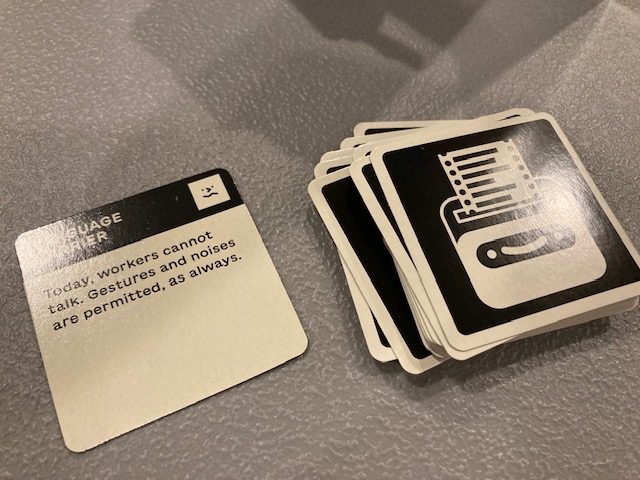
The first 7 tiles (Monday) are easy, but the each day, management has “new requirements” that make the game sillier and harder. For example, Language Barrier is what we drew (see above): we couldn’t talk, but we could grunt and point. Yes, we became cavemen. Yes, this sounds stupid, and it was. But it was surprisingly fun.
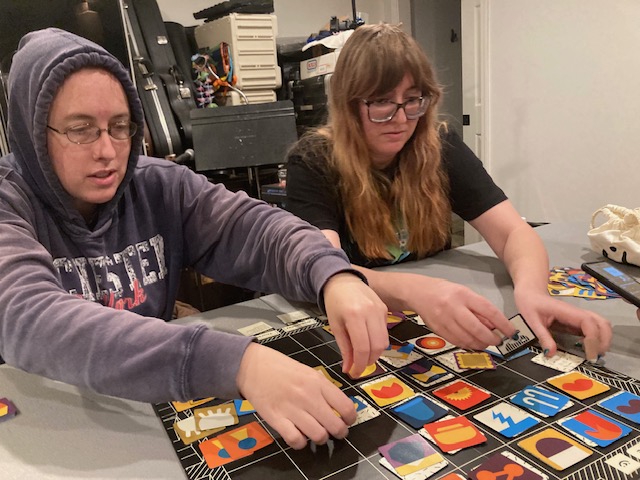
After all 35 tiles have been placed facedown, there’s a real-time phase where players take “customer cards” and have to match them to the facedown tiles!
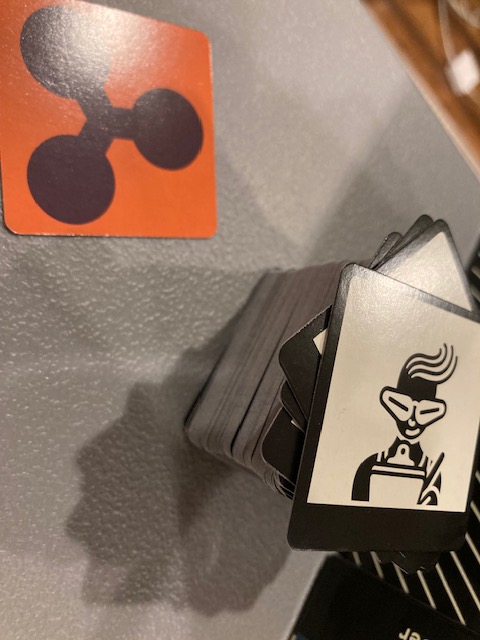
There’s a lot of these customer cards: some of them will be on the board, but most of them won’t! As a group, you are going through these cards AS FAST AS YOU CAN to find the cards you are using, while tossing the ones you aren’t.
The object is to memory-match the real customers to the real facedown tiles. I KNOW! I KNOW! This doesn’t sound fun. But it was really was!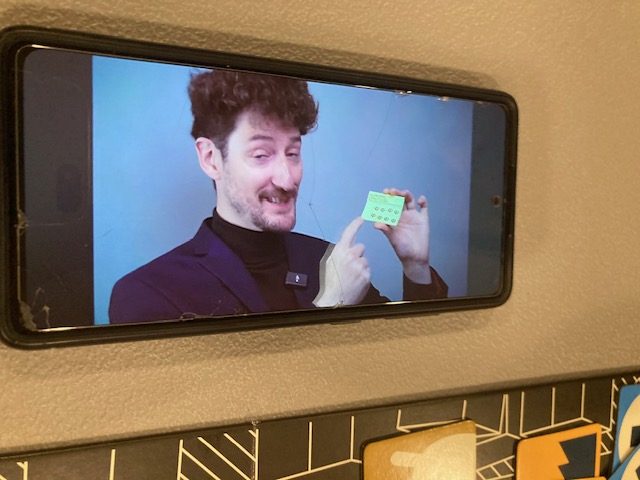
Your “score” is based on how fast you matched, as well as how many you mismatched (you gain a penalty of like 10 seconds for each failed match). Then, you can lookup a video telling you how well you did: see Matt from Shut-Up and Sit-Down telling us how well we did!
Solo and Cooperative
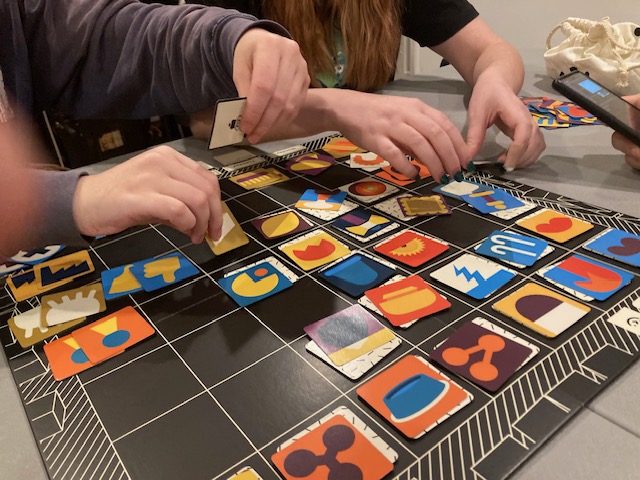
This game is officially for 2-6+ players (with the + implying you can play more). We found that it worked great for 4 players. Could you play it solo? I think you could, as a way to “explore your memory palace”, but, it would get a bit “samey” solo. What keeps the game silly and fun are the limitations cards!
In a solo game, the Language Barrier (above) would have no effect (“I can’t talk to myself, ok”) and wouldn’t make the game more fun .. and most limitation cards are something that affects how the players may communicate with each other. In a solo game, these limitation cards would have no effect: It would just make each round about the same … which is not a bad thing, but the variety of these cards made the game quite fun. (One limitation made us only be able to talk with words that started with one of W I L M O or T. Very silly!)
As a cooperative experience, this game really shined! We all talked (well, when we could talk) and explored ideas together as we had to “classify” and “organize” the tiles. This game felt very cooperative: everyone participated and had fun.
Conclusion
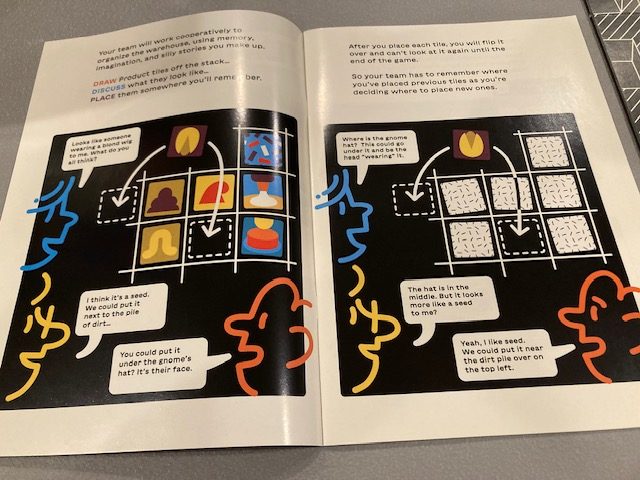
Wilmot’s Warehouse is easy to describe and easy to jump into. I was very skeptical of this game at first (“A cooperative memory/real-time game? I don’t know …“), but my group had a surprisingly good time playing this. In the end, this feels like a heavier party game: it’s silly enough that you could classify it as a party game, but it’s heavier than you might expect, as you have to spend some real brain-power to play the game.
Pretty unanimously, this would get a 7/10 from my game group! They liked it, and they would play it again. The only real major problem is that you can only really play Wilmot’s Warehouse once a night: the memory overhead makes it a little cumbersome to try multiple times in one night. “That’s it! My brain is full!”
 coopgestalt