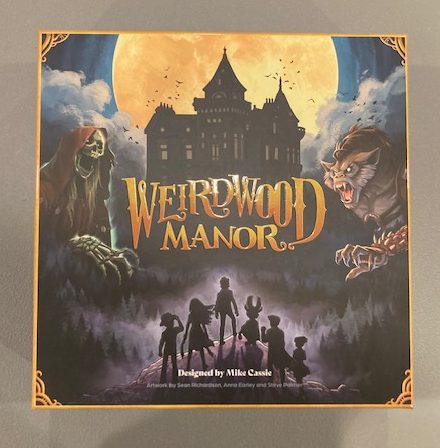
Weirdwood Manor was #7 on our Anticipated Cooperative Games of 2024! This is a bit of a weird entry into the cooperative games space: it’s a cooperative boss-battler worker placement euro game with elements of Pandemic! Whew!

I backed Weirdwood Manor when it was on Kickstarter in April 2023, and it promised delivery in April 2024. My copy of the game arrived in June 2024, so it’s about 2 months late … which is actually quite good in Kickstarter terms.

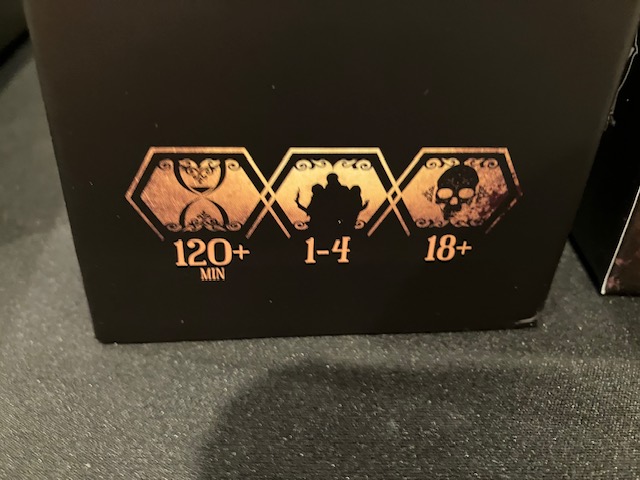
This is a cooperative game for 1-5 Players, Ages 13+. I think the 90-120 minutes (as reported by the box above) is too short: It’s been more like 2 hours + 20 minutes per player in my plays. All of my 4-Player games have been 3.5 hours or more!
Let’s take a look!
Unboxing

This is a pretty big boy, but it still seems about standard box sizes: see above with Can of Coke for reference.
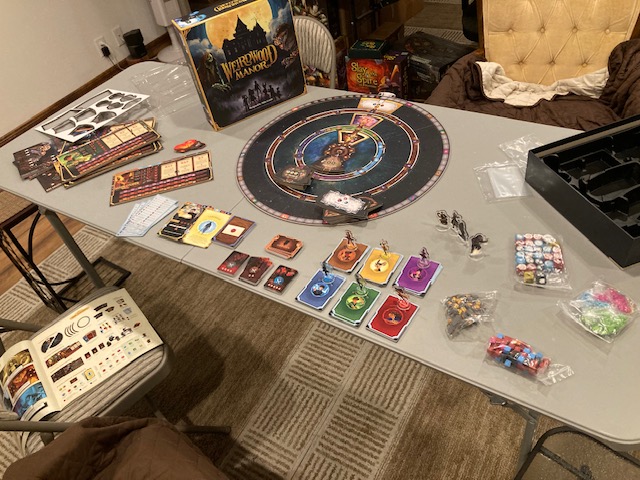

This is gorgeous production! See above!
Rulebook

The rulebook is pretty good overall, but has two major flaws.

First problem: Weirdwood Manor makes the fatal mistake of making the rulebook the same width and height as the box! It’s a giant square! It gets like a C+ on The Chair Test, as I can’t really lay it on the chair next to me! It flops over the edges and is harder to read.
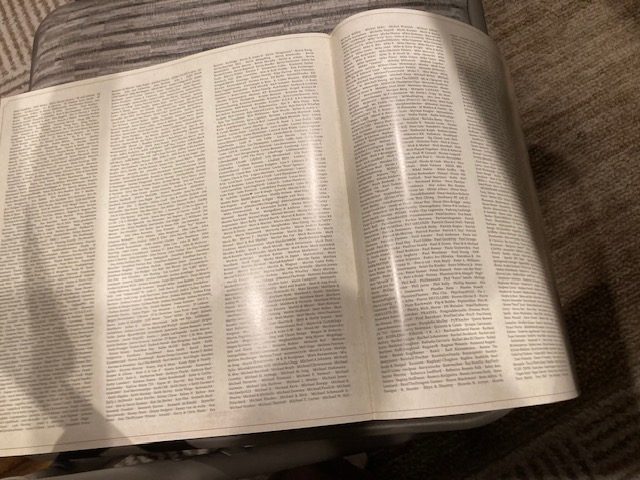
The second major problem: there is no index. In many games, that’s not a huge deal, but Weirdwood Manor is a very complicated game with many, many, many, many rules: it is in dire need of an Index!
Other than those two flaws, this rulebook is pretty good.

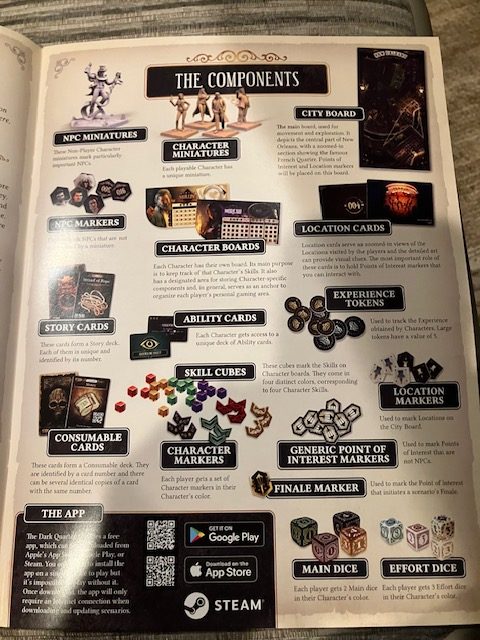
The Components page is great, even differentiating between the deluxe and retail versions!
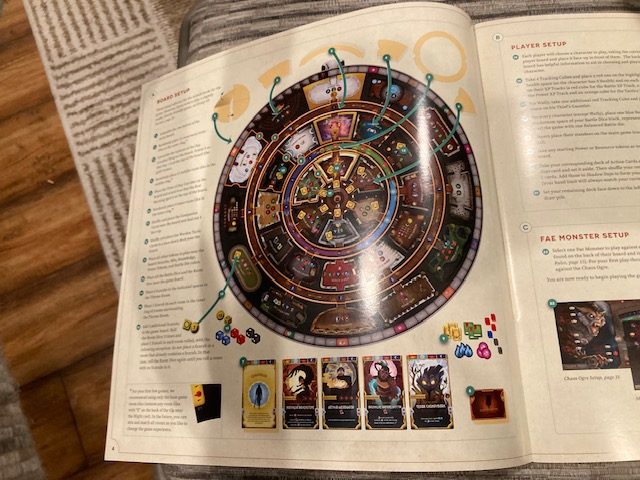
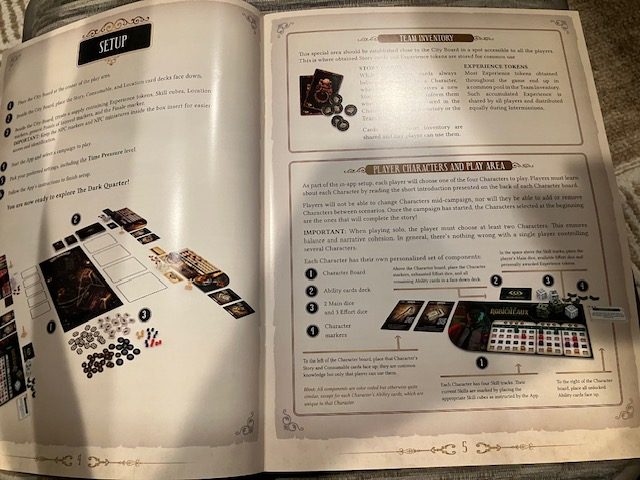
The Set-Up was mostly really good.

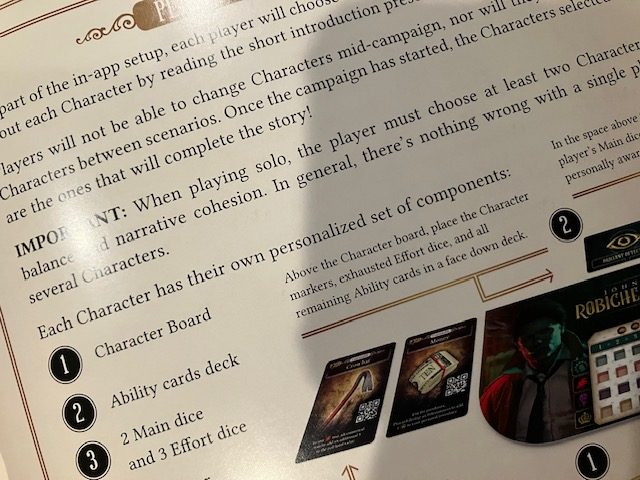
In general, this rulebook is pretty good: it’s just long! This is a very very very very complicated game with lots of moving parts (both literally and figuratively)! The rulebook does a pretty job of explaining most of the pieces and showing nice pictures/examples! See above!

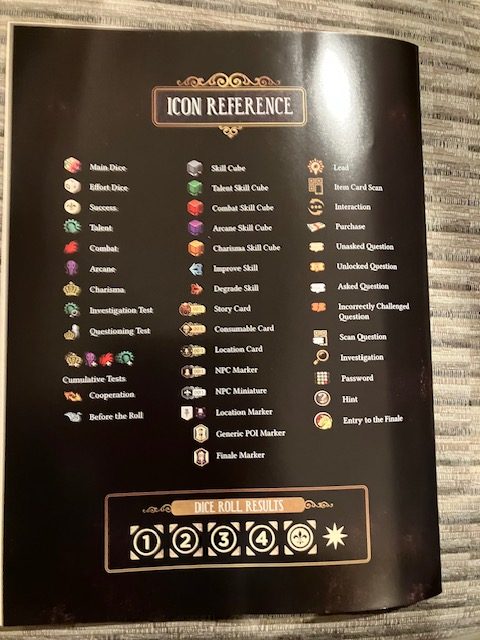
I always feel like the rulebook is doing something right if the back cover contains a summary of rules/flow/icons, which Weirdwood Manor does. See above.
This rulebook is pretty good, besides the square form factor and lack of index. It taught the game pretty well. Just be aware: it’s a long rulebook because it’s a pretty complicated game.
Good Guys and Bad Guys

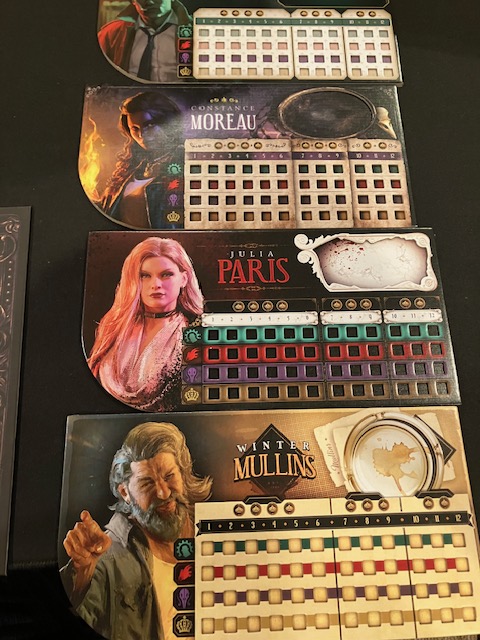
Each player takes the role of one of 6 characters (see above) in the game: these characters are all magically oriented. These are the good guys! They have magic powers and spells! Note how nice those dual-layer boards are!
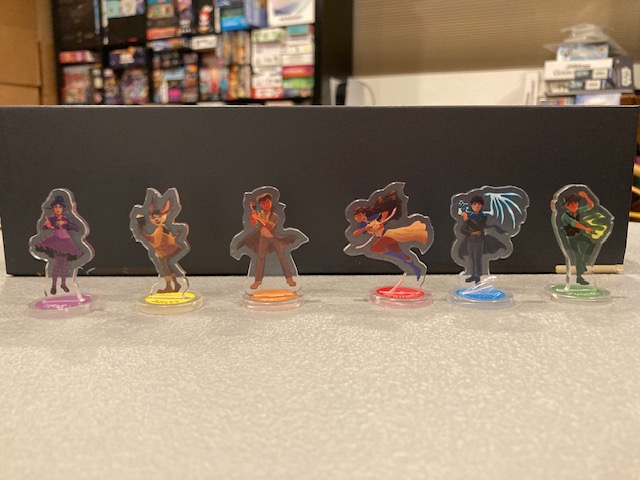
Each player takes the corresponding standee: I have the deluxe version which has the acrylic standees (they are just cardboard standees in the normal version of the game). See above.

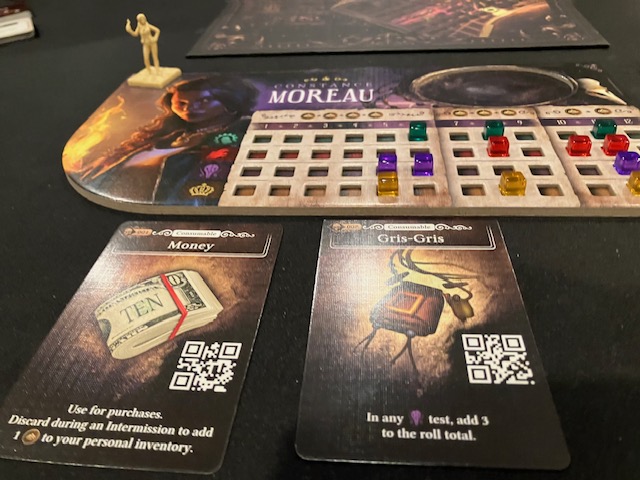
Each player gets their own very specific deck of cards. Every turn, each player must play exactly one of their cards to “do something”! See the decks above!
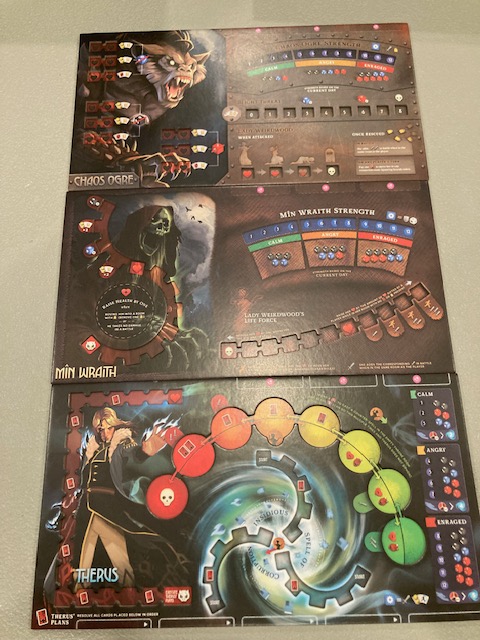
As a cooperative boss-battler game, players choose one of three bosses (see above) to fight. Each one is very different!

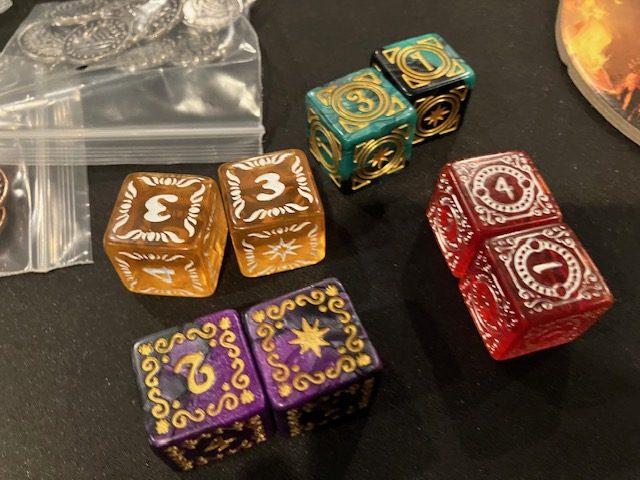
As a cooperative boss battler, there will be a lot of dice rolled when attacks and defenses happen! See above!

The monsters (and Lady Weirdwood, off to the left above) are also acrylic standees!
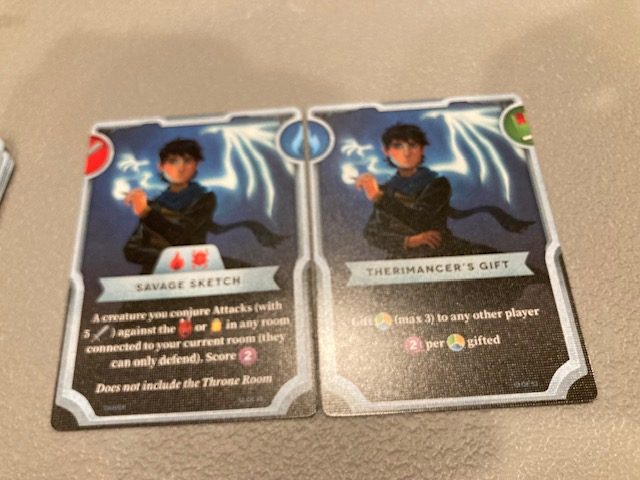
The good guys characters and the bad guy monsters are all very different! The good guys each have a different deck of cards with different emphases! See some above!
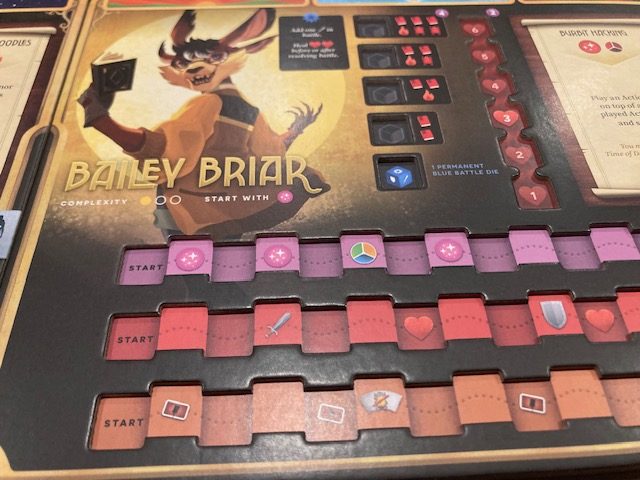
Each character also has a different experience track! When you “do stuff” in the game, you get experience which you can immediately spend to upgrade your character! With experience points, you choose which track to advance, and each character has different annotations (see above) on their three experience tracks!
Other things make the characters asymmetric:
- when the character rolls a STAR, a special ability (for that character) only activates
- each players has different start resources
- each character has VERY different spells they can activate
- each character has a different progression to get dice
In general, these characters are VERY different and will play very differently!
The Manor: Worker Placement Rooms!

The core play of the game is in the Manor (mansion) above. It’s a bit of chore to build!

You place tiles in concentric rings: the outer ring (above)…

The middle ring … (see above) …

And the inner ring! See above!
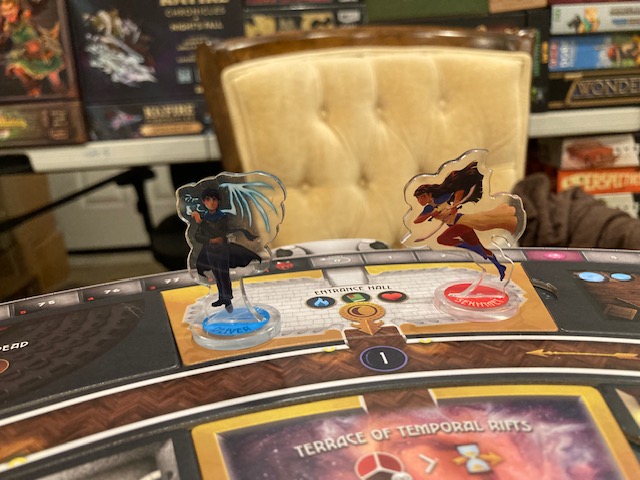
Players place their standees on the entrance to begin: see above.

This game almost has a worker placement feel as well: when you end your turn in a room (see above), you activate the special ability of the room. See above for two rooms! The top one will allow you to get resources and the bottom one will allow you to rewind time! Each room has a very different ability to activate in the game!

When the Manor is all built (see above), it has a very daunting table presence! See above!
Resources
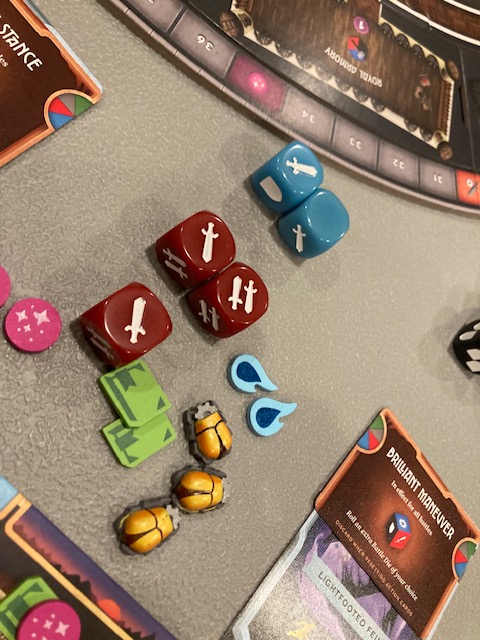
There are a number of different resources in the game you get (usually from activating a room): Power (pink), Scarabs (yellow), flame (blue), or books (green). See above! These resources are spent for many different things in the game: activating spells, buying dice, buying Companions, and many more things!

The small twist here is that the Scarabs, even though they are resources you need (yellow, see above) are also the “Bad News” tokens and they spread “kind of like” the disease cubes of Pandemic!

Scarabs in a room make it so you CANNOT activate the special ability there! You would have to go into the room and specifically fight them to get rid of them … and if you kill all the Scarabs on your room, you may still activate that room at the end of your turn.

Scarabs advance from the inner rings to the outer rings when “The Scarab Phase” happens. It reminds me of Pandemic for two reasons: 1) the Scarabs will “blight” a room if there are ever two or more in them (not unlike losing a city in Pandemic Legacy). This blight causes you to lose the room as a worker placement spot! (Don’t despair, you can always repair a blighted room) 2) The progression as Scarabs are always coming out and spreading … just like the disease cubes in Pandemic are always coming out and spreading!

Generally, flames and books are easy to get from rooms, Scarabs have to be obtained from fighting, but power is harder to get!

There are limited rooms with power tokens, but most power tokens comes from advancing the Power track on your character (the pink track above).

There’s a reason we call this a cooperative boss-battler worker placement euro (with elements of Pandemic)! The worker placement and resource management aspects feel very euro.
Time
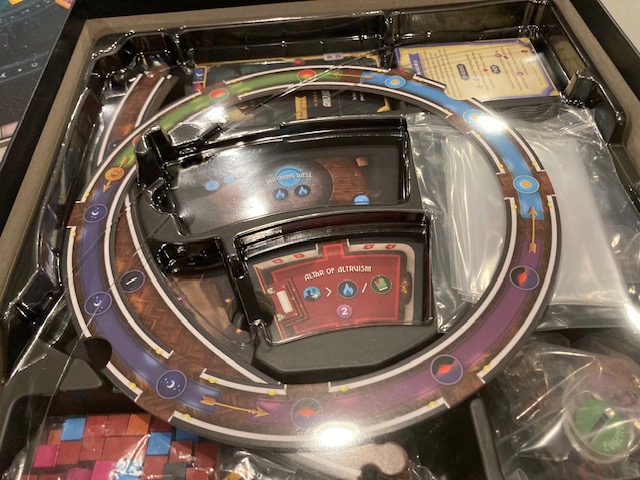
Many cooperative games have some flavor of timer on it: you must win in so many turns, you must win before the Bad News deck runs out, and so on. Time is handled very interestingly in this game! In between the concentric circles of the rooms are two rotating rings that tell time! The first ring (above) is like the hour clock: as you play, time advances from sunrise to morning, to afternoon, to night, and back around! See above!
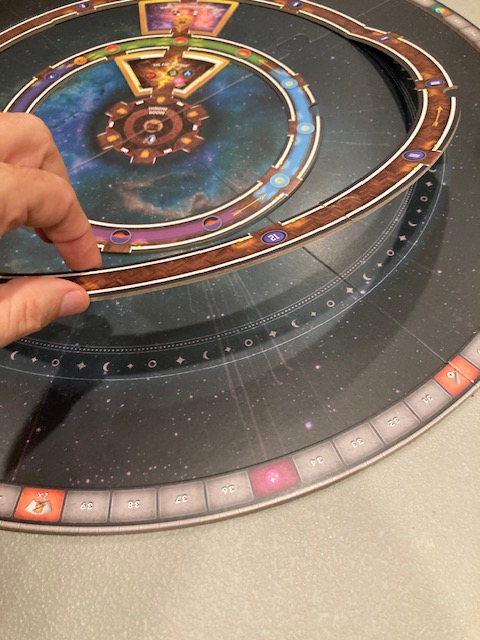
The outer ring is like a day clock: it has numbers from 1-12 on it (see above)! Every time the inner ring advances from night to sunrise, the outer ring spins! If the outer ring ever moves from 12 to 1, players lose! They have run out of time!

How does time advance? In two ways! First, the Monster “bad news” card moves the inner hour circle; see above as the monster card will cause hour time to advance 4 spaces!
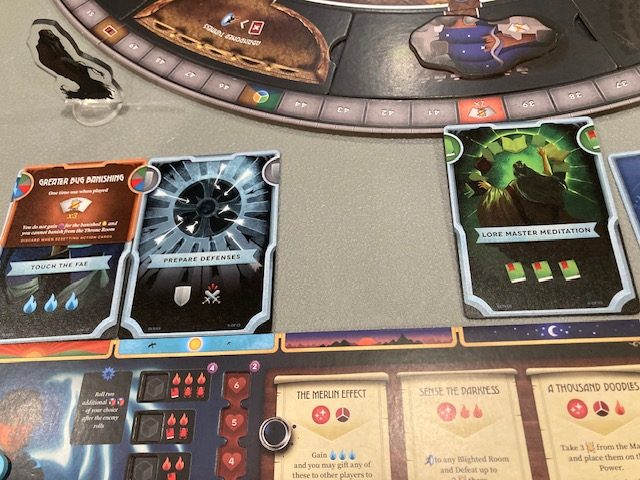
The second way is that a player’s card is to be placed in one of the 4 positions above his character sheet: see above. Each position is labelled with a time of day: The Lore Master Meditation card (above, far right) has been played above the Night symbol, which means the player MUST SPIN the inner circle to the next night phase symbol! Every turn, the player MUST play a card to one of the spaces above. Part of the choices are trying to advance time as little as possible.
This time advancement mechanism must be balanced against matching symbols on the top of the card: see above as Prepare Defenses shield matches the Touch the Fae card! (Wild) If these symbols match, the player gets that symbol’s effect (a shield gives one more defense in combat). Sometimes you may choose to waste more time to get a better symbol match!
This is just one of the many choices players make when playing a card: Which card? How does time advance? How do symbols match?
Doors and Connectivity

These spinning concentric circles of time also controls the connectivity between rooms! See above as the characters in the room with the Chaos Ogre can’t get out to the middle rings! There’s NO DOOR between the middle ring and outer ring! When the day counter spins, the doors will spin and an exit will emerge!

These “moving” doors take a few turns for players to get: “Wait, playing my card will move the rings before I move my character?” Most of the time, we would “pretend” to advance the ring to see what connections would open up and then if the connections looked right, … then we would commit. I do admit, this is very daunting the first few times until you get a handle on it.
Spells
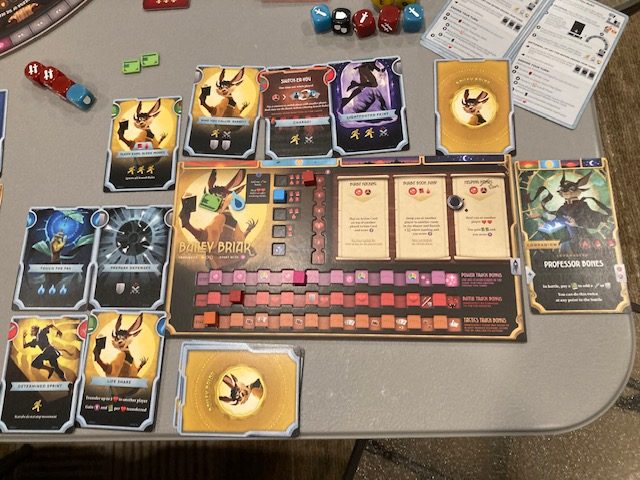
Each player has three spells on their character board: see above (Upper right of the board). These spells vary tremendously between characters! Some characters are more help-focused, some are more defense-focused, some are more combat-focused Each character’s spells are very different.

The spells are activated by spending resources … with Power usually being one component. See above! This is why Power is such an important resource in the game component! The spells are incredibly powerful, many times making the difference between a winning and losing combat!
Companions

Players can also recruit Companions to help them! Companions cost resources (of course), but give two main abilities! First, they usually give a nice little power you can use once (before you recharge).
Possibly more important, the Companions give another position to play cards, so you reset time less often! (Every reset causes a Scarab phase!) See above as Oliver has two companions, so he can play two cards without resetting!
Solo Game: True Solo With One Character

The game has rules for a solo variant (congratulations on following Saunders’ Law)! Basically, you can play as many characters as you want! The game recommends playing two characters, to get some synergies between characters going!

You might notice, I spent quite a bit of time describing the components and mechanisms of this game! I don’t know about you, but playing two characters seemed a little much for my first solo game! I ended up choosing to play my first solo game as a true solo game: one character. See above.

The game really needs no changes to play solo with one character: the main balancing mechanism of the game is advancing time for each play, so the total number of plays of the characters remains about the same. Very approximately, a game is “about” 2 * 12 = 24 turns total. Each character moves up the hour wheel by 1 or 2 spaces per turn, but the monster moves the hour wheel by 2-5 spaces per turn. On average, it takes about 2 player turns to advance one day, so at 12 days, the games lasts about 24 turns. So a true solo player will have about 24 turns, a 2-Player game would have each player take 12 turns, and so on.

The point of all that is — Sure! You can play this game true solo without any real rule changes! I always love it when the solo game follows the main rules: it’s usually so much work to apply solo rule exceptions to a game!

After playing a true solo game, let me say three things:
- This is a pretty fun game solo.
- It is a bit long. I think it took about 2 hours 30 minutes?
- I absolutely would suggest your first game be a true solo game! This game has SO MANY RULES! And SO MANY INTERACTIONS! Your first game will struggle with rules, discrepancies, and just getting the game. The last thing you want to do is to context switch between two characters! Remember, every character is very different and plays very differently! Context Switching between two characters (as we’ll see below) is rough.
The true solo game works, and it works pretty well.
Solo Play: Alternating Between Two Characters

So, because the rulebook “suggests” that two character solo is the preferred way to play, I ended up playing a two character game that way by myself. At this point, I had at least one true solo game under my belt, so I at least felt ready with a decent understanding of the rules.

You can see above as the game table became even busier! And I remember this solo mode working, but I felt like I just had to “get through” it. There was so much work context switching between characters that it was overwhelming. I’ve emphasized this point quite a bit: the characters in this game are very distinct and very complicated to play! Each character requires a lot of focus to play it well.
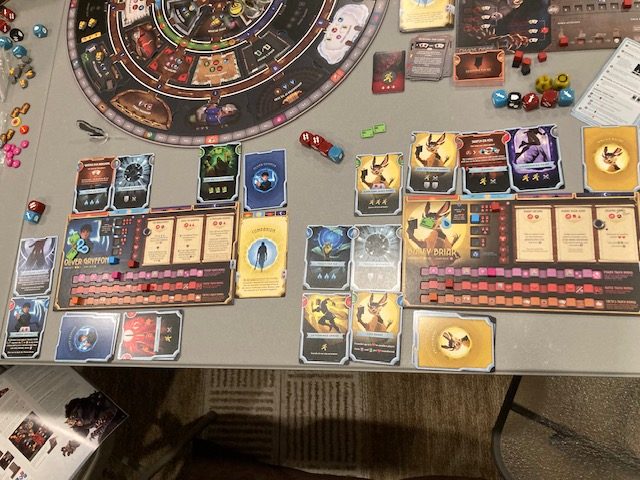
Maybe this is your favorite game of all time! Maybe you want to explore all the characters and how they work together! I remember in Set A Watch (a cooperative dice placement game we reviewed most recently here), the 4-Character solo seemed daunting! Over time, I came to love that 4-Character solo mode after I had totally absorbed the game! Maybe the same thing will happen here?
But, I think focusing on a single character is a lot more fun. The 2-character solo play felt a little like a slog; don’t get me wrong, it worked, but I just felt like I was going through the motions. But, maybe after I absorbed this game some more, maybe I will come back to the 2 character solo mode? Maybe?
Right now, I can only recommend the true solo game, especially if it’s your first game!
Cooperative Play
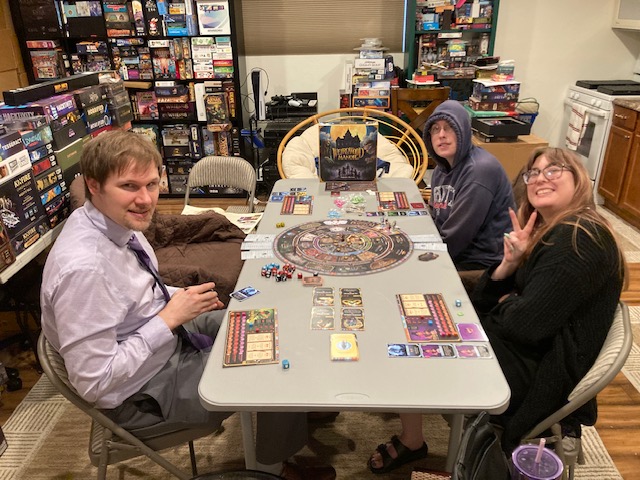
I was able to get two big cooperative games together: both of 4 players.

These game groups are very different, but two things seemed to remain the same between the groups.
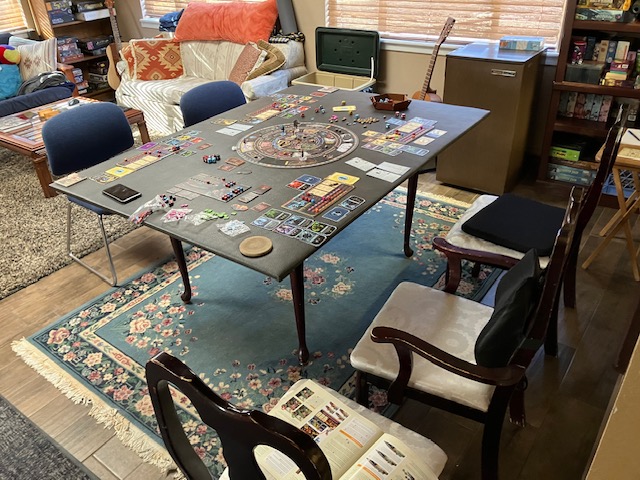
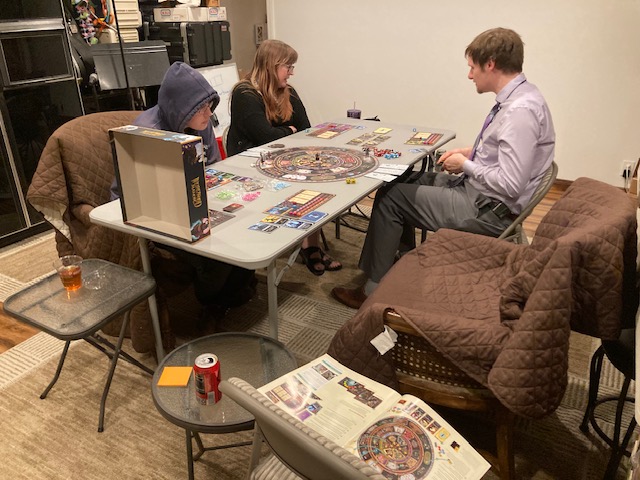
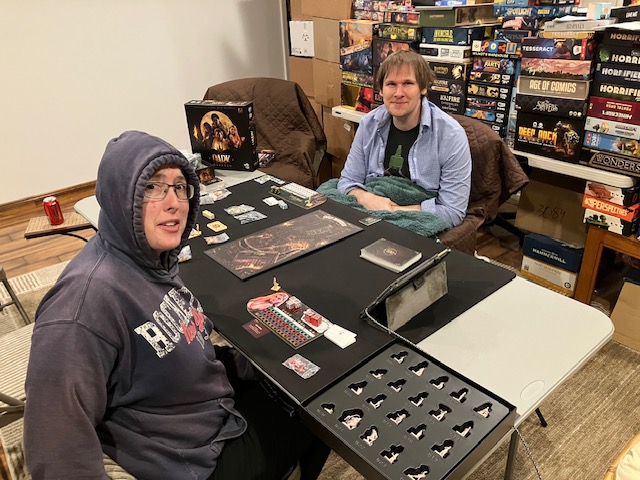
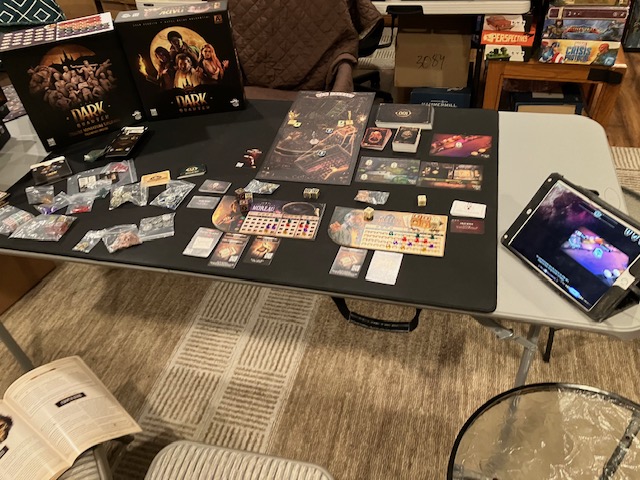
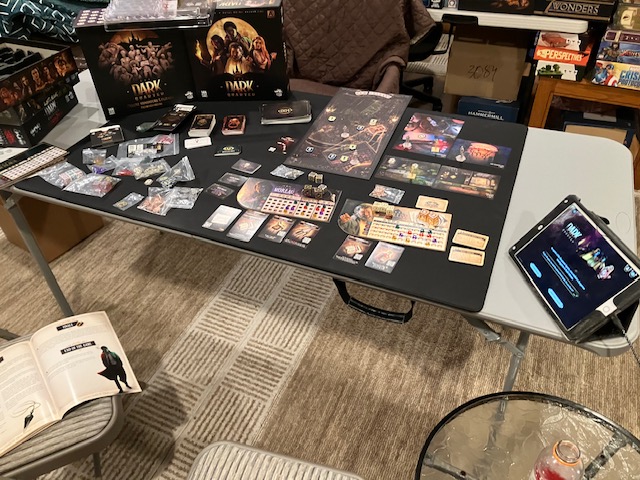
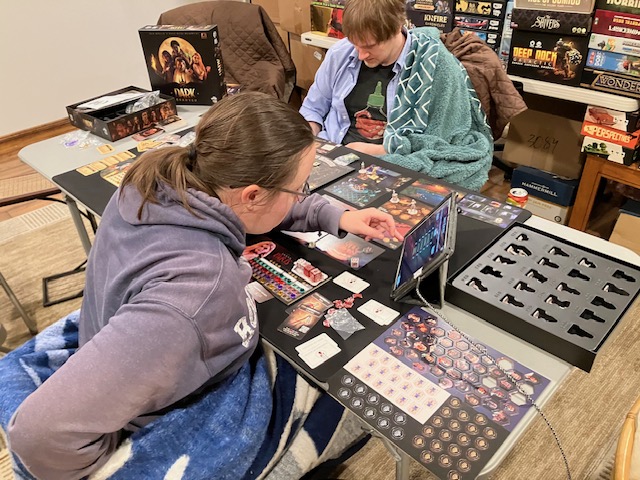
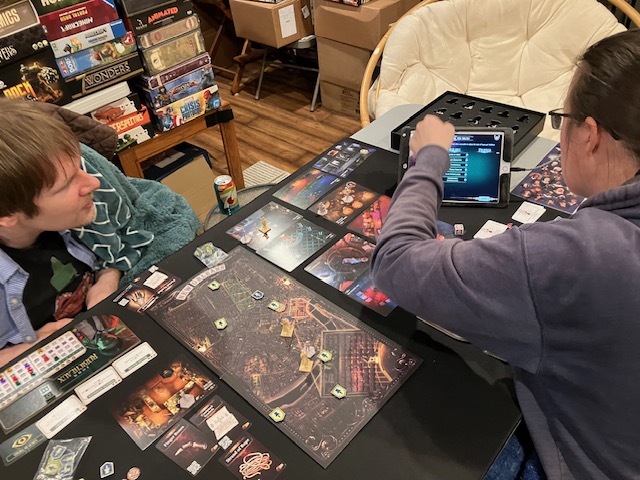
One: This game is very long: both 4-Player games took more than 3.5 hours. Some of this time will go away since it’s a learning game, but all my friends are seasoned gamers and jumped right in (with my help: I taught the games knowing the rules pretty well by this point). It feels like Weirdwood Manor is going to last at least 3 hours no matter what. See above as we all go away to dinner, leaving the game set-up to finish later!!!
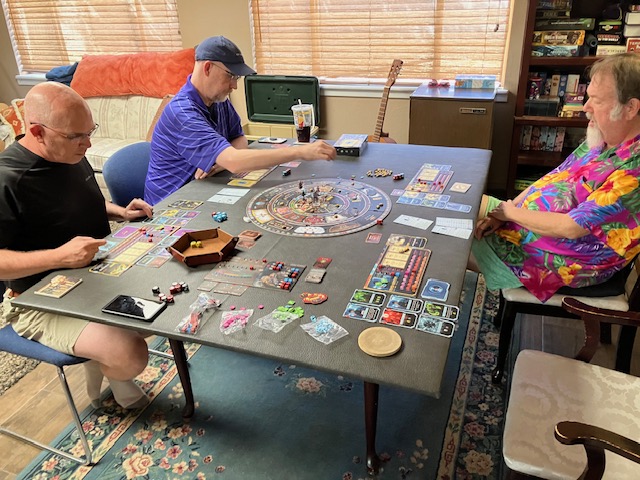
Two: All the games I have played had the players “multi-player solo” in the beginning of the game, but engendered cooperation more in the later game. Well, we strictly speaking, didn’t have to cooperate, but we would have lost if we hadn’t! Many times, we had to figure out cooperatively how to engage the boss, but someone would have correct the topology (remember the rotating rings?), or defeat Scarabs protecting the boss, or any other issues … someone had to “blaze a path” for the next player! Or the next player had no chance!

Early in my first 4-Player game, I had to “clean-up”the Scarabs in the middle of the board (to protect Lady Weirdwood), but it meant I had to “take one for the team” to do this! It meant I had to lose a lot of resources and be behind the ball for leveling up my character! But we ABSOLUTELY had to do this, or we would have lost! (If Lady Weirdwood dies, we lose!) So, I took one for the team … enabling my compatriots to continue!

Generally, the game starts out very “multi-player solo” because everyone is in dire need of resources! To get anything going in this game, players have to concentrate on themselves … then, as the game gets further along, it’s clear players HAVE to cooperate, or they will lose!

Some characters had more abilities or spells that enticed cooperation, so the choice of characters also can affect how much cooperation there is!
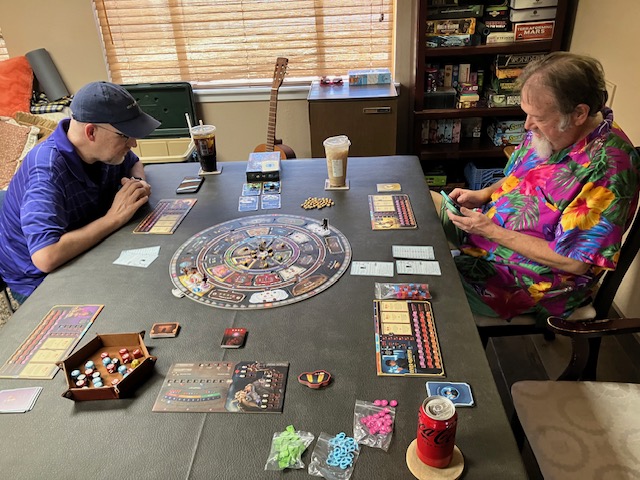
What I saw in my game groups was that the Alpha Player was kept at bay because (as we saw in the solo section) there’s just too much to keep track for a single character! It’s much much harder to Alpha Player when you are busy concentrating on running your own complex character. The cooperation happened more organically by people asking for help!
“Hey, can you get rid of those Scarabs? I need to attack the boss!”
“Hey can you make sure time doesn’t advance too far? I need to make sure the boss isn’t angry yet!”
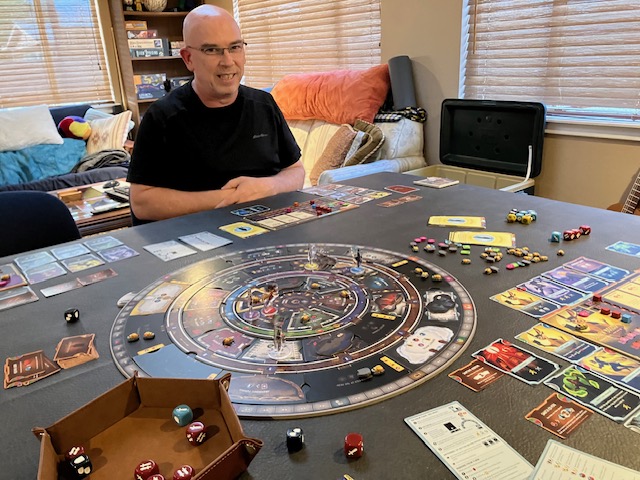
In general, there was a decent amount of cooperation, it just happened more in the later game.
Things I Liked
The production is amazing. The game pops on the table!
The Bad News cards (the Monster cards) are labelled on the back with a “hint” of the basic operation of the card! The Monster Card (see above) tells us that the Monster will “move somehow”! You flip the card and find the monster moves! This is a fantastic mechanism! It allows players to try to play cards with some general knowledge of what the bad guy will do! I remember seeing a variant of this mechanism in the cooperative game Paleo (see our review here) where the back of the wilderness cards was labelled with a generic icon as to what was coming! (We think a mechanism like this could have helped my friends like Hacktivity, from a few weeks ago, more).
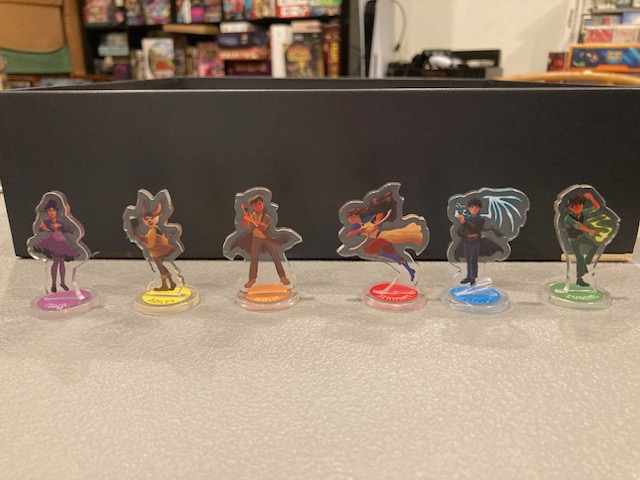
I adore the acrylic standees. These alone made the Deluxe version worth getting! They are beautiful, well-labelled, and just pop on the table. They even emphasize the color on the bottom!
Playing cards into a slot to control the time advancement is really neat and interesting.
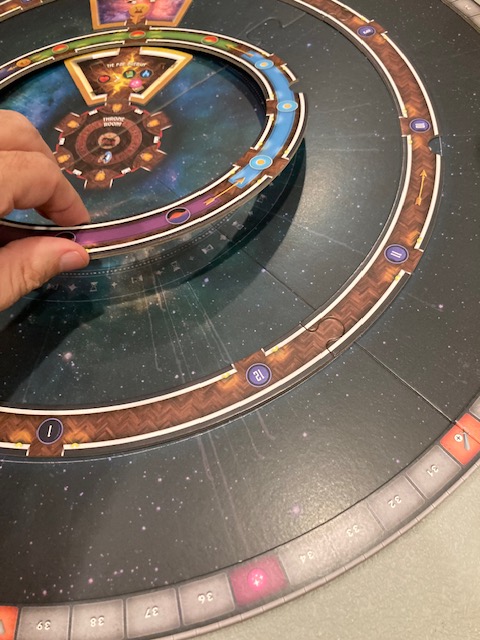
The rotating rings being used for both TIME and TOPOLOGY is very different and interesting! It took a little getting used, but it was cool.
The experience point tracks work really well: you get to make choices and advance your character at the same time! I think this one mechanism engages players more than might have expected: you become attached to your character as you care how he levels up! And your character just gets better and better as the game goes on, so you feel like you are doing something!
What I Didn’t Like
Probably the biggest detriment is the length of the game: several of my friends complained how long the game was. There’s that table (above) left set-up while we went to dinner because the game was so long …
As cool as the rotating rings are, sometimes we struggled to rotate them: this is a physical issue! We had to readjust the board on the table to avoid the crack in the middle! Even when it lay flat on another table, sometimes it didn’t advance great? It usually worked, but it just needs a slight tweak to make it easier to rotate the rings.
Speaking of the rings, why does time advance COUNTER-CLOCKWISE in the game???? When time advances in the game, you spin the rings COUNTER-CLOCKWISE!! In real life, when a clock advances forwards, it’s CLOCKWISE … thus the name CLOCKWISE! The rulebook even used the terms clockwise and counter-clockwise in descriptions! It knows the terms! This seems very counterintuitive to me!! It really seems like time moving forward should have been CLOCKWISE (like clocks). I dealt with it, but this little thing really bothered me!!
Complexity: this is a very complicated game with lots of moving parts and a long rulebook. It will take a while to absorb this, and some people may bounce off of it hard because of the complexity.

Even though this game has a lot of euro elements (worker placement, resource acquisition) and a lot of predictable elements, there’s still enough randomness to that it might just frustrate you. The game is, at its core, a boss-battler with lots of dice! You will be rolling dice and you might roll great and you might roll poorly! My friend CC got completely screwed early in one game, and had trouble recovering: he got completely smashed by the boss, and spent the rest of the game trying to recover … meanwhile watching while the rest of us were doing really well!
That element of randomness … might make one of your friends have a bad game.
Reactions

The reactions to this game from my friends was generally positive, well, except for CC who got trounced. CC’s reaction was probably the most nuanced:
I think I might have liked Weirdwood Manor more if I had gotten to play to the end. Sounds like my character got to be useful later on, which was a feeling the game had lacked for me in the turns I got to play. I liked the theme of that one and some of the mechanics were fun, but I got pretty frustrated when I kept getting shut down while watching other players advance. Nice table presence, though, and it felt like it was telling a story in a cool environment which I liked.
Kurt: He started at a 7.5, but upped his bid to 8 or 8.5/10. He really liked it!
Joe: 7.5/10
Teresa: 7/10
Sara: 6-7/10, but want to play it again for more precision
Andrew: 6 -7/10, but wants to play it again for more precision
Me: Solo (true solo), 7.5/10, Solo (two character) 6.5/10, (Cooperative) 8.5/10
Conclusion

Weirdwood Manor is a beautiful cooperative game with a beautiful production! But you have to know what you are getting into! This is a very long and complicated game with euro worker placement elements. The game always seems to start “multiplayer-solo”, but evolves into more cooperation as the gameplay advances … if you don’t cooperate in the endgame, you will lose!

I could easily see Weirdwood Manor being someone’s favorite game of 2024! It has so many unique and quirky mechanisms, satisfying advancement, and engaging play! Just be aware how complicated this game is! The extra complexity does have the advantage of keeping the Alpha Player at bay!

I recommend staying with true solo (take control of one character) to learn the game, and only tackle solo with multiple characters if you want more challenge.
My groups all like the game, with ratings between 6 and 8.5, with most people giving it at least a 7.
Hopefully this review helps you decide if Weirdwood Manor is for you!




 coopgestalt