Magic And Murder Mysteries! A Review of Murders at Karlov Manor: The Case of the Three Blade Knife

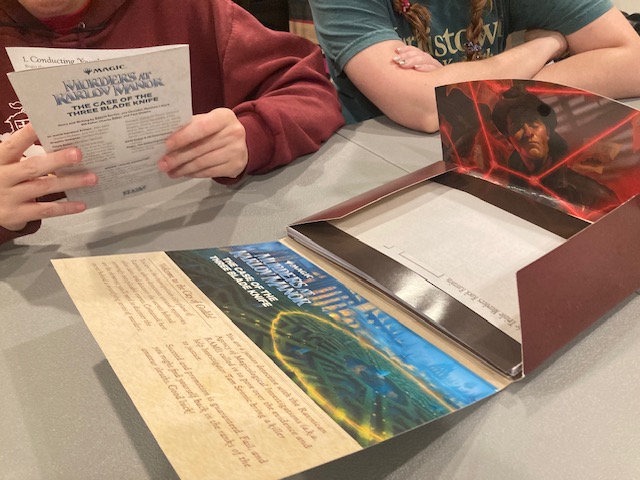
IMG_7366

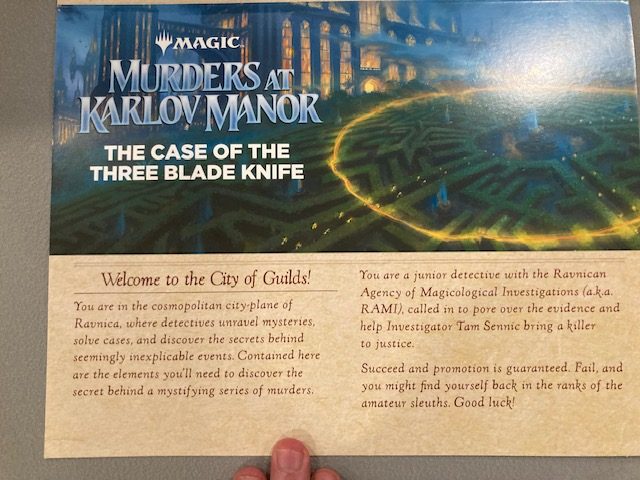
So, this is a murder mystery in the world of Magic: The Gathering?  Yup, that’s what this is!  Although its official title is Murders At Karlov Manor: The Case of the Three Blade Knife! See the BoardGameGeek listing here.

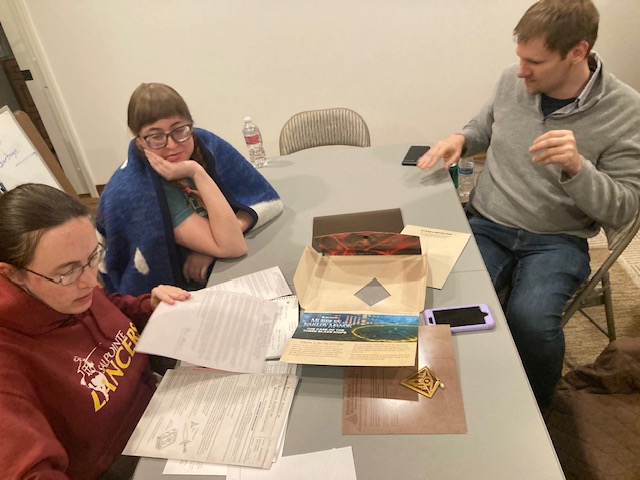
IMG_7365

My friends and I really enjoy our murder mysteries (see our Top 10 Cooperative Detective Games), so we were excited to try this out!

Let’s Take a Look!

Unboxing

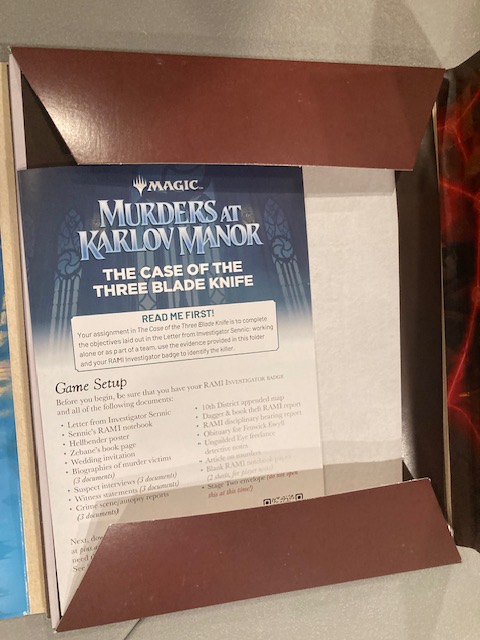
IMG_7323

Part of the problem with reviewing Murder Mysteries is that part of the fun of the game is exploring the system!  What’s new in the box?  How do things work?  How does this do stuff differently?  

To that end, we’ll give some very generic thoughts up front which shouldn’t reveal too much of the mystery.   Feel free to stop reading after that if you want to just try it yourself!  After that, we’ll have some minor spoilers, followed by possibly some major spoilers.  Read as far as you want!

High-Level Thoughts: No Spoilers!

IMG_7327

This was a mystery set in the world of Magic: The Gathering.  I know nothing of this world, and my friends know just a little.  Not knowing the world didn’t affect whether or not we could play the murder mystery.  I am sure there there were plenty of “A-HA!” moments for Magic: The Gathering players, but it didn’t stop us from enjoying the game.

IMG_7344

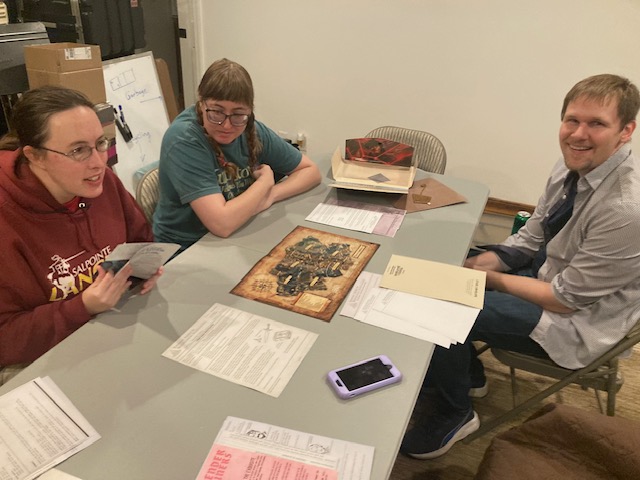
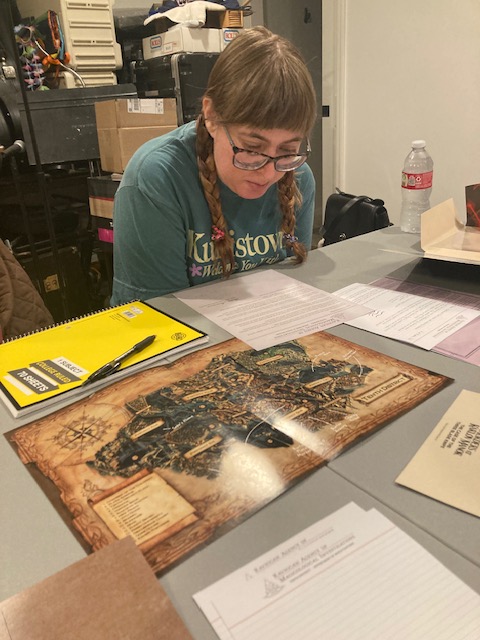
There are a LOT of materials to get through: our game took place in one night for 2.5 hours.  We were able to get to the end of the crime and solve it in one night.  This is a little bit of a slog to get through: there are a lot of materials to read out loud and share!

IMG_7324

In the end, we didn’t love this. 

Rich: Has specific complaints, which he will address in the spoilers section below.
Teresa: Liked it the best, as she got to “perform” and she really enjoys reading stuff out loud. 
Andrew: thought it was a little bit of a slog, as there was so much paperwork to get through!  He still thought it was better than Detective (the Portal Games).  It kinda felt like work.
Sara: It was pretty good.

The general consensus was that it was okay.  Rich liked it the least (probably with a 4/10) and Teresa liked it the most (with a 7/10).   The biggest complaint from everybody was that, even though this was set on the world of magic, specifically Magic: The Gathering, it felt like it could have been in any world: Noir, Cthulu, Voodoo Pirate, something else?   We still dusted for fingerprints, but it felt like someone searched and replaced “dusted for fingerprints” with “used fingerprint ooze“.   Sara pointed out (I think correctly) that this would have been a better mystery set in the 1920s world of Cthulu.

Overall, it was ok.  There were some nice highlights in the experience, but it was a lot of paperwork to slog through, and the mystery itself had its issues.   The 4/10 from Rich was because he really disagreed with how the mystery was handled, Andrew was probably a 5/10, Sara a 6/10, and Teresa a 7/10. 

Maybe you just like living in this world, and just like doing the paperwork of a mystery, and reading the materials: then you, like Teresa may really enjoy this.   The story presented overall was interesting.

If you want to read more specific complaints, read on. 

…. space left intentionally blank …

… space left intentionally blank …

Minor Spoilers: Some Issues

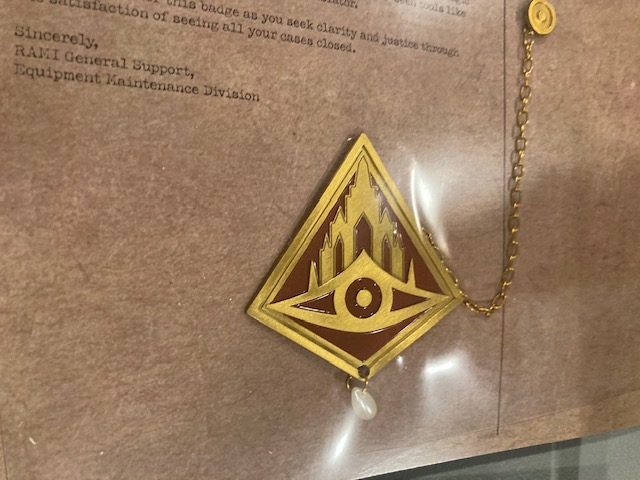
IMG_7328

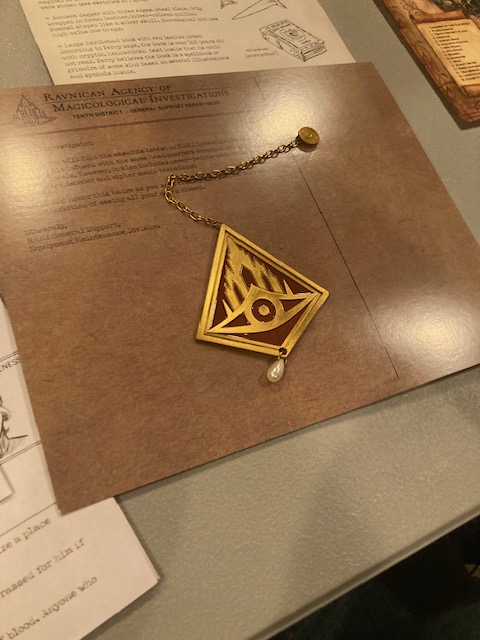
The game comes with a very cool metal pendant!  It serves as your RAMI badge for the game!

IMG_7335

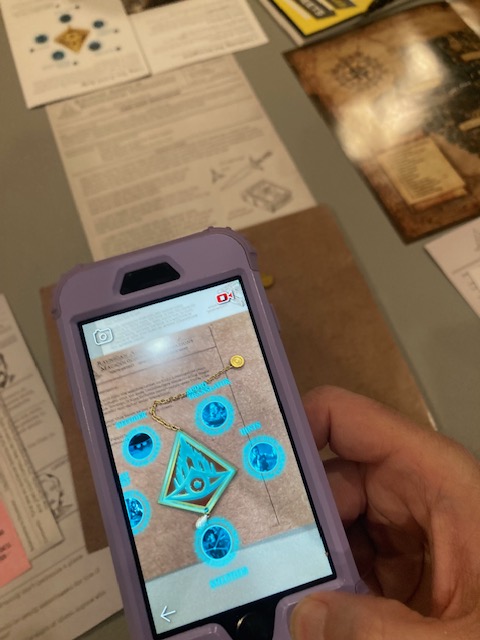
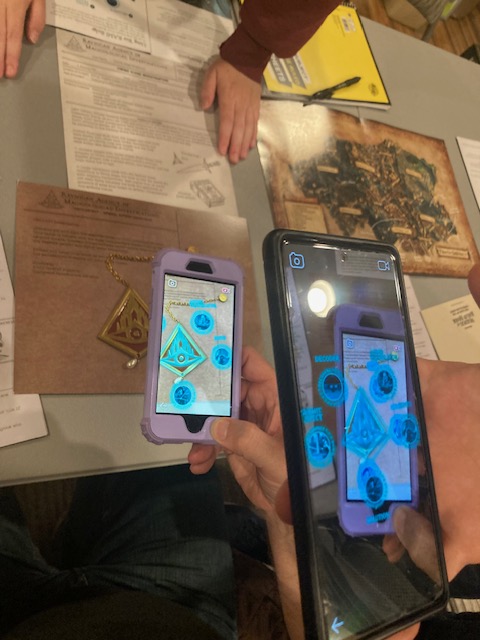
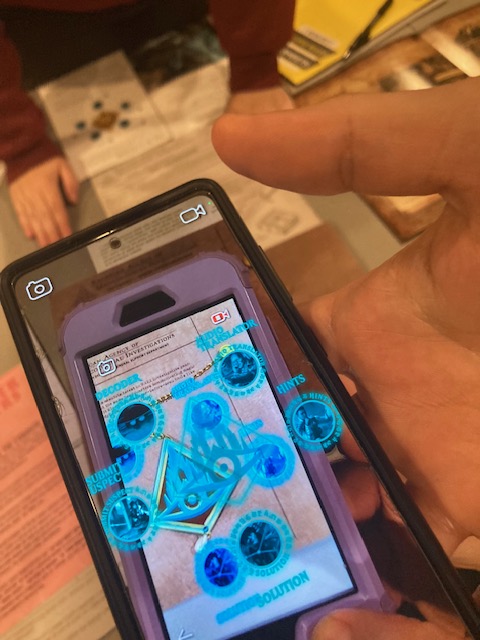
You download an app, and put your phone above it to get “some augmented reality options!”  See above!

IMG_7338

One complaint is that The Case of the Three Blade Knife looked like it would be a cool immersive augmented reality adventure! Look at the cool app above!  But it really wasn’t!!

IMG_8499

We loved The Arkham Asylum Files: Panic in Gotham City (see review here) and it even made the #1 spot on our Top 10 Cooperative Games of 2023!  We were blown away by the augmented reality here!

IMG_7337

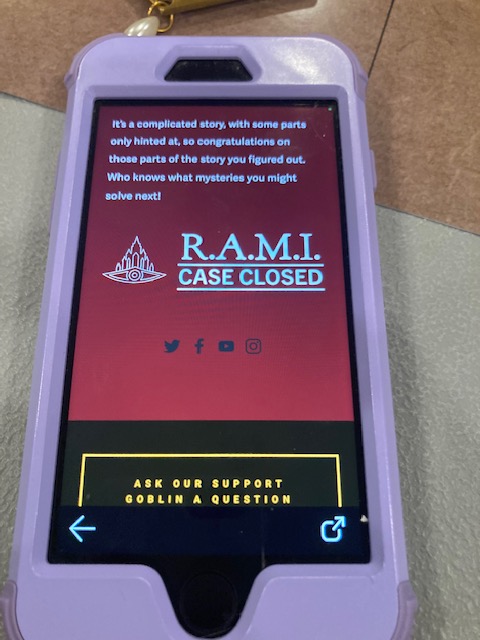
This wasn’t really much of an augmented reality experience. We used the phone just a few times? We could have replaced the phone with a piece of red acetate for some of it.  The best part of the phone app was in the finale, where THE GAME WAS ON RAILS!  At the end of the game, the phone was cool in that it presented the finale really well (cool voice acting), but during the adventure when it mattered, we used it like once.

IMG_7336

How much money was spent on the metal RAMI badge?  How much money was spent on making the app?  If we used the phone more during the adventure, this would have been cooler.  But we didn’t.  The ending was cool, but by that point, the adventure was over and this was just a “presentation”, not an interactive murder mystery with cool augmented reality.

I am not sure it was worth the extra money for the metal RAMI badge and the money to make the app.

I will say that the finale was very cool.

… space intentionally left blank …

…. space intentionally left blank …

… space intentionally left blank …

Major Spoilers: Mystery Progression

IMG_7341

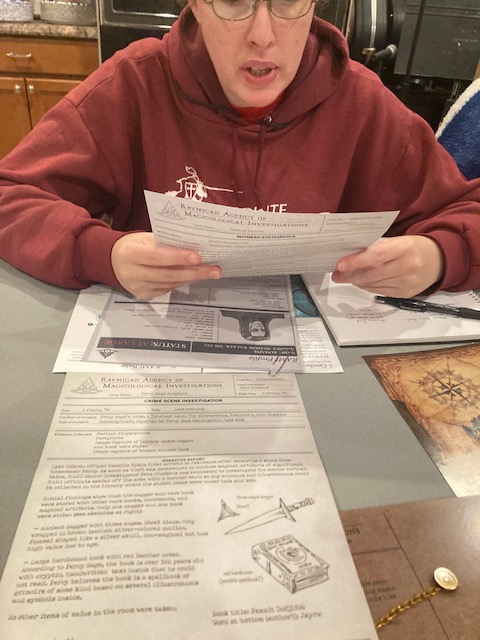
There was a lot of reading: This was work. The materials were well-organized, but getting through them was almost like homework. Still, the materials were very cool: see some above and below.
IMG_7334

There were two major problems with the mystery: 

1) Ignore motive.  The game literally said something like “don’t worry about the motive, just choose someone“.  So, we are looking for means and opportunity only?

2) What are The rules of Magic?  We live in a world of magic, literally Magic: The Gathering!!  What the rules of magic?   Magic can make means and opportunity that much more opaque (teleportation, scrying, Bigby’s giant hands!).   We have NO IDEA what the rules of magic are going into this adventure, so that completely obscures means and opportunity.

I feel like, unless the rules of Magic are somehow explained in some way, it makes it too easy to make a murder mystery unsolvable.  “The murder weapon could have been handled remotely, the murdered could have teleported in and away, the murdered could stop time to leave no trace, etc.., etc., etc., etc.”. 

So, hints, evidence, don’t seem to matter as much.  Because magic can do anything.  This really soured some of us on the mystery after it was revealed:  we had spent 2.5 hours combing through evidence only to have a Deus Ex Machina explanation. I hated it.

.

… the space left intentionally blank …

… this space left intentionally blank …

Giant Spoiler!! Read At Your Own Peril!!

IMG_7343

In the end, the only major use of magic was to possess someone and frame them for the murders.  We had no clue this was happening, we had no books to read, we had no idea.  We just “guessed” the murderer based on location, and then went to the endgame.  By the time you are in endgame, the game is on rails and it’s easy to solve.

This game pissed me off because it didn’t feel like a mystery.  You just guessed at someone based on  location, but all the while “magic” (whose rules were unexplained) was the driving cause.  

This was more of a “explore this world, make some guesses, and enjoy the story”.  If I had known that going in, I may have enjoyed it more.  But I was so busy trying to put a good solid well-crafted mystery story on top, I was pissed off when I learned what actually happened.

My friends, who enjoyed the story for what it was, had more fun that I did. 

… this space intentionally left blank …

… this space intentionally left blank …

Conclusion

IMG_7340

If you look at Murder At Karlov Manor: The Case of the Three Bladed Knife as a story that unwraps, then maybe you’ll enjoy it for what it us.  Given how much work there is to go through all the paperwork, I was very frustrated with the lack of clues,  lack of evidence, lack of explanations of rules of Magic, and the Deux Ex Machina final solution.

But I was definitely the outlier here: my friends enjoyed the story and had fun.  I didn’t.

Bloomchasers: Add Some Coziness To Your Solo and Cooperative Life

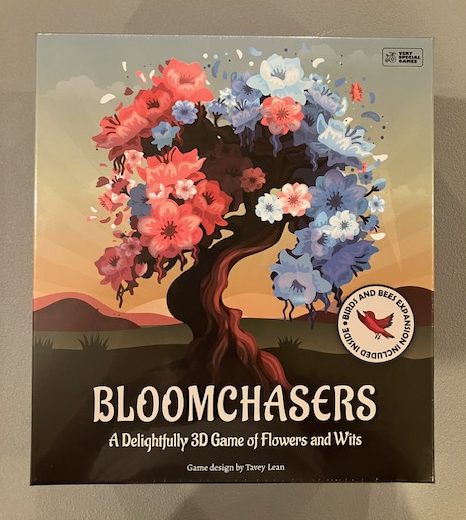
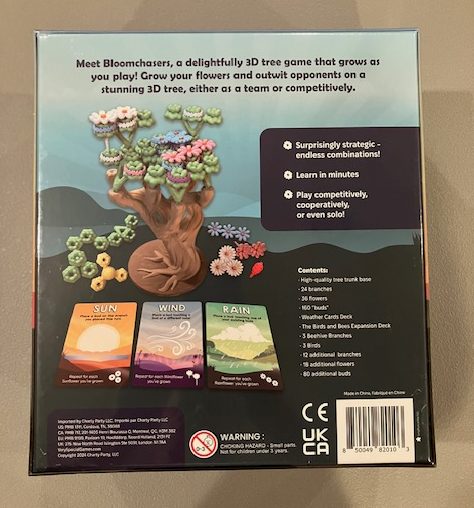
Bloomchasers is a solo, cooperative, and competitive game that was on Kickstarter back in April 2024 .   I backed it (see above) and it delivered May 20th, 2025 to my house!  It originally promised delivery in January 2025, so it was about 5 months late (which is not bad in Kickstarter terms).

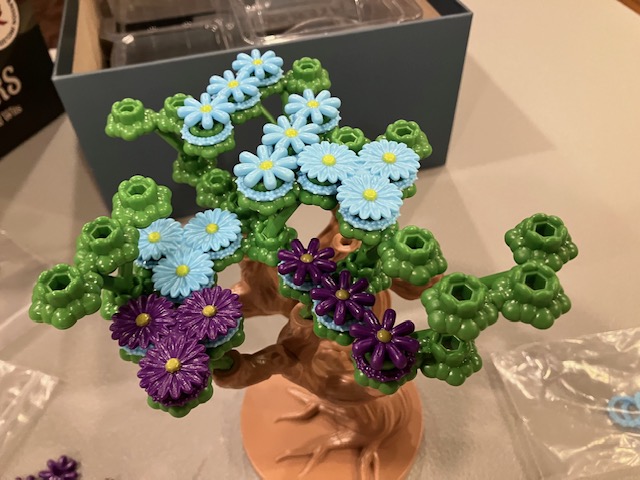
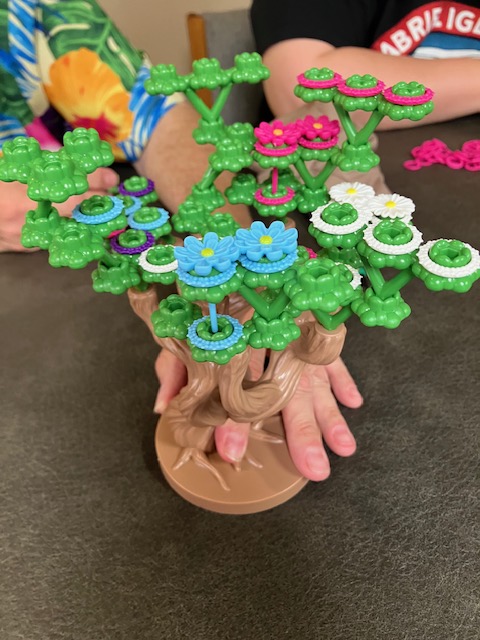
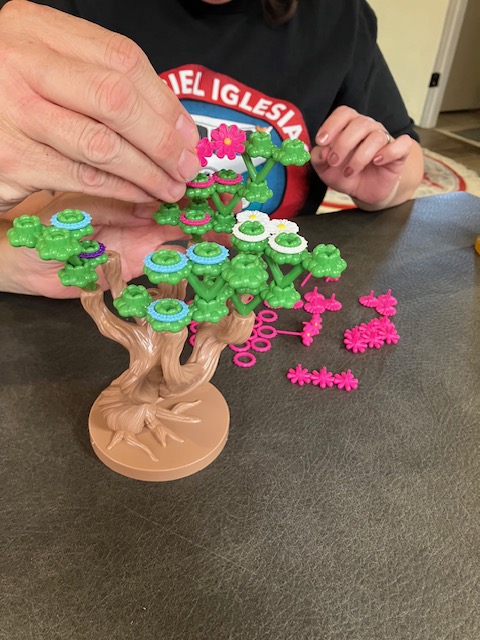
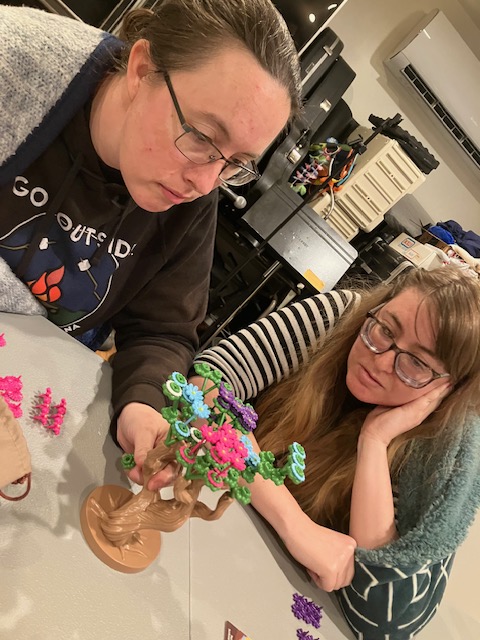
This is a hard game to describe; you build branches, buds, and flowers on a 3D tree!  It looks really cool! You can see what it looks like on the back of the box, but we’ll see some real pictures in our runthrough below.

Although there is a competitive mode, we are just focusing on the solo and cooperative modes.  Let’s take a look!

Unboxing

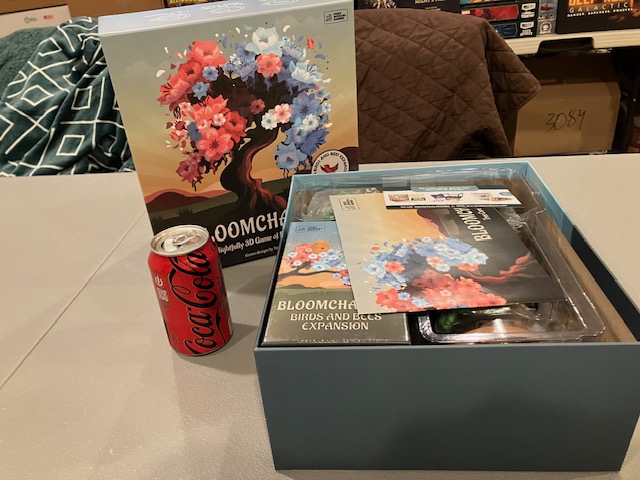
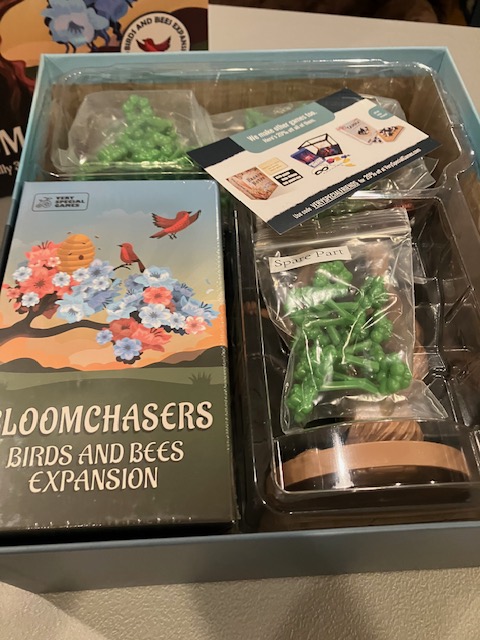
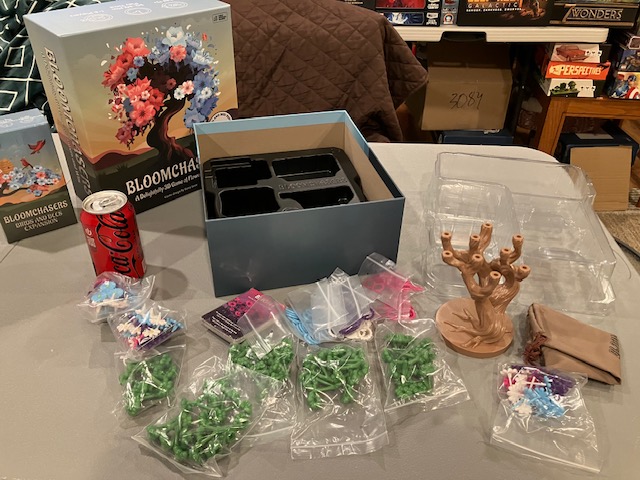
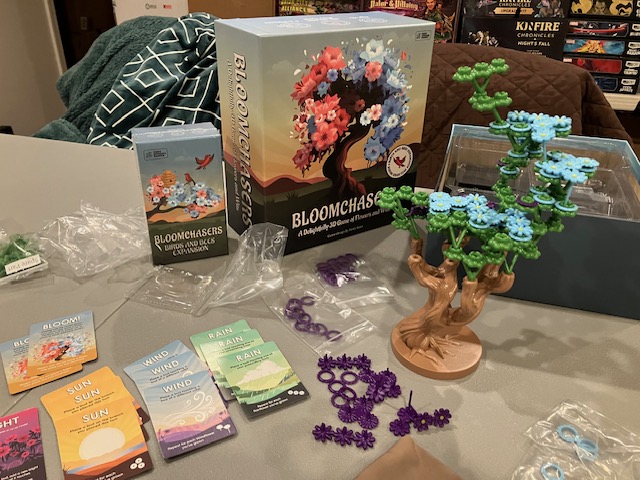
This particular edition has both the base game and expansion built in!  It’s a pretty big box! See the Coke can for perspective above.

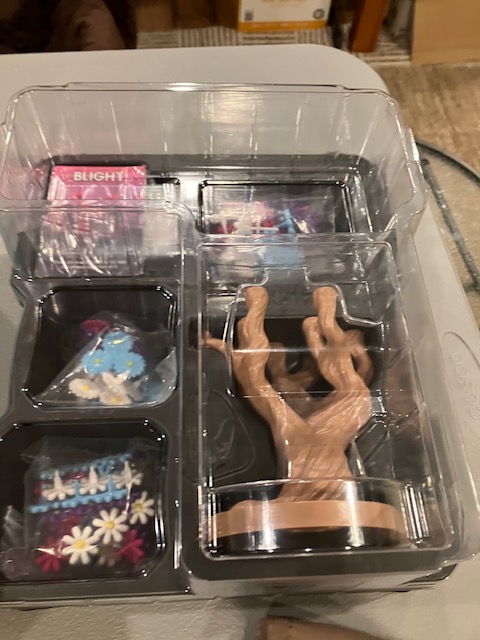
It has a lot of little plastic pieces for the trees.

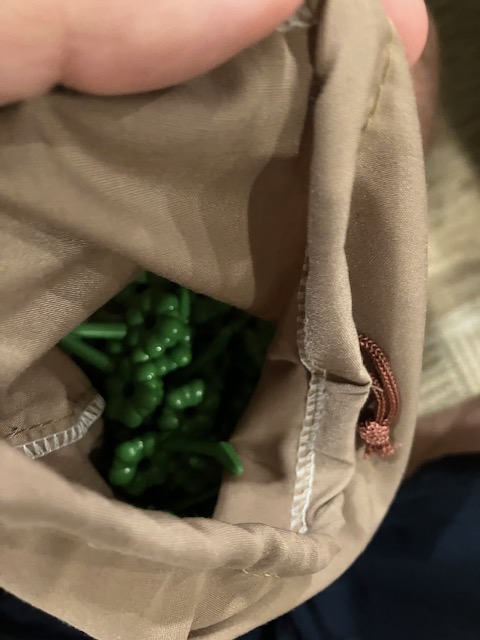
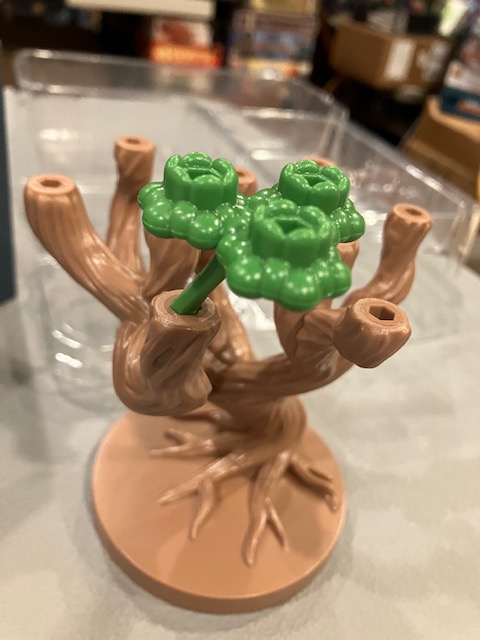
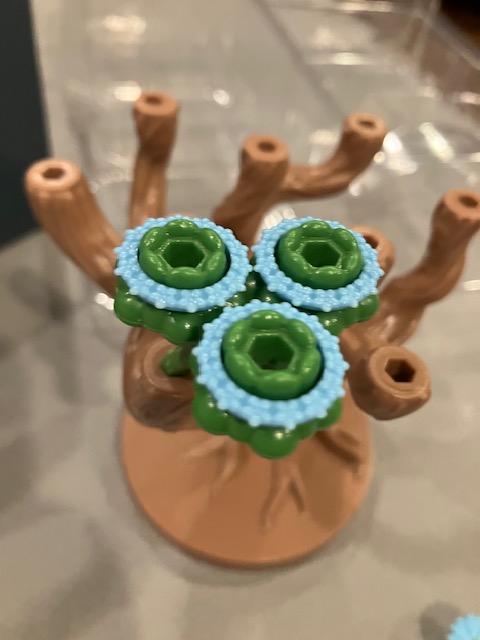
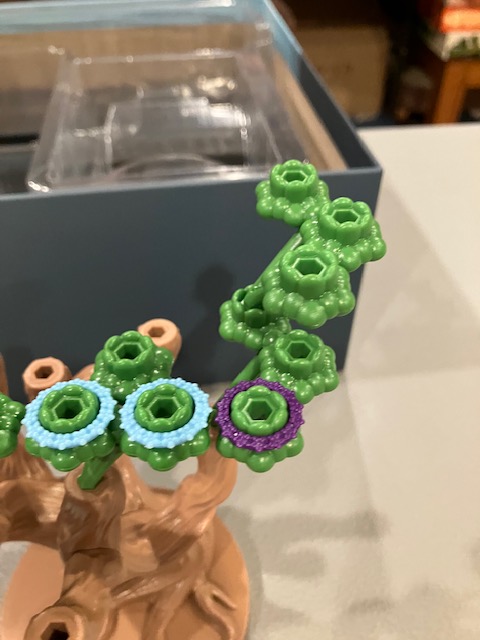
The green pieces (they kinda like of look like broccoli) are the main branches the players put on the tree.

The tree is a giant piece you put the branches into and some flowers!

I mean, the game is unique looking and interesting!

Gameplay

Every turn, players take on branch (“brocolli”) and put it on the tree.

The branches go on the tree in any empty space (or in a space with your bud).

You put buds on the tree, (little circles), trying to certain layouts of your buds.

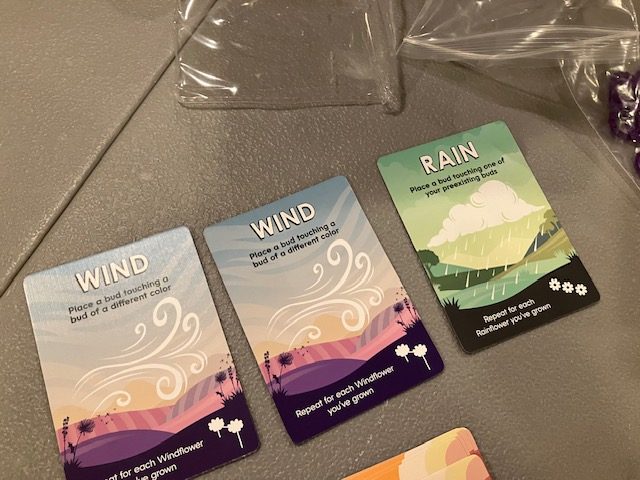
Before you place a bud, you have to use one of the weather cards which “defines” how you can put a bud on the tree.

During a “bloom” card, you can place flowers on your tree where blooms are!

Your goal is place as many flowers as possible, and you get points based on “the frequency” of the weather cards.  The frequency of weather cards matters because it’s easier and easier to place certain flowers if there are more weather cards.

You’ll notice at the bottom of the weather cards, that if you have flowers already played, you get to play MORE BUDS!

The game looks really great as you try to get as many flowers as you can!

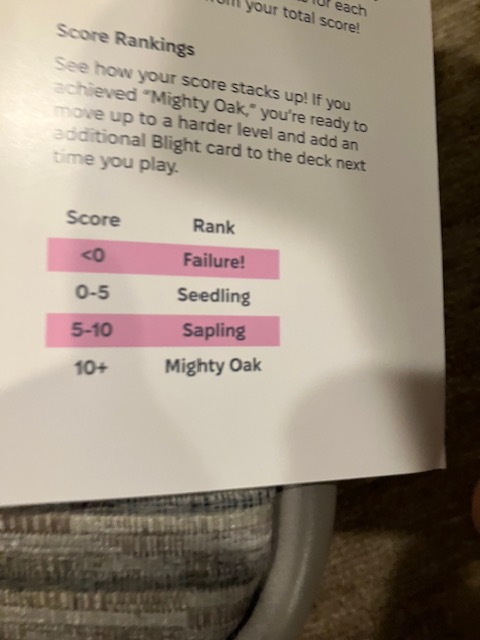
This is really a game about scoring and trying to do better than last time!  (Although, we found the scoring wonky in the solo and co-op)

Rulebook

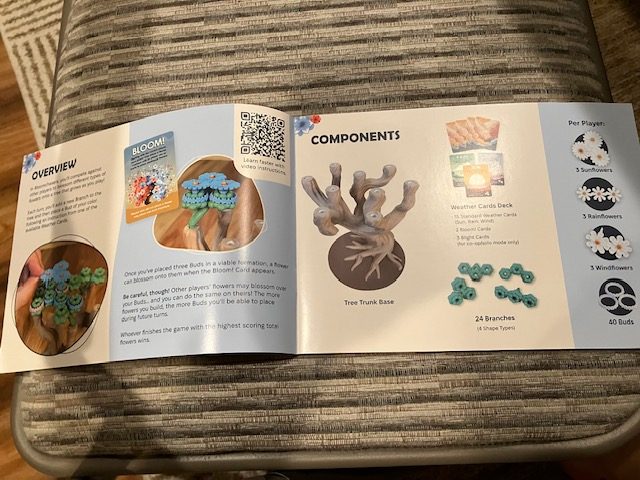
The rulebook is okay.  The form factor isn’t great; see above as it gets a B- (?) on the Chair Test.

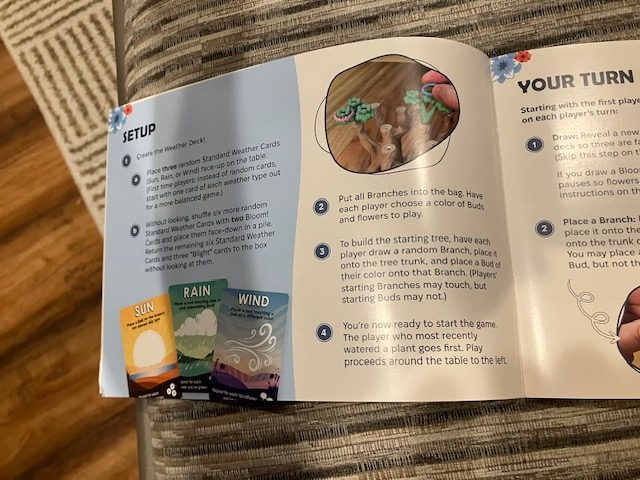
The rules are described adequately, but it does miss several points that are quite important to play.

  1. What is considered adjacent?  It turns out adjacency is also a 3D concept!
  2. What is considered a bud?  Even after you place a flower on a bud, it is still considered a bud!
  3. How do the 3D flowers works?  It is described in the rulebook, but it needed a better pictures.  Everyone I played with always played this wrong the first time

All of these issues are addressed in this BoardGameGeek thread, and later in a thread with a FAQ:  I encourage you to follow up on this thread if you want to play!  Apparently the designer made several rulings on some of these issues during the kickstarter …

It’s a little frustrating that these fundamental issues were not addressed in the rulebook. But at least there is an avenue (BGG) to address the issues.
Dexterity Game

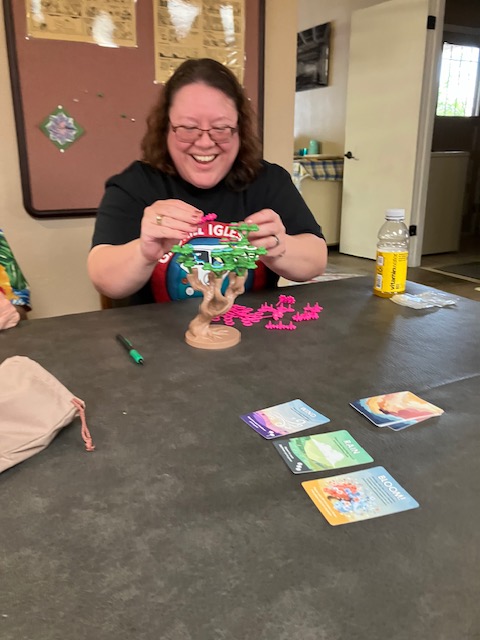
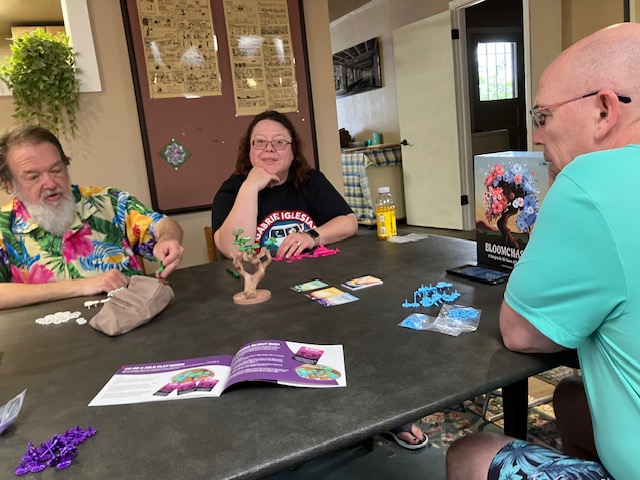
I played the game with two sets of friends; my first set of friends are “less dextrous” then myself, and they called this a dexterity game!  Many times, when trying to place buds, they would nudge the tree and cause buds to fall off.  It happened enough times that they declared, partly in jest, but partly in truth, that there is a little bit of dexterity element to the game!

The table we played on “may” have had something to do with that.   It was a little soft, and the table was quite large, which means we had to lean across a little more.

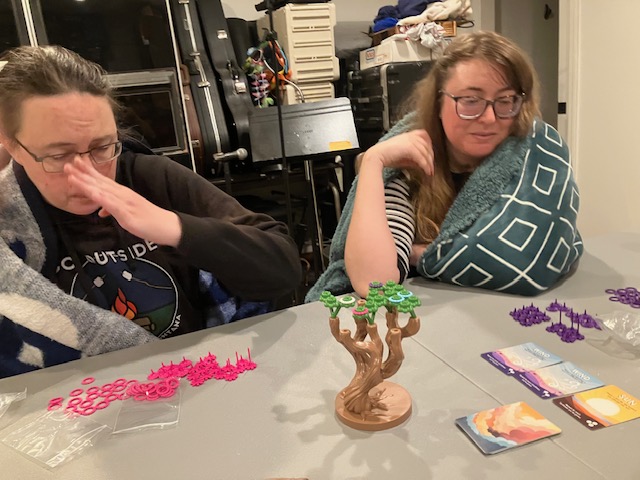
On the other hand, my other set of friends and I played on a harder CostCo table (see above) which was more stable and we were all “closer” together.  Although we didn’t struggle with the dexterity aspect as much, looking back on the games, we still had a few “knocking buds off” incidents.

I think the moral of the story; play on a harder table, try to keep your group close, and recognize there is a dexterity element to the game which may or may not affect your enjoyment of the game.

Randomness and Strategy

The game has some strategy, as your choices matter about how you place your buds.  But, when the Blight cards come out (which are the “bad news” branches) and when the Bloom cards come out (“good news”) are a little random; even after two Bloom cards come out, they get shuffled back in!  So you may get Blooms or Blights at the wrong time!

I personally think this extra randomness takes the pressure off the game.  If this game has far less randomness (if you could see which weather cards were coming,  if you could see which branches were coming,  if you have more foreknowledge when the blooms happened), I think the game would take on a different character as people would try very hard to plan things out.  But because there really is quite a bit of randomness, the game is more chill: “Eh, you get what you get and don’t have a fit”.    It’s weird to say this, but I think the randomness (which I usually don’t love) coupled with the theme, makes this a more enjoyable game.

The Joy

The Joy in this game is building a tree with flowers.  There are choices, which make you feel involved (which Weather card do you use? Where do you place a branch? Where do you place a bud?  What am I hoping for?), but because the Blooms and Blights and Weather cards are “fairly” random, you don’t feel like you “have” to optimize this game within an inch of its life.

Conclusion

My niece has a saying that she frequently quotes to her sister: “You get what you get, and don’t have a fit.”  And I think that encapsulates my feelings of this game.  It’s a cozy game where the joy is in building a beautiful tree with flowers.  Do you have choices and feel like they make a difference?  Yes, you can help your friends with your choices, you can set up your flowers, you can place buds strategically.  But because you know there is some randomness to the game, you don’t stress about your choices as much; “You get what you get, and don’t have a fit”.  I freely admit that the fun of building the 3D tree and the flower theme help that cozy feel.

Be aware that there may be a little bit of a dexterity element to this game, and that you should really consult BoardGameGeek to make sure you get rules clarified.  But otherwise, I liked this game and will keep it! 7/10.

A Review of The A.R.T. Project: A Cooperative Art Game With Not a Lot of Art

The A.R.T. Project is a cooperative game from The Op which was first available in November 2023: I had seen it in previews and reviews, but I wasn’t able to get a copy until The Op put it on sale on their web site in November 2023. It arrived in mid November, and I was excited to get it to the table!

IMG_1126

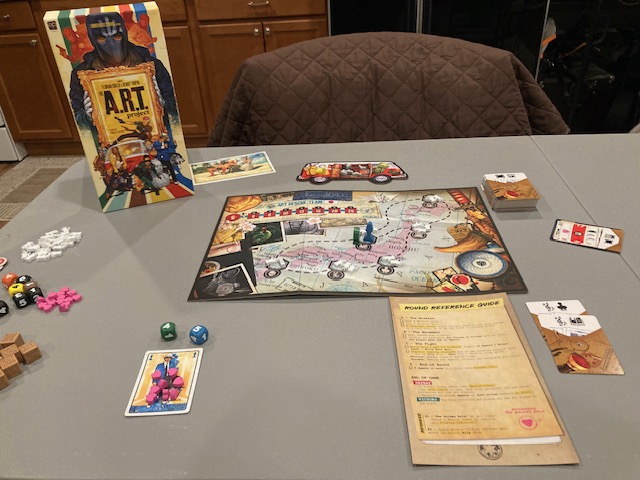
This is a cooperative game for 1-6 players (we’ll come back to that) and plays pretty quickly: the box says 40 minutes, but we’ve gotten through games a little quicker.

IMG_1127

Let’s take a look!

Unboxing

IMG_1188

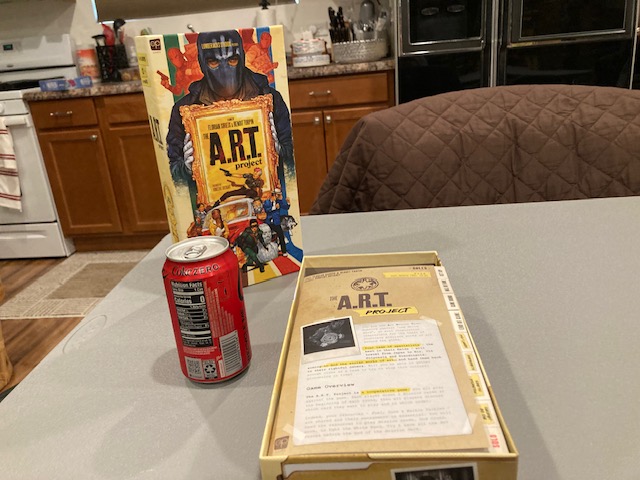
I mean, you can’t NOT comment on that cover: that’s one of nicest covers I have seen this year!  It is distinctive, colorful, and just beautiful!! That Vincent Dutrait art is just fantastic.

IMG_1128

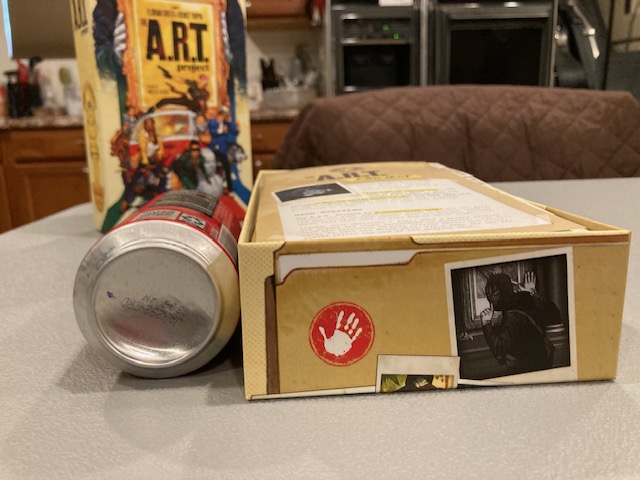
This game box has a weird profile: it’s long and thin, but it is surprisingly thick. See a picture with a coke can above: it feels about the size of 4 coke cans. It’s a weird size.

IMG_1129

Seriously weird size.

IMG_1130

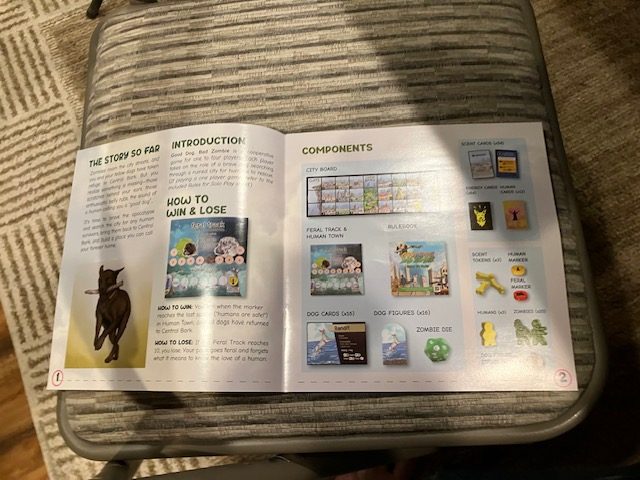
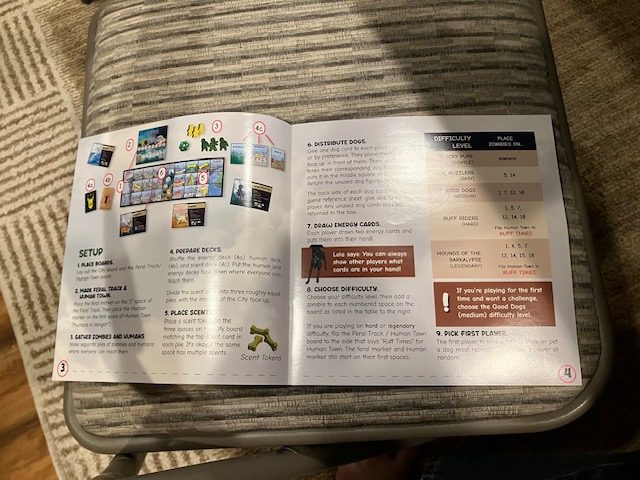
The rulebook is pretty good (see discussion below).

IMG_1136

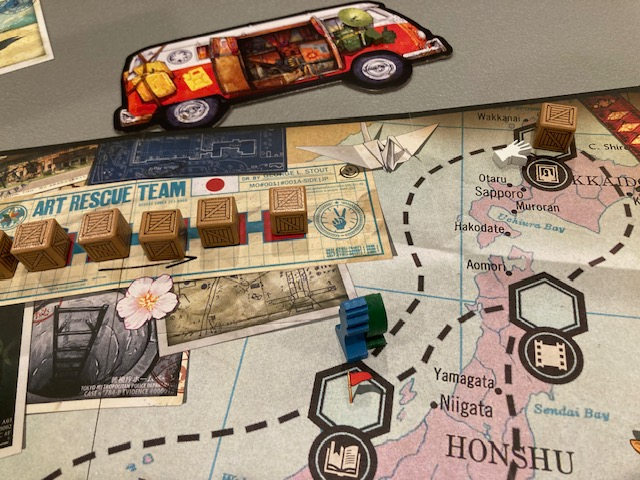
There are a lot of little components in the game: mostly wood. They are pretty nice: the little crates are kinda cool too: see above and below.

IMG_1149

There are three double-sided maps, and a punchout van, all beautifully illustrated by Vincent Dutrait. See above.

IMG_1144

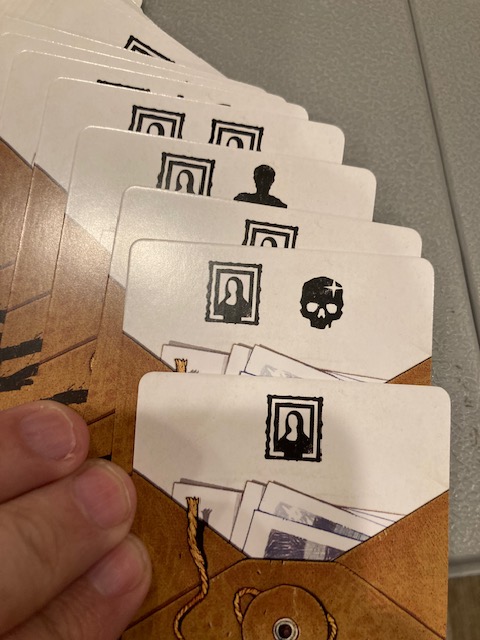
There are a bunch of cards: mostly Mission/Clue cards with icons (see above).

IMG_1186

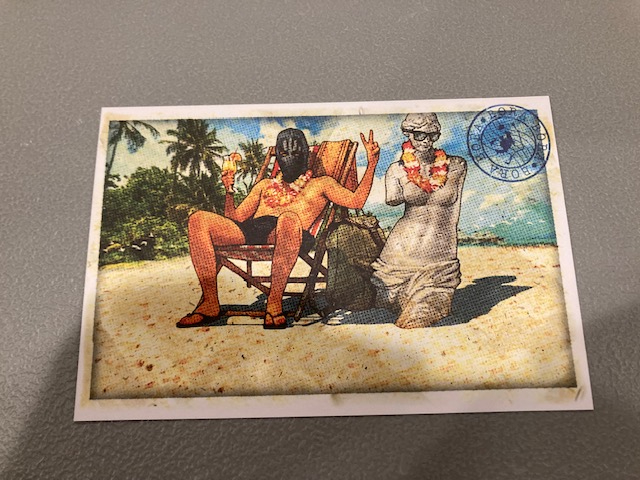
And the game comes with a postcard … I am not making this up: see above.

IMG_1141

Overall the game components are pretty great: the Vincent Dutrait art especially stands out.

Rulebook

IMG_1142

The rulebook is pretty good.  I was able to learn the game from it.

IMG_1148

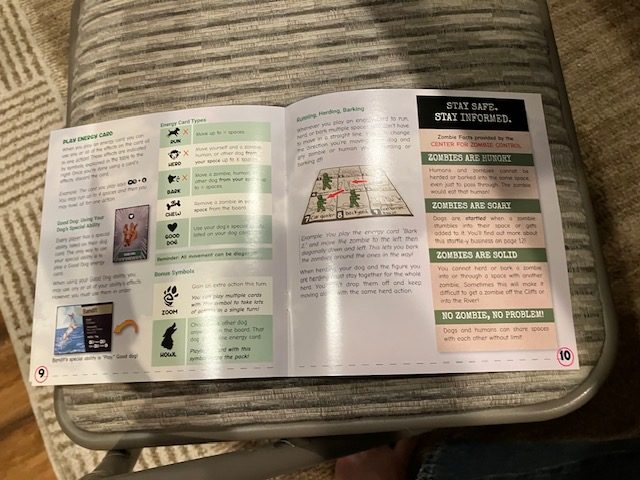
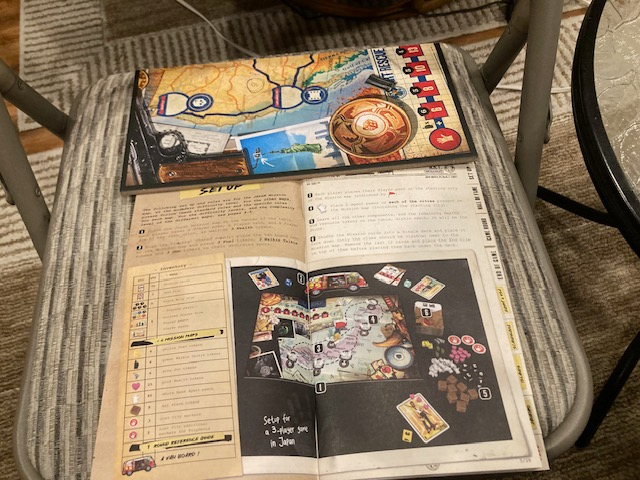
It gets a C+ on the Chair Test.  It does fit well on the chair next to me, but I had to hold it open … which means I had to fold against the spine to force it to stay open without my hand.  Not a big deal, but somehow it feels “wrong” to have to break the spine (not really) of the rulebook to keep it open.

IMG_1150

Even after “breaking the spine”, I still needed to hold the rulebook down with an unused board.

IMG_1157

The font choice is interesting: it’s a mono-width font! It looks like a typewriter or computer terminal. I think the idea is that the typewriter font is thematic as a “briefing font” (the rulebook is organized as an old-timey folder). I normally don’t like thematic fonts (see our review of Oblievaeon), but they didn’t detract too much from reading in this case. I think what saved the font is that it was BIG and easy to read.

IMG_1131

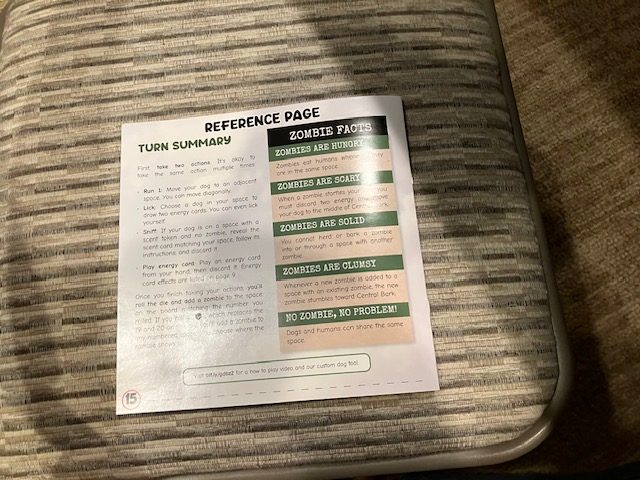
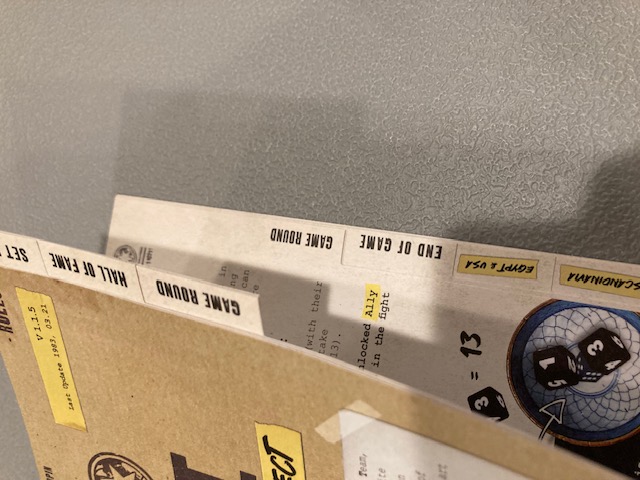
One thing that did work really well in the rulebook is the tabs: it was easy to thumb to the place you want. Unfortunately, this game didn’t have an index. I needed to look up some rules a few times and had to page through the entire book to find what I wanted.

IMG_1154

Despite the rulebook not staying open and lack of an Index, it was pretty good. I learned the rules from it.

Gameplay

IMG_1415

This game has a very Pandemic vibe: you roam a map keeping cities from being lost (overrun in Pandemic), and occasionally picking up art at specific location (meeting up in Pandemic).

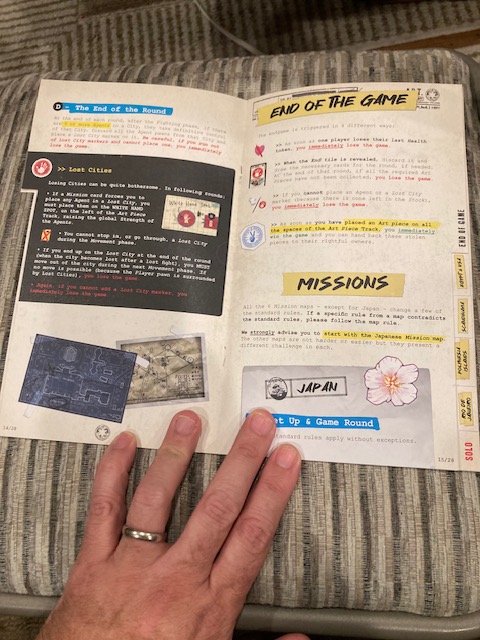
If too many HAND Agents (5) are ever at a city, the city becomes lost (Pandemic Legacy anyone?) and players can neither move through nor pick-up art there. HAND Agents also block players from picking up Art: See above as there are four HAND Agents blocking us from picking up two pieces of art (crates)!

IMG_1405

To eliminate HAND agents, you’ll roll dice (your colored die, colored compatriot dice, and black ally dice if you can get them) and try to beat the current HAND combat value (notated at the top of the board).

IMG_1176

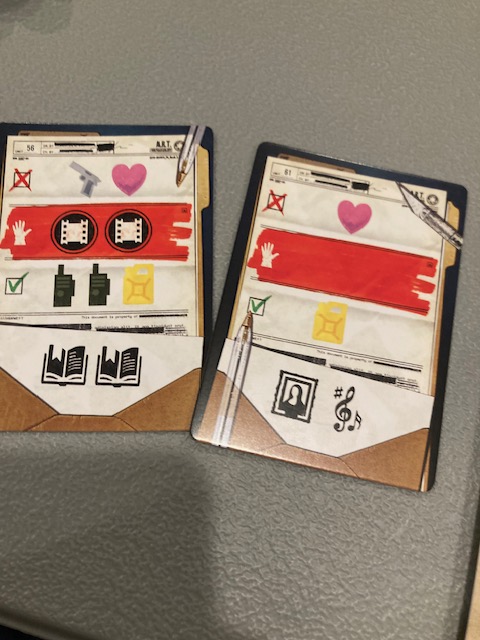
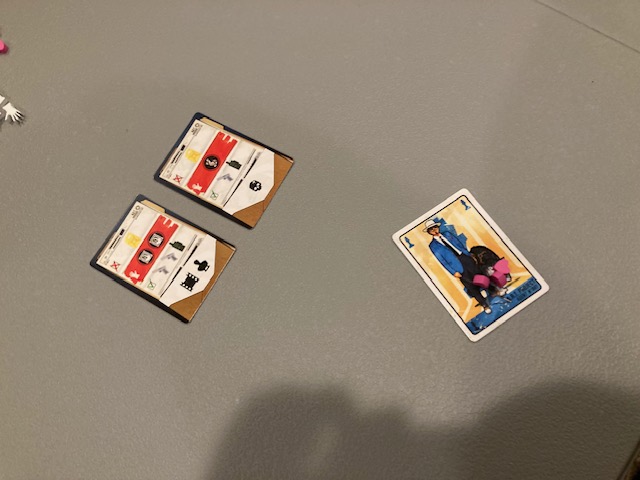
At the start of each round, each player will choose one of two Mission cards to execute: the card then executes top to bottom. The top “red X” is the penalty (lose heart or lose heart and gun), the red line is where the HAND Agents show up, and the “green check” mark shows your immediate reward. The other reward you get is a “clue” where art might show up .. note the Icons on the bottom of the card. When you get three Icons of the same type, you “find” a piece of art in that city! (A Mission card, once executed “flips” and becomes said clue)

IMG_1175

See above as we collect a lot of clues, but not enough to find any art! (You can also discard clues for rerolls).

IMG_1416

If you can find all 7 pieces of Art (represented by crates) before the Mission/clue deck runs out, anyone dies, there are 3 lost cities, or it’s impossible to get art, you win!

There are some other rules but that’s the gist.

Solo Play

IMG_1166

There is an entire section (well, 2 pages) of the manual devoted to solo play: there is a viable solo mode (congratulations on following Saunders’ Law).

IMG_1171

The main difference in solo mode is that you draw 3 Mission cards per turn (instead of 2) and choose 2 of them (instead of 1): see above. The other rule is that you have a helper (see green pawn below) who can pick up art and roll dice WITH you, but can’t attack HAND agents without you.

IMG_1182

And that’s about it!! The solo game moves pretty quickly. I was able to learn the rules playing solo, but I think I could have taught this game without too much work if I hadn’t played solo. It’s a pretty straightforward game.

IMG_1178

I have to admit to being a little underwhelmed by my solo game; It was okay. I spent quite a bit of time trying to decide why I was underwhelmed: we’ll discuss that more below.

IMG_1170

The solo game was okay. I am not sure I’ll play it again?

Cooperative Mode

IMG_1399

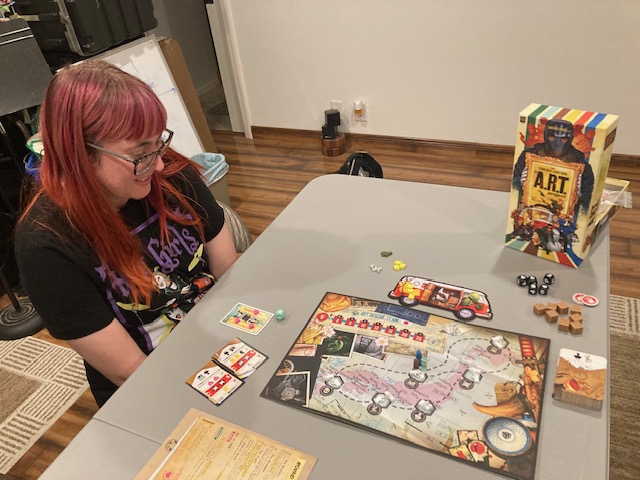
The cooperative mode was better than the solo mode. The best part of the cooperative mode was discussing which Mission cards to execute and in what order!

IMG_1401

There is no player order, which I really like! Thus, the players must work together to discuss the order in which Mission cards are played!!! There are a lot of competing constraints! We have try keep the Art crates within reach, while trying to keep both the HAND Agents under control BUT not losing any cities! The choices of which cards to execute (and the order) and that discussion are probably the best part of the game!

IMG_1177

In a 3-Player game, there was a lot of discussion! There was a lot of “what if”, there was a lot of “we should do this”, there was a lot of what “what do we do next turn”. This was a nice cooperative experience.

Themeless

IMG_1415

As great at the components are, as great as the Vincent Dutrait art is, as great as this idea is (saving art), … at the end of the day, the game felt rather themeless.

IMG_1172

Part of the issue is that you spend most of the game looking at black-and-white icons! Although they are supposed to represent “art”, they could be anything! We would rescuing refugees from around the world! We could be fighting guerillas! We could be curing diseases!

IMG_1416

And then, what you find is not “art”, but “crates”! The crates are cool components, but I never felt like I was saving art … anything could have been in those crates! Drugs? Guns? People? I really wanted to see the art in the A.R.T. Project!

IMG_1188

That Vincent Dutrait cover is AMAZING! It may be my favorite cover this year!! I wanted Vincent Dutrait’s art renderings of paintings, busts, film, … art!

What we got … were brown crates.

For a game named The A.R.T. Project, I expected a lot more art … and I got black-and-white icons and brown crates.

Player Count

IMG_1413

This is a game where the player count will make or break the game. The solo game is good enough to show the game, but not necessarily great. The 2 or 3-Player mode is probably optimal for offering the best experience! There’s just enough banter choosing the clues cards to execute, but not enough choice to overwhelm: we all made choices and we felt like we mattered.

IMG_1402

In a 4-6 player game, there’s almost no way you could find optimal Mission card orderings without either (a) taking too long (which isn’t fun) or (b) making sub-optimal choices (which will lose the game). The resources (gas cans, walkie-talkies, etc) are also very limited to 6, which makes them even more constrained in a large game. The 4-6 players games are just be too chaotic. The rulebook itself even warns players away from the 5-6 player game until you’ve played a lot: I am not convinced I would ever want to play with more than 3 players!

No Variable Powers

IMG_1145

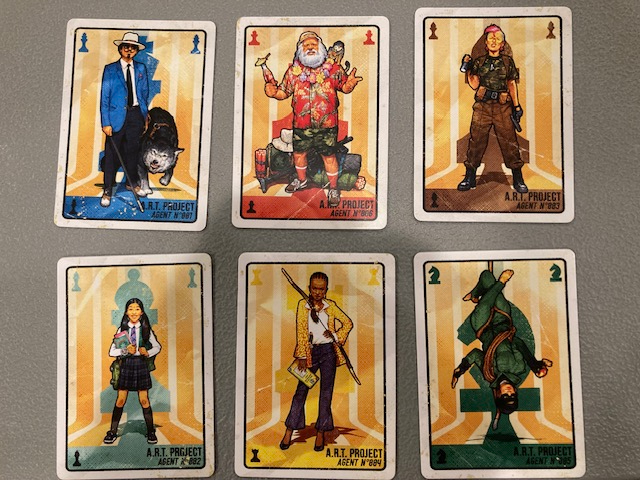
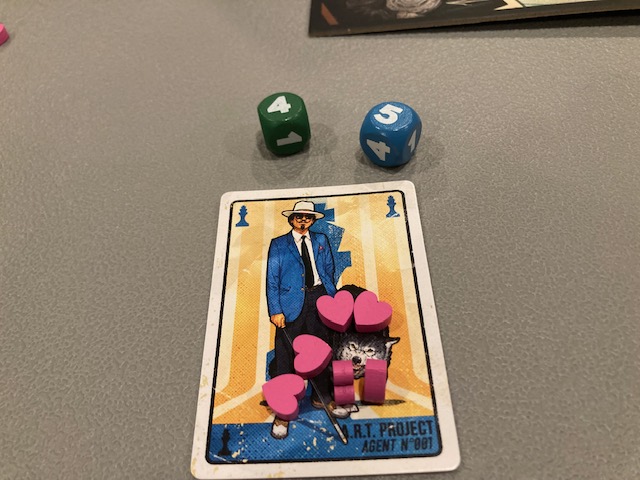
At the start of the game, each player chooses one of 6 characters! See the amazing Vincent Dutrait art above! I wanted the blue guy because of the dog!! What cool thing could the dog do??

IMG_1168

The answer: nothing. The characters aren’t distinct in any way. It doesn’t matter what character you play, except for your pawn color: I think this was a missed opportunity. Once you choose your character, it doesn’t really matter anymore once the game goes on.

This is another reason the game felt “themeless”: I had no attachment to my character at all. I just moved a blue pawn on the map picking up brown crates.

Conclusion

IMG_1415

I really wanted to love The A.R.T. Project, but I was underwhelmed by it. I was expecting this amazing art and theme, but the main gameplay centers on black-and-white icons and brown crates … which could be anything! Granted, the art you do get from Vincent Dutrait is amazing, but that art is outside the main game arc: you don’t really embrace it. The lack of variable player powers was also surprising too: all players felt exactly the same, further contributing to the theme feeling pasted on.

IMG_1404

There is a decent game here. The game shines best in a small group of 2-3 Players , with the choosing the Mission cards being the highlight of the game (as you choose both the good things and bad things together). At this optimal number of players (2-3), I would give it a 7.0/10, but my friends would still only give it a 6/10 (Teresa) and 5/10 (Sara); Sara and Teresa were even more disappointed by the themeless/artless nature of the game than I was.

The solo game is probably a 6/10. And I would avoid player counts above 3: I think the game really becomes significantly worse at higher player counts.

IMG_1406

Even though I don’t love this game, I will keep it: it’s a light and quick (at about 20-30 minutes) cooperative game which I might bring out for new players .. Or if I want a quick cooperative game. If you do decide to get The A.R.T. Project, I strongly recommend keeping the game to 1-3 players or you might hate it.