Magic And Murder Mysteries! A Review of Murders at Karlov Manor: The Case of the Three Blade Knife

IMG_7366

So, this is a murder mystery in the world of Magic: The Gathering?  Yup, that’s what this is!  Although its official title is Murders At Karlov Manor: The Case of the Three Blade Knife! See the BoardGameGeek listing here.

IMG_7365

My friends and I really enjoy our murder mysteries (see our Top 10 Cooperative Detective Games), so we were excited to try this out!

Let’s Take a Look!

Unboxing
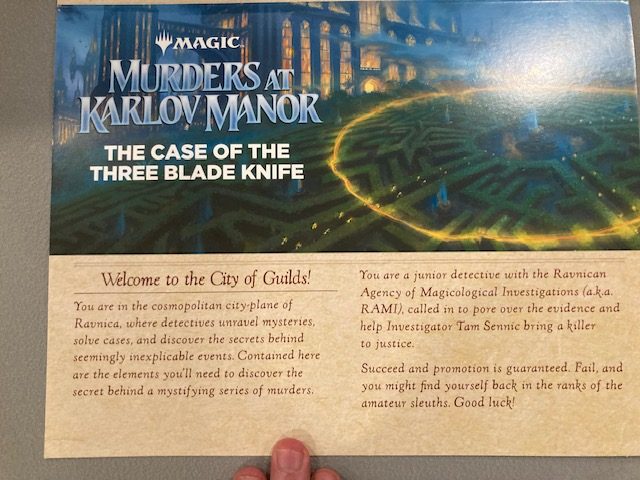
IMG_7323

Part of the problem with reviewing Murder Mysteries is that part of the fun of the game is exploring the system!  What’s new in the box?  How do things work?  How does this do stuff differently?  

To that end, we’ll give some very generic thoughts up front which shouldn’t reveal too much of the mystery.   Feel free to stop reading after that if you want to just try it yourself!  After that, we’ll have some minor spoilers, followed by possibly some major spoilers.  Read as far as you want!

High-Level Thoughts: No Spoilers!
IMG_7327

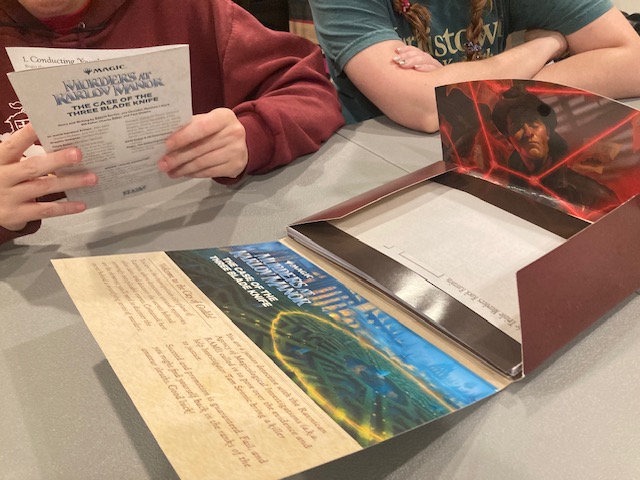
This was a mystery set in the world of Magic: The Gathering.  I know nothing of this world, and my friends know just a little.  Not knowing the world didn’t affect whether or not we could play the murder mystery.  I am sure there there were plenty of “A-HA!” moments for Magic: The Gathering players, but it didn’t stop us from enjoying the game.
IMG_7344

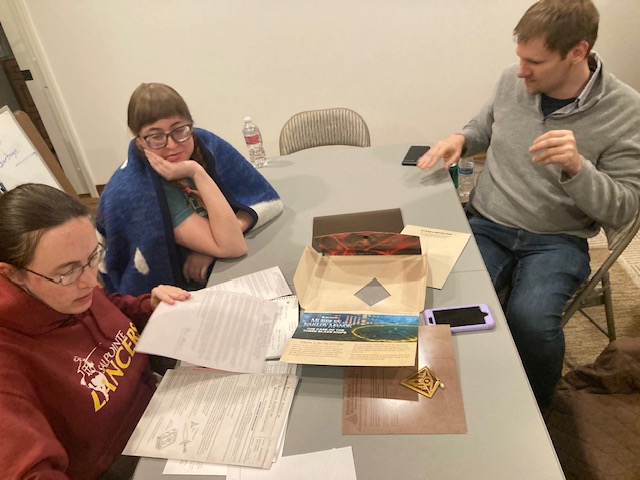
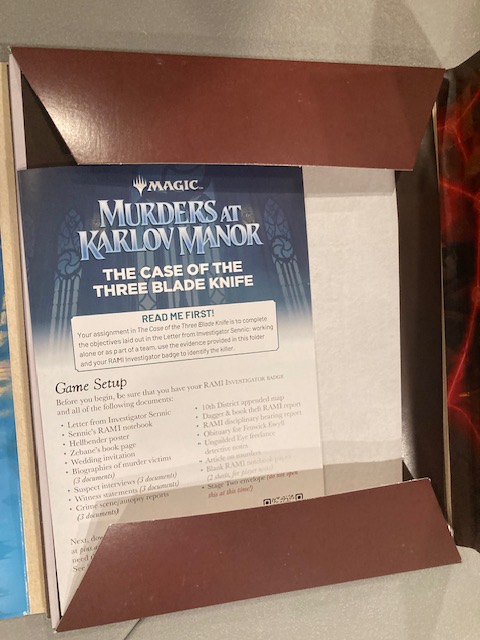
There are a LOT of materials to get through: our game took place in one night for 2.5 hours.  We were able to get to the end of the crime and solve it in one night.  This is a little bit of a slog to get through: there are a lot of materials to read out loud and share!
IMG_7324

In the end, we didn’t love this. 

Rich: Has specific complaints, which he will address in the spoilers section below.
Teresa: Liked it the best, as she got to “perform” and she really enjoys reading stuff out loud. 
Andrew: thought it was a little bit of a slog, as there was so much paperwork to get through!  He still thought it was better than Detective (the Portal Games).  It kinda felt like work.
Sara: It was pretty good.

The general consensus was that it was okay.  Rich liked it the least (probably with a 4/10) and Teresa liked it the most (with a 7/10).   The biggest complaint from everybody was that, even though this was set on the world of magic, specifically Magic: The Gathering, it felt like it could have been in any world: Noir, Cthulu, Voodoo Pirate, something else?   We still dusted for fingerprints, but it felt like someone searched and replaced “dusted for fingerprints” with “used fingerprint ooze“.   Sara pointed out (I think correctly) that this would have been a better mystery set in the 1920s world of Cthulu.

Overall, it was ok.  There were some nice highlights in the experience, but it was a lot of paperwork to slog through, and the mystery itself had its issues.   The 4/10 from Rich was because he really disagreed with how the mystery was handled, Andrew was probably a 5/10, Sara a 6/10, and Teresa a 7/10. 

Maybe you just like living in this world, and just like doing the paperwork of a mystery, and reading the materials: then you, like Teresa may really enjoy this.   The story presented overall was interesting.

If you want to read more specific complaints, read on. 

…. space left intentionally blank …

… space left intentionally blank …

Minor Spoilers: Some Issues
IMG_7328

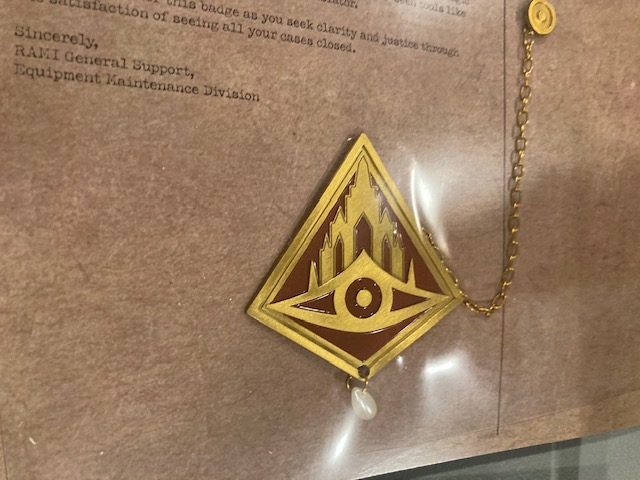
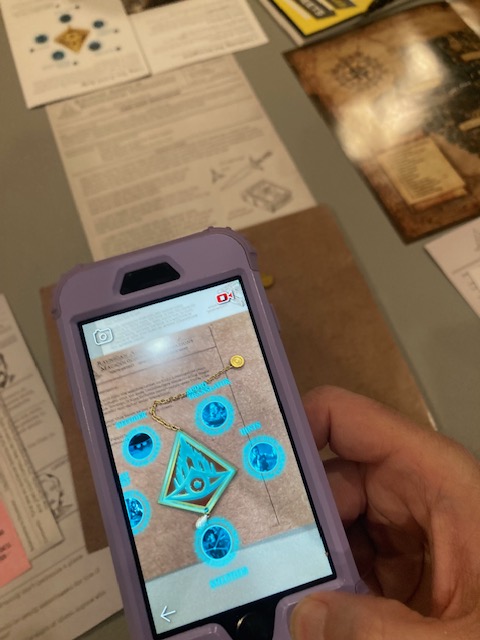
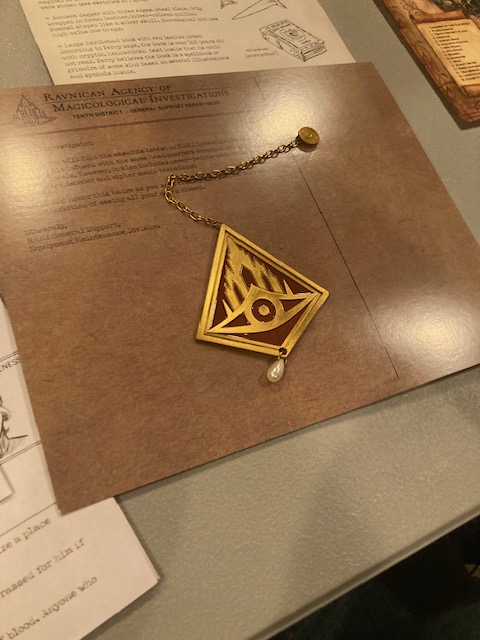
The game comes with a very cool metal pendant!  It serves as your RAMI badge for the game!
IMG_7335

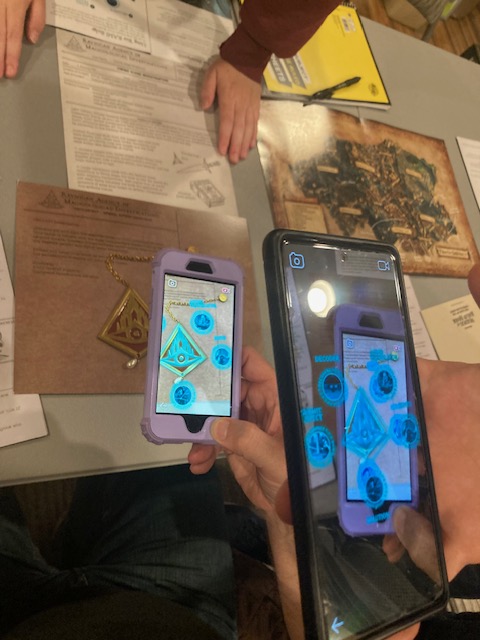
You download an app, and put your phone above it to get “some augmented reality options!”  See above!
IMG_7338

One complaint is that The Case of the Three Blade Knife looked like it would be a cool immersive augmented reality adventure! Look at the cool app above!  But it really wasn’t!!

IMG_8499

We loved The Arkham Asylum Files: Panic in Gotham City (see review here) and it even made the #1 spot on our Top 10 Cooperative Games of 2023!  We were blown away by the augmented reality here!
IMG_7337

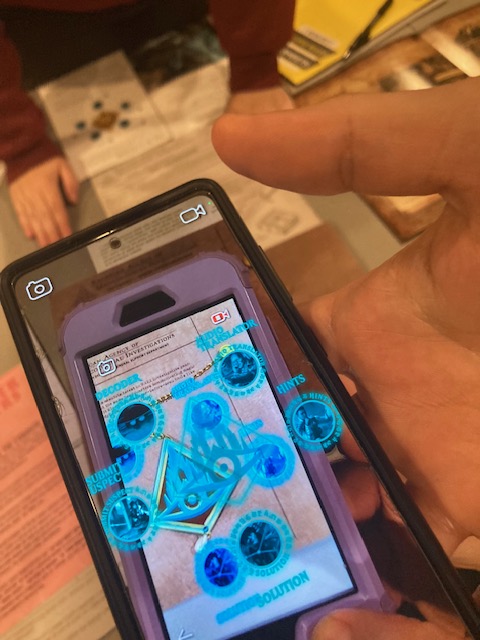
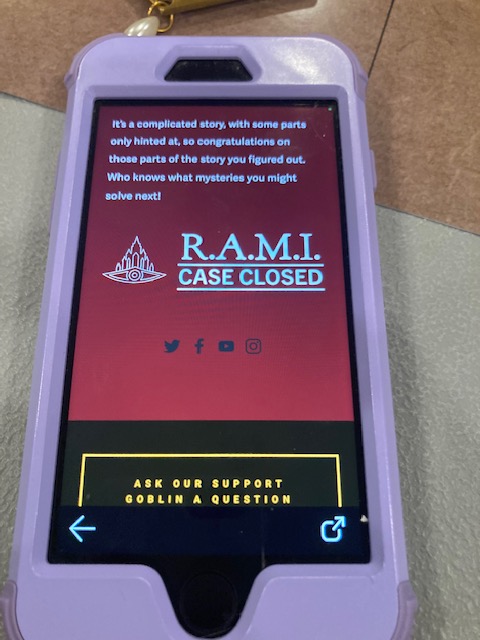
This wasn’t really much of an augmented reality experience. We used the phone just a few times? We could have replaced the phone with a piece of red acetate for some of it.  The best part of the phone app was in the finale, where THE GAME WAS ON RAILS!  At the end of the game, the phone was cool in that it presented the finale really well (cool voice acting), but during the adventure when it mattered, we used it like once.
IMG_7336

How much money was spent on the metal RAMI badge?  How much money was spent on making the app?  If we used the phone more during the adventure, this would have been cooler.  But we didn’t.  The ending was cool, but by that point, the adventure was over and this was just a “presentation”, not an interactive murder mystery with cool augmented reality.

I am not sure it was worth the extra money for the metal RAMI badge and the money to make the app.

I will say that the finale was very cool.

… space intentionally left blank …

…. space intentionally left blank …

… space intentionally left blank …

Major Spoilers: Mystery Progression
IMG_7341

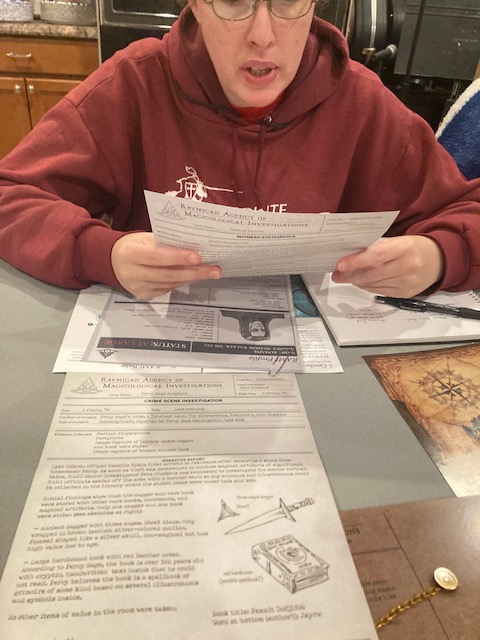
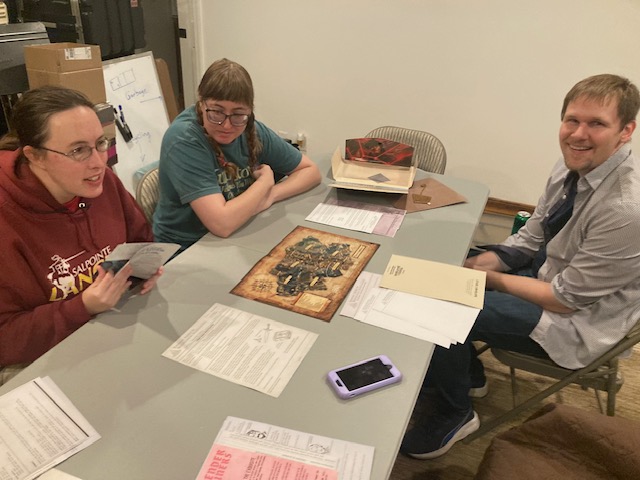
There was a lot of reading: This was work. The materials were well-organized, but getting through them was almost like homework. Still, the materials were very cool: see some above and below.
IMG_7334

There were two major problems with the mystery: 

1) Ignore motive.  The game literally said something like “don’t worry about the motive, just choose someone“.  So, we are looking for means and opportunity only?

2) What are The rules of Magic?  We live in a world of magic, literally Magic: The Gathering!!  What the rules of magic?   Magic can make means and opportunity that much more opaque (teleportation, scrying, Bigby’s giant hands!).   We have NO IDEA what the rules of magic are going into this adventure, so that completely obscures means and opportunity.

I feel like, unless the rules of Magic are somehow explained in some way, it makes it too easy to make a murder mystery unsolvable.  “The murder weapon could have been handled remotely, the murdered could have teleported in and away, the murdered could stop time to leave no trace, etc.., etc., etc., etc.”. 

So, hints, evidence, don’t seem to matter as much.  Because magic can do anything.  This really soured some of us on the mystery after it was revealed:  we had spent 2.5 hours combing through evidence only to have a Deus Ex Machina explanation. I hated it.

.

… the space left intentionally blank …

… this space left intentionally blank …

Giant Spoiler!! Read At Your Own Peril!!
IMG_7343

In the end, the only major use of magic was to possess someone and frame them for the murders.  We had no clue this was happening, we had no books to read, we had no idea.  We just “guessed” the murderer based on location, and then went to the endgame.  By the time you are in endgame, the game is on rails and it’s easy to solve.

This game pissed me off because it didn’t feel like a mystery.  You just guessed at someone based on  location, but all the while “magic” (whose rules were unexplained) was the driving cause.  

This was more of a “explore this world, make some guesses, and enjoy the story”.  If I had known that going in, I may have enjoyed it more.  But I was so busy trying to put a good solid well-crafted mystery story on top, I was pissed off when I learned what actually happened.

My friends, who enjoyed the story for what it was, had more fun that I did. 

… this space intentionally left blank …

… this space intentionally left blank …

Conclusion
IMG_7340

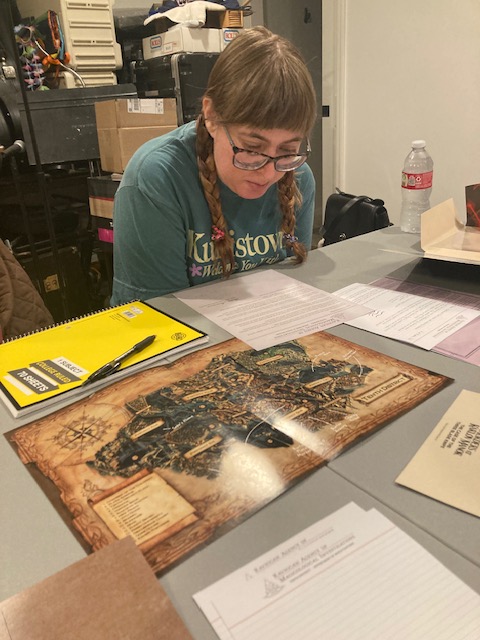
If you look at Murder At Karlov Manor: The Case of the Three Bladed Knife as a story that unwraps, then maybe you’ll enjoy it for what it us.  Given how much work there is to go through all the paperwork, I was very frustrated with the lack of clues,  lack of evidence, lack of explanations of rules of Magic, and the Deux Ex Machina final solution.

But I was definitely the outlier here: my friends enjoyed the story and had fun.  I didn’t.
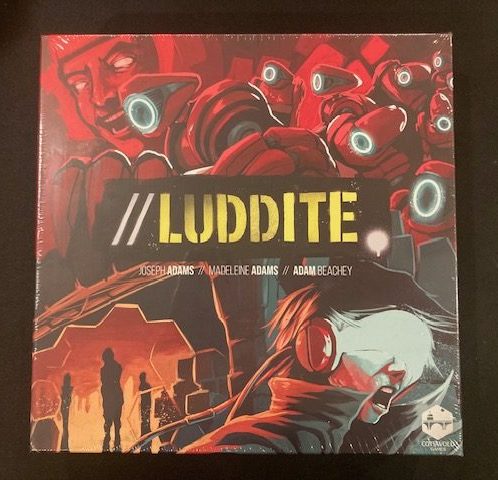
Luddite Can Be An Experience, If You Let It. A Review
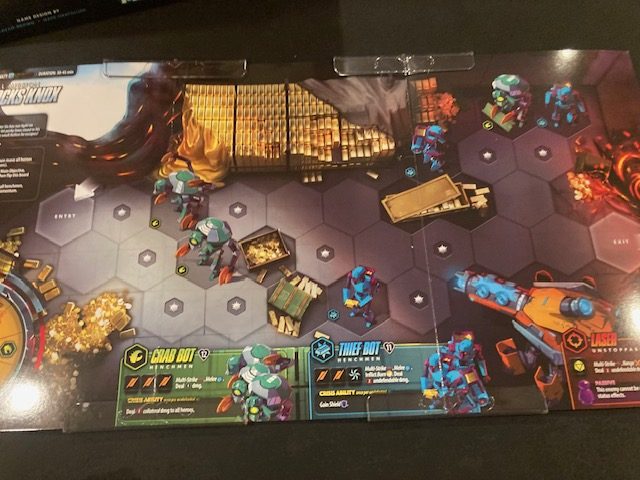
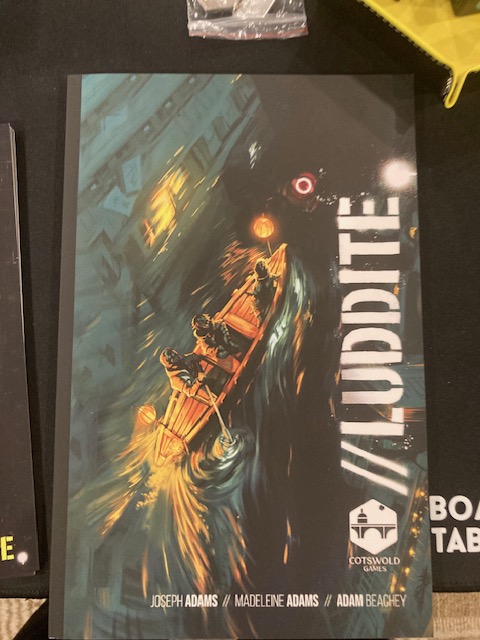
Luddite arrived at my house about a month or more ago, but I have been afraid to open it.  Why?  I mean Luddite was the #5 entry on my Top 10 Anticipated Cooperative Games of 2024!  I paid money and Kickstarted it!! Why was I worried?
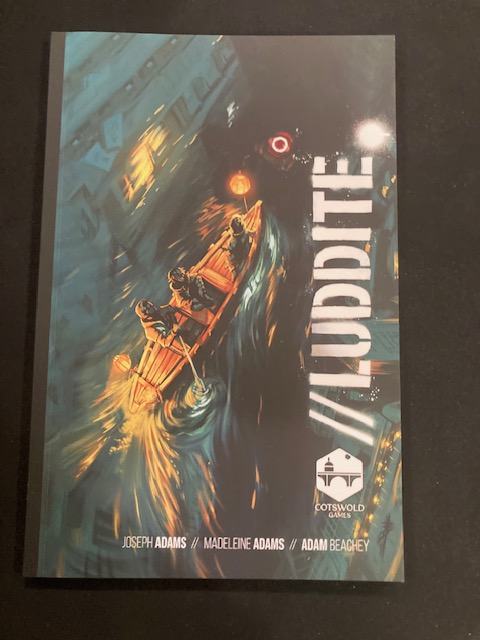
Luddite “looks” big because it has a graphic novel associated with it; there’s a lot of story here.  I was afraid I’d mentally have to prepare myself to embrace it.

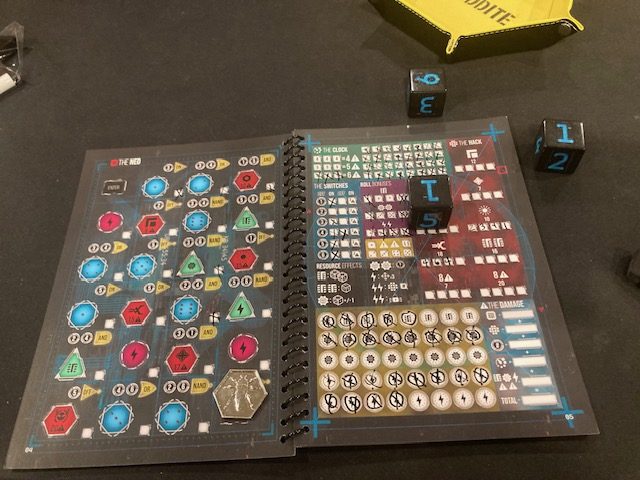
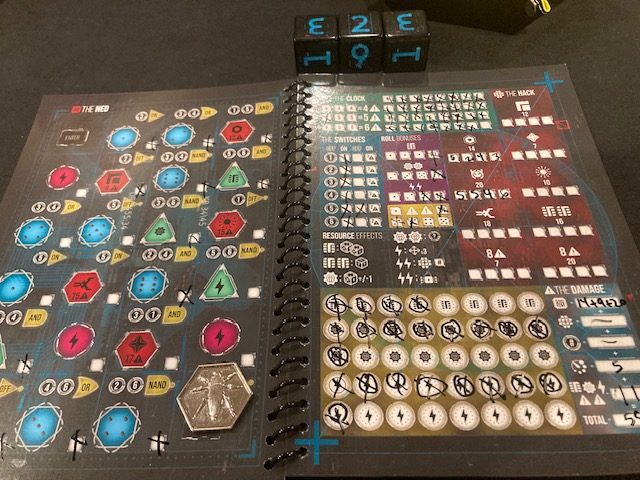
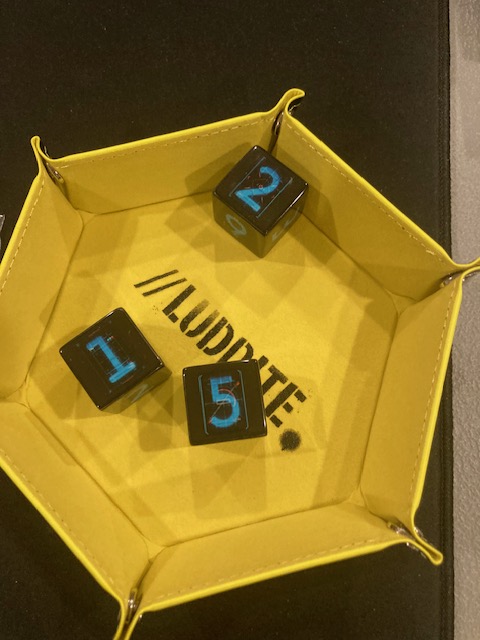
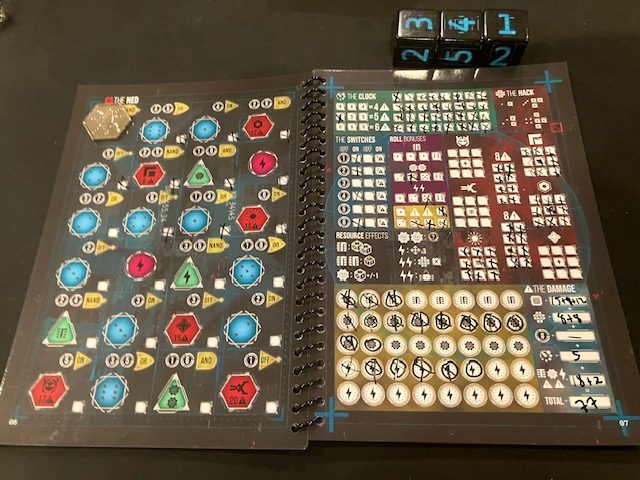
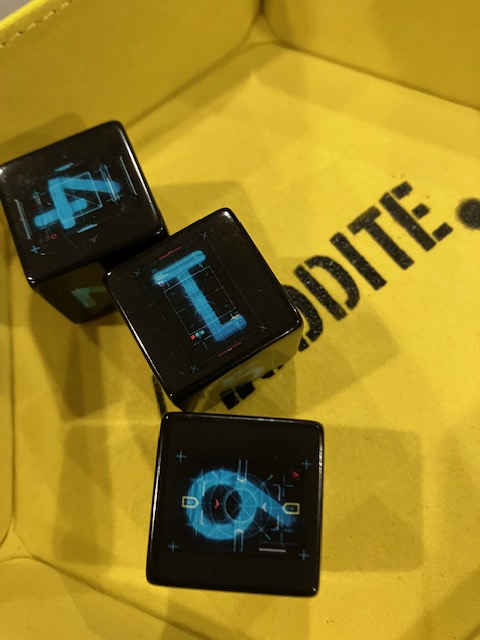
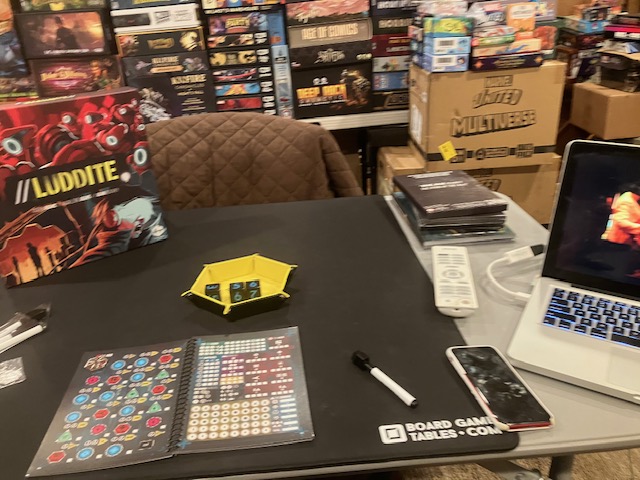
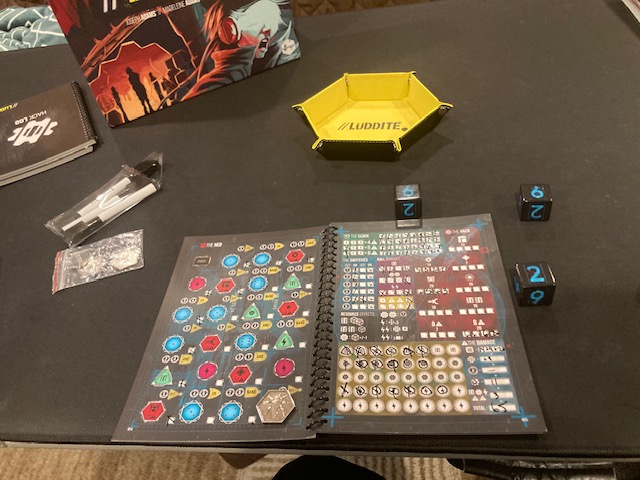
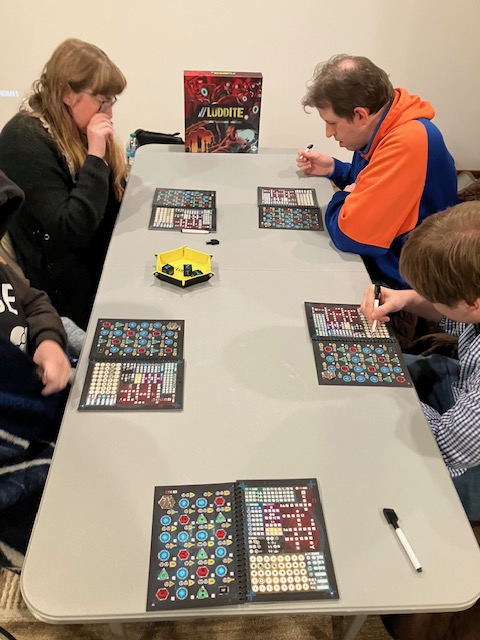
I don’t know why I worried!  At the end of the day, this is “just” a roll-and-write game!   You roll 3 dice, mark off spaces on your sheet above (See above) and try to score points (aka damage)! The base game is pretty straight-forward!

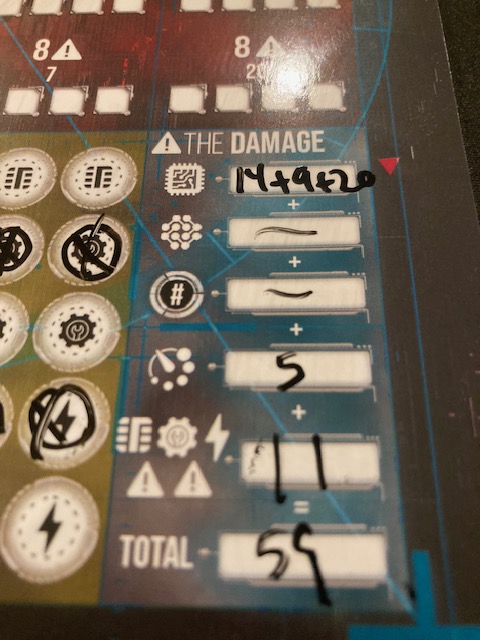
The object is to do enough damage to move to the next level! You need 60 at easy difficulty; see above as I miss by 1!  Heart-breaking!

In order to inflict the damage, you have to “move” the metal token (left side above; from the START to the END): if you don’t move that token, you can’t do any damage at all!  So, while trying to get “points” (aka, damage), you also have to make sure the token above moves!

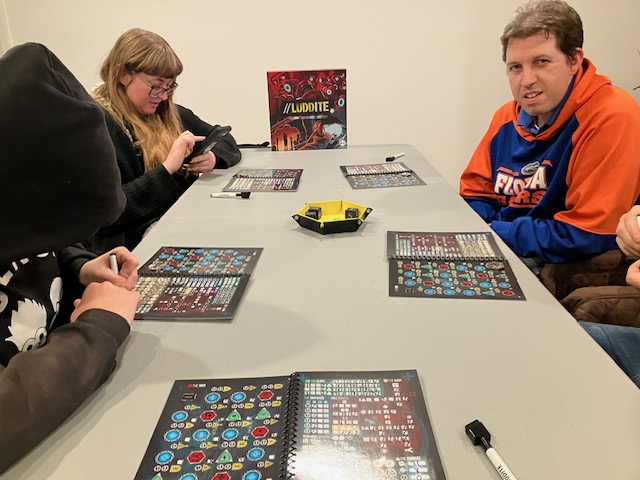
The game plays solo, cooperatively, and competitively.  The solo game is all about doing enough damage,  and the competitive game is “who can do the most damage to win”.   The cooperative game is really just multiplayer solitaire: take the scores of all players and average them to get a score; if that score is high enough, players collectively win!

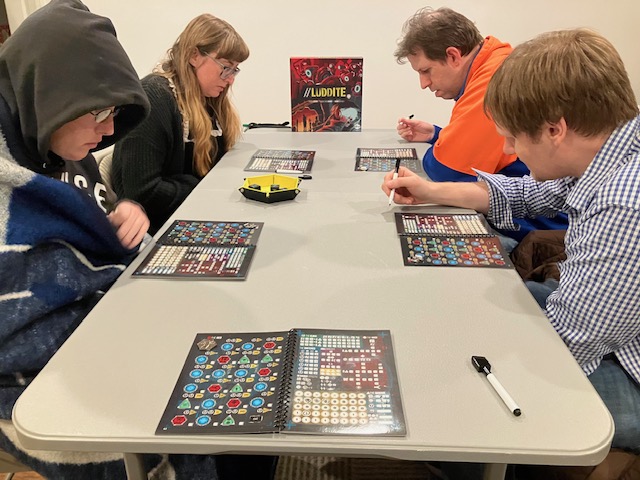
To be clear, there is NO cooperation in the cooperative game; each player just takes their own book and plays completely independently.  Players can’t help each other, they can’t share anything, they can’t use a dice on another players board … nothing.  This is as multiplayer solitaire as you can get.   If you want an experience where you are working with your friends, chatting, strategizing, working together, … this isn’t the game for you.  BUT if you have friends who are “suspicious” of cooperative games, or people who don’t like the cooperative games, this can still work for you! 

No one will tell you what to do, as everyone’s head is down and looking at their own board! See above!  And no one gets in anyone else’s board in any way!

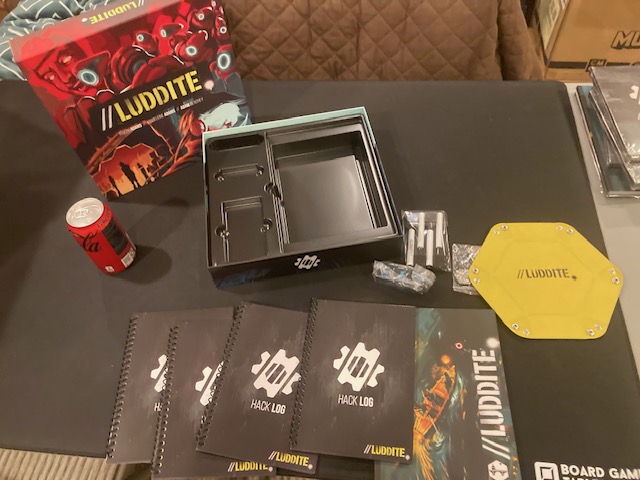
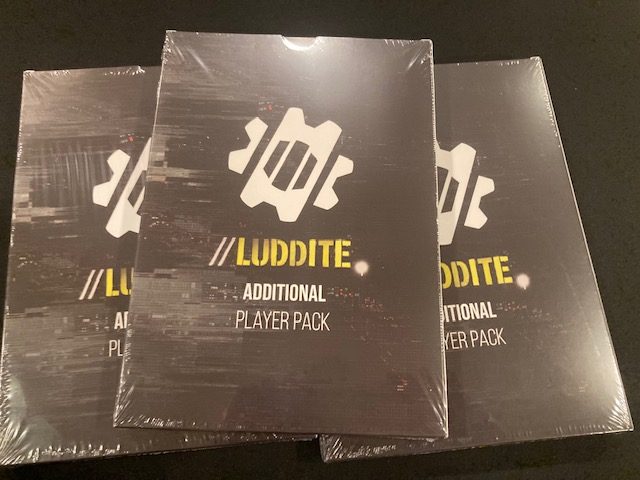
I made the mistake of getting 3 more “Additional Player Packs” (see above), but what this means is that 3 more people can play!    Basically, Luddite can scale to as many people as you want because there is no interaction between players!!  I am thinking of trying a 7-Player game of Luddite at RichieCon this year! (I have 4 packs in the base game and 3 packs from additional buys = 7 player boards!)

So, you can view this complete lack of player interaction as a good thing or bad thing, depending on the group you are playing with.

Solo Experience

If this was all there was to Luddite, there’s not much making it stand out, is there?  It’s a pretty good roll-and-write game for the solo player, and it’s a pretty good cooperative roll-and-write that scales to any number of players … even if there is no player interaction.

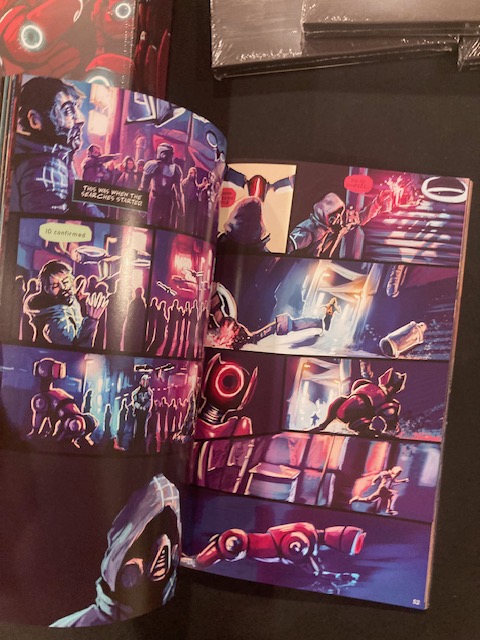
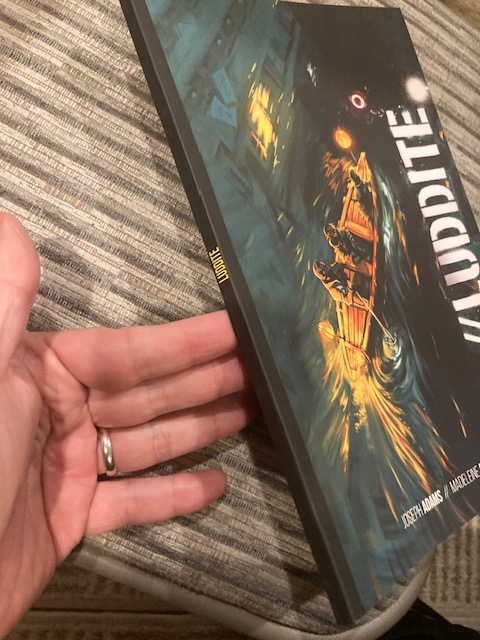
However, if you let it … this game can be an experience!  The Graphic Novel that comes with the game tells the story of some people who have been “made redundant” by AI and how they are fighting back!

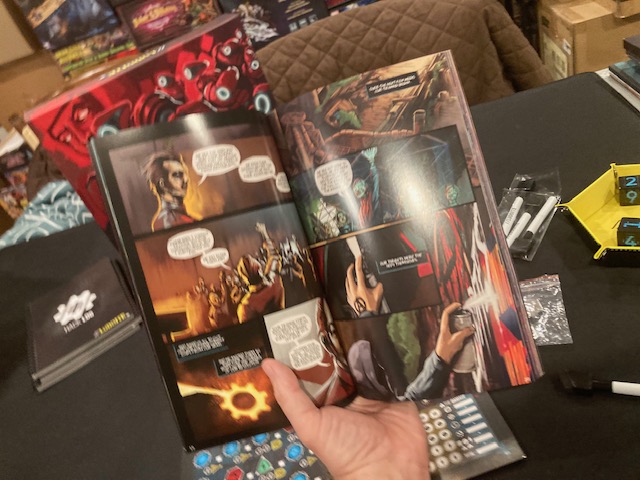
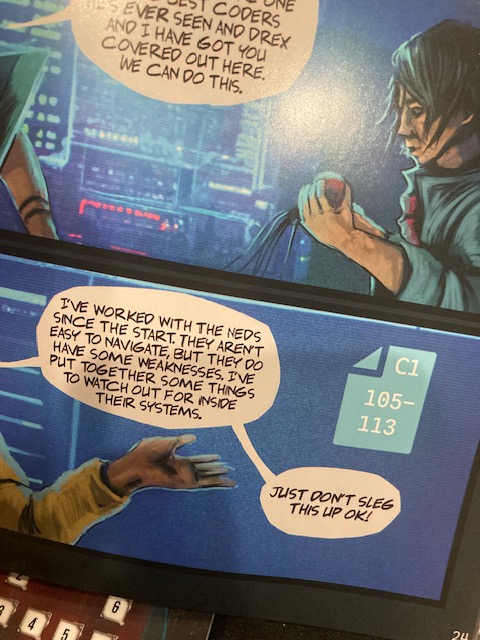
The Graphic Novel gives you a back-story, then at certain places, tells you what chapter/pages to turn to! See above!

This was more immersive than I expected.  If you let it, this game can feel very immersive.  For my solo experience, I read the graphic novel that came with the game …

… and each new game is a progression of the story, even if the boards look very similar. See above as I win (solo) chapter 3!

Somehow, it seems for a game named Luddite (Luddite: someone who eschews technology) … that you HAVE to read the physical graphic novel, right?

Cooperative Experience

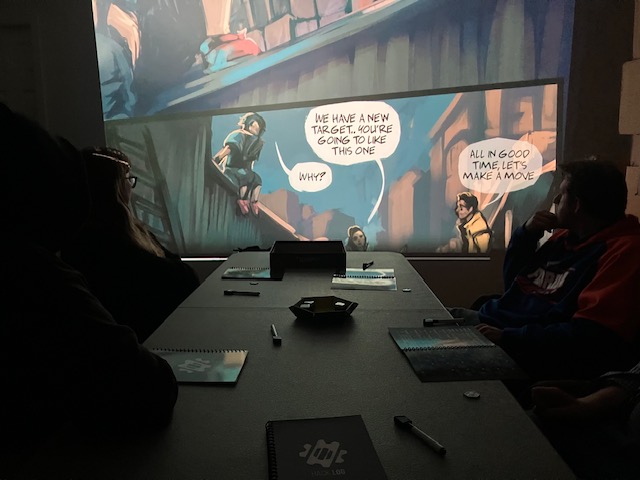
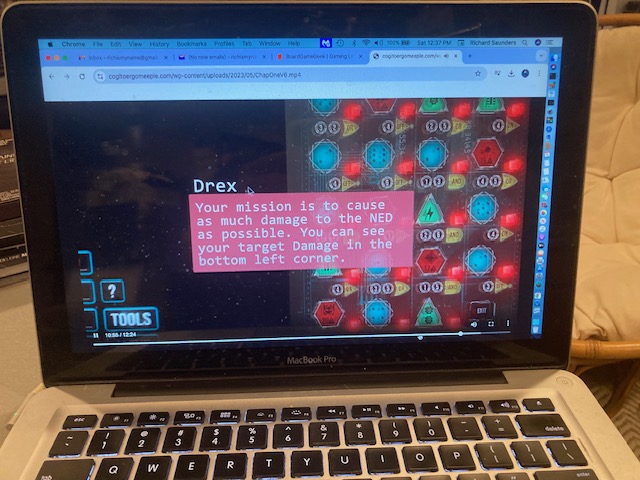
It turns out, the comic book is also online … in a video!  It has voice-acting, and shows the comic progressing!  See above!

For the cooperative game, it’s “harder” to enjoy the graphic novel in its physical form … you have to pass it around, or wait for others to read it, or read over people’s shoulders.  But, if you go to the Cotswold Group website, they have the entire graphic novel online! (And even a little tutorial)

So, even though it’s seem against the spirit of a gamed named Luddite, the cooperative experience is made so much better by watching the comics-turned-to-videos!  Arguably, that experience engulfs you and all your friends into the game!  It’s a shared story you are all experiencing!

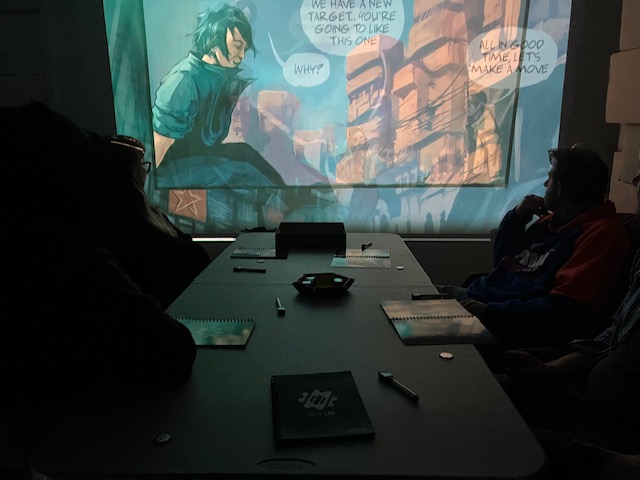
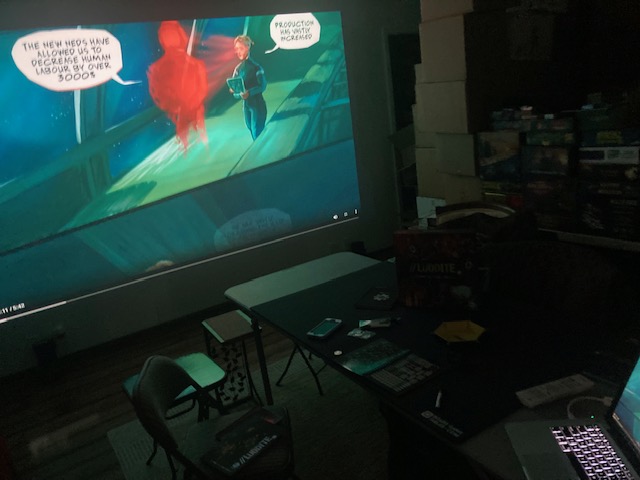
To be fair, it helps the experience if you can show the video on a big screen or TV: see above. It feels more immersive that way.

House Rule/Hack (Get it? Hack? In a game about Hacking?)

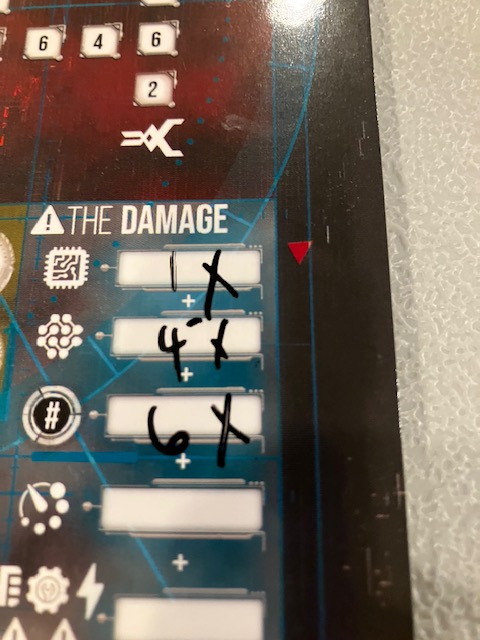
The dice are a shared resource everyone shares in the cooperative game: they are rolled and placed in the middle for everyone to see!  But sometimes, in the heat of playing, you may forget which dice you used for which activity.  Surprisingly, there’s no place on the sheet to “notate” which dice we used !!

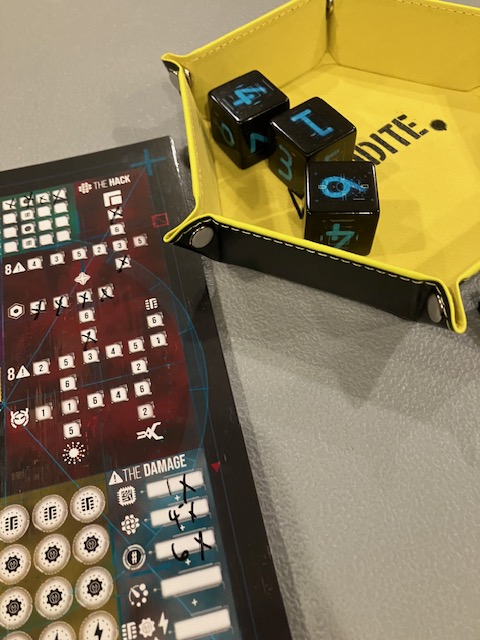
Since you don’t compute your damage until the very end of the game,  you can use the Damage section!  

This little house rule/hack made it easier to play the game cooperatively, as you could all independently note the dice rolled and how/when/where you used them.  

Conclusion

If you let Luddite be an experience that carries you along in its story (either as a graphic novel or comic-turned-video), I think this can be a really fun and immersive experience.

A reductionist might say “Luddite just a roll-and-write” …  but at least it’s a good one. I really enjoyed all my plays of this.   The base game is pretty straightforward and quick, and it has lots of meaningful decisions.

The cooperative game has literally no interaction between players, which can be a curse or a blessing, depending on the group you are playing with.   But, because of that lack of interaction, this game can scale to pretty much any number … as long as you have the boards!

This is a good solo roll-and-write (7/10), and a pretty good cooperative roll-and-write (6.5/10 or 7/10, depending on what you want), but it’s the story and experience that elevates this just enough that I would recommend you try this: 7.5/10.

I still think it’s hilarious that a game called Luddite has such a great online presence.  I mean, a game called Luddite should ONLY have the physical version, right?

Appendix: Binding

I normally despise this kind of binding, especially on something you need to hold open! See my review of War Story, Freedom Five, and Forests of Admiron if you don’t believe me!  For a graphic novel, it’s “okay” since you are just reading it and holding it open. See below.

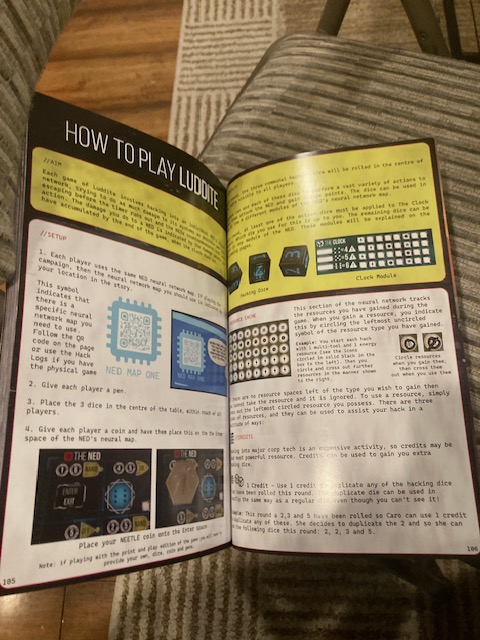
Where this binding fails is when you have to read the directions in the back of the book!  See below as I try to wedge the book into the edge so it’ll stay open!  I hate this kind of binding for rulebooks!

See above as I attempt to hold it open!!!   Honestly, the rules should have been in a second standalone book that could be lain flat and open.  As a graphic novel, this kind of binding is “fine”.  But the rules portion of the graphic novel (in the same book, this really made me grumpy.  


A Comparison of Three Methods For Flattening Your Board Games

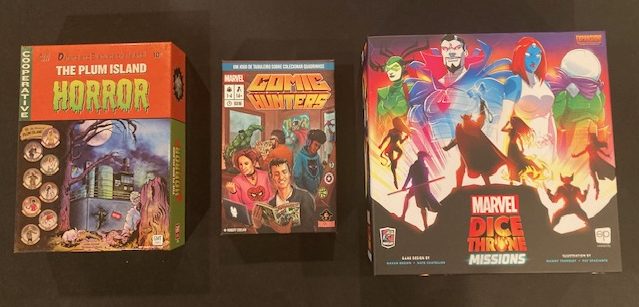
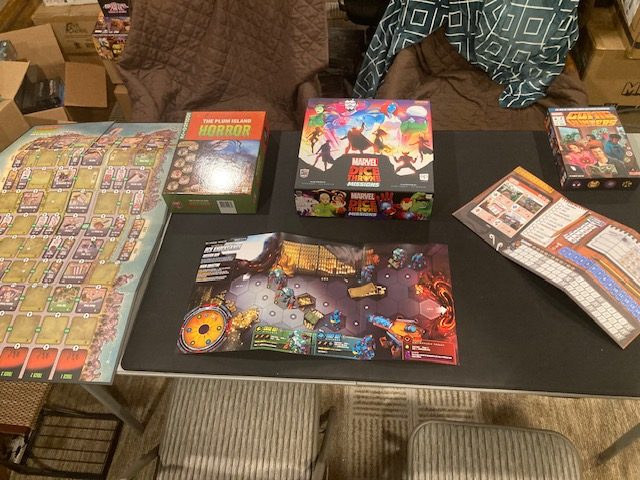
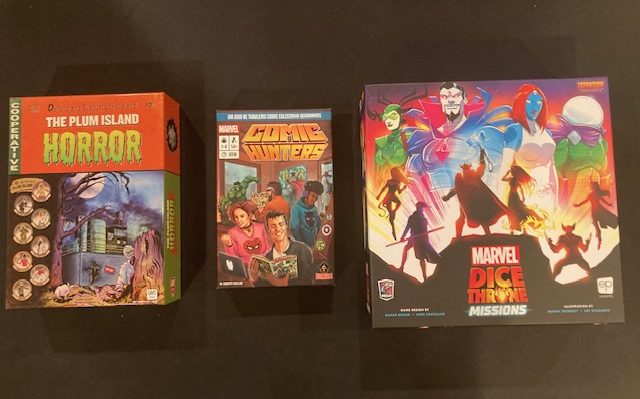
What do the three games above have in common?

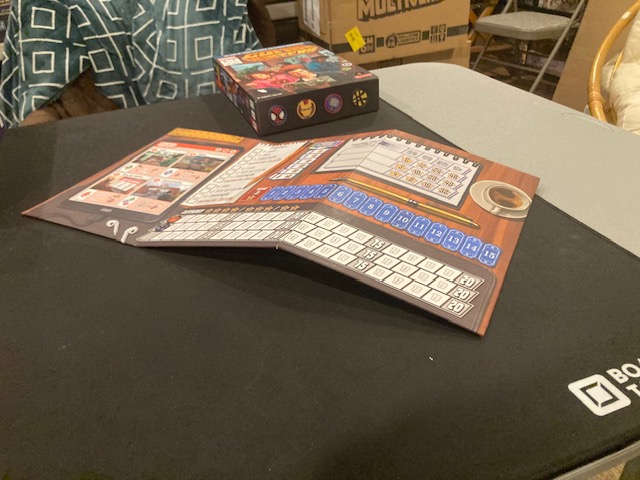
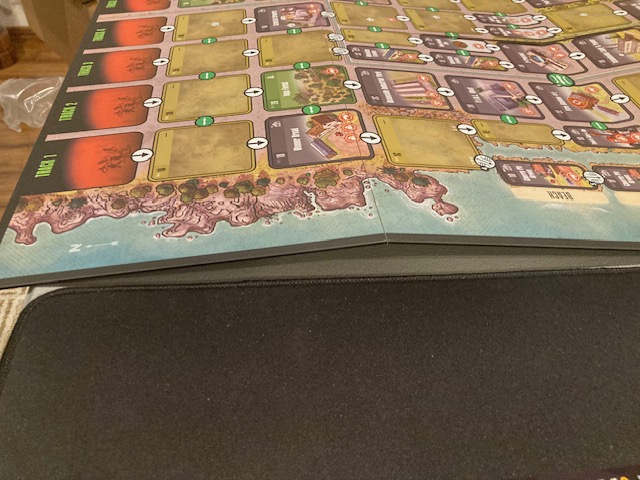
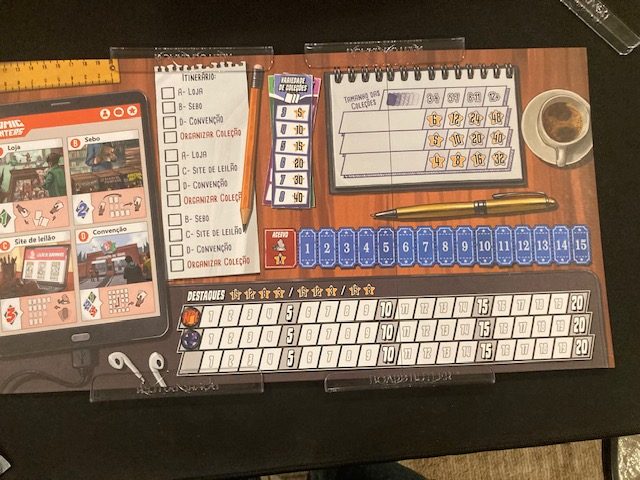
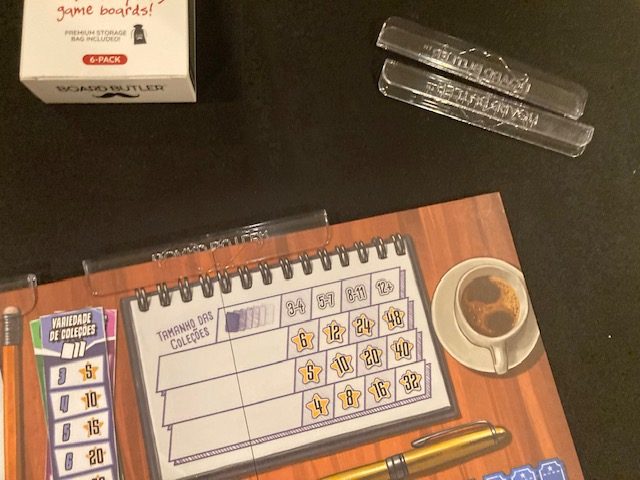
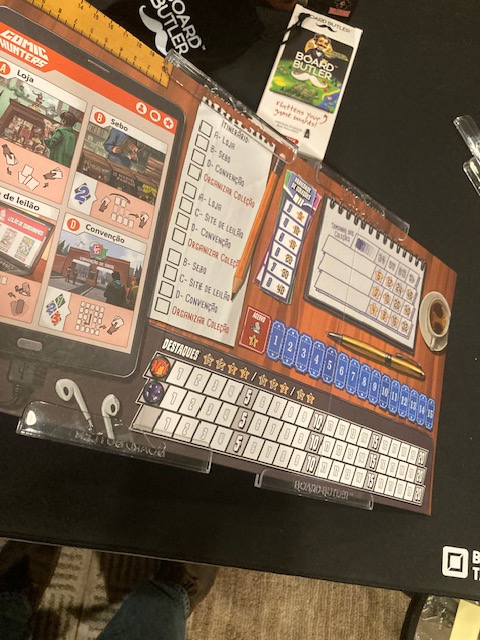
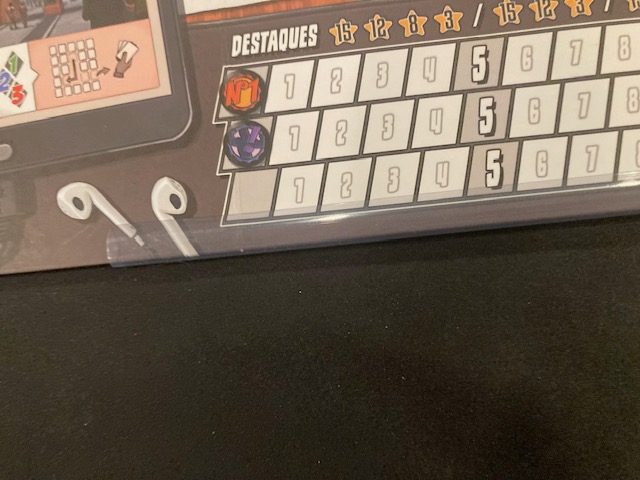
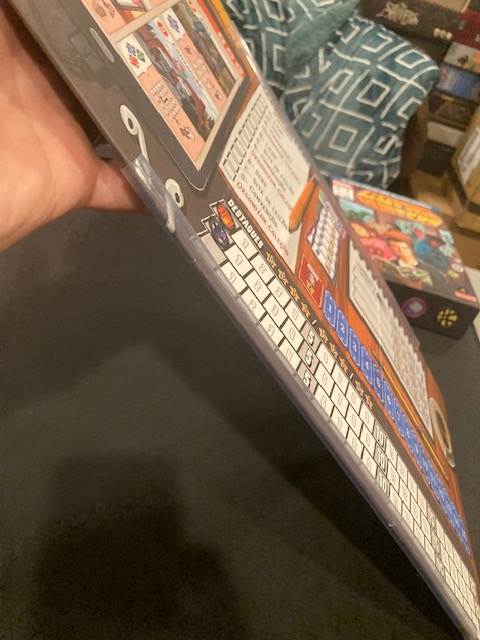
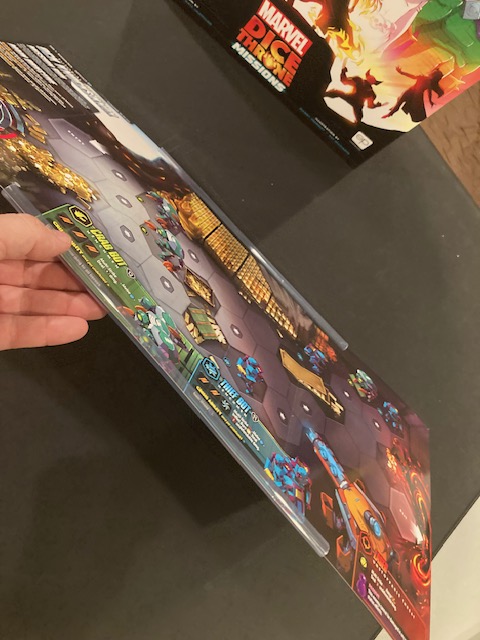
If you said “They are all cooperative games“, well, you are mostly correct! (Comic Hunters isn’t cooperative by default, but there is an expansion that makes it cooperative! See here). This is a place where we talk about cooperative games, so that’s a good guess.  But there’s something else they all have in common: none of their boards sit flat! See above and below!

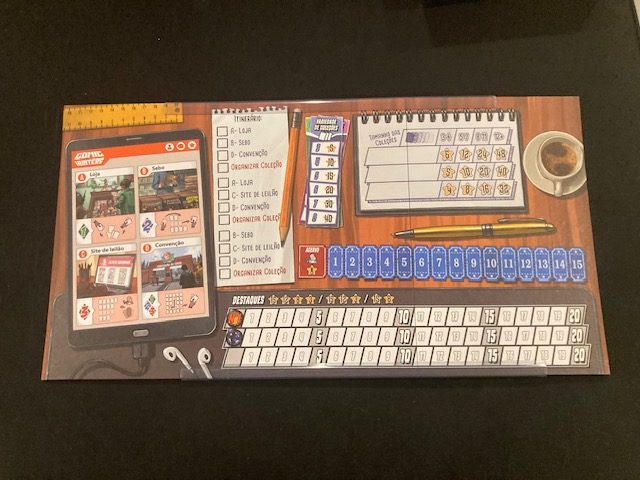
You can really see it on Comic Hunters (above): that board just does NOT want to lay flat!

It’s weird, we never thought too much about boards not being flat enough,  but we encountered this problem a number of times in the last few years: Comic Hunters, Plum Island Horror, and Dice Throne: Missions!  These games really emphasized that sometimes a game board needs some flattening.

We’ll take a look at three different (cooperative) games and three different solutions to this problem!  The games of interest all have boards that don’t lay flat!  And they are all different sizes! See above!

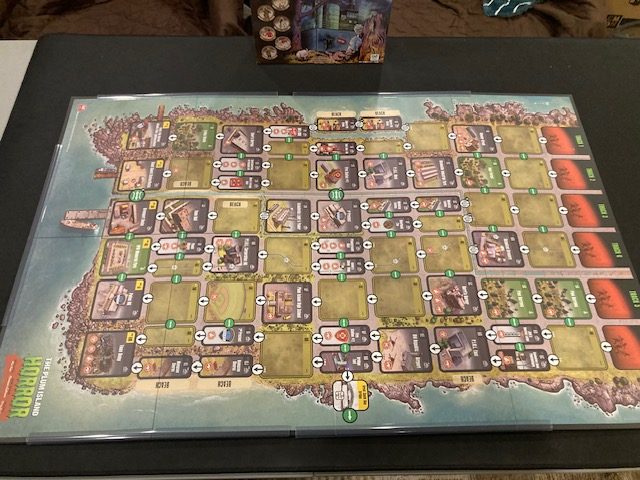
  1. Plum Island Horror:  Very large 8-fold board
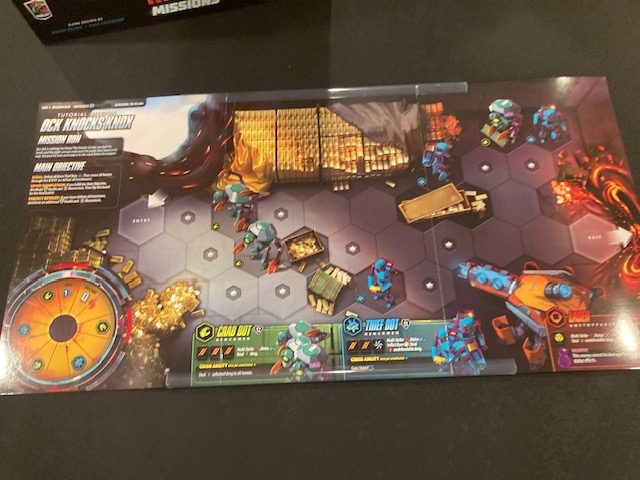
  2. Dice Throne: Missions:  Medium size 3-fold laminated sheets
  3. Comic Hunters: smaller 3-fold board

Solution 1: Board Butler

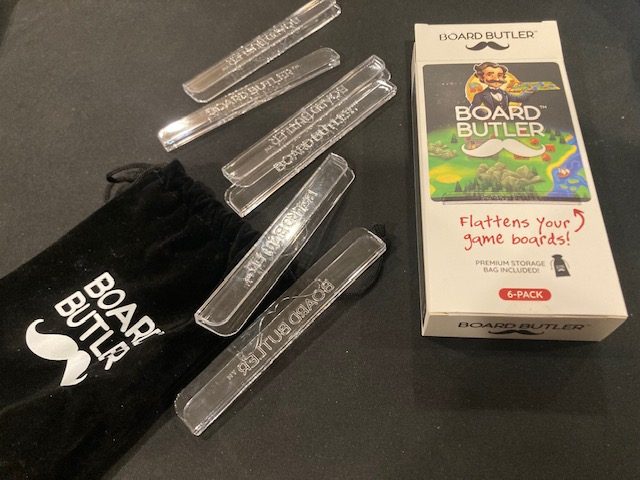
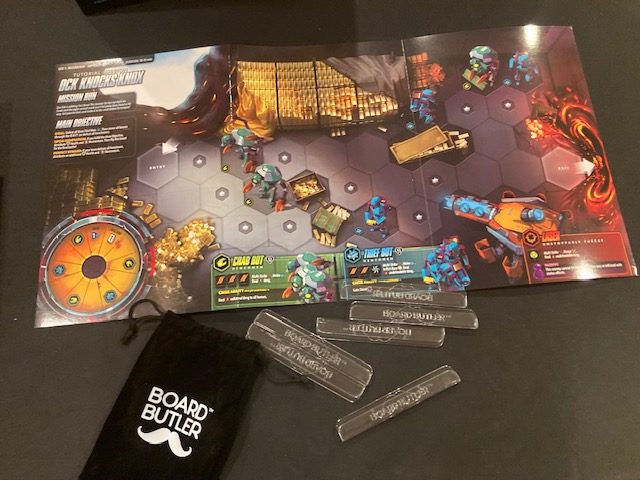
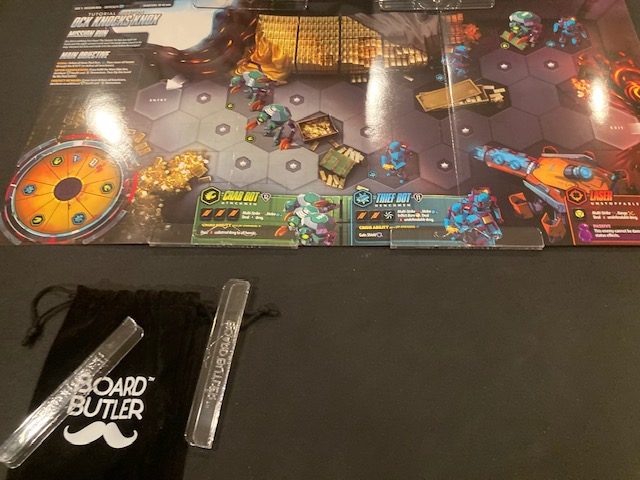
The Board Butler is a product specifically designed for the problem of boards-that-don’t-lay-flat.  I have seen advertisements on BGG, so I knew this existed.  I ordered it from their web site and it arrived within a week.  It was like $19.99 + taxes and some shipping (but for some reason I got free shipping).

These are basically little plastic piece you put at the edges to force the board flat.

See Comic Hunters with The Board Butler above.  It only needs 4 of the 6 pieces.

It works pretty well and it was easy to put on: no issues on Comic Hunters.

The Board Butler pieces are small enough that I need 4 pieces for the Dice Throne:Missions board: one at each edge.

See above.  The clear nature makes them relatively uninvasive.

They work well and keep the board flat.  Arguably they could obscure the text at the very bottom, but they don’t seem to.

Finally, let’s look at Plum Island Horror!

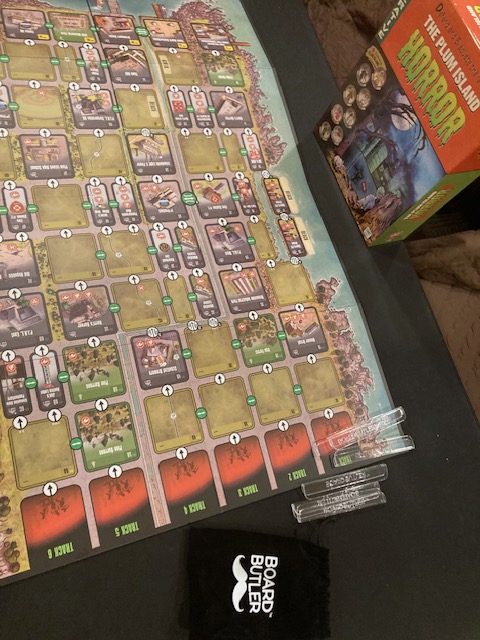
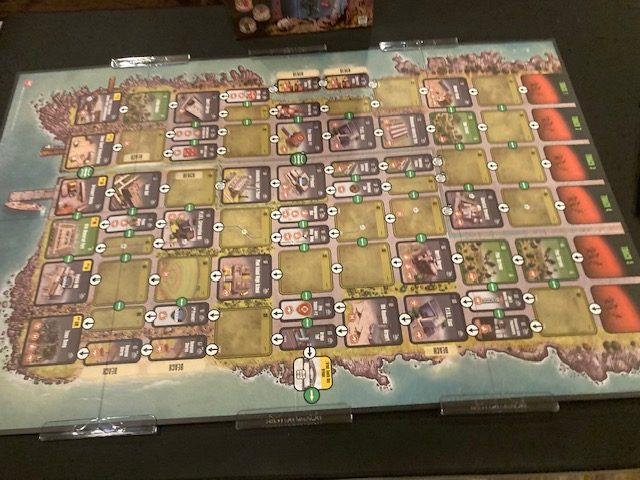
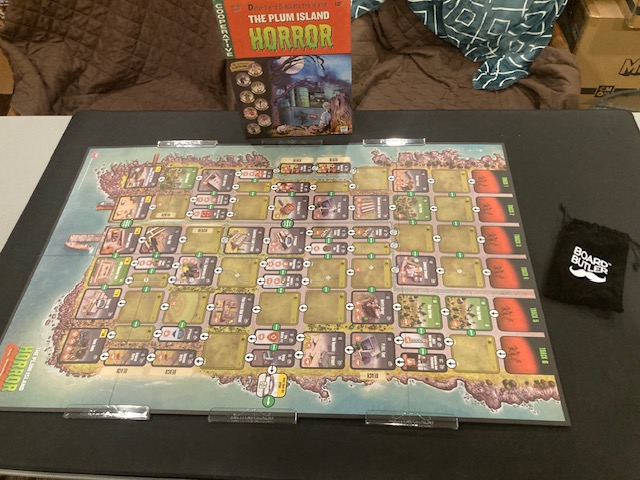
For Plum Island Horror, we have to use all 6 of the pieces, which means I can’t put them on the long ends.  This doesn’t strictly need another 2 pieces, but it might have been nice.

The Board Butler pieces work well: they hold the board down, and they don’t get in the way.

Basically, The Board Butler worked pretty well on all three games.  The weakest was Dice Throne: Missions because the Missions boards are thin laminated boards, so they didn’t fit as tight.  They fit securely (but not too tight) on Comic Hunters and Plum Island Horror.

Solution 2: Report Binding Bar

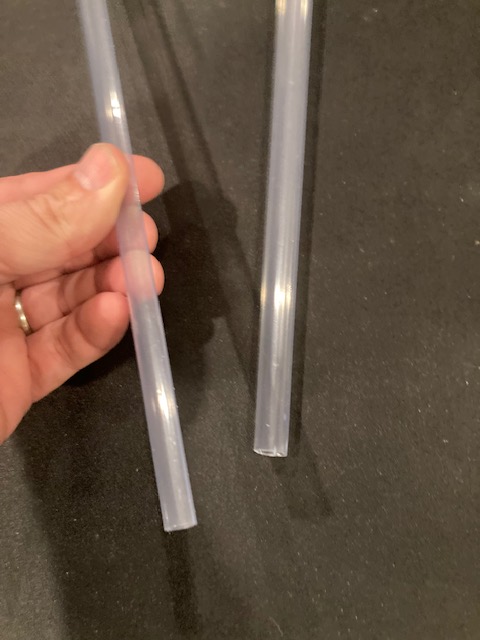
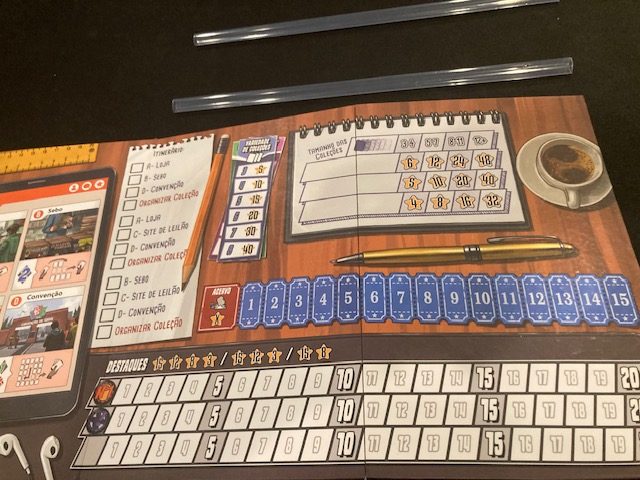
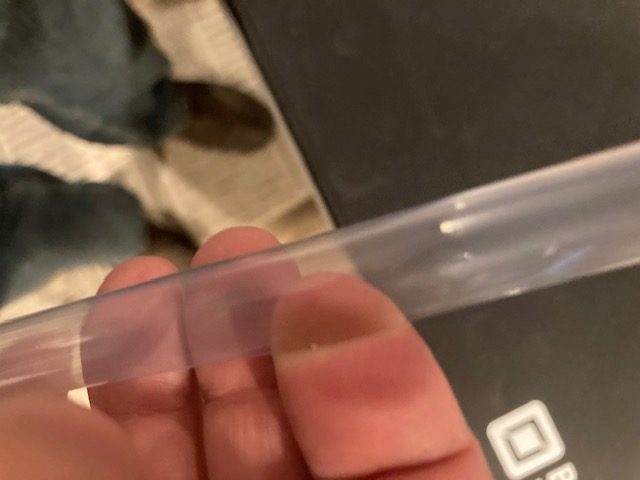
These Report Binding Bars are those little plastic sliders you put onto plastic report sheets.  See above and below.

I found a thread on BoardGameGeek that recommended these: see thread here.  You can order them here:  I got 30 of them for $13.99 plus taxes and shipping.  See above.

On Comic Hunters, they work great!  They are actually being long enough to cover both edges!

The only real complaint is that they are tight.  I was “worried” that by sliding them on, that they would TEAR the board!  They did not, but I was also very careful!  If you go with this solution, you may want to use your finger to “force” the bar open so it’s less tight:

See above as I jam my finger in there to “loosen” it up.

On Dice Throne: Missions, these are the best by far!  They hold the board tight, and they even cover both edges with one piece!  See above! I only needed 2 of the 30 pieces to hold this board together!

These just slip on easily (no chance of tearing since the boards are laminated) and hold the boards stiff and flat.

Finally, we use these for Plum Island Horror. We need 4 of them to hold the board down: see above.   Again, like Comic Hunters, these were a little scary to use because it “felt like” they might tear the board as I put them on.  So, I was very careful.

In all three cases, these held the board down and flat very tightly.  They were the cheapest by far, at 30 for $13.99, so you could easily share the cost with friends.  You probably only need to 6 each!  Even with with Plum Island Horror, you could get by with only 4!!

UPDATE: After sliding these on again and again and again on the Dice Throne: Missions boards, they started to show “slide marks”.  That is worrisome.

Solution 3: Giant Plastic Overlay

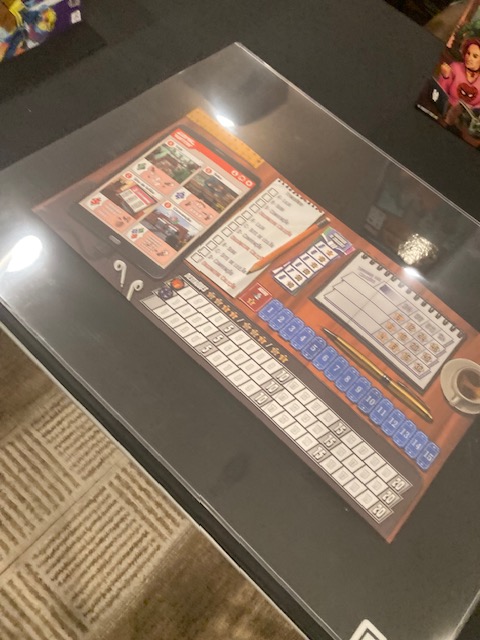
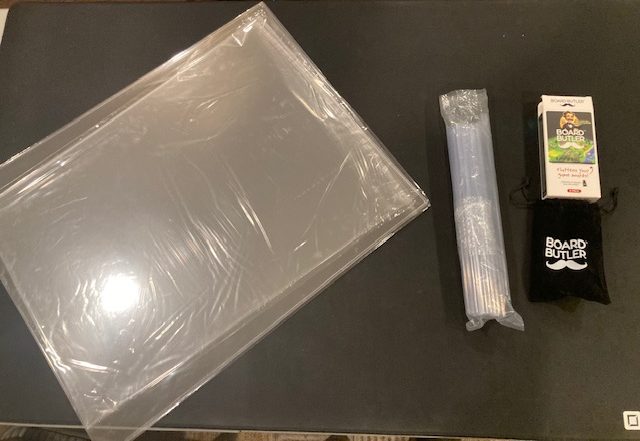
From the same thread on BGG where we got the Report Binding Bar, we also found a link for these giant pieces of plastic you can just “plop” on the board and force it down!  See Amazon link here! You get TWO pieces, but it’s $37.99 plus shipping and tax.

You just put it over your board game and “smoosh” it flat!

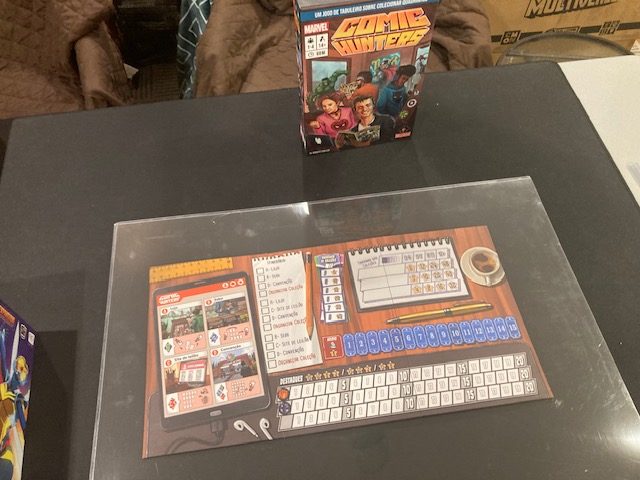
It turns out it also has a pocket, so if your game fits, you can just put the board inside! See above as Comic Hunters fits!

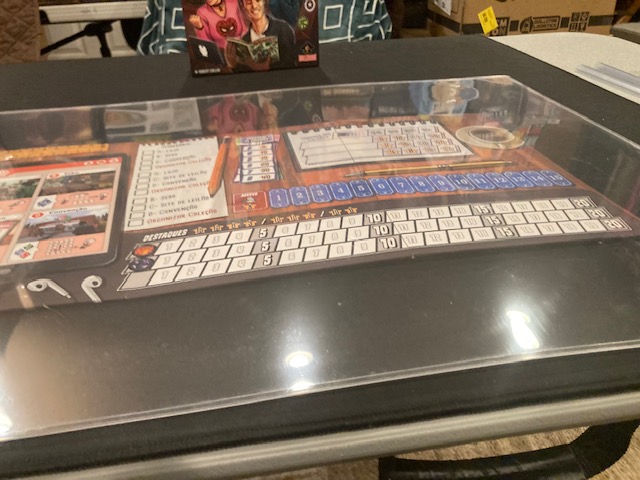
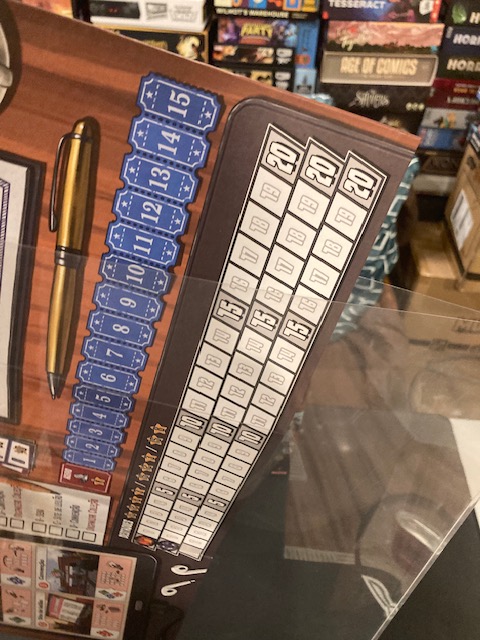
It works, it keeps Comic Hunters flat, but the plastic overlay is a bit distracting.  It’s especially shiny.

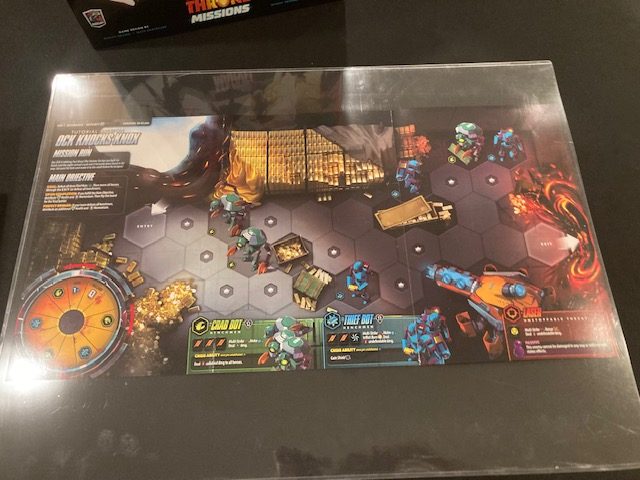
The Dice Throne: Missions boards fit in almost perfectly and look good and flat.  See above.

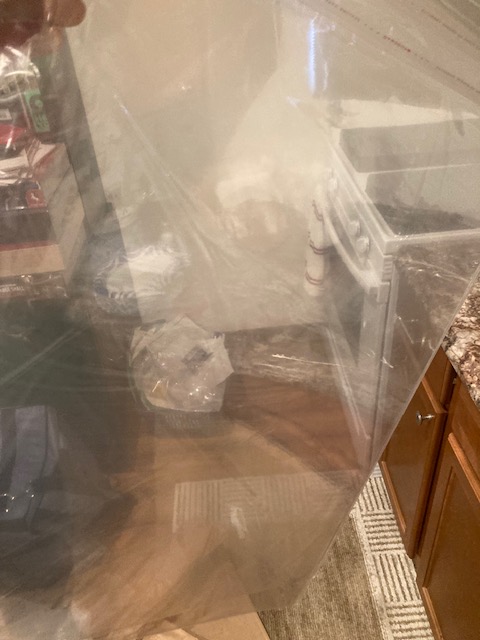
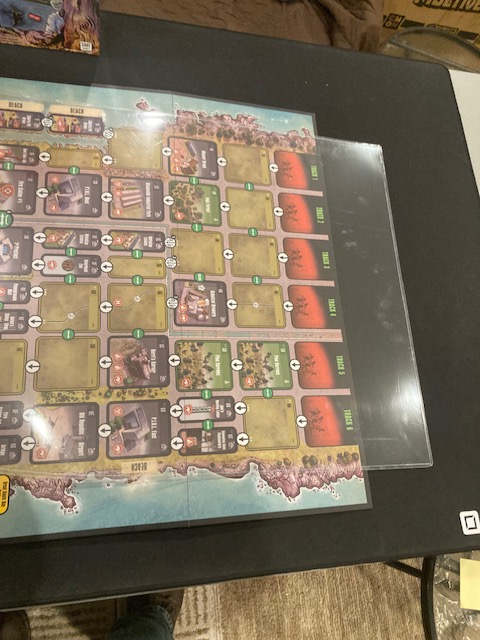
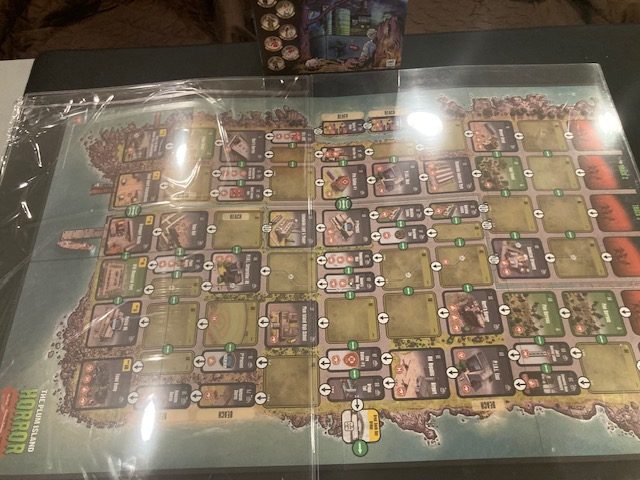
Plum Island Horror is WAAAY to big for a single overlay.  Luckily, when you order this, you get TWO sheets.  Two sheets work:

The problem is you CANNOT fit this board  inside the envelope (see above) , so they simply have to lay two of them on top.  Since the Plum Island Horror board is so “hefty”, even this solution had trouble keeping the board flat.

In general, this was the worst solution. It was the hardest to see, because it was so reflective, and it was by far the most expensive.  And, for the largest board, it required TWO Sheets.

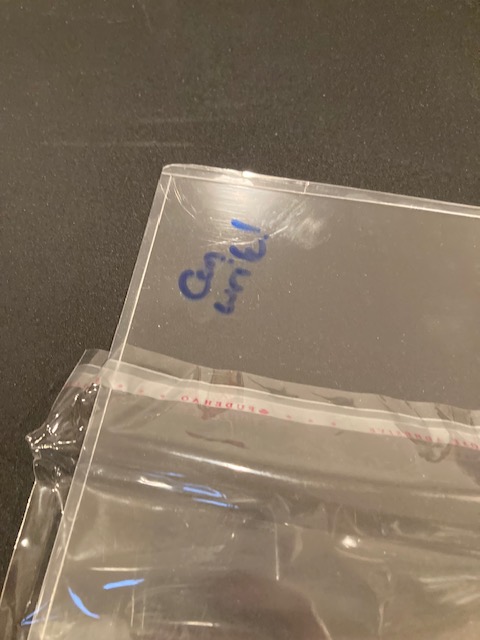
The only advantage of this solution is that you can WRITE ON THE PLASTIC with a dry-erase marker!!  See above.  If you want to “annotate” your boards, at least you can do that with the overlays.

Conclusion

Which solution you gravitate towards depends on what you want!  The cheapest by far was the Report Binding Bar: it worked on all three boards well, except that it was tight on the thicker boards.  You could order 30 of them and split them between your friends for $13.99!    The best overall solution was The Board Butler; it worked on all boards well, even if it wasn’t “quite as tight” for the Dice Throne Missions board.  The Board Butler was high-quality and I never felt like it was too tight.  The Overlay was probably the weakest solution: it was the most expensive (as you needed two overlays for larger boards like Plum Island Horror), it was very reflective, and it is harder to store!  The Overlay, however, did had the unique advantage that you could write on it if you needed to!

If I were only getting something to fix the Dice Throne: Missions boards, I might get the Report Binding Bars. If I wanted something more general, I would get the Board Butler.  If I wanted to annotate my board with dry-erase markers or keep water off it, I might consider the overlay to help keep my board flat.  It’s up to you.

UPDATE: After seeing the Report Binding Bars starts to leave skid marks on the Dice Throne: Missions board, I think I strongly prefer the Board Butler over the binding bar, even for Missions.