Top 10 Cooperative Cat Games (Board and Card Games)

Yes, yes. We are really doing this: we are doing a a Top 10 Cooperative Cat Games! To be clear, these are cooperative board or card games that have an upfront and distinct cat theme to them! Some games have cats in them (like Cyber Pet Quest from a few weeks ago), but those games aren’t “cat-centric”. The 10 games below are all cooperative games where the cats are the main focus … and that’s just how the cats like it!

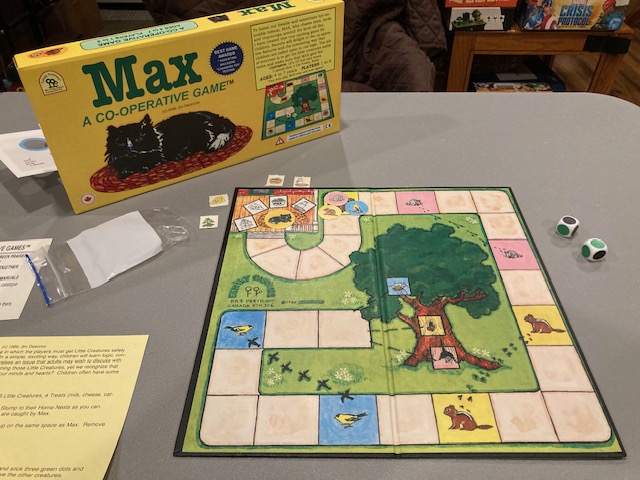
10. Max

IMG_5596

Players: 1-8
Ages: 4 to 7 Years old
Time: 10 Minutes
Supports Solo?  Yes
Type: Cooperative Roll-And-Move

It’s kind of hard to recommend this, as it’s a game meant for very very young players: the recommended age range for Max is 4-7 years old. 

IMG_5598

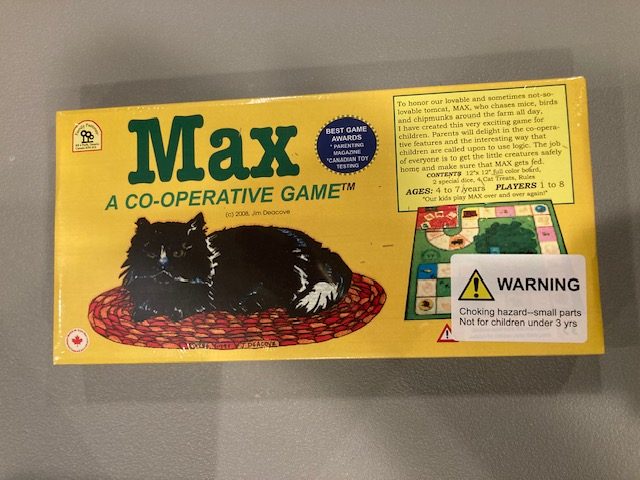
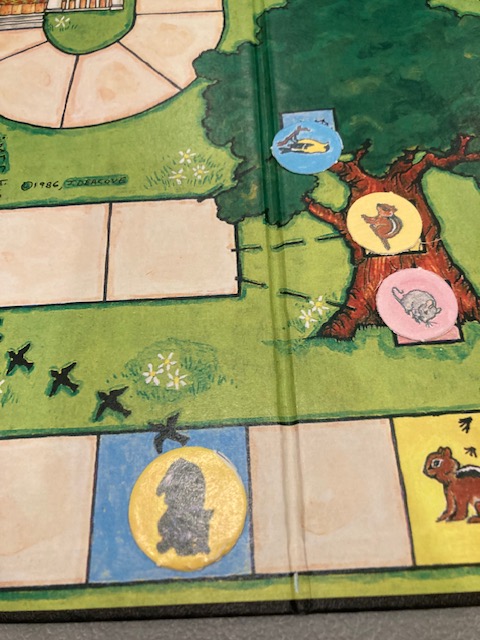
And the production isn’t great: see above.

IMG_5600

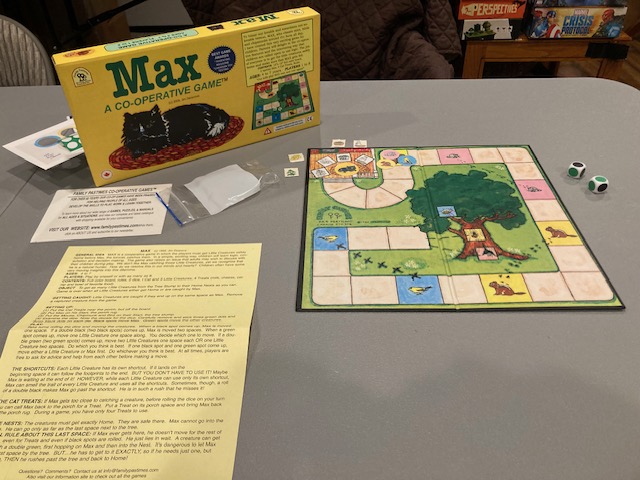
But, this may be just what you are looking for to give your younger cat lover!  It’s a cooperative game for young kids, and that right there makes it worth mentioning! (even if it’s not the most beautiful game in the world)

IMG_5602

Trying to save the creatures from Max is a fun little theme that is surprisingly charming.   Be aware: this is a roll-and-move game, the production isn’t great, it’s meant for young kids, and the game is very light.  But, it’s kind of charming as a cooperative cat game, so it makes our list.

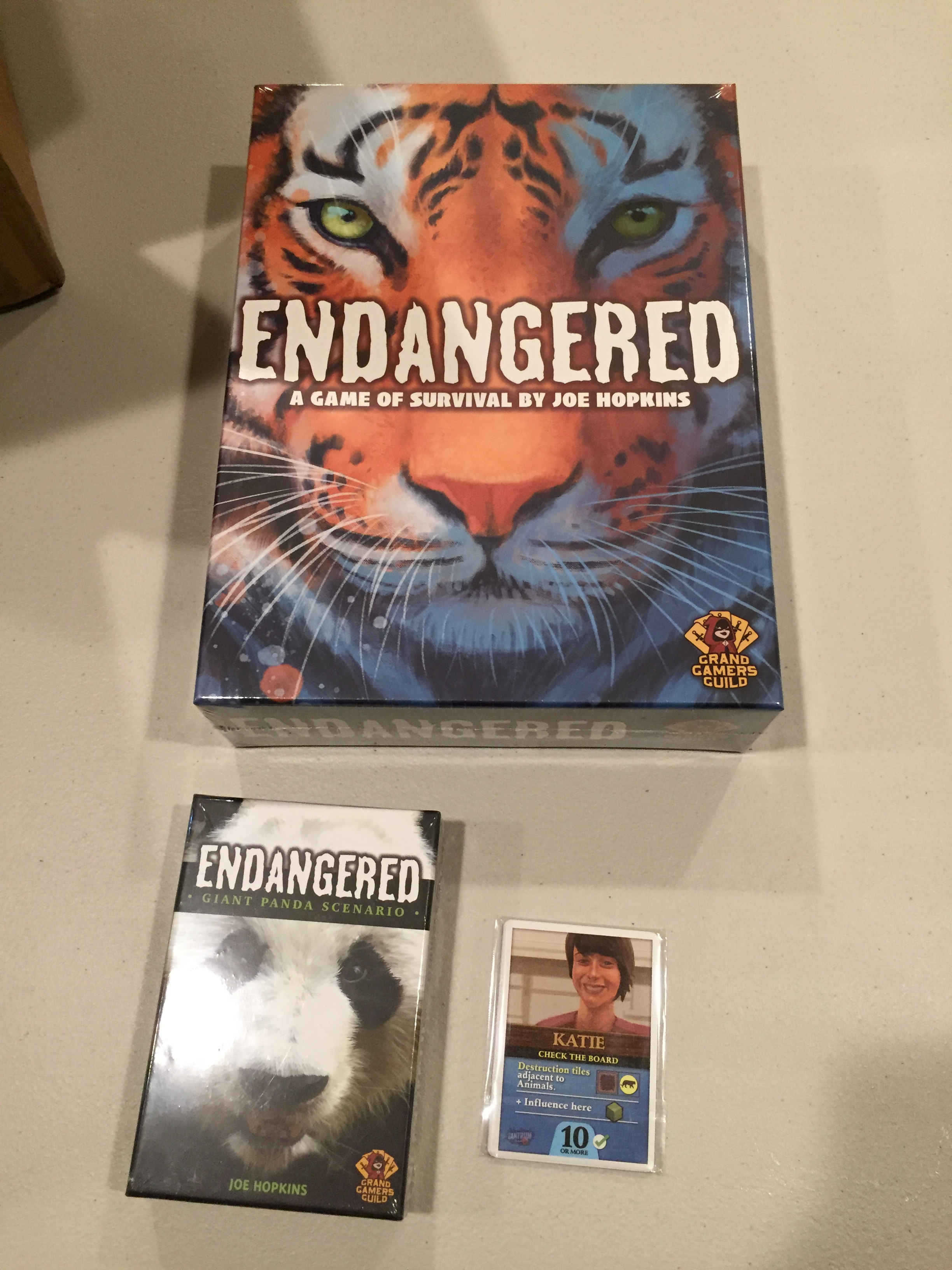
9. Endangered
IMG_5588

Players: 1-5
Ages: 10+ Years old
Time: 60 Minutes
Supports Solo?  Yes
Type: Cooperative Dice Placement Game

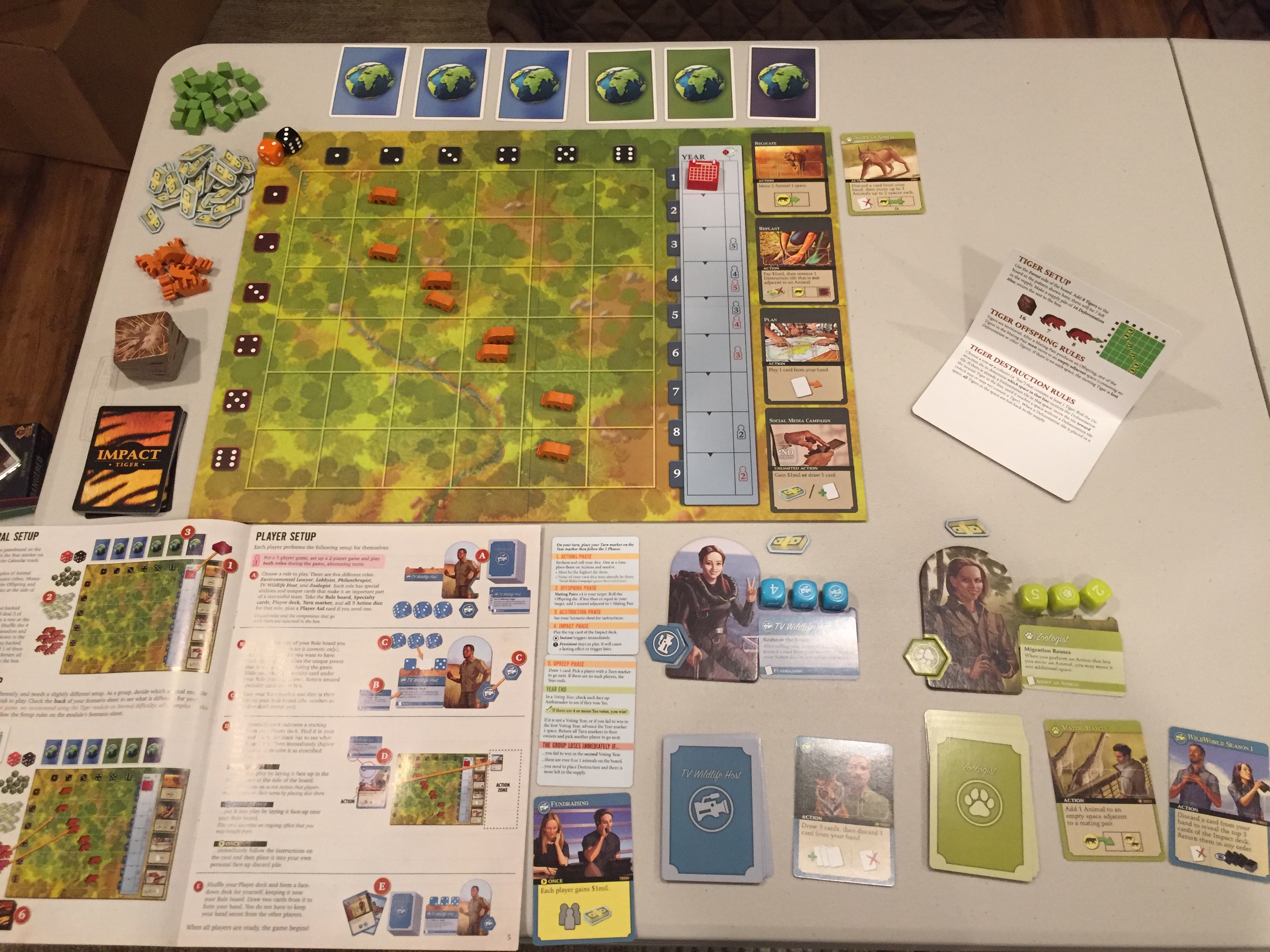
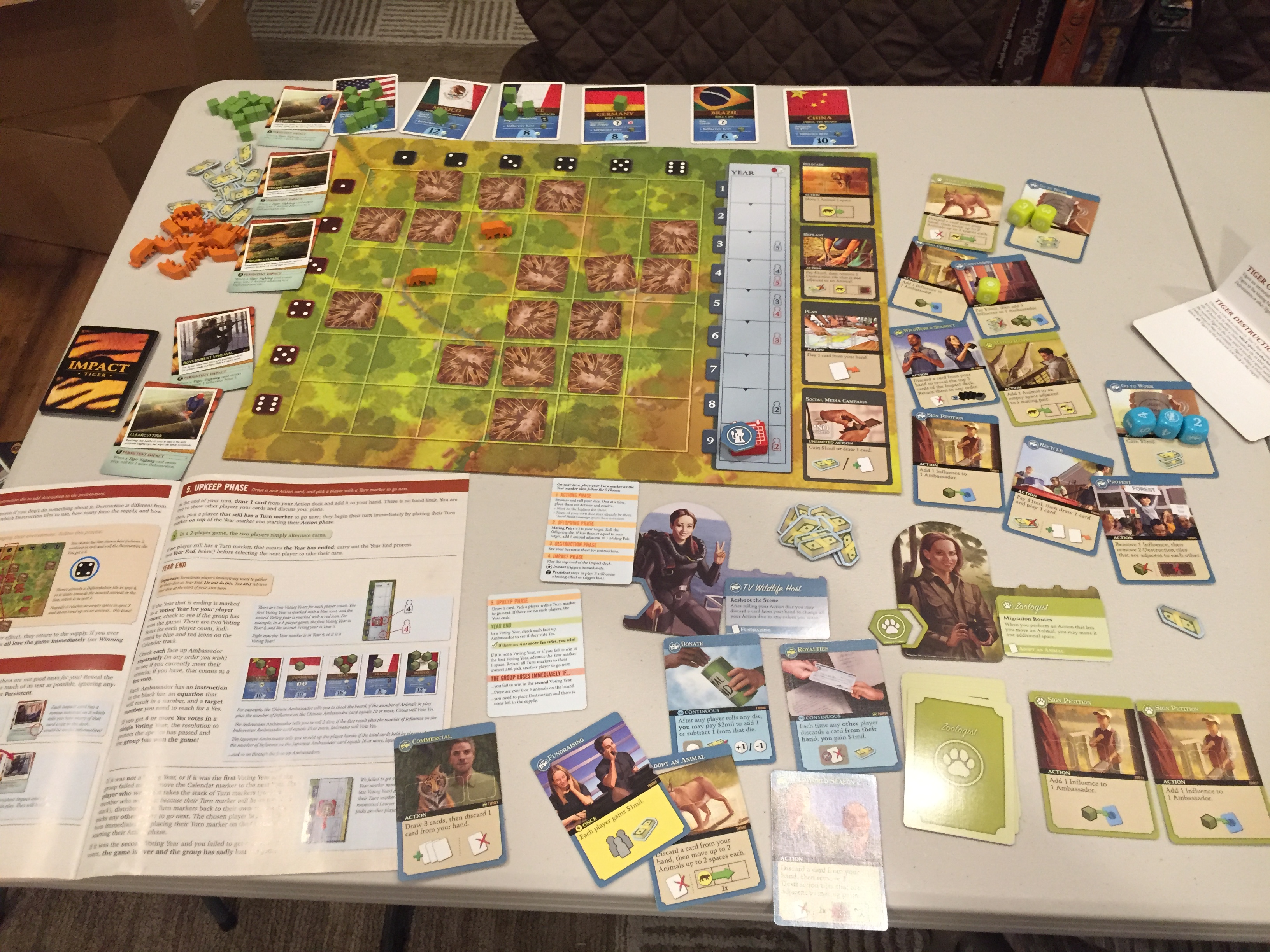
This is a cooperative dice placement where players play in together in multiple realms: diplomacy in the UN, conservation in the jungles, and gaining resources in the real world!

IMG_5619

This only made out #9 because just a few scenarios are about cats (Tigers in the base game and Jaguars in the expansion),  but they are constantly making more and more expansions all the time!  And during those scenarios, the cats take center stage!

IMG_5626
A losing first game!

This has some really interesting ideas; the cooperative dice-placement mechanic is very well implemented!

Take a look at our review of Endangered to see if this might be for you.

8. Magical Kitties Save The Day!

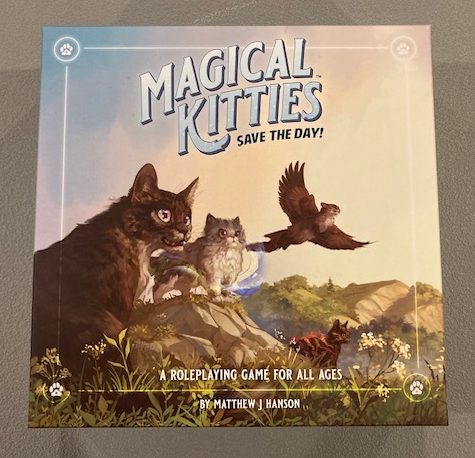
IMG_8198

Players: 2-7
Ages: 6+ Years old
Time: 60-120 Minutes
Supports Solo?  Sort of, there’s a solo Adventure that comes with the game to teach it
Type: Cooperative Role Playing Game (RPG)

So, I am in the camp that views RPGs as cooperative games; I view the Dungeon Master/Game Master (DM/GM) as a shepherd for herding cats through an adventure (analogy chosen on purpose).  The players are cooperating to get the best outcome for the group, and the GM is just trying to help the players. I know this GM view isn’t shared by everyone, but the vibe of this particular RPG is certainly very cooperative.

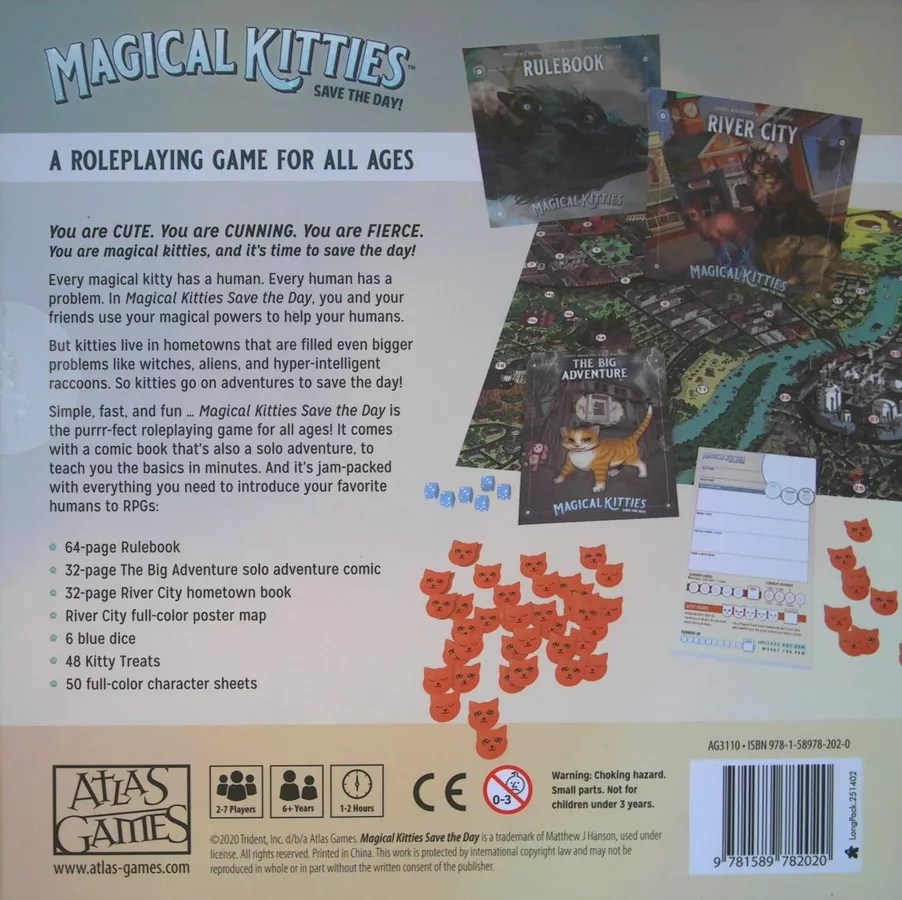
magickittiesback

Players plays as cats going on adventures to save the day … that sounds like a cooperative game to me!  This is a fun and goofy cooperative game that will require a GM to run it.

The solo comic book that comes with for teaching the game is pretty awesome!

7. Cat Crimes

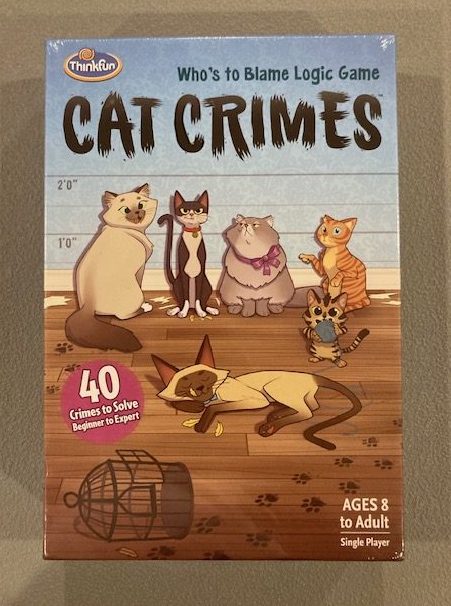
IMG_5583

Players: 1+
Ages: 8 to Adult
Time: 15-30 Minutes
Supports Solo?  Yes, solo first! Cooperative by group
Type: Cooperative Logic Puzzles

Cat Crimes is more of a solo logic puzzle than a game per se, but you can play it cooperatively by having all players work together as a group to solve the puzzles! 

IMG_5588

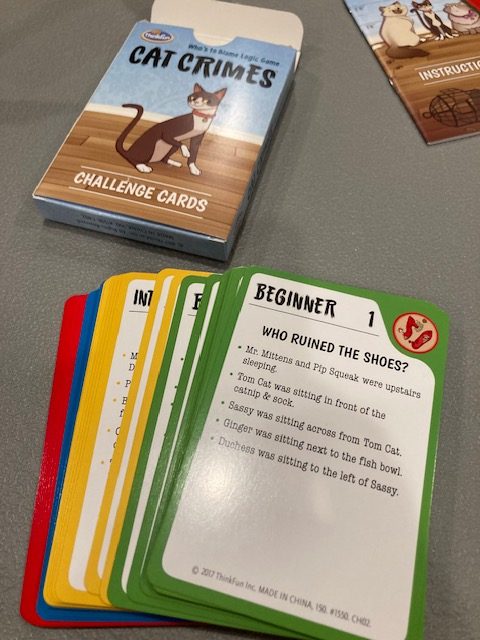
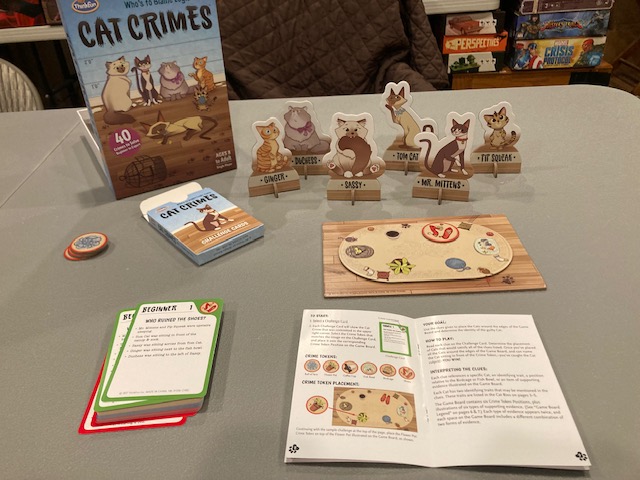
Player(s) take a challenge card (from Beginner to Expert: see above) and try to solve the puzzle!  Who Ruined The Shoes?

IMG_5591

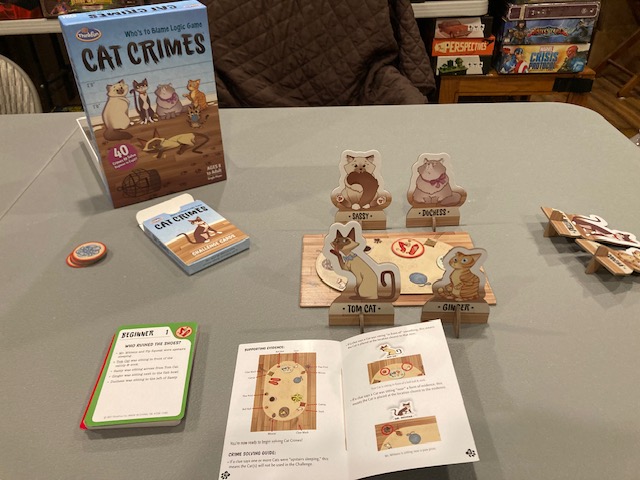
Players use the hints on the card to deduce, via logic only, the order of the cats around the table!

IMG_5592

Once the cats are placed around the table correctly, that pinpoints the culprit! See above as Duchess ruined the shoes!!

This is a fun little logic game where the cats are cute: the theme helps keep it from taking itself too seriously. But the puzzles are whatever challenge your group is up for!

6. Space Cats Fight Fascism

IMG_7292

Players: 2-4 
Ages: 13+
Time: 45-60 Minutes
Supports Solo?  No  (although you can play solo via 2-handed solo)
Type: Cooperative Dice and Card Management Game

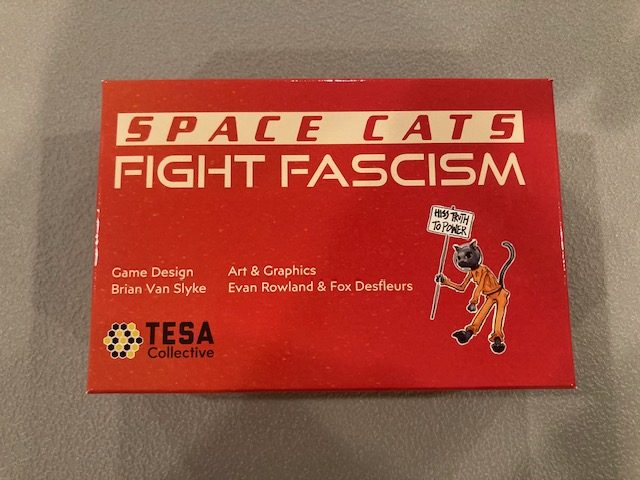
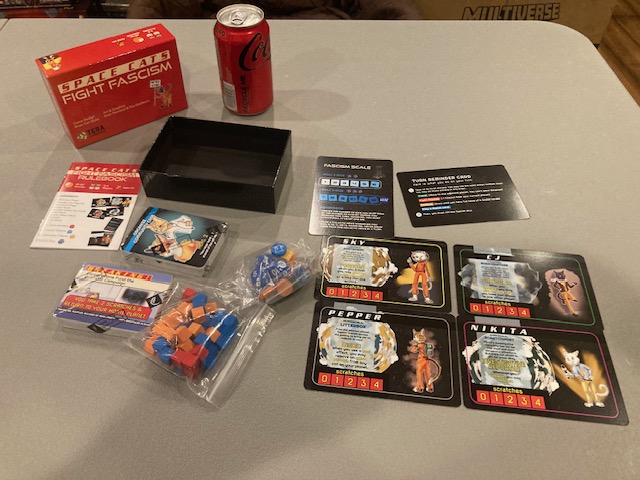
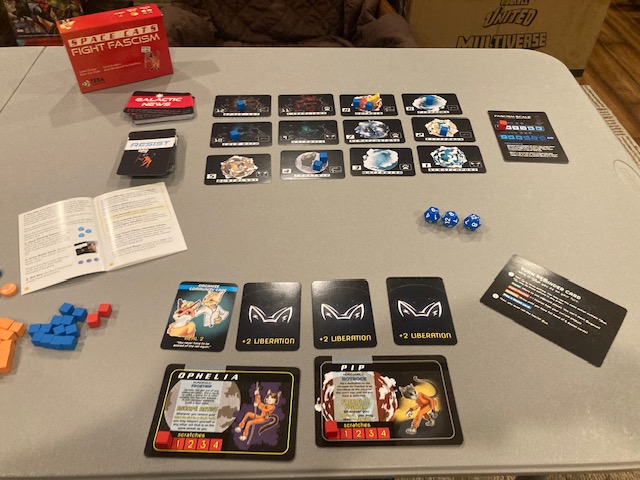
This little cat game came out of nowhere for us: it’s from a very small publisher (TESA) and it really doesn’t have a lot of buzz around it.

IMG_7296

The components are a little wonky and the art is a little wonky.  It’s a pretty small game.

IMG_7310

But this little game is surprisingly fun! It has a Pandemic feel as cats fly around the galaxy trying to stop facism (removing cubes like Pandemic).  Space Cats Fight Fascism isn’t really political (despite the name); it’s really just a surprisingly cute cooperative game with its own “vibe”.  The cat theme works surprisingly well, considering this game could be just an abstract, but somehow the cats in this game give it its own flavor, its own soul, and its own sense of humor. 

5. Cat Rescue

IMG_0549

Players: 1-4
Ages: 8+
Time: 15 Minutes
Supports Solo?  Yes
Type: Cooperative Tile Placement/Tableau Management Game

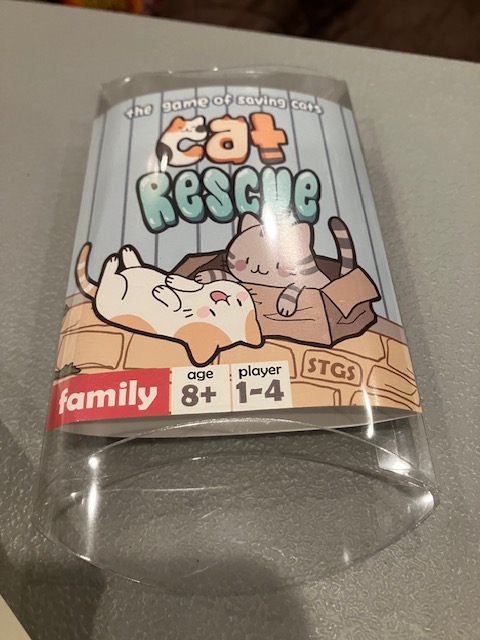
Cat Rescue is a very cute game that was on Kickstarter, but it’s actually incredibly hard to find now.  I ended up finding the original blister pack version (see above).

IMG_0545

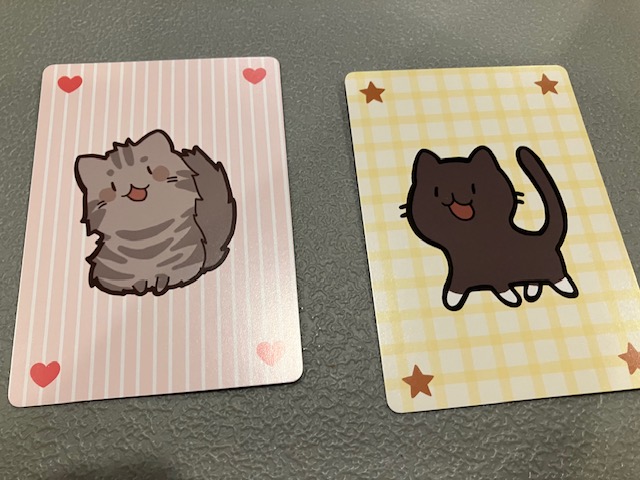
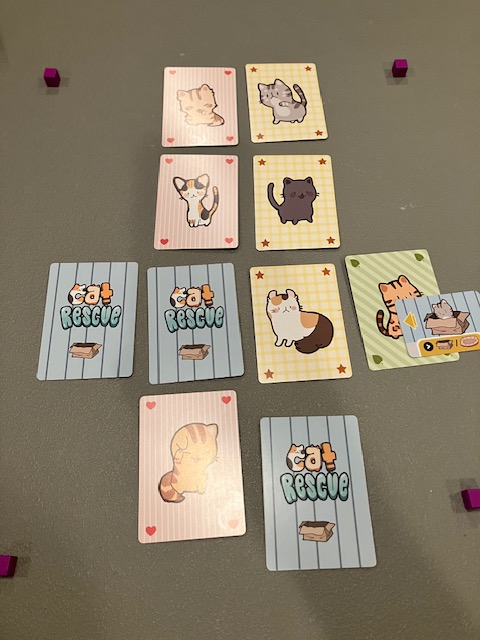
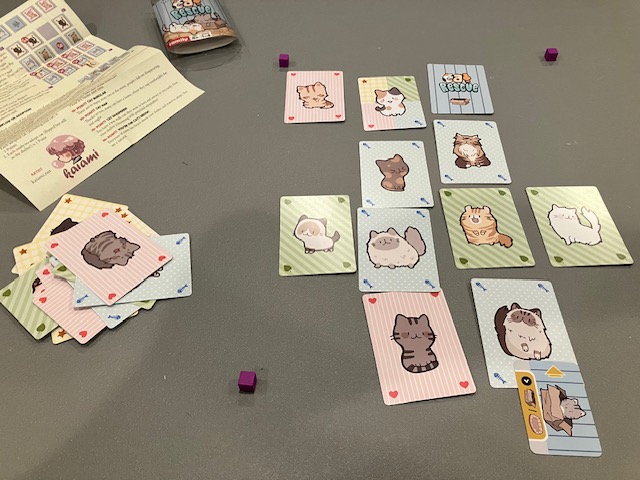
Players put some very cute cats in a 4×4 grid (see above and below).

IMG_0547

The main mechanic is that you “push” cats along a row or column, trying to push a cat that’s “ready for adoption” (flipped) out of the grid.  You continue until you run out of cards and then score how many you saved!

IMG_0548

It’s very cute, simple to explain, and easy to play.  Cat Rescue is sort of a cross between a tile placement game and a tableau building game.  It is hard to find, but there is hope for a reprint.

UPDATE: As of right now, March 30th, 2025, there is a Kickstarter coming in Spring 2025! See information here!  Thanks to Lon for pointing this out!

4. Run Run Run!

IMG_7037

Players: 1-4
Ages: 8+
Time: 30 Minutes
Supports Solo? Yes, minimal rule changes
Type: Cooperative Tile-Laying Game

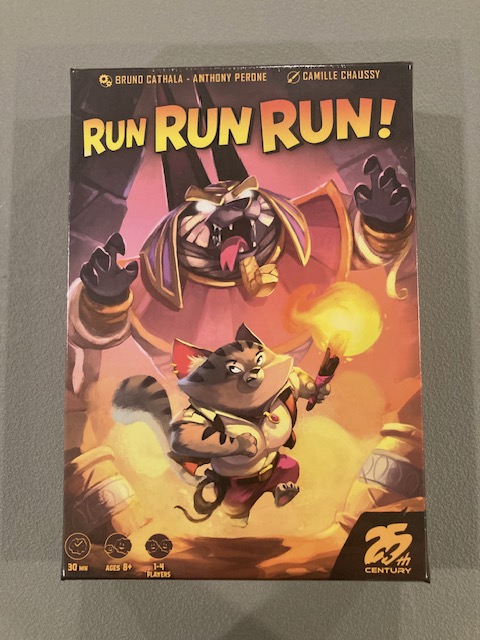
This cute game about cats invading an Egyptian tomb is quite fun!

IMG_7078

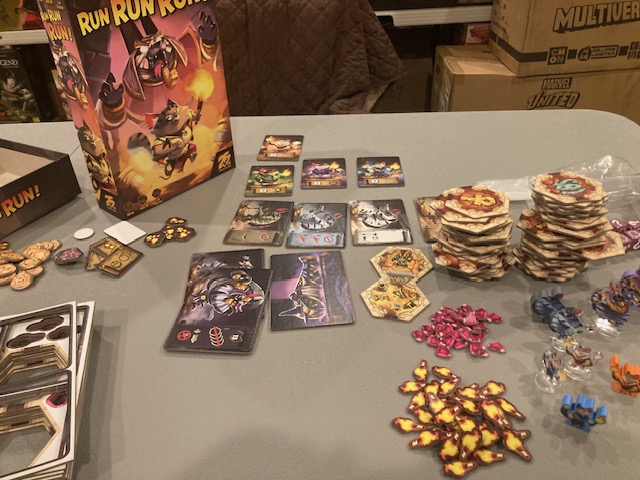
The components in this cooperative tile-laying game are gorgeous! The tiles are thick and easy to read!  

IMG_7118

The game is easy to teach, easy to play, and plays rather quickly in about 30 minutes!  Take a look at our review of Run Run Run! here to see if it might be something you might like!

This game could easily make our Top 10 Cooperative Tile-Laying Games!  But that list came out before we played this game …

3. Nekojima

IMG_5371

Players: 1-5
Ages: 8+
Time: 15-30 Minutes
Supports Solo? Yes, minimal rule changes
Type: Cooperative Abstract Dexterity Game

IMG_5378

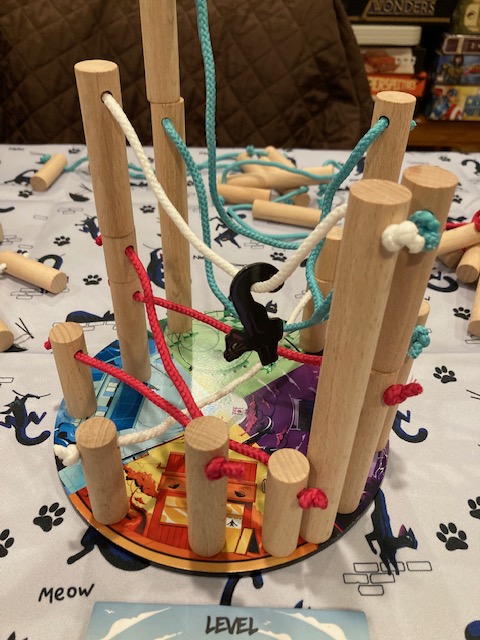
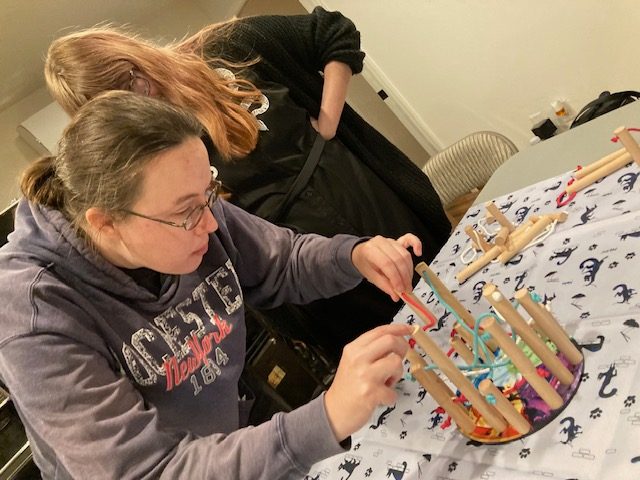
Nejokima is a very cute cooperative dexterity game for 1-4 players; this can probably best be described as cooperative Reverse-Jenga!  In Nekojima, players work together adding wood blocks on a platform, hoping not to knock anything over! (whereas Jenga has players removing wood blocks from a tower, hoping not to knock anything over)! In both cases, players try not to knock the structure over!  See below!

IMG_5386

At the end of the day, this is almost an abstract game, but the game leans so heavily into the cat theme (with a cat placemat, the cat tokens, and the “cat always lands on its feet” in the rules), that I think you can call it a cat game.

IMG_5404

Take a look at our review of Nekojima to see if this is something you think you might like.

2. Hissy Fit!

IMG_3068

Players: 1-4
Ages: 8+
Time: 20 Minutes
Supports Solo? Yes, minimal rule changes
Type: Cooperative Hand Management game

IMG_3099

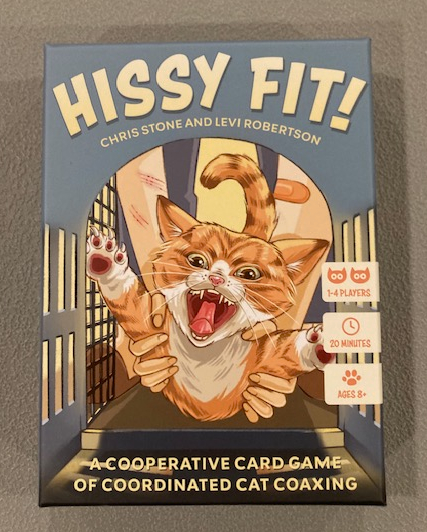
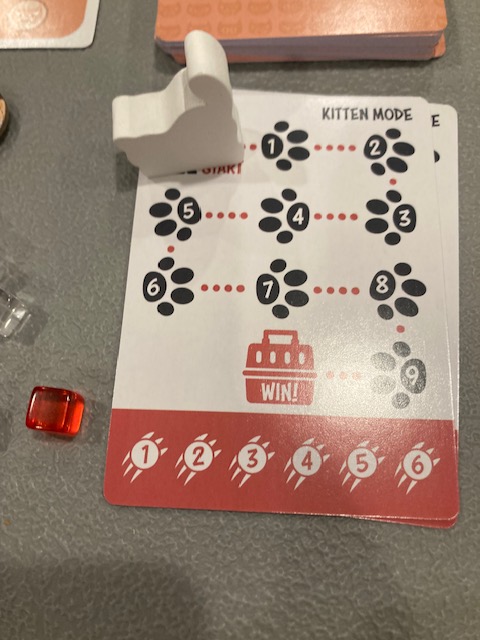
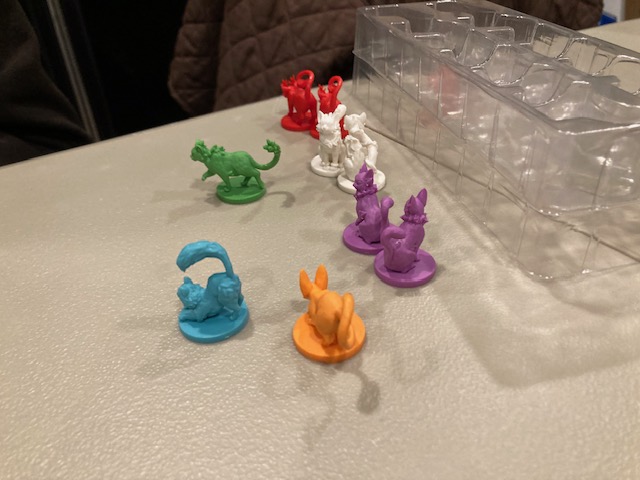
Hissy Fit! is a light little cooperative cat card game (20+ minutes) about trying to get your cat into its carrier!  Players move the kitty (above) along (using cards) until it reach the carrier!

IMG_3096

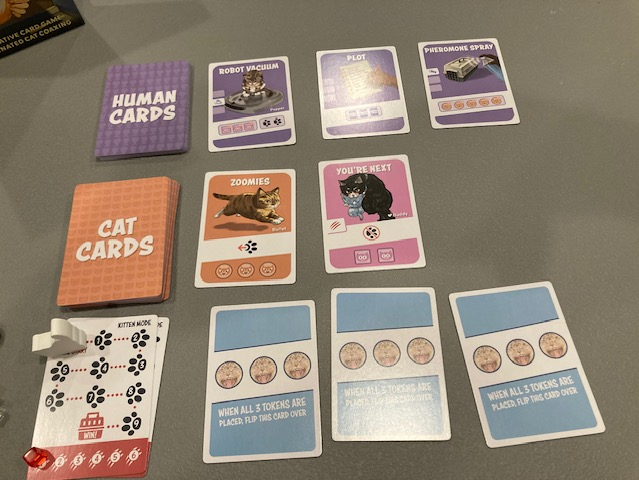
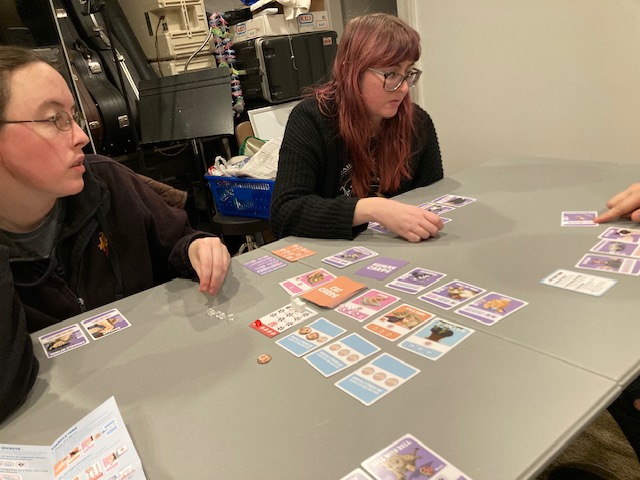
Players cooperatively play Human cards (purple) to try to keep the Cat Cards (orange) under control!  This is a light, quick game that really encourages cooperation with a simple follow mechanic (allowing other players to play cards even when it’s not their turn)!

IMG_3119

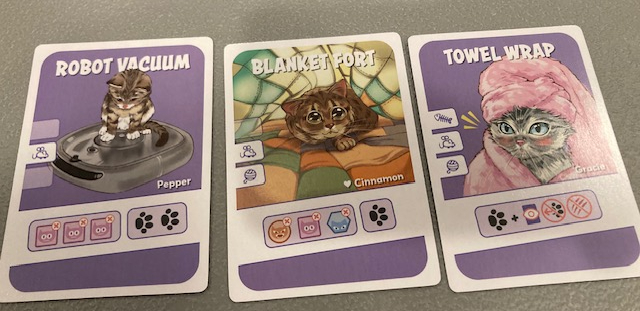
The art is absolutely adorable and is quite thematic!  The Towel Wrap keeps the cat from scratching you and from moving away!  The Robot Vaccuum moves the cat closer to the carrier!

IMG_3136

This game is light and adorable and quick and easy to teach: there is a very good chance this will make our Top 10 Cooperative Games of 2024! UPDATE! It did! See here!

Take a look at our review of Hissy Fit! to see if this is something you might enjoy!

1. Race To The Raft
IMG_8571

Players: 1-4
Ages: 8+
Time: 40-60 Minutes
Supports Solo? Yes, with some changes to base game
Type: Cooperative Tile Placement Game

IMG_8772

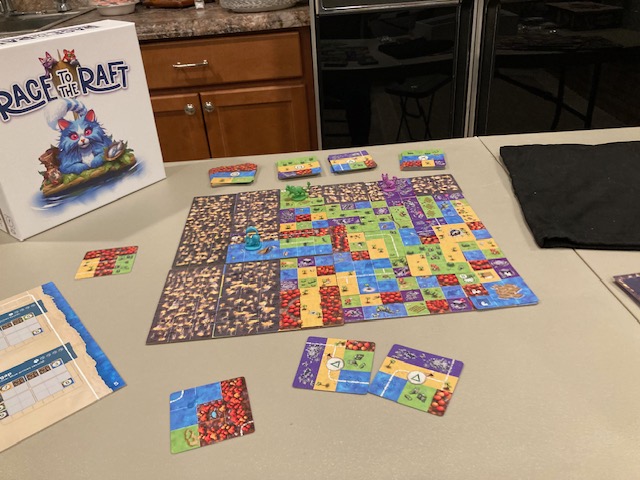
Players need to work together to save the cats (see above) from the burning island (see below)!  They need to move the cats to the raft before the fire consumes the island!

IMG_8746

This cooperative tile-placement game has players making all sorts of choices cooperatively or solo: which cats to move, which tile stack to draw from, where you place a tile, where to place burning trees, when to move cats!  There so many great decisions in this game!  This was such a great surprise it made the #3 position on our Top 10 Cooperative Games of 2023!  Honestly, it should have been #1, but 2023 was such a strong year for cooperative games!

IMG_8697

See our review here of Race To The Raft to see if this cooperative tile-playing game is something you would enjoy! It’s probably the most complex game on this list, but it also has the most choice!

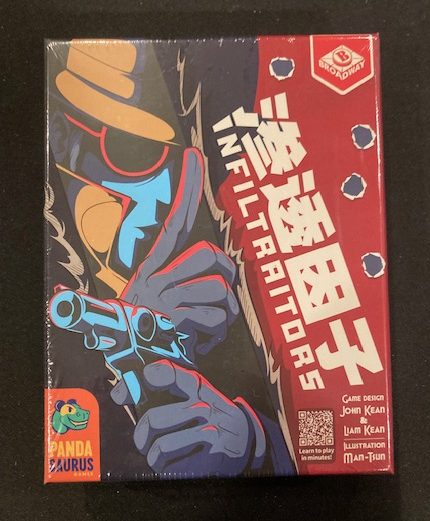
A Cooperative Traitor Game? Wait, What? A Review of Infiltraitors

If you are like me, when you first heard the description of Infiltraitors, you thought, “Wait, What? Is this a cooperative traitor game?”

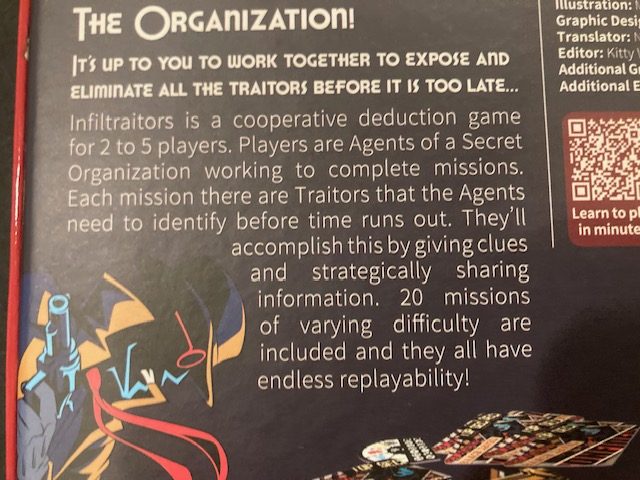
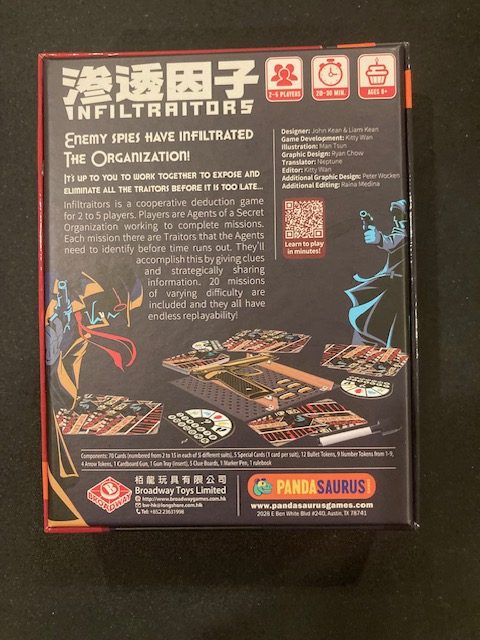
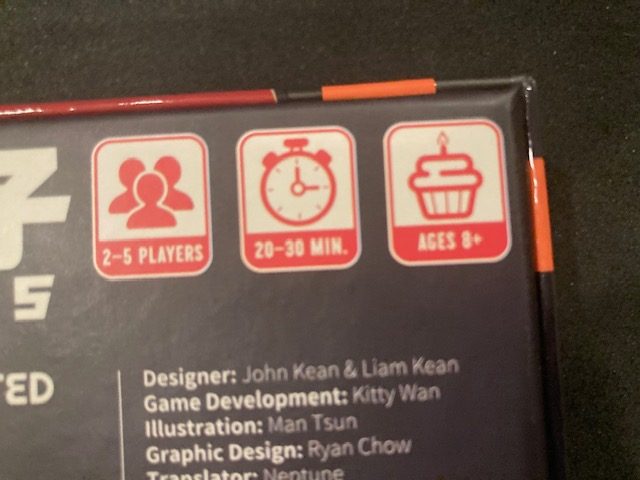
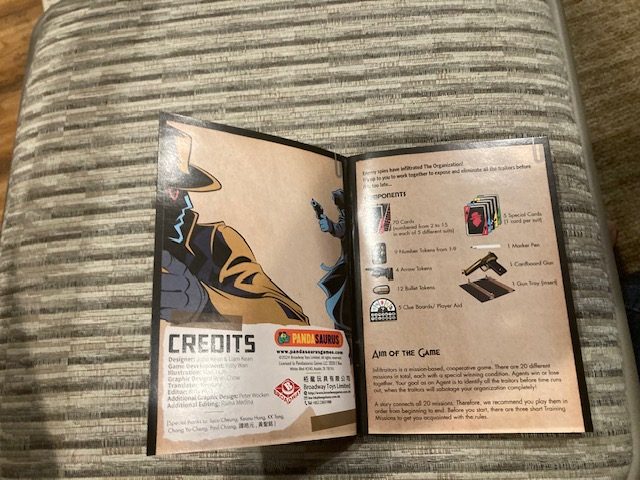
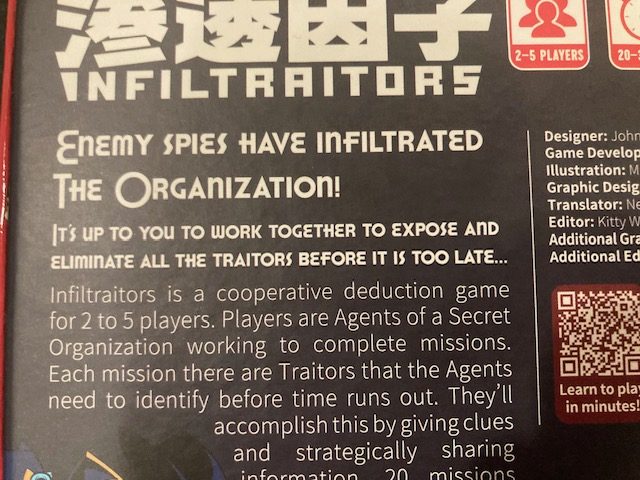
Look at the back of the box above! “Enemy Spies have infiltrated the Organization!  It’s up to you to work together to expose and eliminate all the traitors before it’s too late…”  That sounds like a cooperative traitor game, but the next line tells the real story:  Infiltrators is a cooperative deduction game for 2 to 5 players”.

Ah, it’s a deduction game!  But it really has a feel of a traitor game like Avalon!  Players are going on missions, deducing things about traitors … that sounds like the traitor game, Avalon, right?

I think the game’s title misspelled Infiltraitor on purpose to imply there are traitors in this game.  The real spelling should be Infiltrator.  I really think they did that on purpose to imply this is a cooperative traitor game … I think they mean it to replace something like Coup or Avalon.  Does it?

Let’s take a look!

Unboxing and Gameplay

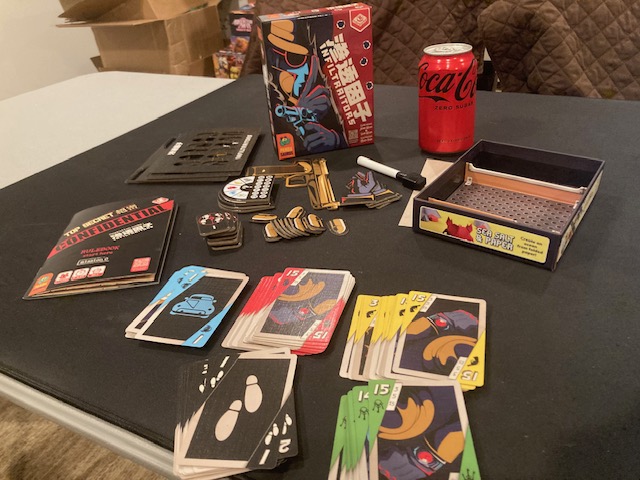
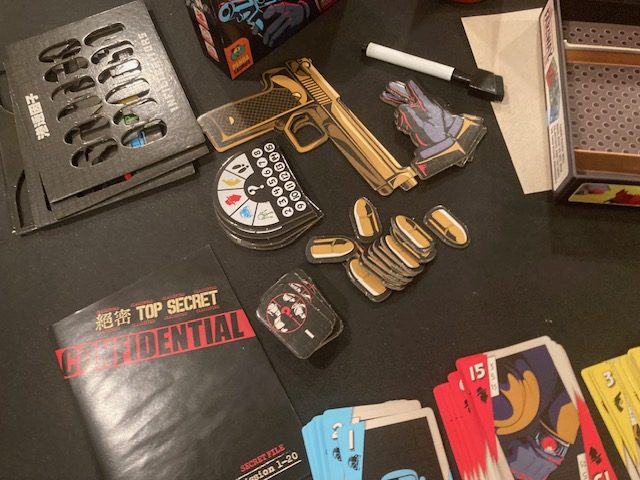
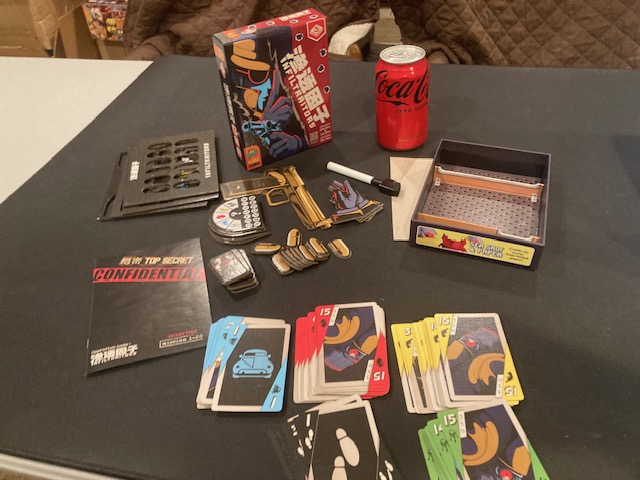
For a mostly card game, this has a surprising number of cardboard components! It’s also a pretty small box (about the size of Avalon or Coup maybe?) See Coke Can above for perspective.

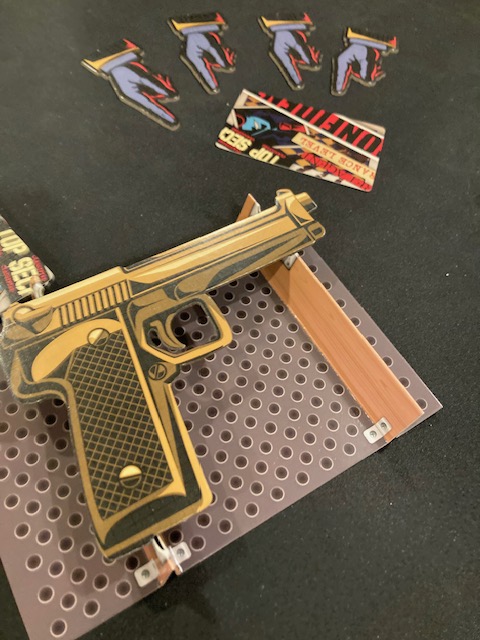
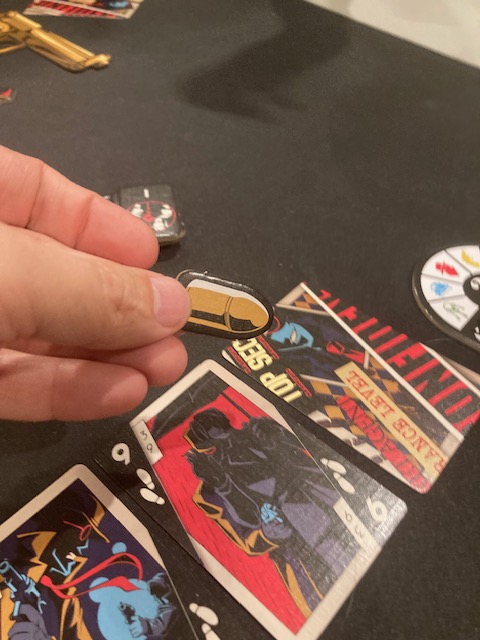
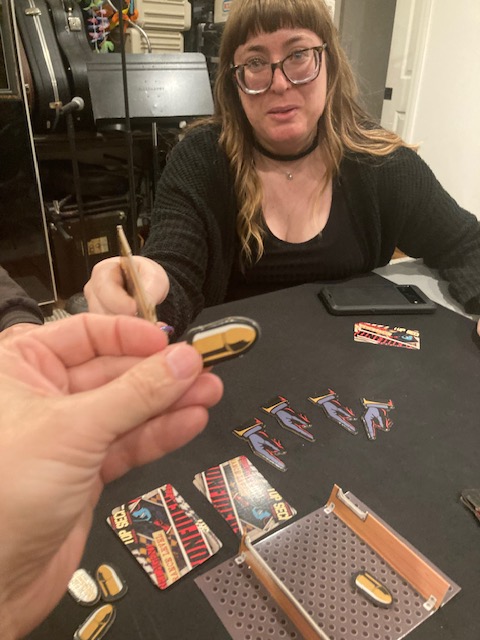
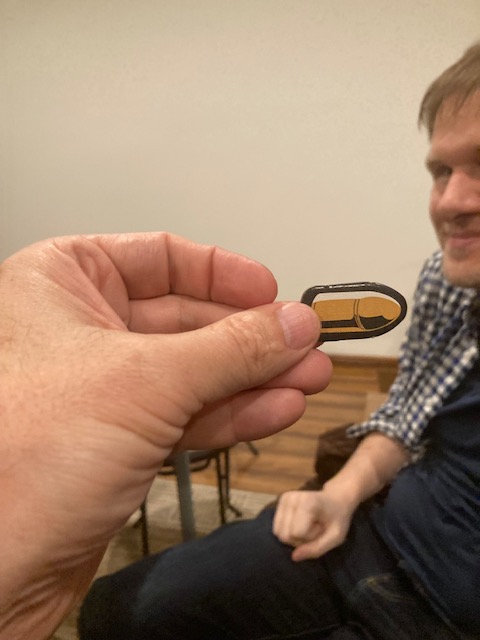
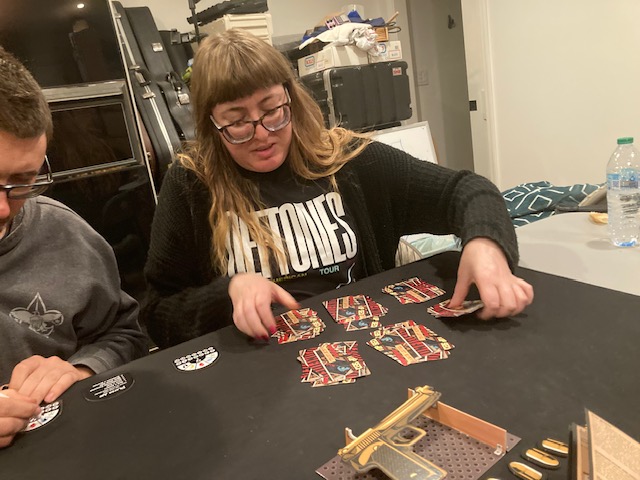
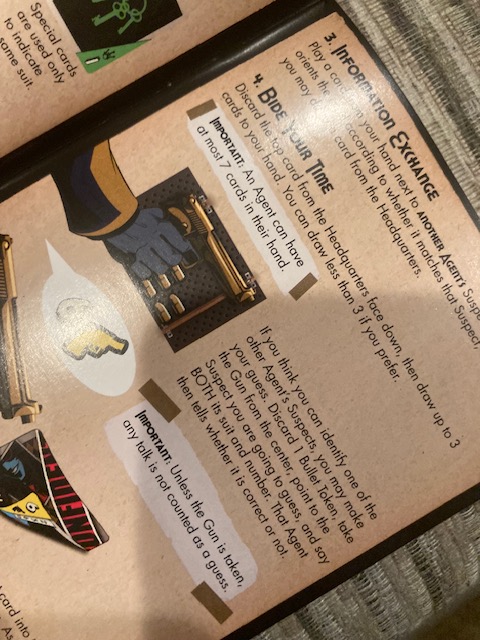
The bullets are a limited resource for how many “guesses” you have to find the traitors!  The gun is just a silly gimmick!

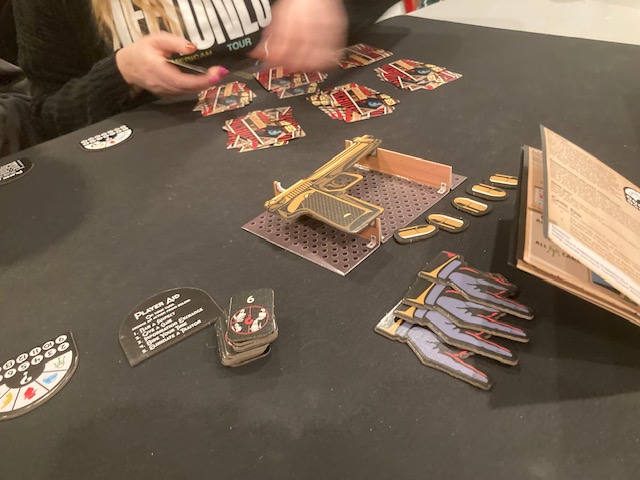
When you are ready to Eliminate a Traitor, you must physically pick up the Gun and a Bullet and “make a guess” what the traitor is (I used what instead of who … you’ll see why)!  I think the idea is that you must be very clear that you are making a guess, and picking up that gun makes it very clear to everyone!  If you are right, you eliminate that traitor and you are closer to winning! If you are wrong, … well, you have wasted a bullet … hopefully you have enough bullets left to take out the remaining traitors!

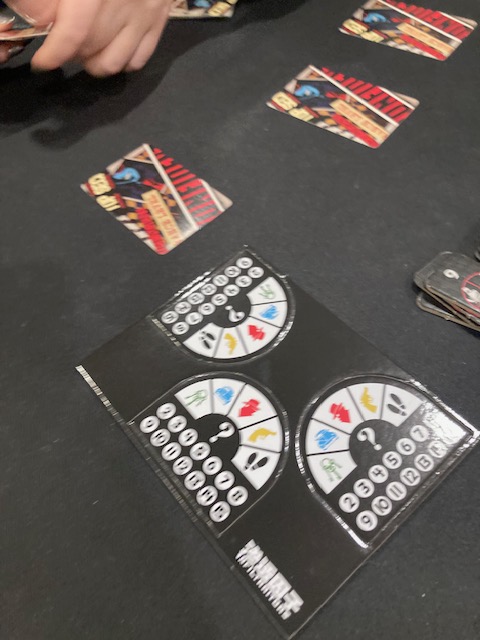
As clues come out to identify the traitors, players mark off the Clue Boards: see above.  There will be one clue board per suspect.

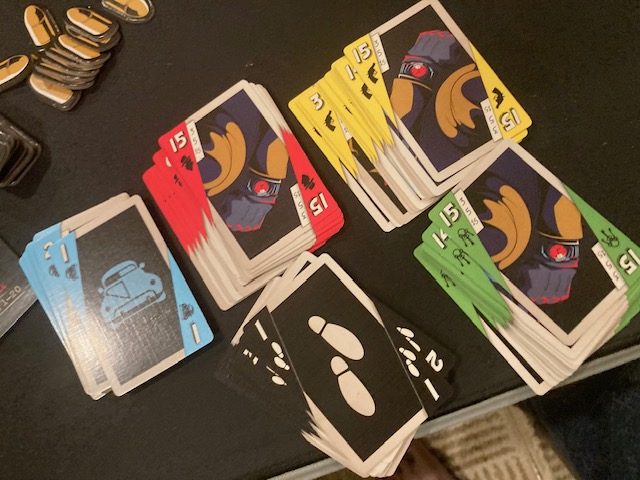
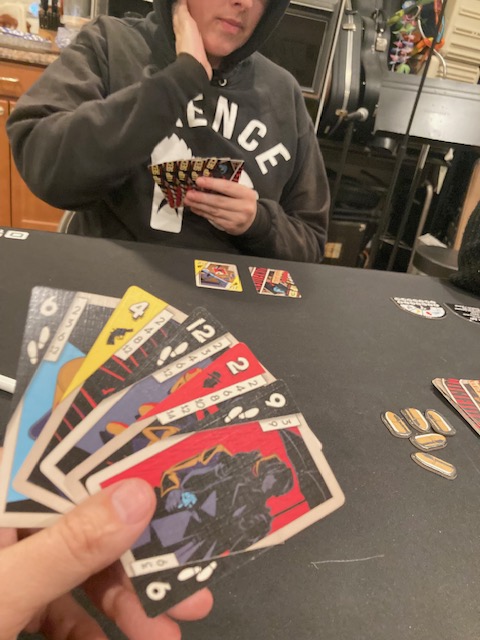
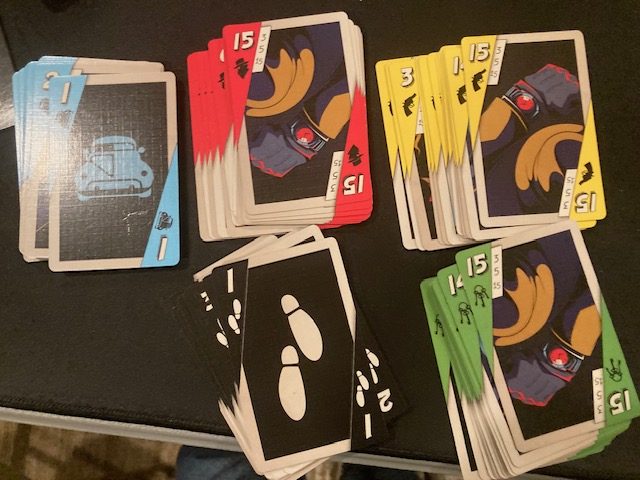
The rest of the game is in the cards.  There are (up to) 5 different suits, each with numbers 1-15.

There are a number of Suspects (face-down cards), depending on the Mission and number of players.  The player’s job: use clues to find the identity of all the Suspects before you run out of bullets!   If it isn’t clear, you are “eliminating” the infiltrators with bullets!

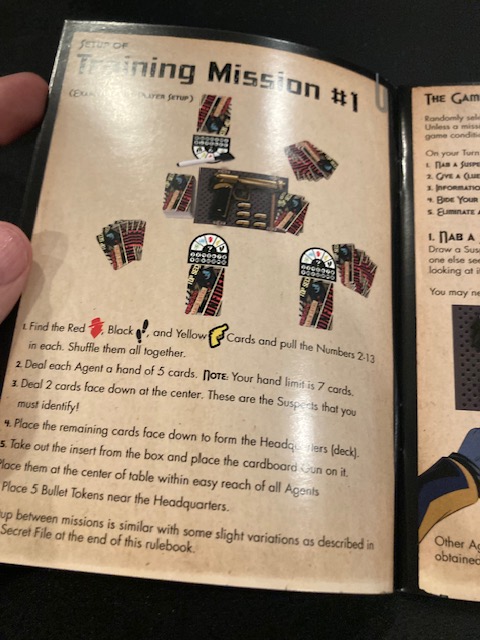
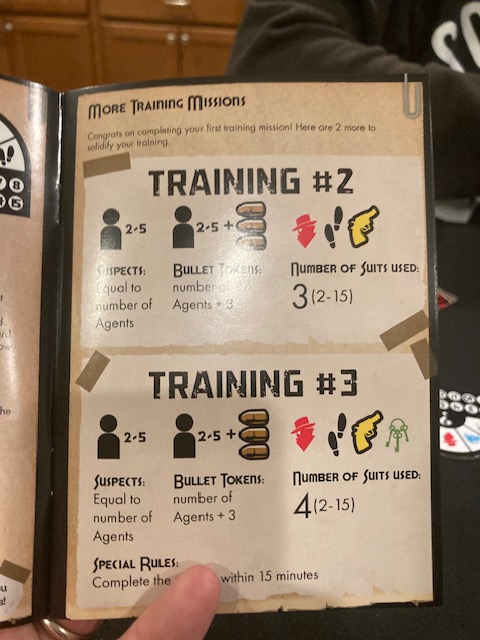
There are 20 missions described in the rulebook; they get harder and harder.  (No state is saved between Missions; each Mission is a brand new game).  The first mission, a tutorial, describes how the game works: see above!

Some number of cards are taken from the deck and turned FACE DOWN: these are the Suspects the players must cooperatively identify.    (The first Mission has only 2 Suspects: see above).

One player becomes “responsible” for  a suspect and will reveal information about the suspect as the game goes on.

Each player will have a hand of cards and use those to help reveal information about a Suspect.

To Eliminate a suspect, the players must guess the color and rank of the face-down Suspect!

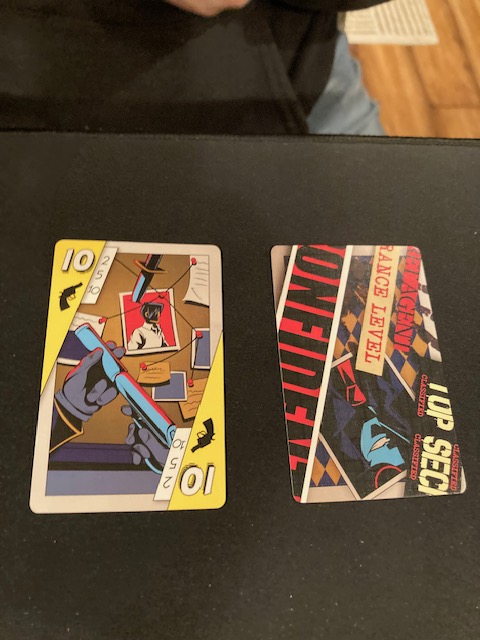
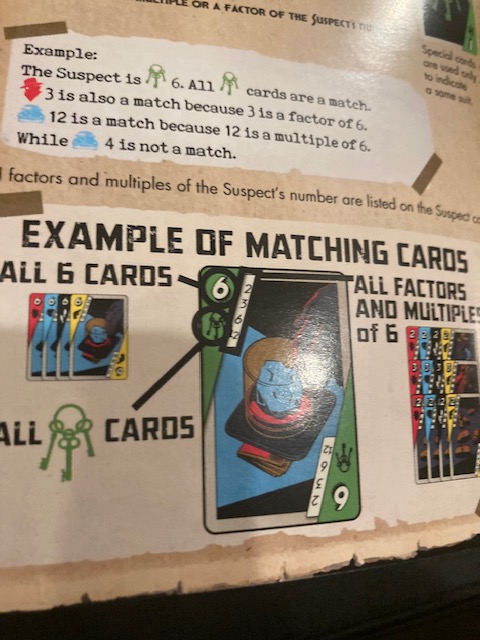
How do you guess the Suspect’s color and rank?  A player will place a card down; if the color matches OR the rank matches the number or factors or multiples, then it’s considered a match!  All matches are turned up-and-down!  The lack of a match turns the card sideways.  See above as the guess yellow 10 is turned up-and-down!  It’s a match!  But does it match the color? Or maybe it matches the rank exactly?  Or it’s a multiple of 2 or 5 or 10?   This is where the deduction kicks in!  You have to use the cards you have to try to slowly deduce what the Suspect is!

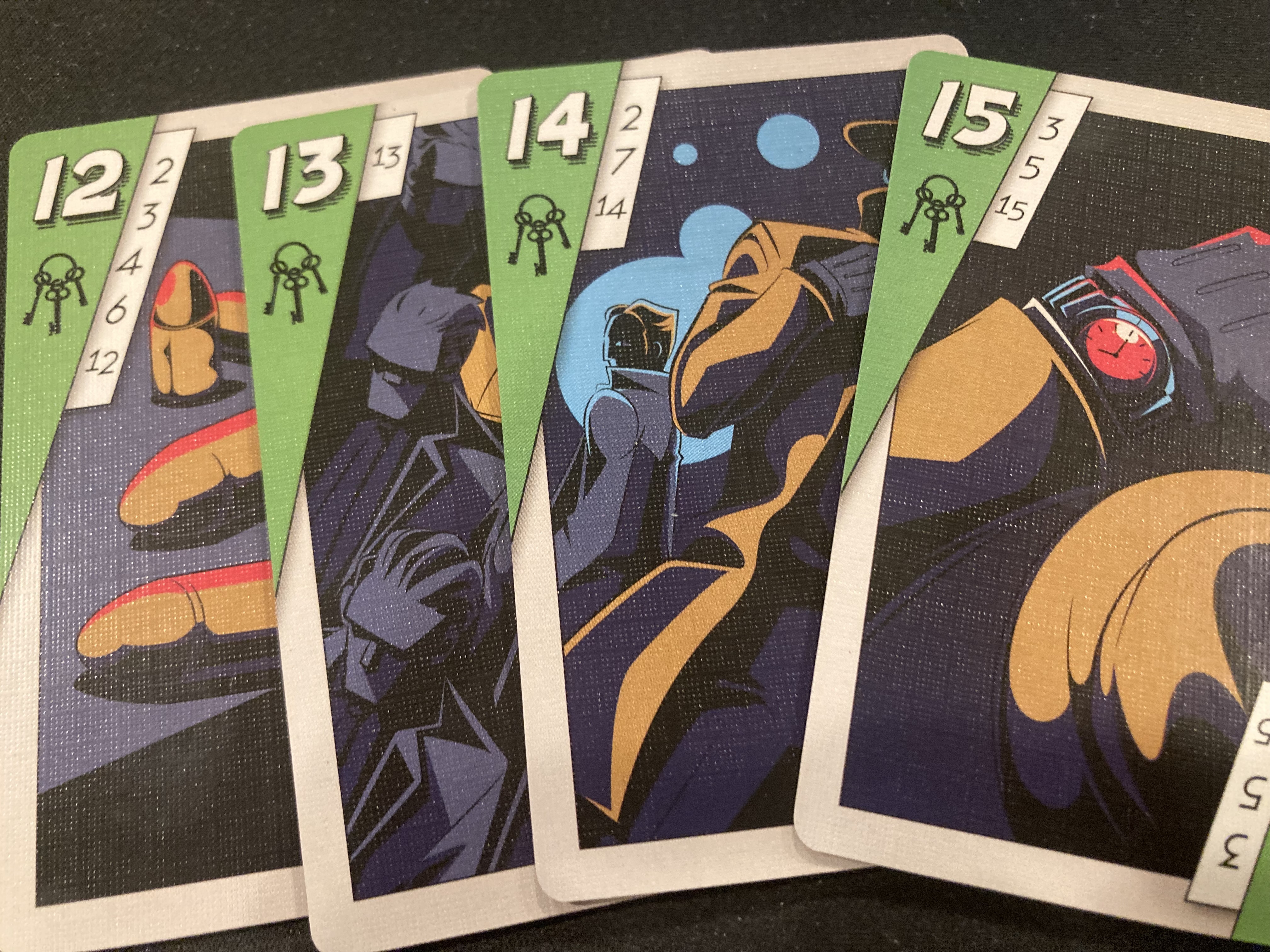
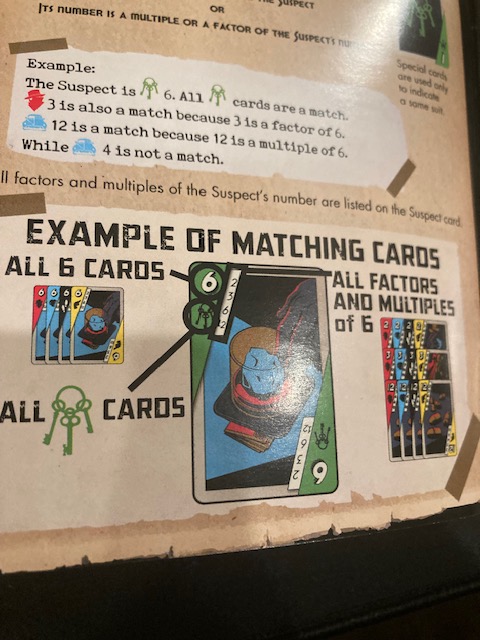
It takes a little getting used to matching the multiples and factors, but luckily every card in the game lists ALL the factors and multiples it uses!  So, it seems harder than it is; once you get used to it, it flows quickly!

To be clear, one player knows who the suspect is, and all the other players are giving clues (placing cards) to help deduce!  Nominally, each player tends to take responsibility for one or more Suspects, but it’s dynamic! Players can choose when to take a Suspect and become “responsible” for it as the game flows.

If you eliminate all Suspects, you win!  If you run out of bullets, you lose!  The Infiltraitors win!

Solo Game

There is no solo game! See above: this is only for 2-5 Players!  However, this would be an interesting game to apply The Changing Perspectives idea to!  See a link here for The Changing Perspectives Idea!  Since all information is public (the clues are all public: there’s no implications or subtle innuendo), you can make deductions solely based on the information presented.

I leave this an exercise to the reader: I think you can play this solo if you want to! Much like Shipwreck Arcana (see review here), this is a deduction game where you can pretend to play both sides, using only public information for deduction.  If you get to a point where you have to randomly choose something (you are out of cards, and only one one bullet left), you can always roll a dice to decide the outcome.

Cooperative Game

As a cooperative game, this went over pretty well.  The first time we played, we played through the first three missions and had a blast!

It’s sort of ridiculous how much fun the gun and bullets were!  It sort of drew us into the game!

The first few missions are pretty straight forward, just getting a little harder each time.  You use more suits (which makes the color harder to guess) and more ranks (making the rank harder to guess).

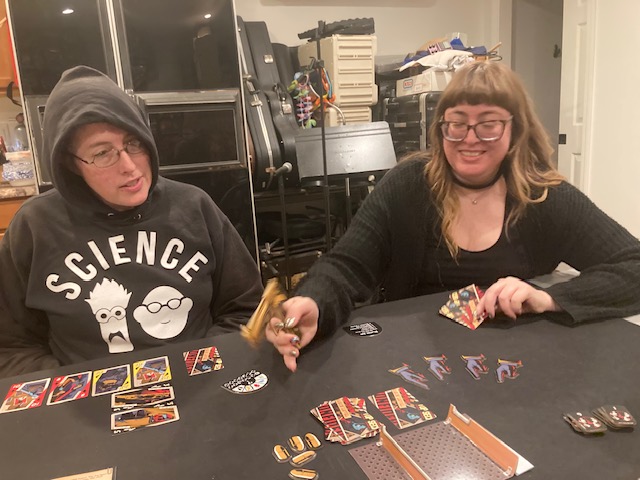
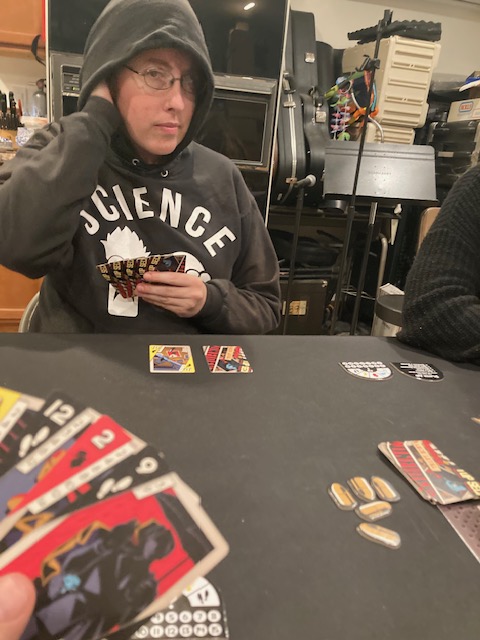
This game came out two weeks in a row!  For a little card game, it was surprisingly popular in my game groups!  See above and below!

The cooperation worked really well; people would say “I know how to get that suspect!  You work on the other one!”  The fact that there are multiple suspects in play really also worked well—players could choose where to spend effort, both individually and cooperatively.

The Sticking Point

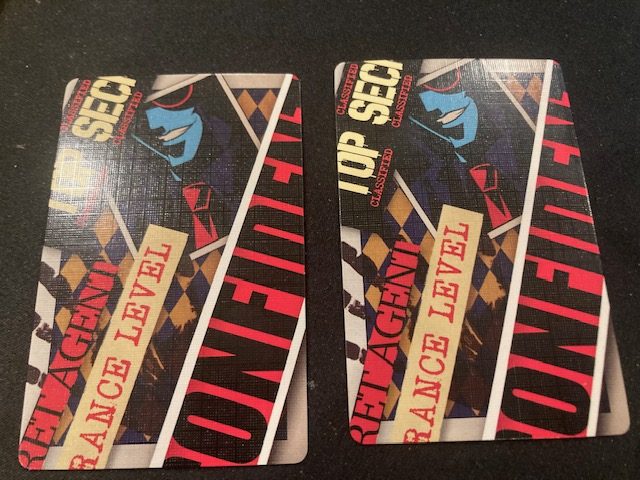
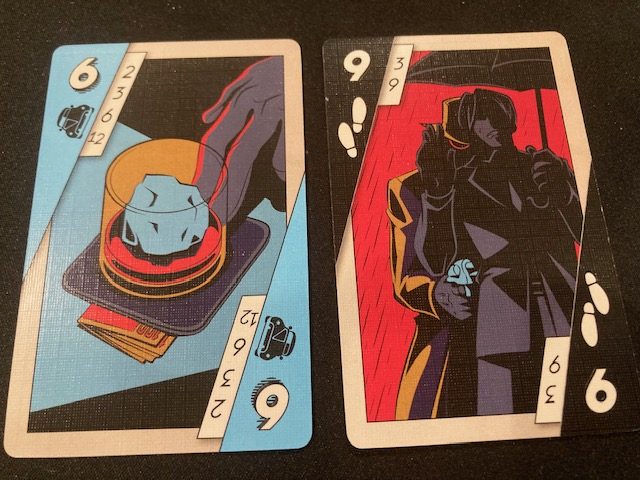
The game doesn’t quite explain matching rank very well … and it’s the most important part of the game! There are two basic interpretations, which the example (in the rulebook) DOES clarify.  Consider the following example: Do these two cards below “match”? (Obviously, they don’t match in color, but what about rank?)

Interpretation 1: If the lists of numbers on both cards has some number in common, they match!  Under that interpretation, the two cards above match!  (6 has 2,3,6,12;  9 has 3,9:  Both have a 3! They match!).  (((TO BE CLEAR, this is the WRONG interpretation!!!!)))
Interpretation 2:  If the hidden card (on the right, say the 9) LISTS the other card, it’s a match!  In this case, it’s NOT a match, as 6 is NOT in the list of number on 9: (3, 9).  They DO NOT match!

If you go in with Interpretation 2, that seems to be the rule as clarified by the rulebook (see above).  It took us a few games to “get” this rule.  This is possibly the biggest bugaboo that may make people dislike the game if you can’t get this rule about matching!!   I think the best way to “explain” the match rule is via Interpretation 2 of the rules above:

The Suspect card will list all the cards that it matches“.

With that simple explanation, the match rule goes from baroque to simple.  And I think it will open it up to players who might be “scared away” by discussion of factors/multiples and math!!

Traitor Experience

After bringing this out at a second game night and playing through the game with a new group, we were able to solidify our thoughts:  This feels like a traitor/social deduction game like Coup or Avalon because you are trying to deduce the identity of the traitor!  That feeling of trying to deduce “Who is the Traitor?” is really captured by this game … without being a traitor game!

I don’t really like traitor games.  They have the Disparity of Experience problem (see here) where people who have played more than you will have a distinct advantage.   And I don’t want to lie, yell, scream, accuse with my friends.  I just want to work with them and have fun!  If you like the process of trying to find the traitor, that deduction process, I think Infiltraitors really captures that feeling!   Granted, Infiltraitors replaces social deduction (which has its own flavor of play) with plain deduction, but I think Infiltraitors does a pretty good job of replicating that social deduction feeling in a purely cooperative game.

Conclusion

Does Infiltraitors  (a fully cooperative game that’s nominally about traitors) replace Coup or Avalon (games with traitors?)  Infiltraitors does a pretty job replicating the experience of finding traitors!  It may not quite your cup of tea, as it replaces social deduction with plain deduction, but if you like the idea of finding traitors but don’t like all the social baggage of traitor games, Infiltraitors might be right for you!

I think me and my groups would give this an 8.5/10!   We enjoyed it!  It was easy to get out, easy to play a few games, and it was a fun experience working together!

BUT, if you pull this out, be very very clear explaining the match rule to new players or you might scare them away!  The talk of factors and multiples may scare them away!  Don’t explain it that way, and don’t even bring it up!  Just explain the Suspect card lists all the numbers it matches; easy-peasy.

If you are looking for a game to replace Coup or Avalon, this might a really good possibility. It still feels like you are hunting traitors, but replaces the social deduction framework with a deduction framework, and it does so in a fully cooperative game.

A Comparison of Three Methods For Flattening Your Board Games

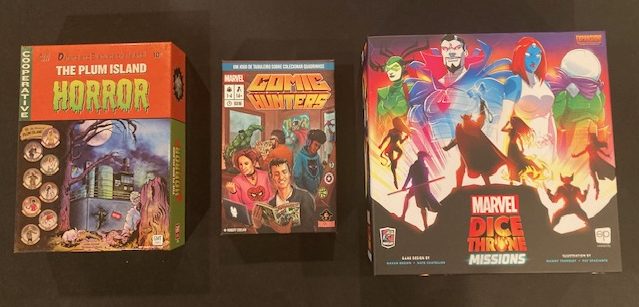
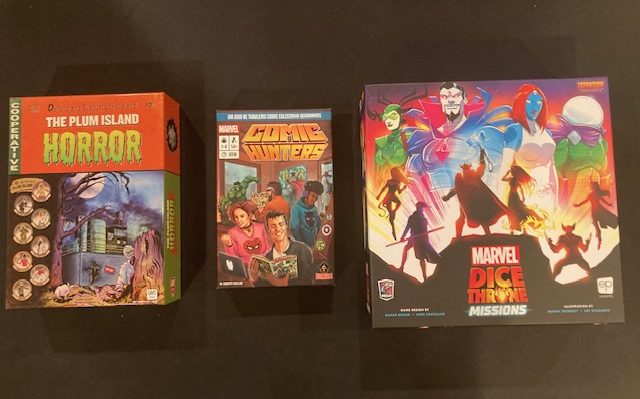
What do the three games above have in common?

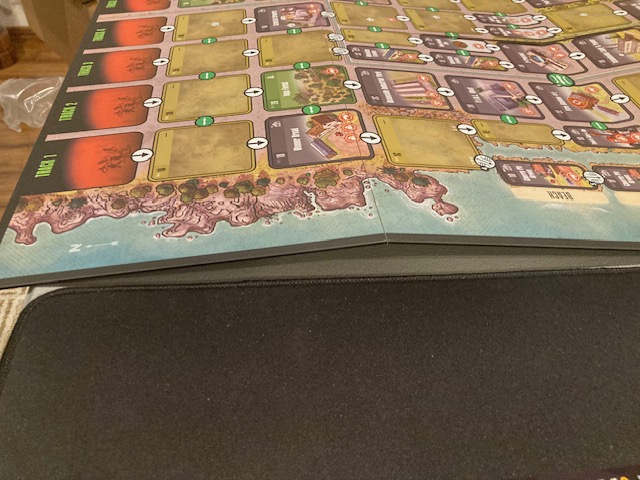
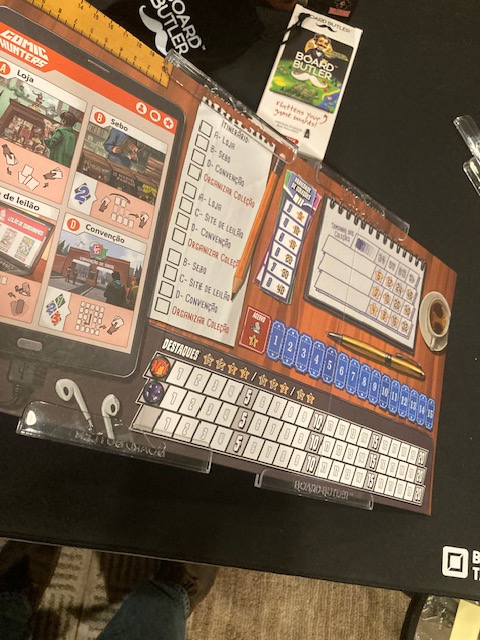
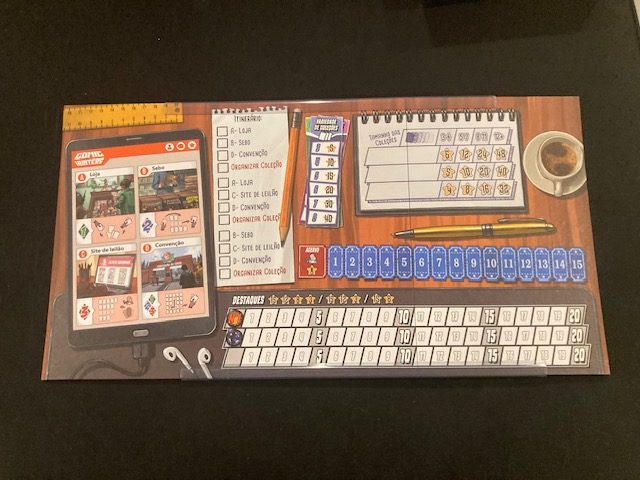
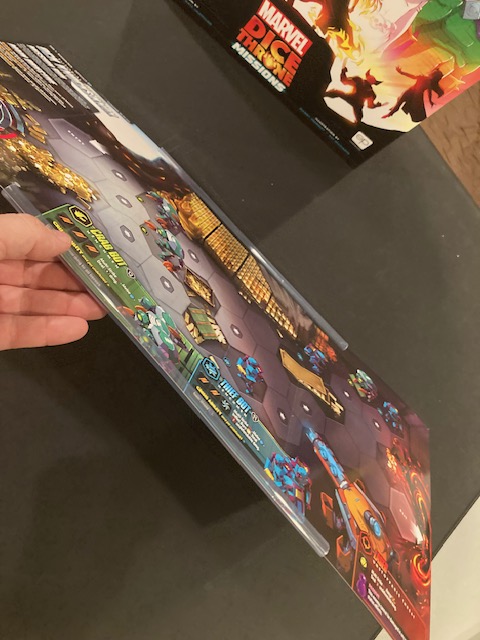
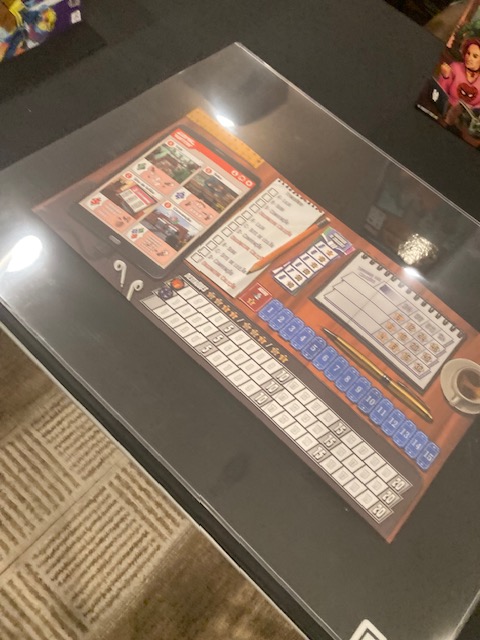
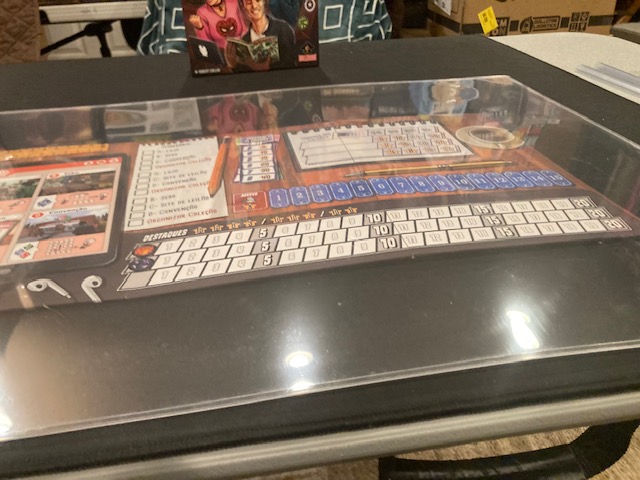
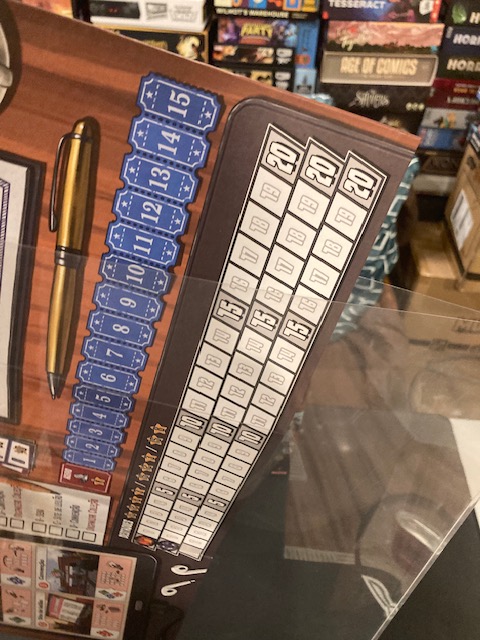
If you said “They are all cooperative games“, well, you are mostly correct! (Comic Hunters isn’t cooperative by default, but there is an expansion that makes it cooperative! See here). This is a place where we talk about cooperative games, so that’s a good guess.  But there’s something else they all have in common: none of their boards sit flat! See above and below!

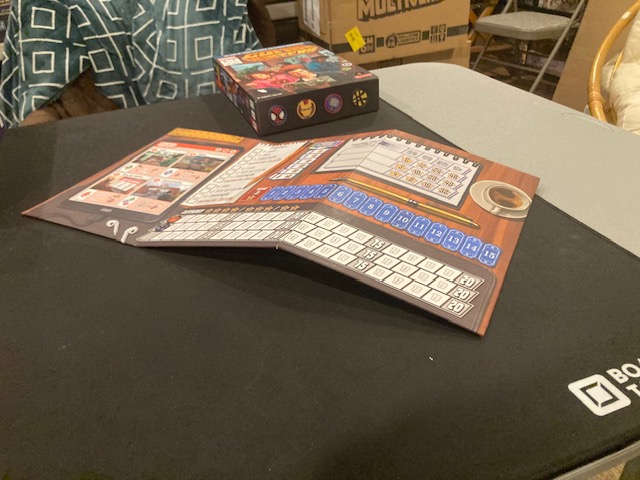
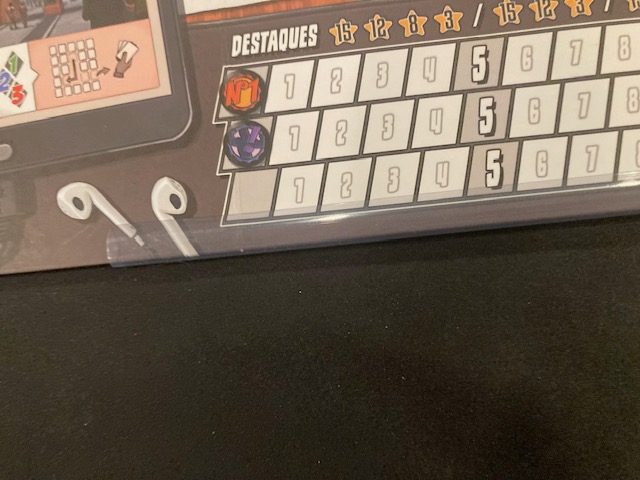
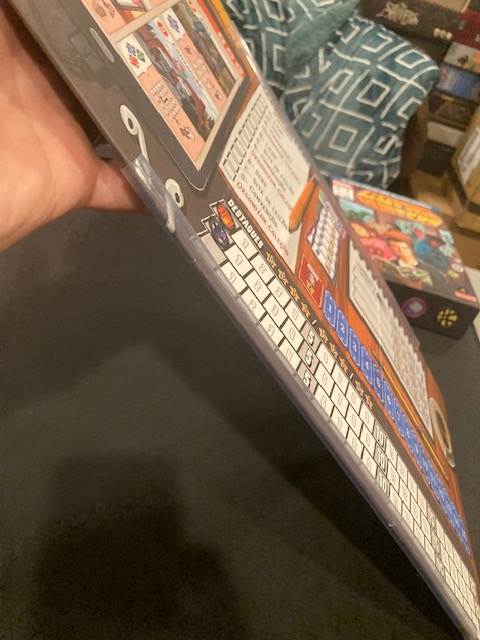
You can really see it on Comic Hunters (above): that board just does NOT want to lay flat!

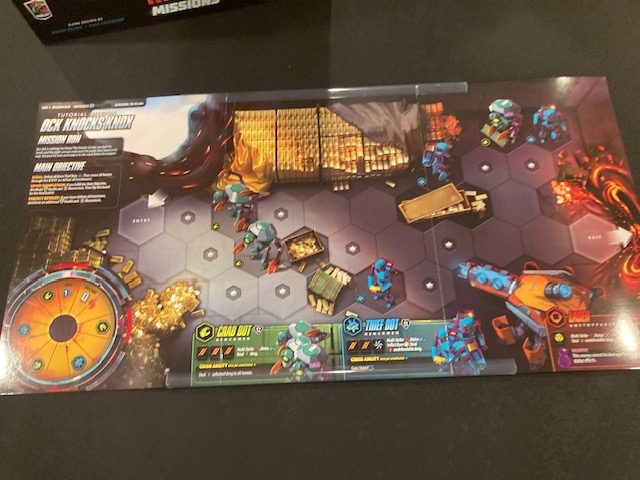
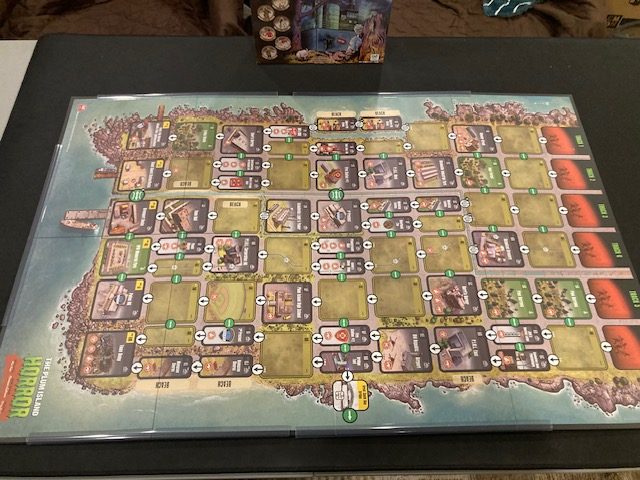
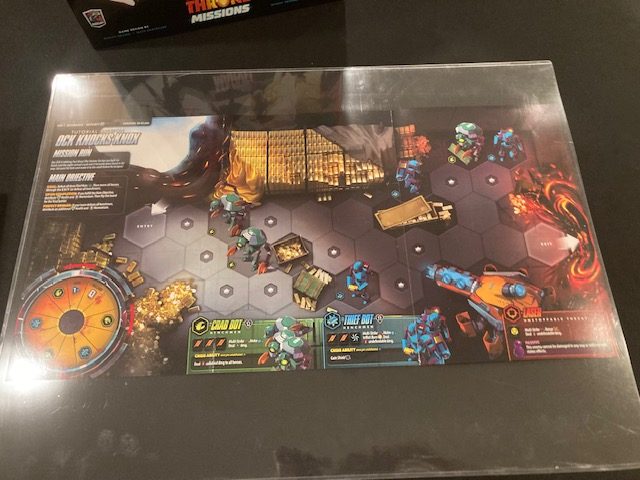
It’s weird, we never thought too much about boards not being flat enough,  but we encountered this problem a number of times in the last few years: Comic Hunters, Plum Island Horror, and Dice Throne: Missions!  These games really emphasized that sometimes a game board needs some flattening.

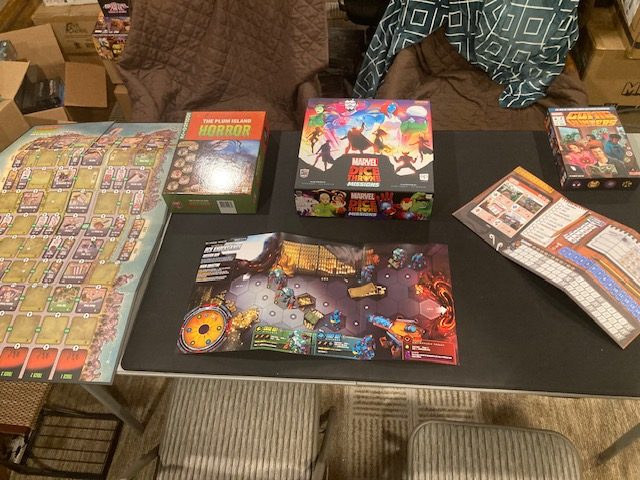
We’ll take a look at three different (cooperative) games and three different solutions to this problem!  The games of interest all have boards that don’t lay flat!  And they are all different sizes! See above!

  1. Plum Island Horror:  Very large 8-fold board
  2. Dice Throne: Missions:  Medium size 3-fold laminated sheets
  3. Comic Hunters: smaller 3-fold board

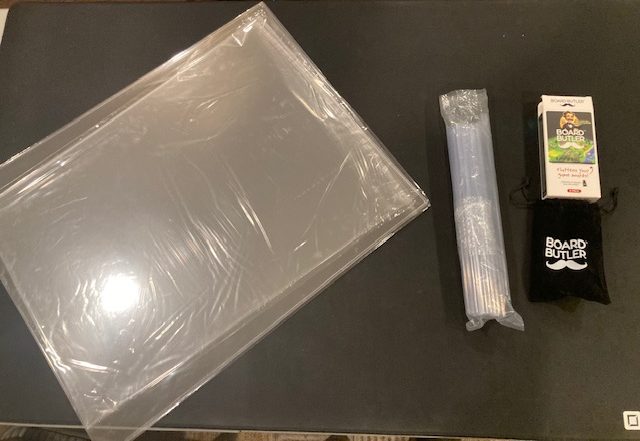
Solution 1: Board Butler

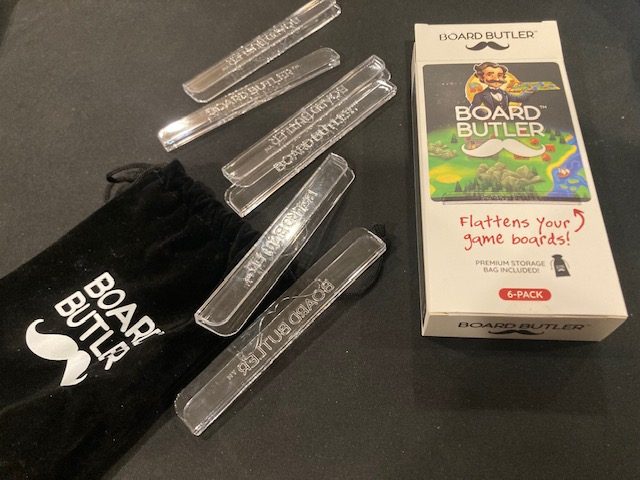
The Board Butler is a product specifically designed for the problem of boards-that-don’t-lay-flat.  I have seen advertisements on BGG, so I knew this existed.  I ordered it from their web site and it arrived within a week.  It was like $19.99 + taxes and some shipping (but for some reason I got free shipping).

These are basically little plastic piece you put at the edges to force the board flat.

See Comic Hunters with The Board Butler above.  It only needs 4 of the 6 pieces.

It works pretty well and it was easy to put on: no issues on Comic Hunters.

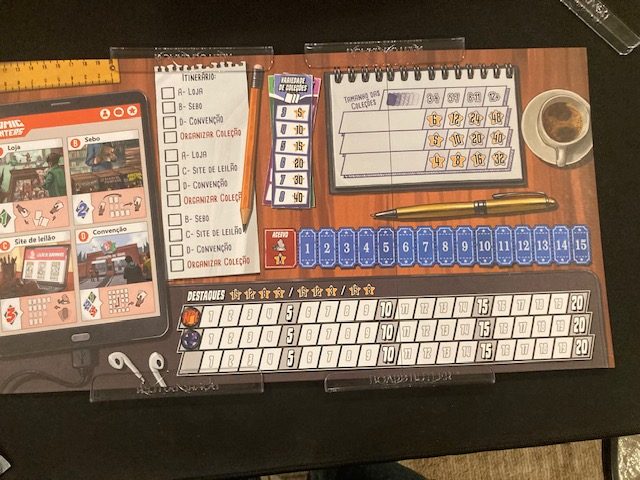
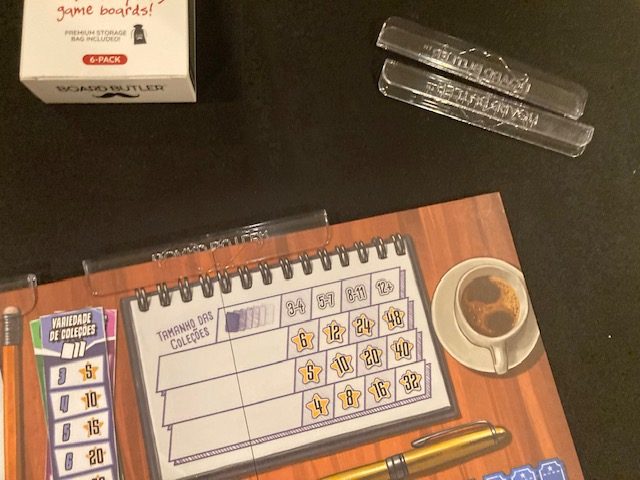
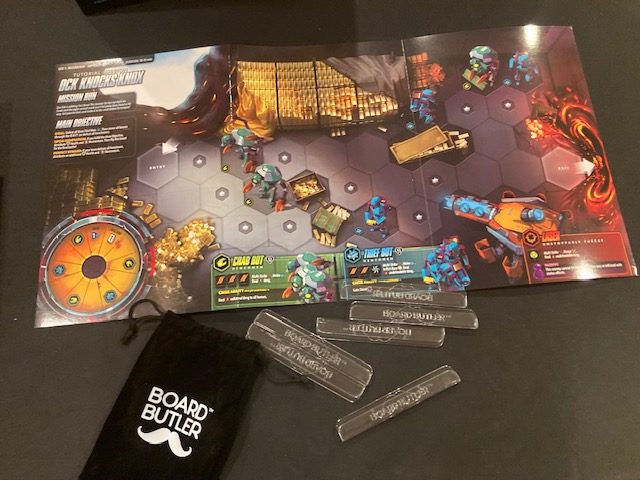
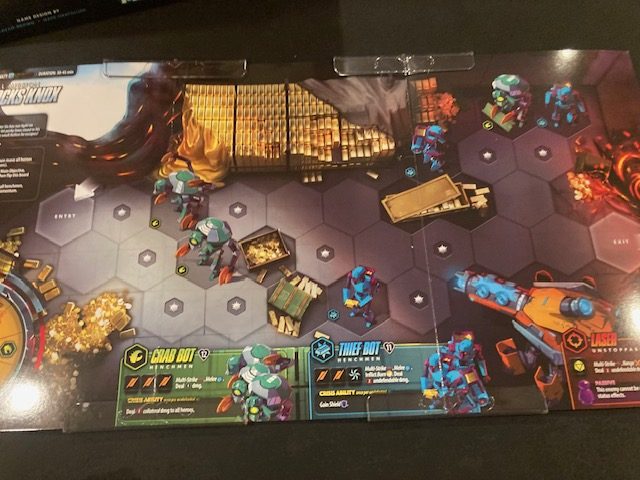
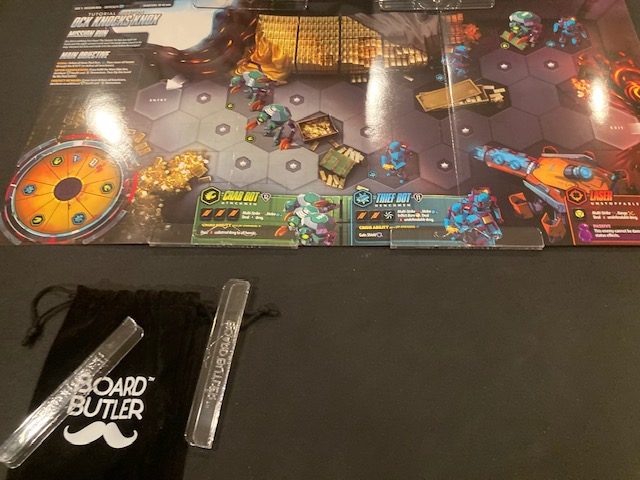
The Board Butler pieces are small enough that I need 4 pieces for the Dice Throne:Missions board: one at each edge.

See above.  The clear nature makes them relatively uninvasive.

They work well and keep the board flat.  Arguably they could obscure the text at the very bottom, but they don’t seem to.

Finally, let’s look at Plum Island Horror!

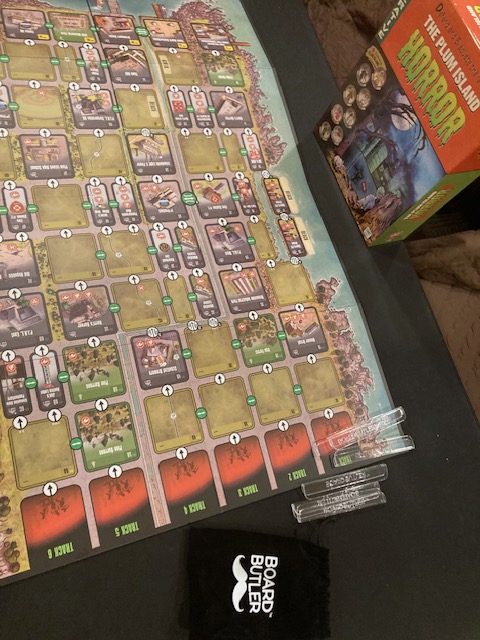
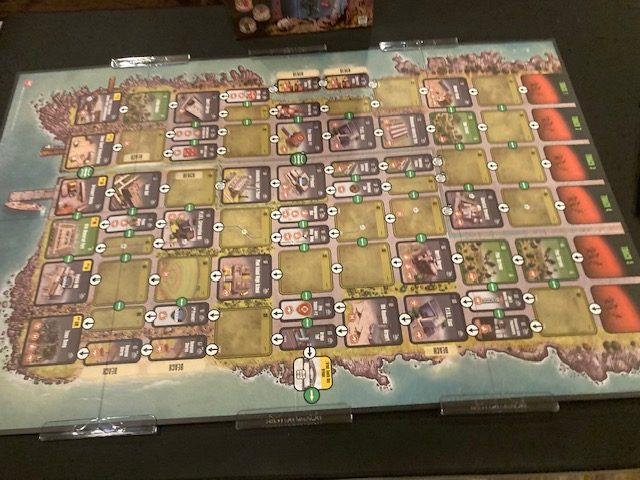
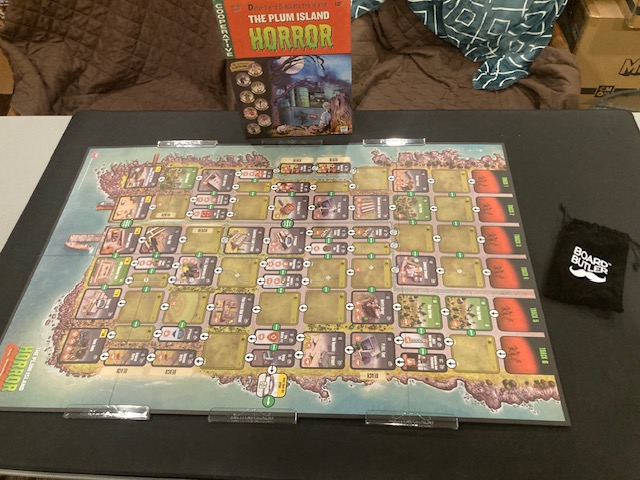
For Plum Island Horror, we have to use all 6 of the pieces, which means I can’t put them on the long ends.  This doesn’t strictly need another 2 pieces, but it might have been nice.

The Board Butler pieces work well: they hold the board down, and they don’t get in the way.

Basically, The Board Butler worked pretty well on all three games.  The weakest was Dice Throne: Missions because the Missions boards are thin laminated boards, so they didn’t fit as tight.  They fit securely (but not too tight) on Comic Hunters and Plum Island Horror.

Solution 2: Report Binding Bar

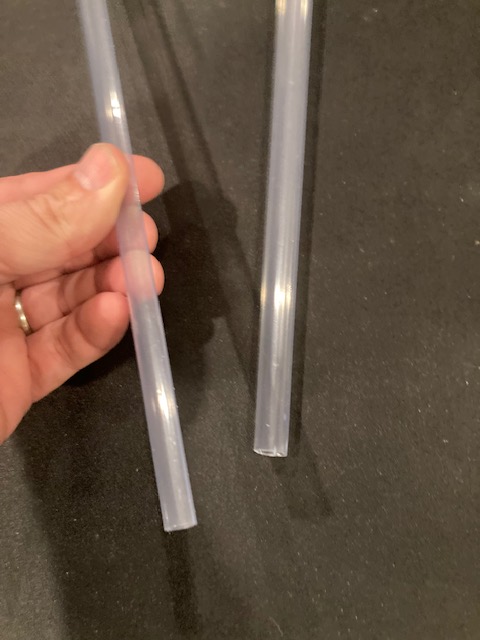
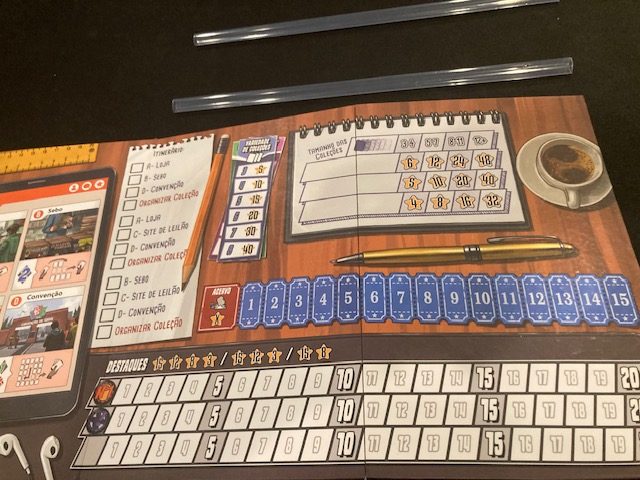
These Report Binding Bars are those little plastic sliders you put onto plastic report sheets.  See above and below.

I found a thread on BoardGameGeek that recommended these: see thread here.  You can order them here:  I got 30 of them for $13.99 plus taxes and shipping.  See above.

On Comic Hunters, they work great!  They are actually being long enough to cover both edges!

The only real complaint is that they are tight.  I was “worried” that by sliding them on, that they would TEAR the board!  They did not, but I was also very careful!  If you go with this solution, you may want to use your finger to “force” the bar open so it’s less tight:

See above as I jam my finger in there to “loosen” it up.

On Dice Throne: Missions, these are the best by far!  They hold the board tight, and they even cover both edges with one piece!  See above! I only needed 2 of the 30 pieces to hold this board together!

These just slip on easily (no chance of tearing since the boards are laminated) and hold the boards stiff and flat.

Finally, we use these for Plum Island Horror. We need 4 of them to hold the board down: see above.   Again, like Comic Hunters, these were a little scary to use because it “felt like” they might tear the board as I put them on.  So, I was very careful.

In all three cases, these held the board down and flat very tightly.  They were the cheapest by far, at 30 for $13.99, so you could easily share the cost with friends.  You probably only need to 6 each!  Even with with Plum Island Horror, you could get by with only 4!!

UPDATE: After sliding these on again and again and again on the Dice Throne: Missions boards, they started to show “slide marks”.  That is worrisome.

Solution 3: Giant Plastic Overlay

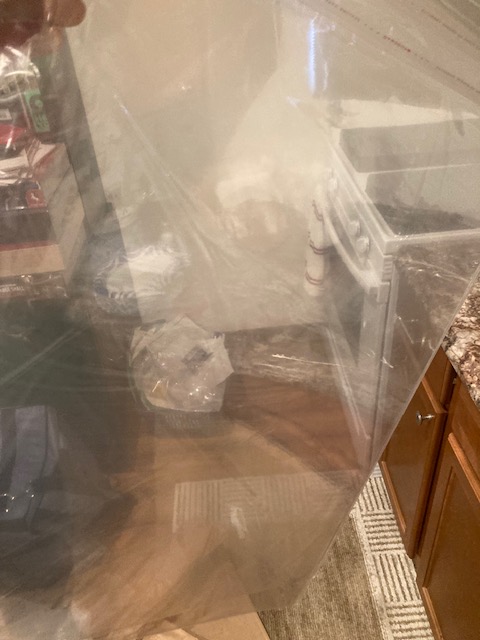
From the same thread on BGG where we got the Report Binding Bar, we also found a link for these giant pieces of plastic you can just “plop” on the board and force it down!  See Amazon link here! You get TWO pieces, but it’s $37.99 plus shipping and tax.

You just put it over your board game and “smoosh” it flat!

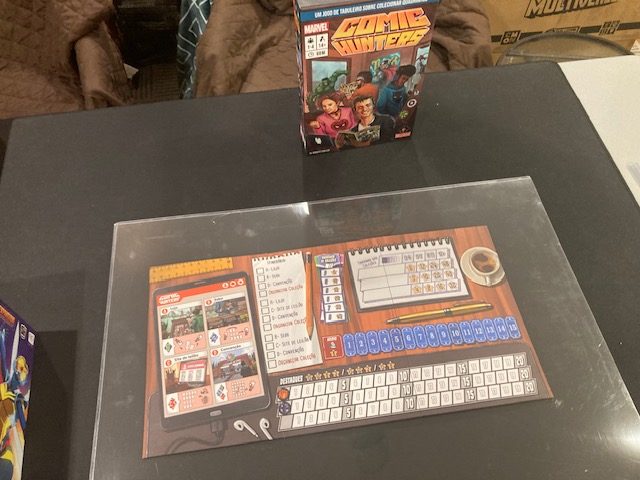
It turns out it also has a pocket, so if your game fits, you can just put the board inside! See above as Comic Hunters fits!

It works, it keeps Comic Hunters flat, but the plastic overlay is a bit distracting.  It’s especially shiny.

The Dice Throne: Missions boards fit in almost perfectly and look good and flat.  See above.

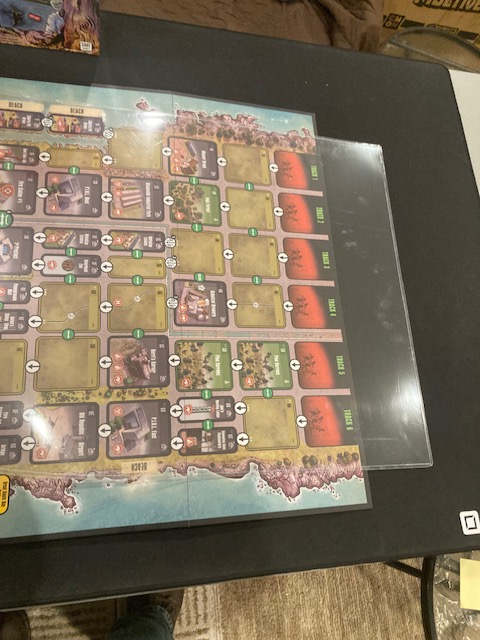
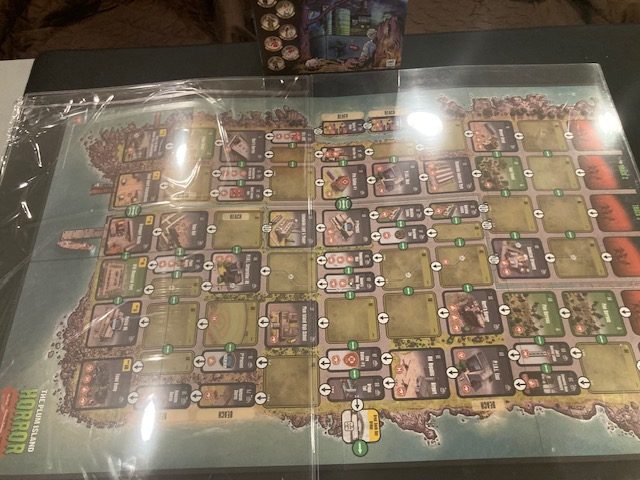
Plum Island Horror is WAAAY to big for a single overlay.  Luckily, when you order this, you get TWO sheets.  Two sheets work:

The problem is you CANNOT fit this board  inside the envelope (see above) , so they simply have to lay two of them on top.  Since the Plum Island Horror board is so “hefty”, even this solution had trouble keeping the board flat.

In general, this was the worst solution. It was the hardest to see, because it was so reflective, and it was by far the most expensive.  And, for the largest board, it required TWO Sheets.

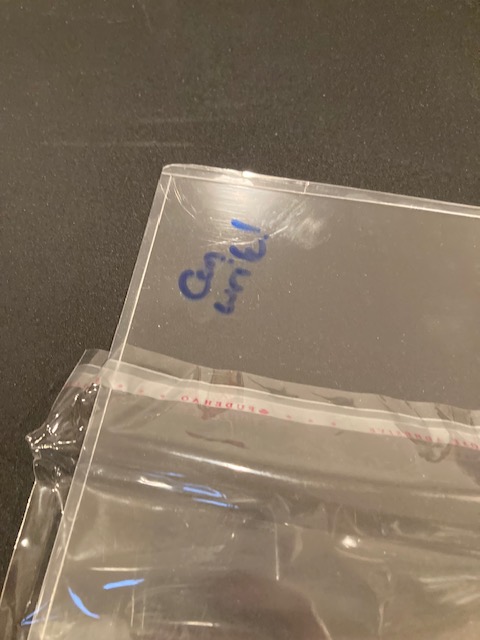
The only advantage of this solution is that you can WRITE ON THE PLASTIC with a dry-erase marker!!  See above.  If you want to “annotate” your boards, at least you can do that with the overlays.

Conclusion

Which solution you gravitate towards depends on what you want!  The cheapest by far was the Report Binding Bar: it worked on all three boards well, except that it was tight on the thicker boards.  You could order 30 of them and split them between your friends for $13.99!    The best overall solution was The Board Butler; it worked on all boards well, even if it wasn’t “quite as tight” for the Dice Throne Missions board.  The Board Butler was high-quality and I never felt like it was too tight.  The Overlay was probably the weakest solution: it was the most expensive (as you needed two overlays for larger boards like Plum Island Horror), it was very reflective, and it is harder to store!  The Overlay, however, did had the unique advantage that you could write on it if you needed to!

If I were only getting something to fix the Dice Throne: Missions boards, I might get the Report Binding Bars. If I wanted something more general, I would get the Board Butler.  If I wanted to annotate my board with dry-erase markers or keep water off it, I might consider the overlay to help keep my board flat.  It’s up to you.

UPDATE: After seeing the Report Binding Bars starts to leave skid marks on the Dice Throne: Missions board, I think I strongly prefer the Board Butler over the binding bar, even for Missions.

Santorini: Pantheon Collector’s Edition and Riddle Of The Sphinx Review, Mostly the Solo and Cooperative Experiences

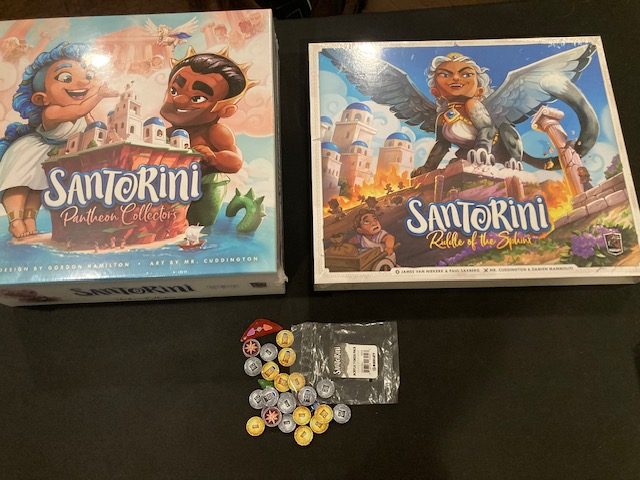
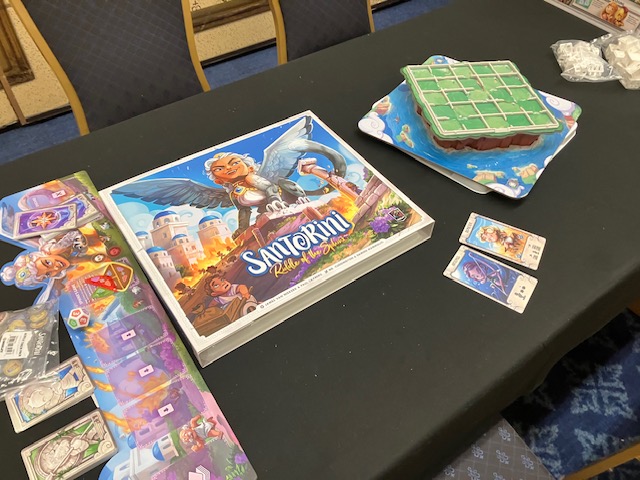
Santorini: Pantheon Collector’s Edition and Santorini: Riddle of the Sphinx both arrived at my door February 28th, just in time for weekend!  
These were originally on Kickstarter back in April 2023, and promised delivery May 2024: so it’s not quite a year late, but it is pretty late.  At least it finally made up!  I have been waiting a while for this game: it was #8 on my Top 10 Anticipated Cooperative Games of 2024!
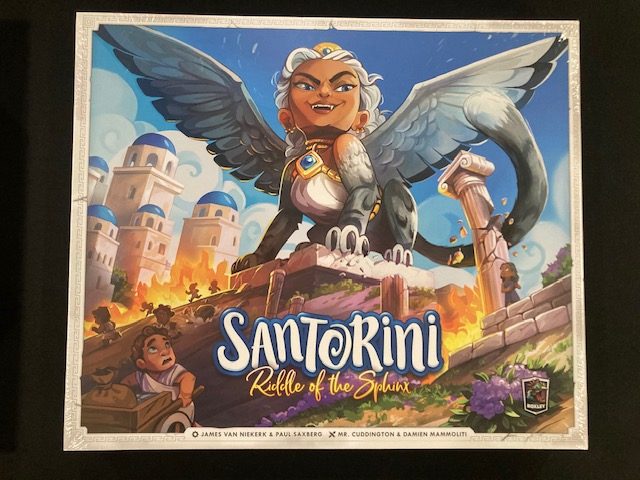
I was very excited for Santorini: Riddle of the Sphinx (which we’ll just call Riddle of the Sphinx from now on), as it promised to take the base game Santorini and make it into a solo and cooperative experience!  
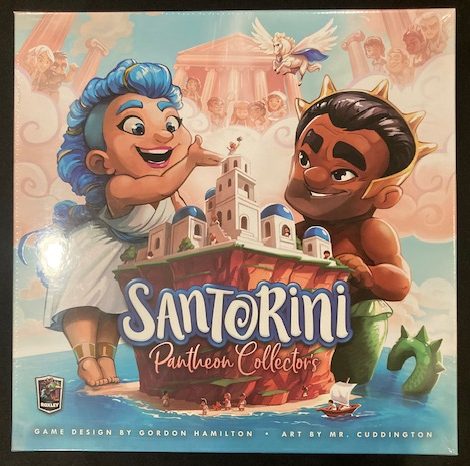
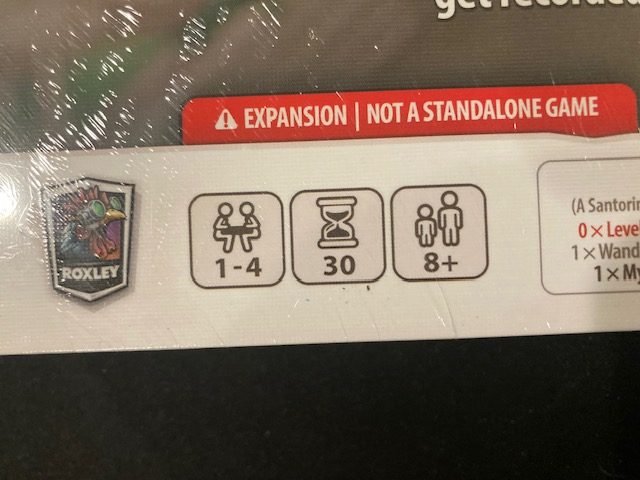
However, Riddle of the Sphinx is an expansion: you must have one of the Santorini  base games to play it (for some of the components).  This particular Kickstarter offered up the “deluxe” Santorini: Pantheon Collector’s Edition, so that’s the one I backed.  

I ended up playing pretty much all weekend, so let’s see how that unraveled!  Was this worth the wait?

Day 1: The Game Arrives and Santorini Gets Played!
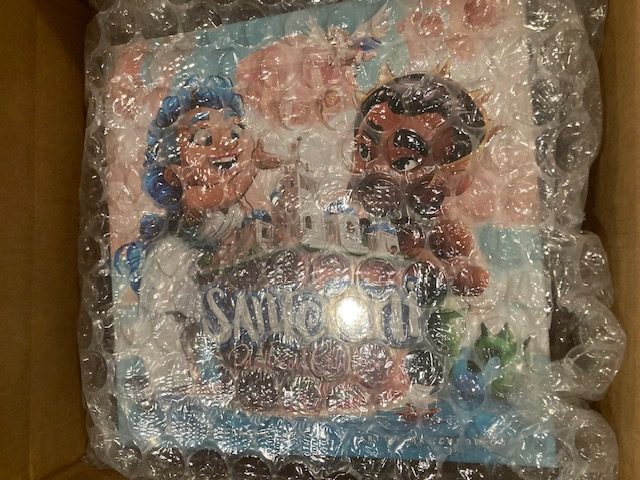
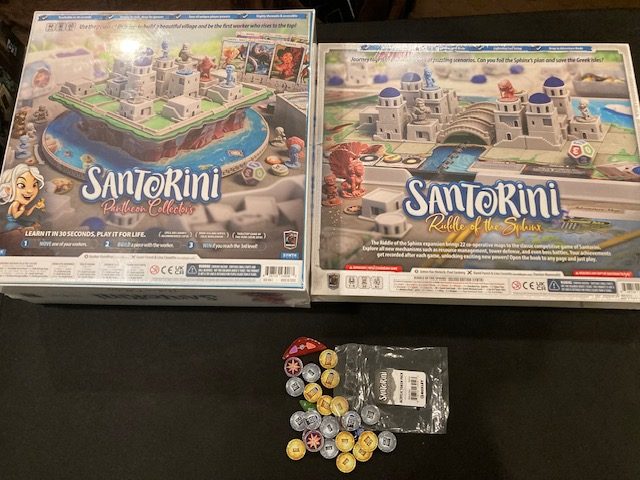
February 28th, 2025: The package arrives with both games!  
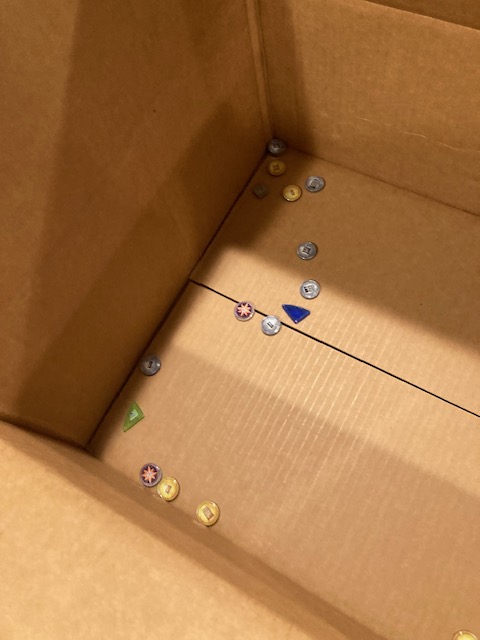
The acrylic tokens bag opened up and spread them everywhere … make sure you pick up all yours!

You can’t play Riddle of the Sphinx until you know how to play the base game of Santorini. So, that’s where we started.
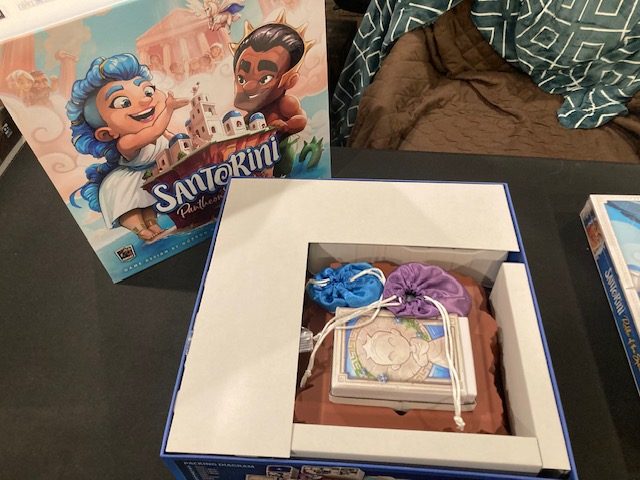
This edition has quite a bit of extra stuff.
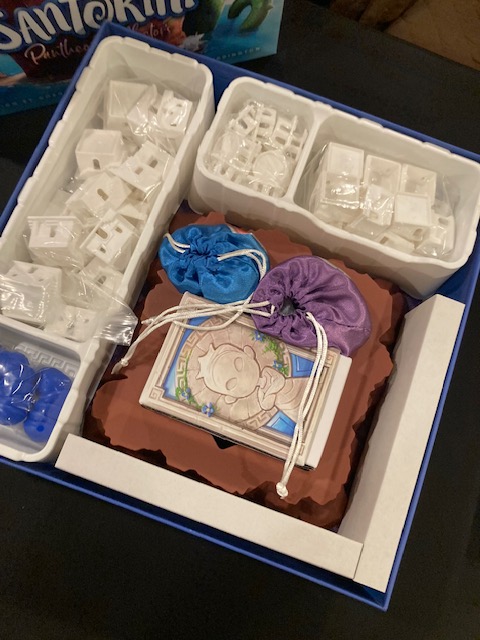
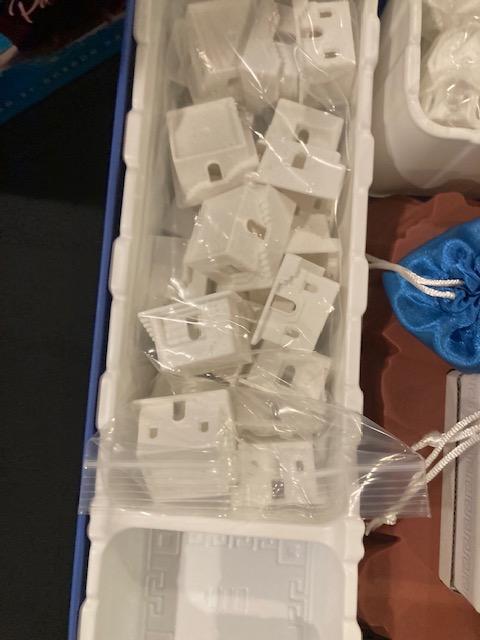
The white blocks and domes are the key components to the game: these are what gets built on the main board.  Those little white blocks have quite the toy feeling!
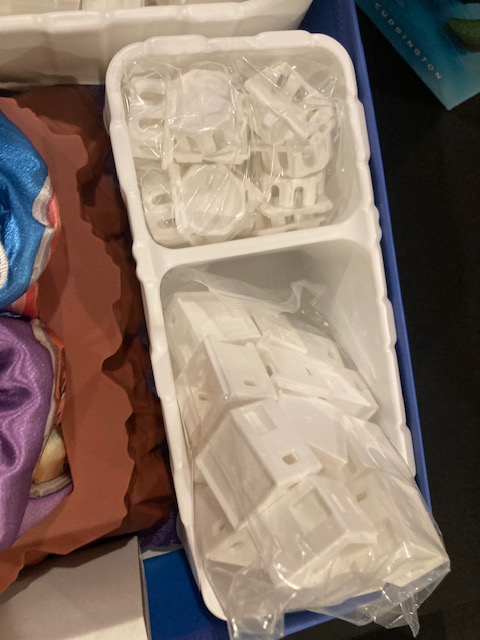
These blocks are the main pieces that will be shared with Riddle of the Sphinx.
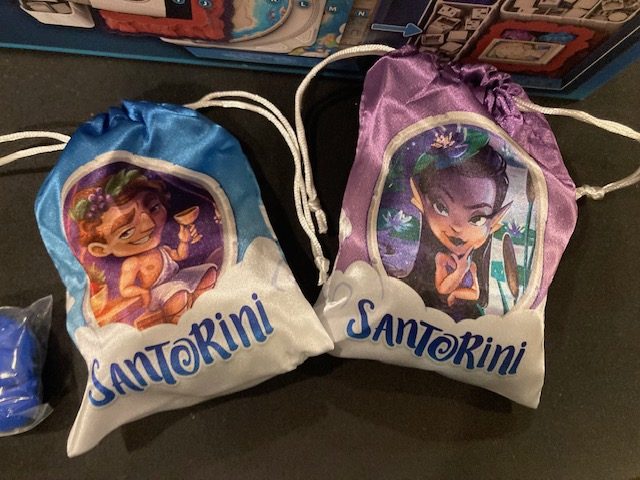
There’s some neat bags with lots of components.  A lot of these aren’t necessary for the main game.
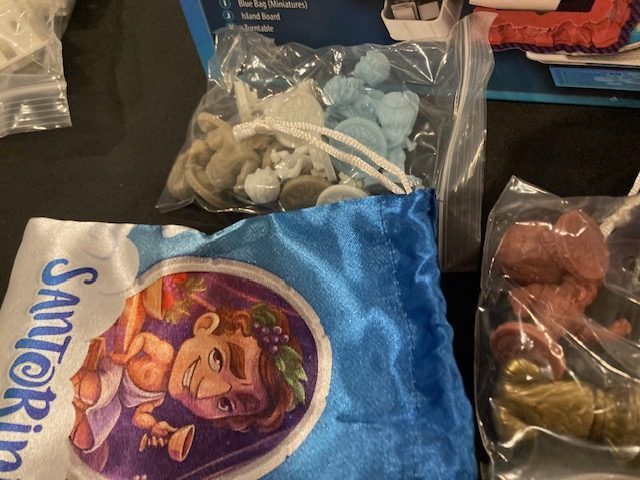
But the workers (in the blue bag) are important; they are what moves around the map.
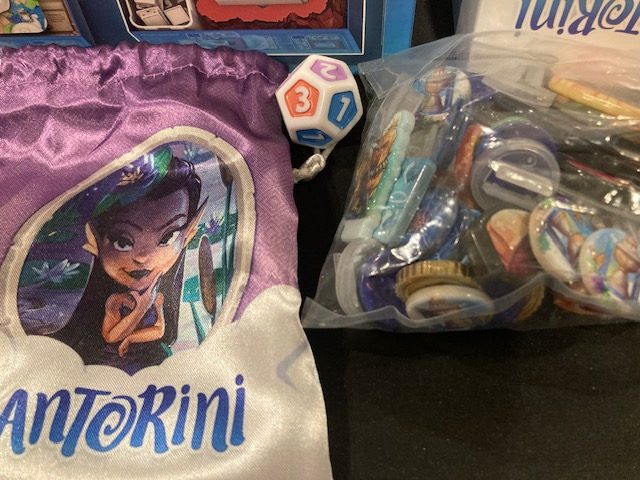
The purple bag has a lot of stuff … that I don’t think you will need until you play a LOT of Santorini and want more content.
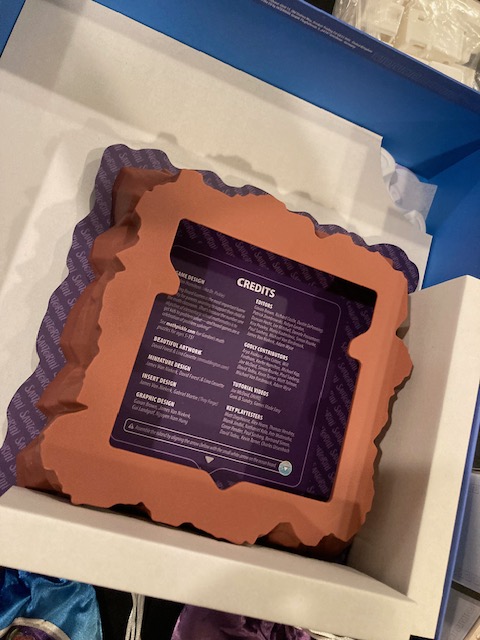
The most important piece for the main game is the board (packed upside down).
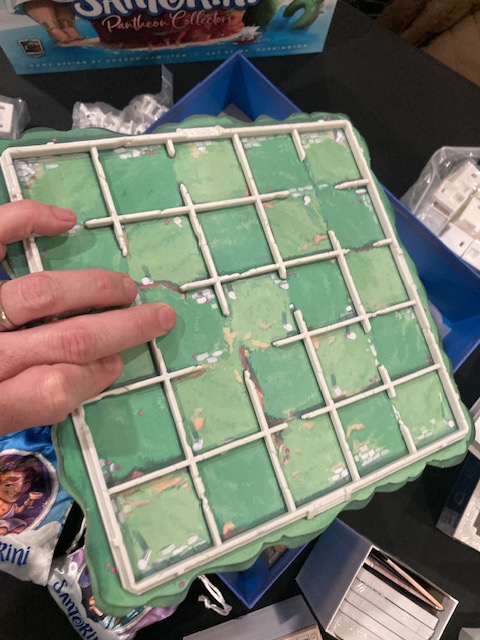
It looks gorgeous!  
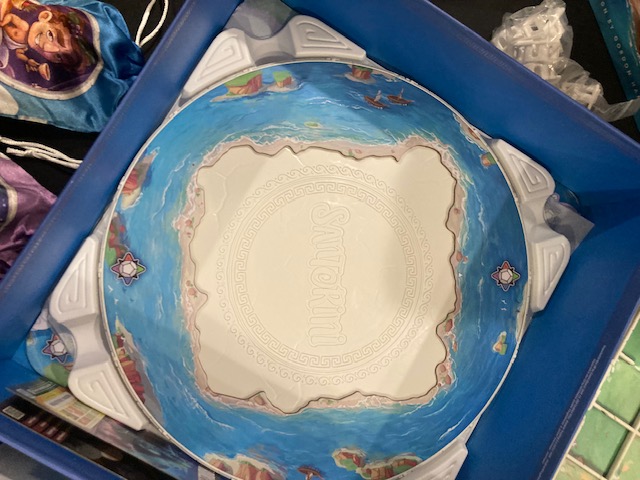
There’s even a lazy susan for it to rotate on!
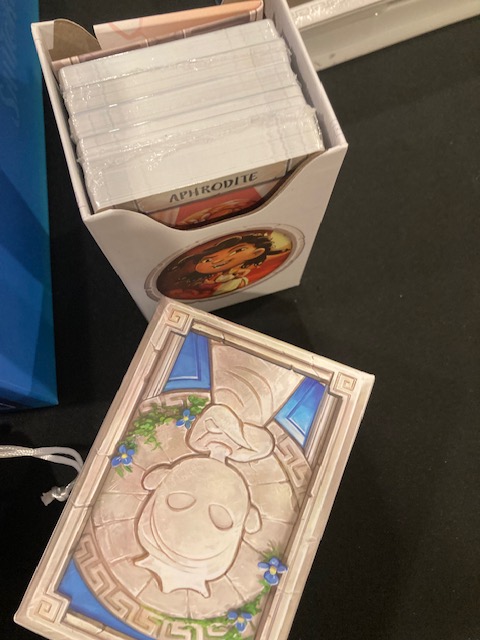
There are some God Cards here (God Cards give each player special powers).  We need these cards for the base game, but we will NOT need them for Riddle of the Sphinx.
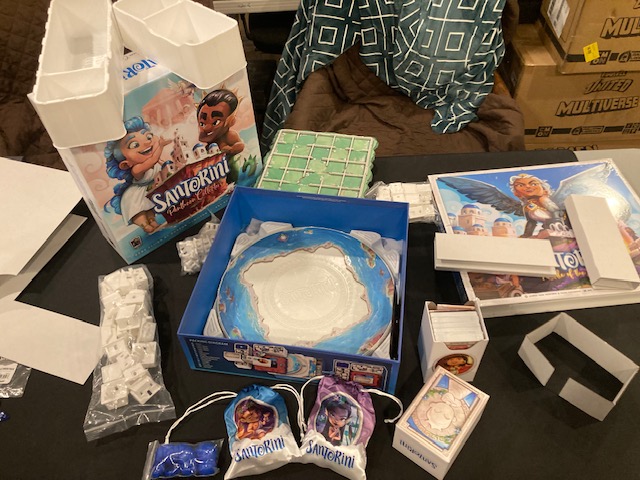
This is a really nice production.  It just looks gorgeous.  I probably spent too much money to get the deluxe Pantheon Collector’s Edition, but it looks nice.
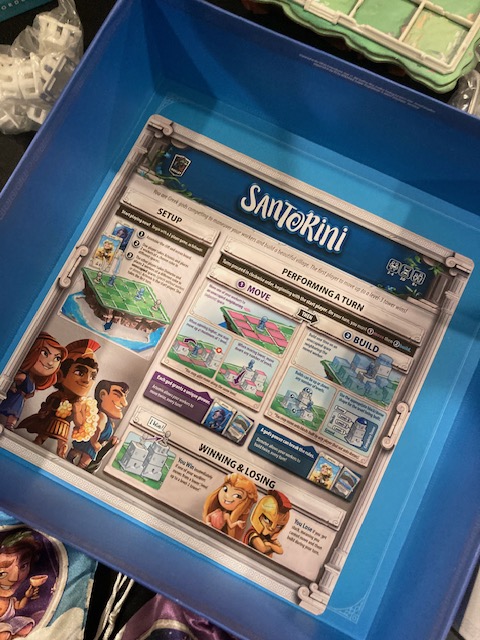
The rules are hidden on the bottom of the box!
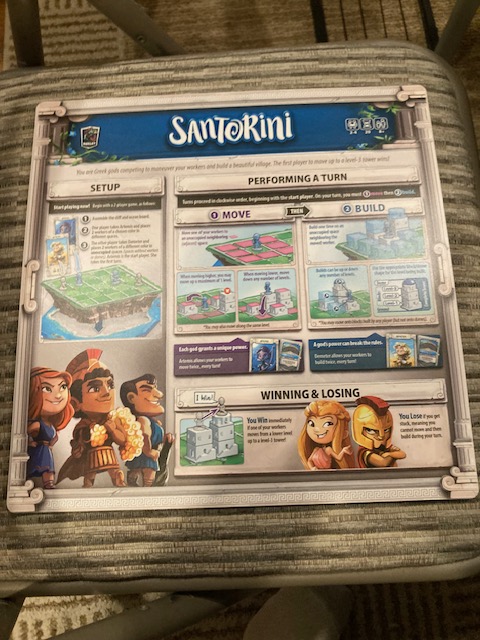
Normally, I would give rules that take up the whole box an F on the Chair Test, but since the rules are ALL ON ONE SIDE, I am going to give this an A!   The rules lay out and are easy to consult!!
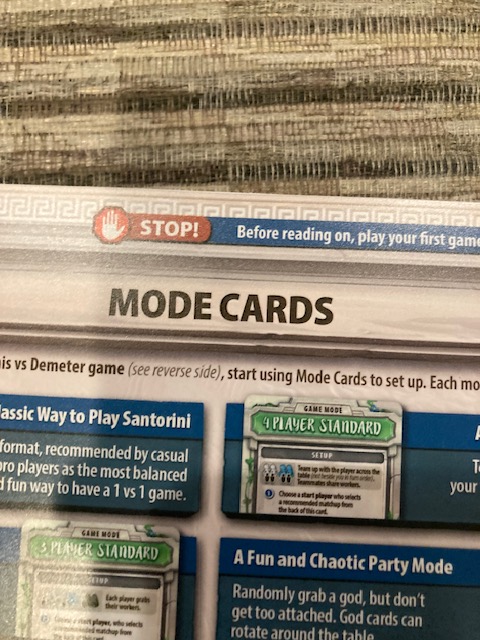
These rules are succinct and terse, but still pretty darn clear.  The game can be described in one page! 
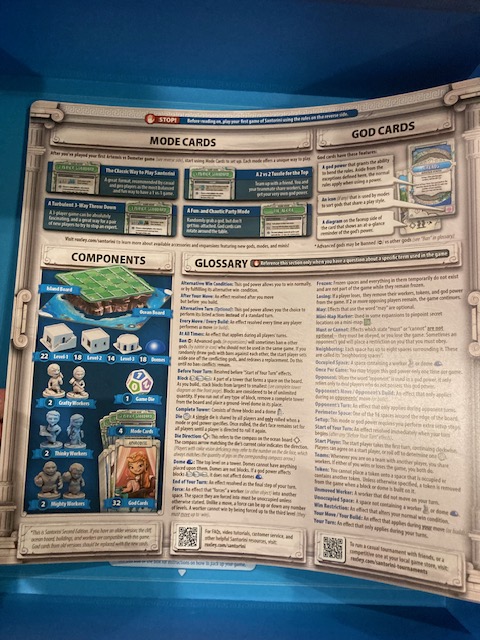
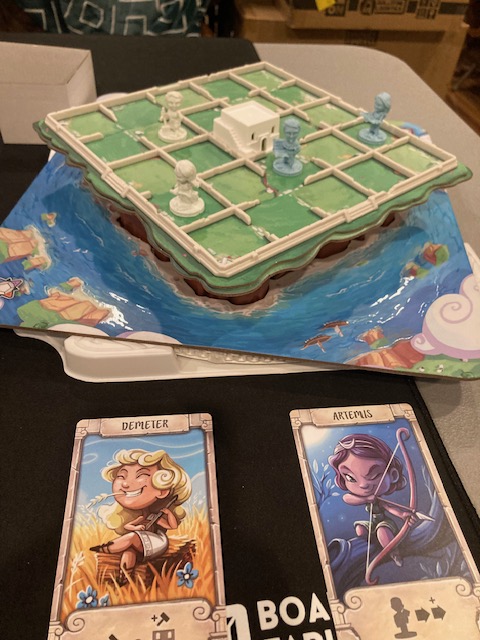
There’s a really nice little “first game set-up” which takes you through your first step or two of Santorini with Demeter vs. Artemis!
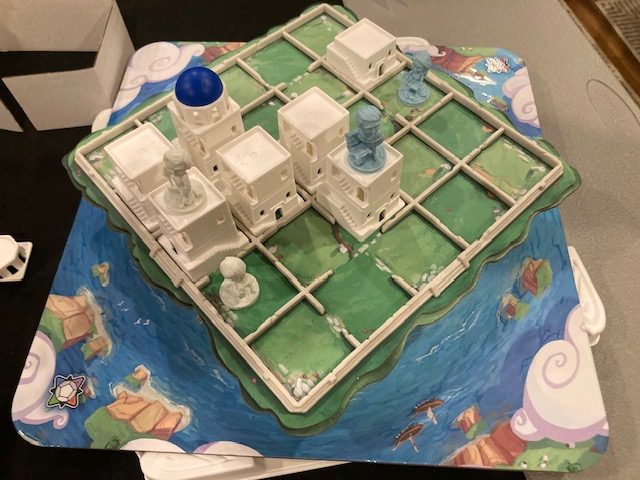
As you play your first game (I played Me vs Me), you get a sense how everything works.  And the buildings that pop-up look really cool! See above!
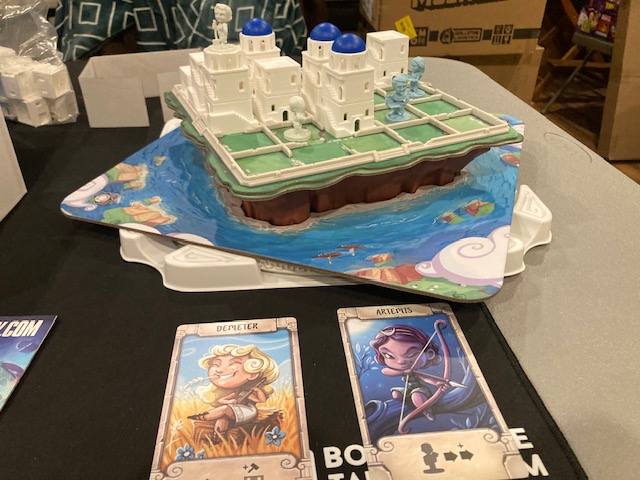
At the end of my first game, I felt like I understood the mechanisms!  This was a simple abstract strategy game that looks really cool!  I see why Santorini has survived in the board game zeitgeist for so long! It’s easy to play, easy to describe, easy to learn, but has tons of interesting and strategic decisions.  This is a neat game.  
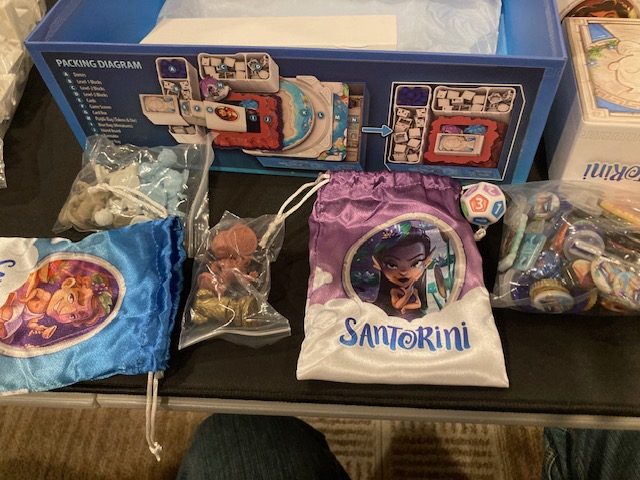
For the record, I do want to mention that it’s not too hard to pack everything back into the box … there’s a little graphic on the side that shows how to do that!
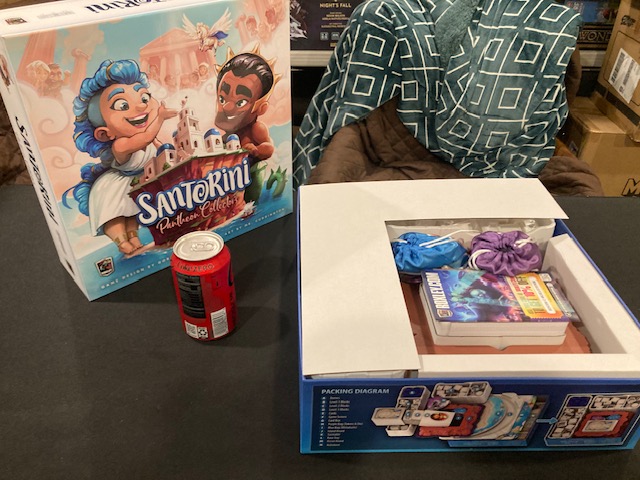
So, I was able to play and learn the base game!  I look forward to learning Riddle of the Sphinx tomorrow!

Day 2: Unboxing and First Games of Riddle of the Sphinx
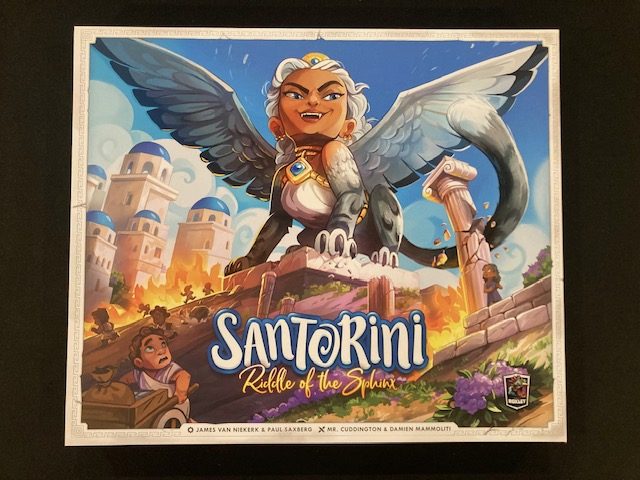
First thing Saturday morning, March 1st, I woke up and was excited to get to Riddle of the Sphinx

It turns the competitive base game of Santorini into a co-op and solo game!
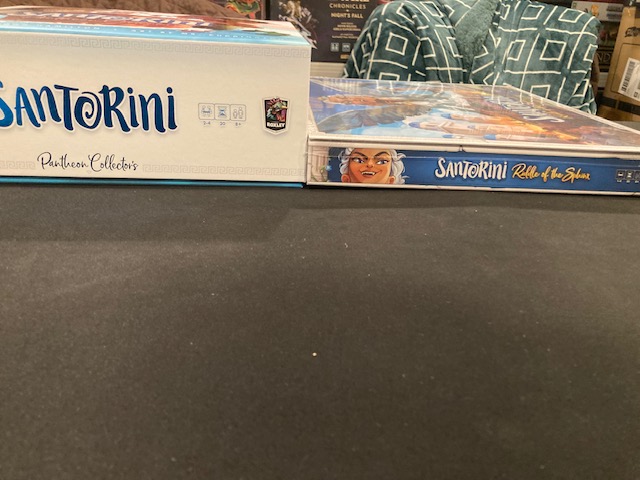
Riddle of the Sphinx has a weird form factor: see above.
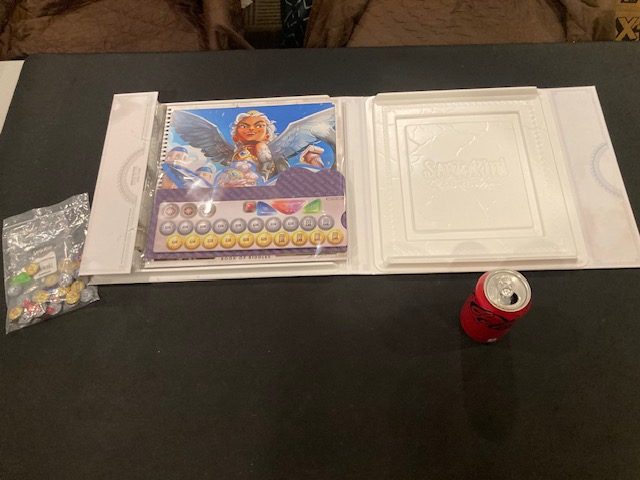
It’s a very wide box that opens like a book: see above (with Coke can for perspective).
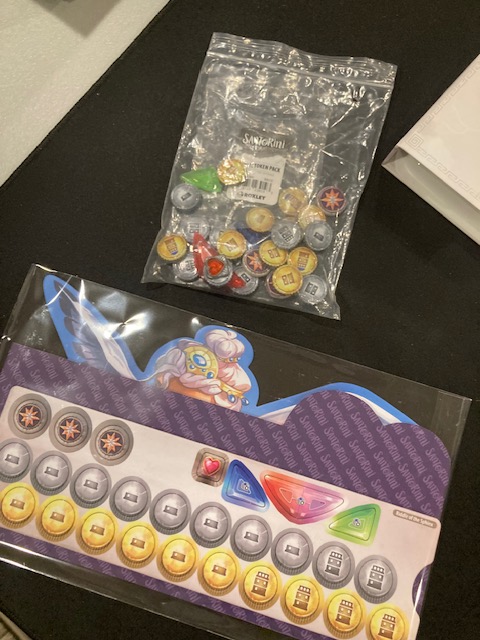
The Acrylic tokens replace the cardboard tokens.
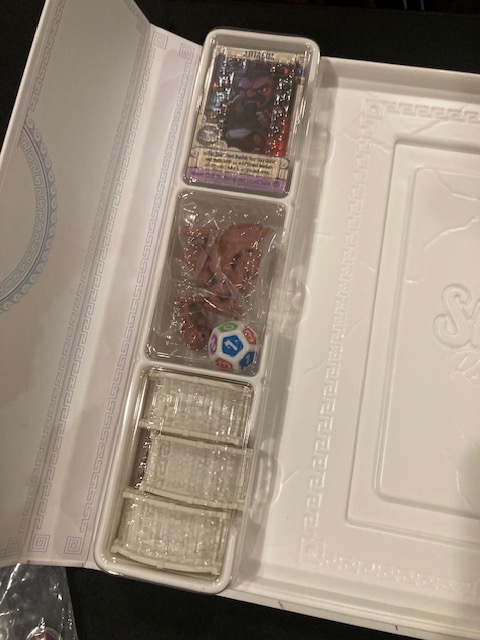
Off to the left are the bridges, figures, dice, and cards. I am glad I took a picture of this, because when I went back to repack the game, I had to consult my pictures!
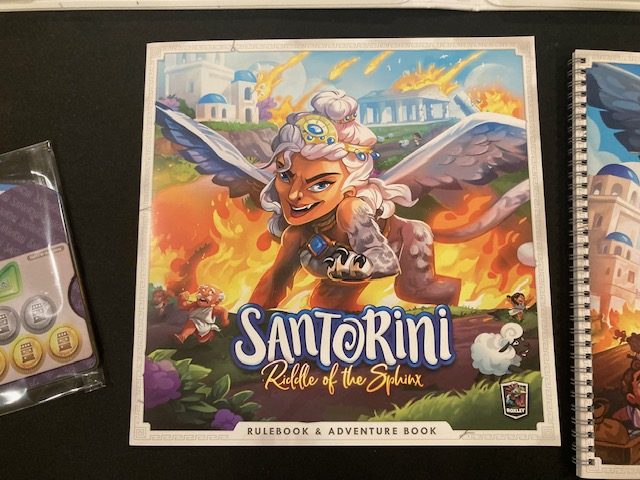
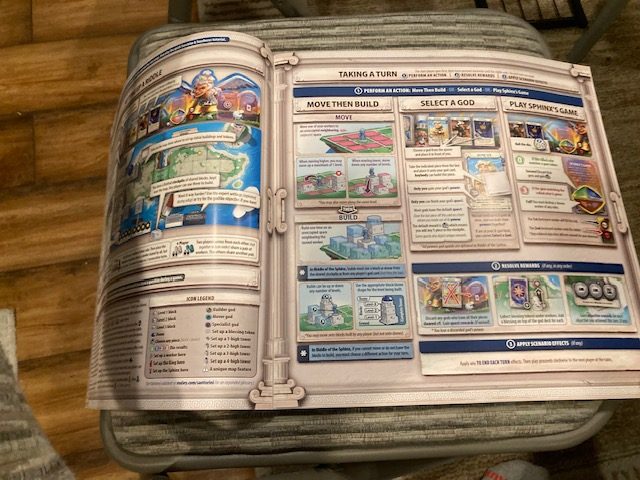
The rulebook … is huge. Not from a length perspective, but huge as in “the form factor of this book is very wide and very tall!

This rulebook completely fails the Chair Test as it droops over the edge and makes it very hard to consult on the chair next to me.  See above.
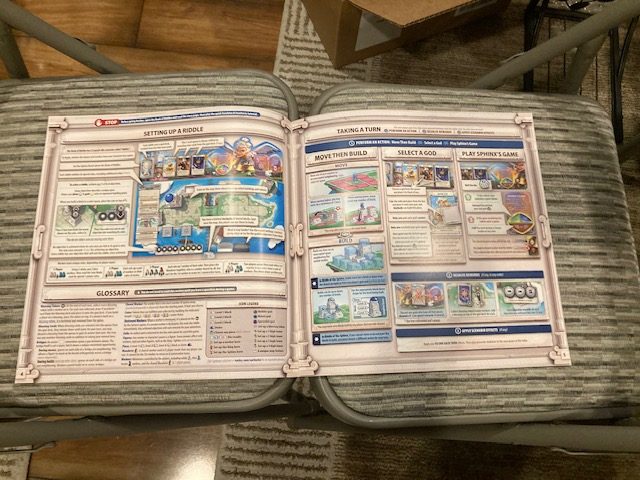
The standard workaround for rulebooks this big is to put them across TWO CHAIRS, with the spine in the middle.  (We first discovered this “workaround” when we looked at Batman: Gotham City Chronicles: see here).  This makes it so can consult the rulebook on the chairs next to you.  Sigh: this rulebook has a terrible form factor!  It’s far too engulfing!
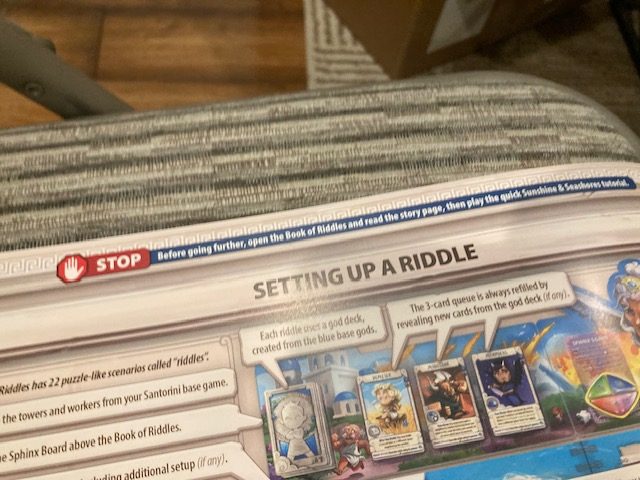
The weird thing is, you almost don’t need the rulebook???? The Book of Riddles (which we’ll discuss below) has an EXCELLENT tutorial built in!
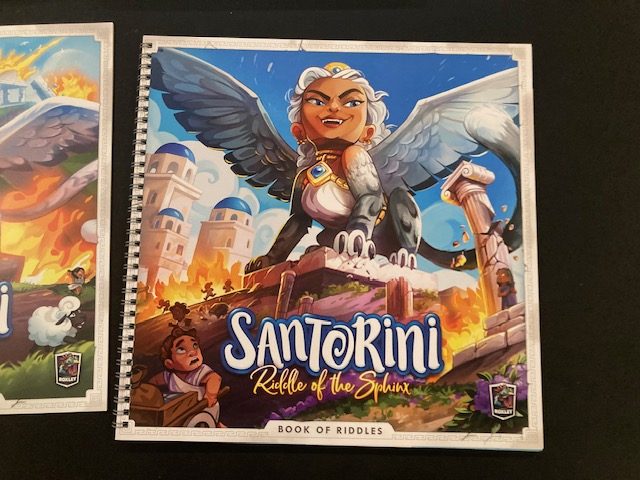
The Book of Riddles (see above) is the main component of this expansion.  There are 22 “riddles” in here which the player(s) must solve!  
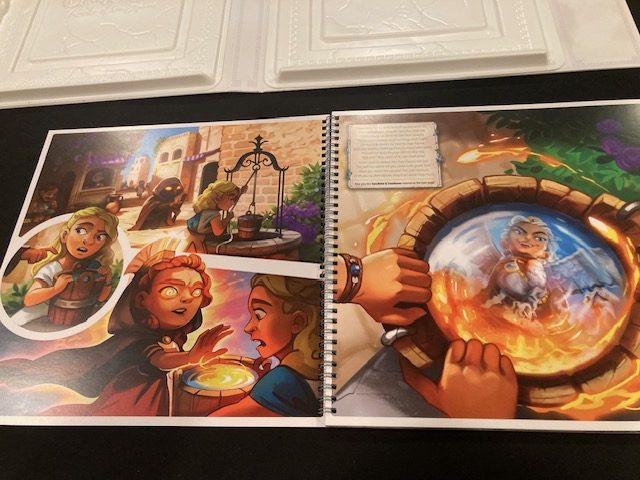
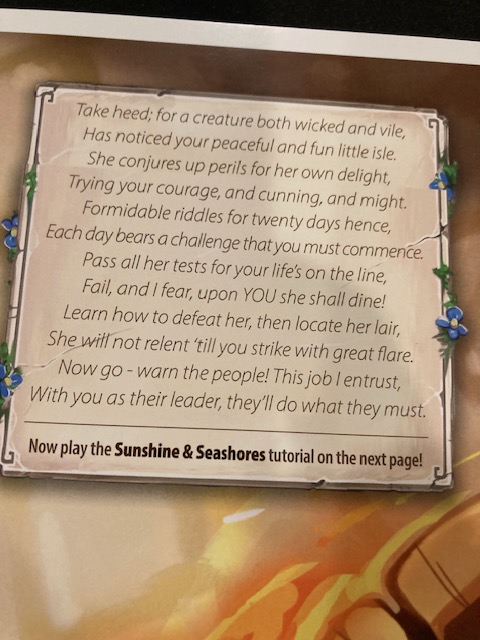
The Book of Riddles throws you into the first game with some pretty pictures and flavor text …
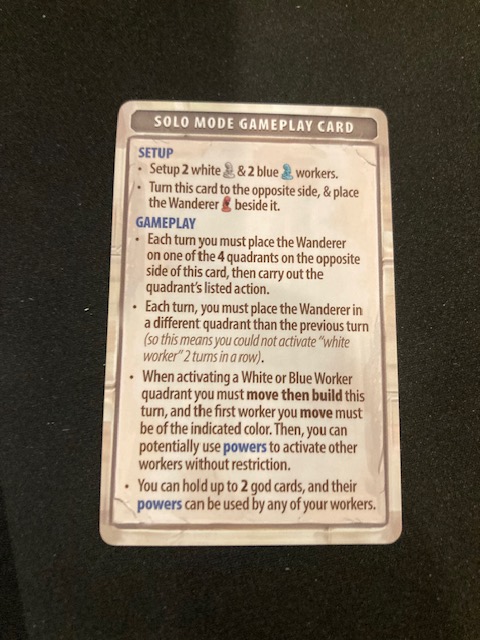
A quick note: we’ll be playing solo, which means we have some weird special rules.  We have to have a figure called the “Wanderer” whose sole purpose is to make sure we never do the same action twice in a row!
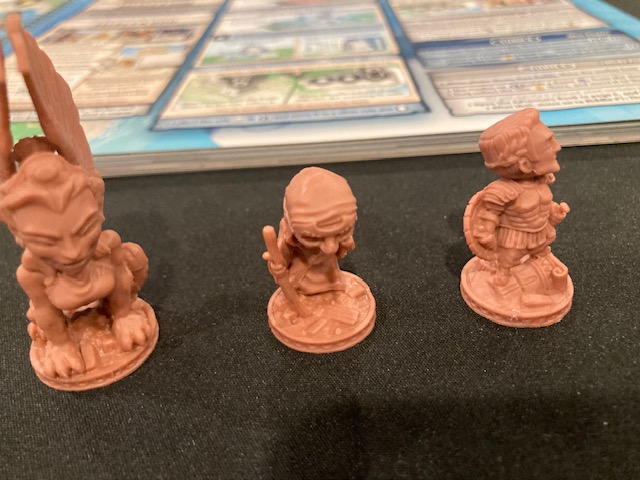
The Wanderer is the middle guy (we’ll see the Sphinx and other dude later).
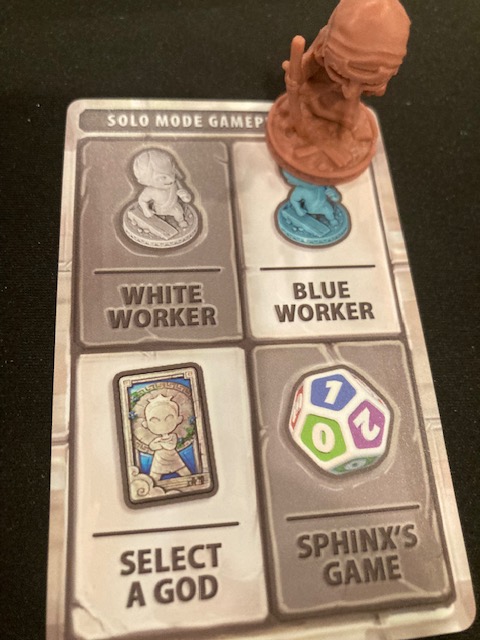

Using the Wanderer,  the solo player selects an action each turn (one of the four above), but can never choose the same action twice in a row.
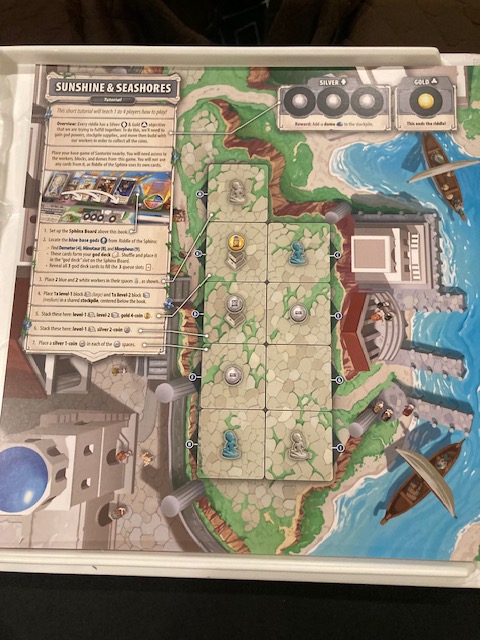
The first Scenario is Sunshine and Seashores: see above! 
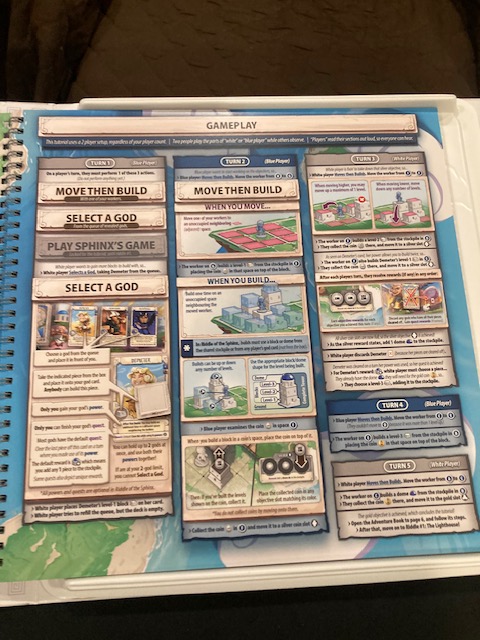
The opposite side of the page has a painfully precise (in a good way) description of how to play the first riddle!  This is a complete, step-by-step run-through of a winning game so you can see how all the rules work together!  This tutorial is a fantastic way to learn how Riddles work!
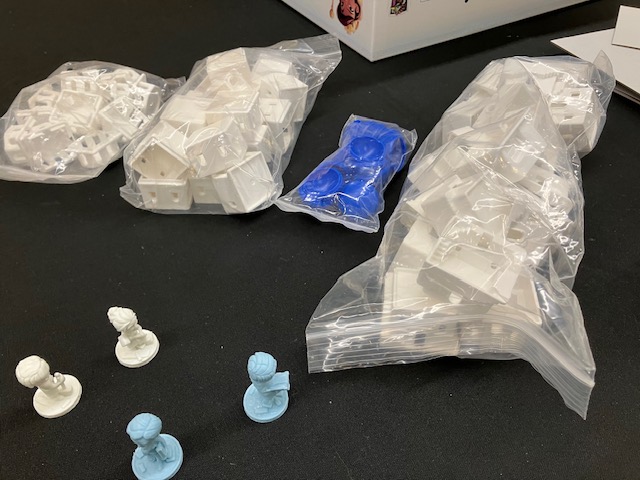
The only thing you “really” need from the original Santorini box are the blocks and the workers.  That’s it!  See above!  All that other stuff you saw as I unboxed Santorini: Pantheon Collector’s Edition?  Completely useless here!
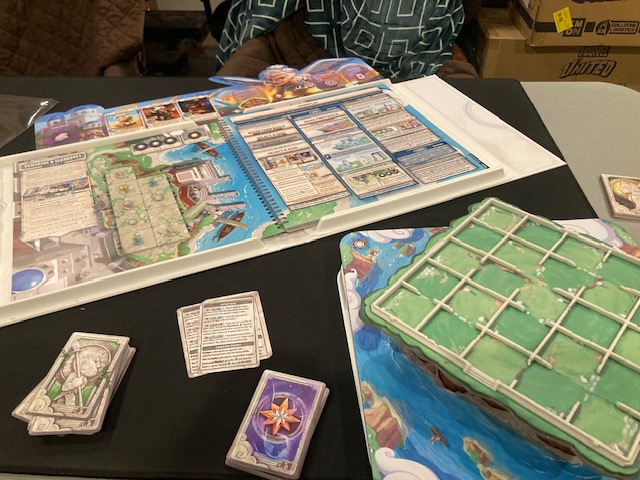
In fact, I made the mistake of thinking we needed the original board (above right) when I played my first game!  Nope!  
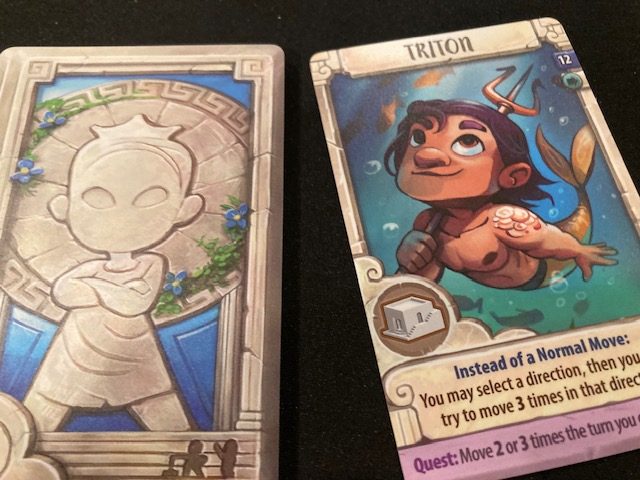
Riddle of the Sphinx has its own God Cards: see Base Gods above and Friendly Gods below!
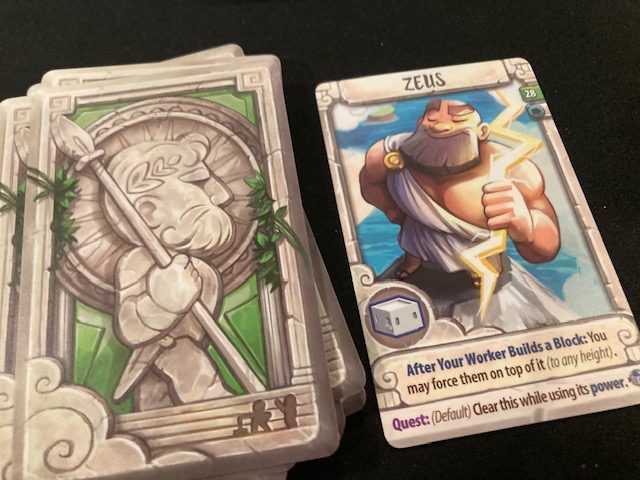
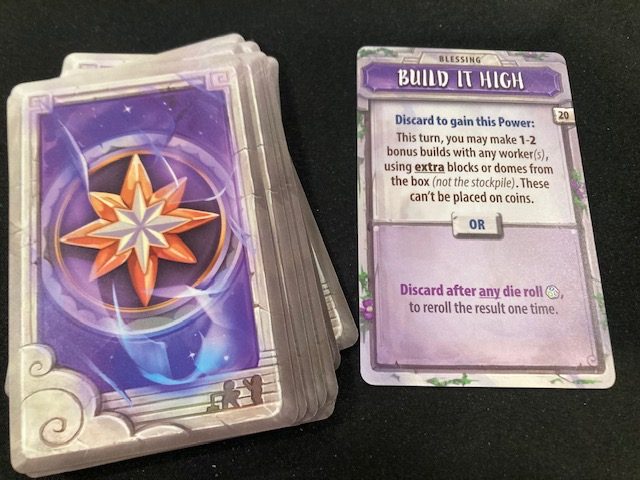
There’s even a notion of Blessings that comes out in later games!
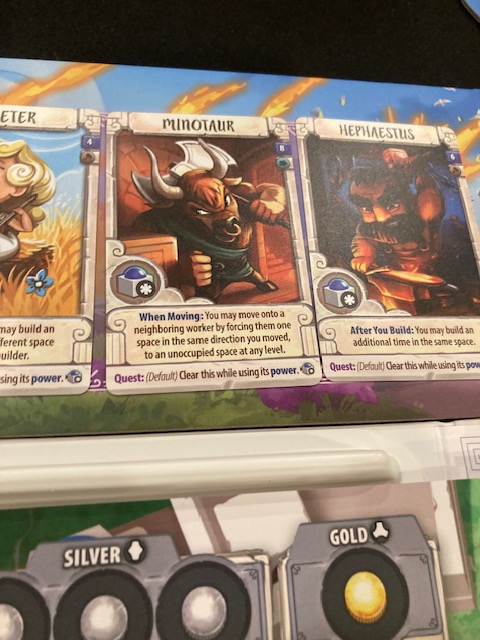
The Gods are a little different here; you kind of use them up and throw them away!!
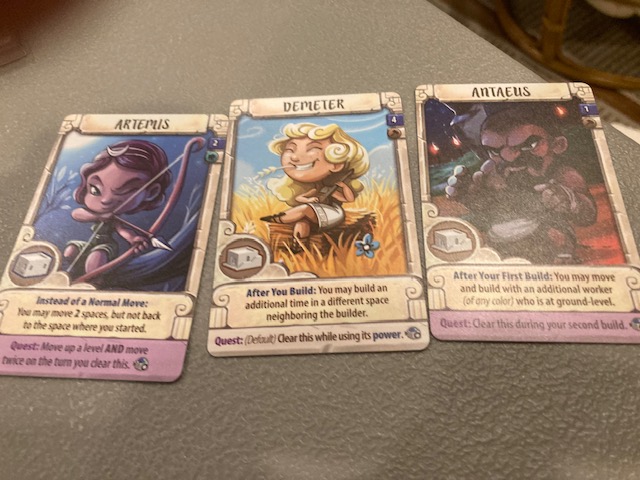
The Gods give you powers, but if you complete their quest (at the bottom of the card), you (usually) get a new piece you can build.  Why is that so important?
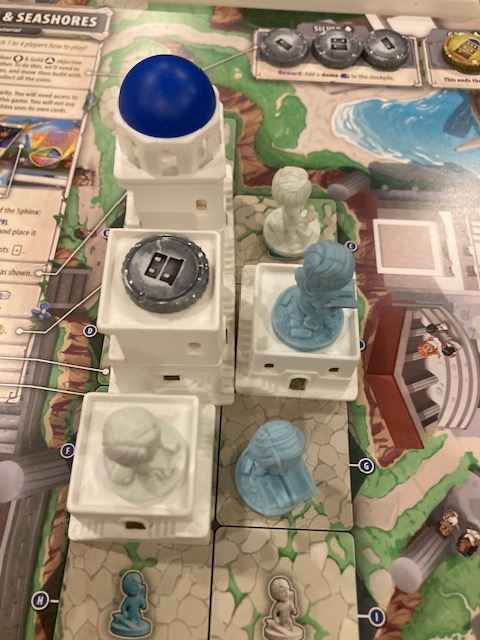
Riddle of the Sphinx is a game about scarcity.  You don’t have all the pieces you need to build your towers and edifices, so you have to earn them as you play.  By having Gods complete their quests, you get new pieces so you can build as you need to. 
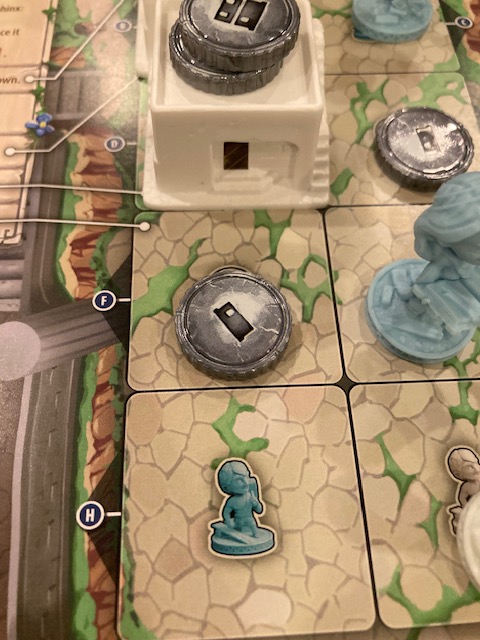
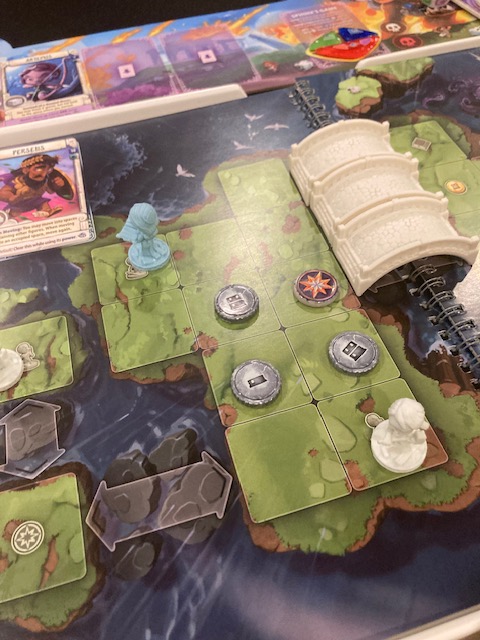
The coins on the map describe what you need to build: see above as I need to build a level 1 building underneath the coin to get it!
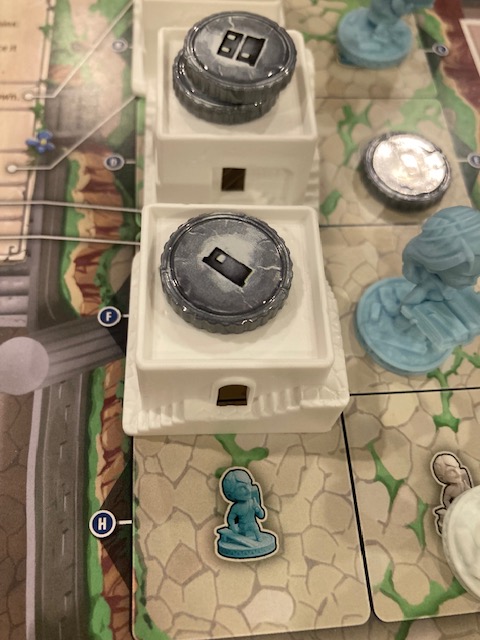
And then I do!
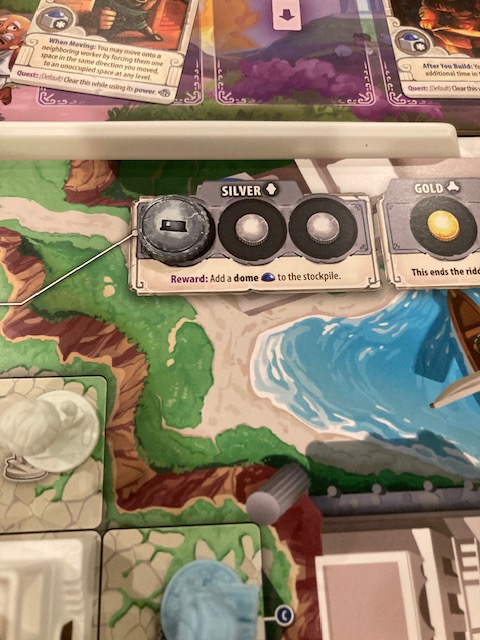
The coin goes to the top (or bottom) of the page to denote you have “finished” that subgoal.    Usually, you need to get all Gold coins to complete the Riddle, and all the Silver coins give you extra help/bonuses.
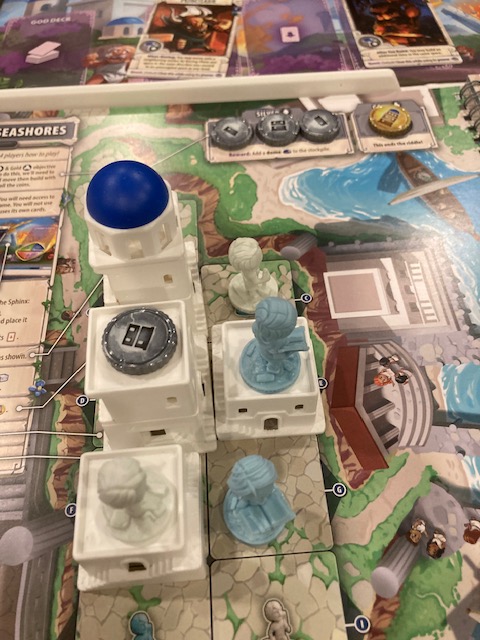
See above as we build everything, as we try to understand how to solve a Riddle! It’s all about building towers when pieces are scarce!  You have to earn the pieces to build what you need!  

I need to be clear here; this tutorial is great!  I jumped right in and was able to start playing right away!  The tutorial held my hand for the first game, and then threw me into my second game.  And I was felt so comfortable jumping in after that!
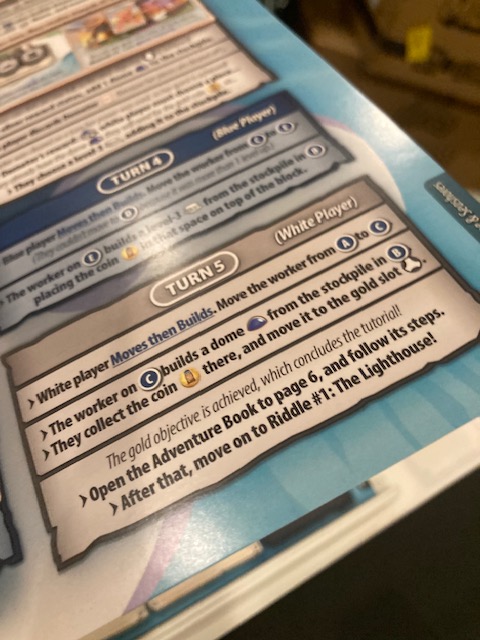
See above for an example of how good that Tutorial is!
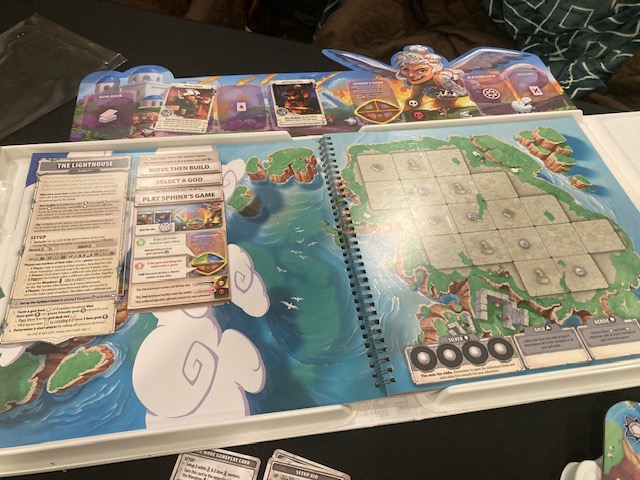
After the Tutorial is Riddle 1!  As I jumped into Riddle 1, they added some new rules: The Sphinx’s game!
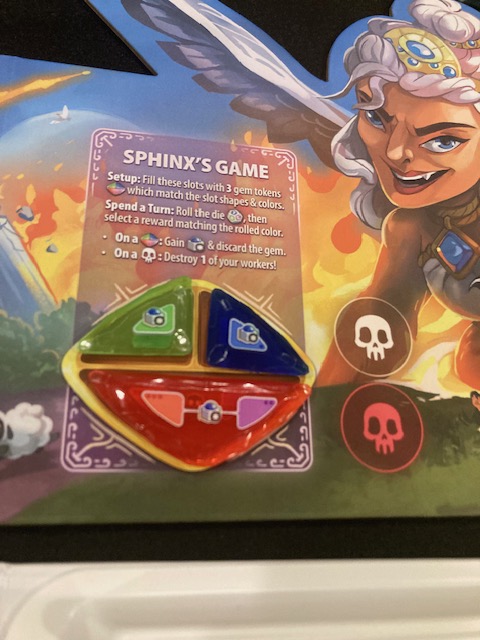
The Sphinx’s Game allows you to roll the dice and “hopefully” get one of the gems! If  you get a gem, you get  free piece to build! If you fail (because the gem is gone), you lose a worker!
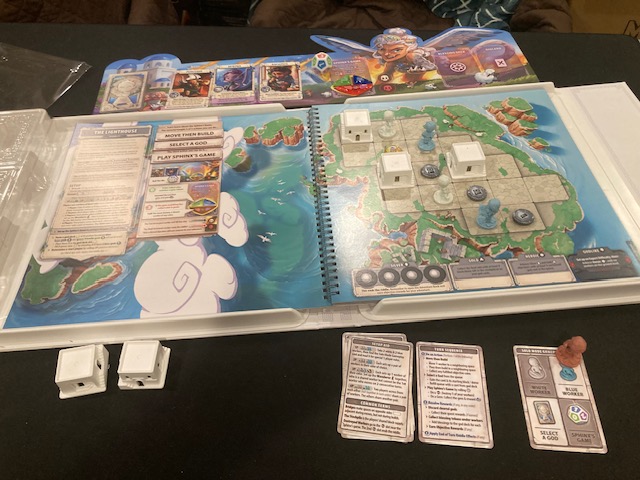
Just like our Tutorial, the game board does a real good job describing set-up on the same page as the Riddle itself. It’s interesting, I don’t think I ever looked in the rulebook for any rules in the first few games: almost everything I needed was presented in the set-ups of the various riddles.
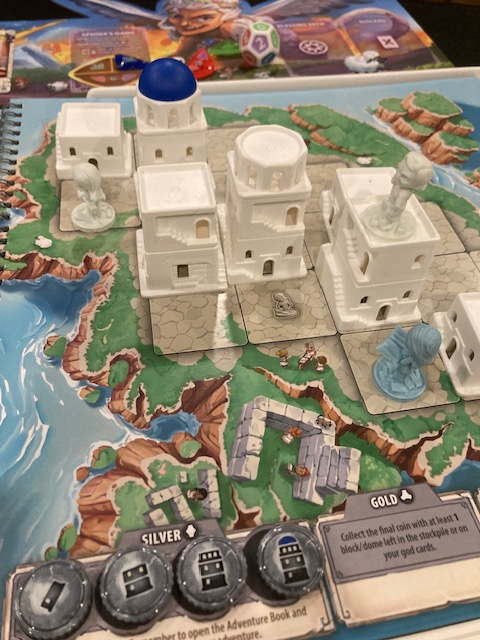
Look how great this looks: see above.
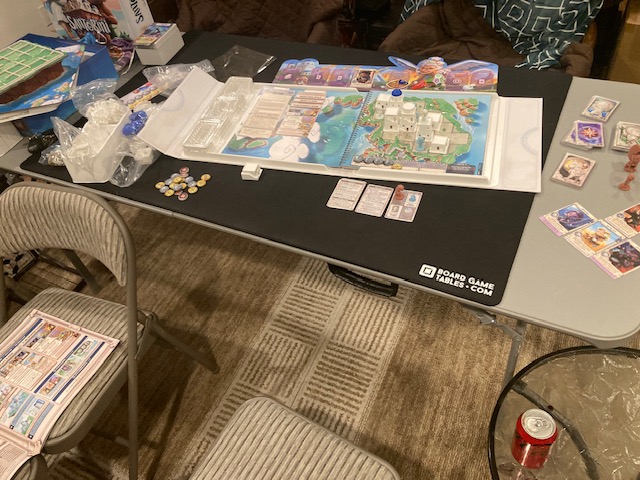
At the end of Day 1,  I unboxed Riddle of the Sphinx and played through two scenarios solo;  this gave me the sense of how everything worked.  
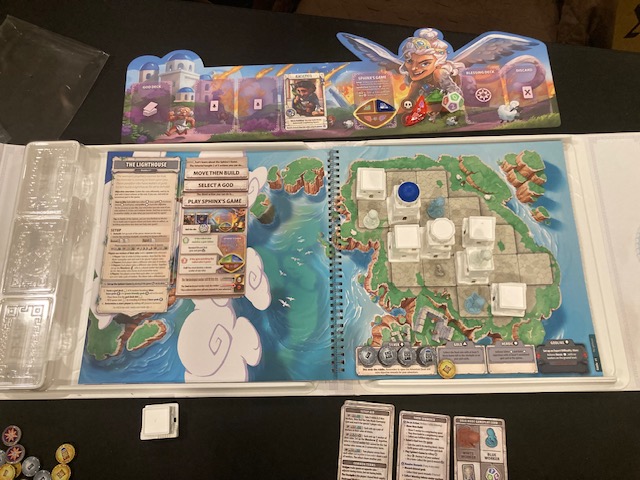
This is a puzzle; you have to figure out when to build, when to recruit god powers, when to finish a god quest (so you can get more pieces), and when to finish the Riddle (which usually means building a tower on a gold piece place!).

Day 2: Campaign and More Play
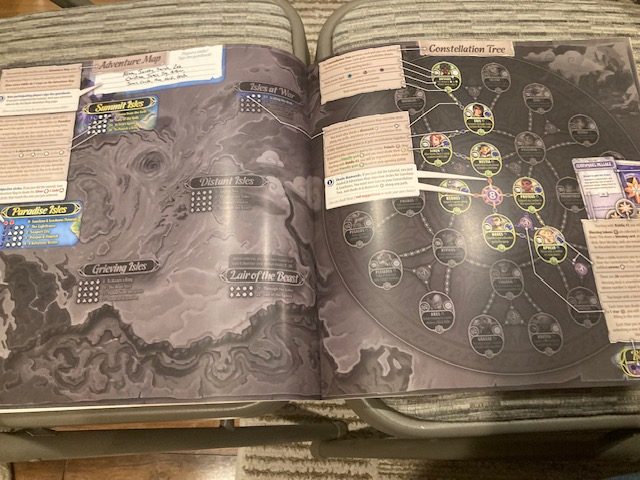
So, Riddle of the Sphinx is kind of a campaign game.  Included in the rulebook are two pages per campaign: The Adventure Map and the Constellation Tree.  
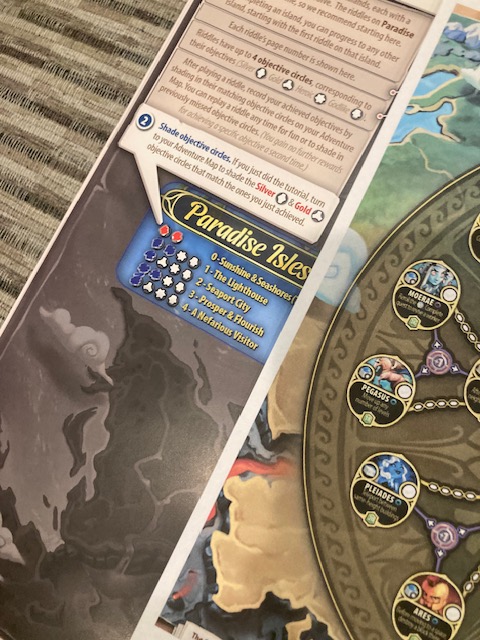
The Adventure Map has you “mark” off bubbles on how well you did when you finished a puzzle.   (There are multiple conditions you can satisfy, see below).
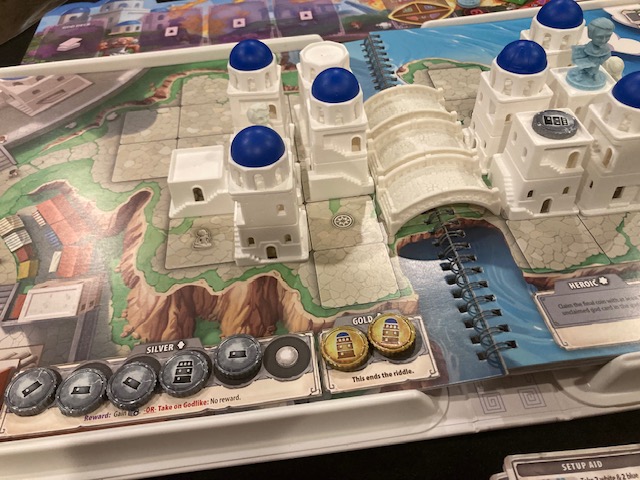
See above as there are Silver, Gold, and Heroic (above) conditions you can satisfy. Godlike not pictured.
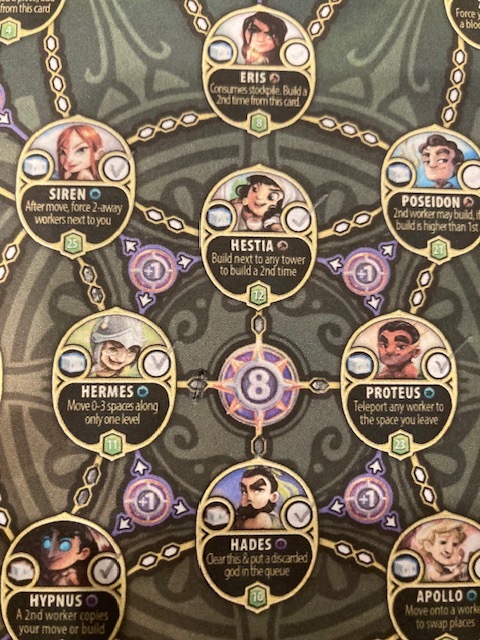
The bubbles you mark off in the Adventure Map corresponds to how many bubbles you can mark off in the Constellation Tree! See above!  Basically, the Constellation Tree unlocks what are called Friendly Gods!  The more Friendly Gods you have, the more control you have when you attempt a puzzle (remember, God powers are pivotal to doing the riddles, especially if the powers are useful).
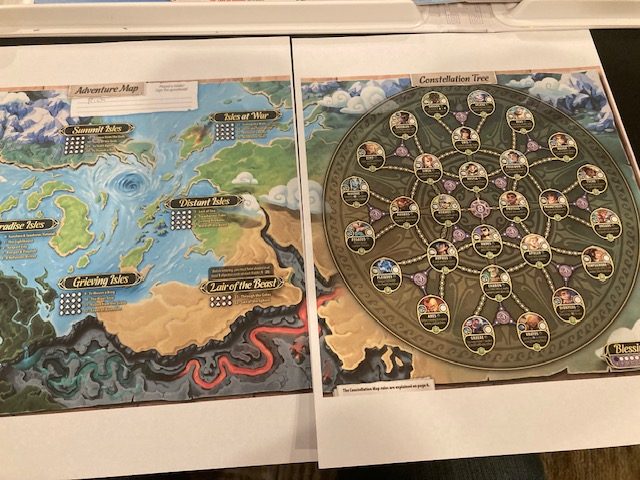
Rather than sully my pristine books, I went to make a copy of the two pages …  well, it’s too big for my copier, but you CAN just print them directly from Roxley’s web site.  So, to play a campaign, you need both pages (see above).  After every Riddle, you mark off how many achievements you did!  And then you can “maybe” unlock a Friendly God or two!
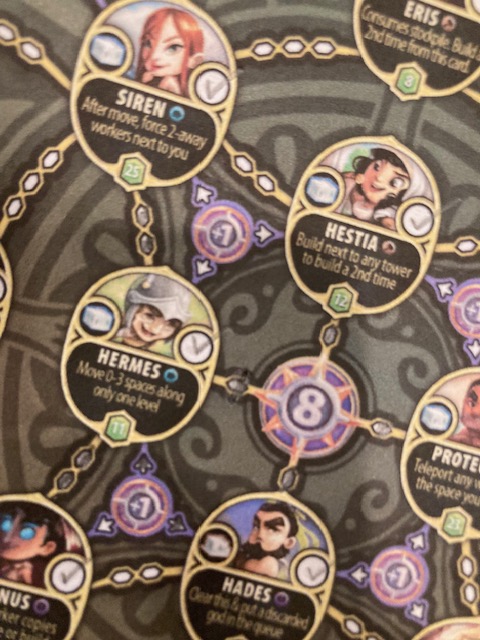
I used a pencil (see above): Warning! You should probably use a red marker or something VERY distinct.  It’s REALLY HARD to tell what you marked with a pencil.  Can you tell above?  Even zoomed in, I can barely read it!   Learn my mistake, use a more “colorful” writing implement so you can see the marks.
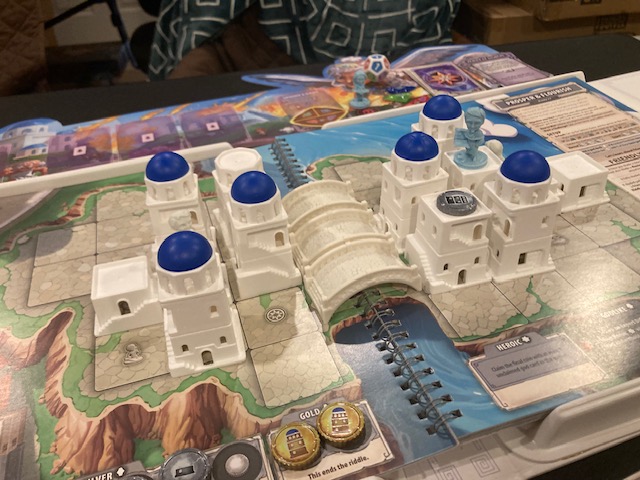
So, the first part of my Sunday was getting the Campaign maps marked up for my first few games, when I headed into more puzzles!
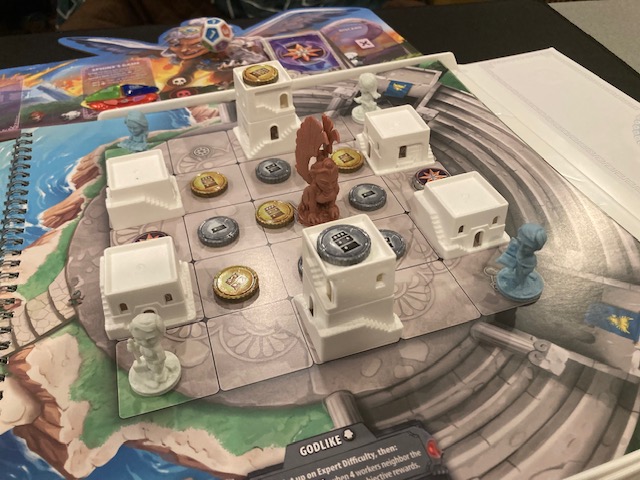
At one point, the Sphinx even made an appearance!
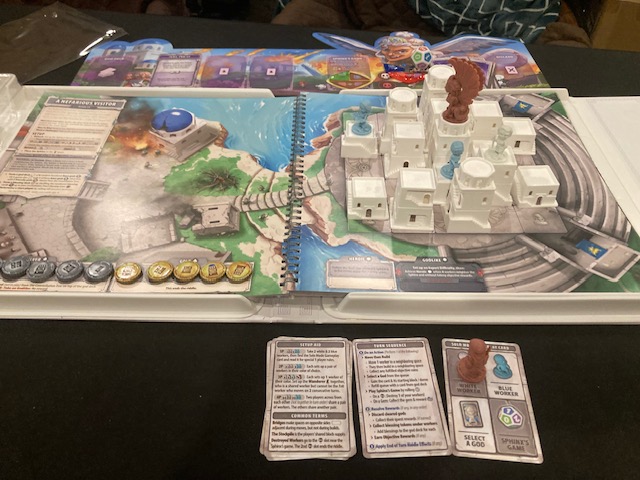
By the end of Day 3, I had played 6 Riddles and started my way into a solo campaign.

This is a puzzle; make no mistake about it.  It’s more puzzle than game.  I loved it. You may not.

Cooperative Play
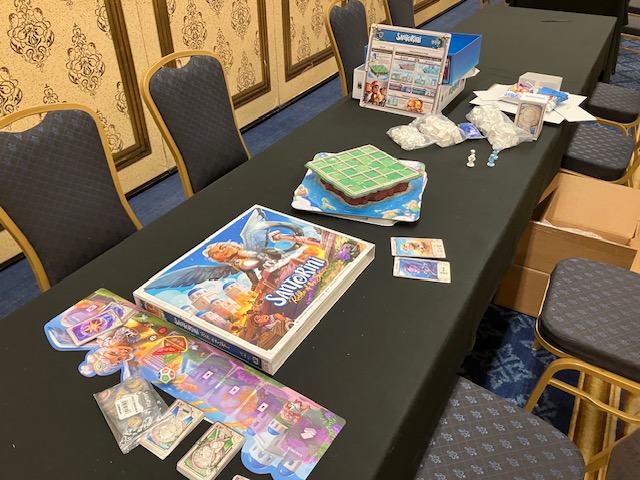
     

So, this is different week: I am at Dice Tower West and not with my normal gaming group. I brought Riddle of the Sphinx with me to play it cooperatively with “some people”.  My core game group and I have a base level of trust and respect, so cooperative games are easy for us to jump into.  Sometimes, it’s a little harder to jump into a cooperative game with people you don’t know.  How did that go for us with Riddle of the Sphinx?
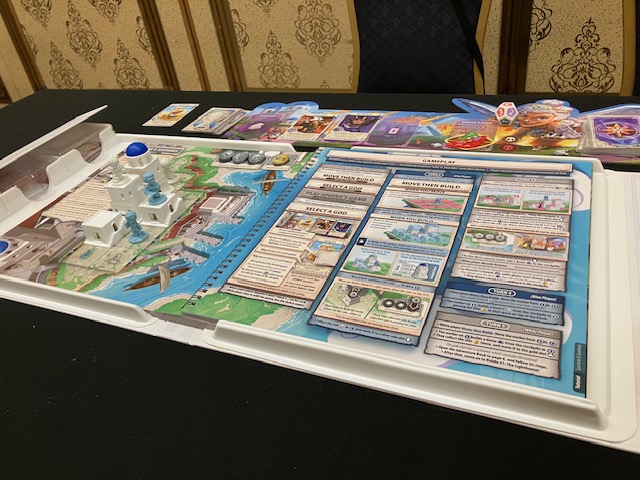
I met a real nice fellow named Charles.  He and I had a very frank discussion about the Alpha Player problem  before we started the game.  I worry, since this is more of a puzzle than a game, that Riddle of the Sphinx might drift towards having Alpha Players take over.  
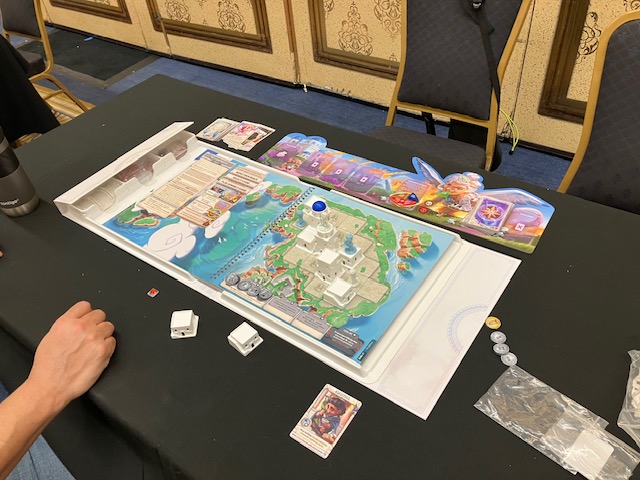
From our very frank discussion, we made it clear that we would be supporting each other but still occasionally having suggestions: no Alpha Playering.   I admit, I had never thought of this solution to the Alpha Player problem: just talk about it and agree to not do Alpha Player each other.  And you know what? That worked fine!
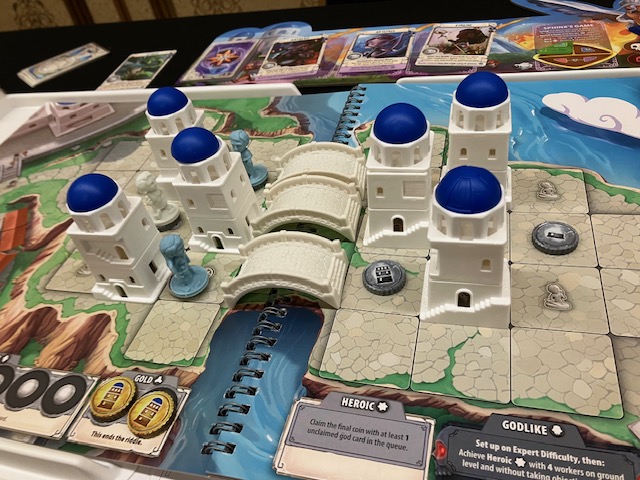
Charles and I started from scratch and played the first 4 riddles (plus tutorial) in about 2 hours.  We had a good time and got some riddles done.  (Since I had played solo previously, I was able to shepherd the game and make it much faster to teach and learn).
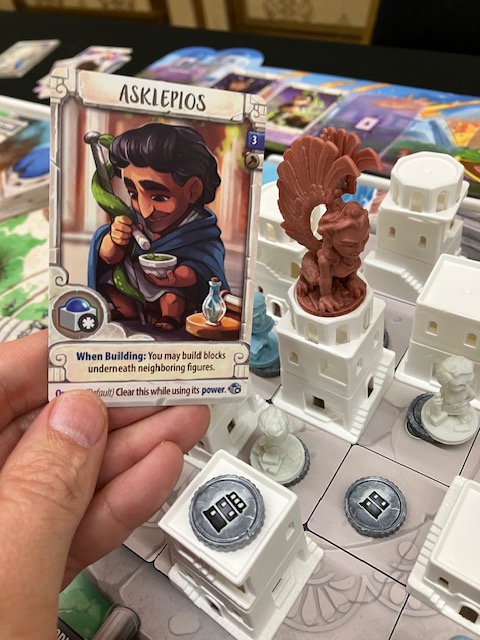
Two observations came up during co-op play:  
1) Even though this is a puzzle (which tends to attract the Alpha Player more), because we have God Powers (i.e., assymetric powers: Charles had Asklepios, see above, and he was pivotal!), it’s harder to Alpha the other players because all the God Powers are very different.  It’s not impossible, but it does make it harder to keep track if each player is cycling through God Powers fairly quickly.
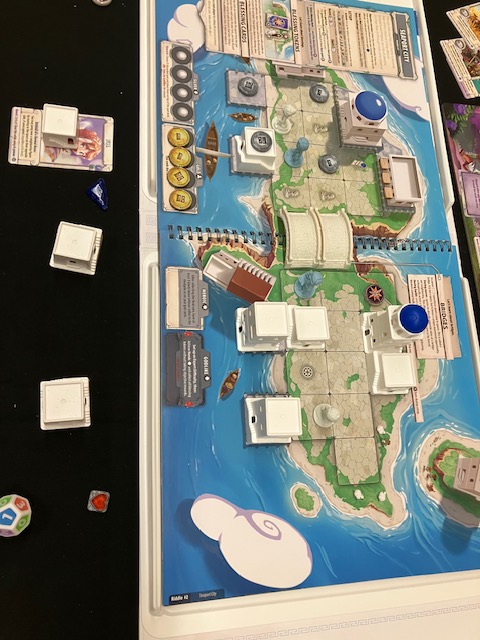
2) You can solve the game without burning your brain(s).  In a convention environment, you just want to have fun and play.  If you “ignore” the silver goals and just concentrate on “winning” a game, you can just do the gold goals, and the game isn’t too hard. It becomes a lot harder if you want to do ALL the silver goals!    You can adjust the level of difficulty of the game as you are playing!  You can choose to just go for the win, OR you can choose to get as many objectives as you want! The former is a more “light-and-fun” mode, whereas the latter is a more “brain-burny” mode.   

So yes, because this is more of a puzzle, it could have easily turned into an Alpha Player experience.  But, between diverting the Alpha Player with a frank discussion, and having the asymmetric God Powers, the Alpha Player Problem wasn’t a problem.

The puzzle was fun cooperatively.  

Curse and Blessing
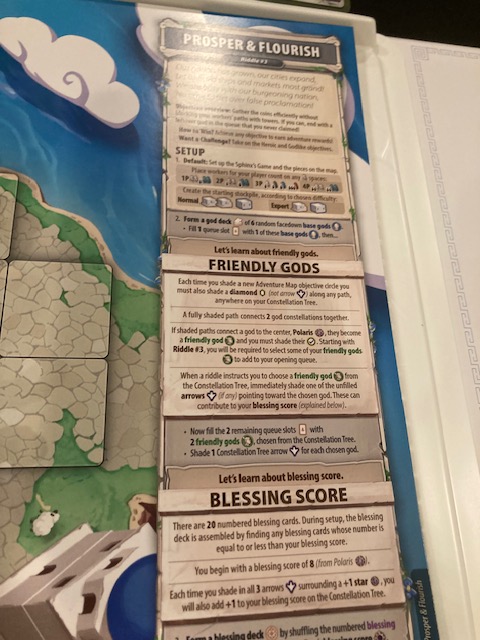
One of things that blew me away was how easily I was able to learn the game as I wen by reading the little blurbs on the board: see above as a Riddle 3 game introduces “Blessings” and “Friendly Gods” to the base game.   I mean, this was absolutely a fantastic way to learn the rules.  New rules are explained AS THEY COME out, and it makes sense.

… until I turned the page and started working on the next puzzle.  “Wait, what were the rules for Blessings again?”  Once I had set-up the next puzzle, I couldn’t go back and re-read that rule.  Frustratingly, the rulebook sometimes didn’t have this same text.  How do I look up that rule again?  I did go to BoardGameGeek a few times, and I did Google some things.

This way of learning is both a blessing and a curse.  It’s a blessing because it’s so easy to jump right in, and the rules are on the page themselves!  It’s a curse because you can’t go back and re-read those rules once you’ve set-up the next puzzle.

The rulebook probably should have replicated the on-page instructions from the Adventure book  in the rulebook  (or somewhere). The same text I used the learn the rule would help me solidify the rules in my head.   If you feel like you CAN’T go back, it’s frustrating.  Imagine in a classroom:

“Teacher, could you explain the Blessings rule again?  I didn’t quite get it.” 
“No, that’s on a blackboard in another classroom.”   

I found the rulebook, especially for the Riddle of the Sphinx to not be great at helping me find rules and disambiguations. See next section for another example!

Occupied/Unoccupied
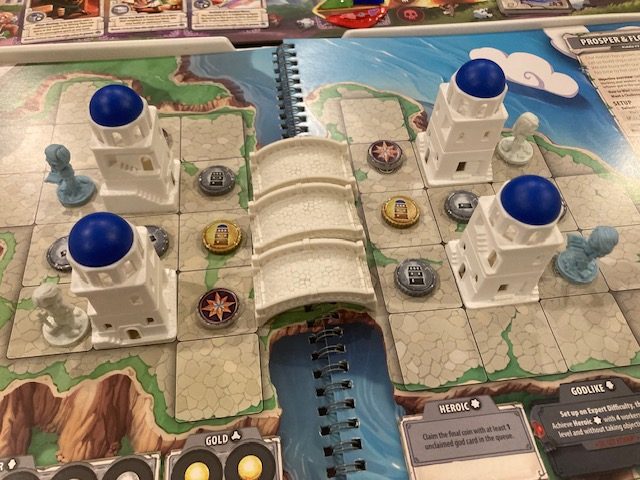
One rule that particularly seemed frustrating was the occupied rule.  You can’t build a piece on a space that’s occupied.  Or move onto a space that’s occupied.  In the base game, the only things that can occupy spaces are workers/figures or blocks/domes.  Is a coin or a blessing on a space considered occupied?  Physically, yes!! That coin or blessing coin is physically occupying the space, so it prevents me from moving there, right?  Intellectually, I think the idea is that the coins/blessings are just goal markers, so they are NOT occupying, just notating!! 
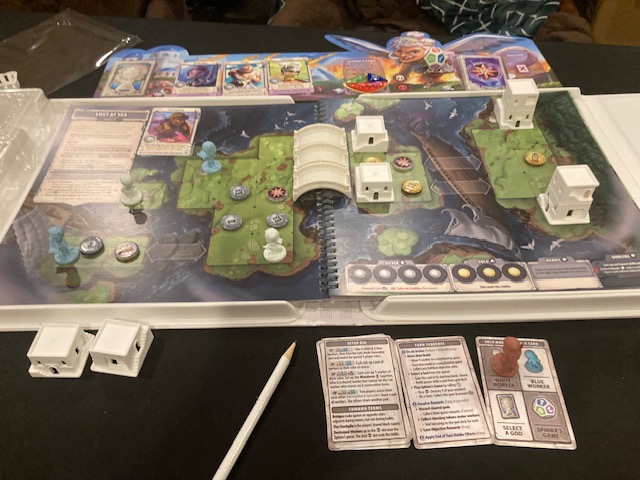
It wasn’t until 100% clear until Riddle 5, when one of the workers actually started on a space with the Coin (bottom left, blue worker), that coins don’t block you.  It’s pretty clear you can move through coins, I think, if you can start on a coin.  

The rules for Riddle of the Sphinx, and especially Santorini, are brief and succinct.  But I think they omit some clarity.  A few more sentences here and there would have helped.  This particularly issue seemed vexing, and I felt like I was “cheating” if I moved through/onto a Coin.  “It’s physically blocking me … should be it a game blocker too?”  I think that it is NOT a blocker but a notation … it could have been clearer.

Things to Watch Out For
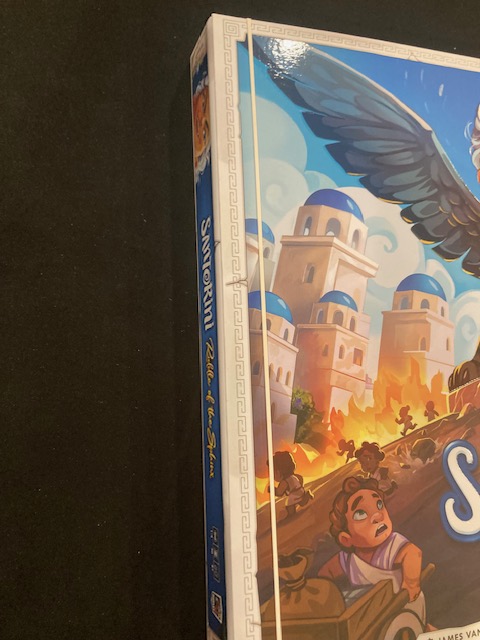
Magnetic Clasp Not Secure: The binding holding the Riddle of the Sphinx box closed is a magnetic clasp.  It did’t feel very secure; I would recommend a rubber band or something to hold it more secure.  See above for my rubber band solution.

Use Bright Marker: When you mark bubbles on the Constellation Tree or the Adventure Map, don’t use a pencil like I did (see above).  Use a sharpie or red marker or something that really stands out.


Print out:  Rather than sully your Adventure book, just print out a copy of the Adventure Map and Constellation Tree from your printer.  See above. Not only do you keep your original books pristine, the copies from your printer will be on paper that you can actually write on (the paper from the original is very slick).

Conclusion
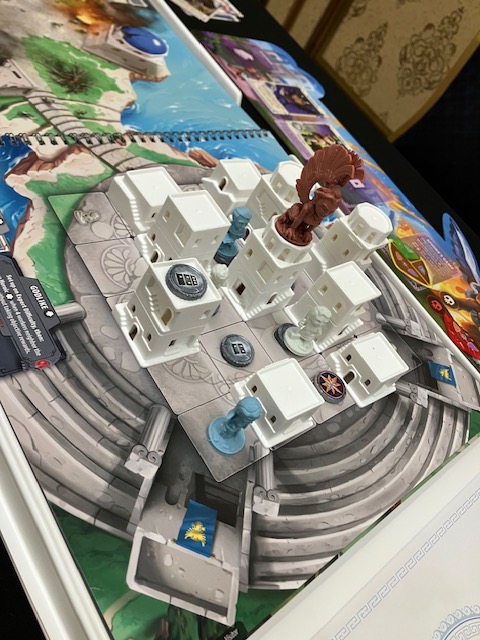
Riddle of the Sphinx is clearly more puzzle than game.  There are elements of randomness that make it more gamey (which base gods do you get, do you risk rolling a die, etc), but in general: this a puzzle.  You need to know that before going in; you may love the idea of a solo or cooperative puzzle using the base rules of Santorini!  You may hear that it’s a puzzle to solve and run screaming.  Do what you will.
The solo game worked really well; it’s easy to come back to because the rules are pretty straight forward, and it’s easy to save in campaign mode.    You can play as much or as little of the campaign as you want.

The cooperative game can succumb to the Alpha Player problem if you aren’t a little careful; Riddle of the Sphinx is a puzzle after all is said and done, and puzzles tend to bring out that Alpha Player.  We suggest having a frank discussion about the Alpha Player problem (it worked for us), or just play with a group you already trust and respect.  The rapid cycling of asymmetric God Powers did help alleviate the Alpha Player problem a little.

I would absolutely play Riddle of the Sphinx again as a solo game; it’s like an 8.5 or 9 out of 10 for me.  It was really fun, and the components were great.  The cooperative game, I would play again, because you can adjust the difficulty as you play.    I would, however, be very cautious of the Alpha Player issues before I suggested Riddle of the Sphinx  to a group, just because, as a puzzle, it’s too easy to fall into the Alpha Player trap.  That trap make it a little harder to get out as a cooperative game, so maybe it’s a 7.5 or 8/10 for a cooperative game.  It’s fun, it’s adjustable, but you have to be a little careful.
Good game.